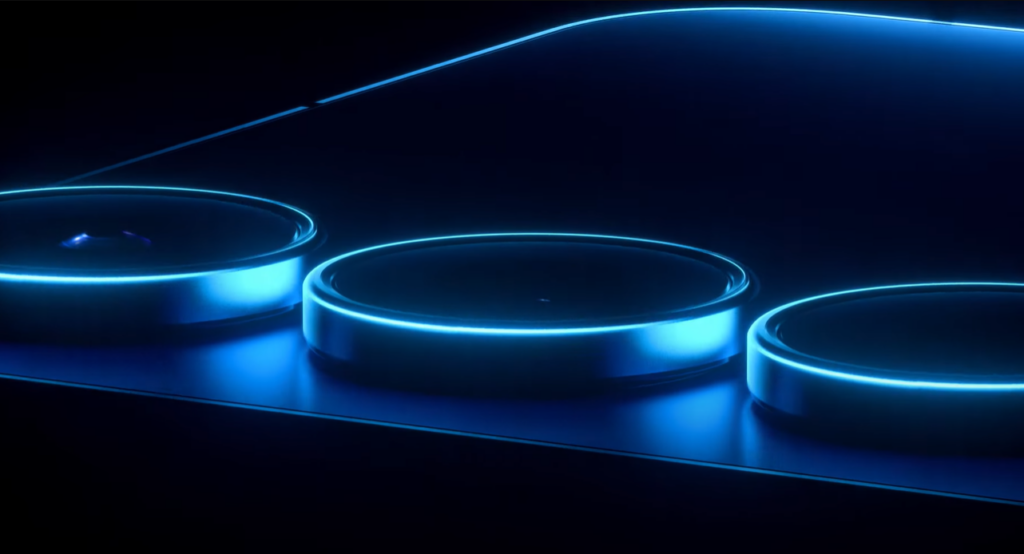
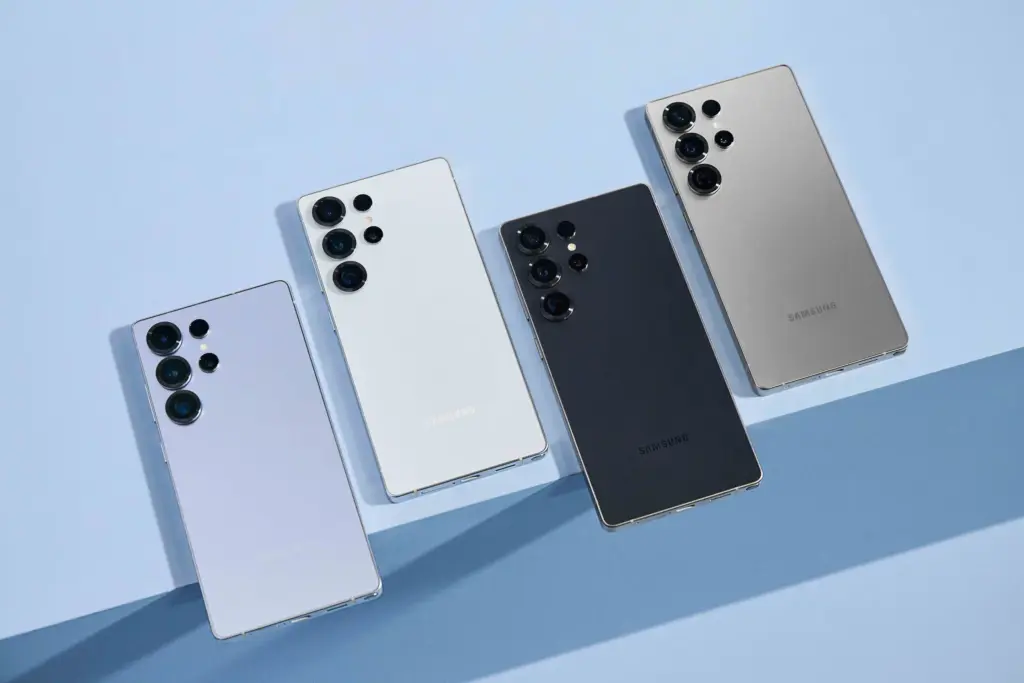
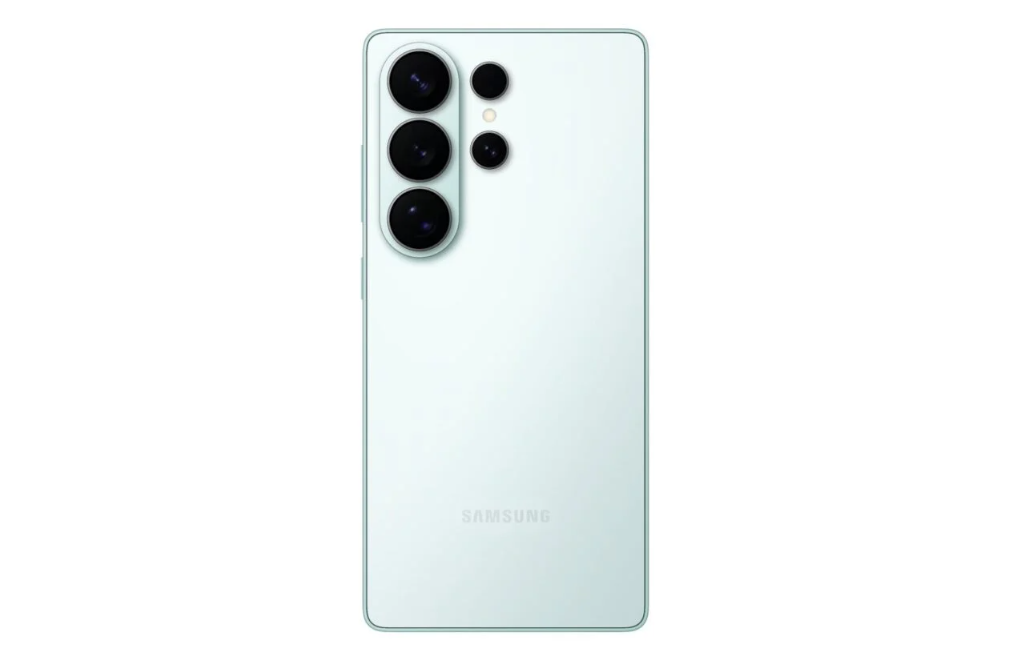
Samsung has confirmed its next Galaxy Event for September 4, just ahead of IFA 2025 in Berlin. The showcase will stream online at 11:30 AM CEST (3:00 PM IST) on Samsung.com and YouTube. As expected, the teaser hints Galaxy AI will be a big part of the show, though the spotlight is also likely to fall on new hardware.
Galaxy S25 FE teaser
Galaxy S25 FE details
One of the highlights of the event will be the Galaxy S25 FE, which has already surfaced in multiple leaks and certifications. A Google Play Console listing for model number SM-S731B points to an Exynos 2400 chip, 8GB RAM, and an FHD+ display. The phone is also rumored to include a 4,900mAh battery with 45W fast charging. Priced around $649, it would slot in as the “budget flagship” of the S25 family.
The event may also bring the Galaxy Tab S11 lineup, which is said to include an 11-inch base model and a 14.6-inch Ultra version. Samsung is reportedly going with MediaTek’s Dimensity 9400+ processor, an upgrade over the Dimensity 9300+ used in the previous generation.
Both the S25 FE and Tab S11 are expected to ship with Android 16 and One UI 8, slightly ahead of other S25 models that will get the update later. Samsung hasn’t officially named the devices for the event yet, but all signs point toward these two being the stars of the show. With AI also in focus, September 4 should give us a clearer look at how Samsung plans to tie its ecosystem together this fall.
Huawei may be gearing up for a busy September, with reports suggesting the company is preparing to roll out a new version of its ear-clip headphones along with a small but premium tablet. The leaks, coming from familiar tipsters on Weibo, give us an early look at what could be announced alongside the Mate XTs tri-fold phone.
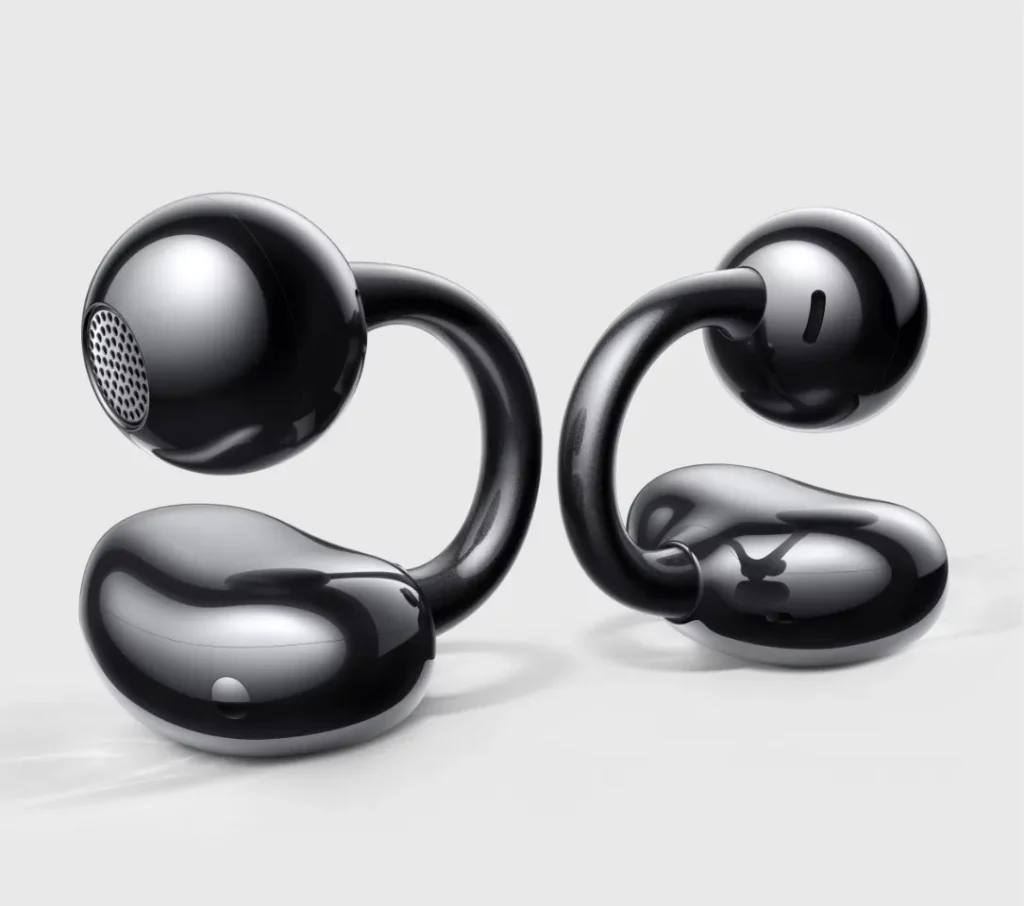
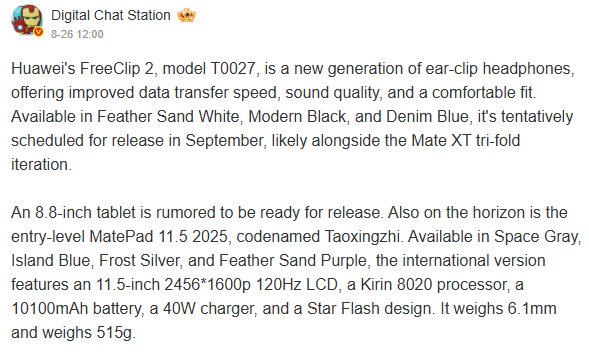
According to leaker @Digital Chat Station, the FreeClip 2 (model T0027) is expected to debut in September. Huawei has separately confirmed it will hold a product launch event on September 4, fueling speculation that the earbuds could be part of the event. The first FreeClip (our review) arrived in December 2023 at 1,299 yuan (~$180), and the follow-up is expected to deliver better sound, improved noise reduction, and faster wireless performance. One big upgrade could be support for Nearlink, a wireless standard that offers significantly higher data transfer speeds than Bluetooth.
The new model is said to keep the unusual “C-bridge” design for comfort, while adding fresh colors like Feather White, Modern Black, and Denim Blue. Another Weibo blogger, @智皮卡楚, also hinted at big gains in noise cancellation this time around.
@Digital Chat Station also mentioned an 8.8-inch “thin and light flagship” tablet that’s close to certification. While details are thin, it’s expected to focus on portability without cutting corners on performance.
Alongside it, Huawei appears to be preparing the MatePad 11.5 (2025). Specs for this model include a 120Hz LCD at 2456×1600 resolution, a Kirin 8020 processor, and a large 10,100mAh battery with 40W fast charging. At just 6.1mm thick and weighing 515g, it looks aimed at students and everyday users, with an expected price around $400. Color options will reportedly include Space Gray, Island Blue, Frost Silver, and Feather Sand Purple.
With the FreeClip 2 taking on rivals like JBL’s Sense Pro and the 8.8-inch tablet positioned as an iPad Mini competitor, Huawei seems intent on expanding its ecosystem with both niche and mainstream devices.
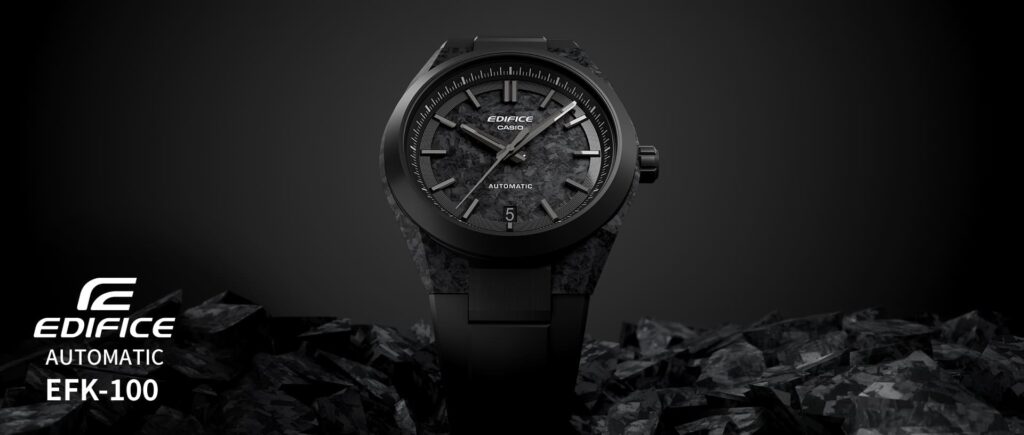
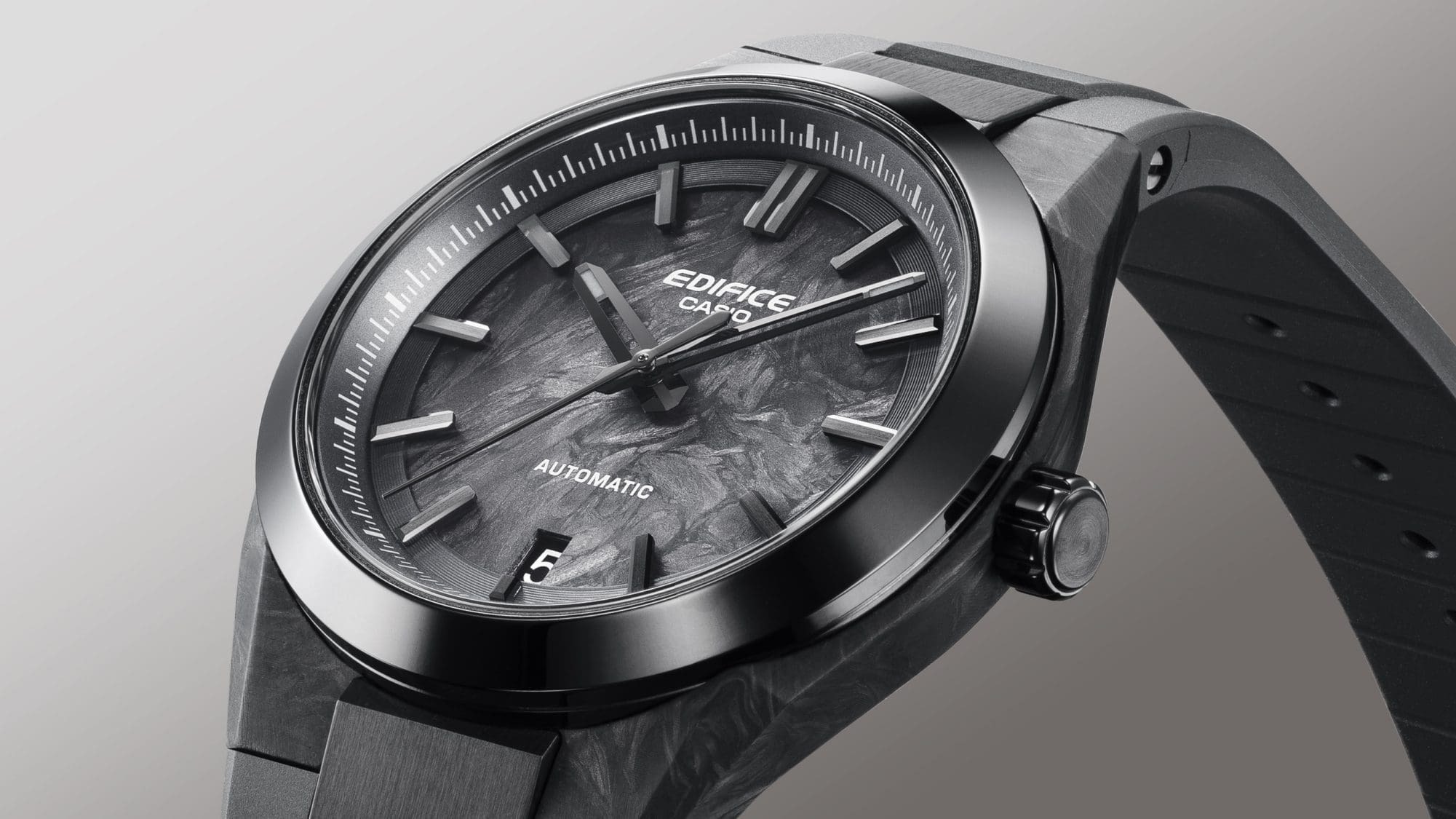
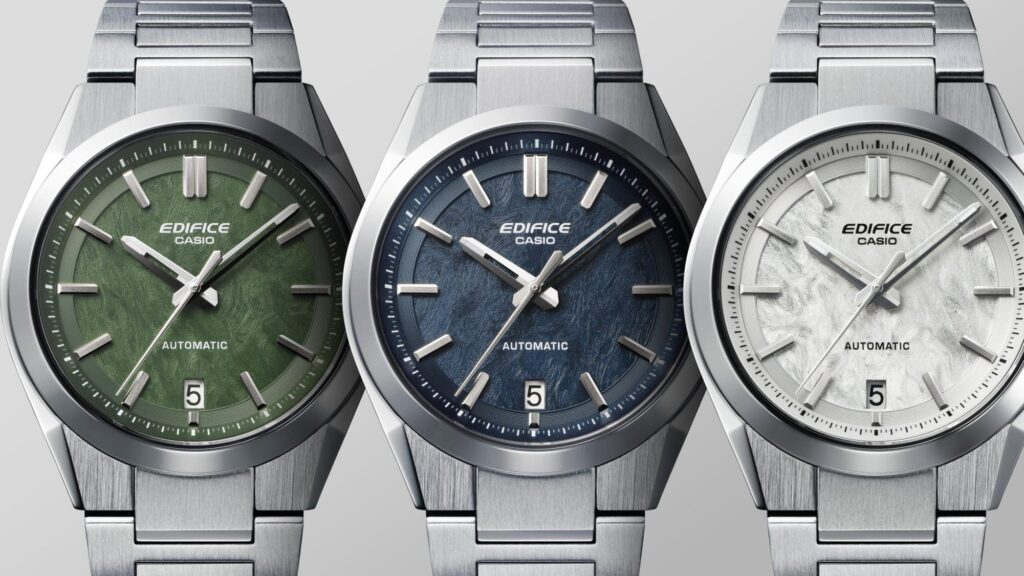
Casio has introduced its first automatic watch lineup in India under the EDIFICE brand with the launch of the EFK-100 series. Five models are now available: EFK-100XPB-1A, EFK-100CD-1A, EFK-100D-2A, EFK-100D-3A, and EFK-100D-7A.
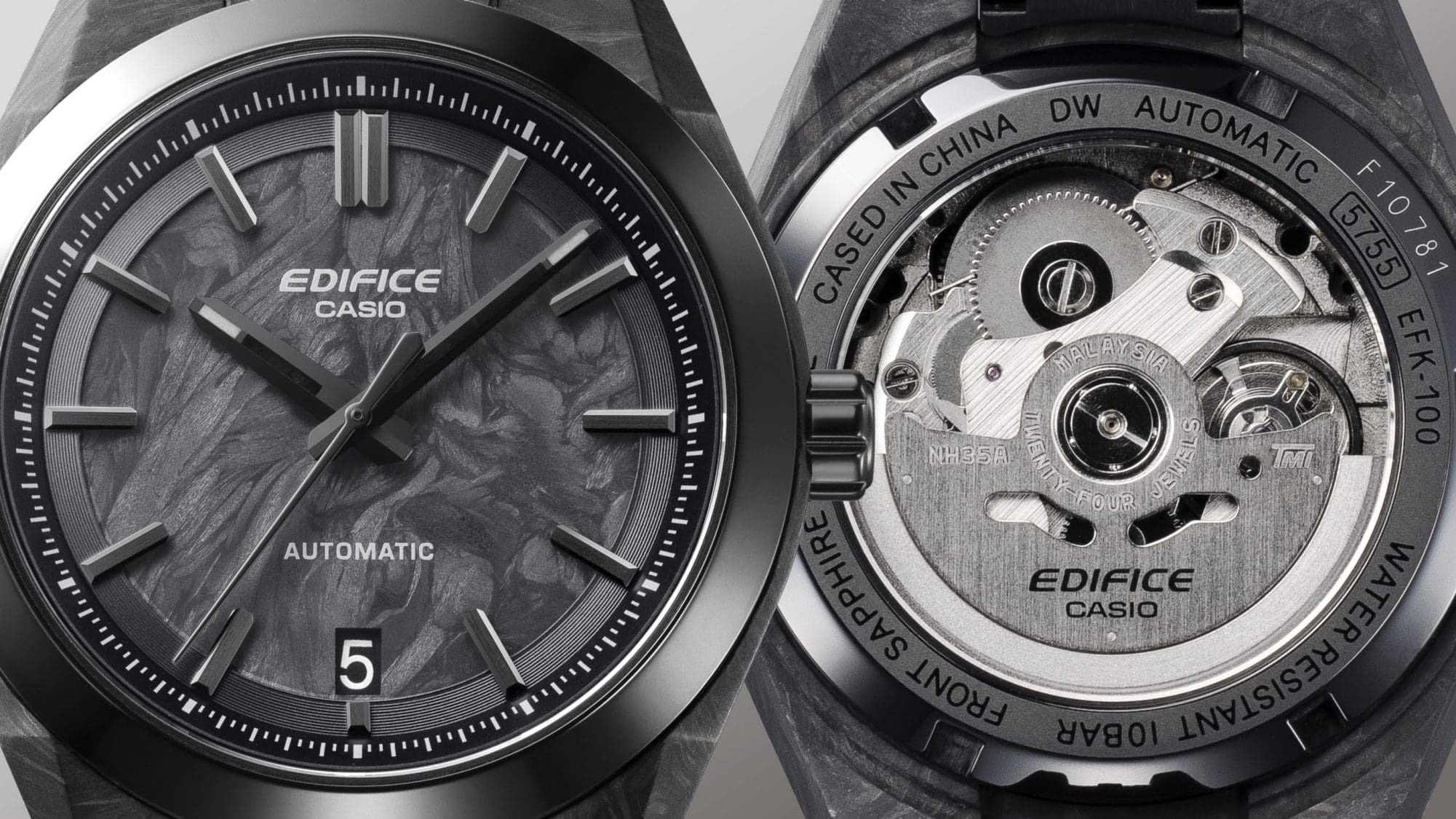
The EFK-100 series marks Casio’s entry into the automatic segment in India. The flagship EFK-100XPB-1A features forged carbon in both the dial and case, while the EFK-100CD-1A uses forged carbon in the dial only. Other models replicate the carbon texture through electroforming techniques. Forged carbon, a composite material used in aerospace and automotive applications, combines strength and lightness with distinctive marbled patterns.
All five models use a mechanical movement with automatic and manual winding options. The watches offer a power reserve of about 40 hours, a mean daily rate of -35 to +45 seconds, and operate at 21,600 vibrations per hour with 24 jewels. Each features a see-through case back that reveals the movement in motion. The hacking seconds hand, date display, and phosphorescent-tipped hour and minute hands are standard across the series.
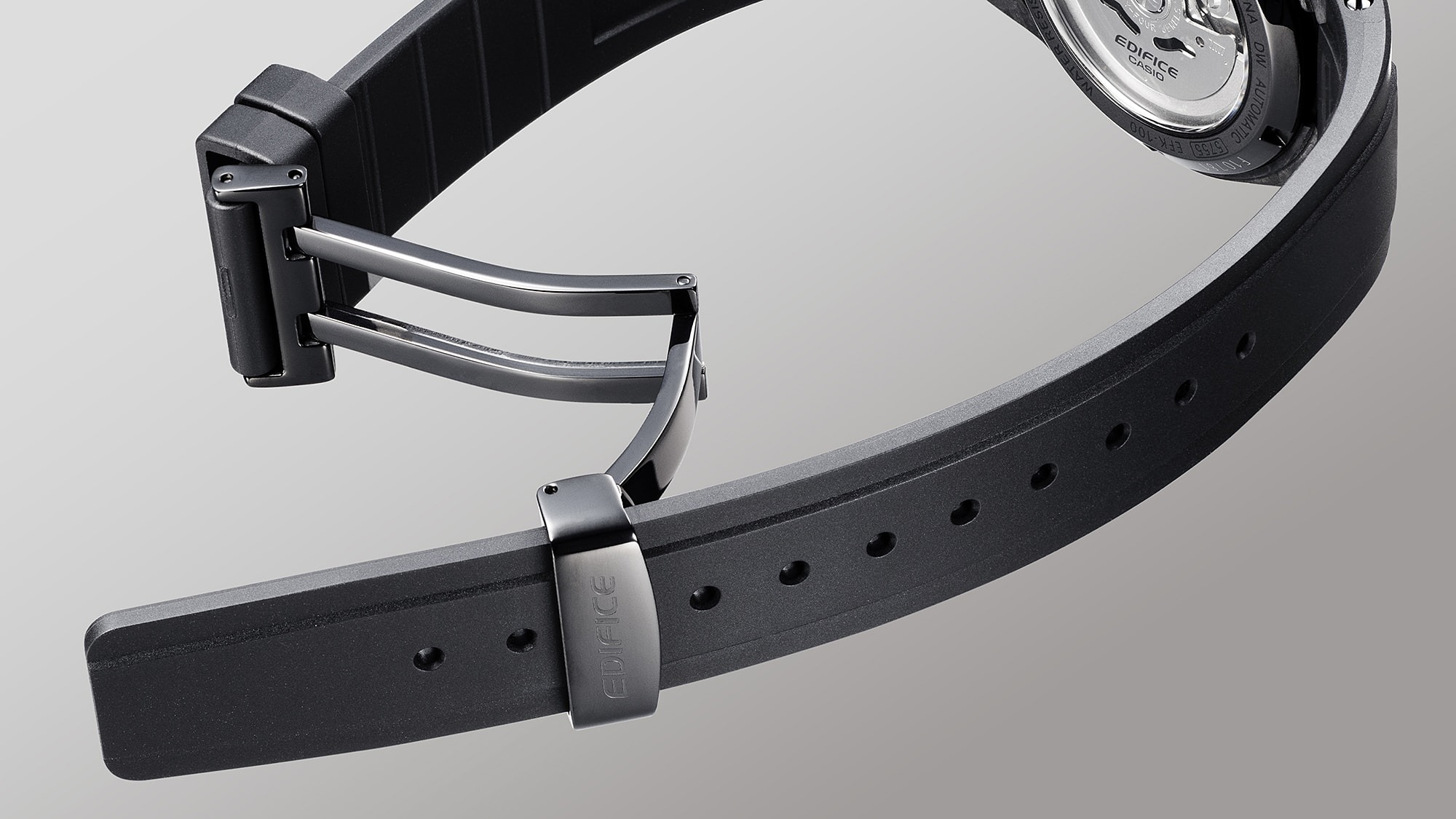
Design details include hollowed sections on the hands for better visibility, mirror-finished beveled indexes, and a ground-finish dial ring. The EFK-100XPB-1A pairs a forged carbon case with a urethane band, while the remaining models use stainless steel bands with polished and brushed finishes. All watches include a scratch-resistant sapphire crystal and 10-bar water resistance.
With this launch, Casio extends the EDIFICE line’s association with motorsport-inspired design to mechanical watches, combining advanced materials with a focus on durability and performance. The EFK-100XPB-1A is priced at ₹39,995, while the EFK-100CD-1A, EFK-100D-2A, EFK-100D-3A, and EFK-100D-7A are each priced at ₹25,995. The full lineup is now available across Casio outlets and online platforms in India.
In other news, Casio has also expanded its Katsushika Hokusai collaboration to Europe with two G-Shock models, the DW-5600KHG25-1 and DW-5600KHK25-1. First launched in Japan, they feature designs inspired by “Fine Wind, Clear Morning” and “The Great Wave off Kanagawa.”
For more daily updates, please visit our News Section.
After months of leaks and rumors, the day has finally arrived we have been waiting for so long — Xiaomi will launch HyperOS 3 today at an event in China. Ahead of the event, the company has announced its plan for the HyperOS 3 beta program. In fact, it has already started taking applications from interested users.
Xiaomi has confirmed that the first HyperOS 3 beta will be released to select models immediately after the HyperOS 3 event, which is scheduled to happen later today. The first wave of HyperOS 3 beta includes several premium Xiaomi and Redmi smartphones as well as some Xiaomi tablets.
First wave of HyperOS 3 beta devices
Xiaomi 15
Xiaomi 15 Pro
Xiaomi 15 Ultra
Xiaomi 15S Pro
Redmi K80
Redmi K80 Pro
Xiaomi Pad 7 Pro
Xiaomi Pad 7S Pro
If your Xiaomi phone is on the list, you can sign up for the HyperOS 3 beta program immediately and receive the beta update after the event concludes later today. The beta program is currently available in China, so that’s another prerequisite for now. However, Xiaomi won’t take long to expand it to other regions.
If your Xiaomi device didn’t make the cut, don’t worry. The brand promises to open the beta program for more devices in the coming weeks. You may want to keep your eyes focused on the second wave announcement.
How to sign up for the HyperOS 3 beta program?
If you have an eligible Xiaomi device and that you live in China, you can sign up for the HyperOS 3 beta program right now.
Here are the steps to follow:
Visit the Xiaomi Community Internal Testing Center.
Sign in using your Mi account credentials.
Select the HyperOS 3 beta program.
Follow the on-screen instructions to complete the process.
Once you’ve signed up for the beta program, you can expect a beta update very soon. You should receive a notification on your Xiaomi device regarding the same. You can also manually check for updates by going to Settings > About phone and tapping the HyperOS logo.
Please note that beta builds are likely to contain bugs and may have unfinished features. The software experience may be smooth, and some features may not work at all. Hence, it’s recommended that you test such early builds on a secondary device.
Also, keep in mind that there’s no easy way to revert to the stable release without erasing your data. Therefore, ensure that you have backed up important data to prevent data loss.
Samsung is back with another cheeky swipe at Apple, this time showing off how foldables can pull off tricks that iPhones simply can’t. The ad, posted on Samsung’s official X account on August 27, comes just ahead of Apple’s iPhone 17 launch on September 9 and has already sparked plenty of chatter.
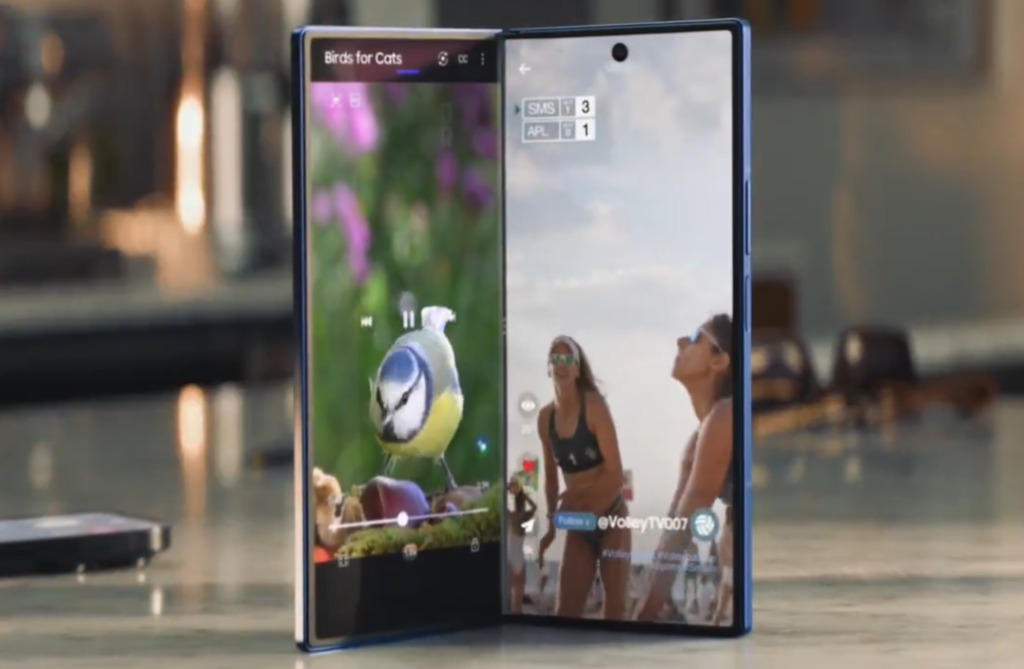
In the 30-second clip, an iPhone user struggles to prop his phone up on a table — maybe to snap a selfie, hop on a video call, or just watch something hands-free. His curious cat makes the task even harder, knocking the device over as he tries to balance it upright. The punchline arrives when a friend casually places a Galaxy Z Fold 7 on the table, folded partway so it stands on its own. The foldable splits the display into two videos running side by side, a multitasking move that no bar-style iPhone can manage. A message flashes on screen: “Can your phone do that?”
Samsung clearly wants to drive home that point. With the Fold 7 and Flip 7, the company is leaning on slimmer designs, Galaxy AI tools, and unique use cases like Flex Mode to keep its foldables feeling futuristic. At $1,999, the Fold 7 remains pricey, but it’s also a reminder that Samsung has been iterating on this form factor for years, while Apple has yet to ship a foldable.
Rumors suggest Apple is working on one — possibly landing in September 2026 — but for now, Samsung seems happy to showcase what sets Galaxy apart. The ad might be playful, but it’s also a clear flex in the middle of the ongoing rivalry.
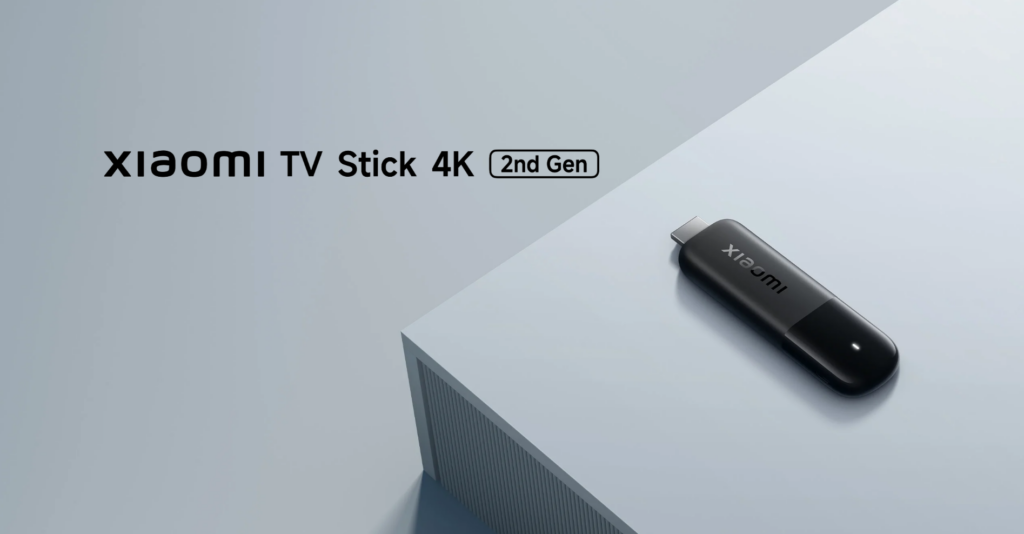
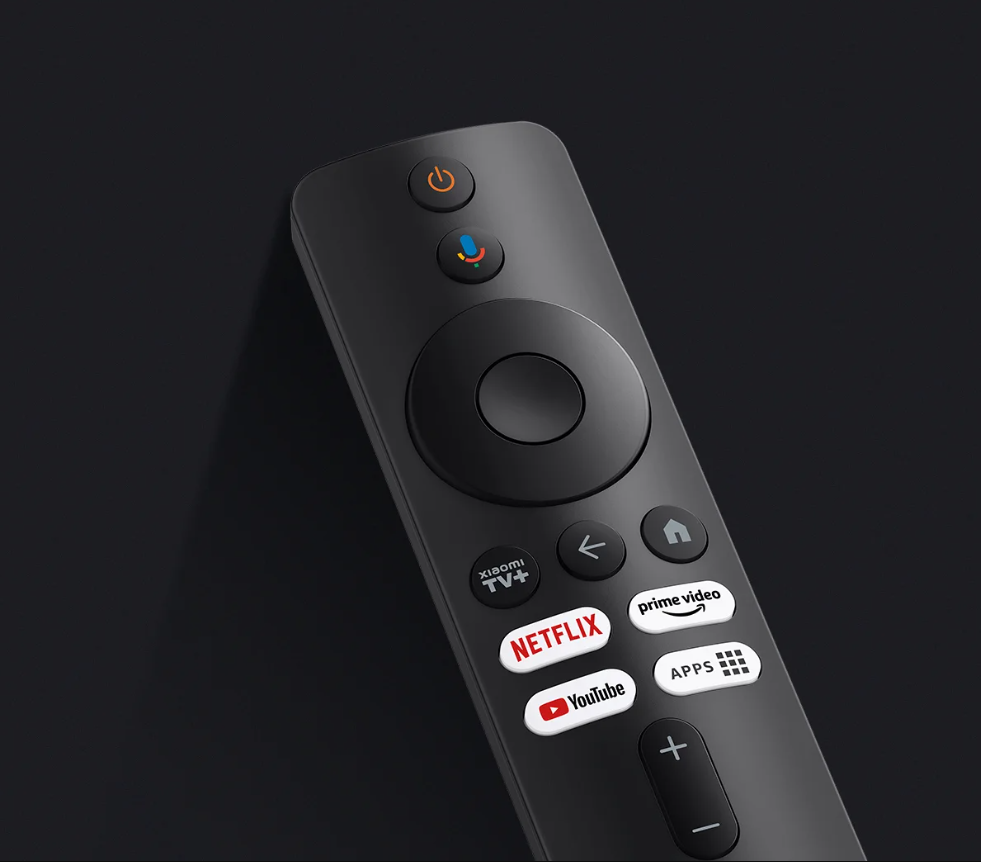
Xiaomi has released the TV Stick 4K (2nd Gen) in the UK. The device is now available through Xiaomi’s online store for £45.99. It is £12 more expensive than the first-generation version, which is still on sale for £33.99.
The new stick upgrades any TV, monitor, or projector with an HDMI port to a full Google TV system. It supports 4K output with AV1 decoding, HDR10+, and Dolby Vision. For audio, it offers Dolby Atmos and DTS:X decoding, providing surround sound and virtual height effects.
The hardware is built on a 6nm platform with a quad-core Cortex-A55 CPU running at 2.5GHz and an ARM G310 V2 GPU. Xiaomi says this delivers up to 80 percent better CPU performance and 150 percent better GPU performance compared to the first model. The stick comes with 2GB of RAM and 8GB of storage.
Connectivity includes dual-band Wi-Fi 6 and Bluetooth 5.2. It connects to displays through HDMI and uses micro-USB for power.
The software is based on Google TV, giving access to over 10,000 apps and hundreds of free live channels. Netflix, YouTube, and Amazon Prime Video come pre-installed. Google Assistant is built into the Bluetooth voice remote, allowing users to search, control playback, and manage smart home devices. Google Cast is supported for streaming content from phones and tablets.
The stick measures 107.4mm in length, 30mm in width, 14mm in thickness, and weighs 44g. It is finished in black and has a slim design for portability.
In other news, Xiaomi has also launched the Smart Camera C100 in European markets, priced at £24.99 in the UK and €24.99 in Germany, with Amazon listings across Germany, Spain, France, and the Netherlands. The indoor camera features a 3MP sensor with 2304×1296 resolution, H.265 codec, a 128° wide-angle f/1.6 lens, full-color low-light video, and 940nm infrared LEDs for discreet night vision.
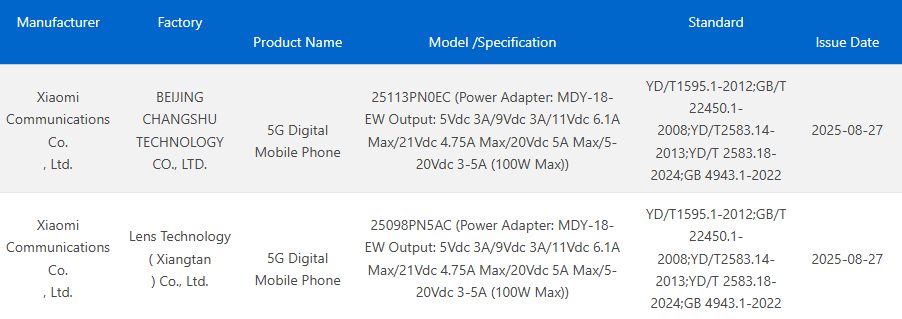
The upcoming Xiaomi 16 series is expected to include three models: Xiaomi 16, Xiaomi 16 Pro and a new addition called the Xiaomi 16 Pro Mini (tentative name). All three devices have reportedly cleared 3C certification in China, suggesting that the long-rumored September-end launch is likely on track.
Xiaomi 16 series 3C certified
Xiaomi 16 series 3C certified
As can be seen above, China’s 3C certification database has new listings for 25113PN0EC and 25098PN5AC. These model numbers reportedly belong to the Xiaomi 16 and 16 Pro, respectively.
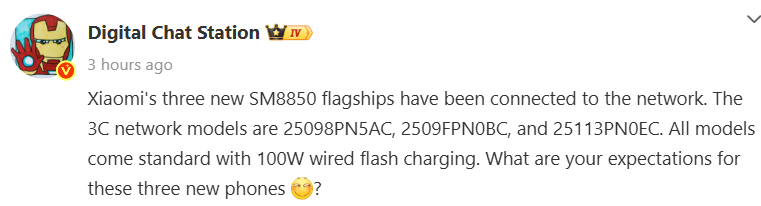
Chinese tech bloggers, including Digital Chat Station, have claimed that another device with the 2509FPN0BC model number has also been approved by the 3C authority, but it is yet to be seen in the database. This device could be the rumored Xiaomi 16 Pro Mini.
Xiaomi 16 series 3C certified, claims DCS
Each of these devices is listed with an MDY-18-EW charger. The power brick supports multiple output modes, peaking at 20V 5A (100W). This confirms that the entire series will feature the 100W charging standard, regardless of size or variant.
The Xiaomi 16 series is expected to debut as the first to carry the Snapdragon 8 Elite 2 chipset. The Xiaomi 16 may continue with a smaller 6.3-inch class display and minimal bezels, while the Pro model is expected to have both 6.3-inch and 6.8-inch versions. Camera configurations could differ, with the standard edition featuring an OV50Q primary sensor and telephoto lens, while the Pro and Pro Max are said to adopt a larger Smartsens sensor with a periscope telephoto for enhanced zoom.
Battery capacity is another highlight, with leaks pointing to around 7000mAh for the Xiaomi 16 and 7500mAh for the Pro Max. The launch is anticipated to follow Qualcomm’s Snapdragon Summit, scheduled from Sept. 23 to 25, with availability in China first and international models to follow.
For more daily updates, please visit our News Section.
It’s September, often called “techtember” in the industry, and the calendar is already packed. Apple has locked in September 9 for the iPhone 17 launch, while Qualcomm and MediaTek are preparing to introduce their next flagship chips the same month.
That timing usually triggers a wave of announcements from Chinese phone makers, each racing to be first with the new silicon. Xiaomi is tipped to lead the charge with the Snapdragon 8 Elite 2, followed closely by Realme, Honor, OnePlus, iQOO, and Oppo.
So here are all the upcoming Chinese flagship phones expected to arrive before the end of the year.
Xiaomi is once again expected to be first in line for Qualcomm’s next-generation chip. Both the Xiaomi 16 and 16 Pro are rumored to debut with the Snapdragon 8 Elite 2, continuing the brand’s long-standing tradition of launching with Qualcomm’s latest silicon.
The Xiaomi 16 Pro is said to feature a 6.8-inch flat OLED LTPO panel with 2K resolution. The screen will also have ultra-narrow bezels and new eye-care technology.
On the camera side, it could feature a triple 50-megapixel setup led by a SmartSens 590 main sensor. There will also be a 50MP front camera with autofocus for selfies. Powering it all is expected to be a 7,500mAh battery with 100W charging.
The standard Xiaomi 16 isn’t far behind. It will reportedly have a 6.3-inch 2K OLED display and a slightly smaller 7,000mAh battery, but keep the same trio of 50MP cameras.
Both devices are said to run HyperOS 3.0 on top of Android 16. There are also runors of a Pro Max or a mini variant, but it’s still not sure if they will launch alongside the Xiaomi 16 and Pro. Meanwhile, the Xiaomi 16 Ultra is planned for the first half of 2026.
2. Oppo Find X9 series
Oppo Find X9 Pro mock render
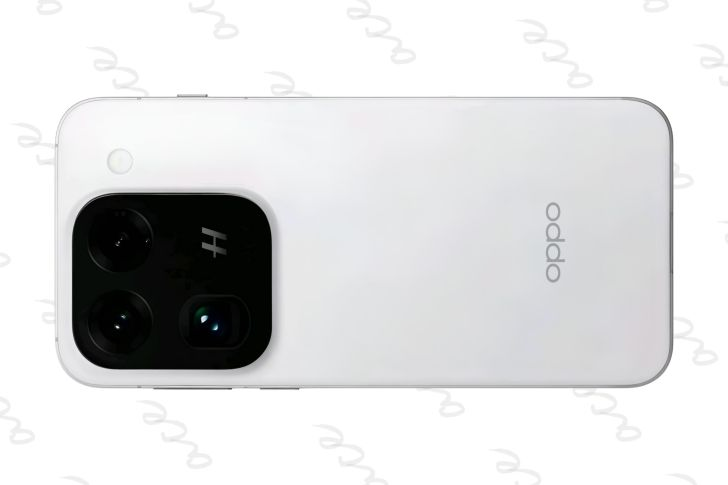
Oppo Find X9 are another line of flagship smartphones coming in late 2025. Both the Find X9 and X9 Pro will be the first to launch with MediaTek Dimensity 9500 chip paired with Android 16 based ColorOS 16.
The phone will include a 50MP Sony LYT-808 main sensor, a 50MP ultra-wide, and a 50MP periscope telephoto with 3x zoom, along with Hasselblad co-branding and Oppo’s new Lumo imaging tech. A 50MP front sensor rounds out the camera setup. Powering it all up is a 7,025mAh battery with 80W wired and 50W wireless charging.
The Find X9 Pro ups the ante with a 7,500mAh battery, the same charging speeds, and a 6.78-inch 1.5K OLED panel. On the back, Oppo may include a 200MP Samsung HP5 periscope telephoto alongside a 50MP Sony LYT-828 main and a 50MP ultra-wide.
Other features reportedly include Wi-Fi 7, NFC, IR blaster, IP68/69 durability, and even a customizable side button. Oppo may also offer satellite SMS support in select high-storage variants. The device is rumored to come in White, Purple Gray, and Magenta shades.
3. Vivo X300 series
Vivo X300
Vivo X300’s are another line of Dimensity 9500 flagship launching in October. The display will measure 6.3 inches for the standard model and 6.8 inches for the Pro. The series will include a new Zeiss coating on the cameras for better optical performance.
The devices are said to come with a battery ranging 6,500–6,375mAh in typical capacity, and the phones will run OriginOS 6 based on Android 16.
A Geekbench run suggest the X300 could include up to 16GB of RAM. The device scored 2,352 and 7,129 points in the single-core and multi-core tests, although the chip wasn’t running at its full power during the run.
4. Honor Magic 8 series
There’s not as much we know about the Honor Magic 8 series like other upcoming phones. But we can say for sure that both the Magic 8 and Magic 8 Pro are expected to run on Qualcomm’s Snapdragon 8 Elite 2 chip. The former may feature a 6.6 inch display while the Magic 8 Pro is expected to get a 6.7 inch AMOLED panel on the front.
The Magic 8 Pro may carry a 7,000mAh battery with 90W wired charging. Wireless charging and ultrasonic fingerprint sensors are also in the cards.
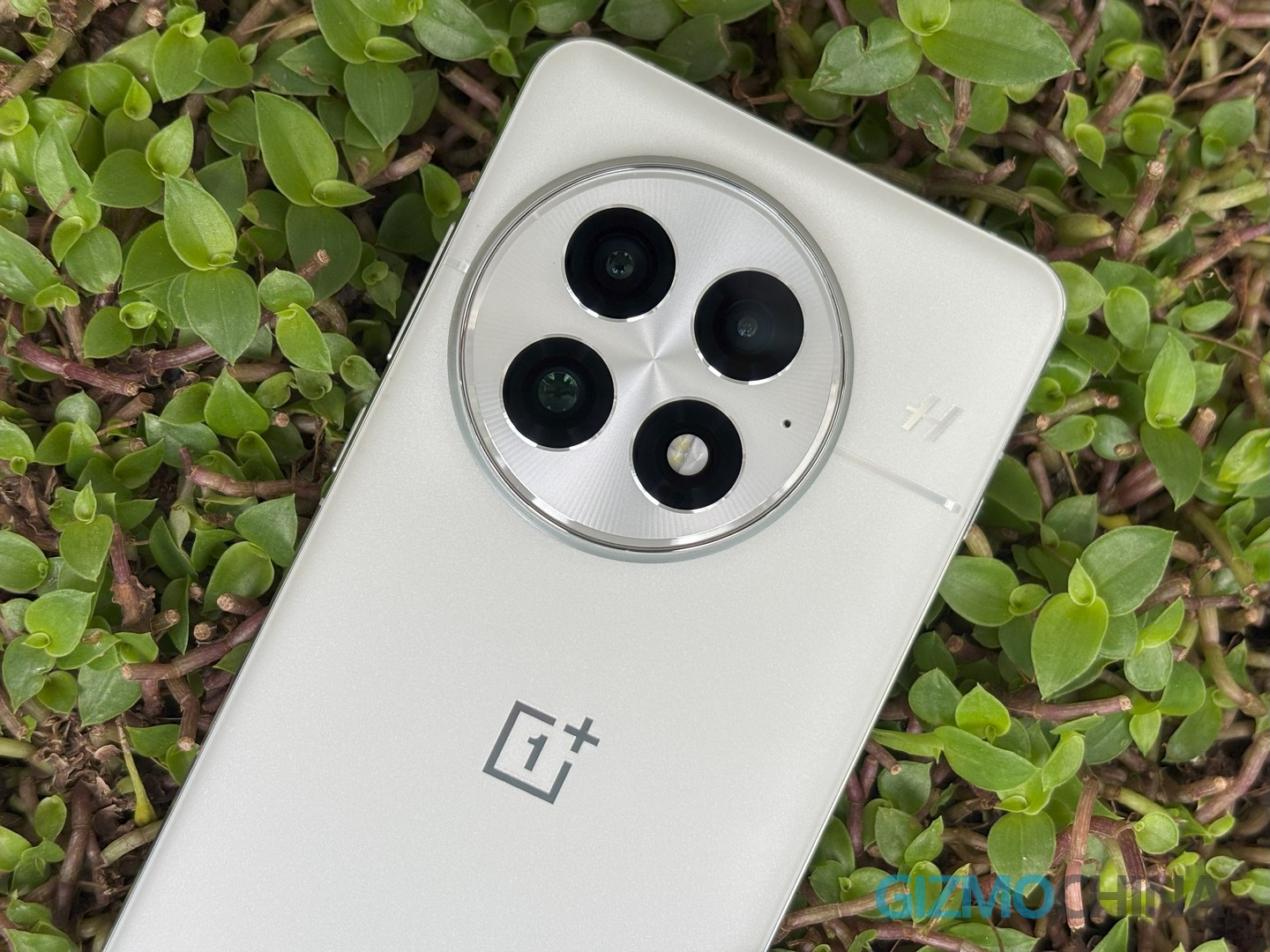
5. OnePlus 15
The OnePlus 15 is rumored to feature a 6.78-inch BOE-supplied OLED LTPO panel with a 1.5K resolution and a 165Hz refresh rate. The system is reportedly optimized for native 165fps gaming, which would be a first for OnePlus devices.
It will be powered by a Snapdragon 8 Elite 2 chip, roughly 7,000mAh battery, with support for 100W wired and 50W wireless charging. For cameras, the rear setup could include a 50MP triple-lens system with wide, ultra-wide, and periscope telephoto options.
OnePlus is also rumored to be making some design changes this year. Unlike the round camera module of previous models, the OnePlus 15 may adopt a square housing in the top-left corner.
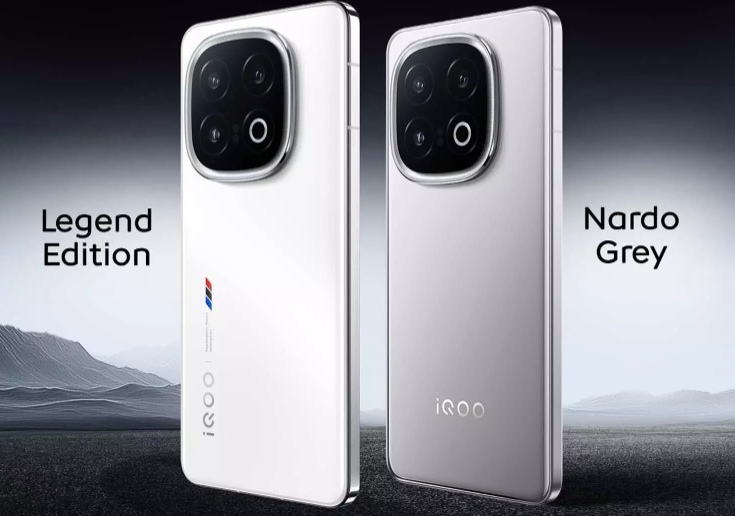
6. iQOO 15
iQOO 13
iQOO has already started promotions for its upcoming iQOO 15 series. Unsurprisingly, this is a gaming phone powered by the Snapdragon 8 Elite 2. But it will also include a self-developed gaming processor and a dedicated display chip for that extra optimization.
The phone will feature a 6.85-inch LTPO AMOLED panel with 2K resolution and an ultrasonic fingerprint sensor. It will include a a triple 50MP setup with a 3x periscope telephoto lens on the rear.
It’s 7,000mAh battery is rumored to support 100W fast charging, though wireless charging may be limited to the Ultra model launching next year. That Ultra edition is also tipped to feature a built-in cooling fan, trigger buttons, and other gaming hardware.
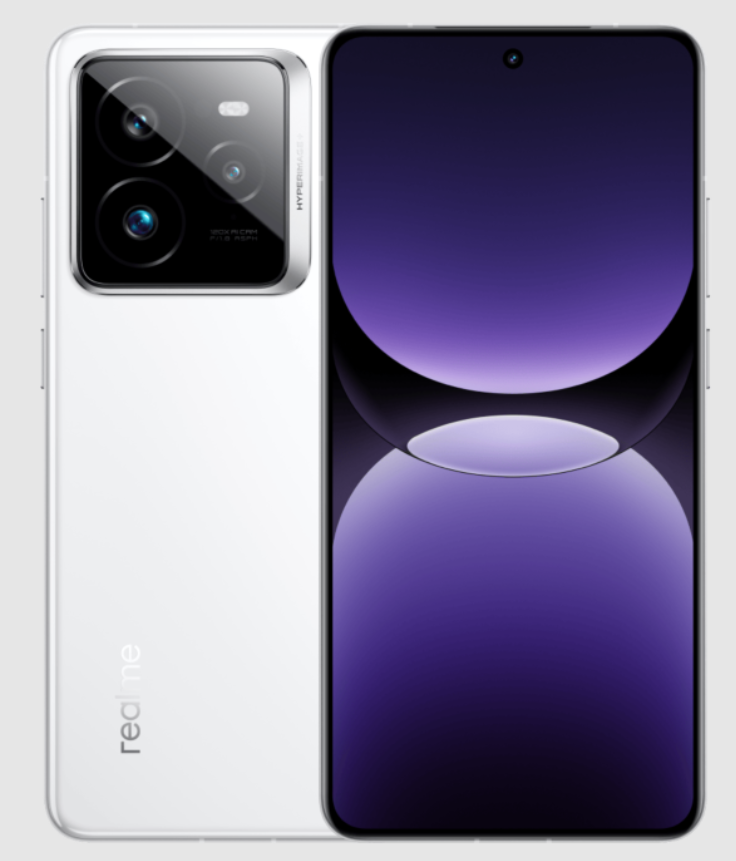
7. Realme GT 8 series
Realme GT 7 Pro
Finally, Realme is preparing the GT 8 and GT 8 Pro, with a confirmed launch in October. The GT 8 Pro is rumored to carry a 6.85-inch 2K OLED screen, while the standard GT 8 will scale down to 6.6 inches. Both are expected to ship with the Snapdragon 8 Elite 2.
The standout feature here is the 200MP periscope telephoto lens rumored for the Pro model, alongside a metal middle frame, dual speakers, and ultrasonic fingerprint sensor.
Both phones are expected to come with a ~7000mAh battery, much like other flagships in the list. Realme will also debut its new Realme UI 7 skin based on Android 16 with GT 8 series.
For more daily updates, please visit our News Section.
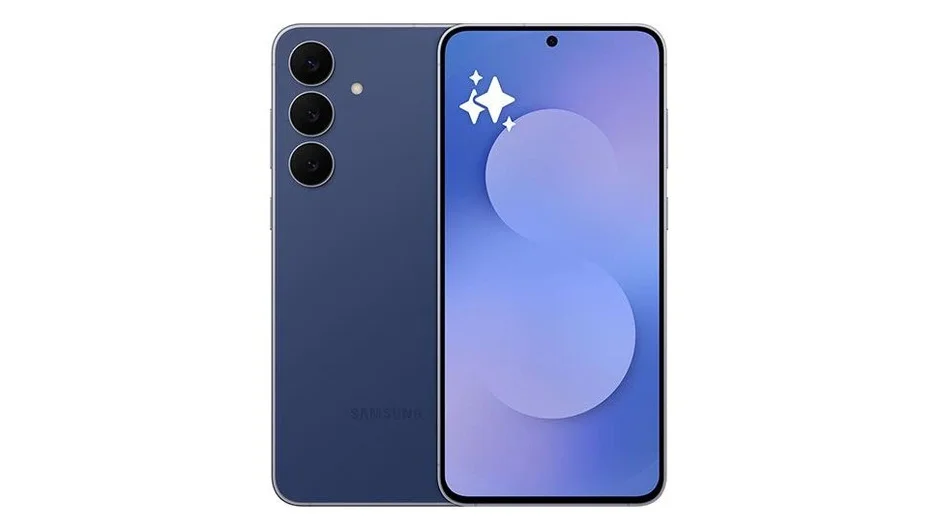
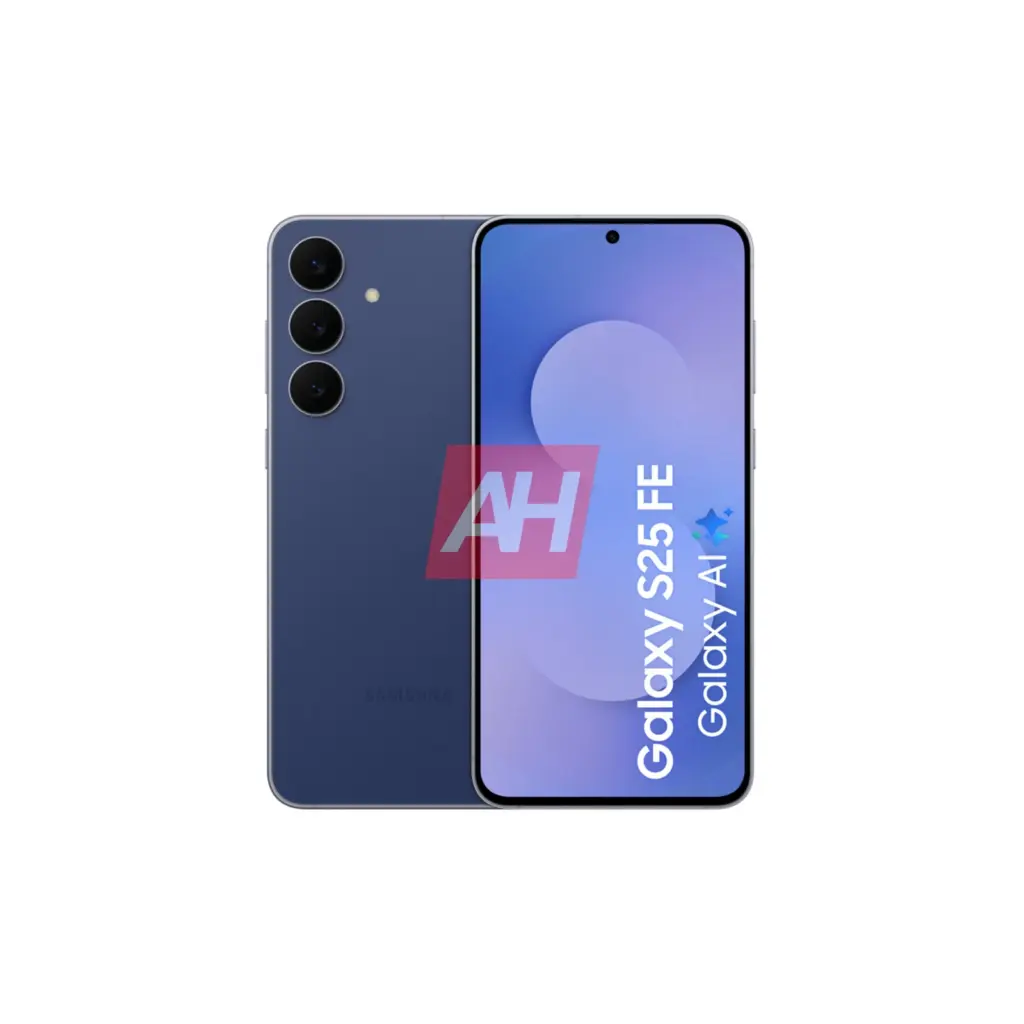
The Galaxy S25 FE has popped up in fresh leaks, giving us a clearer look at Samsung’s next budget flagship. The phone, expected to slot in below the main S25 lineup, seems to be shaping up as a strong mid-range option from Samsung.
Galaxy S25 FE
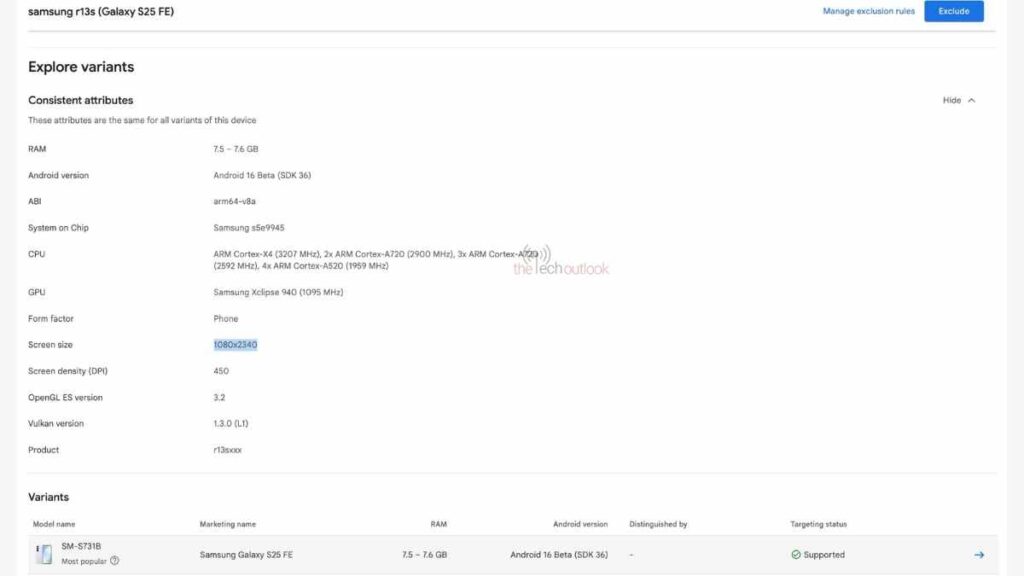
The S25 FE (model number SM-S731B) has now been spotted on the Google Play Console. The certification listing, reported by The Tech Outlook, shows the phone running on the Exynos 2400 with an 10-core CPU (prime core at 3.2GHz) and the Xclipse 940 GPU (1095MHz). It also lists 8GB of RAM and an FHD+ display with a pixel density of 450ppi. The phone was running Android 16 Beta, suggesting it will launch with One UI 8 and include Samsung’s latest features and optimizations.
The recently surfaced retail page from Media Markt in Portugal — since taken down — mentioned a 50MP triple rear camera, a 12MP selfie camera, and a 4,900mAh battery. Charging is listed at 45W wired, 15W wireless, with support for reverse charging. Storage is expected to start at 128GB, with a possible 512GB variant.
Practically speaking, the S25 FE looks nearly identical to the S24 FE, and many of the core specs — including the display size, resolution, and rear camera setup — also remain unchanged, at least based on what’s surfaced so far. There may be minor refinements under the hood, but we’ll have to wait for the launch to know for sure.
Reports had earlier pointed to a September 19 launch, but Samsung has since confirmed its next ‘Galaxy Event’ for September 4. So confirmation isn’t far off. If the rumored $649 price holds, the S25 FE could challenge rivals like the Pixel 9 by delivering similar specs at a lower cost.
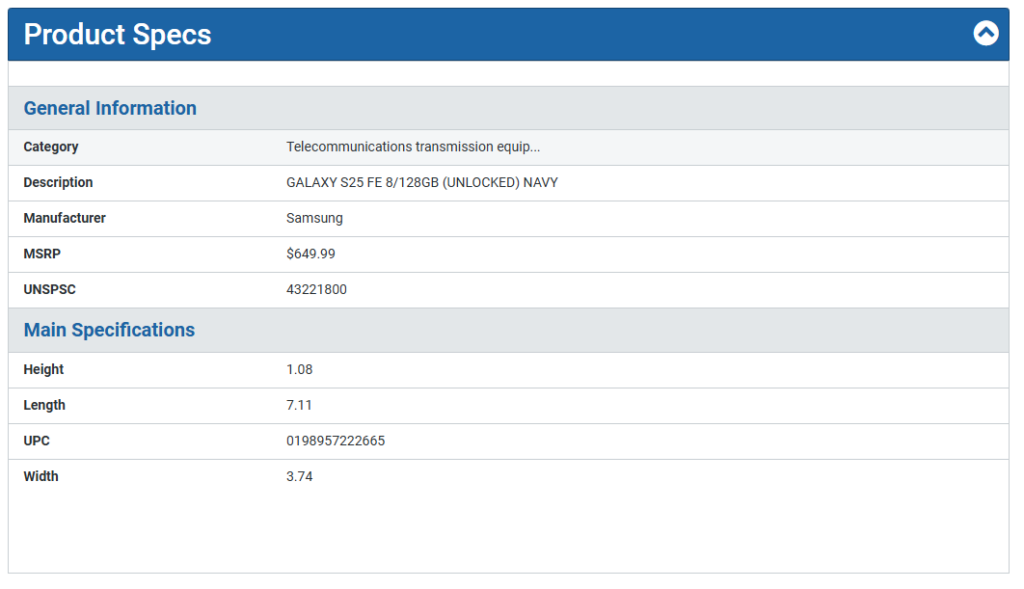
Samsung’s Galaxy S25 FE is edging closer to launch, with its US pricing now leaked through an early retail listing. According to the listing, the phone will start at $649.99 for the 128GB model and $709.99 for the 256GB variant. Both versions will come with 8GB of RAM.
Samsung Galaxy S25 FE
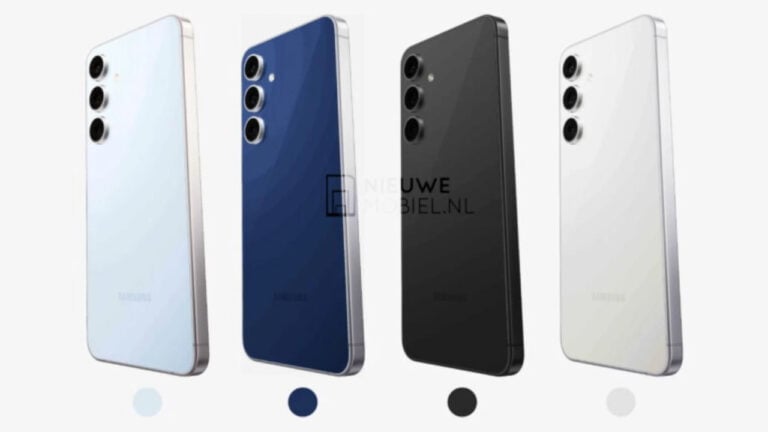
The phone will be offered in four colors: Jet Black, Ice Blue, Navy, and Titanium. Design renders and promotional material have already surfaced in earlier listings, giving a complete picture of the upcoming Fan Edition model.
In terms of hardware, the Galaxy S25 FE will feature a 6.7-inch FHD+ (2340 x 1080) AMOLED display with a 120Hz refresh rate, protected by Corning’s Gorilla Glass Victus+. Powering the device will be Samsung’s Exynos 2400 processor, the same chip used in last year’s Galaxy S24 and S24+. It will ship with Android 16 out of the box, topped with Samsung’s One UI 8.
The camera setup mirrors Samsung’s recent flagship structure, though in a trimmed form. On the back, the phone houses a 50MP main camera, a 12MP ultrawide lens, and an 8MP telephoto with 3x optical zoom. A 12MP front camera is positioned in a punch-hole cutout.
Battery life is handled by a 4,900mAh unit, paired with 45W wired charging and 15W wireless charging support. The phone’s body is expected to measure 7.4mm thick, maintaining the slim design language of the Galaxy S25 series.
Inside the retail box, buyers can expect the device itself, a USB Type-C to Type-C cable, and a SIM ejector tool, continuing Samsung’s trend of excluding chargers.
Foldables are having a moment again. Whether it’s the razor-thin flip phones that snap shut like a compact mirror or the larger book-style models that promise tablet-like utility, there’s a steady drumbeat of brands pushing the idea that foldables are the future.
Samsung, Huawei, Xiaomi, Oppo, Honor, they’re all in. But while innovation is welcome, and the idea of a shape-shifting phone sounds futuristic, most people don’t want an experiment in their pocket.
They want reliability. And that’s where regular slab-style flagships still win.
Durability You Don’t Have to Baby
Ask anyone who has used a foldable phone for more than a few weeks, and you’ll likely hear about caution fatigue. Book-style foldables like the Galaxy Z Fold 7, Honor Magic V5, or Xiaomi Mix Fold 4 require extra care: they’re thicker, more fragile, and prone to long-term hinge degradation.
Even with ultrathin glass, the inner displays remain vulnerable to pressure, dust, and temperature fluctuations. Drop a regular iPhone 16 Pro or Pixel 10 Pro XL, and your chances of survival are decent with a case. Drop a Fold and… good luck.
Flips aren’t immune either. Despite being marketed as lifestyle accessories, the crease is still there. Hinge wear is still a factor. And even though Samsung and Motorola have improved water resistance, dust remains a persistent threat. It’s not just about being careful. It’s about the emotional tax of constantly worrying about breaking a $1,500 device that folds.
Trade-Offs That Add Up
Foldables sound like they do everything, but compromises stack up fast. The battery life on flips? Generally worse than slab phones because of space constraints. Cameras? Often a tier below their slab counterparts. Samsung’s Fold line finally improved its imaging game, but it still doesn’t match the S25 Ultra or iPhone 16 Pro Max in consistency. Xiaomi’s Mix Fold 4 packs strong hardware, but the image processing still trails the Xiaomi 15 Ultra.
Then there’s app optimization. Despite years of promises, most Android apps still don’t adapt well to the foldable canvas. You’ll find letterboxing, scaling issues, and janky transitions when switching between folded and unfolded states. Slab phones don’t ask apps to rethink their layout just to behave normally.
Simplicity is a Feature
Slab phones aren’t flashy anymore, and that’s their superpower. They’re polished, fast, and reliable. The iPhone 16 series, Pixel 10 Pro XL, Galaxy S25 series, and Xiaomi 15 Ultra all represent the culmination of a decade-plus of refinement. You know exactly what you’re getting: top-tier cameras, fast performance, long battery life, and a software experience that doesn’t make you think twice.
They slip into pockets more easily, work with any case on Amazon, and don’t require re-learning how to hold or use them. You never have to worry about how many folds your phone can survive before the crease gets worse.
The Cool Factor Wears Off
Yes, there’s a dopamine hit the first time you snap a flip phone closed on a call. There’s novelty in opening a Fold and feeling like you’re carrying the future. But by week three? That fades.
The crease starts to catch light in annoying ways. The phone feels bulky. You go back to using the outer screen for everything, and suddenly you’re wondering why you paid extra for a foldable when your old phone already did 95 percent of this better.
Foldables are Evolving but They Aren’t There Yet
This isn’t to say foldables are doomed. They’re getting thinner, more durable, and better optimized. But unless you want to live on the bleeding edge and deal with the associated wounds, it’s still safer, smarter, and frankly, saner to stick with a premium slab flagship.
In a world where smartphones are more essential than ever, stability isn’t boring. It’s underrated. And regular flagships deliver that in spades.
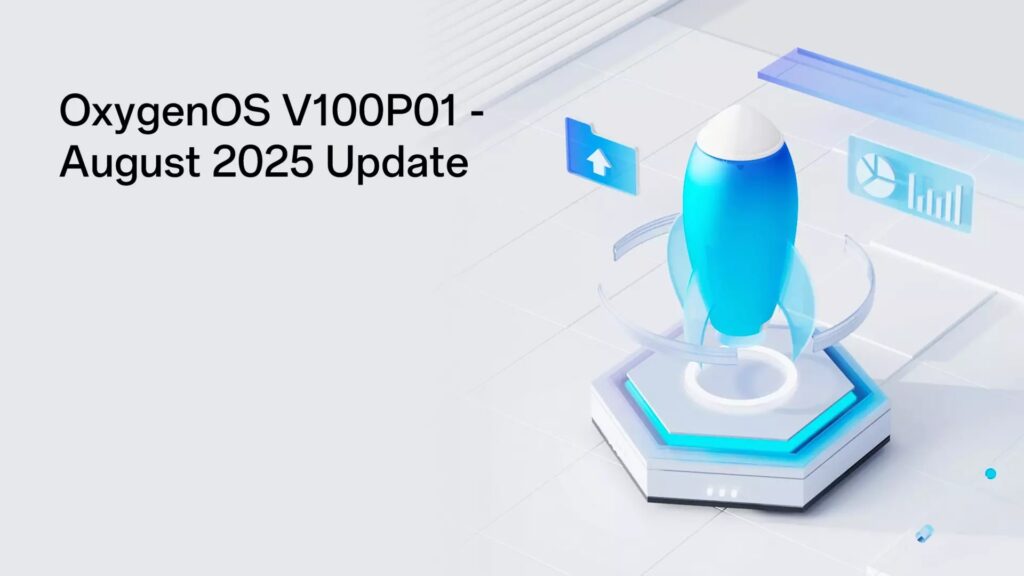
OnePlus has started rolling out its latest software update, OxygenOS version V100P01, for both smartphones and tablets. The update is being released in batches beginning August 13, 2025, and is expected to reach all eligible devices by August 31.
The update adds new functions to Private Safe on OxygenOS 14 and above. Users can now share images and videos stored in Private Safe, set custom covers for albums, sort and view files by time, and add documents directly under the “Other files” category. These changes are aimed at making file management in Private Safe more practical.
System-level improvements are also included. OnePlus states that the update improves overall system stability for supported devices.
The V100P01 update is available for the following devices running OxygenOS 14 and 15: OnePlus Open, OnePlus 13 series, OnePlus 12 series, OnePlus 11 series, OnePlus 10 series, OnePlus Nord 4 5G, OnePlus Nord CE4 series, OnePlus Nord 3 5G, OnePlus Nord CE3 series, and the OnePlus Pad, Pad 2, and Pad 3.
For OxygenOS 14, the update also applies to the OnePlus 9 series, OnePlus 8T, OnePlus Nord 2T 5G, OnePlus Nord CE 2 Lite 5G, OnePlus Nord N30 SE 5G, OnePlus Nord N20 SE, and the OnePlus Pad Go.
As with previous releases, feature availability may vary depending on hardware and software compatibility across models. Users can manually check for the update under Settings > About device > OxygenOS card.
For more daily updates, please visit our News Section.
Google is changing how sideloading works on Android. Starting in 2026, only apps from verified developers will be allowed on certified Android devices. Developers distributing apps outside the Play Store must register through a new Android Developer Console and submit personal details such as name, address, and contact information. Google says this is needed because malware from sideloaded apps is 50 times higher compared to apps installed through the Play Store.
The new system will begin with early sign-ups in October 2025. It will open to all developers in March 2026, followed by enforcement in September 2026 across Brazil, Indonesia, Singapore, and Thailand. These countries are being targeted first due to high scam rates. A global rollout will follow in 2027. Hobbyists and students will have a separate, simplified process, but anonymity will no longer be possible. Devices not certified by Google will not be affected.
Why Google is Doing This
Google says the move is about accountability. By tying apps to verified developer identities, it becomes harder for bad actors to release malicious apps under new names after being banned. The company compares the process to an ID check at an airport. It does not inspect the app’s code but ensures that the person behind it is identifiable.
The policy is also part of a larger industry trend. Apple already requires developer identity checks in the European Union. Regulators and banking groups in the first rollout countries have backed Google’s decision, saying it will reduce scams. Industry experts argue that Android is moving toward a model of tighter security and transparency, in line with other major platforms.
For most Android users, this should result in fewer harmful apps and scams from unregulated sources. Google stresses that sideloading itself remains available, but every developer must be registered.
Online Reaction and Skepticism
Unsurprisingly, reactions online have been divided. Supporters of the change argue it closes a loophole without removing sideloading entirely, since developers can still share apps after registering. Google says the platform remains open, with the addition of an ID check, and many security experts agree this makes sense. Some see it as a fair balance: not a full lock-down like iOS, but an extra layer of protection against widespread third-party malware.
Critics, however, have raised several concerns. Many fear Android is slowly moving toward Apple-style restrictions. Some point out that determined attackers could still bypass the rules by using stolen or newly created verified accounts, meaning independent developers may face more hurdles while scammers find ways around it. Hobbyists in particular feel left out, since one of Android’s long-standing appeals has been the ability to install apps without tying them to a personal identity. Now, many feel that freedom is being reduced. One commentator even warned that this shift could erase Android’s role as a real alternative to Apple’s mobile system, especially for open-source and hobby developers.
Conversations in online forums reflect similar frustrations. Some users joked that if sideloading unofficial apps becomes harder, they might as well switch to iPhones. Others argued that the change only adds red tape for ordinary developers, while determined attackers will still find ways to exploit the system. Privacy advocates also highlighted that requiring personal information goes against the idea of Android as an open platform. Overall, many worry that the solution of identity checks may end up hurting independent creators more than protecting users, while giving Google greater control over the Android ecosystem.
What It Means Going Forward
For regular Android users, the change should mean fewer risks when installing apps from outside the Play Store. For developers, it means going through an identity check before their apps can reach users. The bigger question is whether this move will actually improve security or whether it will mark the start of Android losing the openness that set it apart.
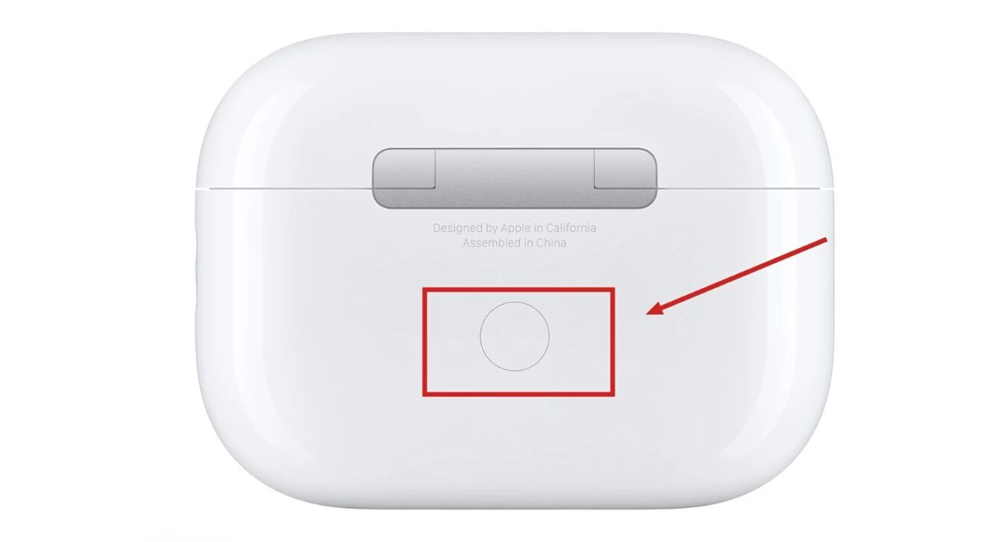
Apple’s next AirPods Pro may be getting their biggest update in years, and it starts with the case. According to a report from Android Headlines, the AirPods Pro 3 charging case will drop the usual pairing button in favor of a touch-sensitive panel on the front.
Users will reportedly be able to slide or tap on the case to control playback, adjust volume, or skip tracks—extending Apple’s gesture-first approach that we’ve already seen on the iPhone and Apple Watch. The case will still include a lanyard hole for accessories, while the earbuds themselves are expected to look much like the current AirPods Pro 2.
Functionality, however, is where the bigger leap could come. Bloomberg’s Mark Gurman previously reported that the AirPods Pro 3 will add heart rate monitoring, using optical sensors to measure blood flow more than 100 times per second when both earbuds are worn. The data would sync directly with the iPhone’s Health app, making the Pro 3 more appealing to fitness users.
Other upgrades are said to include better sound quality, improved noise cancellation, and more stable wireless performance. The earbuds are expected to run on a new H3 chip and may offer a better battery life. Spatial Audio with head tracking will also be a highlight feature of the product.
Apple is expected to announce the AirPods Pro 3 in September 2025 alongside the iPhone 17 lineup, with pricing likely to stay around $249—the same as the current generation. With touch controls on the case and built-in fitness tracking, Apple’s next premium earbuds could be a meaningful upgrade for both audiophiles and health-conscious users.
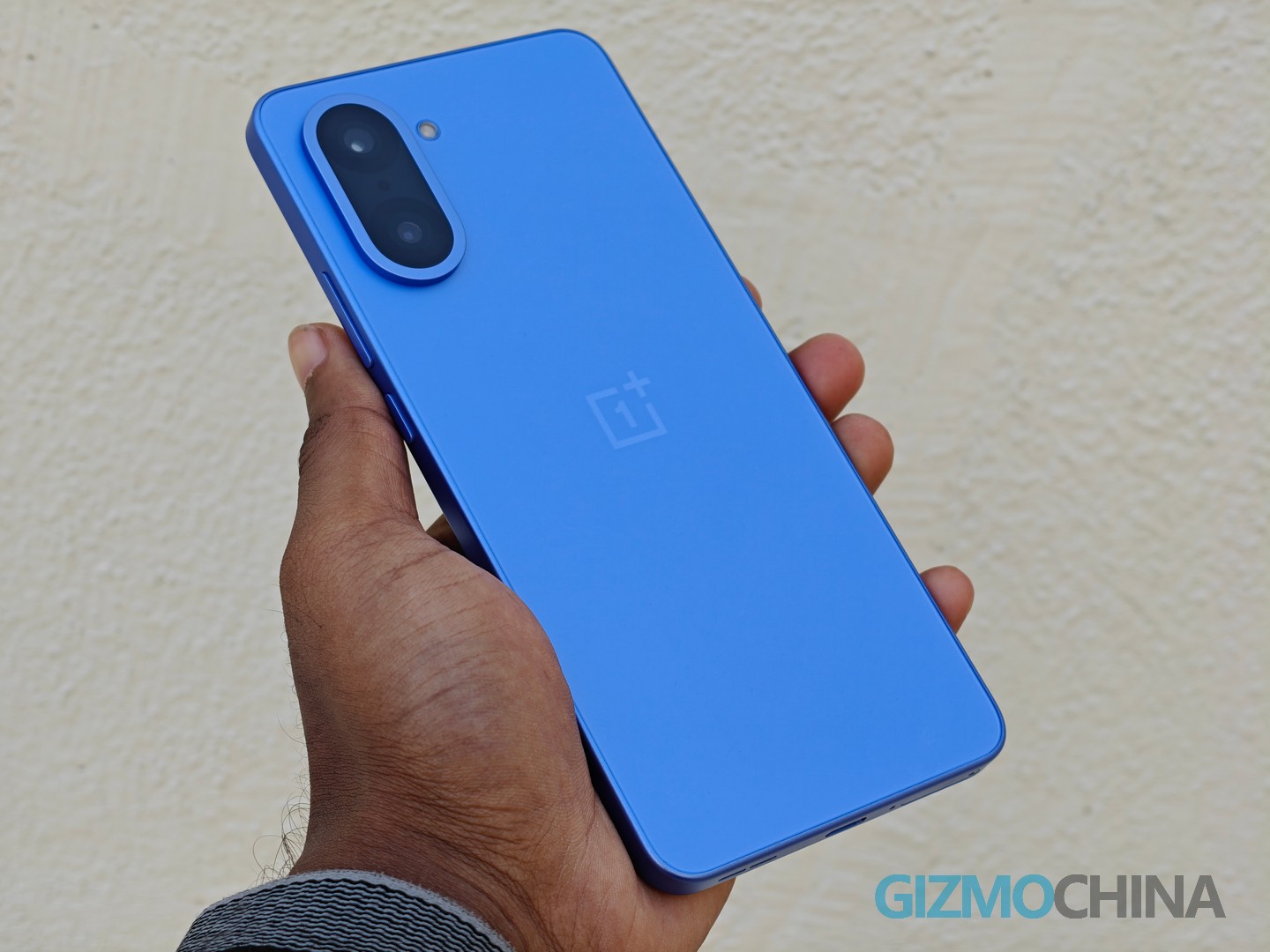
OnePlus has begun the incremental rollout of OxygenOS 15.0.2.501 for its Nord CE 5 and Nord 5 devices, bringing system stability improvements, camera optimizations, and the August 2025 Android security patch.
OnePlus Nord CE 5OnePlus Nord 5
Nord CE5 Update
For the OnePlus Nord CE 5 (build CPH2717_15.0.2.501(EX01)), the update enhances video performance and overall camera stability, aimed at improving photography and videography experiences. On the system side, the release strengthens overall stability and integrates the August 2025 Android security patch for better protection.
The rollout is starting in India, with a limited number of users receiving the OTA first. A wider release is planned in the following days.
Nord 5 Update
For the OnePlus Nord 5 (build CPH2707_15.0.2.501(EX01)), the update delivers similar upgrades in camera performance and stability. Additionally, it addresses a specific issue where Eye Comfort mode might not work during HDR video playback. Like the CE5 update, it also boosts system stability and includes the August 2025 Android security patch.
This rollout covers the India, Europe, and Global regions, following the same incremental approach as the Nord CE5. A small group of users will receive the OTA first, followed by a broader rollout.
Availability
As with previous OxygenOS releases, availability will expand gradually to ensure stability before wider distribution. Users are advised to check for updates manually in device settings if they haven’t received the notification yet.
For more daily updates, please visit our News Section.
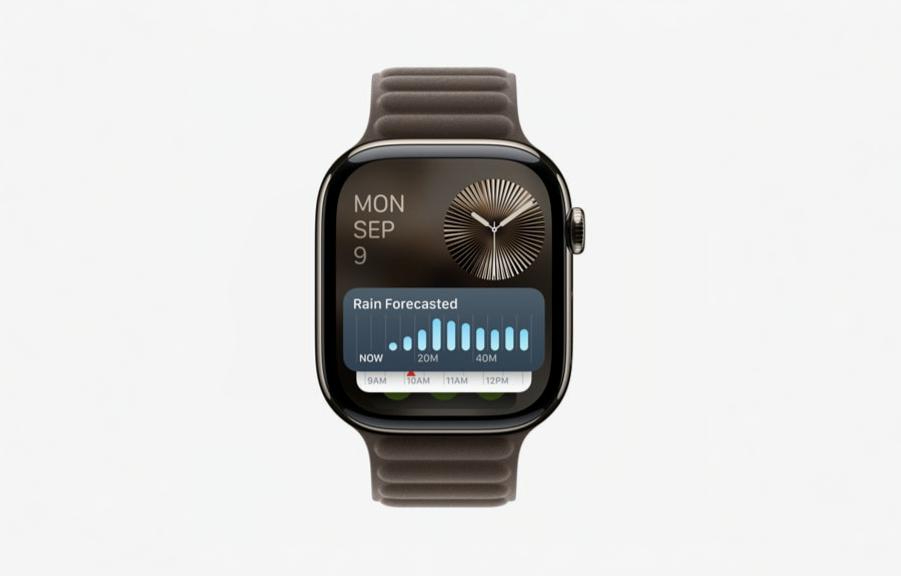
Apple’s latest smartwatch has landed in hot water in Germany, where a court has ruled against the company’s claims that the Apple Watch Series 10 is “climate neutral.” The decision casts doubt on Apple’s green branding and raises questions about the wider use of carbon offsets in the tech industry.
Apple Watch Series 10
A Frankfurt court barred Apple from advertising the Watch Series 10 as carbon-neutral in Germany starting next month, according to Reuters. Apple promotes the $399 watch as its most sustainable yet, highlighting the use of 100% renewable energy in production, recycled or sustainably sourced packaging, and lower emissions thanks to ground and sea shipping. By Apple’s calculation, the device generates 8.3kg of CO₂ during its lifecycle, which the company claims to offset through carbon certificates linked to eucalyptus plantations in Paraguay.
But environmental groups challenged the approach, saying these plantations are monocultures with high water demands and only leased until 2029—raising doubts about their long-term ability to trap carbon. The court sided with that view, calling the practice misleading and essentially “greenwashing.” Apple responded by saying the decision “largely confirmed” its approach to carbon neutrality, though it hasn’t said whether it plans to appeal.
For Apple, the ruling could be a setback to its broader pledge to reach full carbon neutrality by 2030. The case highlights growing skepticism around offset-based sustainability claims, which many argue don’t deliver lasting environmental benefits. In Germany, Apple will now need to adjust its marketing to emphasize tangible efforts—such as renewable energy use and recycled materials—rather than leaning heavily on offsets.
The Apple Watch Series 10 itself still packs plenty of appeal, with a titanium case, 1,220 mm² display area, and impressively accurate health tracking. But in one of Apple’s biggest European markets, it’s not just the hardware under the spotlight—it’s the company’s environmental promises.
Oppo’s next flagship series is still a few months away, but leaks continue to fill in the details ahead of launch. The latest set of specifications, shared by tipster Yogesh Brar (via XpertPick), gives a full picture of what to expect from the upcoming Oppo Find X9, which is slated to debut in October in China alongside the X9 Pro.
Oppo Find X9 Specifications (Rumored)
The Find X9 is said to feature a 6.59-inch flat OLED LTPO screen with a 1.5K resolution and 120Hz refresh rate. Unlike the curved panels often used in the Find X series, Oppo is reportedly sticking to a flat design this time around. The display will also integrate an ultrasonic in-display fingerprint sensor.
Inside, the Find X9 is expected to run on the MediaTek Dimensity 9500, the same chip that will power the X9 Pro. Powering it all is a 7,025mAh battery, one of the largest we’ve seen in a mainstream flagship, with support for 80W wired and 50W wireless charging.
Oppo Find X8
On the software side, the phone should ship with Android 16 layered with Oppo’s new ColorOS 16.
As for the cameras, the front will house a 50-megapixel Samsung JN1 selfie camera, while the rear will use a 50MP Sony LYT-808 main sensor with OIS, a 50MP Samsung JN5 ultra-wide, and a 50MP Samsung JN9 periscope telephoto lens capable of 3x optical zoom with OIS.
Of course, Oppo will continue its partnership with camera manufacturer Hasselblad. The brand will also introduce its own Lumo imaging tech for better camera optimization with Find X9 series.
Other expected hardware includes dual stereo speakers, a new x-axis linear motor, and IP68/69 durability ratings, making it one of Oppo’s most rugged flagships yet. Interestingly, Oppo is also bringing back the Plus key, which was absent on last year’s Find X8.
The Find X9 series will reportedly consist of two models at launch — the X9 and X9 Pro — while the rumored X9 Ultra may not arrive until mid-2026.
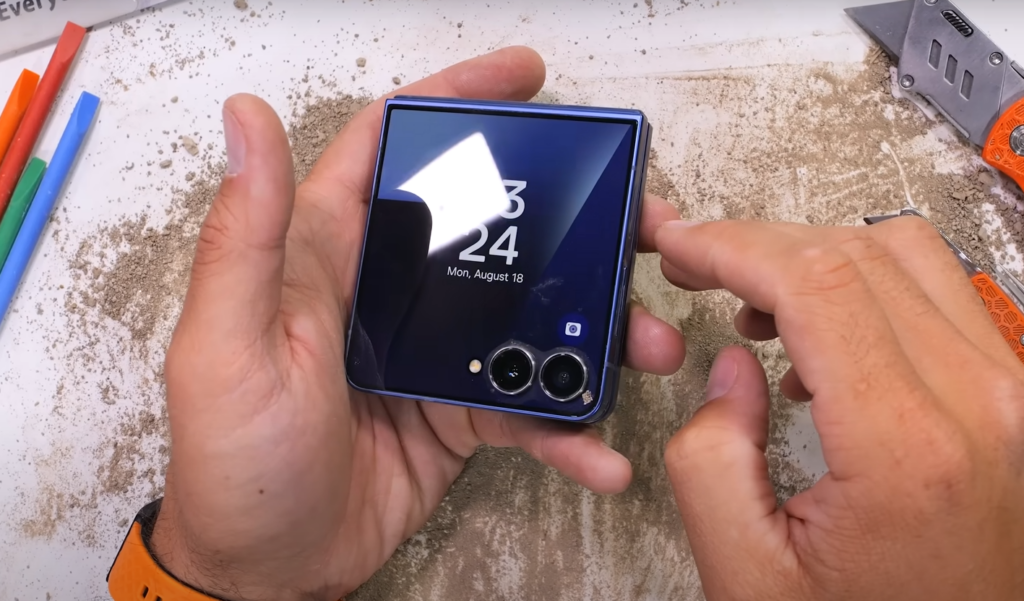
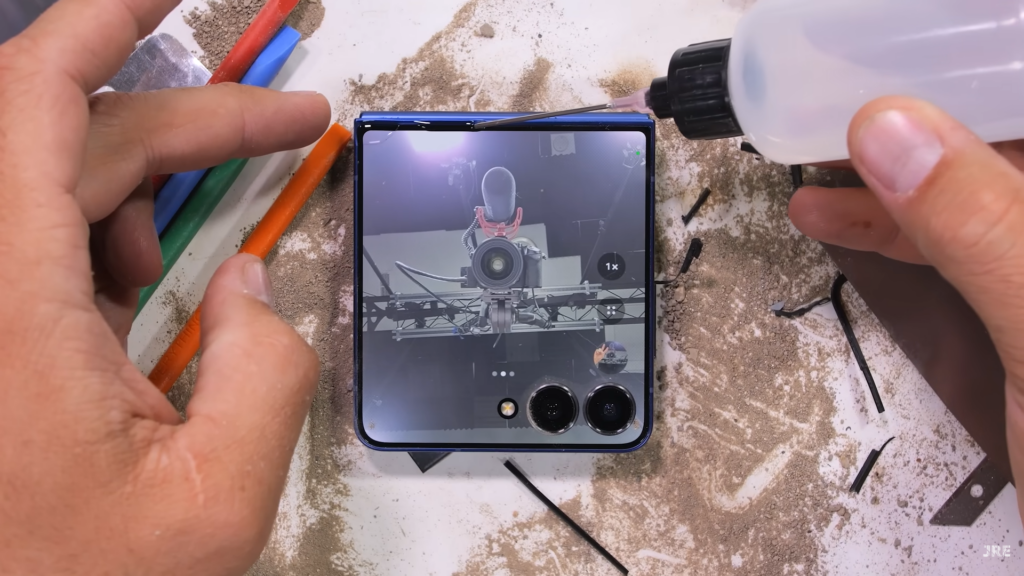
Samsung’s latest clamshell foldable has just gone through the teardown treatment, and the results reveal some interesting behind-the-scenes changes. The Galaxy Z Flip 7 may look familiar on the outside, but inside, Samsung has quietly made decisions that could make life easier for repair shops and long-term users alike.
Zack Nelson of JerryRigEverything posted the teardown on August 25, following up on his durability test from earlier this month. Nelson found that Samsung has moved away from some of the more frustrating repair hurdles seen in earlier models. The Z Flip 7 uses regular Philips screws unlike Apple’s proprietary pentalobe type, and its dual batteries now come with pull tabs rather than being glued down. That’s a big improvement over past Flip generations, where battery swaps were far trickier.
That said, the foldable’s biggest pain point remains the same: its 6.9-inch flexible OLED. Replacing the inner screen is still tricky, and the IP48 dust-resistant hinge — branded as “Armor Flex” — isn’t exactly simple either. Swapping out a hinge component after accidental damage or natural wear would likely take time and skill. On the plus side, the cover display and back plate, while requiring a fair amount of isopropyl alcohol and heat to loosen the adhesive, came off in one piece and seemed relatively easy to replace. Overall, the most common fixes — displays, back plate, and battery — aren’t as complicated as they used to be.
Samsung’s behind-the-scenes repair tweaks could help the Flip 7 remain usable for longer than its predecessors. While most people will still want to stick with official service centers, the use of easier screws and removable batteries suggests Samsung is thinking more about longevity. For a category still battling fragility concerns, that’s a quiet but meaningful win.
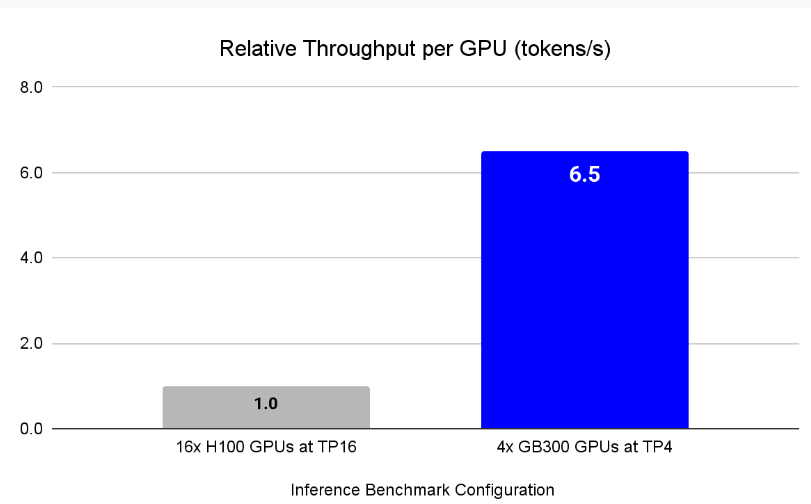
NVIDIA’s latest Blackwell-based GB300 GPUs are starting to show what they can do, and early results point to a massive jump in efficiency compared to the company’s previous generation. A recent CoreWeave benchmark shows just how far the new chips push AI performance when running one of today’s heaviest workloads.
In tests using the DeepSeek R1 model, just four GB300 GPUs matched the performance of 16 H100s. That works out to roughly six times the throughput per card, thanks to both raw hardware upgrades and a more efficient architecture.
Source: CoreWeave
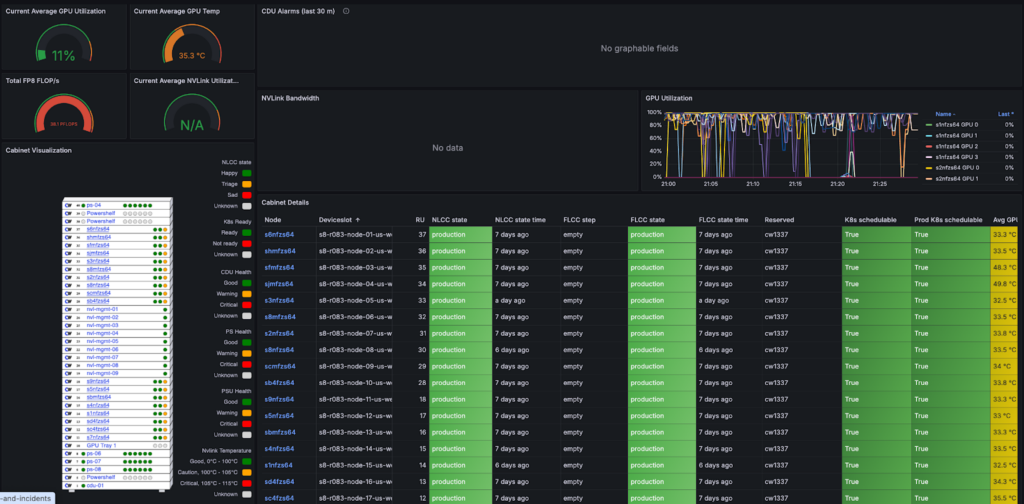
The GB300 NVL72 platform can scale up to 37TB of memory (40TB max) with 130TB/s of memory bandwidth, allowing it to tackle extremely large AI models without the bottlenecks seen in older hardware. It also makes use of 4-way tensor parallelism (TP4), while the H100 required 16-way splits (TP16) to reach similar scale. Fewer splits mean less communication overhead, and NVIDIA’s fifth-gen NVLink and NVSwitch interconnects help keep latency low.
Source: CoreWeave
For businesses running large AI services, that means faster token generation, lower costs per inference, and a more straightforward path to scaling. CoreWeave noted that the efficiency gains translate directly into practical benefits for workloads such as reasoning models, where performance-per-watt and latency are critical.
Of course, the hardware won’t come cheap. Systems built on the GB300 NVL72 are expected to start at around $300,000, putting them firmly in enterprise territory. But for companies already investing heavily in AI infrastructure, the performance leap could justify the cost.
If these early numbers hold true as deployments expand, the GB300 could mark one of the biggest generational jumps NVIDIA has delivered yet — and a new baseline for high-end AI computing.
Samsung’s next flagship phones could be about to make charging a lot smoother, though it might come at the cost of a familiar feature.
Right now, the Galaxy S25 series supports “Qi2 Ready” certification, which allows for 15W wireless charging. But because the phones don’t have magnets inside, users need special magnetic cases to properly align chargers and accessories. Google went a step further with the Pixel 10 series, launched last week, by including magnets directly in the phone for full Qi2 support. That means chargers snap into place with better alignment and stability, making the experience closer to Apple’s MagSafe.
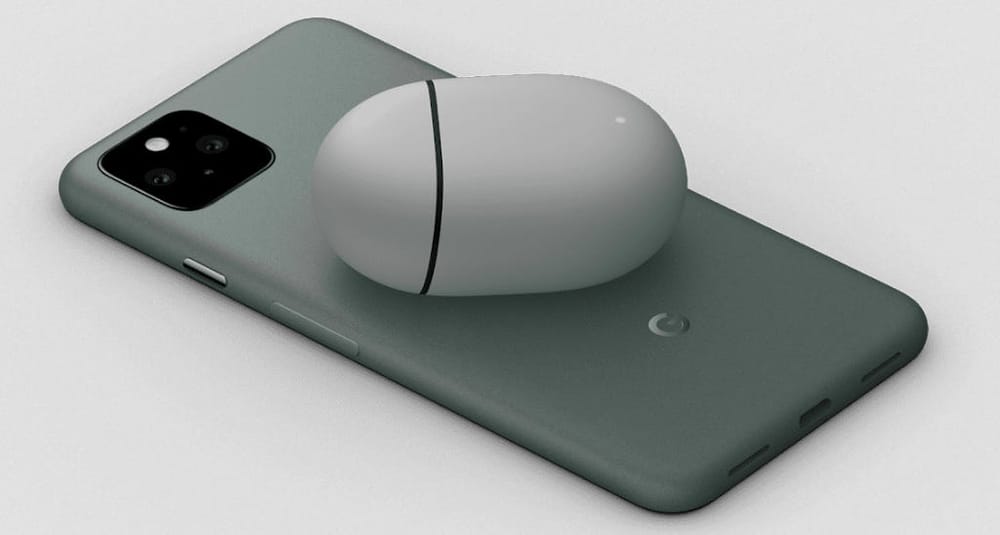
However, Google’s move came with a downside. According to the company, the Pixel 10 had to drop reverse wireless charging because the magnets created “a physical limitation”. In practice, that means no more charging your earbuds or watch on the back of the device.
Pixel 5 Battery Share feature that the latest Pixel lacks
This naturally raises the question: what will Samsung do with the Galaxy S26 series, expected in January 2026? Reports claim the Galaxy S26 series will support the Magnetic Power Profile of Q2, which would finally bring full Qi2 compliance without cases. If true, Samsung may face the same compromise as Google, meaning Wireless PowerShare — the company’s version of reverse wireless charging — could be on the chopping block.
Reverse wireless charging may be niche, but it’s been a handy safety net when accessories run out of power. If Samsung does remove it, the company will need to lean on other upgrades — like faster Qi2 charging, refreshed camera hardware, and design tweaks — to justify the trade-off.
There’s also another concern: S Pen functionality. In the past, cases with built-in magnets have caused interference with the S Pen — likely one reason Samsung held back from adding true Qi2 support earlier. But with magnets built directly into the phone instead of an optional case, the risk of interference could be greater. Samsung may need to adjust how the S Pen communicates with the device to ensure a flawless experience.
We use cookies on our website to give you the most relevant experience by remembering your preferences and repeat visits. By clicking “Accept”, you consent to the use of ALL the cookies.
This website uses cookies to improve your experience while you navigate through the website. Out of these, the cookies that are categorized as necessary are stored on your browser as they are essential for the working of basic functionalities of the website. We also use third-party cookies that help us analyze and understand how you use this website. These cookies will be stored in your browser only with your consent. You also have the option to opt-out of these cookies. But opting out of some of these cookies may affect your browsing experience.
Necessary cookies are absolutely essential for the website to function properly. This category only includes cookies that ensures basic functionalities and security features of the website. These cookies do not store any personal information.
Any cookies that may not be particularly necessary for the website to function and is used specifically to collect user personal data via analytics, ads, other embedded contents are termed as non-necessary cookies. It is mandatory to procure user consent prior to running these cookies on your website.