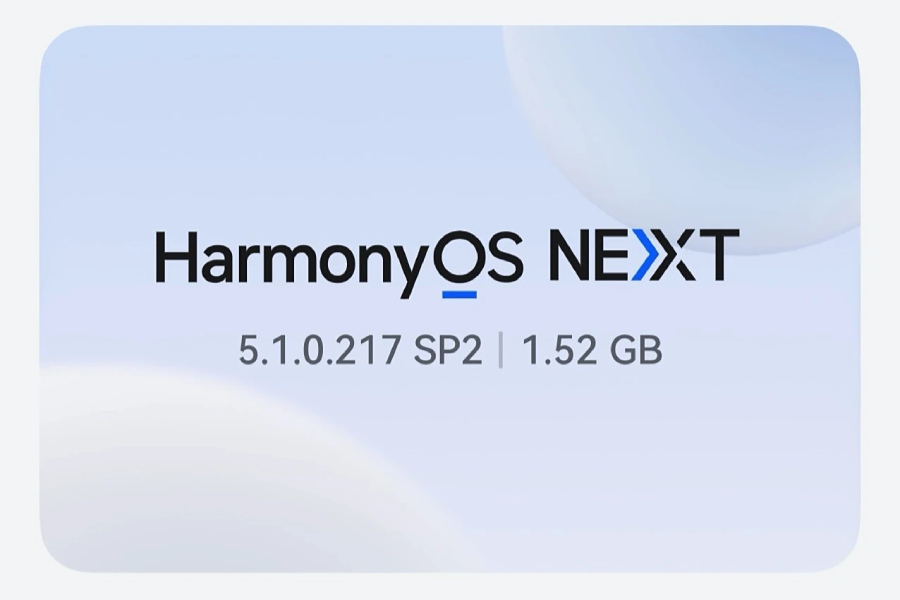
Huawei recently rolled out a new HarmonyOS NEXT update for the Pura 80 series in China, and it’s a hefty one at 1.52GB. The version 5.1.0.217 SP2 update brings the usual system optimizations along with a handful of tweaks to the Calendar and Memo apps.
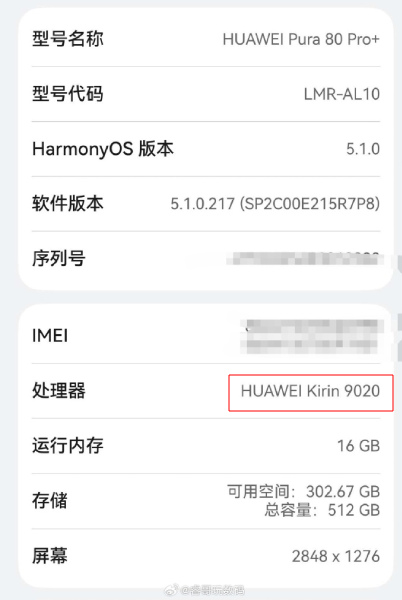
But what makes this update stand out is a small yet significant change. For the first time in years, Huawei is openly listing the processor inside its flagship phones.
Kirin 9020 confirmed!
On the Pura 80 Pro+’s About page, the phone is now confirmed to be running on Huawei’s in-house Kirin 9020 chip, something we had long suspected.
The Kirin 9020 is built on a 1+3+4 CPU architecture (one 2.5GHz large core, three 2.15GHz mid-cores, and four 1.6GHz efficiency cores) paired with Huawei’s in-house Maleoon 920 GPU.
It’s the first time in years that Huawei has openly shared a chip detail on its device. The company stopped naming processors or even acknowledging them in the launch events since the Kirin 9000 series.
The reason was clear, though. The decision came as US restrictions hit its supply chain and raised uncertainty around Huawei’s chip development. For years, every new Huawei phone launch led to online speculation and teardown reports just to figure out what processor was inside.
That seems to be changing now, and it wouldn’t be surprising if Huawei rolls out similar updates to the rest of its lineup soon.
Infinix‘s latest launch brings a new entry level smartphone in India. For a budget of just Rs 10,000, the new Infinix Hot 60i 5G brings a bunch of useful features like a smoother display than the iPhone 16 and a battery pack larger than Samsung’s Galaxy S25 Ultra. So let’s check it out.
Infinix Hot 60i 5G: What do you get for under Rs 10,000?
The Chinese brand announced the Hot 60i 5G with a tall 6.75-inch LCD panel that has an HD+ resolution, a 120Hz refresh rate, and 670 nits of peak brightness. Under the hood, the budget phone is equipped with the MediaTek Dimensity 6400 SoC, which is paired with 4GB of RAM and 128GB of internal storage. Users can even expand the storage by up to 2TB via a microSD card slot.
Infinix Hot 60i 5G
A massive 6,000mAh battery pack powers this model, which supports 18W wired fast charging. The rear has a 50MP camera, while the front has a 5MP selfie shooter. Out of the box, the Infinix Hot 60i runs on the Android 15 OS based HiOS 15 custom skin. You also get support for dual SIM (nano + nano + microSD), Bluetooth 5.3, a 3.5mm headphone jack, and a side mounted fingerprint scanner for security.
Infinix launched the Hot 60i with a Pixel’s visor like design on the rear. You can pick from four different color options, namely Monsoon Green, Plum Red, Sleek Black, and Shadow Blue. It will be available for purchase via Flipkart and retail stores on 21st August 2025 for Rs 9,299. There is also a bank discount that brings its effective price down to just Rs 8,999. This release also arrives mere days after the Infinix GT 30 went on sale in India.
For more daily updates, please visit our News Section.
boAt, India’s leading audio and wearables brand, has launched the Stone Arc series of portable RGB wireless speakers. The lineup includes the Stone Arc Pro Plus, Stone Arc Pro, and Stone Arc. All three feature Spatial Audio, IPX5 splash resistance, and up to 12 hours of playback.
Stone Arc Pro Plus
The Stone Arc Pro Plus delivers 45W of boAt Signature Sound with Spatial Audio. It includes Broadcast Mode to sync with multiple Stone Arc Pro or Pro Plus speakers. Features include RGB LED lighting, ergonomic portable design, and Hearables App support to adjust sound and lighting. It is IPX5 water-resistant and offers up to 12 hours of playtime.
Please Note: When you buy something using the links in our articles, we may earn a small commission at no cost to you.
Stone Arc Pro
The Stone Arc Pro outputs 25W of sound with Spatial Audio. It supports Broadcast Mode for syncing multiple Arc series speakers. RGB lighting has four dynamic music-synced modes, adjustable via the Hearables App. It is IPX5 splash-proof and runs up to 12 hours with RGB enabled.
Please Note: When you buy something using the links in our articles, we may earn a small commission at no cost to you.
Stone Arc
The Stone Arc produces 20W of sound from twin 58mm drivers. It supports TWS pairing to connect a second Arc speaker. It has Bluetooth v5.4, AUX input, and TF card slot. RGB LED lighting, IPX5 splash resistance, and a built-in mic for hands-free calls are included. It offers 12 hours of playback at 60% volume.
Please Note: When you buy something using the links in our articles, we may earn a small commission at no cost to you.
Pricing and Availability
The boAt Stone Arc Pro Plus is priced at ₹4,499 and comes in Black and Blue. The Stone Arc Pro is priced at ₹3,499 and is available in Raging Black and Groovy Grey. The Stone Arc is priced at ₹2,999 and comes in Frozen Blue. All models are available on Amazon, Flipkart, boAt’s official website, and select retail stores.
In other news, Boat has also launched a limited-edition Naruto Series in India, featuring Rockerz 460 wireless headphones and Stone 350 Pro Bluetooth speaker inspired by characters like Naruto, Kakashi, and Itachi.
For more daily updates, please visit our News Section.
Google usually releases a new Android OS around October, but this year has been an impressive landmark for the tech giant, as it released Android 16 in early June. This is way ahead of its usual release timeline. This early arrival should also mean a faster than usual update rollout for Motorola devices.
Motorola is already working on bringing Android 16 to its devices. In fact, it started accepting Android 16 beta invitations in June itself. So far, the Android 16 beta testing program has spanned across a range of Motorola devices, including the latest foldables, mid-range Edge models, and some budget phones.
We have created a list of Motorola devices that are currently eligible to participate in the Android 16 beta testing program. Review the list to find out if you have a chance for early access to the upcoming major upgrade.
These Motorola phones can sign up for the Android 16 beta testing program
Motorola Razr (2025)
Motorola Razr+ (2025)
Motorola Razr (2024)
Motorola Razr+ (2024)
Motorola Razr 50 Ultra
Motorola Razr 60 Ultra
Motorola Edge 60 Pro
Motorola Edge 60
Motorola Edge 60 Fusion
Motorola Edge 50 Pro
Motorola Edge 50 Fusion
Motorola G35 5G
Motorola G96
Motorola G (2025)
Motorola G Power (2025)
Please note that Motorola hasn’t released Android 16 beta for all these devices. These device owners can sign up for the beta program to be eligible for the Android 16 beta update when Motorola rolls it out.
As of writing this post, Motorola has released the Android 16 beta update for three devices: Edge 50 Fusion, Edge 50 Pro, and Edge 60 Pro. The beta update is currently available in select regions and may be expanded to additional regions later on. As for the other devices on the above list, users can expect Motorola to gradually expand beta’s availability over the coming weeks and months.
Visit the profile page and update your IMEI or serial number (SN) details.
Opt in for MFN on your Motorola community profile.
Always ensure that your phone is running the latest software.
Go to the MFN Beta Testing Opportunities page to see a testing opportunity for your Motorola device.
Tap on the registration link for your Motorola phone.
Fill in the required details and submit your application.
Next, keep an eye on your inbox for emails from Motorola about the beta update. Remember to check your spam or junk folder as well, so you don’t miss any important updates.
When you receive the beta update on your Motorola device, take a moment to ensure that your device has sufficient storage and at least 30% battery before hitting the install button. A strong Wi-Fi connection is also recommended, as these major upgrades are bulky in size, over a GB.
So, is your Motorola phone eligible for the Android 16 beta testing program? Share your thoughts on Android 16 in the comments below. Also, remember to visit our Android 16 section regularly for the latest news and developments.
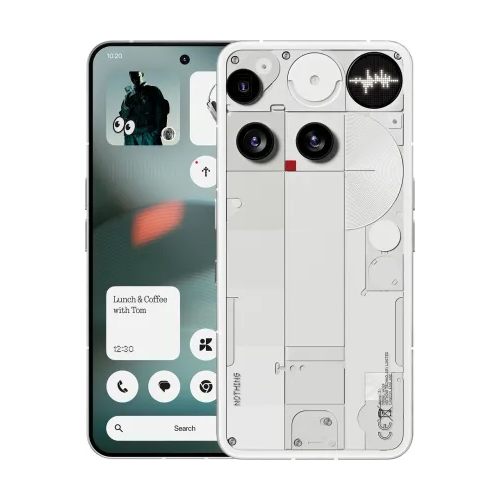
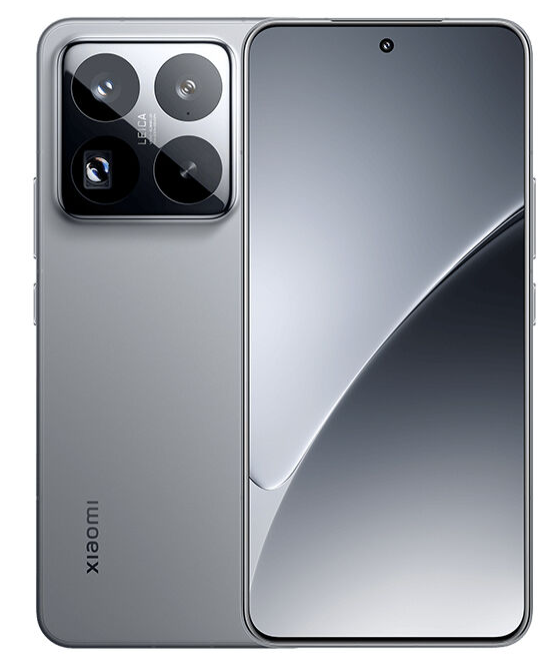
Nothing Phone (3) and Xiaomi 15 Pro are two flagship smartphones launched in 2025 that target tech-savvy users but take very different approaches. One focuses on bold, standout design with innovative LED features, while the other pushes boundaries in performance, camera versatility, and battery technology. This comparison is important because both compete in the same price range, yet offer unique strengths that could appeal to entirely different types of buyers.
Design and Display
Nothing Phone 3
Build and Feel: Both phones have premium glass and metal builds with IP68 water and dust resistance. The Nothing Phone (3) stands out with its unique monochrome LED back (489 LEDs) for notifications, timers, and creative lighting effects, making it visually distinctive. The Xiaomi 15 Pro opts for a sleeker design without LED flair but offers a more refined curvature and slightly slimmer profile. While the Xiaomi feels more classic, the Nothing Phone (3) is better for those who want their device to double as a style statement.
Display Quality: The Xiaomi 15 Pro’s 6.73-inch LTPO AMOLED panel offers 1440p resolution, Dolby Vision, and higher 1920Hz PWM for reduced eye strain, making it sharper and more comfortable for prolonged use. The Nothing Phone (3) has a 6.67-inch OLED with a slightly lower 1260p resolution but reaches a higher peak brightness of 4500 nits, ideal for outdoor visibility. Xiaomi’s wider color support (68B colors) and HDR10+ with Dolby Vision deliver richer visuals for media.
Verdict: For design uniqueness, the Nothing Phone (3) wins with its LED system. For pure display quality and multimedia experience, the Xiaomi 15 Pro edges ahead thanks to sharper resolution, Dolby Vision, and better color depth.
Specifications
Xiaomi 15 Pro
Performance: The Xiaomi 15 Pro packs Qualcomm’s Snapdragon 8 Elite (3 nm) with advanced Oryon cores, outperforming the Snapdragon 8s Gen 4 in the Nothing Phone (3). It offers superior processing speeds, GPU performance (Adreno 830 vs 825), and better sustained multitasking power. This makes it more future-proof for gaming and heavy workloads. The Nothing Phone (3) is still very capable but leans toward efficient flagship performance rather than absolute peak power.
Battery and Charging: Xiaomi’s 6100 mAh battery is larger than the Nothing Phone (3)’s 5150/5500 mAh, paired with 90W wired and 50W wireless charging for faster top-ups. The Nothing Phone (3) offers 65W wired and 15W wireless charging, which is decent but notably slower. Xiaomi also supports higher reverse wireless power at 10W versus 7.5W. For users seeking quicker and more flexible charging, Xiaomi takes the lead.
Verdict: The Xiaomi 15 Pro is ahead in both performance and battery technology, delivering faster speeds, longer endurance, and quicker charging, making it a more robust daily driver for power users.
Camera
Xiaomi 15 Pro
Main and Secondary Lenses: The Xiaomi 15 Pro features Leica-tuned triple 50 MP sensors, including a f/1.4 wide camera with dual-pixel PDAF and a 5x periscope zoom, giving it a major advantage in low light and telephoto performance. It also supports advanced video formats like 8K HDR and Dolby Vision 10-bit recording. The Nothing Phone (3) offers triple 50 MP sensors too, but with a 3x periscope and fewer pro-grade features, making it solid but not as versatile.
Selfie Camera: The Nothing Phone (3) has a higher-resolution 50 MP selfie camera capable of 4K@60fps video, making it excellent for sharp, high-detail self-portraits and vlogging. Xiaomi’s 32 MP front camera is lower in resolution but still offers 4K video and strong HDR, with slightly better stabilization for video calls and streaming.
Verdict: For main camera versatility and video capabilities, the Xiaomi 15 Pro dominates, especially for zoom and cinematic shooting. However, for selfie quality and detail, the Nothing Phone (3) edges ahead, appealing more to vloggers and social media creators.
Pricing
Nothing Phone 3
The Xiaomi 15 Pro is priced around $750, while the Nothing Phone (3) is about $799. Considering the Xiaomi 15 Pro offers a more powerful processor, larger battery, faster charging, better main camera system, and richer display, it delivers higher value at a lower cost.
The Nothing Phone (3) justifies its price through unique design, brighter screen, and higher-res selfie camera, but for pure performance-to-price ratio, Xiaomi is the stronger deal.
Disclaimer: Prices are approximate and may vary based on country, region, and applicable taxes.
Conclusion
Xiaomi 15 Pro
The Nothing Phone (3) stands out with its monochrome LED back for functional aesthetics, extremely bright 4500-nit display, and high-resolution 50 MP selfie camera. The Xiaomi 15 Pro counters with Leica camera tuning, Dolby Vision video recording, 5x optical zoom, 90W charging, and two-way satellite communication for emergency connectivity.
Verdict: The Xiaomi 15 Pro is the better choice for those prioritizing raw performance, professional-grade photography, and battery endurance at a lower price. The Nothing Phone (3) is ideal for buyers who value standout design, a brighter display for outdoor use, and top-tier selfie quality. Both are premium, but their strengths cater to very different types of users.
XPPen, a global leader in digital art innovation, is celebrating its 20th anniversary in 2025. Since its founding in 2005, the brand has been empowering creators worldwide with cutting-edge drawing tablets and displays. This year’s milestone is being marked with exciting events, partnerships, contests, and exclusive anniversary offers.
20th Anniversary Theme “Back to Future, Create Now”
The celebration follows the theme Back to the Future, Create Now!, highlighting how technology and creativity can come together to inspire the next generation of artists. To make the anniversary even more memorable, XPPen has teamed up with PUBG MOBILE for a unique collaboration.
XPPen x PUBG MOBILE Ultimate Set Design Contest
One of the biggest highlights is the Ultimate Set Design Contest, launched in partnership with PUBG MOBILE. Running from August 16 to October 16, 2025, the contest invites creators to design outfits, weapons, and accessories under the Future Era theme.
The contest is hosted on PUBG MOBILE’s Ptopia Design Project (PDP), the game’s first global co-creation platform. Winners will share a $120,000 prize pool, receive XPPen flagship drawing displays, and even see their designs featured inside the game.
World-Class Judging Panel
Entries will be evaluated by a distinguished panel of global artists and creators:
Clinton Jones (Pwnisher) – Director and 3D/VFX artist.
Esteban Diácono – Motion designer with global brand collaborations.
Ryota-H – Japanese animator and manga artist.
Shan Jiang – Renowned illustrator.
Giusy Amoroso – Creative designer and artist.
Lead judge Clinton Jones summed up the spirit of the contest: “This is a fantastic opportunity. I look forward to seeing participants give their best.”
XPPen’s Innovation Journey
For the past 20 years, XPPen has built tools that bridge technology and human art. Its mission is to empower creators with reliable, innovative, and portable solutions.
Recent breakthroughs include:
Magic Drawing Pad & Magic Note Pad – designed for mobile art creation and business use.
New stylus with advanced chip – offering greater sensitivity, stability, and portability.
Artist Ultra Series – professional-grade drawing displays that remain lightweight and portable.
Anniversary Celebration Offers
To thank its global community, XPPen is running exclusive anniversary sales with discounts of up to 50% off across its product lineup. Special activities such as community events, giveaways, and anniversary gift sets are also part of the celebration, giving fans more ways to join in.
A Global Celebration of Creativity
With its partnership with PUBG MOBILE, generous prize contests, and new product innovations, XPPen’s 20th anniversary is more than a celebration of the past, it is a look into the creative future. For artists, gamers, and digital creators alike, this is the perfect opportunity to engage, create, and be inspired.
Samsung’s next high-end tablets, the Galaxy Tab S11 and Tab S11 Ultra, are shaping up to be feature-packed flagships — but a new leak suggests they might not last as long as their predecessors.
Galaxy Tab S11 Ultra
Listings spotted on Europe’s EPREL database show the Galaxy Tab S11 Ultra (SM-X936B) is rated for only 1,200 charge cycles — a drop from the 2,000 cycles claimed for last year’s Galaxy Tab S10 lineup. A battery cycle refers to a full charge and discharge, with the number indicating how many times the battery can go through that process before its capacity falls below 80%.
Galaxy Tab S11Tab S11 Ultra
On paper, the Tab S11 and S11 Ultra should deliver solid daily battery life — 81 and 95 hours per charge, respectively. But the reduced cycle rating suggests they could need a battery replacement much sooner than previous models. For Samsung’s flagship tablets, that could be a sticking point for buyers who plan to hold on to them for multiple years.
Galaxy Tab S10 LiteGalaxy S25 FE
The Galaxy Tab S11 series is still expected to deliver premium hardware, including 11-inch and 14.6-inch AMOLED displays, MediaTek Dimensity 9400 chipset, and up to 16GB of RAM. They’ll also carry IP68 water- and dust-resistance ratings. However, EPREL data shows only a “C” repairability score and a low “E” for drop resistance.
By comparison, the more affordable Galaxy Tab S10 Lite keeps the 2,000-cycle battery rating and offers 88 hours of use on a charge. But it makes trade-offs with an LCD display and an Exynos 1380 chipset.
Interestingly, the reduced cycle rating of the flagship tablets might hint at a charging upgrade. The upcoming Galaxy S26 Ultra is rumored to jump from 45W to 60W wired charging, and Samsung could bring similar speeds to the Tab S11 lineup. If true, the faster charging could partly explain the lower cycle count, as higher wattages generally put more strain on the battery over time if they’re not designed specifically to handle that. Samsung hasn’t confirmed details yet, but the Galaxy Tab S11 lineup is expected to be unveiled around September, following the same schedule as last year.
Back in June 2025, the Red Magic Gaming Tablet 3 Pro made its official debut in China along with the global announcement of the Red Magic Astra. But apart from the two gaming tablets, the brand also unveiled the Shadow Blade 3, which is a gamepad that turns your smartphone into a handheld console. It was initially available in China, and now, the wireless controller is available in the global market as well.
Red Magic Shadow Blade 3: Console-like gaming on mobile
The Chinese brand’s new Shadow Blade 3 is a gamepad that wirelessly connects to the user’s smartphone. This connection is via Bluetooth 5.3, with support for iOS and Android. The controller isn’t restricted to smartphones alone and can even work with tablets as well. In other words, you can use it with compact gaming tablets like the Red Magic Astra, Redmi K Pad, and even the iPad Mini.
Red Magic Shadow Blade 3 Controller
There is even a 2.4GHz USB connector that allows it to be paired with a PC. This sleek controller features precision Hall Effect joysticks, customizable micro buttons, a six-axis gyroscope, haptic feedback via a linear motor, and RGB lighting. So you can expect a handheld console like experience from your tablet or smartphone, thanks to more intuitive controls.
It would even help improve the gameplay experience, offering an advantage over other mobile gamers. As of right now, the Red Magic Shadow Blade 3 wireless gamepad is available for purchase for 129 US Dollars or 129 Euros from the brand’s official website. The gamepad can be purchased in the UK for 109 Pounds Sterling as well.
For more daily updates, please visit our News Section.
Apple might be planning on releasing a fresh wave of products that refresh its existing lineups. A faster new compact iPad, better Apple TV, and a new studio grade monitor are in the works, so here’s everything you need to know.
New & Improved iPad Mini, Studio Display 2 & Apple TV on the Horizon
Apple TV
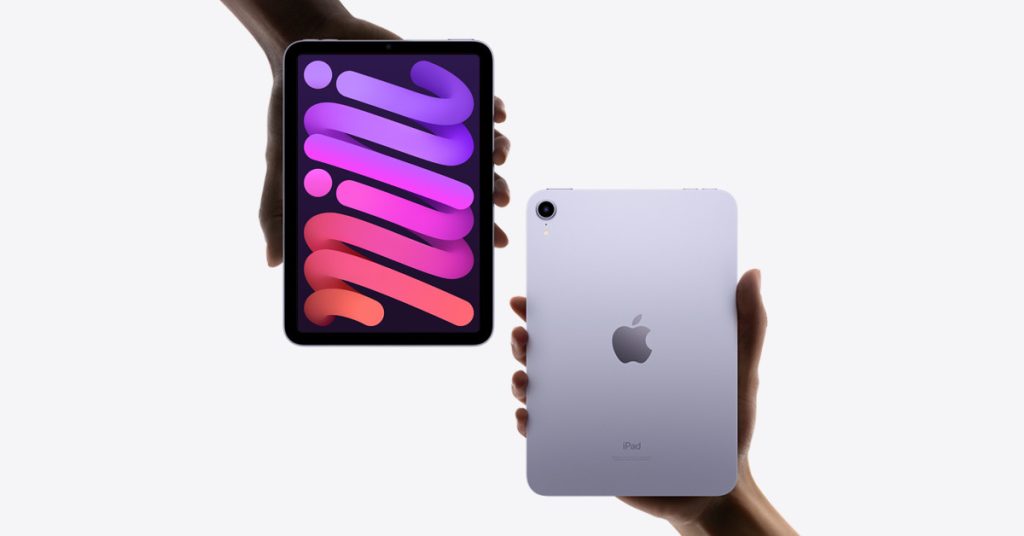
According to a MacRumors report, the Cupertino based giant is planning on updating an iPad model, Apple TV, and Studio Display. Sources close to the matter have revealed that the next gen A19 Pro will power the new iPad Mini, which is the brand’s compact tablet model. To recall, its predecessor was unveiled with the older A17 Pro model, while the A19 Pro is expected to debut in the upcoming iPhone 17 Pro and iPhone 17 Pro Max.
Apple iPad Mini
On the other hand, the A17 Pro will now power the newer Apple TV 4K, bringing faster performance compared to the older A15 Bionic models. Considering how this tiny box doesn’t need as much power, this might be a binned version of the chip that powers the iPhone 15 Pros. So we can expect better gaming performance along with Apple Intelligence making its debut as well. The report further adds that Apple plans to unveil the compact tablet with an OLED screen like its iPhones.
Apple Studio Display
Lastly, the professional grade Apple Studio Display 2 could be arriving soon. As the name suggests, it is a successor to the original Studio Display. While these new gadgets are expected to launch soon, there is still no word regarding its release timeline.
For more daily updates, please visit our News Section.
Samsung is working on a new kind of lens that could make future smartphone or XR headset slimmer without cutting corners on performance. The company has teamed up with Pohang University of Science and Technology (POSTECH) to develop its latest “metalens” technology, described in a paper published in Nature Communications.
Instead of using traditional curved glass, a metalens controls light using nanostructures that are thinner than a human hair. The research team — led by Dr. Jeong-Geun Yun from Samsung Research and Professor Junsuk Rho at POSTECH — came up with a two-thirds wavelength phase-delay method. This approach avoids the need for tall, fragile nanostructures, making the lenses more durable and easier to produce. The result? Camera modules that are about 20% thinner, shrinking from 2mm to 1.6mm.
Image: Samsung
From XR eye tracking to smartphones
The team demonstrated the tech with an infrared eye camera for XR headsets, managing accurate iris recognition and pupil tracking over a 120° field of view. They also boosted sharpness, with modulation transfer function (MTF) jumping from 50% to 72%.
Samsung says it plans to adapt the tech for visible light cameras, which could help shrink the camera bumps on future smartphones. Bigger sensors have improved low-light performance, but they’ve also made those protrusions more noticeable — just look at the vivo X200 Ultra. This new lens approach could change that.
Apple is reportedly exploring similar ideas for an under-display alternative to the Dynamic Island, so it’ll be interesting to see which company brings it to market first. If successful, smartphones might finally get sleeker, cleaner designs again.
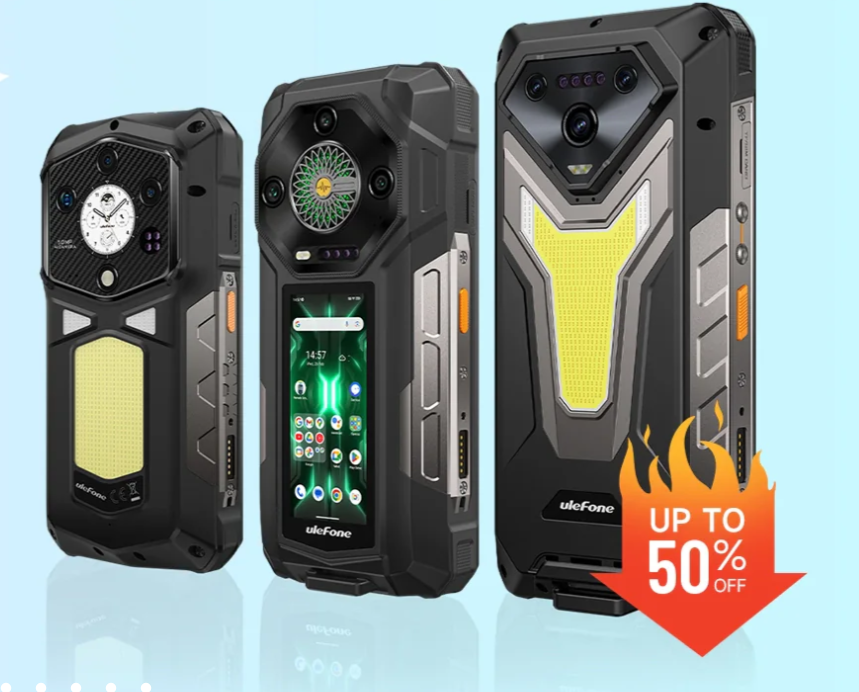
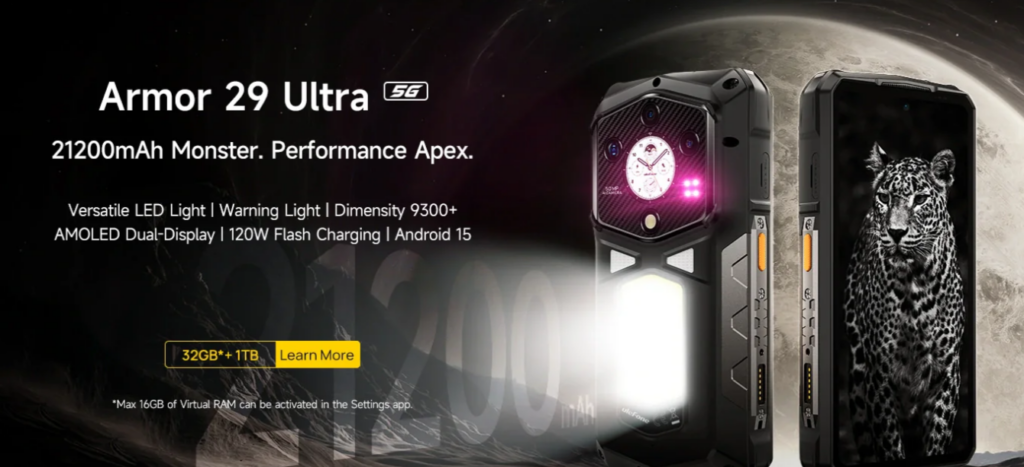
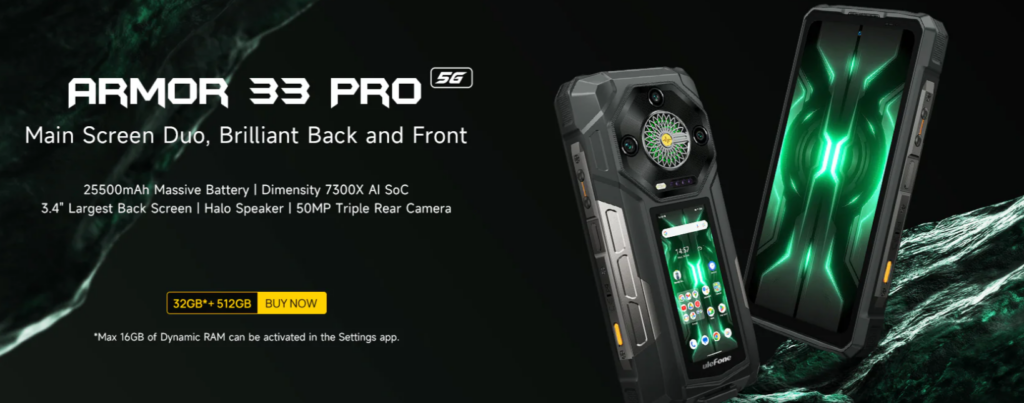
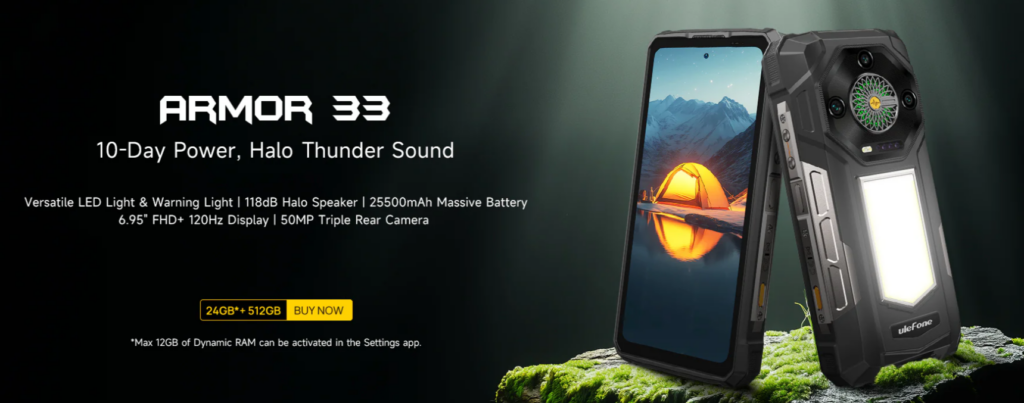
Ulefone is kicking off the first global sale of its latest rugged smartphones, the Armor 33 Series and Armor 29 Ultra, on August 18. These models are available on AliExpress, Amazon, and Ulefone’s official store, and they come with massive batteries that cross the 20,000mAh mark, setting a new industry standard for power.
Buyers can also enter a sweepstakes for a chance to win an Armor 33 Pro or Armor 33 by visiting Ulefone’s official website.
Ulefone Armor 29 Ultra: Powerhouse with Flagship Specs
The Ulefone Armor 29 Ultra is built for performance and long-lasting use. It’s powered by the MediaTek Dimensity 9300+ processor and features a 21200mAh battery with 120W flash charging, giving multiple days of autonomy on a single charge.
Its 6.67-inch AMOLED main display is paired with a 1.04-inch AMOLED sub-screen, making notifications and quick controls more convenient.
The camera setup is equally impressive, featuring a Sony IMX989 1-inch main sensor, a 64MP night vision camera, and a 50MP ultra-wide lens. With 1TB internal storage, WiFi 7, Bluetooth 5.4, and full GNSS navigation support, it’s a rugged phone that doesn’t compromise on high-end features.
The Armor 33 Pro focuses on dual-screen usability with a MediaTek Dimensity 7300X processor. It packs a 25500mAh battery supporting 66W fast charging, ideal for extreme outdoor use.
The front has a large 6.95-inch display, while the 3.4-inch rear screen is perfect for quick access to controls and notifications.
Its camera system includes a 50MP main sensor, a 64MP night vision camera, and a 50MP ultra-wide macro lens. It also boasts 16GB RAM, 512GB storage, and a 118dB Halo HiFi Audio system for loud, clear sound in any environment.
The standard Armor 33 swaps the rear screen for a versatile LED light + warning light module, making it ideal for emergency signaling and worksite use. It uses the MediaTek Helio G100 processor with 12GB RAM and shares most other features with the Armor 33 Pro.
With battery capacities rarely seen in smartphones, the Ulefone Armor 33 Series and Armor 29 Ultra are designed for users who need extreme durability, multi-day power, and high-performance hardware.
The launch discounts offer up to 50% off, making this the perfect time to upgrade to a rugged powerhouse.
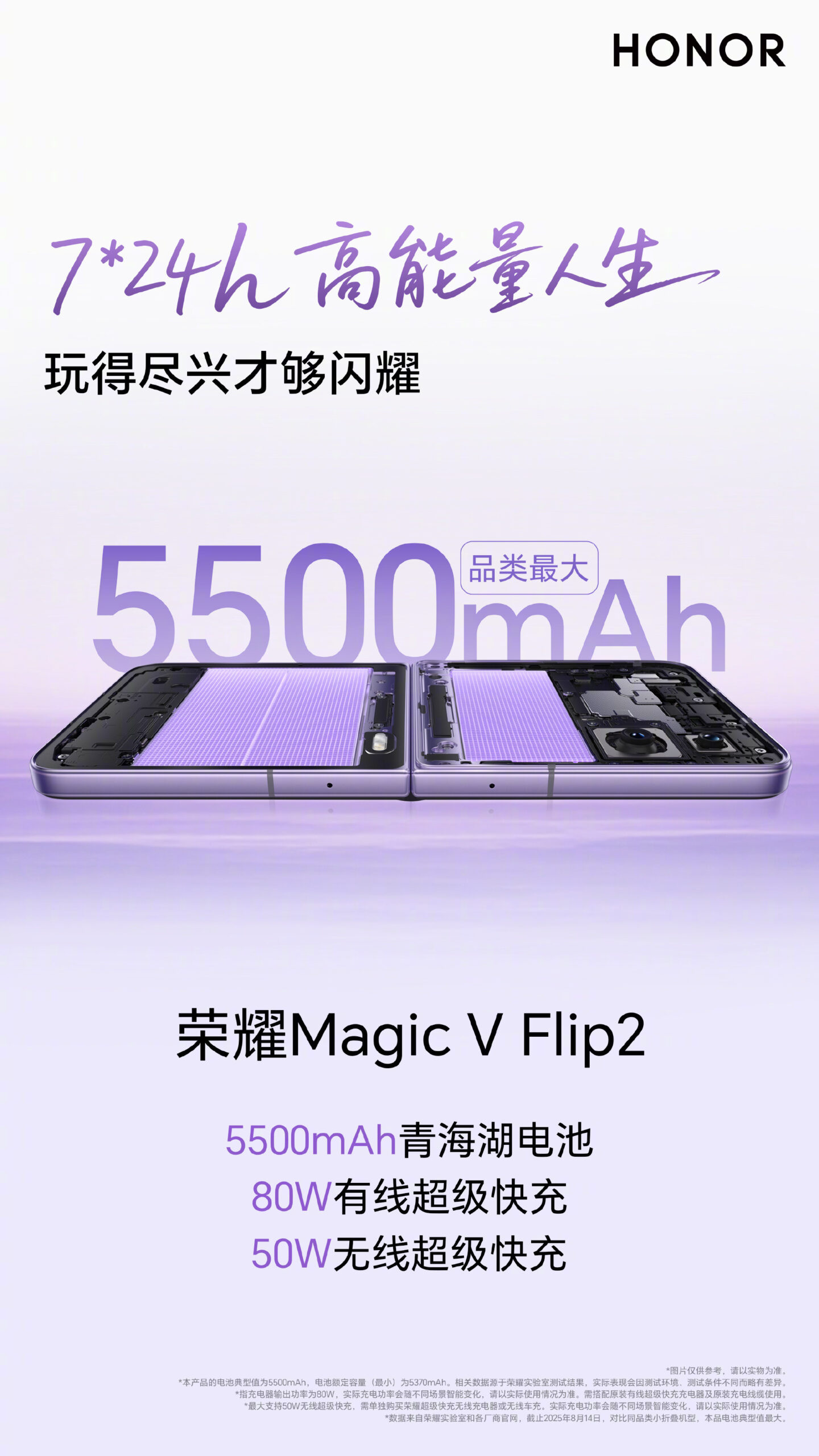
Honor is all set to announce the Honor Magic V Flip 2 on Aug. 21 in China. One of the major highlights of this phone is that it will pack the largest battery ever seen on a flip phone. Today, the brand released an official post confirming its battery size and charging capabilities.
Honor Magic V Flip 2 battery size, charging capabilities
At present, the Xiaomi Mix Flip 2, which debuted in June this year in China, holds the record for the largest battery in a flip phone with its 5,165mAh cell and 67W fast charging support. However, it lacks wireless charging.
The new post confirms that the Honor Magic V Flip 2 will house a larger 5,500mAh battery. It will also support 80W wired and 50W wireless charging, making it the most powerful battery and charging combination ever offered in a clamshell phone.
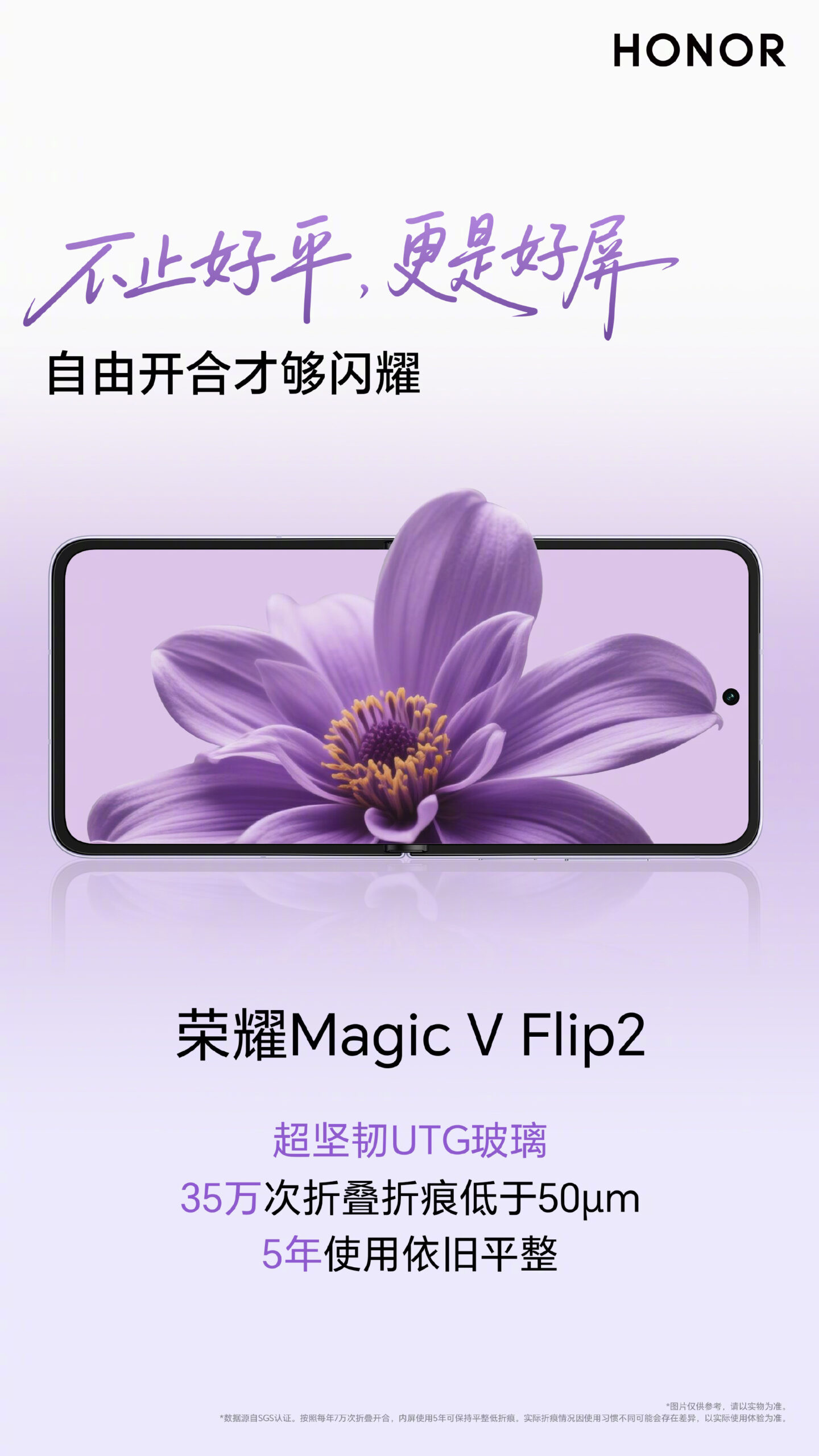
Another poster reveals that the Magic V Flip 2 features ultra-durable UTG glass, with creases measuring less than 50μm even after 350,000 folds. The brand claims it remains as smooth as new after five years of use.
Honor Magic V Flip 2 specifications (rumored)
A recent leak revealed that the Magic V Flip 2 will feature a 6.82-inch LTPO OLED foldable screen with 1.5K resolution and a 120Hz refresh rate. On the outside, it will feature a 4-inch LTPO OLED 120Hz display. For selfies, it will have a 50-megapixel front camera, while the back panel may feature a 200-megapixel main camera and a 50-megapixel ultra-wide lens.
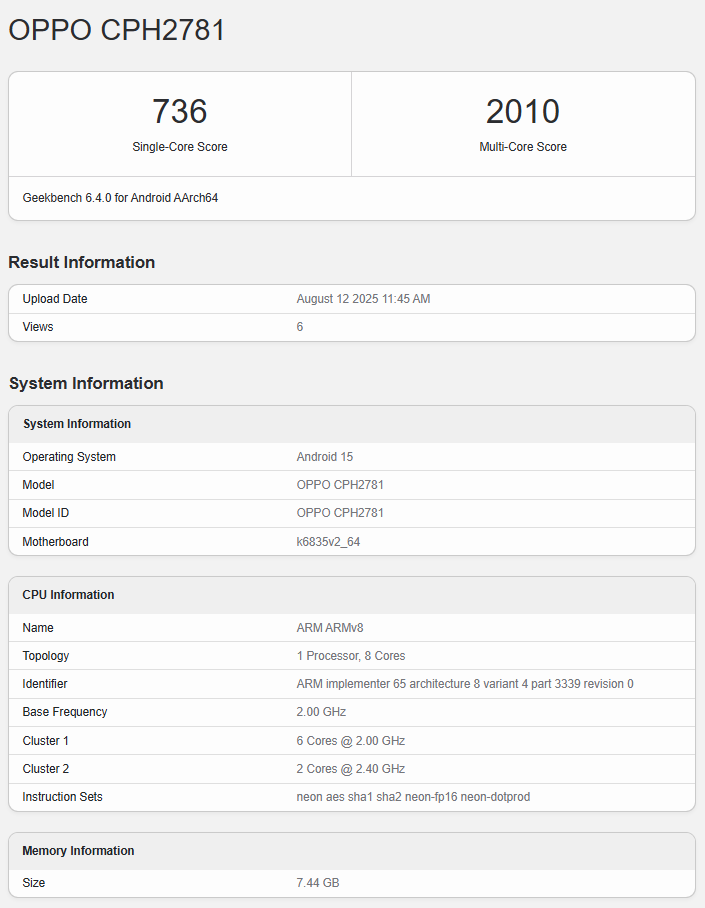
Oppo is reportedly working on the Oppo A6 Pro 5G handset. The device was recently spotted at the Malaysian SIRIM certification platform with model number CPH2781. This device, which has also appeared on other certification platforms such as the FCC and TUV, has now surfaced in Geekbench’s database. As usual, the Geekbench appearance has revealed its chipset, RAM, and OS version.
Oppo A6 Pro 5G Geekbench listing
Oppo A6 Pro 5G Geekbench listing
The Oppo A6 Pro 5G’s Geekbench listing shows it is powered by the Dimensity 6300 chipset. While the listing does not explicitly mention the chipset name, the CPU and GPU (via source code) details confirm it is equipped with the D6300.
The Geekbench listing also reveals that the device has 8GB of RAM and runs Android 15. In the single-core and multi-core tests, the device scored 736 and 2010 points, respectively.
The previously seen TUV listing revealed that the Oppo A6 Pro 5G may support 80W fast charging. There rest of its specifications are under wraps. As the moniker suggests, the device will succeed the Oppo A5 Pro 5G, which debuted earlier this year.
Oppo A5 Pro 5G specifications
Oppo A5 Pro 5G
The Oppo A5 Pro 5G has an IP68-rated, MIL-STD-810-certified body with a 6.67-inch LCD HD+ 120Hz display. Under the hood, it features the Dimensity 6300 chipset, up to 8GB of RAM, up to 256GB of storage, and a 5,800mAh battery with 45W charging. It has a 50-megapixel + 2-megapixel dual-camera setup and an 8-megapixel front camera. Other features include ColorOS 15-based Android 15, dual speakers, and a side-mounted fingerprint sensor.
For more daily updates, please visit our News Section.
Alongside the MatePad Air, Huawei also announced a more affordable tablet, the MatePad 11.5 S 2025. Like the MatePad Air, it comes in both a regular version and a Soft Light Edition, which reduces glare and reflection. Here are all the details.
Specs and features
The MatePad 11.5 S has an 11.5-inch 2.8K IPS display (2800 × 1840, 291ppi) as standard. The Soft Light version has Huawei’s nano-etched surface that reduces reflections to 2% and meets TÜV Rheinland certifications for low blue light and flicker-free viewing. It also supports an adaptive 30–144Hz refresh rate and the full P3 color gamut.
The chassis measures 6.1mm thick, weighs 515g, and comes in Field Green, Feather Sand Purple, Frost Silver, and Deep Space Gray. Inside, it runs HarmonyOS 5.0, with configurations up to 12GB of RAM and 512GB of storage.
Huawei says the tablet features a redesigned cooling system that improves performance by 27% over the last generation. Power comes from an 8800mAh battery with 40W fast charging.
For cameras, there’s a 13MP rear sensor and an 8MP front shooter, both capable of 1080p video. Audio comes from a quad-speaker setup with Histen 9.0 sound tuning, while connectivity includes Wi-Fi 6, Bluetooth 5.2, USB-C (USB 3.1 Gen 1), and Huawei’s Star Flash tech for low-latency stylus and keyboard pairing.
The tablet also features some software tweaks. For example, the updated Huawei Note app has AI handwriting beautification, formula recognition, and 60x zoom canvases, plus the “Xiaoyi” assistant for real-time translation, problem solving, and document Q&A.
Artists get “Born to Draw” mode with 3D oil painting brushes, animation tools, and smart color palettes, though the M-Pencil Pro 3 stylus is sold separately.
Pricing
In China, the Huawei MatePad 11.5 S starts at 2,199 yuan for the 8GB RAM + 256GB Wi-Fi Smart version. The 12GB + 256GB Wi-Fi model is 2,499 yuan, while the 12GB + 256GB Wi-Fi Soft Light version costs 2,799 yuan. The top-end 12GB + 512GB Wi-Fi Soft Light configuration comes in at 3,199 yuan.
For more daily updates, please visit ourNews Section.
Xiaomi is gearing up to launch its next flagship phones — the Xiaomi 16 and 16 Pro — with some of the biggest camera changes we’ve seen from the brand in years. The lineup is expected to debut in the last week of September 2025, and early leaks suggest photography will be a major focus this time.
Big jump in selfie and main camera hardware
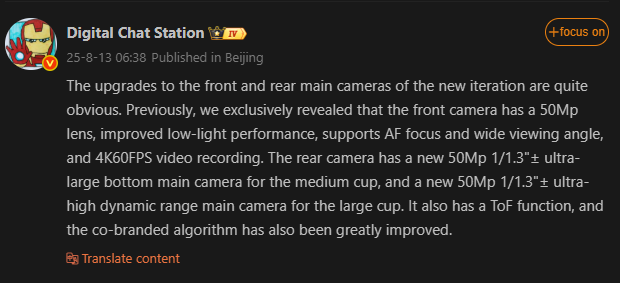
A reliable tipster on Weibo, Digital Chat Station, claims both models will ditch the 32MP f/2.0 front camera that’s been around since the Xiaomi 13 series. In its place will be a new 50MP sensor with a wider field of view, autofocus, and continued support for 4K 60fps recording — a big plus for selfies and vlogging.
On the back, both phones are said to feature a 50MP 1/1.3-inch main sensor, with the Pro model getting a boost in dynamic range and a ToF sensor for better depth detection in portrait shots. Leica’s image tuning has also been improved.
The entire Xiaomi 16 series — which may also include a “Pro Max” — is expected to run on Qualcomm’s Snapdragon 8 Elite 2 chip. A leak from April also claims the base model will pack a massive 7,000mAh battery.
With the new image sensors and improved Leica tuning, it’ll be interesting to see how the Xiaomi 16 series stacks up against the Oppo Find X9 and Vivo X300 in challenging shooting conditions.
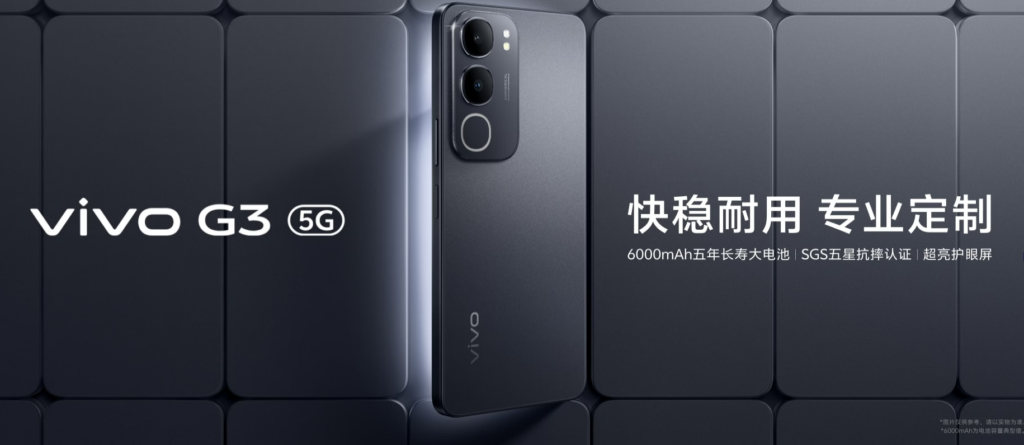
Vivo has introduced a G-series phone called the Vivo G3 5G in China as a successor to last year’s Vivo G2. Key highlights include a large 6.74-inch LCD with 90Hz refresh rate, a Dimensity chipset, and a big battery. Read on to know the detailed specifications, features, and pricing.
Vivo G3 5G specifications and features
Vivo V3 5G
The Vivo G3 5G sports a 6.74-inch LCD waterdrop notch display with a resolution of 1600 x 720 pixels, 20:9 aspect ratio, 1500:1 contrast ratio, and 90Hz refresh rate. The rear camera setup features a 13-megapixel main sensor with autofocus, while the front camera has a 5-megapixel sensor.
The smartphone is powered by the MediaTek Dimensity 6300 chipset, paired with 6GB or 8GB LPDDR4X RAM. Storage options include 128GB or 256GB UFS 2.2, while the 6GB+128GB variant uses eMMC 5.1. It packs a 6,000mAh single-cell battery supporting 44W fast charging.
Vivo T3 5G
The Vivo G3 5G runs on OriginOS 5-based Android 15. It comes with other features, such as a side-facing fingerprint sensor, dual SIM, 5G, Wi-Fi 5, Bluetooth 5.4, an IR blaster, USB-C port, and a 3.5mm jack. It features an IP64-rated body, which measures 167.3 x 76.95 x 8.19mm and weighs 204 grams.
Vivo G3 5G price and availability
The Vivo G3 5G is available in Diamond Black. The 6GB+128GB variant is priced at 1,499 Yuan (~$210), while the 8GB+256GB model costs 1,999 Yuan (~$280). Aimed for the offline market in China, the V3 5G specs and design are identical to the existing Vivo Y50 5G, which also comes in blue and white shades.
For more daily updates, please visit our News Section.
Honor has officially confirmed the arrival of its X7c 5G smartphone for the Indian market. The company has begun sharing details, indicating that the debut is scheduled for next week. Here’s a look at everything that’s known about the device.
Honor X7c 5G launch date
Honor X7c 5G is launching on August 18 in India
The Honor X7c 5G will launch in India on August 18 and will be sold exclusively through Amazon. Buyers will have a choice between Forest Green and Moonlight White finishes. The specifications suggest that it could be priced at around Rs 15,000 in India.
Honor X7c 5G specifications
The Honor X7c 5G features a 6.8-inch full-HD+ display with a 120Hz refresh rate and peak brightness of 850 nits. Dual stereo speakers are included for an enhanced audio experience. It is powered by Qualcomm’s Snapdragon 4 Gen 2 chipset, paired with 8GB of RAM and 256GB of storage. There’s a 5,200mAh battery with 35W charging support.
For photography, the X7c offers a 5-megapixel selfie snapper and a dual-camera setup comprising a 50-megapixel main sensor and a 2-megapixel secondary lens. It will run Android 15 with MagicOS 8.0. The device is IP64-rated for dust and splash resistance and has SGS-certified drop resistance for added durability.
In related news, Honor is working on a couple of new phones for the Chinese market. In October, the brand may unveil the Honor Magic 8 and Magic 8 Pro powered by the Snapdragon 8 Elite 2 chipset. The brand is also expected to announce the Honor GT 2 Pro series of sub-flagship phones before the end of this year in China.
For more daily updates, please visit our News Section.
A report that surfaced yesterday revealed that Vivo will soon announce a new T4-series phone called the Vivo T4 Pro in India. It appears that the device’s launch is close at hand, as the brand has started teasing its arrival on Flipkart. As can be seen below, the brand has revealed the rear design of the phone.
Vivo T4 Pro officially teased
Vivo T4 Pro teaser
The Vivo T4 Pro’s camera module resembles what’s available on the Vivo V60 and X200 FE. However, one noticeable difference is that the camera island does not have the ZEISS branding. The official promo says that the T4 Pro will offer a flagship-level 3x periscope zoom experience, thereby officially confirming that the device is equipped with a periscope telephoto camera.
Vivo T4 Pro teaser
It is likely that the brand will use the entire next week to tease and reveal the key features of the Vivo T4 Pro and probably unveil it in the last week of August. The T4 Pro will be positioned lower than the Vivo T4 Ultra, which was priced at Rs 37,999 at launch. Therefore, the Pro edition could be priced at around Rs 30,000.
Vivo T4 Pro specifications (rumored)
Vivo T4 Pro design leak by SmartPrix
According to reports, the Vivo T4 Pro could be equipped with a quad-curved AMOLED panel that supports a 1.5K resolution and a 120Hz refresh rate. Under the hood, it may feature a Snapdragon 7 Gen 4 chip and a 6,500mAh battery with 90W charging.
The device is expected to run on Android 15 layered with FunTouch OS 15. Its rear camera setup may include a 50-megapixel main camera with OIS support, an 8-megapixel ultra-wide lens, and a 50-megapixel Sony IMX882 periscope telephoto camera with OIS support. It is expected to debut in two shades: Nitro Blue and Blaze Gold.
For more daily updates, please visit our News Section.
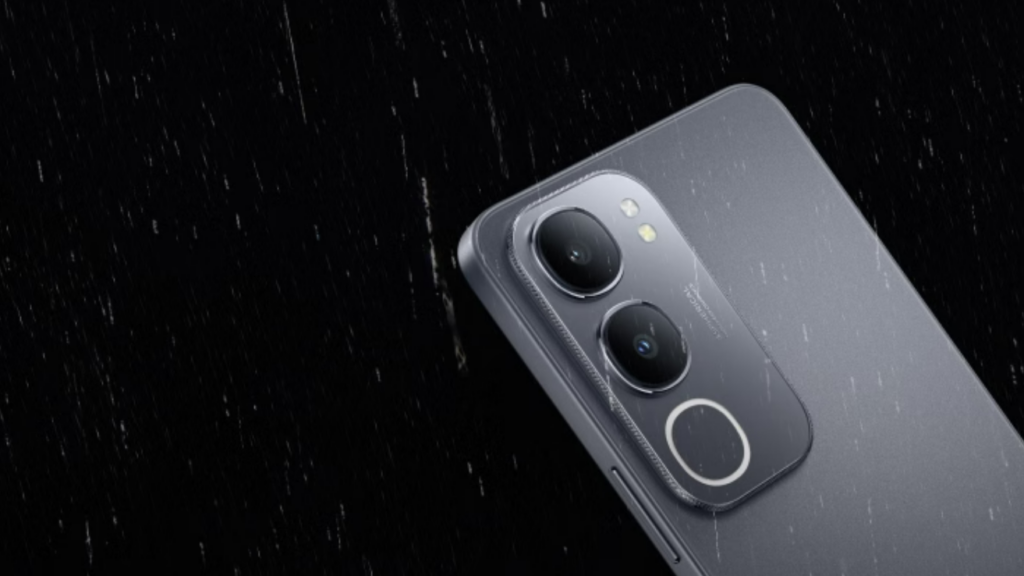
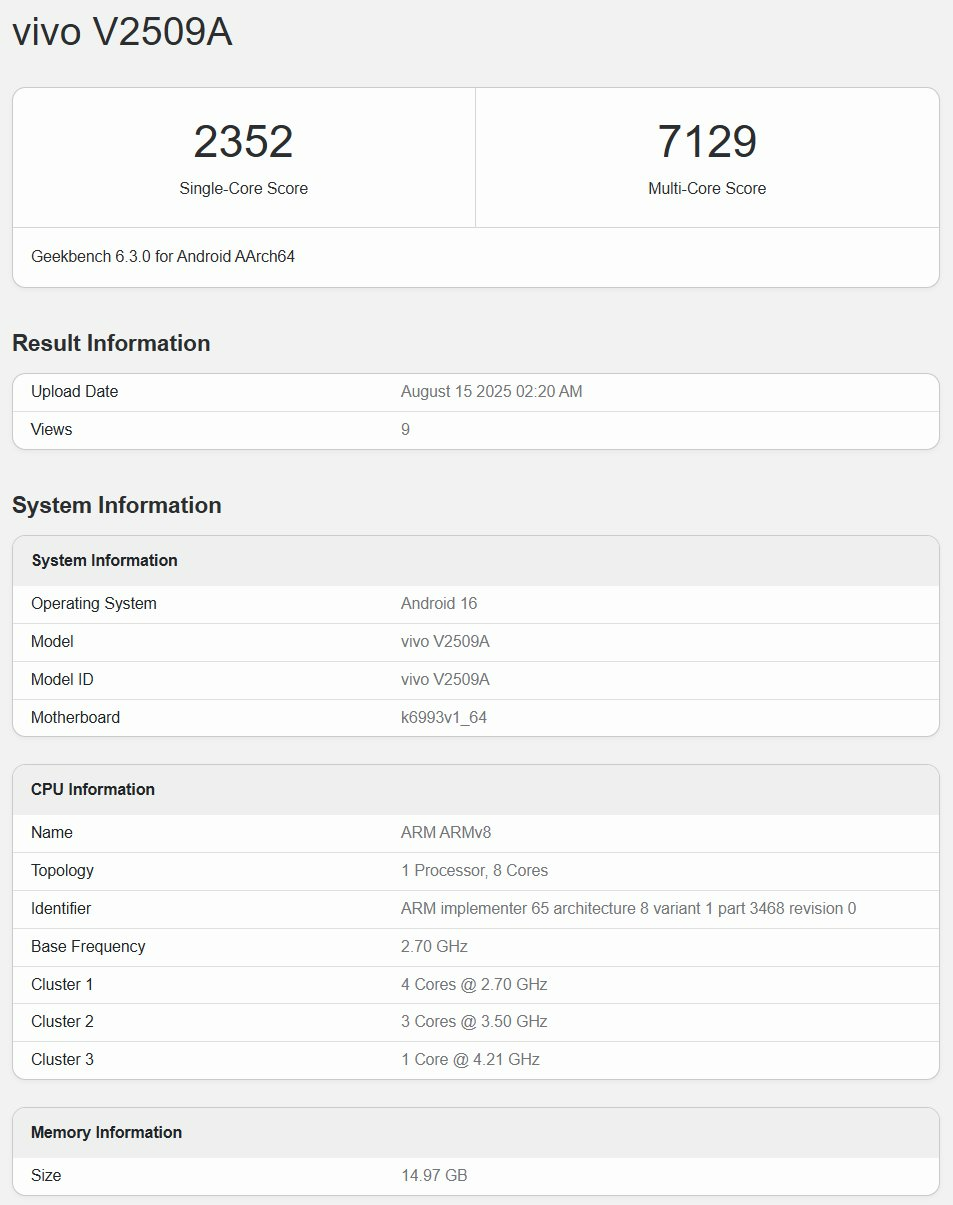
A report from yesterday revealed that Vivo devices, which are part of the upcoming X300 series, have received radio certification in China, setting expectations for a September launch. The report mentioned two devices with model numbers V2502A and V2509A. In a new development, the V2509A device has appeared in Geekbench’s database, revealing its chipset, RAM, and OS version. Unfortunately, there is no clarity on whether it is the standard Vivo X300 or the X300 Pro.
Vivo X300 Geekbench listing
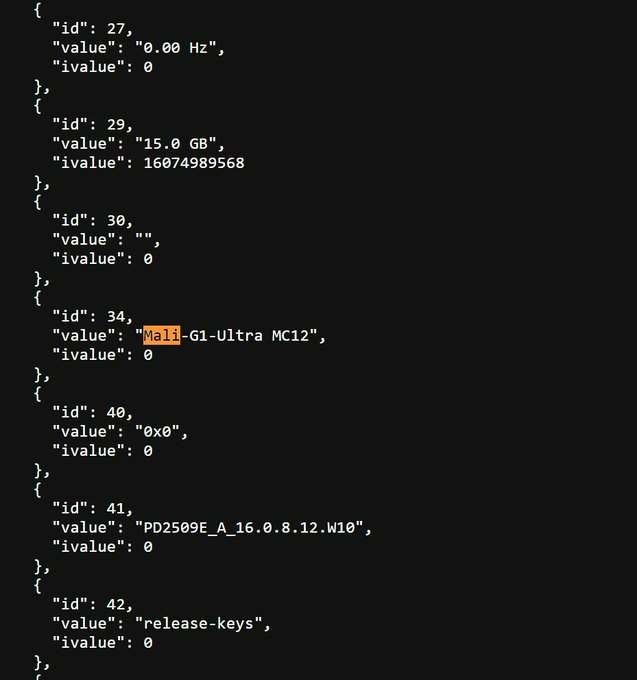
The above screenshots show that the Vivo V2509A, powered by the upcoming Dimensity 9500, has emerged in Geekbench. The CPU configuration includes one ultra-core clocked at 4.21GHz (Travis), three cores at 3.50GHz (Alto), and four cores at 2.7GHz (Gelas). For graphics, it is equipped with the Mali-G1-Ultra MC12 GPU.
The Geekbench listing further reveals that the Vivo X300 series phone is equipped with 16GB of RAM and Android 16. The device scored 2,352 and 7,129 points in the single-core and multi-core tests of Geekbench, respectively.
The single-core and multi-core scores are quite low compared to what’s expected from the Dimensity 9500. This is probably because it’s an early test, and the final version of the device may generate much better scores.
MediaTek is expected to unveil the Dimensity 9500 chip on Sept. 22 in China. It is speculated that the X300 and X300 Pro, equipped with the new chip, may debut before that month. As mentioned above, the V2502A has passed radio certification, and alongside it, the V2502DA variant has also received the same certification. The V2502A and V2502DA are the same phones, with the latter offering support for the Beidou satellite short messaging service.
For more daily updates, please visit our News Section.
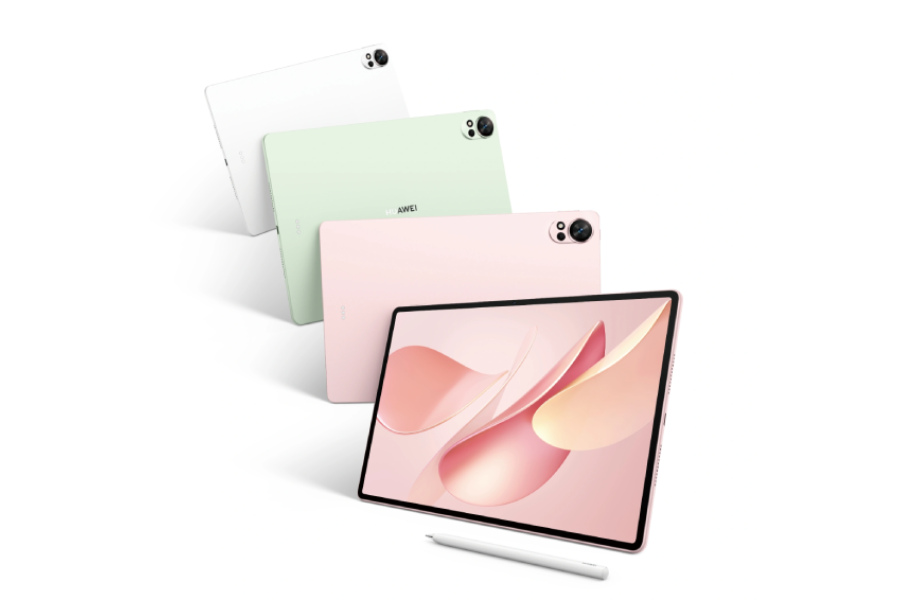
AI might be the headliner for most new tech in 2025, but Huawei’s latest tablet is betting that your eyes deserve the bigger upgrade. The company today officially announced the MatePad Air 2025 with eye protection technology that reportedly reduces screen flash points by 50%. Here are the complete details.
Huawei MatePad Air 2025 Specifications
The MatePad Air 2025 comes in two variants: a regular and a Soft Light Edition. The latter uses a high-precision nano-etching technology that cuts screen flash points by 50% to improve screen clarity. The model is also equipped with a “Cloud Clear Soft Light” screen that creates diffuse reflections to reduce the impact of light and make the viewing experience better.
Both models flaunt a sharp 12-inch, 2800 × 1840 LCD panel with a 144Hz refresh rate, HDR Vivid certification, and a P3 movie-grade color gamut. The 3:2 aspect ratio adds about 10% more horizontal display space compared to standard formats, which should help with documents and spreadsheets.
Visually, the MatePad Air 2025 leans on a macaron-inspired design. It has an iridescent pearlescent electrophoresis finish that gives it a creamy, starlit texture. The tablet is available in Grass Green, Sakura Pink, Feather Sand White, and Smoky Gray shades. It weighs 555g and measures 5.9mm, and the all-metal unibody keeps it slim and portable.
On the productivity side, Huawei is pushing its upgraded in-house ecosystem. Apps like Huawei Notes and Tianshenghuihua now integrate with Xiaoyi Intelligent Body, the company’s AI assistant, to handle document summarization, split-screen translation, and even handwritten formula recognition. The new M-Pencil Pro stylus adds a hidden Hongmeng Star Ring smart button for quick AI commands or voice-to-text conversion.
For entertainment, the MatePad Air 2025 packs a six-speaker system with extra-large sound cavities, tuned with Huawei’s Sound tech. Connectivity includes Wi-Fi 7 and NearLink support.
Price and Availability
The Huawei MatePad Air 2025 lineup starts at 2,999 yuan for the 12GB RAM and 256GB storage variant. The 12/512GB model retails for 3,399 yuan.
For those opting for the new Soft Light screen, the 12GB + 256GB configuration comes in at 3,299 yuan, while the 12GB + 512GB Soft Light version is also set at 3,699 yuan.
For more daily updates, please visit ourNews Section.
We use cookies on our website to give you the most relevant experience by remembering your preferences and repeat visits. By clicking “Accept”, you consent to the use of ALL the cookies.
This website uses cookies to improve your experience while you navigate through the website. Out of these, the cookies that are categorized as necessary are stored on your browser as they are essential for the working of basic functionalities of the website. We also use third-party cookies that help us analyze and understand how you use this website. These cookies will be stored in your browser only with your consent. You also have the option to opt-out of these cookies. But opting out of some of these cookies may affect your browsing experience.
Necessary cookies are absolutely essential for the website to function properly. This category only includes cookies that ensures basic functionalities and security features of the website. These cookies do not store any personal information.
Any cookies that may not be particularly necessary for the website to function and is used specifically to collect user personal data via analytics, ads, other embedded contents are termed as non-necessary cookies. It is mandatory to procure user consent prior to running these cookies on your website.