The rumour mill has been gradually leaking details about the upcoming Vivo V60 smartphone. As per a new report by SmartPrix, the V60 is slated to go official on Aug. 12 in India. Previous reports have claimed that it could be a rebranded or tweaked version of the Vivo S30 available in China.
Vivo V60 specifications (rumored)
Vivo V60 renders by Yogesh Brar
As per the report, the Vivo V60 will feature a 50-megapixel front-facing camera. Its rear camera setup will include a 50-megapixel main camera, an 8-megapixel ultra-wide lens, and a 50-megapixel periscope telephoto camera with 3x optical zoom.
On the display front, the V60 will feature a 6.67-inch AMOLED panel that supports a 1.5K resolution, a 120Hz refresh rate, and 1300 nits of HBM brightness. It will be fuelled by the Snapdragon 7 Gen 4 chip and a 6500mAh battery with 90W charging support.
The V60 is said to have UFS 2.2 storage and run on FunTouch OS 16-based Android 16. It will come with other features, such as an in-screen fingerprint scanner, dual speakers, and an IP68/69-rated chassis.
Vivo V60 price in India (expected)
The report speculates that the Vivo V60 will cost between Rs 37,000 and Rs 40,000 in India. It is likely to arrive in shades like Mist Grey, Moonlit Blue, and Auspicious Gold.
The Vivo V60 is not the only Vivo phone hitting the Indian market soon. The brand is expected to unveil the Vivo T4R and the Vivo Y400 5G smartphones in the next few days before the V60.
There have been reports that Vivo may bring overhaul improvements to the FunTouch OS 16. There is a possibility that it may incorporate some elements of OriginOS, which it offers on its smartphones in China.
For more daily updates, please visit our News Section.
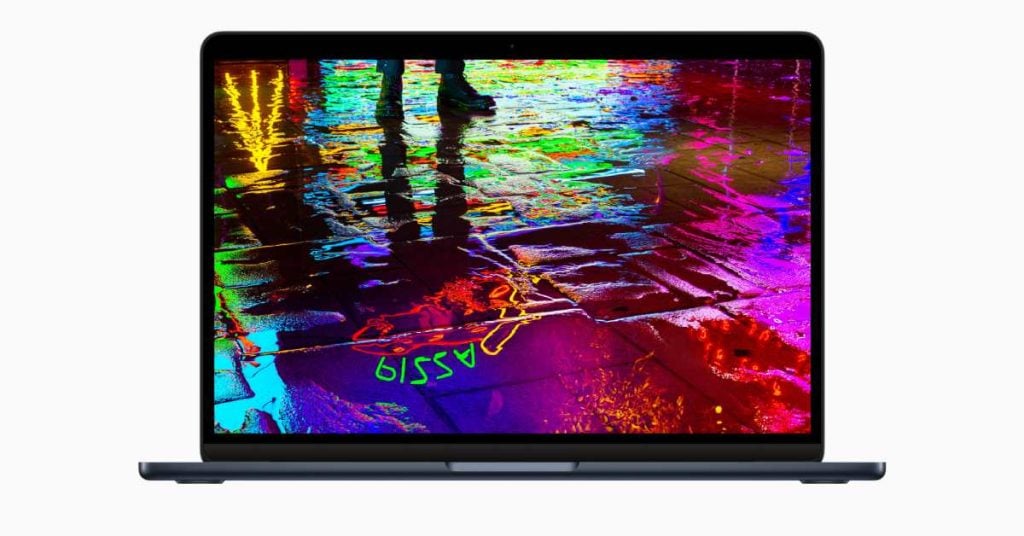
Apple MacBook Air M2 is going for the final price of Rs 69,990 via Amazon India, if you have an SBI or ICICI Bank Credit Card. The instant discount of Rs 8,000 applies to users of the respective bank card. However, the offer does not apply to the Amazon Pay ICICI Credit Card. The Apple MacBook Air M2 is retailing for Rs 77,990. With an instant discount of Rs 8,000, you can get it for Rs 69,990 for a limited period.
Apple MacBook Air M2 2022 Features and Specifications
Apple MacBook Air M2 2022 brings in a lot of improvements over the maiden Apple MacBook Air M1. It features Apple’s M2 chip, which includes an 8-core CPU (4 performance, 4 efficiency) and an 8-core GPU (configurable to 10-core), along with a 16-core Neural Engine. It comes with 8GB of unified memory (up to 24GB configurable) and offers fast SSD storage from 256GB up to 2TB.
You will get a stunning 13.6-inch Liquid Retina display that boasts 2560×1664 resolution, 500 nits brightness, and P3 wide color. It measures 0.44 inches and weighs 1.24 kg. In terms of connectivity, it includes two Thunderbolt / USB 4 ports and a MagSafe 3 charging port. Additionally, it bundles a 1080p FaceTime HD camera, a four-speaker sound system with Spatial Audio, and a backlit Magic Keyboard with Touch ID to complete the package.
The fanless operation makes it exceptionally better to work in silent environments, and even enhances the efficiency of the overall system. Its powerful M2 chip ensures smooth performance for daily tasks and more demanding creative work, making it a compelling option.
Given the current aggressive deals, it represents strong value for consumers at Rs 69,990.
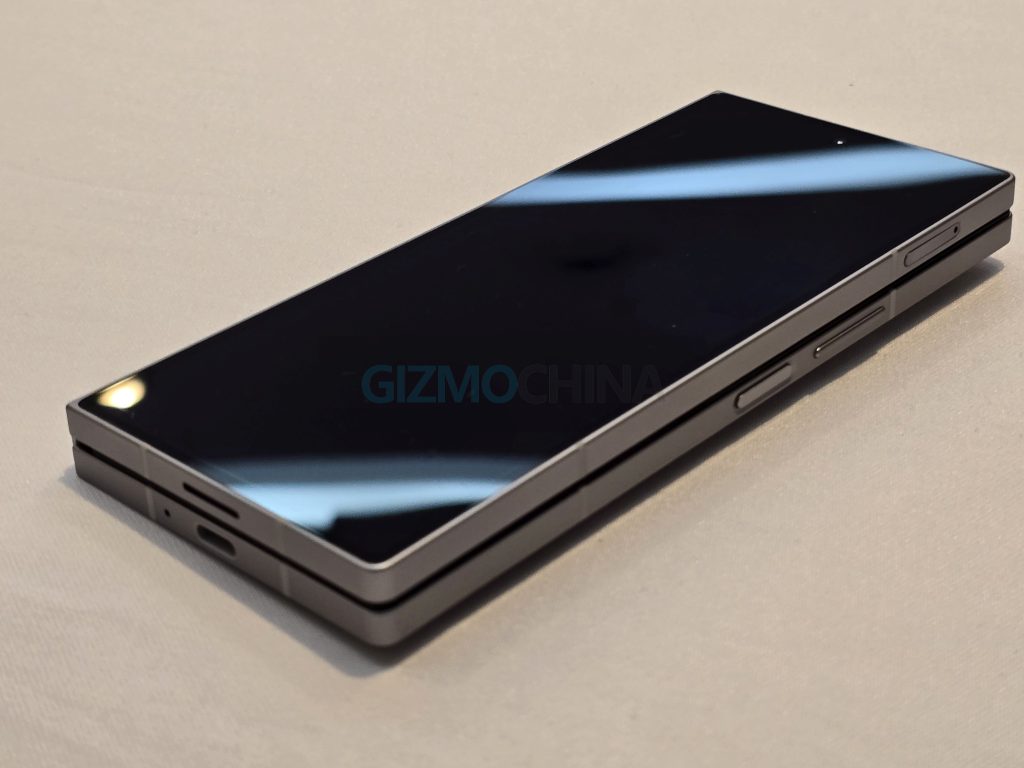
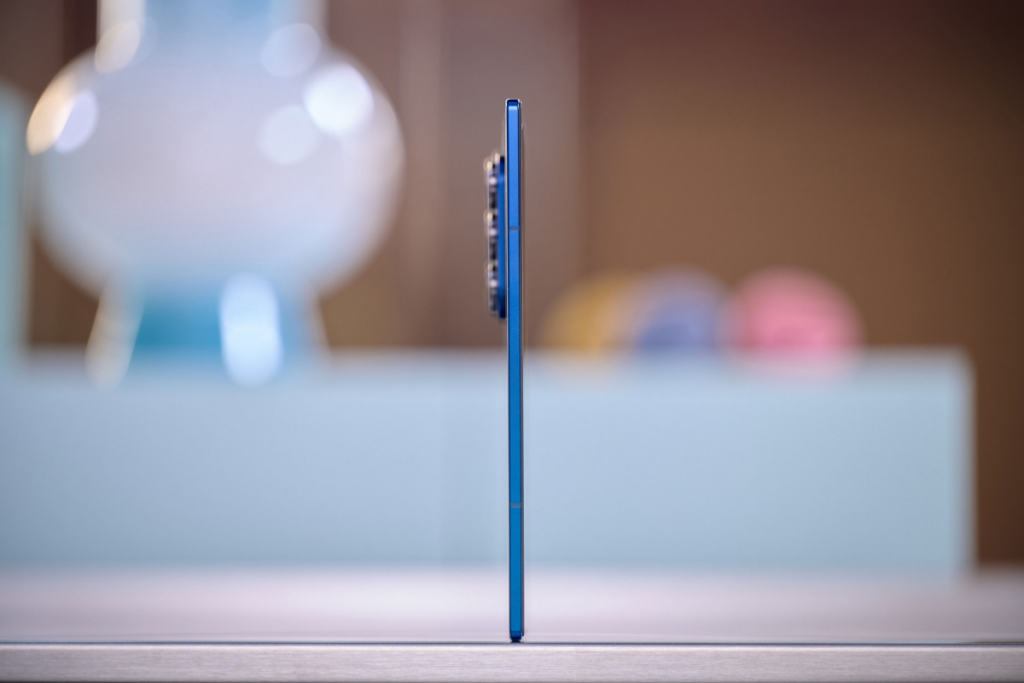
Samsung’s Galaxy Z Fold7 raised the bar for slim, premium foldables — but its successor might dial things back a notch. And the reason has more to do with global politics than design choices.
Galaxy Z Fold 6 (5.6mm unfolded, 12.1mm closed)
A report from The Elec suggests Samsung may swap the titanium backplate on the Galaxy Z Fold8 for carbon fiber reinforced plastic (CFRP), a material it used on earlier models to provide structural support for the inner folding display.
Galaxy Z Fold 7 (4.2mm while opened)
The culprit? Escalating US-China trade tensions and rising tariffs, which have pushed up the cost of sourcing titanium — a market largely dominated by China. While titanium helped the Z Fold7 achieve its sleek 8.9mm folded profile, CFRP could mean a slightly thicker, heavier device next year.
This wouldn’t be the first compromise Samsung has made in the name of cost or design. Both the Z Fold SE and Z Fold7 ditched S Pen support after Samsung removed the digitizer layer to help slim down the phones. But according to leaks, a thinner digitizer might be in the works for the Z Fold8, potentially bringing back S Pen compatibility despite the thicker backplate.
On the upside, there’s talk of a major display improvement. A recent leak hints that Samsung is working on a crease-free panel — a welcome change for foldable fans still bothered by the Z Fold7’s slightly visible crease.
Whether Samsung can tweak CFRP enough to match titanium’s slim profile remains to be seen. But with the Galaxy Z Fold8 expected around July 2026 — and a likely $2,000 price tag — the real question is whether buyers will accept a slightly thicker design that feels like a downgrade.
Mova has launched its latest high-end robot vacuum and mop combo, the Z60 Pro, in the Chinese market. The device features AI-powered cleaning technology and starts at 5,499 yuan ($766) for the standard water tank version. The variant with automatic water inlet and drainage is priced at 6,099 yuan ($850).
Mova Z60 Pro Specifications
The Z60 Pro introduces a 3D fluffy roller mop system that applies 18 times more ground pressure than conventional dual-disc designs. Mova claims the system can generate up to 4100Pa of suction power. The cleaning module includes a 12-nozzle spray setup for dissolving stains and a 360° rotating roller for scraping and scrubbing surfaces.
The roller mop uses Mova’s Deep Flush system to ensure that only the clean side of the mop comes into contact with the floor. The vacuum includes a 50,000Pa siphon system for wastewater extraction and supports 80°C hot water mop washing. It also features UV sterilization for added hygiene, delivering 99.99% antibacterial and sterilization performance. The system has received TÜV Rheinland certification for baby-grade sanitation.
Navigation is handled by a periscopic LDS LiDAR system called Lingtan, which allows the Z60 Pro to map environments with high precision. The device has a low profile of 96mm and can cross obstacles up to 8cm in height. Mova uses upgraded AI edge-laser sensors to improve corner cleaning coverage and avoid blind spots.
The robot automatically retracts its mop when it detects carpeted surfaces. The dual-rotating brush design minimizes hair tangling and improves debris pickup. Mova claims a zero hair-tangle rate on both the edge brushes and main roller.
The docking station supports automatic dust collection, hot air drying, UV disinfection, and auto-refill functions. The clean water tank has a capacity of 4L, the dirty water tank holds 3.5L, and the dust bag capacity is 3.2L.
The Z60 Pro features voice control through Mova’s DeepSeek-R1 assistant, allowing users to issue cleaning commands, set dynamic routes, and enable pet-aware functions. Its built-in AI camera can detect pets, avoid pet waste, and optionally record pet moments. The device also supports a dedicated pet cleaning solution.
The standard model weighs 14.92kg and measures 470mm x 433mm x 96mm. The automatic inlet/outlet version is more compact at 13.56kg and 315mm x 458mm x 96mm.
In related news, Mova recently launched the G12 Mix 5-in-1 floor scrubber with 180° flat-lay cleaning and 18,000Pa suction.
For more daily updates, please visit our News Section.
OnePlus has started rolling out OxygenOS 15.0.0.840 for OnePlus 12 users in India. The update is being released in batches and will reach more users over the next few days. The build number for this update is CPH2573_15.0.0.840(EX01).
The update adds a new “Save to Mind Space” feature, which lets users save on-screen content as memories. These are automatically summarized and stored in the Mind Space app.
In the Camera app, a soft light filter has been added to Portrait and Photo modes to create a smoother, more stylized look. The Photos app now includes an AI Perfect Shot feature that can adjust facial expressions across different shots to create the best image. Users can now export videos as live photos and also extract high-resolution images from videos and live photos. There are more options to hide specific albums from the main photo list. Video editing now keeps 120 fps after editing.
A new Gradual alarm volume option has been added under Clock settings. The Recorder app now supports customizable grouping and automatically categorizes Standard, Meeting, and Interview recordings into a new “In-person recordings” group.
System changes include the ability to stack same-size widgets by dragging them together. Multi-screen control allows one app to run in full screen while another floats in a small window. A new “Temporarily block” feature lets users swipe up on banner notifications to block them temporarily while playing games or watching videos. A Restart shortcut has been added to Quick Settings.
The fingerprint icon in Always-On Display will now only show when the screen is tapped or the phone is picked up. Mini window movement has been improved, and a display issue related to mini windows has been fixed. The update also includes the July 2025 Android security patch.
OnePlus 12 OxygenOS 15.0.0.840 update changelog
Users in India can report bugs through the OnePlus Community app or by dialing *#800# to access the feedback tool.
For more daily updates, please visit our News Section.
The global foldable phone market isn’t growing as fast as it used to, but it’s still evolving, and Huawei is now firmly in second place, right behind Samsung.
According to the latest report from TrendForce, global shipments of foldable phones are expected to reach 19.8 million units in 2025. That’s roughly the same as in 2024, with a penetration rate holding steady at about 1.6% of the total smartphone market.
Samsung Galaxy Z Fold 7
Growth is clearly slowing, but foldables are still gaining traction in the mid-to-high-end segment, thanks to improving hardware and lower prices.
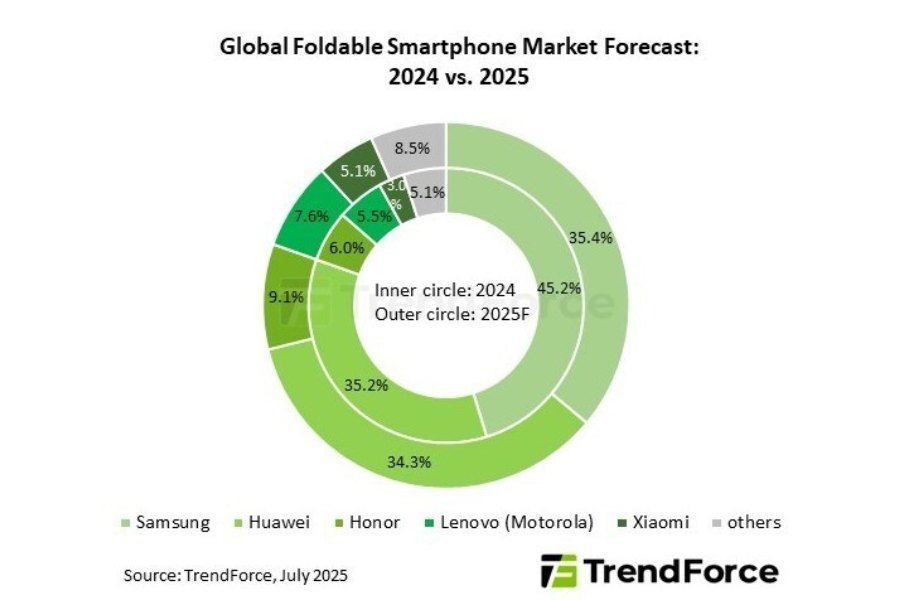
Samsung is the current leader in foldables, though TrendForce predicts that its share will drop from 45.2% in 2024 to 35.4% in 2025.
Huawei edging closer
Huawei, which has been focusing heavily on the Chinese market, is expected to hold second place globally with a 34.3% share, just one percentage point behind Samsung. The company has steadily rebuilt its smartphone business, foldables included, despite ongoing sanctions and a lack of Google support.
Other Chinese brands are gaining ground too. Honor and Lenovo (Motorola) are both showing strong momentum. Honor’s market share is projected to climb from 6.0% in 2024 to 9.1% in 2025. Lenovo could rise to 7.6% from 5.5%, thanks in part to renewed interest in its Razr lineup.
Xiaomi is also expanding its foldable presence with the MIX Flip, pushing its share from 3.0% to 5.1%. Meanwhile, Oppo, vivo, and others are expected to account for a combined 8.5% of the market.
TrendForce expects the foldable category to remain relatively flat this year, but it might grow in 2026, especially as Apple could launch a foldable next year.
The firm says Apple might release its first foldable iPhone in the second half of 2026, featuring a 5.5-inch external screen and a 7.8-inch internal display.
Xiaomi has announced the launch of its latest smart personal care product, the Mijia Smart Scalp Massager Comb. The device is available for crowdfunding at a price of 499 yuan ($69), with the official retail price set at 699 yuan ($97). Crowdfunding begins tomorrow at 10 AM on Xiaomi’s platform. The product comes in two color options: Golden Titanium and Misty Purple.
Mijia Smart Scalp Massager Comb Specifications
The Mijia Smart Scalp Massager Comb features a dual-layer body finish that combines pearlescent paint with a UV coating. Xiaomi claims the coating improves grip and delivers a refined, smooth touch. The device weighs approximately 280 grams and includes a 2000mAh battery that supports both home and travel use.
Xiaomi has equipped the comb with a massage mechanism that mimics human hand movements. It uses soft silicone contact points to perform a circular kneading motion across the scalp. According to the company, this approach helps deliver even and delicate pressure for deeper scalp relaxation.
The massager includes a graphene thermal liquid-conducting system. It uses seven rolling liquid-dispensing columns to distribute hair serum evenly to the scalp. The system also maintains a comfortable surface temperature to avoid irritation. The device incorporates a 655nm red light module, which may help support hair root health with regular use.
The massager has an IPX7 water resistance rating, allowing users to rinse it under water for wet and dry use. It operates quietly at 37.1dB(A).
Xiaomi supports smart controls through the Mi Home app. After connecting the device, users can select from six massage modes, adjust intensity levels, set session duration, and create personalized care routines. Massage options include Gentle, Relaxing, and Energizing modes.
In related news, Xiaomi recently launched a new 513L French door refrigerator featuring dual cooling, ion-based purification, and HyperOS integration. The company has also introduced a 12kg washer dryer equipped with smart drying, steam care functions, and HyperOS support.
For more daily updates, please visit ourNews Section.
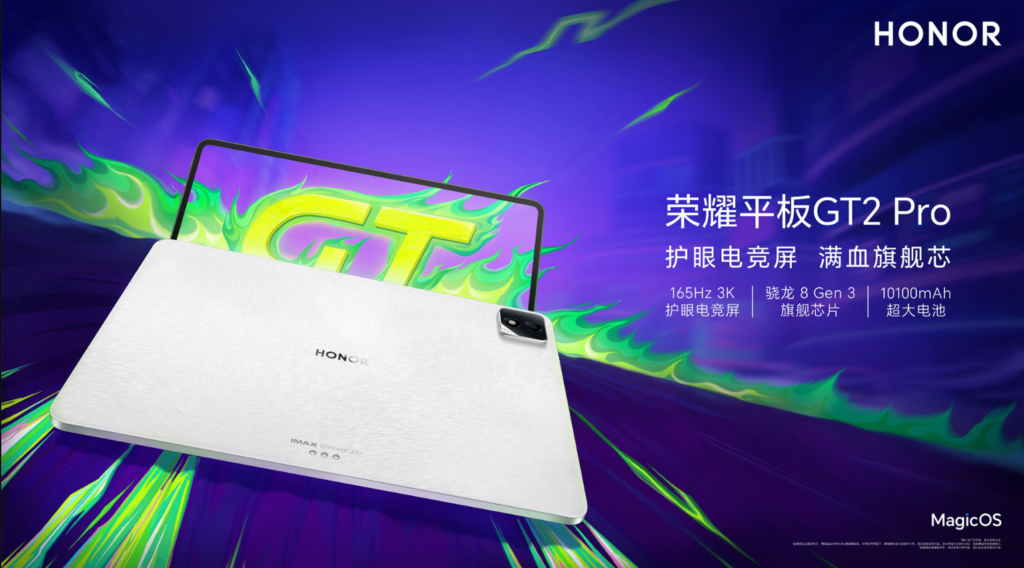
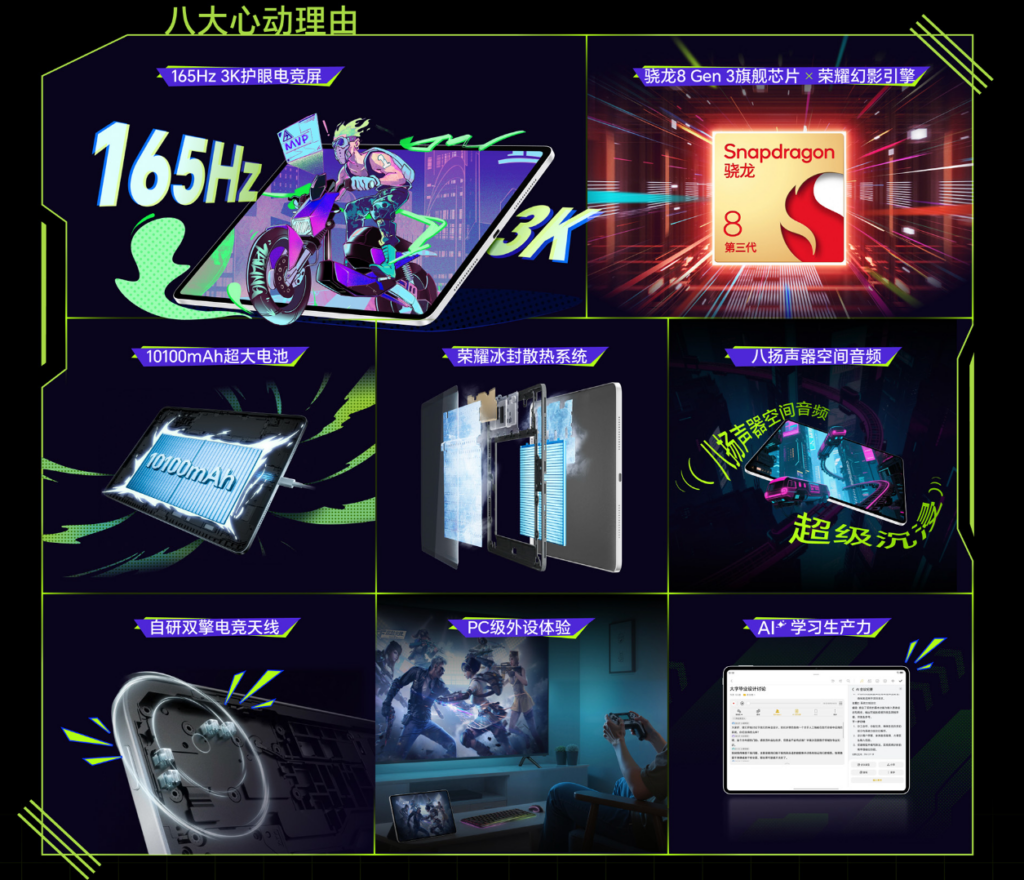
HONOR has launched the Pad GT 2 Pro in China along with the HONOR X70 smartphone. This is the company’s latest gaming tablet, designed to deliver a fast and smooth gaming experience. It features a large high-refresh display, an 8-speaker setup, PC-like keyboard and mouse mapping, and upgraded Wi-Fi and gyroscope technologies.
HONOR Pad GT 2 Pro features
The tablet has a 12.5-inch LCD screen with a resolution of 3048 × 2032 pixels, a 165Hz refresh rate, and support for HDR Vivid and IMAX Enhanced content. It reaches up to 1000 nits of brightness, supports seven refresh rate levels from 30Hz to 165Hz, has 4320Hz PWM dimming, and displays 1.07 billion colors. The screen covers the DCI-P3 color gamut and has an 89 percent screen-to-body ratio.
It is powered by the Snapdragon 8 Gen 3 processor with Adreno 750 GPU and offers three RAM options: 8GB, 12GB, and 16GB. Storage variants include 128GB, 256GB, and 512GB. It runs MagicOS 9.0.1 based on Android 15.
The Pad GT 2 Pro comes with a 13MP rear camera with f/2.0 aperture and autofocus. The front camera is 8MP with fixed focus. The tablet also includes eight speakers and uses third-generation spatial audio for better sound while gaming or watching videos.
The body is made of metal, measures 5.95mm in thickness, and weighs 532 grams. It uses a 44203mm² 3D heat dissipation system to keep temperatures in control during gaming.
The tablet includes a self-developed Wi-Fi acceleration engine that uses dual-Wi-Fi aggregation for coverage up to 500 meters. A gyroscope enhancement system reduces latency by 19 percent and increases response rate by 300 percent for motion-based games.
The battery is 10,100mAh and supports 66W fast charging over USB Type-C. Connectivity options include Wi-Fi 7, Wi-Fi 6, Bluetooth 5.4, and USB Type-C.
Pricing & availability
The HONOR Pad GT 2 Pro is available in Crystal White and Phantom Gray. Prices are 2499 yuan for 8GB + 128GB, 2699 yuan for 8GB+256GB, 2999 yuan for 12GB + 256GB, and 3399 yuan for 16GB + 512GB. It goes on sale in China starting July 28, 2025.
For more daily updates, please visit our News Section.
Xiaomi has launched the Mijia Refrigerator Pro Dual-System French Door 513L in China. The new smart appliance is now available for pre-order on JD.com at a final price of 2999 yuan ($418). It supports the Xiaomi HyperOS ecosystem and includes features designed for hygiene, storage flexibility, and energy efficiency.
Mijia Refrigerator Pro French Door 513L Specifications
The Mijia Pro refrigerator uses a dual-system cooling design with separate evaporators and fans for the fridge and freezer compartments. This structure keeps cold air circulation isolated between the two zones, which helps prevent odor crossover and improves cooling efficiency. Xiaomi claims this setup preserves the original taste and texture of food items for longer periods.
The refrigerator has a 513-liter total capacity, including a 301-liter fridge, a 183-liter freezer, and a 29-liter convertible drawer with adjustable temperatures from -1°C to 5°C. This drawer is suitable for storing items like baby food, cosmetics, or fresh meat based on user preferences.
Xiaomi has built the appliance with a slim 60 cm depth, making it compatible with compact kitchen layouts. It measures 85.2 cm in width and 191.2 cm in height. The freezer section includes large drawers supported by stainless steel rails that allow users to store oversized items like whole ribs, lamb legs, or pizzas without cutting them down.
The Mijia Pro refrigerator integrates with Xiaomi’s HyperOS smart home system, allowing users to control temperature settings, receive notifications, and perform firmware updates via the Mi Home app. It also supports voice control through Xiao Ai for convenient hands-free operation.
Xiaomi has included a five-layer ion-based purification system in the refrigerator, which targets bacteria, viruses, pesticide residues, odors, and ethylene gas. It claims a sterilization rate of 99.9999%. The freezer section also features an Ag+ silver ion module to improve hygiene.
The appliance runs on an inverter compressor and fan system. It produces a noise level of 35 dB and consumes 0.93 kWh of electricity per day. It meets China’s Level 1 energy efficiency standard.
In related news, Xiaomi recently launched a new 12kg washer-dryer with smart drying, steam care, and HyperOS support. The company has also introduced the Mijia S1 1200G water purifier, capable of filling a full glass in just 2.8 seconds.
For more daily updates, please visit ourNews Section.
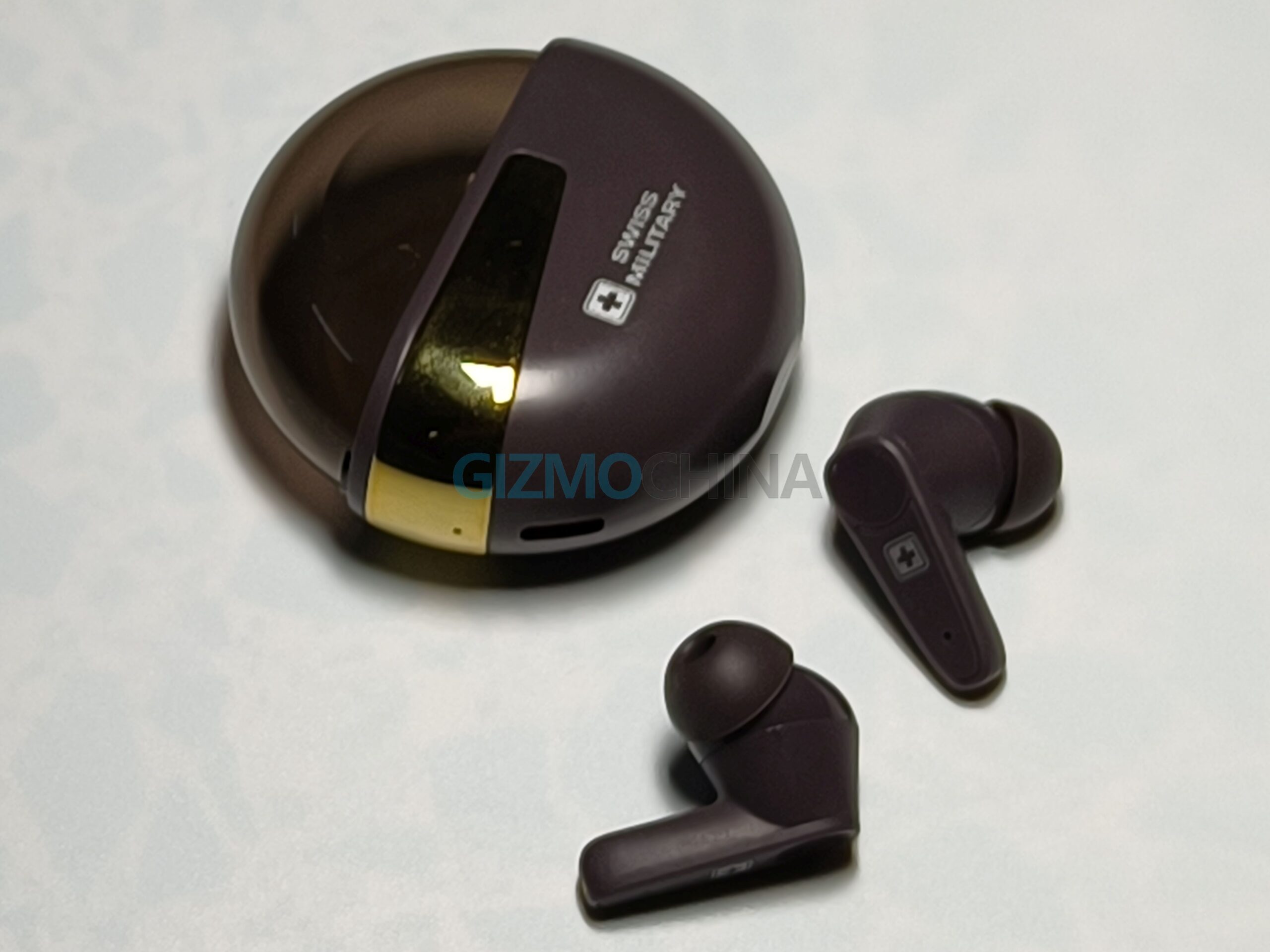
Swiss Military is better known for its lifestyle accessories, but with the NXT Pods, the brand is targeting users looking for a no-fuss, functional audio experience in a stylish shell. I’ve been using the NXT Pods over the past week across different scenarios like music streaming, voice calls, and even switching between devices like a laptop and phone. Here’s how they held up in real-world use.
5Final Thoughts
Swiss Military NXT Pods
Priced at Rs 1,380, the Swiss Military NXT Pods deliver solid basics with a unique design and good battery life. Touch controls and dual pairing work well, but they lack wear detection and companion app support. They’re suitable for daily use—just don’t expect anything fancy.
For more daily updates, please visit our News Section.
Acer has launched two new gaming laptops in India, the Predator Helios Neo 16 AI and Predator Helios Neo 16S AI. Both laptops are built for gaming and content creation and come with AI features, high-end hardware, and Windows 11 Home.
The Predator Helios Neo 16 AI has a standard gaming laptop design, while the Neo 16S AI is Acer’s slimmest Predator laptop yet, with a thickness of under 18.9mm.
Both models are powered by Intel Core Ultra 9 processors and support up to NVIDIA GeForce RTX 5070 Ti Laptop GPUs. They include DLSS 4, 4th Gen Ray Tracing, and NVIDIA Reflex 2 to improve visuals and reduce input lag. AI NPUs handle tasks like background blur, audio effects, and image generation.
The Helios Neo 16 AI features a 16-inch WQXGA IPS display with a 240Hz refresh rate, 1ms response time, 500 nits brightness, and 100 percent DCI-P3 color coverage. It includes 32GB DDR5 RAM, expandable to 64GB, and 2TB PCIe Gen4 SSD storage split into two 1TB drives. It comes with up to an RTX 4070 GPU. The laptop has a 90Wh battery, a 230W power adapter, and a 1080p HD webcam with Temporal Noise Reduction. The keyboard has 4-zone RGB lighting and a numeric keypad. Connectivity includes Wi-Fi 6E, Bluetooth 5.4, HDMI 2.1, Thunderbolt 4, USB Type-C, and Ethernet. It comes in Abyssal Black.
The Helios Neo 16S AI features a 16-inch OLED WQXGA display with 240Hz refresh rate, 400 nits brightness, 100 percent DCI-P3, and True Black HDR 500. It is available with Intel Core Ultra 7 255HX or Ultra 9 275HX processors, 16GB or 32GB DDR5 RAM (upgradable to 64GB), and 1TB PCIe Gen4 SSD, upgradable to 2TB. GPU options go up to the RTX 5070 Ti. It includes a 76Wh battery, a 230W adapter, 1080p webcam, and RGB backlit keyboard with a numeric pad. The laptop supports Wi-Fi 6E, Bluetooth 5.4, USB 3.2, HDMI, and USB Type-C.
Both models come with PredatorSense software to control performance, lighting, and fan settings, along with a dedicated Copilot key for AI features.
Lava will launch the Blaze Dragon 5G in India on July 25. It will be available on Amazon.in and is priced under ₹10,000. This is the company’s latest budget phone in the Blaze series and follows the recent Storm series launch. Ahead of the launch, the brand has shared key details of the smartphone.
As per details shared on the Amazon India microsite, the Lava Blaze Dragon 5G has a 6.745-inch HD+ LCD screen with a resolution of 1612 × 720 pixels. It supports a 120Hz refresh rate and offers peak brightness of over 450 nits. The phone is powered by the Snapdragon 4 Gen 2 4nm processor, which includes two A78-based Kryo CPU cores running at 2.2GHz and six A55-based Kryo cores running at 2GHz. It has an Adreno 613 GPU.
The phone comes with 4GB LPDDR4x RAM and 128GB UFS 3.1 internal storage. Storage is expandable using a microSD card. It runs Android 15 and supports dual SIM.
The rear camera is 50MP and includes an LED flash. The phone has a side-mounted fingerprint sensor, a 3.5mm headphone jack, and FM radio.
Connectivity options include 5G with support for most bands, Dual 4G VoLTE, Wi-Fi 802.11 ac on 2.4GHz and 5GHz bands, Bluetooth 5.4, GPS, GLONASS, and a USB Type-C port. It has a 5000mAh battery and supports 18W charging.
The Blaze Dragon 5G will be available in Golden Mist and Midnight Mist colour variants.
For more daily updates, please visit our News Section.
Caviar has introduced a limited-edition iPhone that features a fully functional Omega Seamaster Diver 300M 007 Edition watch built into the phone’s rear panel. The model, named the iPhone No Time To Die Edition, starts at $49,000 and is limited to just seven units globally.
The company used aerospace-grade titanium and carbon fiber to reconstruct the iPhone’s rear architecture. Caviar integrated the same Omega timepiece worn by Daniel Craig in No Time To Die without affecting the phone’s usability. The mechanical watch remains operational, supports manual winding, and sits beneath a sapphire crystal dome.
Caviar developed the design over five months and produced 15 prototypes before finalizing the structure. The watch is surrounded by concentric titanium rings that reference the gun barrel sequence from the James Bond opening credits. Each ring is precision-milled to within ±0.02mm and polished by hand to create a dual-tone satin and mirror finish.
The phone is compatible with either iPhone 16 Pro Max or upcoming iPhone 17 Pro Max models. The Seamaster watch inside is not a replica. It is the original Co-Axial Master Chronometer with a rated precision of ±5 seconds per day and water resistance up to 300 meters.
Buyers receive a collector’s box that includes the phone, official Omega documentation, AirPods Pro 2, Omega travel pouch, winding tools, and Apple charging accessories. Each unit is individually numbered from LE001/007 to LE007/007.
As of now, six of the seven units remain available. Orders can be placed via Caviar’s website or through a personal concierge. The device requires up to six weeks for production and includes white-glove delivery.
Caviar positions this launch as a tribute to Daniel Craig’s final role as James Bond, merging cinematic heritage with precision watchmaking and ultra-limited smartphone craftsmanship.
Whether tablets can truly replace laptops has long been a contentious discussion. But there’s no denying that tablets are becoming more and more like laptops. Today’s flagship tablets come with their own dedicated keyboards, support mouse connectivity, and even include a stylus. After spending some hands-on time with the HUAWEI MatePad Pro 12.2-inch and its accessories, I finally understand why this debate persists. Let’s explore the advantages of tablets over laptops while introducing the brand-new MatePad Pro.
Weight & Thickness
Those who want to replace their laptops with tablets are likely frustrated with the weight and bulk of laptops. Even the lightest and thinnest laptops typically weigh over 1 kg and exceed 10 mm in thickness. Tablets, however, easily cut these numbers in half. Take the MatePad Pro 12.2-inch, for example—it weighs just 508g and is only 5.5mm thick. This is an incredibly appealing selling point for people who frequently work on the go.
Glide Keyboard
If you want your tablet to serve more like a laptop, a keyboard case is a must. The HUAWEI Glide Keyboard is one of the most sophisticated keyboard cases I’ve ever seen. It allows the tablet to hover at adjustable angles and can even be used on your lap, just like a laptop. If you want to draw, you can flip it 180° backward. The hinge area even features a slot for the stylus, so you’ll never lose it when carrying the tablet in a bag.
Best of all, it’s lightweight—just 417g, about 28% lighter than the Apple 11-inch Magic Keyboard. After attaching the Glide Keyboard, the MatePad Pro still only weighs 925g, and its thickness increases to 13.6mm, still thinner than most laptops.
Display
A significant portion of this thousand-dollar tablet’s cost goes into its Tandem OLED display. With 2000 nits peak brightness and ultra-thin bezels, this screen is a standout. The PaperMatte glass cover (similar to the iPad Pro’s Nano-texture glass) delivers an unprecedented writing experience with the stylus. If you’re looking for a touchscreen laptop with specs matching the MatePad Pro, you simply won’t find one. So, if you need a premium media consumption device, the MatePad Pro outperforms any laptop.
M-Pencil & Mouse
If you splurge on the HUAWEI M-Pencil, congratulations—you’ve unlocked the tablet’s killer feature: an exceptional writing experience. I’m not exaggerating—it’s on par with the Apple Pencil (2nd Gen). The latency is nearly imperceptible, and with 10,000+ pressure sensitivity levels, you have full control over stroke thickness.
Unlike the Apple Pencil Pro, the M-Pencil doesn’t yet support rotating the barrel to adjust pen and brush tool orientation.
We also got our hands on the HUAWEI NearLink Mouse, which boasts top-tier build quality. Powered by a single AA battery (lasting months), it supports multi-device pairing (up to four devices via USB-C dongle)—a flawless productivity mouse.
Experience
Since HUAWEI hasn’t officially disclosed the MatePad Pro’s processor model, we don’t know which Kirin SoC it uses. Given HUAWEI’s current challenges, we won’t judge its performance too harshly, as long as it handles office tasks smoothly. To boost productivity, the MatePad Pro introduces a new multi-task view, keeping apps alive instead of killing them in the background. You can freely resize app windows and run up to three apps simultaneously.
Final Verdict
For entertainment and light productivity, tablets can absolutely replace laptops. As one of the flagship tablets in the market, the HUAWEI MatePad Pro 12.2-inch (with its Glide Keyboard) proves its strong capabilities. If you’re not a hardcore gamer and don’t rely on Windows/macOS-exclusive apps, this tablet is a great choice.
Honor has officially announced that its latest smartphone, the Honor X70, dominated China’s smartphone sales charts for three consecutive days across all brands and models. The announcement highlights both the strong consumer demand and the phone’s appeal, which combines an ultra-rugged design with a massive battery.
Honor X70 tops sales charts across all platforms and price segments
Honor X70 sales report
According to the brand, the Honor X70 achieved the number one sales rank across all price segments and platforms, including JD.com and Tmall for three days since the day it went on sale. The X70 was announced on July 15 in China, and it has been available for purchase from July 18.
The Honor X70 is beng called one of the brand’s most rugged smartphones ever. It survived extreme tests, including a 193-ton mining truck rolling over it and direct hits from an air rifle without suffering critical damage. This durability is credited to a newly engineered “bulletproof vest architecture” that improves internal and external structural protection by over 100 percent. It’s also the first phone to receive SGS Gold Five-Star certification for all-around drop resistance. Additionally, the X70 uses aerospace-grade non-Newtonian fluid inside the chassis to absorb shocks, making it resistant to drops from up to 2.5 meters.
The device features a large 8300mAh battery built on the third-gen Qinghai Lake battery tech and supports 80W wired and wireless charging (wireless only on top model). It has a 6.79-inch 1.5K Honor Oasis eye-protection display with peak brightness up to 6000 nits. The phone runs on a Snapdragon 6 Gen 4l processor and is paired with up to 12GB RAM and 512GB storage.
The X70 also includes a 50-megapixel OIS camera, IP69K-rated water and dust resistance, NFC, infrared remote, and dual stereo speakers. Starting price is 1,399 Yuan (~$193).
For more daily updates, please visit our News Section.
India’s smartphone market recorded a modest rebound in the second quarter of 2025, according to the latest data from Canalys (now part of Omdia). The report reveals that shipments climbed 7 percent year-over-year (YoY), reaching 39 million units between April and June. This growth was largely driven by a surge of new launches and improved inventory management following a cautious start to the year.
India smartphone market sees 7% growth in Q2 2025
Canalys report
Vivo emerged as the top smartphone brand with 8.1 million shipments, accounting for 21 percent of the market share. The brand’s strong offline presence and demand for its V50 and Y-series in Tier 1 and Tier 2 cities played a key role in its performance. Samsung followed with 6.2 million units shipped, capturing 16 percent of the market, aided by attractive EMI financing on the Galaxy A36 and A56.
Canalys report
Oppo secured third place with 5 million units, driven by its A5 series in offline channels and the K13 series online. Xiaomi matched Oppo in shipments but experienced a 25 percent YoY decline, while Realme shipped 3.6 million units, a 17 precent drop from the previous year.
Canalys report
Apple secured sixth place, with over half its shipments coming from the iPhone 16 lineup. However, the iPhone 16e saw less interest due to its single-camera setup and limited use of new AI features. Nothing recorded an impressive 229 percent YoY growth, with its CMF Phone 2 Pro and Phone 3a performing well. Infinix surpassed Tecno to become Transsion’s top brand in India.
Analyst Sanyam Chaurasia stated that while Q2 saw positive movement, H2 2025 will depend more on channel execution than new releases, with many brands already preparing for festive season sales through distributor incentives and retail upgrades.
With Google’s early release of Android 16 in June 2025, Oppo users must be eagerly waiting to experience the latest Android features wrapped in the company’s ColorOS 16 custom skin. However, the brand is not rushing for the release but instead taking its own time to ensure the update is polished before stable rollout.
Oppo has been actively working on Android 16. In fact, it has already released Android 16 beta for select devices in April, and it looks like the stable release is around the corner. If you’re wondering when your Oppo phone will get Android 16, or whether it even will, here’s everything you need to know about this major upgrade.
Oppo Android 16 (ColorOS 16) release date
Oppo hasn’t announced a release date or rollout timeline for ColorOS 16 just yet. However, if past rollouts are anything to go by, we’re not far off from an official announcement.
In April, Oppo kicked off the Android 16 beta for select models, offering early adopters a preview of what’s coming. A full ColorOS 16 beta is expected to follow in the coming weeks. This will likely include a broader range of devices and give users a first look at all the new features and design changes.
Interestingly, a “closed beta” card recently appeared on the Find X8 series’ beta program page, suggesting the ColorOS 16 beta for those phones is imminent. An official announcement could be right around the corner.
Which Oppo devices are eligible for Android 16 update?
Whether you have a flagship Find X/N model, a mid-ranger Reno model, or a budget-friendly phone, you’re likely looking forward to the next major software upgrade. So, here’s a list of Oppo phones and tablets that will likely get the ColorOS 16 update:
[Note: Oppo hasn’t officially confirmed the list of eligible devices yet, so the following is based on the current software update policy and some assumptions.]
Oppo Find N series
Oppo Find N5
Oppo Find N3, N3 Flip
Oppo Find N2, N2 Flip
Oppo Find X series
Oppo Find X8, X8 Pro, X8 Ultra
Oppo Find X7, X7 Ultra
Oppo Find X6, X6 Pro
Oppo Reno series
Oppo Reno 14, 14 Pro
Oppo Reno 13, 13 Pro, 13F (LTE/5G)
Oppo Reno 12, 12 Pro, 12F (LTE/5G)
Oppo Reno 11, 11 Pro, 11F
Oppo A series
Oppo A5 (LTE/5G), A5x (LTE/5G), A5 Pro (LTE/5G), A5 Energy
Oppo F series
Oppo F29, F29 Pro
Oppo F27, F27 Pro
Oppo F25 Pro
Oppo K series
Oppo K13
Oppo K12, K12x, K12 Plus
Oppo Pad series
Oppo Pad 4 Pro
Oppo Pad 3, 3 Pro
Oppo Pad SE
This list should be fairly accurate but it isn’t the official one. We’ll update it as soon as Oppo makes a formal announcement.
What to expect from Android 16 and ColorOS 16?
Google has added a suite of new features in Android 16, and Oppo’s ColorOS 16 will likely integrate many of them with its own custom touches.
One of the standout additions is Android Protection, an array of security features that’s designed to protect users from online attacks, harmful apps, unsafe websites, scam calls, and other online threats.
We’re also expecting new AI tools and upgrades to the existing AI features. On top of that, ColorOS 16 could offer new features, visual tweaks, more customizations, new widgets, and new clock styles. We’ll know more about the upcoming features once the ColorOS 16 beta goes live.
OnePlus is known for releasing a flagship phone followed by Ace-branded sub-flagship phones in the Chinese market by the end of each year. Last year, it unveiled the OnePlus 13 in October, while the Ace 5 and Ace 5 Pro were announced in December. However, a new leak suggests that the company may adopt a different strategy this year for its upcoming flagship phones.
OnePlus 15, Ace 6 likely to launch together
Several reports have revealed that OnePlus is working on its next flagship smartphone, the OnePlus 15. Expected to debut in October in China, the device is likely to be powered by the upcoming Snapdragon 8 Elite 2 chipset.
The Ace 6 lineup is expected to include two models: the Ace 6 and Ace 6 Pro. While these devices were previously anticipated to launch in November or December, a new leak from reliable tipster Digital Chat Station suggests a change in strategy. According to the leak, the OnePlus 15 and Ace 6 will launch together in October, indirectly hinting that the Ace 6 Pro may either arrive slightly later or may not exist at all. The tipster also indicated that these upcoming OnePlus phones may launch ahead of the Redmi K90 series, suggesting a direct competition between the two lineups.
As per DCS’s leak from last month, the OnePlus Ace 6 is expected to feature a 6.83-inch flat OLED display with a 1.5K resolution and a 165Hz refresh rate. Under the hood, the device will be powered by a Snapdragon 8 series chipset. Other expected features include an ultrasonic in-screen fingerprint scanner, a metal middle frame, a large battery likely around 7,800mAh, and an IP68 rating for dust and water resistance.
The OnePlus 13, 13T, and Ace 5 Pro are all powered by the Snapdragon 8 Elite chipset. There is a possibility that instead of launching three successor phones with the Snapdragon 8 Elite 2, the company may choose to skip the Ace 6 Pro altogether. However, this is purely speculative, and readers are advised to wait for further reports for confirmation.
The OnePlus 15 rumors suggest that it will feature a 6.78-inch flat OLED LTPO 2K screen with extremely slim bezels on all four sides. Powered by the Snapdragon 8 Elite 2 chip, the device may pack a 7,000mAh+ battery with 100W wired and wireless charging support. It may come with other features like Plus key (side button), a metal middle frame, an ultrasonic in-display fingerprint sensor, 0916 x-axis vibration motor, and an IP68/69-rated body.
New reports suggest that Huawei’s upcoming Mate 80 series may debut with a major camera upgrade. It is speculated that Huawei is preparing to use a domestically developed flagship-level image sensor from SmartSens in its upcoming devices. Based on the details, the sensor appears to be tailored for high-performance photography in flagship smartphones.
SmartSens SC595XS to power Mate 80’s main camera
The sensor in question is the SmartSens SC595XS, a 50-megapixel mobile CMOS image sensor with a 1/1.28-inch sensor size, which was officially unveiled last month. Built on the company’s SuperPixGain HDR technology, it achieves a wide dynamic range of up to 110dB—around 22dB higher than its predecessor on the same platform.
The sensor is designed to handle complex lighting conditions, including harsh backlighting and high-contrast scenes, effectively preserving highlight and shadow details. It also supports 4K video recording at 60fps with HDR and 120fps at standard high frame rate, giving it an edge for mobile videography.
SnartSens SC595XS
Additionally, the SC595XS features 1.22μm large pixels and is built on the SFCPixel-2 architecture. This enables better light sensitivity and reduced noise levels, which are particularly beneficial in low-light scenarios. It also supports fast autofocus using a dual-mode system, including 100% full-pixel phase detection, for quick and accurate focusing even in dim environments.
Huawei Mate 80 series set for year-end launch
Huawei is expected to unveil the Mate 80 lineup, which may include the Mate 80, 80 Pro, 80 Pro+, and Mate 80 RS Master edition by the end of the year. These devices are likely to be powered by the Kirin 9030 chipset. While official confirmation is awaited, the inclusion of the SmartSens SC595XS in the primary camera setup signals Huawei’s continued focus on domestic innovation and competitive imaging performance.
For more daily updates, please visit our News Section.
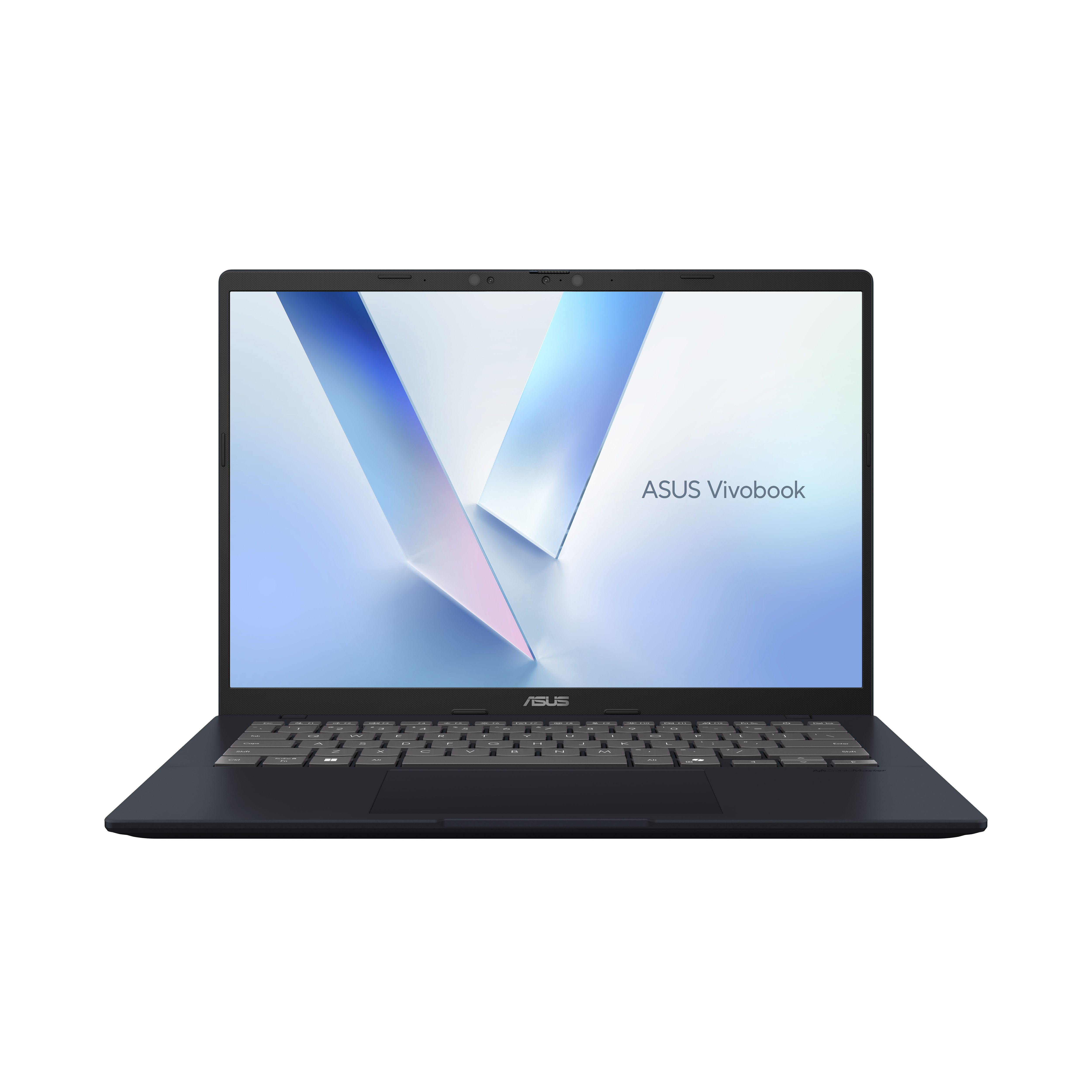
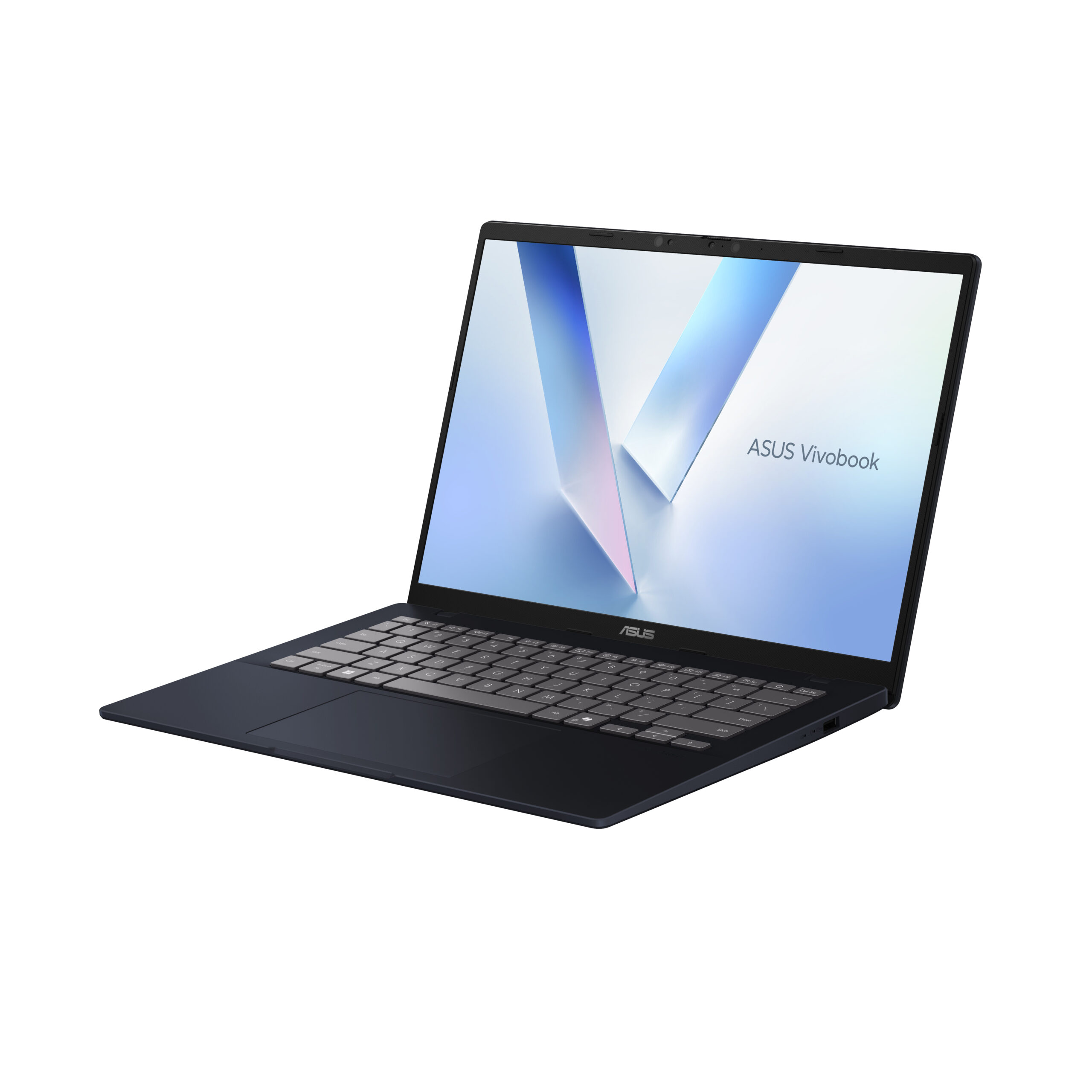
Asus is expanding its AI PC lineup in India with the introduction of its new Vivobook 14 (X1407QA). Announced today, the Snapdragon X chip-powered notebook is designed to cater to students, professionals, and casual users alike. Here’s a look at the device’s specifications, features, and price of the device.
Asus Vivobook 14 specifications and features
ASUS Vivobook 14ASUS Vivobook 14
The new Vivobook 14 (X1407QA) is powered by the 2.97GHz Snapdragon X1 processor with 8 cores and Qualcomm’s Adreno integrated GPU. It includes a dedicated Hexagon NPU rated at 45 TOPS to support AI-powered tasks such as Windows Copilot and image generation. The laptop is equipped with 16GB of LPDDR5X RAM running at 8448 MHz and a 512GB PCIe 4.0 NVMe SSD.
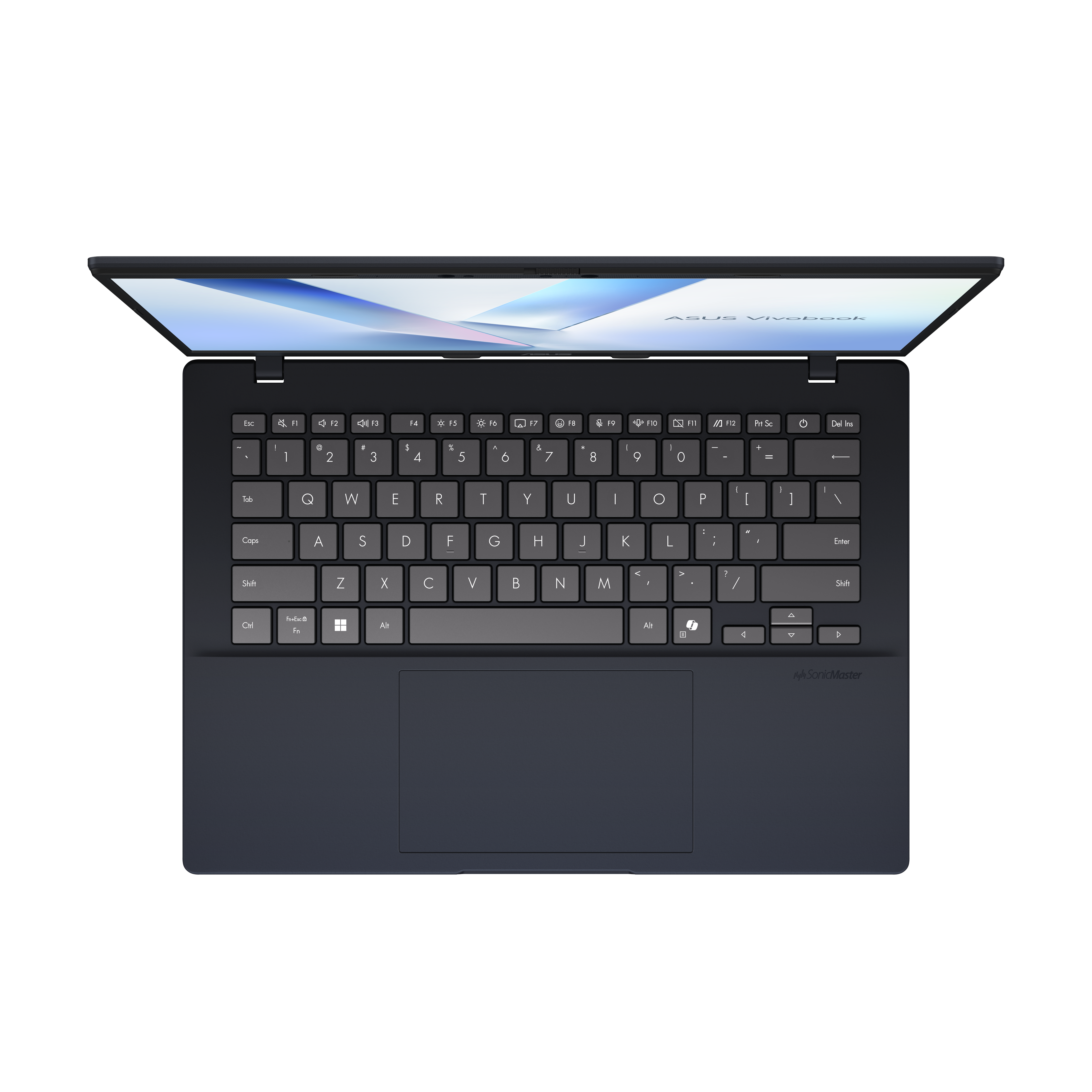
The Vivobook 14 features a 14-inch FHD+ (1920×1200) IPS display with a 16:10 aspect ratio, 300 nits peak brightness and TÜV Rheinland eye protection. The backlit ErgoSense keyboard includes a dedicated Copilot key, and the touchpad is optimised for smart gestures. On the connectivity front, the laptop offers Wi-Fi 6E, Bluetooth 5.3, dual USB 4.0 Type-C ports, USB 3.2 Type-A, HDMI 2.1, and a 3.5mm combo audio jack.
ASUS Vivobook 14
For security, the Vivobook 14 is equipped with a Full HD IR camera with Windows Hello, a privacy shutter, a Microsoft Pluton chip, and support for Passkeys. It runs Windows 11 Home and offers up to 29 hours of battery life on a 50WHr battery with 65W fast charging. Weighing just 1.49kg, the laptop is 17.9mm thin and supports military-grade durability.
Asus Vivobook 14 price in India, availability
The Asus Vivobook 14 (X1407QA) is priced at Rs 65,990 and is available starting today via Flipkart. It comes in a single configuration of 16GB RAM and 512GB storage.
For more daily updates, please visit our News Section.
We use cookies on our website to give you the most relevant experience by remembering your preferences and repeat visits. By clicking “Accept”, you consent to the use of ALL the cookies.
This website uses cookies to improve your experience while you navigate through the website. Out of these, the cookies that are categorized as necessary are stored on your browser as they are essential for the working of basic functionalities of the website. We also use third-party cookies that help us analyze and understand how you use this website. These cookies will be stored in your browser only with your consent. You also have the option to opt-out of these cookies. But opting out of some of these cookies may affect your browsing experience.
Necessary cookies are absolutely essential for the website to function properly. This category only includes cookies that ensures basic functionalities and security features of the website. These cookies do not store any personal information.
Any cookies that may not be particularly necessary for the website to function and is used specifically to collect user personal data via analytics, ads, other embedded contents are termed as non-necessary cookies. It is mandatory to procure user consent prior to running these cookies on your website.