Advertisement

Vivo X200 Ultra launch set for April 21, new leak reveals red variant and oversized camera bump

Vivo has confirmed that its upcoming smartphones, the X200s and X200 Ultra, will launch in China on April 21. The company initially teased the devices in late March, and it has now revealed new details, including the first official look at the Ultra model’s rear design.
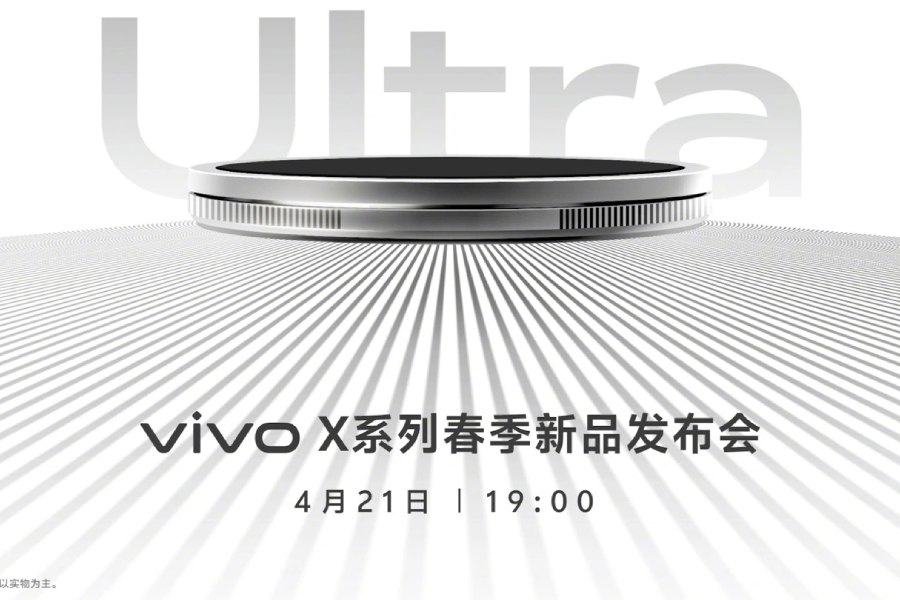
Vivo X200 Ultra and X200s launch date China confirmed

Vivo X200 Ultra

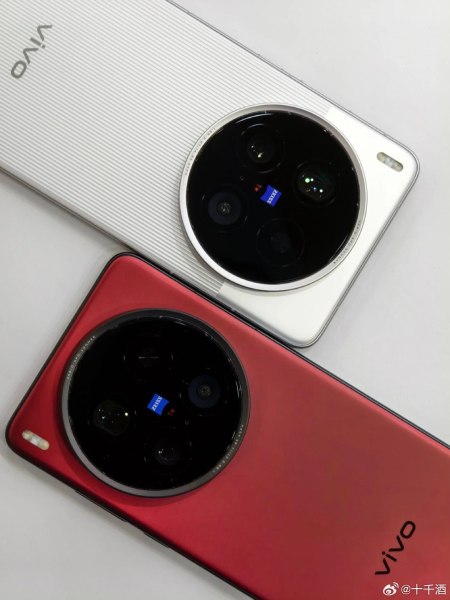
The official teaser reveals the X200 Ultra in a clean white finish with vertical stripes running down the back. But it’ll also come in at least one other variant. A red version that’s already surfaced in leaked images on Weibo. This model swaps out the textured stripes for a smoother, leather-like finish.

Both versions show off a large, raised camera bump that extends prominently from the chassis. The phone itself also seems relatively thick, likely due to its substantial hardware.
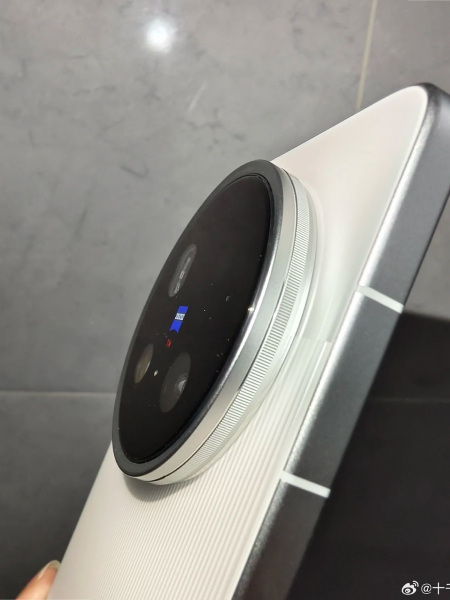
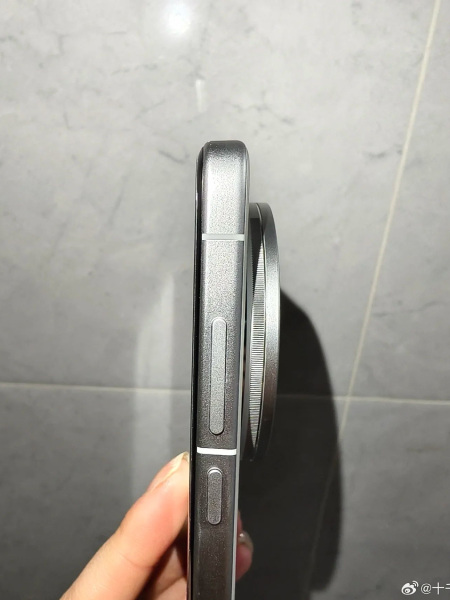
According to the details shared (and leaked), the X200 Ultra will feature a rear triple-camera setup: two 50MP 1/1.28″ LYT818 sensors (one standard, one 35mm), and a 200MP 1/1.4″ HP9X periscope unit with an 85mm focal length. 

Vivo claims these sensors are equipped with OIS across all focal lengths and support 4K video at 120fps. The camera system also includes Zeiss co-engineered optics, a VS1 and V3+ chip setup, and a new tone filter. 

The phone is expected to feature a 6.82-inch quad-curved BOE LTPO display with 2K resolution and a 120Hz refresh rate. Underneath, the phone will have a Snapdragon 8 Elite chip along with a battery exceeding 6000mAh, with support for 90W wired and wireless charging. 

Other features will include IP68/69 water resistance, an ultrasonic fingerprint scanner, and support for China’s Beidou-3 short message service on top-tier configurations.

Vivo X200s

Meanwhile, the more affordable X200s will feature a flatter design and a smaller 6.67-inch 1.5K LTPS screen. It will be offered in pink, blue, black, and white shades with a glossy finish on the back.
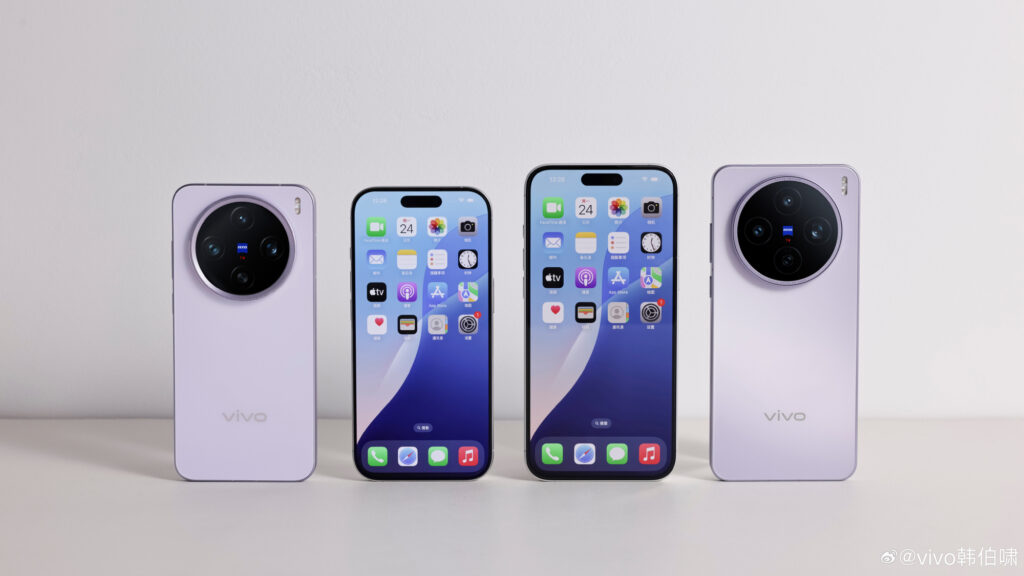
The rear camera system is expected to include an IMX921 primary sensor, a JN1 ultra-wide, and a 3x periscope macro telephoto lens (LTY-600). It will also carry a battery of over 6000mAh with support for 90W fast charging. But will swap the 8 Elite for MediaTek’s Dimensity 9400+ chip

For more daily updates, please visit our News Section.

Stay ahead in tech! Join our Telegram community and sign up for our daily newsletter of top stories!

(Source)

Lenovo Launched a Retro-Inspired SSD Flash Drive With Up to 2TB of Storage

Lenovo is expanding its Xiaoxin lineup with a sleek new solid-state flash drive, the XS720—a compact yet performance-focused gadget that ticks all the right boxes for on-the-go storage.

Available now in 256GB, 512GB, and 1TB variants (with a 2TB model on the way), the XS720 is priced competitively, starting at just 249 yuan ($35) and topping out at 599 yuan ($83) for the 1TB option.

Lenovo XS720

Lenovo XS720 Specifications

The XS720 features USB 3.2 Gen2 support and delivers read speeds of up to 1040MB/s and write speeds of up to 1000MB/s—enough to handle everything from raw 4K video files to massive photo libraries without breaking a sweat.

The XS720 sports a clever dual-interface design, integrating both USB-C and USB-A connectors within a smooth push-pull sliding mechanism. This means it plays nice with a wide range of devices, eliminating the need for adapters. It works seamlessly across Windows, macOS, Linux, Android, iOS 15/16, and HarmonyOS.

It equips a zinc alloy chassis with a painted metallic finish that feels both premium and rugged. The drive is dustproof, splash-resistant, pressure- and shock-resistant, and has been put through over 80 hours of durability testing.

Weighing under 50 grams and measuring just 77.8mm in length, the XS720 fits easily in a pocket or clips onto a keychain. It’s slightly bulkier than a typical thumb drive, but that’s the tradeoff for SSD-level performance in such a compact form.

In terms of design, the device features a playful, retro-inspired design with a soft pastel blend of pink, red, and blue. Styled like a classic game controller, it includes a D-pad, a central On-Off-On toggle switch, and A/B buttons, combining nostalgic charm with a compact, tech-friendly form.

It also comes backed by a three-year warranty, giving you some peace of mind for long-term use. With a 2TB option on the way, the XS720 is shaping up to be a seriously dependable travel-size vault for your digital life.

In related news, Lenovo recently introduced a new 24.5-inch office monitor featuring a 1080p resolution, 100Hz refresh rate, and a 4ms response time.

For more daily updates, please visit our News Section.

Stay ahead in tech! Join our Telegram community and sign up for our daily newsletter of top stories! 💡

These Samsung phones are getting 8 Android OS upgrades, all the way to Android 23!

In January, Samsung unveiled the Galaxy S25 series of smartphones across the world. The South Korean tech giant announced the Enterprise Editions of the Galaxy S25, S25+, and S25 Ultra in February. The regular S25 series is confirmed to receive seven years of Android OS upgrades and seven years of security updates. According to the official Samsung Knox website, the Galaxy S25 series Enterprise Edition will receive even longer software support than the standard models.

Galaxy S25 series Enterprise Edition promised 8 Android OS updates

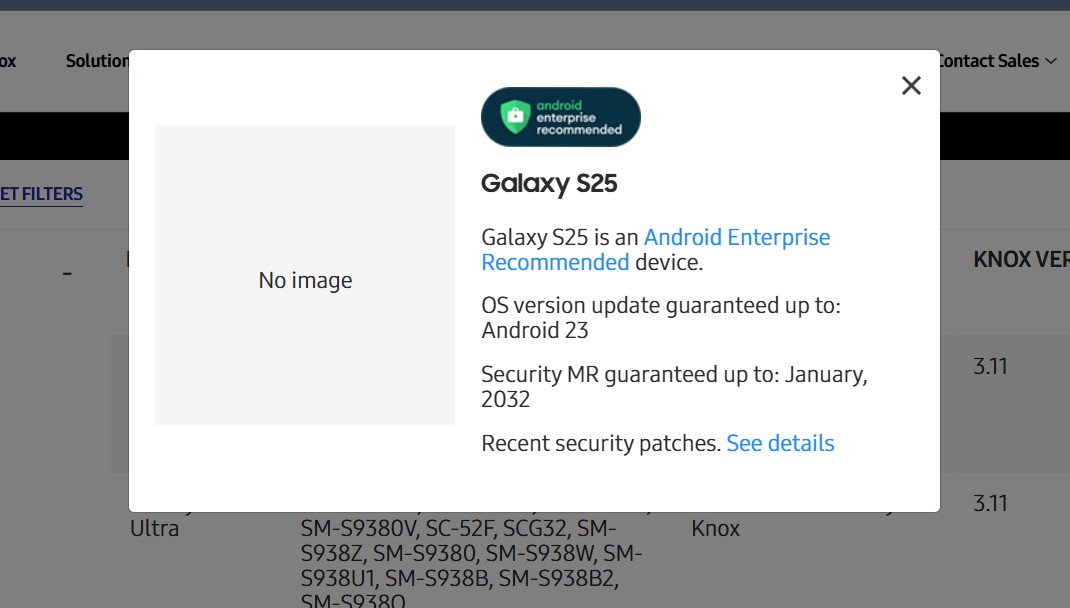
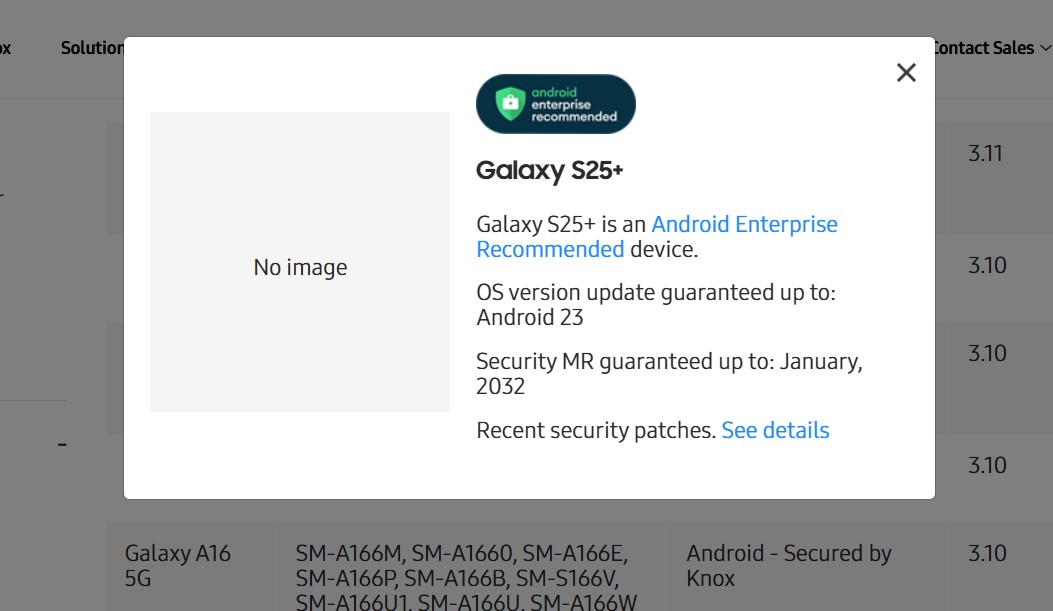
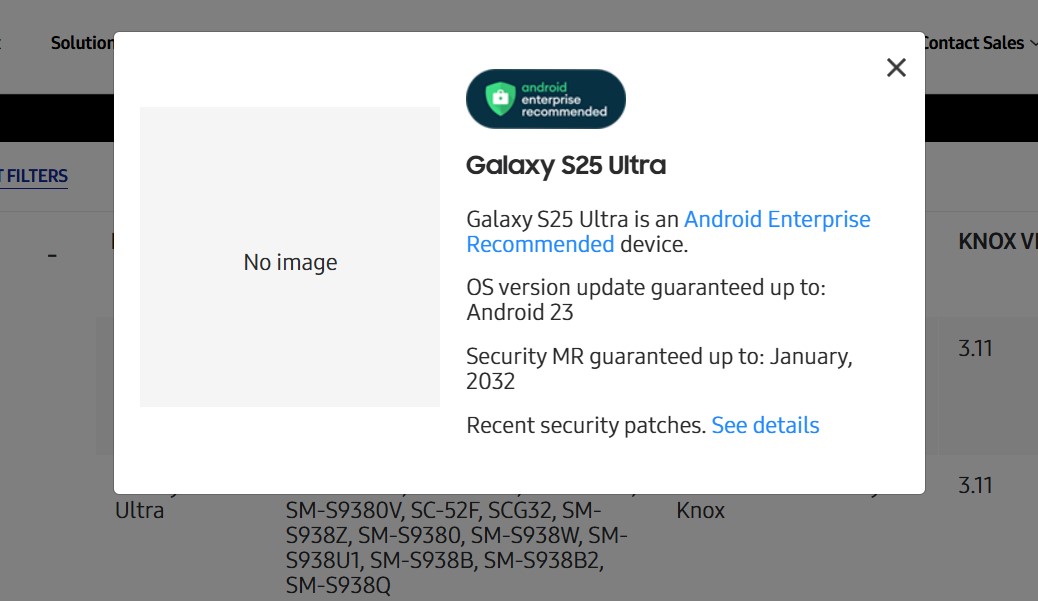
Samsung has officially confirmed that the Galaxy S25, Galaxy S25+, and Galaxy S25 Ultra Enterprise Editions are eligible for eight major Android OS updates. These phones ship with Android 15 out of the box and are set to receive updates up to Android 23. This is one version more than the standard Galaxy S25 models, which are limited to seven major OS updates, ending with Android 22.

This extended support for Enterprise Editions isn’t new—Samsung typically reserves longer update lifespans for its business-focused devices. Alongside the OS updates, these models will also receive security patches until January 2032. The Knox platform identifies these devices as “Android Enterprise Recommended,” backing their suitability for long-term deployment in professional environments.

What’s Galaxy S25 series Enterprise Edition?

The Samsung Galaxy S25 series Enterprise Edition sets itself apart from the standard models by offering a suite of business-focused enhancements. It comes with a complimentary one-year Samsung Knox Suite subscription for advanced security and remote device management, along with up to three years of extended business support.

The Enterprise Edition also includes AI-powered tools such as call transcription with summaries, meeting recording transcription, and a Writing Assist feature for professional emails. While the hardware remains the same as the regular S25 models, the Enterprise Edition commands a slightly higher price, justified by its added security, productivity features, and long-term enterprise support.

For more daily updates, please visit our News Section.

Stay ahead in tech! Join our Telegram community and sign up for our daily newsletter of top stories!

(source|via)

Jmgo N1S 4K portable laser projector launched with triple-laser 4K, HDR10 & Google TV

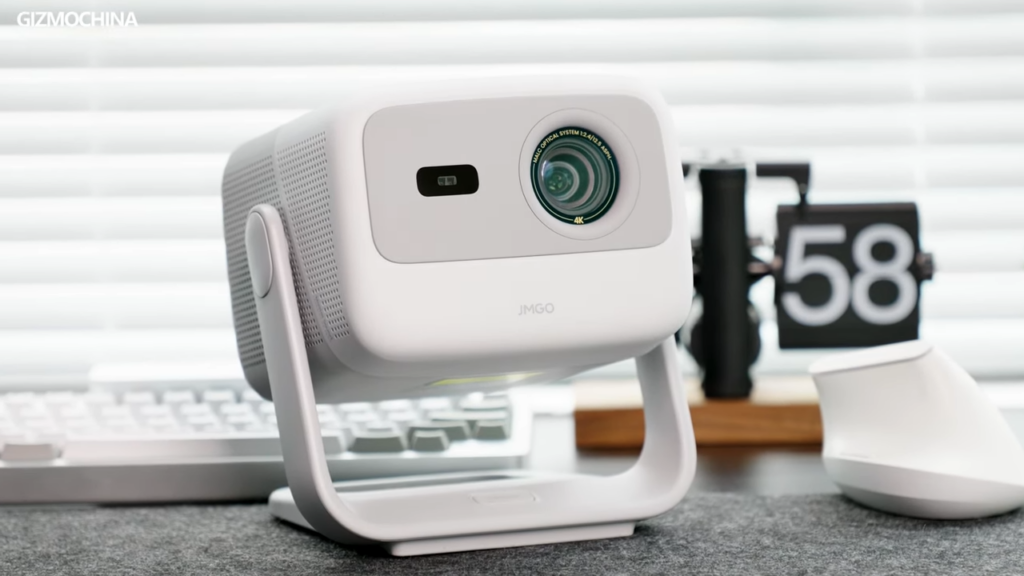
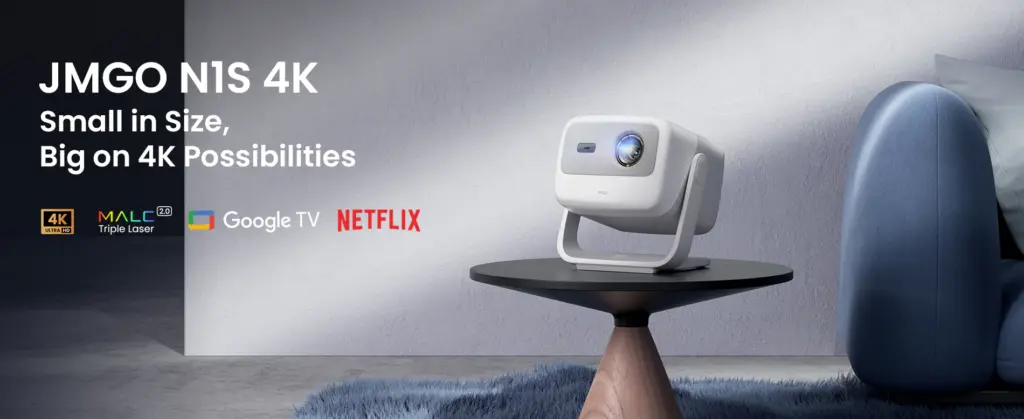
Jmgo has officially launched its latest compact projector, the N1S 4K, and it’s a sleek little beast aimed at users who want cinematic performance without committing to a full-blown home theater setup. Retailing at $1,299 in the U.S. and €1,399 in select European markets, it’s already available at a launch price of $999/€999 through Jmgo’s official store and Amazon.

Jmgo N1S 4K

Jmgo N1S 4K Specifications

First launched in China last year and later showcased at CES 2025, the N1S 4K (check out our review) stands out for packing serious projection tech into a highly portable frame. The design is all clean lines and compact geometry, measuring just 7.3 x 6.5 x 7.5 inches and weighing in at a travel-friendly 4.4 lbs. Despite the portable moniker, this isn’t a battery-powered model — you’ll still need a power source — but it’s clear Jmgo is aiming to make plug-and-play projection stylish and accessible.

Jmgo N1S 4K

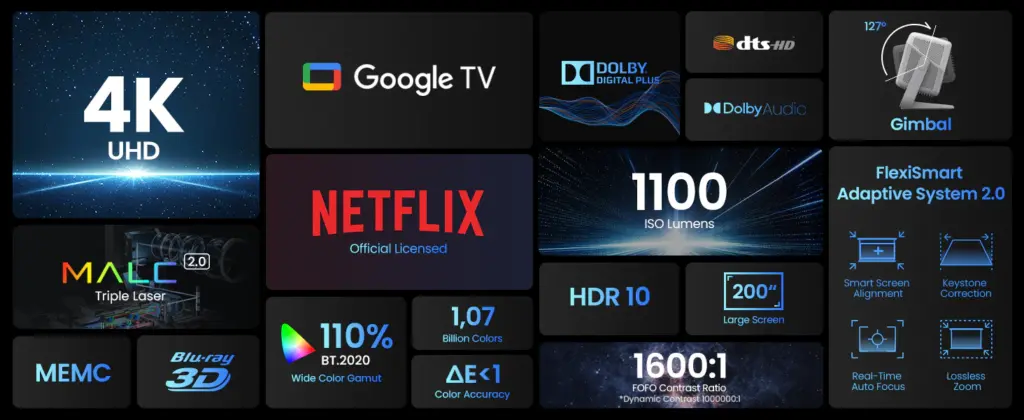
The N1S 4K uses the company’s MALC triple laser system, which produces 1,100 ISO lumens and supports up to a 200-inch projection size with a 1.2:1 throw ratio. Colors are vivid and lifelike, with 110% BT.2020 coverage, HDR10 support, and up to 1,000,000:1 dynamic contrast. Jmgo is also touting ΔE<1 color accuracy, which should make cinephiles take notice.

The projector includes an integrated gimbal-like stand that can tilt the device by up to 127°, giving you flexible projection angles without resorting to awkward stack-of-books solutions. Autofocus, keystone correction, and intelligent screen alignment are all automatic — a welcome suite of features that removes setup friction for casual users.

Jmgo N1S 4K

On the entertainment side, it runs Google TV, meaning instant access to apps like Netflix, YouTube, Hulu, and Spotify, with built-in support for Google Assistant voice commands and Cast. For audio, the N1S 4K houses dual 5W speakers and a subwoofer, delivering surprisingly full sound that supports Dolby Audio and DTS-HD formats.

Gamers aren’t left out either: it supports 1080p at 60Hz, offers MEMC motion smoothing, and boasts a 17ms input lag, making it a capable option for casual console or cloud gaming sessions. An HDMI 2.1 eARC port is onboard, too.

For more daily updates, please visit our News Section.

Stay ahead in tech! Join our Telegram community and sign up for our daily newsletter of top stories! 💡

(Via)

Motorola Edge 60 Pro Roundup: Design, Processor, Camera, Battery & More

Motorola’s annual Edge refresh is already underway with the recent debut of the Edge 60 Fusion. But that’s not the only phone in the pipeline—two more models are expected to join the lineup soon: the Edge 60 and the higher-end Edge 60 Pro.

As the name suggests, the Edge 60 Pro sits at the top of the stack. And thanks to a TENAA certification listing out of China, we now have a fairly complete look at what to expect. Here’s a quick breakdown of what the Edge 60 Pro is likely bringing to the table.

Motorola Edge 50 Pro

1. A Familiar Face

Motorola Edge 60 Pro TENAA images

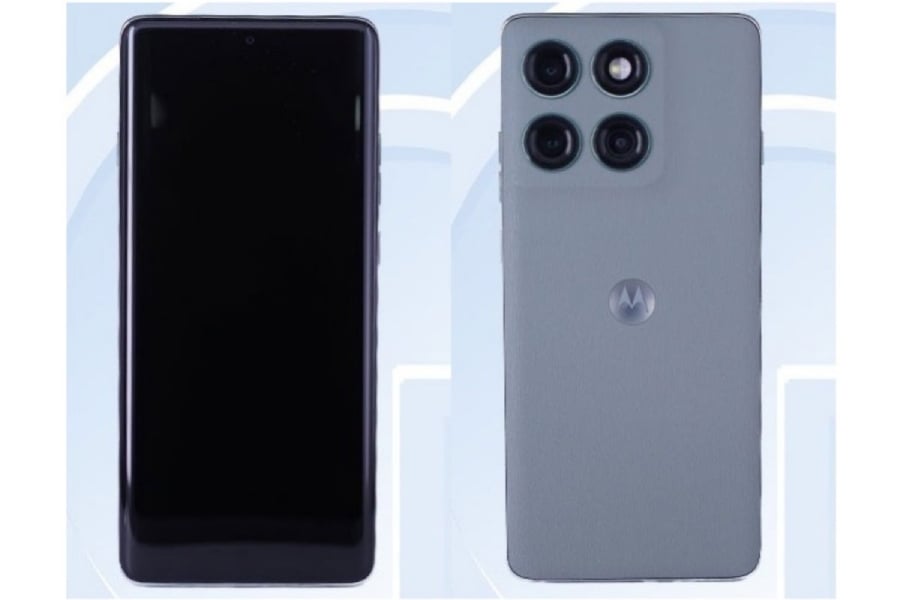
Based on images from the TENAA listing, the Motorola Edge 60 Pro doesn’t reinvent the design wheel. It still has a faux leather finish on the back with a soft-edged square camera module. 

The front is built around a 6.67-inch OLED display with curved sides, which is a now-signature look for Motorola’s Edge series. The panel features a crisp 1.5K resolution and has a fingerprint scanner underneath. 

From the front, the phone looks premium and modern, with minimal bezels and a centered punch-hole selfie camera. The screen curves smoothly into the chassis, making the phone feel sleeker than the numbers might suggest. 

At just 7.25mm thick, the Edge 60 Pro is actually slimmer than the standard Edge 60, which will come in at 7.95mm. And despite its larger battery (more on that in a second), it still weighs a manageable 188 grams, just a few grams heavier than the base model. 

Interestingly, the Pro model features an unknown physical button that hasn’t been seen on previous Motorola phones. It’s not yet clear whether it’s a dedicated camera shutter, a shortcut to AI features, or something else entirely. But it certainly seems like Motorola might be experimenting with something new this time around. 

2. Performance

Now, let’s talk about performance. The Edge 60 Pro will be powered by the MediaTek Dimensity 8350 SoC with a top clock speed of 3.35GHz. And the memory options will include 8/12/16GB of RAM with 128/256/512GB and 1TB storage. 

We don’t have benchmark numbers for the Edge 60 Pro just yet, but several phones with the same chip are already out in the wild. For instance, the Oppo Reno 13 5G with the Dimensity 8350 hits around 1,134,729 points on AnTuTu and posts 1324 single-core and 4073 multi-core scores on Geekbench 6.

All in all, you can expect smooth day-to-day performance and some light gaming without much trouble. For a detailed look at how this chip performs, check out our full Reno 13 review.

3. Battery and Cameras

Motorola seems to be making a big jump when it comes to Edge 60 Pro’s battery. It packs a massive 6,000mAh cell which is 1500mAh more than what you get on its predecessor. 

But while the battery is getting a boost, Motorola is dialing things back slightly on charging speeds. Instead of the 125W fast charging found on the Edge 50 Pro, the Edge 60 Pro only supports 90W wired charging. Still, that should be more than enough to deliver a full charge in under an hour.  

We can also keep the wireless charging option in cards given that last year’s model supported it as well. Leading the pack is a 50MP main sensor, joined by a 13MP ultrawide and a third, yet-to-be-confirmed lens. It is likely a telephoto shooter with 3x optical zoom. Up front, the phone has a 32MP selfie camera. 

4. Rest of the specs

At this point, pricing and software are the only pieces missing. Motorola hasn’t confirmed the launch date yet, but the TENAA certification is usually a sign that the launch is imminent. At least in China. A global or Indian launch could follow shortly after.

As for software, Motorola has been relatively consistent with offering near-stock Android with a few meaningful customizations. Features like Moto Gestures, Peek Display, and selective personalization have made its Android experience feel light and user-friendly, and we expect the Edge 60 Pro to continue in that direction. 

For more daily updates, please visit our News Section.

Stay ahead in tech! Join our Telegram community and sign up for our daily newsletter of top stories! 💡

AOC just launched a 23.8-inch IPS monitor with 120Hz overclocking — and it’s only $55

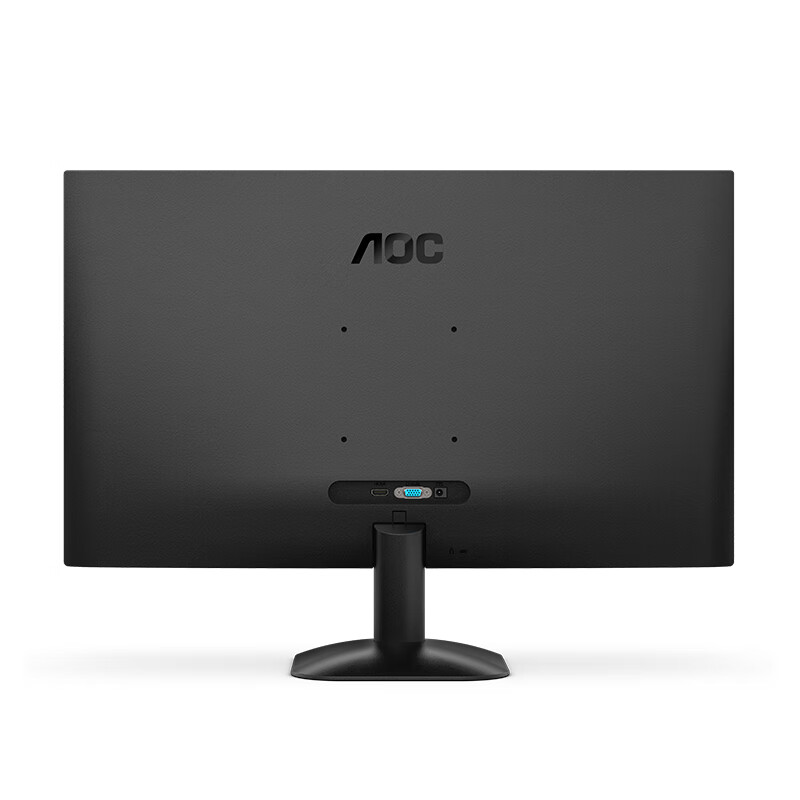
AOC has just introduced a new budget-friendly monitor in China that delivers surprising value for its price. The AOC 24B35H features a 23.8-inch Full HD IPS display and comes with a smooth 120Hz refresh rate, factory-calibrated colors, and gamer-focused enhancements — all for just 399 yuan (around $55) after a Chinese subsidy on JD.com. Even without the discount, it retails for only 469 yuan ($65), making it one of the most affordable high-refresh-rate monitors on the market.

AOC 24B35H Monitor

AOC 24B35H Monitor Specifications

It equips a 1080p panel with a native 100Hz refresh rate that can be overclocked to 120Hz, offering significantly smoother scrolling, animation, and gameplay compared to standard 60Hz displays. It also supports 4ms GtG response time as well as Adaptive Sync, which helps minimize screen tearing and input stutter — particularly beneficial for casual gamers running mid-range GPUs.

The monitor sports an IPS panel, which ensures consistent color reproduction and wide 178-degree viewing angles. AOC claims factory calibration brings the average Delta E below 2, promising excellent color accuracy right out of the box. It supports 8-bit color, has a static contrast ratio of 1300:1, and displays up to 16.7 million colors, while image enhancements like Clear Vision and HDR Mode further refine the visuals — though the 250 nits peak brightness does limit HDR impact.

Despite its budget status, the 24B35H comes with thoughtful eye-care features. It includes flicker-free backlighting, low blue light modes, and a dark field control setting that boosts visibility in shadow-heavy scenes. For gamers and content creators, it also features 20 levels of Game Color adjustment for fine-tuning saturation.

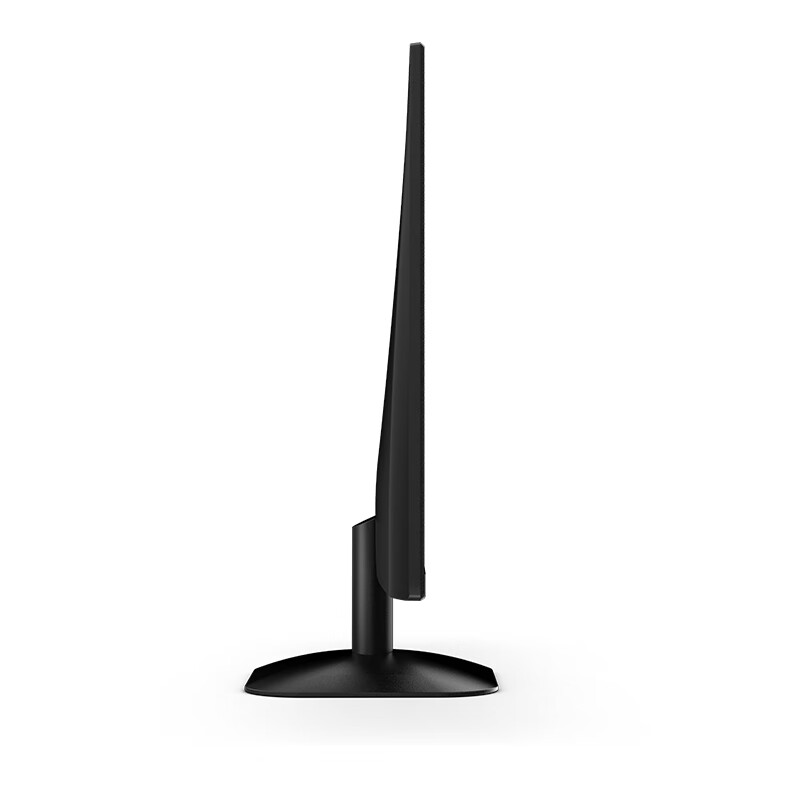
In terms of design, it keeps things simple but functional. It supports tilt adjustment from -5° to 23° and features VESA mount compatibility (100 x 100 mm). On the back, it equips both HDMI and VGA ports. While there’s no DisplayPort or USB hub, the value offered at this price point is hard to argue with.

Weighing just 2.58kg with the stand, the 24B35H is lightweight enough for most setups and has passed China’s energy efficiency certification.

In related news, KTC has introduced a MacBook-friendly monitor offering iMac-level clarity, while AOC has unveiled a new 26.5-inch 4K 240Hz QD-OLED gaming monitor featuring pro-grade color accuracy.

For more daily updates, please visit our News Section.

Stay ahead in tech! Join our Telegram community and sign up for our daily newsletter of top stories! 💡

(Via)

Oppo Find X8 Ultra specifications, images revealed via TENAA certification

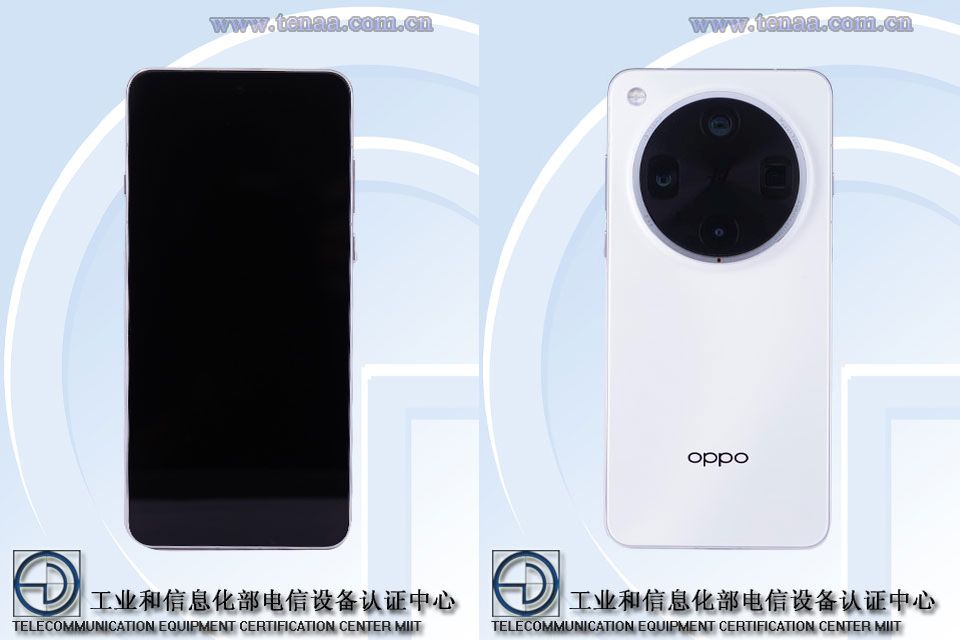
Reports have revealed that the Oppo Find X8 Ultra, expected to launch in China on April 10, carries two model numbers— PKJ110 and PKU110. The PKJ110 variant is the standard model, while the PKU110 is the satellite communication edition. The PKJ110 has now surfaced on China’s TENAA certification platform, offering a clear look at its design and specifications. Here’s a round-up of everything we know so far, including official details, TENAA certification, and reliable leaks.

Oppo Find X8 Ultra specifications

Oppo Find X8 Ultra TENAA images

The TENAA listing reveals the Find X8 Ultra dimensions as 163.09 x 76.8 x 8.78mm and a weight of 226 grams. It features a 6.82-inch flat OLED screen with a resolution of 3168 x 1440 pixels (2K+), offering a 120Hz refresh rate for smooth visuals.

On the front, the handset is equipped with a 32-megapixel selfie camera. At the back, it houses four 50-megapixel sensors along with a 2-megapixel auxiliary lens, likely a multi-spectral unit. For security, the phone integrates an ultrasonic under-display fingerprint sensor and also includes an IR blaster.

Under the hood, the Find X8 Ultra is expected to be powered by a 4.35GHz processor, possibly the Snapdragon 8 Elite chipset. RAM options include 12GB and 16GB, with storage ranging from 256GB to 1TB depending on the variant. It runs on Android 15 with ColorOS on top and includes a dual-cell battery design. While TENAA lists one cell as 2985mAh, the official total battery capacity is 6,100mAh. The brand has officially confirmed that the X8 Ultra supports 100W wired and 50W magnetic wireless charging.

Oppo Find X8 Ultra
Oppo Find X8 Ultra

Recent camera leaks add more detail, revealing a quad-50MP setup: a Sony LYT-900 main sensor with OIS, Samsung JN5 ultra-wide, Sony LYT-700 with 3x periscope zoom, and LYT-600 offering 6x periscope. Other reports revealed that the X8 Ultra will carry an IP68/IP69 rating and introduce a new push button (replacement for Alert Slider) on the left edge.

The Find X8 Ultra’s Satellite Communication Edition will be available in a single 16GB+1TB configuration, whereas its regular version will be sold in options like 12GB+256GB and 16GB+512GB. It will be available in color options include Starry Black, Moonlight White, and Morning Light.

For more daily updates, please visit our News Section.

Stay ahead in tech! Join our Telegram community and sign up for our daily newsletter of top stories!

Xiaomi 15S Pro confirmed by company co-founder Lin Bin, could it be equipped with Xiaomi’s in-house chip?

On April 6, which marks Xiaomi’s 15th anniversary, company executives, including founder Lei Jun and co-founder Lin Bin took to social media to celebrate the milestone. In a notable interaction with fans, Lin Bin casually confirmed the existence of an upcoming Xiaomi smartphone – the Xiaomi 15S Pro. This marks the first time the model has been officially acknowledged, though no promotional materials have been shared yet. The details were brought to wider attention by tipster @DigitalChatStation, who highlighted Lin Bin’s response.

Xiaomi 15S Pro officially confirmed after years of silence on the S series

Xiaomi 15s Pro officially confirmed

The Xiaomi 15S Pro will be the brand’s first S-series flagship since the Xiaomi 12S, which launched nearly three years ago. According to leaks, it retains the core design elements of the Xiaomi 15 Pro, featuring a 2K quad-curved display and a triple Leica camera setup.

A major enhancement is the battery, which is expected to exceed 6,000mAh in capacity. In addition, the phone will support up to 90W fast charging, as per prior 3C certification listings.

More importantly, reports suggest that Xiaomi may debut its in-house chipset on this device. Built on TSMC’s N4P process, this new SoC uses a standard tri-cluster eight-core layout. Early estimates suggest it could match Snapdragon 8 Gen 1 in performance, with the potential to rival Gen 2 depending on optimization.

The Xiaomi 15S Pro could also bring back UWB connectivity, a feature last seen on the Xiaomi MIX 4. This technology enables precise spatial awareness, making it ideal for tasks like unlocking the Xiaomi SU7 EV. Given Xiaomi’s automotive ambitions, the reintroduction of UWB makes strategic sense. While full specifications remain under wraps, the official confirmation alone signals the imminent arrival of this high-end device, likely later this month.

For more daily updates, please visit our News Section.

Stay ahead in tech! Join our Telegram community and sign up for our daily newsletter of top stories!

Redmi Turbo 4 Pro’s rumoured April 17 launch delayed after deadly Xiaomi SU7 crash

Qualcomm recently introduced the Snapdragon 8s Gen 4 chip, aimed at affordable flagship smartphones. At launch, the company confirmed that brands like iQOO, Redmi, Xiaomi, Oppo, and Meizu would release devices powered by this new processor in China. Rumours had pointed to the iQOO Z10 Turbo and Redmi Turbo 4 Pro as the first smartphones to feature the Snapdragon 8s Gen 4, with April launches expected. While iQOO has already confirmed its Z10 Turbo will debut this month, Redmi has yet to make an official announcement about the Turbo 4 Pro.

Redmi Turbo 4 Pro’s launch could be delayed

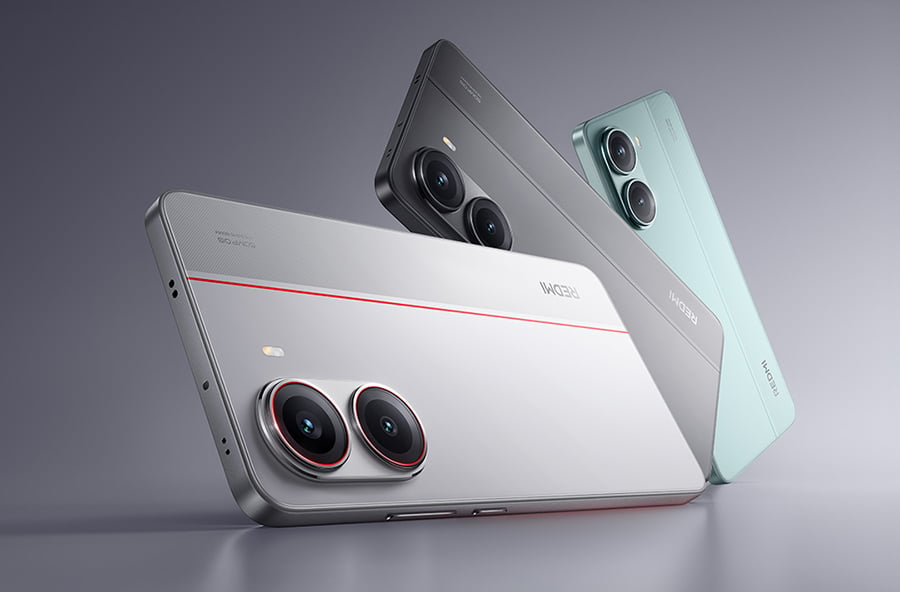
Xiaomi Redmi Turbo 4
Redmi Turbo 4

According to reports, Redmi had initially planned to launch the Redmi Turbo 4 Pro on April 17 in China. However, recent reports suggest that the delay in launching the Turbo 4 Pro is linked to a tragic accident involving a Xiaomi SU7 vehicle, which occurred on March 29 in Tongling, Anhui province. The crash claimed the lives of three young women and has drawn significant media and public attention.

Xiaomi SU7 crashed in China
Xiaomi SU7 crashed in China on March 29

According to sources, the SU7 was operating in NOA assisted driving mode at around 116 km/h when it hit a kerb and a water-filled barrier during a road construction detour, after which the vehicle caught fire. Xiaomi is cooperating fully with the ongoing police investigation but has not yet accessed the accident vehicle. The cause of the fire and whether the doors could be opened after the crash are still under review.

Readers can visit this post to know the crash timeline, company statement, and related information.

Redmi Turbo 4 Pro specifications (rumored)

As per reports, the Redmi Turbo 4 Pro will arrive with a 6.83-inch OLED LTPS screen that offers a 1.5k resolution, a Snapdragon 8s Gen 4 chip, a 7,550mAh battery with 90W charging, and a 50-megapixel + 8-megapixel dual-camera setup. It is also expected to feature a metal middle frame, a short-focus optical in-screen fingerprint sensor, and an IP68/69-rated body.

For more daily updates, please visit our News Section.

Stay ahead in tech! Join our Telegram community and sign up for our daily newsletter of top stories!

Infinix is launching a scented phone in India on April 18 under Rs 20,000

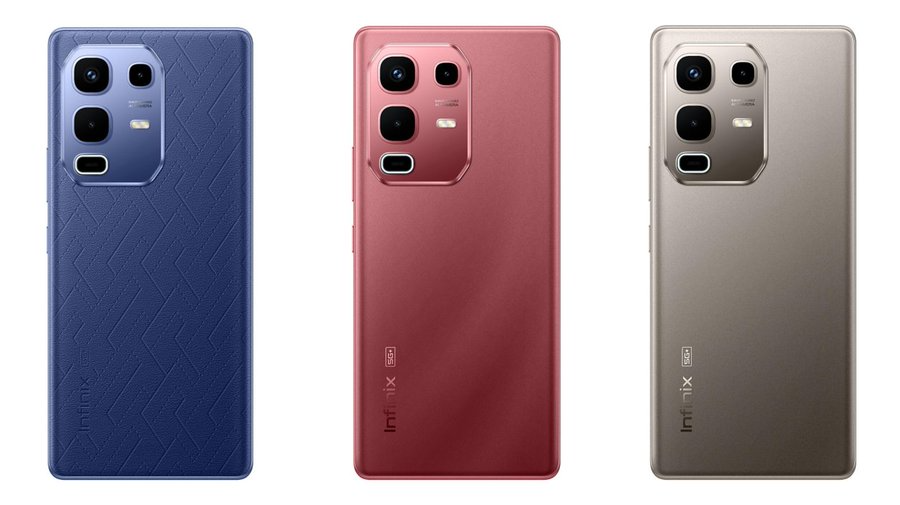
Following closely behind the Note 50x launch, Infinix is preparing to unveil another smartphone in its Note 50 series in India. The Note 50s 5G+ has already been teased to arrive in three color options: Titanium Grey, Ruby Red, and Marine Drift Blue.

Of these, the latter is particularly interesting as Infinix claims it comes equipped with microencapsulation technology, which will imbue the phone with a long-lasting fragrance.

The company has now confirmed the launch date for the aromatic device in India. The Infinix Note 50s 5G+ is set to debut on April 18.

How does this scent tech work?

Infinix is marketing the technology as Energizing Scent-Tech. This process traps fragrance molecules within microscopic capsules, which are embedded in the phone’s vegan leather back panel. As a result, the phone gradually releases a light, refreshing scent over time.

According to Infinix, the scent is designed to be subtle and long-lasting, though its intensity and duration may vary depending on how the phone is used and environmental factors like temperature and humidity. The company claims the fragrance will last for up to six months.

Infinix Note 50s 5G launch India
Infinix India CEO with Note 50s 5G

“We try to innovate. One such innovation is this Energizing Scent-Tech. It’s like you have a good-looking phone and it smells good as well. There’s a lot of technology behind that,” Infinix India CEO Anish Kapoor said.

Kapoor also hinted that the phone will be priced under Rs 20,000 in India. That’s some $235 for a fragrant phone which isn’t exactly breaking the bank.

We don’t yet have the full spec sheet for the phone, but given its expected price tag, don’t expect anything particularly premium. That said, the official renders confirm it will feature a 64MP Sony IMX682 sensor as the main camera.

For more daily updates, please visit our News Section.

Stay ahead in tech! Join our Telegram community and sign up for our daily newsletter of top stories!

Fatal Xiaomi SU7 crash kills three: Crash timeline, collision details, company statement

On March 29, a fatal accident involving a Xiaomi SU7 Standard electric sedan occurred on the Dezhou-Shangrao Highway (G0321) near Tongling, Anhui Province, China. The crash claimed the lives of three female university students, marking the first reported fatality linked to Xiaomi’s debut electric vehicle (EV). This incident has sparked widespread concern over autonomous driving technology and vehicle safety.

Victims and Vehicle Details

Xiaomi SU7 crashed in China

The victims were three university students traveling to Chizhou for a civil service exam. They were in a Xiaomi SU7 Standard, the base model of the SU7 lineup, purchased in May 2024 and delivered on Oct. 19, 2024.

Launched on March 28, 2024, this variant relies on a vision-based Navigate on Autopilot (NOA) system, lacking the LiDAR found in Pro and Max models.

Location and Conditions

The crash occurred in the Chiqi section of the highway, where ongoing repairs had narrowed traffic into an adjusted lane. This alteration, combined with potential construction debris, may have played a role in the collision.

Crash Timeline

Xiaomi SU7 crashed in China

Xiaomi’s investigation, based on vehicle data submitted to police, outlines the sequence of events:

  • 10:27:17 PM: NOA activated; vehicle speed at 116 km/h (72 mph).
  • 10:44:24 PM: System detected obstacles, issued warnings, and began decelerating.
  • 10:44:25 PM: Driver took manual control, steering 22.0625 degrees left, braking at 31%.
  • 10:44:26 PM: Steering adjusted 1.0625 degrees right, braking increased to 38%.
  • 10:44:26–10:44:28 PM: Vehicle hit a concrete guardrail at 97 km/h (60 mph), followed by a fire.

Post-Collision Details

Before and after photos of the crashed Xiaomi SU7 | Source

Social media reports, including a Douyin post by a victim’s mother, claimed the doors locked automatically post-crash, trapping the occupants as the car burned. Xiaomi could not verify door functionality, noting an emergency unlock button exists, but its effectiveness remains unclear. The NOA system’s inability to detect smaller obstacles like cones may have been a factor.

Company Response and Impact

Xiaomi formed an investigation team on March 30, submitting data by March 31. CEO Lei Jun expressed regret and promised transparency and support for the victims’ families.

The company said it formed a special task force immediately, visited the scene on March 30, and submitted vehicle data to police on March 31. Xiaomi clarified it has not yet been granted access to the accident vehicle, dismissing rumours that it had been transported to Beijing. According to internal data, the Xiaomi SU7 was in NOA assisted driving mode at around 116 km/h before issuing a warning and slowing down to 97 km/h before crashing.

The cause of the post-crash fire is still under investigation, but Xiaomi believes it likely began in the cabin, not the battery. The company also stated that AEB (automatic emergency braking) did not activate because the obstacle—a water barrier—is not currently supported by the system’s detection capabilities.

Ongoing Investigation

Xiaomi SU7 standard
Xiaomi SU7 standard

The police investigation continues, examining road conditions, driver actions, and vehicle systems. This tragedy highlights critical questions about autonomous driving reliability, emergency features, and driver training needs in EVs.

For more daily updates, please visit our News Section.

Stay ahead in tech! Join our Telegram community and sign up for our daily newsletter of top stories!

JBL Tune Flex 2, Buds 2, and Beam 2 earbuds Debut in India this month Starting below ₹6,000

JBL is launching its Tune Series 2 wireless earbuds in India this month, with three models: Tune Flex 2, Tune Buds 2, and Tune Beam 2. Prices will start below ₹6,000, though the exact pricing for each model is unconfirmed. Product details are live on Amazon India and JBL’s global website, but the launch date remains unclear.

JBL Tune Series 2

JBL Tune Flex 2 features

The Tune Flex 2 has 12mm drivers (the largest in the series), JBL’s Pure Bass Sound, Spatial Sound, and Adaptive Noise Cancelling (ANC) with Smart Ambient for adjusting background noise. It lasts up to 8 hours on a single charge (ANC on) or 12 hours (ANC off), with the charging case adding 36 extra hours for 48 total. Each earbud weighs 4.4 grams, and the IP54-rated case weighs 32.9–35.2 grams. It uses six microphones for calls, supports open or sealed ear tips, and pairs via Bluetooth 5.3.

JBL Tune Series 2

JBL Tune Buds 2 and Tune Beam 2 features

The Tune Buds 2 and Tune Beam 2 both have 10mm drivers. The Buds 2 last up to 10 hours with ANC (12 without) and include a 630mAh case for 48 total hours. Each earbud weighs 5.5 grams; the case is 40.6 grams. The Beam 2 offers similar battery life (10 hours ANC on, 12 off) but with a lighter 5.2-gram earbud and a 42-gram case (590mAh). Both are IP54-rated, use six microphones, and support Spatial Sound.

All models feature Bluetooth 5.3, multi-device pairing, Google Fast Pair, and customizable controls via the JBL Headphones app. They share a 20Hz–20kHz frequency range, -38dB mic sensitivity, and a two-hour charging time. ANC adapts to surroundings, while Smart Ambient lets users toggle external noise. Talk time ranges from 4.5 hours (ANC on) to 6 hours (ANC off).

For more daily updates, please visit our News Section.

Stay ahead in tech! Join our Telegram community and sign up for our daily newsletter of top stories!

(Source)

iQOO Z10 Turbo vs. Redmi Turbo 4 Pro: Specifications of Snapdragon 8s Gen 4 phones compared

Qualcomm recently unveiled the Snapdragon 8s Gen 4 through a launch event in China. Soon after the launch, iQOO confirmed that its upcoming Z10 Turbo Pro will be the first smartphone to feature the new chip. While the Z10 Turbo is slated to launch this month, it is also being said that the Redmi Turbo 4 Pro featuring the Snapdragon 8s Gen 4 will debut soon in China. Therefore, the two phones are expected to rival each other in the home market. A recent Weibo post by tipster Experience More compares the key specifications of both smartphones.

iQOO Z10 Turbo vs. Redmi Turbo 4 Pro specifications

iQOO Z9 Turbo Endurance Edition

Both devices will feature a flat OLED LTPS panel with a 1.5K resolution. While the Z10 Turbo will have a 6.78-inch display, the Redmi offering will have a larger 6.83-inch screen.

Under the hood, both devices will pack the Snapdragon 8s Gen 4 chip. The Z10 Turbo will be equipped with a massive 7,000mAh battery with 120W fast charging. On the other hand, the Turbo 4 Pro will have an even bigger 7,550mAh battery with slightly slower 90W fast charging.

Both smartphones are said to have a 50-megapixel + 8-megapixel dual-camera setup on the back. The leak has no information about the front cameras of both phones.

Xiaomi Redmi Turbo 4
Redmi Turbo 4

The iQOO Z10 Turbo will have a plastic middle frame, whereas the Redmi Turbo 4 Pro will feature a metal middle frame. Both models will have a short-focus optical fingerprint sensor under their display. The Z10 Turbo will also feature a dedicated display chip, which will probably be responsible for an enhanced viewing and gaming experience.

Reports have claimed that the Redmi Turbo 4 Pro will be rebranded as the Poco F7 for the global market. However, there is no clarity on whether the Z10 Turbo Pro will be released in markets outside of China.

For more daily updates, please visit our News Section.

Stay ahead in tech! Join our Telegram community and sign up for our daily newsletter of top stories!

ASUS Zenbook S16 India Launch Set for April 8: AMD Ryzen AI 7, 50 TOPS NPU, and 120Hz OLED Display in 1.5kg Chassis

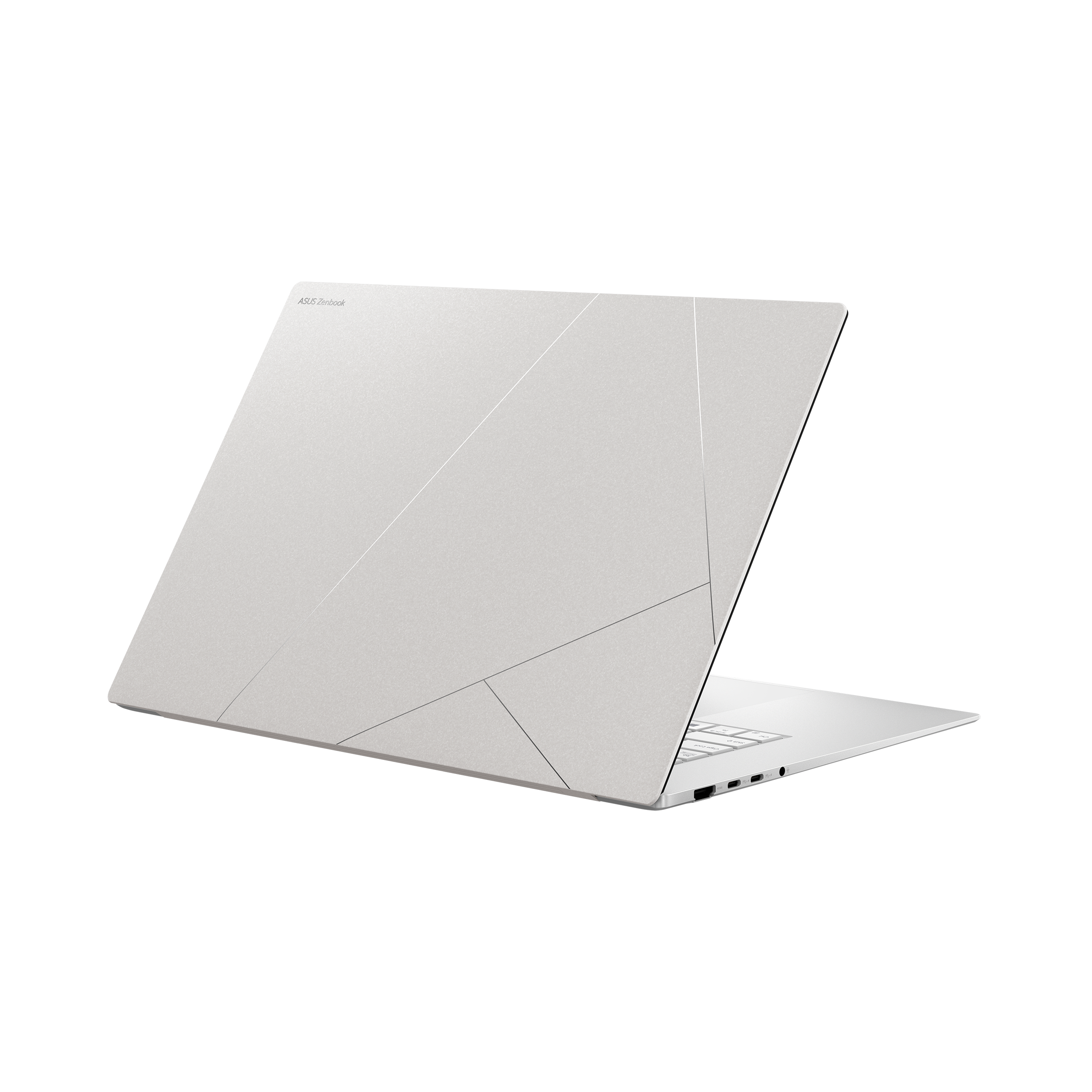
ASUS will launch the Zenbook S16 (UM5606KA) laptop in India on April 8, 2025, at 12 PM. The product page is already live on Amazon and ASUS India’s website. This is an AI-focused laptop with a dedicated AI chip. It is also a Copilot+ PC.

ASUS Zenbook S16

The laptop runs on an AMD Ryzen AI 7 350 processor with 8 cores, 16 threads, a base speed of 2.0GHz, and a boost up to 5.0GHz. It includes an AMD XDNA NPU that delivers up to 50 TOPS and comes with integrated AMD Radeon graphics. In the global market, there are two memory options—16GB or 24GB LPDDR5X. Storage options include 1TB or 2TB M.2 NVMe PCIe 4.0 SSD.

The laptop has a 16-inch OLED display with a 3K resolution (2880 x 1800), a 16:10 aspect ratio, 0.2ms response time, and a 120Hz refresh rate. It offers 400 nits of brightness and 500 nits at HDR peak. It supports 100% DCI-P3 color gamut, shows 1.07 billion colors, and is VESA DisplayHDR True Black 500 certified. The screen is PANTONE Validated, TÜV Rheinland, and SGS Eye Care certified, with 70% less blue light. It has a 90% screen-to-body ratio and comes in both touch and non-touch versions. The touchscreen variant supports stylus input. All that said, it is currently unclear if ASUS plans to launch both variants in India.

For input, it includes a backlit chiclet keyboard with 1.1mm key travel and a precision touchpad. There is also a dedicated Copilot key. The camera is a Full HD IR unit that works with Windows Hello. Audio features include built-in speakers, a built-in array microphone, and Smart Amp technology.

Ports include one USB 3.2 Gen 2 Type-A, two USB 4.0 Gen 3 Type-C (with display and charging support), one HDMI 2.1 TMDS port, one 3.5mm audio jack, and an SD 4.0 card reader. It supports Wi-Fi 7 (802.11be, tri-band) and Bluetooth 5.4.

The battery is a 78Wh, 4-cell lithium-ion unit. The laptop weighs 1.50 kg. Dimensions are 35.36 x 24.30 x 1.19–1.29 cm. It meets US MIL-STD 810H military-grade durability standards. More details, including pricing, will be shared at launch.

Asus has also recently launched the Zenbook A14 and Vivobook 16 laptops in India, featuring Qualcomm Snapdragon processors in India. These modes are already available to purchase and start at Rs. 65,990 (~$772).

(Source)

One UI 8 based on Android 16 to debut first on Galaxy Z Fold 7 and Flip 7

Samsung’s Galaxy S series typically sets the pace for new One UI releases, with each year’s flagship arriving alongside the latest version of the software. For instance, One UI 7 debuted with the Galaxy S25 series, One UI 6 launched with the S23, and One UI 5 came with the S22.

But that pattern may shift this year. A new report claims the upcoming Galaxy Z Flip 7 and Z Fold 7 could be the first to ship with One UI 8, which will be based on Android 16.

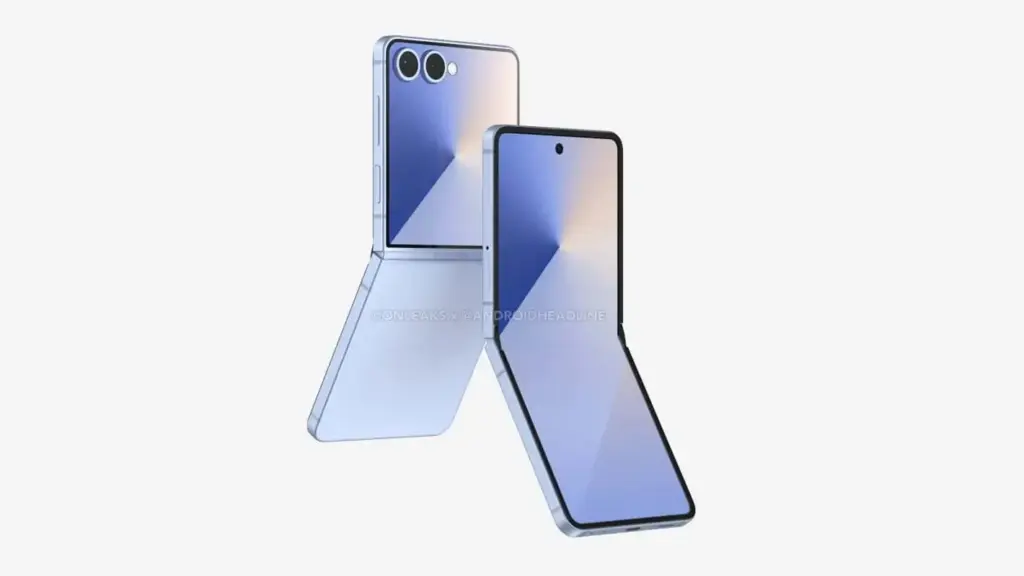
Samsung Galaxy Z Fold 7 CAD renders by OnLeaks and AndroidHeadlines

The shift likely ties into Google’s timeline. Google will release the stable version of Android 16 earlier this year, in June or July. This timing overlaps with Samsung’s annual foldable refresh, so it’s plausible the company will kick off One UI 8 with its foldable lineup instead of the Galaxy S series. 

The report also aligns with earlier leaks pointing to internal testing of One UI 8 already being underway.

Samsung’s rollout of One UI 7 has also been unusually sluggish this year. Even the eligible Galaxy S-series phones have not received the update yet. At this point, it looks like the company might skip its typical .1 or .1.1 incremental releases and jump straight from One UI 7.0 to One UI 8.0.

What to expect from upcoming foldables?

Both the Galaxy Z Flip 7 and Z Fold 7 have surfaced in leaked renders that reveal the design changes.

 For the Z Fold 7, Samsung is making it noticeably slimmer—just 4.5mm thick when unfolded—which brings it in line with the thinnest foldable out there.

Samsung Galaxy Z Flip 7
Samsung Galaxy Z Flip 7 Leaked Render

The Z Flip 7, on the other hand, appears to be ditching the folder-style cover display that’s defined the Flip series so far. Instead, it’s switching to a full cover screen, interrupted only by the dual camera cutouts.

Both foldable are expected to run on Qualcomm’s Snapdragon 8 Elite chip. As for the rest of the specs, the Z Flip 7 is tipped to get a slightly larger 4,300mAh battery (up from 4,000mAh), while the Z Fold 7 may stick with its current 4,400mAh cell.

For more daily updates, please visit our News Section.

Stay ahead in tech! Join our Telegram community and sign up for our daily newsletter of top stories! 💡

Xiaomi’s In-House Chipset Specs Leaked — Here’s What’s Inside

After stepping back from chip development in the past, Xiaomi is reportedly preparing for a renewed push into the in-house System on Chip (SoC) space. A recent leak has offered a closer look at what could be the company’s next attempt at building its own smartphone processor.

Xiaomi SoC

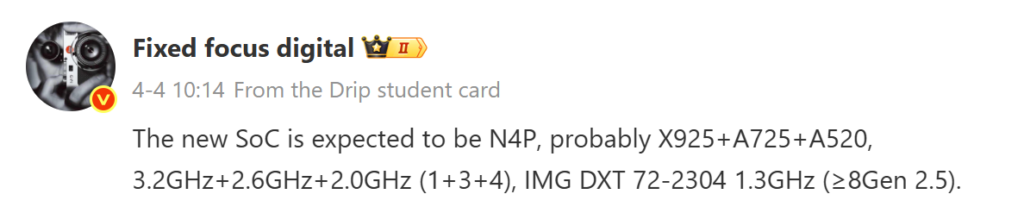
Despite earlier rumors hinting at a cutting-edge 3nm design, tipster Fixed Focus Digital (via Jukanlosreve on X) claims that Xiaomi’s first Arm v9-based chip will instead use TSMC’s N4P node. This more mature and cost-effective process suggests that Xiaomi is aiming for a balanced approach, focusing on both performance and production efficiency as it makes a serious return to chipmaking.

The leaked specs point to an octa-core CPU configuration in a 1+3+4 setup. It includes one high-performance Cortex X925 core clocked at 3.2GHz, three Cortex A725 cores at 2.6GHz, and four power-efficient Cortex A520 cores running at 2.0GHz. While this doesn’t signal flagship-level power, it appears well-positioned for upper mid-range devices, possibly debuting in the rumored Xiaomi 15S, expected in 2025.

Xiaomi in-house Soc specs leak

On the graphics side, the SoC is said to feature an Imagination Technologies IMG DXT72 GPU running at 1.3GHz. Surprisingly, early estimates suggest it could even outperform the Adreno 740 found in the Snapdragon 8 Gen 2, indicating solid graphics potential.

Xiaomi is also expected to integrate its own Image Signal Processor (ISP), while other components like the 5G modem and DSP may be sourced from MediaTek, Synopsys, or even Huawei, depending on availability and geopolitical factors.

Developing an in-house SoC aligns with Xiaomi’s broader objective to reduce reliance on third-party chipmakers like Qualcomm and MediaTek. This move not only offers greater control over hardware-software integration but also positions Xiaomi to better manage supply chain dynamics and production costs. However, the geopolitical landscape, particularly U.S. export controls, could influence Xiaomi’s access to advanced manufacturing processes, potentially impacting production timelines and capabilities.

As the anticipated launch approaches, more detailed information is expected to emerge, providing further insights into Xiaomi’s strategic direction and the potential impact of its custom SoC on the smartphone market.

For more daily updates, please visit our News Section.

Stay ahead in tech! Join our Telegram community and sign up for our daily newsletter of top stories! 💡

(Source, Via 1,2)

Future Galaxy S Ultra phones could ditch the S Pen slot: internal space or separate price tag?

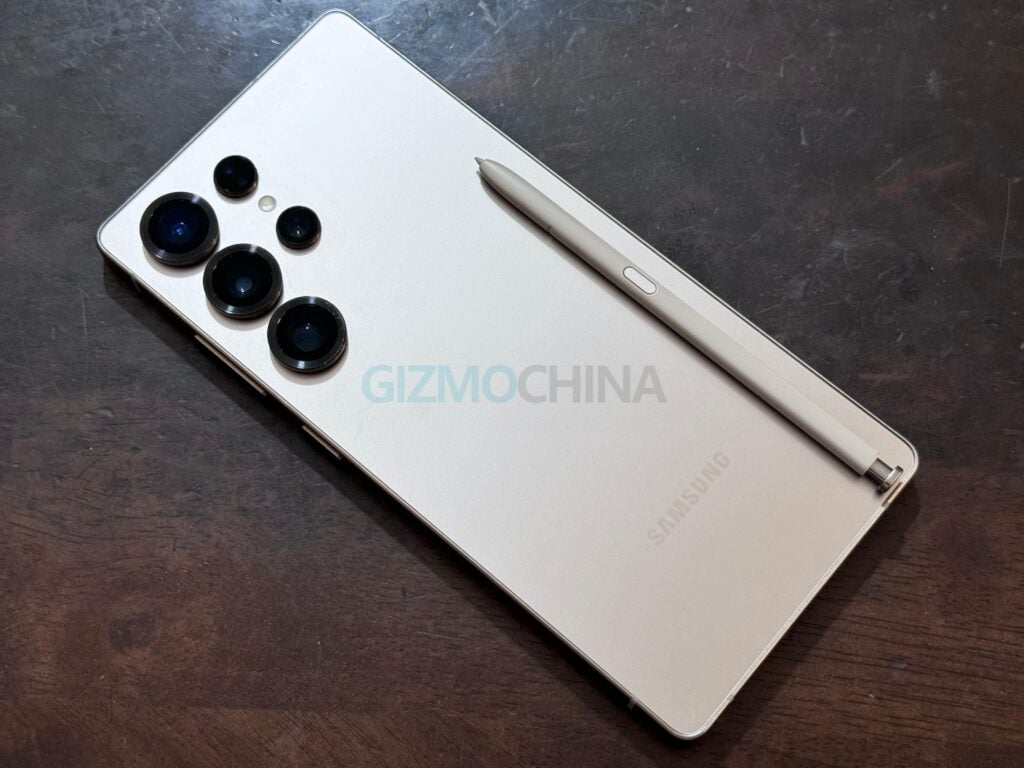
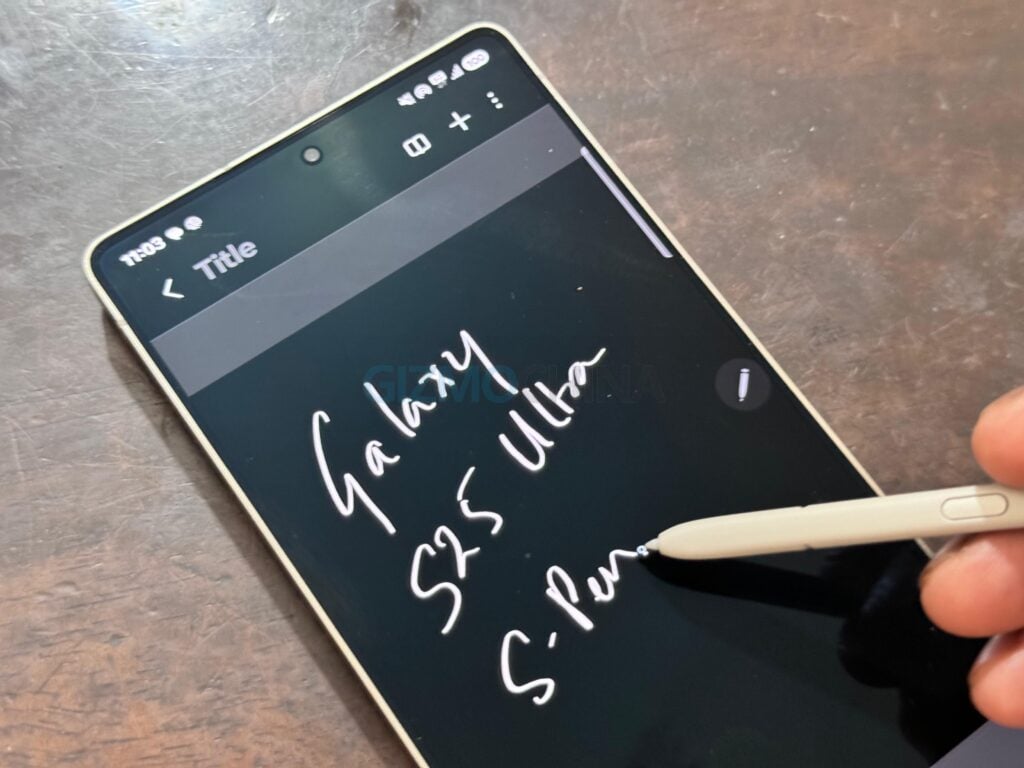
Samsung could be gearing up to drop the built-in S Pen slot from its future Galaxy S Ultra models, a move that’s sparking concern among fans. While the Galaxy S26 Ultra is expected to retain the S Pen slot, a recent leak suggests the company is eyeing a redesign down the line to reclaim internal space—though the S Pen itself won’t vanish altogether.

Samsung Galaxy S25 Ultra - S Pen
Samsung Galaxy S25 Ultra – S Pen

Since the Galaxy Note’s retirement, the S Pen has been an Ultra hallmark, tucked neatly into the phone’s frame. But that slot eats up real estate that could boost battery size. X user @PandaFlashPro reports that Samsung is mulling this shift, potentially starting post-S26 Ultra.

The S Pen won’t be included in the box, right?

Samsung is already struggling to manage the cost of including a charging cable in the box. They just switched from the 5A cable to a thinner 3A one, which also reportedly caused some compatibility issues with existing 45W official chargers. If the rumor about the S Pen slot is true, it’s likely that the premium drawing tool will get a separate price tag. Judging from the industry trends, it also appears to be a more viable reason behind the redesign than the shortage of internal volume.

Samsung Galaxy S25 Ultra S Pen

Samsung trimmed the Bluetooth feature from the S Pen of the S25 Ultra, reportedly because a very small percentage of users actually use it. If the slot goes, an external S Pen—still supported—could revive Bluetooth connectivity, most likely at the cost of a hefty price tag.

The S26 Ultra, due next year, should include the S Pen slot, and the stylus itself may lack Bluetooth. Starting with the S27 Ultra, users might need to carry the stylus separately, much like Galaxy Z Fold owners. Or, Samsung will list a case alongside the stylist for sale that includes an S Pen slot. Nonetheless, this is a leak rather than official information, so take it with a pinch of salt.

Tech enthusiast? Get the latest news first! Follow our Telegram channel and subscribe to our free newsletter for your daily tech fix!

For more daily updates, please visit our News Section.

(Source)
Entire Pixel 10 series’ camera specs revealed, and its a mixed bag of upgrades and downgrades

As we are inching closer to the official unveiling of Google’s Pixel 10 series, leaks are also revealing certain aspects of the devices under development. According to a recent report, the base Pixel 10 would finally snag a telephoto lens, aligning it with the Pro models. Now, thanks to insider documents viewed by Android Authority, we’ve got the full camera specifications of all models—and it’s a mixed bag of upgrades and compromises.

Pixel-10-render
Pixel 10 concept render

The addition of a telephoto in the Pixel 10 is accompanied by downgraded main and ultrawide

Since the Pixel 6, the base models have included only wide and ultrawide lenses on the back, while Pro models pack an additional telephoto lens. The Pixel 10 series rewrites that script. The base Pixel 10 gains an 11MP Samsung 3J1 telephoto—borrowed from the Pixel 9 Pro Fold.

Includes an additional lens

But here’s a catch: its primary sensor swaps the hefty GNV (1/1.31″) for the smaller Samsung GN8 (1/1.95″), and the ultrawide drops from an IMX858 (1/2.55″) to a Sony IMX712 (1/3.1″). Notably, these are the exact same sensors the Pixel 9a uses, which is a bit disappointing.

Smaller sensors have weaker low-light performance, a trade-off Google’s AI and algorithms can only soften, not erase. The selfie cam holds steady from last year, but the rest feels like a Pixel 9a remix with an added telephoto.

pixel-10-pro-xl-design-render

Meanwhile, the Pixel 10 Pro and Pro XL keep their camera hardware unchanged, leaning on the Tensor G5’s custom ISP and fresh algorithms to squeeze out improvements. The Pixel 10 Pro Fold gets a minor tweak, ditching the Sony IMX787 (Pixel 8a) for the GN8 (Pixel 9a), but it hardly deserves a headline.

Google is widening the gap between its base and Pro tiers, a trend that kicked off last year. The Pixel 10’s camera downgrade—swapping bigger sensors for smaller ones—likely offsets the cost and space of that new telephoto lens. Later this year, we’ll see if Google’s gamble pays off. Despite the smaller main and ultrawide sensors on the base model, the final output may not differ much compared to the Pixel 9—since image processing plays a major role and can improve independently of the sensors.

Don’t miss a thing! Join our Telegram community for instant updates and grab our free daily newsletter for the best tech stories!

For more daily updates, please visit our News Section.

(Source)
Galaxy Tab S10 FE’s 7-year update promise: What Samsung didn’t clarify

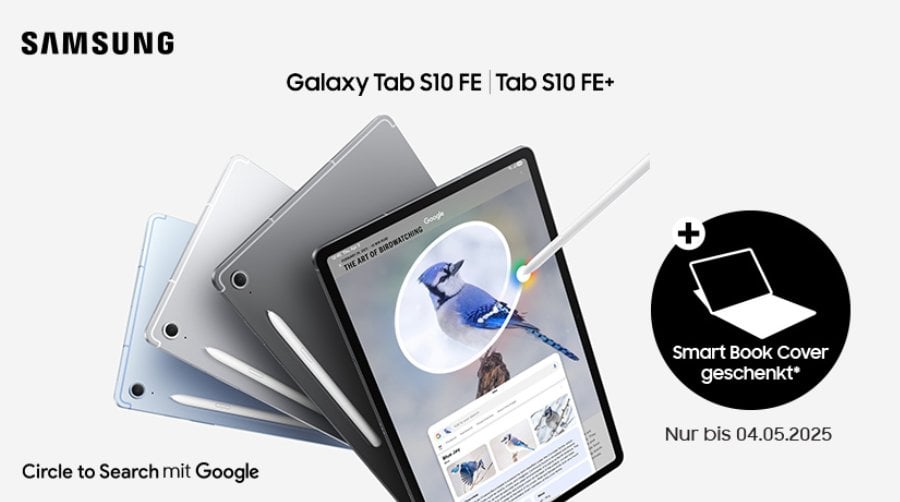
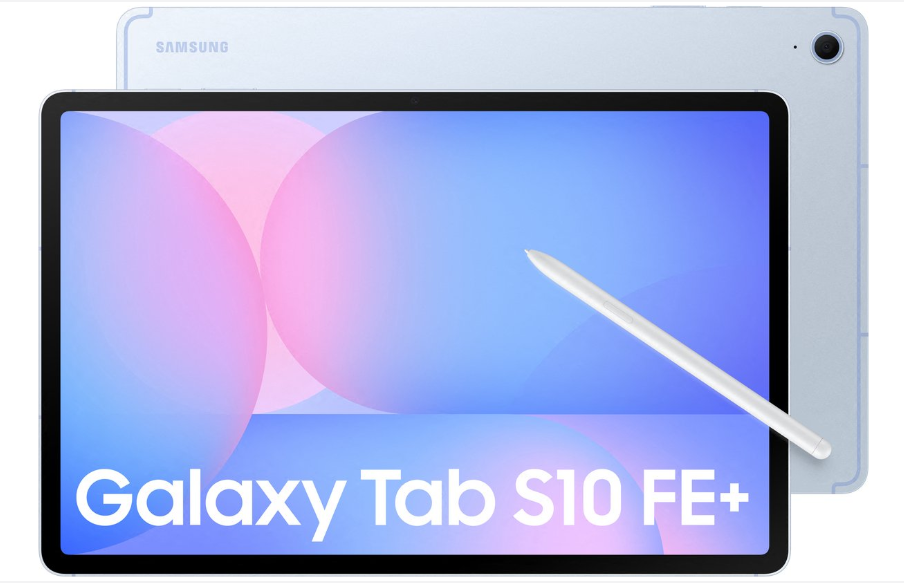
Samsung’s Galaxy Tab S10 FE and FE+ launched on April 3, 2025, with Android 15 and One UI 7. Unfortunately, neither the press release nor the product pages mention the software update policy for the tablets.

Samsung Galaxy Tab S10 and S10 FE Plus Specs Price leak

Typically, Samsung trumpets its update commitments—six years for mid-range devices, seven for flagships—right on product pages. For these mid-range tablets, though, the details are murky, and a vague customer service response has only muddied the waters further.

Seven years of updates may or may not include Android version upgrades

Curious about the FE and FE+’s update situation, a user queried Samsung directly. The reply? The tablets will get seven years of updates—but it’s unclear if that spans both OS upgrades and security patches. Samsung’s customer support has a shaky track record on update specifics, often serving up vague answers that frustrate more than they clarify.

Recent mid-range phones from Samsung are eligible for six years of full support (Android + security patch), while seven years has been a flagship perk. The Tab S10 FE’s seven-year update claim bucks that trend, raising both eyebrows and hope—yet without Samsung’s official word, it’s a leap of faith.

Galaxy Tab S10 FE+

If true, these tablets could enjoy Android and One UI updates through 2032, alongside security fixes, matching the premium Tab S10 lineup. But it’s just speculation. Samsung’s precedent suggests seven years would cover everything, but the lack of confirmation leaves room for doubt—especially with customer care’s shaky credibility. For now, users eying the latest mid-range tablets await a definitive statement to settle whether the Tab S10 FE and FE+ are mid-range anomalies or just victims of sloppy communication. We’ll share more information as soon as the company clarifies the matter with an official response.

Tech enthusiast? Get the latest news first! Follow our Telegram channel and subscribe to our free newsletter for your daily tech fix!

For more daily updates, please visit our News Section.

(Via)

Oppo Reno 14 Pro render surfaces along with key specs

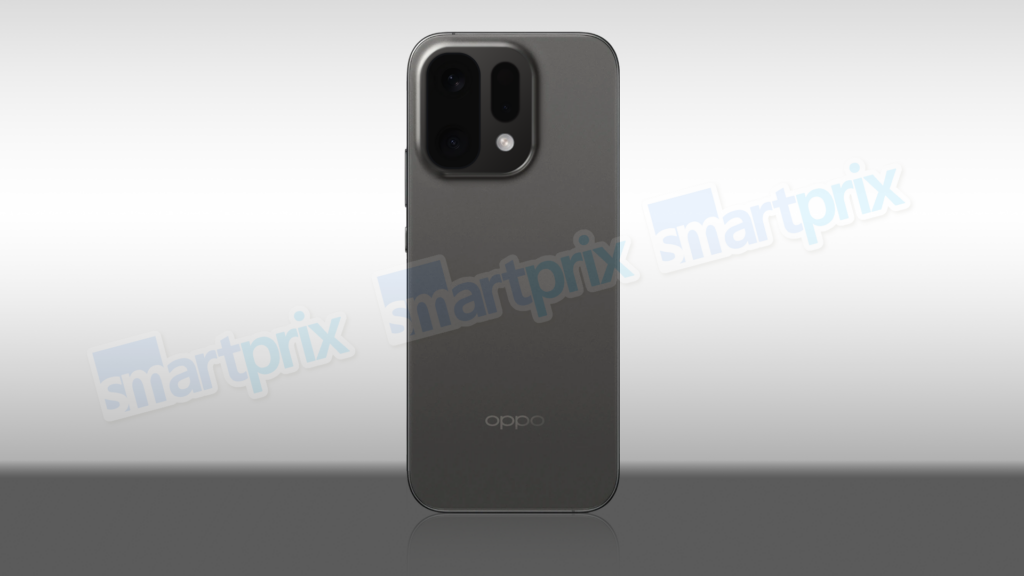
Oppo is gearing up for another design-forward refresh of its mid-premium Reno lineup, and if newly leaked renders are anything to go by, the upcoming Reno 14 Pro is all about refining what worked—while throwing in a few smart upgrades. The renders, published exclusively by Smartprix, give us a detailed first look at the phone’s refreshed aesthetic and what’s shaping up to be a more purposeful device overall.

Oppo Reno 14 Pro Render

Oppo Reno 14 Pro Design Details

The standout change? A redesigned camera island. Unlike the Reno 13 Pro’s triple-camera layout with distinct metal rings around each lens, the Reno 14 Pro adopts a more unified, vertical arrangement. The primary and ultrawide cameras now sit together in one module, while the periscope telephoto lens is set off to the side, just above a minimalist dot-style LED flash. It’s cleaner, sleeker, and subtly more premium.

Around the front, Oppo is finally ditching curves. The Reno 14 Pro will feature a flat OLED display with a 120Hz refresh rate—a shift that aligns with trends seen in Oppo’s own Find X8 series and the wider Android space. Flat screens may not look as flashy on marketing materials, but they’re undeniably more functional for everyday use, especially when it comes to typing, gaming, and avoiding ghost touches.

Specs-wise, the source points to a capable triple-camera setup: a 50MP primary sensor with OIS, an 8MP ultrawide, and a 50MP periscope telephoto lens with 3.5x optical zoom. The device is also expected to feature the “Magic Cube” button—a remappable physical key that replaces the Alert Slider and is rumored to work similarly to Apple’s Action Button. It’s also expected to show up in other Oppo devices like the Find X8 Ultra and X8s series, signaling a new era of customizable hardware for the brand.

The Reno 14 Pro will ship with Android 15 out of the box, layered with Oppo’s ColorOS 15. The phone is also expected to carry the same glass back, a metal frame, and IP68/IP69 certification for enhanced water and dust resistance.

The Reno 14 series is tipped to launch in China in May. The pricing is expected to be similar to the Reno 13 lineup, which launched at 2,699 Yuan (approximately $370) for the base model and 3,299 Yuan (around $455) for the Pro version.

For more daily updates, please visit our News Section.

Stay ahead in tech! Join our Telegram community and sign up for our daily newsletter of top stories! 💡

(Source)