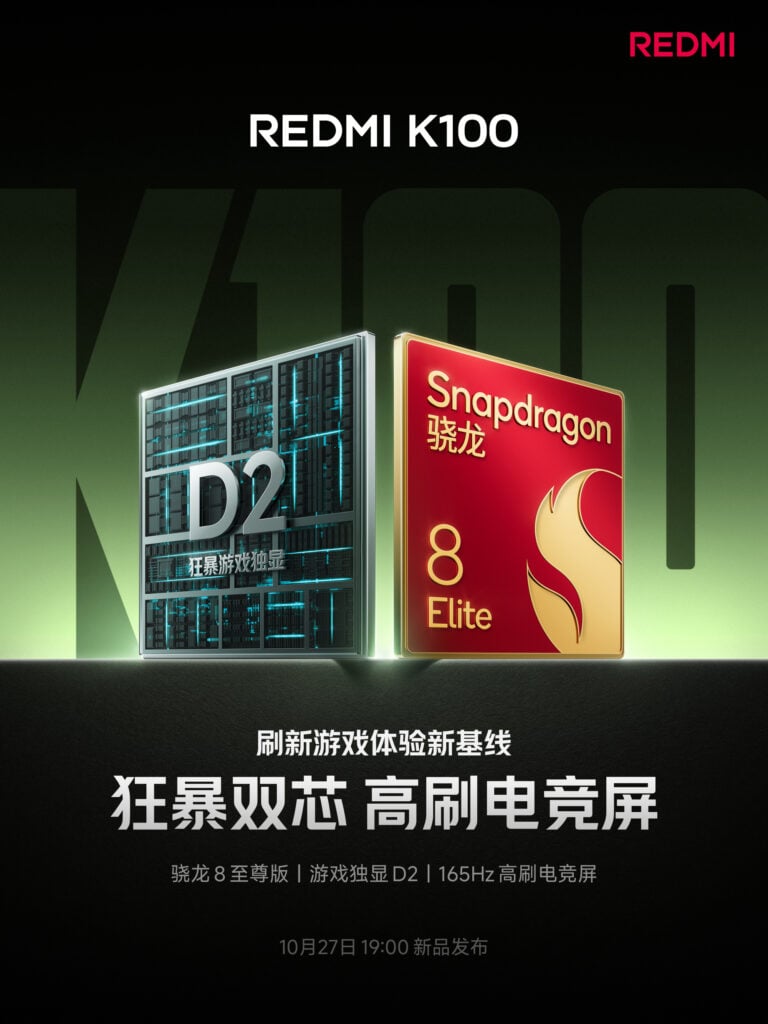
Redmi announced October 27 as the launch date for the Redmi K100 this morning, confirming the Snapdragon 8 Elite chipset and a dedicated D2 display chip. The company has now revealed more details about the screen, including its size and refresh rate.
The Redmi K100 has a 6.83-inch display with a 165Hz refresh rate. Redmi says more than 40 games support native 165fps playback on the phone. The panel is smaller and has a lower refresh rate than earlier leaks suggested, which pointed to a 6.9-inch AMOLED screen with a 185Hz refresh rate.
The display also supports a 480Hz multi-finger touch reporting rate and a 3,500Hz instantaneous touch sampling rate. Peak brightness reaches 3,500 nits, while Xiaomi Green Mountain Eye Protection 4.0 handles the screen’s eye-care features.
The Redmi K100 will also ship with HyperOS 4. Xiaomi says the software calculates system load more precisely to allocate resources to different tasks, preloads memory to help apps run when needed, and improves the efficiency of its own applications. The first two changes are part of the HyperCore kernel update covered when stable HyperOS 4 began rolling out in China.
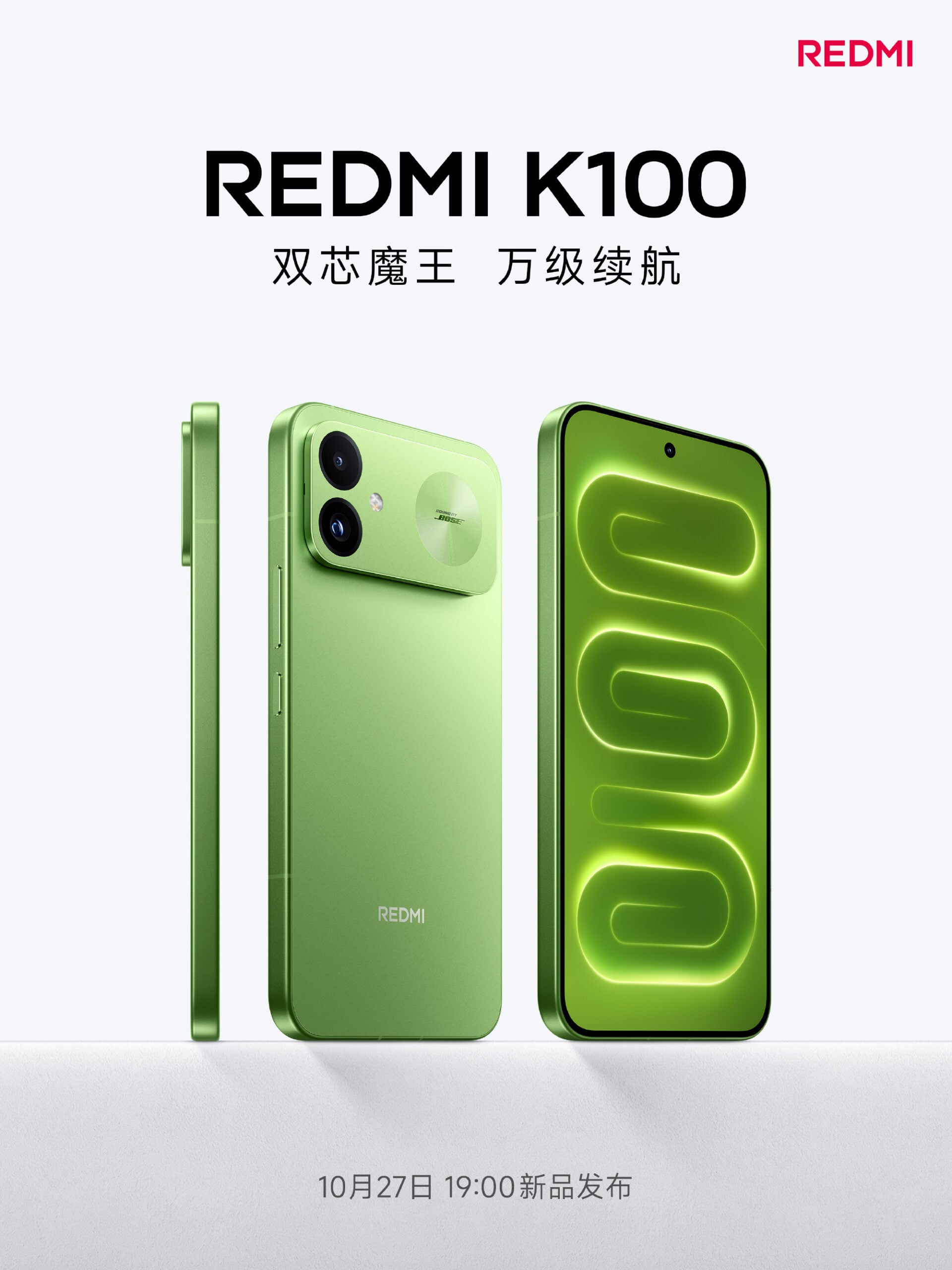
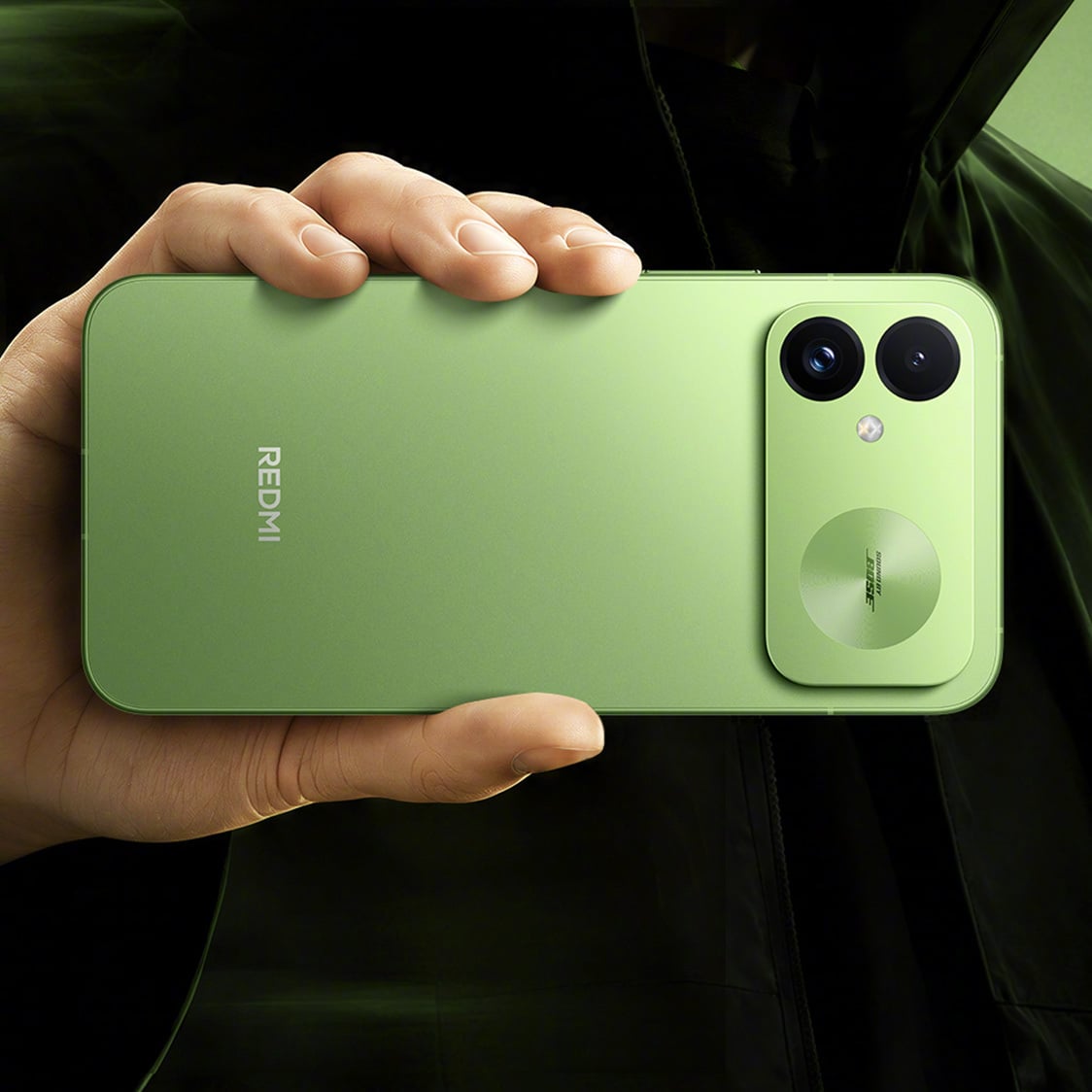
Alongside the hardware details, Redmi has shared official images of the K100 in a new Flame Green colorway.
Redmi has yet to reveal the phone’s price, battery capacity, or camera specifications. Earlier leaks pointed to a 10,000mAh battery, but that detail remains unconfirmed. The company is expected to share the remaining specifications at the October 27 launch event.
Motorola looks to be working on a battery-focused version of the Moto G47. Xpertpick spotted the Moto G47 Power (model XT2625-15) in Europe’s EPREL energy efficiency database. The listing shows a rated battery capacity of 6,790mAh, a solid jump from the regular Moto G47’s 5,200mAh.
Marketing numbers usually round these up a bit, so it’s likely to be promoted as around 7,000mAh. The same docs also list 33W wired charging (up from 20W on the standard model) and an IP64 rating for dust and water resistance. It even hints the phone could get up to five years of security updates.
The EPREL data gives a bit more useful context beyond just the mAh number. It records about 78 hours and 19 minutes of endurance under the standardized test (not continuous screen-on time), puts the phone in energy-efficiency class A, rates battery durability at 1,200 charge cycles, and gives it a repairability class of B. Those figures paint a clearer picture of real-world staying power than the raw capacity alone, especially when you factor in the faster charging.
An early listing on the Italian retailer Epto showed a 4GB RAM + 128GB storage version priced around €350. Most of the other core specs haven’t been confirmed yet for the Power model.
Looking at the regular Moto G47 (which launched in Europe in spring 2026), the expectation is that it’ll keep the same basic setup: a 6.67″ 120Hz IPS LCD (HD+ resolution, up to around 1,050 nits peak brightness, protected by Gorilla Glass 7i), a Dimensity 6300 chipset, a dual rear camera with a 108MP main sensor and 2MP secondary, plus an 8MP front camera. The Power version is widely expected to stick with this foundation and focus the upgrades on battery size, charging speed, and durability.
The standard Moto G47 already has IP64 protection and runs Android 16 with Motorola’s Hello UI. The Power edition fits Motorola’s usual pattern of offering bigger-battery “Power” models alongside the regular G-series phones, just like they did with the G77 Power and earlier ones.
Xiaomi 18 Pro and Vivo X500 Pro take different approaches to flagship performance, photography, and everyday usability. Xiaomi focuses on a high-resolution camera system, a secondary rear display, and a massive battery, while Vivo emphasizes Zeiss camera technology, advanced video recording, and a sharper main display. Both offer premium hardware, but their differences could make one a better choice depending on your priorities.
Major Features:
Category
Xiaomi 18 Pro
vivo X500 Pro
Winner
Build
Dragon Crystal Glass 3, aluminum frame
Glass front, aluminum frame, glass or reinforced plastic back
vivo — IP68/IP69 protection
Water Resistance
IP68, up to 6m for 30 minutes
IP68/IP69, up to 1.5m for 30 minutes
vivo — Better high-pressure water protection
Display
6.4-inch LTPO AMOLED, 120Hz
6.36-inch LTPO AMOLED, 144Hz
vivo — Higher refresh rate
Resolution
1120 × 2436 pixels
1216 × 2660 pixels
vivo — Sharper display
Peak Brightness
4,000 nits
4,500 nits
vivo — Higher claimed peak brightness
Secondary Display
2.7-inch rear display
Not available
Xiaomi — Additional rear-screen functionality
Operating System
Android 17, HyperOS 4
Android 17, OriginOS 7
Tie — Both run Android 17
Software Updates
Not specified
Up to 5 major OS updates
vivo — Clearer update commitment
Chipset
Snapdragon 8 Elite Gen 6, 2nm
MediaTek Dimensity 9600 Pro, 2nm
Xiaomi — Stronger on-paper performance potential
GPU
Adreno
Mali-G2-Ultra-NX
Tie — Real-world benchmarks needed
RAM
12GB, 16GB
12GB
Xiaomi — Offers a 16GB option
Storage
256GB, 512GB, 1TB
256GB, 512GB, 1TB
Tie — Same maximum storage
Storage Type
UFS 4.1
UFS 4.1
Tie — Same storage standard
Main Camera
200MP, OIS, Leica lens
50MP, OIS, Zeiss optics
Xiaomi — Higher resolution and Leica branding
Telephoto Camera
200MP periscope, 3.2x optical zoom
64MP periscope, 3.5x optical zoom
Xiaomi — Higher-resolution telephoto sensor
Ultrawide Camera
50MP, 102° field of view
50MP, 119° field of view, autofocus
vivo — Wider coverage and autofocus
Rear Video
Up to 8K at 30fps, 4K at 120fps
Up to 8K at 30fps, 4K at 240fps
vivo — Higher maximum 4K frame rate
Selfie Camera
50MP, autofocus
50MP, autofocus
Tie — Both offer autofocus
Selfie Video
4K at 60fps
4K at 60fps
Tie — Same maximum resolution and frame rate
Audio
Stereo speakers, Dolby Atmos, Snapdragon Sound
Stereo speakers, Hi-Res audio
Xiaomi — Dolby Atmos and Snapdragon Sound
Connectivity
Wi-Fi 7, Bluetooth 6.0, USB 3.2, UWB
Wi-Fi 7, Bluetooth 5.4/6.0, USB 3.2
Xiaomi — UWB support and broader listed Bluetooth features
Battery
7,000mAh
6,510mAh
Xiaomi — Larger battery capacity
Wired Charging
100W
90W
Xiaomi — Faster rated charging
Wireless Charging
50W
40W
Xiaomi — Higher rated wireless charging speed
Reverse Charging
27W reverse wireless
Reverse wireless and reverse wired
Tie — Different reverse-charging advantages
Price
Priced around $1,000 / ₹1,20,000
Priced around $950 / ₹93,000
vivo — Lower estimated price
Overall
Better battery, charging, and high-resolution cameras
Better display, water resistance, and video versatility
Xiaomi — More ambitious hardware package
Disclaimer: Specs are based on available data. Actual performance may vary. Verify details from official sources before buying.
Design and Display
Build and Feel
The Xiaomi 18 Pro combines Dragon Crystal Glass 3 with an aluminum frame, giving it a premium construction and additional screen protection. Its IP68 rating promises water resistance at depths of up to six meters under specified conditions. The Vivo X500 Pro also uses an aluminum frame and glass or glass-fiber-reinforced plastic back, depending on the variant. Its IP68/IP69 certification adds protection against high-pressure water jets. Both phones feature ultrasonic in-display fingerprint sensors, but Xiaomi’s more distinctive design includes a secondary display on the rear. This adds functionality beyond the conventional flagship experience, although its usefulness depends on how frequently users rely on the extra screen.
Display Quality
The Xiaomi 18 Pro features a 6.4-inch LTPO AMOLED panel with a 120Hz refresh rate, Dolby Vision, HDR10+, and a claimed peak brightness of 4,000 nits. The Vivo X500 Pro offers a slightly smaller 6.36-inch LTPO AMOLED display with a sharper 1216 x 2660 resolution, 144Hz refresh rate, and peak brightness of 4,500 nits. Xiaomi supports 68 billion colors and 2160Hz PWM dimming, while Vivo offers Ultra HDR image support. Both should deliver vibrant visuals, but Vivo’s higher refresh rate and resolution give it an advantage for smooth scrolling and fine details.
Verdict
The Vivo X500 Pro wins for its sharper, smoother primary display and broader water-resistance certification. Xiaomi remains more distinctive thanks to its useful rear display and specialized screen-dimming technology.
Specifications Including Battery
Performance
The Xiaomi 18 Pro runs on Qualcomm’s Snapdragon 8 Elite Gen 6 chipset, built on a 2nm process, with an octa-core CPU reaching 5GHz. Its Adreno GPU and configurations offering up to 16GB RAM make it a strong candidate for demanding games, multitasking, and intensive applications. The Vivo X500 Pro uses the MediaTek Dimensity 9600 Pro, also manufactured on a 2nm process, with CPU speeds reaching 4.55GHz and a Mali-G2-Ultra-NX GPU. Both phones use UFS 4.1 storage and offer up to 1TB of internal space. However, Xiaomi’s 16GB RAM option gives power users more memory headroom, while Vivo limits its listed configurations to 12GB RAM. Actual performance will depend on sustained workloads, cooling, and software optimization rather than clock speeds alone.
Battery and Charging
Xiaomi equips the 18 Pro with a 7,000mAh silicon-carbon battery, supported by 100W wired charging, 50W wireless charging, and 27W reverse wireless charging. The Vivo X500 Pro has a 6,510mAh silicon-carbon battery, 90W wired charging, 40W wireless charging, and reverse wireless and wired charging. Xiaomi’s larger battery should provide a useful endurance advantage, particularly for gaming, navigation, and extended media use. Its faster charging ratings also make it the more versatile option for users who regularly need quick top-ups. Vivo counters with reverse wired charging, which can be handy for powering compatible accessories.
Verdict
The Xiaomi 18 Pro wins this section with its larger battery, faster wired and wireless charging, and optional 16GB RAM. It looks better suited to demanding users.
Camera
Main and Secondary Lenses
The Xiaomi 18 Pro features a 200MP main camera with optical image stabilization and a large 1/1.28-inch sensor, accompanied by a 200MP periscope telephoto camera offering 3.2x optical zoom. Its 50MP ultrawide camera completes a versatile Leica-branded system. The Vivo X500 Pro takes a different approach, combining a 50MP main camera with a 1/1.28-inch sensor, a 64MP periscope telephoto camera with 3.5x optical zoom, and a 50MP autofocus ultrawide camera. Zeiss optics, T* lens coating, and 3D LUT import support its imaging ambitions. Xiaomi’s high-resolution telephoto hardware offers greater cropping flexibility, while Vivo’s optical tuning and longer telephoto reach could appeal to portrait photographers. Neither camera system can be declared superior on megapixels alone; image processing, exposure consistency, and low-light performance will ultimately determine real-world results.
Both phones feature 50MP front cameras, but their implementations differ. Xiaomi provides autofocus, HDR, and 4K video recording at up to 60fps, alongside gyro-based electronic stabilization. The Vivo X500 Pro also offers autofocus and 4K recording at up to 60fps, making both suitable for video calls, social media content, and detailed self-portraits. Xiaomi explicitly lists HDR10+ support for front-camera video, while Vivo emphasizes its broader professional video toolkit across the rear cameras. For creators, the distinction is less about front-camera resolution and more about color consistency and recording flexibility. Xiaomi has a compelling selfie-video specification, but Vivo’s overall imaging ecosystem makes it an attractive option for users who regularly switch between photography and advanced video production.
Verdict
The Xiaomi 18 Pro wins on paper with its dual 200MP cameras and high-resolution telephoto hardware. Vivo remains compelling for Zeiss optics, longer optical zoom, and advanced video tools.
Pricing
The Xiaomi 18 Pro is priced around $1,000 (₹1,20,000), positioning it firmly in the premium flagship segment. The Vivo X500 Pro is priced around $950 (₹93,000), making it the less expensive option. The difference is approximately $50 or ₹27,000, although actual prices will depend on regional availability, taxes, storage configurations, and official launch pricing.
Xiaomi’s higher asking price comes with a larger battery, faster charging, two 200MP rear cameras, and a secondary rear display. Vivo offers a sharper 144Hz screen, Zeiss camera technology, IP69 protection, and advanced video-recording features. Buyers should also consider whether the desired variant is officially available in their market, as regional differences can affect software, connectivity, warranty coverage, and pricing.
Is the price justified?
Xiaomi’s premium makes sense for users who prioritize battery endurance, high-resolution photography, and charging flexibility. Its additional features provide tangible benefits for heavy users, although not everyone will need a rear display or 200MP telephoto camera.
Vivo X500 Pro offers a more balanced package for buyers who want premium photography, a sophisticated display, and robust water resistance without paying as much. Its professional video capabilities further strengthen its value for content creators.
Vivo offers the stronger overall value, while Xiaomi justifies its higher cost through more ambitious hardware specifications. Neither phone is inexpensive, so the better purchase depends on which features will genuinely improve everyday use.
Verdict
The Vivo X500 Pro wins on value, costing less while delivering a premium display, Zeiss camera technology, and strong water resistance. Xiaomi is worth the premium for battery-focused users.
Disclaimer: Prices are approximate and may vary based on country, region, launch timing, and applicable taxes. Always check whether the listed price is for a China unit or a global/international variant when purchasing.
Conclusion
The Xiaomi 18 Pro stands out with its secondary rear display, dual 200MP camera system, 7,000mAh battery, and 100W wired charging. These features make it particularly appealing to users who want extended endurance, flexible photography, and distinctive flagship hardware. Its Snapdragon chipset and optional 16GB RAM also strengthen its appeal for demanding applications and gaming.
The Vivo X500 Pro counters with Zeiss optics, a 144Hz LTPO AMOLED display, IP68/IP69 protection, and extensive video capabilities, including 4K recording at up to 240fps and professional 10-bit recording options. It also supports up to five major Android OS updates, providing a clearer long-term software commitment. Its lower estimated price makes the overall package easier to justify for buyers who value photography and display quality over headline-grabbing camera resolutions.
Verdict
Xiaomi 18 Pro is the overall winner for its more powerful-looking camera hardware, larger battery, faster charging, and higher memory ceiling. It offers the more ambitious flagship package for power users. However, the Vivo X500 Pro is the smarter value choice for buyers who prioritize Zeiss imaging, advanced video recording, a sharper display, and a lower price. Choose Xiaomi for battery life and hardware versatility; choose Vivo for photography-focused value and long-term software support.
FAQS:
1. Which phone should you buy, Xiaomi 18 Pro or vivo X500 Pro?
Choose Xiaomi for battery life and high-resolution cameras. Choose vivo for display quality, video features, and better value.
2. Which phone has the better camera?
The Xiaomi offers dual 200MP rear cameras, while vivo features Zeiss optics and a longer 3.5x optical zoom.
3. Which phone delivers better performance?
The Xiaomi’s Snapdragon chipset and optional 16GB RAM look promising, but independent benchmarks are needed for a definitive verdict.
4. Which phone has better battery life?
The Xiaomi’s 7,000mAh battery should offer an endurance advantage over vivo’s 6,510mAh battery.
5. Which phone offers better value for money?
The vivo X500 Pro offers better value at its estimated lower price, especially for buyers prioritizing photography and display quality.
Disclaimer: Prices, specifications, and availability may vary by region and retailer. Recommendations in this article are based on editorial opinion, feature-based value, and market positioning at the time of writing. Readers are advised to do their own research before making a purchase.
Huawei is reportedly preparing its next book-style foldable smartphone, the Mate X8, for launch in China. The upcoming flagship is expected to bring improvements to its display, cameras, and battery life. It could also mark another step forward for Huawei’s in-house Kirin chipset lineup.
Huawei Mate X8 design and display details
Huawei Mate X7
According to Chinese tipster Bai Ze Guan Shan, the Huawei Mate X8 was originally scheduled to debut in November alongside the company’s rumoured new sub-brand, Xingmang. However, the launch timeline for the new brand remains uncertain, so it is unclear whether both will appear at the same event.
The Mate X8 is tipped to feature a 6.5-inch cover display and an 8.15-inch inner screen. A privacy-focused display variant is also reportedly under consideration, potentially appealing to business users who want to keep on-screen information private in public settings. The phone is expected to retain the Mate X series’ established foldable design and circular rear camera module.
The camera setup could include a 50-megapixel SC595 primary sensor measuring 1/1.28 inches, paired with a variable aperture and Huawei’s RYYB color filter array. A 50-megapixel periscope telephoto camera is also tipped, although Huawei has yet to confirm the complete camera configuration.
Battery life could receive a substantial upgrade, with the Mate X8 reportedly featuring a capacity exceeding 6,000mAh. This would provide additional endurance for its large foldable display and demanding workloads.
The chipset lineup is expected to include the Kirin 9050 and Kirin 9050 Pro, potentially distinguishing different configurations within the series. Recent Huawei device launches suggest that the company’s in-house processors are becoming more widely available, although the extent of any production improvements remains unclear. Pricing has not been confirmed, but the Mate X8 is expected to target the premium foldable segment. Which upgrade are you most looking forward to: the larger battery, camera hardware or privacy-focused display?
Vivo has recently launched the Vivo X500, X500 Pro, and X500 Pro Max in China, and these models are expected to reach the global market by the end of this month. The lineup will also include other models, such as the Vivo X500E and X500 FE. However, the major highlight of the series is the Vivo X500 Ultra, as it is expected to deliver a remarkable photography experience similar to that of the X300 Ultra. Today, reliable tipster DCS published a Weibo post sharing key details about the device.
Vivo X500 Ultra key details emerge
According to DCS, the Vivo X500 Ultra is tentatively scheduled to launch in March or April 2027. This timeline would be in line with expectations, as the X300 Ultra debuted in March 2026.
The tipster further mentioned that the Vivo X500 Ultra will feature Qualcomm’s Snapdragon 8 Elite Extreme Gen 6 chipset (SM8975). On the front, it will have a 6.85-inch BOE LTPO display with 2K+ resolution and a 144Hz refresh rate. It is expected to feature an LIPO flat display with symmetrical bezels and rounded corners, as well as an ultrasonic fingerprint sensor.
The leak does not provide any information about the device’s camera capabilities, but the phone may pack a battery with a capacity of around 7,000mAh.
Recent reports have revealed that the Vivo X500 Ultra is being tested with a 200-megapixel periscope telephoto camera featuring different sensor sizes, including 1/1.12-inch, 1/1.3-inch, and 1/1.4-inch options. However, it remains unclear which sensor will be used in the final device.
For the main camera, Vivo may use either a 50-megapixel 1/1.28-inch LOFIC sensor with a 35mm focal length or a 200-megapixel 1/1.12-inch LOFIC sensor. It is advisable to wait for further reports to learn more about the exact camera specifications.
HMD could soon expand its Vibe 2 lineup with a new model called the Vibe 2 Max. Tipster @smashx_60 has shared renders and a full list of specifications on X. And as the name suggests, the phone is likely to sit above the HMD Vibe 2 Pro 5G, which arrived in India at the end of September.
The phone is said to built arond a 6.78-inch FHD+ IPS LCD with a 120Hz refresh rate and peak brightness of 1,500 nits. The screen size and refresh rate match the Vibe 2 Pro 5G.
HMD Vibe 2 Max differs from Vibe 2 Pro in few areas
The Vibe 2 Max could also get a different chipset. According to the leak, it uses a Unisoc T9100 processor clocked at 2.7GHz, paired with 8GB of RAM and 256GB of storage. The Vibe 2 Pro 5G, by comparison, runs on the MediaTek Dimensity 6300 and comes with up to 8GB of RAM and 128GB of storage. The Max would therefore double the available storage.
The cameras could be another major difference between the two models. The leak hints at a camera setup consisting of a 108MP main camera and an 8MP secondary sensor on the back, along with a 50MP front camera.
The phone is also said to support 4K video recording at 30fps. The Vibe 2 Pro 5G has a 64MP Sony IMX682 main camera, a 2MP macro camera and a 13MP selfie shooter, with video recording capped at 1080p at 30fps.
Both phones appear to share the same battery and charging specifications. The Vibe 2 Max is listed with a 6,000mAh battery and 33W wired charging, along with Android 16. Other reported features include IP64 dust and water resistance, Wi-Fi 6, 5G connectivity, NFC, Bluetooth 5.2, dual speakers and a side-mounted fingerprint scanner.
The shared renders show the HMD Vibe 2 Max in black, red and green. All three versions have a rectangular camera module in the upper-left corner, with two lenses and an LED flash.
HMD hasn’t announced the Vibe 2 Max yet, and the leak doesn’t reveal its price, launch date or intended markets.
iQOO is preparing to unveil its next Neo-series smartphone in China later this month. The upcoming model focuses on gaming performance, display technology, and battery endurance. The company has also revealed a new color option ahead of the launch.
iQOO Neo 12 design
iQOO Neo 12 launch date
The iQOO Neo 12 will launch in China on October 28 at 7 PM local time, with sales scheduled to begin immediately after the announcement. One of its new finishes, called Zhengfeng, features a dynamic texture that produces a flowing light effect as the viewing angle changes. The company has also collaborated with the China Academy of Art on a new colorway. Its rear camera module adopts a square design, while a metal frame completes the exterior.
The iQOO Neo 12 will feature the Snapdragon 8 Elite Gen 5 chipset alongside iQOO’s dedicated Q3 gaming chip and an updated Monster Super Core Engine. An active cooling fan forms part of its Ice Dome cooling system, helping manage temperatures during demanding gaming sessions.
The phone will debut a 2K display with a 185Hz refresh rate, using pTSF light-emitting technology. Its panel is rated for up to 2,200 nits of full-screen peak brightness and incorporates XDR dynamic range enhancement, circular polarisation display technology and a 1-nit sleep screen. The device also uses the same touch chip as the iQOO 16, with instant touch sampling rates of up to 5,000Hz and multi-touch sampling rates of up to 500Hz.
A 9,000mAh Blue Ocean battery will power the device, using a single-cell design and fifth-generation silicon-anode technology. Its energy density is rated at 916Wh/L, and it supports 100W wired charging.
For gaming, iQOO claims the phone can run supported titles at 2K resolution and 185 frames per second with simultaneous super-resolution and frame interpolation. It is also expected to support more than 50 native 185fps games, alongside full-scene ray tracing and Q-Flex controls.
Redmi will launch its next K-series smartphone, the Redmi K100, in China on Oct. 27. The upcoming device is expected to bring notable upgrades aimed at gamers and users who prioritise battery life. The company has also unveiled the phone’s new color option ahead of its official debut.
Redmi K100 design
Redmi has unveiled the K100 in a new Firefly Green colour option, featuring a light green finish and a flat display with a centred punch-hole cutout. The rear panel houses a wide, horizontally arranged camera module, while a metal frame adds to the phone’s construction. A Bose tuning logo appears alongside the camera module, highlighting the device’s audio focus.
Redmi K100 specifications: What to expect
Redmi has confirmed that the K100 will use Qualcomm’s Snapdragon 8 Elite chipset alongside a dedicated D2 display chip. The combination, marketed as a dual-chip setup, is designed to support hardware-level image upscaling and frame interpolation in compatible games.
The phone is expected to feature a 6.9-inch AMOLED display with a 1.5K resolution and a refresh rate of up to 185Hz. Its Super Pixel technology is said to deliver clarity comparable to a 2K screen while maintaining the power consumption associated with a 1K display.
The device is also tipped to pack a 10,000mAh silicon-carbon battery with 100W wired charging, making it the largest battery yet reported for a Redmi K-series phone. A 50W wireless charging option has also been rumoured.
Other reported specifications include a 200-megapixel primary camera, a periscope telephoto camera, stereo speakers, an ultrasonic fingerprint sensor and IP68-rated protection. These details remain unconfirmed unless explicitly announced by Redmi.
The Redmi K100 Pro and K100 Pro Max were rebadged as the Poco F9 Pro and Poco F9 Ultra for global markets. However, there is currently no clarity on whether the standard K100 will also launch internationally under a Poco name. Which feature are you most excited about?
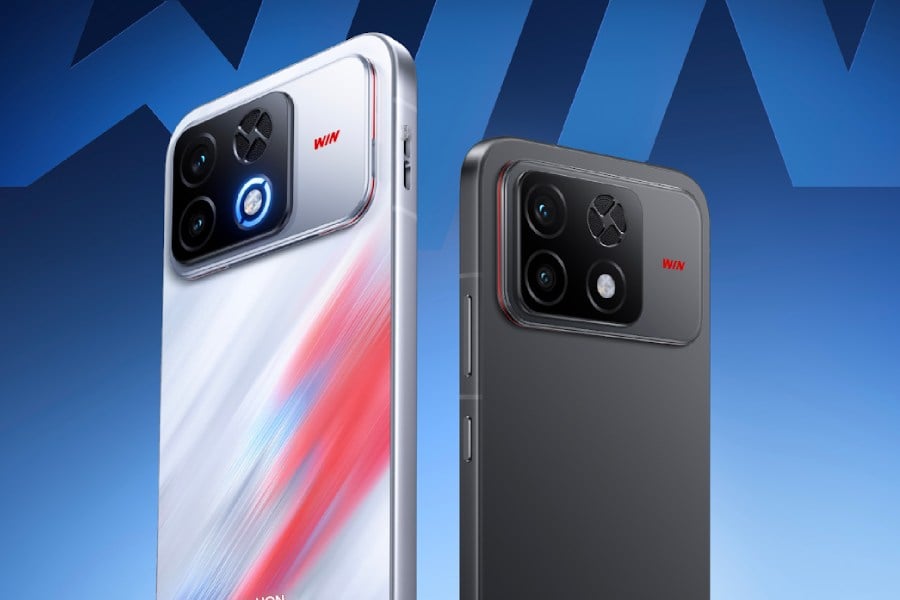
The Honor Win 2 is the premium model of all, with a Snapdragon 8 Elite Extreme Gen 6 chip, LPDDR5X Ultra RAM, and UFS 4.1 storage. It also gets a dual-fan cooling system, with the tipster claiming an AnTuTu score of more than 5.7 million points.
The phone features a 6.89-inch flat LTPS OLED display with 2K resolution and a 185Hz refresh rate. Its bezels measure just 0.93mm on all four sides. The device gets its juice from a 10,100mAh battery that supports 100W wired and 50W wireless charging.
On the back, the Win 2 has a 200MP main camera with a 1/1.4-inch sensor and optical image stabilization (OIS). Other listed features include a metal frame, dual 1216 symmetrical speakers, IP68, IP69, and IP69K ratings, and an 0809 X-axis motor. It also has a dedicated Win key for gaming, an ultrasonic fingerprint sensor, and a USB 3.2 Gen 1 port.
The phone supports the n79 band and comes in five memory configurations: 12GB+256GB, 16GB+256GB, 12GB+512GB, 16GB+512GB, and 16GB+1TB.
Honor Win RT 2
The Honor Win RT 2 uses last year’s yet capable Snapdragon 8 Elite Gen 5, and retains LPDDR5X Ultra RAM, UFS 4.1 storage, and the same 6.89-inch 2K LTPS OLED display with a 185Hz refresh rate.
Its battery is larger, though, at 12,070mAh capacity, while charging tops out at 90W. The main camera uses a 200MP 1/1.56-inch sensor with OIS, while the phone also has a metal frame and a single-fan cooling system.
The Win RT 2 shares several features with the top model, including dual 1216 symmetrical speakers, IP68, IP69, and IP69K protection, a 0809 X-axis motor, and an ultrasonic fingerprint sensor. However, it steps down to USB 2.0.
Honor will reportedly sell the phone in four configurations: 12GB+256GB, 16GB+256GB, 12GB+512GB, and 16GB+512GB.
Honor Win Turbo 2
The Honor Win Turbo 2 is the entry-level model in the series and does away with active fan cooling. According to Experience More, it could use the Snapdragon 8s Gen 4, although the tipster has marked the processor as unconfirmed.
The front is built around the same 6.89-inch flat LTPS OLED panel, 2K resolution, and a 185Hz refresh rate. The phone also shares the Win RT 2’s 12,070mAh battery and 90W charging support.
As for the camera, we’re likely to get a 50MP main sensor with OIS. The phone will have a metal frame, dual 1216 symmetrical speakers, IP68, IP69, and IP69K ratings, and a 0809 X-axis motor. Other differences include a short-throw optical fingerprint sensor and a USB 2.0 port.
Memory options reportedly start at 8GB+256GB, with additional configurations of 12GB+256GB, 16GB+256GB, 12GB+512GB, and 16GB+512GB.
What we know so far
Honor has yet to confirm these specifications or announce prices for the new phones. The original Honor Win and Win RT launched in China in December 2025, both featuring 10,000mAh batteries. The lineup has remained exclusive to China so far, and there is no official word on whether the new models will reach other markets.
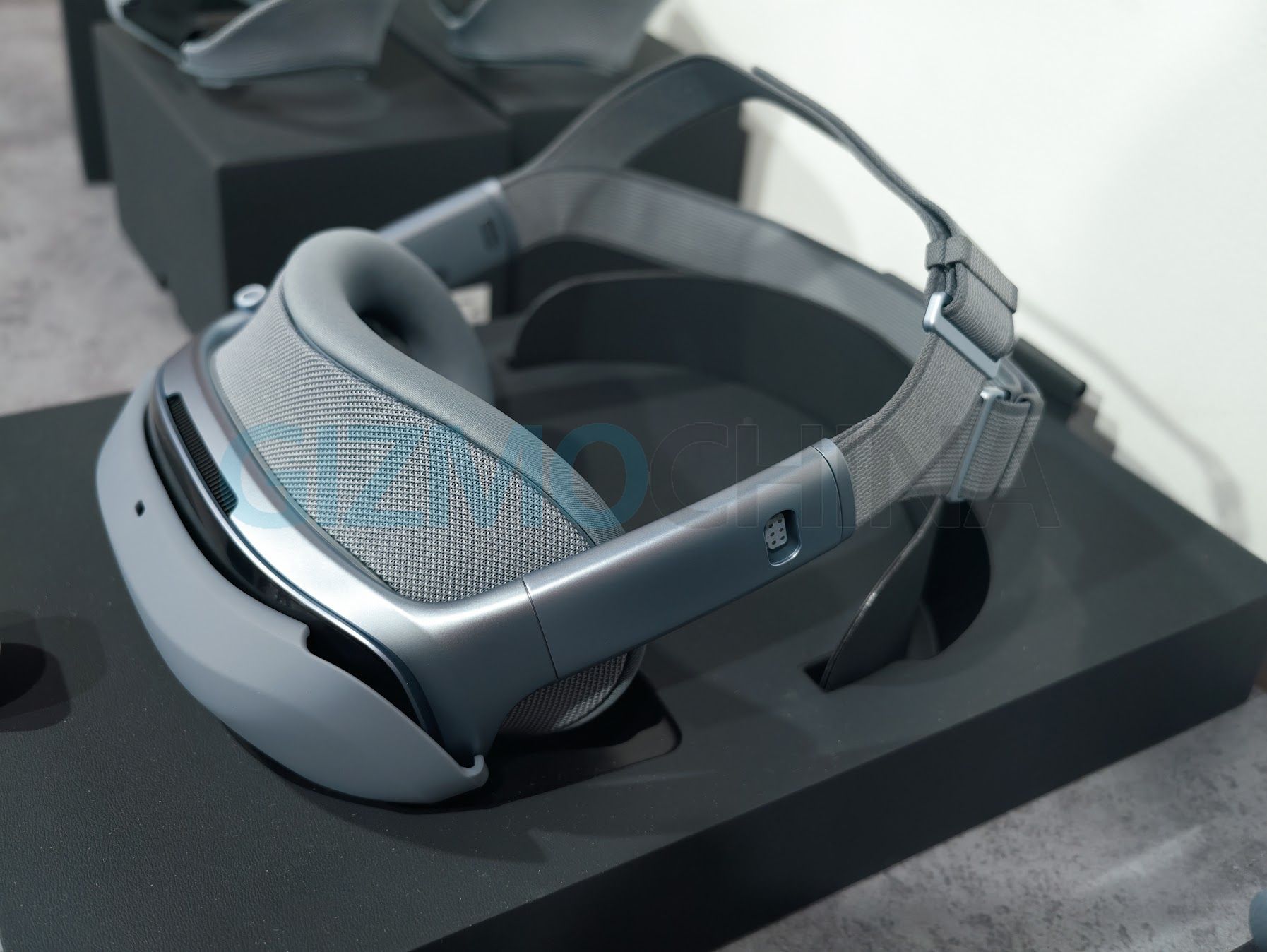
Vivo is expanding beyond smartphones with the Vision Discovery Edition, its first mixed reality (MR) headset. Showcased in India alongside the Vivo X Fold 6 at the Vivo NEXT event on October 6, the headset offers a glimpse into the company’s ambitions in spatial computing, entertainment, and gaming.
I got to try the Vivo Vision Discovery Edition at the event, exploring its interface, controls, virtual environments, and gaming features. Although my session was brief, the experience was positive. However, the headset is currently not available for purchase in India, with no confirmed retail price or consumer sales date.
6Battery and Charging
The headset uses a separate, wired battery pack, keeping the main unit lighter. The pack connects to the headset through a cable, although I could not establish its capacity, charging speed, or real-world endurance during my brief session.
Vivo also highlights its battery technology, but I would reserve judgement on battery life until a longer test is possible. Endurance will be important for extended gaming and entertainment sessions.
The reliable industry tipster Digital Chat Station has shared gaming performance numbers for the OnePlus Ace 7 Pro, showing the phone running Delta Force at close to 185fps throughout a full-scale battle. The tipster posted screenshots from PerfDog, a performance monitoring tool, showing a nearly flat frame-rate curve during the test.
Per previous reports, the OnePlus Ace 7 series would feature a 185Hz display. The latest test suggests the Ace 7 Pro can use that refresh rate in a demanding game. With graphics set to high-definition quality and the game running in its native 185fps mode, the phone averaged 185.02fps. Its 1% low is 183.1fps.
The tipster also tested another phone with a 2nm flagship chip, without naming it. It managed an average of 163.3fps, with a 1% low of 81.5fps. A drop that large would show up as visible stutter in a match. The OnePlus Ace 7 Pro leads on both numbers, and the gap in the 1% low is far wider.
According to earlier leaks, the OnePlus Ace 7 Pro reportedly uses the Snapdragon 8 Elite Gen 5 and an active cooling fan with a dual-airflow design.
OnePlus Ace 7 cooling helps in gaming performance
The cooling system reportedly uses two separate air ducts, with one covering the processor area and the other targeting the back cover. The setup better manages the chip’s temperature and heat on the phone’s exterior, helping the processor maintain its performance during extended gaming sessions. Digital Chat Station also claims the Ace 7 Pro’s body remained cooler than the comparison phone during the test.
The test covers just one game, so performance may vary with other titles, game updates, and settings.
Meanwhile, OnePlus has already opened reservations for the Ace 7 series in China, and the phones are now available for pre-order through e-commerce platforms. The official launch is expected toward the end of October.
Samsung’s wider foldable design opens up new ways to use the Galaxy Z Fold 8 beyond simply unfolding it into a larger screen. From watching videos at a comfortable angle to running three apps simultaneously, the device offers several practical ways to take advantage of its unconventional form factor. Here are seven ways I enjoyed using it.
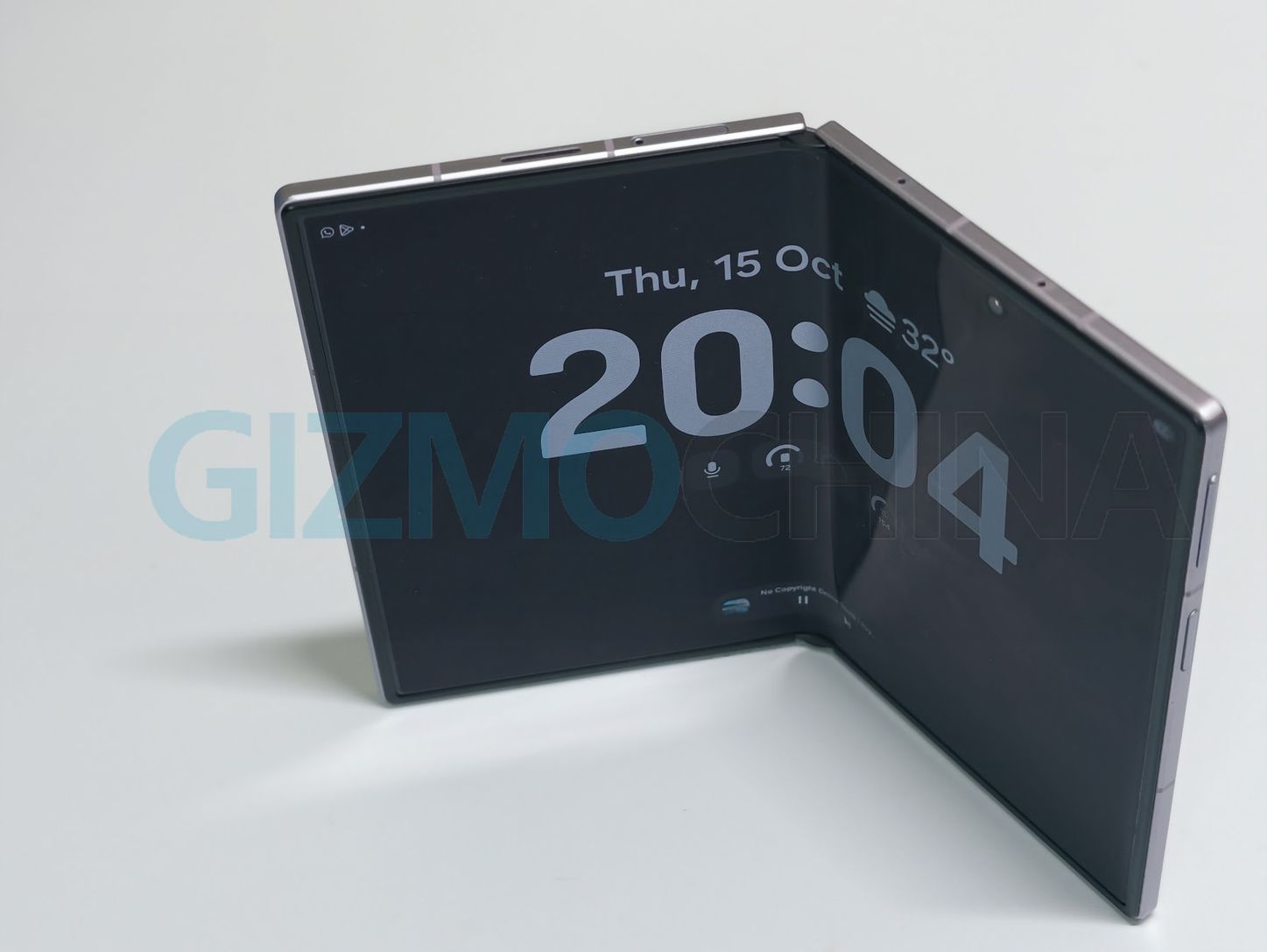
6Keep the phone partially open with the Always-On Display
Another option is to leave the Fold 8 partially open on a desk, with the Always-On Display showing the time and other glanceable information.
This arrangement gives the device a small desk-clock-like role without requiring a separate accessory. You can check the time at a glance and potentially see other supported information without fully opening the phone or picking it up.
Vivo usually launches two generations of S-series phones in China each year. In May, the brand unveiled the Vivo S60 series, and it appears that the S70 lineup may not be far away. A new leak from tipster Smart Pikachu has revealed the launch timeframe and initial details about the S70.
Vivo S70’s fisrt details emerge
According to the tipster, a wave of mid-range camera phones will start launching next month in China. The post tags the Vivo S70, which suggests the phone could debut in China in November. The tipster also claims that only one brand in this batch will offer a large-sensor periscope camera with teleconverter support. The other phones expected to launch in November in China include the Honor 700 series and Oppo Reno 17 lineup.
That brand is likely Vivo, so the S70 could get a bigger telephoto sensor than the S60’s 50-megapixel periscope. An attachable teleconverter would give buyers extra zoom without spending on a flagship. So far, Vivo has offered this accessory only with its premium X-series phones.
For reference, the Vivo S60 has a 6.59-inch AMOLED panel at 2750 x 1260 resolution, with a 144Hz refresh rate and up to 5,000 nits of peak brightness. It runs on the Snapdragon 8s Gen 3 with up to 16GB of RAM and 512GB of storage, and ships with OriginOS 6 based on Android 16.
Around the back, the S60 has a 50-megapixel main camera with OIS, a 50-megapixel periscope telephoto lens with 3x optical zoom and an 8-megapixel ultrawide camera. A 50-megapixel camera on the front handles selfies. Inside is a 7,200mAh silicon-carbon battery with 90W wired charging, and the phone is rated IP68 and IP69.
Xiaomi has quietly opened full-payment pre-orders in China for the Mijia Mite Remover 3. On paper it looks like a modest upgrade, but the changes should make a real difference for anyone trying to keep mattresses, sofas, and bedding clean.
The big change is the motor. It now pulls 16 kPa of suction, up from 12 kPa on the Mijia Mite Remover 2. That extra power should help it dig deeper into fabric for dust mites, dander, and other debris.
Xiaomi also upgraded the dust collection to a dual-cup system. One cup grabs the bulk of the dirt and helps stop the air ducts and cyclone from clogging, while the second uses spiral airflow to separate finer particles. The idea is better dirt-and-air separation so suction stays stronger for longer.
Filtration got a refresh too. It’s now a full six-stage setup that should reduce the chance of the air path getting blocked and cut down on dust blowing back into the room. The cleaning head delivers 15,000 high-frequency beats per minute and uses a three-zone resonance beater. The vibration-style design is meant to loosen mites and debris while being less likely to tangle with hair, which is a common annoyance with these kinds of cleaners.
On the hygiene side, it still has the LED ultraviolet sterilization, and now adds a 65 °C hot-air drying function, 15 °C hotter than before. Xiaomi says the higher heat helps disrupt the mites’ environment and slow their growth, while also leaving the surface drier after cleaning. Stronger suction, dual cups, multi-stage filtration, rapid beating, and hotter drying together make for a more complete approach to dealing with the allergens that love beds and upholstery.
Price and availability
Right now the Mijia Mite Remover 3 is only available through pre-order in China. It’s priced at 249 yuan, which translates to around $37.
It sits below the earlier Mite Remover 3 Pro, which is cordless, lighter, and pricier, so the regular 3 is the more affordable pick if you mainly want solid mechanical performance.
The iQOO Neo 12 is set to launch in China this month, and the company has already revealed its main specifications and front design. However, iQOO has not yet shared the launch date or shown the back of the phone, and both could be announced as early as tomorrow. Ahead of that, a real-life photo of the device has started circulating on Weibo, showing its rear design for the first time.
iQOO Neo 12 rear design leaks in live image
iQOO Neo 12 live shot
In the photo, the iQOO Neo 12 comes in a pale blue color with a metal frame and rounded edges. A large, rounded-square camera bump in the top left corner holds two vertically stacked lenses.
Next to them is a section with “Monster Inside” branding and a round mesh grille, which seems to be the opening for the phone’s built-in cooling fan. The flash sits on the back panel, just outside the camera bump. The right side of the frame also has a row of slots that look like exhaust vents.
iQOO has confirmed that the Neo 12 features the Snapdragon 8 Elite Gen 5 chip, along with its own Q3 gaming chip. The flat display has 2K resolution and a 185Hz refresh rate. The panel comes from Visionox and uses its fourth-generation pTSF light-emitting technology to save power
On Geekbench, the Neo 12 appeared with 16GB of RAM and Android 17, which should come with OriginOS 7 on top. iQOO has not shared the price yet. The phone packs a 9,000mAh battery, and its 3C certification listing shows support for 100W charging.
Fresh promotional renders of a new Nubia mid-ranger have leaked online, and they show a phone that mostly sticks to the same formula as its predecessor while quietly improving a few everyday things.
Well-known leaker @evanblass posted a set of images on X of the upcoming Nubia V90 Pro. The design looks very familiar if you’ve seen the V80 Design. The body is said to measure 7.7 mm. From the renders, it seems like it’ll come in three colors: burgundy, black/dark gray, and light blue.
The display is tipped to be 6.75 inches with a punch-hole for the front camera. Peak brightness is listed at 1,000 nits, and it supports wet-hand touch, which is actually pretty useful if you ever try to use your phone with damp fingers. The thin profile should help it feel light and comfortable in hand.
Camera-wise, the big rear module is clearly labeled “108MP.” So we’re looking at a 108MP main sensor. The island has three openings plus an LED flash and the Neo Vision logo, though it’s still unclear if that means three full sensors or something more basic. Storage gets a solid upgrade: the V90 Pro is expected to offer a 512 GB version, which is double the max capacity of the V80 Pro.
According to the renders, the bottom edge still has a 3.5 mm headphone jack, which is getting rarer these days. The side frame keeps Nubia’s signature red power button, and there’s an extra button sitting below the SIM tray.
As usual with these pre-release leaks, take everything with a grain of salt until Nubia officially announces it. Still, the mix of familiar design, higher storage, and a retained headphone jack makes the V90 Pro look like a practical follow-up.
Xiaomi has quietly dropped an affordable top-load washing machine. It’s the Mijia Washing Machine with Giant Washing Pulsator 6kg (model XQB60MJ101), and it’s currently on pre-sale in the home country. Put down a 50 yuan deposit and the full price is just 587 yuan, roughly $88. Not bad for a proper 6kg machine.
According to Xiaomi, that 6kg capacity can handle up to 26 T-shirts in one go. The whole unit only takes up about 0.25 square meters of floor space, with dimensions around 496 × 507 × 814 mm. It’s a clean, minimalist white design that should fit most small homes or apartments without looking out of place. There’s also a child lock on the control panel so kids can’t mess with it while it’s running.
You get 10 different wash modes and 10 water level options. The standout is a 19 min quick wash, which is genuinely useful when you just need a small load done fast. You can also set a delay anywhere from 2 to 24 hours, which is handy if you want to run it during cheaper electricity hours or while you’re out.
On the practical side, it has a double-layer mesh filter that catches lint pretty well, so you end up with less residue on your clothes. There’s a drum self-clean mode that uses high-speed water to flush out built-up dirt, plus a drum air-dry function that helps keep the inside dry and reduce the chance of that musty smell building up.
Basic specs: 220V, 50Hz, IPX4 waterproof rating, and it works with water pressure between 0.05 and 0.8 MPa. China’s energy label rates it Level 1, using 0.065 kWh of electricity and 78 liters of water on a standard cycle, with a cleaning ratio of 0.90.
This isn’t one of Xiaomi’s fancy smart washers, no app control or anything like that. It’s just a straightforward, no-nonsense machine that does the basics well. For renters, people in small apartments, or anyone who wants a solid secondary washer without spending much, the combination of decent capacity, quick cycles, self-cleaning features, and that sub-600-yuan price makes it a pretty sensible option. For now it’s only available on Xiaomi’s Chinese store, with no word yet on an international release.
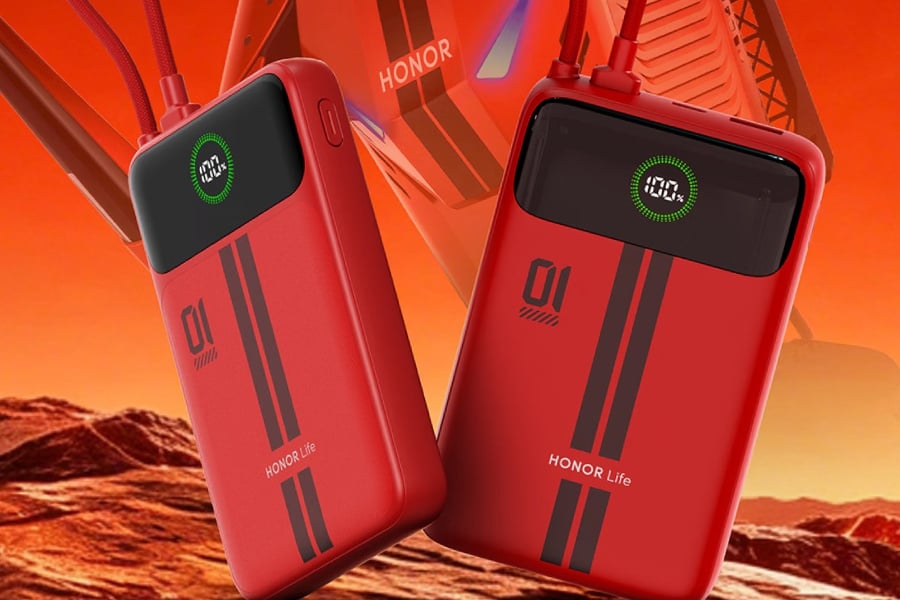
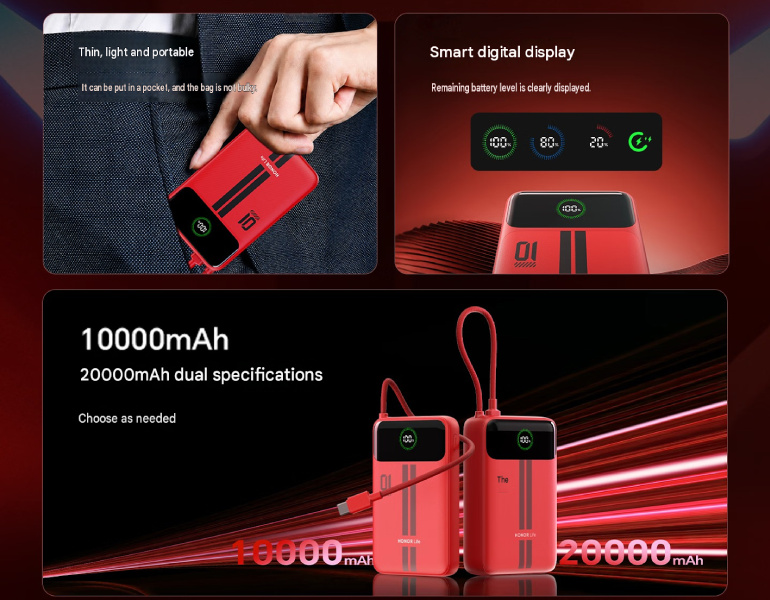
Honor has launched two new Honor Life power banks in China, with 10,000mAh and 20,000mAh capacities. Both are available through JD.com, priced at 148 yuan (about $21) and 198 yuan (about $28), respectively.
The main difference between the two is capacity and size. The 10,000mAh model measures 16.68mm thick. Meanwhile, the 20,000mAh version doubles the capacity but comes in a larger body. Both have a red finish with black stripes and Honor Life branding.
A digital display on the front shows the remaining battery as a percentage, making it easier to check how much charge is left. Honor’s promotional images also show a charging icon alongside the battery reading.
Both models come with a braided USB-C cable attached to the power bank, so there’s no need to carry a separate cable for everyday charging. The cable supports bidirectional fast charging, meaning it can charge connected devices and be used to recharge the power bank itself. Honor also says both models can charge multiple devices simultaneously.
For temperature management, the power banks use an NTC smart temperature control chip to monitor heat during charging. They also have 3C certification, which Honor says makes them suitable for air travel.
Both power banks are listed on Honor’s self-operated store on JD.com in China. The 10,000mAh model costs 148 yuan (about $21), while the 20,000mAh version is priced at 198 yuan (about $28).
Samsung is reportedly preparing a major overhaul of its smartphone software for 2027. The upcoming update could deliver a substantially different experience for Galaxy users. It may also change how Samsung integrates artificial intelligence across its devices.
Samsung One UI 10 could bring a radical redesign‘
One UI 10
Tipster Ice Universe has claimed that One UI 10 will introduce changes described as unprecedented. The update is expected to run on Android 18 and could arrive around mid-2027, potentially debuting alongside the Galaxy Z Fold 9 and Galaxy Z Flip 9. Samsung has not officially confirmed the software or its release timeline.
The redesign could change how users interact with applications by bringing related information together in a contextual interface. For instance, calendar events, location details, and conversations could become accessible through more connected workflows instead of requiring users to switch between multiple apps. The reported goal is to reduce unnecessary taps, simplify everyday tasks, and deliver smoother navigation.
Artificial intelligence could play a central role in this transformation. Samsung is reportedly working towards deeper AI integration, alongside improved continuity between Galaxy smartphones, tablets, and wearables. However, the precise features and the extent of these changes remain unknown.
Another rumor suggests Samsung could rename One UI to Galaxy OS as part of the overhaul. The potential rebrand remains unconfirmed, and it is unclear whether Samsung intends to introduce an entirely new identity or retain the One UI name.
There are also claims that some advanced AI tools and third-party integrations could eventually require a subscription, while essential everyday features remain free. Such a model could allow Samsung to monetise computationally intensive AI services, although no pricing plans or subscription details have been announced.
If these reports prove accurate, One UI 10 could represent a significant departure from Samsung’s usual annual software refinements. The company may release developer previews before the public rollout.
Samsung has unveiled the Galaxy F70 5G in India, adding another model to its Galaxy F70 series. The new smartphone joins the existing Galaxy F70e and Galaxy F70 Pro models. Here is a closer look at its specifications, features, pricing, and availability.
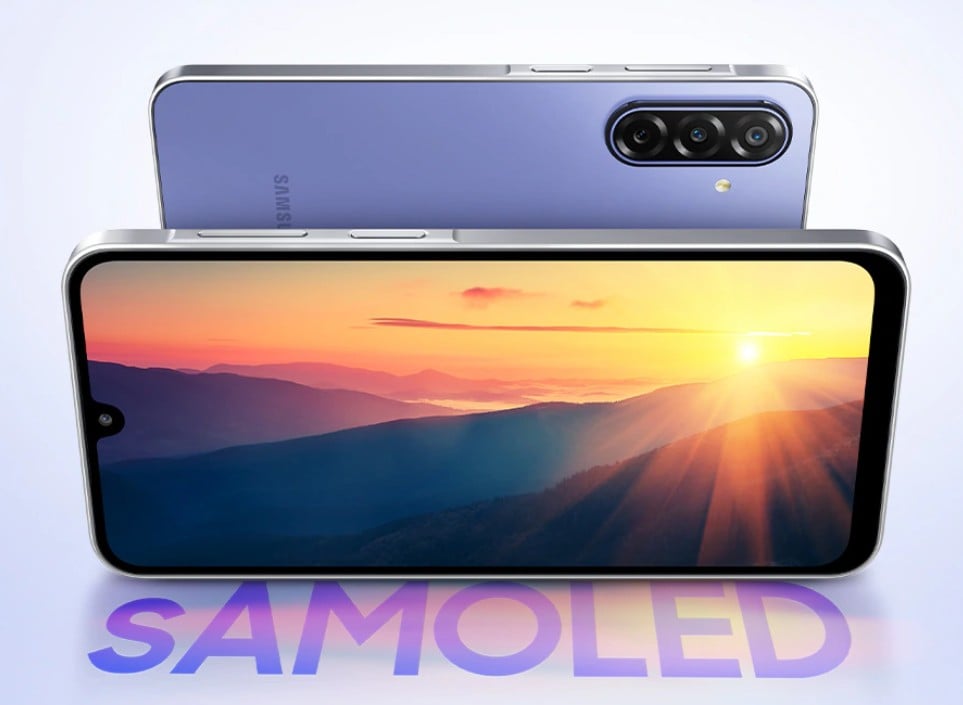
The Galaxy F70 5G features a flat 6.7-inch sAMOLED display with Full HD+ resolution and a 120Hz refresh rate. It has a side-facing fingerprint sensor for security.
Under the hood, the Galaxy F70 5G is powered by the Exynos 1330. It has up to 6GB of LPDDR4x RAM and 128GB of internal storage, and there’s a microSD card slot for additional storage.
Galaxy F70 key features
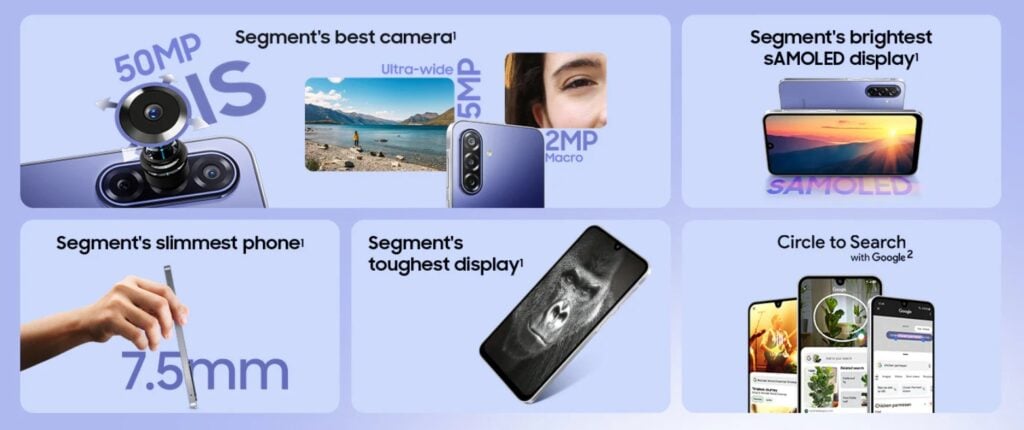
For photography, the handset features a 50-megapixel primary camera with optical image stabilization (OIS), marketed as the No Shake Cam. On the front, it features a 13-megapixel selfie camera.
A 5,000mAh battery powers the smartphone, with support for 25W wired charging. The handset runs on Samsung’s Exynos 1330 chipset and supports 5G connectivity. Buyers should note that the compatible 25W charging adapter is sold separately.
In terms of durability, the features a Gorilla Glaas Victus protection for the display and an IP54-rated dust and resistance. Samsung highlights its slim 7.5mm profile and calls it the segment’s slimmest phone.
Samsung Galaxy F70 5G price and availability
Galaxy F70
The Galaxy F70 5G is listed in Bold Black and Vivid Violet colour options. Its 4GB+128GB and 6GB+128GB variants are priced at Rs 19,999 (~$210) and Rs 22,999 (~$245). The handset is scheduled to go on sale through the Samsung India website and Flipkart starting Oct. 20
We use cookies on our website to give you the most relevant experience by remembering your preferences and repeat visits. By clicking “Accept”, you consent to the use of ALL the cookies.
This website uses cookies to improve your experience while you navigate through the website. Out of these, the cookies that are categorized as necessary are stored on your browser as they are essential for the working of basic functionalities of the website. We also use third-party cookies that help us analyze and understand how you use this website. These cookies will be stored in your browser only with your consent. You also have the option to opt-out of these cookies. But opting out of some of these cookies may affect your browsing experience.
Necessary cookies are absolutely essential for the website to function properly. This category only includes cookies that ensures basic functionalities and security features of the website. These cookies do not store any personal information.
Any cookies that may not be particularly necessary for the website to function and is used specifically to collect user personal data via analytics, ads, other embedded contents are termed as non-necessary cookies. It is mandatory to procure user consent prior to running these cookies on your website.