OPPO has confirmed it will launch the OPPO Pad SE tablet alongside the Reno 14 and Reno 14 Pro smartphones on May 15, 2025, in China. The tablet is also set to launch soon in Malaysia, as teased by OPPO Malaysia on its official X handle.
The OPPO Pad SE will feature an 11-inch LCD display with eye-care features and a dedicated Kids Mode. It runs on ColorOS, likely version 15 based on Android 15. The tablet is powered by a 9,340mAh battery and the new Dimensity G100 chipset. It is not expected to support cellular connectivity.
In China, the Pad SE will be available in three configurations: – 6GB RAM + 128GB storage – 8GB RAM + 128GB storage – 8GB RAM + 256GB storage
[affiliate_genie_cta]
Color options include Starlight Silver and Night Blue, both offered in a Soft Light Edition. In Malaysia, a Grey variant has been confirmed.
The Pad SE is designed for learning and productivity. It includes preloaded educational content, supports long usage hours with its large battery, and focuses on visual comfort for extended use. The tablet also comes with basic multitasking features, but no cellular support, making it a Wi-Fi-only device.
The “Coming Soon” teaser for Malaysia suggests a launch shortly after the China event. OPPO is also expected to announce Enco Clip open earbuds and Reno 14 series accessories at the same event.
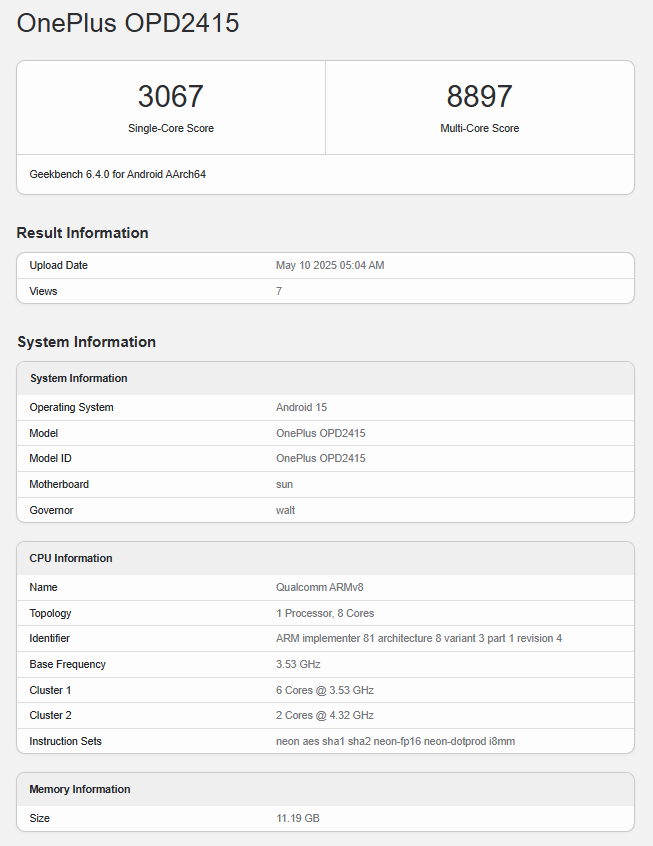
In other news, the OnePlus Pad 2 Pro has appeared on Geekbench under the model number “OPD2415,” confirming a Snapdragon 8 Elite chipset, Android 15, and 12GB RAM. It scored 3067 (single-core) and 8897 (multi-core). The tablet is expected to feature a 13.2-inch 3.4K 144Hz IPS LCD, 13MP rear and 8MP front cameras, and a 12,140 mAh battery with 67W charging.
For more daily updates, please visit our News Section.
Recently, two Snapdragon 8s Gen 4-powered smartphones — namely the iQOO Z10 Turbo Pro and the Redmi Turbo 4 Pro — have already launched in China. Now, a new leak claims that another Snapdragon 8s Gen 4 phone will debut in China this month. Here’s a look at what the device is and what it has to offer.
Xiaomi Civi 5 Pro tipped to launch this month
The above leak by tipster Digital Chat Station suggests that the Xiaomi Civi 5 Pro, equipped with the Snapdragon 8s Gen 4 chipse,t will launch this month in China. To recall, the Civi 4 Pro that debuted in March 2024 housed the Snapdragon 8s Gen 3 SoC.
Another highlight of the Xiaomi Civi 5 Pro is its camera setup. The phone will feature a 50-megapixel telephoto lens on the rear, though it is not yet confirmed whether it will be a standard telephoto or a periscope lens. The front and rear cameras are said to be tuned for improved low-light photography.
The device will feature a medium-sized OLED quad-curved display with a 1.5K resolution and slim bezels on all four sides. It will be powered by a large 6,000mAh+ battery, which may support 67W charging. The phone will likely be marketed to younger and style-conscious users, in line with the Civi brand’s positioning.
Pricing is yet to be revealed, but expectations point to a competitive offering in the 3,500 Yuan (~$485) to 4,000 Yuan (~$550) range. The said device may get rebranded as the Xiaomi 15 Civi in India.
For more daily updates, please visit our News Section.
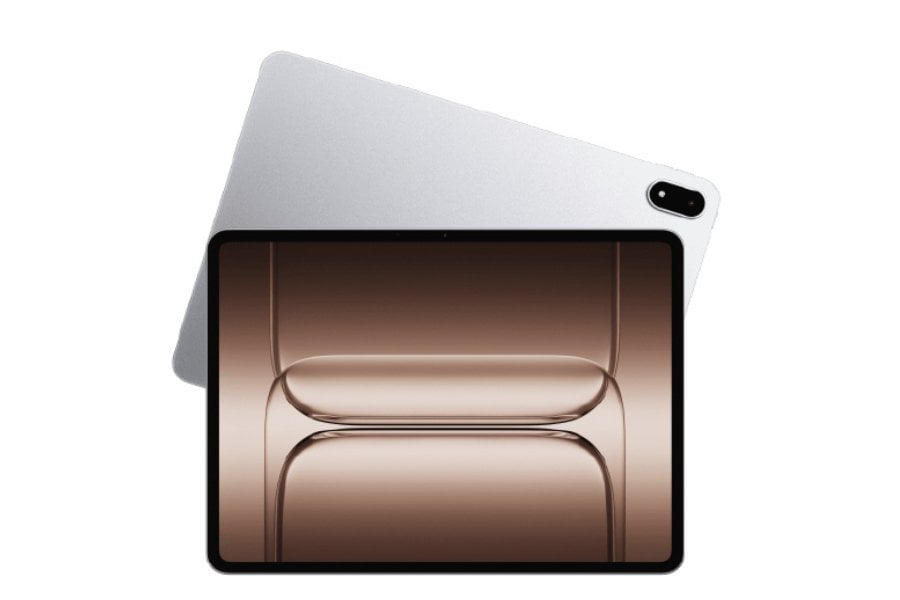
Yesterday, tipster Digital Chat Station leaked renders of the OnePlus Pad 2 Pro, revealing a new design and sharing specifications of the upcoming tablet. Now, a Geekbench listing with model number “OPD2415” has emerged, which is believed to be the OnePlus Pad 2 Pro.
On Geekbench, the ‘OPD2415’ scored 3067 in single-core and 8897 in multi-core tests. It features an octa-core processor with two cores clocked at 4.32 GHz, and the other six clocked at 3.53 GHz. It also features the Adreno 830 GPU, which leads us to believe that the SoC in use is the Snapdragon 8 Elite. Other than that, the listing confirms Android 15 OS and 12GB RAM.
According to previous reports, the OnePlus Pad 2 Pro will be powered by the Qualcomm Snapdragon 8 Elite chipset and feature LPDDR5X RAM and UFS 4.0 storage. It will run Android 15 with ColorOS 15. The tablet is expected to sport a 13.2-inch IPS LCD display with 3.4K resolution, 144Hz refresh rate, and 900 nits peak brightness (HBM).
Camera specs include a 13MP rear camera and an 8MP front camera. Powering the device will be a 12,140 mAh battery with support for 67W wired charging. Other features include WiFi 7, Bluetooth 5.4, USB 3.2 Gen 1 Type-C port, eight speakers, 5.97mm thickness, and a 675g weight.
Leaked images show the tablet in two color options: Black/Grey and White/Silver. Design details include flat front and rear panels, a pill-shaped camera housing with LED flash, a landscape-oriented front camera, and magnetic POGO pins. The volume rocker is placed at the top, while the power button is on the left side. Two speaker grilles and mic holes are visible, with two more likely on the opposite side.
Interestingly, the design and specifications align closely with the OPPO Pad 4 Pro, strengthening speculation that the OnePlus Pad 2 Pro could be a rebranded OPPO device, similar to the OnePlus Pad 2’s rebranding of the OPPO Pad 3 Pro.
For more daily updates, please visit our News Section.
Update: Newer leaks refer to the OnePlus’ upcoming flagship as the OnePlus 15, instead of the OnePlus 14. The below post has been modified accordingly.
Original story follows…
New flagship phones from different brands are expected to hit the Chinese market in the last quarter of this year. A recent leak claimed that Xiaomi may unveil the Xiaomi 16 series as early as the end of September, whereas flagships from other brands are expected to debut in October. A new leak, courtesy of tipster Smart Pikachu, sheds some new information about the Oppo Find X9 series and the OnePlus 15 that are expected to break cover in October this year in China.
Oppo and OnePlus flagships to feature 200-megapixel periscope camera
Following last year’s wave of 200-megapixel periscope cameras adopted by brands like Vivo, Xiaomi, and Honor, Oppo is said to be joining the movement. Unlike the Find X8 Pro/Ultra, which featured dual 50-megapixel periscope lenses for a more unique optical approach, the upcoming Find X9 Pro is expected to switch to a single 200-megapixel periscope telephoto lens.
According to the tipster, both Oppo and its sub-brand—likely OnePlus—are gearing up to launch smartphones with a 200-megapixel periscope telephoto camera this year. Users won’t have to wait for an “Ultra” model, which is expected to debut in 2026, to access this high-end camera setup, implying that even the standard flagship models from both brands could offer this advanced feature.
The OnePlus 15 (tentative name) is expected to be one of the key beneficiaries of this upgrade, aligning with previous rumors about significant camera improvements in the next generation. The rumor mill is yet to leak concrete details about OP15, but it is expected to arrive with a flat display, a large battery, and the Snapdragon 8 Elite 2 chipset. On the other hand, the Find X9 series is expected to feature the Dimensity 9500 chipset. The tipster also claimed that apart from getting a 200-megapixel camera onboard, Oppo aims to maintain its reputation for slim flagship designs. Both devices are reportedly set for an official unveiling in October.
So what about the Find X9 Ultra? Will it also feature a single 200-megapixel periscope camera instead of a dual periscope system? A recent leak by reliable tipster Digital Chat Station revealed that its camera setup will include a 200-megapixel periscope telephoto camera accompanied by a smaller 50-megapixel periscope sensor with 10x optical zoom.
For more daily updates, please visit our News Section.
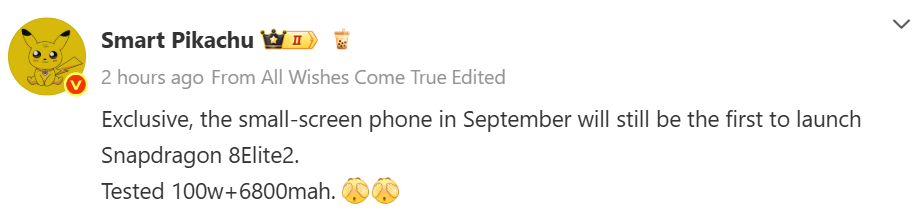
Xiaomi is expected to unveil the Xiaomi 16 series of flagship phones later this year in China. Well ahead of the launch, tipster Smart Pikachu has shared some intriguing details about the alleged Xiaomi 16. While the leaker has not mentioned the phone’s official name explicitly, the details he shared hint at an imminent launch, likely scheduled for September. The device is expected to come with groundbreaking features, including the first-to-market Snapdragon 8 Elite 2 chipset and an impressive battery capacity.
Xiaomi 16 launch timeframe, key specs (rumored)
Smart Pikachu’s leak suggests that the Xiaomi 16 will be the first smartphone to feature the Snapdragon 8 Elite 2 chipset. The leak further states that the device is being tested with a 6,800mAh battery coupled with 100W charging. This aligns with a previous leak that the Xiaomi 16 will have the latest battery in a 6.3-inch display phone.
To recall, the Xiaomi 15 (Chinese variant) packs a 5,400mAh battery with 90W charging support. The Xiaomi 16’s battery and charging combination will be bigger than similar phones in its category. To put it into context, the OnePlus 13T featuring a 6.3-inch display has a 6,260mAh battery and 80W charging, whereas the upcoming Vivo S30 Pro Mini (China) / Vivo X200 FE (India, rebranded version) is said to be equipped with a 6,500mAh battery with 90W charging.
The same tipster previously revealed that the Xiaomi 16’s 6.3-inch flat OLED panel will have ultra-narrow bezels on all four sides. The device is expected to run on Android 16 with the upcoming HyperOS 3.0 UI on top.
The Xiaomi 16 rumors suggest that it will have a 50-megapixel triple camera setup, which will include a periscope telephoto camera. Despite packing a huge battery, the Xiaomi 16 is expected to flaunt a thin and light form factor.
Additionally, previous leaks suggest that the Xiaomi 16 Pro and Xiaomi 16 will both debut together this year, but the Xiaomi 16 Ultrav is expected to launch later in the first half of 2026.
For more daily updates, please visit our News Section.
On May 8, iQOO Neo series product manager Luo Jiahui shared the first full look at the iQOO Neo10 Pro+ device across social media. This marks the first time the Neo series has partnered with BMW, with the collaboration designed as a tribute to pixel gaming culture. Luo teased that more details of this unique partnership will be revealed in the coming weeks.
iQOO Neo 10 Pro+ design teased in video
The official video reveals that the iQOO Neo 10 Pro+ sports a striking and unconventional design, highlighted by its BMW-inspired aesthetics. The glass back is divided into distinct sections with bold pixel-style graphics—a clear nod to retro gaming culture. The phone features a dual-tone finish with a blend of matte and glossy textures.
The BMW branding influence appears subtly integrated into the design. The camera module is rectangular with rounded edges, positioned in the top-left corner, and houses a dual-camera setup with visible ring accents around the lenses.
According to Luo, the phone will be powered by Qualcomm’s Snapdragon 8 Elite and will feature a 2K flat OLED display. These two elements—chipset and display—are areas where iQOO has invested significantly, aiming to meet the expectations of high-performance users without cutting corners.
Recent reports have revealed that the Neo10 Pro+ will house a 7,000mAh battery and support 120W fast charging. Its rear camera setup will comprise a 50-megapixel main sensor with OIS and a 50-megapixel ultra-wide camera. Other rumored features include an ultrasonic fingerprint sensor and a build comprising a plastic mid-frame and a glass back. The Neo 10 Pro+ has achieved an impressive score of 3.3 million on AnTuTu, positioning it as a strong contender against flagship smartphones in the 3,500 Yuan (~$485) price range.
For more daily updates, please visit our News Section.
As Infinix gears up for the global launch of its GT Verse ecosystem—featuring the GT 30 Pro smartphone, the XPad GT gaming tablet, GT Buds, and more—the company is also quietly experimenting with bold new ideas. While the upcoming products target gamers with high refresh rate displays, powerful chipsets, and custom accessories, Infinix is simultaneously working on a prototype that takes mobile design in a new direction.
Infinix GT DynaVue color-changing back panel demoed
A working prototype from the GT series has surfaced, featuring a standout innovation: the GT DynaVue back panel. This panel introduces electrochromic technology—typically seen in aircraft windows and luxury vehicles—to the world of smartphones. What makes it compelling is its ability to react to specific actions.
Whether it’s an incoming call, launching a game, or switching to the camera, the back panel shifts its appearance dynamically, offering more than just decoration. Unlike RGB lighting, which stays on regardless of context, this third-generation electrochromic film brings smarter responsiveness. It spans a large area of the rear panel without affecting usability, thanks to flexible and stable materials.
This reactivity adds an extra layer of engagement for users, potentially shaping the future of gaming phone aesthetics. Though it’s not meant for commercial release just yet, the working prototype shows how mobile designs might evolve in coming years.
Infinix GT 30 Pro, XPad GT to headline the GT Verse lineup
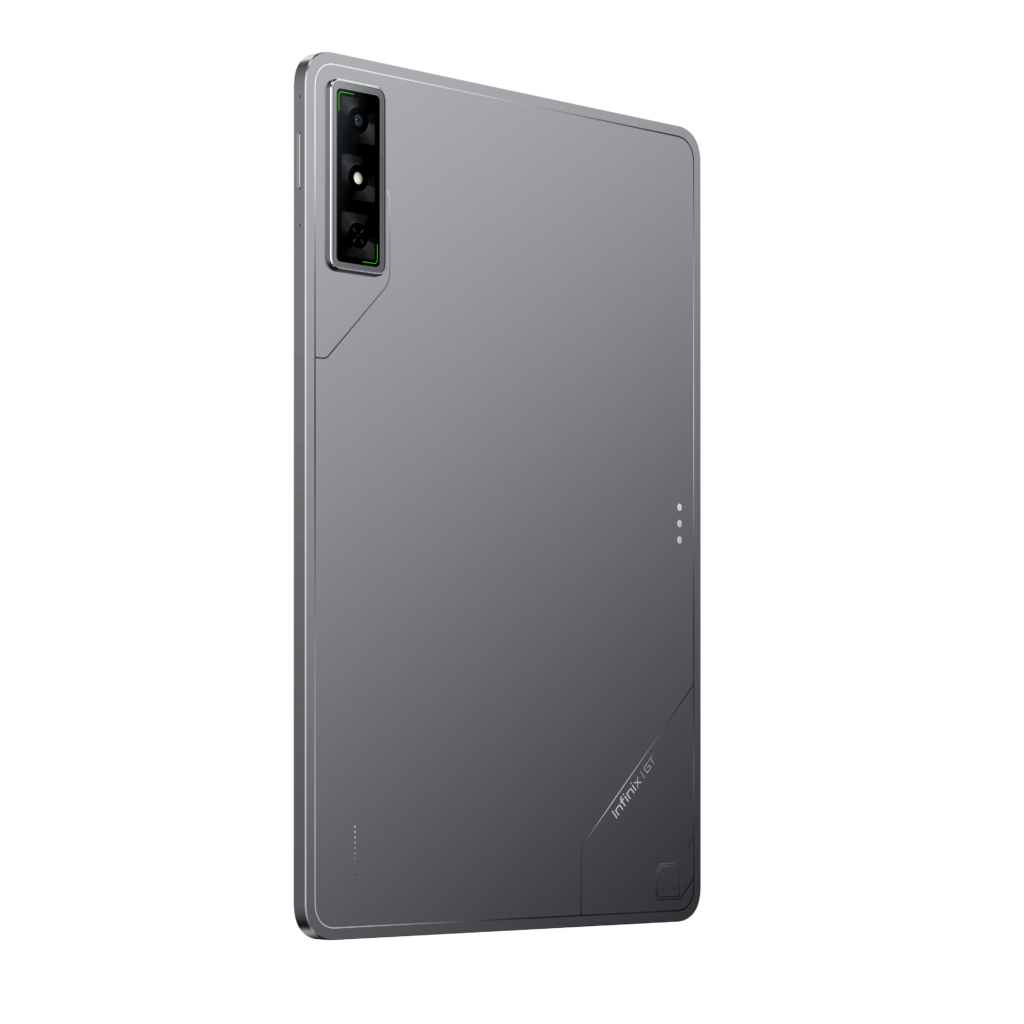
Infinix XPad GT gaming tablet
The GT 30 Pro is expected to be the performance-focused heart of the GT Verse. According to early benchmarks, it might pack a Dimensity 8350 chipset and 12GB of RAM. Alongside it, the XPad GT gaming tablet will feature a 144Hz display, Snapdragon 888 chipset, and a hefty 10,000mAh battery with 33W charging. The tablet also supports AI tools like Folax and has an eight-speaker setup for immersive sound. These, along with other accessories like the GT Buds, power bank, and cooling fan, are set to debut globally this month.
For more daily updates, please visit our News Section.
Huawei has officially launched its first personal computer operating system built from the ground up: HarmonyOS PC, also known as Hongmeng Computer in China. Marking a strategic shift away from Western tech dependencies, HarmonyOS PC represents the culmination of five years of internal development, involving over 10,000 engineers and more than 2,700 patents.
It is Huawei’s boldest attempt yet to establish a fully self-reliant computing ecosystem, complete with its own kernel, AI assistant, security architecture, and app framework. But how does it actually compare to Microsoft’s Windows, the long-dominant force in global PC operating systems?
What is HarmonyOS PC?
HarmonyOS PC is a fully domestic, full-stack operating system designed by Huawei, built on HarmonyOS 5. It is part of the broader HarmonyOS ecosystem that already spans smartphones, tablets, smartwatches, TVs, and even vehicle dashboards. The PC version extends HarmonyOS’s core values, fluid performance, multi-device integration, AI enhancement, and security into the desktop computing space.
At the heart of the system lies a redesigned Harmony kernel, supported by the Ark graphics engine, StarShield security architecture, and Huawei’s proprietary development tools such as ArkTS and ArkUI. HarmonyOS PC is built for seamless interaction across devices, allowing users to share keyboards, mice, screens, and files between phones, tablets, and PCs without friction.
The OS also integrates tightly with Huawei’s AI assistant, Xiaoyi, which supports voice interaction, smart summarization, translation, and contextual data search through AI-driven semantic understanding.
The first HarmonyOS PC will be officially launched on May 19, 2025, and will be powered by the Kirin X90 desktop chip, Huawei’s own 10-core processor. The device will not support Windows natively, but users can run Windows 11 via the Oseasy virtual machine for compatibility.
Key Differences Between HarmonyOS PC and Windows
1. Architecture and Ecosystem
While Windows is a mature, universal OS designed for compatibility across a broad range of hardware and software, HarmonyOS PC is vertically integrated. It is designed specifically for Huawei’s own devices and certified peripherals, ensuring tighter hardware-software synergy.
HarmonyOS includes more than 150 native PC apps and over 2,000 universal apps, most of which are optimized for Huawei’s ecosystem. In contrast, Windows supports hundreds of thousands of legacy and modern apps but lacks the kind of device-level integration Huawei is aiming for.
2. Multi-Device Collaboration
HarmonyOS PC leans heavily on distributed computing. With Huawei’s distributed soft bus technology, it enables seamless cross-device continuity such as dragging files between devices, using the same keyboard/mouse across multiple screens, and real-time app handoff.
Windows has made strides in this area through services like Phone Link and OneDrive, but it still depends on third-party hardware and applications for advanced integrations.
3. User Interface and Interaction
Visually, HarmonyOS PC resembles macOS more than Windows. It features a bottom-center dock for apps, top status bars, and a clean, card-based desktop layout.
Dynamic wallpapers, motion effects, gravity-based visuals, and layered window transitions give it a polished, modern aesthetic. Windows remains more traditional in layout, though Windows 11 has adopted some visual cues similar to macOS as well.
Gesture control on HarmonyOS PC is also more intuitive, supporting three-finger swipes, drag-and-drop multitasking, and screen splitting at the system level. These UI elements are designed with AI in mind and are tightly woven into the system’s operation.
4. AI Integration
This is where HarmonyOS PC aims to leap ahead. Huawei’s Xiaoyi assistant, powered by its Pangu and DeepSeek models, can generate templates, translate images, summarize meetings in real-time, and offer system-level automation.
Windows has Copilot and Microsoft 365 integrations, but Huawei’s Xiaoyi is more deeply embedded into the OS and can access system-level commands and UI elements through voice, image, or text.
5. Privacy and Security
Huawei built HarmonyOS PC with privacy as a foundational feature. The StarShield architecture enforces full-disk encryption at the chip level, meaning even if the drive is removed, data remains unreadable. Additional features include one-time permission grants, anti-peeping screens, and remote device wiping, even when the device is powered off.
Windows offers BitLocker and a range of user-configurable privacy tools, but it does not provide chip-level full-disk encryption by default on all devices and is more reliant on third-party antivirus and security software.
Final Thoughts
HarmonyOS PC represents a clear turning point in Huawei’s long-term vision to decouple from Western tech infrastructure. While Windows dominates in terms of legacy software compatibility and developer support, HarmonyOS PC’s tight integration with Huawei’s broader ecosystem, advanced AI capabilities, and strong security posture present a fresh alternative, particularly for users and institutions in China.
However, HarmonyOS PC still faces challenges. Native app development is ongoing, user habits will take time to shift, and international adoption may remain limited due to geopolitical and software compatibility issues. But for Huawei, HarmonyOS PC is not just an operating system, it is a declaration of self-reliance and a significant leap toward a unified, cross-device digital future.
For more daily updates, please visit our News Section.
Leica has launched the M11-P Safari, a special edition of its M11 series, featuring the signature olive-green finish that’s been part of Leica’s Safari line since the 1970s. The camera keeps all the core features of the M11-P, but adds a few design changes that set it apart.
The top plate is made of solid brass and finished in matte olive-green. The matching green leatherette adds grip and continues the color scheme. The dials and controls on the top and front are silver, and the usual red Leica logo has been replaced with a simple silver screw. The back of the camera has black-finished controls. Other visual details include the engraved Leica script and “Leica Camera AG” with “Wetzlar Germany” text.
The M11-P Safari is identical in performance to the standard M11-P. It has 256 GB of internal storage and supports UHS-II SD cards. It can shoot in both DNG and JPG formats. The LCD screen on the back is covered in scratch-resistant sapphire crystal with an anti-reflective coating for better visibility in bright light.
The camera uses a full-frame BSI CMOS sensor with Triple Resolution Technology. Users can shoot at 60, 36, or 18 megapixels. Connectivity includes Bluetooth, Wi-Fi, and cable options. Bluetooth Low Energy support lets users transfer images in the background using the Leica FOTOS app.
It also includes Content Credentials technology, which adds tamper-proof metadata to every image. This includes camera model, copyright info, file creation dates, and editing history.
The M11-P Safari comes with a black carrying strap and ships in plastic-free packaging made in Germany. It’s priced at $10,495 and is available at Leica Stores, the Leica Online Store, and through authorized dealers.
Philips has introduced the Evnia 25M2N5200U, a 24.5-inch gaming monitor engineered for competitive esports players who demand speed, accuracy, and visual clarity. As part of the Evnia 5000 series, this model reinforces Philips’ growing focus on the pro-gaming segment, bringing performance-driven hardware with premium ergonomics and software features.
Philips Evnia 25M2N5200U Specifications
It features a Fast IPS panel with a native resolution of 1920×1080 and a 360Hz refresh rate that can be overclocked to 390Hz via DisplayPort 1.4. It also supports Adaptive Sync and low input lag, helping eliminate screen tearing and latency during fast-paced gameplay. It comes with a 1ms GtG response time and drops to just 0.3ms using Smart MBR mode, enabling ultra-smooth frame transitions critical for first-person shooters and racing titles.
The display equips VESA-certified DisplayHDR 400 support for richer brightness and contrast levels, complemented by Philips’ SmartContrast and Stark ShadowBoost technologies that enhance visibility in darker scenes. It delivers a peak brightness of 400 nits, covers 110% of the sRGB color gamut, and maintains ΔE<2 color accuracy, ensuring not only immersive gaming but also content creation suitability.
For connectivity, it sports dual HDMI 2.0 ports (up to 240Hz), a DisplayPort 1.4 (supporting 390Hz), a USB-B upstream port, and four USB-A 5Gbps downstream ports, one of which supports BC 1.2 fast charging. It also comes with dual 2W built-in speakers and a 3.5mm headphone jack.
The design includes a fully adjustable stand with tilt, swivel, pivot, and 130mm height adjustment. It comes with visual comfort features such as Flicker-Free technology, LowBlue mode, and SmartUniformity for reduced eye strain. For gaming, it includes SmartImage presets and Smart Crosshair settings, both accessible via the OSD for real-time visual tuning based on genre or player preference.
Pricing and Availability
The Philips Evnia 25M2N5200U is set to go on sale in mid-May 2025, with an official retail price of £329 in the UK. Availability in other regions is expected to follow shortly after.
[affiliate_genie_cta]
In related news, MSI recently introduced a new 26.5-inch 4K 240Hz gaming monitor featuring Samsung’s latest 4th-gen QD-OLED panel, while AOC has unveiled the Q27G4K, a 27-inch QHD Fast IPS monitor offering a 400Hz refresh rate and VESA DisplayHDR 400 certification.
For more daily updates, please visit ourNews Section.
Xiaomi has unveiled the Mijia Wireless Floor Scrubber 4 Max, a high-performance cordless cleaner built to handle edge-to-edge cleaning across the home. It is now available for pre-order on JD.com at a price of 2,999 yuan (approx $414), with official sales set to begin at 8:00 PM on May 13. The new model arrives shortly after the launch of the Mijia Wireless Floor Scrubber 4 Pro last month, offering improved hardware and smarter cleaning features.
Mijia Floor Scrubber 4 Max Specifications
The Mijia Floor Scrubber 4 Max features Xiaomi’s patented “Live Water Edge-Cleaning Arm,” which sprays fresh water directly along wall edges to flush out grime from corners in real time. It comes with dual independent water circulation systems, one for the roller brush and another for the edge-cleaning arm, ensuring consistent rinsing without cross-contamination. The device uses an infrared sensor paired with a smart acceleration algorithm to detect edge areas within milliseconds and dynamically adjust the cleaning arm to maintain precise wall contact.
It equips a powerful motor that delivers up to 23,000Pa suction and 134AW of input power. This motor is paired with a roller brush spinning at 450 rotations per minute, allowing it to scrub through both wet and dry messes efficiently. The scrubber supports five cleaning modes, including intelligent suction adjustment, a dedicated wood floor mode for quick drying, and a kitchen mode designed for sticky oil stains.
To prevent hair tangling, it features a TÜV-certified anti-tangle roller system that combines long comb teeth, a pressurized metal scraper, and a V-shaped suction inlet. This four-stage mechanism handles up to 3,000 strands of long hair without clogging or maintenance issues. It also sports an upgraded water control setup that improves drying speed and water absorption by 23%, cutting overall drying time by more than half.
The scrubber comes with a dual-assist traction system, powered by a direct-drive hub motor and a low center of gravity design, making it easier to push and pull across different floor types. It supports a full 180° horizontal recline, allowing it to reach under beds and sofas while still being controllable remotely through the Mi Home app.
It includes a 100°C boiling water self-cleaning system that disinfects the roller brush, followed by a 90°C hot-air drying cycle and 120°C high-temperature ironing to restore fluff and prevent mildew. It also integrates a four-stage sterilization process using electrolyzed water and antimicrobial materials to maintain hygiene.
The device runs on a 5000mAh battery that provides up to 50 minutes of cleaning time and covers areas up to 400 square meters. It comes with a 1000mL clean water tank and a 700mL dirty water tank, reducing the need for frequent refills. An onboard LCD display shows real-time cleaning data, while multi-dialect voice prompts enhance user interaction.
In related news, Xiaomi recently introduced a new 256L three-door refrigerator featuring antibacterial cooling and HyperOS integration, alongside a dual-drum washing machine equipped with Blue Oxygen wash, AI-powered wash cycles, and HyperOS support.
For more daily updates, please visit ourNews Section.
Huawei is expanding its smart home lineup with two new models: the Smart Door Lock 2 Pro and Ultra. The company has opened pre-orders for both, with prices starting at 3,199 yuan ($448). These high-end variants follow the standard Smart Door Lock 2 launched last month. The Pro and Ultra models offer more advanced features, positioning them as premium options in the biometric security space.
Huawei Smart Door Lock 2 Pro and Ultra Specifications
The new door locks integrate a third-generation AI-driven 3D facial recognition system that uses a Time-of-Flight (ToF) camera to map over 307,200 facial data points. This ensures fast and accurate unlocking, even in low light or from side angles.
The system is designed to adapt to changes in appearance, like makeup, facial hair, or weight fluctuations, through continuous AI learning. To enhance security, it also includes liveness detection to guard against spoofing attempts using photos, videos, or masks.
They also come equipped with Huawei’s first AI palm vein recognition technology. The system uses a high-resolution infrared sensor to detect the unique patterns of veins beneath the surface of the palm, enabling secure and consistent biometric verification. It works reliably across all skin tones and age groups, making it suitable for both children and older users.
The locks feature a faster NPU chip, an ultrasonic proximity sensor for quicker detection, and support multiple unlocking methods including fingerprint, passcode, NFC, app, and key.
Both models come with a 161° wide-angle 2K HD smart peephole. The camera uses AI to detect people at the door, supports cloud storage for image and video snapshots, and integrates seamlessly with Huawei phones, tablets, smart screens, and central control panels. This enables remote video intercom and one-touch unlocking from other HarmonyOS devices.
Talking about battery life, the locks use a 10,000mAh rechargeable battery that lasts 3 to 5 months, with a backup AA battery slot and an emergency low-power unlock button.
The locks sport IPX5-rated water resistance for the external panel, and their internal components are housed in a reinforced die-cast metal frame. The C-grade anti-theft lock cylinder is designed for high durability, and each unit undergoes stress tests including 300,000 fingerprint scans and 150,000 open-close cycles to ensure long-term reliability.
In terms of security, the locks use an EAL5+ certified chip for local biometric encryption and send real-time alerts via the Smart Life app for suspicious activity. They also support HarmonyOS integration for smart home automation and include a voice assistant for personalized prompts
Pricing and Availability
The Huawei Smart Door Lock 2 Pro starts at 3,199 yuan (approximately $448), while the more premium Ultra version is priced from 3,699 yuan (around $518).
Both models are now available for pre-order in China as of 10:08 AM today, with shipping expected to begin soon. The standard model, which lacks some of the biometric upgrades, is already available for purchase at 2,499 yuan (about $350).
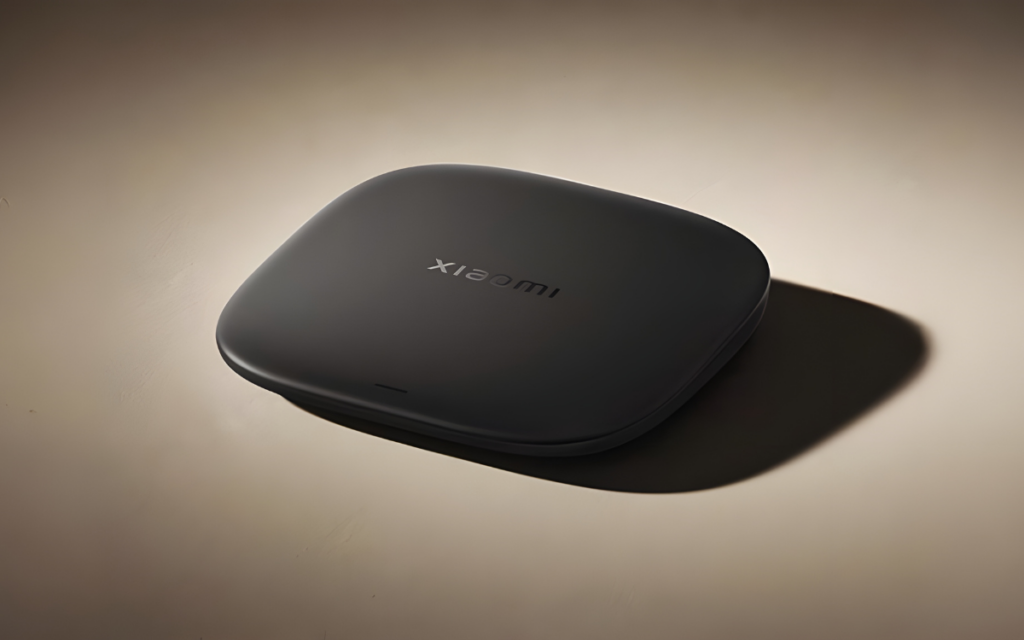
Xiaomi has unveiled the Box 5 and Box 5 Max streaming devices in China. These compact Android-based boxes deliver AI-powered features, improved connectivity, and premium audio-visual performance. The standard model costs 299 yuan ($41), while the Max version is priced at 499 yuan ($69). Pre-orders are currently open, and the first shipments will begin on May 15.
Xiaomi Box 5 Series Specifications
The Xiaomi Box 5 features a quad-core Cortex-A55 CPU and a Mali-G310 V2 GPU, paired with 2GB RAM and 32GB internal storage. The Box 5 Max upgrades the experience with 4GB RAM and 64GB storage, allowing for better multitasking and more local content storage.
Both models support 4K resolution at up to 3840 × 2160 and come with Xiaomi’s in-house AI-SR engine. This engine enhances non-4K content by sharpening textures and boosting clarity, especially for older 720p or 1080p videos.
They also support Dolby Vision and DTS:X audio formats, and can pass through 7.1.4-channel audio for immersive surround sound when connected to compatible home theater setups.
The boxes are built around a 97mm x 97.1mm chassis, just 17mm tall, and weigh under 100g, making them easy to hide behind a TV or carry while traveling.
Each model comes with dual-band Wi-Fi 6 support for stable and faster streaming, even on busy home networks. Bluetooth 5.2 enables low-latency audio streaming to wireless headphones or speakers. Physical ports include HDMI, USB 2.0, and DC power input.
Both devices run Xiaomi’s HyperOS, which doubles as a smart home dashboard when used with the Mi Home app. They integrate Xiao Ai, Xiaomi’s voice assistant, enabling voice commands for streaming, smart home control, or general queries.
The included remote supports NFC screen casting, users can simply tap their smartphone to the remote to cast content, skipping pairing menus or QR code scanning. Notifications and calls are hidden during casting to maintain privacy.
For more daily updates, please visit ourNews Section.
Samsung has already begun rolling out the One UI 7 update to the Galaxy A-series. It’s currently live for the Galaxy A35, Galaxy A36, and Galaxy A55, with remaining models set to join the party over the coming days and weeks. However, for two Galaxy phones, this update marks the end of the road.
The update party is almost over for Galaxy A14, A14 5G
The Galaxy A14 and Galaxy A14 5G will get the One UI 7 update sometime this month or next month — and this will be their last major software upgrade. While they won’t receive any more OS upgrades in the future, Samsung has promised to continue rolling out security patches for these devices for at least two more years.
Samsung announced the Galaxy A14 and Galaxy A14 5G in early 2023 with Android 13 out of the box. Both phones were promised two major Android updates — Android 14 and Android 15 — along with four years of security patches. So, the device will soon run out of major OS updates with the Android 15-based One UI 7 release. However, it will continue to receive security patches.
Galaxy A14 users probably shouldn’t rush for an upgrade just to keep getting OS updates (more on that below).
You probably don’t need a smartphone upgrade right now
If you own a Galaxy A14 or Galaxy A14 5G and are considering upgrading just to get the latest OS versions, you might want to hold off for a year (at least). The reality is that smartphone brands do not introduce significant changes with every big release.
One UI 7 is already a big step forward. Samsung spent more than two years planning this version and had a longer-than-usual development timeline — a major reason behind the update delay. Since many important changes and improvements are already baked into One UI 7, the next version — One UI 8 — is unlikely to bring drastic new features or changes.
So unless you’re looking to upgrade for reasons beyond just software (like better performance, display, or camera), sticking with your Galaxy A14 or A14 5G for another year isn’t a bad idea at all.
OnePlus appears to be gearing up for the launch of its most specced-out tablet to date. According to known tipster Digital Chat Station, the company is preparing to unveil the OnePlus Pad 2 Pro in China soon, and the latest leak from China reveals a fairly complete picture of the hardware.
OnePlus Pad 2 Pro Specifications (Rumored)
The new tablet will reportedly feature a 13.2-inch LCD panel with a 3.4K resolution and a 144Hz refresh rate. That’s a noticeable jump from 12.6 inches. Based on the leak, the display also includes a small, pill-shaped cutout—though it’s not clear whether that’s for front-facing sensors or just a camera.
Internally, the OnePlus Pad 2 Pro is said to be powered by the Snapdragon 8 Elite, which would place it at the top of Qualcomm’s current performance tier. The battery is also getting a sizable bump, with a 12,140mAh cell and support for 67W wired charging.
In terms of configurations, the leak mentions multiple RAM and storage options: 8GB+256GB, 12GB+256GB, 12GB+512GB, and 16GB+512GB. An earlier rumored 1TB version seems to have been dropped from the current plans.
Moreover, leaked images show the tablet in two color options: Deep Sea Blue and Glacier Silver. The overall design isn’t sticks close to OnePlus’s recent aesthetic choices, with clean lines and minimal embellishments.
While there’s still no official word from OnePlus, the specs suggest the Pad 2 Pro is aiming to compete with the likes of Samsung’s Galaxy Tab S9 Ultra and Apple’s iPad Pro lineup—at least on paper. More details, including pricing and global availability, will likely emerge as the official launch approaches.
For more daily updates, please visit our News Section.
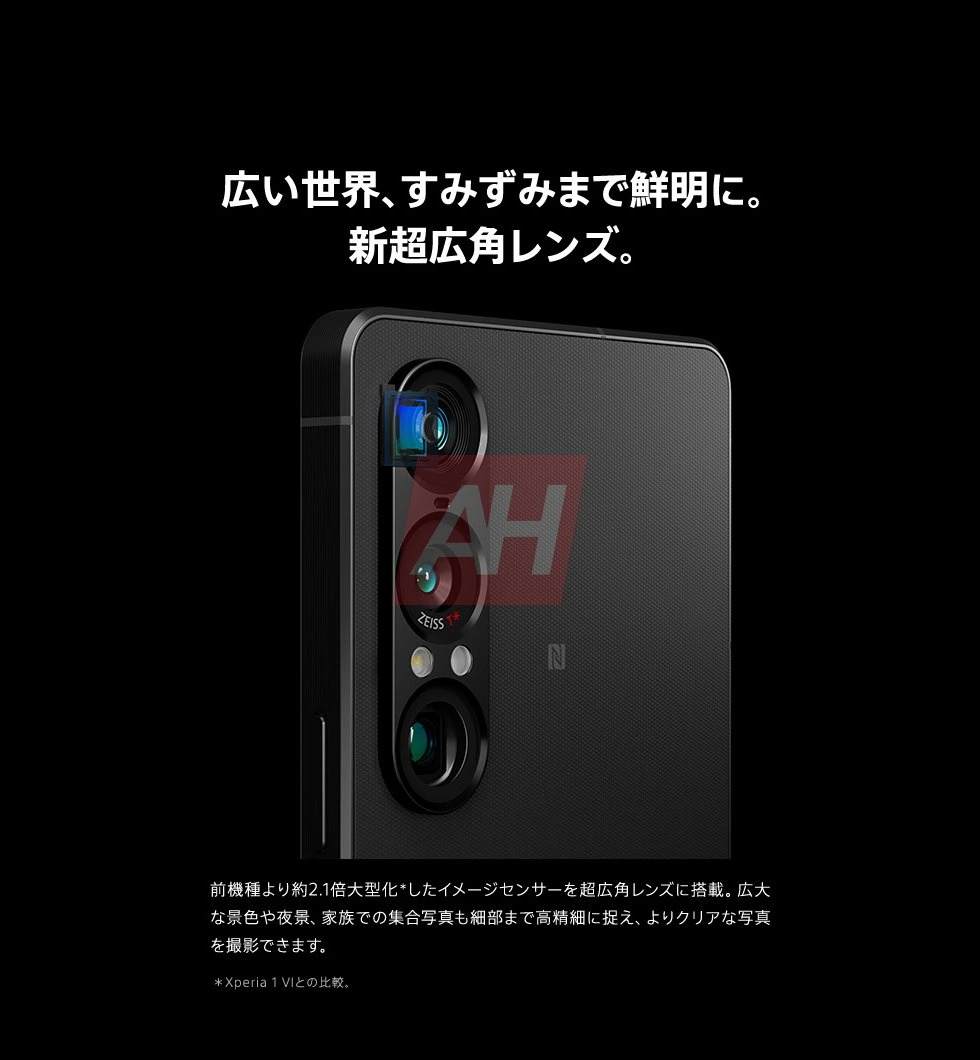
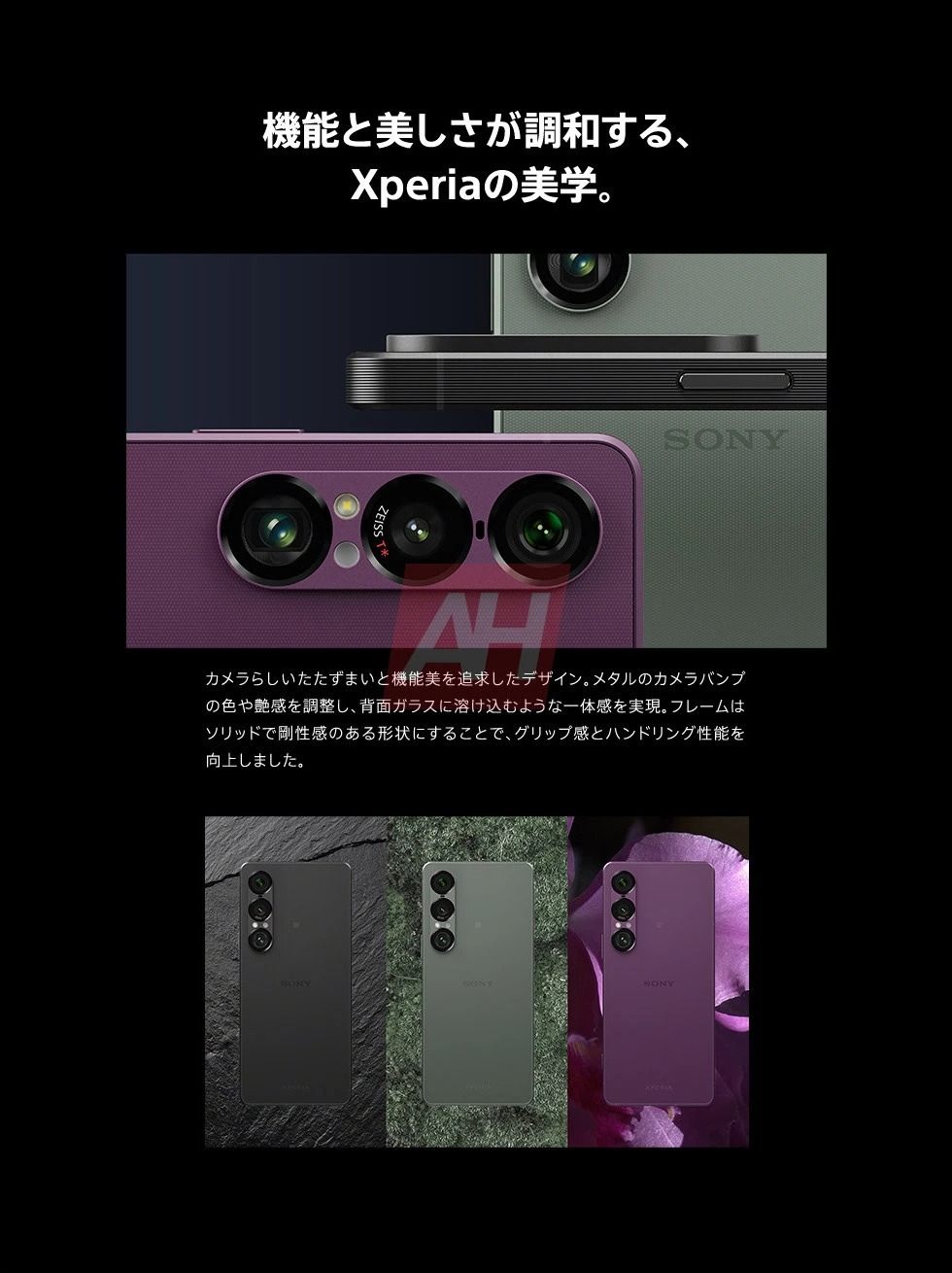
Sony is set to launch the Xperia 1 VII on May 13. Ahead of the event, leaked promotional material and images have confirmed several key features. The phone will come in three colors: black, green, and purple.
The Xperia 1 VII puts a strong focus on audio. It supports high-resolution sound on both wired and wireless headphones. Sony’s DSEE Ultimate AI tech enhances audio quality, especially from compressed files. It also supports the LDAC codec for better wireless streaming. The front-facing stereo speakers have been improved and now deliver 10% more sound pressure in the low-to-mid frequency range. The audio system is powered by components from Sony’s Walkman line.
On the camera side, there’s a new macro mode at 120mm (manual focus only) for close-up shots. Sony says the phone uses full-size sensors to improve low-light shots. The ultra-wide sensor is now 2.1 times larger than before. The phone also adds features like Auto Framing, which follows the subject and captures wide and close-up shots at the same time. AI Camera Work keeps the subject centered while stabilizing the video. Both work together in Dual Video Mode for smoother footage.
The phone’s display includes Sunlight Vision, which improves visibility outdoors by adjusting contrast in different areas of the screen. BRAVIA technology uses dual sensors to boost brightness and color while watching videos. The 5000mAh battery is built to last up to two days and includes Sony’s battery-saving features.
Design-wise, it has a flat frame with a metal camera bump, glass back, and a textured grip. Sony promises four Android version updates and six years of security patches.
The Xperia 1 VII is expected to feature a 6.5-inch 4K OLED screen, a 48MP main camera with OIS, a 12MP ultra-wide camera, a 12MP periscope telephoto lens (70–200mm), and a 12MP front camera. It keeps the 3.5mm headphone jack, microSD slot, USB-C port, and dual front speakers. The launch event will be livestreamed at 11 AM JST (7:30 AM IST) on May 13.
For more daily updates, please visit our News Section.
MediaTek seems to have settled on a familiar trick for its budget and mid-range chips: refreshing last-gen processors with new names and branding. For context, its latest mid-range Dimensity 6400 is similar to the Dimensity 6300, and even its predecessor before that.
The company is following the same script with the Helio G200, its latest 4G-focused mobile processor. On paper, it doesn’t stray far from the Helio G100 that came before it. Much of the core architecture remains the same, including the CPU, GPU class, and even the display and camera capabilities.
MediaTek Helio G200 is G100 in disguise
The Helio G200 still uses an octa-core setup featuring two Cortex-A76 cores and six Cortex-A55 efficiency cores, both clocked identically to the G100 at up to 2.2GHz and 2.0GHz, respectively.
The GPU is again a Mali-G57-class unit, though MediaTek says it runs slightly faster at 1.1GHz this time around. Storage and memory support are unchanged as well: LPDDR4X RAM up to 4266Mbps and UFS 2.2 storage.
Since the chips share similar configurations, MediaTek isn’t directly comparing the G200 to the G100. Instead, it’s pitching the chip’s benefits against unnamed “competitor alternative platforms.”
According to the company, the G200 offers over 35% faster performance in AnTuTu benchmarks, 40% better single-core and 20% better multi-core scores in Geekbench, 75% faster GPU performance, and a 30% power efficiency gain in gaming scenarios.
The camera and display specs remain unchanged as well. The G200 supports up to 200MP sensors, multi-frame noise reduction, and 12-bit dual conversion gain (DCG) for video HDR. The display pipeline supports Full HD+ at 120Hz, assisted by MediaTek’s Intelligent Display Sync, which dynamically adjusts the refresh rate for better power efficiency.
As for connectivity, the G200 includes an integrated Cat-13 4G LTE modem with support for dual 4G VoLTE, 4×4 MIMO, 256QAM, and a handful of global bands. It also includes a new 4G DC SAR that is said to improve social and messaging app performance in low-signal areas.
All in all, the G200 is a repackaged G100 with marginal gains in clock speed, some minor power optimizations, and a few updated marketing terms.
For more daily updates, please visit our News Section.
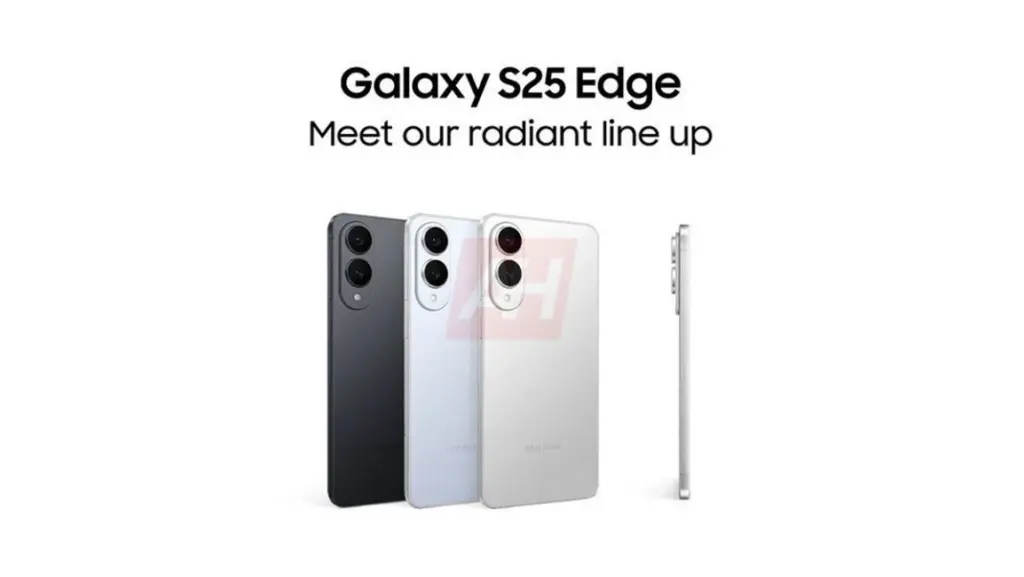
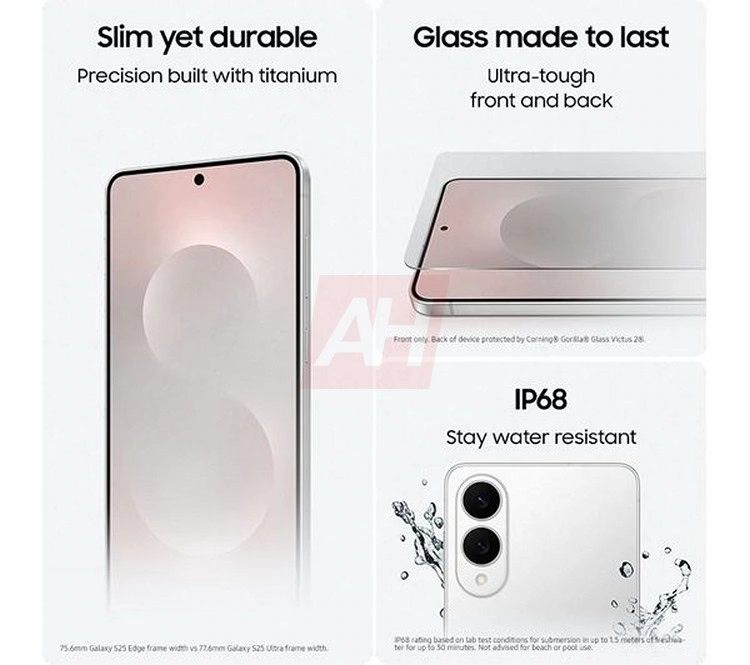
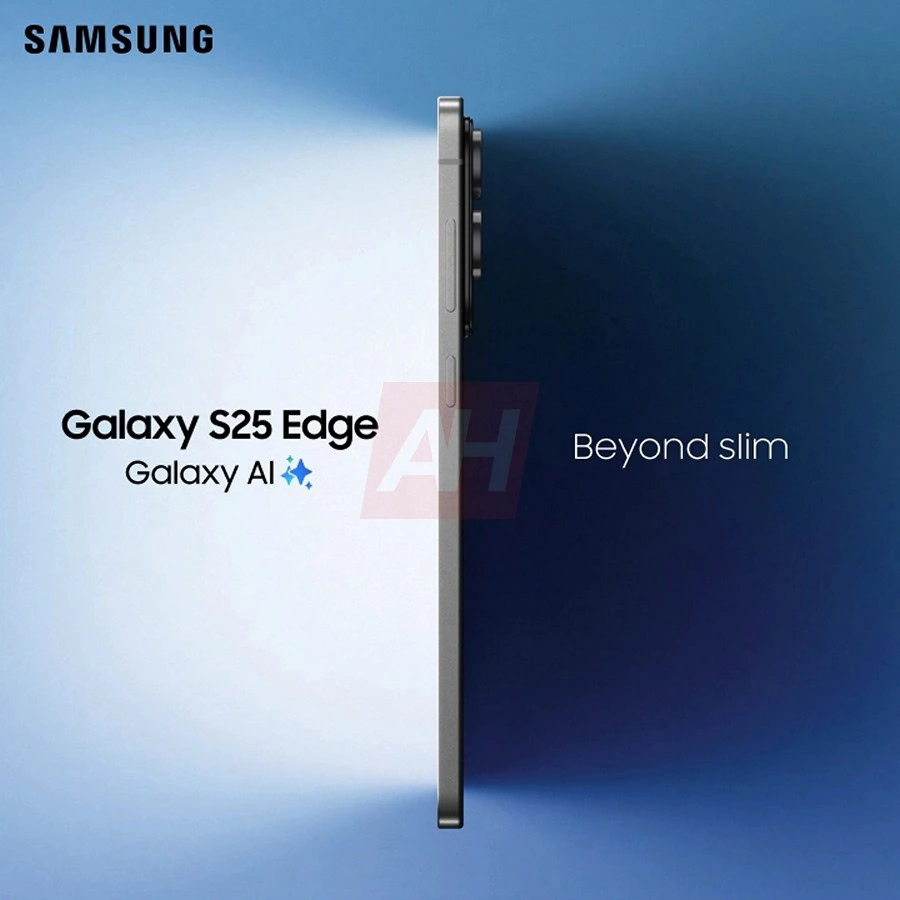
Samsung is gearing up to launch the Galaxy S25 Edge on May 13, and a wave of leaks and teasers over the past 24 hours has revealed key details about the upcoming device. The company released an official teaser video confirming that the Galaxy S25 Edge will be the first smartphone to feature Corning’s new Gorilla Glass Ceramic 2, promising improved durability.
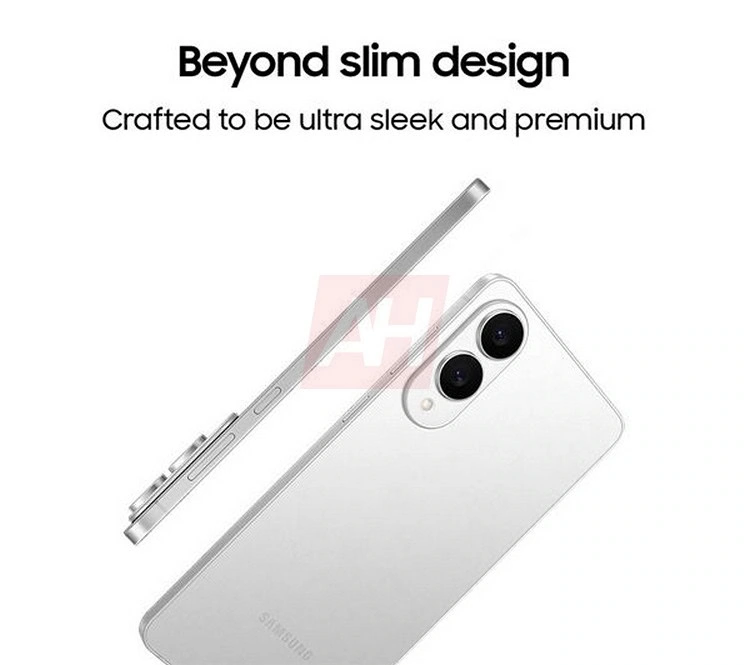
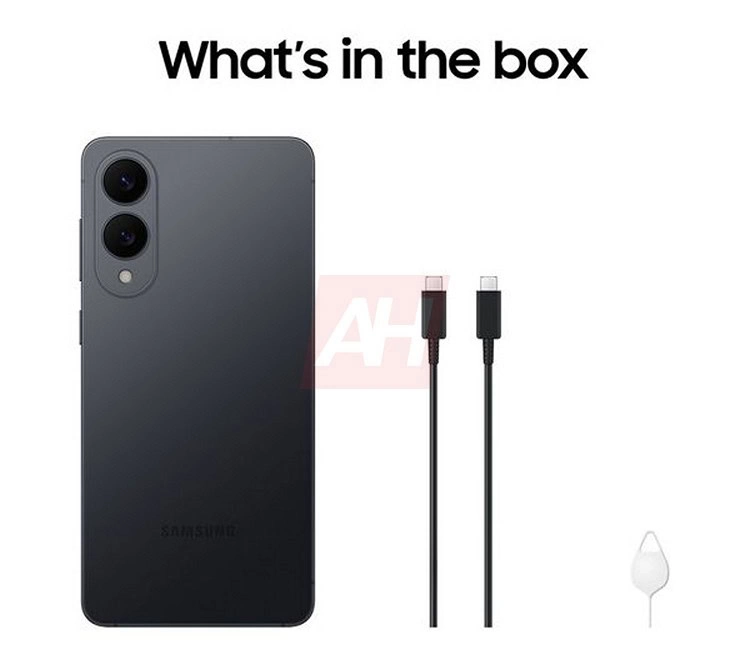
Additionally, leaked promo images and accessory renders have surfaced (courtesy of Android Headlines), confirming many previously rumored specifications.
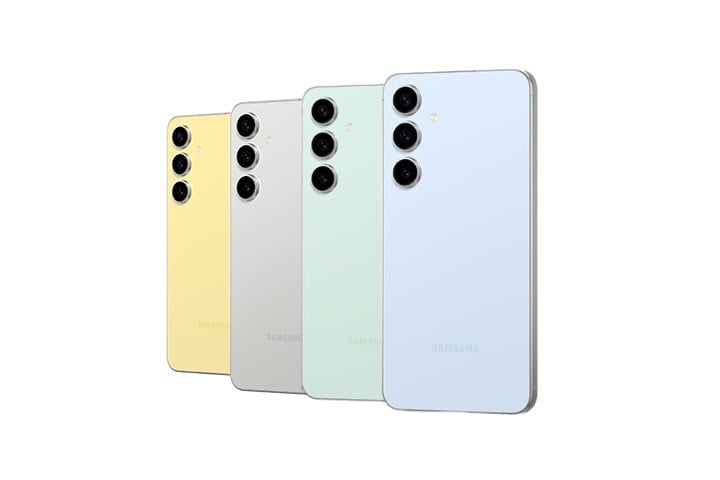
Leaked promotional images have revealed the phone’s ultra-thin profile—just 5.8mm thick. It has a flat frame, very slim bezels, and a centered hole-punch selfie camera. The device will come in three colors: Titanium Icyblue, Titanium Silver, and Titanium Jetblack.
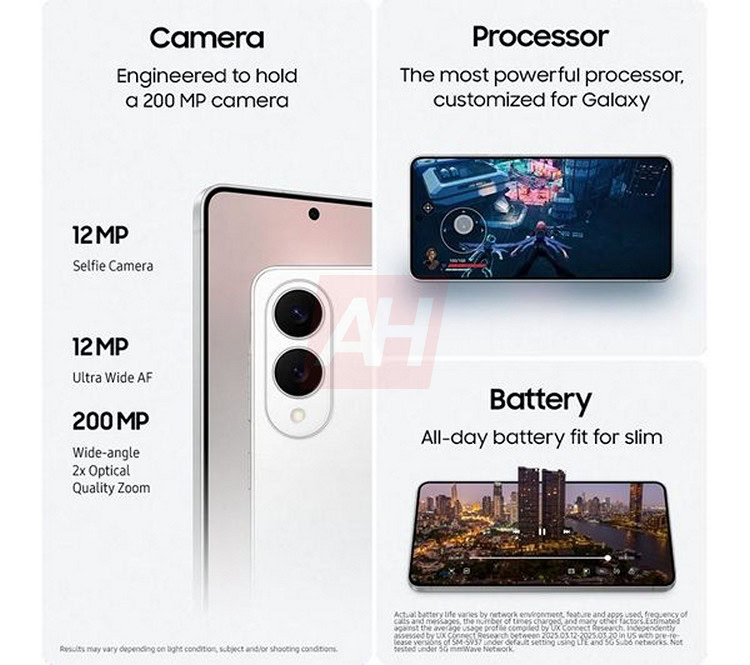
The Galaxy S25 Edge will feature a dual rear camera setup, with a 200MP main sensor offering 2x Optical Quality Zoom, alongside a 12MP ultrawide camera. A 12MP selfie camera is positioned at the top center of the display. The device is IP68 certified, making it resistant to dust and water.
On the front, the phone will sport a 6.7-inch AMOLED display with a 120Hz refresh rate. Performance will be powered by the Snapdragon 8 Elite for Galaxy chip, the same custom processor used in other Galaxy S25 series models. It will include 12GB of LPDDR5X RAM and 256GB of UFS 4.0 storage.
One concern is the battery size. The Galaxy S25 Edge will include a 3,900mAh battery, which is smaller than the standard Galaxy S25’s battery despite the Edge having a larger display. The device will support 25W wired charging.
Official accessories for the phone have also been revealed through leaks. These include a Silicone Case available in black, blue, and gray; a Kindsuit Case made of PU material with a leather-like texture available in gray, light gray, and blue; a Transparent Silicone Case offering soft-touch protection; and an Anti-Reflective Screen Protector to reduce glare.
The Galaxy S25 Edge is shaping up to be a design-first smartphone with strong camera features and the latest Gorilla Glass protection. However, battery life may be a trade-off. Full details will be confirmed when Samsung officially launches the device on May 13.
Samsung is preparing to launch the Galaxy S25 FE, expected in late 2025. While the company initially planned to equip the device with its in-house Exynos 2400e chipset, a new report from Notebookcheck suggests that production issues may lead to the adoption of MediaTek’s Dimensity 9400 as an alternative.
Samsung Galaxy S24 FE
The Dimensity 9400, manufactured by TSMC, outperforms the Exynos 2400e. However, using it could increase costs for Samsung, making the Exynos chip a more cost-effective option. Choosing Exynos also keeps revenue within the company, which is another reason for Samsung’s preference. That said, the superior performance of the Dimensity 9400 might influence the appeal of the upcoming Galaxy S25 FE, especially since the current model (Galaxy S24 FE) uses the Exynos 2400e.
The Dimensity 9400, launched in October 2024, is MediaTek’s flagship-grade SoC with a second-generation All Big Core setup. It has one Arm Cortex-X925 core running at over 3.62GHz, three Cortex-X4 cores, and four Cortex-A720 cores. Compared to the Dimensity 9300, it delivers 35% faster single-core and 28% faster multi-core performance. Built on TSMC’s second-generation 3nm process, it is up to 40% more power-efficient and helps improve battery life.
This isn’t the first time Samsung has utilized MediaTek’s chip on its higher-tier products. The Galaxy Tab S10+ and the Tab S10 Ultra both launched last September, featuring the Dimensity 9300+ processor.
Firmware development for the Galaxy S25 FE has begun, with the US variant identified as model number SM-S731U. The device is expected to run One UI 8 based on Android 16. Historically, Samsung’s FE models have launched in the fall, suggesting a release window between September and November 2025.
As the launch date approaches, more details about the Galaxy S25 FE’s specifications and features are expected to emerge, providing a clearer picture of Samsung’s strategy for this upcoming device.
For more daily updates, please visit our News Section.
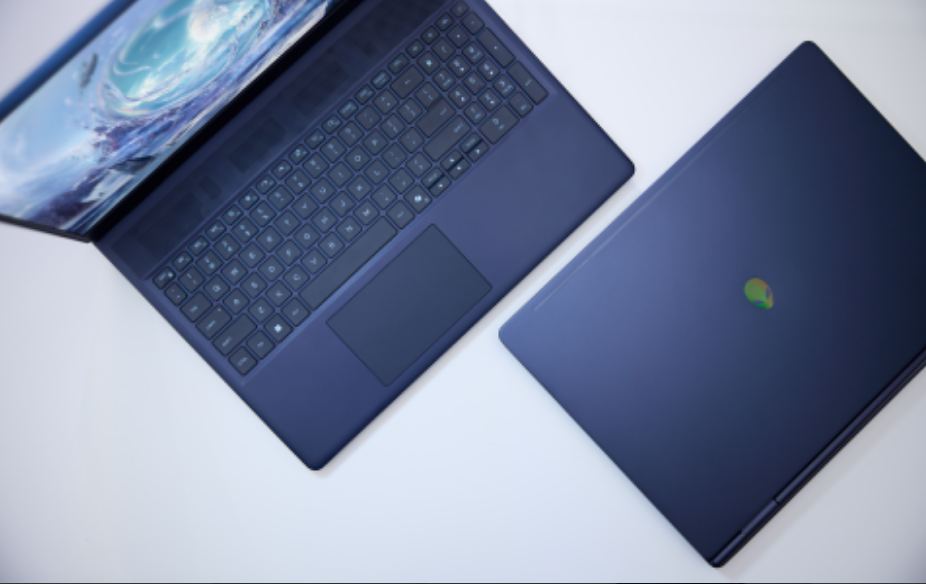
Dell has just announced a pair of new gaming laptops from its popular Alienware series. These are new entry and mid-level notebooks built for gaming. The new Aurora 16 and Aurora 16X feature the latest gen hardware, which includes new Intel processors and Nvidia’s RTX 5000 series GPUs. So let’s check them out.
Alienware Aurora 16, Aurora 16X debut with hefty specs
The known PC maker has just unveiled the Aurora 16 and Aurora 16X models with a sober design, showcasing how it’s built for gaming and general use. These are a pair of Blue colored laptops that weigh a hefty 5.5 and 5.86 pounds (2.4 to 2.6 kg). But the gaming DNA remains, as the RGB lighting is still available. However, if you’re looking for a more understated use, the duo come with a stealth mode that turns the RGB into light white and tones down the fan.
The Aurora lineup also includes Dell’s high end Alienware desktop PCs, but the Aurora 16 and Aurora 16X feature a more portable form factor. While both variants feature a tall 16-inch IPS LCD panel, the base Aurora 16 offers 2560 x 1600 resolution, a 120Hz refresh rate, and 300 nits of peak brightness. Meanwhile, the higher end model has a higher 500 nits of peak brightness and a 240Hz refresh rate.
Alienware Aurora 16 and Aurora 16x
Connectivity options include two USB-A, two Gen 3.2 USB-C (includes Thunderbolt 4 and DisplayPort 2.1), HDMI 2.1, Ethernet port, a 3.5mm headphone jack, and Wi-Fi 7. The top end models on the Aurora 16 and Aurora 16X can be equipped with the Nvidia GeForce RTX 5070 GPUs. However, the base version of the Aurora 16 starts either an RTX 3050 or RTX 4050 depending on the region.
Furthermore, the Aurora 16 features Intel Raptor Lake Refresh line of CPUs starting from the Intel Core 5 CPU. On the other hand, the Aurora 16X packs the newer Intel Arrow Lake processors, with the top end model being the Core Ultra 9 275HX. You can pair the Aurora 16 with up to 32GB of RAM and 2TB of internal storage, while the 16X can be paired with up to 64GB of RAM and 4TB of internal storage.
Alienware packs the Aurora 16 with a rather modest 60Wh battery pack, but you get a massive 96Wh cell on the 16X. Talking about the pricing and availability, the Alienware Aurora 16 has a starting price tag of 1,149.99 US Dollars, and the Aurora 16X starts from 1,949.99 US Dollars. This launch also arrives days after the company unveiled the AW3425DW QD-OLED curved gaming monitor in the US.
For more daily updates, please visit our News Section.
We use cookies on our website to give you the most relevant experience by remembering your preferences and repeat visits. By clicking “Accept”, you consent to the use of ALL the cookies.
This website uses cookies to improve your experience while you navigate through the website. Out of these, the cookies that are categorized as necessary are stored on your browser as they are essential for the working of basic functionalities of the website. We also use third-party cookies that help us analyze and understand how you use this website. These cookies will be stored in your browser only with your consent. You also have the option to opt-out of these cookies. But opting out of some of these cookies may affect your browsing experience.
Necessary cookies are absolutely essential for the website to function properly. This category only includes cookies that ensures basic functionalities and security features of the website. These cookies do not store any personal information.
Any cookies that may not be particularly necessary for the website to function and is used specifically to collect user personal data via analytics, ads, other embedded contents are termed as non-necessary cookies. It is mandatory to procure user consent prior to running these cookies on your website.