Advertisement

Samsung officially teases its first tri-fold: What to expect and when

Samsung unveiled its latest Galaxy S25 series smartphones at its Unpacked event yesterday, but that wasn’t all the company had in store. 

The South Korean giant also unveiled a slim device called the Galaxy S25 Edge (expected to launch later this year) and revealed its plans to develop AR glasses in collaboration with Google.

Another major revelation was a tri-fold phone from Samsung. While presenting its roadmap for upcoming devices, the company explicitly revealed that they have a tri-fold phone in development.

Although no specific timeline was mentioned, the implication is that the device could arrive after the next iteration of Samsung’s Galaxy Z Fold and Flip foldable phones.

What we know about Samsung tri-fold

Huawei was the first to explore this domain, and it’s clear that Samsung doesn’t want to be left behind. In fact, the company has been showing off prototypes of tri-fold concept phones at CES for a couple of years now. So, it’s unsurprising that such a device was under consideration.

It’s just that Samsung has now officially teased the product, confirming that it is set to become a legitimate consumer device sooner or later.

Huawei Mate XT Ultimate Design Tri-fold Display

According to the latest rumors, Samsung’s tri-fold phone is expected to feature a display measuring around 9.9 to 10 inches when unfolded. Reportedly, it will adopt a “G-Type” form factor rather than the S-shaped design of the Huawei Mate X series. 

In simple terms, this means the device will fold entirely inward instead of folding both inward and outward like its competitor. This design choice should provide better protection for the large primary screen when not in use.

Another rumor is that Samsung will limit the production of its first tri-fold phone to just 200,000 units. That’s not a lot, so if you’re already intrigued, you might want to start saving up now.

For more daily updates, please visit our News Section.

Stay ahead in tech! Join our Telegram community and sign up for our daily newsletter of top stories!

Galaxy S25, S25+ launched with Snapdragon 8 Elite, new Galaxy AI features

Samsung has launched its 2025 flagship lineup: the Galaxy S25, S25+, and S25 Ultra. The key focus of the event, as well as the main selling point of the devices, is the impressive Galaxy AI features. As an addition, Samsung has upgraded some design elements, and specifications and changed the color options to justify printing the next number on the retail box this year.

I have already discussed the new AI features while talking about the top-of-the-line model, which you can check out here. In this article, I will be focusing on the hardware side of the Galaxy S25 and Galaxy S25 Plus.

Design and specifications:

First of all, both the base and plus models look the same as their predecessors. The only noticeable difference is the updated color options: Navy, Mint, Icy Blue, and Silver Shadow.

As for the specs, the Galaxy S25 and S25+ pack 6.2-inch and 6.7″ displays respectively—same as last year. The base model packs an FHD+ Dynamic AMOLED 2X display, while the Plus model packs a QHD+ one.

Performance is improved thanks to the new Snapdragon 8 Elite chip. Besides raw CPU and GPU power, the 40% more capable NPU also helps the S25 series perform AI-related tasks faster and better. While the Ultra model packs a larger VC cooling for better sustained performance, Samsung didn’t reveal anything regarding this feature in the other two models.

The imaging system also benefits from the new chip’s improved ISP and Samsung’s image processing improvements. Samsung also talked about their advanced “Object-aware Engine” which can now detect the subject of an image, recognize the lighting of the environment, and modify skin tones to make it look “more natural and true to life.” But it’s also worth noting that there are no changes in the image sensors whatsoever.

The same goes for many other aspects. The Galaxy S25 and S25+ pack 4000mAh and 4900mAh batteries and support 25W and 45W wired charging respectively.

Pricing and availability:

Galaxy S25 packs 12GB RAM and comes in two different storage options and starts from $799 in the US.

128GB: $799
256GB: $809

The Plus model packs the same RAM but combines it with more storage.

256GB: $999
512GB: $1019

The devices will hit the shelves on February 7th; however, interested users can hit the “Pre-order” button starting today. Pre-order Samsung Galaxy phones now & get up to $1,250 off + a chance to win $5,000 credit (US only) – https://howl.link/erlejlgnge89i

Stay ahead in tech! Join our Telegram community and sign up for our daily newsletter of top stories!

For more daily updates, please visit our News Section.

Samsung Galaxy S25, S25+, S25 Ultra: Indian pricing, pre-orders, and sale date

Samsung has unveiled the Galaxy S25 series, which includes the Galaxy S25, Galaxy S25+, and Galaxy S25 Ultra, in multiple markets worldwide. The trio is priced at $799, $999, and $1,299, respectively in the US. Here’s a dedicated post to explore the pricing and offers for the Indian market.

Galaxy S25 series price in India

Samsung Galaxy S25 series

Pre-orders for the Galaxy S25 series have begun across all leading online and offline stores, as well as on Samsung Live via this link. The devices will go on sale starting February 7.

The Galaxy S25 series is available in the following variants and colours:

Galaxy S25

  • Variants and Price:
    • 12GB + 256GB: Rs 80,999
    • 12GB + 512GB: Rs 92,999
  • Colours: Icyblue, Silver Shadow, Navy, Mint
  • Exclusive Colours (via Samsung.com): Blueblack, Coralred, Pinkgold

Galaxy S25+

  • Variants and Price:
    • 12GB + 256GB: Rs 99,999
    • 12GB + 512GB: Rs 1,11,999
  • Colours: Navy, Silver Shadow
  • Exclusive Colours (via Samsung.com): Blueblack, Coralred, Pinkgold

Galaxy S25 Ultra

  • Variants and Price:
    • 12GB + 256GB: Rs 1,29,999
    • 12GB + 512GB: Rs 1,41,999
    • 12GB + 1TB: Rs 1,65,999
  • Colours: Titanium Silverblue, Titanium Gray, Titanium Whitesilver, Titanium Black
  • Exclusive Colours (via Samsung.com): Titanium Jadegreen, Titanium Jetblack, Titanium Pinkgold

Pre-order offers

Samsung has announced exciting pre-order benefits for the Galaxy S25 series. Customers who pre-order the Galaxy S25 Ultra will receive benefits worth Rs 21,000. This includes a storage upgrade worth Rs 12,000, allowing them to purchase the 12GB + 512GB variant at the price of the 12GB + 256GB variant and an upgrade bonus worth Rs 9,000. Alternatively, customers can avail Rs 7,000 cashback when purchasing with a 9-month no-cost EMI plan.

For the Galaxy S25+, customers will receive benefits worth Rs 12,000, including a storage upgrade where the 12GB + 512GB variant is offered at the price of the 12GB + 256GB variant. Meanwhile, those pre-ordering the Galaxy S25 will enjoy benefits worth Rs 11,000 as an upgrade bonus. Customers can also opt for Rs 7,000 cashback when purchasing the Galaxy S25 with a 9-month no-cost EMI plan.

Additionally, Samsung offers a 24-month no-cost EMI option for the Galaxy S25 and Galaxy S25+ through all leading NBFCs.

Pre-order Samsung Galaxy phones now & get up to $1,250 off + a chance to win $5,000 credit (US only) – https://howl.link/erlejlgnge89i

For more daily updates, please visit our News Section.

Don’t miss a thing! Join our Telegram community for instant updates and grab our free daily newsletter for the best tech stories! 🚀

Why Your Next Gaming Phone Doesn’t Need to Cost $1000

Mobile gaming is a multi-billion dollar industry. Most of the revenue comes from the freemium model (in-game purchases).

Therefore, almost all mobile titles have lower hardware requirements for better accessibility. However, the price of dedicated gaming smartphones has soared high in recent years.

These devices offer top-of-the-line performance and the latest tech. But are they worth spending $1000 or more?

Today, one can play almost all titles properly on any mid-range or above phone. So should you splurge on mobile gaming hardware? Let’s find out together.

Asus ROG Phone 9 Series
ROG Phone 9 Series | Image Source: Asus

1. The Gaming Phone Dilemma

Asus’ ROG (Republic of Gamers) is one of the most popular consumer-facing gaming hardware brands. It is the only widely available brand that has a presence in the smartphone market.

In fact, it is the company that popularized the gaming smartphone category. As a leader in the niche segment, the firm steadily increased the price of its handsets over the years.

At present, the latest ROG Phone 9 series starts at $1,000 and goes all the way up to $1,500. That’s a lot of money for a dedicated gaming smartphone.

Lately, Asus has toned down the screaming gaming aesthetics to make the product look and feel more like a regular phone. But it still can’t match the overall experience offered by regular flagships.

ROG Phones are primarily only good at gaming. When you look at them as an everyday premium phone (due to their high asking price), they fall short.

2. The Case Against Expensive Gaming Phones

Even if you have purchased the latest ROG Phone 9 Pro, there aren’t many resource-hungry titles to play in the first place. 

As we mentioned earlier, most games are now designed to run even on the lowest of hardware as much as possible. There are only a handful of titles that may play marginally better on expensive gaming phones. 

It has been nearly 3 years since the introduction of ray tracing on phones, however, there are very few games that use this tech. Also, ray tracing on smartphones is comparatively less pronounced than on PCs and consoles.

Though the hardware is capable enough, there aren’t software to make use of it. Developers are flocking toward the freemium model with more accessible games for revenue generation.

3. Finding the Right Balance

If you are in the market for a smartphone for gaming, you don’t need to spend $1,000 or more. A capable enough chipset, size, and battery are more than enough.

So any phone with a year or more old flagship chip from Qualcomm and MediaTek will just do fine. Devices touting these chipsets are mostly previous-gen premium phones. So you can get them at a much lower price than what they used to cost at launch.

Sometimes, these chips are all found in so-called flagship-killer phones. They tend to cost half of the regular flagship but still provide almost the same level of performance.

If not for flagship chips, any latest mid-range is also capable enough. Handsets featuring these chipsets are even more affordable.

The next thing to look for is the size. Generally, larger smartphones offer sustained performance. That’s because they tend to dissipate heat better. You also get bigger displays and louder speakers on such phones.

Lastly, handsets with huge batteries will last longer. Also, make sure they have fast charging support so that you can recharge them in no time.

4. Prior-gen Flagships and Mid-rangers

If you are low on budget, you can still buy a good smartphone for gaming without spending a lot. Instead of opting for the latest gaming smartphone or a flagship, you can go with a generation or two older models.

For instance, you can go with the last-gen Galaxy S24 Ultra or even the older Galaxy S23 Ultra. These phones will cost you hundreds of dollars less than the new Galaxy S25 Ultra

Similarly, if you are not into Samsung, perhaps try older OnePlus 12 or 11 rather than OnePlus 13. We could say the same for Motorola Edge phones, Xiaomi number series, Honor Magic series, and more.

Alternately, if you live in a region where you get access to powerful mid-rangers, you can opt for those handsets. Phones like Poco F series, Realme GT series, and Xiaomi T series will get you serious performance for way less price.

Lastly, if case you are in the Apple ecosystem, you can go with older Plus and Pro Max iPhones instead of newer models.

5. The Appeal of Chinese Smartphones

China gets a wide variety of smartphones. Almost all of them are way more affordable and yet pack a lot of things.

Some of these handsets make their way to nearby Asian countries. A select few also land in Europe. But none of them get released in the far west.

So these phones are not designed for international audience in mind. So they may have some compatibility issues. If you are fine with the drawbacks, you can import these products.

For instance, the best alternative to the ROG Phone 9 series is the Red Magic 10 lineup. It costs about half and even excels in some scenarios.

Further, iQOO smartphones are known for well-tuned performance across all price range. Lastly, flagships from Xiaomi, Vivo, and Oppo are generally more affordable when imported when compared to their official prices outside mainland China.

For more daily updates, please visit our News section

Also consider joining our Telegram community for instant updates and grab our free daily newsletter for the best tech stories! 🚀

New ASUS Chromebook CR Series unveiled: WiFi 6, 4G, USI Stylus Support, & Military-Grade Durability

ASUS has introduced its Chromebook CR series, designed to handle the daily demands of K-12 students, whether they’re learning in the classroom or remotely. These laptops are built tough, with replaceable parts and rugged features to last through years of use.

ASUS Chromebook CR Series

ASUS Chromebook CR Series features

The Chromebook CR series is made to survive the bumps, drops, and spills that come with student life. Each laptop has a rubber bumper, a spill-resistant keyboard, and Corning Gorilla Glass touchscreens to protect against scratches and accidents. They meet or exceed MIL-STD-810H military-grade standards, meaning they can take a beating. Plus, a fingerprint-resistant finish keeps them looking cleaner, and longer.

The laptops come in 11.6-inch and 12.2-inch models with options for 180° lay-flat or 360°-flippable hinges. Convertible models (CR1104F, CR1204F) can switch between laptop, tablet, tent, and stand modes, making them great for group work or solo study sessions. Powered by Intel N150 and N250 processors, they’re built to match the needs of students.

The touchscreens, made with Corning Gorilla Glass, offer up to WUXGA (1920 x 1200) resolution and support optional USI 2.0 styluses. TÜV Rheinland-certified displays reduce blue light, helping protect students’ eyes during long study sessions. Connectivity options include WiFi 6, WiFi 6E, Bluetooth 5.2, and optional 4G LTE for reliable internet access. With up to 16 GB of memory and 128 GB of storage, students can easily keep up with their coursework.

The laptops include front-facing cameras in 720p HD or 1080p FHD, with some models featuring a 13MP world-facing camera for taking photos or videos in tablet mode. Built-in speakers and microphones ensure clear communication during online classes and group calls.

ASUS Chromebook CR Series

The Chromebook CR series includes two USB 3.2 Gen 1 Type-C ports for data, video, and charging, along with two USB 3.2 Gen 1 Type-A ports, HDMI 1.4b, an audio jack, and a Kensington Lock slot. An optional stylus is available for taking notes or sketching.

Some models feature ASUS Antimicrobial Guard, which coats the keyboard and other high-touch areas with a silver-ion layer to limit microbial growth. The TÜV Rheinland-certified displays also reduce eye strain by cutting down on blue light.

The modular design makes repairs and part replacements simple, so downtime is minimized. Captive screws prevent small parts from getting lost during maintenance. Chrome Education Upgrade ensures automatic updates, secure operation, and simple setup for school IT teams.

Pricing & availability

Pricing and availability details have not been announced yet, but more information is expected soon. Based on the specifications, the Asus CR series Chromebooks are likely to be reasonably priced.

(Source)
Galaxy S25 Ultra launched: here’s what sets it apart from the S24 Ultra

Samsung has launched its 2025 flagship lineup: the Galaxy S25, S25+, and S25 Ultra. As expected, the company discussed its latest innovation in AI, collaboration with Google for Gemini, and its integration in One UI 7 throughout the majority of the event. There are some minor hardware improvements and upgrades as well, which we will also discuss in this article. But let us take a look at what’s unique to the new phones first.

A bunch of innovative AI features:

As you start your day, your phone will now act like an actual assistant, offering important information summarized in one place. It includes the weather information and your energy score. Samsung has named this feature Now Brief.

You may heard of another feature called the NowBar, which can show certain important information right on the lock screen such as this “Time to go”, to ensure you never miss an appointment. Of course, this more capable Galaxy AI can generate call transcripts and summarize them on-device to ensure convenience and data safety.

All of it is possible thanks to the new Snapdragon 8 Elite chip, which houses a 40% more capable NPU as compared to that of its predecessor.

Design and specifications:

In the front, the phone packs a 6.9″ QHD+ Dynamic AMOLED 2X display, up from 6.8″ one of the Galaxy S24 Ultra. This is made possible thanks to slightly slimmer bezels, which also offer the phone a slightly more modern look.

Galaxy S25 Ultra design and color options

While the display panel is said to be the same as last year, it is now protected under the more durable Corning Gorilla Armor 2. It also includes an improved anti-reflective coating, which slightly improves outdoor visibility even though the peak brightness is the same – 2600 nits. Samsung also talked about their “ProVisual Engine”, which apparently makes the display system more efficient and enables slightly better battery life out of the same 5000mAh capacity.

To sustain performance, Galaxy S25 Ultra houses a 40% larger vapor chamber. As for the imaging system, the only hardware improvement this time is the shift from the old 12MP ultrawide to a 50MP one. Apart from that, it mainly relies on improved image processing algorithms, a part of which relies on the improved ISP of the new chip.

For those wondering, these are pretty much all the hardware changes the Galaxy S25 Ultra brings over its predecessor. It will be interesting to see if the new AI features get rolled out to the Galaxy S24 Ultra with the One UI 7 update, as these are the selling points of the new flagship.

The phone comes in two different color options: Titanium Black, Titanium Gray, Titanium Silverblue, and Titanium Whitesilver. The prices in the US are as follows:

  • 12GB+256GB: $1300
  • 12GB+512GB: $1420
  • 12GB+1TB: $1650

The Galaxy S25 series will hit the shelves on February 7th; however, interested users can hit the “Pre-order” button starting today.

Pre-order Samsung Galaxy phones now & get up to $1,250 off + a chance to win $5,000 credit (US only) – https://howl.link/erlejlgnge89i
Tech enthusiast? Get the latest news first! Follow our Telegram channel and subscribe to our free newsletter for your daily tech fix! For more daily updates, please visit our News Section.

Galaxy S25 Ultra Introduces Corning Gorilla Armor 2: More Durable & Reflective-Resistant

Samsung recently hosted a launch event for its Galaxy S25 series smartphones headlined by the Galaxy S25 Ultra. The brand also announced that the Galaxy S25 Ultra is the first smartphone to feature Corning Gorilla Armor 2, the first scratch-resistant, anti-reflective glass ceramic cover material for mobile devices.

Samsung Galaxy S25 Ultra

Gorilla Armor 2 is designed to withstand challenging conditions while maintaining a clear display. Kwangjin Bae, EVP and Head of the Mechanical R&D Team at Samsung Electronics said, “The Galaxy S25 Ultra represents progress in providing users with a more durable mobile experience. Our partnership with Corning continues to improve display performance to meet consumer needs.”

Compared to the previous generation, Gorilla Armor 2 provides greater durability and resistance to scratches. In testing, it withstood drops from up to 2.2 meters onto surfaces replicating concrete while competing materials failed from one meter. It also showed over four times better scratch resistance than other lithium-aluminosilicate cover glasses with anti-reflective coatings.

The material’s anti-reflective properties reduce surface reflections in various lighting environments, improving display contrast and usability indoors and outdoors. David Velasquez, Vice President and General Manager of Corning Gorilla Glass, commented, “With Gorilla Armor 2, we offer a durable, optically advanced glass ceramic cover material on a Galaxy device for the first time.”

Talking about the Galaxy S25 Ultra specifications, the device features a 6.9-inch Quad HD+ Infinity-O-Edge Dynamic AMOLED display with a 1-120Hz adaptive refresh rate. Powered by the Qualcomm Snapdragon 8 Elite chipset, it offers 12GB RAM and storage options of 256GB, 512GB, or 1TB, running Android 15 with One UI 7.

The rear camera setup includes a 200MP main sensor with OIS, a 50MP ultra-wide lens, a 10MP telephoto lens with 3x optical zoom, and a 50MP periscope telephoto lens with 5x optical zoom and 100x Space Zoom. It supports 4K and 8K video recording. On the front, it has a 12MP camera that delivers sharp selfies. The phone has an IP68 rating, while connectivity options include 5G, Wi-Fi 7, Bluetooth 5.3, and NFC. It houses a 5000mAh battery with 45W fast charging and wireless charging support.

(Source)

ASUS ROG Swift OLED PG27UCDM: World’s First 27″ 4K OLED Gaming Monitor Now Available

ASUS Republic of Gamers (ROG) has announced the ROG Swift OLED PG27UCDM, the first 27-inch 4K OLED gaming monitor, now available for pre-order at USD $1,099. The monitor features fourth-generation ROG QD-OLED technology, delivering a 166ppi pixel density for sharp visuals and infinite contrast.

ASUS ROG Swift OLED PG27UCDM

The display offers a 240Hz refresh rate and a 0.03ms response time, making it well-suited for smooth and responsive gaming. Connectivity options include a four-lane DisplayPort 2.1a UHBR20 with 80Gbps bandwidth, HDMI 2.1, and USB-C with 90-watt power delivery. The monitor supports VESA DisplayHDR 400 True Black, Dolby Vision, and HDR10, with easy access to these modes via the OSD menu.

ASUS ROG Swift OLED PG27UCDM

To improve viewing comfort, the monitor includes ROG OLED Anti-Flicker 2.0 technology, which uses a luminance-compensation algorithm to reduce flicker by 20% compared to earlier models. Additionally, a Refresh Rate Cap feature is also onboard which allows users to limit the refresh rate, with three preset options to choose from.

The ROG OLED Care Pro suite is another key addition, featuring the Neo Proximity Sensor. This sensor detects the user’s distance from the monitor and switches to a black screen when the user steps away, reducing the risk of burn-in. The display resumes normal operation when the user returns. Other screen protection features include pixel cleaning, a screen saver, taskbar detection, and a three-year warranty. The ROG DisplayWidget Center allows users to conveniently adjust monitor settings and access OLED care tools.

Don’t miss a thing! Join our Telegram community for instant updates and grab our free daily newsletter for the best tech stories! For more daily updates, please visit our News Section.

(Source)

This 27-inch Fast IPS 2K 210Hz gaming monitor from Viewsonic costs only $109

ViewSonic has launched a new gaming monitor called VX27G58-2K in the Chinese market. The monitor is priced at an incredibly low 799 yuan ($109) and is now up for pre-orders on JD.com. Let’s check out its key specs.

ViewSonic VX27G58-2K

ViewSonic VX27G58-2K Specifications

The monitor boasts a 27-inch Fast IPS display with 2K resolution, providing sharp and detailed visuals. It features a native refresh rate of 200Hz, which can be overclocked to 210Hz, along with a swift 1ms GTG response time, ensuring seamless and fluid gameplay without any motion blur or lag.

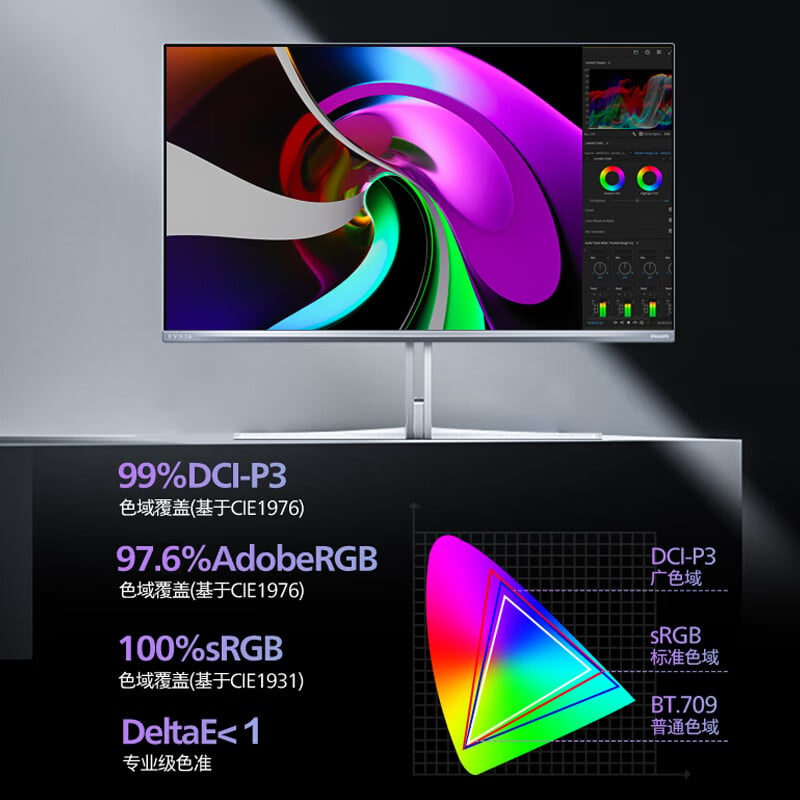
The monitor features HDR400 certification, ensuring improved contrast and color accuracy that brings out finer details in both dark and bright scenes. It supports a wide color spectrum, covering 100% of the sRGB and 94% of the DCI-P3 color spaces, delivering a rich and immersive visual experience. This makes the monitor well-suited for gaming, professional graphic design, and video editing.

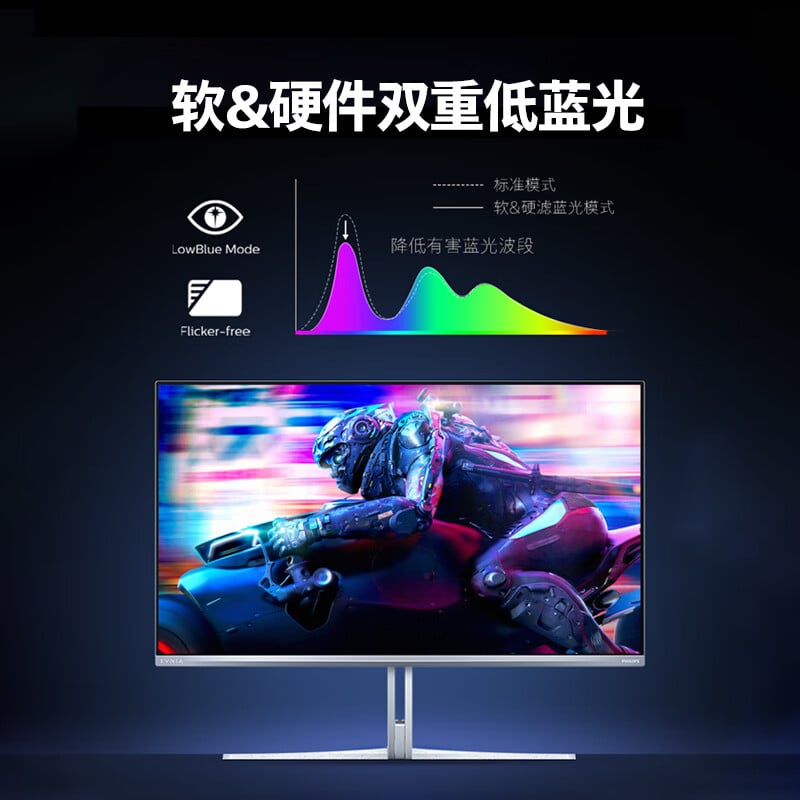
The monitor also comes with several eye-care technologies to ensure comfort during extended gaming sessions. It includes a second-generation hardware low blue light filter that reduces eye strain by minimizing harmful blue light emission. Additionally, its flicker-free technology prevents the backlight from flickering, further reducing eye fatigue and making it more comfortable to use for long periods.

The monitor sports a sleek, space-saving design with a minimalist metal stand that allows for more room for peripheral devices. In terms of connectivity, it includes two HDMI 2.0 ports, one audio port, and a DP 1.4 interface, making it versatile for various gaming and professional setups.

For gaming optimization, the monitor comes with pre-set modes tailored for different gaming genres such as FPS, RTS, and MOBA, allowing gamers to switch according to the gaming scenario for the best performance. Furthermore, it supports both AMD FreeSync and Nvidia G-Sync, providing a tear-free gaming experience by synchronizing the frame rate output between the graphic card and the monitor.

In related news, Thunderobot has unveiled two new gaming monitors recently: a 31.5-inch 4K 165Hz OLED model featuring a Samsung QD-OLED panel, and a 27-inch 2K 210Hz version equipped with a Fast-IPS panel that offers 400 nits of brightness.

For more daily updates, please visit our News Section.

Don’t miss a thing! Join our Telegram community for instant updates and grab our free daily newsletter for the best tech stories! 🚀

Samsung teases ultra-thin Galaxy S25 Edge to rival iPhone 17 Air

Samsung has officially teased a new addition to its flagship lineup, the Galaxy S25 Edge, during the recent Galaxy Unpacked event. Previously, it was speculated to be called the Galaxy S25 Slim, but that turned out not to be the case.

The Edge, expected to launch in the first half of this year, reintroduces the “Edge” moniker, recalling the curved display designs that Samsung popularized years ago. However, this time, the focus is not just on aesthetics but also on achieving an exceptionally slim form factor.

Galaxy S25 Edge

The Galaxy S25 Edge, as hinted at during the presentation, appears to be an ultra-thin variant of the standard Galaxy S25 series. Measuring a rumored thickness of just 6.4mm, it challenges the industry norms of smartphone dimensions. Its sleek, minimalist profile is further distinguished by a dual-camera setup on the back, setting it apart from the triple-camera configurations of the S25 and S25+.

Galaxy S25 Edge

Samsung’s strategic placement of the S25 Edge hints at a direct competition with Apple’s upcoming iPhone 17 Air, which is also rumored to feature a thinner-than-ever design. The S25 Edge aims to strike a balance between slimness and functionality, potentially positioning itself as a more versatile option for consumers who prioritize design without sacrificing performance.

The Galaxy S25 Edge is expected to be priced below the $1,299 S25 Ultra, positioning it between the S25+ and the Ultra model. According to Mark Gurman, it will launch in the first half of the year, including in the US.

Talking about the S25 series, Samsung unveiled the Galaxy S25, S25+, and S25 Ultra, featuring AI-powered One UI 7, Snapdragon 8 Elite chipset, advanced cameras, improved thermal efficiency, and sustainable materials. The S25 Ultra boasts a 200MP camera, 6.9-inch display, and 5000mAh battery, while the S25 and S25+ offer smaller displays and slightly lower specs. All models include enhanced durability, AI tools, and long-term software support.

For more daily updates, please visit our News Section.

Stay ahead in tech! Join our Telegram community and sign up for our daily newsletter of top stories! 💡

5 Hidden Features in Samsung Galaxy Phones You Didn’t Know About

Samsung is one of the biggest smartphone brands in the world. It is a seasoned veteran in the smartphone industry and packs its device with various features that are quite useful to the user. The Galaxy AI brought in a load of great tools to the users, but today, we are going to check out some of the more hidden ones.

1. Bixby Suite of Tools

5 Hidden Features in Samsung Galaxy Phones

Gemini is already expected to get a deeper integration with the upcoming Galaxy S25 series. However, the South Korean tech giant’s Bixby is no slouch either. While it had its fair share of issues in the past, Bixby’s suite of tools and features are a lot more useful. A great example is Bixby Vision which lets you translate texts in real time from the camera app.

It can even identify objects or search Pinterest to find relevant pictures as well. Bixby was one of the first to offer this functionality, even ahead of Google. If you need to, it can even identify wines for you via Bixby Wine. Similarly, there is also Bixby Routine which uses machine intelligence to learn your usage patterns and preferences. This lets it smartly control your apps, optimize battery life, and much more. You can enable this feature by going to Bixby Routine from the notification panel.

2. Edge Panels

Samsung Edge Panels

Edge Panels have become a feature that people have begun using more often. But many Galaxy phone owners still don’t know about it. The Edge Panel isn’t just for quick access to some apps. You even get a compass, important contacts a ruler, a notepad with all of your copied texts, Tasks Edge, and much more. Edge Panels can have you use your smartphone in a brand new way. This can directly be added from the Settings, by searching for Edge Panels.

3. Good Lock

Good Lock modules

While this isn’t an immediately available feature, downloading the Good Lock app (exclusive to Samsung) brings a wide range of impressive features and customizations. There are various modules that could change the way you interact with your Samsung Galaxy Phone. A great example is RegiStar that lets you add back taps as an input.

Simply tapping on the rear panel let’s you quick launch an app, take a screenshot, or perform other functions. There’s Camera Assistant, Nice Catch, Sound Assistant, NotiStar, and more. All of these can help improve the way your phone handles notification, improve photography, or give you more control over your device.

4. Video Call Effects

Video call effects in Samsung Galaxy

While WhatsApp and other chat or calling platforms are now offering video call effects, Samsung’s One UI has this built-in from the get-go. So when you’re on a meeting on Google Meets or Zoom, or even a video call on WhatsApp, users get the option to natively add effects. You get the usual background blur and background edits, but there is also an option to add pictures as backgrounds and even have your camera focus on your face and keep it in the center. This can be found in the Advanced features tab in Settings.

5. Shared Albums

5 Hidden Features in Samsung Galaxy Phones

Shared Albums is a great feature that you can find in Samsung’s Gallery application. As the name suggests, it allows you and another Samsung Galaxy users share access to a common album seamlessly. It is hidden in the Gallery and you can try it out by tapping on the hamburger icon on the bottom right of the app.

This let’s users creat a shared album, which can be shared with up to 100 other Samsung account holders. Now, you can simply upload images or videos on this album that can be accessed by everyone. For non-Samsung users, it supports creating an invite link, which opens the album in the browser.

For more daily updates, please visit our News Section.

Stay ahead in tech! Join our Telegram community and sign up for our daily newsletter of top stories!

OnePlus 12R Gains BeaconLink App and Latest Security Patch in New Update

OnePlus has released the OxygenOS 15.0.0.500 update for the OnePlus 12R, introducing the BeaconLink app and additional features. This update, currently exclusive to India, is expected to expand to other regions soon.

OnePlus-12R

BeaconLink App Highlights
BeaconLink, initially launched for the OnePlus 12 in January 2025, enables short-distance calls via Bluetooth. Designed for areas with poor signal or no internet, it eliminates the need for a SIM card, base station, or Wi-Fi. The app automatically searches for nearby devices and allows free calls within a 10 to 200-meter range.

Other Key Additions

  1. Touch to Share: This feature now supports iOS devices, enabling photo and file sharing with a single touch.
  2. January 2025 Security Patch: The update addresses security with the latest Android patch, improving system safety and stability.

This is the second update for the OnePlus 12R in January 2025. The earlier update focused on AI enhancements but did not include the January security patch.

Changelog Summary

  • Interconnection: Adds Touch to Share for iOS and BeaconLink for short-distance calling.
  • System: Improves stability and integrates the January 2025 Android security patch.

How to Access BeaconLink

  1. Navigate to Settings > Mobile Network > BeaconLink.
  2. Set your display name and calling preferences.
  3. Enable Bluetooth, Quick Connect, and Interconnect Security Services.
  4. Grant permissions for Phone, Notifications, Contacts, and Bluetooth access.

Users in India can download the update with firmware version CPH2585_15.0.0.500. No issues have been reported so far, making it a smooth upgrade for enhanced connectivity and security.

Tech enthusiast? Get the latest news first! Follow our Telegram channel and subscribe to our free newsletter for your daily tech fix! For more daily updates, please visit our News Section.

(via)

iQOO 14 series and Neo 11 battery details surface in new leak

iQOO has reportedly begun work on its 2026 flagship, the iQOO 14. While the current lineup lacks a Pro model, an earlier report suggests that the company’s next flagship series will include two devices: a standard version and a Pro variant.

Now, a new leak from tipster Digital Chat Station sheds light on the battery and charging specs of the iQOO 14 series, along with details about the company’s upcoming Neo lineup, specifically the iQOO Neo 11.

iQOO 14 and Neo 11 may feature 7,000mAh batteries

According to the leak, the iQOO 14 and 14 Pro might feature a 7,000mAh battery, a notable upgrade from the already massive 6,000mAh cell in the iQOO 13. However, charging speeds are expected to remain unchanged from their predecessors.

But that’s not all—iQOO may also be working on another device with an even larger battery. A 7,500mAh behemoth is rumored to be coming as a successor to the Neo 10—smartphones often referred to as flagship killers. These devices could be powered by MediaTek’s upcoming Dimensity 9400+ or 9500 chipsets and are expected to support 90W fast charging. If true, iQOO could be gearing up for some of the largest smartphone battery capacities yet. 

Beyond the battery upgrades, the iQOO 14 series is expected to debut flat Samsung OLED panels—a shift from the BOE and Visionox OLED screens used in the iQOO 13 and 12 series. This change could bring improvements in display quality, brightness, and efficiency.

As for the iQOO Neo 11, details remain scarce. However, we’ll keep you updated as soon as more information emerges.

For more daily updates, please visit our News Section.

Don’t miss a thing! Join our Telegram community for instant updates and grab our free daily newsletter for the best tech stories! 🚀

(Source)

Samsung developing Galaxy Buds with cameras: claims new report

Samsung launched its Galaxy Buds 3 and Buds 3 Pro back in July last year with a major redesign. Instead of the rounded design of the first two generations, now it contains a stem. The Pro model also has a light strip, which gives it a unique look and differentiates it from the AirPods and other competitors. But as it turns out, Samsung isn’t stopping here. They have some pretty ambitious goals for the wearable.

Galaxy Buds 3 Pro
Samsung Galaxy Buds 3 Pro

Future Galaxy Buds to equip cameras

According to Bloomberg’s Mark Gurman, Samsung has plans to add cameras to Galaxy Buds, which is expected to add some new capabilities to it alongside offering a good listening experience.

Although, it’s important to note that the concept isn’t entirely new. Apple is also rumored to have similar plans for its AirPods Pro 3, which should launch sometime this fall. Unfortunately, Gurman didn’t reveal anything about the functionalities Samsung is aiming to implement with the camera.

According to earlier reports, Apple’s plan is to implement in-air gesture controls with IR cameras, which will definitely improve human-machine interaction.

Apple and Meta also have similar plans

Meta is also wireless earbuds with cameras, called ‘Camera Buds’. This one will apparently let users “look at an object and ask the earbuds to analyze the item.” According to reports from last year, Meta’s prototype suffered from poor viewing angles and visibility problems with people who have long hair. Above all, adding cameras means increasing the processing and power requirement.

Personally, I’m curious to see how the design and appearance will change with this addition, and, more importantly, how comfortable it will be. Nonetheless, the very existence of Ray-Ban Meta AI Glasses proves that it’s possible to add cameras to such a compact device.

While not much is known about Samsung’s implementation, judging from the industry trends, we may expect similar features in Samsung’s offering. A report from Sammobile also speculates “Samsung’s Galaxy Buds with cameras might act as a stop-gap alternative to smart glasses.”

That said, there is no word on when to expect Samsung’s camera-enabled earbuds to hit the market. At this point, we only expect the product to hit the shelves for sometime in the near future. For more daily updates, please visit our News Section.

Tech enthusiast? Get the latest news first! Follow our Telegram channel and subscribe to our free newsletter for your daily tech fix!

(Source | Via)

Haier India Rolls Out Republic Day Offers: Discounts on all products and Affordable Payment Plans

In honor of India’s 76th Republic Day on January 26, Haier India has announced exclusive offers on its range of consumer durables. The campaign includes discounts, flexible payment plans, and initiatives designed to make Haier products more accessible to customers.

The offers include a 25% instant discount on all Haier products, such as refrigerators, air conditioners, LED TVs, washing machines, robot vacuum cleaners, microwave ovens, and more. Customers can also take advantage of the “Pay Rs 1 and Take Haier Home” option, allowing them to bring home appliances with a nominal upfront payment.

To simplify payments, Haier is offering fixed EMIs starting at Rs 994, with payment terms of up to 36 months. Select appliances come with an extended warranty, providing additional support and assurance.

These offers are available at Haier retail stores and on the Haier India website. Customers can explore the deals to upgrade their appliances during the Republic Day period. For more details, you can visit your nearest Haier store or check the offers online.

For more daily updates, please visit our News Section.

Tech enthusiast? Get the latest news first! Follow our Telegram channel and subscribe to our free newsletter for your daily tech fix! For more daily updates, please visit our News Section.

Xiaomi CEO Lei Jun launches New Year emoticons on WeChat: A genius marketing move

To mark the New Year of the Snake, Xiaomi CEO Lei Jun has released a new WeChat emoticon package. The set features 16 uniquely designed emoticons, capturing the festive cheer of the Lunar New Year with vibrant and playful designs. Free for all WeChat users, these emoticons are part of a tradition started by Lei Jun, with similar sets launched in 2021 (Year of the Ox) and 2024 (Year of the Dragon).

The emoticons stand out for their humor and relatability, turning everyday emotions and cultural references into shareable moments. They resonate deeply with users celebrating the New Year, making online conversations more engaging and festive. Beyond their charm, this initiative reflects Lei Jun’s knack for creative marketing. By tapping into a popular platform like WeChat, Lei Jun directly connects with millions of users, reinforcing Xiaomi’s brand identity as approachable, innovative, and culturally in tune.

A genius marketing strategy

This initiative isn’t just fun—it’s a clever marketing strategy. Lei Jun’s personal involvement adds authenticity to Xiaomi’s brand, showing that the CEO understands and values everyday user experiences. The emoticons foster an emotional connection, encouraging users to associate Xiaomi with joy, community, and celebration. Limited-edition items, like the accompanying red envelope cover featuring Lei Jun, further amplify the exclusivity and appeal of the campaign.

Xiaomi’s Global Growth Startegies

Since its founding in 2010, Xiaomi has become a global technology powerhouse. By 2022, 49.2% of the company’s revenue came from international markets, underlining its success outside of China. Xiaomi’s global strategy is built on affordable innovation, offering high-quality, feature-rich products at competitive prices, a model particularly appealing in price-sensitive emerging markets.

The company’s expansion beyond smartphones into an ecosystem of interconnected devices, including smart home appliances and wearables, has further solidified its position. Xiaomi’s strong branding, robust online and offline distribution, and commitment to localizing products and marketing for diverse cultures have been pivotal in driving its success.

By continually investing in technologies like AI, IoT, and 5G, Xiaomi not only meets current consumer demands but also positions itself as a future-ready brand. Campaigns like Lei Jun’s emoticons highlight how the company combines cultural sensitivity with innovation, fostering loyalty and connection in both local and global markets.

(via)

Read More:

New OxygenOS 15 Update out for OnePlus 11 with new AI features, Camera improvements & more

OnePlus has started rolling out OxygenOS 15.0.0.401 for OnePlus 11 users in India. The phased update introduces new AI features, camera improvements, system optimizations, and a security update.

OnePlus 11

The AI Reply feature generates context-aware chat responses for natural communication. AI Check improves written content by fixing grammar, spelling, and punctuation errors, while AI Rewrite allows users to edit, condense, or enhance text and adjust its style.

The camera now includes three new filters—Fresh, Emerald, and Clear—available in Photo and Portrait modes, offering more creative options. System updates address lag issues, enhance stability, extend battery life, and include the December 2024 Android security patch for improved protection. You can check out the official changelog below.

OxygenOS 15.0.0.401 official changelog

Changelog

Integrated AI features

  • Introduces the AI Reply feature to recommend replies based on the chat context with support for diverse language styles, making the responses more natural.
  • Introduces the AI check feature to check grammar, spelling, typos, punctuation, and more, for effortless and accurate writing.
  • Introduces the AI rewrite feature to extend, shorten, expand, and edit your text and modify the style for more efficient and inspired writing.

Camera

  • Adds Fresh, Emerald, and Clear film filters to Photo mode and Portrait mode.

System

  • Improves system stability for some scenarios.
  • Fixes a lag issue that might occur in some scenarios.
  • Extends battery life in some scenarios.
  • Integrates the December 2024 Android security patch to enhance system security.

The rollout is incremental, starting with a small percentage of users and expanding gradually. Users on OxygenOS 14 must upgrade to OxygenOS 15 to access the update. Indian users can report bugs via Google Dialer by dialing *#800#, while others can provide feedback through official forums.

Don’t miss a thing! Join our Telegram community for instant updates and grab our free daily newsletter for the best tech stories! For more daily updates, please visit our News Section.

(Source)

Lei Jun announced Xiaomi’s full support for subsidy policies, boosting sales 4x

Xiaomi has announced its active participation in the government’s new subsidy program aimed at making digital devices more affordable. The program, introduced by China’s Ministry of Commerce, provides subsidies on products like smartphones, tablets, and smart wearables, lowering the cost for consumers.

Xiaomi CEO Lei Jun

Xiaomi Aligns with Subsidy Policies for Wider Consumer Benefits

Lei Jun, Xiaomi’s CEO, confirmed via Weibo that the company is geared up to fully embrace the subsidy policies. This includes a strategic price reduction across their product lines to align with the subsidy’s requirements while ensuring adequate product availability.

The Xiaomi 14 Ultra has seen a price cut of 500 yuan ($69), bringing its starting price down to an appealing 5,999 yuan ($825). This adjustment positions it perfectly to meet the eligibility threshold for a 15% subsidy, effectively reducing the consumer price further to 5,499 yuan ($756).

The impact of this initiative is already evident. Lu Weibing, a key executive at Xiaomi, revealed that daily smartphone sales have surged by 400%, while foot traffic at Xiaomi stores has increased by 55% since the subsidy program began. The Redmi K80 series has been a standout performer, with its sales growing exponentially as a result of the policy.

The subsidy applies to a broad selection of Xiaomi’s products, including the Xiaomi 15 and 14 series, the Xiaomi Mix Flip, and models from the Redmi lineup, such as the Redmi K80 series and Redmi Note 14 Pro.

It also extends to tablets and wearables, including the Xiaomi Pad 7 Pro and Xiaomi Watch S4. This wide coverage ensures that many of Xiaomi’s newest products are now more accessible to consumers.

Xiaomi has also launched a special Spring Festival Gift edition of the Xiaomi 15 Custom Edition in Rouge Red, featuring festive packaging and added incentives like double movie tickets. Priced at 4,499 yuan ($618) after a 500-yuan subsidy, this high-end model with 16GB RAM and 512GB storage supports extensive customization with 20 colors and 40 combinations.

For more daily updates, please visit our News Section.

Stay ahead in tech! Join our Telegram community and sign up for our daily newsletter of top stories! 💡

China’s first AI railway robot is here and it’s a game-changer

China is making significant strides in artificial intelligence and robotics, with the introduction of ‘Xiaotie’, the country’s first humanoid passenger service AI robot in the railway system. This innovative robot, developed by the China Railway Xi’an Bureau Group Co., Ltd., has officially taken office at the Xi’an Railway Station, marking a new era in travel services. Xiaotie’s debut coincided with the Spring Festival travel rush, providing much-needed assistance during one of the busiest travel seasons in China.

A friendly humanoid bot at the railway station

Standing at 1.5 meters tall, Xiaotie is designed to resemble a Q-version railway passenger attendant, complete with short hair, big eyes, and a railway uniform. Its friendly appearance is complemented by its mobility, as it moves through the station on a balance bike. Xiaotie offers consultation, guidance, and navigation services to passengers, making it a helpful companion for travelers. Equipped with advanced AI large model technology, the robot interacts seamlessly with passengers and uses a tablet to display synchronized answers. It can even lead passengers to their destinations within the station.

Operational Efficiency

Xiaotie operates daily from 8:00 AM to 8:00 PM, ensuring consistent support for travelers. When its battery runs low, it automatically seeks out a charging station, demonstrating its self-sufficiency. In the future, there are plans to deploy Xiaotie at ticket gates to assist with tasks like ticket inspection, enhancing its utility in the railway system. Its patent-protected design ensures its uniqueness in the field.

source: People’s Railway

AI Robot advancements in China

The introduction of Xiaotie reflects China’s broader efforts to integrate AI and robotics into various sectors. For instance, AI-powered builders are revolutionizing high-speed railway construction by accelerating timelines, improving safety, and optimizing resources. These innovations position China as a global leader in AI-driven infrastructure projects.

China’s advancements in robotics extend beyond transportation. For example, Engine AI’s SE01 humanoid robot, praised by Nvidia scientist Jim Fan, showcases remarkable capabilities like walking, squatting, and object handling. Such developments highlight the country’s ambition to lead in AI and robotics for industrial, educational, and home applications.

Importance of ‘Xiaotie

Currently, Xiaotie is the only humanoid AI passenger service robot in China’s railway system, symbolizing a major technological breakthrough. Its presence not only enhances passenger experience but also serves as a testament to China’s commitment to innovation. With continued advancements in AI, robots like Xiaotie may soon become integral to the travel segment, paving the way for a smarter and more efficient future.

Related:

Google Pixel 11a in the works! Codename revealed

Google might already be working on the Pixel 11a model despite the Pixel 9a and Pixel 10a still being a while away from release. The codename for this upcoming budget Pixel phone has just been revealed. So here’s everything you need to know.

Google Pixel 11a codename hints at its active development

According to an AndroidHeadlines report, the Pixel 11a will also stick with the bear themed codenames as its predecessors. The device was reportedly spotted with the Formosan codename. To recall, the Pixel 11 might be internally referred to as Cubs, Pixel 11 Pro is Grizzly, and Pixel 11 Pro XL is Kodiak. The Pixel 11a would likely launch after the Pixel 11 series, so we can expect it to debut in 2027.

Google Pixel 9a
Google Pixel 9a leaked renders

For those unaware, the Formosan here should refer to the Formosan Black Bear, which is a bear native to Taiwan. In one of our earlier reports, it was rumored that the Pixel 11a and Pixel Tablet 3 will not feature the same Tensor chipset as the flagship models, which has been the norm so far. Meaning, it would get an inferior Tensor SoC along with downgraded AI performance.

Unfortunately, the Pixel 11a is still quite far away from launch so finer details like its specs, design, and other aspects are still at large. So it is odd that details regarding the Pixel 11a has surfaced ahead of the unreleased Pixel 9a and even the Pixel 10a. This is all the information we have at the moment, so stick around for more.

For more daily updates, please visit our News Section.

Tech enthusiast? Get the latest news first! Follow our Telegram channel and subscribe to our free newsletter for your daily tech fix! ⚡