Xiaomi has officially launched the SU7 Ultra, a high-performance electric sedan priced at 529,900 yuan ($72,988). It features a blistering 0-100 km/h acceleration time of just 1.98 seconds and a top speed exceeding 350 km/h, positioning it as the fastest four-door production car.
Xiaomi SU7 Ultra Specifications
The SU7 Ultra comes with Xiaomi’s Super Three-Motor System, which equips a dual V8s + V6s all-wheel-drive layout capable of delivering an astonishing 1,548 PS of peak power. Its V8 motor spins at up to 27,200 rpm, ensuring incredible acceleration, while the torque vectoring system enhances handling precision. It sprints from 0-200 km/h in just 5.86 seconds and covers a quarter-mile in 9.23 seconds.
For high-speed stability, the SU7 Ultra sports an aerodynamic package that includes a fixed carbon fiber rear wing, an active rear diffuser, and U-shaped wind blades. It equips a carbon-ceramic braking system with six-piston front calipers and four-piston rear calipers, ensuring exceptional stopping power. It also comes with a Nürburgring-tuned chassis and adjustable coilover suspension to further enhance its driving dynamics.
Inside, the SU7 Ultra features a premium, racing-inspired cabin with 5m² of Alcantara microfiber upholstery and carbon fiber accents. It comes with sports seats that offer graphene heating and massage functions, while a 25-speaker surround sound system with active noise cancellation delivers an immersive audio experience.
The sedan runs on Xiaomi HyperOS, which seamlessly integrates smart devices, navigation, and AI-driven autonomous driving. It equips the Xiaomi Pilot system, powered by two Orin X AI chips, enabling real-time navigation, adaptive lane changes, and intelligent parking assistance.
For charging efficiency, the SU7 Ultra sports an 897V high-voltage charging system, allowing a 10% to 80% charge in just 11 minutes. It features a 620 km CLTC range and supports 5.2C ultra-fast charging, combining extreme performance with everyday practicality.
The Xiaomi SU7 Ultra is available in five striking colors, categorized into Classic, Luxury, and Sports themes. Buyers can choose from Obsidian Black and Pearl White for a timeless look, Space Silver and Parrot Green for refined luxury, or Lightning Yellow for a bold, race-inspired aesthetic.
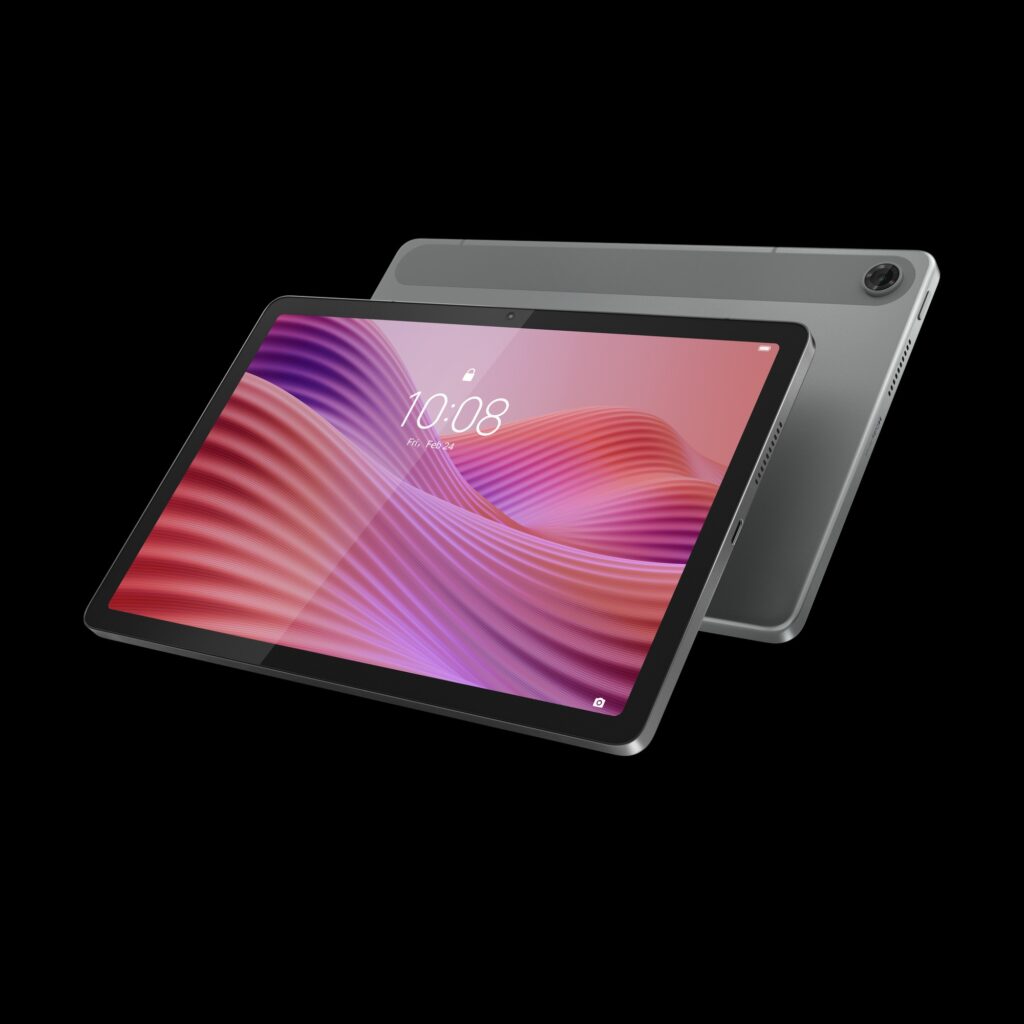
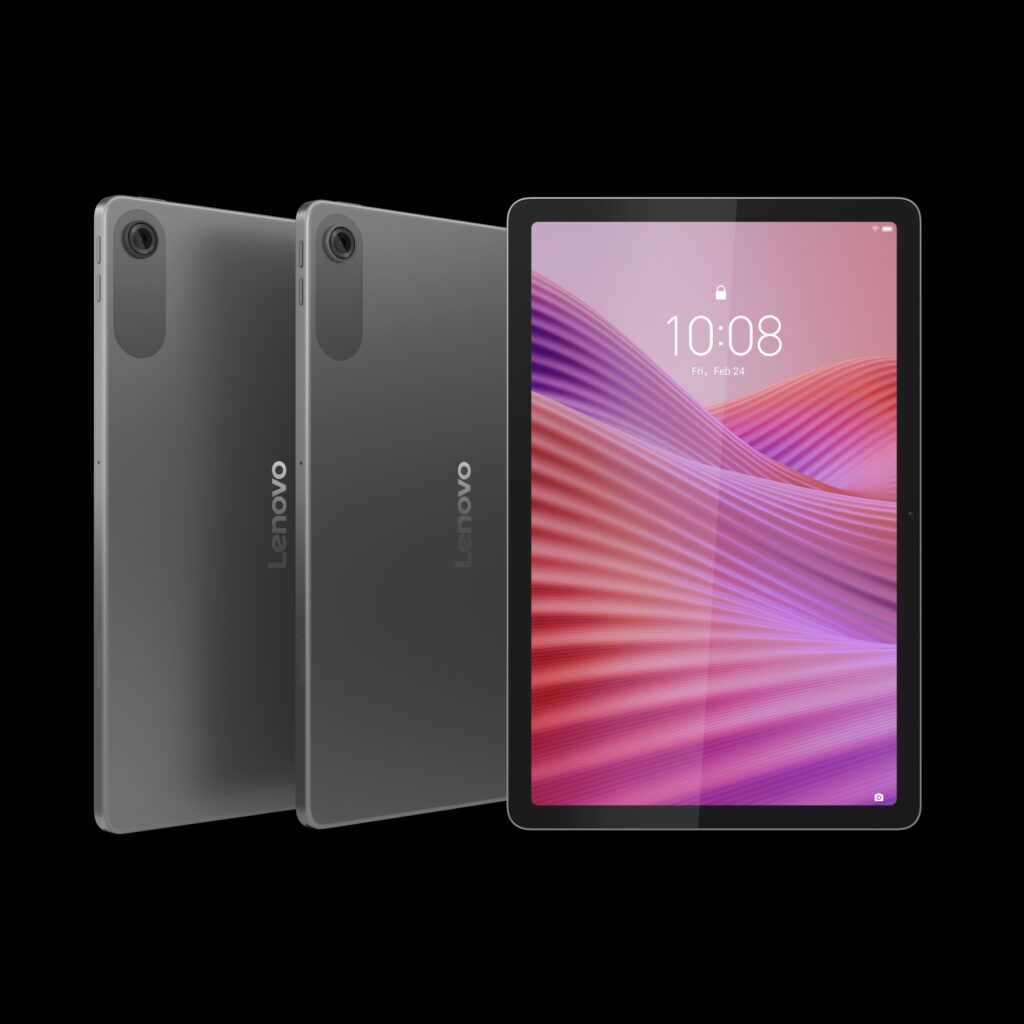
Lenovo has expanded its tablet lineup in India with the Lenovo Tab K10 Gen 2, which was announced on February 24. Available in WiFi-only (TB311FU) and WiFi + 4G (TB311XU) variants, the device mirrors the specifications of the previously rolled globally model.
Lenovo Tab K10 Gen 2 specs
The Tab K10 Gen 2 features a 10.1-inch TFT LCD display that offers 1920×1200 resolution, 400 nits brightness, and 10-point touch support, though limited to a 60Hz refresh rate. Under the hood, the tablet is powered by a MediaTek Helio G85 chipset and ARM Mali-G52 GPU, with 4GB LPDDR4x RAM, 64GB eMMC 5.1 storage (expandable to 1TB via microSD), and Android 14 as its operating system.
The 5100mAh battery supports 20W charging, while an 8MP rear camera and 5MP front camera cater to basic imaging needs. Audio features include Dolby Atmos-tuned dual speakers and a mono microphone. Connectivity spans WiFi 5, GPS, GLONASS, Galileo, BeiDou, USB-C, and a 3.5mm jack.
Weighing 425g with a 7.5mm profile (9.4mm at the camera bump), the IP52-rated tablet sports a Luna Grey finish. Sensors include an accelerometer, a hall sensor, and a virtual light sensor.
While indian pricing and availability details are currently under wraps, the tablet goes for around £140 in the UK, including VAT.
Xiaomi has introduced the Smart Speaker Pro, an AI-powered speaker with the Super Xiao AI voice assistant, priced at 299 yuan ($41). It debuted alongside the Xiaomi Buds 5 Pro at the Xiaomi 15 Ultra and SU7 Ultra launch event.
Xiaomi Smart Speaker Pro Specifications
The Xiaomi Smart Speaker Pro features Super Xiao AI with an advanced language model for natural, multi-turn conversations and context retention. Users can issue continuous voice commands without repeating wake words, while a triple-microphone array ensures accurate recognition. It supports dynamic semantic inheritance, enabling contextual memory for complex queries, planning assistance, and text generation.
It comes with a 2.5-inch full-range speaker unit, supported by dual passive radiators, producing a powerful 12W output. The sound system is designed to deliver crisp highs, rich mids, and deep bass, ensuring a well-balanced audio experience. The speaker also supports stereo pairing, allowing users to connect two units for an immersive surround sound setup. Additionally, it features a dynamic light band that synchronizes with music playback, enhancing the listening experience with a visually engaging element.
It sports a comprehensive smart home control system through HyperOS, offering hands-free operation for Xiaomi IoT devices. It supports voice commands for multiple devices at once and can create automated routines based on user habits. Additionally, it features an infrared remote control function, enabling users to manage non-smart home appliances such as traditional TVs and air conditioners.
The speaker supports Bluetooth 5.0 for stable wireless connectivity, as well as dual-band Wi-Fi (2.4GHz/5GHz) for faster network performance. It also comes with a Type-C audio input, allowing users to connect external devices like laptops, desktops, and projectors for wired audio playback.
Designed with a sleek, woven fabric exterior and rounded edges, the Xiaomi Smart Speaker Pro blends aesthetics with functionality. It measures 110mm x 110mm x 209mm and weighs approximately 1073g. The device features easy-to-use buttons for playback, volume control, and microphone muting, along with an LED indicator that provides status updates.
For more daily updates, please visit our News Section.
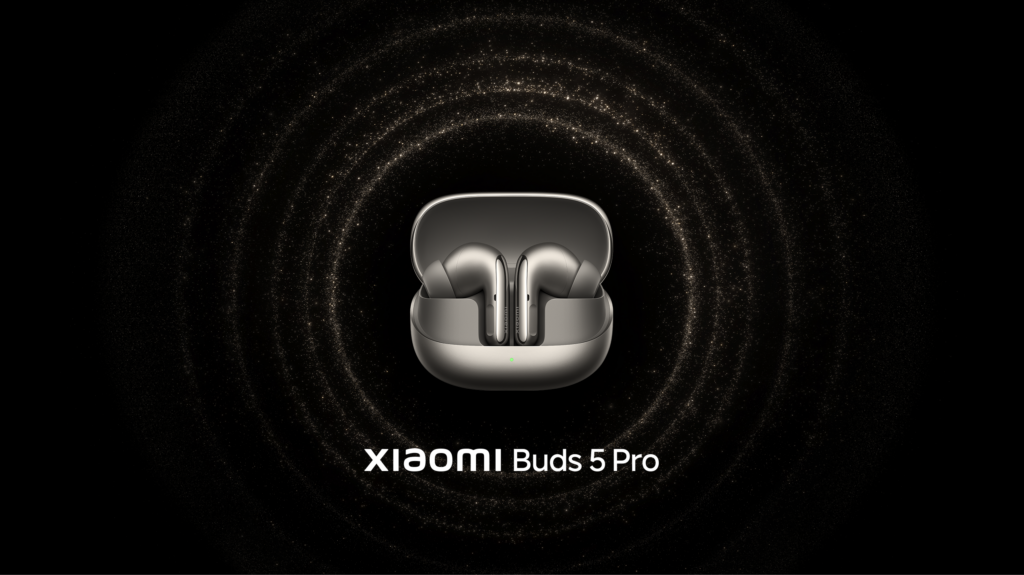
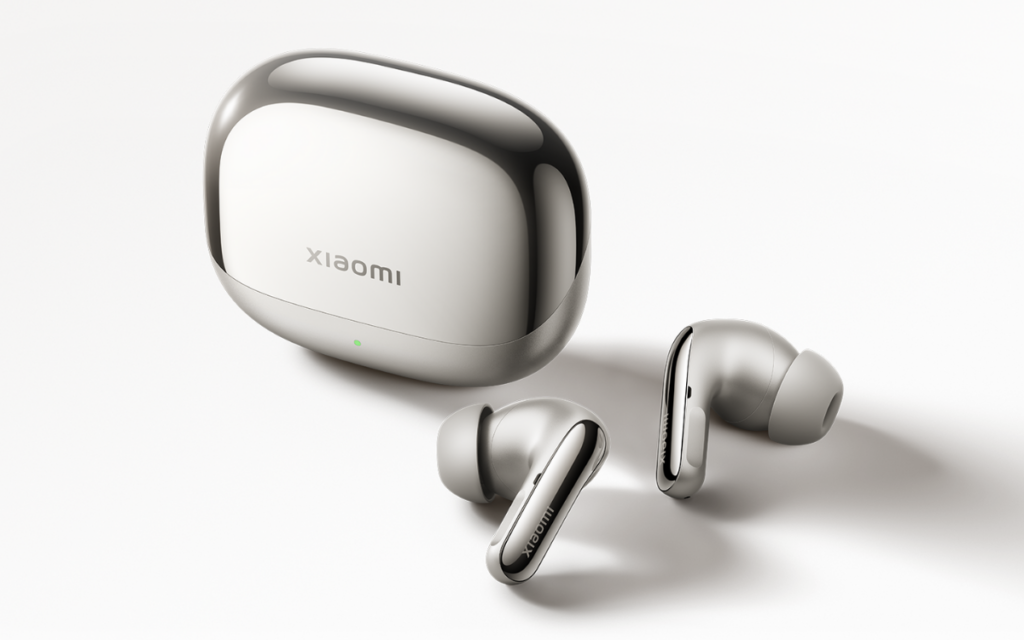
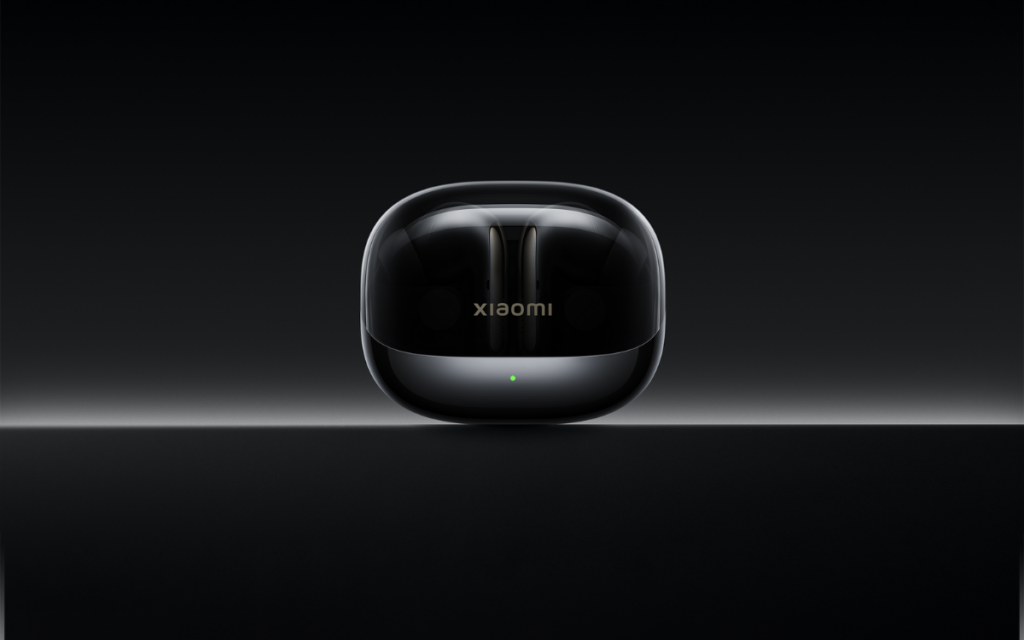
Xiaomi has launched the Buds 5 Pro series alongside its flagship Xiaomi 15 Ultra and SU7 Ultra EV. These earbuds introduce an industry-first dual-amplifier triple-driver acoustic system, delivering high-fidelity sound with minimal distortion. Let’s check out the key specs and pricing.
Xiaomi Buds 5 Pro Specifications
The Buds 5 Pro feature a coaxial triple-driver setup, which includes an 11mm dual-magnetic dynamic driver and a planar diaphragm unit. This design covers a frequency range of 15Hz to 50kHz, ensuring crisp highs, detailed mids, and deep bass.
The earbuds support Qualcomm’s aptX Lossless codec, transmitting 48kHz/24-bit high-resolution audio at speeds of up to 2.1Mbps. Xiaomi also equips them with Harman tuning, including an exclusive “Harman Master” sound profile for an optimized listening experience.
The Wi-Fi edition sports next-generation Wi-Fi audio transmission, achieving speeds of up to 4.2Mbps, double the standard Bluetooth transmission rate. When paired with compatible Xiaomi devices like the 15 Ultra, this feature enables studio-grade lossless audio.
For noise control, the Buds 5 Pro come with 55dB ultra-wideband adaptive noise cancellation, covering a 5kHz range. The earbuds also integrate a 3-mic AI noise reduction system, suppressing up to 100dB of background noise for crystal-clear calls. Wind noise resistance reaches 15m/s, making them ideal for outdoor use.
Xiaomi equips the Buds 5 Pro with an independent spatial audio system featuring dynamic head-tracking, creating a 360-degree immersive sound field. The earbuds also support personalized spatial audio calibration, optimizing playback based on individual ear structure.
On the smart features front, the Buds 5 Pro introduce AI-powered real-time speech-to-text conversion with a claimed 98.7% accuracy. They also support face-to-face translation and simultaneous interpretation, enhancing multilingual communication.
The Buds 5 Pro come with a Type-C charging case. The standard Bluetooth version sports a 53mAh battery per earbud and a 570mAh charging case, offering up to 8 hours of standalone playback and up to 40 hours with the case. The Wi-Fi edition features a larger 64mAh battery per earbud while retaining the same 570mAh charging case, delivering up to 10 hours of standalone playback and 40 hours with the case.
Pricing and Availability
The Xiaomi Buds 5 Pro are priced at 1,299 yuan ($178), while the Wi-Fi edition costs 1,499 yuan ($206). The Buds 5 Pro are available in Snow Mountain White and Titanium Gold, whereas the Wi-Fi edition comes in Phantom Black.
The Cupertino giant’s latest offering, i.e, iPhone 16e is already retailing in India, and recent discounts have made it available at the lowest price. Apple iPhone 16e 128GB is listed for ₹59,990, but with the ₹3000 discount coupon (PAQMSFUWJXIM) and ₹6,382 off with Amazon Pay ICICI Card EMI, you can get it for the final price of Rs 50,517.
Apple iPhone 16e discounts explained
The discount coupon can be applied on the checkout page and the users can easily get Rs 3000 discount instantly while applying coupon code PAQMSFUWJXIM. Apple iPhone 16e is available in two color options of Black and White, and can choose between 128GB/256GB/512GB storage options. However, you can get Rs 4000 Instant Discount on ICICI Bank Credit Cards (excluding Amazon ICICI Bank Credit Card).
Apple iPhone 16e features a 6.1-inch Super Retina XDR display and is well-protected with Ceramic Shield front.
The display offers 1170×2532 resolution, 1200-nit peak brightness, and Ceramic Shield protection, all wrapped in a sleek 7.8mm-thick aluminum frame with IP68 water resistance. Under the hood, it’s powered by Apple’s 3nm A18 chip, delivering flagship-tier performance for gaming and multitasking, paired with up to 512GB storage. The redesigned single-camera system features a 48MP main sensor with OIS and 4K video recording, while the 12MP front camera supports Face ID and spatial video capture. It runs iOS 18.3.1 with satellite SOS, dual eSIM support (varies by region), and USB-C charging.
Despite its budget-friendly “e” tag, it doesn’t skimp on premium perks: 120Hz ProMotion-like smoothness, 50% battery charge in 30 minutes, and stereo speakers with spatial audio. Available in classic Black and White, it’s positioned as a compact powerhouse for Apple fans who want modern specs (5G, satellite connectivity, Dolby Vision HDR) without the Pro price tag.
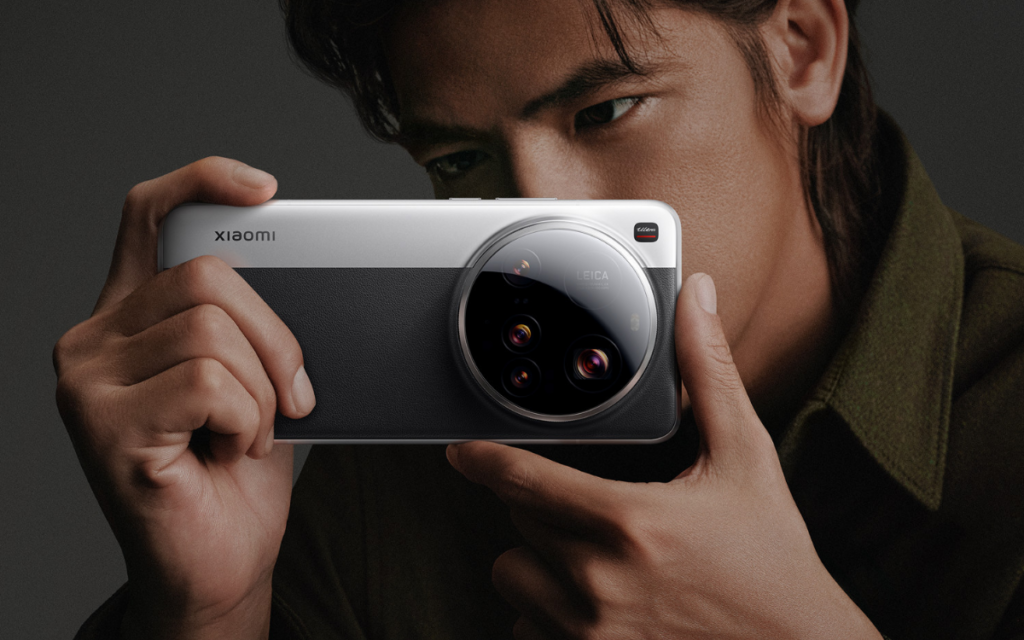
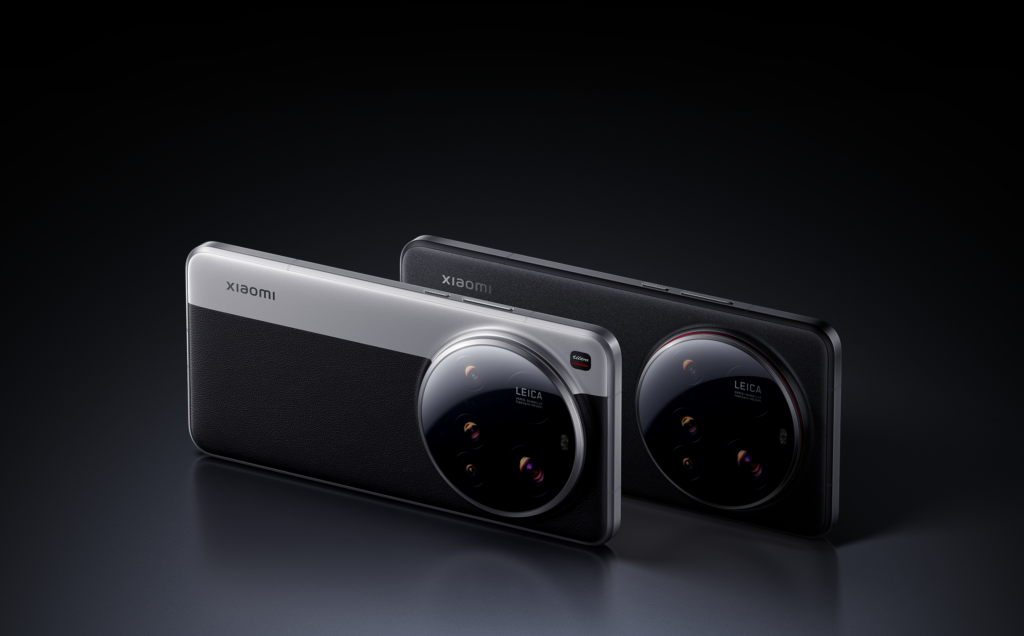
Xiaomi has officially unveiled the Xiaomi 15 Ultra, its latest flagship smartphone, at an event in China. The device brings cutting-edge specifications, including a high-resolution AMOLED display, Qualcomm’s most powerful chipset, Leica-tuned cameras, and industry-leading satellite communication features. Let’s check out the specifications and pricing.
Xiaomi 15 Ultra Specifications
The Xiaomi 15 Ultra features a 6.73-inch 2K LTPO OLED display with a peak brightness of 3,200 nits, ensuring excellent visibility in bright outdoor conditions. The TCL C9 panel supports 1-120Hz adaptive refresh rate, HDR10+, and Dolby Vision, delivering smooth visuals and vibrant colors. It also incorporates 1920Hz PWM dimming and Xiaomi Ceramic Glass 2.0 protection for enhanced durability.
Under the hood, the Xiaomi 15 Ultra is powered by the Qualcomm Snapdragon 8 Gen 3 Ultra Edition chipset, offering enhanced performance and efficiency. It is paired with up to 16GB of LPDDR5X RAM and up to 1TB of UFS 4.1 storage. The device also features a dual-channel vapor-liquid separation cooling system, ensuring sustained peak performance during intense usage.
Running on Xiaomi HyperOS 2.0, the Xiaomi 15 Ultra offers a smooth and intuitive user experience. The OS is designed to optimize power consumption and introduce new AI-driven features, including AI Portrait Dynamic Wallpapers and seamless Apple ecosystem support. The device enables LAN-based file sharing between Apple and Xiaomi devices, making cross-platform connectivity more efficient.
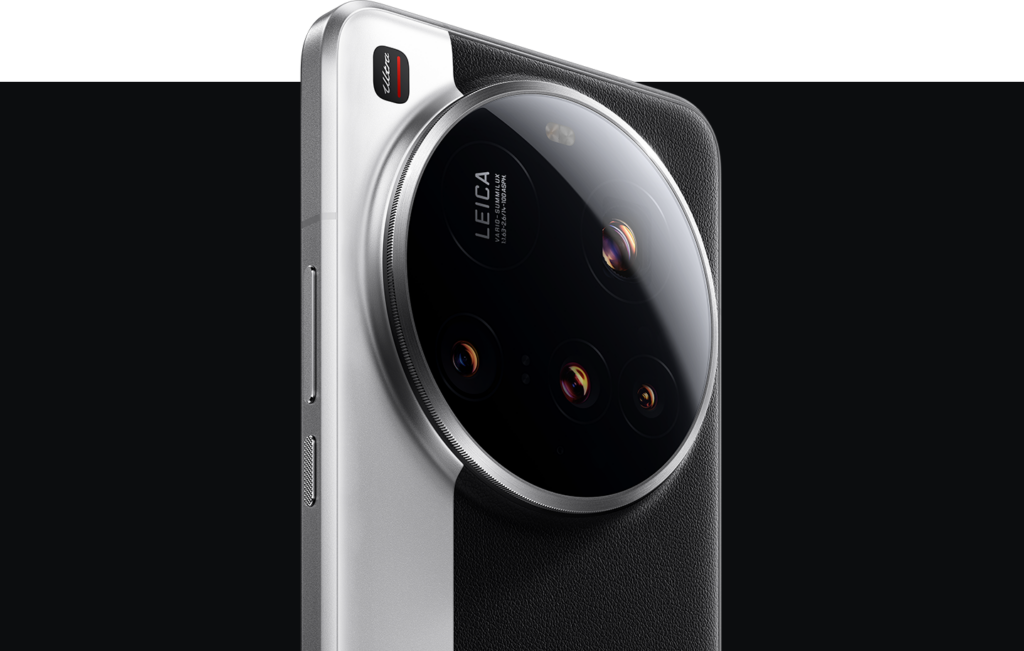
The Xiaomi 15 Ultra equips a quad-camera Leica system, delivering professional-grade photography. It features a 50MP main camera with a 1-inch sensor, 14EV dynamic range, and OIS, ensuring superior clarity and detail. The 50MP ultra-wide camera offers a 115° field of view and supports 5cm macro shots, making it ideal for landscape and close-up photography.
The 50MP telephoto camera includes a 3x floating telephoto lens, supporting macro telephoto photography for capturing intricate details at a distance. The 200MP periscope telephoto camera utilizes a 1/1.4-inch HP9 sensor with 4.3x optical zoom, producing sharp and detailed zoomed-in shots.
For video enthusiasts, the Xiaomi 15 Ultra introduces ACES LOG cinematic video mode, offering cinema-grade color accuracy and unlimited 8K recording. IT also has a UIS stabilization system that ensures steady footage with horizon-level correction, enabling smooth and professional video capture.
The smartphone houses a 6,000mAh battery and supports 90W wired fast charging and 80W wireless fast charging. The device also enables reverse wireless charging, allowing users to charge accessories like earbuds on the go.
The Xiaomi 15 Ultra is the first smartphone to support direct satellite data communication, enabling off-grid calls via Starlink and TianTong satellites with a 7km two-way range. It also features an in-display ultrasonic fingerprint sensor, stereo speakers with Dolby Atmos, Wi-Fi 7, Bluetooth 6.0, an infrared sensor, and IP68 water and dust resistance.
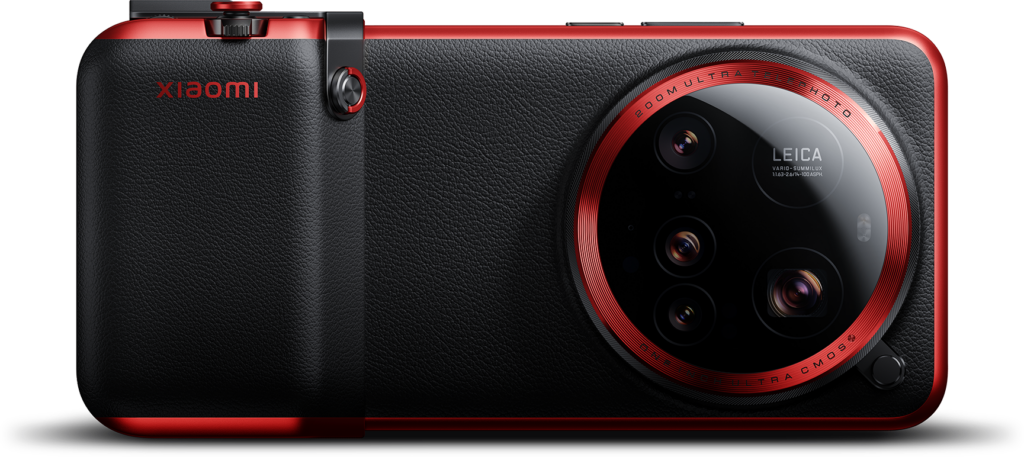
Additionally, Xiaomi has introduced a Professional Imaging Kit, which includes a detachable shutter button, a metal grip, and an extra 2,000mAh battery, extending the total battery capacity to 8,000mAh.
Pricing & Availability
In China, the Xiaomi 15 Ultra starts at 6,499 yuan (approximately $893) for the 12GB RAM and 256GB storage variant. The 16GB RAM and 512GB storage model is priced at 6,999 yuan (approximately $961), while the 16GB RAM and 1TB storage version costs 7,799 yuan (approximately $1,071).
Xiaomi also offers a dual-satellite version of the 16GB + 1TB model for 7,999 yuan (approximately $1,099).
Additionally, the Professional Imaging Kit accessory, which includes an external 2,000mAh battery and a detachable shutter button, is available separately for 999 yuan (approximately $137).
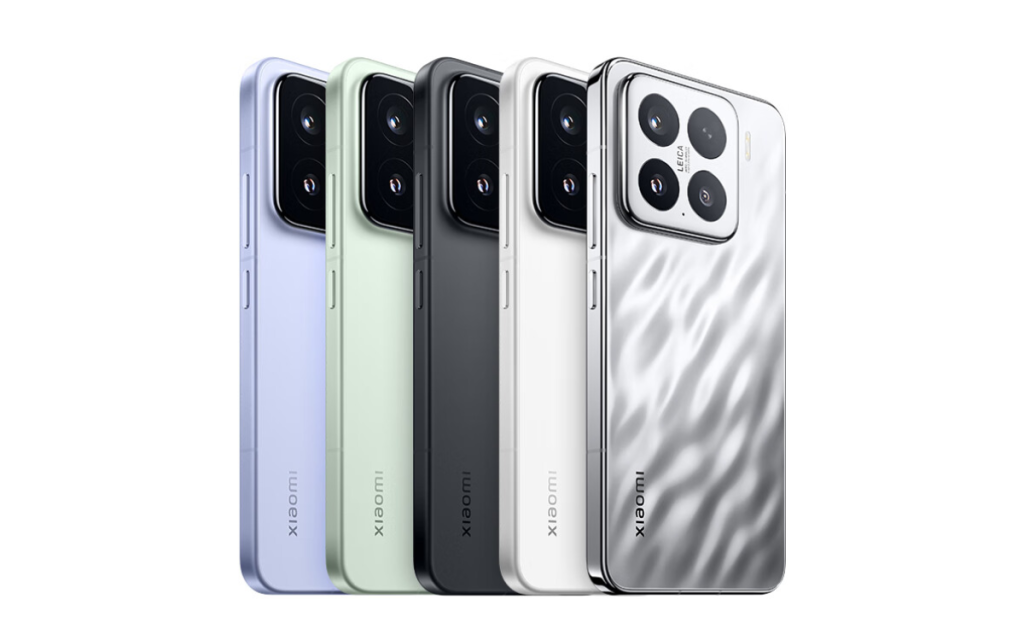
The Xiaomi 15 Ultra comes in Classic Black, Silver, Pine Green, and White color options. It is now available for pre-order in China, with official sales beginning on March 3rd. The global launch is set for March 2nd.
For more daily updates, please visit our News Section.
Foldable phones are no longer just futuristic concepts as they’re here, pushing the boundaries of design and functionality. The Oppo Find N5 and Honor Magic V3 are two of the most exciting contenders, each packed with top-tier features, but with distinct strengths. One promises powerhouse performance and durability, while the other excels in camera versatility and sleek design.
But which one truly delivers the best foldable experience? Whether you’re a power user, a photography enthusiast, or just looking for the next big thing, this comparison will break down what matters most and help you decide which foldable is worth your money.
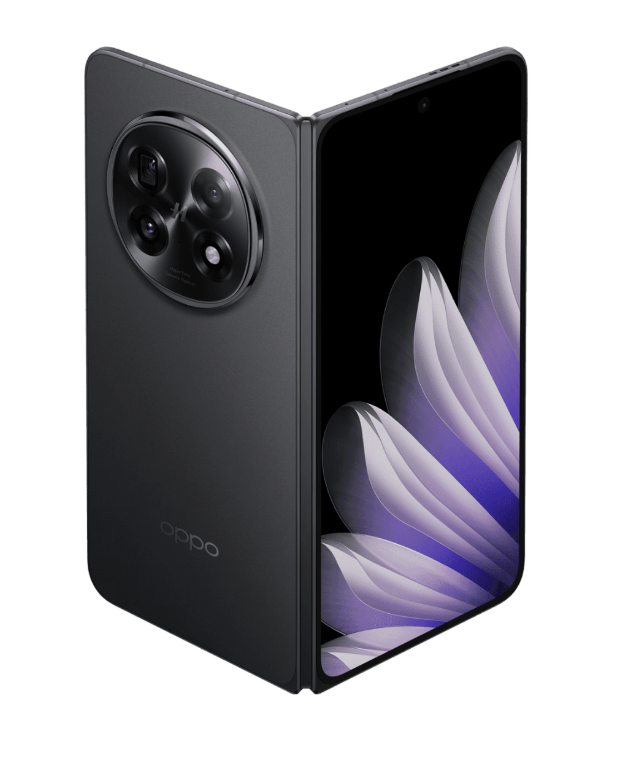
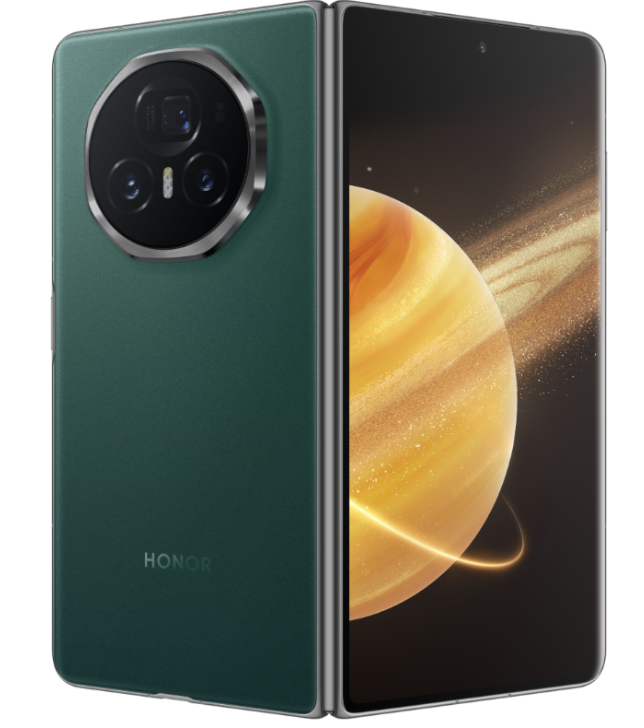
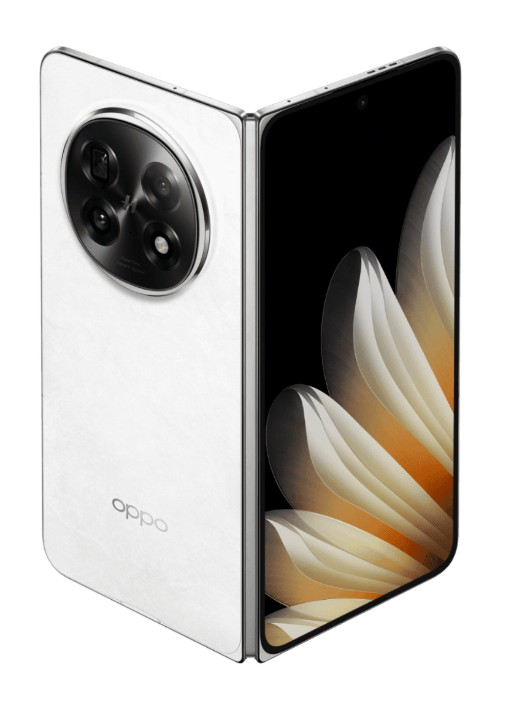
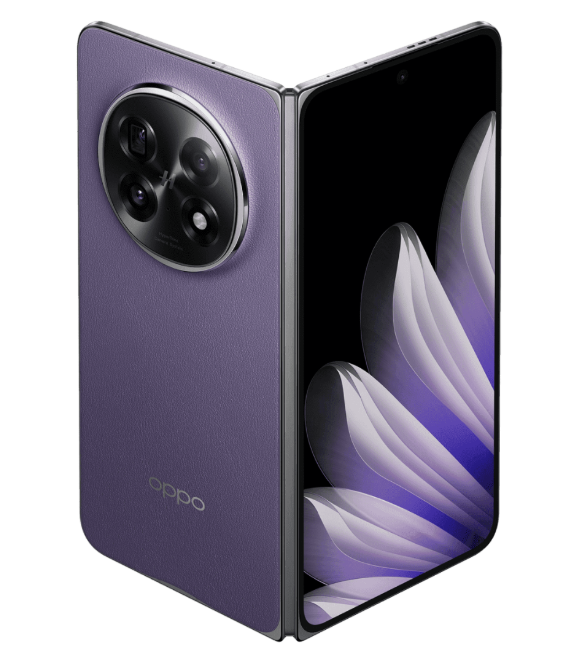
The Oppo Find N5 and Honor Magic V3 feature sleek foldable designs, but Oppo takes a slight edge with its titanium alloy hinge, enhancing durability. Honor, on the other hand, boasts a lighter build with a nylon fiber back, offering a unique texture that some users may prefer. Both devices support stylus input, making them productivity-friendly.
In terms of displays, Oppo’s 8.12-inch foldable LTPO OLED panel offers superior brightness with a peak of 2100 nits, compared to Honor’s 7.92-inch LTPO AMOLED display with a peak brightness of 1800 nits. Oppo’s cover screen is slightly larger at 6.62 inches, featuring an ultra-bright 2450-nit peak, whereas Honor’s 6.43-inch panel reaches an impressive 5000 nits. While Oppo offers a more immersive viewing experience with a higher resolution, Honor’s extreme peak brightness ensures excellent outdoor visibility.
Overall, Oppo seems to be the better option for media consumption, whereas Honor’s compact form might appeal to users looking for a more portable foldable.
2. Specifications
Honor Magic V3
High-end Snapdragon chipsets power both phones, but Oppo uses the newer Snapdragon 8 Elite, which has a more powerful CPU and GPU, making it ideal for gaming and demanding tasks. Honor, with its Snapdragon 8 Gen 3, is still incredibly fast but slightly lags in raw performance.
In terms of battery life, Oppo leads with a 5600mAh battery compared to Honor’s 5150mAh. Additionally, Oppo supports faster 80W wired charging compared to Honor’s 66W, meaning a quicker top-up.
Both devices offer 50W wireless charging, but Oppo’s reverse wired charging could be more useful for powering accessories. With a larger battery and faster charging, Oppo is the better choice for power users.
3. Camera
OPPO Find N5
Oppo and Honor both offer triple-camera setups, but Honor edges ahead with a 40MP ultrawide sensor, compared to Oppo’s 8MP. Additionally, Honor’s periscope telephoto camera has a 3.5x optical zoom, while Oppo’s is limited to 3x. However, Oppo’s partnership with Hasselblad brings enhanced color calibration, making its images look more natural and vibrant.
On the selfie side, Honor includes a 20MP front-facing camera, whereas Oppo sticks to 8MP sensors for both the inner and cover cameras. This means Honor should perform better for selfies and video calls.
While Honor offers better zoom and ultrawide shots, Oppo’s Hasselblad tuning and overall color accuracy may appeal more to photography enthusiasts.
4. Pricing
The Oppo Find N5 is priced at around $1,300, while the Honor Magic V3 is similarly priced at $1,300 in the U.S. market. This makes them direct competitors, with pricing not being a major deciding factor.
However, Oppo’s slightly higher-end specifications may make it the better value for those looking for a performance-oriented device, while Honor provides better camera versatility for users who prioritize photography.
One unique feature of Oppo Find N5 is its satellite connectivity, allowing emergency calls and messages even without network coverage (available on the 1TB model). Honor Magic V3, on the other hand, includes Circle to Search, a feature that makes finding information quicker and more intuitive.
Both devices are water-resistant, but Honor’s IPX8 rating allows for deeper immersion (up to 2.5m), compared to Oppo’s 1.5m. Oppo compensates with a stronger hinge design using titanium alloy, which could enhance durability.
Overall, Oppo shines in performance and battery life, while Honor is a better pick for those prioritizing camera versatility and usability features like Circle to Search.
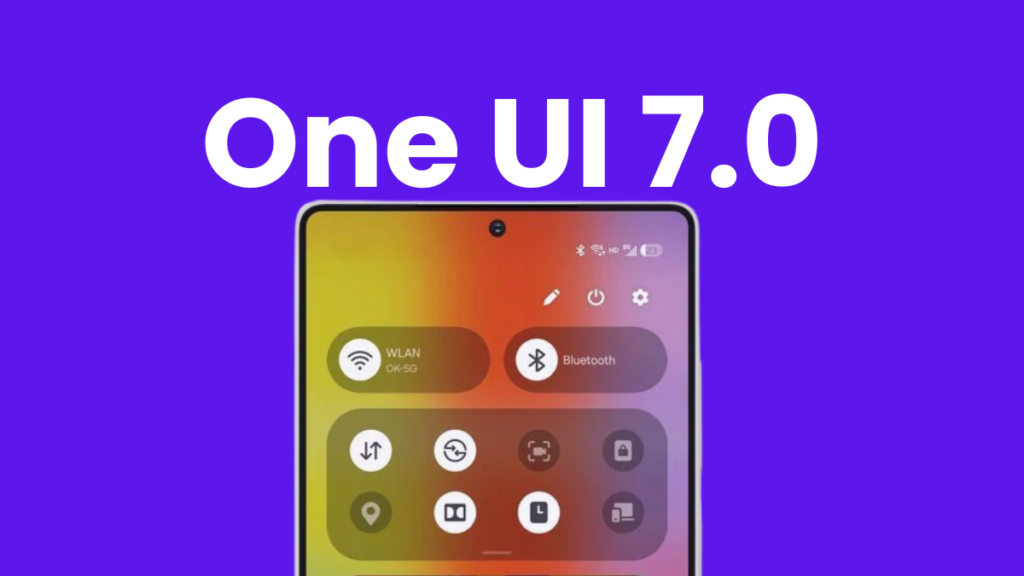
I can’t remember the last time I was this excited about a software update, but One UI 7 has me counting down the days. Samsung has packed this update with impressive upgrades, fresh visuals, and powerful new features that are making me — and millions of other Galaxy users — impatient for the rollout.
From smarter navigation to deeper customization, One UI 7 is shaping up to be one of the most exciting updates yet. Here are the five best features that make this upgrade impossible to ignore.
Five features that make One UI 7 a game-changing update
1. Now Bar makes the lock screen smarter
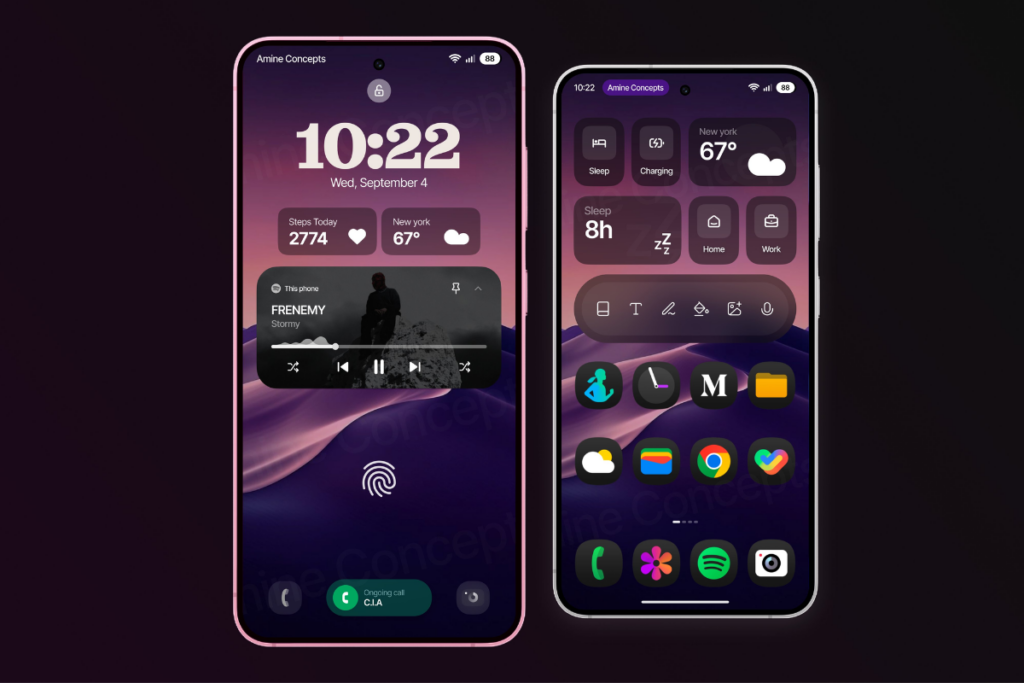
One UI 7 introduces Now Bar, the biggest visual upgrade to the newest software. It’s a pill-shared UI element at the bottom of the lock screen, providing quick access to ongoing activities, such as music playback, timers, and navigation updates. Tapping on it expands with more details and additional controls.
This is an entirely different take on Apple’s Dynamic Island, while other brands have just copied Apple’s feature without many changes. This also shows why Samsung is ahead of other Android brands in terms of software. Now Bar not only looks visually stunning but also boosts productivity by letting users access important information without unlocking their device.
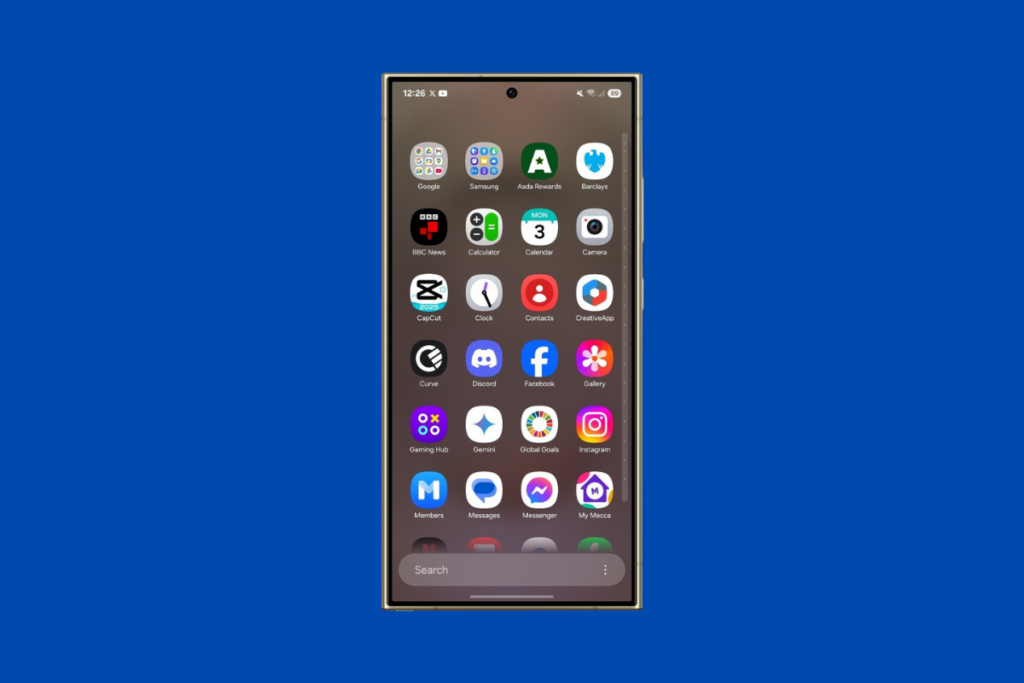
Samsung has finally introduced a vertical app drawer, a long-awaited feature that makes scrolling through apps much smoother and faster. Instead of swiping through multiple pages, you can now scroll in a single motion, with a sidebar that lets you jump directly to specific letters to find apps even faster.
If you prefer the old layout, don’t worry — you can switch back anytime. But with how intuitive and effortless this new system feels, I doubt many will want to.
To enable the vertical app drawer, open the app drawer, tap the three-dots icon sitting in the bottom right corner, tap Sort. Now, choose Alphabetical order to enable vertical scrolling.
3. Revamped Quick Settings panel for easier access
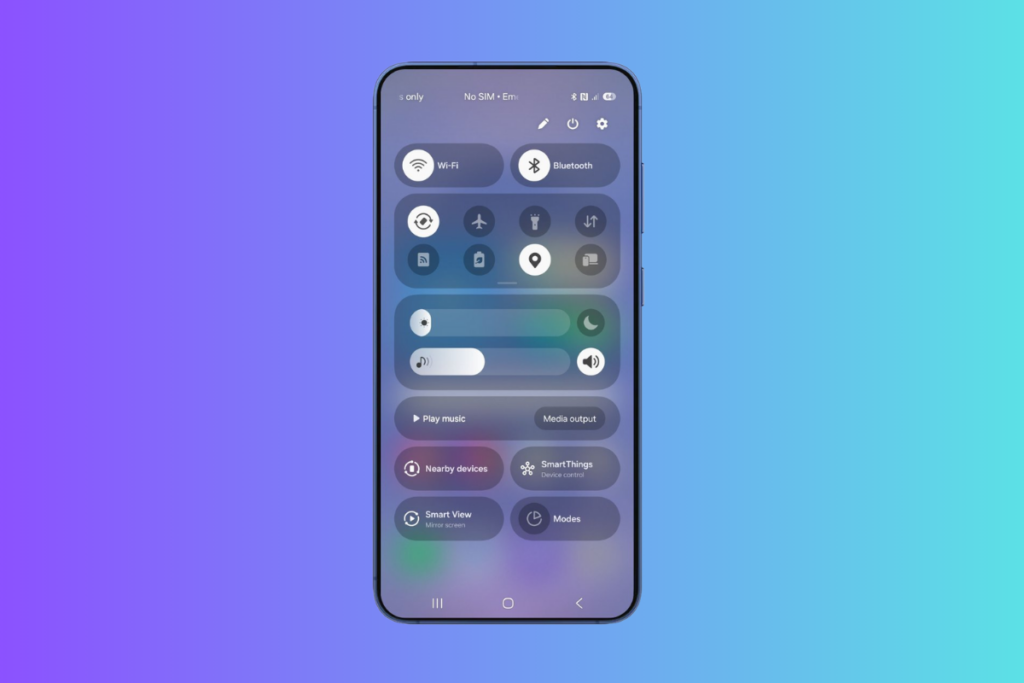
The Quick Settings panel is getting a major overhaul with One UI 7, making it more intuitive and visually refined. The Quick Settings and the notifications panels are separated, and how you access them depends on which side of the device you swipe from: swiping down from the left side opens the notification panel and swiping down from the right side opens Quick Settings. This is similar to what many Chinese brands such as Xiaomi and Realme are already offering, but there’s more to Quick Settings on One UI 7.
The new Quick Settings panel looks more visually appealing and is easier to navigate. The number of toggles has been reduced, though you can easily expand them by swiping downwards. There’s also a new volume slider and shortcuts for switching sound profile and enabling dark mode.
Overall, the new Quick Settings panel looks a lot more refined and makes accessing controls faster and more convenient.
Customization has always been a key pillar of One UI, and that’s getting a lot better with One UI 7. The Home Up module (previously part of the Good Lock app) is now built into One UI Home, so users no longer need a separate app to access advanced home screen customization options.
You can arrange apps freely, breaking away from grid layouts. You can also add stickers to the home screen for a more personalized look.
There are also several new widgets, with the ability to preview different formats before adding them to the home screen. One UI 7 also allows combining multiple widgets into a single widget space for better home screen organization and reduced clutter.
The lock screen is now more customizable than ever. One UI 7 adds newer clock styles with customizable fonts and colors. Users can also change the clock location and add more widgets. The two shortcut icons at the bottom can now be customized, thus making the lock screen more personalized and usable.
5. A super clean Camera app
The Camera app in One UI 7 looks less cluttered and provides easier access to controls. The top menu now has fewer options, while the remaining controls are hidden inside an expandable button.
The camera modes have moved below the shutter button, making it easier to switch between photo, video, and other modes. Another essential addition is a zoom slider in the Pro Video mode.
Samsung has also added an “Audio playback” feature that lets users record videos while playing music in the background. This could be particularly useful for creating dance or lip-sync videos.
Which One UI 7 feature are you most excited about? Share your thoughts in the comments below. Also, don’t forget to check out the One UI section for the latest rollout news, and follow our Telegram channel and subscribe to our free newsletter for your daily tech updates.
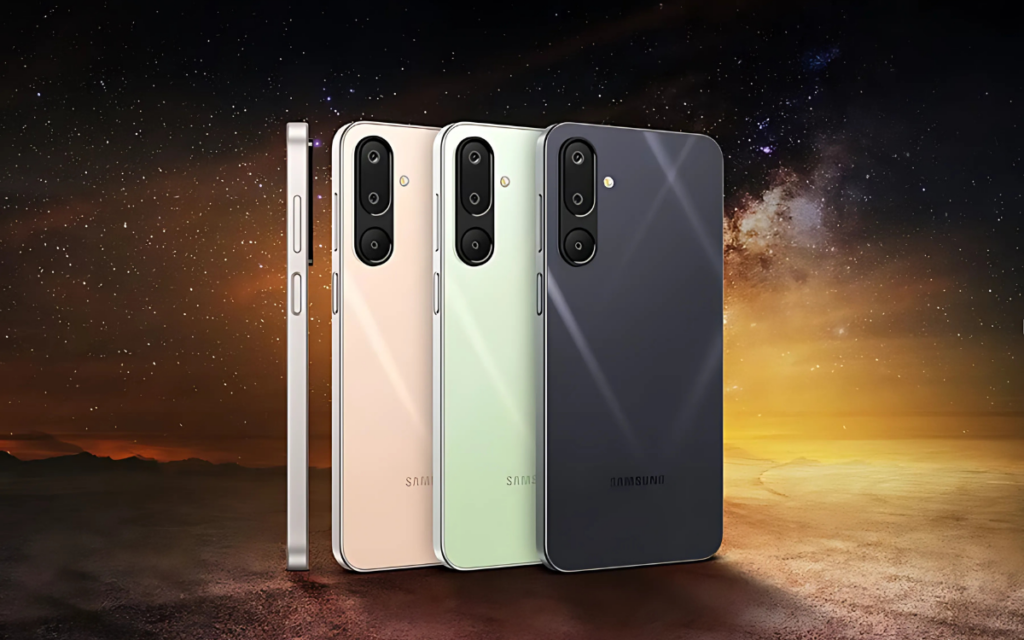
Samsung has introduced the Galaxy M16 5G and Galaxy M06 5G smartphones in India, expanding its popular Galaxy M series lineup. Both smartphones feature 5G connectivity and are powered by MediaTek Dimensity chipsets, offering a blend of performance, style, and long-term software support. With large displays, capable cameras, and long battery life, these devices are positioned as value-for-money options in their respective segments.
Samsung Galaxy M16 5G
Specifications
The Galaxy M16 5G boasts a 6.7-inch Full HD+ (1080×2340 pixels) Super AMOLED display with a 90Hz refresh rate, delivering vibrant colors and sharp visuals. It also features an adaptive high-brightness mode, ensuring clear visibility even under direct sunlight. On the other hand, the Galaxy M06 5G comes with a 6.7-inch HD+ (720×1600 pixels) LCD screen, which provides a decent viewing experience for everyday use.
Both smartphones are powered by the MediaTek Dimensity 6300 chipset, a 6nm octa-core processor. The chipset is paired with Mali-G57 MC2 GPU for graphics processing, ensuring smooth multitasking and gaming performance. The Galaxy M16 5G comes in three RAM configurations 4GB, 6GB, and 8GB while the Galaxy M06 5G is available in 4GB and 6GB RAM options.
The Galaxy M16 5G runs on One UI 6.0 based on Android 14, with Samsung promising six generations of OS upgrades and six years of security updates. Meanwhile, the Galaxy M06 5G ships with Android 15-based One UI 7 and is guaranteed to receive four OS upgrades and four years of security updates.
Samsung Galaxy M06 5G
In terms of optics, the Galaxy M16 5G features a triple rear camera setup, headlined by a 50MP main sensor with an f/1.8 aperture, a 5MP ultra-wide lens, and a 2MP macro camera. On the front, it houses a 13MP selfie shooter. The Galaxy M06 5G, on the other hand, has a dual-camera configuration with a 50MP primary sensor and a 2MP depth sensor, accompanied by an 8MP front camera.
Both smartphones pack a 5000mAh battery, supporting 25W fast charging. The Galaxy M16 5G and Galaxy M06 5G are equipped with a side-mounted fingerprint scanner for biometric authentication. They also feature Samsung Knox Vault security, offering protection against hardware and software threats. Additionally, the Galaxy M16 5G includes Samsung Wallet with Tap & Pay functionality, enabling secure digital transactions. Both devices come with the Voice Focus feature, which enhances call quality by reducing background noise.
Pricing and Availability
The Samsung Galaxy M16 5G is priced at Rs. 11,499 for the 4GB + 128GB variant, Rs. 12,999 for the 6GB + 128GB model, and Rs. 14,499 for the 8GB + 128GB version. These prices include a Rs. 1,000 bank discount. It will be available in Blush Pink, Mint Green, and Thunder Black colors, with sales starting on March 5 via Amazon, Samsung’s official website, and select offline retailers.
The Galaxy M06 5G is priced at Rs. 9,499 for the 4GB + 128GB variant and Rs. 10,999 for the 6GB + 128GB version, inclusive of a Rs. 500 bank discount. It comes in Blazing Black and Sage Green color options and will be available for purchase from March 7 through the same channels.
For more daily updates, please visit our News Section.
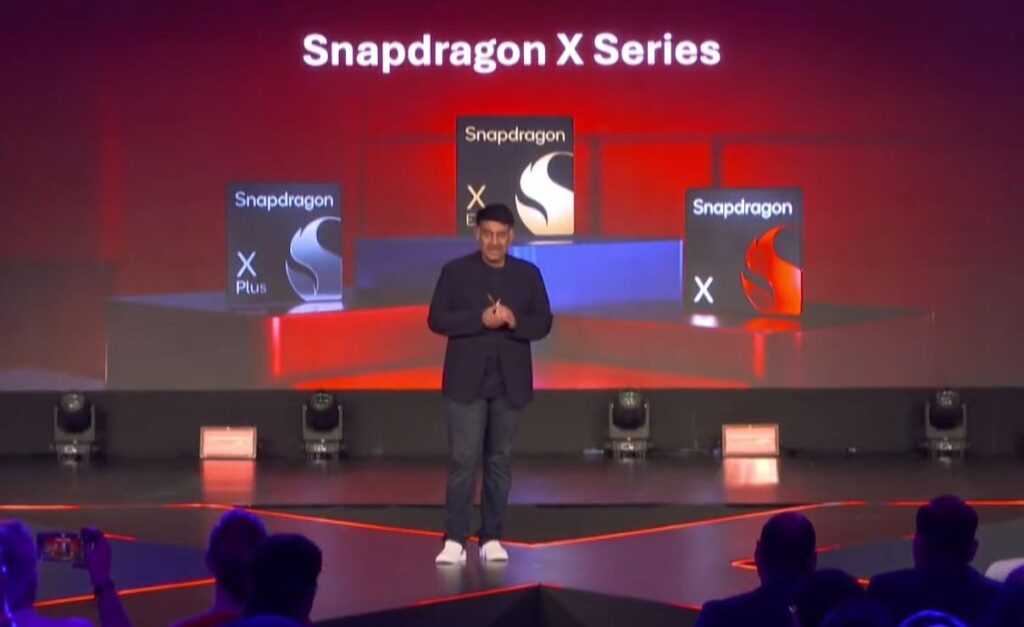
I was present at a recent event at the Croma retail store in Juhu, Mumbai, where Senior Vice President and General Manager of Compute and Gaming, Kedar Kondap, announced Qualcomm’s first Snapdragon Experience Zone in India. After the event, I had the chance to talk to about the existing Snapdragon X lineup, which includes three options: Snapdragon X, X Plus, and X Elite.
The discussion covered how the Snapdragon X series caters to different user needs, with AI integration via the NPU ensuring minimal battery drain even with on-device LLMs. Kedar emphasized clear product naming, India’s rapid AI adoption, and future possibilities, including ARM-powered desktops and more affordable Snapdragon-powered PCs as adoption increases. The conversation also touched on GPU performance, with Qualcomm prioritizing AI and battery life over high-end gaming graphics.
Kedar Kodnap presenting at the Snapdragon X platform event in India
To ensure you get meaningful insights from the interview, we have divided the conversation with Mr. Kedar into five clear sections.
Battery Life is a Key Priority For Laptops
Battery life remains an important factor for today’s professionals. According to Kedar, Snapdragon understands this need, further explaining that “market research consistently shows that battery life is a top priority for PC buyers.” This consumer insight has shaped the fundamental design approach of their X Series processors.
For example, I have reviewed the VivoBook S15 Co-pilot PC powered by Snapdragon X Elite, which delivers impressive stamina, “achieving 9 to 10 hours of usage” during typical workdays. This represents a significant advancement compared to many traditional x86 laptops that require more frequent charging during intensive tasks.
Snapdragon ensures that even users who are not yet interested in on-device AI can still benefit from superior power efficiency. Kedar highlights, “Even if they’re not immediately convinced about generative AI, they’ll still benefit from the superior battery performance.”
Snapdragon Chips Integrate AI Efficiently
One of the major concerns with on-device AI processing is its potential impact on power consumption. However, Snapdragon addresses this by integrating an NPU (Neural Processing Unit) across its entire lineup. For those who don’t know, NPU is dedicated to handling AI workloads efficiently, reducing the burden on the CPU and GPU. This enhances performance and power efficiency, enabling smoother AI-driven tasks.
Kedar explains how this design choice enhances efficiency: “Leveraging our mobile heritage, we’ve been able to offload many applications to the NPU, which actually improves efficiency and reduces the impact on battery life when using on-device LLMs.”
Elite Series comes in Performance Tiers with Clear Positioning
To ensure clarity for consumers, the Snapdragon X series has a straightforward product lineup:
Snapdragon X Elite – The highest performance tier
Snapdragon X+ – Mid-tier, offering a balance of power and efficiency
Snapdragon X – The entry-level option
Kedar confirms, “We want consumers to easily understand the tiers. X Elite represents the best performance, followed by X+ and then X.”
Despite offering high-end AI capabilities, Snapdragon has ensured price accessibility. Kedar states, “With prices starting around $600 for the Snapdragon X, we ensure consumers can access high-performing laptops with excellent battery life and AI capabilities across the entire product stack.”
Snapdragon X Series’ GPU Performance is Good for Everyday Tasks
While Snapdragon GPUs are not designed for high-end gaming, they offer strong performance for everyday applications, including casual gaming and AI-driven tasks.
Kedar emphasizes, “Our GPUs are excellent for casual gaming, standard applications, and even AI generation.” However, he acknowledges that Snapdragon is not targeting professional gaming:“For high-end professional gaming, a dedicated gaming GPU would be more suitable.”
This makes Snapdragon-powered PCs ideal for professionals, students, and general users who prioritize battery life and AI capabilities over extreme graphics performance.“
Future Outlook and Market Expansion of X Series Chips
Snapdragon is making significant strides in expanding its X Series lineup, with growing adoption across manufacturers. Kedar highlights, “We’ve already announced over 70 or 80 devices, either launched or in development, featuring Snapdragon processors.”
As more manufacturers integrate Snapdragon X chips, prices are expected to become more competitive, making ARM-powered PCs a mainstream choice.
Snapdragon-powered laptops are gradually becoming more affordable, with Snapdragon X-powered models like the Acer Swift Go A14 and Asus VivoBook 16 priced at Rs 50,000 and Rs 65,900, respectively.
Additionally, Snapdragon is expanding beyond just laptops, with mini desktops and small form factor devices already announced at CES 2024. This signals potential entry into the desktop market in the near future.
Conclusion
Snapdragon’s X series processors strike a balance between performance, battery life, and AI capabilities. By leveraging efficient NPUs and a clear product positioning strategy, they cater to a wide range of users.
Kedar summarizes this approach: “Our current focus is on performance, battery life, and AI capabilities across the entire product stack.”
With continued price reductions and increased adoption, Snapdragon-powered PCs are set to become a viable alternative to traditional x86 laptops.
In related news, Snapdragon India hosted a dedicated launch event on February 24 to unveil the Snapdragon X platform. It highlighted AI innovations, including regional LLMs and advanced on-device AI capabilities. At the event, Asus introduced the Snapdragon X-powered Vivobook 16 and Zenbook A14. To ensure swift delivery, Flipkart confirmed that Snapdragon X laptops will be available through its Flipkart Minutes service, guaranteeing delivery within 10 minutes.
MediaTek’s new Dimensity 7400 is here and it takes over the Dimensity 7300 as the brand’s latest mid-range chipset. But if you’re wondering whether it’s actually an upgrade or just a minor refresh, you’re not alone.
MediaTek tends to release iterative updates in its mid-range lineup, and the difference between generations isn’t always obvious at first glance. So, what’s changed this time? And does the Dimensity 7400 actually offer anything meaningful over the 7300? Let’s break it down.
The Dimensity 7400 and 7300 are eerily similar. Both pack an octa-core CPU with four Cortex-A78 cores and four Cortex-A55 cores. The only difference is that the A78 cores in the 7400 now clock up to 2.6GHz, a 100MHz increase from the 7300’s 2.5GHz. That will hardly make a noticeable difference in real-world usage unless you’re benchmarking every little detail.
Memory and storage support remain unchanged too — both chips support LPDDR4x and LPDDR5 RAM at up to 6400Mbps, and both work with UFS 3.1 storage.
2. Connectivity and Network
Both the Dimensity 7400 and 7300 support the exact same cellular technologies, including SA and NSA 5G, 3CC carrier aggregation, and peak downlink speeds of 3.27 Gbps. Wi-Fi 6E and Bluetooth 5.4 are present as well.
In other words, if you use a phone powered by either of these chips, you will get the same network experience.
3. Camera and Imaging
The camera setup tells a similar story. Both chips have Imagiq 950 ISP with 12-bit HDR and 200MP sensor support and can record 4K HDR videos at 30fps. The Dimensity 7400 does add “hardware-assisted autofocus” (AF) as a dedicated feature, but that’s hardly a game-changer when the 7300 already supports all-pixel AF and dual simultaneous video capture.
Unless MediaTek has made some under-the-hood optimizations, users aren’t likely to see any major improvements in photography or videography performance.
4. GPU, AI
For graphics, MediaTek is keeping the same Arm Mali-G615 MC2 GPU on the Dimensity 7400 as its predecessor. The maximum supported display refresh rates remain at WFHD+ 120Hz or Full HD+ 144Hz—again, no differences.
Since both the chips have the same GPU, you can expect identical gaming performance on the two chips.
AI is a big trend even in 2025, and it’s largely thanks to the NPUs in processors that handle the workload, allowing AI tasks to run efficiently on phones. Given the increasing number of AI-driven capabilities, it would’ve made sense for MediaTek to boost AI performance on the Dimensity 7400. But again, it’s sad to say that there’s nothing new here compared to the 7300.
Both chips feature the same NPU 655, meaning AI tasks—like scene recognition in photography or background noise cancellation in calls—will perform exactly as they did on last year’s model.
5. So, Why Does the Dimensity 7400 Exist?
Given how similar these chips are, it’s hard not to wonder why MediaTek even bothered rebranding the Dimensity 7300 as the 7400. The 100MHz CPU boost is barely worth mentioning, and there’s no real upgrade in GPU, connectivity, storage, or AI performance.
The only plausible reason we could think of is marketing. A new number definitely sounds better, especially for smartphone manufacturers looking to refresh their device lineup without investing in major hardware changes. It also allows MediaTek to keep its branding fresh without actually having to roll out a meaningful upgrade.
6. Final Verdict
So if you were expecting MediaTek’s latest mid-range chipset to bring significant improvements, you might want to dial back your expectations. The Dimensity 7400 is essentially a repackaged Dimensity 7300 with a slight CPU clock bump and a few barely noticeable tweaks. And that’s it.
So if you ever come across stances on choosing between a phone with the 7400 and one with the 7300, the decision should come down to other factors—like battery life, camera sensors, or software—because the chip itself isn’t going to be the defining difference.
Realme will be present at the upcoming MWC (Mobile World Congress) 2025 tech exhibition, which kicks off on March 3. At the event, the company will showcase the Realme 14 Pro series and an Ultra-branded smartphone. Recent teasers released by the brand has revealed more details about the device.
Realme Ultra phone’s camera capabilities revealed
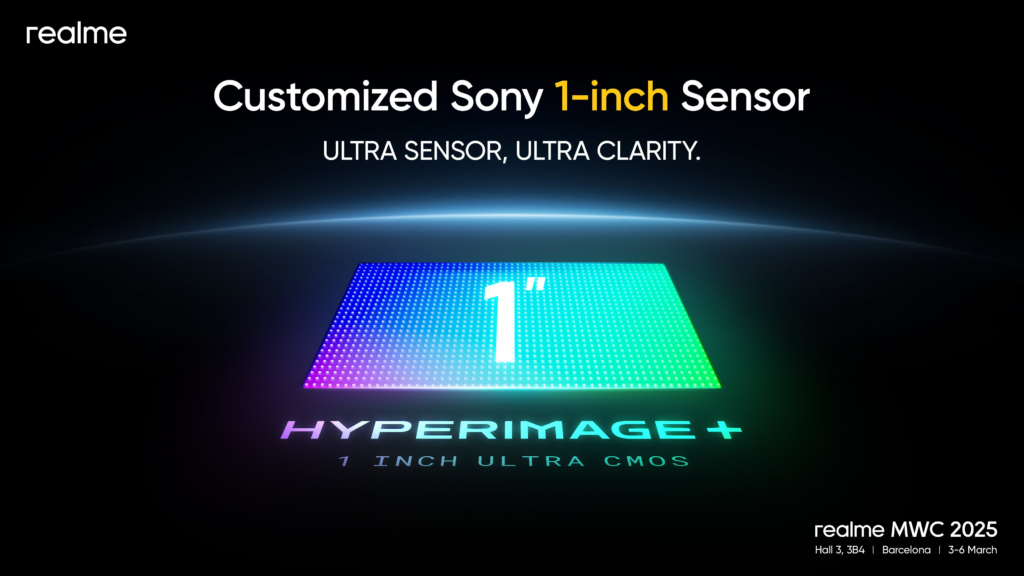
Realme Ultra to feature customized 1-inch Sony lens
Realme recently confirmed that it will showcase an Ultra flagship with DSLR-like capabilities at the MWC 2025. The above image confirms that the device will be equipped with a customized 1-inch Sony camera, which appears to be the LYT-900 camera sensor.
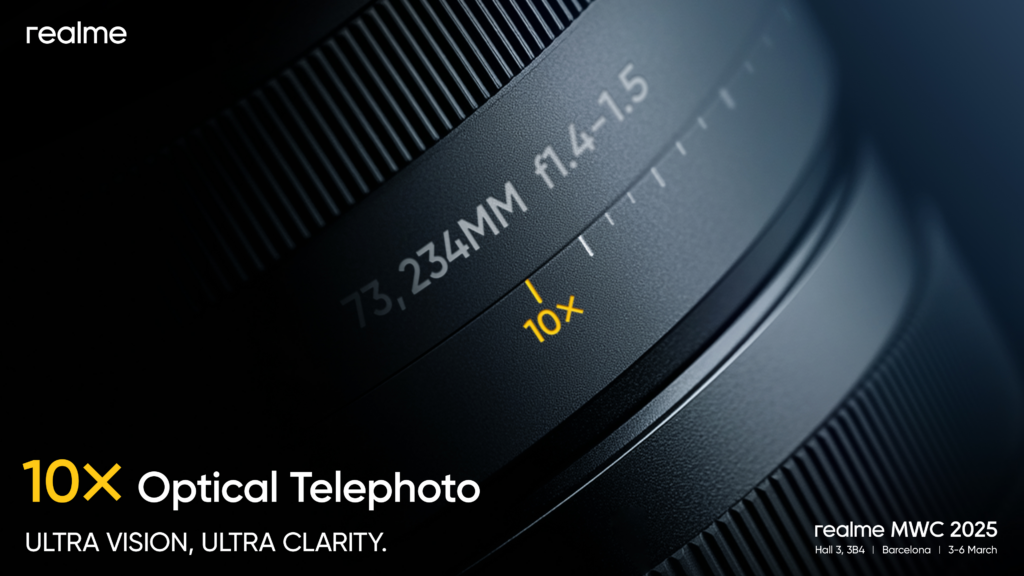
Realme Ultra to support detachable lens
The other image reveals that the Realme Ultra phone will feature a detachable lens with 10x optical zoom capabilities. This lens offers a focal length range of 73-234mm and an aperture range of f/1.4-1.5.
This reminds us of the Xiaomi 12S Ultra concept phone, which Xiaomi showcased in November 2022. It featured an interchangeable Leica M-series lens and two 1-inch sensors for enhanced image sharpness, with a sapphire glass coating for protection. The smartphone also supported advanced photography tools like focus peaking and RAW 10-bit file formats, aiming to offer DSLR-like capabilities on a mobile device.
Realme Ultra flagship teaser modified
Like the Xiaomi 12S Ultra Concept phone, the Realme Ultra phone that the company is teasing could be a concept model designed to showcase its capabilities in professional photography. If it is indeed a concept offering, the device may not be released commercially.
Apart from the Realme Ultra phone and 14 Pro lineup, Realme is also expected to showcase other technological advancements, such as 200-megapixel single-lens zoom technology, a magnetic flagship chipset, and 320W fast charging.
For more daily updates, please visit our News Section.
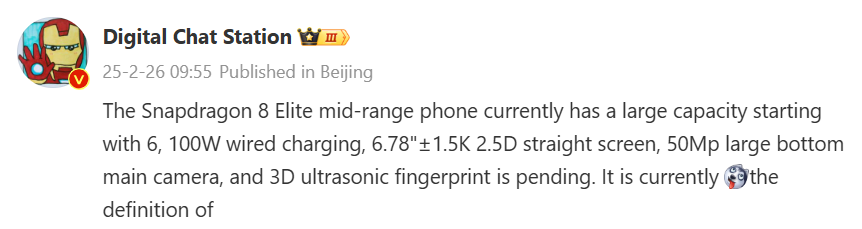
A fresh leak from renowned tipster Digital Chat Station has shed light on the key specifications of the upcoming Honor GT Pro. While Honor has yet to confirm its existence, the leak hints at a significant upgrade over the standard Honor GT. Expected to be an affordable flagship, the GT Pro could rival devices like the Realme GT 7 Pro Racing Edition, OnePlus Ace 5 Pro, iQOO Neo 10, and Redmi K80 Pro.
Honor GT Pro specifications (rumored)
Honor GT Pro specs leak by DCS
According to the leak, the Honor GT Pro is set to feature the powerful Snapdragon 8 Elite chipset, making it one of the most affordable phones with this processor. The device will sport a 6.78-inch flat OLED display with a 1.5K resolution. For security, the phone may incorporate an ultrasonic in-screen fingerprint sensor.
On the camera front, the GT Pro is said to house a flagship-grade 50-megapixel primary sensor. Since Honor is expected to optimise the GT Pro for gaming, the primary camera on the back could be joined by a 12-megapixel ultra-wide lens like the Honor GT.
The leak further reveals that the Honor GT Pro will pack a battery of around 6,000mAh capacity. This would be a notable improvement over the standard GT model, which has a 5,300mAh battery. The device is also expected to support 100W fast charging, ensuring minimal downtime.
The Honor GT Pro is likely to debut after the Honor 400 series, which is expected to launch in May in China. With months to go before its official unveiling, more details about the device are likely to surface soon. The brand is also said to be working on two foldables, such as the Magic V4 and Magic V2 Flip for the Chinese market. Speculations are rife that the Magic V4 will be unveiled in June in China.
For more daily updates, please visit our News Section.
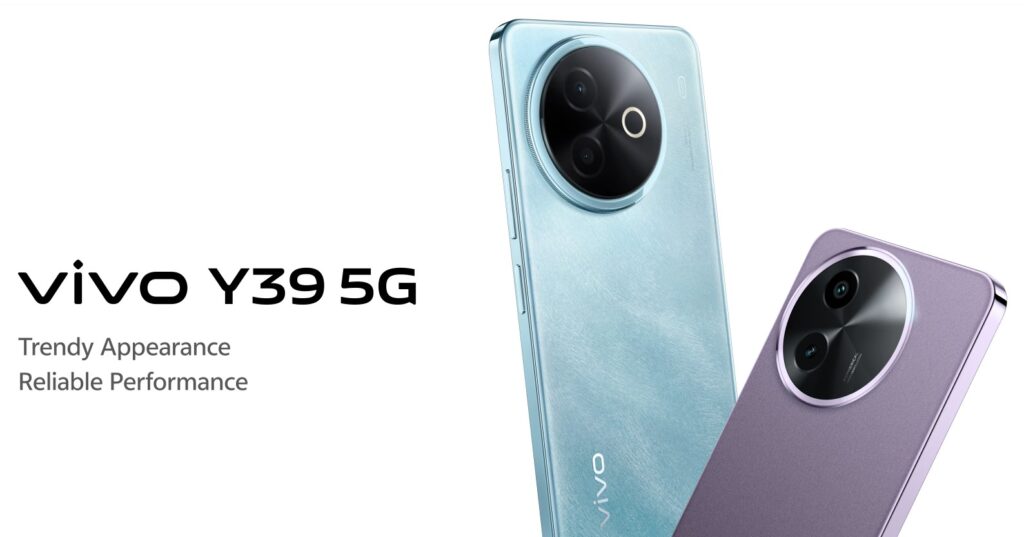
Vivo has silently unveiled its latest 5G smartphone, the Vivo Y39 5G, in Malaysia. This device packs several high-end features in a sleek design, offering a combination of power, performance, and durability. From a large battery to an enhanced display, the Vivo Y39 5G has a lot to offer. Continue reading ahead to know the full details of the Y39 5G.
Vivo Y39 5G specifications and features
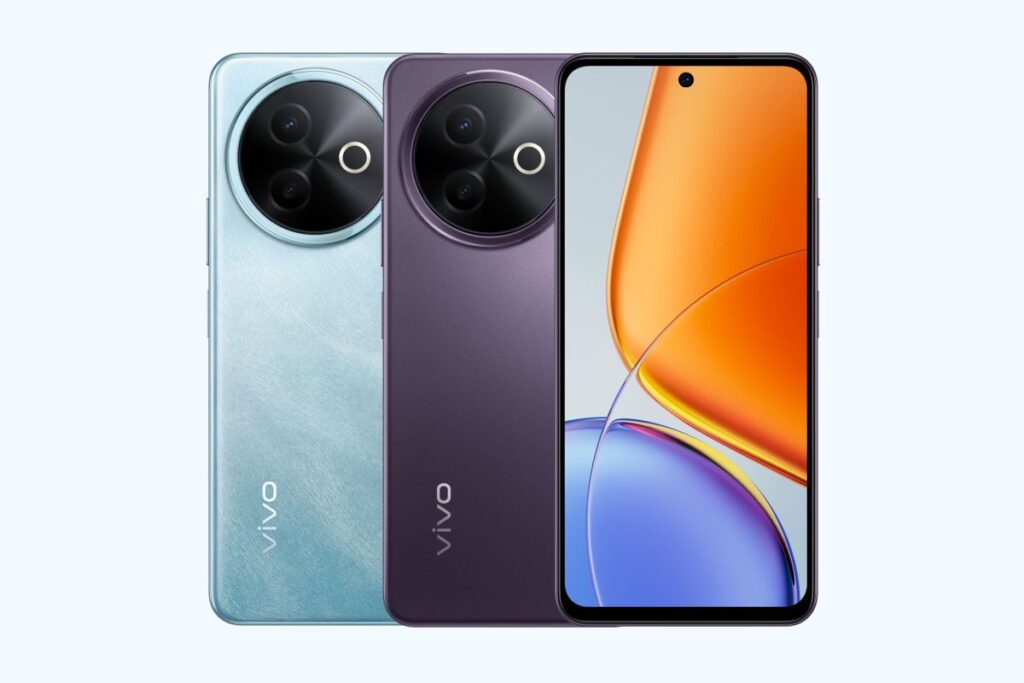
Vivo Y39 5G
The Vivo Y39 5G has a slim and stylish build with dimensions of 165.7 x 76.3 x 8.09mm and weighs around 205 grams. The device features an LCD 6.68-inch display with a 1608 x 720 resolution, supporting a 120Hz refresh rate for smooth visuals. It also includes a capacitive side-mounted fingerprint sensor for added security. Its IP64 rating ensures splash, dust, and water resistance.
Under the hood, the Vivo Y39 5G is powered by the Snapdragon 4 Gen 2 chipset, built on a 4 nm process. Coupled with 8 GB of RAM and 256 GB of storage, the device promises seamless multitasking. With a massive 6500mAh battery, the Y39 5G is designed to last all day, with 44W fast charging that takes the phone from 1% to 100% in just 83 minutes. The phone runs on Android 15, with Vivo’s Funtouch OS 15 for an enhanced user experience.
Vivo Y39 5G
The Vivo Y39 5G features a 50-megapixel primary camera with an f/1.8 aperture, complemented by a 2-megapixel bokeh camera. The front camera comes with an 8-megapixel lens for clear selfies. Other features include virtual RAM support, Wi-Fi, Bluetooth 5.1, NFC support, and a USB Type-C port.
Vivo Y39 5G price and availability
The Vivo Y39 5G is available in two vibrant colours—Ocean Blue and Galaxy Purple. In Malaysia, the phone comes with a single variant of 8 GB RAM and 256 GB storage, priced at MYR 1,099 (~$225).
For more daily updates, please visit our News Section.
Honor is reportedly working on two foldable phones for the Chinese market: the Magic V4, a book-style foldable, and the Magic V2 Flip, a clamshell-style device. While rumours about the V4 have started surfacing, details about the flip phone remain scarce. In a recent development, an Honor executive has seemingly confirmed the chipset that will power the Magic V4.
Honor Magic V4’s chipset revealed
Honor Magic V4 to feature Snapdragon 8 Elite
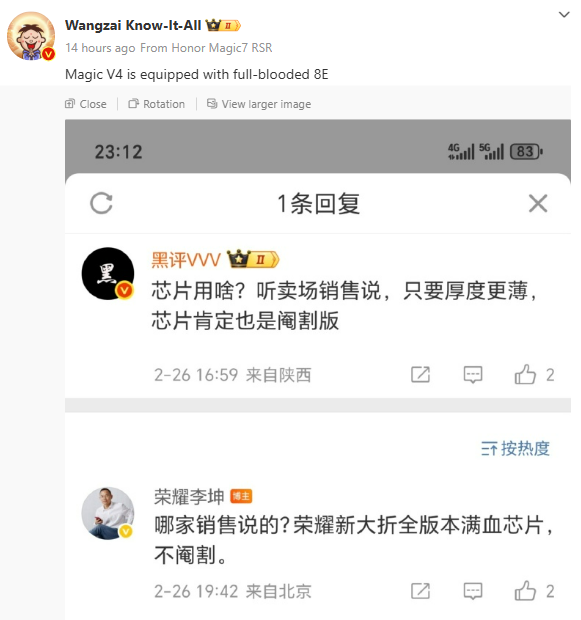
Oppo recently launched the Oppo Find N5 foldable phone in China and Southeast Asian markets. It is the world’s first device to feature the 7-core edition of the Snapdragon 8 Elite, which has one less performance core than the standard 8-core version. While this results in slightly reduced processing power for demanding tasks, the real-world performance difference may be minimal. The 7-core variant is typically designed for thinner devices with limited cooling capabilities, balancing efficiency and performance. Notably, the Find N5 measures just 4.2mm when unfolded and 8.9mm when folded, making it the world’s thinnest foldable phone.
Since the Honor Magic V3 previously held the title of the world’s thinnest foldable until the Find N5, the Magic V4 is expected to adopt an even slimmer form factor. In a recent Weibo post (shown above), a Chinese tech blogger speculated whether the Magic V4 would also feature the 7-core Snapdragon 8 Elite, given its ultra-thin design. In response, Honor’s Flagship Mobile Phone Product Manager, Li Kun, stated that it would be equipped with the “full-blooded” (machine-translated text) version of the chipset, suggesting that the Magic V4 could feature the standard 8-core Snapdragon 8 Elite.
The final naming of the device remains uncertain. Since Oppo skipped the “N4” moniker due to the number 4 being considered unlucky in some Asian countries, there is a possibility that Honor might also bypass the “V4” name and instead launch its next-generation foldable as the Magic V5. As far launch is concerned, it is expected to debut in June.
For more daily updates, please visit our News Section.
Infinix recently confirmed that the Note 50 series will be unveiled on March 3 in Indonesia, with plans for an India launch as well. The brand recently shared the first teaser of the series on its X account and has now officially announced that the lineup will arrive in India in March. Additionally, Infinix has confirmed that the upcoming Note 50 series will integrate DeepSeek-R1, a rapidly growing AI model designed to enhance the user experience.
Enhanced AI experience with DeepSeek-R1
Infinix Note 50 series teased in India
The first teaser released by the brand suggests that the Infinix Note 50 series may feature some form of LED lighting on the back. While the company has not revealed any design details yet, it is currently focusing on the AI capabilities that the series will offer.
According to Infinix, DeepSeek-R1 integration will improve AI-driven interactions and expand the functionality of smartphones running XOS 14.5 and above. This advanced AI technology is designed to enhance information retrieval and processing, providing a smarter and more efficient user experience.
The Note 50 series will leverage DeepSeek-R1 to enable intelligent voice and text interactions through the Folax assistant. By activating Deep Thinking Mode, users can access a more intuitive and responsive AI assistant capable of handling complex queries with improved reasoning abilities. Infinix is committed to a user-first approach, ensuring that DeepSeek AI technology optimizes everyday smartphone usage with seamless voice commands and an efficient search experience.
Infinix AI∞ Beta Plan
With AI advancements shaping the smartphone industry, Infinix has outlined an ambitious roadmap for 2025. Under its “Infinix AI∞ Beta Plan,” the company will host its first-ever vertical-format AI Spring Launch Event in March. This event will introduce a comprehensive AI ecosystem spanning smartphones, AIoT devices, gaming, and everyday applications.
Reports suggest that the Note 50 lineup will include multiple models, such as the Note 50, Note 50 Pro, Note 50 Pro+, Note 50S, Note 50X, Note 50 (4G), and Note 50 Pro (4G). However, not all variants may debut in India, with the company expected to release only select models in the country.
For more daily updates, please visit our News Section.
Xiaomi is gearing up for the global unveiling of its highly anticipated Xiaomi 15 series on March 2, just ahead of MWC 2025 in Barcelona, Spain. Following weeks of leaks, teasers, and official confirmations, Xiaomi is expected to showcase the Xiaomi 15 Ultra and possibly the standard Xiaomi 15 for international markets. As the company continues to push the boundaries of smartphone design and camera technology, here’s what we can expect from the upcoming launch.
Xiaomi 15 Ultra
The Xiaomi 15 Ultra is set to be the star of the lineup, boasting an impressive camera setup that could make it one of the most capable camera phones to date. Xiaomi has confirmed that the device will feature a 200MP periscope telephoto camera utilizing Samsung’s ISOCELL HP9 sensor, which was first seen in the Vivo X100 Ultra.
Accompanying the periscope sensor, the device will feature a 50 MP main camera with a 1-inch type sensor, a 50 MP ultrawide lens, and a 50 MP short-range telephoto lens. Xiaomi’s collaboration with Leica will continue, ensuring optimized optical performance and computational photography enhancements powered by the company’s Xiaomi AISP 2.0 platform.
Beyond photography, the Xiaomi 15 Ultra is rumored to feature a 6.73-inch 2K quad-curved AMOLED display with an adaptive refresh rate and peak brightness levels exceeding 3000 nits. The device will be powered by Qualcomm’s latest Snapdragon 8 Elite chipset, coupled with up to 16GB of LPDDR5X RAM and up to 1TB of UFS 4.0 storage.
The battery capacity is another area where Xiaomi isn’t holding back. The 15 Ultra is expected to pack a 6,000mAh battery, offering 90W wired charging and 50W wireless charging. Xiaomi’s proprietary HyperOS 2.0, based on Android 15, will be running out of the box.
Xiaomi 15
Xiaomi 15
While the Ultra variant is expected to steal the spotlight, the standard Xiaomi 15 is also set to make its global debut. The device, which was launched in China last year, features a 6.36-inch 1.5K LTPO OLED display with ultra-narrow bezels, offering a compact yet premium experience. Like its Ultra counterpart, it will be powered by the Snapdragon 8 Elite chipset, promising top-tier performance.
The Xiaomi 15’s camera setup includes a 50 MP main sensor with a Light Fusion 900 sensor, a 50 MP ultrawide lens, and a 50 MP 2.6x telephoto camera. It also comes with Leica optics, Hyper OIS, and enhanced computational photography features. The device packs a 5400mAh battery with 90W wired charging and 50W wireless charging, making it one of the most powerful compact flagships on the market.
Launch Details and Pricing
The Xiaomi 15 Ultra and Xiaomi 15 will be officially unveiled for global markets on March 2, just before MWC 2025 kicks off. While the pricing details remain unclear, the Ultra model is expected to be in line with its predecessor, the Xiaomi 14 Ultra, which launched at around €1,499. The standard Xiaomi 15 could start at approximately €1,099, depending on storage and regional pricing strategies.
For more daily updates, please visit our News Section.
JBL’s Flip series has always been one of the go-to choices for portable Bluetooth speakers. The line is known for offering great sound quality, and durability in a compact form factor.
Its latest addition to the Flip series, the Flip 7, sticks to this same winning formula but brings a few refinements along the way. If you already own a Flip 6—or even a Flip 5—is it worth the upgrade, or is this just another iterative release? Let’s break it down.
Looking at the Flip 7, it’s clear that JBL didn’t want to mess with the good things. It still has the cylindrical design of its predecessors with rubberized passive radiators on both ends, and it’s wrapped in that same durable fabric mesh.
Size-wise, it’s almost similar to the Flip 6. It remains lightweight and easy to carry, which makes sense since portability is one of the Flip series’ biggest selling points. If you put it side by side with the Flip 5, the differences in dimensions are even less noticeable.
One area that does see a slight upgrade is waterproofing. The Flip 7 bumps up to an IP68 rating, meaning it’s fully dustproof and can survive submersion in water for up to 30 minutes. That’s a solid improvement over the Flip 6’s IP67 rating and a big step up from the Flip 5, which had an IPX7 rating that covered water resistance but not dust protection. JBL is clearly keeping durability a priority, and that’s great news for anyone taking this speaker outdoors.
Please Note: When you buy something using the links in our articles, we may earn a small commission at no cost to you.
2. Sound Quality
Sound quality is a make-or-break factor for any speaker, and JBL has steadily refined the Flip series over the years. The Flip 5 delivered a solid audio experience with its single-driver system, keeping things clear and dynamic across different genres. The Flip 6 took things further with a separate tweeter and woofer, improving the balance between highs and lows.
Now, with the Flip 7, JBL is pushing the series forward with AI-powered audio tuning. It has a new JBL AI Sound Boost algorithm that optimizes sound in real-time, fine-tuning the output based on what you’re listening to. Under the hood, it packs a high-performance acoustic chamber, an independent tweeter, a racetrack-shaped mid-bass driver, and dual passive radiators—promising a richer, more immersive listening experience.
3. Battery Life
Battery life has always been one of JBL’s strong suits, and the Flip 7 gets a slight but welcome boost. While the Flip 6 held steady at around 12 hours—matching the Flip 5—the Flip 7 stretches that to roughly 14 hours. It’s not a massive increase, but for long outdoor sessions, every bit counts.
Charging still relies on USB-C, with no such improvements in speed. And while it’s not a dealbreaker, JBL continues to skip wireless charging—a small inconvenience, especially as some competitors start to include it.
4. Connectivity
JBL made a small but meaningful upgrade in connectivity by including Bluetooth 5.4 in the Flip 7. This should give it better range and improved stability compared to the Flip 6’s Bluetooth 5.1 and the Flip 5’s Bluetooth 4.2. If you’ve ever had connection dropouts when moving your phone too far from the speaker, this should happen less often.
The Flip 7 also supports JBL’s PartyBoost feature, allowing you to pair it with other JBL speakers. But this isn’t new—it was present in the Flip 6 and Flip 5 as well. If you already own older PartyBoost-compatible JBL speakers, you’ll still be able to sync them with the Flip 7.
5. Should You Upgrade?
If you’re coming from the Flip 5, the Flip 7 offers enough improvements to make an upgrade worthwhile. You’ll get better sound, improved connectivity, a slight battery boost, and added durability.
However, for Flip 6 owners, the jump isn’t as significant. The audio refinements and battery life improvements are minor, and while Bluetooth 5.4 is nice to have, it’s not something that will make a huge difference. If your Flip 6 is still working well, there’s little reason to rush to the Flip 7.
6. Final Thoughts
JBL’s Flip 7 is an iterative upgrade rather than a major overhaul. It refines the formula that has made the Flip series so popular, but it doesn’t introduce groundbreaking changes. If you’re in the market for a new portable speaker and don’t already own the Flip 6, it’s an easy recommendation.
For more daily updates, please visit our News Section.
Oppo has expanded the availability of its A5 Pro smartphone beyond China, but the global variant features significant hardware compromises compared to its original December 2024 release.
Oppo A5 Pro features
The global A5 Pro swaps the Chinese variant’s MediaTek Dimensity 7300 chipset for the older Dimensity 6300, paired with up to 8GB RAM and 256GB storage (expandable to 1TB via microSD). Its 6.67-inch LCD screen reduces both size and quality from China’s 6.7-inch FHD+ AMOLED panel, offering a lower 1604 x 720p resolution despite retaining a 120Hz refresh rate and 1000-nit peak brightness.
Camera specs mirror the Chinese version: a dual rear setup (50MP main + 2MP depth) and an 8MP front shooter. The device retains IP66/68/69 dust and water resistance, military-grade MIL-STD-810H durability, and 360° drop protection. However, its battery shrinks from 6,000mAh to 5,800mAh, though 45W wired charging remains. The phone measures 184 x 75.3 x 7.76 mm and weighs 194 grams. It also has a side-mounted fingerprint sensor. Color options include Flower Pink and Mocha Brown.
Pricing & availability
Pricing starts at NT$7,990 (about $243) in Taiwan for the 6 GB + 128 GB version, while the 8 GB + 256 GB variant costs NT$9,490 (around $290).
For more daily updates, please visit our News Section.
Razer has partnered with Mojang Studios to unveil a new line of officially licensed Minecraft gaming peripherals. This collaboration merges Razer’s high-performance hardware with the iconic blocky style of Minecraft to deliver an immersive experience.
The collection includes four products: the BlackWidow V4 X keyboard, the Kraken V4 X headset, the Cobra mouse, and the Gigantus V2 mouse mat, each featuring Minecraft-inspired designs. Every device also unlocks exclusive in-game items like the Ender Dragon Shawl or the Overgrown Arm, enhancing the adventure within Minecraft’s universe.
The BlackWidow V4 X – Minecraft Edition employs clicky, tactile switches and six macro keys. Its RGB lighting ensures players never lose sight of crucial keys, even in the most challenging builds. The Kraken V4 X – Minecraft Edition offers powerful, lifelike sound and clear voice communication, helping gamers stay alert as they face Creepers and other dangers.
The Cobra – Minecraft Edition is a lightweight wired mouse built with optical switches. Its responsive design enables swift block-placing and monster-fighting. Meanwhile, the Gigantus V2 – Medium – Minecraft Edition mouse mat provides a soft, spacious surface for smooth gliding, helping players maintain precise aim.
Pricing & availability
Pricing of the special Minecraft Edition peripherals is as follows:
BlackWidow V4 X – Minecraft Edition keyboard: $169.99
Kraken V4 X – Minecraft Edition headphones: $99.99
We use cookies on our website to give you the most relevant experience by remembering your preferences and repeat visits. By clicking “Accept”, you consent to the use of ALL the cookies.
This website uses cookies to improve your experience while you navigate through the website. Out of these, the cookies that are categorized as necessary are stored on your browser as they are essential for the working of basic functionalities of the website. We also use third-party cookies that help us analyze and understand how you use this website. These cookies will be stored in your browser only with your consent. You also have the option to opt-out of these cookies. But opting out of some of these cookies may affect your browsing experience.
Necessary cookies are absolutely essential for the website to function properly. This category only includes cookies that ensures basic functionalities and security features of the website. These cookies do not store any personal information.
Any cookies that may not be particularly necessary for the website to function and is used specifically to collect user personal data via analytics, ads, other embedded contents are termed as non-necessary cookies. It is mandatory to procure user consent prior to running these cookies on your website.