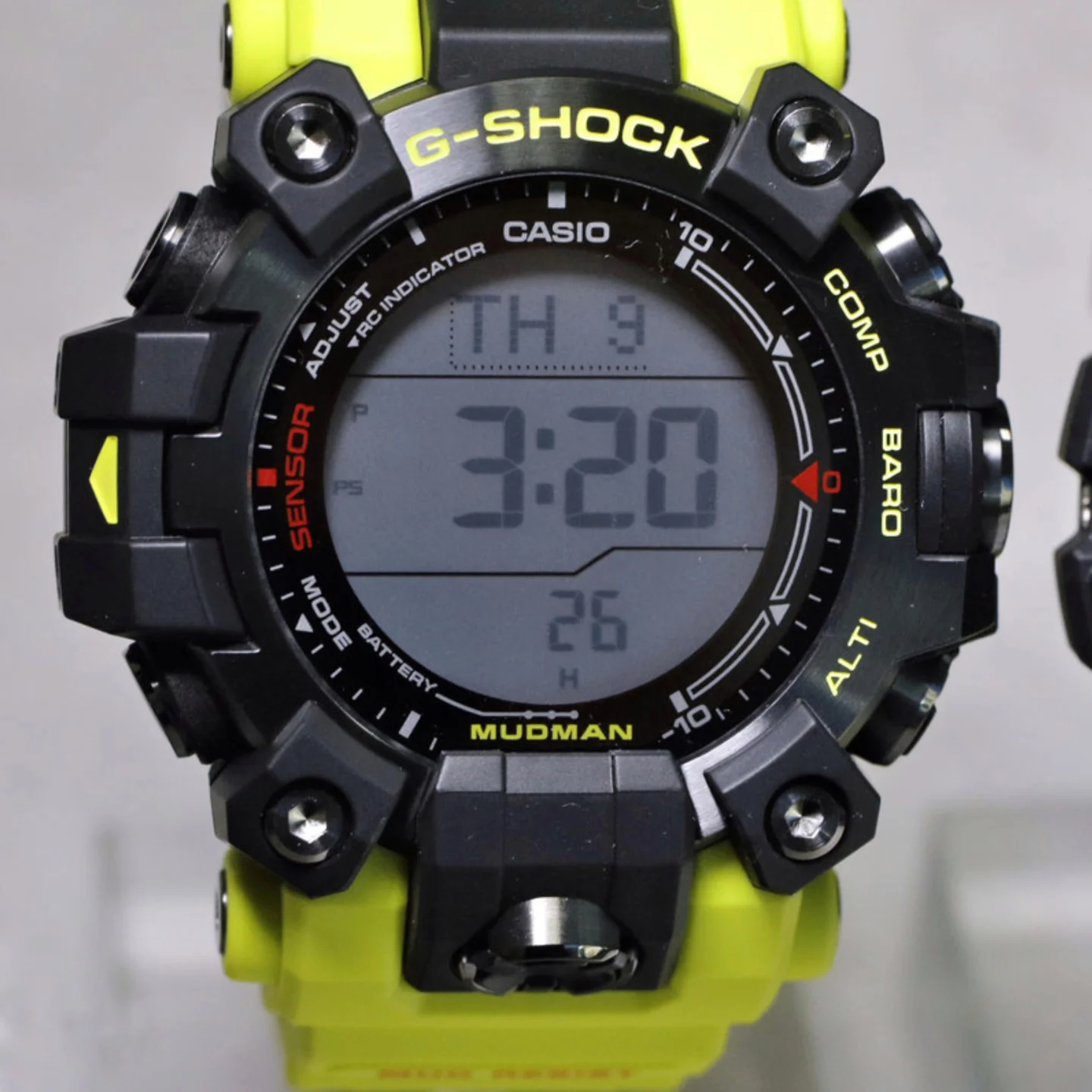
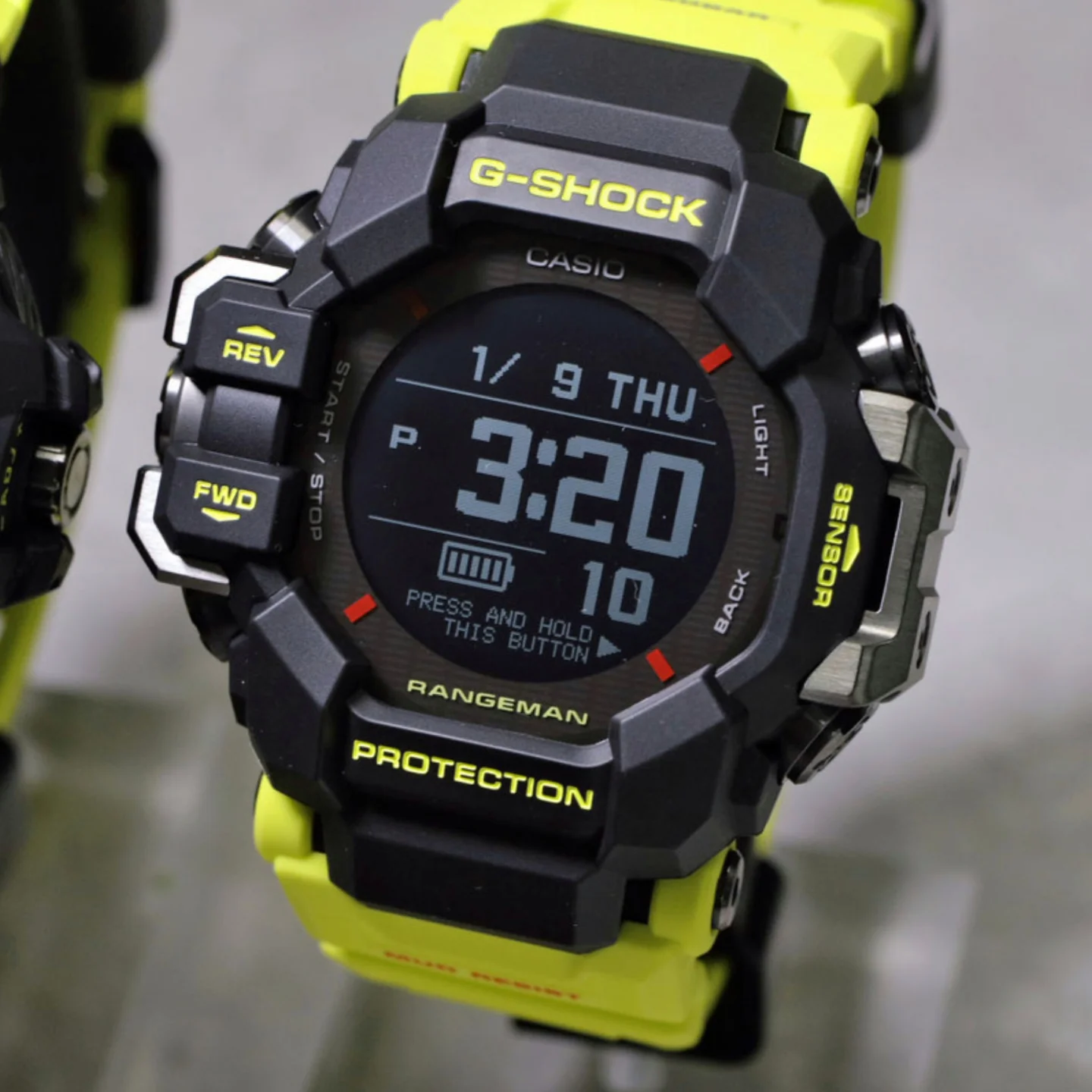
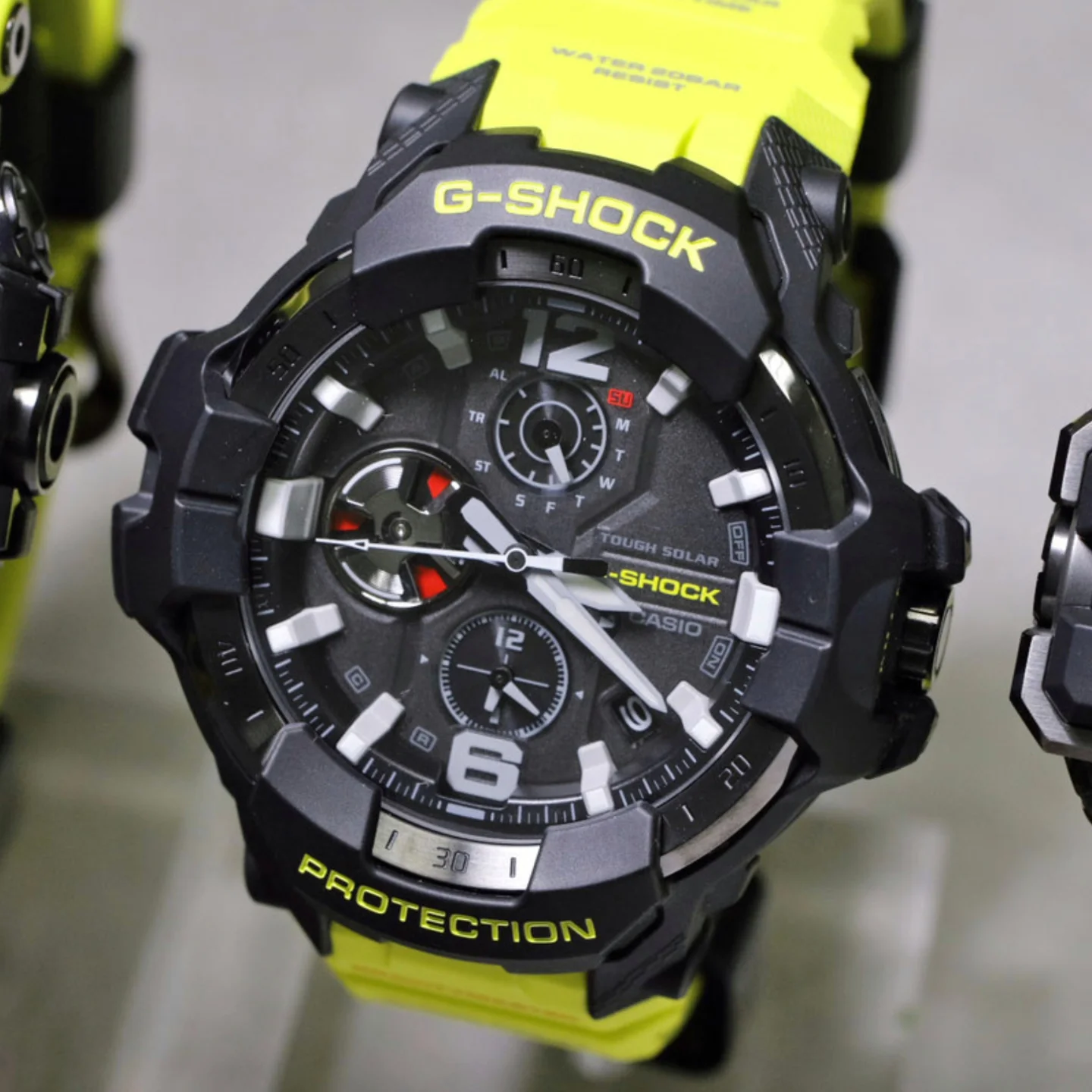
Casio’s G-SHOCK has released a new color series in its MASTER OF G lineup, featuring a combination of yellow and black. The series includes three models: the Gravitymaster GR-B300, Mudman GW-9500, and Rangeman GPR-H1000, all of which were launched in the past two years. Pre-orders for these models will begin on February 1, 2025, at 12:00 AM.
The Gravitymaster GR-B300RY-1A9JF will be priced at ¥49,500 (US$321). It features a durable resin bezel, Bluetooth connectivity, and solar charging, making it a practical choice for demanding environments. The Mudman GW-9500RY-1A9JF will retail for ¥64,900 (US$421) and includes a dual-layer LCD digital compass along with a mud-resistant structure, reinforcing its suitability for extreme conditions. The Rangeman GPR-H1000RY-1A9JF, the most advanced model in this release, will be available for ¥73,700 (US$478). It includes GPS navigation, a mud-resistant design, a high-altitude barometer, and a MIP LCD display for improved readability. If it follows the feature set of other Rangeman models, it is expected to include a heart rate monitor.
These watches are built for tough conditions, offering both durability and advanced features. G-SHOCK color models often sell out quickly, with production sometimes ending within a few months, so interested buyers should consider pre-ordering. The models will be available for pre-order on Yahoo! Shopping, Rakuten, and Amazon starting February 1, 2025, at 12:00 AM.
In other news, Casio is also preparing to launch a limited-edition Barbie-themed G-Shock watch (GMA-S110BE series) in February. Jebsen, an authorized Casio retailer in Hong Kong, has confirmed the lineup and announced a draw for purchases starting February 10th. The GMA-S110BE-4A model features a pink design with Barbie branding and a heart-shaped detail on the speed indicator dial.
HKC has introduced the ANT273VQL gaming monitor under its Antgamer brand, which focuses on esports-grade displays in the Chinese market. The monitor is priced at 2,499 yuan ($348) and it is now available on JD.com. Let’s check out its key specs.
HKC Antgamer ANT273VQL Specifications
The ANT273VQL sports a 27-inch Fast IPS display, ensuring ultra-responsive visuals with a native 300Hz refresh rate and 1ms GTG response time. This combination delivers smooth, lag-free gameplay with minimal motion blur.
The monitor comes with a 2K QHD resolution (2560×1440), providing sharp, detailed visuals and a pixel density of approximately 109 PPI. The panel also supports VESA DisplayHDR 400, boasting a peak brightness of 400 nits, which enhances contrast and brings out richer, more dynamic visuals.
In terms of color accuracy, it features 95% DCI-P3 and 99% sRGB color gamut coverage, ensuring vibrant and true-to-life colors. With 8-bit+FRC technology, the monitor effectively simulates 10-bit color depth, providing smooth color transitions and professional-grade color accuracy with a Delta E ≤ 2 rating.
For an optimal gaming experience, the monitor equips AMD FreeSync Premium, which synchronizes the refresh rate with the GPU to eliminate screen tearing and stuttering. It also includes gaming-centric features such as custom game modes (FPS, RPG, RCG), crosshair assistance for improved aiming, dark-level adjustments to enhance visibility in low-light scenes, and an intelligent timer for tracking in-game events.
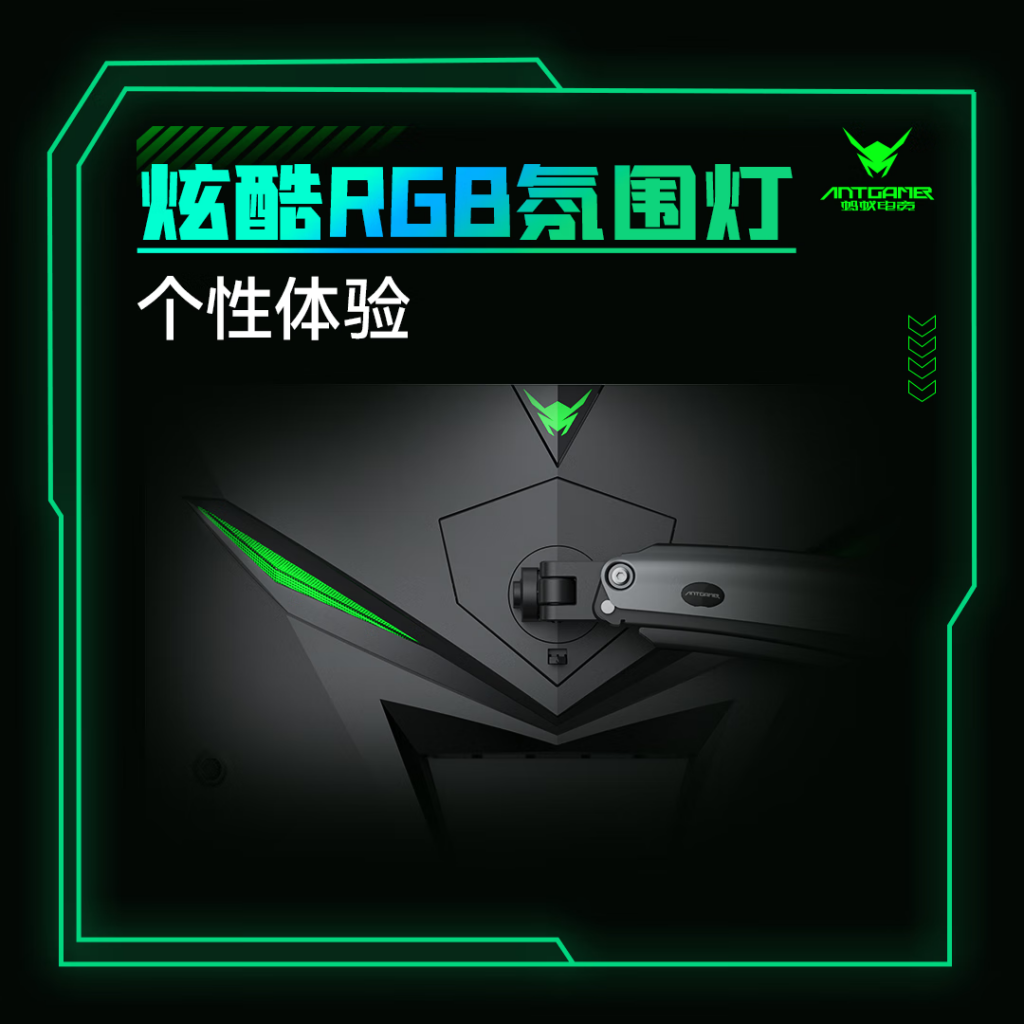
In terms of ergonomics, the monitor comes with a fully adjustable mechanical stand, allowing for height adjustments up to 345mm, +85° to -30° tilt, ±90° horizontal rotation, and 360° pivot rotation. Additionally, the back of the monitor features RGB ambient lighting, adding a customizable, immersive gaming atmosphere.
The ANT273VQL is equipped with multiple connectivity options, including two HDMI 2.1 ports, one DisplayPort 1.4, and a 3.5mm audio output, making it compatible with various gaming devices, including PS5 and PS4. It also supports VESA 75x75mm wall mounting, offering additional setup versatility.
In related news, AOC has launched the CQ32G4E, a 31.5-inch 2K 180Hz curved gaming monitor in China, while Acer has introduced the Predator X27U X1, a 26.5-inch 2K 240Hz QD-OLED monitor designed for gamers.
For more daily updates, please visit our News Section.
Samsung launched the Galaxy S25 Ultra with some minor improvements in hardware, while the rest of the focus was on improving the software experience, particularly with AI. As for the display, it’s said to use the same M13 panel as that of the S24 Ultra. And there are no changes in brightness numbers as well.
No more grainy effect on low brightness
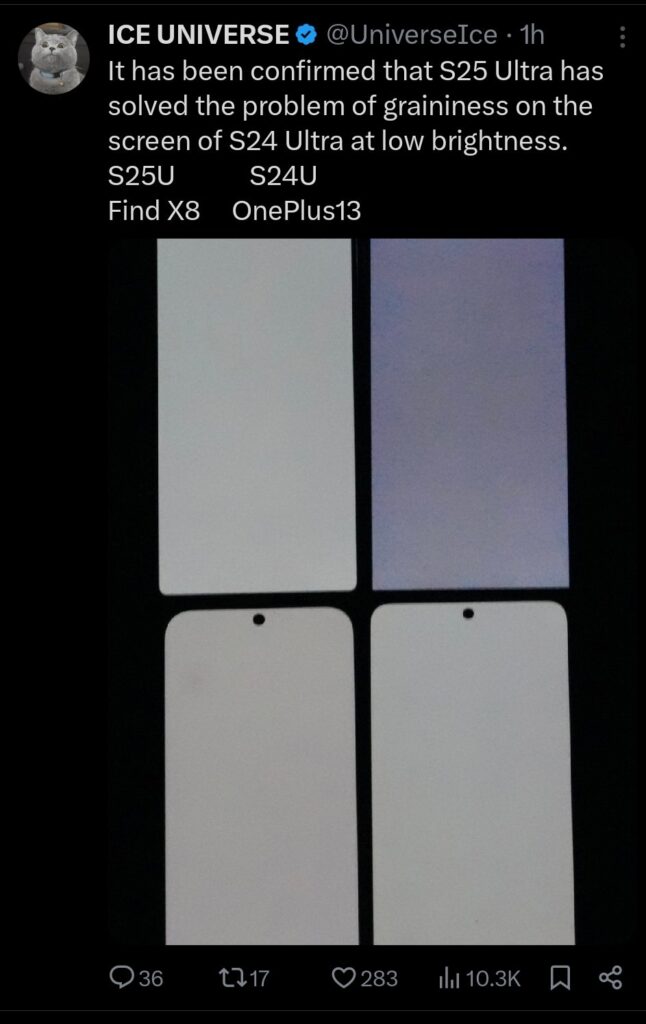
However, Samsung’s new Ultra flagship has reportedly fixed two issues related to the display of the Galaxy S24 Ultra. The first one is, as Notebookcheck mentioned, “a grainy effect” that used to appear on the display of its predecessor in low-brightness conditions.
I first noticed the issue on the iQOO Neo9 Pro while capturing the stars. After zooming in a bit, as I was scrolling, I noticed a fair amount of noise that didn’t move with the stars. While it’s not visible apart from the extremely dim situations, it’s something that hinders the viewing experience by quite a bit. Thankfully Samsung has solved the problem with their latest Ultra phone.
The tipster also shared images of the Oppo Find X8 and OnePlus 13 in the same situation showcasing the difference between them and the Galaxy S24 Ultra.
Pre-order Samsung Galaxy phones now & get up to $1,250 off + a chance to win $5,000 credit (US only) – https://howl.link/erlejlgnge89i
A smoother transition between color shades
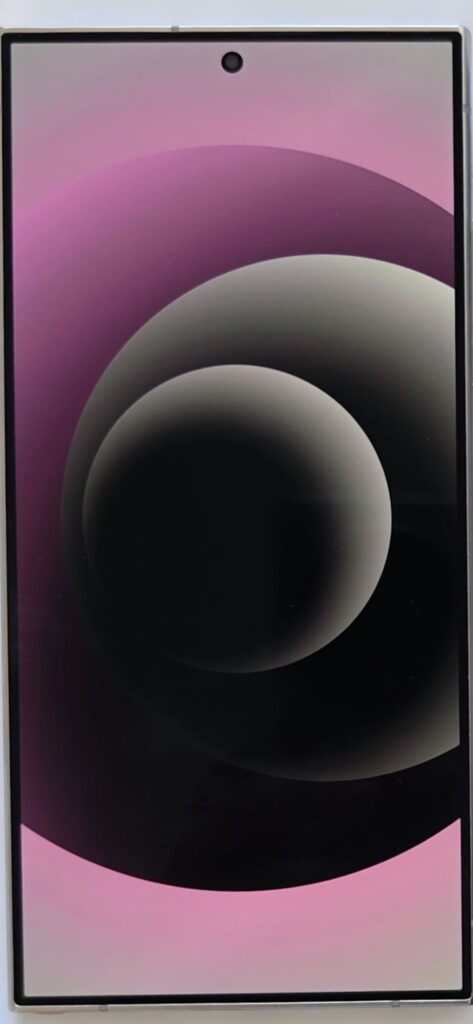
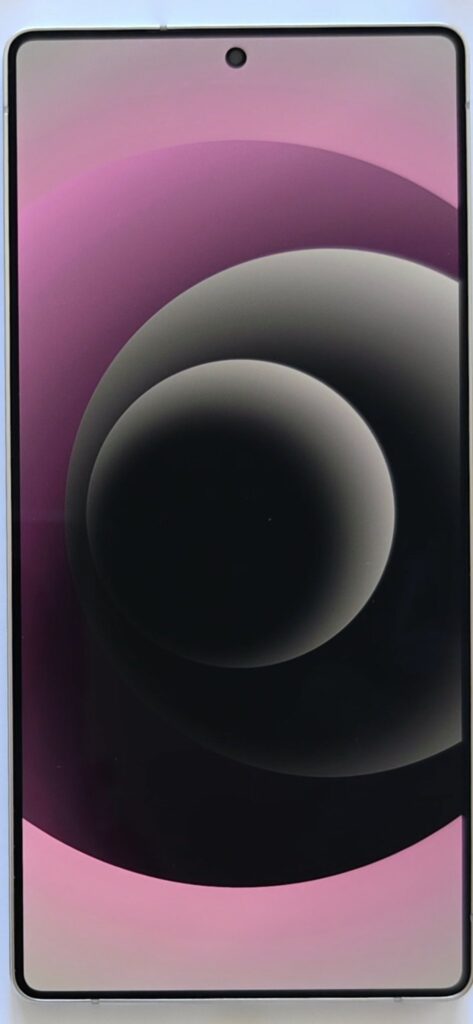
The Galaxy S24 Ultra was also previously criticized for its inability to depict colors accurately despite being an Ultra flagship. As Ice Universe showcased in a different post, the latest model also offers smoother transitions between color shades while displaying a solid background. The issue Ice Universe is trying to showcase here becomes more noticeable in situations like an image of a sunset where the display shows bands of colors on the sky instead of a smooth transition as you see with your own eyes.
On the surface, the phone now packs the Corning Gorilla Armor 2, which is marketed as the “Industry’s First Anti-Reflective Glass Ceramic For Mobile Devices.” Of course, the S24 Ultra also came with an anti-reflective coating (which started peeling off after 6 months of normal use), but the ‘Ceramic’ appears to be a new addition this year.
The Xiaomi 15 Ultra will launch in China in February, as confirmed by Lu Weibing, President of the Xiaomi Group. The phone will make its way to the global market at MWC 2025, which is set for 3 Mar – 6 Mar.
But before the announcement, 91mobiles in collaboration with tipster Sudhanshu Ambhore revealed the memory configuration and color options of the device. According to the tipster, the phone will be available in a 16GB + 512GB configuration. For context, this is the same configuration the predecessor came with.
Xiaomi 15 Ultra renders
As for the color options, the tipster says buyers will have three options to choose from: black, white, and silver. The Xiaomi 14 Ultra came with the black and white color option, both of which have vegan leather back.
What we know so far:
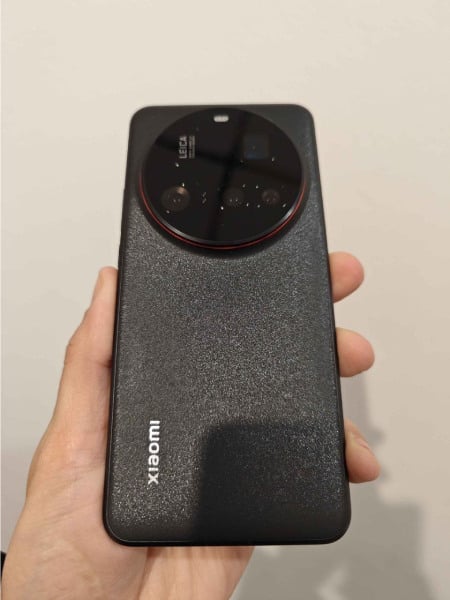
The upcoming phone was recently revealed in hands-on images, suggesting that the overall design is similar to the 14 Ultra. But upon closer inspection, there are a few notable changes: the Leica logo has moved from the center of the camera island to the side and the back panel appears to be a textured glass. The repositioning of the Leica branding suggests a significant change in sensor size or the number of sensors. The protrusion of the camera module is also significant.
Not to mention, Xiaomi is focusing on the imaging capabilities just like last year. Following the Vivo X200 Pro, the Xiaomi 15 Ultra will reportedly be the second phone to pack a 200 MP periscope telephoto. It will be paired with a 1″ main camera.
The device will likely be powered by the Snapdragon 8 Elite chip, which is powering devices like the OnePlus 13 and the Galaxy S25 Ultra. The new chip will be paired with a 6000 mAh battery (up from 5,300 mAh of the predecessor) and 90W charging, as confirmed by the 3C certification listing. it may also be paired with 50W wireless charging.
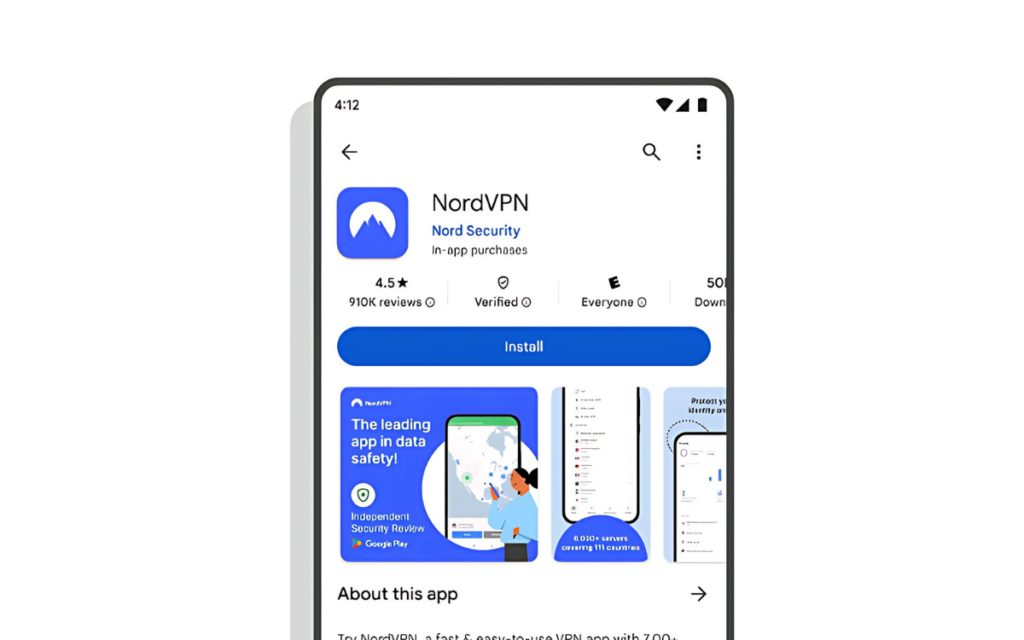
Google is introducing a “Verified” badge on the Play Store to help users identify safe and reliable VPN apps. This badge, displayed as a shield with a checkmark and the word “Verified,” indicates that the VPN meets strict security and privacy standards, ensuring users can trust apps that genuinely protect their data.
How VPNs Can Earn Google’s Verified Badge
To earn the badge, VPN apps must pass Google’s Mobile Application Security Assessment (MASA) Level 2 and comply with Play Store guidelines. Developers must meet specific criteria, including having at least 10,000 installs, 250 reviews, and 90 days of availability on the Play Store. They must also operate under an organization developer account and submit a declaration in the Data Safety section, detailing how user data is handled and confirming independent security audits.
This initiative addresses growing concerns about malicious VPN apps that pose as security tools while harvesting data or spreading malware. Earlier this month, Google warned about legitimate-looking VPNs being used as backdoors for cyberattacks. With VPN usage rising due to privacy concerns and online restrictions, the need for clear verification is critical.
Leading VPN providers like NordVPN, Hide.me, and Aloha Browser have already received the badge, highlighting their commitment to user security. Verified apps may also gain increased visibility on the Play Store, encouraging developers to adhere to these standards.
This move is part of Google’s broader efforts to enhance Play Store transparency and security, following updates like privacy labels and independent security review banners. Last year, Google also introduced a verification badge for government-made apps, helping users identify legitimate applications from official sources.
As cyber threats evolve, the “Verified” badge is a crucial step in helping users make informed choices in a crowded VPN market, ensuring safer and more reliable app experiences.
For more daily updates, please visit our News Section.
Nothing is gearing up for a launch event on 4th March 2025 where it is set to debut the Phone (3a) series of smartphones. These are next-gen mid range models that are the successor to the Phone (2a) lineup. But the mid range segment is a fierce segment with a lot of competition. So are these worth the wait? Read on to find out.
A recent leak confirmed that the Nothing Phone (3a) will launch with a tall 6.8-inch OLED display. This is likely a flat pane with a 1.5K resolution and a 120Hz refresh rate. Under the hood, the Phone (3a) could be equipped with the Snapdragon 7s Gen 3 SoC, which could be paired with up to 12GB of RAM and up to 256GB of internal storage.
Other notable features include a 5000mAh battery pack, 45W wired fast charging, and Android 15 OS based Nothing OS 3.1 custom skin out of the box. There is also the Phone (3a) Pro model in the works, which will likely offer slightly better specs. This may include a faster processor
2. New Telephoto Camera
One of the biggest upgrades in the next gen Nothing mid range phones is the triple camera setup on the back. Even with the last flagship model, the Nothing Phone (2), you only got two cameras on the back. It included a main and an ultra wide angle lens.
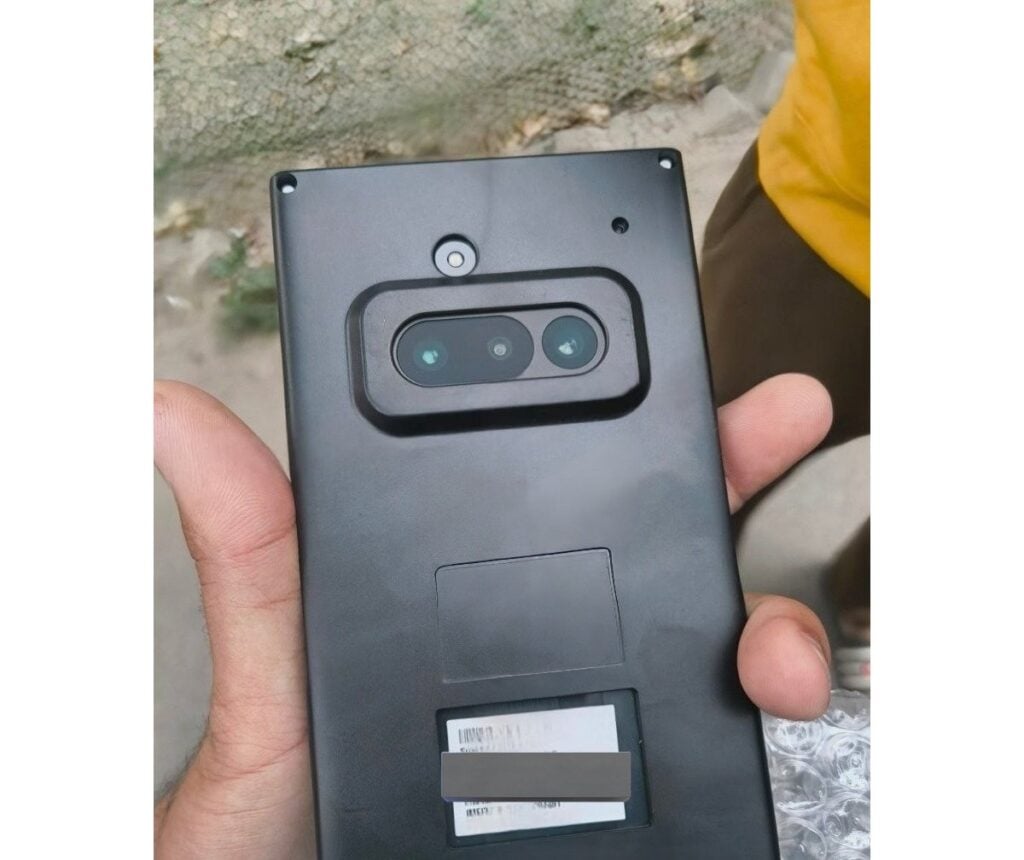
However, a recent teaser hinted at a triple camera setup, which was later seen in a leaked live image of the Phone (3a). Based on latest rumors, the Phone (3a) houses a 50MP main sensor that is paired with an 8MP ultra wide angle lens, and a 50MP telephoto shooter. The periscope sensor could offer 2x optical zoom, which would make it the first from the brand to offer lossless magnification.
3. Unique Design
It is not all about the specs with design also being a crucial aspect you consider when buying a smartphone and Nothing is a brand that stands out with its products. The Phone (3a) lineup is expected to launch with the same transparent body that blends a metal frame on the side and Glpyh LED lighting at the back.
This head-turning design is what the company is known for, which clearly stands out from the crowd. Nothing builds an experience different from its competitors that could be a refreshing choice for those who plan to buy a new smartphone soon.
For more daily updates, please visit our News Section.
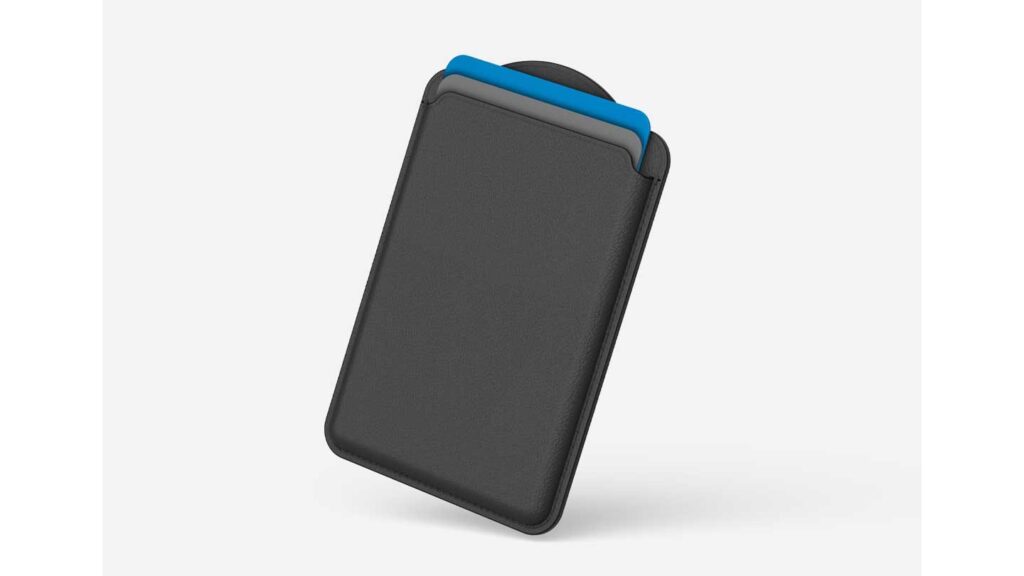
Samsung has officially launched its Magnetic Wallet for the Galaxy S25 series, bringing a sleek and practical accessory to its latest flagship lineup. Designed to attach seamlessly to the back of the Galaxy S25, S25+, and S25 Ultra, the wallet offers a stylish faux leather finish and the ability to hold two to three essential cards, including credit, debit, and membership cards.
While third-party manufacturers have already introduced magnetic wallets for Samsung’s new smartphones, this is the company’s first official offering, ensuring a perfect fit and seamless integration with the devices.
Currently available in black, the Samsung Magnetic Wallet carries a standard retail price of $29.99. However, for a limited time, Samsung is offering a significant 50% discount, bringing the price down to just $14.99. The wallet is already shipping with expected delivery dates as early as February 3.
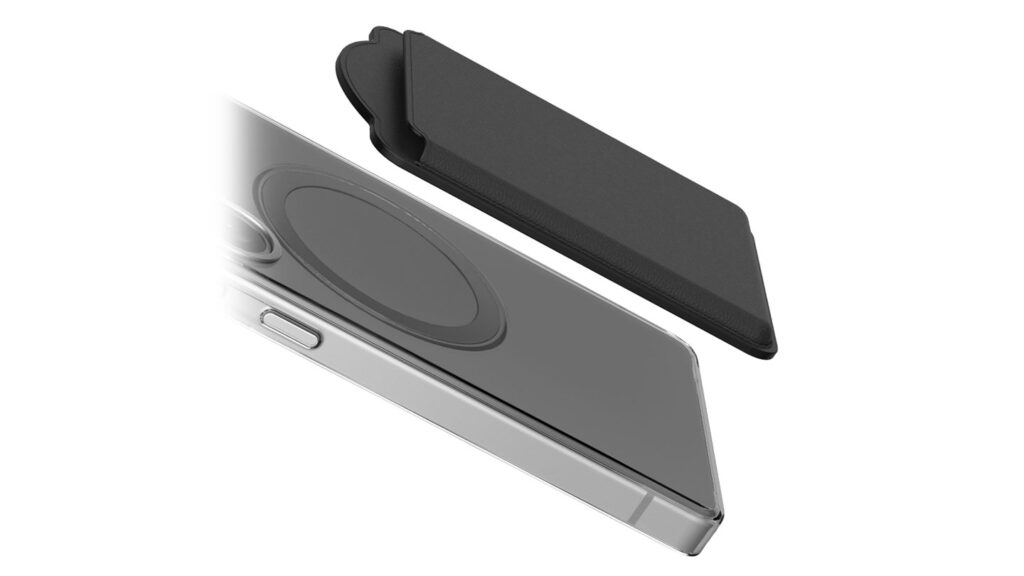
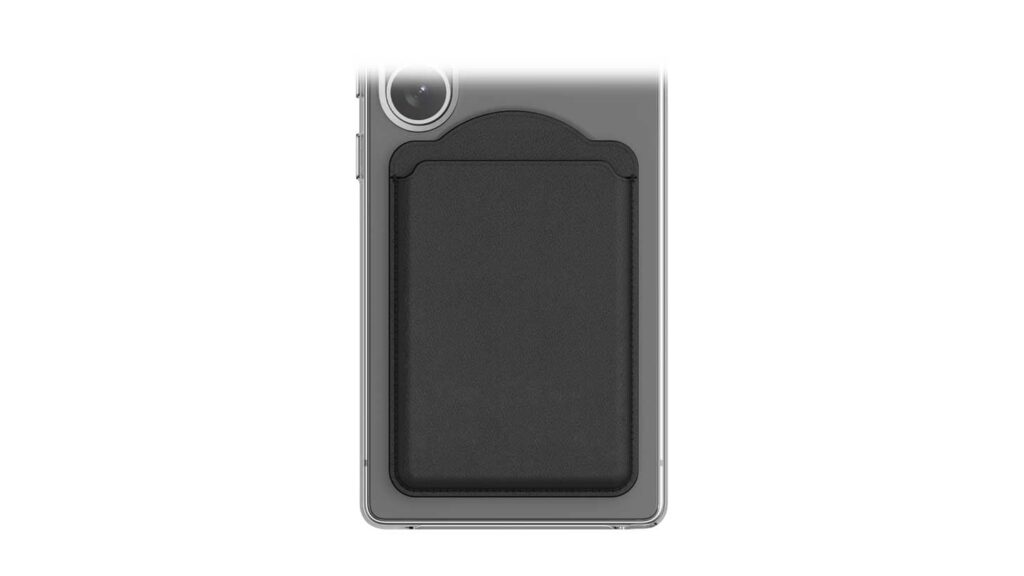
Unlike some third-party alternatives that obstruct the lowest camera lens on the Galaxy S25 series, Samsung’s official Magnetic Wallet incorporates a raised magnetic ring that positions the wallet below the camera module.
This ensures an unobstructed view when taking photos or recording videos. However, Samsung does caution that using the wallet may slightly impact flash photography, recommending its removal when using the flash in low-light conditions.
The launch of this accessory aligns with Samsung’s broader adoption of the Qi2 wireless charging standard. While the Galaxy S25 series does not have built-in Qi2 magnets, Samsung has introduced compatible cases that enable Qi2 magnetic charging and support for accessories like this wallet. However, these official cases are not available yet so even if you get this wallet early you can’t use it. You can use a third-party case until then.
With the growing ecosystem of MagSafe and Qi2-compatible products, Galaxy S25 users can now take advantage of a variety of accessories, from wireless chargers to power banks and magnetic mounts.
Samsung introduced the Galaxy S25 series last week, featuring the Galaxy S25, S25+, and S25 Ultra. The S25 has a 6.2-inch FHD+ AMOLED display, while the S25+ features a 6.7-inch QHD+ AMOLED display, both with 120Hz refresh rates and powered by the Snapdragon 8 Elite for Galaxy. They come with 12GB RAM, up to 512GB storage, a 50MP triple-camera system, IP68 rating, and 4000mAh (S25) / 4900mAh (S25+) batteries with fast charging.
The S25 Ultra has a 6.9-inch QHD+ AMOLED display with Gorilla Armor 2, a 200MP quad-camera system, 12GB RAM, up to 1TB storage, and a 5000mAh battery with 45W fast charging. All models support Wi-Fi 7, 5G, and wireless charging.
For more daily updates, please visit our News Section.
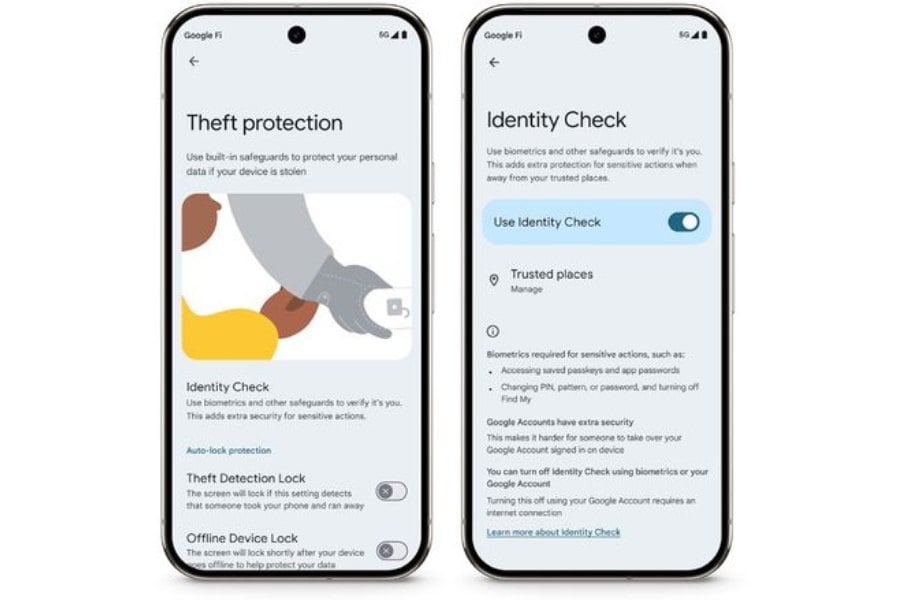
Google has begun the rollout of its new Identity Check feature for Android, starting with Pixel phones running Android 15. Announced last week, this security measure adds an extra layer of protection by requiring biometric verification for access to sensitive device functions when users are outside of their designated trusted locations.
What is Android’s new Identity Check feature?
The core function of Identity Check is to allow users to specify locations they consider safe. When the device is outside of these trusted zones, users will be prompted to authenticate themselves biometrically before accessing certain settings and features. This is designed to protect sensitive information and prevent unauthorized changes to the device.
Google has outlined the specific actions that will trigger the Identity Check prompt when outside a trusted location. These include managing Google accounts on the device (adding or removing), setting up a new device using the current one, disabling Identity Check itself, viewing or modifying trusted places, disabling Theft Protection features, turning off Find My Device, performing a factory reset, changing biometric data, and accessing passwords and passkeys stored in Google Password Manager, including auto-filling passwords in apps.
Identity Check complements other security features already available on Android, such as Theft Detection Lock, Offline Device Lock, and Remote Lock, all aimed at enhancing device security and protecting user data in case of theft or loss.
How to enable Identity Check
Enabling Identity Check on a compatible Pixel phone involves a few steps:
-Users should first ensure their device is running the latest version of Android. – Then, within the Settings app, go to the Google section, then All Services, and finally Theft Protection. From there, enable the Identity Check feature.
-You will then be prompted to sign into their Google account, set up a lock screen and biometrics if they haven’t already, and then designate their trusted locations.
– Once these steps are completed, the feature will get activated.
The rollout is currently underway for Pixel devices running Android 15. Google has indicated that the feature will be coming to eligible Samsung phones with One UI 7 in the coming weeks, with broader availability for other Android devices expected later this year. While the initial release focuses on Pixel users, the wider rollout will bring this added security measure to a broader range of Android devices in the near future.
For more daily updates, please visit our News Section.
With the Snapdragon X series of ARM chipsets for laptops, Qualcomm made a notable push in the PC segment. It brought great energy efficiency and performance along with support for AI processes. Now, the company might be working on the successors to these chips, which could be unveiled soon.
Snapdragon X2 Elite & X2 Plus in the works
To recall, the chipmaking giant unveiled the Snapdragon X Elite and Snapdragon X Plus last year. But it seems like the Snapdragon X2 chip series could be dropping soon and there might be a new flagship chips as well. The Snapdragon X2 series may soon include a new “Ultra Premium” tier as well. The Snapdragon X Elite and X Plus shook the market and competitors like Intel and AMD.
Snapdragon X
AI was undoubtedly a big focus of these new chips, which was one aspect that other brands didn’t focus on. But with the Snapdragon X announcement, both Team Blue and Team Red caught up in a short period of time with great their own chips that packed dedicated NPUs. So while Qualcomm was losing ground in terms of performance, leaked shipping manifests (shared by Olrak_29 on X) has revealed that the Snapdragon X2 is clearly in the works.
The Snapdragon X2 moniker was also listed alongside the “Ultra Premium” tag, which likely hints at a more powerful processor. For those unaware, the upcoming chips are next generation ARM processors like its predecessors. Currently, there is only a Plus and Elite option, but there might soon be a Snapdragon X Ultra variant as well. We can exect improved performance, upgraded NPU, and better graphics performance. These should launch sometime later this year, which is in line with our older report. This is all the information we have at the moment, so stay tuned for more.
For more daily updates, please visit our News Section.
Honor might be working on another budget tablet model. The company could be gearing up to launch the Honor Pad X9a soon as the tablet was just spotted on a certification platform in UAE. So here’s everything we know at the moment.
Honor Pad X9a Spotted on TDRA
The Chinese brand’s Honor Pad V9 model was spotted on TDRA certification just last month. And now, the Pad X9a model was also certified on this platform. It was seen carrying the ELN2-W29 model number. As per the online database, the Honor Pad X9a model that was certified is the WiFi only variant. Apart from this, no finer details were revealed on TDRA certification like its specifications, design, or launch details.
Honor Pad X8a
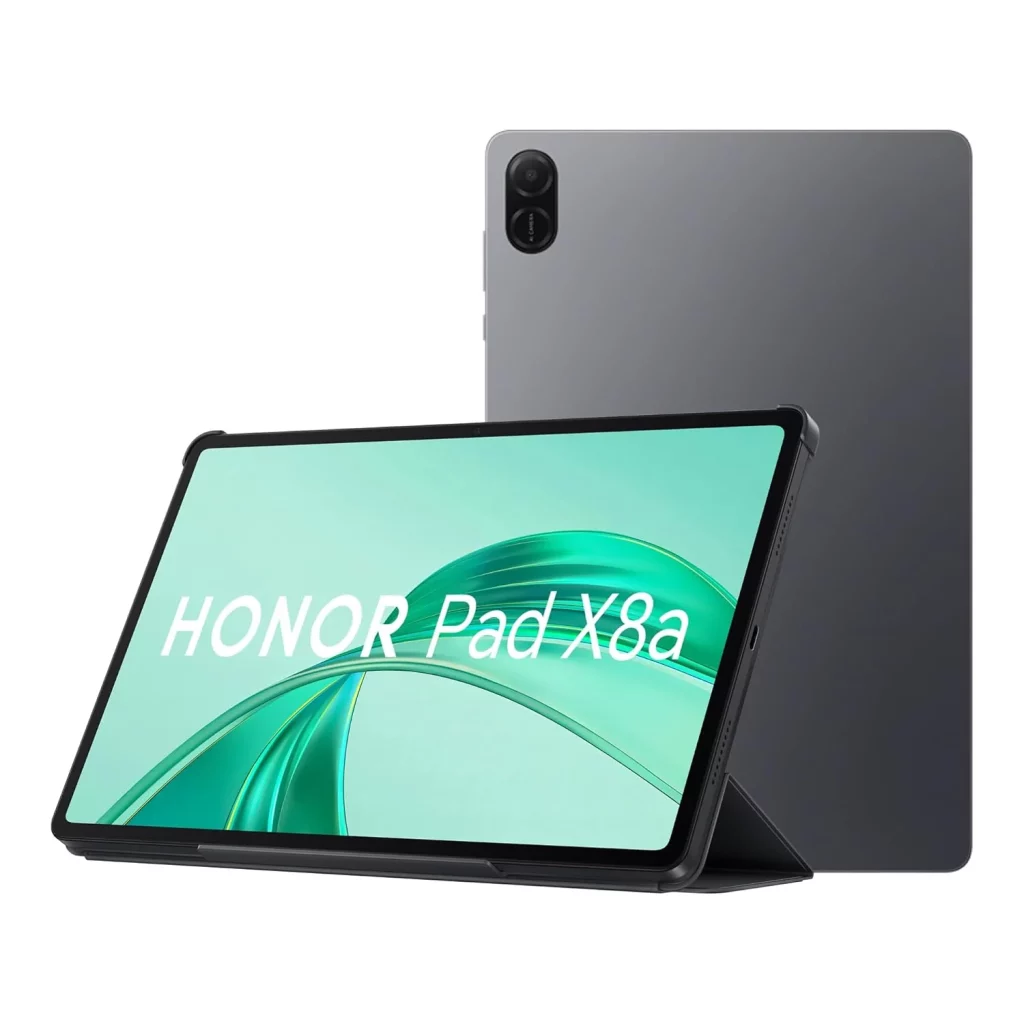
As the name suggests, this model appears to be the successor of the Honor Pad X8a that launched last year. So we can expect the upcoming tablet to have a few upgrades. To recall, the Honor Pad X8a sports a tall 11-inch TFT LCD display with a Full HD+ resolution and 90Hz refresh rate. Under the hood, it is equipped with the Snapdragon 680 SoC, which is paired with 4GB of RAM and 128GB of internal storage.
A massive 8,300mAh battery pack powers this tablet. This cell is packed in a slim 7.25mm body that weighs 495 grams in weight. For photography, the rear features a 5MP shooter while the front houses a 5MP selfie camera. The Pad X8a also housed a quad speaker setup for an improved audio experience. Back in September 2024, the company released the tablet in a new Honor Pad X8a Nadal Kids edition as well.
For more daily updates, please visit our News Section.
With the rollout of iOS 18.3, iPadOS 18.3, and macOS 15.3, Apple’s latest AI-powered feature, Apple Intelligence, is now enabled by default on compatible devices. While this set of AI tools brings features like message summaries, image generation, and enhanced Siri interactions, it also comes with a significant storage requirement. Apple’s official documentation confirms that Apple Intelligence consumes up to 7GB of storage across iPhones, iPads, and Macs.
You can also disable specific features instead of turning it off completely
For users struggling with limited storage or those who simply do not find the AI features useful, there is an option to disable Apple Intelligence entirely. Once turned off, the local AI models are removed from the device, reclaiming the occupied space. This can be especially beneficial for iPhone users dealing with constrained storage, particularly those who do not actively use AI-generated content or enhancements.
To disable Apple Intelligence, users can navigate to Settings on an iPhone or iPad, or System Settings on a Mac, and access the “Apple Intelligence & Siri” section. From there, toggling off Apple Intelligence will prompt a confirmation, after which the system will remove AI-related resources. Some AI features, such as Writing Tools, Genmoji, and Image Playground, will no longer be accessible. However, certain tools like the Clean Up feature in the Photos app may remain available.
Apple Intelligence is currently not available in mainland China, and Apple has not provided a timeline for its release in that region. Additionally, only devices equipped with Apple’s latest hardware, such as the iPhone 15 Pro, iPhone 16 series, and M-series iPads and Macs support Apple Intelligence. Users who have updated to iOS 18.2 must also opt in to gain access to the AI features.
For those unsure about completely turning off Apple Intelligence, Apple provides options to selectively disable individual features through app settings. Features like message summaries in notifications and writing assistance tools can be switched off without disabling the AI suite entirely. By managing these settings, users can tailor their experience while keeping control over their device’s storage and functionality.
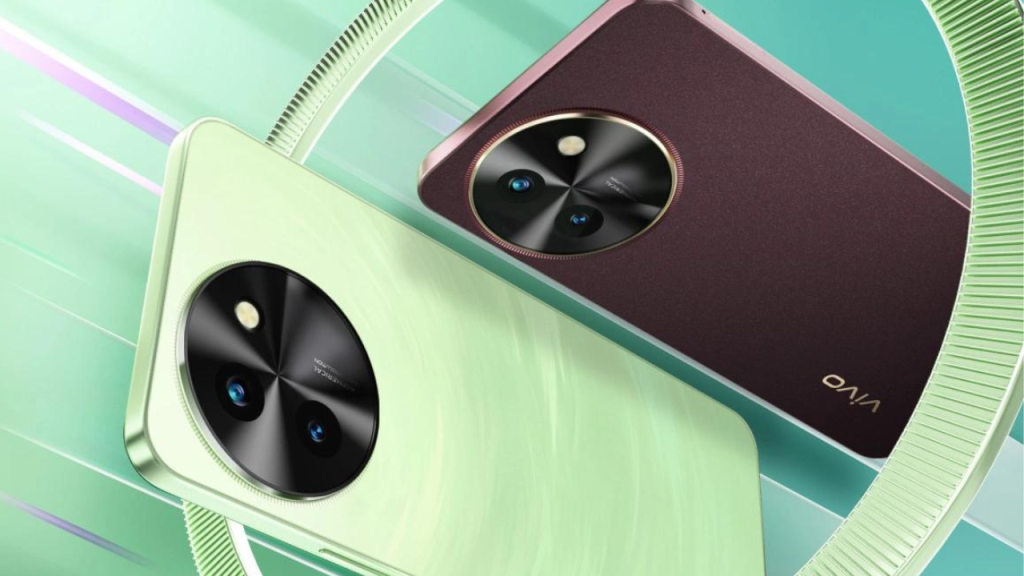
Vivo is apparently planning on launching two budget smartphones in India soon. The upcoming Vivo T4x and Vivo Y59 models have just surfaced in an Indian certification. This hints at an imminent Indian release, so here’s everything we know so far.
Vivo T4x and Vivo Y59 May Debut in India Soon
Vivo T4x and Vivo Y59 on BIS
The Chinese brand’s upcoming budget phones were spotted on the Bureau of Indian Standards (BIS) by MySmartPrice. The certification is common for any smartphone that is launching in India, so the upcoming devices might be arriving in the region soon. The Vivo T4x can be seen carrying the V2437 model number, while the Vivo Y59 was seen carrying the V2443 model number. While this does hint at the Indian launch being near, it does not reveal any details regarding its design, specifications, or release date.
But we can expect both models to offer some upgrades in specs over their predecessors. To recall, the Vivo T3x launched with a 13,499 INR price tag for the 4GB + 128GB variant. This model was equipped with the Snapdragon 695 SoC. On the front, it sports a tall 6.72-inch IPS LCD panel that offers FHD+ resolution, 120Hz refresh rate, and 1000 nits of peak brightness.
Vivo T3x
The Vivo Y58 has a nearly identical screen but with a Snapdragon 4 Gen 2 under the hood. Both smartphones pack a massive 6,000mAh battery pack that supports 44W wired fast charging. The duo also packs a 50MP dual camera setup on the rear, while the front packs an 8MP selfie shooter. Other notable features include a side mounted fingerprint scanner, stereo speakers, Bluetooth 5.1, and Android 14 OS out of the box. This is all the information we have at the moment, so stick around for more.
For more daily updates, please visit our News Section.
During the Galaxy S25 series announcement, Samsung first showcased the Galaxy S25 Edge model. The brand has yet to reveal the launch date for this ultra thin flagship phone, but a fresh leak has revealed some key details regarding the display on the front and the camera system on the rear.
Samsung Galaxy S25 Edge Camera & Screen Protection Tipped
The news arrives from tipster PandaFlash who shared the information on X (formerly Twitter). PandaFlash claims that the main camera is a 200MP sensor, which will be paired with a 12MP ultra wide angle lens. This is in line with one of our earlier reports. The primary shooter is likely the same sensor that Samsung has used on the last few Galaxy Ultra models. Since the Galaxy S25 Edge lacks a telephoto shooter, the model won’t offer optical zoom.
Samsung Galaxy S25 Edge
To recall, the Galaxy S25 Ultra has a 200MP main camera with a f/1.7 aperture, multi-directional PDAF, and OIS support. So we can expect it to make a return in the Galaxy S25 Edge as well. So this phone could be positioned between the Galaxy S25+ and Galaxy S25 Ultra. On the front, the tipster added that the Edge could sport Corning’s Gorilla Glass Victus 2 for protection. This is a step below the Gorilla Armor 2 found on the Galaxy S25 Ultra.
Rumors have hinted that the S25 Edge will sport a tall 6.7-inch panel. Similar to the rest of the Galaxy S25 lineup, the Edge would likely pack Qualcomm’s Snapdragon 8 Elite For Galaxy SoC. The model may pack a 3,900mAh battery pack, which could support 25W wired fast charging. This is all the information we have at the moment, so stay tuned for more.
For more daily updates, please visit our News Section.
Xiaomi is gearing up to launch the flagship Xiaomi 15 Ultra in China next month. While there is no word on its overseas release, the global variant of the Xiaomi 15 Ultra was just leaked, revealing its storage configurations and color options. So let’s check it out.
Xiaomi 15 Ultra global model storage & color options
The news arrives from known tipster Sudhanshu Ambhore who shared the details with 91Mobiles. In the report, it was confirmed that the Xiaomi 15 Ultra would launch in at least one storage variant with 16GB of RAM and 512GB of internal storage. There are three color versions of the Xiaomi 15 Ultra that include black, white, and silver. In comparison, the Xiaomi 14 Ultra only launched in just black and white color options and had the same 16GB + 512GB configurations.
Xiaomi 15 Ultra
Notably, the predecessor was also released with a vegan leather finish. As of right now, these were all the details that were revealed in the Xiaomi 15 Ultra. But just last week, the Xiaomi 15 Ultra had its rear design revealed thanks to real life images. Looking at the image, the large circular camera island makes its return with Leica branding for the camera lens. Based on what we know so far, the Xiaomi 15 Ultra is expected to launch with the Snapragon 8 Elite SoC.
A massive 6,000mAh battery pack could power this photography centric flagship phone with support for 90W wired fast charging and 50W wireless fast charging support as well. On the back, the main sensor could be a 1-inch main camera, a 200MP periscope telephoto shooter, and more. However, details are still scarce, so stay tuned for more.
For more daily updates, please visit our News Section.
After months of testing, Google released Android 15 on October 15, 2024. At first glance, it might not seem like a big upgrade — there are no flashy redesigns to the home screen, quick settings, or other elements. However, beneath the surface, Android 15 brings a host of useful improvements and exciting features that improve the overall software experience.
While features like Private Space, satellite connectivity, predictive back gesture, and app archiving have grabbed the headlines, there are some lesser-known features that can just be as useful.
6 useful Android 15 features that many people don’t know
1. Turn your Android phone into a high-quality webcam
Android 14 also lets you use your Android phone as a webcam for your PC, but Android 15 takes it a step further by introducing a new high-quality mode that improves the video quality over a wired connection. While it improves the video quality, your phone might get a little hot because it turns off several optimizations.
Here are the steps to follow:
Connect your phone to a PC via a wired connection.
Tap the USB notification and choose Webcam.
Tap the HQ button in the upper-left corner.
2. Limit charging to protect battery health
Smartphone brands now offer longer software support so that the devices stay relevant for years to come. Hence, it’s necessary to keep the battery in good condition. Android 15 makes it easy by allowing users to limit charging to 80%.
This new feature is Charging optimization, which, when enabled, stops charging the device when it reaches 80% to keep the battery health in check.
Here’s how to activate it on Google Pixels:
1. Open Settings and tap Battery.
2. Click Charging optimization.
3. Toggle on Use charging optimization and choose Limit to 80%.
Samsung phones running One UI 6.1 (based on Android 14) already have access to the charging limitation feature, now comes as a part of Android 15.
3. Hide your device name from Wi-Fi networks
Android 15 introduces many security features, including one that’s lesser-known to most people. This feature hides your device’s name from Wi-Fi networks, particularly useful when connecting to public Wi-Fi in cafés, restaurants, airports, etc. You can also hide your device’s MAC address to prevent others from tracking your online activity.
Follow these steps to boost your privacy:
Open Settings and go to Network & internet.
Tap Internet and then the gear icon next to the connected Wi-Fi network.
Select Privacy.
Toggle off Send device name option.
Tap Use randomize MAC for better privacy (optional).
4. Save time by creating app pairs
While split-screen mode has existed for years, switching through your favorite split-screen combinations has always been time-consuming. Android 15 makes it easy by introducing app pairs, which lets you create a shortcut icon for split-screen apps. So, you can launch two apps on a split-screen with just one tap.
To create a split-screen shortcut icon, open two apps in the split-screen mode, tap the app icons in the recent apps menu, and choose Save app pair.
Additionally, Android 15 lets you pin apps on the taskbar on Pixel 9 Pro Fold or Pixel Tablet for quicker access.
5. Protect your data from thieves
Our smartphones have plenty of crucial data, and losing access to it can be a nightmare. Android 15 takes a big step in that direction by introducing new security layers to stop thieves from accessing your data.
Even if your device gets stolen, Android 15 won’t let others wipe the phone and set it up using a new account. During the process, the device will ask to confirm the original lock screen or sign into your Google account to proceed. This ensures the stolen devices remain locked and unusable.
Google has also strengthened Android to detect if it’s being snatched. Using sensors and AI, it can predict if the phone is being stolen, and instantly lock the screen. While this feature isn’t exclusive to Android 15 (available on older versions as well), its integration makes your phone more secure.
To strengthen your device security, go to Settings > Security & privacy and enable theft protection features.
6. Set third-party app as your default wallet app
With Android 15, you don’t have to rely solely on Google Wallet. You can set your favorite app as the default wallet app. This can be useful in regions where Google Wallet is not accessible.
Here’s how to change your default wallet app:
Open Settings and choose Apps.
Tap Default apps.
Choose Wallet app and select your favorite wallet app.
While this change is small, it ensures users have more control over their digital payments.
Android 15 brings subtle yet impactful changes
While Android 15 may not be a groundbreaking update, it brings many small changes that save our time, and improve data security and the overall experience.
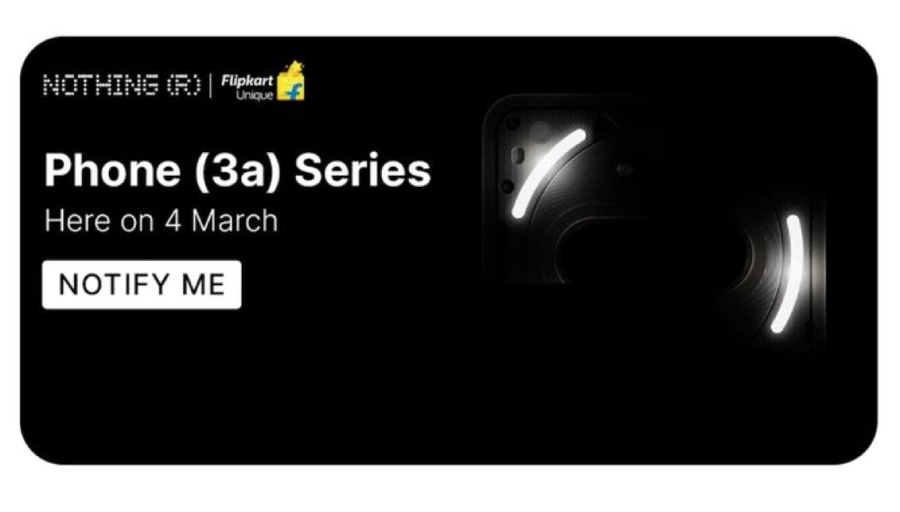
Nothing has scheduled its next launch event for March 4th. That’s still a month away, but in typical Nothing fashion, the company is already dropping cryptic teasers to build the hype.
A new teaser courtesy of Flipkart confirms that Nothing is indeed planning to launch the Phone (3a) series in March. Initially, Nothing didn’t clarify whether it would unveil the Phone (3) flagship or the (3a) series, but now it’s official — the spotlight is on the (3a) lineup.
Flipkart’s teaser also offers a glimpse of the design. The device features Glyph LED lights that partially encircle the camera module. The module itself remains horizontally aligned like its predecessors, but this time, it will sport three lenses.
Nothing Phone (3a) Series Specifications
In the upcoming lineup, Nothing is expected to unveil the Phone (3a) and (3a) Pro. The Phone (3a) will reportedly arrive in two configurations — 8/128GB and 12/256GB storage, with black and white color options.
The camera setup is expected to include a 50-megapixel main sensor, an 8-megapixel ultra-wide lens, and a 50-megapixel telephoto camera with 2x optical zoom. On the front, it may house a 32-megapixel selfie camera.
The device is rumored to feature a massive 6.8-inch AMOLED display with FHD+ resolution and a 120Hz refresh rate. Under the hood, it’s expected to pack the Snapdragon 7s Gen 3 chip and a 5,000mAh battery with support for 45W fast charging. Out of the box, it could run Nothing OS 3.1 based on Android 15.
At present, there is no information available about the core specifications of the Nothing Phone (3a) Pro. However, a new report suggests it will come in a single configuration with 12GB RAM + 256GB storage and be available in grey and black color variants. We will keep you updated if any new information emerges.
For more daily updates, please visit our News Section.
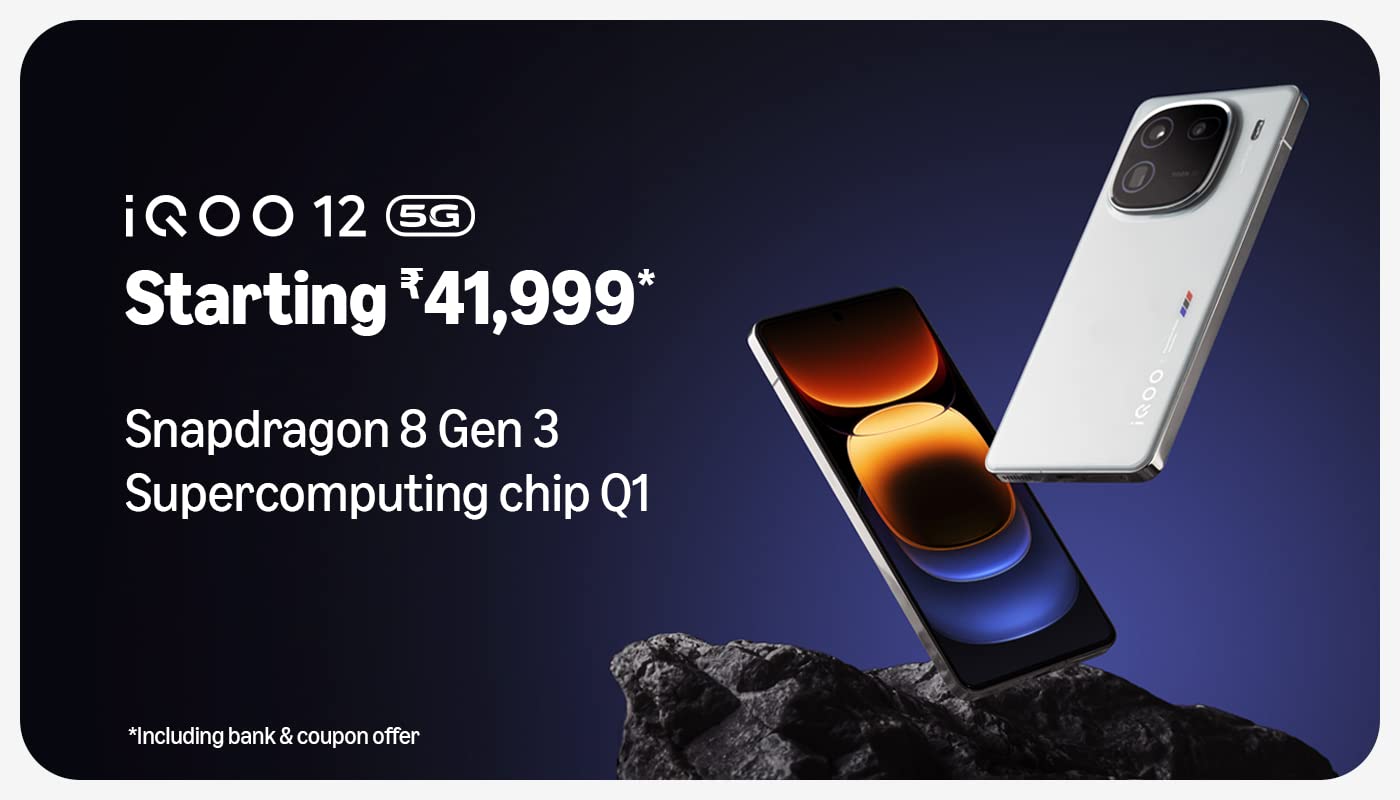
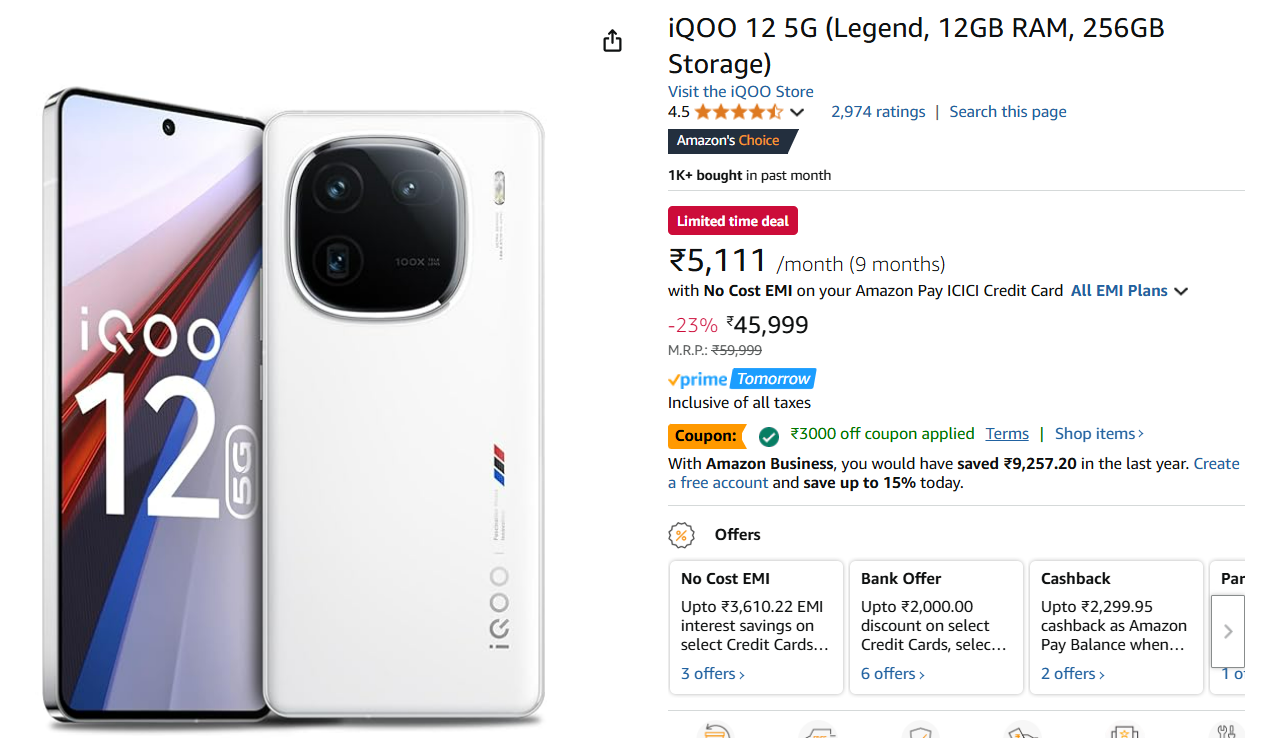
The iQOO 12 is currently available on Amazon for Rs 41,999, including bank and coupon offers, down from its listed price of Rs 45,999. Originally launched at Rs 52,999 in December 2023, its price has dropped significantly following the arrival of the iQOO 13, making it a compelling option in this price range.
iQOO 12 is available for Rs 41,999 on Amazon, inclusive of bank and coupon offers
At Rs 41,999, the iQOO 12 stands out among other smartphones in the same segment, including the Samsung Galaxy S24 FE, Galaxy S23, Vivo V40 Pro, OnePlus 12R, Xiaomi 14 Civi, Realme GT 6, and Poco F7. While some of these models excel in performance, such as the OnePlus 12R, Realme GT 6, and Poco F7, others like the Vivo V40 Pro and Xiaomi 14 Civi are more camera-focused. The iQOO 12, however, delivers strong performance along with an impressive photography experience, making it a well-rounded choice.
Compared to all the rivals mentioned above, the iQOO 12 is undoubtedly a better deal. However, there is one major competitor that hasn’t been mentioned yet.
2. iQOO 12 vs OnePlus 13R: Which one should you choose?
iQOO 12 listed for Rs 45,999, comes with an additional Rs 3,000 coupon discount
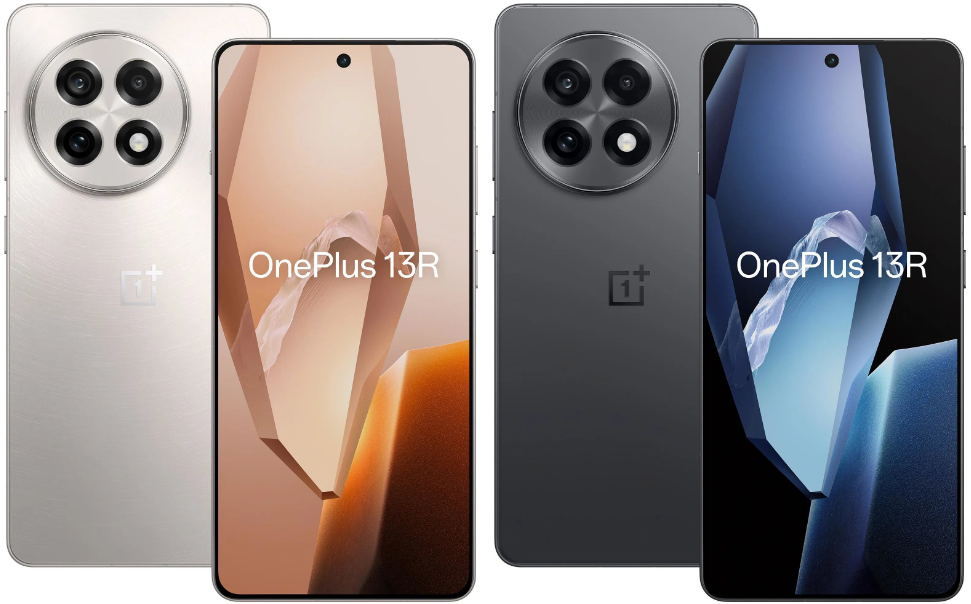
The OnePlus 13R is one of the strongest competitors to the iQOO 12. Both phones are powered by the Snapdragon 8 Gen 3 chipset, paired with LPDDR5x RAM and UFS 4.0 storage. They also share a 6.78-inch AMOLED LTPO display with a 1.5K resolution. However, while the iQOO 12 offers a 144Hz refresh rate and a peak brightness of 3,000 nits, the OnePlus 13R features a 120Hz refresh rate but a higher peak brightness of 4,500 nits.
On the front, both devices sport a 16-megapixel selfie camera. The real difference lies in the rear camera setup. The iQOO 12 is equipped with a 50-megapixel main sensor with OIS, a 50-megapixel ultra-wide lens, and a 64-megapixel periscope telephoto camera with 3x optical zoom. In contrast, the OnePlus 13R features an OIS-assisted 50-megapixel main camera, an 8-megapixel ultra-wide lens, and a 50-megapixel telephoto camera with 2x optical zoom.
Battery life is another key factor. The iQOO 12 houses a 5,000mAh battery with 120W fast charging, while the OnePlus 13R comes with a larger 6,000mAh battery and 80W fast charging. This makes battery performance a trade-off—while the OnePlus 13R has a bigger battery, the iQOO 12 charges significantly faster.
In terms of pricing, the OnePlus 13R starts at Rs 42,999 for the 12GB+256GB variant, while the 16GB+512GB model costs Rs 49,999. Meanwhile, the iQOO 12’s 12GB+256GB and 16GB+512GB versions are available for Rs 42,999 and Rs 47,999, respectively, after a Rs 3,000 coupon discount.
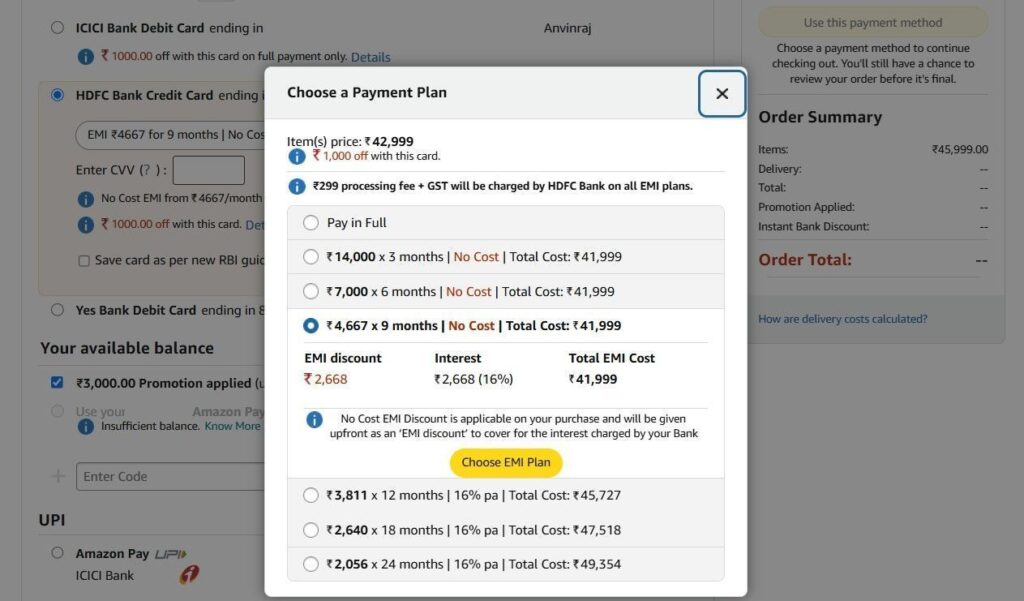
iQOO 12 is also available with additional offers, such as Rs 1,000 bank discount and up to 9-month no-cost EMI
Additional discounts of Rs 1,000 are available for ICICI, HDFC, and Federal Bank cardholders, bringing the effective prices down to Rs 41,999 and Rs 46,999, respectively. As can be seen in the above screenshot, it also comes with up to a 9-month no-cost EMI offer that can be clubbed with a Rs 1,000 discount.
It is also advisable to check for offers on the OnePlus 13R on Amazon and the OnePlus official website.
3. Why you might want to skip the iQOO 12
OnePlus 13R
One of the main drawbacks of the iQOO 12 is its software update policy. The OnePlus 13R runs on Android 15 with OxygenOS 15 and is promised four major Android updates. In contrast, the iQOO 12 comes with Android 14 and FunTouch OS 14 and is expected to receive updates only up to Android 17, which is not bad.
Ultimately, the choice depends on your priorities. If you prioritize performance and photography, the iQOO 12 is an excellent option at its discounted price. While the iQOO 12 is now available for an enticing price, its software support may feel limited compared to the OnePlus 13R.
For more daily updates, please visit our News Section.
The battle between Samsung and Apple for smartphone supremacy continues with the launch of the Samsung Galaxy S25 Ultra and iPhone 16 Pro Max. Both devices represent the pinnacle of their respective brands, boasting top-tier hardware, AI-driven features, and significant camera advancements. But which one is better? The answer depends on what you’re looking for in a smartphone – whether it’s cutting-edge AI capabilities, camera innovations, or software experience.
The Galaxy S25 Ultra and iPhone 16 Pro Max take different approaches to design. Samsung continues to refine its boxy yet premium look, while Apple sticks to its polished, rounded titanium frame. The S25 Ultra features Corning Gorilla Armor 2, an ultra-durable, scratch-resistant material, whereas the iPhone 16 Pro Max uses Ceramic Shield, known for its toughness. Both are IP68-rated, ensuring water and dust resistance.
When it comes to displays, Samsung has traditionally led the industry, and the S25 Ultra further cements its dominance. It features a 6.9-inch QHD+ Dynamic AMOLED 2X panel with a 1-120Hz adaptive refresh rate and an impressive 2600 nits peak brightness. Apple, on the other hand, has improved its Super Retina XDR display, making the 6.9-inch ProMotion panel on the iPhone 16 Pro Max slightly bigger than its predecessor. However, Apple’s display tops out at 2000 nits peak outdoor brightness, giving Samsung the advantage in sunlight visibility.
Please Note: When you buy something using the links in our articles, we may earn a small commission at no cost to you.
2. Performance and AI Features
Both flagship smartphones run on custom AI-optimized chipsets, making them some of the most powerful devices ever released. The Galaxy S25 Ultra is powered by the Snapdragon 8 Elite for Galaxy, while the iPhone 16 Pro Max runs on Apple’s A18 Pro chip.
While the A18 Pro boasts a 16-core Neural Engine optimized for on-device machine learning and AI tasks, Samsung has integrated Galaxy AI, a set of advanced AI-driven features. AI plays a major role in both ecosystems, but Samsung’s approach seems more immediate and intuitive. The Gemini-powered AI assistant, built into the Galaxy S25 Ultra, supports context-aware app navigation, real-time translations, and generative photo editing tools. Meanwhile, Apple Intelligence, the company’s answer to AI integration, is still rolling out, and its full suite of features won’t be available until later in 2025.
Samsung’s Now Brief feature, which curates personalized updates for users, and its cross-app AI actions, like summarizing notes and executing tasks with natural language, make the S25 Ultra feel like the smarter phone at launch. Apple’s AI tools are impressive, particularly in writing assistance and Genmoji (AI-generated emojis), but they don’t match the range of Samsung’s capabilities just yet.
3. Who Wins the Photography Battle?
Apple and Samsung have different philosophies when it comes to mobile photography. Apple’s iPhone 16 Pro Max continues to rely on a triple-lens system with a 48MP main sensor, a 120mm 5x telephoto lens, and an ultra-wide sensor. The iPhone’s strength lies in its color accuracy, ProRes video capabilities, and enhanced computational photography. With 4K120 recording, spatial video capture, and improved image processing for night shots, it remains a top choice for videographers.
Samsung, however, pushes the hardware boundary further. The Galaxy S25 Ultra introduces a new 50MP ultrawide sensor, replacing last year’s 12MP shooter, giving it a notable edge in landscape and macro photography. It retains the 200MP primary sensor, which delivers incredible detail and AI-assisted zoom capabilities. Samsung’s 50MP 5x periscope telephoto lens is a direct rival to Apple’s 5x zoom, but with AI-powered enhancements like Galaxy Log for professional color grading and Audio Eraser for noise isolation, Samsung offers more versatility for content creators.
4. Battery Life and Charging
Apple claims that the iPhone 16 Pro Max has the best battery life ever in an iPhone, with up to 33 hours of video playback. The efficiency of the A18 Pro chip, combined with Apple’s software optimizations, ensures long endurance. Samsung, on the other hand, packs a 5000mAh battery, which has been standard for Ultra models in recent years. The Snapdragon 8 Elite’s efficiency improvements and Samsung’s power-saving optimizations should make it competitive, but Apple’s iOS ecosystem still gives it an edge in battery life.
When it comes to charging, Samsung wins on speed. The S25 Ultra supports 45W fast wired charging, while Apple remains limited to 30W wired charging. Both support Qi wireless charging, but Samsung also includes Wireless PowerShare, allowing you to charge other devices like Galaxy Buds or a smartwatch by placing them on the back of the phone.
5. Software and Longevity
Samsung’s One UI 7, based on Android 15, is now more refined than ever, and it promises seven years of OS updates and security patches, matching Apple’s long-standing support policy. Apple’s iOS 18 brings new AI-driven features, deeper customization options, and an improved Control Center, but it remains less flexible than Android when it comes to user personalization.
However, iPhones still benefit from longer-lasting software performance, meaning an iPhone 16 Pro Max will likely remain smooth even years down the line. Samsung has improved its long-term performance with better memory management and heat dissipation, thanks to its 40% larger vapor chamber, but iPhones traditionally age better.
6. Pricing and Availability
The Galaxy S25 Ultra starts at $1,299 for the 12GB + 256GB model, while the iPhone 16 Pro Max starts at $1,199 for 256GB. Samsung offers a 1TB model with 16GB RAM in some regions.
Apple devices tend to hold their resale value better, but Samsung’s frequent trade-in deals and pre-order bonuses often make the Galaxy S series a better deal at launch.
7. Which One Should You Buy?
Choosing between the Samsung Galaxy S25 Ultra (our hands-on) and the iPhone 16 Pro Max depends on your preferences and priorities. If you’re an Apple ecosystem user, with AirPods, a Mac, or an iPad, the iPhone 16 Pro Max is a natural fit. Its long software support, color-accurate cameras, and seamless iOS experience make it the best choice for iPhone fans.
However, if you want the most advanced AI features, a more versatile camera system, and a bigger battery with faster charging, the Galaxy S25 Ultra takes the crown. Its AI-powered software enhancements, higher resolution camera, and superior display technology make it the more futuristic device.
For AI-driven users, photographers, and those who want cutting-edge Android features, the Galaxy S25 Ultra is the better pick. But for iOS users who value ecosystem integration, longevity, and video recording quality, the iPhone 16 Pro Max is still a powerhouse.
Both devices represent the best of what Samsung and Apple have to offer, and neither will disappoint. But in 2025, Samsung’s aggressive push into AI, camera improvements, and display innovation gives the Galaxy S25 Ultra a slight edge over Apple’s latest flagship.
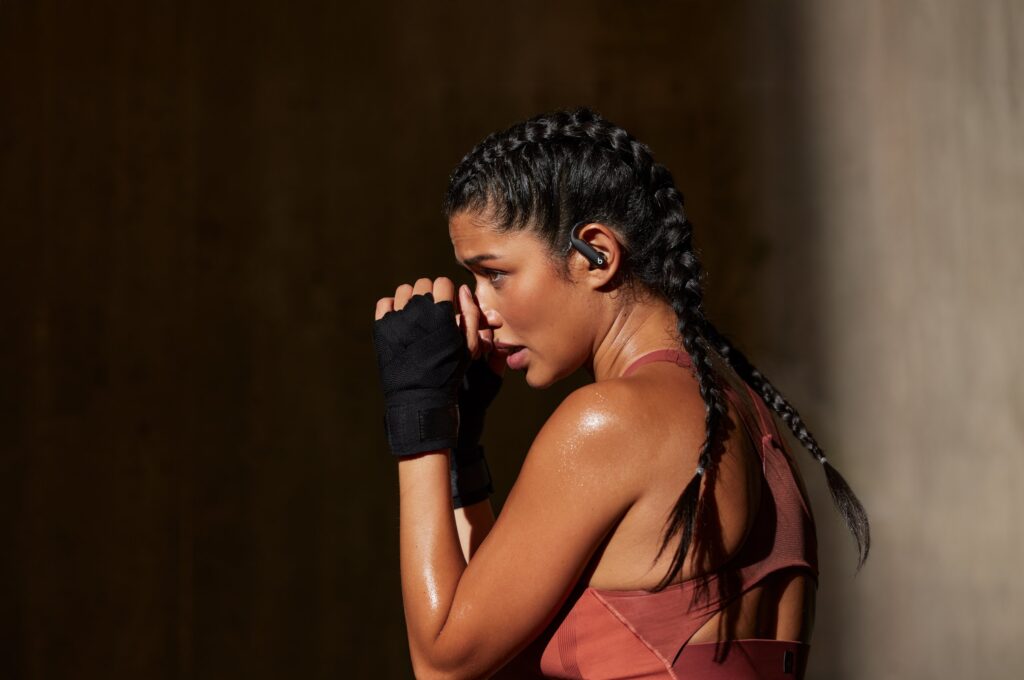
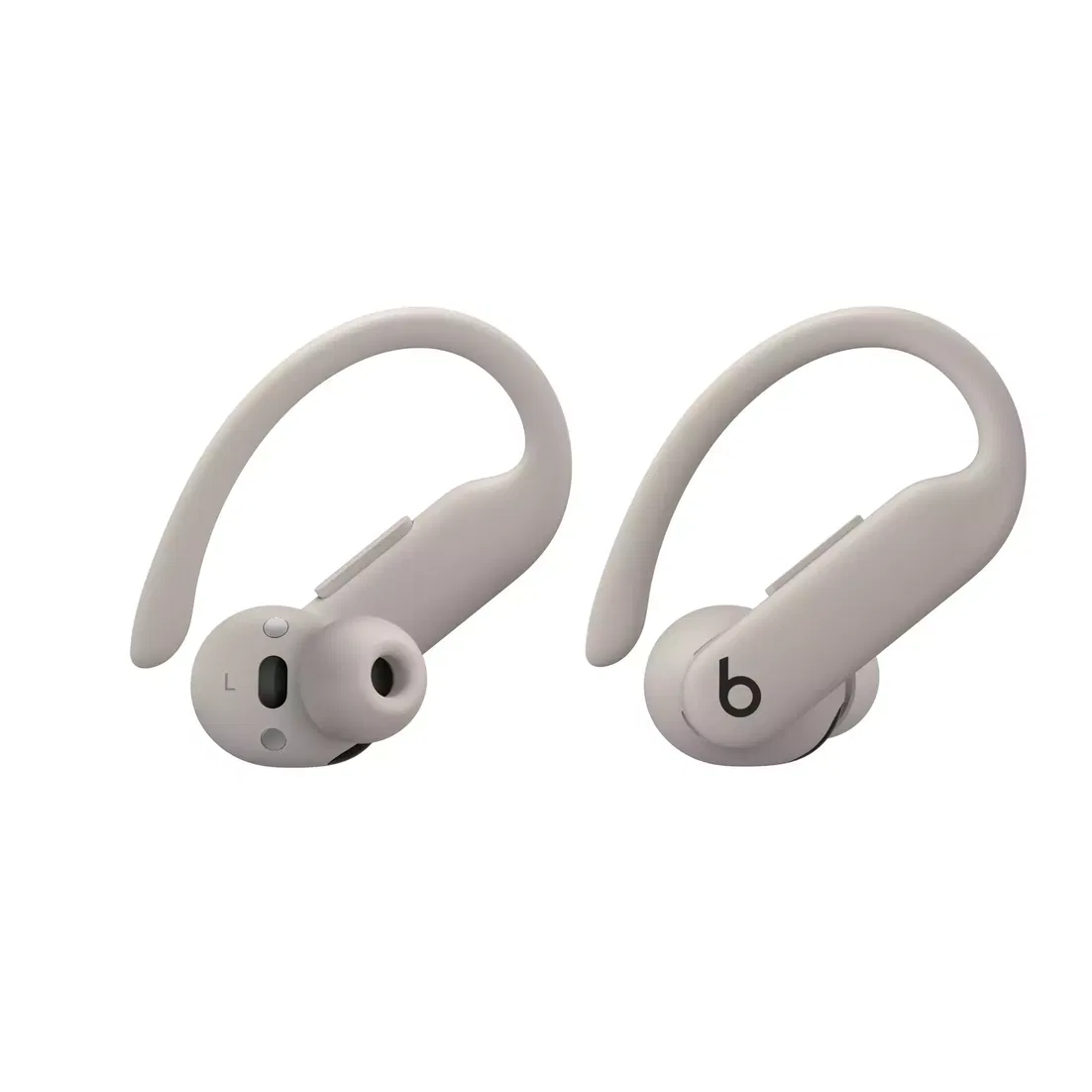
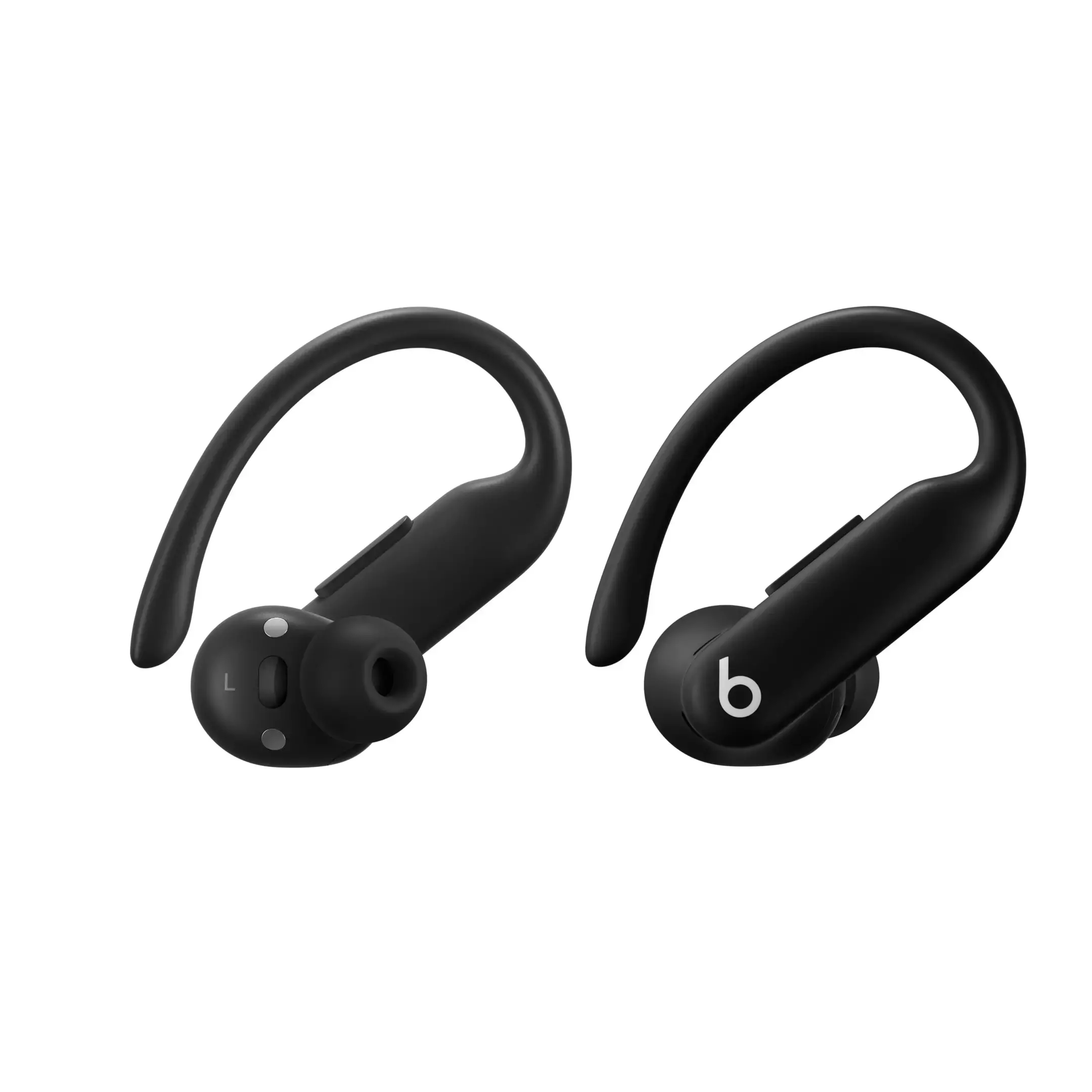
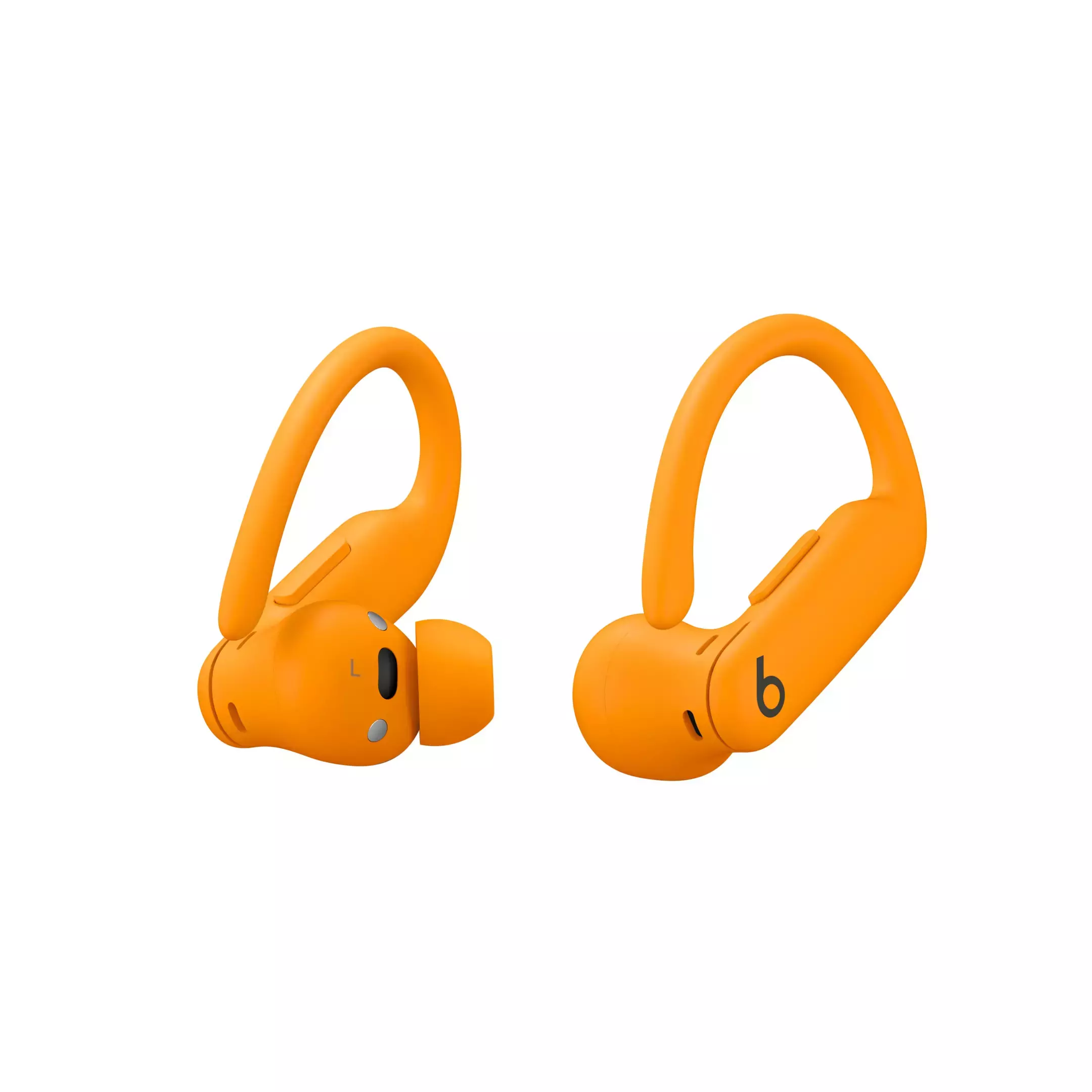
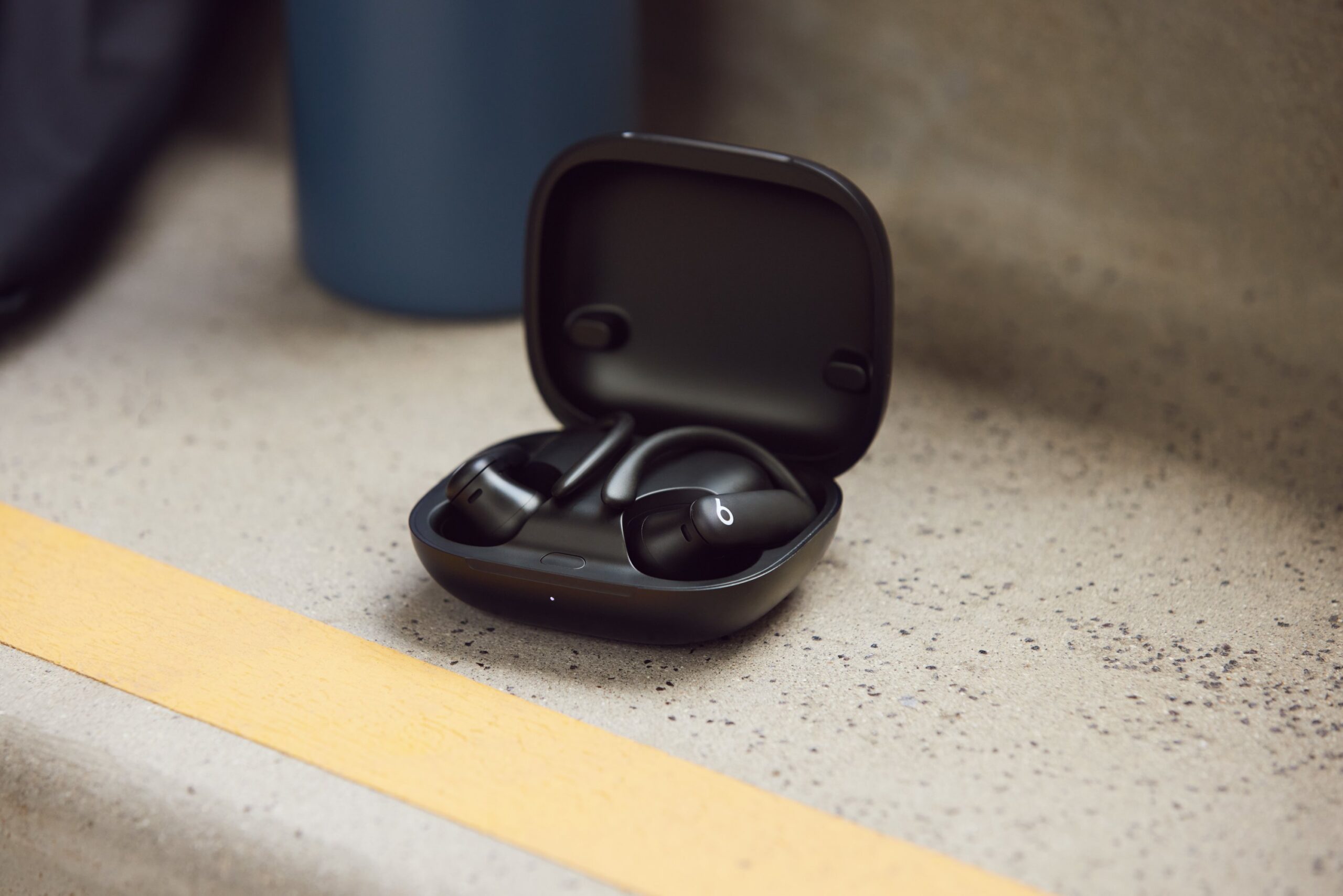
Beats by Dr. Dre is preparing to release the Powerbeats Pro 2 in 2025, six years after the original model. While the exact launch date has not been confirmed, leaked images and specifications, shared in a Winfuture report have provided insight into what to expect.
Design and Color Options
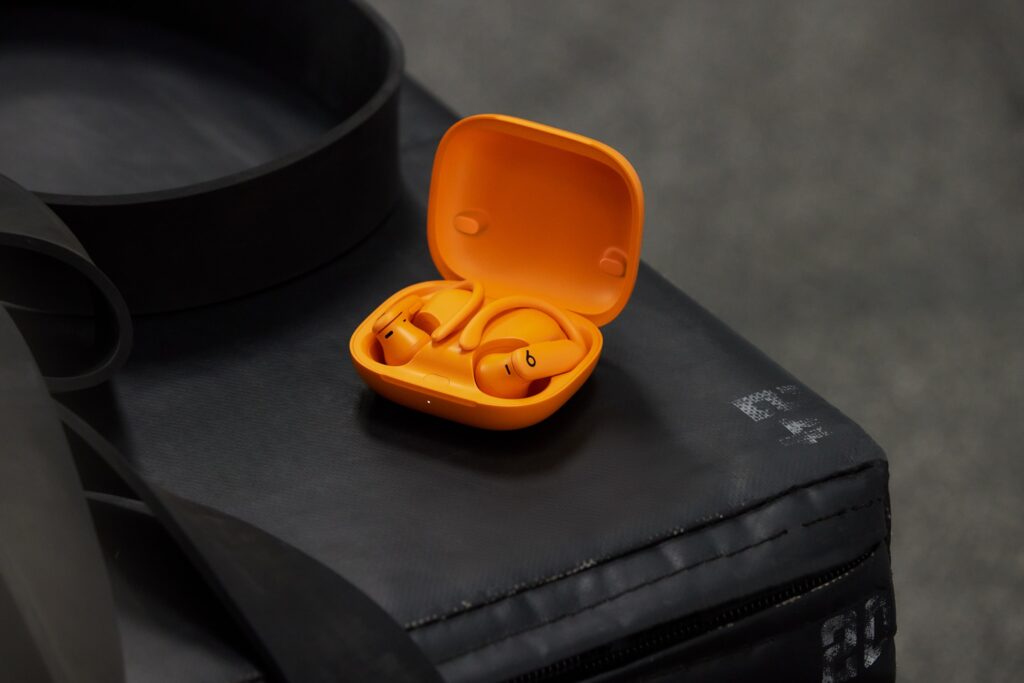
The Powerbeats Pro 2 will be available in four colors: Jet Black, Quick Sand, Electric Orange, and Hyper Purple. The design keeps the familiar over-ear hook style but is now 20% lighter, incorporating a nickel-titanium alloy for better flexibility and grip. Apple has also introduced five ear tip sizes—extra-small, small, medium, large, and extra-large—for a more comfortable fit.
Features and Sound Improvements
A new addition is the built-in heart rate monitor, which uses optical LED sensors that pulse over 100 times per second to measure blood flow. This feature is particularly useful for workouts. The earbuds run on Apple’s H2 chip and provide up to 45 hours of battery life with the charging case. Each earbud offers 10 hours of playback per charge, while Fast Fuel allows for 90 minutes of use from just a five-minute charge.
Apple has incorporated its most advanced Active Noise Cancelling (ANC) system so far, along with a Transparency mode that keeps users aware of their surroundings. The adaptive equalizer automatically adjusts frequencies in real time based on fit, delivering clear highs, balanced mids, and deep bass.
Connectivity and Usability
The Powerbeats Pro 2 features Class 1 Bluetooth for a strong connection, along with hands-free Siri, automatic device switching, and spatial audio with dynamic head tracking for an immersive listening experience. Each earbud includes three microphones to improve voice clarity and reduce background noise.
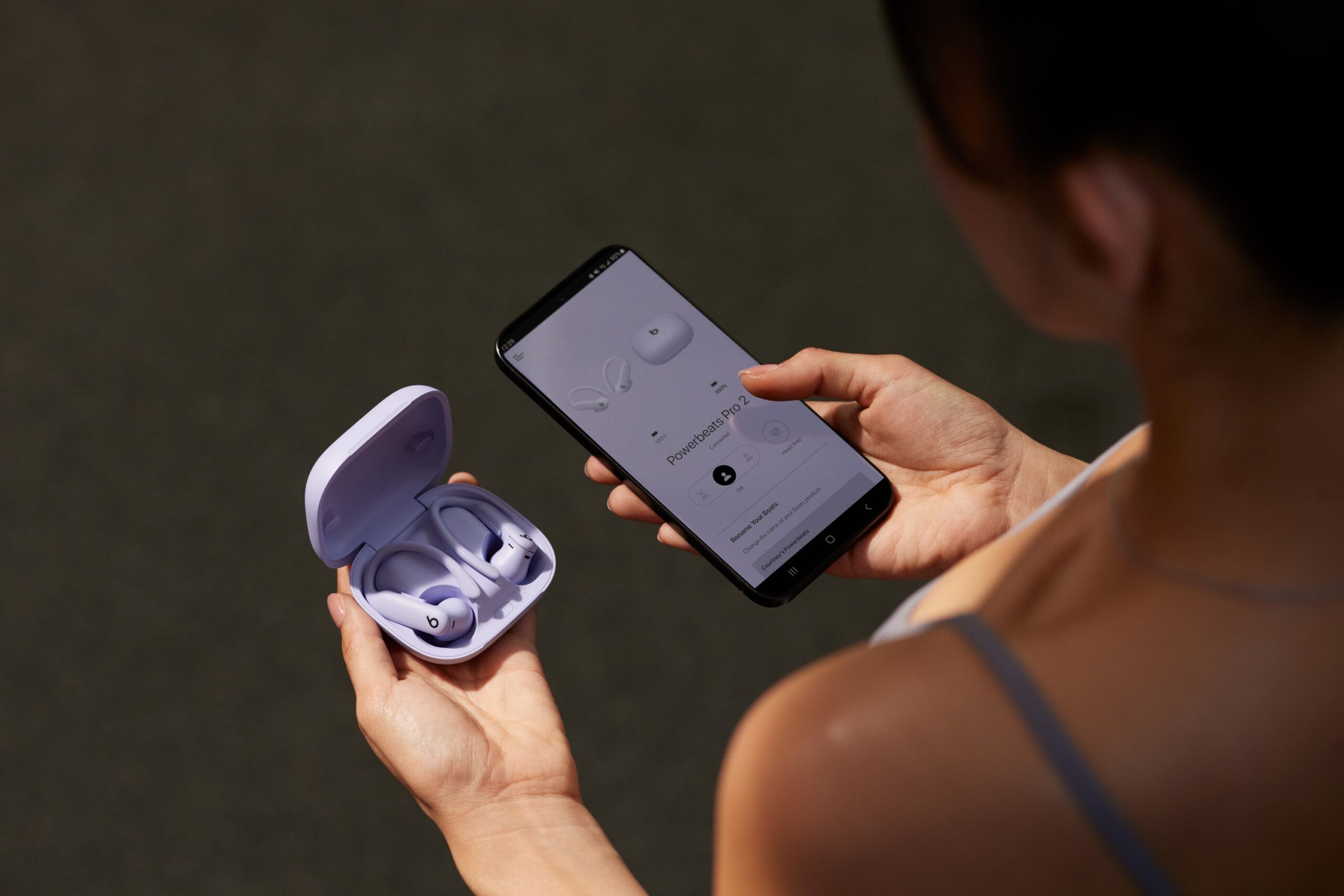
For Android users, the Beats app supports one-touch pairing, heart rate monitoring, and battery status updates. The charging case is Qi-certified for wireless charging and is now 33% smaller than the previous version. The earbuds have an IPX4-rated water and sweat resistance, making them a good workout companion.
Pricing & availability
Pricing of the Powerbeats Pro 2 is expected to be EUR 299.95. As for availability, the earbuds are expected to debut in the coming weeks.
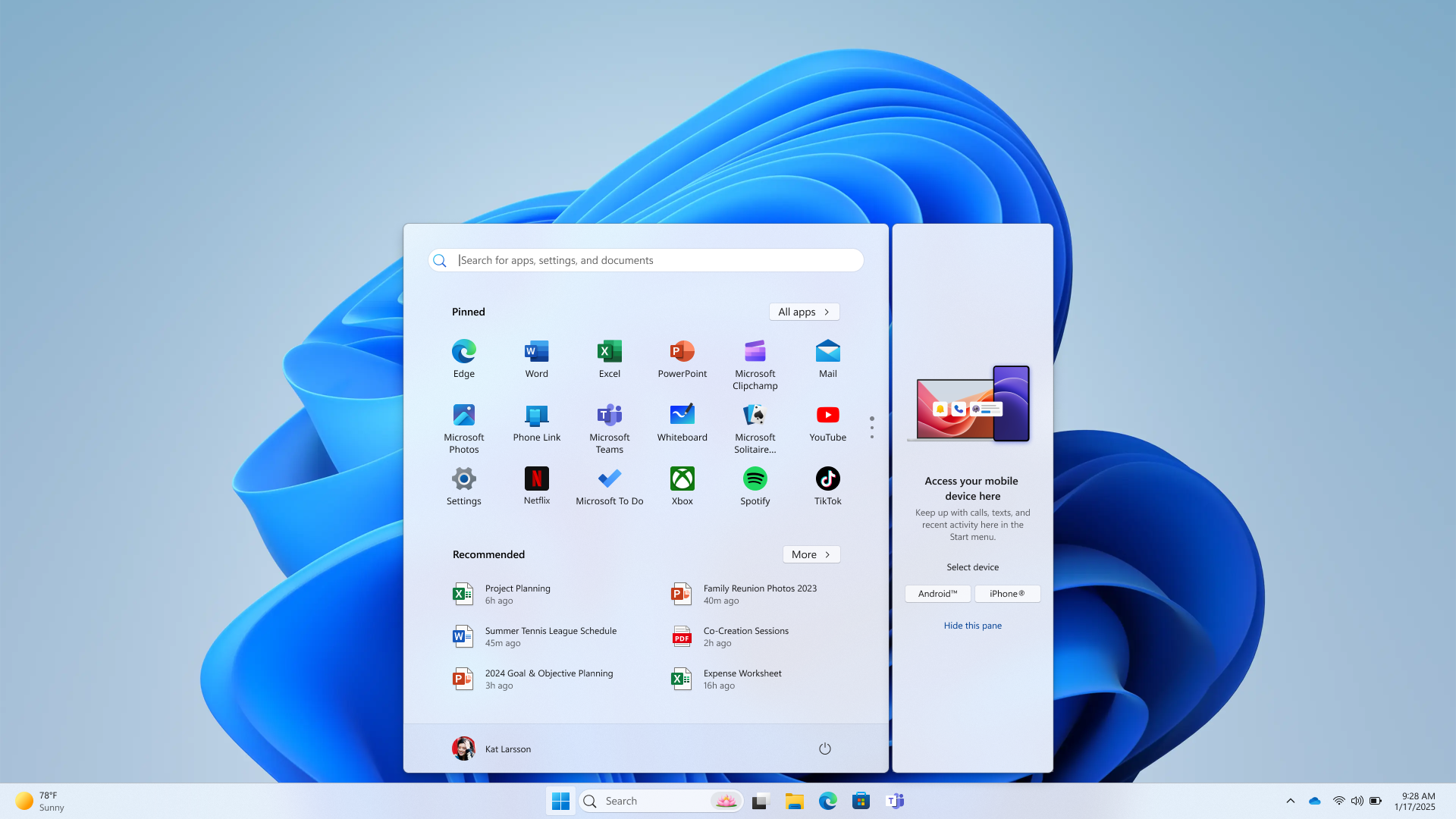
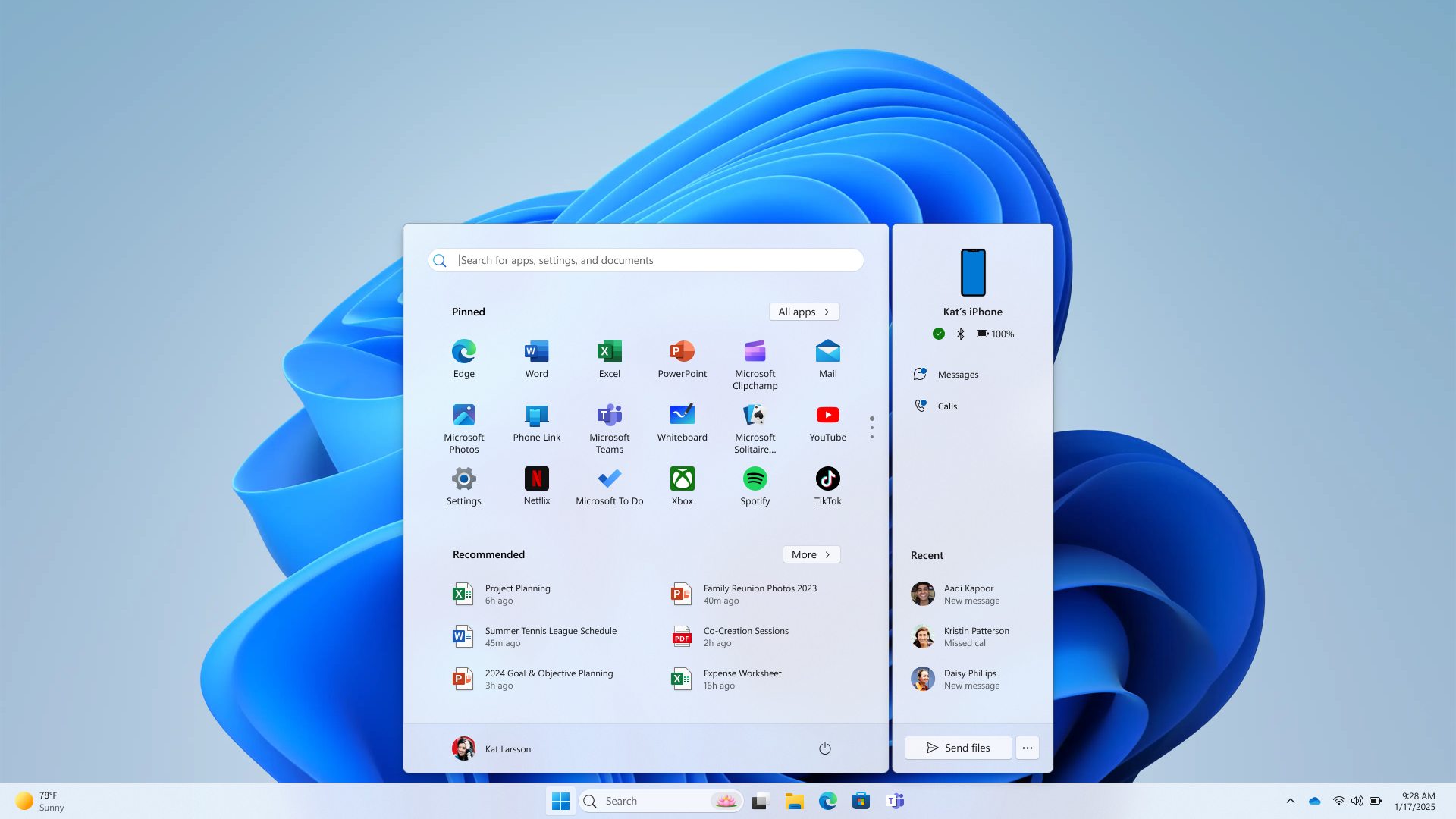
Microsoft has expanded its Phone Link feature to include iPhone users, bringing seamless integration to the Windows 11 Start menu. Previously limited to Android devices, this update allows iPhone owners to connect their devices to Windows PCs and access key features directly from the Start menu. Users can now view messages, check battery status, monitor connectivity, and track recent activities without opening the Phone Link app.
Simplified file sharing and connectivity for iPhone users
Connect your phone to Windows PC from the Start menu.
The update also simplifies file sharing between iPhones and PCs. By accessing the connected device in the Start menu, users can quickly send files with just a few clicks, similar to Apple’s AirDrop functionality. This enhancement builds on Microsoft’s earlier rollout of iPhone file sharing, making the process faster and more intuitive.
Access your iPhone from the Start menu.
To use these features, Windows Insiders in the Dev and Beta Channels need Windows 11 Build 4805 or higher, Phone Link version 1.24121.30.0 or later, and a Microsoft account. Bluetooth LE support is also required. While the feature is currently available to testers, it is expected to roll out to all Windows 11 users in the coming months.
This update marks a significant step in bridging the gap between Windows PCs and iPhones, offering a more unified experience for users who rely on both ecosystems.
For more daily updates, please visit our News Section.
We use cookies on our website to give you the most relevant experience by remembering your preferences and repeat visits. By clicking “Accept”, you consent to the use of ALL the cookies.
This website uses cookies to improve your experience while you navigate through the website. Out of these, the cookies that are categorized as necessary are stored on your browser as they are essential for the working of basic functionalities of the website. We also use third-party cookies that help us analyze and understand how you use this website. These cookies will be stored in your browser only with your consent. You also have the option to opt-out of these cookies. But opting out of some of these cookies may affect your browsing experience.
Necessary cookies are absolutely essential for the website to function properly. This category only includes cookies that ensures basic functionalities and security features of the website. These cookies do not store any personal information.
Any cookies that may not be particularly necessary for the website to function and is used specifically to collect user personal data via analytics, ads, other embedded contents are termed as non-necessary cookies. It is mandatory to procure user consent prior to running these cookies on your website.