HONOR has launched its new EarBuds X8, budget-friendly wireless earbuds, during the HONOR 300 series event in China. These earbuds pack a range of features that cater to everyday users, offering affordability and quality.
HONOR Earbuds X8
HONOR Earbuds X8 features
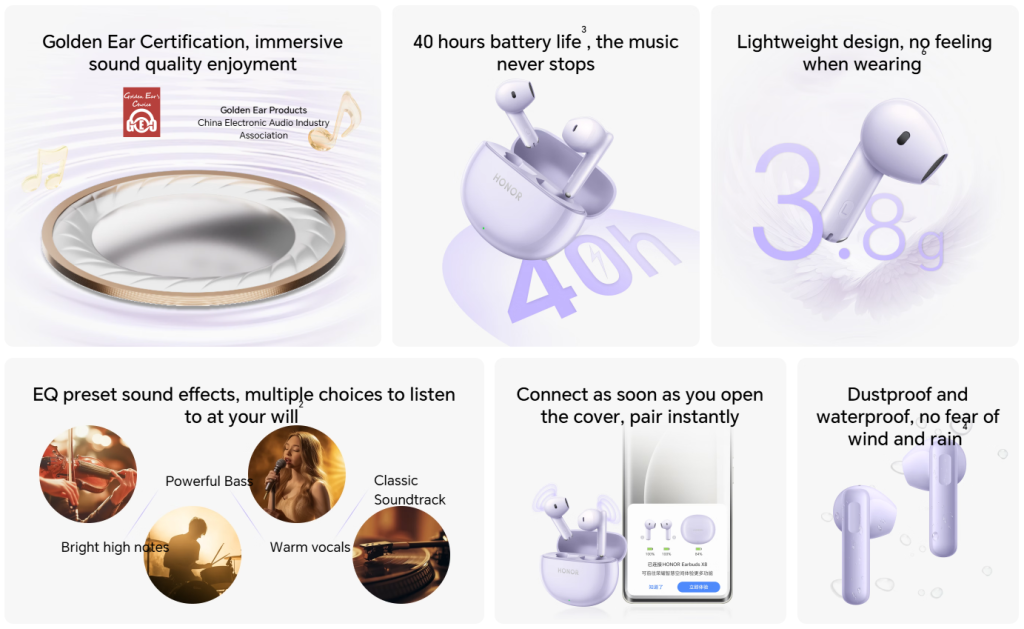
Launched alongside the HONOR 300 series in China, these earbuds are equipped with a 10mm composite titanium-plated diaphragm, delivering clear and balanced audio that has earned the China Electronic Audio Industry Association’s Golden Ear Product Certification.
HONOR Earbuds X8 features
Users can further customize their listening experience with four EQ sound effects tailored to different music genres. The EarBuds X8 offers an impressive battery life of up to 9 hours on a single charge, which extends to 40 hours with the charging case, and a quick 10-minute charge provides 3 hours of playback.
Weighing just 3.8 grams each, they are lightweight and comfortable for prolonged use. Their IP54 rating protects against dust and water splashes, making them ideal for workouts and outdoor activities.
It has Bluetooth 5.3 ensuring stable connectivity, while support for SBC and AAC codecs, Google Fast Pair, and dual-device smart connections enhances functionality. Additional smart features include touch controls and AI-powered noise reduction for calls.
Pricing & availability
The Earbuds X8 from Honor has a price tag of 299 yuan (US$41), and is already available to buy in China.
Honor has also introduced the Select LCHSE, open wireless earbuds featuring a distinctive titanium alloy arch bridge design inspired by Chinese stone bridges. Weighing just 5.1 grams, these earbuds include a 10.8mm dual magnetic circuit driver, dynamic bass boost, spatial surround sound, AI noise reduction for calls, and IP54 dust and splash resistance. A standout feature is their competitive pricing, offering a more budget-friendly alternative to the Huawei FreeBuds.
Remember the Huawei FreeClip earbuds (review) with their unconventional design—two parts linked by a C-shaped bridge? Well, Honor, Huawei’s former sub-brand, is now dipping its toes in those same waters with the launch of the Honor Select LCHSE earbuds.
Honor Select LCHSE earbuds specifications
The LCHSE are open wireless earbuds with a unique titanium alloy arch bridge design inspired by traditional Chinese stone arch bridges. Honor says the “core area” of the earbuds, likely the internals, are made of high-performance titanium alloy.
This core is encased in scratch-resistant PC material that gives a high strength and lightweight body design. The bridge connects inward to the earbud housing and outward to a “comfort bean” – a small protrusion that sits behind the ear.
Each earbud weighs just 5.1 grams and comes in Phantom Night Black or Monet Purple. They sport an “apple” shape, wider at the top and narrowing toward the bottom, and use directional sound transmission technology to reduce sound leakage. The charging case mirrors the earbuds’ design and allows for easy single-handed opening and closing.
The LCHSE earbuds include a 10.8mm dual magnetic circuit dynamic driver paired with a PEEK+PEN titanium-plated diaphragm. They also have features like dynamic bass boost technology and spatial surround sound.
For clear communication, the LCHSE is equipped with two high-sensitivity microphones. These microphones work in tandem with an AI multi-channel deep neural network (DNN) call noise reduction algorithm to suppress background noise and ensure a smooth calling experience.
The earbuds boast additional features for everyday use. They are IP54 dust and splash-resistant, allowing you to worry less about the elements. They also support dual-device connection for seamless switching between devices, touch gestures, and low latency mode.
The earbuds promise 7 hours of music playback on a single charge, with up to 36 hours of total battery life when used with the charging case.
Pricing and Availability
The Honor Select LCHSE significantly undercuts its Huawei counterpart in price. While the Huawei FreeBuds launched at 1299 yuan (approximately USD 188), the LCHSE is priced at a much more affordable 399 yuan (approximately USD 58). The earbuds are currently available for purchase in China, with no official announcement on global availability yet.
Xiaomi has officially announced that the Redmi Buds 6, the latest addition to its TWS earbuds lineup, will launch in India on December 9, alongside the Redmi Note 14 series. The new earbuds promise significant upgrades, focusing on advanced audio performance and user convenience.
Redmi Buds 6: What to expect
The Redmi Buds 6 will debut as the first in its segment to feature dual drivers, consisting of a 12.4mm dynamic driver paired with a 5.5mm micro-piezoelectric ceramic unit. This setup delivers a clear sound with deep bass and balanced tones. Users can also personalize their listening experience through SoundID customization and adaptive hearing optimization. Spatial audio is included, offering depth and a lifelike music experience.
The earbuds now offer Active Noise Cancellation (ANC) of up to 49dB, an improvement over the 46dB in the previous model. This feature helps block background noise in crowded places. Additionally, three transparency modes let users stay aware of their surroundings. Dual microphones with AI anti-wind noise technology ensure clear phone calls, even in noisy or windy conditions.
Designed for comfort and durability, the earbuds have a half-in-ear design that fits securely without discomfort. The build uses ABS material, and the IP54 rating provides dust and splash resistance, making them suitable for workouts or outdoor use.
Battery performance is another strong point. The earbuds can deliver 10 hours of playback on a single charge, and with the charging case, users can enjoy up to 42 hours of total use. For quick top-ups, a 10-minute charge provides up to 4 hours of playback.
Other notable features include Bluetooth 5.4 for stable connectivity and low-latency gaming performance. The earbuds also support smart dual-device connections and a remote shutter function to control the camera.
The Redmi Buds 6 will be available on mi.com, Amazon.in, other online platforms, and offline stores.
Earlier this year, Lenovo unveiled the ThinkPad T14s AI 2024, powered by the Snapdragon X Elite processor. Now, the company has released the Ryzen Edition of this laptop. Priced at 9999 yuan ($1,375), it is currently available for purchase on JD.com.
The laptop features the AMD Ryzen AI 7 Pro 360 processor with 8 cores and 16 threads, delivering up to 5.0 GHz single-core frequency for seamless multitasking and high efficiency. It equips Radeon integrated graphics and a Ryzen NPU AI processor, boasting 50 TOPS of local AI performance for accelerated applications.
It comes with 32GB of LPDDR5X dual-channel memory clocked at 7500MHz, ensuring smooth performance during demanding tasks. It also sports a 1TB PCIe 4.0 NVMe SSD for fast data access and ample storage space.
The laptop features a 14-inch WUXGA D IPS anti-glare matte display with a resolution of 1920×1200 pixels, a 16:10 aspect ratio, and 400 nits brightness. The screen offers 100% sRGB color gamut coverage and is certified for low blue light, making it comfortable for extended use. It also sports an 88% screen-to-body ratio, providing an immersive visual experience.
The ThinkPad T14s features advanced connectivity options such as Wi-Fi 7, Bluetooth 5.3, and Thunderbolt 4 ports. It comes with a variety of I/O options, including USB-A, HDMI 2.1, and a headphone/microphone combo jack. It equips security features like a fingerprint reader and a 5MP IR camera that supports facial recognition and includes a physical privacy shutter.
The laptop comes with a slim and lightweight design, measuring just 16.9mm thin and weighing approximately 1.3kg, making it highly portable. It equips a 58Whr battery capable of delivering up to 23 hours of local video playback and supports rapid charging, with 80% charge achieved in just one hour.
The keyboard comes with spill resistance, backlighting, and the iconic ThinkPad TrackPoint for precise navigation. It also supports Dolby Audio for an enhanced audio experience, dual noise-canceling microphones, and comprehensive durability through MIL-STD-810H certification, ensuring reliability in various conditions. The laptop runs on Windows 11 Home and Microsoft Office.
Earlier this year, Lenovo introduced the Lenovo Watch, equipped with a 1.43″ AMOLED display, Bluetooth calling capabilities, and continuous health tracking. Alongside this, the company also unveiled AI Buddy, a smart assistant designed to provide friendly, interactive assistance.
After launching the OnePlus 13 in China on October 31st, OnePlus has finally confirmed that the flagship device will soon make its debut in global markets. While the exact launch date has not been revealed yet, the company has confirmed that the phone will arrive in January 2025. To build excitement, OnePlus has also set up a dedicated microsite on its official website, offering a glimpse into the upcoming device and its features.
OnePlus 13 will come in three color options including glass and vegan leather finish
The OnePlus 13 global variant will be available in three distinct colour options: Midnight Ocean, Black Eclipse, and Arctic Dawn. The Midnight Ocean variant stands out with its micro-fiber vegan leather back panel, which not only gives the device a premium feel but also offers better scratch and scruff resistance.
Additionally, the OnePlus 13 boasts an IP68 + IP69 dust and water resistance rating, ensuring the phone can withstand some harsh conditions as well.
The global version of the OnePlus 13 will mirror the Chinese variant in terms of specifications. The phone features a large 6.82-inch 2K display, protected by a glass that was claimed to be 500% more drop-resistant than the glass used on the OnePlus 12.
Under the hood, the OnePlus 13 is powered by the Snapdragon 8 Elite chip, coupled with a massive 6000mAh battery. The device also includes a larger 9925mm² VC chamber for enhanced cooling, ensuring optimal performance even while playing the most demanding mobile games. The self-developed Tidal Engine promises smoother gameplay and faster graphics processing.
Exciting contest and Bonus Drop
To drum up anticipation for the global launch, OnePlus has launched a contest, which started on December 2nd and will run until the official launch date. To participate, users must hit the ‘Notify Me’ button on the dedicated microsite. The contest has five milestones, and once each milestone is reached, random winners will be selected from eligible participants.
In addition to the contest, OnePlus is offering a special OnePlus Bonus Drop for those who complete the ‘Notify Me’ action. For just Rs 11, eligible participants will receive a gift bundle that includes a Never Settle cap, a OnePlus travel tech pouch, an insulated coffee travel tumbler, and 500 Redcoins that will be credited to their OnePlus account. The bonus drop is limited to the first 3,000 participants, available on a first-come, first-served basis.
iQOO, the smartphone brand that has been selling its devices exclusively online in India since its debut in 2020, is set to venture into the offline retail space starting this month. This move marks a significant shift in the brand’s strategy as it seeks to increase its presence and accessibility in the Indian market.
iQOO’s offline sales will begin through Vivo-exclusive stores and other retail channels, providing customers with the opportunity to experience the brand’s devices in person before making a purchase.
The announcement regarding the offline availability of iQOO smartphones is expected at the iQOO 13 event in India on December 3rd. This move will complement the brand’s already successful online sales, which have primarily been carried out through Amazon India.
With this development, iQOO fans will be able to visit nearby physical stores to check out the devices firsthand. iQOO’s active community, known as iQOO Connect, with over a million members, is likely to benefit from this expansion.
In a related development, Vivo, which is celebrating its 10th anniversary in India this year, is planning to open 10 flagship stores soon.
iQOO 13 will likely be the first iQOO device to hit the offline market in India
According to Gadgets 360, the phone is going to be priced similarly to the previous model, the iQOO 12. Powered by the Snapdragon 8 Elite chip and paired with iQOO’s second-generation SuperComputing Chip Q2, the iQOO 13 offers cutting-edge gaming capabilities, including more efficient operation of Game Super Resolution and Game frame interpolation, ensuring a sustained 120fps gameplay.
On the front, the phone features a large 6.82-inch 8T LTPO flat display, developed using BOE’s advanced Q10 luminous material. With an impressive 3168×1440 resolution, it supports a smooth 144Hz refresh rate and a rapid 300Hz touch sampling rate, perfect for gaming and fast-paced activities.
The phone will run Funtouch OS 15, based on Android 15, which brings a host of improvements, including customizable icons, new system colors, and enhanced wallpapers. We have already experienced the Chinese version of the device, which you can also check out below.
iPads often come to mind first when we think about tablets, and for good reason—Apple has done a remarkable job creating a standout device for the large-screen market.
But in today’s day and age, we have plenty of excellent alternatives, meaning you don’t need to join Apple’s ecosystem just for a tablet or stay locked into it if you want to explore other options.
For Android users, tablets running the same operating system offer a familiar experience. Devices like the Samsung Galaxy Tab S series deliver smartphone-like functionality for a smooth transition while supporting a wide range of apps and user-friendly interfaces.
Beyond Android, there are other options as well. For example, if you need a tablet for remote work, a Microsoft Windows-powered device might be your best bet. With so many options available, let’s explore some compelling iPad alternatives in this article.
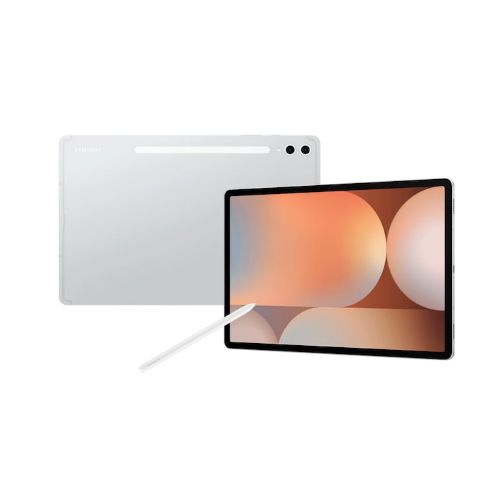
Samsung’s Galaxy Tab series has long been a serious competitor to the iPad. This year’s offerings continue that trend. The Galaxy Tab S10 Ultra is the best iPad alternative you can get right now.
The centerpiece is its stunning 14.6-inch Dynamic AMOLED 2X display. With a 120Hz refresh rate, vibrant colors, and anti-reflective technology, it delivers a visually immersive experience ideal for creativity and multimedia.
It has a sleek yet durable design, is built with enhanced Armor Aluminum, and offers IP68 dust and water resistance. The S Pen adds another layer of appeal with its near-instant 2.8ms response time.
The Tab S10 Ultra also comes with a suite of Galaxy AI tools like Live Translate and Sketch-to-Image to elevate your creative workflows. Seamless integration with Samsung’s ecosystem also makes it a natural fit for Galaxy users.
2. Google Pixel Tablet
Google’s Pixel Tablet is another strong Android contender in the race against the iPad. It features a 10.95-inch LCD display with a 2560 x 1600px resolution and a 16:10 aspect ratio.
Powered by the Tensor G2 processor, the tablet includes 8MP cameras on both the front and back. It also has a fingerprint sensor embedded in the power button and a “27-watt-hour” battery that offers up to 12 hours of video streaming. Google promises five years of updates, along with four speakers and three microphones for improved audio and voice control.
While these specs are typical for a tablet, what sets the Pixel Tablet apart is its ability to transform into a smart display. Included in the box is a charging speaker dock, which turns the tablet into a smart display. When docked, it acts like a Google Nest Hub, allowing you to control smart home devices and perform other tasks seamlessly.
3. OnePlus Pad 2
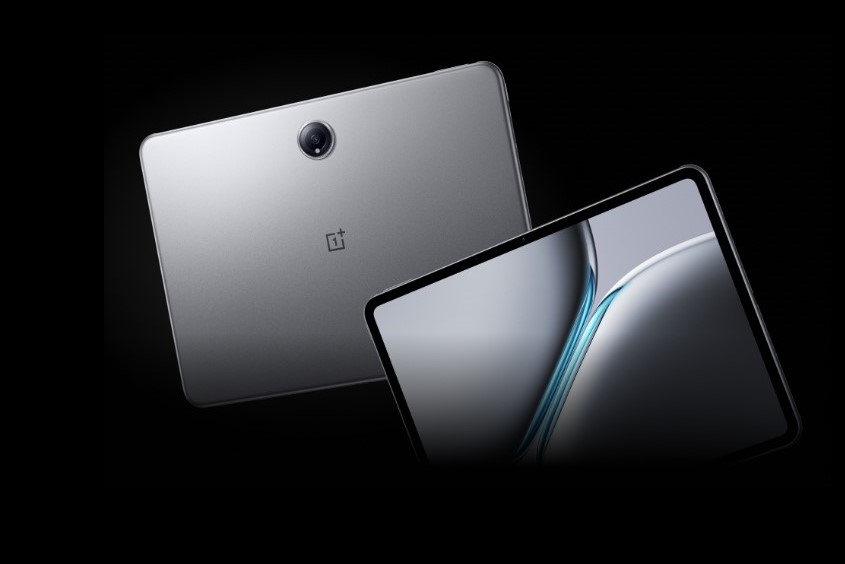
For those looking for another alternative in the Android ecosystem, the OnePlus Pad 2 is a strong contender. Designed for creativity and productivity, it features a unique 7:5 aspect ratio screen and the powerful Snapdragon 8 Gen 3 processor.
Its premium glass and metal design adds a touch of elegance, while the optional keyboard folio and stylus boost productivity.
The 12.1-inch LCD display impresses with its high 2120 x 3000 resolution, 144Hz refresh rate, and 600 nits of brightness. While it lacks the deep contrast of an OLED panel, the LCD performs well for tasks like photo editing.
That said, Android tablets still have some challenges. App optimization for larger screens remains inconsistent, and access to professional-grade software still lags behind the iPad.
Even so, the gap continues to close, and Android tablets are proving increasingly capable of handling demanding productivity tasks.
4. Amazon Fire Max 11
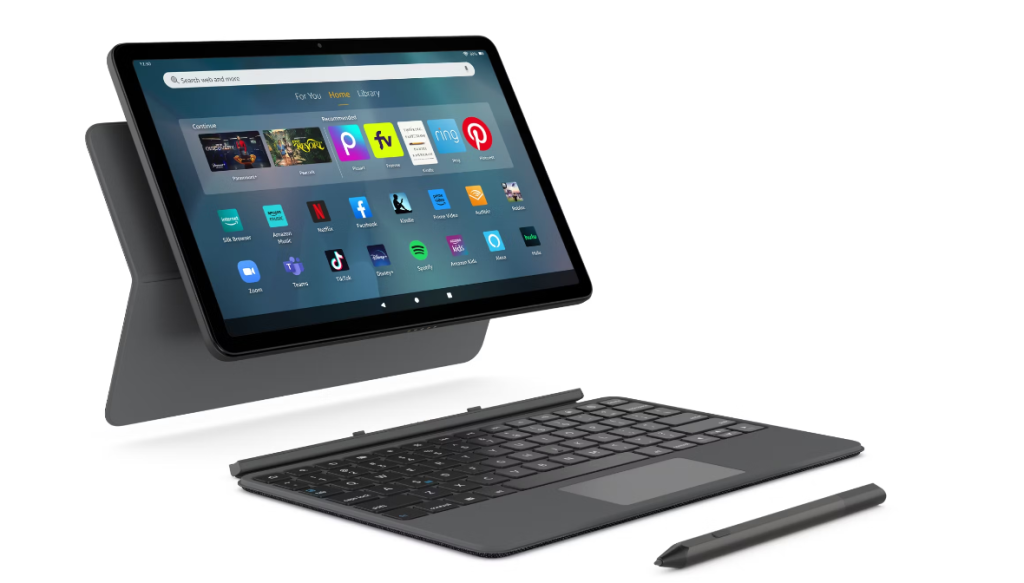
Primarily focused on media consumption? Look no further than the Amazon Fire Max 11. Designed as an entertainment-focused tablet, it excels at streaming movies, playing music, and handling light productivity tasks, especially when paired with the optional Keyboard Case.
Released in May 2023, the Fire Max 11 features an HD-resolution screen and surprisingly good audio for its price. While it doesn’t compete with the iPad Pro’s premium display or sound system, it’s more than sufficient for casual users. Pairing it with quality headphones can further improve the audio experience.
However, the Fire Max 11 has some limitations. Unlike most tablets, it runs on FireOS, which restricts you to its app ecosystem rather than offering Android or iOS apps. This could be a dealbreaker if you rely on specific apps. Additionally, its 8MP cameras are basic at best.
5. Microsoft Surface Pro 11
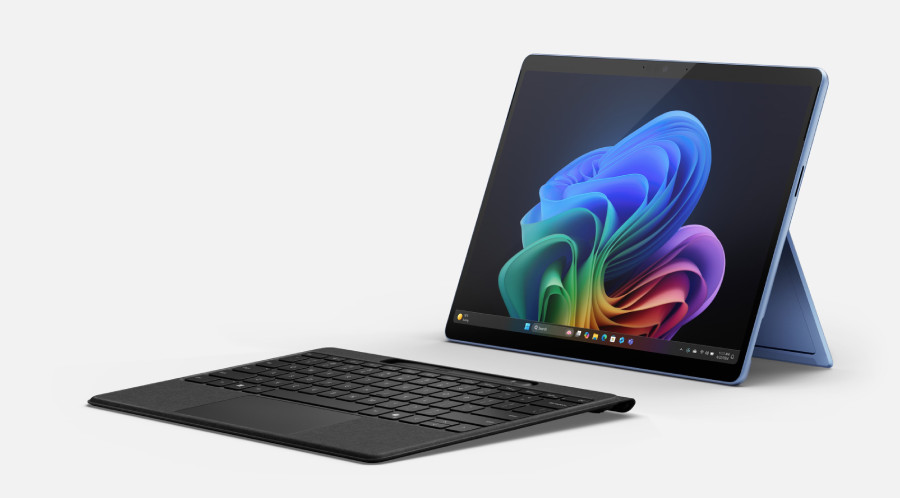
If you crave a tablet that seamlessly transitions into a laptop experience, the Microsoft Surface Pro series is a compelling option. Running full Windows 11, the Surface Pro offers desktop-class performance and access to the entire Windows software library. The sleek design and detachable keyboard make it a true two-in-one device, equally at home on the couch and in the conference room.
However, the Surface Pro might feel a tad bulkier than some dedicated tablets. Additionally, the price point is significantly higher than most non-Apple tablets. Finally, the battery life on the Surface Pro might not be as impressive as some true tablets. If sheer power and a full Windows experience are paramount, though, the Surface Pro series remains a top contender.
6. Lenovo Chromebook Duet 5
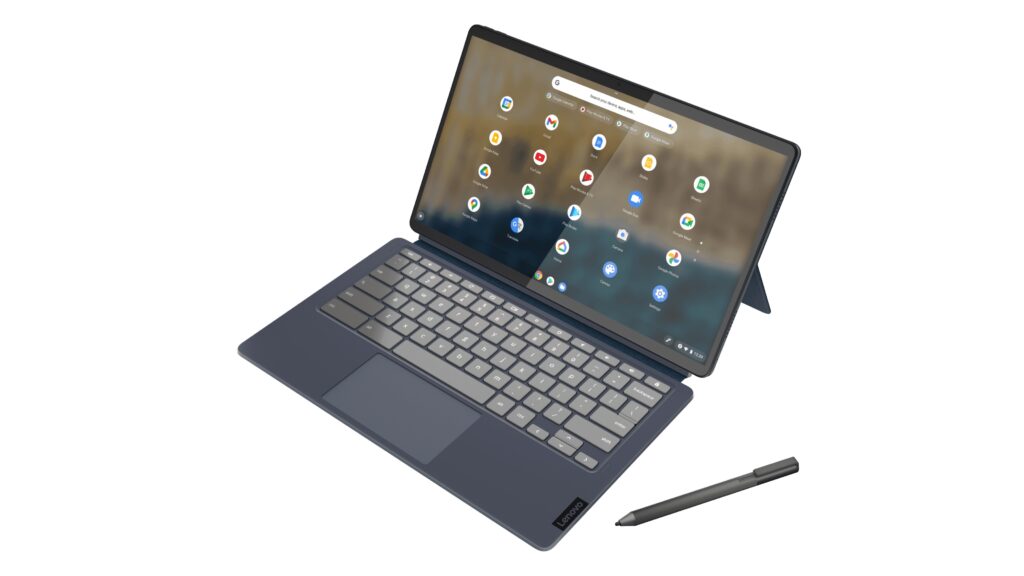
For those seeking a stripped-down experience at a budget-friendly price, the Lenovo Chromebook Duet 5 delivers. Powered by ChromeOS, this Chromebook excels at basic tasks like browsing, email, and light productivity.
The Duet 5 stands out for its larger 13.3-inch screen and ample 128GB storage, offering excellent value for its price tag. It boasts a detachable 1080p OLED panel, the last of its kind in the dwindling Chromebook tablet market. The device comes with a capable Snapdragon SC7180 processor and 8GB of RAM, housed in a sleek aluminum chassis.
7. The Takeaway
The ideal tablet depends on your needs and budget. For Android users, the Samsung Galaxy Tab S10 Ultra offers a premium experience. The OnePlus Pad 2 delivers power and affordability, while the Amazon Fire Max 11 excels at entertainment.
For those craving a laptop experience, the Microsoft Surface Pro 11 offers unmatched power. Finally, the Lenovo Chromebook Duet 5 is the perfect budget pick for basic tasks. With so many options available, you’re sure to find the perfect iPad alternative to fit your needs.
Noise has introduced its latest open-ear clip-on headphones, the Air Clips, in India. Priced at Rs. 2,999 for the launch, these headphones are available in three color options: Pearl Black, Pearl White, and Pearl Purple. They are now available for purchase on Noise’s official website and come with a 1-year warranty. Let’s check out the key specifications.
Noise Air Clips Specifications
The Noise Air Clips feature 12mm drivers that enhance audio clarity, delivering immersive sound quality. It equips Bluetooth v5.4 technology, ensuring a stable connection with a wireless range of up to 10 meters. Their compatibility spans across both Android and iOS devices.
It comes with AirWave Technology, enabling open-ear listening while maintaining awareness of surroundings. It also supports dual-device pairing, allowing seamless connectivity with multiple devices. It sports an IPX5 water resistance rating, making the earbuds resistant to sweat and light rain.
For convenience, the Noise Air Clips feature Instacharge technology, providing 150 minutes of playback with just 10 minutes of charging. It offers a total playtime of up to 40 hours, making it ideal for long commutes or trips. It also equips a USB-C fast-charging case for added convenience.
The earbuds come with responsive touch controls, enabling users to play/pause music, adjust volume, and accept/reject calls with ease. They also support voice assistants like Siri and Google Assistant, enhancing accessibility. Additionally, they include auto-pairing for seamless reconnection to previously paired devices and hands-free calling for uninterrupted communication. However, they do not equip in-ear detection support.
In terms of design, the Noise Air Clips feature a C-shaped silicon hook design with a premium chrome finish, delivering style and comfort. It sports a lightweight build, with each earbud weighing just 5.4 grams, ensuring comfort during extended use.
Last month, popular brands like Boat and Baseus also introduced their latest open-ear clip-on headphones. Boat launched the Airdopes Loop clip-on earbuds, featuring a 50-hour battery life, IPX4 water resistance, and Bluetooth 5.3 connectivity. Meanwhile, Baseus unveiled the MC1 clip-on earbuds, equipped with a triple magnetic diaphragm, 360° surround sound, and a 40-hour battery life.
We recently reviewed the popular Baseus Eli Sport 1 open-ear earbuds—check out our in-depth review to see if they deliver on sound and comfort.
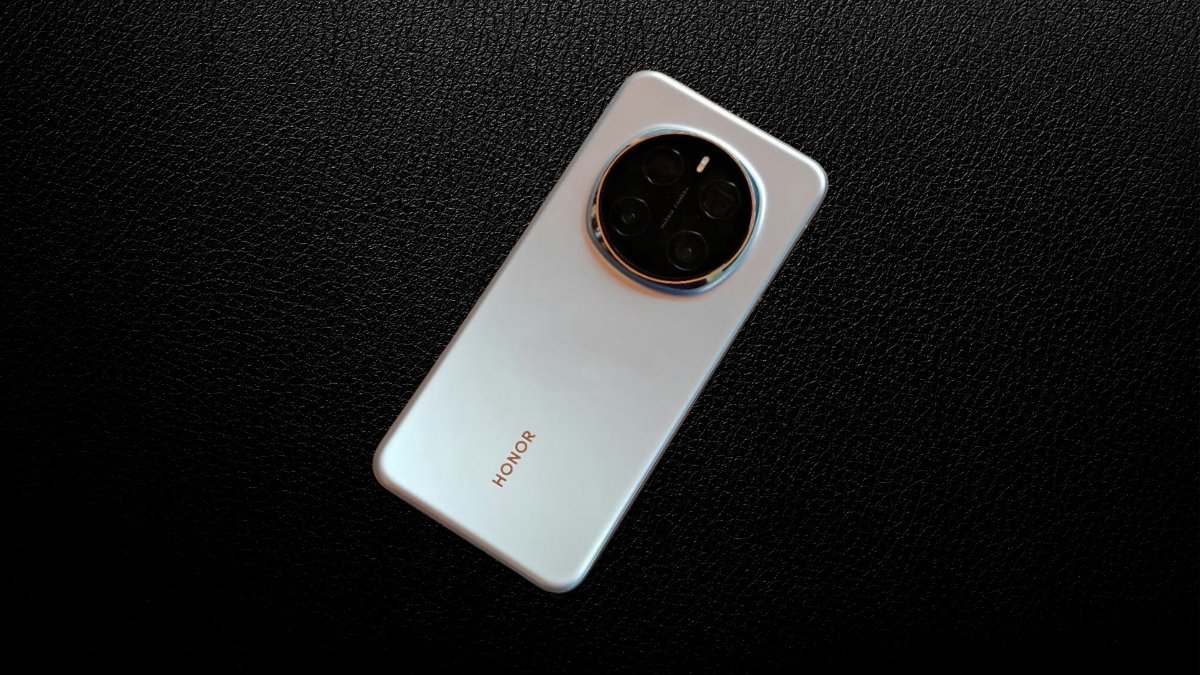
Alongside the standard and Pro models, Honor also unveiled the 300 Ultra smartphone today. As the most expensive model in the series, the 300 Ultra offers a luxurious design, capable cameras, and top-tier performance. Let’s take a closer look at its features here.
Honor 300 Ultra Specifications
The Honor 300 Ultra stands apart from the standard and Pro models with its sophisticated design. It features a 7-layer plain leather back embossed with a subtle pattern, giving it a more premium look.
The phone maintains a comfortable thickness of 8.2mm and weighs 198g for the plain leather version, or slightly heavier at 199g for the glass version. It is available in Ink Rock Black and Camellia White.
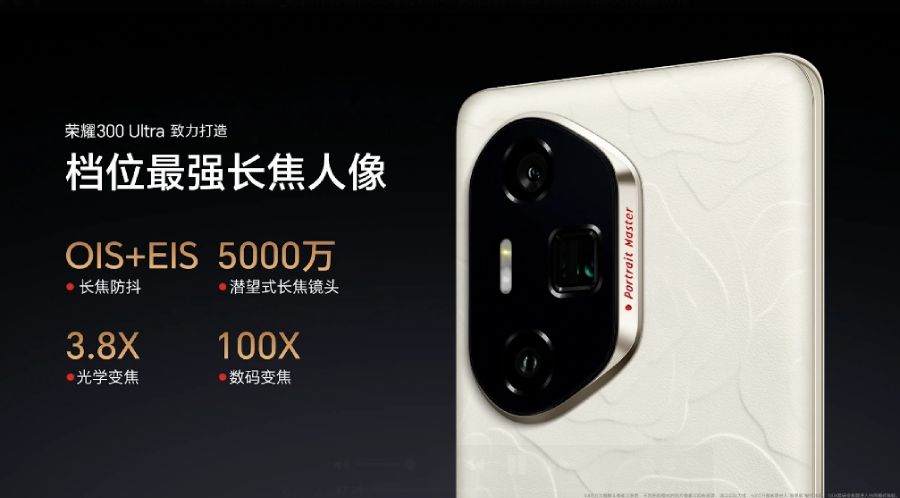
Like the Pro model, the 300 Ultra has a triple camera on the back. The main is a 50MP Sony IMX906 sensor, accompanied by a 12MP ultra-wide-angle, and a 50MP periscope telephoto lens with optical image stabilization.
Honor claims the 300 Ultra is its “strongest telephoto portrait camera.” It offers 3.8X optical zoom and an impressive 100X digital zoom, along with the series’ signature “SLR-level elegant portrait” function and AI light control engine, ensuring stunning portrait shots in any lighting condition.
Like its siblings, the Ultra runs on MagicOS 9.0 and comes with AI features like focus stacking, background blurring, and image expansion. It also supports 2K high-definition Live Photos that allow users to capture fleeting moments in motion. The front camera matches the other models with a 50MP sensor.
The front is home to a 6.78-inch 2700×1224 OLED quad-curved display, similar to the Pro model, with a 120Hz refresh rate. It also includes 3840Hz PWM dimming, a 4000nit peak brightness, and support for 1.07 billion colors.
Additionally, the phone comes with a range of eye-care features, including natural light protection, AI sleep assistance, and motion sickness relief technology.
The phone gets its raw power from a Snapdragon 8 Gen 3 chip. While the standard Snapdragon 8 Gen 3 features a setup with one high-performance Cortex-X4 core clocked at 3.3GHz, three Cortex-A720 cores running at 3.2GHz, two Cortex-A720 cores at 3.0GHz, and two efficiency-focused Cortex-A520 cores at 2.3GHz, the version in the 300 Ultra has a slightly different configuration.
In it, the chip includes one Cortex-X4 core clocked at 3.0GHz for peak performance, five Cortex-A720 cores running at 2.95GHz to handle demanding tasks efficiently, and two Cortex-A520 cores clocked at 2.0GHz for less intensive operations. It appears like a bit downclocked version of the standard 8 Gen 3.
Nevertheless, the company has paired it with a 36842mm² stainless steel bionic VC heat dissipation system to keep thermals under control.
Fueling the phone is the same 5300mAh battery as other models, with support for 100W charging. Honor claims the phone can go from 0 to 59% battery in just 15 minutes and can fully charge in 35 minutes. Additionally, the phone supports 80W wireless fast charging.
Rounding out the package, the Honor 300 Ultra features master-level stereo dual speakers, a linear vibration motor, and IP55 dust and water resistance for peace of mind.
Connectivity options include NFC, Wi-Fi 7, infrared remote control, Beidou satellite SMS capabilities, and the ability to connect directly to Gaode maps via satellite without a network connection – perfect for off-the-grid adventures.
Pricing and Availability
The Honor 300 Ultra starts at a premium price point of 4199 yuan ($610) for the 12GB RAM and 512GB storage option. The top-tier model with 16GB RAM and 1TB of storage will set you back 4699 yuan ($680).
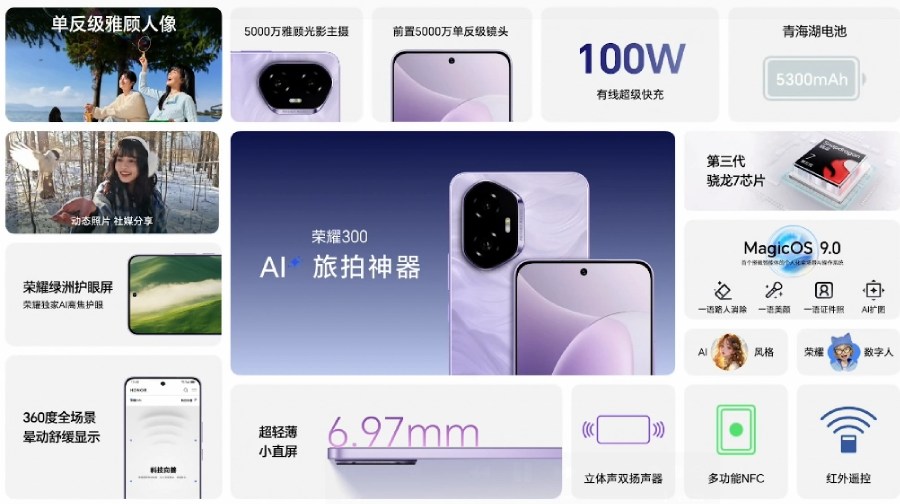
As scheduled, Honor unveiled its new 300 series smartphones today. There are three phones under the banner — the standard, Pro, and Ultra. And while the Ultra is the top-of-the-line, we’ll cover it in a separate article. For now, let’s walk through the specs, features, and prices of the Honor 300 and 300 Pro.
Honor 300 and 300 Pro Specifications
Design-wise, Honor has taken inspiration from the beauty of nature. The standard Honor 300 features a sleek, ultra-thin straight screen design, while the Pro model boasts a more immersive “hyperbolic” curved display on both the front and back. Both phones come in a range of colors.
The standard model comes in Ink Rock Black, Jade Dragon Snow, Chaka Green, Cangshan Grey, and Luyan Purple, while the Pro version comes in Ink Rock Black, Starlight Sand, and Chaka Green.
Honor places special emphasis on the cameras in the series. Both phones pack a 50MP front camera for selfies and group shots. Flipping them over, the Honor 300 boasts a dual rear camera system with a 50MP main sensor (Sony IMX906) and a 12MP ultra-wide-angle macro lens.
The Honor 300 Pro steps it up a notch with a triple rear setup that includes the same impressive 50MP main sensor, joined by a 12MP ultra-wide-angle macro lens and a 50MP telephoto lens for capturing distant details.
Honor claims both phones can capture “SLR-level elegant portraits” and feature an AI light-control engine that ensures excellent photos in any lighting.
Its custom skin, MagicOS 9.0, also includes AI features like taking pictures first and focusing later, blurring the background for artistic effects, and even expanding the frame for a wider perspective. It also supports high-definition dynamic photos (Live Photo) to capture the full essence of your travels.
Both models pack a punch with OLED displays. The standard Honor 300 features a 6.7-inch 2664×1200 straight screen with a 120Hz refresh rate, while the Pro version upgrades to a 6.78-inch 2700×1224 quad-curved display. Both offer impressive features like 3840Hz PWM dimming, 4000nit peak brightness, 1.07 billion color displays, and various eye protection technologies.
The Honor 300 runs on the Snapdragon 7 Gen 3 processor, while the Pro model utilizes the more powerful Qualcomm Snapdragon 8 Gen 3. Fueling the phones are 5300mAh battery with support for 100W charging. Notably, the Pro model also supports 80W wireless charging and WiFi 7.
Pricing and Availability
The Honor 300 series starts at 2,299 yuan (around USD 330) for the Honor 300 with 8GB RAM and 256GB storage. The Honor 300 Pro starts at 3,399 yuan (about USD 490) for the 12GB RAM and 256GB storage variant. Here are the full pricing details:
Honor 300
8/256GB: 2,299 yuan ( USD 320)
12/256GB: 2,499 yuan (USD 350)
12/512GB: 2,799 yuan (USD 384)
16/512GB: 2,999 yuan (USD 412)
Honor 300 Pro
12/256GB: 3,399 yuan (USD 470)
12/512GB: 3,699 yuan (USD 510)
16/512GB: 3,999 yuan (USD 550)
Pre-orders are likely already underway in China, with wider global availability details yet to be announced.
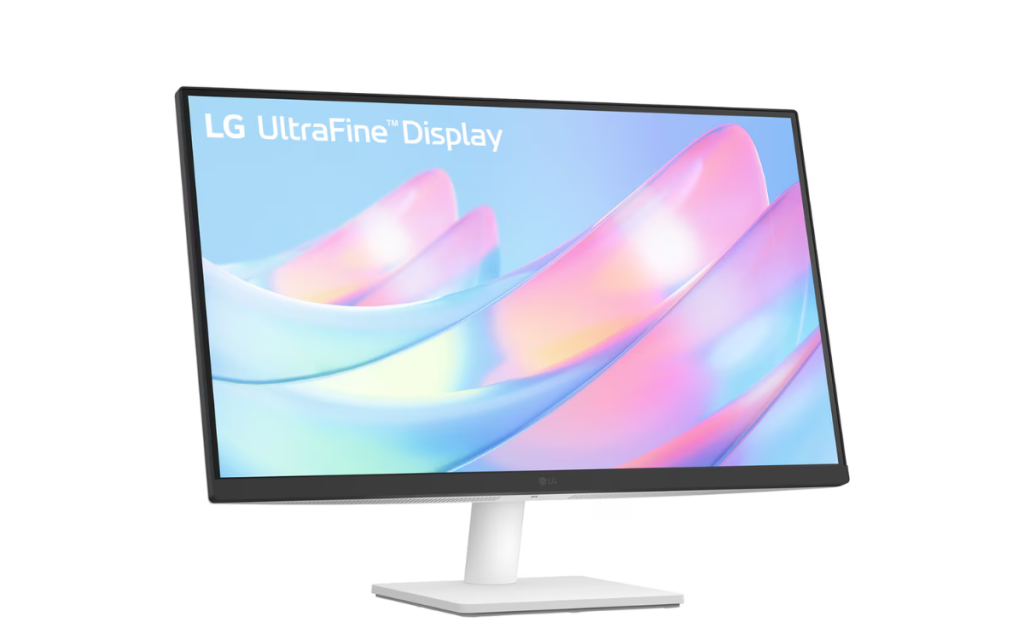
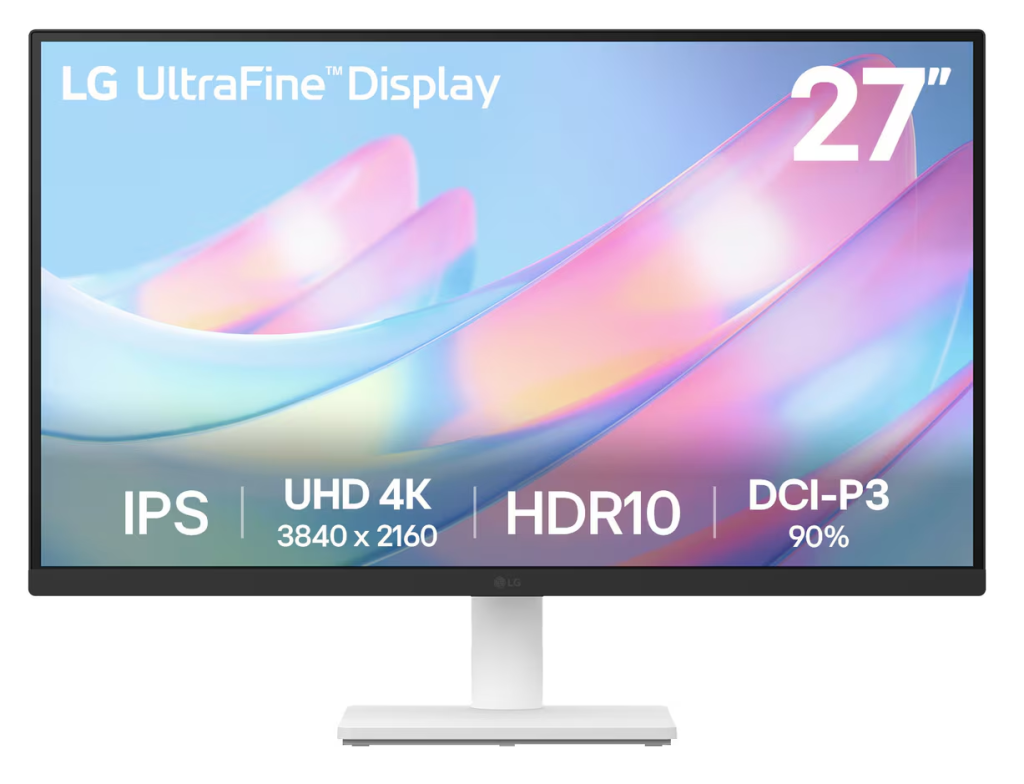
LG has officially introduced the UltraFine 27US550-W in the global market, a 27-inch 4K IPS monitor designed to offer high-quality visuals and advanced features. The monitor is now available for purchase on LG’s official website and authorized retailers, priced at approximately $340.
LG UltraFine 27US550-W Specifications
The LG UltraFine 27US550-W features a 3840 x 2160 resolution with a 60Hz refresh rate, 16:9 aspect ratio, and 5ms response time, delivering sharp and vibrant images. It comes with an IPS panel that ensures wide viewing angles and accurate color reproduction.
It equips a 10-bit (8bit+FRC) color depth, enabling the display to produce over 1 billion colors, and sports 90% coverage of the DCI-P3 color gamut, making it a solid choice for creators and professionals who need precise color representation.
The monitor equips 300 nits of brightness, ensuring clear visibility in various lighting conditions. It features a contrast ratio of 1,000:1, offering deep blacks and consistent image quality.
It comes with Super Resolution+ technology, which enhances low-resolution images for sharper and more detailed visuals. It also equips DAS mode to minimize screen delay. Additionally, it features a black stabilizer for improved visibility in dark scenes and sports blue light reduction and flicker-free technology, designed to reduce eye strain during long hours of use.
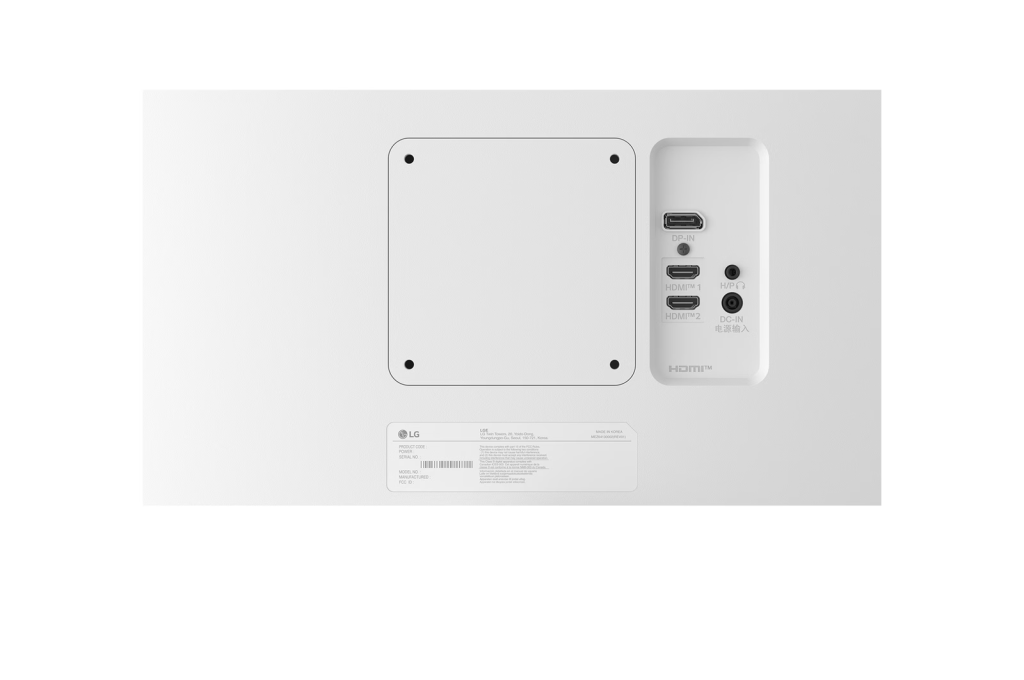
The monitor sports an ergonomic stand that supports tilt, swivel, pivot, and height adjustments, providing a customizable and comfortable setup for various viewing needs. It also comes with support for VESA 100 x 100mm wall mounting, offering users the flexibility to save desk space by mounting the monitor.
In terms of connectivity, the monitor equips one DisplayPort, two HDMI ports, and a 3.5mm headphone jack, accommodating a wide range of devices. It features LG Switch app compatibility, allowing users to adjust monitor settings directly through their computer’s operating system.
The monitor comes with a tool-free setup for easy installation and sports a compact design, measuring 614mm in width, 253mm in depth, and offering a height range of 389mm to 539mm. It equips a stable build with a 6.8 kg weight, balancing sturdiness and portability.
In related news, LG also recently launched the UltraGear GX7, a record-breaking 480Hz QHD OLED gaming monitor, setting new standards for gaming displays. Additionally, LG has unveiled the world’s first truly stretchable display, capable of expanding from 12 to 18 inches while maintaining full RGB color capability.
Qualcomm’s new Snapdragon 8 Elite powers some of the most powerful smartphones that are being unveiled in the market right now. These devices are all flagship grade devices that offer top notch performance. So here’s a list of models that are currently available in the market with the Snapdragon 8 Elite.
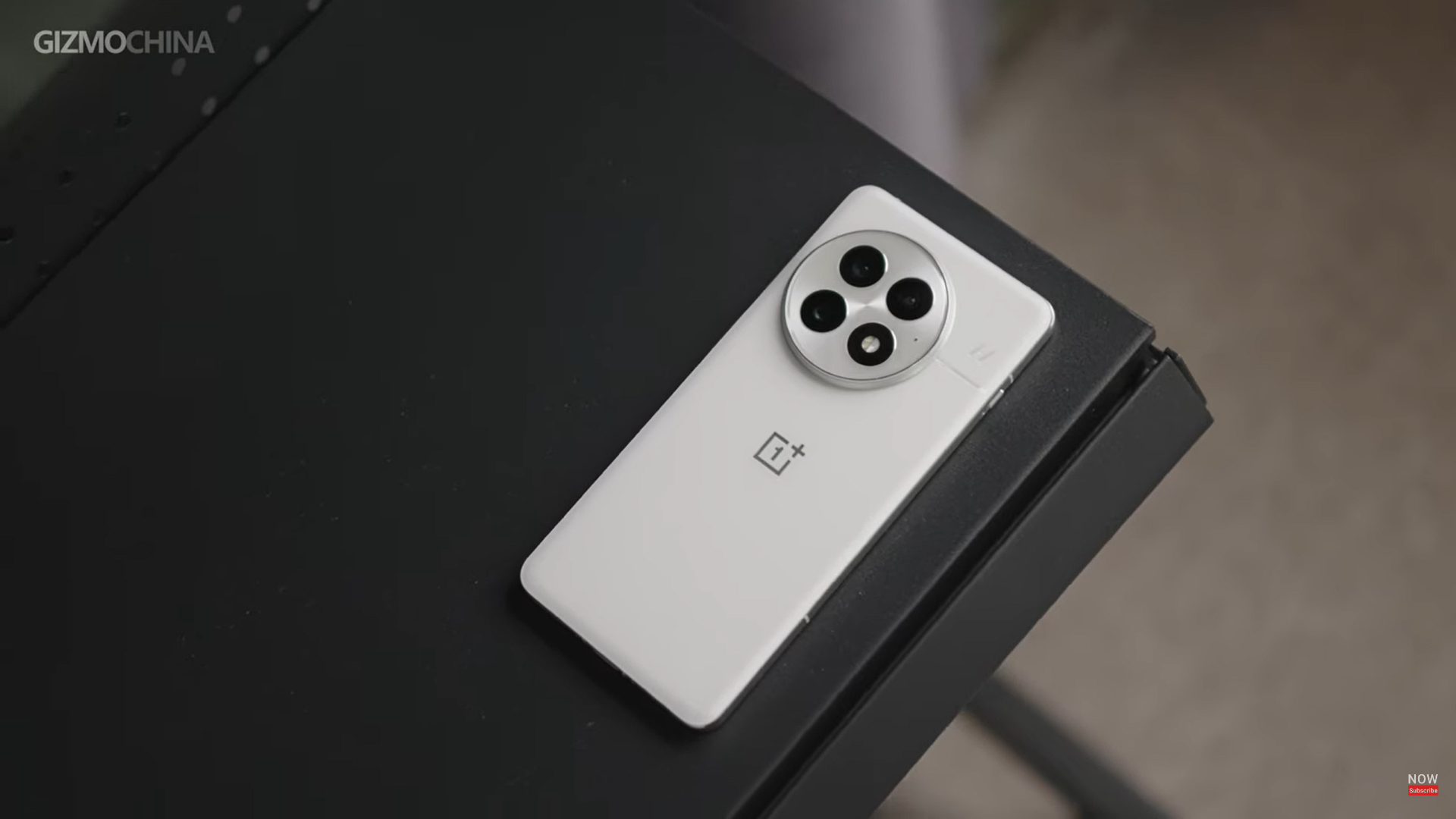
The OnePlus 13 was one of the first smartphones to launch with the Snapdragon 8 Elite. Apart from high end performance, the device brings a premium design, new cameras, and more. It has a starting price tag of 630 US Dollars and it offers a great package of specs, AI features, and much more.
2. Xiaomi 15 Series
Xiaomi 15
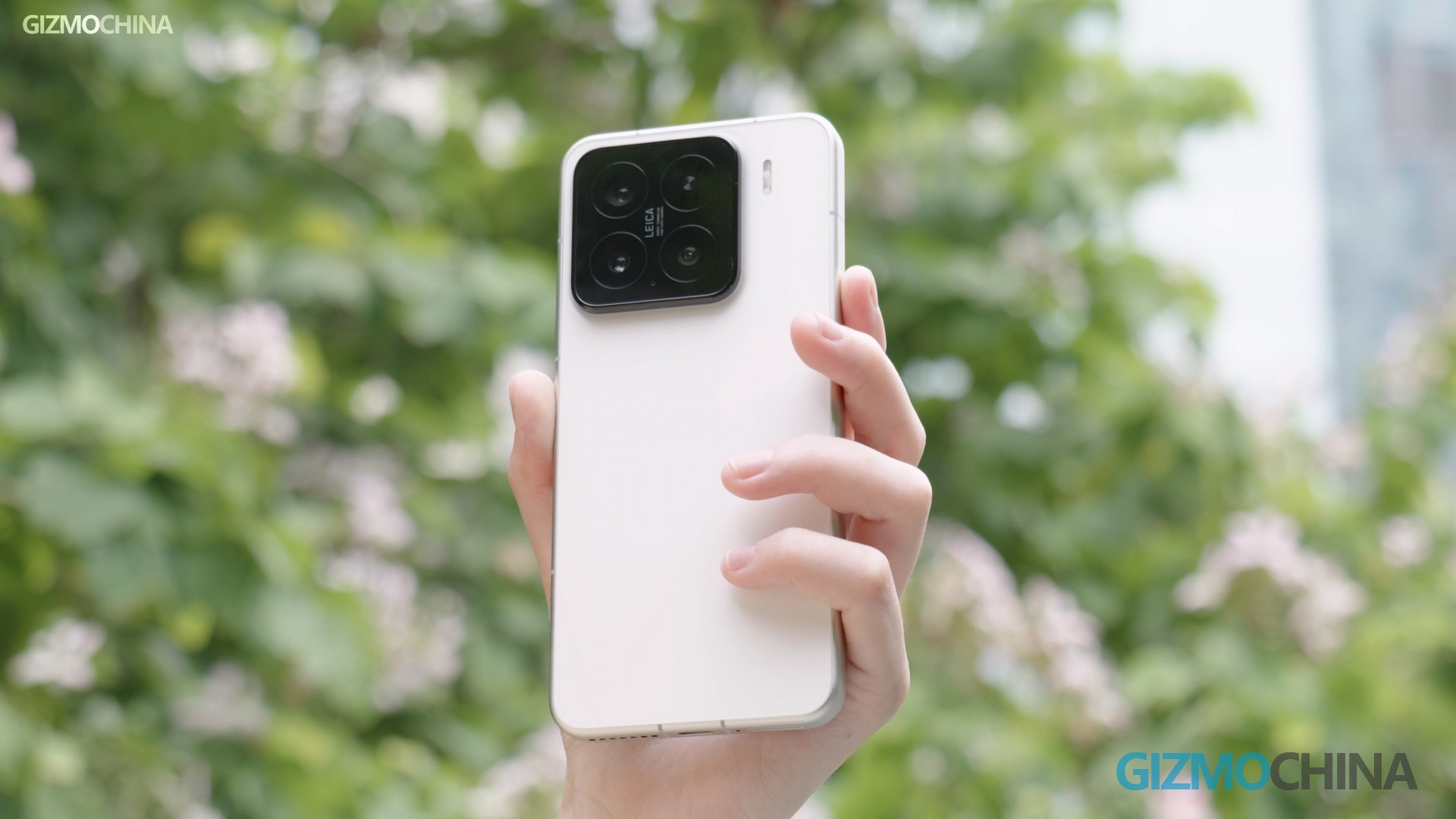
Back in October, the Xiaomi 15 (review) and Xiaomi 15 Pro made their debut in China. Meanwhile, its global release is right around the corner as well. The company has released its two flagship smartphones with the Snapdragon 8 Elite SoC. The base model is a compact 6.36-inch display, while the higher end model sports a taller 6.73-inch panel. The premium lineup consists of Leica branded camera lenses, AI features, big batteries, and much more. The Xiaomi 15 series has a starting price tag of 630 US Dollars, making it comparable to the OnePlus 13.
3. ASUS ROG Phone 9 Series
ASUS ROG Phone 9 Series
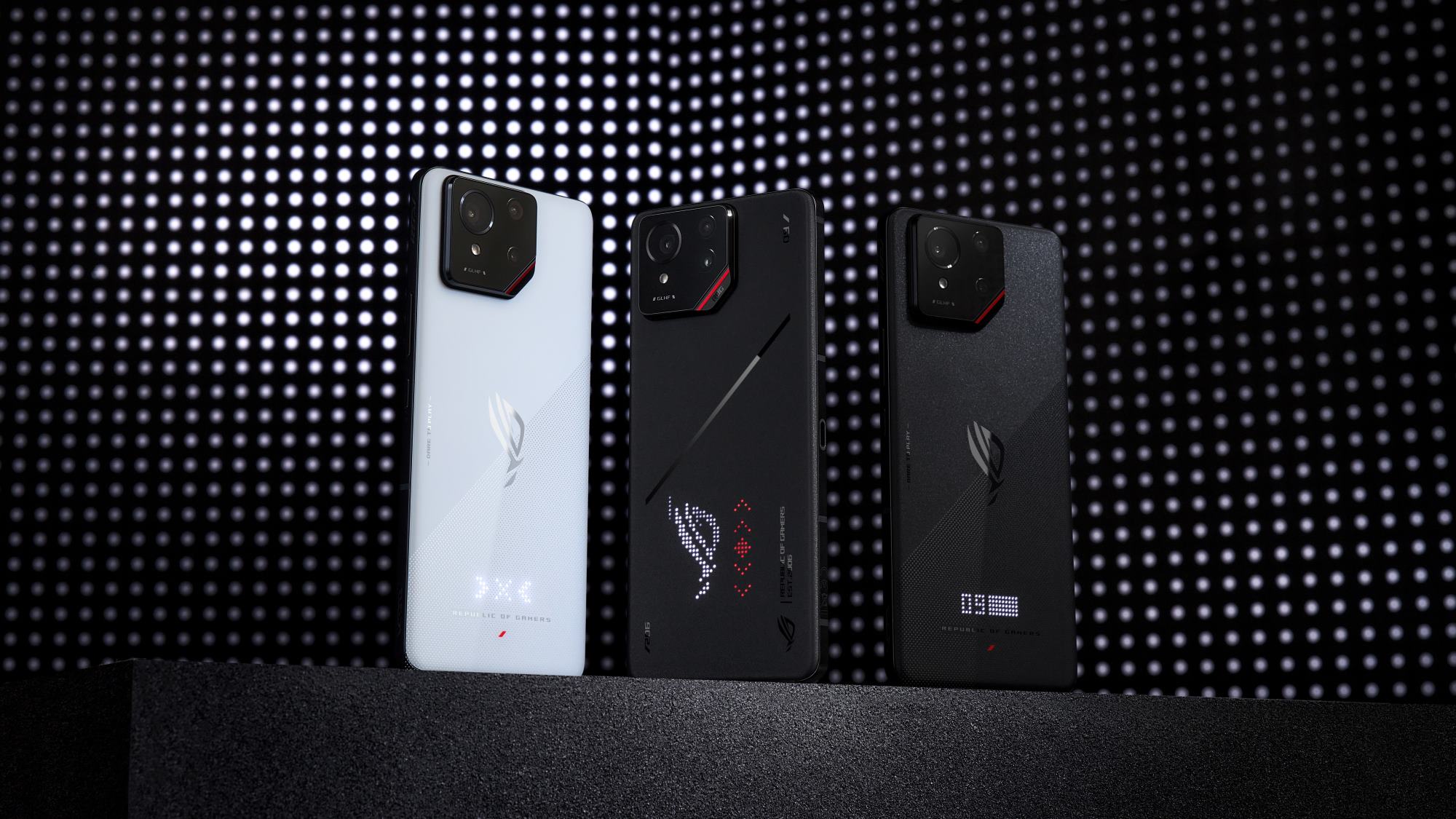
ASUS just launched the ROG Phone 9 series of flagship gaming smartphones last month. This series is one of the two gaming phone series in this list and packs cutting edge hardware for improved gaming performance. Both the ROG Phone 9 and ROG Phone 9 Pro are equipped with the Snapdragon 8 Elite along with up to 24GB of RAM and 1TB of internal storage. Since the focus is on improved gameplay, they sport an ultra smooth 165Hz display, shoulder buttons, and a robust cooling mechanism. The ROG Phone 9 series was announced with a 999.99 US Dollar starting price.
4. Red Magic 10 Series
Red Magic 10 Series
The Red Magic 10 lineup is the second gaming phone lineup in this list. The series consists of the Red Magic 10 Pro and Red Magic 10 Pro+. The duo are quite similar in terms of specs and features, with the main differences only being in battery size and storage configurations. Just like ROG Phone 9, the Red Magic 10 series has the Snapdragon 8 Elite to offer some of the best performance for gaming. These models also have a physical fan for cooling, RGB lighting, a unique transparent design, and much more. The Red Magic 10 series starts from just under 700 US Dollars.
5. iQOO 13
iQOO 13
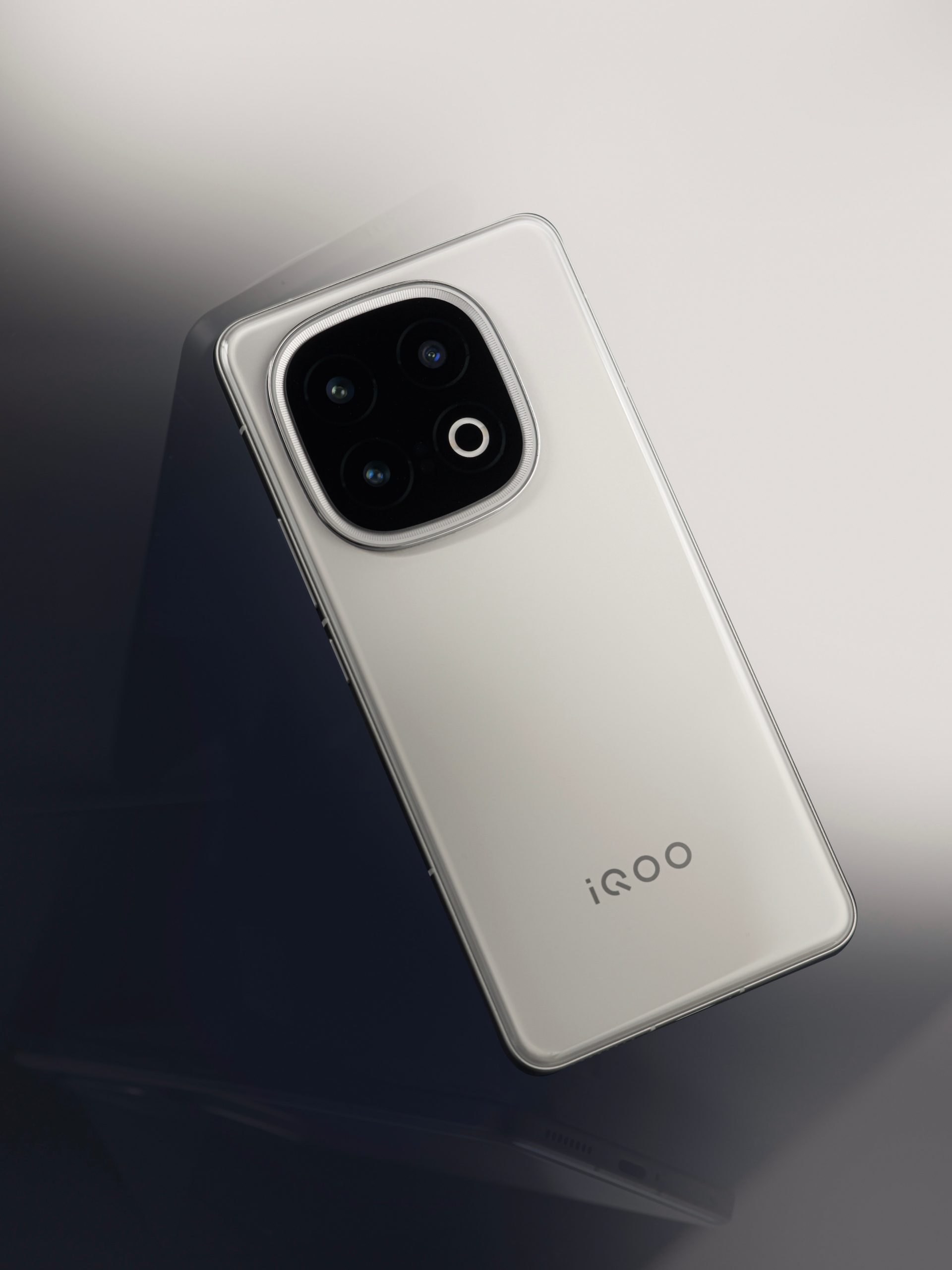
For just under $600, the iQOO 13 is one of the most affordable flagship smartphones with the Snapdragon 8 Elite. It features a smooth display with 2K+ resolution, high brightness, a large battery, and great performance. The rear has a 50MP triple camera setup that also supports AI powered features. You can click here for our Unboxing and Hands on video.
6. Honor Magic 7 Series
Honor Magic 7 Pro
Honor was quick to adopt the new Snapdragon 8 Elite with its new Magic 7 series. The premium devices include the Magic 7 and Magic 7 Pro. The lineup starts from around 630 US Dollars and offers cutting edge hardware. These devices have the Snapdragon 8 Elite, large batteries, 3D facial recognition, satellite communication, and a premium design.
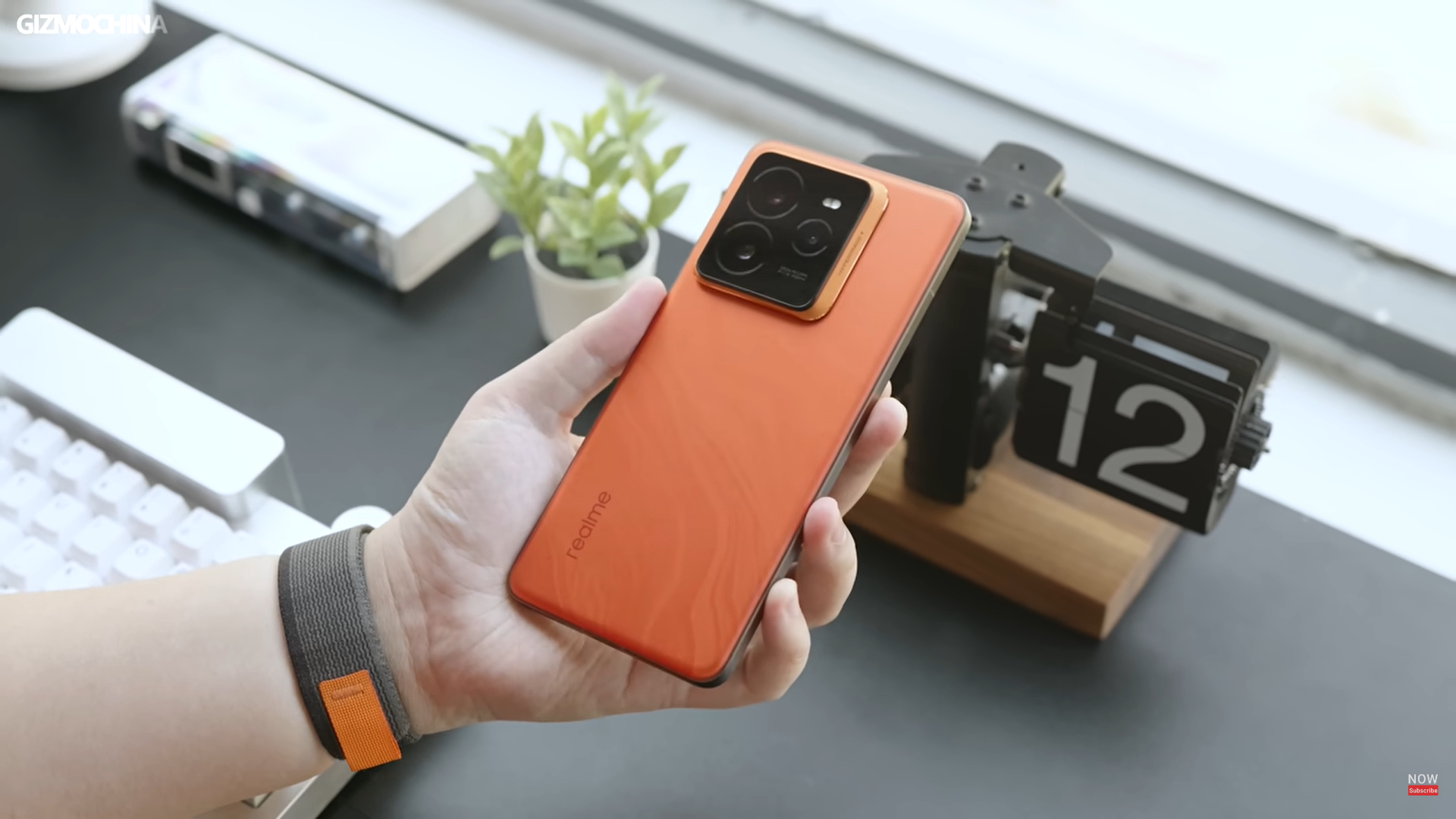
Giving the Realme GT 7 Pro a run for its money, Xiaomi released the Redmi K80 Pro for just over 500 US Dollars as well. You get a massive battery pack, a 2K+ display, a Snapdragon 8 Elite, and Xiaomi’s HyperOS 2.0 custom skin. This model offers a premium design, fast wireless and wired fast charging, and much more.
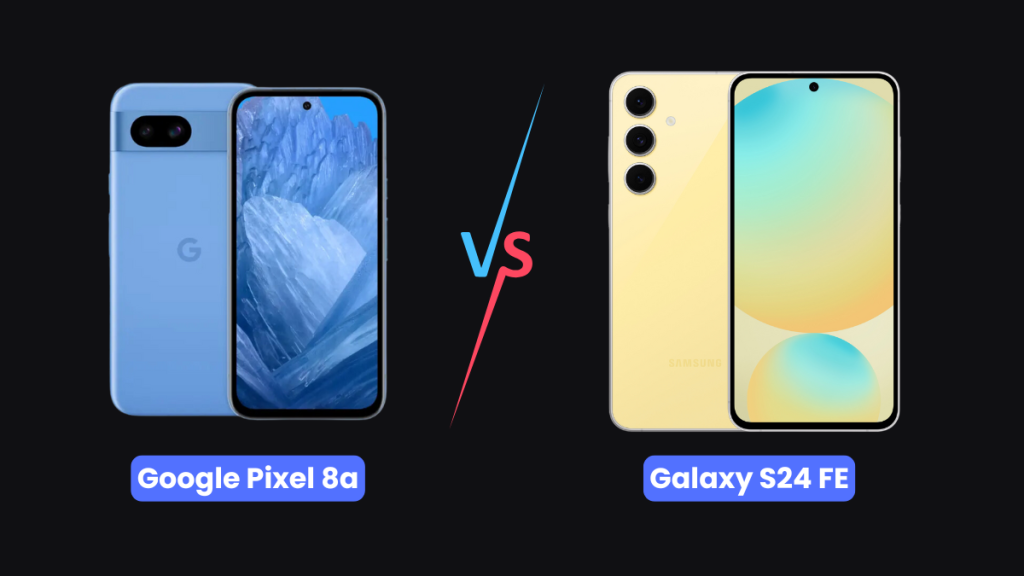
Google’s Pixel A-series and Samsung’s Galaxy Fan Edition (FE) phones have been offering near-flagship experience without being heavy on the pocket. Their latest offerings, the Pixel 8a and Galaxy S24 FE, boast upgraded hardware and more innovative AI features, thus making them the best options for anyone looking to spend around $500.
But which one should you choose? Let’s compare them side-by-side to find out which one truly offers the best value for money.
Pixel 8a vs Galaxy S24 FE: Design and display
The Pixel 8a is a compact option with a plastic back, while the Galaxy S24 FE has a glass panel. The latter is protected by Gorilla Glass Victus+ on both sides. On the Pixel 8a, you have a slightly less durable Gorilla Glass 3 protection on the front.
Both phones have protection against dust and water, though they are slightly better on the Galaxy S24 FE because of the IP68 rating (vs. IP67 on the Pixel 8a).
The Pixel 8a retains the 6.1-inch display from its predecessor but now boasts a smoother 120Hz refresh rate. The brightness has also gone up to 2000nits for enhanced outdoor visibility. In comparison, the S24 FE offers a larger 6.7-inch screen with a matching refresh rate and a resolution close to the Pixel 8a.
Both have high-quality OLED screens that look crisp and vibrant. However, gaming is better on the larger Galaxy S24 FE.
Pixel 8a vs Galaxy S24 FE: Performance and software
When it comes to high-end gaming, the Galaxy S24 FE stands out as the clear winner. It ships with an in-house Exynos 2400e chipset, which has impressive gaming performance compared to the Tensor G3 powering the Pixel 8a. Also, the Galaxy device stays cooler for a longer period, thanks to its vapor chamber.
The benchmark results below tell the same story.
Pixel 8a
Galaxy S24 FE
AnTuTu score
1,054,964
1,603,850
Geekbench (single-core)
1,624
1,993
Geekbench (multi-core)
3,651
6,374
However, we don’t really see much of that advantage in daily usage as both feel snappier. So, unless you’re a gamer, the performance shouldn’t be a concern on both devices.
The Pixel 8a enjoys a pure Android experience, while the Samsung phone benefits from extra customizations offered by One UI (it’s also based on Android). Both devices get the best software update policy on any Android device: 7 major Android updates and 7 years of security updates. The Pixel 8a also gets multiple Pixel Feature Drops every year.
Pixel 8a vs Galaxy S24 FE: Camera
The Pixel A-series has been famous for offering excellent cameras, and the Pixel 8a is no different. It takes excellent photos and videos. The Galaxy S24 FE, on the other hand, also has good camera performance. However, when comparing the two, the Pixel 8a’s output looks sightly better than Samsung’s.
Both have high-resolution primary cameras: 64MP on the Pixel 8a and 50MP on the Galaxy S24 FE. They also have ultrawide sensors, but the Pixel lacks a telephoto shooter. However, thanks to Google’s computational prowess, it still manages to produce similar ultrawide shots. When it comes to video output, both deliver satisfactory results.
Pixel 8a vs Galaxy S24 FE: Battery and charging
The Galaxy S24 FE ships with a larger 4,700mAh battery, compared to 4,492mAh on the Pixel 8a. The Galaxy device will obviously deliver a higher screen time on a single charge, but the difference is not that significant.
The Galaxy smartphone also wins on faster charging by offering 25W charging support (vs. 18W on the Pixel 8a). Both support wireless charging, with the S24 FE being the faster one again. It offers 15W wireless charging, while the Pixel 8a maxes out at 7.5W.
In short, the Pixel 8a will be a good buy if you’re looking for a compact smartphone with excellent cameras. It also gives you the purest Android experience with no unnecessary apps.
The Galaxy S24 FE will be a great buy if you’re looking for a bigger screen and a more powerful chipset capable of high-end gaming without getting too hot. Plus, you will get a bigger battery with better fast charging options.
Which one is going to be your next smartphone upgrade?
The next generation of flagship smartphones has started rolling out, being equipped with advanced new chipsets. MediaTek’s latest Dimensity 9400 powers these premium devices. So now, here’s a list of all the smartphones that are powered by this flagship processor. So let’s check it out.
First on the list are the Oppo Find X8 series of smartphones. The lineup consists of the Find X8 and Find X8 Pro. While the company is expected to be working on the Find X8 Ultra model as well, this model has yet to be officially unveiled. The base and Pro variant were first launched in China, with its global release recently kicking off in markets like India.
Both models are equipped with the Dimensity 9400, which offers top notch performance. There is AI powered software features, premium design, and much more. You can even click here to check out our review video of the Find X8 Pro. The Find X8 series starts from around $600.
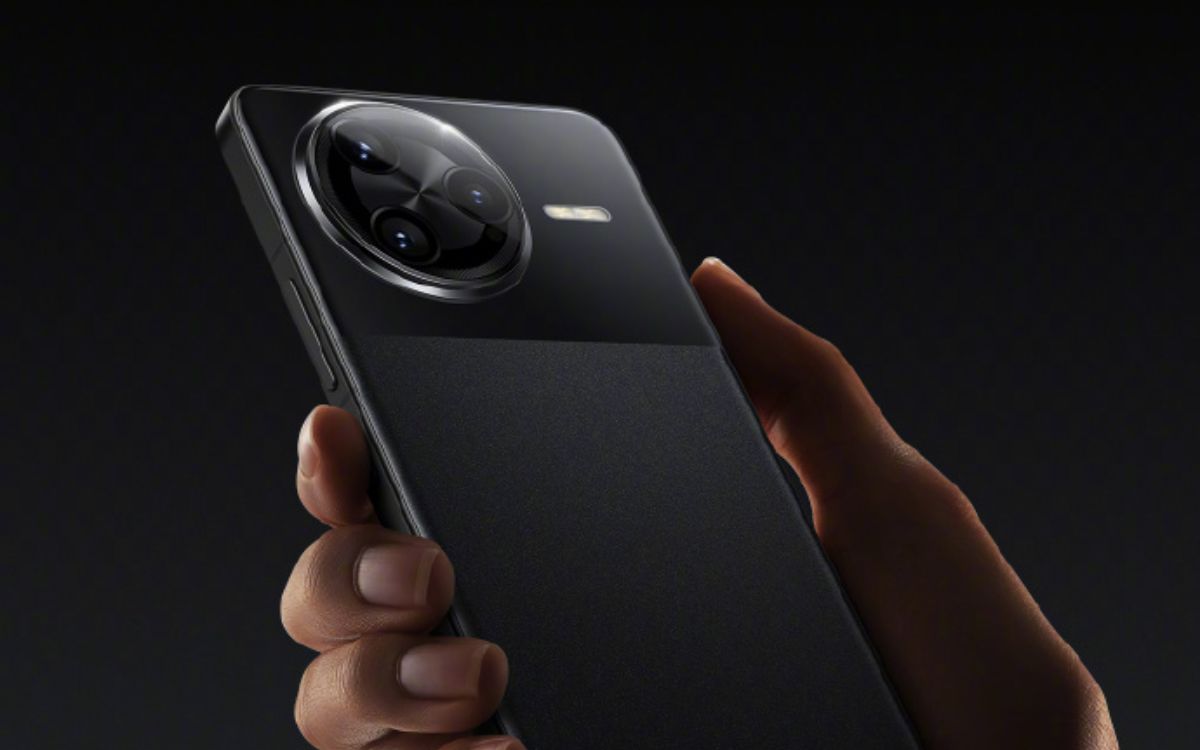
The X200 Pro Mini model is quite interesting since it is one of the most powerful compact smartphones. All of these models get an advanced camera system, AI powered features, and much more. The X200 series also starts from just under $600. This model just made its global debut in Malaysia with its Indian release being right around the corner. There is also a Vivo X200S model in the work, which is expected to launch with the Dimensity 9400 as well.
3. iQOO Neo 10 Pro
iQOO Neo 10 Pro
iQOO just unveiled the iQOO Neo 10 series, although only one model features MediaTek’s flagship grade chipset. The iQOO Neo 10 was announced with the Snapdragon 8 Gen 3 SoC, while the iQOO Neo 10 Pro is equipped with the Dimesnity 9400. With a starting price tag of under $500, the iQOO Neo 10 Pro is a great budget flagship smartphone, offering top notch performance and capable hardware. This model was announced in China, but there’s no official word on its global release. So stick around for more updates.
Qualcomm introduced its first ‘s’ series sub-flagship chipset, the Snapdragon 8s Gen 3, as a toned-down version of the Snapdragon 8 Gen 3 while retaining the same prime core.
Now that the company has unveiled its latest flagship SoC, the Snapdragon 8 Elite, rumors suggest another ‘s’ generation chip may be on the way this year.
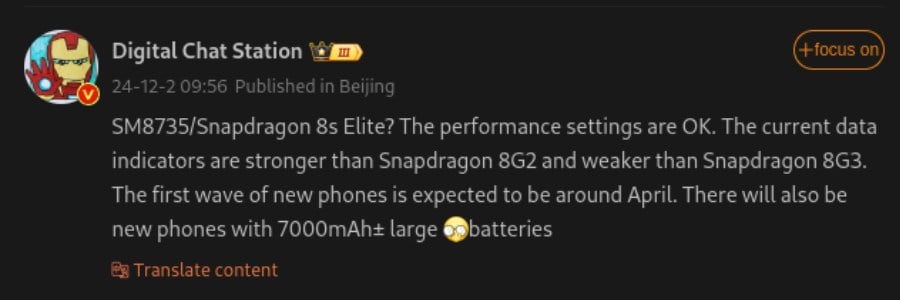
The chip, reportedly codenamed SM8735, has already surfaced in Xiaomi’s HyperOS codebase. While its official name remains uncertain, rumors suggest it might be called the Snapdragon 8s Elite, new details about the SoC have surfaced, courtesy of the reliable tech tipster Digital Chat Station.
Snapdragon 8s Elite performs better than the 8 Gen 2
According to the leak, the 8s Elite will land somewhere —performance-wise— between the Snapdragon 8 Gen 2 and the 8 Gen 3. This aligns with the positioning of the 8s Gen 3, which offered slightly lower performance compared to its flagship counterpart.
However, unlike the 8s Gen 3 which utilized the same prime core as the 8 Gen 2, the specifics of the 8s Elite’s cores remain unclear. Qualcomm introduced its own custom-designed Oryon cores with the 8 Elite, but it’s unknown if the 8s Elite will follow suit or stick with ARM’s standard offerings.
Despite the lack of core details, Digital Chat Station suggests the first smartphones powered by the Snapdragon 8s Elite will hit the market around April next year.
The leak also suggests the possibility of devices equipped with a 7000mAh battery paired with this chipset. Xiaomi appears to be a likely candidate, as a previous report mentions a Xiaomi phone in development with the 8s Elite, a 7000mAh battery, and 90W charging.
This phone might succeed the Xiaomi Civi 4 Pro, which debuted as the first device powered by the Snapdragon 8s Gen 3. Stay tuned for more updates as new details emerge.
Qualcomm unveiled the flagship Snapdragon 8 Elite with notable improvements in performance and efficiency over its predecessor. But all of these upgrades came at a cost since the 8 Elite got a sizeable price hike. Now, a fresh leak has hinted at its successor getting another significant price hike as well. So here’s what we know.
Snapdragon 8 Elite 2: Flagship Chips Getting More Expensive
The news arrives from the South Korean publication KiPost (Via Jukanlosreve). This report claims that Qualcomm might be bringing another significant hike in price for the Snapdragon 8 Elite 2 (or Snapdragon 8 Elite Gen 2) in 2025. The rise in price arrives despite the Snapdragon 8 Elite’s already hefty price rise. To recall, the Snapdragon 8 Elite was released with a price bump of around 20 to 30 percent.
Snapdragon 8 Elite
But the Snapdragon 8 Elite 2 isn’t just becoming more expensive for no reason, Qualcomm is expected to bring around a 20 percent improvement in performance with its 2025 flagship chipset. This is in line with one of our previous reports. As of right now, not a lot of information is available regarding the Snapdragon 8 Elite Gen 2. However, the chipmaker might turn to TSMC for its N3P process, which is its latest 3nm process, bringing a performance boost of 20 percent or higher.
So we are not getting another massive performance upgrade with the Snapdragon 8 Elite 2. This begs the question: are flagship processors for Android smartphones getting too expensive? As key components like cameras, batteries, displays, or chipsets get more expensive, the cost of buying a high-end smartphone is also steadily rising. Unlike the performance jump we got from the Snapdragon 8 Gen 3 to Snapdragon 8 Elite (over 40 percent), a 20 percent upgrade is more in line with a typical annual release. This is still just an unconfirmed report at the moment, so take this news with a pinch of salt for now.
Tecno has officially teased its next generation of foldable smartphones in India. The Phantom V Fold 2 and Phantom V Flip 2 were first unveiled a couple of months ago, and now, its Indian release is right around the corner. So here’s everything we know so far.
Tecno Phantom V Fold 2, Phantom V Flip 2 India Teaser
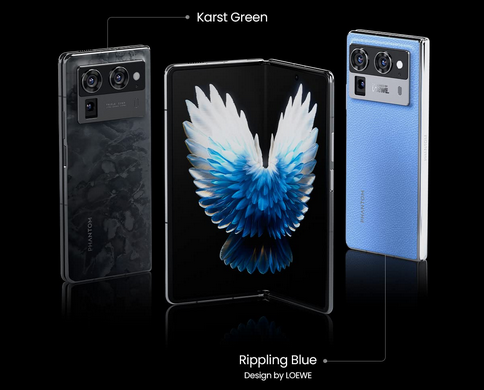
To recall, the company first announced the Phantom V Fold 2 and Phantom V Flip 2 back in September. But ahead of the Indian release, Tecno has teased these foldable smartphones. The teaser confirms some key specs and features along with confirming its Amazon India availability. Looking at the teaser, we can see that the Phantom V Fold 2 will arrive with 12GB of RAM and 512GB of internal storage. It will also launch in Karst Green and Rippling Blue with By LOEWE in India.
This model sports a tall 7.85-inch LTPO OLED primary display with a 2K+ resolution and a 120Hz refresh rate. Meanwhile, the cover panel is a 6.42-inch FHD+ panel. Under the hood, it is equipped with the MediaTek Dimensity 9000+ SoC. A large 5,750mAh battery pack powers this model, which supports 70W wired fast charging and 15W wireless charging. Tecno’s Phantom V Fold 2 measures just 6.1mm in thickness when unfolded and weighs around 249 grams.
The Phantom V Flip 2 was confirmed to launch with 8GB of RAM and 256GB of internal storage. Its color options was also revealed, which includes a Moondust Grey and Travertine Green variants. It sports a tall 6.9-inch LTPO AMOLED primary display with a 3.64-inch AMOLED cover panel. The flip phone is equipped with the Dimensity 8020 SoC and is powered by a 4,720mAh battery pack, which supports 70W wired fast charging. A recent leak hinted that the Phantom V2 series will be launching this month, so stick around for more updates.
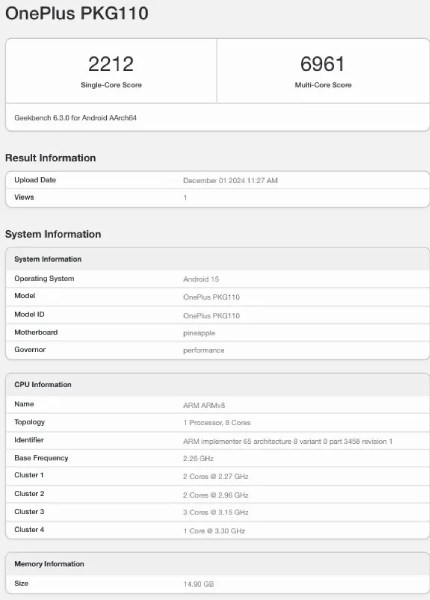
Following a string of leaks and rumors, the upcoming OnePlus Ace 5 has surfaced on the Geekbench database. The smartphone appeared on the listing with model number PKG110 and a score of 2212 points and 6961 points in single-core and multi-core tests respectively.
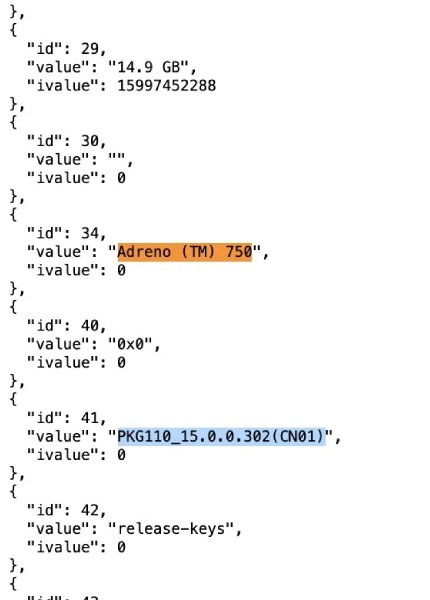
This particular variant boasts 16GB of RAM and has a motherboard codenamed “pineapple” with a prime clock speed of 3.30 GHz. This is likely the Qualcomm Snapdragon 8 Gen 3 chipset. The benchmark also reveals the Adreno 750 GPU and confirms the device will run on Android 15.
What we know so far
OnePlus previously teased the Ace 5 series in China with a Snapdragon 8 Elite chip, likely for the Pro model, and another processor, potentially the Snapdragon 8 Gen 3, for the standard Ace 5. This aligns with the Geekbench listings.
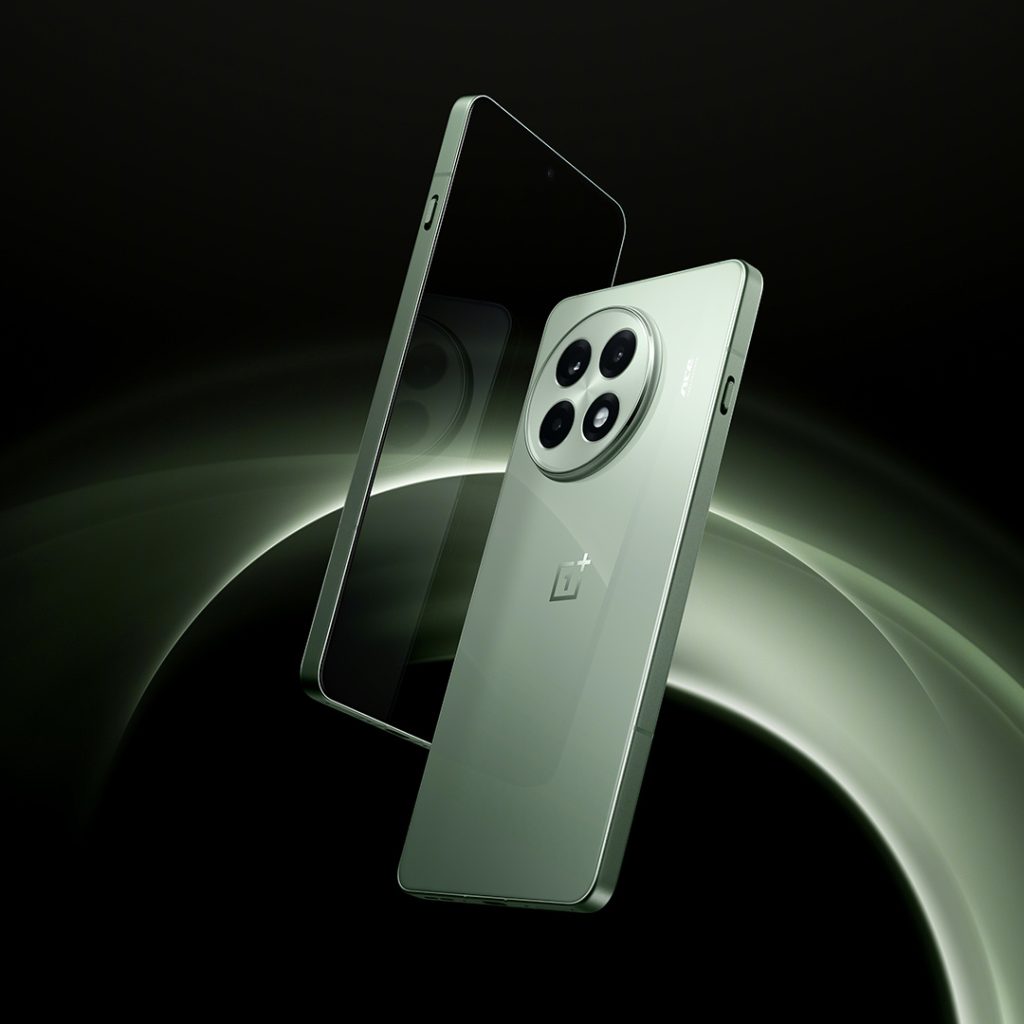
A render of the Ace 5 also surfaced on the Chinese social media platform Weibo. Unlike its predecessor, it features a flat-screen and a rear design similar to the OnePlus 13.
For the global market, the Ace 5 is expected to be rebranded as the OnePlus 13R. The rebranded model has also been spotted on Geekbench, FCC, and SIRIM databases, suggesting an imminent launch.
Based on existing reports, the OnePlus 13R (Ace 5) is expected to offer a blend of flagship-level performance and a competitive price point. Key rumored specifications include the aforementioned Snapdragon 8 Gen 3 processor, a large 6.78-inch OLED display with a 1.5K resolution, a triple-camera system featuring a 50MP main sensor, a 16MP front-facing camera, a sizeable 6000mAh battery, and support for 100W fast charging.
Although OnePlus has yet to officially confirm the Ace 5 or its global counterpart, the 13R, these leaks and database appearances suggest the phone is nearing its launch. We now await official confirmation from OnePlus to finalize these details.
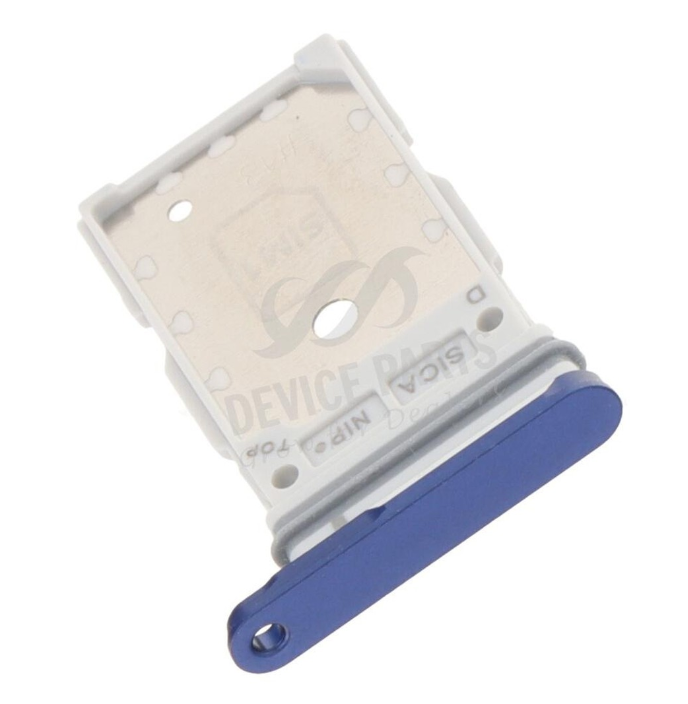
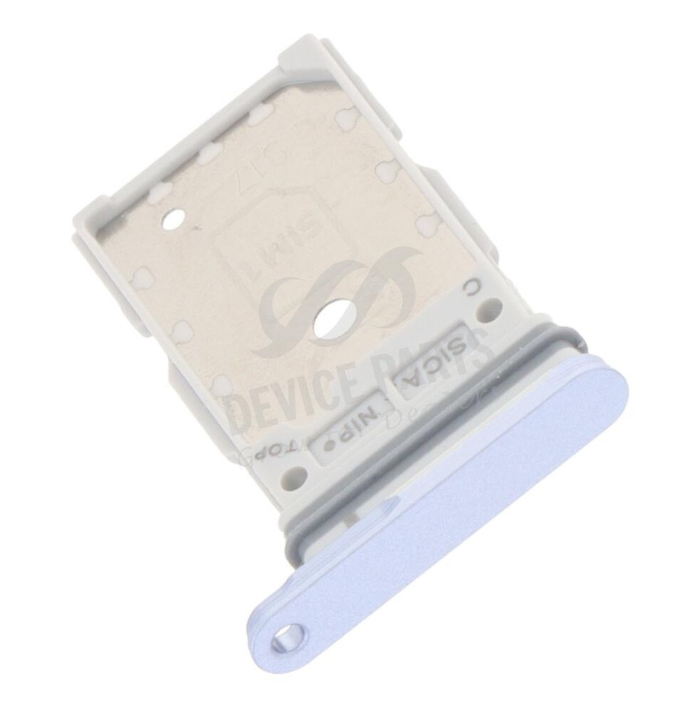
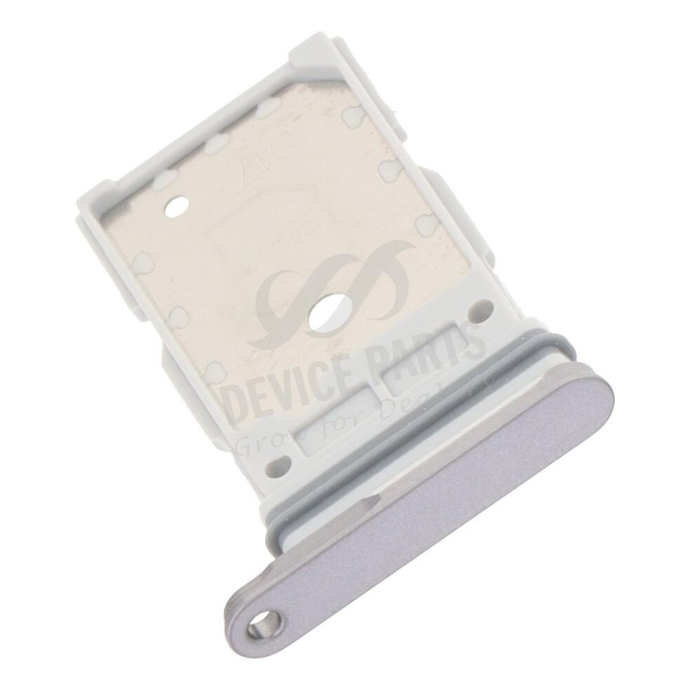
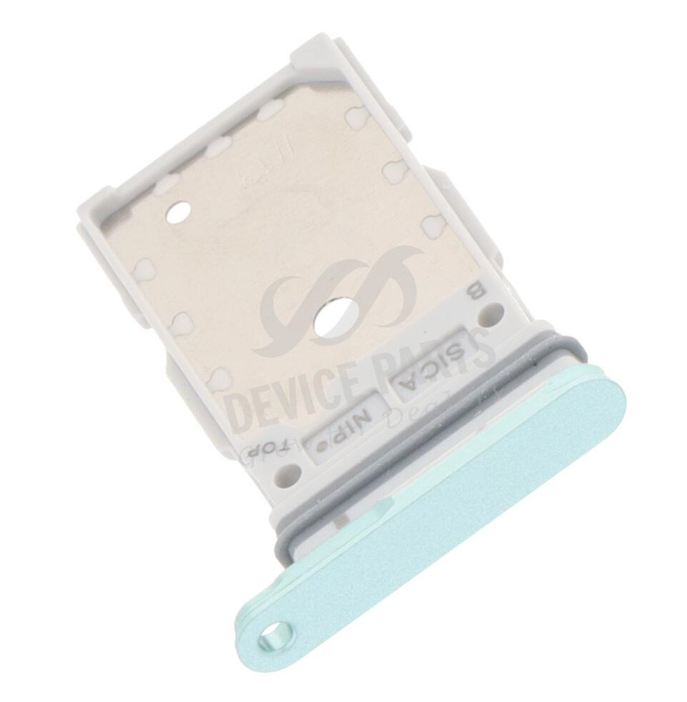
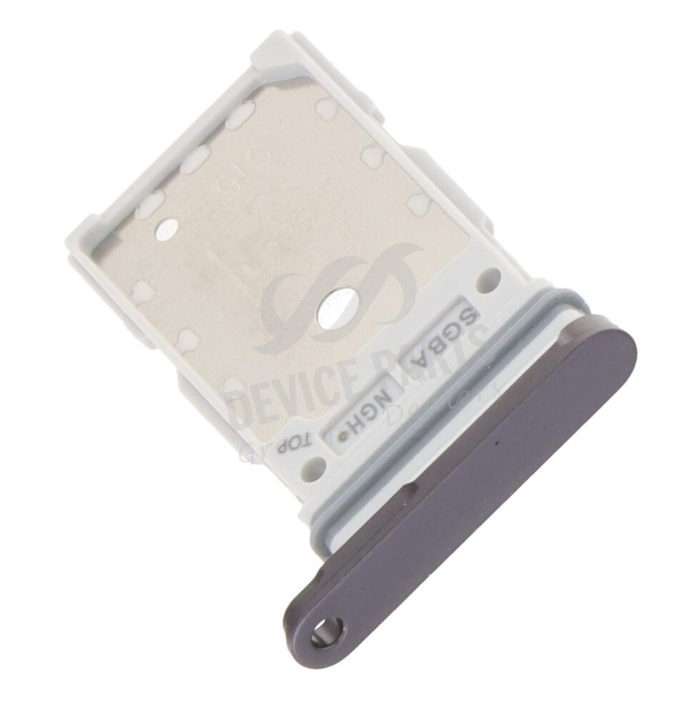
Samsung is set to refresh its Galaxy S25 and Galaxy S25+ lineup with new color options, as confirmed by recently leaked images of the SIM trays. These colors provide an early look at the aesthetic direction Samsung is taking with its upcoming smartphones, expected to launch in January 2025.
While the official names of the colors haven’t been confirmed, the leaked trays reveal five distinct shades: Black, Green, Purple, Blue, and White. This refreshed palette suggests that Samsung is aiming to offer more vibrant and varied choices for its users.
The SIM tray images showcase a deep Blue that is described as the darkest hue we’ve seen on a Galaxy S device in years, while Green and Purple draw inspiration from mint and violet. The Black and White options are more traditional, though it’s worth noting that the Black option could also be a dark gray shade.
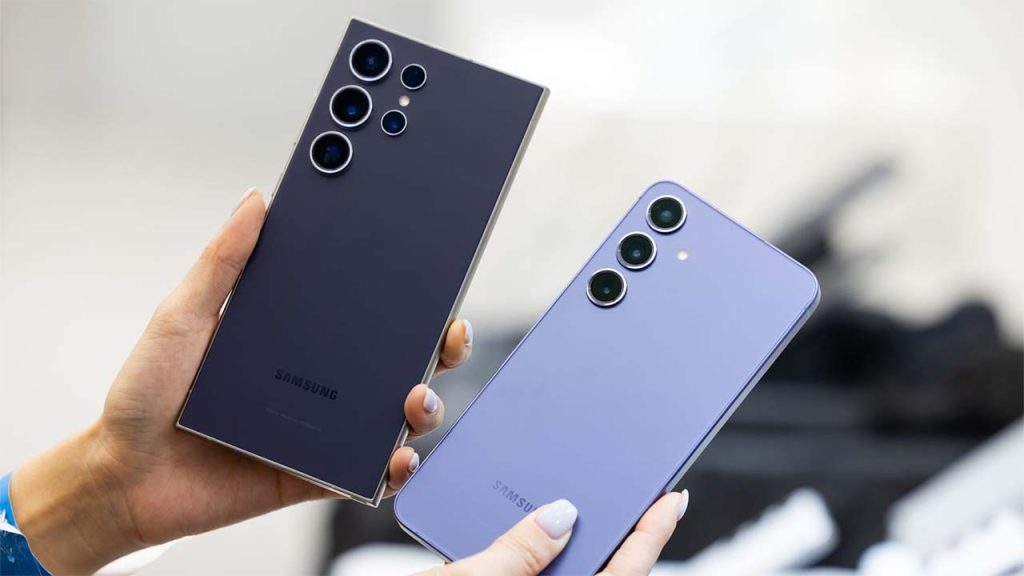
These colors are likely to be available for both the Galaxy S25 and S25+, with the Galaxy S25 Ultra expected to feature a more understated design, possibly with a titanium frame, aligning with its more premium positioning.
What about the performance?
As for the performance, both the S25 and S25+ have surfaced with both Samsung’s in-house Exynos 2500 and the Snapdragon 8 Elite on Geekbench so far. While it’s still unclear whether Samsung’s in-house Exynos 2500 chip will power the devices outside of regions like the US and China, the latest Geekbench listing of a Snapdragon 8 Elite-powered S25+ shows promising numbers, suggesting a sizable improvement over last year’s models. Both the base and plus models are expected to feature the same display sizes as their predecessors – 6.2″ and 6.7″ respectively.
Significant in context, Samsung could be working on a new ‘Slim’ model as part of the S25 series, which is expected to launch separately sometime in 2025 after the January launch of the familiar models.
Let’s face it, the smartphone landscape has gotten a bit… predictable. Samsung‘s Galaxy line iterates on familiar themes, Apple‘s iPhones refine existing formulas, and while both companies are titans, there’s certainly a sense of “been there, done that” vibe.
The real excitement in the smartphone space comes from East—China. Brands like Xiaomi, Oppo, and Vivo are constantly innovating—not just with traditional smartphones but also with newer formats like foldables. So, what makes these Chinese brands stand out from the rest? Let’s dive in.
Chinese smartphone brands prioritize value and deliver exactly what users want. They understand the desire for flagship-level specs without the exorbitant price tag. Take the Xiaomi 14T Pro, for example. It features a top-tier processor, an AMOLED display, premium build quality, and a Leica-engineered camera system, all for a competitive $550.
Gamers are well-served too, with options like the Poco F-series for raw power, Infinix’s GT lineup for performance, and iQOO’s Neo series focused on immersive experiences with dedicated software and accessories. For photography enthusiasts, Vivo and Xiaomi offer devices like the X200 Pro and 14 Ultra, essentially pocket-sized studios with advanced camera systems.
It’s not that Samsung, Apple, or Motorola lack options across price ranges, but the variety and specialization that Chinese brands bring to the table makes them more exciting.
2. Innovation Beyond Specs
Chinese smartphone brands also stand out for their willingness to experiment and push technological boundaries. They are often the first to adopt the latest features, keeping their phones fresh and innovative.
Foldable phones, once a niche market, are seeing significant progress from Chinese companies. The OnePlus Open, for example, received praise as the best foldable on the market, thanks to its slim design and innovative software features. Similarly, Huawei has taken foldable tech a step further by launching the world’s first tri-fold phone.
Meanwhile, Samsung, the pioneer in the category, is still working on making its foldables slimmer, and Apple is rumored to be exploring the category.
Fast-charging technology is another area of rapid development. Brands like Xiaomi and Realme are pushing the envelope with charging speeds that can fully charge a phone in just minutes.
For instance, Realme’s 240W fast charging on the GT Neo 5 can charge the device from 0 to 100% in just 10 minutes. Whereas, Apple still ships their $1200 iPhone with a maximum of 30W charging speed.
3. Cameras
Photography has long been a cornerstone of Apple’s smartphone dominance. Renowned for capturing stunning images, Apple iPhones have consistently set the bar high.
However, the landscape is shifting. Chinese brands, particularly Huawei, Xiaomi, and Vivo, are making significant strides in camera technology. Huawei’s Pura 70 Ultra, for instance, topped DxOMark’s camera test, surpassing even the iPhone 16 Pro Max. These brands are not just matching Apple’s performance but, in some cases, even exceeding it.
A key factor driving this surge is strategic partnerships with renowned camera manufacturers. Unlike other brands, which rely solely on in-house technology, Chinese brands are collaborating with industry giants like Leica and Hasselblad. These partnerships enable them to leverage advanced camera optics and image processing techniques, resulting in superior image quality.
Vivo’s collaboration with Zeiss and Xiaomi’s partnership with Leica are prime examples of this trend. The Xiaomi 14 Ultra, in particular, comes with a dedicated camera kit for achieving more polished, professional-looking shots.
As the competition intensifies, it will be interesting to see how Apple responds and whether it continues to maintain its leadership position in smartphone photography.
4. However…
Despite their impressive strengths, Chinese smartphone brands face challenges that could impact their long-term growth.
One major issue is software updates and user experience. While the hardware is often excellent, Chinese brand phones often come with cluttered software loaded with bloatware and suffer from inconsistent updates. While brands like OnePlus have streamlined their software for a cleaner experience, others still lag behind in this area.
Long-term software support remains a weak point. Unlike Apple and Samsung, which offer several years of updates for their iPhones, Chinese brands often provide limited post-purchase support. This can leave users with outdated software and reduced security sooner than they might expect.
We use cookies on our website to give you the most relevant experience by remembering your preferences and repeat visits. By clicking “Accept”, you consent to the use of ALL the cookies.
This website uses cookies to improve your experience while you navigate through the website. Out of these, the cookies that are categorized as necessary are stored on your browser as they are essential for the working of basic functionalities of the website. We also use third-party cookies that help us analyze and understand how you use this website. These cookies will be stored in your browser only with your consent. You also have the option to opt-out of these cookies. But opting out of some of these cookies may affect your browsing experience.
Necessary cookies are absolutely essential for the website to function properly. This category only includes cookies that ensures basic functionalities and security features of the website. These cookies do not store any personal information.
Any cookies that may not be particularly necessary for the website to function and is used specifically to collect user personal data via analytics, ads, other embedded contents are termed as non-necessary cookies. It is mandatory to procure user consent prior to running these cookies on your website.