There have been rumors that Samsung’s Galaxy Tab S10 line will include only two models, and now a leaked promo image seems to confirm this. It looks like Samsung is focusing solely on the Galaxy Tab S10+ and S10 Ultra for the next generation, which means we likely won’t see a standard Galaxy Tab S10 model in this lineup.
Both the Plus and Ultra models appear nearly identical to their S9 counterparts. The Ultra retains the decisive display notch, while the Plus sticks with a notch-free design. The leaked image shows the Plus in Silver and the Ultra in Graphite colorway. Aside from this, it doesn’t reveal much else about their specs.
Tab S10 PlusTab S10 Ultra
Thanks to the tablet’s appearance on a few certification sites, we know a few details about them. According to China’s 3C certification, the Tab S10 models will come with 45W wired charging supports, just like the S9 series. Disappointingly, the charger will likely be sold separately, continuing a trend that has become increasingly common among flagship devices.
The biggest surprise—or perhaps lack thereof—comes with the processor. Leaks suggest that the S10+ and Ultra will use MediaTek’s Dimensity 9300+ SoC.
Samsung has always favored Qualcomm’s top-of-the-line Snapdragon chip for its Galaxy Tab S line. Things seem to be changing as this will be the first time we’ll see a MediaTek processor in this series.
The tablets are expected to launch in October, around the same time MediaTek is likely to introduce the Dimensity 9400 processor. Thus, not only will the Galaxy Tab S10 series use a MediaTek chip, but it also won’t feature the most up-to-date processor.
So far, the leaks suggest a conservative update for the Galaxy Tab S10 series. We’ll have to wait for official details from Samsung to confirm these leaks and get a clearer picture of what the Galaxy Tab S10 series truly offers.
Motorola has been consistently launching new G-series smartphones in different markets. So far, it has launched the Moto G64 5G, the Moto G85 5G, and the Moto G45 5G. Recent reports have revealed that the brand is also working on the Moto G35 5G, an entry-level 5G phone. New reports suggest that it is also planning to launch another G-series phone called the Moto G55.
Moto G55 5G official images leaked
Popular tipster Evan Blass has shared the front-view images of the upcoming Moto G55. The presence of a chunky bottom bezel clearly indicates that it will be a budget-friendly offering. The right spine of the phone features a volume rocker and a power key. Its bottom features a 3.5mm audio jack, a microphone, a USB-C port, and a speaker grille. Unfortunately, there are no images revealing the rear design of the phone.
Moto G55 5G RAM, storage, color options (rumored)
A report by 91mobiles claims that the Moto G55 will come in a single variant offering 8 GB of RAM and 256 GB of built-in storage. It will be available in Grey, Green, and Purple. At present, there is no information available about the core specifications of the device.
The same report states that the G35 will arrive in 4GB+128GB, 8GB+128GB, and 8GB+256GB variants. It is likely to have colors like Red, Green, and Black. A recent report claimed that it will have the Unisoc T760 chip, 8 G of RSM, Android 14, and a 5,000mAh battery with 20W charging,
The Moto G55 5G will succeed the Moto G54, which debuted in September 2023. Hence, it seems that the G55 may go official around the same time this year. As far as the G35 is concerned, it is also expected to debut soon in different markets.
Discover Honor’s daring plan to break a world record with their Magic V3, get a first look at Oppo’s Find X8, and explore the latest additions to iQOO’s Z9 series. We’ve also got news on Atari’s retro console, OnePlus updates, Huawei’s health tech, and more!
Today’s Highlights
Honor’s Guinness World Record Attempt: Dive into Honor’s bold marketing strategy for the Magic V3 global launch. We’ll explore how they plan to use the phone’s lightweight design to break a world record.
Oppo Find X8 First Look: Get an exclusive peek at the upcoming Oppo Find X8 through a leaked real-life image. We’ll compare this to previous leaks and discuss what it might mean for Oppo’s flagship lineup.
iQOO Z9s and Z9s Pro Launch: Examine the latest additions to iQOO’s Z9 series in India. We’ll break down the key features of these new devices and how they position themselves in the competitive mid-range smartphone market.
Atari 7800+ Unveiling: Unpack the nostalgia-filled launch of Atari’s 7800+, a modern take on the classic console.
Honor is going all in for the upcoming Magic V3 global launch. After throwing down with Samsung and taking jabs at its Galaxy Z Fold 6, the company is now going after an official Guinness World Record. It plans to leverage the lightweight design of the Honor Magic V3 to build the House of Cards.
The Oppo Find X8 is expected to be released in China sometime in Q4 this year, possibly in October. A design schematic of the phone surfaced online a couple of days ago. Now, a real-life image has emerged, which reveals a slightly different design than the schematic.
iQOO’s Z9 series includes the Z9, Z9 Lite 5G, and Z9x 5G. Now the Vivo sub-brand has introduced two new devices in the lineup. These are the iQOO Z9s and Z9s Pro. Both devices share some similarities between them. They are touted to be the segment’s fastest curved-screen phones along with a slim design.
Atari has introduced the Atari 7800+, a modern update of the classic 1986 console. The new version is smaller and more powerful, with an HDMI port for easy connection to modern TVs and monitors.
Our exclusive report gave the first look at the upcoming Infinix Zero 40 5G. The report also revealed the specifications along with some real-life images of the phone. Now, a premature retailer listing of the unannounced smartphone has appeared in Malaysia. The listing has revealed almost everything about the smartphone.
Infinix Zero 40 5G specifications (rumored)
Infinix Zero 40 5G in Rock Black
The upcoming Infinix Zero 40 5G is set to feature a 6.78-inch curved-edge AMOLED display with a Full HD+ resolution of 1080 x 2436 pixels and a 144Hz refresh rate. It will run on Android 14 with the XOS 14.5 interface. It is expected to receive two Android OS upgrades and three years of security updates.
Powering the device will be the Dimensity 8200 Ultimate chipset, paired with 12 GB of RAM and 256 GB of internal storage. It will also have support for 12 GB of virtual RAM. The smartphone will be equipped with a 5,000mAh battery that supports 45W wired charging and 15W wireless charging.
Infinix Zero 40 5G in Moving Titanium
In terms of photography, the Infinix Zero 40 5G will boast a 50-megapixel front camera, whereas the rear camera setup will include an OIS-enabled 108-megapixel, a 50-megapixel ultra-wide lens, and a 2-megapixel auxiliary sensor. Being a vlogging-focused phone, the Zero 40 5G is expected to support 4K 60fps video recording through its front and rear cameras. The official images show the phone sporting a massive round camera module with an LED flash positioned in the upper-left corner.
Infinix Zero 40 5G in Violet Garden
Additional highlights include an in-screen fingerprint sensor for secure unlocking, an IR blaster for remote control capabilities, and an IP54 rating, providing resistance to dust and splashes. While the weight of the device is not known yet, it is said to measure 164.31 x 74.47 x 7.9mm.
Infinix Zero 40 5G price (rumored)
The Infinix Zero 40 5G is likely to be priced at 1,699 MYR (~$387). For those who don’t know, the device is expected to launch globally on Aug. 29. It is expected to be available in three colors: Rock Black, Moving Titanium, and Violet Garden.
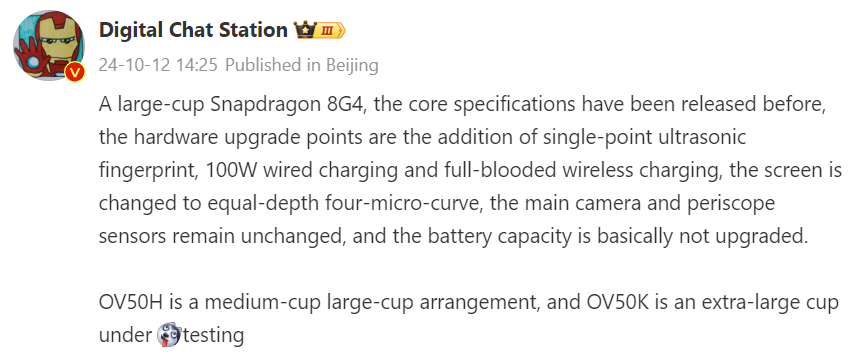
Oppo is expected to unveil the Find X8 Ultra equipped with the Snapdragon 8 Gen 4 in January 2025. It is speculated that the device will also be released on the global market, unlike its predecessor, which remained exclusive to China. A new leak on Weibo has revealed the battery size and charging capabilities of the X8 Ultra.
Oppo Find X8 battery, charging details leaked
The leak above shows tipster Digital Chat Station discussing an upcoming smartphone running Qualcomm’s SM8750 chip, not the Snapdragon 8 Gen 4 SoC. The emoji in the post implies a reference to an upcoming Oppo phone. Therefore, it can be concluded that the leaker is discussing the Find X8 Ultra.
As per the leak, the Find X8 Ultra will pack a 6,000mAh battery with 100W wired charging support. The device will also have support for 50W wireless charging.
As per previous leaks, the Find X8 Ultra will have a 6.78-inch OLED panel with a micro-curved design. The screen will offer a resolution of 3168 x 1440 pixels and a 120Hz refresh rate. The display will incorporate an ultrasonic in-screen fingerprint sensor for security.
The Find X8 Ultra is expected to run on ColorOS 15-based Android 15. Like the Find X7 Ultra, the successor model will also feature a quad camera setup on the back. Hence, it will have a pair of periscope telephoto cameras.
The Find X8 and Find X8 Pro, which are expected to launch in October of this year, will have the Dimensity 9400 chip. The X8 will have a smaller flat screen and a triple camera setup, whereas the X8 Pro will have a larger micro-curved display and a quad-camera setup featuring dual periscope telephoto cameras.
JBL has recently unveiled the Tour Pro 3 earbuds, almost a year after the launch of its predecessor, the Tour Pro 2.
JBL Tour Pro 3 specs & features:
The Tour Pro 3 earbuds include a hybrid dual-driver system with a balanced armature driver for clear high notes and an 11mm dynamic driver for strong bass and vocals.
The earbuds use JBL Pro Sound technology and support Hi-Res audio and LDAC for native 24-bit high-resolution audio, providing an immersive listening experience. For phone calls, the earbuds feature a 6-mic system enhanced by a JBL Crystal AI algorithm, which helps reduce background noise and improve voice clarity.
A key feature of the Tour Pro 3 is its True Adaptive Noise Cancellation 2.0 technology, which adjusts noise cancellation based on the environment by measuring noise levels over 50,000 times per second. The earbuds also offer JBL Spatial 360 and head-tracking technology for a more immersive audio experience.
The Tour Pro 3 comes with a smart charging case that also functions as a wireless audio transmitter. The case features a larger touchscreen for easier control of music playback, call management, and access to ID3 tags, caller ID, and media file information.

In terms of battery life, the Tour PRO 3 offers up to 11 hours of playtime without ANC, 8 hours with ANC on, and 7 hours with True Adaptive ANC enabled. The charging case adds another 32 hours of battery life.
Pricing & availability
The JBL Tour Pro 3 is available in Black and Latte colors with a price tag of $299.99.
Atari has introduced the Atari 7800+, a modern update of the classic 1986 console. The new version is smaller and more powerful, with an HDMI port for easy connection to modern TVs and monitors.
The Atari 7800+ is priced at $129.99 and is compatible with both Atari 2600 and 7800 game cartridges, giving users access to a wide range of classic games. The console comes with a copy of Bentley Bear’s Crystal Quest and includes a USB-C cable.
For a more authentic retro experience, the Atari 7800+ allows users to switch between widescreen and 4:3 viewing modes, offering flexibility in how games are displayed. The console also features a larger cartridge socket to reduce issues with cartridge sticking, making it compatible with a broader range of games.
Alongside the console, Atari has announced the CX78+ Wireless Gamepad (bundles with the Atari 7800+) and CX40+ Wireless Joystick, each priced at $34.99. The CX78+ Wireless Gamepad offers up to 25 hours of battery life and charges via USB-C. The CX40+ Wireless Joystick, compatible with the Atari 2600+ and all original Atari systems using the included DB9 wireless adapter, offers up to 30 hours of battery life and also charges via USB-C. Both controllers are compatible with PCs using the included USB-A adapter.
The Atari 7800+ and its controllers are set to launch in the winter of 2024, with pre-orders currently open.
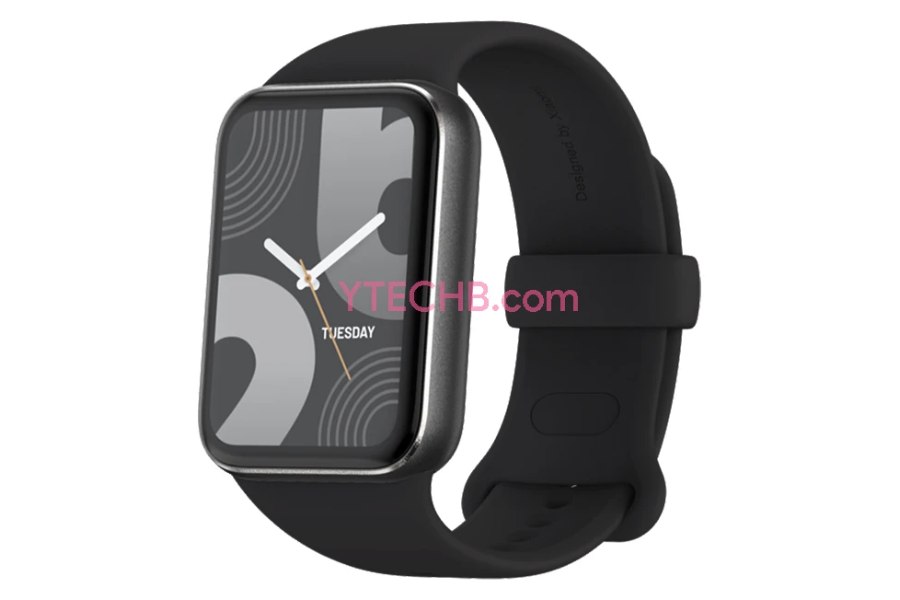
OnePlus has released a new update for the OnePlus 12 that aims to address several issues reported by users. These issues included device overheating, Gmail app problems, and battery backup concerns.
While the changelog for the update doesn’t explicitly mention these fixes, users who have already received it have reported that these problems have been resolved. The update also includes the August 2024 Android Security Patch and has a total size of 1.25GB. The rollout is currently underway and should reach all users within a week.
The firmware version for this update is CPH2573_14.0.0.840(EX01). To check if you’ve received it, go to Settings > About Device and tap the blue ribbon. The officially provided changelog for the update has been mentioned below.
Adds a switch to show or hide media playback info in the status bar.
Improves the user experience of scrolling screenshots. Notifications and Live Alerts messages won’t pop up and floating windows won’t be displayed when you take a scrolling screenshot.
Integrates the August 2024 Android security patch to enhance system security.
Optimizes the face verification feature to ensure a higher level of security.
In other news, OnePlus has launched the Buds Pro 3 globally as the successor to the Buds 2 Pro. These TWS earphones feature an in-ear design with a matte and glossy finish and a pebble-shaped leather-textured charging case. Priced at Rs 11,999 in India and $179/£199/€199 globally, they are available starting August 23 in Lunar Radiance and Midnight Opus colors.
An interesting Geekbench result surprised us a lot. Usually, Samsung would prefer to use the Snapdragon processor for the US, Korea and other countries. But we expect this to change with the Galaxy S24 FE model. A new geekbench result referring to the American version of the S24 FE shows that this smartphone will be released with Exynos 2400e. In a surprising move, Samsung has chosen to use the Exynos processor in all regions.
Galaxy S24 FE comes with Exynos 2400e in all regions
The Galaxy S24 FE is confirmed to come with Exynos 2400e on geekbench. Compared to the Exynos 2400, the only difference is that the Cortex-X4 core with a top speed of 3.2GHz has been reduced to 3.11GHz. This will allow the smartphone to offer a longer battery life. Samsung is actually lowering the clock speed here in a reasonable way. There is nothing wrong with this. Most surprising is that Samsung will offer the Exynos 2400e processor in the S24 FE to users in the US. Samsung is taking an interesting step.
The SM-S721U is the version of the S24 FE that will be sold in the US. The Geekbench result shows that the device will come with an Exynos processor having the model number S5E9945. S5E9945 is the Exynos 2400. When we take a closer look at this resulting test, we see that the highest-performance core has been reduced to 3.11GHz. Although this is not fair, users thought that users in America would get the Snapdragon 8 Gen 3 for Galaxy processor. In short, Galaxy S24 FE will come with the Exynos 2400e processor in all regions.
Everyone should know that the Galaxy S24 FE will be introduced in the near future, we hope that the new smartphone will be available at an affordable price and will delight all users. We want Samsung to improve the power efficiency of Exynos processors. This is important for the brand to increase the reliability of Exynos chips. For this reason, we must say that we are looking forward to Galaxy S25 models featuring Exynos 2500.
Xiaomi is making significant progress with its new user interface HyperOS. As the company continues to develop and refine HyperOS, fans and developers are keeping a close eye on changes in the code. Recently, during the review of HyperOS Android 15 Beta 3, a new and exciting discovery was made that points to the upcoming release of HyperOS 2.0.
Xiaomi is already developing HyperOS 2.0
The XiaomiTime team has found interesting details about HyperOS 2.0. The new interface will be based on Android versions 14 and 15 and is expected to be released on many Xiaomi, Redmi, and POCO smartphones. While exploring the system’s code, a new line was found that wasn’t present in either HyperOS 1.5 or Android 15 Beta 2. The specific line of code reads:
.field public static HYPER_OS2:I = 0x0
This little line may seem simple, but it is a strong sign that Xiaomi is preparing for the release of HyperOS 2.0. This suggests that the company is working hard on the next major version of HyperOS and optimizing to fix issues in the current version.
Switching from MIUI 15 to HyperOS 2.0
Initially, Xiaomi had planned to launch a new version of MIUI, known as MIUI 15. However, they later decided to introduce MIUI 15 as “HyperOS 1.0” instead. Due to this change, some signs of MIUI 15 code remained in the system. These remnants could indicate that Xiaomi is in a transition phase, moving away from MIUI and fully adopting HyperOS, or you can look at HyperOS 2.0 as MIUI 16.
The discoveries about HyperOS 2 further confirm that Xiaomi is now focusing on something beyond MIUI. The system codes no longer point to MIUI 15, instead showing the development of HyperOS 2.0.
This change also marks the end of MIUI, with Xiaomi fully embracing the HyperOS name and vision. By focusing on HyperOS, Xiaomi can simplify the development of new software and provide a better experience across all its devices.
As we await the official release of HyperOS 2.0, it’s clear that Xiaomi has taken significant steps forward in the development of its operating system. We will continue to bring you the latest news on what you can expect from Xiaomi’s next-generation user interface.
Samsung‘s Galaxy S25 series is rumored to launch in January next year, but details have already started surfacing. The latest news concerns the display size and dimensions of the Galaxy S25 Ultra.
Tipster Ice Universe has shared an image comparing the dimensions and display size of the S25 Ultra with its predecessor. According to the image, the upcoming device will be slightly narrower, measuring 77.6mm wide instead of 79mm. However, the display panel’s width is expected to increase from 72.3mm to 73mm.
This means the Galaxy S25 Ultra will feature 2.3mm side bezels, significantly slimmer than the S24 Ultra’s 3.35mm side bezels – a nearly 30% reduction. The diagram also suggests that the S25 Ultra will have symmetrical bezels on all four sides, possibly leading to slimmer top and bottom bezels as well.
Overall, the S25 Ultra is expected to pack a larger display, measuring 6.86″, up from its predecessor’s 6.79″. There are also rumors that the Galaxy S25 Ultra will have slightly rounded corners, which could enhance comfort and bring more consistency to the design of the Galaxy S25 lineup.
This change could also be intended to bring more consistency between the designs of the Galaxy S25, Galaxy S25+, and Galaxy S25 Ultra. In recent generations, the S Ultra models have looked significantly different from the other models in the lineup. The company has already unified the camera island design across all models, starting with the Galaxy S23 series.
However, the information from Ice Universe remains speculative, and Samsung may still make changes before the official launch. As such, details about the display size and bezels should be taken with a pinch of salt.
In terms of performance, the phone is expected to be powered by the Snapdragon 8 Gen 4 chip, which is expected to be announced in October this year.
Zotac has launched its first gaming handheld, the Zotac Zone, during the 2024 Gamescom event. Let’s check out its key specs.
Zotac Zone Gaming Handheld Specifications:
The Zotac Zone sports a 7-inch AMOLED touchscreen display with a resolution of 1080p and a 120Hz refresh rate, delivering sharp visuals and smooth gameplay.
The display also supports HDR and has a peak brightness of 800 nits, making it easy to use even in bright conditions. The screen offers a wide color gamut, covering over 100% of the DCI-P3 color space and 150% of the sRGB color space, ensuring vibrant colors and deep blacks.
The device is built for serious gaming, featuring an AMD Ryzen 7 8840U processor, 16GB of LPDDR5X-7500 memory, and a 512GB M.2 NVMe PCIe 4.0 SSD, which offers fast storage and quick load times. Additionally, it comes with a UHS-II microSD card reader for expandable storage options.
To enhance control and customization, the handheld includes Hall-effect joysticks and triggers, which use electromagnetic induction technology to avoid issues like joystick drift.
The triggers are two-stage adjustable, allowing users to switch between short and long trigger travel based on the game’s requirements. The device also includes dual touchpads for added control and a sliding wheel at the joystick’s base for adjusting system settings.
For connectivity, the Zotac Zone is equipped with Wi-Fi 6E and Bluetooth 5.2, ensuring fast wireless connections and compatibility with a wide range of accessories. It also has dual USB4 ports, one at the top and one at the bottom, offering flexibility in connecting external devices. The power button doubles as a fingerprint reader, providing an additional layer of security.
Zotac has paid attention to ergonomics with features like built-in kickstands, ergonomic grips, and a symmetrical layout for comfortable use during extended gaming sessions.
The device also comes with down-firing stereo speakers for clear audio output. The cooling system in the Zotac Zone is designed to maintain high performance, featuring rapid airflow, triple heat pipes, and an aluminum heatsink fin array to keep the device cool during intense gaming sessions.
Zotac also offers accessories like a multi-port expansion dock with an NVMe SSD interface and a portable carrying case with additional storage space, which are sold separately. The handheld comes with a one-month subscription to PC Game Pass, giving users access to a variety of games right out of the box.
The SHOKZ OpenRun Pro 2 has officially launched, offering fitness enthusiasts an innovative audio experience with enhanced TurboPitch™ sound, real-time external sound sensing, and a lightweight, sweat-proof design. Designed for safety and comfort, the OpenRun Pro 2’s real-time external sound sensing keeps users aware of their surroundings during outdoor activities. You can now get SHOKZ OpenRun Pro 2 for $179.95 on SHOKZ shop or Amazon.
Built for High-Performance and Durability Engineered for high performance, the OpenRun Pro 2 excels in sweat and weather resistance. A dual-layer mesh structure and hydrophobic nano-coating offer protection from rain and sweat, making it ideal for rigorous workouts. Its open-ear design ensures fresh, sweat-free ear canals while delivering enhanced comfort with a balanced, lightweight fit.
Advanced Sound Quality and Clear Calls The device introduces a new standard in sound quality with SHOKZ’s DualPitch™, based on the brand’s DirectPitch™ technology. Coupled with directional sound field technology, the OpenRun Pro 2 creates a rich, three-dimensional listening experience while effectively minimizing sound leakage. Dual noise-canceling microphones enhance call clarity, even in noisy environments.
Long Battery Life and Quick Charging With a powerful 12-hour battery life, this headset keeps up with extended training sessions. A quick 5-minute charge provides 150 minutes of usage, while a 30-minute charge supports up to 9 hours of listening, ensuring continuous performance even during long-distance runs.
Dual-Device Connectivity and User-Friendly Design The OpenRun Pro 2 also supports dual-device connectivity, allowing seamless transitions between smartphones and other Bluetooth devices like smartwatches or computers. Its intuitive mechanical button design ensures easy control during workouts.
Available in two stylish color options, this headset merges athletic functionality with aesthetics, embodying sportiness with elegance.
Earlier today, iQOO held a launch event in India, unveiling the iQOO Z9s and the Z9s Pro smartphones. Along with these devices, the brand has also launched the iQOO TWS 1e in the country. These earbuds were initially launched in China back in December 2023.
iQOO TWS 1e specs & features:
The budget-friendly TWS 1e comes with an eye-catching design and an 11mm high-resolution speaker driver. The audio is fine-tuned by the Golden Ear Acoustics Team, and it also has DeepX 3.0 Stereo Sound Effects to improve the listening experience. These earbuds offer Intelligent Active Noise Cancellation (ANC) up to 30dB, using AI to reduce external noise during calls.
For gamers, the Monster Sound feature provides immersive sound effects and includes an 88ms low-latency mode. The iQOO TWS 1e offers up to 42 hours of battery life, with a 10-minute fast charge providing up to 3 hours of music playback.
Other features include Dual Device Connection with Bluetooth 5.3, Google Fast Pair, Google Assistant, Wearing Detection, Find My Earphones and touch controls for music and calls. The earbuds have an IP54 rating for sweat and dust protection.
Pricing & availability
The iQOO TWS 1e is priced at Rs. 1,899 and will be available in Flame Yellow on Amazon.in beginning August 23rd at 12 PM.
Infinix is gearing up to launch its next-generation smartphone, the Infinix Zero 40 series, which is being positioned as a powerhouse for vlogging enthusiasts. This new device could establish a new standard for vlog-focused smartphones, especially in the mid-range segment. Ahead of its official release, we’ve got full hands-on pictures of the device revealing it in full glory.
Infinix Zero 40 5G Hands-On Leak
The device showcased here comes in a Violet color with a dual-tone finish on the back. It sports a large circular camera module, accompanied by an LED flash positioned in the top left corner. On the front, the device features a punch-hole selfie camera integrated into a curved display, adding to its sleek design.
The Infinix Zero 40 is expected to offer some impressive camera capabilities, making it stand out in a crowded market. The device will be capable of recording 4K video at 60fps on both the front and rear cameras, a rarity in its class. This capability is enhanced by adaptive anti-shake technology (OIS+EIS), which promises stable, high-quality footage even in dynamic shooting environments.
The device will also feature a “GoPro Mode” that enables seamless connectivity with GoPro devices, allowing users to monitor GoPro footage directly on the phone’s screen. This feature broadens the phone’s versatility, making it ideal for various shooting scenarios beyond standard vlogging.
The Infinix Zero 40 also aims to simplify the vlogging process with AI-powered tools that assist in script planning, shooting, editing, and sharing. The device features a Vlog Mode which offers easy-to-use templates, allowing users to produce polished videos.
Under the hood, the device boasts a 6.78-inch 144Hz 3D-curved AMOLED display and is powered by the Mediatek Dimensity 8200 Ultimate 5G processor with 24GB extended RAM (12GB+12GB). The phone supports 45W supercharging, 20W wireless charging, and will receive Android upgrades up to Android 16, with three years of security patch updates.
The phone is also equipped with 4K front and rear cameras, including a 108MP main camera with OIS and a 120° 50MP ultra-wide lens. For selfies, it features a 50MP front camera.
Infinix Zero 40 will be available in colors like Misty Aqua, Blossom Glow, and Rock Black while the 5G variant will be available in Violet Garden, Moving Titanium, and Rock Black. It will also come with a leather finish back cover.
The Infinix Zero 40 series is set to officially launch on August 29th, with pricing and availability details to be revealed at that time.
The Oppo F27 5G was launched in India as the brand’s latest mid range smartphone. It was announced for a starting price tag of 22,999 INR and it also comes with some special bank offers. So here’s a list of 5 of the best alternatives to the Oppo F27 5G for those looking to get a similar package in a smartphone from a different brand.
Oppo F27 5G
Before we check out those other devices, let’s have a look at the key specs of the Oppo F27 5G. The device launched with an attractive and durable armor body design and the Cosmos Ring, which houses Halo Light. Meanwhile, the front sports a tall 6.67-inch AMOLED display with a 120Hz refresh rate, FHD+ resolution, and 2,100 nits of peak brightness. Other notable features include Dimensity 6300, a 5000mAh battery, 45W fast charging, a 50MP dual camera setup, and an IP64 rating. Now, we can check out the top 5 alternatives:
Nothing announced the Phone 2a as its first-ever mid-range model. Just like the Oppo F27 5G, you get a tall 6.7-inch 120Hz AMOLED display. But what sets it apart is the transparent design with LED lighting on the rear. For just 23,999, you get a more unique design along with a better camera system.
The rear features two 50-megapixel cameras for the main and an ultra-wide-angle lens, not a 2-megapixel Marco sensor. Under the hood, Nothing Phone 2a is equipped with the Dimesnity 7200 Pro SoC and is powered by a 5,000mAh cell with 45W fast charging support.
2. Motorola Edge 50 Fusion
Motorola Edge 50 Fusion
Motorola also targets this price range with the Moto Edge 50 Fusion. It is currently listed in India for 22,999 INR, which is identical to the Oppo F27 5G. However, you once again get a 50-megapixel main camera camera and a 13-megapixel ultra wide-angle camera at the back. That’s not all, there is also an eco-leather variant, which offers a premium feel.
Unlike the other Phone 2a and F27 5G, the Edge 50 Fusion features the Qualcomm Snapdragon 7s Gen 2. The battery pack is a sizeable 5,000mAh cell, which supports 68W wired fast charging. So in terms of pure specs, this is one of the best alternatives to the Oppo F27.
3. iQOO Z7
iQOO Z7
One of the more affordable options on this list is the iQOO Z7. This mid-range model was announced last year for 18,999 INR for its 6GB + 128GB version, but its 8GB + 128GB variant costs 8GB + 128 GB. Under the hood, there is an aging Dimensity 920 SoC and a 4,500mAh battery pack that supports 44W wired fast charging.
For photography, there is a 64-megapixel primary camera and a 2-megapixel depth sensor on the rear. Meanwhile, the front sports a 6.38-inch AMOLED display with FHD+ resolution and a 90Hz refresh rate. So it also has the smallest screen out of the 5 alternatives.
4. Realme 13 Pro
Realme 13 Pro
From Realme’s popular numbered series, we have the Realme 13 Pro which was released for a 26,999 INR starting price tag. Similar to the Edge 50 Fusion, it packs the Qualcomm Snapdragon 7s Gen 2 chipset as well. The Realme 13 Pro is powered by a massive 5,200mAh cell that supports 80W wired fast charging.
So while it is pricier than the Oppo F27 5G, you do get some better specs and a vegan leather option. The smartphone sports a tall 6.7-inch AMOLED display with a 120Hz refresh rate and FHD+ resolution. At the back, there is a 50-megapixel primary camera along with an 8-megapixel ultra wide-angle lens.
5. POCO X6 Pro
Poco X6 Pro 5G
Poco X6 Pro is the last entry in the list and it is on sale right now for 23,999 INR in India. This is around 3K INR cheaper than its original launch price. The front sports a tall 6.67-inch AMOLED display that offers a 120Hz refresh rate and FHD+ resolution.
On the rear, this is the only option with a triple camera setup with 64MP (Main) + 8MP (Ultrawide) + 2MP (Marco) sensors. Under the hood, the POCO X6 Pro is equipped with the Dimensity 8300 Ultra SoC. A sizeable 5,000mAh battery pack powers this device, with support for 67W wired fast charging.
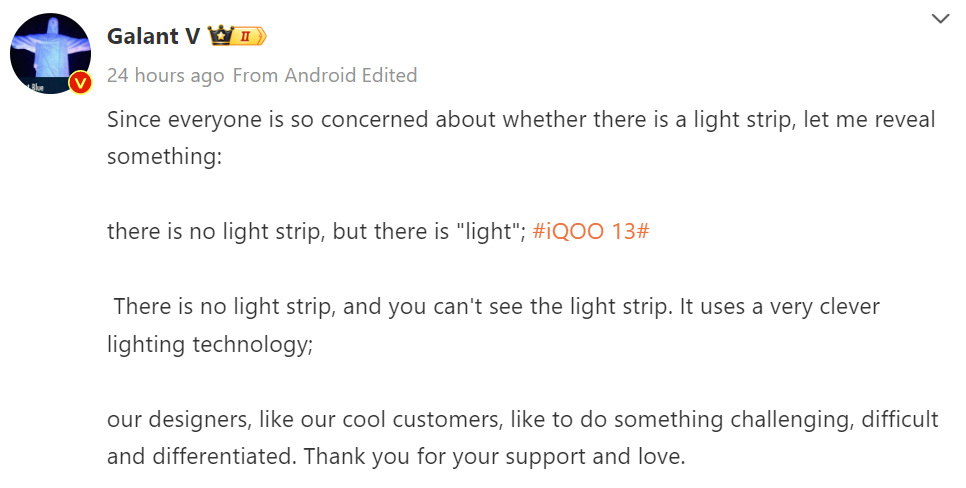
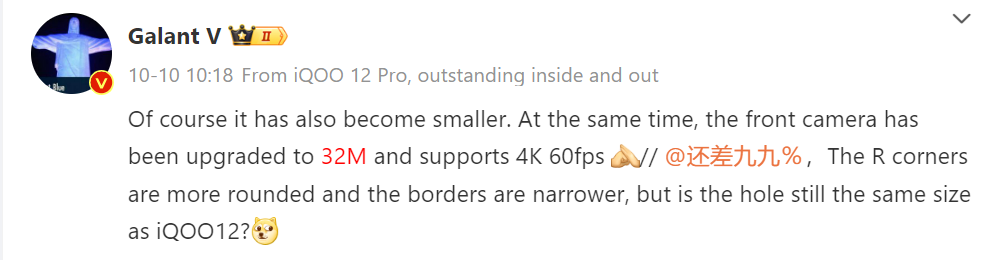
Rumors about the iQOO 13 have been ongoing, with the phone expected to launch in China this November. Today, leaker Digital Chat Station released a Weibo post to share key details regarding the phone’s camera specifications and design.
iQOO 13 camera specifications (rumored)
The above Weibo post suggests that the iQOO 13 will have three 50-megapixel cameras. Unfortunately, the tipster didn’t divulge specific information about the camera sensors that will be available on the iQOO 13. To recall, the iQOO 12 featured a 50-megapixel primary camera with OIS support, a 64-megapixel periscope telephoto camera with 3x optical zoom and OIS support, and an autofocus-enabled 50-megapixel ultra-wide lens.
DCS noted that the camera module will be similar to Xiaomi’s newly redesigned logo, indicating that the iQOO 13 will likely keep the squircle camera island design seen in the iQOO 12. The device’s overall design is expected to remain largely unchanged, with the addition of a new “Rococo White” color option for the engineering prototype. The primary focus during the prototype testing phase is on optimizing and enhancing the device’s performance capabilities.
On the front, the iQOO 13 will feature a BOE-supplied OLED screen with a flat design. It will offer a 2K resolution and a 144Hz refresh rate. The leaker claimed that the screen’s parameters would be comparable to those of the BOE X1. Additionally, the device will have slimmer bezels on all four sides. He reaffirmed that the Snapdragon 8 Gen 4 chipset will power the device.
A recent leak revealed that the glass back of the iQOO 13 will feature a light strip similar to first-generation iQOO flagships. Other rumored features of the device include an ultrasonic in-screen fingerprint sensor, a 6,000mAh battery with 100W charging, a metal middle frame, and an IP68-rated body.
Tecno has quietly announced a new smartphone in the Spark series. It is a budget offering called the Tecno Spark Go 1. The device has been listed on the company’s official website. It packs some impressive features including a high refresh rate display, multiple configurations, and more. Read on to check all the details.
Tecno Spark Go 1 specifications
The Tecno Spark Go 1 has a 6.67-inch IPS LCD display with a centre-aligned punch-hole cutout which the company calls Dynamic Port. It shows notifications, charging status, and more similar to Apple’s Dynamic Island. The screen offers an HD+ resolution and a 120Hz refresh rate for smooth visuals.
Design-wise, the Tecno Spark Go 1 has a flat frame and a nearly circular-shaped camera island on the back panel. It houses a 13MP main sensor whereas the front has an 8MP selfie snapper. The power button doubles up as a fingerprint scanner. Tecno says that the Spark Go 1 can be operated with wet or oily hands. It has an IP54 rating.
Under the hood, the Tecno Spark Go 1 is equipped with a Unisoc T615 processor. It is offered in 4GB and 3GB RAM options along with 4GB of virtual RAM for a smooth performance. Both come in 64GB and 128GB storage variants. The smartphone draws its power from a 5,000mAh battery unit with support for 15W charging via a Type-C port.
The Tecno Spark Go 1 comes in Startrail Black and Glittery White colors. Pricing and availability details of the smartphone have not been revealed at the moment.
In other news, Tecno is working on new tablets called MegaPad 10 and 11. The brand is also expected to unveil the Phantom V Fold 2 and V Flip 2 in the near future. Their official poster and pre-order details have already been revealed in Ghana.
The stable version of Android 15 is due to arrive later this year. However, thanks to beta builds, we already know plenty about the upcoming OS, including the most significant changes, new features, and enhancements. It will be an exciting upgrade; hence, everyone is eagerly awaiting Google to release the stable build.
Every year, millions of Android devices stop receiving OS updates as they reach the end of the promised updates. This year is no different, as Android 15 will be the last major OS update for many Motorola phones.
If you care about software updates, review the list below to see if you’ll need to upgrade to a newer model to continue receiving Android updates.
Android 15: The Last OS Update for These Motorola Phones
Moto X40
Moto G Play (2024)
Moto G84
Moto G73
Moto G54
Moto G54 Power
Moto G53
Moto G23
Moto G14
Moto G13
Moto G (2023)
Moto G Power 5G
Moto G Stylus 5G (2023)
Moto G Stylus (2023)
Moto E14
Motorola hasn’t yet released a list of Android 15-supported devices. Hence, we prepared this unofficial list by analysing the software update policy for every device and the company’s past rollouts.
While there’s no clear-cut policy, Motorola typically offers three Android updates to its Edge and Razr models launched in 2023 or later, while the older models are only eligible for two updates. The pocket-friendly Moto G series gets a maximum of two OS updates, whereas the entry-level E series only gets one.
When Will Motorola Start Rolling Out Android 15 Update?
Android 15 is getting ready for the stable release. It is currently through the platform stability phase, the final phase of development, where Google resolves existing bugs and adds final touches to prepare it for the stable release.
Google doesn’t reveal the stable release of an upcoming OS in advance. However, so far, it has been following the last year’s timeline with beta releases. Hence, the stable build is expected to arrive in October, the same time as last year’s Android 14.
Many brands, including Xiaomi, Realme, Oppo, and Vivo, have already announced the Android 15 beta program, which allows select users to test the new OS ahead of the stable release. However, Motorola still hasn’t joined the beta party.
Motorola doesn’t have a good track record with software rollouts. The brand has struggled to provide timely updates to its devices in recent years. If you recall, it started sending the Android 14 rollout earlier this year when some brands were to wrap up the rollout.
We haven’t observed any significant improvements from the brand, so we don’t expect an early rollout of Android 15. The stable build should start rolling out towards the end of the year or early next year.
What to Expect from Android 15?
1. Satellite Connectivity
Android 15 “extends platform support for satellite connectivity.” It provides support for SMS, MMS, and native RCS apps to use satellite connectivity for sending and receiving messages. The OS also adds some UI elements to ensure a consistent user experience.
All Android 15 phones may not support satellite connectivity, as they will likely require special chip and carrier support. However, this feature will not be limited to emergency uses only.
2. Theft Detection Lock
Thieves are going to hate Google for introducing the Theft Detection Lock feature.
Google recently added Find My Device network support to Android, which lets you find your lost devices using a crowdsourced network of billions of Android devices. Now, the tech giant is adding a feature to Android 15 that will make the device unusable after a factory reset.
The Theft Detection Lock feature uses Google’s AI to determine when your device has been snatched from your hands. If it detects this, the device will lock itself automatically, preventing thieves from stealing your data. The best part is that thieves won’t be able to activate the device until they have your Google account details.
Snatching/stealing Android phones and selling them off for some money is a common practice among thieves, but Android 15 reduces the incentive by making the device unusable without the correct Google account details.
iPhones already have this feature, but I have no problem with Google copying this to Android.
3. Private Space
Android 15 will bring a private space to secure confidential photos, videos, or apps. Users will be able to use a different lock for additional protection.
Other users are unaware of your activities inside the private space, such as the apps you use, install, or download.
4. Split App Shortcuts
Android 15 improves multitasking by allowing users to save shortcut icons for favourite split-screen app combinations. This will save a lot of your time if you frequently use apps in the split-screen mode.
5. App Archiving
Similar to offloading apps on iPhones, Android 15 will allow users to uninstall unnecessary apps while keeping the user data around. There won’t be any data loss; you can continue where you left off after reinstalling/unarchiving the app.
Android already has app archiving via the Google Play Store, allowing you to archive and restore apps there. But Android 15 integrates this feature at the OS level, allowing users to archive/restore apps, even those installed outside of the Google Play Store.
Which Motorola smartphone do you have? And what are your expectations with Android 15? Share your thoughts in the comments below.
Realme has officially introduced an AI-powered photo sharpening feature for the Realme 13 Pro and Realme 13 Pro+. This feature, called ‘AI Ultra-clear,’ enhances the details and sharpness of blurry photos using AI technology. It’s particularly useful for improving photos where the moment has already passed and can’t be retaken.
However, this isn’t the first time we have seen the use of AI for this purpose. Google has developed a feature called the Photo Unblur, which also serves the same purpose. This feature was first released with the Pixel 8 series and is also available in the latest Pixel 9 series devices.
We’ve previously seen similar implementations in Google’s flagships
Nonetheless, it’s important to note that the Pixel devices I just talked about are flagships and are much more expensive as well. It’s good to see manufacturers like Realme offering the useful feature to more affordable devices. The company didn’t mention whether the images are processed on the device or on a cloud server. The flagships can handle the processing themselves and reportedly run the feature on-device.
Speaking of the camera system, both the Realme 13 Pro and Realme 13 Pro+ (review) pack 50 MP main and 8 MP ultrawide cameras. In addition to that, the Pro+ model equips a 50 MP 3x periscope telephoto that has a sensor size of 1/1.95″. The main camera on the Pro+ model also boasts a bigger 1/1.56″ sensor as compared to the 1/1.95″ one on the base model, while the ultrawide is the same between the two.
In terms of performance, both the phones use the 4nm-based Snapdragon 7s Gen 2 chipset, which is paired with a5200 mAh battery. While the base model supports 45W charging, the realme 13 Pro+ packs a 80W charging brick in the box.
We use cookies on our website to give you the most relevant experience by remembering your preferences and repeat visits. By clicking “Accept”, you consent to the use of ALL the cookies.
This website uses cookies to improve your experience while you navigate through the website. Out of these, the cookies that are categorized as necessary are stored on your browser as they are essential for the working of basic functionalities of the website. We also use third-party cookies that help us analyze and understand how you use this website. These cookies will be stored in your browser only with your consent. You also have the option to opt-out of these cookies. But opting out of some of these cookies may affect your browsing experience.
Necessary cookies are absolutely essential for the website to function properly. This category only includes cookies that ensures basic functionalities and security features of the website. These cookies do not store any personal information.
Any cookies that may not be particularly necessary for the website to function and is used specifically to collect user personal data via analytics, ads, other embedded contents are termed as non-necessary cookies. It is mandatory to procure user consent prior to running these cookies on your website.