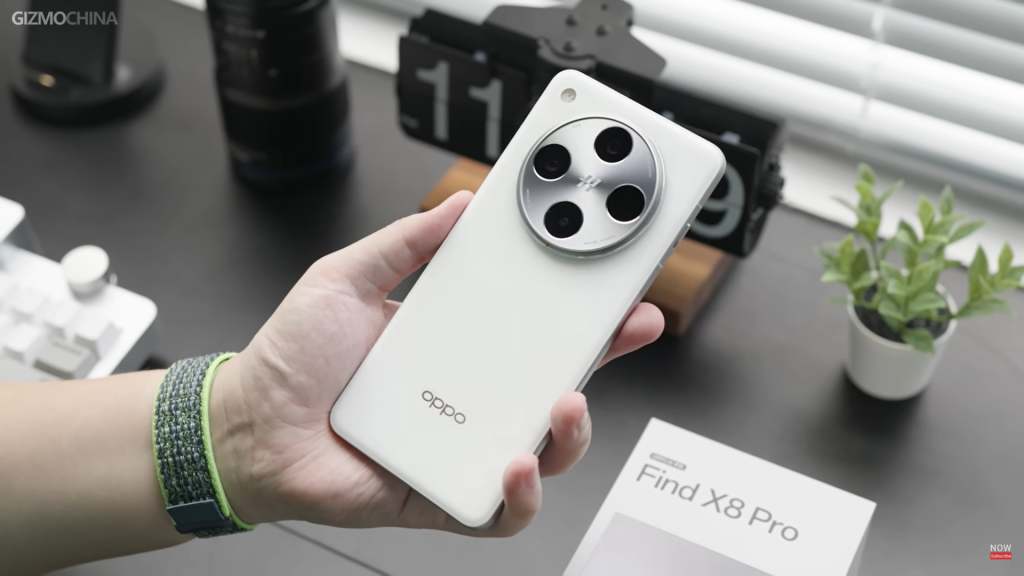
Oppo has recently unveiled its latest flagship smartphones, the Find X8 and Find X8 Pro in the global market, after their initial release in China alongside the Find X8 Pro mini model. While the brand is working on making these new devices available in international regions, some interesting news about the upcoming Oppo Find X8 Ultra has emerged.
Oppo Find X8 Pro
Rumors suggest that the Find X8 Ultra will be a true camera powerhouse, surpassing even its predecessor, the Find X7 Ultra. While the official release is expected in spring 2025, leaked information has already started to circulate.
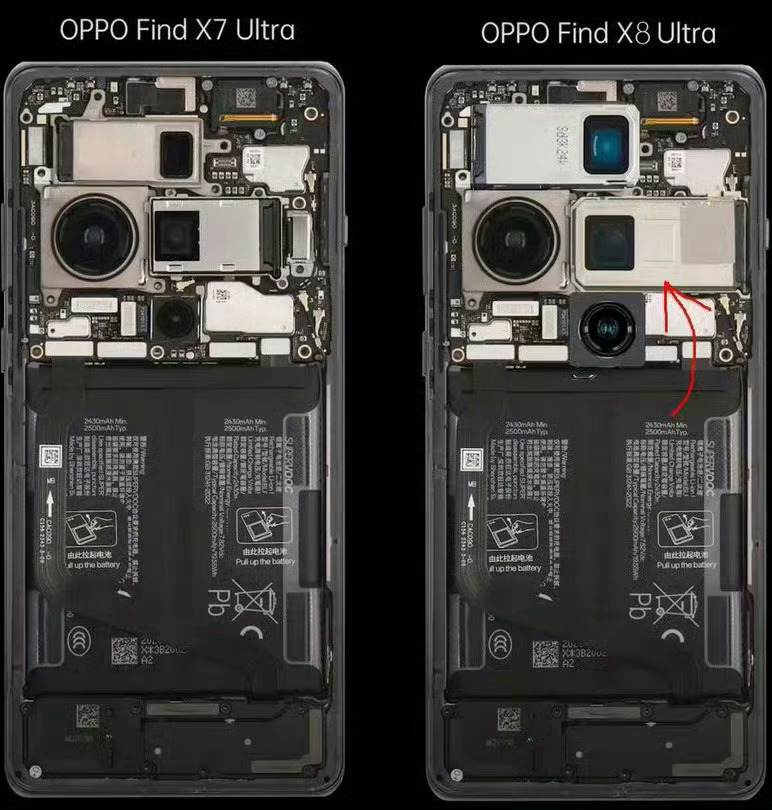
Oppo Find X8 Ultra’s expected internal camera layout
Leaks suggest it will feature a quad-camera setup, including a 50 MP Sony LYT 900 primary sensor with a 1-inch optical format, a 50 MP Sony IMX 882 ultra-wide sensor with a 1/1.95-inch format, and two telephoto lenses: a 50 MP Sony LYT 701 with a 1/1.56-inch format and 75 mm equivalent focal length, and another 50 MP Sony IMX 882 with a 1/1.95-inch format and 150 mm equivalent focal length.
The camera setup is expected to bring improvements in image quality, particularly with the primary and ultra-wide-angle sensors. The Find X8 Ultra is also rumored to perform well with its 3x and 7x telephoto lenses.
According to earlier reports, the engineering prototype of the Find X8 Ultra features a micro-quad-curved screen. It is said to have a 6.82-inch BOE X2 LTPO OLED display with a 2K+ resolution and a 120Hz refresh rate, possibly the same screen used in the OnePlus 13. For processing, the device is expected to run on the Snapdragon 8 Elite (SM8750) chip, unlike the Dimensity 9400 used in other models in the Find X8 series.
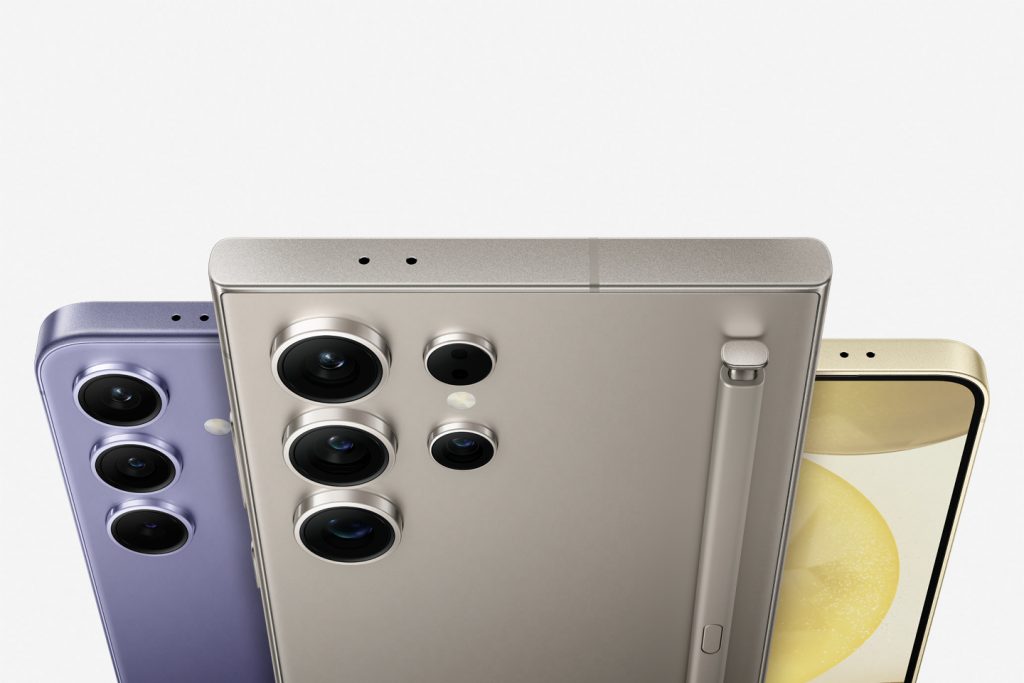
The Find X8 Ultra is likely to compete with devices such as the Galaxy S25 Ultra, Honor Magic 7 Ultimate, Xiaomi 15 Ultra, and Vivo X200 Ultra. While the X8 and X8 Pro have launched globally, it remains uncertain if the X8 Ultra will be available outside of China.
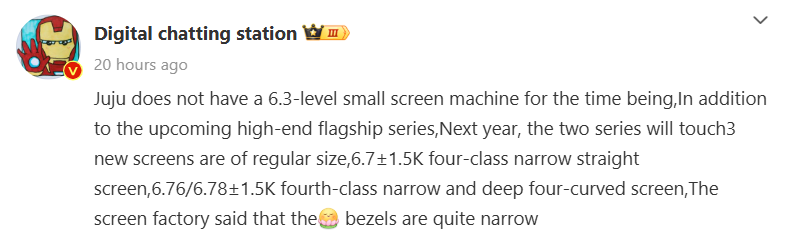
While the tech world has seen a resurgence of compact flagship smartphones this year, Huawei appears to be taking a different approach. Popular tipster Digital Chat Station has revealed that the Chinese tech giant currently has no plans for a 6.3-inch compact device. Instead, Huawei is gearing up to launch two new series next year, featuring larger displays with ultra-narrow bezels.
Huawei Prioritizes Large Displays and Minimal Bezels
According to the tipster, the upcoming Mate 70 series will likely sport a 6.7-inch flat display with impressively thin bezels and a 1.5K resolution. In parallel, the Pura 80 series is expected to feature a 6.76/6.78-inch quad-curved display, also boasting narrow bezels and a 1.5K resolution. While these screen sizes might seem larger than traditional compact devices, Huawei’s focus on minimizing bezels could result in a more compact overall footprint.
Despite the absence of a dedicated compact flagship, the current Huawei Pura 70, with its 6.6-inch screen, already offers a relatively compact and refined user experience. By optimizing the design and software, Huawei could potentially position the standard version of the Pura 80 series as a compact flagship alternative.
Meanwhile, Huawei will launch its Mate 70 series on November 26 and has opened pre-orders a week in advance. Within 10 hours, over 130,000 registrations were recorded, with numbers expected to rise. The lineup includes Mate 70, Mate 70 Pro, and Mate 70 Pro+, with details available at Huawei’s Vmall store.
The Mate 70 and Mate 70 Pro will be available in Black, White, Green, and Purple, featuring 12GB RAM and storage options from 256GB to 1TB. The Mate 70 Pro+ will offer Black, White, Gold, and Sky Blue, with 16GB RAM and storage choices of 512GB or 1TB.
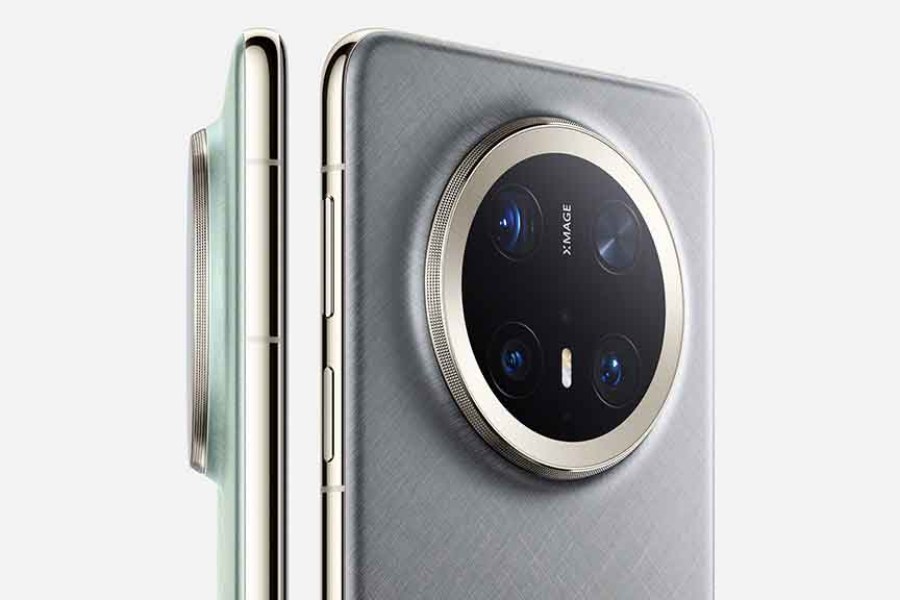
Design-wise, the Mate 70 series features a large circular camera bump with a gold accent ring, housing four camera openings, likely for main, ultra-wide, telephoto, and depth sensors. The design includes rounded edges, a curved back panel with a textured finish, and a thicker camera bump compared to the Mate 60.
Edifier’s Huazai has launched its latest open-ear earphones called “Zero Clip” in the Chinese market. The earbuds are priced at 359 yuan ($50) and are now available on JD.com. Let’s check out the key specs.
Edifier Huazai Zero Clip Specifications
The Huazai Zero Clip earphones feature an open-ear clip-on design that ensures all-day comfort without the usual ear-clamping pressure. The earphones sport a sleek and fashionable design and are available in three colors: Pearl White, Obsidian Black, and Cocoa Brown.
It equips a high-performance 12mm titanium-coated composite diaphragm driver combined with an innovative acoustic air chamber structure to deliver immersive, high-fidelity audio. It supports DPW directional sound wave technology for precise sound delivery while minimizing sound leakage, ensuring privacy and clarity during use.
The Zero Clip comes with a BassTurbo low-frequency enhancement engine, providing deep, impactful bass without sacrificing audio clarity. It also features a customizable EQ tuning system accessible via the Edifier Connect app, offering four distinct sound profiles to suit different musical preferences.
It sports advanced Bluetooth v5.4 technology, ensuring a stable and efficient connection with low latency, perfect for gaming and multimedia consumption. The earphones provide up to 35 hours of total battery life, with fast-charging support offering 3 hours of playback with just a 15-minute charge.
It features an AI-powered noise reduction system for crystal-clear calls in noisy environments. The ergonomic design incorporates adaptive C-shaped memory steel supports and a 12-degree optimal ear clip angle for a secure, comfortable fit tailored to various ear shapes.
It equips an IP56 dust and water resistance rating, making it suitable for workouts and outdoor use. It supports multi-device connectivity, allowing simultaneous pairing with two devices for seamless switching.
Additionally, the earphones feature intuitive controls with SwiftAgile Touch technology, enabling easy playback, call handling, and track skipping via customizable touch gestures.
Earlier this month, Edifier also expanded its product lineup with the launch of the X3 Pro earbuds, featuring active noise cancellation (ANC), a 23-hour battery life, Bluetooth 5.4, and AI call noise reduction, alongside the Hecate G2500bar gaming speakers, which offer 7.1 surround sound and customizable RGB lighting.
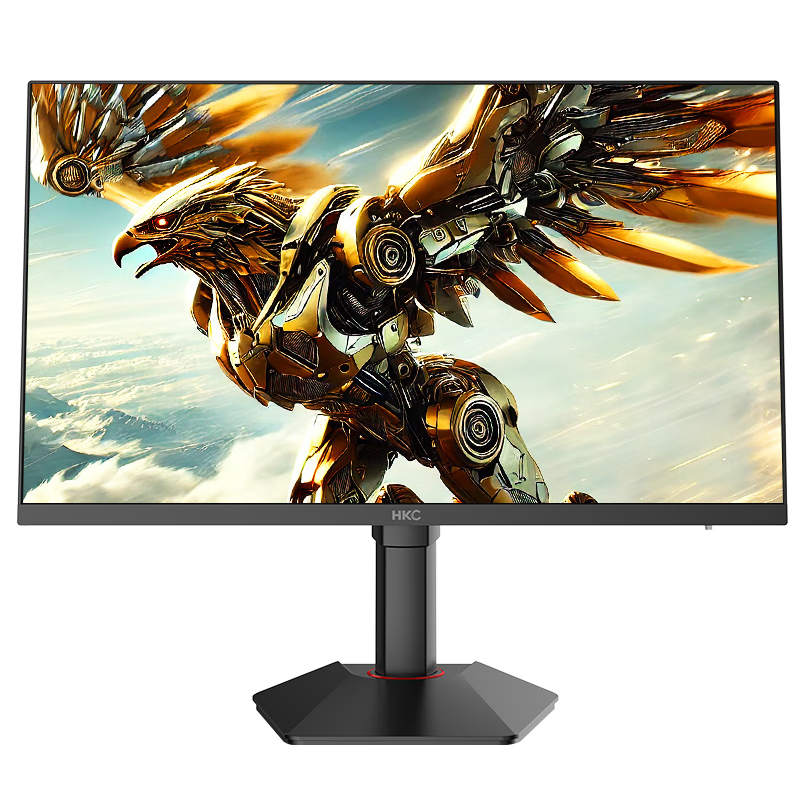
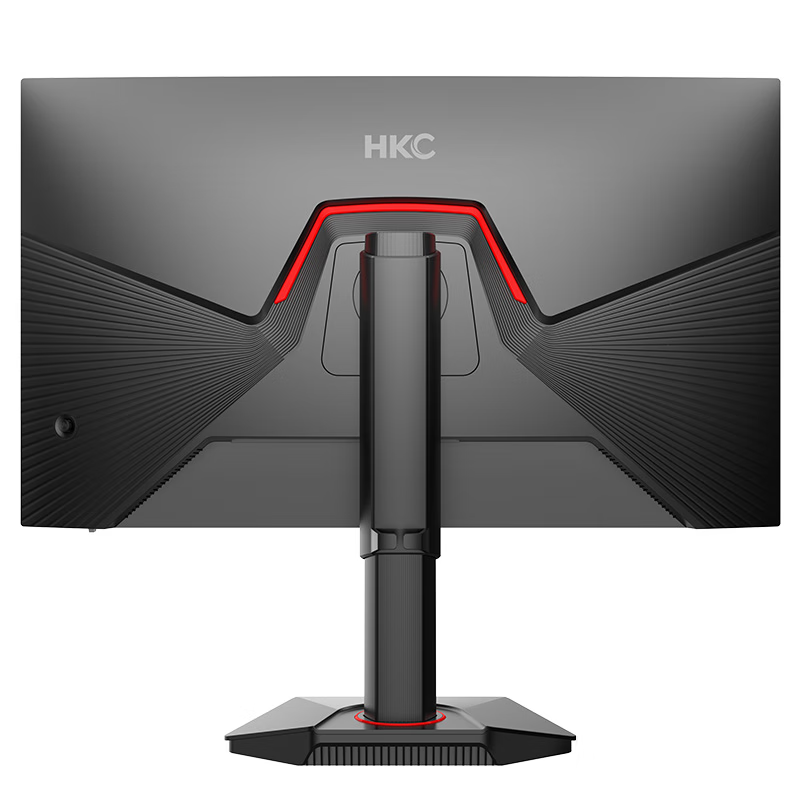
HKC has launched its latest gaming monitor called “G27H7 Pro” with dual refresh rate mode in the Chinese market. The monitor is priced at 1899 yuan ($262) and is now available on JD.com. Let’s check out its key specs.
HKC G27H7 Pro Specifications:
The HKC G27H7 Pro features a 27-inch flat display with a 16:9 aspect ratio. It comes equipped with a Fast IPS panel that supports a dual-mode resolution-switching technology, offering 4K resolution at a refresh rate of 160Hz and Full HD resolution at an ultra-fast 320Hz.
The gaming monitor offers smooth performance with a 1ms response time, ensuring minimal lag for competitive gaming. It supports up to 10.7 billion colors (8-bit + FRC) for precise color reproduction, making it a powerhouse for both gaming and multimedia tasks.
This monitor sports DisplayHDR 400 certification, ensuring high dynamic range visuals with a peak brightness of 400 nits, offering vivid highlights and deep shadows for immersive gaming experiences.
It features a brightness of 350 nits in SDR mode and a static contrast ratio of 1000:1, delivering sharp image quality. Additionally, the screen supports a wide color gamut with 95% DCI-P3 coverage and achieves professional-grade color accuracy with an ΔE value of less than 2.
The G27H7Pro equips a low blue light mode directly at the hardware level, reducing high-energy short-wave blue light for comfortable long hours of use without color distortion. It comes with HKC’s proprietary DIC dynamic blur elimination technology, which reduces motion blur for enhanced clarity during fast-paced action scenes.
This monitor includes an ergonomic stand that supports height adjustment, tilting, and 90-degree vertical rotation, ensuring flexibility and comfort. It also features a compact hexagonal base, optimized for small spaces like dormitory desks, without compromising stability.
The connectivity options include two HDMI 2.1 ports, one DisplayPort 1.4, and a 3.5mm audio-out jack. It supports VESA wall mounting with 75x75mm compatibility for additional placement options.
The monitor equips a custom gaming mode with features like dark field enhancements, crosshair overlays, and game timers, catering to FPS, RPG, and racing games.
In related news, Philips has introduced a new 27-inch 4K IPS monitor featuring 300 nits of brightness and 99% sRGB coverage. Meanwhile, BenQ has launched a 27-inch 2K monitor offering a 100Hz refresh rate, 95% DCI-P3 color gamut, and 90W Type-C Power Delivery.
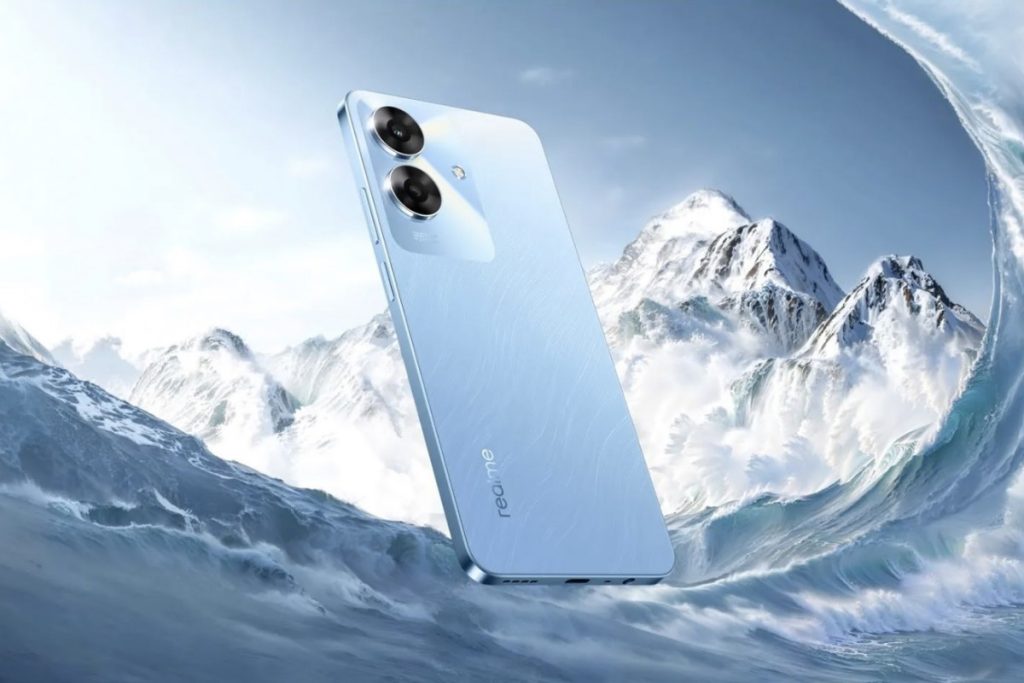
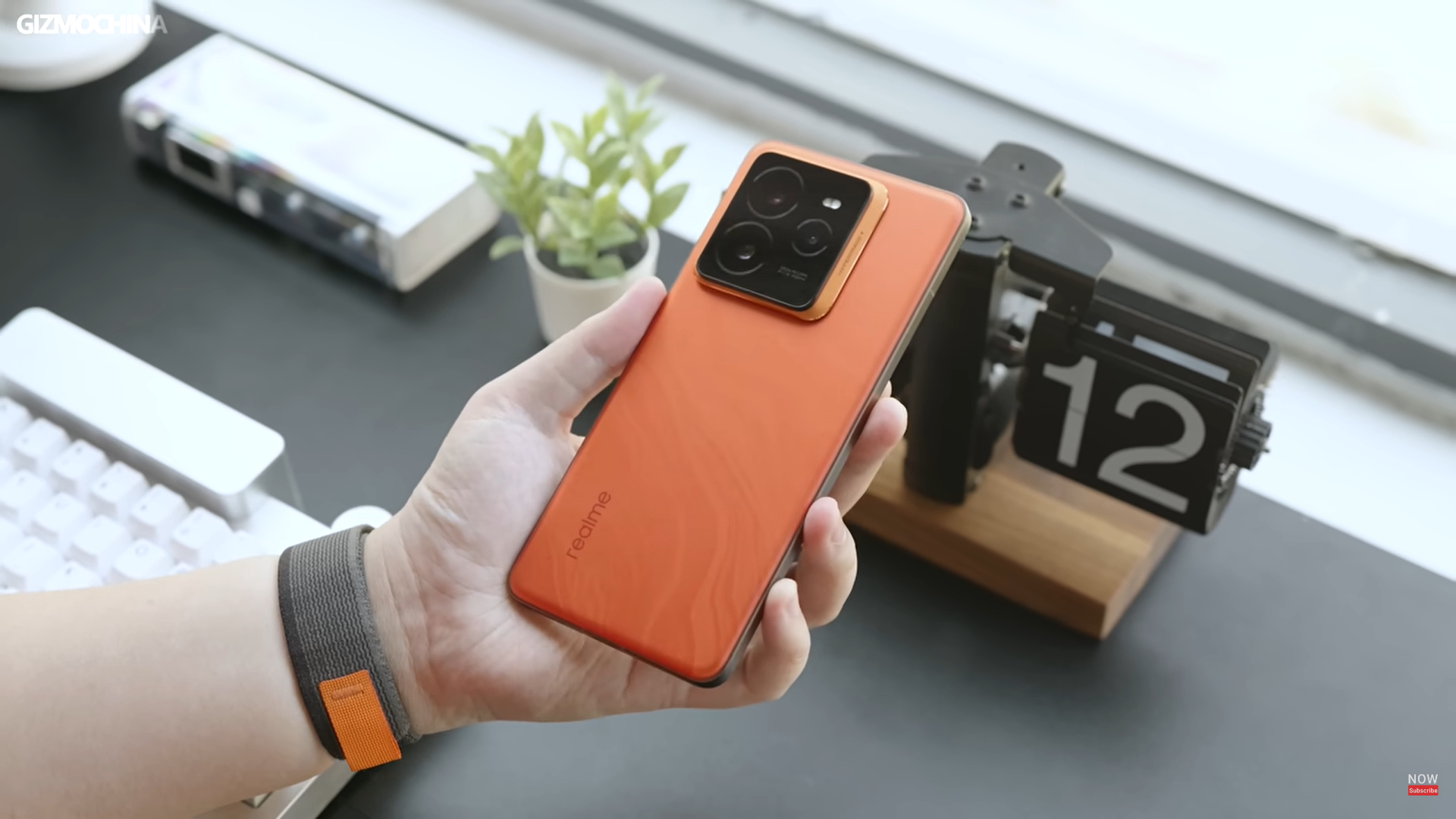
Realme’s budget-friendly Note series is making waves once again as the Realme Note 60x has been spotted on multiple certification platforms, suggesting its launch might be closer than expected. Following the introduction of the Realme Note 60 in Indonesia earlier this year, this new model could join the series with some tweaks and updates.
Realme Note 60
Realme Note 60x details surface via FCC and EU Declaration listings
The Realme Note 60x has been identified with the model number RMX3938 on the EU Declaration and FCC certification sites, as reported by MySmartPrice. Additional appearances on platforms like NBTC have confirmed the marketing name and suggest that the phone will be a 4G-only offering, consistent with its positioning as an entry-level device.
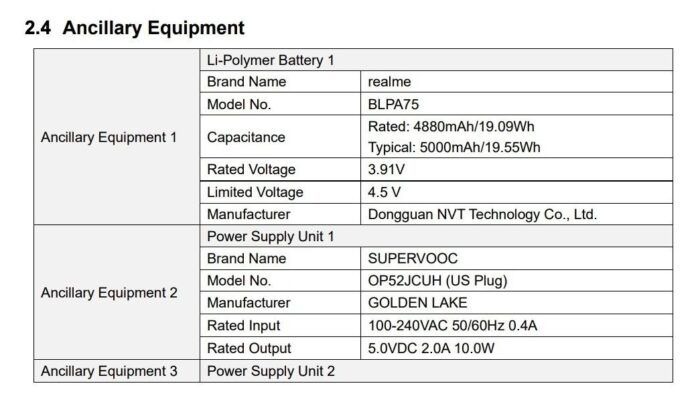
FCC images provide more insight into the hardware, revealing a 5000mAh (typical) battery and support for 10W charging via the bundled OP52JCUH charger. The device will weigh 187 grams and measure 167.26 x 76.67 x 7.84mm, making it a sleek option for its category.
Camera and connectivity
The phone’s camera setup appears to have undergone some changes. While earlier listings hinted at a 32MP primary camera, FCC documentation now lists an 8MP rear camera with autofocus and replaces the previously mentioned flicker sensor. The front camera is expected to be 5MP, in line with its budget-focused hardware.
On the connectivity front, the Realme Note 60x supports 4G LTE, Wi-Fi 802.11a/b/g/n/ac, Bluetooth, and multiple satellite navigation systems including Galileo, GLONASS, GPS, BDS, and SBAS. The device will run on Android 14-based Realme UI 5.0 right out of the box.
Other specs and availability:
The Realme Note 60x’s certification appearances signal a global launch is on the horizon, potentially expanding the reach of the Note series. It will join the Realme Note 60, which debuted in Indonesia in August with a 6.74-inch large display, Unisoc T612 chipset, IP64 dust and splash resistance, and an affordable starting price of 1,399,000 Indonesian Rupiah (around $90 or ₹7,580). Based on the conversion, it’s even cheaper than the Redmi A4 5G, which starts from 8,499 INR in India.
Notably, the Realme Note series has traditionally been restricted to select international markets and hasn’t yet entered the Indian market. It remains to be seen if Realme plans to change this trend with the Note 60x.
Every home needs a reliable safety system to protect against the unseen dangers of smoke and carbon monoxide (CO). These advanced detectors combine precision engineering with user-friendly features to provide dependable protection for you and your loved ones.
Siterwell Smoke & Carbon Monoxide Detectors are cutting-edge safety devices designed to provide precise and reliable protection for your home. Combining advanced technology with user-friendly features, they ensure early detection of smoke and CO threats, offering peace of mind for you and your family.
These smoke and carbon monoxide detectors are versatile and suitable for various areas in your home, including kitchens, corridors, bedrooms, and storage rooms. They perform exceptionally well even in unheated spaces like garages. However, avoid installing them in basements, corners, peaked ceilings, or near vents, windows, and air conditioning outlets for optimal functionality, as these locations can interfere with their performance.
Key Features:
High-Precision Detection for Smoke and CO
With an impressive alarm accuracy of 99.96%, these detectors are designed to detect both smoke and CO precisely. Whether it’s the early signs of a fire or the presence of odorless carbon monoxide, you’ll be alerted promptly. This dual-detection system ensures comprehensive protection, making your home safer than ever.
10-Year Long-Life Battery
The wireless model includes a built-in 10-year lithium battery, giving you a decade of maintenance-free operation. The hardwired model is equipped with two replaceable AA batteries, offering flexibility and convenience. No more frequent battery changes—just long-lasting peace of mind.
Minimizing False Alarms with Advanced Design
These detectors feature a maze-like micro-mesh design that reduces interference from particles like dust, insects, and even cooking smoke. Using dual-wavelength light and advanced technology, they differentiate between real dangers and harmless particles, significantly minimizing false alarms.
One-Click Silence for Instant Relief
Low battery warnings and false alarms can be disruptive, but not with these detectors. A simple press of a button silences the alarm for up to 10 hours, giving you uninterrupted sleep or peace during the day.
Sleep-Friendly Weak Light Design
Designed with your comfort in mind, these detectors feature a soft, unobtrusive light that won’t disturb your sleep. When needed, the device emits a bright red light for emergency alerts, ensuring you’re always informed without compromising rest.
Interconnectivity for Whole-Home Protection
The RF interconnection and hardwired models allow multiple detectors to connect seamlessly. When one alarm is triggered, the others activate simultaneously, ensuring everyone in your home is alerted to potential danger.
Bilingual Voice Alerts: English and French
In a multilingual household, clear communication is crucial. These detectors support English and French voice alerts, ensuring everyone in the family can quickly understand and respond to emergencies.
Versatile Installation Options
These detectors are adaptable to almost any environment. They perform reliably whether installed in bedrooms, kitchens, or basements. For optimal operation, avoid placing them near vents, windows, or lights and maintain a distance of about one meter from corners.
Durable and Safe Materials
Constructed with flame-retardant materials that meet US V0/5VA safety standards, these detectors are built to withstand high temperatures and protect internal components. Their robust design ensures they stay reliable even under challenging conditions.
AI-Powered Adaptation
Equipped with advanced AI technology, these detectors learn and adapt to your home environment. They monitor smoke and CO levels, filtering out harmless particles and reducing false alarms. This intelligent system ensures you’re only alerted when it truly matters.
Your Comprehensive Safety Solution
With features like dual detection, a 10-year battery life, and AI-powered reliability, these detectors are a must-have for every household. Their innovative design, combined with user-friendly functionality, ensures you and your family are always protected.
Upgrade your home safety with this state-of-the-art smoke and carbon monoxide detector. Learn more about its features and benefits by visiting the product page here.
Exclusive Deals on Siterwell Smoke & Carbon Monoxide Detectors
Enhance your home safety with Siterwell’s advanced Smoke & Carbon Monoxide Detectors, now available at great discounts. These Black Friday discounts are valid for a limited time only.
Official Store Deals
Wireless Interconnected Model
Original Price: $52.99 Discounted Price: $42.39 (20% Off)
Siterwell is a leading high-tech enterprise specializing in smart security, smart home, and smart city solutions powered by advanced IoT technology. With a strong focus on innovation and efficiency, Siterwell is dedicated to enhancing home safety and delivering cutting-edge products that protect families worldwide. Learn more about Siterwell here.
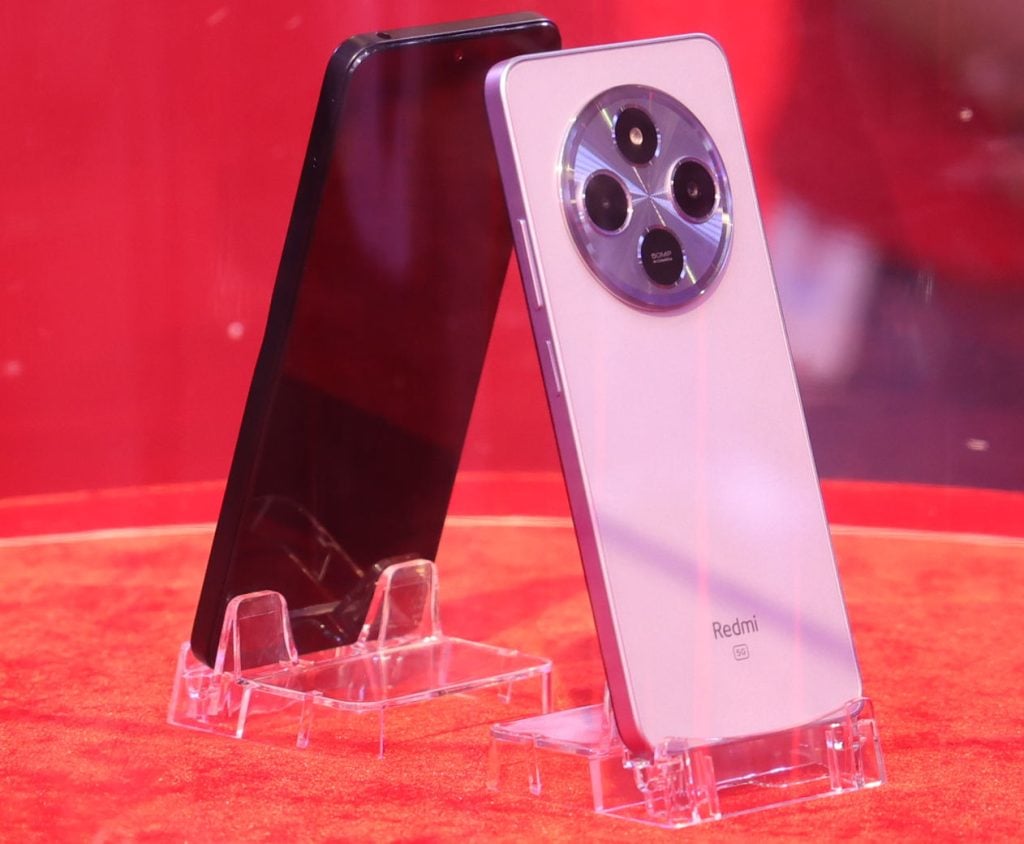
The Redmi A4 5G recently launched in India as one of the most affordable 5G smartphones, bringing next-gen connectivity to a wider audience. Powered by the Snapdragon 4s Gen 2 chipset, the device is designed to deliver solid performance on a budget. However, a significant limitation has surfaced: the Redmi A4 5G does not support Airtel’s 5G network in India. Instead, it is exclusively compatible with Jio’s 5G network. Here’s a detailed look at the issue and its implications for potential buyers.
Why Redmi A4 5G doesn’t support Airtel 5G?
Redmi’s product page reveals that the Redmi A4 5G supports only SA (Standalone) 5G networks and lacks compatibility with NSA (Non-Standalone) networks. This is the primary reason it cannot connect to Airtel’s 5G, which currently uses NSA architecture.
To explain further, Standalone (SA) 5G uses dedicated 5G network bands and entirely new radio technologies for a more advanced deployment. Non-Standalone (NSA) 5G, on the other hand, leverages existing 4G LTE infrastructure, sharing some frequency bands with 4G. This approach makes it more cost-effective and easier to deploy.
While SA 5G is considered technically superior, both architectures are capable of delivering similar user experiences, including speeds of up to 1Gbps.
Airtel has announced plans to roll out SA 5G in India, with tests currently underway in select locations like Bhubaneswar, Rewari, and Chennai. However, a nationwide deployment is still some time away, leaving Redmi A4 5G buyers with Jio as the only viable network for 5G connectivity. So those unwilling to switch to Jio should skip the Redmi A4 5G as well, as it loses its biggest highlight, 5G, when connected to Airtel (as of now).
What else does the Redmi A4 5G offer?
Display: A 6.88-inch HD+ LCD panel with a 120Hz refresh rate and 600 nits of peak brightness.
Battery: A massive 5,160mAh battery with 18W fast charging support.
Storage Options: Two variants—4GB/64GB for ₹8,499 and 4GB/128GB for ₹9,499.
The device goes on sale starting November 27 via Amazon, Mi.com, and offline stores, making it an appealing choice for budget-conscious buyers looking to experience 5G on Jio’s network.
Samsung’s Exynos 2600 chipset, once rumored to be a major leap in mobile processing, may never see the light of day. A recent report suggests that Samsung is considering canceling its production altogether due to challenges with its 2nm fabrication process. This development raises questions about the future of Samsung’s in-house chip production and its competitiveness in the semiconductor space.
Exynos 2600 was expected to utilize Samsung Foundry’s advanced 2nm process. However, the production yield rate—a key metric for determining how many usable chips are created from a single wafer—has reportedly been alarmingly low. Recent figures suggest yields of only 10–20%, which are not viable for mass production.
This issue isn’t new for Samsung Foundry. Its 3nm process node, used for the Exynos 2500, faced similar hurdles, with yields falling below 20%. This has led to speculation that Samsung might outsource the production of its flagship Exynos chips to TSMC, a leader in advanced chip manufacturing.
Production restructuring?
Adding to the complexity, Samsung has reportedly shut down several manufacturing facilities operating on older 4nm, 5nm, and 7nm technologies. The company’s semiconductor division is also known to be grappling with a smaller workforce, which is further constrained by South Korea’s 52-hour workweek regulation. A restructuring of Samsung’s application processor (AP) development team is reportedly underway, but it could take years to materialize fully.
While outsourcing production to TSMC might address yield issues, it could also lead to increased production costs. Historically, Samsung has relied on in-house manufacturing to control costs and maintain competitive pricing for its devices. Outsourcing could result in even higher retail prices.
A challenging road ahead for Exynos
Despite the setbacks, Samsung Foundry is reportedly pushing to improve its 2nm process to compete with TSMC. However, there’s little information on current progress, leaving the future of Exynos uncertain.
For users, Samsung’s rumored shift to Snapdragon 8 Elite or MediaTek Dimensity 9400 for the Galaxy S25 series might promise better performance and efficiency. However, the possible discontinuation of Exynos 2600 highlights the challenges Samsung faces in balancing innovation and cost efficiency.
Over the years, One UI has evolved into one of the most polished and feature-rich Android skins. And with every new iteration, it’s only getting better and better. The last few years have been great for the brand in terms of software rollouts. They were speedy and sometimes quicker than the proposed timeline. However, this year has been disappointing so far.
Samsung has been at the forefront of releasing new Android versions, but this year, Vivo has taken the lead by rolling out Android 15 before other brands, even before Google. In fact, 2024 will be the first time since One UI 3.0 that Samsung will not publicly roll out a new version of One UI.
While Samsung has not clarified this delay in releasing One UI 7.0, reports believe that it will be the most significant update the company has developed in years, and as a result, it requires additional development time before it’s ready for the public rollout.
Samsung has kept most details about One UI 7.0 under the cover, but recent leaks have spilled out some essential information, including the rollout timeline and new features. So, while you wait for the official announcement, look at everything we know about One UI 7.0.
What to expect from One UI 7.0?
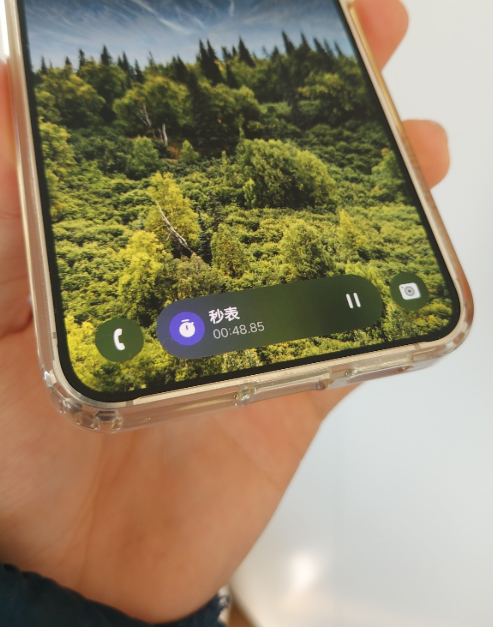
Without revealing much about the One UI 7.0, Samsung, at its Developer Conference on October 3, said the new skin focuses on creating a simple, impactful, and emotive Galaxy experience. It has a new blur engine that aims to create a positive feeling among users when they interact with the new software.
Recently we saw OnePlus and Oppo poking fun at One UI’s laggy app responsiveness while introducing their Android 15-based custom skins. Well, that might change with One UI 7, as it is said to be the biggest improvement in the history of Samsung’s software. It’s going to be a lot smoother and stable, with significantly better animations and transitions.
One UI 7.0 is leaked to have a redesigned Quick Settings panel that’s more customizable than before. You might be able to change the placements of several quick settings toggle and sliders. The latest One UI version could also feature a two-page Quick Panel layout, with one dedicated for notifications and the other for quick setting toggles, depending on which part of the status bar you’re swiping down from — left of the selfie camera for notifications and right for quick settings. However, you will have the option to merge them like before.
Many Samsung apps, if not all, will get new icons, and some of them will have a redesigned UI. The Camera app is one of them, which could bring various camera settings together for a cleaner look.
The AR Emoji feature has been renamed Galaxy Avtar and integrated into the Settings app. The AI Portrait Studio may have a new design with better previews at the bottom of the screen. One UI 7.0 is also said to improve Parental Controls and could integrate more Good Lock features.
Samsung is also said to be working on a new “Cloud” app that could be part of One UI 7.0. Its functionality is unclear, but it could be a new Cloud backup solution. The Auto Blocker feature in One UI 7.0 could have a new Maximum Restriction mode for additional security.
One UI 7.0 might allow users to completely turn off thermal throttling. This feature was allegedly spotted in an early version of the software, and there’s no guarantee it’ll be present in the final version. Galaxy AI may take a backseat in One UI 7.0, as it’s likely to bring fewer AI features than the previous two versions.
Recently, a new leak surfaced on the internet, revealing Samsung’s potential plan for One UI 7.0 beta rollout. As per the leak, the Galaxy S25 series will get the beta in the first week of December, followed by the Galaxy S24 series 2-3 weeks later. It’s unclear if the Galaxy S22 series will get the One UI 7.0 beta this year, while the Galaxy S21 series might not be a part of the beta program.
The beta program will expand to more Galaxy devices (check the full list here). In case you want to have a look at the One UI 7.0 eligible devices, then check out this page.
Xiaomi’s sub-brand Redmi is all set to launch the K80 series smartphones in China on November 27. The K-series has always been popular on the mainland, as it offers flagship-level specs at a more affordable price. The popularity was quite evident last year when the Redmi K70 series sold over 2 million units within days.
The K80 series is likely to be another success in China, and there is more than one reason for it.
First, Redmi is changing its product strategy this year. The K-series will now be the company’s most premium offering, bridging the gap between Xiaomi’s top-of-the-line number series phones, such as the Xiaomi 15.
The company has also introduced a new logo featuring bold red text in uppercase: “REDMI.” Additionally, Redmi is streamlining its K lineup by launching only two models in the K80 series: the K80 and K80 Pro. Unlike previous generations, there will be no K80e model.
With all these changes, what can we expect from the Redmi K80 series? Let’s take a look at what we know so far.
While the company has yet to reveal all the details of the new phones, we already know a lot about their screens. Both the K80 and K80 Pro will feature a 2K resolution AMOLED display developed by TCL Huaxing.
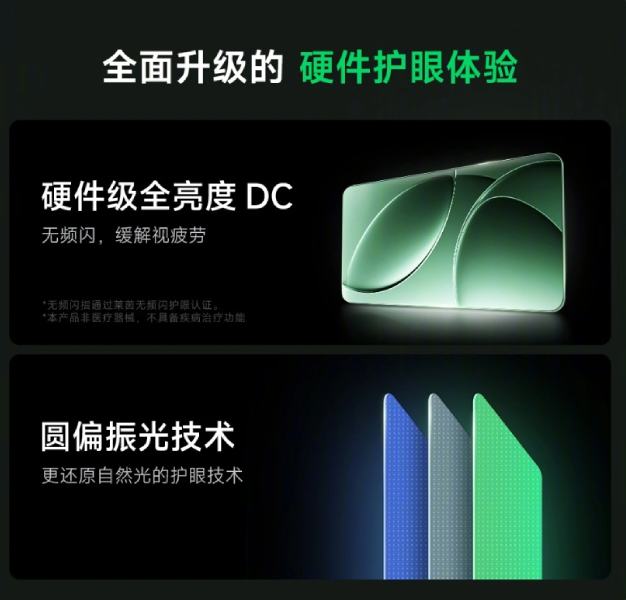
The screen uses customized M9 Luminescent material, which reduces power consumption by 20.3% compared to the display in the K70 series. It also offers 1800 nits of global peak brightness and includes eye health features like DC Dimming, circular polarization technology, and AON Intelligent Eye Protection.
Additionally, the display will provide hardware-level eye protection, full brightness DC dimming, and has earned TÜV Rheinland flicker-free eye protection certification. It also features ADV-MEMC image quality eye protection and AON Smart Eye Care, which provides real-time monitoring of visual health.
2. Flagship processor
Complementing the premium display will be flagship processors. The Redmi K80 Pro will feature flagship-level performance powered by Qualcomm’s latest Snapdragon 8 Elite processor.
This is Qualcomm’s first SoC to use self-developed Oryon cores, featuring an eight-core design with 2x prime cores clocked at an impressive 4.32 GHz and 6x performance cores reaching up to 3.53 GHz.
Redmi pairs this SoC with its in-house D1 graphics chip to improve performance further. According to the company, the phone achieves an impressive AnTuTu benchmark score of 3,194,766.
To manage heat and ensure consistent performance, the Redmi K80 Pro includes a dual-loop 3D ice-sealed cooling system. On the software side, there is Gaming Engine 4.0 and support for 2K super-resolution and 120fps super frame concurrency for an optimized gaming experience.
The standard Redmi K80, meanwhile, is expected to feature the Snapdragon 8 Gen 3 processor. While it’s no longer Qualcomm’s flagship, this chip is highly capable and can easily handle even the most demanding tasks and games with ease.
3. Cameras
The Redmi K80 is expected to feature a 50MP Omnivision OV50 main sensor, paired with an 8MP ultrawide lens and a 2MP macro lens. For selfies, it will use a 20MP Omnivision OV20B front-facing camera.
The camera setup on the Pro takes a step up, with a 50MP main sensor (again, Omnivison OV50) joined by a much higher-resolution 32MP ultrawide ISOCELL KD1 sensor and a 50MP ISCOELL JN5 telephoto lens with 2.6x optical zoom. The front-facing camera remains the same 20MP sensor as the standard K80.
4. Battery
The K80 will pack a large 6500mAh battery, supported by 90W fast charging, ensuring enough power to last a full day and beyond. The K80 Pro might offer a slightly smaller 6000mAh battery but is expected to compensate with faster 120W wired charging and the convenience of 50W wireless charging.
5. Rest of the specs
Both models are expected to share several other premium features. The K80 will have an ultrasonic fingerprint sensor under the display, a metal middle frame for durability, Dragon Crystal Glass on both the front and back, and IP68/IP69 certification for dust and water resistance.
The K80 Pro will carry the same design and build quality as the standard model, ensuring a consistent premium feel across the series.
Xiaomi has announced an upcoming product launch event on November 27, 2024, in China. This event will witness the unveiling of the highly anticipated Redmi K80 series, alongside the Redmi Watch 5 smartwatch and the Redmi Buds 6 Pro earbuds.
Redmi Watch 5
The Redmi Watch 5 will include a 2.07-inch high-brightness display for better visibility in various conditions. It will run on Xiaomi’s HyperOS 2.0 and is expected to deliver a battery life of up to 24 days, reducing the need for frequent recharging.
Redmi Buds 6 Pro
The Redmi Buds 6 Pro will feature a ceramic coaxial three-unit design, aimed at delivering high-quality sound. They are equipped with 55dB deep noise reduction and step-less dynamic noise reduction technology, designed for effective noise cancellation and a better listening experience.
Previous Models for Reference
Redmi Watch 4
The Redmi Watch 4 includes a 1.97-inch AMOLED display and a 4-channel PPG sensor for monitoring heart rate and blood oxygen levels. It also features GPS for location tracking and supports over 150 sports modes. Other functionalities include sleep tracking, stress monitoring, weather updates, and Bluetooth calling.
Redmi Buds 5 Pro
The Redmi Buds 5 Pro has an IP54 rating for water and dust resistance. They come with a 10mm tweeter and an 11mm dynamic subwoofer for balanced audio. Features include active noise cancellation up to 52dB, AI adaptive noise adjustment, LHDC 5.0 codec for high-quality streaming, and spatial audio. They also support a transparency mode and wind noise reduction for calls.
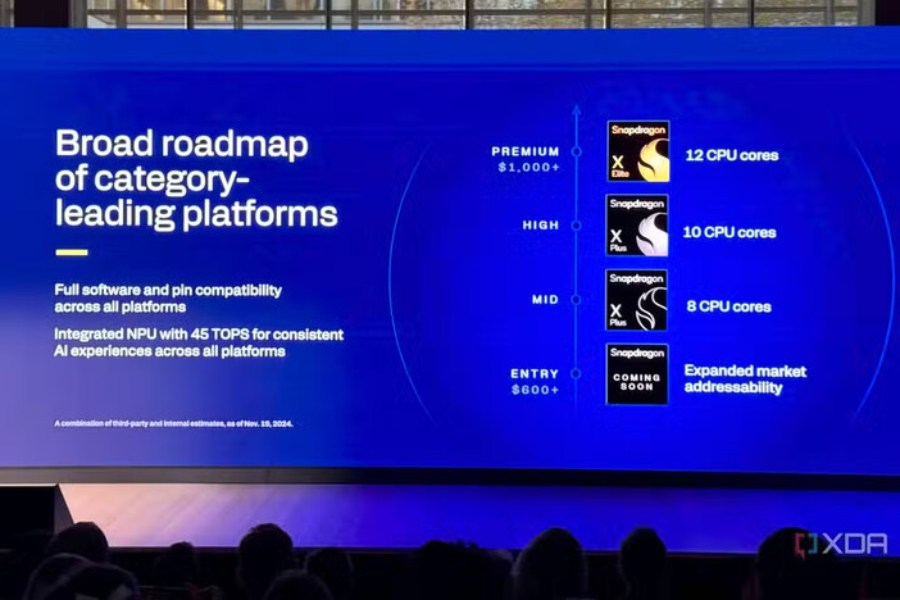
Qualcomm’s Snapdragon X processors bring a fresh approach to Windows laptops, offering days-long battery life—a clear advantage over the power-hungry nature of traditional laptop chips. However, their high price has kept them out of reach for many. This may soon change, as rumors suggest a more affordable Snapdragon X chip is on the way.
The Snapdragon X lineup began with the “Elite,” a premium chip designed to compete with Apple’s M-series processors in high-end laptops. These devices typically cost over $1,200, limiting their appeal to casual users.
Qualcomm later introduced the “Plus” variant, which lowered laptop prices to around $1,000. Then in September, they also unveiled a more budget-conscious version of the Snapdragon X Plus, finding its way into devices like the Lenovo IdeaPad 5x 2-in-1, which launched at a cool $849.
An even more affordable Snapdragon X chip
And it now seems Qualcomm plans to offer even more affordable chips for Windows laptops. During a recent Investor Day presentation, Qualcomm teased an “entry-level” Snapdragon X chip aimed at sub-$700 Windows laptops. Qualcomm hopes this new addition will make Snapdragon X technology accessible to a broader audience.
Details about the chip’s performance remain sparse. Qualcomm has confirmed it will include the same Neural Processing Unit (NPU) found in higher-end models. The NPU enables the impressive battery life and AI features these processors are known for.
This also means laptops powered by these chips will feature Copilot+ PC branding, which requires minimum specs such as 16GB of DDR5 RAM and 256GB of SSD storage. These features are likely to appear even in more affordable devices.
However, it’s unclear what sacrifices will be made to hit the lower price point. Reduced CPU cores or slightly downgraded graphical performance could be potential trade-offs.
Qualcomm hasn’t announced a release date yet, but with CES 2025 just around the corner in January, the event seems like a likely stage for its debut.
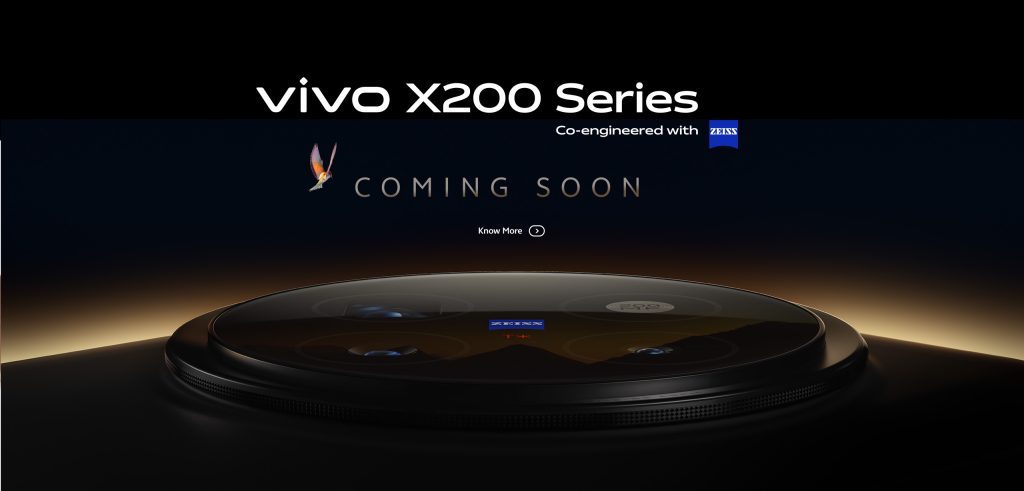
Vivo has officially announced the imminent launch of its flagship X200 series in India. While the exact launch date remains undisclosed, the company has confirmed the arrival of the series through the X platform. This announcement comes days after the official launch of the Vivo X200 series smartphones in Malaysia.
Vivo X200 Series: What to expect
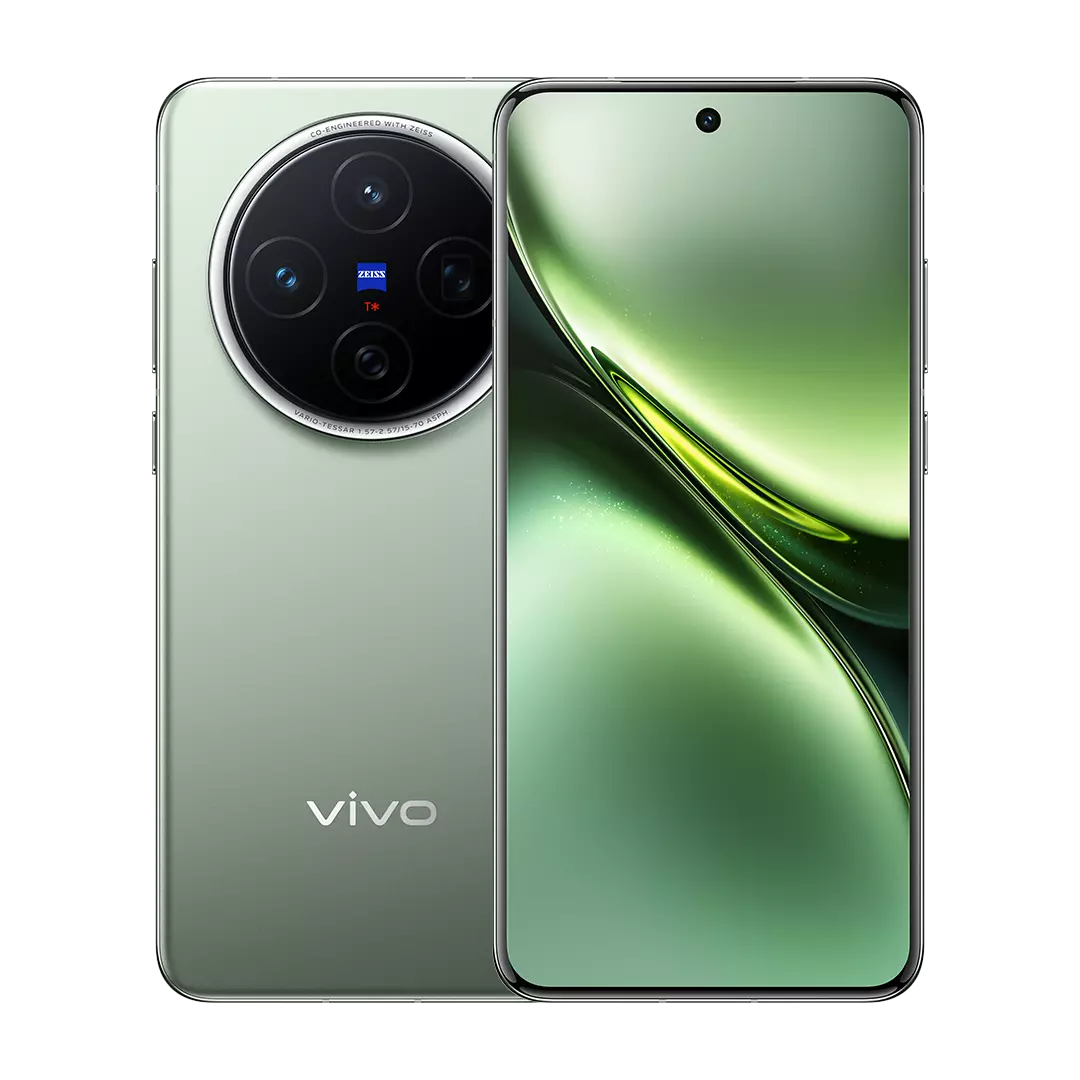
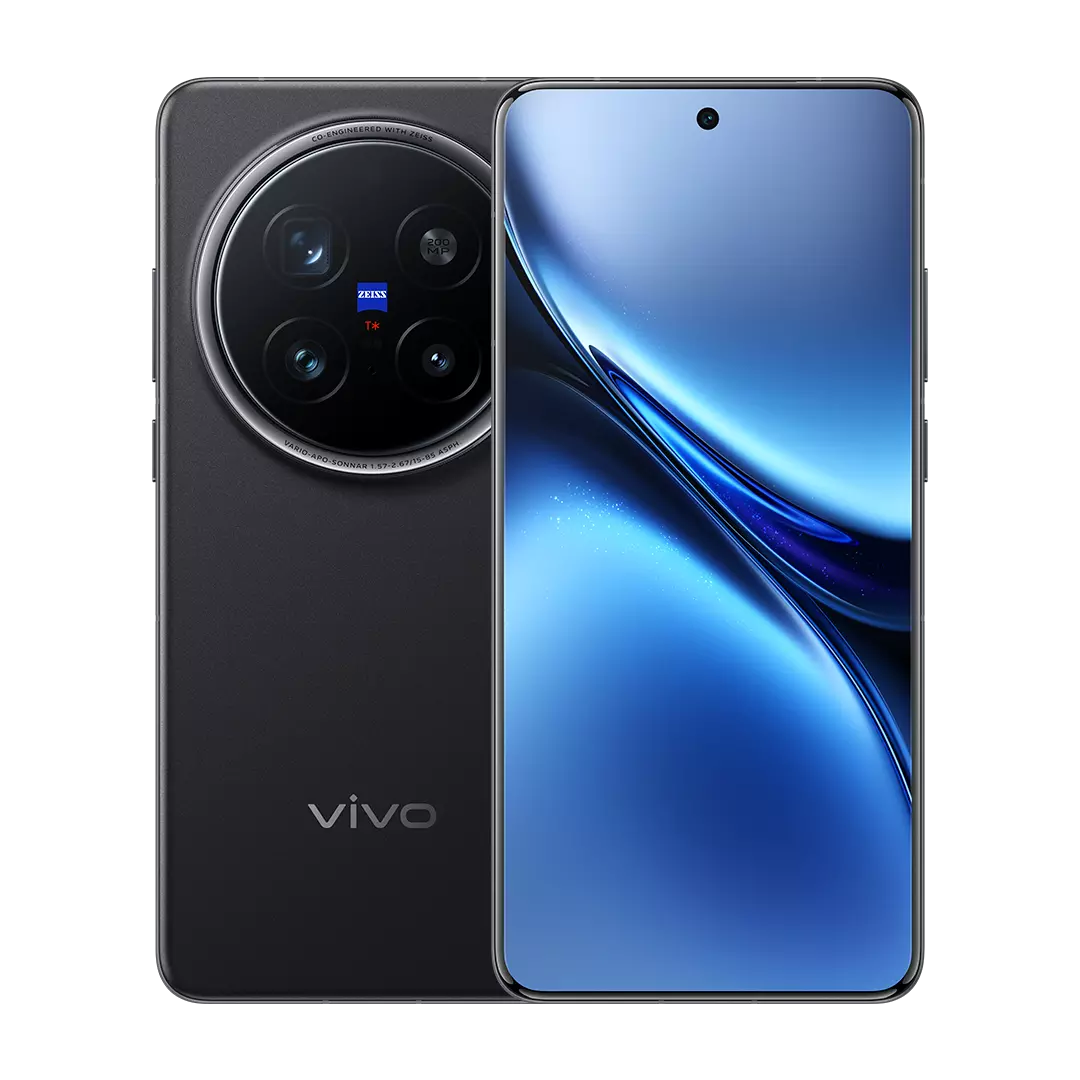
The X200 series, which has already made its debut in the global market, is expected to feature the Vivo X200 and Vivo X200 Pro models in India. The X200 series boasts impressive displays, with a 1.5K OLED panel and a 120Hz refresh rate. The standard X200 features a 6.67-inch display, while the Pro model offers a larger 6.78-inch screen. Both models support 90W fast charging.
Vivo X200Vivo X200 Pro
In terms of optics, the X200 series packs a powerful punch. The standard X200 features a 50MP Sony IMX921 main sensor with OIS, a 50MP ultra-wide lens, and a 50MP Sony IMX882 telephoto lens. The Pro model, on the other hand, takes things up a notch with a 50MP Sony LYT-818 main sensor with OIS, a 50MP ultra-wide lens, and a 200MP Zeiss APO telephoto lens with a V3+ imaging chip.
Both devices are powered by the MediaTek Dimensity 9400 SoC, paired with 16GB of RAM and 512GB of internal storage. They run on Funtouch OS 15 based on Android 15 and are IP68/IP69 rated for water and dust resistance. The X200 is backed by a 5,800mAh battery, while the Pro model offers a larger 6,000mAh battery.
As the launch date draws near, anticipation for the Vivo X200 series is building up. Pricing is still under wraps, however, these devices were revealed to cost MYR 4,699 (~$1,050) and MYR 3,599 (~$800) for the Pro and vanilla variants, respectively.
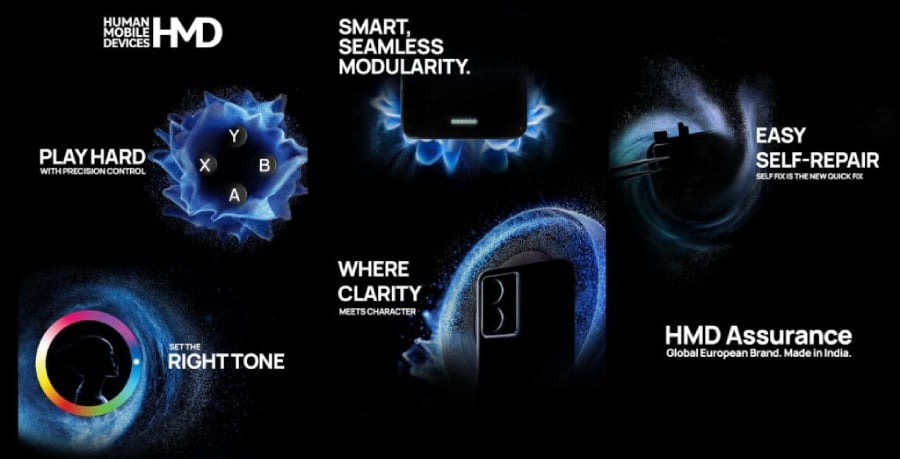
HMD Global is set to launch the HMD Fusion smartphone in India and has officially started teasing it. Unveiled globally in September, this phone stands out with its modular design and unique features.
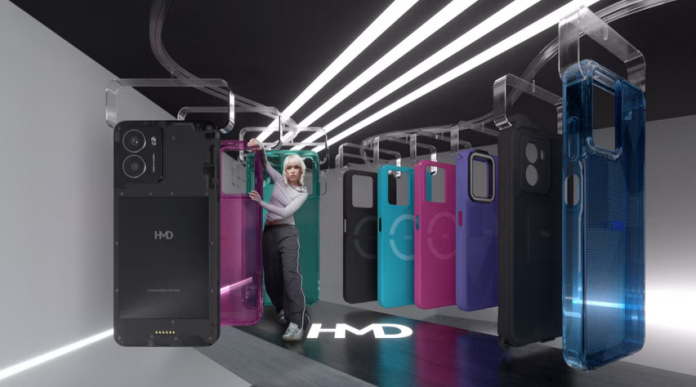
The key highlight of the HMD Fusion is its “Smart Outfit” system. These modular back panels, attached via a six-pin connector, offer additional functionalities. There are options like the Gaming Outfit, the Flashy Outfit with a camera-circling LED light, a Rugged Outfit, and a Casual Outfit, but the specific outfits launching first in India remain under wraps.
This modularity extends to self-repair. The phone boasts Gen2 repairability that allows users to swap out components themselves with the help of readily available kits.
HMD Fusion Specifications
The core specifications of the HMD Fusion offer a solid foundation. The phone features a 6.56-inch HD+ LCD display with a smooth 90Hz refresh rate. Powering the device is the Snapdragon 4 Gen 2 SoC, paired with up to 8GB of RAM and 128GB of storage, expandable via a microSD card slot.
The software side is covered with Android 14, ensuring users receive a modern and up-to-date experience. A large 5,000mAh battery with 33W fast charging promises long hours of use without frequent trips to the wall outlet.
On the imaging front, the HMD Fusion boasts a 108-megapixel dual rear camera system for capturing detailed photos, while a 50-megapixel selfie shooter caters to those who enjoy video calls and capturing self-portraits.
Additional features include an IP54 rating for some dust and water resistance, a side-mounted fingerprint scanner for secure unlocking, and standard connectivity options like Dual SIM support, Bluetooth 5.1, and a USB Type-C port.
While HMD hasn’t revealed the exact launch date in India, the teasers suggest it’s coming soon. Whether the modular design and self-repair features resonate with Indian consumers will be a key factor to watch, but HMD’s approach certainly offers a fresh perspective on smartphone functionality.
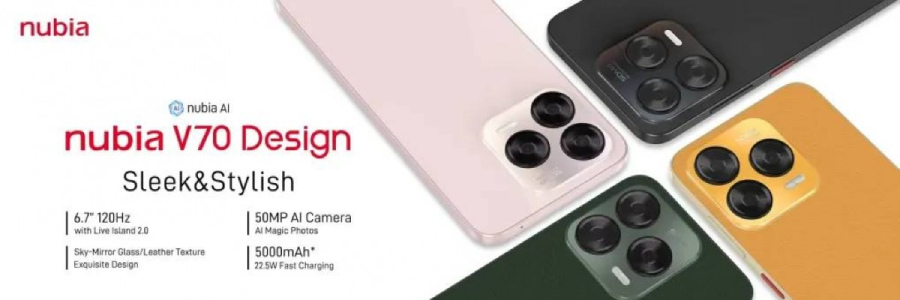
ZTE is adding another option to the mid-range market with the surprise reveal of the Nubia V70 Design, which will be known as the ZTE Blade V70 Design in some regions. The phone is currently available for pre-order in the Philippines ahead of its November 28th release. Let’s walk through its specs and features here.
Nubia V70 Design Specifications
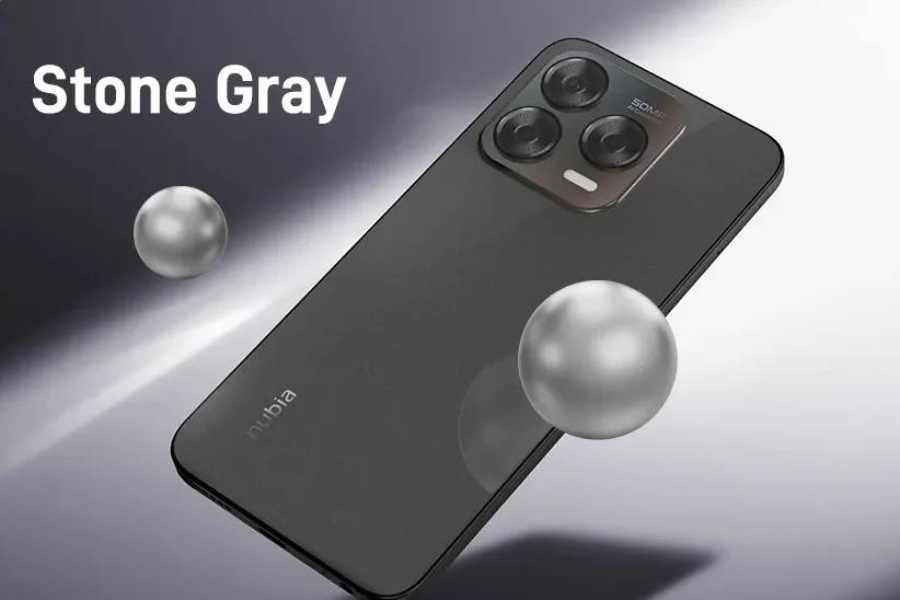
The “Design” part of the name isn’t just marketing fluff. This version differentiates itself from the standard Nubia V70/Blade V70 with a choice of two vegan leather back options (orange and jade green) alongside the classic black and rose pink glass finishes. While some might prefer the premium feel of glass, vegan leather offers a unique aesthetic and potentially a grippier feel in hand.
Looking past the backplate, the Nubia V70 Design sticks to a familiar formula. The 6.7-inch display utilizes an HD+ IPS LCD panel with a smooth 120Hz refresh rate.
There’s a slight difference in the camera department, though. It ditches the 108MP main sensor found on the standard V70, for a more modest 50MP option. The 16MP selfie camera remains unchanged, nestled discreetly within a punch-hole cutout.
Under the hood, the V70 Design is powered by a Unisoc T606 processor, a familiar choice for previous V-series models. It’s paired with a modest 4GB of RAM and compensates with a generous 256GB of storage.
Keeping all things powered is a 5,000mAh battery. Charging, however, remains on the slower side with support for only 22.5W. The software side sees the V70 Design launching with MyOS 14 based on Android 14. There’s also support for Live Island 2.0, Apple’s Dynamic Island knock-off.
Price and Availability
Consumers in the Philippines can pre-order the Nubia V70 Design through popular online retailers Lazada, Shopee, and even TikTok. The phone carries a manufacturer’s suggested retail price (MSRP) of PHP 5,300 (roughly USD $100).
Early adopters can also take advantage of a 15% discount on Shopee, bringing the price down to PHP 4,504 (around $85 USD). This discount even throws in a free wireless speaker, adding a touch of sweetness to the deal.
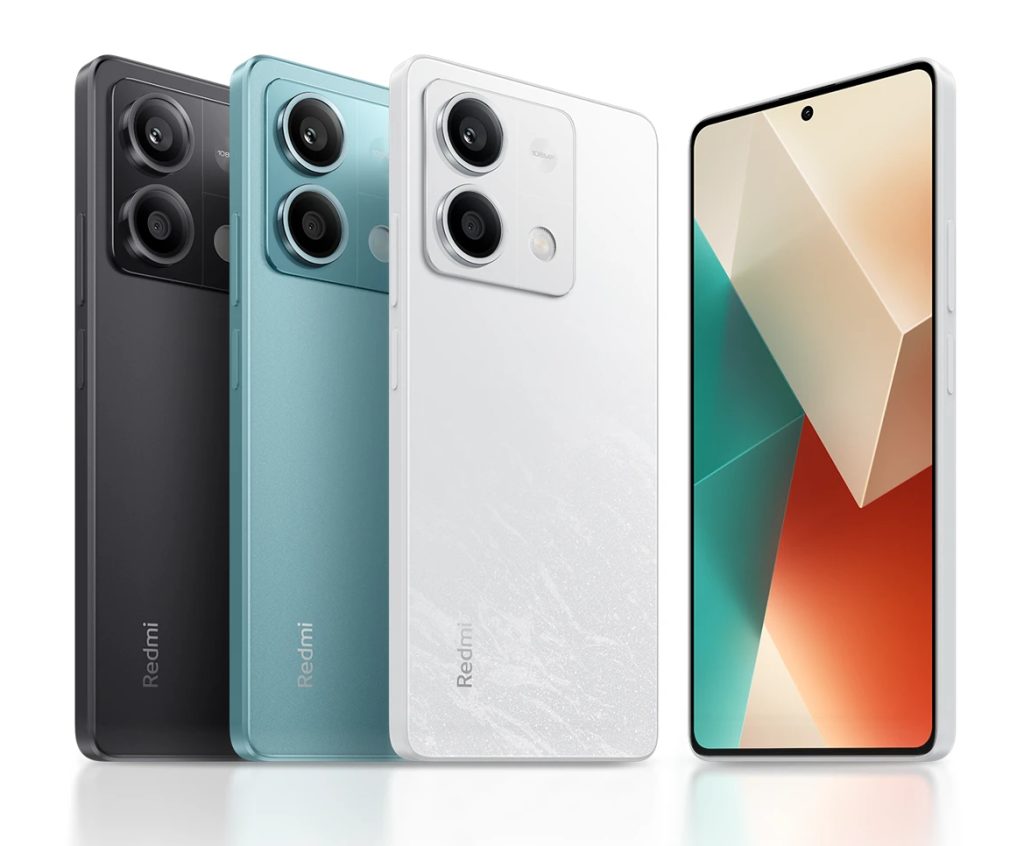
Xiaomi introduced the Redmi Note 13 5G back in January 2024. Upon its launch, the company stated that the Redmi Note 13 5G is the slimmest Redmi Note ever with a thickness of 7.6 mm. The company made significant improvements from its predecessor. The new Redmi Note 13 5G is lighter, quicker, and supports a better camera than the Redmi Note 12 5G. It is now on sale at Amazon India for the price of Rs 15,789.
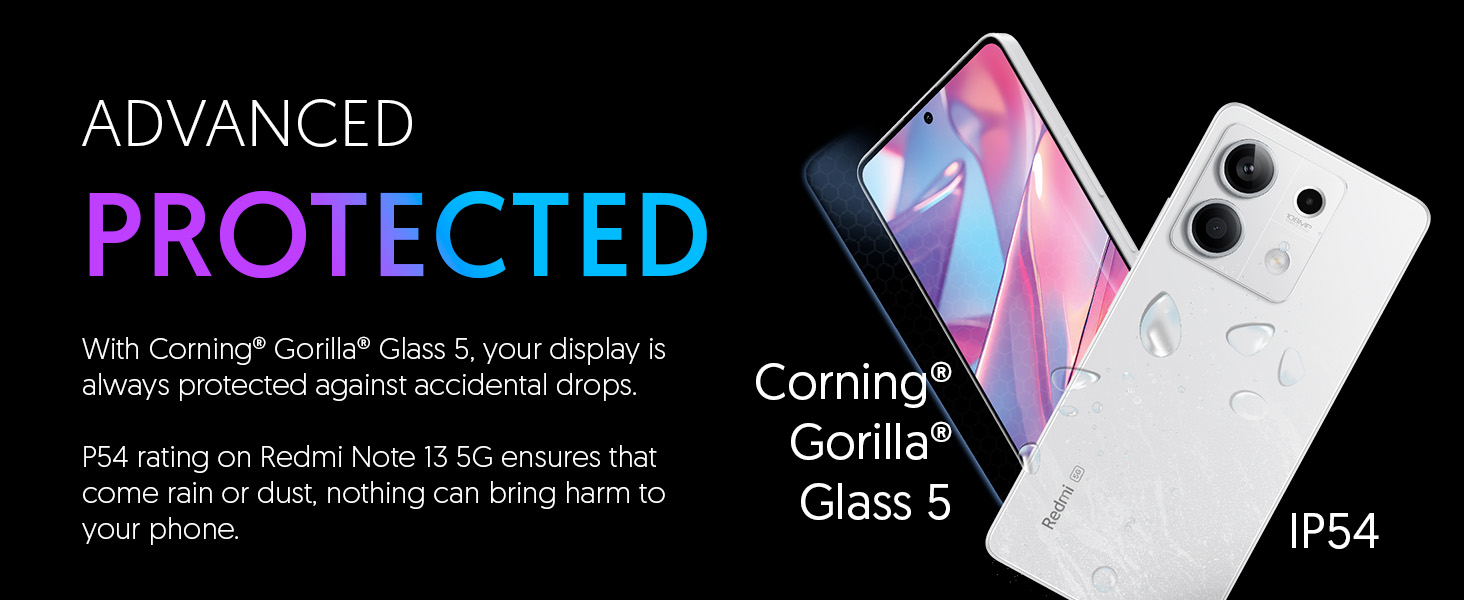
Redmi Note 13 5G is equipped with a 6.67-inch FHD+ pOLED (1080×2400) ultra-narrow bezel. The company has managed to keep a 93.3% screen-to-body ratio on the new Redmi Note 13 5G, making it one of the slimmest in the segment. Apart from that, the phone also supports a 120Hz refresh rate for a superior scrolling experience, and games support higher refresh rates. The phone also supports 1000nits peak brightness and Corning Gorilla Glass 5 Display Protection.
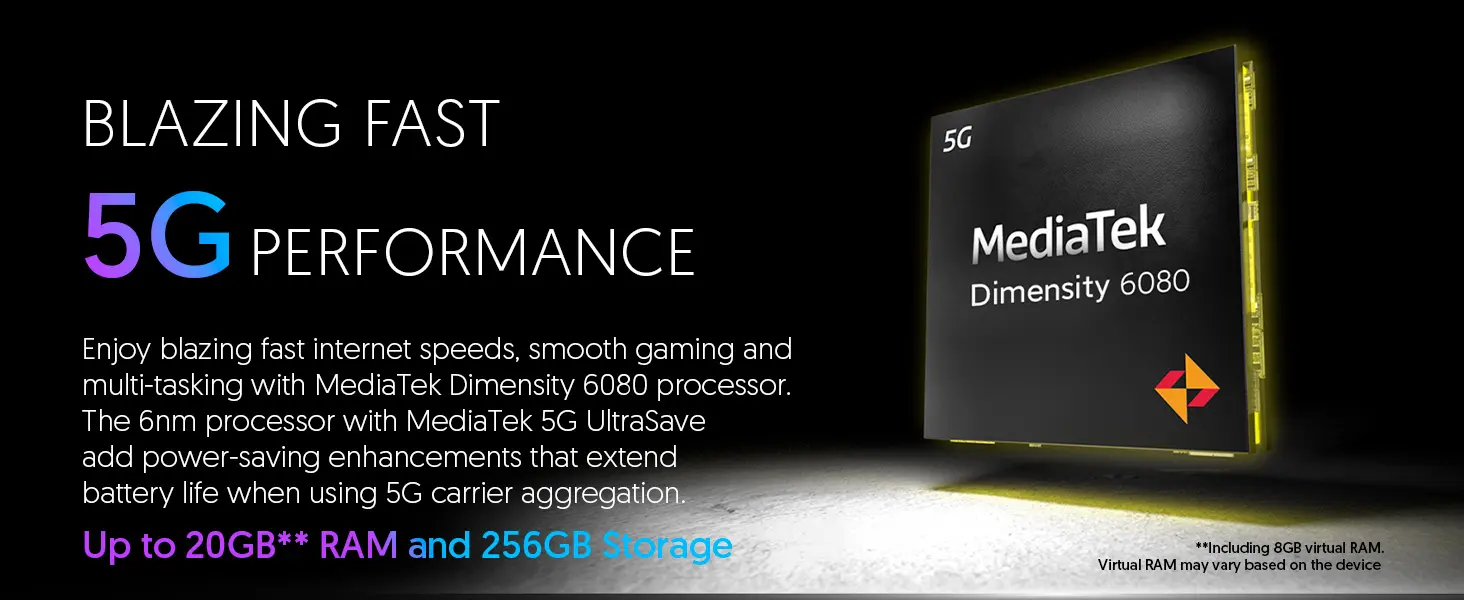
Talking about performance, the Redmi Note 13 5G is equipped with a MediaTek Dimensity 6080 processor, which is 6 nm in size and supports 5G. The Octa-core chipset goes up to 2.4GHz. The phones support up to 12 GB of RAM and up to 256 GB of UFS 2.2 storage with Android 13 out of the box.
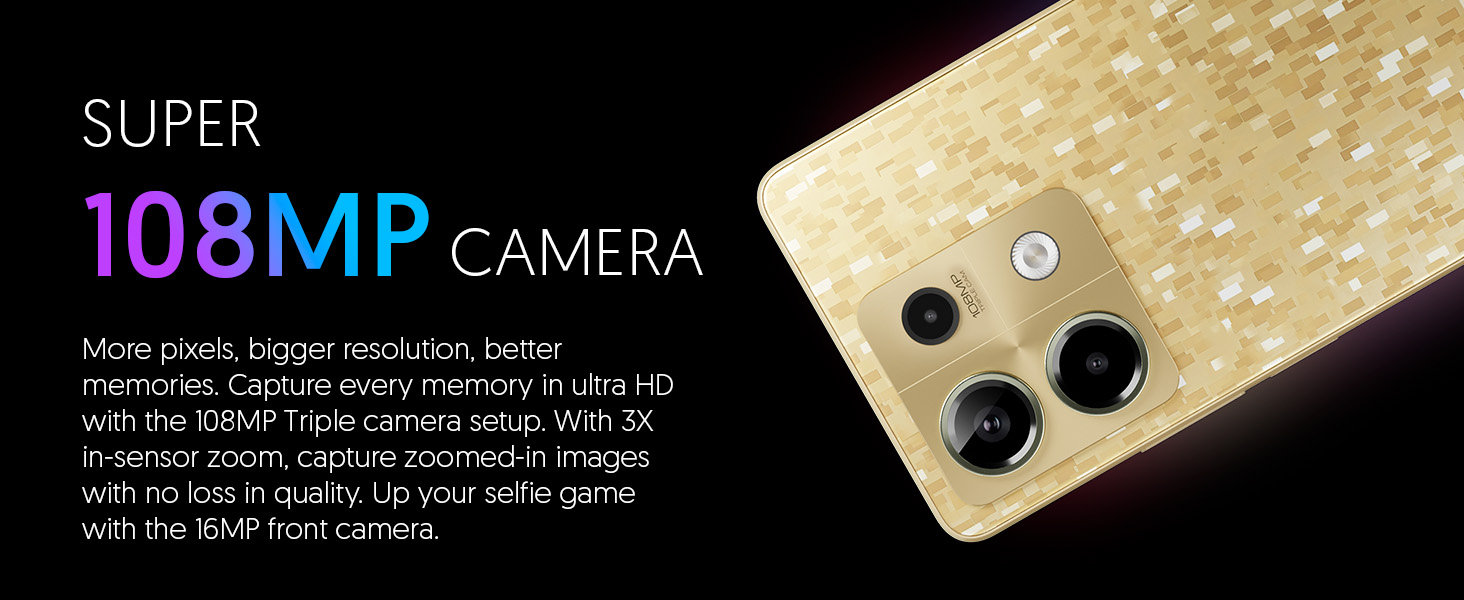
In addition, the phone comes with a triple camera setup. The primary camera has a 108 MP sensor with support for 3X in-sensor zoom. The second camera has an 8MP ultrawide sensor, and the third has a 2MP macro camera. On the front side, the phone comes with a 16MP sensor for sharp selfies.
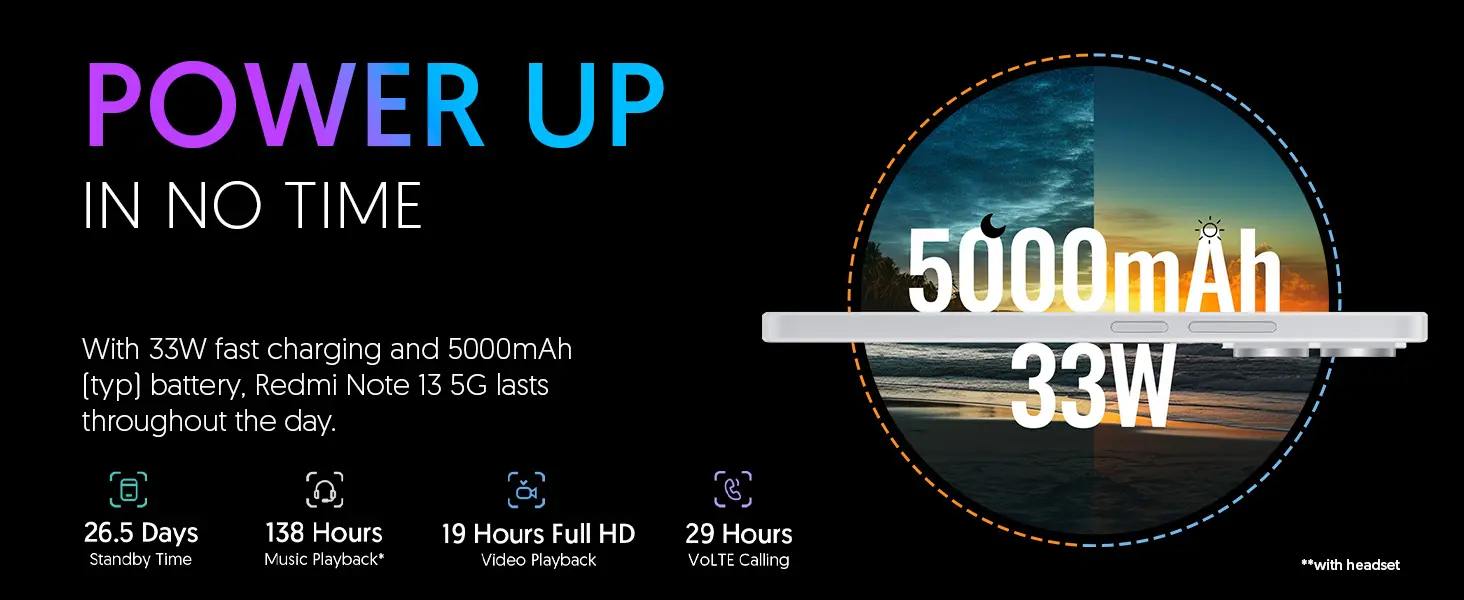
The phone is powered by a large 5000 mAh battery, making the phone last an entire day. You also get a 33W fast charger in-box and Type-C connectivity.
Additionally, the phone also gets an IP54 rating, making it water and dust-resistant to a significant level, and a Corning Gorilla Glass 5 protection for accidental drops and scratches. The phone also supports dual sim connectivity, a 3.5mm headphone jack, an IR blaster, a side fingerprint sensor, etc.
Lastly, the phone comes in Arctic White, Prism Gold, Stealth Black, and Chromatic Purple color variants. The Redmi Note 13 5G is available on Amazon from ₹15,990/– onwards.
Redmi, Xiaomi’s popular sub-brand, is entering a new chapter with a bold rebranding. The most noticeable change is the brand name itself, now written entirely in uppercase – “REDMI.”
According to Lu Weibing, President of Xiaomi Group’s mobile phone department, the change is not just aesthetics. “Redmi changed its name from REDMI,” explained Lu, “and there’s a lot of strategic thinking behind it.”
He notes that Xiaomi’s success in the high-end market with more advanced technology is creating space for Redmi to expand. And the company appears to be preparing well for this shift.
The change in product strategy
According to Weibing, the new “Turbo” series will take over the mantle previously held by the “K” series, which will “continue to break through.”
Lu also shared that the K80 lineup will be the biggest product update in the history of the K series and will directly compete with the top-tier performance flagships offered by e-commerce sub-brands of competitors.
“The K80 Pro,” he stated, “will compete with its rivals ‘Thirteen Brothers’ with its exceptionally powerful configuration and user experience.”
Wang Teng Thomas, General Manager of the Redmi brand, confirmed that these changes are a response to Xiaomi’s flagship series entering a higher price bracket. “REDMI’s product line has been adjusted since the beginning of the year,” said Wang.
“The new K series is positioned as the champion flagship, particularly the Pro series will create an all-round flagship experience. However, Wang Teng notes that the price range of the phones will also increase to fill the gap left by Xiaomi’s number series price hike.
The new Turbo series will dominate the 2,000 to 3,000 yuan price segment (roughly $280 to $420). Wang emphasizes that, regardless of the price range, REDMI will stay committed to offering the best value for money and remain unmatched in every segment it competes.
Samsung is gearing up to launch the public beta testing of its One UI 7 update in December, with the Galaxy S24 series leading the rollout. According to a tweet by tipster @FamilyTaes, the testing phase will last about two months, allowing users to explore new features and visual upgrades before the stable release, expected in February 2025.
Details of the One UI 7 testing phase
The roadmap revealed by @FamilyTaes outlines a phased rollout for Samsung’s One UI 7 beta:
Week 1 of December: Galaxy S24 series users will get first access to the public beta. Regional availability may vary.
Weeks 2–3 of December: Galaxy S23 users will join the program.
Two-Month Testing Phase: Samsung will collect user feedback and refine the system during this period before the stable release with the Galaxy S25 series towards the end of January.
While Galaxy S24 and S23 users have priority access, it remains uncertain whether older models like the Galaxy S22 series will participate. However, the Galaxy S21 series is confirmed to be excluded from this testing phase. Additionally, recent foldables like the Galaxy Z Fold 6 and Flip 6 are anticipated to be eligible for the public beta.
What to expect?
Samsung’s One UI 7 update is shaping up to be a major overhaul with several new features and improvements. One highlight is the introduction of the “NowBar,” along with smoother animations that enhance the user experience.
According to @TheGalox_, over 50 Samsung devices, including smartphones and tablets, will eventually receive the update. These devices range from high-end foldables (the Galaxy Z Fold 3 and later) to affordable models like the Galaxy A23 and later. Recent Galaxy tablets are also expected to be a part of the list.
Following whispers and leaks, Huawei finally confirmed the arrival of its next-gen earbuds, the FreeBuds Pro 4. The big news? It’ll be the first pair to boast HarmonyOS NEXT, Huawei’s homegrown operating system.
The reveal came through a Weibo post featuring a single image of the FreeBuds Pro 4. The image reveals a design that appears largely similar to previous FreeBuds models in terms of form factor and curves. However, subtle hints suggest possible updates to the design and color options.
The most noticeable changes include grille patterns on the sides and back of the earbuds, likely added for aesthetics. The teaser also has the buds in a sleek black-metallic finish, paired with a gold Huawei Sound logo and a bold gold rim encircling the back cover stick.
Huawei is set to launch the FreeBuds Pro 4 on November 26th at the company’s Mate Brand Festival. The event will also introduce other new products, including the Mate 70 smartphone series.
A look at the predecessor
While we are short on specs on FreeBuds Pro 4, let’s look at the specs of its predecessor.
The FreeBuds Pro 3 features advanced active noise cancellation (ANC) 3.0 and the Kirin A2 chip, which uses Polar code technology for impressive 1.5Mbps lossless audio transmission.
Huawei FreeBuds Pro 3
It also delivers improved sound quality, noise reduction, and battery life. With QuietCall 2.0, these earbuds excel at minimizing background noise during calls. In terms of battery life, the FreeBuds Pro 3 offers up to 7 hours of playback on a single charge, extending to 30 hou2rs with the charging case.
The FreeBuds Pro 3 will likely build on these features and may also introduce new AI features. After all, 2024 has been a year of AI. With the launch just around the corner, we’ll have the full details soon. Stay tuned!
Smartphone launches do not seem to be stopping. Four brands have announced the arrival of their new-generation mid-rangers after debuting their latest flagships a few weeks back.
These forthcoming product lineups will be unveiled in China in the next few days. They will be from Oppo, Vivo, Redmi, and iQOO.
Additionally, Realme will be bringing its latest flagship model to India. This handset was made official in the brand’s home country earlier this month.
Let’s go through these soon-to-be-released phones one by one.
The Oppo Reno 13 series is scheduled to launch in China on November 25 (Monday). The lineup will include two devices, namely Oppo Reno 13 and Oppo Reno 13 Pro.
The handsets will be powered by MediaTek Dimensity 8350 chipset and boot ColorOS 15. They will sport 1.5K flat OLED display.
The vanilla model will be backed by a 5,600mAh battery as opposed to a slightly larger 5,900mAh battery inside the pro variant. Both of them will come with a new design and a 50MP triple camera system.
The pro version is also rumored to offer water resistance and wireless charging support.
2. Realme GT 7 Pro
The Realme GT 7 Pro is set to launch in India on November 26 (Tuesday)). It will be the country’s first Snapdragon 8 Elite smartphone.
The handset is built around a 6.78-inch 1.5K 120Hz LTPO OLED display. It is IP69-rated and comes with a 50MP (wide) + 50MP (3x telephoto) + 8MP (ultrawide) triple camera system accompanied by a 16MP selfie camera.
The phone uses an ultrasonic fingerprint sensor and draws energy from a 5,800mAh battery. It supports 120W wired charging.
3. Redmi K80 Series
The Redmi K80 series will be made official in China on November 27 (Wednesday). The lineup will consist of two handsets: Redmi K80 and Redmi K80 Pro.
Both phones will be powered by Qualcomm processors. The vanilla variant will feature a Snapdragon 8 Gen 3 SoC, while the pro model will house the latest Snapdragon 8 Elite chip.
The duo is tipped to feature a QHD+ display and a 50MP primary camera. The pro variant is said to sport a 2.6x telephoto camera as opposed to a macro snapper on the standard model.
Both of them will be IP68 rated and support 120W wired charging. But the pro version will also come with 50W wireless charging support.
4. Vivo S20 Series
The Vivo S20 series will be officially unveiled on November 28 (Thursday). There will be two devices, such as Vivo S20 and Vivo S20 Pro.
The products will arrive with a slightly tweaked design and flat displays. The pro variant is expected to house a Dimensity 9300 Plus chip, while the standard version is rumored to feature a Snapdragon 7 Gen 3 SoC.
The pro version is said to flaunt a 50MP (wide) + 50MP (ultrawide) + 50MP (3x periscope telephoto) triple camera system and a short-focus optical fingerprint sensor.
Both phones are tipped to support 90W wired charging, however, the vanilla model will have a larger 6,500mAh battery as compared to a smaller 5,500mAh battery inside the pro version.
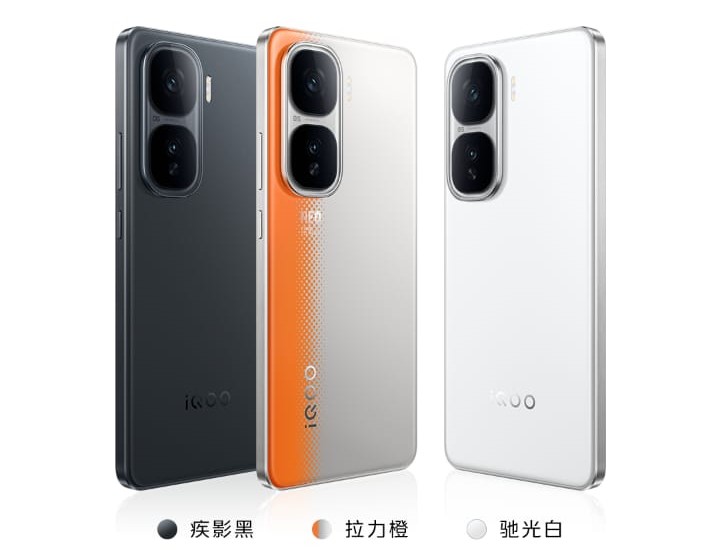
5. iQOO Neo 10 Series
The iQOO Neo 10 series will be announced in China on November 29 (Friday). The lineup will comprise two products, namely iQOO Neo 10 and iQOO Neo 10 Pro.
The two handsets will share most of their features. They will come with an LTPO flat OLED display, an ultrasonic fingerprint sensor, and 120W wired charging support.
The major difference between the two will be their chipsets. The vanilla variant will house a last-gen Snapdragon 8 Gen 3 SoC, however, the pro model will be powered by the latest gen Dimensity 9400 chip.
We use cookies on our website to give you the most relevant experience by remembering your preferences and repeat visits. By clicking “Accept”, you consent to the use of ALL the cookies.
This website uses cookies to improve your experience while you navigate through the website. Out of these, the cookies that are categorized as necessary are stored on your browser as they are essential for the working of basic functionalities of the website. We also use third-party cookies that help us analyze and understand how you use this website. These cookies will be stored in your browser only with your consent. You also have the option to opt-out of these cookies. But opting out of some of these cookies may affect your browsing experience.
Necessary cookies are absolutely essential for the website to function properly. This category only includes cookies that ensures basic functionalities and security features of the website. These cookies do not store any personal information.
Any cookies that may not be particularly necessary for the website to function and is used specifically to collect user personal data via analytics, ads, other embedded contents are termed as non-necessary cookies. It is mandatory to procure user consent prior to running these cookies on your website.