Advertisement

Google may be forced to sell Android, Chrome, and AdWords

In a move that could reshape the tech landscape, the US Department of Justice (DoJ) is reportedly considering a drastic breakup of Google. According to a report by Bloomberg, the tech giant has been found to have illegally monopolized the online search market, and the government is exploring options to restore competition.

Google Android
Image Credits: nurphoto / Getty Images

Google Faces Potential Breakup and Forced Sale of Key Assets

Following a landmark court ruling against Google, the DoJ is examining several potential remedies, including the most aggressive option: splitting the company into smaller entities. This would mark one of the most significant antitrust actions since the attempt to dismantle Microsoft over two decades ago.

While a breakup is on the table, less drastic measures are also being considered. These include forcing Google to share more data with competitors, imposing restrictions on its AI development, and banning exclusive contracts that fueled its dominance.

The case centers on Google’s practices with Android, Chrome, and AdWords, where the company’s exclusive contracts with device manufacturers have raised concerns among regulators. The DoJ is particularly worried about how Google’s search dominance could impact competition in the rapidly evolving AI sector.

If the breakup proceeds, the sale of Android, Chrome, or AdWords could be on the cards. Such a move would have far-reaching implications for the tech industry and consumers alike.

While Google plans to appeal the court ruling, the company faces a challenging road ahead. The potential breakup of the tech giant is a stark reminder of the growing scrutiny faced by big tech companies and the government’s determination to promote fair competition.

(Source)

Improve your Galaxy Watch Ultra’s battery performance with Samsung’s latest global update

Samsung is rolling out the first ever global update for the Galaxy Watch Ultra. An exclusive US update was released earlier this month, and now, the latest software upgrade is arriving in multiple markets. But this isn’t just a stability update, Samsung is improving the battery performance on the Galaxy Watch Ultra.

How to improve your Samsung Galaxy Watch Ultra’s battery life

The South Korean tech giant has released this new update across the globe for users in Europe and Asia. To check if you’ve received this update, head to the Galaxy Wearable app on your and open the “Watch Settings” menu. After this, scroll till you see the “Watch software update” section and hit “Download and install”. Make sure that your Galaxy Watch Ultra has at least a 30 percent charge, otherwise, you won’t be able to go ahead with the update.

Samsung Galaxy Watch Ultra

Samsung released the 175MB software update, which carries the L705FXXU1AXG2 build number. The changelog shows that the brand has made improvements to the battery charging and battery stability. In other words, the battery performance is getting an overall upgrade. But apart from this, your Galaxy Watch Ultra will now be more stable in general as well. Unfortunately, the company hasn’t shared what exactly the improvements mean when they say battery stability.

This update brings positive news regarding the Galaxy Watch Ultra following some issues that plagued the new Samsung smartwatch. Users have complained about the display seeming misaligned while others complained of the paint on the Watch Ultra’s body peeling off after just a few days of use. For 649 US Dollars, it seemed like Samsung was facing quality assurance issues, which caused some to even opt for refunds.

Realme Narzo N65 5G is available at a discount price of ₹10,998

Amazon Freedom Sale discounts are soon going to fade away. At the last minute, Amazon has added a hefty discount on the Realme Narzo N65 5G smartphone, now available with a Rs 1500 direct discount by applying a coupon. Further, there’s an additional discount on the Amazon Pay ICICI Bank Credit Card.

Realme Narzo N65 5G Deals and Discounts

Realme Narzo N65 5G retails for Rs 10,998 for the 6GB RAM and 128GB storage option. There’s a Rs 1500 coupon discount, and you can get ~Rs 700 as cashback if you have an Amazon ICICI Bank Credit card.

It is now available in two color options: Amber Gold and Deep Green.

Realme Narzo N65 5G Specifications

Realme Narzo N65 5G comes powered by the MediaTek Dimensity 6300 5G chipset. This octa-core CPU, built on a 6 nm process, delivers speeds of up to 2.4GHz, ensuring that the phone runs smoothly even when multitasking or playing demanding games. It is available in 4/6/8GB RAM and 128GB storage. There’s an option to expand storage up to 2 TB via external memory storage.

It bundles a 6.5-inch display that supports a refresh rate of up to 120 Hz and a touch sampling rate of 240 Hz. With a resolution of 1604×720 and a brightness of 500 nits (typical) and up to 625 nits in High Brightness Mode (HBM), users can enjoy clear, vibrant visuals in various lighting conditions. The smartphone runs Android 14-based Realme UI 5.0. It ships with Bluetooth 5.3, WiFi 2.4/5GHz, GPS, and a USB Type-C port.

Should you finally upgrade your Mi 10T Pro?

Xiaomi launched the Mi 10T Pro in late 2020 as the top-of-the-line smartphone of its series. The T-series is Xiaomi’s sub-flagship line that offers flagship-level features from the premium number series at a more affordable price. The Mi 10T Pro was no exception.

The smartphone featured a Full HD+ display with a 144Hz refresh rate, a Snapdragon 865 processor, a 108MP triple camera setup, LPDDR5 RAM, and UFS 3.1 storage.

Xiaomi Mi 10T 5G series

However, Xiaomi has ended software support for the device last October. So if you own this phone, you might be wondering if it’s time to upgrade. Let’s explore whether it’s worth investing in a new smartphone or continuing to use your Mi 10T Pro.

1. What Made the Xiaomi Mi 10T Pro Stand Out?

The Mi 10T Pro delivered flagship specs, including a top-tier chipset and a high-refresh-rate display, all at a very competitive price. Here’s what made it stand out at the time of its launch:

  • Snapdragon 865 Processor: It’s the most specced-out processor in 2020 that ensured smooth performance for demanding apps and games.
  • 144Hz Refresh Rate Display: At a time when high refresh rates were a premium feature, the Mi 10T Pro offered a buttery-smooth 144Hz display. In fact, it was the first Xiaomi phone with 144Hz refresh rate support.
  • Versatile Camera System: Its triple-rear camera setup might look basic for the 2024 standard, but it was considered a capable camera phone at the time. There was a 108MP primary lens accompanied by a 13MP ultrawide and a 5MP macro lens. The selfie camera has a 20MP sensor.
  • Long Battery Life: The Mi 10T Pro also offers a great battery life thanks to a 5000mAh cell fitted inside it. The charging capped out at 33W, but it was better than what the flagships of the time like Galaxy S20 had to offer.

These features, combined with a competitive price, made the Mi 10T Pro a compelling option for power users.

2. How Does It Stack Up in 2024?

It’s now four years since the arrival of the Mi 10T Pro, which is a long time, especially in the fast-paced smartphone world. Here’s how the Mi 10T Pro stacks up against today’s standards:

  • Processor: While the Snapdragon 865 remains capable, newer processors from Snapdragon and MediaTek offer much better performance and efficiency. Even the SoCs targeted for mid-range or premium mid-range segments like Snapdragon 7s Gen 3 or Dimenity 8300 do better than 865 in every aspect. 
  • Display: High refresh rates are now common, even in budget phones. The Mi 10T Pro’s 144Hz panel still impresses in terms of numbers, but its IPS LCD screen lags behind the AMOLED panels that are now standard in mid-range and budget devices, offering better contrast and colors. Flagship phones also use advanced tech like LTPO to maximize battery life.
  • Camera: Camera technology has advanced significantly in the last four years. We now have phones with bigger and better sensors (as big as 1”), improved image processing, and more versatile features like telephoto lenses and advanced video capabilities. The Mi 10T Pro’s camera, while decent for its time, certainly doesn’t measure up to current standards.
  • Software: Perhaps most importantly, software support for the Mi 10T Pro has ended. This means no more security patches or Android updates, which could leave the phone vulnerable to security risks and a lack of new features.

Overall, the Mi 10T Pro is still a capable phone for day-to-day. But its performance and features feels certainly outdated compared to today’s mid-range devices.

3. Can You Continue Using It in 2024 and Beyond?

Whether you should continue using the Mi 10T Pro depends on your usage:

  • Light Users: If you mainly use your phone for basic tasks like browsing, social media, and calls, the Mi 10T Pro might still meet your needs. However, you may miss out on newer features and improved app compatibility with outdated software.
  • Gamers: The Snapdragon 865 can still handle most games, but you might experience occasional frame drops in graphically demanding titles. Newer phones offer better-sustained performance and improved thermal management for extended gaming sessions.
  • Camera Enthusiasts: If photography is important to you, the Mi 10T Pro’s camera will likely feel underwhelming compared to the more advanced cameras on smartphones in 2024 or even those from a generation ago.

Again, the biggest concern is the lack of ongoing software support. Without updates, your phone is at risk for security vulnerabilities and may struggle with app compatibility. While tech-savvy users might flash custom ROMs as a workaround, this isn’t a practical solution for most users.

4. Why Should You Upgrade?

If you’re a power user-facing performance limitations, wanting the latest camera technology, or prioritizing security, upgrading is a wiser choice. Here are some reasons to consider a new phone:

  • Improved Performance: Newer processors deliver significant gains, enhancing overall responsiveness and providing smoother app and gaming experiences.
  • Better Displays: Displays these days have all sorts of performance and health-related features like LTPO tech and various eye-protection technologies. Also, if you upgrade, you will likely want to get a phone with an OLED display that will offer richer colors and deeper blacks.
  • Advanced Cameras: As mentioned earlier, smartphone cameras have excelled in almost every aspect compared to what we had in 2020. You get a better image sensor with an improved image processing algorithm. So you can expect better photos at night and in challenging lighting conditions. 

Is Pixel 9 Pro XL worth buying over Pixel 9 Pro?

Google‘s decision to introduce two Pro variants is a strategic move to cater to different user preferences. While both phones share a plethora of features, the primary differentiator is screen size and battery capacity. So, should you opt for the compact Pixel 9 Pro or the larger Pixel 9 Pro XL? Let’s break down the key factors to help you decide.

Google Pixel 9 Series

1. Display and Size

The most obvious difference between the two phones is their display size. The Pixel 9 Pro boasts a 6.3-inch screen (1280 x 2856 pixels), offering a more manageable form factor for those who prefer one-handed operation or smaller pockets. On the other hand, the Pixel 9 Pro XL’s 6.8-inch display (1344 x 2992 pixels) provides a more immersive viewing experience, ideal for media consumption, gaming, and multitasking.

If you primarily use your phone to consume content, such as watching videos or playing games, the larger Pixel 9 Pro XL screen is undoubtedly more appealing. However, if portability and ease of use are your top priorities, the Pixel 9 Pro might be the better choice.

2. Battery Life

A larger screen typically demands more power, and the Pixel 9 Pro XL addresses this with a significantly larger 5060mAh battery compared to the 4700mAh unit in the Pixel 9 Pro. This extra capacity translates to potentially longer battery life, especially for heavy users. The Pro XL also offers a faster charging capability of 37W, compared to the 27W available on the 9 Pro.

If you’re someone who frequently finds themselves reaching for the charger, the Pixel 9 Pro XL’s extended battery life could be a compelling reason to choose it. However, the Pixel 9 Pro is still expected to deliver solid battery performance, and it’s worth considering if battery life isn’t a major concern for you.

3. Performance and Camera

Both the Pixel 9 Pro and Pixel 9 Pro XL are powered by the same Tensor G4 chip and share the same impressive camera system. You can expect top-tier performance and exceptional image quality from either device. You will also get all the AI features along with 7 years of OS updates with these phones.

4. Price

The Pixel 9 Pro XL comes with a higher price tag compared to the Pixel 9 Pro. The Pixel 9 Pro starts at $999 while the Pixel 9 Pro XL starts at $1,099. If budget is a constraint, the smaller model might be the more practical option. However, if you’re willing to spend a bit extra for a larger screen and potentially longer battery life, the Pixel 9 Pro XL is worth considering.

5. Which One Should You Choose?

Ultimately, the decision between the Pixel 9 Pro and Pixel 9 Pro XL boils down to personal preference. If you prioritize portability, one-handed use, and a slightly lower price, the Pixel 9 Pro is an excellent choice. On the other hand, if you crave a larger, more immersive display and longer battery life, the Pixel 9 Pro XL is the way to go.

It’s also worth considering your usage habits. If you spend a significant amount of time watching videos, playing games, or multitasking, the Pixel 9 Pro XL might be the better fit. However, if you primarily use your phone for calls, messaging, and basic tasks, the Pixel 9 Pro could be sufficient.

Whichever model you choose, you can expect a premium smartphone experience with cutting-edge features and exceptional performance.

Google Pixel 9 vs Samsung Galaxy S24: The Ultimate Android Face-Off

Google has recently unveiled its Pixel 9 series smartphones in the global market, a couple of months ahead of its usual fall schedule. The standard Pixel 9 is priced at Rs. 79,999 in India, marking a slight price increase compared to its predecessor and positioning it directly against the Samsung Galaxy S24. Let’s compare how the Pixel 9 stacks up against the Galaxy S24.

Google Pixel 9 vs Samsung Galaxy S24

1. Design & display

Starting with the design, the Galaxy S24 is 7.6 mm thick and weighs 167 grams. The Pixel 9 on the other hand thicker and heavier, measuring 8.5 mm and weighing 198 grams. Both phones use an aluminum frame and come with IP68 water and dust resistance.

As for the display, both smartphones use FHD+ OLED panels with 120Hz refresh rate and Gorilla Glass Victus 2 protection. The Pixel 9 sports a 6.3-inch screen, while the S24 is slightly smaller at 6.2 inches. Both displays support HDR10+ and offer peak brightness levels of 2700 nits for the Pixel 9 and 2600 nits for the Galaxy S24, accessible only when playing HDR content. In high brightness mode, they can reach up to 1800 nits and 1500 nits, respectively, under direct sunlight.

Please Note: When you buy something using the links in our articles, we may earn a small commission at no cost to you.

2. Performance, battery & software support

It’s well-known that Pixel’s Tensor cores lag behind in raw performance, and this is evident with the Tensor G4 chip in the Pixel 9. In benchmarks like Geekbench, the Pixel 9 scores 1590 points in the single-core test and 3821 in the multi-core test. In contrast, the Galaxy S24, powered by the Exynos 2400, significantly outperforms it, scoring over 2100 points in the single-core test and 6600 points in the multi-core test on Geekbench 6.

The story is the same with other benchmarks like AnTuTu, so it’s safe to say that the Pixel 9 isn’t that great when it comes to tasks like gaming. That being said, thanks to its optimization, you won’t notice any hiccups while multi-tasking and day-to-day operations.

Moving over to the battery department, the Pixel 9 boasts a bigger 4,700mAh battery paired with 27W wired and 15W wireless charging. In contrast, the Galaxy S24 has a 4,000mAh battery supported by 25W wired and 15W wireless charging.

Both devices are promised to receive 7 years of major OS updates and protection from vulnerabilities through security patches.

3. Camera

In terms of optics, the Pixel 9 features a dual-camera setup on the back, consisting of a 50MP Samsung GKN primary sensor with OIS, the same as in the Pixel 8, paired with a 48MP Sony IMX858 ultra-wide sensor. Meanwhile, the Galaxy S24 boasts a triple-camera configuration, including a 50MP Samsung ISOCELL GN3 primary sensor with OIS, a 10MP Samsung ISOCELL 3K1 telephoto lens, and a 12MP ultra-wide sensor. The Pixel 9 offers a 10.5MP front camera for selfies, while the Galaxy S24 has a 12MP front camera. Both devices support 4K video recording at 30 and 60fps with both their front and rear cameras, but the Galaxy S24 also supports 8K recording from its primary camera at 24 or 30fps.

4. AI features

The Pixel 9 and Galaxy S24 leverage AI features to improve the camera performance and experience. The Pixel 9 has a Magic Eraser for removing unwanted objects, Photo Unblur for sharpening blurry images, and Real Tone for accurate skin tone representation. Night Sight and Video Boost optimize low-light photography and video quality, respectively.

The Galaxy S24 on the other hand has Nightography for enhanced low-light photography and Scene Optimizer for automatic image enhancement. Users can also remove unwanted objects from photos using the Object Eraser feature, while Super Resolution Zoom improves digital zoom capabilities. AI is also employed in video stabilization and high-resolution 8K video recording.

The Pixel 9 also includes AI features like Live Translate for real-time language translation, improved dictation accuracy, and Call Screen for better call management. Google Assistant has been upgraded with AI for improved responsiveness and understanding. Additionally, Pixel Studio, an AI-driven image generation and editing tool, offers creative options for users.

The Galaxy S24 includes Bixby, Samsung’s voice assistant, which uses AI to enhance its performance. The device also offers a variety of other AI-powered features under the Galaxy AI umbrella.

5. Pricing & verdict

The Pixel 9 has launched in India at Rs 79,999 for the 12GB RAM and 256GB storage variant. Meanwhile, the Galaxy S24, with the same 256GB storage, shares the same MRP but is currently available at a much lower price, starting from Rs 67,999. The 128GB storage model of the Galaxy S24 is even more affordable, priced as low as Rs 55,500.

When considering value for money, the Pixel 9 may be harder to recommend, given its higher price compared to the Galaxy S24, which offers a sleeker, more lightweight design, a flagship camera system, and a powerful processor.

However, if budget is not a primary concern and you don’t intend to game much on your smartphone, the Pixel 9 could still be a good choice due to its extensive AI features, larger battery, and capable camera system.

Realme’s 320W SuperSonic Charge shows us a future where phones charge in under 5 minutes

Chinese smartphone brands have been known to push the boundaries in fast charging technology. The standard of charging rates has risen, and Realme’s latest announcement offers us a glimpse of the future where charging your phone doesn’t even take 5 minutes. In a recent demo, the brand’s 320W SuperSonic Charge can be seen powering a phone up in nearly four and a half minutes.

1. Realme 320W SuperSonic Charge: What’s the hype?

Realme 320W SuperSonic Charge

During the 828 Fan Festival at its HQ in China, Realme unveiled the 320W SuperSonic Charge and showcased the technology in action. The demo showed a smartphone with a 4,420mAh battery pack, which fully charged in just under 4 minutes and 30 seconds. This prompted the brand to refer to it as the 4 minute “miracle”. During the presentation, the device was seen taking 1 minute to hit 26 percent capacity, with 50 percent charge reaching in under 2 minutes.

It isn’t simply a newer charger as it is backed by the world’s first folded battery and advanced safety solution. Following years of research, the Chinese brand found a way on making the batteries more compact and offer guaranteed safety for fast charging. Employing a quad cell battery, Realme was able to charge four individual cells at the same time. These batteries measure just 3mm in thickness but carry a 10 percent higher capacity.

2. What does it mean for the consumer?

Realme 320W SuperSonic Charge

This is the direct successor to the 240W fast charging benchmark which was set by the Realme GT 5. So we can also expect the 320W SuperSonic Charge to be equipped on an upcoming Realme phone as well. The announcement clearly highlights the innovations in battery and charging technologies and the standards may rise once again.

Unfortunately, it doesn’t mean that every phone could soon power up blazingly fast. But such improvements in technology do trickle down. An example is that batteries could get slimmer without comprising on capacity, so phones get slimmer. As 300W charging sets a new standard, charging speeds of newer devices could also rise.

Google Pixel 9 series offers a number of AI features, but ships with Android 14

Google has launched the much anticipated Pixel 9 series with new AI features, a refreshed design and new colors. The phone is expected to be released on August 22. However, unlike the predecessors, the Pixel 9 series does not come with the latest Android out of the box.

Pixel phones have always been the best platform to showcase the features of the new Android system. This time, however, users won’t immediately be able to experience the latest features of Android.

Google offers a number of AI features which are developed based on Android 14

Fortunately, Google ported some of the new features of Android 15 to Android 14. For example, the screenshot interface on the Pixel 9 adopts the new design of Android 15, with the preview window placed above the new pill-shaped tray with rounded buttons. There is also a dedicated app for screenshots that is supposed to help the user in finding out information from all the screenshots in the device. It can also function as a reminder.

Nonetheless, the new Pixel lineup currently doesn’t have support for the “Private Space”, which requires the system to be based on Android 15.

Some of the AI additions to the Pixel 9 series include Gemini Live and the Pixel Studio image generator, which lets you generate images completely on the device within a couple of seconds based on text prompts. There is also a camera feature called “Add me”, which makes capturing group photos a lot easier my merging two different images together that contain different people in the frames. Google has developed all these features based on Android 14.

From a hardware perspective, the Pixel 9 series is powered by the Tensor G4 chip, which according to the company, is more capable, and power efficient, and helps the phone run the AI features better. You can learn more about the Pixel 9, Pixel 9 Pro, 9 Pro XL, and Pixel 9 Pro Fold here.

Noise launches Buds N1 Pro with ANC, Quad Mic ENC, Bluetooth 5.3 in India for Rs. 1,499

Noise, a popular Indian audio brand, has recently launched the Noise Buds N1 Pro in India, further expanding its True Wireless Stereo (TWS) lineup. This comes after the recent launch of Noise Buds N1.

These new TWS earbuds are positioned as an affordable option for those seeking features like Active Noise Cancellation (ANC) and long battery life.

Noise Buds N1 Pro

1. Stand Out Feature Of Noise Buds N1 Pro

The standout feature of the N1 Pro is its Active Noise Cancellation (ANC) technology. This feature effectively minimizes background noise, allowing you to enjoy your music, podcasts, or audiobooks without distractions. Whether you’re on a noisy commute or in a busy office, ANC helps create a quieter, more focused listening experience. In this price range, ANC is a rare offering, making the N1 Pro an appealing choice for budget-conscious audiophiles looking for peace and quiet.

2. Noise Buds N1 Pro Specs

The Noise Buds N1 Pro has an in-ear design and a shiny finish. They feature 11mm drivers for balanced sound quality with good clarity and bass. They also offer an ultra-low latency mode of up to 40ms, making them ideal for gaming or video playback with smoother, more synchronized audio.

The earbuds feature Quad Mic Environmental Noise Cancellation (ENC) technology, enhancing call clarity by blocking out external noise. They also have an IPX5 rating, providing resistance to sweat and water, making them ideal for workouts and outdoor activities.

The earbuds offer an impressive 60 hours of total playback time and feature Instacharge technology, delivering 200 minutes of playback with just a 10-minute charge.

In terms of connectivity, the Noise Buds N1 Pro supports Bluetooth 5.3, which ensures stable connections and efficient power usage. The earbuds also feature HyperSync technology, which allows for quick pairing with devices and a seamless wake-and-pair functionality.

3. Pricing and Availability

The Noise Buds N1 Pro TWS earbuds are priced at Rs. 1,499 in India.

These earbuds come in four color options: Chrome Black, Chrome Green, Chrome Purple, and Chrome Beige. They will be available for purchase on Amazon.in and gonoise.com by the end of the month.

4. Comparison with Noise Buds N1

The base model Noise Buds N1 lacks several key features found in the Pro version. It does not have Active Noise Cancellation (ANC) and offers a shorter battery life of up to 40 hours compared to the Pro’s 60 hours. The fast-charging capability is also less advanced, providing 120 minutes of playback with a 10-minute charge, while the Pro offers 200 minutes.

Hidizs MP143 Review: More affordable Planar HiFi IEM

Previously, I introduced you to one of Hidizs’ ultra-large planar HiFi IEMs: the Hidizs MP145, which is a great IEM. Now Hidizs has come up with the more affordable MP143 Salt for you guys! It’s basically the little brother of the MP145, and the advantages have basically been inherited. If you’re interested in planar IEMs, please keep watching the video till the end.

Unboxing

The general design of the box remains the same as the MP145. I noticed that the box is completely Plastic-Free and smaller in size, obviously in response to the call to protect the environment.

Open the lid and inside is the MP143 itself, with all the other accessories underneath. Aside from the manual and a bunch of ear tips, what’s inside this black leather pouch is what we really need. Inside is a detachable cable like the MP145, with 2-pin gold-plated connectors and a pure copper plating shell.

There is also a small box containing three different sound-tuning filters. This is also the same giveaway as the MP145’s, they can change the tendency of the sound by filtering the cotton.

As you can see, the MP143 doesn’t lack certain accessories due to its lower price tag, which is still quite generous for Hidizs.

Design

Compared to the MP145, the MP143 will have a more minimalist design. Instead of opting to CNC carve the whale’s tail into the headphone’s casing this time around, they’ve just step-carved the whale’s folds, and the step heights aren’t as exaggerated as before.

There are air holes in the shell. It can balance the air pressure inside the earphone cavity. Ensure that the sound quality will not be muffled. While I still think the MP145’s large whale tail design would have looked better, it doesn’t mean the 143’s design is ugly. The silver version we got I think is the best-looking of the three colorways. the shine of the Aluminum alloy brings a hint of industrial beauty.

The reason the MP143 is less difficult to make this time around is simple: to bring the price down and make it more affordable for more people. So if its price is within your budget, then thank Hidizs for their efforts in case design.

What does “Salt” stand for?

Have you ever wondered why Hidizs MP143 has a “Salt” at the end of its name? We all know that Hidizs has been working with WDC since last year. So “Salt” must have something to do with whales or dolphins, right?

“Salt is actually the name of a female humpback whale. She was first spotted in the 1970s and is known for her speckled white dorsal fin, making her stand out in a crowd. She has 15 children, 17 grandchildren and three great-grandchildren. It’s no wonder this legendary matriarch received the attention of the WDC. In honor of “Salt,” the Hidizs used her name on MP143.

This is a way to raise attention to the health of the oceans so that whales and dolphins can have a safe environment. Secondly, it suggests that the MP143 has fantastic audio quality – after all, humpback whales are renowned for their melodic songs.

Specs

As a planar IEM, the MP143 has decent specifications. 14.3mm Planar Magnetic Driver with a Nano-level diaphragm should be considered as a better configuration. The driver isn’t as big as the 145’s, but in other words, it’s more wearable.

Both in terms of size and weight, the MP143 has once again evolved to become more sensible. Weighing in at 20% lighter than the MP145, I can clearly feel that the earbuds are firmer in my ears.

Everyone should know the benefits of the Planar magnetic driver. Much lower distortion at higher volumes. More powerful bass response and so on. I said in my review of the MP145 that the biggest drawback of the planar HiFi IEMs is that they are expensive. The MP143 is even cheaper than the MP145 this time around though, with the Super Early Bird coming in at under $80. That shouldn’t make it expensive for most Hi-Fi fans.

Check out the affordable HIDIZS MP143 campaign on KICKSTARTER! The great deal just started running last week.

Experience

To be honest, I’m no audio expert. But as a melomaniac, I think I can share my experience. Overall, it is an omnivorous earphone. I didn’t find any aspect that it doesn’t perform well, songs by male or female singers, folk music, pop, rock, symphony, and even anime songs can be handled well. In all types of music, it does a great job of reproducing studio live sound.

Hidizs also put out an FR graph of this IEM, which basically matches my personal feelings as well. They were tuned to the H-2019 target curve with no particular tendencies, just like the MP145. So you like the MP145, you’ll definitely like the MP143 as well.

Summarize

Simply put, the MP143 is the budget version of the 145. The MP143 will be smaller and lighter, more wearable. The design is much simpler. The biggest difference is that the driver is a bit smaller, the rest isn’t that much worse than the MP145.

Obviously, the super cheap price is the most important reason why the MP143 stands out from the rest. It’s still crowdfunding on Kickstarter, and there aren’t many chances to get a planar IEM for less than $80. So better to hurry up and pre-order it.

Google Pixel Buds Pro 2 Launched: Smaller, Smarter, $229

Google recently hosted its “Made by Google” launch event where it unveiled the new Pixel 9 series smartphone lineup and the Pixel Watch 3. Along with these devices, the brand has also launched the Pixel Buds Pro 2.

Google Pixel Buds Pro 2

Pixel Buds Pro 2 specs & features:

Google has focused on user comfort with the Pixel Buds Pro 2, as it has added a twist-to-adjust stabilizer to the earbuds, which has been developed using scans of 45 million ears. Not only that but they also reduced its size by 27% and also making it 25% lighter than the previous generation.

The Pixel Buds Pro 2 features Google’s Tensor A1 chip, which supports enhanced audio capabilities, including spatial audio with head tracking. The earbuds are equipped with custom 11mm drivers designed to deliver deeper bass and a high-frequency chamber for smoother treble. Active Noise Cancellation (ANC) has been upgraded with Silent Seal 2.0, offering a significant improvement in noise reduction compared to the previous model.

Google Pixel Buds Pro 2 features

The earbuds also have the Gemini AI assistant, which enables hands-free access to directions, reminders, music recommendations, and Gemini Live.

Additional features include Clear Calling for improved call quality in noisy environments, Conversation Detection that automatically adjusts ANC during conversations and a customizable 5-band EQ. The earbuds have an IP54 rating for water and sweat resistance, while the case is rated IPX4.

The battery life is up to 8 hours with ANC enabled, and the charging case extends this to 30 hours. A quick 15-minute charge can provide up to three hours of additional listening time. The earbuds are compatible with both USB-C and Qi wireless charging.

All improvements compared last generation:

As mentioned above, the Pixel Buds Pro 2 offer several improvements over the original model. They are smaller, lighter, and have a more secure fit thanks to the stabilizer and various ear tip sizes. The noise cancellation is also said to be significantly better, with Google claiming a 2x improvement. The Pixel Buds Pro 2 also boast a Tensor A1 chip, which is likely to improve sound quality and overall performance.

Pricing & availability

The Pixel Buds Pro 2 are available for pre-order and will be released on September 26. Priced at Rs. 22,900 in India, they come in Porcelain, Hazel, Wintergreen, and Peony color options.

It will cost $229 in the US, which is a $20 price increase over its predecessor.

(Source)

Why Xiaomi tablets are getting really popular?

The global tablet market experienced significant growth in Q2 2024 as per Techinsights report, with overall shipments rising by 14% year-on-year. Xiaomi tablets made a remarkable leap, achieving a 138% year-on-year increase in shipments, reaching 2.1 million units and securing fourth place in the global market with a 6% share.

Tablet Shipments Report Q2 2024 Techinsights

This is the first time Xiaomi has entered the top four globally. Apple remains the market leader with 13.5 million units shipped and a 38% share, while Samsung and Lenovo follow with 20% and 7% market shares, respectively. Despite a 3% decline, Amazon’s Fire tablets hold fifth place with a 6% market share.

So why are Xiaomi tablets gaining popularity both globally and in the Chinese market? Several key factors have driven this remarkable success. Let’s explore these reasons in detail.

1. Competitive Specs and Pricing

This growth is driven by several key factors, with aggressive pricing and value proposition at the forefront. Xiaomi has positioned itself as a market disruptor by offering high-quality tablets at competitive prices, replicating the success it has seen in the smartphone segment. This approach has made Xiaomi tablets particularly attractive to budget-conscious consumers and those seeking value for money, helping the company capture a broader market share.

2. User Experience

While Xiaomi competes in a price-sensitive market, the company has not compromised on user experience. Its tablets boast impressive displays, capable processors, and long-lasting batteries. Xiaomi has also invested heavily in software optimization, ensuring smooth performance and a user-friendly interface. This emphasis on core features has resonated with consumers, driving positive word-of-mouth and repeat purchases. The company’s HyperOS for tablets, plays a crucial role in this ecosystem, enhancing the overall value proposition and encouraging consumers to adopt multiple Xiaomi products.

3. Strong Brand Reputation

Xiaomi has also cultivated a strong brand image centered around innovation, affordability, and customer satisfaction. The company’s success in the smartphone market has translated into trust and loyalty among consumers. This positive brand perception has undoubtedly contributed to the rapid adoption of Xiaomi tablets.

4. Strategic Market Expansion

Xiaomi has adopted a multi-pronged approach to market expansion. The company has focused on both emerging and developed markets, tailoring its product offerings to suit local preferences.

For example, Xiaomi offers the Xiaomi Pad 6 as its flagship tablet in the Indian market, while in China, it recently launched the Pad 6s Pro. Additionally, Xiaomi’s budget-friendly brand Redmi has introduced two new tablets for the Indian market, the Redmi Pad Pro 5G and Redmi Pad SE.

These products will eventually contribute to the overall increase in shipments as more consumers gravitate towards tablets for media consumption and productivity, reflecting the growing popularity of tablets in recent years due to their enhanced performance and optimization.

(Source)

Motorola launches a pocket-friendly smartwatch with AMOLED display, metal body, and several health-tracking features

Motorola has launched a new pocket-friendly smartwatch called the Moto Watch 120. This new watch refreshes the company’s smartwatch lineup after the Moto Watch 40 was launched around six months ago.

Some of the highlights of this smartwatch include advanced sleep tracking, stress tracking, smart notification, 100+ sports modes, 80+ custom watch faces, hands-free calling, and 10 days of battery life. For health tracking, it equips an accelerometer, HRM, and SpO2 sensors. According to the company, it can also optimize workouts and maximize results by monitoring heart rate and training zones in real-time, while the smart notification feature can discreetly receive and view important notifications without ever needing to reach for your phone.

Moto Watch 120 specifications:

The Moto Watch 120 comes with a 1.43” circular AMOLED display and a metal (Zinc alloy) case. It runs Moto Watch OS and supports Bluetooth 5.3 for wireless connectivity. This watch comes in three different colors – Phantom Black, Rose Gold, and Glacier Silver.

Speaking of the battery life, the Moto Watch 120 comes with a 300 mAh battery which supports “Quick Charging”. Although the company didn’t reveal the exact charging time for this watch.

The body is IP68 dust and water-resistant and has a dimension of 50.6 x 44.6 x 11mm. Notably, it weighs 55g. For context, the previous watch from the company, the Moto Watch 40 comes with an IP67 dust and water resistant rating and weighs only 26g. The Watch 120 offers a strap length of around 175g and a width of 22mm.

Speaking of other features, the watch lets users seamlessly control music playback, skip tracks, and adjust volume right from their wrist. After accidentally misplacing the phone users can also use their watch to find it out by making it ring. A good is the feature works even if the phone is in silent mode.

Pricing and availability:

The product is listed on the company’s website with a price tag of $129.99 and a link that redirects users to Amazon, where it’s available for purchase for the same price.

Infinix’s new INBook Y3 Max is a budget laptop with an all-metal design, Starts from Rs 29,990

Expanding its laptop portfolio, Infinix has just announced the new INBook Y3 Max. The company launched the INBook Y4 Max at the start of this year, and now, the Y3 Max arrives as the latest budget laptop. But despite its affordable pricing, it features some notable specs and a premium all-metal design.

Infinix InBook Y3 Max

1. Infinix INBook Y3 Max: What’s so special about it?

The design of the INBook Y3 Max is one of the highlighting aspects of Infinix’s new notebook. It arrives with a thin and light body that employs aluminum alloy with a rugged brush metal finish. This offers a premium feel to the laptop. The INBook Y3 Max features a backlit keyboard that has a 1.4mm key travel and a 7.06-inch AG Glass panel for the touchpad. The weight of just 1.78 kilograms also makes it light and portable.

2. Hardware

On the front, the INBook Y3 Max sports a 16-inch IPS LCD display that offers FHD+ resolution, 16:10 aspect ratio, 300 nits of peak brightness, 60 percent NTSC, and 83 percent sRGB color gamut. Under the hood, it is equipped with the 12th Gen Intel processors (i3, i5, & i7 options) and Intel Integrated graphics. These processors are paired with up to 16GB of LPDDR4X RAM and up to 1TB of PCIe Samsung SSD storage (Additional slot for SATA).

A sizeable 70Wh battery pack powers this laptop, which supports 65W charging via a USB Type-C port. Infinix promises to offer up to 78.5 hours of video playback on this model. This laptop runs on the Windows 11 Home OS out of the box. Other notable features include an FHD+ camera, dual front flashlight, Dual speakers, WiFi 6, Bluetooth 5.3, a microSD card slot, and a 3.5mm audio jack.

3. Pricing and Availability

Inifnix has announced the new INBook Y3 Max in two color options, namely electric blue and sterling silver. The notebook will go on sale in India on 21st August 2024 and can be found on Flipkart. It has a starting price tag of just 29,990 INR or about 357 US Dollars.

Limited-Time Deal: Apple MacBook Air M3 for ₹91490 on Flipkart

Apple MacBook Air M3 continues Apple’s tradition of delivering sleek, lightweight designs without compromising on power. The MacBook Air M3 retains its iconic flat-edged chassis and a stunning Liquid Retina display with LED-backlit IPS technology, offering a native resolution of 224 pixels per inch and a peak brightness of 500 nits.

Grab the Apple MacBook Air M3 with 8GB RAM and 256GB SSD for just ₹91,490 on Flipkart! Take advantage of a flat ₹13,500 discount when you use an ICICI Credit Card, along with other exciting offers. This limited-time deal is your chance to own the latest MacBook Air at an unbeatable price. 

One of the standout features of the MacBook Air M3 is its upgraded connectivity. Unlike its predecessor, this model supports up to two external displays, but only when the laptop’s lid is closed. This makes it a versatile option for multitasking and professional work environments.

Under the hood, the MacBook Air M3 is powered by Apple’s latest M3 processor, featuring an 8-core CPU and up to a 10-core GPU. This processor delivers 60% more performance than the M1 model and is equipped with a faster 16-core Neural Engine, making it ideal for AI-driven tasks. Apple also touts the M3 as offering a realistic gaming experience with advanced features like hardware-accelerated mesh shading, ray tracing, and AV1 decoding.

Additional enhancements include WiFi-6E for faster connectivity, voice isolation and wide spectrum microphone modes, and a 1080p Facetime camera. These features, combined with support for Spatial Audio and Dolby Atmos, make the MacBook Air M3 a top choice for both work and entertainment, solidifying its reputation as the world’s best consumer laptop for AI.

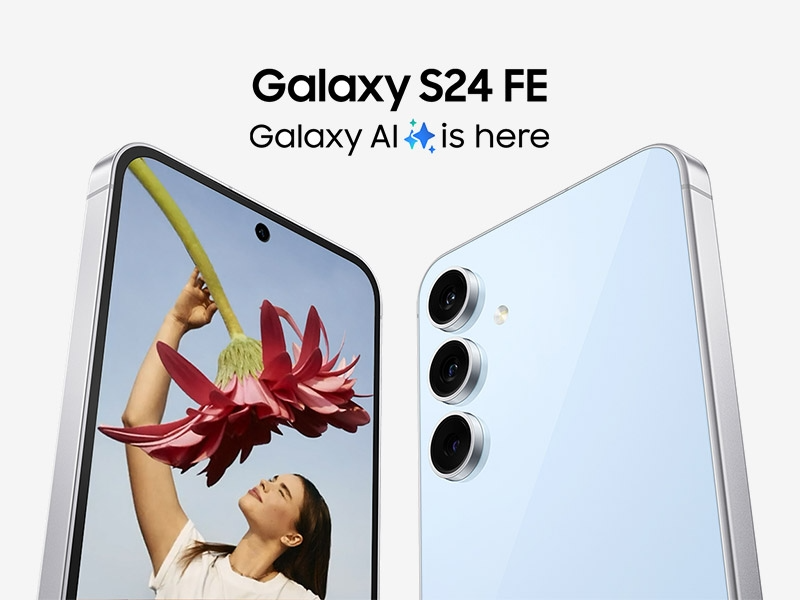
Samsung Galaxy S24 FE and Galaxy A16 launch timeframe tipped

Samsung seems to be gearing up for the launch of the Galaxy S24 FE, its upcoming Fan Edition phone. While the company hasn’t officially announced the device yet, a support page for the phone has already gone live on the Samsung website, and a recent leak has revealed most of its details. Now a Korean publication ETNews suggests the smartphone will launch globally in October. 

The Galaxy S24 FE is said to be powered by Samsung’s Exynos 2400e processor, a likely toned-down version of the Exynos 2400 found in the Galaxy S24 and S24 Plus. It will run One UI 6.1.1, the latest iteration of Samsung’s custom Android skin.  

The phone is expected to feature a 4,565mAh battery, and leaked marketing materials suggest that Samsung will promote impressive endurance numbers. It is said to offer up to 78 hours of music playback and 29 hours of video playback on a single charge.

The display on the S24 FE is expected to be a 6.7-inch Full HD+ AMOLED panel with a 120Hz refresh rate. The display will be protected by Gorilla Glass Victus+ and there’s a 10MP selfie camera tucked inside a centered punch-hole cutout.  

On the back, the S24 FE is rumored to sport a triple-camera system. The primary sensor will be a 50MP unit, accompanied by a 12MP ultrawide sensor and an 8MP telephoto lens with 3x optical zoom.

Color options seem plentiful too as the phone is expected to come in yellow, silver/white, graphite, green, and blue. Samsung might even offer some additional exclusive colors through its website, though details on those remain under wraps.

Additionally, ETNews reports that the Galaxy A16, a more budget-friendly option, will launch sometime in December. Specific details about the A16 are yet to emerge, but it’s safe to assume it will cater to users looking for a more affordable Samsung experience.

Samsung Galaxy A06 complete specs leaks online

Samsung‘s upcoming Galaxy A06 has been circulating in the rumor mill for a while, and today brings another round of leaks. Earlier this month, we got a look at the full renders of the phone. Now, reliable tipster Sudhanshu Ambhore has revealed its complete specs on X (formerly Twitter).

The leaked specs suggest a 6.7-inch PLS LCD display with a 720×1600 resolution. Unlike some recent budget offerings, the refresh rate appears to be stuck at a standard 60Hz. Powering the phone will be the MediaTek Helio G85 processor, a familiar chip often found in entry-level devices.

The camera department sees no change from its predecessor — the rear has a 50MP main and a 2MP depth sensor while you get an 8MP lens on the front for selfies. The phone still has a dated notch to accommodate the latter.

Keeping the phone running is said to be a 5,000mAh battery. This is further complemented by 25W fast charging. The software side sees the Galaxy A06 running the latest Android 14, with Samsung expected to offer two years of OS updates and four years of security patches.

The phone will measure in at 167.3 x 77.3 x 8.0 mm and weighs 196 grams. Security will be handled by a side-mounted fingerprint scanner and Samsung Knox Vault for added data protection. 

Storage options appear to be limited to two configurations: 4GB of RAM with either 64GB or 128GB of internal storage. Thankfully, there will be a microSD card slot that allows for expandable storage up to 1TB. Finally, the audio experience comes courtesy of a single mono speaker with Dolby Atmos support.

The leak doesn’t reveal any details about the price just yet, but we can also expect that information to surface soon. We’ll keep you updated on it.

Price cut: Google Pixel 8, 8 Pro, 8a & 7a become cheaper in India as Pixel 9 series debuts

Google has announced price cuts for its Pixel 8, Pixel 8 Pro, Pixel 8a, and Pixel 7a models in India. This is the first official price cut for these phones since their launch, which comes just in time for the launch of the Pixel 9 series in India.

pixel 8 series

Google Pixel 8 series & Pixel 7a new prices:

The Pixel 8 Pro has received a Rs. 7,000 price cut, the Pixel 8 gets up to Rs. 5,000 off, and the Pixel 8a and Pixel 7a have received Rs. 3,000 and Rs. 2,000 price cuts, respectively. Here are the details of the price cuts for the Pixel phones.

Pixel 8 Pro:

  • 128GB: Old MRP: ₹1,06,999, New MRP: ₹99,999, Price cut: ₹7000
  • 256GB: Old MRP: ₹1,13,999, New MRP: ₹1,06,999, Price cut: ₹7000

Pixel 8:

  • 128GB: Old MRP: ₹75,999, New MRP: ₹71,999, Price cut: ₹4000
  • 256GB: Old MRP: ₹82,999, New MRP: ₹77,999, Price cut: ₹5000

Pixel 8a:

  • 128GB: Old MRP: ₹52,999, New MRP: ₹49,999, Price cut: ₹3000
  • 256GB: Old MRP: ₹59,999, New MRP: ₹56,999, Price cut: ₹3000

Pixel 7a:

  • 128GB: Old MRP: ₹43,999, New MRP: ₹41,999, Price cut: ₹2000

Wait for the BBD sale

While Google sets a standard MRP, the phones are available from Flipkart at cheaper rates. Prices are expected to drop further during the upcoming Big Billion Days sale in early October. If you’re considering buying an older Pixel phone, it might be worth waiting for the sale.

The best alternatives for Realme C63 5G in India

Realme recently launched the C63 5G smartphone in India. It’s a budget offering with a focus on essentials and just that. It comes with a  6.67-inch IPS LCD screen with a 120Hz refresh rate and a resolution of 720 x 1604 pixels. 

Powering the device is a Mediatek Dimensity 6300 chipset, coupled with up to 8GB of RAM and 128GB of internal storage. The phone runs Android 14 with Realme UI 5.0 and is supported by a 5000 mAh battery with 15W wired charging.

Realme C63 5G

On the camera front, the Realme C63 5G sports a single 32 MP rear camera and an 8 MP front-facing camera. It offers side-mounted fingerprint authentication, IP64 dust and splash resistance, and various connectivity options including dual SIM support, Bluetooth 5.3, and USB Type-C 2.0. 

SpecificationRealme C63 5G
Dimensions165.6 x 76.1 x 7.9 mm
Weight192 g
BuildIP64, dust and splash resistant
Display6.67 inches, 120Hz, 500 nits
Resolution720 x 1604 pixels
ChipsetMediatek Dimensity 6300 (6 nm)
Main Camera32 MP
Selfie Camera8 MP
Battery5000 mAh, 15W wired
Internal Storage128GB 4GB/6GB/8GB RAM
PriceStarts at Rs 10,999 (~$130)

The device is priced between Rs 10,999 to Rs 12,999, depending on the memory variant. While a decent package in itself, there are some good alternatives in a similar price bracket that offer better specs in one aspect or another. 

Realme C63 5G Alternatives India

So let’s look at the top alternatives to the Realme C63 5G in India. Keep in mind that, as with any budget segment, no option will be perfect in every aspect.

Alternatives to the Realme C63 5G

1. Realme C65 5G

The first option is from Realme itself, the C65 5G. Although different in terms of visual look, the Realme C65 5G has mostly similar specs and features to the C63 5G. You get the same HD+ IPS LCD panel with a 120Hz refresh rate.

Both are powered by the same MediaTek Dimensity 6300 chipset with the same RAM and ROM option. The C65 also matches the C63 with a 5000 mAh battery and 15W wired charging.

The main differences between the two phones are in terms of rear camera. The C65 has a 50 MP rear camera compared to the C63’s 32 MP sensor. There’s an auxiliary lens on both devices, but it’s to complete the design rather than actual use. 

Realme C65 5G

The Realme C65 is also 2 grams lighter at 190 grams. Although budget phones, both of them have an IP rating thankfully — but its IP54 in the  C65 5G while the Realme C63 5G has a better IP64 rating. 

All in all, there’s not much difference between the two phones, so the experience is likely to be the same as well. The Realme C65 5G, however, is a bit affordable on the base variant. It starts at Rs 9,999 for the 4/64GB model. 

The C63 5G’s vanilla variant is 4/128GB which costs Rs 10,999; though the C65’s 4/128GB also costs the same. So you can choose the Realme C65 5G over the C63 5G if you want a phone with the same hardware and software experience at a bit affordable price. But if you are spending any more, go for the C63 5G only as it has a better IP rating.

Please Note: When you buy something using the links in our articles, we may earn a small commission at no cost to you.

SpecificationRealme C63 5GRealme C65 5G
Dimensions165.6 x 76.1 x 7.9 mm165.6 x 76.1 x 7.9 mm
Weight192 g190 g
BuildIP64, dust and splash resistantIP54, dust and splash resistant
Display6.67 inches, 120Hz, 500 nits6.67 inches, 120Hz, 500 nits
Resolution720 x 1604 pixels720 x 1604 pixels
ChipsetMediatek Dimensity 6300 (6 nm)Mediatek Dimensity 6300 (6 nm)
Main Camera32 MP50 MP
Selfie Camera8 MP8 MP
Battery5000 mAh, 15W wired5000 mAh, 15W wired
Internal Storage128GB 4GB/6GB/8GB RAM64GB 4GB RAM, 128GB 4GB/6GB RAM
PriceStarts at Rs 10,999 (~$130)Starts at Rs 9,999 (~$120)

2. Poco M6 Pro 5G

Moving on to the Poco M6 Pro 5G, it has a more powerful Snapdragon 4 Gen 2 chipset, that should result in better overall performance over the Dimensity 6300. It also features a larger 6.79-inch display with a higher Full HD+ resolution, but the refresh rate is capped at 90Hz refresh rate.

Poco M6 Pro 5G

The Poco M6 Pro 5G also includes a dual-camera setup with a 50 MP primary sensor and a 2 MP depth sensor. While it’s hard to say definitively, you should get better photography results from Poco as Snapdragon chips usually have better ISP than MediaTek counterpart. That said, the final quality also depends on the manufacturer’s optimization, so it’s better to watch some reviews for more accurate insights. 

The Poco M6 Pro has a slightly higher weight of 199 grams despite packing the same 5000mAh battery. The charging is slightly better at 18W compared to Realme C65’s 15W. 

The smartphone is available at the same starting price as Realme C63 5G, Rs 10,999, but for lesser 64GB storage. 

SpecificationRealme C63 5GPoco M6 Pro 5G
Dimensions165.6 x 76.1 x 7.9 mm168.6 x 76.3 x 8.2 mm
Weight192 g199 g
BuildIP64, dust and splash resistantIP53, dust and splash resistant
Display6.67 inches, 120Hz, 500 nits6.79 inches, 90Hz, 550 nits
Resolution720 x 1604 pixels1080 x 2460 pixels
ChipsetMediatek Dimensity 6300 (6 nm)Snapdragon 4 Gen 2 (4 nm)
Main Camera32 MP50 MP + 2 MP depth
Selfie Camera8 MP8 MP
Battery5000 mAh, 15W wired5000 mAh, 18W wired
Internal Storage128GB 4GB/6GB/8GB RAM64GB 4GB RAM, 128GB 4GB/6GB/8GB RAM, 256GB 8GB RAM
PriceStarts at Rs 10,999 (~$130)Starts at Rs 10,999 (~$130)

Please Note: When you buy something using the links in our articles, we may earn a small commission at no cost to you.

3. iQOO Z9 Lite / Vivo T3 Lite

The iQOO Z9 Lite (or Vivo T3 Lite) is essentially the same phone as the Realme C63 5G. It has the Dimensity 6300 processor, a 6.56-inch HD+ resolution screen, an IP64 dust and water resistance, and a 5000mAh battery with 15W charging.

However, its refresh rate is capped at 90Hz. Whereas, the camera has a high-res 50MP main lens on the back. The selfie is the same at 8MP. You might also want to consider the difference in software. 

iQOO Z9 Lite

The iQOO Z9 Lite boots on FunTouch OS 14 while Realme’s entry has Realme UI 5. The core is the same, that is Android 14, but both have different UI/UX designs, so the user needs to make a choice based on their UI preference. 

Not to forget, both the iQOO Z9 Lite and Realme C63 5G is also promised two years of Android updates and three years of security patches.

While everything is the same, you can get the 4/128GB variant of iQOO Z9 Lite or Vivo T3 Lite for Rs 10,499. Whereas you’ll need to spend Rs 500 more for the same variant on the Realme.

SpecificationRealme C63 5GiQOO Z6 / Vivo T3 Lite
Dimensions165.6 x 76.1 x 7.9 mm163.6 x 75.6 x 8.4 mm
Weight192 g185 g
BuildIP64, dust and splash resistantIP64, water and dust resistant
Display6.67 inches, 120Hz, 500 nits6.56 inches, 90Hz, 840 nits
Resolution720 x 1604 pixels720 x 1612 pixels
ChipsetMediatek Dimensity 6300 (6 nm)Mediatek Dimensity 6300 (6 nm)
Main Camera32 MP50 MP + 2 MP depth
Selfie Camera8 MP8 MP
Battery5000 mAh, 15W wired5000 mAh, 15W wired
Internal Storage128GB 4GB/6GB/8GB RAM128GB 4GB/6GB RAM
PriceStarts at Rs 10,999 (~$130)Starts at Rs 10,499 (~$125)

Please Note: When you buy something using the links in our articles, we may earn a small commission at no cost to you.

4. Conclusion

The Realme C63 5G is a decent budget smartphone with reliable day-to-day performance, a smooth display, and not-so-bad cameras for its price. However, depending on your priorities, several alternatives may offer better value. 

The Realme C65 5G provides an incremental upgrade with a better camera, while the Poco M6 Pro 5G excels in display quality and build. The iQOO Z9 Lite or Vivo T3 Lite could be for those looking for a similar phone at a slightly affordable price. 

Ultimately, the best choice will depend on what you value most—whether it’s camera performance, display quality, or overall performance.

Truke BTG Flex launched in India: Affordable TWS earbuds for gamers with 40ms low latency

Truke has launched its latest Born-To-Game series TWS earbuds, the Truke BTG Flex in India. It is positioned as a versatile and affordable option for gamers, combining essential features like low latency, dual pairing, and strong battery life. Here is a look at the key features and price of the BTG Flex.

Truke BTG Flex specifications and features

The Truke BTG Flex comes with support for ultra-low latency of 40ms for real-time audio feedback during intense gaming sessions. Additionally, the environmental noise cancellation feature enhances the gaming experience by filtering out background noise.

Apart from its traditional three audio modes, Truke has introduced the HiFi DSP Sound feature in the BTG Flex. This technology automatically adapts the audio mode based on the content being consumed such as gaming, watching videos, or listening to music.

Truke BTG Flex

The BTG Flex is equipped with 13mm speakers and the latest Bluetooth 5.4 technology, which delivers strong audio quality. The earbuds also boast an impressive battery life, offering up to 60 hours of playtime on a single charge. The rapid charging technology is particularly noteworthy, providing 100 minutes of playback time with just 10 minutes of charging.

One of the notable features of the BTG Flex is dual device connectivity. This allows the earbuds to connect seamlessly to two devices simultaneously. In terms of design, the BTG Flex features a premium chrome finish with RGB lighting on both the earbuds and the charging case.

Truke BTG Flex price in India, availability 

 Priced at Rs 1,099, with a pre-booking option available for Rs 1,099 from 13th August to 23rd August, the BTG Flex is designed to cater specifically to the needs of gamers. It will be available for purchase on Amazon India, Flipkart, and Truke.in. It is available in three colours: Sunset Black, Alpine Green, and Sunset Orange.

The BTG Flex comes with a 12-month warranty and is supported by a network of over 400 active service centres across India, ensuring that customers have access to reliable after-sales service.