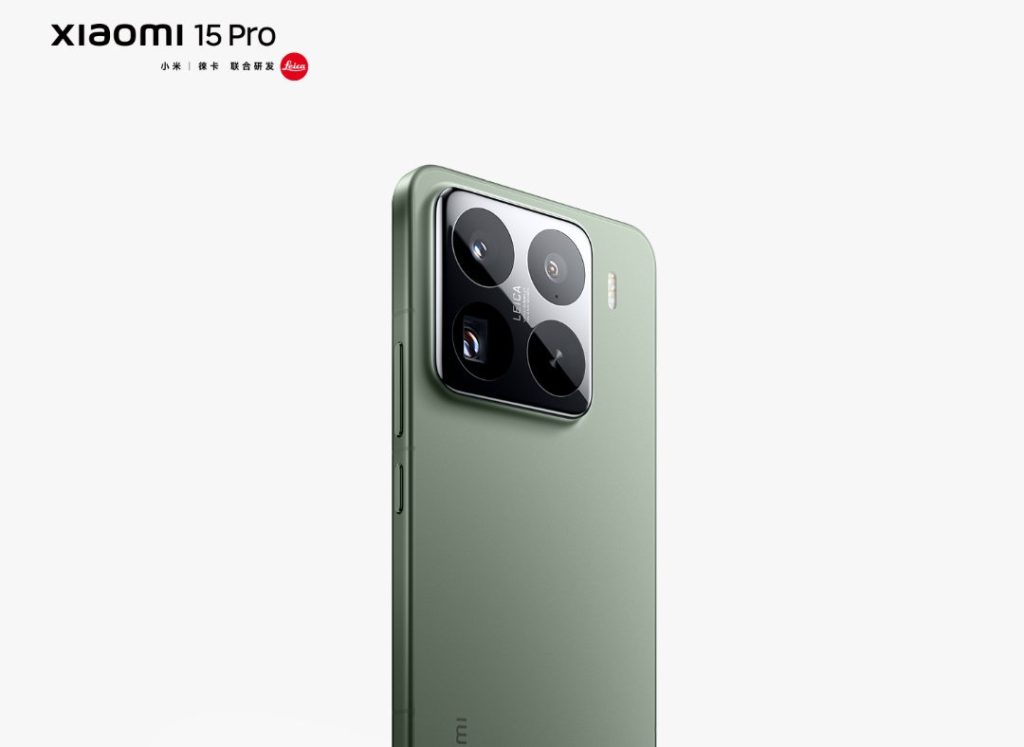
Xiaomi is gearing up to launch the Xiaomi 15 series in the Chinese market as its latest flagship smartphones. This high end lineup is set to drop on 29th October 2024. But ahead of the announcement, it seems the devices are already quite popular with pre-bookings surpassing even its predecessor.
Xiaomi 15 Series Pre-Bookings Breaks Xiaomi 14’s Record
The Chinese tech giant’s upcoming smartphones will be launching in three days alongside the Xiaomi Pad 7 series and Xiaomi Smart Band 9 Pro. Recently, Xiaomi started taking pre-bookings for the Xiaomi 15 smartphones and these might have already outperformed last year’s Xiaomi 14 series. This news arrives from Xiaomi’s former Civi product manager, and its new Redmi Product Manager. So it appears that the newer phones are more popular.
Xiaomi 15 Pro
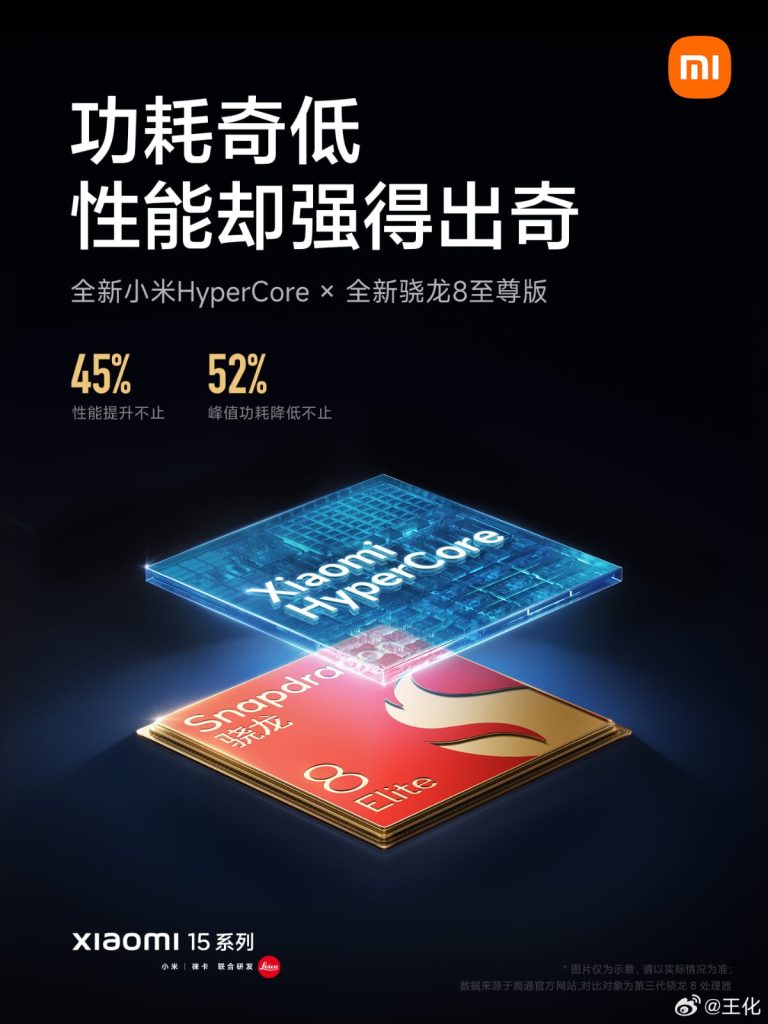
This means that the new flagship might already be a hit in China. To recall, the lineup consists of just the Xiaomi 15 and Xiaomi 15 Pro. Although, the top end Xiaomi 15 Ultra is rumored to launch later on. Both of these model are equipped with Qualcomm’s new Snapdragon 8 Elite processor, which promises significant improvements in performance over its predecessor. These new devices also run on the brand’s Android 15 OS based HyperOS 2.0 custom skin out of the box.
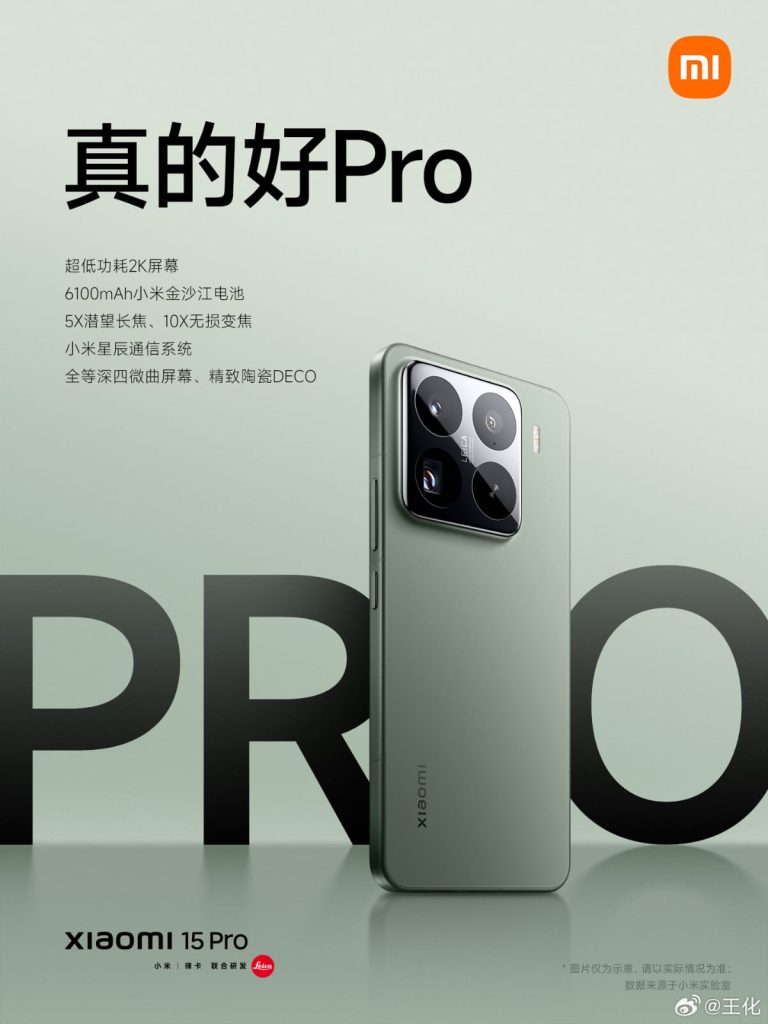
The company recently shared a teaser that revealed the design of the Xiaomi 15 and Xiaomi 15 Pro. Just yesterday, other key specs and features were also confirmed. The Xiaomi 15 Pro will sport a 2K AMOLED display that also has a higher peak brightness than its predecessors. Under the hood, a massive 6,100mAh battery pack will power the higher end model. For optics, there is a new telephoto shooter that offers 5x optical zoom and 10x hybrid lossless zoom. So stick around for more as we will be covering the launch event next week.
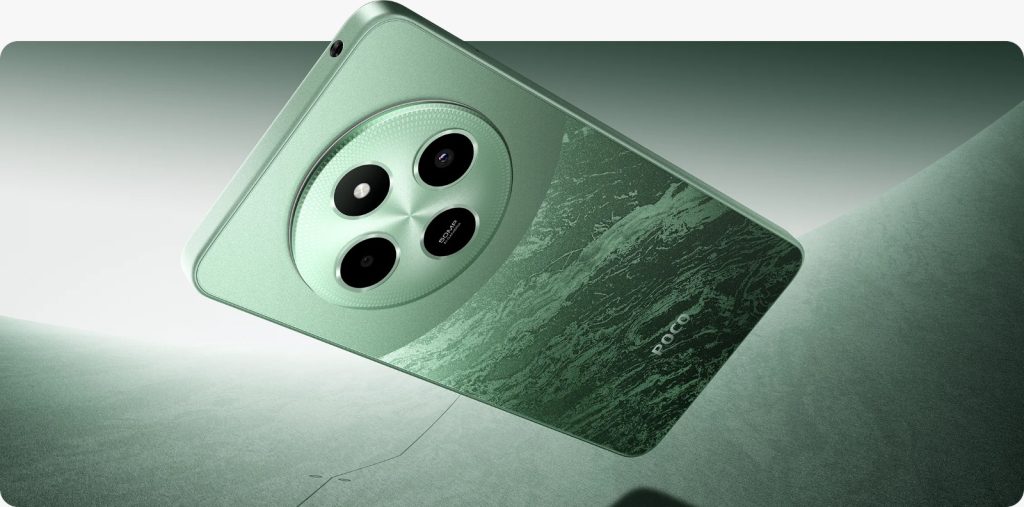
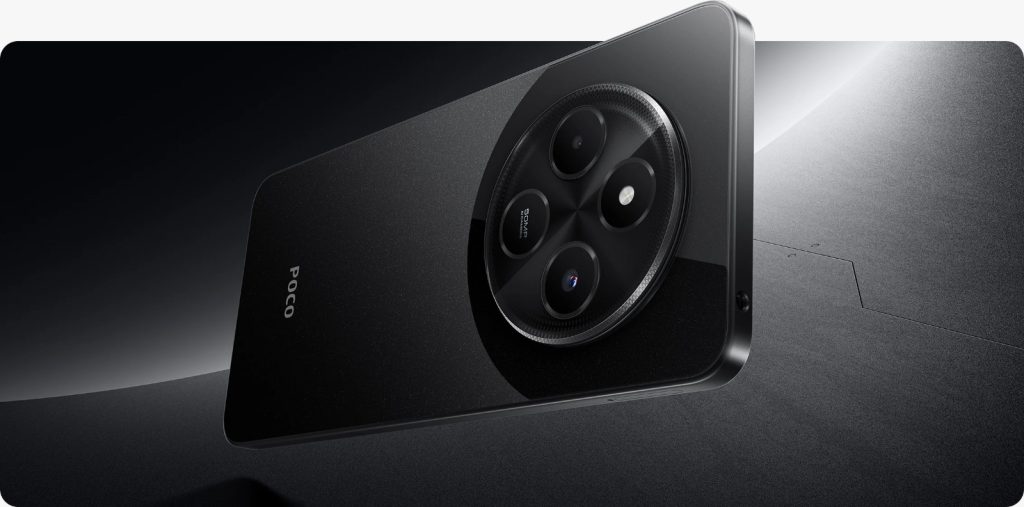
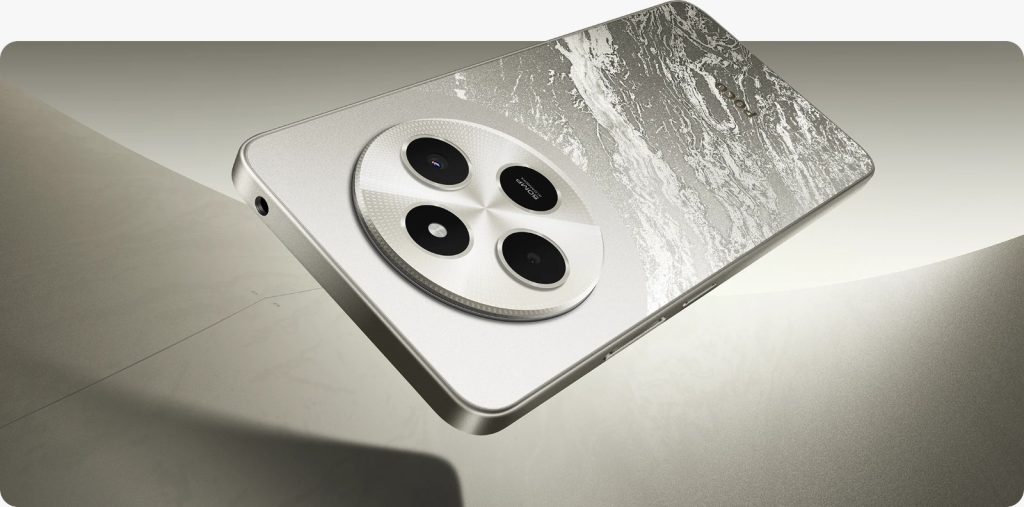
In terms of appearance, the Poco C75 features a flat design with a water-drop notch on the front and a centered circular camera module on the back. It comes in three color options: Black, Gold, and Green, with the Gold and Green variants having a textured finish. Notably, the phone retains a 3.5mm headphone jack, a rare feature in modern devices.
Poco C75 Specifications:
Powered by the MediaTek Helio G81-Ultra, the device features Cortex-A75 (performance) and Cortex-A55 (efficiency) cores, along with a Mali-G52 MC2 GPU. It pairs with LPDDR4X RAM and eMMC 5.1 storage.
The phone cones in two variants—6GB RAM + 128GB storage and 8GB RAM + 256GB storage. It supports up to 16GB of memory extension, allowing users to allocate a portion of internal storage as additional RAM, or use it for regular file storage.
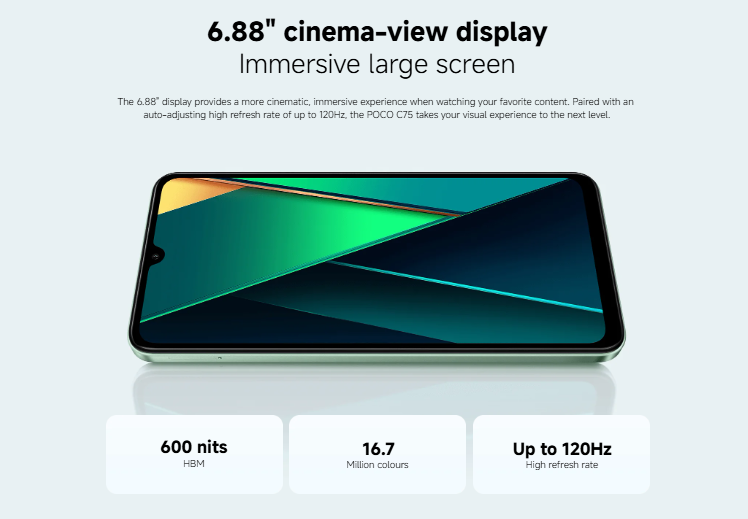
Poco C75 uses a 6.88-inch 720p display (1640×720 resolution), with brightness levels reaching 450 nits manually and up to 600 nits in high-brightness mode (HBM). The display includes TÜV Rheinland Low Blue Light and Flicker-Free certifications for eye comfort.
Despite its entry-level status, Poco is offering a 120Hz refresh rate for smoother scrolling, and can adjust the refresh rate dynamically to conserve battery life.
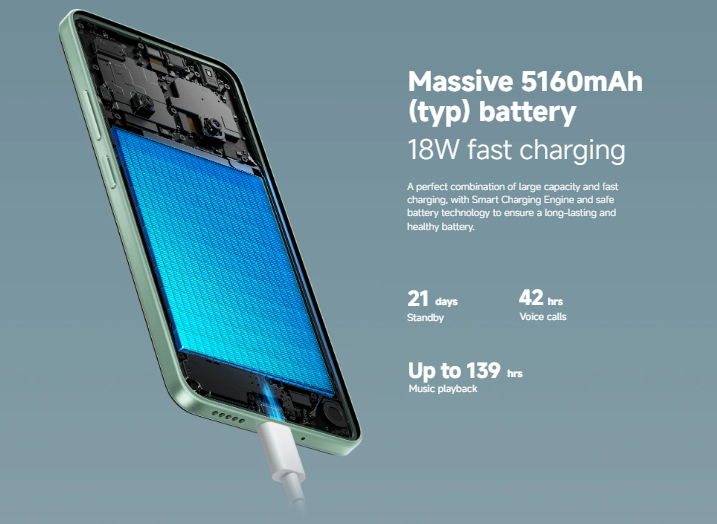
Speaking of of battery life, the phone packs a 5160mAh cell which supports 18W charging.
As for the cameras, this phone includes a 50MP main sensor paired with an unspecified secondary sensor and packs software-based features features like Film Camera, HDR, Portrait, 50MP mode, and Night mode. It can record videos in up to 1080p resolution. The 13MP front camera supports most of the software-based features, while the Poco Imaging Engine optimizes photo quality and speed for an enhanced photo and video taking experience.
Pricing and Availability:
The Poco C75 is listed on Xiaomi‘s global website and will soon be available for purchase. The 6GB + 128GB variant is priced at $109 (early bird), while the 8GB + 256GB model will be offered at $129 (early bird).
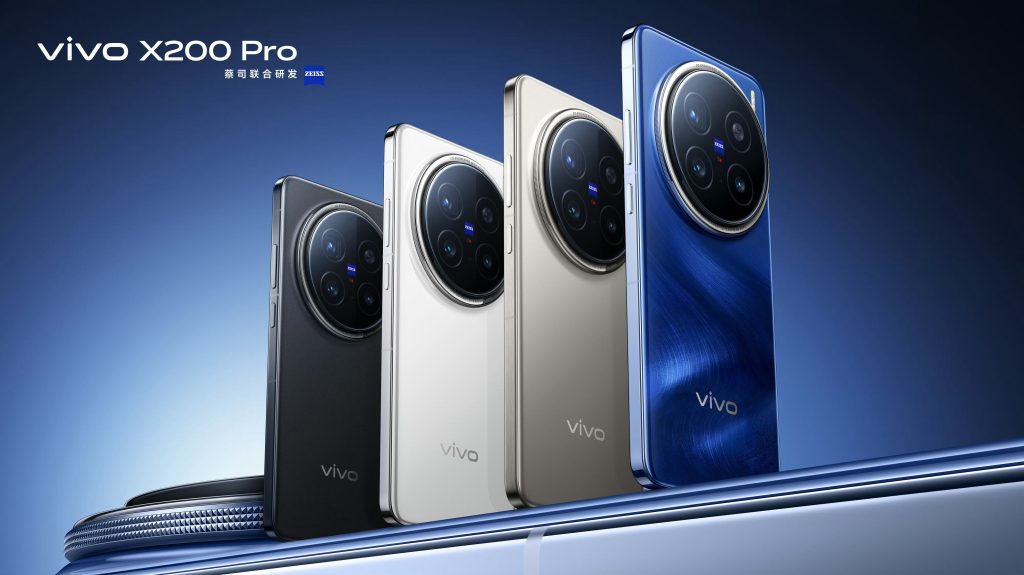
Just last week, Vivo unveiled the Vivo X200 series of flagship smartphones in its home market of China. These devices pack cutting edge technology and various AI powered features. But now, the X200 and X200 Pro made an appearance in new certifications. So its global release might be right around the corner.
Vivo X200 Pro visits NCC, Vivo X200 Spotted on SIRIM
The Chinese brand’s X200 Pro surfaced on Taiwan’s NCC certification carrying the V2413 model number (Via 91Mobiles). In the database, this model is also listed with its accessories. On the other hand, the vanilla Vivo X200 was spotted on Malaysia’s SIRIM certification. Unfortunately, these listings do not confirm any key details like launch date, price, or any other useful feature. But these do hint at the global release of the Vivo X200 and X200 Pro being near.
Vivo X200 Pro
We recently rounded up a list of upcoming flagship smartphone launches in India, with the X200 series expected to be announced in December 2024. To recall, the new premium phones also included the X200 Pro Mini, which is a high end compact device. However, there is no official word whether this model is arriving in the global markets. All three models were announced with MediaTek’s flagship Dimensity 9400 SoC.
The lineup houses big batteries and 90W wired fast charging. These run on the Android 15 OS based OriginOS 5 custom skin out of the box. On the front, you get AMOLED displays with LTPO support, high refresh rate, and bright panels, while the rear has a triple camera setup with Zeiss optics and Vivo’s V3+ imaging chip. Keep in mind that this is still just a certification listing and there is no official word regarding a global launch date. So stick around for more as we will be providing more updates.
Xiaomi shares image samples of the upcoming Xiaomi 15 and 15 Pro ahead of their launch, showcasing improvements in their camera systems. The company has integrated a miniaturized Leica optical system with Xiaomi AISP 2.0, claiming that the AI-powered image processing algorithm now speeds up processing by 82%. Both main and telephoto samples were shared, demonstrating enhancements in detail, color vibrancy, and overall image quality.
Xiaomi 15 Pro samples
Xiaomi 15 Pro’s telephoto has been upgraded from 3.2x to 5x. Sample images from the telephoto camera in both bright and low-light conditions reveal rich details and vibrant colors, with minimal noise even in darker shots. The low-light images appear slightly softer but maintain clarity without noticeable graininess, thanks to computational photography improvements.
The main camera samples also highlight good detail retention and a broad dynamic range.
Xiaomi 15 samples
As for the base model, it retains a 3.2x telephoto lens, but digital cropping at 120mm (5x) still delivers a reasonable level of detail alongside vibrant colors. Shots at 60mm (between 2x-3x range with digital zoom), showed decent detail, minimal artifacts, and a nice background blur.
Both models feature a triple 50MP camera setup, supporting the company’s emphasis on photographic performance.
In other aspects, the Xiaomi 15 Pro stands out with a 6,100mAh battery, offering a 38% improvement in battery life over its predecessor. While the standard model’s battery capacity is still under wraps, it is confirmed to deliver a 23% boost in battery life. Both phones feature a flat design, but the Pro model adds a micro-quad-curved glass element on the front and around the camera deco, whereas the standard model uses a simpler flat glass design.
Both models will be powered by the Snapdragon 8 Elite chip, offering notable upgrades in CPU and GPU performance. Overall, the Xiaomi 15 and 15 Pro appear to be strong contenders for those looking to upgrade their devices in 2024, despite a potential price increase.
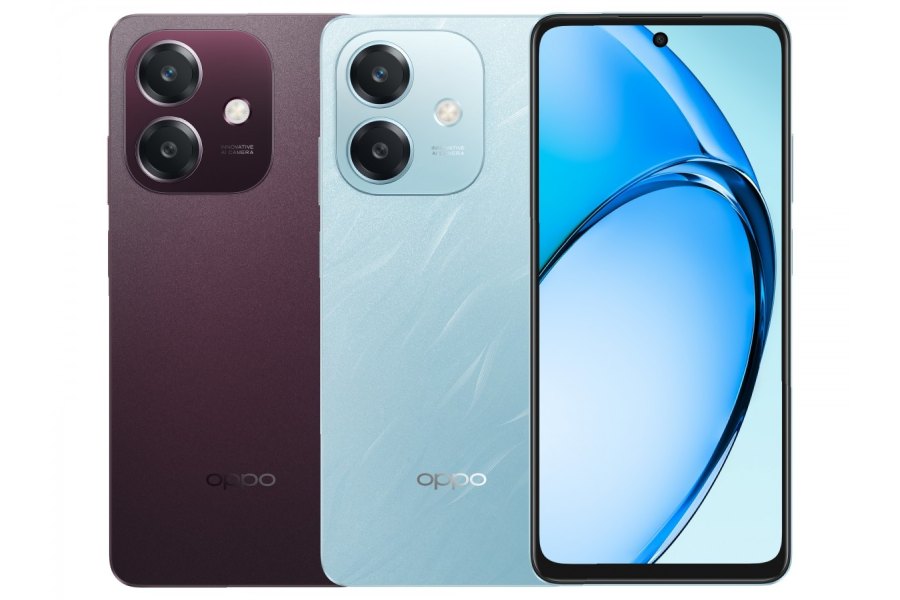
Oppo has launched the A3x 4G in the Indian market, a couple of months after releasing its 5G counterpart. As part of Oppo’s A-series, the A3x 4G is clearly a budget smartphone, yet it offers military-grade certification for users seeking a dependable daily device without breaking the bank. Here’s a closer look at its details.
Oppo A3x Specifications
Oppo is betting on A3x 4G’s durability as a key selling point. The phone has MIL-STD-810H military-grade certification for shock resistance. It also has an IP54 rating to protect against dust and splashes.
The A3x 4G features a 6.67-inch LCD display with a 720×1604 resolution. It offers a 90Hz refresh rate for smoother scrolling and responsiveness, along with a 180Hz touch sampling rate for improved touch recognition. The display boasts a peak brightness of 1,000 nits which should make the content viewable in outdoor conditions.
Under the hood, the phone is powered by the Snapdragon 6s Gen 1 chipset, a mid-range processor suitable for everyday tasks.
The camera department is kept fairly basic on the A3x 4G. On the back, a single 8MP sensor handles photo duties, while a 5MP front-facing camera caters to selfies and video calls.
Oppo equips the A3x 4G with a sizable 5,100mAh battery. The phone supports 45W fast wired charging, capable of taking the battery from 0 to 50% in 30 minutes, according to Oppo.
As the name suggests, the A3x 4G sticks to 4G connectivity, omitting 5G capabilities. However, it retains conveniences like a 3.5mm headphone jack and a fingerprint sensor for secure unlocking.
Oppo A3x 4G Price and Availability
The Oppo A3x 4G carries a starting price tag of INR 8,999 for the 4GB RAM and 64GB storage variant. The 128GB storage option bumps the price slightly to INR 9,999. Both models are available in Nebula Red and Ocean Blue colorways.
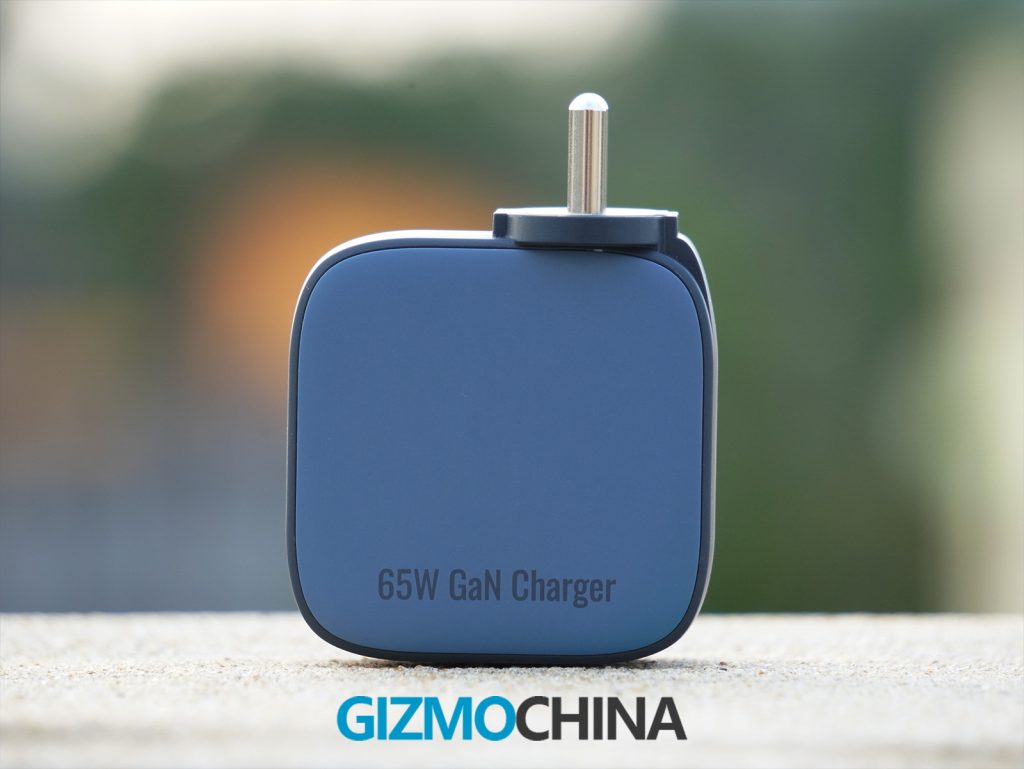
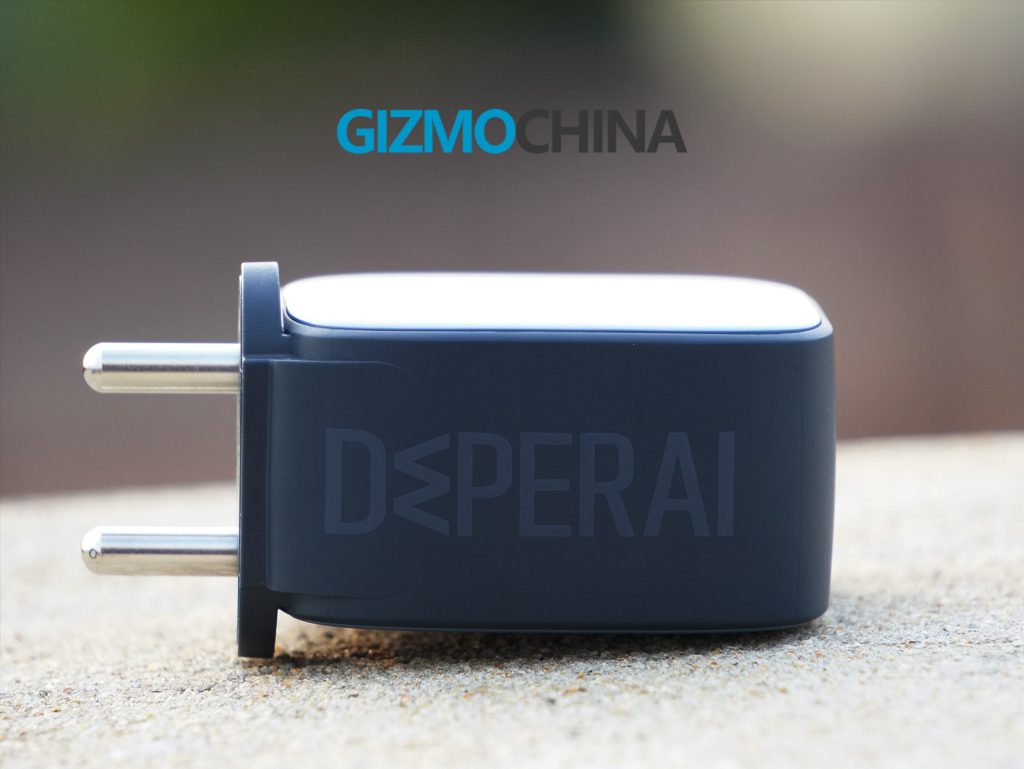
DeperAI, a fresh entrant in the tech world founded by former OnePlus executive Jim Zhang, has launched its first product line: a series of universal GaN (Gallium Nitride) adapters. Among them, the Superpower 65W Pro is designed to offer robust performance, versatility, and compatibility with the latest charging protocols.
Manufactured in India, this adapter supports UFCS (Universal Fusion Fast Charging) and other protocols, making it an ideal choice for users who need reliable multi-device fast charging at home, work, or while traveling. I had the chance to try it out and here’s my detailed review.
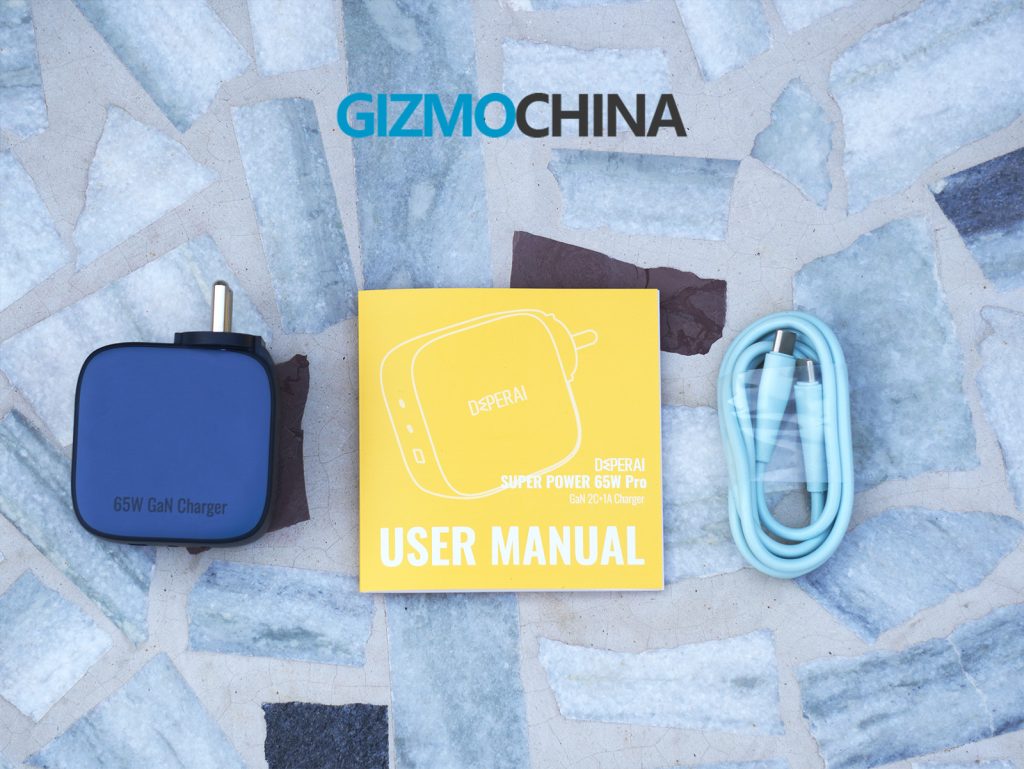
The DeperAI Superpower 65W Pro adapter arrives in a minimalist box, keeping the contents straightforward. Inside, you’ll find the adapter itself, secured with a simple protective covering, a USB Type C-C cable, and a user manual.
2. Build Quality
The fast charger has a solid build that feels both durable and premium. It features a matte finish on the top, which not only enhances its appearance but also helps to resist smudges and fingerprints. This compact adapter measures 4.16 x 6.37 x 2.94 cm and weighs 226.8 grams, making it easy to carry around in pockets, bags.
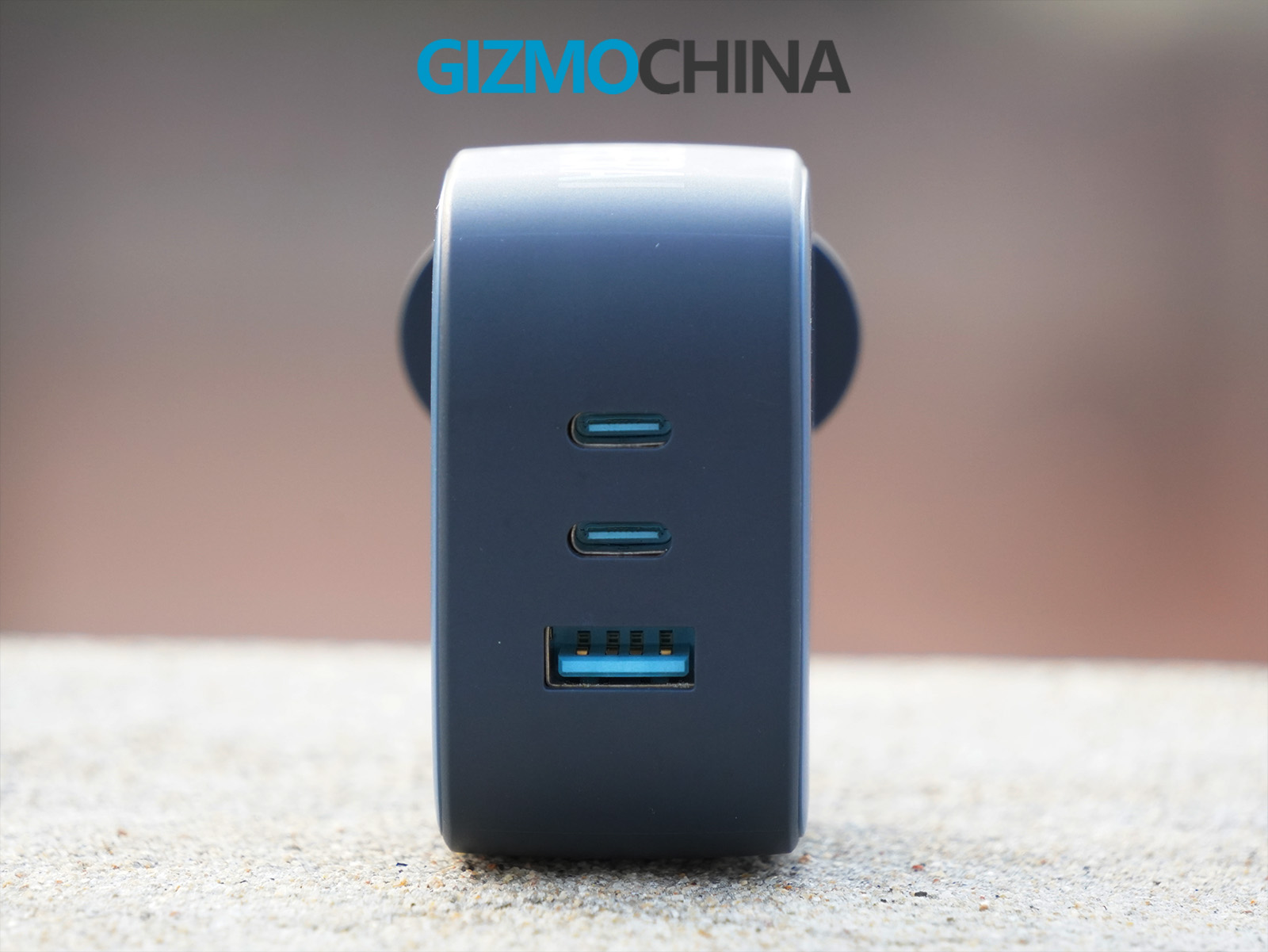
The adapter has three ports, each carefully positioned for easy access. The USB-C ports are stacked vertically on one side, with USB-C1 located at the top and USB-C2 directly below it. Each of these USB-C ports can deliver up to 65W individually. Specifically, both ports support multiple output levels: 5V/3A, 9V/3A, 12V/3A, 15V/3A, and 20V/3.25A. The positioning of these ports is practical, enabling users to connect cables without any obstruction.
The USB-A port is positioned below the USB-C ports. It supports outputs of 5V/3A, 9V/3A, 12V/3A, and 20V/1.8A, delivering a maximum output of 36W. The ports are tightly secured within the adapter’s body, preventing any wobbling during use. This ensures a reliable connection, even when multiple devices are being charged simultaneously.
The adapter is capable of supporting simultaneous charging with various output configurations. When using both USB-C ports, the output is distributed as 45W + 20W. If a device is connected to USB-C1 and the USB-A port, the output is 45W + 18W. When connecting USB-C2 and the USB-A port, the adapter delivers up to 15W. Additionally, if all three ports are in use, it intelligently distributes power at 45W + 15W, ensuring efficient charging for all connected devices.
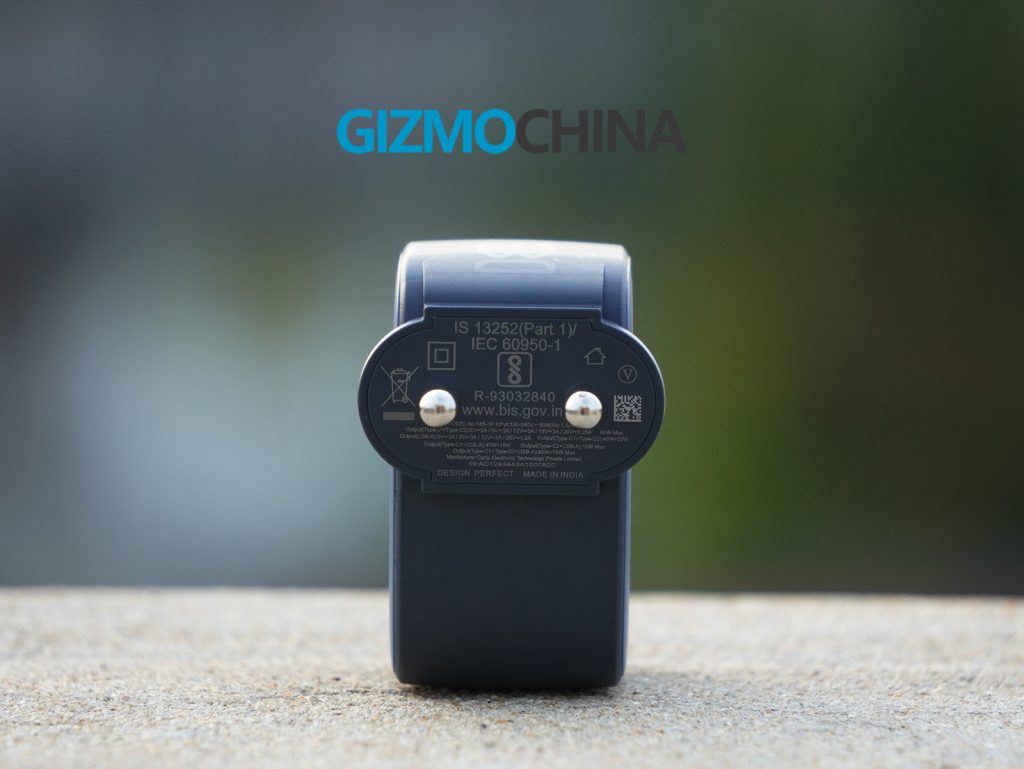
The adapter’s plug is sturdy, providing a firm grip when inserted into wall sockets. This reduces the risk of accidental disconnections. It supports an input voltage range of 100-240V at 50/60Hz, which makes it compatible with international voltage standards, making it suitable for travelers.
While GaN technology is known for improved thermal management, the DeperAI Superpower 65W Pro can get slightly warm during high-speed charging, particularly when powering multiple high-demand devices. However, the temperature remains well within safe limits, ensuring both the adapter’s safety and performance.
3. Features
The Superpower 65W Pro is packed with features that cater to a wide range of devices. Here’s a closer look at what it offers:
GaN III Technology: GaN (Gallium Nitride) technology is at the core of this adapter. GaN chargers are known for their high efficiency and compact design. Compared to traditional silicon-based chargers, GaN allows for better energy conversion, reducing heat generation and improving charging speed. It’s a major reason why this adapter can deliver up to 65W of power in such a small form factor.
UFCS (Universal Fusion Fast Charging): This is one of the standout features of the adapter. UFCS ensures compatibility with both iOS and Android devices, making it an ideal choice for users who switch between ecosystems or have multiple devices. It supports fast charging for devices across different brands, whether it’s an iPhone, a Samsung Galaxy, or a Xiaomi device.
Multiport Output Protocols: The adapter supports a wide range of charging protocols, including PD3.1, QC5/QC4+, SCP, FCP, and many others. This means it can charge everything from laptops to smartphones and even accessories like the Nintendo Switch and Steam Deck. The power distribution between the ports is managed intelligently, when using all three ports, the charger splits the power efficiently to minimize charging time.
4. Performance
When it comes to performance, the DeperAI 65W Pro lives up to its claims. As per the company, it can charge an iPhone from 0% to 80% in just 30 minutes, making it one of the fastest chargers in this segment. I tested the charger with a Xiaomi Mi 11x, Macbook Pro, and iPhone 13 simultaneously, and the results were impressive. The charger managed to provide a consistent power output, delivering up to 45W for the laptop while still charging the two phones at decent speeds.
While the charger handles multi-device charging well, it’s worth mentioning that it performs best when charging one or two devices. With all three ports active, the charging speed slightly drops, but it still manages to deliver efficient charging without major delays.
The thermal performance is generally good, although, as mentioned earlier, it does get warm during extended use. The charger also comes with a lot of safety features, including overvoltage and surge protection. The Type-C charging cable is also good and sturdy, however, I wouldn’t say I liked its design much.
5. Verdict
The DeperAI Superpower 65W Pro adapter is a versatile and well-designed charging solution. It’s compact, efficient, and offers a good range of safety features, making it suitable for home, office, and travel use.
The inclusion of GaN technology, along with support for UFCS and various other protocols, ensures compatibility across a wide range of devices. While the adapter does get a bit warm during heavy use, it’s not a dealbreaker considering the fast charging capabilities it offers. However, the unboxing experience could be improved with better overall packaging.
The charger is priced at Rs. 1,999 and it is now available on Amazon.in.
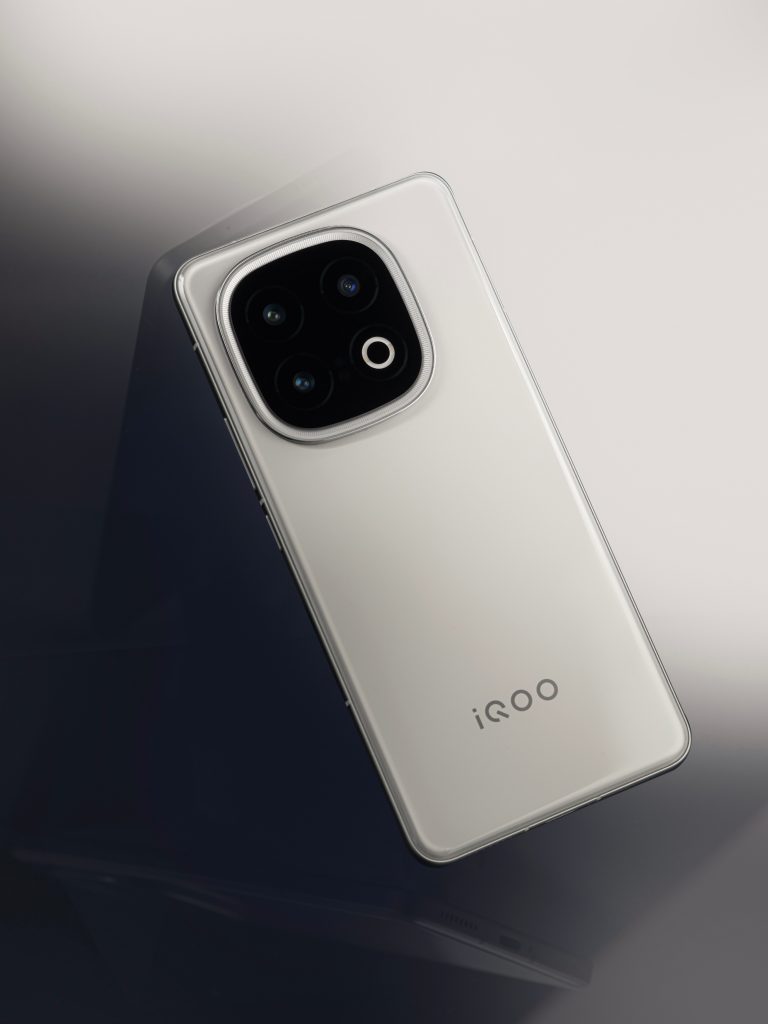
iQOO will launch its latest gaming flagship, the iQOO 13, on October 30 in China. This device, featuring Qualcomm’s new 3nm Snapdragon 8 Elite chipset and iQOO’s custom Q2 chip, is designed to deliver top-tier gaming performance.
iQOO 13 AnTuTu benchmark
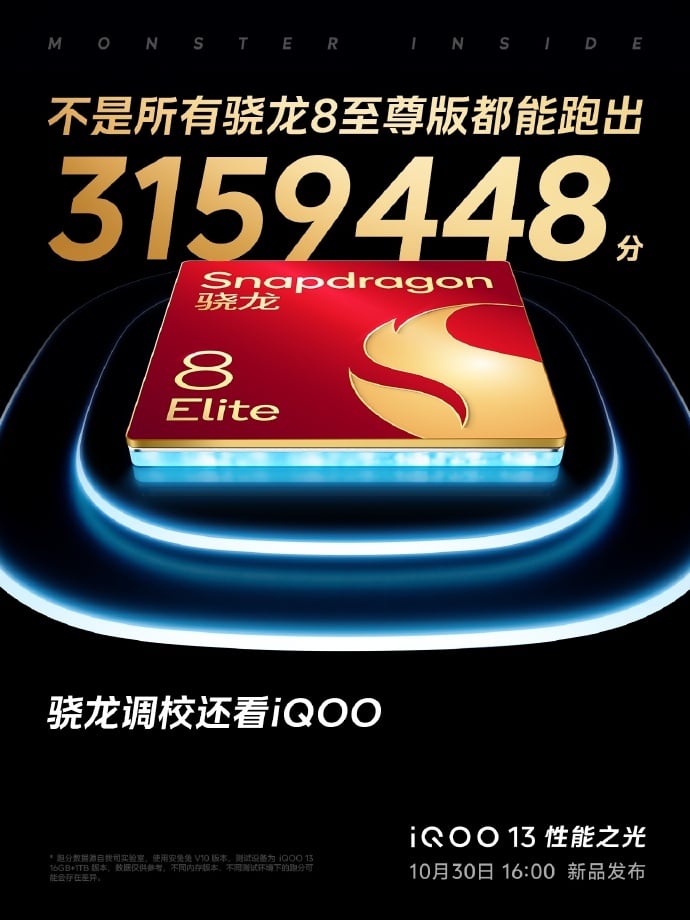
Ahead of the launch, the brand has revealed that iQOO 13 has scored 3,159,448 points on the AnTuTu benchmark. This makes it the highest-scoring Snapdragon 8 Elite device so far. It is being trailed closely by the OnePlus 13, which is also powered by the same Snapdragon 8 Elite processor and was recently reported to have scored 3,094,447 points. It is worth mentioning that AnTuTu measures the overall performance of a smartphone, including its CPU, GPU, memory, and user experience (UX).
iQOO 13 specs & features
The iQOO 13 is set to feature a 2K Q10 Everest panel developed with BOE, which promises excellent brightness and color accuracy with optimized power efficiency. Though not officially confirmed, the phone is expected to sport a 6.82-inch flat OLED screen with 2K resolution and a 144Hz refresh rate. It will also be the first OLED phone with circularly polarized light eye protection, designed to reduce eye strain during extended use.
Powering the device will be a 6150mAh battery supporting 120W fast charging. The iQOO 13 will run on OriginOS 5 based on Android 15 and will also feature dual speakers and a 1016H motor for improved haptic feedback.
According to a post by well-known Weibo tech tipster Digital Chat Station, the smartphone’s price may have been revealed, with the tipster suggesting a price of 3,999 yuan (around $565). If true, then the iQOO 13 could be one of the few Android flagships powered by the new Snapdragon 8 Elite chip that won’t have a price hike compared to its predecessor.
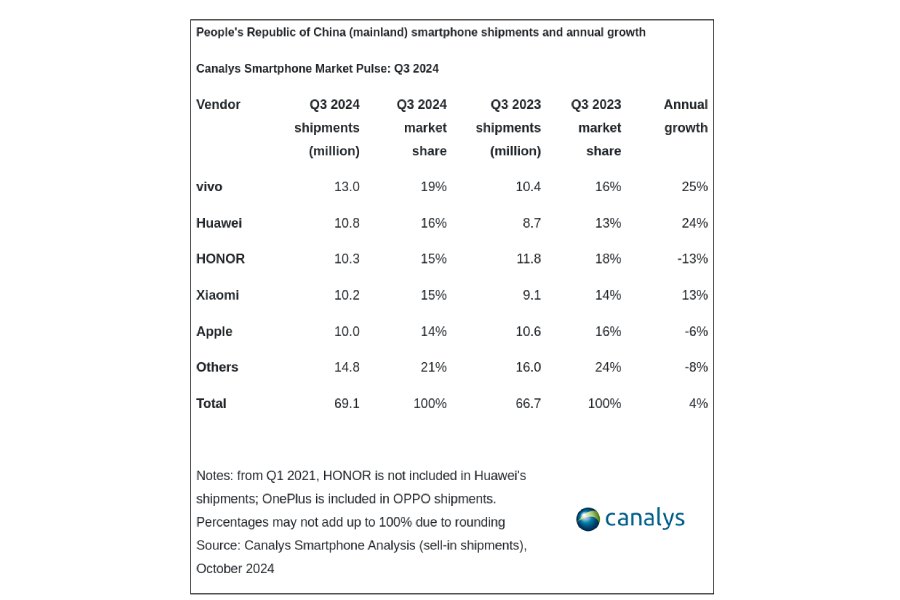
The summer shopping season in China proved fruitful for the smartphone market as the shipments rose by 4% year-over-year to 69.1 million units in Q3 2024, according to a report from Canalys.
The bigger story, however, is the shift in market dominance. Domestic brands like Vivo, Huawei, and others strengthened their positions, pushing Apple to the bottom of the top five list.
Vivo led the Chinese smartphone shipments
Vivo remains the leader in smartphone shipments yet again for Q3 2024, with a 3% growth from last quarter. Cnalays attributed this growth to the mid-range products launches that boosted both online and offline sales. Its shipments climbed 25% year-on-year to 13 million units to capture a solid 19% market share.
Huawei, meanwhile, staged a comeback, climbing to second place with 10.8 million units shipped and a 16% market share. It’s a 24% year-on-year growth and is attributed to an active channel strategy that successfully supported their flagship offerings.
Honor, despite the popularity of its new foldable phones, faced challenges and saw a 13% decline in shipments compared to last year, landing at third place with 10.3 million units.
Xiaomi, on the other hand, managed to secure fourth place with 10.2 million units shipped and a 15% market share, thanks in part to their “Human x Car x Home” ecosystem strategy, according to the report.
Apple saw a 6% year on year decline in shipments, however. It still claimed the fifth position, but Canalys predicts Apple’s lack of Apple Intelligence services in the iPhone 16 series could impact their growth.
Apple appears to be losing ground outside China as well. Even in the smartphone shipment report for India by Canalys for Q3 2024, Vivo claimed the top spot, while Apple did not even make the top five list.
OnePlus is gearing up to unveil its latest flagship, the OnePlus 13, on October 31st in China. The brand has been gradually revealing key details about the device. It has now officially confirmed some of its impressive display features.
OnePlus 13 display features
As per recent teasers by the brand, the OnePlus 13 boasts a second-generation 2K oriental screen that offers exceptional visual quality. It supports glove touch technology, allowing users to interact with the device even while wearing gloves, and Rain Touch 2.0 technology ensures seamless usage in wet conditions. Additionally, Lingxi game Touch technology improves gaming performance.
To prioritize eye health, the OnePlus 13 incorporates Bright Eyes Eye Protection 2.0 technology, which features advanced eye protection capabilities like true full brightness DC dimming, self-developed low flicker technology, and a comprehensive scientific eye protection solution. The device has also received the industry’s first 2K screen German Rhine TUV Intelligent Eye Protection 4.0 certification.
The OnePlus 13’s display is certified by multiple organizations, including Dolby Vision, DisplayMate A++, MATURE, DR Vivid, DR10+, and TUV Rheinland. It features a self-developed scientific production line that ensures exceptional display quality, with a focus on factors like dust-free environment, shock absorption, pixel processing, and color accuracy.
Other confirmed & unconfirmed features
The OnePlus 13 is powered by the latest Qualcomm Snapdragon 8 Elite processor, paired with up to 24GB of LPDDR5X RAM and up to 1TB of UFS 4.0 storage. Other notable features include the second-generation Tiangong Cooling System Pro, self-developed technologies like Tidal Engine, Aurora Engine, E-Sports Independent Graphics Engine, and AI Acceleration Solution. The device has achieved an impressive AnTuTu benchmark score of 3,094,447 points, showcasing its exceptional performance capabilities.
The OnePlus 13 will feature a triple rear camera setup, comprising a 50MP Sony LYT-808 main sensor, a 50MP periscope telephoto sensor, and a 50MP ultra-wide sensor. The phone will be available in three color options: White Dew Morning Light, Blues Hour, and Obsidian Secret Realm (Black). In China, it will run on ColorOS 15 based on Android 15.
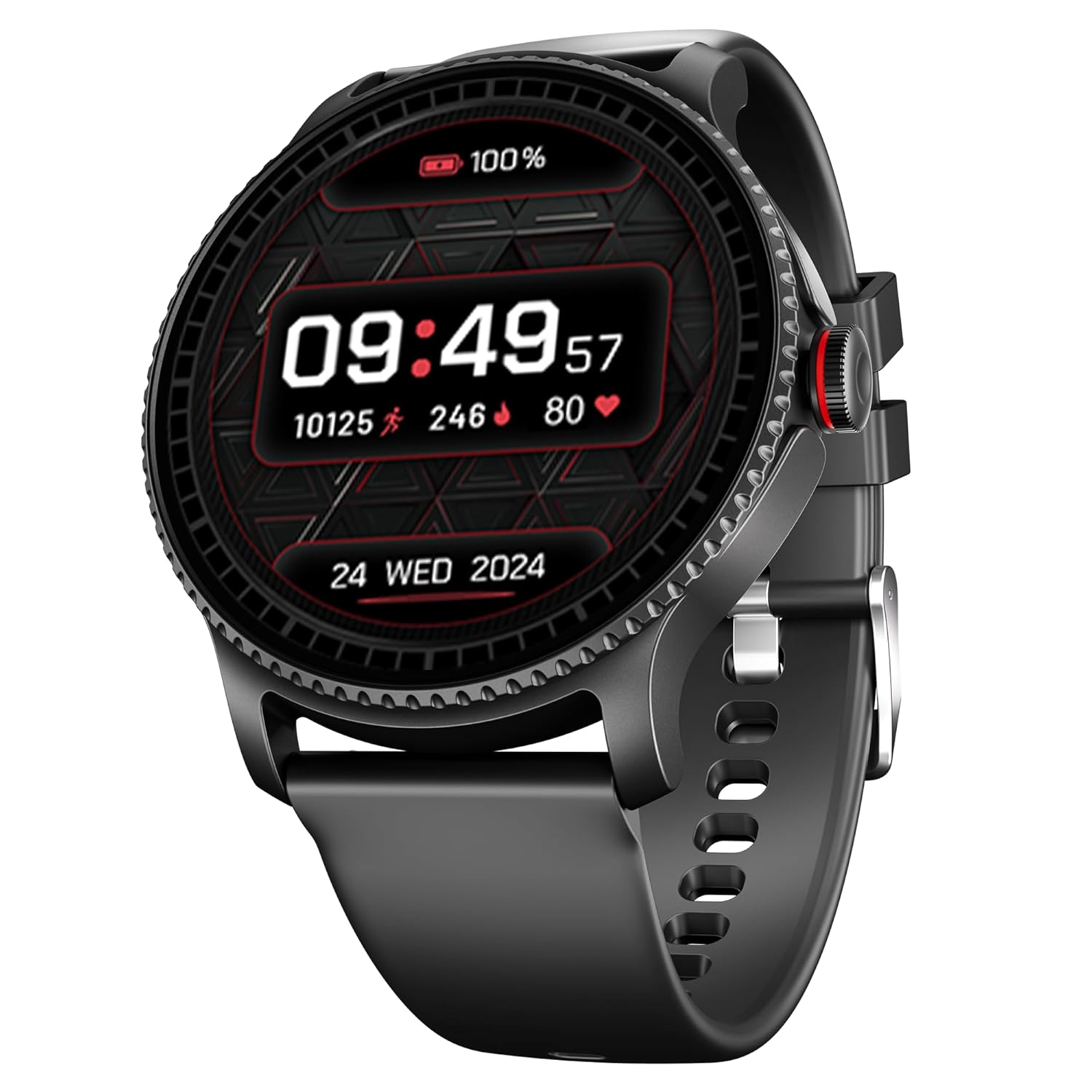
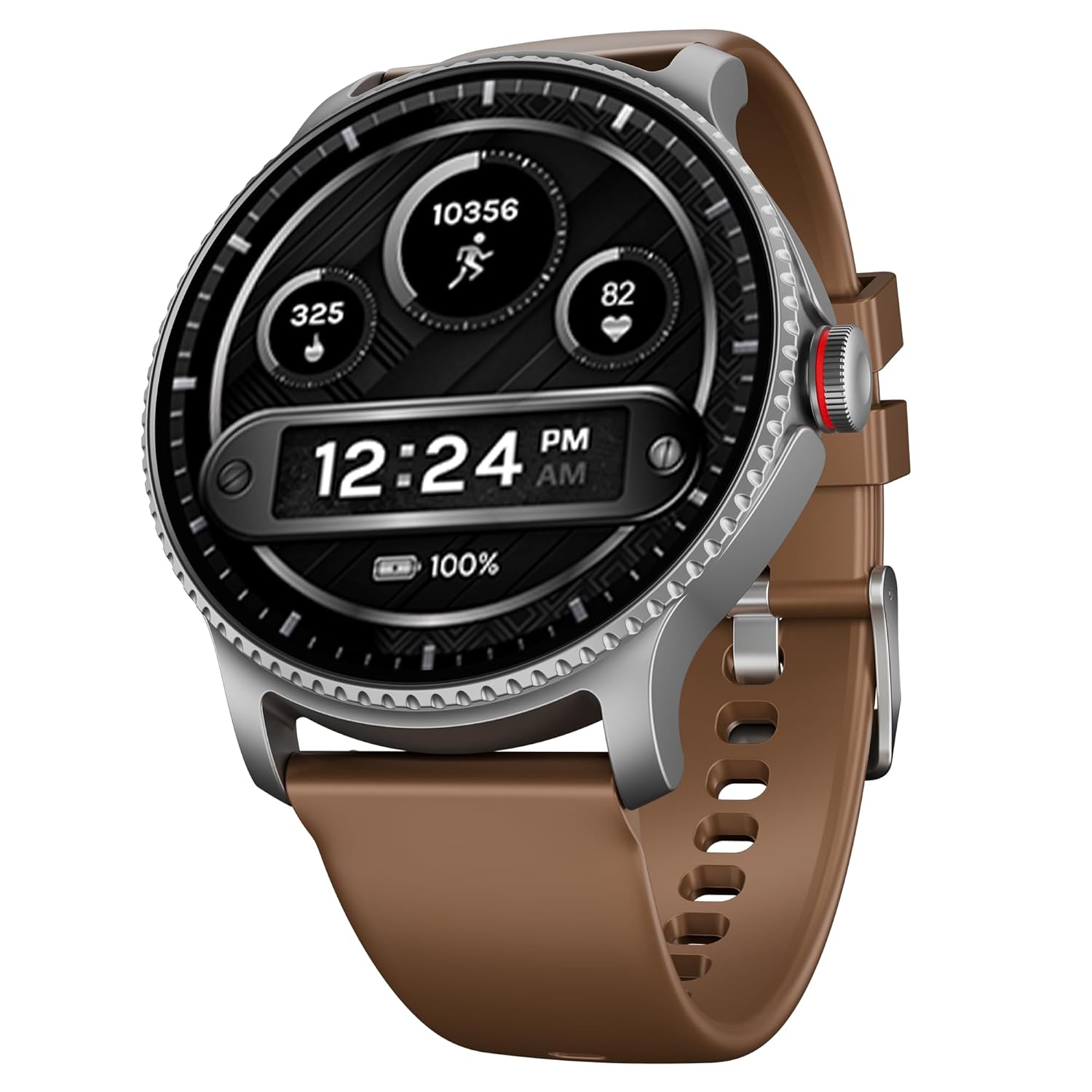
Indian electronics brand Boat has added the Lunar Discovery to its smartwatch range. This new model combines useful features with affordability, appealing to those seeking a budget-friendly smartwatch.
Boat Lunar Discovery features
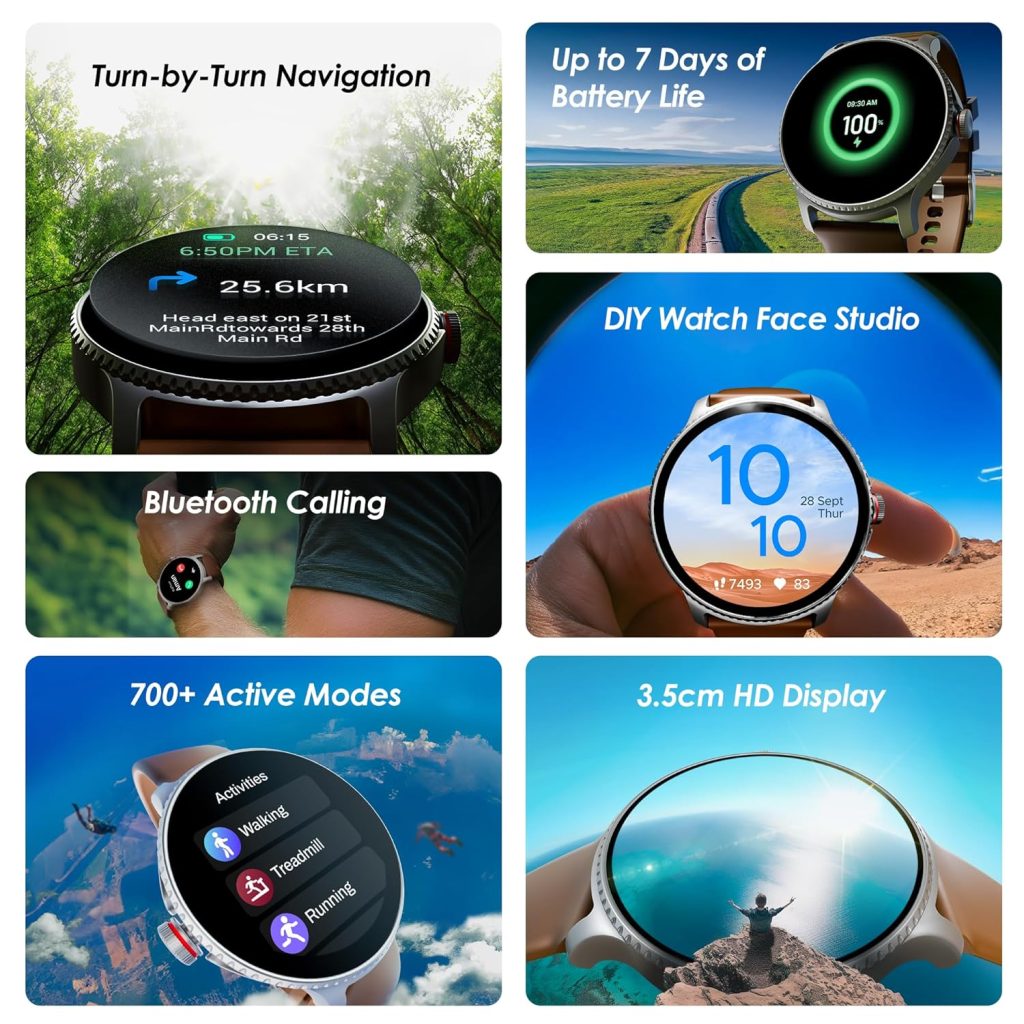
The Lunar Discovery has a lightweight, compact design for comfortable all-day wear. Its 1.39-inch HD display offers clear visuals with a 240 x 240 resolution. It has a wake gesture feature that provides easy access to the watch face, and users can customize their look with the DIY Watch Face Studio.
With Bluetooth 5.3, the Lunar Discovery supports Bluetooth calling, enabling users to make and receive calls from the watch. It includes a microphone and speaker for clear audio, along with quick dial pads, contact saving, and a QR tray for easy setup.
The Lunar Discovery offers extensive fitness tracking, including over 700 sports modes and participation in global fitness challenges to earn boAt Coins. It runs on the Crest+ OS, featuring turn-by-turn navigation powered by MapMyIndia.
The smartwatch also focuses on health monitoring, allowing users to track metrics like heart rate, SpO2, and energy levels via the Crest App. Sleep tracking is included, and it syncs with platforms like Strava, Google Fit, and Apple Health.
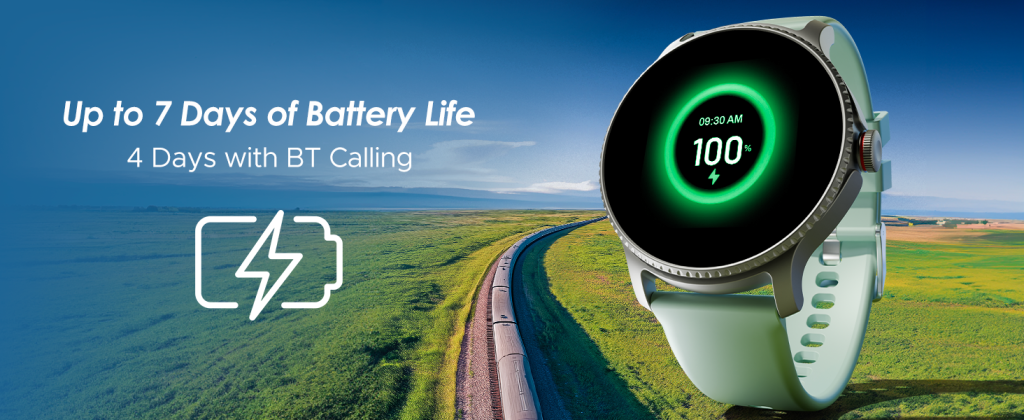
The Lunar Discovery is designed for everyday use, with IP67 dust and water resistance. Its 260mAh battery lasts up to 7 days on a single charge or up to 4 days with Bluetooth calling enabled.
Additional functions include smartphone camera and music controls, alarms, timers, reminders, weather updates, quick replies for notifications, Do Not Disturb mode, and a Find My Phone feature. It also includes an SOS emergency feature and live sports updates.
Pricing and Availability
Priced at Rs. 1,099, the Boat Lunar Discovery is available in six colors: Active Black, Brown, Active Blue, Cherry Blossom, Mint Green, and Metal Black. It can be purchased online through boAt’s website, Flipkart, Amazon India, and Myntra.
Realme appears to be making strides toward entering the foldable phone market, despite previously pausing its development efforts. Earlier last year, the company’s former India chief, Madhav Sheth, had hinted at a potential foldable device by posting a teaser on social media asking users whether they preferred a “Realme Flip” or “Realme Fold.”
This generated buzz, but the project seemed to stall after Realme’s chief of marketing, Francis Wong, announced that the company had decided to hold off on launching a foldable phone due to concerns about the durability of the folding mechanism.
Realme might have resumed work on its foldable
Recently, a new patent spotted on the China National Intellectual Property Administration website suggests that Realme might have resumed work on this concept. The schematics reveal a book-style foldable design, diverging from the narrower format seen in earlier patents. This design reportedly includes a magnetic hinge for seamless folding, as well as a unique heat dissipation mechanism to transfer heat between the two halves of the device, which could help improve performance during extended use.
While the patent offers a glimpse of Realme’s approach, no official details about the launch timeline or specifications, such as the chipset or display technology, have been confirmed yet. However, previous statements from Realme executives indicate that the brand is focused on addressing the typical wear and tear concerns associated with foldable devices.
It remains to be seen how Realme will position its foldable in this competitive segment, but more updates could be on the horizon as the brand continues to innovate and expand its product lineup.
As of now, there is no confirmation on the specific hardware details like processor choice or display specifications for Realme’s anticipated foldable device. Still, this new patent filing does hint that the brand’s earlier decision to pause development might have been a strategic move to refine the design before an eventual launch.
Samsung appears to be expanding its foldable lineup with the development of two variants of the Galaxy Z Fold 7, which could include the Samsung tri-fold.
Recently, the company launched the Galaxy Z Fold Special Edition exclusively in South Korea. This model, which is a larger and thinner version of the Galaxy Z Fold 6, features a 200MP camera but lacks S Pen support.
A report from Galaxy Club now indicates that Samsung is working on two new models of the Galaxy Z Fold 7, known internally by the codenames “Q7” and “Q7M.”
It might include a tri-fold phone
The Q7M is particularly intriguing, as there is speculation it might be linked to a potential tri-fold design. According to rumors from South Korea, Samsung is experimenting with new folding mechanisms, including a model that could feature three panels and two hinges. However, it remains unclear if the Q7M will be the anticipated tri-fold or if it’s being developed separately under a different codename.
Reports also suggest that Samsung might be planning to introduce a tri-fold foldable next year. This device, if launched, would allow the company to catch up to competitors like Huawei, who have already showcased similar designs with the Huawei Mate XT Ultimate. The tri-fold could potentially offer a broader, tablet-like display when fully opened, enhancing productivity and media consumption.
What to expect?
In terms of performance, while details on the Galaxy Z Fold 7’s chipset are yet to be confirmed, the Z series track record suggests the adoption of Qualcomm’s 2024 flagship chipset, the Snapdragon 8 Elite. Not to mention, it is expected to offer significant performance and power efficiency improvements to the next-generation foldable, potentially improving the multitasking experience and battery life.
Camera upgrades are also anticipated, although the specifics for the Q7M remain under wraps. If it follows the design ethos of the recent Special Edition Fold, it could carry over the 200MP sensor, offering superior photography capabilities
With the Galaxy Z Fold 7’s development running parallel to these other projects, Samsung’s foldable portfolio for 2025 looks set to be more versatile than ever. It’s clear that the company is committed to experimenting with new formats, potentially making foldables more mainstream and varied for different user needs.
Ahead of its October 30 launch, Honor keeps building excitement around the Magic 7 flagship series. Following the Shadow Gray model, Honor has now revealed a “Chaoha Gold” colorway for the standard Magic 7. The company claims this colorway is designed to capture “the beauty of the morning light.”
In the latest promotional images, Chinese actress and singer Zhu Zhu, Honor’s new Art Aesthetic Ambassador, shows the phone in this warm gold finish. The images reveal a sleek, elegant design for the Magic 7, though details about the phone’s full form factor remain under wraps.
AI leads the way
Beyond aesthetics, Honor confirmed that the Magic 7 series will integrate its previously announced AI Defocus Eye Protection technology. Unveiled in June, this feature utilizes the display to simulate defocus glasses, creating a controlled blur in the user’s peripheral vision for improved central focus.
According to Honor, this tech demonstrably reduced transient myopia (temporary nearsightedness) in users by an average of 13 degrees after a 25-minute reading session, with some individuals experiencing a significant decrease of up to 75 degrees. It will be available on both the Magic 7 and Magic 7 Pro.
The focus on eye health extends further. Honor confirmed the Magic 7 series will feature displays with 4,320 Hz Pulse-Width Modulation (PWM) dimming, a technology known to reduce flicker and eye strain.
Additionally, the screens will offer hardware-level low blue light reduction. Notably, Honor claims the displays will also utilize AI to adjust brightness, color temperature, and contrast in real time based on user activity and personal preferences. In the most recent teaser, the company hinted at AI integration in the face unlock system as well.
Pre-orders for the Honor Magic 7 series are already live on Honor’s official website. Customers can secure their spot with a 100-yuan deposit, which includes free Bluetooth headphones, a 1,200-yuan subsidy for trade-ins, and additional perks.
Xiaomi is gearing up to launch its latest tablets, the Xiaomi Pad 7 and Xiaomi Pad 7 Pro, in several global markets. Both tablets are designed with powerful hardware and advanced software. However, Xiaomi is focusing on specific regions for each model, following a strategic plan to expand its reach while strengthening its existing market presence.
Xiaomi Pad 7
XiaomiTime revealed where the Xiaomi Pad 7 series will be sold with a report. Let’s start with the Xiaomi Pad 7. The Xiaomi Pad 7, codenamed “uke”, will be available in several regions. The key markets for this model include:
Türkiye
India
Indonesia
Russia
Taiwan
Other international markets
By releasing the Pad 7 in these areas, Xiaomi targets a wide range of customers, from emerging markets like India and Indonesia to more established ones like Russia and Taiwan. This model is powered by the Snapdragon 7+ Gen 3 chipset, which allows it to handle everyday tasks, entertainment, and light productivity smoothly. The Xiaomi Pad 7’s versatility makes it ideal for a broad audience looking for a reliable and affordable tablet.
Xiaomi Pad 7 Pro
The Xiaomi Pad 7 Pro, codenamed “muyu,” is built with a more powerful Snapdragon 8s Gen 3 processor. Xiaomi is positioning this model as a high-end option with availability in a select number of markets, including:
Türkiye
Indonesia
Russia
Taiwan
Other international markets
Interestingly, the Xiaomi Pad 7 Pro will not be available in India. This decision highlights Xiaomi’s market segmentation approach, aiming the budget-friendly Pad 7 in the Indian market while reserving the premium Pad 7 Pro for regions with strong demand for high-end devices. Markets like Türkiye, Russia, and Taiwan have shown significant interest in high-performance technology, making them ideal for the Pad 7 Pro.
Xiaomi’s decision to release the Pad 7 in broader markets and reserve the Pad 7 Pro for premium regions shows careful attention to customer preferences in each area. By tailoring each tablet’s availability, Xiaomi can cater to mainstream users with the Pad 7 while meeting the needs of high-end customers with the Pad 7 Pro.
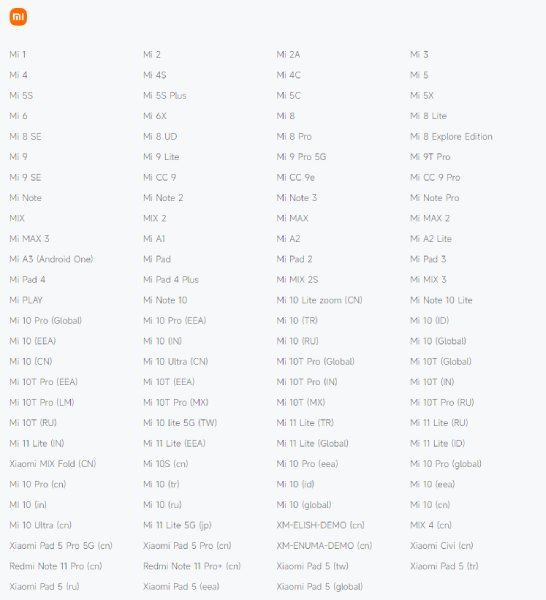
Xiaomi has further expanded its End-of-Life (EoL) list, removing software support for several smartphones and tablets across its Xiaomi, Redmi, and Poco brands.
The updated list, published on the company’s official website, includes devices from all three branches. Notably, the Xiaomi Pad 5 appears on the list under several regional variations, including Taiwan (TW), Turkey (TR), Russia (RU), Europe (EU), and the global variant (MI).
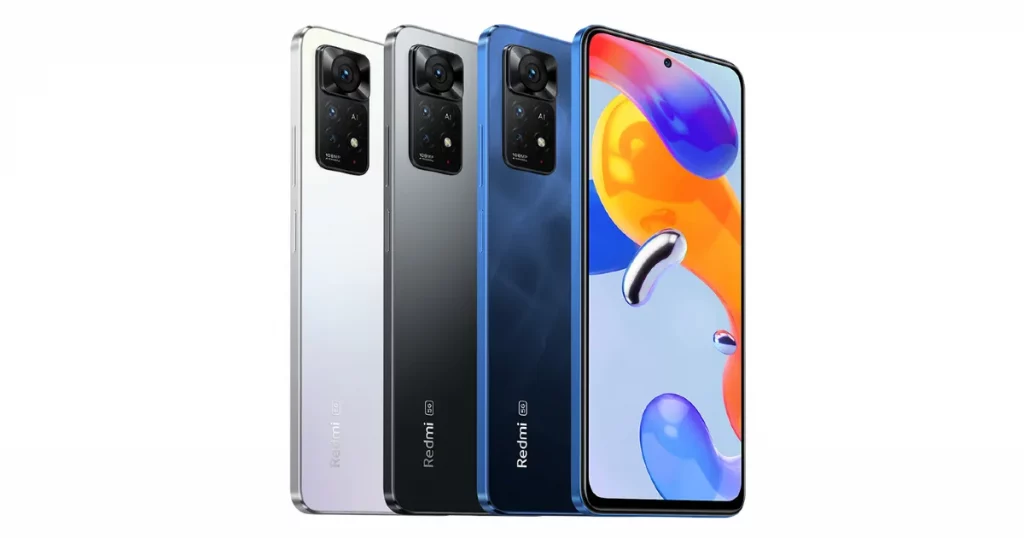
Interestingly, the Redmi Note 11 Pro and Pro+ models show up under the Xiaomi section. This may be an oversight, but the impact remains the same – these devices will no longer receive software updates.
Apart from the Note 11 Pro models, the Redmi 10 2022 (MX, TW, MX), and Redmi Note 10 JE (JP) are also listed as unsupported.
Xiaomi developers couldn’t leave the Poco brand aside either – support for the Indonesian Poco X3 GT (ID) device has been discontinued.
The X3 GT, along with the aforementioned Xiaomi and Redmi models, will no longer receive updates to MIUI or HyperOS, Xiaomi’s custom Android operating systems. Additionally, they will cease receiving crucial Android security patches that protect against emerging vulnerabilities.
The lack of ongoing software support exposes these devices to potential security risks. Unpatched vulnerabilities can be exploited by malicious actors to gain unauthorized access to a user’s data, steal passwords, or even install malware.
Redmi Note 11 Pro
While Xiaomi typically provides software support for its devices for a specific period, the exact duration varies depending on the model and its launch date. Users can check their device’s status on Xiaomi’s official website to determine if it remains supported.
For those with devices on the EoL list, options are limited. Upgrading to a newer Xiaomi device offers the most secure solution, though it may not always be financially feasible. Alternatively, users with technical knowledge can install custom ROMs based on the latest Android version to keep their old device running.
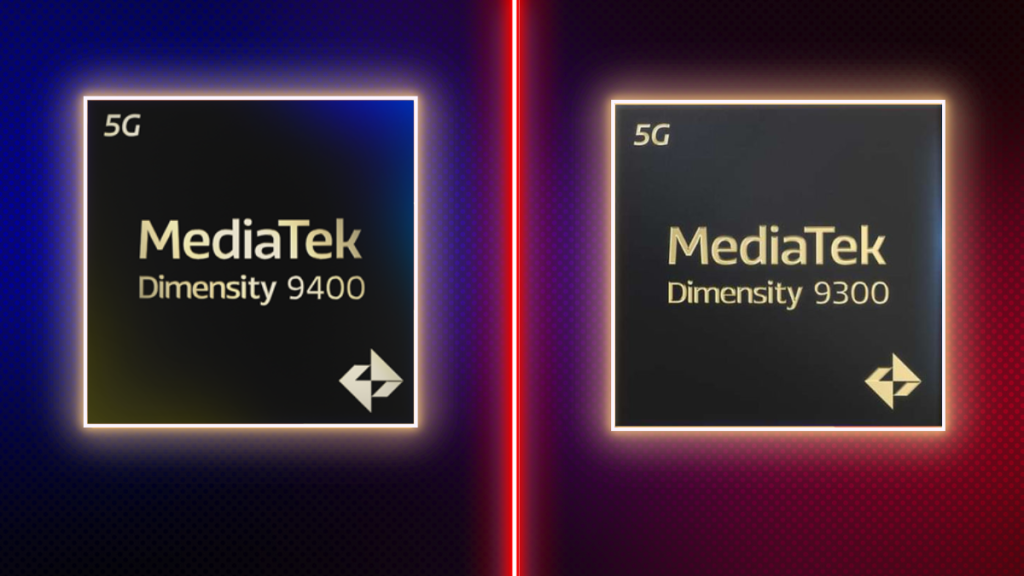
MediaTek has recently launched its Dimensity 9400 chipset, and to everyone’s surprise, it brings significant upgrades to the processing power, energy efficiency, and AI capabilities. The chipmaker has some big claims with this new flagship chipset.
The Dimensity 9400 raises the bar of flagship chips that it goes neck-to-neck with Qualcomm’s Snapdragon 8 Elite and Apple’s A18 Pro (read our Dimensity 9400 and Snapdragon 8 Elite comparison). But how does the MediaTek’s latest Dimensity chip stack up against its predecessor? And whether upgrading to the Dimensity 9400 makes sense. Let’s dive deep into the comparison to find those answers.
Dimensity 9400
Dimensity 9300
Announced
October 2024
November 2023
Model number
MT6991
MT6989
Process node
3nm
4nm
Manufacturer
TSMC
TSMC
CPU
1 x Cortex-X925 — 3.63GHz 3 x Cortex-X4 — 3.3GHz 4 x Cortex-A720 — 2.4GHz
1 x Cortex-X4 — 3.25GHz 3 x Cortex-X4 — 2.85GHz 4 x Cortex-A720 — 2GHz
GPU
Arm Immortalis-G925 MC12 MediaTek Adaptive Gaming Technology 3.0 Global illumination MediaTek Frame Rate Converter HyperEngine’s Super Resolution Ray tracing support
Arm Immortalis-G720 MC12 MediaTek HyperEngine gaming technologies Global illumination Ray tracing support
NPU
MediaTek NPU 890
MediaTek APU 790
Camera
MediaTek Imagiq 1090 ISP Up to 320MP single camera Up to 8K/60fp video recording Gen-AI Super Resolution Gen-AI Super Zoom
MediaTek Imagiq 990 ISP Up to 320MP single camera Up to 8K/30fp video recording
Memory
LPDDR5X at 10667Mbps Up to 24GB support
LPDDR5T at 9600Mbps Up to 24GB support
Storage
UFS 4.0 + MCQ
UFS 4.0 + MCQ
Connectivity
Downlink: 7.3Gbps Wi-Fi 7 Bluetooth 5.4 standard
Downlink: 7Gbps Wi-Fi 7 Bluetooth 5.4 standard
MediaTek Dimensity 9400 vs Dimensity 9300: Benchmarks
[Geekbench 6]
Geekbench is a popular benchmarking tool for measuring the CPU capabilities of a device. The Dimensity 9300 has pulled off 2,210 and 7,478 points in single-core and multi-core tests, respectively. However, the Dimensity 9400 handsomely outperforms its predecessor with 2,876 single-core points and 8,987 multi-core points.
The new Dimensity 9400 chip shows substantial gains in raw CPU performance over its predecessor.
Dimensity 9400
Dimensity 9300
Single core
2,876
2,210
Multi core
8,987
7,478
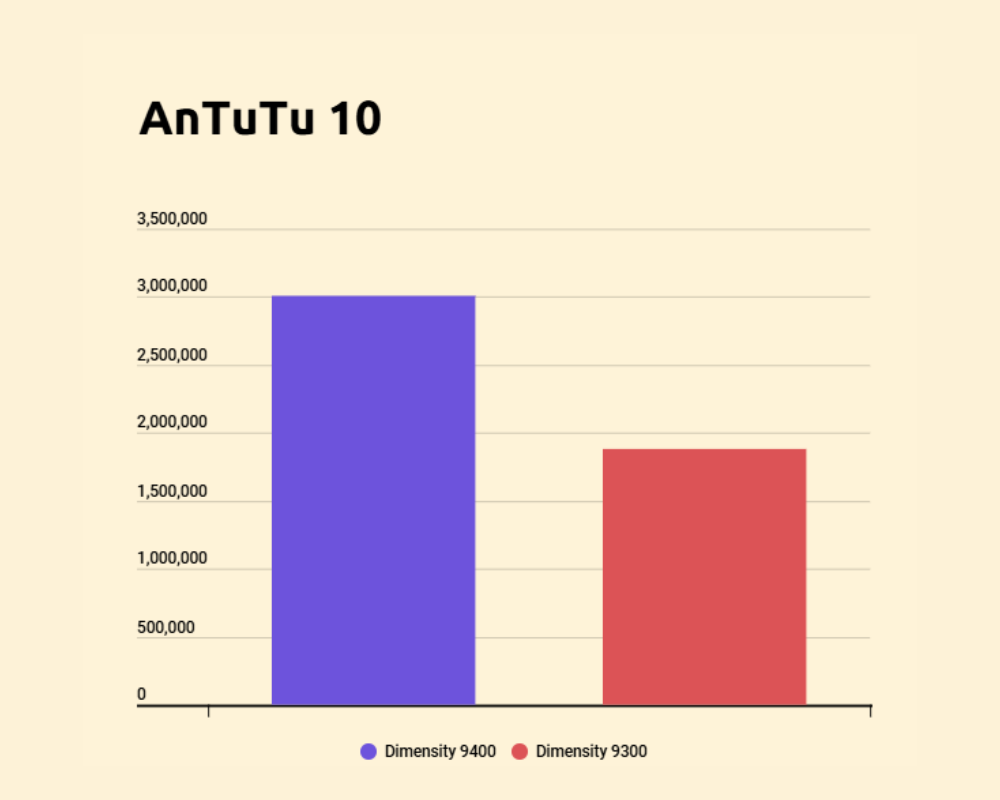
[AnTuTu 10]
AnTuTu runs the device through a series of tests to measure different aspects of a device. On this platform, the Dimesity 9400 scored over 3 million AnTuTu points, while the Dimensity 9300 couldn’t surpass the 2 million mark. That’s a massive 59% gain for the latest MediaTek chip.
Not just Geekbench but AnTuTu also shows strong gains for the Dimensity 9400 over Dimensity 9300. But what’s causing this significant difference? Check out the next section to understand the key differences setting them apart.
Dimensity 9400
Dimensity 9300
AnTuTu score
3,007,853
1,881,325
CPU
652,381
477,734
GPU
1,322,761
705,755
Memory
521,453
371,291
UX
511,258
326,545
MediaTek Dimensity 9400 vs Dimensity 9300: CPU
Dimensity 9400, like its predecessor, has all big core CPU. However, it’s fabricated on TSMC’s 3nm process (N3E), further enhancing performance and energy efficiency.
The latest chip has a Cortex-X928 running at up to 3.63GHz, three Cortex-X4 cores at 3.3GHz, and four Cortex-A720 at 2.4GHz. In contrast, the Dimensity 9300 has a Cortex-X4 core with a 3.25GHz peak speed, three Cortex-X4 cores clocked at 2.85GHz, and four Cortex-A720 cores at 2GHz.
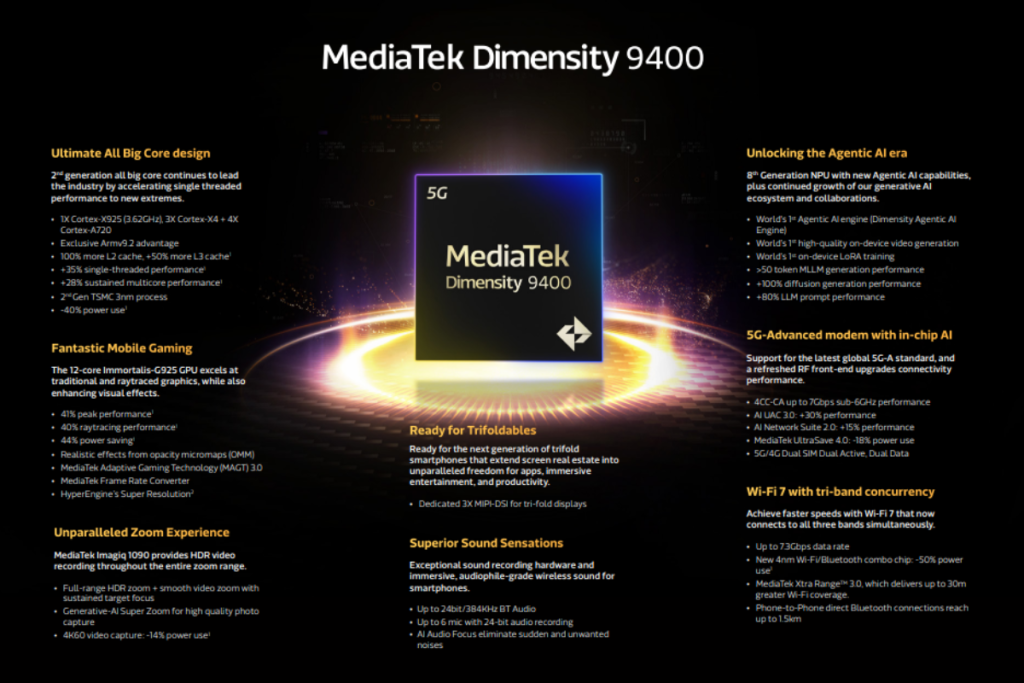
The Dimensity 9400 is immensely benefitted by the addition of a high-performance Cortex-X925 CPU core. The chip is claimed to offer up to 35% faster single-core performance and 28% faster multi-core performance.
Thanks to TSMC’s 3nm advanced cutting-edge process, the latest Dimensity chip delivers more performance per milliwat than ever. MediaTek claims a 40% better power efficiency over its predecessor. Notably, the chip has double the amount of L2 cache and 50% more L2 cache than Dimensity 9300, another reason for a big performance boost.
MediaTek Dimensity 9400 vs Dimensity 9300: GPU
The Dimensity 9400 ships with a new 12-core Immortalis G925 GPU that uses Arm’s new 5th-generation GPU architecture. It offers 41% faster peak performance while being 44% more power efficient than its predecessor.
Ray tracing is also improving, with a 40% performance uplift. For smoother gaming, the Dimensity 9400 also integrates improved MediaTek HyperEngine gaming technologies, such as MediaTek Adaptive Gaming Technology 3.0, MediaTek Frame Rate Converter, and HyperEngine’s Super Resolution.
MediaTek Dimensity 9400 vs Dimensity 9300: Camera
The cameras are also getting quality upgrades. To begin with, the new Imagiq 1090 ISP inside the Dimensity 9400 enables HDR video capture throughout the entire zoom range, the first of its kind on any flagship chip.
The new chip introduces Gen-AI Super Resolution and Gen-AI Super Zoom. The former technology enhances a blocky original image with corrective fill to produce pin-sharp results, and the latter achieves 100X magnification in photos with clear detail.
Though Dimensity 9300 and 9400 chips support 320MP resolution (maximum), the former can record 8K/60fps videos, while the latter supports 8K/60fps.
MediaTek Dimensity 9400 vs Dimensity 9300: AI and other enhancements
A recurring theme across the update board for Dimensity 9400 is AI. The new chip is equipped with an 8th-generation NPU that takes on-device AI capabilities to a new height.
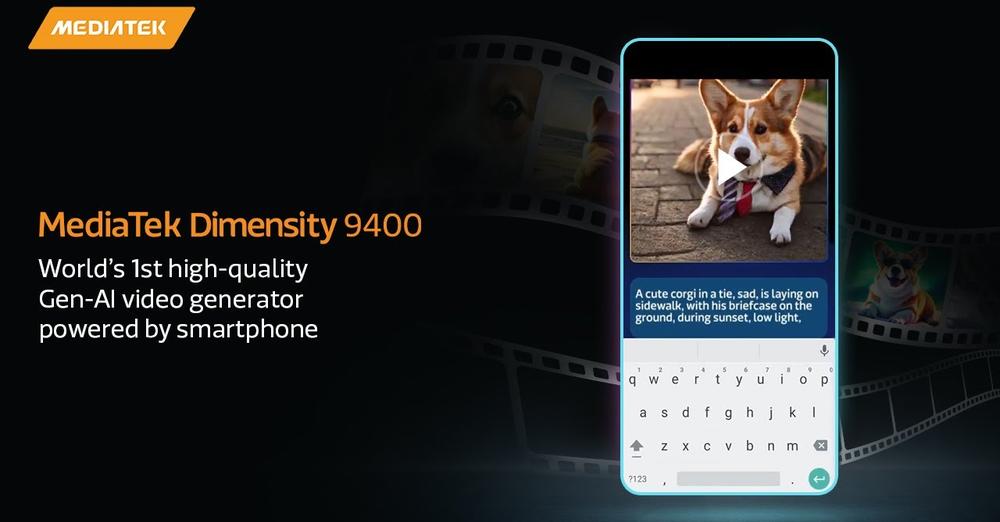
Dimensity 9400 is the world’s first chip to support high-quality on-device video generation and on-device LoRA training. The new NPU is claimed to have 100% faster diffusion generation performance and 80% faster LLM prompt performance — and it’s 35% more power efficient than its predecessor.
Notable improvements have been applied to the connectivity part, which includes a 50% better power efficiency for Wi-Fi and Bluetooth. The new 5G modem inside Dimensity 9400 achieves direct Bluetooth connections between two smartphones up to 1.5km apart. With MediaTek Xtra Range 3.0, the chip gets up to 30 meters of extended Wi-Fi coverage.
The Dimensity 9400 chip also reduces power efficiency for Wi-Fi hotspots by up to 50%. The peak memory speed is now at 10667Mbps, up from 9600Mbps on Dimensity 9300.
MediaTek Dimensity 9400 vs Dimensity 9300: Conclusion
MediaTek Dimensity 9400 brings big CPU and GPU upgrades, making it one of the best flagship smartphone chips. These upgrades put the likes of Apple and Qualcomm on a competitive alert.
Dimensity 9400 isn’t only about CPU and GPU upgrades. MediaTek has made key improvements to almost all areas, including AI, camera, and connectivity, making it one of the best Android chip upgrades in recent years.
The new Dimensity chip is already powering the Vivo X200 and Find X8 series, and more flagship devices should be coming from various brands.
Oppo has firmly established itself as a major global player in the smartphone market. It ranked 4th worldwide in phone shipments for Q3 2024, according to Canalys.
Nearly 70% of Oppo’s shipments now come from outside China, with India and Latin America driving much of its international growth. As a result, China is now Oppo’s second-largest market. Whereas, Southeast Asia leads, with Vietnam, Thailand, and Cambodia taking the top spot and Indonesia close behind.
Moreover, Oppo is actively expanding into emerging markets like Latin America and Africa, underscoring its commitment to global growth. In Mexico, Oppo reached the fourth position in Q2 2024, according to Canalys, and 2024 also marked its entry into Brazil and Argentina.
Not just about volume…
But Oppo isn’t solely focused on volume. It’s also aiming to establish itself as a premium brand. The company holds a top-three position in the high-price segment (USD 500+) in 14 markets worldwide, including India and Southeast Asian countries.
Looking beyond smartphones, Oppo is actively expanding its internet services portfolio, fostering a more diversified business model and a richer user experience.
ColorOS, the company’s operating system, also has a massive 700 million monthly active users globally. According to Oppo, 260 million users are active on its app store, 210 million use the Oppo browser, and 110 million engage with the Oppo theme store.
Furthermore, Oppo is making AI features accessible to everyone. This year, the company is planning to introduce these features to 50 million users worldwide. This will make Oppo the first mobile phone manufacturer to deploy generative AI across its entire product line.
Oppo’s global footprint extends beyond sales. The company has established factories in seven countries, enabling local production and strengthening its supply chain. Additionally, they collaborate with partners, attracting around ten companies to build essential components like batteries and chargers in Indonesia.
A robust retail and service network provides another layer of strength for Oppo’s international business. With over 300,000 points of sale, dedicated sales personnel, after-sales outlets, and customer service representatives, Oppo offers a seamless experience for users worldwide.
Xiaomi is set to launch its 2024 flagship smartphones, the Xiaomi 15 and Xiaomi 15 Pro, on October 29. While details about the phones have been limited, more information is now emerging from both official and unofficial sources. The company has already revealed the complete design of the devices through high-resolution renders, and now, a company official has shared key internal specifications.
Xiaomi 15 / 15 Pro official details
The Xiaomi 15 Pro will feature a 2K display and a massive 6,100mAh high-density silicon-carbon anode battery, boasting an energy density of 850Wh/L. The company also revealed that the Pro model weighs just 213g, which is lighter than the 223g Xiaomi 14 Pro. For context, the predecessor had a significantly smaller 4,880mAh battery.
According to the company official, this upgrade increases battery life by 38%, marking a major improvement. While the official did not disclose the battery capacity of the standard model, a 23% boost in battery life is promised for it.
In terms of zoom capabilities, Xiaomi has traditionally offered a 3.2x telephoto lens on both the standard and Pro models. However, this changes with the Xiaomi 15 Pro, which will feature a 10x lossless zoom, utilizing a 5x periscope telephoto camera. Additionally, the Pro model is equipped with a curved glass camera deco, adding to its overall aesthetic appeal.
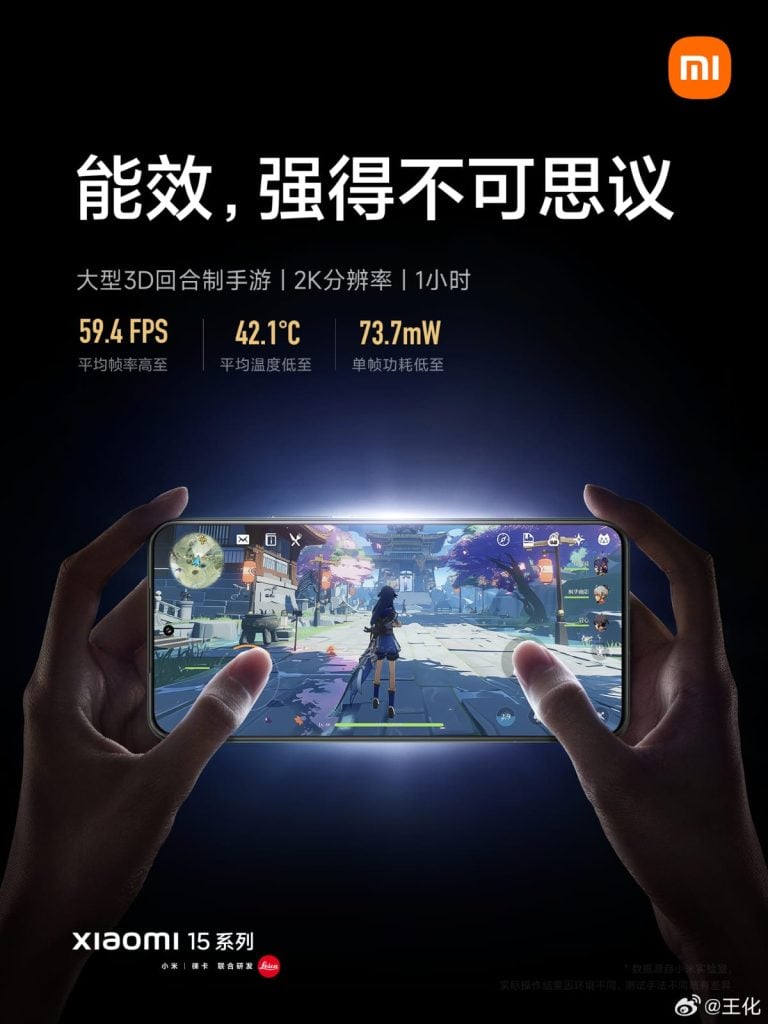
While the base model does not include all of these high-end features, it still benefits from the robust performance of the Snapdragon 8 Elite chip, paired with a self-developed microarchitecture scheduler. According to Xiaomi, this results in a 19% increase in task execution efficiency and a 45.7% reduction in application startup response time, promising a smoother user experience.
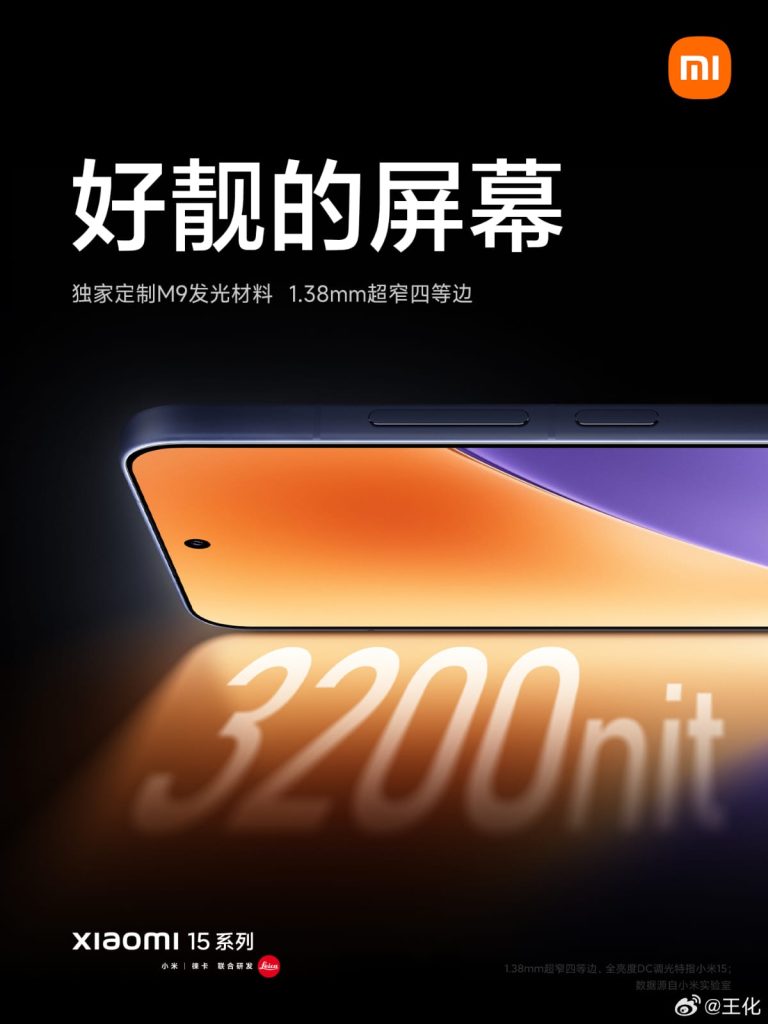
With the use of customized M9 luminous display material, even the base model offers a peak brightness of 3,200 nits, up from the 3,000 nits seen on the Xiaomi 14.
Overall, Xiaomi has focused on refining both the external design and internal components to make its 2024 flagships a compelling choice for consumers.
Samsung is preparing to launch its next flagship, the Galaxy S25 series, which is expected to debut in early 2025. According to recent leaks and rumors, the Galaxy S25 Ultra will come with several notable upgrades, particularly in its display, design, and performance. In the latest news, tipster ICE Universe claims that the phone will offer a higher peak brightness, more accurate colors, and a larger viewing angle. Although, he didn’t reveal any specific numbers.
Display improvements
One of the key highlights of the S25 Ultra is going to be the refreshed flat display. The device is rumored to have a 6.86-inch panel, slightly larger than the 6.8-inch display on the S24 Ultra.
Reports suggest that this new screen could see a brightness boost of around 20–30%, potentially reaching 3100–3400 nits, which would be a significant upgrade from the 2600-nit peak brightness of its predecessor. However, readers should take this information with a pinch of salt.
This improvement could be achieved using Samsung’s new M14 OLED material, which is expected to deliver enhancements in color accuracy, viewing angles, and brightness.
Performance and in-hand experience:
The design of the Galaxy S25 Ultra also appears to be evolving. Leaks indicate a return to rounded corners, which hasn’t been seen since the Galaxy S21 Ultra. The aluminum dummy units reveal that the phone will be more comfortable to hold, with dimensions of 8.25mm thickness (down from 8.6mm on the S24 Ultra) and a narrower body (77.6mm vs. 79mm). Additionally, the device will be lighter, weighing 221 grams compared to the 232 grams of its predecessor.
Samsung Galaxy S25 Ultra Dummy Unit
Under the hood, the Galaxy S25 Ultra is expected to pack the “For Galaxy” edition of the Snapdragon 8 Elite chip. The chipset, based on TSMC’s 3nm process, offers improved performance and power efficiency, which could translate to better battery life even though the device retains a 5000mAh battery and 45W charging speeds. Benchmark scores suggest significant gains over the S24 Ultra, with over 3000 points in single-core tests and 9000 in multi-core tests, hinting at a capable and efficient performance boost. For reference, the S24 Ultra scores around 2000 and 6600 on the respective tests.
Overall, the Galaxy S25 Ultra seems to bring a combination of incremental yet impactful improvements.
Just days before its official unveiling, the price of iQOO’s upcoming flagship phone, the iQOO 13, may have been leaked on Chinese social media platform Weibo.
While the company has been strategically revealing its features in the lead-up to the October 30th launch, it has kept official pricing under wraps — unsurprisingly.
iQOO 13 won’t get a price hike
A post by prominent Weibo tech tipster Digital Chat Station, however, may have spilled the beans on the price. The tipster claims that the smartphone will be priced at 3,999 yuan (approximately $565).
Interestingly, the now-edited post used the word “confirmed” about the price, which makes the information seem reliable. However, note the tipster did not specify if this price is for the iQOO 13.
Digital Chat Station’s post referenced an earlier discussion about a “sub-series” phone that would see minimal price inflation compared to its predecessor. With the iQOO 12’s launch price at 3,999 yuan, this cryptic hint suggests that the leaked price may indeed apply to the iQOO 13.
If true, the iQOO 13 could likely be one of the few flagships this year without a price increase. Xiaomi recently confirmed a price hike for its upcoming Xiaomi 15 series, while Vivo launched its X200 series flagships with a price bump.
Specifications
iQOO 13 will be powered by the Snapdragon 8 Elite chip along with a self-developed gaming chip, the Q2 that will offer a PC-level 2K super-resolution and native 144FPS gaming.
The front will be home to a 2K Q10 Everest display, developed in collaboration with China-based BOE, designed to deliver superior brightness and color accuracy while minimizing power consumption.
While not confirmed, the phone is likely to have a 6.82-inch flat OLED panel that offers a 2K resolution and a 144Hz refresh rate. Additionally, it offers the world’s first OLED circularly polarized light eye protection technology to reduce eye strain during prolonged use.
Keeping the lights on will be a 6150mAh battery with 120W charging support. It will boot on OriginOS 5 based on Android 15 while the rest of the revealed specs include a dual speaker and a large-sized 1016H motor for haptics.
We use cookies on our website to give you the most relevant experience by remembering your preferences and repeat visits. By clicking “Accept”, you consent to the use of ALL the cookies.
This website uses cookies to improve your experience while you navigate through the website. Out of these, the cookies that are categorized as necessary are stored on your browser as they are essential for the working of basic functionalities of the website. We also use third-party cookies that help us analyze and understand how you use this website. These cookies will be stored in your browser only with your consent. You also have the option to opt-out of these cookies. But opting out of some of these cookies may affect your browsing experience.
Necessary cookies are absolutely essential for the website to function properly. This category only includes cookies that ensures basic functionalities and security features of the website. These cookies do not store any personal information.
Any cookies that may not be particularly necessary for the website to function and is used specifically to collect user personal data via analytics, ads, other embedded contents are termed as non-necessary cookies. It is mandatory to procure user consent prior to running these cookies on your website.