Advertisement

Xiaomi Mix Fold 4 vs Samsung Galaxy Z Fold 6: Which foldable is better?

Samsung‘s Galaxy Z Fold series has become synonymous with foldable smartphones. However, as the market matures, we’re seeing strong alternatives from Chinese brands like Xiaomi.

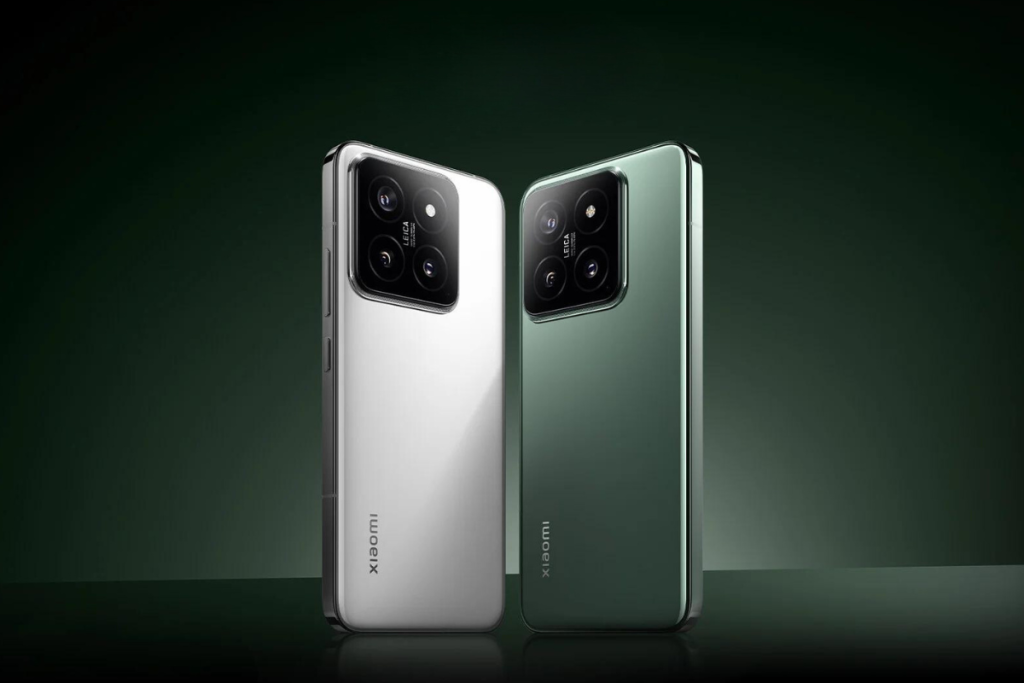
Take the Xiaomi Mix Fold 4, for instance. It’s a thinner foldable compared to  Galaxy Z Fold 6 while delivering other specs that are on par with or even better than Samsung’s offering.

Xiaomi Mix Fold 4 vs Samsung Galaxy Z Fold 6

Please Note: When you buy something using the links in our articles, we may earn a small commission at no cost to you.

With the new Mix Fold 4 on the shelves, you might wonder if it is better than the Z Fold 6. So let’s break down the key differences to help you decide which one is a better foldable overall.

1. Design & Display

Design-wise, the Mix Fold 4 is thinner when folded, measuring 9.5mm compared to the Z Fold 6’s 12.1mm, making it more comfortable to hold for extended periods and easier to fit in a pocket.

However, the Z Fold 6 excels in ingress protection with an IP48 water and dust rating. In contrast, the Mix Fold 4 has an IPX8 rating, meaning it can only withstand splashes but not dust.

Both phones feature large, foldable AMOLED displays with 120Hz refresh rates for smooth scrolling and gaming. The Mix Fold 4 has a slight advantage in size, offering a 7.98-inch main display compared to the Z Fold 6’s 7.6-inch panel.

The Mix Fold 4 also has a larger cover display at 6.56 inches, compared to the Z Fold 6’s 6.3-inch display. But both utilize LTPO technology for adaptive refresh rates and to optimize battery life.

Resolution-wise, the Mix Fold 4 offers a slightly higher pixel count with 2224 x 2488 pixels compared to the Z Fold 6’s 1856 x 2160 pixels. However, the difference in pixel density is negligible, and both devices should deliver excellent visual clarity.

In terms of durability, the Z Fold 6’s cover display is protected by Gorilla Glass Victus 2, while Xiaomi uses its own proprietary Shield Glass. Both main screens have a layer of ultra-thin glass (UTG) for added protection.

2. Performance & Battery

Both phones are powered by the latest Snapdragon 8 Gen 3 processor, delivering top-tier performance for demanding tasks and gaming. The storage options are also identical, ranging from 256GB to 1TB, paired with either 12GB or 16GB of RAM.

On the software side, the Mix Fold 4 runs Android 14 with Xiaomi’s HyperOS, while the Z Fold 6 uses Android 14 with Samsung’s One UI 6.1.1. Both operating systems are optimized for the foldable form factor, offering features like split-screen multitasking and seamless app continuity between folded and unfolded modes.

The Z Fold 6 also boasts S Pen support, a valuable tool for note-taking and creative workflows on the larger display. However, its absence on the Mix Fold 4 might not be a dealbreaker for all users.

The Mix Fold 4 has a larger 5100mAh battery compared to the Z Fold 6’s 4400mAh battery. However, the Z Fold 6 supports slower 25W wired charging compared to Mix Fold 4’s 67W support. You also get a wireless charging option but Mix Fold 4 is again faster at 50W while the Z Fold 6 has just a 15W solution.

3. Camera

The camera setups on these phones diverge significantly. The Xiaomi Mix Fold 4 boasts a quad-camera system on the rear, featuring a 50MP main sensor, a 50MP telephoto lens with 2x optical zoom, a 10MP periscope telephoto lens with 5x optical zoom, and a 12MP ultrawide sensor.

The Samsung Galaxy Z Fold 6 takes a more streamlined approach with a triple-camera system. It features a 50MP main sensor, a 10MP telephoto lens with 3x optical zoom, and a 12MP ultrawide sensor. This makes it clear that the Mix Fold 4 offers more versatility with its additional telephoto lens, at least in terms of hardware.

Both phones offer a single selfie camera on the cover display and an under-display selfie camera on the main screen. However, the Mix Fold 4 utilizes a higher resolution 16MP sensor on both its cover and under-display cameras compared to the Z Fold 6’s 10MP cover camera and 4MP under-display camera.

4. Price & Availability

Before we go into prices, note that Xiaomi’s Mix Fold 4 is currently only available in the Chinese market, where prices are comparatively lower than on the global scene.

The Mix Fold 4 starts at CNY 8,999 (~$1,237) for the base 12GB + 256GB variant. The 16GB + 512GB and 16GB + 1TB configurations are priced at CNY 9,999 (~$1,375) and CNY 10,999 (~$1,513), respectively. However, these prices are expected to increase if Xiaomi decides to launch the Mix Fold 4 globally, though this is unlikely.

In comparison, the Galaxy Z Fold 6 is $1,900 for the 12GB + 256GB variant, $2,020 for the 16GB + 512GB, and $2,260 for the 16GB + 1TB model.

5. Conclusion

The Xiaomi Mix Fold 4 is a strong competitor to Samsung’s reign over the foldable phone market. However, for now, the battle is limited to the Chinese market as the Mix Fold 4 isn’t available globally yet.

This is just a head-to-head breakdown of how the latest foldable flagships from these giants stack up. To learn more about Mix Fold 4, check out our unboxing and initial impressions video below.

Infinix revolutionizes NFC with 720° SphereTech Innovation

Infinix has launched its innovative 720-degree SphereTech Near Field Communication (NFC) technology. Current NFC technology, used for mobile payments and transit access, often results in transaction failures and user frustration, especially in crowded or fast-paced environments where precise alignment is necessary. This can make the technology cumbersome and unreliable. Infinix’s 720° SphereTech NFC technology addresses these limitations by eliminating the need for precise alignment.

All about Infinix’s 720° SphereTech NFC technology

Infinix 720° SphereTech NFC comes with three breakthroughs: Spatial Layout, Signal Compatibility, Material Type Configuration

The 720° SphereTech NFC technology introduces three breakthroughs in spatial layout, signal compatibility, and material type configuration. The enhanced design ensures superior integration, while the improved signal range and strength guarantee optimal performance. Additionally, the use of optimized materials further boosts reliability and efficiency. This self-developed patent increased the card reading area by 200 percent and doubled the signal range.

Infinix 720° SphereTech NFC supports 3-sided Read&Tap cards (Front+Top+Back)

Infinix’s new NFC technology incorporates advanced encryption protocols and multi-layered authentication processes to safeguard all transactions and data exchanges against potential threats. Additionally, if a device is lost or stolen, the enhanced security features make it significantly more difficult for unauthorized users to access personal data or perform transactions.

Furthermore, Infinix’s technology is the first to support reading and tapping cards from three sides of the mobile device: the front, top, and back. This results in a 100 percent signal range improvement compared to existing 360° NFC technology, which only reads cards from the back. It allows users to read and tap at different angles, providing unprecedented convenience and functionality.

Infinix 720° SphereTech NFC: One-Tap convenience for travel and access

According to Li Cao, Senior Manager of the NFC Department at Infinix, the company’s commitment to innovation and understanding user needs has driven them to create a solution that enhances functionality while providing unparalleled security and convenience. This technology significantly improves the mobile experience in NFC applications, offering seamless, reliable, and secure interactions from multiple angles.

Infinix confirmed that its 720° SphereTech NFC technology will be available on its upcoming devices.

Oppo Find N4 / OnePlus Open 2 launch timeframe, chipset, battery size tipped

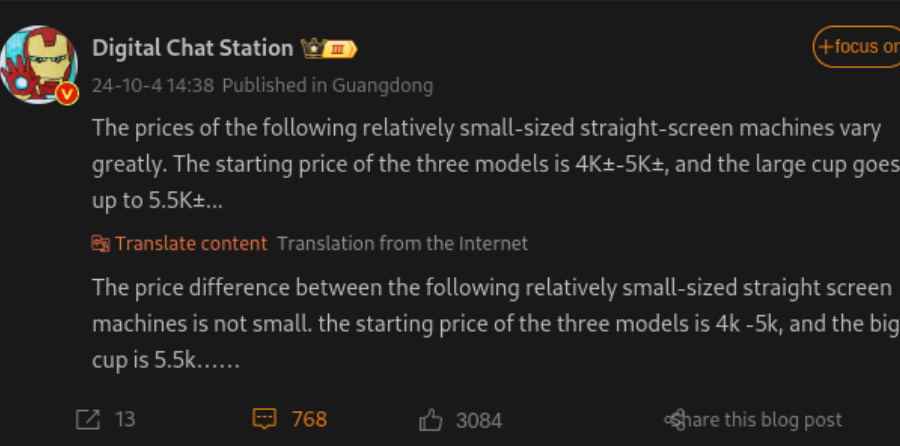
Oppo is reportedly working on its fourth-generation foldable phone, the Oppo Find N4, for the Chinese market. To recall, the Find N3, which debuted last year, remained exclusive to China, whereas the OnePlus Open was launched as its rebranded version for the global market. Therefore, it is probable that the international market will rebrand the N4 as the OnePlus Open 2. A new leak, courtesy of tipster Digital Chat Station, has revealed the launch timeframe of the Find N4 / Open 2.

Oppo Find N4 / OnePlus Open 2 key details (rumored)

In the above-shown Weibo post, DCS claimed that Huawei is working on a tri-foldable smartphone equipped with the Kirin 9-series chipset. It will have a dual hinge and several new technologies. However, there is no clarity about the launch timeframe of the device.

Next, he appears to be hinting at the impending release of Oppo and Vivo’s next-generation foldable phones. These devices, which are likely to be called the Find N4 and Vivo X Fold 4 / Pro, will break cover in the first quarter of 2025. This suggests that the OnePlus Open 2 may also debut around the same time globally.

DCS revealed that the Snapdragon 8 Gen 4 chipset will power these devices. He added that despite housing a battery of around 6,000mAh capacity, these devices will have a thin profile. Unfortunately, he did not share anything else about these devices.

In related news, Huawei is currently working on the Nova 13 series of smartphones and the Nova Flip foldable phone, which may debut in August in China. Oppo is reportedly developing the Find X8 and X8 Pro, which will debut with the Dimensity 9400 chip later this year. Vivo’s X200 and X200 Pro, equipped with the Dimensity 9400, are expected to launch in China in October of this year.

What makes Xiaomi Mix Flip special?

Xiaomi has once again pushed the boundaries of smartphone innovation with the introduction of the Mix Flip, its first foray into the world of flip phones. Unveiled alongside the Mix Fold 4 at a recent event in China, the Mix Flip has garnered significant attention for its impressive specifications and design. In this article, we delve into the unique features that make the Xiaomi Mix Flip a standout device in the increasingly competitive flip phone market.

Xiaomi Mix Flip

1. Large Inner Display

The Mix Flip comes with a 6.86-inch 1.5K 1-120Hz AMOLED internal display. The inner display size is bigger than the Galaxy Z Flip 6 and just slightly shorter than the Motorola Razr 50 Ultra.

The display features a 120Hz refresh rate and it also boasts a peak brightness of 3000 nits which is very similar to the Razr 50 Ultra but the 50 Ultra beats it with a 165Hz refresh rate which is not a big deal breaker though. The display also features HDR10 +, Dolby Vision.

2. Highly Functional Cover Display

The Xiaomi Mix Flip boasts an impressive 4-inch cover display, significantly larger than competitors, and offering unprecedented functionality for a flip phone. This expansive cover screen features a high-quality 1.5K panel with a smooth 120Hz refresh rate and a peak brightness of 3000 nits.

When compared to the Razr 50 Ultra, the cover display of the Mix Flip is quite similar. However, it stands out significantly against the Galaxy Z Fold 6, which features a smaller 3.4-inch cover display that is limited to a 60Hz refresh rate.

Xiaomi positions the Mix Flip as a standalone “compact phone,” capable of handling various tasks without opening the device. It supports over 200 popular apps and customizable widgets.

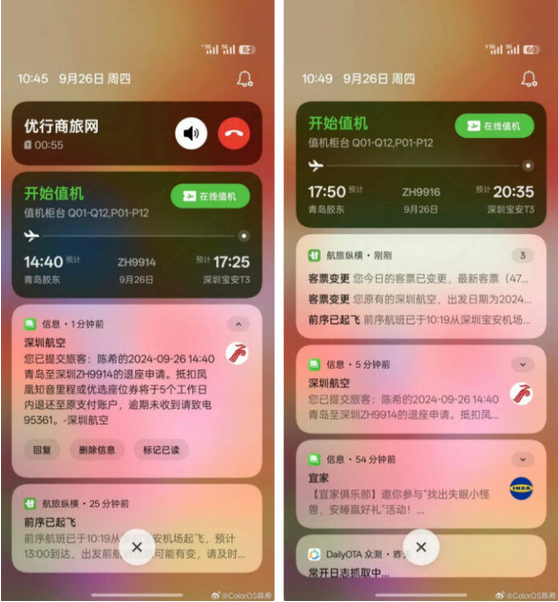
The external display supports comprehensive gestures, notifications, and even a full-display keyboard. It also comes with widgets like time, weather, step count, music control, and recently used apps that provide quick access to essential information. The display also automatically switches to a focus notification display for services like taxis, food delivery, and flights, keeping you updated with real-time information.

3. Flagship Performance

Under the hood, the Mix Flip is powered by the Snapdragon 8 Gen 3, ensuring snappy performance and efficient multitasking. It also comes with up to 16GB LPDDR5X RAM and 1TB UFS 4.0 inbuilt storage.

To keep thermals in check, Xiaomi has implemented a redesigned 3D cooling system with a large 3500mm² VC area. The device runs on Android 14 with HyperOS on top.

4. Durable Build

The Mix Flip features a compact dual-link hinge made from high-strength, wear-resistant materials, ensuring a long lifespan of 500,000 folds and unfolds, as certified by SGS. Both the inner and outer displays are protected by Xiaomi Shield Glass and UTG ultra-thin flexible glass, respectively. Additionally, it boasts a robust build quality with a 6M42 aluminum alloy middle frame.

5. Leica-Backed Camera System

The Mix Flip doesn’t compromise on camera quality. It boasts a dual rear camera system co-engineered with Leica, featuring a 50MP Light Fusion 800 main sensor with optical image stabilization and a 50MP telephoto lens offering 2x zoom.

It can also capture close-up shots with a minimum focusing distance of just 9cm. For selfies, there’s a 32MP front camera housed in a punch-hole cutout. The device also includes Master Portrait mode and supports shooting at four different focal lengths.

The camera system leverages Xiaomi’s AISP large model computational photography platform, supporting advanced imaging scenarios with up to 60 TOPS of processing power.

6. Long-Lasting Battery and Fast Charging

The Mix Flip packs a large 4780mAh battery, exceeding the capacity of both Galaxy Z Flip 6 and Razr 50 Ultra, making it truly impressive for a flip phone. The battery comes with Xiaomi’s Surge battery technology with 6% silicon content in the negative electrode, allowing it to maintain at least 80% capacity after 1600 charge cycles. When it comes to charging, the Mix Flip supports 67W fast charging.

7. Conclusion

Xiaomi’s Mix Flip has emerged as a strong contender in the flip phone market. Its larger internal and external displays, functional external screen interface, optimized software, efficient cooling system, Leica camera collaboration, larger battery, and competitive pricing collectively make it a compelling choice for consumers.

While it shares some similarities with its competitors, the Mix Flip distinguishes itself with its unique features and value proposition, making it a worthy consideration for those in the market for a flip phone.

ASUS Unveils ROG Zephyrus 16 Air Ryzen AI Edition with Powerful Specs and Sleek Design

ASUS has officially revealed pricing and availability for their ROG Zephyrus 16 Air Ryzen AI Edition gaming laptop. Launching on July 28th, this machine packs a powerful processor and graphics options for demanding games.

Users can choose between NVIDIA RTX 4060 or 4070 options

At its core lies the AMD Ryzen AI 9 HX 370 mobile processor with 12 Zen 5 cores, integrated RDNA 3 graphics, and a dedicated XDNA 2 NPU for AI tasks. The laptop comes with 32GB of LPDDR5X-7500 memory and dual M.2 2280 SSD slots, with one offering PCIe 4.0 speeds.

For graphics, users can choose between NVIDIA RTX 4060 or 4070 options, both featuring 105W TGP and the ability to work with the NPU for combined AI processing power.

ASUS equips the Zephyrus 16 Air Ryzen AI Edition with their ROG Glacier Cooling 3.0 system to manage heat during intense gaming sessions.

Screen

Despite its power, the laptop maintains a portable design. The aviation aluminum chassis measures 14.9mm thin and weighs 1.85kg. The A-side features a customizable light strip with preset effects and a configurable LED matrix.

The display is a 16-inch 2.5K OLED panel with a 240Hz refresh rate, 500 nits brightness, and a 0.2ms response time. It also supports color gamut switching for various viewing needs.

Beyond core specs, the Zephyrus 16 Air Ryzen AI Edition boasts a 240Hz glass touchpad, an RGB backlit keyboard with 1.7mm key travel, a 1080p camera with Windows Hello support, and a 6-speaker sound system.

The laptop comes with a 90Wh battery, a selection of ports including USB4 and HDMI 2.1, Wi-Fi 7 for fast wireless connectivity, and support for 100W PD fast charging.

(Via)

iReader’s New Smart 5 Pro e-reader features a 10.3-inch 300 PPI Screen, an 8-core CPU and an independent GPU

iReader has unveiled their latest e-reader, the Smart 5 Pro, promising a smoother and faster reading experience. Pre-orders are now open, with the official sale starting on July 29th.

The Smart 5 Pro e-reader starts at 3,099 Yuan ($426)

The Smart 5 Pro boasts a significant upgrade in display quality. It features a 10.3-inch 300 PPI Retina-level screen with a Carta 1200 panel, which iReader claims offers a 75% resolution increase compared to previous models. The display is further enhanced by ultra-high-transmittance ion-tempered glass, allowing for slim bezels on three sides and an impressive 84% screen-to-body ratio.

iReader

But the improvements go beyond the display. iReader has equipped the Smart 5 Pro with an 8-core processor and an independent GPU, resulting in what they claim are significant speed improvements. Users can expect faster app opening speeds (up to 88% faster), quicker book loading (up to 47% faster), smoother comic transitions (up to 52% faster), and a more responsive experience with PDFs (up to 38% faster).

The Smart 5 Pro runs on SmartOS 2.2, featuring i-Display 2.0 technology and global gesture controls for intuitive navigation. Additionally, iReader’s self-developed GPU Turbo promises further system-level performance enhancements.

Beyond core functionality, the Smart 5 Pro offers various features to enhance the reading experience. These include AI meeting minutes and note outlines, real-time audio-to-text conversion, and a global black-and-white inversion mode for comfortable reading in dark environments. The reading light has also been upgraded with new lamp beads and a light guide plate for improved uniformity.

The iReader Smart 5 Pro comes with 4GB of memory and 128GB of storage, which can hold an estimated library of 50,000 e-books and 20,000 PDFs. The e-reader is available for pre-order now in three options: a standard edition, a bundle with an elegant black smart magnetic cover, and a bundle with the Qingyulan smart magnetic cover. Prices start at 3099 yuan (approximately $464 USD).

(Via)

AOC launches Q27G3ZN 27-inch 2K gaming monitor with 260Hz refresh rate

AOC has launched the new Q27G3ZN, a 27-inch gaming monitor boasting a stunning 2K resolution and a blazing-fast 260Hz refresh rate, all for a starting price of 1899 yuan ($261) on JD.com. Let’s check out its key specs.

AOC Q27G3ZN Monitor

AOC Q27G3ZN Monitor Specifications:

The monitor features a 2560 x 1440 IPS panel, delivering sharp visuals and wide viewing angles. It comes with a staggering 260Hz refresh rate which ensures smooth gameplay, especially in fast-paced titles like esports and shooters. It also features a 1ms GTG response time that minimizes ghosting and blur. The monitor has a static contrast ratio of 1000:1 and a brightness level of 450 nits

This monitor boasts a vibrant display with 127% sRGB color gamut coverage, ensuring rich and accurate colors. It also comes with DisplayHDR 400 certification which provides deeper blacks and brighter whites, offering a more immersive HDR experience for games and movies.

The Q27G3ZN monitor comes factory-calibrated with 92% DCI-P3 coverage and DeltaE<2 color accuracy, meeting professional standards for color precision. This makes it suitable not only for gaming but also for graphic design and video editing.

The monitor boasts a 178° viewing angle, ensuring consistent image quality from different perspectives. It also supports Adaptive-Sync technology, which reduces frame drops and screen tearing for smoother gameplay.

The AOC Q27G3ZN is not just about speed and visuals; it’s also packed with features. The ergonomic stand offers a wide range of adjustments, including tilt, swivel, height, and pivot functionality for portrait or landscape orientation. It is also compatible with a 100x100mm VESA mount.

AOC Q27G3ZN Monitor

In terms of connectivity, the monitor comes with two HDMI 2.0 ports, two DP 1.4 ports, and a 3.5mm headphone jack. The monitor supports PBP/PIP split-screen functionality, enabling users to share the screen between different devices efficiently.

The AOC Q27G3ZN comes with a G-Menu control panel software that allows you to customize color settings and brightness, and even set up personal macros for different games. Additionally, the monitor features a built-in low blue light mode and flicker-free technology to help reduce eye strain during long gaming marathons.

In terms of aesthetics, the Q27G3ZN features a glossy black body with a space gray triangular stand and fiery red decorative strip, embodying a sleek and modern look. It also comes with a circular cable management hole that keeps the setup tidy.

Meta applies for a patent that allegedly replicates Apple Vision Pro’s EyeSight feature

Apple launched its premium VR headset, the Apple Vision Pro, in February this year. One of the notable features of Apple’s VR headset is called EyeSight, where a display mimics the wearer’s eyes to make the user’s interaction with the real seem more natural. According to Apple “EyeSight reveals your eyes on the front of your Apple Vision Pro, and lets those nearby know when you’re using apps or are fully immersed in an experience.”

Meta is expected to replicate Apple’s EyeSight feature for its future VR headsets

Now the news is that Meta has applied for a patent that is somewhat similar to Apple’s EyeSight feature. You can see the patent illustration below. Reportedly, Meta aims to replicate the EyeSight feature which is far from being perfect on its own.

Image: Patently Apple

Meta‘s patent abstract notes that it is a method for updating a subject avatar with a facial expression collected in real-time. The method includes receiving, from a sensor on the facial interface of a headset, a signal indicative of a movement in a facial muscle from a user of the headset. The process involves determining the facial expression of the user with the signal from the sensor in the facial interface of the headset, based on a machine learning algorithm trained to associate the facial expression with the movement of the facial muscle.

Then it adjusts a subject avatar for the user of the headset based on the facial expression and provides the subject avatar to an immersive reality application hosted by a remote server.

The headset will reportedly include various sensors such as ECG, EEG, and PPG sensors to assess the cardiovascular conditions of a user.

One of the limitations of VR headsets like the Meta Quest 3 or the Apple Vision Pro is that the wearer becomes disconnected (sort of) from the real world. According to Apple, they developed EyeSight to maintain the connection of the wearers with the real world.

While it’s common for companies to take inspiration from the developments and achievements of their competitors, the jaw-dropping aspect of the whole development is that it emerged only a couple of months after Zuckerburg himself claimed that its Quest headset stands tall against the Vision Pro in a variety of aspects.

(Via)

MSI Launches New MS-C907 Mini PC with multiple I/O interfaces, Perfect for Kiosks, Displays and more

MSI‘s new MS-C907 mini PC packs a punch for industrial applications, all in a compact frame (200 x 150 x 55 mm). This space-saving design integrates seamlessly into tight environments.

Durability is key. The MS-C907 boasts a wide DC power input range (9~36V) for flexible power options and both DisplayPort and HDMI outputs for versatile display configurations. Extensive connectivity is another highlight, with 4 USB 3.2 ports, 6 USB 2.0 ports, 2 COM ports, and 8 GPIO ports for seamless connection to industrial equipment.

The Mini PC is powered by the latest Intel Core i3/N series processors.

Security and network performance are prioritized with dual 2.5 Gigabit LAN ports and TPM 2.0 support. This mini PC is built tough, operating reliably in temperatures ranging from -10 to 55°C, even with additional thermal devices.

Powering this workhorse are the latest Intel Core i3 and N Series processors (code name: Alder Lake N), delivering exceptional performance and energy efficiency. This muscle tackles complex data processing and management tasks commonly found in factories, transportation, and retail.

Its robust design and multiple I/O interfaces make it ideal for monitoring and controlling production lines. A German client used it as an IoT Gateway to optimize chemical processes, boosting efficiency and safety.

This mini PC thrives in public transport systems, fleet management, and logistics thanks to its wide DC-in range, rugged design, and multiple COM ports for onboard communication. It even meets vibration and shock resistance standards. It can be deployed for eye-catching displays with 4K support via DP and HDMI, driving high-resolution screens and interactive kiosks.

The extensive connectivity allows integration with touch screens, card readers, and printers, making it perfect for kiosks and self-checkout stations. Manage transactions, inventory, and customer interactions with ease. Dual LAN ports ensure network reliability, while the I/O interfaces connect to barcode scanners, receipt printers, and cash drawers.

The MS-C907 proves that big things can come in small packages. Its compact size, powerful processing, and connectivity options make it a versatile solution for a wide range of industrial needs.

(Via)

SenseTime partners with China Unicom to jointly improve their AI infrastructure

SenseTime announced today that it had signed a strategic cooperation agreement with China Unicom during the 2024 China Unicom Partner Conference held on July 19-20. The two companies will cooperate in the fields of digital communications, industry digital transformation, AI infrastructure, computing service system and global computing supply, which aims to provide infrastructure for the development of the AI ​​industry.

According to the agreement, both companies will carry out diversified cooperation in the field of large language models to improve their AI infrastructure and provide it to the industry as a service.

The partnership also combines their resources to jointly work on LLMs. Yang Fan, co-founder of SenseTime and president of the Large Device Business Group, said that the compute and the data will be used to improve their AI infrastructure, thereby reducing the cost and threshold for using AI in various products. According to a report, it should allow more people to conduct AI research and innovation efficiently, and promote the sustainable development of the AI ​​industry.

Speaking of the collaboration between operators and AI companies, Yang Fan believes that the advantages of AI companies lie in their technical platforms and software capabilities, while the advantages of operators lie in their massive scenario coverage. The cooperation between the two parties should contribute to and better promote the development of LLMs.

SenseTime announced its plan last month to allot Class B shares, raising a total of HK$2.008 billion. Multiple investors and leading overseas companies have already invested in the company, and existing shareholders have increased their holdings. This fund will reportedly be used in AI research and the development of software products that benefit from the AI research.

Nubia Z60S Pro details officially announced ahead of launch

Nubia will reportedly launch the Nubia Z60S Pro on July 23. The company has announced some of the details of the new phone ahead of its launch. So, let’s take a look.

The company has released a video to showcase some of the features the phone is going to offer. According to the video, the phone comes with flat sides and slightly rounded corners. The circular camera island on the back has a similar design and a significant protrusion. There is one extra lens this time, making it a quad-camera setup. However, the company didn’t reveal much about the camera specifications.

Speaking of the camera system, the Nubia Z50S Pro (predecessor) from last year equips a 50 MP, f/1.6, 35mm, 1/1.49″ main sensor along with an 8 MP one for the 80mm (telephoto) and another 50 MP one for the ultrawide (13mm). Nonetheless, the video didn’t reveal much about the camera system of the upcoming device.

The Z60S Pro will be available in three colors: Black, Blue, and White. Just like the predecessor, the phone will equip an alert slider and the flash module on the back will also be placed outside the camera island.

Another aspect the company highlighted in the video is the use of AI in its camera system. In addition, the Nubia Z60S Pro phone also has a built-in Nebula AI for other features. The phone will support satellite connectivity and pack a 5100mAh battery to power the system.

According to previous rumors, the phone comes with a 1.5K flat AMOLED panel, which is protected with a Dragon Rhino glass cover. The phone equips the Snapdragon 8 Gen 2 chip inside. The phone could support 80W fast charging. For reference, the predecessor also packs the same chipset and a flat AMOLED panel with nearly symmetrical bezels.

(Source)
ASUS ROG Swift OLED 32″ 4K monitor with dual-mode & 480Hz refresh rate launched in Eurozone

The ASUS ROG Swift OLED PG32UCDP, showcased at CES 2024, features LG’s dual mode panel technology, allowing for dual 4K at 240 Hz or 1080p at 480 Hz. After its release in China as the ASUS ROG SWIFT OLED 32 Pro, it is now available in the European market.

ASUS ROG Swift OLED 32 Pro

ASUS ROG Swift OLED PG32UCDP:

As mentioned above, this 32-inch monitor allows you to switch between 4K resolution at 240Hz for detailed visuals or Full HD at 480Hz for smoother gameplay. With a 0.03ms response time, it helps reduce motion blur and ghosting, making images clearer during fast scenes.

It features ROG’s anti-flicker technology with adjustable refresh rate ranges to cut down on flicker and eye strain during long gaming sessions. An AI assistant also adjusts display settings automatically based on what you’re watching, whether it’s games, movies, or other content.

The PG32UCDP offers a high contrast ratio, covers 99% of the DCI-P3 color gamut, and has ΔE<2 color accuracy. With HDR400 certification and a peak brightness of 1300 cd/m², it provides great visuals for both gaming and content creation. For connectivity, it includes DisplayPort 1.4, HDMI 2.1, USB-C with 90W PD fast charging, and a USB hub.

Pricing & availability

The monitor is currently available in the Eurozone for €1,599 from retailers such as Caseking. In China, the monitor costs 9,999 yuan, which converts to approximately $1,379.

As for the customers in the US, the LG UltraGear OLED 32GS95UX-B is a solid alternative with a 31.5-inch display that supports native 4K at 240Hz or 1080p at 480Hz with a 0.03 ms GtG response time. It peaks at 400 nits brightness during HDR and covers about 98.5% of the DCI-P3 color space. It is priced at $1,400 in the US.

(via)

Xiaomi and OnePlus devices now support the Blackmagic Camera app

Blackmagic Design recently announced the Blackmagic Camera app for Android devices. Built on the same operating system as Blackmagic’s digital film cameras, the Blackmagic Camera app equips Android users with a suite of professional tools. It also supports Blackmagic Cloud, which enables seamless collaboration with editors and colorists around the world.

The app was previously compatible with Pixel and Galaxy devices such as the Samsung Galaxy S23, S23 Plus, S23 Ultra or Galaxy S24, S24 Plus, S24 Ultra, and Google Pixel 7, 7a, 7 Pro, 8 and 8 Pro.

Blackmagic Camera for Android 1.1 is now available on Google Play

Now the latest news is that the app is now available for Xiaomi and OnePlus users as well. Today, Blackmagic Design has officially announced the release of the Blackmagic Camera 1.1 version update for Android. Now more devices including the Xiaomi 13, Xiaomi 14, OnePlus 11, OnePlus 12, Samsung Galaxy S21 and S22, Google Pixel 6, 6 Pro, and 6a will support the app.

The new version will allow users to view what they are shooting on a larger screen, which should help them adjust the focus and exposure accurately. It can also be connected to multiple monitors so that everyone on the set can view the recording. The update also adds follow focus control to the camera so that users can change the focus point of the lens during continuous shooting, which can gradually pull the focus between 3 preset focus points in the foreground or background. Thus it can help draw the viewer’s attention to different elements of the picture.

This new update also supports syncing media directly to Blackmagic Cloud Organizations accounts, allowing customers to choose to sync media to their personal account or their company’s Organizations account when logging in, speeding up workflow. It also lets the user dim the screen while recording, apply noise reduction or sharpening to captured images, and use 3D LUTs during recording

Other than that, it lets the user adjust various parameters such as frame rate, shutter angle, white balance, and ISO easily.

Here is a list of key new features:

  • HDMI monitoring
  • 3D LUTs for recording and monitoring
  • Pull focus transition controls
  • Blackmagic Cloud organizations
  • Login account within Blackmagic Cloud
  • Ability to dim screen while recording
  • Optional image noise reduction
  • Optional image sharpening
  • Audio level pop-up
  • Japanese translations
  • Ability to not generate a proxy while recording
  • Save clips to any location including external storage
  • General performance improvements

(Source)
Spotify India offering 3 Months of Premium for Rs 59 (Limited Time)

Music lovers in India, rejoice! Spotify is offering a limited-time deal for new users to enjoy ad-free music for 3 months at just Rs 59. This offer ends on August 25th, 2024, after which the regular price of Rs 119 per month applies.

Spotify

Benefits of Premium:

  • Listen to music without interruptions.
  • Download songs for offline listening.
  • Play any song you want, whenever you want.
  • Enjoy high-quality audio for a richer listening experience.
  • Listen together with friends in real-time with Group Sessions.
  • Organize your listening with a customizable queue.

Who Can Get This Deal?

This discounted offer is available only for users who haven’t previously subscribed to Spotify Premium.

If you love music and want to ditch the ads, this is a great opportunity to try Spotify Premium. You can easily pay using BHIM UPI, BharatPe, Google Pay, or Paytm.

Other Subscription Options:

Spotify offers various plans to suit your needs:

Spotify India offer
  • Family Plan (up to 6 members): Rs 179 for 2 months (then Rs 179/month)
  • Duo Plan (2 members): Rs 149 for 2 months (then Rs 149/month)
  • Student Plan: Rs 59 for 2 months (then Rs 59/month)

In other news, Amazon has launched a new bundle for cloud gaming, offering a Fire TV Stick 4K or 4K Max paired with an Xbox Controller and a free month of Xbox Game Pass Ultimate. This follows a partnership with Microsoft to bring Xbox Cloud Gaming to Fire TV Sticks in over 25 countries starting July 2024. The Xbox app, available on the Amazon App Store, allows Xbox Game Pass Ultimate members to play games using a Bluetooth-enabled controller. This setup provides a cost-effective alternative to a dedicated gaming console.

(Source)

Get OrangePi 5 MAX compact PCB for $119 at GeekWills

The OrangePi 5 MAX is a compact yet powerful PCB designed for high-end tablets, edge computing, artificial intelligence, VR/AR, smart security, and smart home applications. yOu can now buy this PCB for $119 at GeekWills.

WHERE TO BUY
OrangePi 5 MAX at $119 @GeekWills

OrangePi 5 MAX is powered by the Rockchip RK3588, an 8-core 64-bit processor with 4 Cortex-A76 cores running at 2.4GHz and 4 Cortex-A55 cores at 1.8GHz, supplemented by an independent NEON coprocessor. This robust setup ensures exceptional performance for demanding tasks.

Equipped with a 6TOPS NPU, the OrangePi 5 MAX supports INT4/INT8/INT16 hybrid computing, making it ideal for developing AI applications. The board comes with 4GB, 8GB, or 16GB of LPDDR5 memory, which offers higher data rates and lower power consumption, essential for running large applications and complex 3D games efficiently.

The OrangePi 5 MAX supports dual HDMI 2.1 ports, capable of delivering up to 8K at 60FPS, along with a 4-lane MIPI DSI, making it perfect for high-end applications such as VR cameras and deep vision. It also features dual 4-lane MIPI CSI camera ports and an additional MIPI D-PHY port, enhancing its capabilities for video and imaging projects.

For connectivity, the board includes onboard Wi-Fi 6E and Bluetooth 5.3/BLE module, ensuring high-speed wireless communication. It supports 8K video decoding, thanks to its powerful 8-core CPU and 8nm process, providing clear picture quality and a smooth user experience.

The OrangePi 5 MAX offers abundant interfaces, including HDMI output, GPIO interface, USB 2.0, USB 3.0, a 3.5mm headphone socket, a PCIe extended 2.5G high-speed network port, and an M.2 M-Key slot for NVMe or SATA SSDs. This extensive range of interfaces ensures versatile connectivity options for various peripherals and expansions.

The board’s compact size of 89 x 57 x 1.6mm makes it suitable for a wide range of applications where space is at a premium. It supports multiple operating systems, including Orangepi OS (Droid), Orangepi OS (Arch), Orangepi OS (OH), Ubuntu, Debian, and Android 12, providing flexibility for developers.

OrangePi 5 MAX with its advanced features and robust performance, is an excellent choice for both enthusiasts and professionals.

Infinix Zero 40 4G Appears On Google Play Console And TUV Rheinland Certifications

Recently, the Infinix Zero 40 5G surfaced on FCC and Geekbench websites. Now the smartphone’s 4G version has been spotted on the Google Play Console and TUV certifications. The listings hint at the device’s imminent arrival along with revealing some key specifications. The upcoming offering is expected to arrive as the successor to last year’s Zero 30. Read on to know what we know about the Infinix Zero 40 4G.  

Infinix Zero 40 4G Google Play Console and TUV Rheinland 

The Infinix Zero 40 4G is listed on Google Play Console and TUV Rheinland with model number X6860. The former reveals a MediaTek MT6789 system on chip. The setup comprises of two A76 cores clocked at 2.2GHz and six A55 cores ticking at 2GHz. There is Mali G57 GPU onboard. This corresponds to the MediaTek Helio G99 processor. The smartphone is listed with 8GB RAM and Android 14 OS. 

The placeholder image of the Infinix Zero 40 4G isn’t clear but we could notice a curved display. The upcoming offering’s predecessor also has a curved screen. The device will have a resolution of 1080 x 2436 pixels and a screen density of 480 dpi. 

Meanwhile, as per the TUV Rheinland certification, the Infinix Zero 40 4G will be powered by a 4,900mAh battery unit. It is expected to come in 512GB storage option as well. The rest of the details of the device remain a mystery. It could likely borrow some of the features from the Zero 40 5G variant. 

The FCC documents revealed the Infinix Zero 40 5G with a circular camera island housing three sensors and an LED flash unit. The certification listing also mentioned support for 45W fast charging. As per the Geekbench database, the smartphone is expected to be powered by a Dimensity 8200 chipset coupled with 12GB RAM. 

Source

Get $30 discount on Redmi K70 Ultra at GeekWills (Coupon)

Redmi K70 Ultra the latest phone by Redmi is now available on GeekWIlls. You can get a $30 discount on this phone by using the coupon code: K70U. Please note the coupon is valid only till July 25. 

WHERE TO BUY
Redmi K70 Ultra at $399 @GeekWills

Redmi K70 Ultra is powered by the latest MTK Dimensity 9300+ processor, making it Xiaomi’s most powerful smartphone in 2024. This 4nm 5G mobile platform features an octa-core processor clocking at 3.4 GHz, ensuring smooth and efficient performance. With 12GB or 16GB LPDDR5X RAM, the device handles multitasking with ease, providing outstanding overall performance for running applications, navigating menus, and more.

Equipped with a 6.67-inch AMOLED display, the Redmi K70 Ultra offers a stunning visual experience with a resolution of 2712 × 1220 pixels. The screen supports a maximum brightness of 1600 nits, ensuring clarity and vibrant colors even in bright sunlight. The device is also IP68 waterproof, providing durability and peace of mind in various environments.

The Redmi K70 Ultra comes with three storage options: 256GB, 512GB, and 1TB, utilizing UFS4.0 technology. This ample storage capacity ensures you have plenty of space for your contacts, music, photos, apps, and more.

The smartphone is equipped with a robust 5500mAh battery, supporting 120W super-fast wired charging and up to 80W fast wireless charging. This means you can quickly recharge your device and stay connected throughout the day without worrying about battery life.

The Redmi K70 Ultra boasts an impressive camera system. The rear setup includes a 50MP primary camera with an f/1.56 aperture and Optical Image Stabilization (OIS) for crisp and clear photos, an 8MP ultra-wide-angle camera with a 119° field of view, and a 2MP macro camera for detailed close-ups. The front camera is a 20MP shooter, perfect for high-quality selfies and video calls.

This device supports dual nano-SIM slots, allowing you to manage two phone numbers simultaneously. It also features NFC for convenient mobile payments and an under-display fingerprint sensor for secure unlocking. The Redmi K70 Ultra includes a USB Type-C interface for charging and data transfer and a Type-C headphone jack for audio.

The Redmi K70 Ultra combines powerful performance, a stunning display, ample storage, and advanced camera capabilities, making it a top choice for anyone looking for a high-end smartphone in 2024.

Vivo V40 Pro appears on Bureau of Indian Standards website ahead of launch

The Vivo V40 series Indian launch appears imminent. The vanilla V40 model was spotted on the Bureau of Indian Standards (BIS) website last month, and now, the Vivo V40 Pro has also made an appearance on the certification website. This follows rumors of an August debut for both the V40 and V40 Pro in India, with the V40 already available in Europe.

Recent reports by 91mobiles identified the Vivo V40 Pro on the BIS website, listed under model number V2347. While details are scarce, the BIS certification strongly suggests a forthcoming Indian launch.

Possible Rebrand with High-End Specs

There is speculation that the Vivo V40 Pro might be a rebranded version of the Vivo S19 Pro, which was launched in China in May. If this is the case, the V40 Pro could feature a 6.78-inch AMOLED display with a 120Hz refresh rate, a MediaTek Dimensity 9200+ SoC, and a 5,500mAh battery with 80W fast charging and IP68 water resistance.

Vivo V40
Vivo V40

The V40 Pro’s camera setup is expected to include a 50MP Sony IMX921 main sensor, an 8MP ultrawide sensor, and a 50MP telephoto lens. The front camera could also feature a 50MP sensor. Both V40 models are rumored to use ZEISS optics for improved photography.

In related news, Lenovo has recently introduced the Legion gaming tablet in India. This device features an 8.8-inch 2.5K display with a 144Hz refresh rate, and is powered by a Qualcomm Snapdragon 8+ Gen 1 processor with 12GB of RAM. It offers 256GB of storage, expandable up to 1TB, and a 6550mAh battery with 45W fast charging. The tablet includes a 13MP main camera, a 2MP macro camera, and an 8MP front camera. It also supports Bluetooth 5.3, Wi-Fi 6E, and DisplayPort 1.4.

(via)

Get Xiaomi Mix Flip phone for $999 at Giztop

The Xiaomi Mix Flip features a stunning 6.86-inch AMOLED inner display and a convenient 4.01-inch AMOLED outer display, providing users with a versatile and immersive viewing experience. You can now buy Xiaomi Mix Flip for a starting price of $999 on Giztop.

WHERE TO BUY
Xiaomi Mix Flip at $999 @Giztop

At the heart of the Xiaomi Mix Flip is the powerful Qualcomm Snapdragon 8 Gen 3 octa-core processor, paired with either 12GB or 16GB of LPDDR5X RAM. This combination ensures exceptional performance, allowing for smooth multitasking, rapid application launches, and seamless navigation through menus and home screens.

Running on Hyper OS, based on the latest Android 14, the Xiaomi Mix Flip offers a fresh and fast platform that keeps you connected and productive on the go. The system supports multiple languages, including Chinese and English, catering to a global audience.

The foldable design of the Xiaomi Mix Flip is complemented by its advanced display technology. The inner 6.78-inch E6 AMOLED screen boasts a 120Hz refresh rate, delivering vibrant colors and sharp details. The outer 4.01-inch AMOLED display provides quick access to notifications and essential functions without unfolding the device.

Storage options for the Xiaomi Mix Flip are generous, with configurations available in 256GB, 512GB, and even 1TB of UFS 4.0 internal memory. This ample storage space ensures you have plenty of room for your contacts, music, photos, apps, and more.

Photography enthusiasts will appreciate the dual rear cameras on the Xiaomi Mix Flip. The device features a 50MP Sony IMX890 primary camera and a 50MP Sony IMX355 ultra-wide lens, capturing stunning images with rich detail and clarity. The 32MP Sony IMX709 front camera is perfect for high-quality selfies and video calls.

Battery life is a key strength of the Xiaomi Mix Flip, thanks to its 4780mAh battery. The device supports 67W wired fast charging, allowing you to quickly recharge and get back to using your phone. Additionally, the Ultra Power Saving mode ensures your phone stays powered for longer periods when you need it most.

Xiaomi Mix Flip offers a unique blend of cutting-edge technology and practical features. Its foldable AMOLED screens, powerful processor, ample storage options, advanced camera system, and robust battery life make it an exceptional choice for users seeking innovation and performance in a smartphone.

Leaked Render Reveals Pixel 9, Pixel 9 Pro XL In Pink And Porcelain Colors

Google is gearing up to unveil the next-generation Pixel smartphones and smartwatch on August 13 which is quite earlier than its traditional launch timeline. Leaks and rumors have been gathering pace about the search giant’s upcoming hardware offerings. Now, a new clear render of the Pixel 9 and Pixel 9 Pro XL shared by tipster Sudhanshu Ambhore gives us a look at both devices in two shades. 

Pixel 9, Pixel 9 Pro XL new leaked render

The Pixel 9 was spotted in a leaked live image earlier this month revealing the device in a Pink color. The latest render gives us a much better look in the same shade. The shade on the horizontal camera island is slightly different from the rest of the back panel. The Pink color option on the Pixel 9 is a welcome move from the mainstream Black, Blue, and Green found on most smartphones today. 

Meanwhile, the Pixel 9 Pro XL is seen in Porcelain color which is not any different from the last year’s Pixel 8 Pro. We could spot a periscope lens housed inside the pill-shaped island. There is also a temperature sensor placed beneath the LED flash unit. 

The key design difference between last year’s Pixel 8 series and the upcoming Pixel 9 lineup is that the latter is set to feature a boxy design with a flat frame as per leaked renders. The horizontal camera bridge has been trimmed from the sides. Apart from this, the Pixel 9 series is rumoured to be powered by a Tensor G4 chipset and up to 16GB RAM. 

Leaked prices suggest that the Pixel 9 and 9 Pro may start at EUR 899 and EUR 1,099 for the base 128GB model respectively. The Pixel 9 Pro XL is tipped to carry a starting price tag of EUR 1,199 for the same base variant as its other siblings.