Advertisement

Oppo Find X7, Find X7 Ultra launch date, configurations, color options officially confirmed

Oppo has officially confirmed that it will unveil the Find X7 series of smartphones at 2:30 pm (local time) on Jan. 8, 2024, in China. In addition, the Find X7 and Find X7 Ultra smartphones are now listed on Oppo China’s online store for reservations. The official listings have confirmed the configurations and color options of both smartphones well ahead of the official announcement.

Oppo Find X7 series launch date-
Oppo Find X7 series launch date

Oppo Find X7

Reports have revealed that the Find X7 will come equipped with the Dimensity 9300 chipset. The official listing reveals that it will come in four configurations, such as 12 GB RAM + 256 GB storage, 16 GB RAM + 256 GB storage, 16 GB RAM + 512 GB storage, and 16 GB RAM + 1 TB storage.


The Find X7 will be available in four shades, such as Starry Sky Black, Sea and Sky, Desert Moon Silver, and Smokey Purple.

Oppo Find X7 Ultra

The Find X7 Ultra is expected to come equipped with the Snapdragon 8 Gen 3 SoC. It will be available in three variants, such as 12 GB RAM + 256 GB storage, 16 GB RAM + 256 GB storage, and 16 GB RAM + 512 GB storage.


When it comes to color options, the Find X7 Ultra will come in choices such as Pine Shadow Ink, Sea and Sky, and Desert Moon Silver.

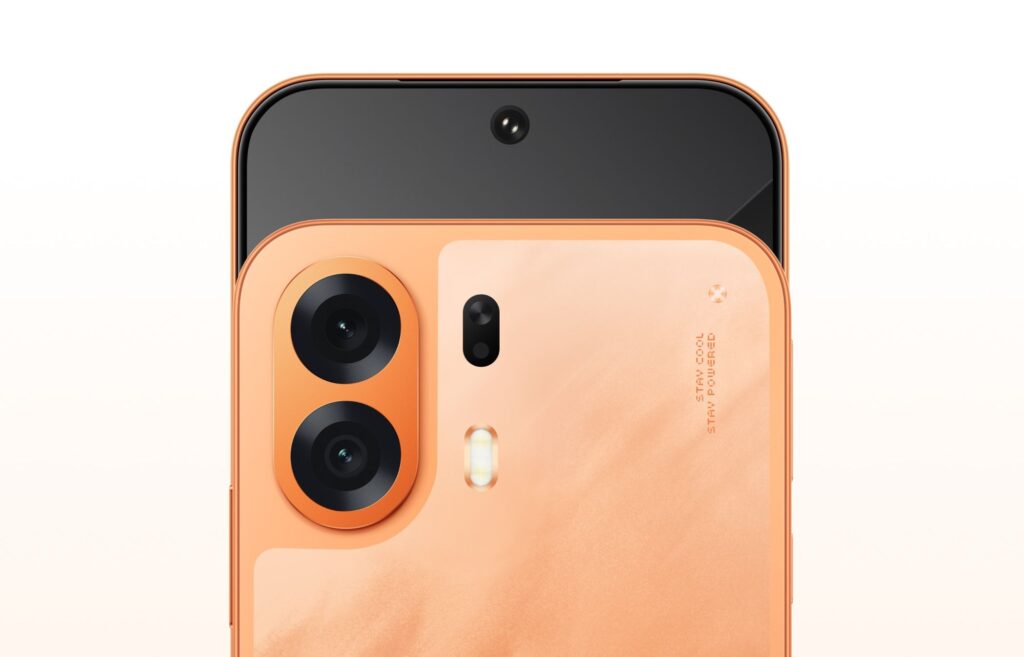
The Find X7 and Find X7 Ultra have a similar design, with the front featuring a punch-hole display with curved edges and a dual-tone back panel with a massive camera module. The Find X7 has a triple-camera unit, whereas the Find X7 Ultra has a quad-camera system. The Ultra variant will be the world’s first smartphone to feature dual periscope telephoto cameras. In addition, it will also be the first-ever phone to feature the one-inch Sony LYT-900 50-megapixel camera sensor as the primary snapper.

It is said that there will be a third device called the Oppo Find X7 Ultra Satellite Communication Version, which will come with support for two-way satellite communication. The rest of its specs will be identical to the Find X7 Ultra.

RELATED:

RedMagic shows off new RGB water cooling on RedMagic 12 Pro+

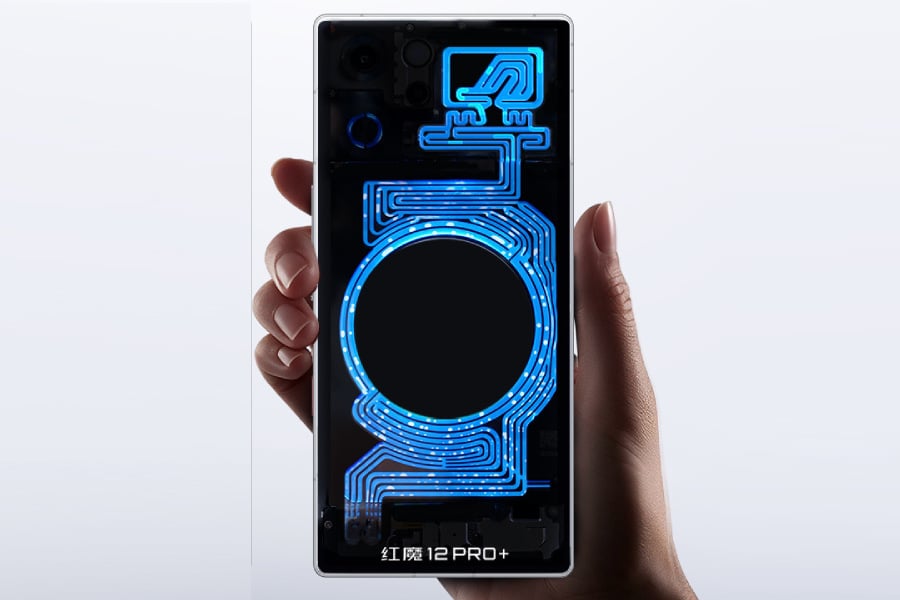
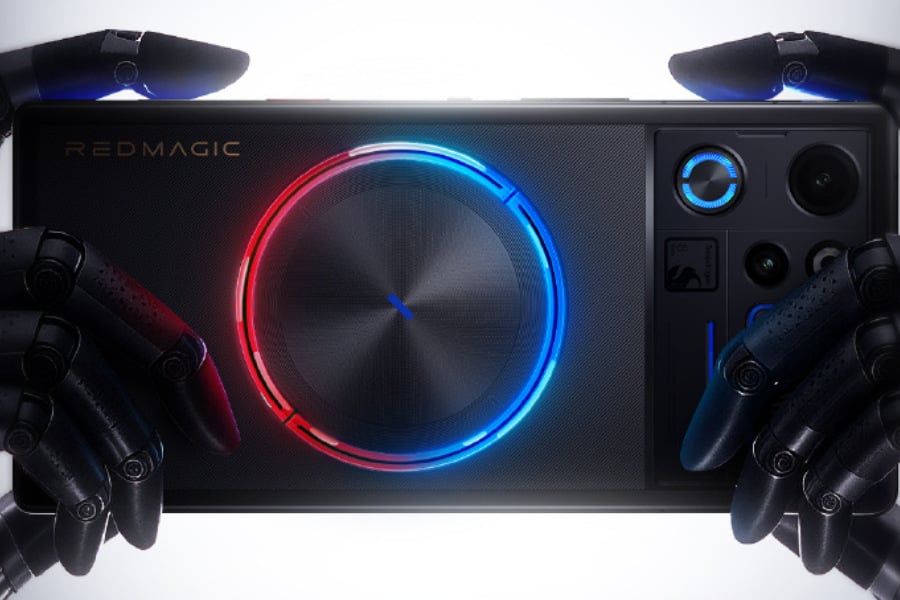
RedMagic is currently busy teasing the RedMagic 12 Pro+ features in the lead-up to launch. In the latest installment, the company explains how its cooling works, following an earlier design teaser. The company says the phone will be the first with RGB water cooling. 

RedMagic 12 Pro Plus RGB Water Cooling reveal

Jiang Chao, General Manager of RedMagic Gaming Phones, walked through the upgraded system ahead of the October 15 launch in China. Reservations are already open on RedMagic’s website.

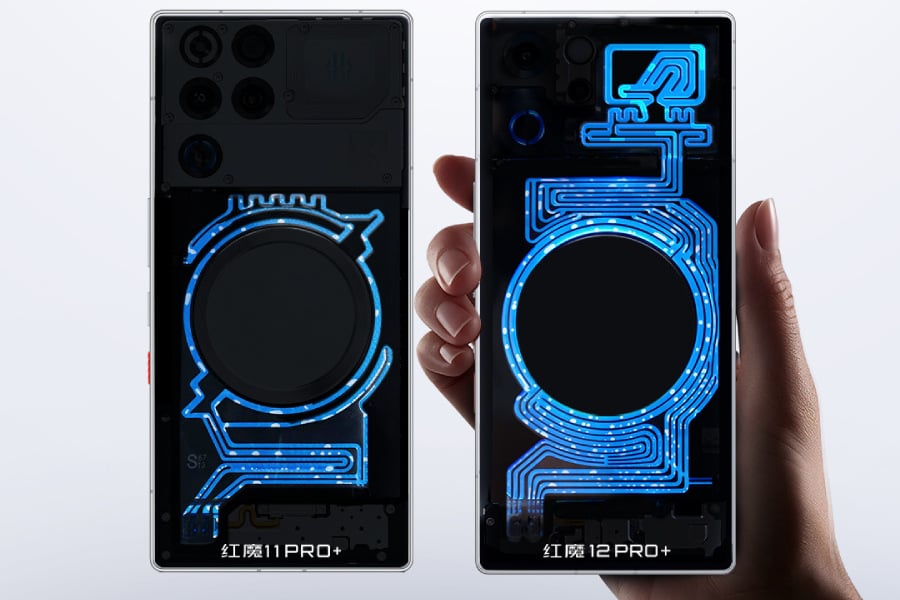
Compared with the RedMagic 11 Pro+, the new phone has a larger water-cooling area and thicker flow channels. The brand also changed the layout to a dual-ring design that covers every major heat source in the phone.

The coolant leaves the micro-pump and splits into two paths. The upper path runs over the chip, while the lower one runs over the battery. The two paths then merge and flow back to the pump. The channels also extend into the airflow area, where the fan pulls heat away. You get air and water cooling working together, much like the RedMagic 11 Pro.

RedMagic 12 Pro Plus RGB Water Cooling

To note, thicker channels need more power to move the liquid. As a result, RedMagic is using a new dual-crystal micro-pump to handle it. Official claims that the output pressure has increased from 100kPa to 130kPa, which is to say it pushes the coolant faster and farther and improves heat dissipation. The coolant is the same fluorinated liquid used in AI servers. 


RGB that follows the coolant

A cool visual flair here is the custom light guide that sits above the airflow channel. It lets the RGB lighting run along the water-cooling path, so you see the lighting move through the same route the coolant takes. The RedMagic 11 Pro already showed its water-cooling ring through a transparent back, and the 12 Pro+ adds lighting to that idea.

RedMagic 12 Pro Plus RGB cooling

RedMagic calls the 12 Pro+ “the best-feeling RedMagic flagship to date.” It is lighter, thinner, narrower, and more rounded than the 11 Pro+. The teaser images show softer corners, and the screen bezel shrinks from 1.25mm to 0.96mm.

The phone runs on the Snapdragon 8 Elite Extreme Gen 6, which RedMagic confirmed earlier. Meanwhile, a leak points to an 8,400mAh battery with 120W wired and 80W wireless charging. 

For more daily updates, please visit our News Section.

Stay ahead in tech! Join our Telegram community and sign up for our daily newsletter of top stories!

(Source)

iQOO Neo 12 launch timeline tipped, features 185Hz 2K display, cooling fan

The iQOO Neo 12 now has a launch window. Tipster Digital Chat Station says the phone will launch in October, and his latest Weibo post reveals more details about its display, cooling system, and gaming hardware.

It follows his earlier report on the Neo 12’s 2K, 185Hz display testing, which also mentioned a dedicated display chip, a battery that could pass 9,000mAh, and 100W charging.

According to the tipster, you get a custom 2K+ panel running at 185Hz. Visionox is the brand behind it, and the Neo 12 will be the first phone to use this screen. The panel relies on Visionox’s fourth-generation pTSF luminescent material, which he says no other phone has shipped with. He also says you won’t find this screen in any of the flagship phones that launched in September.

iQOO Neo 11
iQOO Neo 11

The new details also support earlier reports that iQOO was testing a 6.83-inch Visionox display for the Neo 12. 

The phone also carries an active cooling fan, which fits earlier word that iQOO was weighing active cooling for this model.

Under the hood, the Neo 12 reportedly runs on Qualcomm’s Snapdragon 8 Elite Gen 5, paired with iQOO’s own Q3 gaming chip. iQOO first introduced the Q3 with the iQOO 15 as a companion chip that takes some of the workload off the main GPU to help maintain frame rates while keeping power consumption steady.

Combined with the active cooling fan, the chipset setup could make the Neo 12 more than a routine upgrade over its predecessor. Digital Chat Station says the phone feels closer to an “Ultra-class device.”

Design and what we don’t know yet

On the design side, the Neo 12 is likely to follow iQOO’s family design language. It will have a metal frame and a 3D ultrasonic fingerprint sensor.

iQOO has yet to confirm the phone or its specifications. The exact launch date, pricing, camera hardware, and final battery capacity remain unknown, so these details should be treated as leaks until the company makes an official announcement.

For more daily updates, please visit our News Section.

Stay ahead in tech! Join our Telegram community and sign up for our daily newsletter of top stories!

Apple confirms “Welcome home” event on October 13 for new smart home products

Apple has confirmed that it will hold a special event on October 13, with the tagline “Welcome home.” The announcement follows a late-September rumor that Apple would use the date to showcase new smart home products.

Apple also published an official teaser video for the event, which you can watch below.

The earlier reports named three devices: the long-rumored HomePad (could also be called the Home Hub), the HomePod mini 2 speaker, and a new Apple TV 4K box. Apple hasn’t confirmed any of them yet, but the “Welcome home” tagline fits the lineup. All three are expected to support the new Siri AI, so you should expect to see a lot of it during the event.

What to expect from the HomePad

The HomePad is the product most of us are waiting for. It’s expected to have a 6-inch square display, and Apple is reportedly making two versions. One is meant to sit on a desk or countertop, and the other is meant to be mounted on a wall. 

Where to buyApple smart homeBrowse the range on AmazonShop now →

On the desk version, the base is expected to have a built-in speaker, with a metal arm holding the screen up. Apple hasn’t shown any of this yet, so the event is where you’ll see how the two versions actually differ.

HomePod mini 2 and Apple TV 4K are overdue

The HomePod mini 2 and the new Apple TV 4K have both taken a long time to arrive. Apple released the original HomePod mini in 2020, which means the speaker has gone about six years without a successor. The latest Apple TV 4K came out in 2022, so that box is four years old. Both are also expected to support Siri AI, which is one reason to expect them to launch alongside the HomePad.

If you’ve held off on buying either one, the October 13 event is the date to watch. Apple’s event takes place on Tuesday, October 13, and we’ll update this story as more details come out.

For more daily updates, please visit our News Section.

Stay ahead in tech! Join our Telegram community and sign up for our daily newsletter of top stories!

Dell’s new RTX Spark Creator laptop costs more than some gaming rigs

Dell has a new XPS 16 Creator Edition laptop powered by the Nvidia RTX Spark chip. The laptop is now available for pre-order at Best Buy for $3,799.99, with the first units expected to arrive on October 16. Dell will also sell it through its own website, though it hasn’t confirmed when orders will open there.

The listed configuration comes with an 18-core Nvidia N1X chip with 5,120 GPU cores, 32 GB of unified LPDDR5X memory and a 512 GB PCIe SSD. Nvidia’s RTX Spark platform supports up to 20 CPU cores, 6,144 GPU cores and 128 GB of unified memory. 

Dell XPS 16 Creator Edition RTX Spark Launch Specs Price

Dell hasn’t shared prices for higher configurations or markets outside the US. Nvidia’s RTX Spark laptops were already tipped to cost more than many people expected, and the XPS 16’s price falls in line with those earlier reports.

Display, design and ports

The XPS 16 Creator Edition has a 16-inch 3.2K Tandem OLED touchscreen with a resolution of 3,200 x 2,000 pixels and a variable refresh rate of up to 120 Hz. Dell lists HDR True Black 600 support, full DCI-P3 coverage, and a Delta E below 2, along with Pantone Verified certification.

The laptop measures 17.8 mm thick and weighs around 2.02 kg (4.45 lb). Its body is made from CNC-machined aluminum, while the glass touchpad sits above a 99 Wh battery.

Dell XPS 16 Creator Edition Design

For connectivity, Dell has included three USB4 ports with DisplayPort 2.1 and Power Delivery support, an HDMI 2.1b port, a full-size SDXC v7.1 card reader, and a 3.5 mm audio jack. The built-in card reader and HDMI port mean users can connect a camera card or external monitor without needing an adapter. Wireless connectivity includes Wi-Fi 7 and Bluetooth 6.0.

Where to buyDell XPS 16Latest price on AmazonCheck price →

The unified memory architecture also means the CPU and GPU share the same pool of memory rather than having separate allocations. This can help with workloads that move large amounts of data between the processor and graphics hardware, although the available memory is limited to 32 GB on this configuration.

How it compares with the Asus ProArt P16

Dell now has some competition in the RTX Spark laptop market. Asus launched the ProArt P16 and P14 with Nvidia RTX Spark this week, while MSI’s Prestige N16 Flip AI+ is another creator laptop built around the same platform.

The 16-inch Asus ProArt P16 comes with up to a 20-core Grace CPU, a 6,144-core Blackwell GPU, 128 GB of unified memory and 2 TB of storage. Its display also has the paper edge, with a 3,840 x 2,400 OLED panel and HDR brightness of up to 1,600 nits. The Dell has a lower-resolution screen with a lower HDR brightness rating, and it weighs more at 2.02 kg compared with the Asus model’s 1.77 kg (3.9 lb). Their battery capacities are roughly the same.

Price is another major difference. The ProArt P16 starts at $2,799.99 in the US, making Asus’s entry-level model $1,000 cheaper than the XPS 16 Creator Edition. Microsoft has also entered the market with its Surface Laptop Ultra, which was announced on October 8 with Nvidia RTX Spark and up to 128 GB of memory.

For more daily updates, please visit our News Section.

Stay ahead in tech! Join our Telegram community and sign up for our daily newsletter of top stories!

Garmin launches Approach S72 golf smartwatch with ECG, AMOLED display & 10-day battery life

Garmin has officially unveiled the Approach S72, its latest premium golf smartwatch. The new model brings several hardware upgrades from the company’s mainstream smartwatch lineup to its golf-focused series. It is priced at $799.99 and will be available to order starting October 9.

Garmin Approach S72

Garmin Approach S72 Specifications

The S72 comes in two case sizes: 43mm and 47mm. Both models are built with a titanium bezel and a scratch-resistant sapphire crystal lens, paired with a new fabric band that Garmin calls ComfortFit. The 43mm model features a 1.3-inch AMOLED display and weighs 41 grams.

According to Garmin, the battery will last up to 10 days in standard smartwatch mode and roughly 15 hours when actively using GPS during a round of golf. The hardware also includes a built-in LED flashlight, a practical feature Garmin has been steadily integrating into its higher-end wearables.

Garmin Approach S72

As a dedicated golf device, the S72 comes preloaded with maps for over 43,000 courses. The main software updates for this generation focus on swing mechanics and biometrics. The watch can now measure hand speed, backswing length, and wrist rotation directly from the wrist.

Where to buyGarmin ApproachBrowse the range on AmazonShop now →

Garmin has also introduced a feature that overlays heart rate data onto your post-round summary, allowing users to see if physical stress or fatigue correlated with their score on specific holes. Standard Garmin golf tools return here as well, including the Virtual Caddie, PlaysLike distance (which adjusts yardage based on elevation and wind), aerial course imagery, and green contour data for reading putts.

Garmin Approach S72

Outside of golf, Garmin has updated the S72 to function more like its Venu and Fenix devices. It features a built-in microphone and speaker, allowing users to take phone calls or interact with their smartphone’s voice assistant directly from the wrist.

It also supports Garmin’s ECG app, which can detect signs of atrial fibrillation, alongside standard health metrics like HRV status, blood oxygen monitoring, and sleep tracking. For daily use, it includes offline music storage for apps like Spotify, Garmin Pay for contactless payments, and multi-band GPS for standard outdoor activity tracking.

In related news, Garmin has also launched the Enduro 4 with an impressive 90-day battery life, solar charging, and a titanium bezel.

For more daily updates, please visit our News Section.

Stay ahead in tech! Join our Telegram community and sign up for our daily newsletter of top stories!

(Garmin)

Garmin launches Enduro 4 with insane 90-day battery life, solar charging & titanium bezel

Garmin has announced the Enduro 4, the newest model in its line of endurance-focused smartwatches. It costs $899.99 and goes on sale October 9th. Like previous Enduro models, this watch is designed primarily for trail runners, hikers, and people who spend long periods away from a charger.

Garmin Enduro 4

Garmin Enduro 4 Specifications

The watch comes with impressive battery life, lasting up to 36 days in standard smartwatch mode. This can be extended to 90 days with solar charging, provided the watch receives three hours of direct sunlight daily. For continuous GPS tracking, it offers up to 80 hours of battery life, which increases to 144 hours with solar charging.

To manage this power efficiency, Garmin is using a 1.4-inch transflective memory-in-pixel (MIP) display. It doesn’t have the bright colors or high contrast of the OLED screens found on the newer Fenix or Epix models, but it uses much less power and is easy to read outdoors.

It is a large watch, featuring a 51mm case made from a fiber-reinforced polymer and a titanium bezel. Even with the large size, it weighs a relatively light 66 grams with the included nylon fabric strap. Garmin has also included a built-in LED flashlight, a hardware feature that has become standard on its recent outdoor watches.

Garmin Enduro 4

On the software side, Garmin has introduced several features designed for long-distance activities. The new Garmin Epic feature allows users to track and review health and performance data from multi-day activities in a single continuous view.

Where to buyGarmin Enduro 4Latest price on AmazonCheck price →

The watch also supports grade-adjusted pace workouts, which automatically adjust pace targets based on changes in elevation along the route. Additionally, Garmin has added a pack weight setting that accounts for the extra weight of a backpack when calculating performance metrics during hiking or running.

For navigation, the Enduro 4 comes with preloaded TopoActive maps. It uses Garmin’s SatIQ technology to automatically switch between multi-band GPS and lower-power GPS modes, balancing location accuracy with battery consumption.

It also supports dynamic round-trip routing, which maps a new way back to your start point if you wander off your original path. Standard health tracking features are included, such as an FDA-cleared ECG app, blood oxygen monitoring, and sleep tracking. You can also send two-way text messages from the wrist using the Garmin Messenger app, as long as it is connected to a phone.

In related news, Xiaomi has recently launched the Watch S5 41mm with HyperOS 4, dual-band UV tracking, and up to 14 days of battery life, alongside the Watch S5 Transparent Edition featuring a see-through glass body.

For more daily updates, please visit our News Section.

Stay ahead in tech! Join our Telegram community and sign up for our daily newsletter of top stories!

(Garmin)

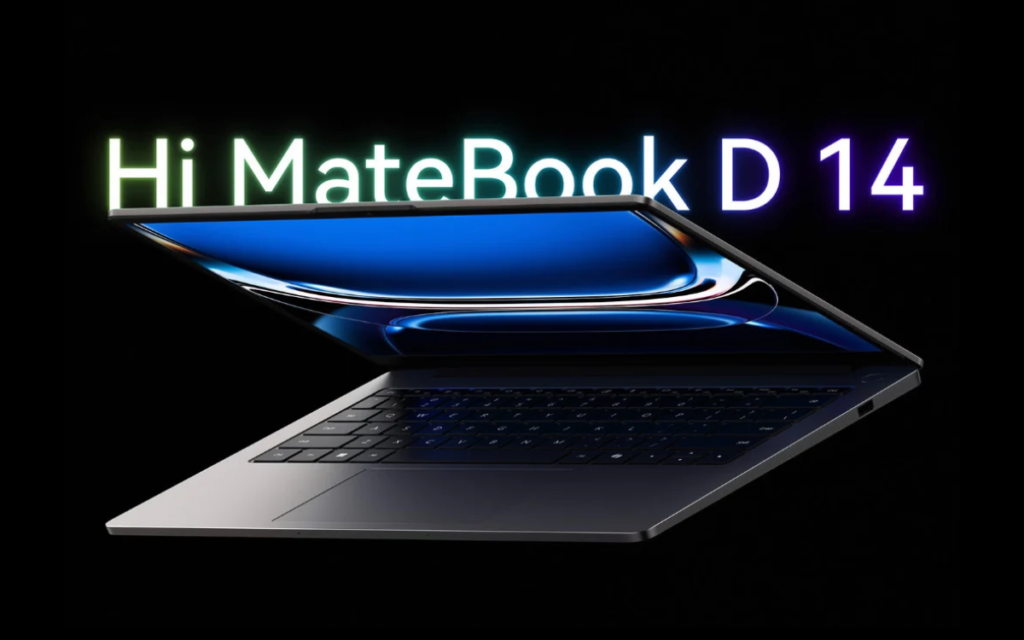
Wiko launches Hi MateBook D 14 Ryzen Edition with AMD Ryzen 7 H 255, 16GB RAM & 17.5h battery life

Wiko has updated its laptop lineup with the Hi MateBook D 14 Ryzen Edition, introducing an AMD-powered alternative to its existing Intel models. The new configuration is currently available for 5,799 yuan ($864) and ships with an AMD Ryzen 7 H 255 processor, 16GB of RAM, and a 512GB SSD.

Wiko Hi MateBook D 14 Ryzen Edition

Wiko Hi MateBook D 14 Ryzen Edition Specifications

From a design standpoint, the Ryzen Edition sticks to the standard thin-and-light formula. It features an aluminum unibody that weighs 1.39kg and measures 15.9mm thick.

The 14-inch display uses a 16:10 aspect ratio. The panel specifications are standard for this price bracket, offering 300 nits of peak brightness and 100% coverage of the sRGB color space, surrounded by narrow 3.5mm bezels.

Wiko Hi MateBook D 14 Ryzen Edition

Inside, the AMD Ryzen 7 H 255 provides eight cores and 16 threads with a maximum boost clock of 4.9GHz, paired with integrated Radeon 780M graphics.

Where to buyWiko Hi MateBookBrowse the range on AmazonShop now →

According to Wiko’s internal testing, this AMD setup yields roughly 50% higher multi-core performance and double the graphical performance compared to the Intel Core 5 210H version of the same laptop. Thermal management is handled by a single low-profile fan.

Wiko Hi MateBook D 14 Ryzen Edition

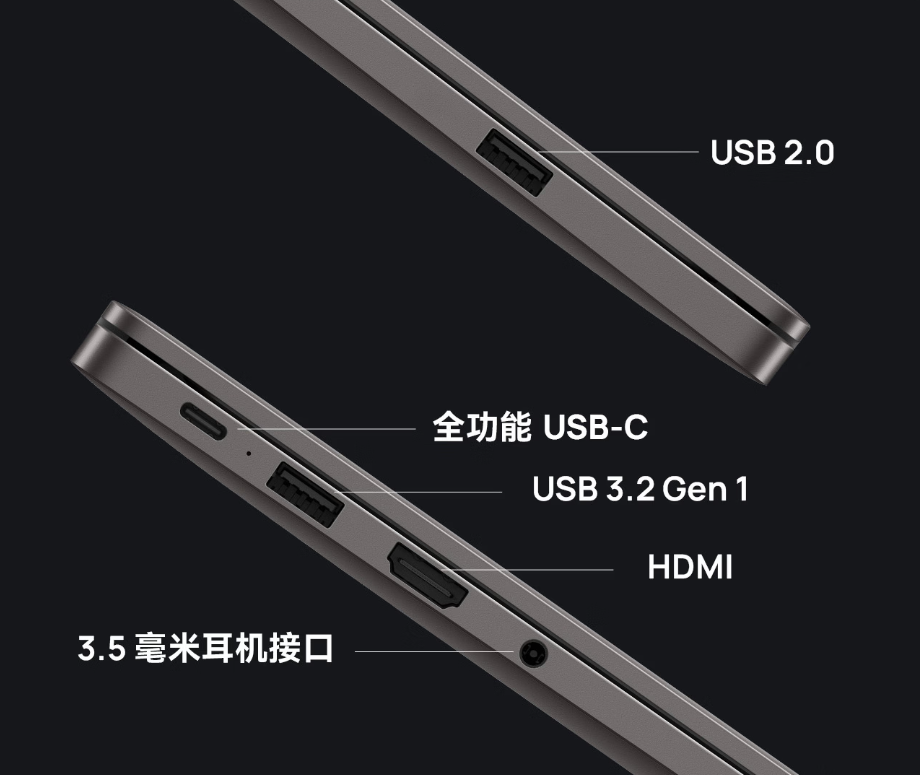
The port selection covers the basics but includes a mix of old and new standards. The device includes one full-function USB-C port for charging and display output, one USB-A 3.2 Gen 1 port, a legacy USB 2.0 port, an HDMI connection, and a 3.5mm headphone jack.

Wiko Hi MateBook D 14 Ryzen Edition

Wiko is also highlighting a custom antenna design that it claims can maintain a wireless connection from up to 270 meters away, though real-world range will naturally depend on physical obstructions and network interference.

The laptop runs on a 56Wh battery, which Wiko rates for up to 17.5 hours of local video playback, and it charges via an included 65W adapter.

In related news, Lenovo has recently launched the ThinkBook 14x with a lightweight 990g aluminum body and Intel Lunar Lake processors, while Asus introduced the Vivobook 16 Ryzen Edition 2026 with a Ryzen 7 H 260 chip, 144Hz display, and 16GB LPDDR5 RAM.

For more daily updates, please visit our News Section.

Stay ahead in tech! Join our Telegram community and sign up for our daily newsletter of top stories!

(JD)

Timex launches affordable Addison square watches with vintage charm and leather straps

Timex has just released a new line of compact, square-case watches in the US market. The new Addison collection is a straightforward nod to traditional watchmaking, offering a very small footprint and a classic dial layout for buyers who prefer an understated look over a bulky smartwatch or oversized diver.

Timex Addison square watches

Timex Addison Specifications

The watch features a 23mm square case with a beveled bezel. It measures just 8mm thick with a lug-to-lug distance of 31.5mm, and it weighs roughly 24 grams. By modern watch standards, this is distinctly small, making it a practical option for people with smaller wrists or those who simply want a watch that stays out of the way.

Timex Addison square watches

The case is made from polished low-lead brass and uses a standard mineral crystal to protect the dial. Timex went with a very traditional layout here: the dial features full Roman numeral markings, a polished handset, and a radial texture in the center that contrasts with a sunray finish on the outer edges.

Timex Addison square watches

Timex is offering two versions of the Addison at launch. The silver-tone model (TW2Y90600) comes with a matching silver-tone dial and a black crocodile-grain leather strap, priced at $119. The gold-tone model (TW2Y90700) is priced slightly higher at $129 and features a champagne dial paired with a brown crocodile-grain leather strap.

Where to buyTimex Addison TW2Y90600Latest price on AmazonCheck price →

Both models use 12mm straps made from natural leather. The straps also feature quick-release spring bars, a standard but welcome feature that lets you swap out bands without needing a specialized spring bar tool.

Timex Addison square watches

Internally, the Addison uses a standard quartz analog movement powered by an SR626SW battery. The watch offers 30 meters of water resistance, making it suitable for everyday splashes, handwashing, and light rain. However, it is not designed for swimming or showering.

Both models of the Timex Addison are available to purchase now from the Timex US website.

In related news, Timex has recently launched two Marlin Chatham Automatic watches powered by Japanese Miyota movements, alongside two new Deepwater Arctic 200 watches in the US featuring ceramic bezels and sapphire crystal glass.

For more daily updates, please visit our News Section.

Stay ahead in tech! Join our Telegram community and sign up for our daily newsletter of top stories!

(Timex 1,2)

Asus launches ProArt GR1X Mini PC with Nvidia RTX Spark Superchip

Asus has announced the ProArt GR1X, a new compact desktop computer built around Nvidia’s RTX Spark architecture. Introduced alongside the company’s latest ProArt laptops, the GR1X is a 1.1-liter mini PC designed to run large local AI models and creative applications on Windows without relying on cloud servers.

Asus ProArt GR1X mini PC

Asus ProArt GR1X Specifications

The mini PC features the new RTX Spark Superchip, which combines a 20-core Grace CPU with a Blackwell RTX GPU featuring 6,144 CUDA cores. The chip uses an NVLink-C2C interconnect, allowing both processors to access a shared pool of LPDDR5X memory.

Asus ProArt GR1X mini PC

This removes some of the memory limitations that typically restrict the size of AI models running locally. Asus offers the GR1X with 64GB or 128GB of unified memory. According to the company, the 128GB variant can run large language models with up to 120 billion parameters entirely on-device, without relying on cloud processing.

The hardware is housed in a chassis that measures 150 x 150 x 51 mm and weighs 1.48 kg. To manage the 140W TDP of the internal components, Asus uses a dual-fan cooling system and a vented chassis design. The company states the thermal setup is engineered for continuous 24/7 operation, supporting background AI tasks and long rendering sessions.

Where to buyAsus ProArtBrowse the range on AmazonShop now →

For software, Asus is focusing on local AI processing. The GR1X supports the standard Nvidia CUDA ecosystem and includes integrations with the open-source Hermes AI agent from Nous Research, as well as native support for ComfyUI.

Asus ProArt GR1X mini PC

The rear I/O panel includes a 10G RJ45 Ethernet port, one HDMI 2.1 port, and three USB 3.2 Gen 2×2 Type-C ports with DisplayPort Alt Mode. This setup supports up to four 4K displays at once. The system also includes Wi-Fi 7, Bluetooth 5.4, and dual M.2 PCIe 5.0/4.0 slots for storage.

Pricing and Availability

The ProArt GR1X will be available later this year in black and silver finishes. Asus has not announced pricing yet but confirmed it will sell the 64GB and 128GB configurations through select retailers.

For more daily updates, please visit our News Section.

Stay ahead in tech! Join our Telegram community and sign up for our daily newsletter of top stories!

Samsung is already testing One UI 9.5 for non-flagship models

One UI 9.5

While Samsung may have initially struggled to push One UI 9.0, the rollout is now in full swing. Over a dozen Galaxy devices are now running the latest software, but still, there are many yet to be upgraded. However, the brand has already started testing One UI 9.5 extensively.

Samsung has been doing the One UI 9.5 internal testing for quite a while now, but that was mostly restricted to top-tier flagships, including the Galaxy S26 series and Galaxy Z8 series. But it has recently been spotted for the mid-range Galaxy A57 with the firmware version A576BXXU6CZJ1.

An even cheaper Galaxy A17 5G has just showed up on the company’s servers running One UI 9.5, identified by the firmware version A176BOXM8EZJ1.

Obviously, these are internal builds, which are not available for public testing. It also doesn’t mean that the update will be rolled out to these devices anytime soon, but it shows that Samsung is laying the groundwork well in advance.

What’s unusual though is that the brand usually starts testing the upcoming software on high-end devices before trickling down to mid-range and cheaper models. But the latter models have already gotten into the mix.

The Galaxy S26 series was the first to enter the One UI 9.5 internal testing a few months ago, then the Galaxy Z Fold 8 and Galaxy Z Flip 8 followed last month, and now more affordable phones, such as the Galaxy A57 and Galaxy A17 5G, have started to show up with early builds. Expect more to follow in the coming week as we gear up for the stable release around February 2026 with the Galaxy S27 series.

We’ll keep you posted on the latest One UI developments right here in our News section. Be sure to check back regularly or join our Telegram channel for real-time updates!

Infinix GT 50 Pro is finally coming to India in October

Last year, Infinix unveiled the GT 30 Pro in June, followed by the standard GT 50 in August. This year, the company has taken a different route, with the GT 50 Pro debuting globally in April but still missing from the Indian market. Infinix has now confirmed that the gaming-focused smartphone will finally arrive in India this October.

Infinix GT 50 Pro India launch confirmed

Infinix GT 50 Pro teaser

The confirmation comes through an Infinix press release, although the company has not announced the exact launch date yet. Instead, it is asking fans to help unlock the date through a “Game Together” campaign on its India website, where every click contributes to a community target. Once the target is reached, Infinix says the official launch date will be revealed.

The GT 50 Pro is also being positioned as more than a standalone smartphone. Infinix says it is building an ecosystem around the phone, with additional gaming-focused products designed to expand how users control and experience games. The company has not revealed the complete lineup yet, but more details are expected closer to the launch.

Infinix GT 50 Pro specifications

Infinix GT 50 Pro

The Infinix GT 50 Pro features a 6.78-inch AMOLED display with a 1.5K resolution, 144Hz refresh rate, 330Hz touch sampling and up to 2,800Hz instant touch sampling. It reaches 4,500 nits of peak brightness and uses Gorilla Glass 7i for protection.

At the heart of the phone is the MediaTek Dimensity 8400 Ultimate, paired with up to 12GB of LPDDR5X RAM and 512GB of UFS 4.1 storage. It also includes pressure-sensitive shoulder triggers, a liquid cooling system, a 6,500mAh battery, 45W wired charging and 30W wireless charging.

The camera setup includes a 50-megapixel main camera with OIS and EIS, an 8-megapixel ultrawide camera and a 13-megapixel selfie camera. The phone also offers stereo speakers with Dolby Atmos, an in-display fingerprint sensor, an IR blaster and an IP64 rating.

For daily updates, please visit our News Section.

Stay ahead in tech! Join our Telegram community and sign up for our daily newsletter of top stories!

Vivo Y600s Pro launched with 10,200mAh battery and 120Hz AMOLED display

After unveiling the Vivo Y600i and Y600k Turbo phones recently in China, Vivo has quietly added another model to the Y600 family. Called the Vivo Y600s Pro, the new smartphone focuses on a large battery and a high-resolution AMOLED display. Here is everything you need to know about Vivo’s latest Y-series phone.

Vivo Y600s Pro specifications and features

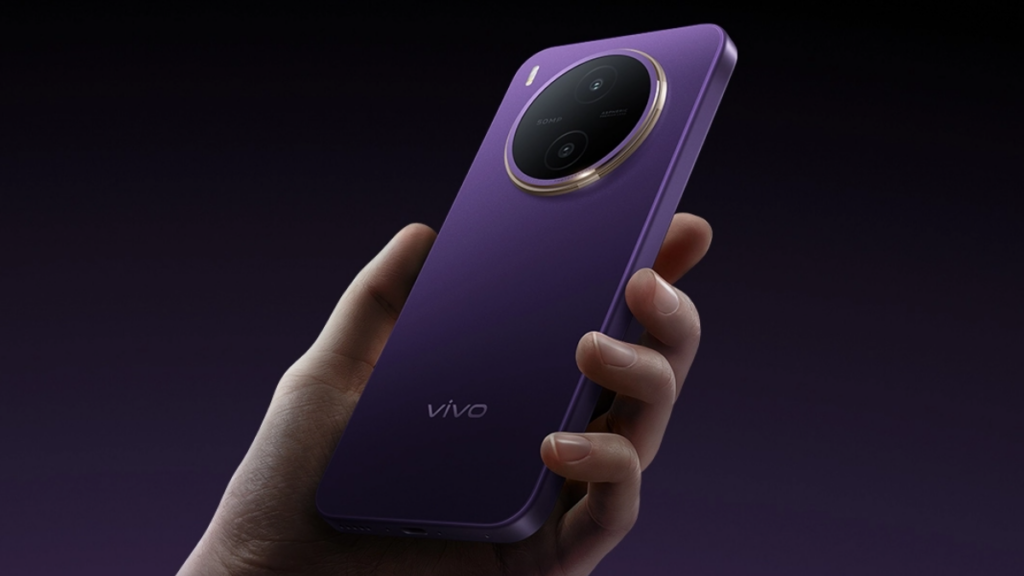
Vivo Y600s Pro
Vivo Y600s Pro

The Vivo Y600s Pro features a 6.83-inch AMOLED display with a 2,800×1,260-pixel resolution, 1.07 billion colours and support for a 120Hz refresh rate. The panel also supports HDR and P3 wide colour gamut, and has an in-screen fingerprint sensor.

Powering the smartphone is the MediaTek Dimensity 7300e chipset, paired with 8GB of LPDDR5 RAM and up to 512GB of UFS 3.1 storage. The phone runs OriginOS 6 based on Android 16 and also supports an additional 8GB of Memory Fusion.

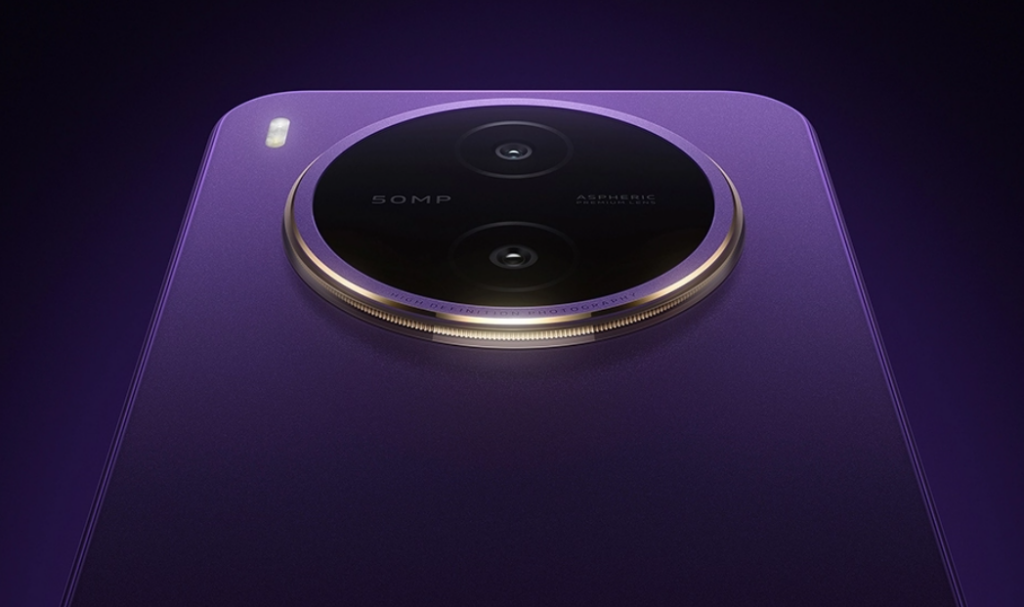
Vivo Y600s Pro
Vivo Y600s Pro

For photography, it has a 50-megapixel rear camera with an f/1.8 aperture and a 32-megapixel front camera, with electronic image stabilisation supported on both cameras.

Where to buyVivo Y600 ProBrowse the range on AmazonShop now →

A 10,200mAh battery is the standout feature, using a single-cell design with a rated capacity of 10,000mAh. It supports 90W wired charging and reverse charging, while other features include NFC, Wi-Fi 6, Bluetooth 5.4, an infrared remote and dual stereo speakers.

Vivo Y600s Pro price and availability

Vivo Y600s Pro
Vivo Y600s Pro

The Vivo Y600s Pro is available in 8GB+256GB and 8GB+512GB configurations priced at 2,699 Yuan (~$402) and 2,999 Yuan (~$447), respectively. Color options include Moonlight Black, Floating Gold, Starry Purple and Vast Blue.

Interestingly, there is virtually no difference between the Y600s Pro and the Vivo Y600 Pro launched earlier this year. Both use the same Dimensity 7300e chip, 6.83-inch 120Hz AMOLED display, a 10,200mAh battery, 90W charging and a 50MP + 32MP camera setup, making the Y600s Pro appear to be just a rebranded version.

For daily updates, please visit our News Section.

Stay ahead in tech! Join our Telegram community and sign up for our daily newsletter of top stories!

ColorOS 17’s global launch set for October 13, with Find X10 series users to experience it first

Oppo has confirmed that its next-generation software experience will make its India debut with the upcoming Find X10 series. The announcement gives the new flagship lineup a key role in introducing Oppo’s latest software experience to Indian users. The company is also preparing to reveal more details about ColorOS 17 globally.

ColorOS 17 to debut with Oppo Find X10 series

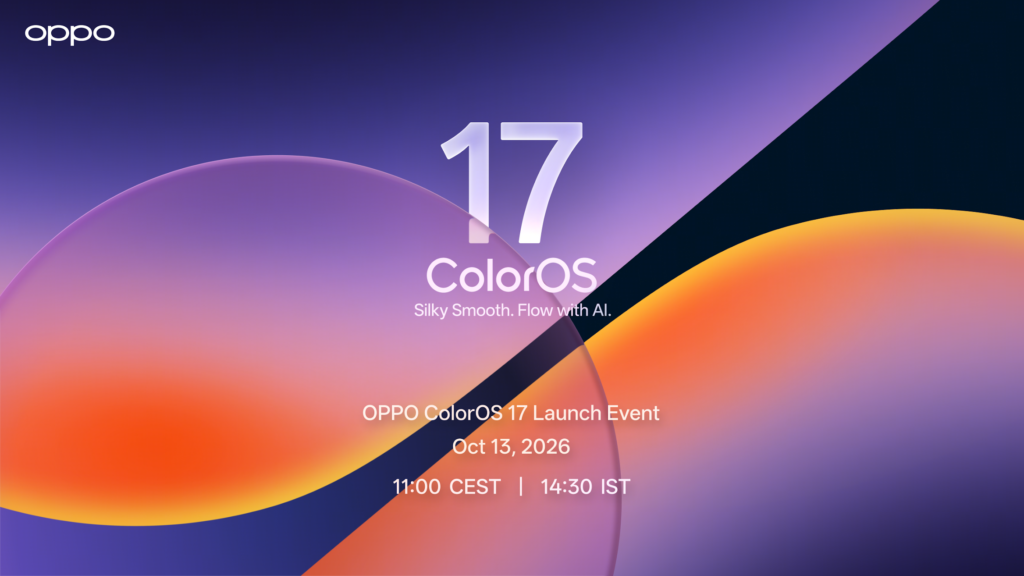
ColorOS 17 launch event promotional banner with purple and orange gradient, showing the event date and times.
ColorOS 17 global launch date

Oppo says ColorOS 17 will be unveiled globally on October 13, 2026. The software is designed to bring improvements across performance, intelligence and connectivity, with Oppo focusing on tighter integration between the operating system and smartphone hardware.

The company says this hardware-software integration extends down to the chip level and is intended to maintain consistent performance during demanding activities such as heavy multitasking and extended 4K video recording. ColorOS 17 will also continue Oppo’s focus on connectivity between smartphones, IoT products and other devices within its ecosystem.

The Find X10 series will be among the first smartphones to feature MediaTek’s flagship Dimensity 9600 Pro chipset. This combination of new hardware and software is expected to form the foundation of Oppo’s next-generation flagship experience, although the company has yet to reveal the full specifications of the upcoming phones.

The Find X10 series will also continue Oppo’s focus on smartphone photography. The company’s Find X lineup uses a camera system developed with Hasselblad and combines it with the LUMO Image Engine for image and video processing.

The Find X10 series is scheduled to launch globally on October 21. It remains to be seen whether the brand will hold a dedicated launch event for the Indian market at a later date.

For daily updates, please visit our News Section.

Stay ahead in tech! Join our Telegram community and sign up for our daily newsletter of top stories!

Upcoming iQOO Neo 12 spotted on Geekbench with Snapdragon 8 Elite-series chip, 16GB RAM

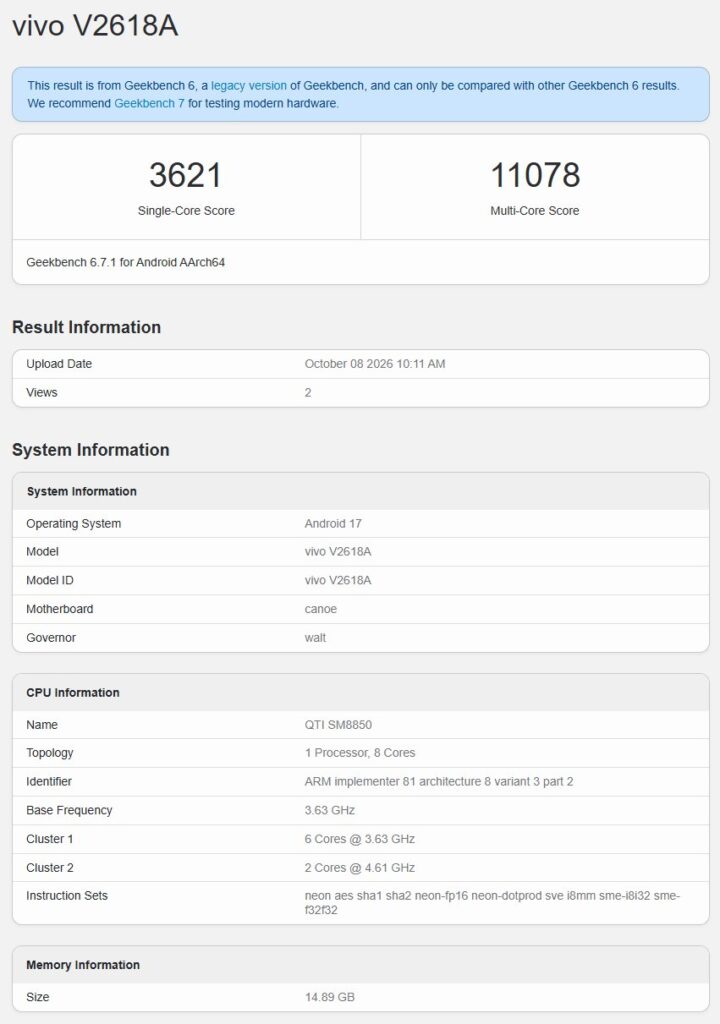
iQOO is reportedly working on the iQOO Neo 12 for the Chinese market. Speculation suggests the phone could make its debut later this month, while it may also arrive globally as the iQOO 16R. Ahead of the expected launch, an alleged Neo 12 has now appeared on Geekbench, revealing several key hardware details.

iQOO Neo 12 Geekbench listing

IQOO Neo 12 Geekbench
IQOO Neo 12 Geekbench listing

A Geekbench listing for the vivo V2618A shows the device running Android 17 with 16GB of RAM. It scored 3,621 points in the single-core test and 11,078 points in the multi-core test. The motherboard is listed as “canoe”, while the processor information points to Qualcomm’s SM8850 platform.

The SM8850 designation corresponds to the Snapdragon 8 Elite Gen 5, which has also been linked to the iQOO Neo 12 in previous reports. The listing shows an eight-core configuration with six cores clocked at 3.63GHz and two performance cores reaching 4.61GHz.

Tipster Abhishek Yadav has also claimed that iQOO is developing two new devices, including a phone with the PD2618 model number, corresponding to V2618A for China, and a tablet carrying the DPD2653 model number. He says both devices will use the Snapdragon 8 Elite Gen 5 and support gaming features introduced with the iQOO 16 and iQOO Pad Ultra, including improved Vulkan shadows in Delta Force and optimisation for Infinity Nikki. He has also stated that the V2618A (Neo 12) may get rebranded as the iQOO 16R in India.

iQOO Neo 12 specifications (rumored)

Earlier today, Digital Chat Station tipped the Neo 12 to feature a 2K display with an unusually high 185Hz refresh rate. The Visionox panel is reportedly the world’s first mass-produced 2K 185Hz display and uses fourth-generation pTSF technology, with improved brightness, lifespan and lower power consumption.

Previous reports have pointed to a 6.83-inch flat display, a dedicated display chip, a battery exceeding 9,000mAh with 100W charging, an ultrasonic fingerprint sensor and a high-level IP rating.

For daily updates, please visit our News Section.

Stay ahead in tech! Join our Telegram community and sign up for our daily newsletter of top stories!

(via 1, 2)

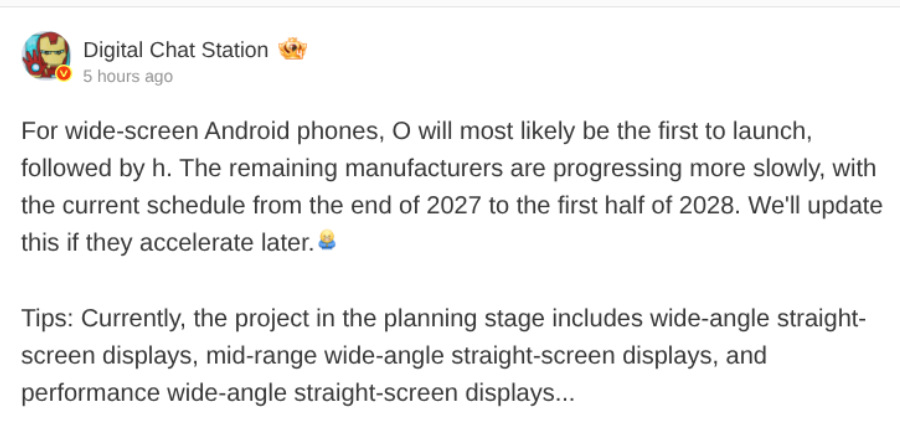
Oppo and Honor to lead wide-screen candybar push after Huawei Pura X View

Tipster Digital Chat Station says the launch plans for wide-screen candybar phones from Android brands are mostly in place, with Oppo set to lead the pack. Honor will follow suit while other manufacturers will reportedly take more time to bring their own models to market.

Oppo’s wide-screen flagship has already appeared in earlier leaks. The prototype is said to have a display of around 7.6 inches, along with either a Snapdragon 8-series or Dimensity 9-series chip. Other reported hardware includes a 200MP main camera, a periscope telephoto camera, and a battery of around 7,000mAh.

Android wide screen phone

Oppo reportedly plans to launch the phone alongside the Oppo Find X10 Ultra.  According to previous leaks, the Find X10 Ultra could launch in the first half of 2027, which could also give us an idea of when Oppo’s wide-screen model might arrive if the two launches remain linked.

Honor is also working on a wide-screen phone, although there are no reported specifications for it yet.

Huawei Pura X View sets the baseline

The Huawei Pura X View will likely be the main reference point for these upcoming phones. It has a 6.39-inch display with 1.05mm bezels on all four sides, resulting in a 96.1% screen-to-body ratio. The phone is 6.68mm thick and weighs 201g, while its 7,000mAh battery uses silicon-anode technology.

The phone runs on Huawei’s Kirin 9030S chip and has a 200MP camera system branded XMAGE Red Maple Imaging. Pricing starts at 5,999 yuan.

Hands holding the red Huawei Pura X View smartphone showing front and back views.
Huawei Pura X View

There has already been some early demand in China. The phone sold more than 180,000 units on its first day, which means the traction is strong. Oppo and Honor can use this to gauge how buyers respond to the wider-screen format, although it is too early to know whether the category will become a larger trend.

For now, the Oppo and Honor phones remain unconfirmed. Neither company has announced the devices, their specifications, or launch dates, so the reported plans could still change.

For daily updates, please visit our News Section.

Stay ahead in tech! Join our Telegram community and sign up for our daily newsletter of top stories!

Sam Altman believes “the world should accept some bad things happening” for the benefits of AI

OpenAI CEO Sam Altman is getting fresh pushback after laying out a pretty blunt take on AI’s trade-offs. In short, he thinks the world should be willing to live with certain harms if it means unlocking the bigger benefits of the technology, and giving people more control over it.

Split-screen podcast still showing two men: a host in a light shirt at a microphone, and Sam Altman in a sweater.

He made the comments on the first episode of Politico’s “Decoded” podcast while talking about where OpenAI and rival Anthropic differ on safety and regulation. “We believe that the world should accept some bad things happening for the benefits of this technology and people having the agency,” Altman said.

He’s in favor of a lighter regulatory approach, arguing that as society gets used to AI, some ugly stuff such as hacks, scams, and other misuse is pretty much inevitable.

Altman is clear that he still thinks the good will massively outweigh the bad. “I wouldn’t take a trade of saying, ‘We’ll make sure there’s no major hacks, there’s no misuse of this technology, there’s zero scams, there’s zero all the other bad things that will happen,’” he explained, “because I think people will do tremendously—orders of magnitude more—good stuff than bad stuff.”

He drew a line between these more limited risks and the truly catastrophic ones, like a serious loss of human control over AI systems. Those, he said, deserve a lot more caution.

The remarks land in the middle of ongoing arguments about AI’s real-world costs: job losses, the environmental hit from data centers, copyright fights, cybercrime, and the huge demand on electricity and water. Critics didn’t hold back.

New York University professor emeritus Gary Marcus accused Altman of “saying the quiet part out loud: suck it up so you can make us rich and powerful.” Online, a lot of people seemed frustrated with the idea that the benefits will just automatically dominate the drawbacks.

The whole exchange highlights a deeper split in the industry: one side wants to minimize near-term harms with stricter controls, while the other is willing to accept some friction as the cost of moving fast and keeping users in the driver’s seat. Whether Altman’s math holds up is still very much up for debate.

Don’t miss a thing! Join our Telegram community for instant updates and grab our free daily newsletter for the best tech stories!

For more daily updates, please visit our News Section.

Huawei’s AI chips have overtaken Nvidia’s sales in China, a meaningful step toward building a homegrown alternative

Huawei is claiming a pretty big win on home turf. The company says its Ascend AI chips have now overtaken Nvidia’s sales inside China. That’s a bold statement, and it lines up with Beijing’s bigger push to reduce its reliance on foreign semiconductor tech while US export restrictions keep tightening.

A long, dark-gray Huawei Atlas 900 AI computing cluster with red accents, next to the red Huawei logo.

Rotating chairman Eric Xu made the claim in a transcript released after the Huawei Connect conference. He didn’t sugarcoat the performance gap: Ascend chips still trail Nvidia on raw single-chip power. Analysts say the latest versions only deliver a fraction of what Nvidia’s top silicon can do.

Huawei’s answer? Volume and system-level scale. Xu’s argument is basically that having plenty of domestic chips available beats having the absolute fastest ones if those can be cut off by sanctions at any moment.

At the same event, Huawei showed off the Atlas 950 SuperPoD, which runs on its new Peerium architecture. Peerium drops the old master-slave setup. Instead, it treats CPUs, NPUs, memory, SSDs, network cards, and switches as equals and links them all through UnifiedBus interconnects.

Supply is still the real bottleneck. Xu admitted Huawei can’t even keep up with Chinese demand right now, so there’s no plan for big international exports. A few countries with urgent needs get limited volumes, but that’s about it.

On the manufacturing side, consumer chief Richard Yu was more blunt. Advanced EUV lithography machines are still off-limits, so China is stuck with DUV processes for now. Huawei’s workaround is something called LogicFolding, part of its Tau-law approach. It’s already in the Kirin 9050 chips that power the Mate 90 Pro Max. The company is shooting for transistor densities that could rival a 1.4 nm process by 2031, ambitious given where production actually stands today.

Software is the other half of the independence story. HarmonyOS now runs on phones, tablets, wearables, PCs, and cars. Huawei says it’s on more than 90 million devices, with 450,000 apps and services and 11 million developers. Yu hinted that a gradual global push is on the table, and they’re positioning HarmonyOS as a possible third major mobile ecosystem next to iOS and Android, even though earlier attempts like Windows Phone and Symbian didn’t exactly stick.

Don’t miss a thing! Join our Telegram community for instant updates and grab our free daily newsletter for the best tech stories!

For more daily updates, please visit our News Section.

(Source: Huawei)

Googlebook’s highlight features require Android 17 on phone, while Intel (x86) versions might struggle to run some apps

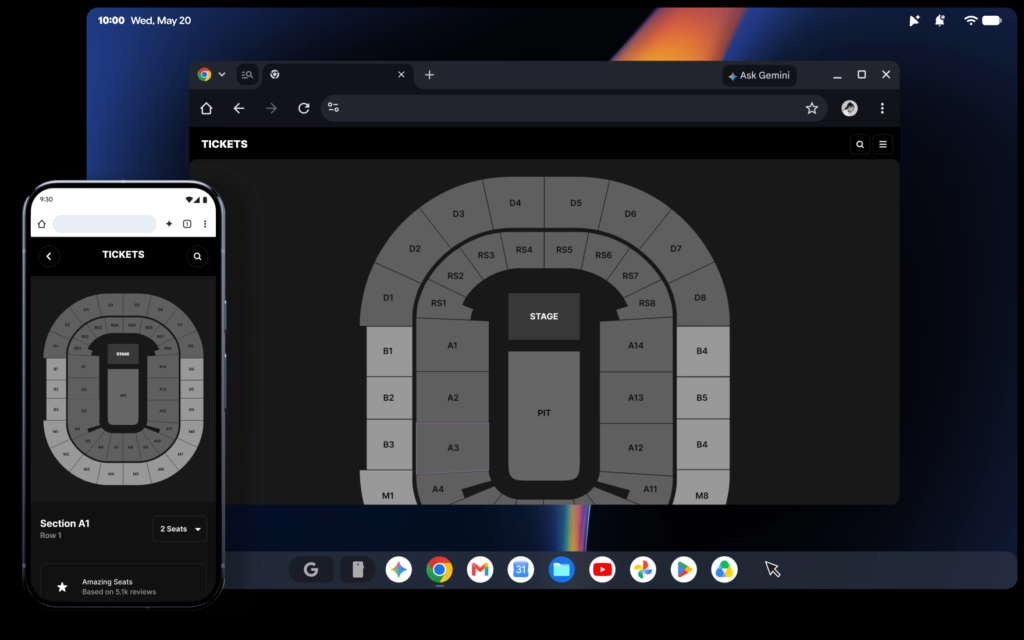
Google’s new Googlebook laptops are finally showing up in stores around the world. The pitch is pretty appealing: a more versatile laptop that sits somewhere between Android and ChromeOS, with deeper ties to your phone, native Android apps, and a bunch of AI tools baked in.

A phone displaying a concert seating map beside a laptop screen showing the same ticket page, with a taskbar of Google apps.

These machines run Googlebook OS, which is built mostly on Android tech but borrows some desktop foundations from ChromeOS. That means they can run regular Android apps natively instead of stuffing them in a container.

But not every Googlebook is created equal. Google confirmed to Android Authority that if you go for an Intel (x86) model instead of a Qualcomm Snapdragon (ARM) one, you’ll run into some limits. Most Android apps were built for the ARM chips that live in phones.

Where to buyGooglebookLatest price on AmazonCheck price →

Google says 96.6% of the top 10,000-plus most-used apps still work fine on the Intel versions, but a handful of more complex apps and games need developer updates to run properly on Intel hardware. There’s no public list of which ones yet. Three of the five launch models use Intel chips; the Dell and HP ones are the ARM-powered Qualcomm versions.

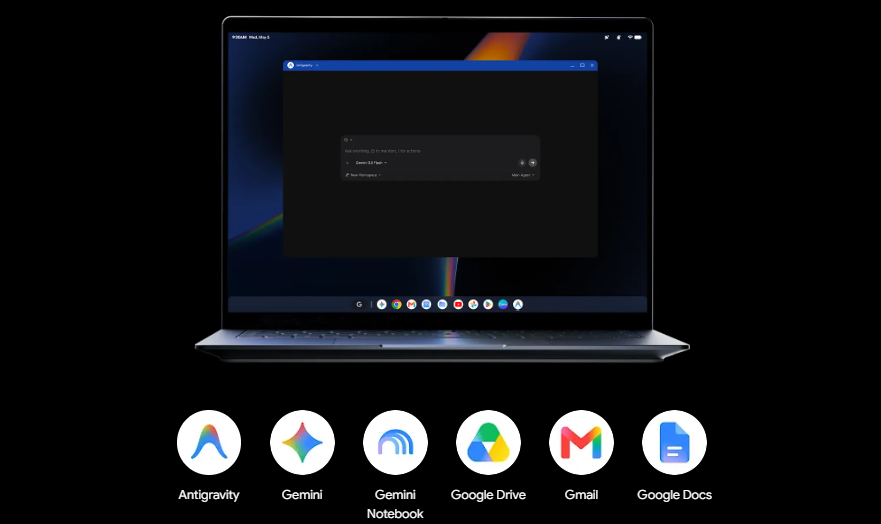
A laptop with a dark screen showing a Gemini-style chat window, with app icons below for Antigravity, Gemini, Gemini

The tight phone-to-laptop features also come with a requirement: Android 17. Things like browsing your phone’s files from the laptop, picking up tasks mid-flow with Continue On, syncing notifications, or streaming your phone’s screen and apps to the laptop just aren’t available on older Android versions. That’s a bit of a bummer, since the seamless continuity is one of the big selling points Google keeps highlighting, and Android 17 isn’t exactly everywhere yet.

Google is still supporting Chromebooks on their own track. Some newer ones might even get a path to Googlebook OS later. In the meantime, the company is leaning hard on the long software support (up to 10 years), the premium builds, and the AI focus.

If you’re deep in the Android ecosystem and want that tighter phone-laptop link, Googlebooks are an interesting step. Just be picky about the processor if you care about specific demanding apps or games, and make sure your phone is on Android 17 if you want the full continuity package.

Don’t miss a thing! Join our Telegram community for instant updates and grab our free daily newsletter for the best tech stories!

For more daily updates, please visit our News Section.

(Source; Android Authority)

Here’s when the Oppo Find X10, X10 Pro Max arrives worldwide

Oppo introduced the Find X10 series in China last month to strong reception. Following a few days of teasers from its international channels, the company has officially locked in the global launch schedule. Here is a breakdown of what the new flagships will bring to international markets.

Oppo Find X10 series global launch date revealed

Oppo Find X10 seriss global launch date

The company announced through its official channels that the global debut will take place on October 21 in Mallorca, Spain. Consumers can look forward to seeing the standard Find X10 alongside the higher-end Find X10 Pro Max step onto the international stage.

Rumors suggest additional hardware such as the Pad Mini tablet and Enco X4 wireless earbuds could make a surprise appearance at the event, though Oppo has not formally verified those companion accessories yet. Both premium handsets will run ColorOS 17 straight out of the retail packaging, following the software skin’s dedicated global unveiling scheduled for October 13.

Oppo Find X10 series: Specs at a glance

The standard Find X10 features a 6.59-inch 1.5K LTPO AMOLED screen with a 144Hz refresh rate and 2,000 nits peak brightness. Powering the phone is the 3nm MediaTek Dimensity 9600M processor paired with LPDDR5X RAM and UFS 4.1 storage. It houses an 8,000mAh battery that supports 80W wired and 50W wireless charging.

On the photography front, the base model sports a 200-megapixel primary camera with optical image stabilization, a 50-megapixel ultra-wide sensor, and a 200-megapixel periscope telephoto lens with 2.8x optical zoom. Selfies are handled by a 50-megapixel front-facing shooter.

The Find X10 Pro Max steps up to a 6.78-inch 1.5K 144Hz LTPO AMOLED panel and the 2nm MediaTek Dimensity 9600 Pro chipset. It carries triple IP ratings across IP66, IP68, and IP69 alongside the same 8,000mAh battery with 80W wired and 50W wireless speeds. Imaging is led by a Hasselblad-tuned triple 200-megapixel setup including a wide, ultra-wide, and 3x periscope telephoto lens.

For daily updates, please visit our News Section.

Stay ahead in tech! Join our Telegram community and sign up for our daily newsletter of top stories!

Oppo K14 Plus 5G goes on sale with 8,000mAh battery

At the end of September, Oppo unveiled the Oppo K14 Plus 5G in India, and the new phone is now available for purchase. The handset combines a high-refresh-rate AMOLED display with a large battery and a decent MediaTek chipset.

Oppo K14 Plus 5G variants and price

Oppo K14 Plus 5G
Oppo K14 Plus 5G

The Oppo K14 Plus 5G starts at Rs 29,999 (~$310) for the 6GB+128GB variant, while the 8GB+128GB model costs Rs 32,999 (~$341). The top-end 8GB+256GB version is priced at Rs 35,999 (~$372). Buyers can get an instant Rs 4,000 (~$41) bank discount, bringing the effective prices to Rs 25,999 (~$269), Rs 28,999 (~$300) and Rs 31,999 (~$331), respectively. A six-month no-cost EMI option is also available.

The phone is offered in Solar Orange and Star White colors and can be purchased through Oppo India e-store and Flipkart. This makes the K14 Plus 5G particularly interesting during the ongoing festive sale period, especially for buyers prioritizing battery life and display quality.

Where to buyOppo K14 Plus 5GLatest price on AmazonCheck price →

Oppo K14 Plus 5G key specifications

Oppo K14 Plus 5G

The K14 Plus features a 6.77-inch FHD+ AMOLED display with a 2,772 x 1,272-pixel resolution, adaptive 120Hz refresh rate and support for up to 144Hz. It is powered by the MediaTek Dimensity 7360 Max chipset, paired with up to 8GB LPDDR4X RAM and 256GB UFS 3.1 storage.

For photography, the phone has a 50MP primary camera with an f/1.8 aperture and 2-axis optical image stabilization, alongside a 2MP monochrome camera for depth mapping in Portrait mode. A 16MP front camera handles selfies and video calls.

The 8,000mAh battery supports 45W wired charging and 10W reverse wired charging. The phone runs ColorOS 16 based on Android 16 and features an in-display fingerprint sensor.

For daily updates, please visit our News Section.

Stay ahead in tech! Join our Telegram community and sign up for our daily newsletter of top stories!