Advertisement

Fuell Folld-1 electric bicycle is now available in the US and the EU

The Fuell Folld-1 folding fat-tire e-bike has gone on sale in the EU and the US. The e-bike is foldable and is powered by a 750W Bafang motor while its fat tires make it capable of riding on off-road terrains.

Fuell Folld-1 folding e-bike

Features

The Fuell Folld-1 is the first folding electric bicycle manufactured by Fuell. Recall that Fuell launched the Flluid-2 and Flluid-3 bikes recently, but the Folld-1 is designed for urban rides as well as off-road movement. It features 20 x 4-inch tires for an easy ride in difficult terrains. The 750W Bafang electric motor featured in the Folld-1 has a torque of 85Nm and delivers a top speed of 32km/h in the US and 25km/h in the EU. There are five assistance levels in the e-bke while in addition, the US version features a thumb throttle.

Fuell Folld I

The Folld-1 is equipped with a removable 720Wh battery that gives the bike an assistance range of 113km (70 miles). The battery takes up to 6 hours to be fully recharged which can be challenging while on the go. However, the extended range and the fact that the battery is removable are key advantages of the e-bike. The new Folld-1 folding e-bike has a full suspension system with its Mozo Fatman hydraulic suspension fork and a Fastace ZXC01 at the rear. The model also comes with a color display, among other key features.

The e-bike has a unibody magnesium alloy frame that is foldable for enhanced versatility. The bike weighs about 37.4kg which makes it relatively heavy when compared with models in its category.

Pricing & Availabiliy

The Fuell Folld-1 electric bicycle is now available in the US and the EU at an introductory price of $1,995 and €1,995 respectively. The original price of the model is $2,495 / €2,495 but there are no details when this price regime will kick in.

Related:

Apple is Ending Support for Progressive Web Apps in EU

Apple has taken a rather big step regarding how iPhone users in the European Union will interact with progressive web apps. A move such as this, which builds upon Apple’s decision to end support for these apps on its iOS 17.4 update, is a pretty significant dilemma for developers and users alike.

EU’s DMA (Digital Markets Act) has really strict requirements regarding web apps

Why is Apple taking such a stance, you may ask? Well, the company’s decision is a result of the intricate requirements of the Digital Markets Act (DMA) in the EU, which demands significant architectural changes to comply. Apple has pointed out that adapting to these demands by developing a new integration architecture is not feasible given the current circumstances. This decision particularly impacts the way web apps, which were once capable of functioning similarly to native apps with features like notifications and data storage, will operate on iOS devices.

Apple iPhone side loading

With the introduction of iOS 17.4, what were once standalone web apps will now serve merely as bookmarks. This shift is a response to the DMA’s mandate that allows third-party browsers to utilize their own engines, deviating from Apple’s WebKit, which has been the backbone for web apps on iOS, ensuring they align with the platform’s security and privacy standards.

The implications of this change are multifaceted. While Apple cites security concerns and the potential for malicious web apps to exploit these new freedoms, it’s hard not to see the broader context. This includes the ongoing debate around app store fees and how companies like Facebook Gaming have used web apps to bypass these costs.

Apple anticipates that this alteration will impact a minimal number of users, citing low adoption rates of home screen web apps. Nevertheless, the company expresses regret over any inconvenience caused to developers and users due to this compliance-driven decision.

RELATED:

(VIA)

Google Announces the AI Cyber Defense Initiative to Protect Against Hackers

Google just announced something pretty big: they’re using artificial intelligence (AI) to fight against cyber threats. It’s called the AI Cyber Defense Initiative. The idea is to make the internet a safer place for everyone by staying one step ahead of hackers and cyberattacks.

Google will train AI to recognize signs of cyberattacks before they happen

The problem with keeping digital spaces safe these days is that hackers only need to find one weak spot to cause trouble. On the other hand, the people defending our digital world have to be perfect all the time, which is really hard. Google thinks AI can help solve this problem. By using AI, Google wants to make it easier for security experts to find and stop threats before they turn into big problems.

Google-TPU-Patent-Lawsuit

Google’s plan includes using AI to figure out when and where cyberattacks might happen. They’re training AI systems to recognize the signs of a cyber threat by looking at data from across the globe. This could help stop hackers before they do any damage.

One cool thing Google is doing is sharing a tool they made called Magika. It’s designed to spot malware, which is software designed to harm or hack into systems. Magika is really good at telling what kind of files are safe and which ones aren’t, making it easier to catch harmful software before it causes problems.

Google also believes that fighting cyber threats is a team effort. They’re calling for companies and governments to work together, share information, and use AI to make the internet safer for everyone. In short, Google’s using AI not just to react to cyber threats but to prevent them. It’s a big step towards making the internet a safer place, and it shows how AI can be used for good.

RELATED:

(VIA)

Chinese EV Giant BYD is Considering Building a New Factory in Mexico

BYD, a big name in electric vehicles, is thinking about building a new factory in Mexico. This idea is part of their strategy to make it easier to sell cars in the US. Right now, they’re looking into the best place for this factory and talking with Mexican government officials about it. They haven’t decided on a location yet, but places like Nuevo Leon and the Bajio region are in the running.

The Mexico factory will greatly help shipping cars to the US

The reason BYD wants to build in Mexico is to make shipping cars to the US cheaper and more straightforward. Thanks to trade agreements between the US, Mexico, and Canada, making cars in Mexico could allow BYD to avoid some tariffs and save money on exports.

BYD Yuan

BYD isn’t new to Mexico; they’ve already started selling their Dolphin compact EV there, along with a few other models. This move shows they’re serious about the Mexican market and looking at the bigger picture of selling more cars in North America.

The company is growing fast, already leading the way in selling electric and hybrid cars worldwide. They sold over 3 million vehicles in 2023, beating out many competitors. However, sales outside China are still a small part of their business, showing there’s a lot of room to grow internationally.

BYD is also building factories in Thailand, Uzbekistan, and Brazil, showing they’re expanding globally. These steps, including the new plan in Mexico, are about more than just making more cars. They’re about BYD wanting to be a major player in the global push for cleaner, electric vehicles, making it easier for people everywhere to choose a greener option for their transportation needs.

RELATED:

(VIA)

Apple’s budget iPhone SE 4 to get OLED display, launch likely in 2025

According to a report by The Elec, Apple might upgrade its budget-friendly iPhone SE line with an OLED display by 2025. Currently, the SE is the only iPhone still using LCD technology, so this change would bring it in line with Apple’s more premium models.

OLED displays offer brighter colors, deeper blacks, and better overall image quality compared to LCDs. Despite this, Apple’s main focus seems to be on keeping costs down for the iPhone SE 4. Two major display manufacturers, Samsung and BOE, are reportedly competing to supply Apple with the new screens.

iPhone SE 4

Even though OLED panels generally cost more to manufacture, Apple could potentially maintain the SE’s affordability due to the intense competition between suppliers. Samsung, rumored to have offered the lowest price, might secure the majority of the orders.

If you talk about numbers, Samsung and BOE have reportedly provided quotes ranging from $30 to $40 for the low-cost model, with Samsung allegedly offering the most affordable price at $30 per unit, while BOE’s limit is $35.

Tienma, a Chinese display manufacturer, has reportedly offered the most expensive price for the iPhone SE 4 component at $40. Given Samsung’s history with Apple and its supposed lowest quote, it’s likely to receive most of the orders, followed by BOE.

The prices quoted by each company for OLED panels are up to one-third less than the panel used in the iPhone 15, giving Apple enough room to generate a decent margin for each iPhone SE 4 sold.

Apple has not yet finalized a production partner and is reportedly seeking even cheaper prices in the mid-20s range. 

While the exact launch date remains uncertain, rumors suggest a 2025 timeframe for the iPhone SE 4.

Related:

(Source)

Samsung is the first company to receive a 2nm chip manufacturing order

Samsung has reached an important agreement with Preferred Networks (PFN). The Japanese company’s move from TSMC to Samsung surprised everyone and it remains to be seen how this change will turn out in the future. The agreement between the two companies represents something important. At the moment, chips with the 3nm process are being produced and the first steps of the switch to the 2nm manufacturing process have been made.

Samsung starts preparations for first 2nm chips

Preferred Networks is one of the well-known companies in artificial intelligence. Now this company is preparing for the first 2nm AI chips by making a deal with Samsung. The performance of Samsung’s 2nm manufacturing technique is not yet known. But we do know that the South Korean company is improving itself more and more every year. It’s not known why PFN switched from TSMC to Samsung. Maybe, Samsung came to PFN with a cheap price offer in chip production.

Samsung is usually behind TSMC in terms of performance and efficiency. The company will strive to successfully implement the technique of 2nm GAA (Gate-All-Around) technology and will get the desired result. We expect further improvements in the Exynos SOC used in smartphones. The performance results of the next Exynos 2500 are also eagerly awaited. Similar to Exynos 2400, Exynos 2500 will have a 10-core structure. Also, ARM’s Cortex-X5 core is rumored to be in Exynos 2500.

Related:

(Via)

Ditch Expensive Engraving! Nano’s Powerful, Affordable Engraving Tech Launches Feb 20th

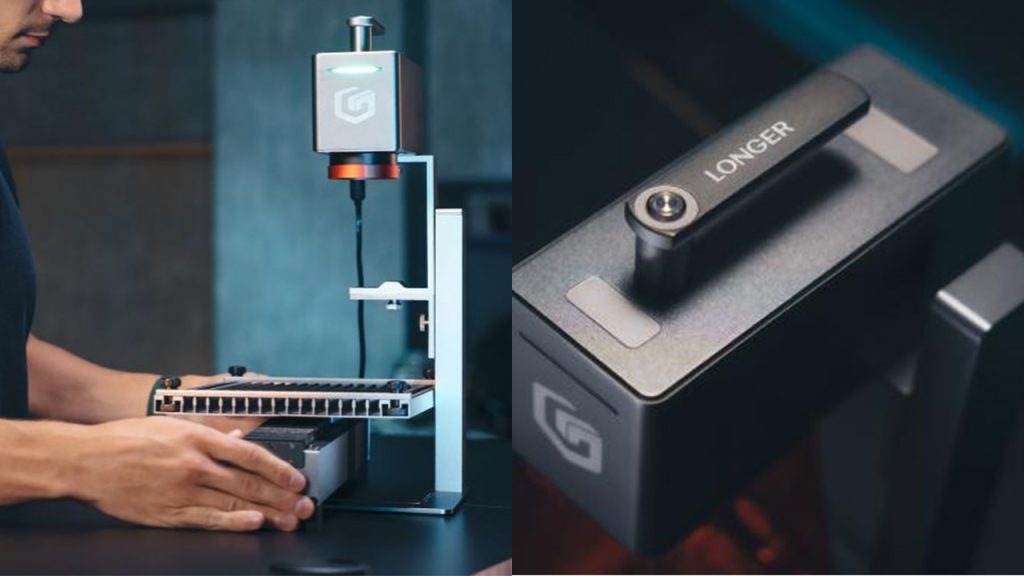
At Gizmochina, we love showcasing innovative products. For example, we recently mentioned the Retro Gaming Watch. Now, we found a special product for those who seek a unique touch in everything they own or are considering commercializing this desire. The latest successful examples of laser engraving technology, Nano and Nano Pro, will officially launch on Kickstarter on February 20th. Here are the details…

Nano Launching on February 20 at Unbeatable Prices

Experience professional-grade laser engraving with the Nano and Nano Pro. These cutting-edge devices offer precision, versatility, and unbeatable Kickstarter prices – $299 and $499 respectively. Don’t miss this limited-time offer. To learn more, click here.

Nano Pro Laser engravers

Its remarkable precision (0.02*0.02mm) and the powerful ability to cut through wood (up to 8mm) give you the freedom to create with the utmost detail. Experience faster project completion with its lightning-fast Galvo System (2200mm/s).

“Experience the future of engraving with Nano. This innovative tool blends cutting-edge precision with intuitive design, offering remarkable power in a portable package. Whether you’re a seasoned engraver or just starting out, Nano’s user-friendly technology will simplify your process and expand your creative possibilities

Transform your creative process with the portable precision of Nano. This compact engraving tool delivers exceptional detail on a wide range of materials, including curved surfaces, giving you unprecedented flexibility. The generously sized work area and compatibility with popular design software empower you to tackle ambitious projects from anywhere. Start exploring the possibilities with Nano today – Longer may be offering special incentives for early adopters.

RELATED

Upcoming Smartphones: iQOO Neo 9 Pro and more

Not many smartphones are expected to launch in the next few days. Only two brands have confirmed to debut new handsets.

These companies are Vivo and iQOO. Both of them will release one phone each in India.

Vivo will unveil a mid-range model under its Y series. On the other hand, iQOO will announce a flagship-killer handset under its Neo series.

Let’s check out these devices one by one. 

Upcoming Smartphones Next Week

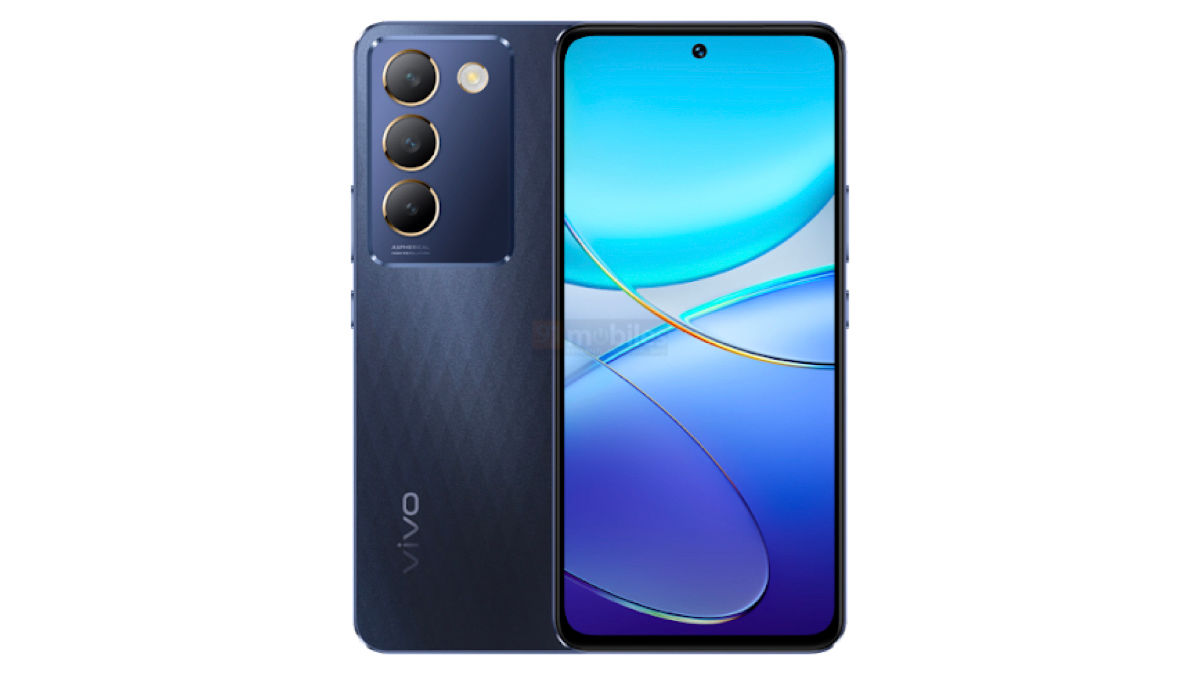
1. Vivo Y200e 5G

Vivo Y200e 5G

The Vivo Y200e 5G is set to launch in India on February 22 (Thursday). It is expected to go official at 12 PM IST.

A lot has leaked regarding this product over the last few days. Hence, we know a lot about it already.

The phone will arrive with a 6.67-inch FHD+ 120Hz AMOLED display, a Qualcomm Snapdragon 4 Gen 2 chipset, dual stereo speakers, an in-screen fingerprint sensor, Android 14, a 5,000mAh battery, and 44W wired charging support.

Finally, the device will be available in orange (vegan leather) and blue (plastic/glass) color variants.

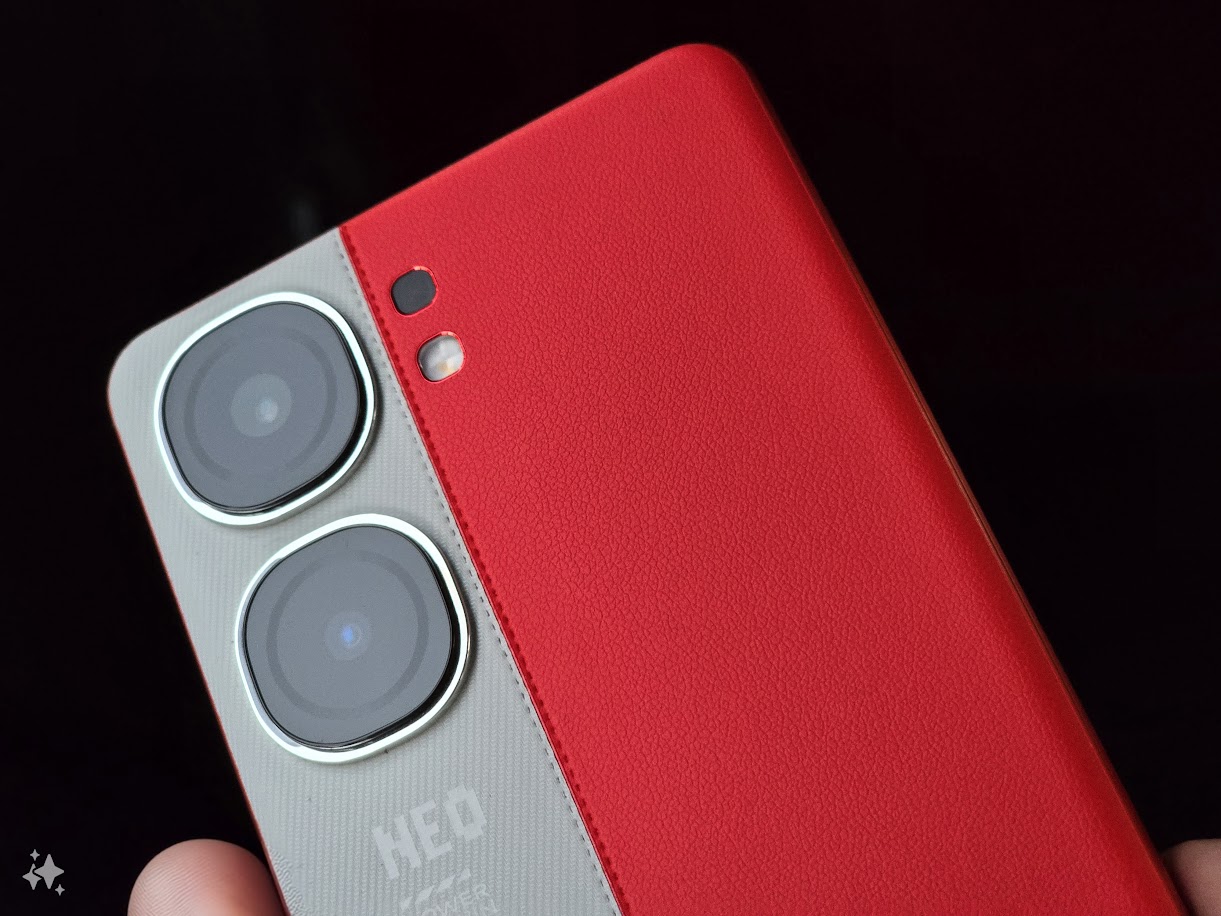
2. iQOO Neo 9 Pro

iQOO Neo 9 Pro

The iQOO Neo 9 Pro is also scheduled to launch in India on February 22 (Thursday). It is also anticipated to be announced at 12 PM IST.

The iQOO Neo 9 Pro for India will be built around a 6.78-inch 1.5K OLED display with a 144Hz refresh rate. It will be powered by a Qualcomm Snapdragon 8 Gen 2 SoC paired with LPDDR5x RAM and UFS 4.0 storage.

The handset will come with a 50-megapixel Sony IMX920 primary camera and a 16MP selfie camera. It will boot Android 14 and will be backed by a 5,160mAh battery with support for 120W wired charging.

Lastly, it will be available in Fiery Red and Conqueror Black color options.

RELATED:

ASUS ROG Phone 8 Pro Back Panel Shatters In JerryRigEverything’s Durability Test

ASUS ROG Phone 8 series launched in the global markets last month. The latest iteration gaming smartphones from the Taiwanese brand ditch the heavily gaming-oriented design like the previous generations. They look a lot more like mainstream phones. The ROG Phone 8 Pro has now undergone Zack Nelson’s (aka JerryRigEverything) gruesome durability test. 

ASUS ROG Phone 8 Pro durability test

Those who watch Zack’s durability tests on smartphones might be familiar with most of the parts. It starts with the scratch test where the ROG Phone 8 Pro gets scratches at level 6 and deeper grooves at level 7 which is pretty common with almost every smartphone. The gaming phone is equipped with Gorilla Glass Victus 2. 

The ASUS ROG Phone 8 Pro sports a metal build and in the scrape tests, all sides of the phone produce scratches. The device withstands flames for 20 seconds after which the pixels on the display turns White. 

Now coming to the main part of the durability test, the YouTuber tries bending the ROG Phone 8 Pro from the back and front. A significant flex is visible when ample amount of pressure from the front is applied. Bending from the back also shattered the glass back panel completely. However, the phone did avoid getting snapped unlike the ROG Phone 5 and 6 that failed this test. Overall, the ROG Phone 8 Pro did pass JerryRigEverything’s test and it’s not like you would be bending the phone pretty hard in real usage. 

Zack also conducted a teardown of the ROG Phone 8 Pro revealing the ROG LED lights, a larger cooling system, and more details. 

Related:

Realme 12+ 5G India Launch Officially Teased

Earlier today, Realme confirmed the launch date of the Realme 12+ 5G and 12 Pro+ 5G smartphones in Malaysia. A leak also revealed the full spec sheet of the non-pro model. Now, the Realme 12+ 5G is officially teased to launch in India as well. To recall, the brand had unveiled the Realme 12 Pro 5G series in the country last month. 

Realme 12+ 5G launch teased

Realme’s India branch has shared a teaser on its X handle (formerly Twitter) with the hashtag #OneMorePlus. The company is touting the upcoming offering as an ultimate value mid-ranger. The smartphone’s name has not been explicitly revealed but it is expected to be the Realme 12+ 5G. 

The microsite of the upcoming smartphone is also live on Realme India’s website. The company claims that it is confirmed to pack 12 upgrades unseen in the history of the smartphone industry. The listing also confirms the leather textured back panel and it is teased to feature a luxury design in the segment. We expect the device to have the same design as the Realme 12 Pro 5G series. 

The rest of the details of the Realme 12+ 5G remain under the wraps. It is teased to launch soon. We can expect a launch date announcement as well as key specifications in the coming days.

A leaked spec sheet of the Realme 12+ 5G revealed a 6.67-inch flat AMOLED display with a 120Hz refresh rate. It will reportedly have a 50MP Sony LYT 600 main camera paired with two more lenses. The smartphone is tipped to be powered by a Dimensity 7050 processor and be backed by a 5,000mAh battery unit with support for 67W charging. 

Related:

Vivo V30 Pro receives NBTC certification ahead of launch

Smartphone manufacturer Vivo will be releasing its V30 series line, including with the V30 Pro in Thailand on February 28th, 2024. Ahead of the launch, the V30 Pro has obtained certification from Thailand’s NBTC. 

This certification confirms the phone’s model number (V2319) and its 5G network compatibility. While the NBTC listing itself doesn’t disclose further details, leaks, and rumors have revealed some of the specifications of the device. 

Notably,  there are indications that the V30 Pro will offer a  Zeiss-branded camera system – a first for Vivo’s V series lineup. 

A report earlier today revealed that the Zeiss collaboration will bring six Zeiss-style portrait modes that will help users to capture professional-grade portraits. Additionally, there will also be Zeiss video modes. 

As for the specs, the rear camera setup is expected to include a 50-megapixel main sensor, a 50-megapixel ultra-wide lens, and a 50-megapixel telephoto camera. 

In addition to the camera, leaked specs suggest that the Vivo V30 Pro will sport a 6.78-inch curved-edge AMOLED panel with a resolution of 1260 x 2800 pixels resolution.

The device will be powered by the Snapdragon 7 Gen 3 chipset, paired with 12GB of RAM and 512GB of storage. 

The 7 Gen 3 is an octa-core processor built on TSMC’s 4nm architecture. The primary core operates at up to 2.63 GHz, while three performance cores run at 2.4 GHz, and four efficiency cores operate at 1.8 GHz. Additionally, the smartphone could come pre-installed with Android 14 and FunTouch OS 14. 

Keeping the lights on is a 5000mAh battery with 80W charging support. The device will also have an IP54-rated chassis which will measure 164.4 x 75.1 x 7.5mm, and weigh 188 grams.

Related:

Sony SRS-XV500 portable party speaker teased in India

Sony India is gearing up to unveil a new audio product that will bring the “party” vibe. The company’s latest teaser has revealed that the Sony SRS-XV500 portable party speaker is making its way to the Indian market. So here are all the details.

Sony SRS-XV500 Party Speaker Teased

Sony SRS-XV500

The brand shared a short video teaser on X (formerly Twitter), showcasing the upcoming party speaker and hinting at its imminent launch. To recall, Sony unveiled the SRS-XV500 model in the global market just last month. So we can expect the Indian variant to feature similar, if not identical specifications. For those unaware, the SRS-XV500 was built as a portable speaker for outdoor and indoor use.

In other words, you can even enhance your party experience outside thanks to its IPX4 water resistance and up to 25 hours of audio playback. Just 10 minutes of charging can offer another 2.5 hours of battery life, as per official claims. The speaker is equipped with two X-balanced speaker units that promise to offer powerful bass. These are also paired with two tweeters for clear vocals as well.

Another notable feature is the inclusion of the dedicated karaoke mode. The SRS-XV500 comes with a karaoke feature with Echo and Key control, which enables sound customization. It offers a second input that allows you to connect another microphone or guitar to improve the jamming session even more. It arrives with built-in lighting that can be controlled via the partner mobile app. Since the Sony SRS-XV500 party speaker was launched for 399.99 US Dollars, we can expect it to release in India for around the 40,000 INR price range.

RELATED:

Xiaomi Mix Flip is rumored to offer a dual hole-punch cover display that includes a 3x telephoto

Xiaomi enthusiasts are eagerly awaiting the unveiling of the company’s latest innovation in the realm of clamshell folding smartphones, dubbed the Xiaomi MIX Flip. Tipster @SmartPikachu has provided fresh insights into the anticipated device, hinting at a design reminiscent of Huawei’s minimalist style. It features a dual hole-punch rear camera setup for the cover display. Furthermore, this clamshell phone from Xiaomi is rumored to feature the Snapdragon 8 Gen 3 processor.

Xiaomi Mix Flip’s inner display offers a “zero-perception crease”

Adding to the intrigue surrounding the Xiaomi MIX Flip, another tipster DCS has shed light on its display that uses a domestically produced screen with “zero-perception creases”. The device is said to boast a relatively simple dual-camera setup for the back – a 50MP main camera and a 3x telephoto lens.

In addition to the Xiaomi MIX Flip, Xiaomi is also rumored to be working on the Xiaomi Mix Fold 4, which will be equipped with a quad camera setup that includes a flagship-grade 50MP periscope telephoto. The book-style foldable will feature the powerful Snapdragon 8 Gen 3 processor and it will also offer satellite communication functions. With an emphasis on an “extremely thin and light” design, fast charging, and uncompromised screen peripherals, Xiaomi is set to offer a significant improvement in the foldable smartphone market.

While competitors like Samsung, Huawei, OPPO, and vivo have already adopted a dual-line parallel strategy of “big folding + small folding,” Xiaomi’s foray into the “small folding” segment with the MIX Flip promises to offer users even more choices. As Xiaomi continues to push the boundaries of innovation, the release of the MIX Flip and its large foldable counterpart is eagerly anticipated by tech enthusiasts worldwide. However, as of now, Xiaomi has not disclosed the official release date for these devices.

Related:

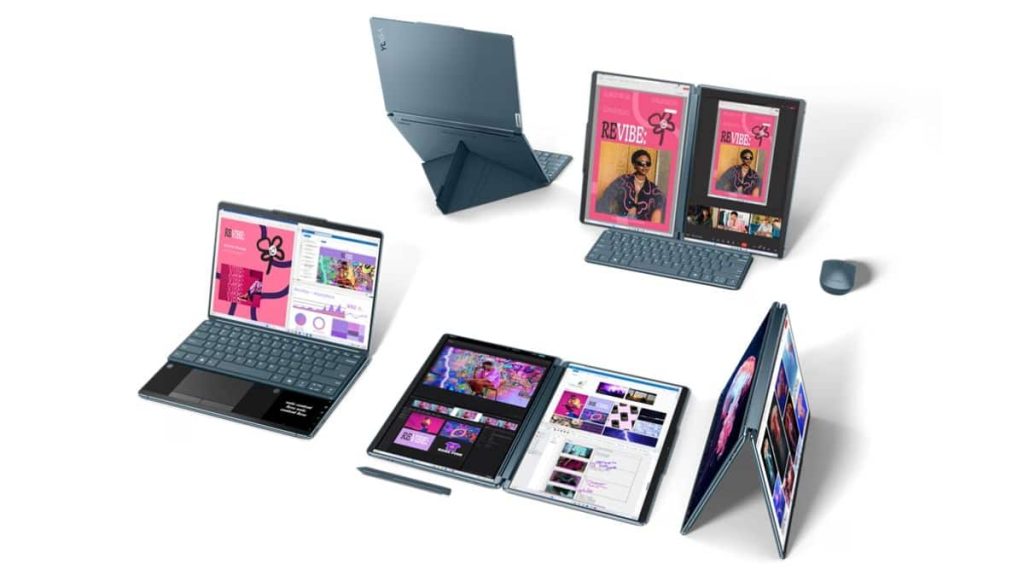
Lenovo unveils new Yoga Book 9 laptop with dual displays

Lenovo has just announced the brand-new Yoga Book 9 13IMU9 laptop model in the market. This is the brand’s latest convertible notebook, which even features a dual display design. So here’s everything you need to know about this product.

Lenovo Yoga Book 9 13IMU9

The dual displays are undoubtedly its highlight feature. Lenovo’s new Yoga Book 9 13IMU9 comes with twin OLED displays, both of which measure 13.3 inches in size. They are identical in terms of other specs as well, offering 2.8K resolution, 400 nits of peak bightness, 60Hz refresh rate, and a 100 percent DCI P3 color gamut. It also features Eyesafe Certified 2.0, Dolby Vision, VESA DisplayHDR True Black 500, and supports touch screen functionality.

Lenovo Yoga Book 9

Under the hood, the new Yoga Book 9 13IMU9 is equipped with the Intel Core Ultra 7 155U processor that is paired with Intel’s integrated graphics. The new convertible laptop runs on the Windows 11 OS out of the box and houses up to 1TB of PCIe NVMe SSD storage and up to 32GB of LPDDR5 RAM (soldered). The notebook is paired with a Lenovo Digital Pen 3 as well as the Yoga Book 9 Bluetooth KB keyboard.

A quad speaker setup can also be found in this model, consisting of two 2W woofers and two 2W tweeters. These come with support for Dolby Atmos, Smart Amplifier (AMP), and audio by Bowers & Wilkins. The front also features a dual microphone array and a 5-megapixel webcam that is coupled with an IR sensor. Other notable features include WiFi 6E support, Bluetooth 5.3, 3x USB Type C ports (Thunderbolt 4, USB4 with USB PD 3.0, and DisplayPort 2.1), and over 9 hours of battery life. A large 80Wh battery pack powers this device, which supports 65W USB Type C charging.

RELATED:

iQOO Z9 series may launch sometime in March, says tipster

iQOO is said to be working on the iQOO Z9 series of smartphones. The device has been appearing in leaks every once in a while. A recent leak by a tipster known as Smart Pikachu (name translated from Chinese) has now revealed a possible launch timeframe for the iQOO Z9.

According to the leak, the launch of the iQOO Z9 is tentatively planned for March. The tipster also mentioned a 6000mAh battery, which aligns with a previous leak from tipster Digital Chat Station.

DCS also revealed that at least one model in the Z-series will see a significant display upgrade. Specifically, the device will use an OLED panel with 1.5K resolution over the FHD+ IPS LCD screen on the Z8 series. However,  specific details on the Z9’s display size and refresh rate remain unknown. 

Moreover, while initial reports suggest the iQOO Z9 will be powered by a Dimensity 8300 chipset, DCS hinted at the use of a Snapdragon 7 Gen 3 processor for the Z9.  The SoC is already found in devices like the Honor 100 and Vivo S18. 

The 7 Gen 3 is an octa-core processor built on TSMC’s 4nm architecture. The primary core operates at up to 2.63 GHz, while three performance cores run at 2.4 GHz, and four efficiency cores operate at 1.8 GHz.

There is also speculation that the Dimensity 8300 might find its way into the Z9 Pro, but this is just based on the leaks we’ve seen so far.

Apart from these details, there isn’t much information available about the iQOO Z9 series at the moment. But rest assured, we’ll keep you updated as soon as we learn more.

Related:

Samsung Galaxy Z Fold 6 might not get the rumored 200MP main sensor from Galaxy S24 Ultra

Earlier, tipster Revegnus reported that the upcoming Galaxy Z Fold 6 will offer the same 50MP ISOCELL GN3 image sensor as the Galaxy Z Fold 5. Ice Universe, another tipster also confirmed that Samsung’s upcoming book-style foldable won’t bring any camera improvements. But recently some sources including the tipster Revegnus reported about the possibilities for the Z Fold 6 to come with the same 200MP main camera sensor as the Galaxy S24 Ultra.

However, GalaxyClub, a trusted source, says “so far Samsung is planning a 50 megapixel main camera – the same as in the Samsung Galaxy S24.”

There might be a reason behind sticking with a 50 MP sensor

The 200MP main sensor of the Galaxy S24 Ultra is quite large, and there are also talks about the Z Fold 6 getting even thinner. According to some sources, the Galaxy Z Fold 6 will use a new hinge design that allows the phone to be about 11 mm thin when closed. For context, the Galaxy Z Fold 5 measures 13.4 mm when closed. It seems challenging to fit the sensor within that slim form factor, as a larger sensor results in a longer focal length, thereby increasing the protrusion of the camera module.

The OnePlus Open looks somewhat similar to some mainstream flagships in terms of its camera module protrusion, mostly because of the relatively larger 64MP sensor for its 3x telephoto and a thickness of 11.7 mm when closed. For context, the sensor size for the 3x telephoto (70mm equivalent) inside the OnePlus Open is 1/2.0″ (as reported by GSMArena), which is significantly larger than the 10MP telephoto sensor of the Galaxy Z Fold 5. Using the significantly bigger 1/1.3″, 200MP sensor for the main camera will increase the camera module protrusion on the Galaxy Z Fold 6, altering its design aesthetics.

Nonetheless, this is how the design evolves sometimes, and we will have to see if Samsung decides to put their absolute best camera sensor inside its upcoming folding phone.

Related:

(Source)

Realme 12 Plus entire specs leak ahead of launch

After launching the Realme 12 Pro and Realme 12 Pro Plus, the brand is now gearing up to introduce Realme 12 and Realme 12 Plus. The latter was recently confirmed to go official in Malaysia on February 29.

This smartphone is also expected to launch in China soon, however, we don’t have the launch date so far. Anyways, ahead of the product’s official announcement, its entire specs have leaked.

Realme 12 Plus

Tipster Sudhanshu Ambhore has revealed the complete features of the upcoming Realme 12 Plus. He even shared the renders of the phone showcasing its design.

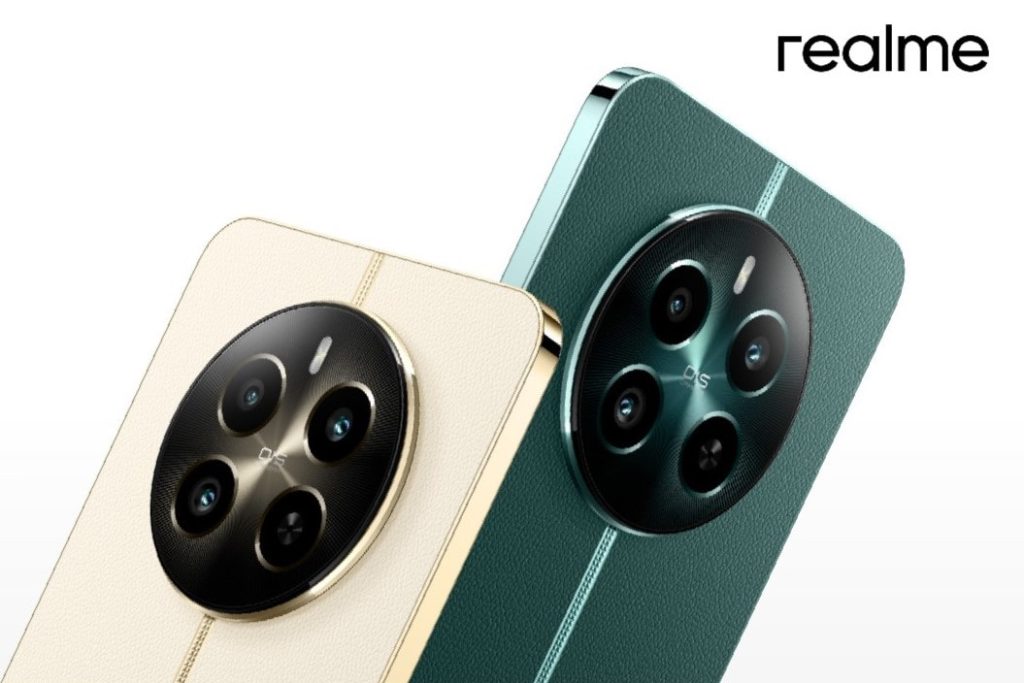
The device will sport a flat frame and a big circular camera module. It will arrive in beige and green color options. But variants will flaunt a vegan leather back.

The handset will be equipped with a 6.67-inch flat display. This AMOLED panel will offer a resolution of 2400 x 1080 pixels and a 120Hz refresh rate.

As for optics, it will house a triple camera system on the rear. The setup will include an OIS-assisted 50MP Sony LYT-600 primary sensor, an 8MP ultrawide unit, and a 2MP macro snapper. On the front, it will sport a 16MP selfie camera.

Under the hood, the smartphone will house a MediaTek Dimensity 7050 SoC and a 5,000mAh battery with support for 67W wired charging. The chipset will be paired with up to 12GB RAM and 256GB storage.

On the software front, the device will boot Realme UI 5.0 based on Android 14. Last but not least, it will measure 163 x 75.5 x 7.9 mm in dimensions and weigh 190g.

RELATED:

Vivo X Fold 3 series leaks suggest lightweight design, upgraded screen resolution

Rumors continue to circulate about the upcoming Vivo X Fold 3 series foldable phones. These devices were recently certified by China’s MIIT. Now, a noted leaker, Digital Chat Station, has shared additional details about their potential specifications.

According to the leaker, the Vivo X Fold 3 series will come with upgraded screen resolutions. However, they haven’t revealed the exact resolution. The X Fold 2 already boasts an impressive 2K resolution inner display, so it’ll be interesting to see how much further this resolution will be improved.

Furthermore, the leak suggests that the devices will sport a 50MP main camera, which corroborates with previous leaks. Rumors hint that the rear camera setup for the Vivo X Fold 3 series may feature a 50-megapixel OV50H main camera with OIS.

The series is also rumored to include an ultra-wide lens and a 64-megapixel periscope telephoto camera. However, the latter might be absent in the standard model.

Moreover, the tipster indicates that Vivo might be focusing on reducing the weight of these foldable devices. Additionally, the devices are expected to feature an ultrasonic fingerprint sensor and support 50W wireless charging.

According to earlier reports, the Vivo X Fold 3 Pro will be a premium offering equipped with the Snapdragon 8 Gen 3 chipset. It’s speculated to come with a 5,700mAh battery and support 100W wired charging.

On the other hand, the Vivo X Fold 3 is rumored to be a more budget-friendly foldable phone, featuring the Snapdragon 8 Gen 2 chipset. It’s expected to come with a 5,600mAh battery. 

As for the launch, Vivo is rumored to hold a major launch event in China in March. The brand could unveil its foldable at this event. 

Related:

Lava Z34 key specs & design revealed via multiple certification listing

A new Lava smartphone has just been spotted. The device in question is apparently called the Lava Z34, which recently surfaced on multiple certification platforms. This revealed some of its key specifications and its design, so let’s have a look.

Lava Z34

Lava Z34 visits BIS, FCC, and GeekBench

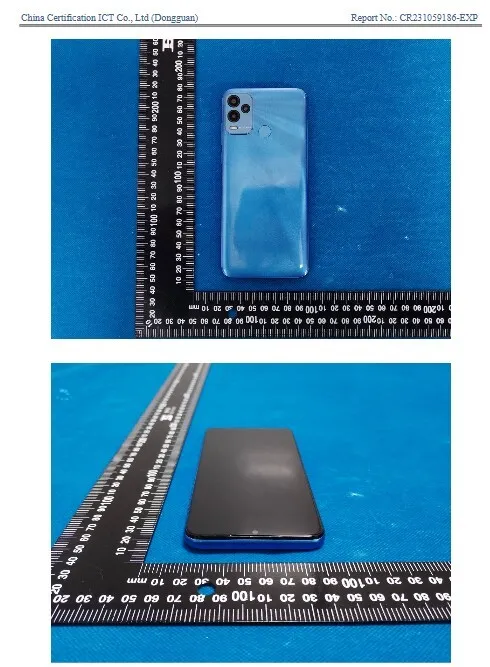
The Lava Z34 sighting arrived just days after the company started the Lava Yuva 3 sales in India. Looking at the FCC certification first, the database lists the upcoming smartphone with live images. This reveals the entire design of the new Z34. The rear seems to pack a triple camera setup, an LED flash, and a rear mounted fingerprint scanner.

Lava Z34

Meanwhile, the front houses a center aligned punch hole cutout for the selfie camera. We can also see the power button and volume rockers on the right and the SIM card tray on the left. Lastly, the USB Type C port, speaker grille, and headphone jack are situated on the bottom. The device measures just 8mm in thickness. The FCC listing also confirmed a 4,950mAh battery pack with standard 10W charging support. Lava Z34 was also seen carrying the MediaTek G35/P35 chipset.

Lava Z34

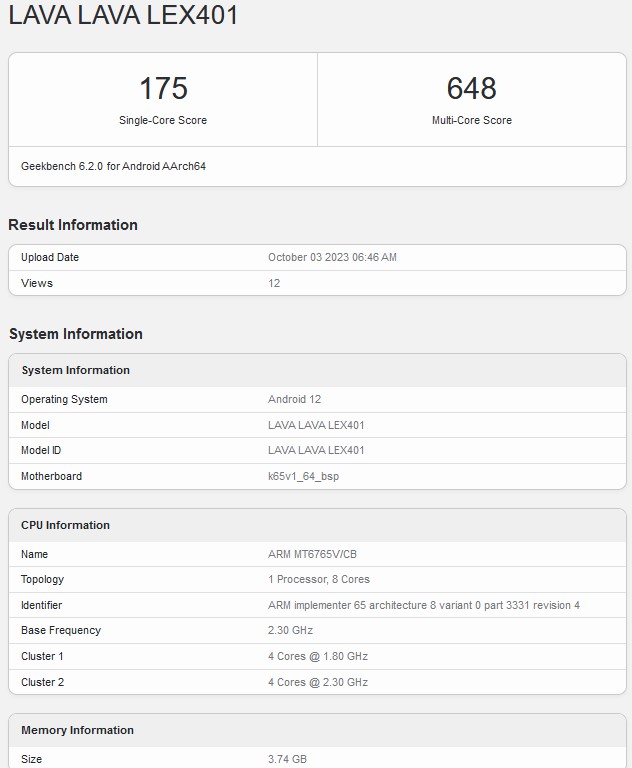
This was also backed by the GeekBench listing that also showcased the same chipset along with 4GB of RAM. It scored 175 points on the single core test and 648 points on the multi core test. Unfortunately, the BIS listing does not reveal much information apart from the LEX401 model number and Indian availability. This is all the information we have at the moment, so stick around for more updates.

RELATED:

(Via)

Vivo Y200e 5G India launch date officially revealed

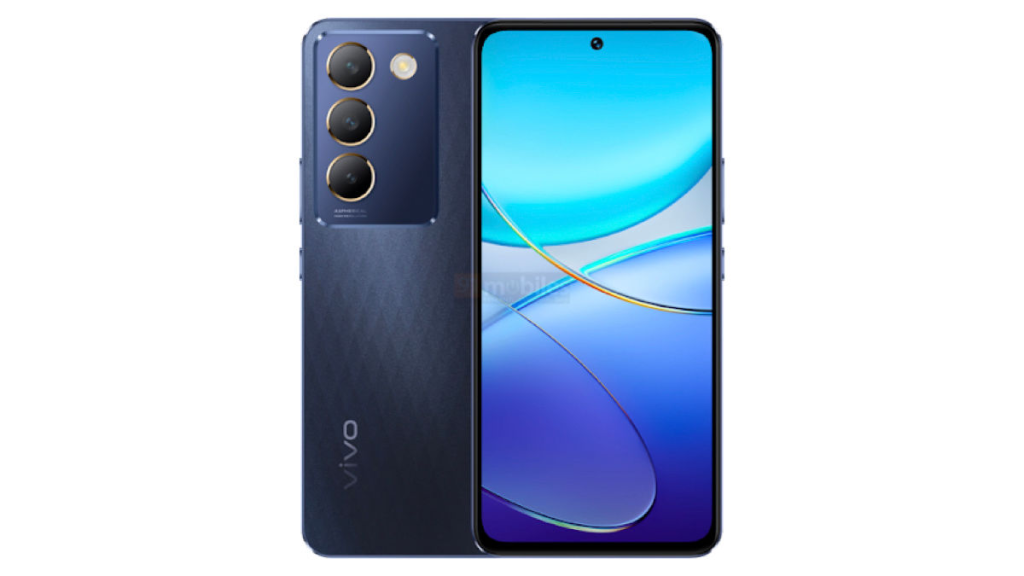
After several leaks and official teasers, Vivo has finally revealed when it will launch the Vivo Y200e 5G in India. The announcement comes after the release of the new 256GB variant of the vanilla Y200 5G.

The Vivo Y200e 5G for India will be somewhat identical to the recently launched Vivo Y100 5G in Indonesia. The device is also expected to be released as Vivo V30 lite 5G, Vivo V30 SE 5G, and Vivo V40 SE 5G in other markets.

Vivo Y200e 5G
Vivo Y200e 5G

According to the official social handles of Vivo India, the Vivo Y200e 5G will launch in the country on February 22 (Thursday). There’s no mention of time, however, we expect the handset to go official at 12 PM IST.

Thanks to multiple reports on the phone, we know almost everything about it. It will arrive in two finishes. The orange version will have a vegan leather back, while the blue variant is anticipated to have a plastic/glass rear panel.

The smartphone will be built around a 6.67-inch AMOLED display. This panel will offer an FHD+ resolution, a 120Hz refresh rate, and a 1200 nits peak brightness level.

The device will be powered by a Qualcomm Snapdragon 4 Gen 2 SoC. The chipset will be paired with 8GB RAM and up to 256GB storage.

The IP54-rated phone will boot Android 14-based Funtouch OS 14. It will arrive with dual stereo speakers and an in-screen fingerprint sensor. Finally, it will be backed by a 5,000mAh battery and support 44W wired charging.

We are looking forward to learning even more details about the Vivo Y200e 5G ahead of its release in the next few days.

RELATED: