As our reliance on devices like smartphones, wireless headphones, smartwatches, laptops, and tablets grows, so does the need to charge them daily. This is where the significance of power banks becomes increasingly apparent. However, the idea of adding one more device to our daily carry can be a deal breaker for many. Luckily, Urbn has introduced Nano, the world’s smallest charging power bank. With a hefty 20,000mAh capacity and 22.5W charging capability, Nano aims to address this problem by offering a compact solution. Here are the details…
Urbn Nano Launches the Smallest 20,000mAh Power Bank with 22.5W Charging
Urbn, a well-known brand for its successful products like power banks, headphones, and cables, has recently introduced the world’s smallest power bank. This tiny powerhouse is available in two different battery capacities: 20,000mAh and 10,000mAh. The prices are quite reasonable at INR 2,499 and INR 1,699, respectively.
Urbn Nano 20.00 mAh power bank
What’s impressive is that both variants can charge a phone from 0-50% in just 30 minutes. However, the actual charging time may vary depending on the device’s size and its charging capacity in watts. Despite this, considering the average size of phones, you’re likely to be pleased with the charging speed. You can find these innovative products on popular platforms such as Amazon, Croma, and Urbn’s website.
The Urbn Nano Power Bank, with a 20,000 mAh capacity, stands out for its 22.5W charging support. What sets it apart is the triple port design, accommodating multiple devices simultaneously. You’ll find one USB-A and two USB-C ports, making it versatile for charging items like headphones and phones concurrently, saving you time.
And if you concerned about safety? Urbn addresses this with BIS certification and a 12-layer protection system, alleviating worries about carrying a battery in your pocket. Its compact size, measuring 10.8 * 2.8 * 6.9cm, makes it an ideal portable powerhouse for on-the-go charging. The 10,000 mAh model boasts efficient 20W charging with two-way capabilities, ensuring speedy recharges
Honor is gearing up to launch new GT series smartphones in China. One of the brand executives just teased the arrival of these devices last week.
As per leaks, there will be two devices, namely Honor 90 GT (previously Honor 100 GT) and Honor X50 GT. These phones will be centered around performance.
We only know a few tidbits about these products. Today, a couple more crucial details have emerged. Let’s go through them.
According to Digital Chat Station, the upcoming Honor 90 GT and Honor X50 GT will come with up to 24GB RAM. They will be the brand’s first smartphones to offer this huge amount of RAM.
Further, the tipster claims that the main camera of these handsets will have OIS (Optical Image Stabilization). He also adds that why will be powered by three different chipsets and will flaunt an eye-catching display.
Previously, the same source had revealed that the 90 GT and X50 GT will be powered by Snapdragon 8 Plus Gen 1 and Snapdragon 888 chips, respectively. But this is the first time we are hearing about three chipsets.
Currently, it is not known which one of these two phones will be housing the third silicon. We think that the 90 GT could come in two variants offering different chips.
As for displays, the handsets are said to sport flat screens. It is not known whether they will be equipped with LCD or OLED panels. There’s a chance that they may arrive with OLED displays after all.
We are looking forward to learning more about the Honor 90 GT and the Honor X50 GT in the coming days. Perhaps, the brand may finally start teasing the features officially as an executive has already hinted that GT will be spun off into a new separate lineup of devices from the existing number and X series.
Unsurprisingly, the K70 series was another big seller in China. Compared to the K60 series, this K70 doubled the so-called “sales in five minutes”. While many people trolled it in our unboxing video for this phone getting uglier, it’s also true that it’s more popular. So why exactly do people love both phones here so much? After my two days of experience, I probably know what the answer is.
Design
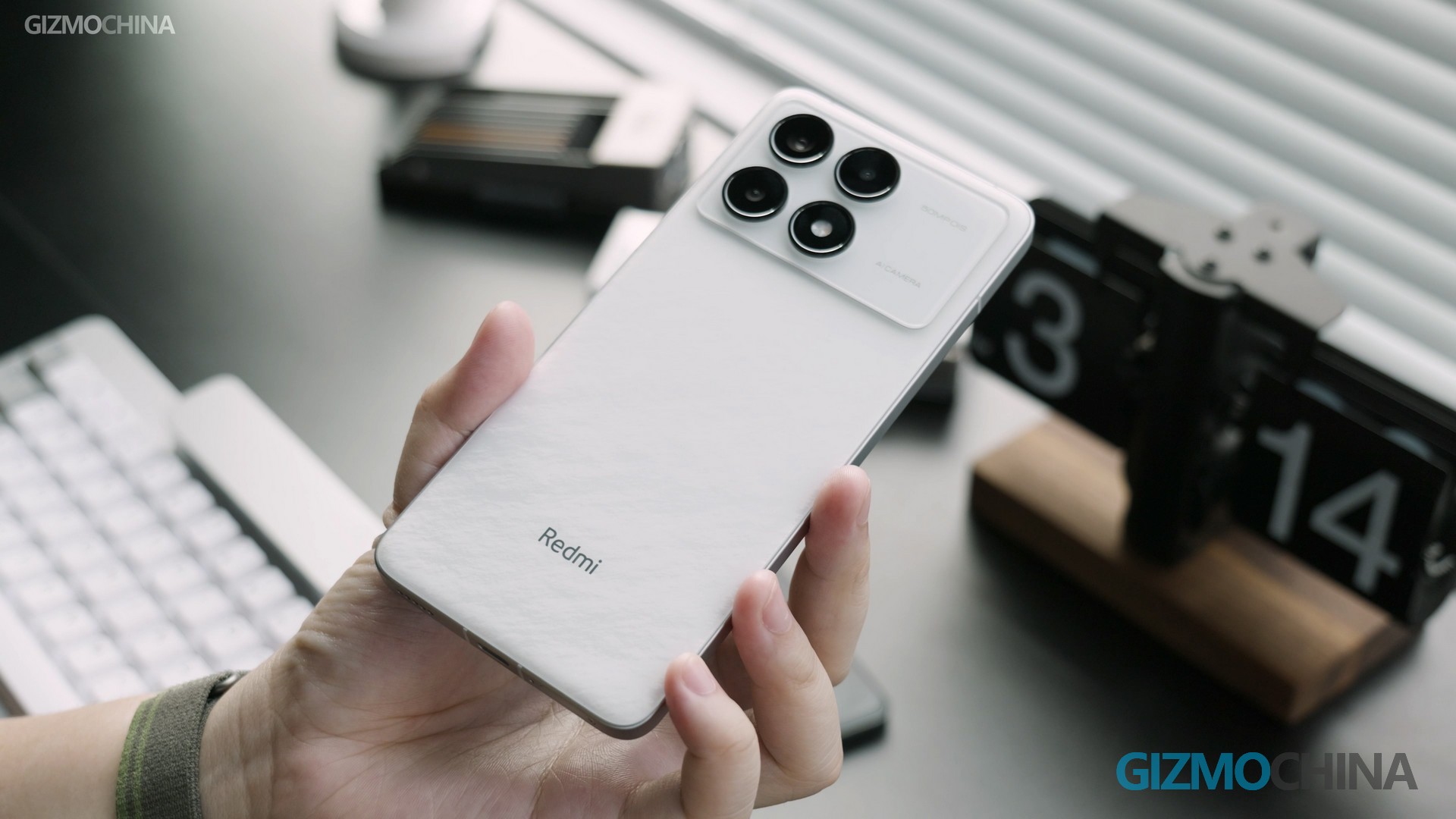
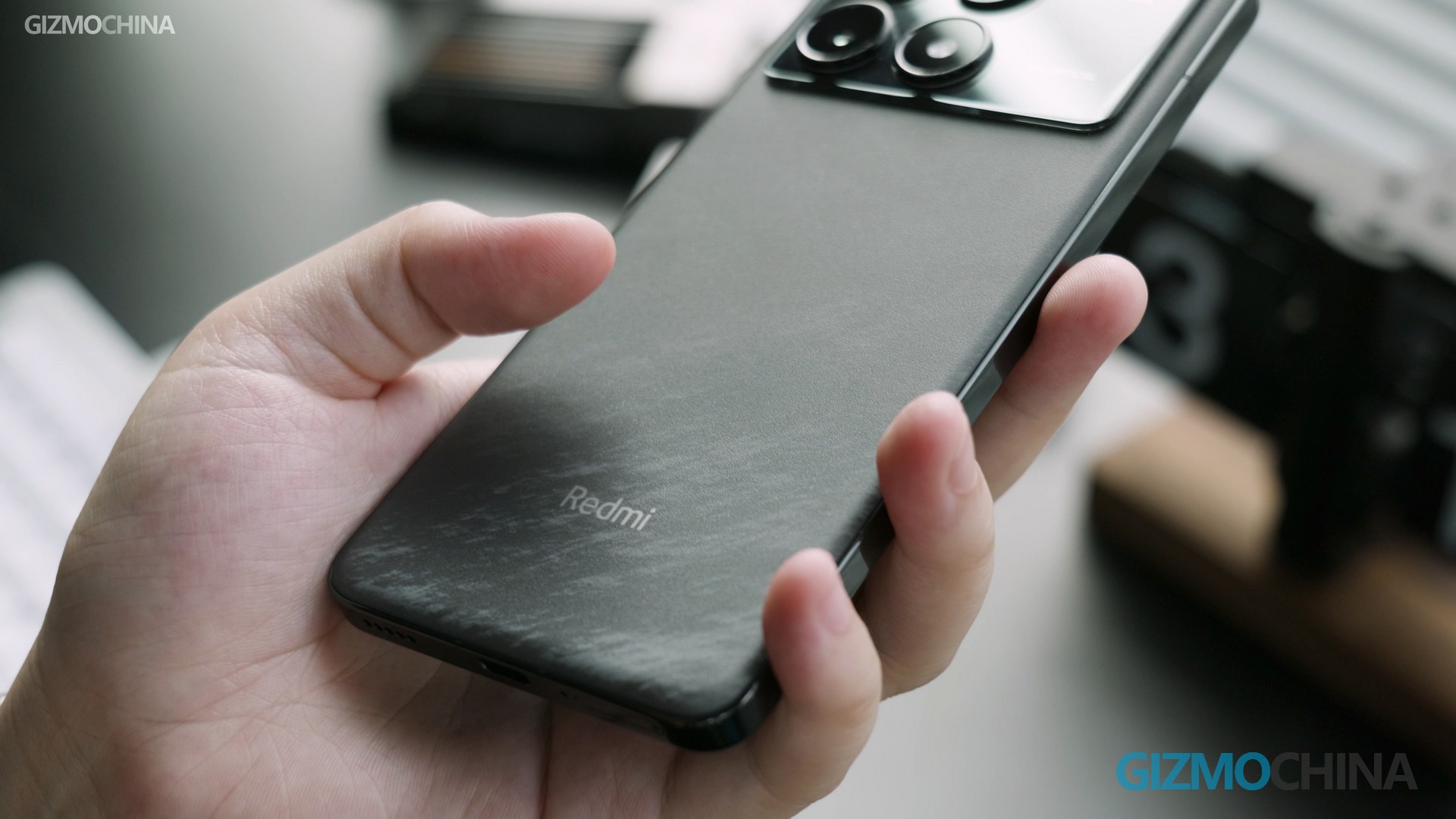
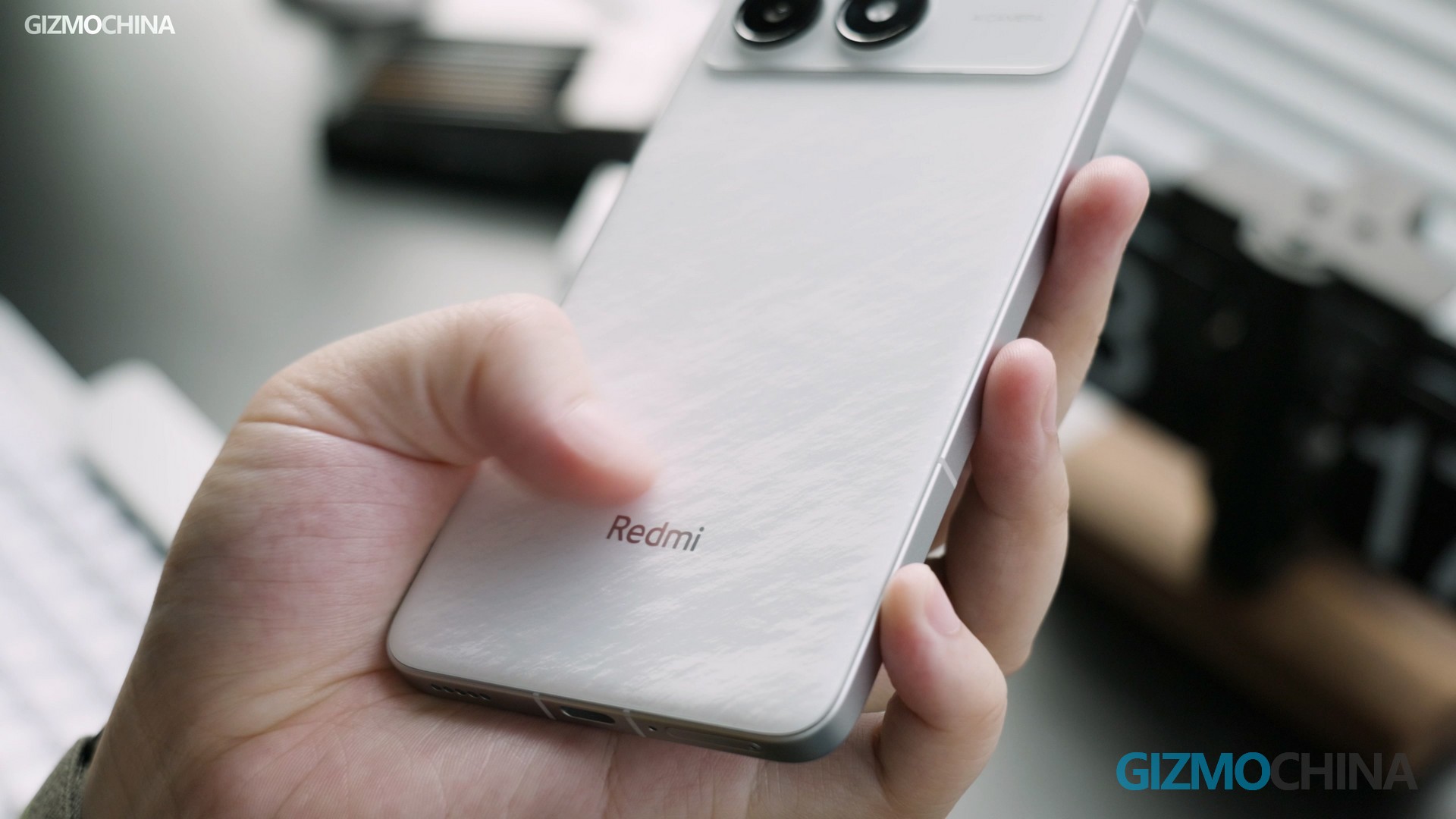
I admit, if you just look at the appearance, the K70 is not as good as the K60. Are people stupid for buying it even though it’s ugly? Of course not, it’s just because a lot of people were overwhelmed by the texture of both phones after actually getting their hands on them. I was one of them, and the K70 is definitely better to the touch than to look at.
After so many years, it’s still quite impressive that we’re finally seeing aluminum frames again in a budget phone. I would recommend buying the black or white version, they are the only two colors with frosted back covers, which are less prone to fingerprints. By the way, the black frosted back cover is as rough as sandpaper to the touch, while the white one is like silk and smoother.
After all the good points, it’s time for some complaints. No IP68. no wireless charging. That’s right, this is the Redmi we’re all familiar with. So K60 series users, hold dear to your phones because Redmi phones probably won’t have these two features in the future.
Display
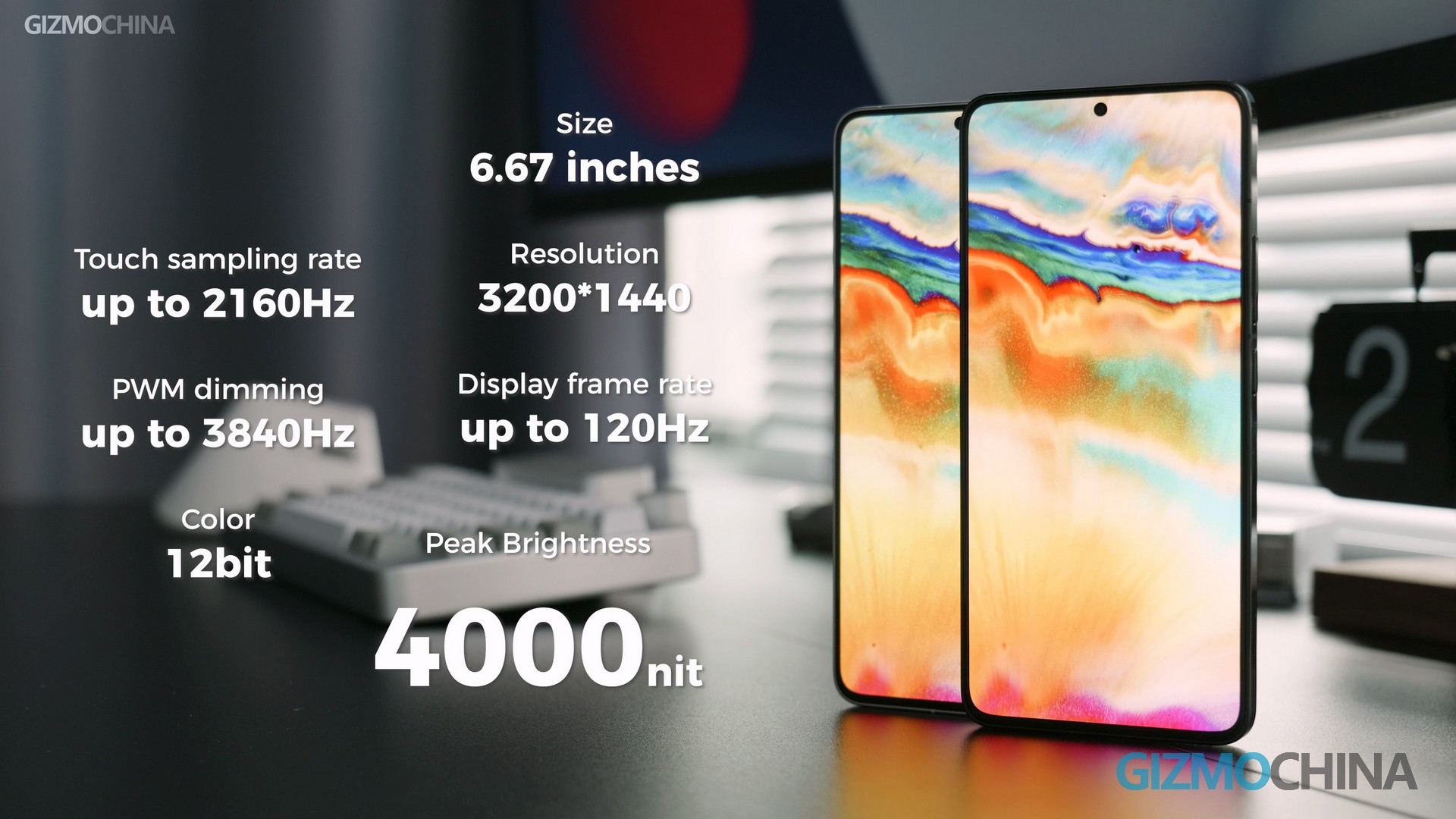
The K70 and K70 Pro use the same screen, both 2K straight screens from TCL. Shockingly, this C8 panel has a 3000nit peak brightness on the Xiaomi 14, and it didn’t take long for its maximum brightness to rise to another level. In fact, the manual full-screen maximum brightness is probably only 670nit, and in sunlight, it can reach up to 1200nit. it’s quite nice to use, but it’s certainly not as exaggerated as it’s claimed to be.
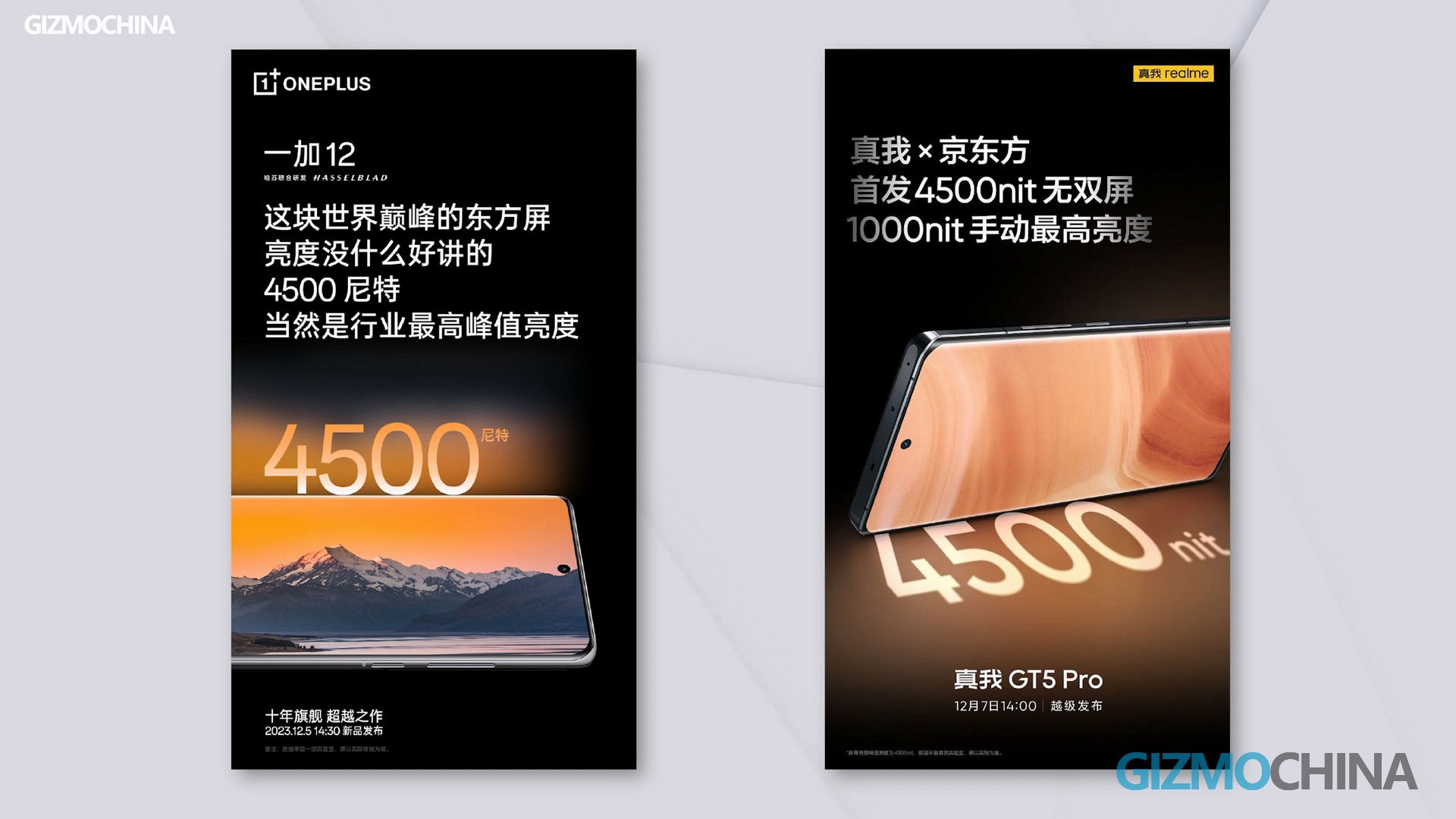
Don’t think Redmi is the only one who likes to use such promotional tactics because there are a couple of phones with a peak brightness of 4500nit that will be released soon.
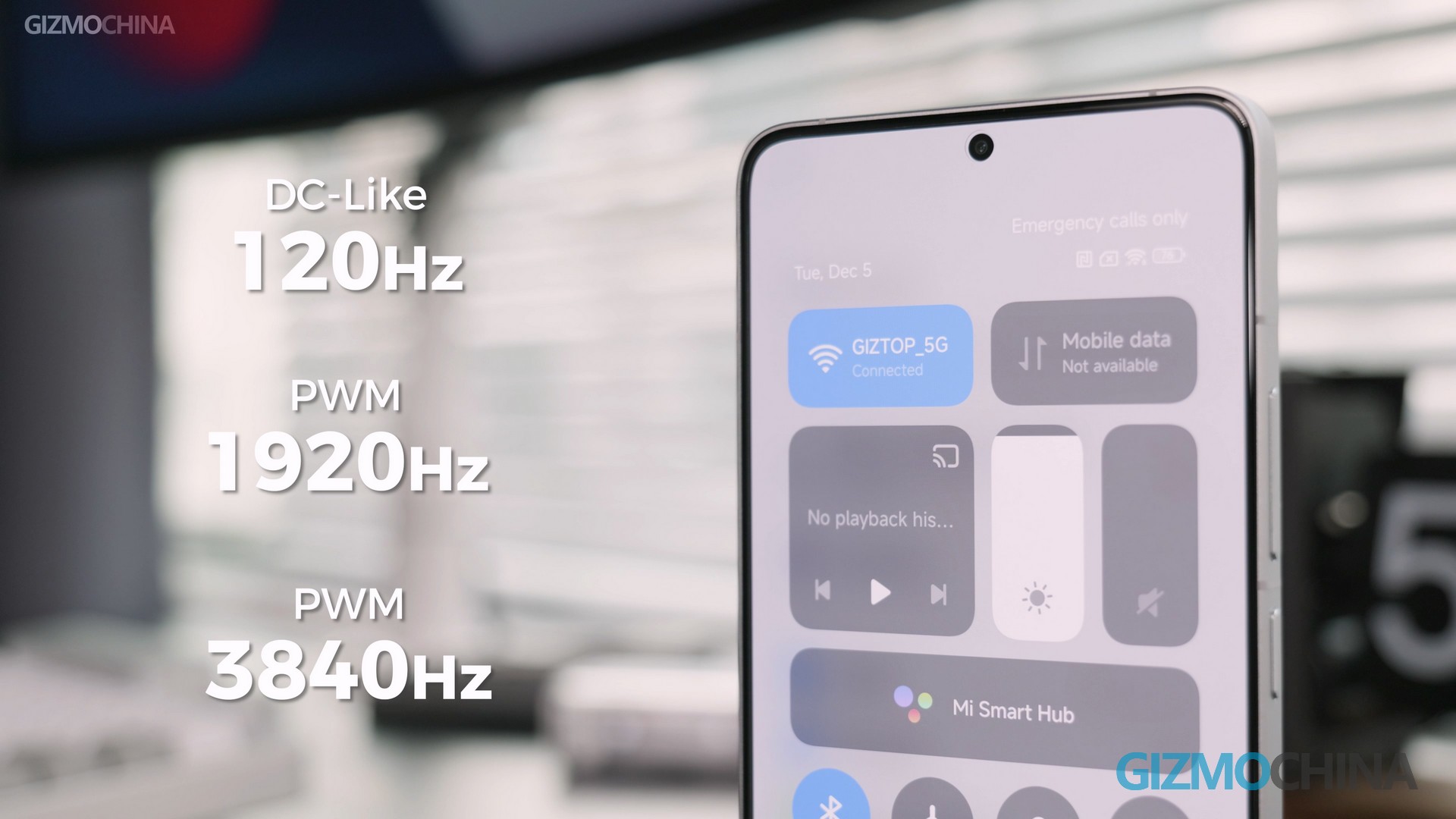
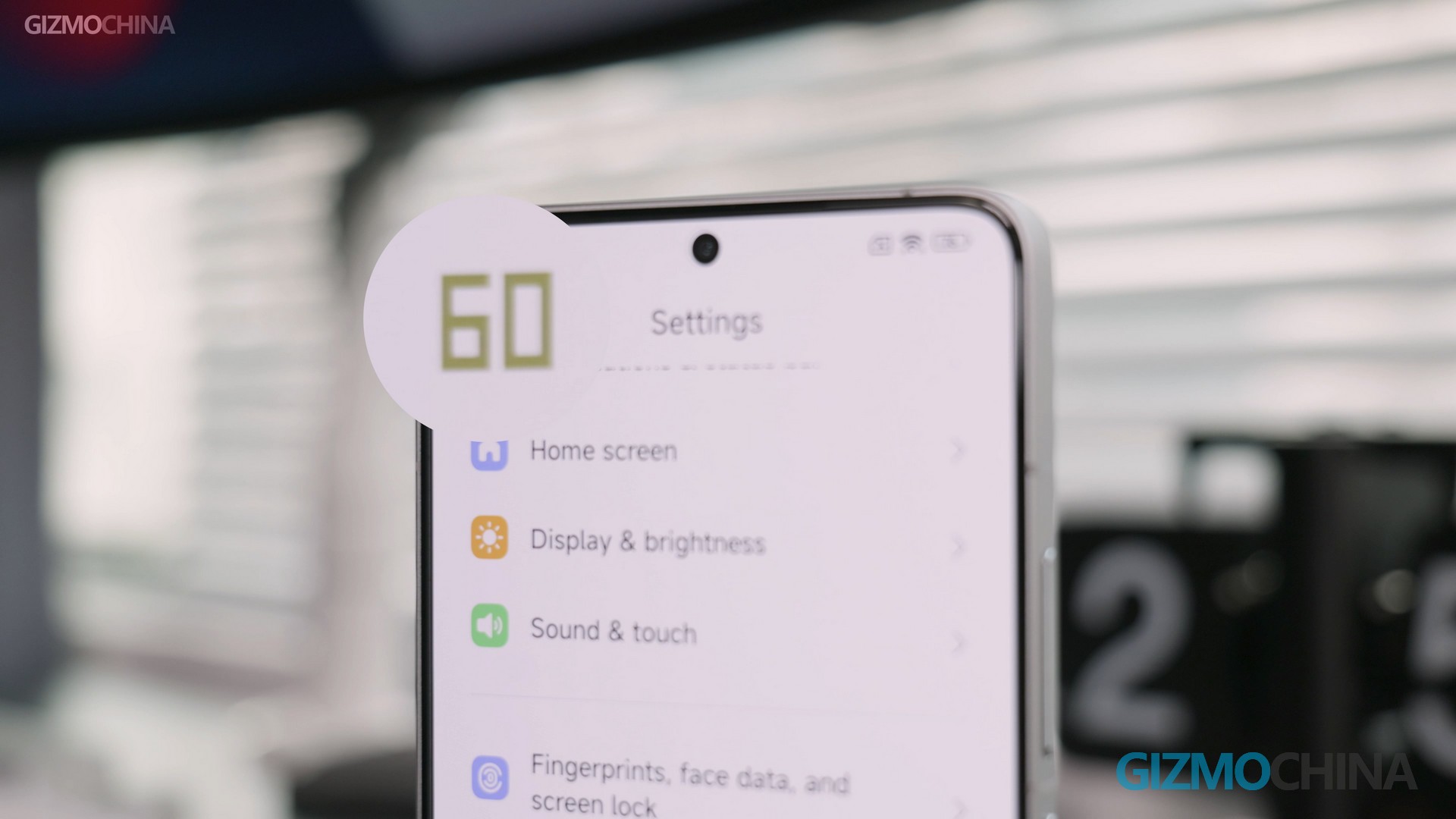
Compared to the peak brightness which seems like a gimmick, the increase in PWM dimming frequency is what we really need. 120Hz DC-like dimming at high brightness, 1920Hz PWM at medium brightness, and 3840Hz at low brightness. Even though they don’t support LTPO, they are able to do the same with the refresh rate automatically reduced to 60Hz when you are not using the phone. It will drop the dimming frequency, but I think it’s acceptable.
We also tested the touch sampling rate. It’s 240Hz under normal conditions, and 480Hz with Enhanced touch turned on. There’s no doubt that the K70 series has won big again this year in the screen part. Especially with the K70 Standard, you’ll never find a phone with a better screen for under $400, I’m sure of it.
Benchmark & Gaming
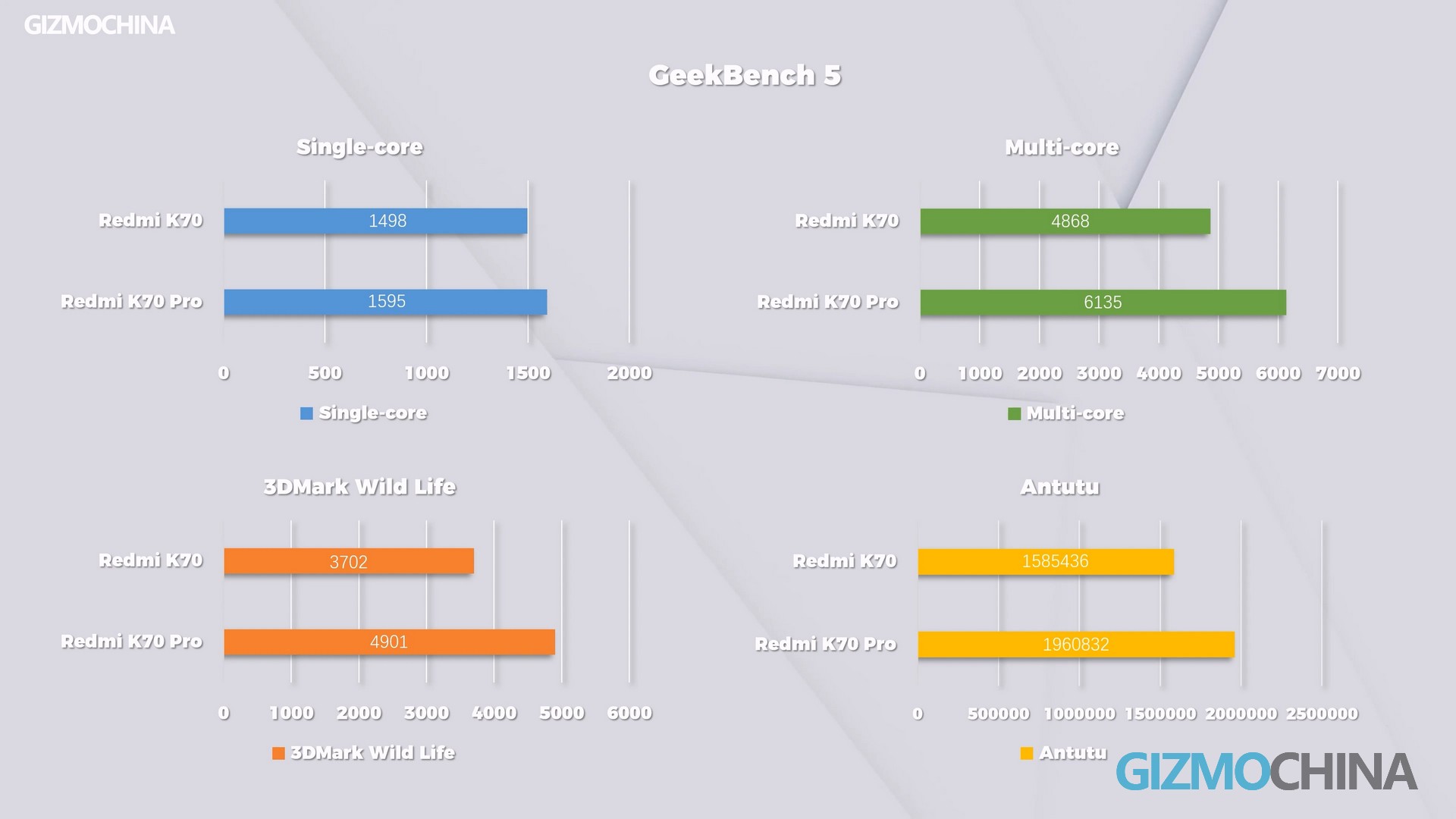
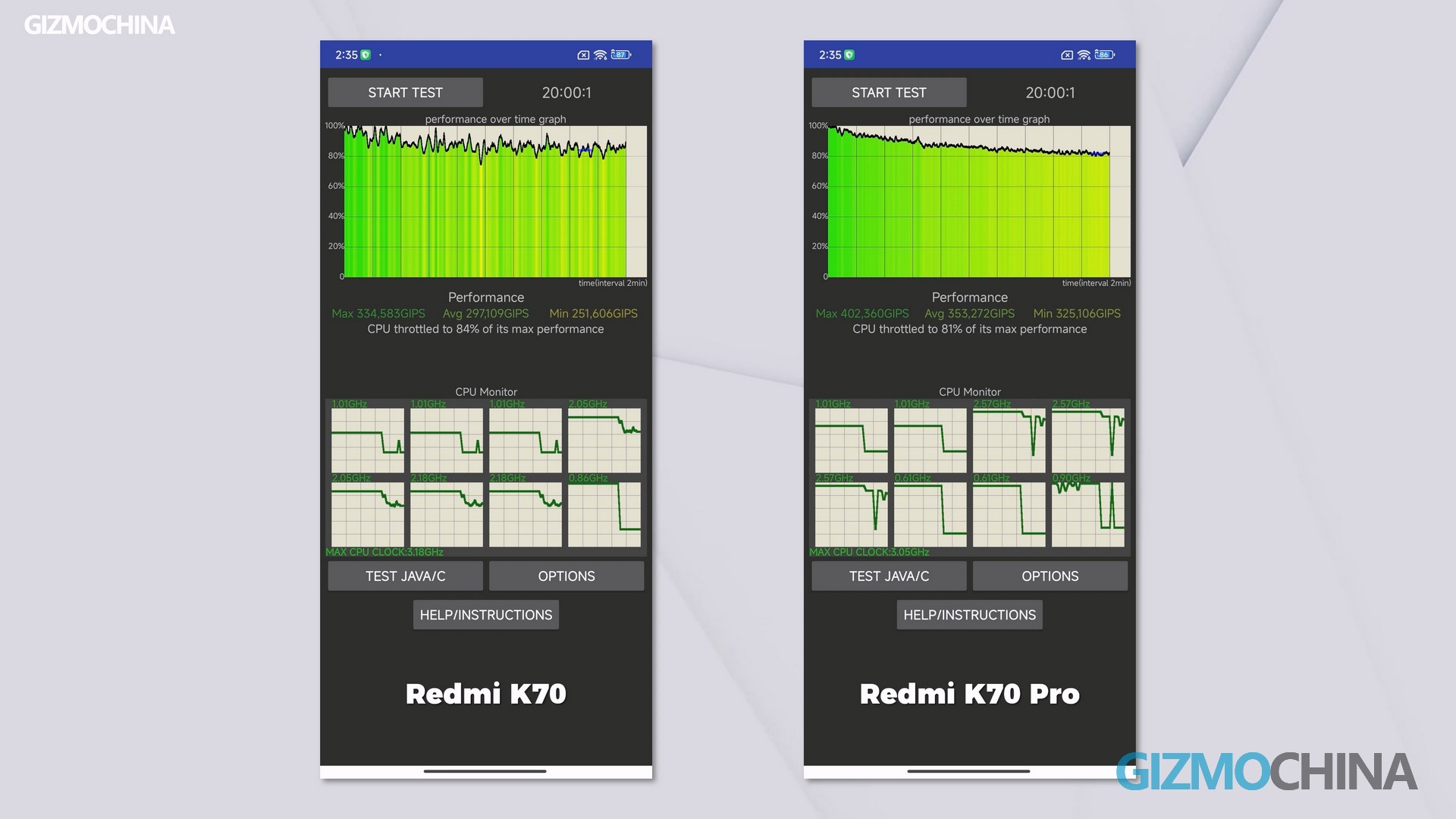
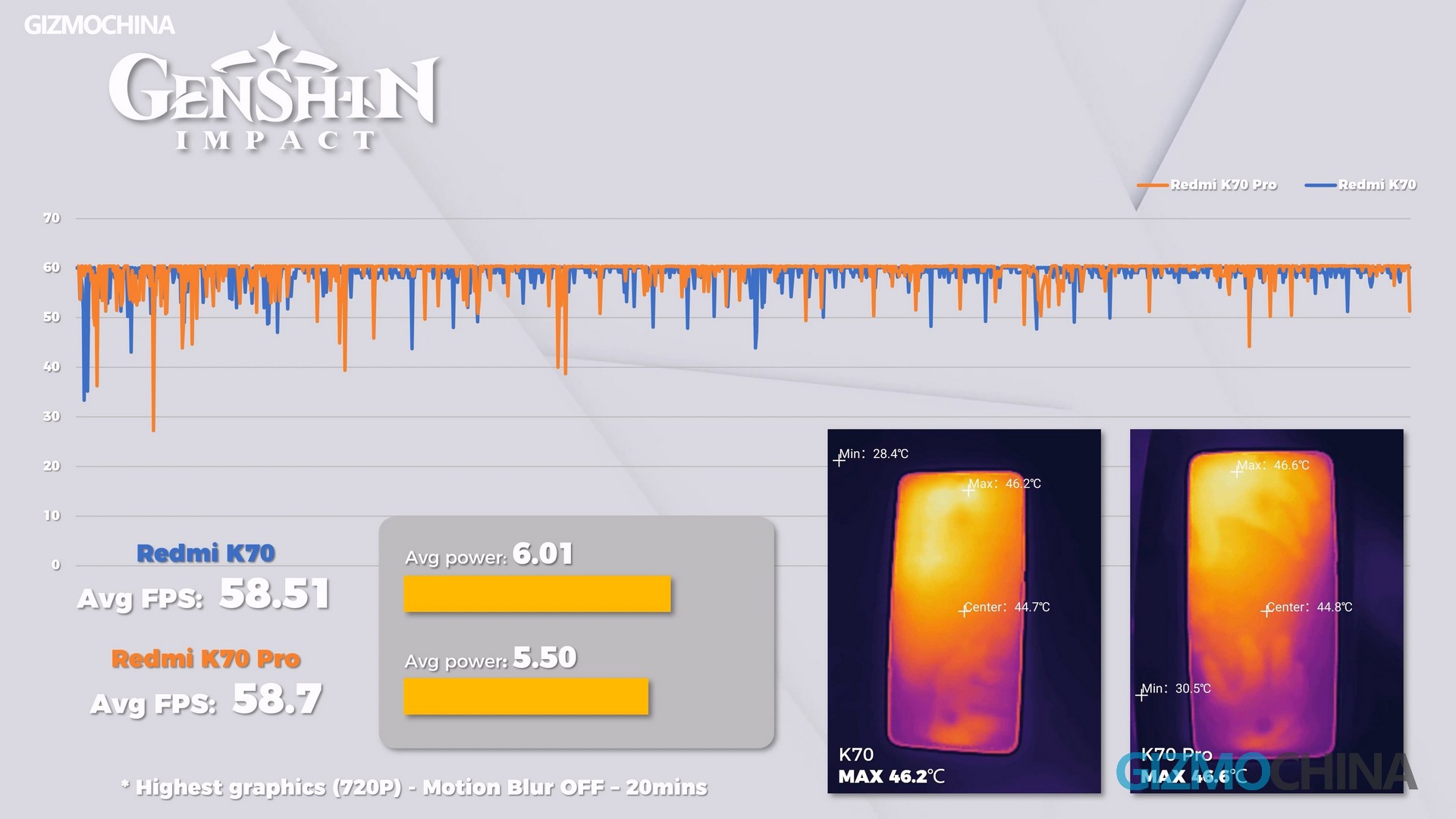
One of the biggest differences between the Standard and Pro versions is the processor. One is the latest 8 Gen 3 and the other is 8 Gen 2. Obviously, there is a real gap in performance between them. But don’t worry too much about the gaming experience on the standard version, as the 8 Gen 2 is still a very good processor. We tested them both in Genshin Impact at a room temperature of 22 degrees Celsius. The frame rate curves for both the Standard and Pro versions are almost identical, with a straight line. The maximum temperature is also kept below 47 degrees Celsius.
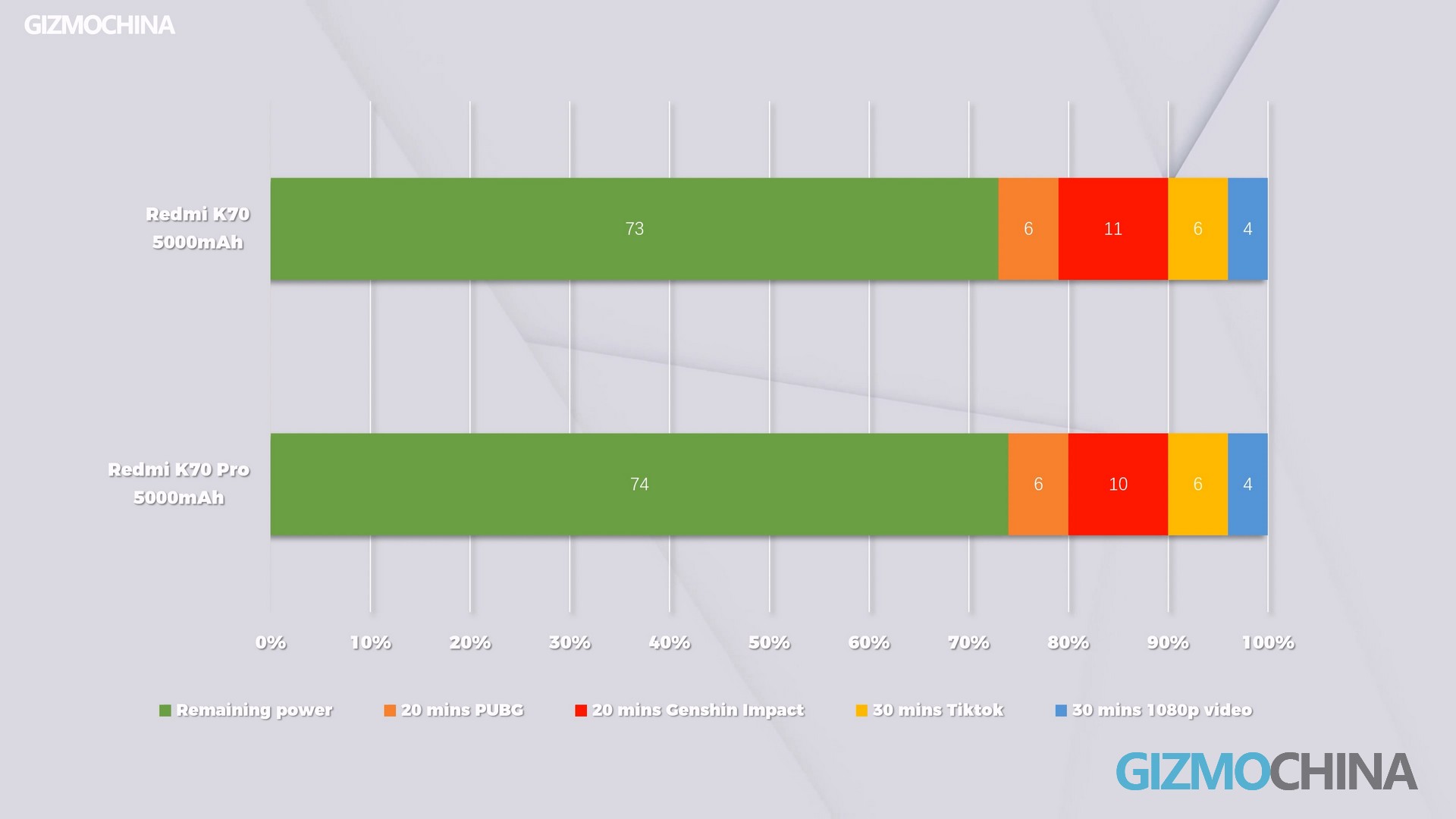
Doesn’t seem like there’s much need to buy the Pro, but in fact, looking at the power consumption you can see that the Pro version is definitely the one that handles it more calmly. The standard version will consume 1% more power than the Pro after 20 minutes of gaming. If battery life is important to you, then the K70 Pro is better for you.
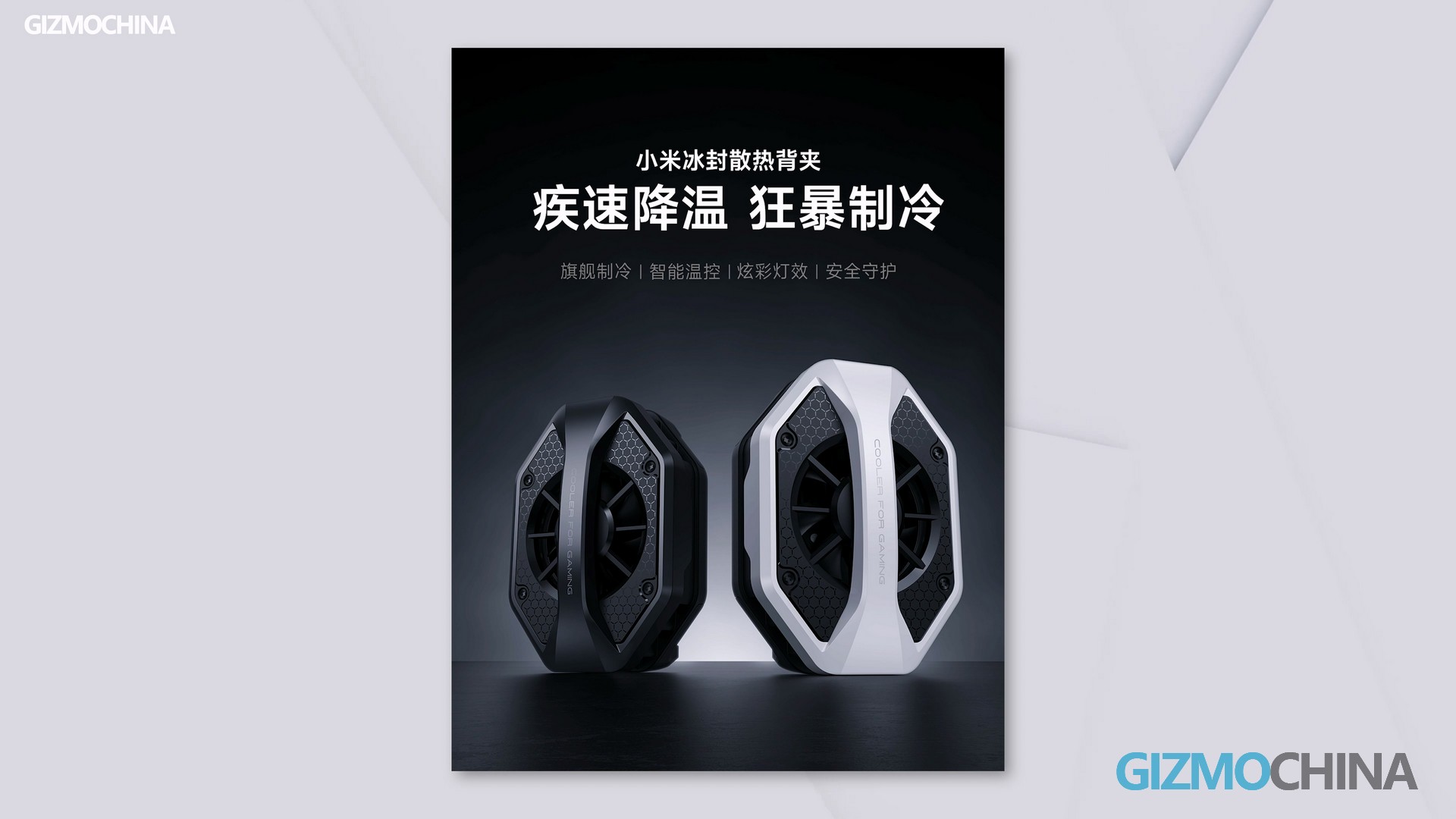
By the way, if you want to play Genshin Impact in 2K resolution at 60fps on your phone, without frame insertion or AI enhancement, then only the three phones in the Redmi K70 series can do it at the moment. But there’s a pre-condition: you have to buy their COOLING BACK CLIP, otherwise you can only play at 30fps in 2K resolution.
Camera
The second major difference between the K70 and K70 Pro is the camera. Aside from the main camera, the Pro version comes with upgrades to the other two cameras.
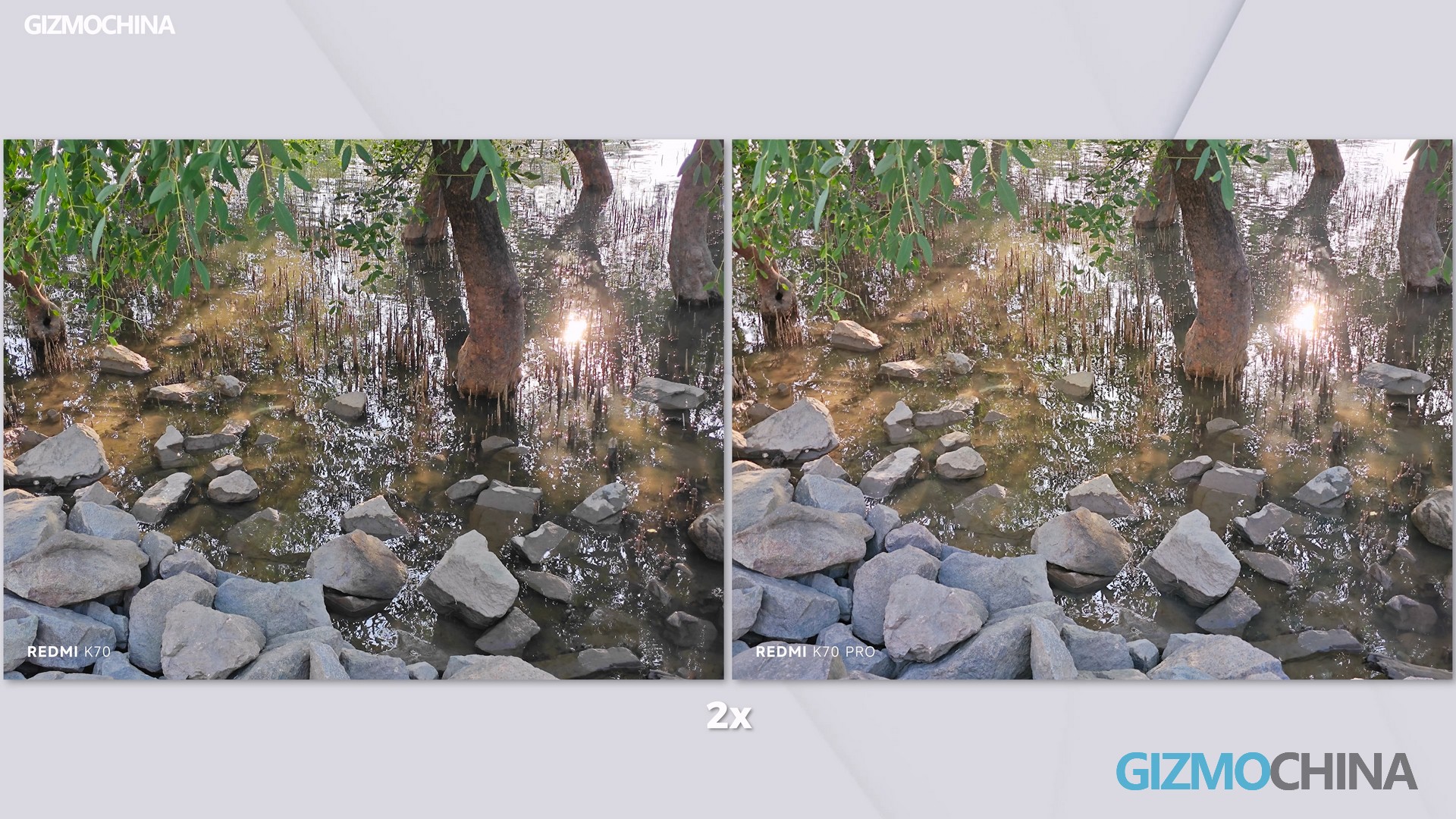
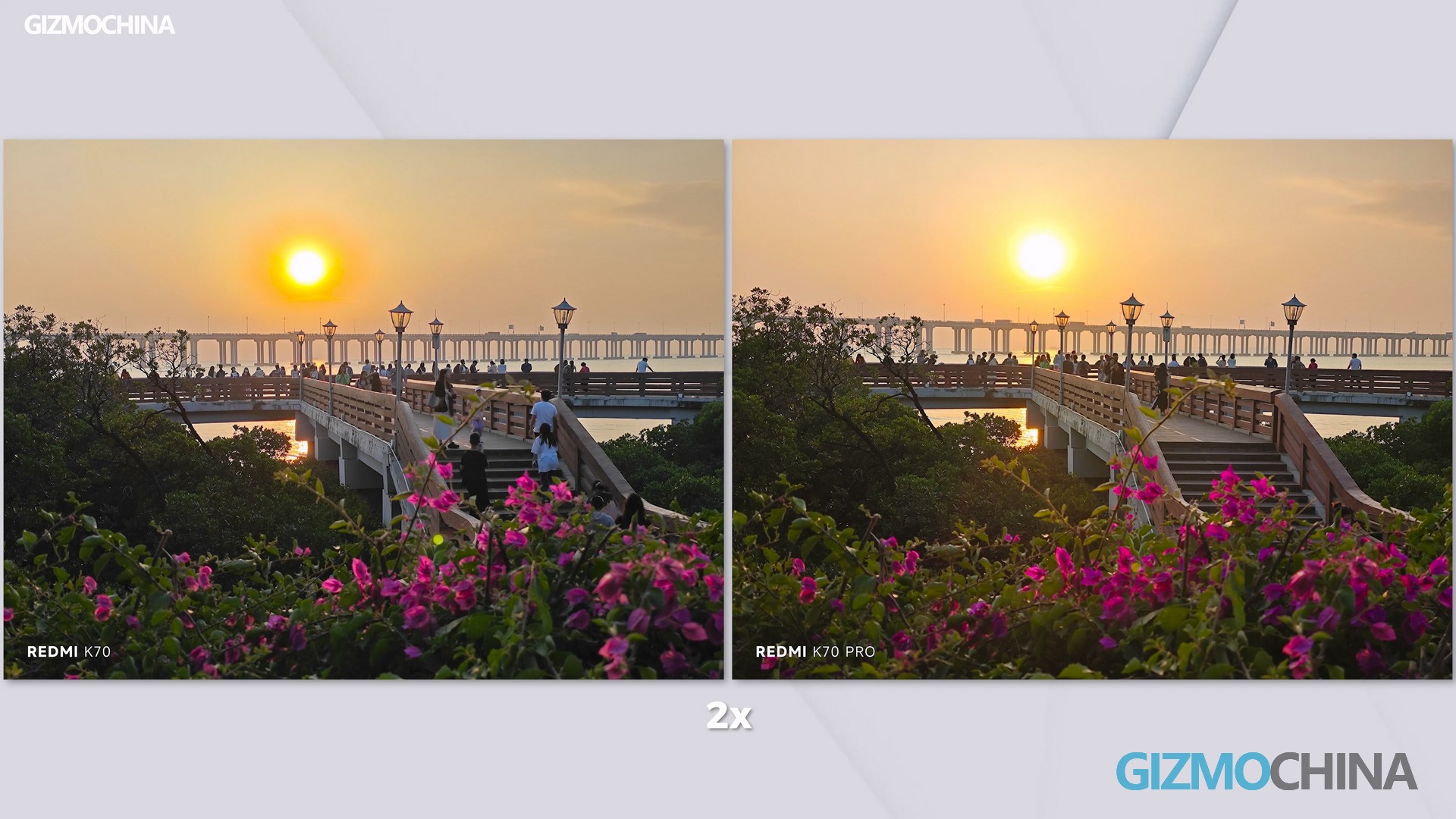
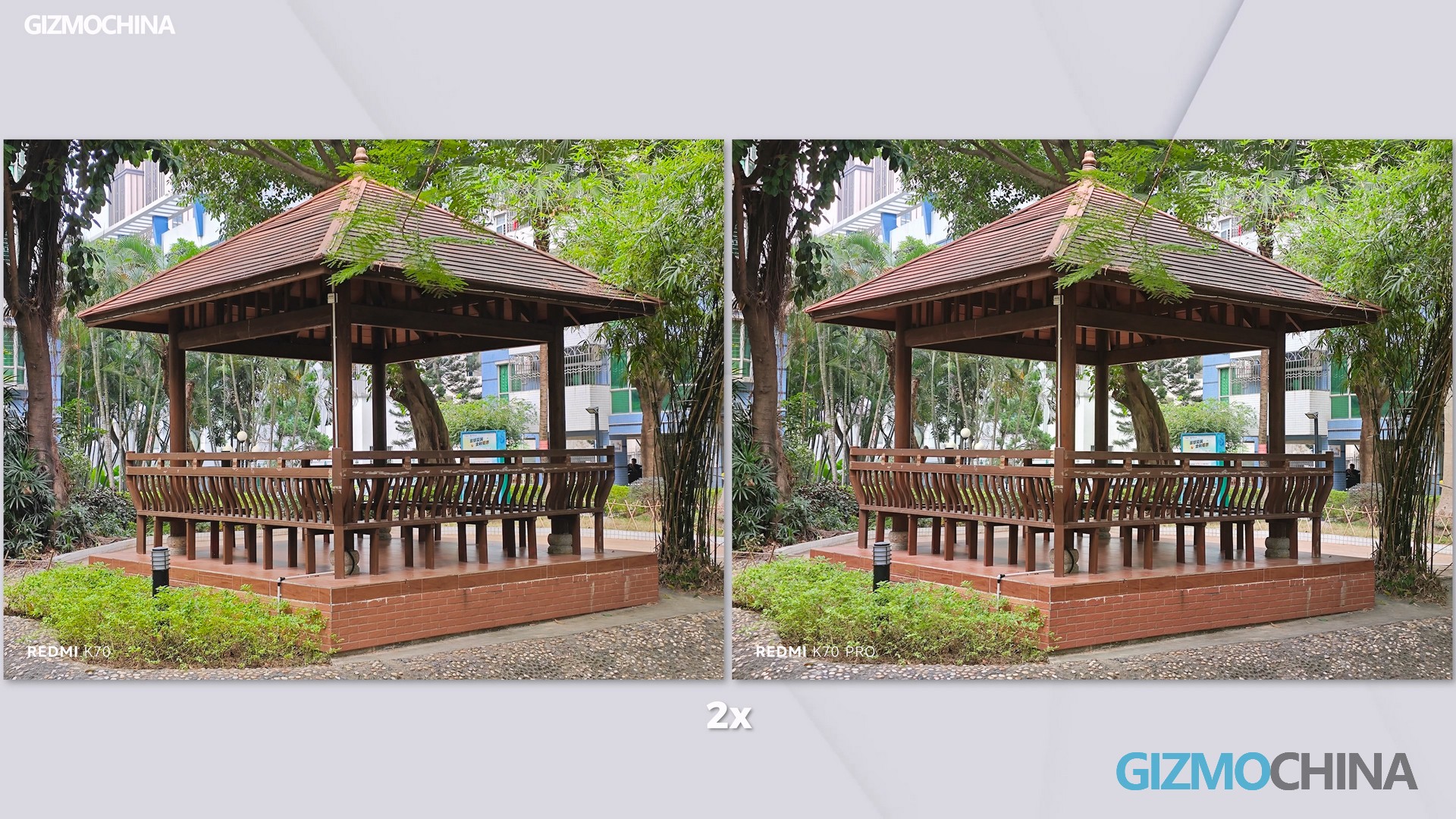
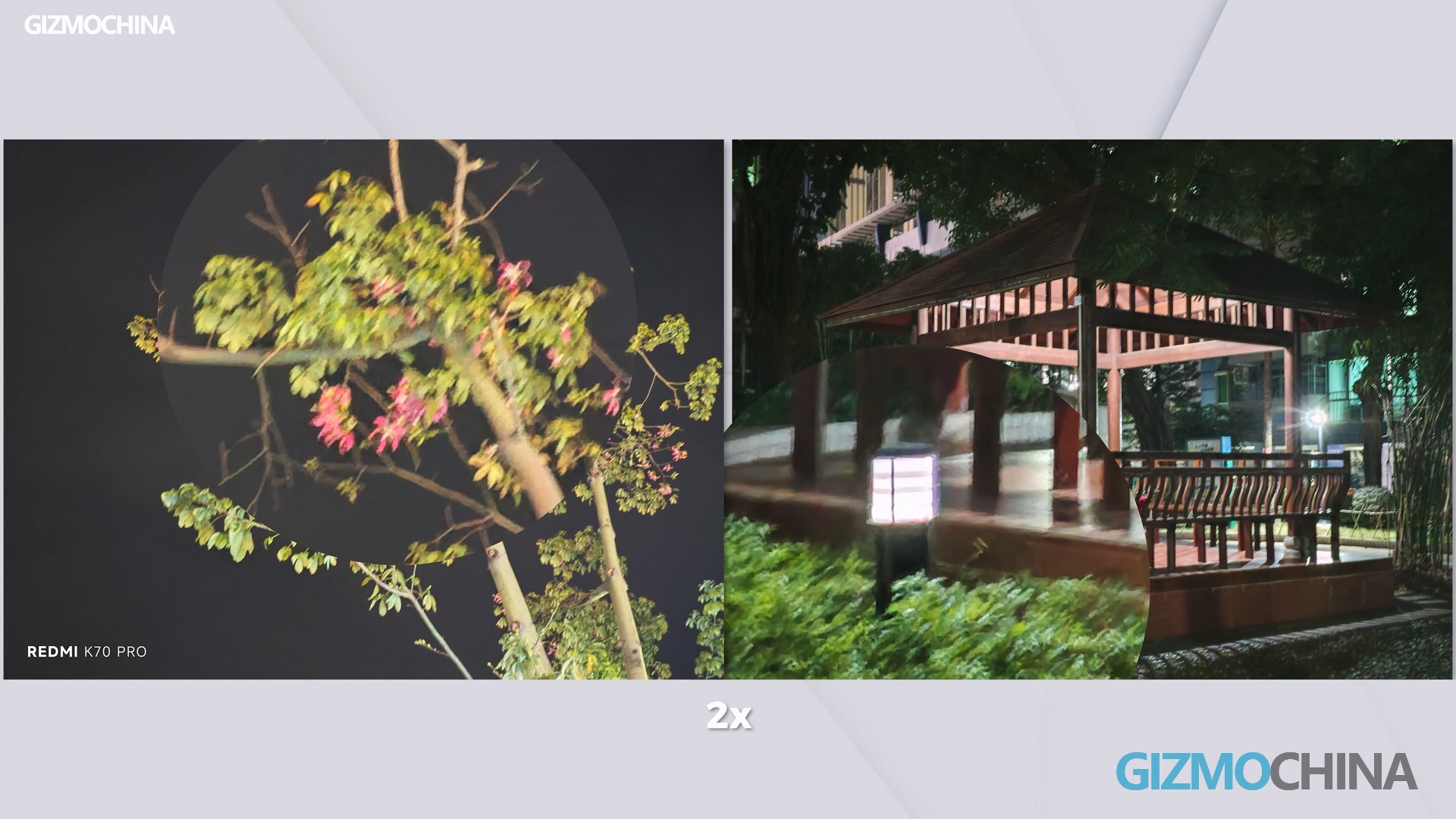
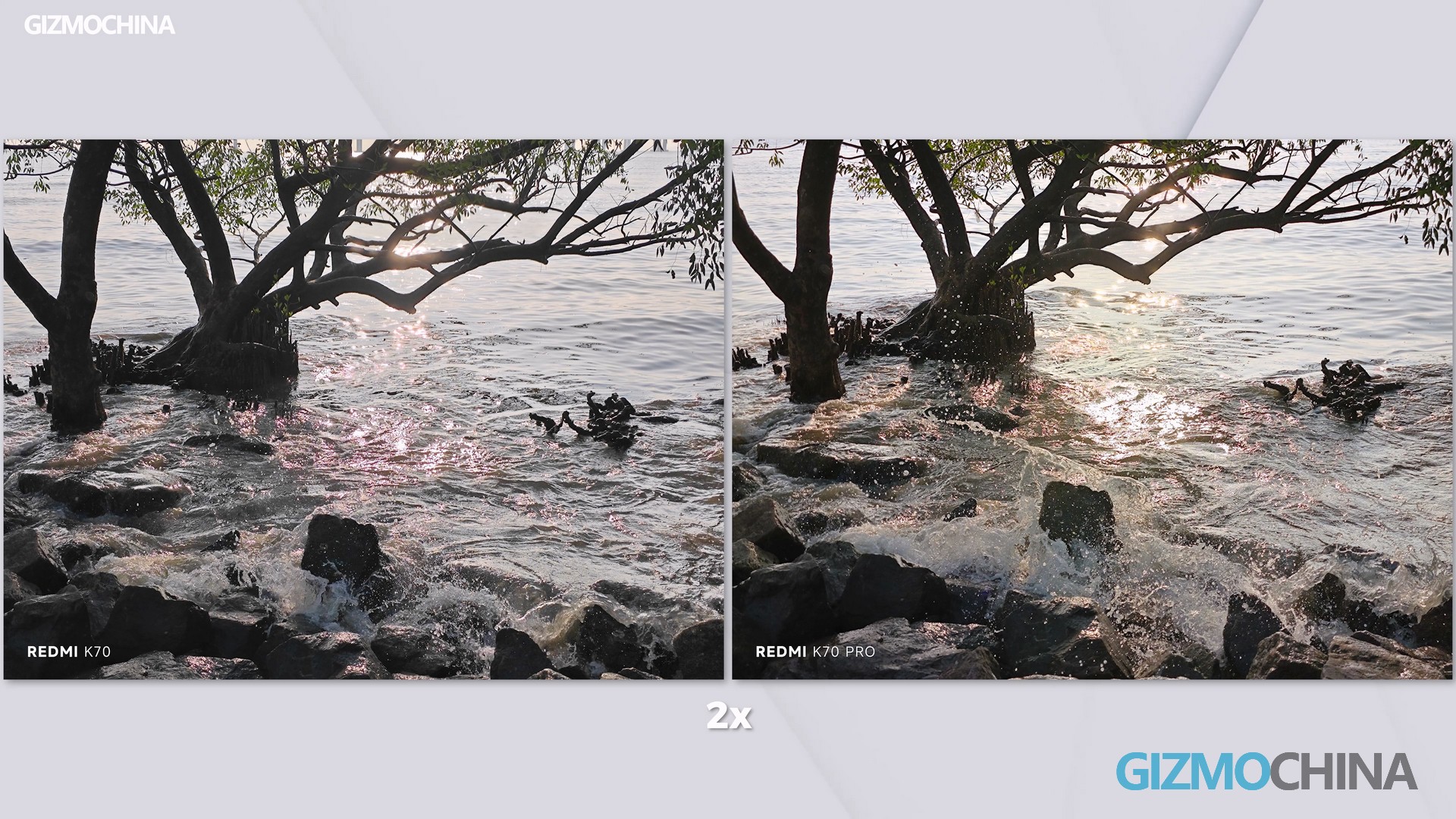
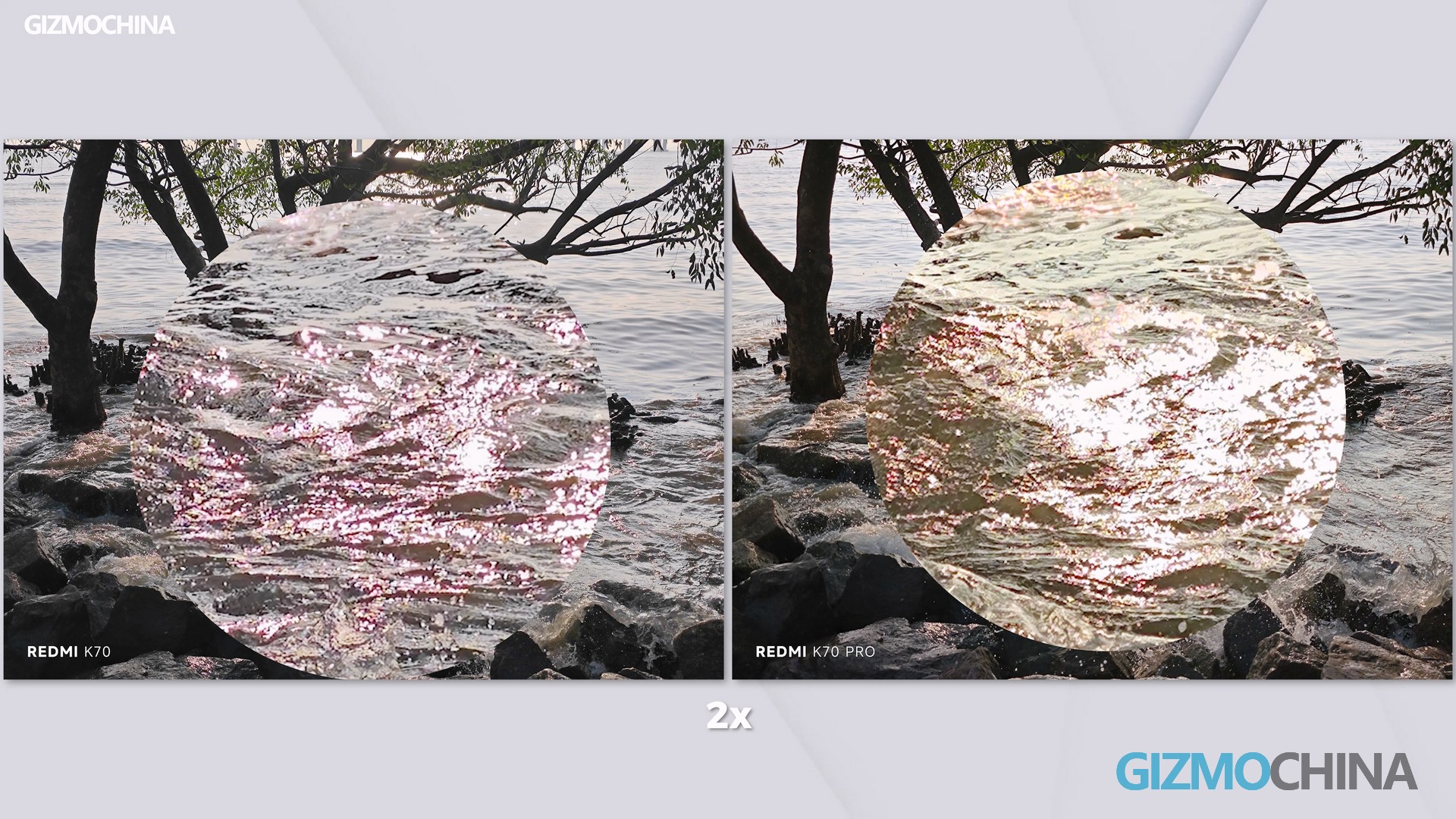
Let’s look at this new 2x telephoto camera first. Unfortunately, it doesn’t live up to my expectations. As you can see compared to the standard version that crops the shots with the main camera, the Pro version doesn’t have a significant advantage. Even for photos taken at night, you’d be hard-pressed to say which one is better. And the fact that this telephoto camera doesn’t have OIS means there is a higher possibility of getting a blurry photo. I’m not satisfied with this telephoto anyway, so I might as well have the macro camera back.
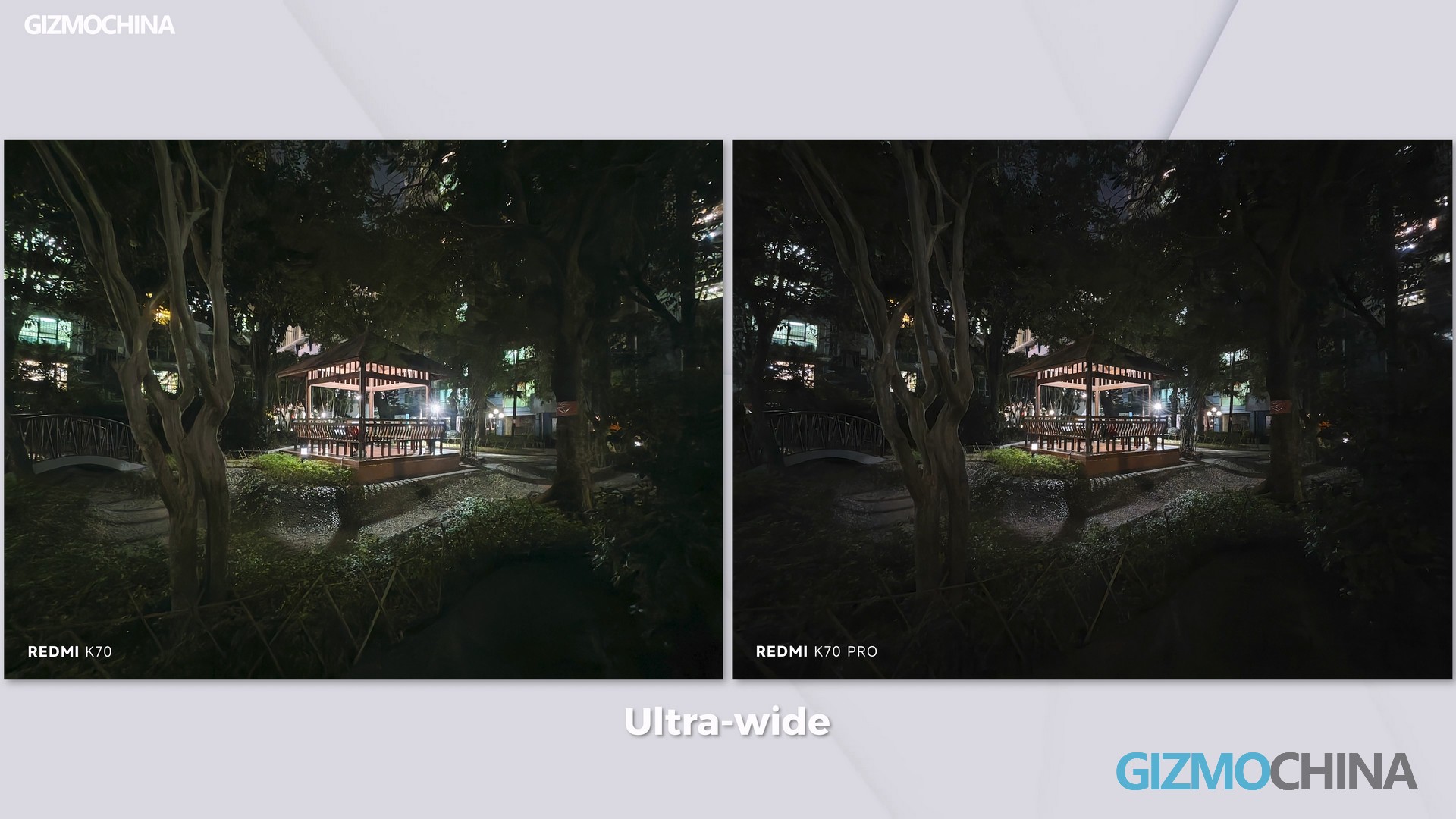
The Ultra-wide camera isn’t much better. Despite the increased amount of pixels, the sharpness isn’t significantly better. Only the white balance in dark-light conditions is a bit more accurate. So the Pro version is the same as the standard version, other than the main camera, don’t expect any really good photos from the other two cameras.
As for the standard version, my biggest complaint is that the highlighted areas get reddish. It makes all of my sea shots look like red wine, it just does not make any sense. Let’s hope they fix this bug with a system upgrade.
The K70 standard version only supports recording 4K resolution videos on the main camera. But the Pro version not only supports 4K on all three cameras, but you can switch cameras during recording. Redmi has that sneaky thought to make you buy the K70 Pro.
Battery & Charging
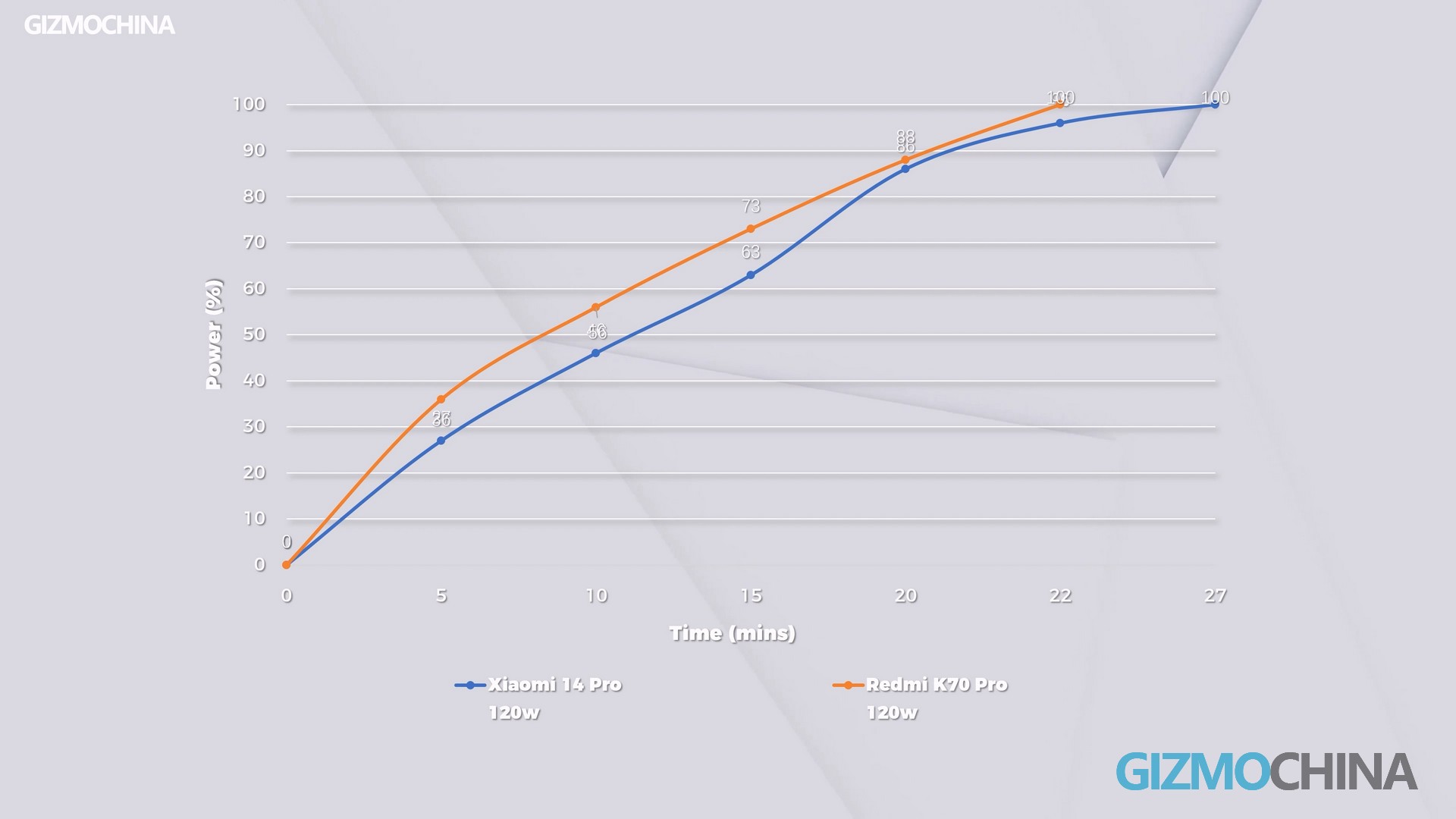
The two phones have the same battery capacity and the same charging power, so we only tested the charging time on the Pro. In fact, I prefer the combination of 67W plus 5500mAh, the battery capacity can be much more important than the charging speed, but unfortunately, there is no choice for now. Battery life is also average level, there’s not much to say about it. Plus there’s no wireless charging, so the two K70s are a step back in this charging and battery part.
Conclusion
It’s clear that the K70 doesn’t have much of an improvement in specs, and even regresses in some parts. Why are people clamoring for them? I think that’s what makes Redmi great. Every year they get rid of features that their target users don’t like much, like wireless charging. Keep the popular features, like the 2K straight screen. Then add some new selling points like metal frames and better cameras. As long as the price stays the same, or is cheaper, then they will keep selling well. If you like the K70, then buy it. Because there might be certain features you like on the K70, but won’t show up on the K80.
Vivo is gearing up to unveil the Vivo S18 series of smartphones in China soon. However, these won’t be the only products announced during the launch event. The company will also unveil the Vivo TWS 3e earbuds as well. Now, the key specs of the truly wireless earbuds have been teased ahead of the official release.
Vivo TWS 3e Specs
For those unaware, the upcoming hearables and S18 series are set to be unveiled on 14th December 2023. Previously, the Vivo TWS 3e was spotted on the TDRA, SIRIM, and SDPPI certification platforms, which hinted at its near launch. A recent teaser even revealed the color options of the new wireless earphones, which will launch in a Blue and White color option.
Now, the latest teaser has confirmed other details regarding the Vivo TWS 3e. The earbuds will offer a long 44 hour battery life on a single full charge when paired with its charging case. It will even come with support for fast charging. Another notable feature is the support for intelligent ANC (Active Noise Cancellation) along with immersive surround sound quality.
Looking at the images, the Vivo TWS 3e features a pebble-like charging case and earbuds with an in-ear design (including silicone tips). Unfortunately, this was all the information available regarding the new wireless earbuds. So stick around for more as we will be covering any new teaser as well as the launch event later this month.
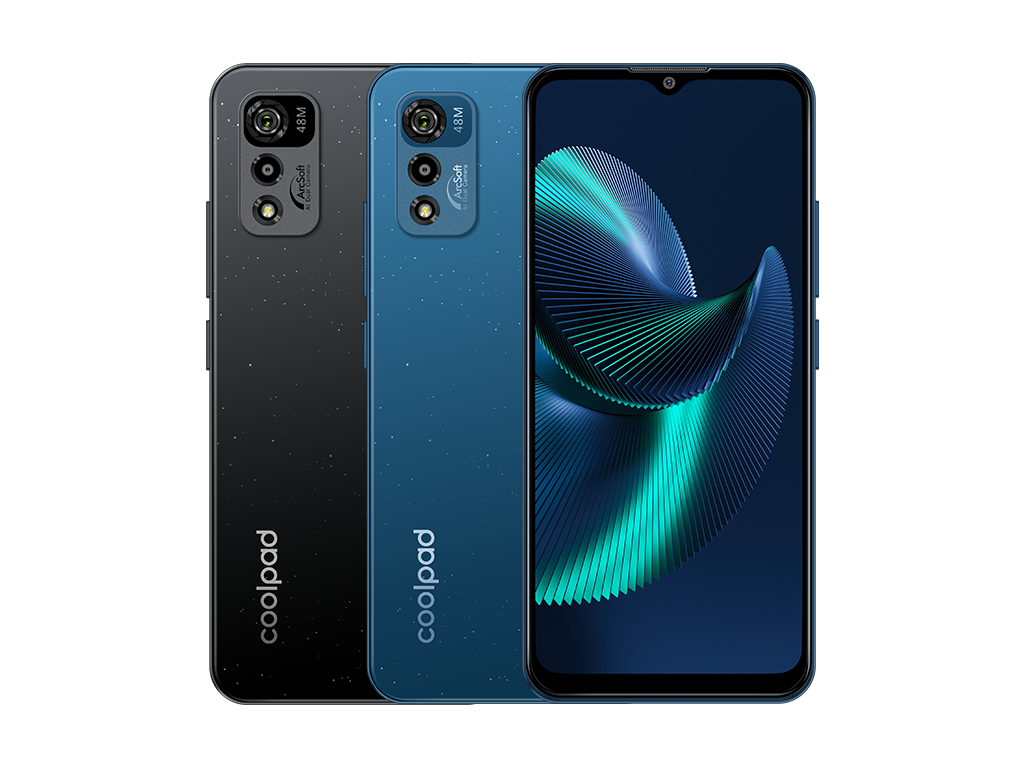
Coolpad has recently introduced the Cool 20+ in the Chinese market, marking the fourth addition to their 20 series lineup. This follows the previous releases of the Cool 20, Cool 20 Pro, and Cool 20s, all targeting the budget-conscious audience over the course of three years. Let’s check out the specifications of the Cool 20+ smartphone.
Coolpad Cool 20+ Specifications:
Cool 20+ boasts a 6.52-inch IPS LCD HD+ waterdrop display with a screen-to-body ratio of 89.2% and a resolution of 1600×720. The display features double-sided 2.5D glass and offers a pixel density of 259 PPI. The back panel is made out of scratch-resistant glass.
The device is powered by Mediatek Helio G85 chipset with Mali-G52 MC3. The device comes in three variants: 4GB RAM with 64GB/128GB storage and 6GB RAM with 128GB storage. The internal storage can be expanded up to 256GB using a microSD card. Out of the box, the device runs on Android 11 with CoolOS 2 on top.
Coming to the optics, the Cool 20+ is equipped with a dual-camera setup on the rear. This setup consists of a 48 MP primary lens with an f/1.8 aperture, accompanied by a 0.3 MP portrait blur secondary camera. For selfies and video calls, it sports a 5 MP front-facing camera.
The Cool 20+ smartphone offers Hybrid Dual SIM support with 4G LTE compatibility and Bluetooth 5.0. It has a height of 164.3mm, a width of 75.66mm, and a slim 8.5mm thickness, weighing approximately 180g with the battery included. Under the hood, it packs a 4500mAh battery with 10W charging capability.
Pricing and Availability
Coolpad Cool 20+ comes in Black and Blue colors. The specific pricing for the Cool 20+ has not been disclosed. It was previously launched in the Philippines and the 6GB + 128GB variant was offered at a price of 736 yuan, equivalent to approximately $103.
A couple of months ago, Nothing unveiled its new sub-brand CMF, which released a bunch of new products. This included the CMF Watch Pro model. However, it appears that a security vulnerability plagues the CMF Watch app that is featured on the partnered smartphone.
CMF Watch App may lack encryption, posing a security risk
The news was shared by Dylan Roussel, who is an Android developer. In a tweet, the dev claimed that Nothing is garnering attention for its glary security risks. He adds that the latest example of a vulnerability in their system comes from their new sub-brand, CMF. Apparently, the company’s CMF Watch app suffers from a major security flaw that is related to the encryption of user data. The investigations have revealed that the brand’s encryption process for the user’s email address and password is not functioning properly.
This means that the sensitive information is at risk. Dylan adds that the major security risk is still affecting the CMF Watch app, with user’s login credentials still being vulnerable. Nothing’s current app system lacks robust encryption for sensitive information, enabling easy access to decryption data with the application. This vulnerability was first discovered by Roussel back in September.
Let's talk about Nothing… again.
Before the Sunbird/Nothing chaos, I reported another vulnerability to them back in September… and another one back in August.
Let's talk about the one from September. It's about the CMF Watch app.
Nothing has worked on fixing this issue, but it seems that the encryption for the email and password are still vulnerable. The Android developer had even reached out to the brand directly, although there was no proper communication established after the first exchange. It remains to be seen how the company addresses these glaring security risks or whether it continues to become infamous for security flaws, since even the Nothing Chats feature was recently removed from the Google Play Store over security concerns.
A new leak has revealed some key details regarding Xiaomi‘s next gen flagship smartphone, the Xiaomi 14 Ultra. A tipster has leaked the specs of the upcoming device’s camera, battery, and charging. So here are all the details.
Xiaomi 14 Ultra Specs
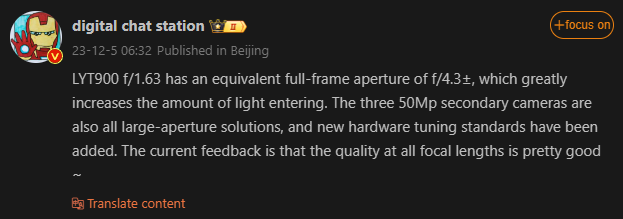
The information arrives from known tipster Digital Chat Station, who shared the news on Weibo (a Chinese microblogging website). For those unaware, the company has already announced the Xiaomi 14 and Xiaomi 14 Pro, which makes the Ultra variant the third entry in the flagship series. Now, DCS has claimed that the upcoming smartphone will feature a Sony LYT900 f/1.63 primary sensor that is equivalent to a f/4.3 ± full frame aperture.
This would also mean that the Xiaomi 14 Ultra will be able to take in more light than its predecessor. This is in line with the tipster’s previous leak, which also hinted at the Sony LYT900 sensor. The handset is believed to pack four 50-megapixel shooters on the rear of varying focal lengths. Furthermore, the tipster also talked about the battery capacity that powers the Xiaomi 14 Ultra as well as its charging capabilities.
Previously, Digital Chat Station had revealed how a mysterious device dubbed Venti will house a 5,180mAh battery pack that supports 90W wired and 50W wireless fast charging. Initial reports had hinted at a larger 5,500mAh battery pack, but the latest leak also backs the 5,180mAh rating. The Xiaomi 14 Ultra is expected to launch next year around April, which matches the launch timeline of the Vivo X100 Ultra. Unfortunately, this is all the information that we have at the moment, so stick around for more updates.
We first heard about the Galaxy A25 5G back in June. The smartphone’s design was leaked via 3D CAD renders.
Then, in August, the device’s camera specs were leaked. Finally, more details started pouring in from the beginning of November.
Now, the screenshots of the product’s official listing page on Samsung’s website have emerged. Let’s go through the details.
Samsung Galaxy A25 5G
The new leak does not reveal anything new about the Samsung A25 5G. That’s because almost everything about it is already out via several leaks over the past few days.
The product listing suggests that Samsung may announce this phone anytime now. The listing in the images is in Italian, so there’s a chance that it might go official in Europe first.
However, it is worth noting that Samsung is known to roll out budget smartphones gradually across different markets. So it may release in some market after all. Either way, the handset should be available globally.
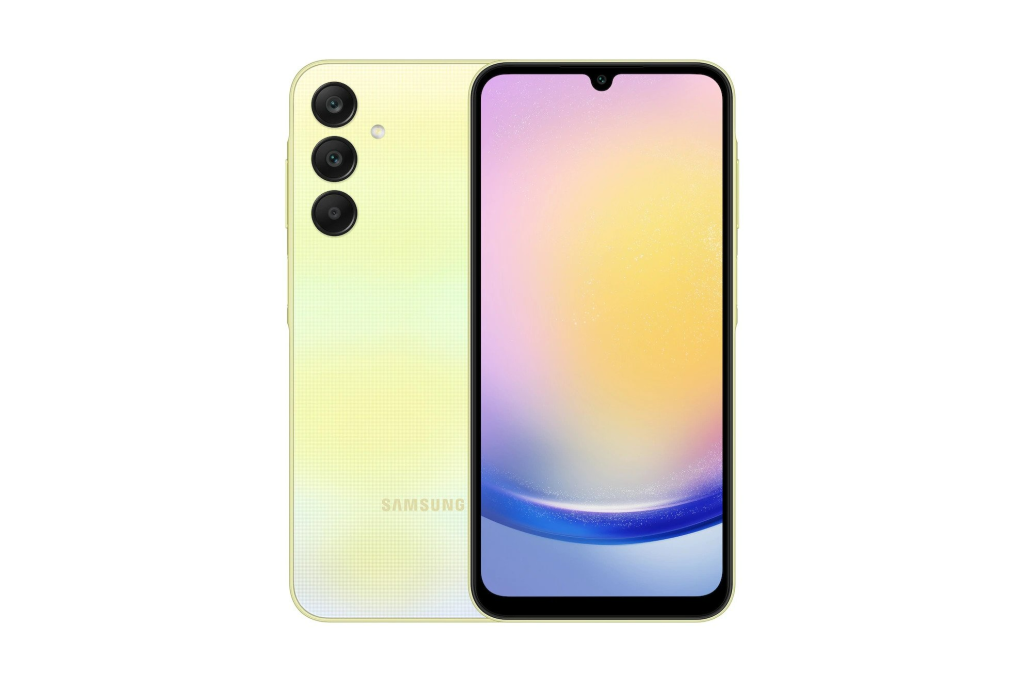
As per leaks so far, the Galaxy A25 5G will flaunt a 6.5-inch dewdrop-notched Super AMOLED display with an FHD+ resolution, a 120Hz refresh rate, and a 1000 nits peak brightness level. It will be powered by an Exynos 1280 chip paired with up to 8GB RAM and 256GB of internal storage.
The phone will feature a triple camera setup on the rear comprising an OIS-assisted 50MP primary sensor, an 8MP ultrawide unit, and a 2MP macro snapper. On the front, it will sport a 13MP shooter for selfies and video calls.
As for software, the device will ship with Android 14-based One UI 6. On top of that, it will receive four generations of OS updates and five years of security updates.
The handset will also come with additional features, such as Samsung Knox security and Samsung Wallet. Finally, it will be backed by a 5,000mAh battery with support for 25W charging.
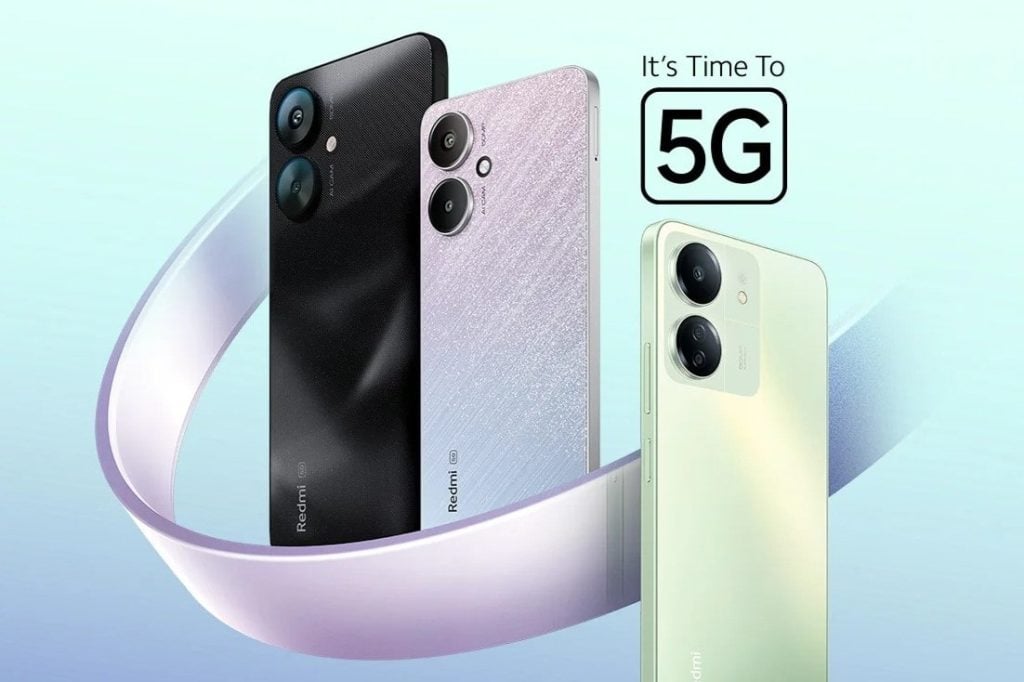
As scheduled, Xiaomi has launched the Redmi 13C series in India today. The lineup consists of two devices, namely Redmi 13C and Redmi 13C 5G.
The 5G model makes its global debut in the country. On the other hand, the 4G-only version is already official in some markets.
Here in this article, let’s take a look at the LTE variant. To learn about the 5G version, check out our coverage on the same.
Redmi 13C Specifications
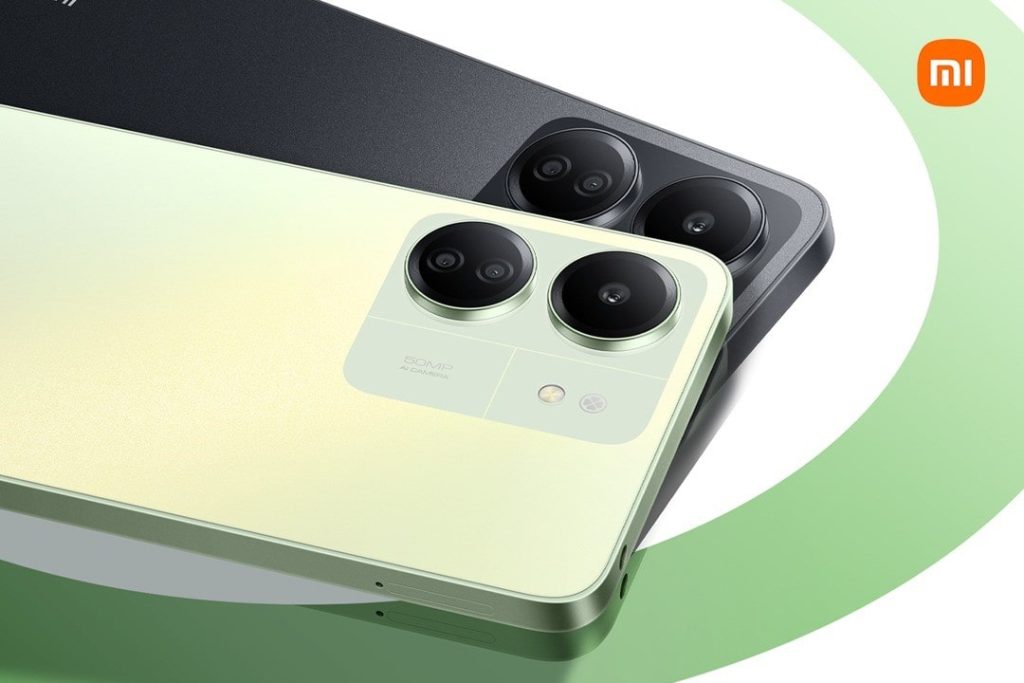
The Redmi 13C features a flat frame design and a dewdrop notched screen on the front. It measures 8.09mm in thickness and weighs 192g.
The device is powered by a MediaTek Helio G85 chip paired with LPDDR4x RAM and eMMC 5.1 storage. It boots MIUI 14 based on Android 13.
The handset sports a 6.74-inch display with a waterdrop notch. This LCD panel offers a resolution of 1600 x 720 pixels (HD+), a 90Hz refresh rate, and 600 nits peak brightness level. The screen supports DC dimming and is protected by Corning Gorilla Glass.
The phone comes with a triple camera system on the rear comprising a 50MP primary sensor, a 2MP macro snapper, and an unspecified sensor. It has an 8MP shooter on the front for selfies and video calls.
The smartphone provides multiple connectivity options, such as dual SIM, 4G, dual-band WiFi, Bluetooth 5.3, GNSS, and USB Type-C. It also arrives with a 3.5mm headphone jack, a MicroSD card slot, and a side-mounted fingerprint sensor.
Last but not least, the Redmi 13C draws energy from a 5,000mAh battery and supports 18W charging (ships with a 10W charger).
Redmi 13C India Price
The Redmi 13C carries the following price tags in India.
4GB + 128GB – ₹8,999 (~$110)
6GB + 128GB – ₹9,999 (~$120)
8GB + 256GB – ₹11,499 (~$140)
The handset can be availed in either Stardust Black or Starshine Green color options. It is scheduled to go on sale from 12 PM IST on December 12 via Mi.com, Amazon India, and Xiaomi retail stores.
Xiaomi debuted the Redmi 13C series in India today as scheduled. The company announced two devices, such as Redmi 13 and Redmi 13 5G.
The 4G-only variant already went official in some markets earlier this month. On the other hand, the 5G version makes its global debut.
Let’s go through what the Redmi 13C 5G has to offer in this article. If you are interested in learning about the regular Redmi 13C, you can check out our coverage on the same here.
Redmi 13C 5G Specifications
The Redmi 13C 5G arrives with a flat frame design as the vanilla Redmi 13C. However, the colors and the textures on the rear panel are different.
It retains the same 6.74-inch display with a dewdrop notch and HD+ (1600 x 720 pixels) resolution. Apart from DC dimming, this Corning Gorilla Glass-protected LCD screen also supports up to a 90Hz refresh rate and a 600 nits peak brightness level.
The phone has a 50MP main camera on the rear paired with an unspecified secondary sensor. On the front, it sports a 5MP snapper for selfies and video calls.
The connectivity options on the handset include dual SIM, 5G, dual-band WiFi, Bluetooth 5.3, GNSS, and USB Type-C. It also offers other features, such as a side-mounted fingerprint sensor, a MicroSD card slot, and a 3.5mm headphone jack.
Finally, the smartphone is backed by a 5,000mAh battery and supports 18W charging (ships with a 10W charger).
Redmi 13C 5G Price
The Redmi 13C 5G comes in following two memory configurations in India.
4GB + 128GB – ₹10,999 (~$130)
6GB + 128GB – ₹12,499 (~$150)
8GB + 256GB – ₹14,499 (~$175)
It can be availed in either Startrail Black, Startrail Silver, or Startrail Green color options. The device will be available for purchase starting 12 PM IST on December 16. It will be sold via Mi.com, Amazon India, and Xiaomi retail stores.
Realme has just confirmed that it will be launching the Realme C67 5G in India. However, a leak reveals that the brand could be planning to launch a 4G version of the device in some Southeast Asian markets. A leak reveals that the Realme C67 (4G) will debut soon in Indonesia. The source has also leaked the key specifications of the device.
Realme C67 specifications (rumored)
Realme C67 (4G) leaked teasers
According to reports, the Realme C67 will have an IPS LCD panel that offers a Full HD+ resolution and a 90Hz refresh rate. However, the exact screen size is not known yet. The source has shared some teaser images of the C67, which can be seen above.
Realme C67 5G launch date
While the 5G version of the Realme C67 is speculated to feature the Dimensity 6100 Plus chip, the 4G model may ship with the Snapdragon 685 SoC. The device will arrive with 8 GB of LPDDR4x RAM and 128 GB / 256 GB of storage.
On the front, the Realme C67 will have an 8-megapixel camera. Its rear panel will be equipped with a 108-megapixel Samsung ISOCELL HM6 sensor as the primary camera and a 2-megapixel auxiliary lens. The device will be backed by a 5,000mAh battery that supports 33W fast charging.
The Realme C67 4G will ship with Realme UI E edition-based Android 14, which will support the Mini Capsule notifications feature. The device will also offer other features, such as a side-facing fingerprint sensor, a 3.5mm audio jack, dual speakers, NFC, and an IP54-rated chassis with a thickness of 7.9mm. It is likley to be priced at around ~$135 in Indonesia.
A couple of months back, an upcoming Lenovo tablet leaked in detail. The report revealed almost everything one has to know about Lenovo Tab M11.
We not only got to learn about its specs but also got to see its design. Following that, the device made its appearance on multiple certification agencies.
Weeks later, It has been spotted online again. Let’s go through the details.
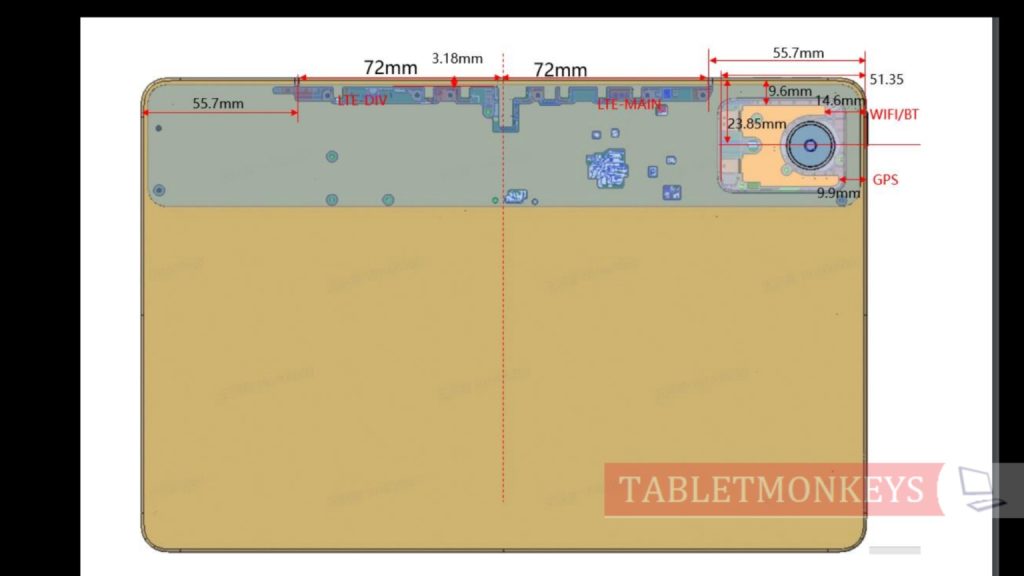
TabletMonkeys have got their hands on a schematic of the upcoming Lenovo Tab M11. Unfortunately, the publication does not mention the source but the image seems to be from a publicly accessible certification listing.
This picture goes in line with the render leak from late September. It showcases the location of antennas meant for connectivity (LTE, WiFi, Bluetooth, and GPS).
A few weeks back, the tablet was spotted on the websites of several certification bureaus, such as FCC, TÜV Rheinland, and TDRA. These listings did not reveal anything new and only suggested that the launch of the product was nearing.
According to leaks so far, the Lenovo Tab M11 will sport a 10.95-inch display with a resolution of 1920 x 1200 pixels, 207 PPI, and 400 nits peak brightness level. It will be powered by a MediaTek Helio G88 chip paired with up to 8GB RAM and 128GB storage.
The device will arrive with an 8MP + 13MP dual camera setup on the rear and an 8MP front-facing camera. It will house Dolby Atmos-supported quad speakers and feature a 3.5mm headphone jack as well as a MicroSD card slot.
The connectivity options on the product will include LTE, dual-band WiFi, Bluetooth 5.1, GPS, and USB Type-C. It will ship with Android 13 but will be updated until Android 15 and will receive security patches till January 2028.
Last but not least, the Lenovo Tab M11 will be backed by a 7,040mAh battery with support for 10W charging.
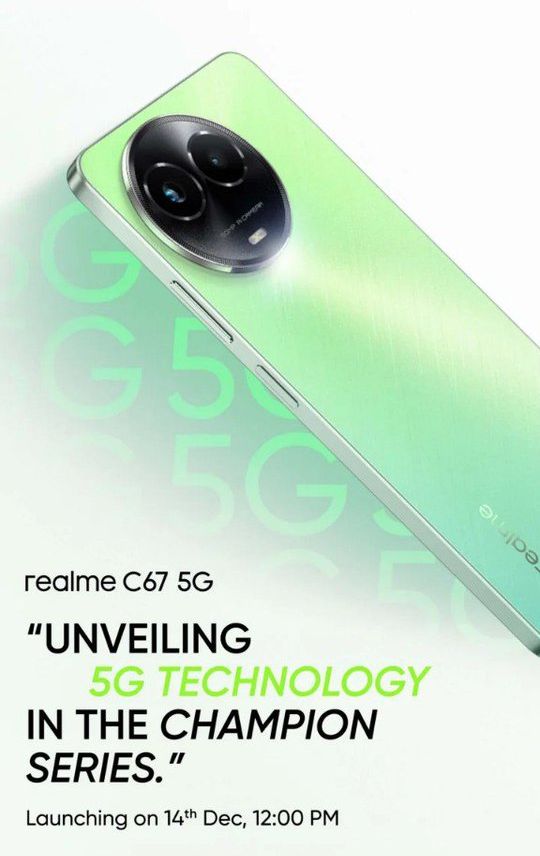
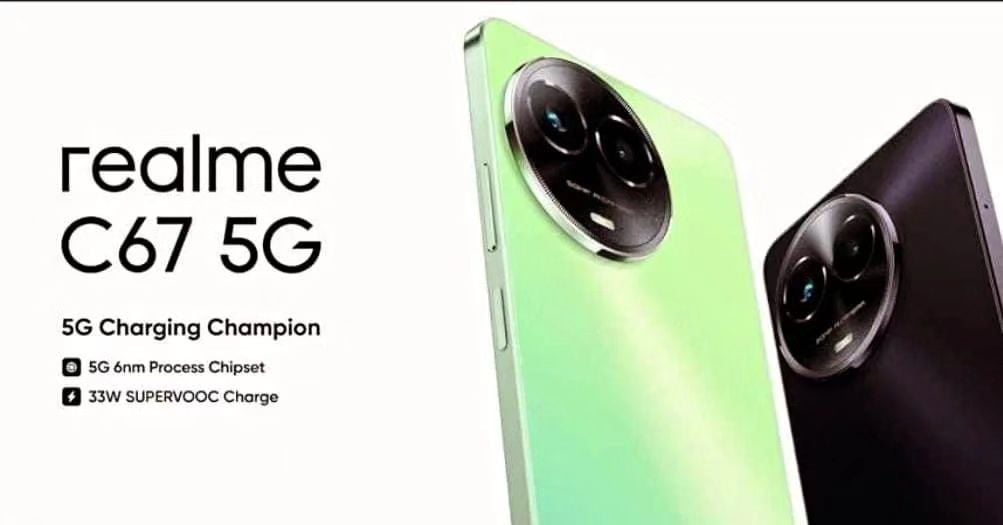
Realme has been teasing the arrival of a new 5G phone for the Indian market for the past few days. The brand has finally confirmed today that the said device will be called the Realme C67, and it will be announced at 12 pm (local time) on Dec. 14 in the country.
Realme C67 5G design, key features
Realme C67 5G launch date
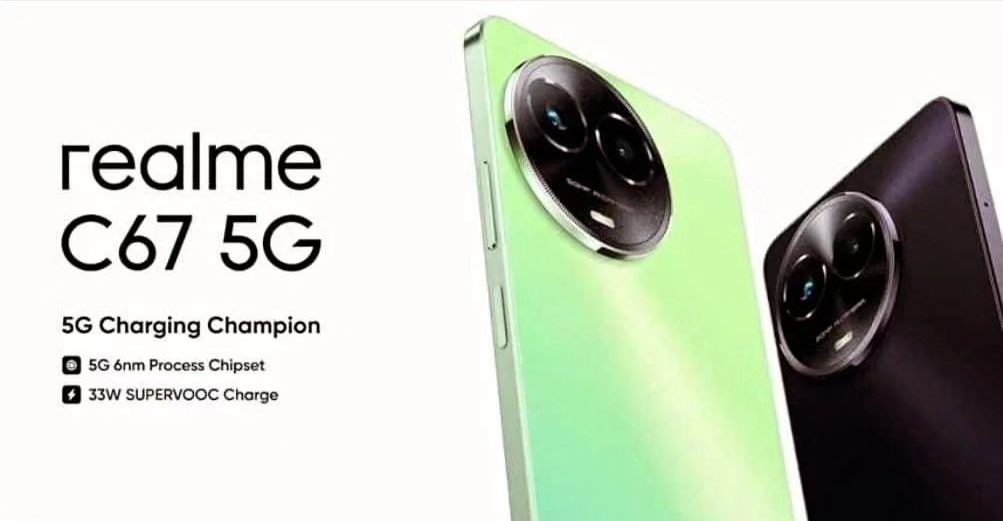
The official posters released by the brand reveal that the Realme C67 5G will be available in green and black. The device can be seen sporting a round camera module with a 50-megapixel primary camera, an auxiliary camera, and an LED flash inside. The above image also suggests that it has a side-facing fingerprint scanner.
The company has confirmed that the C67 will support 33W fast charging and will be powered by a 5G-enabled 6nm chipset. It will be the first C-series (Champion-series) phone from the brand to support 5G connectivity. Rumors are rife that it could be equipped with the Dimensity 6100+ chipset. The company hasn’t revealed any other details about the device.
Realme C67 5G launch date
Rumors surrounding the C67 5G claim it will be priced between Rs 12,000 and Rs 15,000. It is speculated that the device will be available in RAM variants, such as 4 GB, 6 GB, and 8 GB. All three variants will likely ship with 128 GB of storage.
In related news, Realme is set to launch its more powerful flagship phone, the Realme GT 5 Pro, in China tomorrow (Dec. 7). Reportedly priced at 3,499 Yuan (~$495), the GT 5 Pro will offer specifications such as a 6.78-inch curved-edge OLED display that offers a 1.5K resolution and a 144Hz refresh rate. The device will have other exciting features, including a 50-megapixel LYT-808 main camera with OIS support, a 50-megapixel IMX890 periscope telephoto camera, 24 GB of LPDDR5x RAM, 1 TB of UFS 4.0 storage, a 5,400mAh battery, Realme UI 5-based Android 14, and 50W wireless charging.
The latest Vivo X100 Pro+ is reportedly undergoing testing for satellite communication capabilities. While the Vivo X100 series made its debut in November with the Vivo X100 and Vivo X100 Pro, the Pro+ variant, equipped with satellite communication, is yet to be officially announced.
After Huawei and Oppo, Vivo is also working on satellite communication
oNotably, the OPPO Find X7 series has officially declared its support for satellite communication technology. The president of the Honor product line has hinted at satellite communication support in the upcoming flagship, expected to debut with the Magic 6. Xiaomi, too, has been rumored to be testing satellite communication capabilities. Although, it is unknown whether the Xiaomi 14 Ultra will pack this feature.
It’s not only mainstream phone brands delving into this innovative space. In November, China Telecom introduced the Tianyi Bolton S9, a 5G satellite dual-mode communication phone priced at 4599 yuan (~$650). This device comes equipped with a built-in satellite antenna, adopting the conventional phone form factor without the need to change SIM cards or numbers. The Tianyi Bolton S9 integrates China’s self-developed Tiantong satellite mobile communication system, supporting two-way Tiantong satellite voice communication and ensuring uninterrupted nationwide communication.
Vivo‘s move to test satellite communication in the X100 Pro+ suggests a growing interest for this feature among both manufacturers and consumers. With various players in the industry actively exploring this technology, it is expected to become a standard feature in mobile devices in the near future.
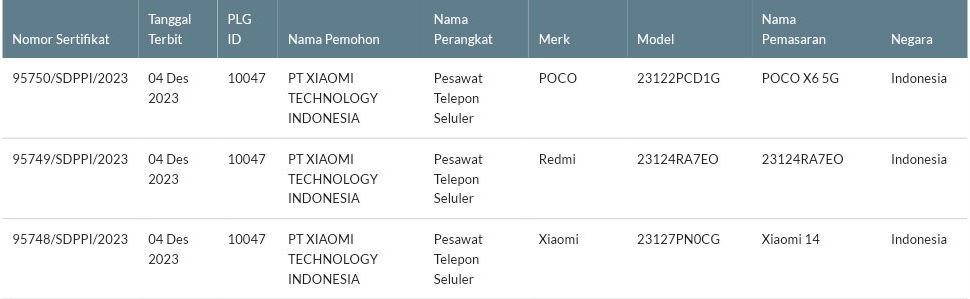
Xiaomi launched the Xiaomi 14 series and the Redmi Note 13 series in the Chinese market in the recent months. Now, the brand is reportedly gearing up to launch these devices in the global market. As per a report, global variants of the Xiaomi 14, Redmi Note 13 4G, and the Poco X6 5G have received approval from Indonesia’s SDPPI certification platform.
Global Xiaomi 14, Poco X6 5G, and Redmi Note 13 4G certified in Indonesia
The above screenshot shows that the devices bearing 23122PCDIG and 23127PN0CG model numbers have been approved by the SDPPI. The listing confirms that these devices will be marketed as the Poco X6 5G and the Xiaomi 14.
The 23124RA7EO has also appeared in SDPPI’s database. While the listing has not revealed the name of the device, it is speculated to be called the Redmi Note 13 4G when it arrives on the market. It is speculated that the 23117RA68G and 23129RAA4G model numbers are also associated with the same device, probably aimed at markets. As per the FCC certification, the 23124RA7EO variants support NFC connectivity, while the others lack support for it.
At present, there is no concrete information available on the core specifications of the Redmi Note 13 4G. As far as the Xiaomi 14 is concerned, its variant heading to the global market is likely to have the same specs as its Chinese edition, which features the Snapdragon 8 Gen 3 chip.
The Poco X6 5G was recently spotted with specs such as the Snapdragon 7s Gen 2 chip, 12 GB of RAM, and Android 13 in Geekbench’s database. These specs suggest that it may arrive as a rebadged version of the Redmi Note 13 Pro 5G available in the Chinese market.
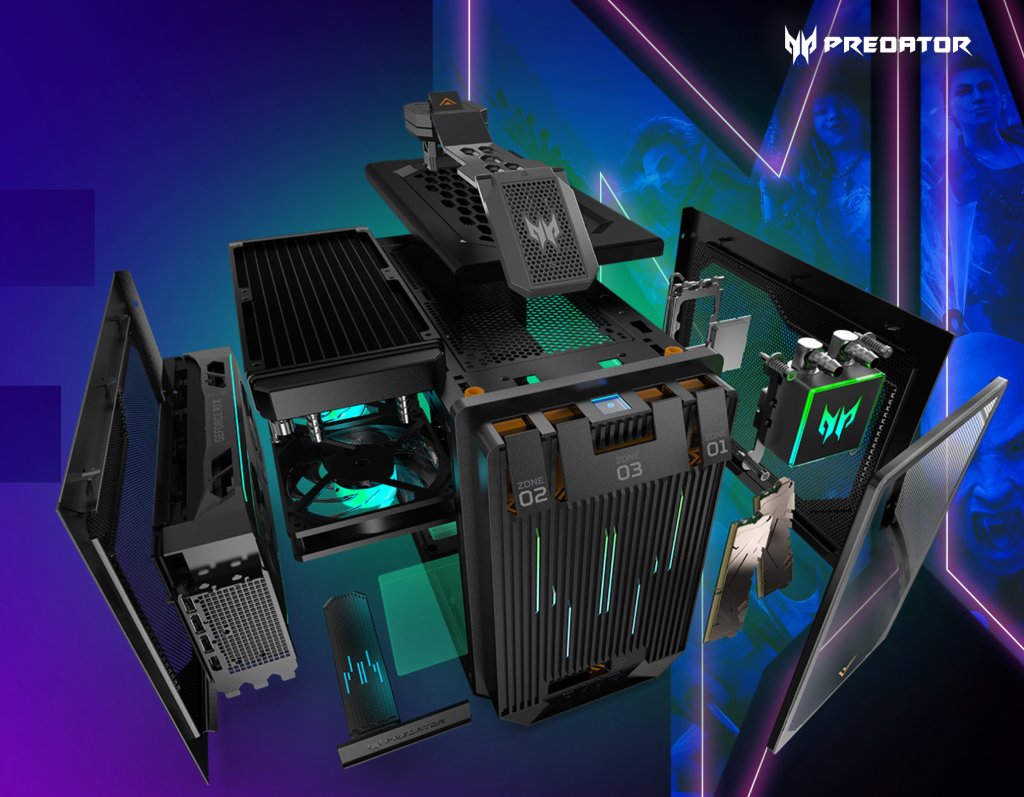
Back in April, Acer unveiled the Predator Orion X compact gaming PC that packing top of the line hardware. Although the desktop PC was supposed to arrive in September, it has just now made its way to store shelves in the UK and EU.
Acer Predator Orion X specs
The Predator Orion X PC comes with a distinctive three-zone design. In Zone 1, the largest section, the CPU, memory, and NVMe SSDs are housed. Zone 2 accommodates the graphics card and additional storage slots, while Zone 3 is dedicated to cooling.
The Acer Predator Orion X offers configuration options with Intel processors, including the Core i9-13900KS, Core i7-13700K, and Core i5-13400. Notably, the Core i5-13600K is not included in the available options. Graphics card choices comprise Nvidia options such as the GeForce RTX 4070 Ti, GeForce RTX 4080, and GeForce RTX 4090, with no AMD SKUs offered.
Key features of the Acer Predator Orion X include up to 64 GB of DDR5 5600 MT/s RAM and a 2 TB M.2 SSD. Additionally, it provides a hot-swappable NVMe SSD slot and 2.5-inch drive slots for expandable storage. The desktop is equipped with Wi-Fi 6E and 2.5G Ethernet. Front I/O includes one Gen1 Type-C port, one USB 3.2 Gen1 Type-A port, and a combo 3.5 mm audio jack. Back I/O features one USB 3.2 Gen2 Type-C port, three USB 3.2 Gen2 Type-A ports, two USB 2.0 ports, and one RJ45 Ethernet jack.
Pricing & availability
In the Eurozone, the base configuration of the PC starts at €2,499, featuring a Core i7-13700 processor, RTX 4070 Ti GPU, a 1 TB SSD, and 16 GB of RAM. On the other hand, the Predator Orion X is priced at £3,799 in the UK, offering a configuration with a Core i9-13900KS processor, RTX 4080 GPU, 32 GB of RAM, and a 2 TB SSD.
The OxygenOS 14 Open Beta 2 for the OnePlus 10R is now available, arriving nearly a month after the release of OxygenOS 14 Beta 1. This update includes performance optimizations tailored to enhance your device, addressing feedback received from the Open Beta 1 release.
Quick heads up: Beta software means potential instability compared to official updates. So, proceed with caution and be aware of the risks before diving into this update.
What’s New:
System:
Beefed up security with the November 2023 Android patch.
General system stability improvements.
Noticeable battery life extension in specific scenarios.
Camera:
Expect a more stable camera performance.
To dive into this beta, ensure your device is already rocking the OxygenOS 13.1 version. Also, note that Open Beta 2 is exclusively rolling out for OnePlus 10R devices in India. Carrier versions (TMO/Verizon), sorry, not in the club.
How to apply:
If you are interested in participating in this beta program, you can apply between November 5, till a certain number of applications is reached. Before applying, check that your phone has been updated to the detectable version: CPH2411_13.1.0.600(EX01)/CPH2423_13.1.0.600(EX01)/CPH2411_13.1.0.590(EX01)/CPH2423_13.1.0.590(EX01). Then follow the straightforward steps under Settings > About device > Tap up to date > Tap icon on the top right > Beta program.
The application review process spans up to 5 workdays after the closure of the application channel. Successful applicants can anticipate receiving the new version within the subsequent 3 workdays, accessible via Settings > About device > Download Now.
On a related note, OnePlus has just launched the OnePlus 12 smartphone in China packed with the Snapdragon 8 Gen 3 SoC, paired with an impressive camera setup and 50W wireless charging. Being the Chinese model, it comes with Android 14-based ColorOS 14. The global model on the other hand, which has been confirmed to launch early in 2024 will come with OxygenOS 14 onboard.
Earlier this week, Nothing, through its official X account, teased an upcoming announcement, sparking speculation within the rumor mill about a possible unveiling of the long-anticipated Nothing Phone 2a smartphone. However, contrary to these expectations, Nothing took an unexpected turn by revealing its entry into the clothing market. The brand surprised its audience by introducing two workwear products based on its founding design principle of transparency.
Nothing Transparent Labcoat, Transparent Cap announced
Nothing Apparel.
Workwear we still want to wear when the work is done.
Drop 1 lands this Thursday 7 December, 11:00 GMT. Online and in-store at Nothing Store Soho. pic.twitter.com/eNqFsbG5sx
The Transparent Labcoat, which draws inspiration from the IBM factory floor of the 1970s, is the first item in the London-based tech brand’s apparel line. The Labcoat features a regular fit, thigh length, multiple pockets with zip closures, a back bottom hem vent for mobility, an adjustable waist with a drawstring on the inside, and a hanger loop at the back neck.
It also incorporates eco-friendly elements, such as YKK Natulon zippers made from recycled materials and 100 percent biodegradable plant-based packaging. It will be available in four sizes: small, medium, large, and extra-large.
In addition to the Labcoat, Nothing is also offering the Transparent Cap as its second clothing product. It comes in only one size and is designed to complement the Labcoat.
Developed in collaboration with Teenage Engineering, Nothing Apparel emphasizes quality-driven wardrobe staples built to withstand the test of time, including caps, coats, tracksuits, and more.
Nothing Labcoat, Transparent Cap price
The Transparent Cap is priced at £35 (~$44; ~Rs 3,700), while the Transparent Labcoat is available for £160 (~$200; ~Rs 16,800). Customers in India can purchase both workwear starting at 4:30pm IST on Dec. 7 through nothing.tech. The Labcoat and Transparent Cap will also be available at the Nothing Store Soho in London.
In 2024, Nothing will expand its apparel line by announcing new clothes and making them available in all the existing markets by selling them via nothing.tech.
Rivian, a prominent name in the electric vehicle (EV) industry, is set to make significant strides in battery technology, heralding a potential shift in the EV market dynamics. Claire McDonough, the company’s Chief Financial Officer, recently revealed plans to introduce a new battery pack for its R1 series vehicles in 2024. This development, highlighted in a Barclays interview, signals a strategic move by Rivian to enhance its product offerings.
Rivian is trying to blend innovation and affordability for the new battery
The new battery pack, distinct from the Standard pack also set for a 2024 debut, represents a breakthrough in Rivian’s design and manufacturing approach. McDonough emphasized the simplified structure of this battery, which is expected to be lighter, cost-effective, and easier to produce. Such innovations are not just technical achievements but also strategic levers that could reshape Rivian’s market position.
Rivian’s approach to battery technology brings to light a crucial aspect of the EV industry: the balance between innovation and affordability. With the Standard pack slated to bring the starting price of R1 vehicles to the low $70,000 range, the new battery pack might further reduce costs. This price reduction, potentially dipping below $70,000, opens the doors to a broader consumer base, making electric mobility more accessible. When Rivian enters that segment, it will be hard for fellow competitors to keep up with the premium EV niche that the company is trying to carve out for itself.
Furthermore, McDonough’s mention of a temporary halt in assembly lines in the second quarter of 2024 for the integration of these new batteries indicates Rivian’s commitment to seamless innovation. The plan to introduce three different battery packs, two drive units, and a new network architecture speaks to a future where customization and consumer choice are paramount in the EV market. That market will be saturated soon, as other companies are trying to expand in some capacity. For instance, Tesla is expanding its charging network throughout the states, and that is just one of many instances. Only time will tell what the future holds for Rivian in such a space.
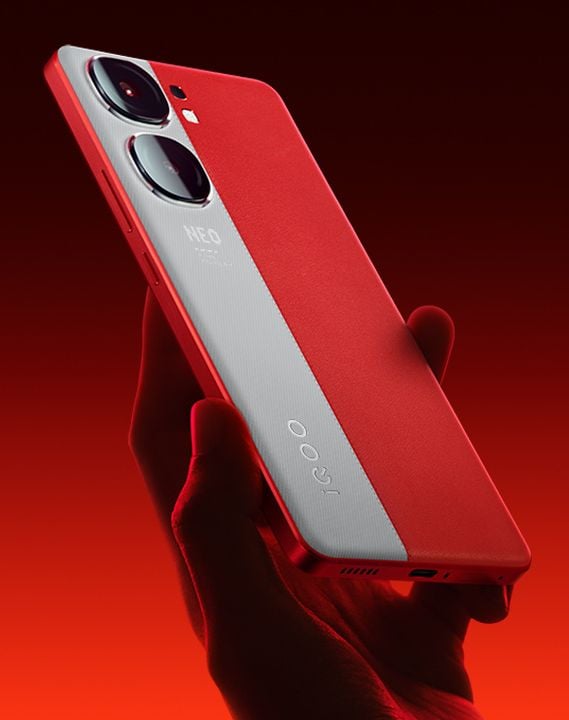
The iQOO Neo 9 series of sub-flagship phones is expected to launch this month in China. However, the brand is still silent on its launch date. The lineup is expected to include the iQOO Neo 9 and Neo 9 Pro as the successors to the Neo 8 and Neo 8 Pro, respectively. According to reports, the Snapdragon 8 Gen 2 and Dimensity 9300 chipsets will power these devices, respectively. Today, tipster Digital Chat Station shared the key specifications of the Neo 9 Pro.
iQOO Neo 9 Pro specifications (rumored)
iQOO Neo 9 series
According to the leaker, the iQOO Neo 9 Pro will feature a 6.78-inch flat OLED panel that offers a 1.5K resolution of 2800 x 1260 pixels. The screen will also offer a 144Hz refresh rate, 2160Hz PWM dimming, and an in-screen fingerprint sensor. Like the iQOO 12 series, the Neo 9 Pro will arrive with OriginOS 4-based Android 14.
The Dimensity 9300-powered Neo 9 Pro is expected to ship with LPDDR5x RAM and UFS 4.0 storage, though specific details about RAM and storage configurations remain undisclosed by the tipster. Although the exact battery size is not mentioned, the Neo 9 Pro is said to support 120W fast charging. For an enhanced experience while gaming, the device will ship with iQOO’s self-developed Q1 chip, which is also available in the iQOO 12 series.
The rear camera setup of the iQOO Neo 9 Pro will have an OIS-enabled 50-megapixel Sony IMX920 primary camera and a 50-megapixel Samsung JN1 ultra-wide lens. While it is not mentioned in the leak, it appears that the device will be equipped with a 16-megapixel camera on the front.
When it comes to design, the Neo 9 Pro will have a plastic frame. In addition, the device will be available in glass and leather back options. At present, there is no information about the price of the device. Currently, the Neo 9 and Neo 9 Pro are both up for reservations through online retail channels.
We use cookies on our website to give you the most relevant experience by remembering your preferences and repeat visits. By clicking “Accept”, you consent to the use of ALL the cookies.
This website uses cookies to improve your experience while you navigate through the website. Out of these, the cookies that are categorized as necessary are stored on your browser as they are essential for the working of basic functionalities of the website. We also use third-party cookies that help us analyze and understand how you use this website. These cookies will be stored in your browser only with your consent. You also have the option to opt-out of these cookies. But opting out of some of these cookies may affect your browsing experience.
Necessary cookies are absolutely essential for the website to function properly. This category only includes cookies that ensures basic functionalities and security features of the website. These cookies do not store any personal information.
Any cookies that may not be particularly necessary for the website to function and is used specifically to collect user personal data via analytics, ads, other embedded contents are termed as non-necessary cookies. It is mandatory to procure user consent prior to running these cookies on your website.