Samsung has shifted its smartwatch release strategy a bit over the last couple of years. In 2024, the company skipped the Classic model to introduce the Galaxy Watch Ultra alongside the standard Watch 7. Last year, it brought the Classic back for the Watch 8 series and released a minor refresh of the Ultra with more storage and a new color. Now, according to a recent code leak, it looks like the company is gearing up to launch full updates for all three models at once this summer.
Android Authority dug into a recent Google Wear OS app update and found three new codenames: Fresh 9, Wise 9, and Project X2. Based on last year’s naming scheme, these likely translate to the Galaxy Watch 9, Galaxy Watch 9 Classic, and a second-generation Galaxy Watch Ultra.
If accurate, releasing a Watch 9 Classic would break Samsung’s usual habit of skipping a year between Classic models. It’s a practical move for people who prefer the physical rotating bezel and don’t want to wait until 2027 for a hardware refresh.
Internally, the Watch 9 and 9 Classic are expected to reuse the Exynos W1000 chip from last year’s lineup. The Ultra 2, however, is rumored to switch things up by adopting Qualcomm’s new Snapdragon Wear Elite processor.
The code also suggests these new watches will pick up a practical feature from the Pixel Watch 4: raise-to-talk. According to a new string labeled “RttSettingsManager3pWearOs” Google is expanding the feature to third-party Wear OS devices. This would allow Galaxy Watch users to activate their voice assistant simply by lifting their wrist, skipping the wake word entirely.
Nothing is official yet, but we shouldn’t have to wait long to see what Samsung has planned. The company is expected to announce its new wearable lineup alongside its next batch of folding phones at an event rumored for July 22.
For more daily updates, please visit our News Section.
A dummy unit of Apple‘s foldable iPhone has surfaced online, offering what might be our first real-world look at the device’s overall shape.
The dummy comes in a white finish and appears to follow a book-style folding design. One thing that immediately stands out is how rounded the device looks compared to many existing foldables. The camera module is also hard to miss.
At first glance, it almost resembles the camera bar seen on the iPhone Air. The camera setup consists of two rear sensors rather than three, which matches earlier reports suggesting Apple may prioritize thinness over packing every possible camera into the device.
As for colors, the white finish shown here fits with previous rumors claiming Apple could keep things fairly conservative for its first foldable. While the upcoming iPhone 18 Pro lineup is expected to introduce more colorful options, the foldable model has repeatedly been linked to silver and darker finishes.
Beyond the design itself, rumors surrounding the device have remained fairly consistent over the past few months. Most reports point to a foldable with a roughly 5.5-inch outer display and a larger inner screen measuring around 7.8 inches when opened. Apple’s A20 Pro chip is also expected to power the device.
One rumor that continues to generate discussion is the possible return of Touch ID. Several reports claim Apple may use a side-mounted fingerprint scanner instead of Face ID, largely because fitting the full TrueDepth system into an ultra-thin foldable design presents additional engineering challenges.
Of course, it is worth remembering what these images actually are: a replica based on leaks and rumors. They are useful for visualizing the device, but they should not be treated as confirmation of Apple’s final design.
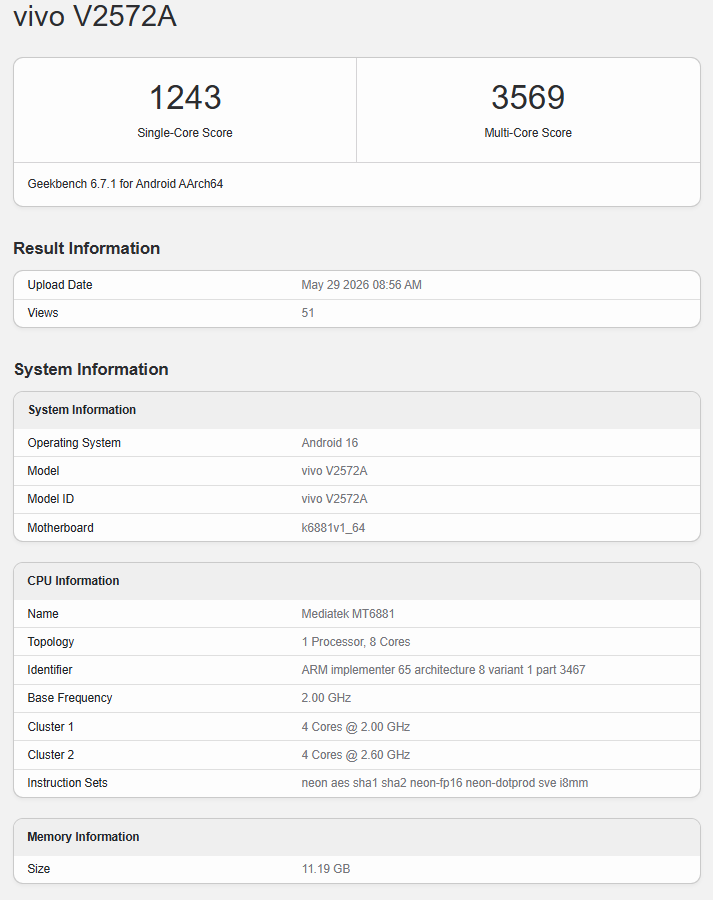
MediaTek’s new Dimensity 7500 has finally shown up in Geekbench, giving us a rough idea of what kind of performance buyers can expect from the chip.
The benchmark was recorded on the Vivo S60 Vitality Edition, which is the first phone to launch with the processor. It scored 1243 points in single-core testing and 3569 points in multi-core.
Those numbers are better than what we typically see from the Dimensity 7400, although not by a huge margin. That’s actually pretty much what the early specifications suggested. MediaTek previously claimed gains of around 24% in single-core performance and 21% in multi-core workloads, but real-world benchmarks rarely line up perfectly with marketing figures. Still, the jump is there.
What caught my attention is that MediaTek doesn’t seem to be chasing massive year-over-year improvements with this chip. Instead, the company appears to be doing what it has done for several generations now: making small improvements, refining efficiency, and moving the platform forward without dramatically changing the formula.
A few years ago, benchmark scores in this range would have belonged to upper-tier devices. Today, they are showing up in phones that sit comfortably in the mid-range. The reality is that most users will spend more time scrolling social media, taking photos, watching videos, and chatting than pushing all CPU cores to their limits.
The Dimensity 7500 itself is built on a 4nm process and uses an octa-core design paired with a Mali-G625 GPU. Nothing particularly surprising there, but the combination should be more than capable for everyday use and the occasional gaming session.
Vivo has paired the chip with a 144Hz AMOLED display, a slim 7.92mm body, and a starting price of 2,899 yuan.
As always, Geekbench is only one piece of the puzzle. Sustained performance, battery life, thermals, and gaming results will tell us much more about the Dimensity 7500 than a single benchmark run ever could. But based on these early numbers, MediaTek’s latest mid-range chip looks exactly like what it was expected to be: a sensible upgrade rather than a dramatic one.
LG has introduced a new 32-inch electronic paper display designed specifically for the commercial signage market. The device, which recently received a 2026 Red Dot Design Award, uses color E Ink technology and operates on a business-focused version of the company’s webOS platform.
LG E-Paper Display Specifications
The screen features a QHD resolution of 2560 x 1440 and a standard 16:9 aspect ratio. Because it uses electronic ink rather than an LCD or OLED panel, the display is completely backlight-free and relies on ambient light for visibility.
The main draw here is power efficiency: the screen only draws electricity when the image is actively refreshing. If it is just holding a static image, like a cafe menu, a retail promo, or a hotel directory, it essentially uses zero power. LG says it is also using a custom image algorithm to get the most natural color reproduction out of the panel.
Physically, the display is built to emulate the look of a traditional paper poster. It weighs 3.1kg (about 6.8 pounds) and measures 17.8mm thick, tapering down to 8.6mm at its thinnest edge. Inside, there is a 72Wh battery paired with a low-power system-on-chip.
According to LG, the battery takes about three hours to charge from empty when the device is powered off. Interestingly, the display also supports a detachable magnetic battery pack, which should make it easier to keep these powered up in retail spaces without needing to run permanent power cables up a wall.
On the software side, LG has equipped the poster with a business-focused version of webOS and built-in Wi-Fi. Businesses can manage the displays remotely using LG’s SuperSign CMS software.
This allows a central office to push out new images, schedule content updates in batches, and monitor the battery life of multiple displays at once. If a company doesn’t want to use the cloud management system, they can still load images manually via a standard USB drive.
Pricing and Availability
LG plans to launch the 32-inch electronic paper display in South Korea early next month, with availability in the United States and Europe following in July. Official pricing details have not yet been disclosed.
In related news, LG has recently unveiled the UltraGear 32GX870B, a new gaming monitor featuring a Tandem OLED panel and a 480Hz esports mode.
For more daily updates, please visit our News Section.
Someone may have already been carrying one of Samsung‘s next foldables around in public. A pair of blurry photos shared on a Korean online forum appear to show what could be the Galaxy Z Fold 8 months before its expected launch.
The photos are far from ideal. One was taken from a distance inside a restaurant, while the other shows the device in someone’s hand. Like most pre-release hardware, it is wrapped in a thick protective case designed to hide the final design.
Even so, a few details seem difficult to miss.
For starters, the phone looks wider than previous Galaxy Z Fold models. It is hard to be precise because of the case, but the proportions look fairly close to previously leaked renders and dummy units that suggested Samsung was finally listening to users who wanted a wider cover display.
The rear camera setup is interesting as well. Only two camera cutouts are visible, which lines up with recent reports claiming Samsung is preparing a more affordable foldable alongside a premium Ultra model. If that information is accurate, the cheaper version could skip the dedicated telephoto camera in favor of a simpler dual-camera system. That would be a noticeable change for Samsung’s Fold lineup.
The timing makes the sighting difficult to ignore. Samsung is widely expected to unveil its next generation of foldables in July, which means hardware is already moving through testing and certification stages. Real-world appearances tend to become more common around this point in the cycle.
One thing seems increasingly clear: the Galaxy Z Fold 8, previously referred to as the Z Fold 8 Wide, may look quite different from the narrow Fold models Samsung fans have become used to over the years.
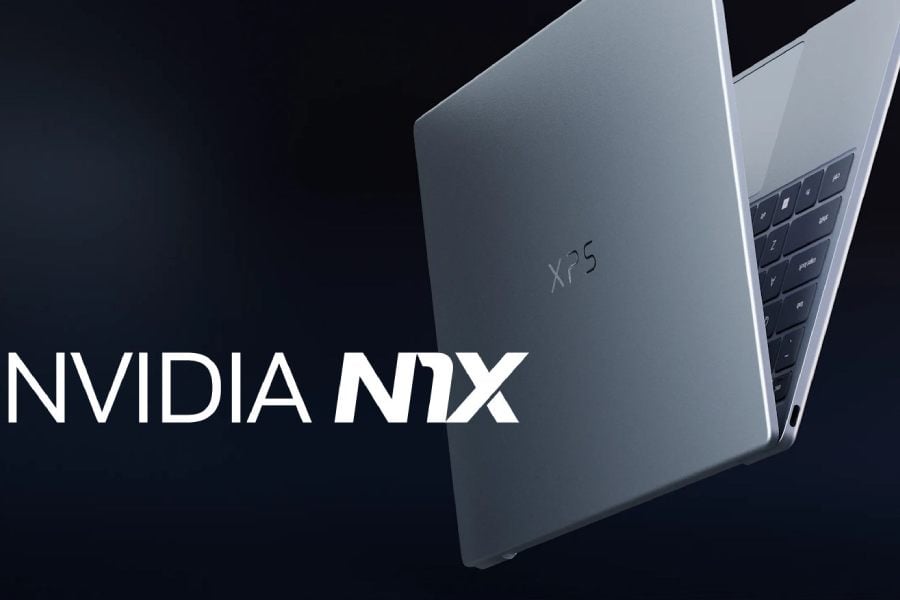
Nvidia is about to announce its first Arm chips for Windows laptops at Computex tomorrow. However, someone may have spoiled the surprise for Nvidia.
Just a day before the expected announcement, detailed specifications of Nvidia’s upcoming N1-series Arm processors for PCs and laptops have surfaced online, courtesy of VideoCardz, which cited internal Nvidia documents.
The leak reveals at least four chip variants in the N1 family, covering everything from high-performance workhorses to power-efficient options for thin, mainstream laptops.
For quite a while now, the Windows-on-Arm story has mostly been Qualcomm’s story. The company’s Snapdragon X Elite chips, built on a 4nm process with Qualcomm’s own Oryon CPU cores, brought real competition to Intel and AMD for the first time in years on thin-and-light laptops.
Qualcomm made big claims about beating Intel Core i7 chips on multi-threaded benchmarks, and for the most part, the real-world results backed that up.
Now Nvidia wants in. And Nvidia isn’t just bringing a CPU to the fight; it’s bringing a Blackwell GPU along for the ride.
2. Nvidia N1X
The top-tier N1X reportedly shares its core design with the GB10 processor inside Nvidia’s DGX Spark desktop AI supercomputer. That’s not a casual comparison. The full-fat N1X is said to pack a 20-core CPU — ten Cortex-X925 performance cores and ten Cortex-A725 efficiency cores — paired with a Blackwell 2.0 GPU featuring 48 Streaming Multiprocessors, which works out to 6,144 CUDA cores.
A slightly trimmed N1X variant is also in the works, dropping to 18 CPU cores (nine performance, nine efficiency) and a 40-SM GPU with 5,120 CUDA cores. Both N1X chips are designed to run at 45W to 80W. Crucially, though, that power figure covers the entire chip package: CPU and GPU together.
3. Nvidia N1
The standard N1 lineup is for thinner, more affordable devices. Two variants have reportedly been planned. The higher-end one pairs eight Cortex-X925 performance cores and four Cortex-A725 efficiency cores with a 20-SM GPU delivering 2,560 CUDA cores.
The second, more entry-level option steps down to a 10-core CPU (seven performance, three efficiency) and a 16-SM GPU with 2,048 CUDA cores. The whole N1 family runs within an 18W to 45W power envelope.
4. Memory and Storage
The two families differ significantly under the hood. The N1X supports up to 128GB of LPDDR5X memory across a 16-channel interface, while the standard N1 caps at 64GB with an 8-channel setup.
Likewise, N1X supports up to three M.2 SSDs, while the N1 tops out at two.
5. How Long Has This Been Cooking?
According to VideoCardz, at least one of the leaked slides is dated 2024, meaning Nvidia may have been working on this for two years or more. Not every chip listed in these documents is guaranteed to ship; roadmaps change, and some variants may quietly disappear. But the scale of what’s been leaked suggests Nvidia had serious, long-term ambitions here.
For more daily updates, please visit our News Section.
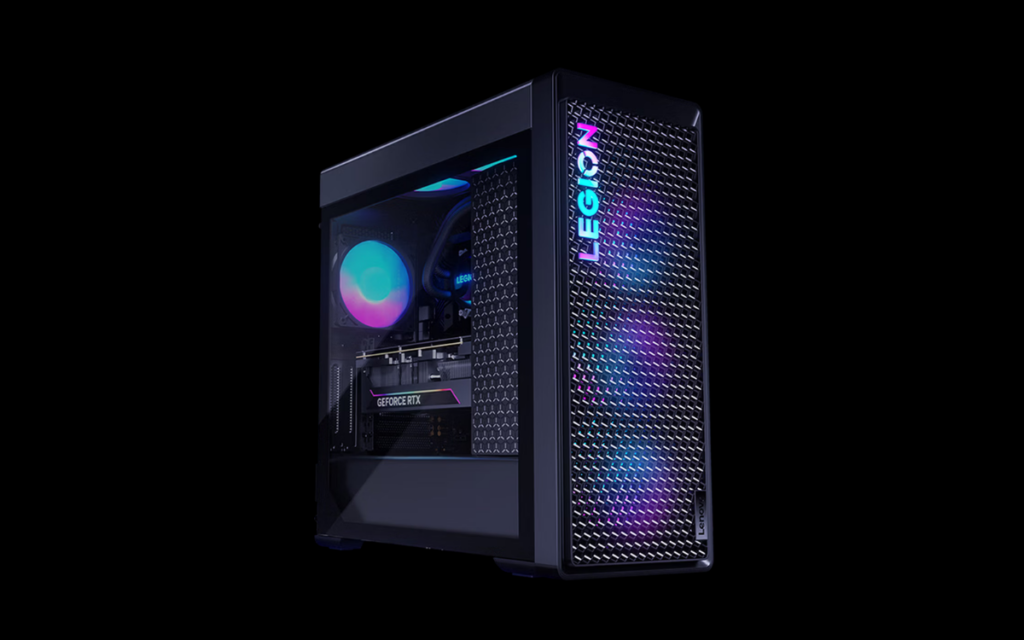
Lenovo has added a new configuration to its Legion Blade 7000K desktop PC lineup, combining an Intel Core i7-13650HX processor with an Nvidia RTX 5060 graphics card. The system is currently available with a promotional launch price of 9,999 yuan ($1,478), and will eventually shift to a standard retail price of 10,499 yuan ($1,552).
Lenovo Legion Blade 7000K Specifications
The most interesting part of this build is the choice of processor. The Core i7-13650HX is actually a mobile chip designed for high-end laptops, though it is built on repurposed desktop silicon. Lenovo has opted to use it here inside a standard desktop tower. It features a 14-core, 20-thread configuration, which is split into six performance cores and eight efficiency cores.
The chip also includes a 24MB Smart Cache and reaches a peak turbo frequency of 4.90 GHz. It operates at a 55W base power but can draw up to 157W when pushed to its maximum turbo consumption. Lenovo paired this processor with Nvidia’s RTX 5060, a graphics card that handles standard 1080p and 1440p gaming, as well as basic video encoding and AI tasks.
For memory, the system comes with 24GB of DDR5 RAM running at 5600MHz. That is an unusual amount for a pre-built PC, since they usually ship with either 16GB or 32GB. It gives you a bit more room for multitasking than a standard 16GB setup without making the computer as expensive as a 32GB model. For storage, it includes a standard 1TB PCIe 4.0 NVMe SSD.
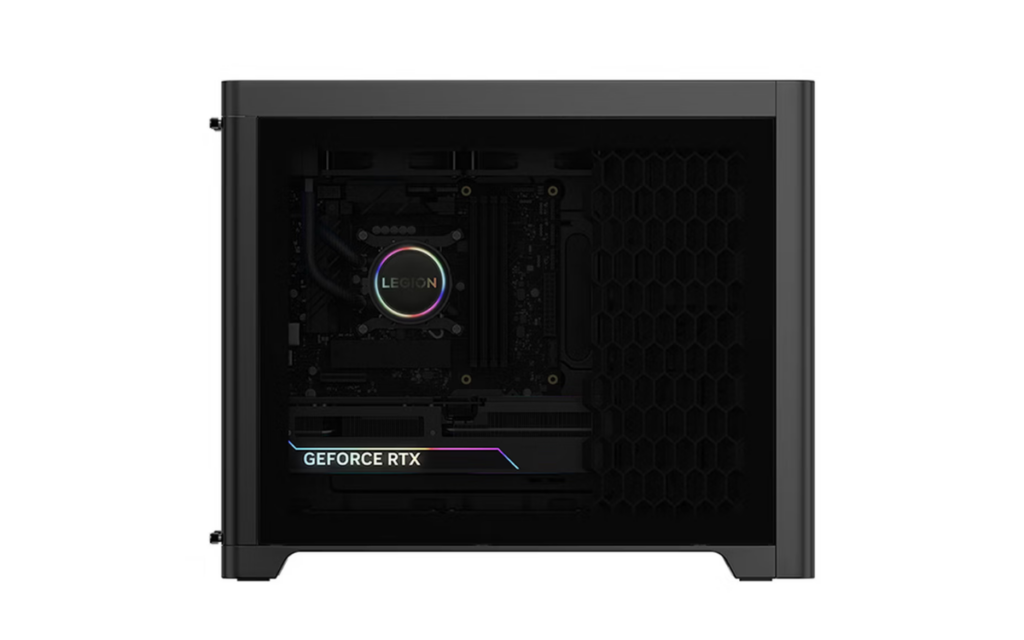
The case design is functional and sticks to the established look of the Legion brand. The chassis comes in a Titanium Crystal Gray finish and relies on a mesh front panel for intake ventilation. Behind this mesh, Lenovo included a textured airflow shroud, which the company refers to as its Night Sky design, to help direct air over the internal components.
Like most modern gaming desktops, the Blade 7000K includes customizable lighting. The front panel features an ARGB Legion logo, and the internal cooling fans are equipped with 12-LED RGB rings. It also features a standard tempered glass side panel that allows users to see the internal hardware, while the primary I/O ports are situated on the top edge of the case.
In related news, Lenovo recently unveiled the Lecoo Air 14, Intel’s first laptop based on the Project Firefly initiative, and also introduced the 2026 ThinkPad X13 powered by the Ryzen AI 7 445 with up to 32GB of LPDDR5x memory.
For more daily updates, please visit our News Section.
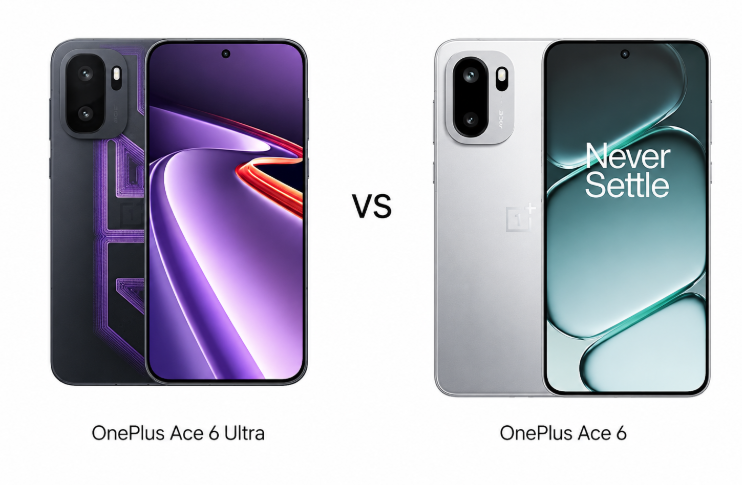
OnePlus Ace 6 Ultra and OnePlus Ace 6 may look similar at first glance, but they target two very different buyers. One focuses on delivering the latest hardware, a larger camera sensor, and an enormous 8600mAh battery, while the other aims to offer flagship-level performance and features at a much lower price. With both phones featuring 165Hz AMOLED displays, premium builds, and ultra-fast charging, this comparison highlights whether the Ace 6 Ultra’s upgrades are worth the extra money or if the standard Ace 6 remains the better value pick.
Major Upgrades:
Feature
OnePlus Ace 6 Ultra
OnePlus Ace 6
Upgrade Over Ace 6
Chipset
MediaTek Dimensity 9500 (3nm)
Snapdragon 8 Elite (3nm)
Newer flagship chipset
Battery Capacity
8600mAh
7800mAh
800mAh larger battery
Main Camera Sensor
50MP, 1/1.55-inch sensor, OIS
50MP sensor, OIS
Larger sensor for improved low-light photography
Bluetooth
Bluetooth 6.0
Bluetooth 5.4
Newer Bluetooth standard
Build Options
Glass or Eco-Leather
Glass only
Additional premium finish option
Gaming Connectivity
Dedicated G2 Pro Wi-Fi Chip
Standard Wi-Fi hardware
Improved gaming connectivity and network stability
Cooling System
Glacier Cooling System
Standard flagship cooling
Enhanced thermal management
Touch Response
4000Hz Instant Touch Sampling
Standard touch sampling
Faster touch response for gaming
Positioning System
Expanded GNSS support
Standard GNSS support
More advanced navigation support
Premium Positioning
Gaming-focused flagship model
Mainstream flagship model
More enthusiast-oriented hardware package
Charging
120W Wired + Bypass Charging
120W Wired + Bypass Charging
No change
Display Technology
165Hz AMOLED, Dolby Vision, HDR10+
165Hz AMOLED, Dolby Vision, HDR10+
No change
Ultrawide Camera
8MP
8MP
No change
Selfie Camera
16MP
16MP
No change
Water Resistance
IP68/IP69K
IP68/IP69K
No change
Storage
Up to 1TB UFS 4.1
Up to 1TB UFS 4.1
No change
Fingerprint Scanner
Ultrasonic
Ultrasonic
No change
Price
Around ₹48,500 ($485)
Around ₹32,000 ($400)
Premium pricing for the additional hardware upgrades
Disclaimer: Specs are based on available data. Actual performance may vary. Verify details from official sources before buying.
The OnePlus Ace 6 Ultra and OnePlus Ace 6 share a premium design language with an aluminum frame, Crystal Shield Glass protection, and IP68/IP69K water and dust resistance. The biggest difference is material choice. The Ace 6 Ultra offers an optional eco-leather finish alongside the standard glass back, giving it a more distinctive flagship-like character. Both devices feel premium, but the Ultra version appears slightly more focused on durability and luxury.
The overall design philosophy remains very similar, so users upgrading from the Ace 6 may not immediately notice a dramatic visual transformation. However, the eco-leather option adds a touch of exclusivity that helps the Ultra stand apart.
Display Quality
Both phones feature AMOLED panels with 1 billion colors, Dolby Vision support, HDR10+, HDR Vivid, and an impressive 165Hz refresh rate. The Ace 6 offers a slightly larger 6.83-inch display compared to the 6.78-inch panel on the Ultra.
Image quality is nearly identical, with excellent contrast, vibrant colors, and smooth animations. The larger screen on the Ace 6 may appeal more to gamers and media consumers, while the Ultra focuses on delivering a similarly premium viewing experience without chasing size.
Verdict
The Ace 6 Ultra wins narrowly thanks to its optional eco-leather finish and more premium positioning. However, display quality remains effectively equal, making the Ace 6 surprisingly competitive.
2. Specifications Including Battery
Performance
Performance is where the biggest difference appears. The OnePlus Ace 6 Ultra is powered by the new MediaTek Dimensity 9500 chipset, while the Ace 6 uses Qualcomm’s Snapdragon 8 Elite. Both are built on advanced 3nm processes and target flagship-level performance.
The Snapdragon 8 Elite currently has a stronger reputation for gaming optimization, GPU performance, and app compatibility. Meanwhile, the Dimensity 9500 focuses on raw computational power and next-generation efficiency. Daily usage, multitasking, and demanding games should feel exceptionally smooth on either device.
The Ace 6 Ultra feels like a forward-looking flagship, whereas the Ace 6 continues to offer one of the most proven performance packages available.
Battery and Charging
Battery capacity is a major upgrade. The Ace 6 Ultra packs an enormous 8600mAh battery compared to the already impressive 7800mAh cell in the Ace 6. Both support 120W fast charging, ensuring minimal downtime despite their large batteries.
For heavy gamers, travelers, and power users, the larger battery provides a meaningful real-world advantage. Both phones support bypass charging, allowing power to be supplied directly to the system during gaming while reducing battery stress and heat buildup
Verdict
The Ace 6 Ultra takes the win due to its significantly larger battery, newer chipset, and additional gaming-focused hardware, such as enhanced cooling and connectivity features
3. Camera
Main and Secondary Lenses
Both smartphones feature a dual-camera setup with a 50MP primary sensor and an 8MP ultrawide camera. The Ace 6 Ultra uses a larger 1/1.55-inch main sensor, which should allow better light capture and improved low-light performance.
The Ace 6, however, offers more advanced video recording capabilities with support for 4K 120fps recording, making it particularly attractive for mobile videographers and content creators. Color reproduction and dynamic range are expected to be strong on both devices thanks to OIS and color spectrum sensors.
Photography enthusiasts may appreciate the Ultra’s larger sensor, while video-focused users could find the Ace 6 more appealing.
Selfie Camera
The selfie hardware remains largely unchanged. Both devices use a 16MP front-facing camera capable of 1080p video recording with gyro-EIS stabilization.
Image quality, skin tones, and video call performance should be very similar. There is no meaningful upgrade in this area, which keeps the experience consistent across both models.
Verdict
The Ace 6 Ultra wins for still photography thanks to its larger primary sensor, but the Ace 6 remains the better choice for users who prioritize high-frame-rate video recording.
4. Pricing
The OnePlus Ace 6 is priced around ₹32,000 ($400), while the OnePlus Ace 6 Ultra is priced around ₹48,500 ($485). This creates a price gap of roughly ₹16,500 between the two devices.
At its price point, the Ace 6 delivers flagship-level performance, a premium build, a 165Hz AMOLED display, IP68/IP69K protection, and a huge 7800mAh battery. It is one of the strongest value-focused flagship killers in the segment.
The Ace 6 Ultra adds a newer chipset, a larger 8600mAh battery, an optional eco-leather finish, Bluetooth 6.0 support, and a larger primary camera sensor. These upgrades are meaningful, but they are not transformational.
Is the Price Justified?
The Ultra’s higher price is justified for users seeking maximum battery life and the latest hardware. However, the Ace 6 offers exceptional value and delivers nearly 90% of the flagship experience at a substantially lower cost.
Verdict
The Ace 6 provides better value for money, while the Ace 6 Ultra is aimed at buyers who want the newest technology regardless of the premium.
Disclaimer: Prices are approximate and may vary based on country, region, launch timing, and applicable taxes. Always check whether the listed price is for a China unit or a global/international variant when purchasing.
5. Conclusion
The OnePlus Ace 6 Ultra distinguishes itself with the Dimensity 9500 chipset, massive 8600mAh battery, larger primary camera sensor, Bluetooth 6.0 connectivity, and optional eco-leather finish. These upgrades make it feel more like a true ultra-tier flagship rather than a simple refresh. It also introduces gaming-focused enhancements, including a dedicated Wi-Fi chip, an advanced cooling system, and faster touch response technology
The OnePlus Ace 6 fights back with the Snapdragon 8 Elite processor, 4K 120fps video recording, a slightly larger display, and significantly lower pricing. It remains one of the most balanced flagship smartphones in its category.
The differences between these devices are focused on refinement rather than reinvention. Most users will experience very similar displays, software, and everyday performance.
Verdict
Choose the OnePlus Ace 6 Ultra if maximum battery life, newer hardware, and camera improvements are top priorities.
Choose the OnePlus Ace 6 if value for money matters most. It delivers flagship performance, premium features, and a highly competitive overall package while costing considerably less, making it the smarter purchase for most buyers.
Disclaimer: This comparison is based on the specifications provided and is intended for general informational purposes. Actual performance, camera results, battery life, and overall experience may vary depending on real-world usage, software updates, and individual preferences.
Honor 600 Pro and Xiaomi 17 represent two very different approaches to the flagship smartphone market. One focuses on delivering maximum value with a huge battery and premium features, while the other pushes the limits with next-generation performance and advanced camera technology. With both phones targeting power users, this comparison breaks down the key differences to see which flagship deserves a place in your pocket.
Major Features:
Feature
Honor 600 Pro
Xiaomi 17
Winner
Build Quality
Glass front & back, aluminum frame, IP68/IP69K
Glass front & back, aluminum frame, IP68
Honor – Better durability with IP69K protection
Display Technology
AMOLED, 120Hz
LTPO AMOLED, 120Hz
Xiaomi – LTPO panel is more advanced and efficient
Display Brightness
8000 nits peak
3500 nits peak
Honor – Significantly higher peak brightness
Display Features
HDR Vivid, 3840Hz PWM
Dolby Vision, HDR10+, HDR Vivid
Xiaomi – Richer HDR ecosystem
Display Protection
Mohs Level 4
Dragon Crystal Glass, Mohs Level 6
Xiaomi – Better scratch resistance
Processor
Snapdragon 8 Elite
Snapdragon 8 Elite Gen 5
Xiaomi – Newer and faster chipset
GPU
Adreno 830
Adreno 840
Xiaomi – More powerful graphics performance
RAM & Storage
Up to 16GB/1TB
Up to 16GB/1TB, UFS 4.1
Xiaomi – Faster storage technology
Main Camera
200MP OIS
50MP OIS Leica
Honor – Higher-resolution primary sensor
Telephoto Camera
50MP, 3.5x OIS
50MP, 2.6x OIS
Honor – Longer optical zoom reach
Ultrawide Camera
12MP
50MP
Xiaomi – Higher-resolution ultrawide sensor
Camera System Overall
200MP-focused setup
Balanced Leica triple 50MP setup
Xiaomi – More consistent imaging experience
Video Recording
4K 60fps
8K HDR, Dolby Vision, LOG
Xiaomi – Far superior video capabilities
Selfie Camera
50MP
50MP PDAF
Xiaomi – Autofocus improves selfies and video
Battery Capacity
7000mAh (Global)
6330mAh (Global)
Honor – Larger battery
Wired Charging
80W
100W
Xiaomi – Faster charging speeds
Wireless Charging
50W
50W
Tie – Same charging speed
Reverse Charging
27W wired
22.5W wired + 22.5W wireless
Xiaomi – More versatile reverse charging
USB Port
USB 2.0
USB 3.2 with DisplayPort
Xiaomi – Faster data transfer and display output
Fingerprint Scanner
Optical
Ultrasonic
Xiaomi – Faster and more reliable
Audio
Stereo speakers
Stereo speakers, Dolby Atmos, Hi-Res Audio
Xiaomi – Better audio feature set
Software Support
Android 16, 6 major upgrades
Android 16, HyperOS 3
Honor – Clear long-term update commitment
Starting Price
Around $750 / ₹65,000
Around $1000 / ₹90,000
Honor – Much better value
Overall Performance
Flagship-level
Next-generation flagship
Xiaomi – Faster across the board
Overall Value
Premium flagship at lower price
Premium flagship with latest tech
Honor – Delivers more for the money
Disclaimer: Specs are based on available data. Actual performance may vary. Verify details from official sources before buying.
The Honor 600 Pro and Xiaomi 17 both target the premium flagship segment, but they approach design differently. The Honor 600 Pro combines a glass body with an aluminum frame and adds IP68/IP69K protection, giving it an extra layer of durability against harsh environments. Xiaomi 17 also uses premium glass and aluminum materials with IP68 certification, while its Dragon Crystal Glass and higher Mohs-rated protection provide improved scratch resistance.
The Xiaomi 17 feels like a compact flagship designed for users who prefer easier one-handed use. The Honor 600 Pro, meanwhile, offers a larger viewing experience that may appeal more to multimedia enthusiasts.
Display Quality
Honor equips the 600 Pro with a 120Hz AMOLED panel that reaches an impressive 8000 nits peak brightness and supports 3840Hz PWM dimming. Xiaomi counters with a 120Hz LTPO AMOLED display featuring Dolby Vision, HDR10+, 68 billion colors, and adaptive refresh rate technology.
The Xiaomi display feels more refined overall thanks to LTPO technology and richer HDR support, while Honor delivers exceptional brightness and eye-comfort features.
Verdict
Both displays are excellent, but Xiaomi 17 takes a narrow win for its LTPO panel, Dolby Vision support, and stronger display protection. Honor 600 Pro remains highly competitive with superior brightness and advanced PWM dimming.
2. Specifications Including Battery
Performance
Performance is one of the biggest differences between these two phones. The Honor 600 Pro runs on the Snapdragon 8 Elite, which remains an extremely capable flagship processor. Xiaomi 17, however, moves to the newer Snapdragon 8 Elite Gen 5 with upgraded Oryon cores and the newer Adreno 840 GPU.
In demanding gaming, AI processing, and long-term performance scenarios, Xiaomi holds a clear advantage. The newer chipset also provides additional headroom for future software updates and intensive workloads.
Battery and Charging
Battery capacity is where Honor strikes back. The Honor 600 Pro packs a massive 7000mAh battery in international markets, comfortably exceeding Xiaomi’s global 6330mAh unit. Xiaomi responds with faster 100W wired charging compared to Honor’s 80W solution, while both support 50W wireless charging.
For users who prioritize endurance, Honor feels like the more practical choice. Xiaomi focuses more on reducing charging times.
Verdict
Xiaomi 17 wins on raw performance, but Honor 600 Pro delivers stronger battery life. Overall, Xiaomi takes the section due to its next-generation chipset and broader performance advantage.
3. Camera
Main and Secondary Lenses
Honor 600 Pro features a powerful 200MP primary sensor paired with a 50MP telephoto camera offering 3.5x optical zoom and a 12MP ultrawide lens. Xiaomi 17 uses a balanced triple 50MP Leica-branded camera system with wide, telephoto, and ultrawide sensors.
The Honor camera setup emphasizes resolution and zoom reach, making it attractive for users who frequently crop photos or capture distant subjects. Xiaomi focuses on consistency across all lenses, producing a more uniform imaging experience.
Video capabilities strongly favor Xiaomi. Support for 8K HDR recording, Dolby Vision, LOG recording, and advanced slow-motion options places it in a higher tier for content creators.
Selfie Camera
Both devices include 50MP selfie cameras capable of 4K recording. Xiaomi gains a slight edge with PDAF autofocus and HDR10+ video support.
Verdict
Honor 600 Pro offers the stronger hardware specification on paper for photography, but Xiaomi 17 delivers the more complete camera package thanks to Leica tuning, superior video features, and better consistency across all lenses.
4. Pricing
The Honor 600 Pro is priced around $750 (₹65,000), while the Xiaomi 17 is priced around $1000 (₹90,000). The difference of roughly $250 (₹25,000) is substantial and places the Xiaomi in a noticeably higher premium category.
Honor delivers flagship-level performance, a huge battery, premium build quality, wireless charging, and a 200MP camera system at a significantly lower price. That makes it one of the more aggressive value-oriented flagship offerings.
Xiaomi justifies its higher price through a newer processor, stronger display technologies, advanced video recording features, Leica imaging partnership, faster charging, and USB 3.2 connectivity with DisplayPort support. These additions target enthusiasts and power users rather than mainstream buyers.
Is the Price Justified?
For most buyers, Honor offers the better value proposition. Xiaomi’s premium is justified primarily for users seeking the latest technology and flagship camera features.
Verdict
Honor 600 Pro wins the value battle, while Xiaomi 17 earns its higher price through meaningful flagship upgrades.
Disclaimer: Prices are approximate and may vary based on country, region, launch timing, and applicable taxes. Always check whether the listed price is for a China unit or a global/international variant when purchasing.
5. Conclusion
The Honor 600 Pro stands out with its massive battery, ultra-bright display, 200MP main camera, and IP68/IP69K durability. It focuses on delivering flagship essentials while maintaining a more accessible price point.
The Xiaomi 17 differentiates itself through the Snapdragon 8 Elite Gen 5 chipset, LTPO AMOLED display, Leica-tuned cameras, advanced professional-grade video recording, USB 3.2 connectivity, and stronger display protection. It feels like a flagship designed for enthusiasts who want the latest hardware available.
The contrast between these devices is clear. Honor prioritizes value, endurance, and practicality, whereas Xiaomi emphasizes cutting-edge performance and premium imaging experiences.
Verdict
Choose the Honor 600 Pro if longer battery life, lower pricing, and overall value matter most. Choose the Xiaomi 17 if the goal is maximum performance, a more advanced display, and superior video capabilities.
Overall, the Xiaomi 17 is the better flagship, but the Honor 600 Pro is arguably the smarter purchase for the majority of buyers because it delivers a remarkably similar premium experience at a substantially lower price.
Disclaimer: This comparison is based on the specifications provided and is intended for general informational purposes. Actual performance, camera results, battery life, and overall experience may vary depending on real-world usage, software updates, and individual preferences.
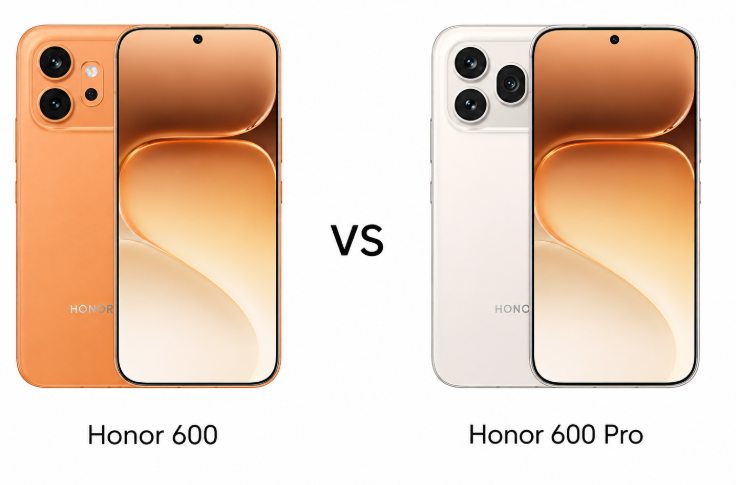
Honor 600 and Honor 600 Pro may look nearly identical on paper, but they target very different buyers. While both phones share the same premium display, massive battery, and 200MP main camera, the Pro model adds flagship-grade performance, a dedicated telephoto camera, and wireless charging. The question is whether these upgrades are worth the extra money. Here’s a closer look at the key differences to find out which Honor 600 series phone offers the better value in 2026.
Major Upgrades
Features:
Honor 600
Honor 600 Pro
Upgrades
Build Quality
Glass front, aluminum frame
Glass front, glass back, aluminum frame
More premium flagship-like design and feel
Chipset
Snapdragon 7 Gen 4
Snapdragon 8 Elite
Massive jump in CPU, GPU, AI, and gaming performance
The Honor 600 and Honor 600 Pro look remarkably similar at first glance, but the Pro model introduces a more premium construction with a glass back in addition to its glass front and aluminum frame. The standard Honor 600 uses an aluminum frame and glass front, which still delivers a premium feel, but the Pro has a slightly more flagship-like appearance and hand feel. Both devices offer IP68 and IP69K protection, making them equally capable when it comes to durability and water resistance.
The design difference is subtle rather than dramatic, which means buyers are paying for refinement rather than a complete redesign. The Pro feels more in line with premium flagship devices, while the Honor 600 maintains a cleaner value-focused approach.
Display Quality
There is virtually no difference between the displays. Both phones feature a 6.57-inch AMOLED panel with 120Hz refresh rate, 1 billion colors, HDR Vivid support, 3840Hz PWM dimming, and an impressive 8000-nit peak brightness. Resolution and sharpness are identical as well.
This is one of the rare cases where the cheaper model sacrifices nothing in display quality. Every day, viewing, gaming, HDR streaming, and outdoor visibility remain equally impressive on both devices.
Verdict
The Honor 600 Pro offers a slightly more premium build thanks to its glass back, but display quality is identical. Buyers focused on screen quality gain no real advantage by moving to the Pro model, making the Honor 600 the stronger value in this category.
2. Specifications Including Battery
Performance
The biggest upgrade in the entire comparison is performance. The Honor 600 uses the Snapdragon 7 Gen 4, a capable upper mid-range chipset that comfortably handles multitasking, gaming, and daily productivity. However, the Honor 600 Pro jumps to the Snapdragon 8 Elite, one of the fastest Android processors available.
This upgrade transforms the Pro into a true flagship performer. Heavy gaming, AI-powered tasks, advanced photo processing, and long-term software performance all benefit significantly. The Pro is built with far more headroom for future applications and demanding workloads.
Battery and Charging
Both devices feature the same 7000mAh silicon-carbon battery and identical 80W wired charging. Battery endurance should therefore be very similar in real-world use.
The major difference is wireless charging. The Honor 600 Pro adds 50W wireless charging, giving it far greater flexibility for premium users. Reverse wired charging is available on both devices.
Verdict
Performance alone makes the Honor 600 Pro a major upgrade. The battery experience remains similar, but the addition of flagship-level power and wireless charging gives the Pro a clear advantage for power users and long-term buyers.
3. Camera
Main and Secondary Lenses
The primary camera hardware is identical on both devices, featuring a 200MP sensor with OIS. Daylight photography, detail capture, dynamic range, and low-light performance should therefore remain very similar between the two models.
The difference comes from the secondary cameras. The Honor 600 uses a 12MP ultrawide camera alongside the main sensor. The Honor 600 Pro keeps the same ultrawide camera but adds a dedicated 50MP telephoto lens with OIS and 3.5x optical zoom.
This addition dramatically expands shooting versatility. Portrait photography, zoom shots, and distant subjects benefit significantly from the Pro’s dedicated telephoto hardware. It brings a true flagship camera experience that the standard model cannot fully match.
Selfie Camera
Both devices feature the same 50MP front camera capable of recording 4K video. Selfie quality, video calls, and social media content creation should deliver nearly identical results.
Verdict
The telephoto camera is the standout upgrade. While primary and selfie performance remain largely unchanged, the Honor 600 Pro offers a much more complete photography package and greater creative flexibility.
4. Pricing
The Honor 600 is priced around $500 (approximately ₹42,000), while the Honor 600 Pro is priced around $750 (approximately ₹65,000). This creates a substantial price gap of roughly $250 or ₹23,000.
The standard model delivers the same display, battery capacity, charging speed, durability rating, and main camera quality as its more expensive sibling. For many users, these similarities make the Honor 600 an attractive proposition.
However, the Pro model’s price increase is tied to meaningful upgrades rather than minor specification boosts. Buyers receive a flagship Snapdragon 8 Elite processor, a dedicated telephoto camera, wireless charging support, improved memory configurations, and a more premium construction.
Verdict
The Honor 600 wins on value, while the Honor 600 Pro wins on features. The right choice depends on whether flagship performance and advanced camera hardware are worth the additional investment.
Disclaimer: Prices are approximate and may vary based on country, region, launch timing, and applicable taxes. Always check whether the listed price is for a China unit or a global/international variant when purchasing.
5. Conclusion
The Honor 600 stands out by offering flagship-level display quality, excellent battery life, a high-resolution 200MP camera, and premium durability at a much lower price point. It avoids unnecessary compromises and focuses on delivering the essentials exceptionally well.
The Honor 600 Pro takes a different approach. Its Snapdragon 8 Elite processor places it among the most powerful Android smartphones available, while the dedicated 50MP telephoto camera and 50W wireless charging add genuine flagship convenience. These are meaningful upgrades that improve both performance and overall versatility.
The gap between the two phones is not about display quality or battery life. Instead, it is centered around processing power, zoom photography, and premium features.
Verdict
The Honor 600 is the smarter purchase for most buyers because it retains many of the Pro model’s headline features at a significantly lower price. The Honor 600 Pro is the better device overall, but the Honor 600 delivers the stronger value proposition.
Users who prioritize gaming, photography, and flagship performance will appreciate the Pro’s upgrades, while everyone else can confidently choose the standard model and save a considerable amount of money.
Disclaimer: This comparison is based on the specifications provided and is intended for general informational purposes. Actual performance, camera results, battery life, and overall experience may vary depending on real-world usage, software updates, and individual preferences.
Huawei’s Pura 90 series is the company’s first official effort to build a dedicated ecosystem around first-party external teleconverters. Now, it looks like Huawei could bring a similar camera-focused approach to its upcoming Mate 90 series.
Words for it come from Weibo tipster Fixed Focus Digital, who revealed that Huawei is working on external teleconverter support for the Mate lineup.
For those unfamiliar, a teleconverter is a clip-on optical accessory that multiplies the focal length of the lens beneath it. Instead of relying on digital cropping or AI-powered image enhancement, it provides true optical zoom.
Interestingly, the tipster also claims Huawei has switched suppliers for these external teleconverters, meaning the upcoming accessories could look and function quite differently from earlier versions.
The Mate 90 series is also said to feature a fresh design compared to the Mate 80 lineup, partly to accommodate this expanded camera ecosystem.
The camera upgrades may not stop there. As we previously reported, early leaks suggest the Mate 90 Pro Max and Mate 90 RS could feature dual periscope telephoto cameras. One prototype is reportedly being tested with a 10x optical zoom lens.
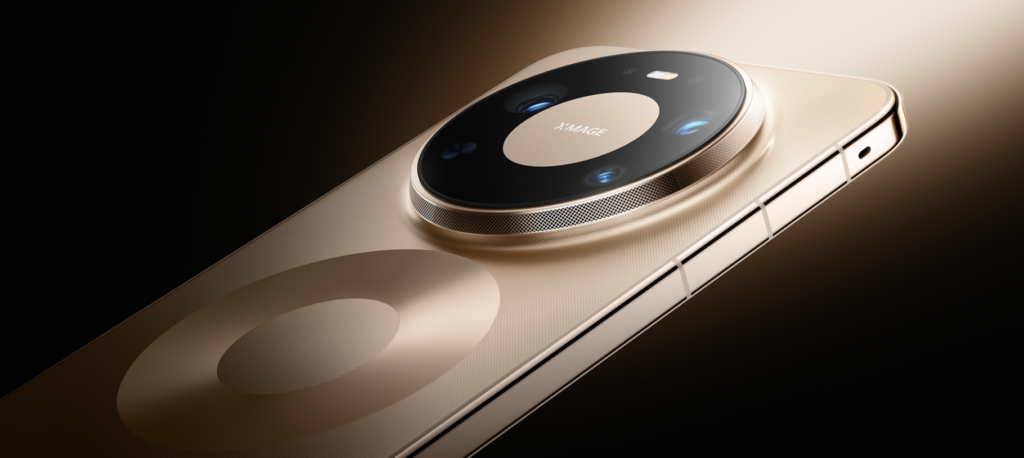
Huwaei Mate 80 Pro Max
The Mate 90 will also bring Huawei’s latest Kirin chip
On the silicon side, the 2026 Kirin processor expected to power the Mate 90 series is rumored to introduce Huawei’s new LogicFolding architecture. Rather than relying solely on shrinking transistor sizes, the design reportedly stacks key logic circuits vertically, allowing Huawei to increase transistor density by as much as 53.5%.
Performance is also said to be approaching Intel’s 18A process and early-generation TSMC 3nm technology. According to the leak, power efficiency on performance cores could improve by 41 percent, while peak clock speeds may increase by 12.7 percent.
Huawei has already hinted at a fall 2026 launch window for the Mate 90 series. The Mate 80 series launched in November, so it’s likely that the successor will launch around the same time.
For more daily updates, please visit our News Section.
Meta appears to be expanding its wearable ambitions beyond smart glasses. New details emerging from an internal company memo suggest that the social media giant is working on additional AI-powered hardware, including a wearable pendant and new smart glasses. The developments indicate that Meta is looking to strengthen its position in the growing AI wearables segment.
Meta’s wearable plans extend beyond smart glasses
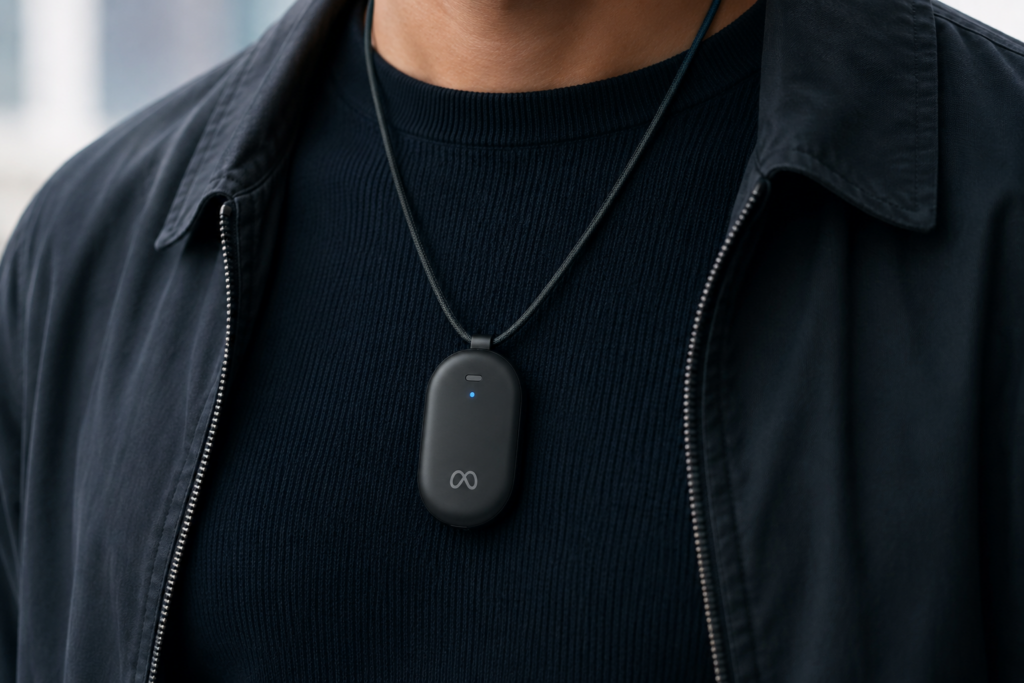
Meta AI pendant (AI-generated image)
According to The Information, Meta is developing an AI-powered pendant that could enter testing within the next year. The device is expected to build on technology acquired through Meta’s purchase of Limitless, a startup known for creating a wearable pendant capable of recording conversations and generating summaries. The wearable could be clipped onto clothing or worn around the neck, potentially acting as a personal AI assistant throughout the day.
The same memo reportedly reveals that Meta is preparing several new smart glasses models scheduled for launch by the end of 2026. While details remain limited, the devices are expected to continue Meta’s focus on AI-powered experiences, building on the success of its Ray-Ban smart glasses. The company is also said to be exploring a new subscription service called Wearables for Work, aimed at business users seeking productivity-focused tools.
The enterprise-focused subscription could bring features such as meeting transcription, note-taking assistance and integration with workplace platforms. Such capabilities would position Meta’s wearable products as productivity tools rather than purely consumer gadgets. This strategy could help the company expand its reach into professional environments where hands-free access to information may prove useful.
Meta’s wearable portfolio already includes smart glasses and virtual reality products, while reports suggest other hardware projects are also in development. However, AI pendants have faced challenges in the past, with several competing products struggling to gain mainstream adoption. Privacy concerns surrounding continuous audio recording are also likely to remain a key discussion point as these devices evolve.
For more daily updates, please visit our News Section.
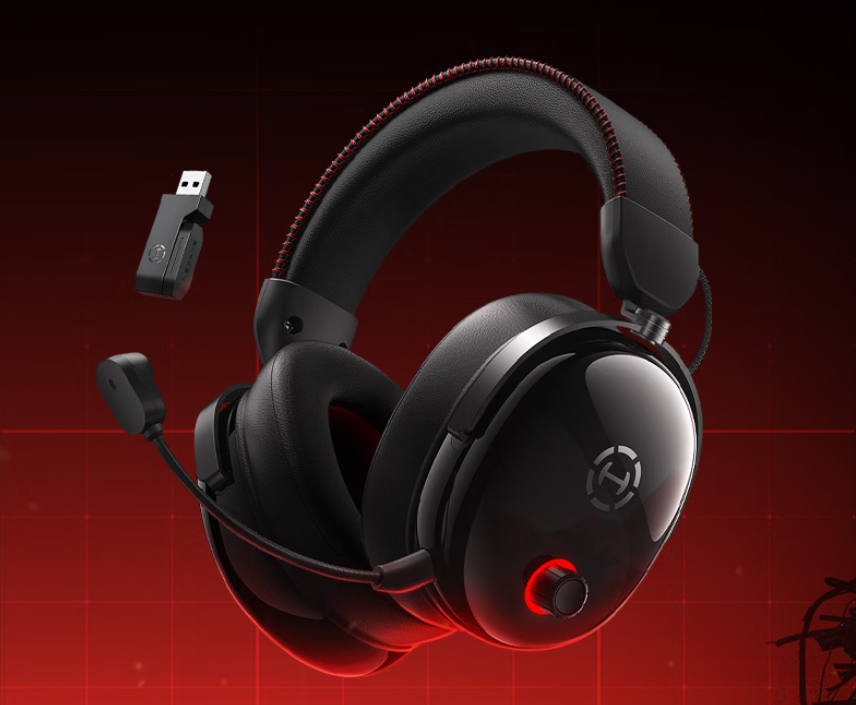
Edifier has introduced a new version of its Hecate G3 Max gaming headset that now has a dedicated multifunctional charging dock. The company has announced that the new G3 Max Base Edition is now available for pre-order on JD.com in China at an introductory price of 374 yuan (around $52). The headset will officially go on sale on June 5 at 8 PM local time.
The new model builds on the standard Hecate G3 Max that launched earlier this year. While most of the core hardware remains unchanged, the biggest upgrade is the addition of Edifier’s new RGB 3-in-1 All-in-One Base. The dock combines magnetic charging, a 2.4GHz wireless receiver, and a headset stand into a single accessory.
According to Edifier, users can simply place the headset on the dock for charging and pick it up when needed. The dock also features 360-degree RGB ambient lighting effects, adding a gaming-focused aesthetic to desktop setups.
Edifier Hecate G3 Max Specifications
Like the original G3 Max, the Base Edition is equipped with a 53mm driver featuring a PEN diaphragm and a three-volume independent low-frequency cavity design. Edifier says the headset delivers deeper bass performance while maintaining audio clarity. It also supports THX Spatial Audio and 7.1-channel virtual surround sound for a more immersive gaming experience.
The headset carries Hi-Res Audio certification and supports a frequency response range of 20 Hz to 40 kHz. Edifier previously noted that the audio tuning was developed in collaboration with professional esports teams to improve directional sound cues such as footsteps and gunfire in competitive games.
For communication, the headset includes a high-sensitivity 360-degree noise-canceling microphone. Connectivity options include 2.4GHz wireless through USB-C and USB-A adapters, Bluetooth 6.0, and a wired USB connection that works through a USB sound card.
The G3 Max Base Edition packs a 2000mAh battery that can deliver up to 227 hours of usage on a single charge under certain conditions, while also supporting charging during use. The headset is compatible across PCs, laptops, smartphones, tablets, PlayStation 5, and Nintendo Switch systems.
For more daily updates, please visit our News Section.
It’s 2026, and while smartwatches have become a standard part of our daily routines, there is still a strong case to be made for a traditional watch. Sometimes, it is nice to wear a device that just tells the time, doesn’t require software updates, and only needs a new battery every few years.
Casio has long been a reliable go-to for affordable, well-designed watches. Their current lineup does a good job of mixing familiar retro designs with updated colors and materials. Whether you are looking for a simple digital watch for everyday wear or an analog-digital hybrid that looks a bit more put-together, there are plenty of options that won’t strain your wallet.
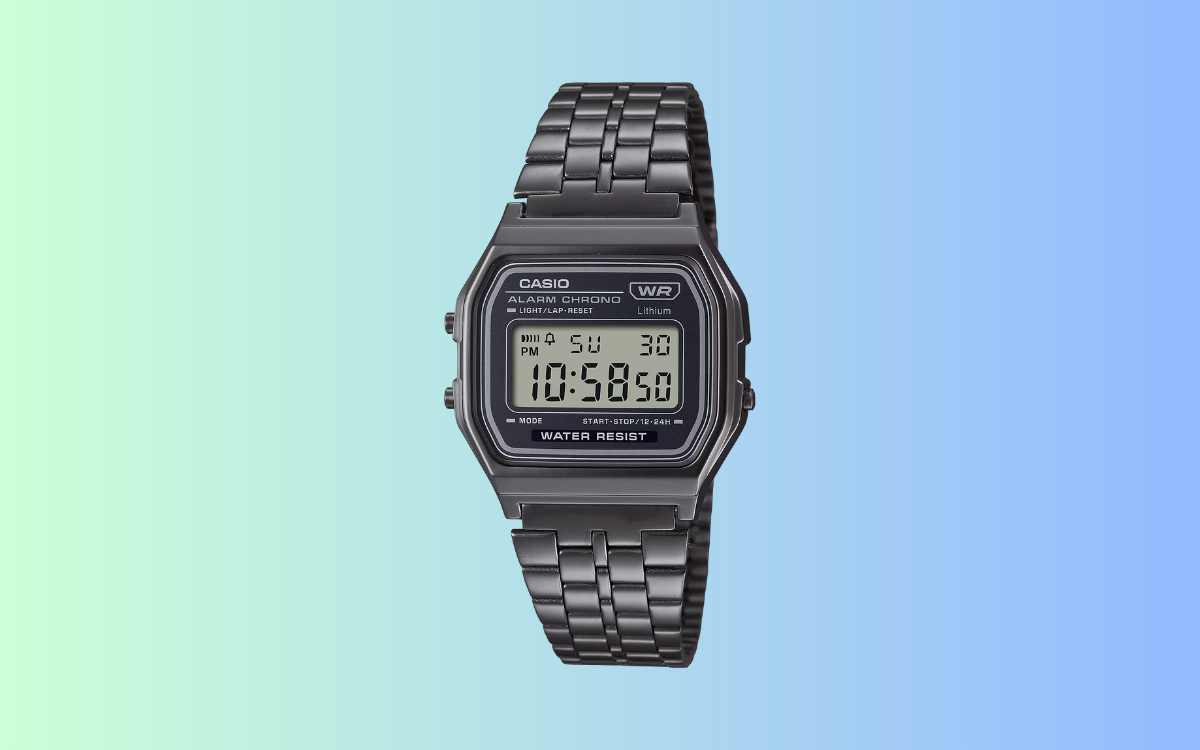
We keep this list current as Casio expands its lineup, most recently with the sub-$60 A130WE Vintage series. Here are the best-looking budget-friendly Casio watches worth buying right now.
The AQ-240E-2A is a nice middle ground between a traditional analog watch and a digital one. It features a light blue sunray dial that adds a bit of color without being too loud, set inside a silver resin and chrome-plated case. The design is relatively soft, with rounded edges that give it a clean, modern profile.
You get standard analog hands for checking the time at a glance, along with a small digital display at the bottom for your calendar, alarm, and dual-time features. It’s a versatile watch that works well for both casual and office settings.
If you prefer a standard digital layout but want something a bit more substantial than the slimmest models, the W218HD-3AV is a solid option. Casio gave this model a dark green dial, which provides a nice contrast to the stainless-steel band.
It has a slightly chunkier, casual design but still fits comfortably on the wrist. Practically speaking, it covers all the basics with a 1/100-second stopwatch, a daily alarm, an amber LED backlight for reading in the dark, and 50-meter water resistance. The battery is also rated to last around seven years.
For those who like the layout of the AQ240 series but prefer a warmer color palette, the AQ240EG-9A swaps the silver for a gold-tone finish. The sunburst dial features gold accents on the 12, 3, 6, and 9 o’clock markers, which stand out clearly against the black indices.
The gold ion-plated stainless-steel band comes with an adjustable clasp, making it easy to size to your wrist at home. It has the same dual-time, stopwatch, and alarm functions as its silver counterpart, but the gold finish gives it a slightly dressier appearance.
The A158WETB-1A takes Casio’s familiar square digital watch design and gives it a darker, more understated look. The case is made of black chrome-plated resin, and the stainless steel band features a gray ion-plated finish.
Weighing just 45 grams and measuring 8.5mm thick, it is very lightweight and sits flat against the wrist, so it won’t catch on your sleeves. It includes standard features like a stopwatch and daily alarm, and the display is lit by a green LED. It’s a good choice if you want a classic digital watch that doesn’t draw too much attention.
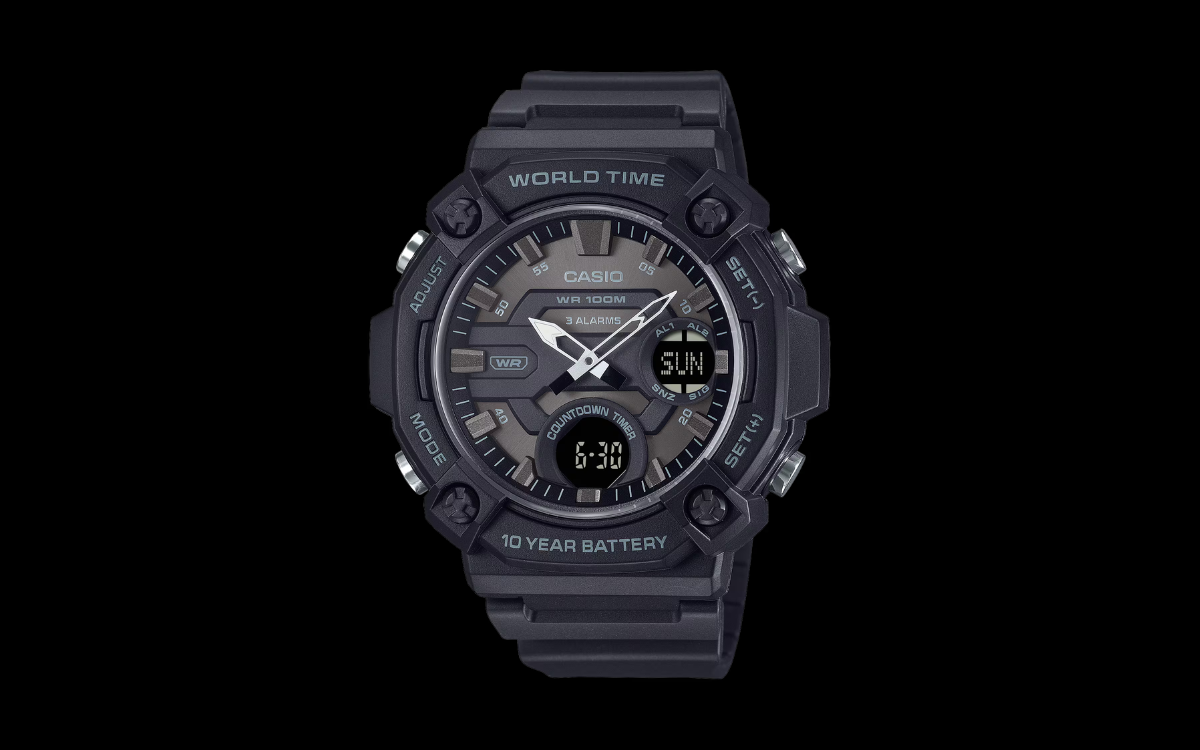
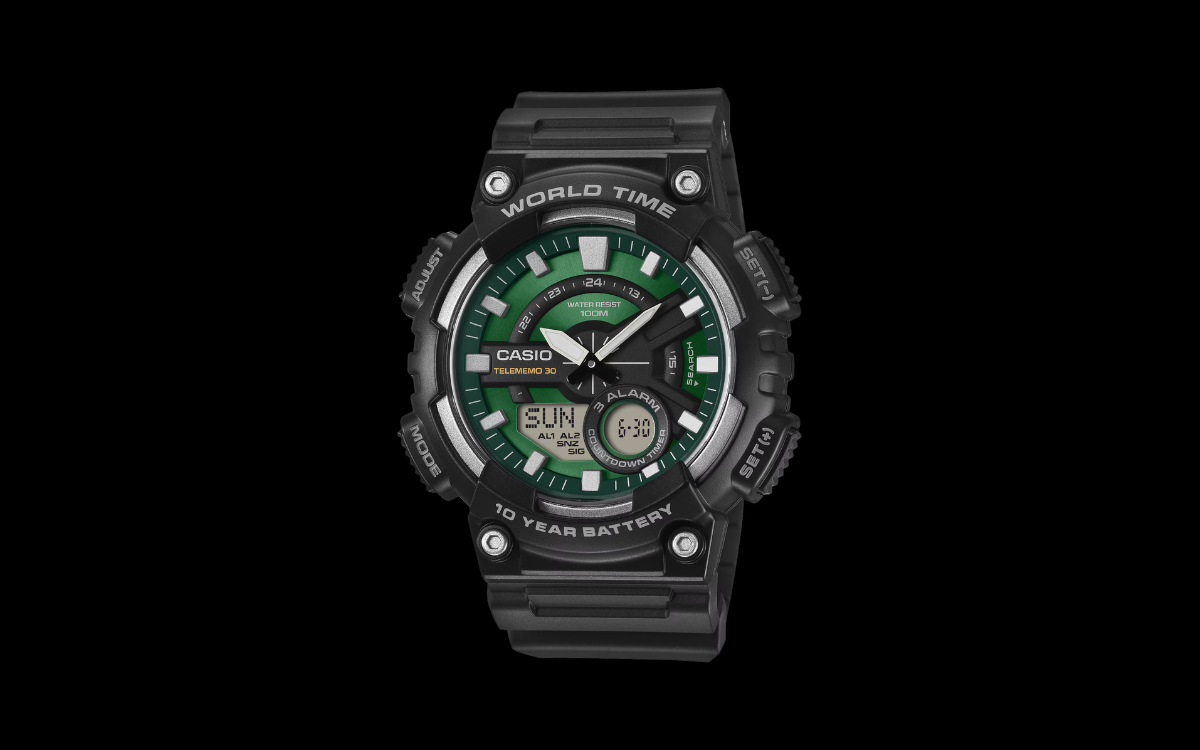
The AEQ120W-1BV is built for people who need a watch that can handle a bit more wear and tear. It has a large 53.3mm resin case and a raised bezel designed to protect the screen from scratches and impacts.
It is rated for 100-meter water resistance, making it suitable for swimming, and the battery is designed to last up to 10 years. Alongside the analog hands, the digital displays offer world time across 30 cities, three daily alarms, and a Telememo feature that lets you store up to 30 names and phone numbers.
The F-91W is one of Casio’s most recognizable models, and the F91WB-7A is a modernized version for 2026. This model features a minimalist white and gray color scheme, with fewer text indicators on the face for a cleaner look.
Casio also updated the materials, using a bio-based resin for the band to help reduce environmental impact. It remains incredibly light at just 21 grams. You still get the core features that made the original popular: a stopwatch, alarm, and auto-calendar, just in a more contemporary, eco-conscious package.
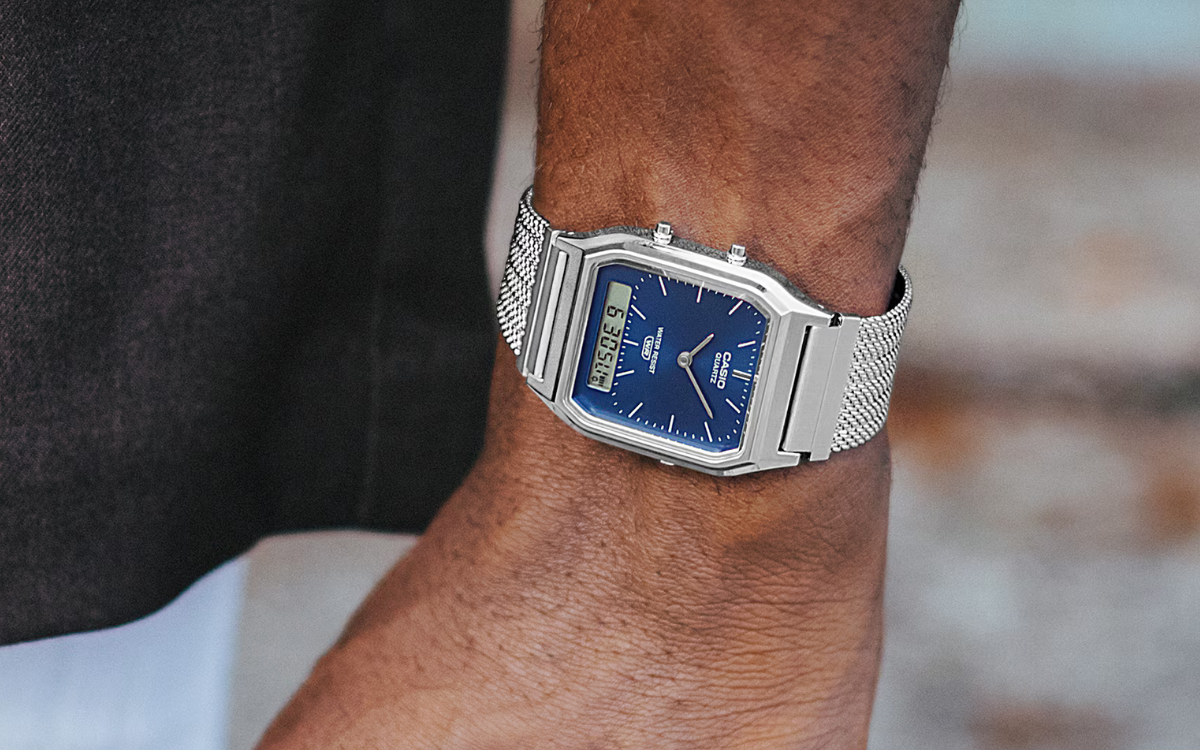
The AQ230EM-2A is another analog-digital hybrid, but this one stands out due to its stainless steel mesh band. The mesh gives the watch a slightly more refined, vintage appearance and tends to conform very comfortably to the wrist.
The silver-colored case is paired with a dark navy dial, which looks sharp and is easy to read. Like the other analog-digital models on this list, it includes dual time, a stopwatch, and an alarm. It is a nice option if you want a daily watch that leans a bit more toward a dress watch aesthetic.
Similar in build to the AEQ120W, the AEQ110W-3A2V offers a rugged resin design but with a dark green colorway. It is a large watch, measuring 52.2mm across, and is designed to be durable and easy to read.
It shares the same practical specifications as its sibling, including a 10-year battery life, 100-meter water resistance, and world time functionality. The analog hands move in 20-second increments, while the digital displays handle the stopwatch, countdown timer, and alarms.
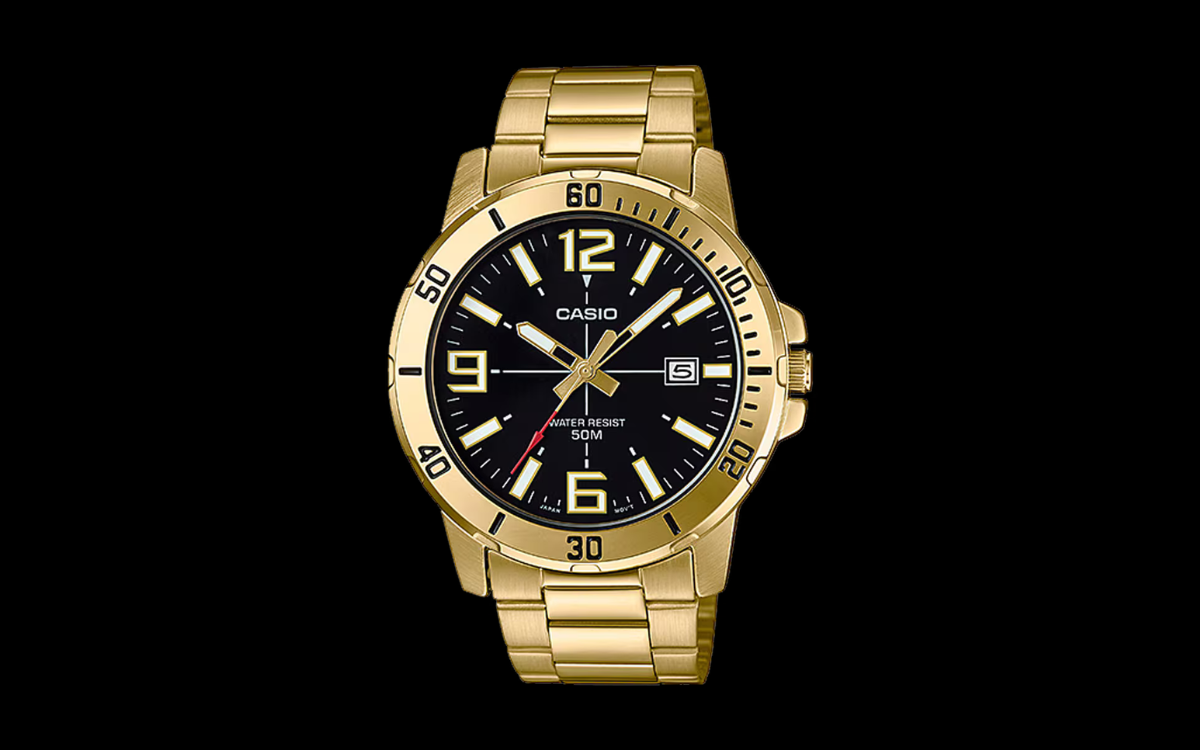
If you aren’t interested in digital displays at all, the MTPVD01G-1BV is a straightforward analog watch. It features a 49mm gold-tone case and a matching gold ion-plated stainless steel band.
The black dial provides a clear background for the gold hands and hour markers, making it very easy to read the time at a glance. It also includes a simple date display at the 3 o’clock position. With 50-meter water resistance, it is durable enough for everyday use while maintaining a traditional, sporty look.
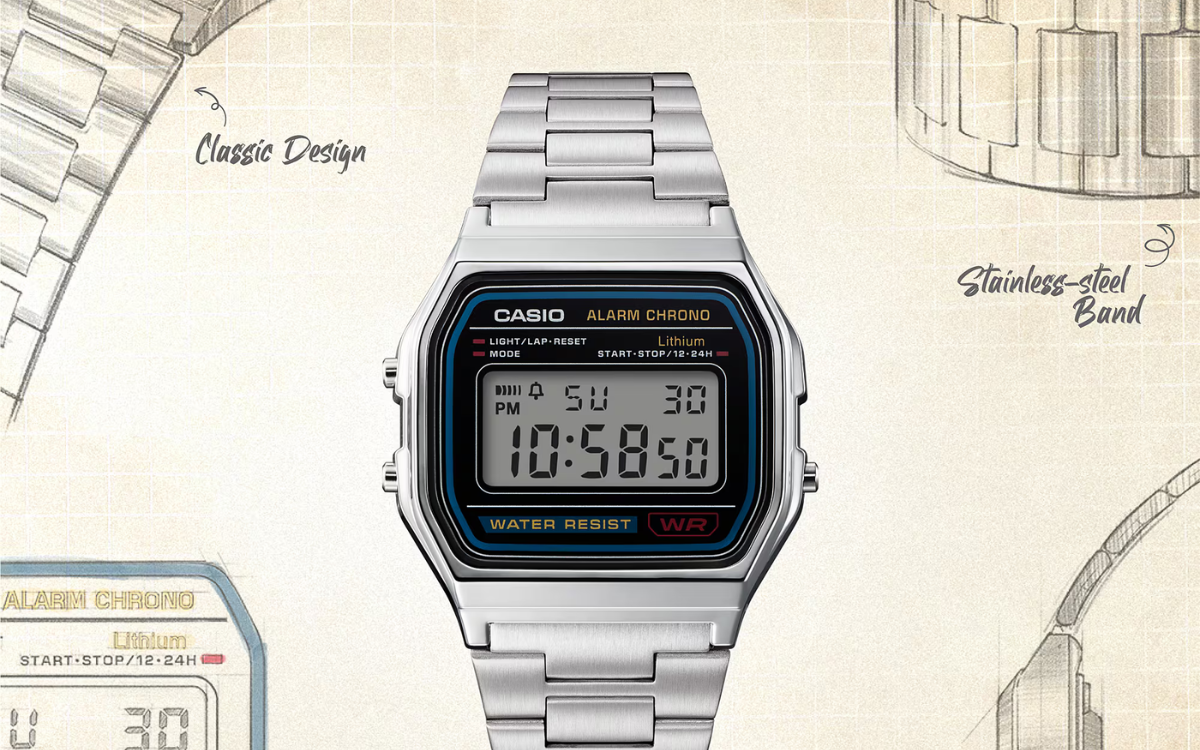
The A158WA-1 is the baseline for budget digital watches. For under $30, you get a design that has remained largely unchanged for decades because it simply works. It features a silver chrome-plated resin case, a stainless steel band with an adjustable clasp, and a clear digital display.
It weighs 46 grams, fits easily under a shirt cuff, and includes a daily alarm, a 1/100-second stopwatch, and a green LED light. It is a practical, reliable watch that offers good value for the price.
Finally, the MCW200H-9AV offers a chronograph layout in a casual resin build. It is a large watch with a 55.8mm case, featuring a black resin exterior with gold-tone accents on the dial. The face includes standard analog hands along with three sub-dials that track stopwatch minutes, stopwatch seconds, and a 24-hour indicator.
There is also a date display tucked between the 4 and 5 o’clock positions. With 100-meter water resistance, it is a functional, sporty option for those who like the look of a chronograph but prefer the durability and weight of a resin watch.
The newest face in Casio’s Vintage line is also the best value here. At around $54, the A130WE nails that 1980s analog-LCD hybrid look — slim rectangular case, metal band, tiny digital window for the price of a nice dinner. If you want the retro Casio charm without overthinking it, start here.
CHUWI has officially introduced the new CoreBook Air, a next-generation Copilot+ PC designed to deliver powerful AI capabilities, long battery life, and premium portability. According to CHUWI CEO Jesea Yang, the CoreBook Air combines Lunar Lake performance and Copilot+ AI capabilities in an ultra-light 1.2kg design, helping bring advanced AI PCs to a wider audience at a more accessible price point. The company aims to make advanced AI-powered computing more accessible to students, professionals, creators, and remote workers.
Premium Design Built for Portability
The CHUWI CoreBook Air features a slim and lightweight design that weighs just 1.2kg, making it easy to carry throughout the day. The laptop uses a premium CNC-crafted aluminum chassis that provides a durable and professional appearance while maintaining portability. Its compact form factor makes it suitable for students attending classes, content creators working on the move, business professionals, and remote workers who need a dependable travel companion.
Sharp 2.8K Display with Smooth Visuals
The laptop comes equipped with a 14-inch IPS display featuring a 2.8K resolution of 2880 × 1800 pixels. It also supports a 120Hz refresh rate and covers 100% of the sRGB color gamut. This combination delivers sharper text, detailed visuals, smoother scrolling, and an improved video viewing experience. The high-resolution panel is also designed to provide comfortable viewing during long work sessions.
Intel Lunar Lake Performance with Advanced AI
At the heart of the CoreBook Air is the Intel Core Ultra 5 226V processor based on Intel’s Lunar Lake (Series 2) architecture. The chip features 8 CPU cores and 8 threads, with boost frequencies reaching up to 4.5GHz. Users can expect strong computing performance, improved power efficiency, broad software compatibility, enhanced security, and advanced AI processing capabilities.
Graphics duties are handled by the integrated Intel Arc 130V GPU, which CHUWI claims can deliver up to twice the graphics performance of older Intel Iris Xe solutions. The GPU supports hardware-accelerated ray tracing, casual gaming, content creation tasks, multimedia streaming, and GPU-accelerated applications.
Copilot+ Features and AI Acceleration
One of the biggest highlights of the CoreBook Air is its AI performance. The system delivers up to 97 TOPS of total AI computing power and includes an Intel AI Boost NPU capable of up to 40 NPU TOPS. This dedicated AI hardware enables faster on-device AI processing, reduced dependence on cloud services, improved privacy, and quicker AI responses.
Running Windows 11 Pro out of the box, the laptop supports Microsoft Copilot+ PC experiences such as Click to Do, Cocreator, and Live Captions. A dedicated AI key also provides instant access to Microsoft Copilot.
Memory, Storage, Battery, and Connectivity
The CoreBook Air includes 16GB LPDDR5X memory running at 8533 MT/s using a memory-on-package design for faster multitasking, lower latency, and better efficiency. Storage is handled by a 512GB PCIe SSD, while users can upgrade storage later through PCIe 4.0 x4 SSD support.
A 55Wh battery powers the laptop and is rated for up to 15 hours of local video playback. Charging is handled by a 65W USB-C Power Delivery adapter, capable of charging the battery to around 63% in approximately one hour.
For connectivity, the laptop supports Wi-Fi 6E for faster wireless speeds, lower latency, and improved stability. Port selection includes two Thunderbolt 4 ports with up to 40Gbps bandwidth, Power Delivery support, external display connectivity, and eGPU compatibility. Users also get three USB-A ports, an HDMI 2.0 output, and a 3.5mm audio jack.
Pricing and Availability
The CHUWI CoreBook Air is available for pre-order now. The laptop carries an official retail price of $799, but early buyers can take advantage of a limited-time Super Early-Bird discount of $50, reducing the launch price to $749. The promotional offer is available on a first-come, first-served basis while launch stock lasts.
CHUWI CoreBook Air –Specs Sheet
Category
Specifications
Model
CHUWI CoreBook Air
Operating System
Windows 11 Pro
Copilot+ PC Certification
Yes
Build Material
Premium CNC-Crafted Aluminum Chassis
Weight
Approx. 1.2 kg
Dimensions
312.9 × 222.5 × 16.8 mm
Display
Category
Specifications
Display Size
14-inch
Panel Type
IPS
Resolution
2880 × 1800 (2.8K)
Aspect Ratio
16:10
Refresh Rate
120Hz
Color Gamut
100% sRGB
Display Features
Sharper text rendering, smoother scrolling, improved video playback, comfortable long-duration viewing
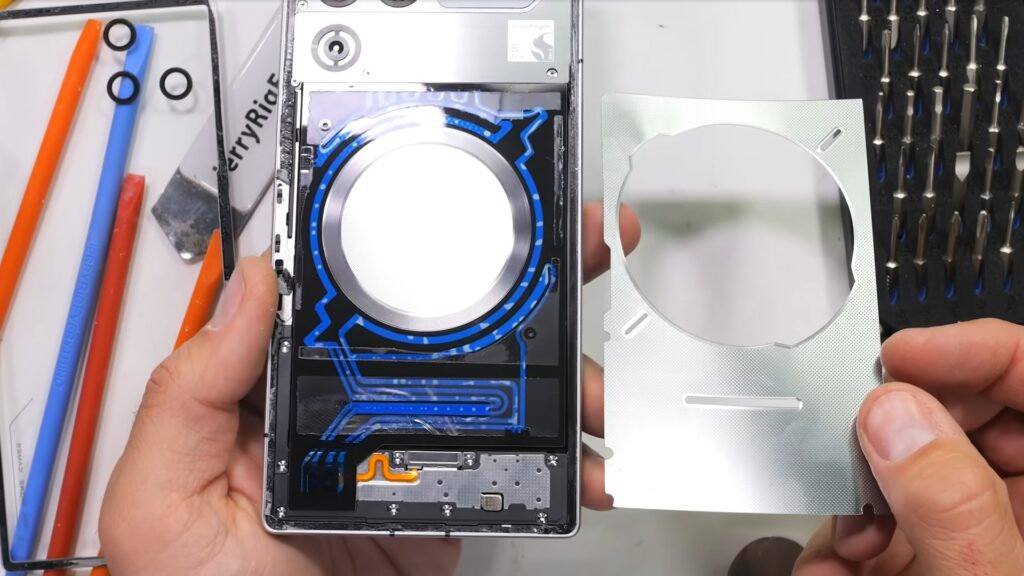
Samsung may be exploring a technology that has long been associated with gaming phones rather than mainstream flagships: active liquid cooling.
According to a new report from South Korea, the company has assembled a dedicated research team to study advanced cooling systems for future devices. The effort is reportedly being led by Samsung’s Production Technology Research Institute, with researchers evaluating both liquid- and air-based cooling solutions.
The more interesting option appears to be liquid cooling. Unlike the vapor chambers used in today’s smartphones, the system being studied reportedly involves a sealed cooling loop that continuously moves coolant around the device. That could become increasingly important in the years ahead.
Modern flagship chips are already capable of impressive performance, but sustaining that performance is often a different story. Whether it is gaming, video editing, or running AI features directly on the device, heat remains one of the biggest limiting factors. Once temperatures climb too high, phones begin reducing performance to protect the hardware.
Samsung is reportedly looking at active air cooling as well, though that approach comes with obvious drawbacks. Air vents can make it harder to achieve strong dust and water resistance, while the fan itself adds noise and complexity.
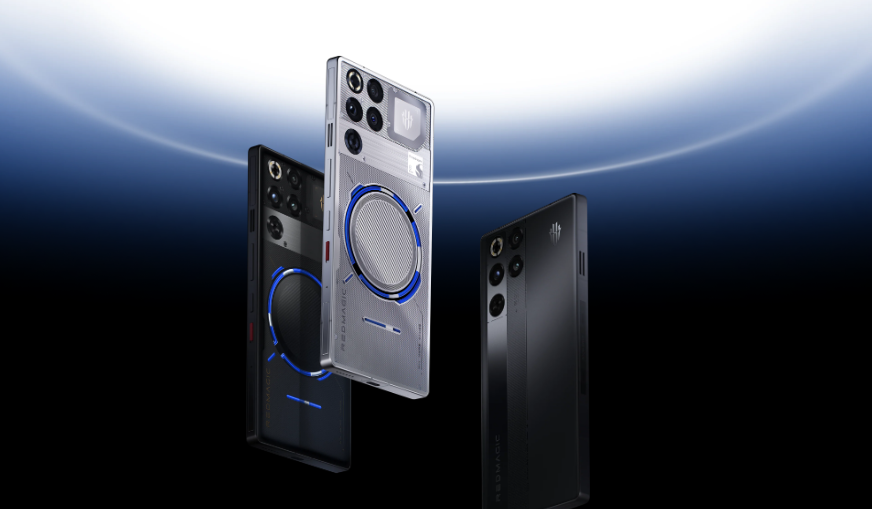
The concept itself is not entirely new. Several Chinese smartphone brands have experimented with advanced cooling systems in performance-focused devices over the years. One recent example is the RedMagic 11 Pro series, which uses a miniature piezoelectric ceramic micropump to circulate coolant through a closed loop.
What makes Samsung’s involvement noteworthy is the scale. If active liquid cooling eventually reaches a Galaxy flagship, it would likely expose the technology to a much larger audience than niche gaming phones ever could.
Of course, there is still a long road between a research project and a shipping product. Samsung has not announced plans to launch a liquid-cooled smartphone, and many technologies investigated internally never make it beyond the prototype stage.
Still, the fact that Samsung is now exploring technologies that have already appeared in several Chinese smartphones says something about where the industry is heading.
Oppo has expanded the rollout of its May 2026 ColorOS 16 update to more smartphones in India. The latest software release introduces a range of AI-powered features, improved connectivity options and system enhancements aimed at making everyday smartphone use more intuitive. The company has also confirmed that the rollout will continue in phases across eligible devices through the end of May.
May 2026 ColorOS 16 update brings a wider set of AI-powered experiences
One of the headline additions is the updated Live Space interface, which introduces smoother animations and a more responsive lock screen experience. Oppo says the feature is designed to deliver real-time information through compact notifications while maintaining a cleaner and less distracting interface.
The update also improves cross-platform connectivity through O+ Connect. Users can now share files more seamlessly between Oppo and Apple devices, making it easier to transfer content across ecosystems. This addition is aimed at users who regularly switch between Android smartphones and Apple products for work or personal use.
Another major highlight is AI Mind Pilot (currently available only for Find X9s and X9 Ultra), which sits within the AI Mind Space ecosystem. The feature combines the capabilities of multiple AI models, including Gemini, GPT and Perplexity, to provide contextual responses and information from different sources within a single interface. According to Oppo, this approach helps users compare perspectives and access information more efficiently.
ColorOS 16 also introduces AI Grouping, which helps organise applications and home screen layouts based on categories, colors, or previous arrangements. AI Menu Translation can instantly translate restaurant menus and provide contextual assistance, making it useful for travellers. Meanwhile, AI Popout enables users to create 4K motion collages directly on their devices, while AI Scan simplifies document digitisation through enhanced image processing and automatic optimisation.
Beyond the AI additions, Oppo says the update continues its focus on smoother performance, intelligent multitasking and personalised experiences. The rollout has already begun for supported devices and will continue through May 31, 2026, covering smartphones in the Find X9, Find X8, Reno 15 and Reno 14 series.
For more daily updates, please visit our News Section.
The smart ring segment continues to evolve beyond basic health tracking, with brands now focusing on convenience and smarter interactions. Qringstore has introduced its latest wearable, dubbed the Titan 2, bringing a lighter design, new wellness features and gesture-based controls. The announcement also reveals improvements to sizing options, app integration and overall user experience.
Titan 2 brings several new upgrades
Titan 2 smart ring
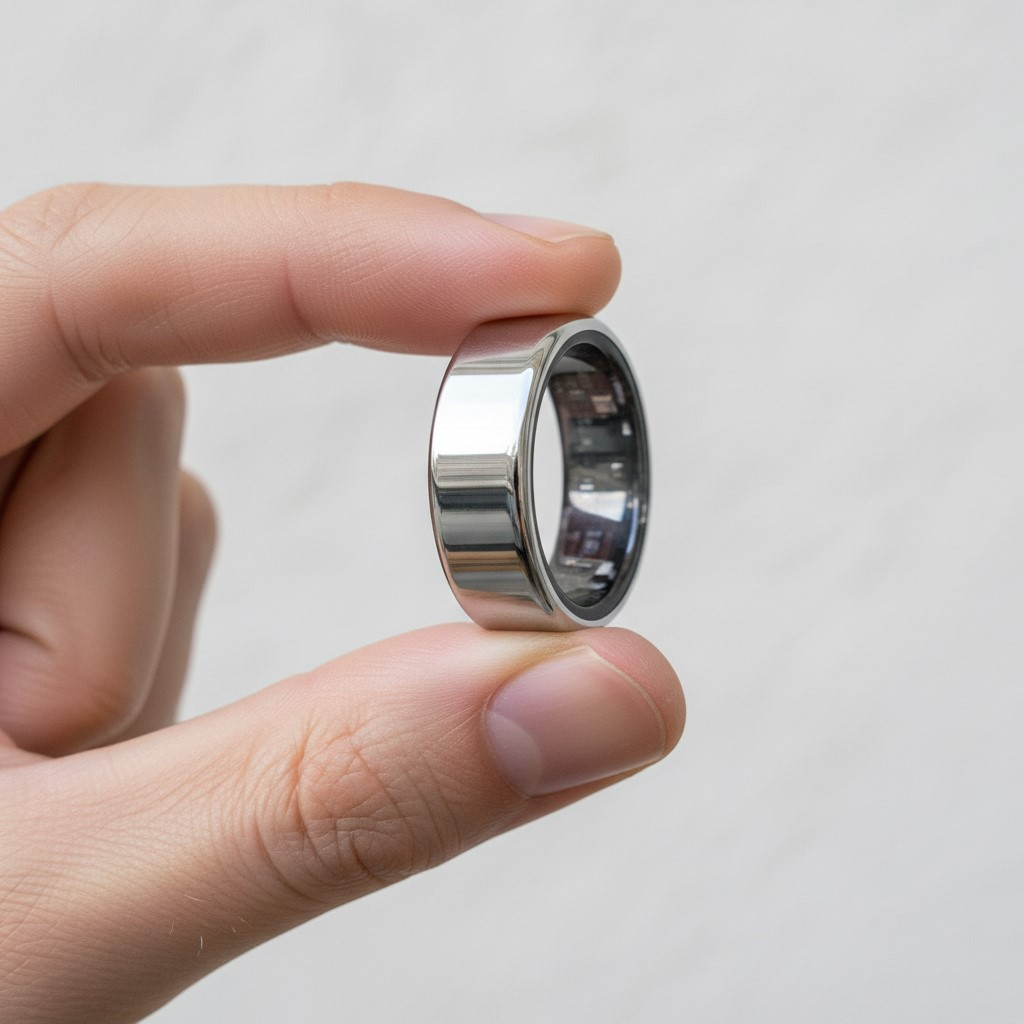
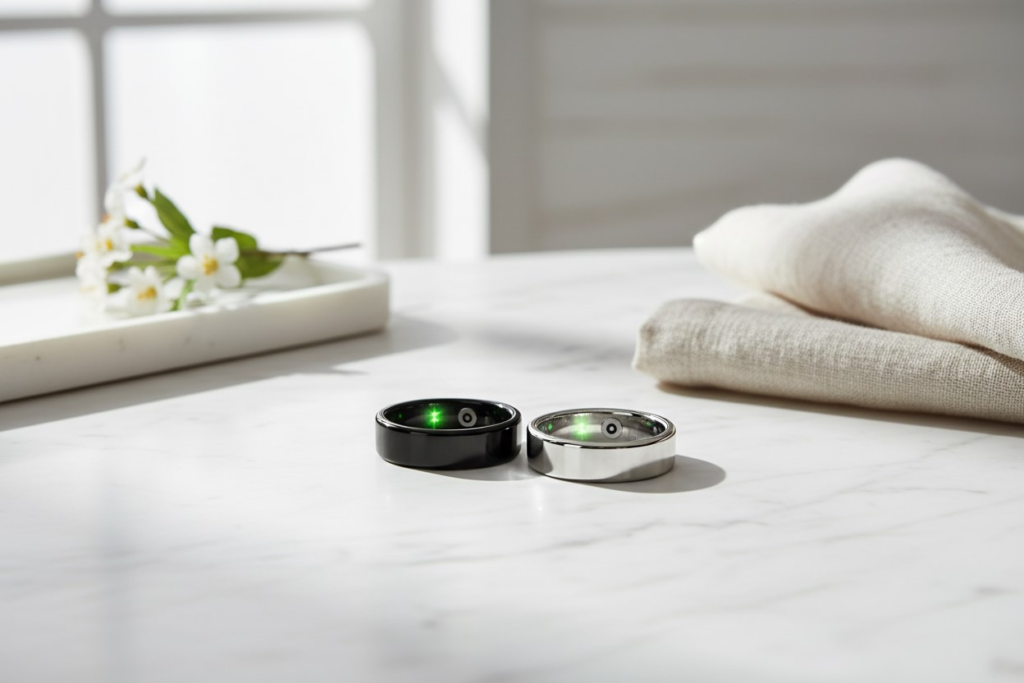
The newly announced Titan 2 arrives as the successor to the original Titan smart ring. One of the key changes is its lighter construction, with the ring starting at just 2.6g. The company claims this makes it around 35 per cent lighter than its predecessor, potentially improving comfort during extended wear. Buyers can also choose from a wider range of sizes, including new Size 12 and Size 13 variants. A new silver finish has also been added alongside existing colour options.
The wearable retains a stainless-steel body with a titanium alloy coating and carries an IP68 rating for protection against water and dust. Alongside the hardware changes, the accompanying RWfit application now supports synchronization with both Apple Health and Google Fit, allowing users to manage health data across different ecosystems without requiring a subscription.
Titan 2 smart ring
Health monitoring remains a major focus for the device. In addition to tracking sleep, heart rate, steps and daily activity, the new model introduces Heart Rate Variability (HRV) monitoring and stress tracking. These additions are intended to provide a broader view of recovery, wellbeing and day-to-day health trends.
Another notable addition is gesture control support. Users can remotely turn pages while reading, navigate short-form videos and trigger smartphone photos with a simple hand movement. The company says these features are designed to reduce the need for direct interaction with a phone during everyday tasks.
Titan 2 is currently available at an introductory price of $99, while the original Titan has been discounted to $79 for a limited period.
For more daily updates, please visit our News Section.
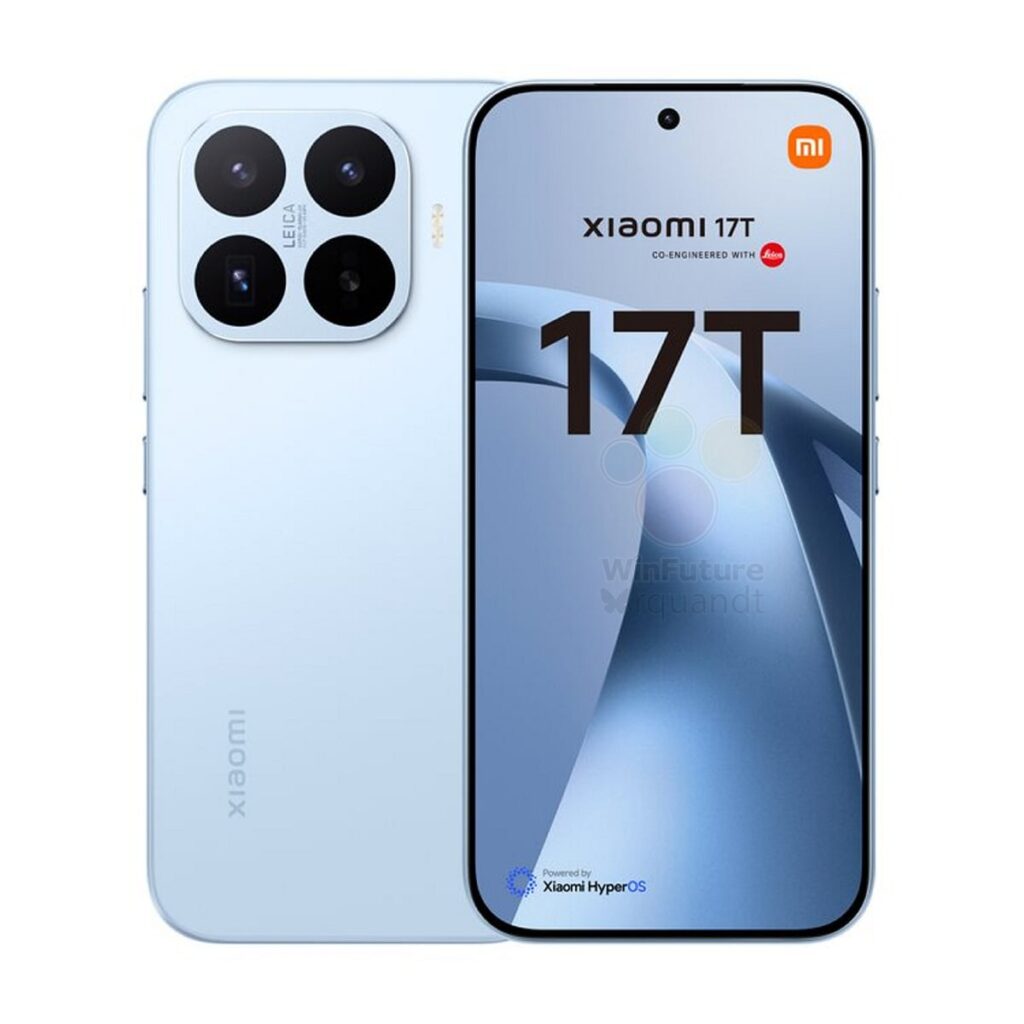
Xiaomi recently unveiled the Xiaomi 17T and 17T Pro for the global market. Now, the brand is all set to launch the Xiaomi 17T in India on June 4. Alongside the smartphone, Xiaomi will also introduce the Xiaomi TV FX Mini LED Series in the country. Ahead of the launch, the dedicated microsite has gone live on Xiaomi India’s website, revealing several key details about the upcoming television lineup.
Xiaomi TV FX Mini LED Series: What the microsite reveals
Xiaomi TV FX Mini LED Series is launching on June 4
The Xiaomi TV FX Mini LED Series is being positioned as a premium entertainment offering centred around Full-Array Mini LED technology. According to the teaser, the televisions will feature independently controlled dimming zones, allowing bright and dark areas of a scene to be managed more precisely. This is expected to improve contrast levels, deliver deeper blacks and enhance overall picture quality across the screen.
The company has also highlighted Quantum Dot technology, suggesting support for a wide colour gamut with more accurate and lifelike colours. Xiaomi says the TVs are designed to maintain visibility and colour performance even in brightly lit rooms, making them suitable for daytime as well as evening viewing. The teaser further hints at smooth motion handling and low input latency, indicating that sports fans and gamers could benefit from a more responsive viewing experience.
On the audio side, the FX Mini LED Series is expected to feature a four-speaker setup with dedicated tweeters for clearer dialogue and fuller sound output. The TVs will also ship with Fire TV built-in, giving users access to thousands of streaming apps and Alexa voice controls for content search, playback and smart home commands.
Xiaomi 17T: What to expect?
The Xiaomi 17T is expected to arrive as a premium upper mid-range smartphone and could be priced between Rs 40,000 and Rs 50,000 in India. Globally, the device features a 6.67-inch AMOLED display with a 144Hz refresh rate, the MediaTek Dimensity 8500 Ultra chipset, up to 12GB RAM and up to 512GB storage. It packs a 5,240mAh battery with 67W fast charging support.
For photography, the device offers a 50-megapixel main camera, a 50-megapixel telephoto camera and a 12-megapixel ultra-wide lens. On the front, it includes a 32-megapixel selfie camera. The phone runs HyperOS 3 based on Android 16 and includes several AI-powered features.
With Xiaomi preparing to launch both a new smartphone and a premium Mini LED TV range on June 4, it will be interesting to see which product generates more excitement among buyers.
For more daily updates, please visit our News Section.
Xiaomi is set to launch the Xiaomi 17T in India on June 4. Ahead of the launch, a new leak from tipster Abhishek Yadav has revealed the smartphone’s expected price in the country.
According to the leak, the Xiaomi 17T will launch in India in 12GB+256GB and 12GB+512GB storage variants. The base model is expected to retail for Rs 65,999. This will be Xiaomi’s first T-series smartphone in India since the Xiaomi 11T Pro, which launched in 2022. As a result, there is no direct predecessor available for a price comparison.
Xiaomi 17T specifications
For the price, the Xiaomi 17T is expected to feature a 6.59-inch 1.5K LTPS display with a 120Hz refresh rate. The display reportedly supports up to 3,500 nits of peak brightness and 2,000 nits of HBM brightness. It will also offer Dolby Vision support, dual stereo speakers, and Dolby Atmos for an enhanced multimedia experience.
Under the hood, the smartphone is powered by the MediaTek Dimensity 8500 Ultra chipset. The device may also come with LPDDR5X Ultra RAM and UFS 4.1 storage.
On the camera front, Xiaomi is expected to offer a 50MP Leica Light Fusion 800 primary sensor, a 50MP periscope telephoto camera with 5x optical zoom and up to 120x AI zoom, and a 12MP ultra-wide camera with a 120-degree field of view. For selfies and video calls, the phone is said to feature a 32MP front-facing camera.
The rear camera supports 4K video recording at 60fps, while the front camera supports 4K recording at 30fps.
The Xiaomi 17T is expected to pack a 6,500mAh battery with 67W wired charging and 22.5W reverse wired charging. The phone is also said to feature an IP68 rating for dust and water resistance, Bluetooth 6.0, NFC, and Wi-Fi 7 connectivity, along with an in-display fingerprint scanner for biometric authentication.
For more daily updates, please visit our News Section.
We use cookies on our website to give you the most relevant experience by remembering your preferences and repeat visits. By clicking “Accept”, you consent to the use of ALL the cookies.
This website uses cookies to improve your experience while you navigate through the website. Out of these, the cookies that are categorized as necessary are stored on your browser as they are essential for the working of basic functionalities of the website. We also use third-party cookies that help us analyze and understand how you use this website. These cookies will be stored in your browser only with your consent. You also have the option to opt-out of these cookies. But opting out of some of these cookies may affect your browsing experience.
Necessary cookies are absolutely essential for the website to function properly. This category only includes cookies that ensures basic functionalities and security features of the website. These cookies do not store any personal information.
Any cookies that may not be particularly necessary for the website to function and is used specifically to collect user personal data via analytics, ads, other embedded contents are termed as non-necessary cookies. It is mandatory to procure user consent prior to running these cookies on your website.