Advertisement

Apple Raises Trade-In Values for Android Devices, But Samsung’s Program Is Still More Generous

Today, smartphone prices are constantly rising due to factors like increasing costs and inflation. This pushes many of us to reduce costs by selling our old phones before buying new ones. But in our fast-paced world, where everyone is constantly busy, this can be a time-consuming task. There are a few different ways to sell your old phone. You can sell it to someone directly, take it to a phone store and get scammed, or trade it in to a company that offers this service. Moreover, Apple now gives higher trade-ins for your Android. Here are the details…

Samsung’s Trade-In Program Is Still the Best, Even With Apple’s Recent Improvements

Campaigns that encourage people to trade in their old items for new ones are very common in US. Even Apple offers discounts to customers who buy both iOS and Android devices, creating a form of recycling and saving money for both buyers and sellers. In the United States, Apple has also changed its fees, making second-hand Android smartphones more valuable. Of course, we cannot specify every phone, but this is the change in some of the Android phones that Apple will pay you for trade-in.


New trade-in value
Old trade-in value
Samsung Galaxy S22 UltraUp to $340Up to $325
Samsung Galaxy S22 PlusUp to $230Up to $225
Samsung Galaxy S22Up to $190Up to $180
Samsung Galaxy S21 PlusUp to $160Up to $140
Samsung Galaxy S21Up to $135Up to $120
Samsung Galaxy Note 20 UltraUp to $165Up to $140
Samsung Galaxy Note 20Up to $120Up to $100
Google Pixel 6 ProUp to $140Up to $125
Google Pixel 6Up to $110Up to $90
Google Pixel 6aUp to $100Up to $80

RELATED:

(via)

MINISFORUM UM780 XTX mini PC with Ryzen 7 7840HS to launch soon

After launching the UM790 & UM780 Pro mini PCs IN China, Minisforum will soon be launching the UM780 XTX model in the global market. What makes this model special is that it features a powerful and cutting-edge Ryzen 7 mobile CPU. Here are all the details:

MINISFORUM UM780 XTX

TechGoing has leaked some information about the upcoming mini-PC. An extension of the UM780 series introduced a few months ago, this mini-PC packs an AMD Ryzen 7 7840HS processor with 8 Zen 4 CPU cores and a Radeon 780M iGPU, delivering a solid 70W performance boost.

A standout feature of the UM780 XTX is its Oculink graphics dock interface, boasting higher bandwidth than Thunderbolt 3/4. This interface allows seamless connection to high-performance independent graphics, as demonstrated in official testing connecting to an RTX 3080 graphics card dock.

In terms of design, the UM780 XTX adopts a new stand design with a magnetic top cover, offering an optional backlight pattern. The mini-PC includes front and rear USB4, rear HDMI and DP, dual 2.5G network ports, and Oculink support for the graphics card dock.

While whispers circulate about a November 10 release, MINISFORUM is yet to give the nod.

RELATED:

(via)

YouTube Music Users can Now Add Podcasts via RSS Feeds

YouTube Music (YTM) is rolling out a feature that could change the podcasting landscape. With the planned discontinuation of Google Podcasts in 2024, YTM is stepping up, offering a seamless transition for both podcast creators and their audience.

Until now, podcasters had to upload videos of their episodes on YTM

The heart of this shift lies in YTM’s new capability allowing users to add podcasts via RSS feeds, a feature that’s currently making its way to Android and web platforms. This move is significant because, until now, podcasters had to upload video versions of their episodes on YTM, a requirement that demanded additional effort and possibly deterred many creators.

YouTube Music

The implementation is user-friendly: a visit to the Library tab and a tap on the Podcasts filter unveils an “Add podcast” option. Users can either browse popular podcasts on YouTube or add shows using an RSS feed. Once added, these podcasts will appear alongside others in the user’s library, marked by an RSS icon for easy identification. This approach not only streamlines the process but also opens doors for a broader range of podcast content on YTM.

While this feature is still in its nascent stages, not yet widely available, it’s expected to gain more traction soon. The added benefit for podcasters is the shift from the necessity of video uploads to the simplicity of RSS, which is likely to enhance content discovery on the platform.

Additionally, YTM is working on a “simple migration tool” to facilitate the transfer of existing Google Podcasts subscriptions to YTM. This is a thoughtful gesture to ensure a smooth transition for dedicated podcast listeners. YTM’s expansion into podcasting doesn’t stop here. It’s testing various user-friendly features, including custom playlist art creation using generative AI, Apple HomePod support, and a redesigned overflow menu, making it a robust platform for music and podcast enthusiasts. Stay tuned for more updates!

RELATED:

(Via)

Companies are Investing in AI Tech for the Future of PCs

A new trend is slowly taking shape that could redefine the future of personal computers (PCs). As artificial intelligence (AI) continues to grow in popularity, PC manufacturers are now integrating AI technology into their devices, potentially changing the course of the PC market.

These PCs will ship with AI-capable chipsets, such as the Ryzen Pro 7040 series

The past few years have seen a decline in PC sales, attributed mainly to a drop following the pandemic-induced surge. However, industry experts believe that the rise of generative AI products like Microsoft’s ChatGPT and Baidu’s Ernie Bot could be a game-changer. These AI tools have already attracted a significant user base, with ChatGPT garnering over 100 million weekly active users globally and Baidu’s Ernie Bot amassing 70 million users in China.

Artificial Intelligence

This growing interest in AI has led to a new type of PC – AI PCs. These are not just your standard computers; they come equipped with chips designed for AI capabilities. For instance, Advanced Micro Devices released the Ryzen Pro 7040 series, one of the first x86 processors with an integrated AI engine. By 2027, it is forecasted that 86% of the 34 million laptops shipped in China will be AI PCs.

PC makers like Lenovo are looking to transform “personal computers” into “personalised computers” using AI. Imagine a laptop that can draft work reports based on your preferences and past documents – that’s the future Lenovo envisions.

Moreover, the AI revolution isn’t just limited to PCs. Smartphone giants like Oppo are eagerly integrating AI into their phones. Oppo’s introduction of its large language model, AndesGPT, aims to enhance user interactions with their devices. Similarly, Vivo plans to incorporate its AI model into its new operating system, OriginOS 4.

RELATED:

(Via)

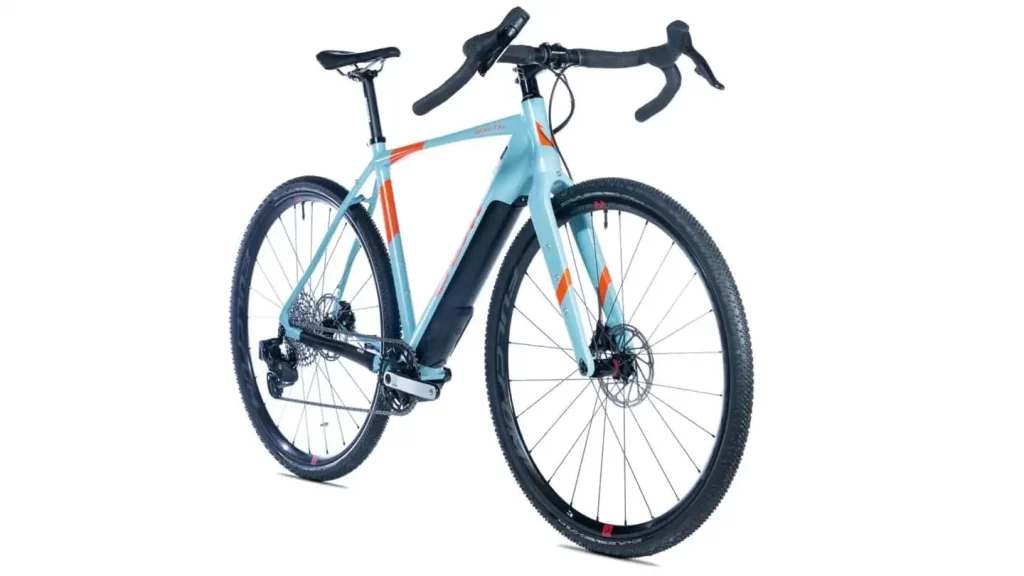
Veer’s Latest Launch involves a Shift Drive System for Belt-driven E-Bikes

Veer, a company in the e-bike sector has introduced a pretty cool innovation: the Shift Drive System for belt-driven e-bikes. This development marks a significant shift from the traditional chain-driven approach, offering a ‘ride’ into the future of e-bike technology.

Bike belts are quieter and more efficient in the longer run than bike chains

Historically, bicycles have relied on chains to transfer power to the rear wheel. However, the emerging trend favors drive belts, known for their quiet operation and low maintenance. While these belts offer advantages over chains, they’ve been limited in terms of compatible drivetrain systems. This is where Veer’s innovation steps in.

Veer’s Shift Drive System proposes a novel solution to enhance belt-driven e-bikes. While the technicalities are complex, involving multiple moving parts, the essence is simple: to provide efficient, seamless shifting on what are typically single-speed drives. This system features rotating modules that adjust the size of the drive gear, effectively offering two-speed capabilities. Such a mechanism could potentially enhance the e-bike’s efficiency and extend its range per charge.

Sean Hacking, the founder of Veer, emphasizes the system’s benefits, highlighting its potential to replace traditional chain systems and gearboxes. These conventional components not only incur higher costs but also demand regular upkeep. In contrast, Veer’s system aims for low maintenance and cost-effectiveness, while still delivering comparable benefits to internal gearing systems.

However, it’s essential to note that the Shift Drive System is still in its early stages, currently seeking funds through a crowdfunding campaign. While promising, this stage of development calls for cautious optimism among potential investors, as crowdfunding ventures inherently carry risks.

RELATED:

(Via)

OnePlus 10 Pro and OnePlus 10T taste OxygenOS 14 Open Beta 2 Update in India

OxygenOS 14 is gradually moving towards stability across multiple smartphones. Following the regular update, and the new OxygenOS 14 Open Beta updates for other smartphones, here arrives the OxygenOS 14 Open Beta 2 for the OnePlus 10 Pro and OnePlus 10T smartphones. There are several fixes and improvements for the OnePlus 10 Pro and OnePlus 10T in the latest firmware build.

Must See: OnePlus 10 Pro and OnePlus 11R taste Oxygen OS 14 Open Beta 1 Update

OnePlus 10 Pro Oxygen OS 14 Open Beta 1 Update

The new firmware update for the OnePlsu 10 Pro enhances system stability and performance. It also fixes the issue of the Settings page transition animation. Other changes are listed below:

System


 • Improves system stability and performance.

 • Fixes an issue that affects transition animation when a certain page is opened in Settings.

 • Fixes an issue where some screen elements are not fully displayed after the system navigation method is changed. 


Camera

 • Fixes an issue where the screen might go black when you switch to the front camera.

 • Fixes an issue where the Private album might not show up at the bottom of the Albums page.

The update will automatically roll out for the Open Beta 1 participants, and the new participants must be running CPH2413_13.1.0.587(EX01) firmware on their smartphones. There might be other unknown issues that will be fixed in the upcoming Open Beta update. The experience keeps refining with new Open Beta updates.

Then go to Settings > About device > Tap up to date > Tap icon on the top right > Beta program > Follow the steps to apply to check for the updates. More information is available in the official announcement thread.

OnePlus 10T OxygenOS 14 Open Beta 2 Update Details

OnePlus is also bringing the Open Beta 2 update for the OnePlus 10T featuring several fixes and improvements. Below is the official changelog:

System

 • Improves system stability and performance.

 • Extends the battery life in some scenarios.

 • Fixes an issue that affects transition animation when a certain page is opened in Settings.

 • Fixes an issue where some screen elements are not fully displayed after the system navigation method is changed. 


Camera

 • Fixes an issue where the screen might go black when you switch to the front camera.

 • Fixes an issue where the Private album might not show up at the bottom of the Albums page.

The users should be running Open Beta 1 to grab the update or they need to be on the firmware NE2211_13.1.0.597(EX01) to get Open Beta 2 update. The users must head over to Settings > About device > Tap up to date > Tap icon on the top right > Beta program > Follow the steps to apply. For more details, the user may head over to the OnePlus Community thread.

Related:

Swedish car manufacturer Polestar to launch its first smartphone in December

Swedish electric car maker Polestar has announced its entry into the smartphone market with its first smartphone, the Polestar Phone, launching in December.

The design of the phone has been teased in a short video, which shows a device with flat frames and vertically stacked cameras at the back, reminiscent of the Meizu 20 series. Polestar announced its plans to launch a Meizu-made smartphone back in September, so this design is not a surprise.

Each camera ring has its focal length and aperture size labeled. It shows a 23mm equivalent main camera with an f/1.9 aperture, a 70mm telephoto lens with an f/2.0 aperture, and a 15mm ultrawide lens with an f/2.4 aperture.

Polestar Phone

On the front, the phone has a punch hole cutout for the selfie camera. The sides feature Polestar branding while the back has the company logo.

As a car manufacturer, Polestar is likely to focus on seamless connectivity between its cars and phones. However, the exact details of this integration are not yet known.

Meizu, which is owned by the same parent company as Polestar, has its own Flyme Auto car software. However, reports from China suggest that the Polestar Phone may offer a Polestar OS interface, which is likely developed in collaboration with Meizu.

Polestar has not yet revealed any specifications for the phone, but it is rumored to be powered by Qualcomm’s Snapdragon 8 Gen 3 chip. We’ll have to wait for the official announcement for more details on the device.

Related:

(Via)

OnePlus Watch 2 renders & specs leak, and there is some disappointing news

OnePlus is preparing to launch a new premium smartwatch called the OnePlus Watch 2. The smartwatch is expected to make its debut alongside the OnePlus 12 flagship smartphone in the coming weeks. Ahead of the launch, MySmartPrice has leaked renders of the OnePlus Watch 2 in collaboration with popular tipster @OnLeaks.

OnePlus Watch 2 render

The renders reveal that OnePlus is staying true to its design philosophy. Like its predecessor, the OnePlus Watch 2 has a circular dial with a metal chassis and strategically placed buttons on the right side to help in navigating the UI. It has plain rubber straps, available in classic black and white. In addition to the renders, the report also confirms some of the key specifications of the device.

OnePlus Watch 2 specs (leaked)

As per the report, the OnePlus Watch 2 will feature a 1.43-inch AMOLED display. Powering this gadget is the Qualcomm Snapdragon W5 Gen 1 chipset, ensuring a smooth and responsive performance. Health features are not neglected, with essential sensors tucked under the display alongside a handy charging connector.

Despite the exciting features of the OnePlus Watch 2, there’s a bit of a downer – OnePlus is sticking with its custom RTOS-based operating system. For some, this might be a deal-breaker, potentially downgrading the Watch 2 to more of a glorified smart band or fitness tracker. In a market where many smartwatches are adopting Google’s WearOS-based systems, OnePlus faces stiff competition.

For those unaware, WearOS is a full-fledged operating system that offers a wide range of features such as Google Assistant, Google Maps, and Google Play Store. It is compatible with both Android and iOS devices and supports a wide range of third-party apps. On the other hand, RTOs is a lightweight operating system that is designed to provide an intuitive smartwatch experience while keeping the price in check. It is generally used in fitness-oriented smartwatches and has limited app support.

It’s worth noting that these specs are early leaks, so it’s wise for readers to take this information with a grain of salt and stay tuned for official confirmation.

RELATED:

(Source)

Vivo Y36m+ Spotted On China Telecom With Key Specs, Pricing

Vivo launched the Y35m earlier in January this year. Now, it is expected to get a successor soon as the Vivo Y36m has appeared on the China Telecom website. The listing reveals the full specifications, official look, pricing, and sale details of the smartphone. In other news, earlier today, another Vivo Y-series device i.e. the Y79+ also surfaced on the Google Play Console certification. It seems that the brand may launch these smartphones in the near future. Read on to know everything about the Y36m. 

Vivo Y36m spotted on China Telecom

On the China Telecom certification, the Vivo Y36m is listed with a model number V2318A. It has a waterdrop notch and a thick chin at the bottom of the display. There are two camera sensors and an LED flash on the back panel with any camera module. However, the listing does not reveal any details of the sensors. 

The Vivo Y36m is seen with slightly flat edges and the power button doubling up as a fingerprint scanner. The smartphone is said to be available in Black Inkstone and Green Glaze colors. It is listed with a 6.56-inch display bearing a resolution of 1,612 x 720 pixels. Internally, the listing mentions MediaTek MT6833V’/ZA processor that could be the Dimensity 700 or the rebranded Dimensity 6020. The device will be offered in two RAM and storage configurations – 6GB + 128GB and 8GB + 256GB. The China Telcom listing reveals that the Vivo Y36m will be backed by a 5,000mAh battery unit. It will have a USB-C port and a 3.5mm headphone jack. 

As per the certification listing, the Vivo Y36m is priced at CNY 1,499 for the base model whereas the 8GB + 256GB will cost CNY 1,799. 

Related:

Vivo X100, X100 Pro Global Variants Surface On Geekbench

Vivo is gearing up to launch its flagship X100 series and the Watch 3 in China next week. The X100 lineup is expected to comprise a standard, pro, and pro plus models. Details about the upcoming smartphones have been doing the rounds of the rumor mill. Now, ahead of the launch, the global variants of the Vivo X100 and X100 Pro have surfaced on the Geekbench benchmarking platform. The listings also hint at the launch of the devices outside the China market. 

Vivo X100, X100 Pro spotted on Geekbench

The Vivo X100 and X100 Pro are listed with model numbers V2308 and V2309 respectively on the benchmarking database. The listings mention a motherboard with model number k6989v1_64 and it comprises two cores at 2GHz, three cores at 2.85GHz, a prime core ticking at 3.25GHz. This corresponds to MediaTek’s recently announced Dimensity 9300 chipset on both phones. The X100 is listed with 12GB RAM whereas the X100 Pro is spotted with 16GB RAM onboard. The Vivo X100 duo will ship with Android 14 OS out of the box. 

In the Geekbench’s single-core and multi-core test results, the Vivo X100 scores 891 and 3,573 points respectively. On the other hand, the X100 Pro registers scores of 2,254 and 7,608 points respectively. 

A recent official commercial of the Vivo X100 series confirmed a protruding circular camera module featuring ZEISS APO lens on the back panel. The upcoming offerings are also confirmed to feature a V3 imaging chipset and Dimensity 9300 under the hood. The X100 series is teased to be available in blue, white, black, and orange color options. 

Related:

Via

AYANEO Retro Mini PC AM01 Now Available for Pre-Launch on Indiegogo

AYANEO continues to expand its product lineup. The company, known for its handheld devices, recently caught attention with leaks related to the Flip model. Now, the company has unveiled its new products, the first results of the new Remake Concept series. Among the series, the most notable product is the Ayaneo Retro Mini PC AM01. Expected to be a favorite among retro gaming enthusiasts, the product is now available for pre-launch on Indiegogo. Here are the details…

AYANEO Expands Product Lineup with New Remake Concept Series, Including the Retro Mini PC AM01

The AYANEO Remake series features a variety of products, including SLIDE, FLIP DS&KB, Retro Mini PC AM01, Retro Mini PC AM02, Pocket DMG, and Retro Power Bank. The first product in the series is the Retro Mini PC AM01. Retro gaming is a rising trend, fueled by a growing nostalgia for the past. While today’s games with modern and realistic graphics shape the industry, an increasing passion for nostalgia is drawing more people towards retro gaming.

The AYANEO Retro Mini PC AM01 is specifically designed to meet this demand. It caters to the desire for playing retro games from the 1980s and 1990s, and it’s also capable of running some more modern indie games. The AM01 seamlessly blends the aesthetics of retro computers with the compact form factor of a Mini PC. It features a modernized design with a variety of processor versions and customizable hardware configurations to cater to the different needs of players.

And like we said above, the AM01 is now available for pre-launch on Indiegogo. The AM01 is a powerful and versatile retro gaming PC that is perfect for gamers who want to be able to play their favorite classic games on the go. If you are curious about this product, you can reach the relevant page by clicking here.

Other products in the AYANEO Remake Concept Series

RELATED:

Vivo Y79+ Surfaces On Google Play Console Listing With Key Specs

Vivo is reportedly working on a new Y-series smartphone. The upcoming offering is likely the Y79+. It has surfaced on the Google Play Console certification website revealing key specifications. To recall, the brand launched a host of Y-series phones in China last month including the Y100 5G, Y55t, and more. Read on to know all the details of the Vivo Y79+. 

Vivo Y79+ appears on Google Play Console

On the Google Play Console, the Vivo Y79+ is listed with model number V2313A. As per the render, the smartphone has a center-aligned punch-hole cutout and a curved display surrounded by thin bezels. The device is said to have a display resolution of 1,080 x 2,400 pixels and a 480 dpi screen density. The power and volume rocker buttons are on the right side. 

The database mentions the SM6375 processor which comprises two Cortex-A78 cores and six Cortex-A55 cores. There is an Adreno 619 GPU onboard. This confirms the presence of a Snapdragon 695 chip on the device. The smartphone is listed with 12GB RAM and will ship with Android 13 OS out of the box. 

This is everything that the Google Play Console listing reveals about the Vivo Y79+. Notably, the smartphone has the model number as the Vivo Y100 in China. Additionally, the processor, RAM, and curved display mentioned in the certification listing also match the Y100. Hence, it’s likely that the Vivo Y79+ could be a rebadged version of the Y100. 

We should learn more details about the Vivo Y79+ in the coming weeks. 

Related:

Via

Sony PlayStation Pulse Explore earbuds & Pulse Elite headset pre-orders live

The Sony PlayStation Pulse Explore earbuds and Pulse Elite headphones were announced earlier this year. However, the company has yet to officially start the sales for both hearable products. But now, the pre-orders for both devices have officially kicked off.

Sony PlayStation Pulse & Elite Pre-Orders

In our last report, we covered an official Sony announcement, which confirmed that the new Pulse Explore earbuds and Pulse Elite headphones will go on sale on 6th December 2023 and 21st February 2023, respectively. It was also announced that the pre-orders will go live soon. At the moment, buyers can pre-order the two audio products in the US, UK, France, Germany, and certain other European countries. The new Pulse Explore earbuds can be pre-ordered through the company’s official PlayStation website and select retailers.

The new gaming TWS earbuds bring low latency audio and can be pre-ordered for 199.99 US Dollars. Thanks to PlayStation Link, you can connect the device to the PlayStation 5, PC, or Mac. On the other hand, the Sony Pulse Elite headset arrives with a retractable boom mic and features AI enhanced noise rejection as well. These wireless headphones can be connected to any Bluetooth supporting device and can be pre-rodered for 149.99 US Dollars ahead of its February launch.

RELATED:

TOZO Earbuds Bonanza: Dive into Premium Sound with Exclusive Discounts on T6 and T20

Embark on a sonic journey with TOZO’s exclusive discounts on the T6 and T20 Wireless Earbuds. With a remarkable 48% off, the TOZO T6 delivers enduring comfort, OrigX acoustic stereo sound, and a 50-hour playtime. Meanwhile, the TOZO T20 boasts a 57% discount, featuring immersive audio, IPX8 waterproofing, and a 48.5-hour playtime. Elevate your listening experience with these cutting-edge earbuds, available at unbeatable prices for a limited time only.

TOZO T20 Wireless Earbuds

TOZO T20 Wireless Earbud is a perfect companion for your active lifestyle. These earbuds boast an impressive IPX8 waterproof rating, ensuring protection against water, sweat, and rain. Whether you’re hitting the gym or enjoying outdoor adventures, the T20s keep pace with your energetic lifestyle. The ergonomic in-ear design guarantees a comfortable fit during extended wear.

Immerse yourself in a world of rich audio with the TOZO T20’s 10mm dynamic horn loudspeaker and enhanced drivers. The speaker diaphragm, 56.3% larger than its predecessor, delivers a fuller, more vibrant sound with an expansive sound field. Your listening experience is elevated to new heights, providing a truly immersive auditory journey.

One standout feature is the exceptional battery life. A single charge yields approximately 13 hours of playtime, and the compact charging case extends this to an impressive 48.5 hours. Stay informed about your power levels in real-time with the digital LED display on both the charging case and earbuds. Charging is a breeze with support for both wireless charging and USB-C cable charging, ensuring you’re always powered up.

Enhance your music experience further with the TOZO app. Tailor the sound to your preferences with various EQ settings, offering a diverse selection of musical styles. Seamlessly switch between EQs and enjoy your favorite tunes with a personalized touch, anytime and anywhere.

Experience crystal-clear calls with the T20’s dual-microphone setup featuring Environmental Noise Cancellation (ENC) technology. The latest moving-coil horn loudspeaker and larger dynamic driver ensure that your voice comes through clearly, providing a lifelike call sound and vivid music reproduction.

DEAL:

TOZO T20 Wireless Earbuds is now available at an irresistible price on Amazon. Elevate your listening experience with a 57% discount, bringing the page price of $59.99 down to a final unbeatable price of $25.99. Don’t miss out on this incredible deal to enjoy premium sound quality, waterproof design, and an ergonomic fit without breaking the bank.


TOZO T6 Wireless Earbuds

TOZO T6 Wireless Earbuds is a new and improved audio companion designed for comfort, longevity, and an unparalleled listening experience. Crafted with a newly upgraded ergonomic design, these earbuds are not only lighter but also feature a uniquely contoured in-ear shape, ensuring a comfortable fit and worry-free use during outdoor activities.

Experience an extended musical journey with a remarkable 50 hours of total playtime. Each earbud provides an impressive 12 hours of listening on a single charge, and with the convenience of the wireless charging case, you can enjoy fast charging, completing a full recharge in just 55 minutes via cable or under 2 hours with a wireless charger.

Immerse yourself in the rich acoustic stereo sound of the TOZO T6 New Upgraded Version. Thanks to the OrigX technology, the audio profile delivers powerful bass responses as low as 16Hz, seamlessly blending with clear mids and trebles for an authentic and captivating sound experience.

Worry less and enjoy more with the IPX8 waterproof feature. Both the earbuds and the charging case are equipped with inner Nano-coating, making them waterproof up to 1 meter deep for 30 minutes. This sealed design not only blocks out moisture but also preserves pristine audio quality, ensuring a carefree listening experience in various environments.

Tailor your audio experience with the TOZO APP, offering fast and convenient access to EQ mode switches. Customize noise reduction intensity and EQ curve settings to suit your preferences. The TOZO Acoustic Lab’s 16 preset EQ options, including Rock, Classical, Jazz, and Hip-hop, provide a versatile selection reflecting different musical styles.

DEAL:

TOZO T6 Wireless Earbuds is now available at an incredible 48% discount on Amazon. Witness the page price drop from $45.99 to a mere $23.99, making premium sound, comfort, and durability more accessible than ever. Don’t miss your chance to enhance your listening experience without burning a hole in your pocket.

Upcoming Smartphones: Vivo X100 and more

Only a handful of smartphones are expected to launch in the coming days. All of them will be from the same brand and part of the same lineup.

The brand we are talking about is Vivo. It will be unveiling its next-gen flagship smartphones under the X series.

There will be three devices in the family. Let’s take a look at them one by one.

Upcoming Smartphones Next Week

1. Vivo X100 Series

Vivo X100

The Vivo X100 series is scheduled to launch in China on November 13. It will be announced at a conference that will begin at 7 PM GMT+8. The event will be live-streamed on Weibo and other leading Chinese streaming platforms.

Just like previous generations, the lineup will consist of three phones. They will be officially called Vivo X100, Vivo X100 Pro, and Vivo X100 Pro Plus.

The vanilla and pro models will be powered by MediaTek Dimensity 9300 chipset and will share most of the specs. The notable difference between the two will be the presence of a 50MP 4.3x periscope zoom camera on the pro variant as opposed to a 64MP 3x telephoto shooter on the standard version.

On the other hand, the Vivo X100 Pro Plus will house a Qualcomm Snapdragon 8 Gen 3 chip. It will also arrive with the industry’s first LPDDR5T RAM. Finally, it is expected to sport a Sony LYT-900 main camera.

You can learn more about these handsets here.

RELATED:

Philips 49B2U5900CH 49″ monitor with 1800R curvature & 100 W PD USB Type-C port launched

Philips has introduced its newest product designed for office use – the 49B2U5900CH ultra-wide monitor featuring a spacious 48.8-inch VA panel. This monitor is tailored to meet the needs of individuals seeking an effective workspace solution.

Philips 49B2U5900CH

Philips 49B2U5900CH specs

The display features a 48.8-inch VA LCD panel with W-LED technology, offering a resolution of 5120 x 1440 at a smooth 75 Hz refresh rate and a pixel density of 109 pixels per inch. With a quick 4 ms response time, a high brightness of 450 cd/m², and an impressive 3000:1 contrast ratio, it delivers vibrant and detailed visuals.

Philips 49B2U5900CH

In terms of color and HDR capabilities, the display supports 1.07 billion colors using an 8-bit + FRC configuration. It covers NTSC 97% and sRGB 119% color gamuts, and it is HDR DisplayHDR 400 certified. The connectivity options include HDMI, DisplayPort, and USB-C inputs, providing versatile compatibility for various devices. The display also incorporates features like Adaptive Sync, SmartImage, and SmartUniformity ranging from 93% to 105%.

Philips 49B2U5900CH

Additional features include a pop-up 5.0-megapixel camera with a microphone and LED indicator for Windows Hello, along with built-in 3 W speakers. The ergonomic design allows for height adjustment, swivel, and tilt. Connectivity options extend to USB ports, including fast-charge capability, Ethernet LAN, and audio ports. The display supports multiple languages and offers convenient controls for SmartImage, menu navigation, and power management. Physical features include VESA mount support, a Kensington lock, and an earphone hook.

Pricing & availability

Priced at £949.99 in the UK and €1,199 in the Eurozone, Philips aims to roll out the 49B2U5900CH later this month.

RELATED:

(Source, via)

Apple Boldly Puts The M3 MacBook Pro’s 8GB RAM On Par With 16GB RAM On PCs

Apple announced its custom M3 lineup of processors alongside the updated MacBook Pros and an iMac at the end of last month. The base 14-inch MacBook Pro discontinued the M2 13-inch variant. As usual, this year’s newest MacBook Pro models come in different RAM, storage, and processor configurations depending on the user’s needs. However, its baffling that Apple is offering 8GB RAM with a base variant at a starting price tag of $1,599 for the 14-inch Pro. Now, the Cupertino-based tech giant has made a bold claim on the matter. 

8GB RAM on M3 MacBook Pro is on par with 16GB on PCs

14-inch, 16-inch MacBook Pro with M3 series chip launched

Apple has been widely criticized for offering 8GB RAM as a baseline on its computers as it is insufficient for heavy tasks and creative professionals. This is understandable considering that this is the MacBook Pro model we are talking about and something that carries a starting price tag of $1,599.  

Now in an interview with Chinese content creator Lin YilYi, Apple’s VP of Worldwide Product Marketing Bob Borchers responded to the criticism of 8GB RAM for pro use cases. He stated that “Comparing our memory to other system’s memory actually isn’t equivalent, because of the fact that we have such an efficient use of memory, and we use memory compression, and we have a unified memory architecture” The executive also added that 8GB on the M3 MacBook Pro is probably comparable to 16GB on other PC systems. This is because Apple uses the RAM more efficiently. 

For those unaware Apple’s MacBook features unified memory technology that has certain benefits over traditional memory. It is high-bandwidth and low-latency memory that brings together the memory resources available for both the CPU and GPU, which are usually split into two. Borchers also goes on to say that people need to look beyond the specifications and understand how the technology is being used. 

Regardless of the RAM, the M3 MacBook Pro still justifies its $1,599 price tag as it comes with a mini-LED liquid retina XDR display, 120Hz ProMotion, and a better battery life. 

Related:

Via

Moto Razr 2023 launched in a new Cherry Blossom color in the US

Motorola has already launched the Razr 2023 in the US market. Now, it has announced a brand-new color variant for its latest generation foldable smartphone, which is called the new Cherry Blossom. So let’s have a look.

Moto Razr 2023 Cherry Blossom

For those unaware, the company had announced the Razr 2023 model in the US market in three color options. This includes Sage Green (Green), Vanilla Cream (White), and Summer Lilac (Purple). Now, the Motorola Razr 2023 is being offered in a new Cherry Blossom version. As the name suggests, the flip phone arrives in a light pink color option that looks quite elegant.

Apart from the new hue, the Razr 2023 is basically the same in terms of internal hardware is concerned. It sports a 6.9-inch foldable LTPO AMOLED display that offers a 144Hz refresh rate. Meanwhile, its cover display is a shorter 1.5-inch panel, which is housed right next to the 64-megapixel dual camera setup. The front also houses a 32-megapixel camera for selfies and video calls. A 4,200mAh battery pack that supports 30W fast charging.

Moto Razr 2023 Cherry Blossom

Other notable features include Bluetooth 5.3, Qualcomm Snapdragon 7 Gen 1, Android 13 OS out of the box, and a side mounted fingerprint scanner. At the moment, the Moto Razr 2023 smartphone can be purchased for 499.99 US Dollars in the US market. The brand is also offering a trade in option that can lower the price tag by another 100 US Dollars.

RELATED:

Xiaomi 14 Pro Full Review: Maybe It Should be Named as Xiaomi 14 Plus

Let’s start with the conclusion, I actually don’t like the Xiaomi 14 pro that much compared to the 14, the Xiaomi 14 series isn’t as hierarchical as the 13 series, and compared to the Xiaomi 14, the 14 Pro isn’t as Pro. I think it’s just an option that Xiaomi gives to the big screen lovers. Xiaomi 14 Plus might be more appropriate than being named as Xiaomi 14 pro.

Unbox

In terms of packaging, the 14 Pro comes in a black box with the red Leica logo standing out on top. Aside from the phone itself, there is a very nice case inside the package, as well as a 120w charger.

WHERE TO BUY
Check out the Xiaomi 14 Pro @Geekwills

and finally, like I said in the unboxing video, Xiaomi finally supports USB 3.2 data transfer, with the 14 Pro supporting 10 Gbps, and the 14 supporting 5 Gbps. sounds good right? But the cable included in the package STILL only supports USB2.0.(show hand) . I also tested it with a hard drive connected, and in the case of copying a single large file, it was able to reach 800 MB/s. Not bad at all. Surprisingly, the type-C ports on the Xiaomi 14 series all support 4k 60 FPS video output.

Design

In terms of design, we got the cyan colorway, compared to the previous gen, the color is more intense and more recognizable, of course, it is easy to attract fingerprints, so it would be a better choice to use a case when using the phone.

At the first glance on the front part of the screen, most people will think this is a straight screen phone, but in fact there are tiny and equalized curvature on all sides of the screen. When you look at the corners closely, you will find a rounded arc, at the same time, due to the extremely small bezel, the screen is like floating on the glass. When you focus on the frame, the curvature consistency at the front and back reveals itself, which is very nice to look at. I would give the Xiaomi 14pro a high score on the front design.

But when it comes to the back design, even after a week of use, I still find the back design very mediocre this time around, and I even find it to be rather bulky when looking at the back of the phone from certain angles.

The huge camera bump, the vertical Leica logo, and as for the Clous de Paris texture, it’s very strange to use this kind of treatment on a phone with a rounded design. Some may say this is a legacy from the design language of the Xiaomi 13 series, but I’d say to me it’s a design full of compromises, like forcing your feet into shoes that don’t fit.

Lastly, it’s worth mentioning that the Xiaomi 14 pro uses Dragon Crystal Glass, which is really strong according to some tests within China. Take this picture as an example, the metal frame is shattered but the screen is still unharmed. It’s a bit of an exaggeration, but it can prove that Dragon Crystal Glass is not a publicity gimmick.

Perfoemance

Snapdragon 8 Gen 3 is by far the best phone chip. Yes, better than the A17 Pro. I didn’t expect 8 Gen 3 to improve so much when last year’s 8 Gen 2 was already so strong. Let’s start with its architecture. Not only is the CPU getting a frequency bump this time, but it’s also swapping out a small core for another big one. The powerful GPU has been further increased in frequency and size. The chip is made by TSMC N4P, so there shouldn’t be thermal issues.

Okay, when it comes to the benchmark session, you can clearly see that the 8 Gen 3 beat up the other chips in terms of multi-core scores, there are still some gaps in the single core performance compared to the A17 Pro, but overall I think 8 Gen 3 is on par with A17 Pro in CPU performance. Let’s get to the next page. WOW, still the one with the highest score and much lower power consumption than the A17 Pro. Stability doesn’t seem to be much of an issue either.

In terms of GPU performance, it’s safe to say that no SOC on any phone can match the performance of the 8 Gen 3. In the GPU benchmark, there’s still a 20% improvement compared to the 8 Gen 2.

The 8 Gen 3 has a much better power consumption ratio, and in Genshin Impact, with the same resolution and very high graphic presets, 8 Gen 3 consumes less power compared to the 8 Gen 2. 

You wouldn’t believe that a phone’s GPU is already as powerful as the NVIDIA GTX 1050 Ti-Max-Q in your laptop. We’ve had enough of NVIDIA’s product strategy for a couple of years now, and I’m glad Qualcomm isn’t doing that.Good Job,Qualcomm.

Overall, I’m very happy with the performance improvements of 8 gen 3, which has a performance increase of about 20% in CPU and GPU than last gen, and a 15% reduction in power consumption. Qualcomm finally has the strongest soc on the market!

And the good news is that Qualcomm has the Nuvia chip design team now, there’s a good chance that this boost will keep going in Qualcomm’s next generation SOC.

https://www.gizmochina.com/2022/12/29/google-possibly-wanted-to-buy-nuvia/

Camera

Comparing the camera hardware with Xiaomi 13 PRO, instead of using a Sony’s 1-inch sensor, Xiaomi 14 PRO uses a 1/1.31-inch sensor from Omnivision – The Light Hunter 900 – for its main camera sensor and pairs it with a large F1.4 aperture lens.

Seriously I was very curious to see how well the camera would perform, first of all here are some photos taken. (Photos) I really like Xiaomi’s Leica camera, most of us don’t need photos that retain a lot of information about highlights and shadows, all we want is good looking photos and I’m glad Xiaomi has done that.

Of course, I took some sample photos and compared them with the Xiaomi 13 pro and there is a very noticeable improvement.

In this picture taken with the light coming from the side, both the colors and the details of the trees in the photo are much better on Xiaomi 14 pro.

In this set of photos with backlit, the Xiaomi 13 pro’s image saturation level significantly reduced, and the Xiaomi 14 pro’s colors remain very satisfying.

Similarly, in this set of sunset photos, the Xiaomi 14 pro’s sunset is more realistic, and the edge of sunset on Xiaomi 13 pro’s is overexposed.

In dark light, the Xiaomi 14 pro was able to keep more detail than the Xiaomi 13pro’s. The large f1.4 aperture really makes up for the gap in sensor size, and the Xiaomi 14 pro supports variable aperture, which means there are more ways to play with it, such as narrowing the aperture, to achieve this effect.

Compared to the Xiaomi 14, which uses the same sensor, the large f1.4 aperture allows for photos with a softer background bokeh, as well as higher quality photos in darker light conditions.

In terms of shooting experience, the image is only 30fps on the Xiaomi 14pro’s camera, but 60fps when using the 13pro, which is very strange.

Lastly, when it comes to telephoto lenses, the Xiaomi 14 and 14 pro have focal length of 2.6x and 2.9x respectively, which means that the Xiaomi 14 pro is closer to the native focal length and has a better image quality when also shooting with 3.2x.

Overall, I’m very happy with the camera enhancements of the Xiaomi 14pro, and in addition to the powerful hardware, the Leica imaging makes it easy for me to have good colorful photos.

Screen

The Xiaomi 14 pro uses a 6.73-inch micro-curved screen with a panel from TCL’s latest C8 with a resolution of 3200×1440.

When you first get the phone, it defaults to an FHD+ resolution, and you need to manually turn on the highest resolution. In terms of screen clarity, the Xiaomi 14 pro can satisfy everyone, it is clear and sharp enough even with FHD+ resolution. The manual brightness is 500nit, 1000nit in strong light. Under high brightness it is DC dimming mode, high-frequency PWM dimming in low brightness.

Unlike the Xiaomi 14, full DC dimming is not available on the Xiaomi 14 pro. But that doesn’t mean the Xiaomi 14pro’s screen isn’t as good as the Xiaomi 14, in my experience, I think the Xiaomi 14pro’s screen is better than the Xiaomi 14 all around.

I have to say that when it comes to watching videos, the Xiaomi 14pro does offer a better experience.

Lastly, the slightly curved glass design on all sides results in some shadows on the edges of the screen, this is due to the nature of the curved glass and it is difficult to notice during normal use.

HyperOS

In recent days of simple use, HyperOS is indeed smoother than MIUI14,the animations remain at 120fps almost the entire time, while the performance of the 13pro with MIUI14 is slightly worse. Moreover, HyperOS has reset the icons, and it’s hard to notice the difference without comparing it. a more detailed comparison between HyperOS and MIUI will be in a separate video, which we still need some time to complete.

Battery & Charging

Xiaomi 14pro uses a 4880mAh battery with a separate cell, which is considered very good in terms of daily use, 20 minutes of Genshin Impact takes 9%, 30 minutes of 1080P video playback takes 4% and 4% in 30 minutes of tiktok, which is excellent among flagship phones.Meanwhile.

the charging performance is also very good, with a 120W GaN charger, it takes just 25 minutes to fully charge the phone. Many people may not have used such high charging power, the experience is outstanding, even if you forget to charge the phone before going to bed at night, the time you take washing up can have the phone juiced up again. Simply put, “waiting for my phone to be fully charged” has been removed from my life.

Speaker

In terms of speakers, both the 14 and 14pro are pretty good, there is not much difference between the two, with the 14pro being slightly better. One more thing, the Xiaomi 14pro has a better linear motor!

Please Watch The Video

User experience

With the time I’ve been using the Xiaomi 14pro, I must say that the Xiaomi 14pro does fulfill all my fantasies of a flagship phone, it’s excellent in every aspect, with no obvious shortcomings. MIUI, which most people complained about before, has also changed, and I’m very happy to see Xiaomi making such changes.

WHERE TO BUY
Check out the Xiaomi 14 Pro @Geekwills

OnePlus Nord CE 2 Lite starts receiving OxygenOS 14 Beta 1 Update

After waiting for over a couple of months, the OxygenOS 14 Open Beta 1 is finally here for the OnePlus Nord CE 2 Lite smartphone. The new update is now live for the first 5000 interested participants. It brings massive changes including new features and optimizes the overall system. Alongside the luxuries of Android 14, users will enjoy the new Trinity Engine on OxygenOS 14.

oneplus-nord-ce-3-lite-5g

Must See: OnePlus 11 gets OxygenOS 14 Open Beta 4 for Indian & NA users

OxygenOS 14 Beta 1 update build for the OnePlus Nord CE 2 Lite also has issues besides the new features. The system UI crashes while making a call from the floating window, and even fails to unlock the device using a face in a Dark environment. These are some known issues, there could be some unknown issues too.

We won’t suggest smartphone users to install the Open Beta 1 build on the OnePlus Nord CE 2 Lite if it’s the only daily driver. The new build may cause some issues and may hamper the stable experience of the device.

Below is the official changelog, and new features that will be part of the OxygenOS 14:

Security and privacy

 • Improves photo and video-related permission management for safer access by apps.


Performance optimization

 • Improves system stability, the launch speed of apps and the smoothness of animations.


Aquamorphic Design

 • Upgrades Aquamorphic Design with a natural, gentle and clearer colour style for a more comfortable colour experience.

 • Adds Aquamorphic-themed ringtones and revamps the system notification sounds.  • Improves system animations by making them even smoother.

Follow the steps below to install the OxygenOS 14 Open Beta 1 on the OnePlus Nord CE 2 Lite smartphone.

Steps to Install OxyenOS 14 Open Beta 1

Note: Prior to installing, make sure your smartphone has 30% or more battery, and at least 4 GB of storage left. The smartphone should be running the latest OxygenOS 13 version.

  1. Make sure your device is running any of these firmware:
    • CPH2381_11.C.29
    • CPH2381_11.C.31
    • CPH2381_11.C.32
  2. Now, head over to Settings > About device > Tap up to date > Tap icon on the top right > Beta program > Follow the steps to apply
  3. Wait for your application to pass: Then head over to Settings > About device > Download Now.

The program is live from November 10 and is live for the OnePlus Nord CE 2 Lite India variant only. The update is also downloadable, and the users can do so by following the process mentioned in the announcement thread.

Related: