Advertisement

Messages by Google App brings a Camera Icon for Quick Photo Sharing

Facilitating users with latest and the advanced features is one primary advantage of Google’s Apps and services. Following the removal of the top search bar in the Messages for Android app, Google now added a Camera Icon or shortcut to the app bar. The new feature is currently enabled for a few users, and may soon made available for a wider audience.

Must See: Google Messages to soon get Voice message transcript, full emoji reactions & revamped gallery view

The Camera Shortcut seems to serve the purpose of increased media usage in the Messages. It allows the users to quickly snap a picture and attach it to the message. Even the feature workflow first allows you to take a picture, and then asks you to “Select Conversation” from the UI.

In the future, we expect more features in the bar area. The feature seems enabled by the server-side switch, but make sure to update the Messages by Google app by heading to the Play Store. Also don’t forget to update the Play System.

Google is actively bringing new features to the Google Messages app including the Google Account integration for the web, a full home screen overhaul, and animated emoji support for Web clients. Apart from the smartphone and the Web client updates, the Google Messages app also added support for voice memos on Wear OS.

Google is bringing Wear OS support for more of its Services and Apps. The company pushed official Gmail and Google Calendar Apps for the Wear OS smartwatches.

Related:

(via)

Google Photos adds the ability to Backup RAW Photos

Google is reportedly rolling out a new feature to back up RAW Photos on Google Photos App. The new feature is already rolling out to both the Android and iOS apps. RAW Photos are unprocessed images that carry more details and are used by professional photographers to grade or better edit the photos.

Must See: Google Photos ‘Locked Folder’ feature finally comes to non-Pixel users

These days RAW Photos on smartphones have become standard due to extensive support from the respective camera apps. Unlike in the past, the Google Photos app by default uploads the RAW Photos to the Google Cloud. A notice appeared in the app stating, “Google Photos brings Ability to backup Raw Images.”

A dedicated RAW image badge appears on the Photos. However, the feature is currently spotted on the Pixel 8 series and is absent on Pixel Fold and other devices. Despite any official announcements from Google, the details about the new features, availability, and compatibility are currently unknown.

There are no settings or tweaks to stop the Photos app from uploading the RAW files to Google Storage. Even heading to the Storage option in the Photos Preference > Backup > Backup Quality does not avail any solution. With the available 15GB of free storage, the RAW Photos will surely fill up the storage pretty quickly. It is highly recommended only for photographers who use it for professional use.

Google Photos is rolling out several new user-centric features to amplify the overall experience. Recently, a revamped share menu was introduced in the Google Photos app which lets users send images, create a new album, and add new images to the album. The Giant even introduced desktop editing tools that let users choose different filters, and offer basic tweaks like changing brightness, saturation, HDR levels, etc.

Related:

JMGO Nano PTZ projector with 500 CVIA lumens brightness and 1080p resolution launched in China for 1,799 yuan ($246)

JMGO has unveiled its Nano PTZ projector in China. The new JMGO Nano PTZ projector delivers up to 500 CVIA lumens brightness and outputs 1080p content.

JMGO Nano PTZ projector

Features

The projector is designed to be projected up or down by up to 127º. The maximum brightness of the projector however indicates that it is adequate for indoor use only, as JMGO already has a collection of high-brightness projectors.

The Nano PTZ projector has a laser light source and offers real-time adjustment. It is equipped with a three-color LED and has an estimated lifespan of 30,000 hours. The projector is compatible with Dolby sound effects and features automatic keystone correction. Other enhancement features on the Nano PTZ projector are autofocus, intelligent eye protection, and anti-blue light operation.

The new JMGO Nano projector runs on Luna OS 6.0 operating system with 32GB of storage. It supports HDR 10 decoding and wireless screen casting. It comes in a cream colorway and can be mounted in a variety of scenarios. Its angular versatility also makes the projector to be handy for different purposes.

JMGO Nano PTZ projector

Pricing & Availability

The JMGO Nano PTZ projector is now available on retail platforms across China including JD.com. The original price of the projector is 2,199 yuan (~$301) but its launch price is 1,799 yuan (~$246). There are no indications at this time on the availability of the projector in other markets. The global availability and pricing optics are expected subsequently.

RELATED:

Toyota Kayoibako EV Van Concept with a sleek, futuristic design unveiled

Toyota has unveiled its latest EV van concept, the Kayoibako. The new concept van is a box on wheels that maximizes space with its impressive design. The Toyota Kayoibako concept EV van is a multipurpose EV inspired by shipping containers. The new concept EV van is part of Toyota’s lineup at the Japan Mobility Show 2023.

Toyota Kayoibako EV van concept

The Toyota Kayoibako EV Van reflects what the future of EVs should look like

The Kayoibako looks like a space cargo hauler and comes with a simple design that could fast-track its transition into a production vehicle for the most part. The interior and exterior are as simplistic as they can be. The Kayoibako is being primed as a highly modular vehicle platform that is configurable to suit an array of options. It can operate as a cargo van, a shuttle bus, a mobile retail kiosk, as well a shuttle delivery van. The van is 13ft long, about 6ft wide, and 6ft tall.

Toyota Kayoibako EV van concept

The Toyota Kayoibako EV van concept has a massive curved display across the upper dash area of the car. The infotainment utility of the car is bound to be tech-laden. The car uses cameras in place of rear-view and side mirrors for a more expansive view of your surroundings. It uses digital side mirrors which allows the car to easily navigate even tight alleys. The mirrors are integrated into the van’s dash display. The car however seems to have a low load floor which will enhance the loading of cargo without the need for a ramp.

Toyota Kayoibako EV van concept

It will be interesting to see Toyota transform some of its impressive concept offerings into production vehicles. The company has not stated any plans for the subsequent release of the Kayoibako EV in the near future.

RELATED:

(via)

Sony HT-AX7 Sound System with a three-piece design announced in China for 3,990 yuan ($545)

Sony has announced the HT-AX7 Sound System in China. The Sony HT-AX7 is a sound system with detachable speakers and it was first announced for the global market in July this year. The product is expected to go on sale in November 2023.

Sony HT-AX7 Sound System

Features

The two detachable rear surround modules of the speaker create a three-dimensional surround sound field at any time. The integrated visual design of the new Sony Bluetooth speaker makes it fit perfectly into several interior designs. It is equipped with Sony’s proprietary 360SSM technology. This allows users to enjoy a dome-styled sound field that fits the space without any adjustments.

The Sony Brick Audio HT-AX7 speaker offers an immersive sound output in enclosed spaces like your sitting and living rooms. It is equipped with two X-balanced speaker units on the front and uses an off-center design for improved sound clarity. The left and right sides of the speaker have a large-area diaphragm with dimensions of 49mm x 71mm. The diaphragm setup helps to improve the speaker’s low-frequency performance.

Sony HT-AX7 Sound System

Pricing & Availability

The Sony HT-AX7 Sound System adopts a pancake-shaped rear design. The rear of the speaker has the sound unit placed upward to enhance the sound performance due to position changes. The new Sony speakers support Bluetooth connectivity and will be released in November. The price of the HT-AX7 Sound System is 3,990 yuan (~$545).

RELATED:

Toyota Unveils the Stylish Land Cruiser Se Electric SUV Out of Nowhere

Toyota has finally revealed the Land Cruiser Se, a hushed debut that makes it the first all-electric vehicle in the Land Cruiser family. But there’s something very different about this electric SUV: it’s designed with the city in mind, rather than rugged terrains- a complete 180 from the OG Land Cruiser.

The vehicle’s low clearance indicates a city-centric design

It’s interesting to note that the company decided to reveal the Land Cruiser Se on a Friday night in the United States—a time generally reserved for news you’d rather sweep under the rug. What does Toyota want to say, or better yet, not say with this release timing?

Toyota

One thing’s clear: this Land Cruiser aims to redefine what it means to be an electric SUV. Unlike its gas-guzzling predecessors, the Land Cruiser Se is putting a premium on smooth, battery-electric torque and noise-free city cruising. The monocoque design, touted for improved responsiveness, appears to be a departure from the hardy, off-road focus that the Land Cruiser name is known for.

Interestingly, this city-centric focus is further confirmed by the SUV’s specs. Measuring 202.0 inches in length, 78.0 inches in width, and 67.0 inches in height, its dimensions mirror those of the Grand Highlander. And if you look at the vehicle’s low-clearance and low-profile tires, you’d sooner imagine it tackling speed bumps in a mall parking lot than navigating through rocky terrain.

While Toyota has been really quiet regarding the details—no word on motor numbers, power, or battery size—it’s evident that the Land Cruiser Se is setting itself as an urban alternative in the electric SUV space. It’s a sleek, potentially premium-priced vehicle that aims to serve the city dwellers more than the weekend adventurers. What do you guys think about this EV? Share with us in the comments below!

RELATED:

(Via)

Twitch will Now Let Users Stream Simultaneously on Multiple Platforms

Twitch’s latest announcement at TwitchCon in Las Vegas has the industry buzzing, or rather, twitching. The live-streaming giant will now allowing its users to stream their content on other platforms concurrently. While the company previously loosened its guidelines on cross-streaming to social media platforms like TikTok and Instagram, this is a significant change that opens doors for streaming across “any service,” unless the streamer is bound by an exclusivity contract with Twitch.

This seems like a move to retain its massive streamer base

On the surface, this move appears counterintuitive for Twitch. One would think that by allowing users to stream elsewhere, Twitch is essentially eroding its own viewer base. So why make such a drastic change? It’s likely a calculated risk to retain top talent in the live-streaming space.

Twitch

In recent times, some big names such as Ludwig have ditched Twitch for competitor platforms like YouTube. By allowing creators more freedom to simulcast without strings, Twitch could be offering an olive branch, especially to mid-level creators who might be contemplating making a switch due to revenue concerns.

But there’s another angle to consider: by allowing more flexible streaming options, Twitch is actually broadening its outreach. Streamers can capture audiences on different platforms and potentially lure them back to Twitch. Plus, it reflects well on the company’s willingness to adapt. In the past few months alone, Twitch has updated its policies on off-platform harassment and even experimented with machine learning for chat moderation.

However, the new policy comes with its set of regulations. The guideline that the “Twitch user experience should not be compromised” on other platforms is ambiguous and leaves room for interpretation. It remains to be seen how Twitch will enforce this and what consequences await those who cross the line.

RELATED:

(Via)

Vivo Y200 5G Jungle Green color teased ahead Oct 23 Indian launch

Vivo is about to launch a new smartphone in India called the Vivo Y200 5G. This new device is said to feature a mid-range Qualcomm CPU, paired with an AMOLED display and an OIS-supported main camera.

Ahead of the launch, Vivo has teased the Jungle Green color option for the Vivo Y200 5G smartphone. Looking at the teaser video posted on X (Twitter), it is quite clear that the phone will feature a sparkly finish. The same finish is expected for the Desert Gold color option as well. More information is expected to be confirmed as we get closer to the October 23 launch date. Till then, you can check out the rumored specs below.

Vivo Y200 5G specs

The Vivo Y200 5G is reported to feature a 6.67-inch AMOLED FHD+ display with a high 120Hz refresh rate. Under the hood, this smartphone is expected to run on the Snapdragon 4 Gen 1 chip, possibly with 8 GB of RAM and 128 GB of internal storage. It will operate on FunTouch OS 13, which is based on Android 13, and it can leverage up to 8 GB of virtual RAM. To ensure security, an in-screen fingerprint scanner will be included.

For photography, the phone will come with a 64-megapixel main camera with OIS support and a 2-megapixel bokeh lens. Up front, it will feature a 16-megapixel front camera. In addition, it’s worth noting that the Vivo Y200 5G will sport a ring-LED smart Aura flash. The device will be powered by a 4,800mAh battery that supports rapid 44W charging.

RELATED:

(Source)

FCC Advances Net Neutrality Rules, Sparking Controversy Amidst Industry Shifts

In a pivotal move, the U.S. Federal Communications Commission (FCC) voted 3-2 on Thursday, taking a significant step toward reinstating net neutrality rules that were rolled back during the Trump administration. This decision marks a turning point in the ongoing battle over internet regulations, igniting both celebration and criticism within the technology and telecommunications sectors.

The proposal, championed by FCC Chairwoman Jessica Rosenworcel, a Democrat, aims to reinstate open internet rules established in 2015. These rules prevent internet service providers from blocking or throttling traffic, as well as offering paid fast lanes, ensuring equal and unrestricted access to online content. The FCC’s move is in response to concerns that broadband providers might prioritize certain content over others, based on financial agreements, potentially creating a tiered internet experience.

Advocates of net neutrality argue that fast and reliable broadband is a fundamental societal necessity, necessitating government protection for households and businesses. Rosenworcel’s proposal seeks to enforce these principles with “enforceable bright-line rules,” ensuring fair access to online services for all users.

However, critics of the FCC’s decision, particularly within the Republican faction, view it as an overreach of administrative power. Commissioner Brendan Carr, the FCC’s senior Republican, contended that the broadband market is functioning well, pointing to increased speeds, reduced prices, and heightened competition in recent years. He urged the agency to reconsider its stance, arguing against unnecessary regulation.

The FCC’s move comes amid a broader industry shift. Under the Biden administration, reinstating net neutrality has been a top priority, diverging sharply from the policies of the previous administration. President Biden’s executive order in July 2021 encouraged the FCC to revisit and reinstate the net neutrality rules initially adopted under President Barack Obama’s tenure.

While the FCC’s decision is a significant milestone, it is not without challenges. The proposal will undergo a comment period extending into the new year before the final vote. Given the 3-to-2 Democratic majority, Rosenworcel’s proposal is expected to prevail. However, legal challenges are anticipated from opponents of the reinstated net neutrality rules, ensuring that the issue remains contentious and subject to ongoing debate.

As the internet landscape continues to evolve, the FCC’s move underscores the critical importance of defining regulations that balance the interests of consumers, internet service providers, and content creators, shaping the future of online accessibility and fairness.

Related:

(via)

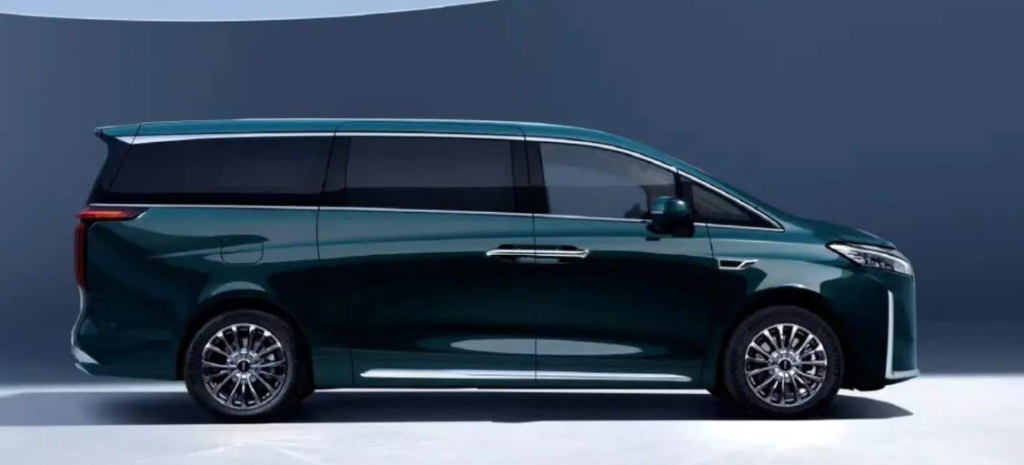
Great Wall Motor launches Extended Edition of Gaoshan MPV catering to Corporate Travelers

In a bid to cater to the increasing demand from affluent Chinese families and corporate travelers seeking spacious interior car designs, Great Wall Motor (GWM) unveiled its latest offering, the Wey Gaoshan MPV. Launched on October 18, the Gaoshan series, which translates to “high mountain” in Chinese, is GWM’s inaugural venture into the multi-purpose vehicle segment. This move is a strategic response to the market’s growing appetite for larger vehicles, positioning GWM against competitors like BYD’s Denza D9 and other prominent players in the MPV market.

The Gaoshan MPV, now available in an Executive Extended Edition, boasts an impressive body length of 5405 mm and a 3275 mm wheelbase. Designed with corporate travelers in mind, this six-seater configuration offers an expansive interior space, measuring 3823 mm in length. Surpassing renowned models like the Mercedes-Benz V260L, Denza D9, Buick GL8 Century, Hongqi HQ9, Zeekr 009, Toyota Alphard, and Lexus LM, the Gaoshan’s extended edition promises unparalleled comfort and spaciousness.

Under the hood, the Gaoshan MPV employs a cutting-edge DHT plug-in hybrid system, combining a 1.5T turbocharged engine with an electric motor. This powertrain generates 115 kW from the engine and an additional 135 kW from the rear axle electric motor, resulting in an impressive total power output of 358 kW. The vehicle is equipped with a 37.96 kWh ternary lithium battery pack, ensuring a CLTC pure electric cruising range of 175 km.

Internally, the Gaoshan Executive Extended Edition offers a luxurious experience, featuring dual screens, all-electrically adjustable seats with heating and ventilation functions, and a premium Harman Kardon 20-speaker sound system. The vehicle also incorporates advanced voice interaction technology, enhancing the overall driving experience.

In contrast, the standard Gaoshan MPV, with dimensions of 5045/1960/1900 mm and a 3085 mm wheelbase, accommodates a 7-seater layout (2+2+3). Notably, the second row provides a maximum legroom of 1166 mm, while the third-row seat cushion height is 350 mm, offering a spacious and comfortable ride for all passengers. The third row can also be conveniently folded down to optimize cargo space.

Despite its remarkable features, the Gaoshan’s extensive body length may pose challenges in urban environments, particularly concerning parking. However, its unmatched interior space and advanced technology make it a formidable contender in the competitive MPV market. 

Related:

(via)

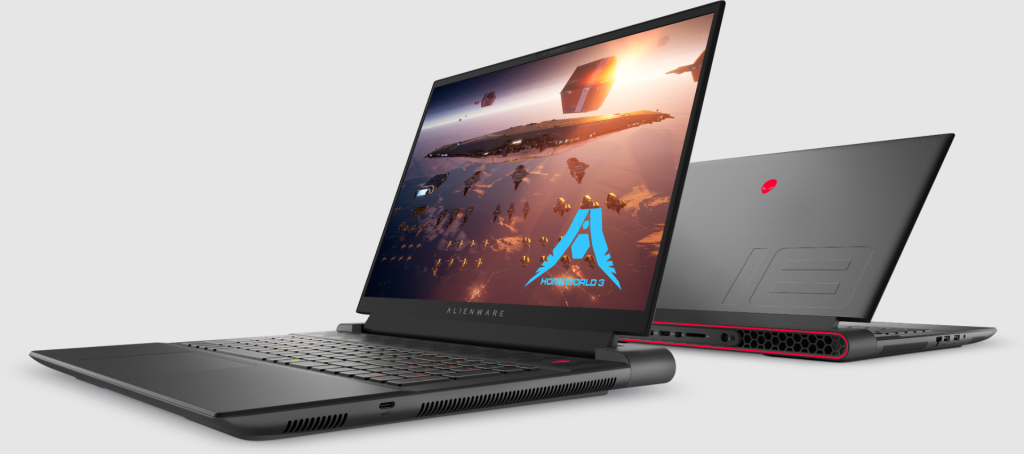
Alienware M18 laptop with new AMD Radeon RX 7900M GPU launched

AMD recently announced its fastest-ever GPU for a laptop called the Radeon RX 7900M. Now, Dell has announced Alienware M18 will be the first laptop to host this powerhouse of a GPU. Before we delve into the details about the laptop, here are a few things that make the RX 7900M GPU special.

Alienware M18

According to AMD, the RX 7900M boasts superior performance when compared to the Nvidia RTX 4080 mobile GPU, with an average frame rate advantage of 7% and a substantial 27% boost in titles like Starfield. However, this enhanced performance comes at the cost of higher power consumption, as the RX 7900M can draw up to 180 watts, while the RTX 4080 mobile operates at a more conservative 110 watts. Additionally, the RX 7900M is equipped with AMD’s FidelityFX Super Resolution (FSR 3) upscaling technology, which significantly enhances frame rates in various games.

Dell Alienware M18 specs

The Dell Alienware M18 has an 18-inch display with options for FHD+ and QHD+ resolutions, offering smooth visuals with 480Hz or 165Hz refresh rates, respectively. It has a 3ms response time and decent brightness at 300nits. The display supports a wide color gamut (100% DCI-P3) and has a strong 1000:1 contrast ratio. Notably, it incorporates AMD FreeSync and Dynamic Display Switching.

Under the hood, the laptop is powered by an AMD Ryzen 7 7945HX R9 processor, featuring 16 cores and 32 threads with a generous 80MB cache. It can reach speeds of up to 5.4GHz, making it well-suited for demanding tasks. The GPU is the AMD Radeon RX 7900M, equipped with 16GB of GDDR6 memory. It delivers robust gaming performance but consumes 180W of power, reaching 200W with SmartShift Max.

In terms of memory and storage, the laptop can be configured with up to 64GB of Dual Channel DDR5 RAM running at 4,800MHz and offers substantial storage options, allowing for up to 8.5TB in a tri-storage configuration. The laptop’s battery capacity is 97Wh, supported by a 330W charging solution.

The laptop comes with a bunch of connectivity options, including Wi-Fi 6E, Bluetooth 5.2, Ethernet, various USB ports, HDMI 2.1, a mini-display port, and an SD card slot. It also incorporates features like Vapor chamber cooling for thermal management, Dolby Vision, Dolby Atmos for an improved audio-visual experience, an Alienware FHD camera, dual-array microphones, and support for Windows Hello for convenient security. The laptop also features Alien FX lighting and an Alienware M Series keyboard with RGB lighting, alongside a multi-touch gesture trackpad. In terms of size, it measures 319.9 x 410.3 x 25.1mm and weighs around 4.23kg.

Pricing & availability

Currently, Dell is selling the FHD+ model of the Alienware M18 laptop in the US with a starting price of $2,799.99. This model features 32GB RAM and 1TB storage.

RELATED:

Intel 14th-Gen Desktop Processors Don’t Support Thunderbolt 5, But There Are Workarounds

Intel recently introduced its 14th-gen Raptor Lake processors. These eagerly anticipated processors have once again managed to impress with their performance. For instance, the P-cores on the 14th-gen processors can reach up to 6 GHz, which is 200 MHz higher than the 12th-gen processors. However, in addition to all this performance and innovative features, the new processors have a significant drawback. According to Intel’s announcement, the 14th-gen desktop processors do not support Thunderbolt 5. Here are the details…

Intel 14th-Gen Desktop Processors Do Not Support Thunderbolt 5

If there are those among you who don’t know, Thunderbolt 5 is the newest version of the Thunderbolt interface developed by Intel. This technology is a universal bus interface that merges PCI Express and DisplayPort into one serial signal. It’s capable of transmitting both data and video through a single cable.

Intel CPUs

Thunderbolt 5 supports a bi-directional bandwidth of up to 80 Gbps, which is double the speed of Thunderbolt 4. With Thunderbolt 5, you can mirror displays, transmit data, and use it for many different tasks. In fact, we often see this technology being frequently used in laptops. However, the 14th-gen Intel desktop processors do not support Thunderbolt 5.

This was a surprise to many, as Intel had initially stated that the 14th-gen processors would support the new connectivity standard. However, the company has since clarified that this technology will only be supported on upcoming laptop processors based on the Meteor Lake architecture.

While it is disappointing that the 14th-gen desktop processors do not support Thunderbolt 5, it is important to note that the technology is still in its early stages of development. It is not expected to be widely available until 2024, and it is likely that only high-end laptops will support it at first.

RELATED:

(via)

Marvel’s Spider-Man 2 is here with ray-tracing & a bigger open-world map

Sony Interactive Entertainment has unleashed the latest game in the Spider-Man series. “Marvel’s Spider-Man 2” is an action-packed sequel that takes full advantage of PlayStation 5.

Spider-Man 2

This time around, you get to control two Spider-Men, Peter Parker and Miles Morales, as they navigate a vibrant Marvel’s New York. Expect stunning visuals, haptic feedback, adaptive triggers, ultra-fast load times, and immersive 3D audio thanks to the power of PlayStation 5.

The story revolves around Peter and Miles facing new challenges, including iconic villains like Venom. The game promises a thrilling adventure, offering more of what fans love about Spider-Man, with a fresh take on the web-swinging hero’s action.

Early reviews of the game have stated that Marvel’s Spider-Man 2 respects source material and tells an exciting and thrilling story, with a bunch of surprising moments. There is also a lot more to explore as the game’s open world is twice as big as the last one.

Spider-Man 2

Insomniac has also managed to utilize the ray-tracing capabilities of the PS5, making for more realistic lighting for an immersive experience. Insomniac’s Director of the Core Technology department, Mike Fitzgerald said “Our performance mode for this title has ray tracing on by default. We’ve really expanded ray-traced reflections throughout the game. It’s on the water and the oceans and really gives a more realistic picture everywhere.”

Marvel’s Spider-Man 2 is only available on PlayStation 5. It costs $69.99 for the regular version and $79.99 for the digital deluxe one. If you want a PS5 to play the game, there’s a bundle deal available. But if you can wait a bit, a PS5 Slim Spider-Man 2 Bundle will be out on November 8.

RELATED:

Honor X7b Launch Likely Soon as Device Hits IMDA Certification

After the Honor X9B’s launch a few hours ago, a new Honor smartphone – the Honor X7B appeared on Singapore’s IMDA certification website. It looks like a successor to the Honor X7A which was launched earlier this year with some entry-level specifications.

Must See: Honor dominates Q3 Chinese foldable market share, competing closely with Huawei

With model code CLX-X2, the smartphone that appeared on the listing, and will support Bluetooth and WLAN connectivity. Apart from the minor specification information, there’s hardly any evident information coming out of the certification.

Considering the series name, the Honor X7B could launch along with the Honor X9B which was recently spotted on some certification websites.

The new smartphone will succeed the Honor X7A which was launched earlier this year with a large 5330 mAh battery and 22.5W fast charging support. It is quoted to offer 42 hours of battery backup. Measuring 8.3mm in thickness, the smartphone houses a 6.75-inch LCD display with 720 x 1600 pixels resolution. A quad-camera sensor sits on the rear side with a 50MP primary sensor, a 5MP ultrawide camera, a 2MP macro sensor, and a 2MP depth sensor. There’s an 8MP front sensor for selfies.

Honor X7B comes powered with MediaTek Helio G37 SoC bundling 4/6 GB RAM. It does carry support for Bluetooth 5.1, GPS, USB Type-C 2.0, and dual-band Wi-Fi.

We definitely expect upgrades over its predecessor.

Related:

Upcoming Smartphones: Xiaomi 14, Vivo Y200, and more

No brand has officially scheduled smartphone launches for the next few days, as of writing this story. However, based on leaks, three new phones could go official next week.

Out of these three, two of them will be flagships from Xiaomi — Xiaomi 14 and Xiaomi 14 Pro. Whereas, the third one will be a budget model from Vivo.

The Vivo device will succeed the Vivo Y100 from earlier this year. On the other hand, the Xiaomi handsets will replace the Xiaomi 13 models from late last year.

Let’s have a look at these products one by one.

Upcoming Smartphones Next Week

1. Vivo Y200

Vivo Y200 5G
Vivo Y200 5G

The Vivo Y200 is tipped to debut in India on October 23 (Monday). The launch offers for the product will be live until October 31 (Tuesday).

The phone will look somewhat identical to the Vivo T2 Pro, which also goes by iQOO Z7 Pro and Vivo S17e. However, the specs will be downgraded.

It will arrive with a Qualcomm Snapdragon 4 Gen1 chip, a 4,800mA battery, and 44W charging support. It will sport dual cameras on the back paired with an ‘Aura Light’ (ring LED light).

The Vivo Y200 is expected to cost ₹21,999, which translates to around $265.

2. Xiaomi 14 and Xiaomi 14 Pro

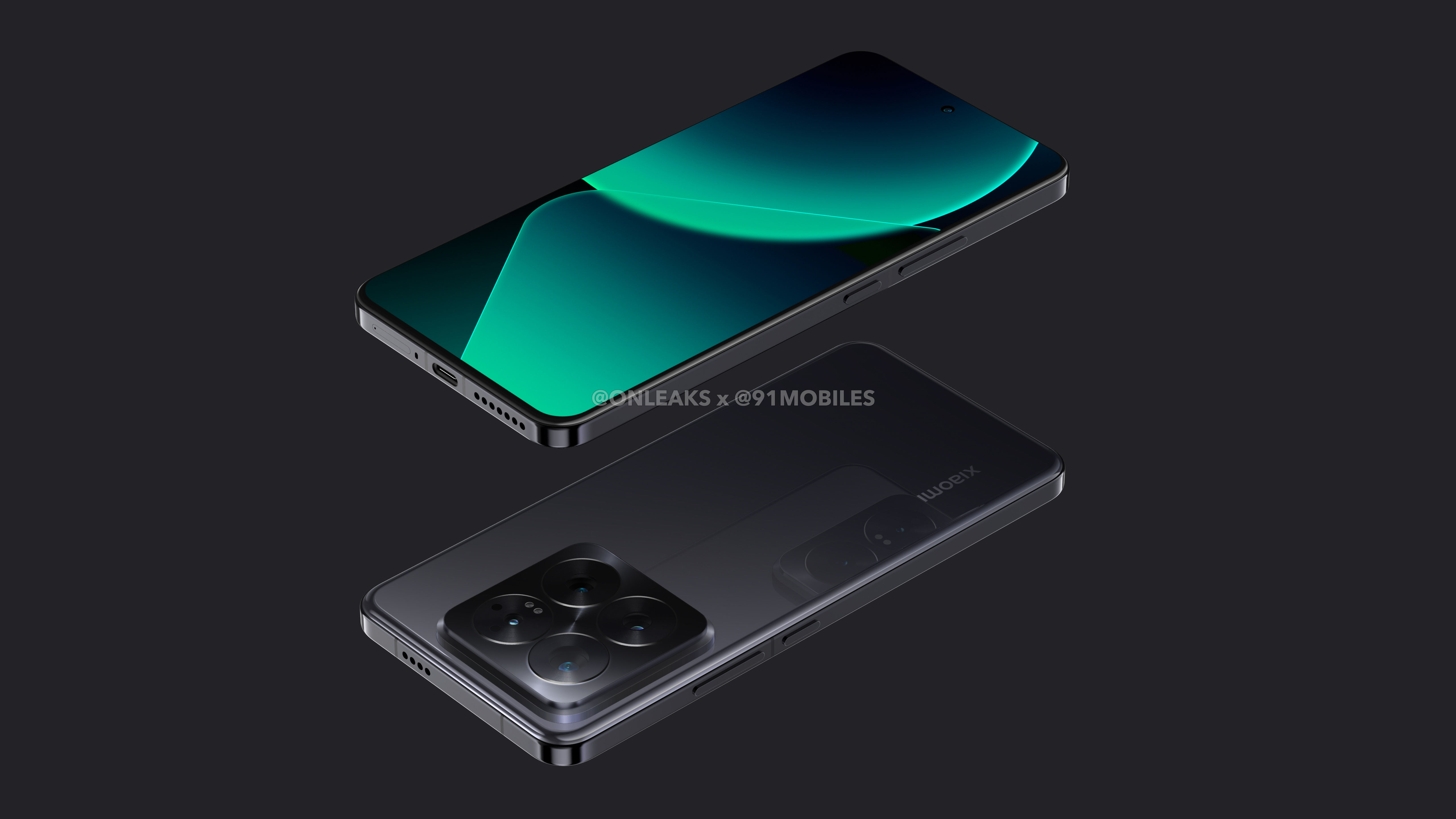
XIaomi 14 Pro CAD render
Xiaomi 14 Pro | Source: @OnLeaks via 91Mobiles

The Xiaomi 14 series could launch in China on October 27 (Friday), as per an official-looking poster. There will be two devices, namely Xiaomi 14 and Xiaomi 14 Pro.

Like the last-gen, both of them will be equipped with Leica-tuned cameras. The company has officially confirmed Leica Summilux lenses for these handsets.

The duo will be powered by Qualcomm Snapdragon 8 Gen 3 chipset, which will be announced on October 25 (Wednesday).

The vanilla Xiaomi 14 will be equipped with triple 50MP cameras headed by an OmniVision OV50H primary sensor. While the Xiaomi 14 Pro is expected to retain the 1-inch Sony IMX989 sensor from its predecessor.

Last but not least, these phones will ship with Xiaomi’s new operating system based on Android and Xiaomi Vela — HyperOS.

RELATED:

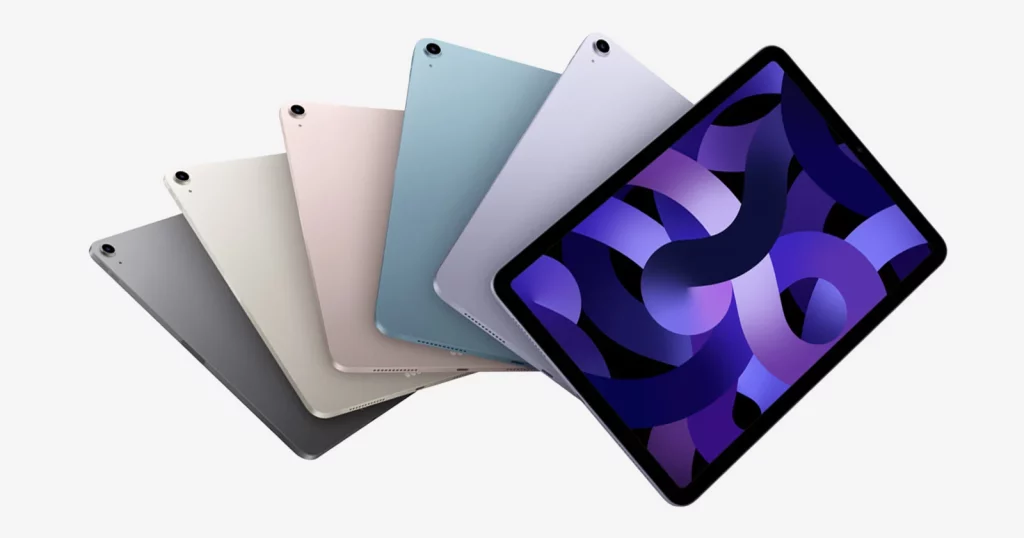
Apple Reportedly Working On iPad Air With A 12.9-Inch Display

Recently Apple unveiled a USB-C Pencil. The Cupertino-based tech giant usually announces new-generation iPads every year a month after the debut of the iPhones. A recent report hinted at the arrival of the new iPads by the end of the year. Now, in a new development, details about the next-generation iPad Air has surfaced courtesy of DigiTimes citing industry sources. 

A larger iPad Air is on the cards

Apple offers the iPad Air in only a single 10.9-inch size. As per the report, the Cupertino-based tech giant is working on the next iPad Air with a 12.9-inch display. Thus it would be the biggest iPad Air model to date. This would also put it on the par with the 12.9-inch iPad Pro. However, it will still stick to the LCD panel instead of the mini-LED found on the iPad Pro. 

Previously a report by 9to5Mac also revealed that Apple was working on two iPad Air (6th Gen) versions. There are four separate models in development with two each in WiFi and Cellular. The differentiating factor was not clear as per the publication. However, the latest development indeed hints at two screen sizes for the next-generation Air.  

The current fifth-generation iPad Air arrived last year and is nearly a year and a half old now. It has a 10.9-inch screen and is powered by an M1 processor. Apple may launch the iPad Air 6th generation in the first quarter of next year with an M2 chipset. We should expect more details about the next-generation tablet in the coming months.

Related:

Via

Bird’s New Revamped Electric Bikes have Location Tracking & Hydraulic Brakes

We can confidently say that urban landscapes are becoming congested, but that just means that the race for smarter, efficient mobility is heating up. One brand rising to the occasion is Bird, a company long associated with e-bikes. Bird is breaking new ground with its latest offerings, shedding the shadows of its past resemblance to the now-defunct VanMoof’s models. Here’s why their new bikes could set the pace for urban travel.

The bikes also have a 120-decibel alarm system to keep them safe

Unveiled at the MicroMobility America trade show, Bird’s revamped e-bikes come in two primary frames – A and V – aimed squarely at city commuters. Forget heavy, cumbersome rides; these bikes have a lightweight aluminum frame coupled with components from reliable bicycle OEMs. And it doesn’t stop there; these bikes are engineered for performance and practicality.

Electric

The bike runs on a 500-watt rear hub motor, juiced by a 48-volt, 10.5-ampere-hour battery. Translation? You get a 50-mile range on a single charge. And for those concerned with safety and performance standards, these bikes come UL 2859 and UL 2771-certified. This assures you that you’re not just buying a cool-looking bike, but one built to meet industry norms.

And speaking of safety, Bird isn’t cutting corners. The bikes are loaded with features like a 120-decibel alarm system and location tracking. Add hydraulic disc brakes and built-in front and back lighting, and you’ve got yourself a safe, secure ride. To keep you informed on the go, bright LCD displays are integrated into the design.

While Bird is still tight-lipped about the exact specifications and pricing, the bikes are set to hit the market by Spring 2024, with a starting price capped at $1,299 USD. In a world eager for reliable, affordable, and efficient transport, Bird’s new lineup promises to be a breath of fresh air.

RELATED:

(Via)

Nokia is Laying off 14,000 Employees due to Challenging Environments

In a pretty unexpected move, Nokia plans to eliminate up to 14,000 jobs—indicating what could be a larger trend of slowing momentum in the tech industry. The announcement from the Finnish telecom leader follows other significant layoffs from major tech companies, including X (formerly Twitter), Amazon, Google, Microsoft, and Meta, who’ve cumulatively cut over 50,000 positions this year.

Nokia wants to slash staffing costs by a lot of margins

Nokia’s decision is notably massive, designed to cut its workforce to a range between 72,000 and 77,000 employees. The aim? To slash staffing costs by 10% to 15%, promising savings of $421.4 million in 2024 alone. Nokia CEO, Pekka Lundmark, summed up the painful reality, stating, “The most difficult business decisions to make are the ones that impact our people.”

Nokia

Why is this happening now? For Nokia, it’s a combination of missed financial targets and market factors. A 15% decline in third-quarter sales and a 19% dip in mobile network sales suggest a more critical look at the 5G market. Nokia’s Swedish competitor, Ericsson, also shares a grim outlook, citing a “challenging environment and macroeconomic uncertainty.”

But Nokia’s woes aren’t just financial. They’re also entangled in a complicated patent dispute with Oppo, OnePlus, and vivo, which could further strain their resources and market availability. Once a mobile phone titan, Nokia’s struggle to reinvent itself in the smartphone era has been something to witness.

Is Nokia’s dramatic decision just a case of corporate restructuring, or is it a symptom of a larger industry ailment? The sheer number and scale of recent layoffs in the tech world could point to a broader slowdown.

RELATED:

(Via)

Chinese Investors are Shifting from TSMC to ASML Amid Geopolitical Tensions

As tensions rise between China and Taiwan, some equity investors are rethinking their commitment to Taiwan Semiconductor Manufacturing Co (TSMC), the world’s top contract chipmaker. Names like Martin Currie’s Zehrid Osmani and Shelton Capital Management’s Bruce Kahn have reduced or sold off their TSMC stakes in recent months. Instead, they are moving towards ASML Holding, an essential supplier to TSMC.

TSMC’s stock surged by 22% this year, which seems counterintuitive

This shift in investment behavior seems counterintuitive, given that TSMC’s stock surged by 22% this year, outpacing ASML’s near 10% gain. Nonetheless, the underlying factor for this is heightened geopolitical volatility surrounding Taiwan, a region of vital interest in the U.S.-China dynamics. Investors like Warren Buffett, for instance, find the risk of a geopolitical flare-up outweighing TSMC’s market prowess.

TSMC

ASML Holding, based in the Netherlands, is an appealing alternative. The company manufactures lithography machines crucial in chip production and has a diversified client list featuring industry giants like Intel and Samsung. According to David Allen of Plato Investment Management, ASML stands as a more geopolitically insulated choice, offering an “investor safe haven” of sorts.

This investor sentiment suggests a disconnect between market valuations and geopolitical risks. Bruce Kahn opines that current market valuations of TSMC do not adequately factor in the geopolitical tensions, drawing parallels to the investor unpreparedness seen during Russia’s invasion of Ukraine.

The pivot toward ASML is not without its hurdles. The company saw a slump in orders in the last quarter, while TSMC exceeded quarterly sales expectations. Both remain vulnerable to the ongoing U.S.-China chip feud. Still, ASML stands to gain from TSMC’s expanding global footprint, particularly in Germany and the U.S., which will require more of ASML’s equipment.

RELATED:

(Via)

PS5 Slim & Spider-Man 2 bundle US launch date leaks

Sony has just introduced the PS5 Slim on the worldwide stage, following the tradition of offering a more compact and trim version of the original PS5. While Sony officially names it the PS5, it has earned the affectionate nickname of “PS5 Slim” within the gaming community.

While pricing information for this console has already been disclosed, the release date has remained shrouded in secrecy. However, a recent report from Deallabs has shed light on its availability. According to the report, the PS5 Slim is set to hit the shelves in the United States on November 10, with the Spider-Man 2 bundle of the PS5 Slim arriving a couple of days earlier, on November 8.

Sony PS5 Slim

The Spider-Man 2 Bundle is reportedly going to be priced at $599.99. Meanwhile, the PS5 with an Ultra HD Blu-ray disc drive will be on sale for $499.99, and the PS5 Digital Edition will come in at $449.99. As for customers in Europe, they can expect to see prices set at 549.99 EUR for the standard model and 449.99 EUR for the Digital Edition.

Sony PS5 Slim specs & features

Sony claims that the PS5 Slim is 30% smaller and lighter, with a glossy top and a matte bottom. The performance remains the same as the regular PS5 model.

Sony has added a bump on the side for the disc drive, which can be taken off and replaced. It now has two slots on each side and, instead of just one USB-C and USB-A port in the front like the current PS5, it has two USB-C ports. The new PS5 comes with a horizontal stand, and Sony offers a separate vertical stand for $29.99, which works with all PS5 models.

RELATED:

(Source)