Advertisement

Enjoy Bixby in your Own Voice

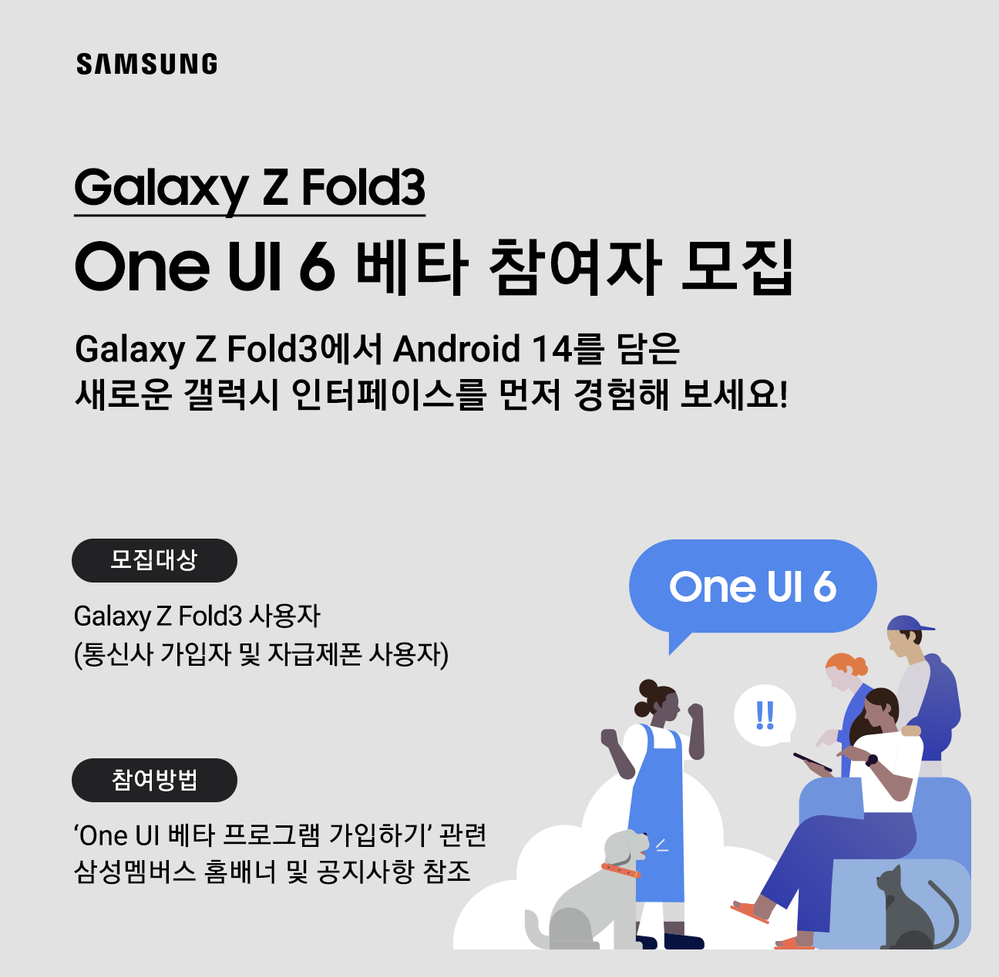
In a significant development for Samsung Bixby, the Korean giant adds the ability to use your own voice for Bixby. The feature seems limited to OneUI 5.1.1 and OneUI 6.0 Beta. The users are required to install the Bixby Voice Customization App and Bixby Voice Creator app on their devices to avail of the new feature. If the user tries to install the Bixby Voice Creator app initially, then they will get “Not compatible with this device” error. The app is not available in the Galaxy Store for devices running OneUI 5.1.

Must See: Samsung Bixby Assistant Becomes Smarter with the New Update

How to use Custom Voice for Bixby?

It is a great enhancement for Bixby, that lets the users easily set the Custom Voice. To get the feature head to Bixby > Settings > Language and Voice Style Menu > Create Custom Voice. The user has to record 10 sentences after pressing the Start button. It may take some time, but once it’s complete, give it a name, and you will hear your voice. There’s also an option to train the Bixby in the background if the user doesn’t want to spend much time.

Before using your voice, the user can test different voice samples of your own voice. This can be done from the same menu of the Language and Voice style menu in Bixby settings. Check different voice samples by tapping on the name and selecting it by tapping on the check box.

Bixby Voice Creator App allows users to create unlimited custom voices. However, your custom voice may not work everywhere, it is created especially for text calls, and text-to-speech features while responding with weather forecast information, time information, and other general queries.

Related: How to enable Bixby on Samsung Galaxy S22 series

We have tried to get the feature on Galaxy S22 running OneUI 5.1, but to no success. However, we have to wait for the support on old devices. The feature is flawlessly working on OneUI 5.1.1 and OneUI 6.0 Beta running devices.

iQOO Z8 & iQOO Z8x launching on August 31: Chipset officially revealed

iQOO plans to launch two new smartphones in China this month called the iQOO Z8 and the Z8x. The complete spec sheet of both of these devices has leaked along with the AnTuTu benchmark listing of the Z8. Now, the brand has officially revealed the launch date of these smartphones in a new teaser.

iQOO Z8

As per a post by iQOO on Weibo, the iQOO Z8 and Z8x will be launching on August 31 in China. There is currently no word on the global launch date. In another teaser, the brand has confirmed that the Z8 smartphone will feature a Dimensity 8200 SoC.

iQOO Z8

It claims that the device has achieved an AnTuTu score of 980,832, which isn’t that far off compared to the leaked score of 972,222 points. Here’s what we know so far about both of these devices.

iQOO Z8 specs (rumored)

The iQOO Z8 is said to feature a 6.64-inch LCD panel with an FHD+ resolution of 2388 x 1080 pixels and a smooth 120Hz refresh rate. Under the hood, it is powered by the Dimensity 8200 chipset. It will come with configurations of up to 12GB of RAM and a generous 512GB of storage. This phone will likely be equipped with a 5,000mAh battery, supporting 120W fast charging. For photography, it could feature a 16MP front camera and a dual-camera system on the rear, including a 64MP main camera with Optical Image Stabilization (OIS) and a 2MP depth camera. Additionally, it runs on the OriginOS 3.0-based Android 13, includes a 3.5mm audio jack, and offers the convenience of a side-facing fingerprint scanner.

iQOO Z8x specs (rumored)

The iQOO Z8x is said to also boast a 6.64-inch LCD panel with an FHD+ resolution of 2388 x 1080 pixels and a 120Hz refresh rate. It is powered by the Snapdragon 6 Gen 1 chipset for efficient performance. The device could offer configurations with up to 12GB of RAM and 256GB of storage. It will likely pack a sizable 6,000mAh battery, supported by 44W fast charging. On the front, it could have an 8MP camera for selfies. The rear camera setup consists of a 50MP main camera and a 2MP auxiliary camera for various photography needs. It runs on OriginOS 3.0-based Android 13, retains the convenient 3.5mm audio jack, and includes a side-facing fingerprint scanner for enhanced security.

RELATED:

(Source)

Google removing “Cleaner” Apps from the Play Store

In a bid to make Play Store free from malware and junk apps, Google keeps scanning potentially dangerous apps and even removes them from the store. The apps that offer fake promises, and distribute malware are always on the radar. But, sometimes genuine apps also have to suffer due to the automated removal mechanism on Google Play Store. In a recent takedown practice, Google has removed several “Cleaner” apps including the popular SD Maid.

Must See: MIUI 13 is coming soon, suggests the latest MIUI Cleaner beta

Play Store Taking down “Cleaner” Apps

The developers of these apps shared their plight on Reddit and informed about the sudden removal and full account termination from the Play Store. Especially for the SD Maid app, the reason for removal is cited as a violation of Google’s “Stalkerware policy.” Considering the developer’s claim, there’s no such feature that enables them to stalk user privacy and data. Even, the SD Maid’s source code is listed on GitHub. Here’s the detailed reason for the removal of the SD Maid app:

Reason for termination: We have identified a pattern of high risk or abuse associated with your Developer Account and are taking this action pursuant to Section 8.3/10.3 of Google Play’s Developer Distribution Agreement.

Well, there are some words in the SD Maid description that could have made it fall under the suspicious category for the automated removal tools. Going through the SD Maid App description, we can spot some keywords that could raise three eyebrows. Here’s a snippet from its description:

• Browse your whole device and manipulate files through a full-fledged file explorer.

• Remove superfluous files from your system.

• Manage installed user and system apps.

• Detect files formerly belonging to uninstalled apps.

• Search for files by name, content or date.

• Obtain a detailed overview of your device’s storage.

• Optimize databases.

• Do actual app cleaning and remove expendable files, which supersedes what others may call ‘cache cleaning’.

• Detect duplicate pictures, music or documents, independent of name or location.

• Run tools automatically on a schedule or via widgets.

Early Warnings

Most of the app developers are saying that Google has cited the same reason behind the suspension of their Cleaner Apps. However, we are not sure what could be the exact reason, but Google has warned this year about the new guidelines related to “Deceptive Behavior” Apps. The apps that don’t explain the exact usage of their respective apps fall under “Deceptive Behaviour”.

Related: Play Store introduces Auto Archive feature to help save storage space

The “Deceptive Behaviour” policy somehow applies to Cleaner Apps that market themselves as speed booster apps. But getting “Stalkerware policy” violations seems difficult to understand as of now. Well, Google knows better which app is violating the Play Store policies in a better way.

(via)

Sony’s $199 PlayStation Pulse Explore earbuds offer lossless audio and low-latency performance

Sony has finally unveiled its first official wireless earbuds for PlayStation. The Pulse Explore earbuds are claimed to offer premium audio quality, low-latency performance, and a sleek design. While we don’t know exactly when they’ll be available for purchase, Sony has revealed the earbuds won’t come cheap. They’ll cost a whopping $199. Here’s what is known about the earbuds.

Playstation earbuds pulse explore

Sony’s Pulse Explore earbuds are a premium offering that delivers lossless audio quality and low-latency performance. They feature dual microphones with AI-enhanced noise rejection to help cancel out background noise, and they come with a charging case.

Sony is also set to release a new Pulse Elite headset priced at $149.99, which is touted as an upgrade over the PS5’s original Pulse 3D headset. Similar to the Pulse Explore, the Pulse Elite offers lossless audio and AI-enhanced noise cancellation. The headset also boasts a retractable boom microphone and a charging mount for storage and recharging when not in use. Further details, including pre-order information and the release date, will be announced at a later time.

PlaySation Elite

PlayStation also dropped some exciting news about their Link Wireless Audio Technology. You’ll find this tech tucked inside a USB adapter that comes with the Pulse Elite and Pulse Explore. When you’re using it, this adapter delivers super fast, high-quality audio with minimal delay. It will let you smoothly switch between your PS5 and the PlayStation Portal (formerly known as Project Q). Plus, this nifty PlayStation Link also works on your PC and Mac. Sony will be selling it separately.

RELATED:

(Source)

Moto G14 new color options go on sale today priced at ₹8,999

We earlier reported that Motorola is working to launch two new color options for the Moto G14, which recently made its debut in the Indian market. Now, the brand has revealed more details about one of the color options ahead of its sale later today.

Moto G14

The color option in question is called Pale Lilac, and it will be a vegan leather option. The brand claims that this is the segment’s 1st vegan leather design. For those unaware, Moto G14 has a price tag of ₹9,999.

Apart from that, Motorola will be selling the Moto G14 for ₹8,999 when it launches the new color options later today. Although no time is specified in the teaser poster, we expect the new colors to emerge online around 12 PM IST. Let’s take a look at the spec sheet.

Moto G14 specs

The Moto G14 sports a 6.5-inch LCD display with a clear FHD+ resolution of 2400×1080 pixels, featuring a centered punch hole for the front camera. It’s powered by the Unisoc T616 chipset, along with LPDDR4x RAM and UFS 2.2 storage for smooth performance. Out of the box, it runs on Android 13, with an upgrade to Android 14 planned.

In the camera department, it boasts a 50MP main rear camera, supported by a 2MP macro rear camera and an 8MP front-facing camera. It includes a side-mounted fingerprint sensor for enhanced security. The Moto G14 provides an immersive audio experience with dual stereo speakers that support Dolby Atmos, and it also offers a 3.5mm headphone jack for private listening.

For those needing extra storage, there’s a MicroSD card slot for easy expansion. The Moto G14 is designed to withstand splashes with its IP52 rating, adding to its durability. It’s equipped with a substantial 5,000mAh battery that supports 20W fast charging to keep everything running smoothly.

RELATED:

Lenovo Tab M8 (4th Gen) 2024 official website listing confirms specs

Lenovo has quietly listed its 4th Gen Tab M8 tablet on its website. The company introduced the Lenovo Tab M8 (4th Gen) in Japan and other markets last year. As a result, this new tablet is likely the successor to that model as it carries the name Lenovo Tab M8 (4th Gen) 2024. The device was spotted on the TRDA certification website in April, and now Lenovo has officially listed its specs and features on its website. Let’s take a look at them.

Lenovo Tab M8 (4th Gen) 2024 Specifications

The Lenovo Tab M8 (4th Gen) 2024 has a similar design to the previous model, with a plain back and a circular camera ring on top. The front of the screen has noticeable bezels on the top and bottom and features an 8-inch HD display with 350 nits of brightness, a 16:10 aspect ratio, and a 60Hz refresh rate. The display is also TUV low blue light certified. Lenovo Tab M8 (4th Gen) 2024 is available in two colors: Abyss Blue and Arctic Grey.

Powering the device is an octa-core MediaTek MT8768 processor with four Cortex-A53 cores running at 2.2GHz and four Cortex-A53 cores running at 1.6GHz. It runs on a near-stock version of Android 13 OS. Lenovo has confirmed that it will receive security updates for up to 2 years.  

As for the memory, you get 3GB/4GB LPDDR4x RAM, and 32GB/64GB eMMC 5.1 internal storage. It also has a microSD card slot for expandable storage.

The Lenovo Tab M8 (4th Gen) 2024 has dual speakers for audio, a 2MP front-facing camera, and an 8MP rear camera. It is powered by a 5100mAh battery that can provide up to 13 hours of video playback. Connectivity options include Wi-Fi, Bluetooth 5.0, a 3.5mm headphone jack, and a USB Type-C port.

The pricing details and launch timeline for the Lenovo Tab M8 (4th Gen) 2024 are still unknown, but we should know more soon.

Related:

(Via)

YouTube may be Looking to Reduce the Size of the ‘Skip Ads’ Button

YouTube, the global video streaming giant, is tinkering with a crucial interface element – the “Skip Ads” button. This seemingly minor change is part of a larger pattern that reveals the platform’s priorities and their alignment with user experience.

This is a clever yet slightly shrewd strategy to get more ad-revenue

The current “Skip Ads” button, characterized by its prominent rectangular appearance, has been a relief for users during extended ad breaks. However, it has lately been seen as slightly incongruous with YouTube’s recent redesigns.

YouTube

The newly proposed button is much smaller but aligns with the aesthetic that YouTube has been adopting. This transformation is not merely a visual tweak but carries strategic implications.

YouTube has confirmed the test, expressing their intention to provide a “more consistent user experience.” By making the button less obtrusive, YouTube is subtly encouraging users to watch the ads, potentially leading to higher engagement with advertisers. This aligns with the platform’s dual goals of pleasing both viewers and advertisers.

However, users have become accustomed to the existing “Skip Ads” design. A drastic change could cause confusion or frustration. This redesign must be handled with care, balancing the interests of viewers, advertisers, and the platform itself.

The change in the “Skip Ads” button’s design is a subtle hint at YouTube’s evolving strategy. It’s a smart move that reflects a thoughtful balance between aesthetics, user experience, and commercial interests. However, the implementation must be sensitive to the expectations and habits of the millions of people who interact with this button every day. This small change is a powerful reminder that in technology, even the tiniest design decisions can have widespread implications.

RELATED:

(Via)

Zendure SuperBase V6400 Home Backup Power System Review: The Most Powerful Mobile Off-grid Home Power Solution

Zendure SuperBase V

The Zendure SuperBase V system is the ever-seen most powerful power backup solution for the whole home, including boosting your electric car. I’d even call it the most necessary piece of equipment on everyone’s doomsday list.

But of course, we’re not at the point where we need to worry about that. This is also the biggest and most powerful tech product for individuals that I’ve ever tested, except for EVs. It’s actually bigger than I expected when I decided to test the Zendure home power solution. But to some extent, compared to the fantasies I once had about this kind of dream product, it’s surprisingly small. I used to fantasize that I’d need to set aside a large workspace in my house to put down an off-grid giant power station and power storage. But thanks to Zendure, it has been realized and easily placed in any corner of any room, with an extremely integrated and modular design.

I would define the Zendure SuperBase V6400 as a portable and modular power station that you can scale from 6.4kWh up to 64kWh with up to 4 stackable satellite battery modules, which easily power the entire home for two days straight. Meanwhile, if adding the Zendure portable solar panels, you can easily access the most direct clean energy from nature and store it in the SuperBase V system as a massive backup system.

Zendure Stackable Satellite Battery

With energy prices soaring, this will undoubtedly become a trend, with civilian-grade portability and ease of use. Without much technical setup or installation, any inexperienced individual can get a piece of nature’s most generous gift, which sounds like something out of a sci-fi story. But such a dream scenario come true.

Specifications

Model nameZendure SuperBase V6400
Weight130lbs / 59kg
Size28.7 x 13.6 x 17.4in (73 x 34.6 x 44.2cm)
Capacity6.438kWh
InputAC Inlet120V~60Hz, 1,800W Max
240V-60Hz, 3,600W Max
XT90 (Solar/Car)12-150VDC, 25A, 3,000W Max
OutputAC Outlet *4120V~60Hz, Total 3,800WMax Discharge (dual units)
7600W
Zen AC Outlet *2120V~60Hz or 240V~60Hz, Total 3,800W
Car Outlet12.6V 10A, 126W Max
DC5521 *212.6V 3A
Andersen12.6V 30A, 378W Max
USB-C1, USB-C25V3A, 9V3A, 12V3A, 15V3A, 20V5A, each port 100W Max, Total 200W
USB-C3, USB-C45V2.4A, 9V2.22A, 12V1.67A, each port 20W Max
USB-A1, USB-A25V2.4A, each port 12W, Total 12W
BatteryCell ChemistrySBS (Semi-solid-State Battery)
Cycle Life3000+ cycles
TemperatureOptimal59℉ to 95℉
Discharge-4℉ to 140℉
Charge-4℉ to 110℉
Storage14℉ to 95℉
Max Downtime0ms Downtime UPS

Packaging – SuperBase V6400 & Satellite Battery B6400

Let’s start with its delivery packaging. I didn’t think it could be shipped and collected so smoothly, which indeed thanks to Zendure’s efficient, safe, and compact design in light cardboard-based packaging. Although the SuperBase V weighs 130 lbs (59 kg) with a size of 28.7 x 13.6 x 17.4in, fortunately, the entire solid package keeps it securely on the pallet.

To free it out, just unpack the big case as shown in the video below, and pull out the hidable handles, with which you can pull it like a suitcase, and the four well-built wheels at the bottom will help you easily roll the whole unit into the desired position. Finally, lock the front wheels to make sure it doesn’t ‘run away’.

You can either pick up the single SuperBase V6400 unit for an available capacity of 6.4kWh, or also add the Zendure satellite battery units to expand the power capacity of the SuperBase V system.

The satellite battery (101lbs, 46kg) is also a big one, too. It’s unboxed in the same way as the SuperBase Unit, but instead of motorized wheels on the bottom, it only has a couple of support feet for stacking. The best way to assemble them is to lift and stack the battery on top of the SuperBase V. Remove the rubber tapes and the satellite battery would nestle securely on top of the main unit.

What’s included

In addition to the power band combo units, the box was shipped with the following accessories:

  • Car charging cable *1 (1.5m)
  • Satellite Battery Cable *1
  • AC cable *1 (1.5m)
  • Warranty Card + User Manuals
  • Accessory pouch

The whole power kit we tested also comes with the following Solar-recharging add-ons:

  • Zendure 400W Solar Panel * 1
  • Mc4 to XT90 Cable *1

In addition to all the accessories we mentioned above, Zendure also provides some additional add-ons, interested in click here to learn more.

Battery

The SuperBase V6400 and the Satellite Battery run on SBS (Semi-solid-state Battery) technology, which has better energy densities than lithium-ion batteries offering higher energy in the same weight. And the solid electrolytes are safer for less risk of explosion or combustion.

Capacity

Both the SuperBase V6400 and the B6400 Satellite battery come with a huge capacity of 6438Wh. The modularized design allows users to pair up to 4 Satellite batteries with each SuperBase V, which can form a 32kWh capacity backup power system without any dismantling and reinstalling process. In addition, if you can afford more, it’s available to run two SuperBase Vs in parallel, storing a total capacity of up to 64kWh, which is undoubtedly the most powerful power setup in homes without professional techniques required. It can fully charge an EV like Tesla Model Y running on a 57.5kWh battery or power up a whole family for more than 2 days.

Output

The various options available on the Zendure SuperBase over inputs and outputs were the most pleasant surprise for me. Since our studio often tests electronic products from all over the world with different AC input standards, we really need a power supply that can provide multiple outputs. Now with the SuperBase V, we can find the corresponding AC outlets for different devices and safely realize both 120V-60Hz and 240V-60Hz power at a time (Available with ZenAC Outputs, including a 240V 6-20 plug). The SuperBase V is the first and the only system to offer both at a time, thanks to its patented GridFlow 2.0 Real-time Bidirectional inverting technology.

You can find a raft of ports on the SuperBase V6400 (see the table in the Specification section).

Having six USB ports below the info panel also makes it great for powering small electronic devices, including two 100W Type-C PD fast charging posts, two standard Type-Cs, and two regular Type-As.

Apart from the USB-A, USB-C, 120V AC and 240V AC plugs, it also contains a 120V TT-30 port and another Anderson port on the side panel that power your RV or camper at 30A outdoors. On the side panel, you can also find a car outlet and two more DC5521 ports, for a total of 126W max output.

In addition to all the output features we mentioned, you can check out Zendure official website, which also offers a home panel with EV outlets. But if you need to make it work for your EV, a single unit can really only be used as an emergency supplement to extend the range a bit. But the good side is that such 6.4kWh capacity sometimes can really help!

Another great feature shared by premium backup batteries is to work as an uninterruptible power supply (UPS). No exception for the SuperBase V. It features the powerful zero-downtime online UPS to prevent from sustain damage from even a brief interruption in power. Once there’s a sudden power outage, the SuperBase V’s backup power would seamlessly switch on in 0ms and protect your appliances at work to stay online. 

Inputs & Recharging

Accordingly, its AC input also supports all the wall outlets you could possibly have (120V~60Hz, 1800W Max / 240~60Hz, 3,600W Max). We tested the Superbase V6400 for its recharging with our local grid of 220V AC. It took us around 80 mins to collect back 40% of the power, and the full charge is done within 3 hours. During the whole test, we pull on the fast-charging trigger to get a max available power at 3.2kWh-3.3kWh. So if converted to a 240V grid, it’s likely to achieve a maximum charging efficiency of 3600W as advertised, and collect back all the power of 6.4kWh in about 2-2.5 hours. But please note that the recharging power will drop to a maximum of 1800W with a 120V grid.   

And you can also trigger the AC charging speed switch to custom mode. It allows you to set up a custom charging speed in a range of 600W to 3600W. The figure can be decided in the Zendure app. In actual use, we think it could be more popular since the unit could run safely and quietly in some situations.

Or you may have to charge your SuperBase on the go or just to collect free solar power. The SuperBase features an MPPT solar controller for solar input through an XT90 connector. Zendure offers two options of portable solar panels (200W / 400W). The one we tested is a 400W panel, which consists of four foldable sections. It’s amazingly light enough to carry with a single hand. The panel got four attached kickstands for easy setup and free angle adjustment. We don’t think it’s completely waterproof, but our experience is that it could cope with short light rain (IP54 rated). It really makes sense. After all, we wouldn’t really expect to unfold it to collect solar power on a rainy day. It’s a very practical accessory with a handy pouch on the back side, so you can fit all the cables you might use with the SuperBase into it while having a road trip.

The main SuperBase can take up to 3,000W at 12-150VDC & 25A max current. To reach more efficient recharging, you have to wire a couple of the 400W panels in series (Max. 3 panels) or in parallel (3 series max), which is much more reasonable for home fixed location use. But with a single 400W panel, it won’t be as efficient as using the grid power.

When combining AC and solar power, SuperBase V can charge up to 5,150W on its own, or boost up to 6,600W with a Satellite Battery connected.

Meanwhile, the XT90 port can also work as a car recharging inlet via the car cigarette lighter socket. The cable of XT90 to cigarette lighter is included in the package, so it could also be one of the most convenient recharging options on the go with your cars, though it could only support a power of 12V/24V with a 10A current.

There’s another ZenT2 Port for recharging the SuperBase V from a level 1 or 2 EV charging station with an extra accessory – Zendure EV T1 adapter, which could also offer the maximum 3600W power as the AC inlet can do. But right now, it seems to be required for use in North America.

For the satellite battery, it’s available to be recharged through connection with the main SuperBase unit or the solar panels via the XT90 connecter. As an expandable battery module, it’s as safe as the main unit. But without the motorized wheels, it’s certainly not a good portable accessory but more like a fixed and stackable backup module for the whole system.

Zendure APP

The Zendure app is the best companion software that I’ve used with a backup power station. Users can get the most out of the SuperBase V and the satellite battery’s setup, such as checking out all data and its status with perfect graphics, and remotely controlling features to keep it running properly. Once the SuperBase V is connected via home Wi-Fi, it will be an important part of your smart home. You can:

  • See and switch charging sources and discharge status with specific figures of power outputs and input;
  • Monitor its operating temperature at all times;
  • Check out and change the ambient light effects with different color setups.
  • Tracking power data per day, week, month, and year.
  • Have voice control with Google or Alexa voice assistant.
  • And so on.

Experience & Comments

Let’s ignore the extremes of power usage for a moment, and imagine that during off-peak hours you could easily store 6kWh of cheap power from the mains or solar, or keep it as backup power for off-grid uses. This has been able to solve the power problems that plague most of our homes.

Let’s get a bit more creative, like placing it on an RV, where you have the option of using the car outlet to fully recharge it, or just connecting it to solar panels placed on the roof of the vehicle to collect the clean power. Then we’d have a complete regenerative power system on the go. However, with all of this solar power in mind, please first consider if your area has good high-angle sun exposure. If the answer is yes, then congratulations, the SuperBase V may be the best portable power system for you.  

Some families might still keep those power outages using a gas generator as a backup power source. However, we truly see the Zendure as a smarter alternative with distinct advantages. Generally, it runs much and much quieter, and it can be useful in more usage scenarios with super expandability and portability. For those who are looking for a reliable backup power solution for their home, RV, EV, or just a remote cabin, the Zendure SuperBase V series is almost impeccable.

You don’t need to go through a lot of instructions on how to set it up and confirm the power configuration. It’s already prepared well for users. You can switch between 120V/240V recharging sources at will, and you can rely on its powerful output to power most of your appliances without distinguishing what power they require and where they come from.

The only thing you would seriously consider is its price. Such a versatile power solution doesn’t come cheap, but for those who live with unstable and expensive power supply, or travel all over the place with their EVs or RVs, it could be money well spent.

If you are interested in constructing such a power solution, it’s better to check out Zendure store on your own. I believe you will have a more concrete visualization of the future.

Honda Introduces the EM1 e: Electric Scooter in Indonesia, priced at $2,600

Indonesia, a nation with a roaring motorcycle market of 125.27 million units, is slowly but surely steering towards a greener future. On August 23, 2023, Honda‘s EM1 e: electric scooter was introduced into this vibrant market, signaling a pivotal moment in the country’s road to electric mobility.

The electric scooter is an affordable midrange solution to everyday commuting

The entry of the EM1 e: comes on the heels of Indonesia’s ambitious plans to shift completely to electric vehicles by 2050. While electric bikes currently hold a small share of the road, government initiatives like the massive subsidy program announced in March 2023 aim to place around 800,000 new electric two-wheelers on the roads.

Electric

Honda’s latest offering is now available for purchase at 40,000,000 Indonesian rupiah (about $2,610) and 45,000,000 rupiah (about $2,936) if bundled with Honda Mobile Power Pack e:. Unlike its availability in Japan and Europe, the EM1 e: will not be for rent in Indonesia.

However, this bold move also highlights a stark contrast in pricing. Traditional Honda models like the Honda ADV160 are still available at approximately half the price of the new electric scooter. Whether this pricing will deter or attract the Indonesian consumer is yet to be seen.

The infrastructure for electric vehicles in Indonesia is still in development, a critical factor that might influence consumer decisions. Yet, the government’s commitment and Honda’s innovation have set a course that resonates with a global shift towards sustainable transportation.

As Indonesia forges ahead on this journey, challenges are sure to arise. However, with significant players like Honda investing in the market, the country’s green goals appear more attainable. The coming months will undoubtedly reveal more about the adoption and adaptation to this new mode of transportation in Indonesia, reflecting a transformation that could echo across other emerging markets.

RELATED:

(Via)

Ultraviolette Launches F77 Space Edition Electric Bike in India, Features Aerospace-grade Materials

Ultraviolette, an Indian startup, has launched its F77 Space Edition electric bike, taking a giant step into the future. Breaking free from conventional electric motorcycles, the F77 Space Edition showcases the cutting-edge innovation that brings performance equivalent to gasoline-powered 300cc-400cc bikes.

The bike looks straight out of a science-fiction movie, and its two-tone finish adds to the same

The Space Edition doesn’t just stop at looking futuristic; it is built with aerospace-grade materials, including 7075-grade aluminum, complemented by a Cosmic White two-tone finish, giving a science fiction feel.

Electric

What truly sets the F77 Space Edition apart are the features that appeal to the tech-savvy generation. Fast charging, a five-inch TFT display, multiple ride modes, Wi-Fi connectivity, and smartphone pairing all combine to make this bike a symbol of tomorrow’s mobility. With only 10 units ever to be produced, it’s a luxurious blend of aesthetics and function.

The F77 Space Edition’s performance does not shy away from its futuristic theme, delivering 40 horsepower and 70 foot-pounds of torque. A top speed of 95 miles per hour, and a range of 192 miles on a single charge, all lead the way to what the electric vehicle era could unfold.

Priced at $6,742 USD, the F77 Space Edition is more than just a vehicle; it is a statement, a vision of what the combination of technology and design can achieve. While its exclusivity may leave many people heartbroken, its existence is a testament to a future filled with extraordinary possibilities – especially in rapidly developing countries like India.

RELATED:

(Via)

Qualcomm announces new Snapdragon G Series chips aimed at handheld gaming devices

Qualcomm has announced a new lineup of chips — Qualcomm Snapdragon G-series, which is focused on handheld gaming devices. In the lineup, the company has unveiled three chips — Snapdragon G1 Gen 1, Snapdragon G2 Gen 1, and Snapdragon G3x Gen 2.

These three new processors from the company are intended to work with different form factors and handle specific gaming needs. They differ from each other in terms of power and performance.

Qualcomm Snapdragon G Series Chips

Qualcomm Snapdragon G3x Gen 2

This is the flagship offering from the company and is a successor to the Snapdragon G3x Gen 1, which is powering the Razer Edge 5G. It is claimed to offer 30 percent faster CPU performance and twice the GPU performance than its predecessor. The chipset comes with Qualcomm Kryo octa-core CPU and Adreno A32 GPU.

It also supports hardware-accelerated ray tracing as well as game super-resolution, and XR glass tethering. It comes with support for low-latency premium Bluetooth audio and Snapdragon Sound Technology Suite. There’s also Wi-Fi 7 High-Band Simultaneous (HBS) as well as 5G sub-6 and mWaveray tracing.

Qualcomm Snapdragon G3x Gen 2

Qualcomm Snapdragon G2 Gen 1

It has a Qualcomm Kryo octa-core CPU and a gaming-optimized Adreno A21 GPU along with a Snapdragon X62 5G Modem-RF System and 5G and Wi-Fi 6/6E connectivity via Qualcomm FastConnect 6700 Mobile Connectivity System. This chip sits between the G3x Gen 2 and the G1x Gen 1 and is claimed to be capable of full-featured mobile and cloud gaming.

Qualcomm Snapdragon G1 Gen 1

This is the base version in the lineup, offering Qualcomm Kryo octa-core CPU and Areno A11 graphics processor. The company has said that it is a designed for fanless gaming handhelds and is mostly intended to power devices for cloud streaming.

As of now, there’s no information about when devices powered by these chips will hit the market, but the company has revealed that several brands are already collaborating for handheld gaming devices powered by the Snapdragon G-series platforms, including AyaNeo, Thundercomm, and more.

RELATED:

Razer Unveils the Xbox Edition for its Mobile Gaming Controller, Kishi V2

Razer is a well-known name in the gaming industry. As per the latest reports, the company is expanding its product line with the release of the Kishi V2 Xbox Edition mobile gaming controller. The new device is set to attract both iPhone and Android users, and here’s what gamers need to know about this latest innovation.

The controller will cater to both iPhone and Android Users, widening its audience

More than just a visual appeal, the Kishi V2’s integration with Xbox’s Game Pass opens doors to hundreds of games through cloud streaming. This connection isn’t merely cosmetic, as the device is programmed to offer haptic feedback correlated with AAA Xbox titles. A major selling point being lag-free gaming, the controllers have been optimized for enhanced control and precision. The exterior has been redesigned to ensure better ergonomics, with more pronounced triggers and a softer feel, catering to extended gaming sessions.

Razer

While the controller seems to cater primarily to Xbox enthusiasts, it’s not restricted to that platform alone. It retains compatibility with PC games, smartphone titles, and even allows for a personalized gaming experience through a virtual controller mode, all powered by the Razer Nexus app.

The release accompanies the broader availability of the Kishi V2 Pro model, which was once exclusively tied to the Razer Edge gaming handheld device. Now, it can be purchased independently in this Xbox format.

Razer’s newest addition to the mobile gaming world brings a blend of style, and ergonomics. It’s more than an Xbox controller; it’s a tool for a wider gaming experience that bridges different platforms.

RELATED:

(Via)

Samsung Files Trademark for Mysterious Smart Ring; Name Revealed

Smartphones, watches, vacuums, and even shoes are getting more advanced thanks to modern technology. These devices can do much more than their basic functions because they are “smart.” For example, a regular watch just tells the time, but a smartwatch can show your heartbeat, oxygen levels in your blood, emails, and much more. Now, smart rings are being added to this list. More and more companies, like Samsung, are getting interested in this technology. Here are the details…

Samsung’s First Smart Ring, What We Know So Far About

Technology is continuously advancing and becoming more compact. Features that once barely fit into a large box can now be housed in something as small as a ring. Tech companies looking to capitalize on this trend are not missing the opportunity and are developing smart rings. Samsung is known to be one of these companies.

Although the Korean tech giant has not yet confirmed this, we know it’s true thanks to an update in the beta version of the Samsung Health app. Now, the name of this eagerly awaited product has been revealed. Samsung has recently filed a trademark application for a device called the “Samsung Curio.” This suggests that the smart ring may indeed be called Curio, but it’s also possible that Samsung is just trademarking the name for future use.

The ring is can be used to control smart home devices (somehow), make payments, and access other features. It’s also possible that the ring could be used to track fitness data or provide notifications.

Samsung has not yet announced any official details about the Samsung Curio, so it’s unclear when the device will be released or what features it will have. However, the trademark application is a good sign that the project is moving forward, and we may hear more about the Samsung Curio in the near future.

RELATED:

(via)

Samsung Galaxy Z Fold 5 and Z Flip 5 Now Available at Lower Prices in India

Foldable display technologies are becoming more affordable and increasingly widespread. However, foldable smartphones are still considered quite expensive. In addition, their delicate structure and areas needing improvement in terms of usability deter consumers from choosing these devices. Nevertheless, Samsung is determined to change people’s minds. The company is selling its newest foldable phones, the Galaxy Z Fold 5 and Galaxy Z Flip 5, at cheaper prices. Here are the details…

Samsung Galaxy Z Fold 5 and Z Flip 5 Specs and Discounted Prices in India

Samsung is undoubtedly one of the first brands that comes to mind when we talk about foldable phones. The company has been making phones suitable for this market for five generations now and is one of the major players in advancing foldable screen technologies. However, as mentioned earlier, high prices are the biggest barrier to these phones becoming more popular. Thankfully, the Korean tech giant is helping users overcome this barrier by offering special discounts in India for the Galaxy Z Fold 5 and Galaxy Z Flip 5 models.

Samsung Galaxy Z Fold 5 and Z Flip 5

Samsung’s newest foldable smartphones have been on sale in India for a while now through platforms like Samsung.com, Amazon, and Flipkart. But now, Galaxy Z Fold 5 (256 GB) is selling for a new lower price of Rs 1,38,999. The Galaxy Z Flip 5 (256 GB) is also cheaper, now priced at Rs 85,999. These new prices are down from their original costs of Rs 1,64,999 and Rs 99,999, respectively.

The discounts are available through a variety of offers, including bank cashback, upgrade bonus, and no-cost EMI. Customers can avail of a bank cashback of Rs 7,000 on both phones, as well as an upgrade bonus of Rs 7,000 for the Galaxy Z Flip 5 and Rs 9,000 for the Galaxy Z Fold 5. Additionally, customers can also avail of a 9-month zero-interest EMI on both phones.

FeatureGalaxy Z Fold 5 SpecsGalaxy Z Flip 5 Specs
Display7.6-inch AMOLED Infinity Flex Display (2208 x 1824 pixels), 6.2-inch AMOLED Cover Display (2560 x 1080 pixels)6.7-inch AMOLED Dynamic AMOLED 2X display (2640 x 1080 pixels)
ProcessorSnapdragon 8 Gen 2Snapdragon 8 Gen 2
RAM12GB8GB
Storage256GB, 512GB, 1TB128GB, 256GB
Rear cameras50MP main camera, 12MP ultrawide camera, 10MP telephoto camera12MP main camera, 12MP ultrawide camera
Front camera10MP10MP
Battery4400mAh3300mAh
Operating systemAndroid 13Android 13
PriceStarting at Rs 1,64,999Starting at Rs 99,999

The price cut is a good opportunity to buy a foldable smartphone from Samsung. If you are interested in buying one, I suggest you act fast as the offers are only valid for a limited period.

RELATED:

(via)

Android Runtime (ART) 13 Improved App performance by 30%, now eyes on ART 14

In a recent blog post, Google unwrapped some exciting achievements of the Android Runtime (ART) compiler. It detailed every bit of the ART journey, and how it improved the Android performance since the launch of Android 12. The developers shared some insights about the present system and even shared some glimpses of the future possibilities with ART 14.

Must See: Google to turn ART into Mainline module with Android 12 for quicker system updates

Android Runtime improves the updates and enhances the ability of manufacturers and Google developers to publish new compiler optimization through Google Play System updates rather than the OTA updates. Further, it improves the ability to push out upstream OpenJDL fixes more swiftly. It even helps to deliver faster updates to OpenJDK core language and fixes runtime and compiler security issues rapidly.

Apart from the above developer-based improvements, the ART results in faster app startup times, execution, and improved memory usage. In statistics, the app startup time is improved by up to 30% on some devices.

The ART Apex module further magnifies the ART benefits. “The ART APEX module is a complex piece of software with an order of magnitude more APIs than any other APEX module. It also backs a quarter of the developer APIs available in the Android SDK. In addition, ART has a compiler that aims to make the most of the underlying hardware by generating chipset-specific instructions, such as Arm SVE.”

It offers quite a strict testing process, that involves “compiling over 18 million APKs and running app compatibility tests, and startup, performance, and memory benchmarks on a variety of Android devices that replicate the diversity of our ecosystem as closely as possible.”

Following such a success with the ART 13 compiler, Google is inching towards the launch of ART 14 which is expected to carry some big improvements. It will bring “new compiler and runtime optimizations that improve performance while reducing code size,” and will support OpenJDK 17.

Related: Android 14 Beta 5.1 fixes minor bugs, stable release imminent

Some other changes are also making debut with the Android 14. “Recently, for Android 14, we refactored the interface between the Package Manager, the service that determines how to install and update apps, and ART. This moves the OS boundary from the ART dex2oat command line to a well-defined interface that enables future optimizations, such as finer-grained control over the compilation mode.

Such large scale changes will definately further enhance the performance and stability of the system and the apps on Android.

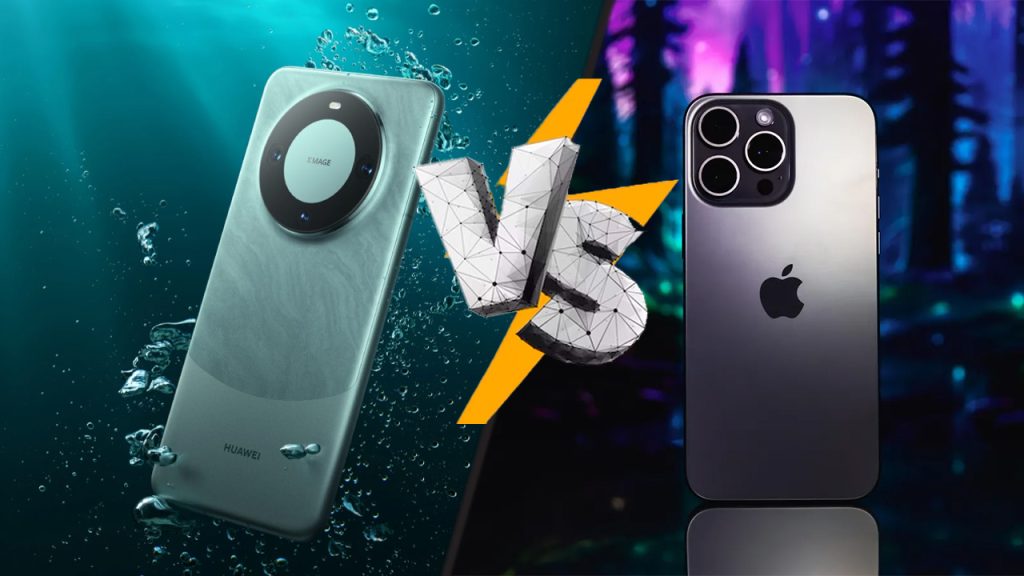
Huawei Mate 60 series might even support voice calling through Satellite

Huawei Mate 50 series was released last year with support for satellite communication. However, the phones could only send messages through satellite and not make any calls. Huawei is now developing the Mate 60 series, which is also expected to have satellite connectivity. But the upcoming phones might even support voice calling thanks to new power amplifier chips.

The Huawei Mate 60 series is expected to have power amplifier (PA) chips made by Chinese chipmakers. These PA chips are specifically designed for the Tiantong-1 satellite mobile communication system. The satellite system can be used for voice communication, image transmission, precise positioning, and data reporting.

HUAWEI-Mate-50

PA chips play a critical role in devices that use these satellite features. They are currently integrated into Huawei’s Mate X3 and P60 series, both of which support two-way satellite communication via SMS. These chips amplify the high-frequency signal generated by the communication integrated circuit (RF-IC) to the required output level and supply it to an antenna. This amplification process is essential for enabling effective satellite communication, including voice calls.

The PA chips rumored to be integrated into the Huawei Mate 60 series are allegedly not manufactured by Huawei; instead, the company has entrusted this responsibility to an undisclosed Chinese chipmaker. While it’s not confirmed at this point, the inclusion of these chips suggests that Huawei Mate 60 smartphones might support voice calling via satellite.

If this turns out to be accurate, it would mark the first instance of voice calling through satellite connectivity on a smartphone. To provide some context, Apple’s iPhone 14 series only supports emergency SOS calls through satellite.

Satellite connectivity on phones is an emerging technology and brands are rushing to implement this on their phones. If you’d like to learn more about it, we’ve just the explainer for you.


RELATED
:

(Via)

Meizu patents Glasses that measure Heart Rate and SpO2

Several innovations are taking place in the technology and gadgets market. Major manufacturers always compete with each other and register trademarks and patents. Similarly, Meizu has applied for a Glasses patent that can measure Heart Rate and Blood Oxygen Level (SpO2).

Must See: New patent suggests Google might equip Pixel phones with an under-display camera

The patent documents reveal that the wearable device includes components such as smart glasses boy, nose pads, and health measurement sensors. Interestingly, the sensors to measure heart rate and SpO2 are placed on the nose buds aka pads where the specs rest on the nose. The method improves the detection accuracy.

Meizu has not directly filed the patent, it is published with a new company which is founded in 2021. However, the chairman remains the same for both companies. The new company goes by the name Hubei Xingji Meizu Technology Co., Ltd., and it manufactures mobile phones, ICs, electronic products, and satellite mobile phones.

Apart from this innovative design, Meizu is also working on a foldable smartphone. A recent patent filing revealed that the design follows a folding design accompanied by a pop-up mechanism. It appears to solve the major difficulty of folding and unfolding the smartphone. The pop-up utility makes the overall process convenient for the users.

Related: Meizu Lifeme W51 Bone Conduction Sports Headphones Launched in China

(via)

Nokia 2660 Flip launched in India in new Pop Pink and Lush Green colors

While Nokia smartphones might be lackluster, you can’t ignore the flashy feature phones the brand releases. Earlier this year, the Finnish company relaunched the Nokia 2660 Flip in two new vibrant colors, named Pop Pink and Lush Green. Now, these fresh shades are also available for purchase in the Indian market.

Nokia-2660-Flip

The design of the phone remains the same and so are the specifications. The new phone gets 4G connectivity with a dual-display setup of a 2.8-inch primary screen and a 1.77-inch secondary screen. The phone is equipped with the Unisoc T107 chipset and supports Bluetooth 4.2, wireless FM radio, and an MP3 player. It has a 0.3MP camera and an LED flash.

The Nokia 2660 comes with a 1450mAh battery that’s supposed to give you hours of talk time and even last for weeks on standby. It’s got this emergency button that lets you quickly get in touch with up to five of the contacts you’ve set up beforehand.

The Nokia 2660 Flip has clear call quality with adjustable volume settings, making it easy to hear even in noisy environments. It is also compatible with hearing aids (HAC), so people with hearing loss can use it with ease. The Nokia 2660 Flip has been tested for tens of thousands of flip cycles.

The Nokia 2660 Flip in Pop Pink and Lush Green will be available for purchase in India starting August 24, from Amazon and the Nokia website for Rs. 4,699.

RELATED:

Nothing Phone (1) to get Nothing OS 2.0 update next week

Nothing released its second smartphone, the Phone (2), last month. It came with Nothing OS 2.0, the second version of Nothing’s Android customization skin. Earlier this month, the company’s founder, Carl Pei, confirmed that the Nothing OS 2.0 update for the Phone (1) would be released by the end of August. 

As promised, Nothing’s official X (formerly Twitter) handle shared that the update will start rolling out to Phone (1) handsets next week. However, the company has yet to share a specific date for the release of Nothing OS 2.0 for the Phone (1), so we can expect the update to be rolled out gradually over the next week. 

Nothing OS 2.0 update for Phone 1

While Nothing’s announcement on X did not reveal any details about the new software, we know that Nothing OS 2.0 is based on Android 13. Some of the notable features of Nothing OS 2.0 include monochrome app icons, new widgets, lock screen customizations, the ability to lock individual apps and clone app support. 

More importantly, Nothing is sticking to its promise of offering a clean user interface. There is no bloatware installed, and you still get the classic dot-matrix font throughout the UI.

The update is in line with Nothing’s promise to provide the Phone (1) with three years of major Android updates and four years of security updates. This means that the Phone (1) is now due to receive Android 14 and Android 15 updates, and then security patches for an additional year. 

Android 14 is expected to be released soon, and Nothing is also running the Android 14 beta program, so you can try out Android 14 on your Nothing Phone by downloading the latest beta. However, it’s important to remember that beta versions are pre-release software, so they may not be stable and could contain bugs.

Related:

Nothing OS 2.0.2a update fixing camera issues caused by previous Phone (2) update

Earlier this month, Nothing introduced the Nothing OS 2.0.2 update that came with a lot of changes to the camera system among other areas. Although it was meant to be for the better, however, it ended up making the quality of the pictures taken from the Nothing Phone (2) worse. Now, the brand has released a correctional update labeled Nothing OS 2.0.2a that fixes the issues caused by the previous update.

Nothing Phone (2)

This update enhances facial clarity when capturing indoor scenes, optimizes highlight levels in low-light conditions, and introduces a user interface to display active HDR status. Additionally, it addresses the reduction of dull tones and resolves the halo effect problem experienced in portrait mode while shooting in HDR. If you have not updated to the Nothing OS 2.0.2 version, this new update includes the changes made in the previous one as well. You can check out the complete changelog below.

Nothing OS 2.0.2a changelog

Camera improvements (priority)

  • Improved clarity of faces in indoor environments 
  • Optimised highlight levels in low light environments
  • Added an UI element to show when HDR is active
  • Optimised highlight exposure when shooting in HDR
  • Reduced dull tones when shooting in HDR
  • Resolved halo effect issue in Portrait Mode when shooting in HDR

New features

  • Feature that can shut down apps when the device reaches its temperature limit
  • Refined the out-of-battery visual when device is switched off 
  • Added different icons for each of the Nothing audio products to volume control
  • Updated to Google’s July security patch

Front camera

  • Enhanced photo clarity
  • Improved quality in low-light settings
  • Faster HDR processing speed

Rear camera

  • Enhanced photo clarity in 50 MP Mode
  • Optimised stability and contrast when recording videos on the rear camera
  • Improved photo quality in low-light settings
  • Improved the contrast and Bokeh effect when shooting in Portrait Mode
  • Optimised the clarity of faces when shooting in Portrait Mode 
  • Faster HDR processing speed

Improvements

  • Reworked haptic feedback strength when typing
  • Improved responsiveness of the touch panel under certain conditions
  • Improved reliability of network for multiple global carriers
  • Enhanced performance of some games when played in HDR
  • Improved system stability

Solutions

  • Amended issues with Dirac Audio
  • Resolved an issue affecting Google Wallet functioning in cloned apps
  • Fixed an issue causing ‘double tap to wake’ to be unresponsive at times
  • Resolved an issue causing the Bluetooth Quick Settings tile to be unresponsive at times
  • Other general bug fixes

If you own a Nothing Phone (2), you can check for this update by navigating to Settings > System > System Update on your device.

RELATED:

(Source)