Advertisement

Samsung ViewFinity S9 5K professional monitor up for pre-order in the US

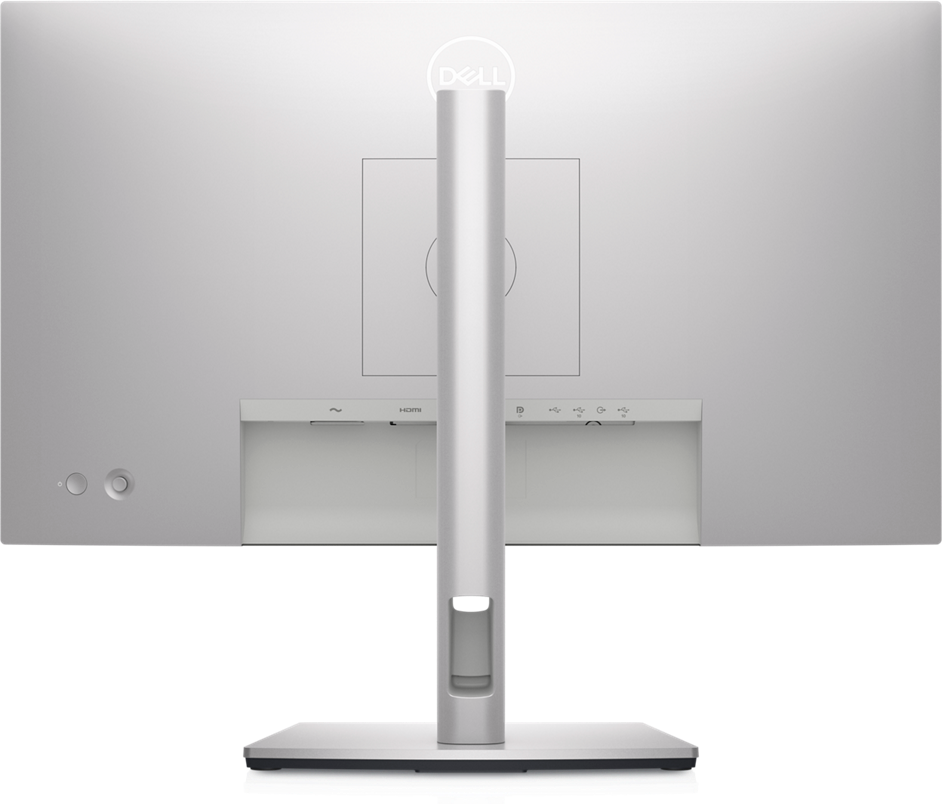
Samsung unveiled the ViewFinity S9 5K monitor back at CES 2023, and its US pricing was disclosed in July. Now, the monitor is finally available to pre-order in the US. Check out the details below.

Samsung ViewFinity S9

Samsung ViewFinity S9 pre-order details

An earlier report mentioned that the ViewFinity S9 monitors will be launching in the US around the end of August. Now, the official Amazon listing of the product is up and is accepting pre-orders. You can expect Samsung to start selling the monitors from August 28.

Samsung ViewFinity S9 specs

The Samsung ViewFinity S9 is a 27-inch monitor designed for professionals like photographers and graphic designers. It has a 5K resolution, specifically 5,120 x 2,880, and a wide color gamut of 99 percent DCI P3. This ensures detailed visuals and precise colors, with an average Delta E color accuracy of ≦21.

Samsung

The monitor includes a built-in Color Calibration Engine, ensuring accurate screen colors and brightness. Users can fine-tune settings like white balance, Gamma, and RGB color balance using the Samsung Smart Calibration application on their smartphones. The matte display minimizes reflections and glare for a comfortable work environment.

Samsung

For connectivity, the ViewFinity S9 has USB Type C and Thunderbolt 4 ports, making it easy to connect cameras and other devices. This allows for smooth file transfers and high-resolution video sharing between storage devices and PCs. Additionally, it comes with a 4K SlimFit camera that supports native video conferencing through apps like Google Meet, adding to its versatility.

RELATED:

*Please Note: When you buy something using the links in our articles, we may earn a small commission at no cost to you.

Project Moohan: Samsung & Google’s upcoming XR headset

While Google has canned its development plans for its own AR headset (Augmented Reality), it appears that it hasn’t completely turned away from such headsets in general. The company is now working with Samsung to build an XR headset (Extended Reality).

Samsung and Google’s XR headset: Project Moohan

According to a new report, the Search Engine giant is partnering up with the South Korean company for the development of a new XR headset. The new Samsung-branded headset is being internally referred to as Project Moohan, and the latest report has revealed some additional details. Apparently, Google is building the Android XR software for the upcoming headset.

Samsung and Google Project Moohan

It seems like the work is being carried out in strict secrecy since Samsung was concerned that other AR teams within Google would build a product that could compete with Project Moohan. For those unaware, Google is currently working on a “Micro XR” software platform for 3rd party manufacturers. In other words, a leak could be potentially harmful to Samsung’s new XR headset.

Another report hinted at Samsung postponing the launch of its own headset due to the launch of Apple’s Vision Pro. Basically, they were afraid that the former wouldn’t match up to the iPhone maker’s offering. Based on what we know so far, Project Moohan is expected to launch around the summer of next year.

Although, a source from within Google stated that the year-long period doesn’t feel adequate for developing a product that will capture the market’s attention in a manner similar to the Vision Pro. So it is possible that Samsung and Google could release a half-baked product in the market due to rushed development. But this is still just speculation, so take this report with a pinch of salt for now.

RELATED:

Apple AirPods Max still facing condensation issues, class-action lawsuit filed in California

Apple’s AirPods Max was released in December 2020. These wireless headphones came with a noise cancellation feature and a sturdy metal build. The company will most likely launch its successor in the future. Earlier, we reported that according to posts by various AirPods Max users, the device seems to have been suffering from condensation, which may be damaging their device.

AirPods Max

Upon removing the headphones’ earcups, users notice water building inside them, raising the question of whether it will damage the headsets. The company has not yet publicly acknowledged the issue.

As per the report by 404media, a class-action lawsuit regarding this issue has been filed in California, and affected consumers have been talking to the brand about a settlement. Several people are facing this problem and have reported that their headsets are losing their noise cancellation feature, and that they hear a buzzing noise.

The plaintiff has been engaged in negotiations with Apple for several months in an attempt to reach a settlement. Apple’s legal representatives are not contesting the presence of condensation within the AirPods. However, they note, “Unlike other over-ear headphones, these headphones are magnetic and removable, making any moisture retained from body heat around the ear more noticeable to users when they remove the ear cups.”

Consumers are still concerned about buying AirPods Max (which retail for over $500 worldwide!) and whether they will face a similar issue with condensation. We will have to wait for Apple to make an official statement regarding the issue, clarifying what caused these people’s headphones to malfunction.

RELATED:

*Please Note: When you buy something using the links in our articles, we may earn a small commission at no cost to you.

Xiaomi Developing Own Operating System Compatible with Android, Aims to Compete with Huawei’s HarmonyOS and Eventually Google

Xiaomi continues to expand its product lineup with new devices, but the company’s future plans aren’t solely focused on hardware. In fact, they are planning their financial future around software. We recently told you that the Xiaomi expects to make just 1% profit from its electric vehicle sales and aims to make the real money from software services that come with the vehicle.

However, it appears that the plans of this Chinese tech giant go even further. According to the latest reports, Xiaomi is developing its own operating system that is compatible with AOSP (Android Open Source Project). This suggests that the new operating system could be used on a variety of devices, including smartphones, tablets, and wearables.

Xiaomi Developing Own Operating System Compatible with Android

China is one of the most important smartphone markets in the world. The country’s large population, increasstrengthening economy, and interest in technology are some of the key reasons for this. However, China stands apart from the rest of the world in one significant aspect. Due to government regulations, the operating systems, app stores, and the apps within those stores differ from those in other countries. As a result, it’s common for companies to offer different user UI in their global versions. Now, Xiaomi takes this a step further.

Xiaomi miOS operating system

According to the Digital Chat Station, Xiaomi is working on creating its own operating system that will be compatible with a range of devices, such as smartphones, tablets, and wearable technology. Importantly, this new operating system will be fully compatible with the Android Open Source Project. This suggests that the operating system could be expanded beyond smartphones and may even be adapted for vehicles and other products.

However Xiaomi isn’t the only Chinese phone company making its own operating system. Huawei already released HarmonyOS a few years ago, and it’s doing really well in China. People are saying that Xiaomi will first launch its own system in China and that Huawei will be its first big competitor. Making their own system is a big deal for Xiaomi because it means they won’t have to rely on Google as much. But there’s a big problem they have to deal with.

MIUI 15

Google currently provides the Android operating system for Xiaomi’s smartphones. Although Android is an open-source operating system, it’s virtually useless without Google’s services, and the company does not open up these services to competing operating systems. This isn’t a significant issue in China, but globally, people generally do not respond well to Android phones without Google services.

Speaking from personal experience, I briefly used a Huawei Mate 30 Pro and stopped using this excellent phone due to the lack of Google services. Unfortunately, if such an issue were to arise between Xiaomi and Google, it could seriously impact Xiaomi’s market share. However, I’m sure the executives at this tech giant have considered this and planned accordingly.

There are also rumors that Xiaomi’s custom operating system could cause upcoming MIUI 15 to be renamed to “miOS”. However, there is no exact information. It is still unclear when Xiaomi’s self-made operating system will be released. However, the company has said that it is committed to developing the new OS and that it will be compatible with a wide range of devices.

RELATED:

(source)

Samsung Galaxy A25 camera specs leak

Samsung is almost done with its 2023 smartphone lineup. There won’t be many new handset launches from the company in the next few months.

The firm is working on multiple new devices for the next year. One of them is Galaxy A25.

Samsung Galaxy A25 5G renders by GizNext / OnLeaks

The design of this product leaked in late June via 3D CAD renders. Nearly two months later, the camera specs of this phone have emerged.

The new details regarding the upcoming Galaxy A25 come from GalaxyClub. The publication has revealed the rear and front cameras of the device.

As per the source, the Galaxy A25 will sport a 50MP main camera on the back. Whereas, on the front, it will be equipped with a 13MP shooter.

This means the handset will have the same primary and selfie cameras as the Galaxy A24. Unfortunately, there’s no info on the secondary sensors.

Currently, there’s only a single version of Galaxy A25 in development with model number SM-A256E. Therefore, the source suggests that this device could be a 5G version of the Galaxy A24 despite carrying a different name.

Perhaps, more versions are in the pipeline but we have no details on them so far. Anyways, like any other Samsung smartphone, this one should also pop on multiple certification agencies and retailers revealing almost everything about it before its official announcement.

RELATED:

Meizu Lifeme W51 Bone Conduction Sports headphones launched in China

Earlier today (23rd August 2023), Meizu unveiled a unique new audio product. But these aren’t your typical pair of truly wireless earbuds or headphones, rather, these use bone conduction for audio output. The device is dubbed the Meizu Lifeme W51 Bone Conduction headphones, which have just been launched in China.

Meizu Lifeme W51 Bone Conduction Sports Headphones Specs

The Meizu Lifeme W51 is a wireless Bone Conduction Sports headphone. It is built using soft and skin-friendly silicon along with titanium alloy metal. The company’s latest headphones feature bone conduction and air conduction fusion technology. This enables it to offer two ways of use, which include open or immersive. Meizu’s W51 also features built-in 16mm bone conduction drivers.

Meizu W51 Bone Conduction Headphones Launch

Furthermore, the new wireless headphones can last for up to 11 hours on a single full charge. Powering up the device for just 10 minutes will offer up to 2 hours of audio playback. Other notable features include Bluetooth 5.3, dual device connection, 50ms low latency mode, IPX5 waterproof rating, call noise reduction, and more.

The wireless headphones are currently listed for a price tag of 399 Yuan (roughly 56 US Dollars). Meizu’s Lifeme W51 Bone Conduction Sports headphones are likely geared toward fitness enthusiasts like runners. The open audio output would help them be more aware of their surroundings. These headphones are available for purchase on JD.com, a popular Chinese e-commerce platform.

RELATED:

Microsoft adds Python in Excel

Python programming language support is now extending to Microsoft Excel. After closed beta testing, the Public Preview is now going live for the developers. It is a boon for developers, statistical engineers, data analysts, and other roles using Python. The Beta for Python in Excel was already there for some time, but with the Public Preview, it is made available to a wider user base.

Must See: Google Bard expands worldwide with advanced image capabilities and coding features

Python in Excel: How to use it?

The Python code will be executable in Excel using the =PY function without any requirement for additional software. It is accessible via Microsoft 365 which is based on Microsoft Cloud with enterprise-level security. In other words, the code is executed in a secure environment on Azure Container Instances that isolates the code fully from other services. Such a Modus Operandi surely improves security and the structure acts as a firewall to the systems.

“Now you can do advanced data analysis in the familiar Excel environment by accessing Python directly from the Excel ribbon,” Stefan Kinnestrand, the GM for Modern Work at Microsoft, explains. “No set up or installation is required. Using Excel’s built-in connectors and Power Query, you can easily bring external data into Python in Excel workflows.”

Interested users can enjoy the Python integration on Microsoft 365 Insiders Beta Channel. The feature will be available only on the desktop version of Excel. Some useful functions such as xl() and =Py() can be used to authorize operations and ensure data security.

The company is using Anaconda Python on Azure systems to compile the programs using different libraries such as seaborn, pandas, Matplotlib, NumPy, etc. However, some capabilities will be behind the paywall and the details about those will be made shared once the product will be ready for public stable rollout.

(via)

Realme Buds Air 5 & Air 5 Pro launched in India: 50dB ANC, LDAC & more

At today’s launch event, Realme has launched its new earbuds alongside the Realme 11 5G & 11x 5G smartphones. These new earbuds called the Realme Buds Air 5 and Air 5 Pro come with flagship features like LDAC codec, high levels of noise cancellation, and spatial audio.

Realme Buds Air 5 Pro specs

The Realme Buds Air 5 Pro is equipped with a potent 11mm bass driver and a 6mm tweeter, delivering exceptional audio quality. These earbuds incorporate 50dB active noise cancellation for a distraction-free listening experience and environmental noise cancellation for clear calls, thanks to the trio of microphones on each earpiece. Additionally, they support Spatial audio and the LDAC codec for an enhanced audio experience.

When it comes to battery life, the Realme Buds Air 5 Pro impresses with a combined total of 40 hours of usage when considering both the case and earbuds. Individually, each earbud can last up to 10 hours without ANC on and up to 7 hours with ANC turned on. Plus, these earbuds boast a quick 10-minute charge for a generous 7 hours of playback and feature a super low latency of 40ms. They are thoughtfully designed to be IPX5 water-resistant, ensuring they can withstand workouts and unexpected rain. The Dual-device Connection 2.0 adds to their versatility, making them a practical choice for various scenarios.

Realme Buds Air 5 specs

The Realme Buds Air 5 earbuds come with 50dB active noise cancellation. They have a 12.4mm titanized driver for powerful sound. They use Bluetooth 5.3 for strong wireless connections and support AAC and SBC audio codecs for good audio quality. You can easily control them with touch gestures.

Realme Buds Air 5

For clear calls, these earbuds have six microphones and AI ENC noise reduction. Gamers will like the 45ms super low latency gaming mode. You can customize settings using the realme Link app, such as turning on noise cancellation and getting updates. These earbuds can connect to two devices at once.

They are also water-resistant with an IPX5 rating, making them suitable for exercise and outdoor use. In terms of battery life, you get up to 7 hours of playback without active noise cancellation (in AAC format) or 4.5 hours with it on. With the charging case, you can enjoy up to 38 hours of playback. Plus, a quick 10-minute charge gives you up to 7 hours of playback for both the earbuds and case.

Pricing & availability

The realme Buds Air 5 can be found in two attractive color options: Deep Sea Blue and Arctic White, and they are priced at Rs. 3,699. These earbuds will be up for purchase starting August 26th on realme.com, Flipkart, and in physical stores. During the initial sale, they will be offered at a discounted rate of Rs. 3,499.

On the other hand, the realme Buds Air 5 Pro is available in Astral Black and Sunrise Beige colors, with a price tag of Rs. 4,999. Starting from August 29th, you can buy them on realme.com, Amazon.in, Flipkart, and in brick-and-mortar outlets. During the first sale, they will be available at a reduced price of Rs. 4,499.

RELATED:

Realme 11 5G, Realme 11x 5G launched in India with 5000mAh battery, 6.72″ displays, & Dimensity 6100+ SoC

The Realme 11 5G series has finally been announced in India. The lineup consists of the Realme 11 5G and the Realme 11x 5G model. These are the company’s latest mid-range smartphones, so let’s have a look at their specs, pricing, and more.

Realme 11 5G

The Realme 11 5G was recently unveiled in Taiwan and is finally making its way to the Indian market. It will sport a tall 6.72-inch AMOLED display that offers Full HD+ resolution and 120Hz refresh rate and a peak brightness level of 550 nits. Under the hood, the device will be equipped with the MediaTek Dimensity 6100+ SoC that is paired with up to 8GB of LPDDR4X RAM and 256GB of UFS 2.2 internal storage. The memory can be further expanded via a microSD card slot.

The rear features a 108-megapixel primary camera that is paired with a 2-megapixel depth sensor. On the other hand, the front houses a 16-megapixel selfie shooter. A large 5,00mAh battery pack powers this smartphone, which supports 67W fast charging support. Other notable features include Android 13 OS-based Realme UI 4 out of the box, 180Hz touch sampling rate, and a side-mounted fingerprint scanner.

Realme 11x 5G

The Realme 11x 5G is basically a slightly cut-down version of the base 11 5G model. It also features a 6.72-inch display, although, it only sports an IPS LCD panel and not an AMOLED screen. The screen supports a 120Hz refresh rate, 680 nits of peak brightness, and Full HD+ resolution. Similar to the Realme 11 5G model, the Realme 11x 5G is equipped with the Dimensity 6100+ SoC that is paired with up to 8GB of LPDDR4X RAM and 128GB of UFS 2.2 internal storage.

Realme 11x 5G

On the rear, the handset only features a 64-megapixel primary camera. Meanwhile, the front houses an 8-megapixel selfie shooter. The Realme 11x 5G is powered by a large 5,000mAh battery pack as well. However, it only supports up to 33W fast charging. This smartphone runs on Android 13 OS-based Realme UI 4 out of the box, features a side-mounted fingerprint scanner, and also offers a microSD card slot for memory expansion.

Pricing & Availability

The Realme 11 5G and the Realme 11x 5G have finally been launched in India. Pre-orders for the two smartphones have kicked off on Flipkart, a popular e-commerce platform in India. The Realme 11 5G comes in Glory Gold and Glory Black, while the 11x 5G model will be available in Midnight Black and Purple Dawn variants. Looking at their pricing:

Realme 11 5G

  • 8GB + 128GB – 18,999 INR
  • 8GB + 256GB – 19,999 INR

Realme 11x 5G

  • 6GB + 128GB – 14,999 INR
  • 8GB + 128GB – 15,999 INR

The base 11 5G will go on sale starting on August 29 from the company’s official website, Flipkart, and other retail channels, while the first sale of the 11x starts on August 30. Notably, the Chinese smartphone maker is also offering a discount of 1,500 INR on the Realme 11 5G and a 1,000 INR discount on the 11x 5G. The early bird sale for the Realme 11 will start at 1:30 PM today, while the 11x early bird sale will kick off at 6 PM.

RELATED:

Bummer! iPhone 15 Pro Max May Be Delayed by 3-4 Weeks

Apple is about to unveil the iPhone 15 lineup within just a month. The new phones are expected to start shipping in the next week of the announcement. However, there might be a potential delay for the highest-end model, the iPhone 15 Pro Max.

The reason for the delay is that Sony, the supplier of camera components, may not be able to produce the image sensor required for the Pro Max in time. This is according to a source who spoke to 9to5Mac. This setback could result in the top-end Pro Max model not being available for shipment alongside the other newly introduced iPhone models.

The iPhone 15 Pro Max is expected to get the biggest camera upgrade, with a periscope lens system that will offer greater optical zoom than the current 3x limit. The smaller iPhone 15 Pro will not get this upgrade, but and the iPhone 15 and iPhone 15 Plus will only have ultra-wide and wide cameras. 

Apple is expected to announce the new iPhones on September 12 and pre-orders will likely start on September 15, and deliveries of the iPhone 15 and iPhone 15 Plus will start on September 22. However, the iPhone 15 Pro Max may be delayed by 3 to 4 weeks, and deliveries could start between October 6 and October 13. 

This is not the first time Apple has delayed iPhone shipments, and it is likely not the last. For example, the iPhone XR shipped after the iPhone XS, the iPhone 14 Plus shipped after the iPhone 14, and the iPhone 12 mini and iPhone 12 Pro Max both shipped weeks after the iPhone 12 and iPhone 12 Pro. 

Besides a major camera upgrade for the top-tier model, iPhone 15 lineup is expected to have a number of significant changes, including a switch from Lightning to USB-C, and a new Dynamic Island design for the standard models. The Pro models are also expected to have a titanium frame and a programmable button instead of the standard mute switch.

Related:

Microsoft May Bring AI Capabilities to Paint, Photos, and Other Windows 11 Apps

Artificial intelligence is becoming more popular and is being used in more areas. One of the most active companies in this field is Microsoft. The tech giant has been adding AI to its products and services for a long time, such as the recent addition of AI-generated summaries to store apps. Now, the company is planning to add AI features to the Paint and Photos on Windows 11. Here are the details…

Microsoft’s Paint and Screenshot Tool to Receive AI Upgrades: A Glimpse into the Future

Microsoft is reportedly planning to bring artificial intelligence capabilities to a number of its Windows apps, including Paint, Photos, and the Snipping Tool. This will introduce exciting new capabilities to each of these apps. For instance, they could automatically recognize objects and people in photos, making it easier to tag pictures or even create collages and animations.

Windows 11 Paint

The ability to remove background noise from audio recordings could be used to improve the quality of voice recordings or podcasts. And the ability to translate text from one language to another could be used to communicate with people who speak different languages. However, these features are not yet being rolled out to Windows 11, so it’s unlikely that the Microsoft Paint and Photos will receive a significant update anytime soon.

It’s no surprise that Microsoft is working hard to incorporate artificial intelligence into its products. The company has shown a strong interest in AI, especially through its investments in its search engine, Bing, and by adopting GPT language models. If Microsoft does add AI features to Windows 11 Paint and other applications, this could make these programs more versatile and competitive with professional-grade tools like Photoshop and Canva.

For now, we can only speculate about Microsoft’s plans to integrate more AI into its products. We expect further announcements to be made at Microsoft’s special event in September, where they will also introduce new Surface models.

RELATED:

(via)

Realme GT 5 will give you 2 hours of talktime on a 30-second charge: Exec

Earlier, we reported that Realme is gearing up to launch its next-generation GT smartphone. Realme GT 5 will be launched in China on August 28th. As the launch date draws near, numerous teasers have surfaced online, including the latest one, which hints at support for 240W charging which can top up the battery very quickly.

Realme GT 5 240W charging

According to the Weibo post by chuchu_jessie (Marketing Director of Realme China), the latest flagship phone will support 240W fast charging. “The cost of 240W charging is very high, but the company still wishes to introduce this support in their smartphones as the users need it”, said the exec.

The post also confirms that the device will come with SuperVOOC S charging technology for longer battery life. The phone will allow users to have almost 2 hours of talk time on a 30-second charge. This technology will allow you to charge your device quickly with minimal effect on the battery’s health. However, the company has yet to reveal the battery capacity of the GT 5. Still, according to our previous report, the upcoming 240W fast charging technology can fill a 4500mAh battery to capacity in 9 minutes. For those wondering what this device has to offer, here are a few key specs of the Realme GT 5.

Realme GT 5 Key Specs

The device is rumored to come in two battery variants: 4600mAh with 240W charging and 5200mAh with 150W charging. Under the hood, it is said to be powered by Snapdragon 8 Gen 2 chip accompanied by 24GB of LPDDR5x RAM. The phone offers multiple storage options starting at 128GB and going up to 1TB. Lastly, the GT 5 is speculated to have a 6.74-inch OLED display with a 1.5K resolution and 144Hz refresh rate.

In related news, it was hinted that the GT 5 would be the world’s first “Miracle Glass” mobile phone. The full report can be found by clicking here. Stay tuned for more news on the Realme GT 5 on our website.

RELATED:

ASUS ROG Swift OLED PG34WCDM launch: World’s first 34″ ultrawide OLED gaming monitor

The ASUS ROG Swift OLED lineup now includes a new 34-inch gaming monitor model as well. This new size variant within the ROG Swift OLED arrives with an ultrawide display panel and cutting-edge technology. So let’s have a look.

ASUS ROG Swift OLED Gaming Monitor 34-inch

ASUS ROG Swift OLED 34-inch Gaming Monitor Specs

The new 34-inch ROG Swift OLED carries the model number PG34WCDM. Typically, you won’t find an ultrawide OLED display gaming monitor with quick response and a high refresh rate all in one package. The panel has an 800R curvature and features 3440 x 1440 resolution along with a 240Hz refresh rate. With the OLED screen, it promises to deliver rich colors, deep blacks, and great contrast. This ROG Swift OLED model has a response time of just 0.03ms, which reduces motion blur for better clarity.

To prevent screen tears and latency issues, the display is also compatible with G-Sync technology. Since it uses an OLED panel, the PG34WCDM can deliver an impressive peak brightness of 1300 nits. Alongside this, the gaming monitor also supports HDR as well. There is even a custom heatsink under the hood to keep the display from overheating and prevent the risk of screen burn-in. Connectivity options include HDMI 2.1, DisplayPort 1.4, USB Type-C, USB 3.2 Type-A, and a 90W USB Power Delivery port.

ASUS ROG Swift OLED Gaming Monitor 34-inch

Unfortunately, the Taiwanese tech giant has yet to reveal the pricing details regarding the ROG Swift OLED PG34WCDM. But the company is expected to release this ultrawide gaming monitor sometime in the fourth quarter of this year, likely Christmas. Earlier this year, the brand also announced a 27-inch ROG Swift OLED gaming monitor with 2K resolution.

RELATED:

Redmi K60 Ultra is nearly a flagship at mid-range price: A brief history of Redmi K Ultra lineup

Recently, the Redmi K60 Ultra went official in China as the most premium Redmi-branded smartphone to date. Despite featuring high-end features, the device carries a cheaper price tag than regular flagships.

This makes it a flagship-killer smartphone. Although there are several such handsets from fellow Chinese brands, the K60 Ultra offers certain features that make it unique.

For the unaware, the Redmi K Ultra lineup was never like this. The previous (first) two products in the series were merely an extension of the Redmi K family for the second half of the year.

However, this time around, the brand pulled off a winner. The latest Redmi K60 Ultra ticks almost all the boxes for being a flagship phone.

Let’s go through how this device came to be by taking a look at its predecessors as well as itself.

The series kicks off

The Redmi K30 Ultra was the first phone in the Redmi K Ultra lineup. It was announced at Xiaomi’s 10-year anniversary launch conference in August 2020.


Redmi K30 Ultra
Redmi K30 Ultra (Review)

It was a companion device for Mi 10 Ultra, the first-ever Xiaomi Ultra smartphone. It was not positioned as a premium product since it was actually cheaper than the Redmi K30 Pro.

The K30 Ultra differed from the K30 Pro in two aspects. It was powered by a MediaTek Dimensity 1000+ SoC instead of a Snapdragon 865 chip. Secondly, it had a 120Hz AMOLED display, making it the first Redmi K series handset with a high refresh rate OLED screen.

It is the only Redmi K Ultra phone with a pop-up camera since its siblings had it. Anyways, the best thing about it was its ¥1,999 (~$275) starting price. No other smartphone offered such a compelling feature set at this price.

Successor sets a trend

There was no Redmi K40 Ultra as the brand skipped a year. The successor arrived as Redmi K50 Ultra in August 2022.

Redmi K50 Ultra
Redmi K50 Ultra (Review)

Once again, the Ultra had a different chipset and display, in addition to a non-identical design. The handset featured a more powerful Qualcomm Snapdragon 8 Plus Gen SoC instead of MediaTek Dimensity 8100 and Dimensity 9000 chips like vanilla and pro models, respectively.

Though the chipset was better than its siblings, we could not say the same for the display. It flaunted a 1.5K OLED screen instead of a QHD panel. But it started a revolution of affordable 1.5K display phones from the Oppo group (Oppo, Realme, and OnePlus).

As for pricing, the Redmi K50 Ultra was not affordable like the Redmi K30 Ultra. It was introduced at the same price as the Redmi K50 Pro. This way consumers had an option of either going with Qualcomm chip and lower resolution display or MediaTek SoC and higher resolution screen.

Third time’s the charm

The Redmi K60 Ultra also comes with a different design, chip, and display when compared to its siblings. In addition to these differences, it also arrives with some features that are mostly only found on proper flagships.

The device is powered by a MediaTek Dimensity 9200 Plus chip instead of the Qualcomm Snapdragon chipsets found inside its siblings. It is also Xiaomi’s first 24GB RAM smartphone.

Redmi K60 Ultra
Redmi K60 Ultra (Unboxing & Hands-on)

Further, the display retains the 1.5K resolution from its predecessor compared to the QHD+ panel on K60 and K60 Pro. But this screen not only offers a faster 144Hz refresh rate but also 2,880Hz PWM frequency and 2,600 nits local peak brightness level.

Apart from the flagship-level bright display, the Redmi K60 Ultra is even IP68-rated for dust and water resistance. It is the first Redmi phone with proper ingress protection.

Finally, it is Xiaomi’s first handset to come with five years of guaranteed software support. The product is said to receive four Android updates and five years of security updates.

Regardless of all the aforementioned upgrades over its predecessors and siblings, the Redmi K60 Ultra is actually more affordable than them. It starts at just ¥2,599 (~$355).

Thus, in the third generation, the Redmi K Ultra lineup has upgraded to an almost proper flagship smartphone status despite carrying an affordable price tag.

RELATED:

Noise Combat Z gaming TWS earbuds with 50 Hour battery life & 35ms low latency launched for ₹999

After the launch of the Noise Buds VS106 earbuds last week, the brand has now debuted gaming-focused TWS earbuds called the Noise Buds Combat Z. These affordable earbuds are designed specifically for the gaming demographic as they feature some desirable specs like long battery life, instacharge technology, and a super snappy low latency mode.

Noise Buds Combat Z specs

The Noise Buds Combat Z features 10mm drivers, delivering rich and immersive audio quality. It has environmental noise cancellation, meaning that your in-game callouts will go through clearly and you won’t have to worry about ambient noise.

Gamers will appreciate the ultra-low latency gameplay feature, which offers an impressive 35ms delay for a more responsive gaming experience. With an impressive 50 hours of total playtime, you will be able to have multiple long gaming sessions with these buds, without the need to recharge.

Noise Buds Combat Z specs

That being said, recharging is also quite hassle-free thanks to Instacharge technology which grants you 120 minutes of playtime with a quick 10-minute charge. These earbuds utilize Bluetooth v5.3 for seamless connectivity, ensuring a stable connection.

Price & availability

The Noise Buds Combat Z are currently available to buy on Flipkart for Rs 999. They can also be purchased from the Noise website. You can choose from three stylish colors: Shadow Grey, Stealth Black, and Camo Green.

RELATED:

Realme’s new V-series smartphones surface on TENAA

Two new Realme smartphones with model numbers RMX3781 and RMX3783 have appeared on China’s TENAA official website. Reports suggest that the device will break cover as a V-series phone in the Chinese market, but the listing is yet to be populated with its specifications. 

Realme RMX3781 RMX3783 Tenna Listing

The new Realme phones look very similar to the Realme 11 5G that was launched in Taiwan earlier this month. The TENAA renders show that the phone has a centered punch-hole display and a flat screen. On the back, the phone has a circular camera module with dual cameras and an LED flash. The Realme branding is also present on the back panel. Besides this, we know very little about these new Realme smartphones.

The Realme 11, which the new phones share a design with, has a Dimensity 6100+ processor, supports 2TB memory card expansion, a 5000mAh battery, and 67W fast charging. The phone also has a 6.72-inch LCD display with a resolution of 2400 x 1080 pixels. The display supports a 120tHz refresh rate and 240Hz screen sampling rate. Likewise, you get a 100MP + 2MP rear camera setup, a side-mounted fingerprint sensor, a 3.5mm headphone jack, and NFC support.

The Realme V series is an entry-level smartphone lineup, with prices starting around 1,000 yuan. For example, the Realme V30 starts at 1,099 yuan, and the Realme V20 starts at 999 yuan. So, it is likely that the price of the new V-series phone will also be in this range.

Related:

(Via)

Dimensity 9300 Processor will Run Generative AI on Smartphones, Says Mediatek

In a significant technological advancement, MediaTek and Qualcomm have recently revealed their collaborative efforts with Meta. Both semiconductor giants announced plans to implement Meta’s Llama 2 large language model (LLM) on mobile devices equipped with their upcoming flagship processors.

More manufacturers are expected to follow suit and design chipsets for AI-based applications

MediaTek’s next-generation flagship chipset, rumored to be the Dimensity 9300, is scheduled to launch later this year. It will feature a software stack optimized to run Llama 2 and upgraded hardware to enhance the performance of generative artificial intelligence applications. Qualcomm previously announced similar plans last month, indicating a trend towards on-device generative AI in the industry.

MediaTek-Dimensity

One key benefit of these innovations is increased privacy. Running generative AI tasks locally means users’ data doesn’t need to be sent to the cloud for processing. This can lead to enhanced security measures and greater control over personal information.

Details of the Dimensity 9300 chipset suggest a radical design, with specifications including Arm’s Cortex-X4 and A720 CPU cores and the Immortalis-G720 GPU. This technical composition suggests a strong commitment to delivering a robust and efficient AI experience directly on mobile devices.

These developments represent a significant step towards more powerful, privacy-conscious smartphones. As both MediaTek and Qualcomm move towards on-device AI capabilities, consumers can look forward to more responsive and secure mobile technology by the end of 2023.

In the context of growing concerns about privacy and data security, these announcements are a welcome move. The collaboration with Meta in the field of on-device generative AI is likely to set a new standard in the mobile industry and may drive further innovation in the coming years.

RELATED:

(Via)

Ford Invests $900 Million in Québec, taking a Huge Step into Cathode Manufacturing

Ford Motor Co. has taken a significant step towards establishing a robust EV battery supply chain in North America by announcing plans for a new $900 million cathode manufacturing plant in Bécancour, Québec. The investment, in collaboration with South Korean partners EcoProBM and SK On, marks Ford’s first venture into Québec and emphasizes its focus on localizing key battery material processing.

The new factory is expected to create almost 350 new jobs

The facility, expected to commence production by the first half of 2026, will create up to 45,000 tonnes of cathode active materials (CAM) per year. These materials, essential for modern lithium-ion batteries used in electric vehicles, will be manufactured using high-quality Nickel Cobalt Manganese (NCM) under the supervision of the joint venture EcoPro CAM Canada LP.

Ford Electric

The announcement underscores Ford’s commitment to providing materials for its future EV lineup, including anticipated pickup models, and targets improved performance and range thanks to EcoPro’s core shell gradient (CSG) technology.

This investment is not just a business expansion for Ford; it carries significant implications for the Québec region. The 3 million square-feet site will create approximately 345 new jobs, ranging from engineering to sales and student co-op positions. Construction has already begun on the site, which includes a six-story building.

Québec’s electric vehicle manufacturing landscape is receiving considerable attention from automakers. This announcement follows General Motors’ investment in a similar facility in Bécancour, placing the town at the forefront of chemical battery materials production.

Ford’s vice-president of EV Industrialization, Lisa Drake, stressed the importance of this plant for the entire North American region, describing it as a “cornerstone” for Ford.

The plant will be operated by EcoProBM, and will also see an investment from the South Korean company to mass-produce and supply the cathode materials, supporting up to 225,000 electric vehicles annually.

RELATED:

(Via)

TikTok Integrates Ads into Search, Modifying the User Experience

In a significant update, TikTok is integrating advertisements into search results, aligning its approach with competitors like Instagram. This change will present users with branded content during their searches, with ads drawn from sponsored videos hosted on the platform.

This is the beginning of a future where search results come with added advertisements

The platform has assured that these ads will be pertinent to users’ search queries, and they will be explicitly marked as sponsored posts. The ad selection will also likely be influenced by users’ previous searches and activities on TikTok, meaning the advertising content may become more targeted and specific to individual preferences.

The user experience will remain uninterrupted, even when clicking on a sponsored post, as TikTok intends to mirror the in-feed experience during searches. While some users may view this as an inconvenience, the move is aimed at powering brand discovery and could represent a new form of engagement with advertisements on social media.

This integration is not optional for advertisers, as it is automatically enabled for existing merchants. They will need to actively opt-out if they wish to avoid appearing alongside search results. This shift signals TikTok’s intention to evolve and adapt its advertising approach in line with industry trends.

While the integration of ads into the search function may not be welcomed by all users, it is an indication of the inevitable progression in the monetization of social media platforms. With competitors like Instagram implementing similar strategies earlier this year, TikTok’s decision represents a consistent evolution within the sector.

In the broader context, this move may change user expectations and interactions with social media advertising. While the era of an ad-free search bar on TikTok has ended, the platform’s new direction could herald a new phase in the relationship between users, brands, and the ways they connect.

RELATED:

(Via)

Fiat Takes a Bold Step with the Announcement of Abarth 600e Electric, Launching in 2025

In a recent leak, Fiat appears to be collaborating with Abarth, the Italian racing and road car maker, to create an exciting new all-electric vehicle model. The development comes after the unveiling of Abarth’s first all-electric model, the 500e, at the end of 2022.

The mileage of the electric car will vary between 249 to 373 miles

The news has created a stir in the automotive industry, as the proposed Abarth 600e, expected to debut in 2025, will be a performance-centric addition to the electric car market. Olivier Francois, CEO of Fiat and Abarth, provided no specific details but hinted that an Abarth 600e is a “logical” progression, according to British publication Autocar.

Electric

The standard Fiat 600, an electric vehicle sharing the same platform as the Jeep Avenger, has a 154-horsepower motor with a 54-kWh battery. Its mileage varies from 249 to 373 miles, depending on driving conditions. Experts speculate that the Abarth version could elevate the power to 200 horsepower or even extend to 300 horsepower with an all-wheel-drive variant.

Interestingly, the potential development of the Abarth 600e could signify more than a mere performance upgrade. The car may feature design enhancements such as bespoke wheels, aggressive bumpers, and bucket seats. This includes the possibility of a speaker emitting artificial engine sounds, akin to the current Abarth 500e.

However, this information should be considered with caution as the exact specifications and features remain unconfirmed. The potential addition of an Abarth 600e to Fiat’s electric lineup certainly paints an exciting picture of the future of electric vehicles, reflecting the industry’s growing trend of merging performance with sustainability.

The anticipation around the Abarth 600e further highlights the electric vehicle industry’s constant evolution and the ongoing efforts to enhance the driving experience without relying on traditional combustion engines.

RELATED:

(Via)