German automaker Volkswagen has penned a partnership with Pon Holdings for the manufacture of electric bikes. The entry of Volkswagen into the e-bike segment is remarkable and interesting. It is yet another automaker that has diversified into e-bike manufacturing. It also underscores the importance of e-mobility offerings in several advanced markets. It is noted that virtually all traditional bicycle brands have added electric bicycles to their bouquet of products.
Volkswagen’s pursuit of e-bike presence is driven by its subsidiary, Volkswagen Financial Services. It is in partnership with Pon Holdings, itself a large mobility company. The two companies plan to collaborate to expand electric bicycle leasing in Europe and the United States. The leasing service will both cover employees and commercial customers in both regions.
The deal has seen Volkswagen Financial Services acquire a 49% stake in Pon’s Bike Mobility Services (BMS). Pon’s bike leasing company is operational in Germany, Austria, Netherlands, Sweden, Belgium and the US. The BMS brand has quietly established itself as one of the biggest bike-sharing companies in the industry.
BMS is reported to provide bikes for over 600,000 employees in 65,000 companies. The majority of the bikes on offer at BMS (90%) are electric bikes, which are appealing to a growing audience. These bikes are serviced by a rich network of up to 8,000 dealers.
The Volkswagen-Pon partnership is expected to tap from the opportunities in the US market. BMS recently opened its first US office and some large corporations have signed onto the bike-sharing model. The new partnership is not the first time both companies have collaborated. Volkswagen and Pon’s engagements span over eight decades. Pon Holdings is the largest importer of the Volkswagen Group in the Netherlands.
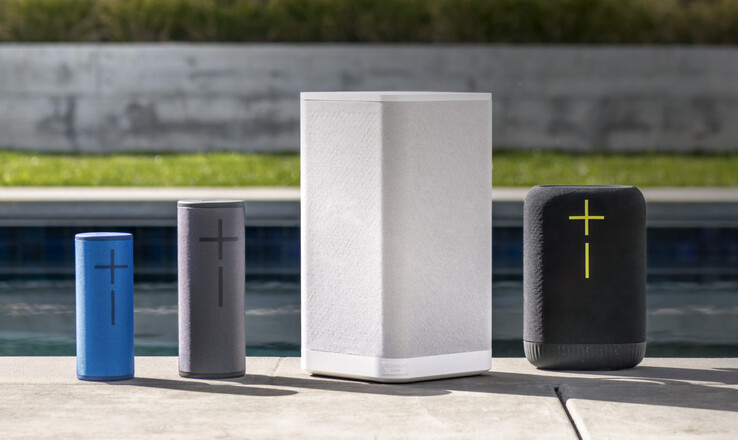
The Ultimate Ears EPICBOOM rugged Bluetooth speaker has been launched. The EPICBOOM delivers 360-degree sound and also features an adaptive equalization setup. The rugged and portable speaker also offers up to 17 hours of immersive sound on a single charge.
The EPICBOOM is designed as a party and outdoor speaker. It can play loud and clear sounds using its auto EQ functionality. Ultimate Ears EPICBOOM is the second-largest member of an expansive family of Bluetooth speakers from the brand. It is noted that the new speaker omits Wi-Fi functionality, but it bears a close semblance with the Sonos Move 2. It has two 45mm mid to high-frequency transducers and one 120mm woofer. These combine to deliver 360-degree surround sound and big bass. The Adaptive EQ feature is present in the Ultimate Ears HYPERBOOM for smart sound modulation. The company says Adaptive EQ reads the room and automatically balances the sound until it is perfect.
The EPICBOOM is rated IP67 and is resistant to dust, dirt, and submersion in water up to 1 meter. Interestingly, however, the EPICBOOM floats in water which is nice for outdoor or pool parties. The speaker also comes with an Outdoor Boost button that increases the volume from 94dB to 95 dB. With up to 17 hours of battery life, the EPICBOOM can be used for all-night parties without running out of power. This is an impressive feature when compared with other speakers in the market. The speaker has a convenient handle on the rear for easier carriage and the device weighs about 2kg.
The Ultimate Ears EPICBOOM Bluetooth speaker is priced at $349 and can be purchased from Amazon. The product has stiff competition already with lots of feature-rich models in the segment.
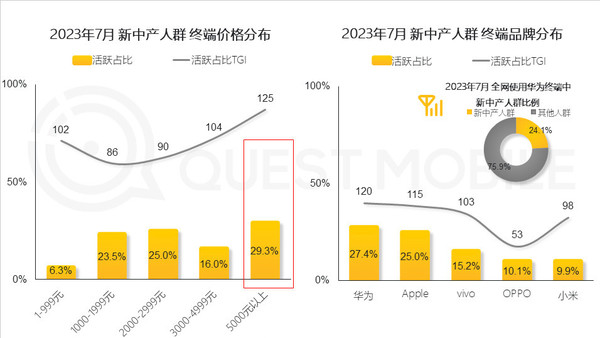
A recent report by QuestMobile sheds light on the smartphone preferences of China’s emerging middle-class demographic, highlighting the choices among high-end devices priced above 5000 yuan ($685).
Market Share Breakdown: New Middle-Class Preferences
Notably, Huawei emerges as the preferred brand in this segment, commanding a significant 30% market share. Apple follows closely, with 25% of the new middle-class population opting for their smartphones, while Vivo captures a respectable 15.2% share, indicating the growing popularity of Vivo’s high-end offerings in recent years.
Huawei’s journey into the high-end smartphone market is marked by its historical evolution. It began with the inaugural Huawei Mate phone, featuring the Kirin K3V2 processor, albeit with less-than-ideal performance and power consumption. Subsequent releases, such as the Huawei Mate 20 series, powered by the Kirin 980 processor, solidified Huawei’s position in the high-end segment.
In 2019, the Huawei Mate 30 series, equipped with the industry’s pioneering integrated 5G SoC Kirin 990, established Huawei as a leader in the smartphone industry. The Kirin 9000 processor, introduced with the Mate 40 series, further cemented Huawei’s “far ahead” status.
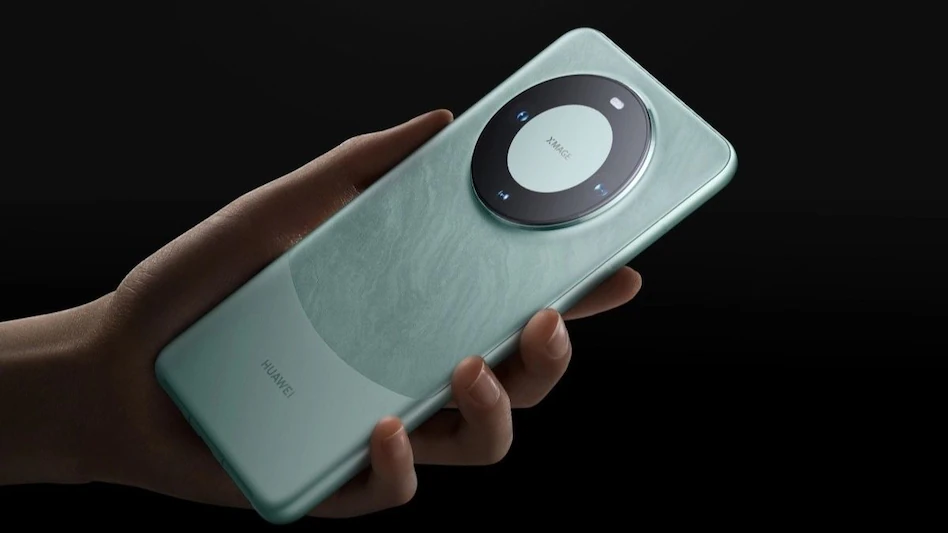
The trend of Huawei’s high-end smartphone dominance had been unshaken until the recent launch of the Huawei Mate 60 Pro, featuring the new domestic Kirin 9000S (know more about this chip from here) processor. This release marked the resurgence of Huawei’s high-end smartphones, reaffirming their leadership in this category.
However, it’s crucial to note that this trend faced a significant disruption due to the US-China chip war and the subsequent US government ban on Huawei. This ban hampered Huawei’s ability to innovate and maintain its position as a top contender in the smartphone market.
The turning point came when Huawei found a solution to this challenge. Huawei Technologies, in collaboration with China’s leading chipmaker, SMIC, successfully developed an advanced 7-nanometer processor to power its latest smartphone lineup. This homegrown chip represented a significant breakthrough for China, reducing its reliance on US companies for crucial semiconductor technology. With this innovative development, Huawei demonstrated its resilience and determination to maintain its high-end status in the fiercely competitive smartphone market.
It is essential to highlight that the Huawei Mate 60 series currently offers three models: the standard version, Pro, and Pro+ models, with prices starting at 5499 yuan ($754).
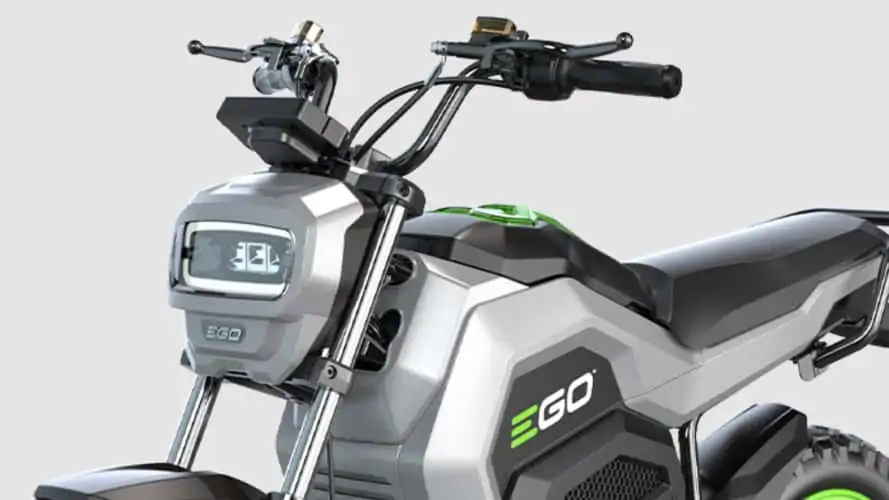
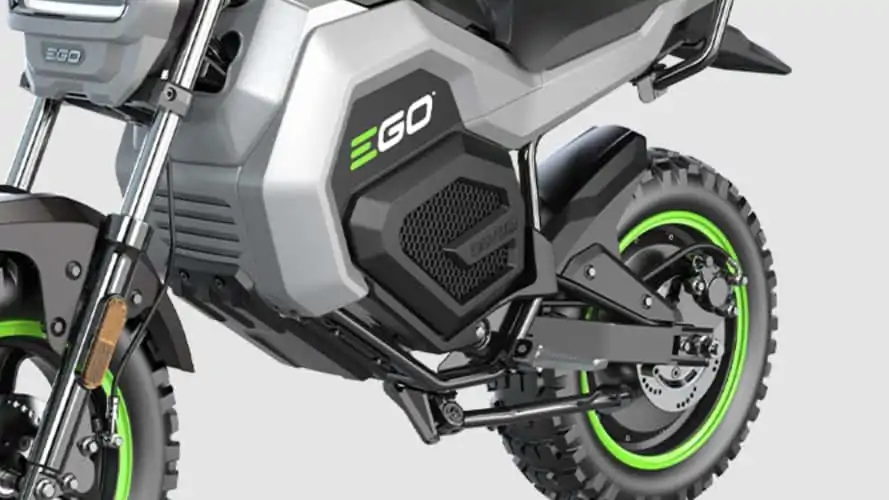
Power accessories manufacturer Ego is making an entry into the electric motorbike market with the launch of the Power+ Mini Bike. The Ego Power+ Mini Bike is designed for youngsters who are learning the ropes of riding electric motorbikes.
Chevron power tools brand Ego boasts of a global presence with lots of electric power tools already in its portfolio. Ego is expanding beyond lawnmowers, leaf blowers, and other electric power tools. The new Power+ Mini Bike targets the younger demography of the electric two-wheeler market. Demand for kids-focused electric two-wheelers has been on the increase recently. The trend reflects the growing interest of the younger demography in electric mobility. The development is fostering both sustainability and enjoyment.
The Ego Power+ Mini Bike has a rear hub motor that delivers a top speed of 28mph for the bike. There are three ride modes on the Power+ Mini namely Eco, Normal, and Sport. This allows the kid’s minder to adjust the bike’s performance to a comfortable level.
The bike has a reverse mode which makes parking very easy. The bike is compatible with the Ego Power+ 56-volt ARC lithium batteries. A pair of batteries deliver up to 20 miles (~32km) on a single charge. It is noted that the batteries are part of the accessories included in the package.
The Ego Power+ Mini Bike has a digital display that provides real-time information on various ride parameters. These include speed, acceleration, range, and battery status, among others. The rugged design of the Ego Mini is also modern with contrasting gray and green colors. It has a front and rear suspension system, as well as front and rear hydraulic disc brakes. The tires of the Power+ Mini Bike are capable of off-road movement. The pricing and availability details of the Ego Power+ Mini Bike are yet to be provided.
Earlier this week, the Noise Air Buds 3 and Buds Pro 3 TWS earbuds in India. The brand has now made the earbuds available for purchase online.
Noise Air Buds 3 series price
The Air Buds 3 are currently on sale for a fantastic discount of 69%, priced at just Rs 1,399 on Amazon India and Flipkart. For those interested in the Air Buds 3 Pro, they are available at a price of Rs 1,799.
Noise Air Buds 3 & Pro 3 specs
The Noise Air Buds Pro 3 comes equipped with 13mm audio drivers, Bluetooth 5.3 connectivity, and utilizes HyperSync technology for seamless pairing. They offer an impressive Active Noise Cancellation (ANC) capability of up to 30 decibels and feature a quad-microphone setup for superior Environmental Noise Cancellation during calls. The touch controls enhance ease of use, and there’s a dedicated gaming mode with an ultra-low 45ms latency for gamers. With a remarkable 45 hours of total audio playback and fast charging support (just 10 minutes of charging provides 3 hours of playback), they are designed for extended use. Moreover, these earbuds have an IPX5 rating for splash and sweat resistance and come with a 1-year warranty.
On the other hand, the Noise Air Buds 3 share similar specs such as 13mm audio drivers, Bluetooth 5.3, and HyperSync technology for seamless connectivity. They prioritize Environmental Noise Cancellation for clearer call quality, but they lack Active Noise Cancellation (ANC). Like their Pro counterparts, they offer up to 45 hours of total audio playback and support fast charging (10 minutes of charging provides 200 minutes of audio playback). These earbuds also have an IPX5 rating for splash and sweat resistance and are backed by a 1-year warranty.
In the recently released market data for the second quarter of 2023 by Counterpoint Research, MediaTek maintained its dominant position in the global smartphone Application Processor (AP) market share. This marked the 12th consecutive quarter of MediaTek’s leadership in this sector.
Analyzing the Q2 2023 Smartphone AP Processor Shares of Leading Manufacturers
During Q2 2023, MediaTek commanded the largest share with 30%, closely followed by Qualcomm at 29%. Apple secured a substantial portion of the market with a 19% share, while UNISOC held a notable 15% share. In contrast, Samsung accounted for 7% of the market, reflecting the competitive landscape and the ongoing dynamics within the smartphone AP market.
MediaTek’s continued success can be attributed to their strategic moves in the market. They experienced a slight increase in shipments in Q2 2023, primarily driven by their strong presence in the mid-low-end market. MediaTek introduced new models, such as the Dimensity 6000 and Dimensity 7000 series, along with the high-end Dimensity 9200 Plus, consolidating their position across various price segments.
Qualcomm also saw growth in shipments during the same quarter, thanks to the adoption of the Snapdragon 8 Gen 2 processor by major players like Samsung and Chinese manufacturers. The release of Samsung’s Galaxy Z Flip 5 and Galaxy Z Fold 5 series played a significant role in boosting Qualcomm’s market presence. Furthermore, Qualcomm’s updates to its Snapdragon 7 Gen 1, Snapdragon 6 Gen 1, and Snapdragon 4 Gen 1 series contributed to their market share recovery.
Samsung, too, experienced an increase in AP shipments in Q2 2023, driven by the introduction of the Exynos 1330 and 1380 processors. These chips found success in both the low-end and mid-high-end smartphone markets. However, Apple faced a decline in sales during this period, largely due to seasonal factors.
UNISOC, after a sluggish performance in the first quarter, witnessed an uptick in shipments during Q2 2023. As entry-level 5G smartphones continue to gain popularity in regions like Europe, UNISOC is poised to capture a larger market share in the latter half of 2023.
Apple’s annual Wonderlust fall event concluded today. The Cupertino-based tech giant took the wraps off its next-generation iPhone 15 series along with other devices at the event. Notably, the latest iPhone 15 models arrive with significant upgrades since the iPhone 11 that debuted way back in 2019. This is not surprising given that Apple updates its iPhone lineup every three to four years, based on historical trends. This time too, the brand has distinguished the iPhone 15 and iPhone 15 Plus from the Pro and Pro Max variants.
Last year, Apple was widely criticized, with many people outraged when the company released the iPhone 14 and iPhone 14 Plus, which were essentially the same as the iPhone 13, with a few minor improvements here and there. However, this time, the non-pro variants become more intriguing, which is great news for previous iPhone owners (making it worth upgrading to the new models).
Dynamic island, Dynamic island, Dynamic island!
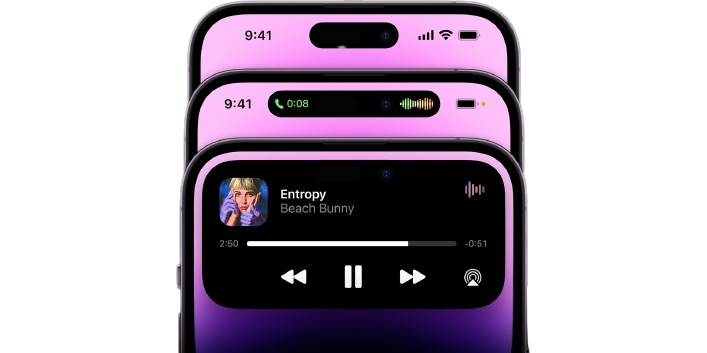
Apple introduced the Dynamic Island for the iPhone 14 Pro models last year, which made every tech enthusiast go gaga over the feature. The reason – Dynamic Island is essentially a pill-shaped cutout that houses the front camera sensor and the sensors responsible for Face ID. Personally, I feel it looks ugly; however, in Apple’s case, it does more than just appear as a dormant Black cutout. The company has intelligently optimized the software UI to work with Dynamic Island. It is an interactive element that can display various information like incoming calls, notifications, turn-by-turn navigation, music playback, and more. That’s not all; Dynamic Island can also expand to a larger size to access different functions or launch applications, hence serving as a multitasking shortcut.
Coming back to the topic, Apple’s latest iPhone 15 and iPhone 15 Plus now feature Dynamic Island. This means that the brand has ditched the traditional notch that was introduced on the iPhone X in 2017. It remains to be seen if Apple moves ahead with the Dynamic Island for all future iPhones, including the SE too.
Goodbye Lightning port, Hello USB-C
11 years! That’s how long Apple stuck to its proprietary Lightning port, introduced way back in 2012. The entire iPhone 15 lineup now has a USB-C port to comply with the norms set by the European Union. Oh, and Apple is bundling a color co-ordinated USB-C braided cable with the iPhone 15. The switch to a new connector means that the next time your iPhone runs out of juice, you just have to ask somebody for a USB-C cable, which is pretty much used for charging most devices today.
For those unaware, Apple has been working on streamlining its devices across various categories for more efficient and deeper integration within the ecosystem. The company’s custom silicon chipset is a prime example that has made its way to Macs and iPads. Apple already switched to USB-C ports on its computers and tablets in 2015 and 2019, respectively. Now with the iPhone 15 series getting the connector, the transition seems complete on the connectivity front.
Substantial camera upgrades
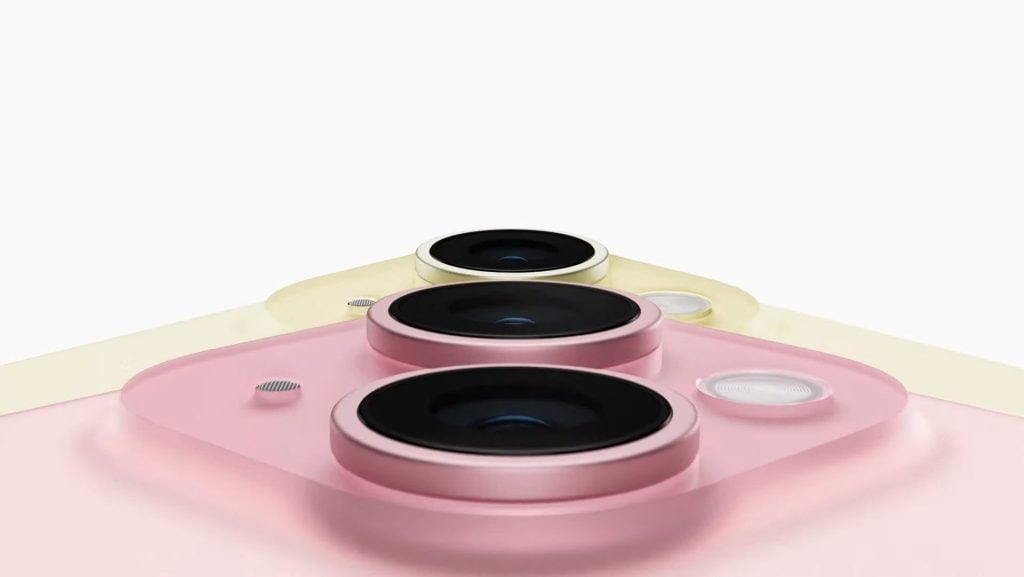
Another area where Apple upgrades the latest-generation non-pro iPhone 15 is in the camera department. The Cupertino-based tech giant has stuck to a 12MP main sensor on its previous devices for years. The iPhone 15 and iPhone 15 Plus now feature a massively upgraded 48MP Sony sensor with an f/1.6 aperture and a 2x telephoto option that should offer higher-resolution images and improved details. The secondary ultra-wide-angle lens and the front-facing selfie snapper remain unchanged with 12 MP sensors. Machine learning will now automatically detect whether a person or pet are in frame and switch over to add the bokeh effect.
More power
Under the hood, the iPhone 15 and iPhone 15 Plus are equipped with Apple’s A16 Bionic processor. While this is not a newly announced chipset (the A17 has been reserved for the Pro models), it is still a welcome upgrade over the A15 that was found on last year’s variants, and it is also two years old now. The A16 Bionic that powers the iPhone 14 Pro models is said to be 7 percent faster than the A15.
Frosted glass back panel
The iPhone 15 and iPhone 15 Plus now flaunt a frosted glass back panel. This was exclusively limited to the Pro models, while the non-Pro variants had a glossy finish. With the presence of frosted glass, the iPhone 15 duo will be resistant to fingerprints and smudges. It will also give a more premium look and feel.
Pricing
The first iPhone, when it came out in 2007, was priced at $499, which was a lot back then. Since then, the price of the iPhones has increased steadily, however, it is not consistent or predictable. Much of the pricing factor is attributed to improved technology and features, consumer demand, competitive pressures, etc. Additionally, the prices of the iPhones vary based on the market region.
The good news? Apple has kept the starting price tags of the iPhone 15 and iPhone 15 Plus the same as their predecessors. The former starts at $799, whereas the latter retails at $899 for the base models.
Moment of Truth
Is it worth upgrading to the iPhone 15 or 15 Plus?
Absolutely, if you have been waiting to upgrade from an iPhone 13 or older. If you currently own the iPhone 14 or 14 Plus, it’s still worth considering the upgrade to the latest models. This is because you might get a good resale value or even a trade-in offer for a one-year device, which will only become devalued as it ages further.
iPhone 15 or iPhone 15 Plus: Which is the most sensible choice?
The iPhone 15 and iPhone 15 Plus are nearly identical to each other. What really separates the two variants is only in terms of display size and battery capacity. Pricing is another factor to consider aside from the core specifications.
The demand for smaller phones has dwindled over time, with the base iPhone (including the SE) and the ASUS Zenfone phones remaining the last of the lot to offer a compact form factor with top-tier specifications. If you’re somebody (like me) who prefers less bulky devices and one-hand usage sans media consumption, the iPhone 15 is without any doubt a hands-down recommendation.
The iPhone 15 Plus is overall an excellent choice if the larger form factor does not bother you. It offers more bang for the buck with a larger screen estate and significantly longer battery life, which should aid in media consumption and other uses.
A WiFi router with a SIM card slot is of paramount importance in today’s digital landscape. It offers unparalleled flexibility and connectivity options. With the ability to use a SIM card, these routers provide internet access in areas without traditional wired connections. They are invaluable for remote locations, such as holiday cabins, construction sites, or while traveling in RVs. Additionally, these routers ensure uninterrupted internet access during power outages since many come with built-in power supplies or battery options. This versatility and reliability make WiFi routers with SIM card slots indispensable for staying connected in a fast-paced, digital world, where connectivity is a necessity.
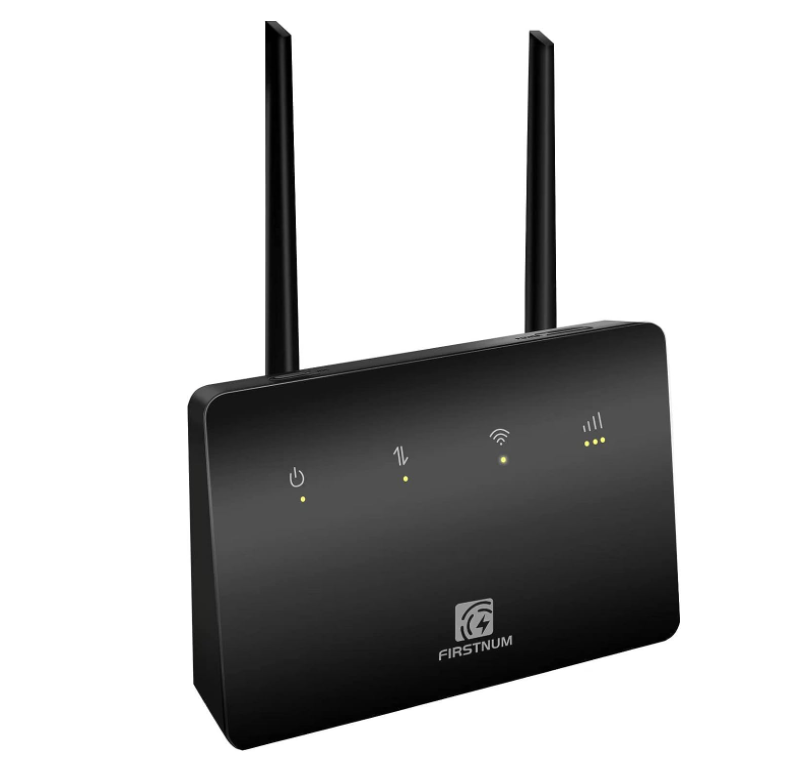
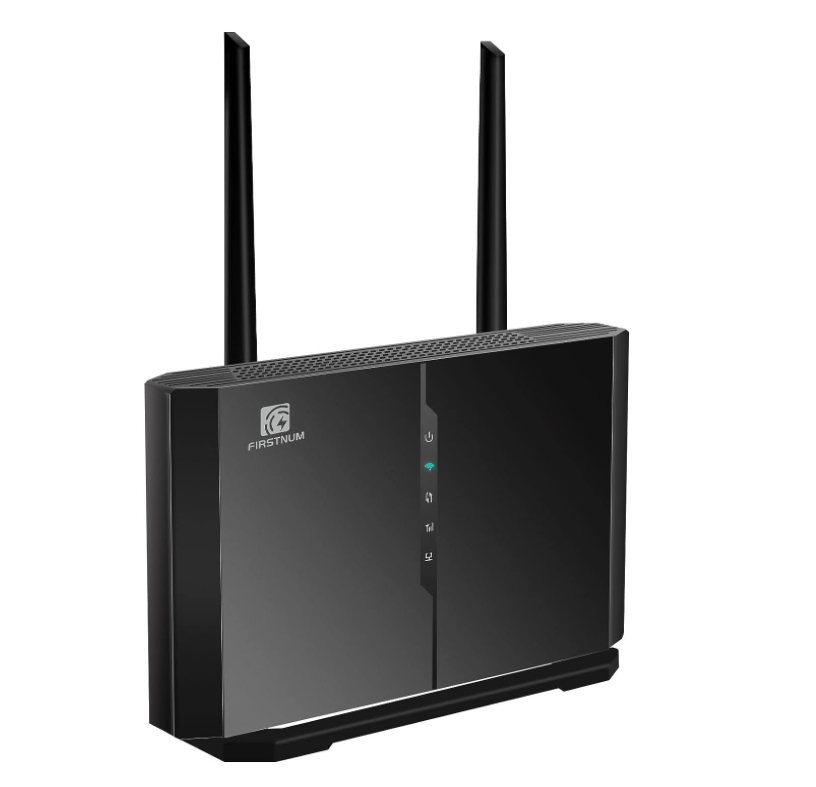
Let us check out two great CPE WIFI router options which are cost effective and available on Amazon. Both these Wi-Fi routers by Firstnum are available at a discount. Please note that this deal ends on September 30.
FIRSTNUM C1 WiFi Router with SIM Card Slot
Original Price: $59.99 Discounted Price: $50.99
In an age where connectivity is crucial, the FIRSTNUM C1 WiFi Router with a SIM Card Slot emerges as a versatile solution for staying connected in various scenarios. While it offers a range of features, this article aims to provide an objective overview of its capabilities and applications.
Portable WiFi for All: The FIRSTNUM C1 Internet router simplifies the process of accessing WiFi by requiring only a SIM card for operation. Designed to work seamlessly with major 4G providers in North America, such as AT&T, T-Mobile, and Verizon, this router provides CAT4 Internet with download speeds of up to 150Mbps and upload speeds of up to 50Mbps. With the ability to connect all your Wi-Fi devices, it ensures that you stay connected wherever you go. This is particularly useful in places where an Ethernet cable is unavailable, such as holiday cabins or remote camera setups.
SIM Card Slot: In addition to a regular RJ45 LAN port, the FIRSTNUM C1 router includes a SIM card slot. By simply inserting a nano SIM card (not included), you can extend WiFi access to your family and friends. However, it’s essential to ensure that your SIM card is activated and that your operator supports hotspot services before inserting it into the router.
Multi-Scenario Usage: The C1 router offers more than just basic connectivity. Acting as both a modem and an Ethernet router (CPE), it offers higher efficiency. This versatility allows you to use it in various settings and scenarios, providing portable WiFi and a hotspot. Whether it’s for your home, office, car, RV, or truck, this wireless WiFi router can adapt to your needs. With the capability to connect up to 32 devices simultaneously, it’s perfect for those who require connectivity during vacation travels.
Easy Setup and Management: Setting up the FIRSTNUM C1 router is a breeze, requiring only three simple steps outlined in the provided manual. Once set up, you can easily manage the router by logging into the product backend through 192.168.1.1. For added convenience, a WPS button is available for quick WiFi connections.
Single-Band Router: At home, the C1 network router seamlessly integrates with an Ethernet cable. Operating on the IEEE 802.11b/g/n WiFi standard, it boasts a maximum speed of 300Mbps. Importantly, when an Ethernet cable is connected, the router won’t utilize your SIM card’s data unless the cable doesn’t provide any data. This feature makes it a suitable choice for those without access to fiber internet, offering the freedom to use it at home or in small enterprises.
Strong Signal Reception: The FIRSTNUM C1 router is equipped with two 5G cellular external antennas featuring a MIMO 2*2 system. This configuration provides an extended transmission distance and higher quality signal. With a strong signal coverage radius that can reach up to 20m, and even up to 50m at the farthest point, you can expect reliable connectivity.
WPS One-Click Network Connection: Connecting your devices to the network is a breeze with the WPS button. Users can effortlessly establish connections with a single click, ensuring a hassle-free experience.
Super High Cost-Effectiveness: This router offers an excellent cost-to-performance ratio. It’s adaptable for use in RVs, trucks, farms, homes, or small and medium-sized enterprises. With the ability to connect up to 32 devices simultaneously, it provides a cost-effective solution for staying connected.
FIRSTNUM C1 WiFi Router with SIM Card Slot is a versatile connectivity solution that offers simplicity, adaptability, and strong signal reception. Whether you’re seeking connectivity for your remote cabin, on-the-go travels, or small business, this router provides a reliable and cost-effective option to keep you connected in various scenarios.
The Firstnum CPE C2 distinguishes itself from the C1 model with several notable improvements. While the C1 offers CAT4 Internet with download speeds of up to 150Mbps and upload speeds of up to 50Mbps, the C2 steps up the game with CAT7 Internet, providing faster download speeds of up to 300Mbps and upload speeds of up to 100Mbps. Moreover, the C2 operates on both 2.4GHz and 5GHz frequencies, enhancing its adaptability. It also features four RJ45 LAN ports compared to C1’s one, allowing for more connected devices. The C2’s built-in power supply with rechargeable batteries offers greater portability.
Portable WiFi, Anywhere, Anytime: The FIRSTNUM C2 internet router simplifies access to WiFi by requiring only a SIM card. It is compatible with major 4G providers in North America, including AT&T, T-Mobile, and Verizon. This router delivers CAT7 Internet with impressive download speeds of up to 300Mbps and upload speeds of up to 100Mbps, ensuring seamless connectivity for all your devices. This dual-band router operates on both 2.4GHz and 5GHz frequencies, making it highly adaptable for use in places where Ethernet cables are unavailable, such as holiday cabins or remote camera setups.
SIM Card Slot for Extended Connectivity: In addition to four RJ45 LAN ports, the C2 router features a SIM card slot. By inserting a nano SIM card (not included), you can extend WiFi access to your family and friends. However, it’s important to activate the SIM card and confirm that your operator supports hotspot services before inserting it into the router.
Multi-Scenario Usage: The CPE C2 router is not just a router; it’s a modem and an Ethernet router combined. This integration results in higher efficiency, making it a versatile choice for different settings and scenarios. Whether you need portable WiFi at home, in the office, in your car, or during RV and truck travels, this wireless WiFi router can adapt to your needs. Moreover, it can connect up to 32 devices simultaneously, making it ideal for vacation travel.
Effortless Setup and Management: Setting up the FIRSTNUM C2 router is a breeze, with a straightforward three-step process detailed in the manual. Once configured, you can manage the router by logging into the product’s backend through the IP address 192.168.1.1. For added convenience, a WPS button is available for quick WiFi connections.
Dual-Band Router for Enhanced Performance: At home, the C2 router seamlessly integrates with an Ethernet cable. It operates on the IEEE 802.11a/b/g/n/ac WiFi standard, delivering a maximum speed of 1200Mbps (867+300). Importantly, when an Ethernet cable is connected, the router won’t utilize your SIM card’s data unless the cable doesn’t provide any data. This makes it an excellent choice for those without access to fiber internet, offering the freedom to use it at home or in small enterprises.
Built-in Power Supply for Portability: Equipped with two parallel rechargeable 18250 batteries, the C2 router offers portability and flexibility. It’s not entirely dependent on a power cord, making it an ideal choice for on-the-go use.
Smooth and Stable Operation: The C2 router is designed for smooth and stable operation. With car-grade chips and the MT2731 platform, it ensures reliable network setup and operation, providing you with uninterrupted connectivity.
Enhanced Security and Durability: Safety is a top priority. The router’s shell is crafted from fireproof materials, guaranteeing the safety of the device. You can confidently use it in outdoor settings such as RVs, boats, farms, or playgrounds.
Strong Signal Reception: The C2 router boasts two built-in 5G cellular external antennas with a MIMO 2*2 system. This configuration provides an extended transmission distance and higher-quality signals. With a strong signal coverage radius of up to 20m, and even up to 50m at the farthest point, you can count on reliable connectivity.
The big fall launch is here. Apple has made four new models a part of the iPhone 15 series— the vanilla iPhone 15 and 15 Plus, the smaller iPhone 15 Pro, and the Pro Max. They all bring changes, with the USB-C port being considered the most notable one. The Pro phones have been treated with more new features, and that’s what we’ll discuss in this post.
Design and Display
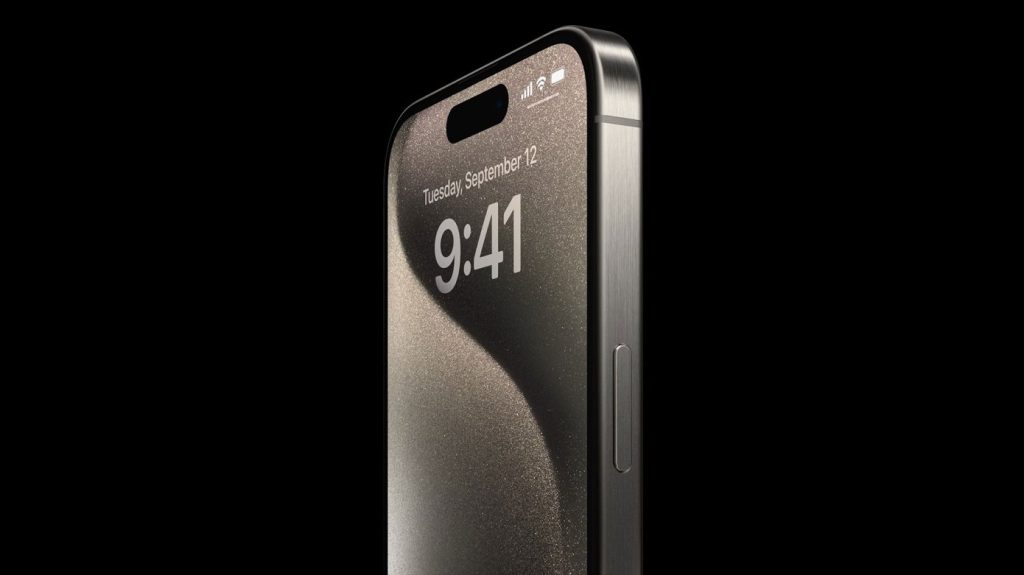
This year’s iPhone 15 Pro and Pro Max models bring some notable design changes. The most important changes are in the build quality. Apple has used new titanium alloy for their chassis, instead of the stainless steel they’ve used so far. When compared to steel, Titanium has a few benefits— it’s much stronger and lighter. The Dynamic Island is there on the front of both iPhone 15 Pro and Pro Max and it can do more tricks this time.
Another interesting addition is a solid-state Action button, which replaces the traditional mute switch. It can perform the usual functions of the mute switch but can also be configured to execute a string of commands like launch the camera app, invoke Shortcuts or accessibility features, start a voice memo, and more.
Both the iPhone 15 Pro and Pro Max retain their respective 6.1-inch and 6.7-inch OLED displays, but the screen is brighter, has more efficient LTPO controllers, and thinner bezels. They both come with an adaptive refresh rate (ProMotion-enabled) and Always-on display.
Everything else
Unlike their vanilla siblings, the iPhone 15 Pro and Pro Max get the new A17 Bionic chip. It is the first mobile SoC to be built on a 3nm process and offers a bump in processing performance and better efficiency. It has a 6-core processor and a 6-core GPU— 1 additional core than the graphics in the A16 chip. You get 8GB of RAM with up to 1TB of onboard storage.
The iPhone 15 Pro and Pro Max get an upgraded 48MP IMX803 main camera with improved low light performance. The telephoto lens on the Pro Max features 5x optical zoom at 120mm focal length.
Elsewhere, the iPhone 15 Pro Max gets upgraded battery units. They both charge through— drumrolls— a USB-C port, which also supports up to 10Gbps data transfer with the optional USB3 cable. Both devices run iOS 16 on the software front.
Pricing and Availability
The iPhone 15 Pro and iPhone 15 Pro Max will be available in four colors: black titanium, white titanium, and blue titanium. The iPhone 15 Pro will start at $999, while the iPhone 15 Pro Max will start at $1,199. The Pro model will start with 128GB of storage, but the iPhone 15 Pro Max will be offered in a base 256GB option.
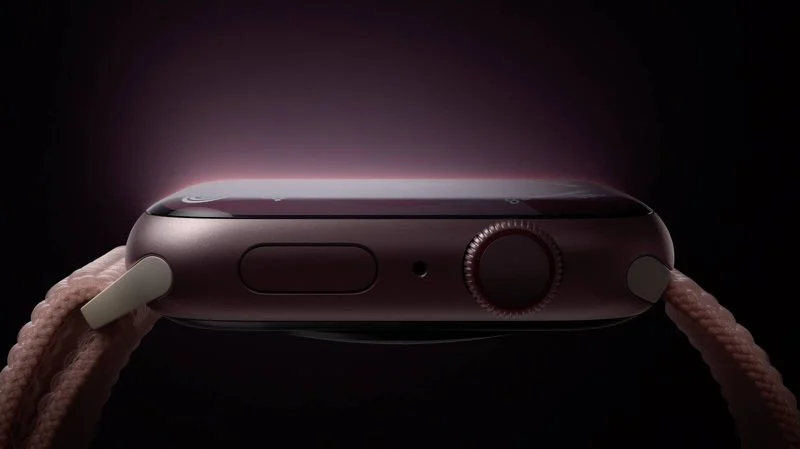
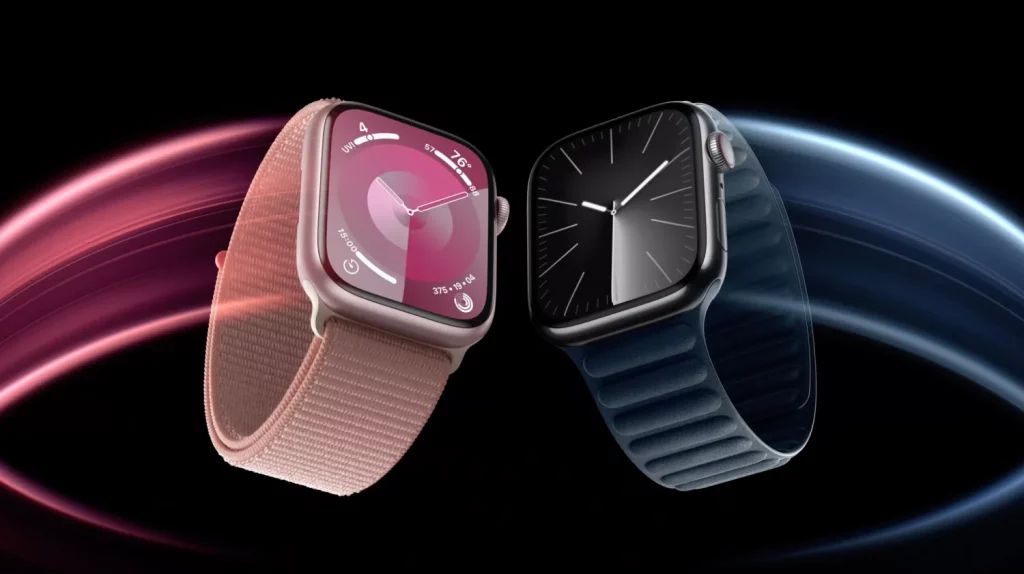
The Apple Watch Ultra 2 may have been the star wearable at today’s Apple Wonderlust event, but the Watch Series 9 also made its debut with some exciting features and upgrades. The new wearables bring a S9 Apple silicon chip that is claimed to offer improved performance. Series 9 introduces gestures that allow you to control specific functions without physically touching the watch. In addition, Apple has included a range of new bands to choose from. Here are the details.
The Apple Watch Series 9 has a new Apple silicon chip with 60% more transistors and 30% faster performance than the Series 8. The new chip has a four-core neural engine for 2x faster neural tasks. Apple says the Siri requests are processed on the watch itself for speed and security. Dictation is 25% more accurate thanks to secure on-device processing. The battery life on the Series 9 is still 18 hours.
The Series 9 has ultra-wideband support for Precision Finding, which is similar to AirTag functionality. It also integrates more deeply with HomePod. Apple has updated the always-on Retina display to be brighter, reaching up to 2000 nits, and can dim to just one nit for night or theater use.
The Series 9 introduces a new hand gesture called “Double Tap” for touchless interaction. Users can simply tap their thumb and index finger together to interact with the device without touching the screen for tasks like answering or ending a call, stopping a timer, snoozing an alarm, pausing or playing music, and more.
The Apple Series 9 comes in new colors, including pink, and has a more environmentally friendly design with recycled materials and smaller packaging. Leather bands have been discontinued, and are replaced by “FineWoven” bands, as well as options from Hermès and Nike.
The new Apple Watch Series 9 starts at $399 and is available in 41mm and 45mm sizes, in aluminum and stainless steel. Pre-orders start today, and the watch will be available in stores on Friday, September 22.
Apple held its annual Wonderlust fall event today. As usual, the Cupertino-based tech giant has unveiled the next-generation iPhones, Watch Series, and more. The latest flagship iPhone 15 models pack significant upgrades over their predecessors and notably since the iPhone 11 which debuted way back in 2019. This time too, Apple has distinguished the iPhone 15 and iPhone 15 Plus from the Pro and Pro Max variants. Unlike the iPhone 14 and 14 Plus which were identical to their predecessors, the new non-pro iPhone 15’s come with new features and specifications. Read on to know more below.
iPhone 15, 15 Plus specifications
The only difference between the iPhone 15 and 15 Plus is in the display and battery department. Both retain the same boxy form factor with identical button placements as per previous iPhones. However, the square camera module is now slightly raised from the back panel.
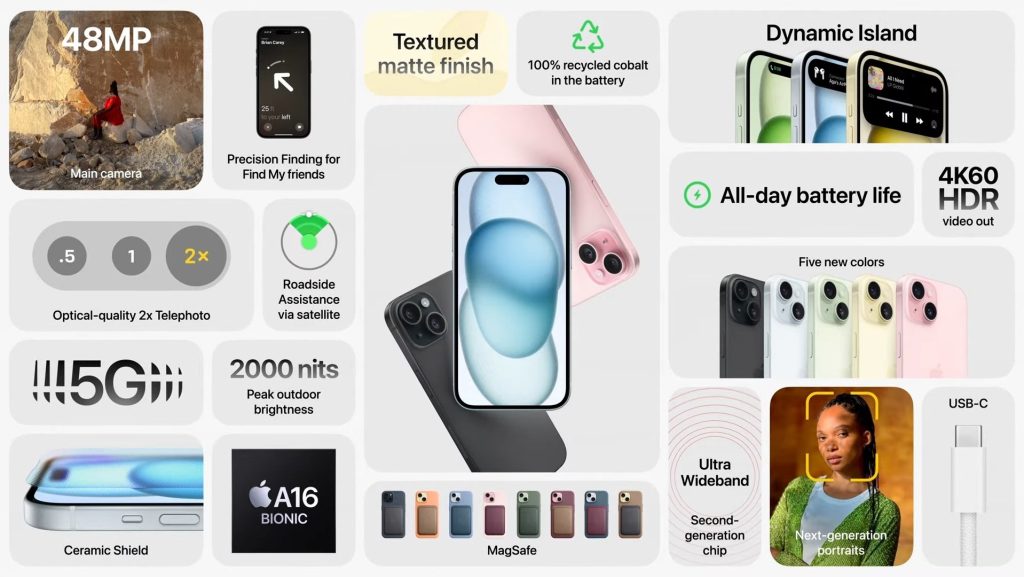
Contrary to the previous generation iPhones, the latest non-pro iPhone 15’s feature a frosted glass back panel that was limited to the Pro models. On the front fascia, the phones come with Dynamic Island which was introduced on the iPhone 14 Pro variants last year. The iPhone 15 and 15 Plus have 6.1 and 6.7-inch Retina XDR OLED displays respectively with 2,000 nits peak brightness.
In terms of optics, the iPhone 15 and 15 Plus feature upgraded primary cameras. It has a 48MP Sony sensor (compared to 12MP on iPhone 14) paired with a 12MP ultra-wide-angle lens with additional 2x telephoto option. The smartphones have a 12MP selfie snapper on the front. The latest offerings also pack a host of new camera features. Users won’t have to switch to portrait mode as machine learning will automatically add depth when a subject is detected.
Under the hood, the iPhone 15 and 15 Plus are equipped with Apple’s A16 Bionic processor which powers last year’s Pro models. This is a welcome upgrade in terms of performance since the iPhone 14 duo were powered by the same processor found on the iPhone 13. The latest offerings pack 6GB RAM and up to 512GB internal storage. Apple hasn’t revealed the exact battery capacities on the iPhone 15 and 15 Plus but they are said to offer 26 and 20 hours of usage respectively.
Software-wise, the iPhone 15 and 15 Plus ship with iOS 17 out of the box. They feature a USB-C port which is a shift from the age-old lightning port. The latest duo also come with a second-generation Ultrawide-band chip that improves Find My capabilities. The Emergency SOS via satellite feature also gets Roadside Assistance functionality.
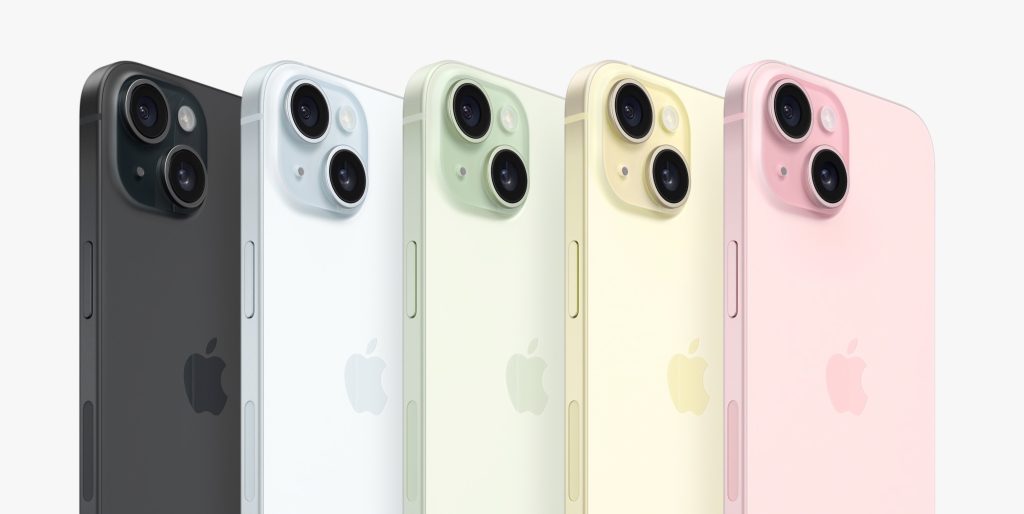
The iPhone 15 and iPhone 15 Plus are offered in Pink, Green, White, Black, Yellow, and Blue colors. The iPhone 15 and iPhone 15 Plus start at the same price tag as their predecessors i.e. $799 and $899 respectively. Both phones will be available starting September 22.
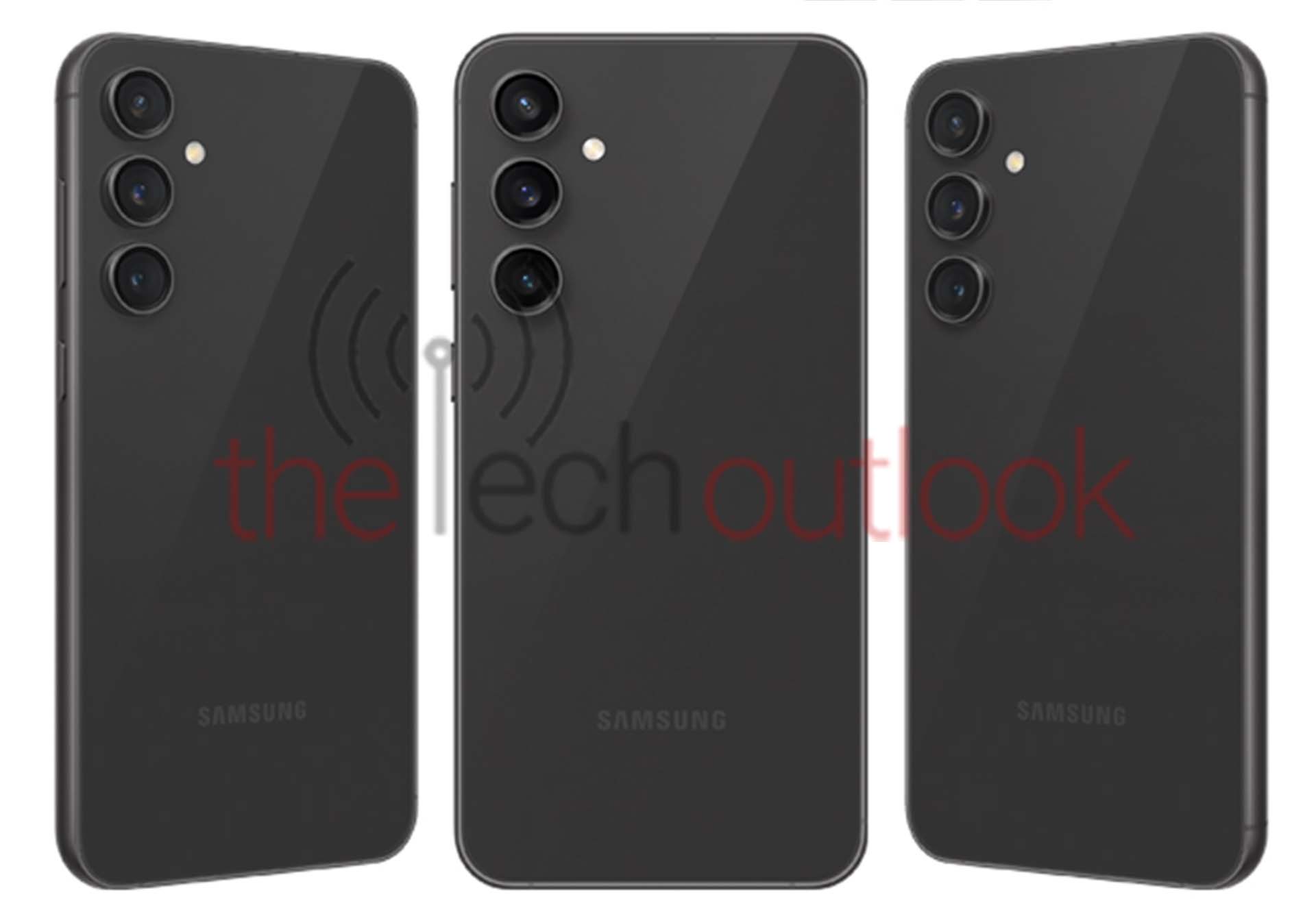
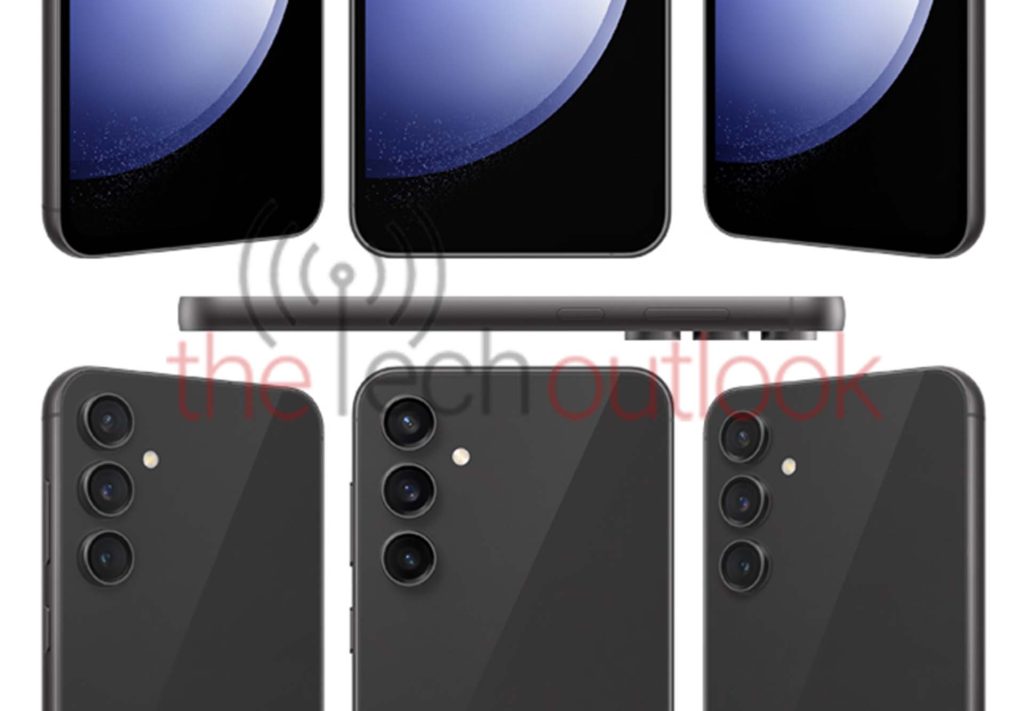
Samsung is expected to launch a bunch of new Fan Edition devices before the end of this year including the Galaxy Buds FE, the Tab S9 FE series & the Galaxy S23 FE smartphone. There have been a bunch of leaks about the S23 FE smartphone including its design. Now, TheTechOutlook has leaked new renders of the smartphone in black color.
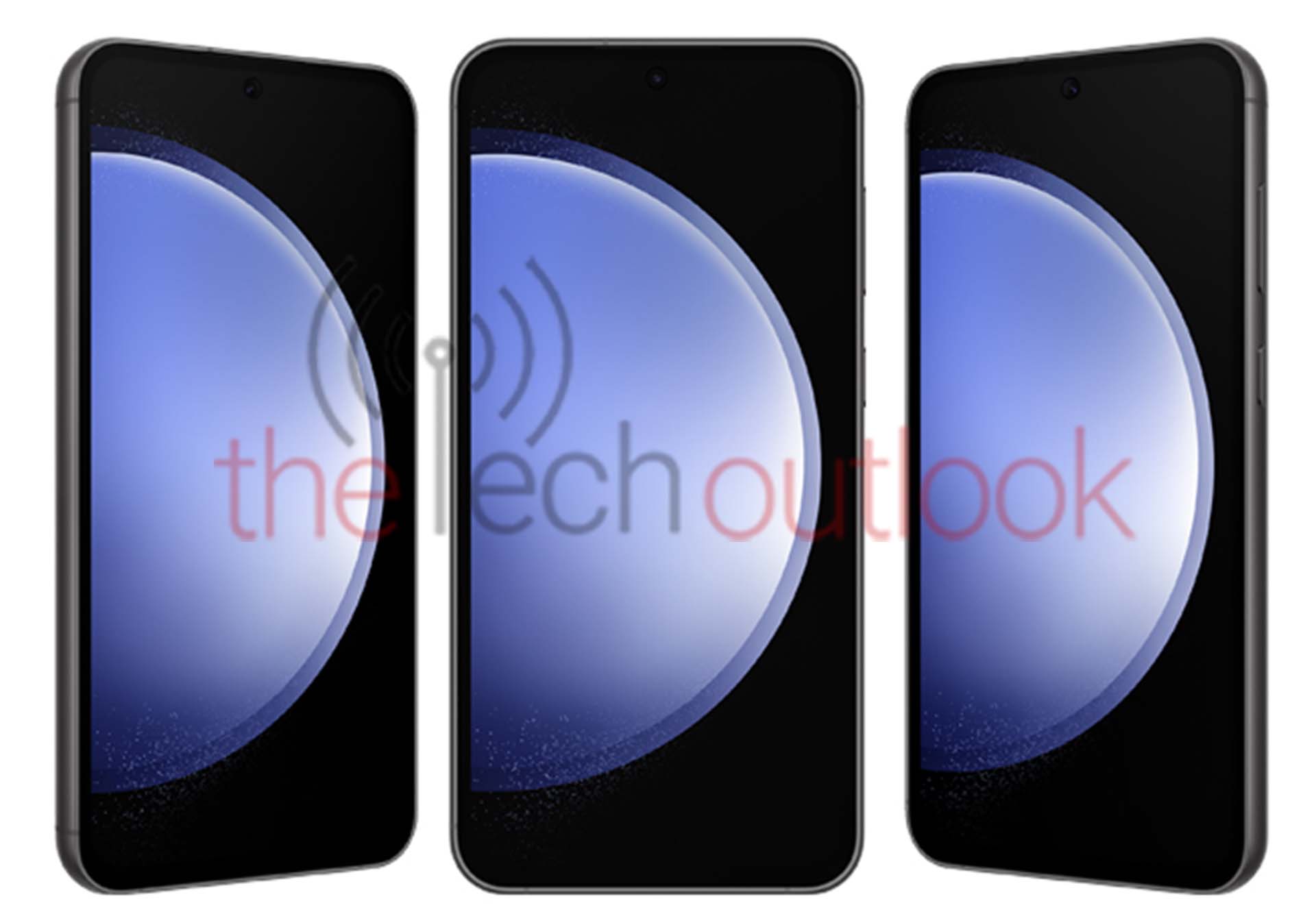
As revealed by the leaked images, the Galaxy S23 FE features a flat display with a centrally aligned punch-hole selfie camera. On the rear panel, there are three circular camera rings and an LED flashlight, along with Samsung branding at the bottom. The side profiles are rounded and curved at the corners, with the volume rocker and power button located on the right side. Although the report does not mention the color by name, a recent report suggests that this color will more than likely be called Graphite.
Samsung Galaxy S23 FE specs (rumored)
The Samsung Galaxy S23 FE is poised to deliver a 6.4-inch Full HD+ Dynamic AMOLED display, ensuring a seamless experience with its commendable 120Hz refresh rate. The rumored SD8 Gen 1 SoC is likely reserved for the US market, with the Exynos 2200 catering to other regions. Accompanying this hardware configuration is an ample 12GB of RAM and a capacious 256GB of storage.
Turning our attention to its photographic capabilities, we anticipate a versatile triple-rear camera setup including a robust 50MP primary camera, featuring optical image stabilization (OIS) for steady shots. Additionally, an 8MP ultrawide sensor offers a wide-angle perspective, while a 12MP telephoto lens provides the ability to capture distant subjects. For capturing self-portraits, a 10MP front-facing camera is expected.
In terms of battery life, the device is projected to house a substantial 4500mAh battery with support for rapid 25W fast charging. Operationally, it will be based on the Android 13-based OneUI 5.1 operating system. An outstanding feature of the Samsung Galaxy S23 FE is its commitment to extended software support, promising four years of major OS updates and an impressive five years of security updates.
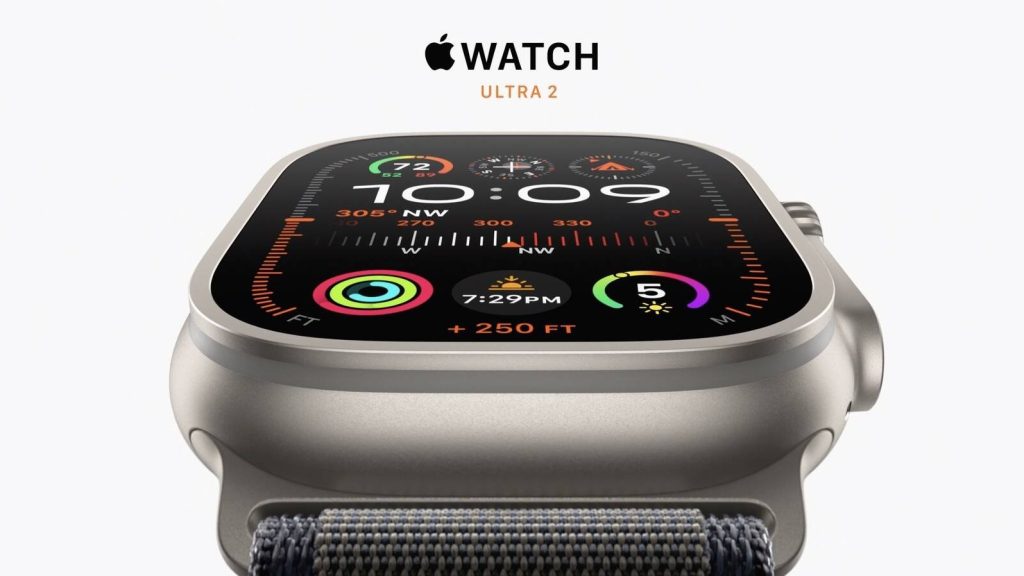
At Apple’s annual fall event, the company announced the new-generation iPhone 15 series, Watch Series 9, the second-generation Watch Ultra, and more. The Apple Watch Ultra 2 arrives as the successor to the last year’s model. For those unaware, it is the flagship smartwatch from the company heavily focused on adventure and outdoor enthusiasts. Apple seems to be taking the fight to Garmin with the Watch Ultra models. The newest second-generation offering packs incremental upgrades to its predecessor. Let’s take a look at what the wearable device has in store for us.
Apple Watch Ultra 2 specifications and features
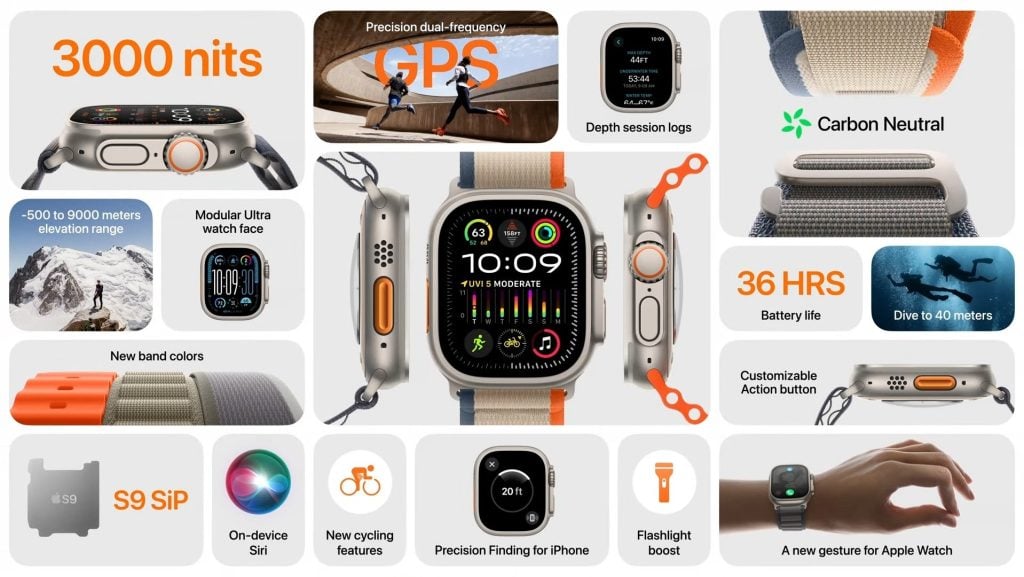
Right off the bat, the Apple Watch Ultra 2 sports a rugged design similar to its predecessor that should be able to withstand damages. It has an aerospace-grade titanium unibody with a 49mm casing and a raised shell to protect the display. The wearable device is MIL-STD 810H approved, which is military and rugged equipment standard. It is also WR100-rated water-resistant and EN 13319-certified, an international diving standard. This makes the smartwatch ideal for kitesurfing, wakeboarding, and scuba diving to 40 meters. The Apple Watch Ultra 2 also packs double-tap gesture feature (tapping the index finger and thumb) to answer calls, pause and resume timers, and more tasks without interacting with the device.
The Apple Watch Ultra retains the rotating crown and action button on the right side with the latter providing quick access to several features. It boasts an Always-on Retina display up to 3,000 nits for viewing under harsh sunlight. The smartwatch features three microphones and adaptive beamforming to improve call quality and reduce background noise. It also utilizes machine learning to cut down wind noise so that the audio is clear.
Coming to the health and fitness features, the Apple Watch Ultra 2 is equipped with a heart-rate monitor along with an ECG sensor and SpO2 tracker. There have been many instances where Apple’s smartwatches have accurately detected atrial fibrillation and saved lives of users. The wearable device packs a menstrual cycle tracker for women with thermometry for improved forecast. It also has two sensors that eliminate body bias and external bias for women. Additionally, family planning can also benefit from retroactive ovulation estimates.
The Apple Watch Ultra 2 features a multi-band dual-frequency GPS for outdoor usage. There are pro-running features and depth gauge for professional swimmers and divers. The device has an 86 dB Siren with emergency features to help others find the user in case they are lost. The smartwatch also retains crash detection that dials emergency medical services when it senses a severe car crash and if the user is unresponsive after 10 seconds.
Under the hood, the Apple Watch Ultra 2 is equipped with a new S9 processor that is touted to deliver significant performance upgrades. It also has a second-generation ultrawide-band chip that offers improved Find My capabilities, precise location tracking, and better power efficiency. The latest smartwatch is touted to offer 36 hours of battery life under normal usage and up to 72 hours with low power enabled. Software-wise, it runs on watchOS10 which introduces new widgets, redesigned app icons, and a Modular Ultra watchface that will make use of the outer edge of the display.
The Apple Watch Ultra 2 carries a price tag of $799 for the GPS + Cellular version. It will be available for purchase starting September 22.
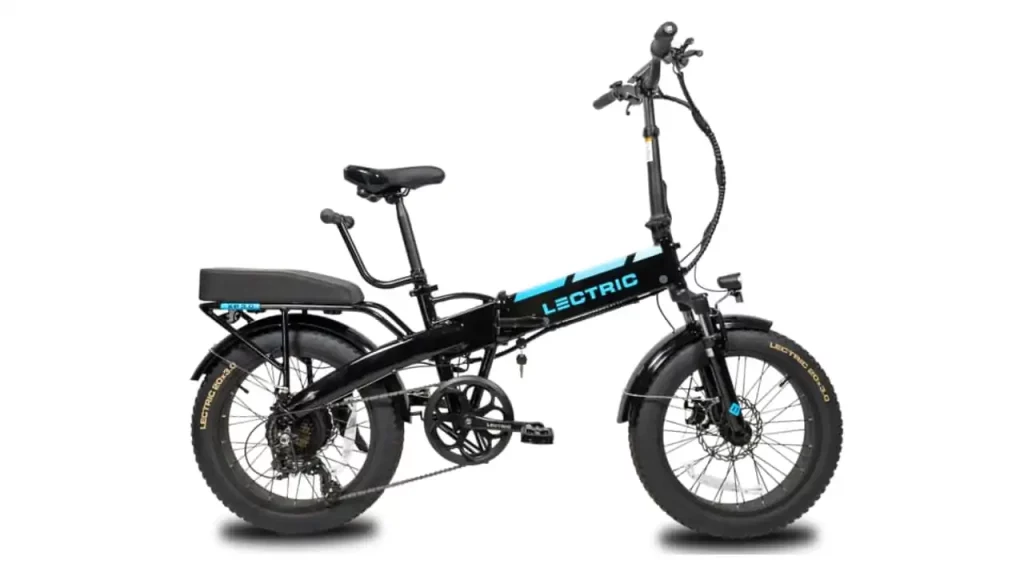
In a major safety move, Lectric eBikes has issued a recall on the XP 3.0, related to the potential failure of mechanical disc brakes. The recall involves up to 45,000 XP 3.0 bicycles in the US. The US Consumer Product Safety Commission (CPSC) announced the voluntary recall of the bikes.
The affected XP 3.0 e-bikes were manufactured and sold earlier this year and the concerns relate to the potential failure of their mechanical brake setups. The quality of the mechanical brake calipers used in the XP 3.0 e-bikes was suspect. Accordingly, the company stated that the mechanical disc brake calipers can fail resulting in loss of control, potential crash, and injury hazards to the rider. About 45,000 XP 3.0 bikes have been sold between November 2022 and May 2023 with the said mechanical brakes. Only four incidents have been reported traced to the mechanical brake failure.
Since May 2023, Lectric eBikes have stopped selling the XP 3.0 and subsequently made a substantial enhancement by upgrading to hydraulic disc brakes. It also delivered free upgrade kits to current owners of the bike. The upgrade kit is easy to install within 15 minutes. Lectric has also offered to pay for owners who opt to have the upgrade done at a bike shop.
The Lectric disc brake upgrade kit for the XP 3.0 e-bike is available and Lectric has already started contacting owners of affected units. Lectric has also sent a service notice to owners on how to inspect and adjust their brakes to prevent incorrectly fitted cables. Nearly 50% of the affected owners have already taken advantage of the disc brake upgrade policy.
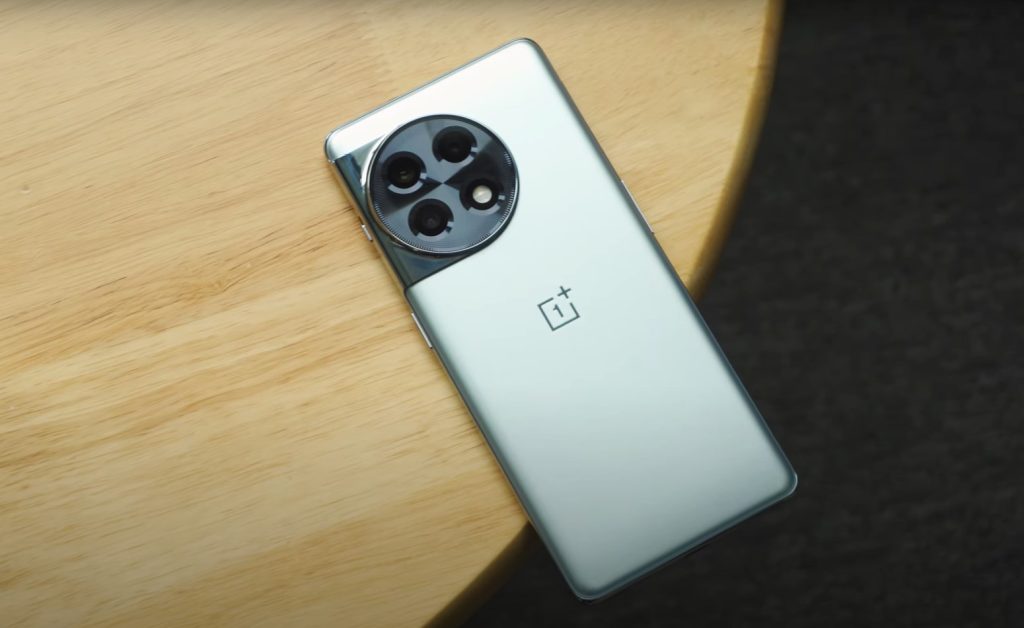
Last month, the OnePlus 11 got its Android 14 public beta update in China, and now, a couple of weeks out of the official OxygenOS 14 launch, OnePlus has opened beta testing for users of the OnePlus 11 in India and North America. Keep reading to learn more about how to participate in this public beta.
OxygenOS 14 Open Beta 1: How to apply
To apply for OxygenOS 14 Open Beta 1, you’ll want to follow a few simple steps during the application period, which begins on September 12 and will remain open until the application limit of 5,000 users is reached. First, ensure that your device is currently running the detectable version, either CPH2447_13.1.0.590(EX01) or CPH2447_13.1.0.591(EX01).
Next, access the application form by navigating to your device’s settings menu. Start by tapping on “Settings,” then select “About device.” Look for the “up to date” option and click on it. In the top right corner, you’ll find an icon; select it. Within this menu, you should see an option for the “Beta program.” Click on it and follow the provided steps to complete your application.
Once you’ve submitted your application, OnePlus will review it within 5 workdays after the application channel’s closure. If your application is approved, you can expect to receive the OxygenOS 14 Open Beta 1 version within 3 workdays. After approval, to download the version, simply go to your device’s settings, select “About device,” and look for the “Download Now” option. This will enable you to access and install the new beta version.
Oxygen OS 14 Beta: What to expect
Changelog
Security and privacy
• Improves photo and video-related permission management for safer access by apps.
Performance optimization
• Improves system stability, the launch speed of apps, and the smoothness of animations.
Aquamorphic Design
• Upgrades Aquamorphic Design with a natural, gentle, and clearer color style for a more comfortable color experience.
• Adds Aquamorphic-themed ringtones and revamps the system notification sounds.
User Care
• Adds a carbon tracking AOD that visualizes the carbon emissions you avoid by walking instead of driving.
OnePlus is bringing something exciting to OxygenOS 14 called the ‘Trinity Engine.’ This technology aims to make OnePlus phones work even better by making sure the hardware and software work together seamlessly. It’s all about making your phone use less power, handle multiple tasks smoothly, and giving you a fast and long-lasting experience. That being said, the beta build also has some known issues right now. So we suggest going through it before installing the OxygenOS 14 beta build on your smartphone.
Known Issues
The flight icon displays on status bar after turning off the flight mode.
Turning on the flight mode in control center is not responsive.
Flashing back issue when entering Notes in the Shelf.
Black screen issue when opening step tracker page through the health widget in the Shelf.
Dual channel network acceleration function cannot be triggered automatically.
Sliding finger to the icon cannot launch the app using Quick Launch.
Screen flashes during application startup animation.
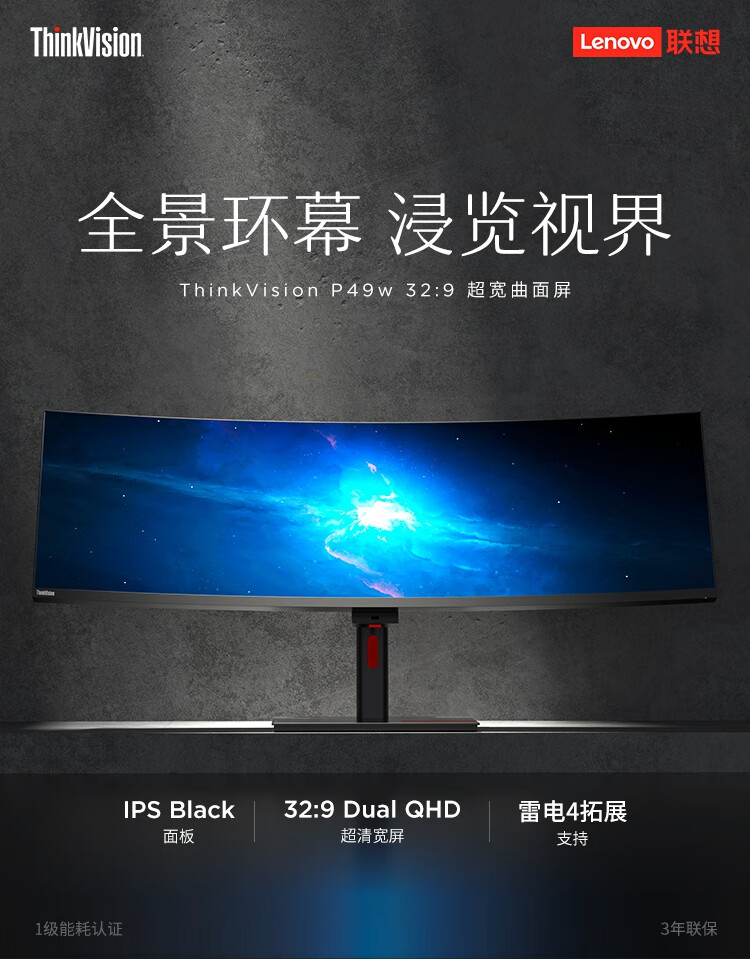
Lenovo has unveiled its latest ultrawide curved monitor, the ThinkVision P49w, offering a 32:9 aspect ratio and a host of impressive features. Let’s check out the specs of this monitor.
Lenovo ThinkVision P49w key features:
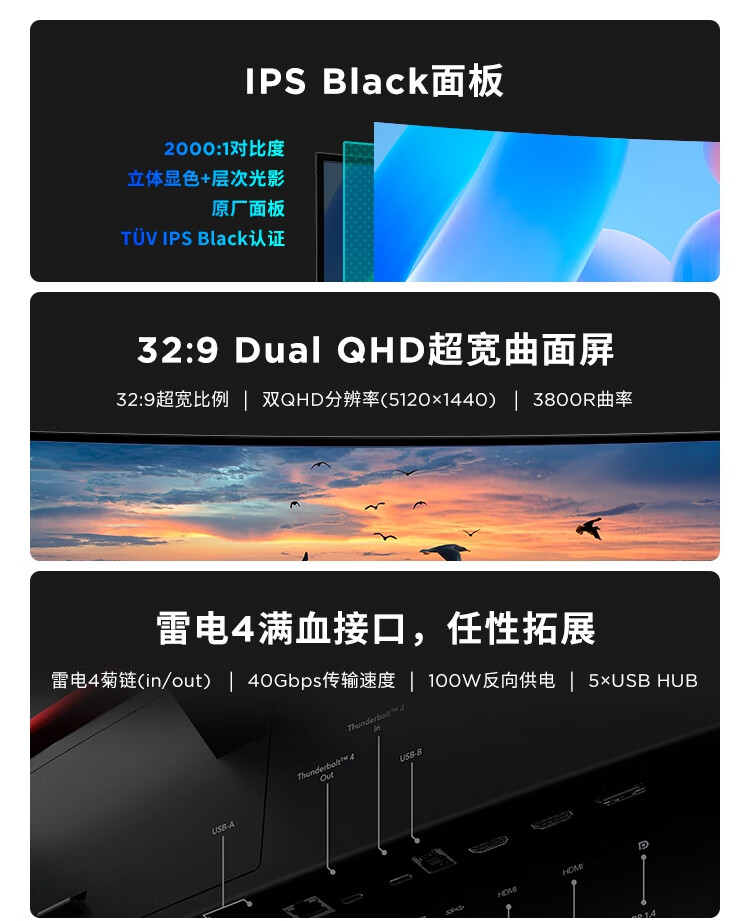
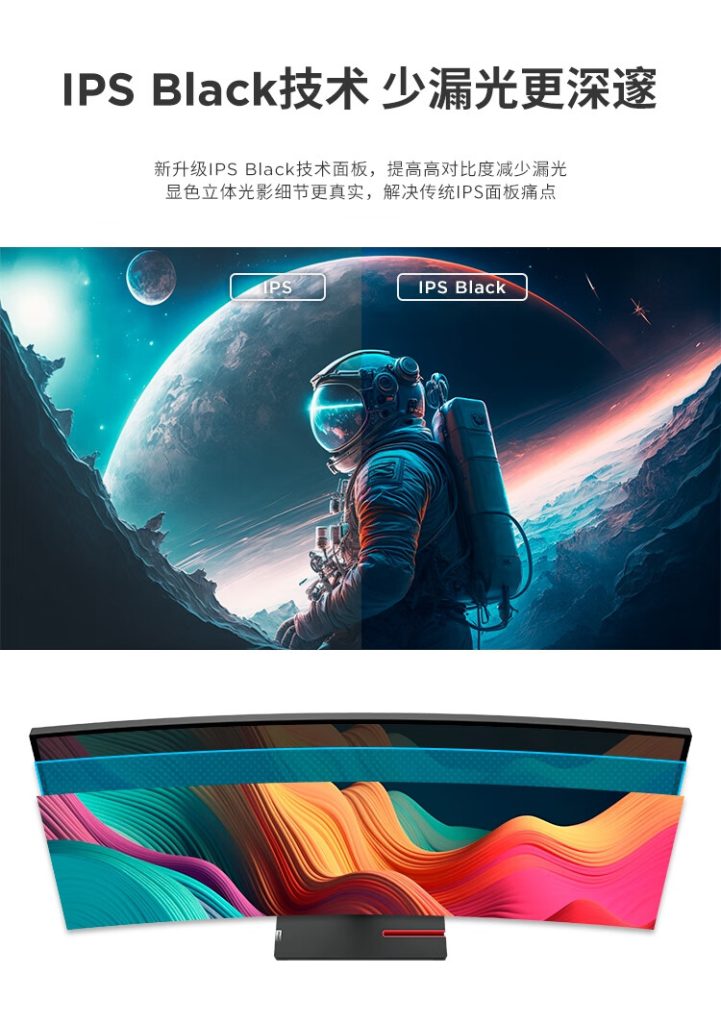
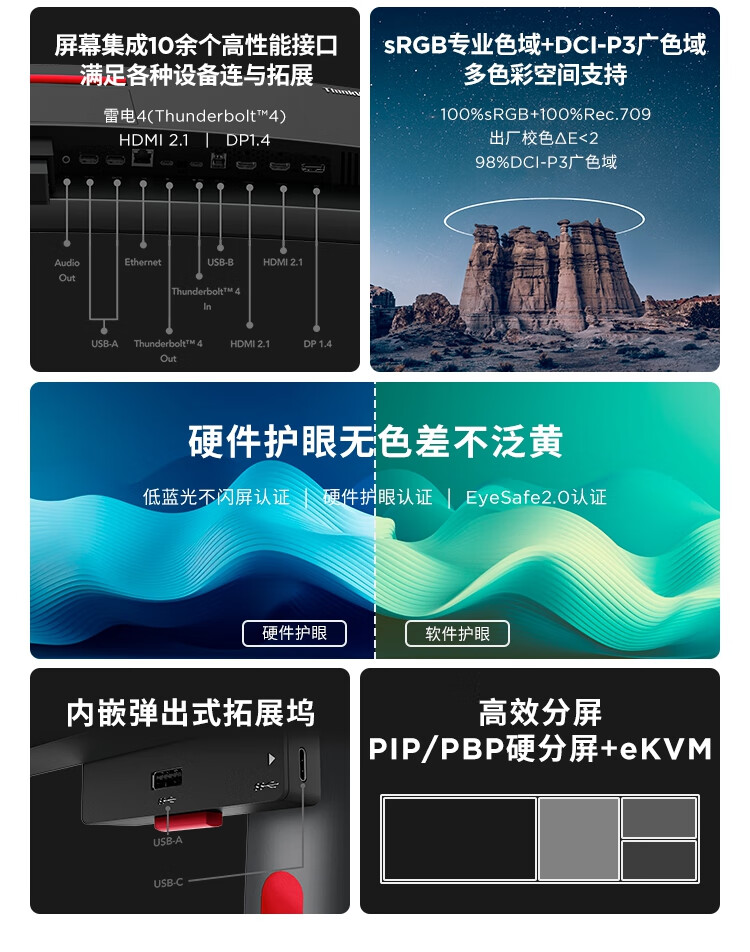
This 49-inch monitor boasts a Dual QHD (2K) resolution (5120×1440) on an IPS Black original panel, delivering sharp visuals. With a 2000:1 contrast ratio, pixel density of 109 PPI, 60Hz refresh rate, and a 3800 curvature, it promises an immersive viewing experience. Users can adjust the monitor’s position with ease, thanks to its tilting and rotating capabilities.
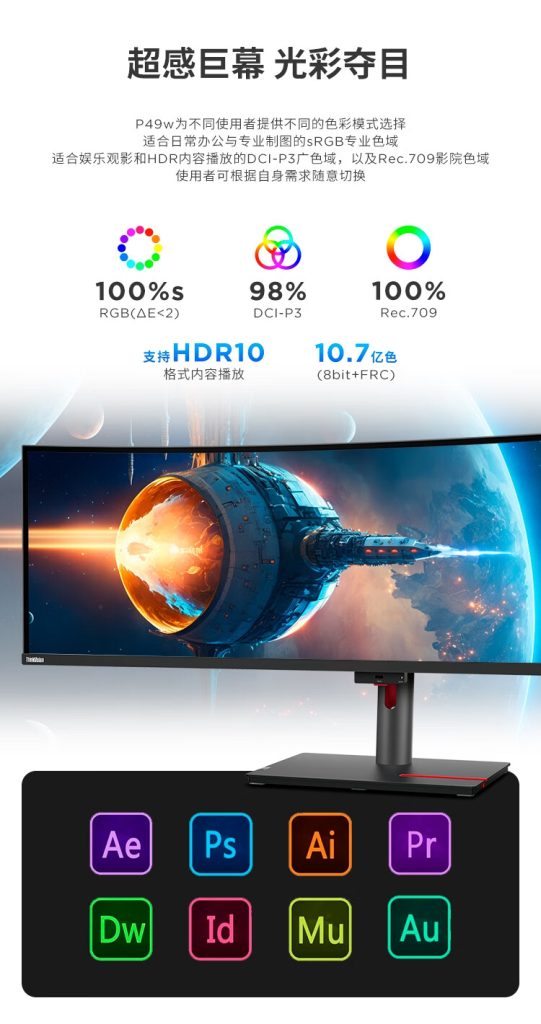
The P49w monitor offers impressive features like PIP/PBP hardware split-screen and eKVM technology for enhanced multitasking. It excels in color reproduction, covering 100% sRGB, 100% Rec.709, and 98% DCI-P3 color gamuts, and arrives factory-calibrated with ΔE<2. It supports HDR 10 and global DC dimming and holds certifications for low blue light, flicker-free operation, and EyeSafe 2.0 for user comfort.
In terms of connectivity, the P49w is well-equipped with 13 interfaces, including Thunderbolt 4 support for high-speed data transfer and daisy chaining, 100W reverse charging, Type-C, 5×USB-A HUB, HDMI 2.1, and DP 1.4. It even features a built-in pop-up docking station and dual 5W speakers, eliminating the need for additional accessories. The monitor also supports VESA wall mounting for flexible placement options.
The Lenovo P49w is priced at 8999 yuan ($1234), offers a compelling package of features, and is well-suited for both professionals and enthusiasts looking for a top-quality display for work and entertainment. Lenovo‘s inclusion of a three-year warranty adds an extra layer of assurance for potential buyers.
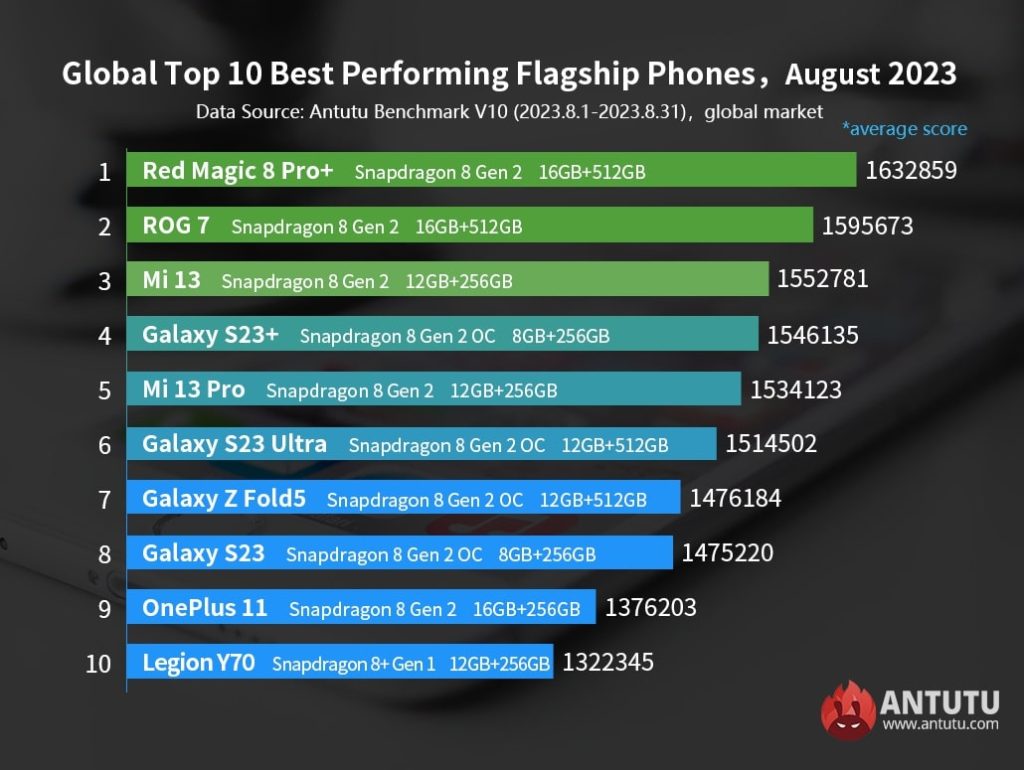
Dimensity, Qualcomm, Kirin, Exynos, and many more. Almost every day we come across a new phone model, hear these processor names, and try to understand what they mean. Especially in today’s world where problems such as app and UI performance are no longer a problem, it is quite normal to be confused. AnTuTu, which wants to eliminate the confusion and rank smartphones correctly, allows us to have an idea with its lists published at regular intervals. Recently, the platform released the best flagship models of August 2023. Here are the details…
AnTuTu Releases August 2023 Flagship Smartphone Rankings
AnTuTu has released its rankings for the best flagship smartphones in August 2023. The Red Magic 8 Pro+ took the top spot, which is not surprising. The 8 Pro+ stands out with its Qualcomm Snapdragon 8 Gen 2 processor and 16GB of RAM, as well as being a gaming phone. This means that the device has been specially designed to improve performance and cool down the hot hardware. The ASUS ROG 7 is also a high-performing device, and it also comes with a number of gaming-centric features. The top 10 devices are as follows:
The AnTuTu rankings are based on a variety of factors, including the CPU, GPU, memory, and UX performance of the devices. The higher the AnTuTu score, the better the overall performance of the device. If you are looking for a high-performance smartphone, then any of the devices on the AnTuTu August 2023 rankings are a good choice. However, the Red Magic 8 Pro+ and ASUS ROG 7 are the best options if you are looking for the absolute best performance.
Apple has been rapidly expanding manufacturing efforts for its iPhones in India over the last few years. The Cupertino-based tech giant has been reaping benefits of the local production in the country. Now just a few hours to go for the company’s annual fall event, the folks at Bloomberg have reported a new development about the iPhone 15’s manufacturing in India marking a significant achievement in the country’s electronics ambitions.
Made in India iPhone 15 to be sold on the launch day
Although Apple has been making iPhones in India since 2017, there was a significant lag between the time of launched devices and the commencement of production in the country. This has already been reduced in recent years with the iPhone 14’s manufacturing starting within 10 days of global launch. Hence due to a time lag, the first batch of the latest-generation iPhones are sourced from China. The Indian-made units hit the shelves after a few months.
However, things are changing this year with the iPhone 15. As per previous report, Apple started assembling the upcoming flagship lineup in India last month. This is much faster than the previously assembled iPhone units in the country. The iPhone 15 is being produced at the company’s largest contract manufacturer Foxconn’s facility in Chennai.
As per Bloomberg’s latest report, Apple is expected to sell the iPhone 15 Made in India from the launch day itself. This marks the first time the Cupertino-based tech giant will offer locally-made iPhones on the launch date in India. It’s worth noting that only the non-pro models are made in India.
Nonetheless, Apple directly offering India-manufactured iPhone 15 from day one puts the country on par with China. The company has been working on reducing its manufacturing dependency on China due to a host of issues.
Apple’s iPhone 15 series is set to be unveiled in just a few hours. While the company always manages to surprise us with new surprises, features, and performance improvements, the most notable new feature on the 2023 model iPhones will be the USB-C port. However, it appears that the iPhone 15 models won’t be the only Apple products to say goodbye to the Lightning port. Fake MagSafe Battery Packs with USB-C ports have appeared online, hinting at a potential Apple launch, as the iPhone 15 lineup is expected to feature USB-C and it appears that even older models will be updated. Here are the details…
Fake MagSafe Battery Packs with USB-C Ports Hint at Apple’s Future Plans
Although the Apple event has not yet taken place and USB-C is expected to be a serious claim, recent images circulating on social media platforms have sparked intrigue and speculation in the tech community. Som fake MagSafe Battery Packs with USB-C ports are appearing online. This could be a sign that Apple is planning to switch to USB-C for its future MagSafe accessories.
The MagSafe Battery Pack is a popular accessory that magnetically attaches to the back of an iPhone. It’s been a target for counterfeiters, who have created fake versions that look almost identical to the real thing. But the latest counterfeits are different. They have USB-C ports instead of the Lightning ports that are found on the original MagSafe Battery Pack and other Apple accessories.
This is significant because it suggests that the counterfeiters are expecting Apple to switch to USB-C in the future. USB-C is a more versatile port than Lightning, and it’s becoming the standard for charging devices across the industry. If Apple does switch to USB-C, it would be a major change for the company.
Lightning has been the standard port for Apple products for many years, and it’s deeply integrated into the company’s ecosystem. But the move to USB-C would make it easier for people to charge their iPhones with other devices and accessories. We’ll have to wait and see if Apple confirms the rumors about a switch to USB-C at the event.
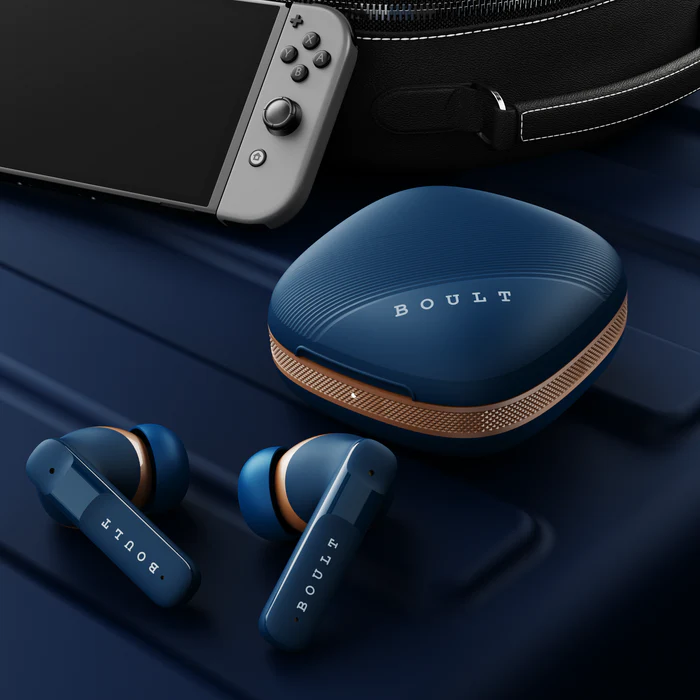
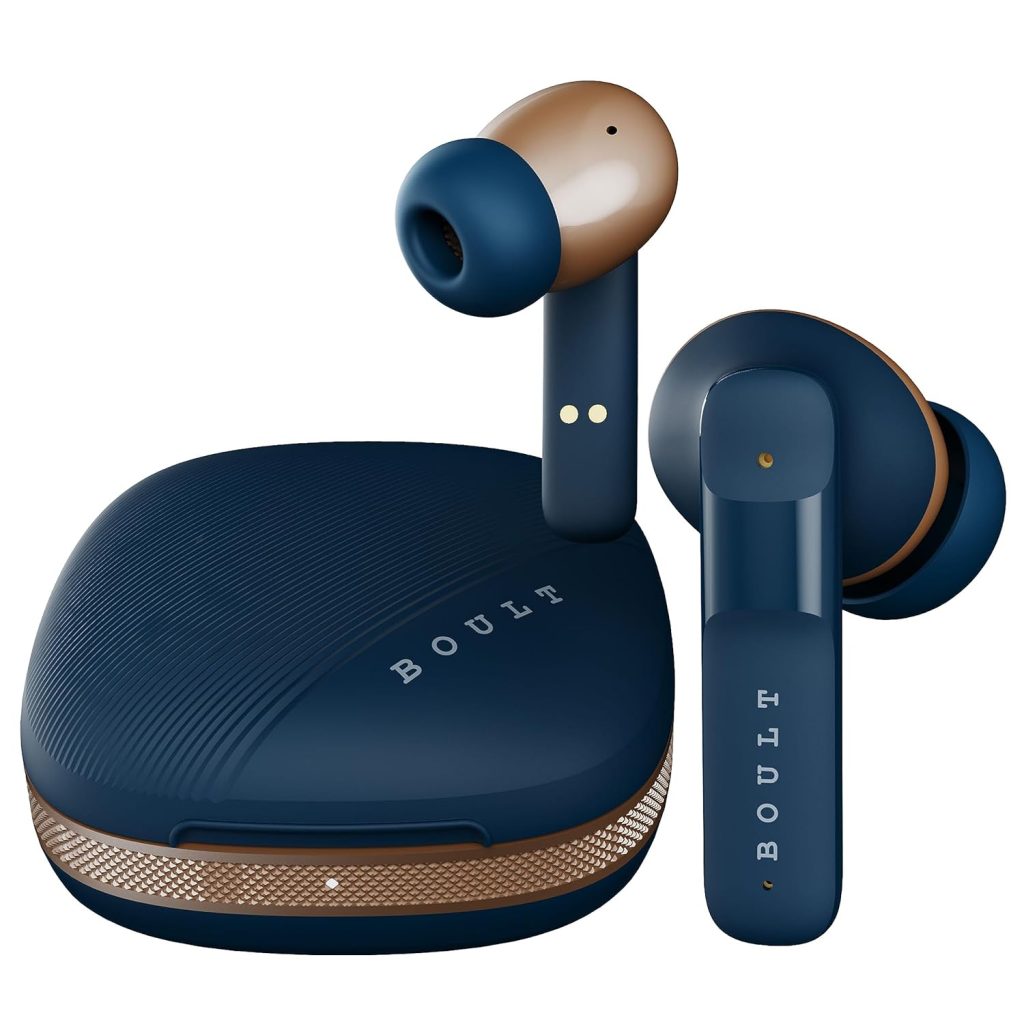
After debuting the Boult W40 TWS earbuds last month, the brand has now unveiled a new pair of earbuds called the Boult W50 which features a larger battery and better fast charging. You can find more details below.
Boult W50 TWS earbuds specs
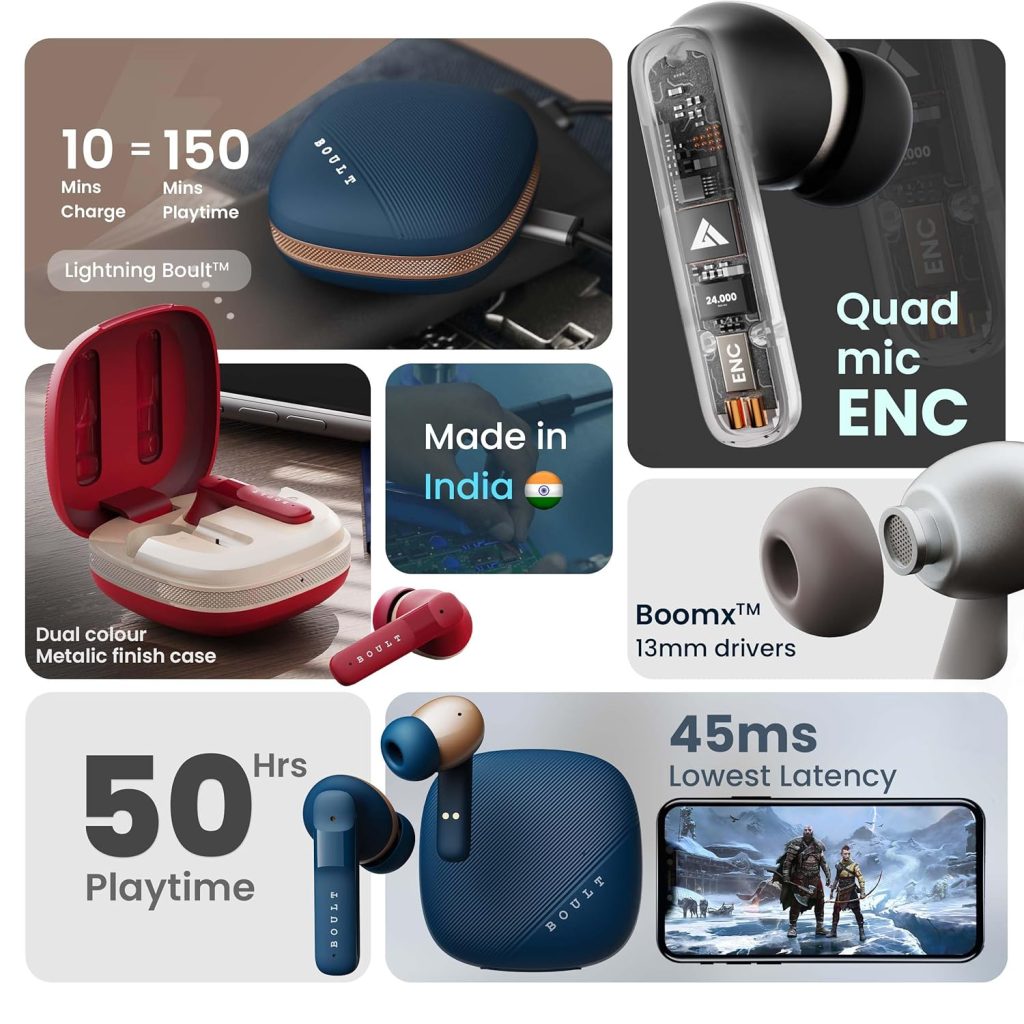
The Boult W50 earphones boast 13mm bass drivers, promising a powerful and immersive audio experience. Equipped with a Quad Mic AI-ENC chip, these earphones provide AI-driven environmental noise cancellation, allowing you to enjoy crystal-clear calls even in noisy environments.
Gaming enthusiasts will definitely enjoy the ultra-low 45ms latency gaming mode, ensuring a seamless and lag-free gaming experience. These earphones boast Bluetooth 5.3, guaranteeing a reliable and efficient wireless connection.
The Boult W50 earphones come equipped with touch controls, making playback and call handling a breeze. These earphones offer an impressive total battery life of 50 hours. What’s more, they include Lightning Boult Technology, which means that a quick 10-minute charge can give you an astonishing 150 minutes of playtime.
These earphones are built tough to handle the elements with their IPX5 water-resistant rating, so they’re great for outdoor adventures.
Price & availability
Priced at just Rs. 999, the Boult W50 comes in Blue Lustre, Ash Black, Ruby Bronze, and Silver Sand colors, and is already available for purchase on Amazon.in.
We use cookies on our website to give you the most relevant experience by remembering your preferences and repeat visits. By clicking “Accept”, you consent to the use of ALL the cookies.
This website uses cookies to improve your experience while you navigate through the website. Out of these, the cookies that are categorized as necessary are stored on your browser as they are essential for the working of basic functionalities of the website. We also use third-party cookies that help us analyze and understand how you use this website. These cookies will be stored in your browser only with your consent. You also have the option to opt-out of these cookies. But opting out of some of these cookies may affect your browsing experience.
Necessary cookies are absolutely essential for the website to function properly. This category only includes cookies that ensures basic functionalities and security features of the website. These cookies do not store any personal information.
Any cookies that may not be particularly necessary for the website to function and is used specifically to collect user personal data via analytics, ads, other embedded contents are termed as non-necessary cookies. It is mandatory to procure user consent prior to running these cookies on your website.