Advertisement

Nokia Takes a Step Back with the Not-So-Smart 130 and 150

Nokia is undoubtedly still one of the world’s most recognized brands. The company was very popular before the rise of smartphones and reached a peak market share of 41% in the global phone market in 2007. Although Nokia continues to exist today and comes up with new models, it’s quite far from its former glory. However, the legendary manufacturer hasn’t given up yet and has announced two new models. The not-so-smart Nokia 130 and Nokia 150 have been announced. Here are the details…

Nokia 130 and 150: The Phones for People Who Want to Disconnect

In today’s world, smartphones are much more than just a means of communication. We control almost all aspects of our lives through these devices, from managing our financial situation to storing precious memories. Yet, despite all these functions, some people still prefer older phones over smartphones. Aware of this situation, Nokia has introduced two new models, named 130 and 150.

Nokia 150

The Nokia 150 isn’t actually a new phone. This model was first announced by Microsoft in 2016 and received another makeover in 2020. Now, it’s back in the spotlight, despite not being modern, due to its refreshed design and features. Unfortunately, this model doesn’t have any standout features apart from not being a smartphone.

Nokia 150
Nokia 150

There’s no information about the processor of the Nokia 150, but it has a 1450 mAh battery capacity that can last a few days and a 0.3 Megapixel camera. There’s no front camera and the most notable feature seems to be its 3.5mm headphone jack. As for the operating system, it uses not Android, but an OS called S30+. Here are all its features:

FeatureNokia 150
Standby time30 days
Talk time20 hours
Headphone type3.5mm
USB connectionMicro-USB (1.1)
Battery1450 mAh, removable
Memory & storagemicroSD card support up to 32 GB
Operating systemS30+
AudioMP3 player (requires microSD card), voice recorder (requires microSD card), FM radio receiver (wired & wireless dual mode), 1 microphone, 1 speaker
NetworksNetwork bands (GSM): 900/1800, SIM size: 2FF (Mini SIM)
MaterialsBack: Polycarbonate with nano texture
Water resistant (IPX grading)IP52
In the boxMicro USB Charger, User Guide

Nokia 130

When we look at the Nokia 130, we don’t see much different, except for one significant missing feature. This model does not include a unique camera, taking us on a real journey back in time. Instead of a camera, we see a fairly large speaker grill on the back of the phone, which could be ideal for users who prefer listening to the radio rather than using Spotify or Apple Music.

Nokia 130
Nokia 130

This model comes with a 2.4-inch screen with a resolution of 240 x 320 pixels and a long battery life provided by a 1450 mAh battery. Honestly, there isn’t much to say for both phones except that they target specific groups of people.

FeatureNokia 130
Display2.4 inches, QVGA (240 x 320 pixels)
PerformanceStandby time: 30 days, Talk time: 20 hours
DesignHeadphone jack: 3.5mm
ConnectivityUSB connection: Micro-USB (1.1)
Battery & chargingBattery: 1450 mAh (removable)
Memory & storageInternal storage: 4 MB, microSD card support up to 32 GB
RAM4 MB
Operating SystemS30+
AudioFeatures: MP3 player (requires microSD card), Voice recorder (requires microSD card)
FM Radio receiverwired & wireless dual mode
Microphones1
Speakers1
NetworksNetwork bands (GSM): 900/1800
Sim size2FF (Mini SIM)
MaterialsBack: Polycarbonate with laser tooling texture
Water Resistant (IPX grading)IP52
In the boxMicro USB Charger, User Guide, Headset, Removable Battery

RELATED:

(via)

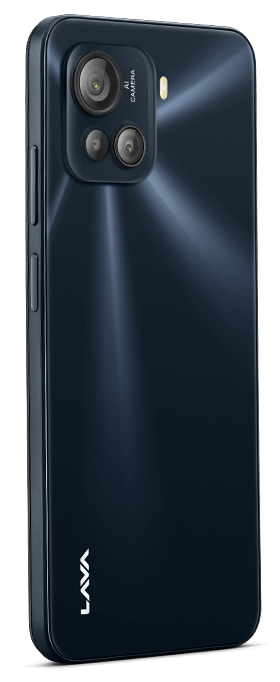
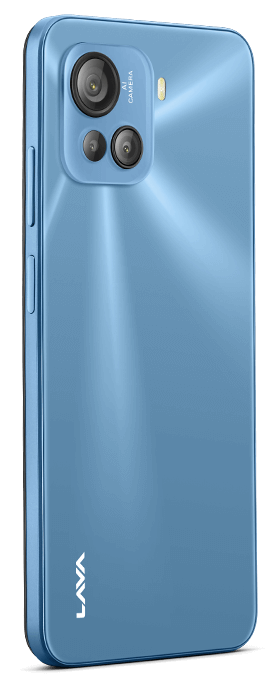
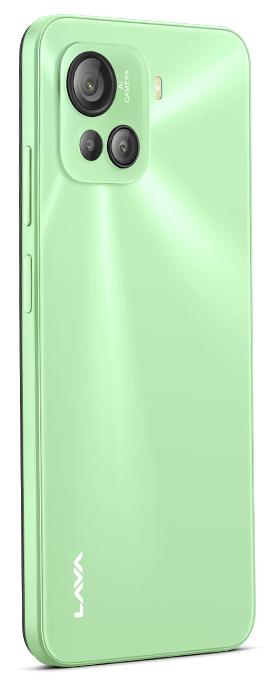
Lava launches super-affordable Yuva 2 with a 5,000mAh battery, 90Hz display

Indian smartphone maker Lava has launched a new affordable offering in the country. The Lava Yuva 2 is a budget phone that comes with just the features you’d need. It gets a large 5,000mAh battery, a large HD display, and a dual camera setup. The phone also gets a decent-looking design with a glass back. Here’s a closer look at the pricing and specifications of the newly launched Yuva 2.

Lava Yuva 2

Lava Yuva 2 Specifications and Pricing

Lava Yuva 2 comes after the company launched its mid-range Agni 2 smartphone with a good-looking design and impressive features. The budget phone in question is offered in Blue, Glass Lavender, and Glass Green colors. The camera model looks reminiscent of the older iPhone vanilla models but only if we are being generous.

It gets a 6.5-inch display with a 1600 × 720 pixels (HD+) resolution and a 90Hz refresh rate. There are thick bezels on the front with waterdrop-notch enclosing the selfie camera. The handset is powered by the lower-end Unisoc T606 processor, paired with 3GB RAM, 64GB UFS 2.2 internal storage. You can expand the storage up to 512GB with a microSD card.

For photography, the Lava Yuva 2 gets a 13MP main camera on the rear with a secondary VGA camera and an LED flash. There’s a 5MP shooter for selfies and video calls. On the software front, the device runs Android 12, which the company claims comes with no bloatware or ads. Fueling the Lava Yuva 2 is a 5,000mAh battery that supports 10W charging.

Other notable features on the device include a Dual SIM, a side-mounted fingerprint scanner, a 3.5mm audio jack, FM Radio, 4G VoLTE, Wi-Fi 802.11 ac, and Bluetooth 5.0.

Lava Yuva 2 is available in India at the price of Rs. 6,999. You should be able to purchase the device from the company’s official website or from offline retail stores starting today.

RELATED:

(Via)

Realme GT 5 Pro tipped to feature Sony IMX9-series main camera, periscope zoom lens

Realme is working on the Realme GT 5 series for the Chinese market. The company is expected to launch the Realme GT 5 this month, whereas the Realme GT 5 Pro may break cover by the end of this year. In a recent Weibo, tipster Digital Chat Station leaked the camera specifications of the GT 5 Pro.

Realme GT 5 Pro camera details leaked

Realme GT 5 name spotted at ChinaJoy 2023 Realme booth

Previous reports have claimed the Realme GT 5 Pro could be Realme’s first phone equipped with a periscope zoom camera. In the latest leak, DCS revealed that the device would have the 64-megapixel OmniVision OV64B periscope telephoto camera with 3x optical zoom. The rear camera setup of the GT 5 Pro will also feature an ultra-wide snapper, but its details are not known yet.

As far as the primary snapper of the Realme GT 5 Pro is concerned, the leak claims it is equipped with an OIS-enabled Sony IMX9 series 1/1.4-inch sensor with OIS. It is speculated that the OnePlus 12 will also feature the same primary and periscope zoom cameras. However, the GT 5 Pro will lack the Hasselblad optimizations, which will be available on the OnePlus 12.

The Realme GT 5 Pro will feature the upcoming Snapdragon 8 Gen 3 chip. The rest of its specifications remain a mystery. On the other hand, almost everything is known about the GT 5.

According to reports, the Realme GT 5 will have two battery and charging variants, such as 4,600mAh + 240W and 5,200mAh + 150W. It will have a 6.74-inch OLED 144Hz display with a 1.5K resolution support, Snapdragon 8 Gen 2, up to 24 GB of LPDDR5x RAM, up to 1 TB of UFS 4.0 storage, a 16-megapixel front camera, and a 50-megapixel (Sony IMX890, with OIS) + 8-megapixel (ultra-wide) + 2-megapixel (macro) triple camera unit.

RELATED:

(source)

Noise Buds VS104 Max TWS earbuds with 25 dB ANC & 45-hour battery life launched, pre-orders open on Amazon India

Noise has started off August with the release of their latest TWS earbud, the Noise Buds VS104 Max, following a series of successful launches last month. Despite featuring active noise cancellation, these earbuds are priced quite affordably. You can find out more about the earbuds below.

Noise Buds VS104 Max

Noise Buds VS104 Max specs

The Noise Buds VS104 Max features 13mm drivers that deliver a premium audio experience. The earbuds have Bluetooth 5.3 onboard along with the Hyper Sync technology which pairs the earbuds to your smartphone as soon as you open the charging case lid.

It has Active Noise Cancellation technology that cuts down surrounding noise up to 25 dB to provide a pleasant and immersive listening experience. It also has a transparency mode which lets you hear the outside world without taking off your earbuds.

Noise Buds VS104 Max

For crystal-clear communication during calls and virtual meetings, the earbuds come equipped with a Quad Mic and Environmental Noise Control (ENC). It also features a low-latency mode for gaming and watching videos, which ensures audio synchronization within up to 50ms.

The Buds VS104 Max offers a long 45-hour battery life (earbuds and charging case combined) and Instacharge technology, which lets you quickly top up the buds with three hours of battery life with a quick 10-minute charging time. Lastly, the earbuds feature IPX5 water resistance, making it a perfect workout companion.

Price & availability

The recently launched Noise Buds VS104 Max is now up for pre-order and will be available for purchase on Amazon India from August 3. These earbuds are offered at a discounted price of Rs 1,699 for a limited time.

RELATED:

(Source, via)

Xiaomi 13T Pro RAM, storage configurations appear via FCC certification

Last month, the upcoming Xiaomi 13T (model number: 2306EPN60G) was spotted in the database of the FCC certification platform. The Pro variant of the device (model number: 23078PND5G) has also bagged FCC certification recently. Continue reading to learn the details that have emerged through the Xiaomi 13T Pro’s FCC listing.

Xiaomi 13T Pro FCC certification

The Xiaomi 13T Pro’s FCC listing will offer connectivity features, such as dual SIM, 5G (n5, n7, n38, n41, n44, n66, n71, and n78 bands), Wi-Fi 6E, and NFC. The listing suggests that the 13T Pro may arrive in multiple configurations, such as 12 GB RAM + 256 GB storage, 12 GB RAM + 512 GB storage, 16 GB RAM + 1 TB storage.

The FCC document indicates that four samples of the Xiaomi 13T Pro are being considered for testing purposes. Sample 1 features 12+512GB memory, a CSOT screen, and an aluminium back cover. Sample 2 offers 16+1TB memory, a CSOT display, and a glass back cover. Sample 3 includes 12+256GB memory, a Tianma display, and an aluminium back cover. Lastly, Sample 4 comprises 12+512GB memory, a CSOT screen, and a PIJ back cover. It appears that Sample 1 will undergo comprehensive testing at the FCC.

As per other reports, the Xiaomi 13T Pro will arrive with a 6.67-inch OLED panel that offers a 1.5K resolution and a 144Hz refresh rate. It will have the Dimensity 9200 Plus chip, LPDDR5x RAM, UFS 4.0 storage, and a 5,000mAh battery with 120W fast charging support. The device is expected to launch on September 1st, 2023, in the global market. It is likely a rebranded version of the 13T Pro will debut as the Redmi K60 Ultra in the Chinese market this month.

9RELATED:

via)

Redmi confirms August 3 event in China, Redmi K60 Ultra launch date likely to be confirmed

Redmi has officially confirmed that a launch event is scheduled for tomorrow, August 3rd, at 2 pm (local time) in China. It seems that the new announcement will be related to the Redmi K60 Ultra, which is expected to debut soon in the country.

Redmi rolled out the above poster through its Weibo handle in China today. It reveals that Redmi’s upcoming announcement will revolve around MediaTek and Pixelworks. It appears that the focus will be on the Redmi K60 Ultra, which is anticipated to feature MediaTek’s Dimensity 9200 Plus chipset and Pixelworks’ display chip, promising an enhanced visual experience.

Redmi announcement  August 3
Redmi K60 Ultra launch date is likely to be confirmed on August 3

The K60 Ultra is expected to debut along with other products, such as the Xiaomi Mix Fold 3, Xiaomi Pad 6, and Redmi Pad 2 this month. Here is a look at the leaked specifications of the K60 Ultra.

Redmi K60 Ultra specifications (rumoured)

According to reports, the Redmi K60 Ultra suggests it will arrive with a 6.67-inch OLED panel with a 1.5K resolution and an impressive 144Hz refresh rate. For security, it will have an under-display fingerprint sensor.

The K60 Ultra is likely to be powered by the Dimensity 9200 Plus chipset. The device is expected to arrive in two LPDDR5x RAM + UFS 4.0 storage configurations: 12 GB RAM with 512 GB storage and 16 GB RAM with 1 TB storage. Notably, it’s projected to support rapid 120W charging and house a 5,000mAh or 5,500mAh battery.

Reports have revealed that a rebranded or a tweaked version of the K60 Ultra will be released with Xiaomi 13T Pro moniker in the global market. The company is expected to announce the 13T Pro as well as Xiaomi 13T on Sept. 1 globally.

RELATED:

Hyundai BEVs see Record-Breaking Sales Performance in the US

Hyundai Motor America’s vehicle sales have surged, hitting 66,527 units in July, marking a 10% rise compared to last year. The automaker has managed to sell a total of 461,140 units from January to July, experiencing a 14% year-over-year boost. The highlight, however, is the exceptional performance of Hyundai’s electric vehicles, specifically, its E-GMP-based models. In July alone, sales skyrocketed to three times last year’s performance, setting a new record for the company.

Hyundai seems to be trying to take control of a rapidly-developing vehicle segment

Considering Hyundai is still developing The Ioniq 5 and Ioniq 6 were at the forefront of this surge, selling a combined total of 5,880 units, which represents a whopping 197% increase from last year and makes up 8.8% of Hyundai’s total vehicle sales in July. This record-setting performance marks a significant milestone for the South Korean auto brand as it solidifies its foothold in the competitive electric vehicle (EV) market.

Hyundai

Furthermore, both the Ioniq 5 and Ioniq 6 reached their own individual sales records in July, with 4,135 and 1,745 units sold, respectively. The Tucson PHEV also set a monthly sales record, underscoring Hyundai’s green revolution.

“Hyundai continues to impress with its eco-friendly product range, including the IONIQ 5, IONIQ 6, and our HEV and PHEV vehicles. Our green car sales have shown substantial growth month-to-month throughout 2023. We attribute this success to our effective marketing and dealer programs,” stated Randy Parker, CEO of Hyundai Motor America.

Despite the impressive performance of the Ioniq family, the sales results for other all-electric or plug-in hybrid models were not included in the official stats. Moreover, Hyundai Nexo, the hydrogen fuel cell model, saw a sales increase of 17% in July, albeit with lower total sales. The automaker seems well on its way to establishing a dominant presence in the US EV market, building on this current momentum.

RELATED:

(Via)

Ford’s F-150 Lightning Production Triples at Rouge EV Center, Michigan

After a six-week pause, Ford‘s F-150 Lightning production has roared back to life at its Rouge Electric Vehicle Center (REVC) in Dearborn, Michigan. The shutdown facilitated a strategic expansion of the facility, tripling its manufacturing capacity, a move geared towards addressing the surging demand for Ford’s electric truck. By fall, Ford anticipates an annualized production rate of 150,000 units. Though summer deliveries suffered due to the temporary shutdown, Ford now stands poised to expedite the ramp-up process, unlocking a greater supply of the F-150 Lightning.

Ford is also ramping up the production of battery packs at the Rawsonville Components Plant

“We eagerly anticipate putting the F-150 Lightning into our customers’ hands – from the U.S. to Norway. This is a testament to our dedicated team’s relentless efforts,” said Debbie Manzano, director of manufacturing, Ford Motor Company.

Ford F-150

Expected to produce over 70,000 F-150 Lightning trucks in 2023, the facility’s new tooling promotes not only increased production but also higher quality. The REVC now boasts innovative tools for automatic measurement and validation of exterior body fit – a first in a Ford North American plant.

Adding a third station to validate wheel alignment and headlamp aim for driver assist technology, Ford is simultaneously training 1,200 additional manufacturing employees, accelerating onboarding with a buddy system.

In a parallel development, Ford is enhancing the production of battery packs at the Rawsonville Components Plant and EV power units at the Van D. Electric Powertrain Center in Michigan, aligning with the increased F-150 Lightning assembly at REVC. These production enhancements promise shorter order-to-delivery times, with a focus on high-demand trim levels like the XLT, which constitutes over half of new orders. Furthermore, the F-150 Lightning Pro is now available in limited quantities, with priority given to long-standing reservation holders.

“Through feedback from our first EV truck customers, we’ve identified a preference for technology and visual differentiation. We’re refining the F-150 Lightning lineup to make the switch to an EV truck an effortless choice for customers,” stated Marin Gjaja, chief customer officer, Ford Model e.

RELATED:

(Via)

Apple’s Satellite SOS Feature Helps Prevent a Major Forest Fire on an Island in Canada

Apple‘s Emergency SOS feature was talked about quite a lot when it first came out. People wondered if there would be any practical applications for such a niche feature. Well, their concerns will definitely be hushed up once they find out that a group of Canadian residents in Missanabie, Ontario, recently utilized the iPhone 14’s SOS via satellite feature to call for emergency services. This is how they fought a raging forest fire on Dog Lake Island without any available cellular connection.

The fire was also taken care of by the Ministry of Natural Resources and Forestry who arrived later

The new iPhone feature, incorporated in both the 14 and 14 Pro models, enables users to reach out to emergency services during connectivity blackouts. It is primarily used in emergency situations such as when an adventurer gets lost or injured. However, this event marked another practical application for the feature, demonstrating its utility in firefighting efforts.

Apple SOS

The duo, Warren Thibodeau and Orel Crack, alongside local firefighter Craig Spooner, embarked on a daring expedition to combat the island fire. They navigated their way to the blazing island, tirelessly spraying water until the fire was quenched. Their valiant efforts were supported by the Ministry of Natural Resources and Forestry (MNRF) who arrived promptly after being contacted through the satellite feature.

“The new GlobalStar emergency feature of the iPhone 14 facilitated our communication with the MNRF while approaching the burning island,” Eric Belanger, who photographed and shared the event, stated. The following day, a camper from Dog Lake Cottages and Campground, Marc G., confirmed that the MNRF were tidying up the aftermath.

The SOS via satellite feature becomes available when cellular signal is non-existent. The user interface prompts the user to point their iPhone toward a nearby satellite for a signal. This feature gathers data about the reported incident and shares the user’s location with emergency services. Despite the slow data transfer speeds and potential poor connection quality, it offers a lifeline in emergency situations, underlining the revolutionary impact of technology on public safety and disaster management.

RELATED:

(Via)

MrBeast Files Lawsuit Against his own Fast-food Chain, MrBeast Burger

Massively popular YouTuber Jimmy Donaldson, known as MrBeast, has lodged a lawsuit against Virtual Dining Concepts (VDC), the firm behind his delivery-only fast food chain, MrBeast Burger. The issue stems from an alleged disregard for quality in favour of rapid expansion by VDC, ruining the popular YouTuber’s brand that sells burgers throughout the States.

The lawsuit states that VDC was capitalizing on MrBeast to lure in other clients without focusing on MrBeast Burger

Reports suggest that the company’s focus on swift growth led to substandard food that negatively impacted the brand’s image. The suit filed by MrBeast aims to dissolve the licensing agreement and shut down the operation altogether, citing egregious flaws in food quality and service.

MrBeast Burger

Negative reviews of the brand abound, with customers labelling the burgers as “inedible” and “revolting.” A multitude of customer complaints revolve around raw meat, cold fries, missing ingredients, and orders that never materialized. Some of the ghost kitchen locations botched the branding aspect, delivering food in generic packaging or even 7-11 bags.

The YouTube star’s legal team asserts that VDC failed to rectify these quality issues despite being approached. Further, they contend that MrBeast has not been compensated despite being owed royalties. Adding fuel to the fire, the suit also alleges that VDC often registers trademarks and uses branding without prior approval.

The lawsuit indicates that VDC is exploiting the MrBeast brand to lure in other celebrities while neglecting support for new brick-and-mortar establishments that could potentially slice into its profits.

In 2020, the collaboration was initiated as a pandemic response strategy to boost delivery services and aid fans and restaurants when dining in wasn’t viable. Unfortunately, the business model’s weaknesses have been exposed as ghost kitchens aren’t held to the same regulatory standards as traditional restaurants.

RELATED:

(Via)

Microsoft will Offer Replacement Parts for Xbox Controllers

Inflation also seems to be affecting gaming peripherals worldwide, with prices shooting through the roof. Usually, the controllers retail between $60 to $180, which can leave players with a hefty bill when replacement is the only option. However, Microsoft is trying to change the game with a revolutionary approach to controller self-repair, providing a potentially significant cost-saving opportunity for gamers.

Other brands, such as Sony and Nintendo have similar, yet different DIY repair strategies for their controllers

Microsoft’s groundbreaking solution extends to Xbox Wireless Controller models, including the Elite Series 2. This initiative promises downloadable instructions, tutorial videos, and, most importantly, replacement parts such as boards, sticks, buttons, covers, and more, available directly from Microsoft. Prior to this, gamers had to rely on potentially unreliable third-party fixes or replace the entire gamepad, often a costly idea.

Xbox

The range of issues that can be addressed is comprehensive, covering problems from stick drifting to jammed shoulder buttons. Prices for the repair components vary, with button sets costing $24, a circuit board and motor assembly unit at $60, and a vibration motor at $35. Even replacement cases are on offer, albeit only in black and white.

This groundbreaking program is already operational, according to product lead Brad Rossetti, inviting all Xbox gamers with damaged controllers to breathe new life into their devices. Moreover, the initiative extends to third-party retailers, including self-repair experts iFixit.

While Microsoft’s initiative is indeed noteworthy, it’s not alone in the gaming industry’s evolving stance on DIY repairs. Sony’s DualSense Edge controller includes replacement control stick modules as a standard. However, unlike Microsoft, Sony does not sell additional repair parts through an online platform. Nintendo, while not selling repair components, provides free repair service for its controllers affected by the notorious Joy-Con drift. More companies should adopt this approach to retain customers who value their gaming controllers.

RELATED:

(Via)

Latest Apple Patent Hints towards Vision Pro Head-Mounted Display that can Mimic Odours & more!

Once again, Apple has acquired a technical patent that could revolutionize the way we perceive our environment using augmented reality (AR) and virtual reality (VR). This exciting new patent, numbered US 11715301 B2, enables a proposed headset attachment for the Vision Pro headset to help make phenomena more realistic. Users wearing this headset could interact with a whole new range of sensory experiences, from visualizing radio signals to hearing unique auditory fences designed for pets. It sounds like the future, but this seems to be happening right now!

The patent discusses integrating real-world content with CGI elements

According to the patent list issued by the United States Trademark and Patent Office (USPTO), the innovative technology will likely bridge the gap between AR, VR, and the physical world. This will be accomplished by integrating real-world content with computer-generated elements, thereby enabling wearers to perceive special features.

Apple Vision Pro

Among the invisible features earmarked for visualization are electromagnetic signals such as Wi-Fi, airflow from HVAC systems, and the temperature of physical objects. The patent also mentions the potential for users to interact with auditory sensors for pets and sounds produced by musical instruments. However, the innovation doesn’t stop at visual and auditory experiences. Apple’s Vision Pro headset might offer an olfactory dimension to AR and VR. The patent details suggest the device could mimic various odours, simulating one or more pre-defined scents of gas, vapour, or particles.

This technology’s applications are seemingly limitless. For example, the patent outlines a scenario where users entering a virtual flower shop could smell the fragrance of the blooms or sense the aroma of fresh fruit in a simulated fruit store. This opens up a new dimension of sensory experience in virtual and augmented realities, further blurring the lines between the digital and physical worlds. Gaming will also reach new heights with technology such as this!

RELATED:

(Via)

Samsung Galaxy S24 series battery, display, design specs tipped

Samsung is gearing up for the highly anticipated launch of its Galaxy S24 series early next year, and recent leaks from tipster Ice Universe have revealed some exciting specifications, display, battery, and design details.

Samsung Galaxy S23 series

Battery Specs:

The upcoming Galaxy S24+ and S24 Ultra models are expected to see improvements in battery capacity. The TUV certification database shows that the S24+ will feature a 4755mAh battery (typical value 4900mAh), compared to the S23+’s 4700mAh capacity.

Samsung Galaxy S24 series battery specs leak

The S24 Ultra, on the other hand, will retain the same 4855mAh capacity (typical value 5000mAh) as its predecessor. There are also rumors suggesting that the S24 series may support faster 65W charging, possibly leveraging electric vehicle battery technology.

Processor and Performance:

The Samsung Galaxy S24+ has appeared in Geekbench 6 benchmarks, revealing a single-core score of 2233 and a multi-core score of 6661. The benchmark confirms that the S24+ will be powered by the Snapdragon 8 Gen 3 processor with 8GB of RAM.

Galaxy S24 series chipset leak

However, the entire Galaxy S24 series may not use only one processor, as the tipster Ice Universe has confirmed the return of the Samsung Exynos 2400 processor. The Exynos 2400 is expected to have 10 CPU cores and its GPU benchmark score is said to surpass that of the Snapdragon 8 Gen 3. The actual performance of this processor is eagerly anticipated. This processor is expected to come in some regions of Europe and Asia.

Design:

Design-wise, the Galaxy S24 and S24+ models are expected to feature LTPO screen with narrower bezels, according to tipster Ice Universe. As for the Galaxy S24 Ultra, it is likely to retain the design language of its predecessor, the S23 Ultra, with the possibility of an added titanium frame.

Galaxy S24 series display specs leak

Display and Camera:

The display size of the Galaxy S24+ is expected to increase slightly to 6.65 inches from the previous model’s 6.6-inch Dynamic AMOLED 2X display. The Galaxy S24 Ultra might not include variable zoom capabilities, sticking with the quad-camera setup of its predecessor. The selfie camera upgrade is also unlikely.

With these promising enhancements in battery capacity, processing power, and design, Samsung’s Galaxy S24 series is shaping up to be an exciting addition to the smartphone market. As we await the official unveiling, there are many more leaks on the way. So stay tuned.

RELATED:

(Source)

1More SonoFlow SE headset with 40mm dynamic coil & 70 hours of battery life launched in China

Chinese audio products manufacturer 1More has unveiled a new headset equipped with a 40mm dynamic coil in China. The Wanmo SonoFlow SE Bluetooth headset offers noise cancellation and a raft of other impressive features. The headset is a downgraded version of the SonoFlow.

1More SonoFlow SE headset

The 1More SonoFlow SE is equipped with a 40mm dynamic coil (32 ohms) and a 35dB QuietMax dual-feed intelligent noise reduction. The headset supports Bluetooth 5.0 connectivity and battery life is put at 70 hours. The battery life is reduced to 50 hours when active noise reduction is turned on. As per charging, Wanmo claims that a 5-minute charge delivers up to 5 hours of playback.

1More SonoFlow SE headset

The 1More SonoFlow SE supports AI call noise reduction. This will help to eliminate environmental noise adaptively. The earmuffs in the headset are made from soft protein leather and the gadget weighs 240g. Up to 12 different kinds of sound effects are available. This ensures that there is “no distortion filter” in the sound effects. The headset also provides complete clarity and a tuning style of music.

1More SonoFlow SE headset

The 1More SonoFlow SE headset can be used in a variety of applications including music and gaming. It is currently available on retail platforms across China including JD.com. The gadget is being retailed at a starting price of 349 yuan (~$49). There are no global availability and pricing information for the SonoFlow SE headset at this time. It is however expected that the product may be subsequently available in other markets.

RELATED:

Paytm Pocket Soundbox and Music Soundbox payment devices launched in India

The Paytm Pocket Soundbox and Paytm Music Soundbox payment devices have been unveiled in India. The announcement was made by One97 Communications Limited (OCL), the parent company of Paytm. Paytm is a leading financial services and payments solution company in India and the two new offerings will further entrench its position. Both devices are designed to provide improved payment coverage for merchants in the subcontinent.

The Paytm Pocket Soundbox is a portable device and is being propped as the first of its kind. It can conveniently fit in the pocket and comes with 4G network connectivity. The Pocket Soundbox delivers instant audio payment alerts to merchants for enhanced efficiency. The device is wholly manufactured in India and has a 5-day battery life. It also has a built-in torch for use in dark conditions. It can be deployed by a wide array of merchants from cab drivers, to delivery agents, and cart vendors.

Paytm Pocket Soundbox

The Paytm Music Soundbox provides entertainment for merchants while also operating as a payment device. It can be used as a Bluetooth speaker and comes with a 4W speaker. The Music Soundbox is compatible with 4G connectivity and it has a 10-day battery life. Like the Pocket Soundbux, the Music Soundbox also provides audio payment notifications. This is even possible when music is playing in the background.

Paytm Pocket Soundbox

Paytm continues to garner patronage from merchants across India – thanks to its lineup of innovative and custom-made payment solutions. Paytm says these new devices will continue to propel Paytm as the leading payment provider among small businesses in India.


RELATED:

(source)

Xiaomi introduces MIJIA Microwave Oven 20L with 360° surrounding rapid heating

Xiaomi has recently unveiled its latest kitchen appliance, the MIJIA Microwave Oven 20L, at an attractive debut price of just 319 yuan ($44), discounted from the regular retail price of 349 yuan ($48).

Xiaomi MIJIA Microwave Oven 20L

Xiaomi MIJIA Microwave Oven 20L features:

This microwave oven comes in a minimalist and youthful design, featuring a clean, pure white finish. It is designed with user convenience in mind, boasting a handle-free one-key opening system for seamless access and a dual knob control system for easy one-handed operation.

One of the standout features of the MIJIA Microwave Oven 20L is its 360° surrounding heating technology, which utilizes a new generation of magnetron technology to significantly improve heating efficiency. This ensures rapid and even heating of food, resulting in enhanced taste and convenient cooking experiences.

Xiaomi MIJIA Microwave Oven 20L

This microwave oven is not only about heating, but it also offers a host of other features. It features a 5-level firepower adjustment, giving the user control over the cooking intensity. Additionally, the microwave oven supports a defrosting function and possesses a rapid heating capacity of 700W. This power allows for microwave cooking durations of up to 35 minutes.

With a generous capacity of 20L, the microwave oven can easily accommodate larger food items like a whole chicken. The interior features a nano-coating for easy cleaning, and a removable glass turntable simplifies maintenance and enhances the overall cleaning process. Xiaomi launched two new home appliances today: the Xiaomi Body Sensor 2S and the Mijia All-in-One Sweep and Mop Robot 2.

RELATED:

(Via)

Redmi K60 Ultra runs Geekbench with MediaTek Dimensity 9200 Plus

Redmi K60 Ultra is expected to launch this month in a full-fledged launch event, expected to be held in China. It could share the stage with a slew of other Xiaomi products, including the Mix Fold 3, Redmi Pad 2, and more. While we wait for an official announcement, the Redmi K60 Ultra has been spotted on the Geekbench platform with MediaTek Dimensity 9200 Plus chip under the hood. Here are the details.

Redmi K60 Ultra could launch later this month

The Redmi K60 Ultra has appeared on Geekbench with the model number 23078RKD5C. It is listed with a MediaTek SoC codenamed Corot, featuring a peak clock speed of 3.35GHz for the prime core. The three performance cores are clocked at 3.0GHz, and the four efficiency cores are clocked at 2.0GHz. This suggests that the device is likely equipped with the MediaTek Dimensity 9200+ SoC, as all the leaks have pointed out.

Redmi K60 Ultra Geekbench

The listing also reveals 16GB RAM on the device as well as Android 13. In Geekbench 6’s single-core and multi-core tests, the phone scored 1288 and 4121, respectively. The listing suggests the device will launch in the coming months but there’s no official confirmation yet.

As for the rest of the specs, the Redmi K60 Ultra is reported to feature a large 6.7-inch OLED display with an impressive 1.5K resolution and a high refresh rate of 144Hz. It should come with 12GB LPDDR5x RAM and 512 GB of UFS 4.0 storage or with 16 GB of RAM and 1 TB of storage.

Battery capacity on the Redmi K60 Ultra could range from 5,000mAh to 5,500mAh, with support for fast charging at 120W. It will likely be offered in sleek Black and vibrant Cyan color options.


RELATED:

(Via)

OnePlus Open launch might have been delayed for good reason

A OnePlus foldable is very much real, and the company even hinted its name in a recent teaser. The company’s first folding phone will be called OnePlus Open, and it is rumored to launch on August 29. However, the launch of the smartphone is said to be delayed for a ‘good reason.’ The company apparently decided to make last-minute display changes, switching manufacturers all the way from China to South Korea.

OnePlus Open to use Samsung displays instead of BOE

Max Jambor claims on Twitter/X that OnePlus has delayed the launch of its first foldable phone. The reason behind the delay is that OnePlus decided to switch from using BOE panels to Samsung-made displays. Jambor hints that BOE panels didn’t meet the expected standards, and Samsung’s displays are known to be better. So, this could actually be good news for the upcoming phone.

OnePlus-Fold-CAD-render

OnePlus Open was supposed to be a book-style foldable, similar to the new Galaxy Z Fold 5. Initially, it was reported to launch on August 29, but now the date has been pushed back, so you can expect its debut in late 2023. If the rumors are true, OnePlus Open should be a rebranded Oppo Find N3, expected to launch in China sometime this month.

The folding phone is rumored to have a 6.3-inch AMOLED FHD+ 120Hz cover screen and a 7.8-inch foldable AMOLED display with Quad HD+ resolution and a 120Hz refresh rate. It is likely to be powered by the Snapdragon 8 Gen 2 chip, as the Snapdragon 8 Gen 3 will not be released until October.

The phone is expected to have a 4,805mAh battery with support for 67W fast charging and 50W wireless charging. It will run on Android 13, specifically the OxygenOS Fold variant.

RELATED:

(Source)

Tecno Spark 10 & Spark 10C get new eye-catching color options in India

Today, Tecno launched the Pova 5 Pro smartphone in Indonesia, and it is also set to arrive in other global markets, including India. Additionally, the brand introduced new color options for two of its existing smartphones in India, namely the Tecno Spark 10 and Tecno Spark 10C.

Tecno Spark 10 is now available in a striking Magenta color variant, while the Tecno Spark 10C is introduced in a vibrant Orange hue. Both of these new color options are eye-catching and add a fresh touch to the smartphone’s appearance.

Tecno Spark 10, Spark 10C specs & features

The Tecno Spark 10 comes with a 6.6-inch HD+ LCD display featuring a smooth 90Hz refresh rate. Powered by a MediaTek Helio G37 chipset, it offers 8GB of RAM and 128GB of internal storage. Running on HiOS 12 based on Android 13, the smartphone offers an updated and user-friendly interface. It is equipped with a 5000mAh battery, supporting 18W fast charging. For photography, it features a dual rear camera setup with a 50MP main camera and a secondary lens, along with an 8MP front camera for selfies.

On the other hand, the Tecno Spark 10C comes with a 6.6-inch HD+ IPS display and a 90Hz refresh rate. Powered by an Unisoc T606 processor, it offers up to 8GB of RAM and 128GB of storage. It operates on Android 12-based OS. Like the Tecno Spark 10, it also packs a 5000mAh battery with 18W fast charging support. For photography, the smartphone features a dual rear camera setup, consisting of a 16MP main camera and a macro lens, along with an 8MP front camera for selfies.

RELATED:

(Source)

Samsung Galaxy Tab S9 FE+ FCC listing ahead of launch reveals upgraded hardware

The Samsung Galaxy Tab S9 FE+ tablet is drawing closer to its release date. Samsung may have lined up the Galaxy Tab S9 FE+ to come on the heels of the just-released Galaxy Tab S9 series. The Galaxy Tab S9 FE+ could be launched shortly, having passed through the FCC certification in the US.

The Galaxy Tab S9 FE+ was leaked a few months ago and will come with a 12.4-inch display. It is similar in size to the Galaxy S7 FE but comes with upgraded hardware. It has been rumored that the large-screen upcoming Samsung tablet will be powered by the Exynos 1380 chipset. The Exynos 1380 is featured in the Galaxy A34 and Galaxy A54. It is faster than the Qualcomm Snapdragon 750G and even squares up against the Snapdragon 778G.

Samsung-Galaxy-Tab-S9-FE +

As per the FCC documentation spotted for the Samsung Galaxy Tab S9 FE+, it has GPS, Wi-Fi 6, and Bluetooth 5.3 support. Of note is the Bluetooth version which brings more efficient wireless connections. The tablet has a dual-camera system as earlier highlighted from leaked renders. Two models will be available for the Galaxy Tab S9 FE+, namely a Wi-Fi-only version, and a 5G version. A side-mounted fingerprint scanner, an S Pen, and stereo speakers are also featured in the Galaxy Tab S9 FE+.

There is still much optics unknown about the Galaxy Tab S9 FE+. Samsung has not provided any official details on the release date and pricing information for the Galaxy Tab S9 FE+. The Samsung Galaxy Tab S9 FE+ is part of the Galaxy Tab S9 series. The models recently released were the Galaxy Tab S9, Galaxy Tab S9+, and the Galaxy Tab S9 Ultra.

Related: 

(via)