Advertisement

European Commission & Google Aim to Develop AI Pact Ahead of Regulations

Ever since AI became mainstream, laws regarding AI have become necessary to address ethical concerns, protect individual rights, ensure safety and security, establish accountability and liability, promote economic considerations, and enable international harmonization. These laws set guidelines for responsible AI development, protect privacy, mitigate risks, hold individuals and organizations accountable for harm, foster innovation, and facilitate global cooperation in the development and use of AI technologies.

Rapidly advancing AI technology is heightening the need for voluntary agreements among Devs

Alphabet, the parent company of Google, and the European Commission are joining forces to establish an artificial intelligence (AI) pact involving companies from Europe and beyond. The goal is to create a voluntary agreement among AI developers before official regulations governing the technology come into effect. This move comes as EU industry chief Thierry Breton met with Sundar Pichai, CEO of Alphabet, in Brussels. The urgency to act stems from concerns over the potential disruptive impact of rapidly advancing AI technology and the need to strike a balance between regulation and innovation.

AI

Thierry Breton emphasized the need to proactively develop an AI pact on a voluntary basis, rather than waiting for formal regulations to be enforced. The aim is to foster collaboration among AI developers to establish ethical guidelines and principles that align with societal expectations. Breton also called on EU countries and lawmakers to expedite the finalization of the Commission’s proposed AI rules before the end of the year.

EU Commissioner for Competition, Margrethe Vestager, stressed the importance of collective action, stating that universal rules for AI need to be agreed upon voluntarily and promptly due to the rapid evolution of AI technology. The European Union and the United States are also planning to enhance collaboration to establish minimum standards before legislation is enacted.

During the discussions, Commission Vice President Vera Jourova expressed concerns to Pichai regarding the spread of pro-Kremlin war propaganda and disinformation on Google’s platforms, emphasizing the risks they pose to EU and national elections. Pichai pledged to investigate the challenges faced by independent Russian media in monetizing their content on YouTube in Russia.

RELATED:

(Via)

Meta Promises CMA Not to Utilize Competitors’ Advertising Data for Facebook Marketplace

In a recent development, the British Competition and Markets Authority (CMA) has announced that Meta, the parent company of Facebook, has made a significant promise regarding the use of advertising data obtained from competitors for enhancing its Facebook Marketplace. This move comes after the CMA launched an investigation in June 2021, alleging unfair competition by Meta’s popular online marketplace.

Meta plans to implement this change no later than June 2024

According to the CMA, Meta’s practice of bundling Facebook Marketplace with its main social network gives it a significant advantage over its competitors, granting it a “substantial distribution advantage.” With billions of monthly active users and millions of active advertisers globally, Facebook has an unparalleled reach that potentially ensures automatic access to Marketplace for its users.

Meta

Facebook Marketplace serves as a platform for users to explore and purchase various items. It’s important to note that creating a listing on the Marketplace differs from creating a paid advertisement to target shoppers. By leveraging Marketplace ads, businesses can effectively promote their products or services to a broader user base on the shopping platform.

Meta’s commitment to the CMA’s request will result in a crucial change in its business practices. However, it is important to mention that the fulfillment of this promise will not be immediate. Meta Company has set a timeline for the implementation of this change, aiming for it to take effect no later than June 30, 2024, or as early as December.

The CMA’s investigation and Meta’s commitment to fair competition highlight the significance of maintaining a level playing field in the digital marketplace. This step could potentially encourage healthy competition among online platforms, benefitting both businesses and consumers.

As the deadline approaches, businesses and industry observers will closely monitor Meta’s actions to ensure that they align with the promise made to the CMA. The outcome of this commitment could shape the landscape of online marketplaces and contribute to a more equitable digital environment for all players involved.

RELATED:

(Via)

Google Slapped with $32.5 Million Fine for Patent Infringement against Sonos

In a legal clash, Sonos has dealt a decisive blow to tech giant Google, resulting in a whopping $32.5 million penalty for infringing on Sonos’ patent. The case was built around Sonos’ patent that enables synchronized audio playback across multiple speakers, a core feature of Sonos’ technology for years.

The court, however, dismissed four other Patent Infringement Claims against Google

US District Judge William Alsup had previously ruled against Google, stating that early versions of their products, such as Chromecast Audio and Google Home, violated Sonos’ patent. However, the recent trial assessed whether Google’s later products continued to infringe on Sonos’ patent. To Sonos’ delight, the jury sided firmly with the audio technology company. Nevertheless, the jury found no violation regarding a second patent concerning device control via smartphones or other devices, as Sonos failed to convincingly establish that the Google Home app infringed upon it. Notably, the court dismissed four other patent infringement claims filed by Sonos.

Sonos

Google responded by highlighting that the dispute focused on specific features with limited usage. The tech giant clarified that out of the six patents initially asserted by Sonos, only one was deemed infringed, while the remaining patents were either invalidated or found non-infringing. Google reiterated its commitment to independent technological development and fair competition based on idea merit. The company is currently evaluating its options and considering the next steps to take.

Sonos expressed profound gratitude for the jury’s decision, recognizing their dedication in upholding the validity of Sonos’ patents and acknowledging the value of Sonos’ pioneering invention of zone scenes. Sonos portrayed Google as a serial infringer of their patent portfolio, citing a previous ruling by the International Trade Commission that found Google in violation of five other Sonos patents. Sonos contends that Google infringes on over 200 of their patents, with the damages awarded in this case emphasizing the value of their intellectual property. Sonos remains resolute in seeking a fair royalty from Google for the use of their inventions.

The outcome of the Sonos vs. Google lawsuit represents a significant victory for Sonos. The ongoing legal battle between the two companies is likely to continue, with unresolved lawsuits and potential appeals on the horizon. This case serves as a reminder of the complexities and high stakes involved in intellectual property disputes within the tech industry. Earlier this month, Google had to pay $39.9 million for a location-tracking lawsuit as well.

RELATED:

(Via)

Samsung Bixby Assistant becomes Smarter with the New Update

Samsung Bixby is a virtual assistant developed by Samsung Electronics. It is designed to provide users with a voice-controlled interface to interact with their Samsung devices and perform various tasks. Bixby is equipped with natural language processing capabilities, allowing it to understand and respond to user commands and queries. It can perform a range of functions, such as setting reminders, searching for information, controlling smart home devices, and even executing complex multi-step tasks. Bixby is integrated into various Samsung products, including smartphones, tablets, smartwatches, and smart TVs, enabling seamless connectivity and a consistent user experience across devices. Samsung has recently introduced an update for Bixby with the aim of enhancing its functionality and intelligence.

The new update brings Child Accounts & Voice Wake-up features

The latest update, version 3.3.15.18, is relatively lightweight at just under 63MB. According to Samsung, users can now accomplish more with Bixby thanks to this update, as the voice assistant is now capable of recommending useful settings for a wider range of commands, making interactions more efficient than before.

Bixby

In addition to improving responsiveness, Samsung has made specific adjustments to the child accounts feature, which was initially introduced earlier this year. With Bixby version 3.3.15.18, users with child accounts can request parental verification when accessing Bixby services, as well as require additional permissions for third-party sharing. Although the child accounts feature is currently available in the USA and South Korea, Samsung has assured users that it will gradually expand support to more countries in the future.

Moreover, the latest Bixby update introduces a convenient feature that allows users to activate voice wake-up even when the “Wake up when sound is playing” option is disabled. This means that users can now activate voice wake-up when a ringtone, alarm, or Bixby TTS (Text-To-Speech) is playing. To enable this feature, users can navigate to the Bixby Settings menu and turn on the “Wake up when media is playing” option.

For Samsung Galaxy device users who wish to access the new capabilities of the Assistant, the latest version can be downloaded from the Galaxy Store. Stay tuned for further updates and improvements as Samsung continues to refine Bixby’s functionality and expand its availability to more users around the world.

RELATED:

(Via)

Google is Killing the Feature from Instagram That It Stole from Snapchat

The internet has brought the world together. People from all over the world use the same apps, watch the same videos, and consume the same content. This has led to a loss of originality and homogeneity. Trillion-dollar companies are also affected by this. When a social media app introduces a new feature that becomes popular, its competitors copy it. Instagram Reels is a recent example of this. However, the desired success may not always be achieved. For example Google is removing a copied feature from YouTube. Here are the details…

YouTube Says Goodbye to Its Underutilized Stories Feature!

Snapchat’s “Snap” feature has been a hit, quickly gaining popularity among users. However, it didn’t take long for its competitors to respond. Many applications, most notably Instagram, introduced their own versions of the “Stories” feature. YouTube was one of these competitors, implementing a feature that allowed creators to post content that would automatically disappear after a week. This was similar to Instagram’s Stories and offered a new way for creators to share their work. Unfortunately, due to its limited appeal, it seems that this feature may be on its way out.

The official discontinuation of the Stories feature has been announced by YouTube, scheduled for June 26. Post this date, creators will no longer have the option to share stories on their respective pages. All stories made prior to this deadline will persist on the creators’ profiles for the customary seven days. However, come Monday, July 3, the YouTube platform will be devoid of any stories.

Following the decision to remove the Stories feature, YouTube has revealed its intention to shift focus onto newer and more popular features like, YouTube Shorts and Community posts. By axing the Stories feature, YouTube is planning to redirect attention and resources to this services.

RELATED:

(via)

Sony announces new portable Playstation handheld in the works dubbed Project Q

Sony plans to release the Project Q portable handheld for remote gameplay on PlayStation 5 consoles. The new Sony Q handheld will come with an 8-inch display and it will make it easier to play your PS5 games wirelessly. Sony also announced the PlayStation Bluetooth earbuds.

Sony Q handheld

The Project Q official announcement was made during the PlayStation Showcase event this week. Sony says it will launch the dedicated device which enables users to stream any game from their PS5 console using Remote Play via Wi-Fi. Apart from its 8-inch HD screen, the Project Q has all of the buttons of the PlayStation DualSense wireless controller. It will be capable of running games with a maximum resolution of 1080p and 60fps.

Sony Q handheld

The Sony Project Q will come with adaptive triggers and haptic feedback – both present with the DualSense wireless controller. All games that you can play on the Q handheld must be installed on a PlayStation 5 console. The Q handheld is therefore seen as a companion to the PS5 and cannot operate independently. Project Q is unlike the Steam Deck or your mobile phone. While it could be underwhelming to limit the Q handheld to PS5-installed games, Sony could expand the capability of the device to stream games from its Cloud service.

Sony Q handheld is a portable device compatible with the PlayStation 5

The Sony Project Q handheld will enter the market later this year. By the time of its release, Sony would have provided the needed optics and illuminated the grey areas on the new device. Sony will also factor in competition in the gaming segment in arriving at a decent price regime for the Q handheld.

RELATED:

(via)

MIJIA High-speed Hair Dryer H501 with a lightweight body & affordable price unveiled in China

Xiaomi has unveiled the MIJIA H501 high-speed hair dryer. The hair dryer comes with a lightweight design and weighs 345g. The small and compact hair dryer offers high-speed performance and comes with an affordable price tag.

MIJIA high-speed hair dryer H501

The center of gravity of the MIJIA H501 hair dryer is under the grip of the handle where the device’s motor is located. The weight distribution of the gadget is evenly spread thus, it can be comfortably used for a longer duration.

MIJIA high-speed hair dryer H501

The MIJIA H501 hair dryer has a 110,000 rpm brushless motor with 7 ultra-long air outlets. The device quickly generates a strong airflow of up to 62m/s that trumps previous MIJIA hair dryers in performance. The hair dryer has a 57ºC constant temperature and high wind-speed drying technology. This allows the hair to be dried at a more comfortable temperature and ensures scalp and hair protection.

MIJIA high-speed hair dryer H501

The MIJIA H501 high-speed hair dryer generates about 200 million high-concentration negative ions that can quickly neutralize any static electricity present on the hair, as well as reduce frizz and curling. Two wind speed options are available with the MIJIA hair dryer, in addition to four wind temperature options and eight blowing methods. The device has a memory of your hair drying preferences to avoid repeated settings. The MIJIA high-speed hair dryer H501 has a visual display of wind temperature while the four-speed color-changing light ring highlights the temperature change instantly.

MIJIA high-speed hair dryer H501 price & availability

Xiaomi is currently retailing the MIJIA high-speed hair dryer H501 for 279 yuan (~$40). It can be purchased from online retail platforms like JD.com. The MIJIA high-speed hair dryer H501 could surface in overseas markets subsequently.

RELATED:

Honor 90 series Roundup: specs, design, cameras & more

In November, Honor introduced its 80 series smartphones in China, offering premium-mid-range features in the Honor 80 and 80 Pro models. The brand now intends to unveil its next series, the Honor 90 series, on May 29. Similar to its predecessor, this new series will consist of two models: the Honor 90 and Honor 90 Pro. Let’s explore the available information about these upcoming smartphones.

Honor 90 and Honor 90 Pro

Design and display

The upcoming Honor 90 and Honor 90 Pro smartphones are expected to feature a sleek and stylish design. Leaked images of the upcoming Honor 90 series smartphones indicate that the company has chosen to maintain a similar design scheme for the back panel. However, there is a slight difference compared to the previous 80 series. In the 90 series, the two camera islands on the devices will be slightly spaced apart.

According to the leak, the Honor 90 will feature a sizable 6.7-inch centered single punch-hole OLED display that is curved on all four sides. This display is anticipated to offer a resolution of 1.5K+ and a smooth 120Hz refresh rate, ensuring a visually stunning and fluid experience. Additionally, the display is expected to incorporate an ultra-high 3840Hz PWM dimming feature for enhanced visual quality.

On the other hand, the Honor 90 Pro is rumored to sport a larger 6.78-inch OLED display that is curved on all sides, accompanied by a pill-shaped cutout. This display is likely to share the same impressive specifications as its sibling, including the 1.5K+ resolution, 120Hz refresh rate, and 3840Hz PWM dimming, providing users with an immersive and high-quality viewing experience. Both phones are expected to be made of high-quality materials, such as glass and metal.

Performance

The upcoming Honor 90 Pro is rumored to come equipped with the advanced 3.0GHz Snapdragon 8+ Gen 1 chipset, ensuring exceptional performance and smooth functionality. Additionally, it is expected to house a robust 5000mAh battery with an impressive 90W fast charging capability.

In contrast, the Honor 90 is likely to feature the 2.5GHz Snapdragon 7 Gen 1 processor, an upgrade from the Snapdragon 782G found in the previous Honor 80 model. The Snapdragon 7 Gen 1 offers a more efficient 4nm manufacturing process, a faster CPU, a more powerful GPU, an improved ISP, and a faster 5G modem. Moreover, it is speculated to be equipped with a substantial 5000mAh battery, accompanied by 66W fast charging.

Cameras

Both the Honor 90 and Honor 90 Pro are expected to deliver impressive camera capabilities. The Honor 90 is rumored to sport a 50-megapixel front-facing single camera, while its rear setup will feature a powerful triple camera arrangement. The highlight of the rear configuration is anticipated to be a remarkable 200-megapixel Samsung HP3 sensor with a wide f/1.9 aperture.

On the other hand, the Honor 90 Pro is speculated to come with a dual camera setup on the front, consisting of 50-megapixel sensors. This setup will enable users to capture detailed and vibrant selfies. At the back, the Honor 90 Pro is also rumored to feature a triple camera setup, with the standout being the same 200-megapixel Samsung HP3 sensor with a wide f/1.9 aperture. Additionally, the rear camera setup is said to include a 32-megapixel 68mm 2.5X zoom lens, allowing users to zoom in and capture distant subjects with clarity.

RELATED:

Google already ran out of 512GB Pixel Fold in the US

Pixel Fold is Google’s answer to Samsung Galaxy Z Fold 4 and the upcoming Z Fold 5. The handset was introduced earlier this month during the I/O developers conference with a high-end display and the Tensor G2 chip. The Pixel Fold was made available for pre-orders in the US today and it seems Google has already run out of the top-end model with 512GB storage.

Pixel Fold sees high demand in the US

Pixel Fold debuts as Google’s only foldable smartphone, and it doesn’t come cheap. The highest-end 512GB version of the smartphone gets a $1,919 price tag, but it seems buyers are willing to spend extra dollars for this one instead of settling for the less expensive 256GB version. The top-end model is only offered in the Obsidian black color option and is running out of stock in the US.

Google-Pixel-Fold-1-1

Google’s official store still has the 256GB Pixel Fold in stock in both Obsidian and Porcelain colors. You can sign up for a waitlist if you want the 512GB model. The 512GB Pixel Fold is still available for pre-order in the UK, Germany, and Japan. The phone will be released on June 27.

The Pixel Fold is only available in the countries mentioned above. Google will not be selling its foldable in markets like India for reasons unknown to us. To recall, the Pixel Fold comes with a compact form factor that is similar to Oppo’s Find N series. It uses a new waterdrop hinge and comes powered by the Tensor G2 chip, the same processor that powers the Pixel 7 series.

The device gets a 48MP f/1.7 main camera, a 10.8MP f/3.05 5x zoom telephoto camera, a 10.8MP f/2.2 ultrawide camera with a 121.1-degree field of view, and a 9.5MP f/2.2 outer selfie shooter.

RELATED:

(Via)

MSI Titan GP78HX Gaming Notebook with Core i9-13980HX and NVIDIA RTX 40 series GPU official

The MSI Titan GP78HX gaming notebook has been launched in China. The model comes in four configurations relating to the RTX version (4060, 4070, 4080, and 4090). All four models are similar except for the different graphic cards. The new MSI Titan gaming notebooks are equipped with 16GB memory and support 2.5K output, in addition to 1TB solid-state storage.

MSI Titan GP78HX gaming notebook

The MSI Titan gaming notebook comes with an e-sports design featuring Axis Ultra stainless steel hinges. The model adopts an asymmetrical design concept and it features hedging windows for heat dissipation. The model also reflects the MSI through texture and has a performance release of up to 250W. The MSI Titan uses MSI’s glazed moon screen with a resolution of 2560 x 1440 pixels. It has a 240Hz refresh rate and a 100% DCI-P3 professional wide color gamut. The gaming notebook supports a four-zone RGB backlit keyboard and several system presets.

MSI Titan GP78HX gaming notebook

Connectivity options via ports for the MSI Titan notebook include USB-A, USB-C, HDMI 2.1, Thunderbolt 4, and a 3.5mm headphone jack. The models support WiFi 6E and Windows Hello. The laptop packs a 90Wh battery which supports 100W PD fast charging. The cooling system for the notebook includes two fans, five heat pipes, and three storm 3D cooling holes.

MSI Titan GP78HX gaming notebook

MSI Titan GP78HX Gaming notebook Price & Availability

The MSI Titan GP78HX has a retail price starting at 11,299 yuan (~$1,596) for the RTX 4060 model. The RTX 4070 variant is priced at 13,999 yuan (~$1,978) while the RTX 4080 version costs 18,999 yuan (~$2,684). The top model is the variant with an RTX 4090 graphics card and it costs 24,999 yuan (~$3,532). The Titan GP78HX gaming notebook can be purchased from JD.com but global availability information is lacking at this time.

RELATED:

Lenovo Xiaoxin Desktop PC with 12th-gen Core i5-1235U processor and 16GB+1TB storage unveiled for 2,599 yuan ($368)

Lenovo has unveiled the Xiaoxin Mini Desktop PC powered by the 12th-generation Intel Core i5-1235 processor in China. The Xiaoxin Desktop offers 16GB of RAM and 1TB storage , among other features. Let us take a look at the design and specifications of the compact tower PC

Lenovo Xiaoxin Desktop PC

The new desktop PC comes with a pretty compact chassis. The desktop has a 7.4L chassis and is more convenient to carry due to its compact design. The device is powered by the Intel Core i5-1235U processor with 10 cores and 12 threads. It has a maximum turbo frequency of 4.4GHz and is well-suited for the requirements of daily workload. The high-performance processor offers sufficient versatility for a variety of applications covering entertainment and work. The PC features the Intel IRIS graphics GPU. The computer has sufficient capacity that allows for seamless and fast operation of the Xiaoxin Desktop.

Lenovo Xiaoxin Desktop PC

The Xiaoxin Desktop supports WiFi 6 high-speed wireless connectivity. This removes the need to connect network cables to the computer and makes the workspace to be sufficiently uncluttered. The lower latency and higher speed network enhance the overall user experience for the Xiaoxin Desktop.

Lenovo Xiaoxin Desktop PC

There are several interfaces available with the Xiaoxin Desktop. These include USB 2.0, USB 3.2 Gen 1, USB 3.2 Gen 1 Type-C, HDMI, VGA, and a network cable port.

Lenovo Xiaoxin Desktop PC offers a powerful specs lineup on a budget

The Lenovo Xiaoxin Desktop is now available in China at an introductory price starting at 2,599 yuan (~$368). Lenovo is yet to release the global availability and pricing information for the Xiaoxin Desktop.

RELATED:

boAt Rockerz 255 Touch Neckband with up to 30h battery life, swipe control, launched in India

The boAt Rockerz 255 neckband has been launched in India. The latest edition of the Rockerz series is a touch neckband that offers full touch controls in addition to up to 30 hours of playback. It is a durable neckband that is designed for comfortable usage during extended periods.

boAt Rockerz 255 Touch Neckband

The boAt Rockerz 255 is equipped with 10mm Dynamic Graphene Drivers that delivers excellent sound output. The Rockerz 255 supports Bluetooth 5.3 connectivity and Spatial Bionic Sound by Dirac Virtuo. Full touch swipe functionality makes the boAt Rockerz 255 one of India’s most advanced neckbands. The device offers clarity during calls and convenient magnetic power.

boAt Rockerz 255 Touch Neckband

Environmental noise cancellation in the Rockerz 255 is achieved via the ENz technology while ASAP fast charging is also featured. Ten minutes of charge of the touch neckband results in up to 10 hours of playback. The boAt Rockerz 255 has 40ms super low latency and it is ideal for gaming. You can use voice commands for the gadget and it is also IPX5 rated for water and sweat resistance.

boAt Rockerz 255 Touch Neckband

boAt Rockerz 255 Touch Neckband pricing and availability

The boAt Rockerz 255 touch neckband is being offered at an introductory price of Rs. 1,499 (~$18). The introductory price is a limited-time offer beginning on May 29, 2023. It can be purchased via Amazon India or other e-commerce platforms in India.

Three color options are available for the boAt Rockerz 255, namely pitch black, deep blue, and teal green. A 1-year warranty is offered for the Rockerz 255. There are no global availability details at this time for the Rockerz 255.

Related: 

iQOO Neo 7 Pro could launch in India by June-end

iQOO recently unveiled the Neo 8 phones in China. Unlike the Neo 7 lineup, the latest series introduces a Pro model that boasts top-notch specifications and a more powerful processor. However, rumors suggest the Neo 7 series will also receive a Pro variant soon, with the company’s CEO also hinting at its launch through a tweet. Adding credibility to these rumors, a report has confirmed the iQOO Neo 7 Pro is indeed under development and is expected to debut as early as next month.

iQOO Neo 7 will be the new flagship killer?

Pricebaba has learned through industry sources that the iQOO Neo 7 Pro will make its debut in India by the end of June. Backing its claims, the outlet has also shared a leaked teaser of the device with the “NEO Pro” text on it. The teaser does not explicitly mention the smartphone but since it is too early for the global release of the Neo 8 lineup, the Neo 7 Pro seems to be the most probable option.

iQOO Neo 7 pro teaser leaked

Specifications of the Neo 7 Pro are still anyone’s guess but rumors hint it will be a rebranded Neo 7 Racing Edition. That smartphone is limited to China with a 6.78-inch E5 AMOLED display offering FHD+ resolution and a center-aligned punch-hole cutout. The panel also gets a 120Hz refresh rate and 1,500 nits peak brightness.

The Neo 7 Racing Edition is a powerful smartphone as it packs the Snapdragon 8+ Gen 1 SoC under the hood. The vanilla model gets the Dimensity 8200 chipset. It comes with 16GB LPDDR5 RAM and 512GB UFS 3.1 storage. For photography, the Racing Edition features a 50MP Samsung GN5 main sensor with OIS support, an 8MP ultra-wide-angle lens, and a 2MP third unit. It comes fueled with a 5,000 mAh battery unit, supporting 120W charging.

Related: 

(Source)

ChatGPT App Now Available in India and 32 Other Countries but Only for iOS Users

ChatGPT’s web version has been extensively used by people around the globe. To make it more convenient, OpenAI even released a mobile app for the chatbot in the US, which has already crossed half a million downloads. Today, the company has expanded the availability of the ChatGPT mobile app to 33 other countries, including India, Canada, and the UAE. However, the app will only be available for iOS users, at least for now.

ChatGPT

iOS users can Download ChatGPT in These Countries

The ChatGPT app is now available for iOS users in India and 32 other countries. This is followed by the rollout in the U.S. just a week ago. The list of new countries includes Algeria, Argentina, Azerbaijan, Bolivia, Brazil, Canada, Chile, Costa Rica, Ecuador, Estonia, Ghana, India, Iraq, Israel, Japan, Jordan, Kazakhstan, Kuwait, Lebanon, Lithuania, Mauritania, Mauritius, Mexico, Morocco, Namibia, Nauru, Oman, Pakistan, Peru, Poland, Qatar, Slovenia, Tunisia, and the United Arab Emirates.

The app was also made available in European countries such as France, Germany, and Ireland as well as New Zealand, Nigeria, South Korea, and the U.K. earlier this week.

The ChatGPT app can be downloaded from Apple’s App Store for free and just like the web version, it does not include any ads. The interface is user-friendly and also brings support for voice input through OpenAI’s speech recognition system Whisper. In addition, ChatGPT Plus users can also access advanced features through GPT-4.

Although the app is only available for iOS devices as of now, OpenAI is also reported to be working on an Android version. However, there’s no news about its availability. One can expect the app to roll out in the coming months. Stay tuned for the updates.

RELATED:

These Earbuds bring Hybrid ANC, Quad-mic Setup, and 80 Hours Battery for Just Rs. 1,499

pTron is an established consumer electronics brand in India and you might know it from its affordable earbuds and neckbands. Expanding its portfolio, the company has launched new pair of budget earbuds that offer some impressive specifications for the price. The pTron Zenbuds Pro 1 Max have debuted in India with hybrid Active Noise Cancellation (ANC), 13mm drivers, and a remarkable 80 hours of playtime. All this for just Rs. 1,500. Here are the detailed specifications.

pTron Zenbuds Pro 1 Max debut in India with impressive features

The new pTron buds come with an affordable price tag but they don’t look cheap by any means. The body of the stemmed earbuds, although made of plastic, gives a premium feel. The case is also conveniently sized and should fit easily in your pockets.

pTron Zenbuds Pro 1 max

In terms of sound quality, the pTron Zenbuds Pro 1 Max come equipped with 13mm “bass boosted drivers”. Powered with the company’s proprietary QuietSmart Active Noise Cancellation (ANC), the earbuds offer up to 30dB of noise reduction. They also get 45ms Low latency for audio and video sync and support voice assistants like Siri and Google.

The calling experience should also be decent thanks to the quad mic setup and the TruTalkTM technology, which apparently filters and reduces background noise during calls. The major highlight of the pTron Zenbuds Pro 1 Max is their impressive 600mAh battery life that is supposed to last up to 80 hours (case + earbuds). Additionally, the hearables come with an IPX5 rating, making them suitable for outdoor activities or workouts.

As mentioned, these earbuds are priced under Rs. 1500 in India. To be precise, you can these through Amazon for Rs. 1,499 (not that it makes any difference). It seems like the earbuds are only offered in dark blue color.

RELATED:

Noise ColorFit Quad Call, a sleek smartwatch with Bluetooth calling launched, priced at Rs. 1499

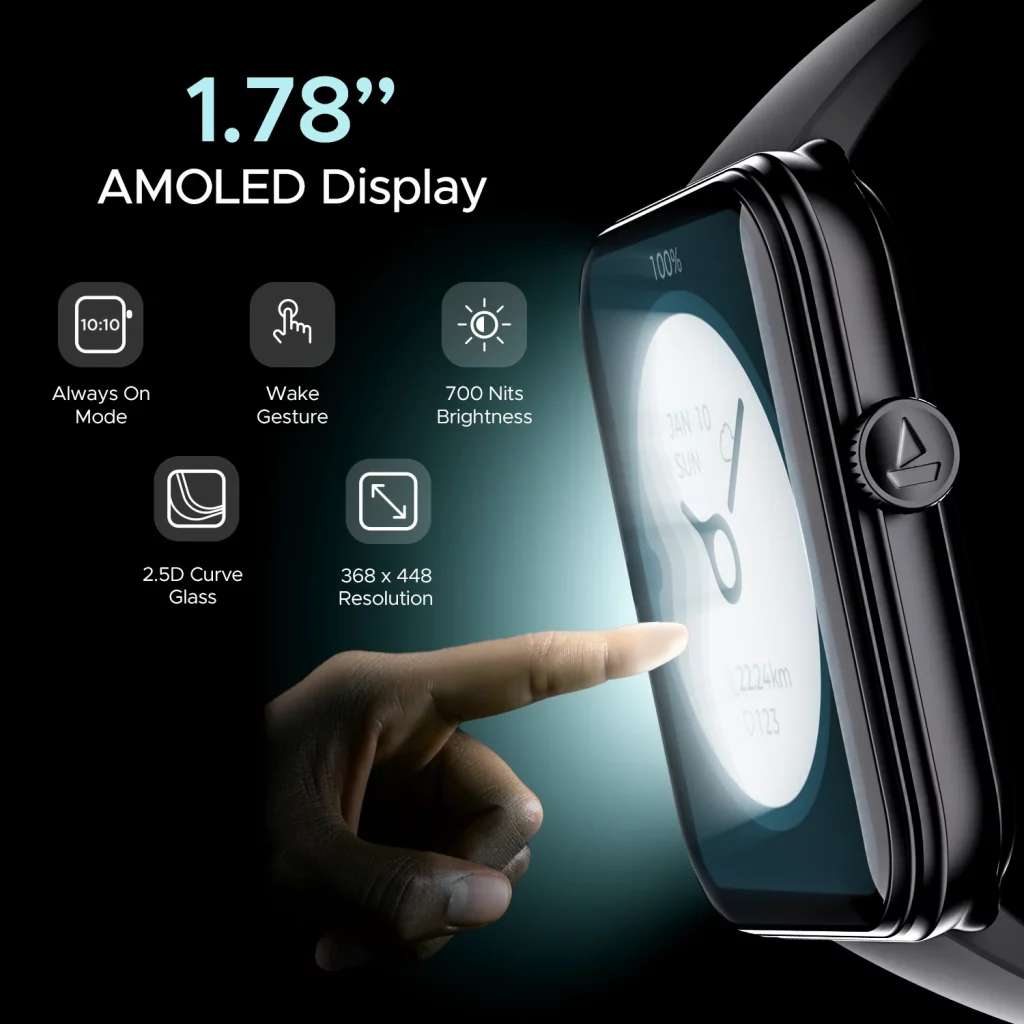
Noise has recently unveiled its latest offering, the Noise ColorFit Quad Call. This sleek smartwatch boasts a 1.81-inch TFT display and an elegant metallic design, appealing to those seeking a compact and fashionable wearable.

Noise ColorFit Quad Call

Noise ColorFit Quad Call features:

The Noise ColorFit Quad Call is equipped with a vibrant display, delivering a resolution of 240×280 pixels and a brightness of 550 nits. Its Bluetooth calling feature allows users to make calls directly from the dial-pad, while also supporting Google and Siri voice assistants for added convenience.

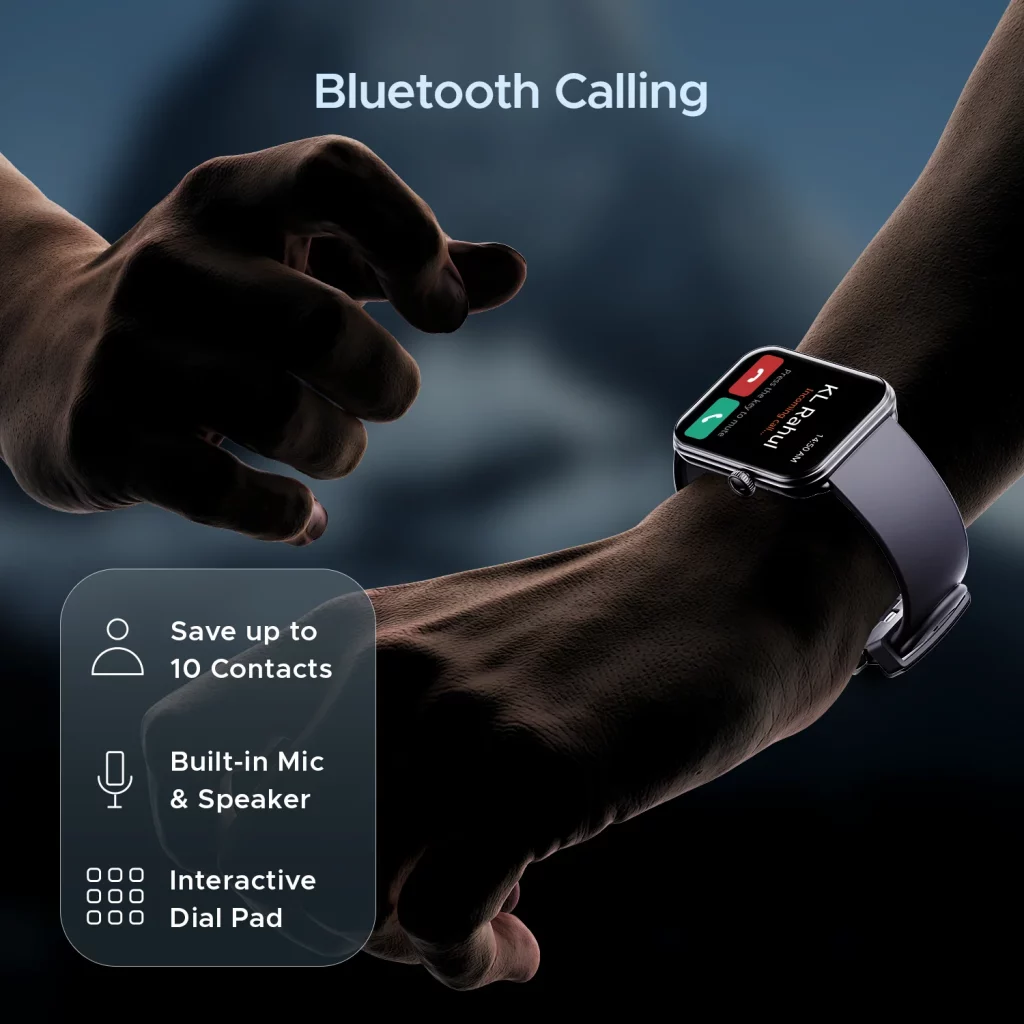
One of the standout features of this smartwatch is the Noise Buzz functionality, enabling users to access recent call logs, save up to 10 contacts, and conveniently make calls on the go. The device supports Bluetooth 5.2 and has an inbuilt mic and a speaker for easy calling. This makes it an ideal choice for individuals who require seamless connectivity throughout their day.

Noise ColorFit Quad Call

In addition to its calling capabilities, the Noise ColorFit Quad Call offers an array of wellness features under the Noise Health Suite. These include heart rate monitoring, SpO2 tracking, sleep monitoring, stress measurement, breath practice, and a female cycle tracker. Furthermore, the smartwatch incorporates a Productivity Suite for managing reminders and checking weather forecasts.

With the NoiseFit App, users can personalize their experience by choosing from over 100 sports modes and selecting from a vast collection of cloud-based watch faces. The Noise ColorFit Quad Call features a 260mAh battery that can run up to 7 days on a single charge. It is also IP67 water and dust resistant, enhancing its durability and suitability for various environments.

Noise ColorFit Quad Call

Noise ColorFit Quad Call pricing and availability:

The Noise ColorFit Quad Call is now available for purchase at an introductory price of Rs. 1499. It can be found on gonoise.com and Amazon.in, offering five color options: Jet Black, Space Blue, Rose Pink, Silver, Gray, and Deep Wine. Recently, the company has also launched ColorFit Qube 2 and Apple Watch lookalike Colorfit Plus 3.

RELATED:

Samsung announces new 2023 range of Q and C series of soundbars

Samsung has just announced its latest range of HW-Q and HW-C series of soundbars. The company has already launched some S series model in markets like India, and now, the brand has unveiled a couple of new soundbars in North America. These launches also arrive mere days after the company announced the new 98 inch 4K Q80Z TV with miniLED technology.

Samsung Q Series Soundbars

The South Korean tech giant’s HW-Q990C is its flagship class soundbar that is designed to offer a great audio listening experience thanks to its surround sound tech powered by Dolby Atmos. IT offers 11.1.4 channel audio and can even sync up with Samsung TV speakers for multi channel performance. This model also features Q Symphony 3.0 technology for improved audio, while it also offering voice control and can even be controlled via WiFi or SmartThings device. The HW-Q900C offers 7.1.2 channel along with Wireless Dolby Atmos for improved depth and clarity.

Samsung

It even offers SpaceFit Sound Pro that can optimize audio automatically based on the room. Meanwhile, the HW-Q800C also supports Dolby Atmos but has 5.1.2 channel and can even adapt sound profiles based on the room as well. Lastly, there are also HW-Q700C, HW-Q600C, and HW-Q60C models that offer the high end Q Symphony technology as well. Furthermore, these soundbars feature user friendly innovations like Adaptive Sound that helps optimizes audio for dialogue, and Game Mode Pro that helps improve audio during gameplay.

Samsung C Series Soundbars

Alongside the Q series, Samsung also announced the Samsung C series that includes two new models, namely HW-C450 and HW-C400 soundbars. The former is a 2.1 channel soundbar that also arrives with a subwoofer that offers Bass Boost for a bass enhancements with just a single touch. Additionally, the C series soundbars can connect seamlessly with TVs via Bluetooth and also support useful features like Game Mode, Adaptive Sound Lite, and a Night Mode that helps reduce volume automatically and compress the bass to ensure that other people in your home aren’t disturbed.

Samsung

Apart from the C series, there is also new soundbar models that join their existing S series soundbars. These include the new HW-S800B Ultra-Slim Soundbar that have a height and depth of less than 2 inches. This enables it to offer a minimalistic design despite its compact form factor and an all-in-one speaker format. These soundbars are also Dolby Atmos enabled and deliver 3.1.2 channel. On the other hand, the regular HW-S800B model that is built to seamlessly blend into the room it is placed in. It arrives with a 6.5 inch subwoofer and an 8 inch built in passive radiator for additional depth.

Pricing & Availability

The higher end Q series model start for a price tag of 619 US Dollars for the HW-Q700C model. Meanwhile, the HW-Q800C and HW-Q990C model cost 799 US Dollars and 1,599 US Dollars respectively. Lastly, the HW-C450 model will go for 169 US Dollars, while the HW-C400 will be available for 139 US Dollars. The new 2023 lineup of soundbars can be purchased via the official website in North America as of today, with global roll out set to follow soon.

RELATED:

Acer Triton 16 gaming laptop with 240Hz IPS display, 13th Gen Intel Core i9 & RTX 4070 GPU launched

Other than the Acer Swift Edge 16, the Taiwanese laptop manufacturer has also refreshed the Acer Predator Triton 16 (PT16-51), a remarkable gaming and work laptop designed to elevate your gaming experience to new heights. With its sleek silver finish and durable metal casing, this slim laptop combines style and portability for gamers on the go.

Acer Predator Triton 16 gaming laptop specs

The Predator Triton 16 offers a stunning 16-inch WQXGA IPS display, featuring a high refresh rate of 240 Hz, impressive brightness, and a wide color gamut, this laptop delivers captivating visuals that bring your games to life. Its advanced thermal capabilities, including a dual-fan system and Acer’s Vortex Flow technology, ensure optimal cooling during intense gaming sessions, keeping the laptop running smoothly.

Equipped with the latest 13th Gen Intel Core i9 processors, the Predator Triton 16 delivers exceptional performance. Coupled with the NVIDIA GeForce RTX 4070 Laptop GPU and NVIDIA DLSS 3 technology for optimized ray tracing and performance, you can expect smooth gameplay and stunning graphics. Customize your gaming experience using the PredatorSense key and dedicated software, allowing you to personalize the per-key RGB lighting and manage system settings.

The laptop offers ample memory and storage options, with configurations of up to 32 GB of DDR5 memory and up to 2 TB PCIe M.2 SSDs in RAID 0. This ensures fast data transfer and quick load times for improved productivity. It runs on the user-friendly Windows 11 operating system, providing a seamless and familiar interface.

Connectivity is made effortless with a range of functional ports including USB, HDMI, Thunderbolt 4, and a Micro SD card reader, enabling you to easily connect to external devices and peripherals. The inclusion of a fingerprint reader with Windows Hello support adds an extra layer of security and convenience.

Pricing & availability

Anticipated to arrive in September, the Predator Triton 16 (PT16-51) is set to be released in North America and EMEA regions. The starting price for this powerful laptop is expected to be US$ 1,799.99 in North America and EUR€ 2,299 in EMEA, respectively.

RELATED:

Redmi K60 Ultra Leaked Sketch Render Reveals Design

As per past reports, the Redmi K60 Ultra is tipped to launch in the third quarter of 2023 i.e the period between July to September. It will be the fourth variant in the K60 series that comprises the K60, K60 Pro, and K60E. The upcoming smartphone’s key specifications have also surfaced online. Now reliable Chinese tipster Digital Chat Station has shared a render sketch of the Redmi K60 Ultra giving us an idea about its design. The device is expected to arrive as the successor to the Redmi K50 Ultra. 

Redmi K60 Ultra design leaked via sketch render

The render shared by DCS reveals that the Redmi K60 Ultra will feature a center-aligned punch-hole cutout display. The back panel will have a squarish camera island. The module houses two camera sensors at the left side whereas on the right there is a LED flash unit and another small sensor beneath it. Apart from this, rendered sketch does not reveal any additional details. 

Leaks suggest that the Redmi K60 Ultra will come with a 1.5K display resolution and a 144Hz refresh rate. It will reportedly be powered by MediaTek’s Dimensity 9200+ chipset and support 120W fast charging. 

This is everything we know about the Redmi K60 Ultra at the moment. We can expect more information to crop up about the smartphone in the coming weeks. 

In other news, Redmi launched a 16GB RAM + 1TB storage configuration of the Redmi K60 in China earlier this week. It is priced at Yuan 3,599 and is up for pre-orders in the country. 

Related: 

Thomson FA Series And Oath Pro Max 4K TVs Launched In India

Thomson has launched new televisions in India. These fall under the brand’s FA series and Oath Pro Max 4K TVs. The former has three models whereas the latter includes two options. Read on to know what the TVs offer out of the box. 

Thomson FA series and Oath Pro Max TV specifications and features

The Thomson FA series televisions come in 32, 40, and 42-inch screen sizes. These offer an FHD resolution and a bezel-less display. Audio-wise, the televisions are equipped with a 30W speaker with support for Dolby Digital. 

The Thomson FA series TVs are powered by a RealTek processor paired with 1GB RAM and 8GB internal storage. They run on Android TV 11 OS with Google Play Store for access to apps and games. 

As for the Thomson Oath Pro Max TVs, they are offered in 43 and 50-inch display variants. These come with a 4K resolution and support for Dolby Vision and HDR10+. There are 40W stereo box speakers with Dolby Atmos, Dolby Digital Plus, and DTS TrueSurround. 

The Thomson 4K televisions are equipped with a quad-core processor coupled with 2GB RAM and 16GB onboard storage. They run on Google TV OS with support for a host of apps and games. 

The Thomson FA series and Oath Pro Max 4K TVs feature a built-in Chromecast and Google Assistant, multiple profiles, smart home device control, and more. 

The Thomson FA series starts at Rs 10,499 for a 32-inch model whereas the 40 and 50-inch variants are priced at Rs 15,999 and Rs 16,999. The Oath Pro Max 4K TVs carry a price tag of Rs 22,999 and Rs 27,999 for the 43 and 50-inch models respectively. 

Related: