Advertisement

OnePlus Pad to be Available in the US and Canada on May 8, Pricing revealed

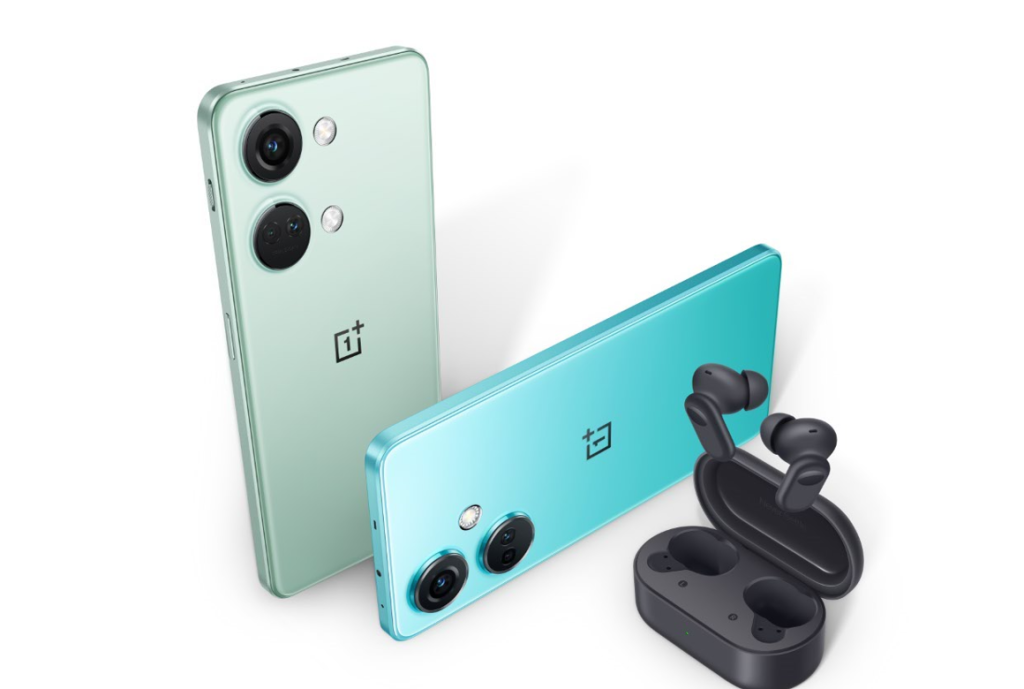
After being unveiled in February this year, the OnePlus Pad was released in India and Europe in late April. The brand has now revealed the launch date for the device in the US and Canadian markets.

OnePlus Pad India

OnePlus Pad US/Canada launch date, price

The US and Canadian markets can expect the OnePlus Pad to be available starting May 8. Customers in the US will have to pay $479, while those in Canada will have to shell out CAD 649 for the tablet. These prices are for the device only. For those interested in purchasing the accessories, the OnePlus Folio Case will cost $39 or CAD 57, the OnePlus Stylo will be priced at $99 or CAD 139, and the OnePlus Magnetic Keyboard will be sold at $149 or CAD 209.

OnePlus

OnePlus Pad specs

The OnePlus Pad boasts a generously sized 11.6-inch display that boasts a fast 144Hz refresh rate, 2,800 x 2,000px resolution, and an impressive 500 nits peak brightness, making it an ideal platform for enjoying content. Fueling the device is the powerful MediaTek Dimensity 9000 processor, which is paired with up to 12GB LPDDR5 RAM and UFS 3.1 storage, ensuring smooth and speedy performance.

The OnePlus Pad is designed to provide an immersive entertainment experience with support for Dolby Atmos and Dolby Vision, allowing you to enjoy your favorite movies and shows with stunning audio and visuals. It also features Omnibearing Sound Field, providing an enhanced audio experience. The tablet comes equipped with a massive 9,510mAh battery, which supports fast 67W charging, and is capable of offering up to a month of standby time, making it ideal for extended use.

RELATED:

(via)

iQOO 11 for Rs 49,999 is the cheapest flagship Snapdragon 8 Gen 2 phone: Amazon Great Summer Sale

Amazon is getting ready to kick off its Amazon Great Summer Sale and one of the greatest deals being offered is for the iQOO 11. Thanks to the new sale, this model has become the most affordable flagship smartphone that features the Snapdragon 8 Gen 2 SoC.

iQOO 11 flagship phone can soon be purchased for under 50K INR

For those unaware, the Chinese smartphone maker was launched in India for a starting price tag of 59,999 INR for its base 8GB + 256GB model. And during the Amazon Great Summer Sale, the premium-grade handset is available for a price tag of just 49,999 INR. Keep in mind that this price includes discounts and even various offers. At the moment, the device is listed on the e-commerce platform for 54,990 INR.

iQOO

But the new sale period will offer HDFC Bank and ICICI Bank credit card holders an additional discount of up to 3,000 INR. In other words, this brings down its cost to just 49,990 INR, which is a great deal since it is now the most affordable flagship device that features Qualcomm’s latest and greatest Snapdragon 8 Gen 2. Talking more about the device, it sports a tall 6.78 inch E6 AMOLED display with support for 120Hz refresh rate.

This device also packs a dedicated V2 chipset, which helps improve gaming performance. The rear features a 50 megapixel triple camera setup while the front houses a 16 megapixel punch hole selfie camera. Under the hood, the iQOO 11 is powered by a large 5,000mAh battery pack that supports 120W fast charging. Other notable features include Android 13 OS-based Funtouch OS 13 out of the box.

RELATED:

Android 14 testing begins for Xiaomi 13 and Xiaomi Pad 6

Google released the first developer preview of Android 14 in February. Earlier this month, the search giant dropped the first beta.

The company is expected to officially unveil the latest version of Android next week at Google I/O 2023. We are looking forward to the beta program from partner OEMs following the keynote.

Just like in previous years, Xiaomi will be part of the beta program. MIUI codebase reveals that the brand will be releasing Android 14 beta builds for 4 devices.

Xiaomi 13 Pro

According to Xiaomiui, Xiaomi has started testing Android 14 builds on the following two smartphones and two tablets since April 25.

Next week, the company will likely officially announce the beta program for the general public. However, you will have to be a recruited tester to try out the latest software. The registrations for the recruitment will possibly open post-announcement.

Xiaomi will be accompanied by other OEMs providing Android 14 beta builds for their devices. Most other companies don’t require you to register to try out beta software. You can simply download and install beta builds by following instructions on their official developer/community website.

Android 14 is expected to hit stable in August. OEMs will begin rolling out the update to their eligible smartphones and tablets after that.

RELATED:

BYD’s Electric Vehicle Sales Surge in April 2023, Crossing 4.1 Million Cumulative Sales Mark

BYD (Build Your Dreams), the Chinese electric vehicle manufacturer, has been making waves in the new energy vehicle market in recent years. In April 2023, BYD reported that it sold 210,295 vehicles, bringing its cumulative sales of new energy vehicles to over 4.1 million. This figure represents a significant increase compared to previous years, demonstrating the increasing popularity of electric vehicles.

BYD sold over 200,000 passenger vehicles in April 2023

The company’s sales data for April 2023 revealed that it sold 209,464 passenger vehicles, a year-on-year increase of 98.6%. Of these, 104,364 were electric vehicles and 105,103 were traditional fuel vehicles. In addition, 14,827 new energy passenger vehicles were exported overseas, further highlighting BYD’s global reach.

BYD

Among the different vehicle series, BYD Qin was the most popular in April, with 42,202 units sold. BYD Han, Tang, and Song followed closely behind, with 14,329, 11,759, and 8,100 units sold, respectively. The company’s Ocean Net series sold 83,388 vehicles, while the Dynasty.com series sold 115,550 vehicles.

BYD is not only known for its passenger vehicles but also its joint venture brand, Denza D9, which sold 10,526 units in April. Additionally, BYD’s power and energy storage batteries for new energy vehicles had an installed capacity of approximately 9.954 GWh in April, bringing its cumulative installed capacity for 2023 to approximately 36.945 GWh.

In the past few months, BYD has seen significant growth in its sales figures. In January, it sold 151,341 new energy vehicles, a YoY increase of 58.6%. This was followed by 193,655 units sold in February, a YoY increase of 90.13%, and 207,080 units sold in March, a YoY increase of 92.81%. These figures demonstrate BYD’s continued growth in the new energy vehicle market and its ability to remain competitive.

BYD’s success can be attributed to its commitment to innovation and sustainability. It has invested heavily in research and development, focusing on improving the performance and efficiency of its electric vehicles. The company has also been expanding its global presence, with its vehicles now available in over 50 countries.

RELATED:

(Via)

Leaked Honor X50 render reveals flat display

Honor is reportedly working on a new device in its X series, the Honor X50. According to leaked renders and specifications shared by a reliable tipster, the new phone will feature a circular camera system on the back, similar to the Honor X40, but will come with a notable change on the front panel: a flat screen instead of the curved-edge display found on the predecessor.

Honor X50 leaked render

While the leaked render isn’t an official press render, it still gives us a good idea of what the upcoming phone may look like. It appears that Honor is trying to shake things up a bit by introducing a new design language for the X series. Let’s take a look at some key details about the X50’s predecessor, the Honor X40.

Honor X40 specs

The Honor X40 features a 6.67-inch FHD+ AMOLED screen with a 120Hz refresh rate and 1920Hz PWM dimming. It is powered by an Octa-Core Snapdragon 695 8nm Mobile Platform with Adreno 619L GPU and comes with up to 12GB of RAM and up to 256GB of storage. The phone runs on Android 12 with Magic UI 6.1 (upgradable to MagicOS 7) and features a 50MP rear camera with LED flash and a 2MP sensor, as well as an 8MP front-facing camera.

Other notable features of the Honor X40 include an in-display fingerprint sensor, Type C audio, and Honor Histen 7.0 sound effect. It supports 5G SA/NSA, dual 4G VoLTE, Wi-Fi 802.11 ac, Bluetooth 5.1, GPS/GLONASS/Beidou, and USB 2.0. The phone has a 5100mAh battery with 40W fast charging. In terms of dimensions, the Honor X40 measures 162.9 × 74.5 × 7.43mm and weighs 175g.

While there’s no official word on when the Honor X50 will be released, rumors suggest it could be launched within the next few months. As we wait for more information to surface, it’s clear that Honor is aiming to innovate and evolve its X series with each new release, and we can’t wait to see what they have in store for us next.

RELATED:

(Source, Via)

Google Pixel 7a Indian launch set for May 11, here are all the details

Google will be unveiling the Pixel 7a at the Google I/O event scheduled for May 10 for the world. However, the Indian launch will come a day later with a possible price reveal.

Google

Google has confirmed that the brand will be launching the Pixel 7a in India on May 11. The announcement also confirms that the device will be available exclusively via Flipkart in India, just like the Pixel 7 and Pixel 7 Pro. There is no confirmation regarding the Indian pricing of the device yet, however, tipster Paras Guglani has hinted at the price point.

According to Guglani, the Google Pixel 7a will be priced between Rs. 35K-39K. If this turns out to be true, this will be a significant reduction in price as the 6a launched at Rs 43,999 in India. With that being said, let’s look at what we will be getting for that price.

Google Pixel 7a specs (rumored)

Google

According to previous reports, the upcoming Google Pixel 7a will boast a 6.1-inch FHD+ OLED display with a 90Hz refresh rate. It will be powered by Google’s in-house Tensor G2 chipset, which is also used in the Pixel 7 and Pixel 7 Pro, and will come with 8GB of LPDDR5 RAM and 128GB of UFS 3.1 onboard storage.

For photography, the Pixel 7a is expected to feature a 64MP rear camera with OIS and a 12MP ultra-wide camera, as well as a 10.8MP front-facing camera for high-quality selfies. The device will be equipped with a 4,400mAh battery that can last up to 72 hours and will support 20W wired charging and wireless charging.

Out of the box, the Pixel 7a will run on Android 13. It is anticipated to be a mid-range smartphone with impressive features, including a powerful processor, generous RAM and storage capacity, exceptional cameras, and a long-lasting battery.

RELATED:

(source)

From X AE A-XII to Twitter Deal: Elon Musk on Display at Museum of Failure

Failure is not something most people like to dwell on, but in Sweden, a psychologist by the name of Dr. Samuel West has founded a museum dedicated to it. The Museum of Failure showcases a curated collection of past mistakes to illustrate that innovation is a high-risk business. The museum’s current exhibit, on tour in Brooklyn, New York, includes lessons from Elon Musk, the famous Tesla and SpaceX CEO.

Elon Musk has seen a fair share of Failures in his Career

Musk has earned his place in the Museum of Failure with 14 lessons from his failures, including his two children’s unusual names, X AE A-XII and Exa Dark Sideræl, and a failed attempt to walk away from a deal to buy Twitter for $44 billion. Musk’s other failures cited in the exhibit include Tesla and SpaceX almost going bankrupt in 2008, falsely tweeting about Tesla’s privatization, and being recognized by the Guinness World Records for “the largest personal property loss in history.”

Elon Musk

The exhibit also showcases some of Musk’s successes, including accomplishments at Tesla and SpaceX, and his previous title as the world’s richest man. At the end of 2022, Tesla’s stock price plummeted, and Musk lost his status as the world’s richest man for the first time, being replaced by Louis Vuitton CEO Bernard Arnault. Musk is currently the second richest man in the world.

The exhibit raises some thought-provoking questions about innovation, failure, and success. The museum’s display challenges visitors to look at Musk’s legacy and decide for themselves whether he has failed or succeeded. “Musk has been one of, if not the most polarizing, figures of the past decade, and his status has been hotly debated,” the exhibit states. “It is true that Tesla revolutionized the electric car industry, but Musk didn’t actually create the technology. He invested smartly. Does investing in bold ventures count as innovation?”

Musk himself sees failure differently. He does not view failure as a downer but as a necessary path for companies to prosper. “If things aren’t failing, you’re not innovating enough,” he said in a 2012 speech in London.

The Museum of Failure’s exhibit on Elon Musk shows that even the world’s most successful entrepreneurs make mistakes. By highlighting these failures, the museum aims to show that failure is not the end of the road, but rather a stepping stone to success. Visitors to the exhibit can learn from Musk’s mistakes and be inspired to take risks and innovate in their own lives and businesses.

RELATED:

(Via)

Samsung Neo QLED 8K TV coming to India on May 5, here are the details & offers

Back in March, Samsung launched its cutting-edge Neo QLED 8K TV in China and many other regions. The TV was awarded the ‘Best TV of All Time’ by German AV magazine. And now, the ultra premium television is making its way to the Indian market as the brand has recently announced its debut date.

Samsung India has announced that the Neo QLED 8K TV will be unveiled during a live event on May 5th at 12 PM, as per their official Twitter account. The company has also opened pre-orders for the TV, allowing potential buyers to book their unit by paying Rs. 5,000, and receive a discount of Rs. 15,000 on the final purchase. The pre-order option is available on Samsung’s official website, as well as on popular e-commerce platforms such as Amazon and Flipkart, as well as authorized Samsung retail stores.

Samsung Neo QLED TV

Samsung Neo QLED 8K TV specs

The Samsung Neo QLED 8K TV is a cutting-edge television that is designed to deliver an unparalleled viewing experience. This TV boasts a 75/65-inch display, which is the world’s first display that is validated by PANTONE. It features Quantum Matrix technology that provides ultra-fast contrast and an immersive viewing experience.

One of the unique features of the Neo QLED 8K TV is its Built-in loT Hub that seamlessly connects smart devices. The TV also adopts a Neo QLED panel that uses the latest quantum matrix technology Pro display system, which brings a 1.5 times larger brightness area than conventional quantum dot matrix technology. This technology ensures that the TV produces bright and vivid colors that are true to life.

The TV’s audio system also adopts “audio-visual tracking OTS Pro” technology, which uses audio positioning and scene analysis to match the sound effects with the actions on the screen. In addition, the Neo QLED 8K TV has a sleek design with super-slim bezels and is available in 21:9 and 32:9 aspect ratios. It also supports 4K 120Hz motion enhancement, dynamic acceleration technology, and AMD FreeSync Premium Pro technology, making it perfect for ultra-low latency and ultra-high-definition gaming experiences.

RELATED:

The Godfather of AI, Geoffrey Hinton, Reveals the Future of Artificial Intelligence

Geoffrey Hinton, the “Godfather of AI”, who recently resigned from Google, cited concerns about the potential harm of AI. Hinton’s decision is a significant moment in the tech industry, which is at a crucial inflection point where AI is being viewed as the key to the future, with breakthroughs in fields ranging from drug research to education. However, there is also a growing fear that AI could be a threat to humanity, as it could be used for disinformation, job displacement, and the development of truly autonomous weapons.

Geoffrey’s concerns regarding AI aren’t baseless

Hinton is one of the pioneers of AI, and his contributions to the field have been immense. His work on deep learning has been fundamental in shaping the AI landscape as we know it today. However, his concerns about the dangers of AI are not unfounded. As AI technology continues to improve and become more sophisticated, it’s inevitable that it will be used for both good and bad purposes.

One of the main concerns is that AI will be used to create fake content, such as videos and images, which will make it increasingly difficult for people to discern what is real and what is not. This could have serious implications for journalism, politics, and society as a whole. Additionally, there are concerns about the impact of AI on the job market, with fears that it could replace many jobs that are currently done by humans.

AI

However, it’s important to remember that AI has the potential to do a great deal of good. It can be used to improve healthcare, enhance scientific research, and help us to better understand the world around us. It’s up to us to ensure that the technology is developed and used responsibly, with a focus on the greater good.

At the same time, we need to be vigilant about the risks associated with AI and take steps to mitigate them. This means investing in research to better understand the potential risks, as well as developing policies and regulations to ensure that AI is developed and deployed in a responsible manner.

While Hinton’s concerns about the dangers of artificial intelligence are certainly valid, we must not lose sight of the tremendous potential that this technology holds. By working together and taking a responsible approach to AI development, we can harness its power to make the world a better place for everyone.

RELATED:

(Via)

LG Unveils the UltraGear 27GR75Q 2K Gaming Monitor with 165Hz Refresh Rate and AMD FreeSync Premium

LG has unveiled its latest gaming monitor, the UltraGear 27GR75Q, also known as the UltraGear 27GR75Q-B. While the company has not yet announced the pricing, it has listed the UltraGear 27GR75Q on its Canadian and Hong Kong websites, indicating an imminent release. The 27-inch IPS panel boasts a resolution of 2,560 x 1,440 pixels with a 165 Hz refresh rate and 1 ms response times (GtG). The monitor also supports AMD FreeSync Premium and NVIDIA G-SYNC to eliminate image tearing, among other gaming features.

LG

The UltraGear 27GR75Q comes equipped with one DisplayPort connection and two HDMI ports, although the variants of the ports are not specified. The monitor lacks built-in speakers, but it has a 3.5 mm jack for external equipment such as headphones or speakers. Moreover, it has a height and tilt adjustable stand, as well as 100 x 100 mm VESA mounts.

With a peak brightness of 300 nits and 178º viewing angles, the UltraGear 27GR75Q promises a high-quality gaming experience. LG has not provided any further details on the global availability of the product, but it is expected to hit the market soon. The monitor’s impressive specifications and features make it a potential choice for gamers who are looking for a high-end device.

RELATED:

(via)

Pixel Watch Gets Security Boost with Latest Software Update from Google

Wearable technology has become increasingly popular in recent years, with the Google Pixel Watch being one of the latest devices to join the market. Launched in October 2022, the Pixel Watch offers a wide range of features for its users. Google has rolled out the latest software update for its Pixel Watch, bringing updated security for users of the wearable device. The May 2023 update, with the build number RWDA.230114.013, is being rolled out gradually over the next week via OTA push. It can also be accessed by going to the Settings menu, System, and System Update. Although the update doesn’t add any significant features, it does include the latest security patches, providing a safer experience for Pixel Watch users.

Pixel Watch provides 24 hours of usage on a Single Charge

The Watch was first introduced at Google I/O 2022 in May and officially released later that year in October. Equipped with Wear OS 3.5 system supported by Google services and third-party applications, the Pixel Watch also supports deep Fitbit integration. It comes with a 294mAh battery, providing up to 24 hours of usage on a single charge and supports fast charging, enabling users to charge up to 50 percent in just 30 minutes.

Google Pixel Watch

While this update may not bring any new features, it sets the foundation for what’s to come. The Google I/O 2023 event next month is expected to showcase more new features for the Pixel Watch, adding to the already impressive list of features. In the meantime, the Watch users can ensure their device is secure by installing the latest software update.

RELATED:

(Via)

Pixel 7a could be the last A series smartphone from Google: Report

Google is gearing up for the I/O event on May 10 where the search giant is expected to unveil a couple of new devices including the highly anticipated Google Pixel 7a. The device will improve upon the popular Pixel 6a which was a hit in the mid-range segment across the globe. However, this launch might turn out to be bittersweet as a new report has surfaced claiming this will be the last A series smartphone from Google.

Google

Yogesh Brar suggests that Google may release two candy bar flagship smartphones and one foldable offering in the future. He bases this prediction on the increased price and advanced features of the upcoming Pixel 7a, such as the latest Tensor chip, wireless charging, and a 90Hz display. Recent reports indicate that the Pixel 7a will be priced at CAD $702, while the Pixel 7 was released at CAD $779 in the same region.

Google

While discontinuing the A-Series is a possibility, it would be a missed opportunity for Google to not have a mid-range smartphone option. It’s important to note that Google has made changes to its A-Series offering every year since its introduction in 2019, starting with the Pixel 3a and Pixel 3a XL. Therefore, it would not be surprising to see another alteration to the Pixel A-Series after the release of the Pixel 7a, which is expected to ship later this month.

Pixel 7a specs

The Google Pixel 7a is reportedly set to feature a 6.1-inch FHD+ OLED display with a 90Hz refresh rate, powered by Google’s in-house Tensor G2 chipset, also found in the Pixel 7 and Pixel 7 Pro. It’s said to come with 8GB of LPDDR5 RAM and 128GB of UFS 3.1 onboard storage, as well as a 64MP rear camera with OIS, a 12MP ultra-wide camera, and a 10.8MP front-facing camera. A 4,400mAh battery that can last up to 72 hours, 20W wired and wireless charging capabilities, and Android 13 are also expected.

RELATED:

Apple Takes a Step Forward in Digital Security with Rapid Security Response Updates

Apple recently released Rapid Security Response (RSR) updates for iOS 16.4.1 and macOS 13.3.1, marking the first public release of RSR updates to date. The RSR updates aim to provide users with security fixes without the need to install a full software update, making it easy for users to stay protected against the latest threats.

Apple has been testing the RSR Feature since last year

As Apple has been testing the RSR feature since last year, it’s evident that the company is continuously working towards providing its users with the best security measures possible. The release of RSR updates to the general public signifies Apple’s commitment to its security protocols and its users’ protection.

Apple

While the RSR updates are a step forward for Apple’s security measures, it’s essential to remember that no system is entirely foolproof. Malicious actors are continuously looking for vulnerabilities to exploit, which means users must stay vigilant when it comes to their digital security. Regularly updating devices with the latest security patches and using two-factor authentication can provide additional layers of protection against potential threats.

The RSR updates are also a testament to Apple’s dedication to providing its users with a seamless user experience. Updating a device’s software can sometimes be a complicated and time-consuming process, and the RSR updates help eliminate those difficulties. With RSR updates, users can ensure their devices are secure without having to go through a tedious update process.

Moreover, the RSR updates are only available to users running the latest software versions. This move from Apple highlights the company’s commitment to providing its users with the most up-to-date security features, ensuring users are always protected against the latest threats.

RELATED:

(Via)

Google is Pushing Out May Update for Pixel Devices

Google has released its May update for eligible Pixel models, which includes bug fixes for touchscreen lag and issues with lock screen UI elements. However, Pixel 6 users on the QPR3 Beta program are experiencing freezing, crashing, and app issues, causing frustration among the user community. The update is only available for those receiving public Android 13 releases, and users on the Android 14 Beta program or Android 13 QPR3 Beta program will not receive it.

Pixel QPR3 Beta Users can Exit the Program after Installing the June Update

The June update is expected to include the Quarterly Platform update, also known as the June Feature Drop, and Pixel users on the QPR3 Beta program will be able to exit the program without wiping their devices once the update is installed. However, with the release of new Pixel devices on the horizon, including the Pixel Fold, Pixel 7a, Pixel 8 line, and Pixel Tablet, this bug is not a good look for Google.

Google Pixel 7

The May Security Bulletin includes two patches for common vulnerabilities and exposures, as well as repairs for moderate issues with the camera. Pixel models eligible for the May update include Pixel 4a, Pixel 4a (5G), Pixel 5, Pixel 5a, Pixel 6, Pixel 6 Pro, Pixel 6a, Pixel 7, and Pixel 7 Pro.

The next update, expected in June, will include the June Feature Drop and allow Pixel users on the QPR3 Beta program to exit without wiping their devices. With new Pixel devices on the horizon, this bug is not a good look for Google, and users will be hoping for a fix soon.

RELATED:

(Via)

Upcoming Smartphones in May 2023: Poco, Google, Sony, Oppo, and more

The month of May will be as busy as April if not more in terms of smartphone launches. Only 3 events are officially confirmed so far. But there are multiple other expected conferences, the dates for which should be revealed in the coming days.

We are looking forward to new product releases from a whopping 12 brands. Apple and Samsung are the only major companies that might not debut new phones. Though the latter may introduce certain already announced handsets in newer markets.

These forthcoming devices will be spread across different price segments. Most of the phones on the list are being launched ahead of the 618 shopping festival in China, which annually occurs during mid to late June.

That does not mean there won’t be any global releases. In fact, we will be witnessing the debut of some of the most anticipated smartphones of 2023.

With that out of the way, let’s go through all the handouts that are about to launch in May.

Upcoming Smartphones in May 2023

1. Poco F5 Series

Poco
Poco F5 Pro

The Poco F5 series will be unveiled on May 9 at 8 PM GMT+8. The lineup will include two devices, namely Poco F5 and Poco F5 Pro.

The standard and pro variants will be rebranded Redmi Note 12 Turbo and Redmi K60, respectively. They will be even sold in original Redmi colors instead of the usual Poco color schemes.

Just like the last Poco F Pro model (Poco F2 Pro), the Poco F5 Pro will not be sold in India. The vanilla F5 will come with 256GB as standard and is tipped to cost below ₹30,000 in India and $500 in other regions.

2. Realme 11 Series

Realme 11 Pro Plus
Realme 11 Pro Plus

The Realme 11 series is scheduled to launch in China on May 10 at 4 PM GMT+8. The lineup is said to consist of three handsets, such as Realme 11, Realme 11 Pro, and Realme 11 Pro Plus.

However, the brand has been only teasing the ‘Pro+’ variant. This version will not only have a leather back but also an OIS-assisted 200MP main camera and a curved display. It will be powered by the newly announced MediaTek Dimensity 7050 chipset.

These phones are also tipped to release in India this month. But we don’t have a date for it so far.

3. Google Pixel Fold and Pixel 7a

Google Pixel Fold
Google Pixel Fold

The 2023 edition of Google I/O will begin on May 10. The search giant is expected to take wraps off the Pixel Fold and Pixel 7a during the opening keynote of its developer conference, which will begin at 10 AM PT.

The Pixel Fold will be the company’s first foldable smartphone. The water-resistant foldable will feature a 7.6-inch horizontal foldable display and a 5.8-inch external screen. It is said to cost around $1,700.

On the other hand, the Pixel 7a will be the seventh-gen affordable Pixel A series handset. It will offer several upgrades over Pixel 6a, like a 90Hz display, Tensor G2 chip, and OIS-assisted 64MP primary camera, and more.

4. Sony Xperia 1 V

Sony Xperia 1 V
Sony Xperia 1 V

The Sony Xperia 1 V is set to launch on May 11 at 6 AM CEST. Unfortunately, not much is known about this upcoming flagship phone from the Japanese electronics giant.

Rumors say that it will arrive with a Qualcomm Snapdragon 8 Gen 2 SoC, a 4K 120Hz OLED display, a 12MP (wide) + 12MP (periscope) + 48MP (ultra-wide) triple camera system, a shutter button, a 3.5mm headphone jack, and a 5,000mAh battery.

The device may or may not be accompanied by Xperia 5 V and Xperia 10 V.

5. Motorola Razr 2023 Series and Edge 40

Motorola Razr 40 Ultra

Lenovo-owned Motorola is expected to unveil its new generation Razr clamshell foldables and an Edge series flagship smartphone either by the end of May or early June.

For the first time, the revived Razr lineup will have two models in a single generation. They are said to be called Razr 40 and Razr 40 Ultra. The latter will have the largest cover screen on a clamshell foldable handset to date.

Whereas, the Edge 40 will be a toned-down version of Edge 40 Pro with some interesting features. It will come with a leather back, water resistance, a MediaTek Dimensity 8020 chip, a 144Hz OLED display, a 50MP primary camera, a 4,400mAh battery, 68W wired charging, and 15W wireless charging.

6. Honor 90 Series

Honor 80 Pro
Honor 80 Pro

The Honor 90 series is tipped to launch in May, however, its release could be delayed until June. The successor of the Honor 80 series is rumored to bring upgrades in the camera and performance departments.

The higher-end model in the lineup is said to arrive with specs, such as a Qualcomm Snapdragon 8 Plus Gen 1 SoC, a 1.5K resolution curved display with high-frequency PWM, and a 200MP Samsung ISOCELL S5KH3 camera.

More or less, the top model will be almost the same as the Honor 80 Pro that was released in late November 2022.

7. iQOO Neo 8 Series

iQOO Neo 7

The iQOO Neo 8 series is anticipated to make its debut in China in May. There will be a standard and a pro variant. The iQOO Neo 8 Pro will be the first pro model in the Neo series.

As far as specs are concerned, the vanilla and Pro versions will be powered by a Qualcomm Snapdragon 8 Plus Gen 1 and MediaTek Dimensity 9200 Plus chipsets, respectively. Both will sport a 120Hz OLED display with a fingerprint sensor underneath it.

The duo will arrive with a 50MP main camera but the sensors will be different; Sony IMX866V on pro and Sony IMX766V on regular. The pro version will also come with faster LPDDR5x RAM and UFS 4.0 storage.

8. Realme Narzo N53

Realme Narzo N55
Realme Narzo N55

The Realme Narzo N53 is tipped to launch in India in May. It will be a 4G-only handset like the recently released Realme Narzo N55.

We only have details on the device’s memory configurations, colors, and possible price range for now. It is said to start under ₹13,000 and will be available in two memory variants (4GB + 64GB and 6GB + 128GB) and two colors (Feather Black and Feather Gold).

9. Tecno Camon 20 Series

Tecno
Tecno Camon 20 Pro

The Tecno Camon 20 series could release in May. The lineup is said to include devices, such as Camon 20, Camon 20 Pro, and Camon 20 Premier 5G. As their names suggest, the first two handsets will be limited to 4G, while the last one will have support for 5G connectivity.

These phones will arrive with a unique rear design. The vanilla, pro, and premier variants will be powered by MediaTek’s Helio G85, Helio G99, and Dimensity 1200 chipsets, respectively.

The premier model will come with a better set of features, like a 120Hz AMOLED display, a 108MP primary camera with sensor-shift OIS, and up to 512GB storage.

10. Infinix Note 30 Series

Infinix Note 30 VIP live shot
Infinix Note 30 VIP

The Infinix Note 30 series is anticipated to launch in May. Four devices are expected in the lineup, namely Infinix Note 30 5G, Infinix Note 30 VIP, Inifnix Note 30 Pro, and Infinix Note 30i.

The first two models will be 5G-enabled powered by MediaTek’s Dimensity 810 and yet-to-be-announced Dimensity 8050 chips, respectively, Whereas, the other two handsets will be limited to 4G connectivity featuring MediaTek’s Helio G99 and Helio G85, respectively.

The VIO variant will arrive with features, such as a 108MP main camera, 256GB storage, speakers tuned by JBL, a 5,000mAh battery, and 68W fast charging.

11. Lava Agni 2 5G

Lava AGNI 5G
Lava Agni 5G

Lava Agni 2 5G is expected to release in India in May. The brand has officially teased its arrival and we even know a few details about it.

The phone is tipped to cost below ₹25,000. It is said to come with a 120Hz AMOLED display, a MediaTek Dimensity 1080 SoC, a 50MP primary camera, a 5,000mAh battery, and 44W fast charging.

12. Vivo S17 Series

Vivo S16 Pro
Vivo S16 Pro

The Vivo S17 series is anticipated to debut in China in May. The lineup will include three phones, namely Vivo S17, Vivo S17 Pro, and Vivo S17e.

The Pro variant is expected to be powered by a MediaTek Dimenisty 8200 chipset, just like the Vivo S16 Pro. But the newer model will come with a 12MP zoom camera for portraits.

Whereas, the vanilla Vivo S17 and Vivo S17e will house a Snapdragon 778G/782G and Dimensity 7200 chips, respectively. All three models will carry support for 80W fast charging and sport OLED displays with an in-screen fingerprint sensor.

13. Vivo Y78 5G and Vivo Y36

Vivo Y78 TENAA images
Vivo Y78 5G

The Vivo Y78 5G and Vivo 36 are expected to launch in May. The former will make its debut in China, whereas the latter will be introduced in India.

The Y78 5G will arrive with a Qualcomm Snapdragon 695 SoC, a 50MP main camera, and a 6.64-inch FHD+ display (LCD). On the other hand, the Vivo Y36 will come with a Qualcomm Snapdragon 680 chip, a 5,000mAh battery, and 44W fast charging.

The Y78 5G is expected to cost around ¥1500 or lower, while the Y36 is tipped to be priced below ₹20,000.

14. Oppo Reno 10 Series

OPPO PHU110 schematic
Oppo Reno 10 Pro Plus

The Oppo Reno 10 series is anticipated to release in China in May. The lineup is rumored to include three handsets, such as Oppo Reno 10, Oppo Reno 10 Pro, and Oppo Reno 10 Pro Plus.

The next-gen Reno family will arrive with a revamped design. The Pro Plus model is tipped to offer flagship-level features, like a Qualcomm Snapdragon 8 Plus Gen 1 SoC, a 64MP periscope camera, a 50MP Sony IMX890 primary camera, and 100W fast charging.

While the Reno 10 and Reno 10 Pro are said to house a Snapdragon 778G and Dimensity 8200 chipsets, respectively. Unfortunately, not much is known about their other specs.

15. Oppo A98 5G and a Mysterious A Series Phone

OPPO A1 5G
OPPO A1 5G

The Oppo A98 5G and an unknown Oppo A series handset are expected to release in May. The former will debut in global markets, while the latter will be launched in China.

The A98 5G is anticipated to come with a 120Hz display (LCD), a Qualcomm Snapdragon 695 SoC, a 64MP main camera, a 5,000mAh battery, and 67W charging. Whereas, the mysterious A series phone will share most of its specs with the Oppo A1, except for cameras.

RELATED:

Apple’s Safari Outshines Microsoft Edge in Desktop Browser Race

When it comes to browsers, Google Chrome has achieved an incredible success. Even on platforms where it is not pre-installed, it becomes the first choice, replacing the default options. As a result, there is hardly any movement in the market. However, Microsoft, tired of this situation, decided to make some changes. They introduced a new browser based on Chromium and integrated artificial intelligence technologies, hoping to increase the number of users. But it seems that things didn’t quite turn out as expected. Microsoft Edge is no longer world’s second desktop browser. Here are the details…

Microsoft Edge is no longer world’s second desktop browser

According to Statcounter’s April 2023 report, Microsoft Edge is no longer the world’s second most popular desktop browser. The increasing importance of mobile devices, rising MacBook sales due to M-series processors, and users wanting to stay within the ecosystem sticking to Safari have finally led to the inevitable. The American technology giant has handed over its long-held second place position to Apple. The current ranking is as follows:

  1. Google Chrome – 66.13% (+0.36 points)
  2. Apple Safari – 11.87% (+0.95 points)
  3. Microsoft Edge – 11% (-0.15 points)
  4. Firefox – 5.65% (-0.82 points)
  5. Opera – 3.09% (-0.08 points)

Statcounter says Safari is now in second place with a market share of 11.87%, a 0.95 points uplift compared with the previous month. Edge is now third, struggling to surpass an 11% mark for almost a year. In April 2023, Microsoft Edge lost 0.15 points. As for Chrome, it holds 66.13%, with a 0.36 points month-over-month increase.

Probably the most disappointing thing is that the decline happened this year. As you know, ChatGPT and similar artificial intelligence technologies have been creating a storm on the internet for a while now. Microsoft is one of the companies that have adapted to this technology the fastest. However, it seems that innovations have not worked despite all these efforts.

RELATED:

(via)

Oppo Publishes a Patent for Blood Pressure Device with Wrist Measurement Feature

Technology continues to advance and make our lives easier. When reading this sentence, many of you may think of instant messaging or social media. However, health technologies are just as important. There are numerous technologies used in the medical field for both monitoring and intervention. Moreover, some of these life-saving technologies have been integrated into smartwatches and wristbands for some time now. One such company producing devices with these features is Oppo. The company has recently unveiled a new patent for a blood pressure measurement device. Here are the details…

New Oppo Blood Pressure Tool Measures User’s Wrist Size for Convenience

Oppo has recently unveiled a new patent for a blood pressure measurement device. According to the patent summary, the blood pressure device is composed of a main body and two straps. Both straps are connected to the main body, enabling users to wear the device on the appropriate body part for blood pressure measurements. The second strap features at least two identification areas on its inner and/or side surface.

These identification areas help determine the suitable airbag size for the user, based on the relationship between specific locations on both straps and the corresponding identification area. One of the key features of this blood pressure device is its ability to measure wrist circumference without the need for additional equipment. This makes it a highly convenient tool for users looking to monitor their blood pressure regularly.Patent images also offer a glimpse into Oppo‘s device.

As you can see, there is no large screen included in the patent. This creates the impression that the device might be solely for health measurement purposes and may not have functionalities like a standard smartwatch. However, it is still too early to say anything for certain. Perhaps Oppo will perfect this technology and integrate it into more devices in the future.

RELATED:

(source)

Huawei to announce P60 series globally on May 9th

Huawei has announced that it will be launching its much-awaited P60 series globally on May 9th. The venue for the launch event will be Munich, and the company promises that the conference will also showcase other flagship devices. Though the specifics have not been revealed, fans can expect to see the Huawei Mate X3 foldable phone and other wearable devices, such as the Huawei Watch Ultimate and FreeBuds 5, making an appearance.

Take a closer look at the Huawei P60 series specs

Huawei P60 lineup, which includes the flagship P60, P60 Pro, and P60 Art smartphones, was recently unveiled in China. Each model boasts a 6.67-inch FHD+ OLED quad-curved screen with a 120Hz (LTPO) refresh rate. The display supports 1.07 billion colors, 1,440Hz PWM dimming, and features a punch-hole screen with a 13MP front camera.

The P60 and P60 Pro share a design language that employs anti-fingerprint feather sand technology and bright glass finishes. In contrast, the P60 Art showcases artistic aesthetics, a unique camera module, and unrestricted lines outlining the shape of the island. Both the P60 Pro and P60 Art are protected by Kunlun glass.

Powered by the Qualcomm Snapdragon 8+ Gen1 4G version, all models in the P60 series boast IP68 water resistance ratings and feature two-way Beidou satellite messaging.

The triple rear camera setup includes a 48MP main camera with f1.4-f4.0 ten-step variable physical aperture. The P60 and P60 Pro come with a 13MP ultra-wide lens, while the P60 Art is equipped with a 40MP ultra-wide lens. The P60 also features a 12MP 5x optical zoom RYYB camera with a 100x zoom range.

The P60 Pro and P60 Art are equipped with a 48MP super-spotting night vision telephoto camera, offering a large f2.1 aperture and three-axis sensor stabilization. The devices support a 3.5x optical zoom range and 100x digital zoom range, with the option to shoot macro through the telephoto lens.

The P60 and P60 Pro come with a 4815mAh battery, while the P60 Art is powered by a larger 5100mAh silicon carbon battery. All models support up to 88W fast charging and 50W wireless charging.

RELATED:

Microsoft Edge Brings Bing AI to Right-Click Menu for Smarter Web Browsing

Artificial intelligence technologies continue to take the internet by storm. The growing popularity of AI not only poses a threat to Google’s dominance but also raises security concerns in EU countries due to the information it provides. In the midst of this disruption, Microsoft has identified an opportunity and announced the development of Bing AI, a potential rival to ChatGPT. Most recently, the company unveiled plans to integrate Bing AI into the right-click menu of Microsoft Edge for Windows 11. Read on to learn more about this innovative integration and its implications for the future of browsing.

Microsoft Edge for Windows 11 is integrating Bing AI

Microsoft recently introduced Bing AI, an AI chatbot similar to ChatGPT. Now, the company is integrating AI into its right-click menu. This update allows users to select text on a webpage, choose “Search with Bing AI” from the Mini menu, and instantly open Bing Chat on the right side of their screen. Bing AI then provides comprehensive information related to the chosen text.

If users accidentally click the option, they can select “Ignore” to return to the webpage. The Mini menu is only available when text is highlighted; right-clicking without selecting text will display the standard context menu. In addition to the upgraded Bing AI integration, Microsoft Edge is introducing modular optional features support and other improvements to further optimize the user experience.

Unfortunately, it is unclear how popular these and other improvements will make Microsoft’s services. The company has long been lagging behind Google Chrome in terms of search engines and browsers. Although some of its moves have led to positive developments in addressing this issue, it is still far from being the leader.

RELATED:

(via)

BenQ TK860i and W2710i 4K projectors with HDR-PRO support launched

BenQ has unveiled two projectors with 4K HDR-PRO support. The BenQ TK860i and W2710i will launch shortly in the EU with up to 3,300 lumens of brightness and up to 100% of the Rec.709 color space coverage. Both the TK860i and W2710i projectors are equipped with a 2.1-channel speaker system and run on Android TV.

BenQ’s new lineup of projectors bundle a remote with hotkeys for popular services like YouTube and Disney+

The BenQ TK860i is a 4K projector with 3,300 lumens brightness and 98% of the Rec.709 color coverage. The BenQ W28710i is also a 4K projector with HDR10+ support. The TK860i uses BenQ’s HDR-PRO technology to achieve improved contrast.

The W2710i has a maximum brightness of 2,200 lumens, with 95% of DCI-P3 and 100% of Rec.709 color gamut coverage. The new BenQ projectors can throw images up to 150 inches at up to 24 fps. The Active Iris and Dynamic Black tools help to improve contrast in both projectors.

BenQ TK860i projector

With support for Android TV, you can stream content from popular streaming sites like Netflix and Prime Video. It is also possible to wirelessly cast content from a mobile device via Google Chromecast. Google Voice Assistant is supported in the two new BenQ projectors. The two models have two integrated 5W treVolo speakers whose capacity could be further expanded by connecting to external speakers. The projectors are equipped with a range of ports including HDMI ad USB.

The BenQ TK860i and W2710i projectors come with a remote with hotkeys for popular services like YouTube and Disney+. Both projectors will launch this month in the EU although the specific launch details are not yet known. The projectors will retail in the EU for €1,799 (~$2,000). Global availability details for the new BenQ projectors are lacking at this time.

RELATED:

(source)