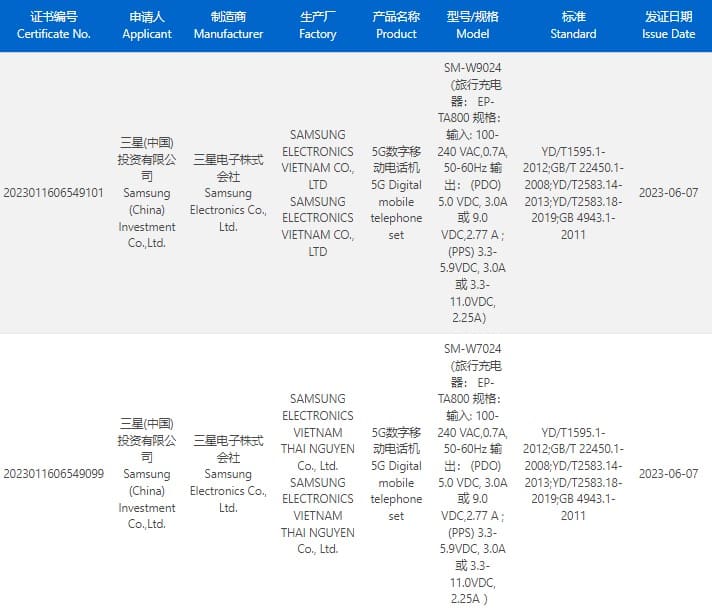
For the past few years around the month of October, Samsung has launched its W series foldable smartphones in China. And it looks like this year won’t be any different as the Samsung W24 series smartphones have already cleared China’s 3C certification.
The Chinese 3C authority has granted approval for two upcoming Samsung smartphones, namely the SM-W9024 and SM-W7024. According to the listing, Samsung will provide an EP-TA800 charger that supports 11V / 2.25A charging for both devices. This indicates that both models are anticipated to offer 25W charging capabilities. We will likely witness the launch of the Samsung W24 and Samsung W24 Flip, which could correspond to the SM-W9024 and SM-W7024 models respectively, around October.
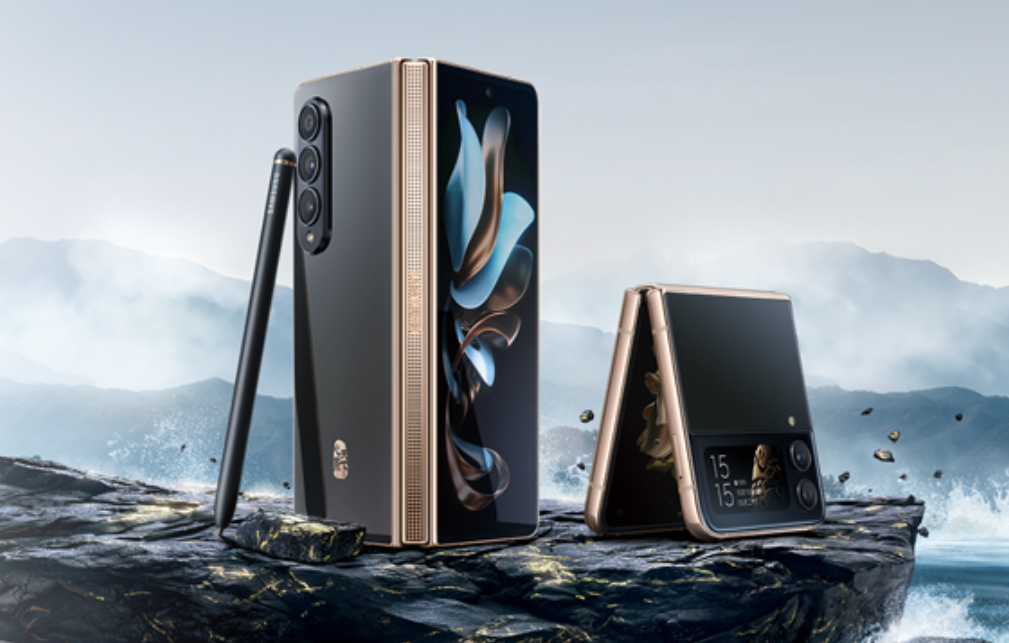
Samsung W23 5G and Samsung W23 Flip
These devices are set to be premium rebranded versions of the Samsung Galaxy Z Fold 5 and Galaxy Z Flip 5, respectively. Typically, Samsung collaborates with China Telecom for the launch of these phones. Like previous W-series models, such as the Galaxy W23, the W24, and W24 Flip will be sold with the aim of raising funds for charitable purposes. The pricing and detailed specifications of the Galaxy Z Fold 5 and Z Flip 5 are still undisclosed since they are yet to be officially released.
In related news, Samsung has recently revealed its plans to hold the launch events for the highly anticipated Galaxy Z Fold 5 and Z Flip 5 smartphones. The Korean launch event is scheduled to take place in the last week of July. However, it’s worth noting that the launch events for the US and Canada markets are slated for August 11.
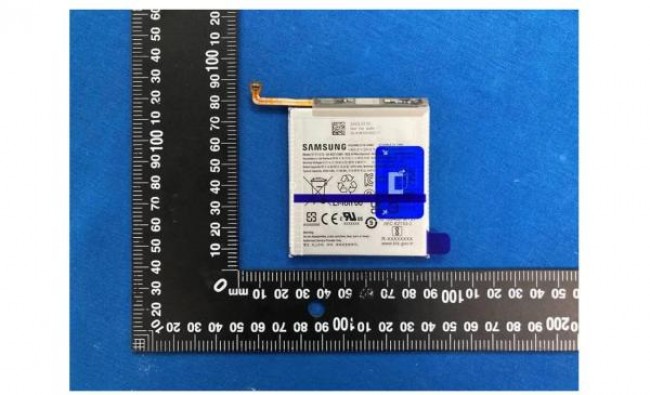
Samsung may be nearing an announcement of the release of the Galaxy S23 FE. The Galaxy S23 FE has gotten its battery certification from Safety Korea. The battery model that was certified bears the model number EB-BS711ABY which aligns with the SM-S711 identifier for the Galaxy S23 FE earlier seen.
The Samsung Galaxy S23 FE’s battery cell is manufactured by Amperex although its capacity was not stated in the certification listing. If previous rumors are to be countenanced, then we expect a 4,500mAh battery for the smartphone with support for 25W charging. The power efficiency of the smartphone’s processor and the background applications are important variables in battery efficiency.
The Galaxy S23 is also rumored to be equipped with the Exynos 2200 chipset globally and 6/8GB RAM or 128/256GB storage configurations. The choice of Samsung Exynos 2200 chipset for the Galaxy S23 FE could raise concerns about performance and battery life. There have been several issues mentioned about the Exynos chipsets. The smartphone will likely feature a 50MP main camera and an overall decent camera setup.
The upcoming Samsung Galaxy Z Fold5 and Z Flip5 flagships will be unveiled in the last week of July. However, it is expected that the Galaxy S23 FE will be launched before the new Samsung foldable. It is therefore expected that Samsung will release the official details of the Galaxy S23 FE before the end of July 2023. Pricing information for the Galaxy S23 FE will be provided as its launch draws nearer.
The GoChess smart board has been announced on Kickstarter and it brings magic and technology to the age-old classical game. It features a fully robotic smart board with self-moving chess pieces and color-coded coaching lights. The GoChess also has a companion app that offers online connectivity and more resources to enjoy the beautiful game to the fullest.
The GoChess is manufactured by Particula and the Kickstarter crowdfunding campaign was launched late last month. GoChess promises to revolutionize the way the game of chess is played and learned. It is arguably the most advanced and powerful chessboard ever created. It offers loads of analytical resources via AI and other sources.
One of the major problems of learning and improving chess is the difficulty in getting relevant learning resources. In addition, online chess playing can be time-consuming to set up the game and get opponents. The GoChess seeks to fill this void with its excellent resources and functionality. It is an all-in-one solution that combines the fully robotic board, color-coded coaching lights, self-moving pieces, AI support, and a seamless connection to the online chess community.
Particula says GoChess offers the full complement of the transformative power of gameplay in chess. It says the GoChess is more than a chessboard and introduces a new way for players at all levels to improve their game. It blends cutting-edge technology with timeless gameplay using AI. The GoChess smart chessboard has a Bluetooth (BLE) rechargeable battery while its multiple magnetic sensors help track the movement of the pieces. The lighting system of the GoChess is also colorful and user-configurable.
Using the GoChess proprietary mobile app, you can play online, offline, or with an AI. You can connect to famous chess platforms like chess.com and Lichess.com. It offers a simple design with three versions including the GoChess Lite and the original model.
Particula has an impressive Kickstarter footprint and expects the GoChess to also be successful. The GoChess is Particula’s third campaign, attracting more than 300,000 customers and $1.3 million in funding. The GoChess pricing starts from $199 until the campaign ends on July 13. At the last check, over $1.25 million in pledges have been garnered by the GoChess.
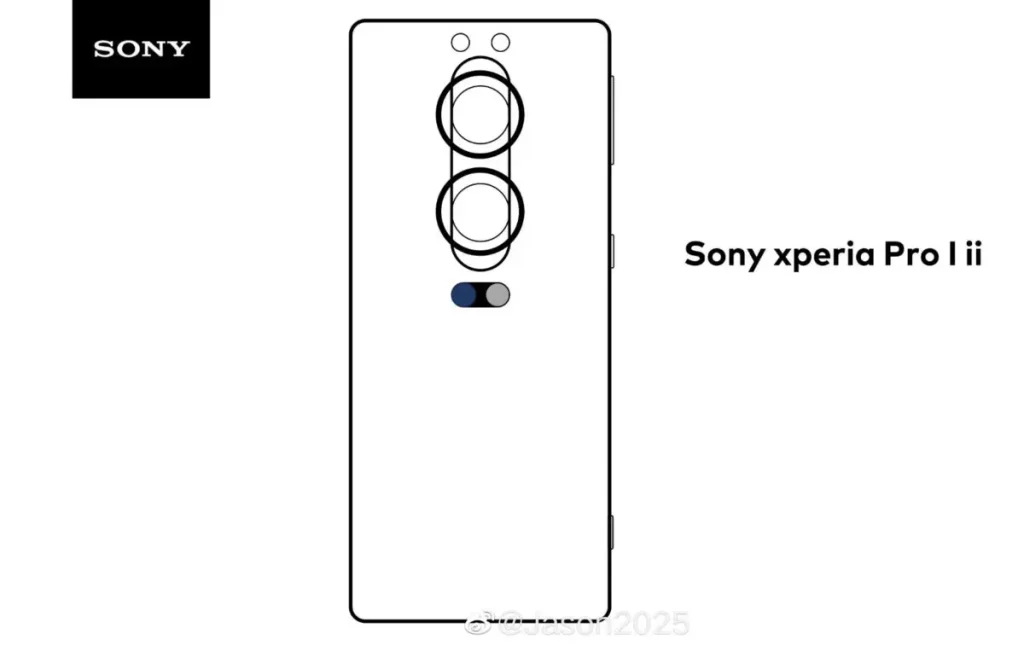
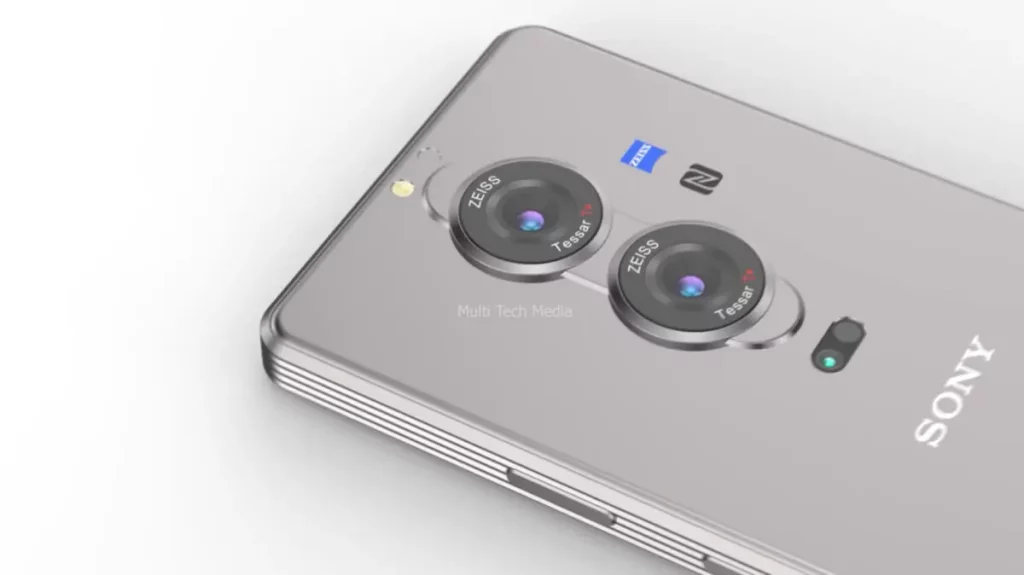
Sony has recently introduced the Xperia 1 V smartphone to the global market, serving as the successor to the flagship Xperia 1 IV. This new device showcases the latest Exmor T stacked sensors for enhanced camera capabilities. Furthermore, it appears that Sony is also gearing up for the launch of the anticipated successor to the Xperia Pro-I, expected to be named the Xperia Pro-I II.
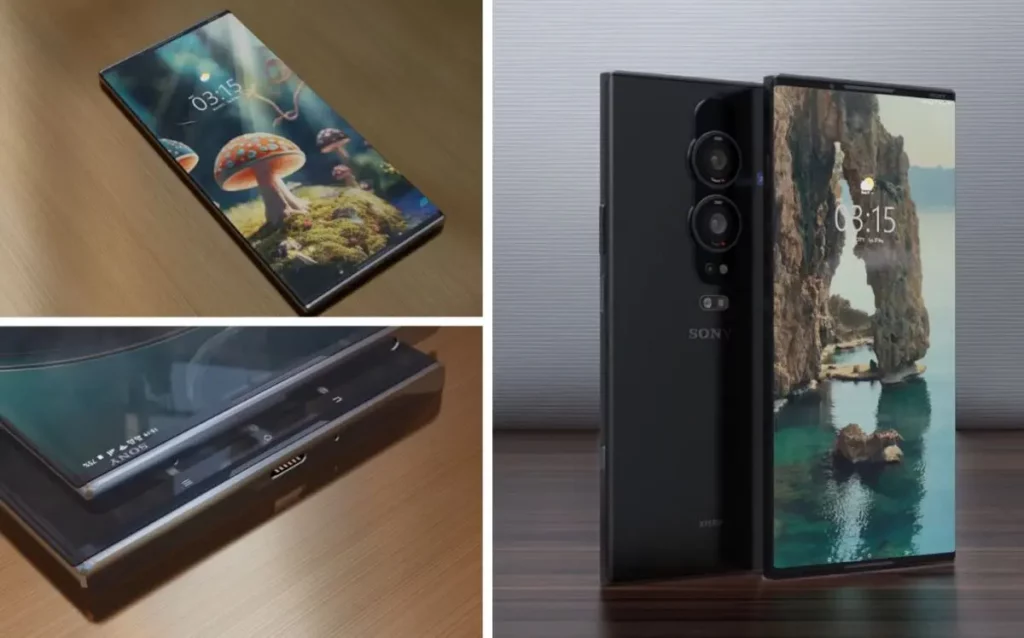
Recently, Sumahodigest leaked renders of the highly anticipated Sony Xperia Pro-I II. The leaked images reveal the presence of two prominent cameras, sparking speculation that the device might be equipped with two 1.0″ Type sensors. In comparison, its predecessor featured a single sensor for the main shooter.
Adding to the excitement, there are rumors circulating that Sony is planning to release a future smartphone equipped with a “double-layer transistor stacked pixel sensor” that will surpass the size of the already impressive 1.0″ Type sensor. This is the same technology Sony recently debuted on the Xperia 1 V smartphone, naming it the Exmor T stacked sensor.
Sony has implemented a unique approach by separating the photodiode and transistor, placing them on separate layers that are stacked together. This innovative design enables independent adjustments to the size of each component, leading to substantial improvements in light capture and reduced noise levels. Sony claims that the new camera sensor can deliver twice the performance in low-light conditions compared to its predecessor.
While it remains uncertain whether this advanced sensor will be featured in the upcoming Xperia Pro-I II, the possibility has piqued curiosity among enthusiasts.
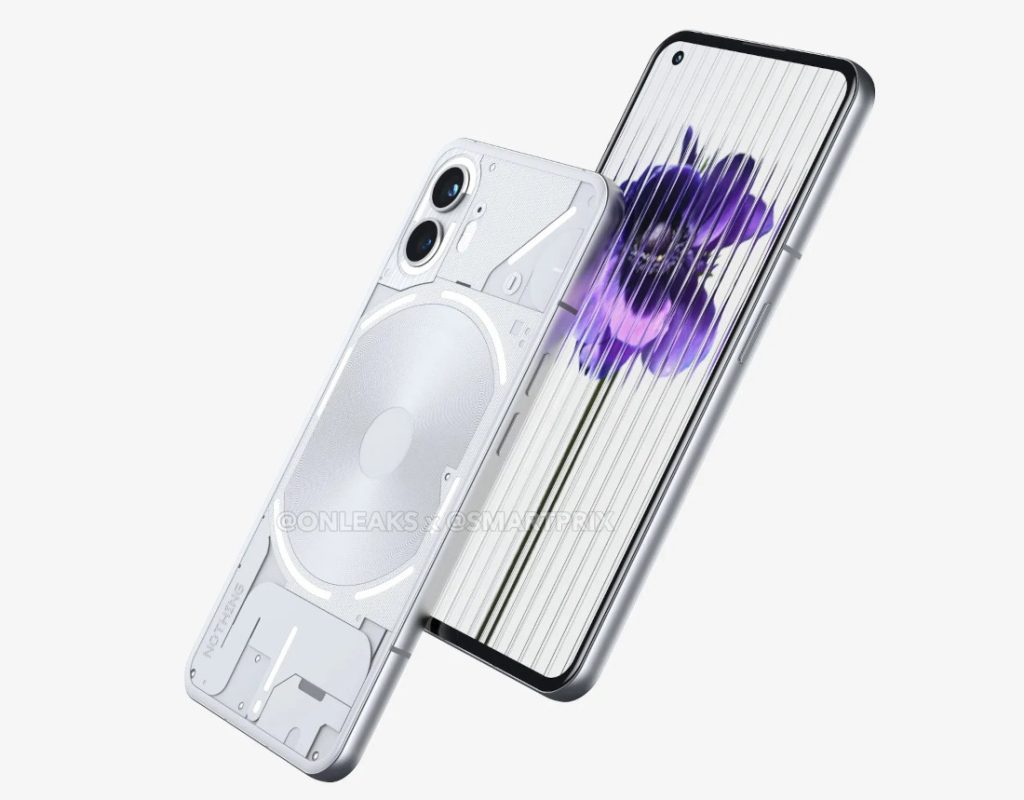
The highly anticipated Nothing Phone (2) is set to launch next month, and recent renders have revealed a new curved design. In a conversation with Mladen M. Hoyss, Software Creative Director at Nothing, insights were gained about the upcoming Nothing OS 2.0.
During the interview, Hoyss expressed the goal of establishing a recognizable ecosystem that combines the best aspects of Android to enhance accessibility and efficiency for users. In March 2023, Nothing announced a strategic partnership with Blloc, which brought Mladen M. Hoyss and his design team on board. Having previously worked on Blloc’s Zero 18 Android phone and Ratio launcher, they are now collaborating with Nothing to develop the next generation of Nothing OS. Blloc’s design philosophy, focusing on productivity and minimalism, continues to influence Hoyss’ work with Nothing.
Hoyss envisions a home screen that reflects personal interests and provides relevant information at a glance, reducing the need for excessive scrolling. Nothing plans to bring out-of-the-box options to the forefront, creating a functional environment.
He says that collaboration between the original OxygenOS developers and Blloc developers at Nothing has resulted in remarkable synergy. They strive for exceptional performance while prioritizing user satisfaction.
The core concept of Nothing OS 2.0 is “functional aesthetics,” which involves transforming large amounts of data into visually digestible representations. Nothing plans to create a visually appealing and data-rich user experience. Following the launch of Nothing OS 2.0 this summer, the company will provide further updates on its compatibility with the original Nothing Phone (1).
In a highly anticipated launch, Apple recently introduced its first mixed reality (MR) headset, the Vision Pro, marking a significant product release for the company. Priced at $3,499, the Vision Pro garnered attention for its impressive technological advancements. However, Apple has revised its initial sales expectations of 1 million, now aiming to sell 150,000 units, a substantial decrease from earlier projections.
Vision Pro vs. Meta Quest: A Clash of Features and Price
Enthusiasts and users had high hopes for the Vision Pro, expecting it to pose a serious challenge to its competitor, Meta Quest. With the Meta Quest 2 having sold over 20 million units, its market dominance was evident. Apple’s decision to lower sales targets suggests that the Vision Pro may take some time before achieving widespread adoption.
@TheGalox, a renowned tipster, reported Meta Quest 2’s impressive sales figures, which doubled from 10 million to 20 million units between late 2021 and early 2023. In comparison, Apple’s Vision Pro has set a more conservative sales target of 150,000 units.
While the launch of the Vision Pro has intensified the headset wars, there are notable differences between the two products. The Vision Pro comes with a starting price of $3,500 and requires a separate battery pack, whereas the Meta Quest 2 is priced at $299 and boasts 128 GB of memory. Additionally, many features showcased during the Vision Pro’s unveiling had already been introduced by Meta. Meta has also announced its upcoming VR headset Meta Quest 3 which will launch this fall.
Consumers eagerly await further details on how the Vision Pro distinguishes itself from the Meta Quest and the rationale behind the significant price difference between the two headsets. As the market continues to evolve, both companies are poised to vie for dominance in the MR headset space.
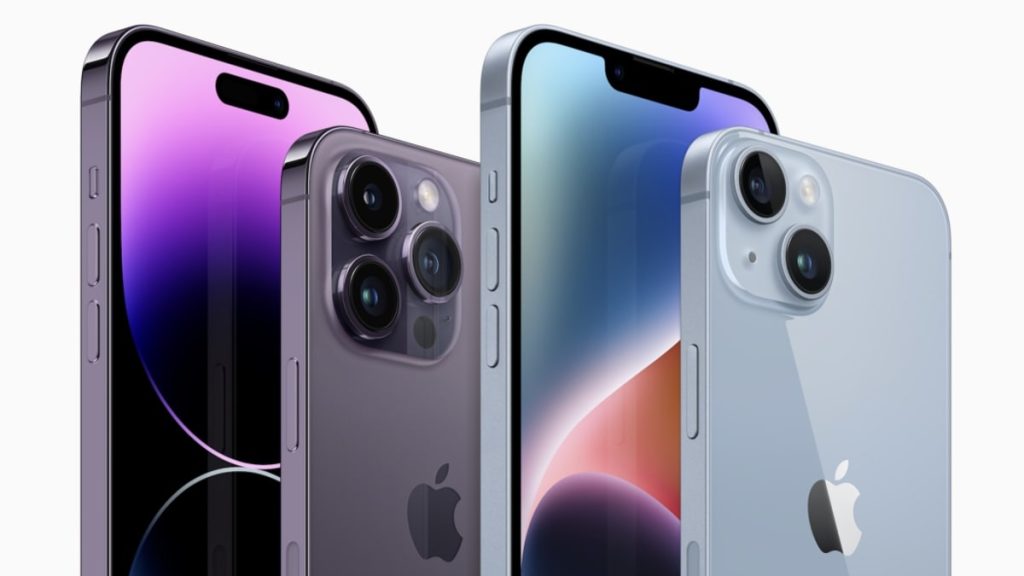
According to renowned Wall Street analyst Dan Ives, Apple is projected to raise the prices of its upcoming iPhone 15 lineup, marking the first price hike in the United States since 2017. Ives, known for his accurate predictions, shared his insights in a note obtained by Barron’s and further discussed his findings on CNBC.
Ives says Apple is playing chess, others are playing checkers
Dan Ives, who accurately forecasted international price increases for the iPhone 14, expects Apple to follow a similar strategy with the iPhone 15. While he did not specifically mention U.S. prices, the analyst’s belief in rising Average Selling Prices (ASPs) suggests an impending price adjustment for the new iPhone models, set to be released this September.
The anticipated price hikes are also expected to be more prominent for the premium iPhone 15 Pro models, potentially reaching up to $200 according to most analysts, including Forbes. The current pricing of the iPhone 14 series ranges from $799 and up for the standard model, $899 and more for the iPhone 14 Plus, $999 for the iPhone 14 Pro, and $1,099 and above for the iPhone 14 Pro Max.
Ives also expressed bullish sentiments regarding Apple’s Services business segment, praising the company’s strategic vision. He foresees Apple’s valuation increasing from its current $2.85 trillion to an estimated $3.5 trillion to $4 trillion within the next 18 to 24 months.
Furthermore, Ives pointed out the potential market opportunity for Apple, with approximately 250 million iPhone units that have not been upgraded in the past four years. Should a significant number of these users choose to replace their devices this year, it could generate substantial revenue for Apple.
Ives predicts that Apple will ship between 235 million and 240 million units of the iPhone 15 in 2023. Even if the average price increase amounts to $100, the analyst’s forecast indicates an additional $23.5 billion in revenue for Apple.
Overall, the outlook for Apple’s iPhone 15 launch suggests a potential price adjustment and strong sales, presenting both opportunities and challenges for the tech giant in the highly competitive smartphone market.
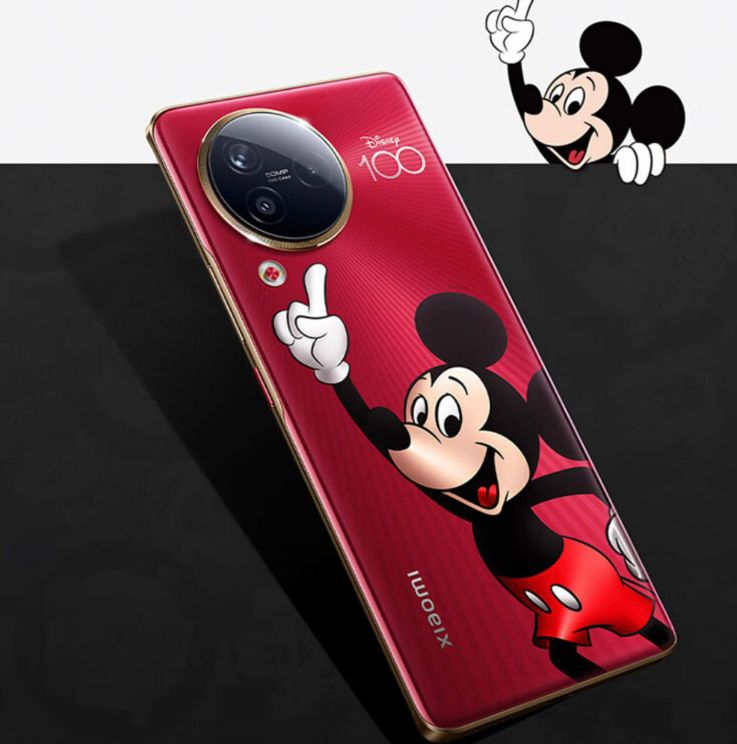
Xiaomi Civi 3 Disney combines powerful performance with a touch of Disney magic. This special edition device brings you a host of impressive features and specifications that will elevate your smartphone experience. Let’s take a closer look at what the Xiaomi Civi 3 Disney Limited Edition has to offer.
Xiaomi Civi 3 full review:
At the heart of this smartphone lies the MTK Dimensity 8200-Ultra chipset, featuring an octa-core processor clocked at 3.1GHz. Paired with either 12GB or 16GB of RAM, the Xiaomi Civi 3 delivers outstanding performance for smooth multitasking, app navigation, and more. With its 512GB of UFS 3.1 storage, you’ll have ample space to store your favorite apps, photos, music, and more.
The Xiaomi Civi 3 Disney Limited Edition boasts a stunning 6.55-inch curved OLED display with a resolution of 2400 x 1080 pixels (FHD+). With a 120Hz refresh rate and 10-bit color depth, this display offers smooth visuals and vibrant colors. The Corning Gorilla Glass 5 protection ensures durability, while the 800 nits peak brightness level allows for easy readability even in bright outdoor conditions. The display also features a 240Hz touch sampling rate, providing a highly responsive touch experience.
Capture every moment in exceptional detail with the Xiaomi Civi 3’s triple rear camera setup. The 50MP primary sensor, assisted by OIS (optical image stabilization), delivers stunningly sharp and clear photos. Accompanying the primary sensor is an 8MP ultra-wide camera for capturing wide-angle shots, and a 2MP macro snapper for close-up photography. On the front, you’ll find dual 32MP sensors with one supporting autofocus and the other equipped with a 100° ultra-wide lens. Whether you’re capturing landscapes, portraits, or macro shots, the Xiaomi Civi 3 Disney Limited Edition has you covered.
Powering the Xiaomi Civi 3 Disney Limited Edition is a 4500mAh battery that supports 67W fast wired charging, ensuring that you spend less time tethered to an outlet. The inclusion of an in-display fingerprint scanner offers convenient and secure unlocking of your device.
Connectivity-wise, the Xiaomi Civi 3 supports 5G and is equipped with WiFi 6, the latest Wi-Fi standard, for faster and more reliable internet connectivity. It also features dual SIM slots, allowing you to easily switch between two phone numbers or plans.
In addition to its impressive hardware, the Xiaomi Civi 3 Disney Limited Edition offers a range of other features. These include dual stereo speakers with Dolby Atmos support, providing an immersive audio experience, a linear vibration motor for haptic feedback, an infrared sensor, and a multi-functional NFC for contactless payments. The device also features an efficient cooling system to ensure optimal performance during extended usage.
Related:
For all Disney lovers out there Giztop has limited stock of Xiaomi Band 8 and Xiaomi Buds 3 Disney Limited edition. So be sure to head to Giztop to check out the Disney edition merchandise.
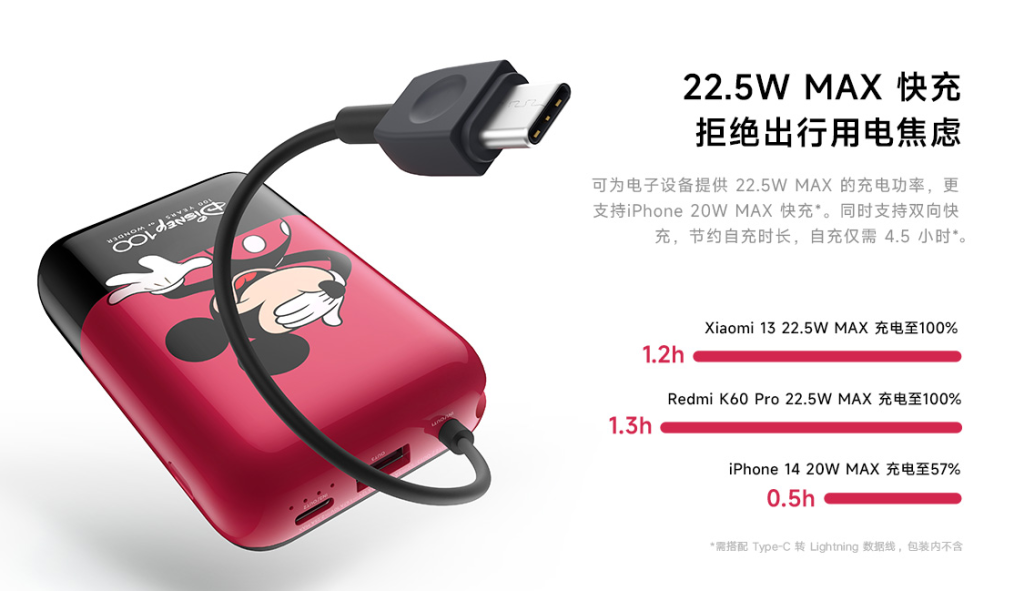
Xiaomi, in collaboration with Disney, has unveiled the 10000mAh Disney 100th Anniversary Limited Edition Built-in Cable Power Bank, as part of the celebration of Disney’s 100th anniversary. This power bank, available for pre-order on Xiaomi’s online store, pays tribute to the beloved character, Mickey Mouse. The company has also launched Mickey Mouse-inspired Civi 3 Special Edition in China.
A black and red power bank inspired by Mickey Mouse’s timeless charm
The power bank boasts a black and red design reminiscent of the iconic Mickey Mouse, capturing the playful essence of the cartoon character. It comes with some unique features that make it a convenient and practical charging solution.
One notable feature of the Xiaomi 10000mAh Pocket Edition Power Bank is its built-in Type-C 22.5W bi-directional fast charging cable. This eliminates the need to carry an extra cable, offering hassle-free charging on the go, particularly for users of mainstream Android devices.
The power bank has a capacity of 10000mAh, which enables it to charge various devices multiple times. For instance, it can charge the Xiaomi 13 1.7 times, Redmi K60 Pro 1.4 times, iPhone 14 twice, and Switch 1.1 times. With its ample battery capacity, it can easily last through a full day of typical smartphone usage and other devices.
It’s worth noting that the power bank supports a maximum charging power of 20W for iPhones. However, to connect the power bank to iPhones, a C to L data cable is required due to the Lightning port used by iPhones.
The Xiaomi 10000mAh Pocket Edition Power Bank features a Type-C power cable, Type-C interface, and USB-A port. Each port supports a maximum output power of 22.5W, allowing simultaneous charging of up to three devices. This offers flexibility to users who need to charge multiple devices at once.
Furthermore, the power bank includes a low-current discharge mode, which can be activated by double-clicking the power check button. This mode is particularly useful for reviving small devices with low battery levels.
In terms of safety, the Xiaomi 10000mAh Pocket Edition Power Bank incorporates multiple protection features, including safeguards against short circuits, overvoltage, overcurrent, overcharge, and over-discharge. Users can rely on this power bank for secure and reliable portable power. Xiaomi’s special edition Mickey Mouse power bank is priced at 199 Yuan ($28).
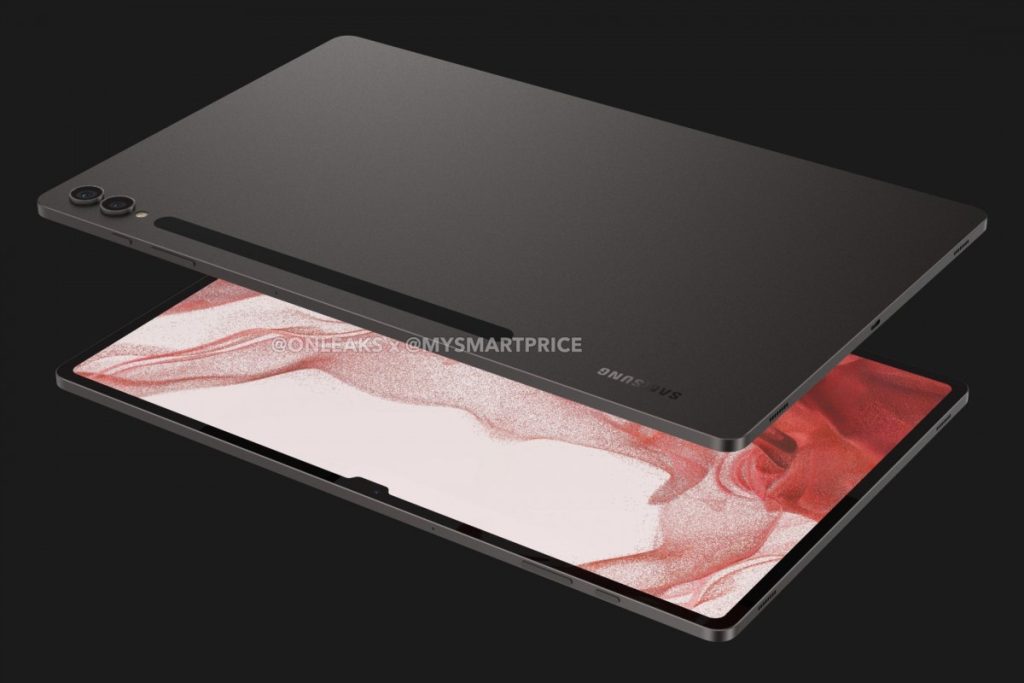
Samsung is hard at work developing the iPad Pro rival. The Galaxy Tab S9 Ultra is the Korean company’s premium most tablet for 2023 and is expected to bring top-notch hardware out of the box. While we wait for the official launch of the new slate, it has appeared on the US FCC website, hinting we might not have to wait very long. Here are the details.
Tab S9 Ultra could launch during the Galaxy Unpacked event
Samsung Galaxy Tab S9 Ultra has been spotted on the FCC website by tipster SnoopyTech. It seems the full FCC certification page isn’t live yet but we do get to see the SAR evaluation report of the device with model SM-X910. The listing itself isn’t anything interesting but it might suggest the tablet will be unveiled soon. Samsung may unveil the device during the Unpacked event, rumored to be held in late July.
The Tab S9 Ultra could share the stage with the base Tab S9 as well as the Tab S9+, which likely sits in the middle. All three may be powered by a special For Galaxy version of the Snapdragon 8 Gen 2 processor. The Galaxy Tab S9+ is expected to get a 12.4-inch Super AMOLED display with a 120Hz refresh rate, while the Ultra model may retain the 14.6-inch AMOLED display (WQXGA+) found on the Galaxy Tab S8 Ultra.
The tablets are expected to get several memory options, with variants featuring 8GB or 12GB of RAM, as well as storage choices ranging from 128GB to 512 GB. The tablets should feature a magnetic S Pen stylus along with a quad-speaker setup. According to a recent report, the Tab S9 series will support 45W fast charging (10V/4.5A), similar to their predecessors.
The Infinix Note 30 5G is all set to launch on June 14 in India. Today, the company confirmed that the device will arrive with a sub-Rs 15,000 (~$182) price tag in the country. It also highlighted that the device would come with 45W charging and Bypass charging technologies.
The Note 30 5G phone features dual-channel fast charging technology with two 2:1 charge parallel pumps, enabling a 45W charge. According to Infinix, it can reach 75% battery from 1% in just 30 minutes, and a 5-minute charge restores 1.75 hours of gaming time. For those who don’t know, the Note 30 5G will pack a 5,000mAh battery.
Infinix Note 30 5G
The bypass charging feature that the Note 30 5G will have onboard will reduce overheating while charging and gaming simultaneously, making it ideal for gamers. It can decrease temperature increases by up to 7°C compared to regular charging.
Infinix Note 30 5G specifications
The Infinix Note 30 5G will arrive with a 6.78-inch IPS LTPS panel that offers a Full HD+ resolution and a 120Hz refresh rate. On the back, it will feature a 108-megapixel triple camera unit.
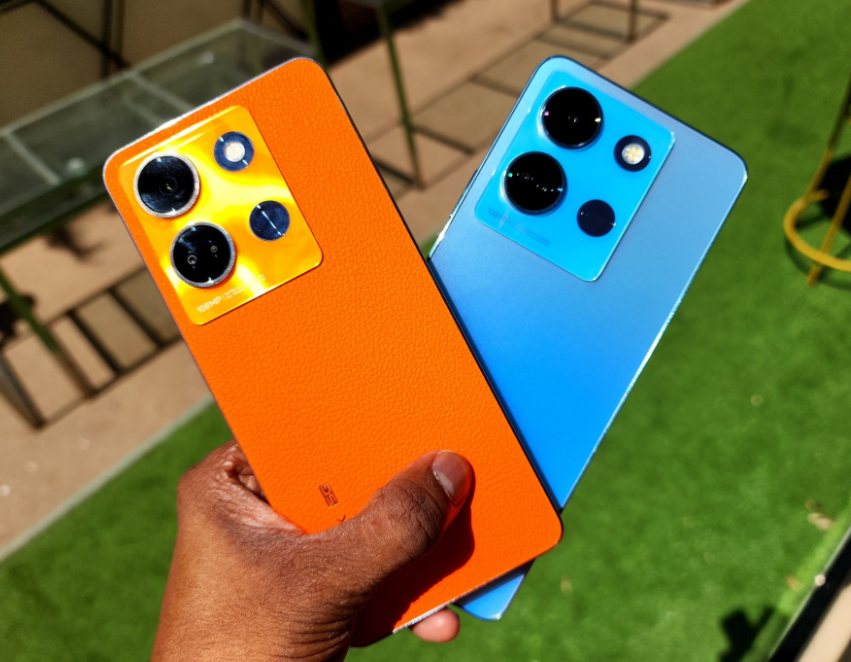
The Note 30 5G will come with other features like Android 13 OS with XOS 13 UI on top, JBL-powered dual speakers, and a side-facing fingerprint scanner. The device will come in three shades, such as black, blue, and orange. The latter will have a leather texture on the back.
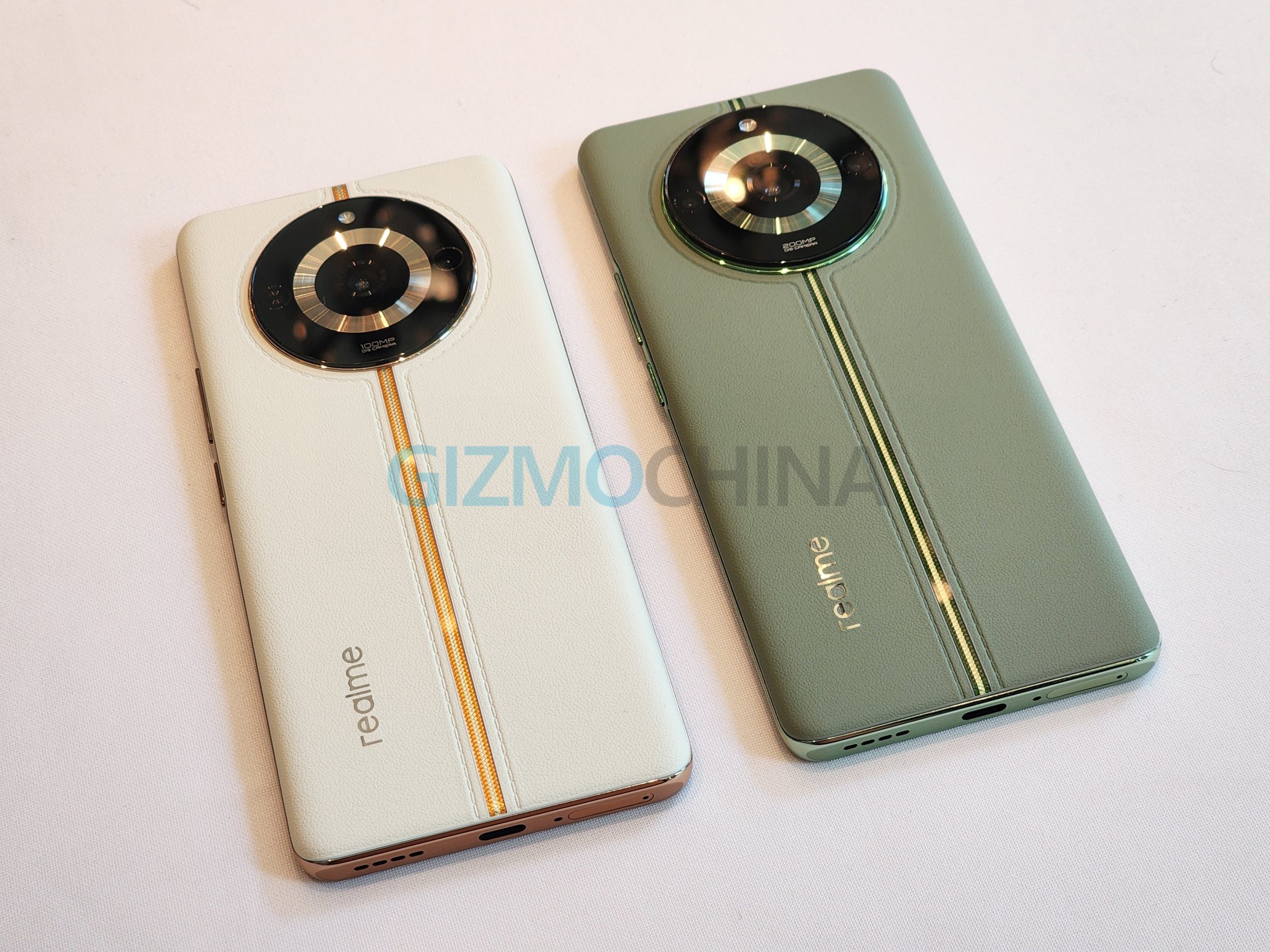
On June 8, Realme unveiled the Realme 11 Pro series of smartphones at a grand launch event in New Delhi, India. At the event, the company confirmed that it would be delivering a leap-frog technology and a premium master design with each instalment of its numbered series, and the Realme 11 Pro+ successfully fulfils this commitment. It features Realme’s inaugural 200-megapixel camera, showcasing the brand’s dedication to pushing boundaries in smartphone photography. Furthermore, the collaboration with former Gucci designer Matteo Menotto has resulted in a visually striking design that adds an extra touch of elegance to the Realme 11 Pro+.
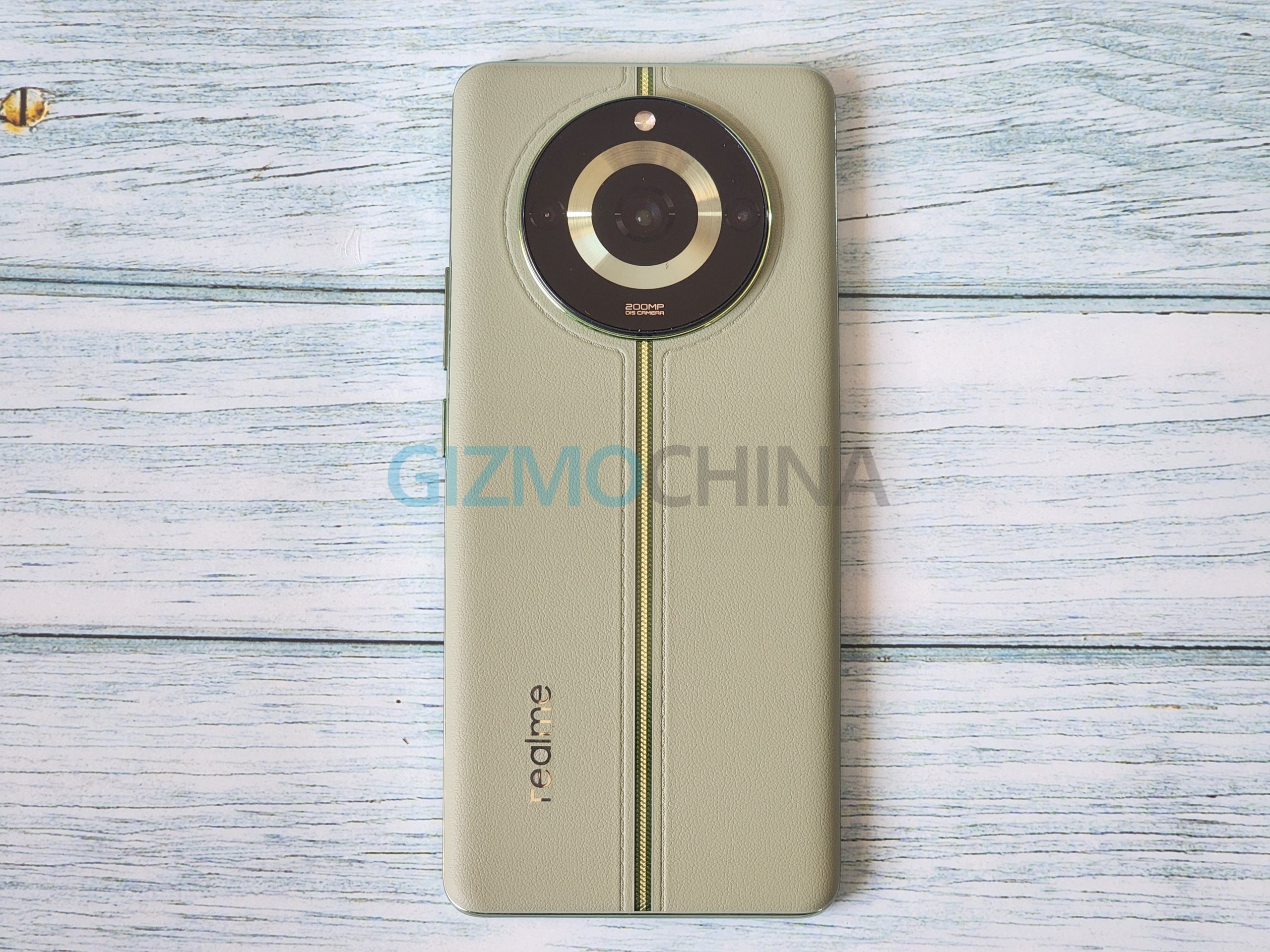
The Realme 11 Pro+ comes in three color options: Astral Black, Oasis Green, and Sunrise Beige. The black variant features a polycarbonate rear shell with a leather-like design, while the green and beige variants showcase vegan leather. Realme sent me the Oasis Green variant of the Realme 11 Pro+. Join us as we explore the Realme 11 Pro+, a beautiful and powerful smartphone packed with exciting features.
Realme 11 Pro+ design
Realme 11 Pro 5G and Realme 11 Pro+ 5GRealme 11 Pro+ 5GRealme 11 Pro+ 5GRealme 11 Pro+ 5G
The Realme 11 Pro+ 5G features a high-quality lychee vegan leather back cover with a luxurious feel that is resistant to dirt and stains. The 3D woven texture and hand-made switching design, which can be seen in the middle, amplify the beauty of the phone. The phone feels thin and light, as it measures 8.7mm in thickness and weighs 189 grams. The black variant has an 8.2mm thickness and weighs 183 grams.
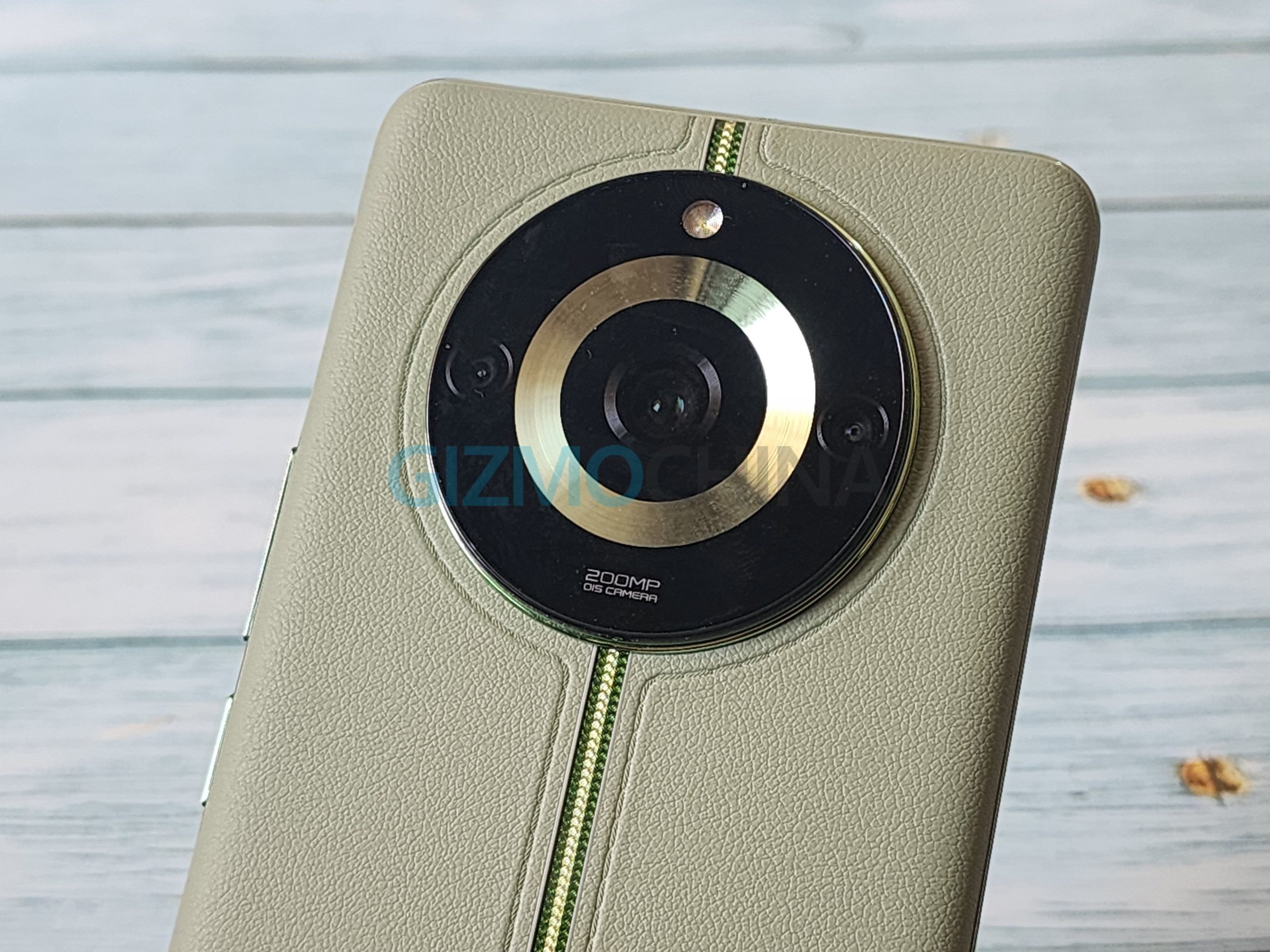
Distinguishing itself from the Realme 10 Pro series, the Realme 11 Pro+ showcases a unique rear camera design. Located on the upper half of the phone’s back, the prominent round camera module houses three symmetrically arranged cameras. The main camera stands in the centre, highlighted by a green-plated ring, while the additional cameras and LED flash are enclosed within a black ring. Adding a touch of elegance, a stylish gold accent surrounds the entire module, completing the eye-catching design.
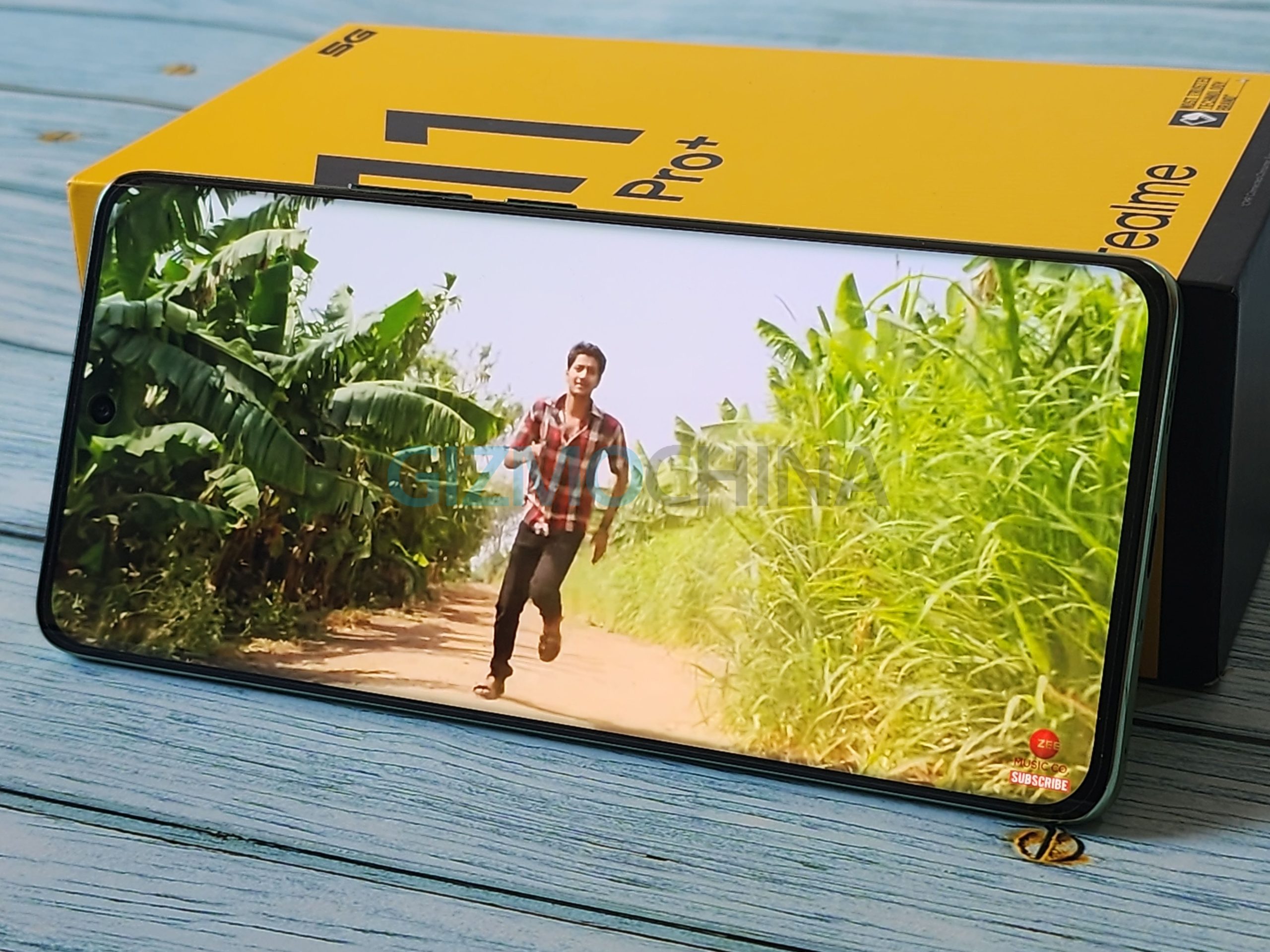
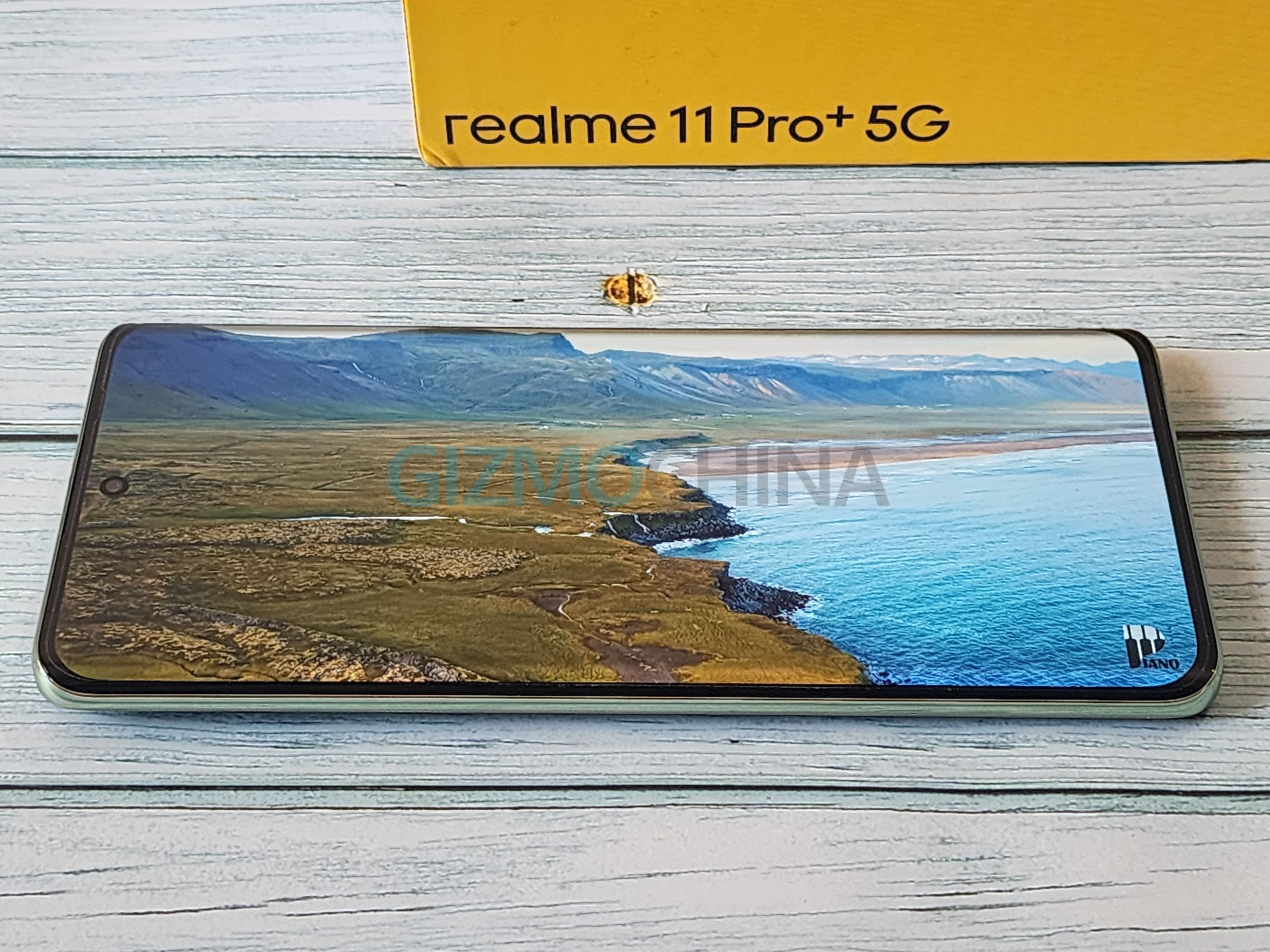
The Realme 11 Pro+ features a stunning front design with a curved-edge display, which accentuates the overall beauty of the phone. According to the brand, the 11 Pro+ offers a screen space of 93.65 percent. Realme’s meticulous craftsmanship in the Realme 11 Pro+, seamlessly blends captivating design elements with a premium aesthetic, setting a new standard for mid-range phones.
Realme 11 Pro+ 5G specifications
The Realme 11 Pro+ has a 6.7-inch OLED panel that offers Full HD+ resolution, a 120Hz refresh rate, a 360Hz touch sampling rate, 10-bit colors, 100 percent P3 color gamut, a 500000:1 contrast ratio, 950 nits of peak brightness, and HDR10+ support. The screen is shielded by Dragontrail Glass. During my usage, I encountered no significant visibility challenges when using the Realme 11 Pro+ outdoors in bright sunlight.
The display offers 2160Hz PWM dimming, which effectively reduces screen flickering and minimizes visual fatigue. It introduces an industry-first 20,000-level automatic brightness adjustment for optimized screen backlight experience, reducing physical brightness differences, and ensuring accurate and delicate backlight brightness adjustment. With dual speakers onboard and HDR10+ support, the Realme 11 Pro+ with HDR10+ is an ideal phone for binge-watching on OTT platforms.
Under the hood, the Realme 11 Pro+ has the Dimensity 7050, which is nothing but a rebranded version of the Dimensity 1080 that powers the Realme 10 Pro series. The Realme 11 Pro+ has LPDDR4x RAM and UFS 3.1 storage. To recall, the 10 Pro+ features UFS 2.2 storage.
Despite having a lot of preloaded apps, the 11 Pro+ operates smoothly as it runs on the Realme UI 4.0-based Android 13 OS. The handset offers up to 12 GB of virtual RAM. Realme has confirmed that the Realme 11 Pro series will receive two years of Android OS upgrades and three years of security updates. The phone packs a 5,000mAh battery that supports 100W charging. I was able to charge the device completely in under 35 minutes using the in-box charger.
Ultrawide1x2x4x
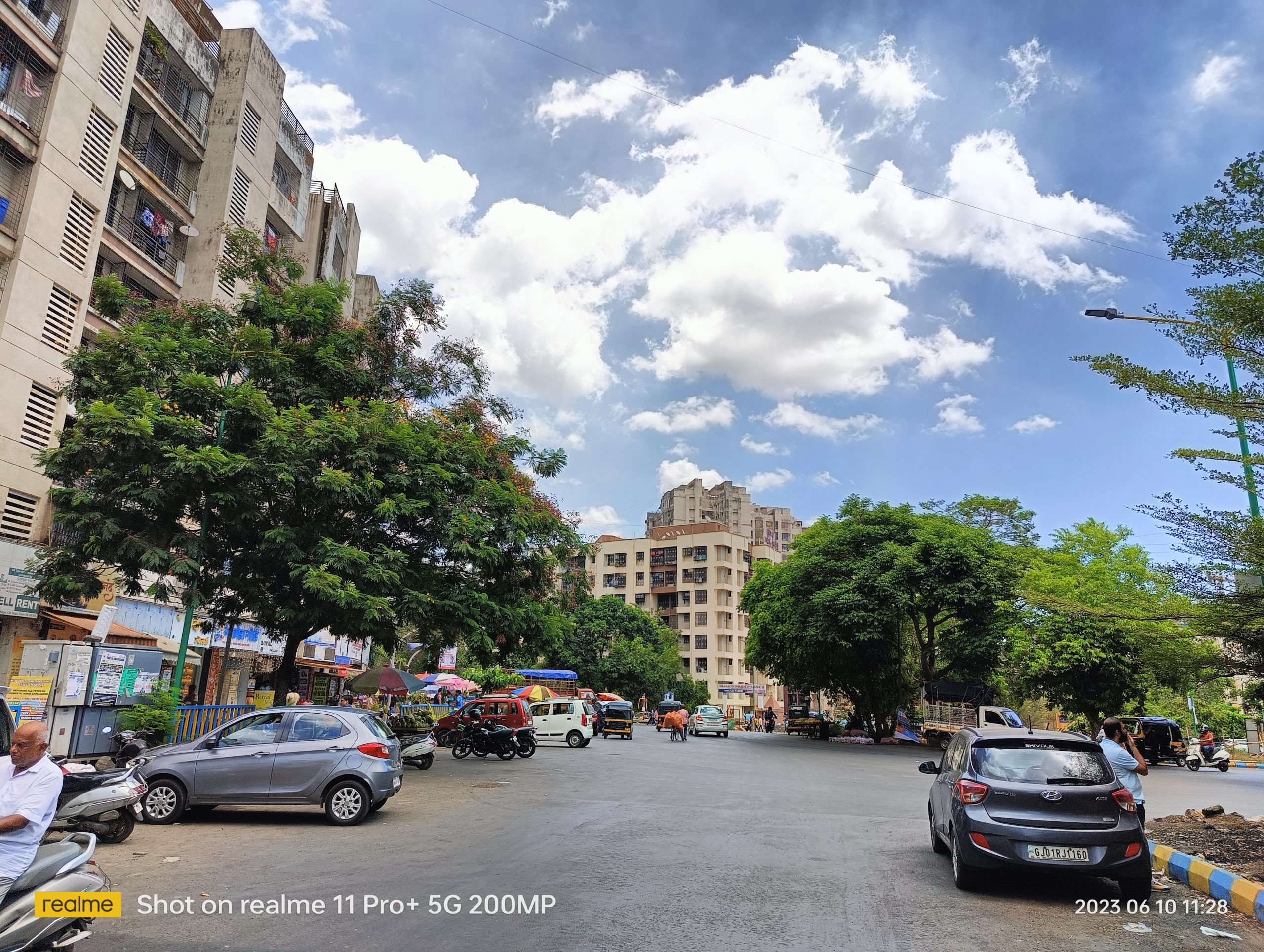
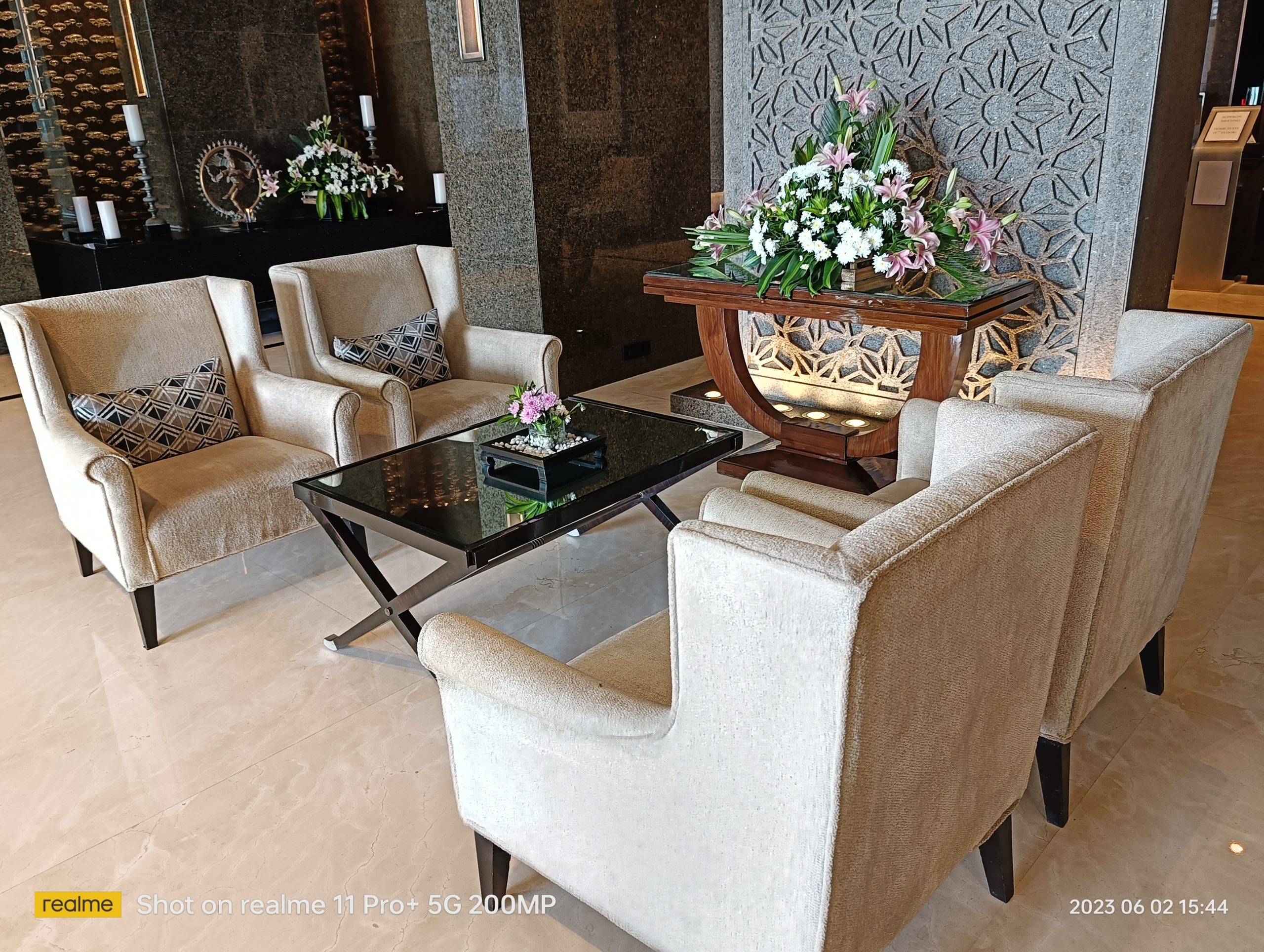
The Realme 11 Pro+ introduces a 200-megapixel camera with 4-axis OIS, featuring the Samsung ISOCELL HM3 sensor. With a 1/1.4-inch size and f/1.69 aperture, the HM3 sensor provides 2x or 4x lossless zoom (4 x in-sensor zoom), unlike digital zoom, which compromises image quality when cropping the main image to 2x or 4x. The Auto Zoom feature in Street photography mode adjusts zoom and crops automatically, reducing the need for manual adjustments. Additional photography features include Super Nightscape, Moon mode, and Starry Sky mode. The device includes an 8-megapixel ultra-wide lens, a 2-megapixel macro camera, and a 32-megapixel Sony IMX615 selfie camera with a 90-degree FOV, delivering impressive results.
Realme 11 Pro+ 5G price in India
From its eye-catching design to its advanced camera system and fast-charging capabilities, the Realme 11 Pro+ aims to deliver a flagship-level experience at an affordable price. Here’s a look at the price of the two variants of the Realme 11 Pro+:
8GB RAM + 256GB storage – Rs 27,999 (~$340)
12GB RAM + 256GB storage – Rs 29,999 (~$365)
Colors: Astral Black, Sunrise Beige, and Oasis Green
As mentioned above, the Realme 11 Pro+ 5G is now available for pre-booking. Its first sale will be carried out on June 15 via Flipkart, Realme India’s website, and offline channels.
On the first sale, the base model can be bought with a flat discount of Rs 2,000 using ICICI, HDFC, and SBI bank cards, or Rs 2,000 (~$24)off on exchange. Users can take advantage of no-cost EMI for up to six months.
On the higher variant, there is no-cost EMI for up to 12 months. While there is no bank discount available, users can avail Rs 500 off on exchange.
Vivo introduced the X90 smartphone to the global market earlier this year, and since then, the device has undergone several software updates to enhance the user experience. The brand is currently rolling out a fresh update that brings numerous improvements to the device.
In the latest update, the X90 smartphone from Vivo incorporates the Android security patch for May 2023, ensuring enhanced device security. Additionally, the update introduces camera optimizations specifically targeting the selfie shooter’s Super Night Mode, improving the clarity of photos taken in low-light conditions. Furthermore, the overall functionality of the camera has been optimized to deliver an improved shooting experience to users. It has the firmware version PD2241BF_EX_A_13.0.17.2.W30 and weighs 245MB. Check below for the complete changelog.
System
Updated to the May 2023 Google security patch to improve system security
Optimized system stability to fix the issue where some apps occasionally crash
Fixed the occasional issue where some pages are not displayed properly when “Largest” is selected in Font & display size
Fixed the occasional issue of abnormal screen display
Network
Optimized network adaptability and stability
Camera
Optimized the clarity of photos taken by the front camera in Super Night mode
Optimized the smoothness of the overall function of Camera to provide a better shooting experience
Status bar & notifications
Optimized the display of icons in the status bar to provide a better user experience
Apps
Optimized third-party app compatibility to fix the occasional issue where some apps do not work properly
Fixed the occasional issue where “Permissions” is grayed out on the App info page of “Feedback”
Bluetooth
Fixed the occasional issue where incoming calls are played through the speaker when Bluetooth earphones are connected
In March, Vivo introduced the V27 Pro smartphone to the Indian market. Positioned in the mid-range segment, this device stands out with its impressive performance and attractive, sleek design. Excitingly, the smartphone has now received a new software update, aiming to enhance the user experience and optimize the software aspects of the device.
The latest update for your device has been released, featuring the June 2023 Android security patch. Alongside enhanced system optimizations, this update addresses various issues and improves several aspects of your device’s functionality. Notable improvements include enhanced compatibility with third-party apps, resolving app crash problems, optimizing network performance for better fluency and stability, refining overall camera functions, and enhancing the dark mode experience. Furthermore, the update addresses the issue with the always-on-display feature, providing a fix for that as well. You can check the detailed changelog below.
Vivo V27 Pro software update changelog
System
Updated to the June 2023 Google security patch to improve system security
Optimized third-party app compatibility and fixed the issue where apps crash in some scenarios
Network
Optimized network fluency and stability to improve your web experience
Camera
Optimized the smoothness of the overall function of camera to provide a better shooting experience
Dark Mode
Optimized Dark mode to fix the issue of abnormal display in some interfaces
Home screen, lock screen, and wallpaper
Fixed the issue of a display error occasionally occurring on Always On Display
V27 Pro smartphone users will receive a notification once the update becomes available for their devices. Alternatively, users can manually check for the update’s availability by navigating to “Settings” and accessing the “System Updates” section.
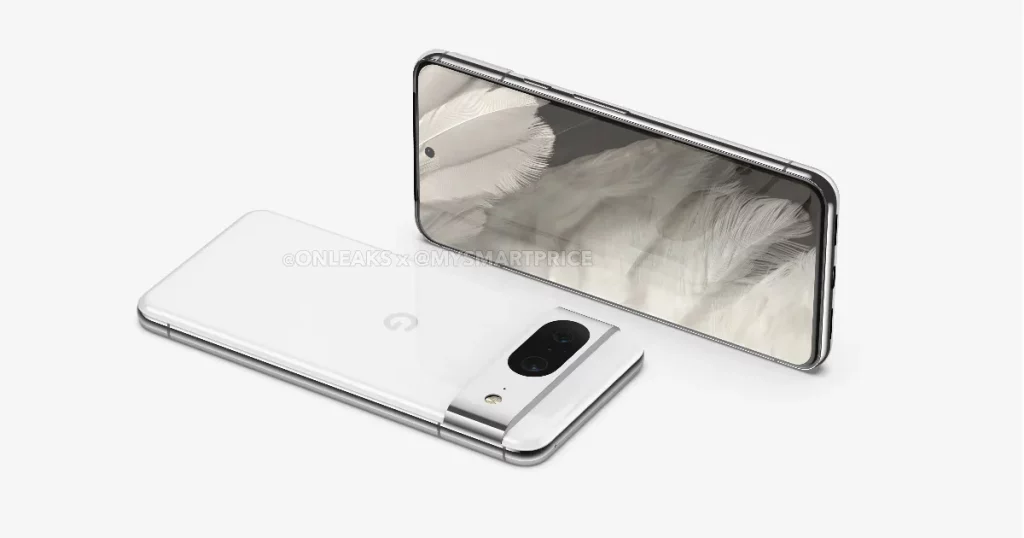
Google is not launching the Pixel 8 series anytime soon but details about the lineup are leaking at full pace. From what we know so far, the Pixel 8 Pro is going to be a substantial upgrade over its predecessor with a temperature sensor, an intelligent processor, and a refined design. Now, you can also add new camera sensors to the list of upgrades, as a report claims the device will get a new ISOCELL GN2 main sensor along with a 64MP telephoto. The vanilla model also gets the new main sensor but apparently misses on the ultrawide lens.
Pixel 8 Pro could tank top flagships with its cameras
Developer Kamila Wojciechowska, writing for Android Authority, reveals that the Pixel 8 series is receiving a significant upgrade in the camera department. According to the report, both the Pixel 8 and Pixel 8 Pro will get the Samsung ISOCELL GN2 as their main camera sensor. This is a notable improvement over the previous GN1 sensor.
The inclusion of the new main sensor translates to approximately 35% more light capture compared to its predecessor. This enhancement enables brighter low-light images and faster shutter speeds, ultimately reducing motion blur. The new sensor also supports 8K/30fps video capture.
Pixel 8 Pro is also said to be getting a “more usable” ultrawide sensor. The Pixel 7 Pro features the old and forgotten 12MP Sony IMX386 on its ultrawide but the upcoming flagship could flex a new 64MP Sony IMX787 sensor. It has a much larger size and should improve the device’s ultrawide shooting capabilities. However, you will still find the same Sony IMX386 on the standard Pixel 8, albeit with a better zoom ratio of 0.55x (Pixel 7 has a 0.67x zoom ratio).
Samsung Galaxy S21 series, known for its premium specifications, features, and impressive camera capabilities, has faced some challenges since its release in 2021. Users have raised concerns about the camera features, image quality, and hardware problems with the Galaxy S21+ and Galaxy S21 Ultra models.
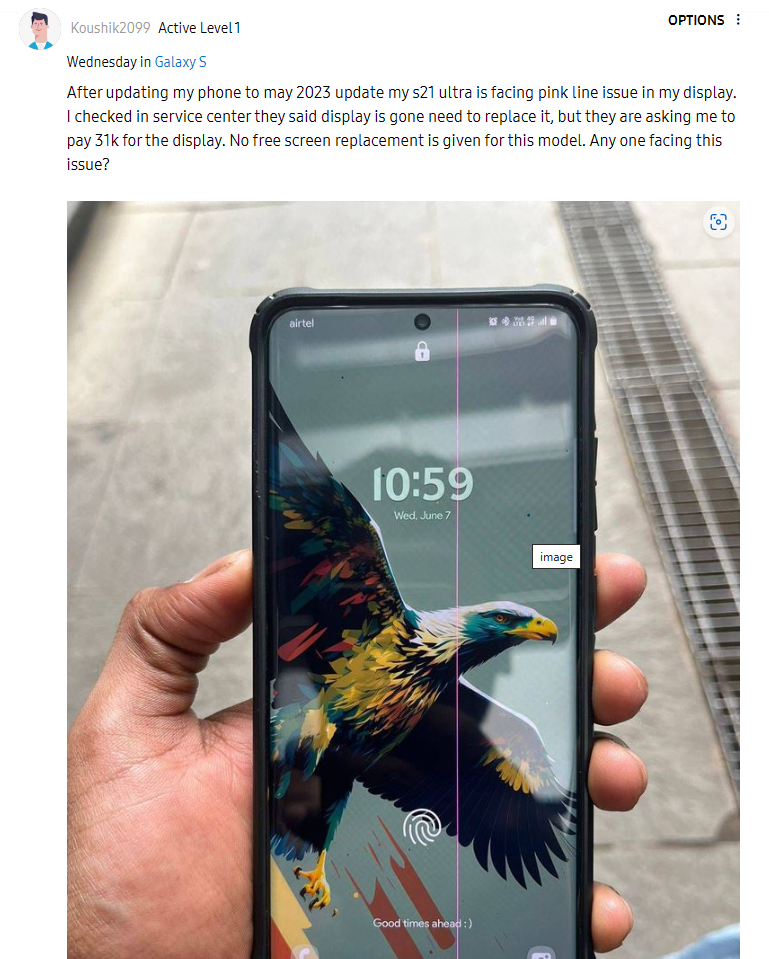
Recently, the May 2023 update was rolled out for the Galaxy S21 Ultra, aiming to provide improvements and enhancements. However, one user has now reported a display issue after installing this update.
Users Demand Solutions for Pink Line Display Issue on Galaxy S21 Ultra
The user approached the service center for assistance regarding a pink line issue on the display. To resolve the problem, the user was advised to replace the display, but the replacement cost was quoted at Rs. 31k ($376), a significant amount. Additionally, several users in the comments section of the complaint post stated that around 80% of users are experiencing similar display issues. This indicates a potential software or hardware problem associated with these devices.
This is not the first time such complaints have arisen. Previously, Galaxy S21 Ultra users reported the appearance of green vertical lines following a software update. These recurring issues strongly suggest a correlation between the software updates and the occurrence of pink or green lines on the display.
Similar problems were encountered by users of the S20 series in the past. After numerous complaints, Samsung offered free screen replacements to affected users. It is possible that the company will once again prioritize addressing the complaints regarding the Galaxy S21 Ultra and provide a free screen replacement or a suitable solution for these display issues.
Overall, the reported display problems on the Galaxy S21 Ultra after the May 2023 update highlight the need for Samsung to investigate and resolve these issues to ensure a satisfactory user experience.
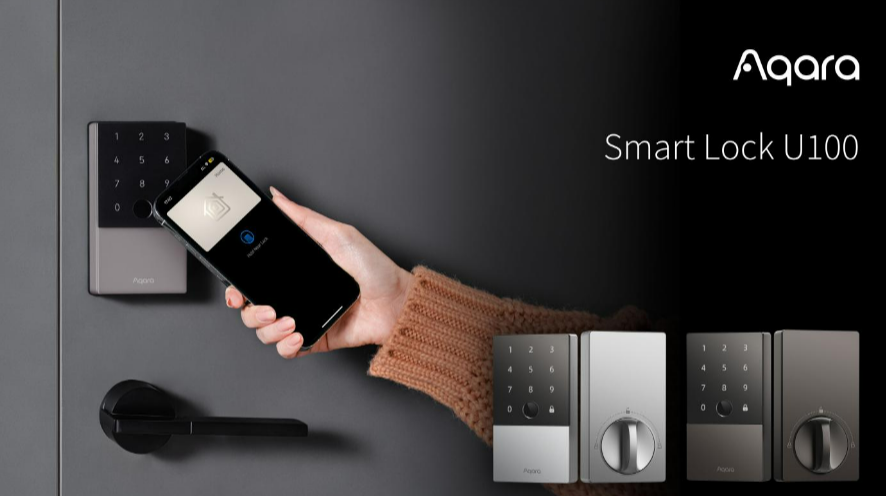
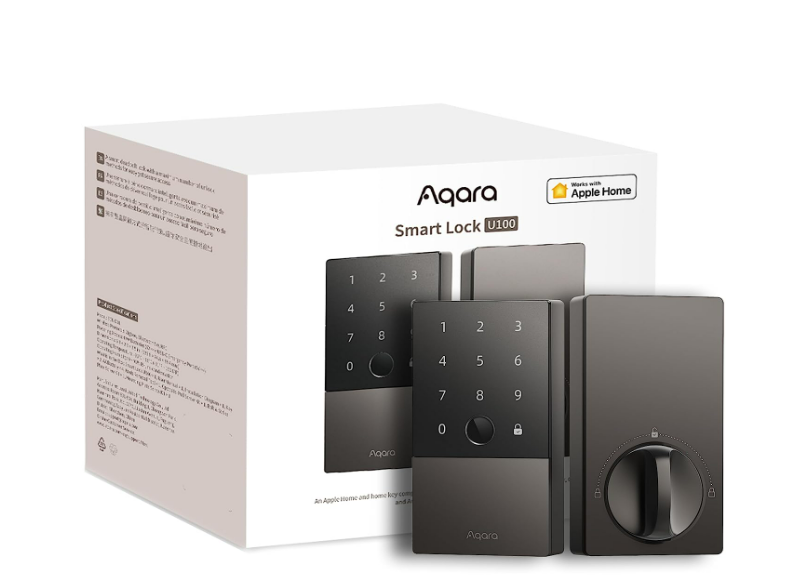
Aqara, a leading provider of smart home products, has announced the launch of its latest addition to the smart lock portfolio, the Smart Lock U100. This innovative deadbolt lock is designed to provide homeowners with a secure and convenient home entry solution, revolutionizing traditional deadbolt locks.
By combining advanced security features, convenient access options, and seamless integration with popular smart home platforms, the Smart Lock U100 provides homeowners with a new level of control and peace of mind, making it an ideal choice for those looking to upgrade their home security systems.
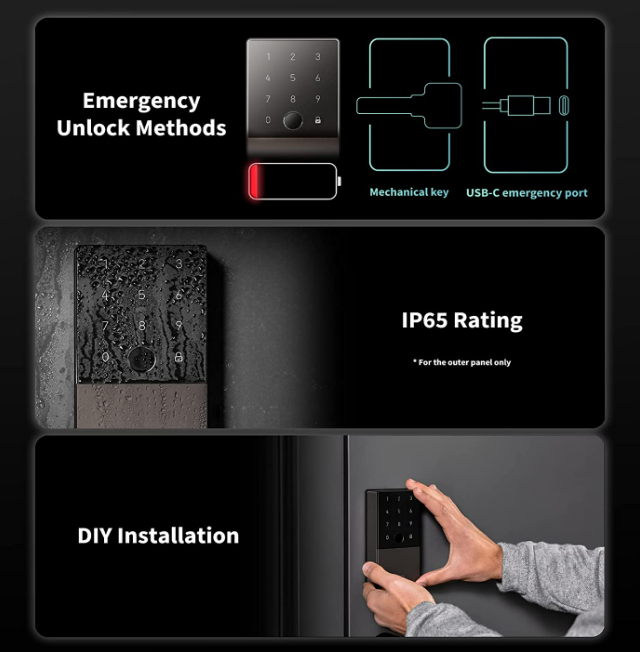
The Smart Lock U100 offers a range of advanced features that enhance both security and convenience. Homeowners can now enjoy multiple access options, including fingerprints, passwords, and even Apple home key capability, ensuring a personalized and hassle-free entry experience.
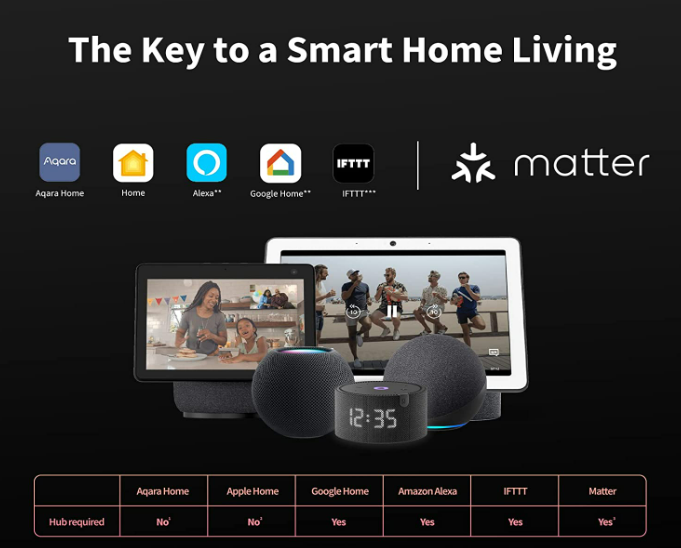
One of the key highlights of the Smart Lock U100 is its seamless integration with popular smart home platforms. The lock is compatible with Matter, Apple Home, Amazon Alexa, Google Home, and more, enabling users to incorporate their home entry system into their existing smart home ecosystem. This integration allows for a unified and connected home experience, where homeowners can effortlessly control their smart lock alongside other compatible devices, such as lights, thermostats, and security systems.
With Smart Lock U100, users can unlock their doors with a simple touch of a finger or by using the Aqara Home app. The lock features a built-in, high-precision fingerprint reader that can recognize up to 50 fingerprints, providing a secure and personalized access experience. Homeowners also have the flexibility to grant and manage access for their families, as well as guests and regular visitors such as dog walkers or babysitters. With the ability to create up to 75 passwords for permanent, recurring, and one-time access, homeowners have full control over who can enter their homes. Additionally, NFC tags are supported, offering a convenient way for everyone to access the home.
To ensure the utmost security, sensitive access data such as fingerprints and passwords are stored locally on the device and fully encrypted with AES encryption. This provides homeowners with an extra layer of peace of mind, knowing that their personal information is well-protected.
Setting up and controlling the Smart Lock U100 is hassle-free. The lock works out-of-the-box with Bluetooth, allowing users to connect it directly to the Aqara Home app without the need for an Aqara hub. This enables users to easily perform device setup, control the lock, and update its firmware directly from the app.
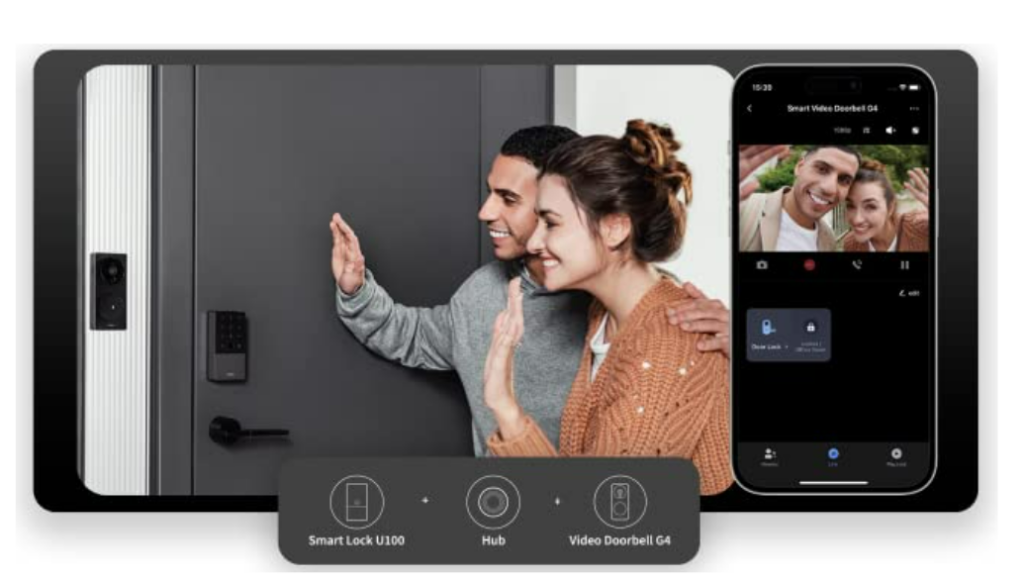
To fully unlock the extensive capabilities of the Smart Lock U100, it is highly recommended to connect it with a Zigbee 3.0 Aqara hub. By pairing the U100 with an Aqara hub, users gain remote control and management functionalities that greatly enhance their home security experience. From anywhere, users can conveniently unlock or lock the U100, configure passwords, monitor real-time activity, and access device logs. This level of control provides peace of mind and enables homeowners to keep a vigilant eye on their homes and loved ones.
The Smart Lock U100 stands out among the competition by offering seamless integration with Apple HomeKit. This integration allows Apple users to unlock the U100 using Siri voice commands or the Apple Home app. Additionally, users can take advantage of the Apple Home key feature, which enables them to unlock the U100 simply by tapping a compatible iPhone or Apple Watch. This convenient feature is especially useful when users have their hands full or when wearing gloves in colder weather. Furthermore, with Apple Home’s guest access codes, users can easily manage and share door access with their guests, enhancing convenience and security for everyone involved.
About Aqara:
Aqara, founded in 2016, is a leading smart home provider with global reach. Their comprehensive range of smart devices, including sensors, switches, cameras, and locks, offers seamless and intuitive experiences. Aqara is an early advocate of the Matter IoT standard and serves over 7 million customers worldwide, with Apple Home-compatible solutions available in Apple Stores globally.
Deal and Availibility:
To commemorate the release of the Smart Lock U100, Aqara is offering a limited-time promotion. Customers can avail a 15% discount on the new device when purchasing from Aqara’s Amazon stores in the US and Canada. To take advantage of this offer, simply apply the promo code USCAU100 at checkout. Hurry, as this exciting deal is valid until June 10th. Don’t miss out on the opportunity to enhance your home security with the Smart Lock U100 at a discounted price.
The Smart Lock U100 is available for purchase through Aqara’s Amazon brand stores in the US and Canada, as well as select Aqara retailers in North America, Asia, and Oceania. This widespread availability ensures that homeowners in various regions can enjoy the benefits of this innovative smart lock solution.
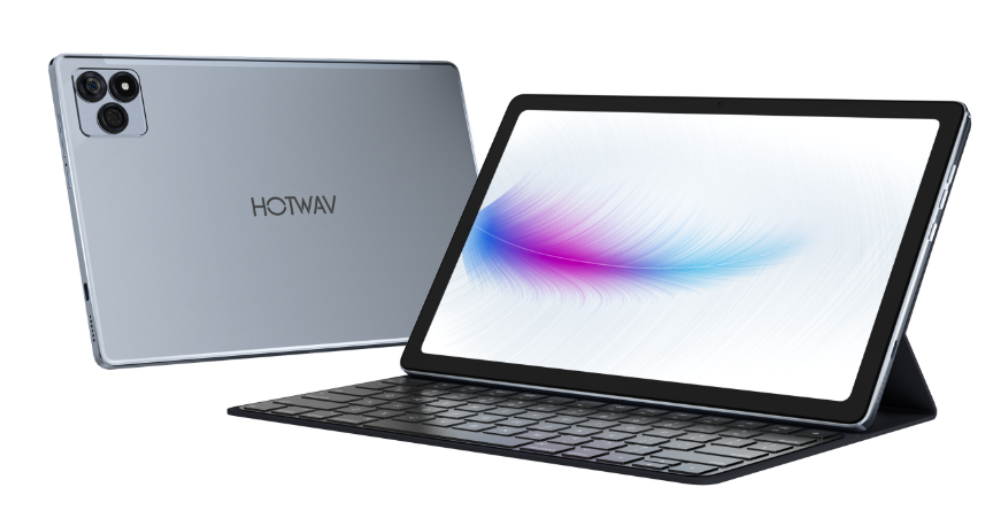
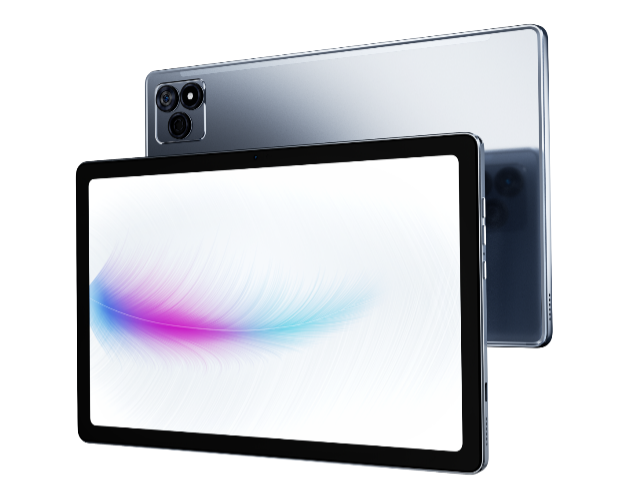
HOTWAV, an emerging player in the rugged smartphone industry, is set to unveil its latest product the HOTWAV Pad 8 Tablet. The device boasts a perfect blend of lightweight design, high-performance capabilities, exceptional durability, and unmatched reliability. This meticulously crafted device is poised to make a significant impact in the market.
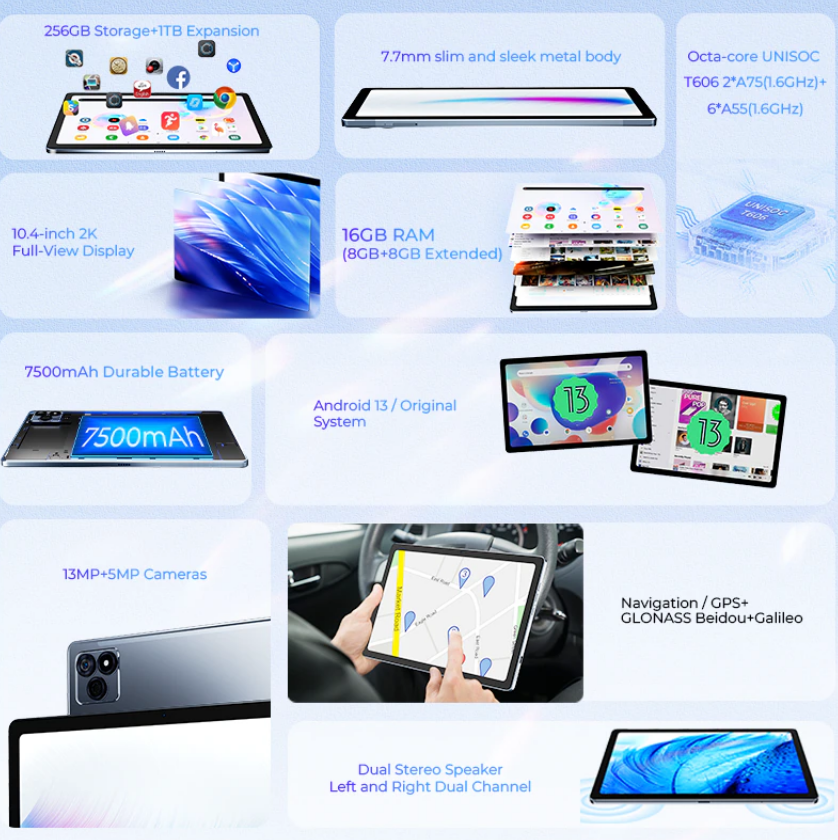
The HOTWAV Pad 8 Tablet offers a multitude of attractive features, and one of its standout qualities is its remarkably lightweight design, tipping the scales at just 460g. With a sleek depth of only 7.7mm, this tablet exudes a slim and slender profile. Its feather-light construction makes it effortlessly portable, catering to the needs of professionals, students, and entertainment enthusiasts alike.
The tablet gives you an immersive visual experience with its expansive 10.4” HD+ 2K Full-View Display. This display showcases vibrant colors, crisp details, and wide viewing angles, bringing every image and video to life with mesmerizing clarity.
Equipped with the SCT606 Octa-Core processor, the HOTWAV Pad 8 Tablet delivers exceptional speed and responsiveness. No matter if you’re streaming videos, engaging in graphics-intensive gaming, or juggling multiple applications simultaneously, this tablet’s powerhouse processor guarantees a seamless performance without any lags or slowdowns.
HOTWAV Pad 8 Tablet features 8GB RAM and 256GB of internal storage and offers abundant space to accommodate all your files, documents, photos, videos, and apps. Moreover, the flexibility to utilize two nano SIM cards or one nano SIM and one SD card expands the storage options even further, catering to your ever-growing needs.
The tablet features a 5MP front camera and a 13MP rear camera. Whether you’re preserving cherished moments with your loved ones or participating in video conferences, this tablet’s robust cameras guarantee impressive image quality and immersive video calls.
HOTWAV Pad 8 features a 4G network with which you can enjoy seamless internet browsing and communication with friends and colleagues. It is fueled with a high-capacity 7500mAh battery. With this high-capacity battery at your disposal, you can work, play, and create without any interruptions.
Price and Availability
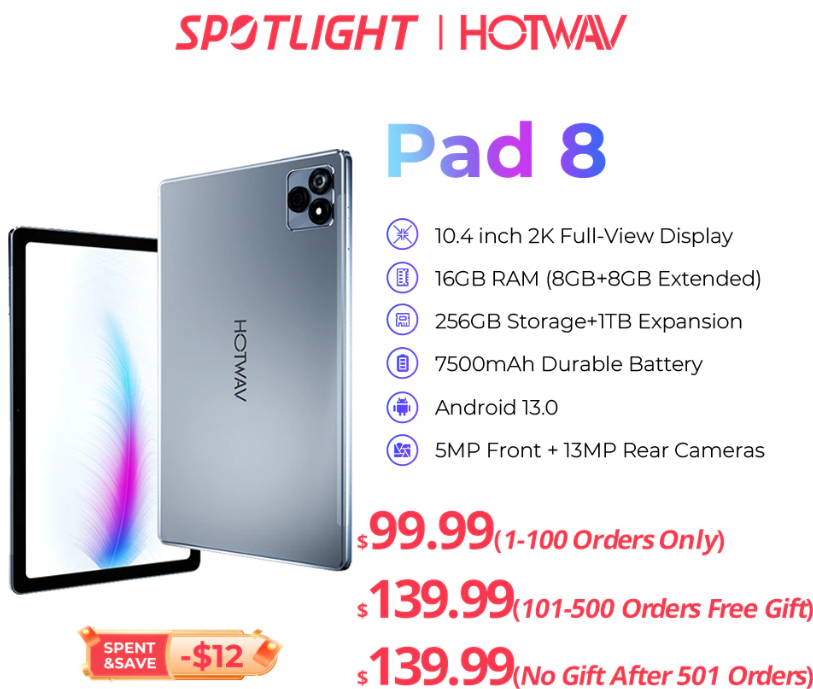
On June 12, HOTWAV Pad 8 will make its global debut on AliExpress, accompanied by generous discount offers. The first 100 units, will be sold for an astonishing price of $99.99 while the remaining pieces will be available for $139.99. Please note that this offer ends on June 18.
The brand is also offering a special $10 discount coupon code: 25M5NKYIWK8R. Please note that this coupon is not applicable for the first 100 orders at $99.99.
To add to the excitement, the first 500 units sold will receive a complimentary keyboard absolutely free. So don’t miss out on this incredible opportunity to own a cutting-edge tablet at an unbeatable value.
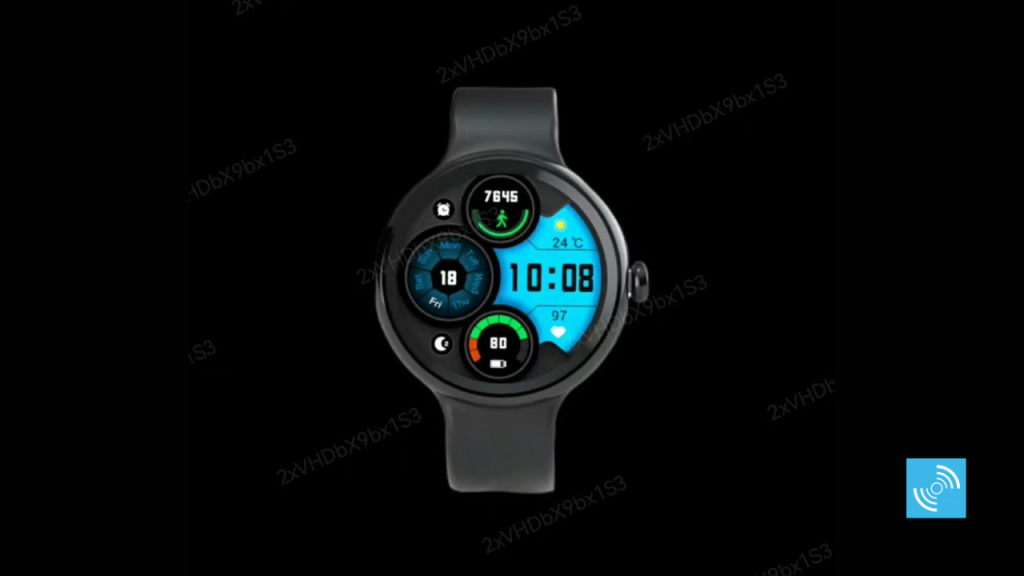
Huawei is gearing up to unveil its latest addition to the smartwatch lineup, the AOD Watch. Early testers have had the opportunity to try out this highly anticipated wearable, which features a round dial and a crown on the right side, reminiscent of the popular Watch 3 model.
Huawei’s First Always-On Display Smartwatch Incoming
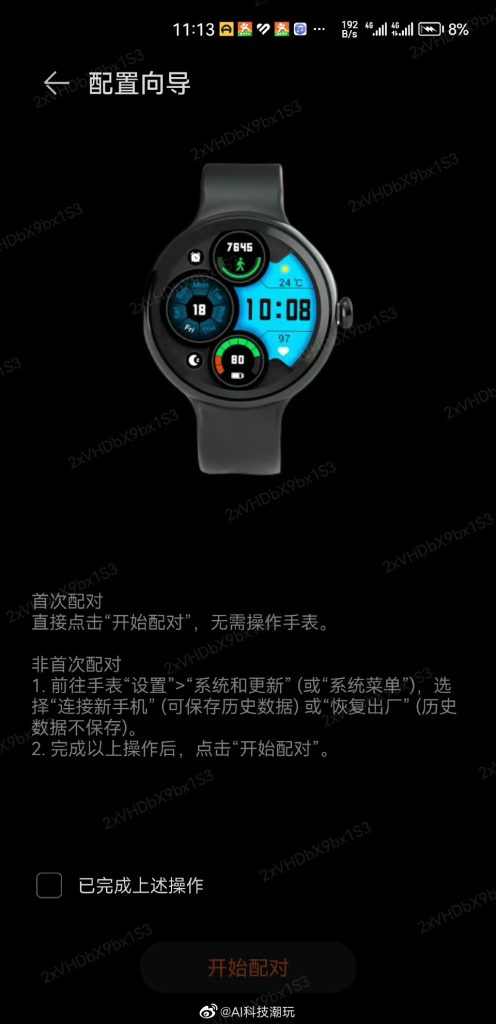
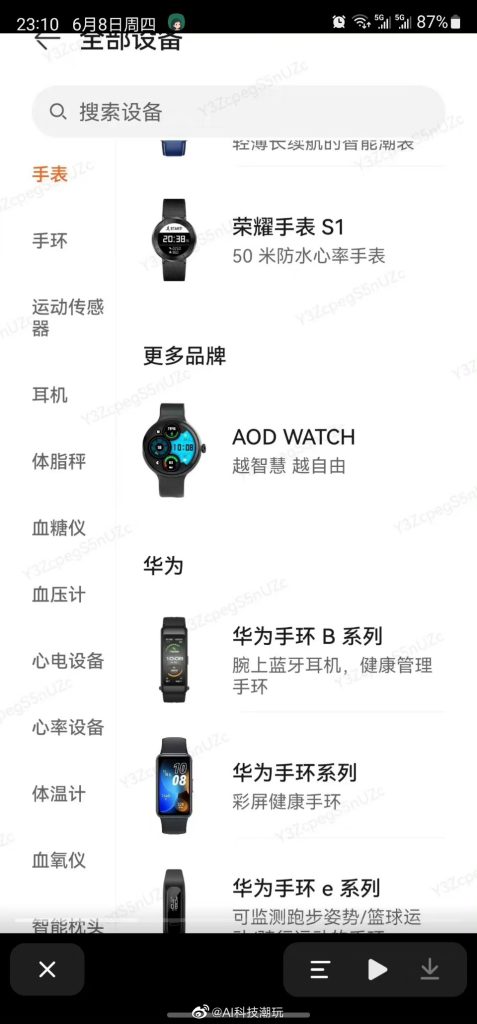
Screenshots from the Huawei Health app have surfaced, confirming the existence of this upcoming smartwatch. The watch face showcases a range of useful widgets, including a calendar, steps counter, battery level, timing, weather, heart rate, alarm, and bedtime reminder. While the bezels are noticeable, they are not overly intrusive, although it is important to note that the current design may still undergo some refinements before the final version is released.
One standout feature of the AOD Watch is its always-on display (AOD), a first for Huawei’s smartwatch series. Although the company has implemented this functionality in previous models like the Watch 3/GT 3, the AOD Watch is expected to introduce a dedicated and enhanced AOD capability.
Always-on displays, or AODs, have gained popularity in smartphones, with even Apple’s iPhones incorporating this feature. AOD allows users to effortlessly access important information such as time and notifications without waking the screen. Huawei aims to optimize the AOD experience with this new smartwatch, ensuring minimal power consumption while delivering superior performance.
In recent months, leaked smartwatch codes have surfaced, including one with the model designation “AOD-H1,” potentially associated with the upcoming Huawei AOD Watch. Although Huawei has yet to officially announce this product, tech enthusiasts eagerly anticipate the company’s expansion of its smart wearables portfolio with at least two more smartwatches expected to be unveiled later this year. According to the report, the smartwatch is expected to launch alongside the Huawei Mate 60 series.
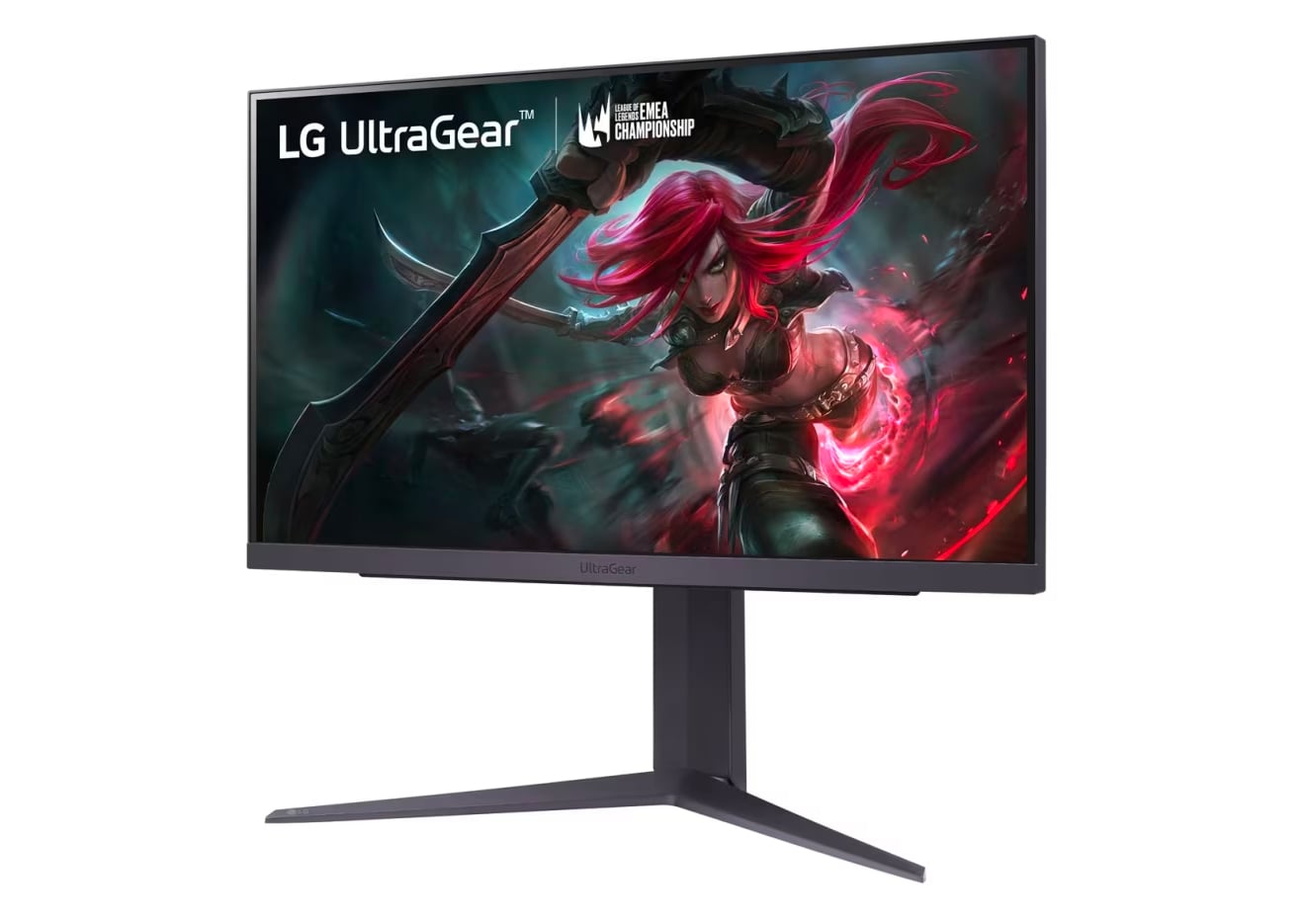
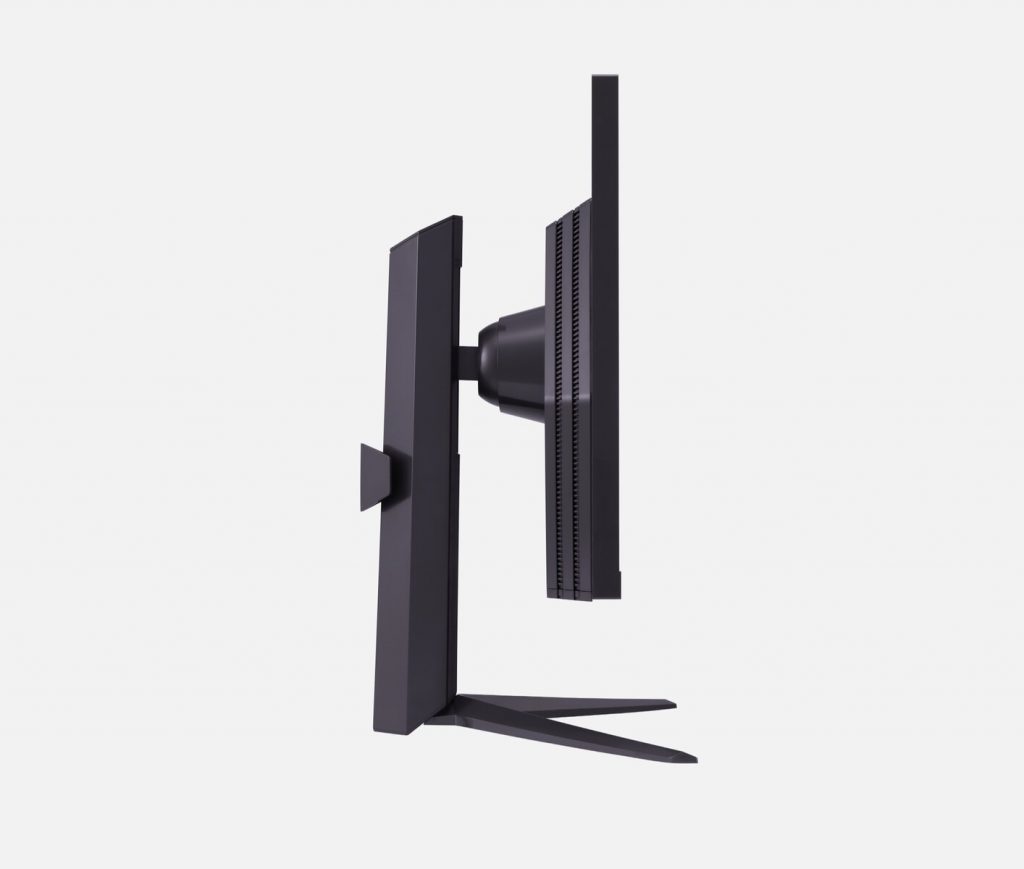
LG offered a sneak peek in January of the UltraGear 25GR75FG gaming monitor, featuring an impressive refresh rate of 360Hz. The initial plan was for the monitor to debut in Europe, commencing with Germany in April. As we step into June, the eagerly anticipated monitors have finally made their way to Germany, signifying the commencement of their availability in the European region.
LG UltraGear 25GR75FG specs
Boasting a 24.5-inch IPS panel, this monitor offers a resolution of 1080p and an exceptional refresh rate of 360 Hz, ensuring smooth and fluid visuals during gameplay.
The UltraGear 25GR75FG also achieves VESA DisplayHDR 400 certification, reaching a peak brightness of 400 nits. However, it is worth noting that this certification indicates an 8-bit color depth rather than 10-bit. Consequently, the monitor’s color space coverage is relatively modest at 97% sRGB.
To enhance gaming performance, LG has incorporated NVIDIA G-SYNC technology into the UltraGear 25GR75FG, effectively minimizing image tearing for a more seamless experience. With its rapid 1 ms response time, latency is kept to a minimum, allowing gamers to stay ahead of the competition.
Connectivity options include a DisplayPort 1.4 connection, which supports 1080p and 360 Hz gaming, while the HDMI 2.0 ports offer a maximum resolution of 1080p and 240 Hz. Users will also appreciate the inclusion of two USB 3.0 Type-A downstream ports, one USB 3.0 Type-A upstream port, and a 3.5 mm jack for convenient peripheral connectivity.
While the UltraGear 25GR75FG prioritizes gaming performance, it does not feature built-in speakers. The availability of the UltraGear 25GR75FG monitor is currently limited to Europe, where it is priced at €649 by LG.
We use cookies on our website to give you the most relevant experience by remembering your preferences and repeat visits. By clicking “Accept”, you consent to the use of ALL the cookies.
This website uses cookies to improve your experience while you navigate through the website. Out of these, the cookies that are categorized as necessary are stored on your browser as they are essential for the working of basic functionalities of the website. We also use third-party cookies that help us analyze and understand how you use this website. These cookies will be stored in your browser only with your consent. You also have the option to opt-out of these cookies. But opting out of some of these cookies may affect your browsing experience.
Necessary cookies are absolutely essential for the website to function properly. This category only includes cookies that ensures basic functionalities and security features of the website. These cookies do not store any personal information.
Any cookies that may not be particularly necessary for the website to function and is used specifically to collect user personal data via analytics, ads, other embedded contents are termed as non-necessary cookies. It is mandatory to procure user consent prior to running these cookies on your website.