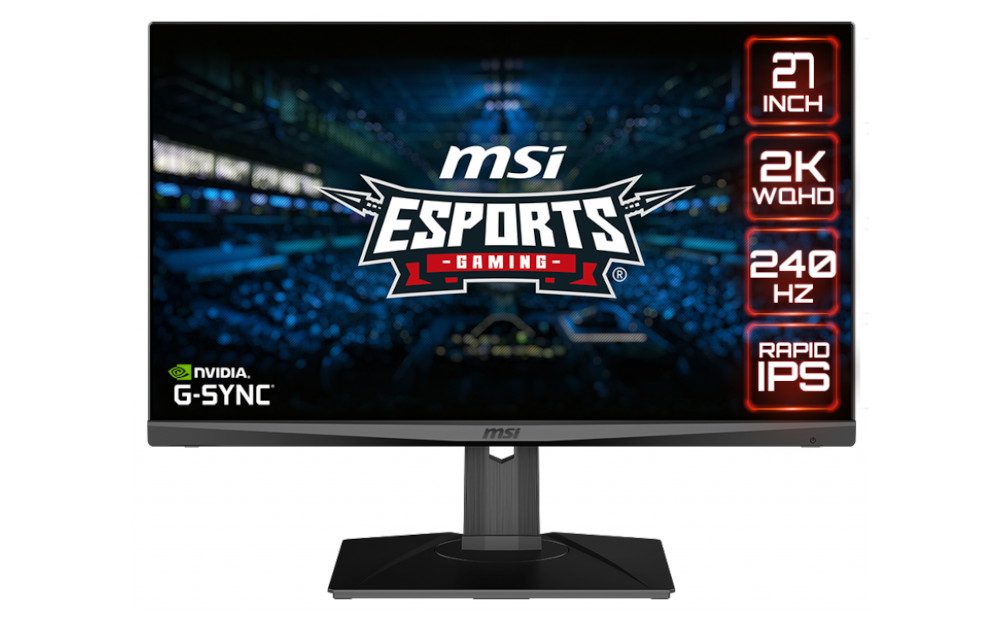
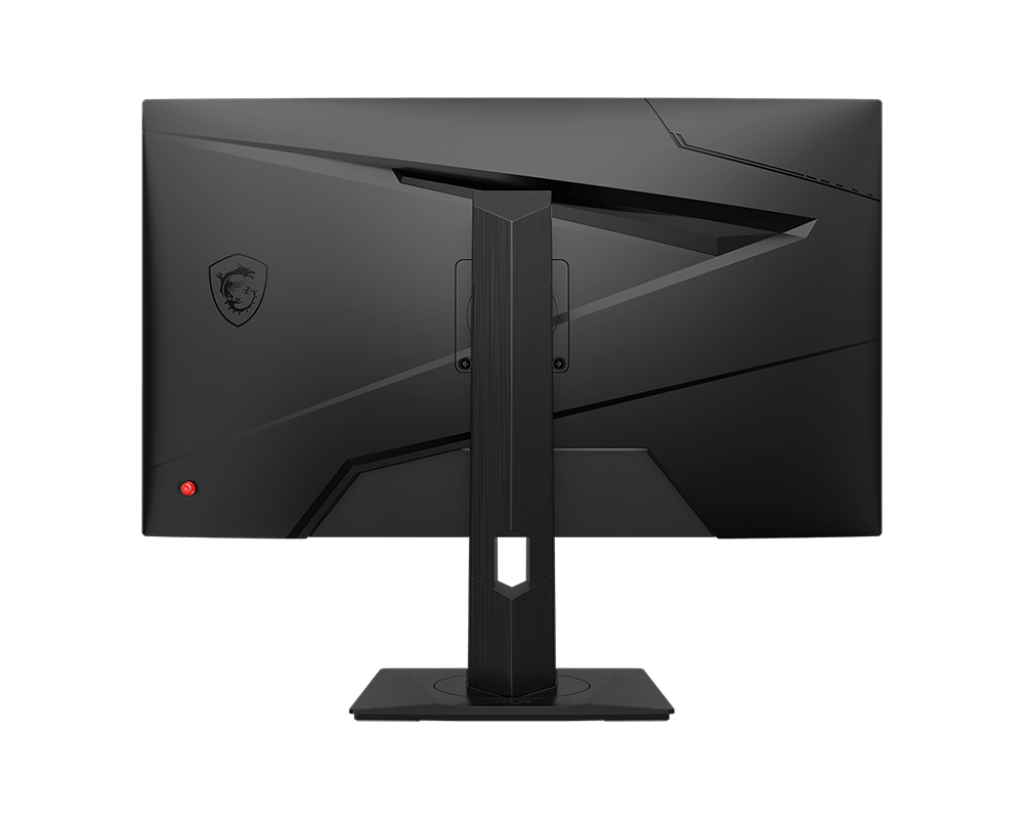
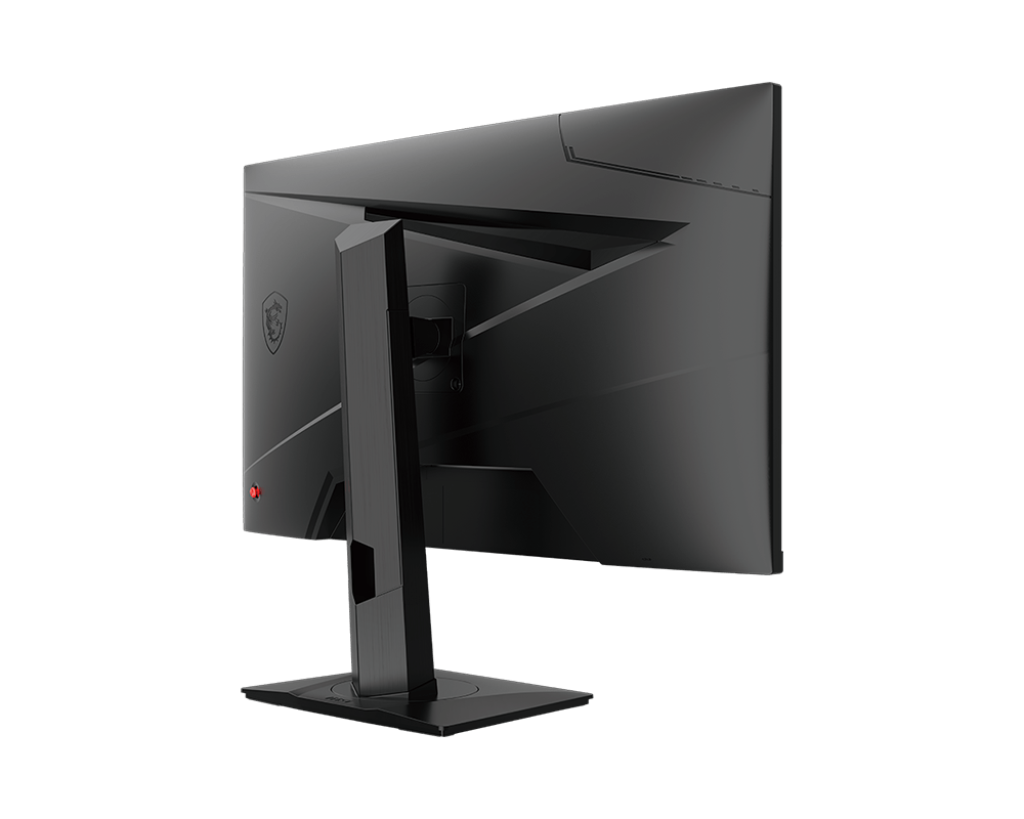
After the launch of the MSI MAG 275CQRF-QD gaming monitor, the brand has also debuted the MSI Optix G274QPX geared towards e-sports. This new monitor is currently available to purchase in many countries including the US and many EU regions. Let’s look at the specifications.
MSI Optix G274QPX gaming monitor specs
The MSI Optix G274QPX is a 27-inch with a Rapid IPS panel that boasts a WQHD resolution of 2560 x 1440 pixels, delivering clear and detailed visuals. With a high refresh rate of 240Hz (overclockable to 270Hz) and a fast 1ms response time (GtG), the monitor ensures smooth and fluid motion with minimal motion blur.
The monitor’s 1000:1 contrast ratio and 300 nits brightness contribute to vibrant colors and deep blacks, while the wide color gamut covering 100% sRGB and 95% DCI-P3 results in accurate color reproduction. Its wide viewing angles of 178 degrees horizontally and vertically allow for consistent visuals from different viewing positions.
The MSI Optix G274QPX is equipped with versatile connectivity options, including DisplayPort 1.4, HDMI 2.0, and a 3.5mm audio jack, enabling easy connection to various devices. Ergonomic flexibility is provided through tilt, swivel, height, and pivot adjustments, allowing users to find their preferred viewing position.
In terms of gaming features, the MSI Optix G274QPX supports AMD FreeSync Premium and is NVIDIA G-Sync Compatible, ensuring tear-free and smooth gameplay. It also includes a Game Mode that optimizes settings for different game genres.
Additional features include a 5-way OSD navigation joystick for easy menu control, flicker-free technology to reduce eye strain, Less Blue Light Pro to minimize blue light emissions, and Night Vision for enhanced visibility in dark game areas. The Picture-by-Picture and Picture-in-Picture modes enable simultaneous viewing of multiple sources.
Price & availability
The MSI Optix G274QPX 27-inch 2K gaming monitor is currently being sold for $380 on the US Amazon website. The monitor is also available in other regions through online as well as offline retailers.
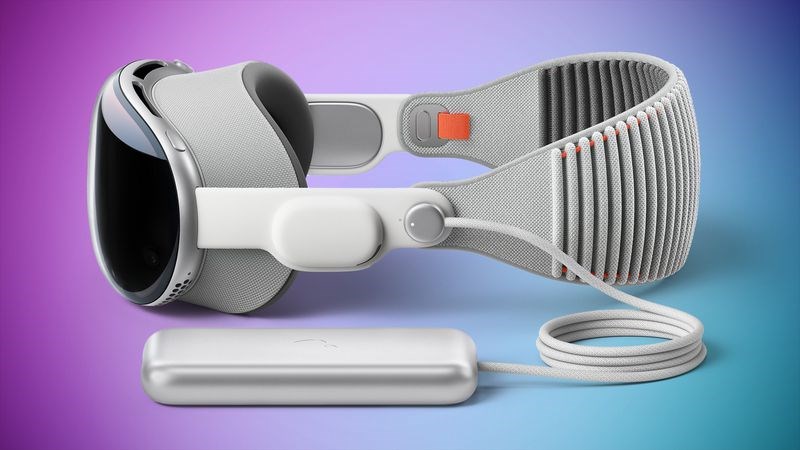
Apple recently announced its highly anticipated AR/VR headset, the Vision Pro, which has already sparked considerable excitement among tech enthusiasts. With a hefty price tag of $3,499, the Vision Pro is set to be sold exclusively in the United States upon its early 2024 release. According to IT Home, Apple may also be developing 3D video content specifically for the Vision Pro. One of the rumored projects is a new movie called “Monarch: Legacy of Monsters.” This indicates that Apple is exploring original content production tailored to its headset.
Monarch: Legacy of Monsters is a universe that Features Godzilla, King Kong & more
The Vision Pro offers users the ability to enjoy both 2D and 3D video content on a vast virtual screen, delivering a highly immersive viewing experience. It incorporates features such as spatial audio and spatial video, enhancing the overall immersion.
Sigmund Judge, from Screentimes, shared insights from insiders involved in the show’s production, revealing that “Monarch: Legacy of Monsters” will be filmed in Apple’s Spatial Video format, introduced during WWDC. This format enables the transmission and playback of stereoscopic 3D video, specifically designed for headsets and other compatible devices.
“Monarch: Legacy of Monsters” is a live-action series ordered by Apple in January 2022, set in a world where Godzilla, King Kong and Titans exist, revolving around the organization called The Monarchs. As a spin-off from Legendary Pictures’ MonsterVerse franchise, the show’s release is expected to coincide with the launch of the Vision Pro headset.
While it remains uncertain which platform the series will exclusively air on, it is likely to be available on Apple’s own streaming service, Apple TV. However, considering that Apple’s format also supports 2D viewing, it is possible that the show will be accessible through standard streaming methods, while also being tuned for playback on the Vision Pro.
With the announcement of the Vision Pro and the prospect of original 3D content like “Monarch: Legacy of Monsters,” Apple is venturing into the immersive entertainment landscape, offering users a unique and captivating viewing experience. Tech consumers are eagerly anticipating the release of both the headset and the accompanying content, which will mark a significant milestone in Apple‘s expanding product portfolio.
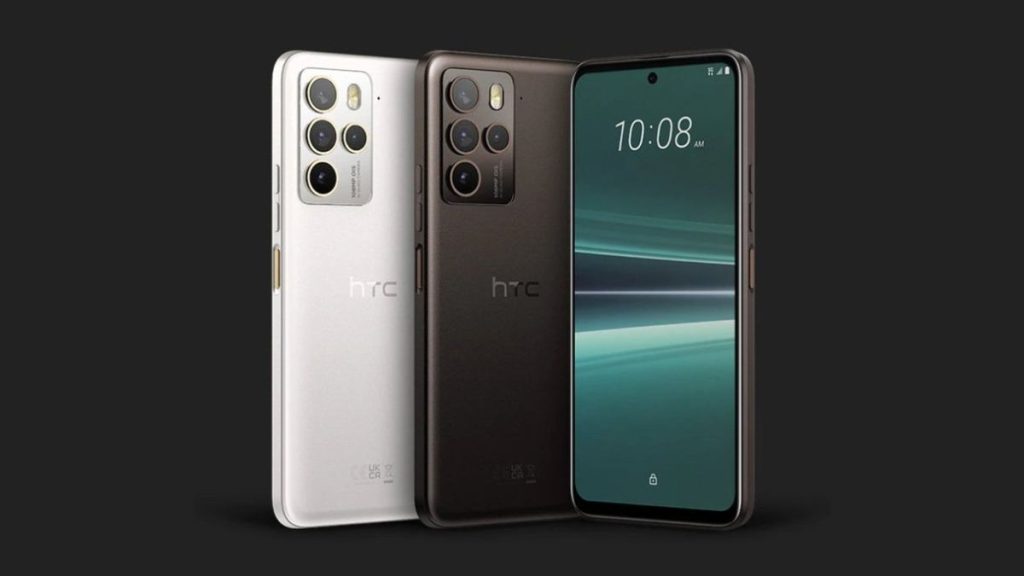
HTC recently introduced the U23 smartphone series in Taiwan, which is powered by the Snapdragon 7 Gen 1 chipset. This lineup comprises two models: the HTC U23 and the HTC U23 Pro. The Pro variant has now made its way to the EU and is currently available for pre-order in various regions.
The HTC U23 Pro smartphone can now be pre-ordered in the EU for €569. It is available in two color options: Coffee Black and Snow White. The brand has announced that the pre-orders will start shipping on June 28. Let’s check out the specifications and features of this device.
The HTC U23 Pro features a 6.7-inch Full HD+ OLED display with a 120Hz refresh rate and Gorilla Glass Victus protection. The 32MP selfie camera is housed in a centered punch hole, while the fingerprint scanner is embedded in the power button.
The phone’s rear sports a rectangular camera module with a 108MP primary camera, 8MP ultrawide, 5MP macro, and 2MP depth sensors. Powered by the Snapdragon 7 Gen 1 chipset, it offers 8GB or 12GB RAM, 256GB storage, and microSD card support.
The U23 Pro runs Android 13 and includes the VIVERSE app. It has IP67 dust and water resistance, a 4,600mAh battery with 30W wired and 15W wireless charging, and supports reverse wireless charging. Other features include 5G, Wi-Fi 6, NFC, USB-C, and a 3.5mm headphone jack. With its impressive display, powerful camera system, and robust specifications, the HTC U23 Pro offers a compelling smartphone option.
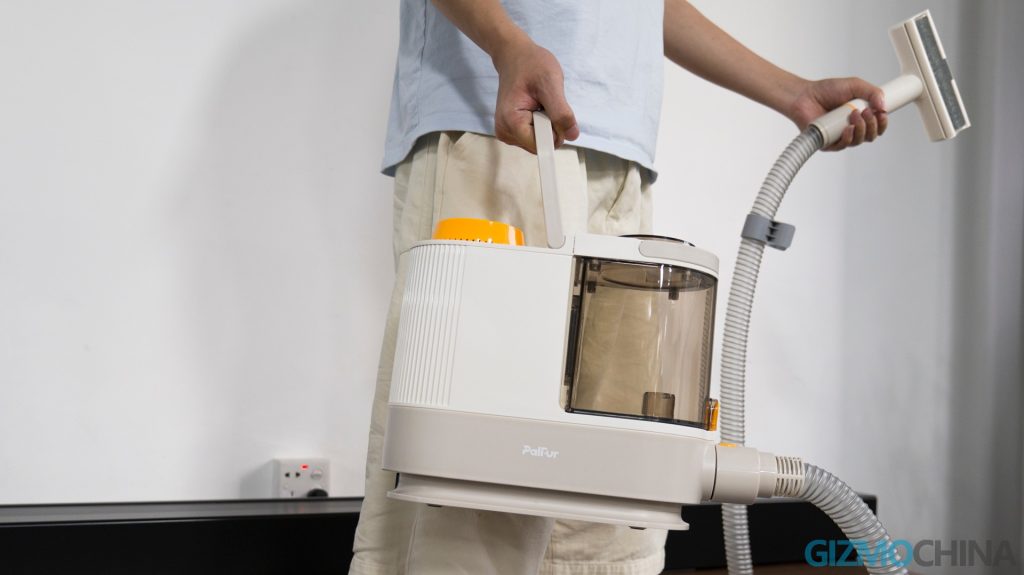
For fur parents, grooming is the most annoying issue that often makes them think about running away. Yes, I can truly relate because I am one of them. We usually have to fight against flying hair and hair odor all over the house if we do not seek grooming services in time. But if keep relying on grooming and cleaning services, we are very likely to be chagrined by the energy, time, and money spent. However, grooming cats or dogs at home with tools like scissors or clippers is not practical for most fur parents. If you still haven’t found the most effective solution as I did a week ago, the PalFur Pet Grooming Kit I’ve discovered is an almost perfect solution to these worries.
Package & Design
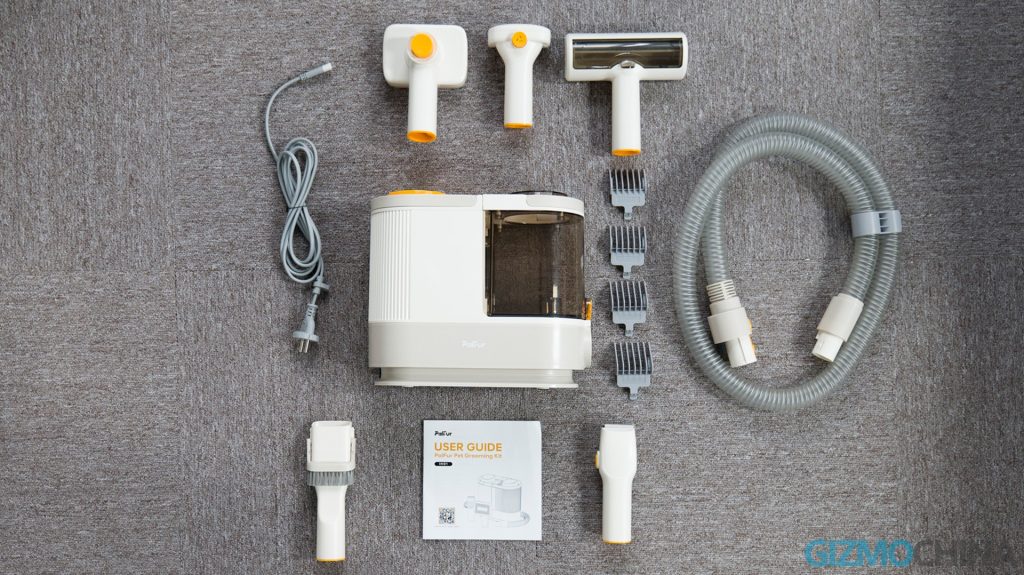
The PalFur Pet kit has 5-in-1 grooming and cleaning capabilities which are totally based on pet parents’ needs. Instead of using a combination of multiple products, fur parents can use the kit to meet the multiple grooming needs of pet caring while fulfilling the adsorption of all kinds of unhealthy pollutants.
When opening the package, users may be amazed, as I was, by its multiple electric modules of brushes and clippers. Apart from the PalFur vacuum, it comes with five multi-functional attachments that make it easy to clean not just hairs from pets, but also various pollutants from carpets, upholstery, and other surfaces.
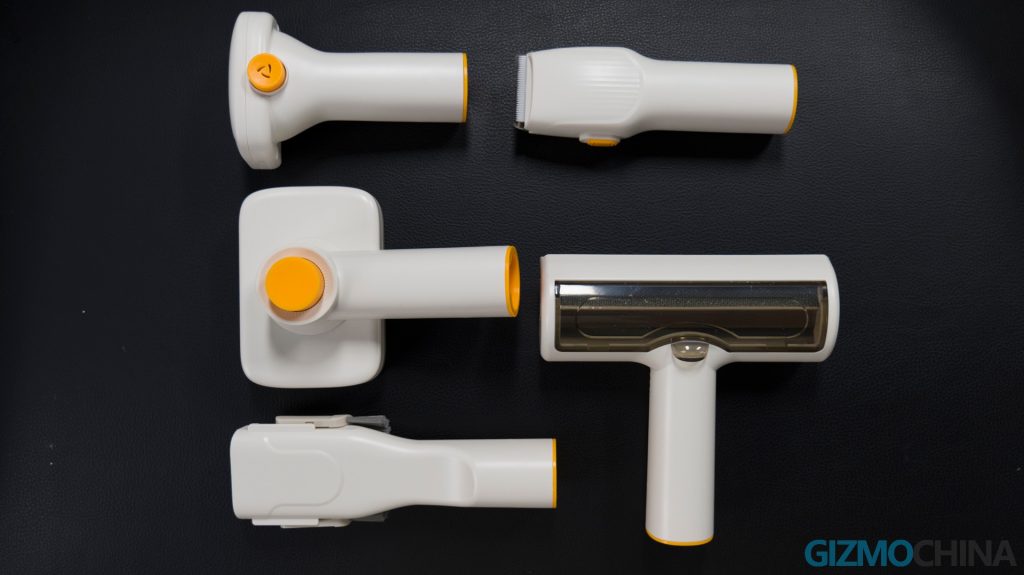
The kit includes a hair remover, a de-shedding tool, an electric clipper with 4 guard combs, a grooming brush, and another 2-in-1 brush. All of them are specially designed to help fur parents remove loose fur from pets’ coats, preventing matting and tangles and keeping the pet’s coat healthy and shiny.
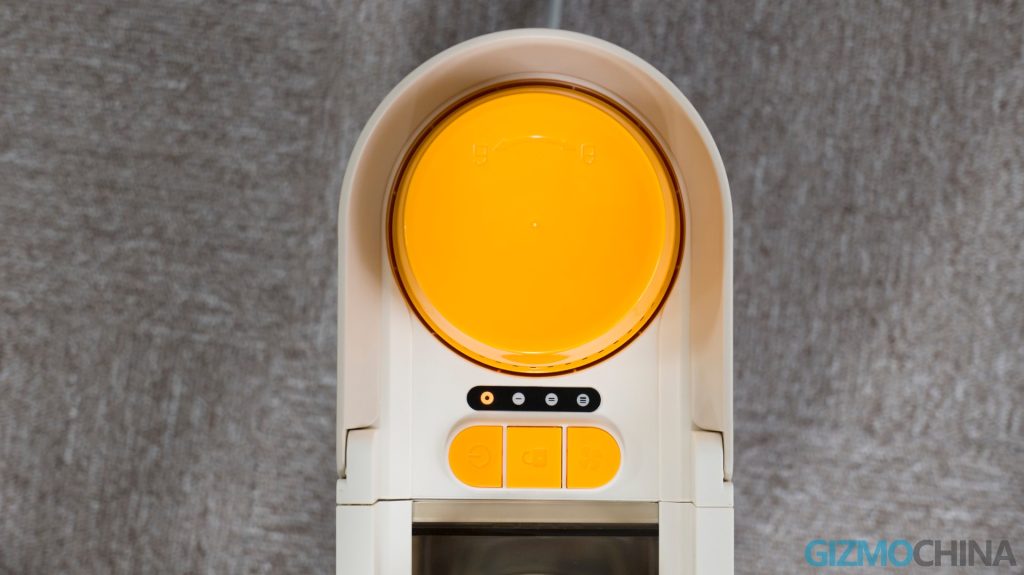
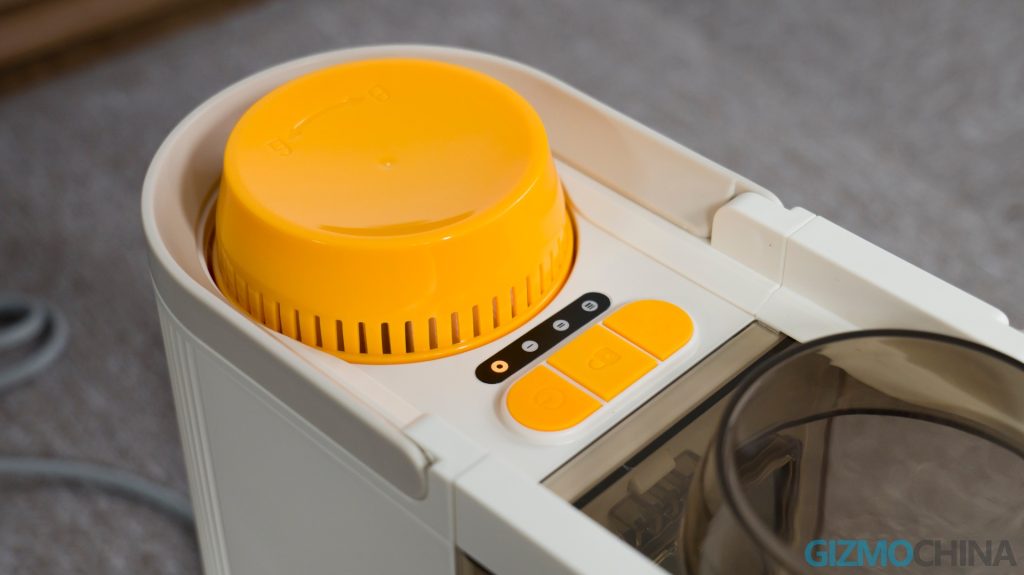
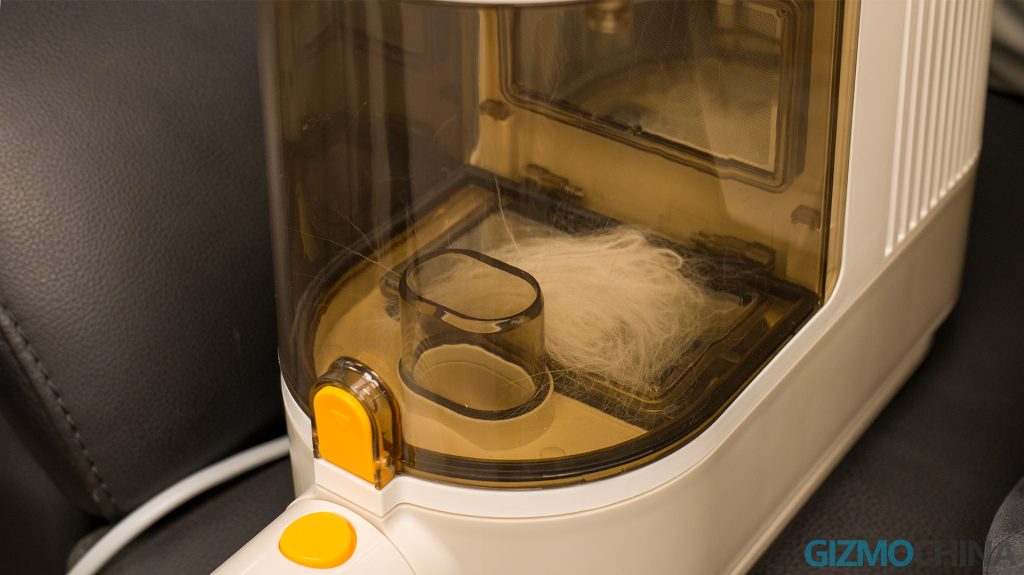
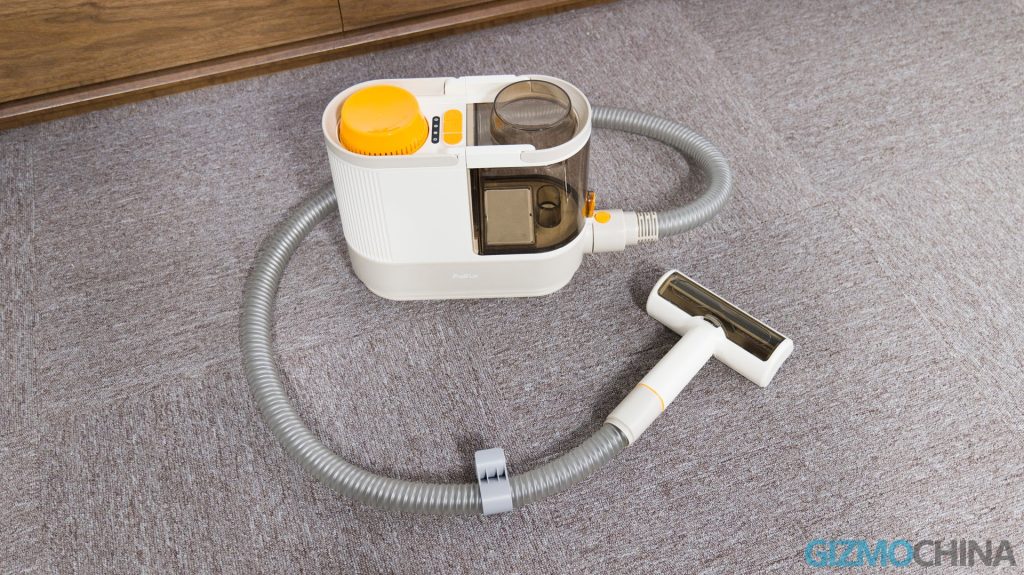
I really like the design of the PalFur vacuum (11.65×5.12×10.08in). The gentle white and grey casing with the bright orange lid makes it suitable for all kinds of home styles. The transparent large-capacity dustbin (2L) allows us to keep track of the volume of pollutants. And it’s removable for easy emptying and washing.
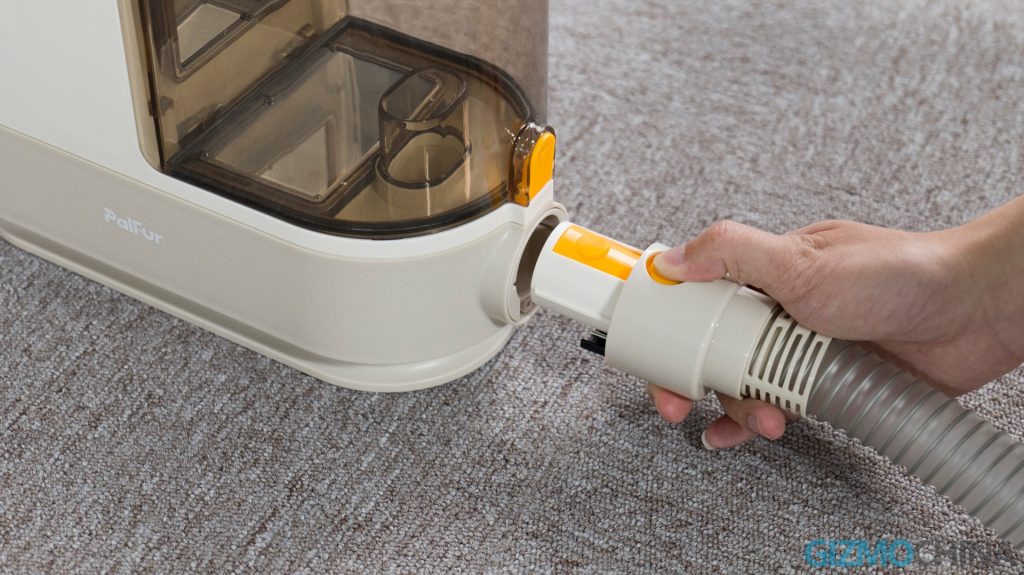
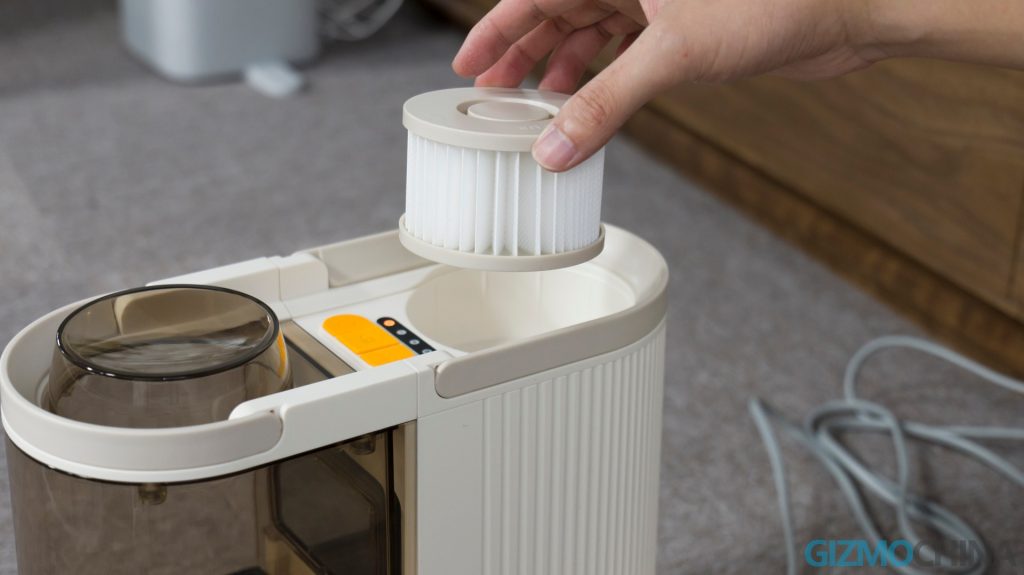
On the side and the bottom immediately attaching the bin are dual 3-layer filters for deodorization (Metal Mesh + Microfiber cloth + HEPA), but they are only parts of the whole filter system. There is an additional upper HEPA outlet filter on the top for blocking more fine hairs and allergens. The included 32mm detachable hose can be attached with all the brushes and clippers accessories.
Thoughtful Features for Pets & Pets Parents
When receiving the PalFur grooming vacuum, I couldn’t wait to test it on my cats. One of the most impressive features is the revolutionary upper HEPA Outlet Filter, which can block 99.97% of unhealthy contaminants like fine dust and hairs, tiny bugs, and even bacteria. It is significantly better at preventing secondary contamination than most regular vacuums.
My using experience happens to be a good example. My nose often suffered under the infestation of some kinds of unknown allergens, but since the PalFur vacuum happened to come into the house, it seems to have really blocked these nasty allergens and the symptoms (e.g., sneezing, watery red eyes, itchy nose) have almost stopped coming on.
Although I’m not sure if it’s to its credit, the timing of the change is just so coincidental that I’m inclined to believe it. So for families like mine who need to breathe clean air, it is an actual plus. For fur families, odors are usually a problem. The owners may be used to it, but I’d prefer not to embarrass the visiting guests. Surprisingly, after using the PalFur grooming vacuum, my family also noticed a significant improvement in the smell indoors.
The HEPA filter also has another advantage: it can be easily replaced anytime. Users can take it off and clean it or just replace it with a new one. The grooming vacuum features dual air channels for rapid heat dissipation. The effective cooling system also supports continuous cleaning over a long period without worries of heated issues, which is better for those who have to care for multi-pets.
With the dual air channels, the vacuum seems to apply an effective directional airflow design, which auto-compacts the hair during grooming and makes greater use of the 2L capacity of the dustbin. So I didn’t have to empty the dustbin frequently and saved quite a lot of time over fur cleaning.
The 32mm hose is the widest one that I have ever seen on a pet vacuum. It easily sucked away tangled pet hair and ensured thorough cleaning. So far it has not encountered any clogging issues, which is also impressive.
5-in-1 attachments
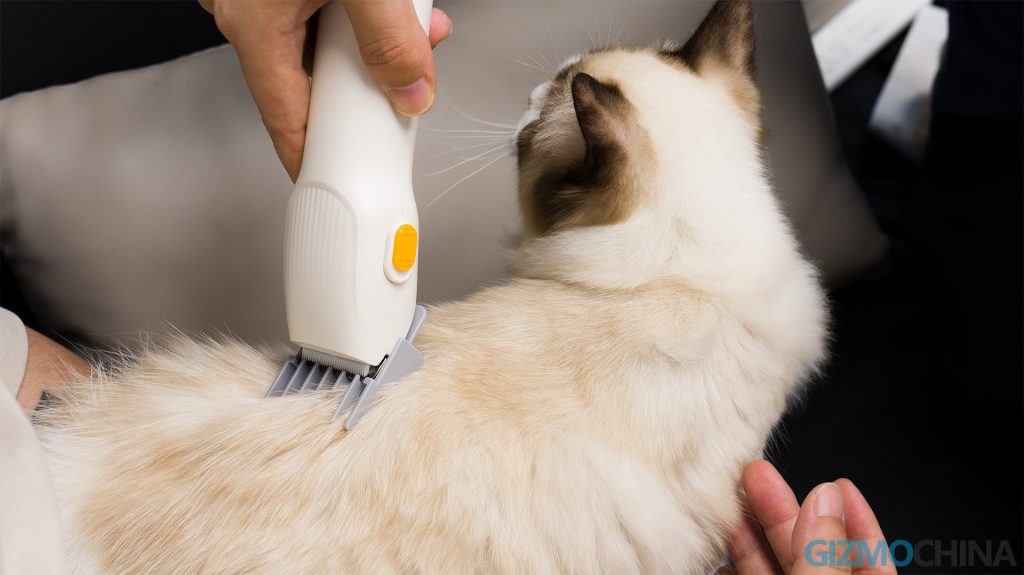
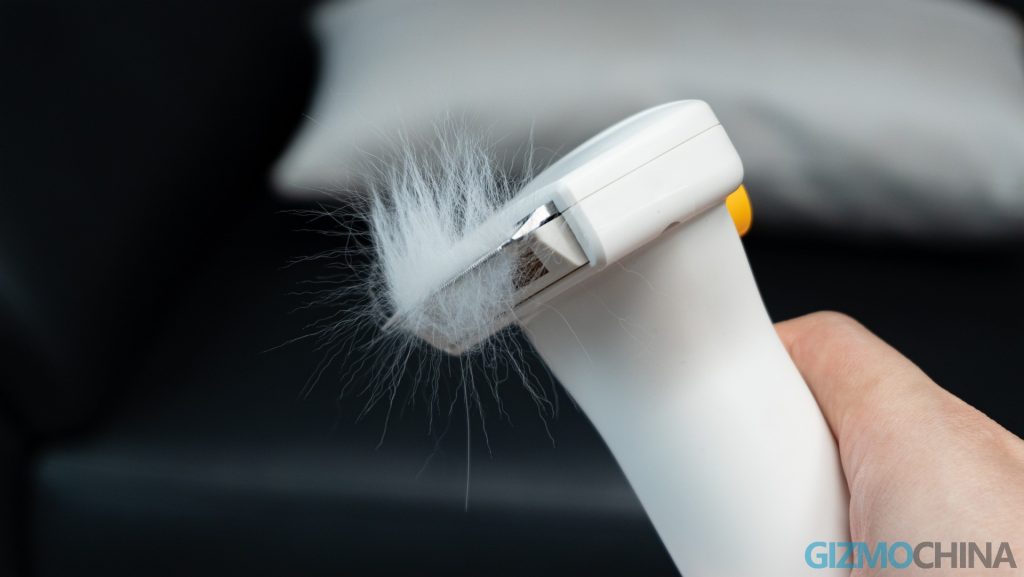
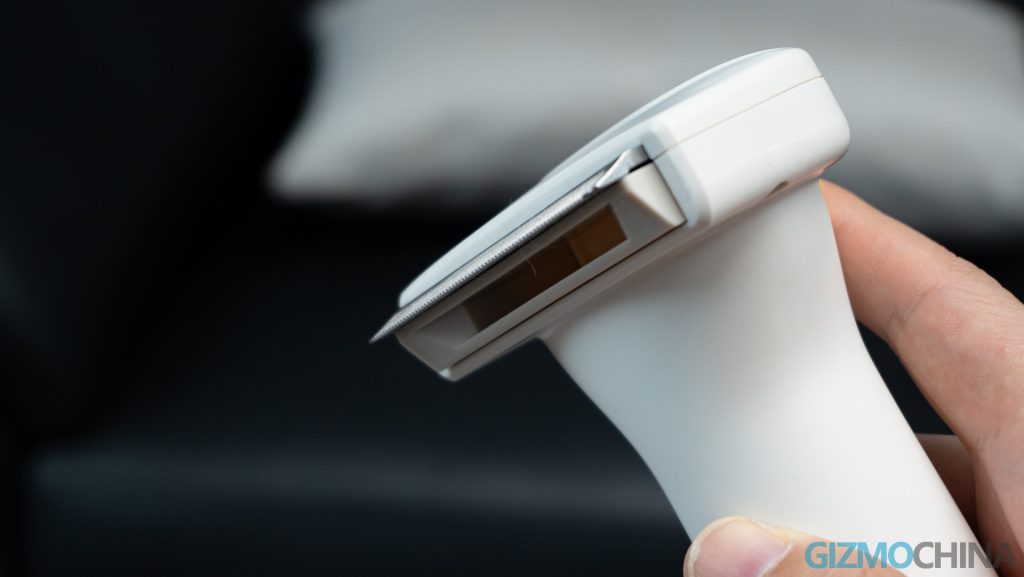
The most satisfactory feature of the Vacuum is its versatile fur grooming and cleaning with the 5 attachments. The electric clipper with 4 clipping combs is applicable for clipping hair of all different lengths of hairs. The blade here is sharp but safe with low vibration. The quiet design with less noise is also not offensive to pets. I’m sure that the clipper will make it easier for pets to survive the coming summer heat. As an attachment to a vacuum, a great advantage is that it auto-collects trimmed hair while clipping, so compared to regular clippers, there are no longer worries about the mess coming with fur clipping.
The de-shedding tool with fine-toothed bristles can effectively reduce the shedding of pet hair, which reaches through the topcoat to safely remove loose hair and undercoat. Meanwhile, the vacuum would auto-collect them with one click.
The slicker grooming brush with a larger cleaning surface can be more suitable for medium to long-haired pets. It can easily capture and auto-collect all loose hair and dust while grooming.
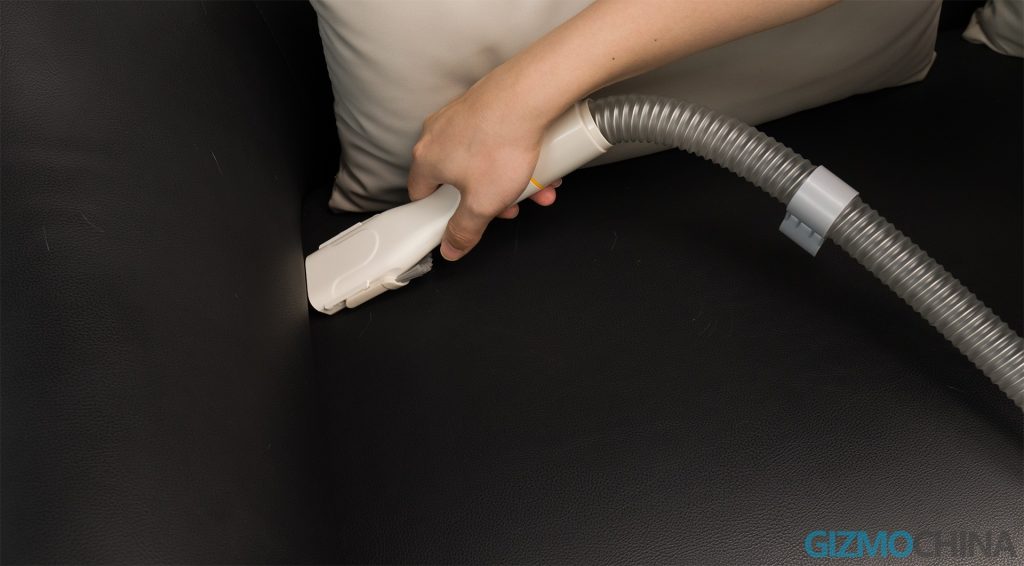
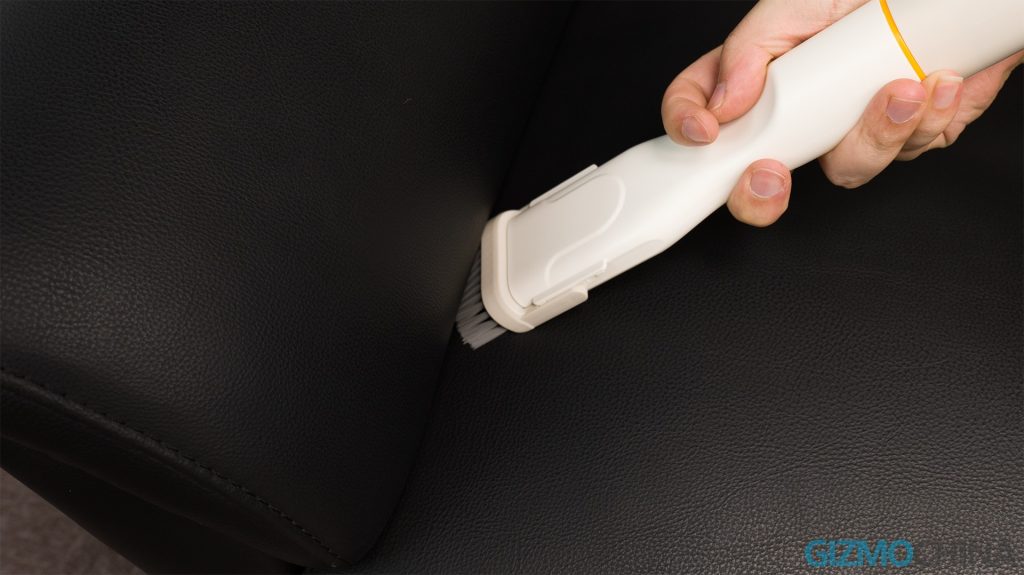
The 2-in-1 brush can handle all kinds of surfaces with strong suction and keep the pet environment clean. it offers scratch-free suction of small messes like fur, dust, and other fine pollutants. And the nozzle can clean those hard-to-reach areas like furniture crevices.
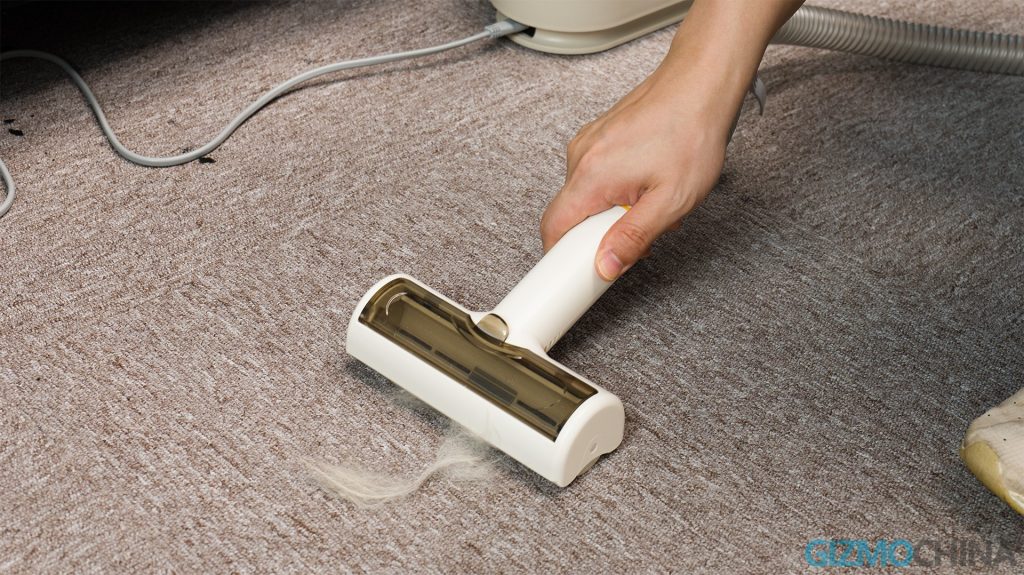
The hair remover actually is a hair roller that helps easily remove any soft pet fur from different surfaces of carpets, beds, and couches. And all the rolled hairs would be auto-collected by the connected vacuum.
Quiet performance
Before using the vacuum, I had a concern that my cats particularly hated loud noises. The vacuum would be useless if they run away while I activated the vacuum. Thankfully, PalFur has handled well with the noise issue. Dual layers of the sound-absorbing shell reduced vibrations and kept the noise levels down while the vacuum was running. Although the noise is not eliminated, as a vacuum the noise level of around 60dB is not stressful for my cats, which is already better than most similar products.
Verdict
The Palfur Pet Grooming Kit is officially priced at $199.99, but recently PalFur is offering a 20% off discount, which allows customers to get it for only $159. This is also the lowest price since I’ve been looking at this Grooming Kit. It’s particularly worth every penny if you have a group of fur friends in the family. This multi-functional tool would significantly save your time on trips for grooming services, as well as reduce your expenses on taking good care of their fur and skin health. More importantly, it’s detailed in its design and functions to meet the needs of both pets and their parents. The Palfur vacuum kit really is now the most convenient and efficient solution to pet odor, hair and dander issues, and related environmental problems as well.
So based on my experience, I would like to recommend it to all of whom are tired of dealing with their pets’ hair issues. If you are interested, you can find more information on their official website.
WHERE TO BUY
Check out the PalFur | 5-In-0ne Professional Vacuum-up Pet Grooming Kit @PalFur Amazon stop
TikTok, the popular social media platform, is once again under the microscope as Senators Richard Blumenthal and Marsha Blackburn accuse the company of misleading Congress regarding the storage and sharing of user data. In a letter dated June 6th, the lawmakers demand answers to a series of questions related to TikTok’s data practices, highlighting concerns about the storage of sensitive information and the involvement of China-based servers. The allegations raise questions about user privacy, national security, and the company’s transparency.
The Senators have compiled a list of 14 questions that TikTok needs to answer by June 16th
Senators Blumenthal and Blackburn expressed their concern about TikTok’s repeated misleading or inaccurate responses regarding user safety and national security. They referenced a New York Times report claiming that user data, including driver’s licenses and child sexual abuse materials, was shared within TikTok and its parent company, ByteDance, through an internal messaging platform called Lark. The report further states that the entirety of user data on Lark was accessible to ByteDance employees, including those based in China.
Forbes also published an article accusing TikTok of storing the financial information of U.S. TikTok creators, including tax information and social security numbers, in China. The Senators point out that TikTok’s CEO and employees had previously testified that user data is stored in the United States and Singapore. However, the revelations from the Times report suggest otherwise, leading to concerns about the accuracy of previous statements made by TikTok representatives.
The Senators presented a list of 14 questions that they demanded TikTok to answer by June 16th. These questions cover a wide range of topics, such as the storage of user data on Chinese servers, access granted to China-based employees, clarification on previous testimonies, the involvement of TikTok in other ByteDance products, and measures taken to investigate data sharing with Chinese authorities.
The allegations against TikTok emphasize the importance of accountability in the handling of user data. Users entrust platforms with so much of their personal information these days, including debit/credit card numbers and most of all, passwords, and it is crucial for companies to be very transparent about their data practices. As the congressional inquiry unfolds, it remains to be seen how TikTok will respond to the Senators’ demands for clarification and whether additional measures will be taken to address concerns surrounding user privacy and national security. Stay tuned to Gizmochina as we cover future milestones in this story.
Forza is a critically acclaimed racing game series that has been a fan favourite for gamers and racing enthusiasts alike with its immersive gameplay and stunning graphics. Developed by Turn 10 Studios and published by Microsoft, Forza offers a wide range of exhilarating experiences, from high-speed street racing to intense off-road adventures. The series, with games like Forza Horizon 5, boasts an impressive roster of detailed and down-to-the-last-detail cars and accurately recreated tracks from around the world. With a strong emphasis on realism, players can fine-tune their vehicles to perfection, ensuring every aspect of their racing experience is finely tailored to their liking. Whether you’re a casual player looking for an adrenaline rush or a hardcore racing enthusiast seeking a true-to-life simulation, Forza delivers an unparalleled racing experience that keeps players coming back for more. With its latest unveil of the Forza Motorsport game, the game’s fans are in for another slew of surprises.
Forza Motorsport will feature 500 cars, 100 more than the previous game
At the Summer Game Fest, Microsoft revealed that the highly anticipated Forza Motorsport will finally hit the shelves on October 10th. This eagerly awaited instalment had initially been slated for a spring release but was pushed back to later in 2023. However, fans can now breathe a sigh of relief as the launch date draws near. The game aims to leverage the cutting-edge capabilities of the latest Xbox and PC hardware, promising gamers the most immersive experience in the franchise’s history. With stunning visuals and enhanced gameplay mechanics, players can expect to be transported into a world of high-octane racing like never before. The game’s lineup will feature an impressive roster of over 500 cars, including a staggering addition of 100 new vehicles over the previous game. Forza Motorsport will undoubtedly cater to every racing enthusiast’s preferences.
The game will be available on various platforms, including Xbox Series X/S,Xbox Game Pass, and PC via the Microsoft Store and Steam. This multi-platform release ensures that players can access Forza Motorsport regardless of their preferred gaming setup. Additionally, the inclusion of Xbox Game Pass provides an accessible and affordable option for gamers to dive into the action-packed world.
The upcoming Xiaomi Pad 6 Android tablet is set to be launched in India on June 13, offering several improvements over its predecessor, notably the addition of the powerful Snapdragon 870 chipset. Prior to the tablet’s release, Xiaomi has reduced the prices of the Pad 5 in India.
The Xiaomi Pad 5 is available in two options: 128GB and 256GB, priced at Rs 26,999 and Rs 28,999 respectively. The 128GB variant has been reduced by Rs 1,000, while the 256GB version has seen a price drop of Rs 500. Customers can now purchase the 128GB model for Rs 25,999 and the 256GB variant for Rs 28,499 after the price adjustment.
The tablet is offered in the Cosmic Grey color option. Additionally, Xiaomi is offering an instant discount of Rs 2,000 on purchases made with an ICICI bank credit card.
Xiaomi Pad 5 specs
The Xiaomi Pad 5 boasts a 10.95-inch LCD display with a WQHD+ resolution of 2560 x 1600 pixels, delivering a sharp 275 PPI. It offers a high refresh rate of up to 120Hz, ensuring smooth visuals. The tablet supports stylus input through the Xiaomi Smart Pen, and its 10-bit panel supports the DCI-P3 color gamut and Dolby Vision HDR standard. With a 16:10 aspect ratio and a peak brightness of 650 nits, the display provides an immersive viewing experience.
Under the hood, the tablet is powered by the Qualcomm Snapdragon 860 SoC, ensuring smooth performance. It comes with LPDDR4x RAM and UFS 3.1 storage, providing ample memory and fast data access. The device runs on MIUI 13, based on Android 11, with the customized MIUI for Pad interface, delivering a user-friendly experience.
The Xiaomi Pad 5 houses a large 8,720mAh battery, which supports fast charging at 33W (a 22.5W charger is included in the package), ensuring quick and convenient recharging.
In terms of camera capabilities, the tablet is equipped with a 13MP rear camera and an 8MP front-facing camera, allowing users to capture memorable moments. The tablet also features quad speakers that support Dolby Atmos, Hi-Res Audio, and Hi-Res Audio Wireless, providing an immersive audio experience.
The tablet offers dual-band WiFi, Bluetooth 5.0, and a USB 2.0 Type-C port. It also includes a pogo pin connector for the official keyboard accessory, expanding the productivity options for users.
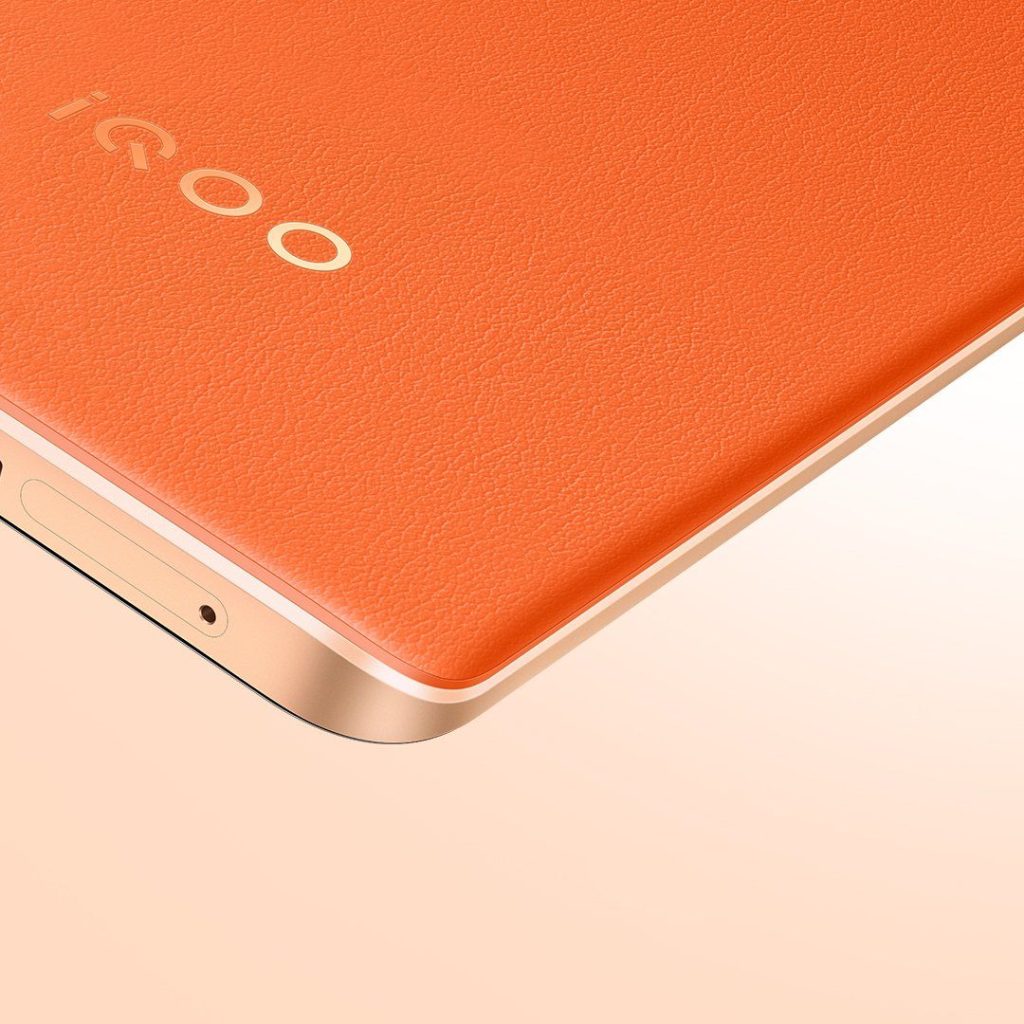
iQOO recently confirmed that it will unveil the IQOO Neo 7 Pro on July 4 in India. Ahead of the launch, the brand is busy teasing the design of the phone. Some of its recent teasers have hinted that the Neo 7 Pro may arrive in an orange color option. Over the weekend, the brand released a new teaser to give a glimpse of the orange edition of the device.
The Neo 7 Pro’s orange variant appears to feature a leather finish, and there are speculations about the availability of a black variant as well. However, it is currently unclear whether the black variant will also have a leather texture. These color variants are likely to be called Pop Orange and Interstellar Black.
iQOO Neo 7 Pro orange variant teased
Speculations are rife that the iQOO Neo 7 Pro will be priced at around Rs 35,000 (~$424) in India. Like other iQOO phones, it will be sold through Amazon. As far as specs are concerned, it could be a rebranded version of the iQOO Neo 7 Racing Edition, which has been available in China for several months now.
iQOO Neo 7 Pro specifications
According to reports, the iQOO Neo 7 Pro will have a 6.78-inch AMOLED FHD+ 120Hz punch-hole display and will be powered by the Snapdragon 8 Plus Gen 1 chipset. The highest variant of the device may ship with 16 GB of LPDDR5 RAM and 256 GB of UFS 3.1 storage. It may arrive with a 5,000mAh battery that supports 120W fast charging.
The Neo 7 Pro’s rear camera setup may comprise a 50-megapixel primary camera with OIS support, an 8-megapixel ultra-wide lens, and a 2-megapixel macro camera. On the front, the device is likely to feature a 16-megapixel camera. It may run on Android 13 OS and FunTouch OS 13. For security, it may feature an in-screen fingerprint sensor.
DERE R16 PRO Laptop, a powerful and versatile device that combines performance and portability in one sleek package. With its impressive features and sleek design, it’s the perfect choice for those seeking a reliable and stylish laptop for work or play.
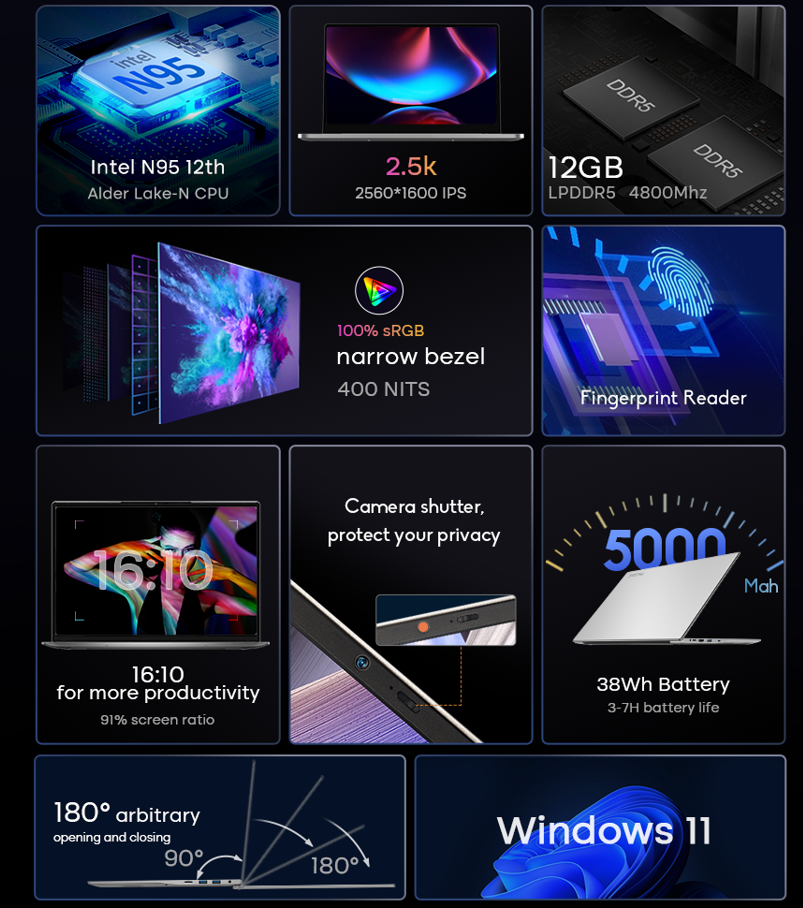
DERE R16 PRO, boasts a stunning 16″ IPS Ultra HD 2.5K resolution screen, which delivers a mesmerizing display with unrivaled clarity and detail. With a remarkable 100% sRGB color gamut, it guarantees true-to-life colors and deep color reproduction that brings your content to life like never before. Whether you’re editing photos, designing graphics, or simply enjoying multimedia content, the DERE R16 PRO ensures an immersive visual experience that surpasses expectations.
The laptop is equipped with the cutting-edge Intel 12th generation Alder Lake N95 processor. With clock speeds of up to 3.4GHz, 4 cores, and 4 threads, this processor delivers a powerful performance that effortlessly handles office tasks with ease. Whether you’re crunching numbers, creating presentations, or managing complex spreadsheets, the DERE R16 PRO ensures smooth and efficient multitasking without compromising on speed.
To complement its exceptional processing capabilities, this laptop comes with 12GB LPDDR5 memory and a spacious 512GB internal storage. This combination allows you to seamlessly run multiple software applications simultaneously, eliminating any potential bottlenecks and ensuring a stress-free computing experience. Whether you’re running resource-intensive software or storing large files, the laptop’s impressive memory and storage capacity ensure swift and efficient operations.
The DERE R16 PRO features a high-capacity 5000mAh battery, providing an ultra-long standby time and extended battery life. Furthermore, its 180° opening and closing design effortlessly adapts to your preferred viewing angle, meeting your requirements for a wide range of usage scenarios.
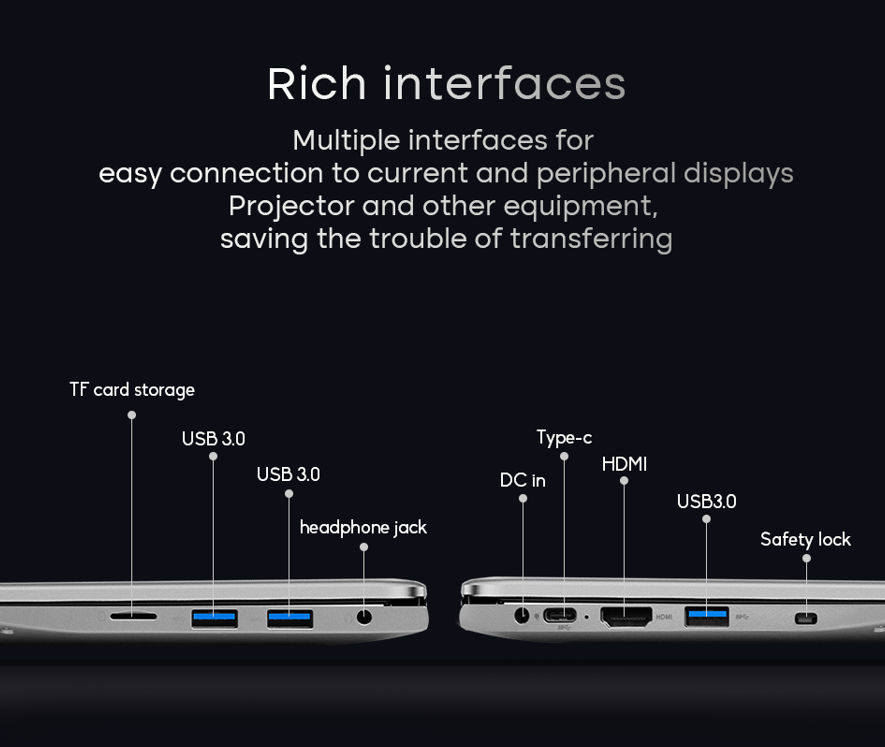
Designed with user convenience in mind, this laptop features a backlit keyboard that allows for easy typing even in low-light environments. Additionally, it incorporates fingerprint recognition technology and a camera shutter ensuring secure and hassle-free access to your device. No matter what you desire in a laptop, the DERE R16 PRO has it all.
Deal:
During the promotional launch, the Dere R16 PRO Laptop is available at a discounted price starting from $214, and customers can enjoy even more savings by using the discount coupon code: A9BQT8WSIYXN. Additionally, the first 100 purchasers will receive complimentary gifts such as power banks or laptop cases. Please take note that the sale begins on June 12 and concludes on June 18 at 23:59 PT.
For more information on such exciting deals and offers, check out our deals hub.
ChatGPT has been an extraordinary breakthrough in the field of conversational artificial intelligence since its launch. With its language generation capabilities and ability to understand and respond to a wide range of topics, ChatGPT has revolutionized the way people interact with AI. It has become an indispensable tool for various applications, from providing information and answering questions to offering creative writing suggestions and engaging in natural, human-like conversations. Since its launch, ChatGPT has continued to evolve and improve, making strides towards more coherent, context-aware responses and establishing itself as a formidable force in the field of AI-powered conversations. However, an interesting statistic has surfaced that somewhat argues the impact ChatGPT continues to have on the AI world.
Only 19% of Sampled people had used ChatGPT, Less than 10% had used Bard
The recent survey conducted in April, which gathered insights from 2,000 individuals, sheds light on the current landscape of artificial intelligence (AI) and chatbot usage. Surprisingly, the study reveals that only 19 percent of people who responded had utilized the ChatGPT chatbot, while a mere 9 percent had engaged with Google’s Bard chatbot. Furthermore, a significant majority of those who hadn’t used chatbots expressed their reluctance to adopt these tools within the next six months, indicating that the supposed “brainwash” of the public is a mere hoax.
Experts and analysts from Morgan Stanley emphasize that it is crucial for investors to recognize the nascent stage of chatbot technology. Presently, chatbots are primarily being used for acquiring knowledge on new subjects, and they are not effectively making users money. For instance, when it comes to online shopping, comparing prices, and making purchases, the number of users employing chatbots remains alarmingly low. However, these particular sectors hold the potential to drive advertising revenue for companies in the future.
AI’s influence on e-commerce and travel sectors presents opportunities for revenue growth. Businesses can leverage AI to deliver more accurate and personalized search and recommendation services. According to the survey, 56 percent of respondents stated that they would initially resort to Google Search, YouTube, or Bard while shopping online. A lot of things will have to change if ChatGPT has to derail Google from the throne of Search Engines. Meanwhile, it will be interesting how ChatGPT will evolve in the near-future to drive those usage statistics up.
RCS (Rich Communication Services) technology is an advanced messaging protocol designed to enhance the functionality and user experience of traditional SMS messaging. It allows users to send messages with features such as read receipts, typing indicators, high-resolution media sharing, and group chats. RCS also supports features like video calling, file sharing, and location sharing, bringing it closer to the capabilities of other popular messaging apps. Unlike SMS, RCS operates over data networks and requires support from both the mobile device and the carrier. It aims to provide a richer and more interactive messaging experience for users across different devices and networks. Google and Apple have previously clashed regarding using RCS as a standard for smartphone messaging, with Apple choosing to remain out of this. As per the latest news, popular US telecom operator, AT&T has started utilizing Google‘s Jibe platform for RCS-powered messaging.
Google acquired Jibe Mobile in the year 2015
While all mobile carriers support RCS, some, like AT&T, have relied on their own backend systems instead of Google’s Jibe platform. However, a lot of customers will be extremely happy as AT&T has recently announced its transition to the Jibe platform, aligning with other carriers and promising a superior RCS messaging experience for its customers. This transition brings a lot of perks, as users had previously criticized AT&T’s servers for a subpar RCS messaging experience. Shifting their users to Google’s tried-and-tested solution is expected to improve performance and reliability across the board. Moreover, AT&T’s default messaging system will now harness the power of the Jibe platform, ensuring that users can enjoy the “latest RCS features instantly,” as highlighted by Google SVP Hiroshi Lockheimer in the tweet.
Google has been working diligently to enhance RCS since acquiring Jibe Mobile in 2015. Along the way, they encountered obstacles, including resistance from carriers. However, it seems that all parties (well, most of them) have finally aligned their interests. Users can verify if their Messages app is utilizing Jibe by navigating to the app’s Settings, tapping RCS chats and scrolling to the bottom of the page.
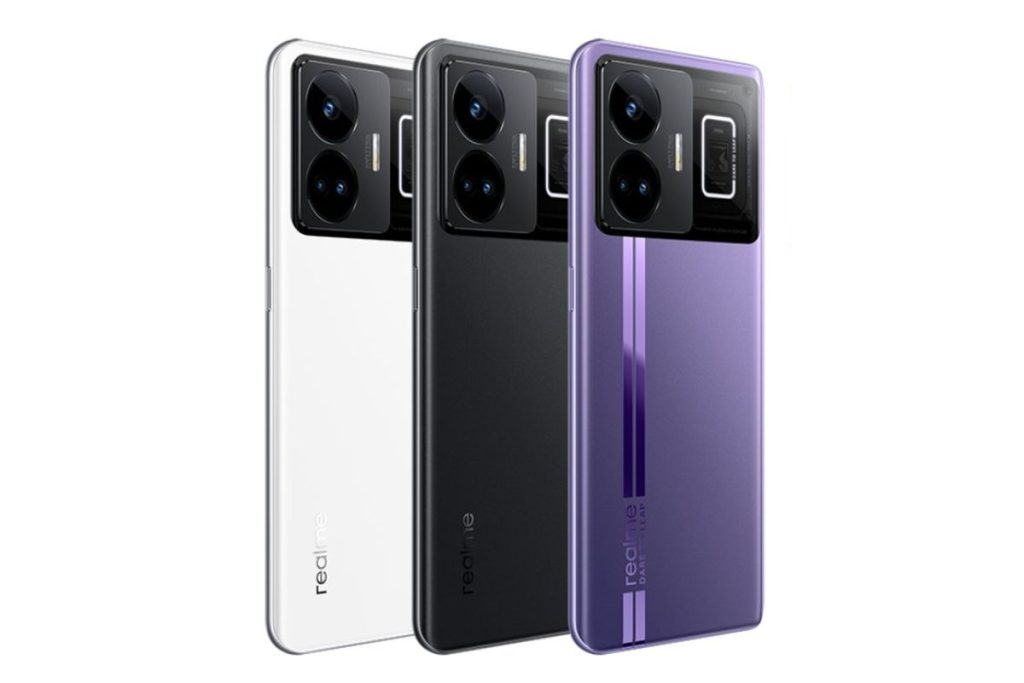
While all the prominent smartphone brands in China have introduced flagship devices equipped with the Snapdragon 8 Gen 2, Realme stands out as the sole exception. However, reports indicate that Realme is working on its next flagship offering, referred to as the Realme GT Neo 5 Pro. Notably, popular tipster Digital Chat Station shared crucial details regarding the specifications of the upcoming Realme flagship in a recent Weibo post.
Realme GT Neo 5 Pro specifications (rumoured)
Realme GT Neo 5
According to the renowned tipster, the upcoming Realme GT Neo 5 Pro is expected to feature a flat OLED panel with minimal bezels. The screen is rumored to offer an impressive 1.5K resolution along with a high refresh rate of 144Hz and 2160Hz PWM dimming. Interestingly, it seems that Realme will utilize the same 6.74-inch OLED panel sourced from the Tianma brand that was previously seen on the Realme GT Neo 5 and GT Neo 5 SE smartphones released earlier this year.
The Snapdragon 8 Gen 2 chipset and 16 GB of LPDDR4x RAM will be present under the hood of the Realme GT Neo 5 Pro. There is no information about the battery size of the device. However, it is expected to support 100W charging.
Some other reports have claimed that the GT Neo 5 Pro’s back panel will have an OIS-enabled 50-megapixel Sony IMX890 primary camera. The details of the remaining cameras on the Pro model have not surfaced yet. According to DCS, the Realme GT Neo 5 Pro’s main camera will be bolstered by a new fusion algorithm, likely resulting in improved shot quality. The device is expected to run on the Realme UI 4.0-based Android 13.
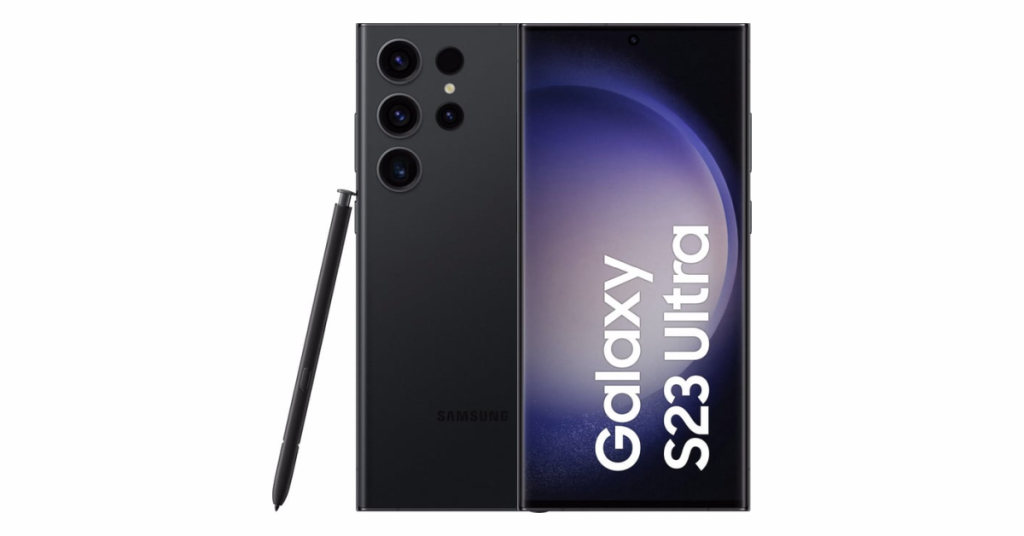
Samsung is expected to unveil the Galaxy S24, the Galaxy S24 Plus, and the Galaxy S24 Ultra in the first quarter of 2024. The Galaxy S23 Ultra debuted as the company’s first phone featuring a 200-megapixel camera. It also came with a new selfie camera. Will there be a significant upgrade in the camera department of the Galaxy S24 Ultra? Citing Korean media as the source, tipster Ice Universe has revealed the rear camera specifications of the Ultra model.
Samsung Galaxy S24 Ultra camera specifications (rumored)
Samsung Galaxy S23 Ultra
The tipster revealed that the Galaxy S24 Ultra will have a 200-megapixel Samsung HP2 primary camera. It will be accompanied by a 12-megapixel Sony IMX564 ultra-wide lens and a 10-megapixel Sony IMX754 telephoto camera with 3x optical zoom. These cameras are also available in the rear camera setup of the Galaxy S23 Ultra.
The Galaxy S24 Ultra’s camera module will also include a slightly modified version of the 10-megapixel IMX754+ periscope telephoto camera with 10x optical zoom. So, this will probably be the only hard-level upgrade the S24 Ultra will offer. The significant improvements in the camera performance of the S24 Ultra are expected to primarily stem from advancements in software and processing capabilities.
An LED flash and a laser autofocus unit will also be present with the rear cameras. The new leak has no information about the selfie camera on the Galaxy S24 Ultra. It is likely to retain the 12-megapixel selfie snapper, which was made available for the first time on the Galaxy S23 Ultra. At present, there is no word on the camera specifications of the Galaxy S24 and the Galaxy S24 Plus.
Qualcomm is expected to announce the Snapdragon 8 Gen 3 chipset in October of this year. An overclocked version of the chip dubbed the Snapdragon 8 Gen 3 for Galaxy, may power the Galaxy S24 series. While markets like Asia and North America are expected to receive the Snapdragon version of the S24 lineup, Samsung may release the Exynos 2400 variants in Europe.
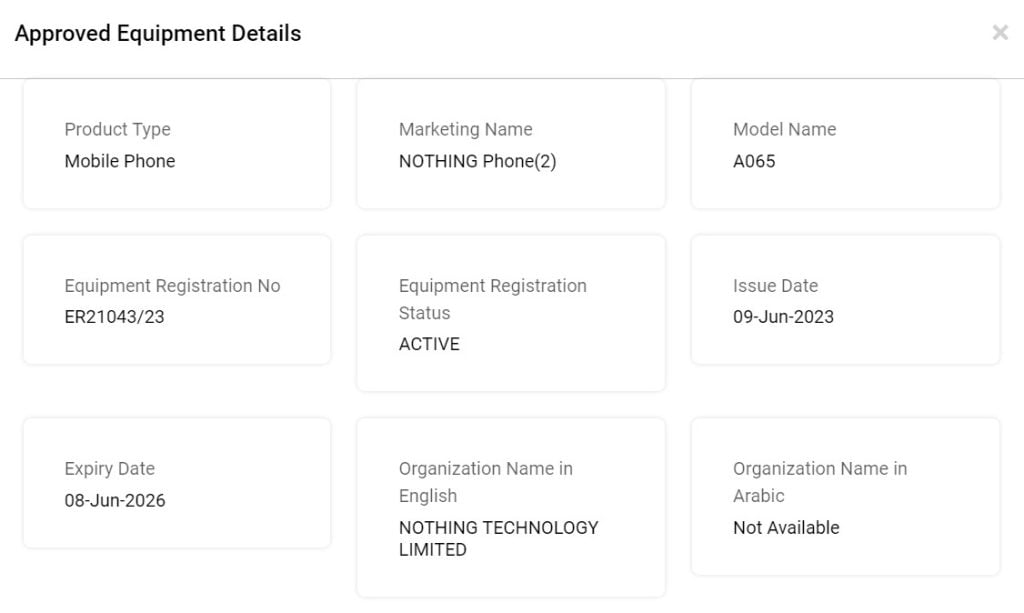
Nothing Phone (2) is expected to launch in July. As the launch date draws closer, the phone is anticipated to make its presence known in various certification platforms’ databases. Recently, the smartphone has obtained certification from the UAE’s TDRA certification platform.
Nothing Phone (2) TDRA listing
The TDRA certification does not reveal anything new about the Phone (2). As can be seen in the screengrab, it reiterates that the device has the “A065” model number. To recall, the original Nothing Phone (1) has the A063 model number.
Nothing Phone (2): What’s known so far
Gradually, Nothing is disclosing the specifications of the upcoming Nothing Phone (2). The company has officially announced that the device will boast a 6.7-inch AMOLED screen. Speculation suggests that this display might support an FHD+ resolution along with a refresh rate of 120Hz.
Another confirmed detail is that the Nothing Phone (2) will be powered by the Snapdragon 8 Plus Gen 1 chipset. Previous sightings on Geekbench revealed that the device will come equipped with 12 GB of RAM and will operate on Android 13.
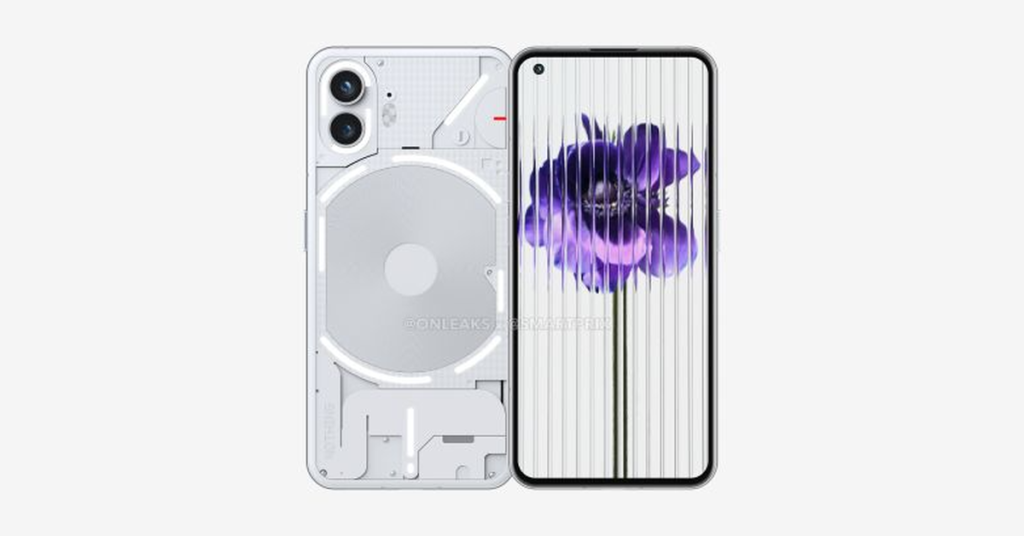
Nohing Phone 2 render
For a streamlined and minimalist user experience, the phone will feature Nothing OS 2.0, which will be overlaid on top of the Android operating system. Nothing has committed to providing three major Android OS upgrades and three years of security updates for the Phone (2).
The Nothing Phone (2) will be equipped with a 4,700mAh battery, as confirmed by the brand. However, information about the fast charging capabilities remains undisclosed. Additionally, specific details regarding the camera setup of the Nothing Phone (2) are yet to be revealed. The device is made of sustainable materials and has an aluminium frame.
In related news, a recent leak revealed the design of the Phone (2) through CAD renders. However, shortly after the images surfaced, Nothing founder and CEO, Carl Pei, took to Twitter and referred to them as “fake.” This tweet strongly suggests that the leaked images do not accurately represent the actual design of the Phone (2).
Nothing Phone (2) bags TDRA certification before rumored launch in July
Nothing Phone (2) is expected to launch in July. As the launch date draws closer, the phone is anticipated to make its presence known in various certification platforms’ databases. Recently, the smartphone has obtained certification from the UAE’s TDRA certification platform.
The TDRA certification does not reveal anything new about the Phone (2). As can be seen in the screengrab, it reiterates that the device has the “A065” model number. To recall, the original Nothing Phone (1) has the A063 model number.
Nothing Phone (2): What’s known so far
Gradually, Nothing is disclosing the specifications of the upcoming Nothing Phone (2). The company has officially announced that the device will boast a 6.7-inch AMOLED screen. Speculation suggests that this display might support an FHD+ resolution along with a refresh rate of 120Hz.
Another confirmed detail is that the Nothing Phone (2) will be powered by the Snapdragon 8 Plus Gen 1 chipset. Previous sightings on Geekbench revealed that the device will come equipped with 12 GB of RAM and will operate on Android 13.
For a streamlined and minimalist user experience, the phone will feature Nothing OS 2.0, which will be overlaid on top of the Android operating system. Nothing has committed to providing three major Android OS upgrades and three years of security updates for the Phone (2).
The Nothing Phone (2) will be equipped with a 4,700mAh battery, as confirmed by the brand. However, information about the fast charging capabilities remains undisclosed. Additionally, specific details regarding the camera setup of the Nothing Phone (2) are yet to be revealed. The device is made out from sustainable materials and has an aluminium frame.
In related news, a recent leak revealed the design of the Phone (2) through CAD renders. However, shortly after the images surfaced, Nothing founder and CEO, Carl Pei, took to Twitter and referred to them as “fake.” This tweet strongly suggests that the leaked images do not accurately represent the actual design of the Phone (2).
The internet is still feeling the effects of the paid API implementation that was introduced after Twitter was purchased by Elon Musk. Reddit also recently made a similar decision, announcing its new API costs for developers. These changes are having a negative impact on third-party apps. In protest of Reddit’s new API costs, the iPhone subreddit, one of the most popular Apple-related communities on the internet, is going dark indefinitely. This means that the subreddit will be closed to new posts and comments. Here are the details…
Reddit API Costs Lead to iPhone Subreddit Blackout
The iPhone subreddit, one of the most popular Apple-related communities on the internet, is going dark indefinitely in protest of Reddit’s new API costs. The change, which was announced in May, would require third-party developers to pay $20 million per year to continue using Reddit’s API. This has led to the closure of several popular apps, including Apollo.
The mods of the iPhone subreddit announced the decision to go dark in a post on the subreddit. In the post, they explained that they felt the new API costs were “unreasonable” and that they would not be able to continue operating the subreddit under the new terms.
Hi everyone,
We apologise for the back and forth messaging here, but we just wanted to update our community on our intentions to make r/iPhone private (from restricted) in the next 24 hours. This follows on from our most recent announcement made a couple hours ago where we took the subreddit restricted (meaning, the subreddit would still be visible but no new posts would come through). Please read that post too, for the full context on the situation.
This was not an easy decision to make, given a variety of factors, but it’s one we feel comfortable making. Anything that was posted before the restricted mode came into effect earlier today will essentially be the final front page of our community before we privatise the subreddit entirely. In the (somewhat unlikely) scenario that Reddit’s leadership has a change of direction that sees the reversal the recent API policy change, we will reopen the subreddit, but until this happens, r/iPhone will be unavailable for use in any capacity whatsoever. Many other subreddits are doing the same, and we support them for taking a stand.
It remains to be seen how Reddit will respond to the protests. The company has not yet commented on the issue.
If you own a global company, you have to be careful about the names of your products. In different countries, the same name can have different meanings or be trademarked by other companies. This can lead to copyright and competition lawsuits. Fortunately, we do not own such a company and therefore we don’t have these types of problems, but Apple does. Most recently, the company faced the risk of having to change the name of its new mixed reality headset, the Vision Pro, in China. This is because Huawei registered the same trademark four years ago. Here are the details…
Huawei Trademark Could Force Apple to Rebrand Vision Pro Headset in China
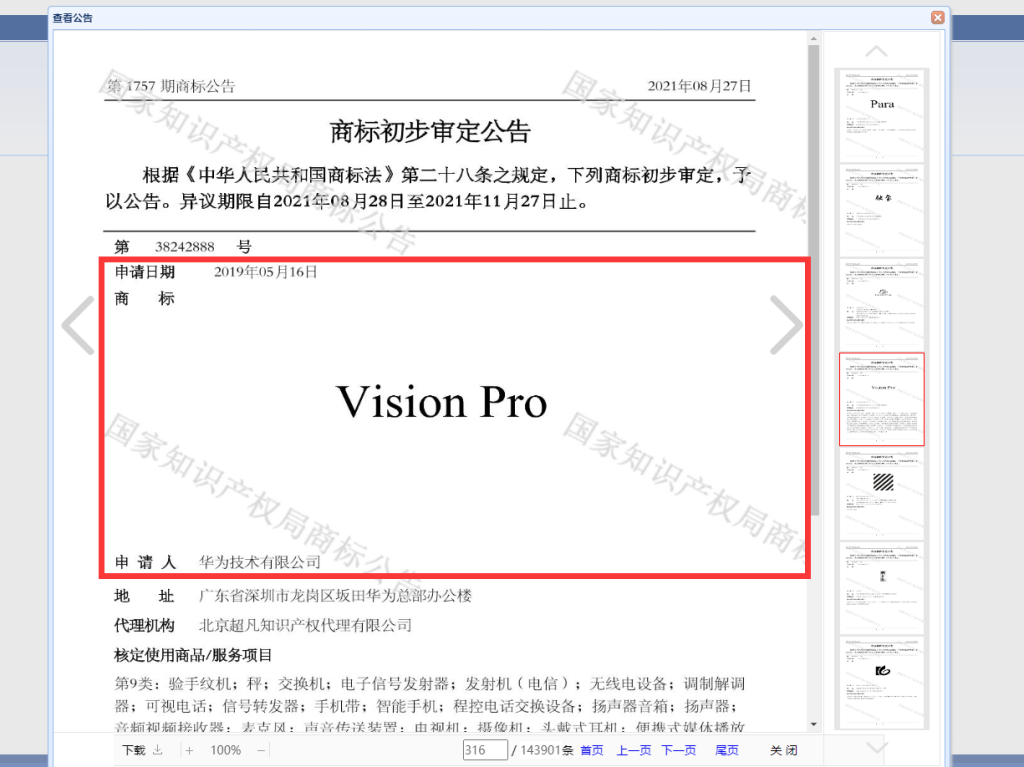
Apple recently announced its first Mixed Reality headset, the Apple Vision Pro, which is set to debut in the United States early next year. However, a recent search of the China Trademark Network reveals that as early as May 16, 2019, Huawei had successfully registered the Vision Pro trademark, a clear four years ahead of Apple’s product announcement.
It is understood that the registered number of the Vision Pro trademark is 38242888, and it falls under the international class 9. The trademark’s exclusive rights period is from November 28, 2021, to November 27, 2031, with approved usage for products and services including LCD TVs, head-mounted virtual reality devices, radio equipment, and more.
This suggests that Apple may not be able to use the name “Vision Pro” for its product within China and may have to consider a rebrand when launching the Apple Vision Pro in the country. It is worth noting that Huawei’s registration of the Vision Pro trademark is not directly related to Apple. Huawei has two product lines related to the term “Vision”. These include Huawei’s first smart viewing glasses, Vision Glass, and the Huawei Vision Smart Screen series. The Vision Pro trademark may have been registered in anticipation of future additions to the Vision Smart Screen series.
Possible scenarios for Apple
There are a few possible scenarios that could play out for Apple in this situation. One possibility is that Apple will simply rebrand its headset for the Chinese market. This would likely be the simplest and most straightforward solution, and it would allow Apple to avoid any potential legal issues. Another possibility is that Apple will try to negotiate with Huawei to use the Vision Pro trademark in China. This could be a more complex and time-consuming process, but it could potentially allow Apple to keep the name that it has already chosen for its headset.
Finally, it is also possible that Apple will simply decide not to launch its headset in China at all. This would be a significant loss for Apple, as the Chinese market is one of the largest and most important in the world. However, it would also avoid any potential legal problems.
Apple’s WWDC 2023 event last week was a big deal in the tech world. The company announced a number of new products and features, including its new mixed reality headset, the Vision Pro. But one of the biggest surprises was the announcement of game support for Mac. This is a big deal for Mac users, who have long complained about the lack of good games on the platform. Apple has finally addressed this issue by releasing a tool to help developers port Windows games to Mac. Here are the details…
Apple Releases Tool to Help Developers Port Windows Games to Mac
Apple has made good on its promise to Mac users who want to play games on their devices. The company has released a new toolkit that makes it easier for game developers to port Windows games to Mac. The toolkit, called the Game Porting Toolkit, provides an emulation environment that allows developers to run their existing Windows games on macOS without making any changes to the code.
This means that developers can quickly test how their games will perform on Mac before they commit to porting them. The Game Porting Toolkit is currently available in beta on the Apple Developer website. Apple wants to make it easy for game developers to bring their games to Mac. To do this, the toolkit includes a new Metal shader converter that can automatically convert Windows game shaders and graphics code to work on Macs with Apple silicon.
This can significantly reduce the time it takes to port a game to Mac, from months to just a few days. Developers interested in porting Windows games to macOS can find more information on Apple’s website. The release of the Game Porting Toolkit is a welcome move for game developers who have been looking for a way to bring their games to the Mac.
British startup Hilo has launched what it claims is the world’s most intelligent e-scooter. The Hilo One is a standing e-scooter with lots of tech features that guarantee improved safety on the spin. British startup Hilo was co-founded by former Aston Martin CEO, Andy Palmer.
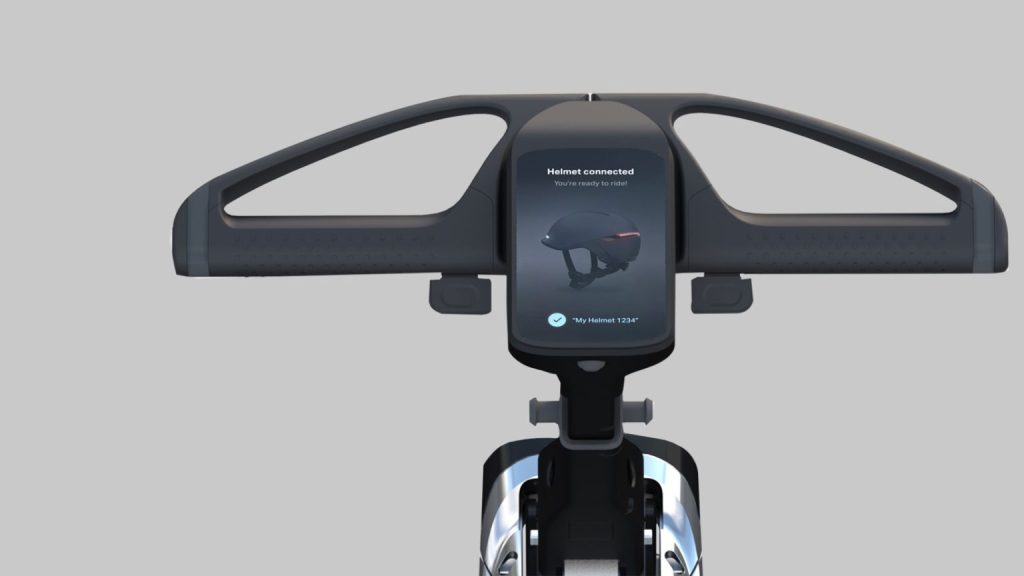
The Hilo One features a similar collision warning system as used in cars. It uses computer vision AI to alert the rider of impending dangers. This is achieved through visual, audible, and sensory feedback in the scooter’s handlebars. Palmer has also been previously Nissan’s COO and has helped to drive the adoption of EV technology in the UK. Palmer says the Hilo One addresses the major safety challenges of e-scooters squarely.
The Hilo One was showcased at the Micromobility Conference in Amsterdam and it reflects a sleek and innovative e-scooter. The Hilo One has a regulatory speed limit of 25km/h thanks to its twin 350W motors and a riding range of 40km. It can either be charged at home or through an accompanying in-car charger. The Hilo One is also compatible with Android Auto and allows for navigation and range information sharing between it and a car.
The Hilo One has a 31cm front wheel which helps to easily navigate bumpy roads and ensure robust handling while on the ride. Its full perimeter lighting fully illuminates the e-scooter for enhanced night visibility. The lights will flash when other commuters get dangerously close. The Hilo One’s onboard computer is also configured to recognize Unit 1 helmet use. Its built-in control unit also integrates with an EV and can share information on charging stations and navigation bidirectionally.
The Hilo One is a foldable e-scooter with lots of awesome features
The Hilo One standing e-scooter has a price tag of €2,000 (~$2,150). Hilo has started accepting orders for the Hilo One but deliveries will be made in 2024. The Hilo One could subsequently make its entry into other markets.
The global electric vehicle market is growing rapidly, which is creating new opportunities for manufacturers all over the world. For example, Tesla recently announced that it will enter the Turkey market. Now, Lucid, a U.S. luxury electric vehicle manufacturer, is preparing to enter the world’s largest auto market, China. Lucid plans to sell imported cars in China, and it is also considering local production in the country. Here are the details…
The Chinese EV Market: Why It’s So Important for Lucid
While we often talk about affordable electric vehicles, there are also many premium brands on the market. In China, BYD’s F brand is one example. In the United States, Lucid is another. This luxury EV maker is now preparing to enter the world’s largest auto market: China. Lucid’s head of China operations, Zhu Jiang, confirmed the company’s plans on Thursday. He said that Lucid is “preparing to enter the Chinese market” and that the company is “considering local production in China.”
In addition to selling its cars in China, Lucid is also planning to manufacture them there. This will help the company reduce production costs and eliminate the need to ship cars from the United States. These are both positive developments for Lucid, which has been struggling financially lately. The company recently lowered its production forecast for 2023 and reported lower-than-expected revenue. CEO Peter Rawlinson cited rising interest rates as a challenge to the market.
Lucid is planning to raise $3 billion through a stock offering to resolve its financial issues. This will help the company, but it will still face stiff competition in China. China is the world’s largest EV market, and it is already home to several major EV brands, such as BYD, Nio, and Xpeng. Tesla is also a major player in the Chinese market.
Lucid will need to offer a competitive product and price if it wants to succeed in China. The company will also need to build a strong brand and establish a strong dealer network. The ultimate winner in the Chinese EV market will be the manufacturer that can offer the best product, price, and customer experience.
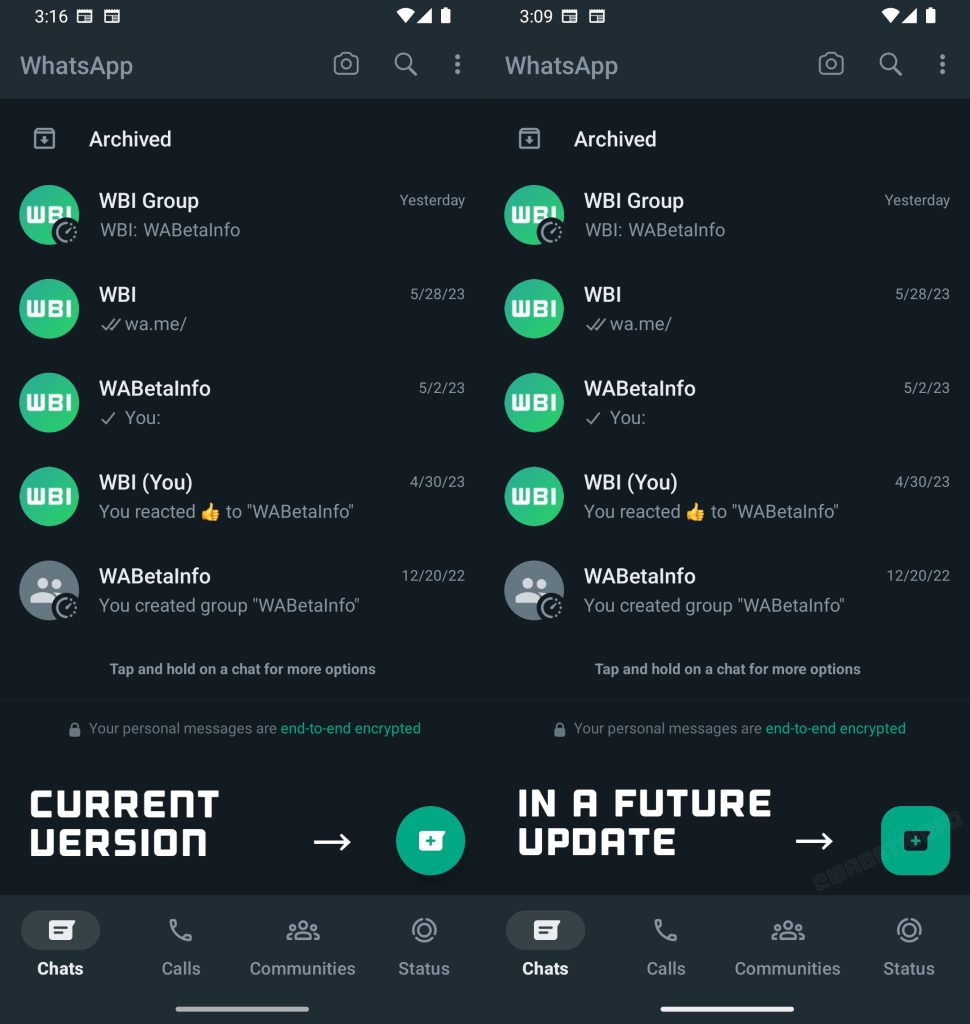
WhatsApp, the popular messaging app, has recently started rolling out a series of updates that indicate a comprehensive redesign of its application. The first clue came with the release of WhatsApp beta for Android version 2.23.10.6, which introduced a redesigned interface featuring a bottom navigation bar. This change suggests that WhatsApp is committed to revamping the entire app in small, incremental steps.
Illustration: Soumyakanti
Further confirmation of the redesign was found in the WhatsApp beta for Android version 2.23.12.3 update. This update showcased a new style for toggles, aligning with the Material Design 3 guidelines. It seems that WhatsApp is dedicated to following these guidelines in its redesign efforts, paying attention to even the smallest details.
In the most recent WhatsApp beta for Android version 2.23.12.15 update, another significant change was discovered. WhatsApp plans to revamp the floating action button, which allows users to quickly initiate new chats. The new floating action button will feature a square shape with slightly rounded edges, consistent with the Material Design 3 guidelines. This redesign will not only apply to the floating action button but also to buttons within the calls and status tabs.
The redesign of the floating action buttons is currently under development and will be released to beta testers in a future update of the app. This update addresses a long-standing user request for a refreshed interface, demonstrating that WhatsApp has taken user feedback into account.
In addition to the interface redesign, WhatsApp is working on several other exciting features. The app’s beta version introduces a high-quality photo-sharing option, allowing users to share HD photos without losing any quality. The latest beta update also brings a redesigned emoji keyboard, enhancing the visual experience of expressing emotions through emojis.
Furthermore, WhatsApp is actively developing a screen-sharing feature for Android phones. This feature will enable users to share their screens with others during conversations, enhancing collaboration and support possibilities.
We use cookies on our website to give you the most relevant experience by remembering your preferences and repeat visits. By clicking “Accept”, you consent to the use of ALL the cookies.
This website uses cookies to improve your experience while you navigate through the website. Out of these, the cookies that are categorized as necessary are stored on your browser as they are essential for the working of basic functionalities of the website. We also use third-party cookies that help us analyze and understand how you use this website. These cookies will be stored in your browser only with your consent. You also have the option to opt-out of these cookies. But opting out of some of these cookies may affect your browsing experience.
Necessary cookies are absolutely essential for the website to function properly. This category only includes cookies that ensures basic functionalities and security features of the website. These cookies do not store any personal information.
Any cookies that may not be particularly necessary for the website to function and is used specifically to collect user personal data via analytics, ads, other embedded contents are termed as non-necessary cookies. It is mandatory to procure user consent prior to running these cookies on your website.