Advertisement

Honda Aims to Lower EV Prices, Here’s How

Honda CEO, Toshihiro Mibe, is betting on new battery technology to develop affordable electric versions of its smaller cars. However, before that happens, the Japanese automaker plans to sell larger and more expensive electric vehicles (EVs) to help absorb production costs. Honda is seeking to catch up with rivals who are leading the charge in the electric vehicle race, as the industry experiences a faster transition away from traditional cars and trucks. Here are the details…

Honda’s Plan to Develop Smaller EVs with Its Own Platform Starting in 2026

One of the biggest challenges faced by automakers in the EV industry is the high cost of batteries, which can make EVs 40% more expensive to produce than gas-powered cars. Honda is hoping that a different technology – solid-state batteries – will eventually help bring down these costs and make EVs more accessible.

Lithium-ion batteries, the current industry standard, use a liquid electrolyte to conduct electricity between the cathode and anode. In contrast, solid-state batteries replace that liquid with more stable materials like ceramics, reducing the size and cost of the battery pack. Honda has joined the race to develop solid-state batteries, although it arguably lags behind better-resourced peers like Toyota and Nissan. Other carmakers like General Motors and Ford also have solid-state ambitions.

However, Mibe is aware that getting solid-state technology ready for mass consumption could take several years, and figuring out when to ramp up production will be difficult. It will also take a significant investment to produce those batteries, so Honda needs to ensure that the market is prepared before pushing ahead.

The company is developing its own solid-state battery program, which the company has discussed with GM, and is working on another with Korean partner LG Energy Solution, a unit of LG Chem Ltd. Meanwhile, the company’s first EVs will be larger, more expensive SUVs, built using GM’s Ultium EV platform, with the Honda Prologue and Acura ZDX set to go on sale in 2024.

According to Sam Abuelsamid, an analyst at Guidehouse Insights, Honda needs to get more EVs to market to remain competitive in the US and Europe, as the market is rapidly getting to the point where you need a presence in multiple segments to stay competitive. Mibe is also aware of the challenges posed by the US market, where the charging network isn’t as robust as it needs to be for customers.

He believes that charging infrastructure is a country-level concern that Honda needs to think about as it moves toward achieving its goal of achieving 40% EV sales by 2030. Despite the challenges, Honda is committed to developing EVs and has teamed up with Sony to develop them. The company has also pledged to sell only electrified vehicles by 2040.

RELATED:

(via)

Nothing Reportedly Begins Phone (2)’s Serial Production

Nothing’s first smartphone debuted in July last year with a design like no other and decent specifications. The Phone (1) has mostly been well-received by consumers and is widely considered to be a solid option in the mid-range category. The Nothing Phone (2) is also in development and its details have already started to appear. In the latest development, it has been revealed the handset has entered the serial production stage. Here are the details.

Reputed tipster Mukul Sharma claims Nothing has started the serial production of a new smartphone, likely the Nothing Phone (2). The brand is also producing a Lithium-ion battery with model number NT02. Sharma says the certification tests for both products are already being carried out.

Nothing-Phone-1

Nothing Phone (1) debuted late in July 2022 and we can expect its successor to arrive around the same time. Phone (2) is expected to bring several changes in the hardware department. It remains to be seen whether Nothing will make changes to the handset’s design as well. The brand claims to be challenging the status quo in the industry so we should be hopeful that it will deliver on its promise and bring some fresh innovation to the market.

Recently, a top Qualcomm exec revealed the processor that will power the upcoming Phone (2). He revealed the handset will be drawing power from last year’s Snapdragon 8+ Gen 1 SoC. It is a high-end SoC from Qualcomm based on the 4nm process node. The chipset has an octa-core architecture with its Prime Core based on an ARM Cortex-X2 architecture clocked at up to 3.2 GHz.

Rumors claim the handset will pack a 5,000mAh battery and continue to flaunt a 120Hz AMOLED display. It could arrive with 12 GB of RAM, virtual RAM, and 256 GB of storage. More details should emerge soon. Stay tuned.

Related:

(Source)

Samsung Prepares Three New Galaxy Tab S9 Models, Including Waterproof Ultra

Samsung is known for its high-quality Android tablets, and it looks like the company is ready to take its game to the next level with the upcoming Galaxy Tab S9 series. According to recent reports, the new lineup will consist of three models, including the Galaxy Tab S9, Galaxy Tab S9+, and Galaxy Tab S9 Ultra. Here are the details…

Samsung readying three Galaxy Tab S9 models, including an Ultra

Specs about the upcoming Galaxy Tab S9 series are still unknown. However, we do know that they will come with an official IP rating for dust and water resistance. If that’s true, they will be the first waterproof flagship tablets from Samsung, which is a significant improvement from previous models.

Samsung Galaxy Tab

The addition of an Ultra model is not surprising, considering that Samsung has been using the Ultra branding for its most powerful devices. The Galaxy Tab S9 Ultra will likely offer top-of-the-line features, although we don’t know what those features will be yet. All three models will be available in both Wi-Fi-only and cellular (5G) variants and come to the US.

The model numbers have also been revealed, with the base Galaxy Tab S9 identified as SM-X710 (Wi-Fi), SM-X716B (5G Global), and SM-X718U (5G US). The Galaxy Tab S9+ will bear the model numbers SM-X810 (Wi-Fi), SM-X816B (5G Global), and SM-X818U (5G US). The Ultra model will be identified as SM-X910 (Wi-Fi), SM-X916B (5G Global), and SM-X918U (5G US).

Samsung Galaxy Tab S9

While the Galaxy Tab S9 series is still months away, it is expected to be launched in the second half of this year alongside the fifth-gen foldables, the Galaxy Watch 6 series, and the Galaxy S23 FE. We can expect more leaks and details about the upcoming tablets in the coming months.

The addition of an IP rating is a much-needed improvement that will further cement Samsung’s status as the best maker of flagship Android tablets today. It remains to be seen what other features and improvements the company has in store for its upcoming Galaxy Tab S9 series, but one thing is certain – Samsung is ready to take on the competition and continue to deliver top-notch tablets to consumers.

RELATED:

(via)

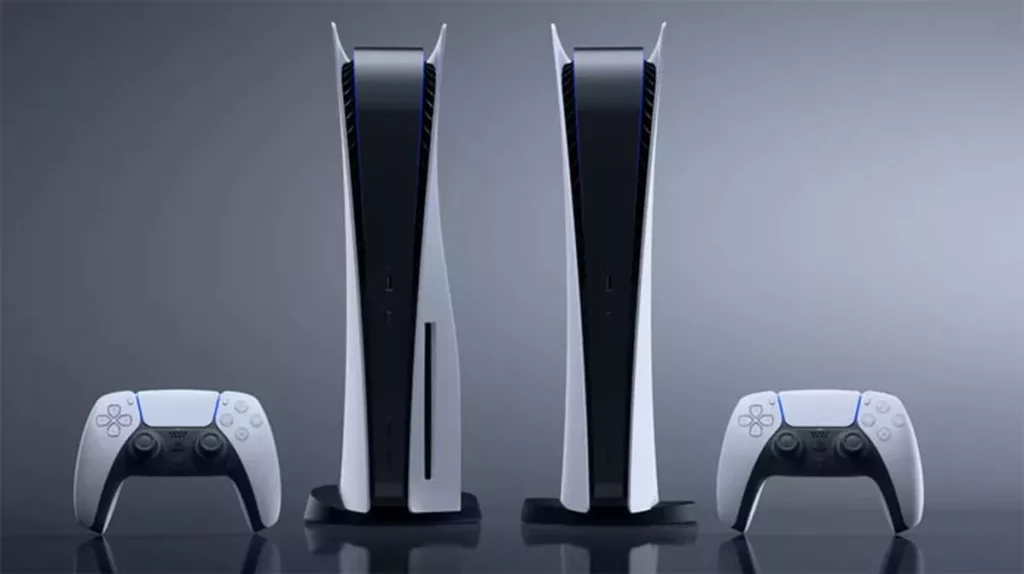
PS5 Indian Restock Is on March 10: Check Price & Availability Details

Sony has exciting news for gaming enthusiasts in India as they have announced another PS5 restocks scheduled for March 10th. This is great news for gamers eagerly awaiting the opportunity to purchase the console, as there have been more frequent restocks in the country lately. In fact, last month marked the first time that there were two PS5 restocks in India since the console’s launch in 2020, indicating that buying a PS5 is becoming more accessible.

Sony PlayStation 5

To pre-order a PS5 during the upcoming restock, online platforms such as ShopAtSC, Games The Shop, Amazon, Flipkart, Vijay Sales, Croma, and Reliance Digital will be available to purchase starting at 12 PM. It is advisable to log in to these websites a few minutes before the restock time to ensure a faster checkout process. However, it is important to note that PS5 stocks usually sell out within minutes.

If you miss out on purchasing a PS5 during this restock, fret not, as you can still check local retailers and electronics stores for availability or wait for the next restock, which may take place later this month or next.

Launched in 2020, the PS5 and PS5 Digital Edition both feature an octa-core processor based on Zen 2 architecture, running at 10.28 TFLOPS, and an AMD RDNA 2 GPU. The only difference between the two versions is that the standard edition has a Blu-Ray disc drive, while the Digital Edition does not. With 16GB GDDR6 RAM and 825GB internal storage, you also have the option to expand the PS5 storage using a compatible NVMe SSD.

RELATED:

Philips EVNIA 8900 Monitor With a 4K OLED Screen, 138Hz Refresh Rate Launched

Philips has released a new monitor called the EVNIA 8900, which is now available on JD.com. The monitor boasts a range of impressive specifications that make it a great choice for gamers, movie lovers, and anyone who wants a high-quality viewing experience.

Philips EVNIA 8900 Monitor

The EVNIA 8900 Monitor utilizes a 42-inch 4K OLED screen with a 138Hz refresh rate which is well above the industry standard of 60Hz. This will provide users with smoother and more fluid visuals, especially when gaming. The OLED technology also allows for more accurate color reproduction and deeper blacks compared to traditional LCD screens, making the picture more vibrant and immersive.

Further, the display comes with a 1.5 million: 1 contrast ratio, which means that the difference between the darkest and brightest parts of the image will be much more pronounced. The monitor supports a 98.5% DCI-P3 color gamut and 10-bit color depth, which means that it can accurately reproduce a wide range of colors.

The Philips EVNIA 8900 also supports VRR adaptive synchronization technology, which reduces screen tearing and stuttering. This technology adjusts the refresh rate of the display to match the output of the graphics card, providing a smoother and more enjoyable gaming experience. The 0.1ms response time is also impressive, which means that there will be no noticeable lag or ghosting in fast-paced games or movies.

Philips EVNIA 8900 Monitor

In terms of connectivity, the monitor is equipped with HDMI 2.1, DP 1.4, and USB-C interfaces, which means that it can be connected to a range of devices. Additionally, it supports a 90W reverse power supply meaning that it can be used to charge other devices, such as laptops or smartphones.

The Philips EVNIA 8900 also features Ambiglow ambient light technology, which can change in sync with the rhythm of the music and the color of the picture. This feature creates an immersive viewing experience, especially when watching movies or playing games. It comes with two built-in 10W speakers, providing users with a decent sound quality without the need for external speakers.

The EVNIA 8900 monitor is presently on presale in China via Jingdong for 10,999 yuan (~$1580).

Related:

Samsung Denies Rumors of Major Changes to Flagship Chipsets

Recent reports have suggested that Samsung has established a new team dedicated to the development of custom CPU cores for its in-house processors. However, Samsung has now confirmed that these reports are untrue, stating that it already has multiple internal teams responsible for CPU development and optimization, and has had them for a long time. Here are the details…

Samsung Optimizes In-House Processors without Establishing New CPU Development Team

The reports initially suggested that Samsung had hired a senior developer from AMD to lead the effort of developing custom CPU cores for its in-house processors, with the first chipset featuring custom cores expected to arrive in 2027. Samsung is reportedly developing specialized processors for its Galaxy devices after ditching its in-house Exynos processors due to poor performance.

Samsung CPU

While Samsung has confirmed that it is not establishing a new team for CPU development, it is constantly recruiting global talents from relevant fields to optimize its in-house processors. The idea behind developing custom CPU cores is to optimize the chipset for its devices from the development stage, allowing for deeper hardware-software integration, similar to Apple’s iPhones.

Samsung has previously developed custom CPU cores for its Exynos processors between 2016 and 2020. However, those chipsets underperformed against competing solutions from Qualcomm that used stock ARM cores. As a result, Samsung eventually decided to use Qualcomm’s Snapdragon processors in its flagship devices.

RELATED:

(via)

Here’s How Much It Costs Google to Make the Pixel Watch

Last year, Google finally unveiled its first-ever smartwatch, Pixel Watch. The wearable offers consumers good value for money and competes with the likes of the Samsung Galaxy Watch 5 and the base Apple Watch Series 8. It can be purchased in the US and other markets for around $349 but have you ever wondered how much it costs Google to manufacture the Pixel Watch? Read on to find out.

Counterpoint Research’s latest bill of materials (BoM) analysis has revealed the manufacturing cost of the Pixel Watch is just a fraction of its market price. The report says it only costs Google $123 to make the Pixel Watch, however, this figure only includes the hardware costs and does not take into account other expenses that the company may have incurred, such as research and development costs or marketing expenses. These additional costs are essential to the overall success of the product.

Pixel-watch-BoM

The Pixel Watch uses the Samsung Exynos 9110 as its main chipset and the LTE transceiver and other paired components are also supplied by the Korean company, collectively accounting for around 20% of the total BoM cost. BOE supplies the smartwatch’s custom 1.2-inch-diameter OLED display, capturing over 14% of the total BoM cost.

As mentioned, the smartwatch retails for $349. It offers some impressive features and tight integration with the Android ecosystem. It packs a high-performance processor to make good use of the latest Wear OS 3.5 and also features a co-processor or MCU to optimize battery life. It is equipped with multiple sensors, including a 6-axis inertial sensor and a digital compass, an altimeter, an ambient light sensor (ALS), and a light encoder to enable the haptic crown.

RELATED:

(Source)
GPD Win 4 Gaming Handheld Goes on Sale in China Starting at 5,999 yuan ($864)

The GPD Win 4 gaming handheld has gone on sale in China. It had earlier been released on pre-sale and GPD expects more players to latch to the new offering. However, the price of the GPD Win 4 is higher than its pre-sale price.

GPD Win 4 Gaming Handheld

The GPD Win 4 Handheld WiFi Version offers RAM/ storage configurations ranging from 16GB/512GB to 32GB/2TB. The GPD Win 4 Handheld Back Clip 4G Version will be available in configurations between 16GB/512GB and 32GB/2TB also. In all, four options are available for both the WiFi and 4G versions of the gaming handheld.

The GPD Win 4 is equipped with an R7 6800U processor and adopts a slider design. It runs on the Windows 11 system and supports Steam OS. It uses a 6-inch eye protection screen with Corning Gorilla Glass and a 1080p resolution. It supports two refresh rates of 40 Hz and 60 Hz, as well as 368PPI. The two ends of the GPD Win 4 fuselage have an arc design with the force more dispersed when using it.

GPD Win 4 Gaming Handheld

The grip of the handheld has a protruding and ergonomic design. The optical finger mouse is designed to avoid repeatedly adjusting the handle/mouse switch during gaming.

The GPD Win 4 Handheld is equipped with a 6-axis gyroscope with support for playing somatosensory games. The joystick returns to the traditional dislocation layout and the rocker cap is split into a skirt and a cap for a firmer grip. The brightness can be adjusted or turned off with the backlight still on. The handheld can be connected to a monitor while the shoulder button adds a colorful lighting effect. In addition, the lighting effect can be switched between multiple modes to suit your gaming mood.

GPD Win 4 Gaming Handheld

The GPD Win 4 gaming handheld is available from Jingdong in China starting at 5,999 yuan (~$864) for the 16GB/512GB Wireless Version. The top model in the lineup is the 32GB/2TB Back Clip 4G Version which retails at 8,499 yuan (~$1,225).

RELATED:

(via)

LG SC9S and SE6S Soundbars With Triple Sound Tech Launched in Selected Markets

LG has unveiled two new soundbars in the US, the UK, and the EU. The LG SC9S and SE6S soundbars feature Triple Sound technology as well as a triple up-firing speaker system. The LG SC9S and SE6S soundbars are designed for use with LG TVs.

LG

The new LG soundbars feature the world’s first triple up-firing speaker setup. The Triple Level Spatial Sound delivers a cinematic experience for users of the gadget. The Smart Up Mixer can convert two-channel audio to surround sound. The SC9S has a 3.1.3 channel architecture and it has a subwoofer while the SE6S outputs 3.0 channel sound.

The soundbars feature the WOW Orchestra which balances the sound between the soundbar and the TV’s speakers. The WOWCAST feature enables you to pair the soundbar to other devices wirelessly for a more immersive sound. Both models support Dolby Atmos and DTS:X technology while the high-end SC9S supports IMAX Enhanced for surround sound.

LG SOundbar

The AI Sound Pro helps to optimize gaming, music, movie, or sports audio output. The LG SC9S has a 400W output and measures 38.4 x 2.5 x 4.9 inches in dimension. The SE6S has a 100W output and measures 31.5 x 2.5 x 5.2 inches.

The LG SC9S soundbar retails in the US at $999.99 but is priced up to $1,200 in the UK and Germany. The SE6S is yet to be released in the US but is sold at about $600 in the UK. The LG SE6S will launch in Germany later this month and it is expected to spread to other markets in the EU.

RELATED:

Standard iPhone 15 To Arrive Without ProMotion and Always-on Display

Apple introduced the iPhone 14 Pro and Pro Max models with LTPO displays that support ProMotion refresh rates ranging from 1Hz to 120Hz. The panel allows the two smartphones to offer always-on display (AOD) functionality as well. The Cupertino company limited these displays to the Pro models and it will likely stay that way for the upcoming iPhone 15 series.

As per a report, standard iPhone 15 units will not be equipped with an LPTO display, which should mean the devices will lack ProMotion support and an always-on display, just like their predecessors. The source says Apple has arranged to supply iPhone 15 display panels to domestic companies and will soon begin mass production. However, only the Pro Series will support LTPO 120 refresh rate, while the regular and Plus model will not.

Apple

An LTPO display will be required for iPhone 15 models to support AOD because it is the 1Hz refresh rate capability of the updated LPTO panels that allows the screen to stay always on without draining the battery a lot. AOD is a relatively new feature for Apple smartphones, with it being introduced only recently on the iPhone 14 Pro and Pro Max.

Previously, reputed display analyst Ross Young also claimed that all the models in the iPhone 15 series will support the dynamic island feature, however, the standard ones will lack the LTPO panels due to production scale constraints.

Vanilla iPhone 15 models may not get the latest LTPO panels but they could feature a more power-efficient OLED display driver chip manufactured based on a 28nm process. The current models use a chip based on a 40nm process. The 28nm chip in iPhone 15 models is expected to significantly reduce power consumption, which would lead to longer battery life.

Related:

(Source) (Via)
Boult Audio Curve ANC With 25dB ANC, 30-Hour Battery Life Launched In India

Boult Audio has expanded its range of neckband wireless earphones in India. The latest offering from the brand is called Curve ANC. As the name suggests, it packs active noise cancellation at an affordable price under Rs 1,500 segment. The audio device competes against other neckband wireless earphones from brands like boAt, Noise, Realme, and more in the market. Read on to know what it offers out of the box. 

The Boult Audio Curve ANC has a neckband-style design with inline control buttons. It is IPX5-rated water-resistant. The earbuds have a shark-fin design for a secure and comfortable fit. 

In terms of audio, the Boult Audio Curve ANC is equipped with a 12mm driver and BoomX-rich bass technology for superior sound. The earphones feature ANC up to 25dB. There is also ENC-enabled Zen mode for clear quality on calls. The audio device comes with 60ms ultra-low latency. The earphones support Siri and Google Assistant. 

The Boult Audio Curve ANC features Bluetooth 5.3 and blink-and-pair technology for easier and faster pairing. There is a dual-pairing option allowing users to connect multiple devices to the neckband at the same time. The Curve ANC is claimed to offer 30 hours of battery life with ANC enabled. It supports fast charging via a USB-C port. 

The Boult Audio carries a price tag of Rs 1,299 and is offered in Black and Green colours. The audio device can be purchased from Flipkart, Amazon, and the brand’s official website. 

Related:

Redmi K60 Ultra Processor And Charging Details Tipped

Xiaomi sub-brand Redmi launched the K60 series smartphones in December last year. Now, details of a new device in the lineup i.e. the K60 Ultra have surfaced online. The Redmi K60 Ultra is expected to arrive as the successor to the last year’s K50 Ultra. 

Chinese tipster Digital Chat Station has shared some information about the Redmi K60 Ultra. In a Weibo post, he revealed that the device will arrive in the third quarter this year i.e. the period between July to September. As per the tipster, the device will feature an AMOLED display bearing a resolution of 1.5K pixels with support for a high refresh rate, probably 144Hz. It will be equipped with a metallic frame for a strong texture. 

DCS states that the Redmi K60 Ultra will reportedly be powered by a MediaTek Dimensity 9200 SoC under the hood. In comparison, the K60 Pro is equipped with a Snapdragon 8 Gen 2 processor. The battery capacity of the K60 Ultra is not known but the tipster adds that the device will support 100W fast charging. This is also a slight downgrade from the Redmi K50 Ultra which has a 120W charging speed. 

There is no additional information about the Redmi K60 Ultra at the moment. We are still in the first quarter of the year and there is still time till Q3. Hence, we expect more details about the smartphone to surface in the future. Redmi also has other products in the pipeline with the Redmi Note 12 Turbo expected to debut in China later this month. 

Related:

Xiaomi Mi 11, Mi 11 Ultra Start Receiving MIUI 14 Update Outside China

Just a few days back, Xiaomi debuted the Xiaomi 13 series for international markets. At the same event, the company also unveiled MIUI 14.

However, the company has been rolling out its fresh mobile software outside mainland China for weeks. The latest handsets to receive the update are Mi 11 and Mi 11 Ultra.

Xiaomi Mi 11 Ultra
Xiaomi Mi 11 Ultra (Review)

According to Xiaomiui, Xiaomi has started pushing MIUI 14 update for Mi 11 and Mi 11 Ultra in international markets. The Android 13-based system update is currently limited to the ‘Global’ variant of these handsets.

The OTA software update bears build numbers V14.0.1.0.TKBMIXM and V14.0.1.0.TKAMIXM for Mi 11 and Mi 11 Ultra, respectively. These builds bring along February 2023 security patches.

Unsurprisingly, the update is only available for Mi Pilot testers initially. If there are no major bugs, it will be made available for a select few general public users as part of the ‘Stable Beta’ rollout.

The update should be available for all users within a month. Until then, users can head over to Settings on a regular basis to check whether their unit has been blessed with the update.

Android 13 is the second Android update for these smartphones since they debuted with Android 11. Similarly, MIUI 14 is also their second MIUI update as they were released with MIUI 12.

Both these devices may receive one more Android update next year. It will be most likely their last major system update.

RELATED:

(Source 1, 2)

Apple Dominates Top 10 Best-Selling Smartphones Globally In 2022 By Capturing Eight Spots

As per Counterpoint Research, 2022 was a great year for Apple. The Cupertino-based tech giant dominated the top ten best-selling smartphone list. Eight iPhone models made it to the list, an excellent achievement making Apple the first-ever brand to capture eight spots out of ten.

As per the data, iPhone 13 was the most sought-after device registering 5 percent of the total smartphone sales around the globe and 28 percent of all iPhone sales. It was the best-selling phone in the US, UK, China, Germany, and France between September 2021 (after its launch) and August 2022. Price cuts of the iPhone 13 after the launch of the iPhone 14 further drove the device’s sales in developing markets. The iPhone 13 Pro bagged the second spot with a 2.6 percent share in 2022. 

The iPhone 14 Pro Max came in the third position and this is the first time, the Pro Max variant clocked more volumes than the regular and Pro variants. Significant upgrades are cited to be the main reason behind the success of the iPhone 14 Pro Max. The iPhone 13 Pro Max ranked fifth with a 1.6 percent share. Surprisingly, the iPhone 12 launched way back in 2020 was the sixth best-selling smartphone with a 1.5 percent share. It also outsold the iPhone 14 and 14 Pro which are in seventh and eighth position respectively. The iPhone SE 2022 came ninth in the list with a 1.1 percent share. 

The Samsung Galaxy A13 was the fourth best-selling phone last year with a 1.6 percent share while the Galaxy A03 completed the list of top ten. 

Related:

WhatsApp Beta Tests Split View on Android Tablets

WhatsApp has apparently began testing a brand new feature for the tablets that run on the Android operating system. The company’s latest beta is testing a new Split View feature. So here are all the details.

According to a new WaBetaInfo report, the popular messaging platform has just released a new update for the Android beta app that is currently available on the Google Play Store. So this feature has now made it into the beta program. The version in question is the Android WhatsApp version 2.22.21.6. This build of the chatting application was released back in September 2022 and was compatible with tablets but wasn’t optimized for these larger screen devices.

WhatsApp

The new feature will basically be major news for tablet users since it will seek to optimize the user interface entirely for these larger devices. Thanks to this feature, users will basically be able to view and use two different sections of the app at the same time side by side. In other words, one can fully utilize the entire display of their Android tablets. It adds functionality while also optimizing the overall experience.

Previously, users had to open a chat on the tablet version of WhatsApp, which would take up the entire screen and would have to hit return to see other chats. But now, the new redesign of the interface will let users seamlessly switch to other chats, since the chat list can be found on the other side. Unfortunately, it is still unclear when this feature will finally be rolling out for the stable build. So stick around for more updates.

RELATED:

Nubia Launches Smart AR Neovision Glass in China for 2999 Yuan ($432)

Nubia, a subsidiary of ZTE, has launched its new AR smart glass, the nubia Neovision Glass alongside its flagship smartphone nubia Z50 Ultra in China. The smart glass has been designed to cater to the growing demand for 5G+XR technology.

The nubia Neovision Glass is equipped with a lightweight and fashionable design, with a net weight of only 79g. It supports 0-500° myopic adjustment, making it convenient for users who don’t wear glasses. Moreover, it can be connected to a wide range of end devices such as mobile phones, tablets, laptops, game consoles, and drones.

nubia Neovision Glass – AR Smart Glasses

One of the standout features of the nubia Neovision Glass is its Hi-Res Audio Quality certification and TÜVRheinlan certification, which provides users with the highest possible visual and audio quality.

With the nubia Neovision Glass, users will be exposed to a large ultra-clear 120″ screen that can be projected in real-time from the phone screen. The AR smart glasses come equipped with a Micro-OLED screen with a PPI of 3500, a binocular HD resolution of 1080P, a maximum brightness of 1800 nits, and a field of view of 43 degrees.

nubia Neovision Glass – AR Smart Glasses

The eyewear also comes equipped with dual omnidirectional speakers and a cyclonic sound tank, which delivers a lossless sound quality with a sampling rate of more than 44.1kHz and a bit depth of more than 16 bits.

The nubia Neovision Glass promises to provide users with a more immersive experience with better sound effects. Additionally, users can share their private spaces exclusively, and the virtual large screen can be applied to a variety of scenarios, including personal mobile theatre, mobile gaming center, efficient office assistant, and other rich application scenarios.

The nubia Neovision Glass is plug-and-play, and phones without a DP port can be connected and used via a standard projection box. nubia Neovision Glass is priced at 2999 yuan ($432) and will go on sale in April in China.

RELATED:

(Source)

iQOO Z7 5G Back Panel Design Revealed Officially

iQOO Z7 5G is expected to launch soon in India. The brand has been teasing the upcoming offering for the last few days. Earlier today, we got a look at the smartphone’s front panel. Now an official image reveals the design of the device’s back panel. 

As per the latest official teaser, the iQOO Z7 5G has a slightly boxy form factor with the power and volume rocker buttons located on the right side. There is a rectangular camera module on the back panel with two sensors and an LED flash. The upcoming smartphone will be available in Black and Blue colours. 

On the front, the iQOO Z7 5G is confirmed to come with a waterdrop notch display and a thick chin. The smartphone will also pack support for optical image stabilisation (OIS). iQOO India CEO shared the AnTuTu benchmark score of the upcoming Z7 5G without mentioning the processor. The result revealed that it scored 4,80,000+ points and managed to beat the Snapdragon 695 SoC. 

Apart from the aforementioned details, the key specifications of the iQOO Z7 remain under wraps. The upcoming offering will arrive as the successor to the iQOO Z6. The iQOO Z7 5G will reportedly be powered by a Dimensity 920 processor. It is expected to feature an AMOLED display. 

The iQOO Z7 5G is tipped to launch in India on March 21st. There is also expected to be a Pro variant of Z7 5G, however, it may arrive sometime in the future and not alongside the regular model.

Related:

Redmi 12C Indonesia Launch Date Set for March 9

The Redmi 12C went official in China at the end of December. Since then, there have been multiple reports regarding this budget smartphone’s international launch.

Two months later, we now finally know when the device will be released outside mainland China. Let’s go through the new details.

Redmi 12C
Redmi 12C

The Redmi 12C is scheduled to launch in Indonesia on March 9. It looks like the phone may also debut in other regions on the same day.

For instance, the handset was prematurely listed on Amazon Brazil with the price tag for a while. In this country, the smartphone will retail at 1058.99 Brazillian Real ($205) for 4GB RAM and 128GB storage.

As far as the features are concerned, the Redmi 12C is expected to arrive with the same set of specs in international markets, as it does in China. Only the pricing will vary across countries.

The device is built around a 6.71-inch HD+ display (LCD) with a dewdrop notch. It is powered by a MediaTek Helio G85 SoC and boots MIUI 13 based on Android 12.

It comes with a 50MP rear camera and a 5MP selfie camera. It not only offers a rear-mounted fingerprint sensor but also a 3.5mm headphone jack and a dedicated MicroSD card slot.

Finally, the handset is backed by a 5,000mAh battery and charges via a MicroUSB port.

RELATED:

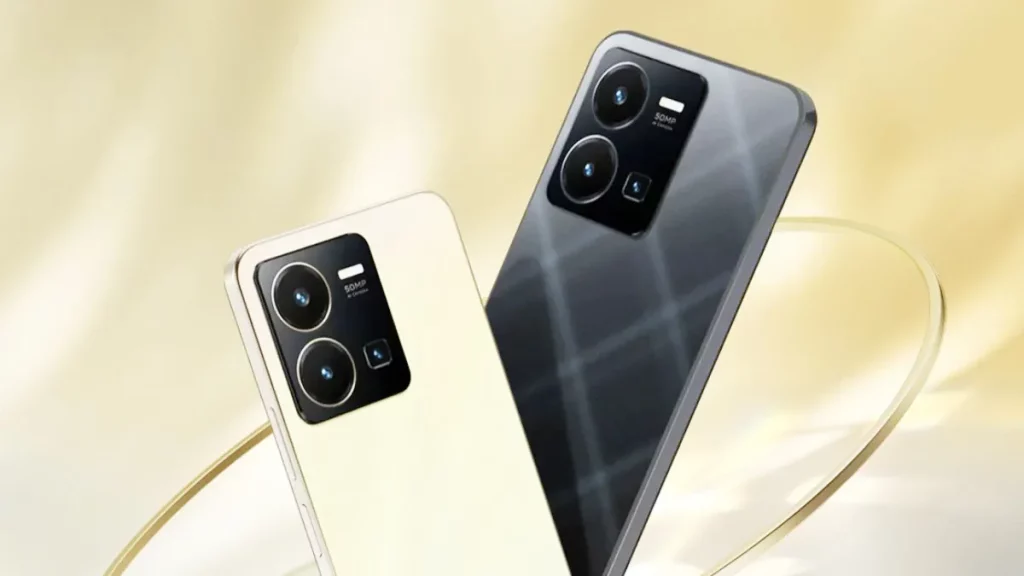
Vivo Y11 (2023) Specs & Global Launch Timeline Leaked

Vivo is apparently gearing up to launch a new 2023 edition of one of its existing mid range smartphone model. The device in question is the Vivo Y11 (2023), and prior to its release, a new leak has revealed key specs and its possible launch timeline. So here are all the details.

The news arrives from known tipster Paras Guglani who shared the information with PriceBaba. As per the new report, the Y11 (2023) is a budget smartphone model that sports a 6.5 inch LCD panel that has a Full HD+ resolution. The device will also be equipped with a MediaTek chipset, over the Snapdragon processor that powered its predecessor. For those unaware, the 2019 edition of the Y11 was launched with the Snapdragon 439 SoC.

Vivo
Vivo Y11 (2019)

Apart from the new MediaTek chip, the device will feature 4GB of RAM and 128GB of internal storage. The device will also support memory expansion that enables up to 4GB of virtual RAM. Furthermore, the Y11 (2023) will run on Android 13 OS out of the box and will be powered by a large 5,000mAh battery pack that supports 18W fast charging. Being a budget model, the device will also feature a 3.5mm headphone jack.

On the back, the device will have a polycarbonate chassis and come in two or three color options. The Vivo Y11 (2023) is expected to launch by the end of this month in China. Additionally, its global release will be followed in April. Unfortunately, there is currently no information regarding the price of this handset. Although it will likely be priced under 100 Yuan (roughly 145 US Dollars).

RELATED:

(Source)

Huawei MatePad Paper Receives Update with Enhanced E-Reader and Note-Taking Capabilities

Huawei has recently launched a new update for its MatePad Paper Ink Tablet, which includes an exciting e-reader app that has been developed in partnership with Palm Reading. This new app promises to provide users with the best e-book reading experience possible on the MatePad Paper tablet.

Apart from the e-reader app, the update also enhances the tablet’s note-taking feature significantly. This includes split-screen note-taking ability, making it easier for users to make changes to their notes by simply double-clicking the eraser to switch the stylus. Additionally, users can make handwritten annotations right on the PDF, and the update also introduces the ability to copy and paste across notes for enhanced convenience.

HUAWEI MatePad Paper

The update also introduces a new AI feature that categorizes folders and the e-book library, making it easier for users to find the e-books they want. Moreover, the e-note automatically switches between horizontal and vertical orientation depending on the way the e-note is being held and operated.

Furthermore, the e-reader app can now open e-books of up to 2 GB in size, and the search feature has been optimized to make searching for e-books more accurate and easier. Users can also jump to a particular page, and Huawei has ensured the overall stability of notes gets a boost with this update. The note sync status also gets shown, so users know how much has been synced and how much is still left. Moreover, users can customize the icons as well.

Although the update currently only applies to the MatePad Paper E Ink Tablet sold in mainland China, users worldwide can expect a wider rollout soon.

Huawei MatePad Paper Specifications

HUAWEI MatePad Paper

With a 10.3-inch E-Ink display, hexa-core processor, 4GB RAM, and 64GB internal storage, MatePad Paper E Ink Tablet is perfect for those who require both portability and performance. The MatePad Paper also features Wi-Fi 6 with 2 x 2 MIMO, Bluetooth 5.2, OTG, Type-C, USB 2.0, wireless screen projection, and several sensors including a fingerprint sensor.

The tablet also has dual speakers, 4 microphones, and Huawei Histen 7.0 sound effect for an immersive audio experience. Powered by HarmonyOS 2.1, the MatePad Paper has a sleek design, measuring just 6.65mm in depth and weighing only 360g. The second-generation Huawei M-Pencil has 26ms latency and 4096 levels of pressure sensitivity, making it perfect for note-taking and drawing. The tablet also features a 3625mAh battery with 22.5W fast charging support, offering 8 hours of use with just 10 minutes of charging and up to 6 days of power with a full hour of charging.

RELATED:

(Via)