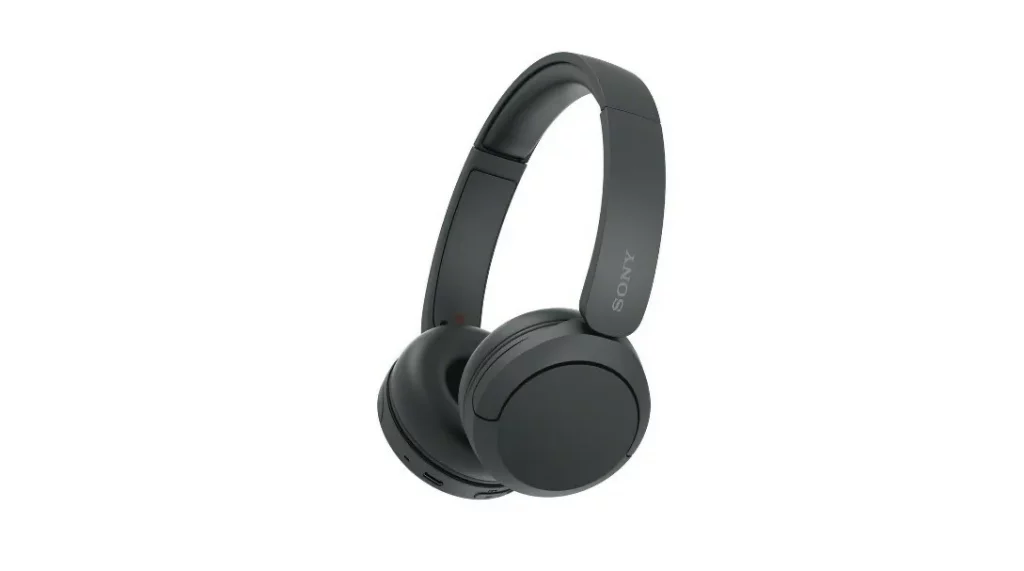
Sony, which is still one of the top picks when it comes to audio products, has announced new over-ear headphones in the market, dubbed Sony WH-CH720N.
The newly announced headphones from the brand shares some of the key features with the company’s WH-1000XM5 flagship wireless headphones.
As the name indicates, the WH-CN720N has been launched as a direct successor to the Sony WH-CN710N. It comes with support for Bluetooth 5.2 as well as Multipoint Connectivity, enabling users to pair the device with more than one device simultaneously.
The headphones also comes with voice control for playback and volume adjustments. Interestingly, despite being an affordable offering from the company, the headphones come powered by the V1 Integrated processor, which is the same one that powers the flagship WH-1000XM5.
The chip is the one that plays a key role in the class-leading noise canceling and DSEE upscaling on the WH-1000XM5, which means that the new budget offering should have a much better performance, especially for a mid-range offering. The headphones are touted as the lightest over-the-ear wireless headphones to feature Active Noise Cancellation.
There are two mics in each earcup, used in conjunction with Sony’s Dual Noise Sensor algorithms to block out ambient sound, with 20 levels of noise canceling available to the user. It also comes with an Adaptive Sound Control feature for different ANC settings for different locations or activities.
As for the battery, Sony claims a battery life of 35 hours with a noise-canceling feature enabled. The Sony WH-CN720N headphones will be available for purchase from next month in four color options — Black, Blue, White, and Beige, for the price of $150.
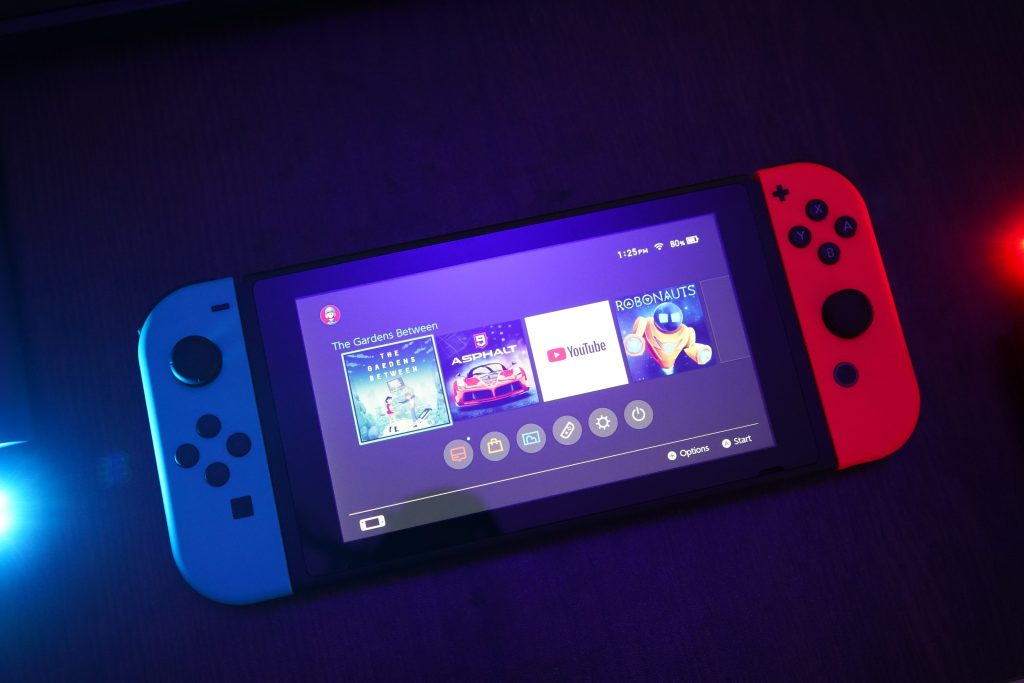
Nintendo Switch is one of the bestselling handheld gaming consoles in the world, and with good reason. Frequent updates, new game releases, and ever-evolving accessories have kept the console alive and popular. Now, Nintendo Switch gamers may have a new cause for excitement. A recent leak from the UK’s Competition and Markets Authority suggests that the upcoming system will feature content available through the current Switch Online service. Despite the Nintendo Switch being nearly six years old and no successor announcement made, it is almost certain that Nintendo will release a new system in the not-so-distant future, considering the enormous success of the Switch.
It remains unclear whether the new console will be named Switch 2 or adopt a new naming convention entirely. Nintendo’s console naming conventions have varied, with names like the Nintendo Entertainment System, the Super Nintendo Entertainment System, the Nintendo 64, GameCube, Wii, Wii U, and Switch. This makes it pretty hard to accurately guess what the next iteration of the Switch will be branded as.
As for the Nintendo Switch’s online functionality, the company will potentially offer retro games through the Switch Online service and its Expansion Pack(s). This news would be welcomed by fans who have been critical of Nintendo’s approach to online multiplayer and party chat. Although it’s unclear whether the Switch 2 console will have cloud gaming available through Switch Online or a separate service, the new console will certainly offer continuity of Nintendo accounts and value-added services.
Recently, the Nintendo Switch became the third best-selling console of all time, trumping the Sony Playstation 4, which is a huge achievement on its own. Although the news of the Switch Online service carrying over to the new console may encourage current Switch owners to purchase games digitally and sign up for the Switch Online Expansion Pack, there is no guarantee that this will be the case. Nintendo is known for its unpredictability, and fans eagerly await the official announcement of the next Nintendo console for concrete details.
Infinix Note 12i is the latest addition to the Note 12 family, which already includes multiple smartphones, such as the Note 12 Pro 4G, Note 12 Pro 5G, Note 12 5G, Note 12, and Note 12 Turbo. The Note 12i is an entry-level model, that is positioned lower than the Note 12 that costs Rs 11,999 (~$146) in the Indian market.
It should be noted that the Note 12i is the same device that has been available in African markets under the Infinix Note 12i 2022 name since September 2022. This device is different from the Note 12i with an LCD panel that debuted in May 2022 in Africa.
The Note 12i is priced at Rs 9,999 (~$121) in India, and like the other members of the series, it also features an AMOLED display. Hence, it is one of the most affordable phones with an AMOLED screen in the Indian market. Some of its other key features include a large battery with 33W fast charging, a 50-megapixel triple camera unit, and an Helio G85 chipset. I used the device for a couple of weeks, and here is what I think of it.
Infinix Note 12i: What’s in the box?
Infinix Note 12i
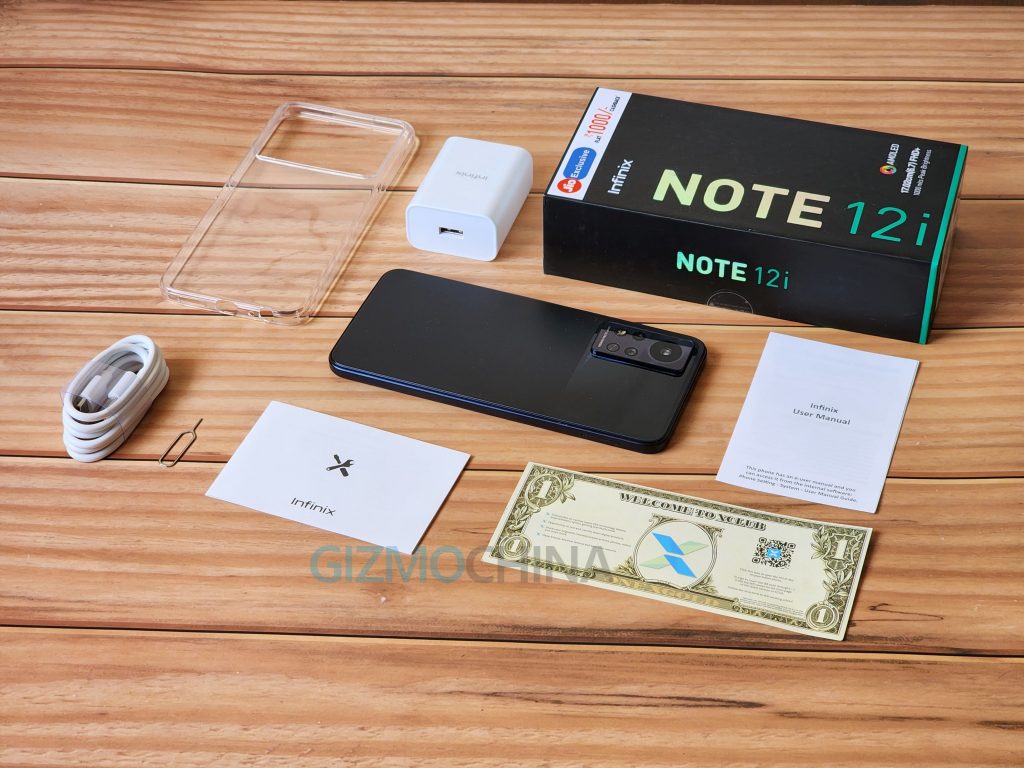
Here are the contents of the Infinix Note 12i’s retail box
Infinix Note 12i handset
Silicone case
SIM ejector tool
33W charger
USB-C to USB-A cable
User manual
Warranty card
XClub document
Design and Display
Dimensions
Display
Size – 164.47 x 76.7 x 7.8mm
6.7-inch AMOLED display
10000:1 contrast ratio
Weight – 188 grams
1080 x 2400 pixels (FHD+)
Widevine L1 support
IPX4 rating
60Hz refresh rate
Gorilla Glass 3
180Hz touch sampling rate
Color variants
Up to 1000 nits of brightness
Force Black
92% screen-to-body ratio
Metaverse Blue
100% DCI-P3 wide color gamut
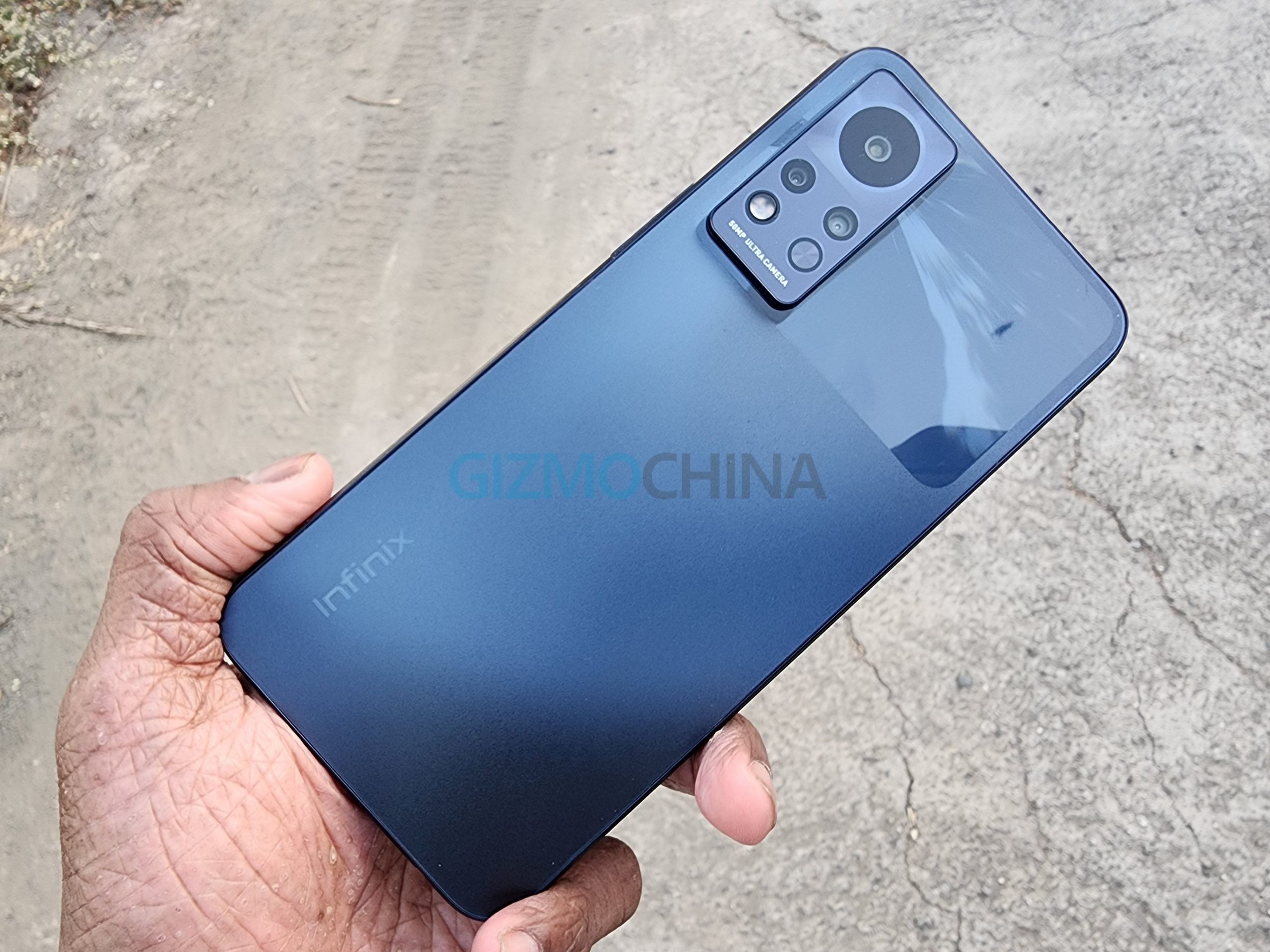
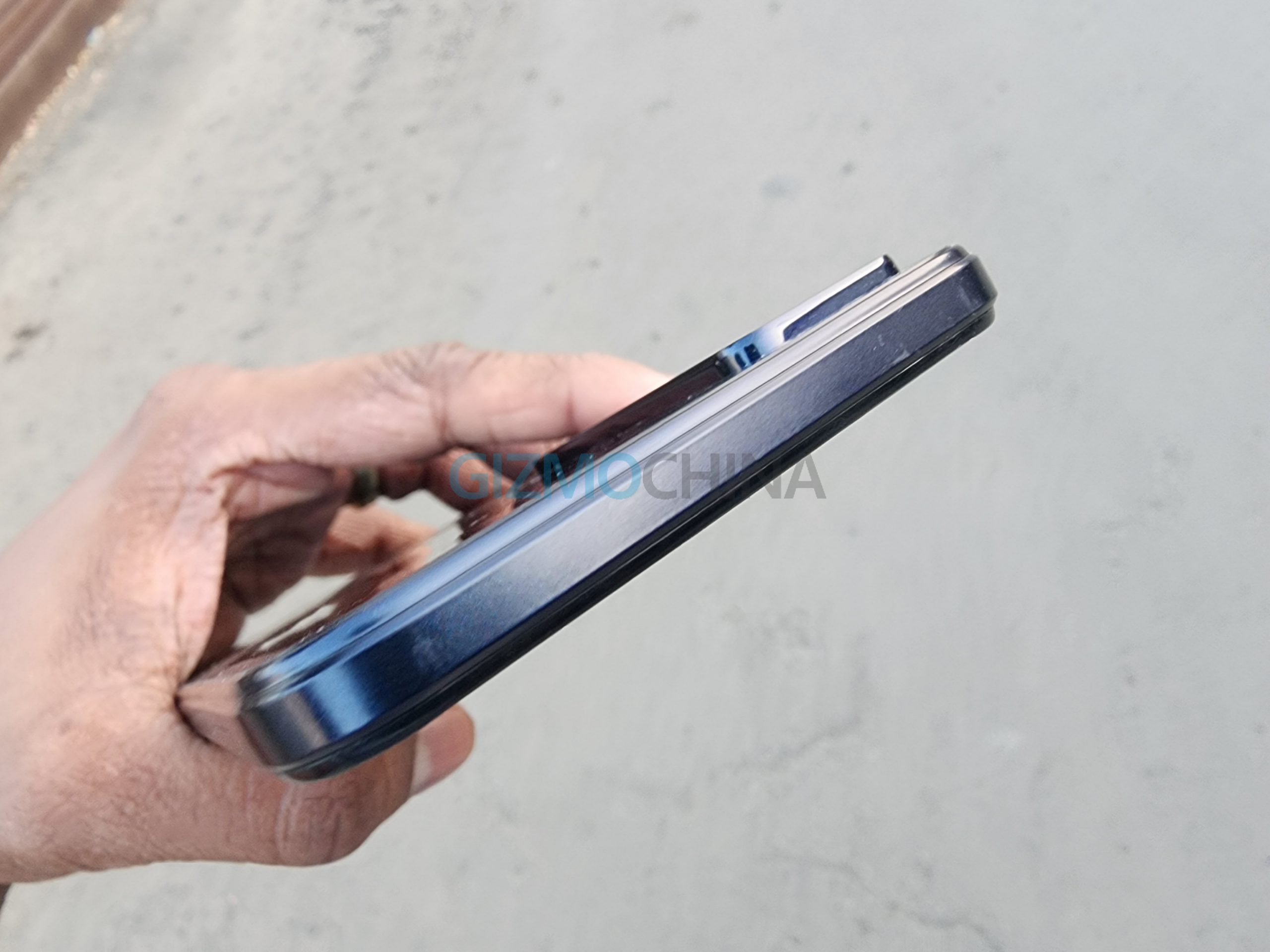
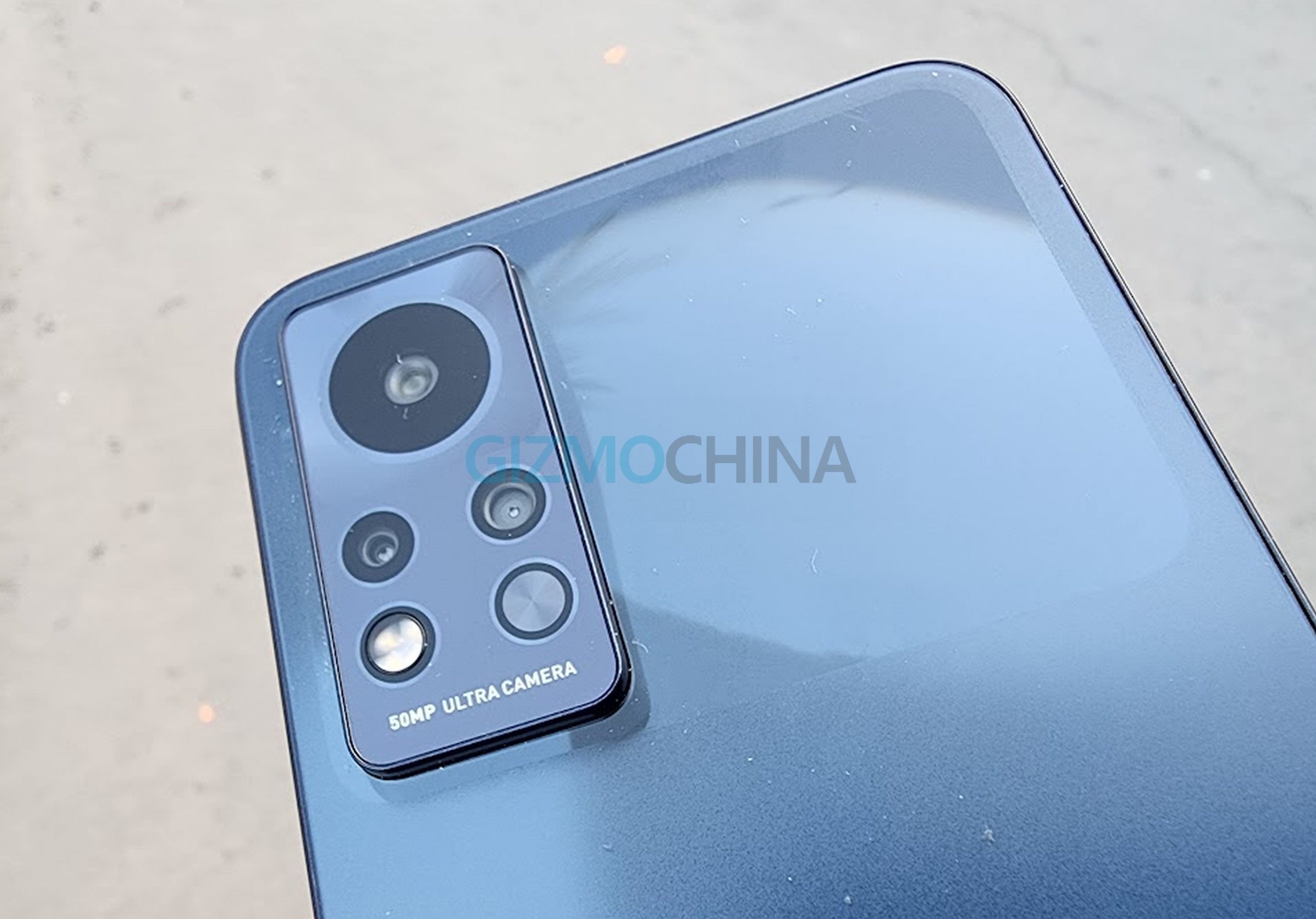
Some smartphone brands in India are doing an excellent job of providing better build and design for phones priced at around Rs 10,000. The same can be seen on the Note 12i. While it is priced at Rs 9,999, it certainly looks like a phone priced at around Rs 15,000. The Force Black edition that Infinix sent me for review has flat edges, and its polycarbonate rear shell has a glittery yet matte finish. There is a glossy block at the top that houses a protruding camera module on the left. While it appears that the device has four cameras, it actually has three cameras and an LED flash.
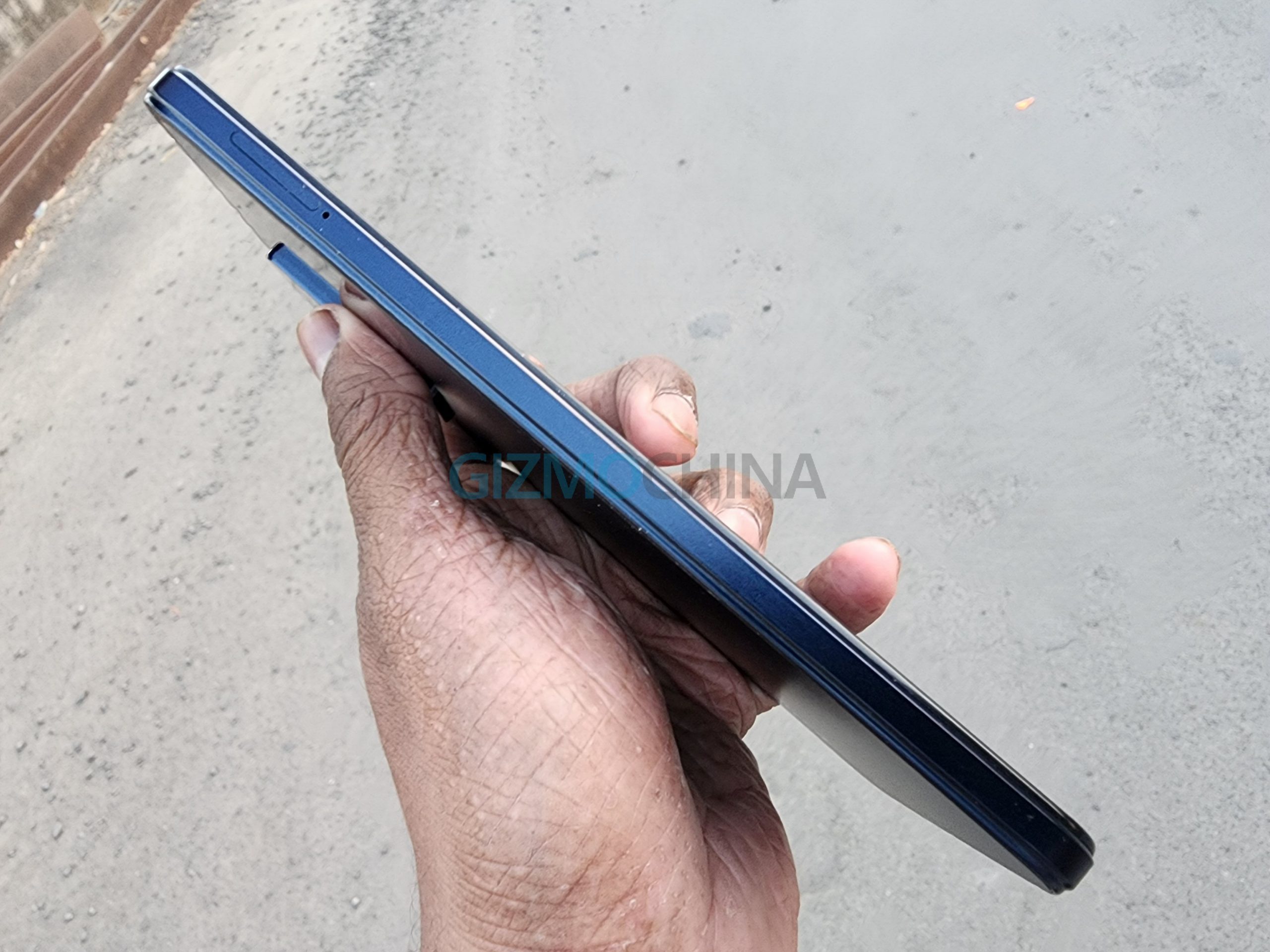
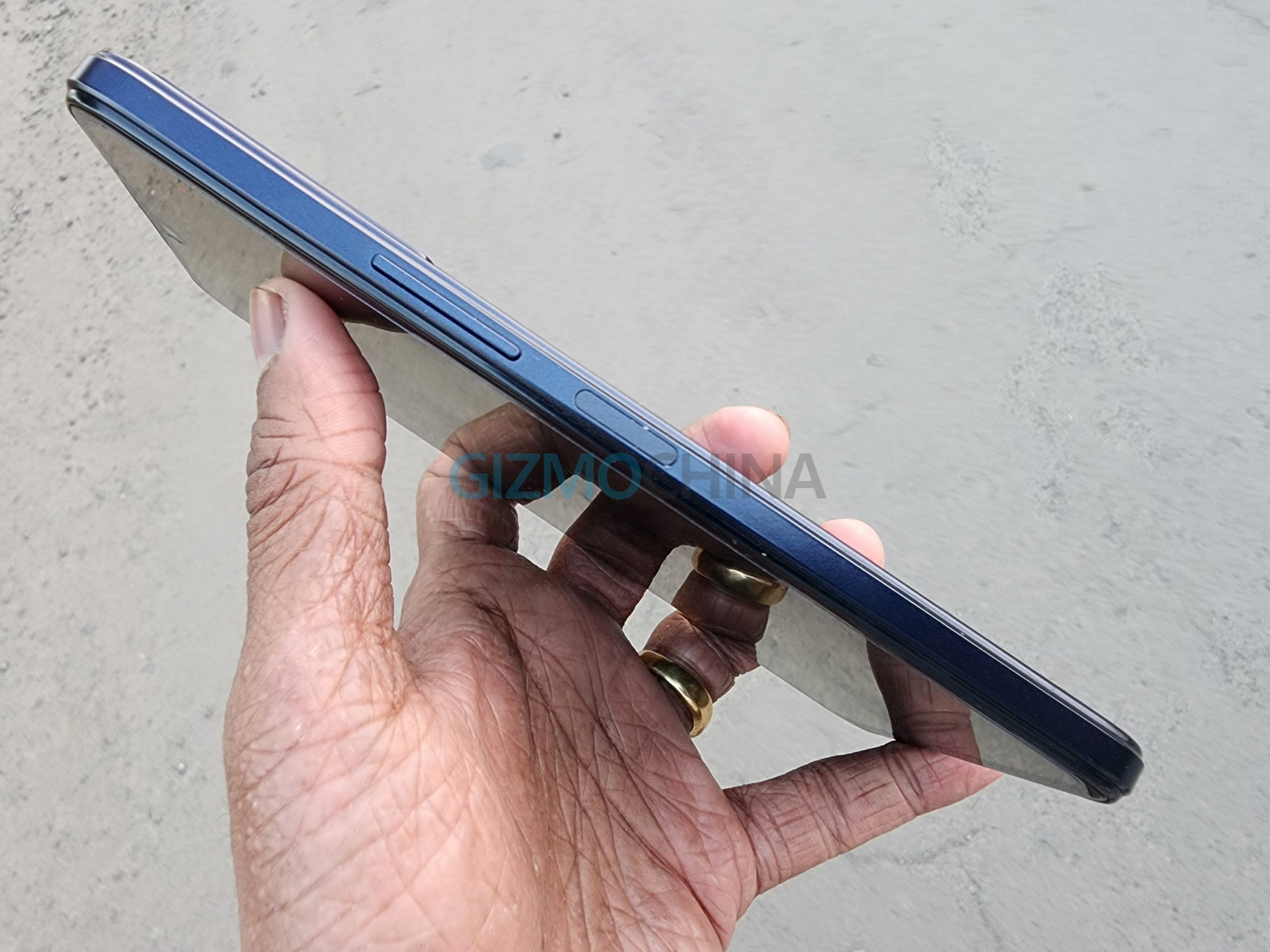
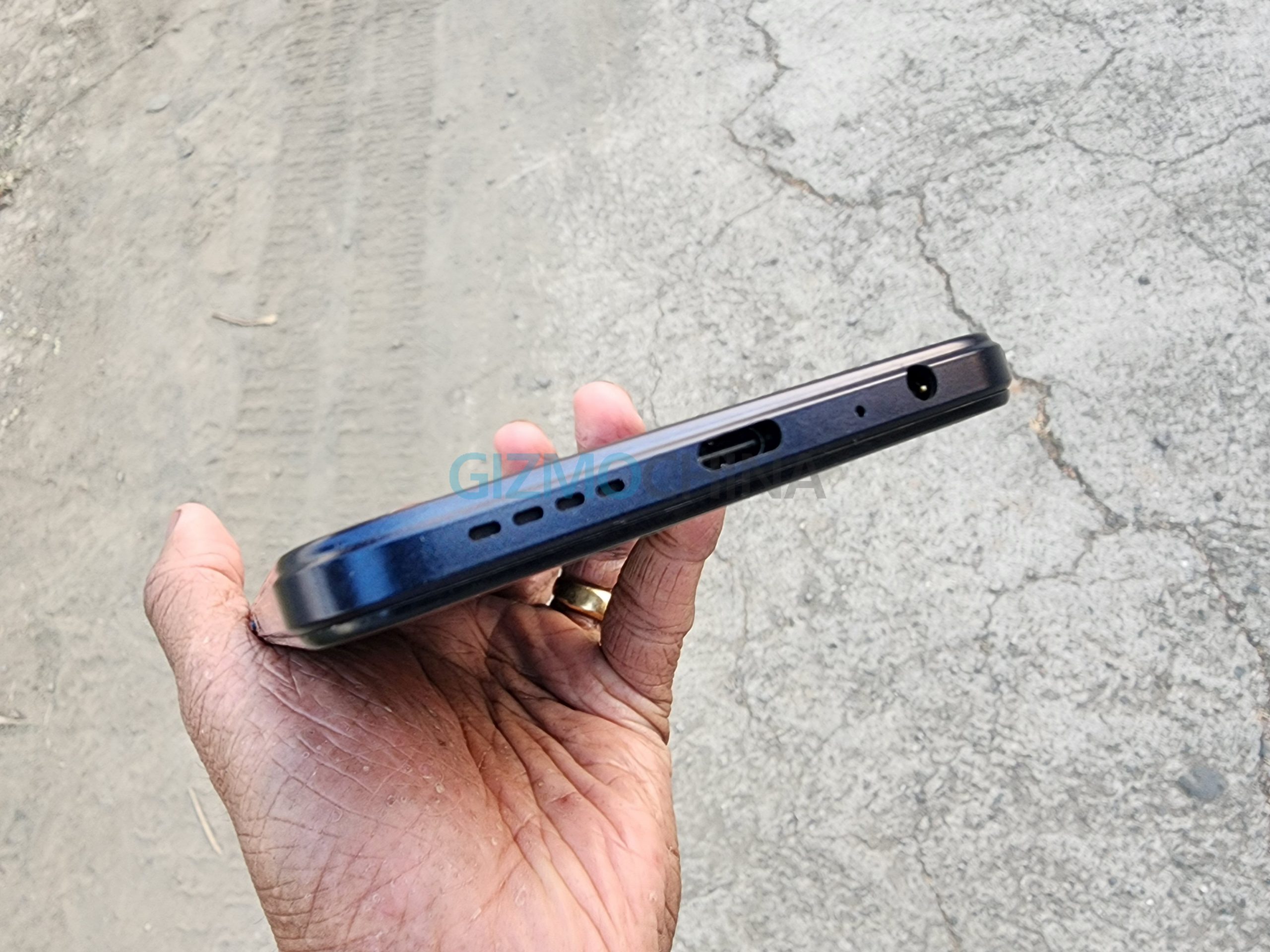
The right side of the Note 12i has a volume rocker and a power button, which is integrated with a fingerprint sensor. On the bottom, it has a 3.5mm headphone jack, a microphone, a USB-C port, and a speaker grille. There is a SIM card slot on the left. The top edge of the phone is barren, as it is missing a secondary microphone. The device flaunts a slim profile of 7.8mm.
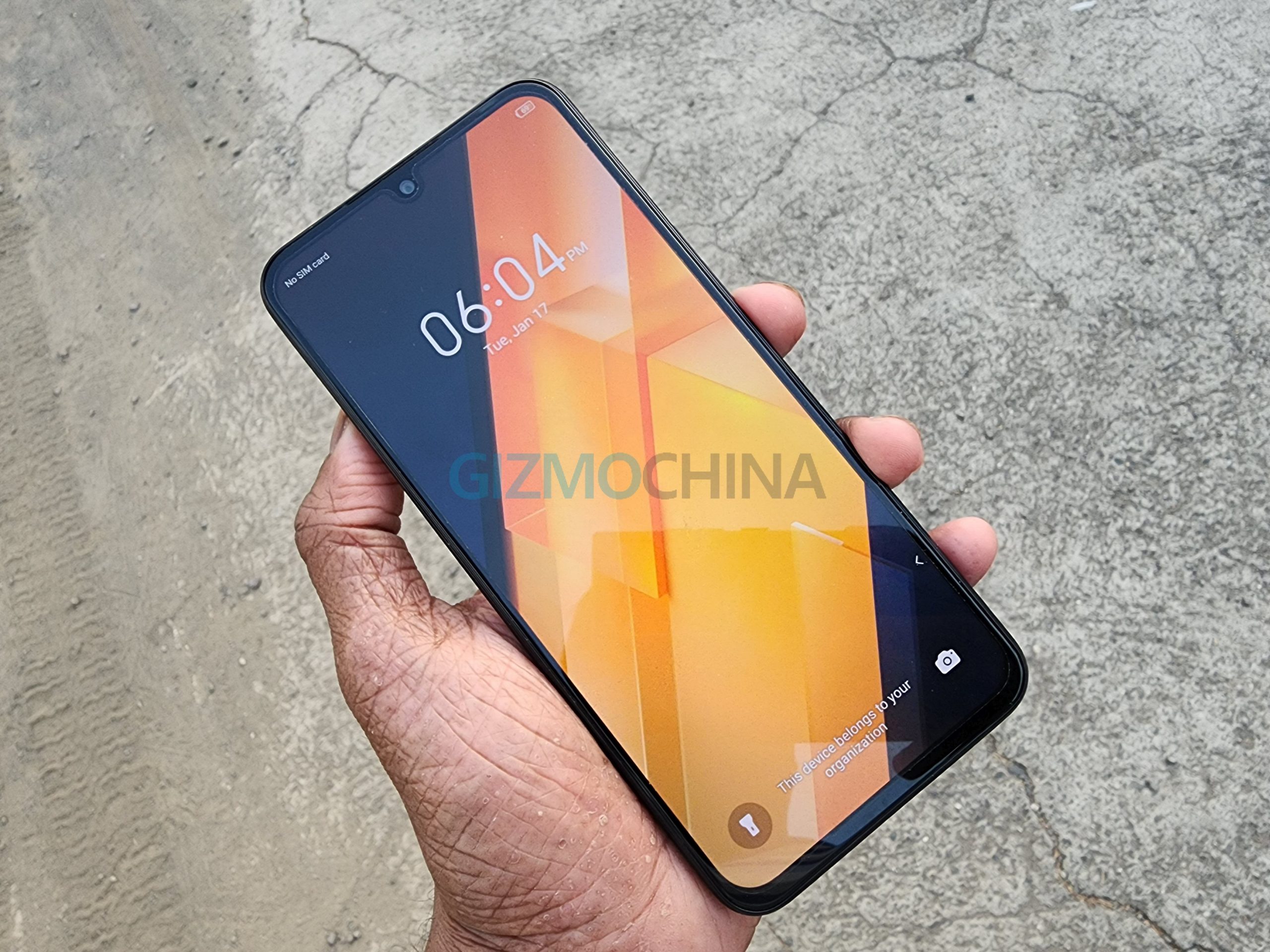
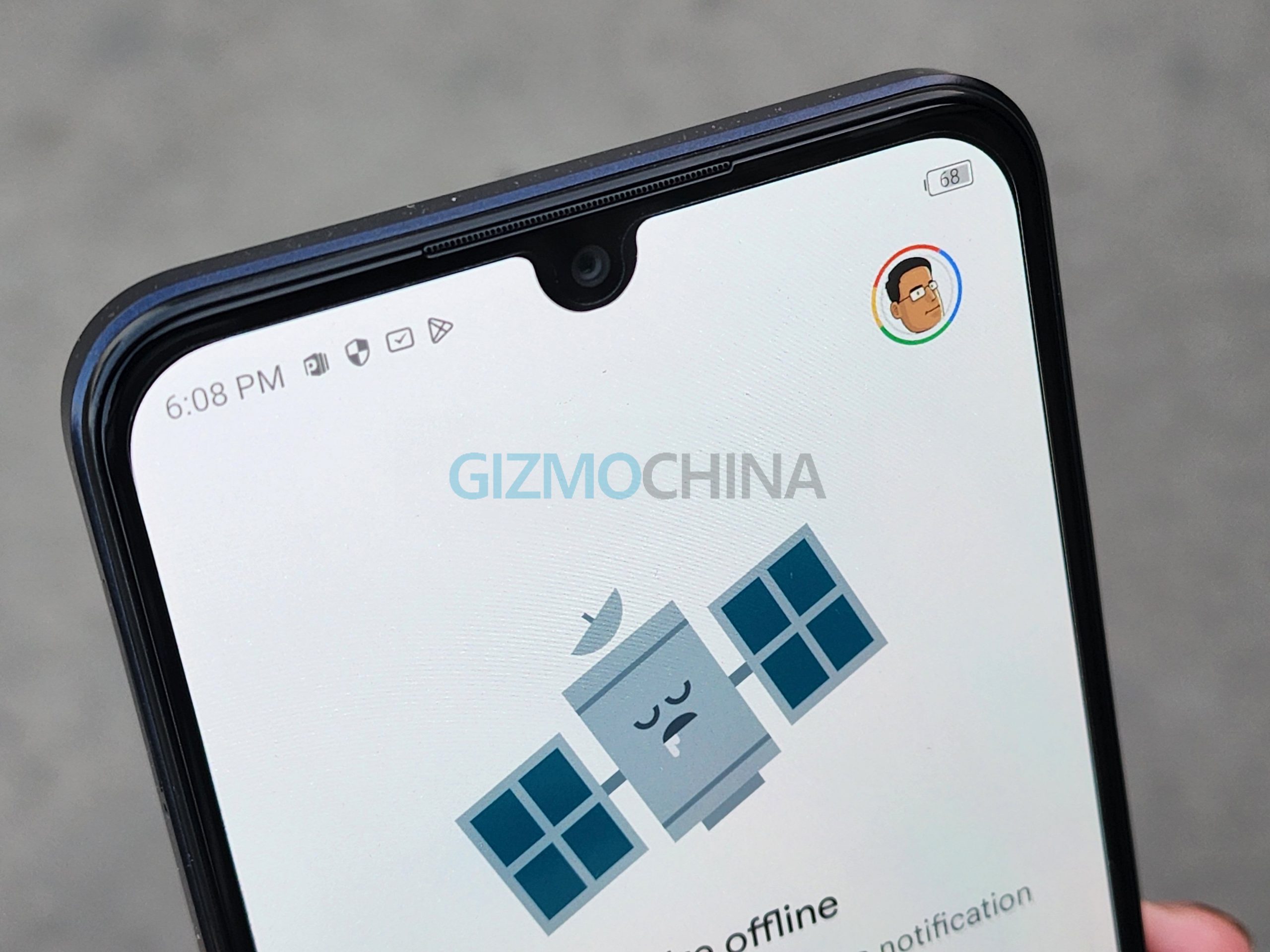
The Note 12i’s large display has a u-shaped notch and a moderately thick chin. It goes without saying that the AMOLED display is one of the major selling points of the device. In fact, it is the only new phone under Rs 10,000 with an AMOLED screen, which produces deeper blacks and richer colours than an LCD display. All the other phones in this price range have LCD panels.
The 6.72-inch AMOLED display available on Note 12i offers a peak brightness of up to 1,000 nits, according to the brand. The quality of the AMOLED panel does not seem mediocre. The screen is quite bright, and there was no issue using it in bright sunlight.
Infinix Note 12iInfinix Note 12i
Even if the phone is used at its highest brightness setting, it does not deplete the battery quickly. The screen supports a 100 percent DCI-P3 color gamut, the company claims. However, I could not find any option to alter the display profile on the Note 12i. However, it offers options like classic, colorful, soft, and realistic options for a better gaming experience in the “enhancement mode” in Settings.
The Note 12i’s screen is shielded by Gorilla Glass 3. Light/Dark mode, adaptive brightness, and eye care mode are among the display-related features available on the device. The top bezel of the phone has an earpiece, which doubles up as a speaker. The impressive display, Widevine L1 support, and dual stereo speakers make the Note 12i a good device for content consumption.
Performance and Software
MediaTek Helio G85
5,000Ah battery
4GB of RAM
33W charging
64GB of storage
Android 12 OS with XOS 12
4GB of virtual RAM
The MediaTek Helio G85 is intended for casual gaming and performs admirably on the Note 12i. While it can run high-end games like Garena Free Fire Max, the experience may not be smooth if it is played at higher graphic settings. Like other Infinix phones, it also features Game Mode. The Helio G85 chip is assisted by 4 GB of LPDDR4x RAM and up to 4 GB of virtual RAM onboard, so the overall experience is smooth on the device. For storage, it has 64 GB of eMMC 5.1 storage.
The XOS 12.0-based Android 12 skin available on the Note 12i has a slew of features not found on other popular Android skins. I compared the Note 12i with the Infinix Hot 20 5G, which I reviewed earlier, and found the company has reduced the number of unneeded preloaded apps on the new Note. At present, there is no official word on the next Android OS upgrade for the device.
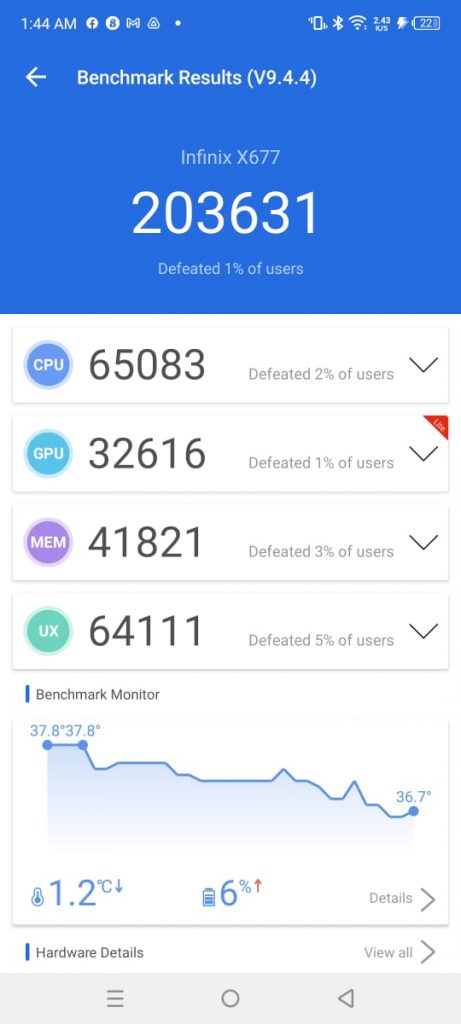
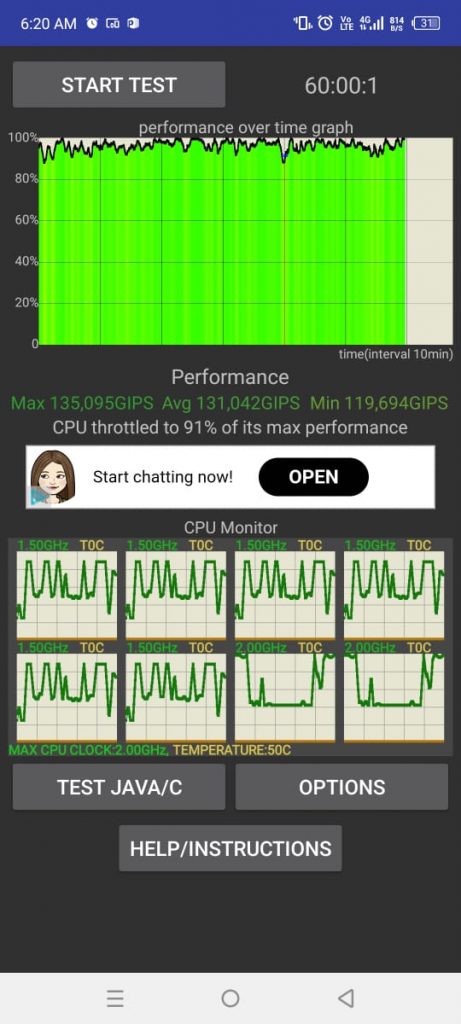
The Note 12i’s 5,000 mAh battery can last for up to 2 days on a full charge. The in-box 33W fast charger can fully charge the device in 1 hour and 30 minutes. Here is how the Note 12i performed on benchmarking apps.
Photography and Other Features
Rear Camera
Other features
50MP Samsung SK5JN1 camera
Side-facing fingerprint scanner
2MP depth camera
Face unlock
QVGA AI lens
Dedicated microSD card slot
Quad-LED flash
Wi-Fi 802.11ac
Bluetooth 5.0
Front Camera
Dual stereo speakers with DTS
8MP front camera
3.5mm audio jack
Dual-LED flash
The back panel of the phone has a 50-megapixel camera with an f/1.6 aperture, which performs well in daylight. It can also shoot decently indoors and at night when there is enough light. The images capture good details in daylight, but they appear soft in low light. A 2-megapixel depth sensor, a QVGA lens, and a quad-LED unit are all present in addition to the primary snapper.
portrait mode2x zoomWIthout night modeSuper night modeWithout Super Night modeWith Super Night modeWithout Super Night modeWith Super Night mode
The default camera app uses the AI Cam feature, which is capable of recognizing the subject accurately. It also offers other key features, such as filters, short video mode, time-lapse, and more. While the Super Night mode is present to enhance low-light shots, I felt that the quality of regular and Super Night shots was almost the same when there was sufficient light.
The Note 12i can capture up to Full HD videos at 30fps. The video quality is fine when videos are captured with enough light. Videos with a bokeh effect or in beauty mode can only be shot in 720p quality. The bokeh effect is okay for a low-budget phone. The Note 12i supports 240 fps slow-motion video shooting.
There is a dual-LED flash unit to assist the front-facing 8-megapixel camera. The front camera can capture selfies with blurred backgrounds. The overall quality of the selfie samples is just passable when the lighting is good.
While the haptic feedback of the Note 12i functions fine, there are no options to increase or decrease its strength. While the device supports 4G VoLTE, it does not seem to have 4G+. For biometrics, the Note 12i has a side-mounted fingerprint sensor and face unlock, both of which perform fine.
Verdict
I feel that the Infinix Note 12i will receive a good reception in India as it offers a combination of features such as an AMOLED display, a 50-megapixel camera, and 33W fast charging at a very low price. The only thing that is lacking on this device is 5G connectivity. In India, 5G-ready AMOLED display phones start around Rs 15,000 (~$182) for those who are unaware. The only other phones that offer similar features are the Redmi Note 10S and the Moto G31, which debuted in 2021.
The Note 12i is selling for Rs 9,999 (~$121) on Flipkart, but the Jio cashback offer available for buyers brings a cashback of Rs 1,000 (~$12), which further sweetens the deal. As a result, buyers can get it for as low as Rs 8,999 (~$109). Jio SIM owners can take advantage of this offer within 30 days of purchasing the Note 12i. Once the cashback is received, the device will be locked to the Jio network for 30 months.
In other words, once the offer is taken advantage of, users will not be able to use another SIM on the device for data connectivity. Because it is a dual-SIM phone, users will be able to use both a Jio SIM and a SIM from another network even after availing of the Jio Exclusive offer. Readers can read about the terms and conditions of the Jio Exclusive offer by visiting this page.
Disclaimer: All of the opinions in this Infinix Note 12i review are mine and based on my own experiences. There has been no editorial input from Infinix.
Chinese PC maker Chuwi is known for producing budget-friendly laptops, one of which is the GemiBook series. The company has now introduced the GemiBook xPro, a new GemiBook series laptop boasting current-generation hardware.
The GemiBook xPro is powered by an Intel Processor N100 which is an entry-level Quad-core processor from the new Alder Lake-N series. Unlike some of the older processors that Chuwi tends to use in its laptops, the Processor N100 is a current-generation processor that can provide better performance. Sadly, the Processor N100 does not support Intel Hyper-Threading and this could limit its multitasking capabilities.
The Intel Processor N100 has a clock speed ranging from 1.0 to 3.4 GHz on a 6 W TDP and uses a 10 nm manufacturing process. It also has a UHD Graphics Xe iGPU with 24 Execution Units (EUs) that can boost to 750 MHz. The Processor N100 contains 4 of a possible 8 E-cores, which could affect its performance in demanding applications.
In terms of design, the new Chuwi GemiBook xPro packs a 14.1-inch IPS display with a resolution of 1,920 x 1,080 pixels. The laptop’s display also utilizes a 16:9 aspect ratio. The display should provide clear and vibrant visuals, making it suitable for a range of applications. The GemiBook xPro weighs around 1.4 kg, making it a portable laptop that can be easily carried around. It also has a 180-degree hinge, which makes it possible to use in tablet mode.
The laptop has a six-row chiclet keyboard with full-sized arrow keys, which should make typing comfortable and easy. Chuwi has also equipped the GemiBook xPro with a relatively large trackpad, although its accuracy remains to be seen at this stage. The laptop also features Bluetooth 5.2 and WiFi 6 connectivity.
Chuwi has not revealed many details about the GemiBook xPro’s battery capacity and port selection. However, it is expected to come with 8 GB of RAM and a 256 GB SSD and should retail for around US$300.
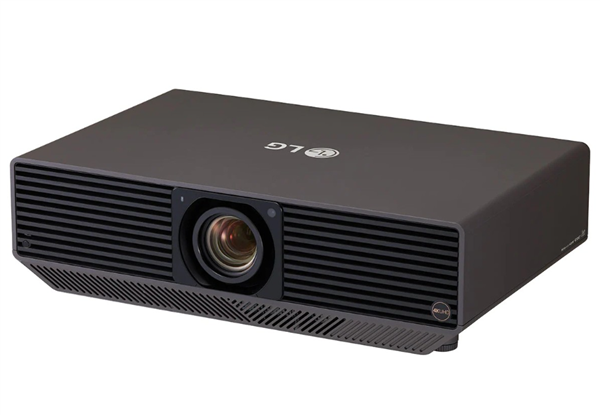
LG has launched the ProBeam BU70QGA projector for the Chinese market. The premium projector comes with a brightness of up to 7000 ANSI lumens and is well-suited for meeting rooms and conference centers. It has a 16:9 aspect ratio and 4K UHD native resolution. The projector offers a standard throw distance and a throw ratio of 1.53 to 2.45. The ProBeam BU70QGA projector can project images between 40 inches and 300 inches.
The BU70QGA has a contrast ratio of 3 million: 1 and the light source has a service life of 20,000 hours. The projector supports 1.6x auto zoom, autofocus, and auto keystone connection. It utilizes the Creston Connected and provides the Creston RoomView tool. Both Wi-Fi and Bluetooth wireless connectivity are supported for the projector. It offers a 25-point keystone adjustment achieved automatically. The lens shift adjustment for the projector is 28% (+/-) horizontally and +60%/ -33% vertically. The projector has a noise level between 31 dB and 35 dB.
The ProBeam BU70QGA projector supports USB Plug & Play for movies, music, and photos. The audio system of the projector consists of two 5W speakers with an overall output of 10W. Power consumption for the projector is however pretty substantial at 500W. The standby power consumption for the model is less than 0.5W. The BU70QGA weighs 17.7kg and has dimensions (W x D x H) of 22.4 x 14.2 x 6.3 inches.
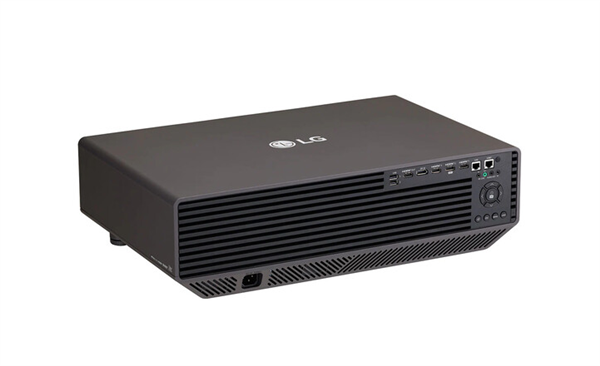
The LG ProBeam projector has three HDMI 2.0 inputs, an HDMI output, DP, USB-A 2.0, and RJ45 network ports. It also has HDBase T and a few other interfaces. It runs on the webOS Signage 6.0. LG is offering the projector with a 3-year limited warranty or usage of up to 15,000 hours. The projector is being retailed at the cost of 41,260 yuan (~$5,999).
Oppo has a huge number of smartphones in its portfolio and the brand has been hard at work rolling out the Android 13-based ColorOS 13 update to each of the eligible devices. The brand has already updated a big chunk of the total phones. However, the rollout continues, as the ColorOS 13 updates now arriving to more Oppo smartphones, including Oppo F19, Oppo F19s, Oppo A77s, and more. Here are the details.
The latest devices to get the ColorOS 13 update are Oppo F19 (India), Oppo F19s (India), Oppo A77s (India & Indonesia), Oppo A74 (Indonesia), and Oppo A95 (Indonesia). These devices are currently receiving the latest update in only the regions mentioned in brackets next to them. Oppo says it will be seeding the software in more regions soon.
In order to install the update, you’ll need to ensure that your device is running at least the base version of ColorOS 12. If you live in the above-mentioned regions and haven’t received an OTA notification yet, consider manually checking for the update by heading to the Software Updates section in the Settings app on your phone, and tapping on the Software Updates section.
You are advised to backup important data on your phone before updating to avoid data loss caused by incompatibility or other unforeseen circumstances. Also, Oppo recommends that you turn off the screen and charge your device for a whole night after installing the update.
ColorOS 13, which was launched at the OPPO Developer Conference in August 2022, offers a host of exciting new features and enhancements. These include a sleek new Aquamorphic design, improved animations for a smoother user experience, enhanced security and privacy measures, and Material You icons that personalize the user interface. Read more about it here.
Earlier this month, the OPPO Enco Air 3 wireless headset was launched in India. Now the product has made its way into the Chinese market. The model will be available in China in two color options – morning fog white and clear sky blue.
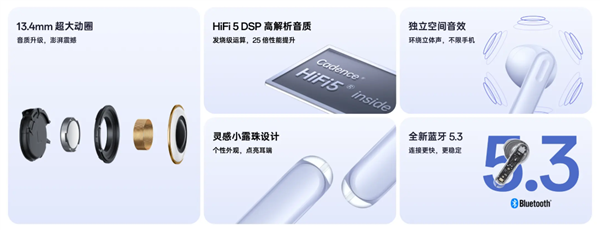
The Enco Air 3 adopts the same translucent jelly compartment earphone box design as its predecessor. The earphones use a 13.4mm dynamic coil to output delicate treble and full midrange. It also features the OPPO flagship N48 neodymium magnet and 1.9m copper-aluminum alloy coil. This ensures optimal sensitivity performance of the headset. OPPO however has redesigned the sound cavity of the Enco Air 3 to deliver more textured bass.
The headset comes with the Tensilica Cadence HiFi 5 Digital Signal Processor (DSP). The HiFi 5 DSP architecture is 25 times more powerful than what was obtained in the Enco Air 2. This massive improvement in processor capability puts the Enco Air 3 on a very high pedestal. The headset also supports Bluetooth 5.3 connectivity for a more stable connection and lower power consumption.
The OPPO Enco Air 3 supports DNN call noise reduction and is rated IP54 for dustproof and waterproof. The wireless headset has 47ms low latency and can operate for 6 hours on a full charge. This is further extended to 31 hours with the addition of the charging box. This means that the Enco Air 3 is significantly having a longer battery life than its previous iteration.
The new OPPO wireless headset from the Enco Air series will retail in China for 189 yuan (~$27). This is slightly lower than the 2,999 INR (roughly 36 US Dollars) price tag it adopts in India.
The Xiaomi MIJIA Air Conditioner Cool Edition has been released in China. The product’s presale was launched on Xiaomi Mall on February 20. The air conditioner adopts a large 1hp design that makes it suitable for rooms up to 13 square meters in area. It also supports 30 seconds fast cooling, single cooling/ fixed frequency, and a one-button independent dehumidification function.
The MIJIA air conditioner cool edition is equipped with high-quality compressors, large-diameter wind wheel technology, and low-noise operation. The air conditioner produces strong wind and greater air volume and can run in an outdoor environment of 55ºC. It uses a five-level energy efficiency design with SEER value of 3.89. Its design architecture means that the air conditioner is capable of up to 30kWh power savings per year. The air conditioner thus comes with significant improvements over the fixed-frequency, single-cooling models.
The MIJIA air conditioner cool edition can interface with the smart home ecosystem. It supports voice control Xiaoai to control the linkage to various gadgets on Xiaomi smart home ecosystem. The air conditioner comes with a retail price of 1,999 yuan (~$291). However, Xiaomi is offering a 300 yuan (~$44) discount for the gadget. That means that the MIJIA air conditioner cool version is priced at 1,699 yuan (~$247). Interested buyers can book for the product via Xiaomi Mall, where the presale opened on February 20. There are no global availability and pricing details yet for the MIJIA air conditioner cool edition.
Google Chrome is the undisputed market leader when it comes to web browsers. It’s has speed, app sport, and integration with other Google services. This make the browser indispensable for many of us. For this reason, its competitors have to make much more effort to be preferred. For example, they can request much lower system requirements or provide features that are available with add-ons in Chrome as default. Lastly, Microsoft Edge 110 added a built-in VPN following this policy, but only for select users. Here are the details…
Microsoft Edge 110 has a built-in VPN
Microsoft has been testing a version of its Edge with a built-in VPN service for about a year. Now, the company has rolled out the feature to some users in the latest stable version. The new feature, called Secure Network, has been implemented in partnership with Cloudflare and provides users with 1GB of secure VPN traffic as part of the free plan. The fact that the feature has reached the final stages of implementation suggests that Microsoft is likely to announce pricing and a full release of the Edge Secure Network soon.
The Secure Network VPN feature emphasizes the privacy benefits of using a VPN rather than its ability to circumvent regional restrictions by changing the user’s IP address. The service automatically selects servers in the user’s region for safe operation on public networks. In other words, users can only use the Secure Network to protect their privacy.
According to screenshots of Edge 110, which have appeared online, the VPN service supports three modes of operation: “Selected Sites,” “Optimized,” and “All Sites.” This suggests that users will have the option to choose which sites they want to protect with the VPN, or to turn it on for all sites. It’s worth noting that Google added a free VPN to its Pixel 7 series smartphones late last year. However, Microsoft’s decision to integrate a VPN directly into its web browser is a significant step that could lead to increased use of VPNs among its users.
The integration of a VPN service into a major web browser marks a significant step forward for online privacy and security. But it’s not likely to become the industry standard until Google starts using it.
Edifier has a sub-brand in China known as Huazai and it has launched a new noise-canceling earplug under the brand. The product known as Huazai Zero-sense Noise-canceling Earplug is priced at 79 yuan ($12).
The Edifier Huazai Earplugs are made of environmentally friendly antibacterial silicone with an antibacterial rate as high as 99.9%. The silicone can be washed repeatedly in order to protect the health of the ear canal.
In addition, the earplugs adopt a lightweight design, and the weight of a single earplug is only 0.9g. There are three shapes and 8 kinds of optional ear caps. These include silicone double-layer ear caps, memory foam ear caps, and silicone single-layer ear caps to meet the needs of different users. Officials say they are suitable for commuting, studying, and resting.
Huazai Zero Sense Noise Canceling Earplugs support up to 32dB noise cancellation, adopt QUIET CARE+ zero-pressure airbag noise reduction technology combined with innovative patented structural design. It also has a built-in multi-layer sound filtering structure which can effectively relieve and balance ear pressure and protect the eardrum.
In terms of appearance, the earplug is available in three colors – moonlight white, oxygen powder, and midnight gray. It is equipped with a silicone double-layer ear cap (replaceable memory foam ear cap), and the box has a round design similar to a pebble.
Xiaomi 13 series has been on shelves in China for quite some time now and it will be making its way to the global market on February 26. The lineup should include the Xiaomi 13 and Xiaomi 13 Pro. However, the company might also unveil a more affordable Xiaomi 13 Lite smartphone on the same day. While we wait, the handset has been listed on the German retail store Cyberport with its full specifications. Let’s look at the details.
Xiaomi 13 Lite has been in the news for about a month now and we know it’s nothing but the Xiaomi Civi 2 with a different name. You might be aware that Xiaomi’s Civi series smartphones are designed with a focus on the front-facing camera, particularly for taking high-quality selfies. They are currently available only in the Chinese market.
According to the listing on Cyberport, the Xiaomi 13 Lite will arrive with a 6.55-inch AMOLED display offering a Full HD+ (1080 × 2400 pixel) resolution, 402ppi pixel density, and 120Hz refresh rate. It will draw power from the Qualcomm Snapdragon 7 Gen 1 processor and 8GB of RAM and at least 128GB of storage. The device is listed to run Android 12 out of the box but that seems anomalous.
The handset could feature a 50MP primary cam, an 8MP Ultrawide sensor, and a 2MP macro shooter on the back. On the front, there will likely be a 32MP main and a 32MP wide-angle camera for taking selfies. The Xiaomi smartphone is listed to sport a 4500mAh battery unit with 67W fast charging support.
As per the Cyberport listing, the Xiaomi 13 Lite will be priced at € 499.90 (approx Rs 44,100/ $533) in Germany for the sole 8GB + 128GB trim.
The trend of foldable phones continues at full speed, with many brands launching their own flexible display models. Recently, OnePlus announced that it will introduce its own foldable model. Finally, the release date of the OnePlus V Fold, which will feature a 2K screen, has been revealed. Here are the details…
OnePlus V Fold just tipped for September launch with 2K display
Rumors are swirling about the upcoming release of the OnePlus V Fold. According to leakster Digital Chat Station, the device is set to be released in the third quarter of 2023, likely between July and September. This release window coincides with the anticipated release of the Samsung Galaxy Z Fold 5, which could be its main rival.
Based on DCS’s leaks, the OnePlus V Fold is expected to feature a larger, squatter form factor, in contrast to the taller and slimmer design of the Galaxy Z Fold series. The device is reportedly based on the Oppo Find N2, (You can watch our review of that phone below.) which is another foldable phone from OnePlus‘ parent company. However, the OnePlus V Fold will allegedly have a higher resolution 2K display compared to the Find N2’s FHD and QHD screens.
While the OnePlus V Fold‘s exact specs are still unconfirmed, it is expected to have some noteworthy features. The phone is likely to have a sturdy but unobtrusive hinge design, as well as Hasselblad-tuned cameras. The device will also have a faster charging feature, which is a staple of OnePlus phones. However, it remains to be seen if the V Fold will feature the latest Snapdragon 8 Gen 2 chip or last year’s Snapdragon 8 Plus Gen 1.
If the rumors are accurate, the OnePlus V Fold could prove to be a solid rival to the Galaxy Z Fold 5. While the Galaxy Z Fold 5 is rumored to have a less obvious display crease, a 108MP main camera, and an S Pen stylus, the OnePlus V Fold’s smaller and wider form factor could make it more comfortable to use and carry around. The Google Pixel Fold is another rumored foldable phone set to launch in the spring, so the market for foldable phones is becoming increasingly competitive.
China recently launched an AI chatbot called MOSS for public testing. MOSS which is floated as a potential rival to the US-made ChatGPT is now open for public testing on the mainland.
MOSS is developed by the Natural Language Processing Lab at Fudan University. Fudan based in Shanghai is a member of the prestigious C9 league (a group of 9 universities selected by the Chinese government for the progress and development of higher education) and a double first-class university identified by the ministry of education.
MOSS is a conversational chatbot or language model similar to ChatGPT that can perform various functions like giving answers, generating dialogues, writing codes, and more. Though the Chinese chatbot is not as smart or advanced as ChatGPT, it can still perform language-based tasks.
Dr. Xipeng Qiu, a Computer Science Professor from Fudan University, said that MOSS can be considered a low-end version of ChatGPT. They are both proficient at language-based multitasking, but the number of parameters of MOSS is significantly less, which is around one order of magnitude less than ChatGPT.
He further added that “Although there is lots of room for improvement, the advent of MOSS proves that Chinese research teams have the ability to overcome technical challenges in developing ChatGPT-like products,”
Unlike the name ChatGPT which is an abbreviation for Chat Generative Pre-trained Transformer, MOSS is not a short form for any terminology. The name MOSS is most likely inspired by the Chinese Sci-fi movie Wandering Earth series, in which a super-intelligent quantum computer is called MOSS.
MOSS First Public Testing
Fudan University opened MOSS for public testing via this link. Many users have been invited to test out the app by using a special invitation code. If a user does not have an invitation code, he can choose to be on the waiting list by submitting his or her phone number.
On February 20, the MOSS server crashed, and the app significantly slowed down due to an incredibly high number of visitors. Apparently, the Fusan team was not prepared for the overwhelming response and interest shown to the indigenous Chatbot.
MOSS Vs ChatGPT
The basic steps involved in developing both ChatGPT and MOSS are similar. Both systems are trained in natural language processing and understanding human intention. However, the training methodology differs in both cases.
To train ChatGPT in natural language processing, the developers at OpenAI, first compiled a database of thousands of questions and queries which were then sent to experts from all walks of life. These experts and data annotators then send replies to the questions which are used by the chatbot to understand various human prompts. However, the team at Fudan university used a more direct approach by allowing MOSS to communicate and interact with humans and other AI models from day one. These interactions formed a strong database for the Chatbot, which then progressed quickly with an increased rate of learning. The direct interaction method, helped MOSS to complete its natural language training in a significantly smaller amount of time than ChatGPT.
MOSS which is considered one of the best bets against ChatGPT in China, has a major language weakness though. The Chatbot is designed to primarily communicate in English and not Chinese. MOSS has a database of more than 300 billion English words but knows only 30 billion Chinese words. This is a major disadvantage for the Chinese app, which hopes to capture the market in the local language.
The developers at Fudan Language Lab are now working on improving the chatbot’s Chinese language proficiency and ability to follow instructions. The MOSS project recently received the backing of the Shanghai Artificial Intelligence Lab.
While it may seem early, Vivo is ready to launch the V27 series in India on March 1. It was recently confirmed that alongside the Vivo V27 and Vivo 27 Pro, the company will also unveil a more affordable Vivo V27e smartphone. The handset’s design and several key features have already been confirmed by the brand. And today, a tipster shared the complete specs sheet of the upcoming device. Let’s have a look.
Recently, the Vivo V27e went live on the company’s Malaysia website with its high-resolution images and key specs. From what we can see, the handset looks quite stylish and will certainly give a premium feel. It seems to have a flat back with some nature-inspired design on it. There’s a rectangular camera module that houses three camera rings and an LED flash. However, it’s no ordinary flash. The company says it has included an LED unit that comprises three light bulbs capable of detecting ambient lighting and adjusting brightness in low-light conditions.
According to recent details shared by tipster Sudhanshu Ambhore, the Vivo V27e will arrive with a 6.62-inch E4 AMOLED display that will offer 2400×1080 pixels resolution, 120Hz refresh rate, and DCI-P3 color gamut. Under the hood, the device could be powered by the Helio G99. It is said to arrive with a RAM extension feature and sport a hybrid MicroSD card slot. Fueled by a 4600mAh battery, the handset could feature 66W fast charging and an under-display fingerprint scanner. It should run Android 13 out of the box and have an IP54 rating.
The Vivo V27e is confirmed to flaunt an OIS-enabled 64-megapixel primary camera. The main cam is said to be accompanied by a 2MP Bokeh lens and 2MP macro shooter. On the front, the handset may feature a 32MP selfie shooter, enclosed in a hole punch cutout. The handset is reported to measure 162.51 × 75.81 × 7.70/7.80 mm and weigh around 186 g. It is likely to arrive with Bluetooth 5.2, Wi-Fi 5GHz, USB Type-C port, and NFC.
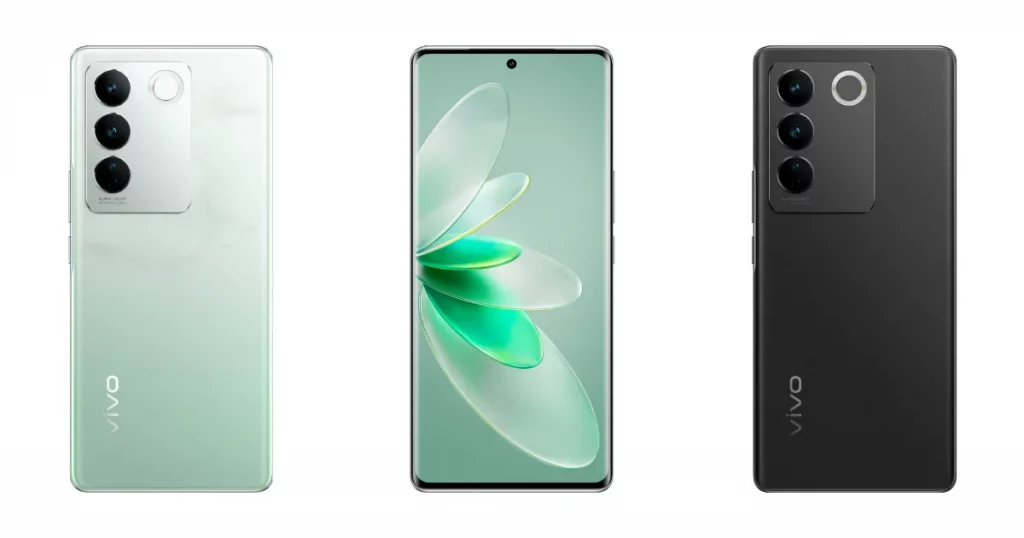
The Vivo V27 Pro 5G is set to launch on March 3 in India. The device will be a rebranded version of the Vivo S16 Pro that launched in China last year. Almost all the details regarding the phone have already leaked including the expected price. From the price leaks, it looks like the smartphone will cost south of ₹40,000, where it will likely be facing off against devices like the Samsung Galaxy S21 FE, Realme GT Neo 3, and iQOO 9 SE.
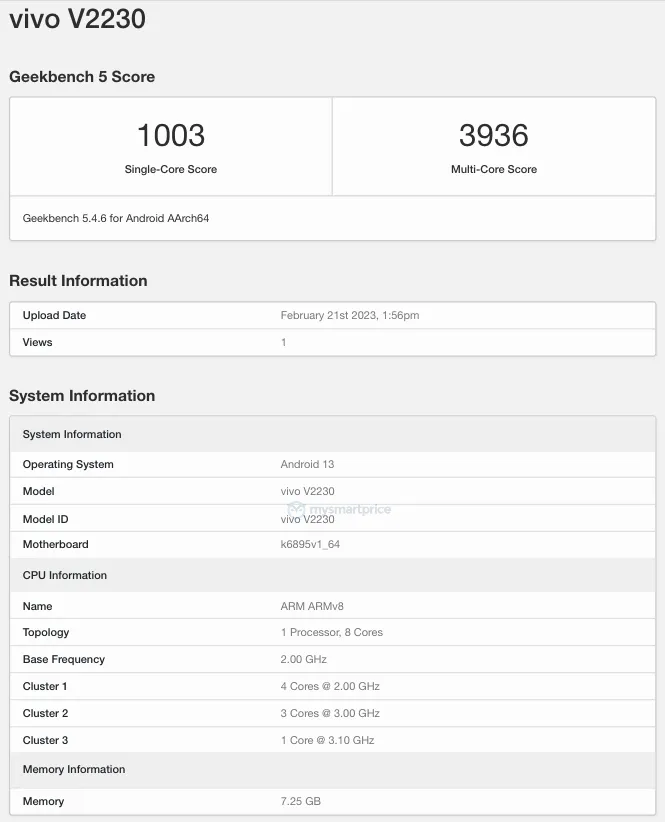
Ahead of the launch, the smartphone has made an appearance on Geekbench showcasing its performance. The device bears the model number V2230 and is powered by the MediaTek Dimensity 8200 SoC. This premium-midrange chipset has eight cores, a peak clock speed of 3.1GHz, and a base clock speed of 2.0GHz.
It is bundled with 12GB of RAM and an Android 13-based operating system. According to the Geekbench 5 listing, the phone obtained a single-core score of 1003 and a multi-core score of 3936.
Vivo V27 Pro specs
The Vivo V27 Pro is expected to feature a 6.78-inch curved AMOLED display with a resolution of 2400 x 1800 pixels and a 120Hz refresh rate. The display is expected to include a 360Hz touch sampling rate and an in-display fingerprint sensor for added convenience.
Under the hood, the phone is expected to be powered by a MediaTek Dimensity 8200 SoC, offering up to 12GB of LPDDR5 RAM and 256GB of UFS 3.1 storage. A 4600mAh battery with 66W fast charging is also expected to be included for extended usage.
The Vivo V27 Pro is also rumored to have a triple camera system, which will include a 50MP primary camera, an 8MP ultra-wide camera, and a 2MP macro lens. For those who love to take selfies, the phone will also feature a 50MP front-facing camera. The phone’s dimensions are expected to be 164 x 74.8 x 7.4mm, and it will weigh approximately 183 grams. You can choose from two color options: Magic Blue and Noble Black.
Ergonomics are one of the most important factors in smartphones. Grip comfort, the feel of the material, and weight affect user satisfaction a lot. When it comes to foldable phones, these rules don’t change, even if they stretch a little. However, a recent rumor suggests that the Pixel Fold could be surprisingly heavy compared to its competitors. Here are the details…
Google’s Pixel Fold could be surprisingly heavy compared to other foldables
As foldable phones continue to gain traction in the market, manufacturers are constantly pushing the boundaries with their designs, features, and capabilities. One of the most anticipated foldables of 2022 is the Google Pixel Fold, which is expected to compete with other popular foldable devices like the Samsung Galaxy Z Fold 4 and the Oppo Find N2.
However, a recent rumor suggests that the Pixel Fold could be surprisingly heavy compared to its competitors. According to a source familiar with the subject, the Pixel Fold may weigh more than the Galaxy Z Fold 4, which is already a relatively heavy device. This has raised concerns among potential buyers who may be looking for a lightweight and portable device.
One possible reason for the Pixel Fold’s weight is its battery size. The rumor suggests that the Google Pixel Fold may have the largest battery of any foldable device on the market, with a capacity close to 5,000mAh. This is significantly larger than the 4,400mAh battery found in the Galaxy Z Fold 4 and the 4,520mAh battery in the Oppo Find N2. A larger battery is certainly desirable, as it allows for longer usage times, but it does come at the cost of added weight.
Leaked renders of the Pixel Fold give us a good idea of what to expect in terms of its dimensions. The device is expected to be around 140mm in height and close to 80mm in width, which puts it in line with the Oppo Find N2. However, the Pixel Fold’s inner screen will be closer in form factor to a traditional tablet, rather than a square like the Galaxy Z Fold 4. This will optimize the device for UI elements meant for tablets, but it will also make the device heavier.
So, what does this mean for potential buyers of the Pixel Fold? While a heavier device may be a concern for some, the added weight could be worth it for the larger battery and optimized UI elements. Additionally, the Pixel Fold’s design is likely to be sleek and stylish, which could make up for its added weight. It remains to be seen whether the Pixel Fold’s weight will be a major issue for consumers. However, with its larger battery and optimized UI, it could still be a highly desirable foldable device.
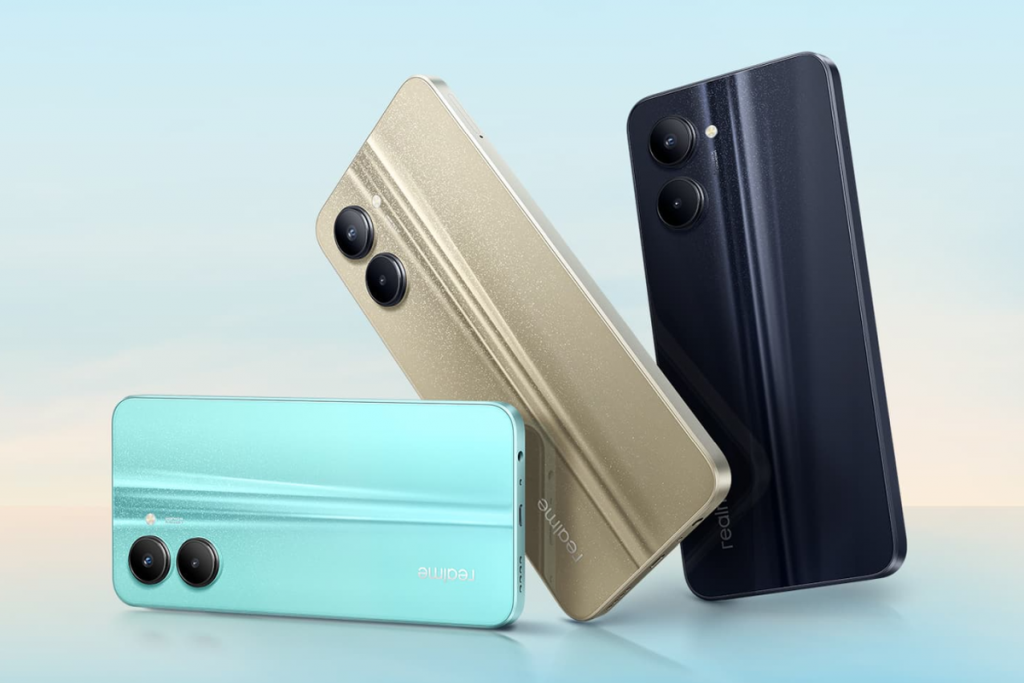
While the upcoming global launch of the flagship Realme GT 3 may be the brand’s current focus, it will soon release a couple of budget smartphones as well. Recently, several Realme C series handsets have been making rounds on certification sites. And today, a new report revealed the Chinese OEM is gearing up to soon launch the Realme C55 and Realme C33 2023 in India.
According to an Appauls report, Realme will soon introduce two new budget smartphones in the Indian market. One will be the long-rumored Realme C55 and the other will be Realme C33 2023. The latter is expected to be a refreshed version of 2022’s Realme C33. Judging by the moniker, the C55 will likely be more premium among the two devices.
Realme C33
The report claims Realme C33 2023 will be offered in Aqua Blue, Night Sea, and Sandy Gold colors and 4GB+64GB and 4GB+128GB storage configurations. Whereas, the Realme C55 may be available in Rainforest, Rainy Night, and Sunshower colors. If these names sound too fancy, you’re not alone. We expect these will be Green, black, and orange colors. The handset could be available in 4GB+64GB, 4GB+128GB, and 8GB+128GB storage models.
Currently, we don’t know much about the two phones’ specifications. To recall, the Realme C33 was launched in India back in September 2022 with a 6.6-inch LCD panel that offers 60Hz refresh rate and 400 nits of maximum brightness. Powered by a Unisoc T612 processor, the handset runs Realme UI S Edition, based on Android 12 out of the box.
In the photography department, the device features a 50MP main sensor and a 2MP macro sensor at the rear while the front gets a 5MP shooter. The phone is backed by a 5000mAh battery with 10W charging support over a Micro USB port.
Recently, there have been reports that Apple has reduced its order size with TSMC. The company is the sole supplier of Apple chips, and the reduction in orders is a reflection of the overall weakness of the global economy. It is important to note that the canceled orders were for chips that would be made using TSMC’s N7, N5, N4, and even some N3 nodes. Here are the details…
Apple has sharply reduced the size of the order it has with TSMC
TSMC is the leading company in the chip-making industry and is currently the only company that is mass-producing chips using their respective 3nm process nodes. Samsung is the only other company currently producing 3nm chips but uses a different type of transistor. TSMC’s N3 (3nm) process node is expected to be used for the production of the A17 Bionic, which will be found in the iPhone 15 Pro and iPhone 15 Ultra, as well as Apple’s M2 Ultra and M3 chips.
Despite TSMC’s continued use of FinFET transistors for its 3nm node, it has still been able to beat out Samsung Foundry when it comes to signing up customers, with big names like Qualcomm, MediaTek, and Nvidia reserving production capacity for 2023 and 2024. In order to give Apple most of the 3nm production capacity later this year, Intel agreed to change its roadmap and delay receipt of its 3nm orders. TSMC’s enhanced 3nm process node (N3E) could be launched this year even though there might not be a big rush for orders considering the cost. It is worth noting that wafer prices have risen sharply over the years. In 2004, 90nm wafers sold for about $2,000, while in 2016, 10nm wafers cost $6,000, and in 2020, the price hit $16,000 for 5nm wafers. Wafer prices for 3nm chips are currently priced in the $20,000 area.
Intel has also announced that it will take process leadership from TSMC and Samsung by 2025, thanks to two developments. It will use RibbonFET transistors, which is another term for the Gate-All-Around (GAA) transistors already employed by Samsung, and it will use a feature known as PowerVia or backside power delivery. This will allow transistors to obtain power from one side of a chip while using the other side to connect to data communication links.
The reduction in orders from Apple with TSMC is a reflection of the overall weakness of the global economy and the hangover from last year’s chip shortage. Despite this, TSMC remains the leading company in the chip-making industry, and its enhanced 3nm process node (N3E) could be launched this year. Additionally, Intel is set to take process leadership from TSMC and Samsung by 2025, thanks to the use of RibbonFET transistors and the PowerVia feature. The chip-making industry is constantly evolving, and it will be interesting to see how these developments will affect the industry in the future.
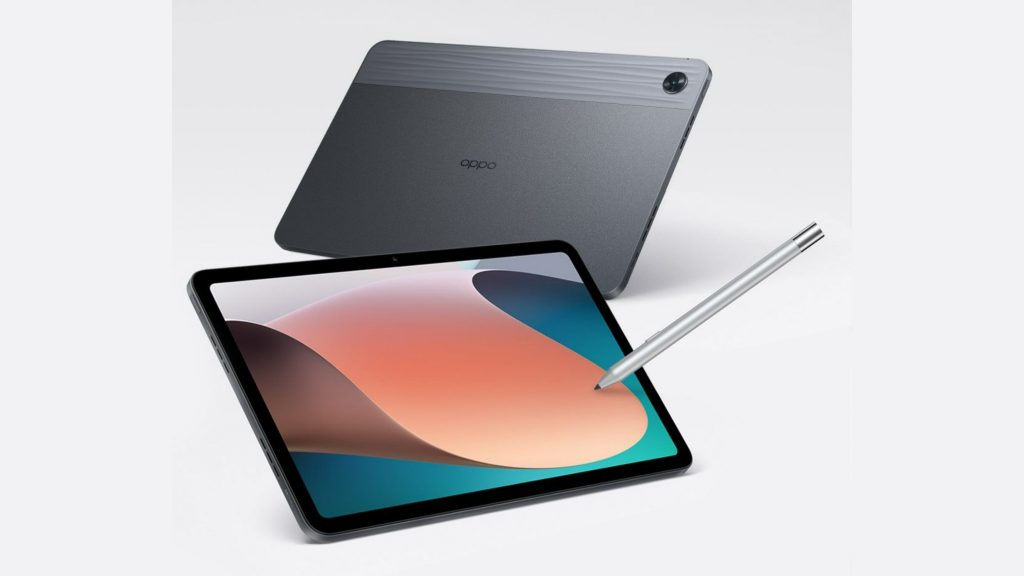
The Oppo Pad Air is the brand’s second tablet. Unlike the original Oppo Pad, it is a budget model.
The device debuted with ColorOS 12 based on Android 12. It got access to the Android 13-based ColorOS 13 beta in early December.
Now, more than two months later, the tablet finally gets the ColorOS 13 stable update.
The Android 13 stable update for the Oppo Pad Air is currently live in China. It is only available for a select few users as part of the batched rollout.
It should reach all users in the coming days in the brand’s home country. Unfortunately, we don’t have any info on global rollout since the device is not even listed in the Q1 2023 rollout plan. Therefore, the beta release outside mainland China may begin in April at the earliest.
Officially, Oppo hasn’t revealed the software update policy for the Oppo Pad Air. But we believe that the tablet will likely receive at least one more Android update.
The Oppo Pad Air is an inexpensive Android tablet powered by a Qualcomm Snapdragon 680 chipset. It is built around a 10.36-inch display (LCD) with a resolution of 2000 x 1200 pixels, 10-bit color depth, and stylus input support.
The product comes with an 8MP rear camera, a 5MP front-facing camera, quad speakers, dual-band WiFi, Bluetooth 5.1, a 7,100mAh battery, and 18W wired charging support.
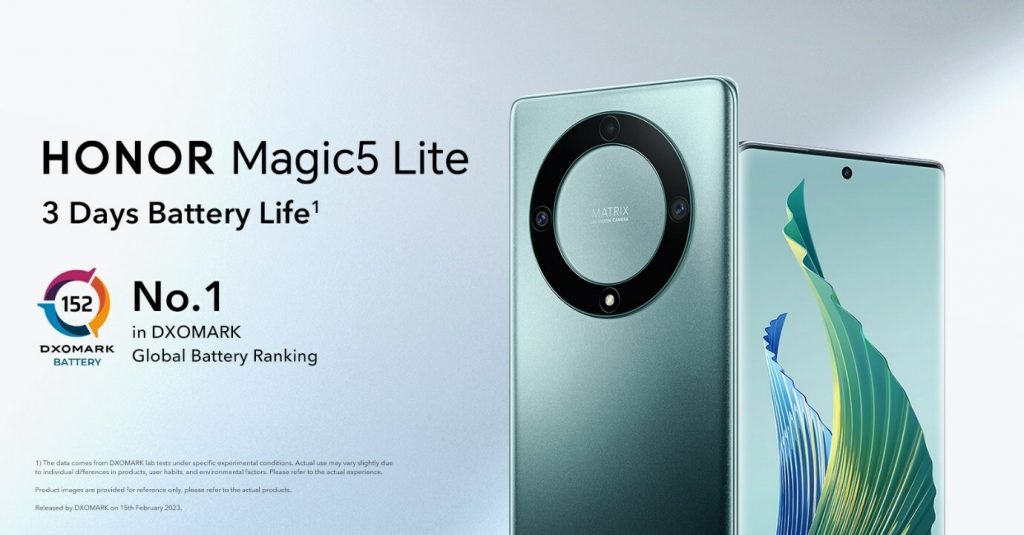
HONOR recently launched the HONOR Magic5 Lite in the European market, a versatile smartphone from the HONOR Magic series that features a 120Hz OLED display, 5G capabilities, and strong performance, all at an affordable price. However, what truly sets the HONOR Magic5 Lite apart from its competitors is its exceptional battery performance, which has earned it the top spot in the DXOMARK global battery ranking with a score of 152.
According to DXOMARK‘s review, the HONOR Magic5 Lite excelled in all areas of battery performance, including autonomy, charging, and efficiency. Its autonomy was particularly impressive, lasting over 3 days with moderate use, and nearly 2 full days with intense usage, making it one of the best-performing smartphones in terms of battery life. In addition, the HONOR Magic5 Lite’s efficiency and discharge currents were consistently low across different use cases, showcasing the device’s optimization and power-saving capabilities.
The HONOR Magic5 Lite’s ultra-large 5100mAh battery enables up to 24 hours of YouTube streaming, 19 hours of TikTok browsing, or 11 hours of gaming on a single charge. Additionally, the HONOR Magic5 Lite’s 40W HONOR SuperCharge technology allows for a 12.5-hour video streaming time with just 30 minutes of charging, providing users with peace of mind and convenience on-the-go.
It’s important to note DXOMARK doesn’t test every single smartphone that hits the market. As a result, the top spot on their rankings may not necessarily reflect the absolute best battery performance currently available. In fact, the first-place ranking may simply be because many of the latest smartphones have not yet been tested by DXOMARK. Nevertheless, their rankings remain a valuable resource for consumers looking for a quick and reliable reference to compare different devices.
HONOR Magic5 Lite boasts a 6.67-inch FHD+ OLED screen with a 120Hz refresh rate and 1920Hz PWM dimming. It is powered by the Snapdragon 695 Mobile Platform and comes with 6GB of RAM and 128GB of storage. The phone features a triple camera setup with a 64MP main camera, a 5MP ultra-wide camera, and a 2MP macro camera. It also has a 16MP front-facing camera and an in-display fingerprint sensor. The Magic5 Lite runs on Android 12 with Magic UI 6.1 and is powered by a 5100mAh battery with 40W fast charging.
We use cookies on our website to give you the most relevant experience by remembering your preferences and repeat visits. By clicking “Accept”, you consent to the use of ALL the cookies.
This website uses cookies to improve your experience while you navigate through the website. Out of these, the cookies that are categorized as necessary are stored on your browser as they are essential for the working of basic functionalities of the website. We also use third-party cookies that help us analyze and understand how you use this website. These cookies will be stored in your browser only with your consent. You also have the option to opt-out of these cookies. But opting out of some of these cookies may affect your browsing experience.
Necessary cookies are absolutely essential for the website to function properly. This category only includes cookies that ensures basic functionalities and security features of the website. These cookies do not store any personal information.
Any cookies that may not be particularly necessary for the website to function and is used specifically to collect user personal data via analytics, ads, other embedded contents are termed as non-necessary cookies. It is mandatory to procure user consent prior to running these cookies on your website.