Advertisement

Iconic Nokia Logo Gets a Makeover to Change Identity of the Company

It’s been a pretty busy day for Nokia. It looks like the once legendary phone maker is finally making the long-awaited changes. One of them takes place in the identity of the company. Nokia finally created the iconic iconic logo known to everyone. Here are the details…

Nokia changes iconic logo

Nokia has unveiled a new brand identity that includes a refreshed logo, as part of its efforts to accelerate growth in the market. This marks the first time in nearly six decades that Nokia has updated its logo. The new logo is made up of five different shapes that form the word “NOKIA”. Unlike the previous blue color scheme, the new logo features a range of colors depending on its intended use.

The shift in Nokia’s branding is reflective of the company’s new focus on the business technology market. CEO Pekka Lundmark explained that the previous association with smartphones is no longer the company’s main priority. “Nowadays we are a business technology company,” he said in an interview with Reuters. Based on this, we can say that the company will not return to the smartphone market.

Some of you may think that Nokia is still in the phone market, but that is not true. Phones sold under the Nokia brand are manufactured by HMD Global and the name Nokia is just a brand.

RELATED:

Startup Uses 3D Printing to Create Solid-State Batteries in Customizable Shapes

Sakuu, an innovative startup headquartered in Silicon Valley, has introduced a game-changing 3D printer that has the potential to transform battery production as we know it. By leveraging the printer’s capabilities, the company can create solid-state batteries that can fit into any shape or size. From smartphones to household appliances and e-bikes, these batteries can power a range of devices, making them more efficient and cost-effective.

Sakku
Image source: Sakku

Traditionally, battery manufacturing involves laminating and stacking sheets of material, which are then rolled into cylinders or other shapes. This method, however, is not feasible for solid materials that can break easily. Sakuu’s 3D printer utilizes powder to maintain thin layers and ensure optimal performance. The technology behind the printer was developed at MIT, and it minimizes material waste, making it cost-effective.

Image source: Sakku

Sakuu’s 3D printer is not only cost-effective but also space-efficient, requiring only around 400 square feet to manufacture 100 megawatt hours of batteries per year. In contrast, older machinery takes up 16,000 square feet and produces only 2.5 megawatt hours. The increased efficiency of Sakuu’s 3D printer is expected to reduce battery production costs by nearly 50%.

The company is presently working with aviation industry clients to develop airplane batteries in customized shapes to manage heat. It has also demonstrated the printer’s ability to produce functional batteries using different materials and designs, and it claims to be the first company in the world to do so. Scaling up production equipment is the next phase for the company before it licenses the technology to clients in the battery, automobile, and other sectors.

RELATED:

(via)

Rumor: Pre-Order Xiaomi 13 and 13 Pro and Get a Free 43-Inch Smart TV

Xiaomi 13 series will be unveiled in just a few hours and we are ready to bring you all the details about it. But while we wait, some interesting information about the pre-orders of the upcoming lineup has surfaced online. According to a tipster, Xiaomi is planning to give a free 43-inch smart TV to those who’ll pre-book the vanilla Xiaomi 13 and the higher-end Xiaomi 13 Pro. The offer seems to be limited to shoppers in France. Here are the details.

Tipster @billbil_kun has managed to get the pre-order details for the imminent Xiaomi 13 series. As per the screenshots shared by the tipster, those who’ll pre-order the Xiaomi 13 and Xiaomi 13 Pro will enjoy a free 43-inch version of the TV P1, which is listed in the Eurozone with a price tag of €449. This offer is even better than the Xiaomi 12T Pro, whose pre-order deal included a complementary Redmi Pad.

Xiaomi 13 pre-order

However, the offer appears to be limited to the purchase of either the Xiaomi 13 or Xiaomi 13 Pro and does not apply to the less expensive Xiaomi 13 Lite. To provide context, the Xiaomi 13 Lite is anticipated to have a starting price of €499, while the Xiaomi 13 and Xiaomi 13 Pro are priced at €999.90 and €1,299.90, respectively.

It is worth noting that Xiaomi hasn’t officially announced the pre-order period for the two devices. According to the leaked information, Xiaomi is expected to start accepting pre-orders for the Xiaomi 13 series on the same day as its official launch. However, it seems that the pre-ordered devices won’t be shipped until after the first week of March.

RELATED:

(Source) (Via)

Hydrogen Fuel Cells: Panasonic’s Answer to Sustainable Energy Need in China

Panasonic is set to launch pure hydrogen fuel cell generators in China starting from April. The aim is to develop global demand for the technology as a 24-hour alternative to solar panels for factories and offices. This move comes as the company looks to establish itself as a leader in the industry, having already started sales of stand-alone fuel cells in Europe and Japan. Here are the details…

Panasonic to sell pure hydrogen fuel cell generators in China

Shigeru Dohno, President of Panasonic Holdings’ China & Northeast Asia unit, announced the move at the company’s battery plant in the city of Wuxi. He emphasized that Panasonic is ahead of the pack in developing this technology and will continue to lead the way in sales. The factory in Wuxi will be used as a showroom for the technology.

Hydrogen fuel cells generate electricity through a chemical reaction between hydrogen and oxygen. The process emits no carbon dioxide and has several advantages, such as the ability to generate power at all hours and a smaller space requirement than solar panels. However, the high cost of hydrogen fuel remains a challenge, although prices are expected to fall as demand grows.

The Chinese market for hydrogen fuel cell businesses is already quite competitive, with about 100 companies operating in the industry. However, most of them are involved in automotive fuel cells rather than stand-alone types for homes or businesses, as noted by Dohno. Thus, the launch of pure hydrogen fuel cell generators by Panasonic presents a unique opportunity for the company to make an impact in the industry.

Panasonic’s stand-alone fuel cells have already begun sales in Europe, where the company is working with German heating systems maker Viessmann to bring the first systems online in April. Similarly, the fuel cells were launched in Japan in October 2021 and have been installed in a housing development in the Harumi district of Tokyo, among other facilities such as research laboratories.

Despite the high cost of hydrogen fuel, the adoption of fuel cells for power generation is growing globally. The International Energy Agency predicts that hydrogen demand could increase by a factor of 10 by 2050. Furthermore, governments worldwide are investing heavily in hydrogen technology as a clean and reliable source of energy, with the potential to reduce greenhouse gas emissions and achieve sustainability goals.

RELATED:

(via)

Putting “Unbreakable” Huawei Kunlun Glass to the Test: The Results May Surprise You (video)

Innovation is often lacking in modern smartphones. Manufacturers tend to produce similar phones and struggle to differentiate new models with innovative features. However, there are some exceptions. Recently, the Chinese tech giant Huawei introduced its Kunlun glass technology, which it claims is “unbreakable.” Now, the durability of the Huawei Mate 50 Pro, the first phone to use this technology, has been put to the test. Here are the details…

How did Huawei’s “unbreakable” Kunlun glass perform in a concrete drop test?

Huawei Mate 50 Pro has received a lot of attention for its Kunlun glass. The company claims Kunlun is “unbreakable” due to its unique manufacturing process. The glass reportedly handles impacts ten times better than other smartphone glasses and has been given a five-star rating by SGS certification company. But how does it perform in a real-world scenario?

Huawei Kunlun Glass

A YouTube channel calls “PBK Reviews” put Huawei Mate 50 with Kunlun glass a drop test to see phones durability. The first drop was from waist-high on the phone’s AMOLED display, resulting in some scrapes on the corners and sides of the frame. However, the glass held up well. On another attempt to drop the phone on the screen from head-high, the glass did touch the concrete, but there was no damage to the display.

The fourth and final drop was a waist-high fall on the phone’s back, resulting in a hairline crack on the front glass. Overall, the Kunlun glass held up well during the drop test, but it wouldn’t be right to say that the screen is unbreakable. Still Kunlun is much more successful than Gorilla Glass Victus 2. For example, Victus 2 protected displays on the Galaxy S23+ and S23 Ultra. In a similar test, both phone cracked on the first drop. You can watch the videos of the tests below.

Huawei P60 series will be the next phone using Kunlun Glass

The Huawei P60 series, expected to be released next month. The phone is also to feature Kunlun glass, along with other innovations such as Huawei’s XMAGE photography system and Low battery emergency mode. Huawei’s ability to innovate and develop technologies like Kunlun glass despite the US restrictions on exports is noteworthy. However, the company still faces challenges, including the potential loss of the ability to obtain even handicapped chipsets following the Biden administration’s decision to get tougher on approving export licenses for shipments to Huawei.

RELATED:

(via)

Sony WF-1000XM5 Wireless Earbuds Spotted on FCC

Sony’s much-awaited WF-1000XM5 wireless earbuds have finally been spotted on the FCC website, hinting at an imminent launch. These earbuds will be the next iteration of Sony’s popular WF-1000XM4 earbuds, which were launched back in June 2021. The FCC listing reveals that the new earbuds will feature Bluetooth 5.3 and Bluetooth LE, along with Qualcomm aptX Lossless support, which should help them compete with other premium earbuds in the market.

Sony WF-1000XM5 FCC certification

Interestingly, the Sony WF-1000XM5 will reportedly reuse the touch panel from its predecessor, which was widely praised for its intuitive controls. It is unclear if the earbuds will receive a complete redesign, like Sony’s WH-1000XM5 over-the-ear headphones. However, it is expected that the new earbuds will receive a battery upgrade and other performance improvements.

The Bose QuietComfort Ultra, which was recently leaked, is expected to be a strong competitor to the Sony WF-1000XM5. Bose’s QuietComfort Earbuds II have already been out for a while, making it even more important for Sony to deliver a compelling offering to stay ahead in the race. While the FCC listing doesn’t reveal much about the new earbuds, it does suggest that the launch is imminent, possibly as early as July 2023.

One area of concern for potential buyers is the price point of the new earbuds. With market conditions being what they are, it is likely that the Sony WF-1000XM5 will come with a higher price tag than its predecessor. However, those on a budget can still get a pair of XM4s, which are expected to be discounted after the new earbuds are launched.

RELATED:

(Source, Via)

3 Technologies That Will Transform the Smartphone Industry in the Next 5 Years

Smartphones have become an essential part of our lives, but they are also constantly evolving. In the next five years, we can expect some major breakthroughs that will change how we use and interact with our devices. Here are the top three technologies that will revolutionize smartphones in the near future:

1. Satellite Connectivity: Imagine being able to send and receive messages anywhere on Earth, even without a cellular network. That’s what satellite connectivity promises to deliver. Several smartphone makers, such as Samsung, Apple and Huawei have already introduced devices that can connect to satellites for emergency purposes, but some are going a step further and enabling two-way SMS messages. This means you can stay in touch with your loved ones, access vital information, and get help when you need it most, no matter where you are.

Qualcomm’s Snapdragon Satellite Connectivity

2. Solid State Batteries: One of the biggest challenges of smartphone users is battery life. No one likes running out of juice or having to charge their phone frequently. That’s why solid state batteries are so exciting. Unlike conventional lithium-ion batteries that use liquid electrolyte solution, solid state batteries use solid electrolyte. This means they can pack more energy in less space, resulting in longer battery life and faster charging times. Solid state batteries are also safer and more stable than lithium-ion batteries, reducing the risk of overheating or exploding.

3. Flexible Displays: What if you could fold, bend, or twist your smartphone screen without breaking it? That’s what flexible displays offer. OLED displays are used for creating flexible screens that can adapt to different shapes and sizes. Smartphones with flexible displays can transform from a compact smartphone to a larger tablet, giving you more versatility and functionality. You can also enjoy better durability, lighter weight, and more multitasking options with flexible phones.

OPPO Find N2 Foldable Smartphone
Oppo Find N2

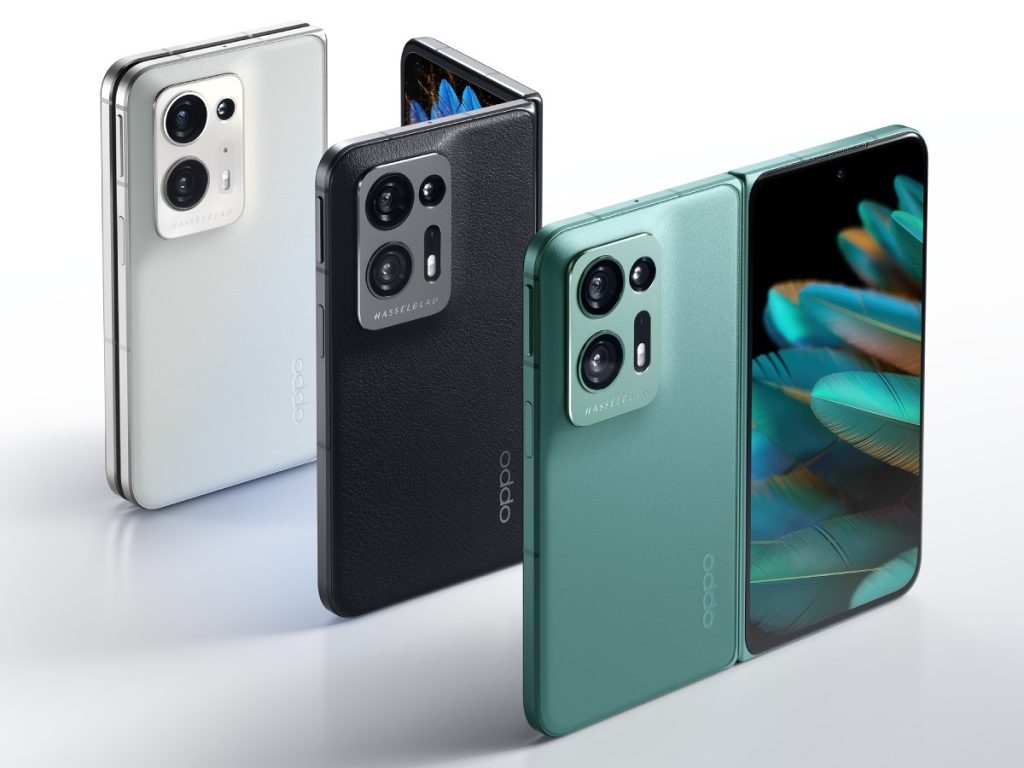
Speaking of flexible displays, our team here at Gizmochina got the chance to review Oppo’s 2023 flagship foldable, the Oppo Find N2. The Oppo Find N2 features Qualcomm’s powerful Snapdragon 8+ Gen 1 SoC with up to 16GB RAM and 512GB of internal storage, alongside its large 7.1-inch 120Hz LTPO AMOLED inner display.


To know more about the Oppo Find N2, you watch our review video here on YouTube.

RELATED:

Nokia Phones Go Local: HMD’s Game-Changing Manufacturing Decision

Nokia, once a legendary phone brand, is now far from its former glory. The company’s inability to keep up with the rise of smartphones and a series of panicked wrong decisions led to this point. Today, the Finnish manufacturer operates under the umbrella of HMD Global. The latest information suggests that HMD Global plans to start manufacturing Nokia phones in Europe from Q3 2023. Here are the details…

HMD to begin manufacturing Nokia phones in Europe from Q3 of 2023

HMD Global has recently announced that it will begin manufacturing 5G Nokia smartphones in Europe from the third quarter of 2023. This move is significant because it makes HMD the first major smartphone maker to manufacture 5G phones in Europe. The shift towards manufacturing in Europe will be gradual and HMD plans on investing in facilities from now on.

Nokia smartphones

The company has seen an increase in demand for its smartphones in Europe and views this move as a way to reduce its carbon footprint. HMD also noted that its data centers have been located in Finland since 2019, and it believes that having the manufacturing facilities nearby will help it ensure the security and privacy of its devices.

This move is particularly important in the current climate, where data privacy and security are becoming increasingly important issues for consumers. This will undoubtedly help the company to attract more customers who are concerned about data privacy and security. Although the company will attract attention with its new move, its success is not certain.

Unfortunately, Nokia phones under the umbrella of HMD Global were not innovative products and only appealed to a limited user base. This is expected to change in the company’s new era.

RELATED:

(via)

Sony’s Chip Unit Offers Full Remote Work to Software Engineers to Attract Quality Talent

Sony Semiconductor Solutions, a subsidiary of Sony Group, is taking steps to attract and retain talent in priority areas such as software development and artificial intelligence. To achieve this, the company has announced a full remote work option for mid-career hires. It is looking to hire 10 to 20 engineers for remote work positions, with recruitment currently ongoing for 11 positions in AI model quality control, cloud technology development, and imaging processing technology required for edge AI.

sony

By introducing the full remote work option, Sony is aligning its semiconductor business model beyond being just a component supplier. The division’s primary source of earnings is from image sensors for cameras in Apple’s iPhone and other devices. However, Sony wants to expand its reach by introducing the AITRIOS platform. This platform uses cameras equipped with Sony chips and AI processing to study an environment and provide ways to improve efficiency.

The AITRIOS platform debuted in Japan in November, and Sony began offering the platform in Japan and the US for big companies that want to use it with existing IT infrastructures in January. To develop applications for AITRIOS, Sony requires expertise in both advanced AI and cloud engineering since the platform sends only metadata, not actual images, to the cloud.

While the full remote work option is only currently available in the semiconductor division, Sony may expand it to other parts of the group as competition for tech talent increases worldwide. Sony Semiconductor Solutions is taking this step to cast a wider net and attract the talent required to support the expansion of its business beyond its current offerings.

RELATED:

(Source)

Investigation Shows Google Profiting from Anti-Abortion Ads Targeting Pregnant Women

Google has been accused of profiting from misleading adverts that direct pregnant women to anti-abortion groups that offer false medical advice and pressure them to keep their pregnancies.

The Guardian reports that according to an investigation by the Observer, Google UK has been displaying adverts for crisis pregnancy centres (CPCs) run by anti-abortion organisations when users search for terms such as “NHS abortion advice”, “confidential abortion support” and “pregnant options”.

CPCs are unregulated clinics that often pose as neutral sources of information and counselling, but in reality, have a hidden agenda to dissuade women from accessing legal abortion services. Some of them have been found to use scare tactics, misinformation and emotional manipulation to influence women’s decisions.

The Guardian analysed 251 adverts shown by Google UK to a user searching 40 key phrases related to abortion in February 2023. Out of these, 117 adverts (47%) were for CPCs run by anti-abortion groups such as Life Charity in the country.

The report quotes Lisa Hallgarten, head of policy at young people’s sexual health charity Brook, who described the marketing approach as “clearly immoral” and said adverts provided to those searching terms such as “NHS abortion advice” could delay women’s access to healthcare.

“We are really concerned that people looking for impartial support are being directed to organisations and websites where they could experience the complete opposite,” she said. Pam Lowe, an expert on anti-abortion activism in the United Kingdom, said: “Anyone who puts ‘NHS abortion’ into Google should be shown a link to the NHS website as the first result. There’s a risk that people could end up with biased information.”

Google’s advertising policy states that it does not allow ads for products or services that are “deceptive” or “misleading”. It also states that it does not allow ads for healthcare services that are “unlawful” or “harmful”. However, Google has failed to enforce its own policy and remove these ads from its platform.

The report also points out that Google has a history of allowing anti-abortion groups to target pregnant women with misleading ads in other countries such as the United States, where CPCs are more widespread and influential in the conservative community.

Google’s failure to act on these ads has been criticised by pro-choice campaigners, medical experts and politicians who say that it is putting women’s health and rights at risk. They argue that Google is profiting from exploiting vulnerable women who are seeking reliable information on this sensitive issue.

RELATED:

(Via)

Gmail Gets Optimized Interface for Foldable Phones Like Galaxy Z Fold 4

Google has launched a new interface for Gmail that is optimized for foldable phones, such as the Samsung Galaxy Z Fold 4. The new interface features a 2-pane layout, which allows users to see their inbox on the left half of the screen while an open email is displayed on the right.

Gmail Gets Optimized Interface for Foldable Phones

This update aims to make multitasking easier and to save users from the hassle of switching back and forth between their inboxes and emails. The left pane shows the inbox and other folders, while the right pane shows the selected email. The search bar is located above the inbox, and the Compose button is visible on the left pane. The bottom bar extends across the entire screen.

The new interface is not limited to Gmail only. It is also available for Google Meet and Chat. Users can easily switch between apps and services without having to adjust window sizes.

Google has been focusing on foldable phones and tablets, and this new interface is a part of its efforts to provide a top-notch user experience on large-screen devices. Google has also launched a new tablet-first operating system, Android 12L, that is specifically designed for large-screen devices. It features a vertically split notification shade that provides users with more information at a glance. It also includes a taskbar that makes it easy to switch between tasks and launch apps.

Google’s renewed interest in foldable phones and tablets is likely because the company is planning to launch its own tablet and foldable phone in the future. With the new interface for Gmail, Google is showing its commitment to providing a seamless user experience on these devices and is willing to invest in new software tricks to make it happen.

RELATED:

(Source, Via)

Google Search Under Fire for Promoting Websites That Scam Customers with Fake Amex Accounts

A shocking scam involving fake websites that impersonate real businesses and charge customers with fake Amex merchant accounts has been exposed by Cory Doctorow, a writer and activist who writes about technology and society.

Doctorow shared his story on Twitter, where he told how he was scammed when he tried to buy some takeout food from a website called kiinthaila.com. He found out that the website was actually a fake one created by scammers using Wix, a platform that allows anyone to create websites effortlessly. The scammers also created fraudulent Amex merchant accounts for real businesses and used them to charge customers who ordered from their fake websites.

Doctorow contacted Amex to report the fraud, but he was disappointed by their response. He said they did not seem interested in investigating the scam or shutting down the fraudulent accounts. He also pointed out that Google was promoting these scammers by showing their ads as the first search result instead of the official website, which is kiinthaiburbank.com.

This scam is not only harmful to customers who lose their money and trust, but also to legitimate businesses whose names and reputations are damaged by these scammers. It is alarming that Google even allows these scammers to manipulate its search results and put its users at risk.

For Illustration Purposes: Google Getting Flamed

The tweet has then since garnered over 66.9 thousand likes on Twitter as of publishing, increasing the pressure on Google to put measures in place to prevent the scams from occurring.

In other news, Microsoft is aiming for Google’s search engine market share. This month, the tech giant Microsoft announced that it is bringing OpenAI’s latest GPT-4 technology to the company’s search engine, Bing. To read more on the new Bing, you can follow our coverage here.

RELATED:

(Source)

HMD Launches Affordable Nokia G22 With a Promise of Repairability

Just a day ahead of MWC 2023, HMD has launched the new Nokia G22 with an emphasis on repairability and sustainability. The company has joined hands with iFixit to provide the tools, guide, and parts you’d need to fix the display, charging port, or battery on the handset. Nokia G22 also comes with decent specifications, including an Unisoc processor, 90Hz display, and more. Read on to learn more about the newly launched handset.

Nokia G22

The Nokia G22 comes with a key focus on sustainability. With a 100% recycled plastic back cover, up to 3 years of warranty and updates, and a 3-day battery life, it is made for those who want to keep their phones as long as possible. The handset is also self-repairable. As per the company, a battery replacement of the Nokia G22 will take around 5 minutes, and replacing the display will take about 20 minutes.

As mentioned, HMD has partnered with HMD to even provide you with official repair guides, parts, and tools to fix issues. If we talk about the specs, the Nokia G22 brings a 6.52-inch display with an HD+ resolution and 90Hz refresh rate. There’s Gorilla Glass 3 protection as well. You get an 8MP front-facing camera and a side-mounted fingerprint scanner.

Nokia G22

Powered by the entry-level Unisoc T606 chipset, the Nokia G22 packs 4GB of RAM and 64GB or 128GB storage. On the software front, the handset runs Android 12 with a promise of 2 OS upgrades and 3 years of security updates. For photography, the Nokia smartphone gets a triple camera unit with a 50MP main camera, a 2MP macro unit, and a 2MP depth sensor. Fueled by a 5,050mAh battery, the handset supports 20W wired charging.

Nokia G22 will be offered in charcoal, green and pink colors. It is priced at £130 ($155) and is available for purchase in Europe starting today.

RELATED:

iPhone 15 Plus Renders Leaked; Dynamic Island Confirmed

We are heading towards the official launch of the iPhone 15 series. Even though we are about 7 months from the launch, we have already started getting rumours and leaks regarding the upcoming devices. A new report making rounds of the internet has reportedly leaked the renders of the iPhone 15 Plus. The renders reveal the possible design of the upcoming smartphone. The CAD renders of the iPhone 15 Plus have been brought to light by 9to5mac.

Apple iPhone 15 Plus

The iPhone 15 Plus will have a Dynamic Island, according to the renders. This will be an improvement above the notch panel on the iPhone 14 Plus. Also, the forthcoming Plus iPhone will have reduced bezels. The rear and front will be flat, while the corner will be more curved. On the back, it appears to sport a dual camera setup with a larger LED flash module. The iPhone 15 Plus will also have a USB Type-C connection at the bottom.

Apple iPhone 15 Plus

Recent rumours, however, suggest that Apple might provide MFI certification for USB Type-C connectors. This implies that your standard Android Type-C cable might not function with the iPhone. Apart from that, the source has disclosed the dimensions of the iPhone 15 Plus. The measurements are 160.87mm x 77.76mm x 7.81mm. The renders further confirm that there would be slimmer bezels around the screen.

Apple iPhone 15 Plus

Other than this, Apple’s A16 or A17 Bionic chipset is expected to be included in the smartphone. It will probably contain up to 512GB of internal storage and 6GB of RAM. Apple is likely to add a somewhat larger battery this time around. This concludes our report on the hacked iPhone 15 Plus renders. What do you think about this? Please let us know by leaving a comment below in your own words. Many thanks for reading this post all the way through.

RELATED

Rumor: Samsung Plans to Release Six Foldable Phones in 2024, Phasing Out Galaxy S24+

Foldable smartphones are gradually becoming more popular, and it seems they’ll soon be mainstream. In recent years, we’ve seen many brands launch their folding phones but Samsung continues to lead this intriguing category. And it seems the Korean OEM is planning to expand its portfolio even further by launching as many as 6 foldable devices in 2024. In addition, the brand is also reported to reorganize its S series lineup by removing the plus model next year. Here are the details.

According to Twitter User @RGcloudS, Samsung plans to make many significant changes to its smartphone and tablet portfolio next year. The brand could launch up to 6 foldable devices next year, namely Galaxy Z Flex, Z Fold Ultra, Z Flip Ultra, and notably a Z Tab. The usual Galaxy Z Fold and Galaxy Z Flip are also included.

Samsung foldable smartphones

The source claims that “Z Ultra” branded models will use a 4K Samsung display, while the standard “Z” ones will feature QHD display manufactured BOE. In addition, the Z Flip could arrive with a 2K Samsung-made display or FHD BOE panel.

Notably, it has been claimed that the Samsung Galaxy Z Flex will be a tri-fold smartphone, meaning it would fold thrice unlike the regular foldables. In addition, the company is apparently also working on a foldable tablet called Galaxy Z Tab. Since it would be a foldable tablet, you can expect it to offer a comparatively larger display.

Additionally, the Twitter user claims Samsung is gearing up to bring new mid-range series, dubbed the Galaxy K series. While we don’t know much about the new lineup, it will likely sit below the Galaxy A series. Further, it is reported that the Korean company will ditch the Galaxy S24+ model next year and launch a new premium model in the series.

Do note that there is no official confirmation about any of the details shared by RGcloudS. Therefore, we recommend taking this information with a grain of salt until more reliable sources or official statements are available.


RELATED:

(Source)

OnePlus Ace 2 Dimensity Editon Leaks; Will Retain Alert Slider and Glass Back

The flagship OnePlus 11 smartphone was only just released on the international market. The smartphone performed incredibly well in the market, and many people labelled it a “comeback of the old OnePlus.” The brand is now preparing to unveil another smartphone in the Chinese market, which will also bring back the OnePlus – Alert slider legacy. OnePlus had previously eliminated the Alert Slider from certain of its smartphones, but this does not appear to be the case with upcoming models.

According to a recent online rumour, the upcoming smartphone would be placed below the OnePlus Ace 2. It would have a glass body and an alert slider despite being placed lower. This is excellent news for OnePlus fans. The phone will be designated by the codename PHP110. The OnePlus Nord 2 appears to be extremely similar to the smartphone’s general design in the leaked renders. Also, considering that it may not debut as the OnePlus Ace2 Dimensity Edition, it may actually be the OnePlus Nord 3. Take this information with a grain of salt, though, as nothing has been confirmed.

OnePlus  Ace 2 Dimensity Edition

Nonetheless, the MediaTek Dimensity 9000 chipset is reported to power the smartphone. It would feature a 6.7-inch AMOLED panel that supports high-frequency dimming at 2160 Hz and has a resolution of 2772 x 1240 pixels. It would be a standard flat panel with low bezels around the screen. The device will have an 80W rapid wired charger and a 5000mAh battery. A 64-megapixel primary camera, an 8-megapixel secondary ultrawide lens, and a 2-megapixel macro sensor round out the smartphone’s triple back camera setup. The smartphone will be equipped with up to 16GB of RAM.

As it has been claimed that it will be positioned below the OnePlus Ace 2, this also means that the price of it is going to be lesser than the Ace 2. It would be interesting to see on how the OnePlus will price the gadget. So that was all we had to cover up regarding the upcoming OnePlus Ace 2 Dimensity Edition or OnePlus Nord 3. What are your thoughts on this? Do let us know by dropping a comment in your words down below.

RELATED

Leaked iPhone 15 Pro Max 3D Models Reveal Thicker Body with Solid state Buttons

Apple fans were treated to a sneak peek of the highly-anticipated iPhone 15 Pro Max when Apple insider ‘Ice Universe’ leaked 3D models of the upcoming device on Twitter. The leak shows a design that is very similar to its predecessors, with the ‘notch island’ still in place, and three camera lenses at the back. However, there are some notable changes that are expected to make the phone more powerful and efficient.

The phone is expected to be powered by Apple’s new A17 chip, which promises faster performance and improved power efficiency. This chip will be exclusive to the Pro lineup, while the iPhone 15 models will continue to use the A16 chip seen in previous generations of the Pro and Pro Max series. Additionally, the iPhone 15 Pro Max will have a larger RAM capacity than other models, enabling faster multitasking and improved storage capacities.

iPhone 15 Pro Max render leak

The leaked 3D models also suggest that the phone may not have any physical buttons. Instead, the phone is expected to feature ‘solid state buttons’ with haptic feedback, similar to the home buttons seen in the iPhone 7 and 8. This is a significant departure from previous generations of the iPhone, and it remains to be seen how users will respond to this change.

In terms of size, Ice Universe also revealed that the iPhone 15 Pro Max will measure 159.86 mm × 76.73 mm × 8.25 mm, with a total thickness of 11.84 mm including the camera.

iPhone 15 Pro Max render leak

The phone is expected to have an upgraded USB-C port with USB 3.2 or Thunderbolt 3 transfer speeds, along with the same 5G Qualcomm modem chip technology seen in all iPhone 15 models. This means users can expect lightning-fast download and upload speeds, as well as improved connectivity.

The iPhone 15 Pro Max is rumored to be released in September 2023, in line with previous announcements. It is not yet known what the official name of the phone will be, with ‘Pro Max’ and ‘Ultra’ being floated as possible titles.

Overall, the leaked 3D models of the iPhone 15 Pro Max suggest that while the phone will have a similar design to its predecessors, it will also have significant upgrades under the hood. From a more powerful A17 chip to an upgraded USB-C port, larger RAM capacity, and Sony’s ToF sensor this phone promises to be a game-changer in the world of smartphones.

RELATED:

(Source)

Xiaomi 13 Lite Performance Revealed Through Geekbench Listing

Xiaomi will be launching the Xiaomi 13 series smartphones at MWC 2023. The event is scheduled for February 27, and Xiaomi will be launching three phones in the 13 series. The first two will obviously be the Xiaomi 13 and 13 Pro, while the third device will be a rebranded Xiaomi CIVI 2 called the Xiaomi 13 Lite.

Xiaomi 13 Lite

So far, we have found out almost everything about this device, ranging from specs to pricing. Now, its performance has also been uncovered as the device has made an appearance on Geekbench.

According to information obtained from a Geekbench test result, the upcoming Xiaomi 13 Lite has the model number 2210129SG and is expected to be powered by a Snapdragon 7 Gen 1 processor. The device will have 8GB of RAM and will likely come pre-installed with Android 12 and MIUI 13 skin. In the test, the phone achieved a single-core score of 793 and a multi-core score of 2,938. These are the only details available from the Geekbench test result.

Xiaomi 13 Lite specs

Reports suggest that the Xiaomi 13 Lite is essentially a rebranded version of the Xiaomi CIVI 2, and will likely share its specifications. The device is expected to feature a 6.55-inch AMOLED screen with a Full HD+ resolution and a 120Hz refresh rate. Its front-facing cameras will be housed within a pill-shaped cutout at the center top.

The Xiaomi 13 Lite may be powered by a Qualcomm Snapdragon 7 Gen 1 processor and is rumored to offer up to 12GB of LPDDR4X RAM and up to 256GB of UFS 2.2 storage. It could come with a 4,500mAh battery and support 67W fast-wired charging.

One of the phone’s standout features is its front camera system, which is expected to have dual 32-megapixel sensors. The rear camera setup may consist of a 50MP Sony IMX766 primary sensor, a 20MP Sony IMX376K ultra-wide sensor, and a 2MP macro lens.

RELATED:

(via)

Nvidia’s AI GPUs May Soon Power MediaTek’s 2024 Flagship Mobile SoCs

Nvidia’s AI GPUs may soon find their way into MediaTek’s flagship mobile SoCs, according to industry sources close to DigiTimes. This move would be a significant step for Nvidia, as it would demonstrate that established desktop GPU architectures can also be adapted to smartphone SoCs. Nvidia’s new strategy aims to boost its AI computational power and help the company recover from its financial troubles in 2022. The integration of Nvidia’s GPUs into MediaTek’s SoCs would also benefit from improved AI performance, which is currently lagging behind Qualcomm’s Snapdragon 8 Gen 2.

nvidia mediatek soc

MediaTek’s flagship Dimensity 9200 would be the primary beneficiary of this integration, as it struggles to keep up with Qualcomm’s flagship solutions. If MediaTek can get even a slight performance edge over Qualcomm, it could help the company conquer the premium sector, making its SoCs more attractive to smartphone brands. While MediaTek has denied such rumors, it’s not outlandish, given that the company has already paired Nvidia’s GPUs with some Arm-based SoCs designed for Chromebooks.

This move could also benefit consumers, as they would be able to benefit from similar AI inference power seen in the Tensor cores integrated in the GeForce RTX GPUs in past generations. The integration of Nvidia’s GPUs into MediaTek’s SoCs could bring similar AI capabilities to smartphones, which would be a significant advancement in the smartphone industry. It would be interesting to see if Nvidia could tweak the intricate Ada Lovelace architecture and miniaturize it to provide meaningful performance gains over competing solutions.

Overall, this news is exciting for both Nvidia and MediaTek, as it has the potential to revolutionize the smartphone industry. It remains to be seen if the rumors are true, but the possibility of seeing Nvidia’s GPUs integrated into MediaTek’s SoCs is a promising development that could benefit the entire tech industry.

RELATED:

(Source, Via)

Samsung Galaxy A14 4G Appears on Google Play Console With Helio G80 SoC

Samsung will soon be launching new Galaxy A-series mid-range smartphones. These devices are rumored to arrive sometime in March. While numerous leaks about the Galaxy A54 and Galaxy A34 5G smartphones have revealed everything there is to know about these phones, the lower variants are still somewhat shrouded in mystery.

Samsung-Galaxy-A14-4G

Now, Galaxy A14 4G has been spotted on the Google Play Console listing revealing some key specification information. This is the cheaper version of the Samsung Galaxy A14 5G smartphone which has already launched in multiple markets around the world.

According to the listing, the Samsung Galaxy A14 4G will initially be available with 4GB of RAM, although the company may release other versions. It will run on Android 13 with One UI 5 and feature a Full HD+ resolution of 1080 x 2408 pixels and a pixel density of 450 DPI.

The device will be powered by the MediaTek Helio G80 SoC, which includes two ARM Cortex A75 cores clocked at 2GHz and six A55 cores clocked at 1.8GHz. Additionally, it will be paired with a Mali G52 GPU running at 950Mhz.

The listing does not reveal any other details about the smartphone, however, previous leaks suggest that it could feature a 5,000mAh battery pack with 10W fast charging. The Samsung Galaxy A14 4G is expected to have a triple-camera system for photography. Its rear-facing cameras may consist of a 50MP primary lens, a 5MP ultra-wide lens, and a 2MP macro sensor. Meanwhile, the front-facing camera may be a 13MP lens with an f/2.0 aperture, designed for taking selfies.

RELATED:

(via)