Advertisement

Samsung Leads Global TV Market for 17 Consecutive Years

Samsung TVs are known for providing high-quality hardware and an amazing user experience. Even though their TVs are priced a little higher when compared to other OEMs, they are still worth the bucks. Now, an official statement released from Samsung Newsroom confirms that Samsung has been leading the global TV market for the last 17 years.

According to market research group Omdia, Samsung once again led the world’s TV market in 2022, making it the company’s 17th consecutive year at the top of the TV market. The company’s dedication to high-quality viewing experiences and user-centred design is responsible for its success. The South Korean electronics giant has continued to raise its market share year after year, maintaining its dominance as the world’s top TV manufacturer.

Image credit – Samsung Newsroom

The business’s success may be due to its ongoing innovations, state-of-the-art technology, and client-centred philosophy. Samsung puts its consumers’ demands first in addition to its technological advancements. The design of the company’s goods, which is both visually beautiful and practical, reflects its customer-centric philosophy. With features like voice control and smart home integration, Samsung TVs are made to be simple to use and intuitive.

Additionally, Samsung’s global distribution network contributes to the company’s dominance in the TV industry. The organisation can access a wide range of customers because of its strong presence in both developed and growing areas. More than 200 countries sell Samsung TVs, and the corporation has a substantial retail presence in nations including the US, China, and India.

Samsung’s advanced technologies, which enable it to produce new and high-quality goods, are one of its greatest strengths. The business makes significant investments in R&D, and its engineers are constantly looking for ways to enhance the watching experience. This emphasis on innovation has produced a number of ground-breaking goods, including the first QLED TV in the world, which uses quantum dot technology to provide unparalleled picture quality. So that’s all for this post. Thanks a lot for reading the post till the end.

RELATED

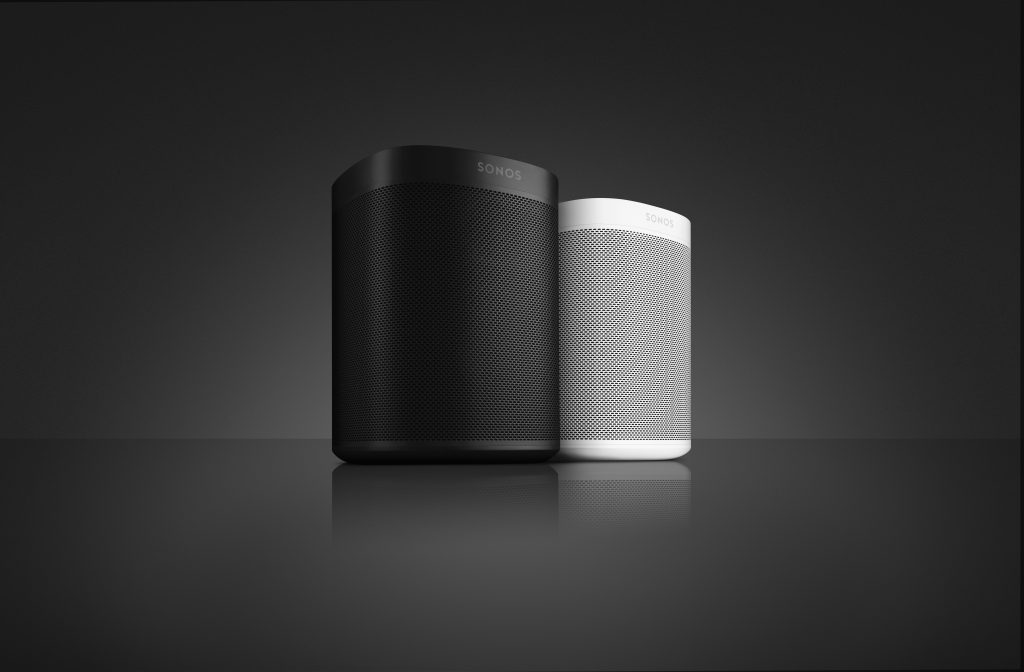
Sonos Era 300 and Era 100 Smart Speakers Leak Ahead of Official Launch

Earlier, we reported about Sonos working on a new premium lineup of smart speakers, which will soon go official. While the company is yet to officially launch the new speakers, they have been leaked online.

Sonos Era 300 and Era 100, which will be a part of the new premium Era lineup from the company, have been leaked online ahead of the official launch, with official images, specs, and pricing details.

Sonos One Gen 2
Sonos One

The Sonos Era 300 will be a high-end model with a unique dual-angled design and will be a direct competitor to the Apple HomePod 2. It will come with six drivers that direct sound forward, left, right, and up. Some of the features confirmed for the device include Wi-Fi 6, Bluetooth, AirPlay 2, built-in mics, auto EQ, and USB-C line-in.

It will be HomeKit/AirPlay 2 compatible and should also have Siri support as well as Alexa support. The speaker can also be used as surrounds for the Sonos Arc and Beam soundbars for an immersive Dolby Atmos setup.

On the other hand, the Sonos Era 100 will be an evolution of the Sonos One with a bigger mid-woofer for improved bass and two tweeters for a “true stereo sound.” Earlier, the speaker was expected to have support for Spatial Audio, but that will not be the case. It will feature the same set of connectivity options as the Era 300.

Coming to the pricing, the leak reveals that the Sonos Era 300, the high-end premium offering, could be priced around $450 while the Sonos Era 100 could cost around $250. While the exact launch date has not been revealed, the speakers are expected to go official in the coming weeks.

RELATED:

Source

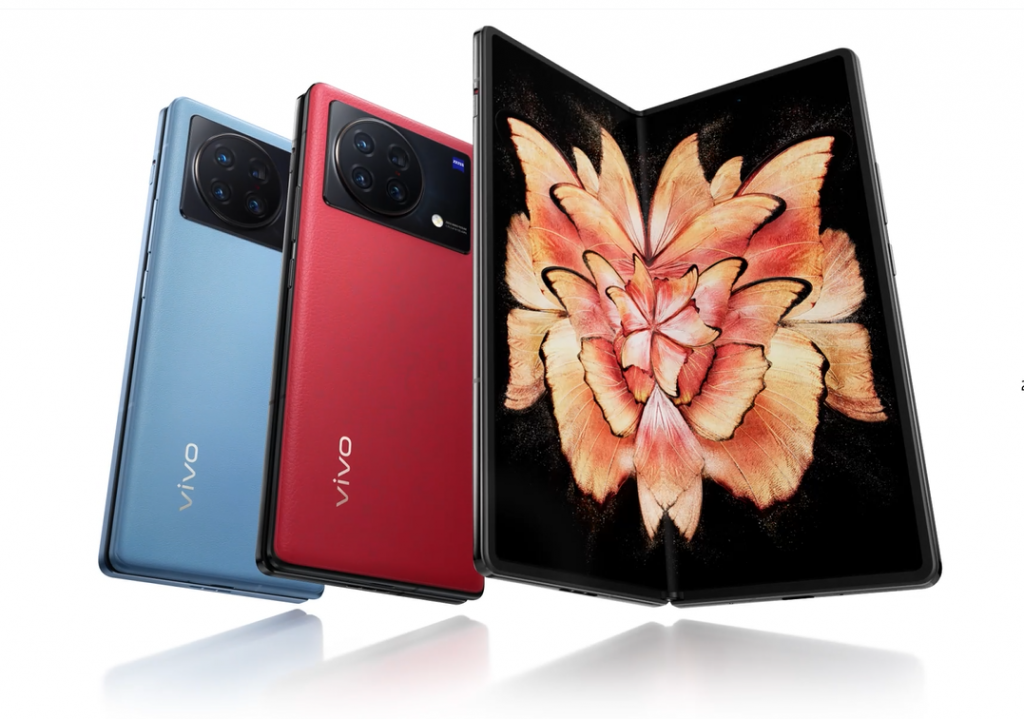
Vivo X Fold 2 Battery, Charging Capabilities Leaked

Vivo’s upcoming foldable phones. He revealed that the company will launch the Vivo X Flip, a clamshell-style device that folds vertically, and the Vivo X Fold 2, which folds horizontally, in the first half of 2022. He has previously shared details about the display, primary camera, and chipset of the X Fold 2. In a new leak, the tipster (via. TechGoing) has leaked the battery capacity and charging capabilities of the device.

Vivo launched the Vivo X Fold, featuring the Snapdragon 8 Gen 1, in April last year. Its upgraded version named the Vivo X Fold+, powered by the Snapdragon 8 Plus Gen 1, was announced in September. Both devices haven’t been released in markets outside of China.

Vivo X Fold Plus
Vivo X Fold Plus

The X Fold packs a 4,600mAh dual-cell battery with 66W fast charging. The X Fold+ came with a larger 4,730mAh dual-cell battery with 80W charging. As per the new leak, the X Fold 2 will have a 4,800mAh dual-cell battery (2 x 2,340mAh). It will support faster 120W charging. Like the X Fold and Fold+, the Fold 2 may offer 50W wireless charging and 10W reverse wireless charging.

The Vivo X Fold 2 is likely to debut as the world’s first foldable phone featuring the Snapdragon 8 Gen 2 chipset. The tipster has previously claimed that it will be a thin and lightweight device. The inner foldable screen will support 2K resolution. The cover display as well as the foldable screen are expected to come equipped with an ultrasonic in-display fingerprint scanner. For photography, it will have a Sony IMX866 primary camera with OIS support. The other details of the device are yet to be confirmed.

In today’s leak, DCS said that the Vivo X Fold 2 will debut in April this year. There is a possibility that the Snapdragon 8 Plus Gen 1-powered Vivo X Flip may also break cover alongside the X Fold 2. At present, there is no information available on the other specs of the X Flip.

RELATED:

(source)

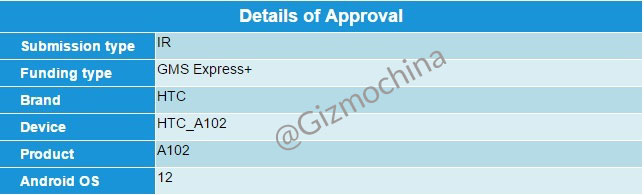
Budget-Friendly HTC A102 Launching Soon: 11-Inch Display, MediaTek Processor, and Android 12

More and more people prefer to use tablets for work and study, and tablet performance meets a variety of work and study needs. In response to this trend, many brands have focused on the tablet market. And there seems to be a new tablet launching soon under the name the HTC A102.

HTC A102 comes with an 11-Inch display and MediaTek processor

The HTC A102 is a new tablet that has recently appeared in Google GMS Certification, indicating that it is undergoing testing and evaluation by the organization and is likely to be released onto the market in February. The HTC A102 is expected to be a mid-range or budget tablet, judging from its specifications.

According to the information available, the HTC A102 is a 4G Wi-Fi tablet with an 11.0 inch 2K display, featuring a resolution of 2000*1200 pixels. It is powered by the MTK G85 processor, which consists of Arm Cortex-A75 and Arm Cortex-A55 cores running at 2GHz and 1.8GHz respectively. The device has a 20MP main camera and an 8MP front camera with face detection and AI face unlock capabilities.

Running on Android 12.0, the HTC A102 has 8GB of RAM and 128GB of ROM, which can be expanded via a MicroSD card up to 256 GB. It is equipped with an 8000mAh battery and features Bluetooth 5.0 and dual-band Wi-Fi support. The device also has a Type C USB 3.0 port and supports OTG. In terms of sensors, the HTC A102 is equipped with an ambient light sensor, proximity sensor, gravity sensor, gyroscope sensor, acceleration sensor, and a Hall sensor.

HTC A102’s 2K display and powerful processor make it a great device for media consumption and productivity. The large battery capacity and support for dual-band Wi-Fi ensure that the device can handle heavy usage without running out of power or suffering from slow internet speeds. The expandable storage, USB 3.0 port, and support for OTG also make it a convenient device for storing and transferring files.

It will likely appeal to consumers and businesses looking for an affordable tablet for work, entertainment, and communication. Overall, the HTC A102 seems like a feature-packed tablet for the African market first, then other global markets.

We’ll keep you updated as we receive more details.

RELATED:

Xiaomi Smart Door Lock M20 Cat Eye Version Now up for Pre-sale; Priced at 1,899 Yuan (~$277)

Xiaomi has launched several products other than smartphones as it has a wide portfolio. In the latest development, the Chinese company has launched a new smart door lock in the Chinese market.

The newly launched Xiaomi Smart Door Lock M20 Cat Eye Version is now available for pre-order in China for the price of 1,899 yuan which roughly converts to $277.

Xiaomi Smart Door Lock M20 Cat Eye Version

The Xiaomi Smart Door Lock M20 Cat Eye Version comes with a large screen on the device that acts as a peephole, a feature that was missing in the original version of the M20 launched sometime back.

It comes with a built-in 180-degree ultra-wide angle camera with an f/2.0 aperture lens and support for a screen resolution of 2048 x 1536 pixels. It appears that the company will be providing free cloud storage where the recorded video clips will be stored for free for three days.

The device has a 3.97-inch display, making it easier for users to take a look at the outside activities from inside the house. There’s also an innovative anti-pitch design, a fully automatic noise-reducing lock body with support for automatic locking, and is also equipped with an inductive electronic doorbell with multiple unlocking methods.

Xiaomi Smart Door Lock M20 Cat Eye Version comes with support for the Xiaomi Smart Home Ecology. As for the battery, the door lock has a battery life of 12 months, while the Cat Eye unit has a battery life of around 4 to 6 months.

RELATED:

Android Smartphones in India Differ From the Rest of the World

Android is the world’s most popular mobile operating system, used by billions of devices made by hundreds of different manufacturers. Although the overall experience remains similar for most users, Google has had to make a series of changes to its Android platform in India following a ruling by the country’s competition watchdog. Here are the details…

India to Receive Unique Android Experience with Optional Google Apps

According to the latest reports, Android smartphones in India will receive a version of Google Mobile Services (GMS) that comes with optional Google apps. The new Indian Mobile Application Distribution Agreement (IMADA) between OEMs and Google will only require the installation of the Google Play Store. Rather than the 11 key Google apps mandated by the standard agreement in other markets. However, Google will offer a “per-app bounty” to smartphone makers who pre-install any of these 11 apps.

Google Mobilem Services (GMS)

The IMADA also differs from other markets in that it doesn’t require smartphone makers to include; Google search bar, Google app folder, or Play Store icon on the main screen. Additionally, the agreement will allow Indian users to choose their default search engine during the setup process. Similar to the provision in Europe, with this option expected to be available from Q2 2023.

The changes will only apply to smartphones sold in India. The introduction of these changes is significant as it shows that Google is willing to make adjustments to its products and services to meet the specific needs of different markets. It’s a positive development that Google is willing to work with regulators and tailor its offerings accordingly.

Android smartphones

The changes is not yet officially confirmed by Google. However, the report is in line with recent developments in India’s tech industry, India is the world’s second-largest smartphone market after China, and companies like Google must work with Indian regulators to stay in the market. However, we will see in the future whether the gap between the Asian country and the US technology giant will open up due to these developments.

RELATED:

(via)

South Korea Announces Plans for 6G Network Service Launch in 2028

The deployment of 5G infrastructure is underway wor5G infrastructure works are continuing at full speed almost all over the world. However, the number of people who can use this modern connection technology today is very limited. While 5G is available in a few pilot test areas, it is not yet widely available in many regions. Nevertheless, in developed countries such as South Korea, which is already one of the world’s leading technology hubs, 5G is more widely available. In fact, South Korea has recently announced that it plans to launch its 6G network. Here are the details…

South Korea plans to launch 6G network service in 2028

South Korea has recently announced that it plans to launch its 6G network service in 2028, two years ahead of schedule, as it seeks to secure an early advantage in the future wireless frequencies. The country’s Ministry of Science and ICT announced the K-Network 2030 plan, which aims to develop world-class 6G technologies, innovate software-based next-generation mobile networks, and strengthen the network supply chain.

The advanced plan also aims to encourage local companies to produce materials, parts, and equipment for 6G technology in the country, and to develop an open RAN that is compatible with any mobile device and enables mobile carriers and enterprises to offer flexible services. Additionally, the ministry is conducting a feasibility study for a research and development project on core 6G technologies worth KRW 625.3 billion ($481.7 million).

South Korea’s efforts to lead in the development of 6G technology come as the country seeks to maintain its leading position in the global competition for future network infrastructure. As the demand for higher speeds and lower latency in wireless communications continues to rise, the country is looking to retain its competitive edge following the 5G network race. According to the German analysis firm IPlytics, South Korea accounted for 25.9 percent of the number of 5G patents last year, closely following the market leader China with 26.8 percent.

6G

The advanced plan will also create new opportunities for local companies and researchers to participate in the development of 6G technology. By encouraging the production of materials, parts, and equipment for 6G technology in the country, the government hopes to create new jobs and promote economic growth. The open RAN system will also enable mobile carriers and enterprises to offer flexible services, which could create new business opportunities in the telecommunications sector.

With this move, the country hopes to secure an early lead in the next generation of wireless technology, as well as promote innovation and economic growth.

RELATED:

(via)

Sandbox VR and Netflix Bring Squid Game to Real-Life with Immersive VR Experience

Netflix‘s Squid Game, which premiered last year, quickly became one of the most watched series of all time. While fans eagerly await the release of the second season, Netflix is busy leveraging the brand to its fullest potential. The latest partnership involves a Hong Kong-based VR start-up, Sandbox VR, which specializes in providing an immersive gaming experience with cutting-edge equipment and hardware. Here are the details…

Sandbox VR and Netflix Bring Squid Game to Real-Life with Immersive VR Experience

Hong Kong based Sandbox VR has collaborated with numerous entertainment and media companies to create realistic and fully immersive experiences for users. Their Star Trek-themed game, developed in collaboration with CBS, was a hit among sci-fi fans. The company’s newest collaboration with Netflix is based on the dystopian thriller Squid Game, which has gained worldwide attention for its intense gameplay and gripping storyline.

Squid Game

According to CEO and founder Steve Zhao, the company’s content team in Hong Kong has been working on the Squid Game experience for the past five months, and it will be launched later this year at Sandbox VR’s arcades across the globe. Sandbox VR’s expansion plans have been supported by investors such as Adreessen Horowitz, Gobi Partners, and Alibaba Group Holding. The company has 34 locations worldwide and is building 12 new ones.

Despite the setbacks of the pandemic, the company has rebounded and is now focused on increasing its global footprint to 40 locations by the end of 2022. Zhao confirms that the company is already profitable and has no plans to raise new funds at this time. Sandbox VR’s journey has not been without challenges, and the pandemic dealt a severe blow to the company’s business, leading to its US operations filing for Chapter 11 bankruptcy in 2020.

However, the company has recovered and is now expanding its headcount, with 50 people working on research and development across product, technology, and content. Though the company’s growth in mainland China has been slow, it is making steady progress, and Zhao expects the location in Shanghai to return to normal operations this year. The company’s focus, for now, remains on the US market, where its collaborations with leading entertainment companies have proven to be a winning strategy.

As the virtual reality market is expected to grow significantly in the coming years, Sandbox VR is well-positioned to take advantage of this trend. With its unique approach to location-based VR and collaborations with entertainment giants like CBS and Netflix, the company hopes to continue its growth trajectory and offer guests a fully immersive experience that meets their fantasies. With the Squid Game collaboration, Sandbox VR is confident it will attract even more visitors to its VR facilities.

RELATED:

(via)

XGIMI H6 4K Projector With a 150-inch Display Size, Harman Kardon Custom Speakers Unveiled

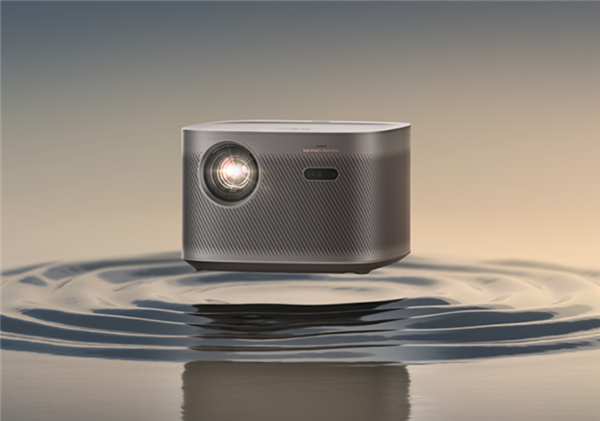
Chinese projector manufacturer XGIMI has unveiled a new flagship product under the H-series. The product is dubbed XGIMI H6 4K projector and carries a starting price tag of 6,999 yuan ($1020). It is presently available in China via Jingdong (JD.com) but no word yet on its global availability.

XGIMI H6 4K Projector

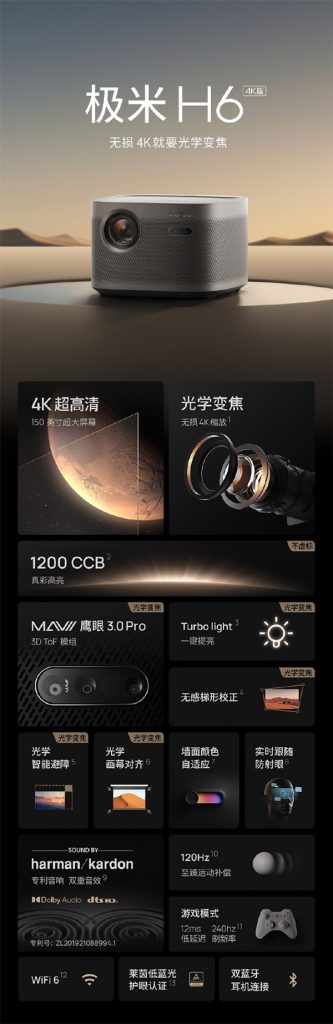
The XGIMI H6 4K Projector is equipped with an optical zoom lens having a brightness of 1200CCB. The lens can churn out a resolution of up to 3840 x 2160 pixels and a display of 1.07 billion colors. The video is compensated to 120 frames through the MEMC algorithm.

With the XGIMI MAVII Eagle Eye 3.0 Pro system, the optical zoom of the self-developed optical machine is prioritized. This leads to a reduction in the loss of image quality by 36%. Also, the projection ratio can be freely adjusted between 1.2 and 1.5, and the room adaptability is increased by 25%.

When the XGIMI H6 4K version has a projection ratio of 1.5:1, it can project a 120-inch screen at a distance of 3.98 meters from the wall. When the projection ratio is 1.2:1, it can project a large screen of 150 inches at a distance of 3.98 meters. Furthermore, the projector uses optical zoom technology to bring a Turbo Light engine, which can automatically sense changes in ambient light and perform one-key brightening, with a brightness increase of 39%.

The XGIMI H6 4K Projector is powered by a Quad-core MediaTek MT 9669 flagship chipset with an NPU computing power of up to 1 trillion operations per second. The processor is paired with 4GB RAM while there is 64GB storage onboard the device.

In addition, the new projector can analyze the color of the wall and adjust the red, green, and blue light sources in real time. The color temperature range can be between 3000-15000K calibration.

XGIMI H6 4K Projector

In other respects, the XGIMI H6 4K version supports GMUI5.0 with a 4-second fast boot. It is also equipped with a Harman Kardon custom speaker and features support for a dual Bluetooth headset connection. For interface, the projector comes with a DC power port, two HDMI 2.1, two USB 2.0, and a 3.5mm headphone jack, among others.

RELATED:

Pebble Launches Spectra Pro and Vision BT Calling Smartwatches in India

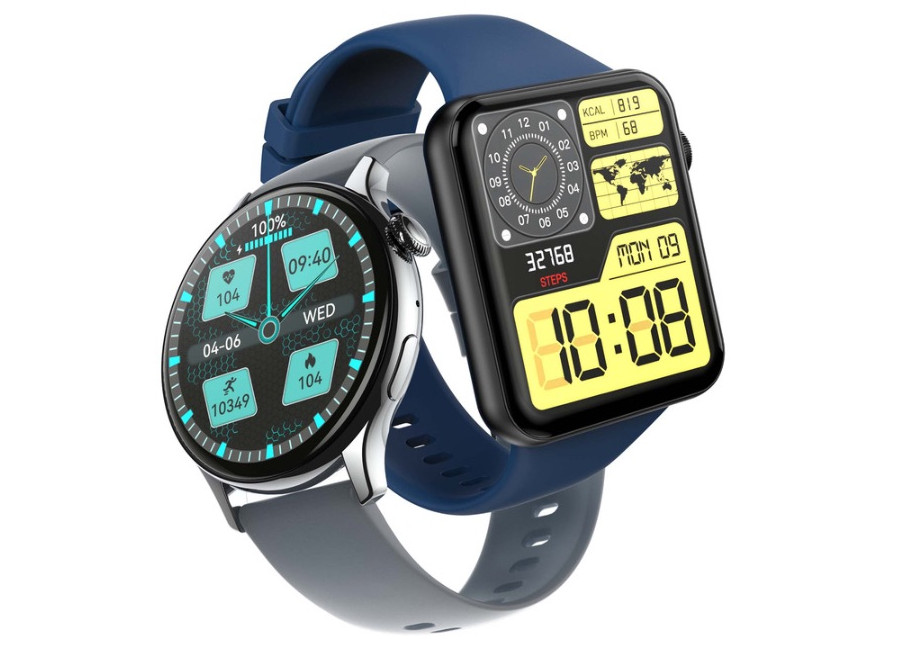
Expanding its portfolio, Pebble introduced two new smartwatches in the Indian market. Called Pebble Spectra Pro and Vision, the wearables come with Bluetooth calling feature and an immersive display. They both feature interesting designs and are quite affordable. Let’s have a closer look at the pricing and specifications of the newly launched smartwatches.

Pebble-Spectra-Pro-and-Vision

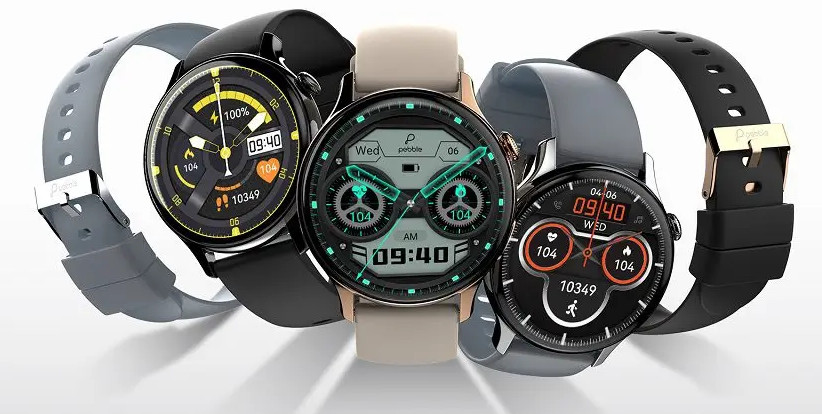
The Pebble Spectra Pro comes with a round dial with a metallic casing and a rotating crown, while the Vision features a more common square dial with a metal alloy casing, a rotatable crown, and curved glass edges. Both watches have silicon straps and are offered in multiple color options.

Moving to the specifications, the Pebble Vision sports a 2.05-inch HD screen that offers a peak brightness of up to 600 nits. On the other hand, the Spectra Pro flaunts a smaller but better 1.43-inch Always-On AMOLED screen with the same peak brightness of 600 nits. There’s support for over 100 watch faces, allowing you to opt for a new look every day.

Pebble-Spectra-Pro

Both watches support Bluetooth calling with the help of inbuilt speakers and microphones. The health monitoring features on the smartwatches include a dedicated SpO2 sensor, a heart rate monitor, a stress monitor, a sleep monitor, and the Pebble Zen Mode. They both come with multi-sport and training modes and up to 7 days of battery life.

The Pebble Spectra Pro is offered in Midnight Gold, Evening Grey, Jet Black, and Moonlit Grey colors and comes with a price tag of Rs. 4,999. Priced at Rs. 3,599, Pebble Vision comes in Jet Black, Forest Green, and Evening Blue colors. They both can be purchased via Pebble Website and offline stores.

RELATED:

MIJIA Booster Hand Shower With Three Spray Modes Released in China

Xiaomi has launched the MIJIA Booster Hand Shower in China. The new handheld pressure booster shower will be available via a crowdfunding campaign starting on February 22. The MIJIA hand shower has three spray modes and also features an innovative button control. You can switch the spray with your fingertips no matter whether you hold it upright or backward.

MIJIA Booster Hand Shower

The MIJIA supercharged handheld shower has gone through 22 electroplating processes. It has also passed the 24-hour salt spray national standard to create a 10-level bright coating. The soft-touch spout of the hand shower is made of liquid silicone material. You can quickly descale the process by gently rubbing the spout to keep the water flowing. The gears of the MIJIA supercharged hand shower are clear and have a lifetime of 10,000 cycles. The hand shower adopts the small hole physical pressurization technology which allows for powerful flow under low pressure.

MIJIA Booster Hand Shower

The MIJIA supercharged hand shower comes with significant improvements in its sound output. There are structural changes done to the product to reduce the noise of water inflow to improve the shower experience. The shower head has a universal four-point interface with an anti-scald handle design. The grip of the handle of the MIJIA supercharged hand shower is thus very firm and comfortable.

MIJIA Booster Handheld Shower

The crowdfunding price of the MIJIA Booster Hand Shower is 59 yuan (~$9). As mentioned earlier, the crowdfunding campaign kicks off on February 22, 2023. There are no indications yet when the model will be available to customers. Xiaomi has also been silent on the subsequent global availability of the hand shower.

RELATED:

Redmi Book Pro 15 Enhanced Version With Intel Core i5-12500H Processor Launched

Xiaomi has launched an enhanced version of its 2022 Redmi Book Pro 15 laptop. The new laptop comes with an improved Intel Core i5-12500H processor. The new laptop will go on display on February 21, 2023.

Redmi Book Pro 15 Enhanced Version

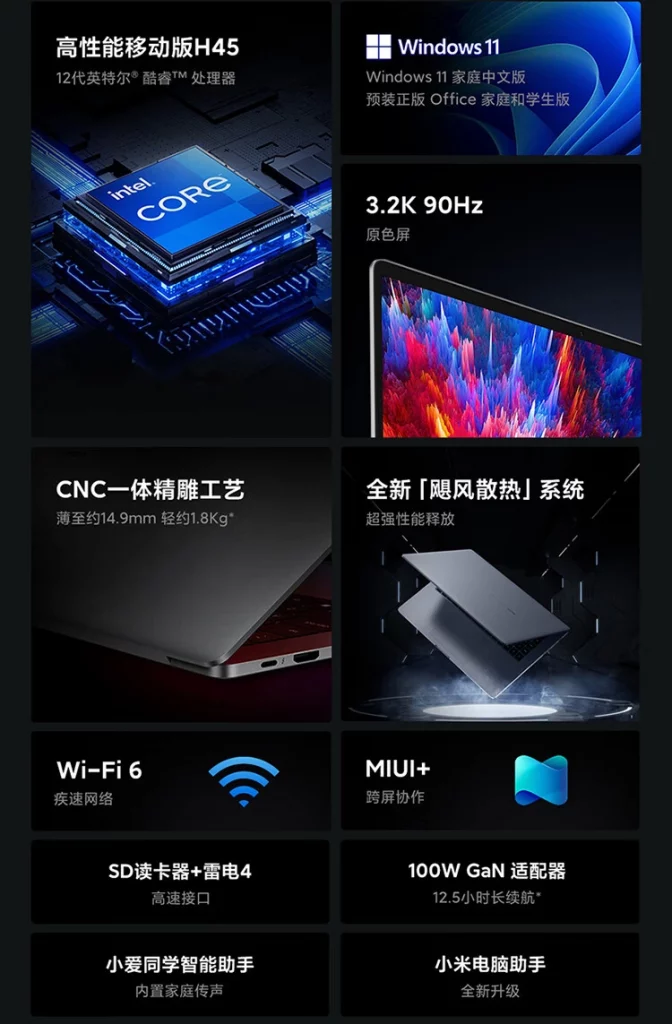
The Redmi Book Pro enhanced version is equipped with a 12-core 16-thread processor (i5-12500H) with 16GB LPDDR5 5200 memory and 512GB PCIe 4.0 solid-state drive. It has a 15-inch 3.2K display with a 90Hz refresh rate and a 16:10 aspect ratio. The laptop has a maximum brightness of 400 nits and a delta E of less than 1.5. It also supports intelligent photosensitive and DC dimming, as well as being TUV Rheinland-certified for low blue light compliance.

The latest Redmi Pro Book 15 iteration uses CNC technology and weighs 1.8kg. It is 14.99mm thick and has a 72Wh battery in-built. The battery provides juice for the laptop for up to 12.5 hours. The laptop is pre-installed with Windows 11 and Microsoft Office. It has a full-size backlit keyboard while the connectivity options include Thunderbolt 4, USB-C/A, and HDMI 2.0. A high-speed card reader and Wi-Fi 6 connectivity are also part of the mix.

Redmi Book Pro 15 Enhanced Version

The refreshed Redmi Pro Book 15 is priced in China at a launch price of 4,799 yuan (~$700). It will subsequently revert to its original price of 5,999 yuan (~$875) after the launch period. There are no details yet on the global availability of the product.

RELATED

TSMC Pushes Back Opening of European Factory by Two Years

TSMC, one of the world’s largest semiconductor manufacturers, has postponed its plans for a new factory in Europe due to the changing supply and demand of automotive semiconductors. Originally set to open earlier, the European factory will now be delayed for at least two years, and it’s not expected to be completed until 2025.

TSMC Pushes Back Opening of European Factory by Two Years

TSMC had been exploring the possibility of establishing a special process fab in Europe focused on automotive technology, based on customer needs and the support of governments in various countries. However, with the current correction of the semiconductor economy, major foundries are now dispatching more production capacity to produce automotive chips, resulting in an improvement of the chip shortage and even a balance between supply and demand.

TSMC

The delay in TSMC’s European factory could mean that European automotive chip customers will continue to stay in TSMC’s Taiwan plant, or even move to new plants in Japan and the United States, which would help TSMC use the production capacity of its overseas plants. Meanwhile, Japanese officials are encouraging TSMC to set up a second fab in Japan, supported by the introduction of extreme ultraviolet light (EUV) machines. This could allow TSMC’s Japanese plant to support more advanced process needs of local and international automotive semiconductor customers.

Industry analysts believe that this shift could be beneficial for TSMC, especially given the fluctuating economic climate and high inflation pressure, which make the cost of setting up factories in Europe much higher than in the United States and Japan.

RELATED:

(source)

LineageOS 20 Arrives on the Google Pixel 6, Pixel 7, & More

The LineageOS team has been working hard to bring the latest LineageOS 20 software based on Android 13 to more smartphones. After releasing the first set of official builds for more than 50 devices, including the older Pixel phones, the team has now added support for all of Google’s Tensor-powered phones, including the Pixel 6 and Pixel 7 series. Here are the details.

LineageOS-20

The latest devices being added to the official roster are the Pixel 7, Pixel 7 Pro, Pixel 6, Pixel 6a, and Pixel 6 Pro. This will be the first time Google’s Tensor-powered phones will be able to run the popular custom ROM. Last month, the development team released a new version, bringing full Android 13 support to a sizeable number of devices, including Google phones up to the Pixel 4.

Below you can find the detailed instructions and download links for the newly added phones:

  • Pixel 6 (oriole)- Wiki
  • Pixel 6 Pro (raven)- Wiki
  • Pixel 6a (bluejay)- Wiki
  • Pixel 7 (panther)-Wiki
  • Pixel 7 Pro (cheetah)-Wiki

The new LineageOS 20 brings all the new Android 13 features as well as a revamped camera app, Aperture. The custom ROM is known for its near-stock UI and superior security and privacy features. However, these features may not impress Pixel users as their phones already come with a clean and bloatware-free UI.

You may install the LineageOS 20 on your Pixel 6 or 7 series device if you want to mod it without any restrictions. However, you should know that custom ROMs may void your device’s warranty, and they can even brick your phone if not installed properly. Additionally, some apps may not work properly with custom ROMs.

Related:

(Via)

Lenovo Kaitian N8 Series Notebook With a Domestic Zhaoxin Kaixian KX-6000 Processor Launched in China

Chinese tech giant Lenovo has launched a new laptop series known as Kaitian N8 series in its home market of China. The new notebook series is equipped with the domestic Zhaoxin Kaixian KX-6000 processor which throws up the potential that this series will be a China-only series.

Lenovo Kaitian N8 Series

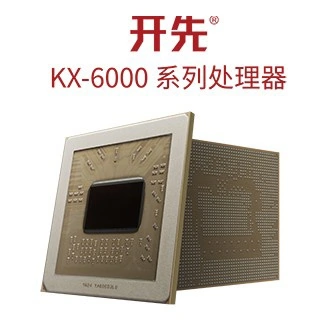
Perhaps, the most interesting feature of the new notebook is the processor as it is manufactured by Zhaoxin, a China-based semiconductor company. The Kaixian KX-6000 processor is an octa-core processor manufactured on the 16nm process and with a maximum clock frequency of 2.7GHz. The processor pairs with 16GB dual-channel DDR4 memory and 512GB NVMe SSD. It is also equipped with an integrated graphics card supporting 4K resolution and 4K video hard decoding.

Lenovo Kaitian N8 Series

In terms of design, the Kaitian N8 Series notebook adopts a 14.6mm all-metal space gray body manufactured using a CNC finishing process body. The notebook weighs as low as 1.29kg. It packs a 14-inch IPS HD display with a resolution of 2240 x 1400 pixels and a 91% screen ratio. The display supports anti-glare eye protection, no strobe, and 100% sRGB color gamut. The laptop can also be opened up to 180 degrees, making it possible to be used in tablet mode.

Lenovo Kaitian N8 Series

In addition, Lenovo Kaitian N8 supports WiFi 6+ and Bluetooth 5.0. It is also equipped with a smart backlit keyboard with the same color anti-fouling coating used on the body. The laptop also houses a super-large silky glass touchpad, fingerprint recognition, hard disk encryption, USB smart protection + one-key recovery. It is powered by a 61Wh battery.

The pricing and availability details of the Lenovo Kaitian N8 Series are yet to be released.

RELATED:

Realme C55 Gets SIRIM Certified, Could Launch Soon

Realme is planning to launch a new budget-range smartphone in the global market called the Realme C55. This device will be the successor of the Realme C35. It has already appeared on NBTC, BIS, FCC, and EEC certification websites, and now, it has also cleared SIRIM certification.

Realme C35

Although the certification doesn’t mention anything about the specs, it does confirm that the device bearing model number RMX3710 is indeed the Realme C55. According to the previous FCC listing, the smartphone will have a 4880mAh battery. It will also have a 33W fast charging. Currently, we do not know about any other specifications of the Realme C55. However, we can take a look at its predecessor to get an idea of what to expect.

Realme C35 specs

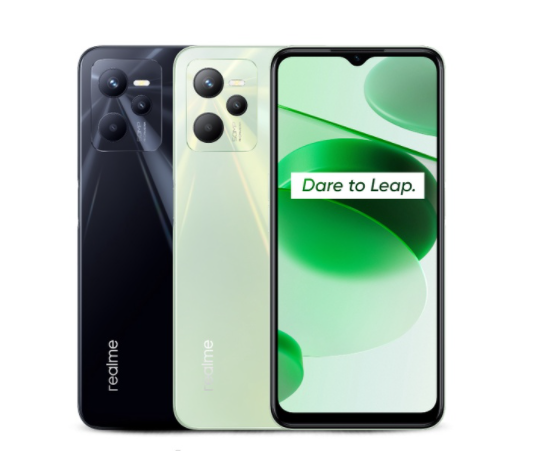
The Realme C35 flaunts a 6.6-inch LCD display with a high FHD+ resolution of 2408 x 1080 pixels, featuring 401 PPI and a responsive touch sampling rate of up to 180 Hz. It sports a minimal dewdrop notch housing the selfie camera and delivers peak brightness levels of up to 600 nits.

Realme C35

Under the hood, the smartphone packs a UNISOC T616 SoC coupled with LPDDR4x RAM and UFS 2.2 storage. It houses a large 5,000mAh battery with 18W fast charging support and comes pre-installed with realme UI 2.0 based on Android 12.

The Realme C35 comprises a triple camera module on the rear, housing a 50MP primary sensor, a 2MP macro lens, and a 2MP monochrome sensor. On the front, it has an 8MP camera, apt for selfies and video calls.

The device features a side-mounted fingerprint scanner, dual-SIM support, 4G, dual-band Wi-Fi, Bluetooth 5.0, GNSS, USB Type-C, and a microSD card slot for expandable storage.

RELATED:

Heybike Tyson e-Bike With a Range of 55 Miles, 4G, Bluetooth and GPS Launched

The Heybike Tyson e-bike has been unveiled. The latest Heybike offering comes with a 750W electric motor and support for a raft of modern features. The Tyson has a foldable form factor and hydraulic front-fork suspension. The bike’s disc brakes offer excellent stopping power and its one-piece foldable design pits it squarely against its competitors.

Heybike Tyson e-bike
Heybike is proud to announce the launch of Tyson E-bike

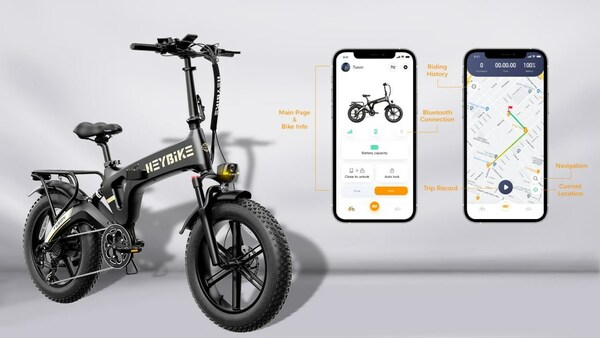
Apart from its foldable construction, the Heybike Tyson has a rear rack and optimal battery positioning. It squares up nicely with the ENGWE but Heybike says the Tyson offers greater peace of mind with a raft of modern features. It supports 4G network connectivity, Bluetooth, and GPS with push notifications. The GPS notification alerts the owner when the e-bike is being moved from its parking position.

The Tyson has a companion smartphone app that gives the user information on the trip (battery status, mileage, navigation, and general status reports). The Tyson’s 48V/ 15Ah battery delivers a pedal assist range of 55 miles and 40 miles without pedal assist. The Tyson has a 7-inch TFT display for modulating the power and speed while riding. The bike has a top speed of 28mph (45km/h) and is a Class 2 vehicle. It has a 7-speed Shimano gear and will be available in three colors – blue, green, and black.

Heybike Tyson e-bike

Heybike says the Tyseon e-bike will be open for pre-order from March 1, 2023, on the company’s website. It is being offered at an exclusive pre-sale price of $1,699 for persons on the waitlist.

RELATED

(source)

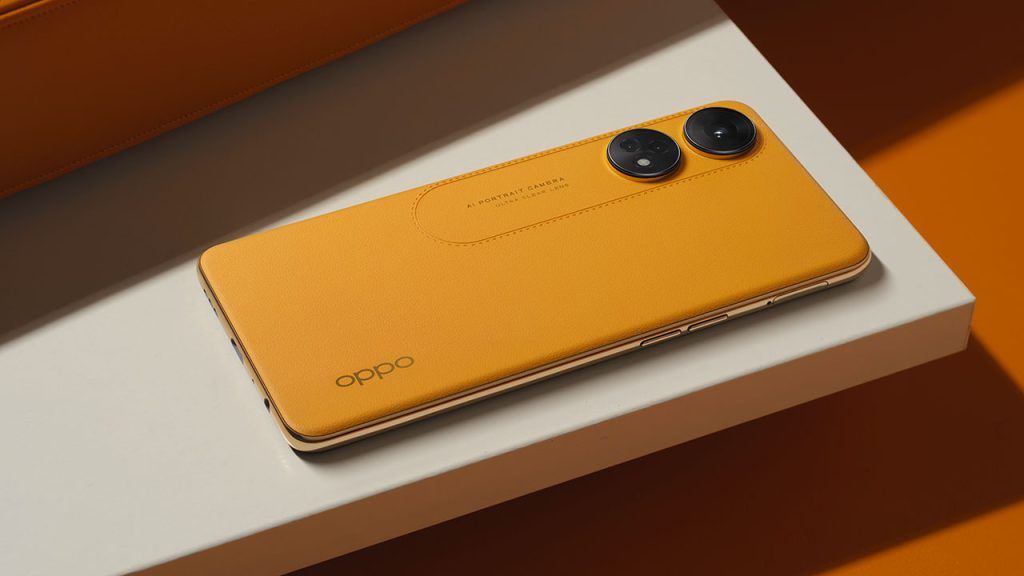
Oppo Could Be Testing a New Phone in India With Reno 8T-like Design

Oppo recently launched the Reno 8T in the Indian as well as the global market with an interesting design and decent specifications. However, the company is apparently not over with the 8T’s design and may reuse it in an upcoming smartphone. A report claims Oppo is testing a new budget smartphone in India, which will look identical to the recently launched Reno 8T.

A 91Mobiles report, citing tipster Sudhanshu Ambhore, claims that Oppo is testing a new affordable smartphone in India with model number CPH2527. While the handset’s marketing name and specifications are still a mystery, the publication says it will look similar to the Oppo Reno 8T. However, the unknown device won’t have a side-mounted fingerprint sensor or curved display.

Oppo Reno 8T

Details about this upcoming device are pretty scarce. We can expect it to arrive as a mid-range or budget model with decent specifications, like a large display, capable cameras, and a long-lasting battery. We should be learning more about the smartphone in the coming days. Meanwhile, let’s go through the specifications of the Oppo Reno 8T.

OPPO Reno8 T 5G specifications

OPPO Reno8T arrives with a 6.7-inch Full-HD+ 10-bit AMOLED display. The panel boasts a micro-curved design with OPPO glow, 120Hz refresh rate, and 1080 x 2412-pixel resolution. It is powered by the Qualcomm Snapdragon 695 SoC paired with 8GB RAM and 128GB storage. On the software front, there’s Android 13-based ColorOS 13.

The handset gets a 4,800mAh battery with 67W fast charging support. There’s a triple camera setup on the back, with a 108MP primary sensor, a 2MP depth sensor, and a 40x MicroLens camera. For selfies, the device gets a 32MP snapper on the front.

RELATED:

(Source)

OnePlus Ace 2 Dimensity Edition to Launch Next Month with Downgraded Primary Camera

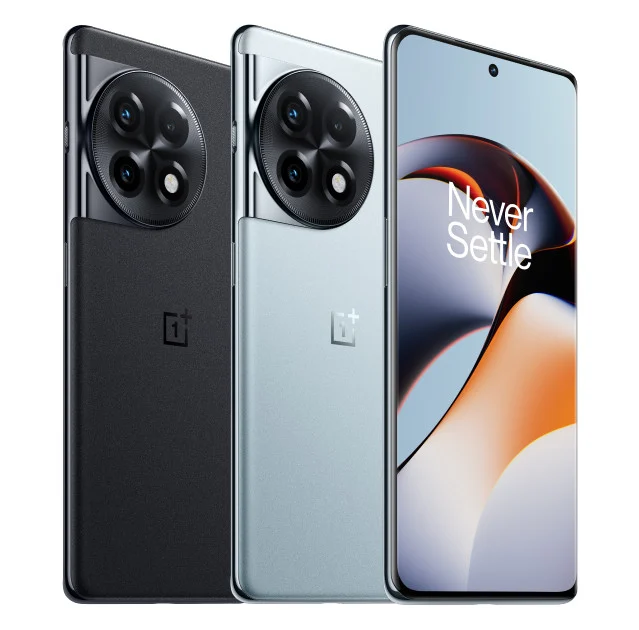
OnePlus recently launched the OnePlus Ace 2 smartphone in China. The same device was also launched in the global market under the OnePlus 11R moniker. The device is powered by Snapdragon 8+ Gen 1 chipset. A leak earlier this month revealed that there will soon be a Dimensity Edition of the OnePlus Ace 2 with the Dimenity 9000 chipset onboard.

OnePlus Ace 2

Now, a new report has revealed that the OnePlus Ace 2 Dimensity Edition will be launching next month. The leak comes from popular Weibo tipster DCS (via) who also reveals some more details about the upcoming phone.

According to DCS, the Ace 2 Dimensity Edition will have a 6.74-inch AMOLED display with a 1.5K resolution, offering 2772 × 1240 pixels, 1450 nits of peak brightness, 100 percent DCI P3 color gamut, 1440Hz high-frequency PWM dimming, and an adaptive refresh rate that can go up to 120Hz. The report also mentions that the Ace 2 Dimensity Edition will have a different camera setup which will consist of a 64MP OV64M main camera, an 8MP Sony IMX355 camera, and a 2MP macro camera.

Compared to the 50MP Sony IMX890 primary camera, the 64MP Omnivision sensor is quite a downgrade. Other specifications appear to remain the same. This means that the device will likely have a 5,000mAh battery paired with 100W SuperVOOC fast charging and an Android 13-based ColorOS 13 operating system. The price of this is expected to be lower that the OnePlus Ace 2.

RELATED:

Global Xiaomi 13 Pro Stops by Geekbench Ahead of Launch

Xiaomi 13 series was unveiled in China last year in November and the lineup has been on the shelves for quite some time now. Now, the company is ready to bring its latest number series, which includes the Xiaomi 13, Xiaomi 13 Pro, and Xiaomi 13 Lite, to the global market on February 26. While we wait, the top-end model of the series has visited the Geekbench website, revealing some interesting details in the process.

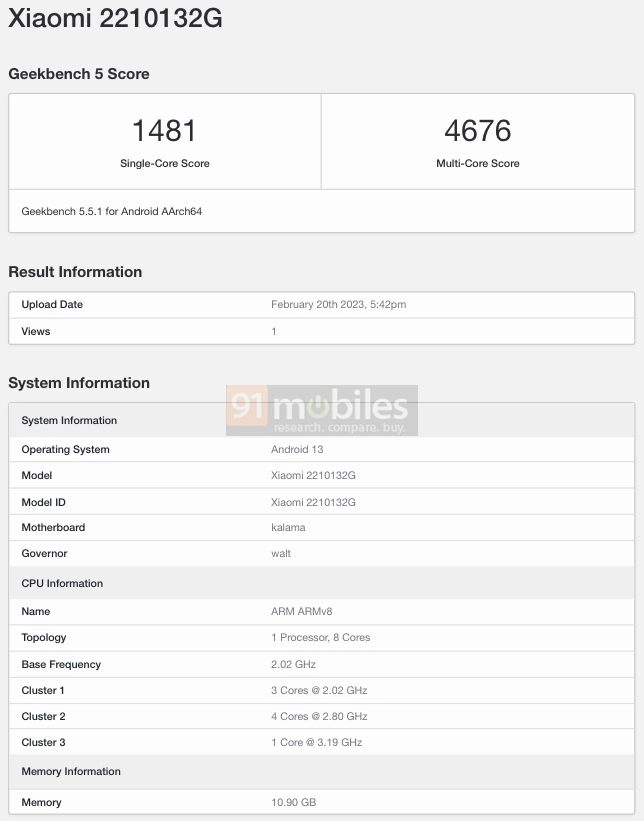
Xiaomi 13 Pro has visited the Geekbench benchmarking site with model number 2210132G. The handset has been listed with an octa-core processor, codenamed “Kalama”. We already know it is Qualcomm’s latest and greatest Snapdragon 8 Gen 2 SoC. The listing reveals the global version of Xiaomi 13 Pro will have 12GB of RAM and run Android 13 out of the box.

Xiaomi-13-Pro-Geekbench

The handset has received a single-core score of 1481 and a multi-core score of 4676. While these scores may seem impressive, the Chinese variant of the device did better. For reference, Xiaomi 13 Pro released in China managed to get a score of 1504 in single-core and 5342 in multi-core tests. However, these may be early tests and the retail units could perform better.

To recall, the handset debuted in China with a 6.73-inch 2K OLED display that offers up to 120Hz refresh rate, HDR10+ support, and 1900 nits of peak brightness. Under the hood, it is powered by the Qualcomm Snapdragon 8 Gen 2 SoC, paired with Adreno GPU.

For photography, the handset gets a Leica-tuned triple camera setup on the back. The primary sensor is 50MP. There’s also a 50MP ultra-wide-angle lens and a 50MP telephoto sensor. The front houses a 32MP shooter for selfies and video calls. It packs a 4,820mAh battery with 120W wired and 50W wireless charging support.

RELATED:

(Via)