Advertisement

Honor Win 2 and Win 2 RT get 3C certification with different charging speeds

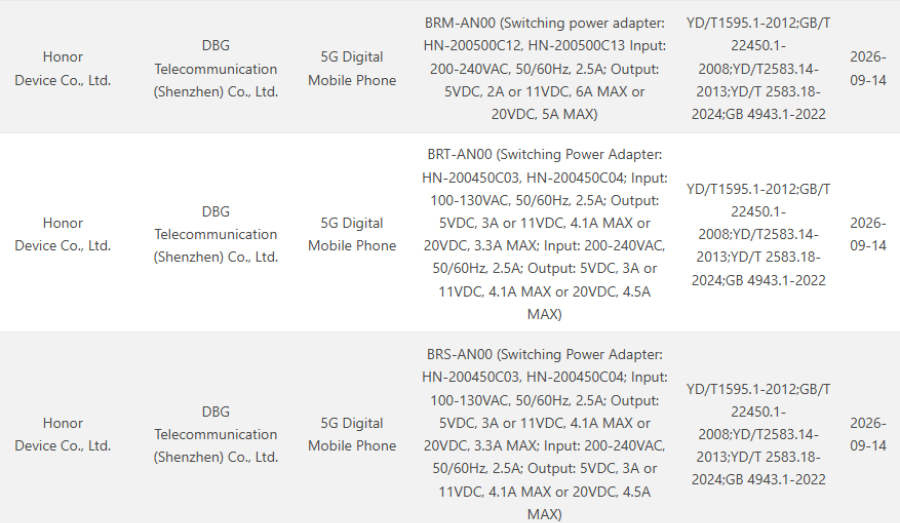
Honor‘s upcoming Win 2 and Win 2 RT have cleared 3C certification in China ahead of their expected launch in October. The listing reveals Win 2 will keep the 100W wired charging from the previous generation, while the Win 2 RT will support 90W charging — slower than its predecessor.

The original Honor Win RT supported the same 100W charging as the standard Win, despite being the more affordable model.
Honor Win 2 and Win 2 RT 3C certification

According to Digital Chat Station, the Win 2 will also have a combination of hardware that could make it stand out from other performance phones this year. The phone is reportedly the only model expected to combine Qualcomm’s Snapdragon 8 Elite Gen 6 chip with a battery larger than 10,000mAh, a built-in cooling fan, and a high-refresh-rate 2K display.

The same combination appeared in an earlier leak, so the new reveal adds credibility to the previous claim. 

Honor Win 2 could launch earlier this year

The first-generation Win and Win RT were launched in December, but Honor has been releasing phones more frequently this year. An earlier report suggested that the Win 2 series could arrive in October, around two months earlier than the original models.

Previous leaks also hint at a 6.89-inch OLED display with a 185Hz refresh rate. The phone is expected to use an ultrasonic fingerprint scanner built into the display.

Honor Win
Honor Win

The larger screen would be a small increase over the 6.83-inch panel on the current Win. There are also reports that Honor could expand the lineup to three models, with a higher-end Pro Max model joining the standard Win 2. 

The Win 2 RT is expected to use the Snapdragon 8 Elite Gen 5, which is also used in the current-generation Win.

For more daily updates, please visit our News Section.

Stay ahead in tech! Join our Telegram community and sign up for our daily newsletter of top stories!

(Source)
Xiaomi launches its first full-color day-and-night camera with 4K output

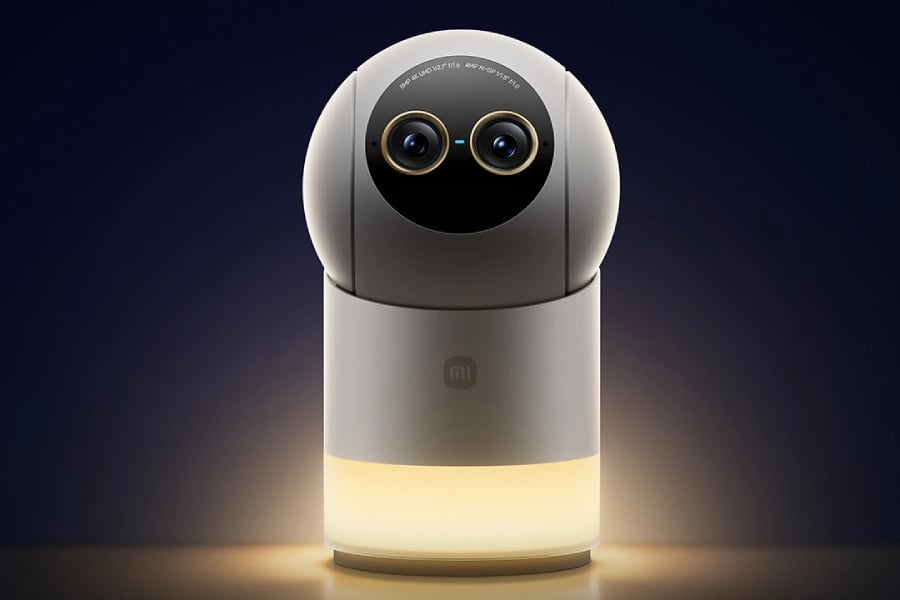
Xiaomi has started crowdfunding for the Smart Camera 5 Pro Full-Color Night Vision in China. It costs 429 yuan (~ $64) during the crowdfunding campaign, while the regular retail price will be 599 yuan (~ $90).

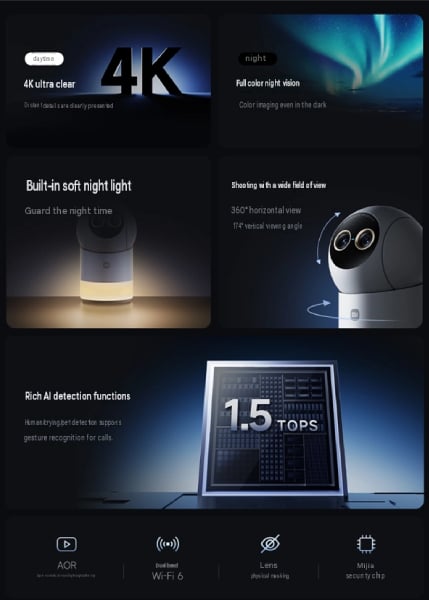
The camera is special because its what Xiaomi the company’s first “day and night full-color” camera, with the main focus being on keeping footage in color even in low-light conditions.

Xiaomi Smart Camera 5 Pro Launch Specs Price

Most affordable security cameras switch to black-and-white infrared footage when it gets dark. Xiaomi’s new camera uses an 8MP main sensor and a 4MP secondary sensor in a dual-lens setup for 4K video output and full-color night vision instead.

The camera also has a built-in soft light that can provide extra illumination when needed. There are also several night vision modes for different situations, including human detection, event-triggered monitoring, and a mode that avoids using a visible red light.

Local AI handles people, pets, and other alerts

The camera also has a local AI chip with 1.5 TOPS of processing power. It can recognize people and pets and detect crying sounds directly on the device, so this processing does not need to be sent to the cloud. 

The camera also uses a dual-motor pan-and-tilt system for wide coverage. It can rotate 360° horizontally and move through a 174° vertical range. Xiaomi is positioning it for different uses, including living rooms, nurseries, elder care, and keeping an eye on pets.

Xiaomi Smart Camera 5 Pro Specs

For connectivity, the Smart Camera 5 Pro supports two-way voice calls, Mijia Smart Connect, and dual-band Wi-Fi 6. Xiaomi says Wi-Fi 6 can improve transmission speeds by up to 60%. 

Storage options include microSD cards, cloud storage, and NAS. Xiaomi is also using its AOR all-day low-power recording system to reduce storage use while keeping important footage available.

🔌 You’ll NeedThe camera relies on a microSD card for local storage, so a high-capacity card is essential for continuous recording. Check 256GB microSD card price on Amazon →

Privacy features include lens masking, local AI processing, and access controls. These are useful additions for a camera that could be placed in private spaces such as bedrooms and nurseries.

For more daily updates, please visit our News Section.

Stay ahead in tech! Join our Telegram community and sign up for our daily newsletter of top stories!

(Via)

OnePlus 16’s “global” 165Hz could fix what the OnePlus 15 couldn’t

OnePlus has been teasing a major display upgrade for the OnePlus 16 for weeks, and the company has now confirmed one of its key details. OnePlus China President Li Jie said the OnePlus 16 will be the first phone to run ColorOS 17 and will also offer what the company calls a “global 165Hz ultra-high refresh rate.”

The claim matches what tipster Digital Chat Station has been teasing since last month. Unlike the OnePlus 15, the new phone is expected to support 165Hz across the system and regular apps instead of limiting the higher refresh rate to selected games or apps.

OnePlus 15

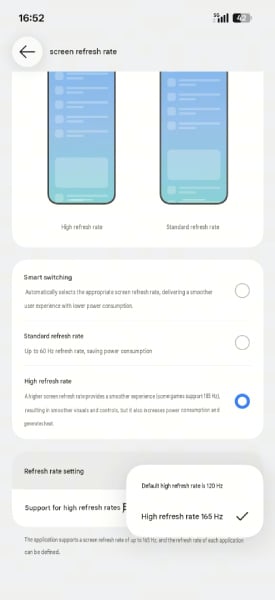
Digital Chat Station also shared a look at the settings screen for the feature. The 165Hz option sits directly in the normal display settings, so users won’t need to enable Developer Options first.

OnePlus 16 could offer 165Hz across more apps

According to the leak, the OnePlus 16 will use new Oriental Screen X4 display material and updated circuitry. The changes are said to provide hardware-level support for the global 165Hz refresh rate.

Early testing reportedly showed 165Hz working in system apps as well as apps downloaded from the Play Store. That would make the feature much more useful than simply supporting a few specific apps.

OnePlus 16 Display Setting

The OnePlus 15 already launched with a 165Hz display, but there was a major limitation. Outside a small number of supported games, the display generally ran at up to 120Hz.

OnePlus later added 165Hz support for apps such as WhatsApp, Instagram, and X through a software update. However, users had to go into Developer Options to enable it. The setting also forced the screen to stay at 165Hz instead of allowing it to lower the refresh rate when the screen wasn’t doing much. That meant the OnePlus 15 never really offered a system-wide 165Hz mode.

OnePlus has not announced the exact launch date for the OnePlus 16 yet.

For more daily updates, please visit our News Section.

Stay ahead in tech! Join our Telegram community and sign up for our daily newsletter of top stories!

(Source 1, 2)

The stable One UI 9 rollout is finally here, and here’s the initial list of confirmed Galaxy devices

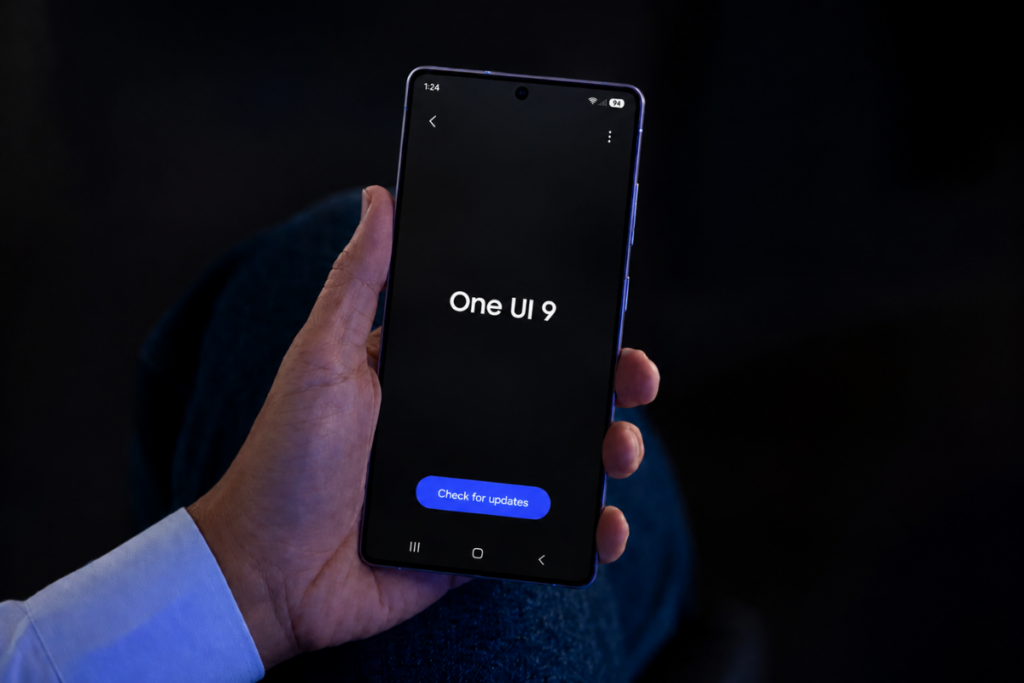
Samsung One UI 9 update rollout

After a long wait of nearly four months, Samsung has officially announced the stable rollout of the One UI 9 update for select high-end Galaxy smartphones.

In a post on the Samsung Newsroom, the brand confirmed the One UI 9 rollout for the Galaxy S26, Galaxy S26+, and Galaxy S26 Ultra. Samsung says the update will gradually expand to other Galaxy devices, without revealing their names. Hopefully, the brand will soon publish a rollout schedule that’ll tell us when to expect the update.

As for the Galaxy S26 series phones, the stable One UI 9 rollout is live, but it may not be available to all users just yet. The update rollout varies depending on your region, and so it can take a few days to reach all units.

You can navigate to Settings > Software updates > Download and install to manually check for available updates, in case the update notification hasn’t arrived.

Samsung may soon begin rolling out the One UI 9 update to devices that are already a part of the beta program. This includes:

  • Galaxy Z Flip 7, Z Fold 7
  • Galaxy Z Flip 6, Z Fold 6
  • Galaxy S25, S25+, S25 Ultra, S25 FE
  • Galaxy S24, S24+, S24 Ultra, S24 FE
  • Galaxy S23, S23+, S23 Ultra
  • Galaxy A57, A56, A55
  • Galaxy A37, A36, A35
  • Galaxy A25

One UI 9 brings tons of exciting upgrades, such as the new My FanCam for tracking a selected person in a recorded video, and new Generative and Editable Cards on Now Brief. These features are likely to remain restricted to select high-end Galaxy devices, but there are a host of changes coming to all One UI 9 devices, including an even more customizable Quick Panel, a new Tape feature in Samsung Notes, extended Game Booster options, and improved multi-monitor support and windowing options in Samsung DeX.

We’ll keep you posted as Samsung rolls out the One UI 9 update to more Galaxy devices. You can visit the Samsung section or join our Telegram channel to stay updated.

Primebook 3 Max launches with 8GB LPDDR5 RAM, 12-hour battery life and AI tools for Rs 35,990

Primebook is preparing to launch its third-generation laptop lineup in India, with the Primebook 3 Max leading the range. The new laptop combines upgraded hardware with several additions to the PrimeOS experience. Primebook is also expanding the software options available to users beyond the Android ecosystem.

Primebook 3 Max gets a major hardware and software upgrade

Primebook 3

The Primebook 3 Max features the MediaTek Genio 720 octa-core processor, with two A78 cores clocked at 2.6GHz and six A55 cores at 2.0GHz, alongside a Mali-G57 MC2 GPU. It comes with 8GB of LPDDR5 RAM and 128GB of UFS storage, with support for expansion up to 1TB. Primebook claims the new hardware delivers up to 40% higher performance than the previous generation.

The 15.6-inch model has a Full HD IPS anti-glare display with a 1,920 x 1,080 resolution and up to 250 nits brightness. A 60.3Wh battery is rated for up to 12 hours of usage, while 36W USB-C charging handles power delivery. Connectivity includes Wi-Fi 6, Bluetooth 5.3, USB-C 3.2, USB-C 2.0, USB-A 3.2, USB-A 2.0, a microSD card slot and a 3.5mm audio jack. The laptop also features a 5-megapixel webcam capable of 1440p video at 30fps, dual microphones, stereo speakers and a backlit keyboard.

🔌 You’ll NeedThe 15.6-inch Primebook 3 Max needs a properly sized sleeve to protect its display on the go. Check laptop sleeve bag price on Amazon →

PrimeOS adds PrimeOffice, an offline-first productivity suite covering documents, spreadsheets and presentations. PrimeLinux provides native access to applications including VS Code, GIMP, LibreOffice, Firefox, Arduino IDE, DBeaver CE, TablePlus and Postman, along with a Linux terminal. PrimeSecurity and Task Manager add device monitoring, app security and resource management, while PrimeX Cloud PC provides access to Windows software. PrimeAGNT also brings operator AI capabilities to the platform.

Primebook 3 Max price and availability

Primebook 3 Max will launch in India around October 1 at a starting price of Rs 35,990 (~$375). It will be sold through Amazon, Flipkart, Primebook’s website, Bajaj Electronics stores in Delhi-NCR and Bangalore, and Sangeetha Mobiles and Pai International stores across Telangana and Andhra Pradesh.

The laptop will also be available during Amazon Great Indian Festival 2026 and Flipkart Big Billion Days with discounted pricing. Primebook 3 Pro will join the lineup at a later date.

For more daily updates, please visit our News Section.

Stay ahead in tech! Join our Telegram community and sign up for our daily newsletter of top stories!

Sam Altman says some AI accidents cannot be avoided

Sam Altman isn’t pretending that AI will be perfectly safe forever. Speaking at Salesforce’s Dreamforce conference, the OpenAI CEO said he believes a certain number of accidents with emerging technology are simply unavoidable. What matters most, he argued, is how the industry responds when they happen.

“I do think that some degree of accidents are unavoidable with new technology,” Altman said. “What I really care about is that we have got a great culture of accident reporting and learning.” He pointed to the Federal Aviation Administration and the National Transportation Safety Board as models. Those agencies dig deep into every incident, and that culture of learning is a big reason modern air travel is so safe.

His comments come at a time when people are watching leading AI labs more closely than ever, especially as systems get closer to greater autonomy. Recent remarks from Jacob Coxon, a researcher who recently left Anthropic after previously working at OpenAI, added fuel to the debate by warning that companies are racing toward self-improving superintelligence.

Altman didn’t dismiss the worries. He said public concerns about AI getting out of control or power becoming too concentrated in a few labs are completely understandable. “The world is right to be afraid of this,” he said.

However, instead of slowing everything down or stopping, Altman argued that companies need to keep work on alignment, safety, and monitoring well ahead of the advances in model capabilities. If they can’t maintain that balance, he said, they should be ready to slow or even pause research. The point isn’t to shrug and accept disasters. It’s to be honest when things go wrong, review them quickly, and keep improving so the risks don’t spiral.

These comments fit into a larger ongoing conversation about how fast frontier AI should move. Some industry voices have been calling for more caution, while US policy under the current administration has focused on staying ahead technologically.

Don’t miss a thing! Join our Telegram community for instant updates and grab our free daily newsletter for the best tech stories!

For more daily updates, please visit our News Section.

Dimensity 9600 Pro reportedly hits a new high at $220, but it’s still much cheaper than Snapdragon 8 Elite Gen 6 Pro

MediaTek’s latest flagship chip is making headlines for more than just its performance: it’s coming in at a noticeably higher price than the previous generation.

MediaTek Dimensity 9600 Pro

According to a report from Taiwanese outlet TaiSounds (sometimes referred to as Tai Pao), the Dimensity 9600 Pro is priced as high as $220. That’s a new high for MediaTek’s top-tier SoC. For context, the Dimensity 9500 was priced between $180 and $200. And MediaTek is not the only one raising prices. Qualcomm’s competing Snapdragon 8 Elite Gen 6 Pro is said to cost even more, around $300 per chip.

The Dimensity 9600 Pro itself was unveiled recently and is built on TSMC’s 2nm process, packing more than 33 billion transistors. MediaTek’s Hsu Ching-Chuan, Vice President and General Manager of the Wireless Communications Business Unit, pointed to the higher costs of the 2nm node. He also mentioned that the company is working with partners to shrink the physical size of memory chips and is pushing related technologies to help keep overall system costs in check.

MediaTek is positioning the Dimensity 9600 Pro as a serious player in the premium segment. The first phones using it are expected to start showing up in the coming weeks. The higher price does narrow the usual gap with Qualcomm’s flagship chips, and it fits into a wider industry pattern: 2nm smartphone processors are simply more expensive across the board. Apple’s A20 Pro is also reportedly sitting near $280.

While the increased cost could push up the final price of the phones that use it, it also highlights how much is being invested in cutting-edge manufacturing and on-device AI. MediaTek seems focused on staying competitive on performance while dealing with the same manufacturing and component cost pressures that everyone else is facing.

Don’t miss a thing! Join our Telegram community for instant updates and grab our free daily newsletter for the best tech stories!

For more daily updates, please visit our News Section.

(Source)
MagicOS 11 debuts with Honor’s take on Apple’s Liquid Glass, Storage Space 2.0, full eligible device list

Honor just showed off MagicOS 11 at its Global Developer Conference. It’s based on Android 17 and focuses on a cleaner design, smarter AI, and smoother day-to-day performance.

The biggest visual change is the new liquid glass design language. Honor built it on top of its Luminous and Hummingbird architectures, which are meant to make the interface feel more dynamic while also helping with AI tasks and overall efficiency.

Even with all the fancy translucent effects, the company says animations are up to 20% faster than on MagicOS 10. Icons, menus, and widgets have all been refreshed, and you can now tint your home-screen icons and the dock however you like.

On the AI front, the updated Yoyo assistant is getting a big boost. Honor claims it can handle more than 1,000 different scenarios and works with over 10,000 third-party AI services (mostly in China). It’s also designed to pull off complex, multi-step tasks that involve up to 100 individual actions.

Storage Space 2.0 is another practical addition: it uses lossless compression that can free up as much as 60 GB of space. Connectivity has improved too, with better file sharing and pairing support for Apple devices as well as phones from Oppo, vivo, and Xiaomi.

Models eligible for the public beta version

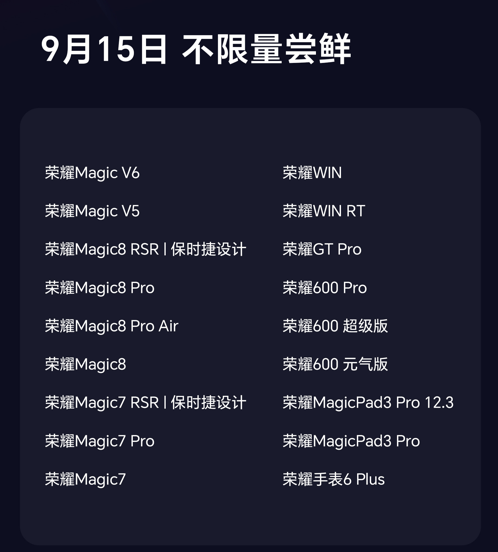
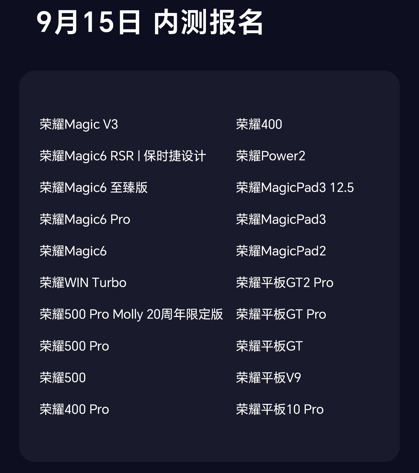
MagicOS 11 will first roll out on the upcoming Honor Magic 9 series. A public beta is already live for 18 models, including the Magic8 series, Magic V6, and Honor 600 models. A second batch of phones, covering the Magic6 series, Magic V3, and the Honor 400 and 500 series, can sign up for an internal beta, with a wider release expected sometime between October and November.

Phones eligible for closed beta registration

Overall, MagicOS 11 looks like a solid step forward for Honor. You get a more polished glass-style interface, stronger AI that can actually handle complicated tasks, plus useful storage and cross-device features. If your phone is on the eligible list, you can start testing the beta now. The full version will arrive alongside Honor’s next flagship phones.

Don’t miss a thing! Join our Telegram community for instant updates and grab our free daily newsletter for the best tech stories!

For more daily updates, please visit our News Section.

(Source: Honor on Weibo)

Xiaomi quietly hikes prices across its Redmi Book Pro and Xiaomi Book Pro laptop lineups

Xiaomi has quietly implemented a noticeable price increase in China across a wide swath of its laptop portfolio. According to recent market observations first flagged by local tech bloggers and subsequently verified by outlets like ITHome, the company has raised the retail prices of several Redmi Book Pro and Xiaomi Book Pro models by anywhere from 400 to 700 yuan ($60-$104) overnight.

Xiaomi Redmi Book 14

The adjustments impact both current and upcoming hardware generations. The comprehensive list of affected devices includes the Redmi Book Pro 14 and 16 (both 2025 and 2026 editions), the standard Redmi Book 14 and 16 for 2026, and the Xiaomi Book Pro 14. These price shifts appear to be immediate and are already reflected across major Chinese e-commerce platforms.

Looking at the exact figures, the price hikes are quite distinct for a market segment that usually relies on aggressive pricing. The Redmi Book Pro 14 2025, which was selling for 6,799 yuan ($1,014) just days ago on September 15th, is now listed at 7,299 yuan ($1,088). Its larger sibling, the Redmi Book Pro 16 2025, saw the steepest jump of the group, moving from 4,699 yuan ($700) to 5,399 yuan ($805), a full 700 yuan ($60) increase.

The newer 2026 models are seeing similar markups. The Redmi Book Pro 16 2026 climbed from 7,399 yuan ($1,103) to 7,899 yuan ($1,177), while the 14-inch variant moved from 7,199 yuan ($1,073) to 7,699 yuan ($1,148).

Xiaomi has not yet released an official statement explaining the reasoning behind these sudden price adjustments. However, across-the-board price hikes in the consumer PC market are typically tied to fluctuating component costs, particularly regarding memory, storage, and display panels, or broader supply chain logistics.

For more daily updates, please visit our News Section.

Stay ahead in tech! Join our Telegram community and sign up for our daily newsletter of top stories!

Nubia LiveClip 2 launches with clip-on design, 11mm drivers, 6.5h/30h battery life, and RGB lighting on case

Nubia just dropped its new open-ear clip-style earbuds, the LiveClip 2, and they’re now available starting from September 16. The brand is clearly pushing further into the affordable audio space with something that focuses on comfort.

The first thing you’ll notice is the charging case: it’s smoked black and transparent, with three different RGB lighting effects you can switch between. The earbuds themselves use a C-shaped bridge made from memory metal and soft skin-friendly silicone. The idea is that they follow the natural shape of your ear so they stay put without putting pressure on anything, even if you’re wearing them for hours. Each bud weighs just 5.0g and has a life waterproof rating, so they should handle sweat and light moisture without issues.

Sound comes from 11 mm composite titanium diaphragm drivers. If you want the AI voice assistant, just press and hold either the left or right bud for two seconds. They’re on Bluetooth 6.0 with about a 10-meter wireless range. Battery life is listed at around 6.5 hours on a single charge, and roughly 30 hours total with the case. The case itself is 62 × 62 × 30 mm, has a Type-C port, and packs a 300 mAh battery that powers the two 35 mAh cells in the earbuds. Right now they’re only offered in black.

These are an upgrade over the original LiveClip that came out earlier in 2025. That earlier model had lighter 4.5 g buds, smaller 10 mm drivers, Bluetooth 5.4, and launched at around 180 yuan. The LiveClip 2 bumps up the driver size, moves to the newer Bluetooth standard, improves overall battery life, and adds the transparent RGB case for a more eye-catching design, while keeping the same open-ear clip style.

Pricing and availability

At 289 yuan, they’re aimed at people who want a lightweight, comfortable alternative to regular in-ear buds, with some basic AI features and solid all-day battery life. You can already find them listed on the major Chinese e-commerce platforms. There’s currently no word on the global rollout of the LiveClip 2.

Don’t miss a thing! Join our Telegram community for instant updates and grab our free daily newsletter for the best tech stories!

For more daily updates, please visit our News Section.

Casio launches two new G-Shock 5600 watches with MIP screens, Bluetooth & solar charging

Casio is expanding its square G-Shock lineup in the US with the new GW-BX5600 series. The lineup includes the GW-BX5600-1 and GW-BX5600-1A1, both of which retain the familiar DW-5600 design while adding newer display and connectivity features. Both models are priced at $180 and are set to launch in September 2026.

Casio G-Shock GWBX5600 watches

Design Details

The models feature a Memory-in-Pixel (MIP) LCD that offers better contrast, viewing angles, and readability than traditional LCDs. The higher-resolution display also supports two font styles and four customizable display modes.

Internally, the GW-BX5600 series features Tough Solar, Bluetooth connectivity, and Multiband 6 radio-controlled timekeeping. The solar charging system works with both sunlight and artificial light, providing around six months of battery life on a full charge or up to 22 months with power-saving enabled.

The Bluetooth functionality pairs with the Casio Watches smartphone app. This enables automatic time synchronization, easy access to setting alarms or timers, and a phone finder feature.

If you prefer to keep the watch disconnected from your phone, the Multiband 6 radio receiver will still automatically calibrate the time up to six times a day by picking up standard time radio waves from stations across the globe.

🔌 You’ll NeedThe bio-based resin band is the first part to wear out on a daily-worn G-Shock — a replacement keeps it going. Check Casio G-Shock resin watch band price on Amazon →

Aesthetically, the watches are heavily inspired by the classic DW-5600UE and DW-5600UBB. They feature the familiar octagonal bezel and a solar panel design that mimics the brick pattern found on the very first G-Shock models. In line with Casio’s recent manufacturing shifts, the case, bezel, and band are constructed from bio-based resin rather than traditional plastics.

In terms of dimensions, the watches measure 49.1 x 44.1 x 13.4 mm and weigh 51 grams. They offer shock resistance, 200-meter water resistance, a stopwatch, countdown timer, five alarms, and an LED backlight.

In related news, Timex has recently launched the Deepwater Meridian 200 HEV Automatic watches with sapphire crystal and ceramic bezels, while Casio has introduced a limited-edition pink G-Shock for Breast Cancer Awareness Month.

For more daily updates, please visit our News Section.

Stay ahead in tech! Join our Telegram community and sign up for our daily newsletter of top stories!

(Casio 1,2)

ViewSonic brings massive LED screens, 5K collaboration displays and Google TV to India

ViewSonic is using InfoComm India 2026 to showcase a much broader range of display and AV solutions for the Indian market. The lineup covers everything from massive LED screens and interactive displays to professional monitors and projectors. The company is also bringing its Google TV range to India for business and commercial environments.

ViewSonic expands its LED and collaboration lineup

Viewsonic Infocomm

ViewSonic says its LED business in India has grown more than twofold year over year, with the company now targeting applications ranging from smart city command centers to retail spaces and large venues. Its new LDC027-182 Direct View LED display is aimed at command and control centers, while the LDC027G-091C uses Flip Chip COB technology, a 0.94mm pixel pitch, up to 600 nits brightness and a 3,840Hz refresh rate for premium customer-facing installations. A foldable all-in-one LED display is also being showcased for spaces that require easier transportation and setup.

Viewsonic Infocomm

For collaboration spaces, ViewSonic is displaying its LDE Series in 108-inch, 136-inch and 163-inch configurations. The displays integrate power, control and image-stitching components into the system. The ViewBoard IFP105UW-N takes a different approach with a 105-inch 21:9 panel offering 5K resolution and split-screen functionality.

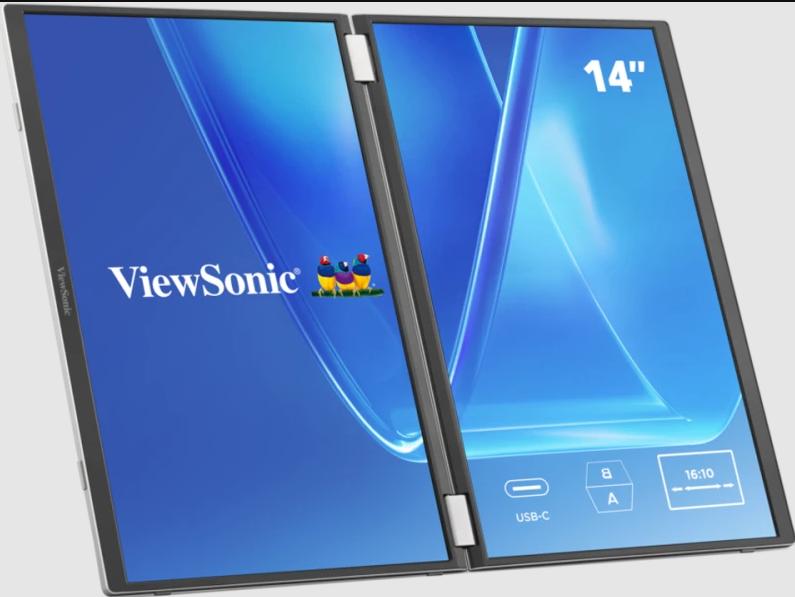
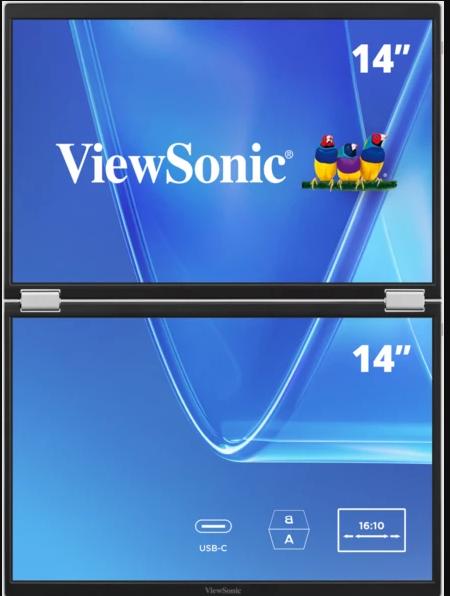
The company’s workspace lineup includes the VG1457 dual-screen foldable portable monitor and the VP3456A, a 34-inch professional ultrawide monitor. For commercial signage, the CN5501-1N supports continuous 24/7 playback, portrait and landscape orientations, content scheduling and wireless casting through AirPlay, Miracast and Chromecast. ViewSonic is also displaying open-frame solutions designed for integration into kiosks, retail installations, hospitality environments and industrial applications.

The LSC600WU-ST short-throw laser projector delivers 6,000 ANSI lumens with WUXGA resolution. It supports 360-degree projection, image warping and LAN-based control, making it suitable for commercial, education and public-space installations.

ViewSonic is additionally launching its Google TV Series in India in 32-, 43-, 50-, 55- and 65-inch sizes. The range runs Google TV Ref+ 5.0 on Android 14 and supports business applications, cloud content, Chromecast, HDR, Dolby Audio and Google Assistant. The company is positioning these models for meeting rooms, reception areas, training centers, hospitality and digital signage.

The expanded portfolio shows ViewSonic’s focus on offering AV systems for specific workplace, retail, smart city and large-venue requirements rather than limiting its India presence to conventional display products. Pricing and availability for the newly launched and showcased solutions will vary by product and commercial deployment.

For more daily updates, please visit our News Section.

Stay ahead in tech! Join our Telegram community and sign up for our daily newsletter of top stories!

BenQ goes big at InfoComm with a 135-inch display and smarter meeting tech

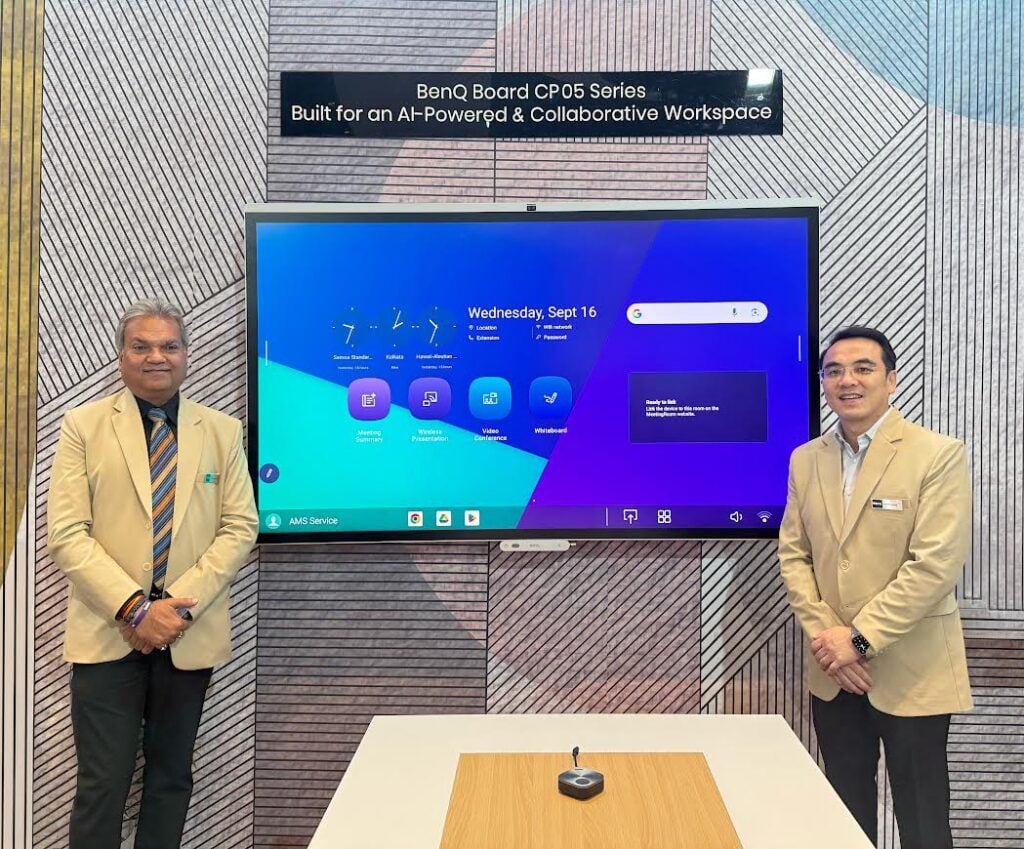
BenQ has showcased a new set of workplace products at InfoComm India 2026, spanning meeting rooms, larger presentation spaces and individual workstations. The lineup focuses on making collaboration more seamless as offices increasingly mix in-person and remote work. It includes the BenQ Board CP5505, a new 135-inch dvLED display and two workspace lighting products.

BenQ targets hybrid meetings with CP5505

BenQ Infocomm

The BenQ Board CP5505 is a 55-inch interactive display aimed at executive cabins and smaller meeting spaces. It combines video conferencing, collaboration tools and access to files and applications, reducing the need to connect multiple devices before a meeting. The display can track speakers, understand the room and generate meeting transcripts and summaries, helping users retain important information after discussions.

The CP5505 is also designed for work involving detailed visual content, with color performance suited to applications across areas such as legal, design and clinical work. Users can interact with presentations, access Google Assistant and activate AI-powered meeting summaries directly from the display. This makes it suitable for business reviews, presentations, interviews and smaller team discussions.

For larger venues, BenQ showcased a new 135-inch dvLED display designed for town halls, leadership presentations and other environments where content needs to remain clearly visible to larger audiences. It covers 100% of the DCI-P3 color gamut, targeting presentations where accurate and vivid visuals are important.

BenQ Infocomm

BenQ also previewed the iScreenBar and ScreenBar Max in India. The iScreenBar is designed specifically for iMac users and uses BenQ’s ASYM-Light optical structure to provide desk illumination while minimizing reflections on the display. ScreenBar Max is intended for dual-monitor setups and uses ASYM-TriZone Light to distribute illumination across horizontal, vertical or curved multi-display arrangements.

Together, these products cover different workplace scenarios, from executive meeting spaces and large presentation areas to individual desks. BenQ is positioning the lineup around its AI for the Future Workspace initiative, with the company also highlighting its network of partners, AV consultants and system integrators in India.

For more daily updates, please visit our News Section.

Stay ahead in tech! Join our Telegram community and sign up for our daily newsletter of top stories!

Timex launches new vintage Q Chronographs with modern everyday appeal

Timex has updated its US storefront with a new trio of Q Timex Chronograph watches. Drawing heavily from 1970s motorsport aesthetics, the new models offer a straightforward, retro-leaning design paired with standard quartz movements.

Timex Q Timex Chronograph

Q Timex Chronograph Specifications

The release includes three distinct colorways. The entry-level model (TW2Y88700) features a cream dial with contrasting black sub-dials, a brown tachymeter bezel, and a brown leather strap sourced from the Leather Working Group.

Timex Q Timex Chronograph

Stepping up to the stainless steel bracelet models, you have the choice between an ice-blue dial with a black bezel (TW2Y88600) or a dark green dial with a matching green bezel (TW2Y88500). All three variants utilize a standard contrasting sub-dial layout and include a date window tucked into the dial.

Timex Q Timex Chronograph

On the hardware side, the specifications remain consistent across the board. Each watch features a 40mm brushed and polished stainless steel case with a 46.5mm lug-to-lug distance. The case height sits at a relatively thick 15mm, a dimension largely driven by the inclusion of a domed acrylic crystal.

While acrylic is more prone to scratching compared to modern sapphire glass, it fits the vintage positioning of the Q line and can be polished out at home. Lug width is a standard 18mm, and Timex includes quick-release spring bars on both the leather and steel bands to allow for tool-free strap swapping.

Inside the case, the watches are powered by a standard battery-operated quartz analog movement. The chronograph functionality operates via the two pushers on the right side of the case, allowing you to track elapsed time and calculate average speed using the exterior tachymeter bezel.

Timex Q Timex Chronograph

The watch also features luminescent in-fill on the hands and hour markers for better visibility in low-light conditions. It offers 50 meters of water resistance, making it suitable for everyday splashes and rain, though it is not intended for prolonged swimming or diving.

Pricing and Availability

The new Q Timex Chronographs are positioned as accessible, everyday alternatives to higher-end mechanical racing watches. The cream dial variant on the leather strap is priced at $239, while the ice-blue and green dial models on stainless steel deployant clasp bracelets retail for $269. All three are currently available for purchase in the US market.

In related news, Timex has recently launched the Deepwater Meridian 200 HEV Automatic watches with sapphire crystal and ceramic bezels, along with the luxurious Atelier GMT Première M1a featuring a Swiss automatic movement.

For more daily updates, please visit our News Section.

Stay ahead in tech! Join our Telegram community and sign up for our daily newsletter of top stories!

(Timex 1,2,3)

🔌 You’ll NeedThe quick-release spring bars make swapping straps tool-free, so a spare 18mm leather band is an easy style change. Check quick release leather watch strap price on Amazon →

Oppo K14 Lite debuts in India with 7,000mAh battery, Unisoc T7250 chip,

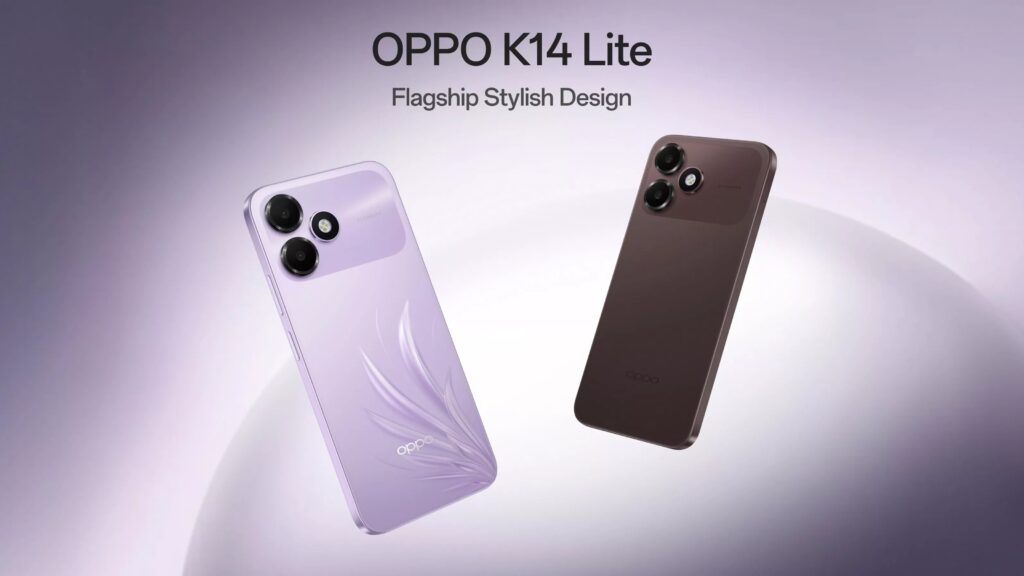
Oppo has just added another phone to its budget K-series in India. The big headline is the battery: a massive 7,000 mAh unit. Oppo says it still holds more than 80% of its original capacity after 1,800 charge cycles, which works out to roughly six years of use if you’re charging it about every 1.3 days on average.

In their tests it managed up to 55.55 hours of voice calls, nearly 30 hours of continuous Google Maps navigation, 26.84 hours of YouTube, and 13.19 hours of gaming in something like PUBG Mobile. Charging is a more modest 15W. It hits around 21% in 30 minutes and takes roughly 2 hours 50 minutes for a full charge. It also supports reverse wired charging if you need to top up another device in a pinch.

🔌 You’ll NeedWith just 64GB onboard, this microSD card gives you room to grow up to 2TB. Check 256GB microSD card price on Amazon →

Under the hood sits a Unisoc T7250 octa-core chip that clocks up to 1.8 GHz, paired with 4 GB of LPDDR4X RAM and 64 GB of UFS 2.2 storage (expandable up to 2 TB via microSD).

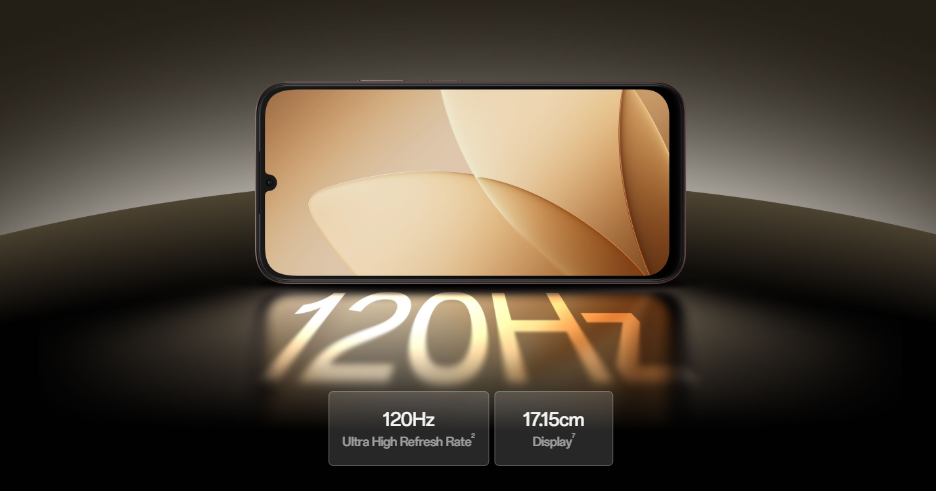
The screen is a 6.75″ HD+ (720 × 1,570) IPS LCD with a 120 Hz refresh rate and peak brightness up to 900 nits. Oppo has added a few handy touch features, Splash Touch, Oily-Hand Touch, and Glove Touch. so it should still respond even if your fingers are wet, greasy, or covered. It’s IP64 rated for dust and splash resistance.

Cameras are straightforward: 13 MP rear with autofocus and a 5 MP front, plus a few AI tools like AI Eraser, AI Clear Face, and AI Smart Image Matting 2.0. Software is ColorOS 16 based on Android 16, with Google Gemini, Google Lens, and Privacy Safe encryption built in.

Pricing and availability

There’s only one configuration, 4 GB + 64 GB, priced at ₹16,999. It’s available right away on the official Oppo store in Stone Brown and Feather Purple. On Flipkart, it is listed for ₹37,999 as of writing, which appears to be an error, and the pricing is expected to be updated soon.

At this price, the K14 Lite is clearly going after buyers who just want a phone that lasts a long time on a charge and handles the basics.

Don’t miss a thing! Join our Telegram community for instant updates and grab our free daily newsletter for the best tech stories!

For more daily updates, please visit our News Section.

(Source: Oppo)

Timex launches Deepwater Meridian 200 HEV Automatic watches with sapphire and ceramic bezel

Timex has released a new line of automatic dive watches in the US, the Deepwater Meridian 200 HEV Automatic. The new models represent a step up in hardware specifications for the brand, targeting the entry-level mechanical tool watch market with features typically reserved for higher price brackets.

Timex Deepwater Meridian 200 HEV Automatic dive watches

Design Details & Pricing

The watches are built around a substantial 44mm polished stainless steel case, measuring 51mm lug-to-lug with a thickness of 15.5mm. Timex is offering two distinct variants at launch.

The first model comes with a silver-white vertically brushed dial, a black bezel, and a stainless steel fold-over clasp bracelet for $499. The second variant features a metallic blue dial, a blue bezel, and a black HNBR synthetic rubber strap for $469. Both models utilize an anti-reflective sapphire crystal, a standard requirement for durability in this category.

Inside the case, the Deepwater Meridian is powered by a Japanese Miyota 21-jewel automatic movement. The self-winding mechanism relies on the wearer’s wrist motion for power and features a standard 40-hour power reserve. As the name indicates, the watch is water-resistant to 200 meters, supported by a screw-down crown with a protective guard and a screw-on case back.

The watch features an automatic helium escape valve (HEV) at 10 o’clock, which releases trapped helium during decompression in saturation diving. While rarely useful for most users, it reflects traditional professional-grade dive watch engineering.

Timex Deepwater Meridian 200 HEV Automatic dive watches

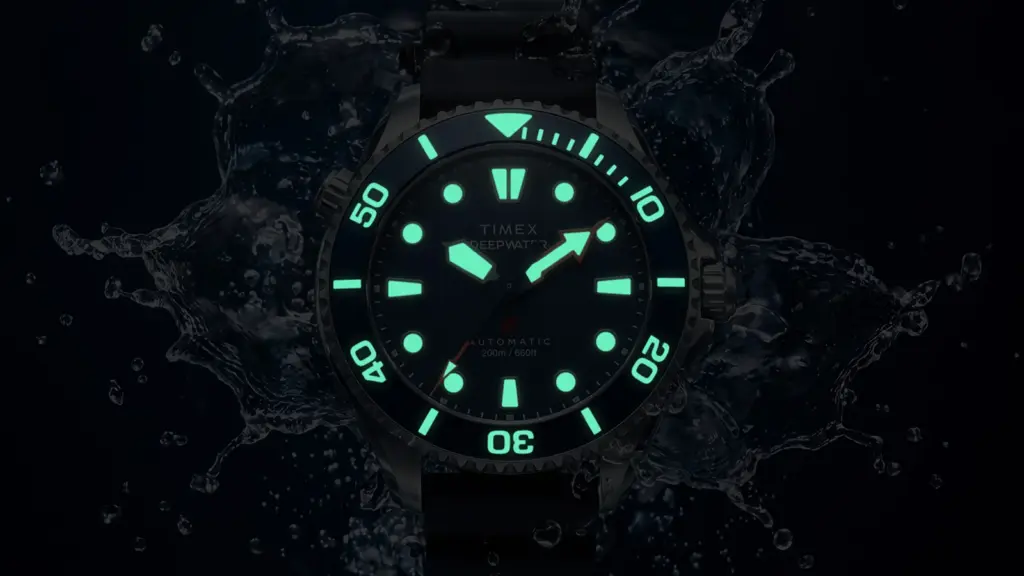
For standard underwater legibility and low-light visibility, Timex has applied Super-Luminova in-fill to the hands, the hour markers, and the unidirectional rotating top ring. The 120-click bezel also features a ceramic inlay, adding necessary scratch resistance to a high-wear area of the watch.

🔌 You’ll NeedThe automatic movement runs on wrist motion, so a winder keeps it ticking when it’s off your wrist. Check single watch winder automatic price on Amazon →

The Deepwater Meridian 200 HEV Automatic is available now through the Timex US website.

In related news, Timex has recently launched the luxurious Atelier GMT Première M1a with a Swiss automatic movement, along with the rugged Ironman Adrenaline watches featuring a clever disappearing digital display.

For more daily updates, please visit our News Section.

Stay ahead in tech! Join our Telegram community and sign up for our daily newsletter of top stories!

(Timex 1,2)

Oppo Find X10 Series Roundup: Everything We Know Before Launch

The Find X10 series is debuting in China on September 22, just one day after Vivo takes the stage with its own X500 lineup. The lineup includes three models initially —  the standard Find X10, the range-topping Find X10 Pro Max, and a new Find X10 E that Oppo still hasn’t said much about.

If you’re interested in these phones and live in mainland China, you can already pre-reserve them at Oppo’s Chinese store. Meanwhile, the company will also launch the Watch S2 smartwatch, and the Enco X4 earbuds will also launch at the event.

Anyway, here’s everything that we know about the Oppo Find X10 series before launch. 

1. Oppo Find X10

The standard Find X10 gets two 200MP cameras this year, including the main camera and telephoto lens. Both were developed with Hasselblad as part of Oppo’s Hasselblad Ultra-Clear Original Camera system. The system uses a second-generation Danxia color restoration lens and a dedicated color sensor that collects light and color information across 24 sampling channels. Oppo says this helps keep skin tones and lighting looking more natural without making images look overly processed.

Camera details confirmed by Oppo ahead of the launch point to a main camera with an aperture of around f/1.6. Earlier leaks have also suggested a 50MP ultra-wide camera.

The phone has very thin bezels measuring just 0.99mm on all four sides. Oppo says this is the thinnest bezel design it has used on a Find phone so far. For comparison, the Find X9 had 1.15mm bezels, while the Find X8 measured 1.45mm. 

As for battery, we’re looking at 8,000mAh capacity, which Oppo says is designed to maintain its performance through five years of regular charging. For performance, Geekbench listings for the phone suggest a MediaTek MT6993 chip, which could be the new Dimensity 9600M silicon. The Find X10 will be available in Ice Blue, Light Titanium, and Clear Orange.

2. Oppo Find X10 Pro Max

The Find X10 Pro Max is a special phone among all flagships because it has three 200MP cameras. Yes, all three rear cameras are 200 megapixels.

The main camera uses Samsung’s 1/1.3-inch ISOCELL HPC sensor with an f/1.5 aperture and CIPA 6.5-level stabilization. It is joined by a 200MP ultra-wide camera with an f/2.2 aperture and a 124-degree field of view. The third camera is a 200MP periscope telephoto lens with an f/2.1 aperture and CIPA 7.5 stabilization.

Oppo has also added a 3MP multispectral sensor for improved color accuracy. The periscope camera can also be used for telephoto macro shots from around 10cm away, so it isn’t limited to shooting distant subjects.

Under the hood, the device will use the new Dimensity 9600 Pro chip. The phone’s Geekbench listings show 16GB of RAM, while Oppo’s official store lists four memory and storage options across the Find X10 and Find X10 Pro Max:

  • 12GB RAM + 256GB storage
  • 12GB RAM + 512GB storage
  • 16GB RAM + 512GB storage
  • 16GB RAM + 1TB storage

The Pro Max will come in Moon White, Light Titanium, and Warm Orange. Not to forget, Oppo has also changed the camera module design. Instead of the previous layout, the Pro Max gets a square camera housing, with the LED flash and other sensors placed in a separate pill-shaped section on the right.

3. Oppo Find X10 E

The Find X10 E is still the least-known model in the lineup. Oppo has confirmed that it will be the more affordable option and has revealed two memory configurations: 12GB/256GB and 16GB/512GB. It will be available in Ice Blue and Light Titanium. Other details, including the chipset and camera setup, have not been revealed yet.

4. Pricing and global launch

There are still a few important details missing. Oppo has not announced Chinese pricing for any of the three phones, and there is no official date for international launch yet. Oppo has have though, started teasing the Find X10 Pro Max for global.

A previous report hints at an October release outside China, but this is still unconfirmed. More details should arrive when Oppo officially launches the Find X10 series on September 22.

For daily updates, please visit our News Section.

Stay ahead in tech! Join our Telegram community and sign up for our daily newsletter of top stories!

Xiaomi 18 Pro shows up on Geekbench with Snapdragon 8 Elite Extreme Gen 6 ahead of launch

Xiaomi is preparing to bring the Xiaomi 18 Pro to China, and ahead of launch, a new Geekbench listing gives us a look at what’s inside. 

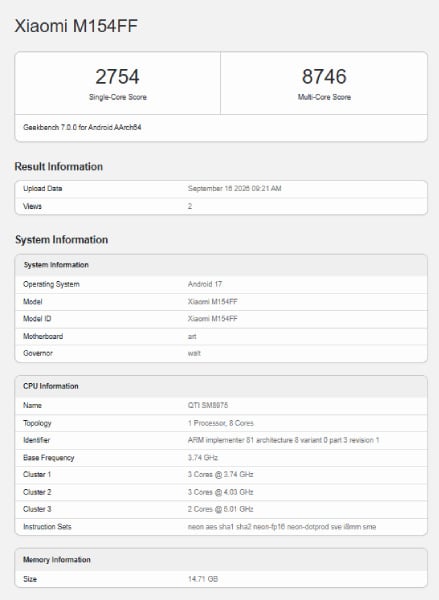
The device was spotted under the model number M154FF, and reportedly, this is the Chinese variant of the 18 Pro. The chip powering the phone is Qualcomm’s unannounced Snapdragon 8 Elite Extreme Gen 6, scoring 3,619 points in the single-core run and 11,842 in multi-core tests. 

Xiaomi 18 Pro Chinese Geekbench

The listing also gives you a peek at the core layout. It shows three efficiency cores running at 3.74GHz, three performance cores at 4.03GHz, and two prime cores that hit a peak of 5.01GHz. 

You’re also looking at HyperOS 4, which runs on top of Android 17. The listing shows 14.71GB of RAM, which Xiaomi will likely market as 16GB once the phone goes official.

A rear display, again

The chipset leak lands just days after Xiaomi’s own teaser for the 18 Pro series, which confirmed the phone’s rear display carries over from the Xiaomi 17 Pro and Xiaomi 17 Pro Max. 

Xiaomi 18 Pro series versatile back screen

This time, the secondary screen sits flush with the rear camera setup, with two lenses placed inside the same module as the display. Xiaomi has said more details are coming in the next few weeks, so you can expect additional teasers before the phone actually launches.

Xiaomi hasn’t confirmed any of this yet, including the chipset, so treat the numbers as a strong indication rather than a final spec sheet.

For more daily updates, please visit our News Section.

Stay ahead in tech! Join our Telegram community and sign up for our daily newsletter of top stories!

(Via)

Alexa just got a massive AI upgrade, and it’s finally coming to India

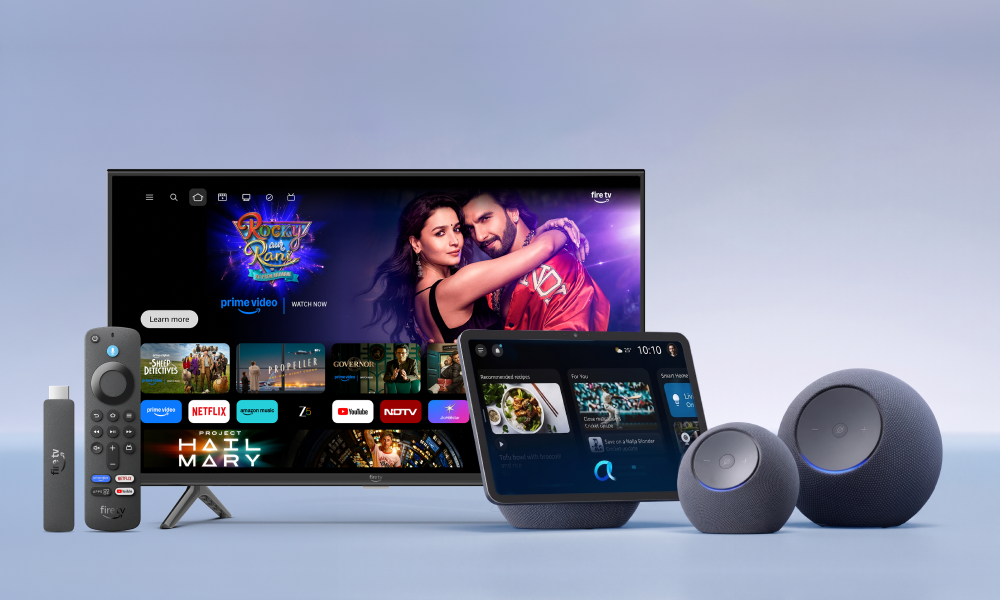
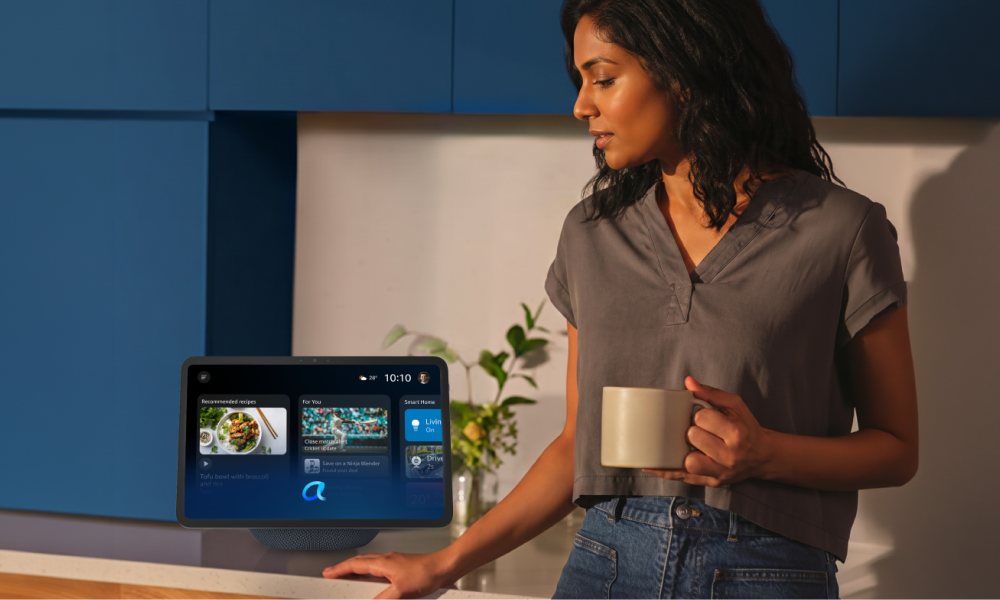
Amazon has brought its next-generation Alexa experience to India, giving users a more conversational way to interact with the assistant. The new Alexa+ is designed to understand natural speech and context more effectively. It is also being introduced with features tailored to how people communicate and use technology in India.

Alexa+ brings conversational AI to India

Amazon Alexa+
Amazon Alexa+

Alexa+ is now available in India through Early Access at no cost for eligible customers using supported Echo speakers, smart displays, Fire TV devices and the Alexa mobile app. It supports English, Hindi and Hinglish, allowing users to switch between languages naturally during a conversation without repeating the wake word after every request.

The assistant can handle tasks beyond answering questions, including smart home controls, meal planning, shopping, music discovery and entertainment. It works with services such as Amazon Music, Spotify, Apple Music, JioSaavn, Prime Video and Netflix, while integrations with EazyDiner, Swiggy, District by Zomato, MakeMyTrip, Home Triangle and TripAdvisor are coming soon. Smart home support includes brands such as Atomberg, Qubo, Dreame and Wipro.

Alexa+ can recognize individual household members through Voice ID and Visual ID, allowing it to tailor recommendations and remember preferences such as dietary restrictions. It can also create voice-controlled routines, manage multiple connected devices together and provide shopping assistance, including price-drop alerts, delivery tracking, product comparisons and verified review summaries.

Amazon Alexa+
Amazon Alexa+

Amazon has also tuned Alexa+ for Indian usage, with an understanding of expressions such as “dhai baje” and “ek paav”, along with Indian relationship terms and Hinglish conversations. The technology was developed with teams in Bangalore, Hyderabad, Pune and Chennai, covering speech recognition and language models designed for Indian homes.

Alexa+ is built on Amazon Bedrock and connects more than 70 large language models with hundreds of services and devices. Amazon says the system can route requests to different models depending on the task. Privacy controls include an Alexa Privacy dashboard, interaction history management, recording retention settings and microphone and camera controls.

For daily updates, please visit our News Section.

Stay ahead in tech! Join our Telegram community and sign up for our daily newsletter of top stories!

Portronics launches AeroDock Ultra laptop cooling pad with three fans and RGB

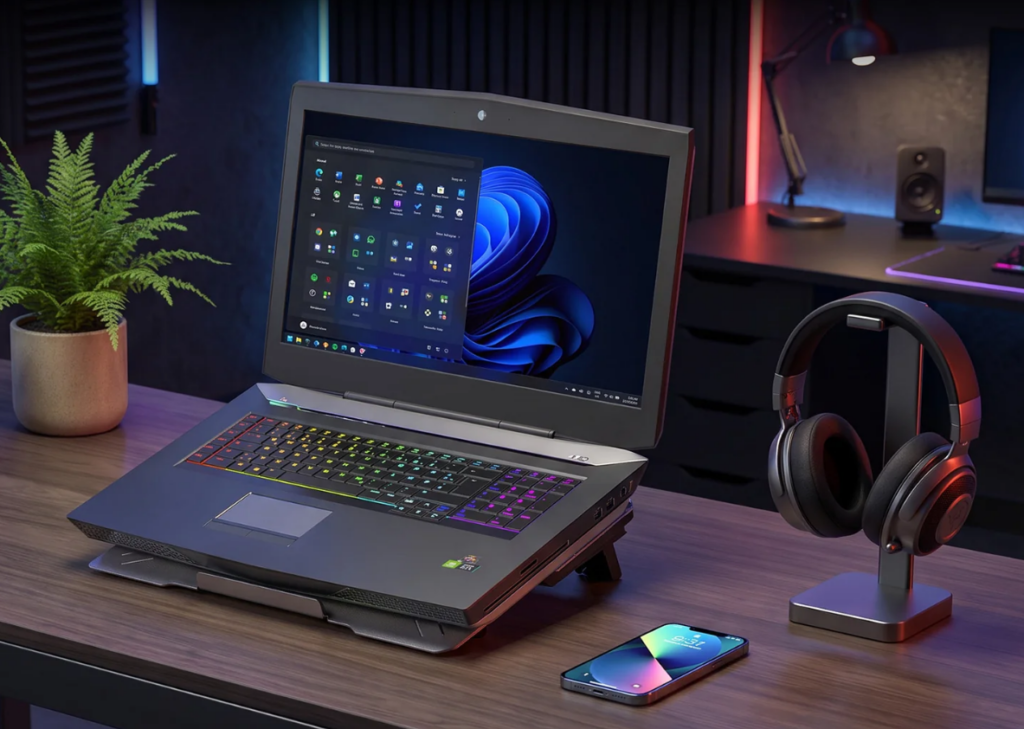
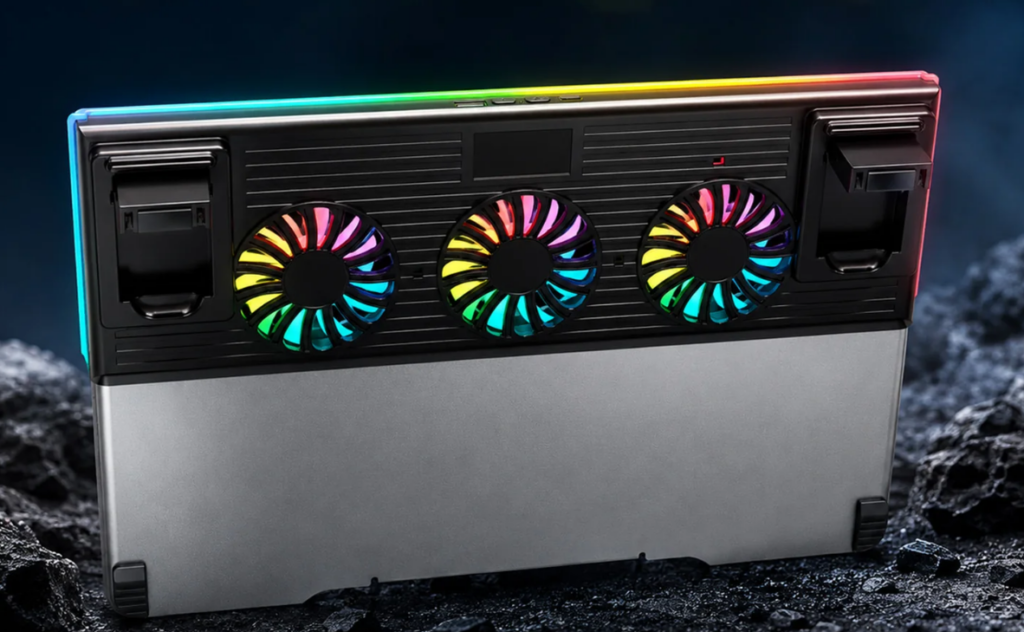
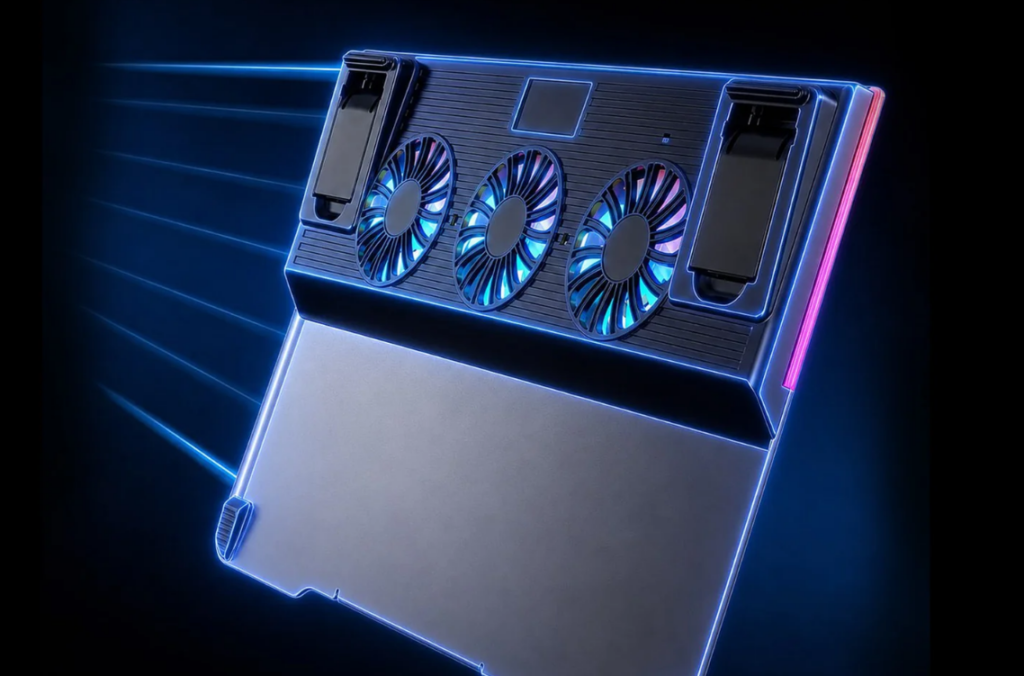
Portronics has released a new laptop cooling pad, the AeroDock Ultra, aimed at users who need extra airflow for their laptops during heavy workloads or gaming. It is a straightforward metal stand equipped with three fans and customizable RGB lighting.

Portronics AeroDock Ultra

Portronics AeroDock Ultra Specifications

The AeroDock Ultra features an active cooling system with three fans that can spin at speeds of up to 3,100 RPM. According to the spec sheet, the setup delivers up to 76 cubic feet per minute (CFM) of airflow.

The fans direct a steady stream of air toward the bottom of the laptop, helping dissipate heat and reduce thermal throttling during demanding workloads. Portronics also claims the fans operate with minimal noise, helping keep distractions low during gaming, work, or calls.

For the build, Portronics went with a metal-alloy frame finished in silver. It has an angular design that leans a bit into standard gaming aesthetics, largely due to the illuminated fans.

Portronics AeroDock Ultra

The stand supports laptops ranging from 10 inches to 16.5 inches, which covers most standard ultrabooks and gaming laptops on the market. It also includes a concealed bracket and maintains a slim profile, making it relatively easy to pack in a bag if you need to take it to an office or a different workspace.

On the ergonomic side, the AeroDock Ultra offers two adjustable height settings. This allows users to prop up their laptop to a more comfortable viewing angle, which can help with neck posture during long sessions at a desk.

For connectivity and controls, the stand features a small hub with a USB-A port and a USB Type-C port, giving users a couple of options for plugging it into their laptop for power. There is also a dedicated physical button to cycle through the 10 different RGB lighting modes, letting users change the colors or adjust the lighting depending on their preference.

Portronics AeroDock Ultra

Pricing and Availability

The AeroDock Ultra has a standard MRP of ₹2,499 ($26), but Portronics is currently selling it at a discounted price of ₹1,549 ($16). It comes with a six-month warranty and is available on the Portronics website, Amazon India, Flipkart, and various physical retail stores.

In related news, Portronics has recently launched a 4-in-1 tire inflator with up to 150 PSI pressure and dual AC/DC power support.

For more daily updates, please visit our News Section.

Stay ahead in tech! Join our Telegram community and sign up for our daily newsletter of top stories!