The Realme 10 4G recently debuted in China, and the Realme 10 Pro+ is also arriving soon. The company confirmed the new phone will launch on November 17 and even teased a few specifications. Now, in the latest development, some live photos of the handset have surfaced online, which give us a good look at its design.
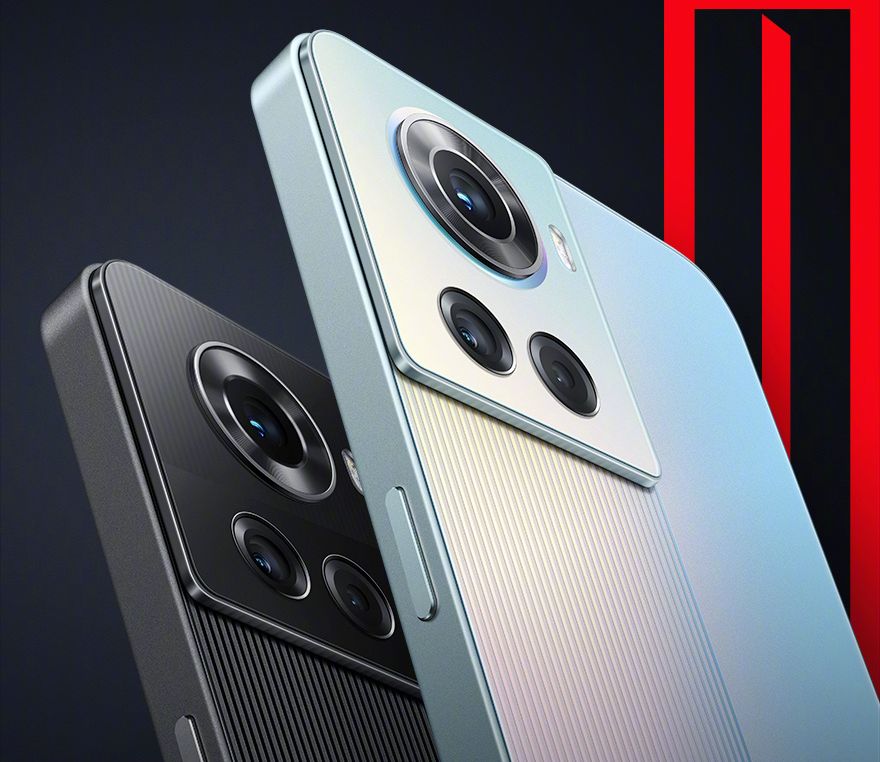
A Twitter user has shared the live images of the upcoming Realme 10 Pro+, which reveal the reflective, glossy back panel of the smartphone. It can be seen that the handset has two vertically stacked traditional rings on the back, with the top one housing a single sensor whereas the bottom features the other two lenses.
We can’t see the front of the Realme 10 Pro+ in the leaked images. However, a recent promo video revealed the handset will have a curved display with a punch hole. All in all, we can say that the smartphone looks quite premium.
Previous reports suggest the Realme 10 Pro+ will come with a 6.7-inch AMOLED display that offers a Full HD+ resolution, a 120Hz refresh rate, and 10-bit colors. It will also feature an under-display fingerprint scanner.
The Realme smartphone will be powered by the Dimensity 1080 chipset paired with up to 12 GB of LPDDR4x RAM and up to 256 GB of storage. The handset should offer decent performance. For reference, it got an AnTuTu score of 529,420. The handset will pack a 5000mAh battery that supports 67W fast charging.
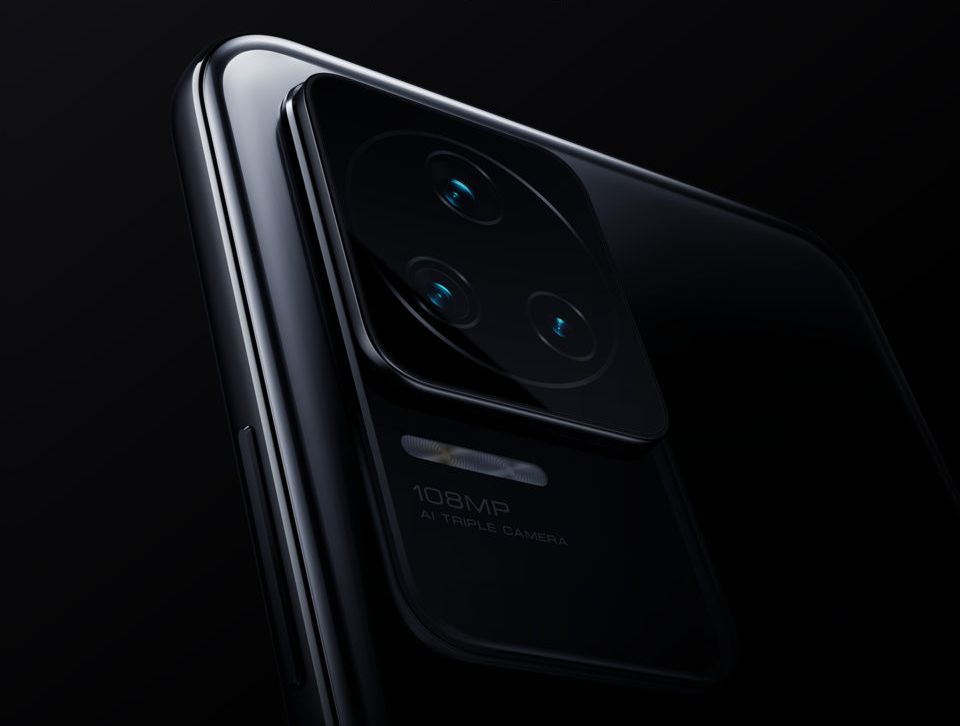
For photography, the Realme 10 Pro+ will feature a triple rear camera setup, which will likely include a 108-megapixel primary camera, an 8-megapixel ultra-wide unit, and a 2-megapixel macro/depth sensor. On the front, it may have a 16-megapixel camera.
The Radar RD6 RWD Electric Pickup has been unveiled in China. The new rear-wheel drive electric pickup comes in three battery options giving a maximum range between 400km and 632km. This is the first production model for the Geely-owned brand and it resembles the Geely Haoyue/ Okavango SUV.
The Radar RD6 RWD e-pickup uses Geely’s SEA EV platform and has a length of 207 inches. It is 74.8 inches wide, 72 inches high, and has a wheelbase of 122.8 inches. The EV can go from 0-100km/h in 6 seconds. Apart from its cargo bed, the exterior and interior of the Radar RD6 bear a striking semblance with the Haoyue SUV. The Radar RD6 is a lifestyle pickup with a four-wheel independent suspension. Its cabin features two 12.3-inch screens and a 9-inch full-color head-up display. The EV also features 72-color ambient lighting, AI voice interaction, and a 55-inch panoramic sunroof.
The Radar RD 6 RWD has 12 Level 2+ intelligent driving assistance functions and a 1,200 liters capacity cargo bed (~42.3 cubic feet). There are also extra storage spaces in the trunk and at the back seat of the EV. The Radar RD6 has a 450kg payload capacity and its towing capacity could be up to 3 tons. It has a 6kW discharge panel on the cargo bed with multiple modes and six power ports.
There are three battery options for the Radar RD6 RWD. The base model has a 60kWh battery that delivers a range of 400km, while the 86kWh battery has a range of 550km. The top model is that with a 100kWh battery and a range of 632km. All three battery options support fast charging up to a maximum of 120kW.
The Radar RD6 has officially gone on sale in China with deliveries expected later. The EV is being manufactured at the company’s Zibo Smart Factory in Shandong Province, China. The 86kWh battery model starts at 178,800 yuan ($24,600) while the 100kWh model starts at 268,800 yuan ($37,720).
Italian manufacturer Moto Parilla has launched its latest electric mountain bike, the Tricolore with a top speed of 15.5mph (~25km/h). The Tricolore comes with a unique frame design in line with its established trajectory. It follows a similar pattern to the Trillix, its predecessor. The e-bike has an assisted range of 62 miles and comes with radical styling together with impressive tech features.
The Moto Parilla Tricolore has a motorcycle-inspired design and operates as an electric mountain bike. It is equipped with front and rear suspensions, a solid shock absorber system, a rocker arm, and a connecting rod at its rear. Moto Parilla says its suspension and brake system provides better responsiveness and direct suspension actuation during rides. The e-bike’s carbon fiber monocoque frame has rib patterns for rigidity and lessens the impact of muddy trails in slowing down movement.
The Tricolore also comes with a carbon fiber seat post that is separate from the chassis, giving the bicycle’s back end a floating appearance. The bike has a 12-speed transmission and hydraulic brakes. Its lights are built into the frame and the set post, while the cables are internally routed to give a smooth and solid design. The Tricolore has carbon fiber, a single-sided swingarm, and an internal pocket in the frame for carrying minimal luggage.
The Tricolore weighs 21kg and has a 250W Poloni E-P3+MX motor with a peak power of 600W and 90Nm torque. It has an 800Wh battery which delivers an assisted maximum range of 62 miles on a single charge. Availability and pricing information for the Moto Parilla Tricolore is yet to be officially released.
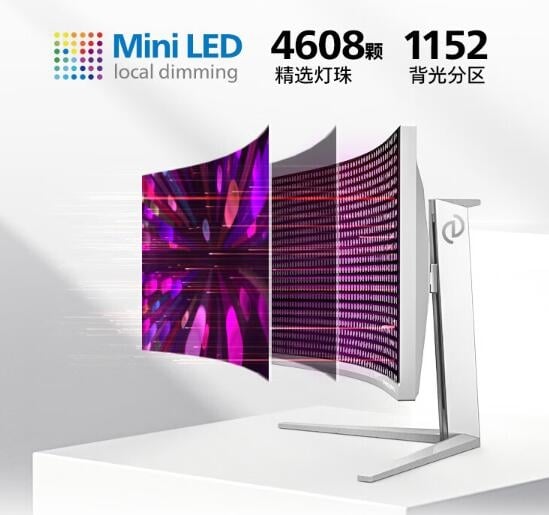
Philips EVNIA today officially announced its first gaming monitor with the model number 34M2C7600MV. The smart monitor packs a 34-inch curved screen that uses 1152-zone light-controlled MiniLED technology. The company recently launched the Screenio U5 4K projector and the Hue Festavia Smart String Lights.
The Philips EVNIA gaming monitor’s 34-inch curved screen is made of VA panel with a resolution of 3440×1440 pixels and supports 165Hz high refresh rate.
At the same time, it uses Mini LED backlight, with 4608 lamp beads, 1152 backlight partitions. It also has a peak brightness of up to 1400 nits , 97% DCI-P3 color gamut coverage, and is certified by DisplayHDR 1400.
In terms of sound, the monitor is equipped with two 5W stereo speakers with support for DTS sound effects. The monitor is equipped with a surround ambient light on the back using an innovative Ambiglow ambient light technology. The light changes synchronously with the music rhythm and the color of the picture on display.
In addition, this monitor supports the intelligent split-screen function , which can realize the simultaneous connection and display of dual-channel signals. The screen is divided into two without affecting each other. There is also KVM mode which allows users to quickly switch control of two devices like a keyboard and mouse.
In terms of interfaces, the device comes with USB 3.2, DP1.4, and HDMI 2.1 ports. There is also a USB-C port that supports 90W reverse charging.
At present, the official price and launch time of the new monitor have not been announced but it is expected to go on sale soon.
Just like the Reno 8 series, Oppo’s Reno 9 lineup is expected to include three handsets— Reno 9, 9 Pro, and 9 Pro Plus—in China. Reports suggest the brand is planning to announce the series in its home market this month. While we wait for an official announcement, a reliable leakster has shared the detailed renders of all three smartphones in the series. Let’s look at the details.
Popular leakster Evan Blass recently shared the renders of the upcoming Oppo Reno9, 9 Pro, and 9 Pro Plus. Although all three models appear quite similar, there are a few differences that can be noted. For instance, the Reno9 Pro Plus has a bigger camera island, which is not on the same level as the rest of the phone’s body. Not to mention it also has an additional camera.
It seems Oppo is bringing back the curved frame design. The vanilla Reno9, which will be the cheapest model in the series, is also featuring a curved display. Though it may not feature the company’s MariSilicon imaging chip since the text is missing from its camera island.
The specifications of the Reno 9 series leaked online recently. The leak suggests that the Reno 9 will be powered by the Snapdragon 778G chipset and pack a 4,500mAh battery that supports 67W fast charging. It will flaunt a 64-megapixel primary camera and a 2-megapixel secondary camera. The Reno 9 Pro, on the other hand, will be equipped with the Dimensity 8100-Max chip and a 4,500mAh battery with 67W charging. For photography, it will have a dual camera setup consisting of a 50-megapixel Sony IMX890 primary camera and an 8-megapixel lens.
The higher-end Reno 9 Pro+ is reported to feature the Snapdragon 8 Plus Gen 1 SoC under the hood. It will be fueled by a 4,700mAh battery with 80W charging. The handset will likely feature a triple camera setup comprising an OIS-enabled 50-megapixel Sony IMX890 primary camera, an 8-megapixel lens, and a 2-megapixel unit.
The Redmi K60, which has a model number of 23013RK75C, was recently certified by the 3C authority of China. This indicates that the device may debut by the end of this year or early in 2023. In the home market, the device is expected to rival the OnePlus Ace 2 and the Realme GT Neo 5 (tentative names). Recent reports have tipped off the specifications of the K60 in bits and pieces. All of the important details about the device have now been made public thanks to a new leak.
Redmi K60 specifications (rumored)
Redmi K50
The Redmi K60 is likely to feature a 6.67-inch display that offers a 2K resolution. The flat OLED panel will come equipped with an in-screen fingerprint scanner. Like the Ace 2 and GT Neo 5, the K60 is expected to feature the Snapdragon 8 Plus Gen 1 chipset.
The SoC will come equipped with 12 GB of RAM. It will pack a 5,500mAh battery with 67W fast charging support. The device is also expected to support 30W wireless charging.
On the front, the Redmi K60 will feature a 16-megapixel selfie camera. The rear camera setup of the device may feature a 64-megapixel main camera. One of the previous leaks claimed that it may feature an OIS-enabled Sony IMX686 camera sensor as the primary camera. It is expected to be accompanied by 8-megapixel and 2-megapixel auxiliary cameras.
The Redmi K60 family is also expected to include other models, such as the Redmi K60 Pro and the Redmi K60 Gaming. The first of the K60 models is expected to break cover in Q1 2023.
A recent leak revealed that the upcoming Realme GT Neo 4 and the OnePlus Ace 2 will arrive with similar specifications. There have been some other reports that Realme’s next Neo-series phone will not be called GT Neo 4, as the number “4” is considered a bad omen in China. Hence, it is speculated that the device will be called the Realme GT Neo 5. A new leak (via. tipster Chun) has revealed the specifications of the GT Neo 5. It reveals how it will differ from the OnePlus Ace 2.
OnePlus Ace 2 specifications (rumored)
OnePlus Ace
The OnePlus Ace 2 is expected to feature a 6.7-inch OLED display with curved edges. It will offer a 1.5K+ resolution and an optical in-screen fingerprint scanner. The Snapdragon 8 Plus Gen 1 chipset will power the device with 16 GB of RAM.
The Ace 2 will house a 5,000mAh battery with 100W charging. It will have a 16-megapixel front camera and a 50-megapixel (Sony IMX890) + 8-megapixel + 2-megapixel triple camera unit.
Realme GT Neo 5 specifications (rumored)
The Realme GT Neo 5 will house a 6.7-inch flat OLED screen with support for a 1.5K resolution and an optical under-display fingerprint scanner. The device will be powered by the Snapdragon 8+ Gen 1 and 12 GB of RAM.
The GT Neo 5 will pack a 5,000mAh battery with 150W charging. It will have a 16-megapixel selfie camera and a 50-megapixel + 8-megapixel + 2-megapixel triple camera setup.
There is no confirmation on the authenticity of the above leak. Hence, it is advisable to digest the above information with a pinch of salt. The OnePlus Ace 2, which is likely to be called the OnePlus 11R in the global market, and the Realme GT Neo 5 are expected to rival the Redmi K60 in China. The same leak has revealed the key specifications of the K60. Readers can click on this link to know what’s revealed about the K60 in the latest leak.
Realme 10 5G has recently gone official in China. On Nov. 17, the Realme 10 Pro and the Realme 10 Pro+ will also be made official. Ahead of the launch, the company has been gradually confirming the key features of the Pro+. A new poster released by the brand confirms the battery size of the device.
The new poster reveals that the Realme 10 Pro+ will house a 5,000mAh battery. The company has not shared information on the fast-charging capabilities of the device. The poster states that despite housing a big battery, it will weigh only 173 grams.
Other reports have revealed that the Realme 10 Pro+ will feature a 6.7-inch AMOLED display with curved edges and a centrally positioned punch-hole. It will offer a Full HD+ resolution, a 120Hz refresh rate, 10-bit colors, and an under-display fingerprint scanner.
The Realme 10 Pro+ will be powered by the Dimensity 1080 chipset. It may ship with up to 12 GB of LPDDR4x RAM and up to 256 GB of storage. Realme is likely to offer 67W fast charging on the device. The device was recently seen at AnTuTu benchmarks with a scored of 529,420.
On the front, the Realme 10 Pro+ will feature a 16-megapixel camera. The rear shell of the device is likely to house a 108-megapixel primary camera, an 8-megapixel ultra-wide lens, and a 2-megapixel macro / depth sensor. It will come preloaded with the Android 13 OS with a layer of Realme UI 3.0 on top.
It is expected to arrive in variants like 8 GB RAM + 128 GB storage, 8 GB RAM + 256 GB storage, and 12 GB RAM + 256 GB storage. The device is likely to carry a starting price of 1,699 Yuan (~$239).
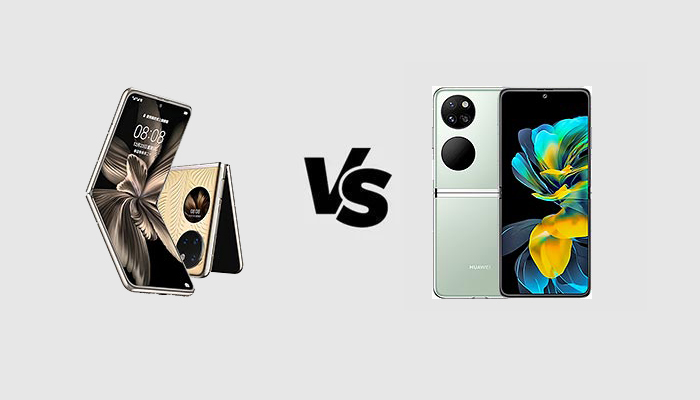
This year Huawei not only launched a new flagship foldable phone, but it also came up with an affordable variant of this phone. It is the only company which released two clamshell foldable phones this year, one of which came to the global market as well. The flagship is the Huawei P50 Pocket: yes, the Chinese giant decided to launch it under the P50 series because it is similar to the other variants. The affordable model is the Huawei Pocket S, with inferior specifications and a better price. But which are the differences between these two phones and which one should you choose? We will try to answer this question through this comparison between the specifications of the Huawei P50 Pocket and the Huawei Pocket S.
Triple 40 + 13 + 32 MP, f/1.8 + f/2.2 + f/1.8
10.7 MP f/2.2 front camera
Dual 40 + 13 MP, f/1.8 + f/2.2
10.7 MP f/2.2 front camera
BATTERY
4000 mAh, fast charging 40W
4000 mAh, Fast Charging 40W
ADDITIONAL FEATURES
Dual SIM, reverse charging, foldable phone
Dual SIM, reverse charging, foldable phone
Design
The Huawei Pocket P50 Pocket and the Huawei Pocket S have exactly the same form factor, the same look, and even the same dimensions. They are clamshell foldable phones, so they are able to reduce their dimensions up to a half of a normal phone thanks to their foldable displays. I personally prefer the Huawei P50 Pocket due to the more beautiful color option with a very good texture, but for the rest, these two devices have the same design. They are identical in terms of dimensions, thickness, and weight, and they have the same display diagonal and the same battery as well.
Display
There are no differences between the displays of these handsets because they feature exactly the same panel. On the internal part, there is a foldable OLED display able to show up to one billion colors with a diagonal of 6.9 inches, a Full HD+ resolution of 1188 x 2790 pixels, and a 120 Hz refresh rate. Even though it is an OLED panel, the fingerprint reader is not inside the display but it is side-mounted on the power key. On the external part of these two phones, there is a circular OLED mini display with a diagonal of 1.04 inches and a resolution of 340 x 340 pixels. This external display can be used while the smartphone is folded to take selfies, see notifications, and as a smartwatch. It is very small, so it will not useful if you want to use single apps on it. Note that the Huawei P50 Pocket has stereo speakers, while the Huawei Pocket S does not.
Specs & Software
The most important advantage of the Huawei P50 Pocket is definitely the hardware department. It is powered by the flagship-class Snapdragon 888 mobile platform built with a 5 nm production process and sporting an octa-core architecture composed of a Cortex X1 core running at a maximum frequency of 2.84 GHz, three Cortex A78 cores running at 2.42 GHz, four Cortex A78 cores running at 1.8 GHz, and an Adreno 660 GPU. Alongside the chipset, there are up to 12 GB of RAM and up to 512 GB of native storage you can furtherly expand through a nano memory card slot. The Huawei Pocket S is powered by a midrange-class Snapdragon 778G chipset paired with 8 GB of RAM and up to 512 GB of expandable storage. On the other hand, the Pocket S runs a more recent software version out of the box: HarmonyOS 3.0 instead of HarmonyOS 2.0.
Camera
These phones are equipped with the same main camera sporting a 40 MP resolution, as well as the same ultrawide sensor with a 13 MP resolution. But the Huawei P50 Pocket adds a third sensor which is a 32 MP portrait camera on the rear side, while the Pocket S only comes with the two rear sensors already mentioned.
The batteries powering these phones are the same: two units with a capacity of 4000 mAh. It is a capacity below the average if we consider other phones, but it is very good for a foldable phone as foldable phones have no much space available for batteries. The two handsets feature 40W fast charging and reverse charging.
Price
The current starting price of the Huawei P50 Pocket roughly translates into €890 or $890 (prices vary depending on the market, in Europe, you can find it for less than €700), while you need about $820 or €820 to purchase the Huawei Pocket S. The Huawei P50 Pocket wins the comparison because its price is not exaggerate and it features a better processor and camera setup.
Huawei P50 Pocket vs Huawei Pocket S: PRO and CONS
The Indian AIoT brand Fire-Boltt recently unveiled the Fire-Boltt Ring Plus smartwatch in the country. The smartwatch features a large 1.91-Inch display and offers 100+ sports modes. Now, the watch is finally gone on sale online.
Fire Boltt Ring Plus price & availability
The Fire Boltt Ring Plus costs Rs 2,499 and is available in the colors Navy Blue, Red, White, Pink, and Black. It can be purchased on Amazon.
Fire Boltt Ring Plus specs & features
The Fire Boltt Ring Plus has a square dial and a classic crown button on the top right side. It is visually identical to the Apple Watch. The gadget has a sizable 1.91-inch screen with a 240 x 280-pixel resolution. It has a textured strap and a 5-meter water resistance rating.
The Fire Boltt Ring Plus has a heart-rate monitor, SpO2 sensor, sleep tracker, and female health care on the health front. It has hydration and sedentary warnings. More than 100 sports modes, including basketball, football, climbing, tennis, and more, are supported by wearable technology.
With a built-in speaker and microphone, the Fire Boltt Ring Plus supports Bluetooth calling and provides access to call history, contacts synchronization, and dial-pad functions. For hands-free operation, a voice assistant is also available. Along with useful functions like notifications display, weather updates, camera and music management, and more, the smartwatch includes the built-in games Thunder Battleship and Young Bird.
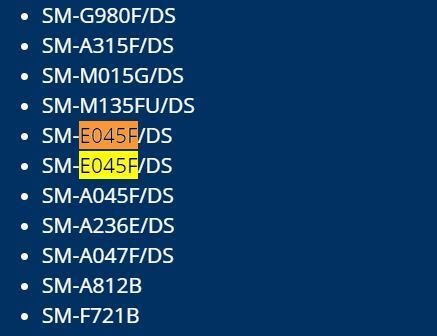
Last month, the upcoming Samsung Galaxy F04s with model number SM-E045F/DS was spotted on the Wi-Fi alliance database revealing some of its specifications. This smartphone is rumored to be a rebrand of the Galaxy A04s which launched earlier this year.
Now, a device with the same model number SM-E045F/DS has appeared on the Bureau of Indian Standards website, hinting at an imminent Indian launch. The listing does not reveal any specifications, however, we already know that it will feature support for 2.4GHz single-band Wi-Fi and will run on Android 12-based One UI 4.1 Core. We can take a look at the spec sheet of the Galaxy A04s to get an India of what to expect from the upcoming Galaxy F04s.
Samsung Galaxy A04s specs
The Samsung Galaxy A04s has a 6.5-inch HD+ display with a waterdrop notch. Its screen is made of Gorilla Glass 3 and has a refresh rate of 90Hz. The device has a power button-integrated side-mounted fingerprint scanner.
The Galaxy A04s’ Exynos 850 octa-core CPU is its brains. It offers 64GB of internal storage with 4GB of RAM and a microSD card slot for an extension of up to 1TB. Additionally, 4GB of virtual RAM is supported. The device is powered by a 5,000mAh battery that enables 15W rapid charging. OneUI 4.1 is layered on top of the Android 12 OS on the phone.
Three cameras are available on the rear of the Samsung Galaxy A04s: a 50MP primary sensor, a 2MP macro lens, and a 2MP portrait camera. Up front, there is a 5MP selfie camera.
Google refreshes its budget A-lineup of smartphones every year. The budget-oriented smartphones made by Google serve users with a chance to experience a top-notch camera experience. The devices are liked by many, especially those who are very enthusiastic about Google’s image processing. The brand for sure has standalone image processing which attracts many users towards it. Anyway, the successor of Google Pixel 6a is reportedly in the works and its specifications have now been leaked.
According to Twitter tipster Wojciechowski, the camera arrangement for the Lynx is termed “Pixel 22 Mid-range,” as opposed to “Pixel 22 Premium” for the Pixel 7/Pro. And here’s another hint- the Walrus was Paul, the 50MP Samsung GN1 sensor discovered by the developer on the camera configuration for the smartphone dubbed Lynx (most likely the Pixel 7a) has been removed. Kuba believes the 50MP sensor was utilised during testing to evaluate the two new sensors used on the mid-ranger.
Google Pixel 7a to come with 90Hz screen, wireless charging, brand new dual rear camera setup – details below 👇🧵 pic.twitter.com/IWy77Kwsmd
Thus, Lynx’s two image sensors are now identified as “l10 wide” (IMX787) and “l10 UW” (IMX712). With a wide and ultra-wide camera array on the back, the Pixel 7a will have two cameras in total. Wojciechowski observes that no telephoto lens is mentioned. The IMX787 is a significant improvement over the previous IMX363 and should make the 7a an even better option for mid-range camera quality, he continues.
Additionally, he claims that Samsung would supply the 1080p panel with a 90Hz refresh rate. The Pixel 6a has a 60Hz refresh rate for comparison. The Lynx (Pixel 7a) will also be the first Google Tensor-powered smartphone to have a Qualcomm Wi-Fi Bluetooth chip, the WCN6740.
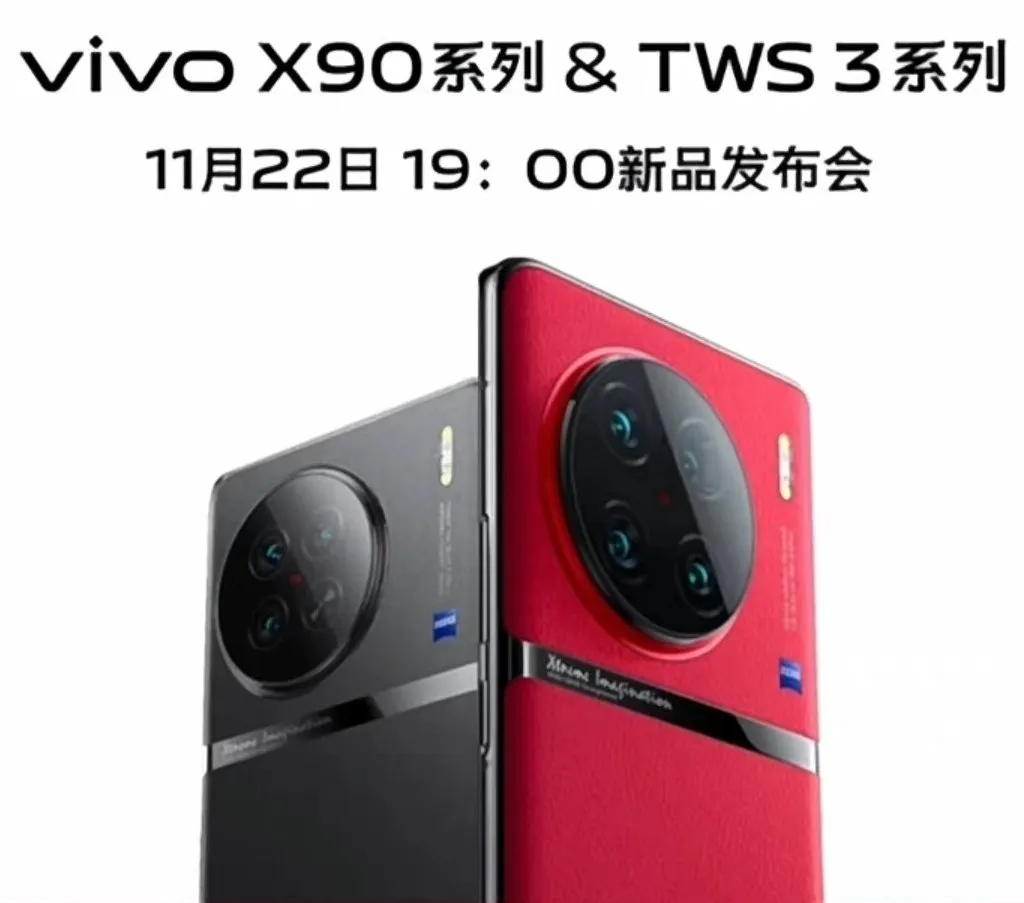
Vivo launched the X80 and the X80 Pro earlier this year, and it will be fair to say they are both pretty great handsets. Now expectations are high for the firm’s next flagship series— Vivo X90. The lineup is expected to include the X90 Pro, X90, and the X90 Pro+ 5G. While we still wait for an official announcement, a leaked promo video reveals the X90 series will debut in China on November 22. In addition, a tipster revealed the global launch timeline of the series. Here are the details.
A leaked video posted on the Chinese microblogging platform Weibo reveals the X90 series will be launched in China on November 22 at 7 PM local time (via GSMArena). The video also showcases the design of what is rumored to be the higher-end Vivo X90 Pro+. The design resembles the leaked renders we’ve seen in the past. This clip also shows the phone in its black color variant.
Separately, another leaked video reveals the X90 series will be available for pre-orders in China from November 14. The video also suggests that Vivo will introduce the upcoming TWS 3 series earphones on November 22.
There’s no official confirmation from the brand yet, but we can expect an announcement very soon. Additionally, tipster Paras Guglani claims that the X90 Series will arrive in the global market next month (December).
camera with some PHONE coming on 22nd !
Will go Global Next month of course 📸📸 with siblings !! X80 Pro is still a massive choice…
As mentioned, the series will likely include three handsets, with the X90 Pro+ being the most premium one. It is reported to be powered by the unannounced Snapdragon 8 Gen 2 SoC paired with 12GB of RAM. The standard model will likely draw power from the Dimensity 9200 chip, while the Pro version could feature the Snapdragon 8+ Gen 1 under the hood.
MediaTek has performed well in the chipset business over the past couple of years. After seeing success in the smartphone flagship SoC competing against the well-known giant, Qualcomm, MediaTek is now getting into the VR chipset industry with the release of their first chipset specifically built for VR headsets. According to reports, the next Sony PlayStation VR2 will be powered by MediaTek’s first VR chipset.
During the MediaTek Executive Summit, specifically during the introduction event of MediaTek’s first VR chipset, the company officially revealed that its first VR chipset will power the upcoming Sony PlayStation VR2. While it did not provide many specifics, it did show attendees the PlayStation VR2. Despite the fact that its processors are used in a variety of other products, this will be the first time a MediaTek processor has been used in a VR headset.
It is not entirely unexpected news, as industry analyst Ming-Chi Kuo predicted in May that the next-generation PlayStation VR would be powered by a MediaTek processor. This is a significant step forward for the company, especially given that Qualcomm chips power other standalone and networked VR headsets. The first PlayStation VR was highly successful, providing console users with a simple and affordable option to try out VR.
Sony’s PlayStation VR2 will go on sale on February 22, 2023. The device’s price will vary by area, but it will cost $549.99 in the United States. This is a significant price rise over the existing model, which costs roughly half as much, at $199.99. The new item will be sold separately or in conjunction with Horizon Call of the Mountain for $599.99.
The PlayStation VR2 offers specifications like a 4K HDR OLED display with 4000*2040 pixel resolution. The display will have a 119-degree field of view, and a panel refresh rate of 90 and 120Hz. It will have four cameras for headset and controller tracking with an IR camera for eye tracking. The VR2 will also offer 3D audio with headset feedback. Further, it will offer haptic feedback and adaptive triggers.
Meta had recently laid off 11,000 people, the majority of whom worked in their technology business. The number of sacked employees amounts to 13% of the brand’s overall workforce. Meta is preparing to eliminate two of its unreleased smartwatches and its Portal Video calling smart displays after firing the employees.
Back in June, Meta announced that it would no longer be producing any more Portal devices for consumers. Furthermore, the brand had abandoned the smartwatch in development under the codename “Milan.” According to reports, the smartwatch was scheduled to arrive in 2023. It will be priced at about $350 and will include two built-in cameras for video calls. Now, the company has made another decision to abandon its plans to launch its unreleased smartwatches.
According to the reports hovering around the internet, Meta has decided not to sell the Portal video calling hardware to businesses anymore. And there are two unreleased smartwatches, one of them is in the early stage of development while the other one is in the middle stage of development, which is also killed by the brand. The development work has been stopped officially for them, and they will no more launch in the market. The brand has not yet commented officially on the decision.
As of now, we are not sure why the company has decided to discontinue selling its Portal video calling technology and has abruptly halted development work on its unannounced wearables.
ZTE introduced the Axon 40 Ultra earlier this year with an under-display front camera and a sleek design. And now it seems we’ll soon be getting a special Aerospace edition of the smartphone. It is likely the follow-up to last year’s Axon 30 Ultra Aerospace Edition, which boasted 18GB of RAM and 1TB of storage. Here are the details.
ZTE’s President of Mobile Devices, Ni Fei, recently shared a bunch of pictures clicked by the Axon 40 Ultra Aerospace edition (via Gizchina). The device has never officially been mentioned before. Fei didn’t share many details about the handset, but we expect it to carry the same specs as the original Axon 40 Ultra.
As mentioned, ZTE previously launched the Axon 30 Ultra Aerospace edition with an impressive 18GB of RAM and 1TB storage. However, there were not many cosmetic changes in the handset, except for a Taikonaut (Chinese Astronaut) logo on the back.
We can expect the Axon 40 Ultra Aerospace Edition to follow in the footsteps of its predecessor, meaning it may come in a higher storage variant (probably 18GB RAM & 1TB storage) and look almost identical to the original model.
To recall, Axon 40 Ultra comes with a 6.81-inch AMOLED display panel with a Full HD+ resolution of 2480 x 1116 pixels. The panel offers a 120Hz refresh rate, 100 percent coverage of the DCI-P3 color gamut, 10-bit color, 400 PPI pixel density, and 1500nits brightness. It is powered by the Snapdragon 8 Gen 1 chipset, paired with up to 12GB of LPDDR5 RAM and up to 256GB of UFS 3.1 storage. Fueling the handset is a 5,000mAh battery that supports 65W fast charging. It comes with a starting price of $800.
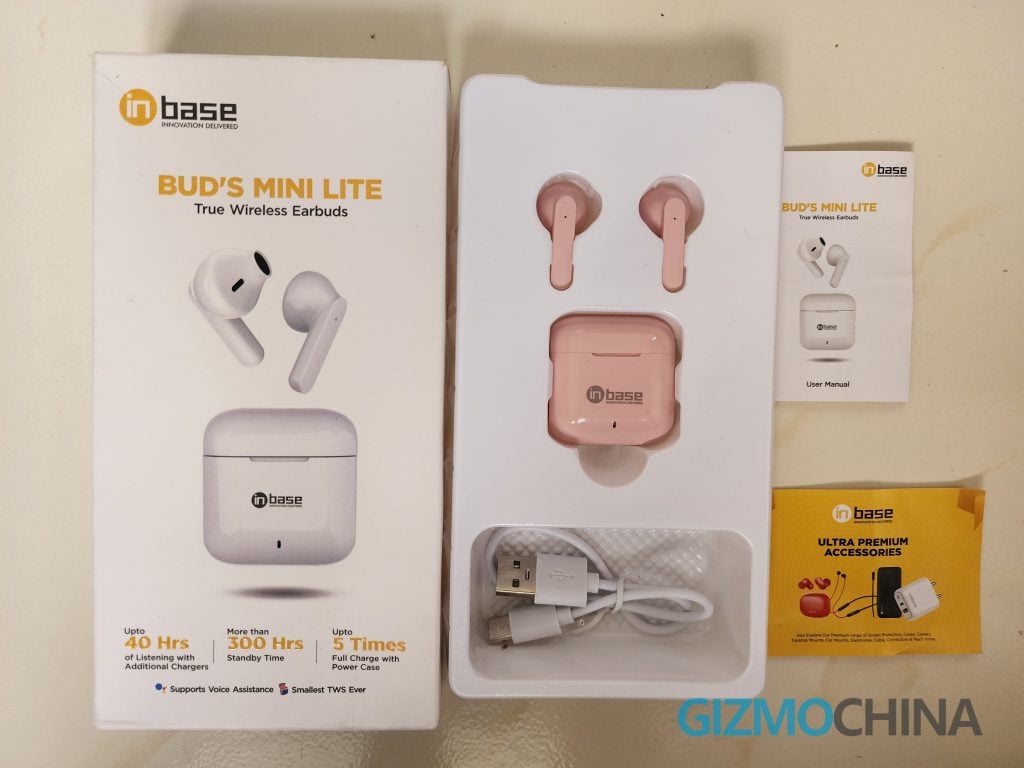
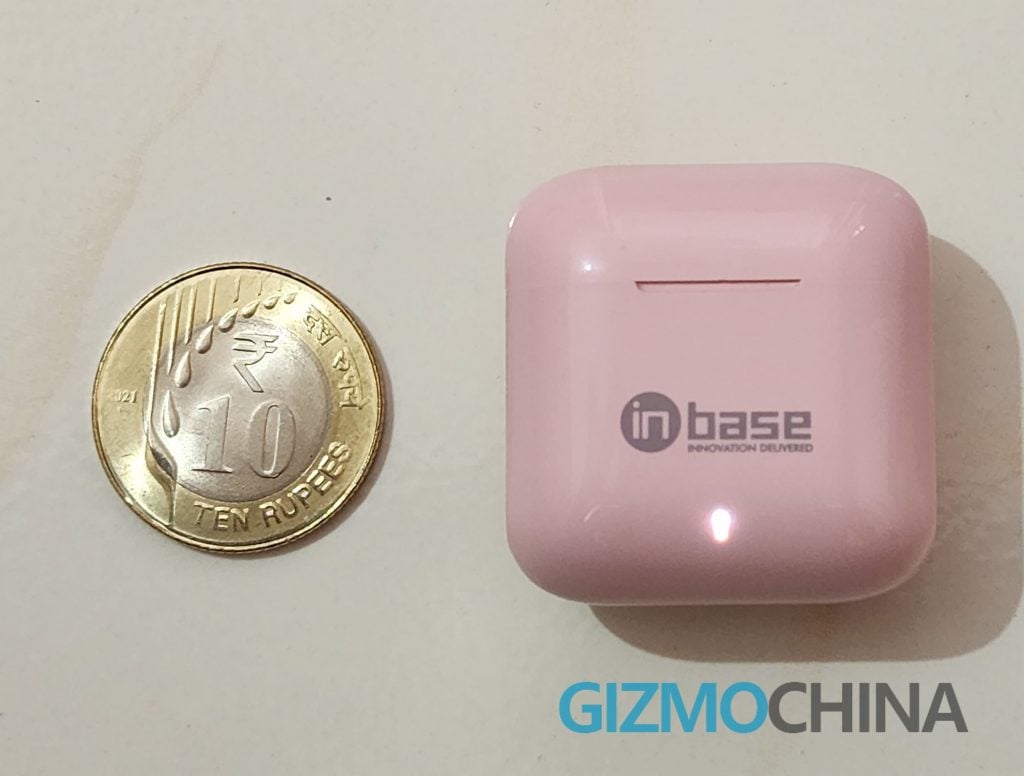
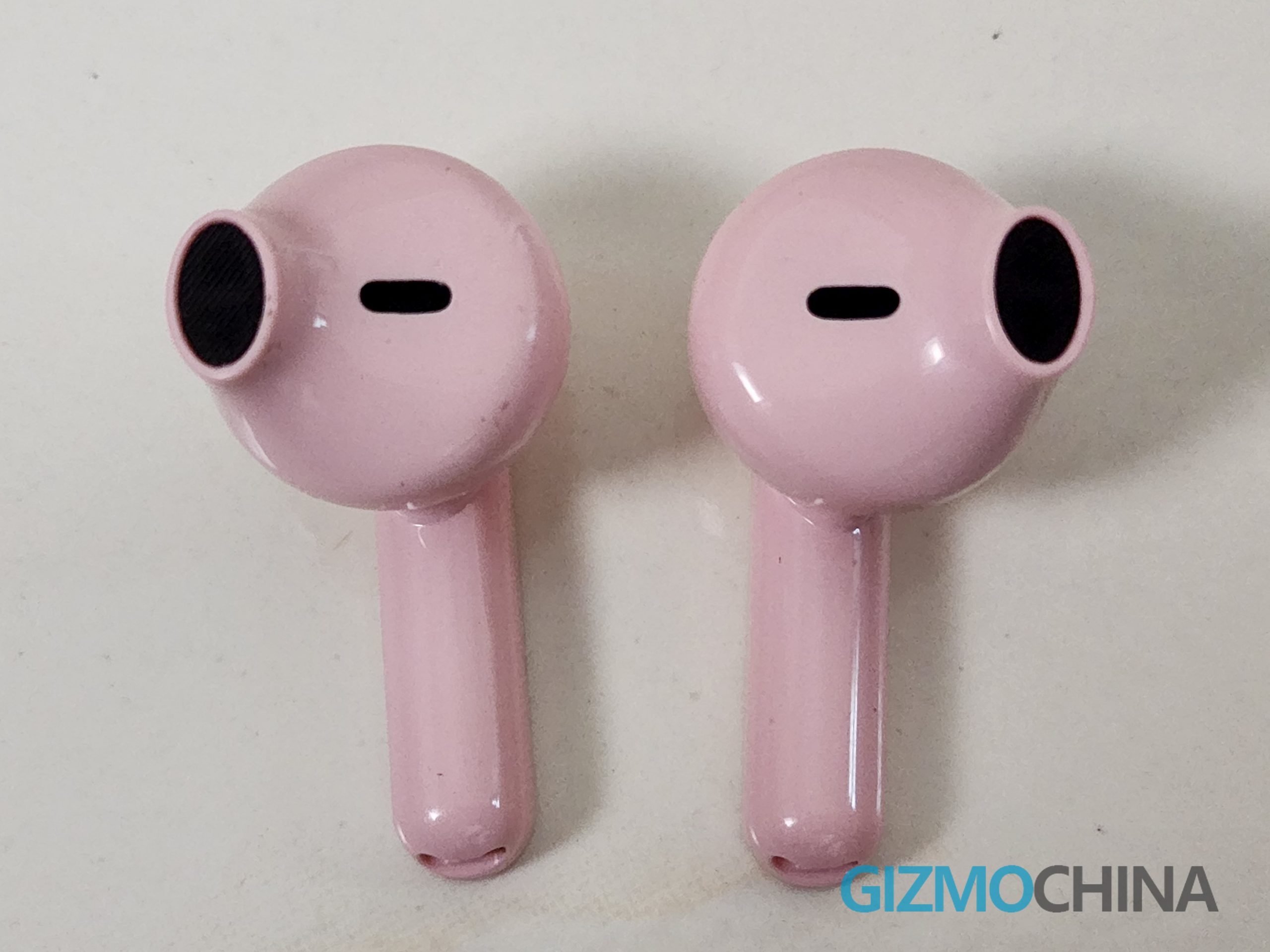
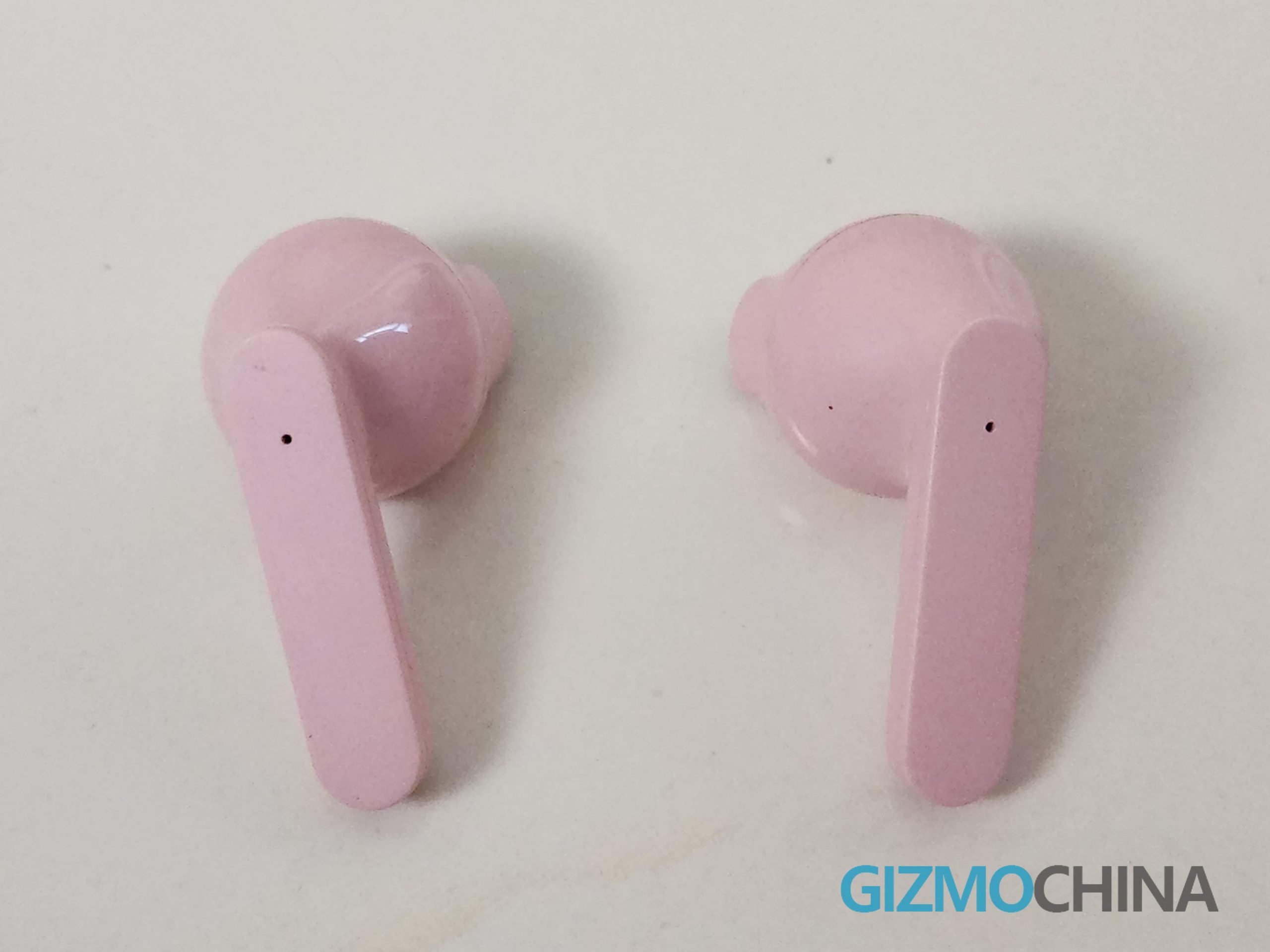
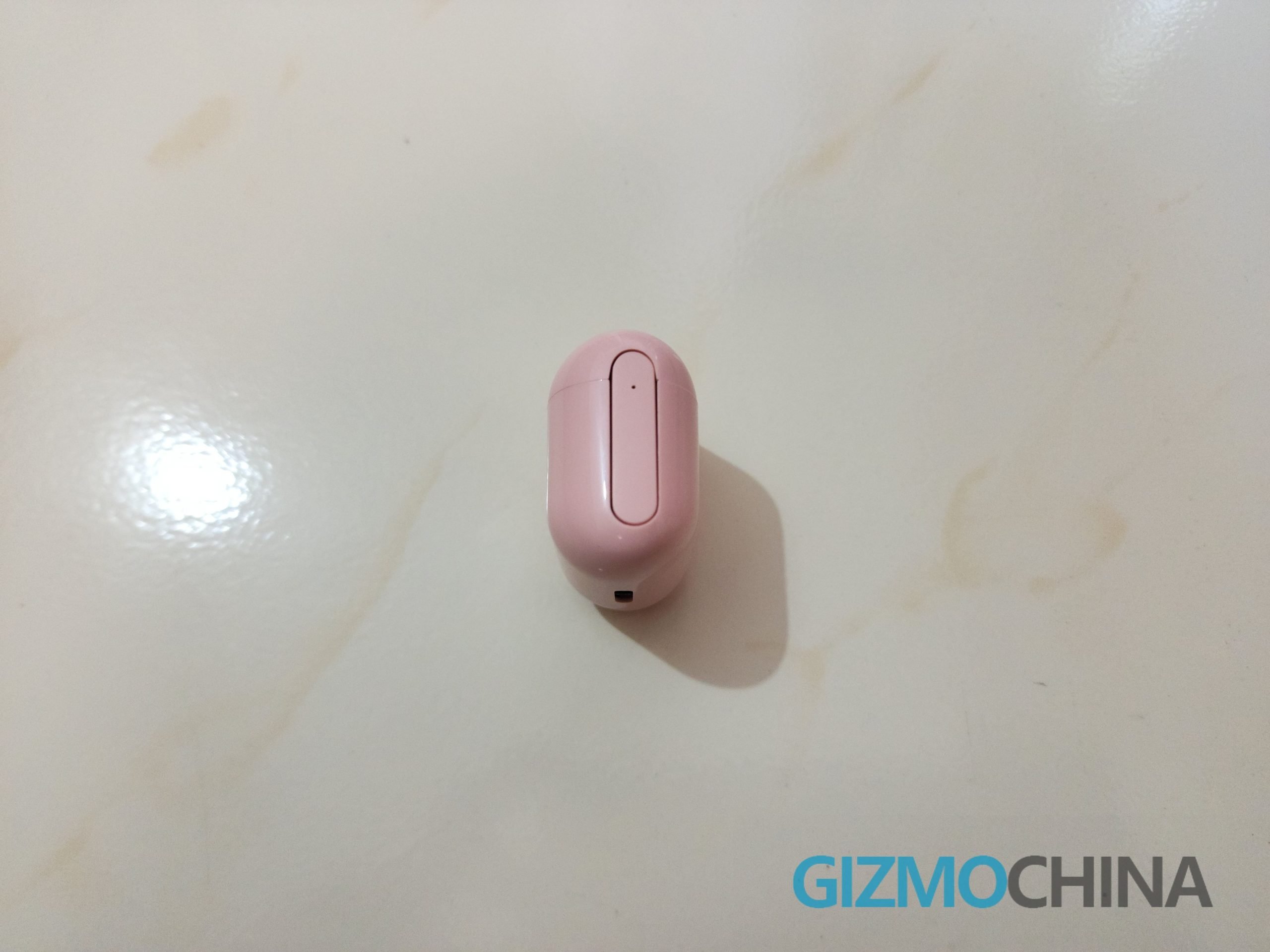
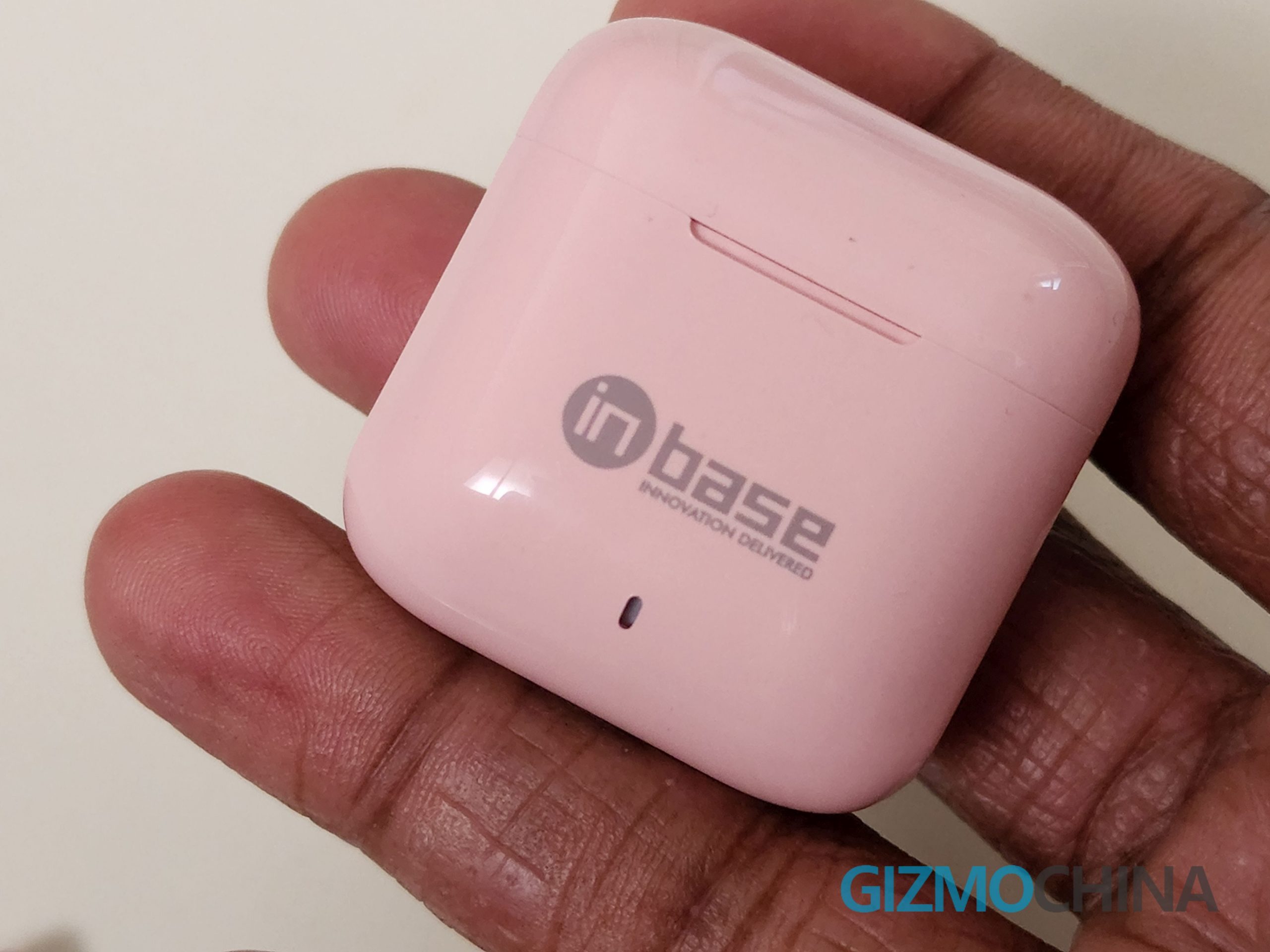
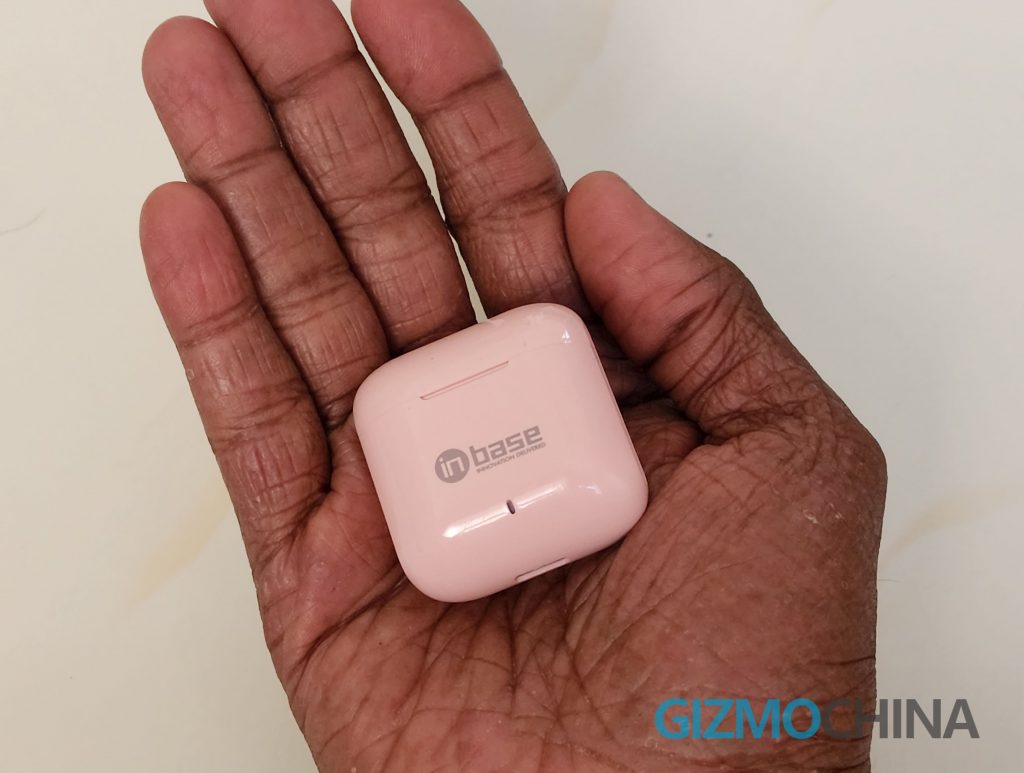
Inbase Buds Mini Lite is one of the unique products that I have come across when it comes to TWS earbuds, mainly because of its design. Announced in September this year, it is a compact device, that weighs only 25 grams. I have added a couple of images of the Inbase Mini Lite to show how small the Inbase Mini Lite is.
Inbase Buds Mini Lite: What’s in the box
Inbase Buds Mini Lite
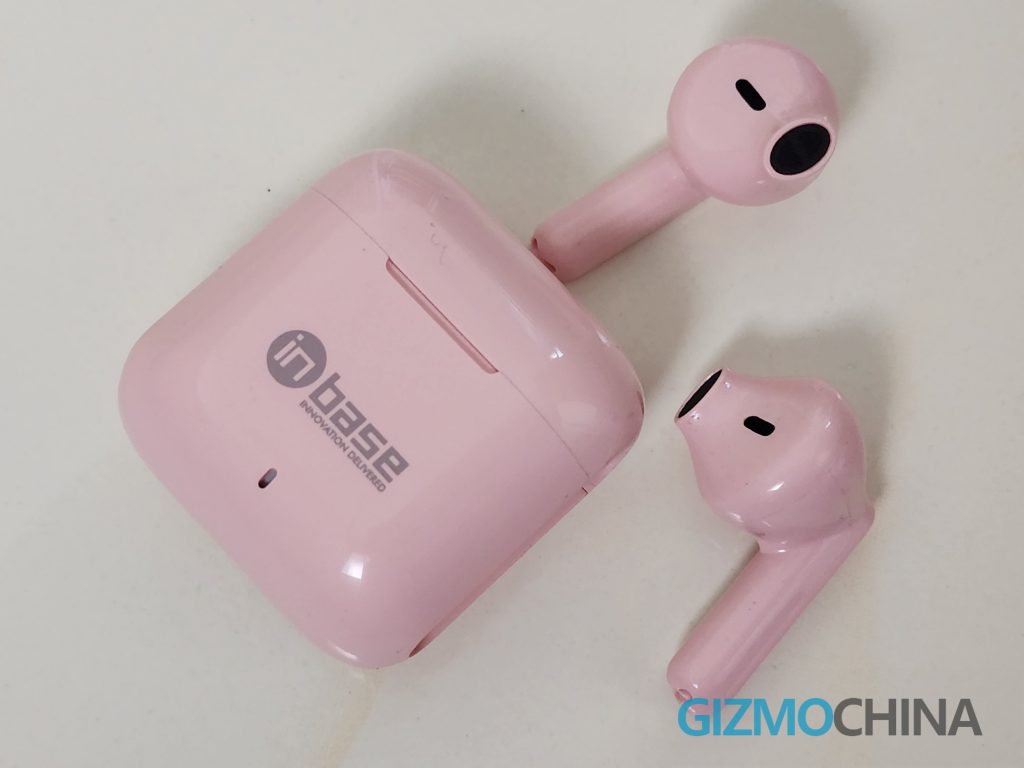
The retail package of the Inbase Buds Mini Lite comprises the device, a USB to USB-C cable, a user manual, and a leaflet. As can be seen in the images, the earbuds come without ear tips.
Design and Comfort
The smooth plastic case measures under 4 cm on all four sides and weighs only 25 grams on my weighing scale. Each earbud weighs only 4 grams. It is small enough to slide into a pocket alongside a phone or wallet. Buyers are advised not to put keys or any sharp objects in the same pocket as the Buds Mini Lite to protect it from getting scratched.
Inbase Buds Mini Lite
It sports a unique design, as there are cutouts on the left and right edges of the case through which the 2-pin charging interface can be easily seen. The magnets present inside the case ensure that the connecting pins connect securely to the bottom portion of the earbuds. On the front, it has the Inbase branding, an LED indicator, and a USB-C port at the bottom. Both earbuds also have their own tiny LEDs that glow when they are put inside the case. While charging, the LED on the case remains on until the device is fully charged. According to Inbase, the Buds Mini Lite offers IPX5 sweat and water resistance. One issue that I faced with its case was that I found its lid closing too quickly.
Inbase Buds Mini Lite
The Buds Mini Lite sports a half-in-ear (semi-in-ear) design, which was popularised by the AirPods lineup. Hence, it does not come with ear tips.
The Buds Mini Lite is one of the smallest TWS earbuds that I have come across. It comes in three colours, black, white, and pink. Inbase sent me the pink variant, which looks cute and cool at the same time.
Inbase Buds Mini Lite
When in-ear earbuds are worn, the ear tips go deeper inside the ear, but half-in-ear earbuds can only go close to the ear canal. Nonetheless, the Buds Mini Lite fits comfortably in the ear’s curves. In my usage, the earbuds never fell off the ear, even while running. However, readers should note that they should not expect the Bud Mini Lite, which has semi-in-ear earbuds, to offer the same kind of fit.
Because the semi-in-ear earbuds have hard plastic in the part that goes inside the ear, some users may experience discomfort if they are worn for an extended period of time. I used the Buds Mini Lite several times for around 2 to 3 hours on a stretch, and those earbuds did not cause any sort of discomfort, probably because they are quite light in weight.
Connectivity and Touch Controls
The Inbase Buds Mini Lite comes with support for Bluetooth 5.1 connectivity. I did not encounter any drops in connectivity while using it. It is compatible with platforms like Android, iOS, and Windows. As soon as the earbuds are taken out of the case, they connect to the last device they were paired with.
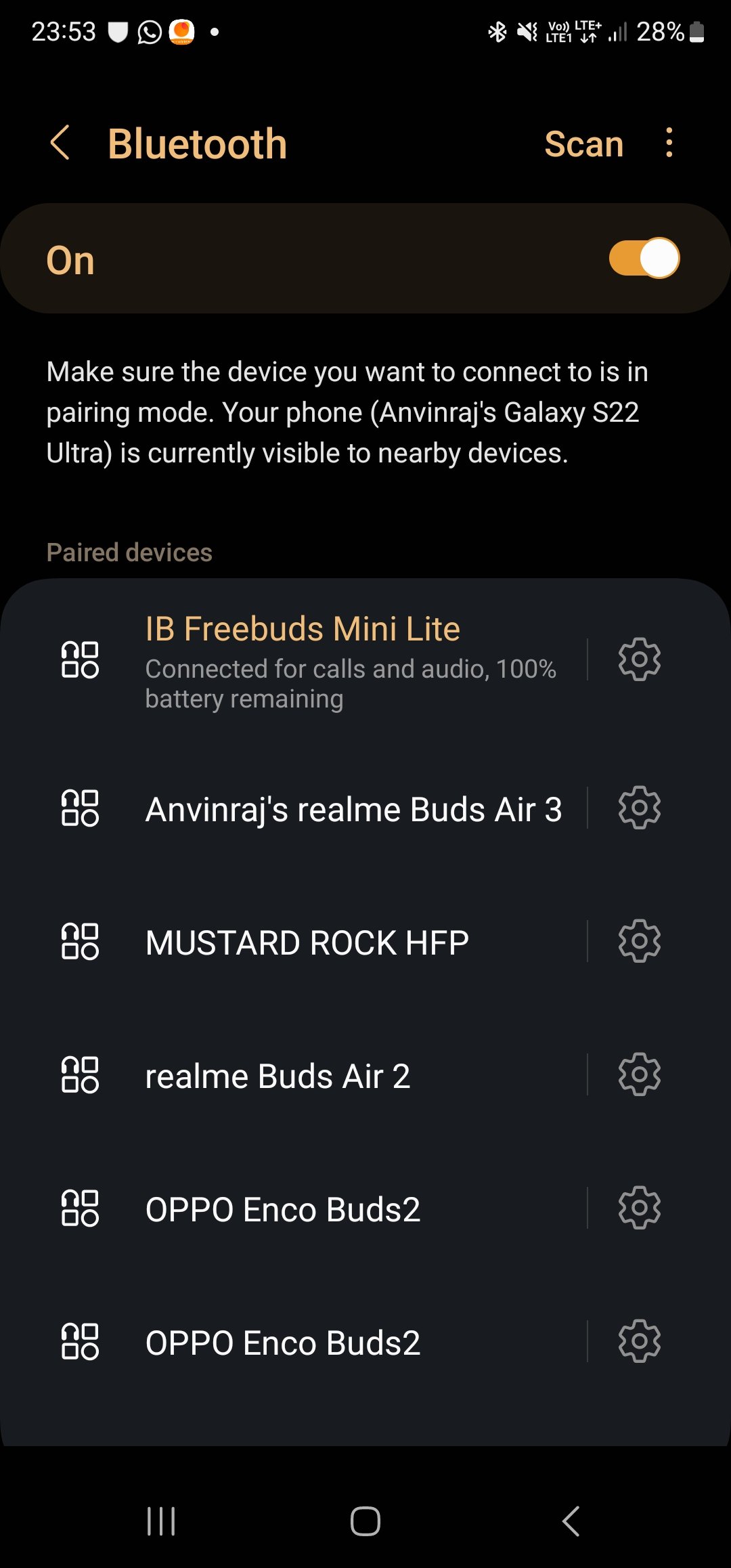
There is no dedicated app for customizing earbuds. Users can check its battery levels by navigating to the Bluetooth settings on the paired device, as shown in the image above.
Users can tap once on either earbud to play / pause or answer / end calls. The left earbud can be long-pressed to listen to the next track. Pressing the right earbud slightly longer allows you to return to the previous track. A double tap on the left or right earbuds dials the last phone number in the call log. A triple tap on either earbud allows users to access the voice assistant. There is no way to customize these functions. Occasionally, I found the touch response a bit too sensitive, which meant I would not recognize whether earbuds registered a double tap. The earbuds lack support for smart wear detection.
Audio Experience and Call Quality
Inbase Buds Mini Lite
The Buds Mini Lite has 13mm audio drivers, but the highest volume setting does not feel high enough. So, users will find themselves listening to the highest setting. It offers a distortion-free listening experience, and the bass output is also good. It supports SBC and AAC audio codes. There is no noise-cancellation feature on the device. Hence, the call experience on the Buds Mini Lite is of average quality.
Battery Life
Inbase Buds Mini Lite
Inbase claims that the Buds Mini Lite’s earbuds offer up to 5 hours of playback time. With the charging case, it promises up to 40 hours of listening time. It offers up to 300 hours of standby time. Each earbud has a 30mAh battery, and the charging case packs a 200mAh battery.
It takes around an hour to fully charge the Inbase Buds Mini Lite. A good thing is that it comes equipped with a USB-C port for charging it conveniently. I have used the Buds Mini Lite, for nearly two months, and I found myself charging it only a few times.
Verdict
There is always a niche market for people who prefer compact devices. Hence, the Inbase Buds Mini Lite is one of the devices to consider for people looking for a lightweight TWS earbud. Except for a few issues, I did not find any major issues with the device. The Inbase Buds Mini Lite is listed for Rs 1,299 on Flipkart and Amazon. It comes with a 1-year warranty.
Disclaimer: The opinions in this review of the Inbase Buds Mini Lite are all mine and are based on my own experiences. Inbase did not have any editorial input.
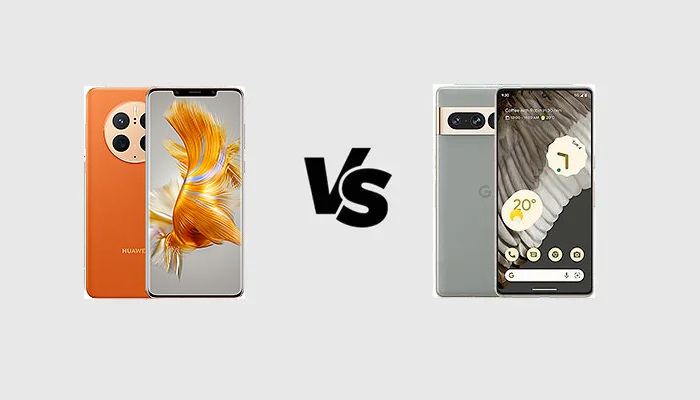
Huawei never backs down. Despite the ban by the U.S. did not allow the company to use 5G components and Google Mobile Services for years, it is still alive and it keeps launching flagship phones in the global market. Recently, the Huawei Mate 50 Pro made its debut not only in Asia but even in Europe. According to DxOMark experts, it is the best camera phone out there as it conquered the highest score on the platform after their tests. Another top camera phone, at the second place of the ranking by DxOMark, is the Google Pixel 7 Pro. That is the reason why a lot of people want to know which of these devices is the best. Here is a comparison between the main specifications of the Huawei Mate 50 Pro and the Google Pixel 7 Pro.
Huawei Mate 50 Pro vs Google Pixel 7 Pro
Huawei Mate 50 Pro
Google Pixel 7 Pro
DIMENSIONS AND WEIGHT
162.1 x 75.5 x 8.5 mm, 205 g
162.9 x 76.6 x 8.9 mm, 212 g
DISPLAY
6.74 inches, 1212 x 2616 pixels (Full HD+), OLED
6.7 inches, 1440 x 3120p (Quad HD+), AMOLED
PROCESSOR
Qualcomm Snapdragon 8+ Gen 1 4G, octa-core 3.19 GHz
The front panel of the Huawei Mate 50 Pro is definitely not the most beautiful you can find in the market. Unlike all the other Android flagships out there, it has a big notch on the upper part, but a lot of people will surely like the very high screen to body ratio and the curved edges of its display. However, my favorite phone in terms of design is the Google Pixel 7 Pro, not only because it has a very original rear side, but also because it comes with a punch hole display. On the other hand, the Huawei Mate 50 Pro has a higher build quality. It is built with a glass back, and an aluminum frame, and it is waterproof with the IP68 certification. It provides better water resistance as it is able to go underwater up to 6 meters deep without any damage.
Display
The displays of these two phones are close in terms of quality, but I personally prefer the panel of the Google Pixel 7 Pro. It has an AMOLED panel with a diagonal of 6.7 inches showing the images with a Quad HD+ resolution of 1440 x 3120 pixels, an adaptive refresh rate from 1 to 120 Hz (LTPO technology), HDR10+ certification, and a peak brightness of 1,500 nits. The Huawei Mate 50 Pro has an OLED display with a diagonal of 6.74 inches, one billion colors, a Full HD+ resolution, and a 120 Hz refresh rate. The Huawei Mate 50 Pro is very interesting because it offers two advanced methods of authentication: besides an in-display fingerprint reader, it supports 3D facial recognition thanks to a TOF 3D sensor placed in the notch above the display.
Specs & Software
The chipset of the Huawei Mate 50 Pro is more powerful if compared to the Google Pixel 7 Pro. It is powered by the Snapdragon 8 Plus Gen 1 mobile platform built with a 4 nm production process and sporting an octa-core architecture composed of a Cortex X2 CPU running at a max frequency of 3.19 GHz, three Cortex A710 CPUs running at 2.75 GHz, and four Cortex A510 CPUs running at 2 GHz, as well as an Adreno 730 GPU. The chipset is paired with 8 GB of RAM and either 256 or 512 GB of native storage. However, due to the U.S. ban, this phone does not support 5G and Google Mobile Services, replaced by Huawei Mobile Services. The Google Pixel 7 Pro has an inferior chipset: the Google Tensor G2 (built at 5 nm), but it also comes with more RAM, 5G, and Google Mobile Services.
Camera
According to DxOMark, the Huawei Mate 50 Pro is the best camera phone ever and we do not deny what it said. It has a 50 MP main camera with variable aperture and OIS, a 64 MP periscope sensor with 3.5x optical zoom, and a 13 MP ultrawide sensor. The main camera of the Google Pixel 7 Pro looks slightly inferior, but the telephoto lens looks better with a 48 MP resolution and 5x optical zoom.
The battery of the Google Pixel 7 Pro is bigger and it provides longer battery life, while the Huawei Mate 50 Pro offers faster charging speeds.
Price
You need €1200 or $1200 to purchase the Huawei Mate 50 Pro, while the Google Pixel 7 Pro is available for just $900 or €900, so it has a higher value for money. Which one would you pick?
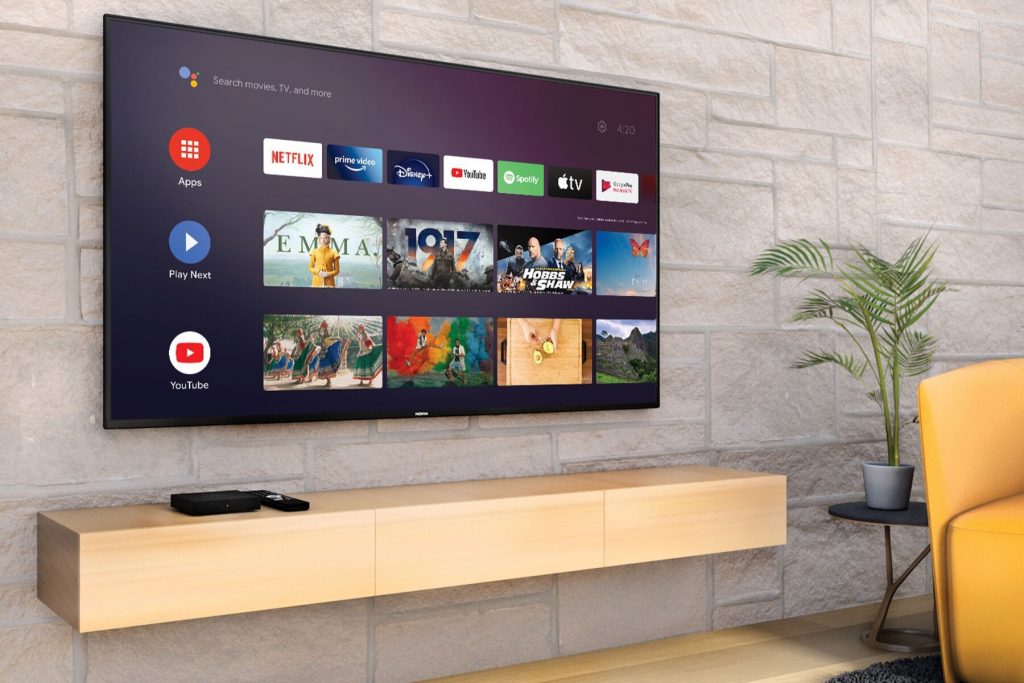
StreamView has unveiled the Nokia Streaming Box 8010 with a new ARM chipset. The Streaming Box 8010 has an almost identical look to the 8000, its predecessor. It runs on Android TV 11 powered by the upgraded ARM chipset. It uses the Amlogic S905X4-K chipset with four ARM Cortex-A55 cores and a Mali-G31 MP2 GPU.
The new streaming box is more powerful and comes with a bigger memory capacity than the 8000 model. It doubles the RAM of its predecessor and quadruples the storage of the 8000. The improvements courtesy of the upgraded ARM chipset put the new product on a higher-performance pedestal.
The Nokia Streaming Box 8010 has 4 GB of RAM and 32 GB of storage. So you can install more apps from the large pool available on Android TV 11. The Streaming Box 8010 can output 4K videos with a frame rate of 60 fps. It however needs to be paired with a compatible TV or monitor.
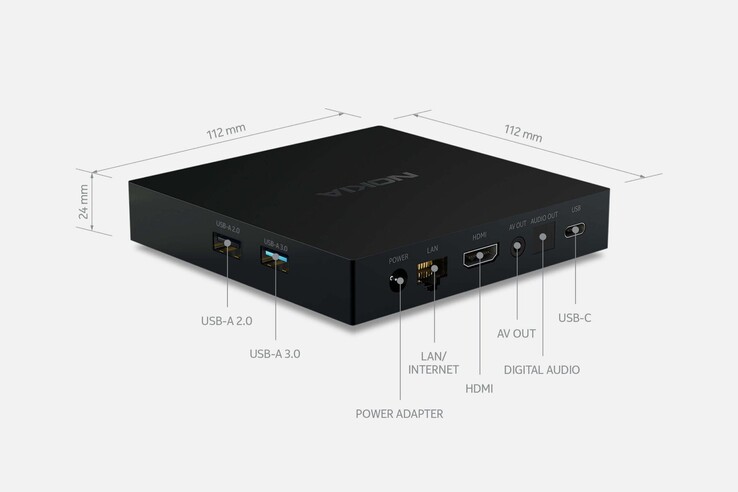
The Nokia Streaming Box 8010 supports Dolby Atmos and can be connected wirelessly via Bluetooth 5.0 and Wi-Fi 6. The Streaming Box 8110 uses HDMI, USB-A, and USB-C ports. StreamingView also included an Analog AV port on the streaming box.
The StreamView 8000 still sells for around €70 ($73), while the 8010 costs €129 ($135). Both streaming boxes can be ordered directly from StreamView.
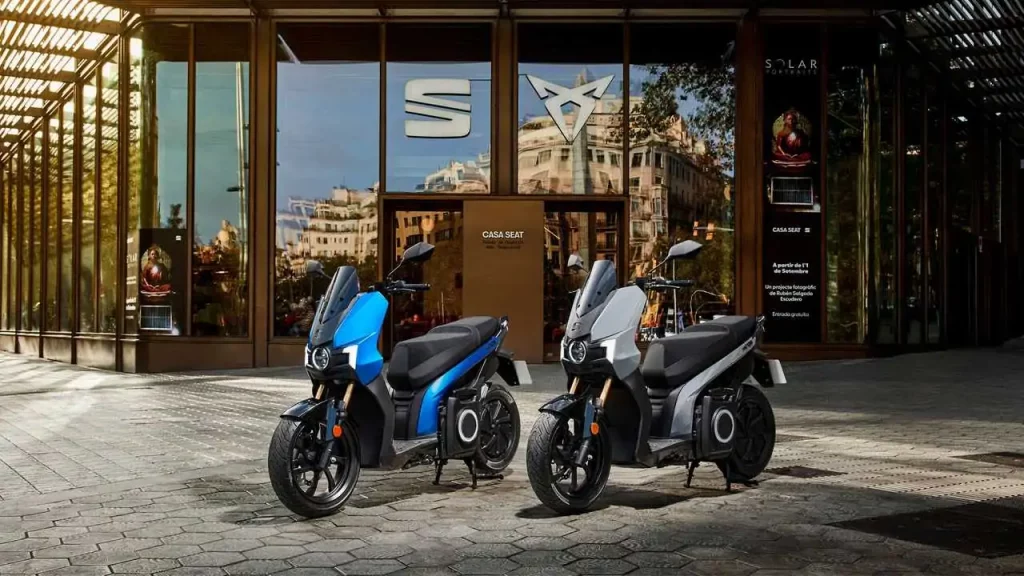
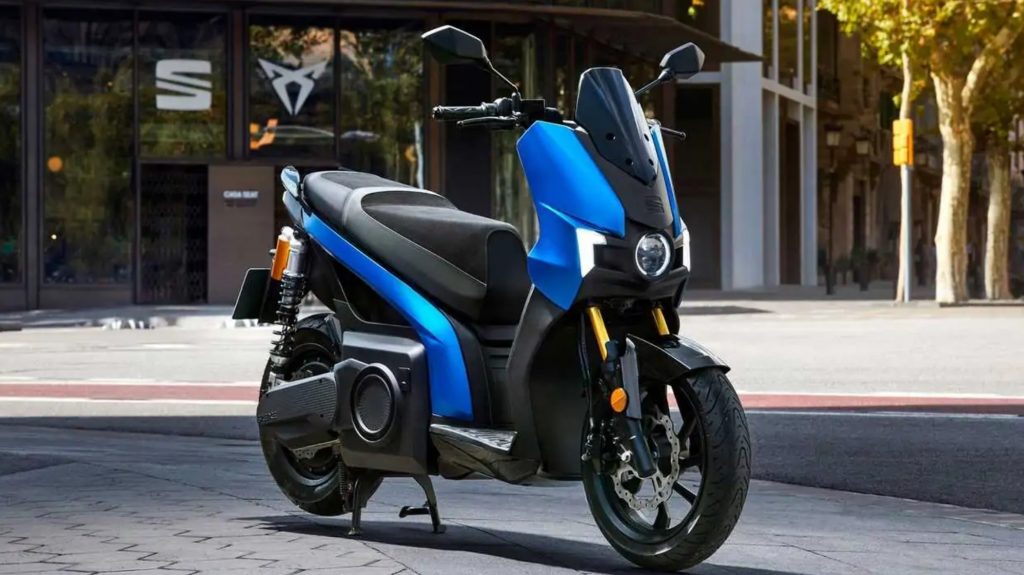
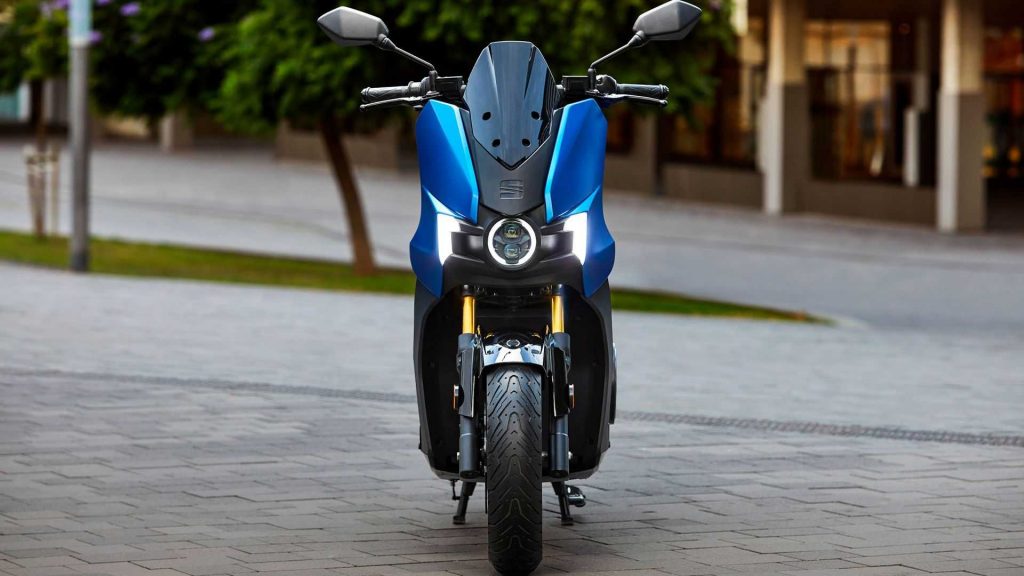
The EICMA 2022 has seen a raft of innovative, durable, and powerful e-bikes showcased by various brands. Spanish automaker SEAT will not be left out as it has unveiled the Mo 125 performance e-scooter during the event. The Mo 125 Performance comes with a sportier look and packs a great performance with it. Indeed, the new e-bike offers more power, speed, and agility.
The Mo 125 Performance has a 7.5kW motor which can output a peak power of 11.5kW. Its power performance is slightly better than that of the Mo 125 base model. The Mo 125 standard e-bike has a 7kW motor that peaks at 9kW. It can go from 0 to 50km/h in 2.9 seconds, better than the 3.9 seconds to achieve the same speed for the standard model. The new e-scooter also features the e-Boost function that helps when overtaking or getting out of a jam. The e-boost feature gets the Mo 125 Performance to reach a top speed of 105km/h.
The Mo 125 Performance is an exciting bike due to its maneuverability which makes navigating the traffic situation or racing on a track as seamless as it can be. It has a fully-adjustable Ohlins rear shock that allows the rider to fine-tune the ride for optimal comfort. It also features the SHAD seat which provides more comfort during the ride.
The e-Boost provides added power for a maximum of 30 seconds. It can be deployed again after a two-minute rest period. The quick power available with the Mo 125 Performance is modulated by its solid braking system. The e-bike comes with high-performance Galfer discs and pads for solid braking performance. The bike’s 5.6kWh battery delivers a range of 133km, slightly lower than the base model. The scooter’s lithium-ion battery pack can be charged fully in 6-8 hours. SEAT says the Mo 125 Performance will be available at the end of Q1 2023. No pricing details are available yet for the e-bike.
We use cookies on our website to give you the most relevant experience by remembering your preferences and repeat visits. By clicking “Accept”, you consent to the use of ALL the cookies.
This website uses cookies to improve your experience while you navigate through the website. Out of these, the cookies that are categorized as necessary are stored on your browser as they are essential for the working of basic functionalities of the website. We also use third-party cookies that help us analyze and understand how you use this website. These cookies will be stored in your browser only with your consent. You also have the option to opt-out of these cookies. But opting out of some of these cookies may affect your browsing experience.
Necessary cookies are absolutely essential for the website to function properly. This category only includes cookies that ensures basic functionalities and security features of the website. These cookies do not store any personal information.
Any cookies that may not be particularly necessary for the website to function and is used specifically to collect user personal data via analytics, ads, other embedded contents are termed as non-necessary cookies. It is mandatory to procure user consent prior to running these cookies on your website.