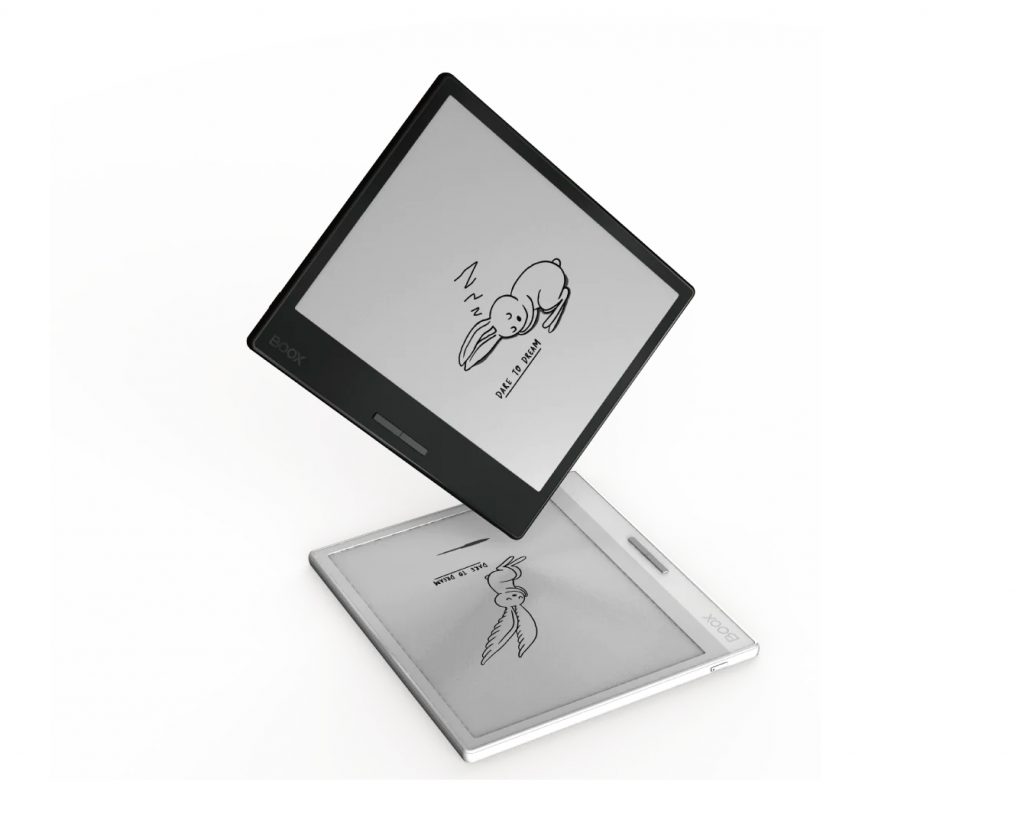
Onyx BOOX is a well-known producer of high-end E-ink tablets. The company just introduced the Boox Tab Ultra and Tab10, two new e-readers, to the market. Now, it has launched another E-ink tablet in the holiday season, which is relatively affordable.
The new tablet called the Boox Leaf2 is the name of the new tablet which is available in two color options. There is actually a difference between the black and white color options, as the white lacks matte glass protection over its display.
The upshot is that the white version weighs 15 g less than the black version at the expense of the display’s recessed borders. However, they both have 7-inch E Ink Carta displays with a 300 DPI resolution of 1,680 by 1,264 pixels.
The Leaf2 also features 32 GB of eMMC flash storage, 2 GB of LPDDR4X RAM, and Android 11 out of the box. Onyx BOOX also has a Micro SD card reader, a 2,000 mAh battery with up to 26 days of battery life, and an unnamed Qualcomm CPU with a Bluetooth 5.0 connection. A USB Type-C port, in addition to microphones, speakers, and G-sensors for auto-rotation support, are included on both models.
The device is currently available in both the US and Chinese markets. Surprisingly, it costs less in the US than in China. The US price tag is $199.99, while it sells for CNY 1,580 (US$225) in China. It can be purchased from B&H Photo Video or BOOX directly.
Apple started exploring options to move more production outside of China a few years back as the technology giant is working on reducing its reliance on China for manufacturing products.
While the Cupertino-based giant has already moved a portion of iPhone production to India, a new report from CNBC claims that Apple is now also discussing moving some iPad manufacturing to India.
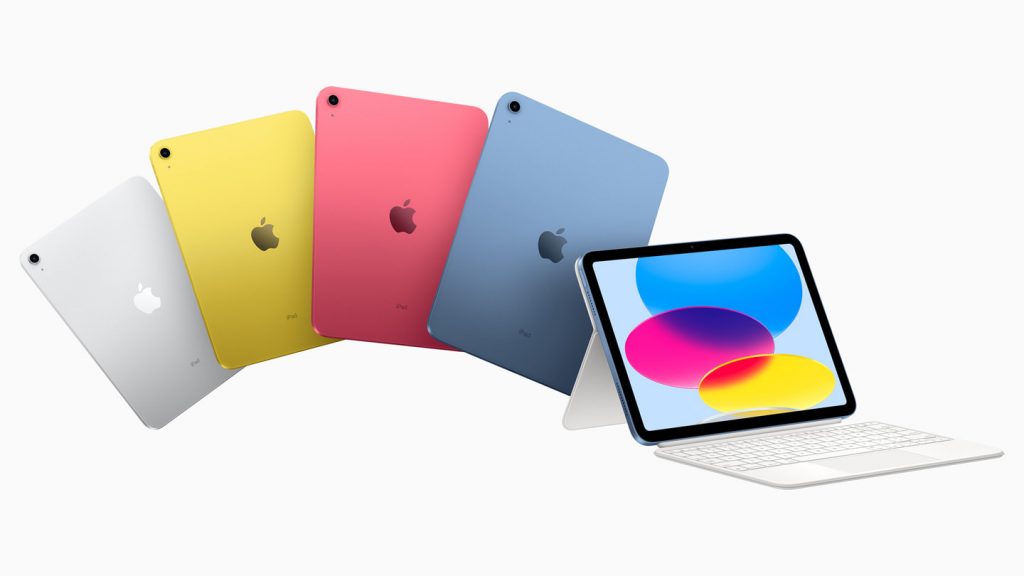
Apple iPad 10th Generation
As per the report, the company is currently in talks with Indian officials, but that are many hurdles that Apple needs to overcome for the plan to materialize, including having manufacturing expertise for the iPad models.
It has been emphasized that there are no concrete plans as of now, but the discussions about the possibility are ongoing. Since Apple is keen on expanding its manufacturing to other countries outside of China, iPad production could start in India if the issues are addressed.
But the path for this to happen isn’t easy as India lacks “highly skilled talent and individuals with expertise in building highly complex devices,” which could slow down Apple’s efforts, claims the report.
Apple has been manufacturing devices in India since 2017, when it began production of some older iPhone models, and since then, the company has been slowly expanding its production. The newly launched iPhone 14 models are the first flagship phones that are being manufactured in India.
Last week, it was reported that Apple has been working to reduce its presence in China for many years and has accelerated the plans to shift more production outside of China to countries like India and Vietnam and is actively telling suppliers to “plan more actively” for assembling iPhones in other countries.
ZTE launched the Yuanhang 40 Pro+ Starry Sky Edition smartphone a few days back in China, and now the device is available for purchase in the Chinese market.
The ZTE Yuanhang 40 Pro+ Starry Sky Edition has an impression of Van Gogh Starry Sky painting as the phone’s back panel design. It is priced at 2,198 yuan, which roughly converts to $315.
This new edition of the smartphone is similar to the original phone launched last month but with a new color. Apart from the change in the back panel’s design, the phone is identical to the model launched last month.
Coming to the specifications, the smartphone features a 6.81-inch AMOLED display with a Full HD+ screen resolution of 2480 x 1116 pixels, a 120Hz refresh rate, and an in-display fingerprint sensor.
There’s also a 16-megapixel under-display camera with 2.24μm large pixels, and it uses a third-generation of under-display camera from ZTE. On the back, there’s a triple-camera setup consisting of a 64MP Sony IMX787 primary sensor, another 64MP Sony IMX787 sensor, and a 64MP telephoto periscope lens.
The device is powered by the Qualcomm Snapdragon 8 Gen 1 chipset. We expect the ZTE Axon 40 Ultra Aersospace Edition to come packed with up to 18GB of LPDDR5 RAM and up to 1TB of UFS 3.1 storage. It may run the Android 12 operating system out-of-the-box with the company’s own MyOS 12 custom interface on top. It is likely to be powered by a 5,000mAh battery with 80W fast charging.
Back in March 2022, Oppo debuted the Enco Air 2 TWS earphones in the Indian market. The earbuds featured a transparent lid for the charging case and came with all the basic features, excluding ANC. Now, reports reveal that the launch of the Oppo Enco Air 3 is near, with the gadget getting certified on the BIS and SIRIM databases.
Oppo Enco Air 2
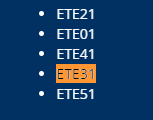
Tipster Mukul Sharma spotted the Oppo Enco Air 3 on BIS and SIRIM certification. The BIS listing mentions the model number ETE31, while the SIRIM database confirms the Oppo Enco Air 3 moniker. Unfortunately, there are no details available as of yet on the specifications, however, the tipster has hinted at the launch timeline.
Oppo Enco Air 3 SIRIMOppo Enco Air 3 BIS
According to Mukul, the Enco Air 3 has already entered internal testing in India and various other Asian regions. The tipster adds that the launch is expected to happen around January/February. The last bit of information shared says that the earbuds will come in various color options, including Black, Blue, and White. Let’s take a look at the specs of the Oppo Enco Air 2 to get an idea of what to expect from its successor.
Oppo Enco Air 2 specs
The Oppo Enco Air2 comes with 13.4mm Titanized Diaphragm drivers. Even with the lid closed, the upper part of the buds is visible because they are packaged in a transparent jelly shell. The total listening time provided by this charging case is up to 24 hours. The earbuds’ stand-alone battery life is up to 4 hours.
Binaural low latency through Bluetooth v5.2 is a function included with the earbuds. Enco live sound effects are also included, which increase the bass and make it simpler to understand the words.
Additionally, they support AI Noise Cancellation for enhanced call quality. Touch controls on the earphones include options for touch and hold, double-tap, and triple-tap. The earphones have a TUV Rheinland high-performance certification and an IPX4 water-resistant rating.
Infinix recently launched two new smartphones in its Hot lineup called the Infinix Hot 20 5G and the Infinix Hot 20 Play. Out of the two devices, the Hot 20 Play will be available, for purchase starting today. So, let’s take a look at its pricing, offers, and specs.
Infinix Hot 20 Play price & offers
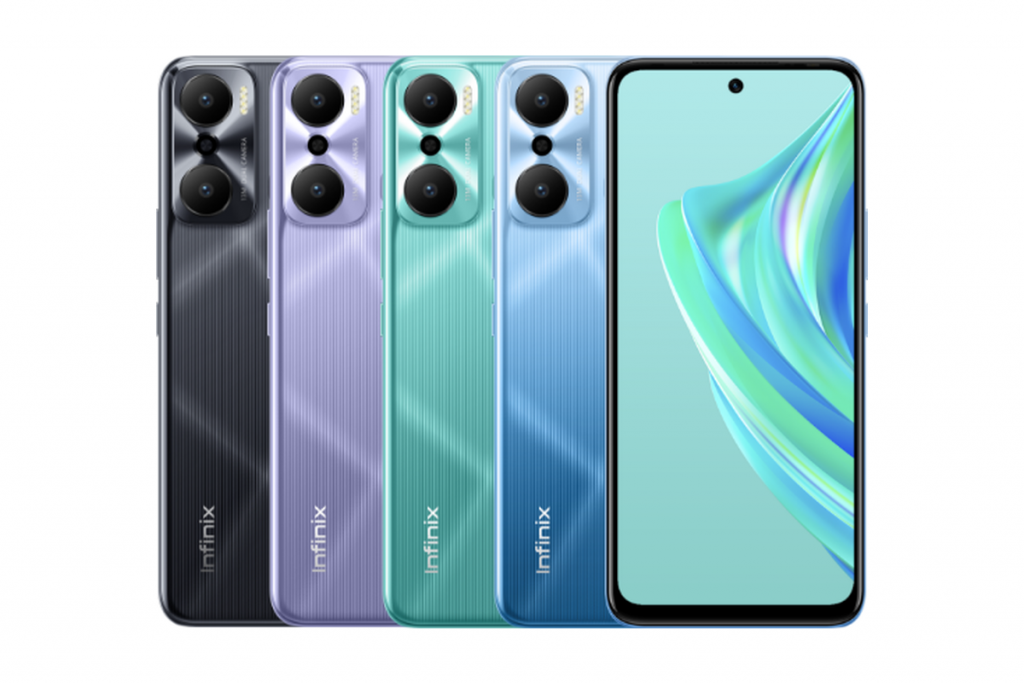
The Infinix Hot 20 Play has a price tag of Rs 8,999 for the 4GB+64GB version. It does not come in any other memory configuration, however, there are multiple color options available like Racing Black, Aurora Green, Fantasy Purple, and Luna Blue. It will go on sale later today via Flipkart.
As for offers, Federal Bank debit card users can get an instant discount of up to 10%, whereas Flipkart Axis Bank Card users are eligible for a 5% cashback on the purchase. Buying the device via UPI transaction will net customers a discount of Rs 300.
Infinix Hot 20 specs
The Infinix Hot 20 Play features a large 6.82-inch punch-hole LCD display. It offers a refresh rate of 90Hz, a touch sampling rate of 120Hz, and an HD+ resolution of 1640 x 720 pixels. Its front camera is an 8-megapixel one with an LED flash. It has a dual 13-megapixel camera setup with a quad-LED flash on the back. On the device’s back shell, there is also a fingerprint scanner.
The Hot 20 Play is powered by the MediaTek Helio G37 CPU and 4 GB of LPDDR4x RAM. Additionally, it has 64 GB of internal storage and 3 GB of virtual RAM. The phone is powered by an Android 12 OS built on XOS 10 6.0.
The Hot 20 Play includes features such as aerospace-grade cooling material, Dar-Link Engine 2.0, LinkPlus 1.0, and Erdal Engine 3.0 for a better gaming experience. It has a sizable 6,000mAh battery that enables 18W USB-C charging. A dedicated microSD card slot, DTS audio compatibility, and a 3.5mm audio input are some of the additional features offered by the Hot 20 Play.
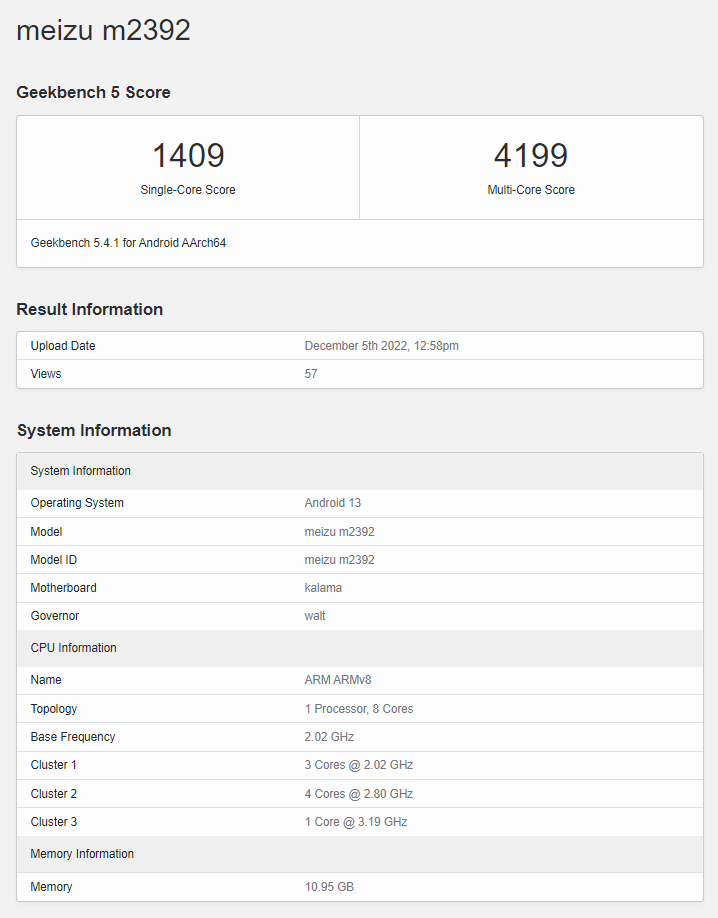
Meizu fans are eagerly awaiting the arrival of its next flagship phones. The company has not announced a flagship phone after launching the Meizu 18 series in March 2021. In July of this year, the company was taken over by Geely’s Xingji Times. It was also said at that time that the company’s next flagship phone is planned for 2023. In a fresh development, Meizu’s upcoming flagship phone has been found listed in the database of the Geekbench benchmarking site (via. TechGoing).
A new Meizu device with model number M2392 has appeared on Geekbench. The CPU and GPU (Adreno 740) information mentioned in the Geekbench listing is enough to say that the phone is powered by the Snapdragon 8 Gen 2 mobile platform. The listing further reveals that the device is equipped with 12 GB of RAM and Android 13 OS.
Since the Meizu M2392 has the SD8G2 chip onboard, it appears that it could be the upcoming Meizu 20 or Meizu 20 Pro flagship. The device scored 1409 and 4199 points in the single-core and multi-core tests of Geekbench, respectively.
Interestingly, the M2392 model number does not match the report that revealed details about the Meizu 20 series last month. According to the report, Meizu phones with M381Q and M391Q model numbers will debut as the Meizu 20 and 20 Pro in China.
The report revealed that the Meizu 20 Pro will be available in two variants: 8 GB of RAM and 256 GB of storage, and 12 GB of RAM and 512 GB of storage. The Meizu 20 and 20 Pro are expected to feature the Snapdragon 8 Gen 2 chipset. There is no information on the configurations of the Meizu 20.
The Geekbench appearance is a good hint that Meizu’s next flagship phones will be launching soon in China. However, it appears that it may go official in Q1 2023.
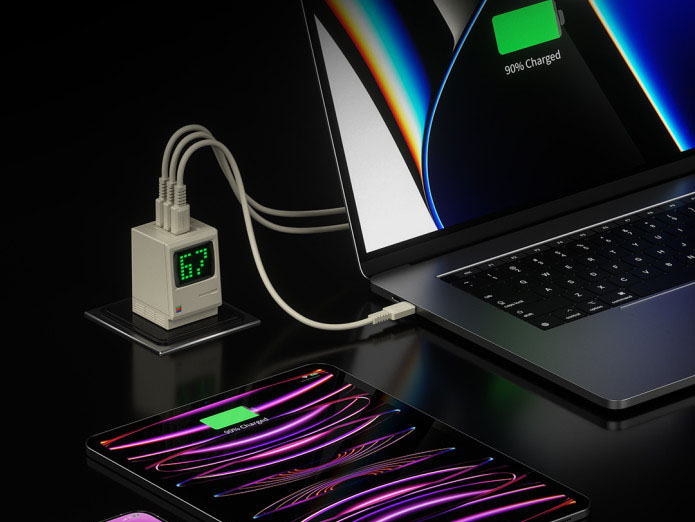
Apple started the trend of not including AC adapters on its smartphones a few years back. Thereafter Samsung, Xiaomi, and other Android phone manufacturers followed suit even when the models come with charging ratings that the old adapters can’t deliver. Even the latest Pixel 7 series was released without AC adapters. Thus, owners will have to either make do with their old adapters or buy a new adapter that meets that rating. Shargeek has launched a new adapter dubbed Shargeek Retro 67W.
As the name implies, the Shargeek Retro 67W comes with a 67W rating and it is presently listed on Indiegogo for $39. The charger uses the Gallium Nitride (GaN) technology and it comes in a compact size just like most GaN chargers around. But where this product differs is the inclusion of a pixelated display that is reminiscent of the Matrix, and vintage Macintosh styling. The real-time display indicates the maximum charging output of 67 W, which can fully charge an iPhone or a MacBook Air M2 in two hours.
The Retro 67 W includes several USB ports to charge many devices at once, just as the majority of USB-C AC converters. However, the 67 W total output from the three integrated USB-C ports is shared, thus the 67 W will be divided into 15 W, 20 W, or 45 W depending on how many devices are connected.
The Shargeek charger is presently on sale on Indiegogo for 302HKD (around $38).
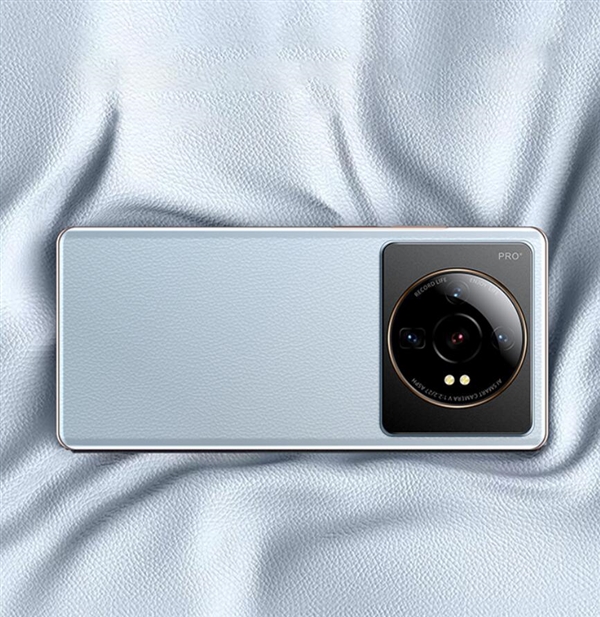
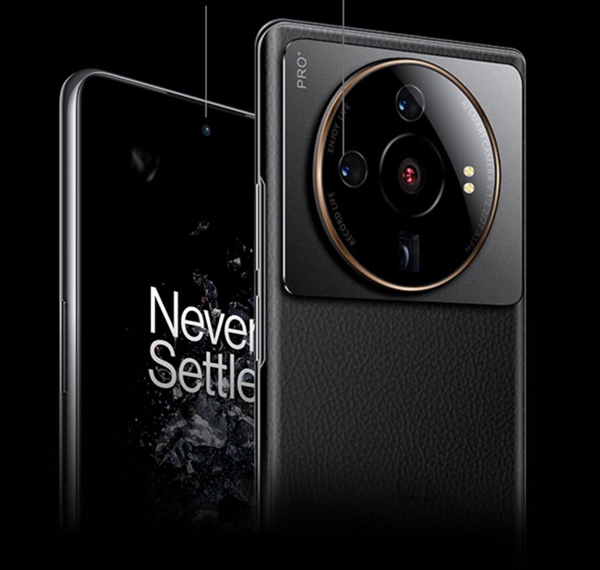
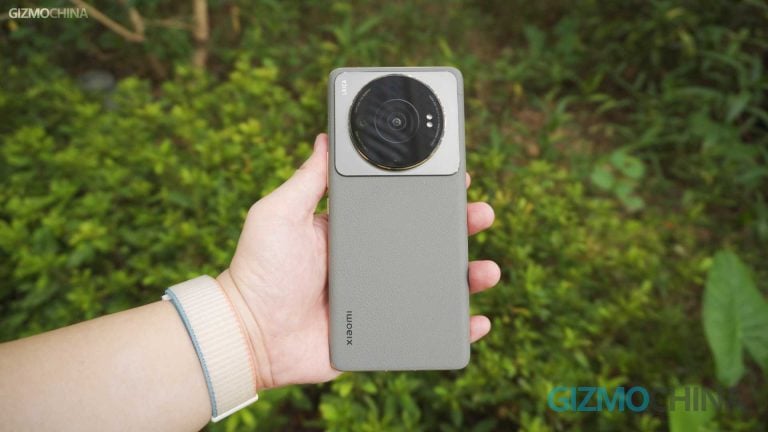
Xiaomi smartphones are super-popular in China as a result of their sleek designs, decent specs and affordable pricing but the flagship models like the Xiaomi 12S Ultra are really not affordable. If you would like to have a 12S Ultra but can’t afford one, a Chinese manufacturer may have just what you need. The smartphone dubbed Coolbi 14S Ultra has been listed in China.
The Coolbi 14S ultra doesn’t just follow the naming pattern of the Xiaomi 12S Ultra, it also shares the same design style with the Xiaomi flagship. However, we doubt if the camera setup is anything close to that of the 12S Ultra.
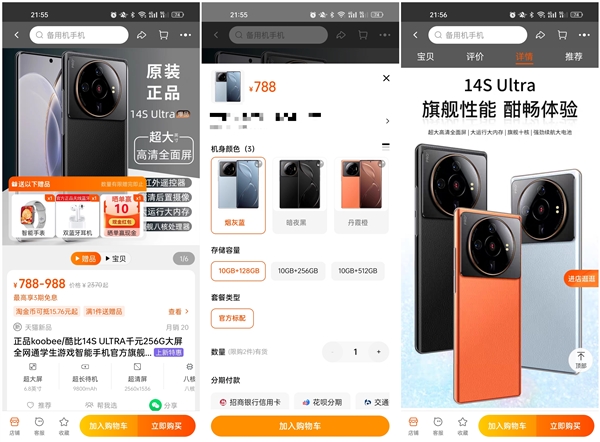
The product page shows the device packs a 6.8-inch display and it crams a mammoth 6800mAh battery under the hood. For photography, there is a 48MP triple camera setup with the main camera featuring support for optical image stabilization (OIS). At the front, there is a 32MP camera for selfies. In reality, the device may just have a single camera and other sensors are likely dummies.
In addition, the device is said to feature an upgraded six-layer three-dimensional graphite structure, which fits closely with the heat source. The device is also listed as packing high thermal conductivity rare earth alloy materials which double the thermal conductivity of the device. The device also has a larger vapor chamber which helps keep it cool.
The product details also show it has up to 15 built-in antennas with multi-scenario network optimization, and stronger signal-receiving ability. The phone comes with 5G connectivity. While the processor is not known, the device is listed as having a 10GB RAM and 128GB storage version that is priced at 788 yuan ($113).
Interestingly, apart from looking like the Xiaomi 12S Ultra, the phone also has OnePlus’ classic Slogan “Never Settle” as its screen. Unfortunately, we can’t track the e-commerce website where this product is listed. The listed specs of the device are doubtful for such a knock-off.
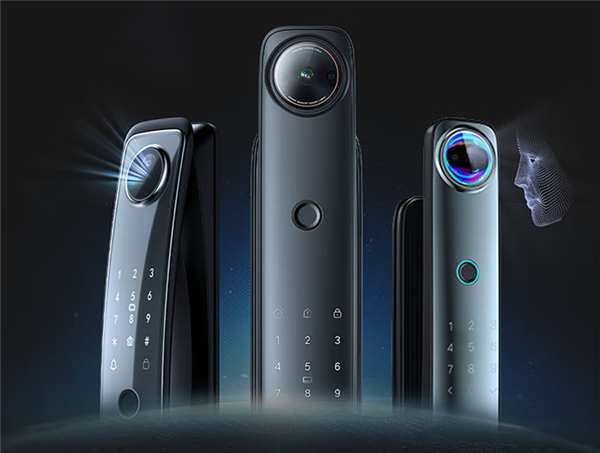
Xiaomi’s ecological chain partner Viomi has launched the Viomi AI Smart Door Lock Super 2E, a fully automatic smart door lock. The device comes with more features than what can be found on most smart door locks around.
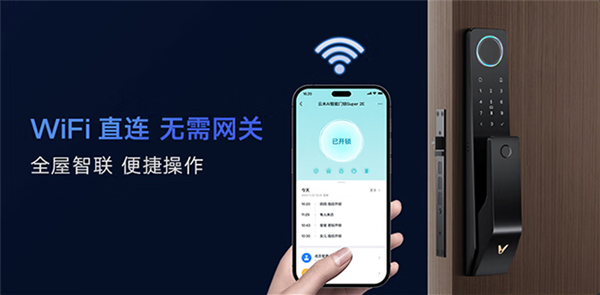
One Viomi Super 2E comes with support for Wi-Fi direct connection, eliminating the need to purchase additional gateways before the device can be connected to smartphones. This greatly reduces the difficulty of connecting the door lock. Also, the product can be connected to the Viomi app, allowing users to easily connect to a variety of smart homes in other to create a network of interconnected devices, thus creating a connected smart home.
The Viomi AI smart door lock Super 2E supports six unlocking methods: fingerprint, password, temporary password, virtual password, door card, and key. Among them, the fingerprint lock adopts the semiconductor fingerprint unlocking scheme, which can be quickly recognized in 0.7s without repeated verification, and supports AI self-learning technology, which becomes more sensitive as it is used.
The door lock has a fully automatic lock body that automatically unlocks when the door is opened and automatically locks when the door is closed. The door can be opened directly by touching it, and the door can be opened even when your hands are occupied as you don’t need to press the handle.
The lock body has a built-in high-precision sensor, and if the lock tongue returns abnormally, the door lock will automatically send out a warning sound and push the information to the app. Users can also check the status of the door in real time.
In terms of battery life, it has a built-in 5000mAh lithium battery, which can be recharged and lasts for 4 months on a single charge.
The Viomi AI Smart Door Lock Super 2E is presently available for pre-sale and is priced at 2099 yuan ($301).
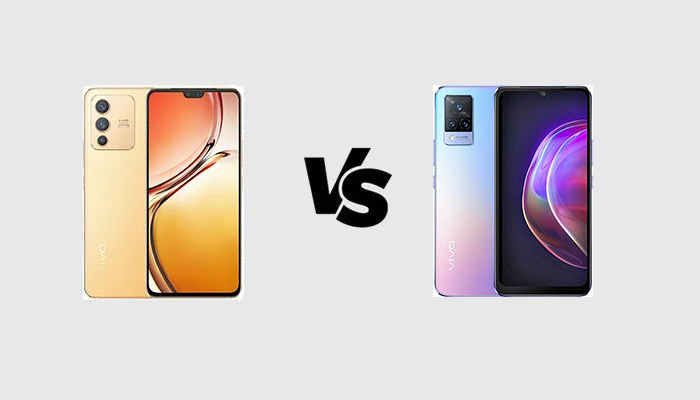
At the beginning of this year, Vivo launched the Vivo V23 Series including the vanilla Vivo V23 5G: a new amazing selfie phone with a midrange hardware department and a high value for money. Despite that, in the second half of last month, the Blue Factory came up with a new device from the previous lineup: the Vivo V21 Series. We are talking about the new Vivo V21s, released several months after the V23 lineup with updated software. Now, it is very hard for non-expert people to establish which one is the best between these two mid-rangers. We are here for this reason: this comparison between the main specifications of the Vivo V23 5G and the Vivo V21s will let you understand which one fits your needs the most.
Vivo V23 5G vs Vivo V21s 5G
Vivo V23
Vivo V21s
DIMENSIONS AND WEIGHT
157.2 x 72.4 x 7.6 mm,
179 g
159.7 x 73.9 x 7.3 mm,
176 g
DISPLAY
6.44 inches, 1080 x 2400 pixels (Full HD+), AMOLED
6.44 inches, 1080 x 2404 pixels (Full HD+), AMOLED
PROCESSOR
Mediatek Dimensity 900, octa-core 2.5 GHz
Mediatek Dimensity 800U, octa-core 2.4 GHz
MEMORY
8 GB RAM, 128 GB – 12 GB RAM, 512 GB
8 GB RAM, 128 GB – micro SD slot
SOFTWARE
Android 12, Funtouch OS 12
Android 12, Funtouch OS 12
CONNECTIVITY
Wi-Fi 802.11 a/b/g/n/ac, Bluetooth 5.2, GPS
Wi-Fi 802.11 a/b/g/n/ac, Bluetooth 5.1, GPS
CAMERA
Triple 64 + 8 + 2 MP, f/1.9 + f/2.2 + f/2.4
Dual 50 + 8 MP f/2.0 and f/2.3 front camera
Triple 64 + 8 + 2 MP, f/1.8 + f/2.2 + f/2.4
Single 44 MP f/2.0 front camera
BATTERY
4200 mAh, fast charging 44W
4000 mAh, Fast Charging 33W
ADDITIONAL FEATURES
5G, dual SIM, color-changing back
5G, dual SIM
Design
With the Vivo V23 5G, there is an important introduction when it comes to the design: you may like it very much and it makes this device almost unique in its kind. We are talking about the presence of a color-changing back: the back panel of this device is able to change its color in just a few seconds when exposed to direct sunlight. This is a very attractive effect. Further, the rear panel of this device is made of glass, a premium material for a mid-ranger. The Vivo V21s maintains the same design as its predecessor V21s, but it remains interesting because it is thinner and lighter than its internal rival, and it has one of the thinnest bodies of 2022. Unfortunately, both phones come with a notch, and it is bigger on the V23 5G because it includes two front cameras instead of one.
Display
The displays found on these two devices are exactly the same and there is only one single difference: the shape of the notch. The Vivo V21s gets a waterdrop notch, while the notch of the Vivo V23 5G is bigger and iPhone-like, as already mentioned above. The display is an AMOLED panel with a diagonal of 6.44 inches, a Full HD+ resolution of 1080 x 2404 pixels, a 90 Hz refresh rate, HDR10+ certification, and a peak brightness of 800 nits, as well as an in-display fingerprint reader. It is a very good panel for a midrange phone, so you should not worry about it. However, with these devices, you won’t get an advanced audio experience because they are not equipped with stereo speakers, and they do not even have a 3.5 mm audio jack.
Specs & Software
The Vivo V23 5G has upgraded hardware if compared to the Vivo V21s, even though the differences are not huge and both are good mid-rangers even in terms of performance. It is powered by the MediaTek Dimensity 920 chipset built with a 6 nm production process and sporting an octa-core architecture including two Cortex A78 CPUs running at a max frequency of 2.5 GHz, six Cortex A55 CPUs running at 2 GHz, and a Mali G68 MC4 GPU. Alongside the SoC, there are up to 12 GB of RAM and up to 256 GB of native storage. The Vivo V21s has a lower-end Dimensity 800U chipset by MediaTek built with a 7 nm production process and with an octa-core architecture composed of two Cortex A76 CPUs running at 2.4 GHz, six Cortex A55 cores running at 2 GHz, and a Mali G57 MC3. With this device, you can get just 8 GB of RAM and 128 GB of internal storage, but unlike its internal rival, it has a micro SD slot you can use to expand the native storage. Both phones run Android 12 and Funtouch OS 12.
Camera
I personally prefer the camera setup of the Vivo V21s if compared to the Vivo V23 5G. It has a triple rear camera including a 64 MP main sensor with OIS, an 8 MP ultrawide shooter, and a 2 MP macro lens. The selfie camera is one of the best ever made: a 44 MP snapper with OIS and dual-LED front-facing flash. The Vivo V23 5G has exactly the same rear cameras but without OIS. On the front, there are two sensors: a 50 MP main shooter and an 8 MP ultrawide camera, paired with a dual-LED front-facing flash, but it lacks optical stabilization just like the main camera. Do you prefer an inferior front camera with OIS or a superior sensor without OIS?
Last but not least, the battery: it is bigger on the Vivo V23 5G, and it charges quicker thanks to 44W fast charging. A very important advantage.
Price
The Vivo V21s carries a $380/€360 listing price, more or less the same starting price as the Vivo V23 5G. The V21s has a superior camera department, but for the rest, the V23 5G is better. Which one would you pick?
Xiaomi announced Redmi in July 2013 as a budget smartphone series and later made it a separate sub-brand in 2019 with entry-level and mid-range devices. Redmi phones are exceptionally popular in India, and they occupy a huge chunk of the country’s smartphone market. Redmi’s shipment figures tell the same story.
The company announced that it has shipped 72 million Redmi Note series phones in India since the launch of the Redmi Note 4G smartphone in 2014.
Always believe something wonderful is about to happen & 🅸🆃 🅳🅸🅳!
A 🅱🅸🅶 thank you to 72 Million of you and everyone who made this possible.
There is #NoMiWithoutYou and we wouldn't want it any other way!❤️
It is evident that Redmi Note phones perform very well in the Indian market. Last year, the brand announced it has sold more than 240 million Redmi Note smartphones worldwide. The brand’s success is attributed to the rapid expansion of its retail network. It has 3,000 stores and service centers in India alone.
To celebrate the new milestone, Xiaomi has slashed the prices of the Redmi Note 11 and Redmi Note 11S by up to Rs. 1500. The Redmi Note 11S can be purchased at Rs 15,999 (regular price Rs 16,499) for the 6GB RAM and 64GB storage variant. The Redmi Note 11 is available at a starting price of Rs 12,999 (previously Rs 13,499) for the 4GB RAM and 64GB storage version.
Redmi Note 12 series is also expected to launch soon in India. The Redmi Note 12 5G has already bagged a couple of certifications, hinting it might debut soon. The handset comes with a 6.67-inch Samsung AMOLED display with a centered punch-hole. Under the hood, it is powered by a Qualcomm Snapdragon 4 Gen 1 chipset coupled with LPDDR4x RAM and UFS 2.2 storage.
The smartphone has a dual rear camera system comprising a 48-megapixel primary camera and a 2-megapixel depth sensor. On the front, it sports an 8-megapixel sensor for selfies and video calls.
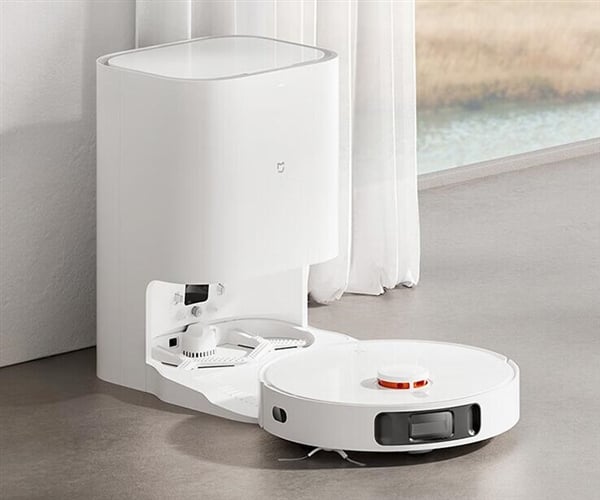
Chinese tech giant Xiaomi has launched a new robot vacuum under the MIJIA brand. The product is the MIJIA Robot Vacuum-Mop 2 Pro and it is not to be confused with the Xiaomi Robot Vacuum-Mop 2 Pro that was launched in India earlier this year. The Indian model is an iteration of the MIJIA Robot Vacuum Pro, the predecessor of this model. This new model packs an array of new features that makes it a worthy upgrade of its predecessor. The new robot vacuum cleaner is priced at 2,799 yuan ($402 and is presently on pre-sale in China. The product will go on sale from December 12.
The MIJIA Robot Vacuum-Mop 2 Pro has a dual-line laser perception obstacle avoidance function, which can accurately identify the outline of obstacles and can also reduce collisions in dark light environments. At the same time, it supports intelligent laser navigation, 360° scanning of the indoor environment, rapid construction of maps, precise route planning, and one-click generation of 3D maps in the MIJIA app to restore the structure of the apartment.
In terms of cleaning, this robot supports automatic loading and unloading, without complicated operations such as changing water and pouring water. It also supports functions such as automatic washing of rags, 2-hour hot air drying, and automatic addition of detergent for sterilization.
The MIJIA Robot Vacuum-Mop 2 Pro has a built-in 4000Pa fan and double-rotation booster mopping the floor, which can realize intelligent water volume control, mop lifting, and carpet recognition.
In addition, the robot vacuum can be controlled remotely via XiaoAI and the MIJIA app. Also, it can be linked with Xiaomi smart devices such as door locks and air cleaners to customize exclusive cleaning solutions for intelligent cleaning of the whole house.
After updating its flagships, Samsung is now aggressively rolling out the latest version of its custom Android skin to its mid-range devices. Recently, the Galaxy M42 received the stable One UI 5 update in India. Now, in the latest development, the Korean OEM is releasing the Android 13-based software for the Galaxy A13 5G, Galaxy A51 5G, and Galaxy XCover 5. Currently, the update is being seeded in Europe, but it will reach other regions soon.
The One UI 5 update for the Galaxy A13 5G is being released with the firmware version A136BXXU2BVK3. The latest software is only available in select European regions as of now. The Verizon 5G version of the Galaxy A51 (model number SM-A516V) is receiving the One UI 5 update with a build number A516VSQU5FVK1 (via XDA).
The latest Android 13 update is also rolling out to the rugged Galaxy XCover 5, with the firmware version G525FXXU5CVK6. The update is currently being released in Europe, but it should reach other regions soon.
The new update brings all the new features introduced with Android 13 and also includes the November 2022 security patch. As usual, the software is rolling out in a phased manner, so it might take several days before it’s available for everyone.
If you own the above-mentioned devices, keep an eye out for an OTA notification. You can manually check for the update by going to Settings, selecting Software Update, and tapping “Download and install.”
To recall, One UI 5 brings loads of visual changes and improvements. It comes with new notification icons and notification interfaces. The software also includes stackable widget support, Bixby Text Call, new multitasking gestures, and more.
In recent years, OnePlus has expanded its portfolio beyond smartphones to audio, televisions, and smartwatches. The company is even gearing up to launch new Monitors in India on December 12. Taking us by surprise, OnePlus has now announced that it will be making a new mechanical keyboard in partnership with Keychron.
The new OnePlus mechanical keyboard will be launched as a part of the company’s newly announced “OnePlus Featuring” program. With this new program, the Chinese OEM plans to work with other companies to design new products.
There are no details about the keyboard’s name or design yet, but OnePlus has confirmed it will be made in collaboration with an established brand, Keychron. The launch date of the new device is not confirmed yet, but the company says it will share more details on December 15.
OnePlus’ foray into the mechanical keyboard segment suggests the brand is planning to widen its product reach further. The company even asked its online community to vote on which product it should make next.
As mentioned, OnePlus is scheduled to launch two new monitors in India on December 12. There’s X 27 with a 27-inch display and E 24 with a 24-inch screen. The former will be a premium offering, whereas the latter will be a mid-range device.
OnePlus has confirmed that at least one of the two monitors will come with up to 165Hz refresh rate and up to 1ms response time. There will also be support for AMD FreeSync Premium. Previously released promos reveal the monitors will have an HDMI, USB Type-C, VGA, headphone jack, and DC power ports. More details should emerge soon. We’ll keep you posted.
Last month, Xiaomi unveiled the Xiaomi 12T Pro Daniel Arsham Edition in Europe with a unique contemporary design. It comes with customized accessories, packaging, as well as UI. The smartphone is now available for pre-order in the old continent and is limited to only 2,000 units. Let’s have a look at its pricing and availability.
Starting today, Xiaomi 12T Pro Daniel Arsham Edition can be pre-ordered in Europe. However, the handset will only be available in select countries— France, Germany, Italy, and Spain. Interested shoppers will be able to pre-book the smartphone by going to the Mi.com website of their respective country. Alternatively, you can also head to Highsnobiety.
The special edition handset (12/256GB) comes with a price tag of €900, which roughly converts to $950. For reference, the regular Xiaomi 12T Pro with 8/256GB storage costs €800 (~$850). To pre-order the device, you will need to put down a €50 deposit. The rest of the amount can be paid when the sale starts (December 12 or 13).
As the name suggests, the smartphone has been designed in partnership with Daniel Arsham, a contemporary artist based in New York City. The company says the device is meant to be a “sculpture with a purpose outside of it as a functional object.” It comes with bronze crystals integrated into an eroded green patina.
In addition, the smartphone flaunts customized accessories and an iconic retail box. Xiaomi has also customized the user interface of the device, making it look more contemporary. The smartphone comes with a custom-made gyroscopic wallpaper, which shifts gently with the motion of the device to create a 3D effect.
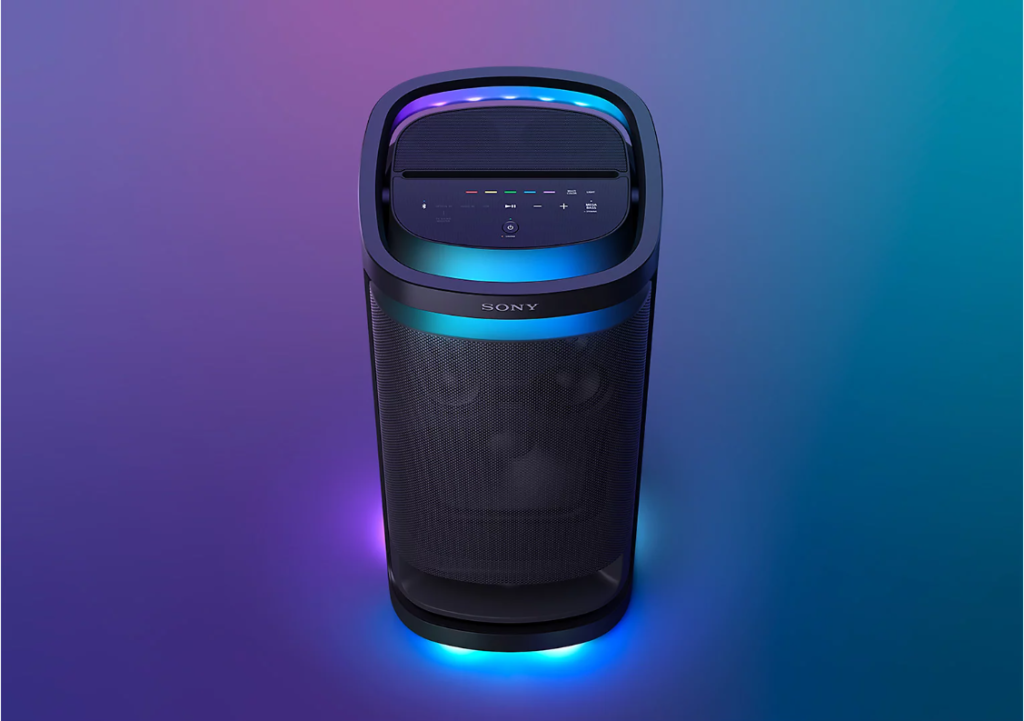
Sony has expanded its range of wireless speakers in India. The latest offering is the SRS-XV900 and it is said to be most powerful and loudest speaker in the brand’s X-series of wireless speakers. The audio device packs premium specifications as well as price tag. The Bluetooth party speaker is a part of ‘Live Life Loud’ promise that aims to give music fans exciting sound entertainment experiences. Read on to know what the SRS-XV900 offers out of the box.
The Sony SRS-XV900 is a cylindrical-shaped Bluetooth wireless speaker. Dimension-wise, it measures 410mm x 880mm x 439 mm and weighs 26.6kg. The speaker comes with a convenient built-in handle and wheels that makes it easier for users to relocate the speaker. The top panel of the speaker has touch buttons for controlling music playback and light settings. The audio device also features ambient light in all directions.
In terms of audio, the Sony SRS-XV900 is a 4-way bass reflex speaker. It is equipped with six tweeters around the front, side, and rear that offer omnidirectional party sound. There is an X-Balanced speaker unit and Jet Bass Booster for deep, punchy bass. The former has a rectangular diaphragm for increased surface area coverage. The entire speaker system setup is touted to offer crystal clear sound with superb vocal quality from every angle.
The Sony SRS-X900 features TV Sound Booster that enhances TV sound. It allows users to enjoy the enhanced sound of audio-visual content such as live performance videos. The audio device also allows users to enjoy karaoke by plugging in a microphone. There is also a mic and guitar input and use the speaker as an amp. Connectivity options on the speaker include stereo mini jack, USB-A, optical digital input, and Bluetooth fast pair.
The Sony SRS-XV900 is claimed to offer a 25-hour battery life and 10 minutes of charging is said to provide 3 hours of playback. There is a battery care mode that prevents overcharging. Users can also charge their low-battery smartphone by plugging it into the speaker. With Fiestable, users can control features like gesture control and DJ Control.
The Sony SRS-XV900 carries a price tag of Rs 79,900. It is available across all Sony Centers, major electronic stores, and e-commerce portals in India from today.
Early this year, Xiaomi introduced its ‘Ultra’ flagship, the Xiaomi 12S Ultra, with one of the best camera setups on a smartphone. Now, it seems the Chinese company is readying another camera-focused smartphone, dubbed Xiaomi 13 Ultra. And thanks to a popular tipster, we get to learn some interesting details about the upcoming handset’s camera.
Tipster Digital Chat Station claims the Xiaomi 13 Ultra will feature a quad camera setup on the rear with a 1-inch primary sensor, which is also found on the 12S Ultra. He further suggests that the smartphone may come with gimbal stabilization.
In addition, Mr. Chat Station says all four sensors on the device will come with PDAF (phase detection autofocus) and dToF (Direct Time-of-Flight) technology. Other details about the handset are yet to be revealed.
We can expect the Xiaomi 13 Ultra to debut sometime after the Xiaomi 13 series. You might be aware that the number series was scheduled to launch in China on December 1, but the event was postponed following the passing of former Chinese leader Jiang Zemin.
Xiaomi 13 series includes Xiaomi 13 and 13 Pro. Both handsets sport an E6 AMOLED display with ultra-narrow bezels of just 1.61 mm on all sides and a metal frame. The two smartphones will arrive with Leica-branded cameras. The Pro phone is confirmed to feature a 50MP Sony IMX989 1-inch primary sensor.
Powering the smartphones will be the latest Snapdragon 8 Gen 2 processor. The SoC will be paired with LPDDR5x RAM and UFS 4.0 storage. The vanilla variant could support 67W charging, while the Pro model may boast 120W charging.
The new launch date of the Xiaomi 13 series is yet to be announced. The new handsets are expected to debut soon. Stick around for the updates.
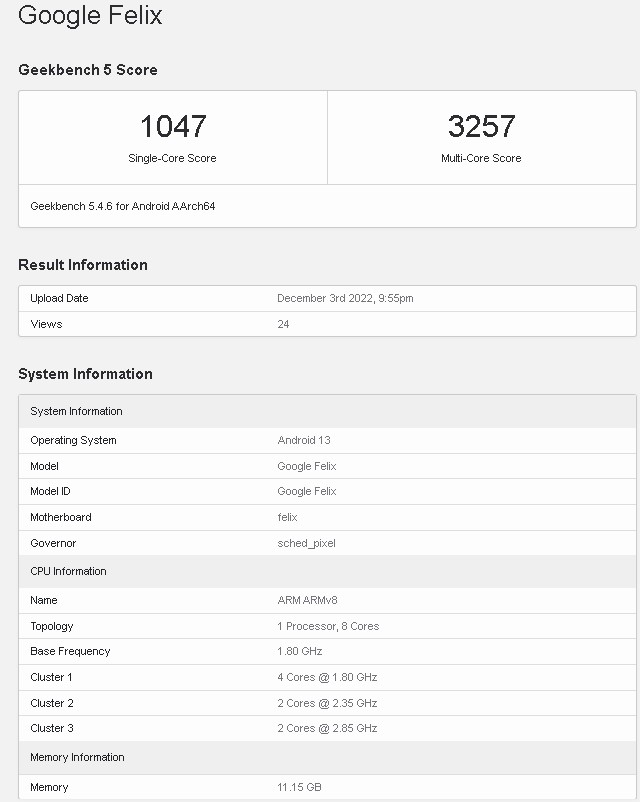
Several reports in the past have claimed that Google’s first-ever foldable phone is codenamed ‘Felix’. The search giant is reportedly working on the device for over two years now. Last month, the Google Pixel Fold was spotted in leaked renders revealing the device in all its glory. Now the smartphone has appeared on the Geekbench database revealing its key specifications.
Google’s foldable phone is listed as Google Felix on the Geekbench benchmarking platform. As mentioned earlier, the codename ‘Felix’ is said to be associated with Google Pixel Fold. As per the listing, the device will be powered by a Tensor G2 SoC that is found on the flagship Pixel 7 series. The chipset has two high-performance cores clocked at 2.85GHz, two silver cores at 2.35GHz, and four efficiency cores at 1.87GHz. The Google Pixel Fold is tipped to pack 12GB RAM and run on Android 13 OS out of the box. The foldable phone scores 1,047 and 3,257 points in the Geekbench’s single-core and multi-core tests results.
The Google Pixel Fold’s internal display is rumoured to come with a resolution of 1,840 x 2,208 pixels, up to 1,200 nits peak brightness, and a refresh rate of 120Hz. The device will be a vertical folding phone. The outer display will feature a centre-aligned punch-hole cutout whereas the interior screen has thick bezels around the screen. The back panel has a horizontal camera bridge housing three sensors and an LED flash. The top and bottom edges of the device house a speaker grille, whereas the right side has a power button that doubles up as a fingerprint scanner.
Women are emerging to rule a variety of professions, and now one of the major tech giants in the globe has promoted one of its female executives to the position of company president. Prior to this, Lee Young-Hee was the company’s vice president. She started working with Samsung in 2007 and was given a promotion to vice president in 2012. It has been ascribed to Lee, a former employee of L’Oreal, for successfully boosting the reputation and brand of Samsung’s Galaxy mobile phones.
For Samsung’s Device eXperience (DX) division, which is in charge of managing its mobile business, Lee Young-hee was elevated to the position of president of the Global Marketing Center. Samsung anticipated that the promotion would give other talented female employees the chance to push themselves to advance their careers. She is one of seven new presidents appointed as part of the first small-scale restructure since Lee Jae-Yong, the de facto leader of the firm, was promoted to executive chairman of the business in October.
Since Lee Jae-Seung quit in October for unspecified “personal reasons,” Samsung has not named a replacement to lead its home appliance division. Following Lee’s resignation, Han Jong-hee, vice chair and co-CEO of Samsung will temporarily continue to perform the additional responsibility, the company stated.
That concludes this news. Lee has been managing her role and work at Samsung quite effectively, and she certainly received this promotion as a result. She now holds a more important position with more duties on her plate. She will manage this duty admirably, given her past. Let’s see how she handles this title!
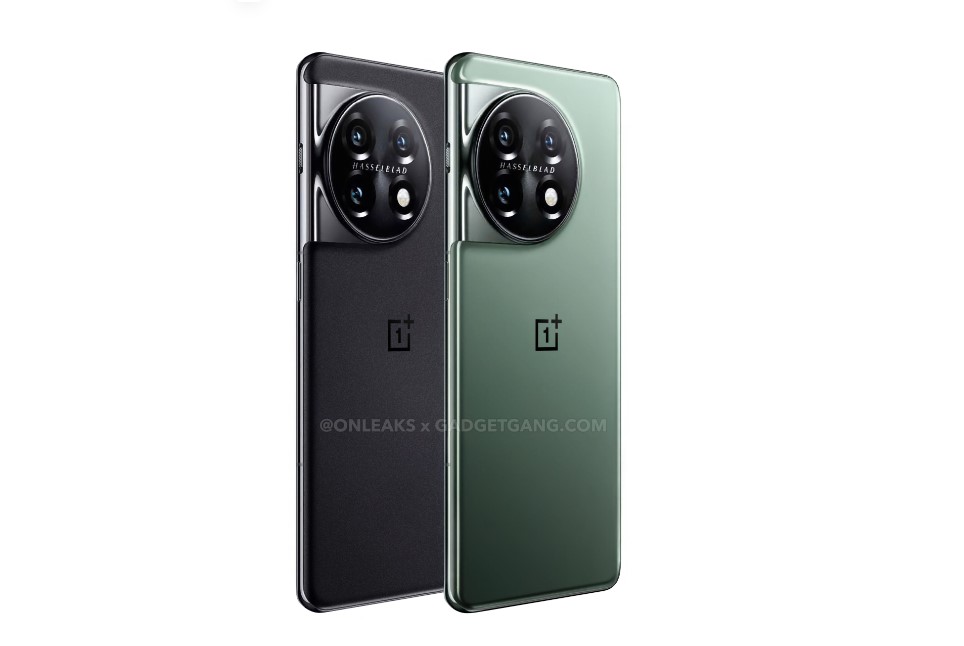
OnePlus 11 has been spotted in a fresh official-looking image. It gives us a clear look at the brand’s upcoming flagship. The latest leaked render has been shared by none other than reliable tipster Steve Hemmerstoffer aka Onleaks in collaboration with publication Gadget Gang. Notably, Steve had given us a first look at the design of the OnePlus 11 as well leaked its key specifications three months ago.
The latest official design render of the OnePlus 11 is in line with the previously leaked render. However, the device is seen in two colour options i.e. Black and Mint Green. The former is said to be called Matte Black whereas the latter will be named Glossy Green as per tipster Max Jambor. Going by the official leaked render, one can say that the Glossy Green colour variant has a dual-tone back panel design. This is slightly noticeable on the Matte Black colour option as well. This is because the camera island has a Black colour and a more glossier material compared to the rest of the back panel.
The alert slider and power buttons are located on the right side of the device while the OnePlus logo sits at the centre of the back panel. The OnePlus 11 will come with a redesigned camera island with a half pill-shaped border from that stretches from the side frame to the middle of the back panel. It houses a circular camera bump with three sensors and an LED flash. There is a Hasselblad text between the camera arrangement.
As for the core specifications, the OnePlus 11 is already confirmed to be powered by a Snapdragon 8 Gen 2 processor. It may pack up to 16GB RAM and 256GB onboard storage. The device will reportedly be backed by a 5,000mAh battery unit with support for 100W charging. The upcoming offering is tipped to feature a 6.7-inch AMOLED display bearing a 2K resolution, a 120Hz refresh rate, and an in-screen fingerprint scanner. The camera setup on the OnePlus 11 is expected to comprise a 50MP primary sensor paired with a 48MP ultra-wide lens and a 32MP telephoto unit.
We use cookies on our website to give you the most relevant experience by remembering your preferences and repeat visits. By clicking “Accept”, you consent to the use of ALL the cookies.
This website uses cookies to improve your experience while you navigate through the website. Out of these, the cookies that are categorized as necessary are stored on your browser as they are essential for the working of basic functionalities of the website. We also use third-party cookies that help us analyze and understand how you use this website. These cookies will be stored in your browser only with your consent. You also have the option to opt-out of these cookies. But opting out of some of these cookies may affect your browsing experience.
Necessary cookies are absolutely essential for the website to function properly. This category only includes cookies that ensures basic functionalities and security features of the website. These cookies do not store any personal information.
Any cookies that may not be particularly necessary for the website to function and is used specifically to collect user personal data via analytics, ads, other embedded contents are termed as non-necessary cookies. It is mandatory to procure user consent prior to running these cookies on your website.