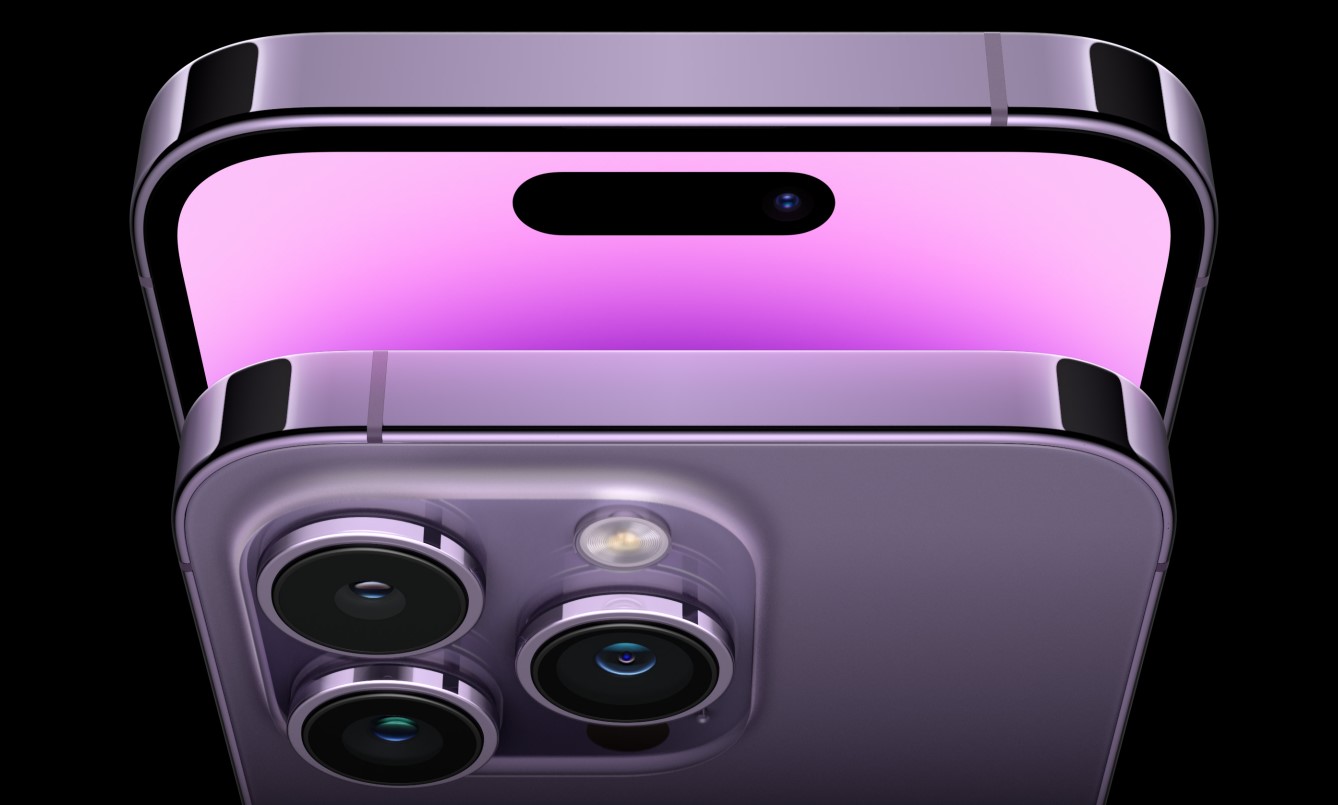
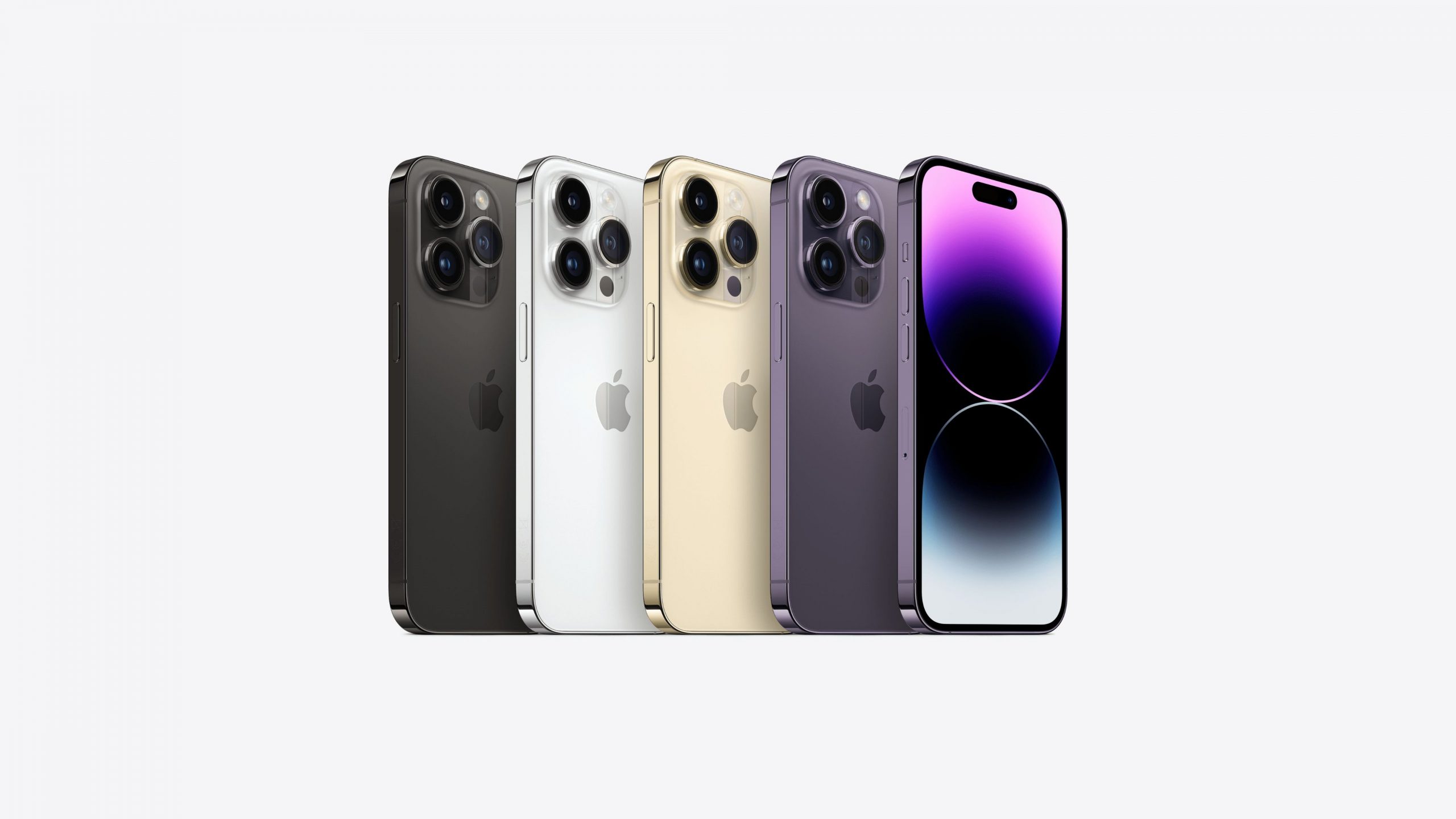
Apple had just recently launched the highly anticipated iPhone 14 series. Recently, we had reported on the battery capacity of the new iPhones being revealed, showcasing a larger battery pack than the iPhone 13 lineup. However, it appears that the battery replacement cost for these new devices will also be higher than the last gen iPhones.
For those unaware, apart from the iPhone 14 Pro Max model and the lack of a mini variant, the rest of the lineup saw a slight bump in battery packs. But according to a 9To5Macreport, the Cupertino based giant’s latest iPhones will have costlier battery replacements. Apparently, the battery replacement for the iPhone 14, iPhone 14 Plus, iPhone 14 Pro, and iPhone 14 Pro Max will cost around 99 US Dollars.
In comparison, the brand’s iPhone 13 series battery replacement only cost 69 US Dollars. In other words, the company has just hiked the price tag by around 43 percent, despite battery capacities being mostly similar between the two generations. The aforementioned prices was for the US, meanwhile, the UK pricing for iPhone 14 series battery replacement is around 105 Pounds, which is again a rise from 69 Pounds for the previous generation.
iPhone 14 Pro & Pro Max
Keep in mind that these prices are only for those iPhone models that are out of the one year warranty or the iPhones which do not have AppleCare+ protection. Your new iPhone 14 series’ battery will likely last for a couple of years. So, one might have to pay the price for a battery replacements a few years later. Although, the AppleCare+ will offer free unlimited repair for those subscribed to the plan.
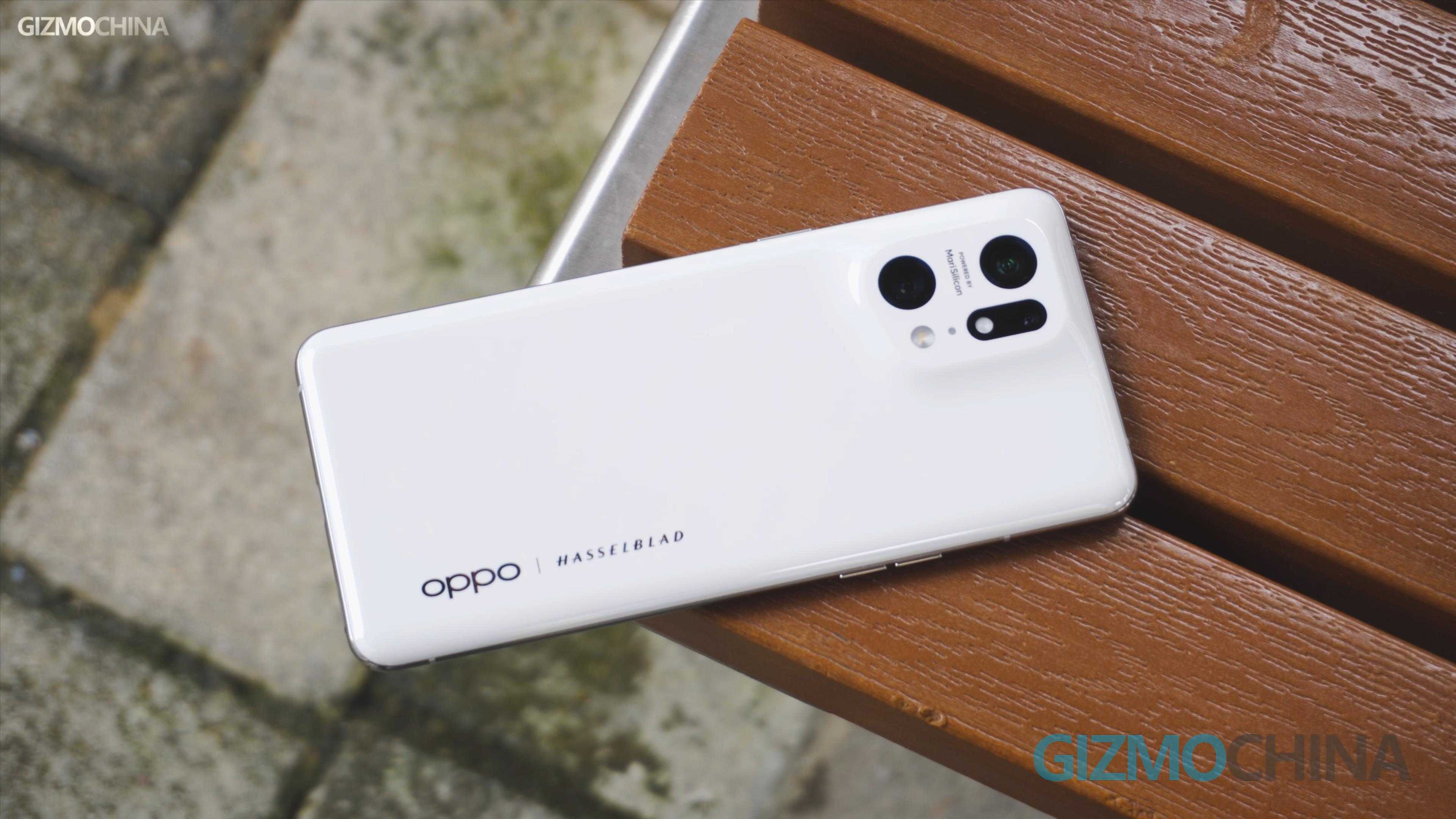
OPPO is reportedly working on the Find X6 series of flagship phones. Based on its previous release patterns, it can be said that the lineup will have two models: the Find X6 and the Find X6 Pro. Several new details about the display and chipset of the Find X6 series have surfaced today.
According to tipster Digital Chat Station, the Find X6 will carry support for 1.5K display resolution, whereas the Find X6 Pro’s screen will offer 2K resolution. Previous reports had claimed that the Find X6 series would be equipped with the Snapdragon 8 Gen 2 chipset. However, another tipster has claimed that the only Pro model will feature the SD8G2.
OPPO Find X5 Pro
As far as the vanilla model is concerned, it comes equipped with the Snapdragon 8 Plus Gen 1. As it is known, almost all mainstream Chinese smartphone manufacturers have launched flagship phones powered by the SD8+G1 chip, except OPPO. It appears that the company has reserved it for the Find X6.
To recall, the Find X5 and Find X5 Pro were powered by the Snapdragon 888 and Snapdragon 8 Gen 1 chipsets, respectively. While the X5 Pro featured the new chip, which was announced in December 2021, the X5 packed a chip that debuted in December 2020. So, it seems likely that OPPO will use a similar approach with the chipsets for the Find X6 line.
Several Chinese smartphone OEMs are expected to offer a 1-inch camera sensor on their forthcoming flagship phones. Speculations are rife that the Find X6 series will also feature a 1-inch camera sensor. It will probably be available on the Pro model. At present, there is no word on the launch date of the Find X6. In all likelihood, it may debut in Q1 2023.
YouTube, the video-sharing social media platform wholly owned by Google, has recently silently implemented a new ad format starting this September 2022. YouTube users who are not subscribed to YouTube Premium, will now receive up to 5 advertisements to be watched, before your video starts.
The news broke out when several YouTube Free users started complaining on Twitter and Reddit that they have been receiving 5 ads instead of 2, before they could watch their YouTube video.
So @YouTube 2 ads weren’t enough now y’all wanna play 5 ads that no one cares for AND I CANT SKIP ?
For several YouTube Free users, they reported that they have received 5 unskippable advertisements as opposed to skippable advertisements before a video-watching session, and this caused dissent and upset among the users.
Regarding the matter, YouTube has issued an official reply on Twitter acknowledging the situation and stated that the new 5-ad phenomenon could happen to YouTube users with the company’s certain type of ad format called bumper ads. As explained by YouTube, these bumper ads are short-form ads on the platform that are typically 6 seconds long, and unfortunately unskippable.
hmm…this may happen with a certain type of ad format called bumper ads, since they're only up to 6 seconds long. if you'd like, you can send feedback directly from YouTube via the send feedback tool
Currently not all YouTube Free users are experiencing the “5 ads before your video starts” situation, so it seems like YouTube is currently testing out the waters among selected YouTube Free users. As of now, most users of YouTube Free are only receiving up to 2 ads before their video starts, but it is not known whether the “5-ad format” change will be rolled out to all YouTube Free users soon.
Lastly, YouTube reiterates that if both Free and Premium users have any feedback regarding YouTube’s ad policy, users can always send feedback directly to the company via the “Send Feedback” tool on the company’s video-sharing platform.
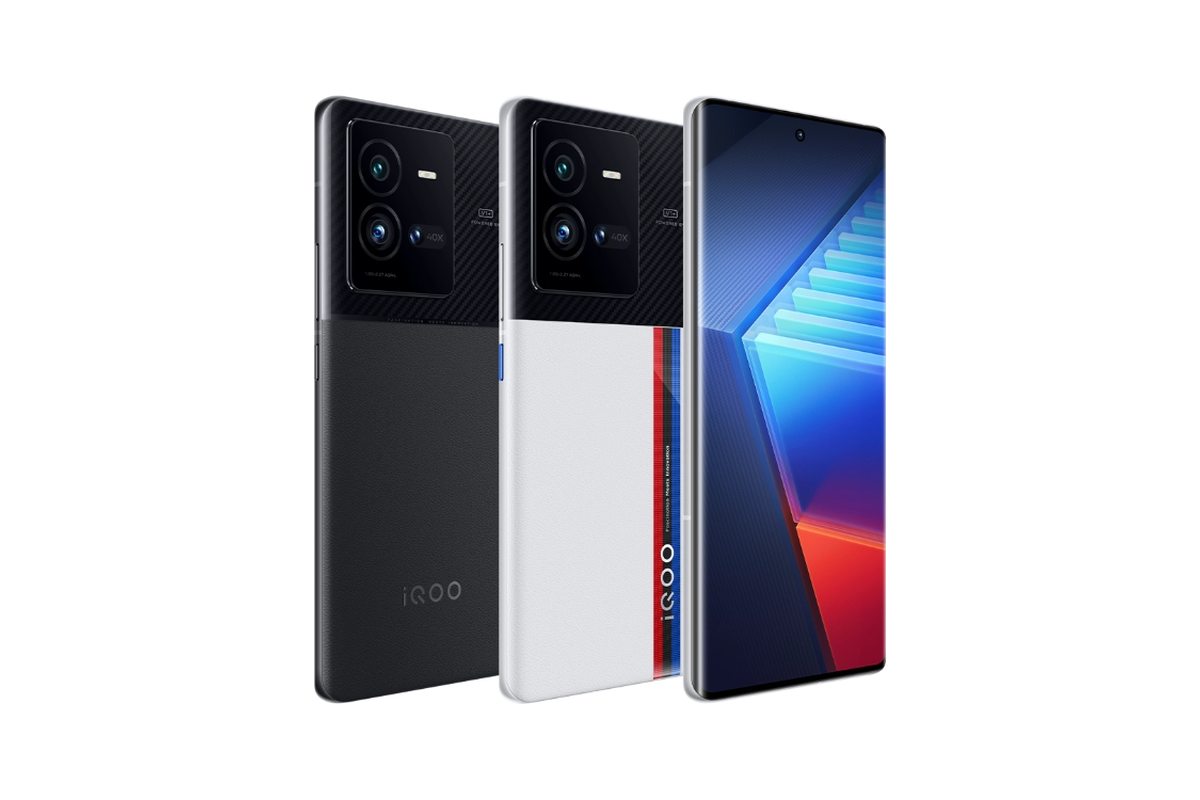
At the beginning of this year, iQOO unveiled the iQOO 9 series of flagship phones in China. The brand unveiled the iQOO 10 and iQOO 10 Pro featuring the Snapdragon 8 Plus Gen 1 chipset in July in the home market. Speculations are rife that iQOO is now working on the iQOO 11 series. Today, tipster Digital Chat Station (via. TechGoing) shared some key details on the display of what appears to be the iQOO 11 Pro handset.
It is likely that the lineup will include two models, the iQOO 11 and the iQOO 11 Pro. It can be said based on the DCS’ Weibo post that both smartphones may feature the same display.
iQOO 10 Pro
He revealed that the iQOO 11 lineup will be equipped with the latest Samsung’s E6 AMOLED display, but he did not mention anything about its size. However, he claimed that the screen will support a 2K resolution, a 120Hz refresh rate, and a 1440Hz PWM dimming. It will be a curved edge panel with a centrally positioned punch-hole.
The Snapdragon 8 Gen 2 chipset will be present under the hood of the iQOO 11 series. Qualcomm is expected to announce the SD8G2 chip in November. Considering that both phones will have the same screen and chipset, these phones may differ in departments like camera, battery size, and fast charging capabilities.
iQOO introduced support for 200W fast charging on the iQOO 10 Pro. It appears that the iQOO 11 Pro may continue to support for 200W charging. The device may also support wireless charging. The iQOO 11, on the other hand, could be equipped with 120W charging.
The Realme Narzo 50i Prime initially went official in select countries in June. The handset has now made its debut in India as announced by the brand last week.
The budget smartphone offers a unique design and a respectable set of features. Let’s take a look at its price and availability in the new market along with specs.
Realme Narzo 50i Price and Availability in India
The Realme Narzo 50i Prime will retail at the following price tags in India.
3GB + 32GB – ₹7,999 ($101)
4GB + 64GB – ₹8,999 ($114)
It will be available for purchase starting September 23 via Amazon India. Prime customers will be able to order it from 12 PM on September 22 itself.
The phone arrives in two color options, namely Dark Blue and Mint Green.
Realme Narzo 50i Prime Specifications
The Realme Narzo 50i Prime sports a 6.5-inch LCD screen with a resolution of 1600 x 720 pixels (HD+), 400 nits brightness, and a dewdrop notch.
It is powered by a Unisoc T612 chipset paired with LPDDR4x RAM and UFS 2.2 storage. It boots Realme UI 2.0 based on Android 11.
The phone has a single 8MP rear camera and a 5MP selfie camera. It does not come with a fingerprint sensor.
However, it arrives with a dedicated MicroSD card slot, a 3.5mm headphone jack, and a MicroUSB port. The connectivity options include dual SIM, 4G, single-band WiFi, Bluetooth 5.0, and GNSS.
The handset houses a 5,00mAh battery. This cell recharges at a maximum rate of 10W.
Last but not least, the device measures 164.1 x 75.6 x 8.5 mm in dimensions and weighs 182 g.
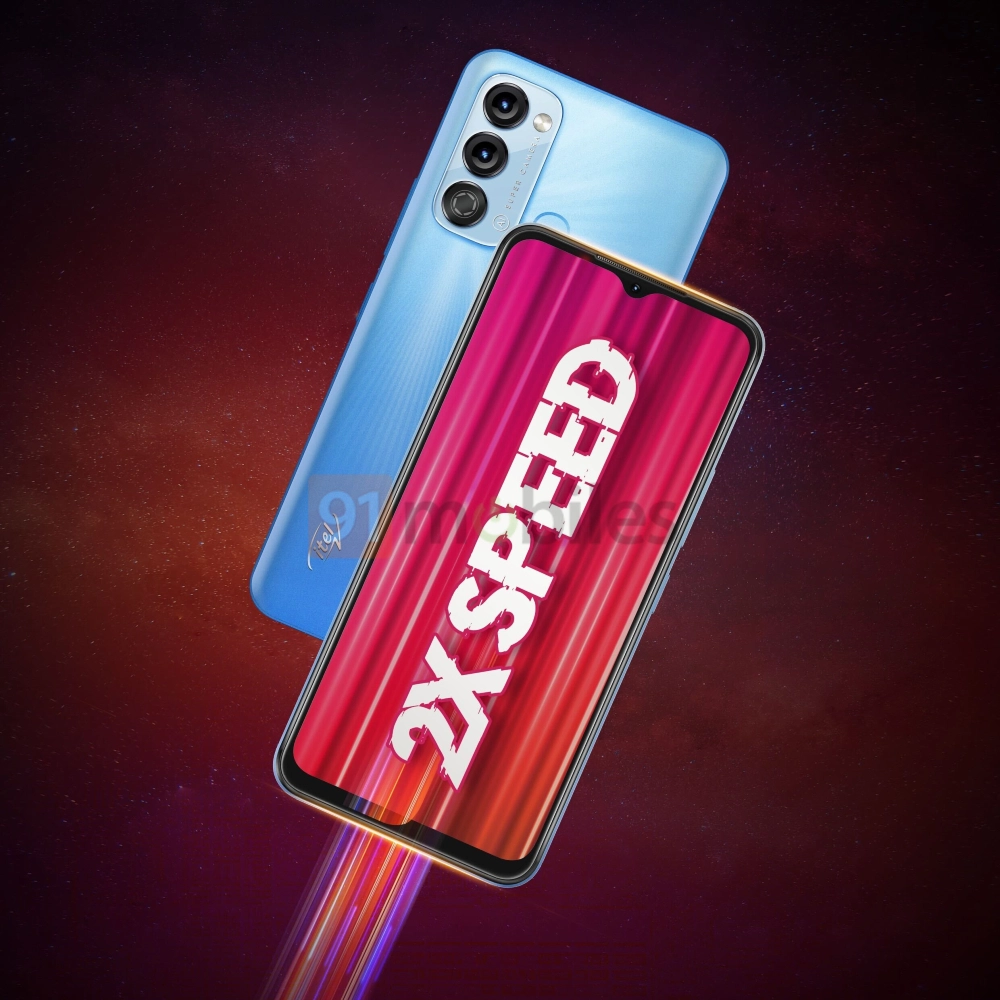
Itel is apparently gearing up to launch a new smartphone in India soon. A new leak has revealed that the new handset will be a part of the company’s Vision series and has also leaked its design as well.
The leak arrives from a 91Mobilesreport that got the information from industry sources close to this matter. Looking at the report, we can see leaked promotional image of the upcoming Itel Vision series device. This image showcases the smartphones front and rear design. The back features a vertically stacked dual camera setup as well as a rear mounted fingerprint scanner, while the front has a water drop notch for the selfie camera and minimal bezels.
The leaked image also shows that the device will have at least one color option in Blue. Furthermore, the report also shared some specifications regarding the new Vision series handset. Reportedly, the smartphone will be powered by a large 5,000mAh battery pack that supports up to 18W fast charging. Unfortunately, finer details regarding the device is still unknown.
Although, teaser images from the brand itself have confirmed that it will be available with at least 3GB of RAM for one of the configurations and also support 3GB of virtual RAM expansion as well. This Itel model will be priced under 8,000 INR in India, which means that it is a affordable handset that will target budget category. The brand has had a strong presence in the sub 10,000 INR segment in the region, and the new model seeks to further expand its portfolio.
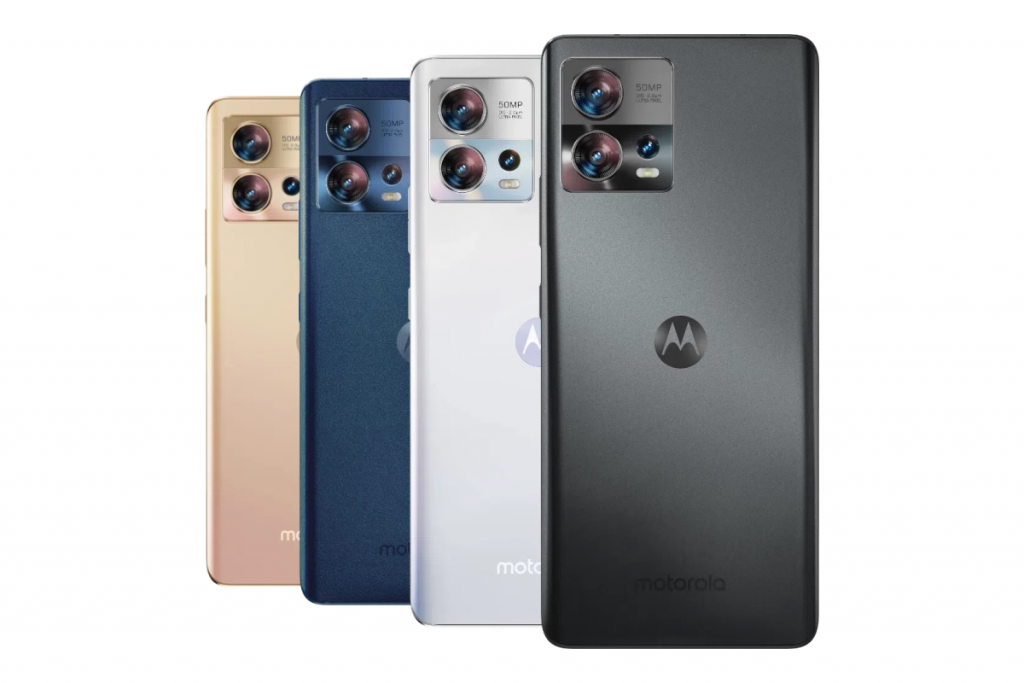
The Motorola Edge 30 Fusion was unveiled last week in Europe alongside the Motorola Edge 30 Ultra. The handset is the international variant of the Moto S30 Pro available in China. The brand markets it as a flagship killer smartphone, given the specs it offers for its asking price.
Today, the device debuted in India. Let’s check out its price and availability in the market along with specs.
Motorola Edge 30 Fusion Price and Availability in India
The Motorola Edge 30 Fusion is priced at ₹42,999 ($544) in India for the sole 8GB + 128GB memory variant. It will be available in Cosmic Grey and Solar Gold color options.
The handset will go on sale from September 22 via Flipkart and leading retail stores across the country. For a limited time, it will be sold at ₹39,999.
Customers can get up to a ₹3000 bank discount during the Flipkart Big Billion Days sale event. Therefore, the effective price of the phone will drop down to ₹36,999 ($468).
Motorola Edge 30 Fusion Specifications
The Motorola Edge 30 Fusion flaunts a 6.55-inch centered punch-hole 10-bit curved pOLED display with a resolution of 2400 x 1080 pixels (FHD+), a 144Hz refresh rate, and a 360Hz touch sampling rate. The panel has a 20:9 aspect ratio, 110 nits peak brightness level, and a fingerprint sensor underneath it. The screen also supports 100% of the DCI-P3 color gamut and HDR10+.
The smartphone comes powered by a Qualcomm Snapdragon 888 Plus chipset paired with LPDDR5 RAM and UFS 3.1 storage. It boots Android 12 with support for Ready For.
The device sports a triple camera setup on the rear consisting of an OIS-assisted 50MP primary sensor, a 13MP ultra-wide unit with auto-focus for macro vision, and a 2MP depth sensor. On the front, it features a 32MP snapper for selfies and video calls.
The handset offers connectivity options like dual SIM, 5G, WiFi 6, Bluetooth 5.2, GNSS, NFC, and USB Type-C (USB 3.1). Further, it arrives with Dolby Atmos-supported dual stereo speakers, IP52 rating, and Corning Gorilla Glass 5 protection on the front as well as the rear.
Last but not least, the phone gets its juice from a 4,400mAh battery and charges at a maximum rate of 68W (wired).
The Google Pixel 6a is the only Pixel 6 series device officially sold in India. It was launched back in July with a hefty price tag of Rs. 43,999. However, Flipkart will be selling it at a jaw-dropping discount at the Big Billion Day Sale.
According to the promotion, the Pixel 6a will be available for as low as Rs. 27,699 as a part of the upcoming Flipkart Big Billion Days Sale.
The company recently revealed the breakdown of this offer. According to a Twitter post, the smartphone will have a base price of Rs. 34,199 during the sale. On top of that, Axis Bank and ICICI Bank card users will be able to get Rs. 3,000 instant discounts. Rounding up the offer, all prepaid transactions will be eligible for a Rs. 3,500 discount, bringing the price of the device down to Rs. 27,699.
Pixel 6a specs & features
The Pixel 6a comes with a 6.1-inch FHD+ OLED display panel with a 60Hz refresh rate and HDR support. It has an in-display fingerprint scanner, Gorilla Glass 3 protection, and IP67 water and dust resistance.
Under the hood, the device is powered by Google’s in-house Tensor chip, complemented by 8 GB of LPDDR4x RAM and 128 GB of UFS 3.1 storage. On the software front, you’ll get the latest Android 13 on the device. It has a 4,410mAh battery pack and 18W fast charging support. However, there is no charger included in the box.
For optics, the phone has a 12.2-megapixel (main) and 12-megapixel (ultra-wide) dual-camera setup on the back. As for the front, there is an 8-megapixel camera present for selfies and video calls.
Last week, Motorola unveiled the Motorola Edge 30 Ultra in Europe. The handset is the international version of the Moto X30 Pro sold in China. It is the world’s first smartphone with a 200MP camera.
Now, as scheduled, the phone has made its way to India today. Let’s take a look at its price and availability in the region along with specs.
Motorola Edge 30 Ultra Price and Availability in India
The Motorola Edge 30 Ultra is priced at ₹59,999 ($759) in India for the single 8GB + 128GB memory configuration.
It will be available for purchase starting September 22 via Flipkart and leading retail stores across the country. It comes in two colors, namely Interstellar Black and Starlight White.
For a limited time, the handset will be sold at ₹54,999. On top of that, customers will be able to avail of up to ₹3,000 bank discount during the Flipkart Big Billion Days sale event. Hence, the effective price of the phone will come down to ₹51,999 ($658).
Motorola Edge 30 Ultra Specifications
The Motorola Edge 30 Ultra is built around a 6.67-inch centered punch-hole 10-bit curved pOLED display with a resolution of 2400 x 1080 pixels (FHD+), a 144Hz refresh rate, and a 360Hz touch sampling rate. The 20:9 panel supports 1250 nits peak brightness level, HDR10+, and 100% of the DCI-P3 color gamut.
It is powered by a Qualcomm Snapdragon 8 Plus Gen 1 SoC paired with LPDDR5 RAM and UFS 3.1 storage. It boots Android 12 with support for Ready For.
The handset features a triple camera system comprising an OIS-assisted 200MP primary sensor, a 50MP ultra-wide unit with auto-focus for macro vision, and a 12MP 2x telephoto shooter. On the front, there’s a 60MP snapper for selfies and video calls.
The connectivity options on the phone include dual SIM, 5G, WiFi 6, Bluetooth 5.2, GNSS, NFC, and USB Type-C (USB 3.1 with DisplayPort 1.4 support). It also comes with Dolby Atmos-powered dual stereo speakers, an x-axis linear vibration motor, an in-screen fingerprint sensor, an IP52 rating, and Corning Gorilla Glass 5 protection on the front as well as the back.
The smartphone houses a 4,610mAh battery and offers support for 125W fast wired charging, 50W fast wireless charging, and 10W reverse wireless charging. Last but not least, it measures 161.76 x 73.5 x 8.39 mm in dimensions and weighs 198.5 g.
Google has confirmed that it will launch the next generation of Pixel smartphones, aka the Pixel 7 series, on October 6 at 10 a.m. ET. The camera and display specs of the devices have already leaked. Now, known tipster Roland Quandt has leaked the storage options for the European variant of the devices.
According to Quandt, both the Pixel 7 and Pixel 7 Pro will be offered in two storage options – 128GB and 256GB. It is likely that more regions could also be limited to these two options.
Google Pixel 7 series specs (expected)
The Pixel 7 series will look similar to the Pixel 6 series. The Pixel 7 will be equipped with dual cameras, while the Pixel 7 Pro will be outfitted with triple cameras. A 50MP main camera (Samsung GN1) and a 13MP (Sony IMX38) ultrawide camera are rumored to be included in the phones. The 7 Pro will also have a 48MP telephoto camera (Samsung GM1). Both variants are anticipated to feature a 10.87MP (Samsung 3J1) front camera.
While the Pixel 7 Pro will have a 6.7-inch 120Hz OLED display, the Pixel 7 will have a 6.4-inch 90Hz OLED panel. The latest Google Tensor G2 processor will power both devices. We can expect both devices to ship with Android 13.0 as far as the software is concerned. Other details are likely to emerge as we get closer to the October 6 launch date, so stay tuned.
Last year September, we saw the launch of the CIVI series in China, Xiaomi’s latest sub-brand that caters to the youth and female market with its sophisticatedly designed premium smartphones that are attractive to the eyes and comfortable to hold in your palms.
Xiaomi CIVI 1S
And after the sales successes of both the CIVI 1 and CIVI 1S in the country, it is no doubt that Xiaomi is also planning to release the next-generation CIVI 2 this year to capture more market share as well. And today, great news has surfaced online reporting that Xiaomi may launch the Xiaomi CIVI 2 by the end of September this month with Qualcomm’s latest Snapdragon 7 Gen 1 SoC.
This report comes from the technology news site xiaomiui.net, as the outlet discovered that the Xiaomi CIVI 2 is codenamed as “Ziyi” in the MIUI internal software development environment, and the device is ready to receive an Android 12 based MIUI 13 build update this month.
Source: xiaomiui.net
This latest internal MIUI build is V13.0.1.0.SLLCNXM for the Xiaomi CIVI 2 as shown in the graphic above. The news of this latest discovery seems to indicate that Xiaomi is planning to launch the Xiaomi CIVI 2 by the end of September this month considering that the MIUI 13 build for the Xiaomi CIVI 2 is ready for a stable release once it is officially launched in the market.
As for other details of the Xiaomi CIVI 2, the outlet reports that the Xiaomi CIVI 2 will arrive with Qualcomm’s latest Snapdragon 7 Gen 1 SoC, replacing the previous generation CIVI 1S’ Snapdragon 778G+ processor. The device could also sport a 6.55-inch Full HD AMOLED display with a smooth 120 Hz refresh rate, a solid triple camera setup, and Xiaomi’s 67W fast wired charging technology.
Another highlighting feature of the upcoming Xiaomi CIVI 2 could also be the upcoming MIUI VLOG Modes. Recently, xiaomiui.net also discovered that Xiaomi had added VLOG Modes in MIUI, but the feature is not yet released to the public. The new modes allow for better color reproduction and more customization filters for videos shot on Xiaomi phones with enhancements done on the software side.
As for the global release of the Xiaomi CIVI 2, reports indicate that the device will not be released outside of China and the device could instead be rebranded as the Xiaomi 12 Lite 5G NE or Xiaomi 13 Lite in global markets launching at a later date. However, the outlet has also gathered intel that the Xiaomi CIVI 2 alongside its alternative rebranded monikers will be not released in the Indian market at all.
Back in May, the OPPO K10x smartphone was spotted on Chinese certification platforms like 3C and TENAA. However, the company did not announce the device. Suddenly, the Chinese manufacturer confirmed today that the OPPO K10x will debut on Sept. 16 in China. The reservation listing of the phone available on JD.com has revealed its key features. In addition, tipster Panda is Bald shared some additional information on the specs of the device.
OPPO K10x key features, design
The OPPO K10x images show that it features an LCD panel with a punch-hole positioned at its top-left corner. The screen carries support for a 120Hz refresh rate. The handset will draw power from the 6nm Snapdragon 695 chipset.
The device will be backed by a 5,000mAh battery that supports 67W fast charging. The rear camera setup of the phone has a 64-megapixel main camera. The “09-Kx” branding can be seen on the right side of the camera setup.
OPPO K10x specifications (expected)
The OPPO K10x has a 6.59-inch IPS LCD display that offers an FHD+ resolution. The device is likely to feature a 16-megapixel selfie camera, and a 64-megapixel + 2-megapixel + 2-megapixel triple camera unit. It is most likely to run on the Android 12 OS with ColorOS on top.
The Snapdragon 695-powered device is expected to have up to 8 GB of RAM and 256 GB of storage.It will have a side-facing fingerprint scanner. The handset measures 8.5 mm and weighs around 195 grams.
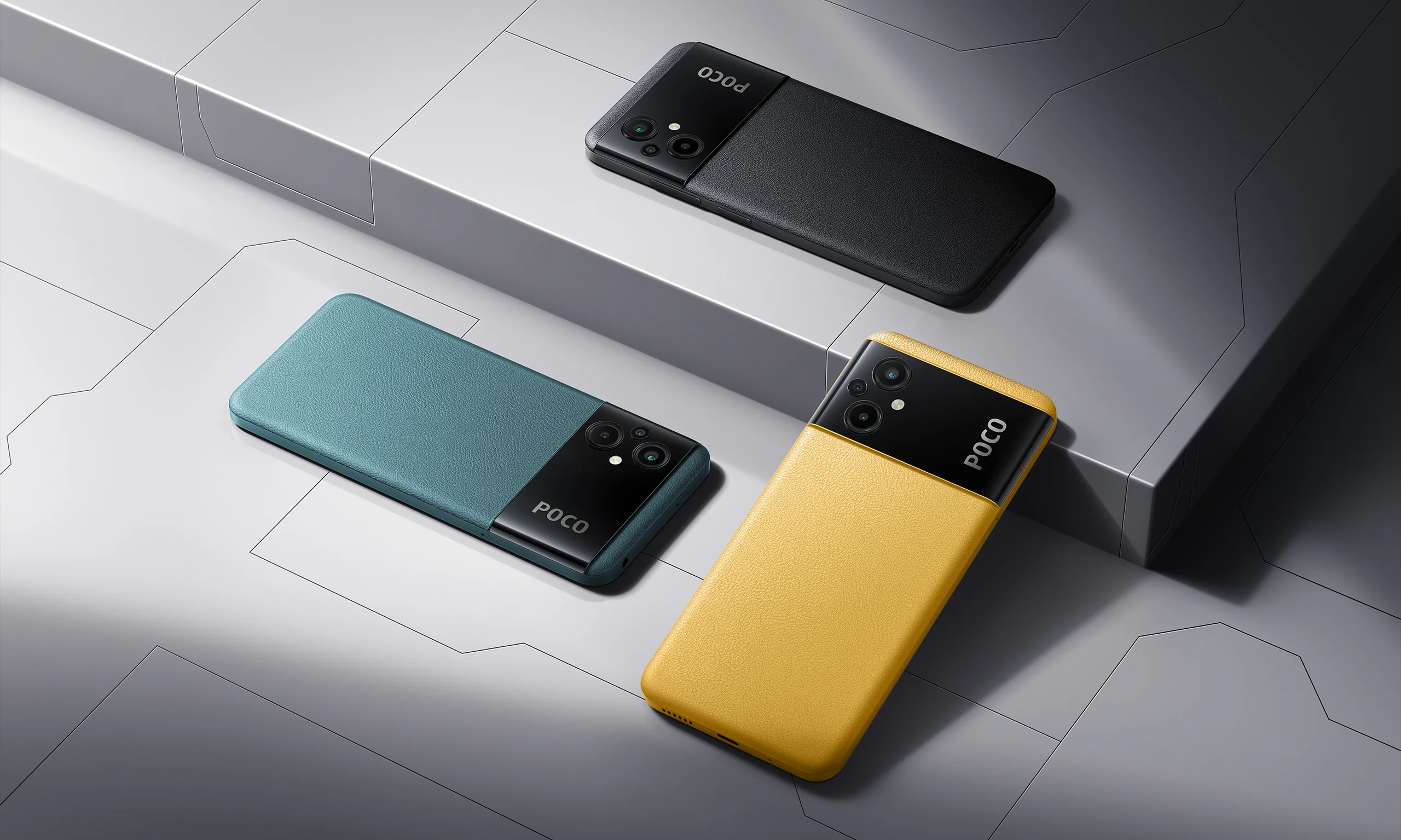
Last week, POCO launched the POCO M5 smartphone in the Indian market. The device goes on its first sale later today at 1 PM. So, let’s take a look at its pricing, offers, and specifications.
POCO M5 price & offers
The POCO M5 comes in two configurations. The 4GB + 64GB configuration is priced at Rs 12,499, while the 6GB + 128GB configuration is priced at Rs 14,499. The devices can be purchased via Flipkart and will be available in three color options, namely POCO Yellow, Power Black, and Icy Blue.
As for launch offers, buyers can avail any offer from the options given below.
Rs 1,500 instant discount from ICICI and Axis bank cards
8% off on Flipkart Axis Bank Co-Brand Card, up to Rs 1,500
10% off on Axis Bank Debit Card and Debit Card EMI Trxns, up to Rs 1,000
10% off on ICICI Bank Debit Cards up to Rs 1,000
Free Disney+Hotstar Mobile pack
No-cost EMI options
POCO M5 specs.
The 6.58-inch IPS LCD screen on the POCO M5 features a waterdrop notch, Full HD+ resolution, and a 90Hz refresh rate. Gorilla Glass 3 protects the display. Widevine L1 certification is supported by the device for OTT platforms that deliver HD video. The smartphone has a side-mounted fingerprint scanner.
The POCO M5’s optics include a 50MP primary sensor and 2MP depth and 2MP macro lenses. It has an 8MP selfie camera on the front.
The smartphone’s internal hardware consists of a Helio G99 CPU, up to 6GB of RAM, and up to 128GB of storage with support for a microSD card slot. A 5,000mAh battery that supports 18W rapid charging powers the phone.
Realme is preparing to launch a new entry-level smartphone on September 14 called the Realme C30s in the Indian market. Some key specifications of the device are already out, and now it has made an appearance on Geekbench.
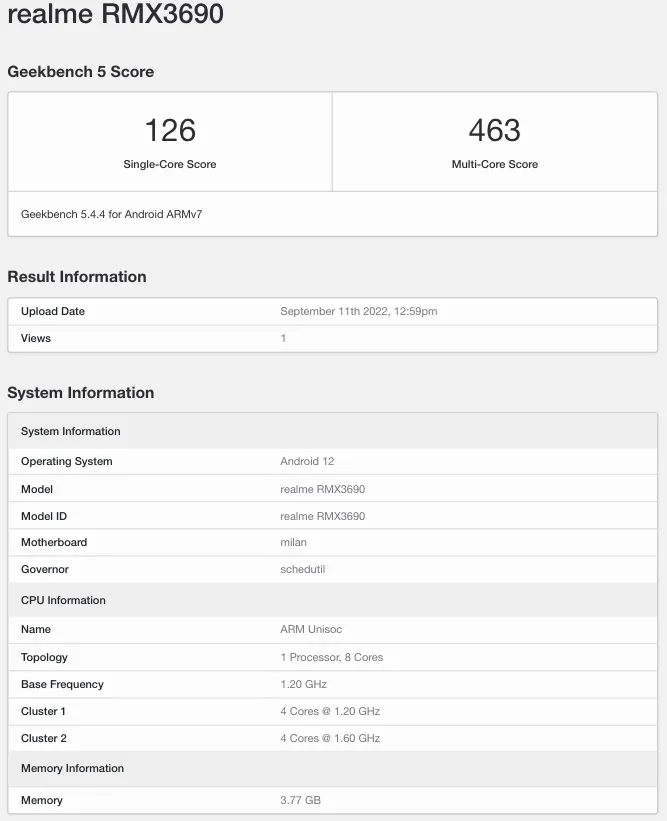
As per the listing, the smartphone has an octa-core processor with four cores clocked at 1.20 GHz and the other four cores clocked at 1.60 GHz. This is likely the UNISOC SC9863A chipset that comes with a PowerVR Rogue GE8322 GPU. Other than that, the listing shows that the device has Android 12 and 4GB of RAM.
Coming to the results, the device manages a single core score of 126 points and a multi-core score of 463 points on Geekbench 5. The listing does not reveal any other features, so let’s take a look at what we know so far.
Realme C30s specs
According to information on the Realme C30s’ product page, the phone would have a 6.5-inch screen with a dew-drop notch. Given that this phone is inexpensive, we can assume that it has an HD+ screen with a typical 60Hz refresh rate. With an 88.7% screen-to-body ratio, the display will contain 16.7 million colors.
The phone will include a huge 5,000 mAh battery and a side-mounted fingerprint scanner. The device’s operating system will be Realme UI S Edition, based on Android 12. The C30s will include a single 8MP camera with an LED flash on the back of the device. It will have a 5MP camera on the front.
Lastly, rumors state that the device will have a starting price of Rs. 7,999 (2GB RAM and 32GB storage) in India, while the 3GB RAM and 32GB storage variant will cost Rs. 8,799.
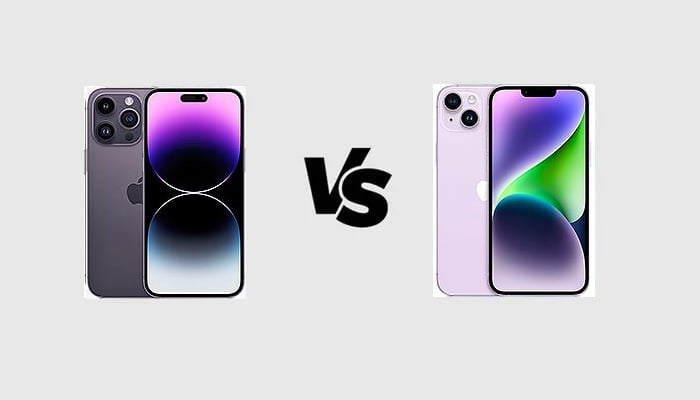
With the launch of the iPhone 14 lineup during the keynote held a few days ago, Apple officially ditched the Mini variant in favor of a brand new one: the Plus variant. The iPhone 14 Plus is the first device of its kind and it is essentially a better but more expensive variant of the original iPhone 14. Now, a lot of people are wondering whether or not it is enough to choose the iPhone 14 Plus or whether they should opt for the iPhone 14 Pro Max which remains the most advanced phone of the series. So, through this article, we decided to answer this question. Further, as you maybe know, this year there are more important differences between the Pro variants and the non-Pro variants of the lineup. This is a comparison between the main specifications of the iPhone 14 Plus and the iPhone 14 Pro Max.
Apple iPhone 14 Pro Max vs Apple iPhone 14 Plus
Apple iPhone 14 Pro Max
Apple iPhone 14 Plus
DIMENSIONS AND WEIGHT
160.7 x 77.6 x 7.9 mm,
240 g
160.8 x 78.1 x 7.8 mm,
203 g
DISPLAY
6.7 inches, 1290 x 2796 pixels (Full HD+), Super Retina XDR OLED
6.7 inches, 1284 x 2778p (Full HD+), Super Retina XDR OLED
The first important difference between the iPhone 14 Plus and the iPhone 14 Pro Max is their design. The former comes with the old notch found in the previous generation, while the latter is the first iPhone with a pill-shaped punch hole. It looks a lot more futuristic and interesting thanks to this solution and this is not the only added value. The iPhone 14 Pro Max also comes with a better build quality: it has a glass back and a stainless steel frame, while the Plus variant comes with a glass back and an aluminum frame instead of stainless steel. On the rear side, there are two different camera modules, with more sensors on the Pro Max variant. Both these phones are waterproof with the IP68 certification and you can put them underwater up to 6 meters deep for a max time of 30 minutes without damage.
Display
The displays of these two phones are very advanced. They have exactly the same diagonal: 6.7 inches. It is the first time that two variants of the iPhone lineup have a 6.7-inch diagonal. They are Super Retina XDR OLED displays but with slightly different resolutions (slightly higher on the Pro Max). The iPhone 14 Pro Max wins for two main reasons. The first is the presence of the LTPO technology with an adaptive refresh rate that goes up to 120 Hz, while the Plus stops at the standard 60 Hz refresh rate. Further, the Pro Max comes with a higher brightness: up to 2,000 nits. It even supports the Always-On Display feature. Unlike Android phones, these devices do not come with fingerprint readers, but on the upper part of the display, they have the hardware sensors for the Face ID allowing 3D facial recognition.
Specs & Software
This year the iPhone variants differ even in their chipsets. The iPhone 14 Pro Max is powered by the new Apple A16 Bionic SoC built with a 4 nm production process and running at a max frequency of 3.46 GHz. The iPhone 14 Plus still comes with the Apple A15 Bionic, the same chipset as the iPhone 13 series. It is a chip built with a 5 nm production process and running at a max frequency of 3.22 GHz. Both the phones feature a 5-core proprietary GPU and 6 GB of RAM, but with the Pro Max, you can get a higher amount of internal storage: up to 1 TB, while the Plus stops at just 512 GB. The operating system installed is iOS 16.
Camera
The iPhone 14 Pro Max brings an important upgrade to the camera department. On the rear side, it has four sensors, including an amazing 48 MP main camera with sensor-shift OIS and dual pixel phase detection autofocus. Thanks to this camera, the handset captures a higher level of detail. The 48 MP camera is paired with a 12 MP telephoto sensor with 3x optical zoom and a 12 MP ultrawide camera with a FOV of 120 degrees. Unfortunately, the main camera of the iPhone 14 Plus is still a 12 MP sensor just like the previous generation. Further, this variant lacks a telephoto sensor and it only comes with a 12 MP secondary ultrawide camera. On the front, these phones sport a 12 MP selfie shooter with an f/1.9 focal aperture and hardware sensors for 3D facial recognition.
The battery capacity of these two phones is almost the same, but they do not provide the same battery life. According to Apple, the iPhone 14 Plus is the longest-lasting iPhone ever in terms of battery life. However, we still had no chance to test the phones because they are still on pre-order. They support 29W fast charging which brings the battery from 0 to 50 percent in 30 minutes, as well as Qi wireless charging and the MagSafe technology with a power of 15W.
Price
In the U.S. the iPhone 14 Pro Max starts from $1099/€1099, while the Plus starts from $899/€900 (prices vary depending on the markets). Which one would you pick?
OPPO announced that it has officially joined the Open 3D Foundation (O3DF), part of the nonprofit Linux Foundation, as a Premier member. With the help of O3DF, OPPO will contribute to the development and adaptation of 3D graphics technology for smartphones and also improve 3D graphics performance on them by working with other industry leaders.
For the uninitiated, The O3DF was founded in 2021 to foster developer cooperation and resource pooling by funding open-source projects in 3D graphics, rendering, and game development. The O3DF is supported by over 25 top technological companies, including Adobe, Amazon Web Services, Intel, and Microsoft.
As part of its commitment to the O3DF, OPPO will actively participate in the foundation’s Governing Board and Technical Advisory Committee. The Chinese tech giant will also contribute to the effort of forming a working group specializing in the adaption and development of the O3DE (Open 3D Engine) on mobile devices.
OPPO previously unveiled the ColorOS Ray Tracing 3D Wallpaper at GDC in March, bringing interactive ray tracing to smartphones. It enables users to watch virtual light interact in real-time with virtual settings to create shadows, reflections, and other light effects.
“Today, 3D graphics technology has become an essential element of modern society, with application domains ranging from visual effects, gaming, and medical imaging to next-generation content like Metaverse,” said Hansen Hong, Director of OPPO Software Technology Planning.
“We are excited to join the Open 3D Foundation as a Premier member at the early stage of its development. Through our collaboration within the Foundation, we are eager to contribute to the Open 3D Engine with mobile platforms as our focus,” Hong added.
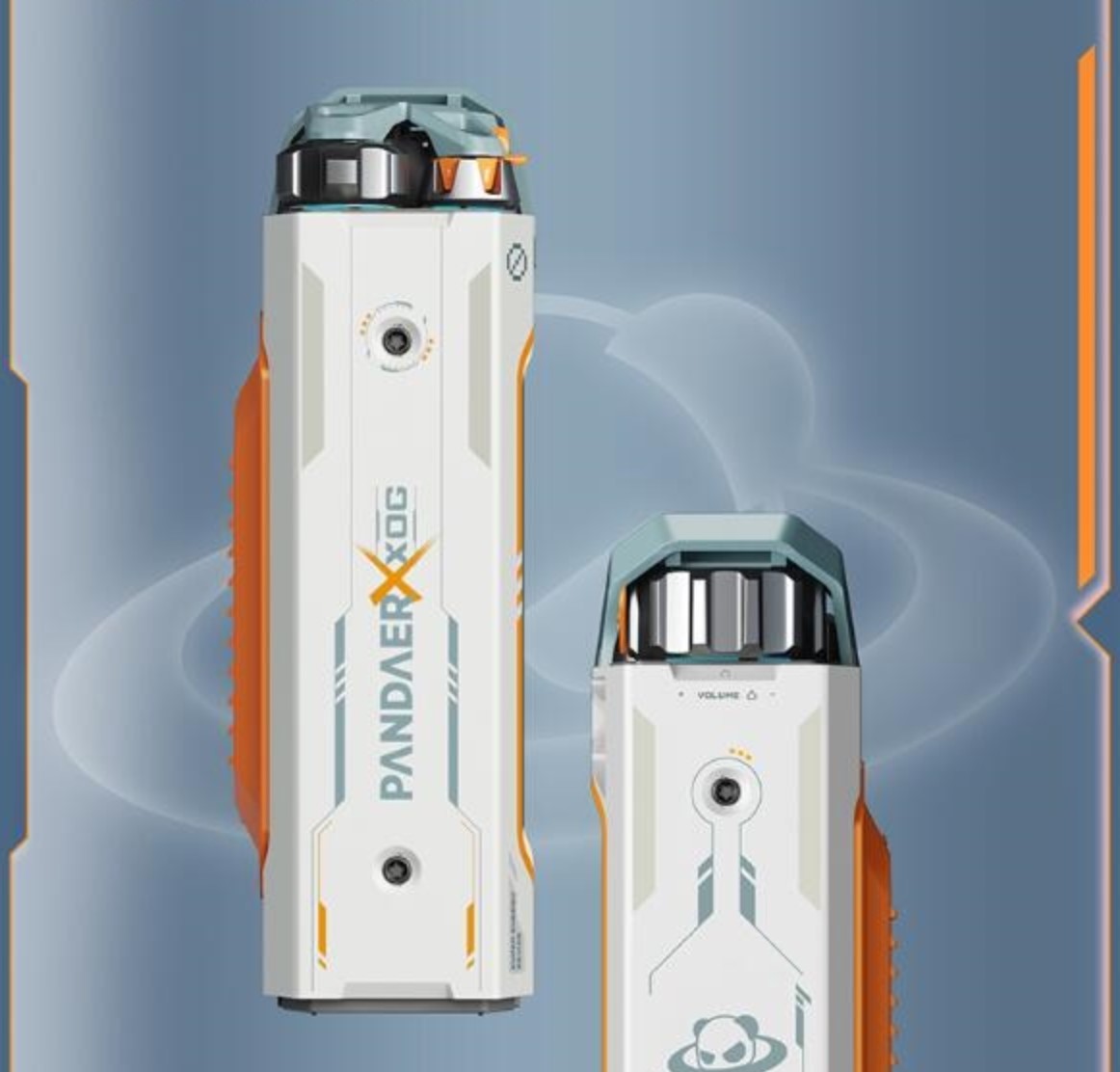
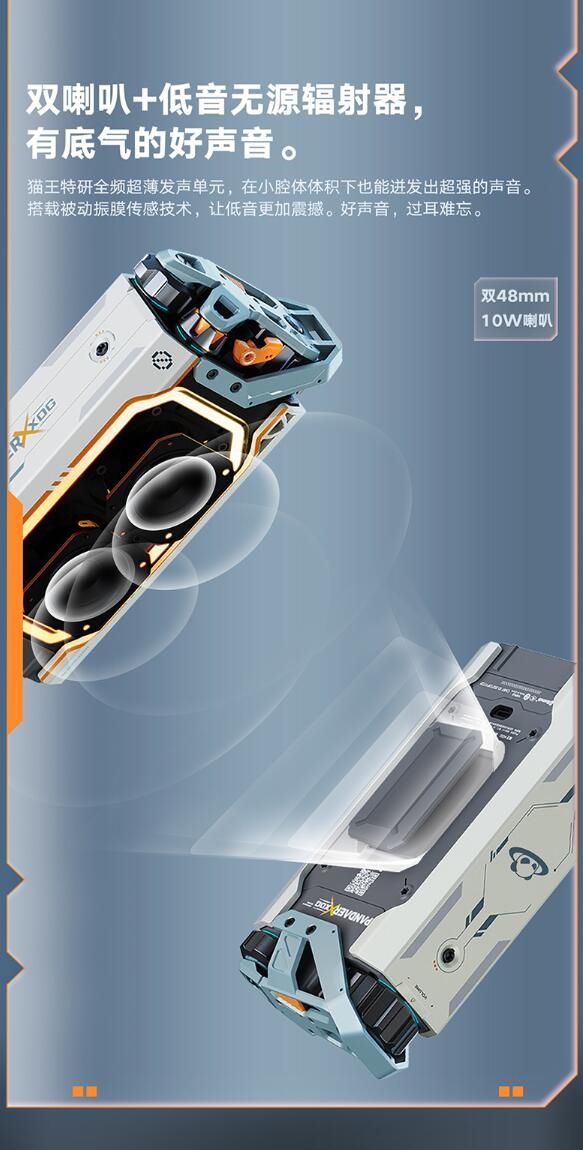
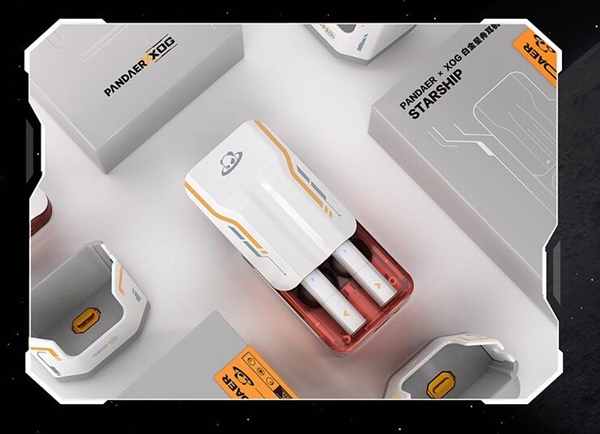
The Meizu PANDAER Elvis Presley-branded Bluetooth speaker has been launched in China. The Platinum Unicorn Cyber Speaker has a full-frequency ultra-thin sound unit with dual 48mm loudspeakers. Each of its 10W loudspeakers delivers high-quality sound for users. The new Meizu-Elvis Presley Bluetooth speaker uses passive diaphragm sensing technology to produce deep bass.
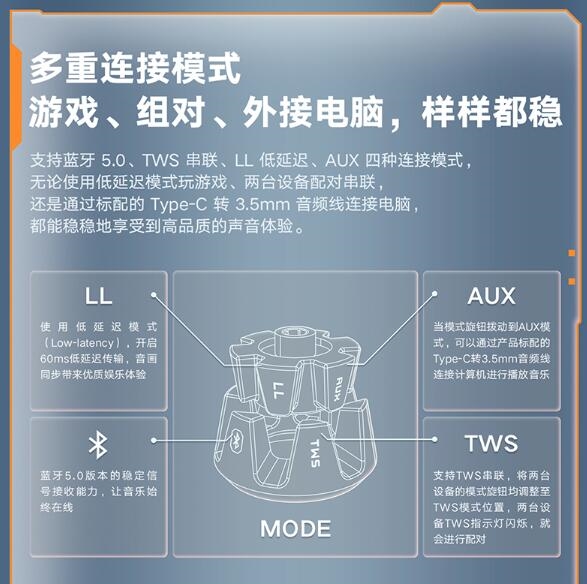
Apart from a strong bass output, the speaker uses Elvis’ acoustic technology to produce a more delicate treble and full midrange. The Meizu PANDAER speaker supports Bluetooth 5.0 connectivity, TWS series connection, LL low latency, and AUX. It can be used as a gaming speaker, thanks to its low latency mode. It is also possible to pair two speakers in series for a more immersive sound. The speaker can also be connected via a 3.5mm audio jack to an input device.
Meizu PANDAER Elvis Presley-branded Bluetooth speaker
1 of 4
Also launched are the Meizu PANDAER and Elvis platinum headset. It has a 12mm moving coil unit with composite titanium membrane and supports Bluetooth 5.2 connectivity. It has a 20-hour battery life, is IPX4 water-resistant, and features environmental noise cancellation (ENC). The Bluetooth speaker is priced at 1,199 yuan (~$173), while the platinum headset will retail at 399 yuan (~$58). The Bluetooth speaker’s battery capacity as well as global availability details are lacking at this time.
Xiaomi is developing a 4-door electric vehicle with self-driving capabilities and could enter the market by 2024. Xiaomi’s CEO, Lei Jun sees the company entering the automotive space with the 4-door sedan with in-house self-driving technology. The plans seem afoot, as the company hopes to manufacture the car in its own factory in China. With this move, Xiaomi hopes to join the exclusive class of OEMs that have made inroads into the automotive industry.
Xiaomi has previously considered the option of producing its vehicles in partnership with BAIC. The talks however did not progress as expected and the Chinese tech powerhouse is now going it alone. The Xiaomi Automotive plant is situated in Yizhuang, China and the car will be priced at around 150,000 yuan ($21,655). Xiaomi’s self-driving technology will also debut on the new car. The Xiaomi Pilot, as it is currently called, is based on LIDAR and incorporates Xiaomi’s existing AT128 hybrid solid-state radar system. We expect significant improvements in the self-driving system to include comprehensive viewing angles and other safety improvements.
Xiaomi was silent on other details about the EV like its range, top speed, and other relevant specs. It is also not clear at this time whether the car will grace the global audience immediately after launch. The EV industry remains a competitive turf and Xiaomi already has its work cut out with the heavy hitters both in China and globally. However, its development of autonomous driving technology could give it a head start in the EV space. For now, Xiaomi has also not provided any timelines and milestones for the eventual 2024 release of its first EV.
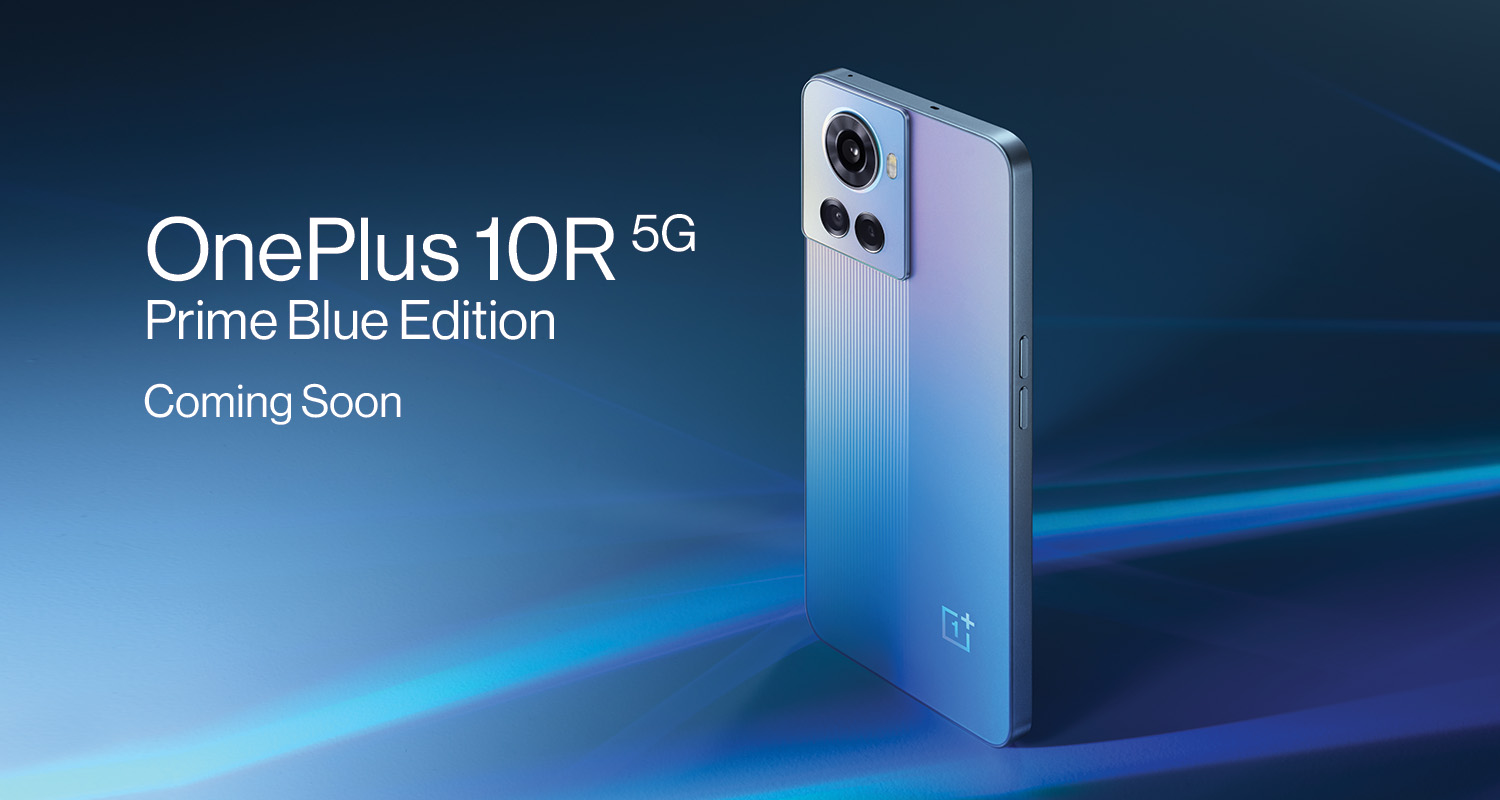
The OnePlus 10R debuted in India back in April as a premium mid-range smartphone from the brand. The handset was launched in Sierra Black and Forest Green color options. The company has confirmed it will be introducing a new Prime Blue edition of the smartphone very soon.
Recently, a microsite went live on Amazon suggesting OnePlus is gearing up to bring a new Prime Blue Edition of the OnePlus 10R. The launch date of the device is yet to be announced, but we can expect it to go on sale during the Amazon Great India Festival Sale, which will commence on September 23.
The device will have the same specifications and design as the regular 10R that’s being sold in the country. The only thing that is changing is the color. And since it will be a special edition, we can expect a slight increase in the pricing.
OnePlus 10R 5G Specifications
The OnePlus 10R flaunts a 6.7-inch AMOLED display that offers a Full HD+ resolution. The panel supports a 120Hz refresh rate, a 720Hz touch sampling rate, and HDR10. Under the hood, It is powered by the MediaTek Dimensity 8100 Max SoC, which is complemented by up to 12GB of LPDDR5 RAM and up to 256GB of UFS 3.1 internal storage. On the software front, the device runs on Android 12 with OxygenOS on top.
The handset is backed by a large 4,500mAh battery, which supports absolutely bonkers 150W fast charging. However, only the 12GB + 256GB Sierra Black model of the 10R supports this feature.
The rest of the variants pack a larger 5,000mAh battery but carry only 80W fast charging support. For photography, the smartphone features a 50-megapixel triple camera setup on the rear, while the front sports a 16-megapixel selfie shooter.
Instant credit: Use your old device to exchange and save 100 EUR
Save 1100 EUR OFF for orders over 980 EUR (Only on OnePlus 10 Pro)
The deal ends on September 17, 2022.
OnePlus 10T smartphone features a 6.7 inches Fluid AMOLED display with a 120Hz refresh rate. It is powered by the Snapdragon 8+ Gen 1 chipset and comes in multiple memory variants viz. 8GB / 12GB / 16GB LPDDR5 RAM and 128GB / 256GB storage options.
It features a triple rear camera setup with a 50MP main camera and 8MP + 2MP secondary sensors. For your selfies, you have a 16MP sensor in the front. Fueled with a 4800mAh battery it comes with 150W SuperVOOC fast charging which is TÜV Rheinland certified for safe fast charge.
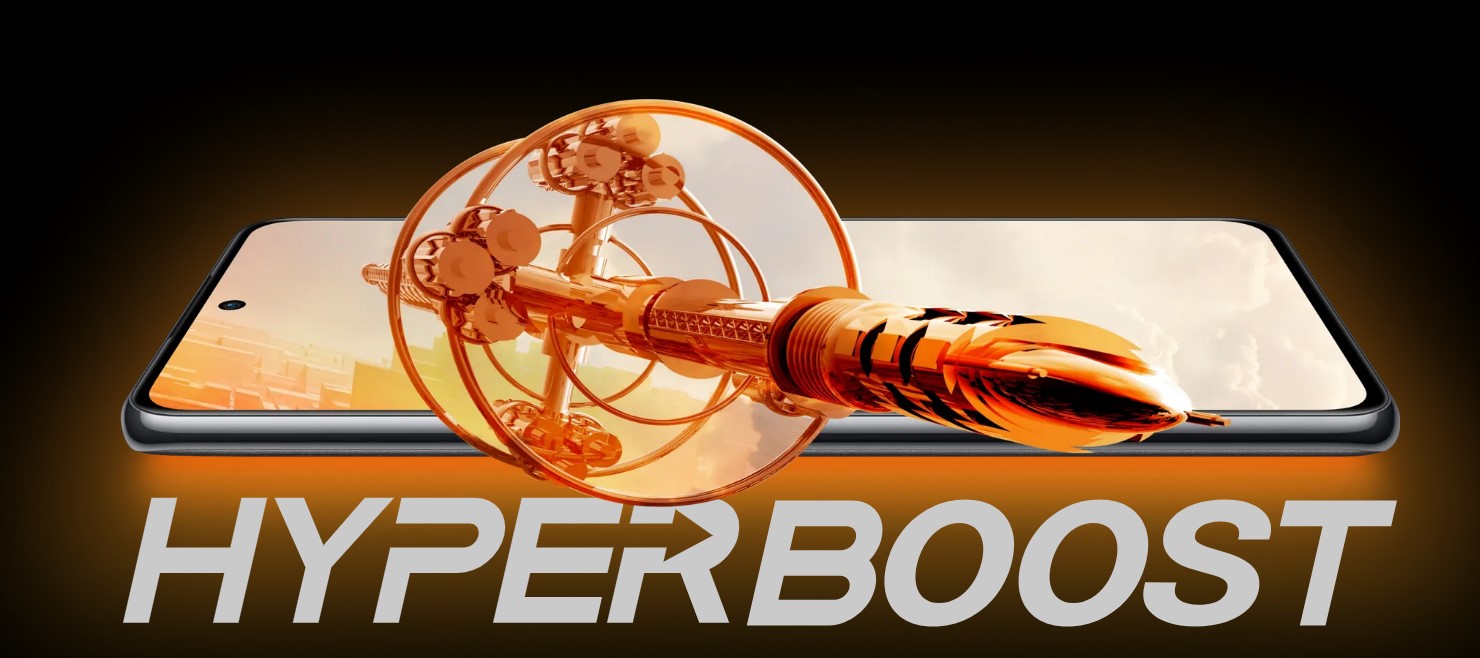
For gaming enthusiasts, the OnePus 10T is a good fit as it comes with Hyperboost Game Frame Stabilization Engine that reduces frame drops and screen jitters during long gaming sessions. Other interesting features include an in-screen fingerprint sensor, an X-axis linear motor, and a Vapor Chamber with the largest cooling area in the history of the OnePlus.
OnePlus 10T comes in Black and Green color variants and is now available with discounts, deals, and free gifts.
We use cookies on our website to give you the most relevant experience by remembering your preferences and repeat visits. By clicking “Accept”, you consent to the use of ALL the cookies.
This website uses cookies to improve your experience while you navigate through the website. Out of these, the cookies that are categorized as necessary are stored on your browser as they are essential for the working of basic functionalities of the website. We also use third-party cookies that help us analyze and understand how you use this website. These cookies will be stored in your browser only with your consent. You also have the option to opt-out of these cookies. But opting out of some of these cookies may affect your browsing experience.
Necessary cookies are absolutely essential for the website to function properly. This category only includes cookies that ensures basic functionalities and security features of the website. These cookies do not store any personal information.
Any cookies that may not be particularly necessary for the website to function and is used specifically to collect user personal data via analytics, ads, other embedded contents are termed as non-necessary cookies. It is mandatory to procure user consent prior to running these cookies on your website.