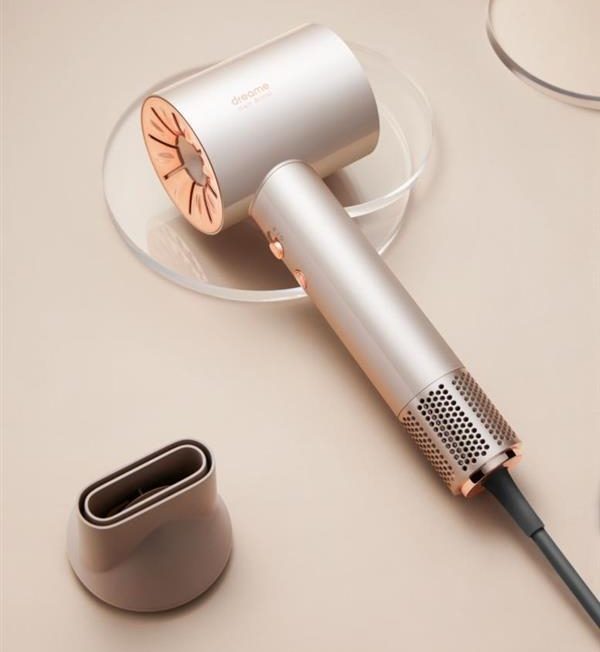
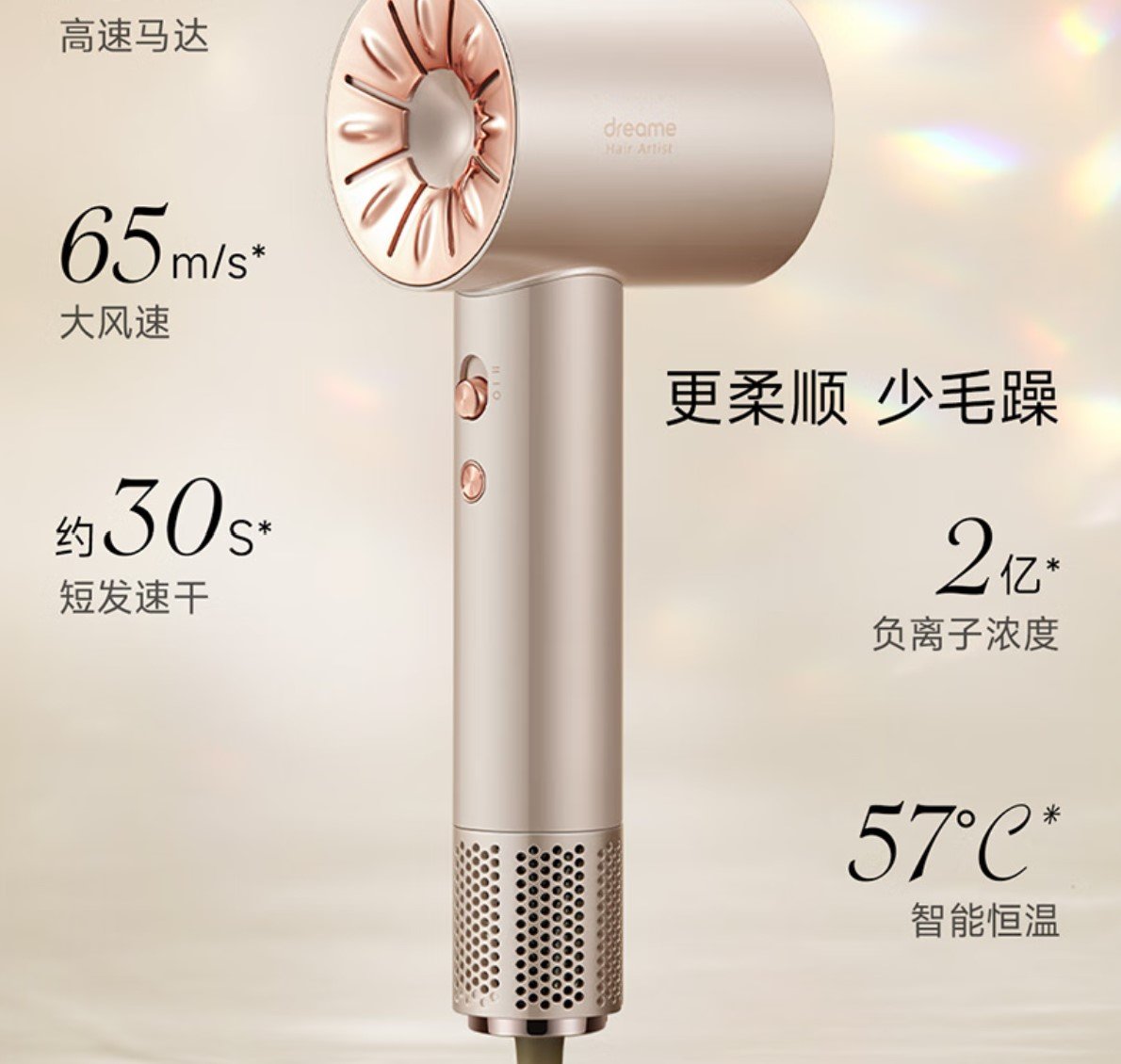
ZMI has released the Dreame Hair Dryer in China. The gadget boasts of a high-speed mechanism that finishes some drying tasks in 30 seconds. It uses a 130,000-rpm high-speed motor which is the highest in the industry. ZMI says the hair dryer can dry shoulder-length hair in three minutes without overheating while short hair can be dried within 30 seconds.
The ZMI Dreame Hair Dryer has an innovative flow channel design that enables it to deploy its powerful motor and high wind speed to quickly evaporate the moisture on the hair. Its design also prevents temperature buildup that may damage the hair while drying. The Dreame Hair Dryer is also optimized for low sound operation and a better hair drying experience. The NTC intelligent constant temperature technology is also adopted in the new hair dryer that ensures optimal temperature controls.
The ZMI Dreame Hair Dryer combines its negative ion emitter and its high-speed airflow to ensure that the hair is softened rapidly. The hair dryer is compact and easy to use. It has a magnetic suction nozzle and can be rotated 360 degrees.
The ZMI Dreame Hair Dryer is available at a pre-order price of 699 yuan (~$101) in China. There are no details yet on the global availability and pricing of the gadget.
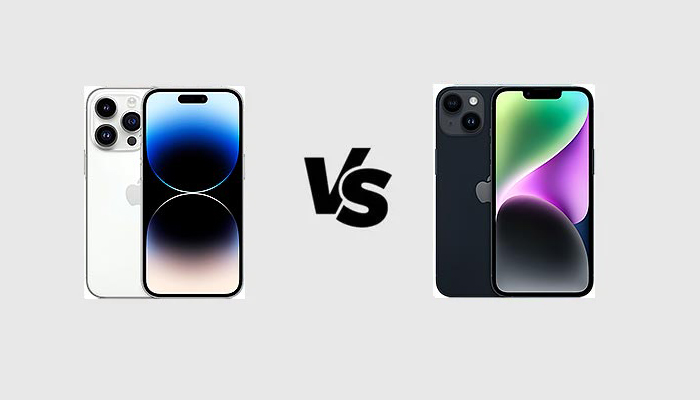
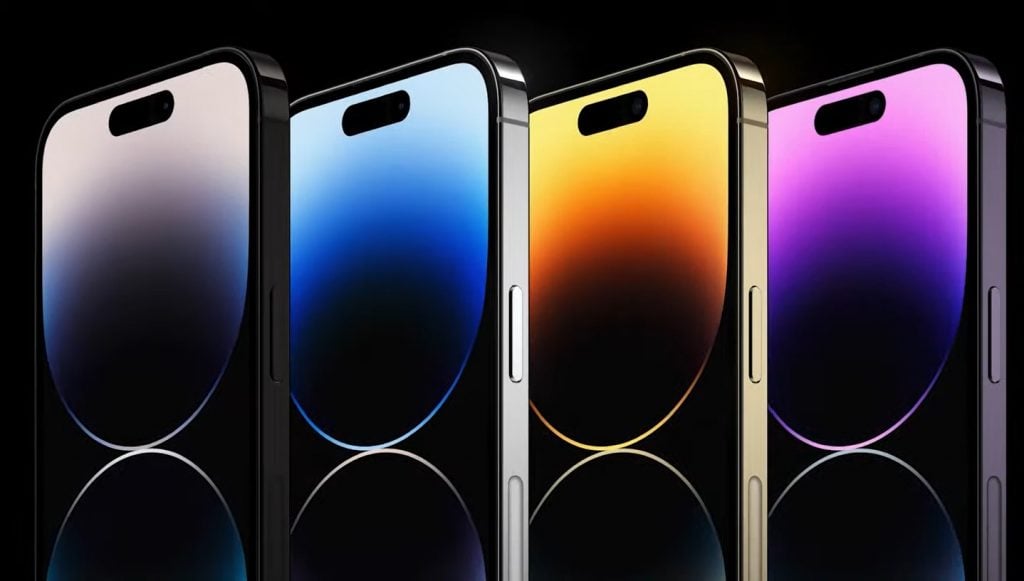
The latest Apple phones just entered the pre-order phase and they will be on sale starting from September 16 in several global markets. Announced during the keynote held on September 7, the iPhone 14 lineup is composed of four variants: the vanilla iPhone 14, the 14 Plus, the 14 Pro, and the 14 Pro Max. This year there are definitely more differences between the standard versions and the Pro ones: not only the design is different, but even several other specifications such as the chipset and the main camera. That is the reason why it is very important to know the difference between the vanilla version and the Pro. So here is a comparison between the specifications of the iPhone 14 and the iPhone 14 Pro.
Apple iPhone 14 Pro vs Apple iPhone 14
Apple iPhone 14 Pro
Apple iPhone 14
DIMENSIONS AND WEIGHT
147.5 x 71.5 x 7.9 mm,
206 g
146.7 x 71.5 x 7.8 mm,
172 g
DISPLAY
6.1 inches, 1179 x 2556 pixels (Full HD+), Super Retina XDR OLED
6.1 inches, 1170 x 2532p (Full HD+), Super Retina XDR OLED
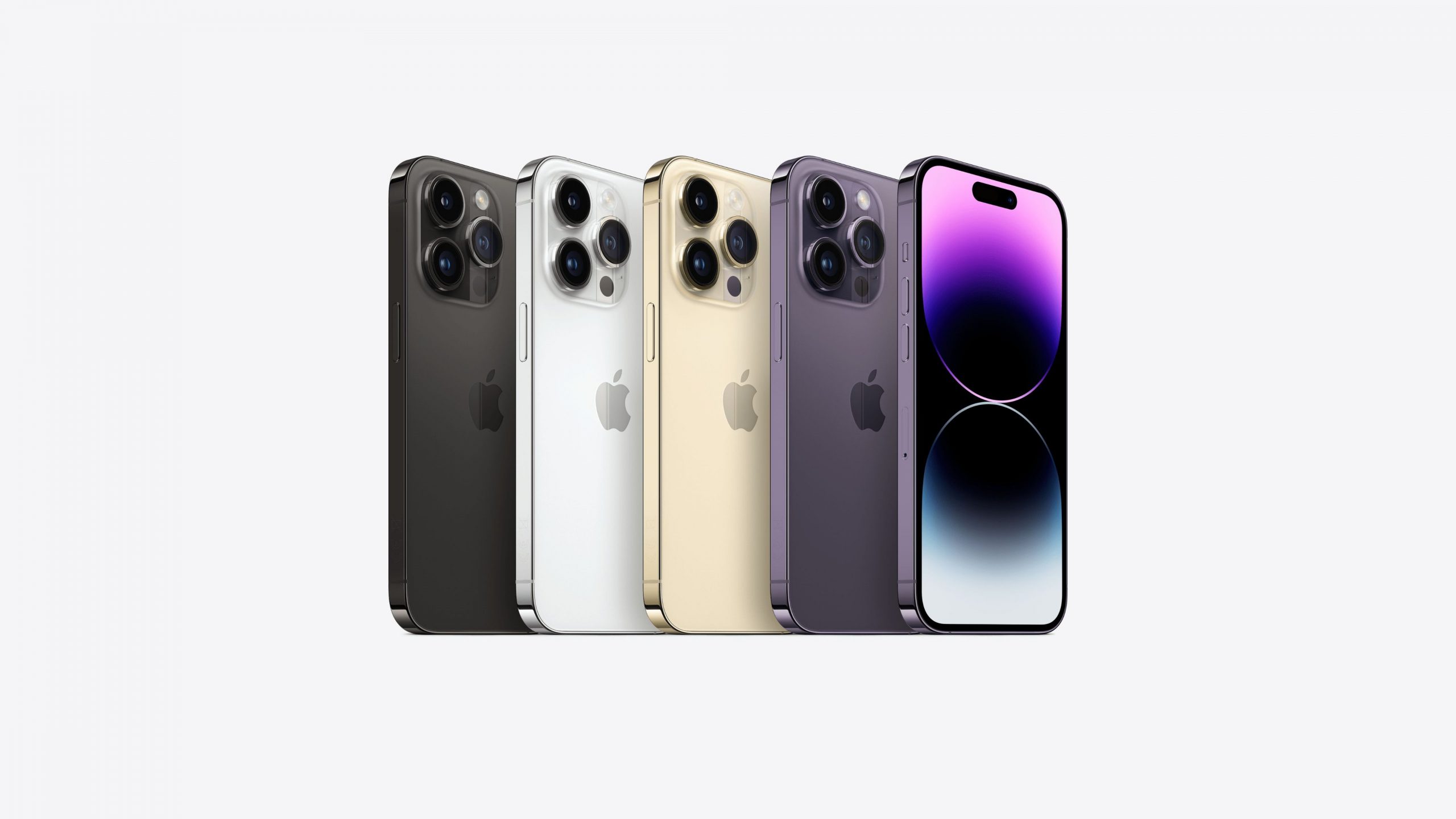
As already mentioned, this year there is an important aesthetic difference between the vanilla version and the Pro. The iPhone 14 Pro ditches the notch in favor of a pill-shaped punch hole including the front camera and the sensors for Face ID, while the vanilla version still comes with a notch, even though it is a smaller notch just like the 13 series. Another difference is the camera module because the Pro variant has more sensors on the rear side. Further, the vanilla version is slightly more compact and lighter. Last but not least, the Pro is built with better material: it has a glass back and a stainless steel frame, while the vanilla version is equipped with an aluminum frame. These are the main differences when it comes to aesthetics and, as you probably realized, they are very relevant.
Display
The displays of the iPhone 14 and the iPhone 14 Pro share a lot of things in common, but there are two main aspects in which the Pro variant is definitely better. The first one is the refresh rate, as it reaches 120 Hz instead of the standard 60 Hz. Further, with the Pro variant, you can get higher brightness, up to 2,000 nits. And naturally, the panels differ on the upper part due to the punch hole on the Pro variant and the notch on the vanilla version, but we already told you about this. For the rest, these displays are exactly the same thing. They are Super Retina XDR OLED panels with a diagonal of 6.1 inches, a Full HD+ resolution of 1170 x 2532 pixels, HDR10+ certification, and Dolby Vision support. Unlike Android phones, you do not get an in-display fingerprint reader for authentication, but these devices rely on 3D facial recognition thanks to the Face ID technology.
Specs & Software
One of the most important differences between the vanilla and the Pro version this year is definitely the chipset. With the iPhone 14 Pro, you get the new Apple A16 Bionic SoC built with a 4 nm production process and sporting an octa-core architecture. It is able to reach a frequency of 3.46 GHz and it includes a 5-core proprietary GPU. The chipset is paired with 6 GB of RAM and 128 GB, 256 GB, 512 GB, or 1 TB of NVMe native storage depending on the chosen configuration. Unfortunately, the vanilla version is powered by the old Apple A15 Bionic chipset: the same SoC as the iPhone 13 lineup. It is built with a 5 nm production process and it has an octa-core architecture including two Avalanche performance cores with a max frequency of 3.23 GHz, four Blizzard energy-efficient cores with a frequency of 1.82 GHz, and a 5-core proprietary GPU. Both phones run iOS 16 out of the box.
Camera
Another important upgrade of the Pro variant is definitely the camera setup. This is the first Apple device equipped with a 48 MP rear camera. So this phone has a quad rear camera setup including a 48 MP main sensor with sensor-shift OIS, a 12 MP telephoto lens with 2x optical zoom, a 12 MP ultrawide camera, and a TOF 3D LiDAR scanner. On the front, you get a 12 MP selfie snapper with an f/1.9 focal aperture (improved if compared to the previous generation) and a 3D sensor for Face ID. The iPhone 14 has the same front department, but on the rear side, it only sports a 12 MP main camera with OIS and a 12 MP ultrawide camera.
Unfortunately, Apple did not announce the battery capacities of these two devices at the launch and still, no one discovered them. We do not have info about the battery life and the battery capacities of these two phones, but we can tell you that the iPhone 13 had a bigger battery than the Pro. Both the handsets feature fast charging and they are able to fill 50 percent of the battery in 30 minutes. They also feature MagSafe wireless charging with a power of 15W and Qi wireless charging with a power of 7.5W.
Price
Prices of iPhones vary depending on the market. the iPhone 14 starts from $999/€999, while the Pro starts from $1299/€1300. Which one would you pick with your actual budget?
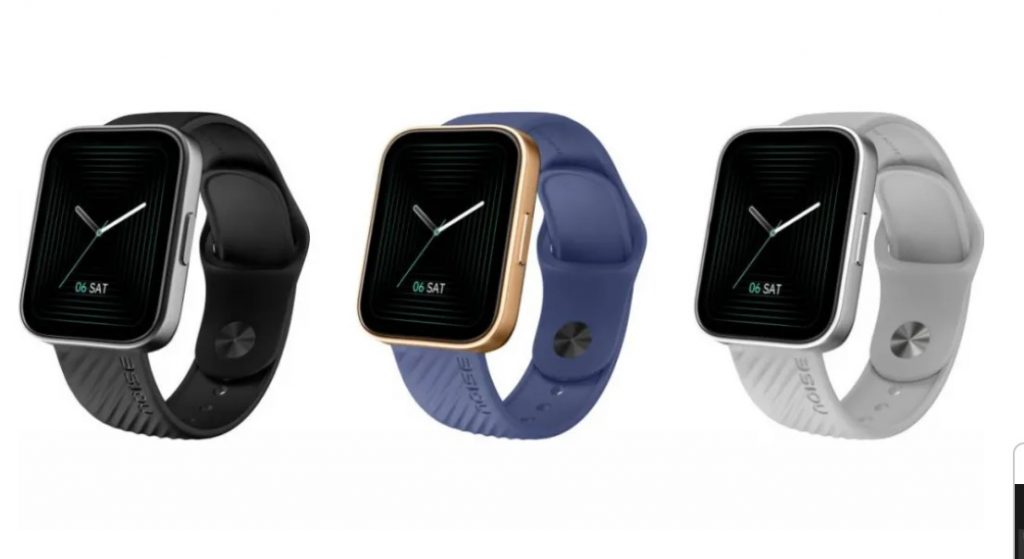
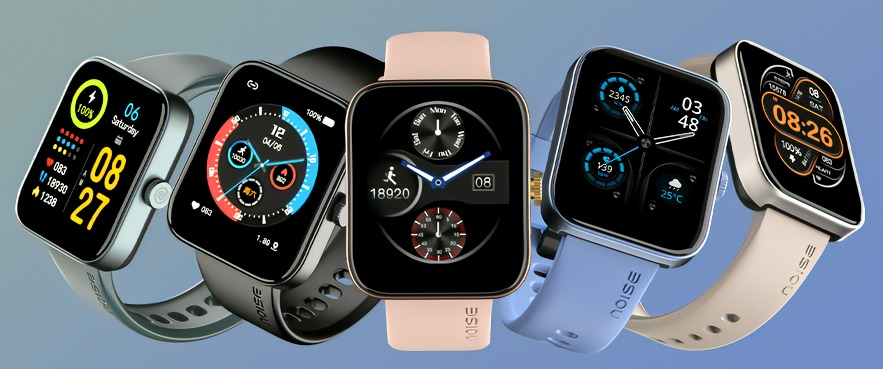
Noise Vision 2 Buzz smartwatch has launched in India. It is quite different from the Noise ColorFit Vision 2 that debuted in the country in June. The latest offering comes with upgraded specifications and features. It falls under the sub-Rs 4,000 price bracket. Read on to know what the wearable device offers out of the box.
The Noise Vision 2 Buzz features a 1.78-inch AMOLED display in a square dial. It offers a resolution of 368 x 448 pixels and 500 nits brightness. The device is IP68 certified water resistant and there is a button on the right side.
In terms of health-related features, the Noise Vision 2 Buzz is equipped with a heart-rate monitor, SpO2 sensor, stress and sleep tracker, and a female health monitor. The wearable device is capable of tracking 100 sports activities with auto-detection for 10 modes.
The Noise Vision 2 Buzz is equipped with a single chipset and TruSync technology that offers quick pairing, stable connectivity, and low power consumption. The smartwatch comes with a built-in speaker and microphone for Bluetooth calling and users can dial from recent call logs and access favourite contacts.
The Noise Vision Buzz 2 is claimed to offer up to 7 days of battery life. It packs convenient features like quick reply, notification display, remote camera and music control, find my phone, weather updates, and more.
The Noise Vision Buzz 2 costs Rs 3,499 and is offered in Black, Blue, Brown, and Grey colours. It is available for purchase via Flipkart.
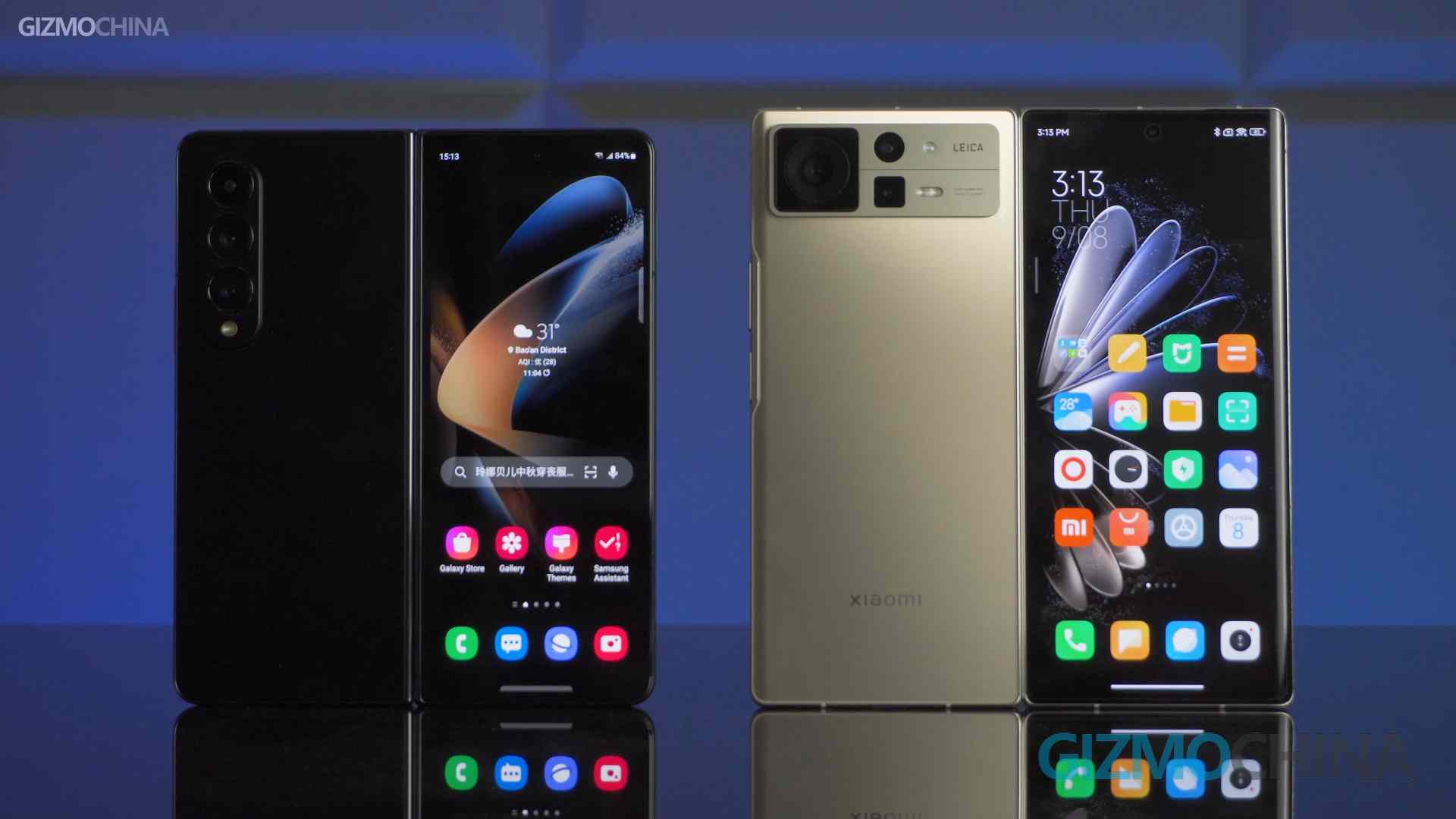
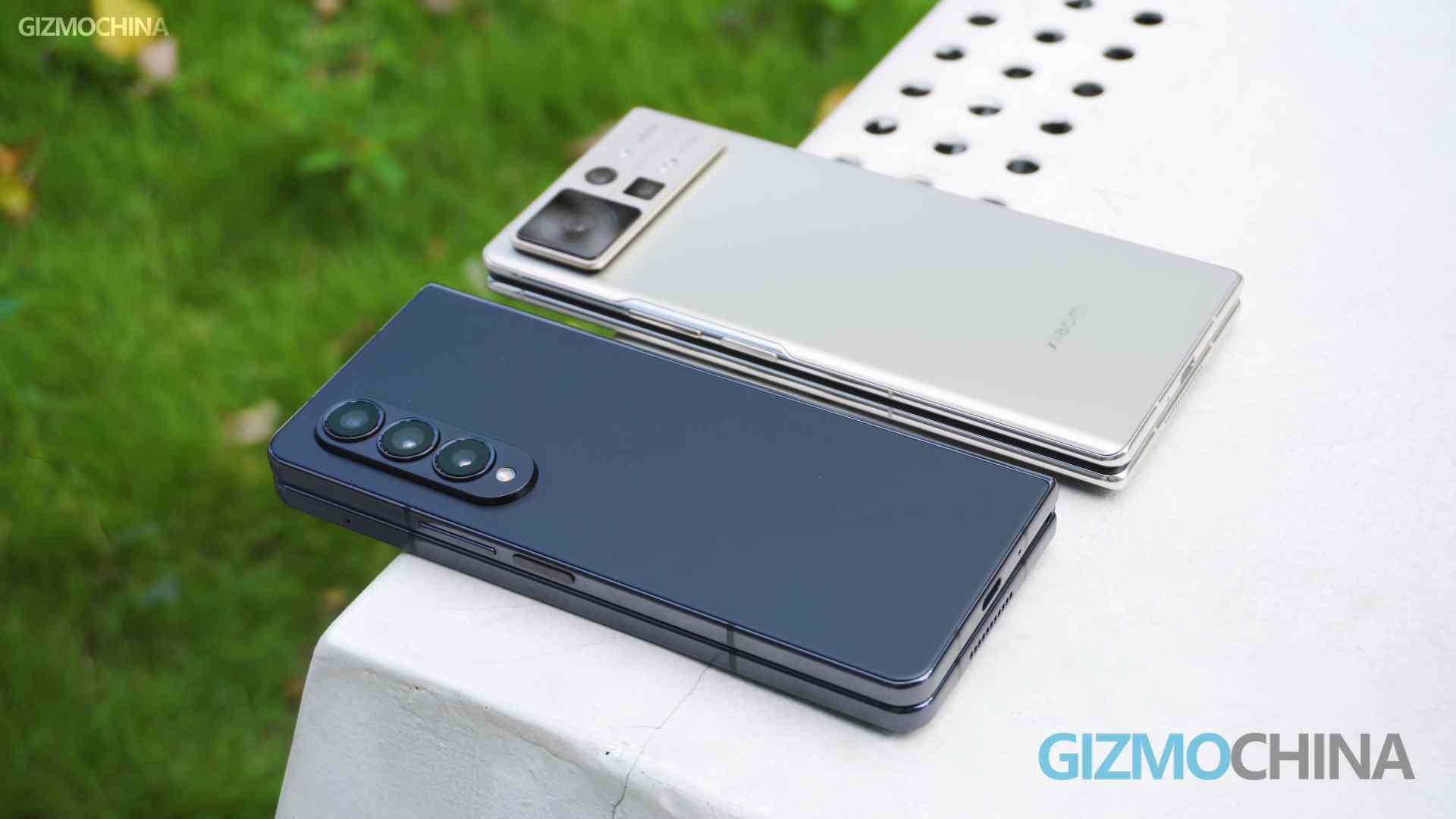
Samsung Z Fold 4 and Xiaomi MIX Fold 2 are two of the early Snapdragon 8+ Gen 1 foldable phones launched this year, so of course, many people are curious about which one is better. And it just so happens that our Z Fold 4 has arrived.
So it’s time to directly compare the Z Fold 4 vs the Xiaomi Mix Fold 2.
DESIGN
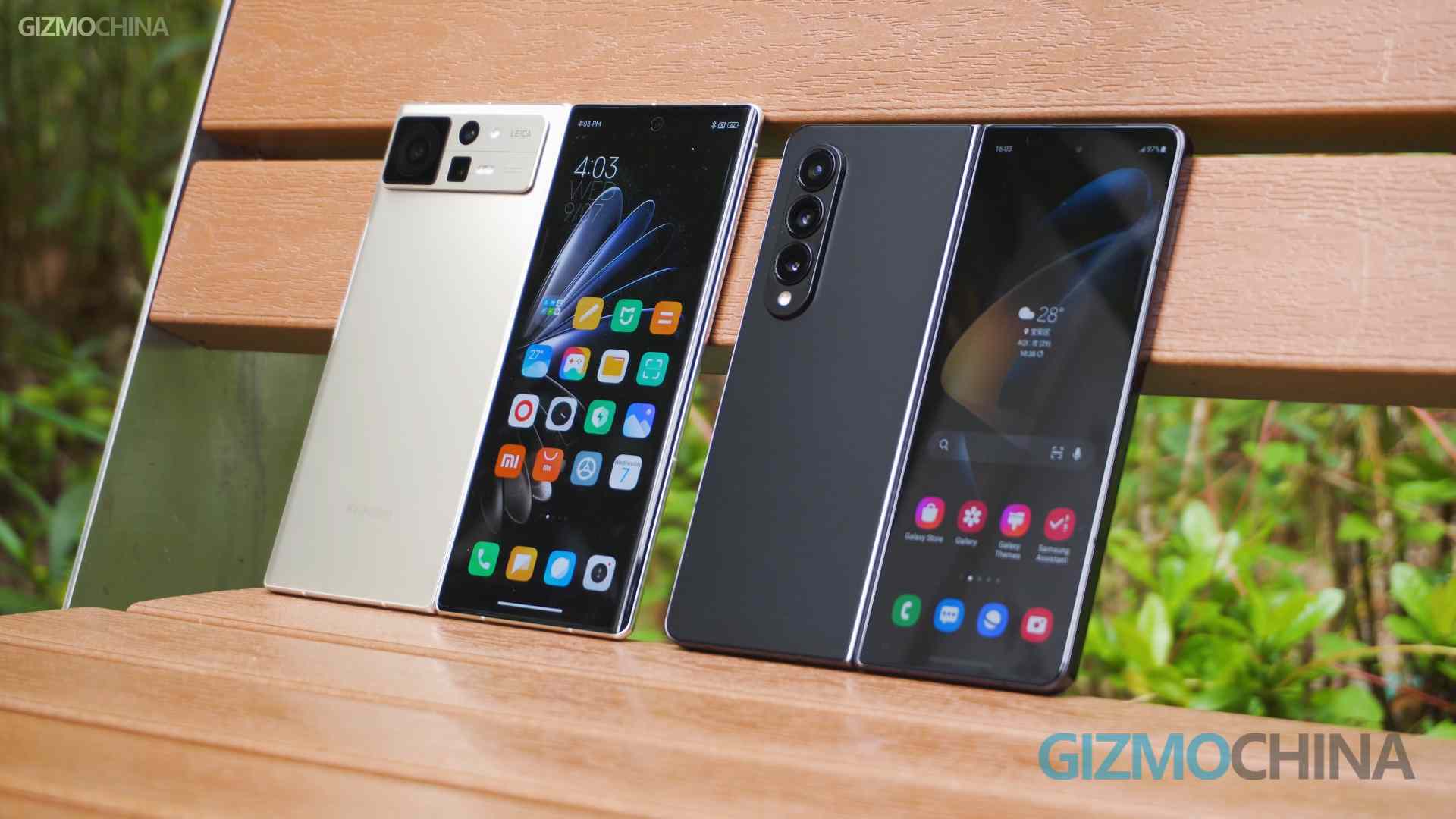
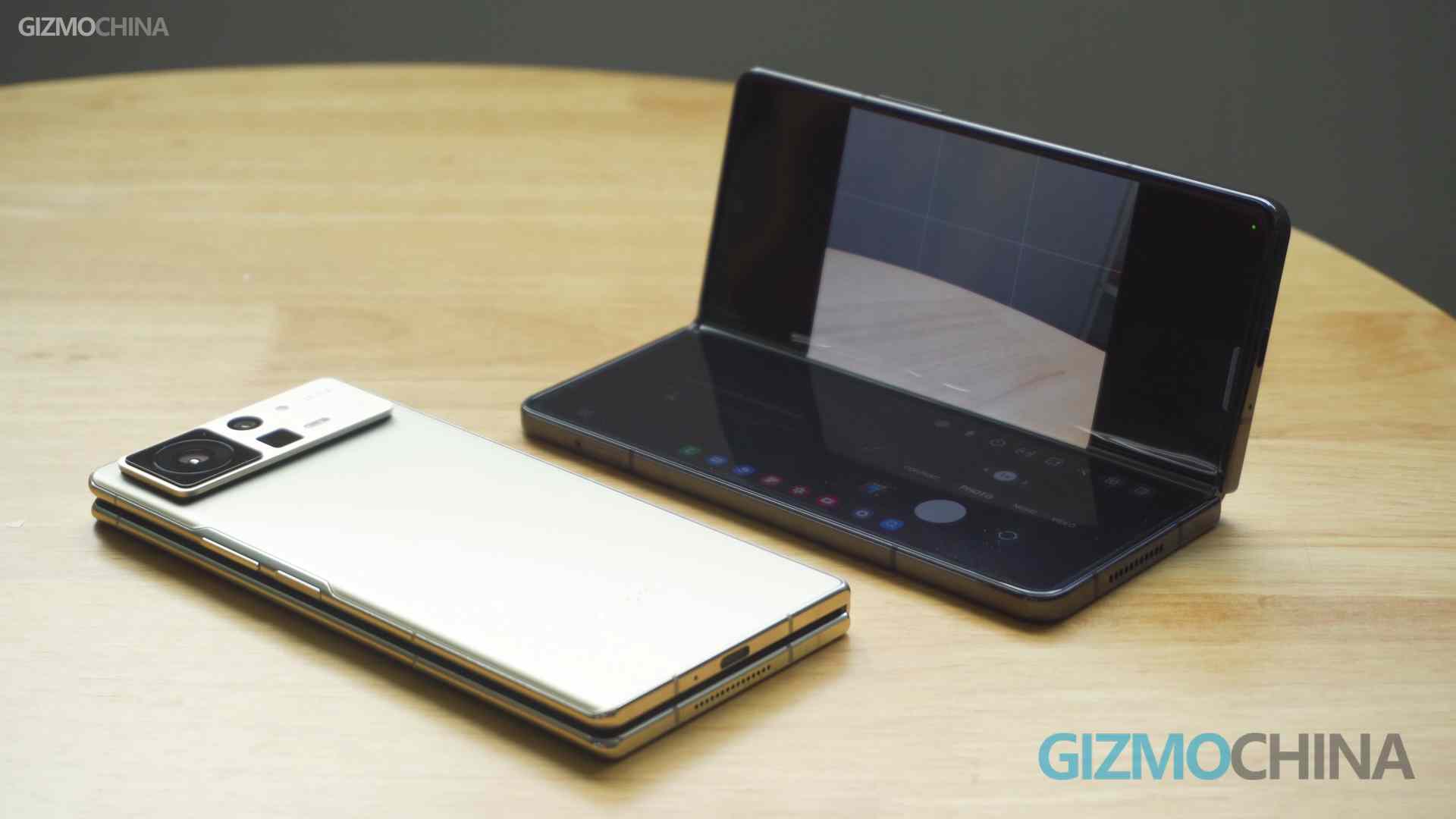
Everyone has their own favorite designs, so we won’t discuss which phone is better looking. However, the design is still very different from the actual experience. The most obvious difference is the size and screen ratio.
The MIX Fold 2 looks more like a normal phone when folded. In contrast the Z Fold 4 is even smaller and has a narrower screen width. You must have thought I would give the MIX Fold 2 a good rating because it is more like a normal phone and thinner than other foldable models. Of course not! Z Fold 4 is very friendly for one-handed operation because of its smaller and narrower screen. Because the scenario of using the outside screen is basically outdoors, it is more comfortable for daily use, except for typing which may be it’s easy to press the wrong key.
On the other hand, the MIX Fold 2 is thinner, but its frame is not flat, like two steel plates against your palm. With a wider body and a more slippery back panel, the folded experience is really not as good as the Z Fold 4. When unfolded, the MIX Fold 2 turns from two steel plates into one steel plate that sticks to your pinky finger. Almost the same weight of Z Fold 4 but with a thicker body to get a more comfortable experience. Therefore, do not think that being thin is good, sometimes it would be counterproductive.
DISPLAY
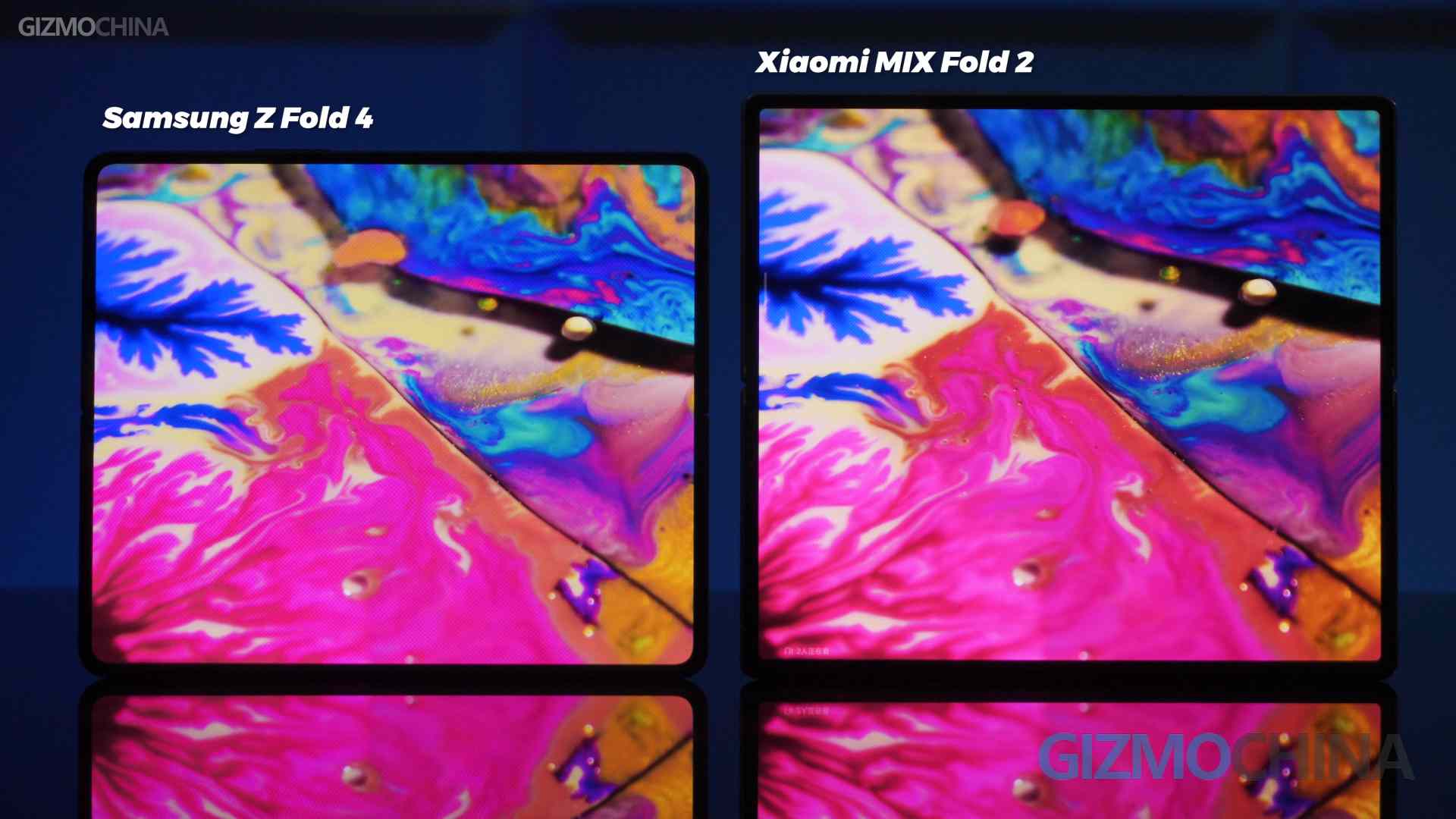
I do want to compare their screen quality, but they are both top-of-the-line Samsung screens and I really don’t see any difference. I would recommend you to choose from its screen size and usage. For example, if you prefer a larger screen, choose the MIX Fold 2. If you like to play with one hand, choose Z Fold 4. Or if you don’t like the imperfect front lens of Samsung screen, you can choose MIX Fold 2. But if you need to do online meetings very often, then Z Fold 4 is more suitable for you.
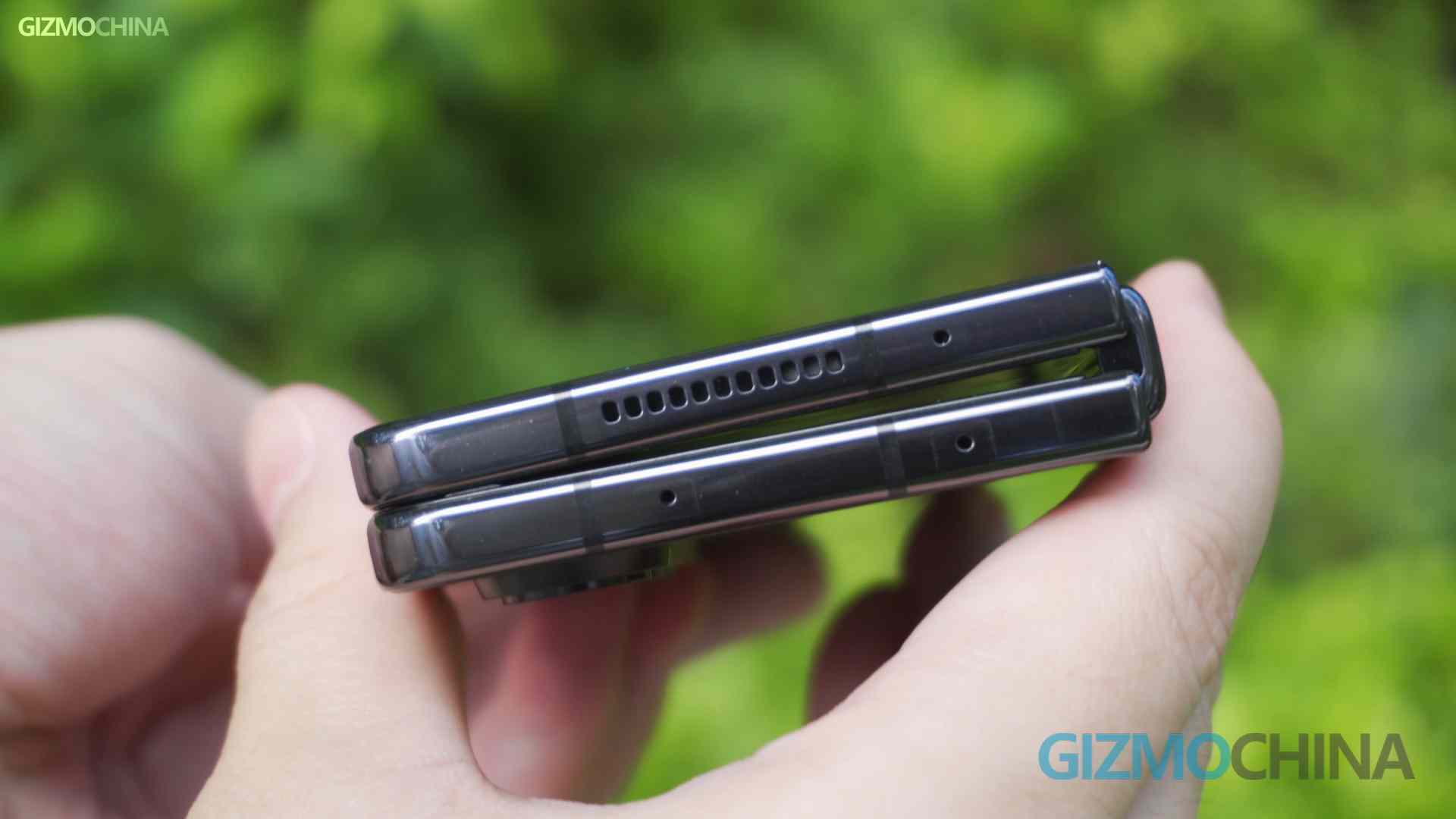
Although the Z Fold has been updated to the fourth generation, the hinge is still something that many people complain about: Why is there still a gap there?
The cheaper MIX Fold 2 doesn’t have this problem, but that doesn’t mean it will have a better hinge than the Z Fold 4. The inability to fix the angle makes it less applicable than the Z Fold 4, for example, it can’t take time-lapse by itself, and it can’t stand on the table by itself. To make these functions possible, the hinge of Z Fold 4 is particularly stiff, which means that it requires a lot of force to unfold.
Let’s put it this way, opening the Z Fold 4 is like opening a rusty door, and with the flat frame, you really have to be careful not to drop your phone when unfolding it. This is where the curved frame of the MIX Fold 2 gets the edge. It has a flexible hinge, so it is very comfortable to open and close. The MIX Fold 2 has a wide and light crease, while the Z Fold 4 is narrow and deep. I don’t think there is a loser in the hinge section. Both of them just focus on different points.
PERFORMANCE, BENCHMARKS & GAMING
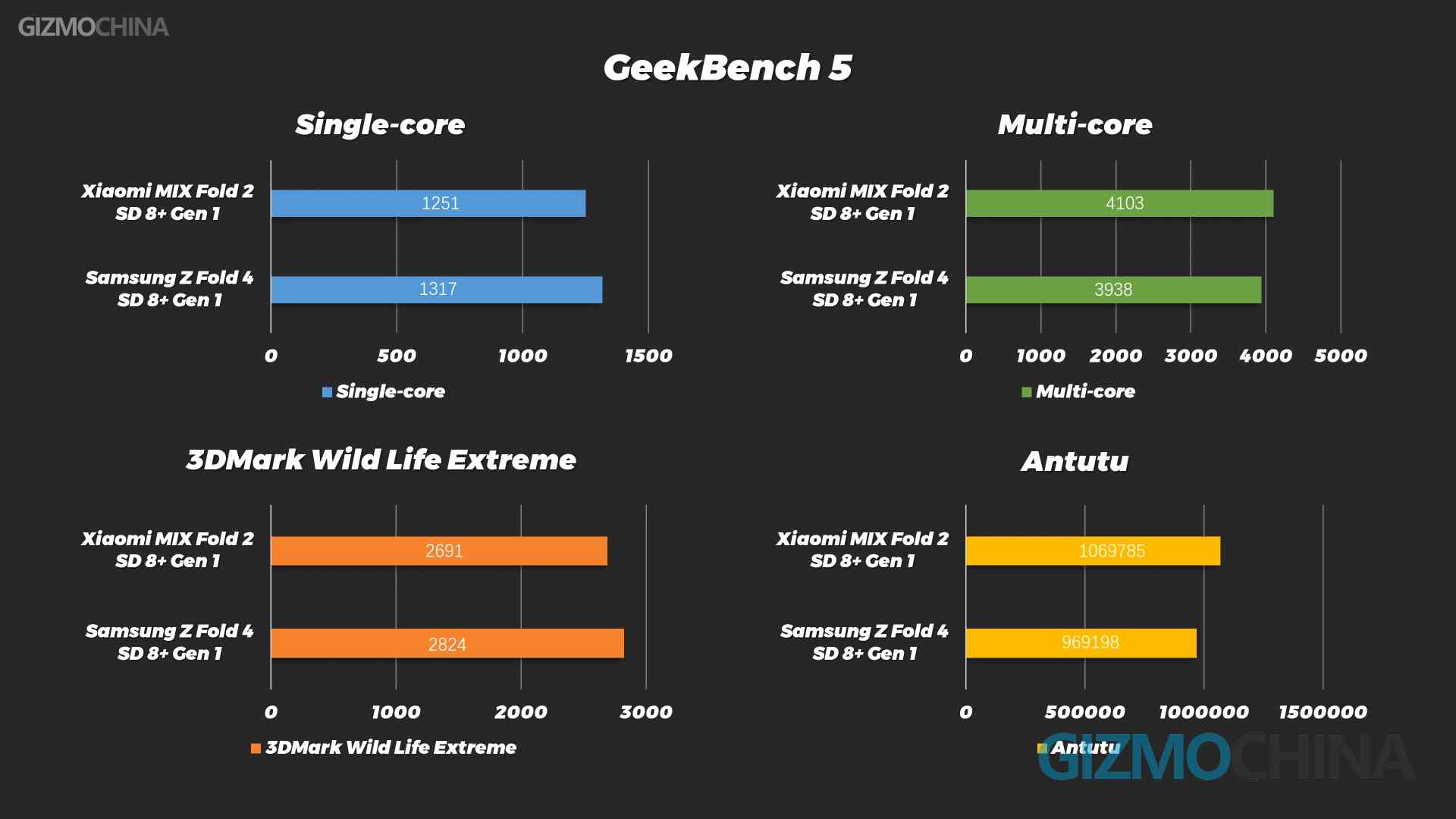
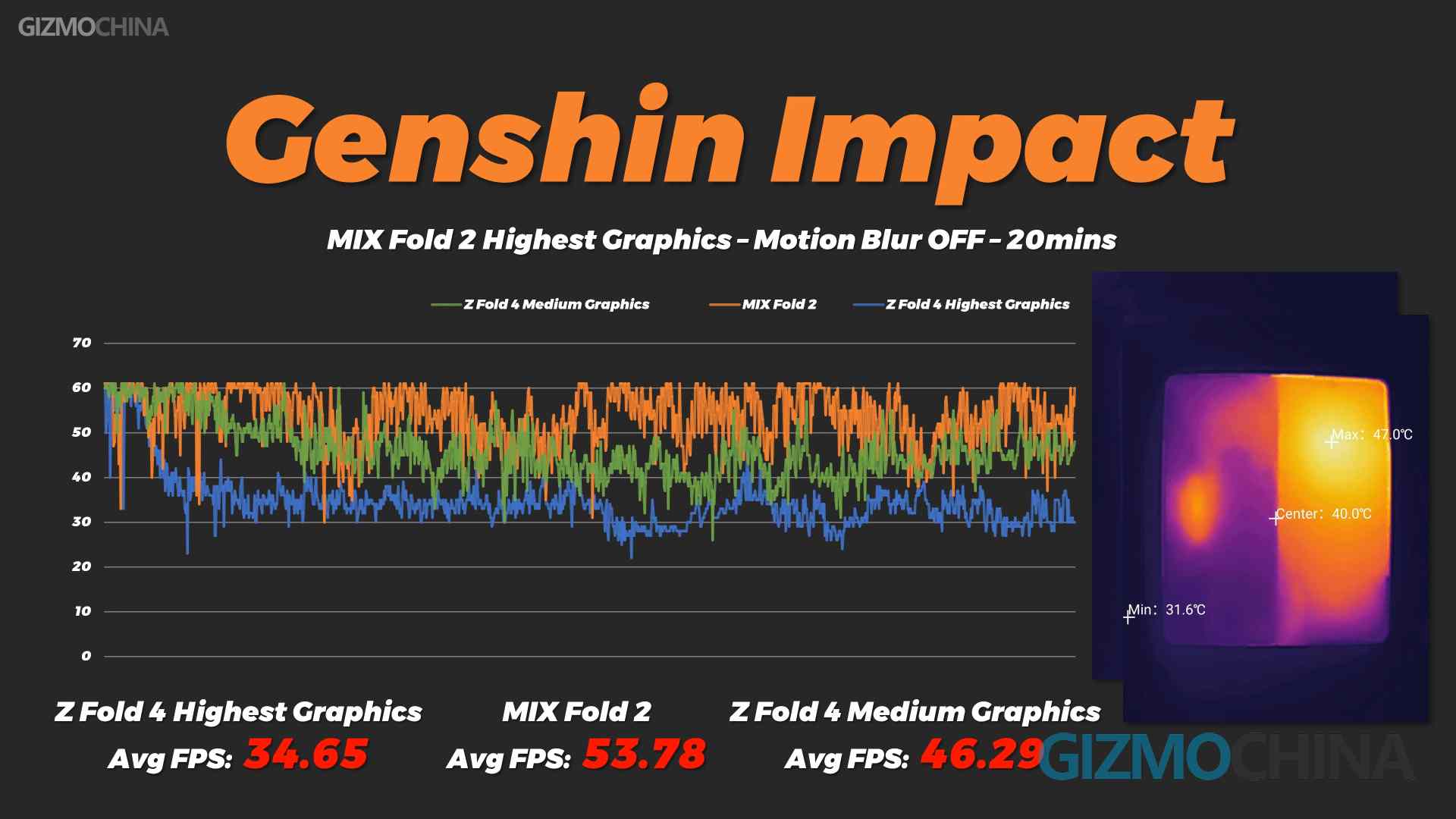
Performance has never been a strong point of Samsung phones, but just looking at Benchmark scores, the Z Fold 4 seems to be very powerful, and the result is very similar for MIX Fold 2. But scores don’t tell everything, you still need to actually play a few games to understand its actual performance. But Samsung did surprise us with a completely different game performance and score. Compared to the bright performance of the MIX Fold 2, the Z Fold 4 didn’t perform at all like a Snapdragon 8+ Gen 1 phone in large 3D games. And we didn’t test it at Sumeru, so if the test environment was tougher, the performance would have been even worse. So if you’re into playing big games like Genshin, the MIX Fold 2 is the better choice.
1 of 4
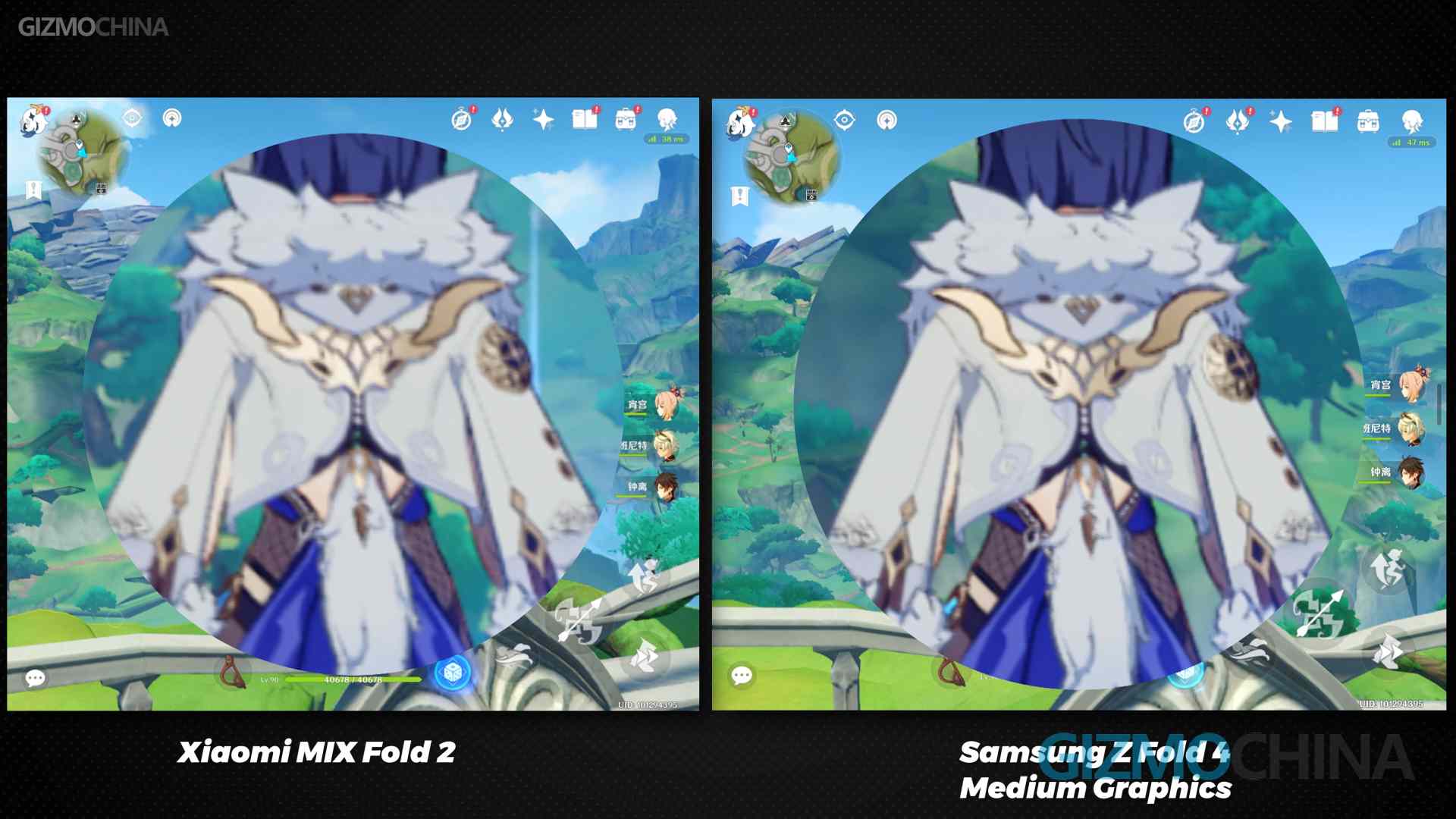
Although Z Fold 4 is not as good as MIX Fold 2 in terms of frame rate, there is one thing that it is better than MIX Fold 2. In Genshin Impact, it is set to Highest Graphics, and the clarity is obviously much higher than MIX Fold 2. So you can choose to play with lower Graphics and the quality is not worse than MIX Fold 2. After our test, the frame rate did improve, but it’s still not as good as MIX Fold 2. Anyway, it’s finally crossing the pass line.
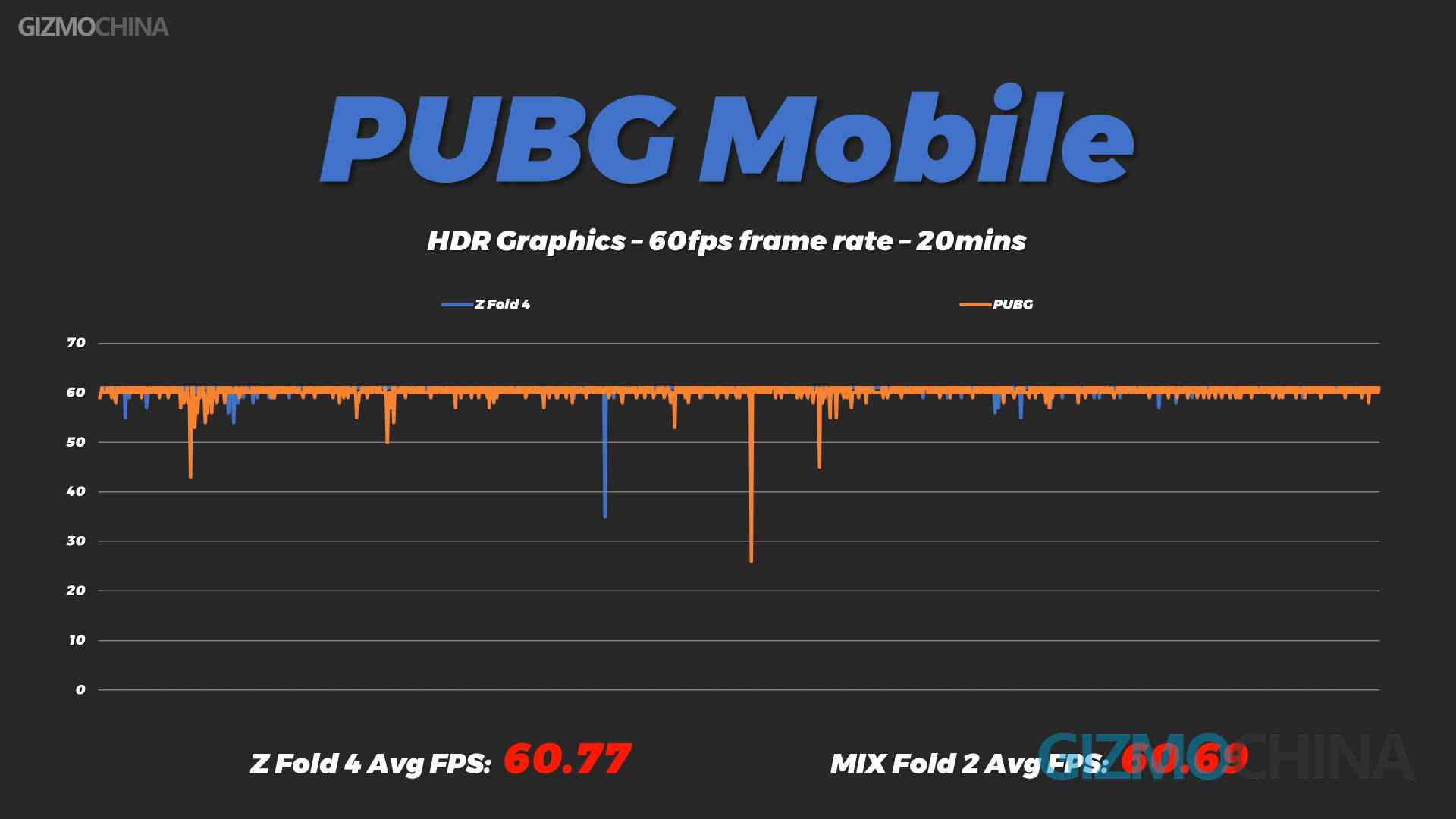
Both PUBG Mobile can only be selected up to HDR Graphics 60 fps mode. Both perform exactly the same and there is not much to say about them.
CAMERAS
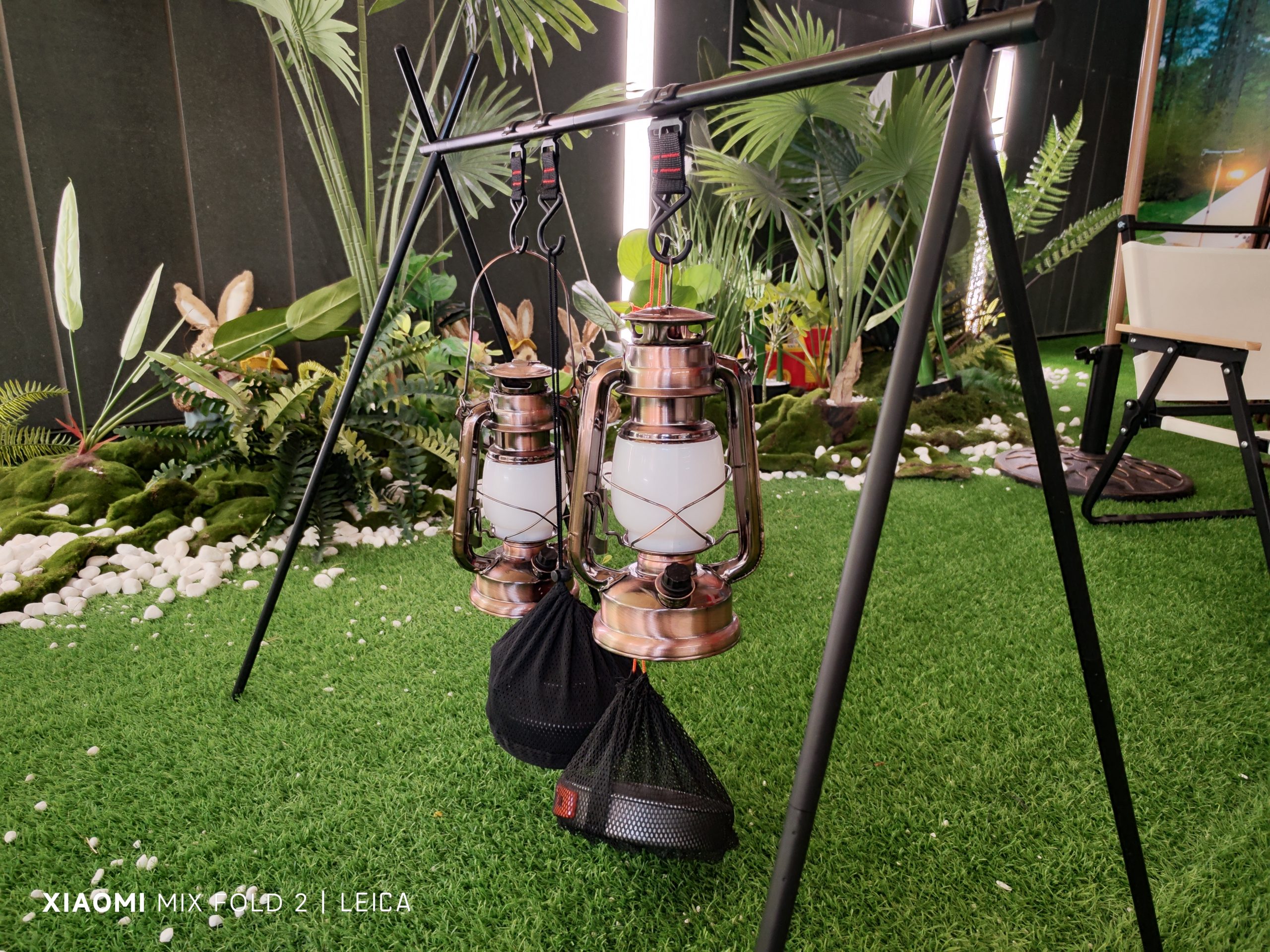
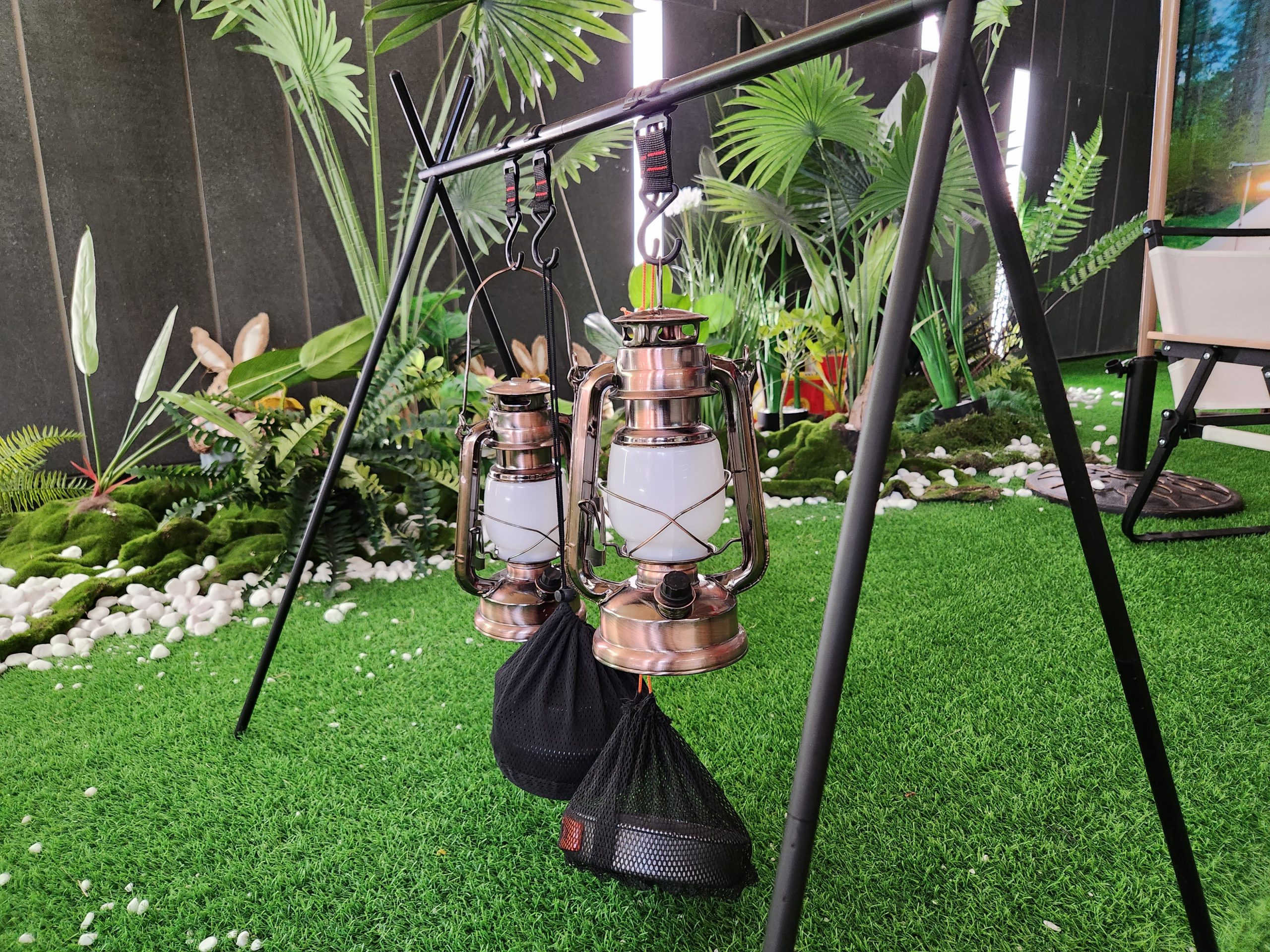
The MIX Fold 2 has two Leica modes, and we chose LEICA VIBRANT for comparison. Because the other mode has a very strong filter effect, while LEICA VIBRANT is closer to the colors of a traditional phone.
Both phones have a camera system consisting of a main camera, ultra-wide camera, and telephoto camera. To be honest, in most scenes they perform similarly and it’s hard for me to tell you which one is better. I can only tell you what styles they have in specific scenes. For example, the white balance of the Z Fold 4’s photos leans towards warm colors, while the MIX Fold 2 is cooler. The Z Fold 4’s ultra-wide camera can take brighter photos in extremely low light, but it requires you to hold the phone for 7 seconds. The MIX Fold 2 is not as bright, but it only takes you 3 seconds.
Xiaomi Mix Fold 2
Galaxy Z Fold4
Xiaomi Mix Fold 2
Galaxy Z Fold4
Also, the Z Fold 4 has a 3x optical lens, while it’s a 2x in MIX Fold 2, and the Z Fold 4 has a wider ultra-wide angle camera. So the focal length coverage of Z Fold 4 will be more comprehensive. You can see that even at 5x magnification, the Z Fold 4 is not particularly blurry, but the MIX Fold 2 has turned into an oil painting. A wider lens can also help you take more unique photos, so I personally prefer the Z Fold 4 camera system.
For full-sized camera samples, you can check out this drive link.
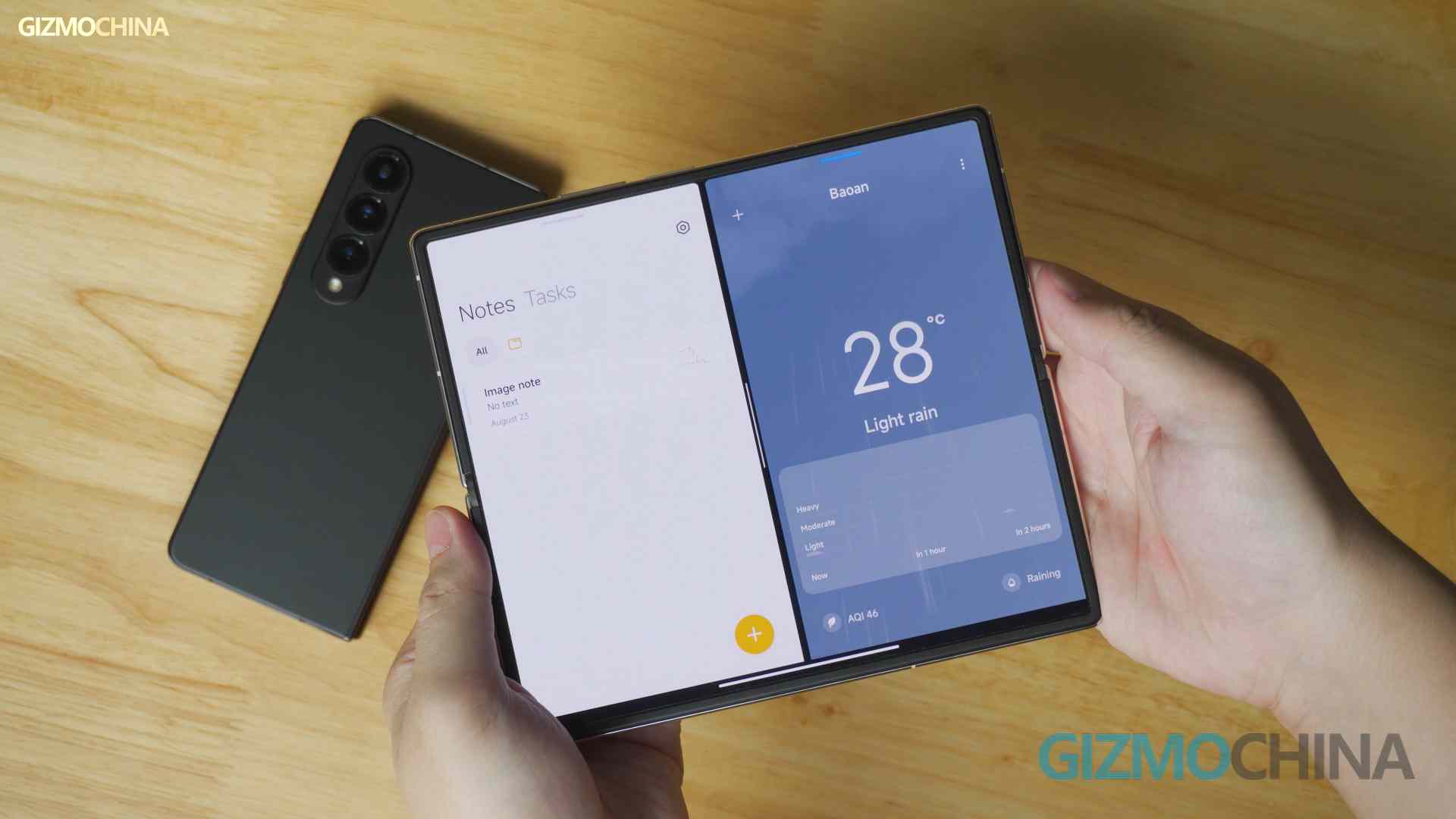
Regarding how to make full use of this big screen, Samsung is definitely the better one. This time One UI 4.0 is really friendly to foldable phones, on the other hand, the UI on MIX FOLD is like a half-baked cake. Mix Fold 2’s operation logic is similar to most Xiaomi phones, even the split screen function can not be split into upper and lower parts, only left and right, and you can not change the size. These problems do not exist in the Z Fold 4, and One UI added a similar PC task bar design, Type C port can also support video output, making this foldable phone more like a mini PC. Oh, stylus is also there for Z Fold 4, but not supported by Xiaomi. I think the foldable phone software in Samsung is certainly better than Xiaomi. We should all agree on this point, right?
CHARGING & BATTERY
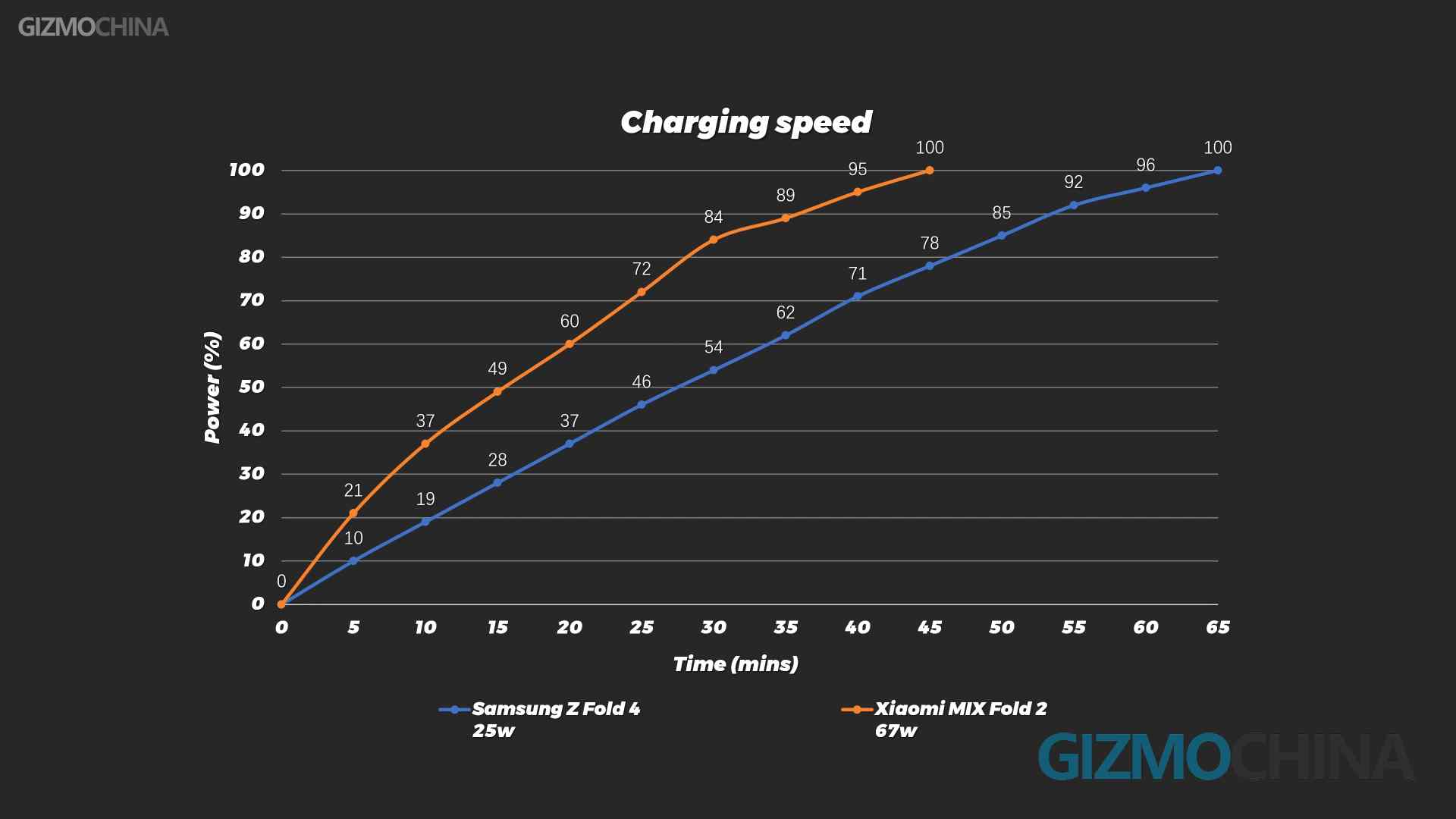
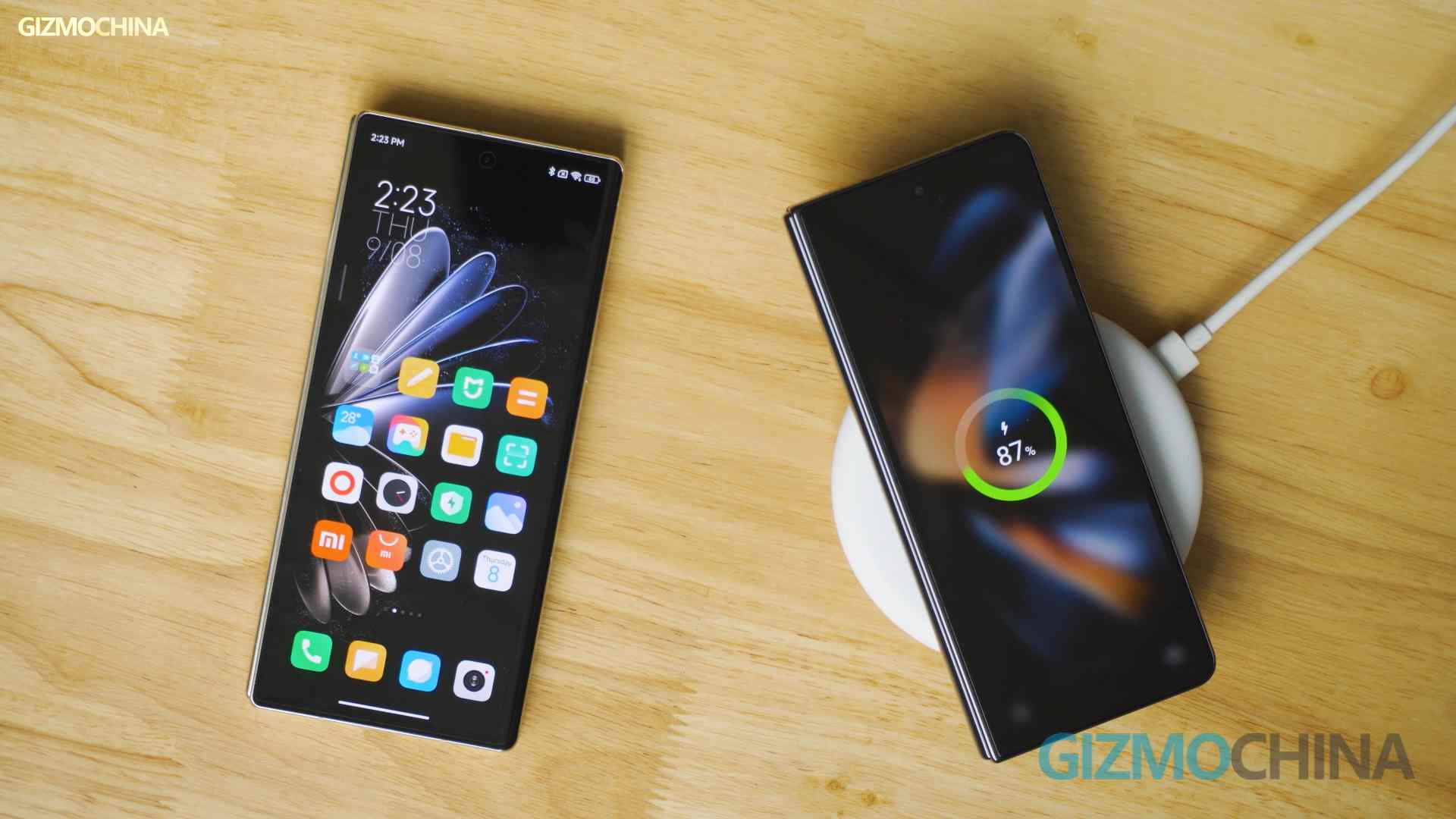
The MIX Fold 2 supports 67w wired charging, which is much faster than the 25w of the Z Fold 4. It takes 45 minutes and 65 minutes to fully charge both. The Z Fold 4 is not as powerful, but it has wireless charging, so you can always keep it fully charged.
The battery capacity is about the same for both, and the chip is the same, so the battery life should theoretically be about the same, and it shouldn’t affect your choice. By the way, if you buy the Z Fold 4, you will get a 33w charger and a charging cable. But If you buy the MIX Fold 2, you’ll also get a very nice case and a screen film for the outside screen.
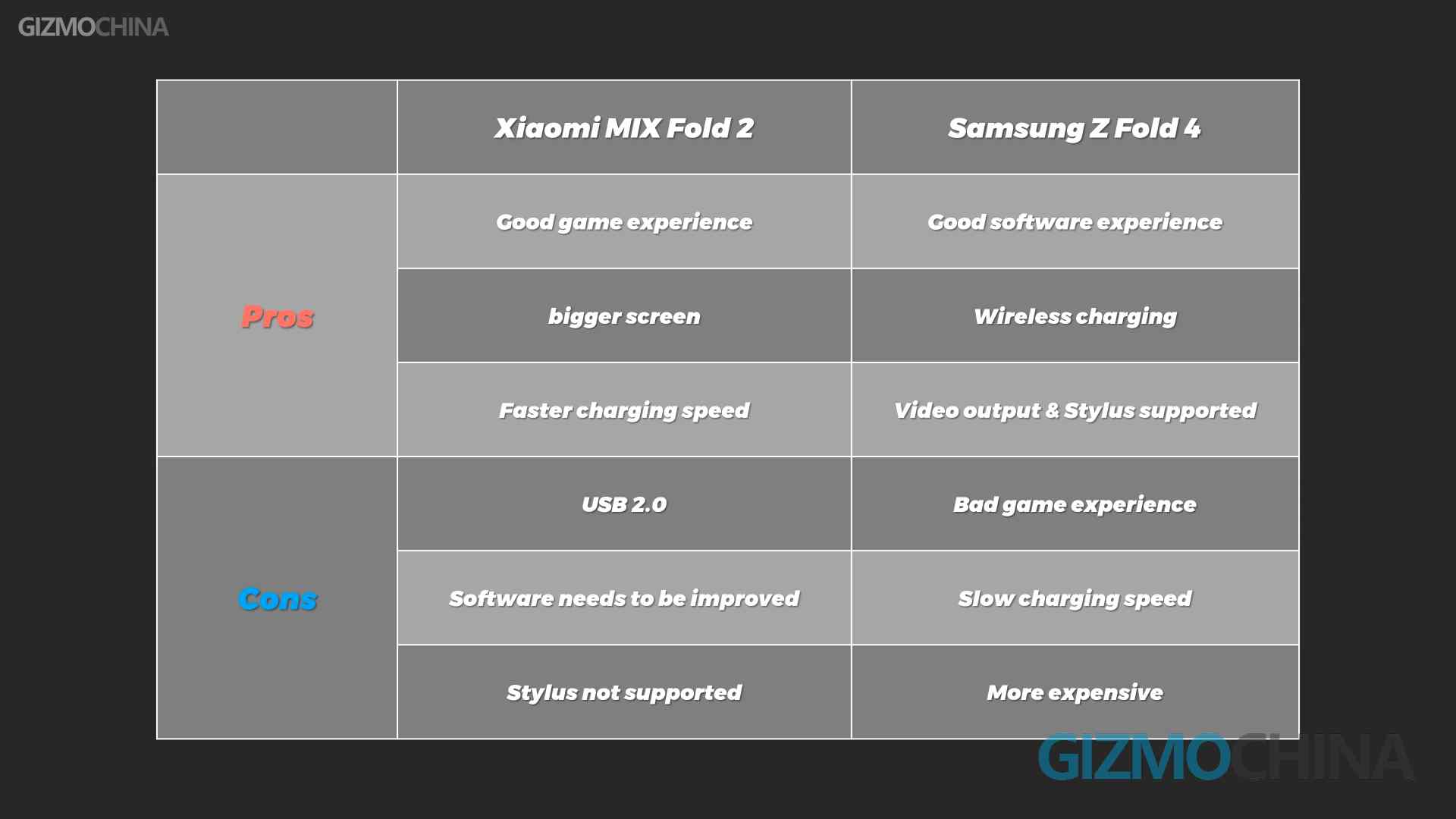
Just by looking at the specs, the two phones come very close. But there are some things that you can’t tell who is good and who is bad just by looking at the specs. Through our actual experience and testing, we have listed out their pros and cons to see if you can accept them.
In my opinion, Z Fold 4 is a near-perfect foldable phone, and as long as you can afford it, I recommend it the most among all foldable phones. If you don’t care about the drawbacks of MIX Fold 2, then it is not that bad, it’s just that the rivals are too good this time.
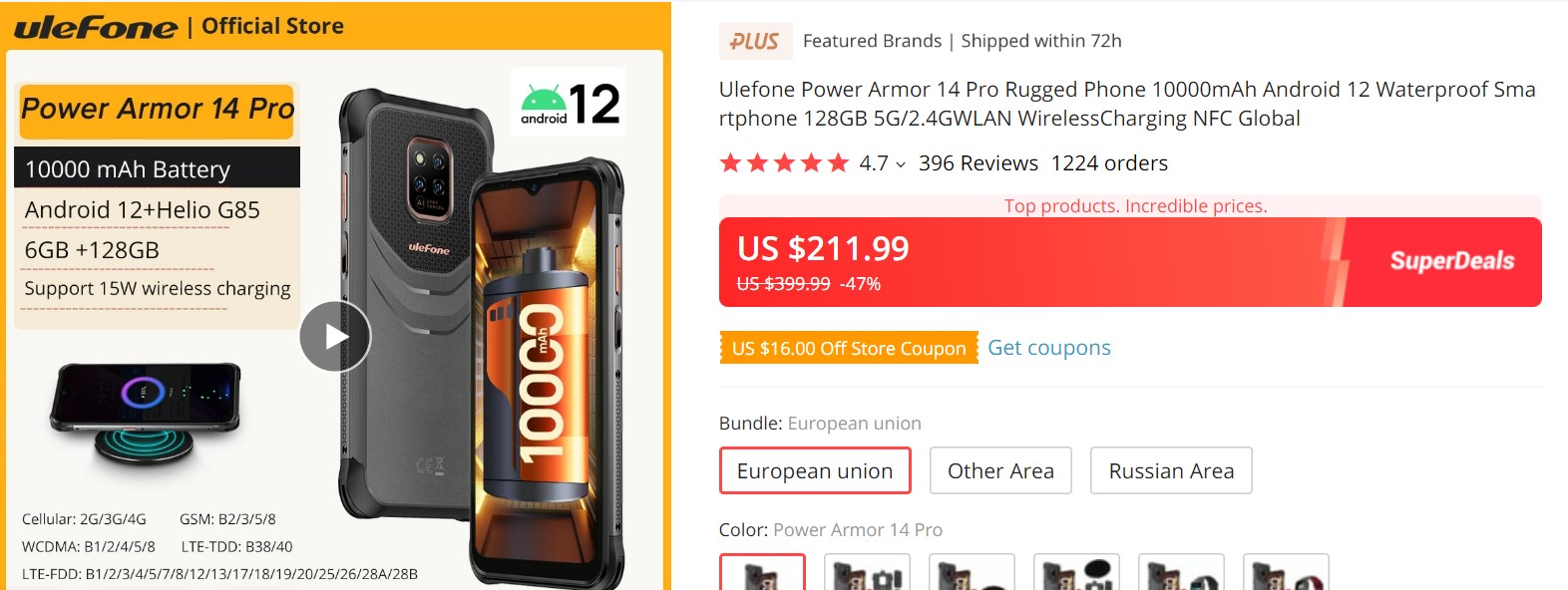
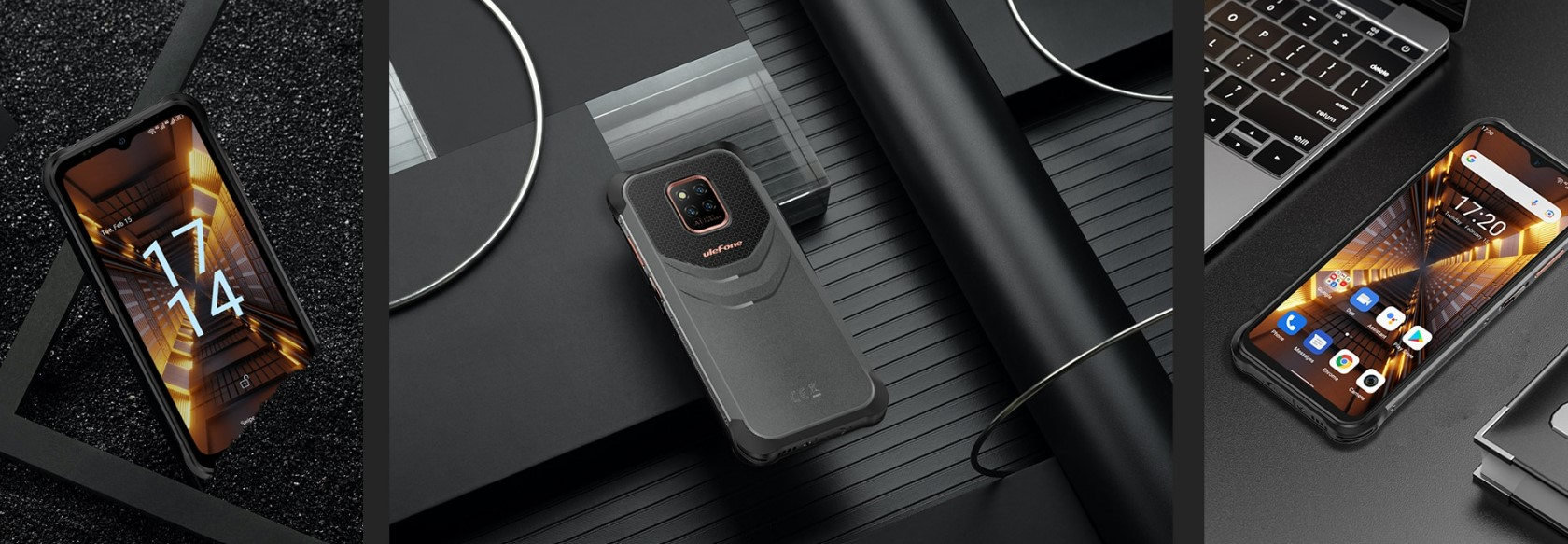
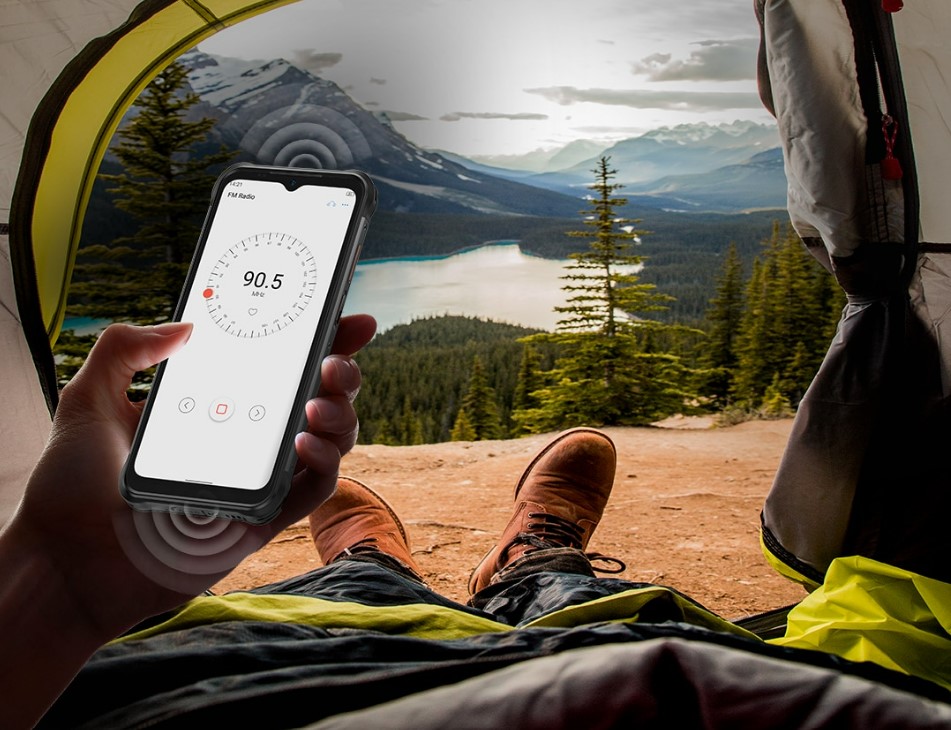
Ulefone Power Armor 14 Pro rugged phone which generally retails for $230 is now available at a discounted price of $211.99 only on AliExpress.
Ulefone Power Armor 14 Pro is designed to withstand the harsh and extreme outdoors. And to that end, this 6.52” Smartphone comes with IP68/69K and MIL-STD – 810G military-grade certifications. This means the phone is dust, dirt, shock, and waterproof and can perform under extreme and harsh conditions.
Ulefone Power Armor 14 Pro stands out from other rugged smartphones for its endurance and exceptional battery life. Similar to Power Armor 14, the Pro version also comes with a 10000mAh battery that can last for up to two days on moderate usage and supports 18W wired charging and 15W wireless charging.
Ulefone Power Armor 14 Pro features a 6.52” IPS LCD display with 1700 x 720p resolution and a 20:9 aspect ratio. While the display comes with Corning Gorilla Glass protection, the phone is protected by a high-grade rigid plastic body encased in metal frames and rubber corners. Powered by MediaTek Helio G85 octa-core processor, it comes with 6GB RAM and 128GB storage space.
You have a triple rear camera setup with a 20MP main camera, a 2MP macro sensor, and a depth sensor. For your selfies, you have a 16MP front camera. The phone also comes with a special AI photo shoot feature wherein it can automatically identify the subjects and adjust the camera specs to give you optimal results. Other interesting features include a fingerprint sensor, programmable side key, and dual sim / MicroSD slot.
You can now buy the Ulefone Power Armor 14 Pro for $211.99 only on AliExpress. Please note that the above price is region-specific and the final price may vary according to your shipping region, warehouse, and regional taxes.
For more information on such exciting deals and offers check out our deals hub.
* Please Note: When you buy something using the links in our articles, we may earn a small commission at no cost to you.
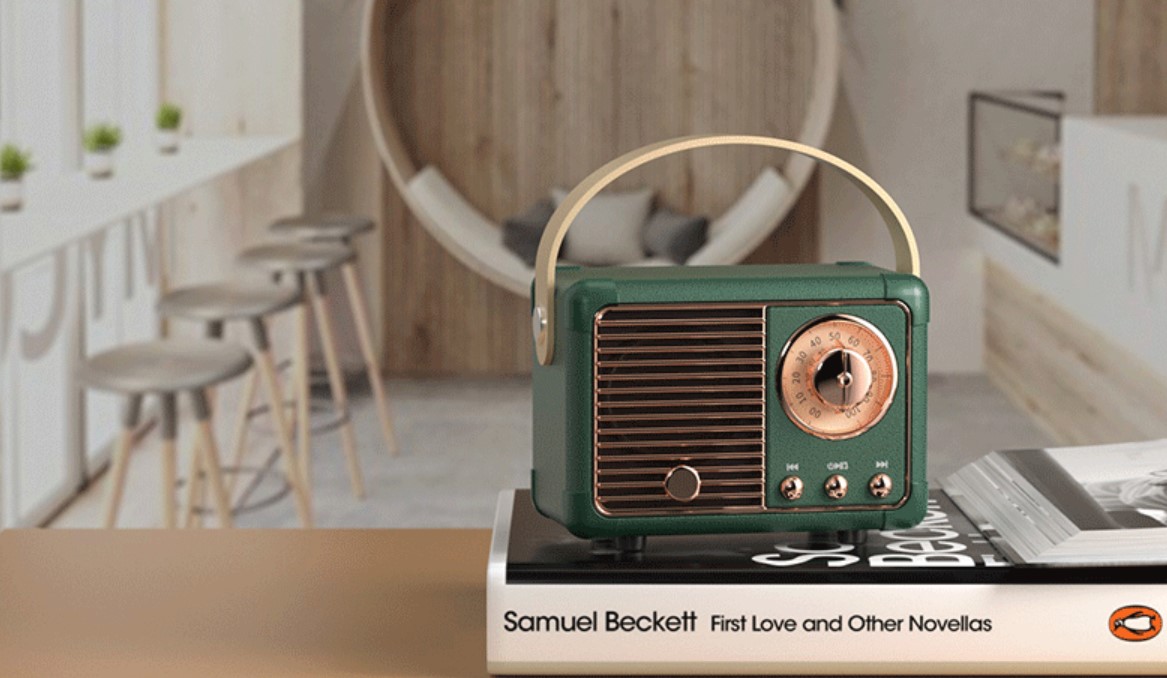
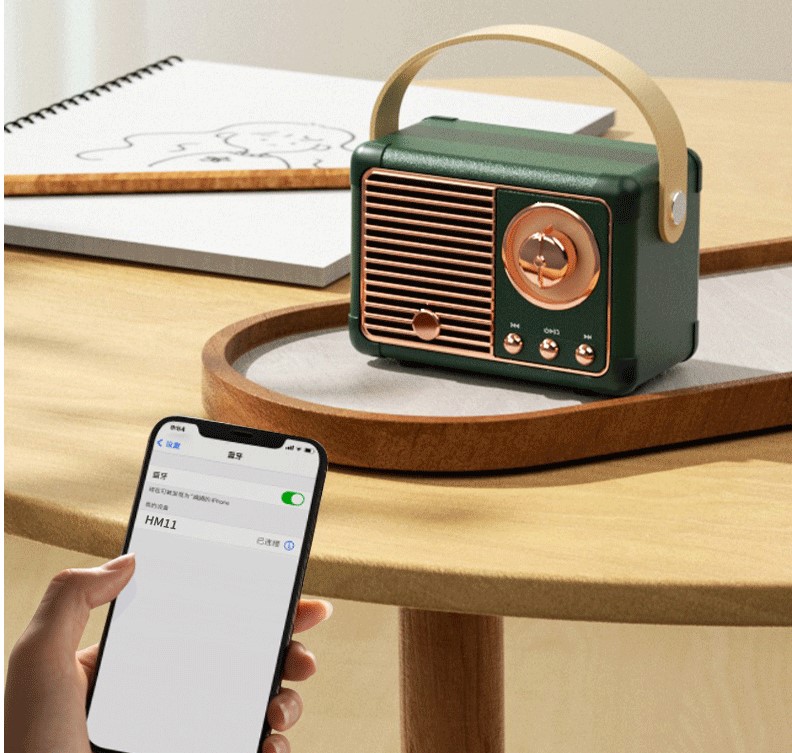
If you love your music but are also high on the style quotient then you will definitely like this Retro Bluetooth Speaker from HM11. The speaker which generally retails for $8 is now available at a discounted price of $6.36 only on AliExpress. Please note that this is a limited-time offer.
HM11 Retro Mini Bluetooth speaker is designed to mimic an old-school radio that will simply turn heads. The classic design highlighted with a retro-style volume knob looks fascinating and elegant. The mini speaker can easily fit into the palm of your hand and adds to the decor of your room.
The 3W mini speaker comes with a 400mAh battery that gives you about 2 to 4 hours of playtime depending on your volume. It comes with multiple connectivity options like Bluetooth v5.0, USB, AUX, TF Card, etc. With a Bluetooth range of 10m, you can play your favorite songs or listen to your favorite radio station right at your desk or bedside. Other interesting features include a hands-free call function when connected to your smartphone.
Generally retailing for $8, you can now buy an HM11 Retro Mini Bluetooth speaker at a discounted price of $6.36 only on AliExpress.
Please note that the above price is region-specific and the final price may vary according to your shipping region, warehouse, and regional taxes.
For more information on such exciting deals and offers check out our deals hub.
Xiaomi’s recently released Smart Air Purifier 4 Compact has secured TUV Rheinland Allergy Care certification. The achievement comes a month after the product was launched. The certification also covered the Xiaomi Smart Air Purifier 4, 4 Pro, and 4 Lite. The Germany-based TUV Rheinland certification means the Xiaomi products successfully scaled the stringent testing hurdles that indicate a great air purification process for the products.
The TUV Rheinland standards include the efficiency of the device’s filter elements, the purification rate of indoor allergens, indoor environmental assessment, and more. The Xiaomi Smart Air Purifier 4 Compact has thus scaled through these requirements with some of the test results also released. The lineup of Xiaomi Smart Air Purifiers is shown to be highly effective in purifying a host of indoor allergens, thus effectively removing potential health threats indoors.
Xiaomi says the latest Allergy Care certification for the Smart Air Purifier 4 Compact (and the other models in the lineup) is a manifestation of the company’s abounding philosophy. It continues to deploy high-impact technologies to support a better life for its customers. A three-in-one filtration system in the Smart Air Purifier 4 Compact is at the heart of the purification process. It comprises a primary filter, a high-efficiency Xiaomi filter, and a carbon filter. The filter is 99.97% efficient, capturing minute dust particles effectively. The gadget provides 24-hour protection and is great for people having respiratory conditions or allergies. It is also capable of effectively absorbing harmful gases and odors in the home. The filter can last up to 12 months and the Xiaomi Home App can be linked to the smart air purifier. This will then provide you with a reminder to change the filter when needed.
The purifier weighs 2.2kg and can be used either on the table or on the floor. Its compact and light design makes it easy to move around the home for fresh air supply. Its PCADR of 20 cubic meters/hour can be deployed in room sizes up to 27 square meters. Its LED display could be turned off and in sleep mode, the purifier delivers a noise level of just 20dB. The device uses a brushless DC motor with a maximum power of 27W with a 0.7kWh electricity supply sufficient for 24 hours of its operation. The air purifier supports Alexa and Google Assistant for operating the smart device. The Xiaomi Home App also allows the user to operate the device even when out of the home. The Xiaomi Smart Air Purifier 4 Compact can be purchased via Amazon for €119 ($120).
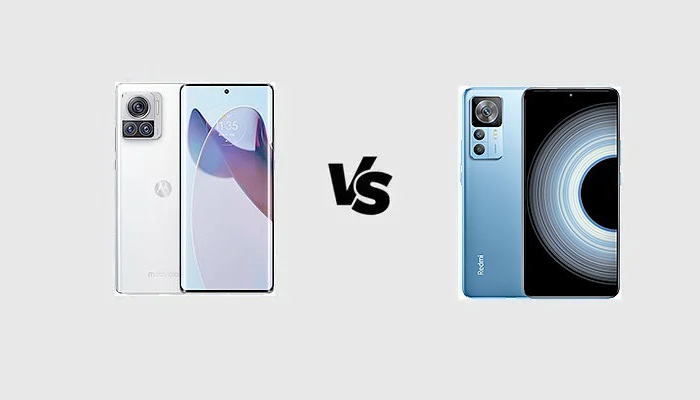
A few hours ago, the Motorola X30 Pro went global with the launch in the European market, but under another moniker: Motorola Edge 30 Ultra. Meanwhile, it has been available in Asia for a while and a lot of experts on mobile devices are considering it as their next purchase. However, there are several other handsets to consider. One of the best alternatives is definitely the Redmi K50 Ultra, which is the latest flagship from the Xiaomi sub-brand. The specifications of these two devices are very similar, but which one is worth choosing with the actual prices? This is a comparison between the main specifications of the Motorola Moto X30 Pro and the Redmi K50 Ultra which will hopefully answer this question if you were wondering which one to go for.
Triple 200 + 50 + 12 MP, f/2.0 + f/2.2 + f/1.6
60 MP f/2.2 front camera
Triple 108 + 8 + 2 MP, f/1.6 + f/2.2 + f/2.4
20 MP front camera
BATTERY
4610 mAh, fast charging 125W
5000 mAh, Fast Charging 120W
ADDITIONAL FEATURES
5G, dual SIM, splash and dust resistant
5G, dual SIM
Design
So which of these phones has the best design? The answer is immediate: the Motorola Moto X30 Pro. Its curved screen at the edges, with very narrow bezels, is simply impressive. Further, this phone is equipped with a glass back and it is splash and dust resistant. Last but not least, it is slightly thinner and lighter than its rival. The Redmi K50 Ultra, which should soon hit the global market under the Xiaomi 12T lineup, is nothing special if we talk about the design. It has a rear side reminding me of the Xiaomi 12 series and a flat display with a punch hole placed centrally. If you are looking for suggestive aesthetics, the Motorola is definitely the right choice for you.
Display
The display of the Redmi K50 Ultra is very interesting. It is one of the few devices in the market sporting a panel produced by TCL. It is an OLED display with a 1.5K resolution, which sits in the middle between Full HD+ and Quad HD+. It has a diagonal of 6.67 inches, it shows up to 68 billion colors, it has a 144 Hz refresh rate, the HDR10+ certification, and Dolby Vision, as well as an in-display fingerprint scanner. Despite this display being very nice in terms of color reproduction, the Motorola Moto X30 Pro is a valid opponent thanks to the presence of an OLED display with one billion colors, a Full HD+ resolution, a 144 Hz refresh rate, and the HDR10+ certification. The panel has a Full HD+ resolution of 1080 x 2400 pixels and an in-display fingerprint reader. These handsets are equipped with stereo speakers, but they do not have a 3.5 mm audio jack.
Specs & Software
One of the most important advantages of these handsets is the processor: they are fueled with the best Qualcomm chipset, the Snapdragon 8+ Gen 1. It is an SoC built with a 4 nm production process sporting an octa-core architecture composed of a Cortex X2 CPU running at a max frequency of 3.19 GHz, three Cortex A710 CPUs running at 2.75 GHz, four Cortex A510 CPUs running at 1.8 GHz, and an Adreno 730 GPU. On both handsets, the Snapdragon 8+ Gen 1 is paired with up to 12 GB of LPDDR5 RAM and up to 512 GB of UFS 3.1 internal storage. So, on the hardware side, it is essentially a draw, the different thing is the software. The Motorola has Android 12 customized by MYUI, while the Redmi has Android 12 customized by MIUI.
Camera
The Motorola Moto X30 Pro is undoubtedly the best camera phone of the duo. It is the world’s first phone with a 200 MP main camera, it supports OIS and it has two amazing secondary cameras: a 50 MP ultrawide lens and a 12 MP telephoto lens with 2x optical zoom. Last but not least, an awesome 60 MP selfie camera. The Redmi K50 Ultra is not able to compete with this device, but it still comes with a decent camera departing: it sports a triple camera with 108 + 8 + 2 MP resolution, OIS, and a 20 MP selfie shooter.
If your goal is to get a bigger battery and a longer battery life, then you should go for the Redmi K50 Ultra without thinking twice: it has a huge 5000 mAh battery with 120W fast charging bringing it to 100 percent in just 19 minutes. The Motorola Moto X30 Pro has a smaller 4610 mAh battery and a shorter battery life but, on the other hand, it supports wireless charging with a power of 50W, as well as a 125W fast charging technology.
Price
You need at least €550 or $550 to purchase the Motorola Moto X30 Pro, while the starting price of the Redmi K50 Ultra roughly translates into €430 or $430 at the actual change. The former has better cameras and wireless charging, the latter has a bigger battery. Which one would you pick?
Motorola Moto X30 Pro vs Xiaomi Redmi K50 Ultra: PRO and CONS
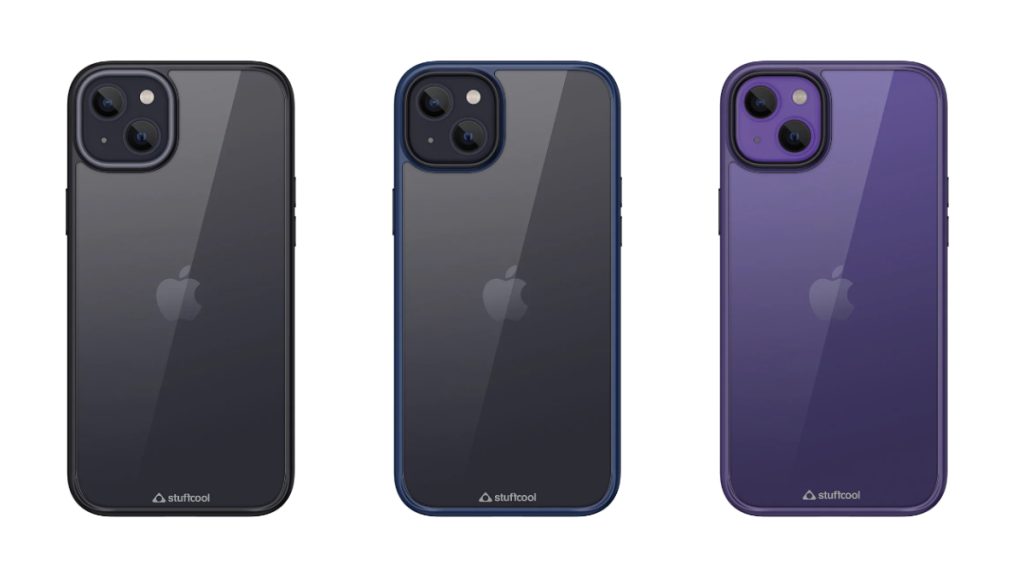
Stuffcool has unveiled a series of iPhone 14 cases in India with accommodation for the current Apple flagship models. The cases are among a raft of Stuffcool accessories that are now available for the iPhone 14. The new accessories include fast-charging adapters and phone covers/ cases of different hues.
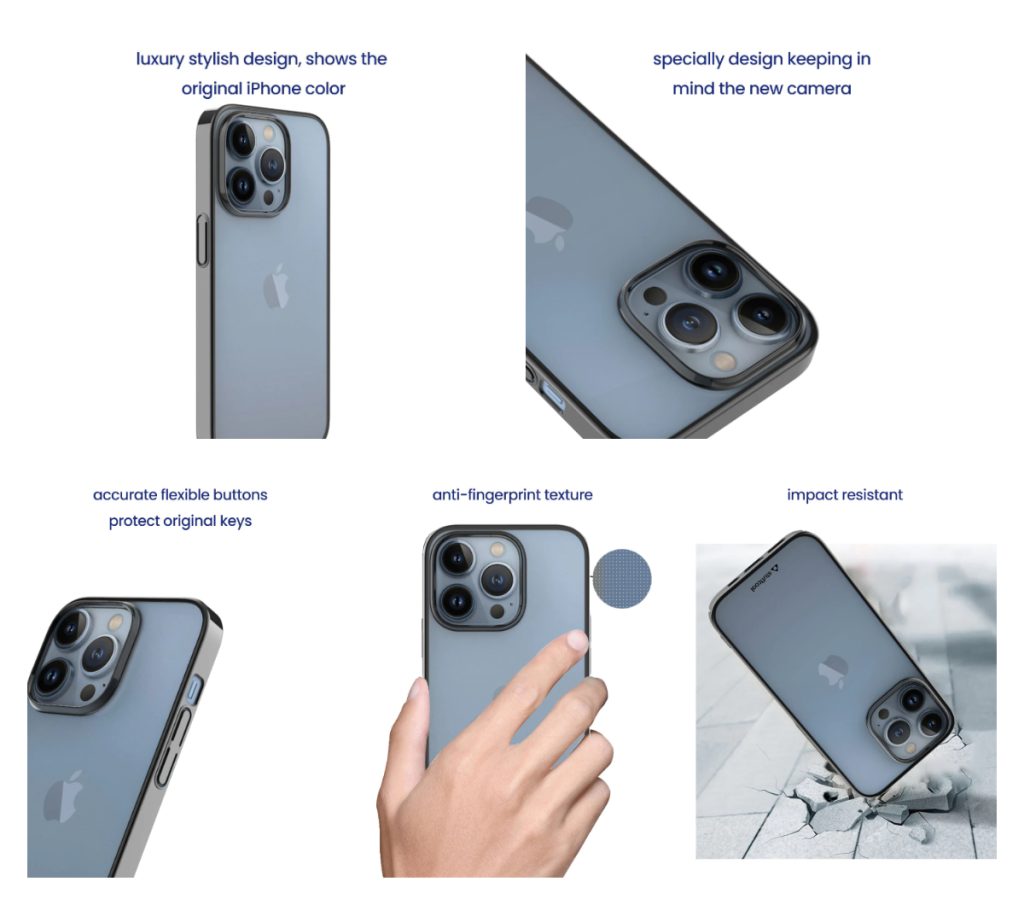
The iPhone 14 cases are cool and offer some versatility. According to the company, each accessory is well-engineered and built with high-end technology. The Chrome Case is a transparent case with an electroplated bumper frame. It is impact resistant and comes with a stylish design. Due to its transparency, it shows the iPhone 14’s original color and sits snugly with the new features in the model like the new camera. It has an anti-fingerprint texture and flexible but accurate buttons.
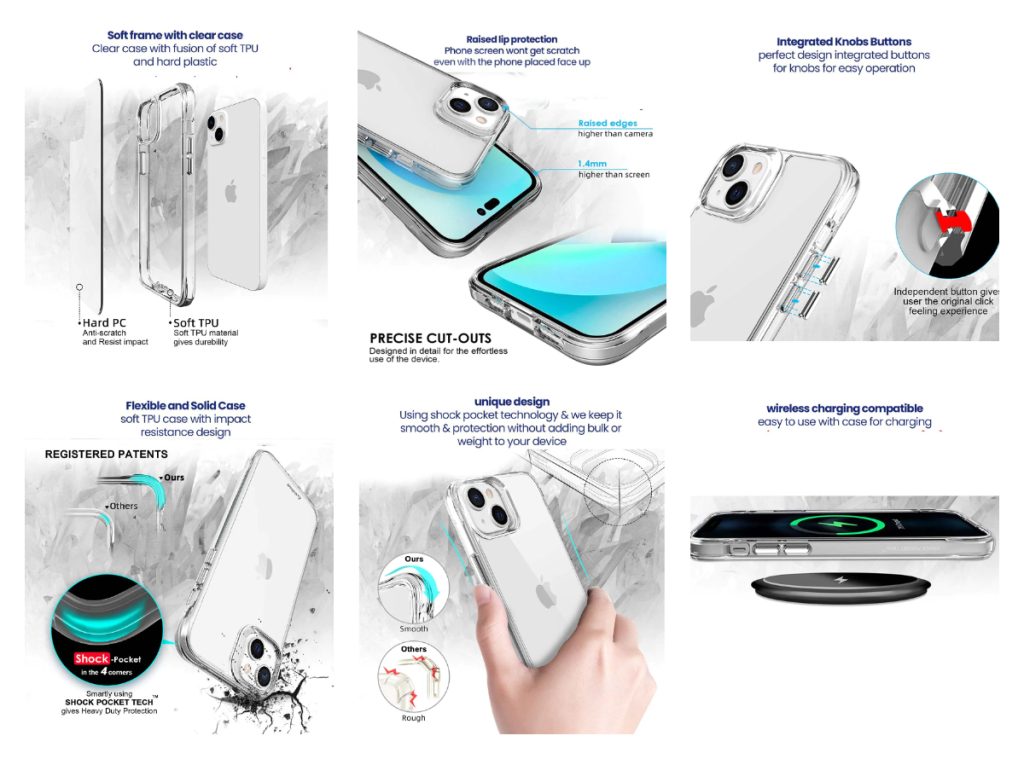
The Aktion Case is a fusion of TPU and hard plastic. It is a clear case with a raised lip and provides scratch protection to the phone’s screen. Its transparent back shows the original iPhone’s color. It also uses shock pocket technology to keep it smooth, light, and protective. The smartphone can be charged wirelessly while covered with the Aktion Case with its special tactile buttons.
The Artus Case comes in black, blue, and purple colors and they are priced from Rs. 899 ($11). The Chrome and Aktion Cases will be sold for Rs. 699 ($9). The new Stuffcool iPhone 14 cases and other Stuffcool iPhone 14 accessories can be bought directly from Stuffcool’s website. The accessories are also available from various online and offline retail outlets in India.
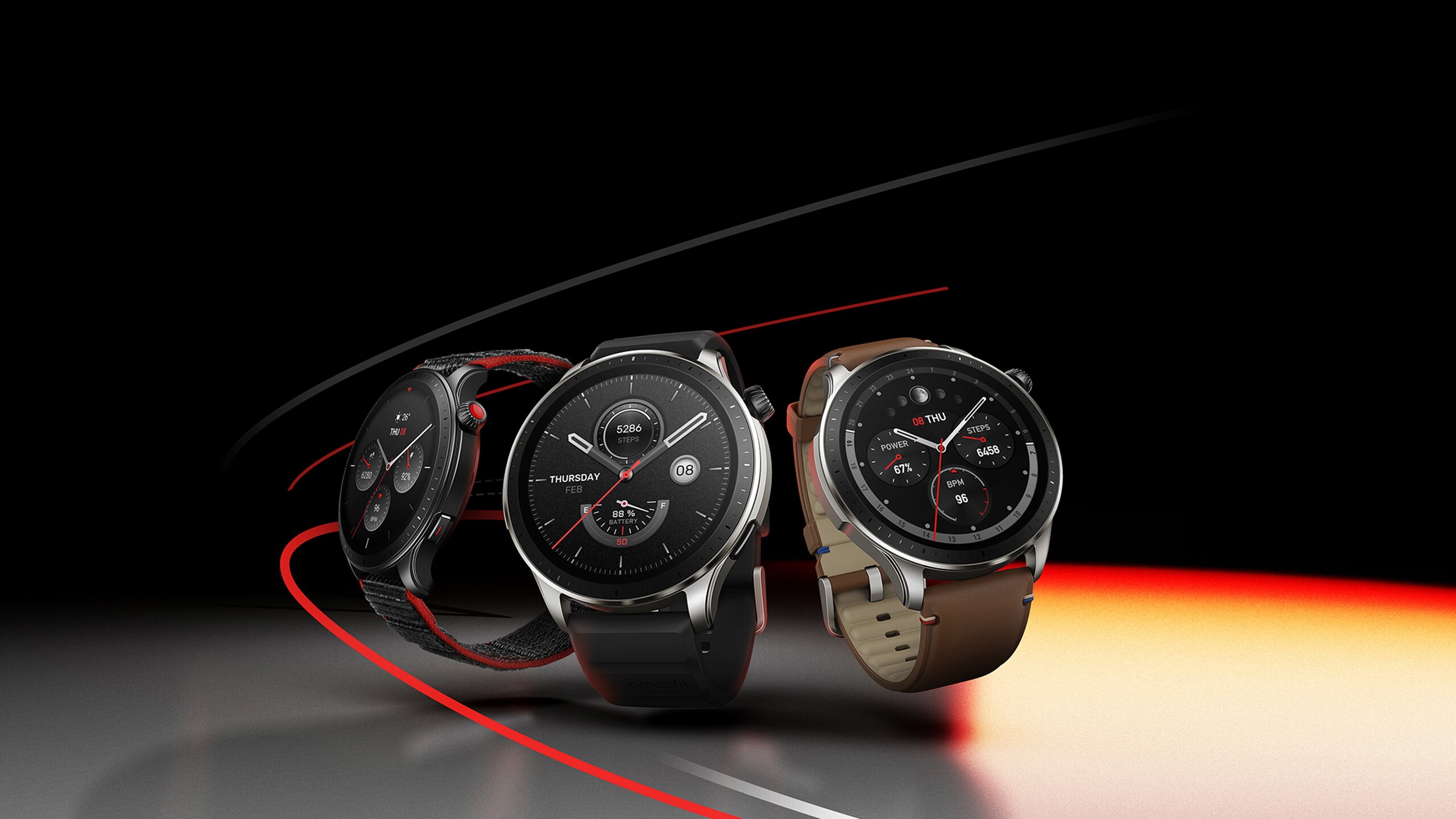
Amazfit hopes to expand its business in the US with the launch of a trade-in program for customers in the country. The initiative will enable Amazfit to quickly reach out to more customers with its flagship smartwatches when released. The trade-in program is similar to what Samsung, Apple, and other brands are already doing in the US.
Amazfit already has a robust first-party and third-party sales network and will leverage its growing clientele in the US. The program applies to the latest Amazfit models, the GTS 4 and the GTR. The potential buyer is required to have an existing smartwatch that could be swapped for the new watch with an additional payment made. The eligible older Amazfit watches include the GT Series, Bip Series, and the first-gen T-Rex models. Other models like Fossil, Garmin, Fitbit, Samsung, and Apple are also available for trade-in.
The new service can be accessed through the sales page for first-party sales. The trade-in value of the swapped smartwatch could however be quite low. It is speculated that an Apple Watch model in good shape could fetch as low as $70 for the opportunity to get the newer Amazfit models. Amazfit is also partnering with Adidas to allow its devices to sync the Running app through Zepp. This will come via an upcoming update. The trade-in promotion in the US will last until October 7.
Global wearable band shipments witnessed a decent 2.0% increase in shipments in the first quarter of 2022, as per a report. As a result of the growth, the shipment volume reached 41.7 million units, marking a return to growth after a decline of 3.7% in Q1. India remained third in overall wearable band shipments, trailing only China and the United States, with a 15% share for the first time.
According to a new Canalys report, global wearable band shipments increased by 2.0% to 41.7 million units in Q2 2022. Basic watches and smartwatch shipments grew by 46.6% and 9.3%, respectively. However, basic smart bands experienced a sharp 35.5% decline in Q2 2022.
Apple took the first spot in terms of shipments, with 8.4 million watches shipped, securing 26.4% of the market. Samsung finished second with 2.8 million units shipped, while Huawei stood in the third position with 2.6 million shipments.
Noise led the Indian wearable band market with a 29% market share, followed by Fire-Boltt and boAt, which had 25% and 20% market shares, respectively. This increase in sales enabled India to achieve its highest-ever market share of 15% in the second quarter of 2022.
“The local kings, such as Noise, Fire-Boltt and boAt, have found a winning formula to hit a quarterly shipment level of more than a million units quickly,” said Canalys Analyst Ashweej Aithal.
High affordability and appealing designs, marketed at young, savvy consumers, help vendors fulfill the current demand. But users often require deeper engagement with devices and health features to benefit from them. Users will soon look for improved devices and health features, such as better tracking accuracy and more health metrics. “Vendors must anticipate this shift in people’s needs to avoid disappointing users and continue to sustain growth,” Aithal added.
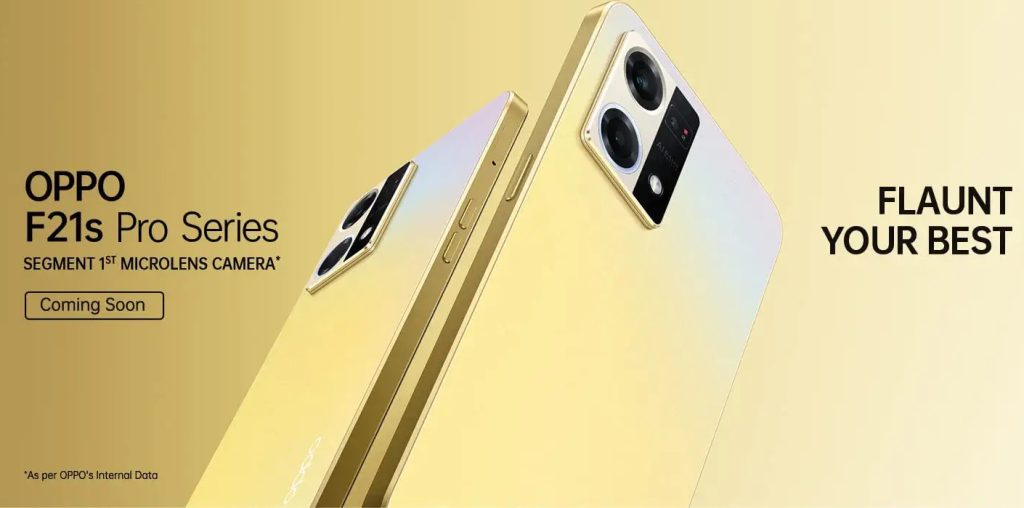
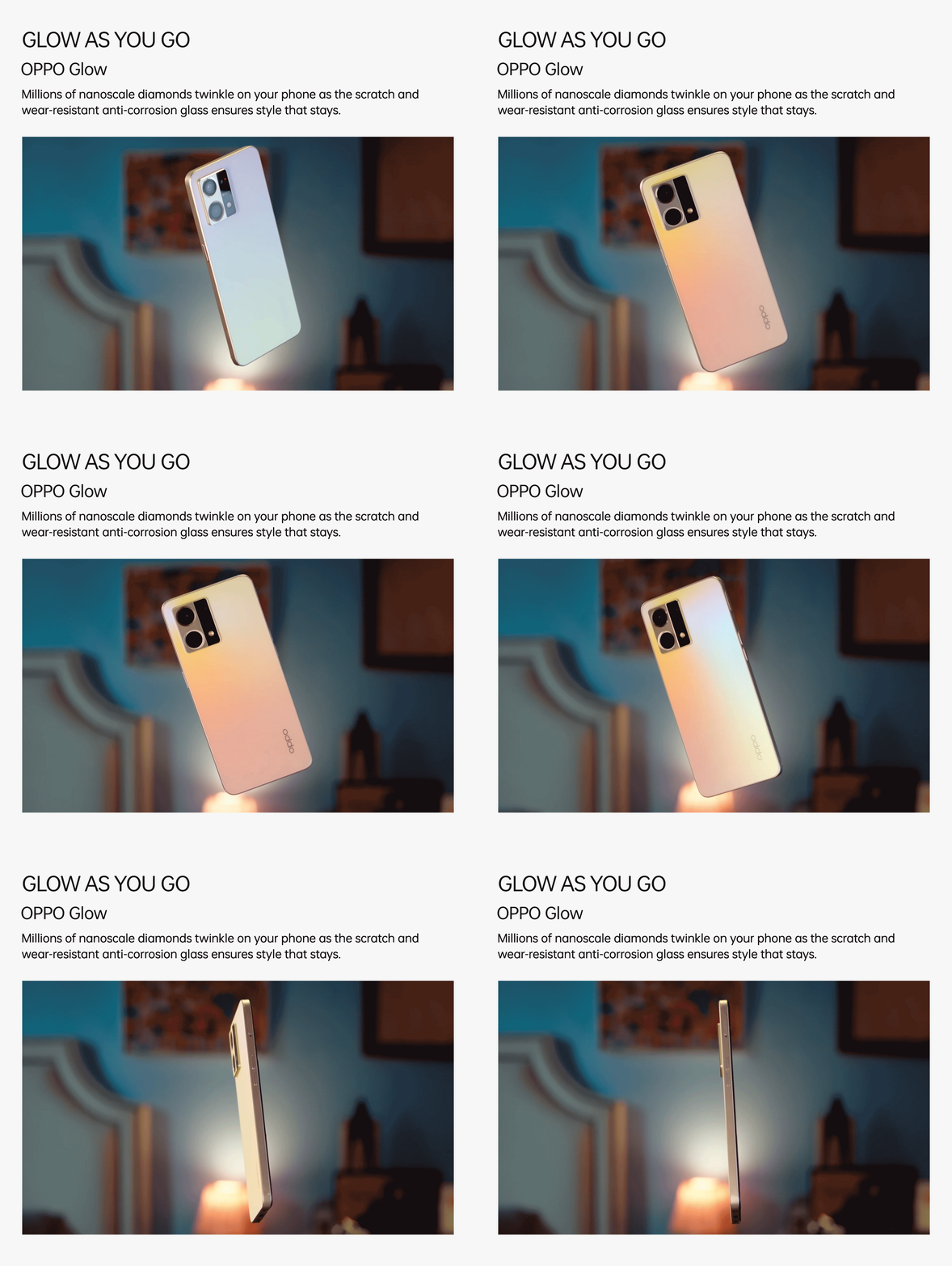
OPPO will introduce the F21s Pro in India during the coming festive season. The Chinese brand has provided teasers of the upcoming smartphone with some exciting specs. The Oppo F21s Pro will join the Oppo F21 and F21 Pro released in India earlier this year. The trajectory also follows last year’s launch of the Oppo F19s.
The F21s Pro will be similar to the Oppo F21 Pro but will come in a shining Dawnlight Gold color together with a Starlight Black color. The Dawnlight Gold color variant will shine when placed against the light at an angle. The F21s Pro is scratch and water-resistant, as well as is fitted with anti-corrosion protective glass. It also has a 2MP microscopic lens that can magnify an object 15-30 times and a 64MP rear camera.
The Oppo F21 Pro released earlier this year, has a 6.43-inch AMOLED screen with a 90Hz display refresh rate. It is powered by Qualcomm’s Snapdragon 680 chipset with a RAM of 8GB, further expandable by 5GB. The smartphone has a 4,500mAh battery that can be charged at 33W (SUPERVOOC).
Oppo F21s Pro will be available for purchase from Amazon India, as well as online and offline retail outlets in the subcontinent. The full specs list, launch date, and full availability details are still expected from Oppo.
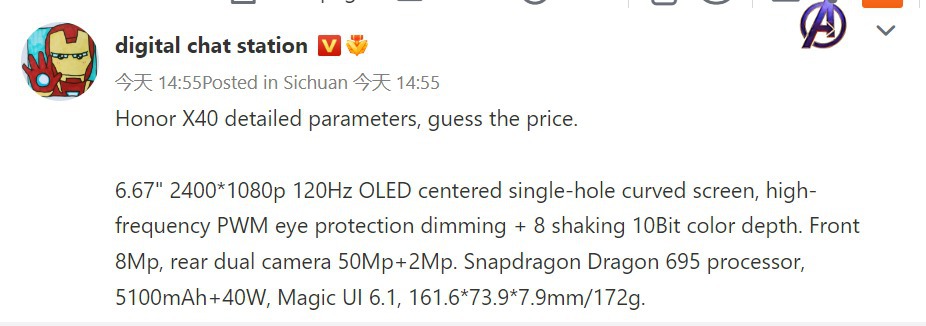
Honor has confirmed it will be launching a new X-series smartphone, dubbed the Honor X40 5G, in China on September 15. The Chinese firm also released a teaser video recently, revealing the device’s design and appearance. In the latest development, a popular tipster has leaked the detailed specifications of the Honor X40 5G. Let’s have a look at the details.
Noted Chinese Tipster Digital Chat Station revealed the detailed specifications of the forthcoming Honor X40 5G. As per the tipster, the Honor smartphone will come with a 6.67-inch OLED display that will offer a 2400×1080-pixel resolution. It will center punched hole that will house the selfie camera. Moreover, the display will support a 120Hz refresh rate, high-frequency PWM eye protection dimming, and 10 Bit color depth.
Further, the tipster claims the Honor X40 5G will have a dual rear camera setup consisting of a 50-megapixel primary sensor accompanied by a 2-megapixel unit. On the front, it is said to have an 8-megapixel snapper for selfies and video calls.
Under the hood, the handset will be powered by a Snapdragon 695 processor that could be paired with 6 GB / 8 GB of RAM and 128 GB / 256 GB of built-in storage. It will pack a 5100mAh battery and support 40W fast charging. The smartphone will measure 161.6×73.9×7.9mm, and weigh 172g. On the software front, it will run Magic UI 6.1 based on Android 12.
Honor X40 5G
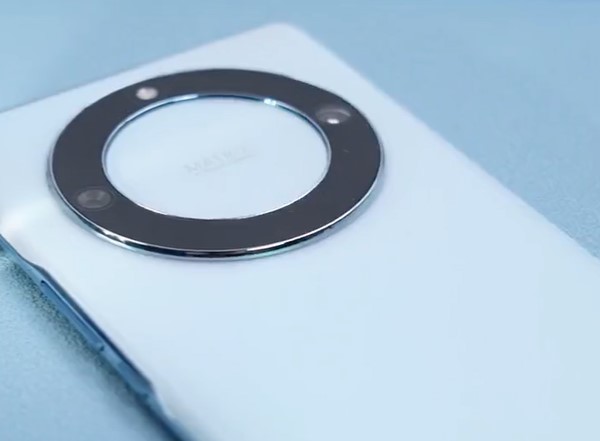
As mentioned, Honor recently shared a teaser video that revealed the design of the X40 5G. The smartphone has a curved edge display that is likely integrated with a fingerprint sensor. On the back, it houses a ring-shaped camera module that houses a dual camera setup. Overall, the smartphone’s design looks quite premium.
The pricing details of the device are yet to be known. We’ll know it all on September 15.
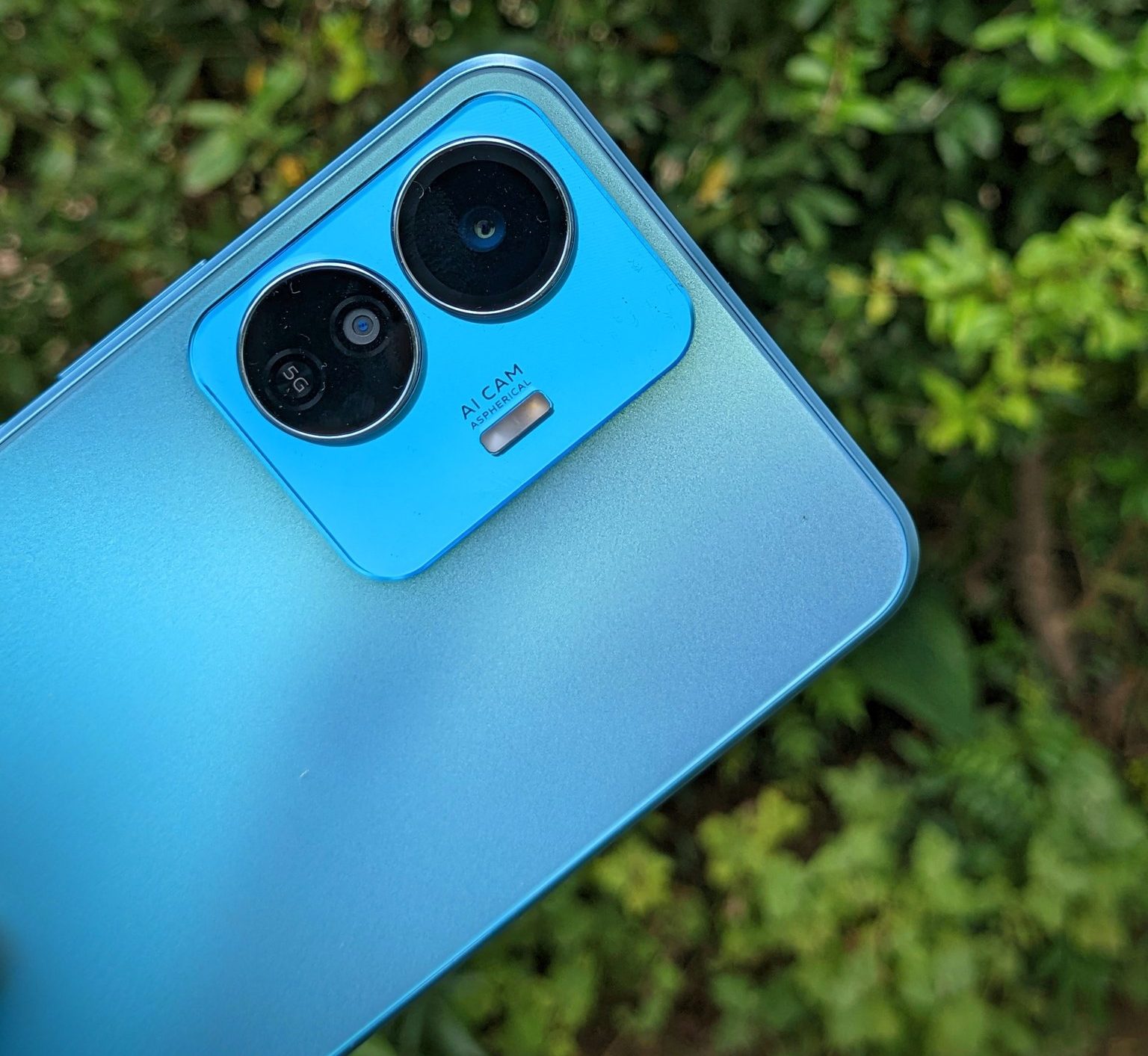
The iQOO Z6 Lite 5G is scheduled to debut in India on September 14 as the company’s most affordable 5G smartphone. Ahead of the device’s near launch, the device has been spotted on the Google Play console listing, hinting at a few key specifications. It is listed to feature Qualcomm’s latest Snapdragon 4 Gen 1 processor paired with 6GB RAM. Let’s have a look at the details.
According to a report by MySmartPrice, the iQOO Z6 Lite 5G has appeared on the Google Play console listing with model number I2208. The listing reveals the device is powered by a Qualcomm SM4375 SoC, which is nothing but the Snapdragon 4 Gen 1 that was launched recently. The processor is paired with 6GB of RAM.
iQOO Z6 Lite 5G
For the uninitiated, Snapdragon 4 Gen 1 is the successor to the Snapdragon 480 Plus from last year. It is manufactured on the older 6nm process and offers 10% better GPU performance and up to 15% better CPU performance compared to its predecessor.
iQOO has confirmed that the Z6 Lite 5G will feature a dual rear camera setup consisting of a 50-megapixel primary sensor. It may also sport a 2-megapixel macro or depth sensor. The handset will be fueled by a 5000mAh battery with support for 18W fast charging. In addition, the iQOO smartphone will have a 120Hz refresh rate display with a water-drop notch. On the software, it may run the Android 12 OS with the FunTouch OS skin on top.
A recent report also revealed the pricing details of the device. iQOO will reportedly land in two storage variants. The base 4 GB RAM+64 GB storage is said to cost Rs 13,499 (~$195). Whereas the higher-end 6 GB RAM + 128 GB storage model may be sold for Rs 14,999 (~$188).
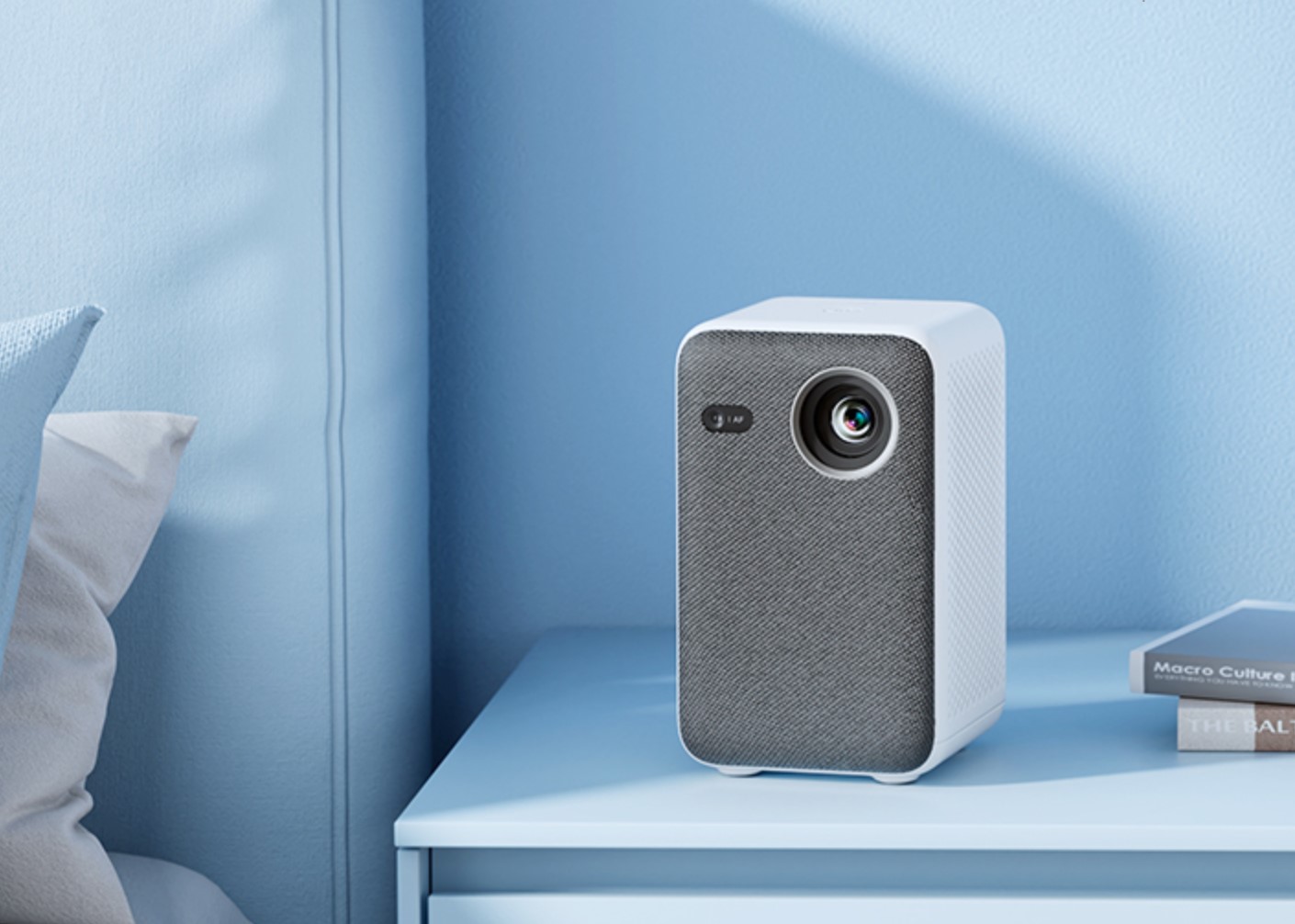
Xiaomi continues to release innovative products spanning different aspects of human needs. The brand’s latest electronic product is the Xiaomi Projector Mini. The product is obviously a ‘mini’ version of the Xiaomi Projector and while it adopts an affordable price tag, the specs sheet doesn’t disappoint.
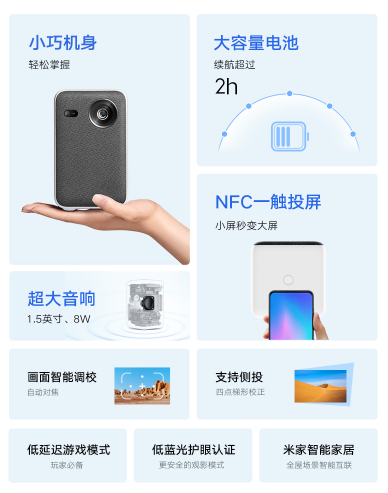
The Xiaomi Projector Mini features a miniature build when compared to its predecessor. The product has a net weight of 1.2kg and is very convenient to carry. You also get NFC support for one-touch screen projection. All the user has to do is gently touch the mobile phone to the sensor area of the body, and the screen of the mobile phone can be projected onto the projector screen.
In terms of core configuration, Xiaomi Projector Mini uses Amlogic T972 high-performance quad-core CPU paired with 2GB RAM while there is 16GB of storage onboard. The configuration ensures that it can be used to watch high-definition videos, and run heavy software without lag.
For the display output, the mini projector is equipped with a high-sensitivity camera with a 720 pixel full HD resolution. It can only output 250 ANSI lumens of brightness which isn’t very impressive. You also get support for intelligent monitoring autofocus, four-point keystone correction, and can be freely adjusted up, down, left, and right without distorting the orientation of the video. In addition, this product has passed the Swiss SGS low blue light authoritative certification, which can filter blue light and reduce eye irritation.
In terms of battery life, the Xiaomi Projector Mini has a built-in 29.97Wh large-capacity battery that can easily last for more than 2 hours. You can also watch a full-length movie in scenes such as camping, business, and parties.
At the same time, the fuselage has a built-in 1.5-inch, 8W high-power, full-frequency, high-fidelity speaker. It also comes with the WANOS panoramic sound virtual sound field technology bringing a sense of three-dimensional space in order to give users an immersive viewing experience.
In addition, the Xiaomi projector mini can be linked with the MIJIA smart home for use as a smart home hub. When the user presses and holds the voice button on the remote control, XiaoAI voice assistant is activated. In this mode, users can complete operations such as opening and closing curtains, controlling home appliances, and adjusting lights.
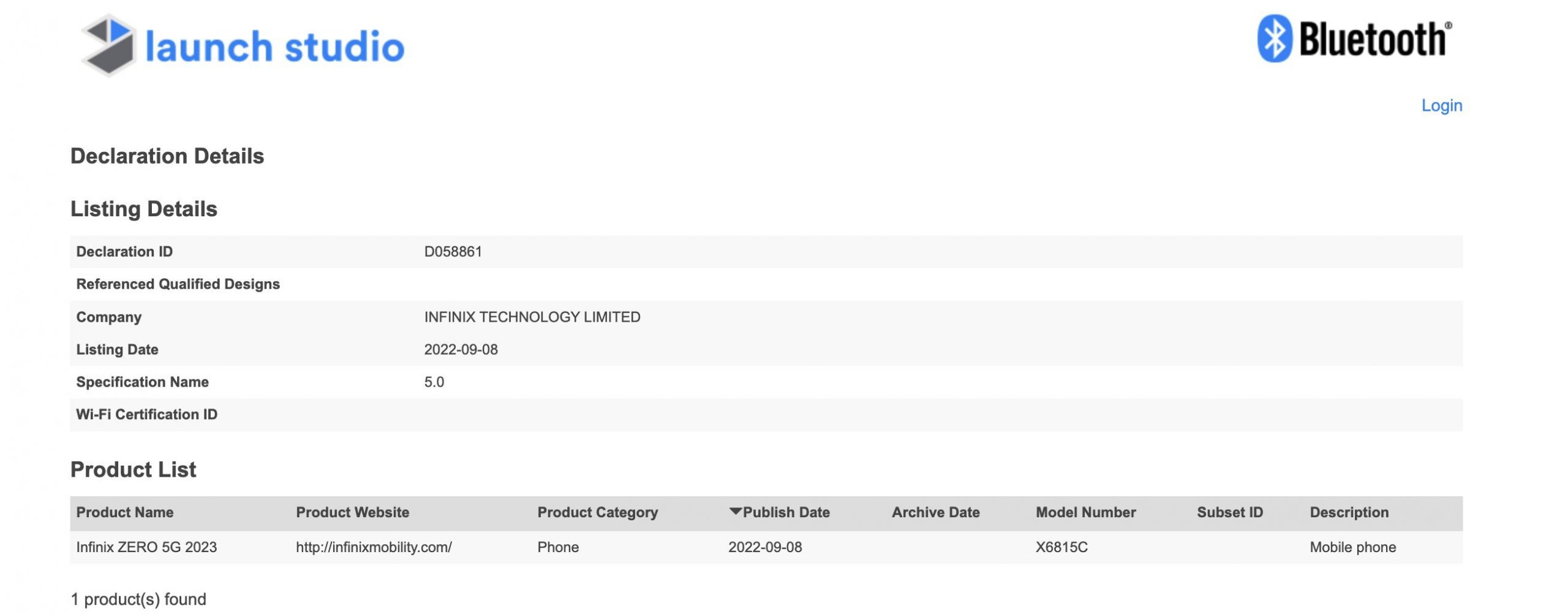
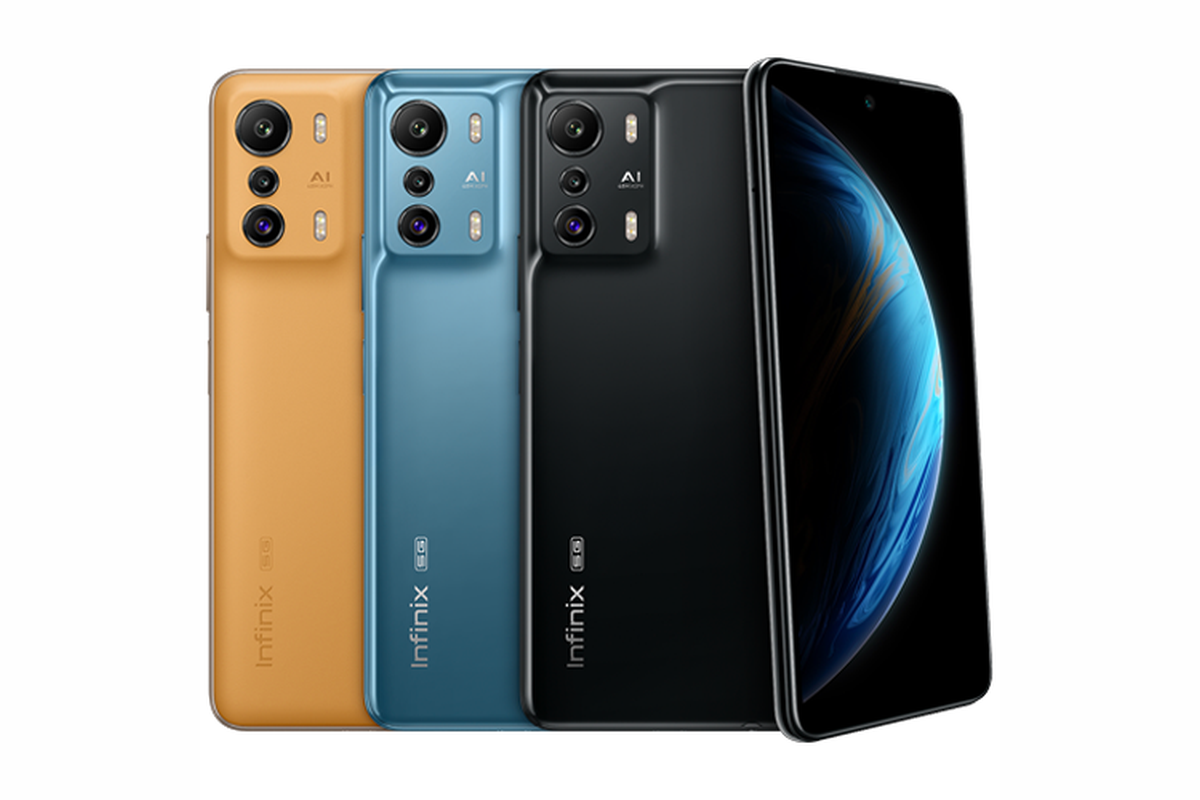
Back in February, Infinix launched the Zero 5G in India as well as other countries. The handset arrived with an LTPS LCD panel, a 120Hz refresh rate, a MediaTek Dimensity 900 Soc, and much more. Now, it seems the company is working on the smartphone’s successor. The new Infinix Zero 5G 2023 has been spotted on the Bluetooth SIG website. The moniker suggests the device will be launched next year (2023). Let’s look at the details.
Tipster Mukul Sharma has spotted the Infinix Zero 5G 2023 on the Bluetooth SIG certification site. The handset has been listed on the website with model number X6815C. As usual, the listing did not reveal any details regarding the specifications and features of the device. However, the device’s name suggests it will be launched in 2023. It will probably debut in January or February.
The handset will likely arrive as a solid mid-ranger, just as its predecessor. Infinix is yet to confirm any details about the device. We expect more information to emerge soon. Meanwhile, let’s check out the specifications of the Infinix Zero 5G.
Infinix Zero 5G Specifications
The Infinix ZERO 5G features a 6.78-inch IPS LTPS LCD display with an FHD+(2460 x 1080 pixels) resolution. It has a 120Hz refresh rate and has 240Hz touch sampling rate. Under the hood, the handset is powered by the MediaTek Dimensity 900 5G SoC, coupled with 8GB of LPDDR5 RAM and 128GB of UFS 3.1 internal storage.
Infinix Zero 5G
For photography, it has a triple rear camera system consisting of a 48-megapixel primary lens, a 13-megapixel telephoto unit, and a 2-megapixel depth sensor. On the front, it sports a 16-megapixel selfie camera. The handset is fueled by a 5000mAh battery and supports 33W fast charging.
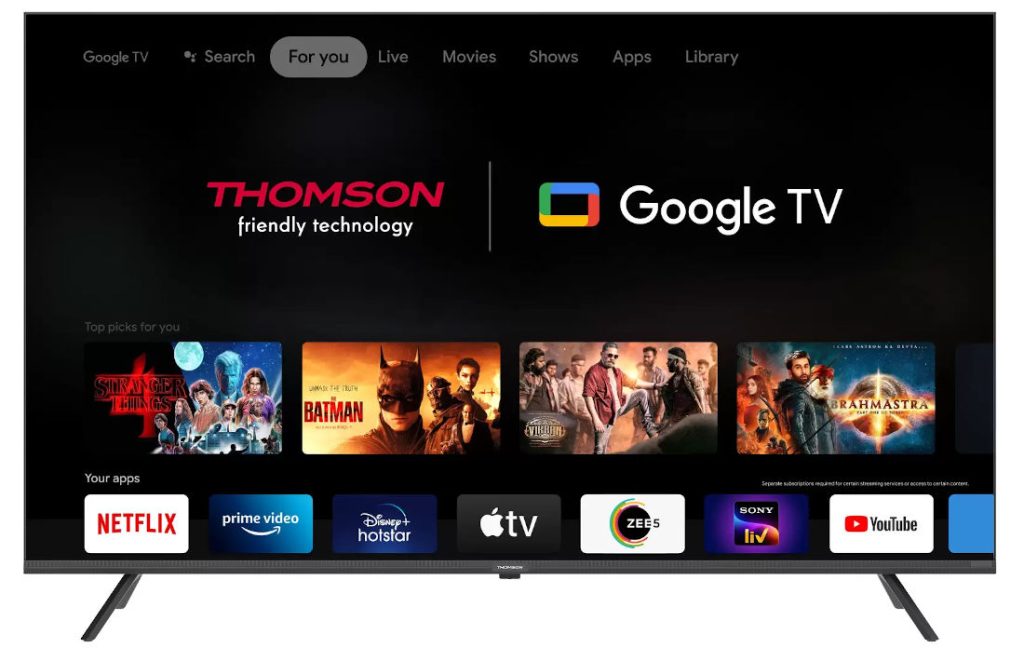
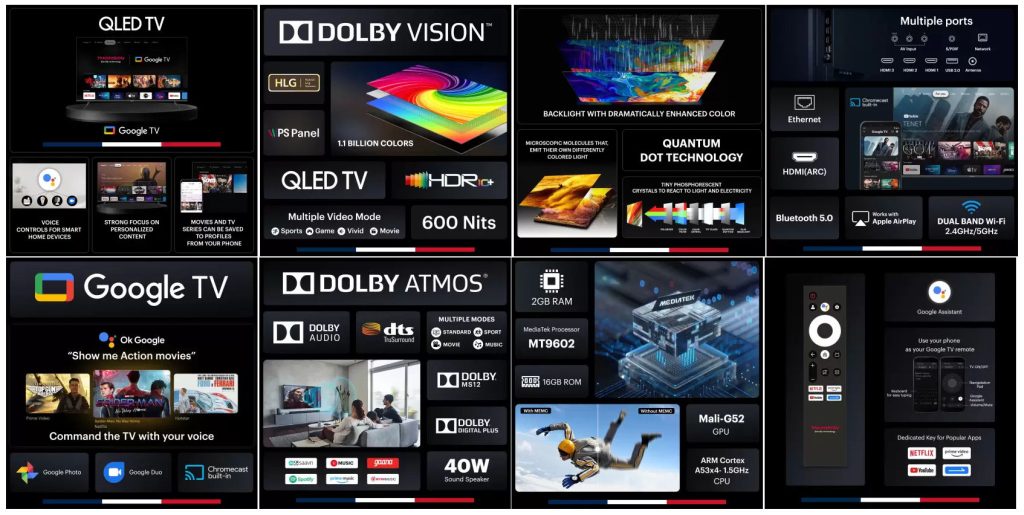
Three Thomson QLED TVs have been unveiled in the Indian market. The three new smart TVs feature Dolby Atmos, Dolby Vision, and two 20W speakers. The trio only differ in sizes which include 50, 55, and 65 inches respectively. Other features on the Thomson QLED TVs are HDR10+ support, a metallic stand, and a sleek, bezel-less design.
The three Thomson QLED smart TVs offer flexible choices in terms of price and size considerations. They are powered by the MediaTek MT9602 quad-core processor with the Mali-G52 MC1 GPU. They also feature dual-band Wi-Fi connectivity, a 4K QLED display, up to 600 nits of brightness, and 2GB/16GB RAM/storage. All three models have Google TV compatibility while the voice remote has Netflix, Prime Video, and YouTube shortcuts. You can also use a smartphone as a Google TV remote.
The three Thomson QLED TVs have Bluetooth 5.0 connectivity, 3 HDMI ports (including one ARC), 2 USB ports, AV input, Ethernet, and S/PDIF ports. The two 20W stereo speakers in the new Thomson TVs support Dolby Audio, Dolby Atmos, and DTS. As per pricing, the 50-in, 55-inch, and 65-inch model will retail at Rs. 33,999 ($427), Rs. 40,999 ($515), and Rs. 59,999 ($753) respectively. The manufacturer, SPPL has not provided a specific release date for the new TVs. However, they could be available on Flipkart soon. SPPL says it is excited to launch the new Thomson QLED TV series which are all quite affordable.
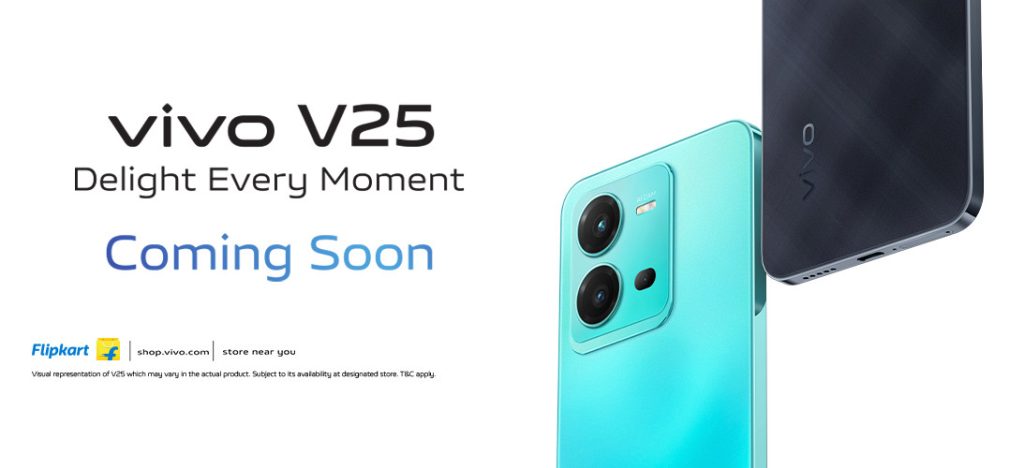
Vivo V25 is officially teased to launch soon in India. The brand has put up a dedicated microsite on its official website. It will be the second V25 series device after the Pro variant that debuted last month. Additionally, the upcoming offering is also listed on Flipkart confirming its availability on the e-commerce portal. It will also be available for purchase from the brand’s official website and offline stores across the country.
The microsites reveal some key specifications of the Vivo V25. It will come with a colour changing Fluorite AG glass back panel similar to the Pro model. The device will be offered in Blue and Black colour options. The upcoming offering is confirmed to feature a 64MP main rear camera with support for OIS. It will have Bokeh Flare Portrait mode. The Vivo V25’s centre-aligned punch-hole cutout will accommodate a 50MP selfie snapper with Eye Autofocus feature. Lastly, the smartphone is confirmed to pack 8GB RAM along with up to 8GB extendable RAM support.
The Vivo V25 went official in few countries last month. We can expect the Indian variant to come with the same specifications. Apart from the teased features, the smartphone is expected to feature a 6.44-inch FHD+ AMOLED display with a 90Hz refresh rate, HDR10+ support and an integrated fingerprint scanner. The global variant is powered by Dimensity 900 SoC and a 4,500mAh battery unit with support for 44W fast charging.
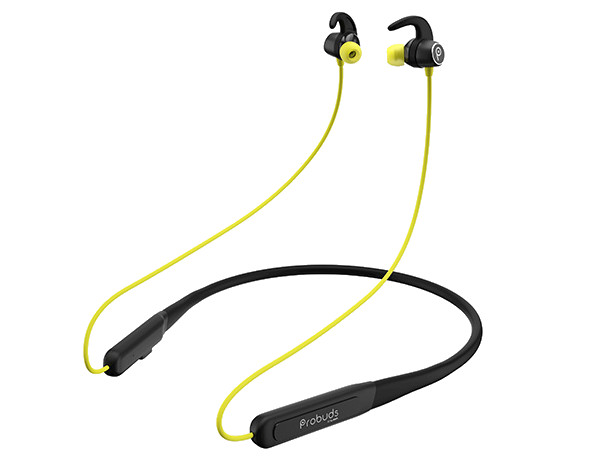
Lava Probuds N11 has launched in India. It is the fourth neckband-styled wireless earphone from the homegrown brand. The latest offering carries an affordable price tag and falls under the Rs 1,000 price bracket. It competes against other neckband wireless earphones offered by brands like Realme, OnePlus, boAt, Noise and more in the market.
As mentioned earlier, the Lava Probuds N11 is a neckband-styled wireless earphone. It has a dual-tone design where the neckband is in Black colour while the earphone wire is in another colour. The earbuds have silicone ear tips and a fin for a comfortable fit. They are IPX6 water-resistant.
The Lava Probuds N11 feature Magnetic – Hallswitch allowing users to play or pause and answer or cut the call by magnetically attaching the buds together or pulling them apart. Users can also trigger a voice assistant with the press of a button.
The Lava Probuds N11 are equipped with 12mm dynamic drivers. They feature environmental noise cancellation for a better experience on calls. There is also Pro Game mode that offers 60ms low latency. The earbuds are also capable of connecting to two devices at the same time.
The Lava Probuds N11 are powered by a 280mAh battery unit that is claimed to offer 42 hours of battery life on a single charge.
The Lava Probuds N11 are offered in Firefly Green, Kai Orange, and Panther Black colours. The earphones carry a price tag of Rs 1,499 and can be purchased from Lava e-store, Amazon, and offline stores starting September 17th. Customers can purchase the audio device at Rs 11 only on September 10th at 11 am IST on Amazon.
The Apple iPhone 14 series was just announced for the global market. The 2022 iPhone lineup was highly anticipated and arrived with various improvements over the previous generation. Now, a new report has revealed that one of these upgrades also included memory as well. So let’s have a look.
According to a MacRumorsreport, the Cupertino based giant’s latest iPhone 14 series, which includes the iPhone 14, iPhone 14 Plus, iPhone 14 Pro, and iPhone 14 Pro Max, arrives with more RAM than the entire iPhone 13 lineup. The report added that the latest Xcode 14 beta contains files that reveal that all of the new iPhones feature 6GB of RAM. This marks an overall bump of 50 percent in terms of memory compared to the iPhone 13.
For those unaware, only the iPhone 13 Pro and iPhone 13 Pro Max featured 6GB of RAM, while the base and mini model only had 4GB of RAM. In other words, the brand has basically brought higher memory modules for its iPhone 14 and the new iPhone 14 Plus model as well. Notably, Xcode 14 is basically the company’s IDE used to develop apps for macOS, iOS, iPadOS, watchOS, and tvOS.
iPhone 14 Pro Max
So, the report basically shows that the new iPhones average 2GB higher RAM compared to the previous generation for the non Pro models. While the RAM capacity was revealed in Xcode, the standards for the memory modules is still unknown. Meaning, its unclear whether these feature the latest LPDDR5 memory or older generation.
We use cookies on our website to give you the most relevant experience by remembering your preferences and repeat visits. By clicking “Accept”, you consent to the use of ALL the cookies.
This website uses cookies to improve your experience while you navigate through the website. Out of these, the cookies that are categorized as necessary are stored on your browser as they are essential for the working of basic functionalities of the website. We also use third-party cookies that help us analyze and understand how you use this website. These cookies will be stored in your browser only with your consent. You also have the option to opt-out of these cookies. But opting out of some of these cookies may affect your browsing experience.
Necessary cookies are absolutely essential for the website to function properly. This category only includes cookies that ensures basic functionalities and security features of the website. These cookies do not store any personal information.
Any cookies that may not be particularly necessary for the website to function and is used specifically to collect user personal data via analytics, ads, other embedded contents are termed as non-necessary cookies. It is mandatory to procure user consent prior to running these cookies on your website.