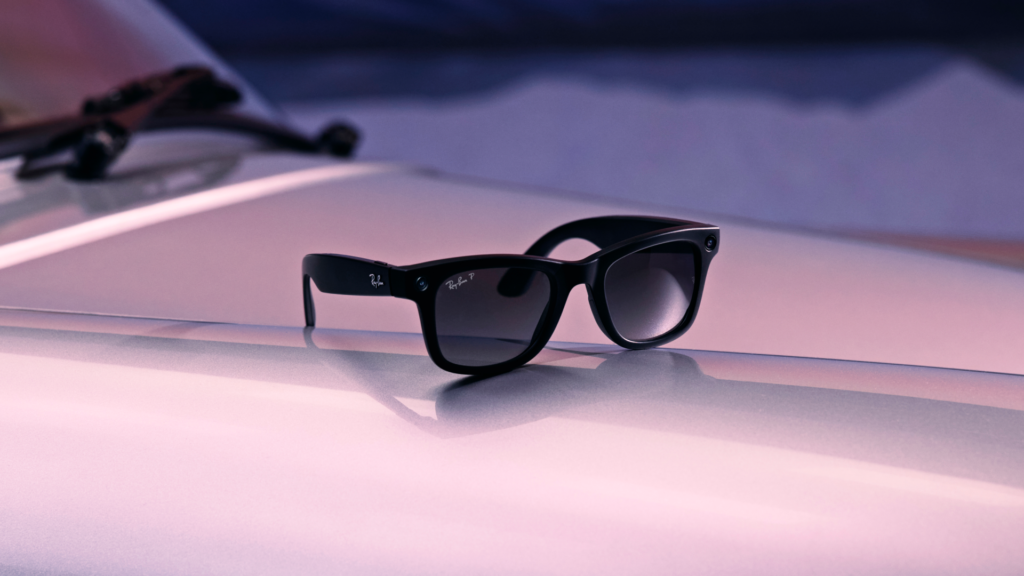
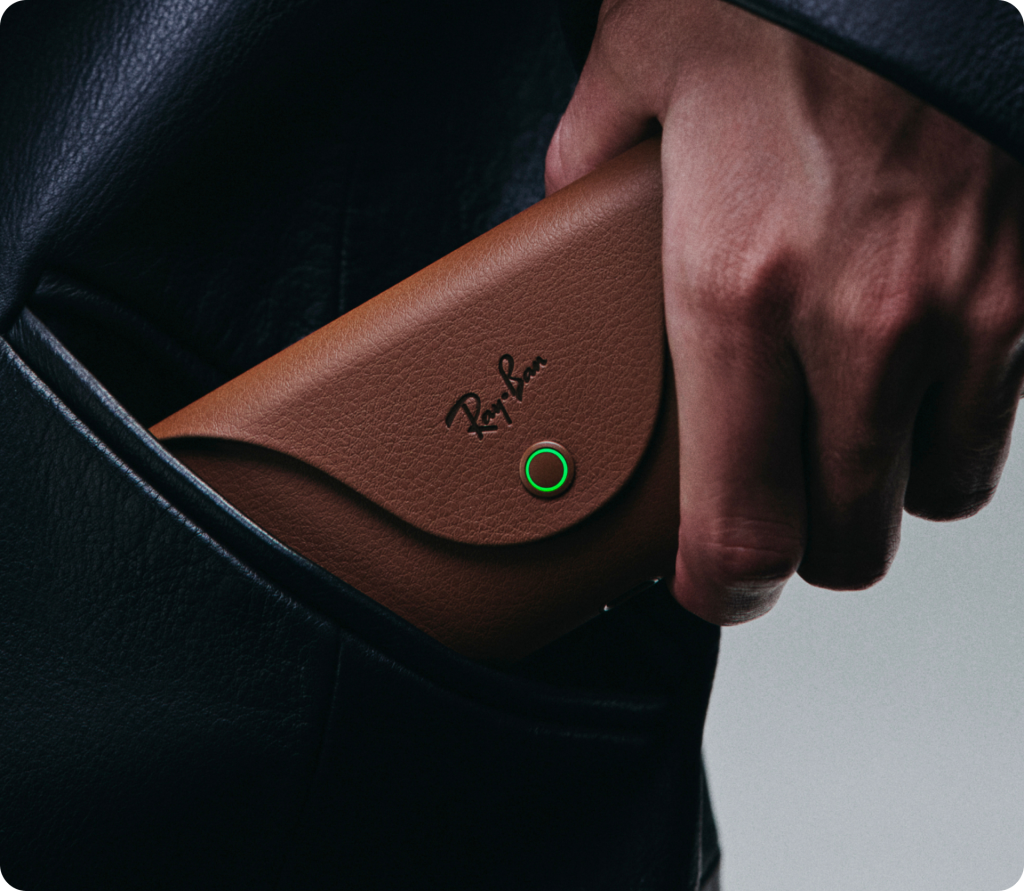
Meta and Ray-Ban have launched the second generation of their AI-powered smart glasses in India. The Ray-Ban Meta Gen 2 glasses are now available through Ray-Ban India and authorized retailers, with prices starting at ₹39,900 ($444) and going up to ₹45,700 ($508) depending on the frame and lens combination.
Specifications
The new model features a 12MP ultra-wide camera capable of recording 3K Ultra HD video for up to three minutes. Meta has improved image quality with ultrawide HDR and plans to roll out new camera modes like slow motion and hyperlapse through future software updates.
Meta has also upgraded the audio system. The Gen 2 glasses use a five-micro speaker setup that offers louder sound, deeper bass, and better directional audio. The touchpad and capture button support tap-based controls for music playback, photo capture, and messaging.
Battery life now lasts up to 8 hours on a single charge. The included charging case provides an additional 48 hours of power. Fast charging allows users to reach 50% charge in just 20 minutes. Meta says the glasses also support up to 5.4 hours of voice calls and 5 hours of music playback.
The Meta AI assistant now supports full Hindi voice functionality, which users can initiate by saying “Hey Meta.” This allows the assistant to handle commands for actions like snapping photos, dispatching messages, and regulating music. The assistant can now speak using Deepika Padukone’s AI-generated voice, which joins Meta’s global lineup of celebrity voices.
Meta is also set to introduce support for UPI Lite payments in India. This feature will allow users to scan QR codes using the glasses and finalize transactions through WhatsApp-linked bank accounts.
The Ray-Ban Meta Gen 2 collection includes updated versions of the Wayfarer, Headliner, and Skyler styles. Seasonal colors such as Shiny Cosmic Blue and Mystic Violet are also available.
Samsung is expanding its tablet family with a fresh, budget-friendly option designed specifically for younger users. The Galaxy Tab A11+ Kids Edition has just debuted with a tall display, bright design, and parental controls that make it ideal for children. So here are all the details.
Samsung Galaxy Tab A11+ Kids Edition: What makes it special?
To recall, the South Korean tech giant previously unveiled the Galaxy Tab A9+ Kids Edition model. So this release arrives as the direct successor. One of the highlighting features of the tablet is its bright design. The Kids Edition features a colorful puffy case for the Galaxy Tab A11+ along with a blue kids’ touch pen, tethering string, and a keyring that has Samsung’s animal character Crocro.
Samsung Galaxy Tab A11+ Kids Edition
Apart from this, you also get colorful stickers that feature Samsung Kids characters and their Choo Choo train. A notable inclusion with the tablet is the Kids mode that allows children to follow the stylish Crocro, cookie the aspiring chef, music lover lisa, and others. Talking about its specs, it is basically the regular Galaxy Tab A11+ with a few additions.
So you still get the tall 11-inch WUXGA (1920×1200) LCD display with a 90Hz refresh rate. Under the hood, it is equipped with the MediaTek Dimensity 7300 processor, which is paired with up to 8GB RAM and 256GB storage, and users can expand storage up to 2TB with a microSD card.
A sizeable 7,040mAh battery powers this tablet, which supports 25W fast charging. Other notable features include an 8MP rear and 5MP front camera, Dolby Atmos powered quad speakers, a 3.5mm audio jack, and Bluetooth 5.3. Samsung just announced the Galaxy Tab A11+ Kids Edition in the Australian market via its official website for 429 AUD.
For more daily updates, please visit our News Section.
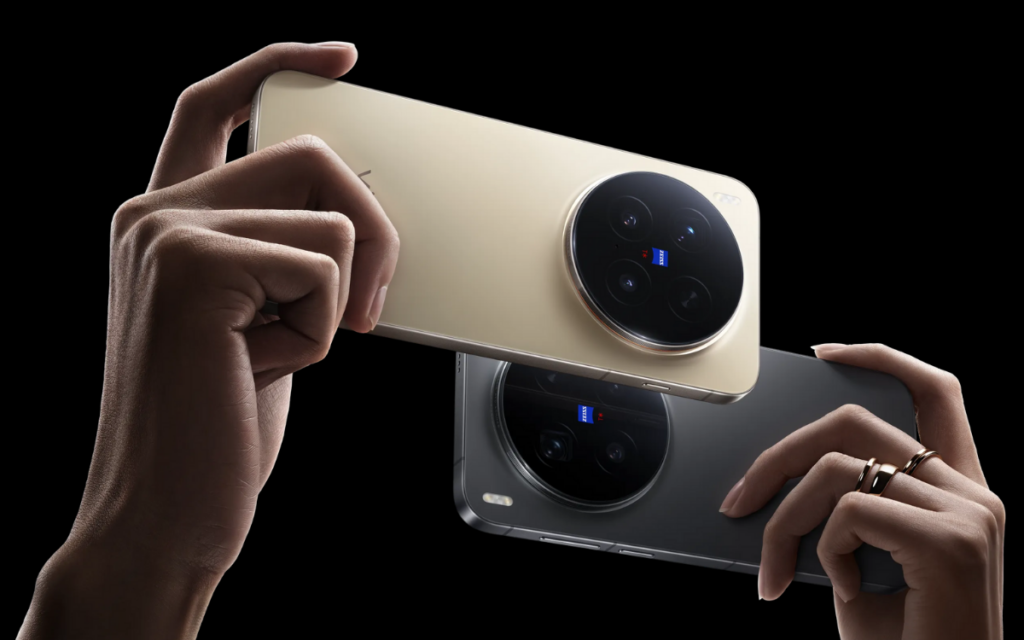
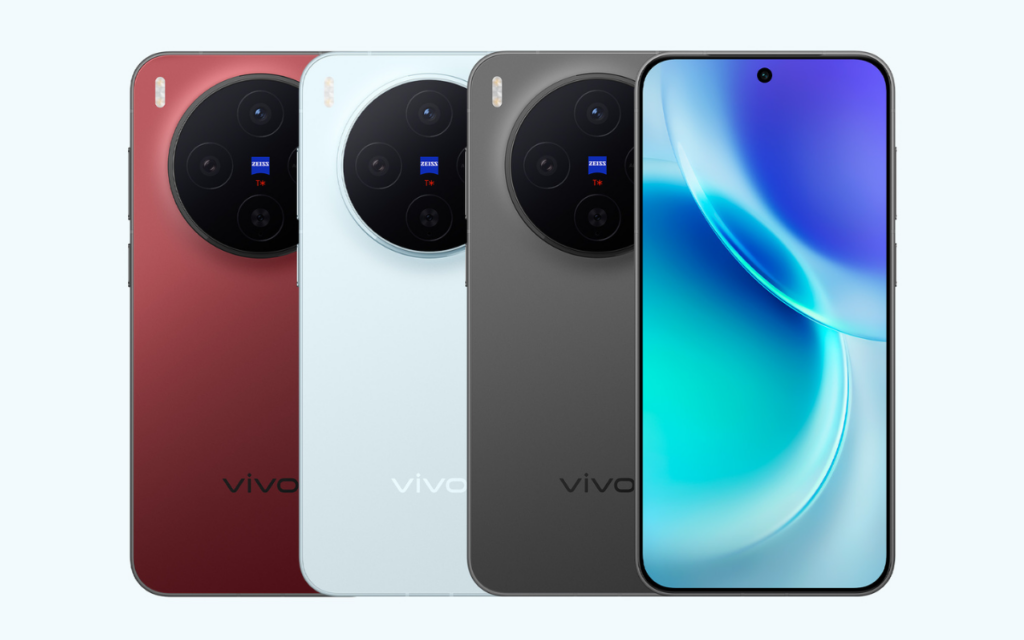
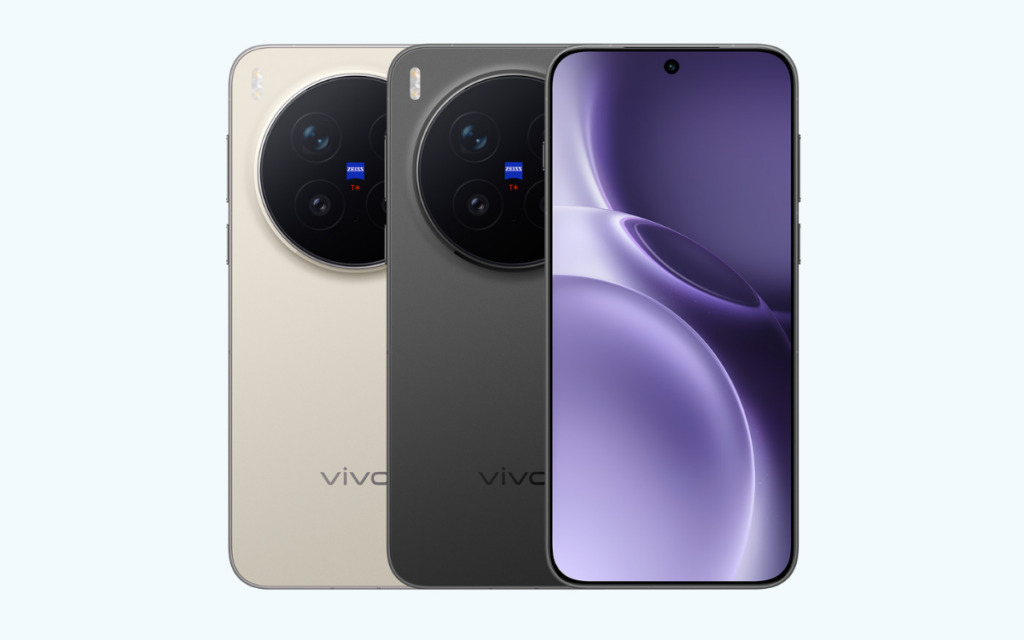
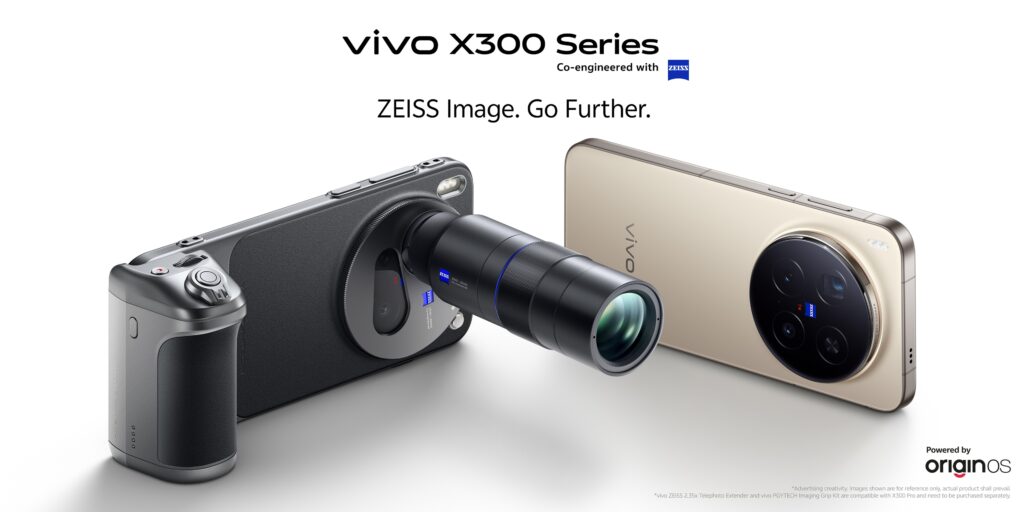
Vivo has introduced its new flagship duo, the X300 and X300 Pro, to the Indian market. The phones first debuted in China earlier this year and now arrive in India with high-end hardware, Zeiss-tuned cameras, dedicated imaging chips, and long-term software support.
Vivo X300 & Vivo X300 Pro Specifications
The Vivo X300 features a compact 6.31-inch 1.5K LTPO OLED display with ultra-narrow 1.05mm bezels, HDR10+ support, and an adaptive 1-120Hz refresh rate. The X300 Pro steps up with a larger 6.78-inch 1.5K LTPO OLED panel with similarly narrow 1.1mm bezels and the same 120Hz refresh capability.
Both displays support up to 4500 nits of local peak brightness, 2160Hz PWM dimming, and full-brightness DC dimming for better eye comfort. The displays are protected by Armor Glass for added durability.
Vivo X300
Under the hood, both phones use the flagship 3nm MediaTek Dimensity 9500 processor, which clocks up to 4.21GHz and is paired with the Arm Mali-G1 Ultra MC12 GPU. The chip has achieved over 4 million points on AnTuTu 11, signaling top-tier performance. The X300 is available in 12GB or 16GB LPDDR5X RAM variants with up to 512GB of UFS 4.1 storage. The X300 Pro is offered with 16GB RAM and 512GB storage.
Both devices run OriginOS 6 based on Android 16. Vivo promises 5 years of major OS updates and 7 years of security updates for the new X series, placing them among the longest-supported Android phones available.
The X300 has a 200MP main camera using the Samsung HPB sensor, along with a 50MP ultra-wide camera and a 50MP Sony LYT602 periscope telephoto lens with telemacro capabilities.
The X300 Pro flips the sensor configuration, using the new 50MP Sony LYT828 as the main sensor and featuring a 200MP HPB sensor for the 85mm telephoto lens with 3.7x optical zoom.
Vivo X300 Pro
It also uses dual imaging chips, Vivo’s V3+ and VS1, to enhance processing power, and supports 4K HDR cinematic portrait videos. Both models include a 50MP front camera and Zeiss 2.35x teleconverter support for added focal length flexibility.
The X300 comes with a 6040mAh battery, while the X300 Pro includes a larger 6510mAh unit. Both phones support 90W ultra-fast wired charging, 40W wireless charging, and reverse wireless charging.
Each phone features a 3D ultrasonic fingerprint sensor, stereo speakers, USB 3.2 Gen1 Type-C port, and IP68 and IP69 ratings for dust and water resistance.
Connectivity options include Wi-Fi 7, Bluetooth 6.0, NFC, GPS with NavIC support, and dual-SIM 5G standby. The X300 weighs 190g and has a slim 7.95mm profile, while the Pro model is larger and heavier at 226g and 7.99mm.
Pricing and Availability
The X300 is priced at ₹75,999 (~$836) for the 12GB + 256GB variant, ₹81,999 (~$902) for the 12GB + 512GB model, and ₹85,999 (~$946) for the 16GB + 512GB version. It comes in Elite Black, Mist Blue, and Summit Red colors.
The X300 Pro comes in a single 16GB + 512GB variant priced at ₹1,09,999 (~$1,209). It is available in Elite Black and Dune Gold colors.
Vivo also introduced a Zeiss 2.35x telephoto extender priced at ₹18,999 (~$209).
Both phones are now available for pre-order through Vivo India’s online store, major e-commerce portals, and offline retail outlets. Sales begin on December 10.
For more daily updates, please visit our News Section.
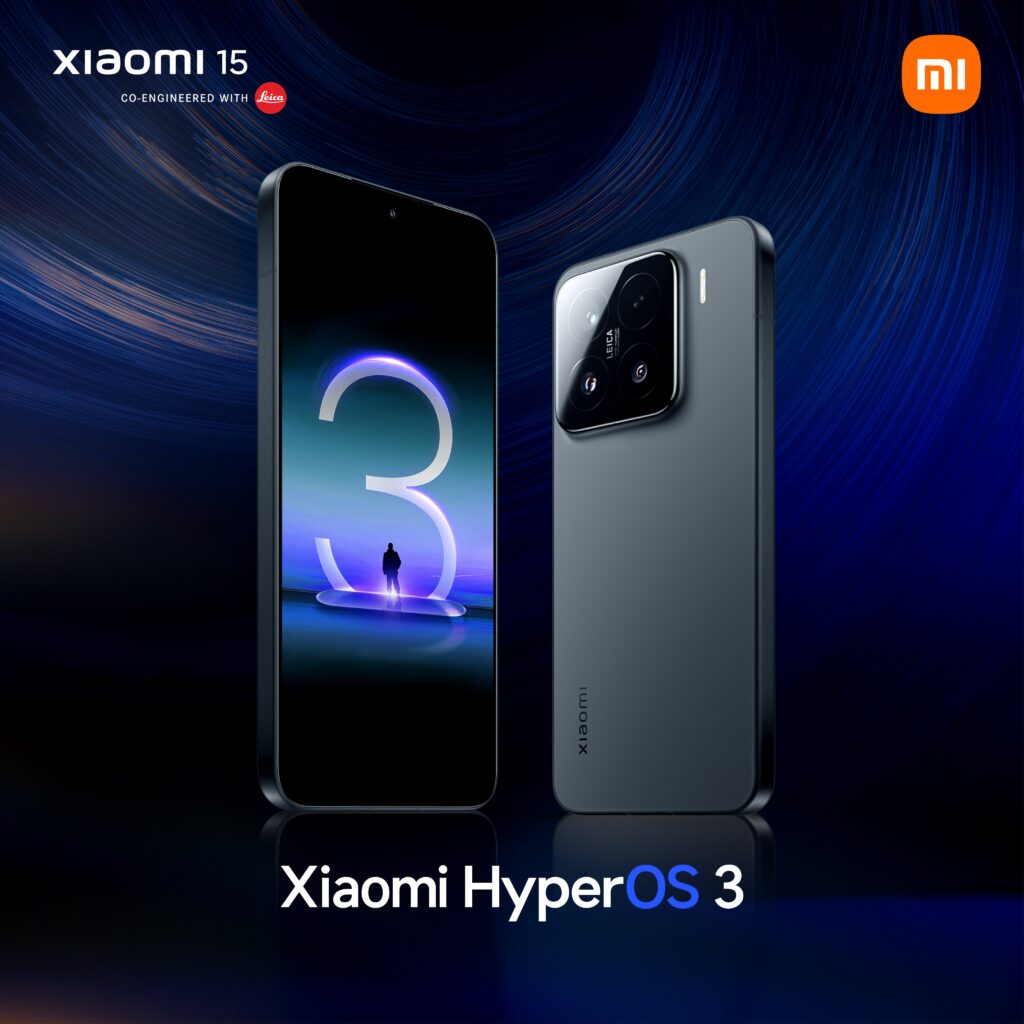
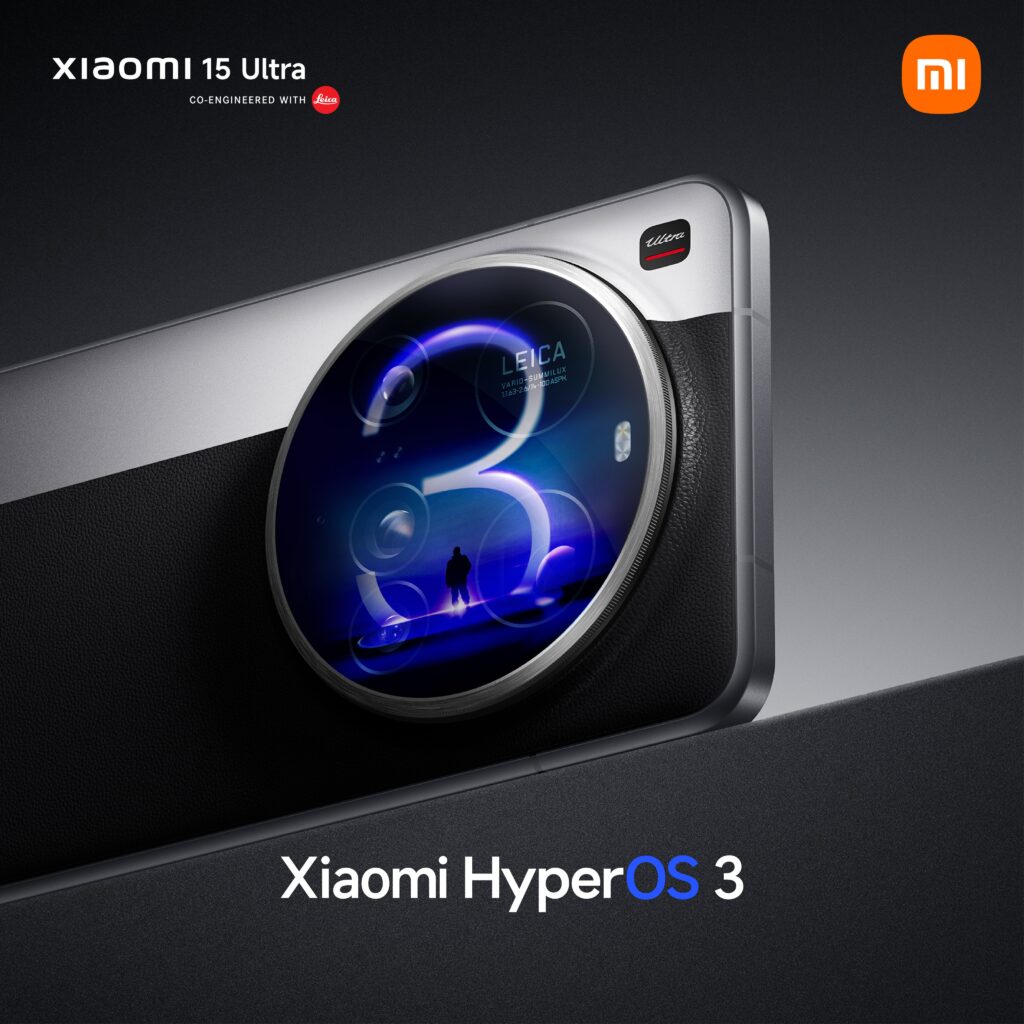
After months of anticipation, Xiaomi is finally bringing its latest HyperOS iteration to its flagship smartphone users in India. The company had previously rolled out the HyperOS 3 update globally, and now, the Xiaomi 15 and Xiaomi 15 Ultra users in India are officially receiving this update as well.
HyperOS 3 Lands on Xiaomi 15 & Xiaomi 15 Ultra in India: What to Expect
The Chinese tech giant just shared an announcement on its official X account that confirmed that the HyperOS 3 update is now starting to arrive on Xiaomi 15 series model. This includes the base Xiaomi 15 and the flagship Xiaomi 15 Ultra model. To recall, the brand had originally started rolling out the HyperOS 3 update globally for these premium devices at the end of October.
Xiaomi even pushed a global OTA update for the HyperOS 3 upgrade last month. But only just recently, the company had teased its Android 16 OS based custom UI in the Indian market as “Coming Soon“. So here’s everything you can expect from this update:
Overhauled UI, improved fluidity, and performance
Xiaomi’s new Hyper Island
Smarter Gallery and AI powered tools
Better Apple integration
Enhanced security
In related news, POCO just announced its own HyperOS 3 release timeline and eligible devices list. The company also launched a bunch of new HyperOS powered products like the Xiaomi Smart Door Lock M40 and a smart car humidifier. You can even click here to check out the latest bug fixes amd known issues for this software that is affecting Xiaomi, Redmi, and POCO smartphones.
For more daily updates, please visit our News Section.
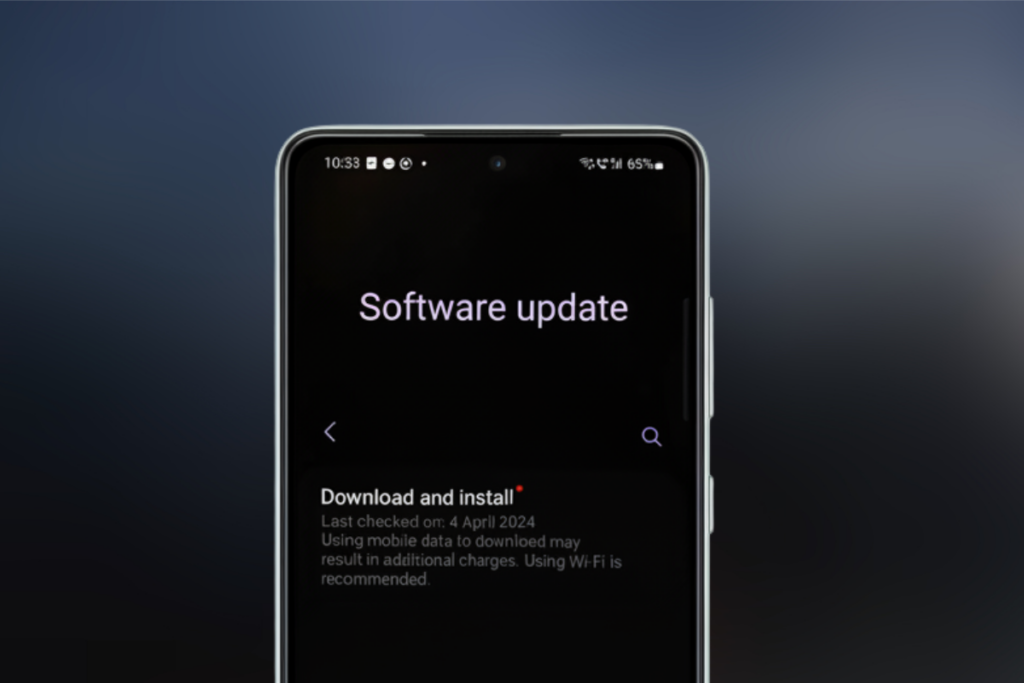
Samsung has released the revised software rollout roadmap for December 2025. It reveals which Galaxy devices are eligible to receive the latest security update and the rollout frequency. This month’s roadmap has the Galaxy Tab A11 Plus as the new device.
The rollout roadmap is divided into monthly, quarterly, and biannual categories. The latest roadmap for December has no changes to the monthly and biannual lists. Review the complete list below to find out which category your Galaxy device belongs to.
Monthly security updates
Galaxy Z Fold4, Galaxy Z Flip4, Galaxy Z Fold5, Galaxy Z Flip5, Galaxy Z Fold6, Galaxy Z Flip6, Galaxy Z Fold7, Galaxy Z Flip7, Galaxy Z Flip7 FE, W23, W23 Flip, W24, W24 Flip, W25, W25 Flip, W26, Galaxy Z Fold Special Edition
If your Samsung device isn’t on the list, it’s unlikely to receive any software updates. If so, it’s better to upgrade to a newer model as security updates are essential to protect your device from newly found security vulnerabilities. You can check here the list of Samsung devices eligible for seven years of updates or six years of updates.
Don’t forget to visit our Samsung section regularly for the latest news and One UI updates. Or, if you prefer your news instant and on the go, hop into our Telegram channel for instant notification about the latest software updates and all the biggest tech headlines.
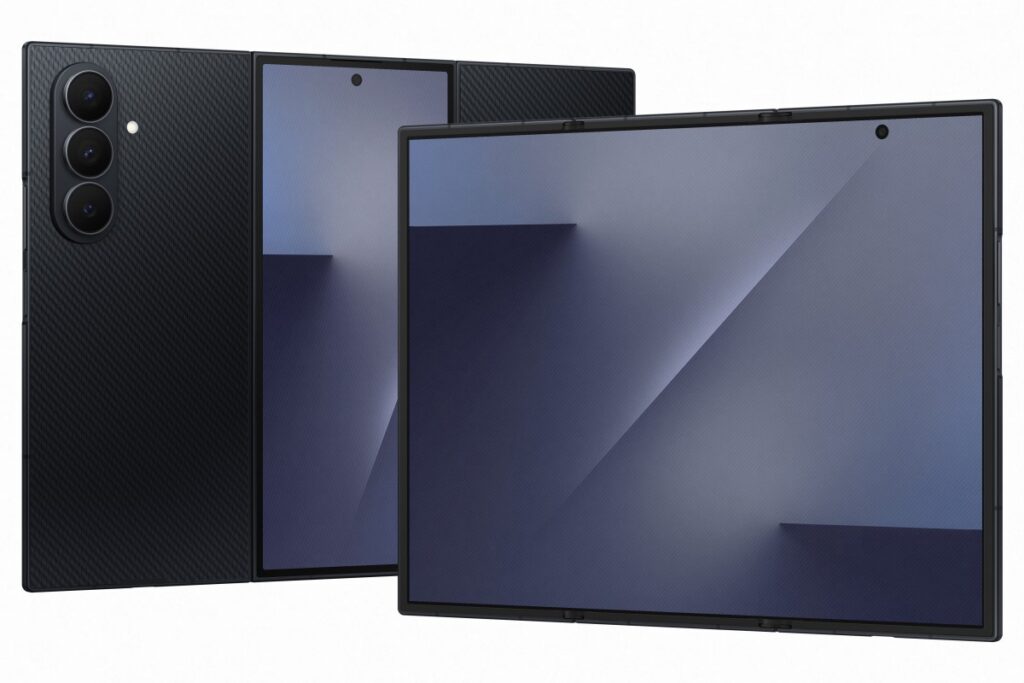
After months of leaks and rumours, Samsung has finally taken the wraps off its most ambitious foldable yet. The company has introduced a completely new form factor that goes beyond the usual book-style design and brings a true multi-folding phone to the market. With a huge inner display and clever software tricks, it aims to blend phone portability with tablet-sized productivity.
Samsung Galaxy Z TriFold specifications and features
Samsung Galaxy Z TriFold
When fully unfolded, the Galaxy Z TriFold opens up to a 10-inch Dynamic AMOLED 2X screen with 2160 × 1584 resolution, 120 Hz refresh rate and 1600 nits peak brightness. The outer cover screen measures 6.5 inches with Full HD+ resolution and reaches up to 2600 nits brightness, protected by Gorilla Glass Ceramic 2. Both displays get 10 MP selfie cameras.
Under the hood, it comes from the Snapdragon 8 Elite for Galaxy chipset paired with 16 GB RAM and storage options of 512 GB or 1 TB. The triple rear camera setup includes a 200 MP main sensor, 12 MP ultrawide and 10 MP 3x telephoto lens. A 5600 mAh battery, split across three sections, supports 45 W wired and 15 W wireless charging.
Samsung Galaxy Z TriFold
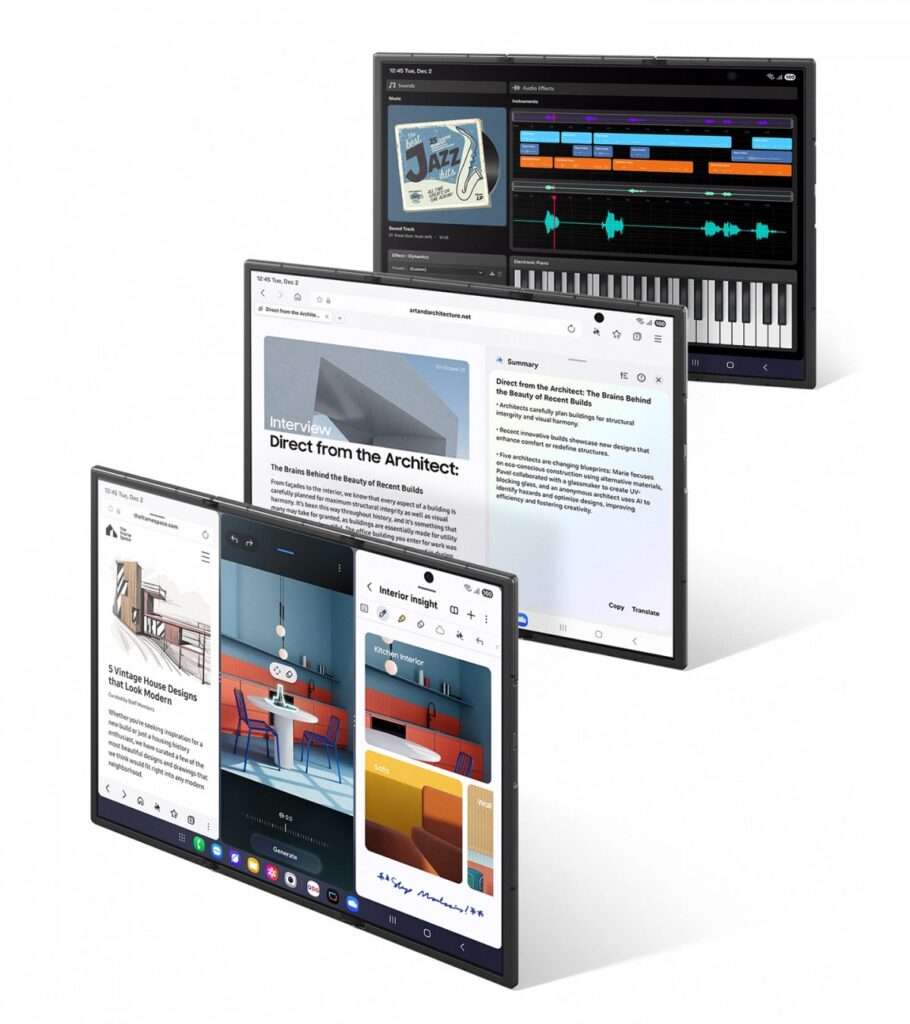
The phone runs Android 16 with One UI 8 and introduces standalone Samsung DeX for the first time, letting users switch to a full desktop interface directly from the quick panel. Three apps can run side-by-side on the large screen, and the new dual titanium hinges make folding smooth while keeping the main display protected. At just 3.9 mm thin when unfolded and weighing 309 grams, it also carries IP48 dust and water resistance, Wi-Fi 7 and 5G connectivity.
Samsung Galaxy Z TriFold price and availability
In South Korea, the phone launches on 12 December at $2,500 (~₹2.09 lakh). It will reach China, Taiwan, Singapore and UAE before December ends, while the United States will get it sometime in the first quarter of 2026. Only Crafted Black colour is available for now.
For more daily updates, please visit our News Section.
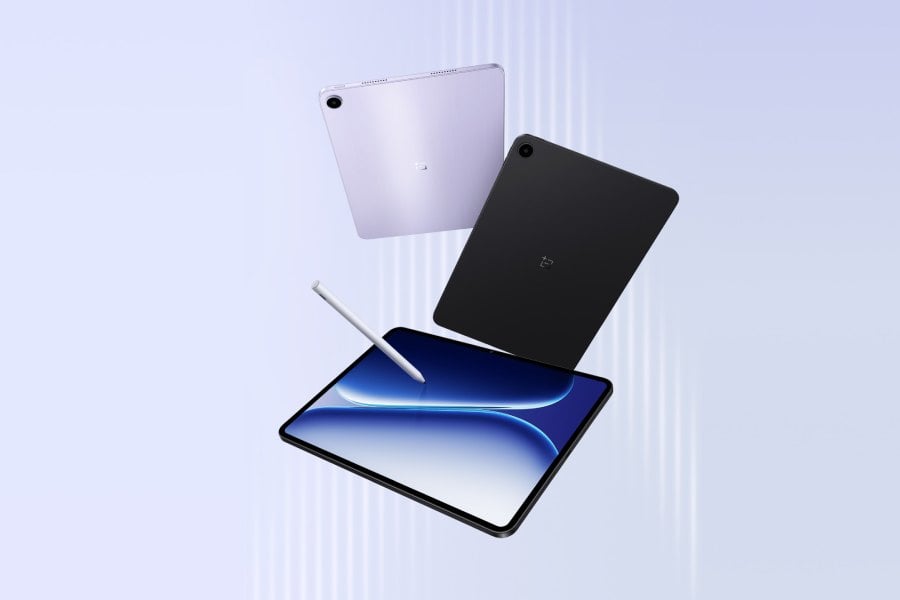
OnePlus will refresh its entry-level tablet lineup on December 17th with the launch of the OnePlus Pad Go 2. Compared to its predecessor, the model is confirmed to bring stylus support and 5G connectivity.
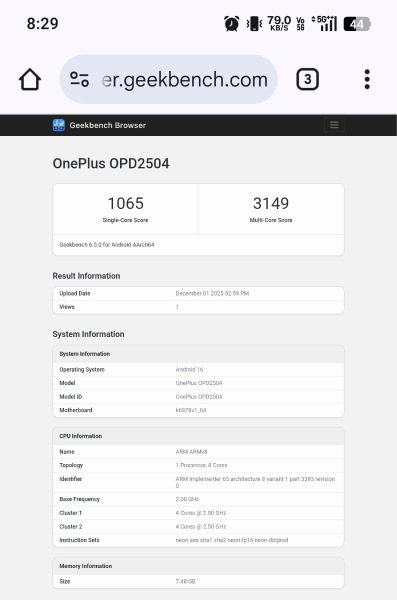
A new Geekbench listing for the OnePlus Pad Go 2 has now shed light on the tablet’s connectivity and performance capabilities.
The Pad Go 2 Geekbench listing is under the model number OPD2504. It scored 1065 points in single-core and 3149 points in multi-core tests. More importantly, the chip powering the tablet is MediaTek Dimensity 7300.
This not only confirms 5G connectivity but also indicates a significant performance leap over the original Pad Go. The latter uses MediaTek’s Helio G99 processor.
The benchmark further reveals the device will carry 8GB of RAM and run on the Android 16 operating system.
Here’s what OnePlus revealed
Separately, OnePlus has confirmed the tablet will feature a 12.1-inch, 2.9K display (2800 x 1980) with a 7:5 aspect ratio.. The screen can reach HBM brightness of 900 nits and has support for Dolby Vision.
Moreover, the compatible stylus is said to bring 4096 levels of pressure sensitivity. The tablet will be available in a solitary 8/256GB variant and in Shadow Black and Purple shade.
The OnePlus Pad Go 2 launches alongside the OnePlus 15R on December 17th. The offline event will be held in Bengaluru, and OnePlus is also opening the doors for fans this time around.
Those who are interested can purchase a ticket for the offline event via BookMyShow. The cost per person is Rs 499.
FYI, the tablet will also launch in Europe on the same day, together with the phone and OnePlus Watch Lite.
XREAL is wrapping up 2025 with the launch of a new entry-level AR glasses model, the XREAL 1S. It sits below the more expensive XREAL One Pro (announced in July) in the lineup and is the first in the category to offer automatic 2D-to-3D conversion.
The glasses weigh 82 grams and use a pair of Sony-made 0.68-inch OLED microdisplays with a resolution of 1920×1200 per eye and up to a 120Hz refresh rate.
When you switch to the new 2D-to-3D mode, that rate drops to 30Hz, but the glasses still aim for a stable viewing experience with a 52-degree field of view, 700 nits of brightness, and color accuracy rated at ΔE < 3.
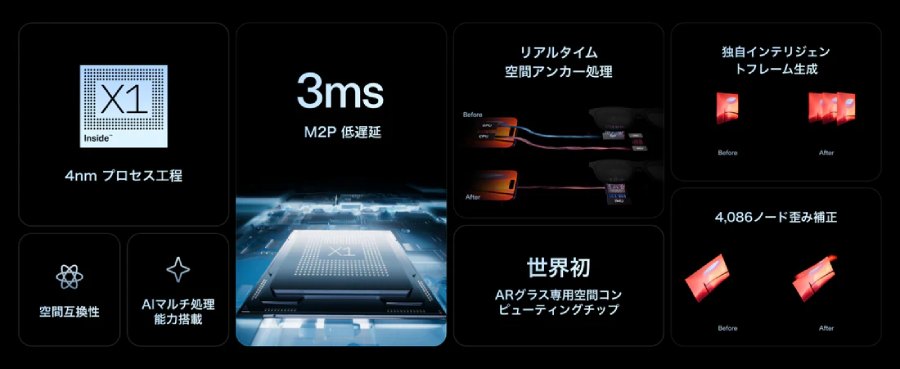
A lot of this is driven by XREAL’s in-house X1 spatial computing chip. The company says it can keep latency as low as 3ms, which is important because the 1S supports 3DoF head tracking. That means the virtual screen stays anchored in space even if you move your head around.
XREAL’s product manager, Takao Takayama, also mentioned that the 3D conversion feature will come to the existing XREAL One and One Pro via an update around the 1S launch window.
There are a few more quality-of-life touches built in. Audio is tuned by Bose, and the glasses include four array microphones. Light transmittance can shift automatically between 0%, 35%, and 100%, depending on how much isolation you want. The 1S ships in a single color called Silent Blue.
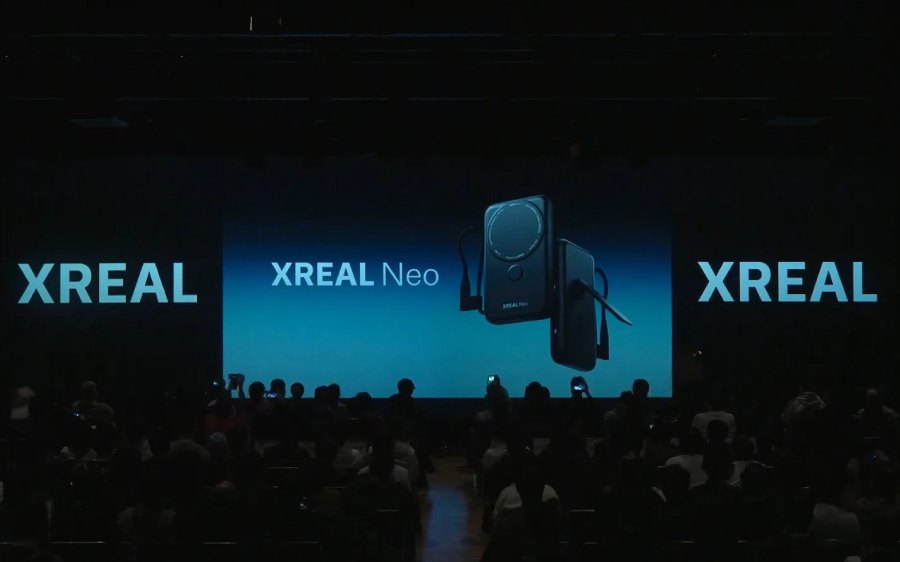
XREAL Neo
Alongside the glasses, XREAL also introduced a new accessory called the XREAL Neo, a mobile battery pack built with AR users in mind. It costs 14,580 yen and launches in late January.
The Neo carries a 10,000mAh battery, two USB-C ports, and can pass video to AR glasses while charging a phone. Interestingly, it can also double as a dock for the Nintendo Switch, including the newer Switch 2.
If you want everything together, XREAL is offering a bundle containing the 1S and the Neo for 76,560 yen, which is about 6,000 yen cheaper than buying both separately. Early buyers also get the XREAL Hub as a pre-order bonus.
For more daily updates, please visit our News Section.
Edifier has launched the Auro Clip, a new pair of ear-clip style TWS earbuds in the Chinese market. The earbuds are priced at 399 yuan ($56) and are now available on JD.com.
Edifier Auro Clip Specifications
The Auro Clip uses a unique open-ear clip design based on an ergonomic C-shaped bridge. The structure includes a 0.5 mm nickel-titanium memory wire that maintains its shape after repeated use. Each earpiece weighs about 5.8 grams, helping reduce pressure on the ear during long listening sessions.
Edifier has focused heavily on the Auro Clip’s design. The company applied a high-end electroplating process to create a mirror-like finish that gives the earbuds a jewelry-like appearance. The asymmetrical contour and slim waistline aim to enhance the aesthetic appeal. The Auro Clip is available in four colors: Silver, Gold, Brown, and Purple.
For audio, the Auro Clip features a 12 mm PU and LCP composite diaphragm paired with a copper-clad aluminum voice coil. The setup supports BassTurbo low-frequency enhancement and a dual-chamber acoustic structure. Edifier also includes DPW directional sound technology, which directs audio toward the ear to minimize sound leakage.
The Auro Clip supports real-time AI translation in 21 languages. The earbuds come with Bluetooth 6.1, which delivers lower latency and stronger stability for wireless connectivity. These also feature a gaming mode that reduces latency to 0.08 seconds.
In terms of battery life, the earbuds deliver up to 35 hours on a full charge. It also supports fast charging, and a 15-minute quick charge adds around 3.5 hours of playback. These also come with dual-device connectivity and use four microphones with AI noise reduction to ensure clearer call quality.
The Auro Clip adds practical features such as IP56 dust and water resistance, automatic channel switching based on which ear you clip it on, and smart wear detection that pauses audio when you take it off. It supports customizable gesture controls and uses a vibration-based system to eject trapped water after exposure to moisture.
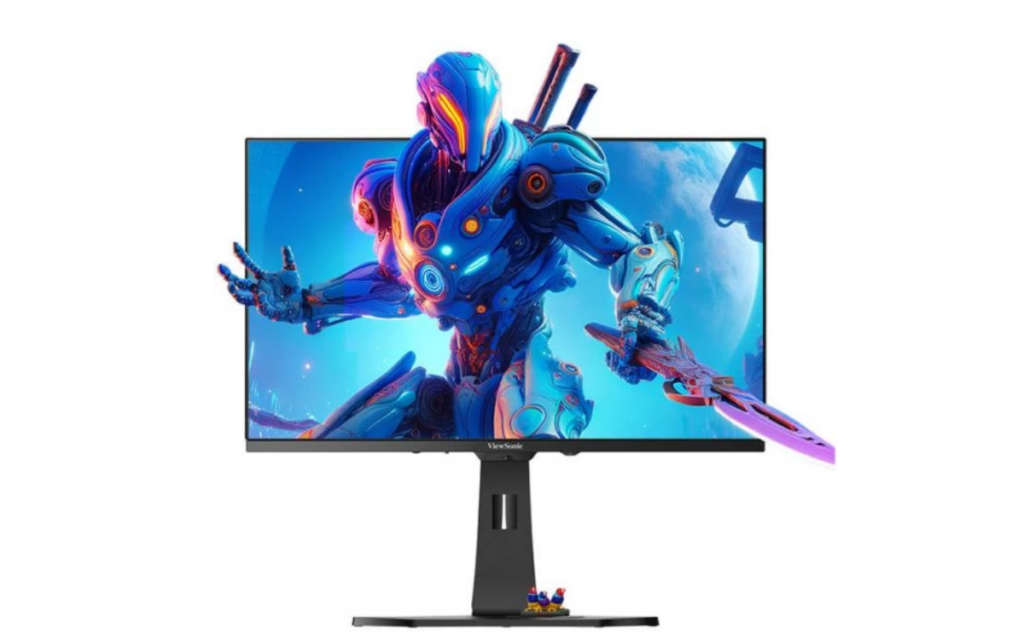
ViewSonic has officially listed its new XG273F-2K-OLED gaming monitor on its website. The model is already available for pre-sale on Chinese e-commerce platforms, priced at 7,999 yuan (roughly $1,120). It belongs to the company’s Starfield series of esports monitors and targets competitive gamers looking for high frame rates and fast panel response.
ViewSonic XG273F-2K-OLED Specifications
The monitor features a 26.5-inch glossy WOLED panel with a native resolution of 2560×1440. It supports a high refresh rate of 540Hz at QHD and can switch to 720Hz in HD mode.
The display uses LG Display’s fourth-generation OLED panel with Primary RGB Tandem structure, offering a 0.02ms GtG response time, native 10-bit color depth, and 99.5% DCI-P3 coverage. The panel reaches 335 nits of SDR brightness, 555 nits typical HDR brightness, and up to 1500 nits peak brightness at 1.5% APL. It carries VESA’s ClearMR 21000 certification and supports HDR10.
To maintain OLED longevity, ViewSonic includes several screen protection features like pixel cleaning, screen shift, uniform brightness control, and static icon detection. The monitor also comes with multiple gaming modes, such as Eagle Eye, Cat Eye, and Night Vision, in addition to PIP and PBP multitasking support.
The monitor includes two HDMI 2.1 ports and two DisplayPort 1.4 inputs, all capable of handling QHD at 540Hz with 10-bit RGB. It also features a headphone output and a USB-A port for firmware updates.
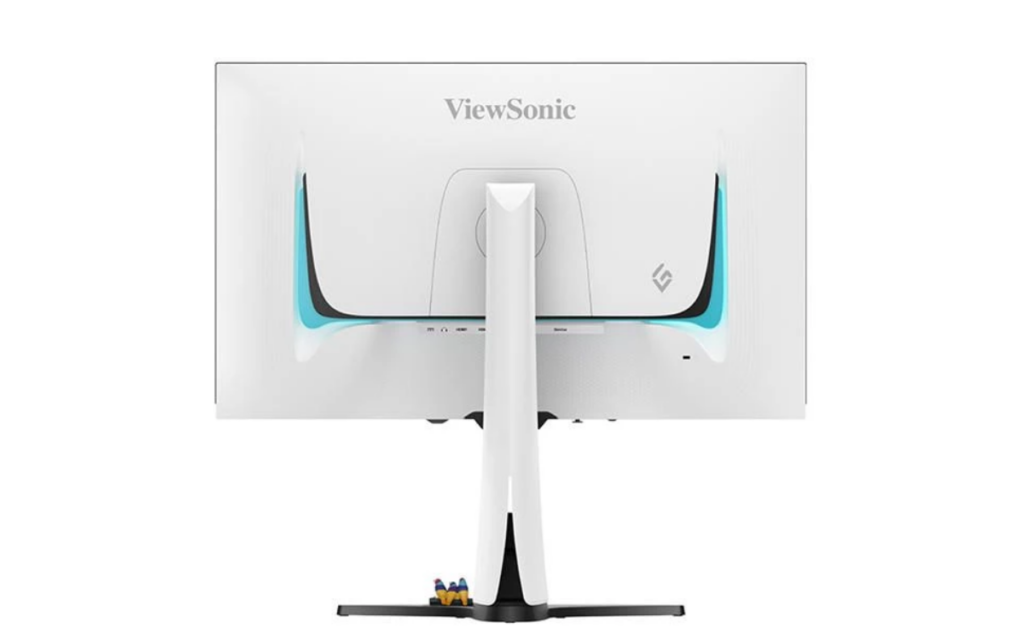
The XG273F-2K-OLED comes with a height-adjustable stand that supports 120mm of vertical travel, -5° to 20° tilt, ±20° swivel, and ±90° pivot. The rear panel is white with integrated RGB lighting aimed at creating an esports-style gaming ambiance.
There are no built-in speakers. It weighs 6kg with the stand and 3.4kg without. The overall build supports 100×100mm VESA mounting and includes physical control buttons, a power key, a shortcut key, and a dual-mode switch.
Oppo’s Find X9 Pro has been enjoying its moment in the spotlight thanks to that enormous 7,500 mAh battery and the multi-day endurance that comes with it. But Vivo might not let Oppo hold the crown for long. A fresh leak suggests the upcoming Vivo X300 Ultra is gearing up to challenge — or at least come close to — that record-breaking number.
vivo X200 Ultra
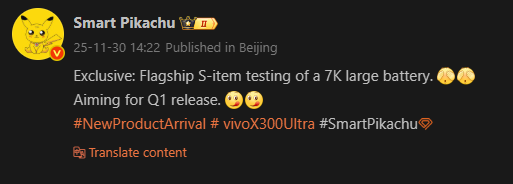
The info comes from reliable Weibo leaker Smart Pikachu, who claims Vivo is planning a Q1 2026 launch for the phone. Digital Chat Station, another well-known tipster, previously pointed to a March 2026 release window, which lines up almost perfectly with Vivo’s usual flagship schedule. In short, development seems well underway.
The battery is the big hook here. Vivo has already been steadily pushing capacity upward. The X200 Ultra launched globally with a 6,000 mAh silicon-carbon cell. Then came the X300 series, where the standard model sits at 6,040 mAh and the X300 Pro climbs to 6,510 mAh. Now, the X300 Ultra is rumored to jump to roughly 7,000 mAh.
While that’s another major leap — and enough to pose a real threat to the Find X9 Pro (7500 mAh) or the Xiaomi 17 Pro Max (7500 mAh) — it’ll be interesting to see whether the upcoming Find X9 Ultra pushes things further toward an 8,000 mAh milestone. The Find X9 Ultra was, in fact, rumored to feature the largest battery among all upcoming “Ultra” phones.
Other specs of the X300 Ultra remain mostly behind the curtain for now, though the phone is expected to feature Qualcomm’s upcoming Snapdragon 8 Elite Gen 5 chip and a new camera setup built around a 35 mm primary lens paired with Sony’s latest Lytia 901 sensor. One more welcome change? Unlike the China-only X200 Ultra, this model is reportedly heading for a global release from day one.
If all of this holds true, the X300 Ultra could become one of the most-watched flagships of early 2026.
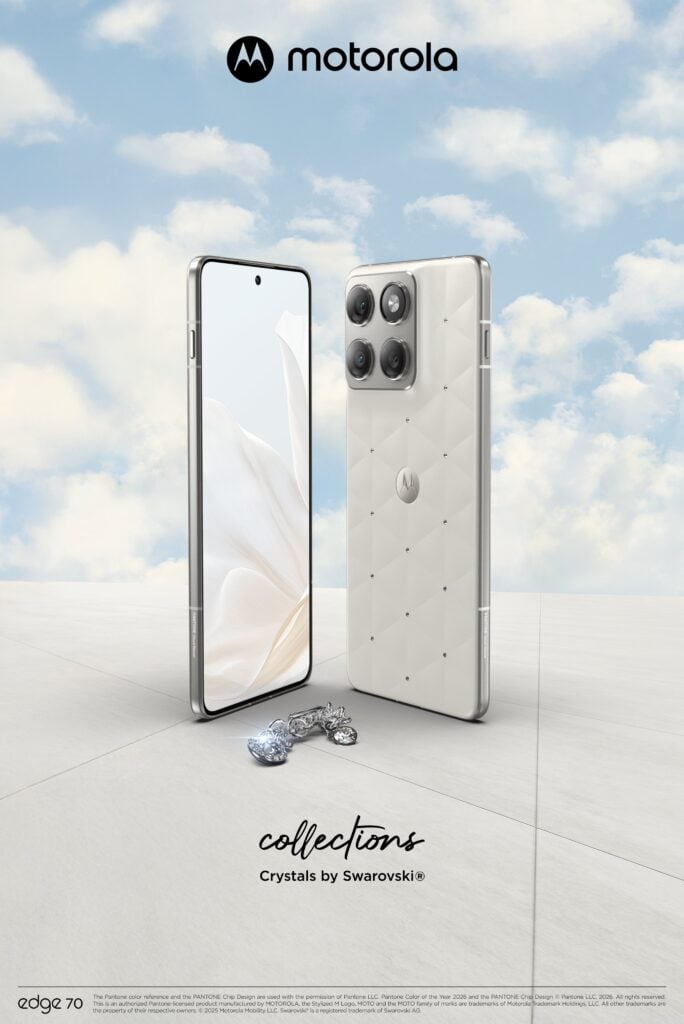
It looks like Motorola has another fashion-forward device on the way. Just weeks after the Edge 70 landed in stores, a new Swarovski Edition has leaked online — and it’s definitely aiming for the glam crowd.
Shared by leaker Evan Blass (@evleaks), the marketing poster shows the phone in a clean Pantone “Cloud Dancer” finish — a creamy, soft white shade that’s tipped to become Pantone’s official Color of the Year 2026. The back is covered in vegan leather and dotted with 14 real Swarovski crystals. The frame even carries a “PANTONE Cloud Dancer” engraving for that extra bit of luxury branding.
This isn’t just another paint job. It’s Motorola’s second Swarovski-themed release this year, following the Razr 60 special edition and a matching set of crystal-flair earbuds. And while pricing isn’t confirmed yet, it clearly pushes the Edge 70 into collectible territory. For reference, the standard model currently starts around €799 in Europe.
Inside, nothing changes — which is mostly good news. You still get the bright 6.7-inch 120 Hz P-OLED display, IP68 and IP69 protection, Snapdragon 7 Gen 4 chip, 12 GB RAM, up to 512 GB storage, 50 MP triple cameras, wireless charging, and a 4800 mAh battery. The standard Edge 70 measures 5.99mm in thickness, ships with Android 16, and promises four major OS updates.
There’s no launch date for this special Swarovski edition yet, but the leak looks polished enough that an announcement shouldn’t be far off. If you’ve been eyeing the Edge 70 and want something that stands out — literally — this Swarovski Edition might be the sparkliest smartphone release of the year.
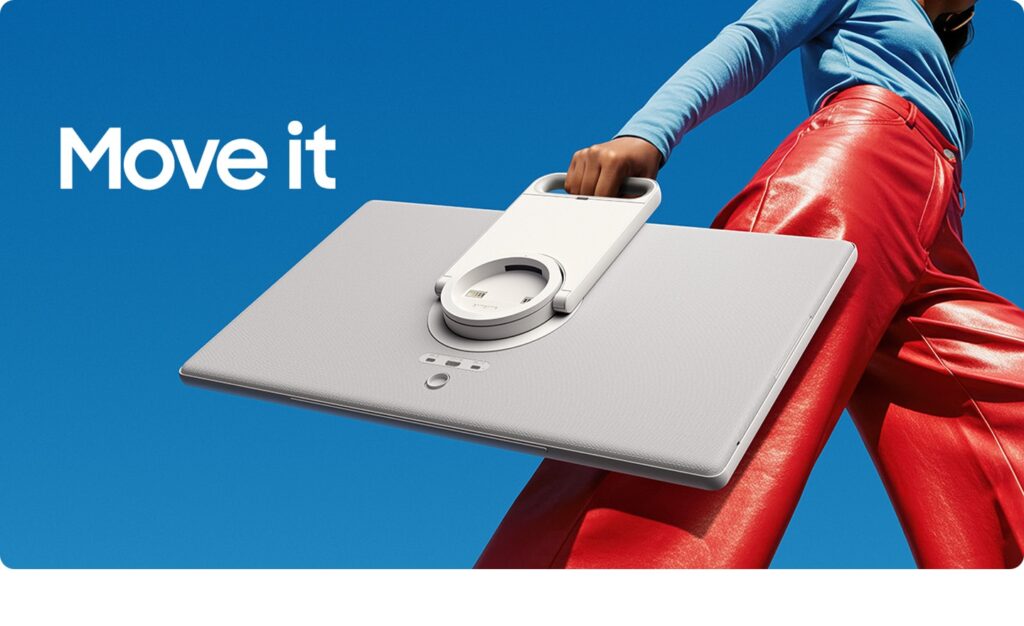
Samsung has launched The Movingstyle portable smart TV in the UK. The 27-inch QHD display is now available for purchase at £1,199 through Samsung UK’s official website and other authorized retailers. The portable TV, which previously launched in South Korea and the US, comes in a white finish.
Samsung The Movingstyle Specifications
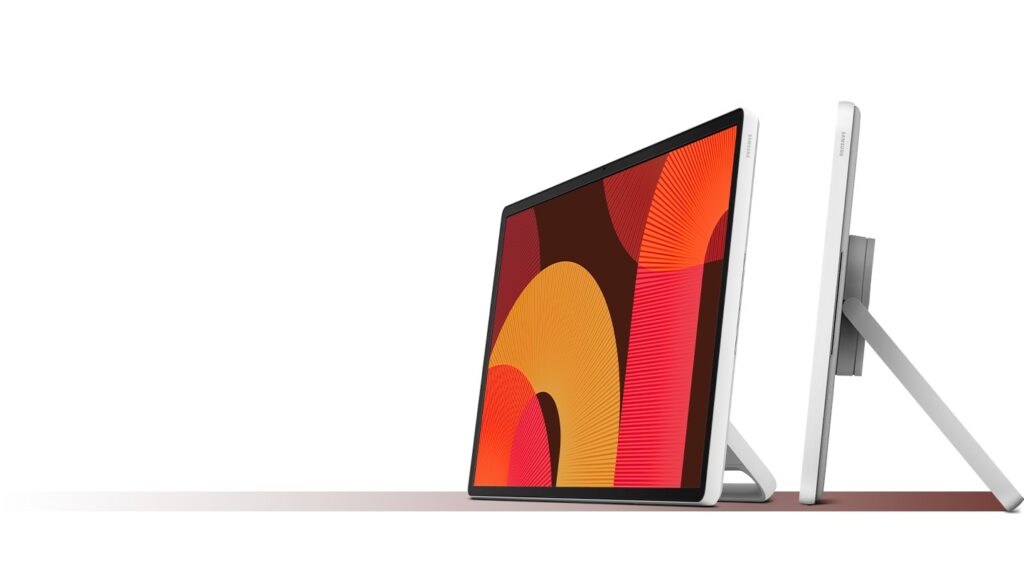
The Movingstyle features a detachable screen and a rollable floor stand. The screen supports QHD resolution (2560 x 1440) and a 120Hz refresh rate. Samsung has equipped the display with HDR10+ Adaptive, Motion Xcelerator 120Hz, and the NQ4 AI Gen2 processor. This processor uses 20 neural networks to optimize brightness, contrast, motion, and audio in real time.
The portable TV weighs 25.7 kg with the stand and 5.2 kg without it. The integrated battery offers up to three hours of viewing time without a power outlet. The screen can be tilted ±35°, swiveled ±30°, pivoted 90°, and adjusted vertically by 21 cm. The Movingstyle also includes an integrated kickstand that doubles as a carry handle.
Samsung runs its Tizen OS on The Movingstyle. The smart interface supports apps like Netflix, Disney+, YouTube, and Samsung TV Plus. The device also supports Samsung Gaming Hub, which allows access to Xbox Cloud Gaming without the need for a console.
For audio, the TV uses a 2-channel 10W speaker setup with Dolby Atmos and OTS Lite handling spatial cues. It also features Q-Symphony, which syncs the TV’s speakers with compatible Samsung soundbars to deliver a fuller, more cohesive soundstage.
The TV supports two-way touch interaction, allowing direct touch controls as well as mirroring from mobile devices. It comes with two USB-C ports, one HDMI port (eARC supported), Wi-Fi 5, and Bluetooth 5.3.
Samsung includes lifestyle features such as Art Store access, Daily Board widgets, generative AI wallpapers, and Samsung Daily+ apps for health, productivity, and entertainment. The TV also supports Apple AirPlay, Google Cast, and voice assistants like Alexa and Bixby.
Samsung promises at least five years of software security updates, with support listed through December 2030.
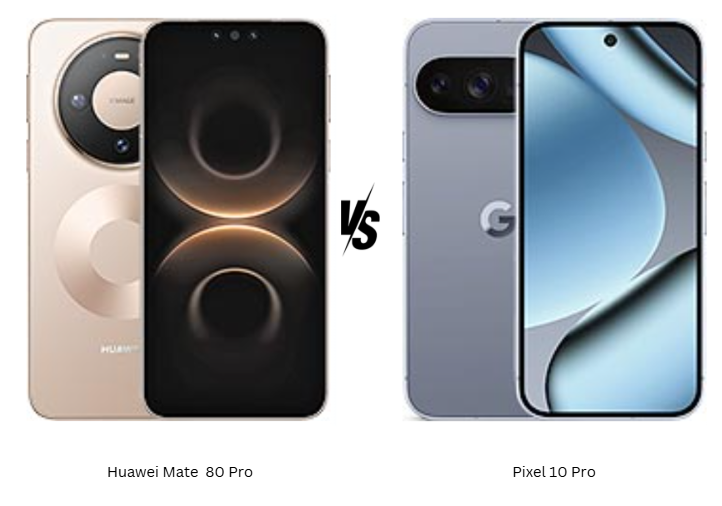
Huawei Mate 80 Pro and Google Pixel 10 Pro take two different routes to deliver a premium smartphone experience. One focuses on powerful hardware and long battery life, while the other leans on smart software and advanced AI. Buyers comparing these two are usually looking for a reliable flagship that fits their daily needs, whether that means stronger performance, better photos, or a longer-lasting device. This comparison helps make that choice clearer by showing what each phone does best.
The Mate 80 Pro delivers a more rugged and durable impression thanks to its tougher water-resistance rating and reinforced materials, making it feel engineered for harsher conditions. Its curved aesthetics and premium finish give it a refined, flagship character. The Pixel 10 Pro opts for a clean, symmetrical glass-and-metal design that feels more minimalist and polished. While the Pixel looks sleeker, the Mate feels more confident in hand, especially for users who value long-term durability and a distinctive flagship identity.
Display Quality
Huawei’s LTPO OLED offers vivid colors, smoother transitions, and strong brightness control backed by high-frequency PWM for comfortable viewing. The larger canvas also provides a more immersive feel for content. Google’s LTPO OLED panel counters with higher peak brightness, richer HDR handling, and sharper density, making it better suited for outdoor visibility and detailed media. Both are premium, but one leans toward eye comfort and immersion while the other emphasizes pure clarity and brightness.
Verdict
Mate 80 Pro wins for durability and immersive visuals, while Pixel 10 Pro edges ahead in brightness and HDR precision.
2. Specifications
Performance
The Mate 80 Pro’s Kirin 9030 series focuses on balanced efficiency, smooth daily use, and reliable thermals. It feels optimized for sustained performance rather than peak bursts. In contrast, the Pixel 10 Pro’s Tensor G5 brings stronger raw power, better AI processing, and superior imaging computation. This gives the Pixel an advantage in multitasking speed and future software expansion. For demanding tasks or AI-driven workflows, the Pixel simply feels more capable.
Battery and Charging
Huawei offers a significantly larger battery with extremely fast wired and wireless charging, delivering quicker turnaround and better endurance across mixed usage. The Pixel’s smaller battery and slower charging mean it lasts a full day, but doesn’t match Huawei’s stamina or convenience. Pixel users gain the benefits of Qi2 magnetic charging and efficient standby, but the Mate’s combination of capacity and charging power feels more practical for heavy users.
Verdict
Pixel 10 Pro wins on raw performance and AI power; Mate 80 Pro dominates battery life and charging speed.
3. Camera
Main and Secondary Lenses
The Mate 80 Pro features a flexible triple-camera system with a variable aperture main lens and strong periscope zoom, delivering natural depth and excellent low-light control. Its color science leans toward rich tones, giving photos a more expressive character. The Pixel 10 Pro relies on computational mastery with consistent results, sharper daytime images, and enhanced telephoto clarity thanks to advanced zoom algorithms. It feels more reliable in tricky dynamic scenes where software makes a difference.
Selfie Camera
Huawei’s ultrawide autofocus selfie system with 3D sensing offers versatility and excellent facial depth mapping, making it ideal for group shots or accurate biometric use. Google’s high-resolution 42MP selfie camera excels in detail and stabilization, producing crisp portraits and smooth video. The Pixel feels stronger for creators who prioritize detail, while Huawei offers a more adaptive selfie experience.
Verdict
Pixel 10 Pro wins for consistent computational results; Mate 80 Pro edges ahead in versatility and depth-driven creativity.
4. Pricing
The Mate 80 Pro comes in at approximately $900, undercutting the Pixel 10 Pro’s $1000 price point while offering stronger battery life, faster charging, and a more rugged build. This makes Huawei’s flagship feel like the better value for users seeking endurance, versatility, and premium hardware at a more accessible cost. The Pixel justifies its higher price with superior AI performance, longer software support, and computational imaging benefits.
Buyers focused on software longevity and intelligent features may find the premium worthwhile, while hardware-first users will see more value in Huawei’s approach.
Disclaimer: Prices are approximate and may vary based on country, region, and applicable taxes.
5. Conclusion
Huawei’s standouts include ultra-fast charging, satellite messaging (region-specific), variable aperture photography, and strong durability. These features cater to users who want independence from power outlets, flexibility in photography, and a device built for demanding environments. Google’s strengths lie in extended software updates, advanced AI tools, cloud-enhanced video, and UWB support, creating a smarter, more connected experience. Each device leans into a different philosophy; Huawei prioritizes hardware dominance, while Google elevates intelligence and computational power.
Verdict
Choose the Mate 80 Pro for superior battery performance, a rugged design, and flexible photography capabilities. Choose the Pixel 10 Pro for stronger AI processing, longer software support, and consistently sharp imaging.
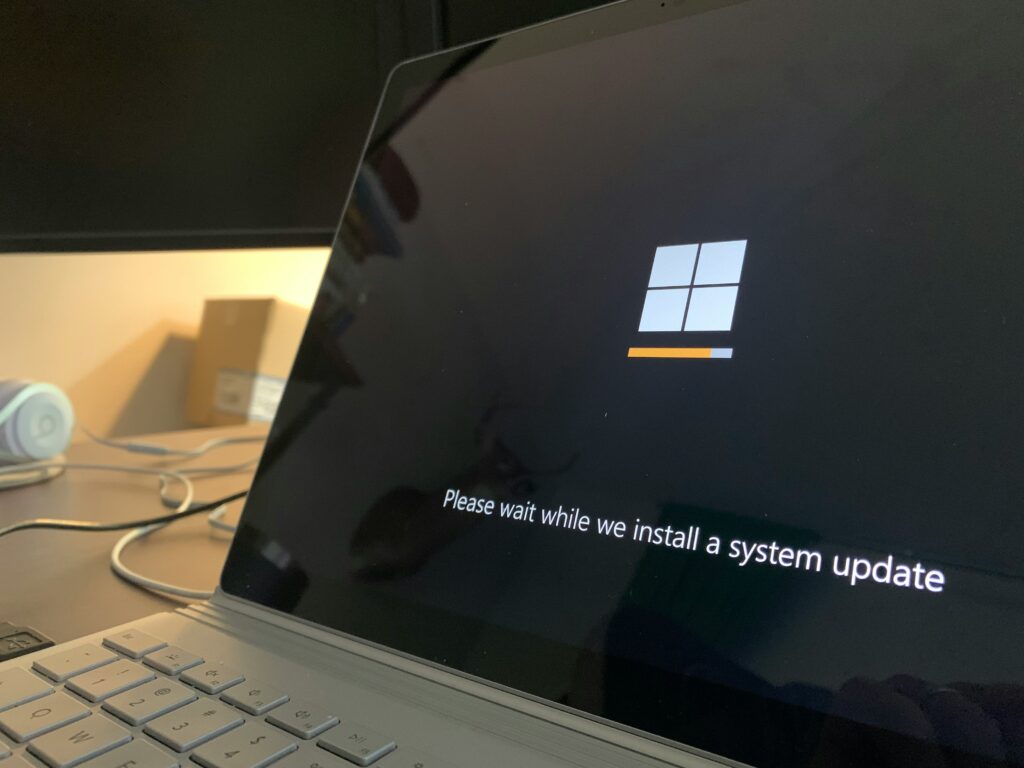
A sneaky new strain of the ClickFix malware is making the rounds, and it’s going after the easiest victim of all: anyone who trusts a Windows update prompt. Security researchers at Huntress say the attackers have managed to put together a full-screen fake update screen that looks just convincing enough to trick people into giving it full access — all through a simple copy-paste trick.
The scam tends to show up on shady websites, mostly adult streaming pages filled with sketchy pop-ups. One misplaced click on an ad or a fake age check, and your entire browser suddenly turns into what looks like a legitimate Windows update stuck at 95%. It then claims you need to press Windows + R and paste a special command to finish the update. Of course, that’s exactly what the malware wants.
That command silently launches mshta, a built-in Windows tool, and pulls down a payload from a remote server. To make detection harder, the code includes tons of junk commands meant to throw off security software. In one of the odder twists, part of the malicious code is actually tucked inside a PNG image — the malware pulls hidden shellcode straight from the pixels and then injects itself into other running processes using .NET.
Once it’s embedded inside the system, the second stage kicks in. Known infostealers like Rhadamanthys or LummaC2 get dropped onto the machine, and from there it’s open season on passwords, browser cookies, banking logins, and crypto wallet data. Everything gets scooped up and shipped off to attackers.
Researchers say the campaign has been active since at least early October and is still very much ongoing, with multiple look-alike domains hosting the fake update screen. Forensic analysts also found random, useless strings in the code — including a weird reference to an old UN speech — apparently just thrown in to waste analysts’ time.
The worst part is that this attack relies entirely on social engineering. No file downloads. No obvious malware pop-ups. Just a website tricking you into running its command for it.
The quick takeaway:
Never copy and paste commands from a random webpage, no matter how official it looks. Real Windows updates don’t ask you to open the Run box — ever.
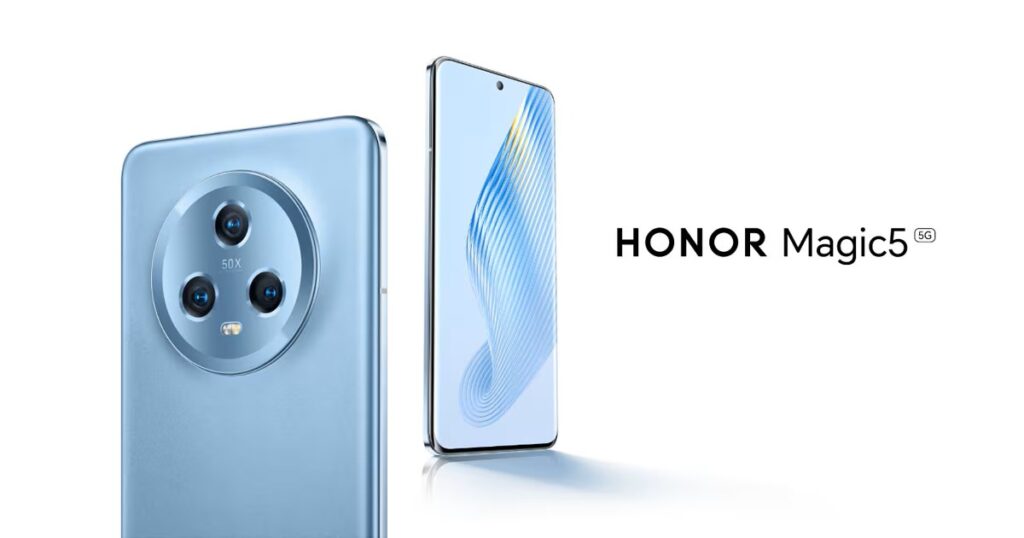
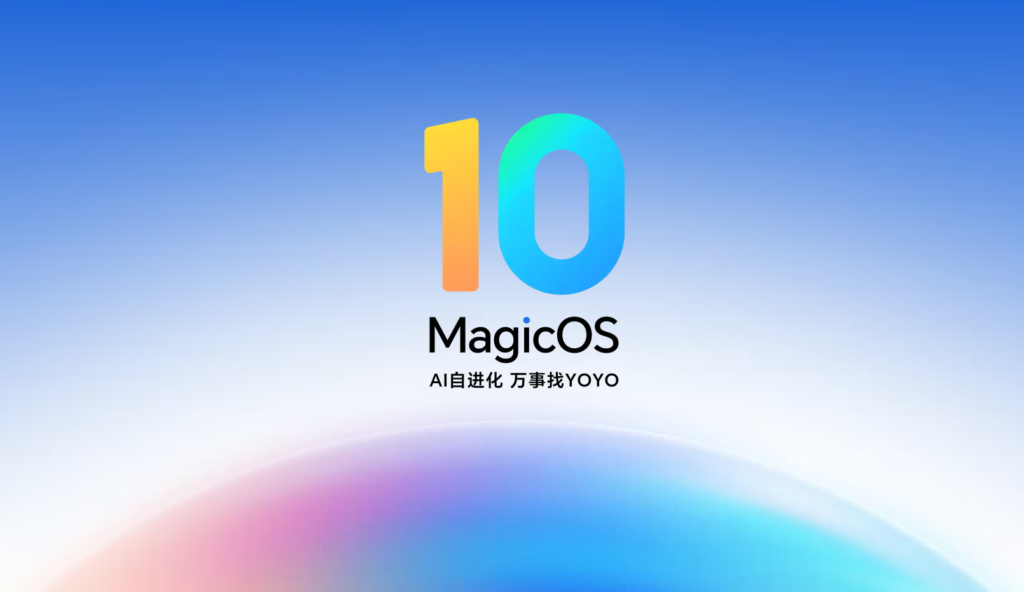
Honor is pushing out a major MagicOS 10 update (version 10.0.0.116) to the Magic5 lineup, bringing a fresh look and a surprising new trick: iPhone notification syncing. The update is just under 1GB and is already rolling out to users.
One of the first things you’ll notice is the new transparent app icons. You can toggle them in Settings > Desktop & Personalization > Icons > Transparent Icons for a cleaner, glass-like home screen. The notification and control centers also get refreshed with real-time blur effects that shift depending on your wallpaper.
The standout addition, though, is cross-platform notification sharing. With the latest Honor Connect app installed on an iPhone, Magic5 users can now see iPhone notifications directly on their phone. Pairing is done by scanning a QR code from Settings > Smart Connect > Connect with iPhone.
There are a bunch of smaller improvements too:
Better support for landscape floating windows in more apps
Double-press Volume Down (with screen off) to ring or silence the phone
View saved Wi-Fi passwords and disconnect networks in WLAN settings
A new animated badge for Live Photos in Honor Share
Honor says the update also fixes breath-to-wake issues, some random app crashes, and a handful of performance bugs to keep the system running smoother.
Even though the Magic5 series is the last Honor flagship range still tied to Huawei’s ecosystem services like MeeTime and Cloud Space, it’s still getting meaningful new features. More upgrades — including new charging options and improved frame stabilization — are already planned.
Magic5 series owners should see the update prompt soon, giving Honor’s 2023 flagships a nice refresh heading into 2025.
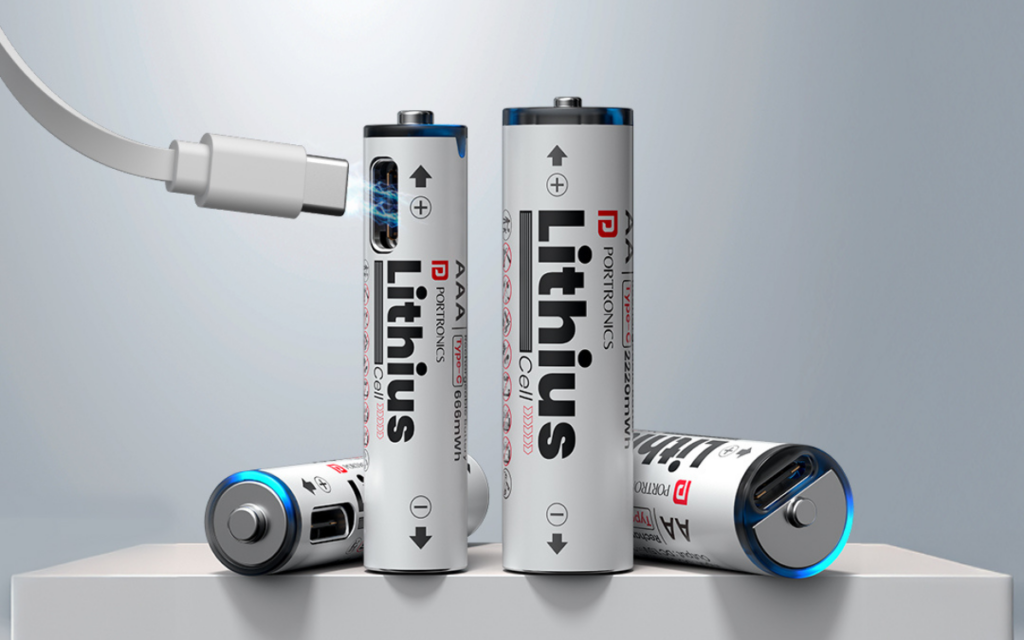
Portronics has introduced its new Lithius Cell series, a set of USB Type-C rechargeable lithium-ion batteries designed to simplify everyday power needs. The lineup includes AA and AAA variants and aims to provide a cleaner, longer-lasting alternative to disposable batteries.
Portronics Lithius Cell Specifications
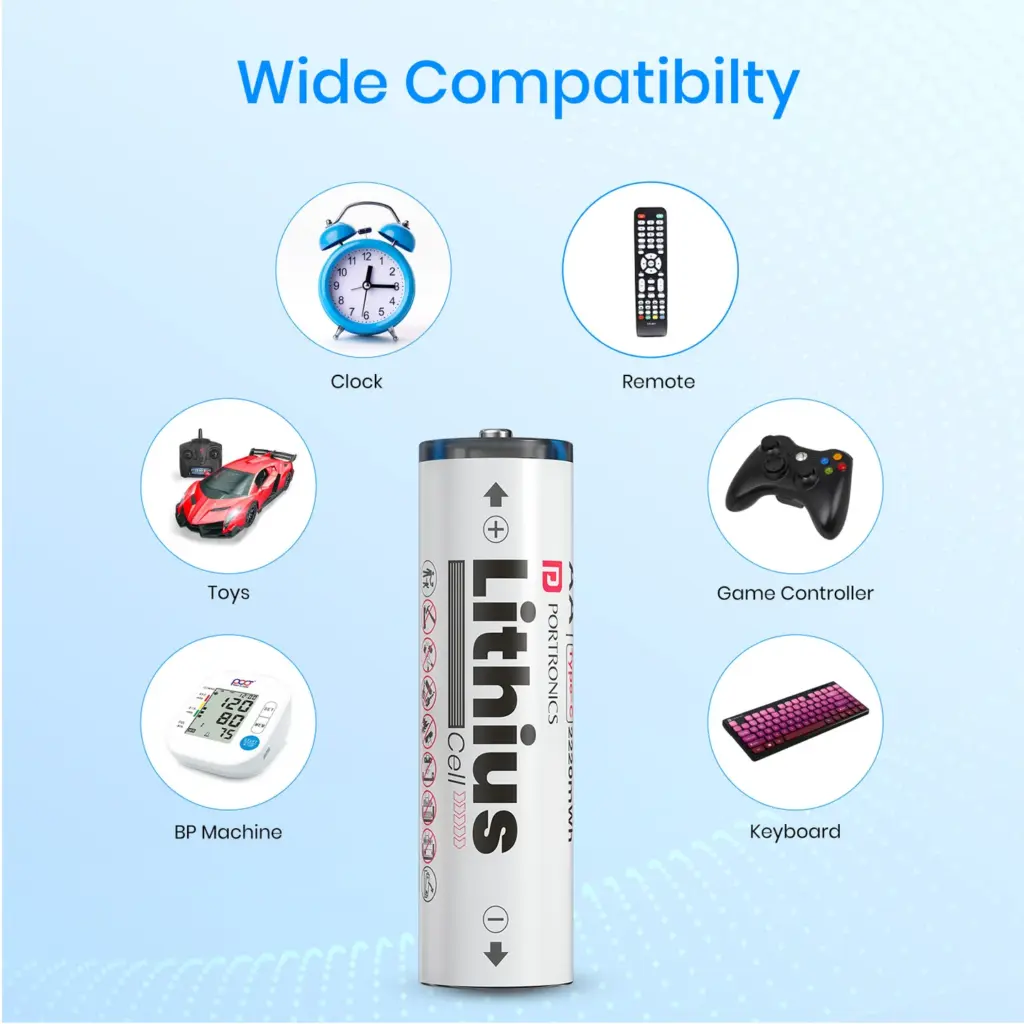
The Lithius Cell batteries integrate a USB-C charging port, so recharging works with any regular Type-C cable and does not require a separate charger or dock. Each cell maintains a consistent 1.5V output that supports a wide range of devices, including remotes, cameras, wireless keyboards, toys, clocks, gaming controllers, and even basic medical equipment.
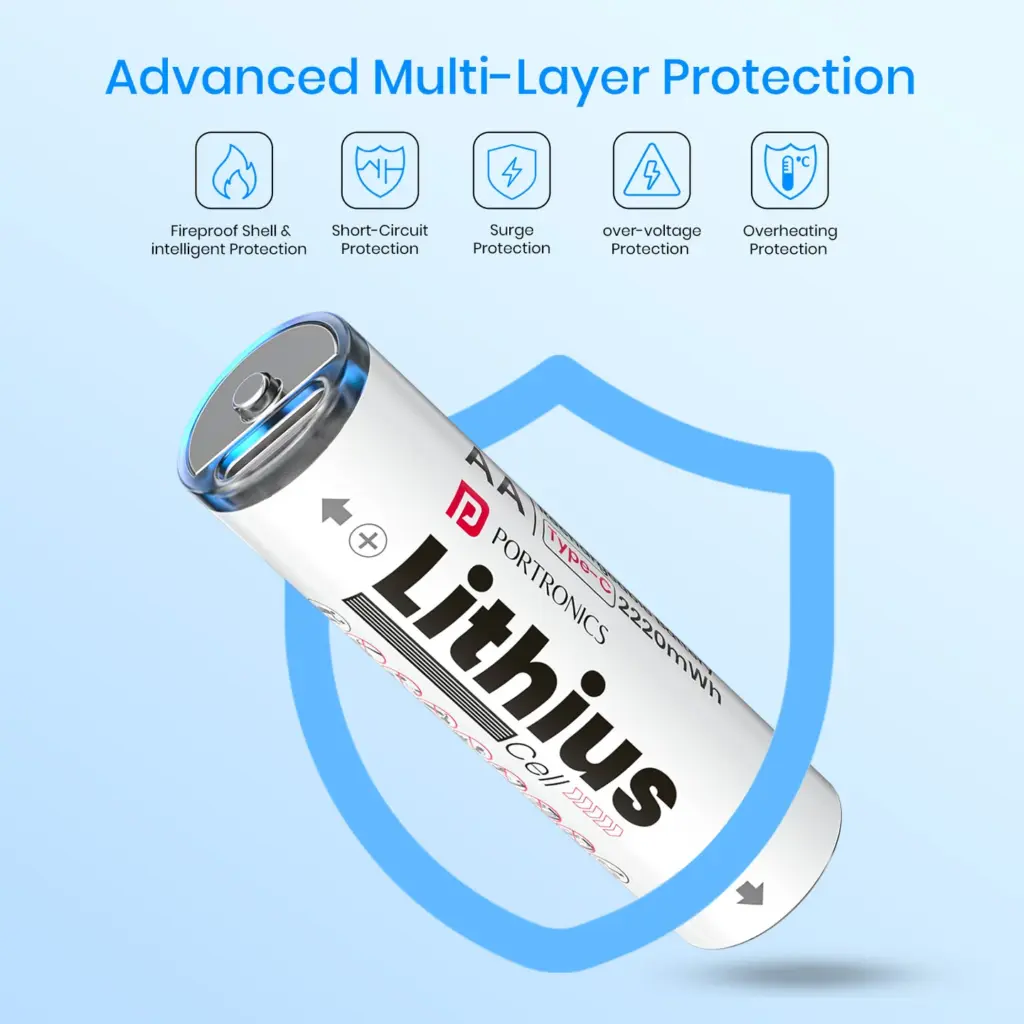
Portronics has equipped the batteries with LED indicators that blink blue during charging and turn solid once the battery reaches full capacity. The cells also feature a leak-proof, reinforced shell that can withstand pressure. The internal design includes multiple safety layers that protect against short circuits, overheating, overvoltage, overdischarge, and surges.
The AA variant has a capacity of 1480mAh (2220mWh) and supports DC 5V/0.5A input and DC 1.5V/2A output. It suits high-drain devices that require extended runtime. The AAA variant comes with a 440mAh (666mWh) capacity and supports DC 5V/0.1A input and DC 1.5V/1.5A output. It is ideal for smaller gadgets.
Both versions include low self-discharge technology, which helps the cells retain up to 80% of their charge even after long periods of non-use. Portronics states that this feature improves longevity and supports sustainable usage.
Pricing and Availability
The Lithius Cell AAA twin-pack is priced at ₹499, while the AA twin-pack is priced at ₹449. Both variants are available through the company’s official website, major e-commerce platforms, and select offline retail stores. Portronics is offering a six-month warranty on both battery types.
In related news, Portronics recently launched the Revvo magnetic power bank in India, which features a built-in kickstand and comes in an affordable price segment. The company also introduced the Apollo 30 Bluetooth speaker for Rs 2,299, offering RGB lighting and a bundled karaoke mic for casual entertainment
For more daily updates, please visit our News Section.
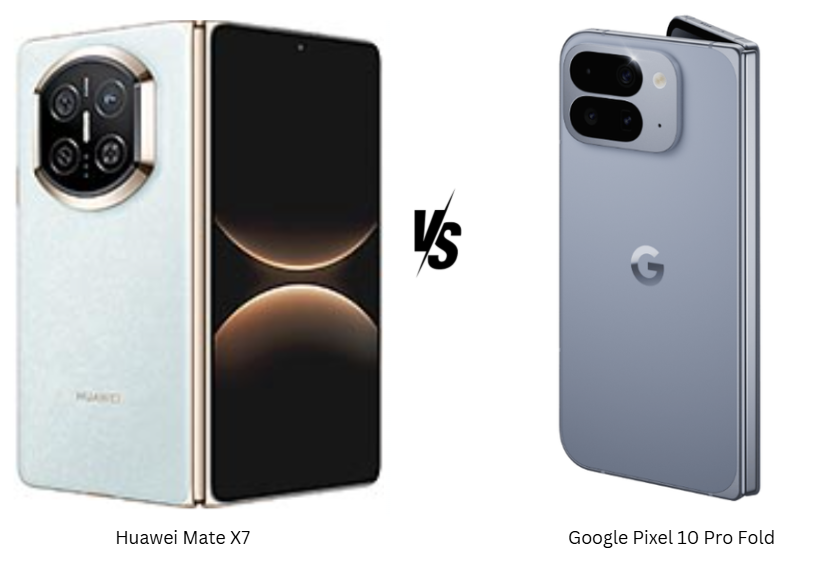
Huawei Mate X7 and Google Pixel 10 Pro Fold sit at the top of the foldable market, making this comparison essential for buyers deciding between premium hardware and long-term software value. These devices attract power users, creators, productivity-focused professionals, and anyone seeking a future-ready foldable experience. Understanding how they differ helps buyers choose whether they want Google’s advanced AI ecosystem or Huawei’s hardware-driven excellence.
Huawei’s Mate X7 leans toward a more refined, premium foldable feel thanks to its aerospace-grade frame and durable eco-leather options. Its tougher water-resistance rating adds confidence for long-term durability, and the hinge design feels engineered for smoother unfolding. Pixel 10 Pro Fold counters with Gorilla Glass Victus 2 and a more traditional Google design language. It feels reassuringly solid, and the blend of glass and metal appeals to users who prefer a classic smartphone texture. However, Google’s thicker folded profile may feel less sleek during one-handed use.
Display Quality
Both offer large, immersive 8-inch LTPO OLED foldable displays with 120Hz refresh rates, but Huawei pushes brightness levels further, making it easier to enjoy outdoors or under harsh lighting. The Mate X7’s higher PWM dimming also feels gentler on sensitive eyes. Pixel’s inner display is slightly less sharp in comparison, but it delivers excellent color accuracy and HDR10+ support, giving it a natural look ideal for streaming platforms.
Verdict
Mate X7 pulls ahead with its more refined materials, stronger brightness, and smoother visual comfort, while the Pixel 10 Pro Fold delivers a safe, balanced experience that suits users prioritizing Google’s design ecosystem.
2. Specifications
Performance
Huawei’s Kirin 9030 Pro prioritizes efficiency and thermals, delivering steady performance even during extended sessions. It feels tuned for reliability more than brute force, and the Maleoon GPU holds up well for daily tasks. Pixel 10 Pro Fold’s Tensor G5, built on a newer node, offers stronger peak power and better AI-assisted operations. Multitasking, voice features, and app prediction feel more responsive thanks to Google’s tuning. Users who push phones for computational tasks may notice Pixel’s advantage.
Battery and Charging
Huawei offers a larger battery paired with faster wired and wireless charging rates. This combination gives it better endurance and shorter recharge cycles, which feels convenient for heavy users. Pixel focuses on steady efficiency with respectable battery life and Qi2 wireless charging, appealing to users invested in modern charging ecosystems. Its bypass charging is a neat touch for gamers who want cooler operation during plugged-in use.
Verdict
Pixel wins for raw performance and intelligent software acceleration, while Mate X7 takes the crown for superior battery longevity and charging convenience.
3. Camera
Main and Secondary Lenses
The Mate X7 uses a powerful triple-camera system with a variable aperture primary lens and strong periscope zoom. Its sensor sizes, especially on the higher-RAM variants, give it an advantage in low light and texture accuracy. The color science leans toward richer tones, giving images a more dramatic, flagship-grade look. Pixel 10 Pro Fold offers Google’s computational photography strengths, pushing clean detail and balanced exposure even in tough scenes. Its 5x optical zoom is excellent, but the smaller sensors may occasionally show limits in evening photography.
Selfie Camera
Huawei keeps things simple with 8MP shooters, focusing more on clarity and dynamic range. Pixel, with 10MP sensors and PDAF, produces sharper, more natural selfies that feel more consistent across lighting conditions. Creators who rely on front-facing video may appreciate Pixel’s superior stabilization and 4K recording options.
Verdict
Huawei offers a better hardware-driven camera system with stronger low-light and zoom depth, while Pixel delivers more consistent everyday results through computational processing and higher-quality selfie performance.
4. Pricing
Both devices sit at the same approximate $1800 price point, making value differentiation entirely feature-driven. Huawei justifies the cost with premium build materials, a brighter display, a more advanced battery/charging setup, and stronger camera hardware. The overall package feels crafted for users who want a luxury foldable designed to last.
Pixel 10 Pro Fold, however, provides long-term software value with seven major Android upgrades, which stands out in the foldable market. It also includes features like UWB, magnetic wireless charging, and advanced AI enhancements that add longevity to the user experience. For buyers deeply tied into Google services, the software commitment alone feels worth the price.
If the priority is hardware excellence and durability, Mate X7 offers stronger value. If long-term updates, advanced computational features, and ecosystem integration matter more, Pixel 10 Pro Fold feels like the smarter buy.
Disclaimer: Prices are approximate and may vary based on country, region, and applicable taxes.
5. Conclusion
Huawei brings satellite messaging (region-limited), ultra-high-brightness displays, and advanced variable aperture optics, features that give it a distinct advantage for travelers, creators, and heavy multimedia users. Its battery efficiency and fast charging also provide a practical everyday edge. Pixel 10 Pro Fold introduces UWB, magnetic charging, Google-grade AI tools, and a long update roadmap, offering a more future-proof digital experience. The Pixel’s computational photography and smart software touches make everyday tasks feel more fluid.
Verdict
Mate X7 excels in hardware refinement, brighter visuals, better endurance, and more versatile photography. It suits users who want a premium foldable with a focus on durability and strong all-around physical performance. Pixel 10 Pro Fold shines for software longevity, intelligent optimizations, and ecosystem cohesion, making it ideal for users who prefer Google’s services and a more AI-driven experience.
Overall, Mate X7 feels like the better choice for hardware enthusiasts and power users, while Pixel 10 Pro Fold is the smarter pick for software-first users who value updates, AI features, and consistent everyday simplicity.
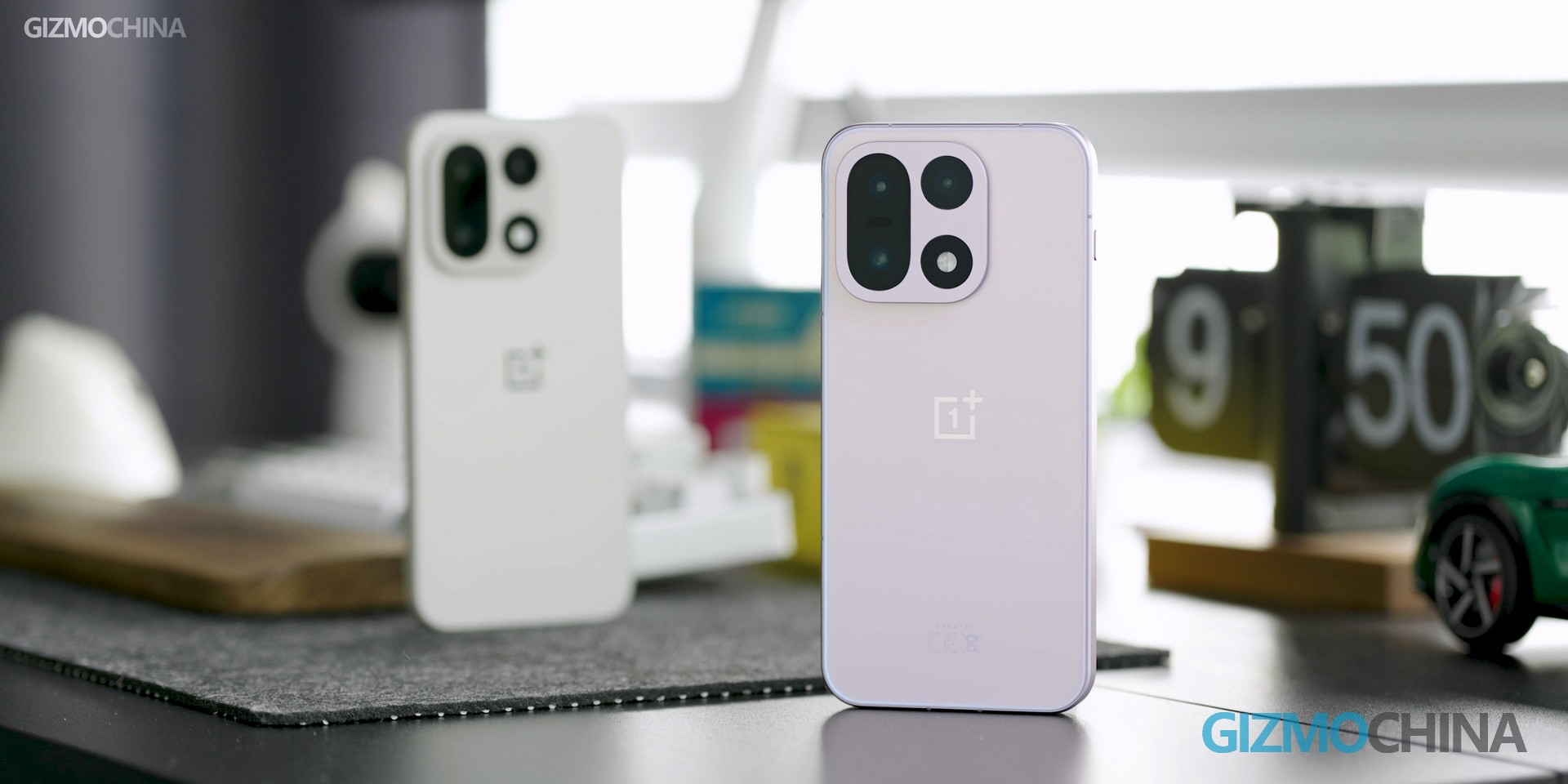
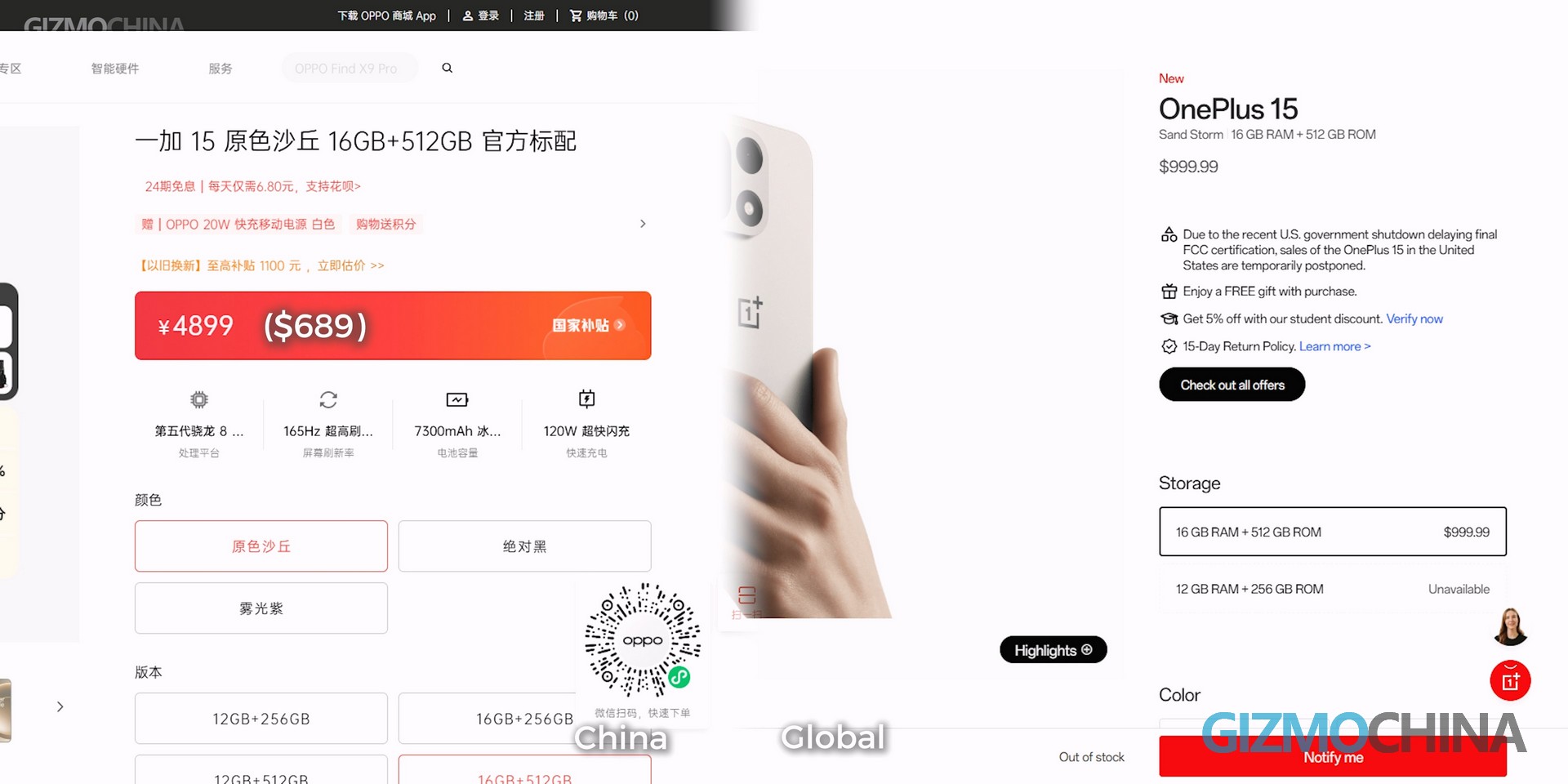
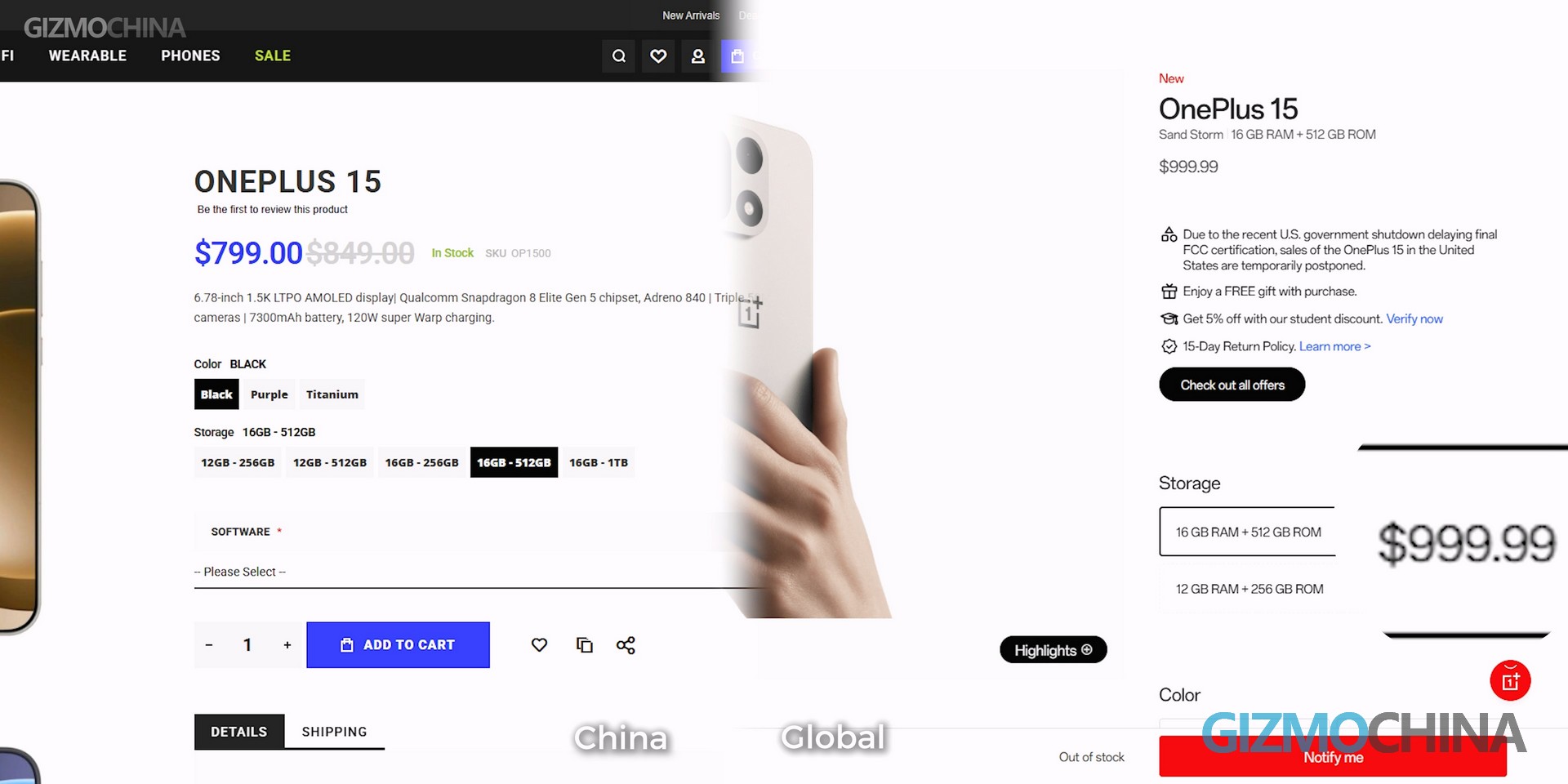
We make most of our smartphone reviews based on the Chinese versions of these devices. The reason is simple: the Chinese models are always released first, while the global versions usually take a few more months to arrive. In our review comment sections, we often see people asking whether the Chinese version will work properly in their country. Coincidentally, we have both the Chinese and global versions of the OnePlus 15 here. Using them as examples, I’ll show you exactly what the real differences are between the Chinese edition and the global edition.
Accessories
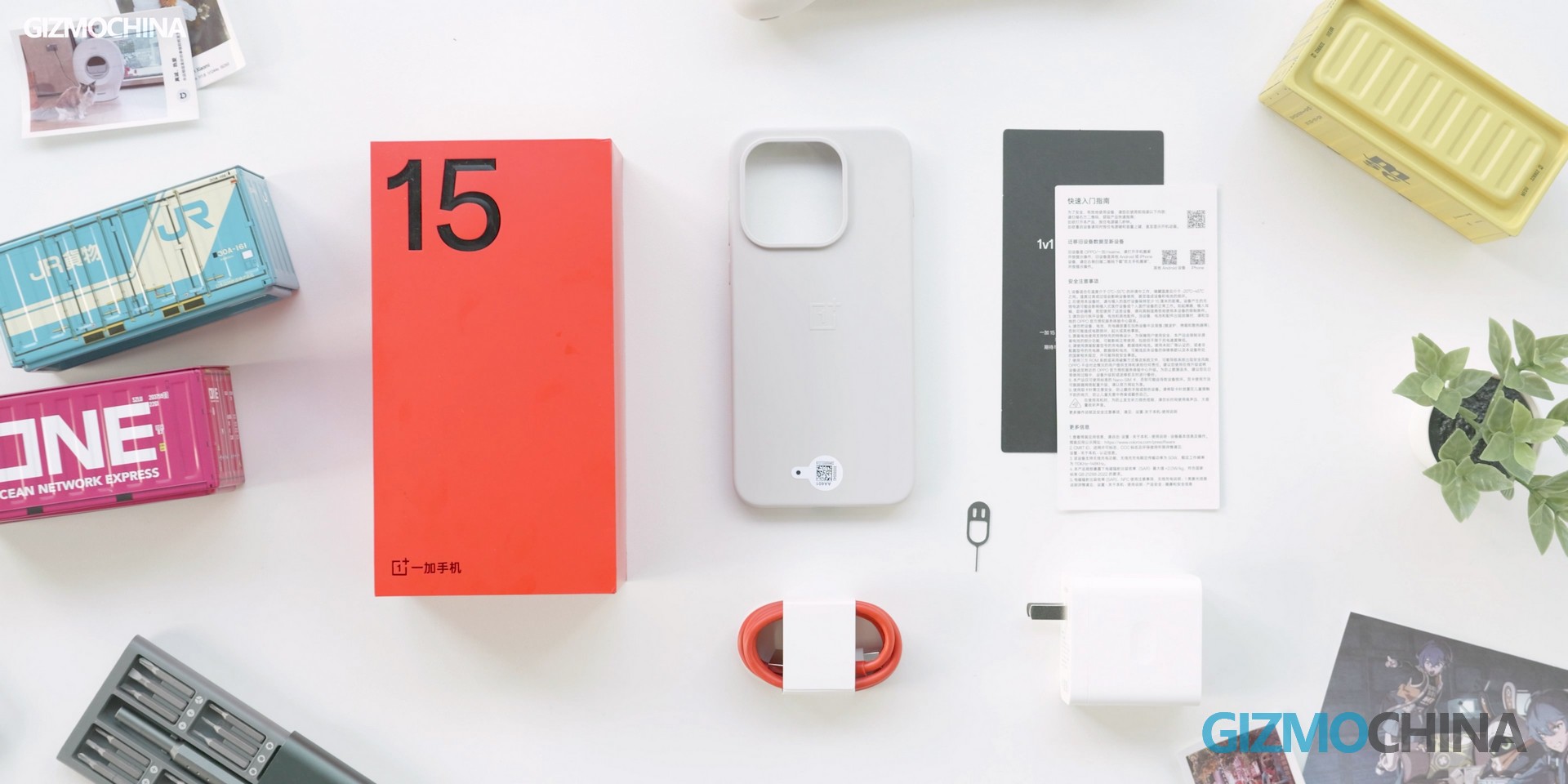
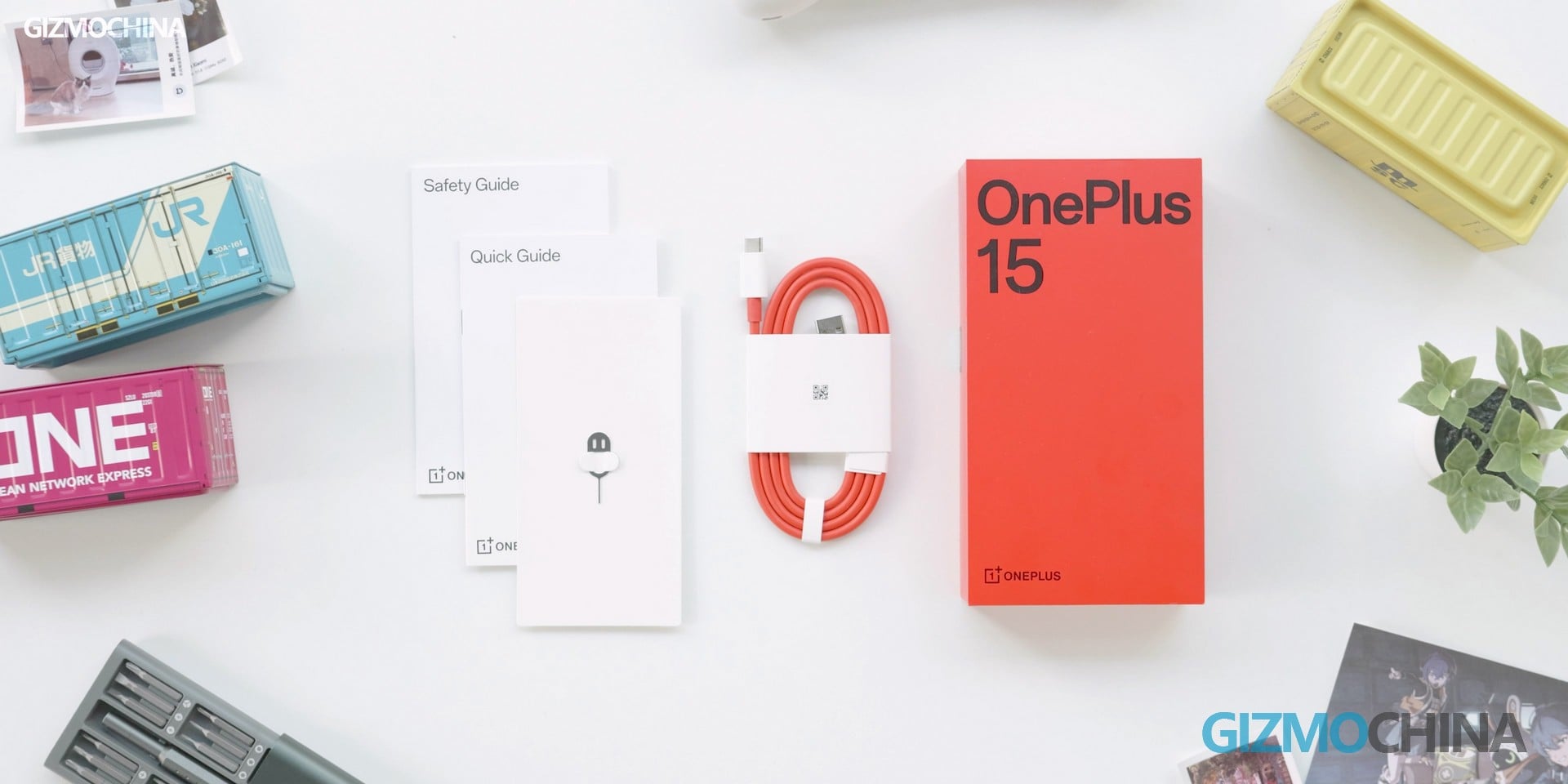
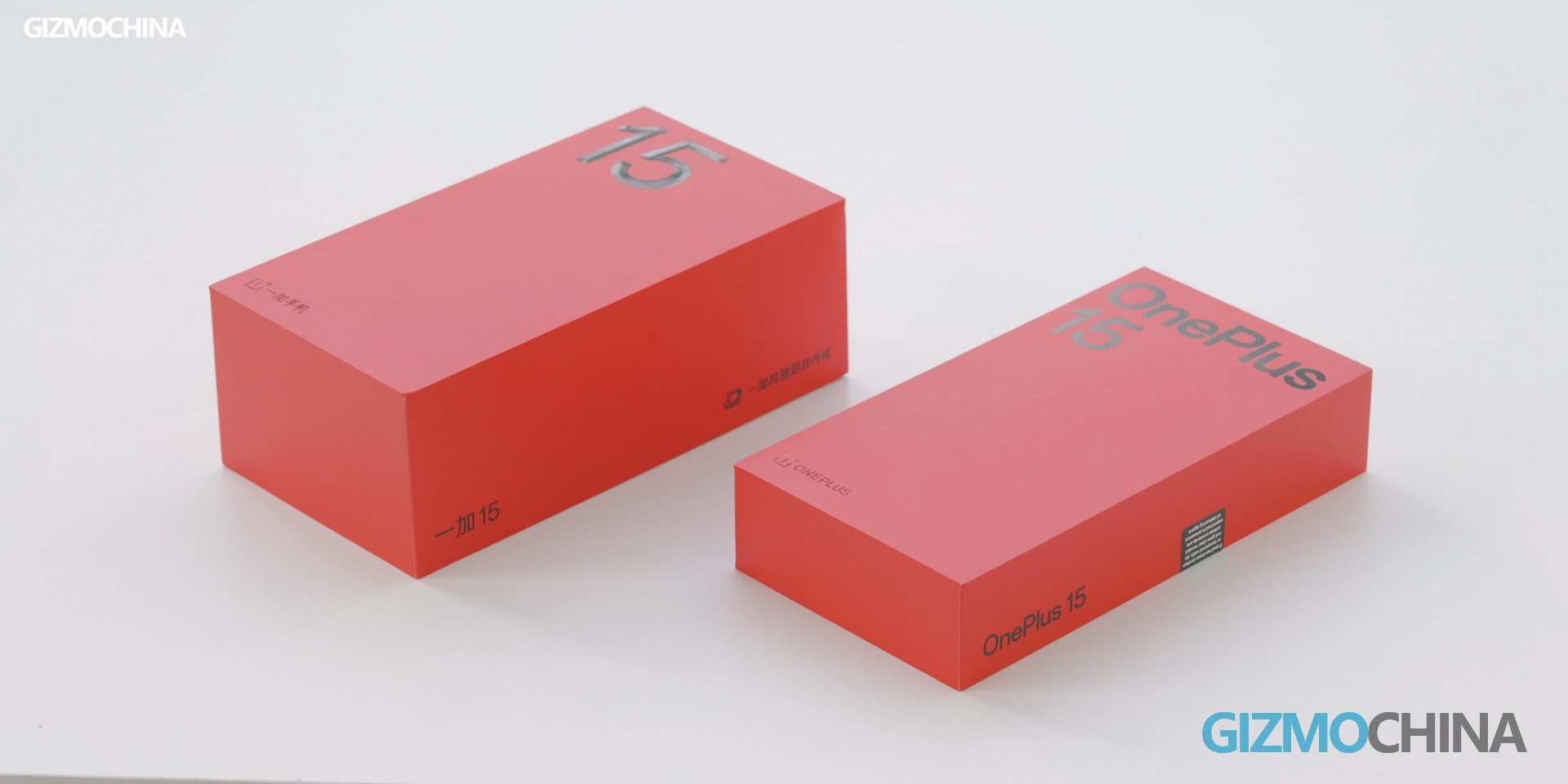
First of all, the size of the packaging alone already hints at a difference in included accessories. Inside the box of the Chinese OnePlus 15, you get a phone case, a 120W charger, and a cable. However, the global version only includes the cable and a stack of manuals.
Chinese versionGlobal version
Of course, not every global variant of every phone comes with fewer accessories. Usually, only the models sold in Europe and North America remove the charger. These regions have stricter ESG regulations that require smartphone companies to reduce carbon emissions as much as possible. So, for this European OnePlus 15, the lack of a charger and case is probably due to those regulations.
Software
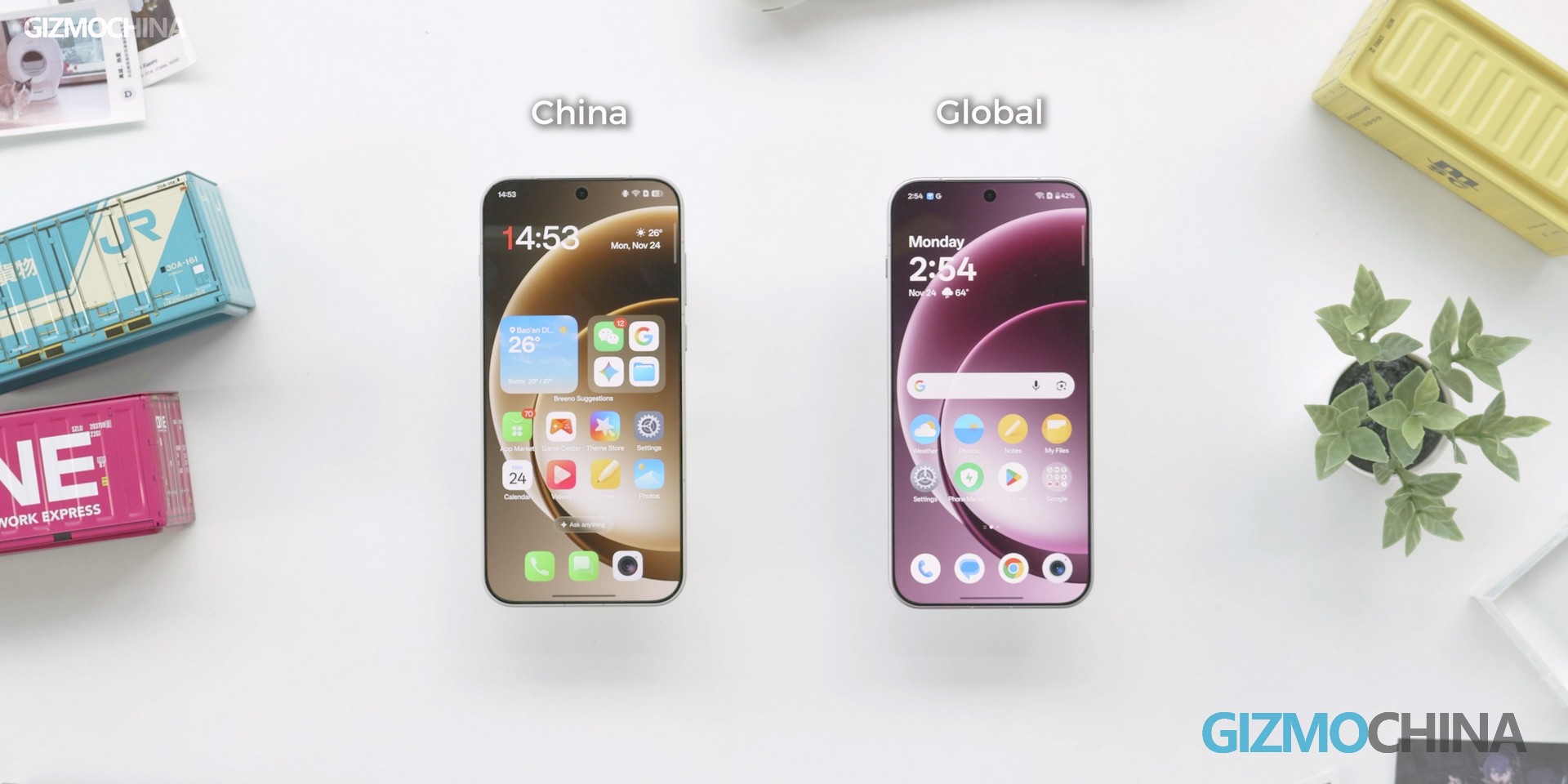
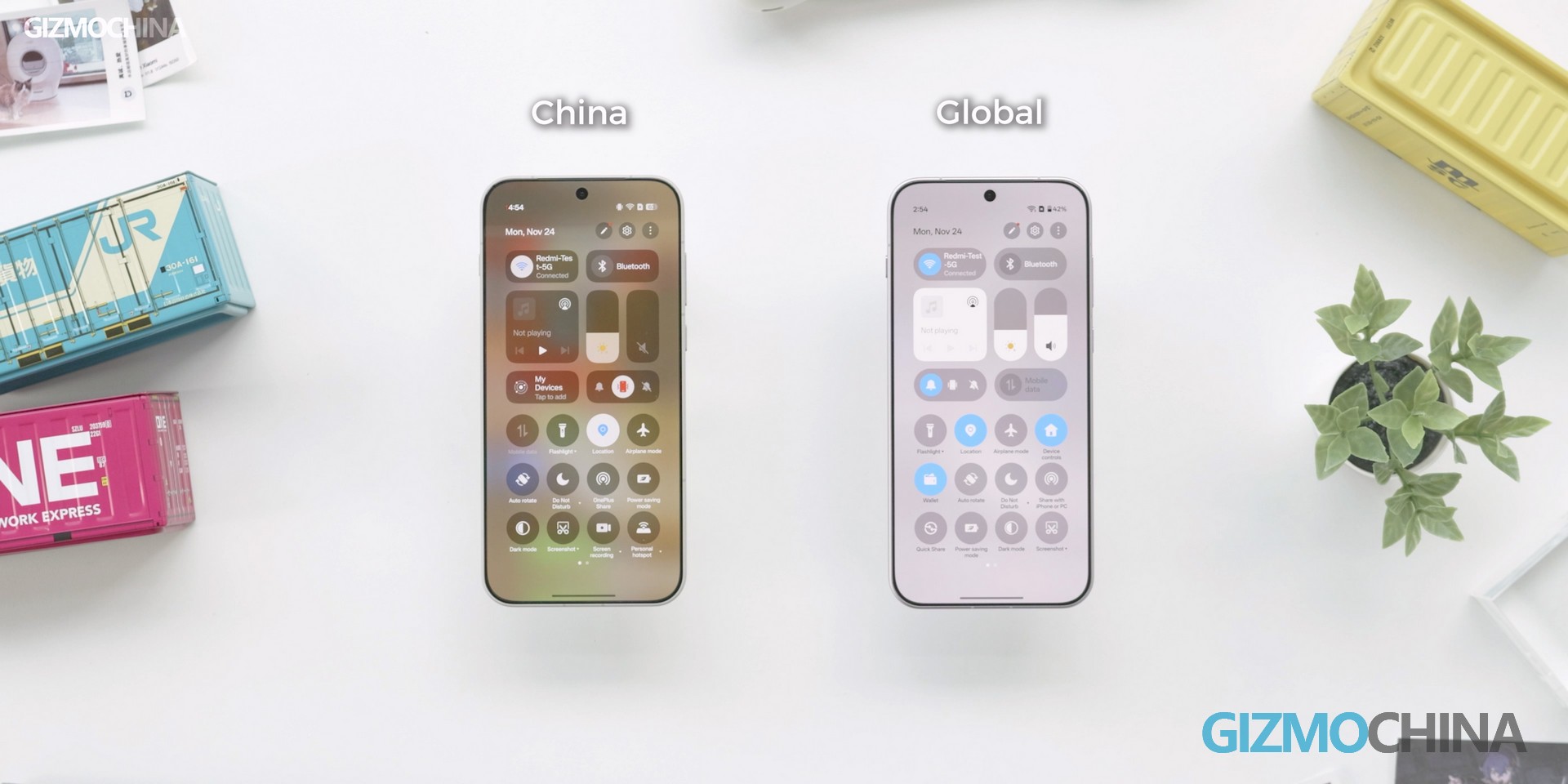
The most obvious difference is that one phone runs OxygenOS while the other runs ColorOS. Anyone familiar with OnePlus knows that, aside from the home UI being closer to stock Android, most of the features and operation logic are basically the same. For other brands, the differences are even smaller—many of them use identical icons and system names.
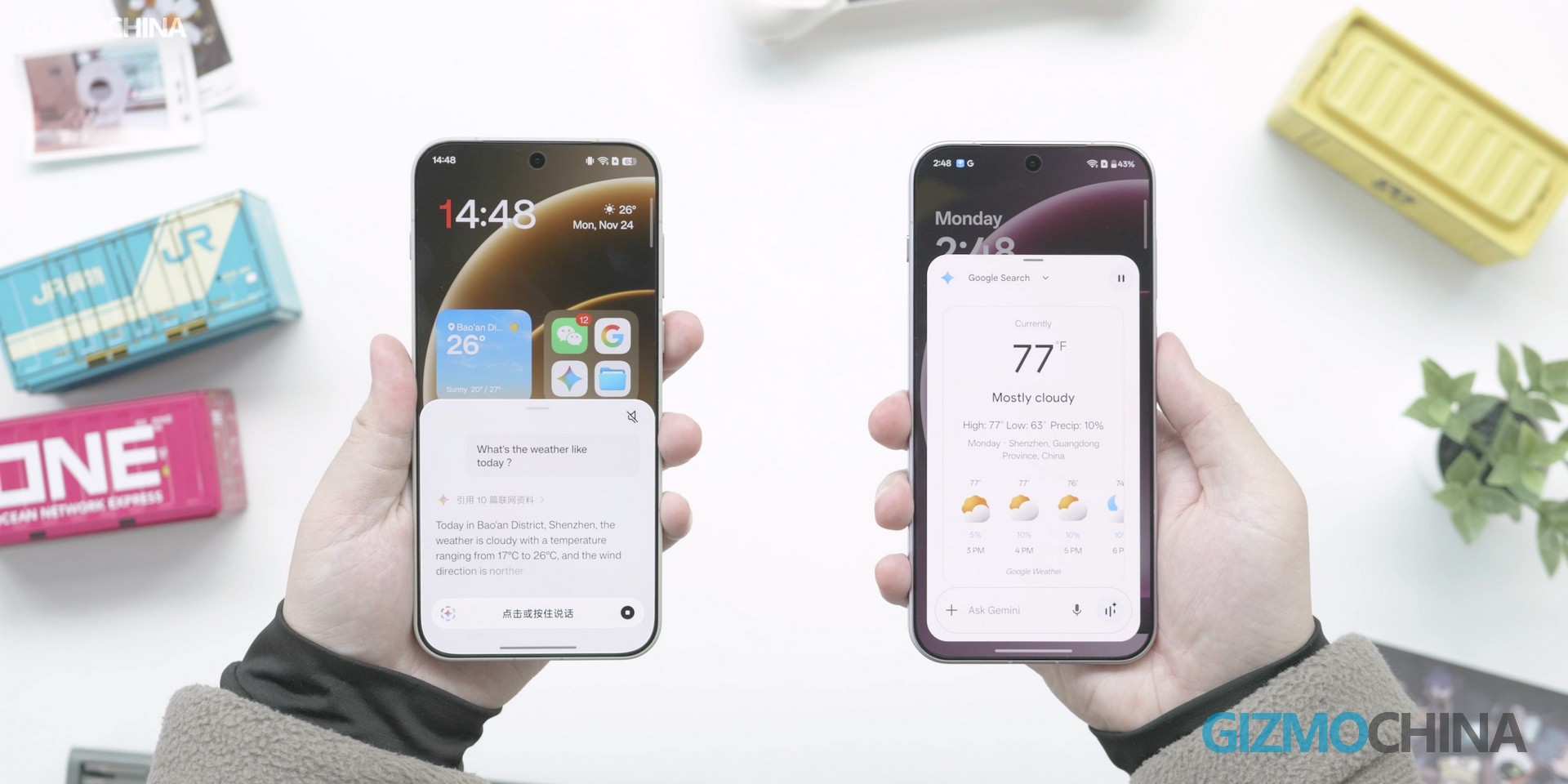
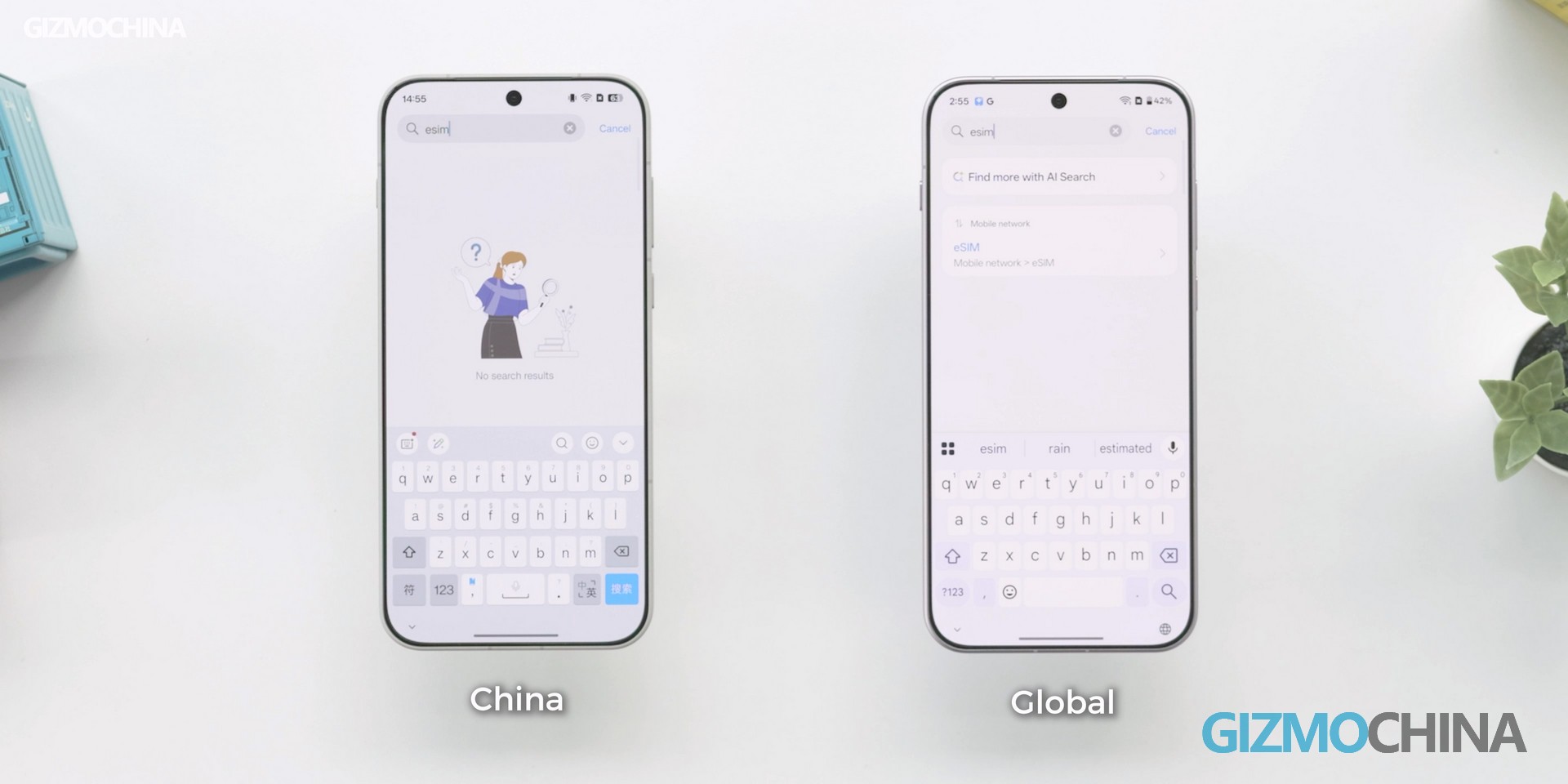
However, the global versions may miss certain features for various reasons. For example, the AI features here aren’t as complete as on the Chinese version. There are also differences in voice assistants and LLMs. Chinese phones each have their own native voice assistant, while global phones almost always use Google Assistant or Gemini. Of course, you can install Gemini on a Chinese phone as well, but you won’t be able to wake it up as quickly as the global version.
Network Signal
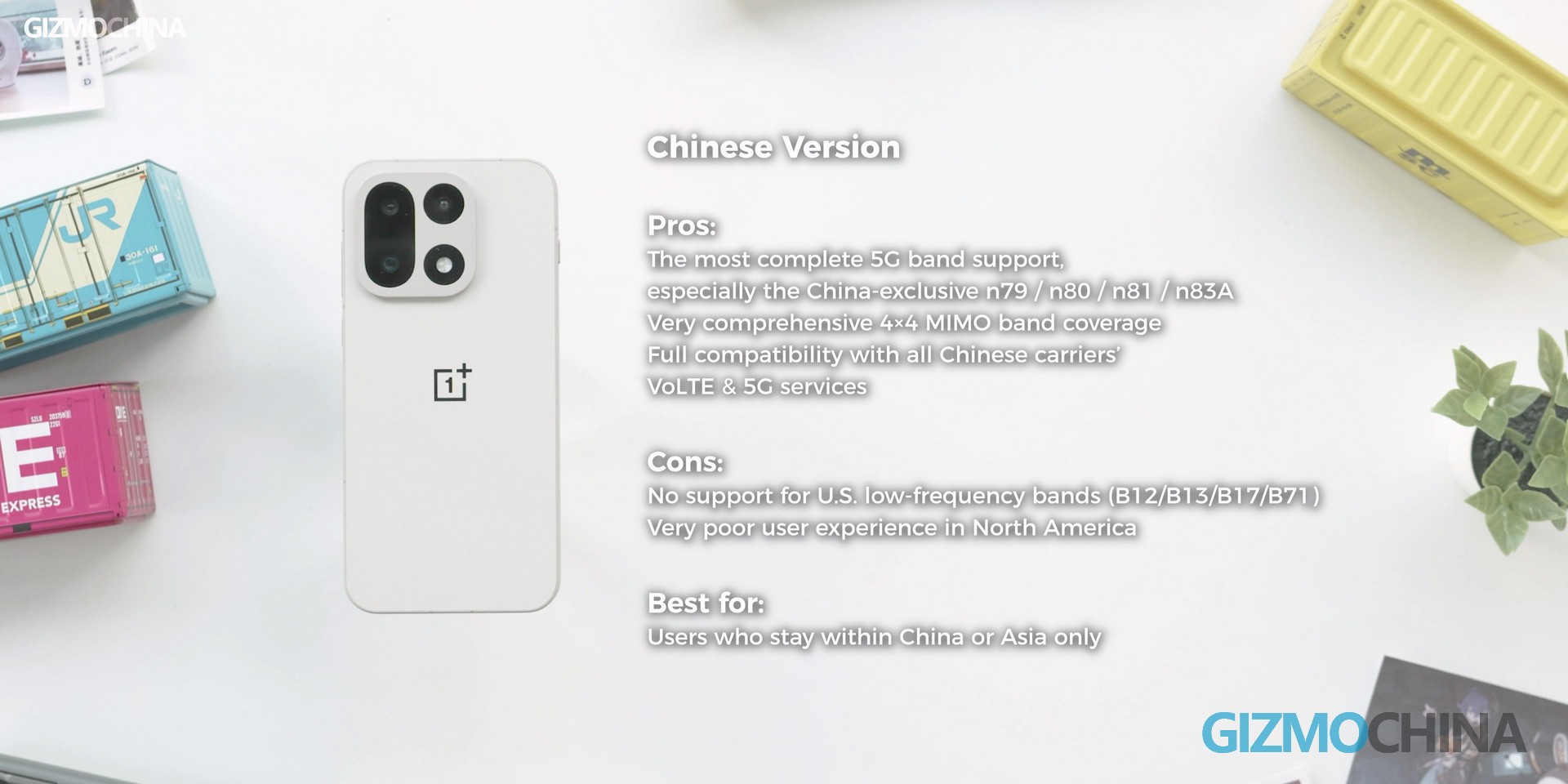
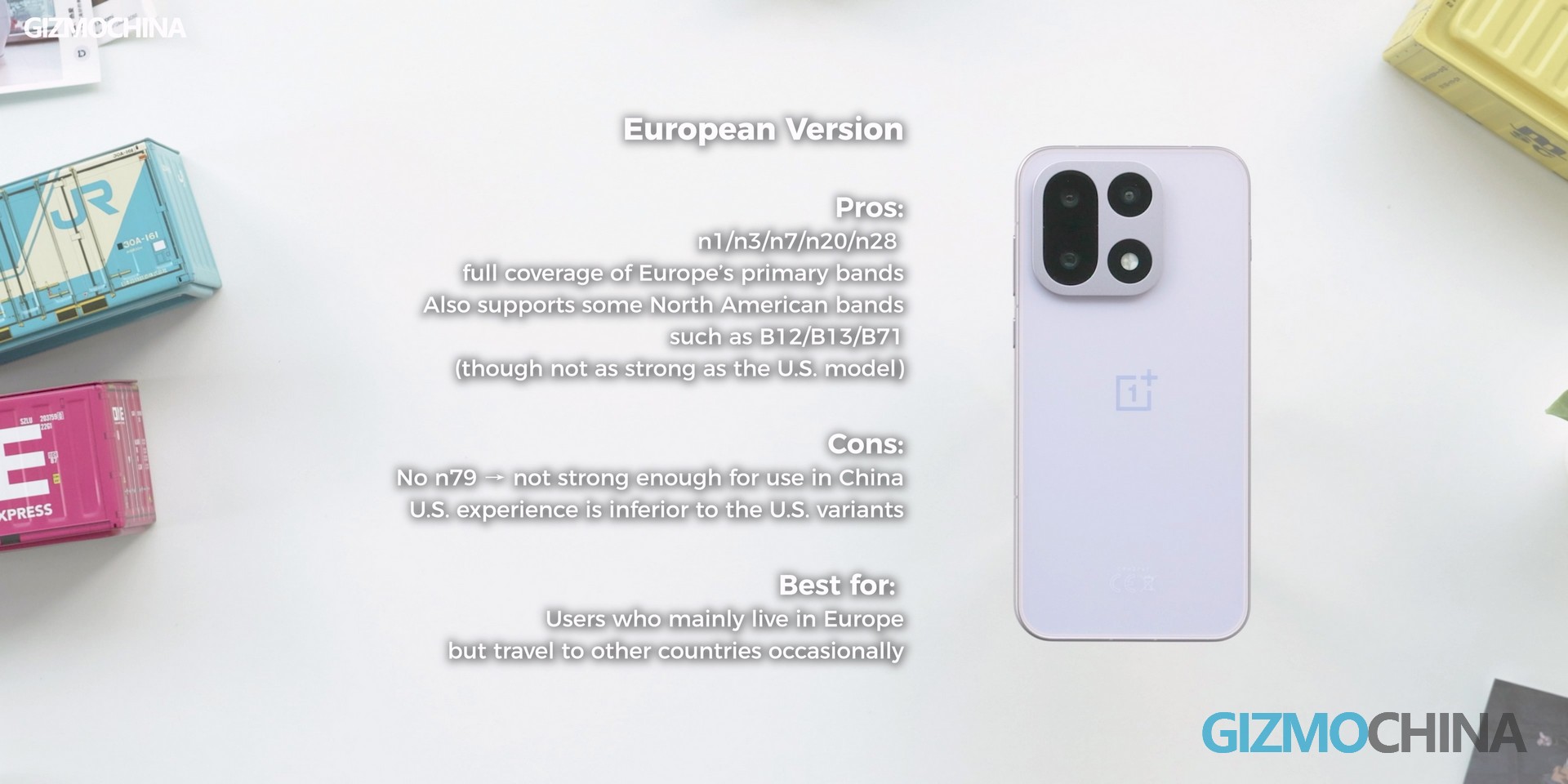
In my opinion, the biggest obstacle when using a Chinese phone in another region is the network bands. Chinese models usually lack several major North American bands, such as B12/B13/B17, which can lead to noticeably worse coverage in areas with weak signals compared to phones purchased locally. That said, as long as you’re outside of North America, you’ll find almost no difference. Meanwhile, the global version—just as the name suggests—can communicate normally almost anywhere. Whether you buy it in Europe or the Americas, you won’t run into issues.
Aside from network bands, there’s also the matter of eSIM. The Chinese OnePlus 15 doesn’t support eSIM, which is pretty inconvenient for users who already rely on it. The global version not only supports two nano-SIM cards but also two eSIM profiles. People who travel frequently for work or leisure will probably appreciate the global OnePlus 15 a lot more.
Battery
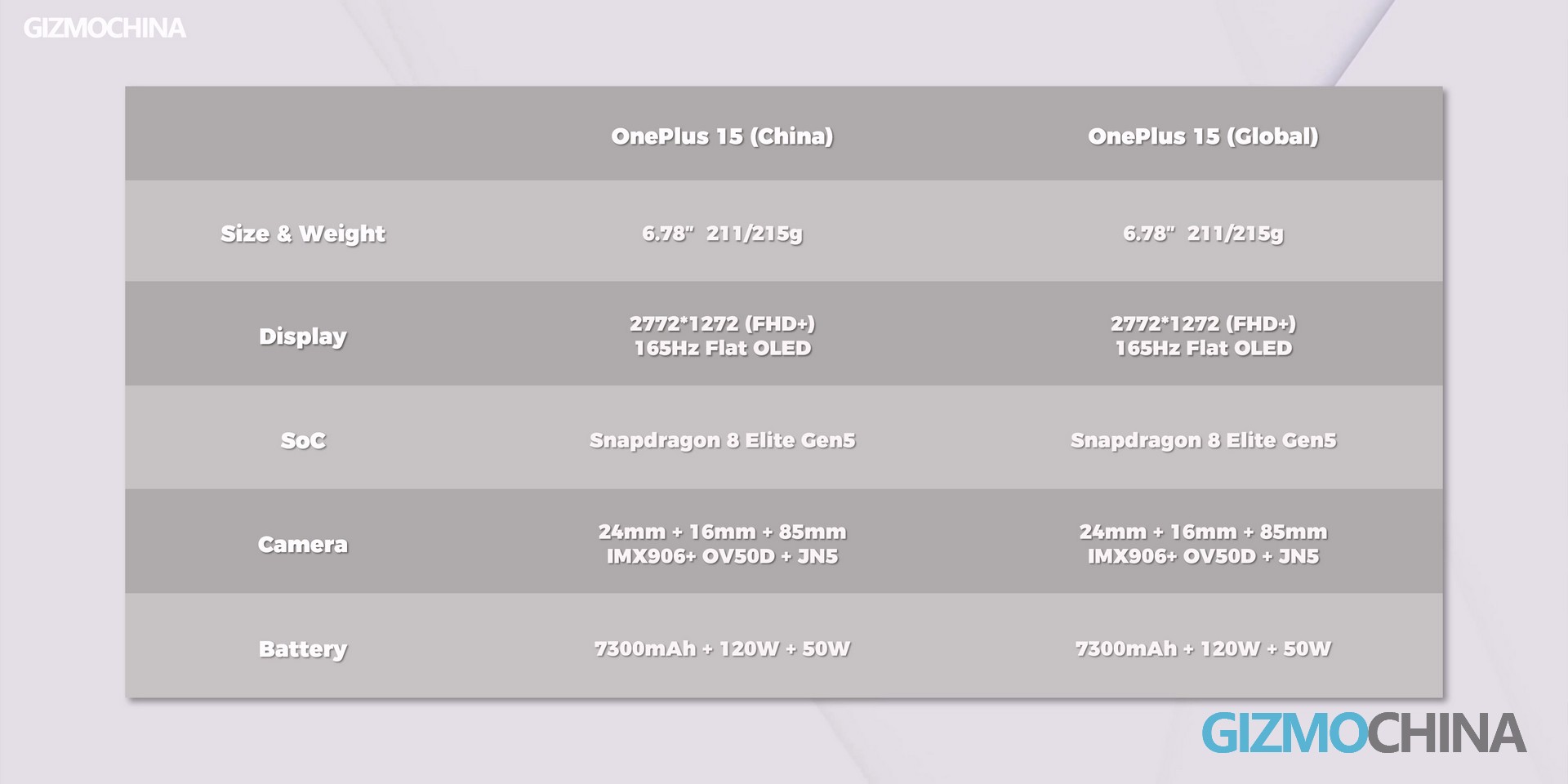
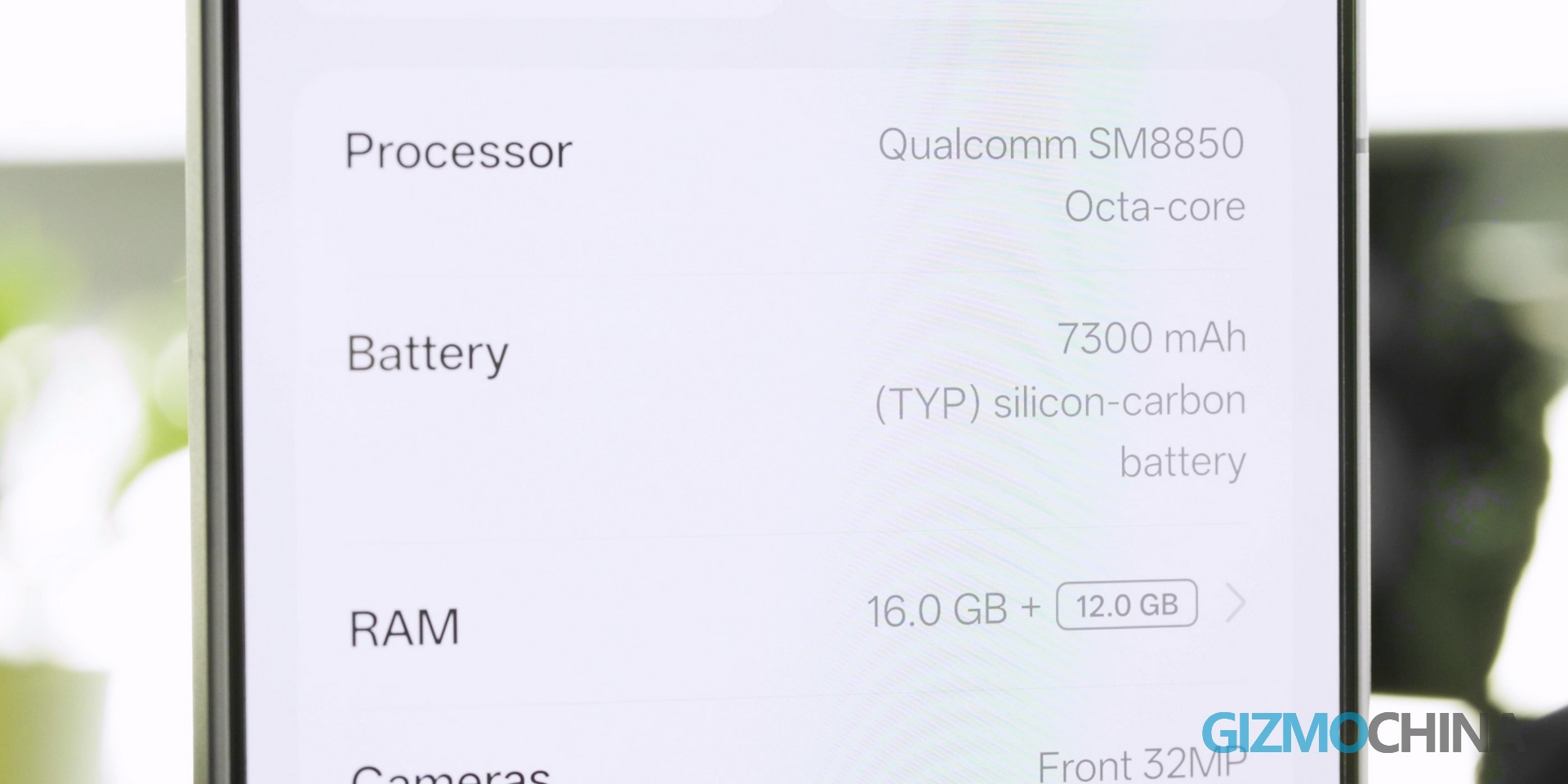
In general, Chinese and global versions of the same phone try to keep the hardware as identical as possible. It helps control production costs and avoids confusing consumers. OnePlus did a great job here—whether Chinese or global, every configuration of the OnePlus 15 is exactly the same. But if you’re buying a phone from another brand, there’s one thing you must pay attention to: the battery.
Because of certain European regulations, many brands make the battery slightly smaller on units not sold in China. For example, the vivo X300 sold in Europe, and the global versions of the POCO X7 series all have smaller batteries than their Chinese counterparts. So when I learned that every regional version of the OnePlus 15 still has the full 7300mAh battery, I was genuinely curious how they managed to get around those rules. In any case, you guys finally get to enjoy ultra-long battery life without compromise.
Warranty & Update Cycle
So what about the warranty? Can a Chinese phone be repaired under warranty in another country? Unfortunately, most brands—including OnePlus—require you to ship the device back to China for warranty repairs. Even if you’re willing to pay a local repair center, they may not want to take the risk. In this regard, the global version has a clear advantage.
The same applies to system maintenance. Global versions usually have longer software support cycles. For example, global OnePlus 15 users get 4 major OS updates and 6 years of security patches. But the security patch updates for the Chinese version lag behind the global version by one year. Some brands are even worse. They don’t even disclose the maintenance cycle for their Chinese models. If you bought the Chinese version, all you can do is hope they keep updating the system before your device eventually breaks.
Price
If you only compare official retail prices, the Chinese versions are always unbelievably cheaper. Even if you need a third-party site like GeekWills to help you buy and ship the device, the final cost is still far lower than the global version. This is why, despite all the drawbacks mentioned earlier, there are still many people willing to go out of their way to purchase the Chinese version.
And if you’re not a fan of the Chinese software build, you can root the phone and flash it to the global ROM. The OnePlus 15 has practically no restrictions on unlocking the bootloader, which is a huge advantage compared to many other brands.
Conclusion
Honestly, the conclusion is pretty clear. If your budget allows, the global version is definitely the more convenient and hassle-free choice. As a benchmark for global smartphones, the OnePlus 15 proves that global models can indeed offer the same battery capacity as the Chinese version. The large battery is no longer a China-exclusive advantage.
However, the Chinese version might be a little troublesome to use in your country, but the main benefit is that it’s cheaper—much cheaper, incredibly cheaper. And if you’re able to flash the global ROM, many of the issues disappear entirely.
When two flagship killers arrive at the exact same price, with nearly identical storage and RAM configurations, the choice becomes less about raw specs and more about what kind of experience you’re after. The iQOO 15 and OnePlus 15 both launched in India at Rs. 72,999 for the 12GB + 256GB variant and Rs. 79,999 for the 16GB + 512GB model.
Both are armed with the latest Snapdragon 8 Elite Gen 5, boast high-end AMOLED displays, generous batteries, and powerful camera systems. But once you get past the checklist, the differences start to matter.
Both phones push boundaries with high-end AMOLED panels and 3200Hz touch sampling rates. The iQOO 15 arguably has the upper hand on sheer numbers: a 6.85-inch 2K Samsung M14 8T OLED with a 6000-nit peak brightness and 2600 nits in HBM, making it the brightest screen in India right now.
It supports 144Hz refresh rate, Dolby Vision, 2160Hz PWM dimming, and even comes with an anti-reflective film that cuts down glare to near invisible levels. Visually, this is a display that doesn’t just pop indoors, it scorches through sunlight.
The OnePlus 15, on the other hand, uses a 6.78-inch 1.5K+ AMOLED with a 165Hz gaming refresh rate. While its HBM is 1800 nits, and the panel supports ultra-low 1-nit minimum brightness, it’s not as peak-bright as the iQOO’s. OnePlus leans more into gaming smoothness with native 165fps support in titles like CoD Mobile and an ultra-responsive touch chip.
Verdict: iQOO wins for brightness and content fidelity; OnePlus wins for gaming.
Please Note: When you buy something using the links in our articles, we may earn a small commission at no cost to you.
2. Performance and Cooling
Both phones use the Snapdragon 8 Gen 5, but iQOO complements it with a Supercomputing Q3 chip for frame interpolation and 2K upscaling, especially in games. There’s also ray tracing and live-streaming enhancements built-in, making this a performance-first device. Its 8000mm² vapor chamber is the largest in iQOO history.
OnePlus 15 matches the raw power but adds a more intricate Cryo-Velocity Cooling System with 5,731mm² VC, aerospace-grade aerogel insulation, and a white graphite layer for even heat dissipation. While OnePlus doesn’t have an external frame chip like iQOO, its software and cooling combo keep sustained performance in check.
Verdict: Gamers and streamers may appreciate iQOO’s Supercomputing chip more. OnePlus focuses on core thermal refinement.
3. Performance and Cooling
Both phones are powered by the Snapdragon 8 Gen 5 platform and use fast LPDDR5X RAM and UFS 4.1 storage. The iQOO 15 is available in 12GB and 16GB LPDDR5X Ultra RAM variants with 256GB or 512GB of UFS 4.1 storage. The OnePlus 15 supports up to 16GB of LPDDR5X Ultra+ RAM, capable of 10,667Mbps speeds, and offers 512GB or 1TB storage options, giving it a slight advantage in maximum capacity.
iQOO adopts a performance-first strategy by integrating a dedicated Supercomputing Q3 chip. This chip enables 144fps frame interpolation, 2K resolution upscaling, and live-streaming over USB 3.2 without needing external hardware. It also supports ray tracing in compatible games. Thermal performance is managed by a large 8000mm² vapor chamber, the biggest in iQOO’s lineup to date.
OnePlus 15 takes a more thermal-centric approach with its Cryo-Velocity Cooling System. It combines a 5731mm² 3D vapor chamber, aerospace-grade aerogel insulation, and a white graphite layer to efficiently spread and manage heat. While it skips a dedicated display or gaming chip, its cooling hardware and software optimizations work together to deliver stable performance during long sessions.
Verdict: Both phones are equally good in this segment, and most gamers or streamers won’t notice a significant difference, so it’s a tie here.
4. Camera and Imaging
iQOO and OnePlus both bring triple 50MP cameras, but with different execution. iQOO uses a Sony IMX921 as its main, a 3x periscope telephoto, and a 150° ultra-wide. It even offers up to 100x zoom and a Supermoon mode. However, HDR video is missing, and low-light ultrawide shots feel undercooked as per reviews.
OnePlus uses a Sony IMX906, also has a 50MP ultra-wide, and a 3.5x periscope telephoto, but its real ace is the DetailMax Engine. It introduces new photography modes like Ultra-Clear 26MP, Clear Burst (10fps), and Clear Night Engine, blending computational smarts with hardware for better textures, portraits, and low-light scenes. It also records in Dolby Vision 4K at 120fps.
Verdict: OnePlus takes the edge with more advanced computational photography and richer video capture.
5. Design and Durability
The iQOO 15 features a glass back on the Legend Edition and fiberglass matte finish on the Alpha Edition, weighing up to 220g. The design is clean, with a prominent Monster Halo LED ring that acts as a notification and game feedback system. It’s IP68+IP69-rated and even supports wet-finger use.
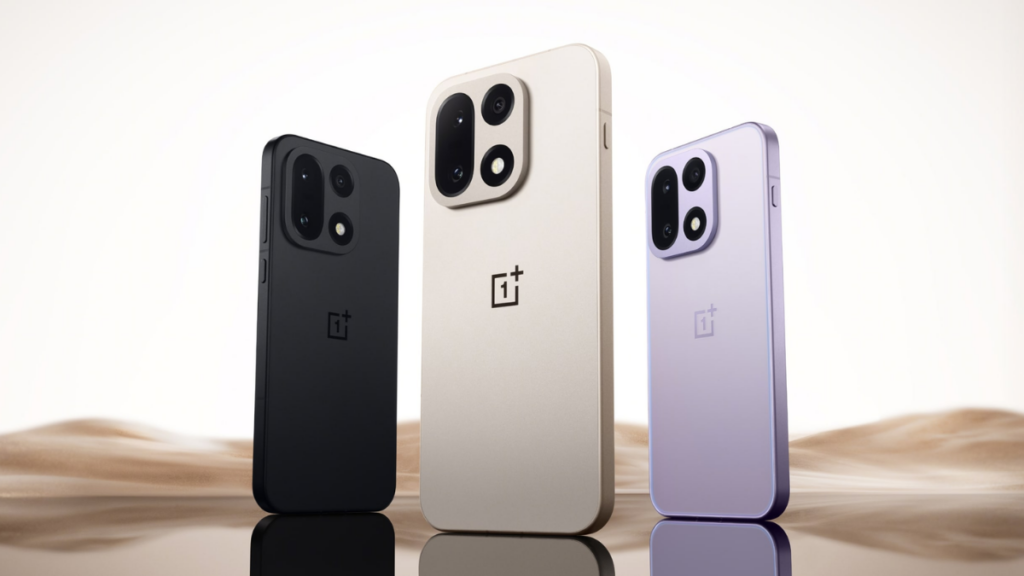
The OnePlus 15 looks more refined and comes in Infinite Black, Sand Storm, and Ultra Violet, with materials ranging from frosted glass to ceramic-grade fiberglass. It’s equally durable with IP66, IP68, IP69, and IP69K certifications, resisting high-pressure jets and extreme conditions.
Verdict: iQOO has the cooler gamer aesthetic with LED lighting, while OnePlus offers broader durability certifications and a more refined finish. If you are a gamer, then you would likely prefer the iQOO 15’s design a bit more, but general users may lean toward the OnePlus 15 for its polished and understated look.
6. Battery and Charging
The OnePlus 15 packs a 7300mAh Silicon NanoStack battery, the biggest in any OnePlus phone. It supports 120W wired and 50W wireless charging, plus bypass charging and -20°C temperature resilience.
iQOO uses a 7000mAh semi-solid silicon-carbon battery, supports 100W wired, 40W wireless, 65W PPS, and also bypass charging. Battery life is great on both, but OnePlus promises 80% health retention after 4 years.
Verdict: OnePlus takes it with more headroom, faster wired charging, and better longevity claims.
7. Software Experience
iQOO 15 runs OriginOS 6 based on Android 16. It has Copy & Go, Drag & Go, AI Retouch, and strong cross-device tools. You also get 5 Android updates + 7 years of security patches, which is class-leading.
OnePlus 15 runs OxygenOS 16, also on Android 16, and introduces Gemini AI integration, Mind Space, and Plus Mind, a context-aware memory system that acts like a second brain. It gets 4 OS updates and 6 years of security patches.
Verdict: iQOO wins for longevity. OnePlus wins for deeper AI integration and minimal bloat.
8. Final Thoughts: Which One to Buy?
The iQOO 15 suits anyone who wants a brighter display, rich gaming tools, and longer update support. It focuses on raw hardware strength, strong cooling, and consistently high frame rates, which makes it ideal for gamers and power users.
The OnePlus 15 works well for buyers who care about computational photography, premium finish, deeper AI features, and a more polished software experience. It handles gaming well too, so players who prefer a refined design and smoother software can still choose it with confidence. The overall experience stays balanced and premium.
For more daily updates, please visit our News Section.
We use cookies on our website to give you the most relevant experience by remembering your preferences and repeat visits. By clicking “Accept”, you consent to the use of ALL the cookies.
This website uses cookies to improve your experience while you navigate through the website. Out of these, the cookies that are categorized as necessary are stored on your browser as they are essential for the working of basic functionalities of the website. We also use third-party cookies that help us analyze and understand how you use this website. These cookies will be stored in your browser only with your consent. You also have the option to opt-out of these cookies. But opting out of some of these cookies may affect your browsing experience.
Necessary cookies are absolutely essential for the website to function properly. This category only includes cookies that ensures basic functionalities and security features of the website. These cookies do not store any personal information.
Any cookies that may not be particularly necessary for the website to function and is used specifically to collect user personal data via analytics, ads, other embedded contents are termed as non-necessary cookies. It is mandatory to procure user consent prior to running these cookies on your website.


![OnePlus Pad 2(12.1 Inch)LCD Display,12GB RAM, 256GB Storage,Snapdragon 8 Gen 3,144Hz Refresh Rate,Dolby Vision & Atmos,Open Canvas,AI features,6 speakers,Wi-Fi with Cellular Data Sharing [Nimbus Gray]](https://www.gizmochina.com/wp-content/plugins/aawp/public/image.php?url=YUhSMGNITTZMeTl0TG0xbFpHbGhMV0Z0WVhwdmJpNWpiMjB2YVcxaFoyVnpMMGt2TkRFMGEydHdjV1JIY2t3dVgxTk1NVFl3WHk1cWNHYz18MTc4MTM1NTY0NQ=)