Google has announced that the Pixel 7 series will launch globally on October 6th. The company is also expected to launch the Pixel Watch, a new Chromecast, and the Nest WiFi Pro 6E router at this event.
Ahead of the launch, the shipping date of the Pixel 7 series has been leaked. According to the report, the Pixel 7 series smartphones will be shipping on October 18th. It is currently not clear if this shipping date will apply to multiple regions or just some regions in Europe. The report also mentions that the Pixel Watch will start shipping on November 4th. The report, however, is still unconfirmed, so we advise our readers to take it with a pinch of salt.
Google Pixel 7 Pro/ Pixel 7 specs (expected)
In terms of design, the Pixel 7 Pro will carry over the majority of the details from the Pixel 6 Pro with some changes. It is said to feature a 6.7-inch 120Hz OLED display. As revealed by a recent Geekbench result, the device will feature the Tensor G2 chipset paired with 12GB of RAM.
For photography, the device will have three sensors on the back. These will include a 50MP main camera (Samsung GN1), a 13MP ultrawide camera (Sony IMX38), and a 48MP telephoto camera (Samsung GM1). Upfront, the device will likely house a 10.87MP (Samsung 3J1) sensor.
The non-Pro model, on the other hand, is said to feature a 6.4-inch 90Hz OLED display with a 50MP main camera (Samsung GN1) and a 13MP ultrawide camera (Sony IMX38) for photography. It will have the same front camera as the Pro model and will also house the Tensor G2 chipset under the hood.
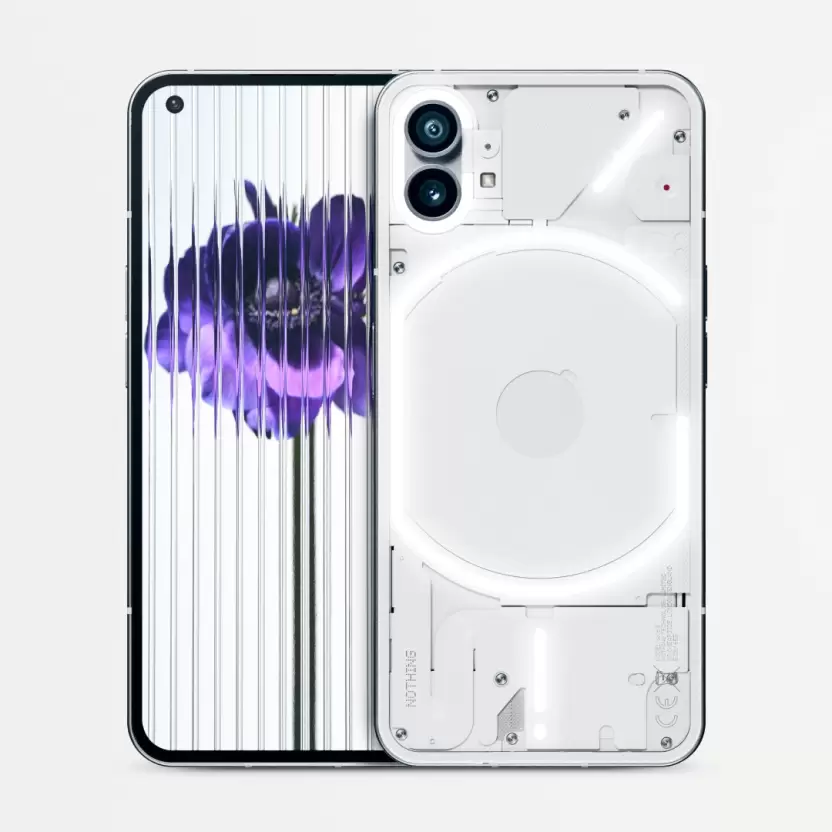
The Nothing Phone (1) will be available for as low as Rs 28,999 at the Flipkart Big Billion Days sale. The sale is scheduled for September 23rd. However, the company is offering customers a chance to get ahead of the crowd.
At 12 PM today, Flipkart will host a one-day sale called “Catch Me If You Can Sale”. During this sale, the price of the base variant of the Nothing Phone, which currently costs Rs 33,999, will drop as low as Rs 28,999. The 256GB storage variant, on the other hand, will go down to Rs. 31,999 and the 12GB RAM and 256GB storage variant will be available for as low as Rs. 34,999.
Customers will need to avail bank offers in addition to the base discount to purchase the devices at the prices mentioned above. Additionally, a further discount of Rs 3000 can be availed on all models with exchange offers.
The Nothing Phone (1) is powered by a Qualcomm Snapdragon 778G+ SoC with the memory and storage configurations listed above. It has a 6.55-inch 120Hz OLED display and two 50MP rear cameras. A ‘Glyph’ interface on the back provides white and orange LED alerts based on calls, music, and notifications. The front-facing camera is 16MP, and the device is powered by a 4,500mAh battery with 33W fast charging.
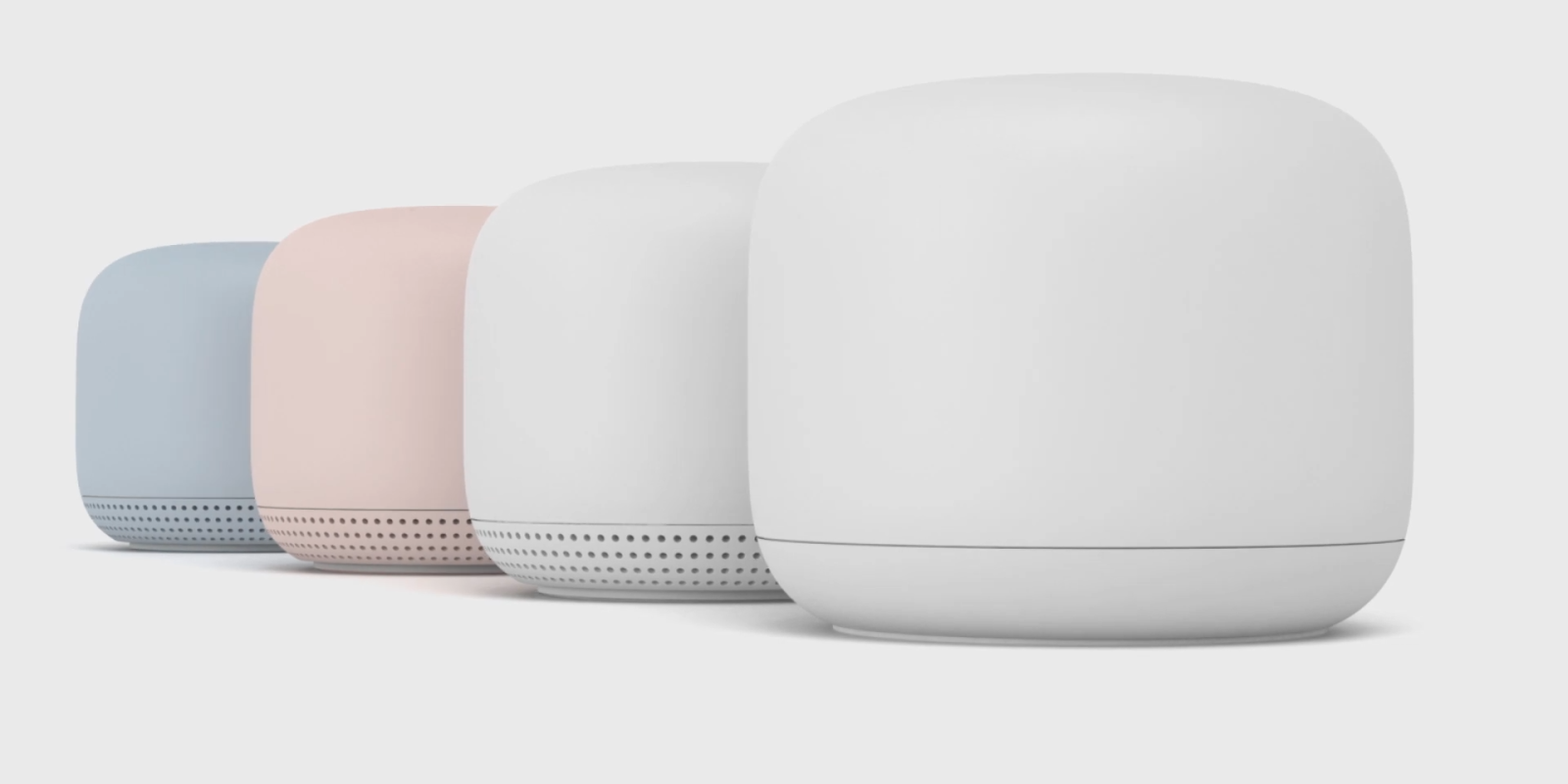
Google has a lineup of smart home devices under its Nest brand, and now it appears that the company is gearing up to launch a new product under the lineup, which is likely to be named Google Nest WiFi Pro 6E.
As the name itself indicates, the upcoming device from Google under the Nest brand will be a WiFi 6E router. Ahead of the official launch, the product has been leaked through a listing on a retailer, revealing its pricing and color options.
The device was revealed when it was prematurely listed on online retailer B&H Photo, which has now been taken down. It revealed that the Google Nest WiFi Pro 6E would come in multiple color options and can be pre-ordered for $199.99. The two-pack and 3-packs of the device will be available for $299.99 and $399.99, respectively.
The listing has not revealed images of the upcoming device, nor has it revealed any other details apart from the pricing and multiple color options. So, it remains to be seen if it will be shipped with a “Point” network extender.
The Google Nest WiFi Pro 6E has already passed through the FCC certification, revealing its support for Bluetooth LE and mesh networking. The update to WiFi 6E means that the routers will have less interference than current WiFi 6 models because of the additional 6-7Ghz bandwidth range.
Google has scheduled a launch event on 6th October named Made By Google, where the technology giant is expected to officially launch its next-generation flagship smartphones, dubbed Pixel 7 and Pixel 7 Pro. The company will also unveil its first smartwatch in the form of the Pixel Watch, along with some Nest smart home portfolio products.
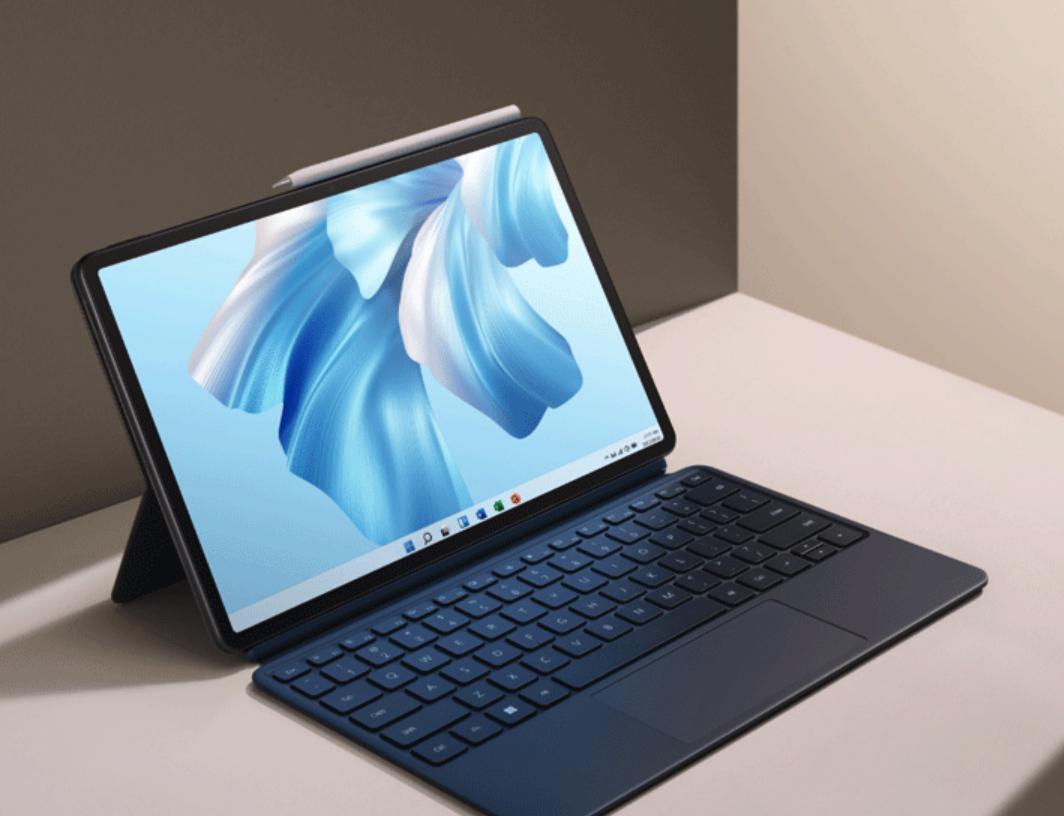
Huawei has today officially launched a new notebook device under the MateBook lineup in its home country China, dubbed Huawei MateBook E Go Standard Edition.
The device comes in two memory configurations — 8GB RAM and 256GB storage, costing 4,099 yuan (~$585), while the 16GB RAM and 512GB storage model is available for 4,899 yuan, which is about $699.
The Huawei MateBook E Go Standard Edition comes with a thin body and has a lightweight design, measuring 7.68mm in thickness and weighing 710 grams.
Coming to the specifications, there’s a 12.35-inch display that offers a 2.5K screen resolution, P3 color gamut, and a high 120Hz refresh rate. Under the hood, the device is powered by the Qualcomm Snapdragon 8cx Gen3 processor.
The regular version of the device comes powered by the Qualcomm Snapdragon 8cx Gen2 processor. The laptop has an 8-megapixel camera on the front and a 13-megapixel snapper at the back. It comes with dual speakers and support for functions such as multi-screen collaboration, super transfer station, and smart collaboration.
The device also comes with dual USB-C ports. As for the battery life, the company promises 14.1 hours of video playback and 7.1 hours of daily office work, but the battery capacity hasn’t been revealed by Huawei.
Vivo is rumored to launch a new foldable smartphone soon called the Vivo X Fold+. The device has already surfaced on the TENAA database, and its key specifications have also been revealed by a Vivo official.
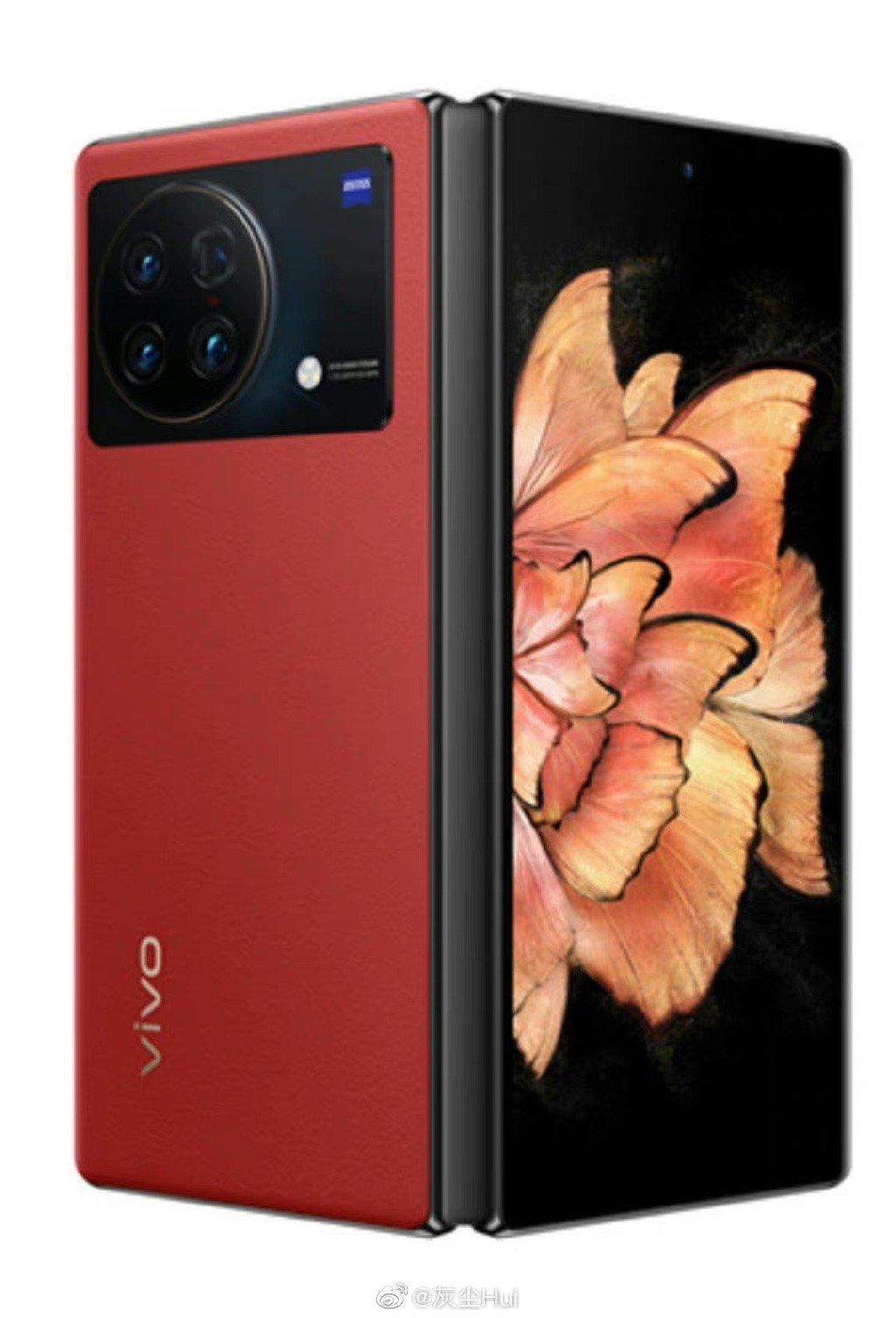
Now, the color options of the upcoming X Fold+ have emerged online, showcasing the device in red and blue colors.
As we know, the Vivo X Fold was launched earlier this year in two color options—Black and Blue. So, it is highly likely that blue and red will be the only color options for the X Fold+. Both color options will have a leather finish.
Vivo X Fold+ specs
So far, it is confirmed that the front and inner foldable displays of the Vivo X Fold+ will support a 120Hz refresh rate. The device will be able to fold at different angles, like 30 degrees, 90 degrees, and 120 degrees. Both the inner and outer displays will have an integrated ultrasonic fingerprint sensor.
Reports have claimed that the X Fold+ will feature the same 8.03-inch foldable display and a 6.53-inch cover screen as the Vivo X Fold. Under the hood, the device will house a Snapdragon 8 Plus Gen 1 chipset, which will likely draw power from a 4,730mAh battery featuring 80W wired and 50W wireless fast charging support.
The camera setup is also rumored to remain somewhat the same, with a 50-megapixel quad camera on the back and a 16-megapixel front-facing camera. As for RAM and storage, the device is said to come in two configurations – 12 GB RAM + 256 GB storage and 12 GB RAM + 512 GB storage. We will likely hear more about the device soon as it is rumored to launch by September end.
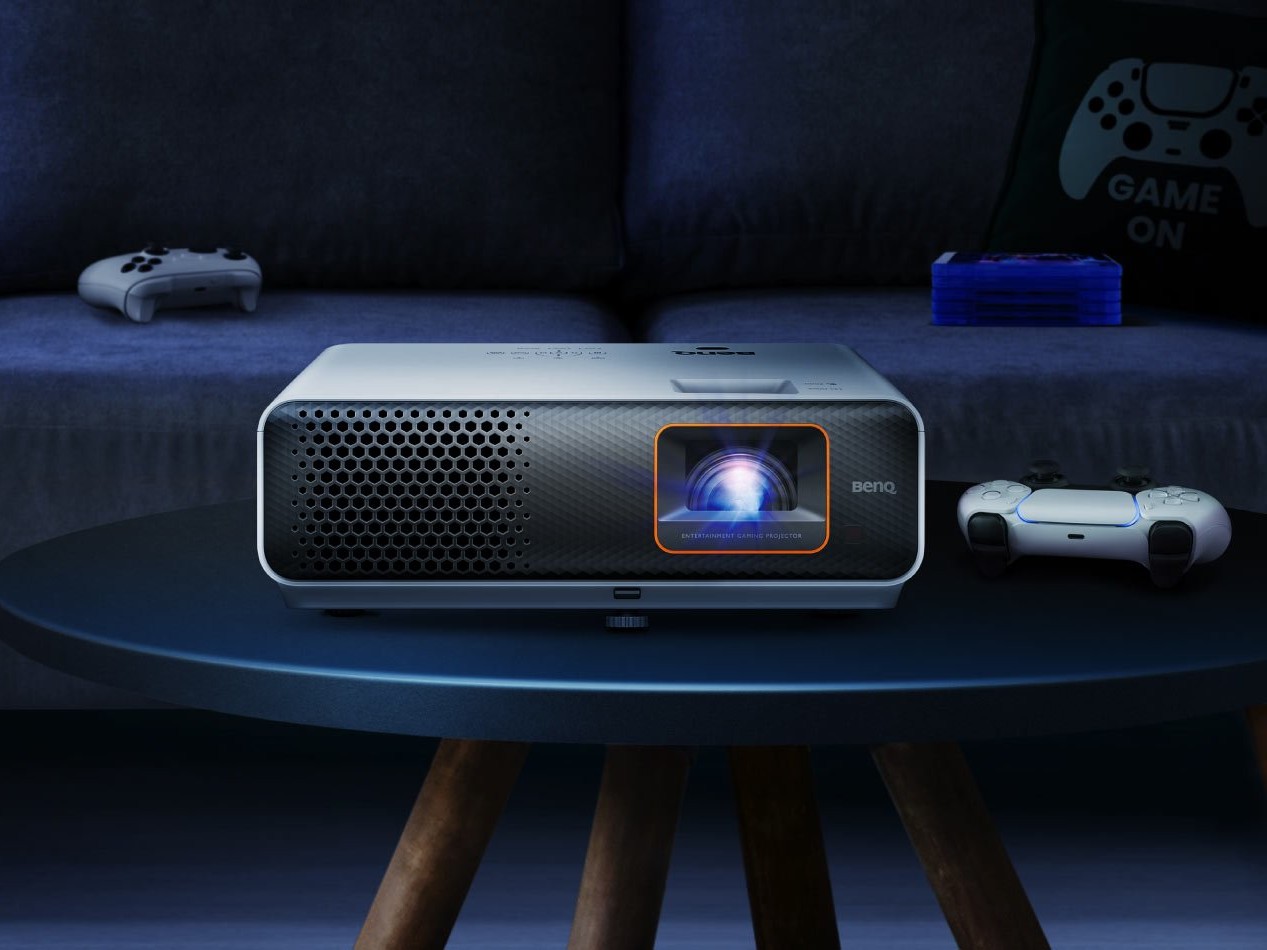
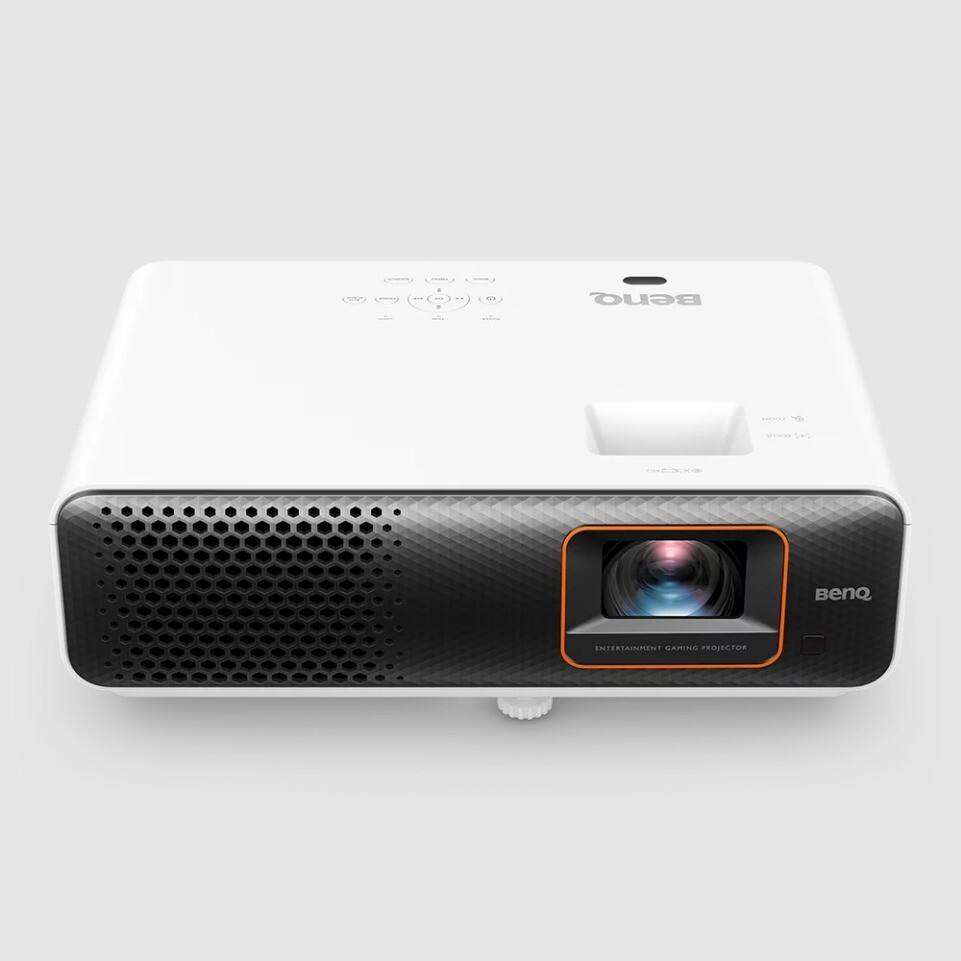
BenQ has launched a new projector in Europe catered towards gamers. The projector was launched for the North American market earlier this year.
The projector is called the BenQ TH690ST and it boasts a 500,000:1 contrast ratio, a 1080p native resolution, DLP projection technology, and 84% DCI-P3 and 98% Rec.709 color coverage. With regular use, the light source should last 20,000 hours and have a maximum brightness of 2,300 lumens. The device supports HDR10 and can throw an image 100-in (254 cm) wide from 4.9 ft (1.5 m) distant, due to 1.2X zoom and a throw ratio as low as 0.69.
Coming to the gaming features, the projector offers a low response time of 8.3ms and can put out 1080p content with a refresh rate of 120Hz. 4K gaming, on the other hand, might not feel as snappy as the projector supports a 60Hz refresh rate for the resolution with a 33.4ms response time.
For a more immersive experience, Game Mode improves the image based on the ambient brightness. Rich audio is produced via a TreVolo sound system with two 5 W speakers that provide 5.1 surround sound. Various devices, including the PlayStation 5, Nintendo Switch, and Xbox Series X, can be connected to the projector via HDMI 2.0b connectors.
BenQ has designed the gadget to be used indoors. It measures 366 x 244 x 118 mm (14.4 x 9.6 x 4.6-in) and weighs 3.6 kg (7.9 lbs). The BenQ TH690ST short-throw gaming projector has a price tag of €1,199 (US$1,198) and £1,099 (US$1,250) in the EU and the UK, whereas it costs $1,099 in the US.
Xiaomi is expected to announce the Xiaomi 12T series of flagship phones soon in the global market. Reports have claimed that it will debut in October. Speculations are rife that the first-ever Redmi tablet, named Redmi Pad, will also debut alongside the 12T series. Tipster Kacper Skrzypek has shared some screenshots taken from the Instagram handles of Xiaomi Kuwait and Xiaomi Iraq. He also shared a commercial image of the tablet, which seemingly appeared on Xiaomi Iraq’s Instagram handle. These findings suggest that the Redmi Pad may debut in the next few days.
The Instagram posts are no longer available on the above-mentioned handles. The screenshots show that the Redmi Pad is available for purchase. However, it is unclear where the tablet is being sold. The tablet is priced at around $232.5 in Kuwait and around $225 in Iraq.
#RedmiPad price: 225 USD in Iraq and 71.9KD (about 232.5USD) in Kuwait. "Available now", not sure where, I was not able to find them yet. pic.twitter.com/P6HSvWsi1c
The Redmi Pad tablet seems to be equipped with a metallic rear. The back panel features a single camera with no LED flash and Redmi branding at the bottom. The device is expected to be released in different markets since it has bagged multiple certifications.
Redmi Pad specifications
Rumors surrounding the Redmi Pad have claimed that it has an 11-inch LCD display that offers a 2K resolution. It is said to be equipped with a new MediaTek chip that has a MT8781 model number. The chip is expected to offer performance similar to the Helio G99. It will run on Android 12 OS with MIUI 13 on top. It will house a 7,800mAh battery with 22.5W fast charging support.
The Redmi Pad is expected to arrive in two variants: 3 GB RAM + 64 GB storage and 4 GB RAM + 64 GB storage. It will be available in three colors: Graphite Grey, Moonlight Silver, and Mint Green.
XPeng, one of the leading smart electric vehicles maker in China, has announced that the company has launched the pilot program City Navigation Guided Pilot (City NGP), making it the first Chinese auto company to launch such a high-level Advanced Driver Assistance System (ADAS) functions for complex urban driving scenarios.
The system is now available in the area of Guangzhou, China. The ADAS platform is made possible by XPeng’s combination of sensors to deliver a 360-degree fusion perception through cameras, LiDAR, millimeter-wave radars, and high-precision positioning units.
A cohort of Guangzhou-based XPeng P5 customers can now access City NGP through over-the-air updates before launching to other cities. To ensure sufficient knowledge of safety procedures, City NGP requires a seven-day familiarization period, and 100 km of driving before its functions can be used on all available roads.
When City NGP is activated with a set destination, the vehicle itself can perform the full range of driving tasks. The driving tasks include cruising at a safe distance from leading vehicles, changing lanes due to navigation or vehicle overtaking decisions, handling merging/splitting roads, getting around stationary vehicles or obstacles, and maintaining an appropriate speed.
It can also automatically detect and react to traffic lights, make lane change decisions and inform drivers, take a left or right turns, navigate through intersections, roundabouts, viaducts, and tunnels, as well as avoid obstructions.
The approach of XPeng is contrary to Tesla, which has abandoned LiDAR in favor of one single vision perception. Tesla FSD continues to expand and improve through the beta phase, but the company has been deferring the wide release, keeping the customers waiting for it to make good on its promise of fully-autonomous driving.
Update: The image has been found to be fake. The images are concept images of the Xiaomi 13 series.
Original post continues…
A leaked photo that surfaced yesterday revealed the front design of the alleged Xiaomi 13 Pro. A new poster (via) that showcases the Xiaomi 13 and 13 Pro in one frame has surfaced online. The image also gives a first look at the rear design of both smartphones.
Before reading ahead, readers should note that the authenticity of the image shown in the post could not be confirmed. Hence, it is recommended to digest the report with a grain of salt.
Xiaomi 13 series poster
The Xiaomi 13 Pro can be seen sporting a curved edge display. However, it appears that the vanilla model has a flat display. It appears that the right edge of both phones has a volume rocker and a power key.
The rear camera setup of the Xiaomi 13 duo features a rectangle-shaped module. It has a large-sized primary camera, which could be a 1-inch camera sensor. Alongside it, there are two auxiliary cameras, along with an LED flash unit.
Rumors surrounding the Xiaomi 13 series have claimed that the Xiaomi 13 will house a 6.36-inch OLED display that offers a 1.5K resolution and a 120Hz refresh rate. The Xiaomi 13 Pro, on the other hand, may feature a 6.7-inch OLED display that produces a 2K resolution and a 120Hz refresh rate.
While OnePlus has already launched a smartwatch in the market, its sub-brand Nord is yet to announce a smartwatch. The Chinse manufacturer has released the first teaser of the Nord Watch in the Indian market, which indicates that it will go official in the next few days in the country. Ahead of the launch, tipster Mukul Sharma has leaked the key specifications of the Nord Watch.
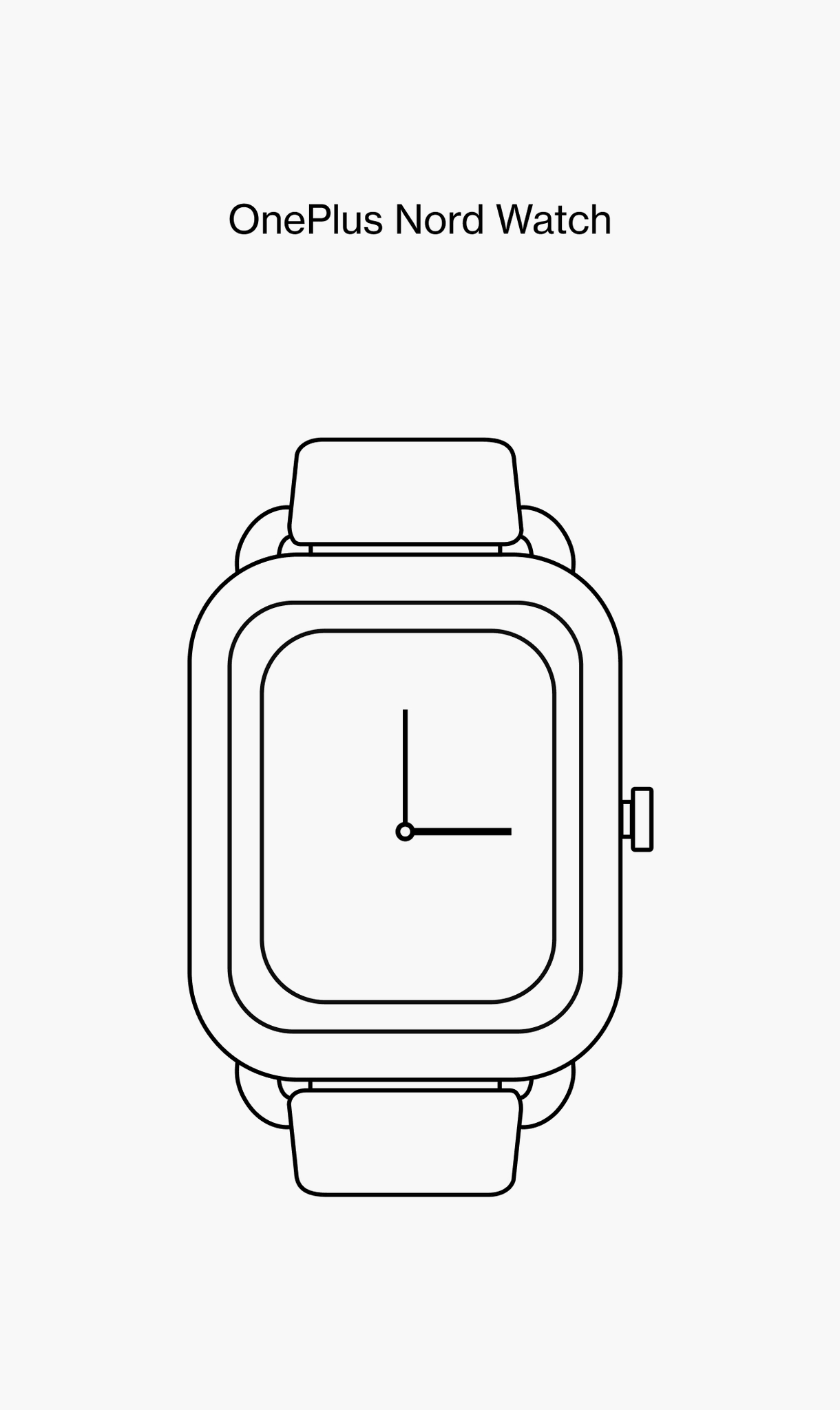
According to the tipster, the OnePlus Nord Watch will have a dial size of 45.2mm. It will house an AMOLED display, which will support a resolution of 368 x 448 pixels and a 60H refresh rate. The tipster has released a schematic to reveal what the Nord Watch will look like.
OnePlus Nord Watch schematic
When it comes to fitness, the Nord Watch will offer features like 105 fitness modes and women’s health features. There is no word on the exact battery size of the Nord smartwatch. However, the tipster revealed that it can last for up to 10 days once it is charged completely.
Previous reports have revealed that the Nord Watch will feature an SpO2 tracker, an optical heart rate sensor, and a sleep tracker. It will arrive with support for Bluetooth 5.2. connectivity It is speculated that there will be a companion app called the OnePlus N Health. The Nord Watch may cost between Rs 5,000 (~$63) and Rs 8,000 (~$103). It is expected to arrive in black, white, and gold colors.
The OnePlus Nord Watch is likely to be sold exclusively through Amazon India. It appears that the launch date of the Nord Watch will be confirmed in the next few days. In related news, OnePlus will be launching the OnePlus 10R Prime Blue edition on Sept. 22.
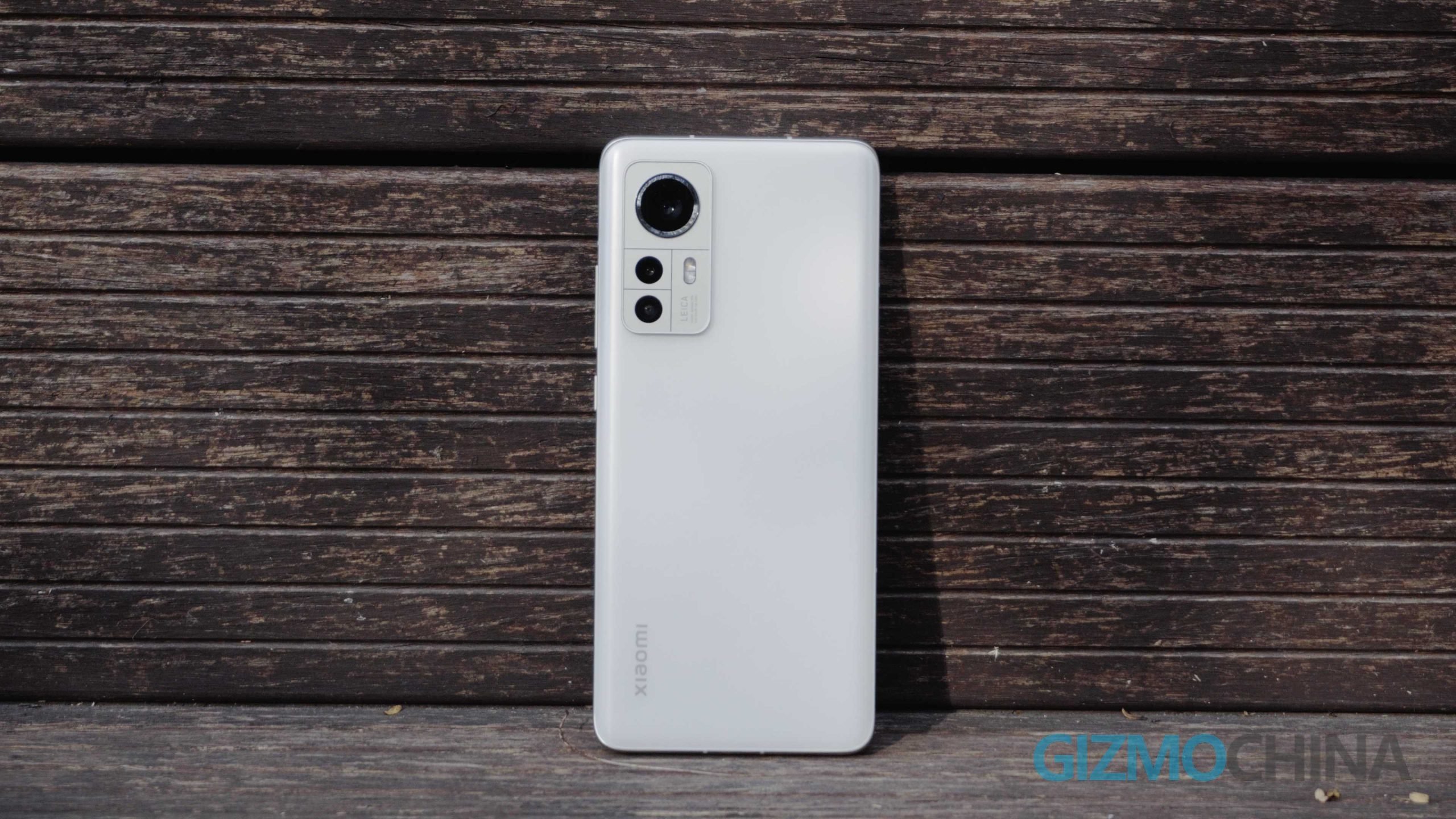
Xiaomi unveiled the Xiaomi 12 Pro flagship phone in April in India. It was made available with a starting price of Rs 62,999 (~$790) in the country. The Chinese manufacturer has announced the “Diwali with Mi” shopping festival in the country. A slew of Xiaomi and Redmi devices will be available with attractive discounts starting from Sept. 23 on Xiaomi India’s website. During the upcoming sale, the Xiaomi 12 Pro will be available for as low as Rs 45,499 (~$571).
Since launch, the Xiaomi 12 Pro has been available in two variants, such as 8 GB RAM + 256 GB storage for Rs 62,999 (~$790) and 12 GB RAM + 256 GB storage for Rs 66,999 (~$840). It comes in three colors, such as Couture Blue, Noir Black, and Opera Mauve.
During the upcoming Diwali sale, the Xiaomi 12 Pro’s base model will be available for as low as Rs 45,499, which means it will be sold with a massive price cut of Rs 17,500 (~$219). According to Xiaomi, the Rs 45,499 price is inclusive of ban offers from ICICI, Kotak, Bank of Baroda, IndusInd, SBI, and payment partners like Paytm, Zest, and Ola Money.
The 12 Pro will also be available at the same price through Amazon’s Great Indian Festival 2022 sale, which kicks off on Sept. 22 for Prime members and on Sept. 23 for others. There is no word on whether the higher 12GB+256GB model will be available at a discounted price during the upcoming sales.
Xiaomi 12 Pro specifications
The Xiaomi 12 Pro has a 6.73-inch AMOLED display that offers a Quad HD+ resolution, a 120Hz refresh rate, and an under-display fingerprint scanner. It runs on MIUI 13-based Android 12 OS and is powered by the Snapdragon 8 Gen 1 chipset. The device offers LPDDR5 RAM, UFS 3.1 storage, and a 5,000mAh battery with 12W fast charging support. It has a 32-megapixel front camera and a 50-megapixel (main, with OIS) + 50-megapixel (ultra-wide) + 50-megapixel (telephoto) triple camera unit.
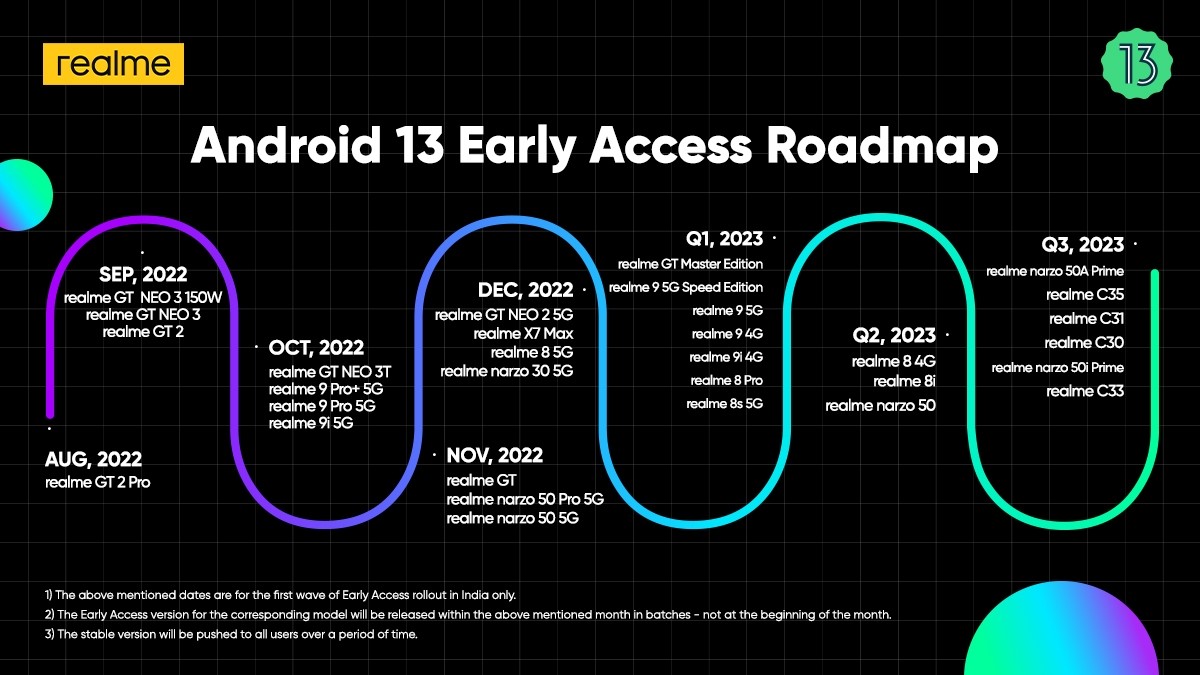
Earlier this month, Realme announced the roadmap for the Android 13 rollout in China. The new OS will be overlaid with the latest Realme UI 4.0. Realme has confirmed the Android 13 rollout is scheduled for the international market. The OS upgrade will be made available for as many as 30 Realme phones.
Realme will not be directly releasing the stable version of the Realme UI 4.0-based Android 13 OS upgrade. Instead, it will provide “Early Access” to the software update to iron out of the bugs before releasing the stable edition. Here is the Android 13 early access roadmap for Realme smartphones.
Android 13 Realme Ui 4.0 roadmap
August 2022
Realme GT 2 Pro
September 2022
Realme GT Neo 3 (150W)
Realme GT Neo 3
Realme GT 2
October 2022
Realme GT Neo 3T
Realme 9 Pro+ 5G
Realme 9 Pro 5G
Realme 9i 5G
November 2022
Realme GT
Realme Narzo 50 Pro 5G
Realme Narzo 50 5G
December 2022
Realme GT Neo 2 5G
Realme X7 Max
Realme 8 5G
Realme Narzo 30 5G
Q1 2023
Realme GT Master Edition
Realme 9 5G Speed Edition
Realme 9 5G
Realme 9 4G
Realme 9i 4G
Realme 8 Pro
Realme 8s 5G
Q2 2023
Realme 8 4G
Realme 8i
Realme Narzo 50
Q3 2023
Realme Narzo 50A Prime
Realme C35
Realme C31
Realme C30
Realme Narzo 50i Prime
Realme C33
According to Realme, the above-mentioned dates are for the first wave of the Early Access rollout for users in India. The company will be releasing the Early Access version for each model within the above-mentioned month.
The Early Access version will be released in batches, not at the start of the month. It seems that the company will release the stable version a few weeks after releasing the Early Access version.
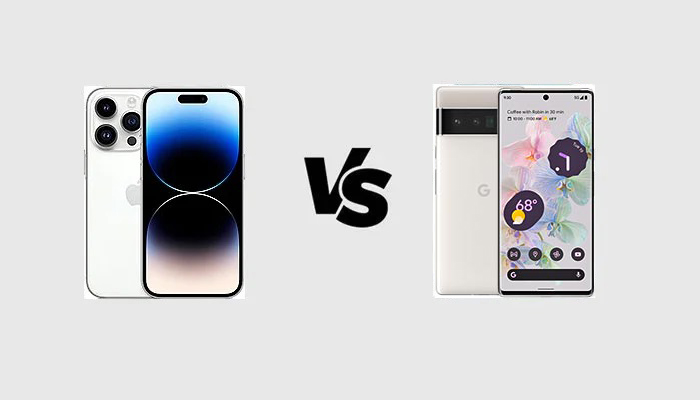
A lot of people consider giants like Samsung, Xiaomi, and OPPO as the main rivals of Apple, but they forget another important technology giant which could be considered the main rival of Apple on the software side if we talk about mobile phones. We are talking about Google, the company which develops the Android operating system. And given that Apple devices come with iOS, the reasons to consider it as a rival are pretty obvious. This year, Google released a top-tier flagship: the Google Pixel 6 Pro. This is the reason why it is now able to perfectly compete with Apple in the flagship segment. Is it better to choose an Apple flagship or a Google flagship? There is no better way to understand it than a comparison. Here is a comparison between the main specifications of the Apple iPhone 14 Pro and the Google Pixel 6 Pro. Note that what we say in this comparison would be the same if you replace the iPhone 14 Pro with the iPhone 14 Pro Max, with the exception of the battery and the display size.
Apple iPhone 14 Pro vs Google Pixel 6 Pro
Apple iPhone 14 Pro
Google Pixel 6 Pro
DIMENSIONS AND WEIGHT
147.5 x 71.5 x 7.9 mm,
206 g
163.9 x 75.9 x 8.9 mm,
210 g
DISPLAY
6.1 inches, 1179 x 2556 pixels (Full HD+), Super Retina XDR OLED
Which phone has the best design? It is mostly a matter of taste: I personally prefer the iPhone 14 Pro, but Google did a great job by releasing a flagship with one of the most original designs out there. The new iPhone 14 Pro is the first Apple device with the Dynamic Island: it ditches the notch in favor of a pill shaped punch hole that can also show info from apps and more. It has higher built quality as it is built with Ceramic Shield glass and a stainless steel frame, and it also features better water resistance with the IP68 certification and the ability to go underwater up to 6 meters deep for a max time of 30 minutes. The Google Pixel 6 Pro is way bigger than its rival from Apple, but it comes with very narrow bezels and an original rear side. It is built with a glass back protected by Gorilla Glass Victus, it has an aluminum frame, and the IP68 certification (up to 1.5 meters for a max time of 30 minutes).
Display
It is a very hard fight between the displays of these two phones. The Apple iPhone 14 Pro has a Super Retina XDR OLED display with a diagonal of 6.1 inches, a Full HD+ resolution of 1179 x 2556 pixels, the LTPO technology enabling an adaptive refresh rate from 1 to 120 Hz, the HDR10 certification, Dolby Vision support, and a peak brightness of up to 2,000 nits. The Google Pixel 6 Pro has an AMOLED display with a wider 6.71-inch diagonal, a Quad HD+ resolution of 1440 x 3120 pixels, an adaptive refresh rate from 1 to 120 Hz, the HDR10+ certification, and an in-display fingerprint reader. I personally prefer the Google Pixel 6 Pro because of its wider diagonal, better for productivity and gaming, but the iPhone 14 Pro might provide way higher image quality.
Specs & Software
Both these phones are equipped with a flagship-class hardware department, but the Apple iPhone 14 Pro should be able to provide higher performance in a lot of scenarios thanks to the great optimization of the iOS operating system. It is powered by the Apple A16 Bionic mobile platform built with a 4 nm production process and sporting an octa-core architecture with two performance cores running at a max frequency of 3.46 GHz, two energy cores running at 2.02 GHz, and a 5-core proprietary graphics unit. The chipset comes with 6 GB of RAM and up to 1 TB of native storage depending on the chosen configuration. The Google Pixel 6 Pro gets a Google Tensor chipset built at 5 nm and with an octa-core architecture, as well as a max clock frequency of 2.8 GHz. The chipset is paired with 12 GB of RAM and up to 512 GB of native storage. The iPhone runs iOS 16 and it will get the longest software support Apple is able to provide, while the Pixel runs Android 12 and it will get the same from Google.
Camera
Both these phones feature astonishing camera setups as well as amazing software to manage these cameras. The iPhone 14 Pro is the first iPhone with a 48 MP main camera and it also comes with a telephoto sensor and an ultrawide lens with 12 MP resolution. The Google Pixel 6 Pro sports a 50 MP main camera with OIS, a 48 MP telephoto sensor with 4x optical zoom, and an ultrawide lens with a 12 MP resolution. Which one will shoot the best photos? It is yet to be discovered.
The battery found on the Google Pixel 6 Pro is much bigger than the one found on the iPhone 14 Pro. With a capacity of 5003 mAh, it lasts definitely longer on a single charge in a lot of scenarios. On the other hand, if you need a bigger battery on an Apple device, you can choose the iPhone 14 Pro Max providing an even longer battery life.
Price
The iPhone 14 Pro starts from $1300 or €1300, while the Google Pixel 6 Pro carries a starting price tag of €900 or $900 (prices vary depending on the market). Which one would you pick?
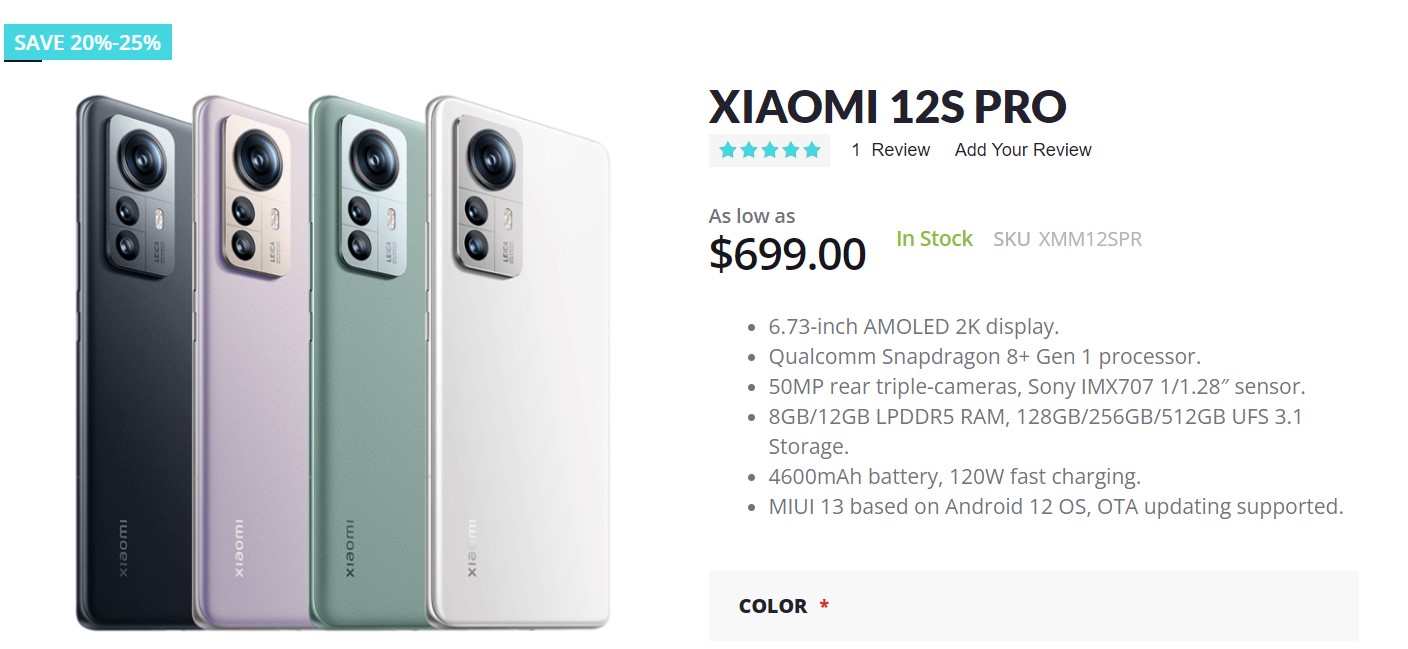
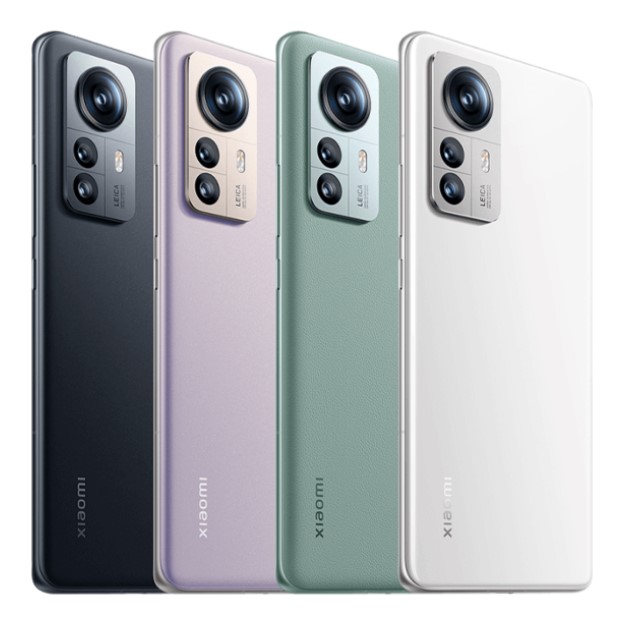
You can now get up to $300 OFF on Xiaomi 12S Proonly on Giztop. The smartphone which generally retails for $899 is now available at a discounted price of $699 only. Please note that this price is applicable to the base variant only.
Xiaomi 12S Pro 5G features a 6.73-inch AMOLED 2K display. Powered by the latest Qualcomm Snapdragon 8+ Gen 1 processor the smartphone comes in multiple memory variants viz. 8GB/12GB LPDDR5 RAM and 128GB/256GB/512GB UFS 3.1 internal storage.
The phone is fueled with a 4600mAh battery and supports 120W fast charging. It comes with a triple 50MP rear cameras and a 32MP sensor in the front. Other interesting features include Android 12-based MIUI 13, in-display optical fingerprint sensor, NFC, Wi-Fi 6, etc.
Generally retailing for $899 you can now buy Xiaomi 12S Pro at a discounted price of $699 only on Giztop. Please note that this is a limited-time offer. So place your order before the deal expires.
For more information on such exciting deals and offers check out our deals hub.
On September 14, a video of a Porsche car on fire went viral on the Chinese internet. Media reports have now come out stating that the vehicle was a Porsche Taycan EV driven in the Suzhou city of southern Jiangsu Province in Eastern China.
Multiple media outlets reported that the Porsche Taycan in question met with an accident and burst into flames almost immediately. The car had reportedly hit a guardrail near a shopping mall and caught fire. Passersby tried to rescue the driver but the car door was jammed and could not be opened from the outside which eventually lead to the death of the young driver who was in his thirties.
Subsequently, a video has gone viral on Chinese social media which shows the people around the EV trying to help the driver but in vain, as the car burst into flames. The reason and the exact cause of the accident and fire are still unknown.
This is apparently the third incident in the last four months wherein a Porsche was caught on fire, two of them being recently launched EVs. On August 12, a Porsche Panamera EV suddenly caught on fire. The driver and passengers saw smoke emitting from the driver’s seat and quickly stopped the car and rushed out within seconds before the whole vehicle exploded. Back on June 13, Suzhou city witnessed a Porsche spontaneously catch fire. Again the driver and passengers were lucky and could escape before the car was completely charred.
Recent data released by the National Emergency Management Department states that the first quarter of 2022 saw 640 fires in electric cars. This figure was an increase of 32 percent year on year. However, for cars powered by internal combustion, the growth rate was just 8.8 percent. The three fires and one death in a Porsche vehicle in China have led to questions about the safety and security of EVs in the country which now shows an emerging trend of vehicle fires.
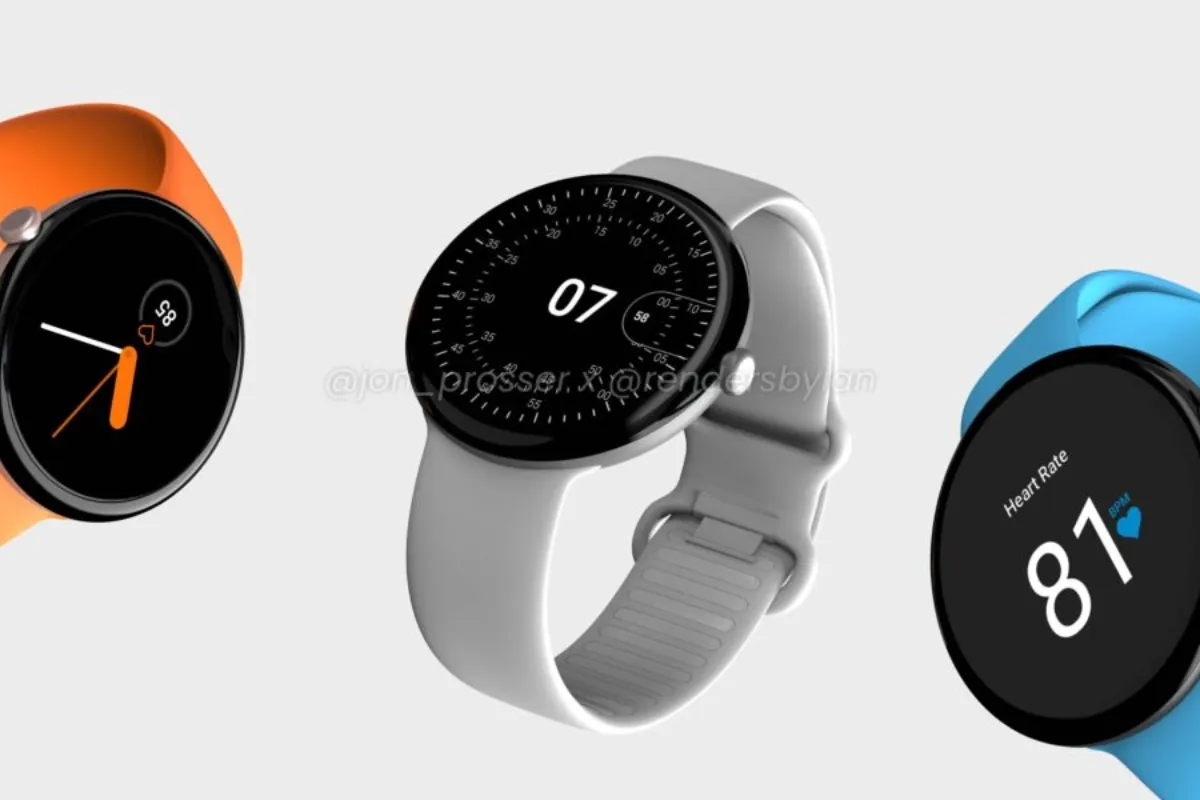
Google gave us a glimpse of the long-awaited Pixel watch at the I/O ’22. And recently, the search giant confirmed that it will be launching its first-ever smartwatch alongside the Pixel 7 smartphones on October 6 at the “Made by Google” event. Ahead of the launch, a new report is here with the pricing details and color options of the upcoming Pixel Watch. Here are the details.
Pricebaba, citing tipster Sudhanshu Ambhore, has revealed that the Google Pixel Watch will be offered in three colorways—Chalk, Charcoal, and Obsidian. In addition, the publication claims the Wi-Fi version of the wearable would cost around €250 (roughly $250/Rs 19,250) and €350 (roughly $350/Rs 27,900) in Europe. We can expect the Pixel watch to cost comparatively less in the Indian subcontinent.
For the uninitiated, the Pixel watch will likely arrive in three variants. One model may support only Wi-Fi and Bluetooth connectivity, while the rest two variants could offer LTE connectivity as well. Previous leaks suggest the Pixel Watch LTE variant will cost around $399 (Rs 31,800) in the States.
If we talk about the specifications, the Google Pixel Watch will likely feature an OLED screen. It may be powered by an older Exynos 9110 chipset paired with 1.5GB or 2GB of RAM. Rumors also suggest the watch’s processor will be accompanied by an additional processor to share the load. In addition, it will offer 32GB of native storage and run on WearOS.
The Pixel Watch will likely arrive with support for Google Assistant and Google apps like Maps. The Pixel watch is said to last just a day on a single charge. This may vary if AOD is enabled or sleep tracking is on. The watch is also rumored to charge fully in 110 minutes, which is very slow if you compare it to other watches in the segment.
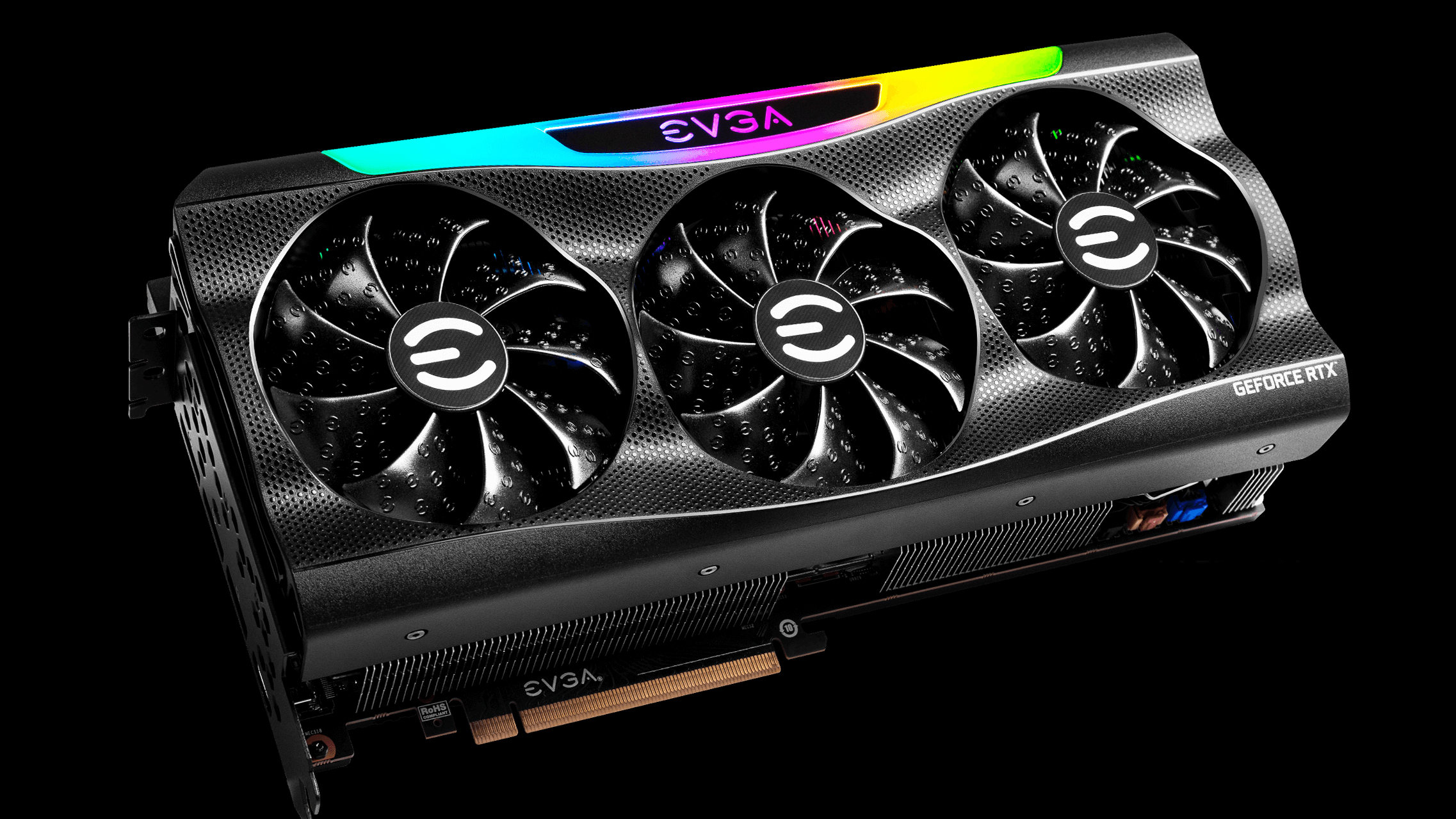
EVGA, one of the largest manufacturers of graphics card add-in boards, has announced that the company will stop making NVIDIA video cards based on NVIDIA’s next-generation of GPUs and won’t be immediately switching to AMD or Intel.
As a result, NVIDIA is losing its largest add-in board (AIB) in North America, and the broader North American video card market is losing one of its biggest and best-known vendors in this segment.
The development comes at a time when the financial outlook is bleak in the sector post-Ethereum Merge and “mistreatment” from its partner NVIDIA. The company spokesperson said in a statement, “EVGA will not carry the next-generation graphics cards. It will continue to support the existing current-generation products. EVGA will continue to provide the current-generation products and is committed to our customers and will continue to offer sales and support on the current lineup.”
For those who are unaware, while NVIDIA and AMD design the GPU that sits on the board, the actual card itself that slots into a computer are built by third parties such as EVGA, ASUS, MSI, and Gigabyte. This is done to separate the low-margin business from the high-margin business of designing the actual chips.
EVGA notes that the AIB margins have been slowly shrinking over the past couple of decades, which reportedly have fallen from 25% in 2000 to 10% in 2015, and finally an estimated 5% this year. Meanwhile, as NVIDIA has slowly ramped up its own efforts to directly sell its Founders Edition (reference) video cards, AIBs like EVGA have been put in a position of directly competing with their partner-turned-supplier.
Honor recently launched the Honor X40 in China with a 120Hz curved display, Snapdragon 695 SoC, and more. Now the brand’s Myanmar handle has teased the launch of a new X series smartphone, dubbed the Honor X6. The handset is tipped to feature a 50-megapixel triple camera setup and a large 5000mAh battery.
Honor Myanmar has teased the launch of the new Honor X6 via a Facebook post. The company has also revealed the design of the phone. It can be seen to have a waterdrop notch at the front, which houses the selfie camera. On the back, the smartphone has a square camera module featuring a triple rear camera setup and an LED flash. The back of the smartphone resembles the already launched Honor X8 5G.
A leaked promotional image reveals the handset will have a 50-megapixel triple-rear camera setup and will be powered by a large 5000mAh battery.
In addition, a Malaysian source claims the Honor X6 will have a 6.5-inch LCD panel that will offer HD+ resolution (via GSMArena). The handset will likely have a standard 60hz refresh rate. Under the hood, it is said to be powered by an octa-core MediaTek processor paired with MediaTek’s HyperEnjine. The handset will likely run Android 12 with Magic UI 6.1 on top.
Further, the handset is reported to feature 4GB of RAM and 128GB of onboard storage. In terms of optics, the main 50-megapixel rear sensor will be accompanied by two 2-megapixel snappers. While on the front, it will feature a 5-megapixel selfie shooter.
The above specifications do sound legit, but we can’t be too sure about it since the source does not have much credibility. In any case, we’ll learn all the details about the device soon.
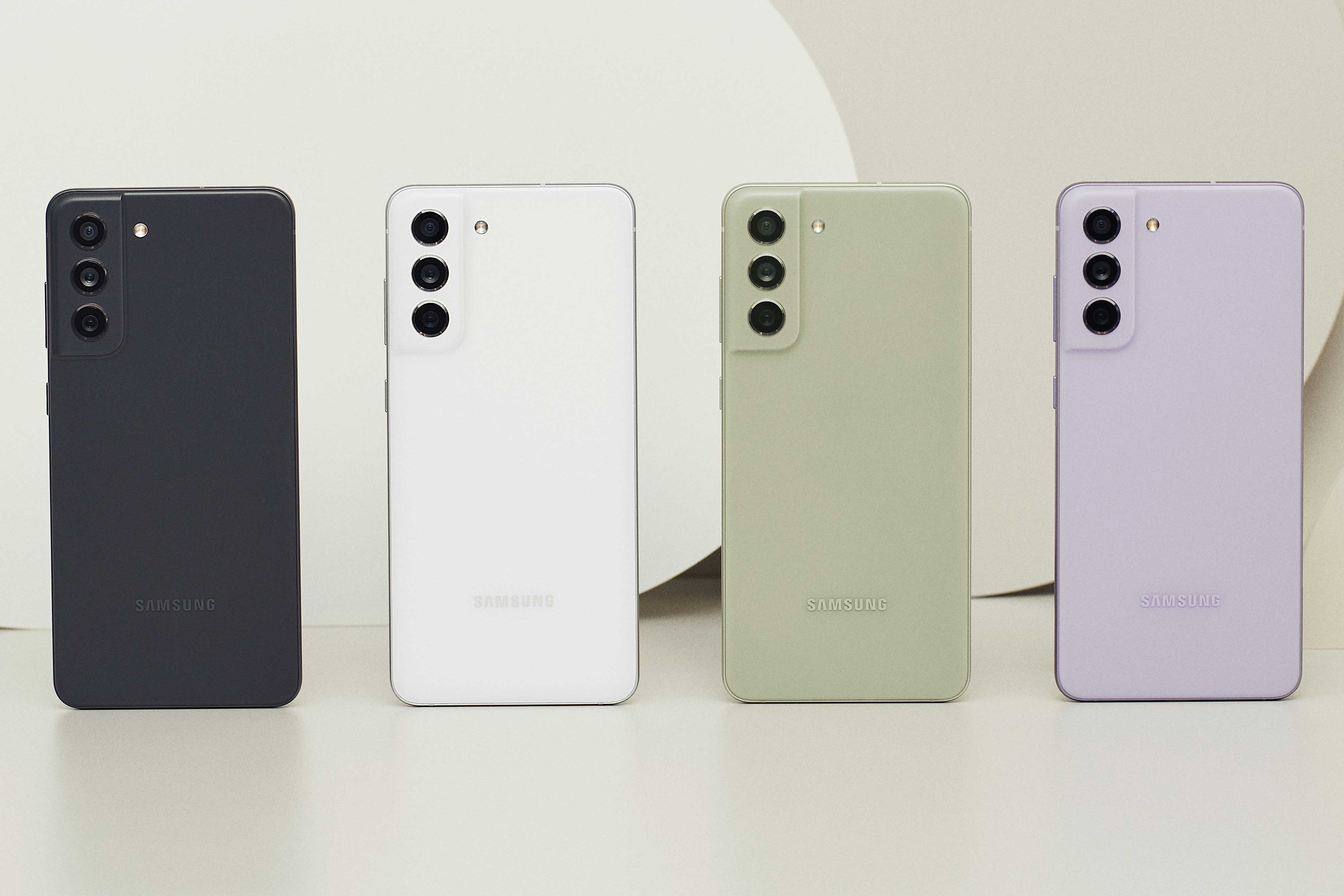
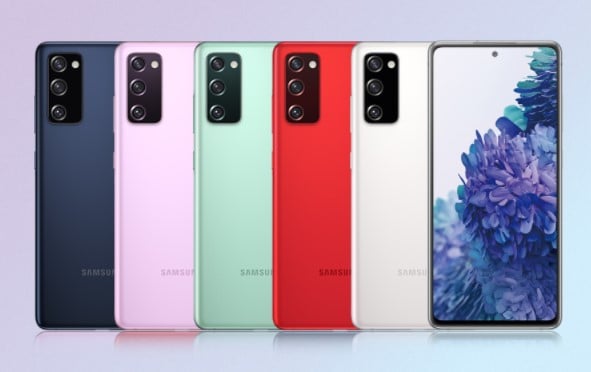
The Samsung Galaxy Fan Edition smartphones are known as some of the most well-rounded devices with flagship features and sub-flagship pricing. As the festive season approaches, Samsung is offering the Galaxy S21 FE 5G and the Galaxy S20 FE at their lowest prices ever.
Starting with the Galaxy S21 FE 5G, the device can be purchased for as low as Rs. 31,999, including all bank offers and discounts on Flipkart. The device has a sale price of Rs 34,999. However, customers can grab a Rs 1,000 discount using Axis Bank and ICICI Bank debit cards. Credit card users of Axis Bank and ICICI Bank, on the other hand, will get Rs. 1,500 off on the purchase. Additionally, ICICI Bank credit card users will get an additional Rs. 1,500 off on the purchase. These offers are applicable to EMI transactions as well. This offer will be valid till September 30th.
Samsung Galaxy S20 FE 5G
On the other hand, the Galaxy S20 FE 5G is going for Rs. 29,999. However, on the Samsung Shop app, the company is offering an instant discount of Rs. 3,000 on HDFC bank cards, knocking its price down to Rs. 26,999.
Samsung has promised that the Galaxy S21 FE 5G will be getting three major Android updates, meaning the phone will be receiving updates till Android 15. It is expected to receive frequent security updates till the end of 2025. As for the Galaxy S20 FE 5G, the device will soon receive its last major Android update based on Android 13.
Samsung Galaxy S21 FE & GALAXY S20 FE 5G specs
Both devices feature a metal frame, a glass front, and a plastic back. They both also come with an IP68 dust and water resistance rating. The S21 FE has a 6.4-inch display, while the S20 FE has a 6.4-inch display. Both of these are Dynamic AMOLED Infinity-O panels with Full HD+ resolution, HDR10+, and an optical in-display fingerprint reader.
Under the hood, the Galaxy S21 FE features an Exynos 2100 chipset, while the S20 FE 5G comes with a Snapdragon 865. Camera setups on both devices are also similar as both feature a 12MP primary camera with OIS, a 12MP ultrawide camera, and an 8MP telephoto camera with 3x optical zoom and OIS. They also share the same 32MP front camera. The only difference in both camera setups is the better optimization on the S21 FE.
One thing that the older model has going in its favor is a micro-SD card slot. Both phones have Wi-Fi 6, Bluetooth 5.0, GPS, NFC, USB 3.2 Type-C port, Samsung Pay, Samsung DeX, 4,500mAh batteries, 25W fast charging, 15W fast wireless charging, and 4.5W reverse wireless charging.
Xiaomi’s spin-off brand Redmi is gearing up to launch its first-ever tablet—the Redmi Pad—in global markets. The company has not confirmed the launch date yet, but the device has been spotted receiving multiple certifications, which hints it may debut soon. The tablet has recently visited the SIRIM, BIS, and SGS Fimko certification websites. Here are the details.
The Redmi Pad has been spotted on various certification sites, including Malaysia’s SIRIM, India’s BIS, and SGS Fimko (Via Mukul Sharma). The handset was seen listed with a model number of 22081283G. The SGS Fimko listing suggests the tablet will be equipped with 18W charging.
In addition, the BIS listing signals the device may also launch in India soon. Recent reports suggest the Redmi Pad may debut globally in October. As mentioned, Redmi is yet to confirm the exact date.
Redmi Pad Specifications
Previous leaks and rumors have helped us paint a good picture of the Redmi Pad. The tablet is expected to feature an 11.2-inch LCD panel that offers a 2K resolution. It is reported to be powered by a MediaTek MT8781 chipset paired with up to 4GB of RAM and 128GB of onboard storage.
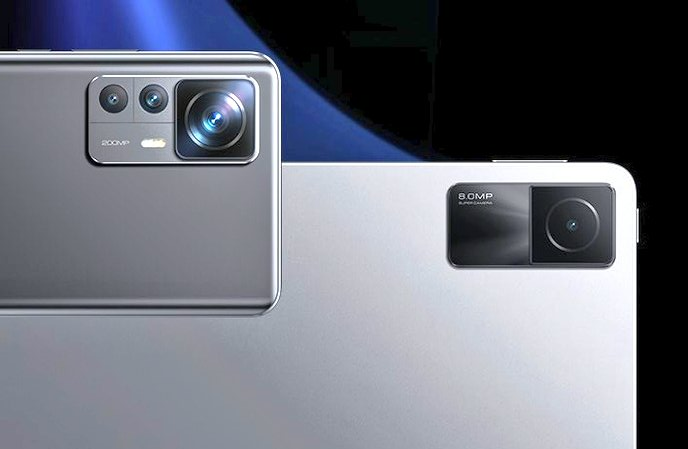
Xiaomi 12T Pro, Redmi Pad leaked image
It may pack a 7,800mAh battery with support for 18W fast charging. If we talk about the optics, the pad may have a sole 8-megapixel rear camera without an LED flash. On the software front, it is expected to run the Android 12 OS with MIUI Pad 13 on top. A recent TDRA listing hints that the tablet will be available in cellular as well as Wi-Fi-only models.
As per a recent report, the Redmi Pad cellular model could cost up to 350 euros in the European market. In addition, the latest leak revealed that the Wi-Fi-only variant of the Redmi Pad will go on sale for 71.9 Kuwaiti Dinars (roughly $235/Rs 18,800).
We use cookies on our website to give you the most relevant experience by remembering your preferences and repeat visits. By clicking “Accept”, you consent to the use of ALL the cookies.
This website uses cookies to improve your experience while you navigate through the website. Out of these, the cookies that are categorized as necessary are stored on your browser as they are essential for the working of basic functionalities of the website. We also use third-party cookies that help us analyze and understand how you use this website. These cookies will be stored in your browser only with your consent. You also have the option to opt-out of these cookies. But opting out of some of these cookies may affect your browsing experience.
Necessary cookies are absolutely essential for the website to function properly. This category only includes cookies that ensures basic functionalities and security features of the website. These cookies do not store any personal information.
Any cookies that may not be particularly necessary for the website to function and is used specifically to collect user personal data via analytics, ads, other embedded contents are termed as non-necessary cookies. It is mandatory to procure user consent prior to running these cookies on your website.