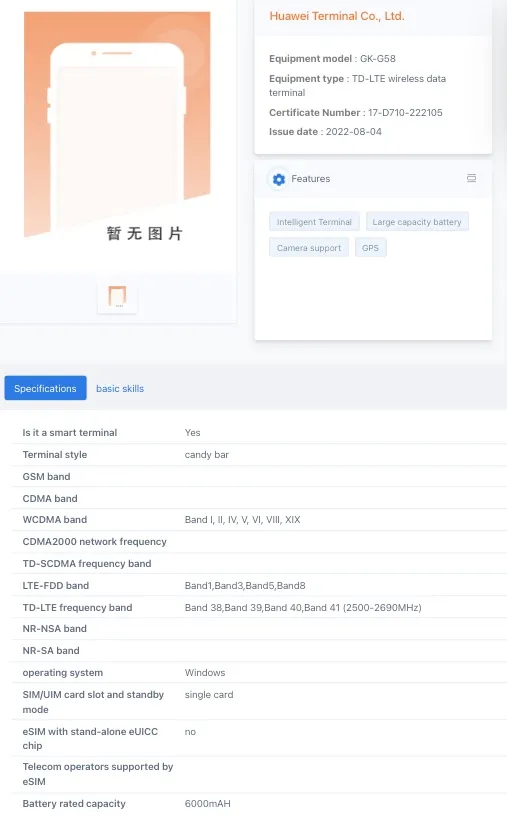
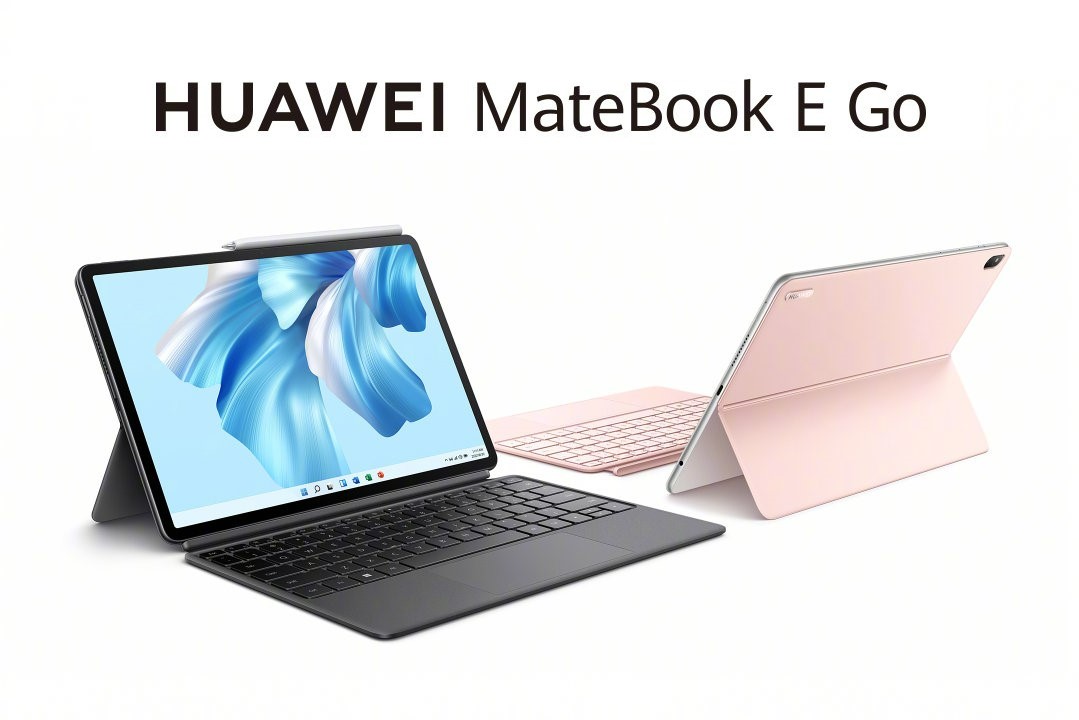
Later today, Huawei will host a launch event at which the brand is expected to debut the Mate 50 series smartphones along with other devices. One such device is the Huawei MateBook E Go. Ahead of the launch, the slate has been spotted on the TENAA listing revealing some key specs.
Huawei MateBook E GO TENAA
1 of 2
According to the listing, the device has model number GK-G58, and it carries support for LTE connectivity. It operates on the Windows platform and has a 6,000mAh battery and two cameras. The listing does not mention any further details, so let’s take a look at the information available on the device so far.
Huawei Matebook E Go
The Huawei Matebook E Go (2022) is a detachable 2-in-1 tablet notebook laptop. It will come with a color-matching folio keyboard cover featuring a trackpad, along with a stylus that magnetically attaches to the side of the laptop.
The teaser has revealed that the device runs on Windows 11. Additionally, a USB Type-C, a 3.5mm headphone jack, a front-facing webcam, and a rear camera are all visible in the teaser images.
Other than that, reports have revealed that the Matebook E Go (2022) will feature the Qualcomm Snapdragon 8cx Gen 3 mobile platform. This is a new platform developed on TSMC’s cutting-edge 5nm node for low-power laptops. Furthermore, the notebook supports 65W fast wired charging through USB-C Power Delivery. More details about the machine will be revealed at the launch event later today, so stay tuned.
Last month, Xiaomi unveiled the Xiaomi Pad 5 Pro 12.4 in China. Since launch, it has been available in 6 GB, 8 GB, and 12 GB RAM variants. Now, the company has announced anew 8 GB RAM variant for people in the home market who are looking forward to purchasing the Pad 5 Pro 12.4.
The Pad 5 Pro has been available in variants like 6 GB RAM + 128 GB storage, 8 GB RAM + 256 GB storage, and 12 GB RAM + 256 GB storage in China. These models are priced at 2,799 Yuan (~$403), 3,299 Yuan (~$476), and 3,999 Yuan (~$576), respectively. The tablet comes in three colors, such as black, silver, and green.
Xiaomi is yet to confirm the price and availability of the new variant that offers 8 GB RAM + 128 GB storage. It is likely that the new model could be priced at 2,999 Yuan (~$433) in the home market.
Xiaomi Pad 5 Pro 12.4 specifications
The Xiaomi Pad 5 Pro 12.4 has a 12.4-inch IPS LCD display that offers a resolution of 1600 x 2560 pixels, an aspect ratio of 16:10, a refresh rate of 120Hz, and 500 nits of brightness. It carries support for Dolby Vision and comes with Gorilla Glass 3 protection for the screen.
Under the hood, the Xiaomi Pad 5 Pro 12.4 features the Snapdragon 870 chipset. It is coupled with up to 12 GB of LPDDR4x RAM and up to 256 GB of native storage. There is no microSD card slot on the device. It runs on the Android 12 OS with MIUI Pad 13 custom skin on top.
On the front, it has a 20-megapixel camera, and its back panel has a 50-megapixel main camera, a 2-megapixel depth sensor, and an LED flash. It houses a 10,000mAh battery that carries support for 67W fast charging. The device is fitted with quad speakers and carries support for stylus.
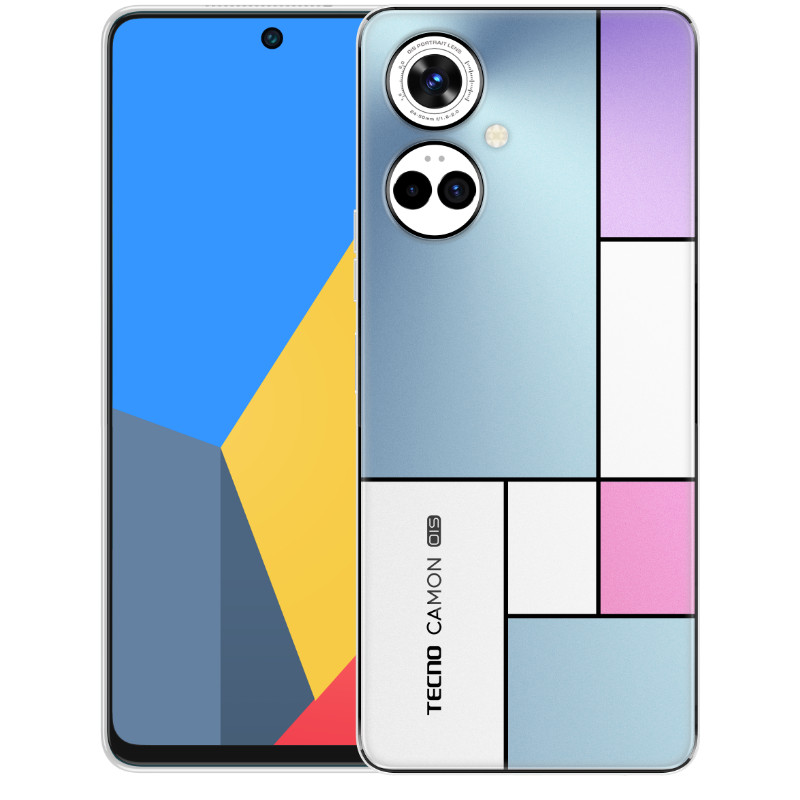
Recent reports have claimed that Tecno is gearing up to launch the Camon 19 Pro Mondrian Edition smartphone in India. The launch seems imminent as its microsite has gone live on Amazon India. The page shows how the Camon 19 Pro Mondrian Edition looks and what its most important features are.
The Tecno Camon 19 Pro Mondrian Edition page available on Amazon reveals that it is “coming soon.” This indicates that the phone will debut in the next few days and might be available during the Great Indian Festival 2022 sale.
Tecno Camon 19 Pro Mondrian Edition banner on Amazon
The major attraction of the Camon 19 Pro Mondrian Edition is that it is equipped with a polychromatic photoisomer technology on its back. As can be seen in the image below, each block on the phone’s back can change colors to multiple shades from plain white. The color-changing technology of the phone has been dubbed as the “Sunlight Drawing” by the company since it can change colors in sunlight.
Tecno Camon 19 Pro Mondrian Edition specifications
The Camon 19 Pro Mondrian Edition has a 6.8-inch IPS LCD display that offers a Full HD+ resolution of 1080 x 2460 pixels, a 20.5:9 aspect ratio, and a 120Hz refresh rate. The device boots to Android 12 with HiOS 8.6 on top. For security, it has a side-facing fingerprint scanner.
Tecno Camon 19 Pro Mondrian Edition
The Helio G96 is present at the helm of the Camon 19 Pro Mondrian Edition. It has 8 GB of RAM, up to 5 GB of virtual RAM, and 128 GB of built-in storage. The 5,000mAh battery of the device supports 33W fast charging.
The Camon 19 Pro Mondrian Edition has a 32-megapixel front camera. On its back, it features an OIS-enabled 64-mgeapixel main camera, a 50-megapixel telephoto snapper, a 2-megapixel depth assist lens, a laser autofocus unit, and a quad-LED flash.
Last month, ASUS launched its latest Zenfone series smartphone in the form of the ASUS Zenfone 9 as the successor to the last year’s Zenfone 8. Now, the company has started taking pre-orders for the ASUS Zenfone 9 in the United States.
The phone is priced at $699 and is now up for pre-order on Amazon. To make the deal better, the company is also offering all early buyers of the phone a complimentary pair of ASUS ROG Cetra True Wireless earbuds, which costs $99.
Coming to the specifications, the ASUS Zenfone 9 features a 5.9-inch SAMOLED display with a Full HD+ screen resolution and up to 120Hz refresh rate with 445PPI pixel density, HDR10+ support, and a 112-percent DCI-P3 color gamut.
Under the hood, the device is powered by the Qualcomm Snapdragon 8+ Gen 1 processor, coupled with up to 16GB of LPDDR5 RAM and 256GB of UFS 3.1 internal storage. It runs the Android 12 operating system out-of-the-box with the company’s own custom UI.
In the camera department, there’s a dual-camera setup on the back consisting of a 50-megapixel Sony IMX766 primary sensor coupled with a 2-megapixel Sony IMX363 ultra-wide sensor with 113 degrees field of view. On the front side, there’s a 12-megapixel Sony IMX663 snapper for taking selfies and video calling.
The IP68-rated water and dust-resistant smartphone is powered by a 4,300mAh battery and has 30W fast charging support. The company claims that the battery can be charged from zero to 50 percent in under 30 minutes.
The company recently announced the Android 13 beta program for the ASUS Zenfone 9 smartphone, and the new software is now already being rolled out to those who are enrolled in the beta program. This means that the stable version of the new Android 13 should be available in the coming months.
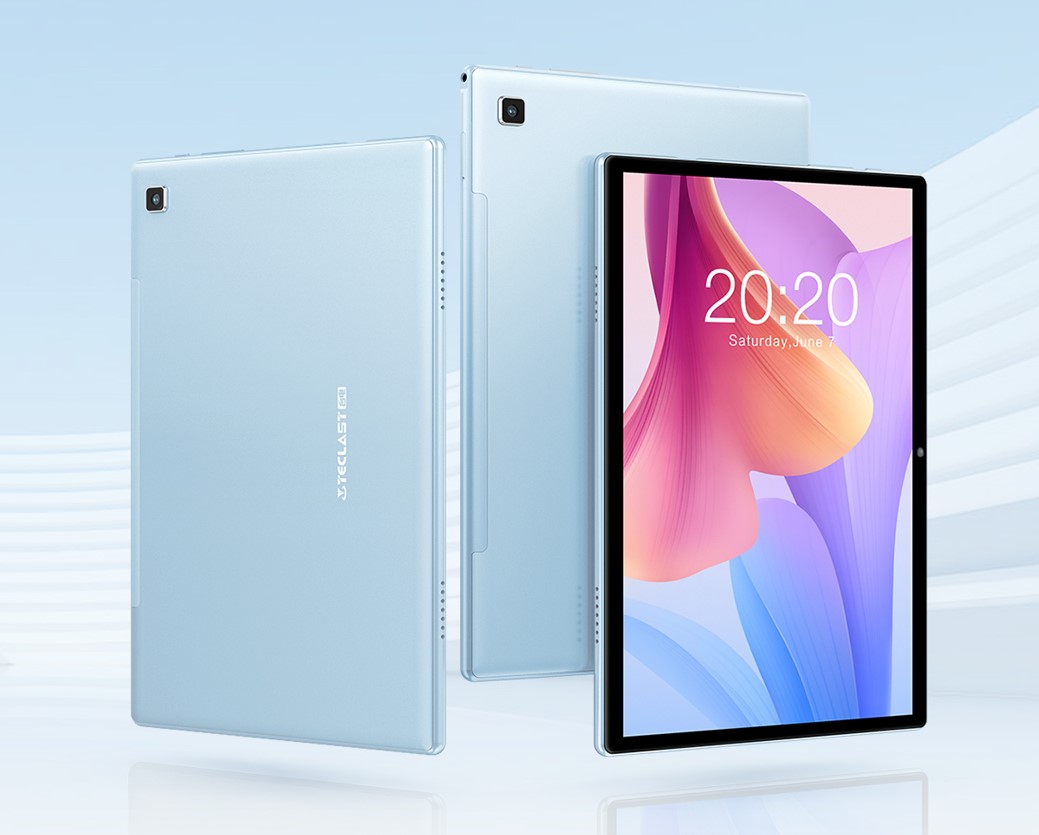
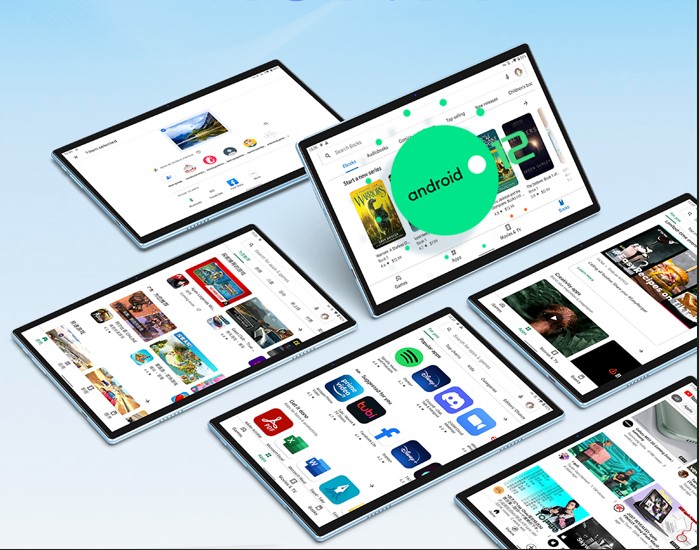
Teclast P20S Tablet which generally retails for $200 is now available at a discounted price of $109.99 only at AliExpress. Please note that this super deal ends on September 9, 2022.
Generally retailing for $200, you can now buy Teclast P20S Tablet at a discounted price of $109.99 only at AliExpress. The tablet is available in the EU, UK, US, and Australian plugs. The final price may be lower or higher depending on the shipping region and warehouse. This deal ends on September 9, 2022. So place your order asap.
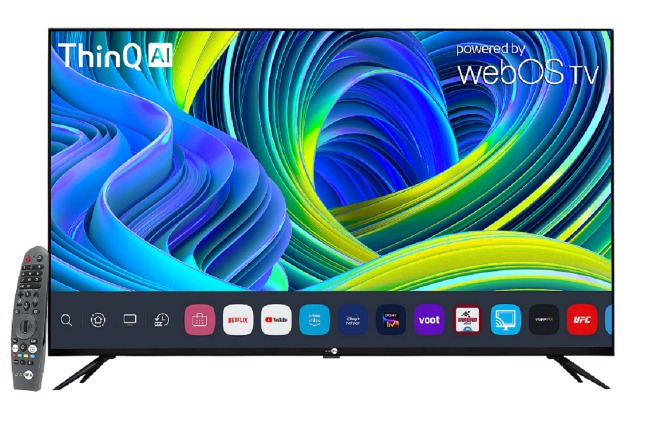
The Indian brand Daiwa has introduced a new 65-inch 4K D65U1WOS smart TV in India. The 43′′ and 55′′ versions of this TV were released in December 2021. So, let’s take a look at its specs, features, and pricing.
Daiwa D65U1WOS 65-inch smart TV specs
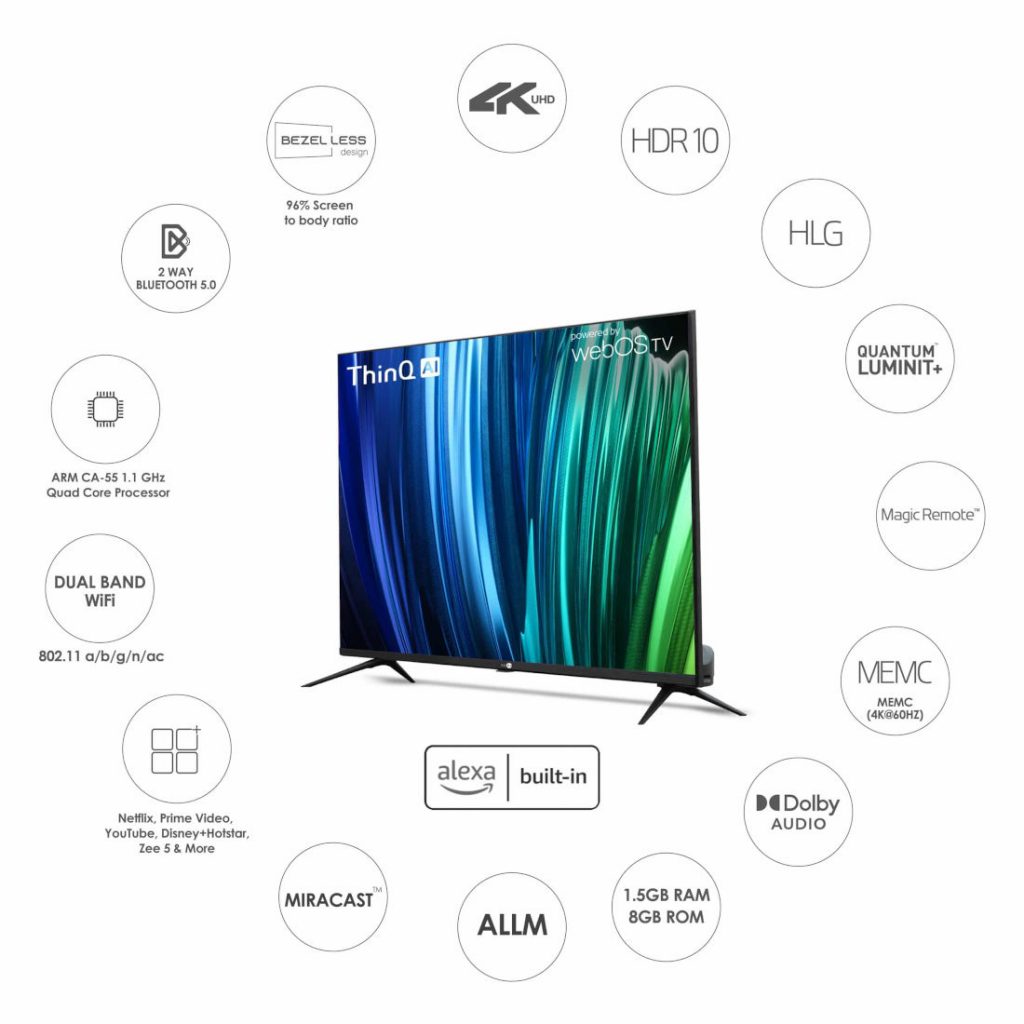
The smart TV uses a 65-inch DLED display panel with 4K (2,160×3,840 pixels) resolution, 60Hz refresh rate, and 16:09 aspect ratio. It also offers HDR10 and 1000000:1 contrast ratio.
The TV features dual-band Wi-Fi and Bluetooth v5 for connectivity. Under the hood, it has a quad-core ARM CA55 SoC, paired with a Mali G31 MP2 GPU. The chipset is complemented by 1.5GB of RAM and 8GB of inbuilt storage. It operates on LG’s WebOS. For audio output, the TV features 20W surround sound box speakers with Dolby Audio tuning.
Other highlight features of the smart TV include Magic Remote, ThinQ AI, built-in Alexa, air mouse, click wheel and intelligent edit options. It comes pre-installed with apps like Netflix, YouTube, Amazon Prime Video, Disney+ Hotstar, Zee5, SonyLIV, and more.
Coming to ports, the Daiwa D65U1WOS has two USB 2.0 ports and three HDMI 2.0 ports. It also includes an Ethernet port, optical output, earphones out, RF in, and AV in support.
Pricing & availability
Daiwa D65U1WOS 65-inch 4K smart TV has a price tag of Rs. 56,999. It is currently available through Daiwa’s website as well as top Indian retail outlets.
Honor has been actively launching new devices in its home market China as the company aims to take the lead position in the country’s smartphone market. In line with that, the brand is now all set to launch the next-generation X-series smartphones.
The company has today confirmed through a teaser poster that the Honor X40 series smartphones will be officially launched in China on 15th September.
The teaser postered shared by the company has a slogan that reads “New Leap Level Benchmark,” indicating powerful specifications for the upcoming devices. So far, the company has not revealed any of the phone’s specifications.
Honor CMO Jiang Hairong has revealed that there are more than 100 million users of the company’s X-series smartphones globally. He also added that the company would soon launch a nine-year milestone smartphone for the Honor X series.
Based on the previous reports, the Honor X40 series smartphones will come with an OLED panel, likely to be manufactured by BOE. The lineup will reportedly have Honor X40 Max, which is expected to come with 40W fast charging support.
As of now, not much is known about the specifications and features of the upcoming smartphones but we expect the company to soon start sharing teasers for the X40 series phones, revealing what we should expect from the smartphones.
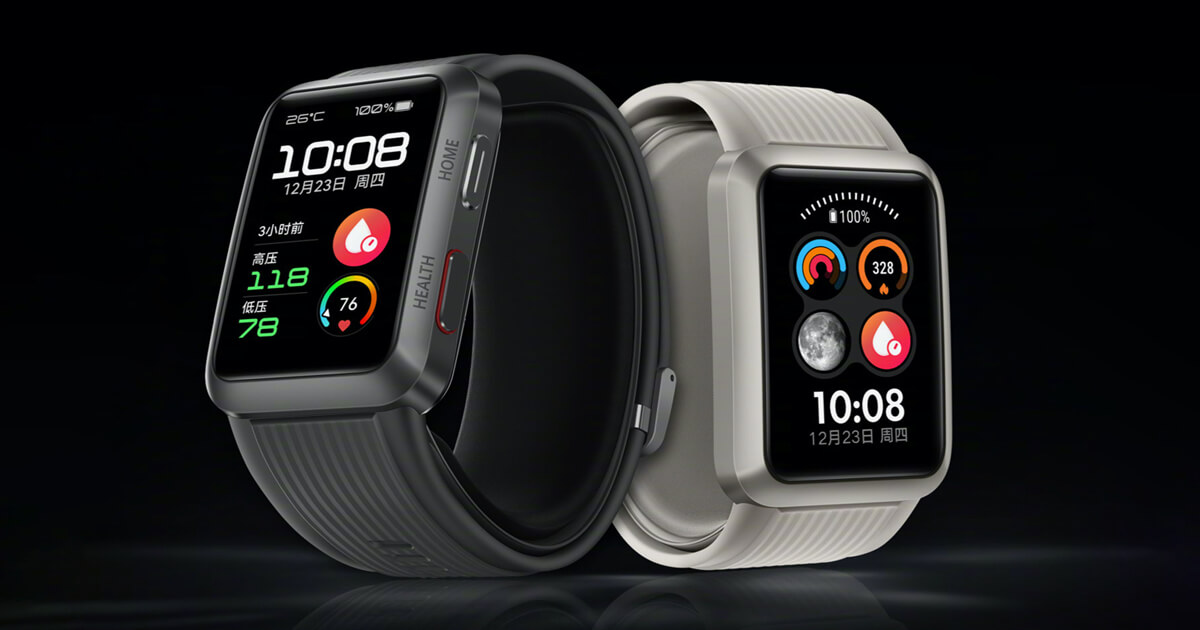
Last year, Huawei had launched its flagship smartwatch in its home country China, dubbed Huawei Watch D. The device was recently showcased at the IFA Berlin, indicating the device is all set for its global debut.
Now, the Chinese giant has announced that the Huawei Watch D will soon be launched in the European market, but the exact launch date or the name of the countries where it will be officially announced remains unknown.
The company has announced that the Huawei Watch D will be made available in the European market this fall, which means it will be launched by the end of this year. It is expected to be priced at €449.
With such a price tag, it is more expensive than the Galaxy Watch 5 and Watch 5 Pro, given that the smartwatch from Huawei comes with a built-in blood pressure monitor. It also comes with an electrocardiogram (ECG), a heart rate monitor, a skin temperature sensor, and a SpO2 sensor that can monitor blood oxygen levels.
The Huawei Watch D has a custom-made high-hardness aviation aluminum body with improved durability and scratch resistance. It features a 1.64-inch HD display that offers a 326PPI pixel density. The device is rated IP68 for water and dust resistance and is also the industry’s first watch with blood pressure monitoring support to come with such a rating.
It also supports heart rate detection through an eight-channel high-sensitivity optical sensor and has support for 70+ sports modes. As for the battery life, the company says that the device should last for seven days on a single charge when using all the features, and then it can be charged through wireless charging.
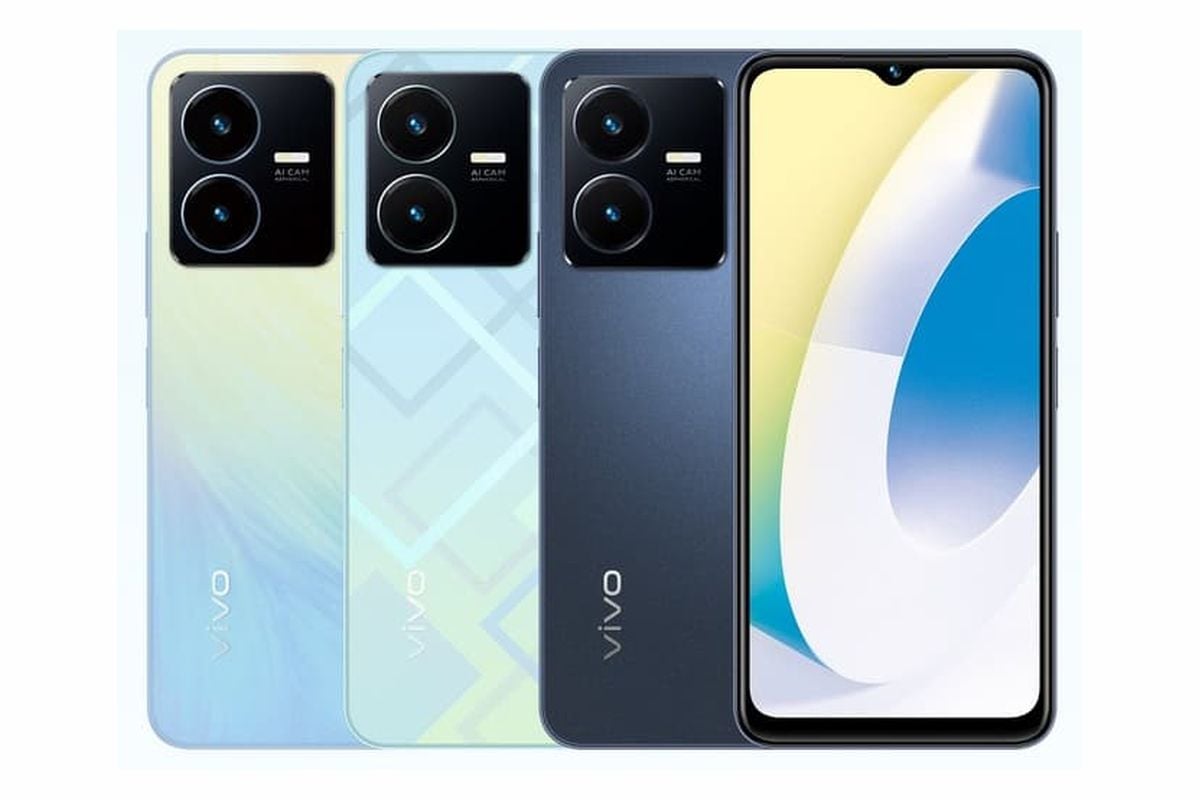
The Vivo Y22 has gone official in Indonesia. It is expected to be released in other Asian markets, including India, in the coming days. Indian retailer Mahesh Telecom has shared a poster of the Vivo Y22, which suggests that it will debut soon in the country. The poster mentions the key features of the smartphone. It also talks about the cashback offer that buyers of the Y22 will be able to take advantage of.
The Vivo can be seen sporting a dual-camera setup with a 50-megapixel main camera. It appears that the main snapper will be optimized to offer a better photography experience in dim-light conditions. It is backed by a 5,000mAh battery.
The poster mentions a Rs 1,000 (~$12) cashback on credit card and credit card EMI transactions with SBI Bank, Kotak Bank, and OneCard will be available for Y22 buyers..The cashback offer will be out by the end of September, which means that its launch in India is coming up soon.
Vivo Y22 specifications
The Vivo Y22 has a 6.55-inch IPS LCD display with a teardrop notch design. It supports an HD+ resolution and a 90Hz refresh rate. It is powered by the Helio G85 chip, up to 6 GB of RAM, and a 5,000mAh battery with 18W charging support.
Vivo Y22
The Y22 has a 50-megapixel main camera and a 2-megapixel macro snapper. On its front is an 8-megapixel selfie camera. In Indonesia, the device is priced at IDR 2,399,000 (~$161), which indicates it may cost around Rs 12,000 in India.
The Y22 is available in colors like Starlit Blue, Summer Cyan, and Metaverse Green in Indonesia. The above-shown poster only showcases the blue and green variants, which indicates that the Cyan model may not be released in India.
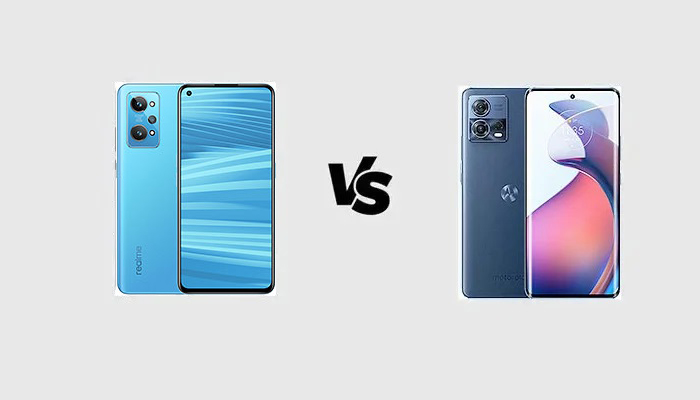
Last month Motorola announced two amazing flagship phones: the Motorola X30 Pro and the Motorola S30 Pro. While the former is the top-tier flagship, the latter is a flagship killer more focused on the quality price ratio. That is the reason why it is definitely one of the most interesting phones of this year for those who search for the max performance at an affordable price. But in order to understand whether or not this is the best flagship killer you can buy, it is worth comparing it to its most important rivals in the current market. Among these, we got the Realme GT 2 released earlier this year: we chose this device because it is currently available at very interesting street prices, so it is a perfect rival for the new Lenovo handset. So, here is a comparison between the main specifications of the Realme GT 2 and the Motorola X30 Pro.
Realme GT 2 vs Motorola S30 Pro
Realme GT 2
Motorola S30 Pro
DIMENSIONS AND WEIGHT
162.9 x 75.8 x 8.6 mm,
194.5 g
158.5 x 71.2 x 7.5 mm,
172 g
DISPLAY
6.62 inches, 1080 x 2400 pixels (Full HD+), AMOLED
6.55 inches, 1080 x 2400 pixels (Full HD+), P-OLED
Triple 50 + 8 + 2 MP, f/1.8 + f/2.2 + f/2.4
16 MP f/2.5 front camera
Triple 50 + 13 + 2 MP, f/1.8 + f/2.2 + f/2.4
32 MP f/2.2 front camera
BATTERY
5000 mAh, fast charging 65W
4400 mAh, Fast Charging 68W
ADDITIONAL FEATURES
5G, dual SIM
5G, dual SIM, splash and dust resistant
Design
The design of the Motorola Moto S30 Pro is more premium and curated than the Realme GT 2. First of all, this device is thinner, lighter, and more compact than its rival. Further, it comes with a curved screen at the sides, just like the most beautiful flagships. Last but not least, it has a glass back protected by Gorilla Glass 5 and it is splash and dust resistant. You can not find any of these pros on the Relame GT 2, but it is still an interesting device because two of its three color options are made with a special bio-polymer resembling the touch and feel of real paper. You can even draw on the phone with a pencil and erase with a rubber. However, this is not enough for it to win the design comparison as we prefer the elegance of the Motorola S30 Pro. Do you agree with us?
Display
The display of the Motorola Moto S30 Pro looks better than the one found on the Realme GT 2. It is a P-OLED panel manufactured by LG which is able to show up to one billion colors. It has a Full HD+ resolution of 1080 x 2400 pixels, a great 144 Hz refresh rate, and the HDR10+ certification. It comes with a diagonal of 6.55 inches, curved edges, and an in-display fingerprint reader. The Realme GT 2 has an OLED display with a Full HD+ resolution and HDR10+ as well, but its refresh rate is lower at just 120 Hz and it is not able to show one billion colors. On the other hand, it is the only one featuring stereo speakers, even though it does not provide a 3.5 mm audio jack. Do you prefer having a better display or better audio on a phone?
Specs & Software
Even though these devices are very similar in terms of performance, the Motorola Moto S30 Pro is slightly better. First of all, it has a superior chipset: the Snapdragon 888+ is actually an upgrade of the Snapdragon 888 found on the Realme GT 2. It is a chipset built with a 5 nm production process coming with an octa-core architecture composed of a Cortex X1 CPU running at a max frequency of 2.99 GHz, three Cortex A78 CPUs running at 2.42 GHz, and four Cortex A55 CPUs running at 1.8 GHz, as well as an Adreno 660 GPU. The chipset is paired with up to 12 GB of RAM and up to 512 GB of UFS 3.1 internal storage, while the Realme GT 2 stops at 256 GB of internal storage in its most expensive configuration. Both handsets run Android 12 out of the box, customized by Realme UI 3.0 and MYUI 4.0, respectively. Note that the GT 2 will get three major Android updates and four years of security patches as per the latest Realme update policies.
Camera
The Realme GT 2 and the Motorola S30 Pro come with the same main camera: a 50 MP Sony IMX766 sensor with a 50 MP resolution, an f/1.8 focal aperture, and OIS. The Motorola actually sports a better ultrawide camera with a 13 MP resolution (against just 8 MP), as well as a better front camera with a 32 MP resolution (against 16 MP). So, we can definitely say that the Motorola S30 Pro has a better camera setup.
The most important advantage of the Realme GT 2 over its rival is definitely the battery capacity. Thanks to a 5000 mAh battery, it lasts a lot longer on a single charge and its rival is not able to compete in any way, especially if we consider that it has similar specifications but a 4400 mAh battery. The charging technologies are very similar, so expect similar charging speeds, but the Motorola will obviously be quicker to reach full charge due to its smaller battery.
Price
The Motorola S30 Pro starts from €330/$330 in the Chinese market, while the Realme GT 2 can easily be found for less than €400/$400 in the global market. Overall, the Motorola S30 Pro is superior, if we exclude the battery.
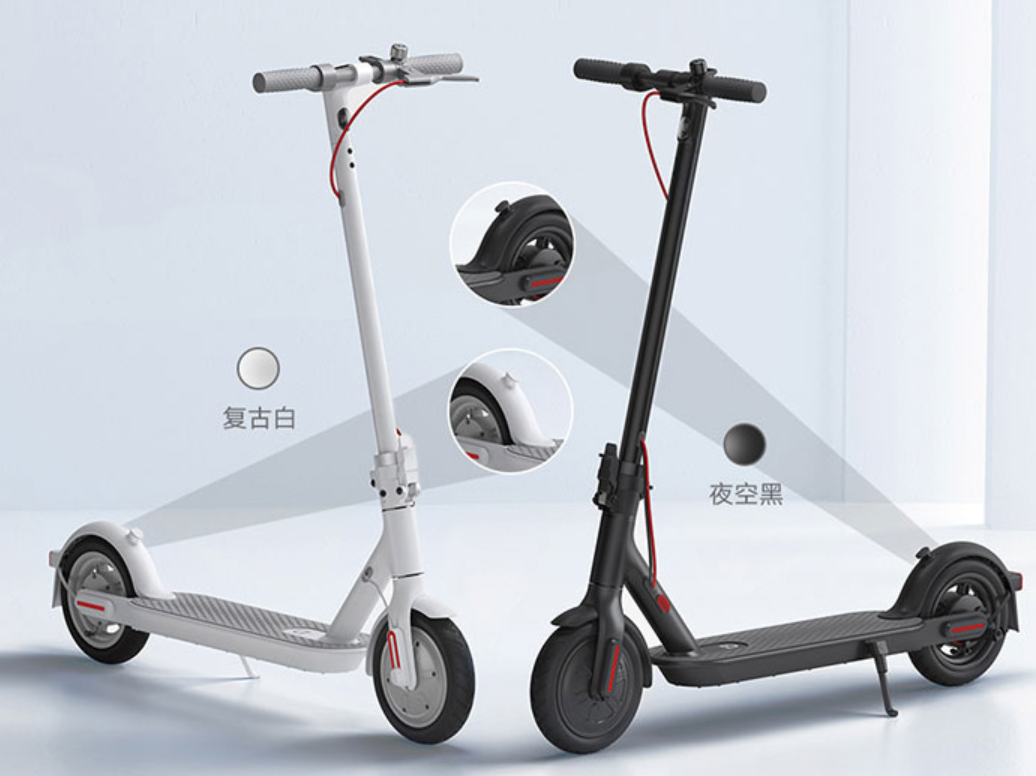
Since the launch of the MIJIA M365 electric scooter in 2017, Xiaomi has continued to improve on the model with subsequent releases due to the popularity of the e-scooter. Earlier this year, the company unveiled the MIJIA Electric Scooter 3 Lite in China. The tech giant has now quietly launched the same model but named Xiaomi Scooter 3 Lite in Europe.
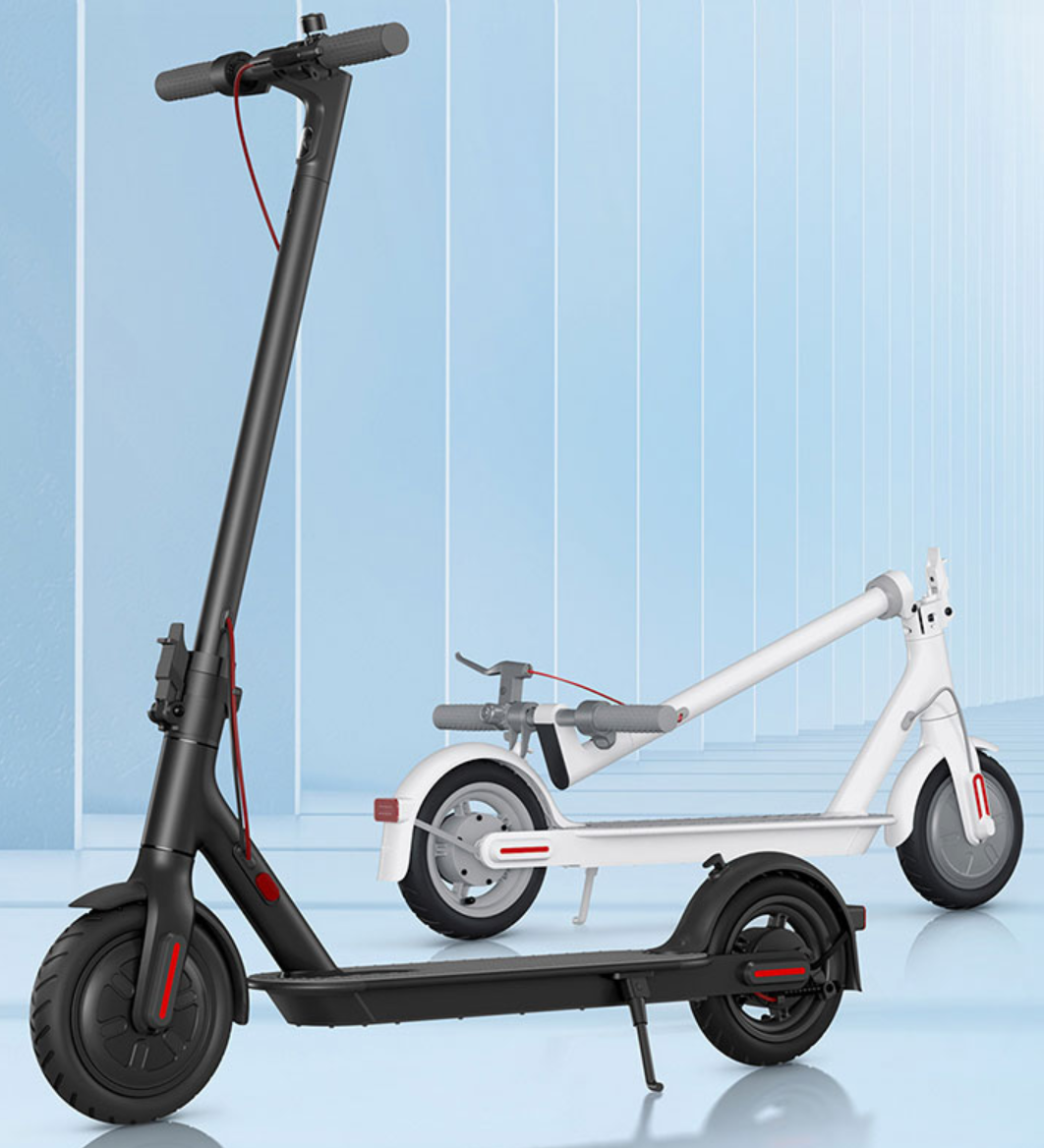
The Xiaomi Electric Scooter 3 Lite is currently accessible in several countries on the continent through Amazon. The scooter, for example, costs €446.27 ($444.07) in France, €449.99 ($447.77) in Spain, €453.71 ($451.47) in Italy, and €495.88 (US$493.43) in the Netherlands. While most countries only offer the e-scooter in white at the moment, a black variant of the scooter is available in Spain. The scooter retailed at 1,899 yuan (~$298) in China and so, is selling at almost twice the price in Xiaomi’s home market.
As a reminder, the Xiaomi Electric Scooter 3 Lite’s frame is said to be 10mm thinner than that of the MIJIA Electric Scooter 1s which was launched in 2020. The reduced frame size is said to offer the scooter a lower center of gravity and a more stable ride. The body is made of high-strength aluminum alloy material, which makes the body lighter and easier, and more convenient to carry.
In terms of design, the Xiaomi Electric Scooter 3 Lite removes the complicated design of the forehead to create a visual minimalist and light feeling. At the same time, the light is moved down to “reduce the burden” on the forehead. The screen ratio of the instrument cluster is also increased and you get an optimized screen control experience.
Furthermore, the new electric scooter has a 13% increase in climbing ability, a maximum speed of 25km/h, and a rated power of 250W. The scooter’s range is just 20km making it suitable for short commutes. Also, the front hub cover is set to add retro elements.
LG Electronics has announced it will incorporate non-fungible tokens (NFTs) technology in some of its smart TVs. This comes just a few weeks after a similar move by Samsung. LG has also floated a new NFT marketplace called LG Art Lab. The first artwork from the new NFT platform will come from sculptor Barry X Ball.
The service will be available from September 22, 2022, when the first artwork will drop. The app is accessible in the US market for LG smart TVs running on WebOS 5.0 or later. You can download the app from the TV’s home screen. Subsequently, users could be able to buy and sell artworks on the platform via NFT drops. The first drop features the metallic-looking NFT from Barry Ball. Users will use the USD coin stablecoin platform to purchase artwork on the app. The user will scan the QR code and open the Wallupto app on a smartphone to complete the transaction.
The LG NFT platform is built on Hedera which uses the hashgraph technology. Most platforms like Ethereum and Solana utilize Blockchain technology. It is claimed that hashgraph is faster and more efficient than Blockchain. LG says the NFT drops will be released monthly. There is no activity currently on the LG Art Lab and pricing details are lacking.
The app features a video of Barry X Ball promoting the upcoming NFT drop on 22 September. LG is silent on the availability of the LG Art Lab in other markets. The artwork can be displayed on the smart TV when not in use.
In recent years, more and more companies have started to focus AI and Robots. Recently, Xiaomi unveiled its bionic robot called CyberOne, which looked quite interesting and advanced. And Last week, during the China International Service Trade Fair, Lenovo unveiled its first self-developed “remote stand-in” robot called the Lenovo Morningstar Robot S1.
As a “remote stand-in” robot, Morningstar S1 innovatively integrates the metaverse and industrial robots, says Lenovo. The robot is claimed to be used for remote inspections. It can be widely used in ordinary manual assembly lines, spraying workshops, radioactive laboratories, and other environments according to the needs of different production scenarios.
Morningstar S1 comes with a pair of AR glasses that can be used to view all the images and videos the robot captures in real-time. As per the company, the Robot’s body is made up of recycled plastic and low-carbon aluminum, which improves performance and durability while also leaving fewer carbon footprints, hence being more environment friendly.
Lenovo Morningstar Robot is said to have a height of 142cm, which is somewhat similar to the height of human vision. It uses a four-wheel independent suspension design, which improves the S1’s walking stability. It also provides a stable image output thanks to the addition of a two-axis high-performance gimbal. The robot is claimed to offer stable and clear images. It also reduces dizziness when users monitor remotely.
The Lenovo robot seems like a great product that can help many companies to a large extent. It has been developed for commercial use and we are not aware of its pricing. Moreover, the robot will likely be sold only in Mainland China.
LG has showcased its next-generation MoodUP smart refrigerator during the ongoing IFA 2022. The new smart refrigerator features a user-controlled LED panel that enables it to display a variety of color combinations. The door-mounted LED panels have 22 colors on the top and 19 colors on the lower panel. The refrigerator has a single-door and a four-door variant.
The IFA 2022 in Berlin, Germany has already seen a raft of unique products being showcased. The MoodUP uses the ThinQ app to mix and match colors while several preset modes are available. The preset modes include place, mood, pop, and season. It also has a standard grey and white combination mode.
The door-mounted LED panels when a person walks toward the fridge or when the door is left open. It also syncs with the music when the Bluetooth speaker is connected to an input source. The MoodUP features LG’s advanced refrigeration technology and AI chip. It could also feature the LG InstaView technology that allows the user to view what’s inside without opening the door. While LG was silent on InstaView and smart cooling technologies, we expect the LG MoodUP to be brimming with advanced technologies. There are still lots of details yet to be released by LG. This includes its pricing as well as the launch date.
An AI-powered smart refrigerator with a colorful Bluetooth speaker mounted atop it is a great view. We await official details of the LG flagship refrigerator.
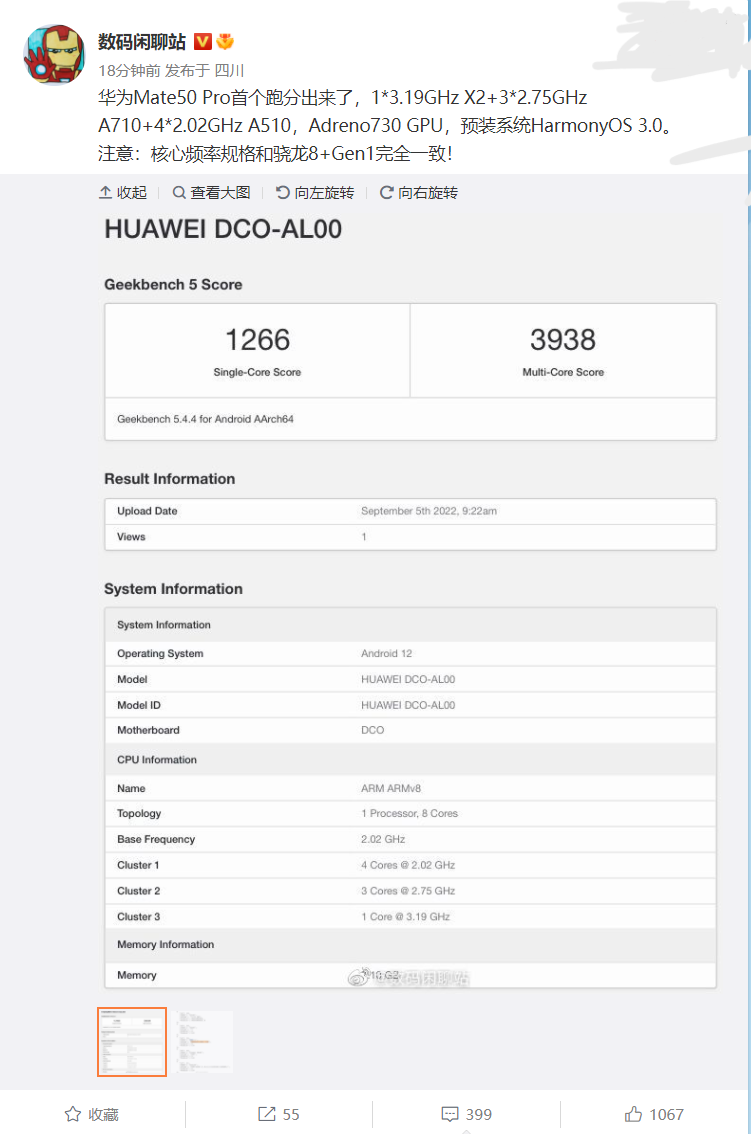
Huawei is slated to launch the Huawei Mate 50 Pro alongside a bunch of other smartphones on September 6. Just a day before the debut, the handset has been allegedly spotted on the Geekbench benchmarking site, hinting that it may feature a Snapdragon 8+ Gen 1 4G Chipset instead of the long-rumored Snapdragon 888 4G.
An alleged listing on Geekbench, first spotted by tipster Digital Chat station, shows the Huawei Mate 50 Pro with model number DCO AL00. As per the listing, the smartphone scored 1,266 points in single-core testing and 3,938 points in multi-core testing on Geekbench. The device’s processor is having 8 cores with 1 core clocked at up to 3.19Ghz, 3 at 2.75GHz, and 4 cores clocked at 2.02Ghz. This core frequency is the same as that of the Snapdragon 8+ Gen 1.
The Geekbench scores of the device are too good for a Snapdragon 888 processor. For reference, the Moto X30 Pro, which came equipped with Snapdragon 8+ Gen 1 Soc, scored 1,252 points in Geekbench’s single-core testing and 3972 in multi-core testing.
The tipster points out that the device may be equipped with Snapdragon 888 processor but with its cores overclocked at Snapdragon 8+ Gen 1’s frequency. In any case, we’ll know all about the Huawei Mate 50 Pro tomorrow.
As mentioned, the Huawei Mate 50 Pro will be launched tomorrow (Sep 6). It is said to feature an OLED panel offering a 120Hz refresh rate. Moreover, the smartphone will sport cameras co-engineered by a brand called XMAGE. The smartphone is expected to come running the company’s own HarmonyOS 3.0 operating system. It will be launched alongside the Mate 50, Mate 50e, and Mate 50 RS Edition.
Xiaomi is expected to unveil its upcoming flagships, Xiaomi 12 and 12 Pro this month (September). The company hasn’t revealed any details about the upcoming devices, however, a new report is here with the specifications, color options as well as storage configurations of the Xiaomi 12T series. Let’s take a look at all the details.
PriceBaba, in collaboration with tipster Paras Guglani, has revealed the Xiaomi 12T series will be launched in September. The report claims that the Xiaomi 12T will be available in two storage variants– 8GB RAM + 128GB storage and 8GB RAM + 256GB model. Whereas the Xiaomi 12T Pro will come in 8GB + 256GB and 12GB + 256GB storage configurations. In addition, the report reveals that the devices will be offered in Cosmic Black, Lunar Silver, and Clear Blue color options.
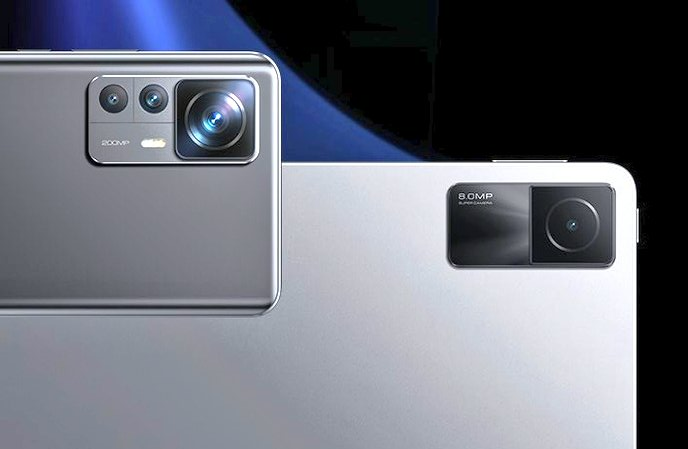
Xiaomi 12T Pro, Redmi Pad leaked image
Previous reports suggest Xiaomi 12T Pro will debut as a rebadged Redmi K50 Ultra with a few upgrades. For instance, the 12T Pro is rumored to feature a Samsung HP1 200-megapixel primary sensor. The main camera will be accompanied by an 8-megapixel ultrawide camera and a 2-megapixel macro camera.
On the contrary, the base Xiaomi 12T could sport a 108-megapixel main camera accompanied by an 8-megapixel ultrawide camera and a 2-megapixel macro sensor. Both smartphones are rumored to be fueled by a 5000mAh battery. However, they may have varying charging support—Th Pro model is said to have 120W fast charging, while the base model could come with 67W fast charging support.
If we talk about the processor, the Xiaomi 12T Pro will likely be powered by Qualcomm’s latest and greatest Snapdragon 8 Plus Gen 1 SoC, and the 12T may come with MediaTek’s Dimensity 8100 Ultra chipset. Both phones are said to come with a 6.67-inch AMOLED display offering a 1,220 x 2,712 pixels resolution and 120Hz refresh rate.
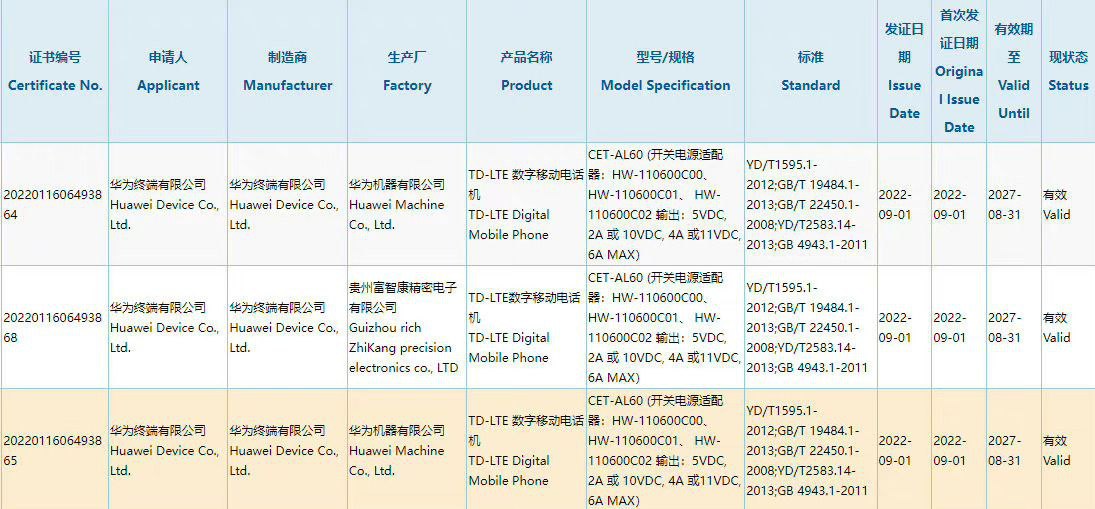
Huawei Mate 50e is expected to debut in China on September 6 alongside several other smartphones. But ahead of it, the device has been spotted on the Compulsory Certification of China (3C) website. The handset was seen listed with a Huawei charging adapter with 66W charging support. Reports suggest the device will pack a 4400mAh battery and will also feature wireless charging.
According to tipster Panda, Huawei Mate 50e has bagged the China 3C certification. The smartphone was seen listed on the certification website with the model number CET- AL60 and a Huawei charging adapter with 66W support. This suggests all the smartphones in the Huawei Mate 50 series may support 66W fast charging.
Huawei Mate 50 series will be unveiled in China on September 6. The series is expected to have four models –Mate 50, Mate 50e, Mate 50 Pro, and Mate 50 RS Edition. The company has not revealed the specs of any of the devices yet.
However, as per various leaks and rumors, the Huawei Mate 50 will draw power from the Qualcomm Snapdragon 888 chipset but will only support 4G LTE. The Mate 50 Pro and 50 RS Edition will be powered by the company’s own Kirin 9000S chipset. Whereas, the Mate 50e model will likely feature the Qualcomm Snapdragon 778G SoC.
All the devices in the series are expected to feature an OLED display sourced from BOE, however, the refresh rate will vary on each device. The base models will feature a standard 90hz refresh rate and the higher-end models will flaunt a 120Hz refresh rate. On the software front, the upcoming lineup will come running the company’s home-brewed HarmonyOS 3.0.
Pricing and other details about the devices are yet to be known. In any case, the September 6 announcement date is just yesterday, so we’re destined to full details soon.
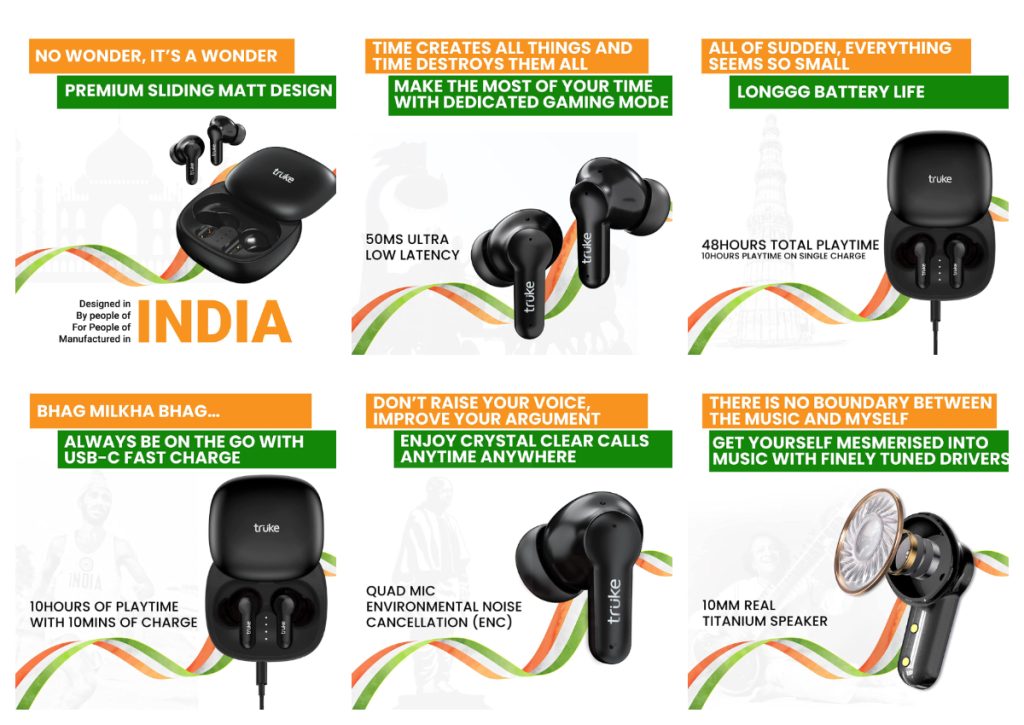
The Truke lineup of audio products has been expanded with the launch of two products. The Truke Buds S2 Lite and Yoga Mystic Neckband come with some great features. Both models sport a digital battery indicator, 13mm titanium speaker drivers, and environmental noise cancellation (ENC). They also have a dedicated gaming mode, fast pairing, and ultra-low latency.
Truke is gradually making inroads into the audio accessories market. It is one of the fastest-growing audio brands in India and exemplifies the Made In India initiative. The Truke Buds S2 Lite is completely made in India while the Yoga Mystic is the first neckband with a digital indicator.
Truke Yoga Mystic Neckband
The Buds S2 Lite has a premium case design and a matte finish. It features 1-step instant pairing, ENC, Bluetooth 5.1 connectivity, and 48 hours of playtime. It can be charged quickly via USB-C with 10 minutes of charging yielding 2 hours of playback. For gaming enthusiasts, the earbuds have ultra-low latency of 55ms and are IPX4 water resistant.
The Yoga Mystic Neckband features Bluetooth 5.2 dual pairing, 20 EQ modes, ultra-low latency of 40ms, and a silicone unibody design. The 13mm titanium drivers onboard deliver high-quality sounds with ENC and Smart Application Support. The neckband has a 50-hour battery life and fast USB-C charging. The dedicated gaming mode in the device is also a great addition for gamers.
Truke Buds S2 Lite
The Truke Buds S2 Lite and Yoga Mystic are available from Amazon and Flipkart. While the Buds S2 Lite retails at Rs. 1,399 ($18), the Yoga Mystic is priced at Rs. 1,299 ($16). There is an instant Rs. 30 launch day discount on September 12 for both products.
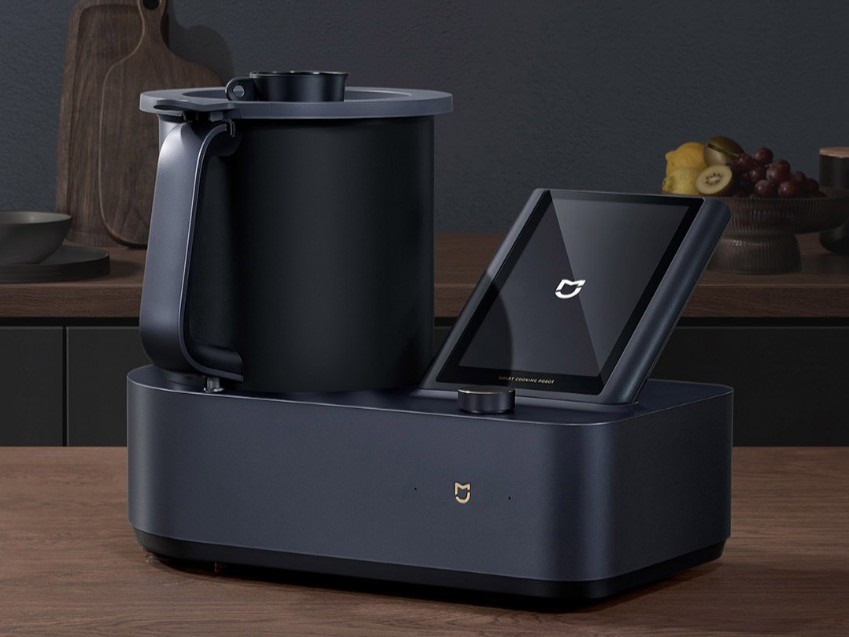
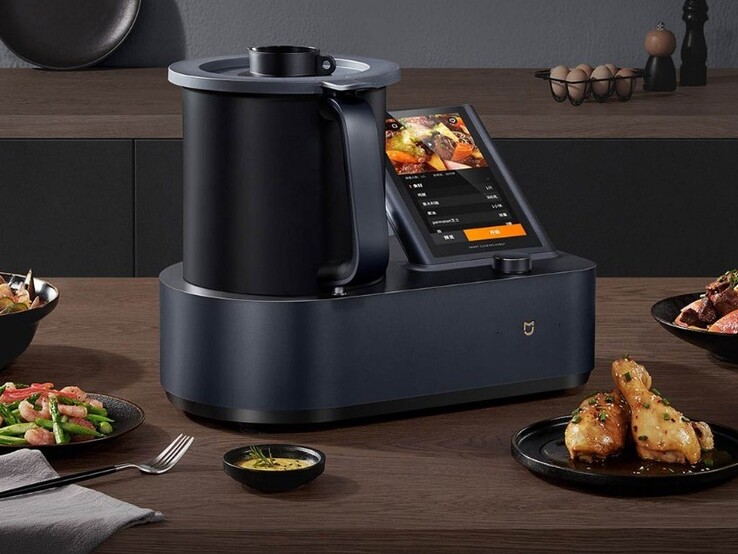
Xiaomi‘s latest kitchen gadget unveiled in China is the MIJIA Cooking Robot. The device can cook three different dishes simultaneously and offers up to 35 cooking options. The new gadget seems to be a great kitchen appliance with multiple functionalities and impressive features.
The smart cooking pot has a maximum heating temperature of 180°C and a 2.2- liter capacity. It can cook as little as 1g of food and has an integrated 8-inch touchscreen that shows over 200 recipes and tutorials. It uses 3D induction heat technology to deliver fast and uniform cooking always.
The MIJIA Cooking Robot uses CookingIoT algorithms to control the cooking process and OTA updates will be available for improvement. It also offers a wide range of resolution speeds between 40rpm and 12,000rpm for different cooking tasks. The variety of cooking options includes grinding, stir-frying, low heating, and much more.
The cooking robot can be controlled with Xiao AI voice commands and weighs 10kg. It has a dimension of 16.3 x 12.4 x 13.5 inches and its pre-order stock seems already sold out in China. The pre-order price of the MIJIA Cooking Robot is 5,999 yuan ($865). Its original price is 6,999 yuan ($1,005) and global availability details are lacking at this time. The early feedback from the market shows that the MIJIA Cooking Robot has had a great reception in the Chinese market.
On Sept. 7, Apple will announce the iPhone 14 series of flagship phones. According to Bloomberg’s Mark Gurman, the Cupertino-based brand will also announce other products like the AirPods Pro, the Watch Series 8, the Watch SE, and the Watch Pro alongside the iPhone 14 lineup.
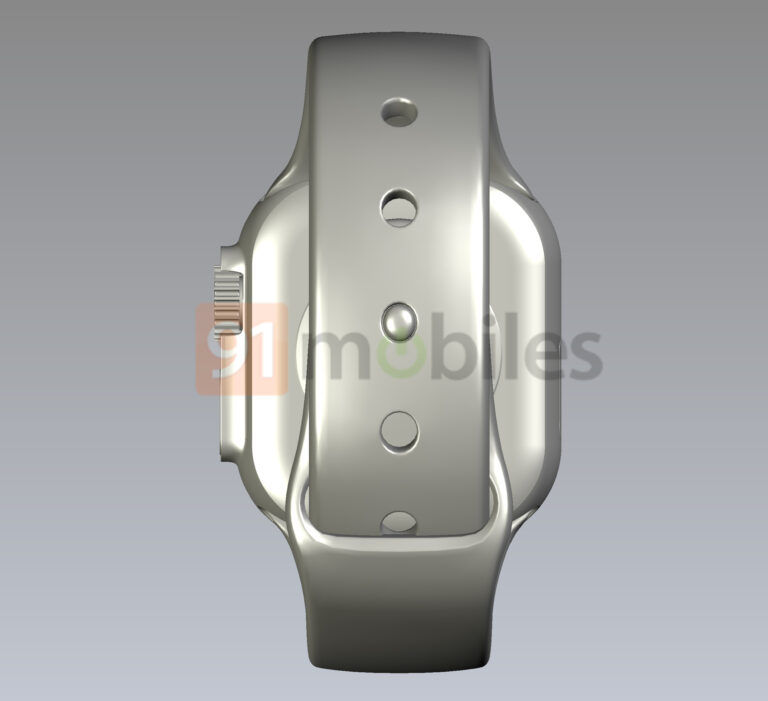
According to Gurman, the Watch Pro will “come in at latest $900 to $1,000. The moniker and the pricing of the device suggest that it will be packed with some premium features. A new report by 91mobileshas revealed the design of the Watch Pro.
The CAD renders shared by the publication show that it will have a square-shaped display with rounded corners. The report states that it will feature the largest display ever seen on an Apple Watch.
1 of 5
It looks like the Watch Pro will be available in a size of 49mm. The display will be surrounded by slim bezels. It will have a protruding crown on the right edge. The same side also features a microphone and a multitasking button.
It appears that the smartwatch has an additional button on the left side. It is accompanied by a speaker vent. Apple is likely to offer the premium model with special straps. At present, it is unclear whether the Watch Series 8 will also offer a similar design. Unfortunately, the report does not mention anything about its specifications.
The Apple Watch Pro is expected to feature a bigger battery, an A8 chip, and a temperature sensor. Gurman said the model will also feature a rugged titanium casing.
We use cookies on our website to give you the most relevant experience by remembering your preferences and repeat visits. By clicking “Accept”, you consent to the use of ALL the cookies.
This website uses cookies to improve your experience while you navigate through the website. Out of these, the cookies that are categorized as necessary are stored on your browser as they are essential for the working of basic functionalities of the website. We also use third-party cookies that help us analyze and understand how you use this website. These cookies will be stored in your browser only with your consent. You also have the option to opt-out of these cookies. But opting out of some of these cookies may affect your browsing experience.
Necessary cookies are absolutely essential for the website to function properly. This category only includes cookies that ensures basic functionalities and security features of the website. These cookies do not store any personal information.
Any cookies that may not be particularly necessary for the website to function and is used specifically to collect user personal data via analytics, ads, other embedded contents are termed as non-necessary cookies. It is mandatory to procure user consent prior to running these cookies on your website.