Have you ever encountered a situation where your personal desktop or laptop did not have enough RAM to run a task? Or was your RAM not sufficient enough to prevent the programme from stuttering? And was that task keeping 15 tabs open on Google Chrome?
If you answered yes to any of the 3 questions above, then Samsung might have the solution for you. Introducing Samsung’s latest DDR5 RAM solution, where technology now enables a user to possess 512GB of DDR5 memory on a single RAM stick.
Source: Samsung
As one of the current industry-leading suppliers of DDR4 memory, Samsung is planning to take the lead in the development of DDR5 RAM. Recently Samsung posted a video on its YouTube channel, highlighting the latest features of Samsung DDR5-7200 module technology.
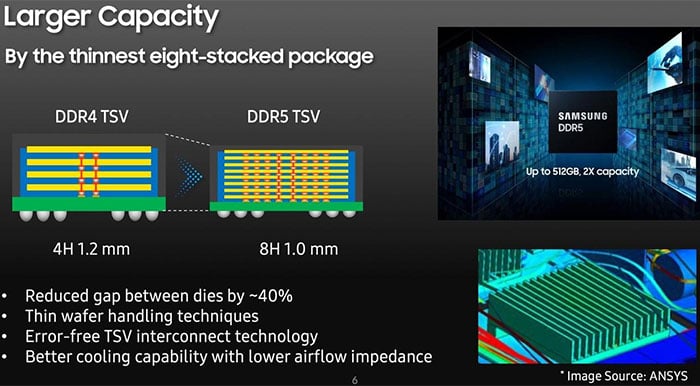
Samsung‘s new 512GB DDR5 RAM modules refine the firm’s layer stacking memory packing tech, as used in its latest DDR4 memory modules. In the diagram below, you can compare the difference between Samsung’s 4-layer DDR4 memory chips, with the 8-layer DDR5 chips, both connected using Samsung’s Through Silicon Via technology.
Source: Samsung
Through grinding of the silicon layers Samsung has been able to make the constituent dies 40 per cent thinner, and similarly reduced layer spacing – thus these much denser DDR5 integrated chipsets are actually thinner, at 1.0mm vs 1.2mm. In turn, Samsung will be able to manufacture a single 512GB RAM stick with 8 stacked DRAMs connected together.
Source: Samsung
Last but not least, Samsung claims its DDR5 technology is twice as fast as the previous generation, claiming speeds of up to more than 6400Mbps.
Source: Samsung
However, the increase in performance does not affect power efficiency because Samsung’s DDR5 technology is actually 30% more power-efficient than its previous generation thanks to the lower required voltages to run the DDR5 RAM.
Source: Samsung
Samsung has mentioned that it will be supplying DDR5 RAM to data centres, smartphone manufacturers and laptop manufacturers alike. And whether 512GB DDR5 RAM sticks will reach the hands of consumers, is a question reserved to be answered in the 2020s.
Vivo‘s Spring Launch Event will be held online tomorrow April 11th 2022 19:30 CST / 17:00 IST / 11:30 GMT.
After months of teasing, Vivo is expected to reveal its highly anticipated Vivo X Fold, Vivo X Note, and Vivo Pad devices at the launch event. To watch the launch event, you can head on over to the link below on April 11th, 2022 19:30 CST sharp to follow the event live stream.
So before the official launch event, we compiled all the official highlights that we know about all the 3 Vivo devices so far.
Vivo X Fold
The X Fold is the first foldable from the Vivo brand, and its design shares resemblances with the more premium foldable offerings, like the Samsung Galaxy Z Fold3 and the Huawei Mate X2. It is expected to sport an 8-inch 2K LTPO 3.0 inner folding OLED panel and a 6.53-inch Full HD+ outer display. Both the inner and outer displays will be equipped with a 120Hz refresh rate.
To stand out amongst its competitors, the Vivo X Fold will be featuring an industry-leading quad-camera setup on the back in collaboration with Zeiss and its signature T* coating. The Vivo X Fold is also said to be the industry’s first foldable to support 50W wireless charging to juice its 4,600mAh battery.
Vivo X Fold
Vivo X Note
The X Note meanwhile will be Vivo’s answer for the “ultra-premium” crowd, basically, those who opt for the iPhone 13 Pro Max and the Xiaomi Mi 11 Ultra. The phone comes in a familiar glass sandwich body, and features a gigantic QHD+ 7-inch display. Paired with a 5000mAh and support for 80W wired and 50W wireless charging, the phone is expected to last you through the entire day within half an hour’s charge.
The Vivo X Note is also expected to lead a mobile photography revolution because besides featuring all the software and hardware optimizations that came from its Zeiss collaboration so far, the company has developed its first in-house imaging chip, the Vivo V1, to push the boundaries of smartphone photography even further.
Vivo X Note
Vivo Pad
The Vivo Pad is the company’s first entry into the Android tablet market. The device is powered by the popular Qualcomm Snapdragon 870 chipset to provide flagship levels of performance for your average tablet user. The Vivo Pad is also getting an 11-inch panel having a 2.5K resolution and 120Hz refresh rate to provide a smooth scrolling experience for its users.
vivo Pad
For more details regarding the Vivo X Fold, Vivo X Note, and Vivo Pad, stay tuned to the live stream on April 11th at 19:30 CST, or stay tuned to our coverage here at Gizmochina.
You can also read our complete roundup of the Vivo X Fold and X Note from the below links.
As countries across the world are slowly recovering economically and socially from the pandemic, and with the summer holidays fast approaching, it is now a great time to start planning for some vacations at the beach after a long-awaited 2 years of isolation in our homes.
However, before you run off into the seashore, Xiaomi has just revealed a new product in China that may be of interest to all of you beach lovers out there — a pair of new stylish sunglasses at only 199 RMB(USD 132)!
Xiaomi Pilota Sunglasses
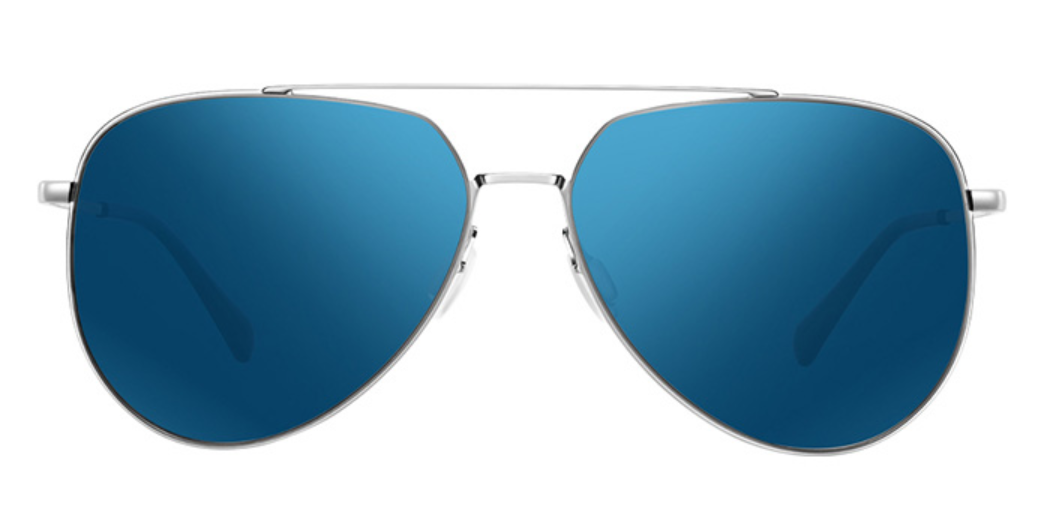
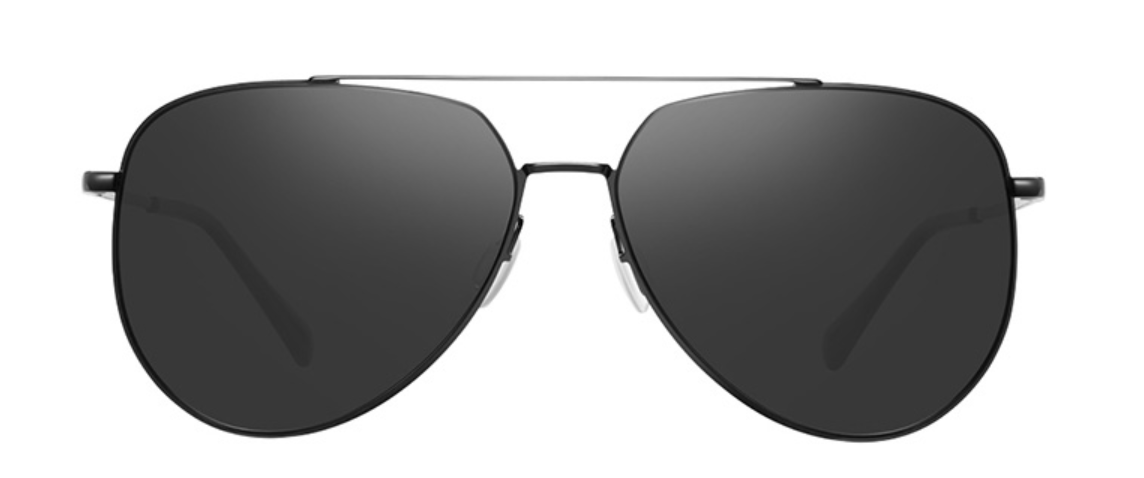
The Xiaomi Pilota Sunglasses is the brand’s latest pair of fashion sunglasses that take its design inspiration from the “sky”. As the name implies, the Xiaomi Pilota sunglasses shares similar design cues to the sunglasses you would find aeroplane pilots wearing, albeit the Xiaomi sunglasses are much slimmer than the pairs of professional sunglasses that pilots wear.
Xiaomi went for the design as a pilot’s fashion has changed much from the 20th to the 21st century due to its timeless design, and the brand wanted to provide the timeless fashion experience to the general public as well.
Despite its slim profile, customers need not worry about the durability of the sunglasses. The Xiaomi Pilota Sunglasses are constructed with a lightweight and high-quality stainless steel aluminium frame, as according to Xiaomi, they believe that sunglasses should be designed with the comfort of the user as a priority and then durability.
Next is the lens of the Xiaomi Pilota Sunglasses. The sunglasses are equipped with industry-leading Nylon-polarised lenses that are imported from Germany. The lenses have several special light refraction properties such as UV400 Protection, which can help shield your eyes from harmful ultraviolet rays from the Sun more effectively than your conventional sunglasses.
In addition, the lenses are coated with a thin film of protective transparent paint which helps to make the sunglasses more resistant to sweat, fingerprints, oil and other undesirable viscous liquids on your lenses.
BlueBlack
The Xiaomi Pilota Sunglasses are officially available in two colour options, Black and Blue. You can now purchase a pair in China for only 199 RMB(USD 132).
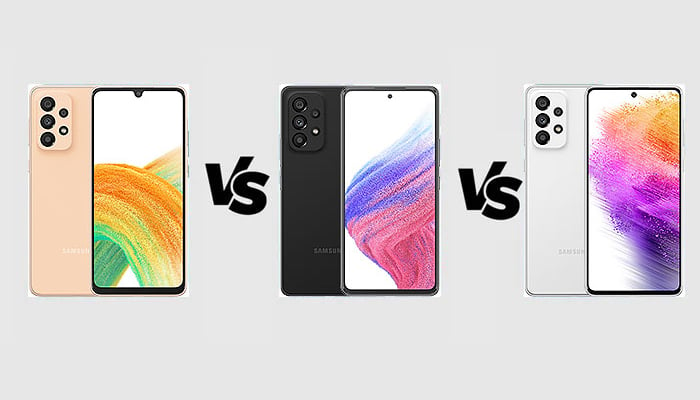
A few days ago, Samsung announced its new mid-range lineup in the global market. It is composed of three handsets: the Samsung Galaxy A33 5G, the Galaxy A53 5G, and the Galaxy A73 5G. These three devices come with different specifications, but they are very similar in terms of hardware and performance. For a lot of users, it is not easy to understand the differences between these three phones and that is the reason why a comparison between the specifications of the Samsung Galaxy A33 5G, the Galaxy A53 5G, and the Galaxy A73 5G may be very useful. So here is an in-depth comparison between the latest Samsung mid-rangers.
Samsung Galaxy A33 5G vs Samsung Galaxy A53 5G vs Samsung Galaxy A73 5G
Samsung Galaxy A33 5G
Samsung Galaxy A53 5G
Samsung Galaxy A73 5G
DIMENSIONS AND WEIGHT
159.7 x 74 x 8.1 mm, 186 grams
159.6 x 74.8 x 8.1 mm, 189 grams
163.7 x 76.1 x 7.6 mm, 181 grams
DISPLAY
6.4 inches, 1080 x 2400p (Full HD+), Super AMOLED
6.5 inches, 1080 x 2400p (Full HD+), Super AMOLED
6.7 inches, 1080 x 2400p (Full HD+), Super AMOLED Plus
There are no big changes between the designs of these three phones. The Samsung Galaxy A33 5G is the less impressive one because it comes with a waterdrop notch instead of an elegant punch-hole display. The Samsung Galaxy A53 5G is the most interesting one because it has a punch-hole display and the same design as the Galaxy A73 5G, but it is more compact thanks to the presence of a smaller display. On the other hand, the Samsung Galaxy A73 5G is thinner and lighter. Unfortunately, these phones are not built with premium materials: they have a polycarbonate body like budget phones. But they are all water resistant with the IP67 certification, and it is not easy to find this feature on midrange phones.
Display
The most advanced displays belong to the Samsung Galaxy A53 5G and the Galaxy A73 5G, and they are at the same level. These two handsets sport Super AMOLED panels with a 120 Hz refresh rate and a Full HD+ resolution of 1080 x 2400 pixels, as well as the Gorilla Glass 5 protection and an in-display fingerprint reader. The only important difference between these two displays is the diagonal: the Samsung Galaxy A53 5G has a 6.5-inch display, while the Galaxy A73 5G comes with a wider 6.7-inch panel. The Samsung Galaxy A33 5G is inferior but not so much: it has a lower 90 Hz refresh rate, a smaller 6.4-inch diagonal, and a waterdrop notch instead of a punch hole.
Hardware/Software
If you need the most powerful phone, then go for the Samsung Galaxy A73 5G. It is the only one powered by the Snapdragon 778G mobile platform, which is actually stronger than the Samsung Exynos 1280 found on the Samsung Galaxy A33 5G and the Galaxy A53 5G. The highest-end memory configuration of these phones is the same, with 8 GB of RAM and 256 GB of internal storage you can furtherly expand with a micro SD. The whole trio runs Android 12 with One UI 4.1 on top.
Camera
The Samsung Galaxy A73 5G is equipped with the best main camera: a great 108 MP sensor with OIS. Right after, we got the Galaxy A53 5G coming with a 64 MP main sensor with OIS. The Galaxy A33 5G takes the last place with a 48 MP sensor, but it still has OIS. The A53 5G and the A73 5G also come with a better ultrawide camera (12 MP against the 8 MP sensor found on the A33 5G). Last but not least, they have a better 32 MP camera (against just 13 MP).
Battery
The battery capacities are the same, and even the fast charging technology: 5000 mAh and 25W, respectively.
Samsung Galaxy A33 5G vs Samsung Galaxy A53 5G vs Samsung Galaxy A73 5G: Price
Samsung Galaxy A33 5G starts from €390/$424, Galaxy A53 5G costs €469/$510, and the Galaxy A73 5G sells for €529/$575. Which one would you pick?
Xiaomi has listed a brand new product for sale in the Chinese market, but it is not a new smartphone, nor a new smartwatch. Instead, Xiaomi unveiled a normal 500ml Xiaomi-branded Mini Thermos Flask for 109 RMB (17 USD).
Technology-wise, the Xiaomi Mini Thermos Flask is unfortunately not one of Xiaomi’s IoT smart home electronic appliances, as you are unable to connect the Thermos Flask to your Xiaomi Home app on your phone.
In addition, this is not a self-heating electric thermos flask, this is just your conventional thermos flask. Therefore, it is unable to keep your coffee hot at a constant temperature.
So why should you consider splurging around 17 USD on this thermos flask? Well, durability-wise, the thermos flask has some surprises up its sleeves.
The Xiaomi Mini Thermos Flask is built with high-quality 316-Grade Stainless Steel in the interior and 304-Grade Stainless Steel for the exterior.
According to Xiaomi, they have chosen both stainless steel materials as the materials are known to have chemically inert and water repellent properties, which allows for easier cleaning of the thermos flask. In addition, both stainless steel materials are carefully crafted to not only contribute to the overall ergonomic design but also prevent any leakages of the liquid within the flask.
The Xiaomi Mini Thermos Flask specifications also claim that the product will be able to keep your hot liquids warm at 40 degrees Celsius and above for 6 hours, and your cold liquids cool at 18 degrees Celsius and below for 6 hours.
Design-wise, the Xiaomi Mini Thermos Flask comes in a matte greyish white finish and has a minimalistic grey “XIAOMI” logo on the front. However, for its first sales in China, Xiaomi is bundling a thermos flask carrying case with your purchase of the Xiaomi Mini Thermos Flask. The case is printed with the “I am Xiaomi Fan” Chinese slogan on the front, which is in conjunction with Xiaomi‘s celebration of its Mi Fan Festival for the year of 2022.
Xiaomi is slated to release a mid-year update for its Chinese devices currently running on MIUI 13 in the second half of 2022. Dubbed the H2 2022 MIUI 13 Mid-Year update, the update is expected to bring many software features we’ve seen from recent Xiaomi releases like the Xiaomi 12 lineup, and the Redmi K50 series, as well as stability improvements.
However, Xiaomi recently published on its MIUI Forum in China that it will be dropping many devices from its MIUI 13 (China Version) Open Beta programme from July 18th, 2022 onwards, and several of these devices include Xiaomi flagships equipped with the Qualcomm Snapdragon 865 chipset.
The devices dropped from the aforementioned list are the:
Normally devices dropped from the MIUI Beta Programme will not be receiving any more Android OS upgrades(MIUI 14 based on Android 13). However, the devices will still be eligible for another MIUI upgrade(i.e. MIUI 14 based on Android 12) and another year of security updates from Xiaomi.
The devices listed above were initially launched with MIUI 11 based on Android 10 out of the box in early 2020, and all of them have recently been updated to MIUI 13 based on Android 12.
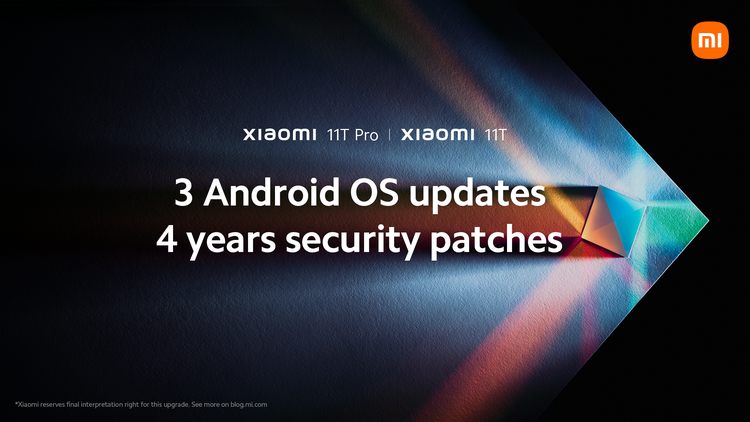
According to Xiaomi‘s track record, providing 2 years of Android OS upgrades and 3 years of security updates to its flagships is quite common. However, ever since the launch of the Xiaomi 11T series, the brand has promised to provide 3 years of Android OS upgrades and 4 years of security updates to its flagships launched after the Xiaomi 11T series which include the Xiaomi 12 series and Redmi K50 series as well.
Over the past few years, 1MORE has established itself as a popular audio brand in the market. And just a couple of weeks ago we made a video talking about one of their most popular earbuds, the Comfobuds Mini.
We saw that their PistonBuds Pro Noise Canceling Earbuds went on sale recently. I’m sure some of you have been wondering whether this new pair of earbuds is a good buy in its price segment. And that’s what we’ll try to answer in this review.
1More PistonBuds Pro Box
Let’s start with its packaging. The box is small and square and the front gives you a good indication of what the earbuds will look like. The back of the box is covered in text, with detailed information about the earbuds in English and Chinese. Things like the weight of the single earbuds and the battery capacity are all given to you accurately. But we’ll talk more about that later.
Once you open the box, we can see the charging case with earbuds inside. The small box below contains ear tips in three sizes, along with a charging cable. At the bottom is the manual. And this sums up all the accessories in the box.
1More PistonBuds Pro Design
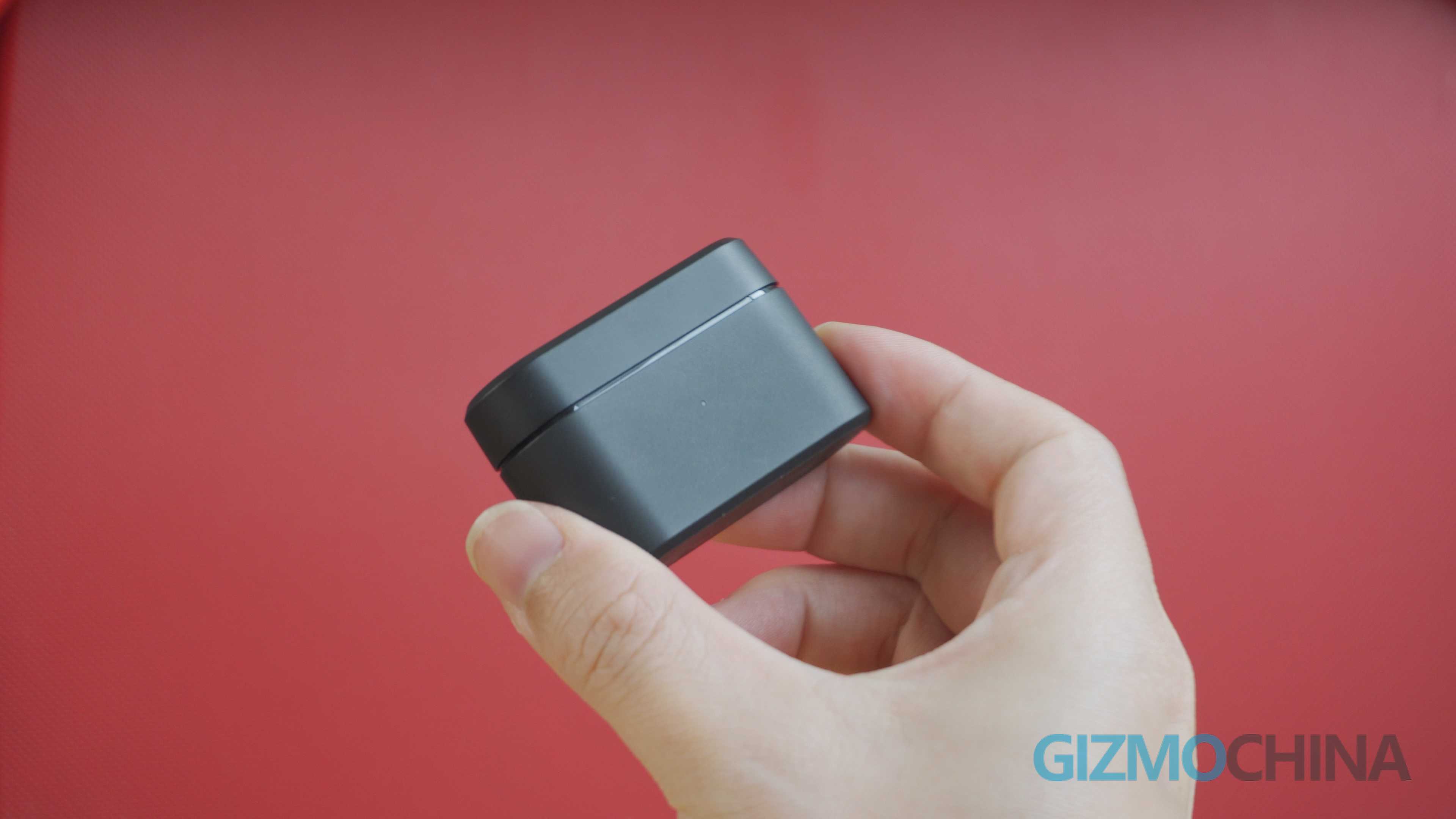
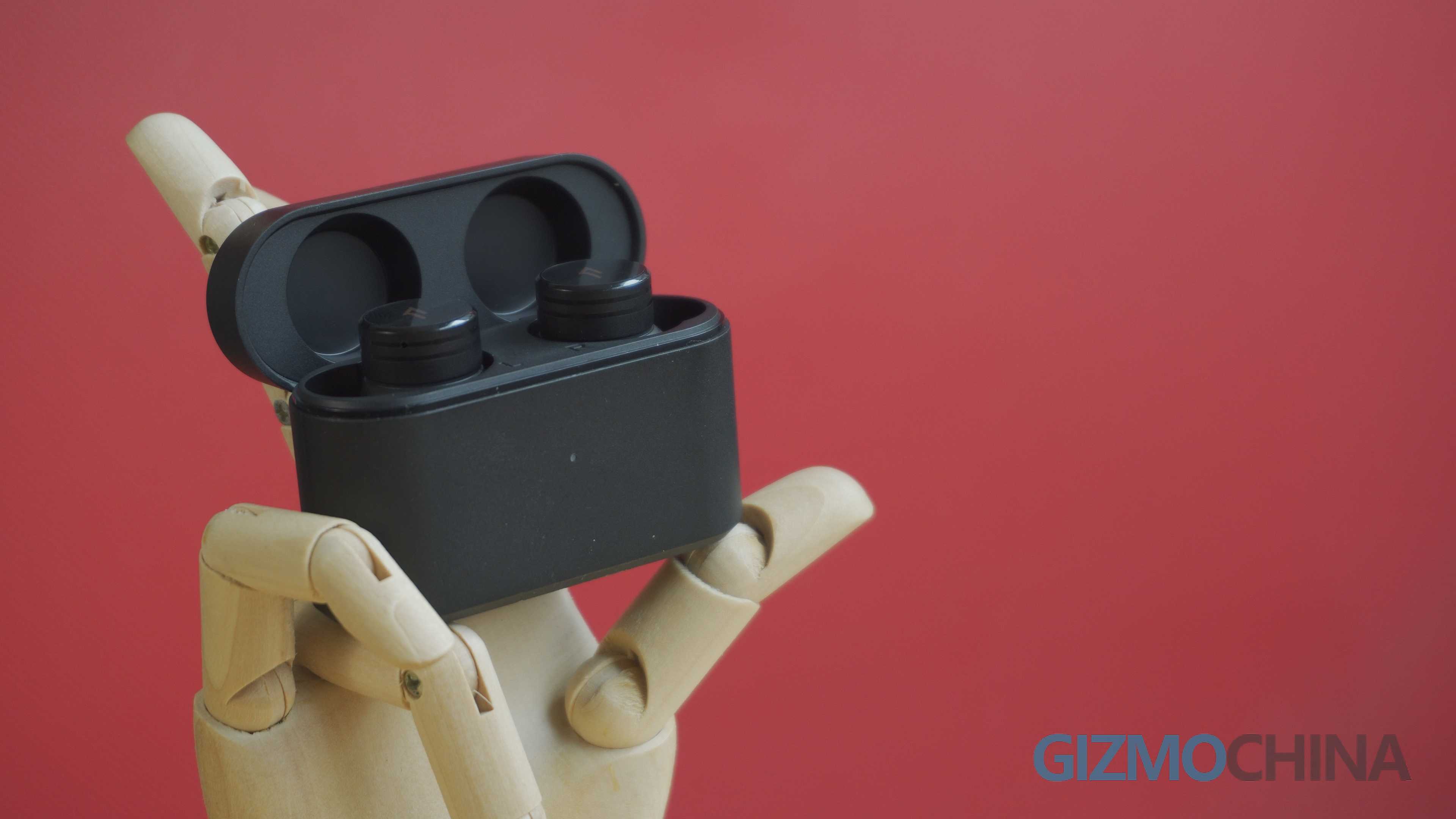
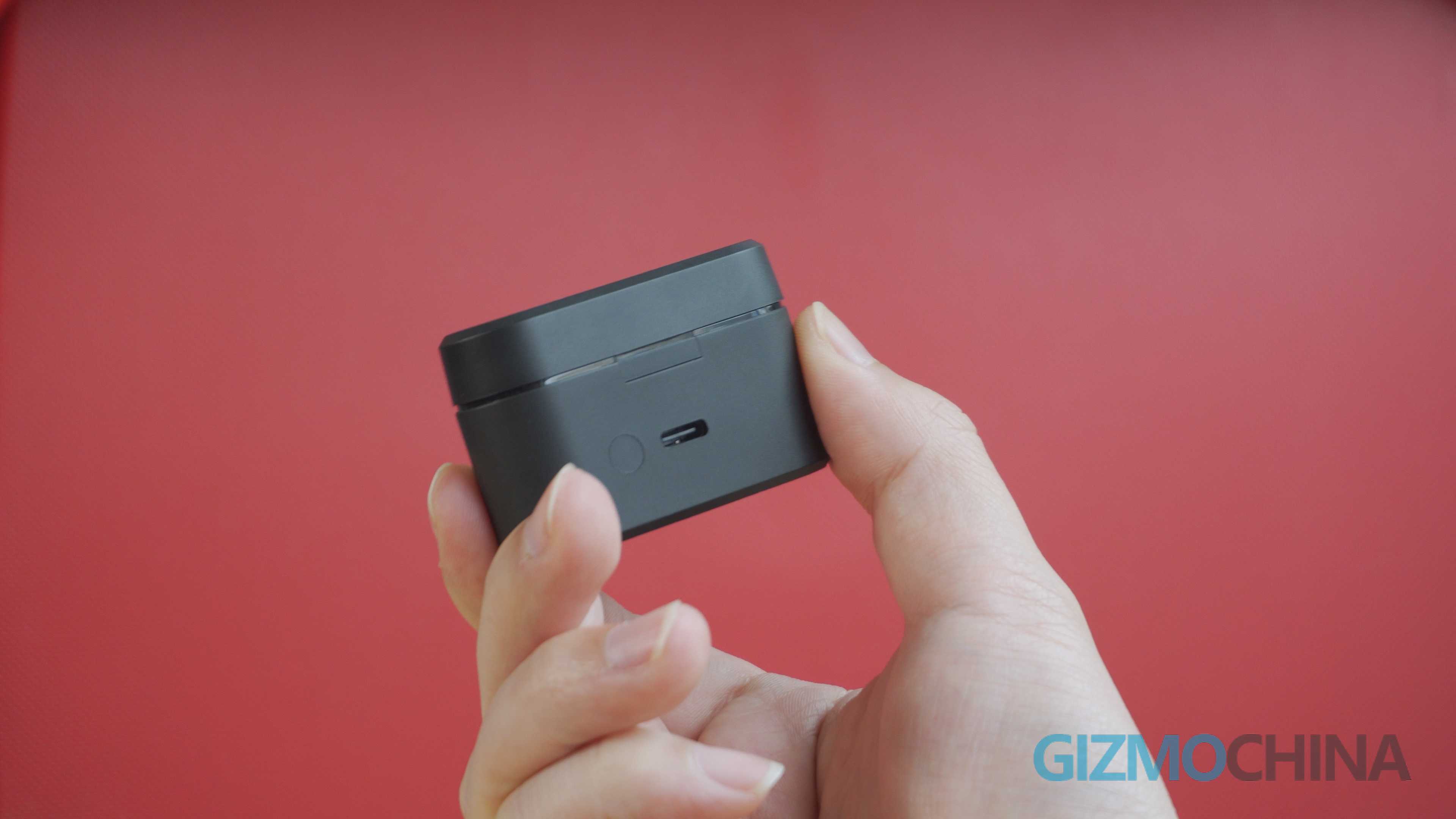
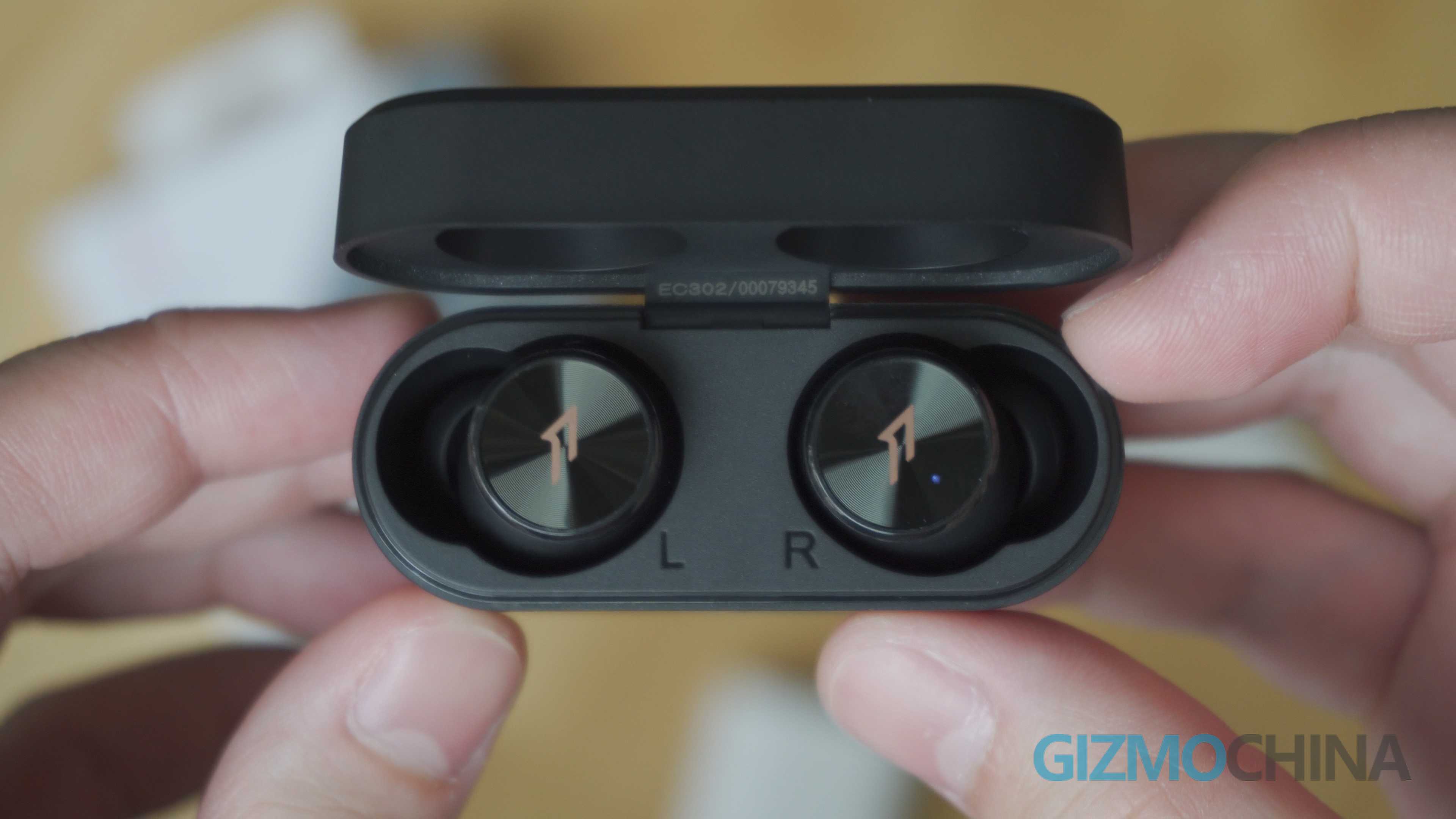
The design of the PistonBuds Pro is different from most of the earbuds we have tested before. The cylindrical design is not common among its rivals. And the case is smaller and lighter than I expected, and in fact, it’s a little smaller compared to most other charging cases in the market.
It’s an excellent size to comfortably slip into your pocket. Also, I would advise you to get the black version, as white earbuds can easily get dirty over a period of time.
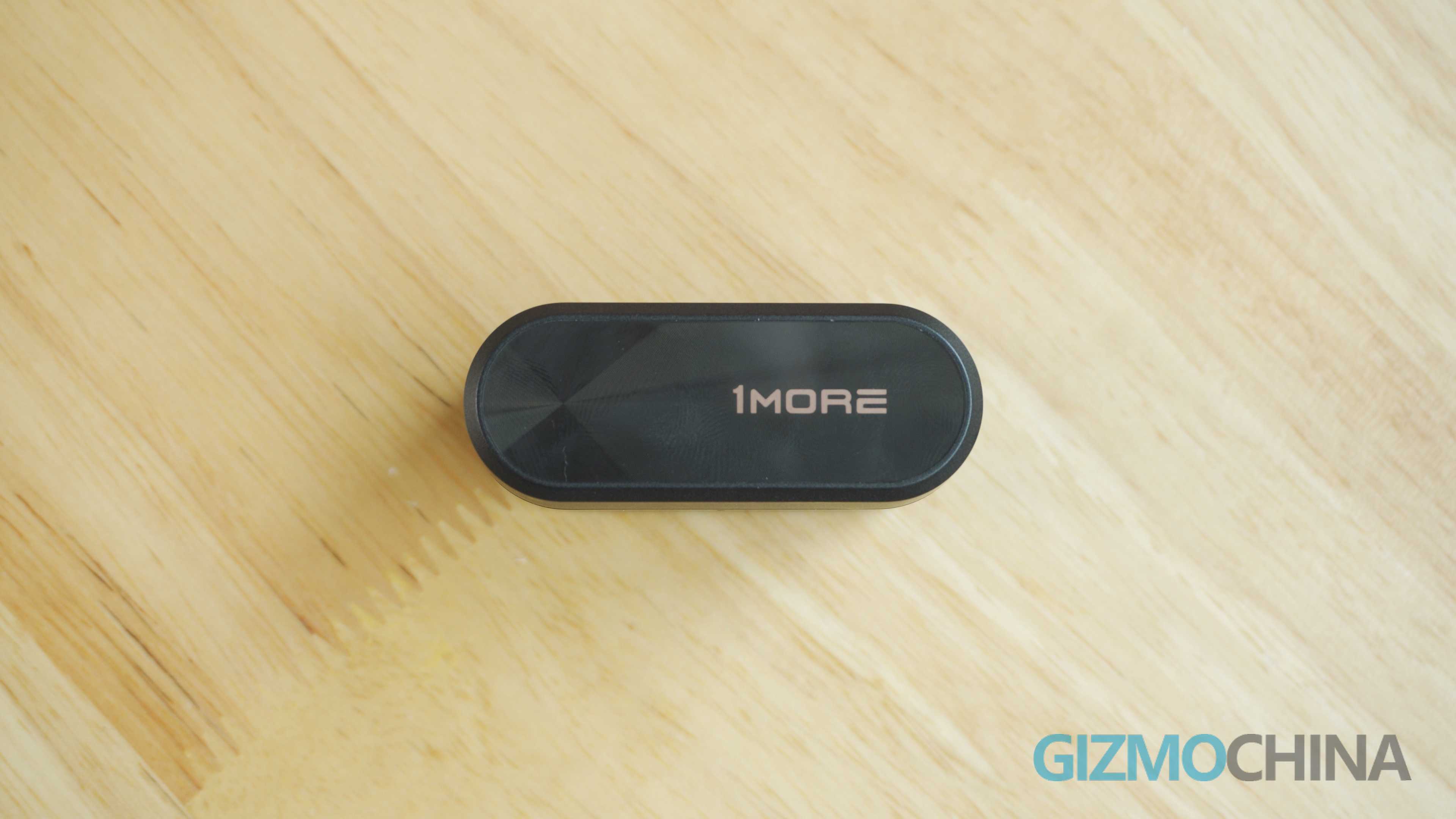
The earbud case is made of plastic with a matte finish for the surface, which is less likely to get scratched. But the top of the lid is a glossy material, and this is the only area that is easier to collect fingerprints. The lid hinge is magnetic, which makes it easy to open and close it. As usual, the build quality of 1MORE earbuds is great, and the lid has no problem of loosening.
Another great detail is the location of the charging port. We’ve seen too many cases that put the charging port at the bottom and users have to put it down for charging. But for charging the PistonBuds Pro, you can place the case upright. Although it doesn’t interfere with the use of core functions, we have to add that it’s a thoughtful design element.
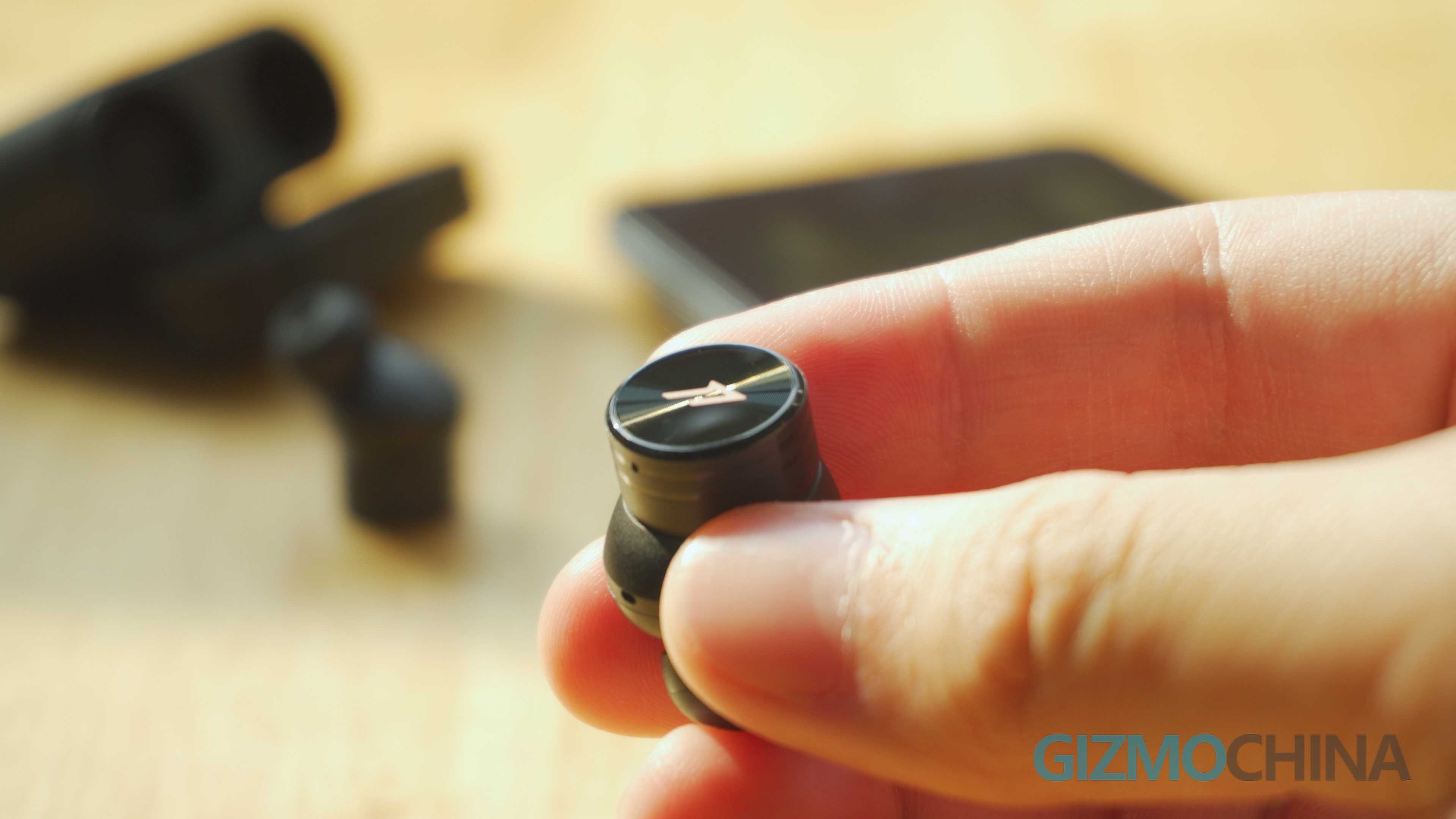
Once you pick up the earbuds, you would notice that they are very light. The 4.5g weight of each earbud is a bit lighter than most ANC earbuds. So there’s nothing to worry about their wearing comfort. And once they are in. they don’t fall out easily, as they have a firm fit. The earbuds support touch gestures. You can long press to switch between noise canceling modes, such as double-tap to play or pause, or you can customize the gestures on the phone app.
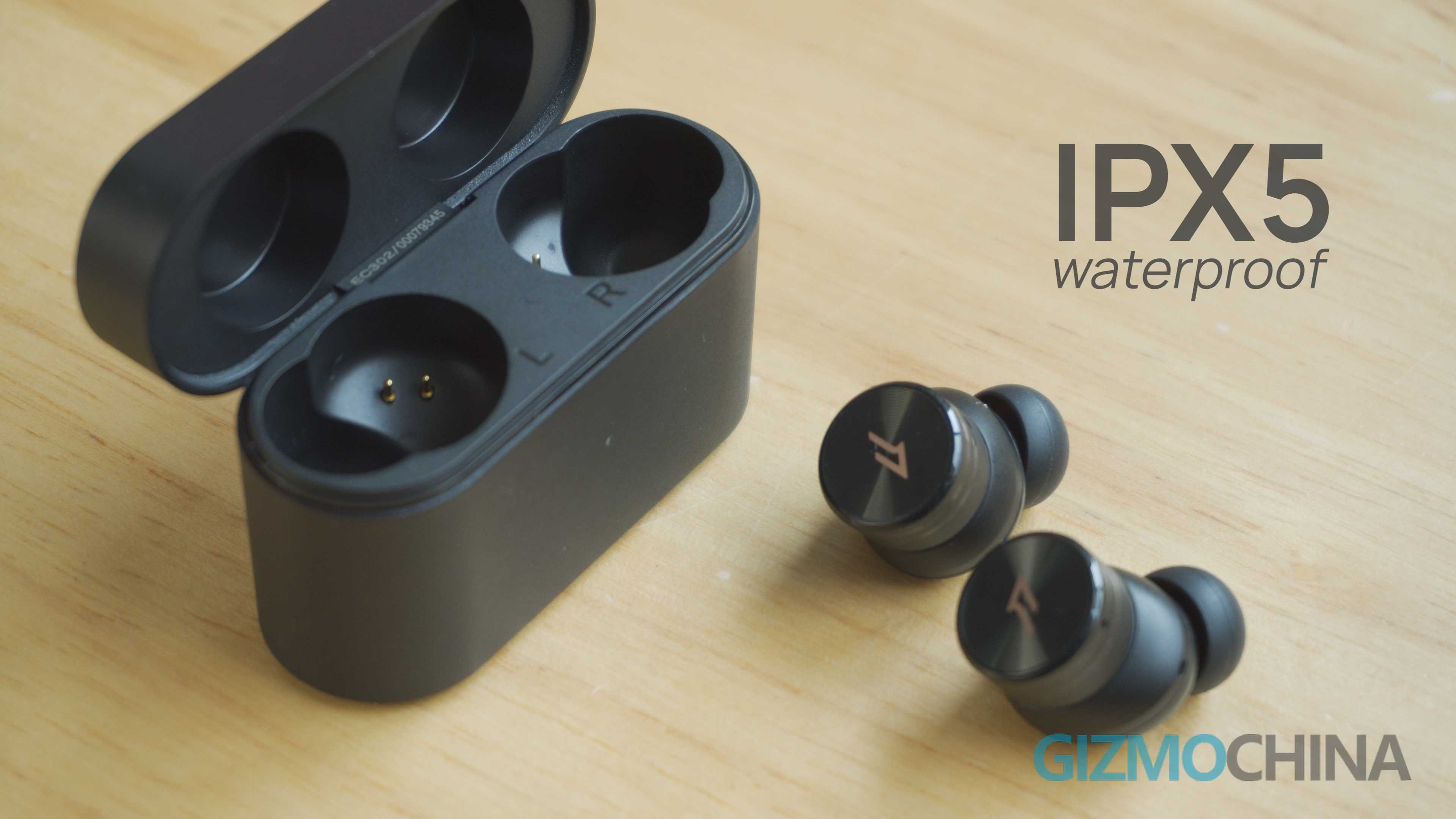
The 1More Pistonbuds Pro supports IPX5-waterproof rating, meaning sweat won’t damage the earbuds when you’re exercising. Although I have to say that the design of the earbuds themselves isn’t that amazing for me, the flat touch area was a surprising element during my experience. Because I can easily feel with my fingers and find the exact touch area.
1More PistonBuds Pro Sound Performance
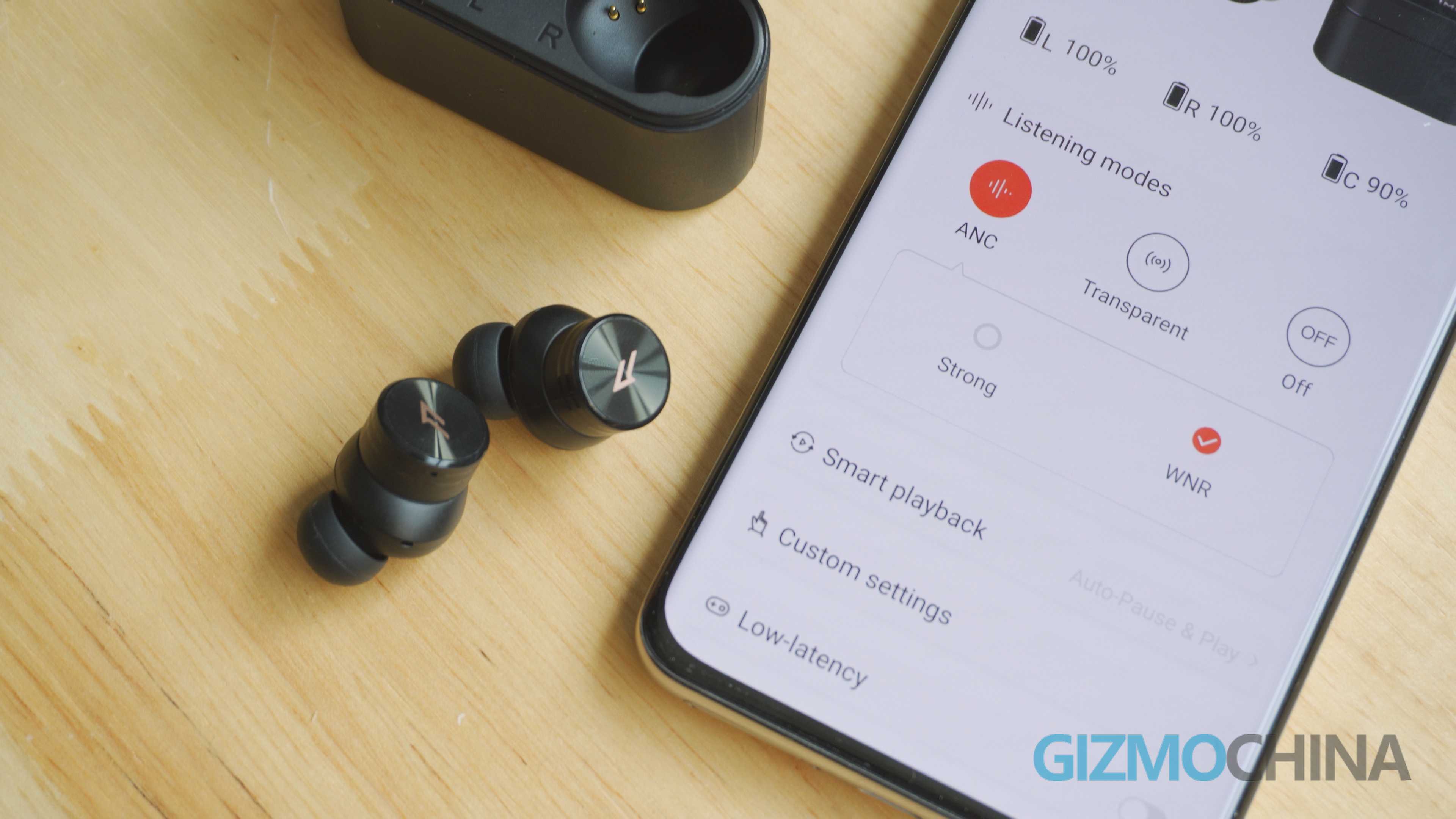
1MORE claims that the earbuds can cancel up to 38dB of noise, which is almost the same strength as other mainstream earbuds have. I didn’t find any real difference between its ANC performance vs other powerful ANC earbuds. Also, considering its compact design, I’m satisfied with its noise-cancelling.
Wind-noise control has always been a problem with ANC earbuds. Many earbuds cannot eliminate the annoying wind noise when cycling or during windy conditions. 1MORE is one of the few brands aware of this issue and has particularly designed a WNR Mode for its earbuds. This is a feature that is well known to Xiaomi’s Air 2 Pro users, as it is also made by 1MORE. The actual effect is good, though it still cannot perfectly remove loud wind noise.
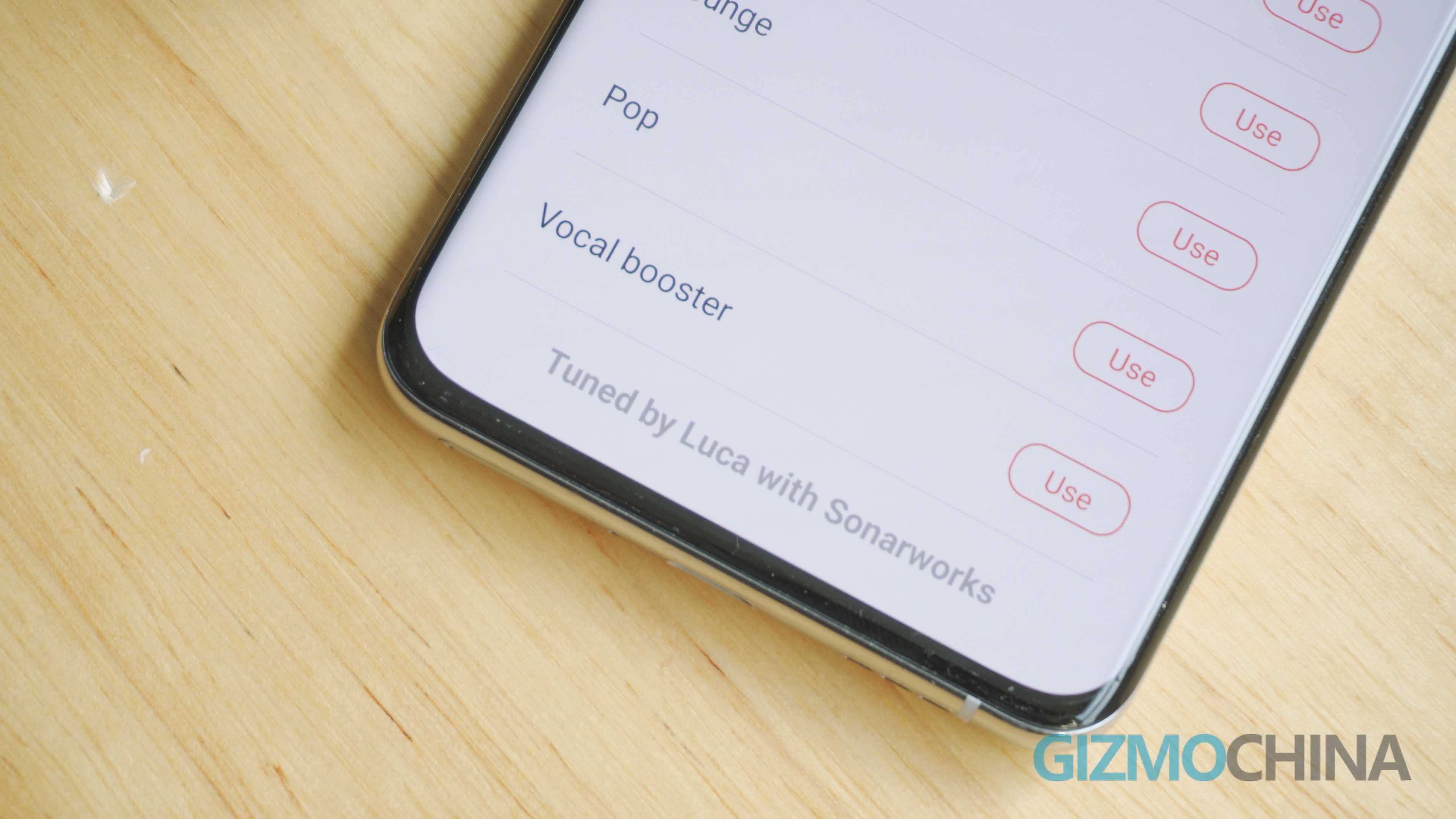
Now let’s talk about its sound quality. It comes with a 10mm full-range dynamic driver and aero-titanium diaphragm. And as a professional audio-equipment manufacturer, 1MORE has been working with Luca Bignardi, the 4-time Grammy award-winning sound engineer. So sound quality isn’t something you need to worry about. Even though it only has AAC and SBC audio decoding, it still can reproduce powerful bass, relatively sharp vocals and rich details providing excellent clarity across frequency ranges. You can also go to the 1MORE Music App to adjust the Equalizer, with 12 different music styles to choose from.
Speaking of 1MORE Music App, if you are going to wear it for gaming, remember to turn on the low-latency mode. Perhaps because the PistonBuds Pro supports Bluetooth 5.2, this mode did bring really low latency. At least I could play PUBG mobile without an uncomfortable latency.
The Soothing-Sounds effect is also quite thoughtful. With it, you can listen to white noise to help you sleep.
1More PistonBuds Pro Battery
The PistonBuds Pro doesn’t have the longest battery life. But considering the earbuds and case are relatively small, it’s still acceptable for daily use. And at the same time, it supports pretty fast charging, which allows users to get 1-hour usage in just 5-minute charging.
The PistonBuds Pro actually does what it’s supposed to do as a pair of mid-range earbuds. It has decent built quality, excellent noise canceling, and sound quality. And it offers a low-latency mode that can handle most games.
If you are looking for third-party noise-canceling earbuds, instead of picking some unknown brand copycat, you can get the 1MORE PistonBuds Pro. With these earbuds, you at least know that you’ll get good built quality and reliable support and service.
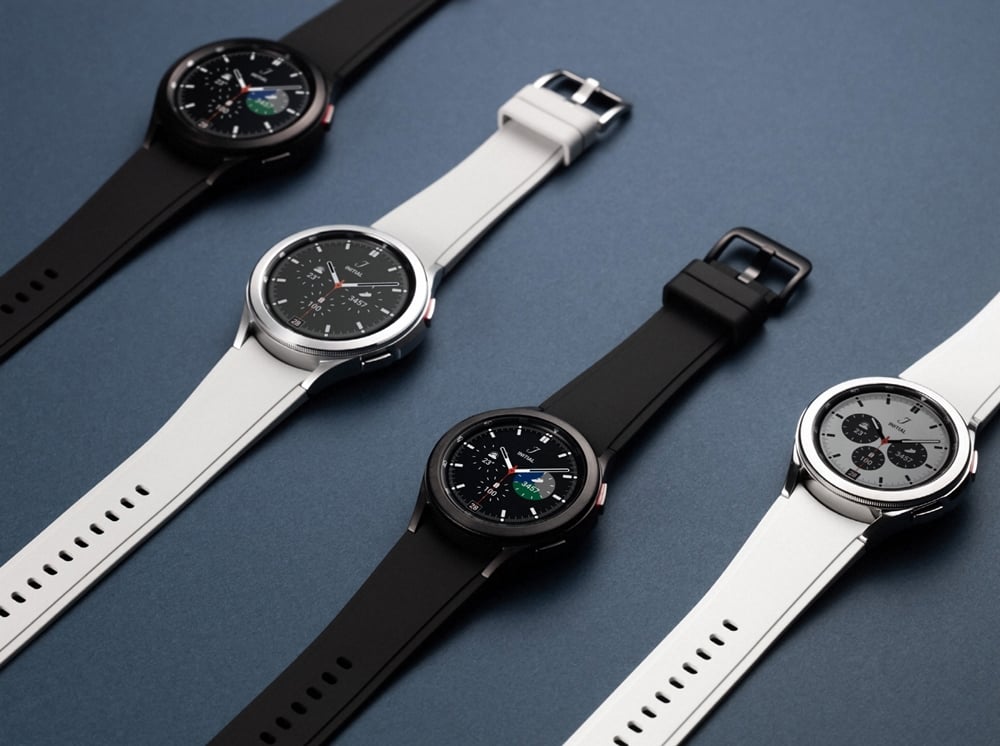
Samsung, for some time has been releasing two versions of its Galaxy Watch every year. This year too, the brand is expected to release two Galaxy Watch 5 models — the Watch 5 and Watch 5 Classic. But now a new report from SamMobile reveals that there could be a third model in the series, dubbed the Samsung Galaxy Watch 5 Pro.
The report suggests that the forthcoming Samsung Galaxy Watch 5 Pro will carry the model number SM-R925. It is tipped to come with a big 572mAh battery, as opposed to the 361mAh on the Galaxy Watch 4.
The Galaxy Watch 5 Pro’s large battery leads us to believe that it may have a bigger size However, the size of this year’s Watch 5 has been revealed to be 40mm and 44mm by the prior report. It could be that only the Pro model will have a bigger size, but we aren’t sure about the exact size as of now.
Apart from the battery and size, the Watch 5 Pro will have Google’s Wear OS. Some Watch 4 users had previously complained about the battery life of the smartwatch, and it appears to change with this Pro model.
The details for the Galaxy Watch 5 Pro are scarce as of now. Also, this is the first time we are hearing about the Pro model and the company hasn’t officially confirmed anything. That said, do take the above information with a grain of salt.
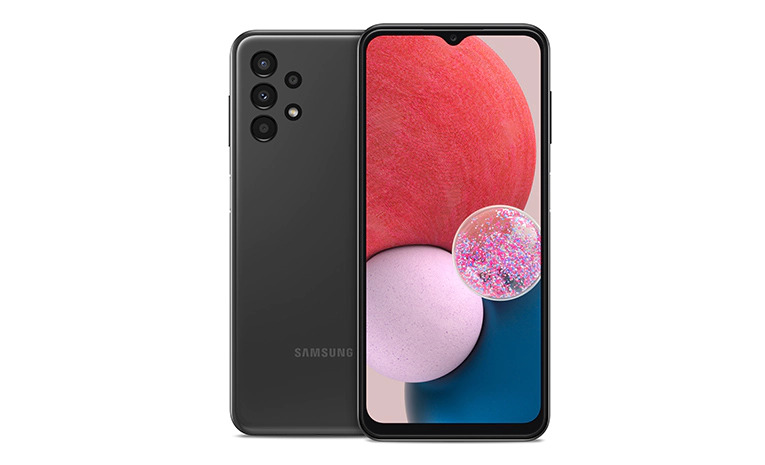
The Samsung Galaxy A13 4G was launched in Indian and European markets last month. The device succeeds the Galaxy A12 and has an improved display and chipset. Now, the phone has arrived in the US market paving its way to the budget segment buyers in the region.
The Samsung Galaxy A13 4G is priced at $189.99 for the lone 4GB RAM and 32GB storage variant. However, it can be bought for a cheaper price of $124.99 with the trade-in. The phone is also available in the monthly installment options starting at $3.48 per month for 36 months. The supported carriers in the region are T-Mobile, AT&T, Sprint, Verizon, and USCellular.
The Samsung Galaxy A13 4G comes with a 6.6-inch water-drop notch display with a Full-HD+ resolution. Here, the resolution has improved from HD+(720 x 1600 pixels) to Full-HD+(1080 x 2408 pixels). It is a PLS LCD panel with a 20:9 aspect ratio and 83.2% screen-to-body ratio. The screen has Gorilla Glass 5 protection.
It is powered by the Exynos 850 chipset coupled with 4GB of RAM and 32GB of storage. This variant appears to be only available in the US since other regions have either 3GB + 32GB or 4GB + 64GB options.
The smartphone has a quad-camera system at the rear with a 50MP main lens, a 5MP ultra-wide sensor, a 2MP macro, and lastly a 2MP depth sensor. The rear camera is capable of shooting 1080p videos at 30fps. On the front, it has an 8MP selfie snapper with an F/2.2 aperture.
A 5,000mAh battery is housed inside the device that supports 15W fast charging. Notably, the A13 4G in the US does not come with a charging adapter. Lastly, the phone boots on Once UI 4 (Android 12) and has a side-mounted fingerprint scanner.
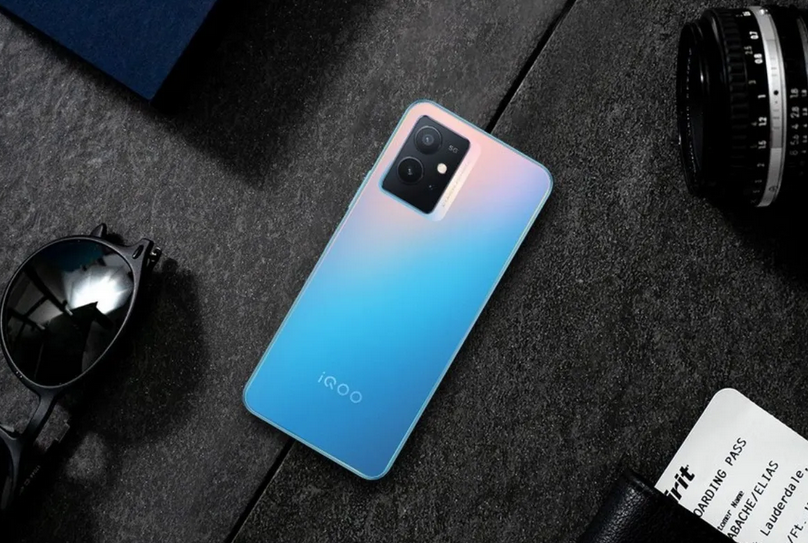
A few days back, a report revealed that iQOO is working on a new smartphone under the ZX lineup dubbed the iQOO Z6 Pro 5G. It will indeed be the higher-end version of the recently launched iQOO Z6 5G and the brand has now officially confirmed its existence.
iQOO is currently hosting the #iQOORaidNights contest and at the contest, the company is quietly teasing the upcoming iQOO Z6 Pro 5G. On Twitter, the brand has confirmed that the Z6 Pro is arriving and has asked netizens to guess the chipset that will power the smartphone.
Season 2, Grand Finale of #iQOORaidNights, Q1 of this contest!
Two lucky winners who guess the chipset correctly will get the iQOO Z6 Pro 5G for absolutely free. Additionally, the iQOO Esports Youtube Channel’s recent Raid Nights video has given out some of the phone’s intrinsic details. The Z6 Pro is claimed to be the fastest phone under Rs. 25,000, confirming its price segment. Also, it will be sold exclusively via Amazon India. Moreover, the handset’s AnTuTu score has been revealed.
iQOO Z6 5G
The iQOO Z6 Pro 5G has scored an impressive 5,50,000 points on the benchmarking platform. Corroborating this with the previous leaks, the smartphone is tipped to come with the Qualcomm Snapdragon 778G SoC. To recall, this is the same chipset as the iQOO Z5 that launched last year.
It appears that iQOO wants to revamp the series with a new design while keeping the old chipset intact. The phone also is expected to offer some improvements in the other departments.
However, it seems that MediaTek still has one more flagship Dimensity SoC up its sleeve for 2022 Android devices. MediaTek has officially announced its latest addition to the Dimensity flagship family — the MediaTek Dimensity 1300.
The MediaTek Dimensity 1300 is the official successor to last year’s flagship MediaTek Dimensity 1200 chip as the Dimensity 1300 builds upon the successes that the Dimensity 1200 has achieved last year while providing some minor tweaks and improvements. The MediaTek Dimensity 1300 slots in at a higher price bracket than its Dimensity 800 and 900 series counterparts, and a lower price bracket than its higher-end siblings, the Dimensity 8100 and Dimensity 9000.
The Dimensity 1300 features an octa-core setup, with 4 Cortex-A78 cores (1 Ultra A78 Core, running up to 3GHz, and 3 A78 Super Cores, up to 2.6GHz) and 4 Cortex-A55 efficiency cores, scaling up to 2GHz. The Dimensity 1300 runs on TSMC’s 6nm process and has support for 64-bit applications. Powering the graphics onboard is the ARM Mali-G77 MC9 CPU which is just as powerful as last year’s Dimensity 1200 GPU.
Moving onto the upgrades, the Dimensity 1300 has an improved ISP over last year as it now supports up to 200MP sensors, and hardware-accelerated AV1 decoding for faster 4K streaming. But that’s not all, the ISP also provide improvements to low-light shots as its artificial intelligence utilises real-time 3-exposure fusion for the best shot.
Other technical specifications of the MediaTek Dimensity 1300 are also what you expect from a flagship Android SoC: Support for 16GB of 4266Mbps LPDDR4x RAM, UFS 3.1 Support, Support for 2520 x 1080 168Hz displays, and support for 5G on Dual SIMs.
Leaked OnePlus Nord 2T renders Source:onsitego
The MediaTek Dimensity 1300 chipset is expected to debut in markets soon in the upcoming OnePlus Nord 2T and Redmi Note 12 series slated to launch in Q2 2022. For more news on the latest Chinese devices, stay tuned to Gizmochina for your daily source of Chinese tech news.
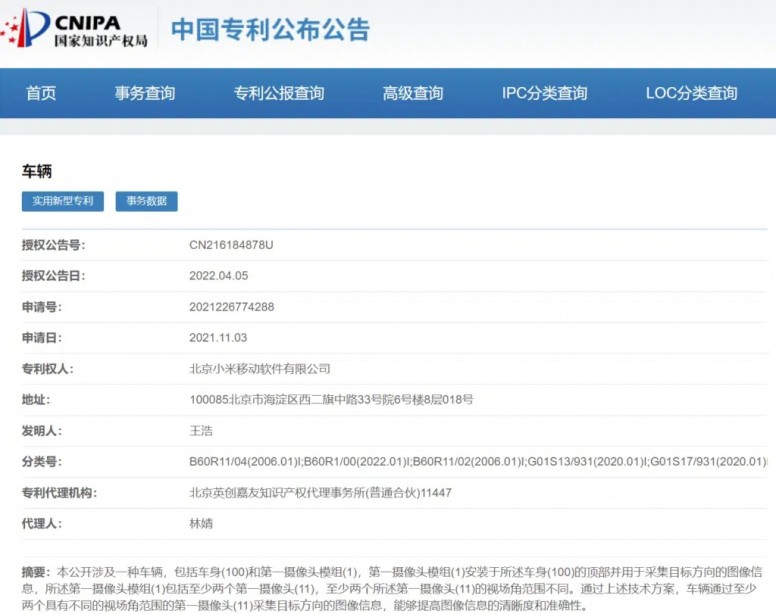
Chinese tech powerhouse Xiaomi has been working on delivering its first electric car. A new electric car patent has been approved for the company. The patent relates to Xiaomi’s electric vehicle design and it was filed back in 2019.
There are no indications yet on the possible release date of the Xiaomi electric car but the patent documents detail an SUV or sedan design with some modifications. Another patent relating to Xiaomi’s wide-angle camera modules for electric vehicles was filed late last year and has just been approved this week. As per the patent, the camera system will capture wide-angle images and contains several modules.
The Xiaomi electric car will omit the traditional exposed side mirrors for an improved range according to Xiaomi. The front of the car has an aerodynamic and sleek design while we expect the car’s platform to be driven by the tech company. The cameras are located on the top of the car including three sensors that provide a comprehensive view of the environment. The camera configuration helps to eliminate blind spots and enhanced overall safety. The Xiaomi camera patent will help to enhance the driving experience by providing a full view of the vehicle surrounding while driving.
The new patent joins a long list of Xiaomi car patents in the region of 800. We expect that when it finally releases its first electric vehicle, the car will be competitively priced and square up nicely against current models. It may be only a matter of time before we eventually see the Xiaomi electric car. The current 830 Xiaomi electric car patents are worth hundreds of millions of dollars currently.
The Redmi 10 came back in 2022 in a new version for the Indian market. The Indian version of the Redmi 10 is very different from the model launched last year and it brings a new processor to the market, as well as a bigger battery. Besides this device, the Chinese giant also came up with two other variants from the same series: the Redmi 10A and the Redmi 10C. For a lot of users, it is hard to understand which of these devices is the best and which one provides the highest value for money. We decided to publish this comparison between the specifications of the Redmi 10, the Redmi 10A, and the Redmi 10C in order to highlight the differences between these three handsets and help you to find out which one is the best choice.
Xiaomi Redmi 10 vs Xiaomi Redmi 10A vs Xiaomi Redmi 10C
Dual 50 + 2 MP, f/1.8 + f/2.4
5 MP f/2.0 front camera
Single 13 MP
5 MP front camera
Dual 50 + 2 MP, f/1.8 + f/2.4
5 MP f/2.2 front camera
BATTERY
6000 mAh, fast charging 18W
5000 mAh
5000 mAh, fast charging 19W
ADDITIONAL FEATURES
Dual SIM slot
Dual SIM slot
Dual SIM slot
Design
It is impossible to distinguish the design of the Redmi 10 and the one of the Redmi 10C: they look like the same handset because they come with the same camera module and the same display with a waterdrop notch. The Redmi 10C wins the design comparison because it is thinner and lighter than the vanilla version and even than the Redmi 10A. Given that it comes with just one single sensor on the rear side, the 10A has a smaller camera module, which is why you can distinguish it from the other two. Further, it is a more compact phone because it packs a smaller display. All of these phones are entirely made of polycarbonate with the exception of the front glass, but the Redmi 10 is protected by Gorilla Glass 3, the strongest protection by Corning in this trio.
Display
The display quality of these three handsets is exactly the same because they have the same display specifications. We are talking about three IPS LCD panels with HD+ resolutions of 720p. However, you should note that the Redmi 10 and the 10C come with a wider panel, thanks to a 6.7-inch diagonal. All have a waterdrop notch and a rear-mounted fingerprint scanner. Their refresh rate is standard and there is no additional technology to improve the image quality, so do not expect a great color reproduction. Even the level of detail provided by these displays is not impressive. They are sufficient panels, but nothing more.
Hardware/Software
The Redmi 10 and the 10C come with stronger hardware: they are powered by the Snapdragon 680 chipset paired with up to 6 GB of RAM and 128 GB of native storage. The Redmi 10A has an inferior MediaTek Helio G25 chipset and just 4 GB of RAM. The Redmi 10 and the Redmi 10C run a more recent version of Xiaomi’s customization: the MIUI 13, even though it is still based on Android 11. With the Redmi 10A, you get the older MIUI 12.5.
Camera
The Redmi 10 and the 10C also pack better cameras: on the rear side, they sport a 50 MP main sensor and an additional 2 MP depth sensor, while the Redmi 10A sports a single and disappointing 13 MP camera like the one you could find on the Redmi 4A several years ago.
Battery
The Redmi 10 wins the battery comparison because it packs a bigger 6000 mAh battery with stunning battery life. The Redmi 10C and the 10A still come with big batteries, but they stop at 5000 mAh.
Xiaomi Redmi 10 vs Xiaomi Redmi 10A vs Xiaomi Redmi 10C: Price
The starting price of the Redmi 10 (Rs. 10,999) roughly translates into €130 at the actual change, the Redmi 10A starts from €90/$98, and the 10C sits in the middle in its base variant. The Redmi 10 wins the comparison thanks to a bigger battery.
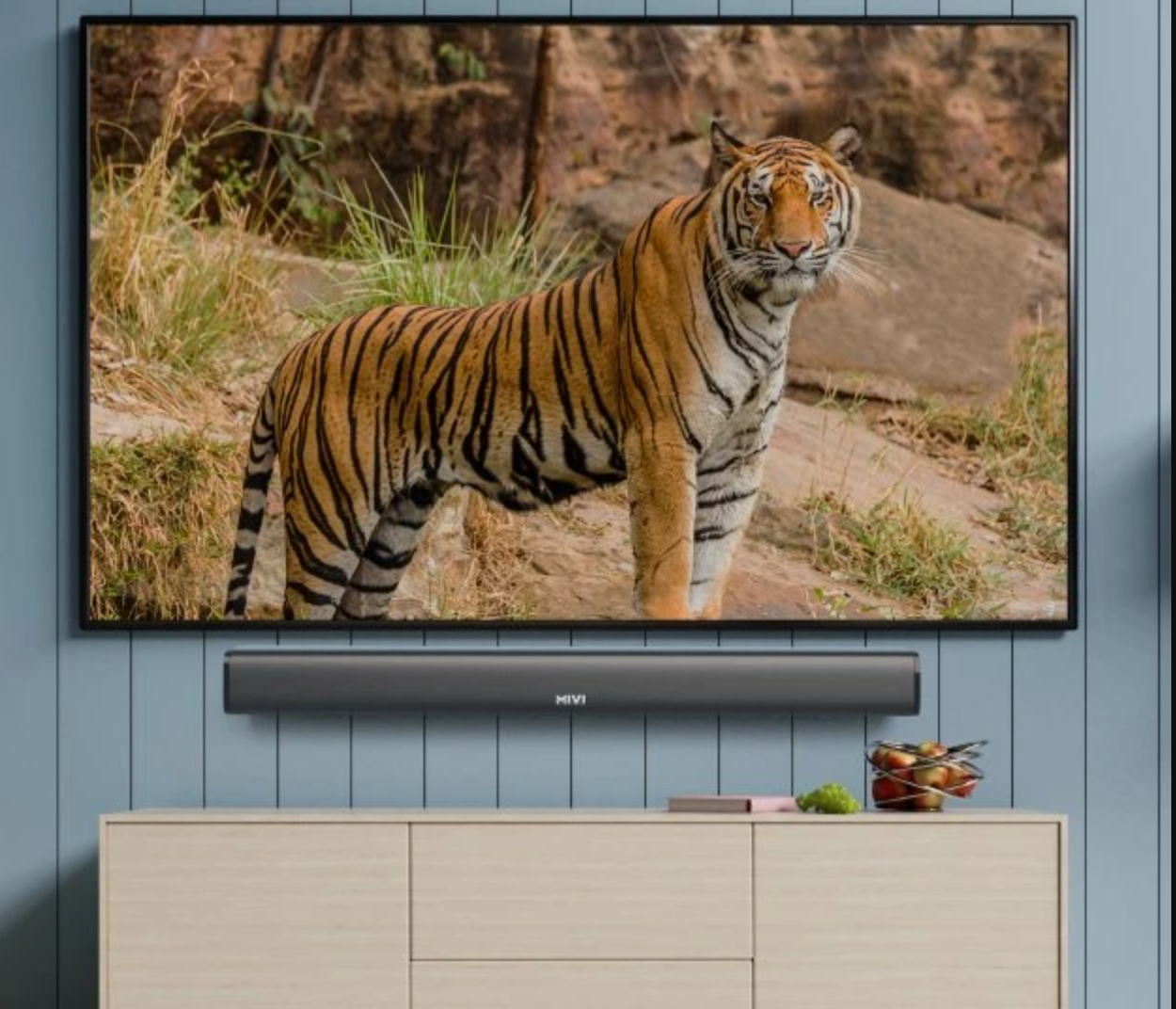
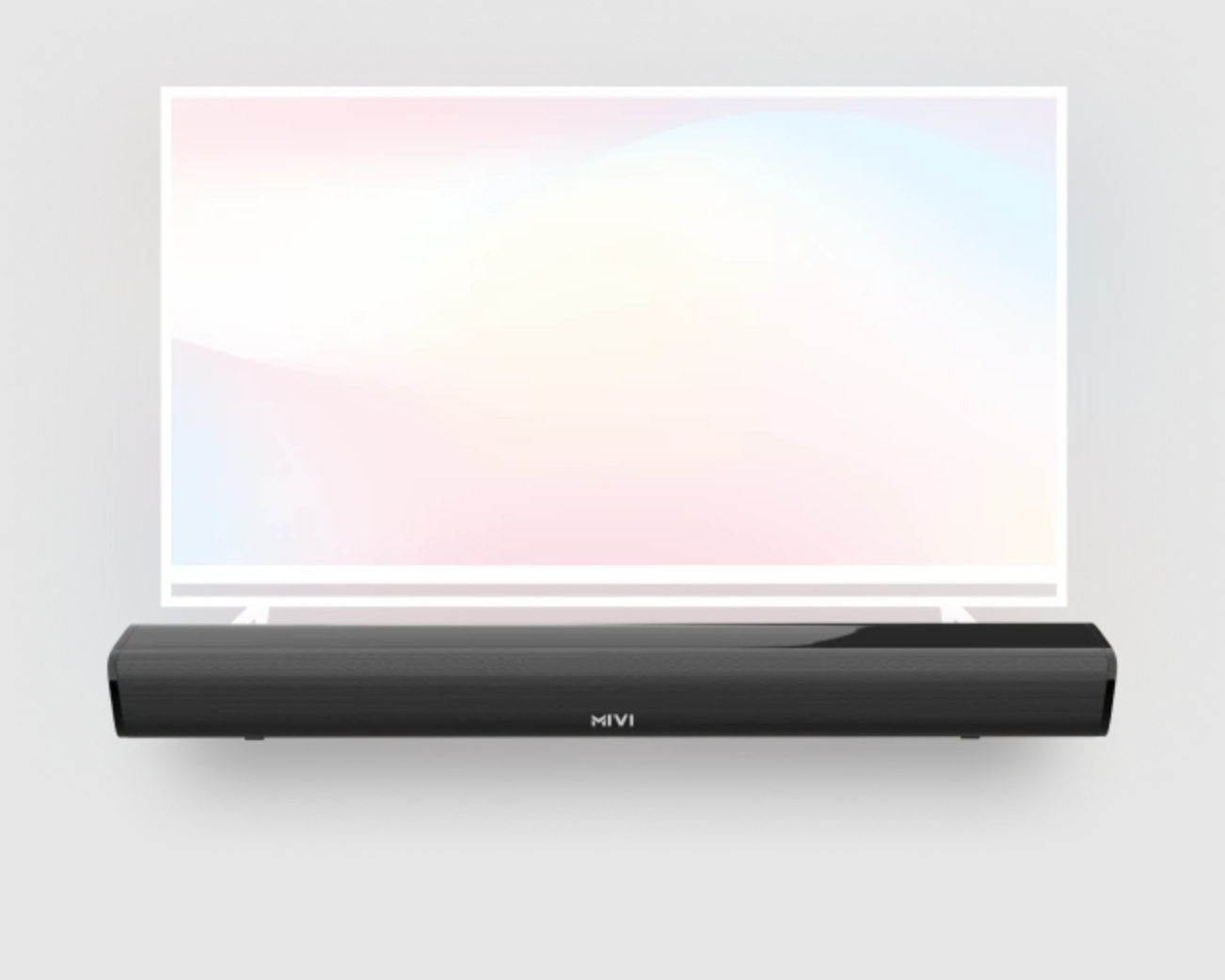
Mivi Fort S60 and Mivi Fort S100 Soundbars have been launched in India which is a milestone in the country. The two models are India’s first wholly manufactured soundbars engineered for the Indian market. Mivi is excited about this milestone and says that its engineers and research team spent months capturing the Indian consumer’s unique musical tastes and preferences. The Fort S60 and S100, are the culmination of the efforts to exceed consumer expectations while deploying local technology and components.
The Fort S60 and Fort S100 soundbars are produced in Mivi’s Hyderabad manufacturing facility. Both models are wall-mounted, sleek, slim, and will accentuate the elegance of the room. Several input modes are available for the two soundbars including Bluetooth, USB, AUX, and coaxial. The models assure users of enjoying a rewarding audio experience while watching their favorite TV programs or listening to audio content via other inputs.
The 2.2 channel system produces a balanced output with strong bass. Users can also remotely control the soundbars using the accompanying remote control. There are three sound modes in the two models namely music, movies, and news. These modes are tailored to provide top-notch audio in all instances.
The Mivi Fort S60 and Mivi Fort S100 Soundbars come in a single black color and they are priced at Rs. 3,499 (~$46) and Rs. 4,999 (~$66) respectively and can be gotten via the Mivi website. Flipkart is however offering the Mivi Fort S60 for Rs. 2,999 (~$40). Mivi is offering a 1-year warranty on both products.
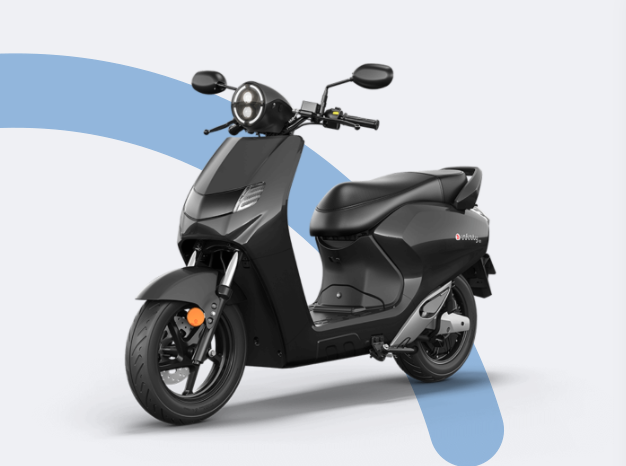
In December 2021, Bounce announced the country’s first electric scooter with swappable batteries on the market. Initially, the Bounce Infinity E1 was up for pre-booking and later the electric scooter was made available for test rides. Now, finally, the delivery date for the scooter is out.
The Bounce Infinity E1 deliveries will start from April 18 in the country. The company has begun production in full swing to fulfill all the orders. The production is currently happening in Rajasthan’s Bhiwadi plant.
The electric scooter with the battery is priced at Rs. 68,999 and for scooters-only, it is priced at Rs. 45,099.
The Infinity E1 is also the company’s first electric scooter and it has plenty of features on its sleeves. The EV is claimed to offer an 85km range on a single charge. The top speed of the electric scooter is 65kmph. It has a 1.5kW motor (83Nm) and a 2kWhr 48V battery pack. It has an IP67 rating and 12-inch wheels.
Bounce is also apparently one of the first to offer battery as a service option. Thanks to this batteries can be swapped and serviced making it convenient for the customers. Also with this, users don’t have to worry about battery health in the long term.
Speaking of range, the electric scooter has three modes namely Drag Mode, Power Mode, and Eco Mode. Users can set the scooter’s mode depending on the distance and speed.
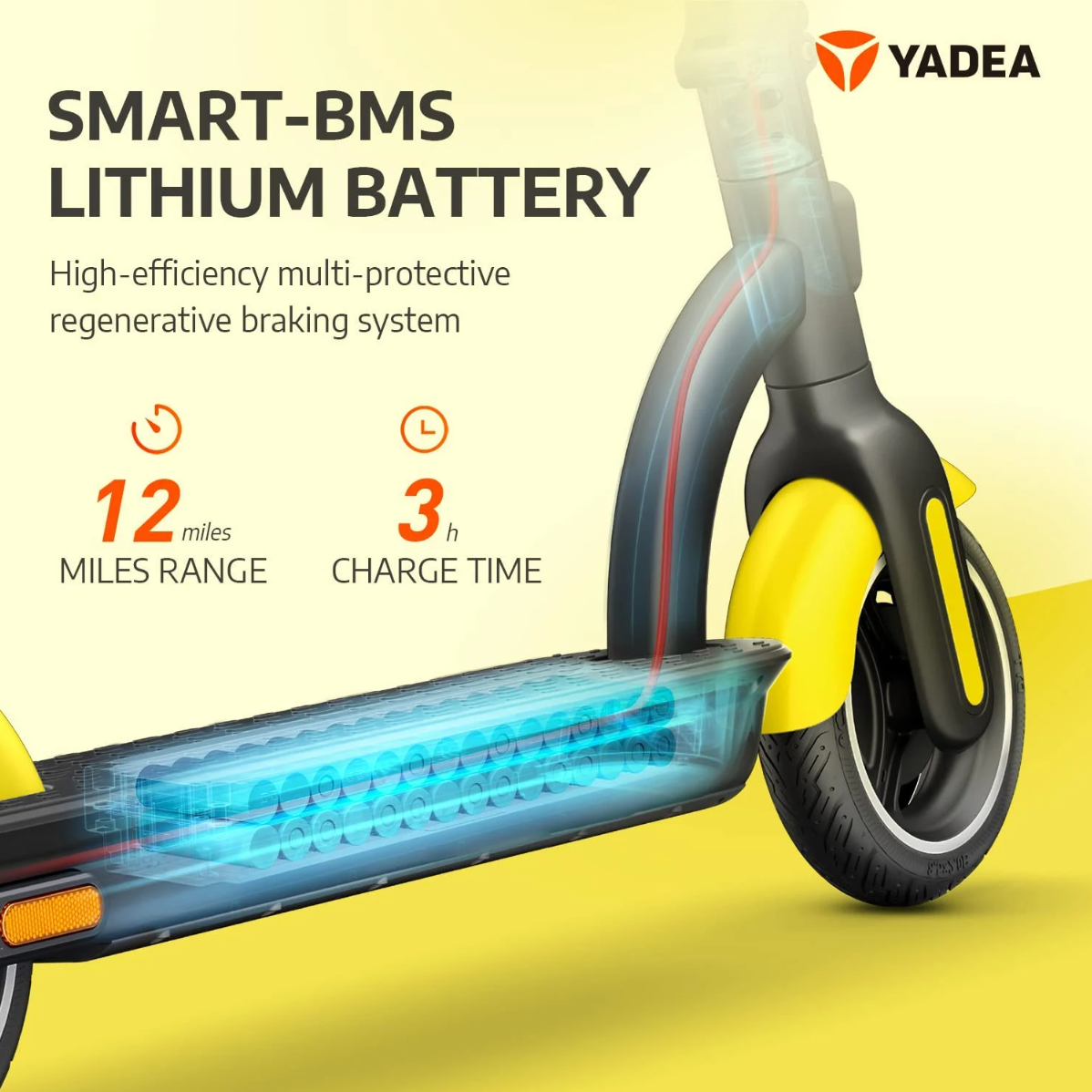
In November last year, Yadea launched the low-cost KS3 electric scooter designed to ease users’ urban commute without ripping a hole in their pockets. The Chinese company has now unveiled an even cheaper version. The Yadea KS3 Lite urban electric scooter, as it is called, is a low-cost, urban scooter designed for city commutes. Its lightweight design also adds to its desirability in the market. Buyers of the KS3 Lite are could enjoy up to $76 discounts when purchasing the model via Amazon.
As its name indicates, the Yadea KS3 Lite urban e-scooter is lightweight and easily foldable, weighing about 14kg. It is an entry-level model but has the added advantage of the Yadea touch of excellence, which puts it on a higher pedestal than its competitors. Yadea is the largest e-scooter manufacturer in the world and has a wide array of e-scooters from its production line. Even with its lightweight design, the KS3 Lite can carry payloads up to 100kg, which is quite remarkable.
The Yadea KS3 Lite has a 187Wh battery that offers a range of 20km which is appropriate for short distances only. There is LED lighting, a front brake drum, rear regenerative braking, and connectivity with the accompanying Yadea app.
1 of 3
Yadea KS3 Lite electric scooter
The Yadea KS3 Lite is obviously a budget-friendly option compared to the more powerful and larger KS3 and KS3 Pro models. It carries a price tag of $379.99 and comes in two colour options with an accent of pink and yellow on a black frame.
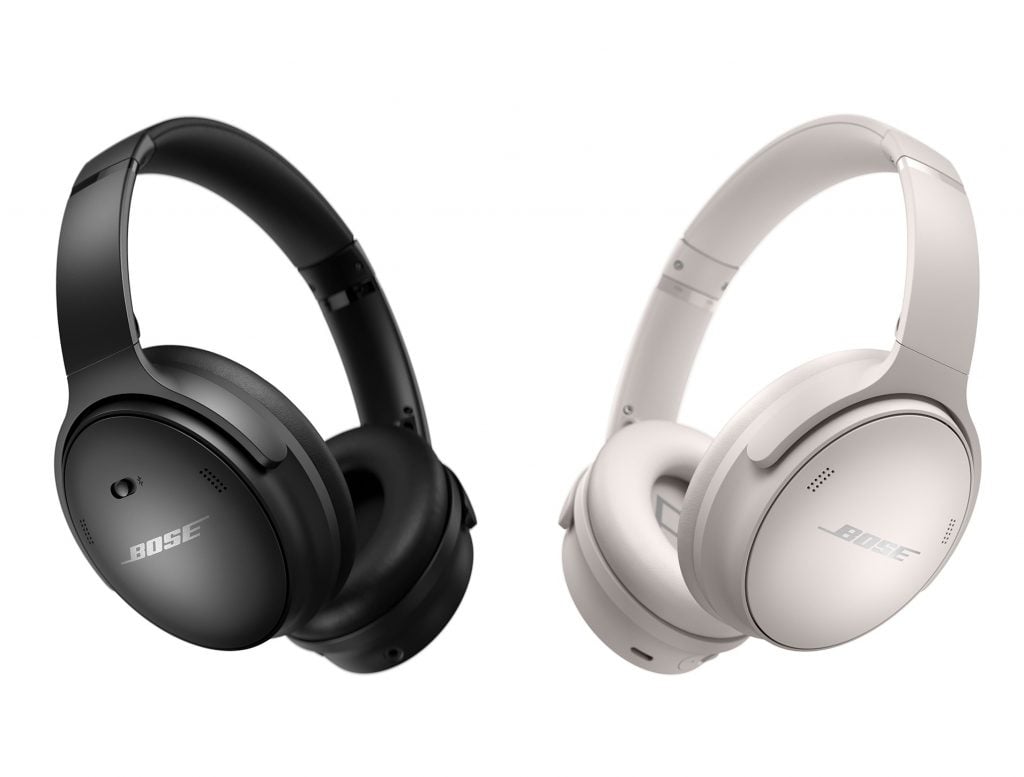
After its September 2021 release, the Bose QuietComfort 45 headphones have now berthed in India. The Bose QuietComfort 45 headphones have a lightweight design and offer premium comfort and several modes to suit different scenarios. In all the scenarios, its proprietary acoustic quality is guaranteed with deep and clear audio. The QuietComfort 45 headphones are available from Amazon India at an introductory price of Rs. 32,900 (~$433).
The QuietComfort 45 has a battery life spanning 24 hours and can be charged easily via its USB-C port. The TriPort acoustic architecture in the QuietComfort 45 produces high-fidelity audio, while the Volume-optimized Active EQ maintains a balanced output always. The Quiet and Aware Modes in the QuietComfort 45 enable users to either opt for full noise-canceling or have a feel of the surroundings while listening to music or making calls.
The ergonomic design of the Bose QuietComfort 45 headphones makes them suitable for extended use without any discomfort. The plush synthetic leather and impact-resistant nylon are both luxurious and durable. When the device’s wired mode is deployed, substantial savings in battery life is gotten.
The price tag of the Bose QuietComfort 45 headphones could determine the kind of reception the device gets in the subcontinent. The coming weeks will provide an indication of what direction the demand pendulum is swinging to.
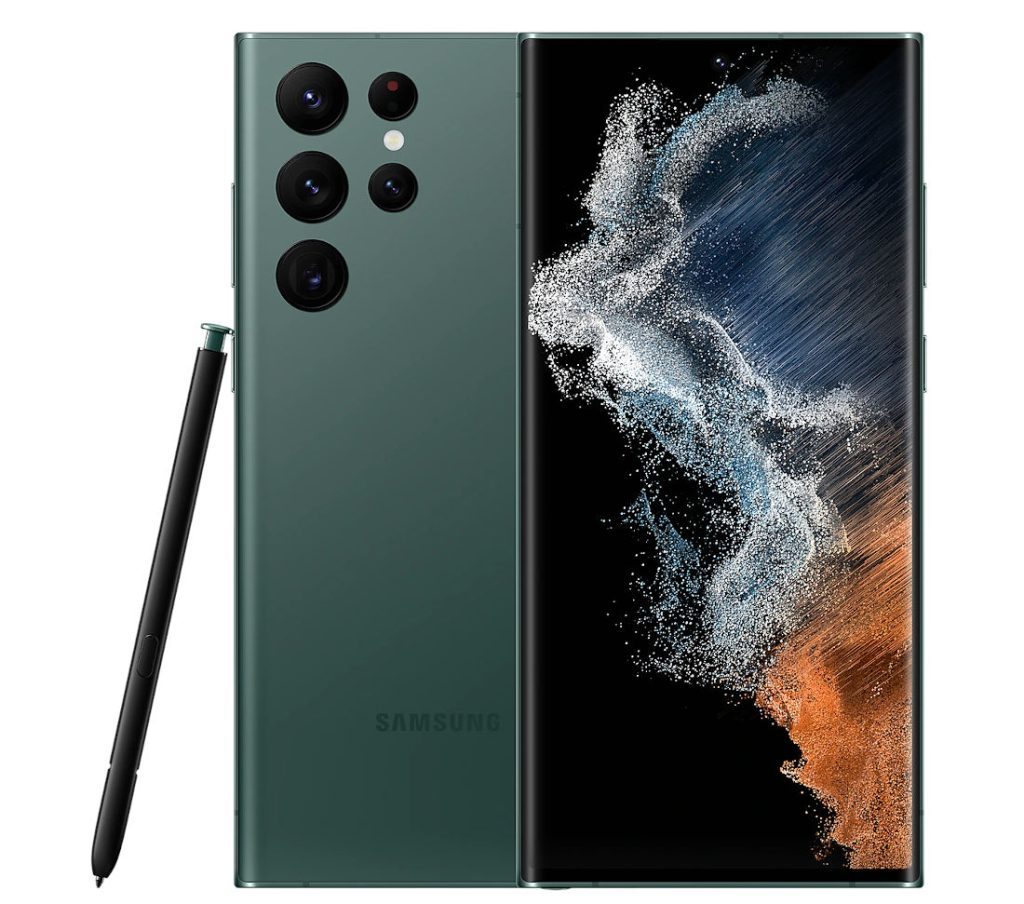
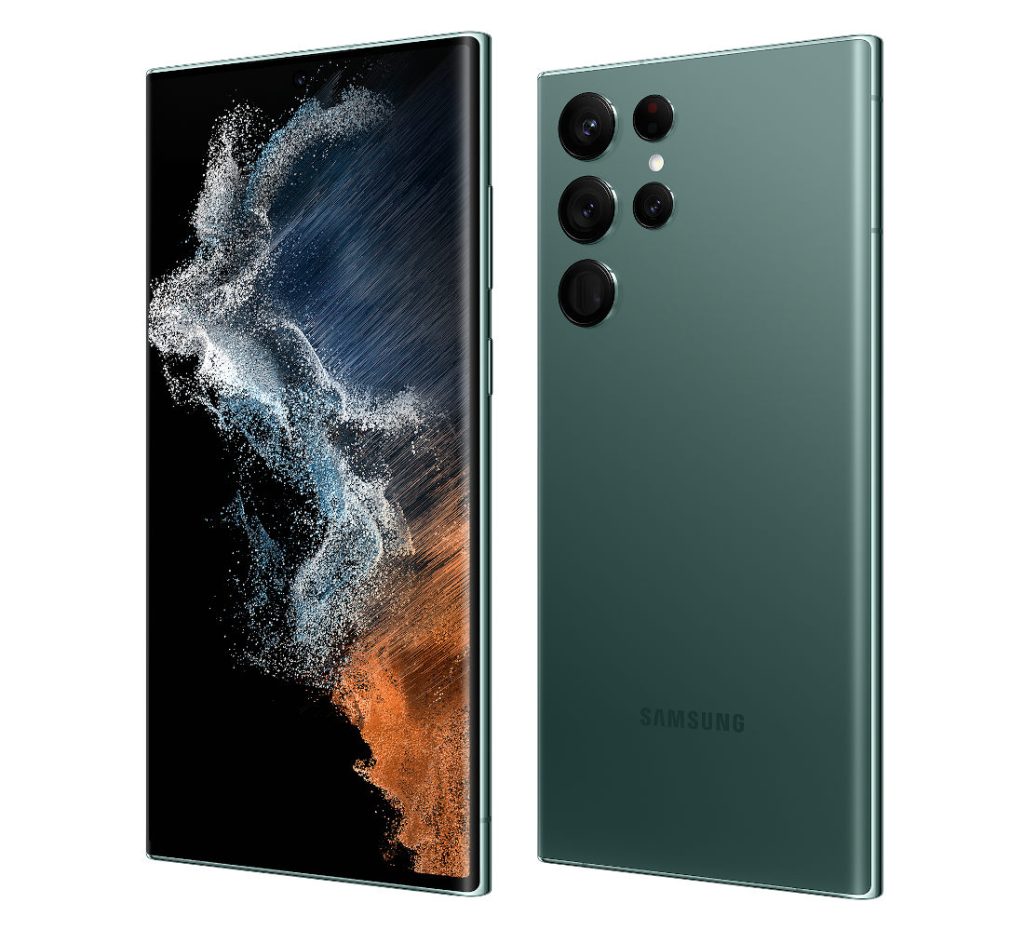
A few months back, Samsung launched the Galaxy S22 Ultra in the Indian market. However, the device was only released in three color options namely the Phantom Black, Phantom White, and Burgundy. Today, the brand has released the Green shade of the device in the region.
The Samsung Galaxy S22 Ultra in Green color is priced at Rs. 1,09,999 for the 12GB RAM + 256GB storage variant. The phone is already up for sale in Samsung online & offline stores, Amazon India, and other retail stores in the country.
Those who buy the device company will also get the Samsung Galaxy Watch4 worth Rs. 26,999 for just Rs. 2,999. Existing Galaxy Note, Galaxy S, Z Fold, and Z Flip users are also eligible for an upgrade bonus.
Samsung Galaxy S22 Ultra Specifications
The Samsung Galaxy S22 Ultra will feature a 6.8-inch AMOLED display with up to a 120Hz refresh rate. It has a Quad-HD+ resolution of 3088 x 1440 pixels and a touch sampling rate of 240Hz. The display on the device doubles up as an in-display fingerprint reader.
Samsung Galaxy S22 Ultra
As for the optics, it has a 108MP + 12MP (ultra-wide) + 10MP (3x) + 10MP (10x periscope) quad-rear camera system and a 40MP selfie camera lens.
It is powered by the Snapdragon 8 Gen 1 SoC and packs a 5,000mAh battery. The phone has 45W wired and 15W wireless fast charging support. Lastly, the phone runs on Android 1 OS and has Samsung One UI 4.1 on top.
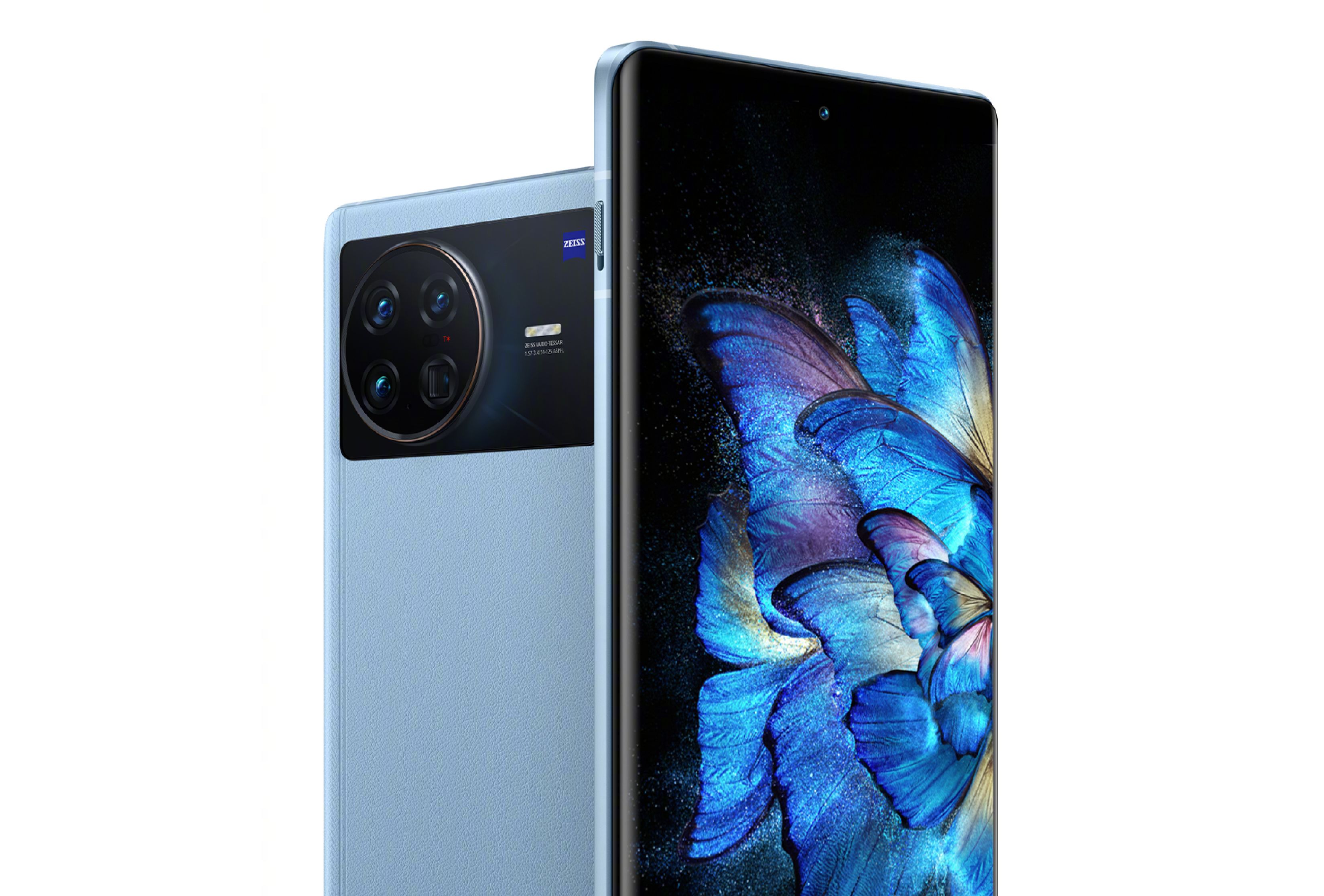
Vivo has scheduled to launch the Vivo X Fold smartphone on April 11 in the home market i.e. China. Ahead of its debut, the tipster Ishan Agarwal(via MySmartPrice) has shared the high-resolution renders of the smartphone.
The Vivo X Fold appears in two of its colors in the render. The device has Black/Grey and Blue color options to choose from. The smartphone’s folding design is visible in the renders and it seems to have a slightly curved outer panel.
The smartphone sports a 6.53-inch outer AMOLED display with a 20:9 aspect ratio. The display has a punch-hole for housing the selfie camera. When it is unfolded, it has a large 8.03-inch foldable AMOLED panel with a 4:3.5 aspect ratio. It has a 120Hz refresh rate and a 2K resolution. The smartphone’s folding mechanism is backed by an aerospace-grade wing hinge.
It has an oversized camera island at the rear with a 50MP main lens having an F/1.75 aperture. It is accompanied by a 48MP ultra-wide lens, a 12MP portrait camera (47mm focal length), and an 8MP periscope lens with 5x optical zoom and 60x digital zoom support. The device will come with a 16MP front camera for selfies.
The smartphone will be powered by the Qualcomm Snapdragon 8 Gen 1 SoC paired with up to 12GB of RAM and 512GB of internal storage. It is expected to have LPDDR5 RAM and UFS 3.1 fast storage. The phone was reported to pack a 4,600mAh battery with 66W wired and 50W wireless fast charging support.
We have often seen brands under the BBK group launching rebadged models of an original device. For instance, the upcoming OnePlus Nord CE 2 Lite’s design appears to be borrowed from the Realme 9 Pro, and the OnePlus’ upcoming foldable phone is said to be nothing but the Oppo Find N rebadge.
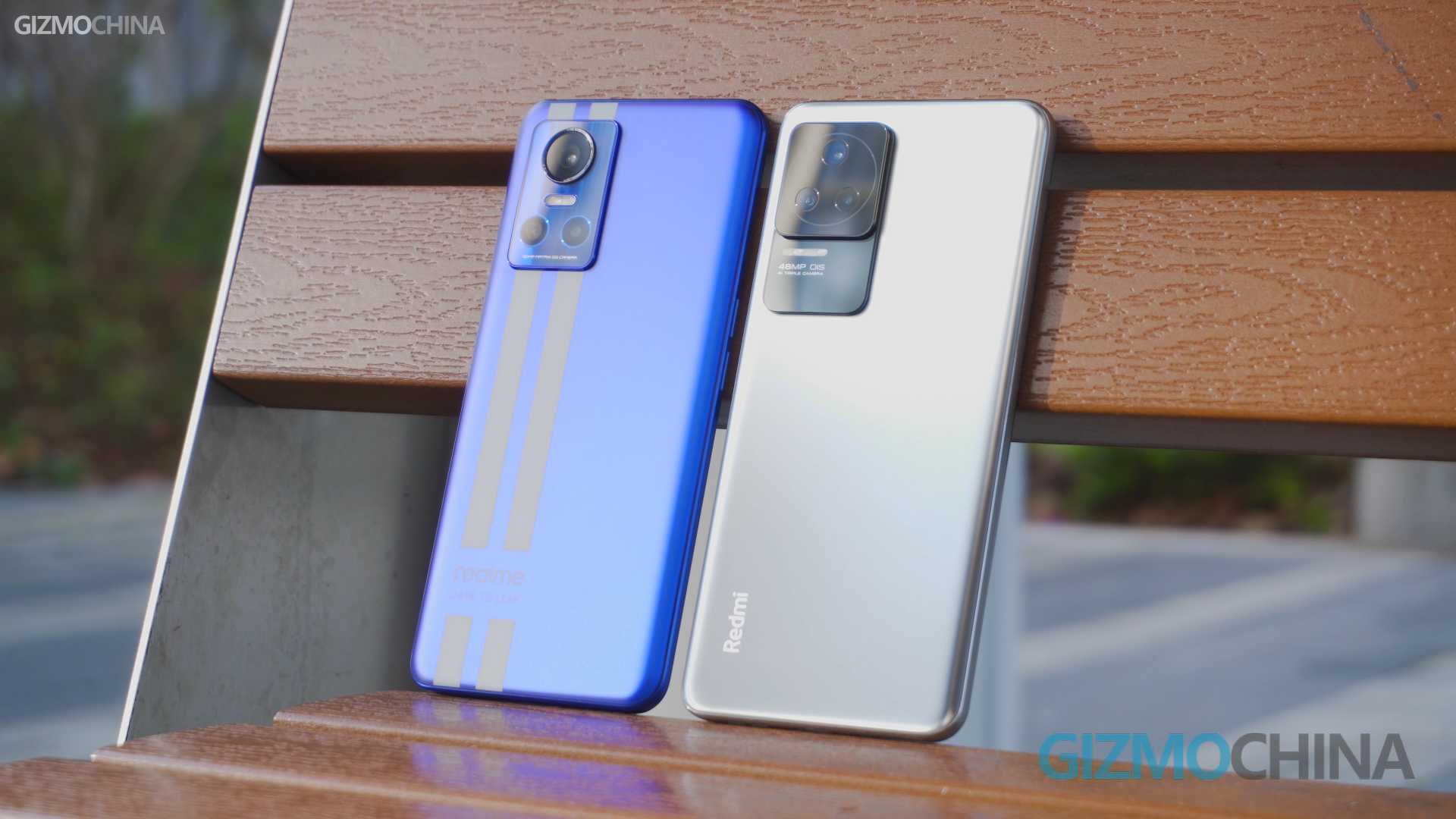
Similarly, now a new OnePlus device has come into the news and it could be a rebadged model of the Realme GT Neo3. The phone is apparently called the OnePlus Ace and the company COO Lin Fenshuo is already using it.
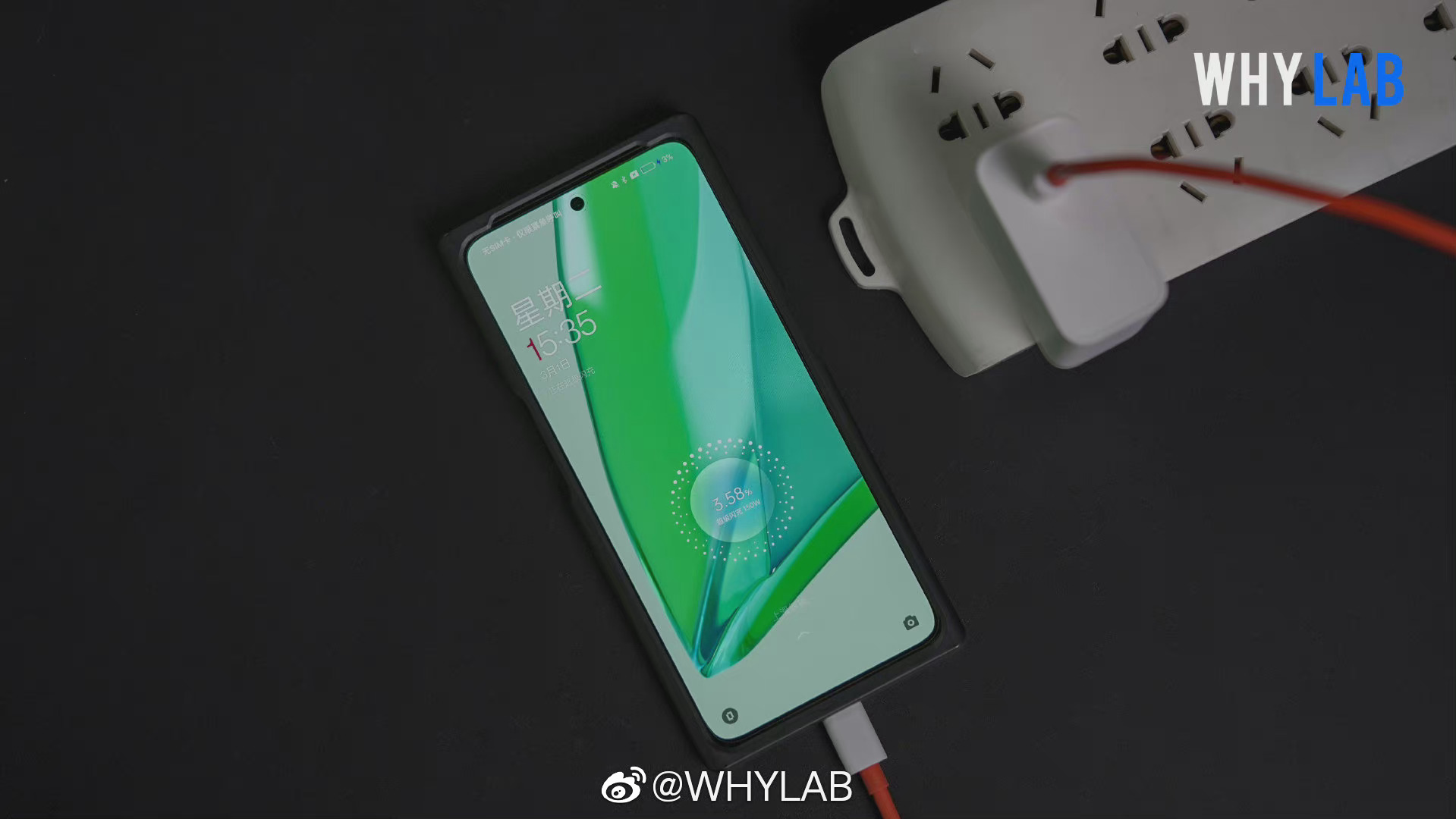
On Weibo, Lin Fenshou shared an image on his feed and interestingly, the device he was using was the unreleased OnePlus Ace. Furthermore, the popular tipster WHYLAB has shared a reference image of a smartphone and shared the specs sheet of this device.
The OnePlus Ace or the PGKM10 device is touted to have a 6.7-inch OLED panel. It could be a punch-hole screen with a 120Hz refresh rate. The device is said to come powered by the MediaTek Dimensity 8100 SoC. For those unaware, this is a new mid-range chipset which we also see in the recently launched Realme GT Neo3.
As far as optics are concerned, the phone will have a 50MP IMX766 main lens. The details for the rest of the camera sensors haven’t been revealed. For the battery, the device is tipped to house a 4,500mAh cell with a whopping 150W fast charging support.
Realme GT Neo3
Apart from this, OnePlus hasn’t explicitly revealed any details of this phone, however, the company was expected to release a Dimensity 8100 phone soon and this could be that device.
We use cookies on our website to give you the most relevant experience by remembering your preferences and repeat visits. By clicking “Accept”, you consent to the use of ALL the cookies.
This website uses cookies to improve your experience while you navigate through the website. Out of these, the cookies that are categorized as necessary are stored on your browser as they are essential for the working of basic functionalities of the website. We also use third-party cookies that help us analyze and understand how you use this website. These cookies will be stored in your browser only with your consent. You also have the option to opt-out of these cookies. But opting out of some of these cookies may affect your browsing experience.
Necessary cookies are absolutely essential for the website to function properly. This category only includes cookies that ensures basic functionalities and security features of the website. These cookies do not store any personal information.
Any cookies that may not be particularly necessary for the website to function and is used specifically to collect user personal data via analytics, ads, other embedded contents are termed as non-necessary cookies. It is mandatory to procure user consent prior to running these cookies on your website.










 However,