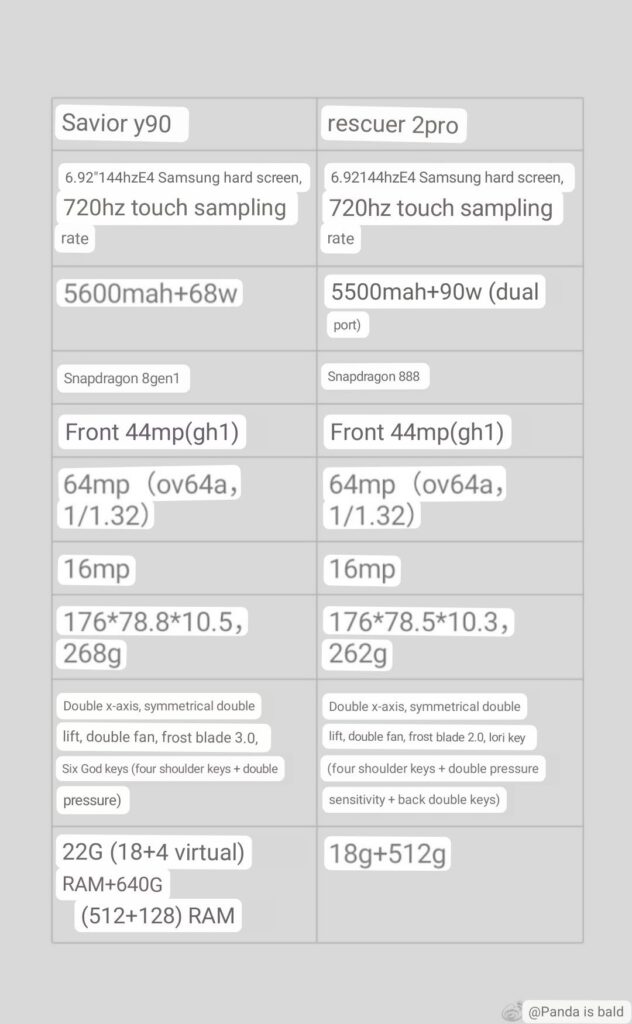
The complete specifications of the Lenovo Legion Y90 have been revealed and it seems that the gaming phone is on course to become the most powerful Android phone on the market.
The information comes from reliable tipster @Pandaisbald on Weibo who has revealed that the Legion Y90 will become the first smartphone to come with 22GB of total RAM, 18GB of which will be true physical RAM and 4GB virtual. The storage is equally impressive, maxing out at a total of 640GB, made possible by actually combining two separate 512GB and 128GB sticks.
The display of the Legion Y90 will be a 6.92-inch E4 Samsung AMOLED panel with a crazy refresh rate of 144Hz and a touch sampling rate of 720Hz, meaning both regular operations, as well as gaming, should be buttery smooth. Under the hood will be the top-of-the-line Snapdragon 8 Gen 1 processor that will help the gaming phone handle every task thrown at it effortlessly.
For photography, the Lenovo Legion Y90 will feature a 64MP OV64A 1/1.32 sensor by OmniVision paired with another 16MP sensor on the rear. Upfront will be Samsung’s 44MP GH1 sensor for selfies.
Lenovo Legion Y90
The battery of the device is adequately sized at 5600mAh and can be quickly filled up thanks to the presence of 68W fast charging support.
Other features include double X-axis motors for haptics, dual cooling fans, and six dedicated buttons for gaming. The phone measures 176 x 78.8 x 10.5mm and weighs 268g. A February release date is expected.
Vivo is expected to launch its latest entry in the NEX series of flagship products later this year. Now, a new leak has revealed the rear design of the upcoming NEX 5.
The news arrives from NotebookCheck, who shared an image of the smartphone that was spotted on Weibo (a Chinese microblogging website) along with some additional details. Talking about the smartphone itself, the NEX 5 is set to feature Qualcomm’s Snapdragon 8 Gen 1 SoC along with premium grade rear cameras. And now, we might have a first look at the device. Unfortunately, the leaked image was reportedly shared by a known Weibo tipster Digital Chat Station, although, this image has not been found on his account.
However, considering the device is a 2022 flagship, it wouldn’t be surprising if the device features a noticeable bump that was seen in the leaked design. The camera module includes at least three large cameras along with possibly an additional smaller sensor as well. On the other hand, another blogger Bald Panda shared some specifications regarding the device as well.
The blogger adds that the device will arrive in an 8GB RAM + 256GB storage, 12GB RAM + 256GB storage, and a 12GB RAM + 512GB storage configurations. It might also be available in multiple color variants, including Earth Gray or Night Black. Keep in mind that this is still an unconfirmed report, so take this leak with a pinch of salt for now.
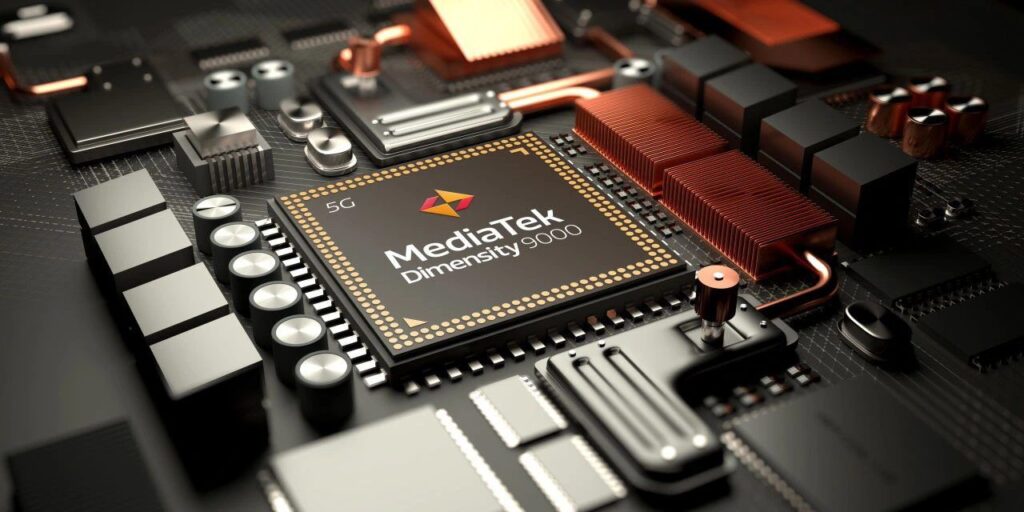
The Dimensity 9000 is MediaTek’s very first true flagship mobile processor, and as such, is expected to go neck to neck with Snapdragon 8 Gen 1 in terms of performance. However, what most probably didn’t expect was that the MediaTek flagship will actually be beating the Qualcomm flagship, that too by a significant margin.
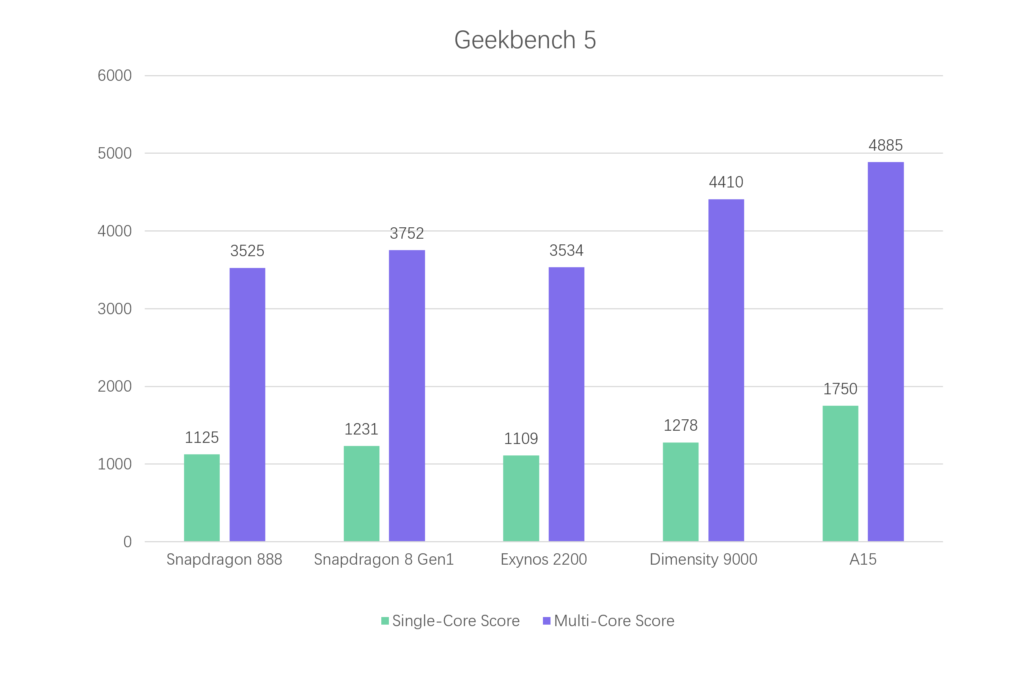
Prominent industry insider Ice Universe on Twitter today shared Geekbench 5 benchmark scores for the latest and greatest smartphone chips and they’re quite surprising, to say the least. In it, the Snapdragon 8 Gen 1 manages to beat only its predecessor and the Exynos 2200, with the Dimensity 9000 and Apple A15 absolutely crushing it in both single and multi-core tests.
The Snapdragon 8 Gen 1’s scores of 3752 and 1231 in multi-core and single-core tests, respectively, seem to be only marginally better than those of last year’s Snapdragon 888. In comparison, the Dimensity 9000 scores 4410 in multi-core and 1278 in single-core Geekbench tests, which is dangerously close to the A15’s figures.
Needless to say, something is definitely fishy here, especially when considering that Qualcomm’s each new flagship chip iteration usually brings along at least 15% higher benchmark scores — something that isn’t seen here.
It could be possible that heating issues are the culprit. Reports of the Snapdragon 8 Gen 1 overheating during benchmark tests and throttling as a result have been doing rounds, and they could’ve resulted in the aforementioned underwhelming scores.
Or it could be that the MediaTek Dimensity 9000 is simply better. If that’s indeed the case, then MediaTek has become the new king in the Android world, at least in terms of Geekbench 5. Of course, real-world performance is something else entirely.
Regardless, it is recommended to take these early benchmarks with a pinch of salt as they have likely been run on pre-release models. Fairer comparisons can only be performed once both Dimensity 9000 and Snapdragon 8 Gen 1 SoCs reach retail phone units, so stay tuned.
In 2021, Xiaomi did not release any entry-level smartphones for the first time since the lineup was introduced. For those who are wondering, we are talking about the Redmi A series and the newer Redmi C series. Last year, we only saw the launch of the Redmi Note models and the vanilla Redmi number model in the 10th generation of Redmi phones. The handsets that were left out might finally launch in India soon.
Redmi 9A
According to Xiaomiui, the Redmi 10A and the Redmi 10C might finally go official in India a year late. This is interesting to learn as Xiaomi has already started introducing the 11th generation of Redmi smartphones with the Redmi Note 11 series.
The publication says that the Redmi 10A is codenamed ‘Thunder’ and ‘Light’. On the other hand, the Redmi 10C is codenamed ‘Fog’, ‘Rain’, and ‘Wind’.
These phones have different codenames as they will vary slightly based on the regions they will be sold in. The latter model will be also sold as a POCO-branded device in some markets.
As of now, only the following details of the handsets are known.
We expect to learn more about the aforementioned devices if they are indeed launching soon. Going by their model numbers, they could debut as soon as March.
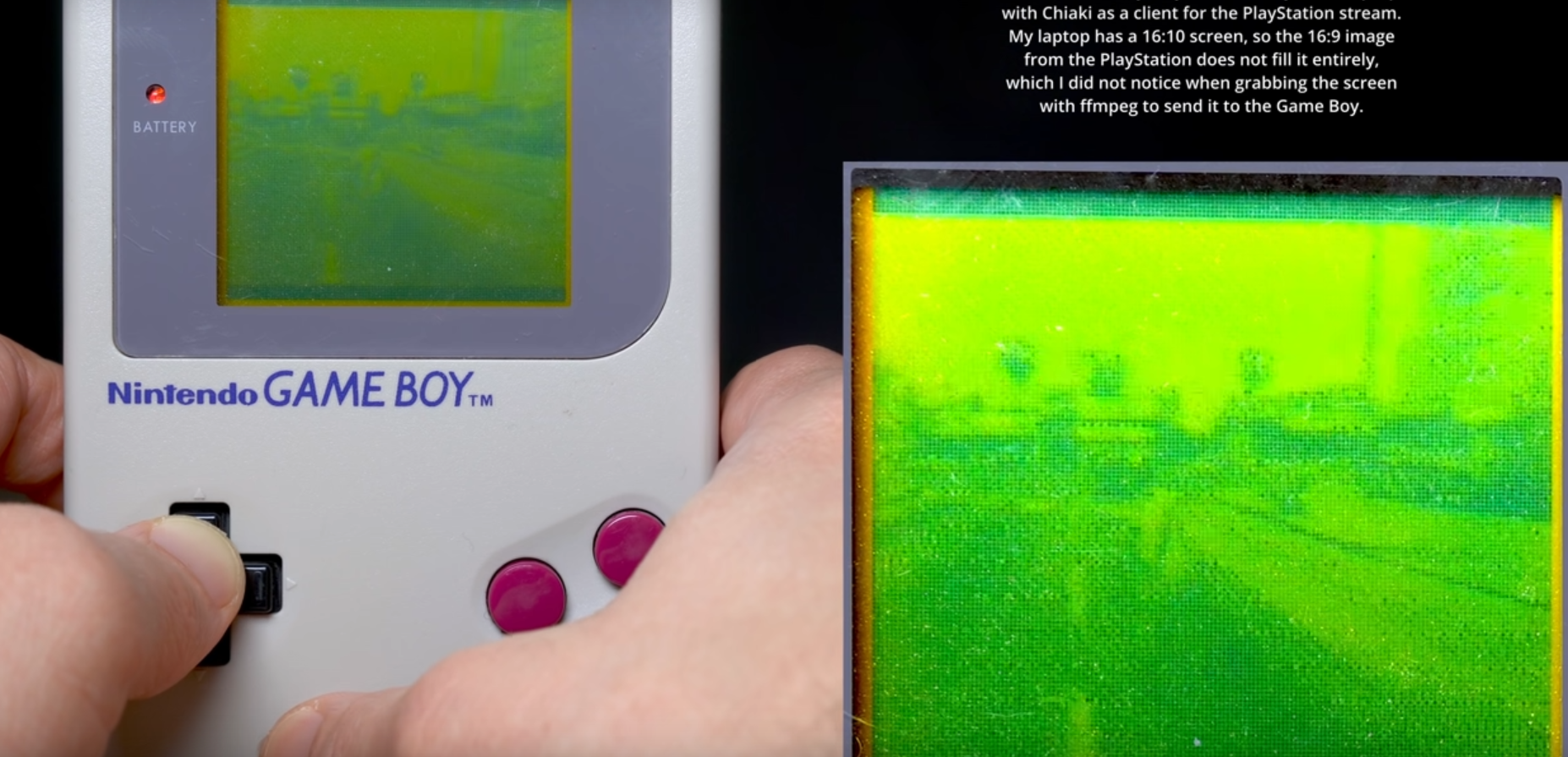
The modders in the gaming community have always pushed boundaries of beloved titles. An infamous example of this is Doom, the progenitor of the shooter genre, that has practically been run of every piece of technology, ranging from a calculator, microwave, and even more bizarre gadgets. But now, we have GTA 5, which was spotted running on the old Game Boy.
Coder and modder Sebastian Staacks shared on YouTube that he had managed to run Rockstar’s Grand Theft Auto 5 and Id Software’s original Doom on Nintendo’s classic hardware. According to the coder, “A few weeks ago I created a Game Boy cartridge with built-in WiFi. Now I taught it to stream video and play games—in full resolution. At 20 fps. On an unmodified original Game Boy.”
Furthermore, he even shared the technical process through which he managed to run the modern day title on the old Game Boy. But due to the technical and hardware limitation of the Game Boy, GTA 5 runs exactly how you’d expect it too. The gameplay is passable, if you think visual fidelity is overrated. On the other hand, it can run Crysis as well.
He added that “With this new demo, many other demos almost become obsolete. It can display anything and I can control anything that can be displayed on and controlled by my PC. Of course, the interface and image are almost unusable this way, so some dedicated implementations might still be interesting. And also, I did not touch audio here, which unfortunately was a big oversight by me when designing this cartridge.”
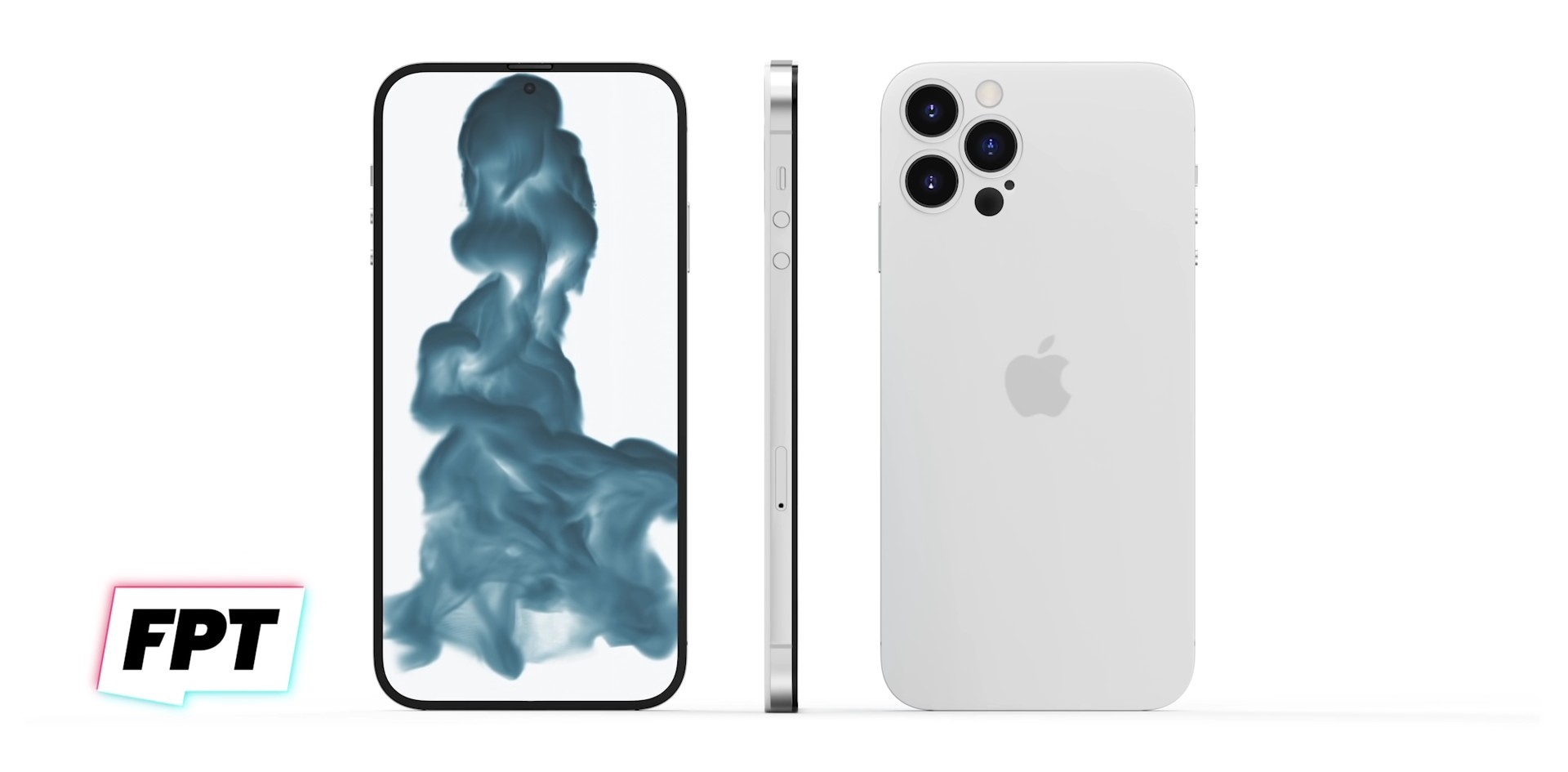
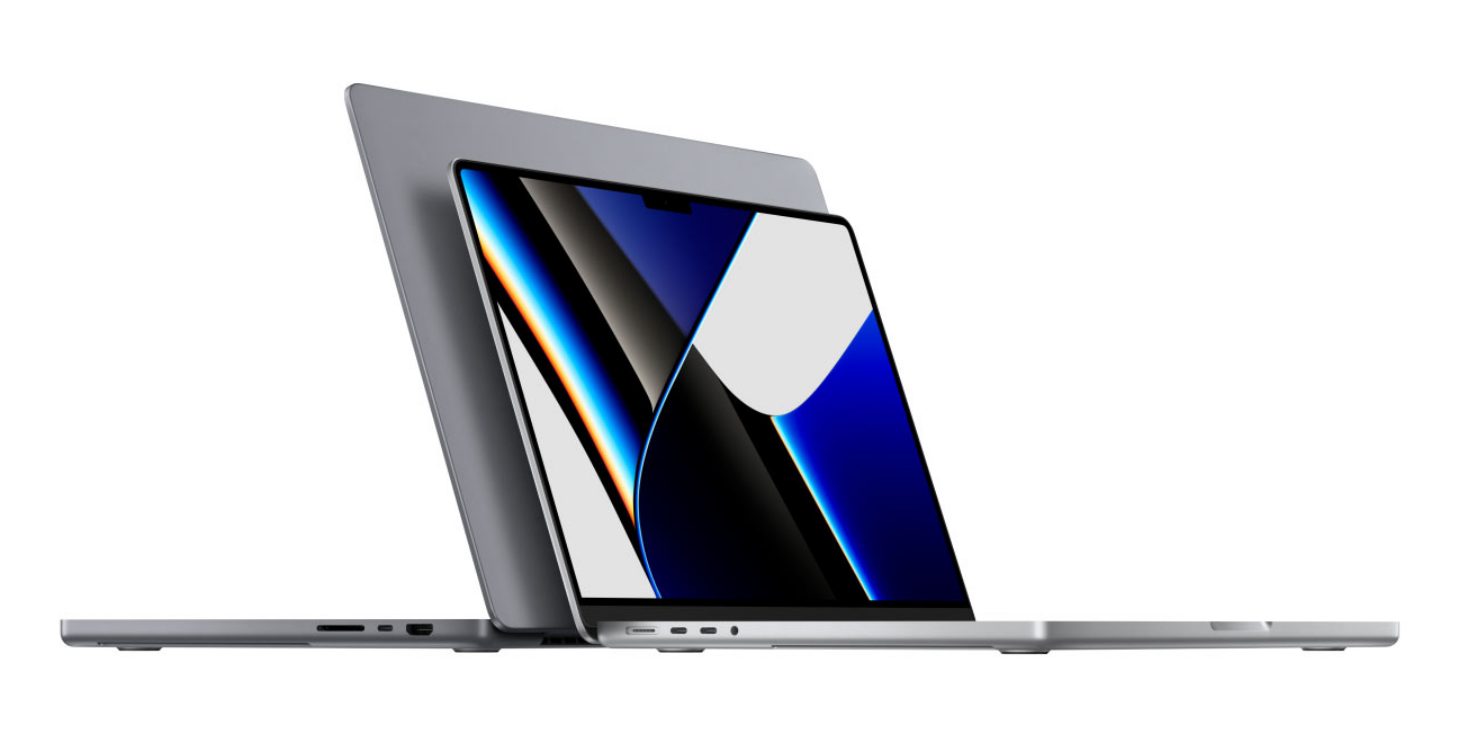
Apple is apparently gearing up to launch a bunch of new products later this year. In Fall, the company is rumored to announce its “widest” range of new hardware ever.
Notably, we have already reported on a number of these upcoming launches. The launch timeline shared by Gurman states that many of the products will launch in the fall months, although, the iMac might be released sometime earlier. Reportedly, the company is also planning in March or April. During this time, the 5G enabled iPhone SE, a refreshed iPad Air with an A15 chip, and at least one Mac as well.
The Spring event could also have Apple release another Mac with the M1 Pro chipset or a higher end iMac or a Mac mini. Previously, one of the most anticipated release is likely the AR/VR headset that it has been rumored to be working on for years now. However, recent rumors have hinted at a launch delay to 2023. So stick around, as we will be covering any new updates regarding this matter.
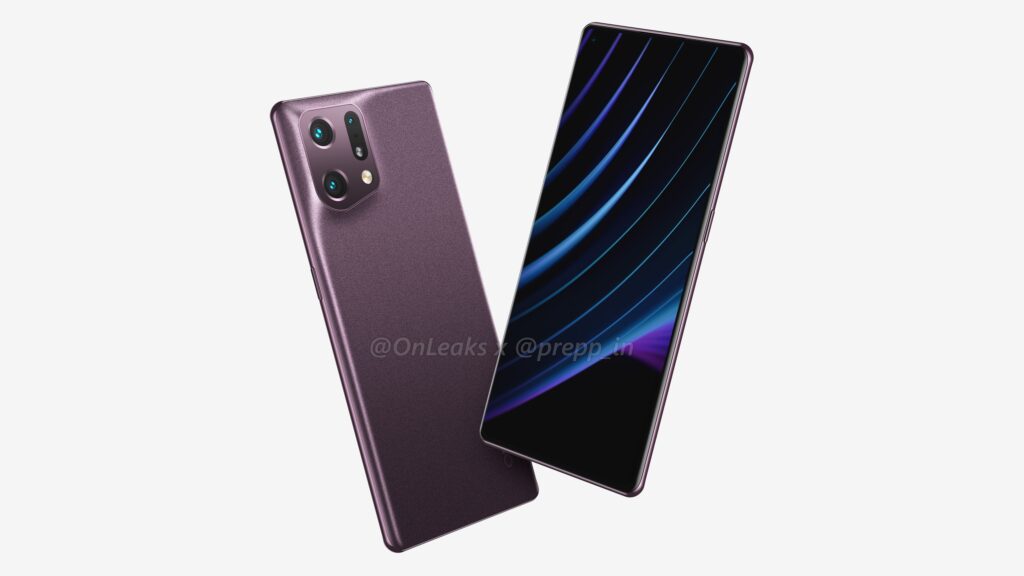
OPPO’s next iteration of its flagship lineup is almost upon us. And while it seems to be skipping the X4 name, directly jumping on to the Find X5 moniker for some reason, it doesn’t give a miss to 2022’s latest and greatest phone specifications. A late February launch date is expected in China but a new report says that the device is already undergoing internal testing in India.
The information comes from blogger Yogesh Brar who says that OPPO is carrying out closed testing for the Find X5 series in India as we speak, meaning we should be seeing a launch sometime in March.
OPPO Find X5 / X5 Pro renders by OnLeaks and Prepp.in
Currently, OPPO is also busy prepping for the launch of the Reno 7, 7 Pro, and 7 SE in the country, and all three models are expected to go live together early next month. The Chinese company sure has some pretty eventful couple of months coming up.
Coming to the specifications of the OPPO Find X5 series, the standard Find X5 is expected to be powered by the Dimensity 9000 processor while the Find X5 Pro will feature the Snapdragon 8 Gen 1. The former is actually MediaTek’s very first true flagship processor and its performance when pitched against Qualcomm’s champ remains to be seen.
Both phones will come with the OPPO’s self-developed Mariana MariSilicon X imaging NPU chip that will assist the 50MP Sony IMX766 primary rear camera. On the front, there will be a 32MP Sony IMX709 camera for selfies.
The OPPO Find X5 Pro is expected to come with a 6.7-inch QHD+ AMOLED LTPO 2.0 display that will offer a 120Hz refresh rate. It will likely have up to 12GB of LPDDR5 RAM and 512GB of UFS 3.1 storage. The battery will likely be sized 5,000mAh and will support 80W wired and 50W wireless charging.
The Redmi Note 11S is being teased to launch in India very soon. Today, Xiaomi has officially disclosed the date on which the phone will be presented in the country. Let’s check out when the device is heading to the region.
According to the official Twitter handle of Redmi India, the Redmi Note 11S will launch in India on February 9. The company has also set up a dedicated teaser page on Mi.com. The webpage clearly indicates that the brand will be gradually revealing the features of the handsets in the coming days.
As of now, not much is known about this smartphone. It is said to be codenamed Miel. However, we aren’t sure about it yet.
But the official teaser and a leaked render have already revealed the design of the device. We know that the phone will have a flat frame design and a rectangular camera module housing four sensors as well as an LED flash.
Talking about specs, the Redmi Note 11S is tipped to arrive with a 90Hz AMOLED display. It is expected to be powered by an unknown MediaTek chipset with MIUI 13 on board.
The handset’s camera system may include a 108MP Samsung HM2 primary sensor, an 8MP Sony IMX355 ultra-wide unit, a 2MP OmniVision OV2A macro snapper, and a 2MP depth sensor. Finally, it could come in three memory configurations, such as 6GB + 64GB, 6GB + 128GB, and 8GB + 128GB.
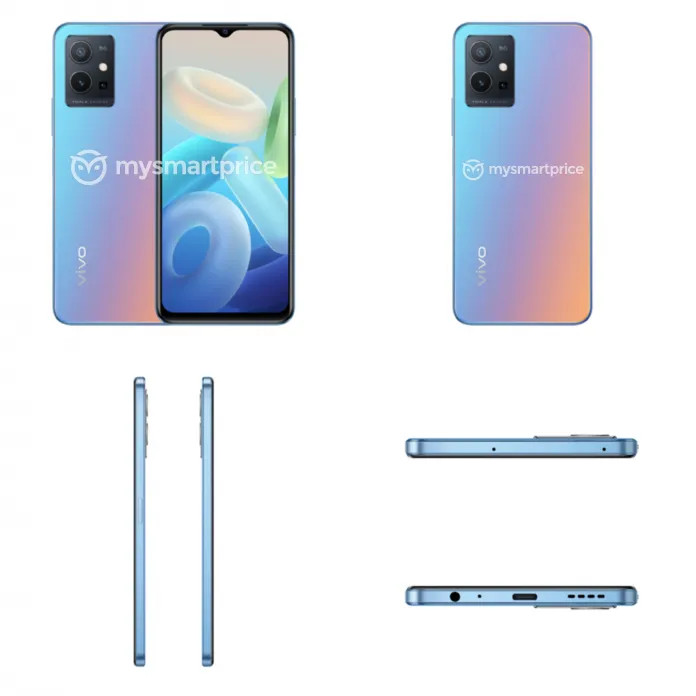
vivo will soon be expanding its entry-mid-range lineup a bit further with the vivo Y75 5G in India. While specifications of the handset have already been leaked, renders revealing the phone’s complete design and color options have now been made available unofficially as well.
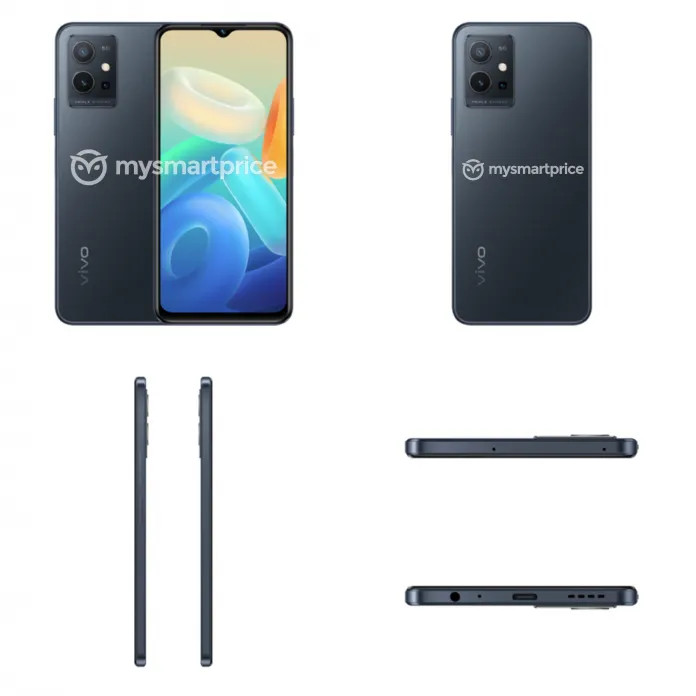
The renders come from notable tipster Ishan Agarwal (via MySmartPrice) and reveal that the vivo Y75 5G will feature a display with a waterdrop notch. The bezels around it appear to be the same size and sufficiently slim on three sides, although you do get a bit of chin at the bottom — something that’s expected at this price segment.
Image: Ishan Agarwal x MySmartPrice
The rear of the handset features a triple rear camera setup housed within a rectangular module aligned to the left. The back is fairly minimal and is quite flat, as are the edges. The right edge of the phone holds the volume rocker and the power button, with the latter doubling up as the fingerprint scanner. The bottom edge of the device accommodates the 3.55mm audio jack, charging port, and speaker grill, whereas the SIM card tray and secondary noise cancellation mic reside on the top edge.
The vivo Y75 5G will come in two colors — Aurora and Black. The Aurora option has a gradient finish that exhibits blue, pink, and orange, while Black is more basic.
Moving on to the specifications, the vivo Y75 5G’s display will be an LCD 6.58-incher with a Full-HD+ resolution. Powering the device will likely be the octa-core Dimensity 700 processor, paired with the Mali G57 GPU.
The vivo Y75 5G is said to feature a 6.58-inch LCD display with a Full HD+ resolution. Powering the device might be an octa-core Dimensity 700 processor, coupled with a Mali G57 GPU. The primary camera is expected to be a 50MP sensor while the other two will likely be 2MP sensors. Upfront, a 16MP shooter will handle selfies.
The battery of the vivo Y75 5G is expected to be a 5,000mAh unit with support for 18W charging. The RAM of the device will support expansion by up to 4GB thanks to the Memory Fusion 2.0 virtual RAM feature. Software will be nothing to be concerned about as the phone will be booting into the latest — FunTouch OS 12 based on Android 12.
Xiaomi will be holding its first global launch event of 2022 on January 26. The company will be not only introducing the Redmi Note 11 series but also MIUI 13 for international markets. Ahead of that, the firm has already started pushing the latest version of its mobile operating system to some of its handsets.
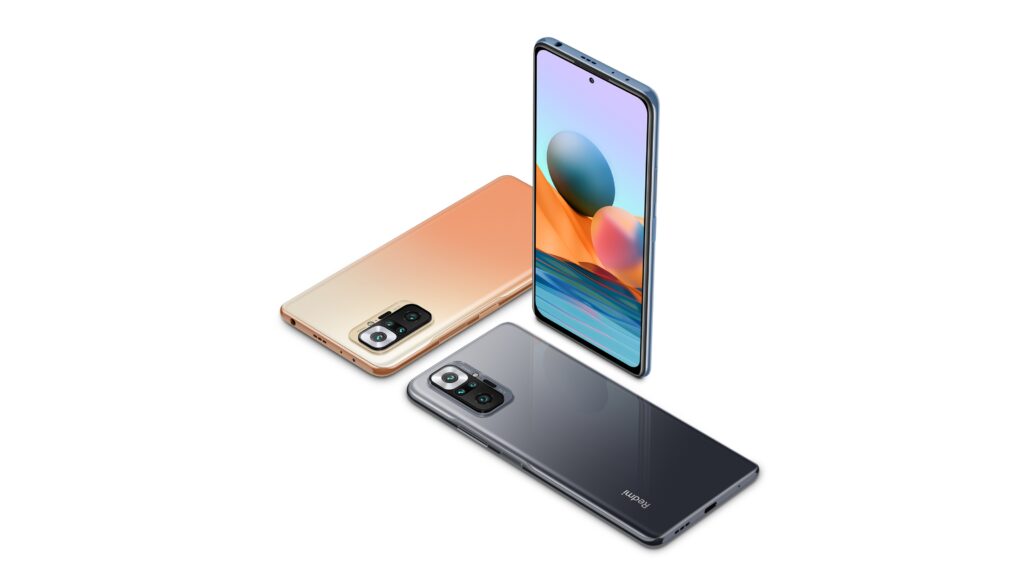
Redmi Note 10 Pro
Recently, we reported that Xiaomi had compiled the first Android 12-based MIUI 13 builds for the Redmi Note 10 series. Just a few days from that, the company has begun to seed these software builds for ‘Pilot Testers’. Even the Mi 11 Lite is receiving a similar treatment.
Below-listed are the MIUI builds that are currently available for testers.
The aforementioned releases will be reviewed by Mi Pilot Testers. If they don’t find major issues, the same builds will make their way to ‘Stable Beta’ channel, followed by ‘Stable’ in the coming days. We can expect the final stable rollout to kickstart as soon as next month.
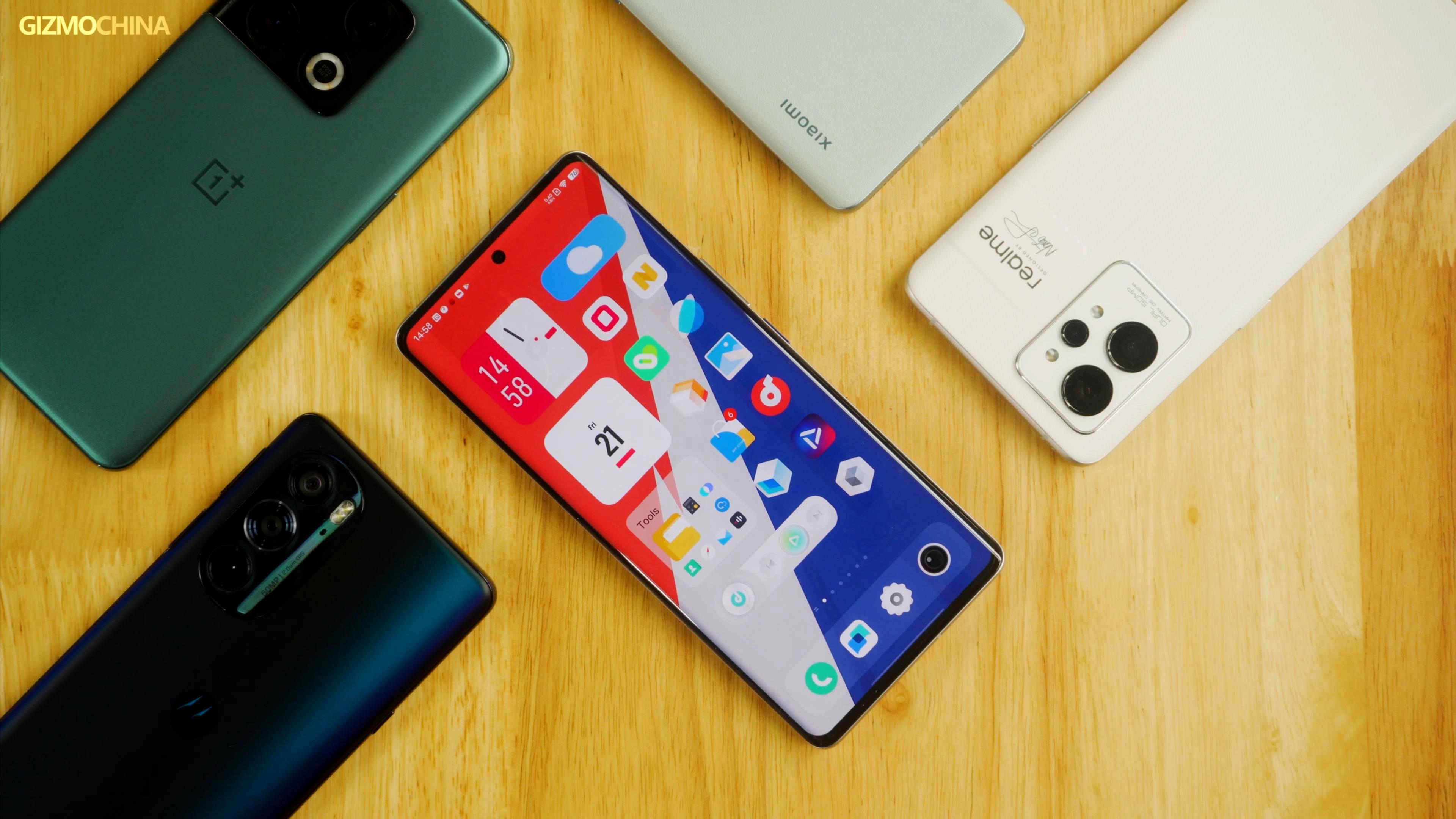
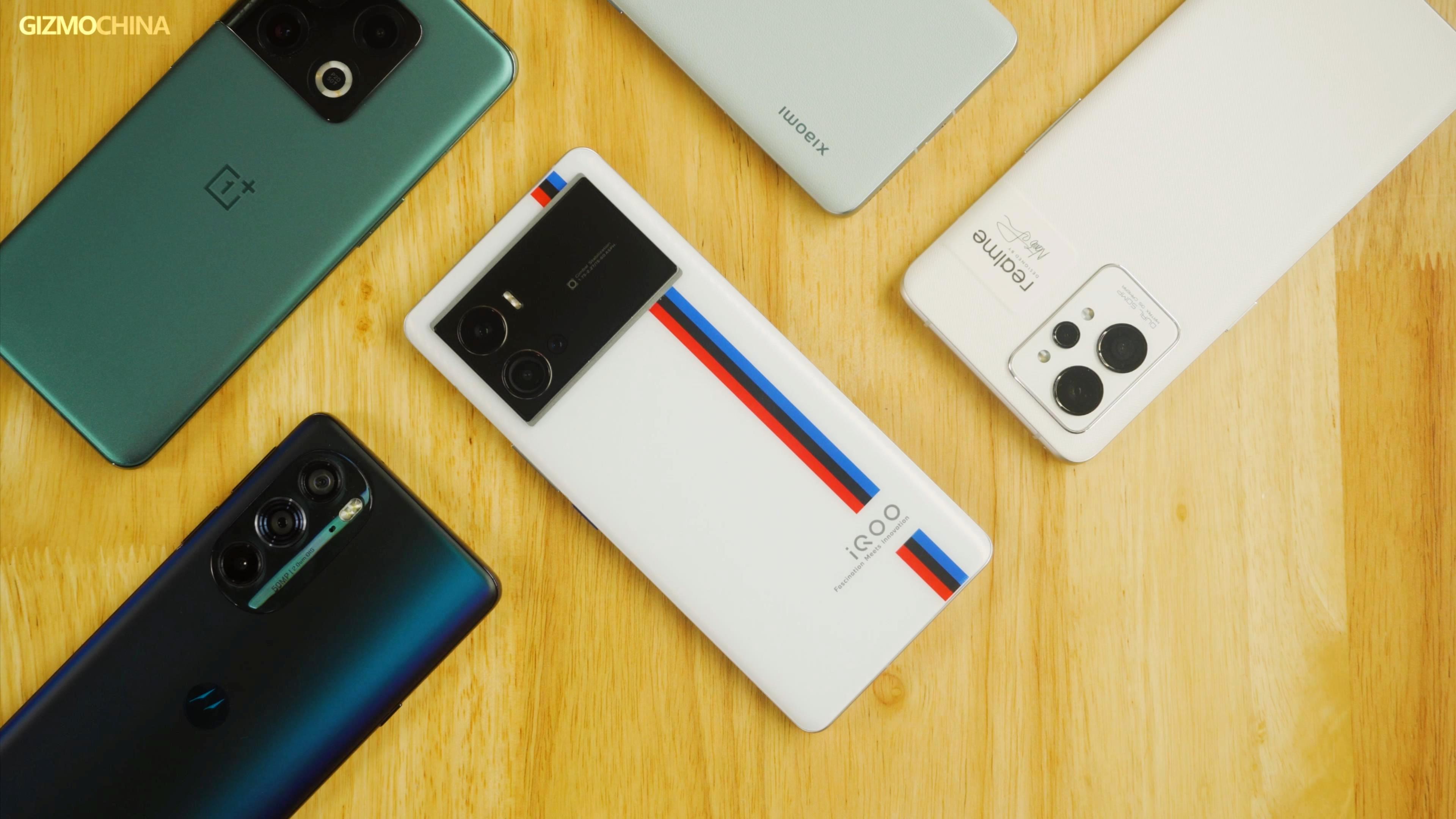
Thanks to Qualcomm’s update of its Snapdragon chipset, we saw brands queuing up to launch their flagship phones in the new year. Ever since 8 Gen 1 chipset debuted on Motorola Edge X30 in December, we’ve experienced and reviewed 4 models powered by this latest chip. But none of them really surprised us with their performance.
And today we have one more model for you, the iQOO 9 Pro. So let’s check whether the phone is able to stand out from the 8Gen 1 flagship crowd.
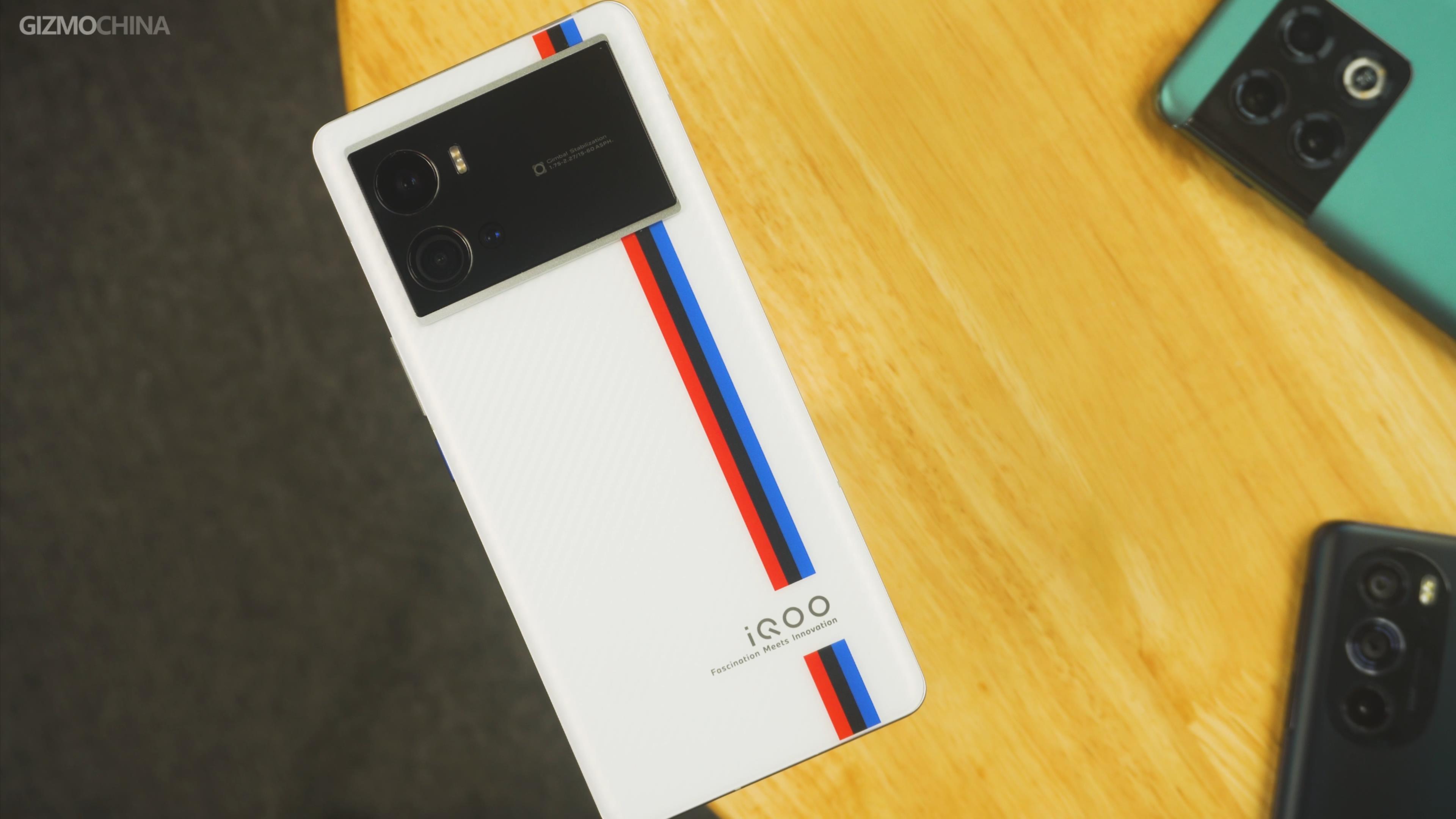
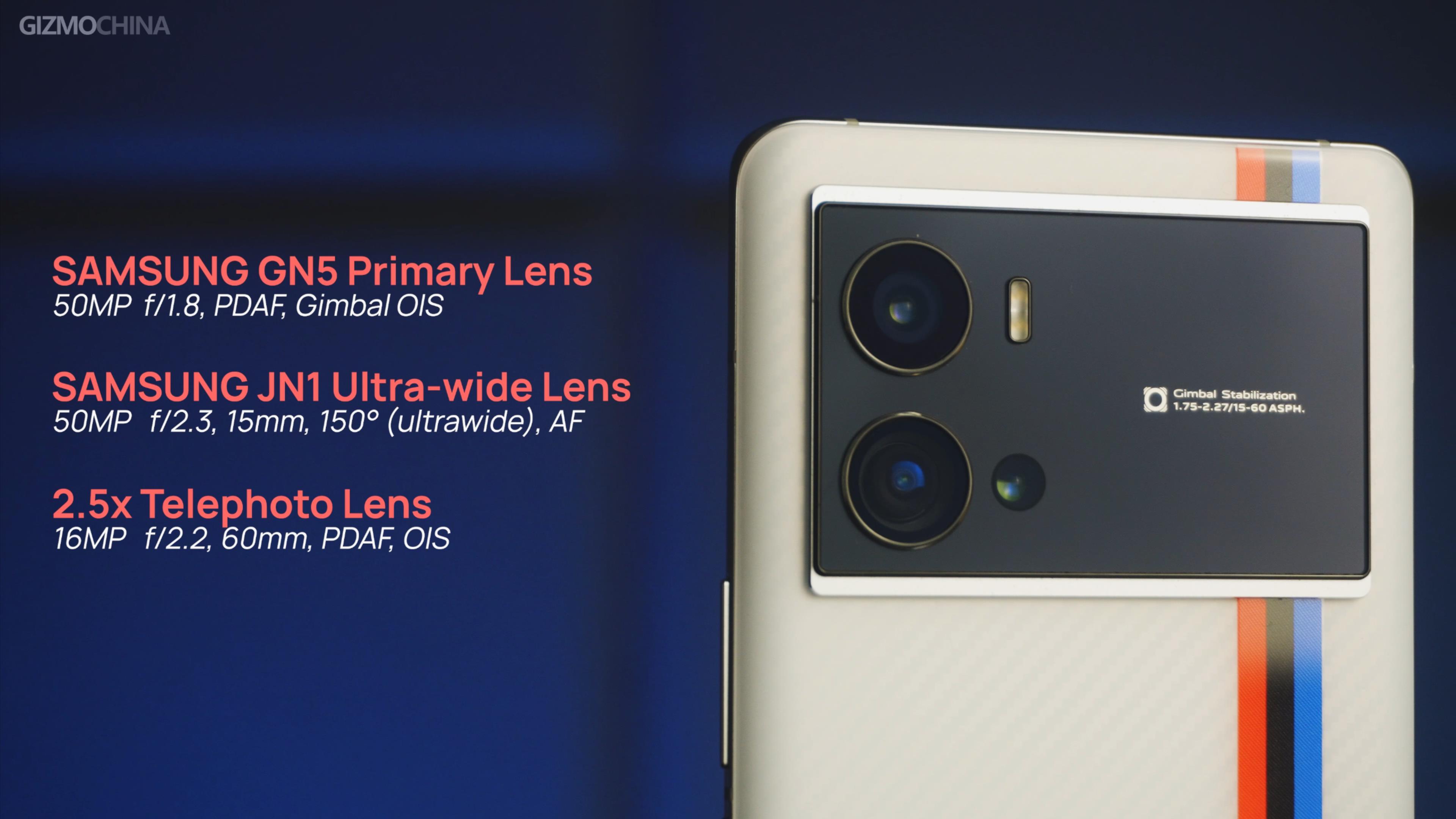
Obviously, iQOO has shifted its product strategy from gaming preference to a more common-flagship design. Especially on the latest 9 Pro, the specs seem to be more balanced with the phone coming with more features that we only see on the premium smartphone models. The iQOO 9 Pro adopts a completely new rear design with a triple camera setup housed inside a wide camera island almost covering the upper half of the rear panel.
iQOO 9 Pro Review: Design & Display
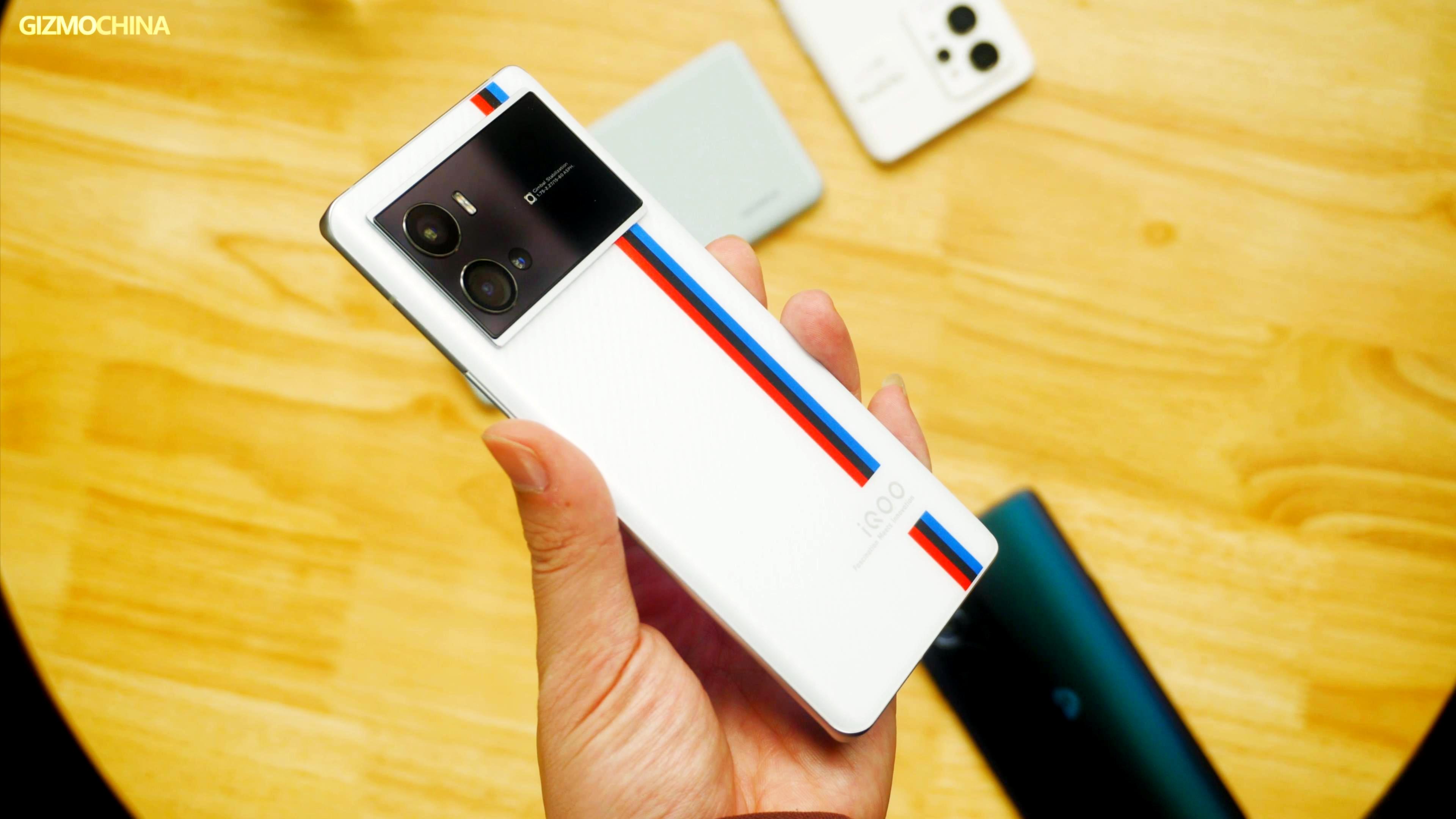
This time the 9 Pro comes in just two variants, an Orange leather-like version and the BMW Motosport edition in my hand.
The new design makes it probably the most recognizable model among all the latest flagships.
In addition to the triple camera setup at the left, the wide camera island is made up of a large piece of aluminum plate underneath the slightly-smaller glass cover.
This design is not only for better looks, but also works as a key part of the cooling system. The aluminum plate could effectively transfer heat inside, while the glass cover could block the perceivable heat when holding the phone.
Later I will show you how effective the cooling solution performs in our gaming test.
The Motosport edition still includes the iconic BMW three-color stripes running from the upper part down to the bottom of the rear panel.
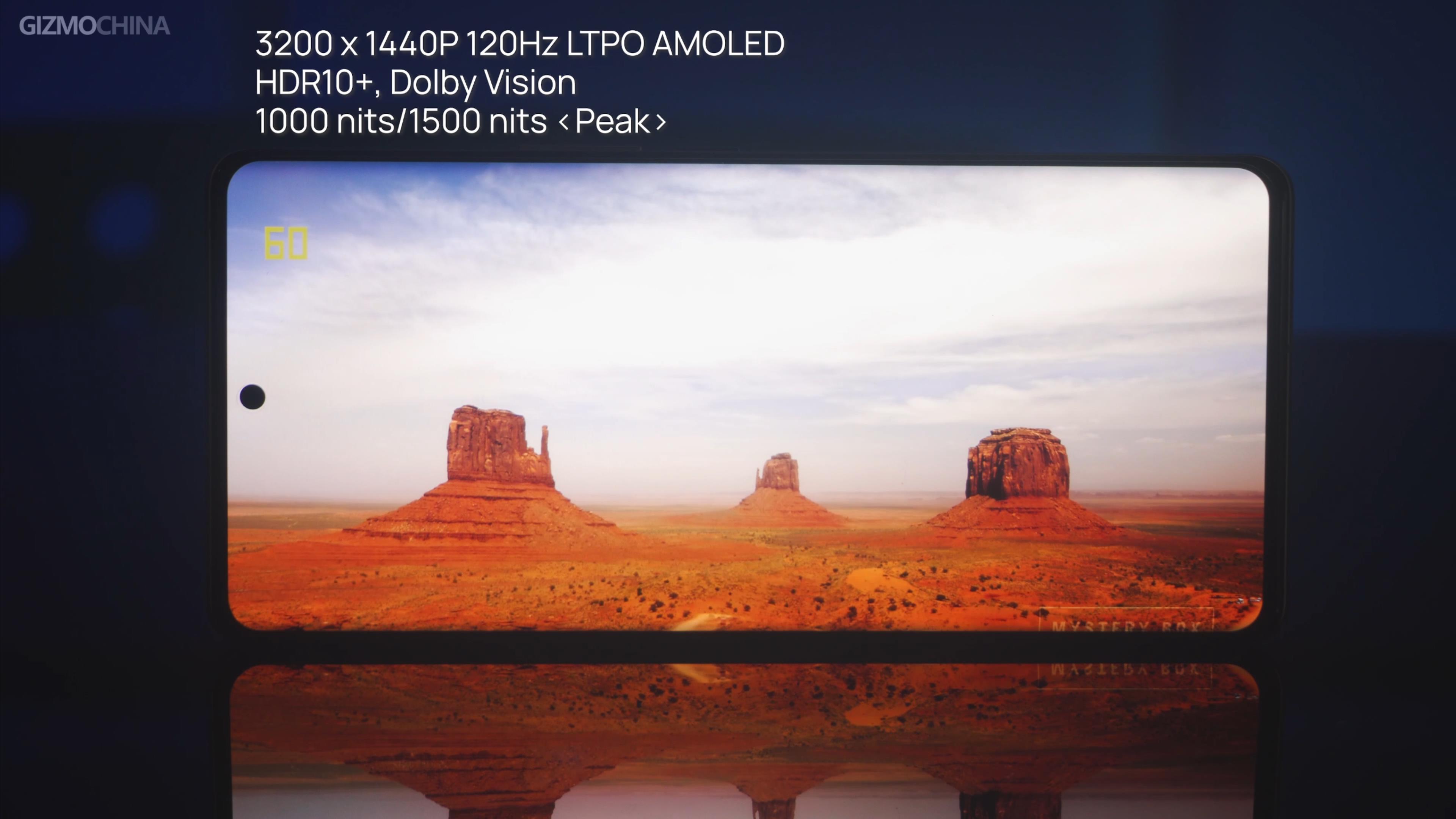
The phone weighs about 204g and is 8.8mm thick, which is a bit bulky like the OnePlus 10 Pro. The front face is covering a 6.78-inch 1440p Samsung E5 display, featuring up to 120Hz refresh rate with adaptive support of LTPO. The iQoo 9 Pro features an Ultrasonic ID sensor, which offers fingertips a much larger recognizable area. It’s the best reader that I’ve ever experienced on a phone. Compared to those optical readers, adding a fingerprint becomes so quick that you only need to press the display once for a few seconds, and it allows you to have a larger unlocking area.
The display is definitely one of the best panels for a phone in 2022. The new level-less adaptive refresh rate feels good as I barely feel the change in smoothness when activating this feature. And the 1440P E5 panel doesn’t let you down over color presentation and fineness.
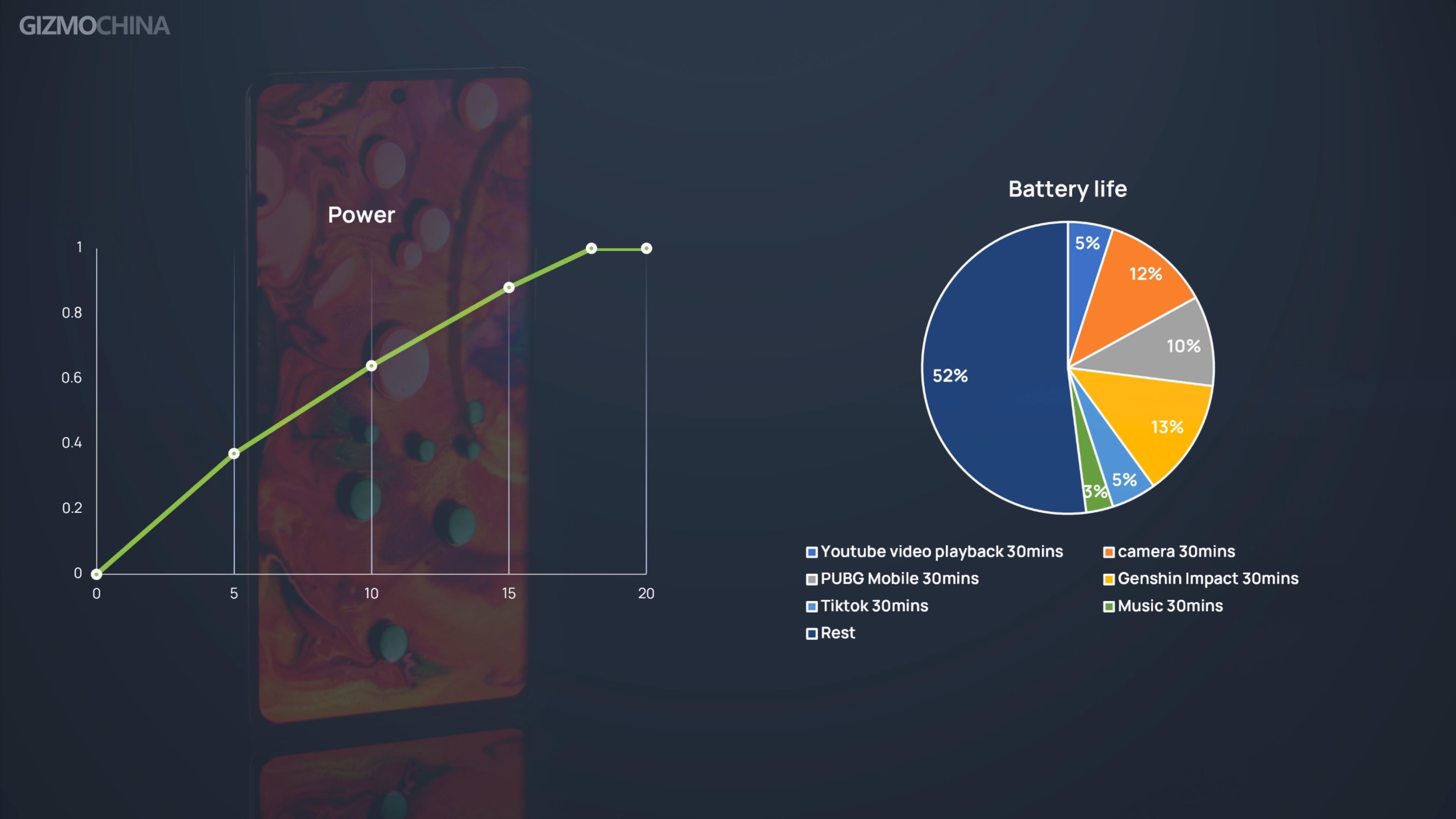
iQoo claims that the new technology would bring a longer battery life. However, by far the phone didn’t really offer good battery performance. And it seems that the updated software drains the power a bit too quickly.
iQOO 9 Pro Review: OceanOS is unique
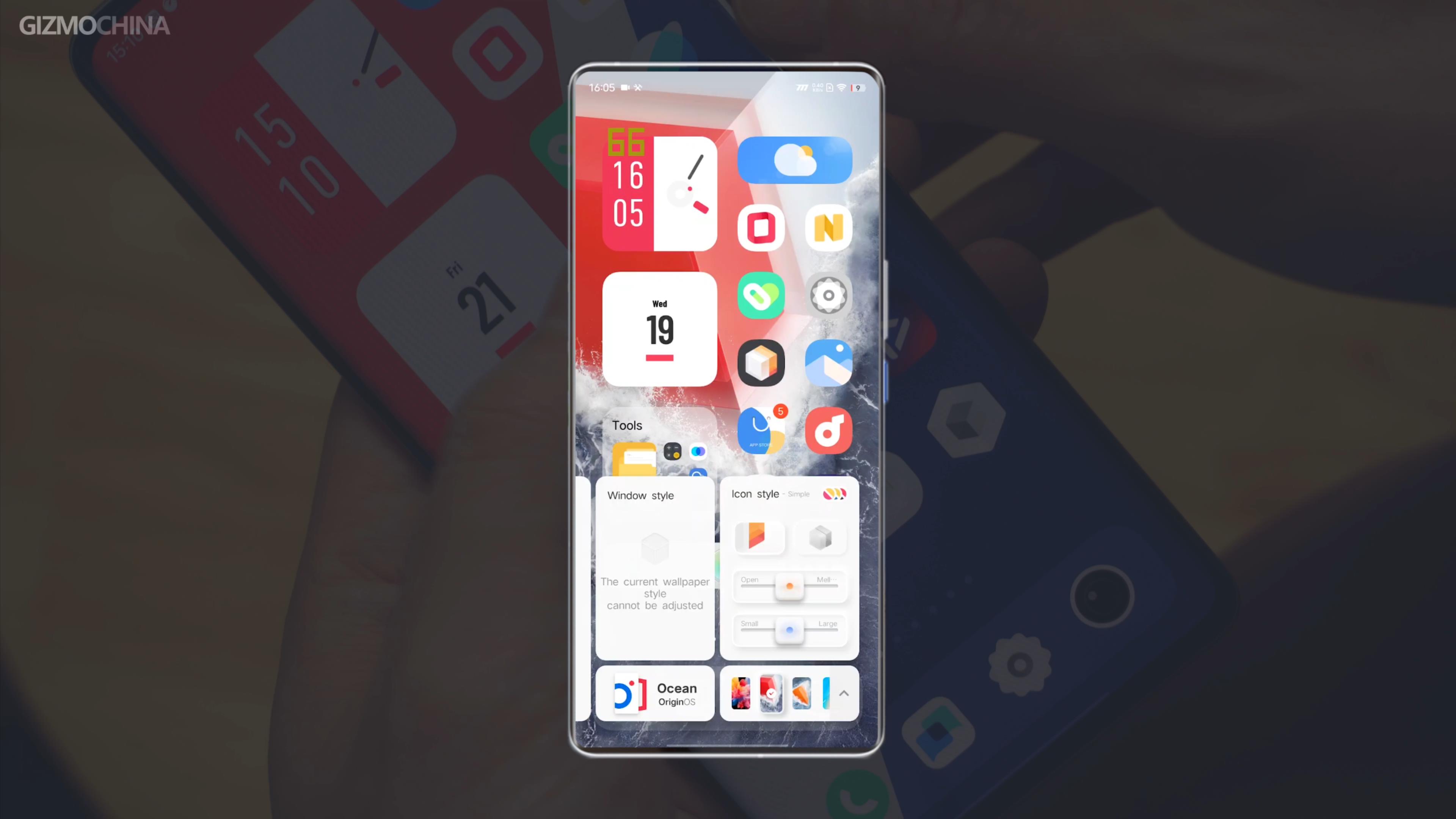
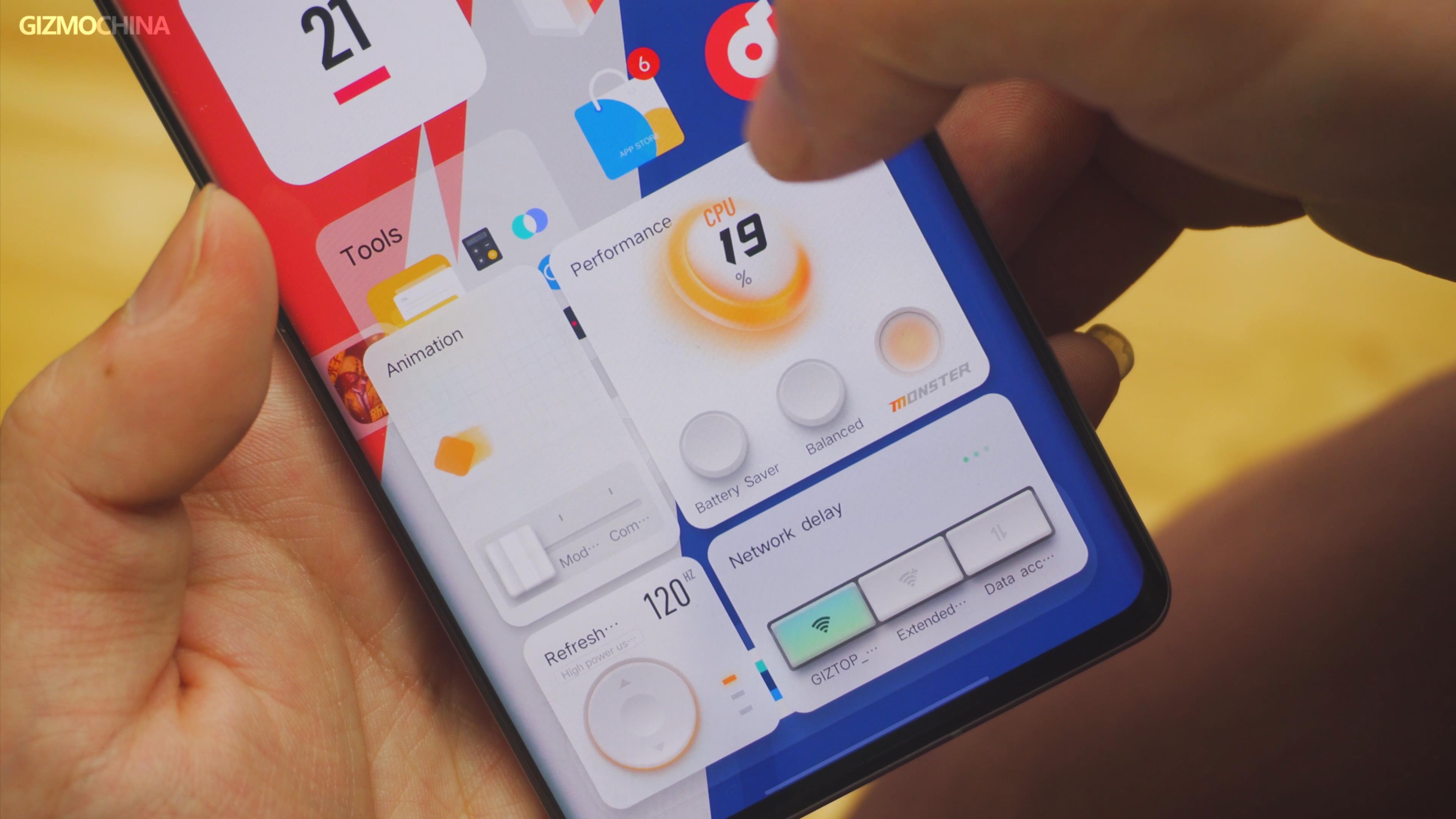
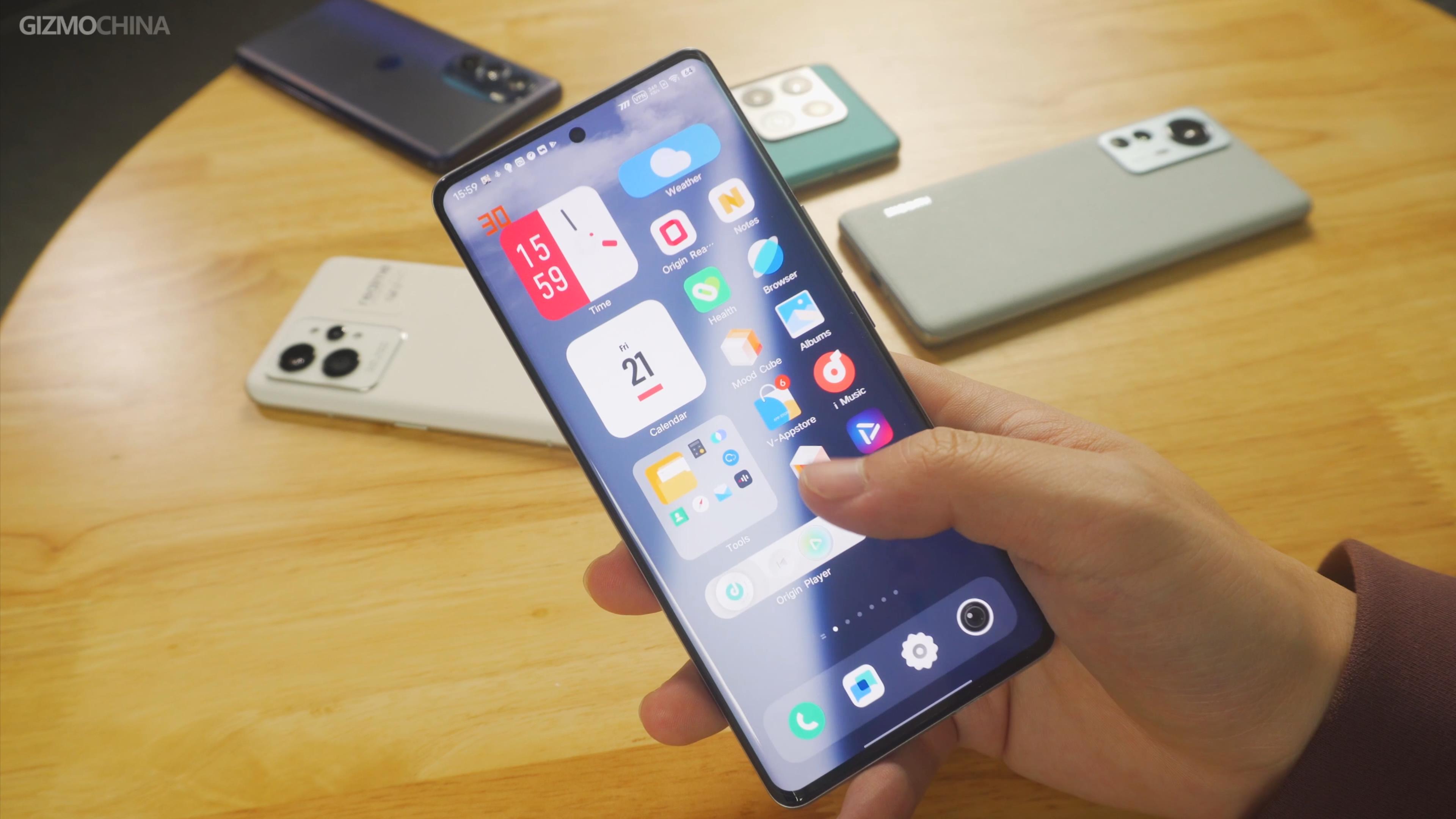
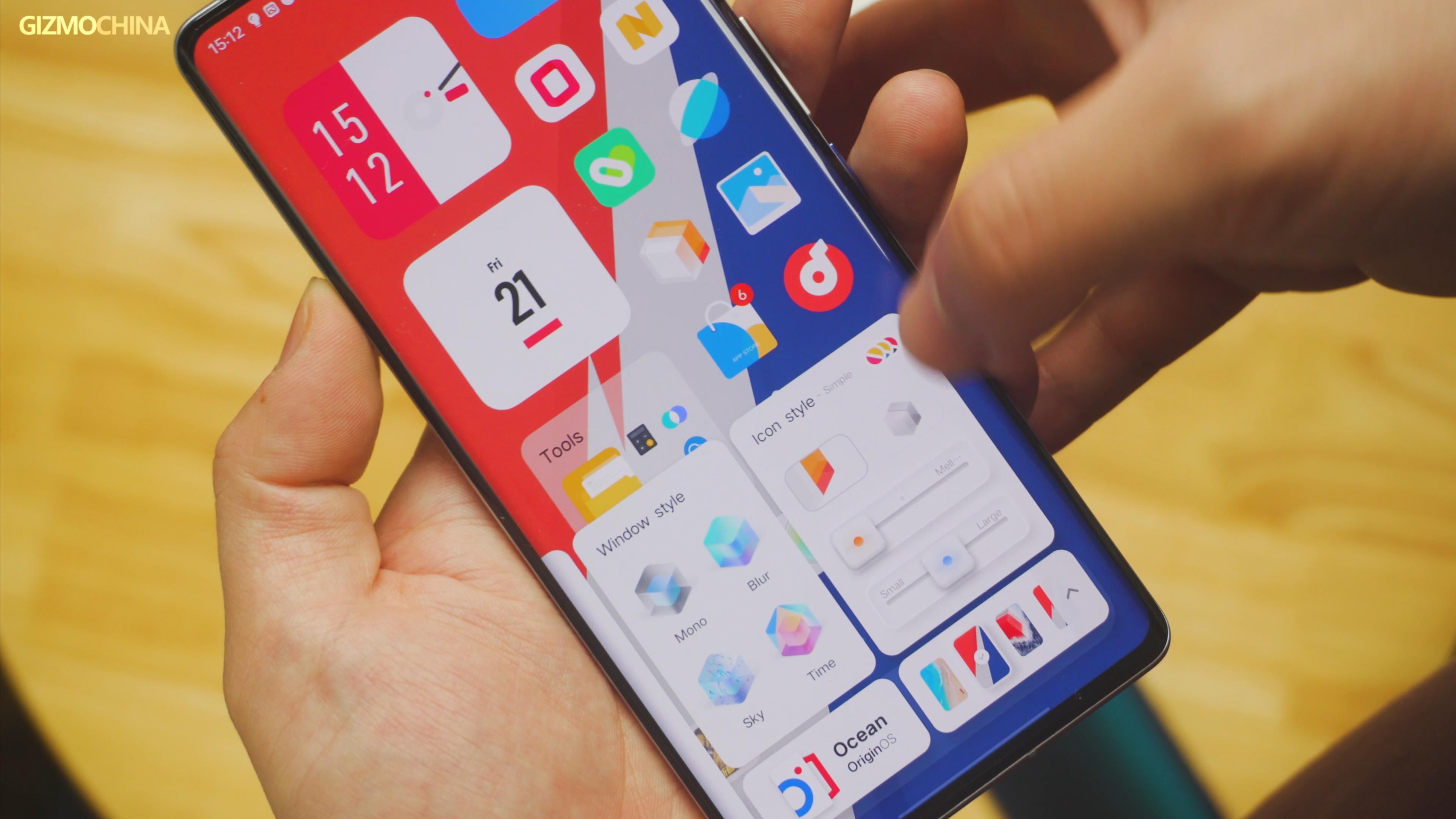
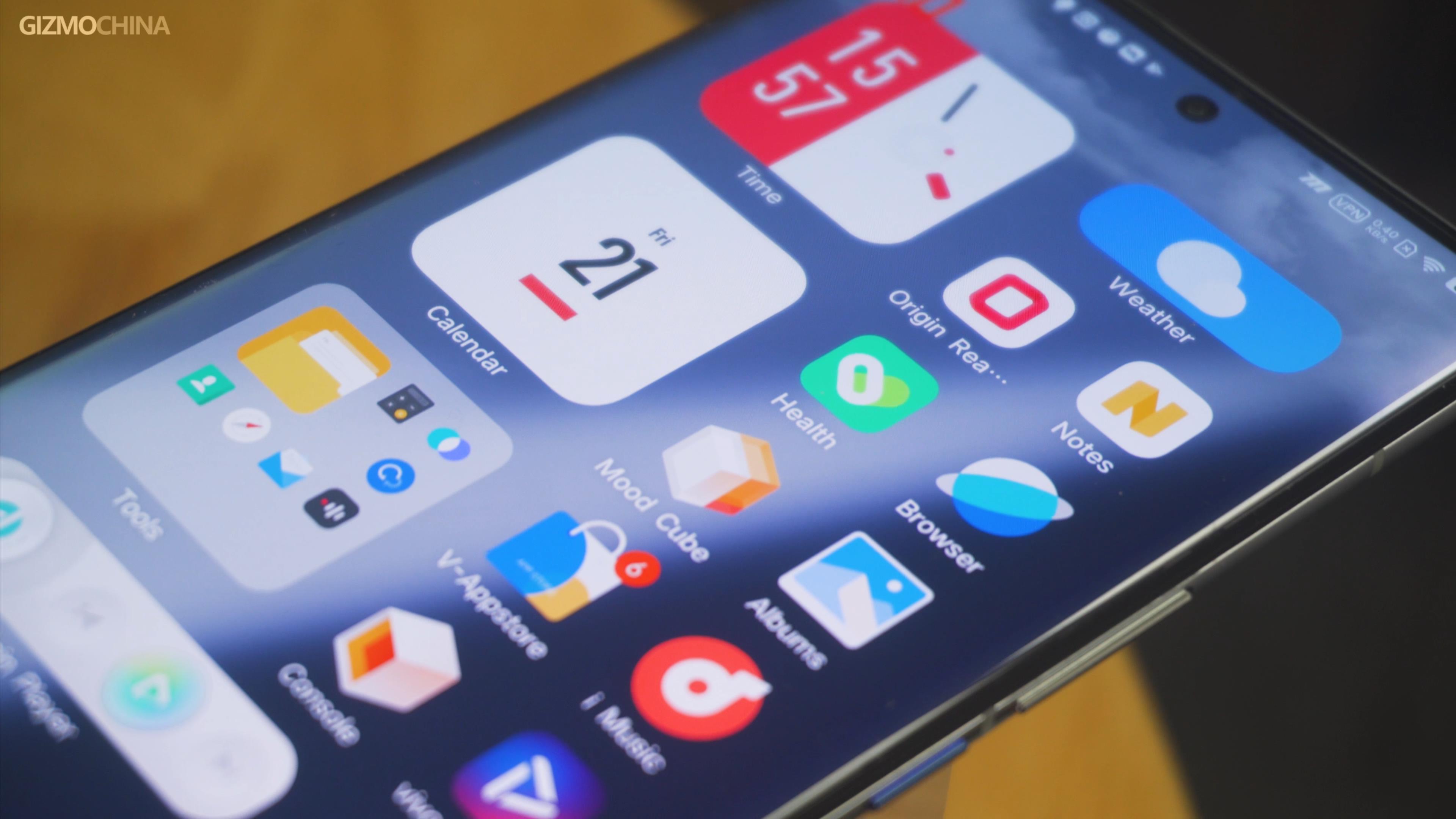
However, I still wanna talk more about the Origin OS Ocean, which is probably the most special mobile OS based on the Android platform. The Origin OS Ocean looks so different from the others with the brand-new UI design. It has a bold and avant-garde graphic style applying bright colors and fine interactive details. Users can customize their lock and home screen in detail, including adjusting dynamic effects, icon style, and wide options of built-in kits for the home screen. But to be honest, it’s hard to say whether these fancy features improve efficiency in use since it can get complicated for fresh users, and especially, this customized OS is mainly optimized for Chinese users right now. There are still some minor issues with the system language that are not perfectly adapted.
1 of 4
But the good news is that the OS for China version has wide support for system languages beyond Chinese and English.
Another strange point of the new system is that I cannot find updated options for most built-in apps in the official app store. I have to enter each app’s setting to check whether there’s an updated version available.
Anyway, apart from the features shared by Android 12, the overall design of the new OS is fresh and innovative, which makes me still excited to see how it will perform when coming on a global model.
iQOO 9 Pro Review: Performance & Gaming
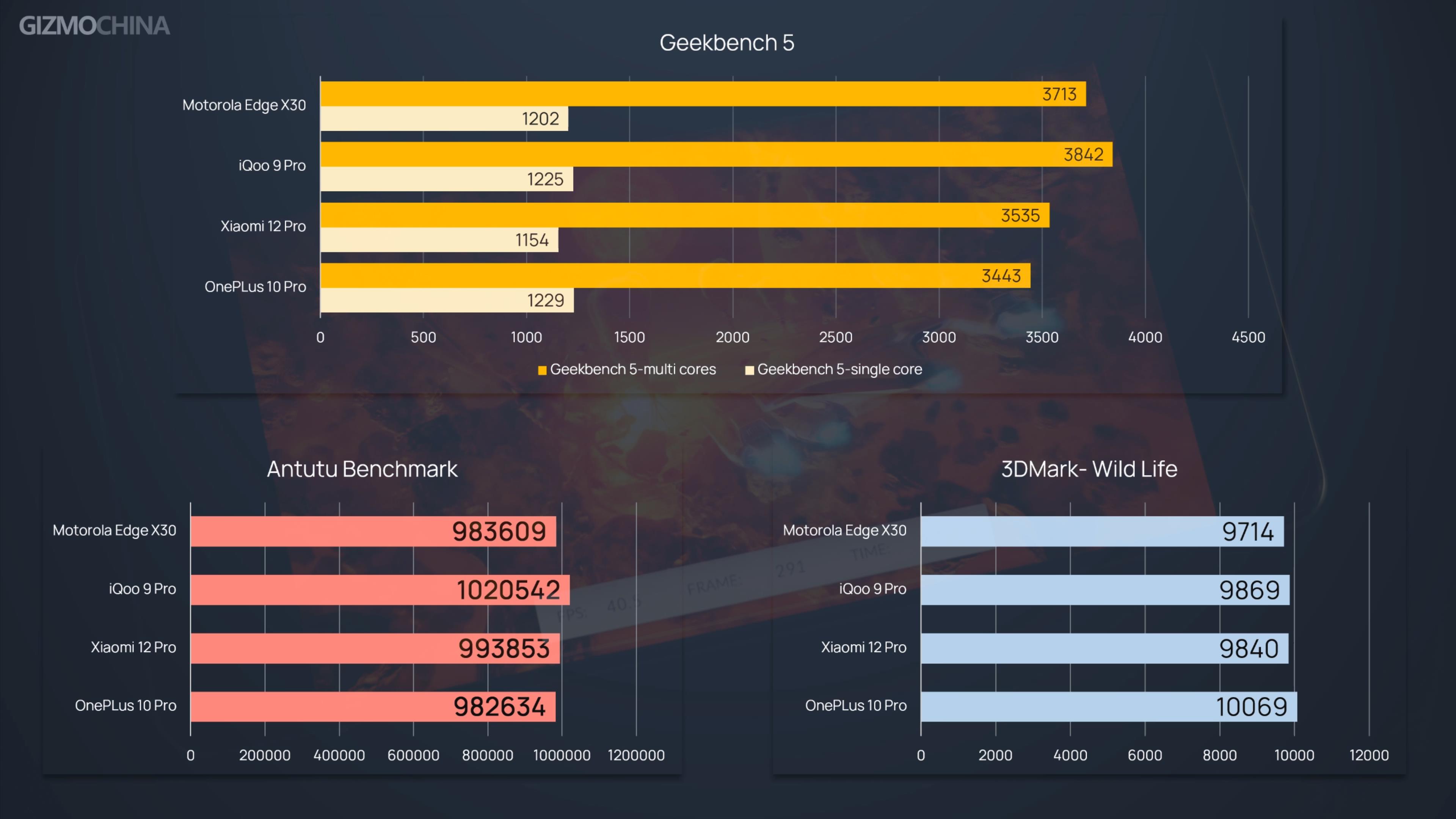
Now let’s check its performance with the new 8Gen 1 chip. Well, its results in benchmarks look great. It achieved over 1200 for single-core, 3800 for multi-core in Geekbench 5’s CPU test. In the Antutu Benchmark, the overall result ran up to 1020000, which is also the best score that we got from an Android phone.
In 3DMark, it achieved in the 9700s range in the wildlife graphic test, which is also close to the best result we tested at 20℃. Then to access its performance under heavy load, we ran the stress test in 3DMark, it also achieved the best stability that we’ve tested with 8Gen1. Considering that some 888 and 8Gen1 models couldn’t even finish the test due to heating issue, the 55℃ for front face and 49 for rear cover is still reasonable for a 8Gen1 model. And it’s also likely to be the highest temperature that we can access on the phone. Even in our gaming test, we never recorded such a high temperature on the phone. This likely means that the benchmark should be in the phone’s performance whitelist.
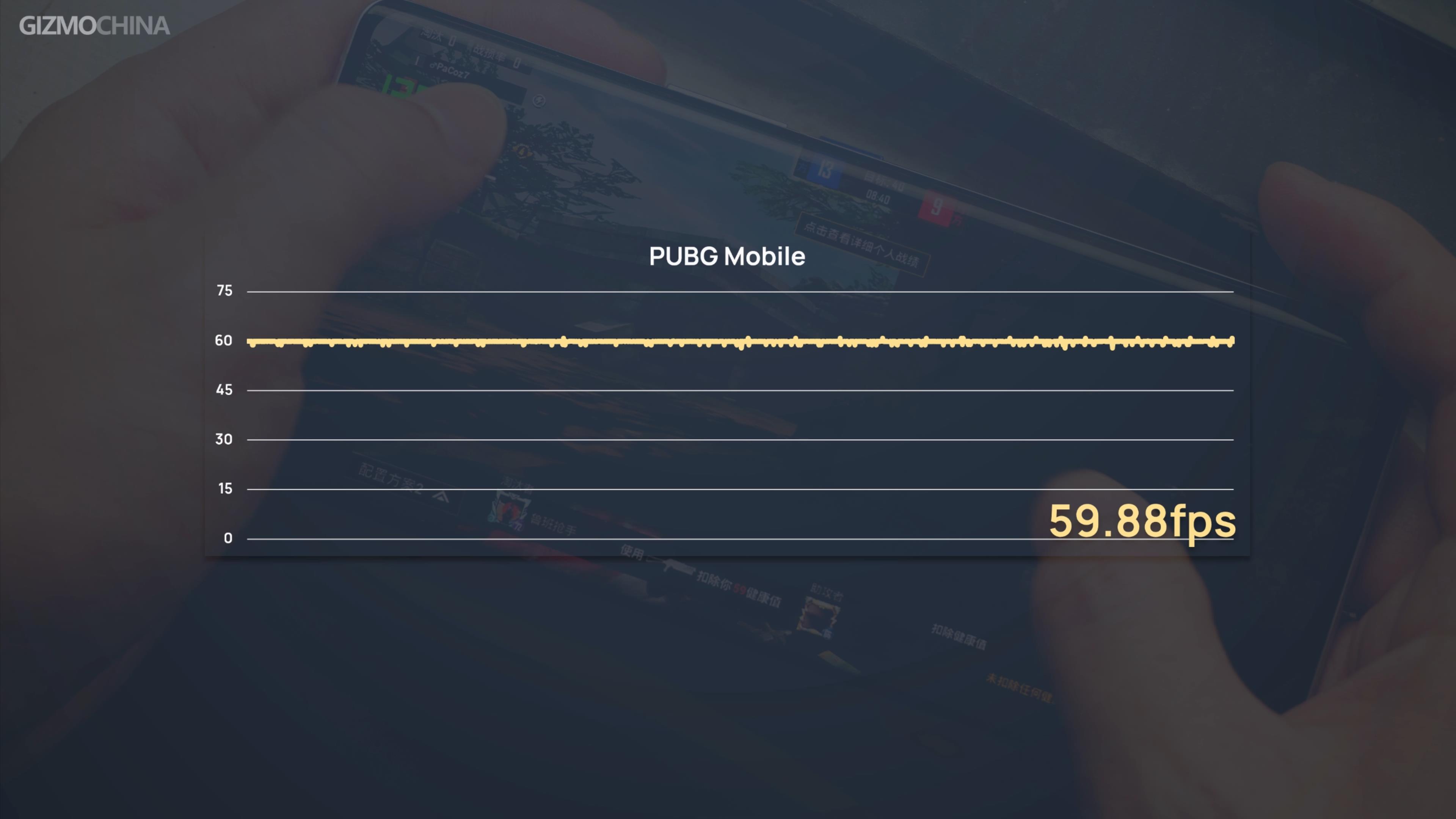
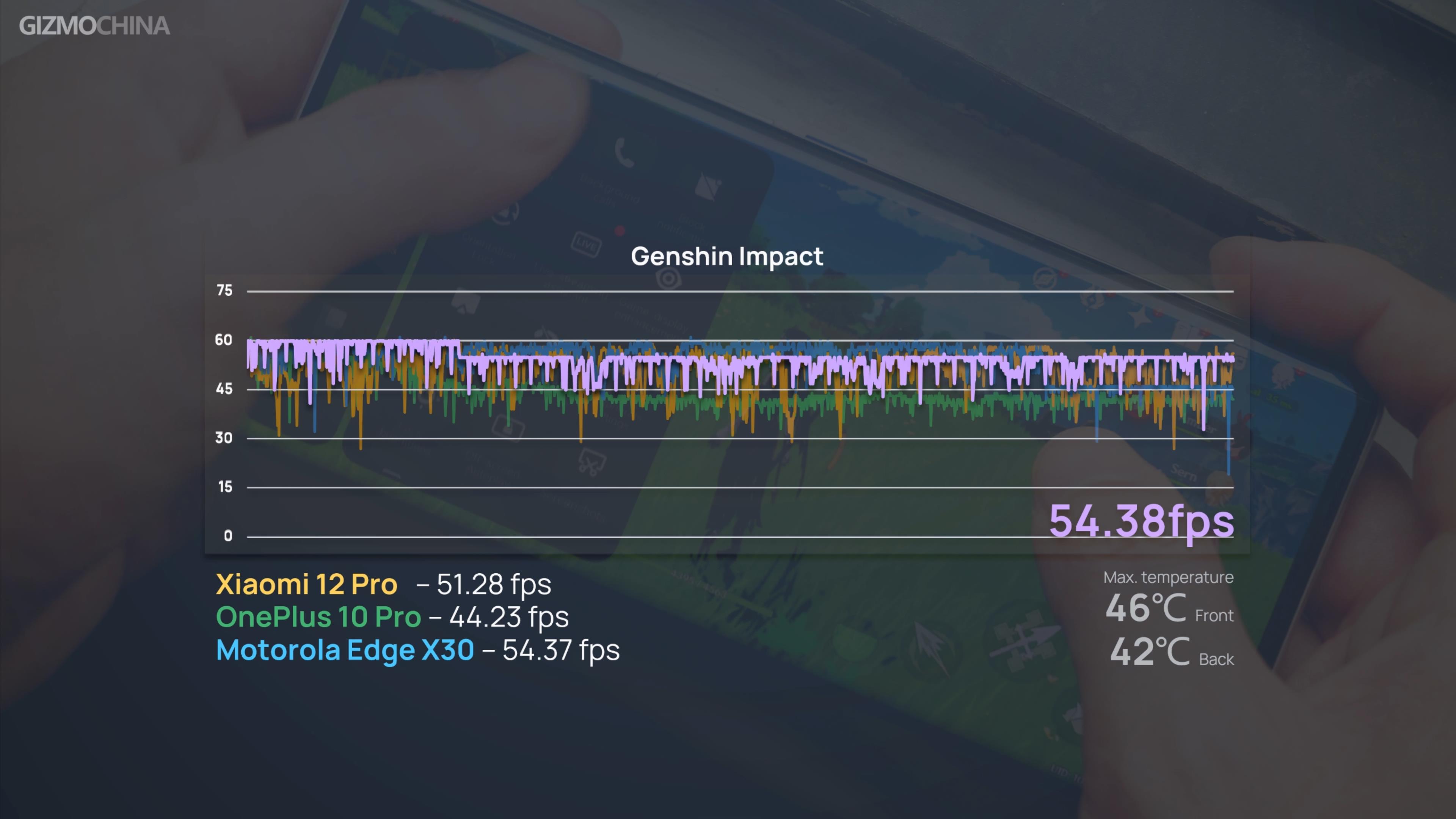
In PUBG Mobile, the iQoo 9 Pro’s framerate could stay extremely stable at 60fps. While for 30-min gaming in Genshin Impact, the average framerate of 54.4 is also the best result that we got on all 8Gen1 models, though the phone got throttled down a bit after the first 5 minutes. Good news is that the phone shows pretty good cooling effect and suppresses the max temperature to below 46 and 42℃ at the front and back ,respectively.
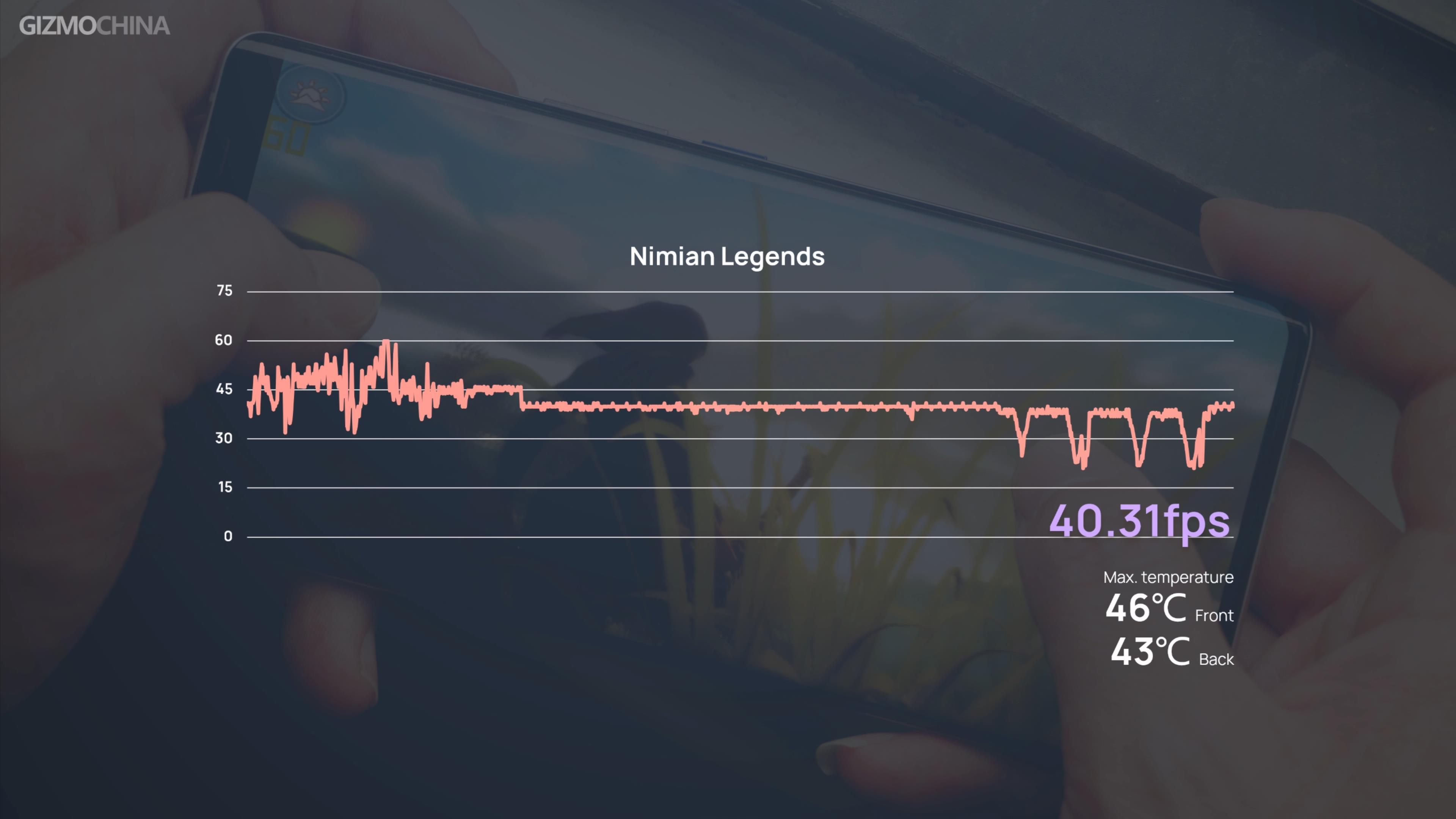
Then we ran another game, Nimian Legends, under its highest graphics at 2K resolution, which probably is the heaviest game that we can play on mobile phone. After the first 5 minutes, the performance got throttled down more and the framerate remained at 40.3 fps, which is not so impressive compared to what we tested in Genshin Impact. But the result is almost the same as what we tested on OnePlus 10 Pro and Xiaomi 12 Pro.
And the thermal performance is still good with a max temperature at below 46℃.
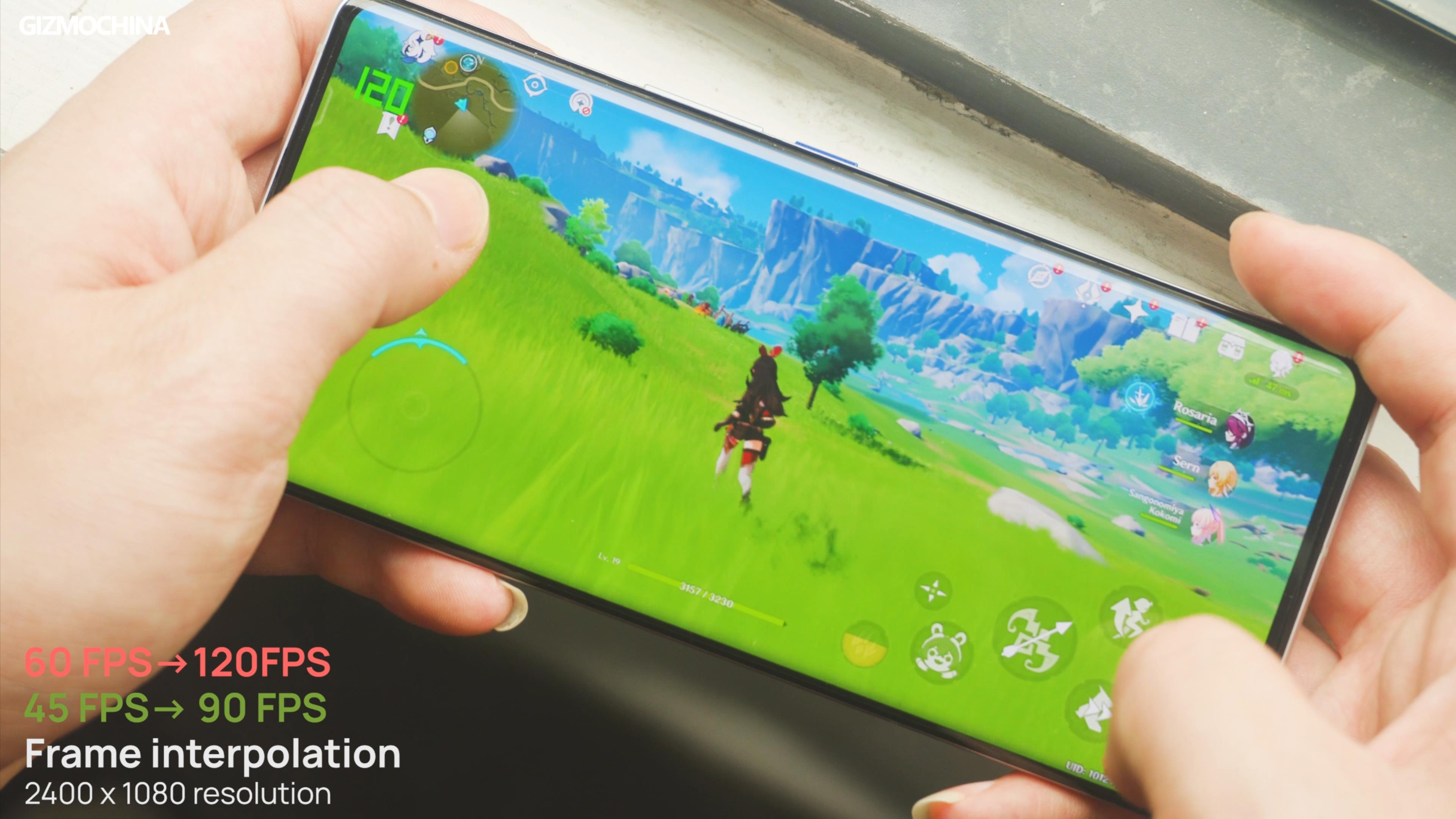
By far iQoo is the only brand that uses an independent display chip to bring a smoother game experience with high framerate and low power consumption. In supported games, it can access up to 120fps or 90fps framerate through frame interpolation, ignoring in-game framerate limits.
It sounds great, right?
Well, unfortunately, I’m sorry to tell you that it doesn’t work outside of China at this point. Because by far it only supports 16 games, and all of them are China versions. Although we saw the Genshin Impact in the supported list, there’s still no trigger to activate the frame rate interpolation in the international version of Genshin Impact that we downloaded from the Google Play store. It’s disappointing though, we still want to show you how it works in supported games. For example, In the Chinese version of Genshin Impact, before entering the game, you have to switch the display resolution to the 1080P option since it doesn’t support 1440P display resolution.
There’re two modes in frame interpolation. Either access the 120fps gaming experience with the Framerate-Boost option on, or play the game at 90fps with the Optimize-power-consumption mode. With support of the display chip, it only requires GPU to render 60fps to have the 120fps gaming, and render 45fps to have the 90fps gaming. At the same time, the interpolation modes would slightly increase operational delay. Anyway, I really enjoy playing Genshin Impact at such high framerate, but all we can do is wait for the brand open the feature to more games and especially the global market.
Hey iQoo, you have to do something, alright?
iQOO 9 Pro Review: Cameras
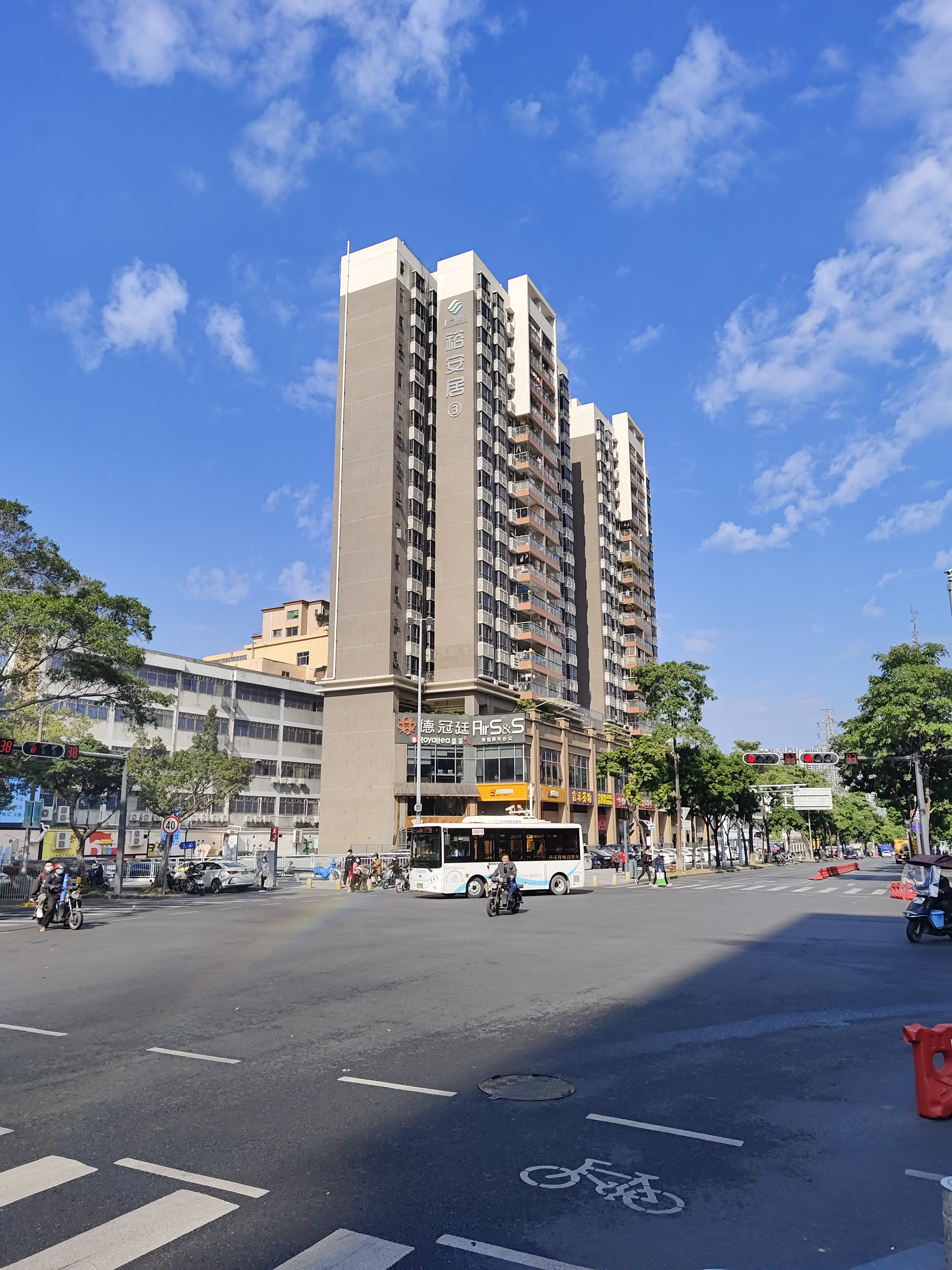
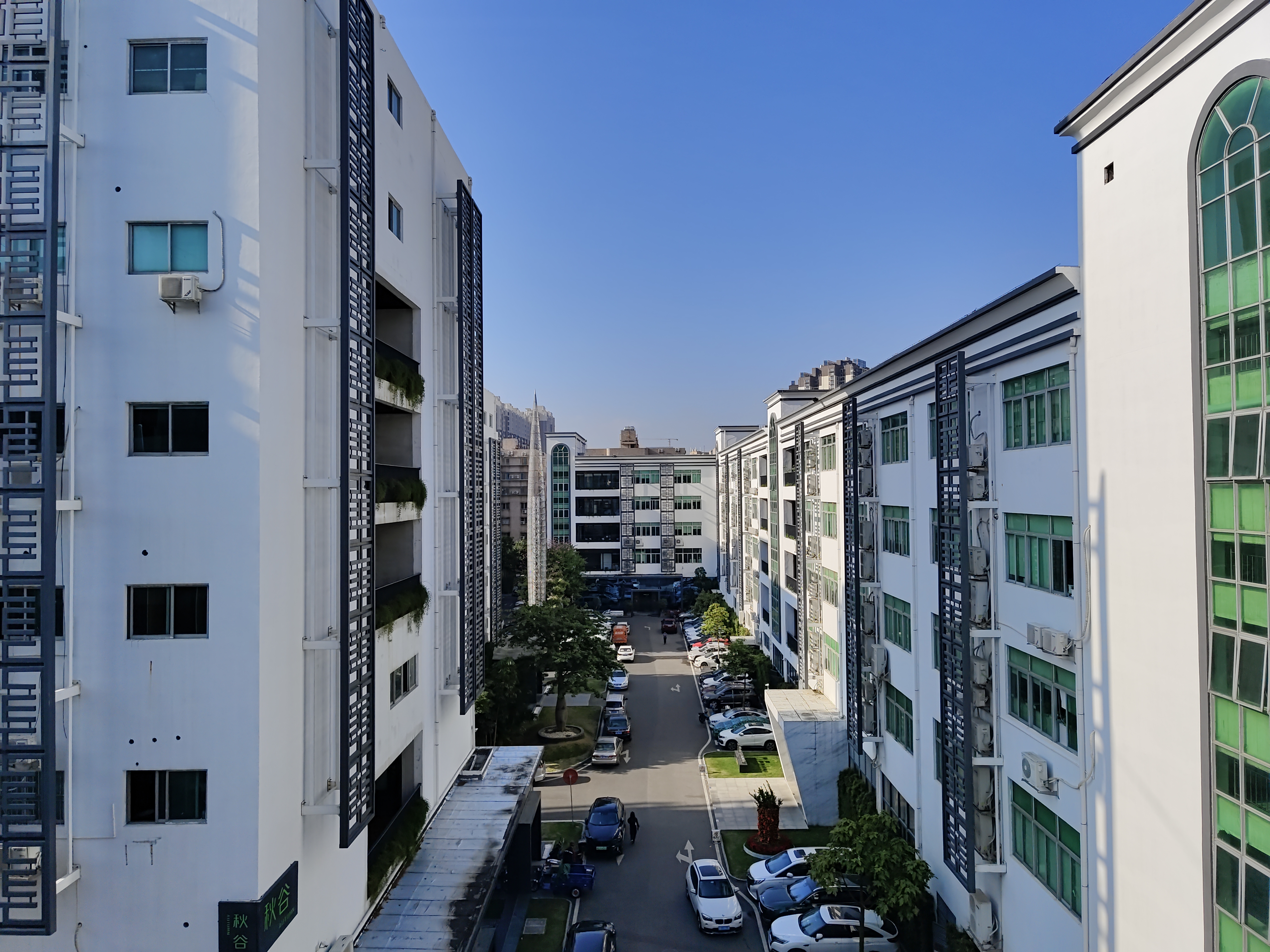
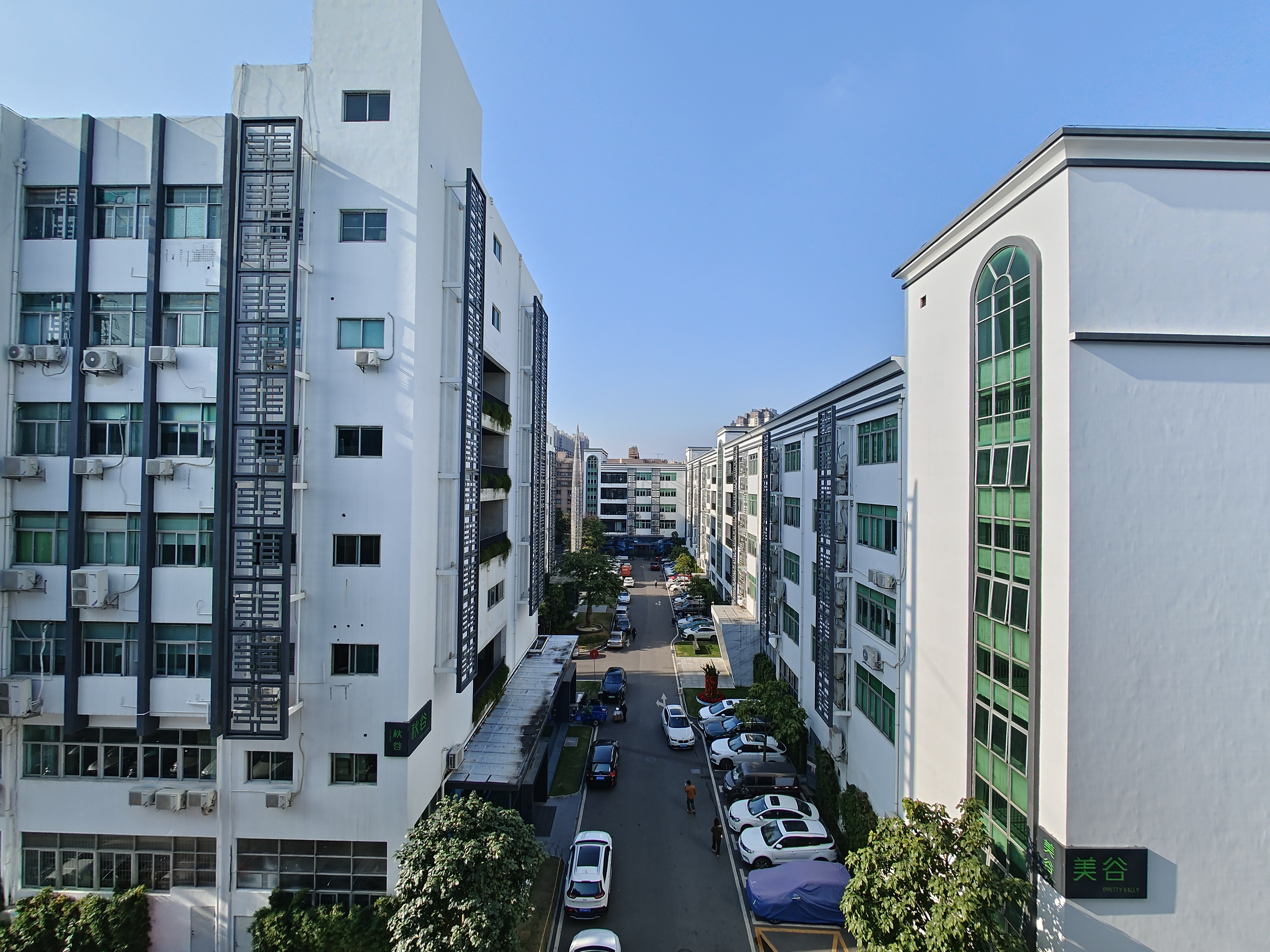
Like most flagships coming this year, the iQoo 9 Pro also features a triple camera setup including a 50MP primary lens with Vivo’s Gimbal stabilization, a 2.5x 16MP telephoto lens and another 50MP 150° ultra-wide-angle lens supporting fisheye mode. We’ve seen the same wide-angle lens on the Realme GT 2 Pro and the OnePlus 10 Pro. However, it’s not so impressive.
Okay let’s look at some camera samples. Under good lighting conditions, the samples shot on the three cams look good with bright colors and natural aperture. But when meeting high-contrast scenes, the imaging is not so stable and sometimes the fringing issue shared by all the three lenses could be annoying when you check the pictures on a bigger display. The wide-angle lens supports fisheye mode though we couldn’t get good distortion correction at 0.6x shooting. And there’s a bug on the 2.5x telephoto camera. We couldn’t get a true portrait-mode photo with it.
1 of 9
When it comes to night scene, the samples shot on the three cameras look a bit dull and lack detail. Especially for the wide-angle lens, the night samples even couldn’t capture red colors correctly. And when it comes to extremely low-light condition, the 2.5x telephoto camera wasn’t even activated. Instead, all the zoom pictures were shot on the main lens.
1 of 15
iQOO 9 Pro Ultra Wide (7)
The most impressive feature of the phone’s cameras is the Gimbal stabilization technology. It still offers the best stability for mobile phones similar to what we saw on the Vivo X60 and X70 series.
Anyway, I think iQoo still need to do a lot more work on fixing their camera software. I believe the phone can do much better than what we have here.
iQOO 9 Pro Review: Battery Life & Charging
The phone could be fully charged within 20mins with the included 120W charger, and it also supports 50W wireless charging with 10W reverse wireless charging. While its battery life is not as impressive as the charging solution, the latest software probably is the reason behind this.
iQOO 9 Pro Review: Verdict
So that’s all we want to share about the iQoo 9 Pro. Actually at the beginning we’re pretty excited to review the phone. The phone’s gaming performance really stood out from the 8Gen1 crowd. However, by far the software doesn’t really offer delightful experience for daily use and photography.
So among the five 8Gen1 flagships, which one has convinced you? Or are you not impressed by anyone?
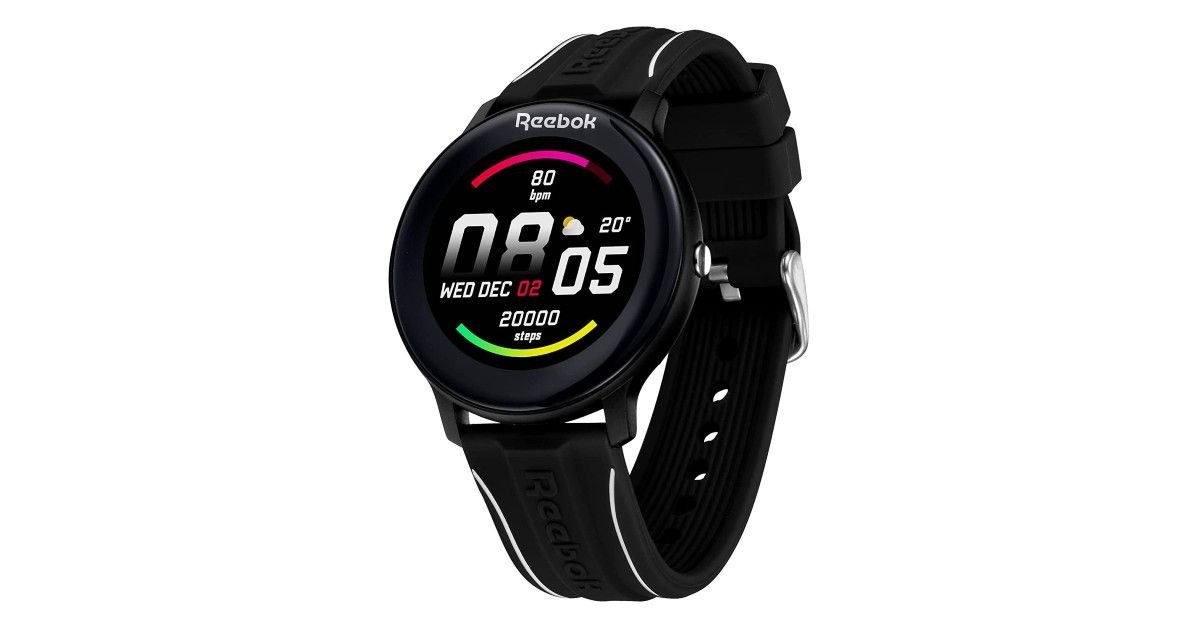
Reebok, the Adidas-owned company which makes sporting products, has launched its first smartwatch in the Indian market, dubbed as Reebok ActiveFit 1.0. The device has launched through Amazon and it’s likely to be available exclusively through the online marketplace.
It is priced at ₹4,499 (~$60) with the introductory offer and is now available for purchase in India. The pricing will increase after 28th January. The device is offered in four different color options — Black, Blue, Navy, and Red.
The Reebok ActiveFit 1.0 smartwatch features a 1.3-inch HD display housed inside a round dial and is rated IP67, making it water splash and dust-resistant. It comes with several features, including call and message notifications, social media apps prompt, controls for camera and music, as well as some built-in games.
It also comes with a blood oxygen monitor, a heart rate sensor with 24/7 heart rate monitoring, blood pressure monitoring, sleep monitoring, and sedentary reminders. There are 15 fitness tracking modes for sports and other fitness-related activities.
The smartwatch also includes menstrual cycle tracking and meditative breathing. Other fitness feature includes calorie and step trackers. It also comes with a weather application, pricing access to weather forecasts.
As for the battery life, the wearable product is promised to offer up to 15 days of battery on a single charge and has a standby time of up to 30 days. Given the price point of the Reebok ActiveFit 1.0 smartwatch, it will compete with offerings from the likes of Xiaomi, Amazfit, Realme, Noise, among others.
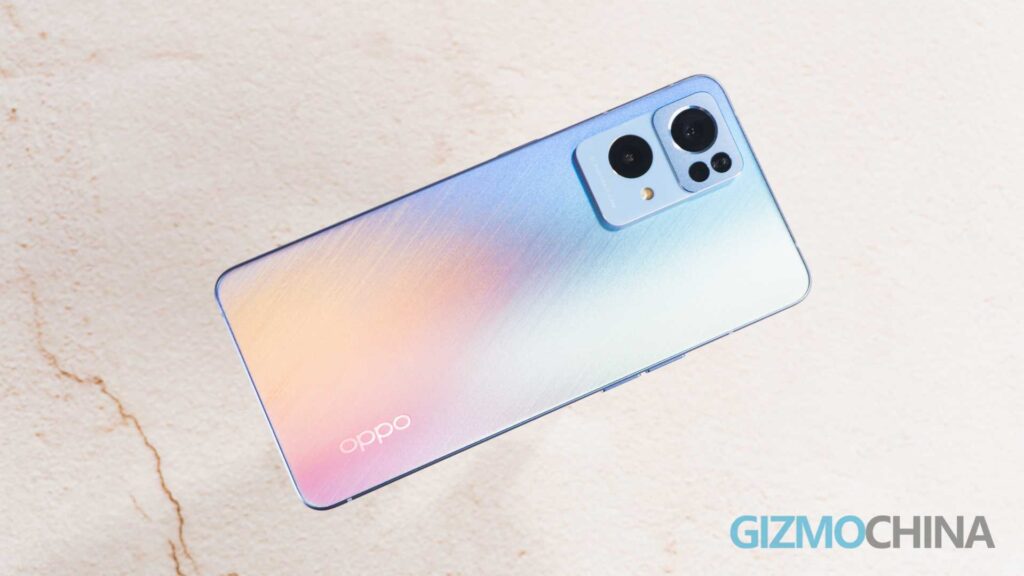
OPPO has been teasing the launch of the OPPO Reno7 series in India for the last few days. With the start of a new week, the company has now officially revealed when the next generation of Reno smartphones will debut in India. It is indeed coming in the first week of February as revealed by a tipster.
OPPO Reno7 Pro
The OPPO Reno7 series has been confirmed to launch in India on February 4. Just like the previous gen, this one will also be sold via Flipkart, OPPO online store, and offline stores across the country.
Though the brand is yet to confirm the devices that are coming to the region, it is being said all three models will be introduced. However, we may only see the announcement of the OPPO Reno7 and OPPO Reno7 Pro next week. The OPPO Reno7 SE might arrive later.
The OPPO Reno7 series brings a new design to the lineup. But the specs are somewhat the same, except for the cameras. The Pro model, for instance, sports a 50MP Sony IMX766 primary sensor and a customized 32MP Sony IMX709 selfie camera.
In our review of OPPO Reno6 Pro 5G, we found the performance of the camera system to be not so impressive. But the one on the OPPO Reno7 Pro 5G is actually better. You can learn more about the phone in our review.
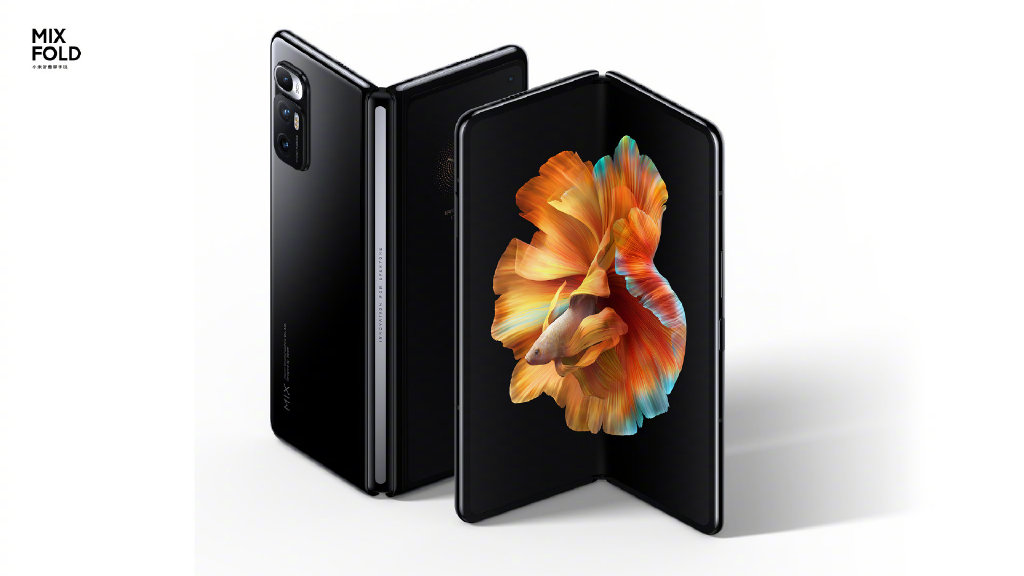
Xiaomi entered the foldable smartphone market with the launch of its MIX Fold last year and now the company is gearing up to launch its successor, which is likely to be named Xiaomi MIX Fold 2.
Now, a new report from leakster Digital Chat Station reveals some key details about the upcoming foldable smartphone, including the chipset powering the device and details about the phone’s display.
XIaomi Mi MIX Fold
It has been leaked that the MIX Fold 2 smartphone will feature an 8-inch LTPO display offering a screen resolution of 2.5K. The screen size of the device almost makes it a tablet as the Apple iPad Mini features an 8.3-inch display.
Apart from the screen details, it has also been revealed that the device will come powered by the latest Qualcomm Snapdragon 8 Gen 1 chipset which will power most of the premium phones getting launched this year.
It’s noteworthy that the report doesn’t explicitly mention the device to be the MIX Fold 2 but given the screen size, no smartphone other than the MIX Fold series from the company fits the description.
There are a few other devices from Xiaomi which are scheduled to go official in the coming weeks or months. In February, the company will be taking the wraps off the Redmi K50 series, which includes the Redmi K50, K50 Pro, K50 Pro Plus, and the K50 Gaming Edition.
The company is also working on two other devices codenamed “thor” and “loki” which are expected to feature high-end camera configuration. There are also reports about some other mid-range products, including the Redmi Note 12 series. Apart from the MIX Fold 2, Xiaomi could also launch another foldable smartphone named MIX Flip to take on the likes of the Samsung Galaxy Z Flip series.
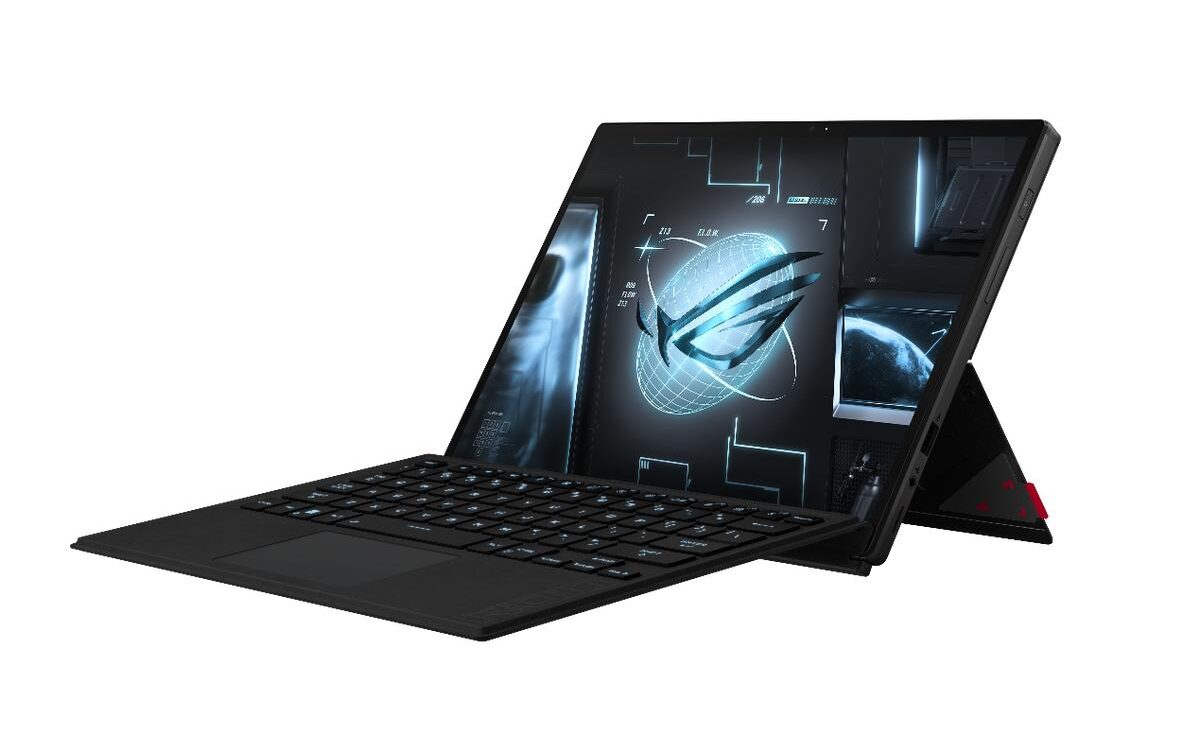
ASUS ROG Magic X, the company’s latest 2-in-1 thin and lightweight notebook, which is probably the most powerful in this segment, is now finally available for pre-order in the Chinese market, for the price of 13,499 yuan which is about $2,132.
The device offers different kinds of usage, thanks to the 2-in-1 form factor. When the keyboard is attached to the device, it can be used as a traditional laptop while removing the keyboard attachment converts the device into a tablet. The product weighs 1.2 kilograms and measures 12mm in thickness.
The ROG Magic X offers two options for the 13-inch display — 4K with a 60Hz refresh rate or Full HD with a 120Hz refresh rate. Both these options come with touchscreen support as well as Corning Gorilla Glass for protection. The screen comes with an aspect ratio of 16:10 and supports Adaptive-Sync technology, Dolby Vision HDR, 500nits brightness, and has passed Pantone Color Certification.
Under the hood, the device is powered by the 12th generation Intel Core i9-12900H processor. It is support for XG Mobile Docking Station that comes equipped with NVIDIA GeForce RTX 3080 GPU for heavy tasks for professionals or gamers. It packs LPDDR5 5200mHz RAM and up to 1TB PCIe SSD storage.
As for the interface, there’s a USB Type-A port, a USB 3.2 Type-C port with support for DP1.4 and PD Charging. There’s also a Thunderbolt 4 port as well as a micro card reader on the back and Windows Hello integration in the power button for fingerprint recognition.
Apple is expected to launch the next-generation iPad Pro this fall and if the latest reports are to be believed, then the premium tablet will come powered by the company’s yet-to-be-announced Apple M2 chipset.
The report coming from @Dylandktalso claims that the upcoming iPad Pro, coming with 11-inch and 12.9-inch display versions, will be among the range of devices that Apple plans to launch later this fall.
Leaked Renders of iPad Pro 2022
It is also being claimed that the new iPad Pro may not feature the MagSafe Charging feature which was being rumored earlier. Further, it is said that the 11-inch model may have a Mini-LED backlit display which the company has used in the 12.9-inch model.
It’s entirely possible that the Apple iPad Pro may come powered by the M2 chipset given that the current-generation model is powered by the Apple M1 chipset. While not much is known about this upcoming Apple Silicon chip, it is rumored to be manufactured using a 3nm process by TSMC.
Also, the iPad Pro isn’t the only product that is expected to come powered by an M2 processor later this fall. There are reports claiming that the technology giant will be upgrading the 14-inch MacBook Pro could get an M2 chipset model in the second half of this year, as well as a new MacBook Air in the coming months.
The report also adds that the highly-anticipated Apple AirPods Pro 2 true wireless earphones are on track to get launched in the fall. We expect to get more details about the products in the coming weeks or months.
After months of rumors and leaks, South Korean giant Samsung has finally announced that the upcoming flagship smartphones from the brand, the Galaxy S22 lineup, will be officially announced at the Galaxy Unpacked event on 9th February.
Just weeks ahead of the official launch, the pricing for the Samsung Galaxy S22 series in the European market has leaked online.
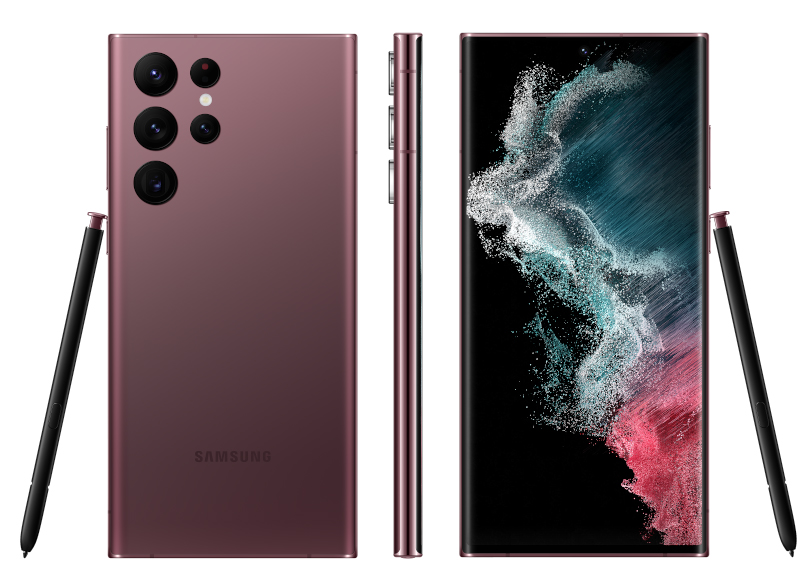
Samsung Galaxy S22 Ultra Render Leak via Evan Blass
The base model of Galaxy S22 with 8GB RAM and 128GB storage will be priced at €849 while the 8GB RAM and 256GB storage model will cost €899. The Galaxy S22 Plus with 8GB RAM and 128GB storage end up costing €1,049 while the model with 8GB RAM and 256GB storage will be priced at €1,099.
On the other hand, the Galaxy S22 Ultra with 8GB RAM and 128GB storage will cost €1,249 and the 12GB RAM with 256GB model will be priced at €1,349. The top-end model with 12GB RAM and 512GB storage will cost €1,449.
It’s noteworthy that the leak doesn’t align with the previous leak that suggested that the base model of the Samsung Galaxy S22 Ultra will have 12GB RAM and the top-end model will pack 16GB of RAM. There have also been reports about Samsung bringing back a 1TB storage model, which has also not surfaced in this new price leak.
It will be interesting to see how Samsung prices the upcoming Galaxy S22 series smartphones given that it is facing a lot of competition with Apple having iPhone 13 Mini starting at $699 and the Google’s Pixel 6 at $599.
Although the Galaxy S22 lineup is expected to come with some major upgrades, including a revamped design, better specifications, improved camera sensors, and more, the pricing will play a crucial role for it to become one of the top-selling products for the year.
Indian electric vehicle startup Nexzu Mobility has announced its commuter version of its e-bike called the Bazinga in India and it will be priced at Rs. 49,445 (~$665). The Bazinga is a commuter electric bicycle with a range of 100km and an ergonomically decent design. Nexzu Mobility also announced the cargo version of the e-cycle which is priced slightly higher than the Bazinga at Rs. 51,525 (~$693) and the e-cycles will be released to the Indian market in February 2022, according to the company.
The Bazinga is a unisex bicycle with a single detachable Li-ion battery pack, a solid and sturdy design, as well as a new cargo carriage that can take loads up to 15kg. With the design of the Bazinga, the rider can seamlessly hop in or hop out, while the digitally designed decals provide an exciting feel and look for the e-cycle. Although Nexzu Mobility says the Bazinga has a range of 100km, it is unclear what is the top speed of the electric bicycle and what are the charging options available, although we know that the battery is detachable.
Pre-booking of the Bazinga can be done via Nexzu Mobility’s e-commerce website as well as its social medial platforms. From February 2022 when the e-bicycles are released, deliveries will commence. Although there are still some areas in the specs sheet where information is lacking, it is expected that we will get to know more about the Bazinga as its launch date draws closer. The coming weeks will however reflect the nature of the reception that the Bazinga will get from the market when the pre-order numbers are analyzed.
The EV world has been abuzz with the Volkswagen ID. Buzz electric minibus which is scheduled for launch on March 9, 2022. The latest official teaser from Volkswagen further illuminates the exciting ID. Buzz minibus, and primes it for a rapturous debut on March 9. Volkswagen has released an official video showing the new electric minibus driving out of an assembly plant in Hannover, Germany.
The ID. Buzz was developed and manufactured by Volkswagen’s commercial vehicle arm Volkswagen Nutzfahrzeuge and two camouflaged units of the electric minibus were shown in the video driving out of the Hannover assembly facility. It has been five years of progress and activity since Volkswagen unveiled its electric minibus plans in 2017. The company has been able to meet its 2022 target set for the ID. Buzz which the new face of its zero-emissions policy for its minibus lineup.
There had been several teasers relating to different aspects of the design and features of the ID. Buzz, and piecing these renders and videos together reflect a very impressive design and feature-laden electric minibus with great potential and implications in the industry. Volkswagen had also confirmed through its CEO the official launch of the ID. Buzz was scheduled for March 9, and the new video teaser further serves to increase the hype leading to the launch of the ID. Buzz. The official video shows the buses covered in rainbow zebra stripes and a tweet from Volkswagen also indicated that the ID. Buzz was on its way to Spain for its scheduled launch in March. It will be preceded by a covered drive for journalists in Barcelona this week.
More details about the ID. Buzz will come out after the covered drive event in Barcelona, but we await more official specs info for the ID. Buzz as we inch towards the March 9 official unveiling.
Samsung’s first highlight of the year is always its first Samsung Galaxy Unpacked event which happens during the period between January and March of each year. A few days ago, Samsung confirmed that it would hold the Galaxy Unpacked event in February 2022, though the company is yet to reveal the exact launch date. However, it seemed that some info slipped through the cracks as users found the exact official launch date online.
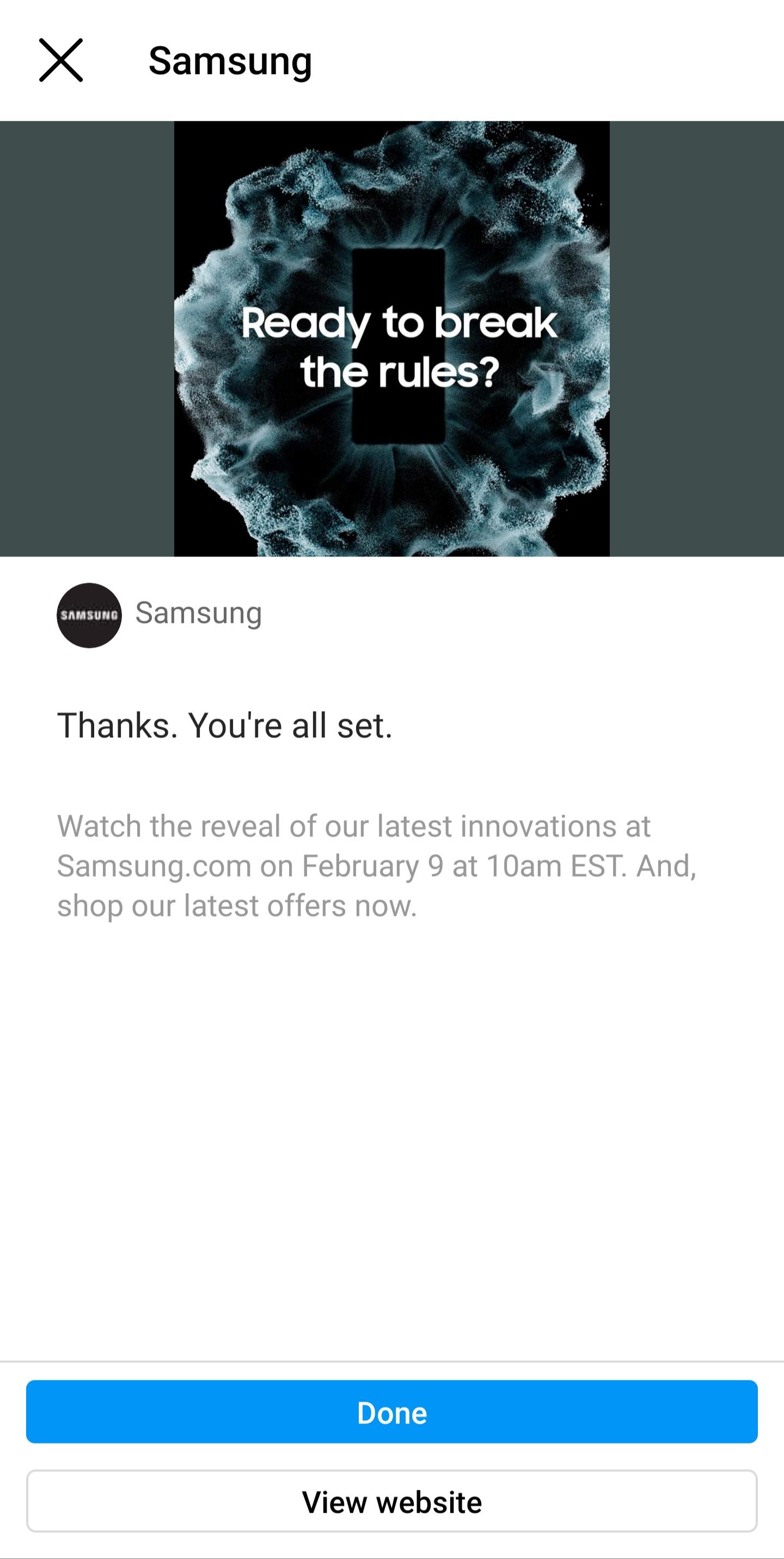
Samsung reveals that the event is happening on February 9 10 am EST via an Instagram ad.
Samsung Galaxy Unpacked February 2022 is officially happening on February 9, 2022(Wednesday) at 10 am EST(8:30 pm IST). The info comes from users online reporting that they were given a Samsung Galaxy Unpacked 2022 advertisement on Instagram that led them to the pre-order reservation sign up form. After completing the form, in a pop-up completion message, Samsung revealed that it will unveil its new range of innovative products on February 9 at 10 am EST via Samsung.com, which is where Samsung usually hosts the live stream for their annual Spring Unpacked event.
Samsung’s February 2022 Galaxy Unpacked event is set to announce its flagship smartphone lineup, the Samsung Galaxy S22 series and its flagship tablet lineup, the Galaxy Tab S8 series as well.
The Galaxy S22, Galaxy S22+, and Galaxy S22 Ultra as well as the upcoming Galaxy Tab S8 series are now officially open for preorder reservations. The company will be offering early-bird discounts and bonuses for those who chose to place a reservation right away. The company is promoting “exclusive offers” which are not known yet but there is the usual $50 credit.
The Galaxy S22 series is expected to come with the latest Qualcomm Snapdragon 8 Gen 1 chipset while some models will ship in a few regions with an Exynos 2200 chipset. The device will come with up to 12GB RAM and 512GB storage.
Furthermore, the flagship models will run on the latest Android 12 operating system with an overlay of Samsung’s custom One UI 4.0. The top variant – the Galaxy S22 Ultra will include a dedicated S Pen Stylus in the device and pack a 5,000mAh battery with support for 45W super-fast charging.
We use cookies on our website to give you the most relevant experience by remembering your preferences and repeat visits. By clicking “Accept”, you consent to the use of ALL the cookies.
This website uses cookies to improve your experience while you navigate through the website. Out of these, the cookies that are categorized as necessary are stored on your browser as they are essential for the working of basic functionalities of the website. We also use third-party cookies that help us analyze and understand how you use this website. These cookies will be stored in your browser only with your consent. You also have the option to opt-out of these cookies. But opting out of some of these cookies may affect your browsing experience.
Necessary cookies are absolutely essential for the website to function properly. This category only includes cookies that ensures basic functionalities and security features of the website. These cookies do not store any personal information.
Any cookies that may not be particularly necessary for the website to function and is used specifically to collect user personal data via analytics, ads, other embedded contents are termed as non-necessary cookies. It is mandatory to procure user consent prior to running these cookies on your website.