Advertisement

MIUI 12.5 beta builds to soon get suspended likely in prep for MIUI 13

Xiaomi may very soon be giving the last MIUI 12.5 beta build for its devices as the latest beta release notes state that beta releases will be suspended due to the “adjustment of the software system architecture.” While the reason provided is rather vague, it is safe to assume that it’s just Xiaomi shifting its software onto the MIUI 13 base in prep for its beta releases.
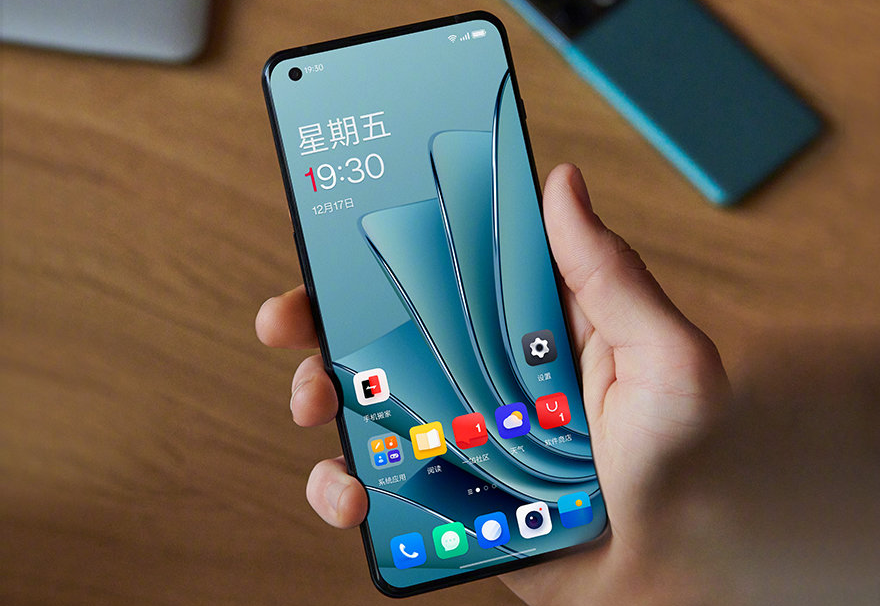
alleged miui 13 screenshots
Alleged MIUI 13 screenshots (Image: Gizchina)

The release notes are a part of the changelog for the MIUI 12.5 beta 21.12.8 update and we have given the entire thing below (via Xiaomiui).
  • Due to the adjustment of the software system architecture, the MIUI development version will be suspended for a period of time starting from 12.13, always believe that beautiful things are about to happen.
  • Due to the major version upgrade of Android, Redmi K30 5G, Redmi K30i 5G, Mi 10 Youth Edition, Redmi Note 9 Pro, Redmi Note11 Pro, Redmi Note11 Pro+ will be temporarily suspended from December 13, 2021.
  • Due to the major version upgrade of Android, Redmi Note10 will suspend the release of the internal test from November 29, 2021 (Translated from Chinese).
  • Update log
    • Game service
    • Fix known issues and optimize user experience

As seen above, not only will MIUI 12.5 beta updates be halted, but the Redmi K30 5G, Redmi K30i 5G, Mi 10 Lite Zoom, Redmi Note 9 Pro 5G (Mi 10T Lite), and the Redmi Note 11 Pro will also stop receiving Android 12 builds temporarily. This is effective from December 13th and Xiaomi is yet to provide any information on when said builds will resume.

Coming to MIUI 13 itself, it is said to be a major upgrade over MIUI 12.5 and will be bringing along a number of UI changes and new features, although we are still clueless about what they might be. Still, a number of subtle changes have already begun showing up, a few of which we have mentioned in this piece.

An official announcement for the new OS version is expected this month but it may take a while for the update to reach all of the eligible devices globally.

RELATED:

Google Pixel 3 has a bug caused by Microsoft Teams that prevents 911 calls

An odd incident recently occurred where a Google Pixel 3 user was unable to call 911 during an emergency. Now, the results of the official investigation from the company has revealed some interesting reasons as to why this happened.

Back in November 2021, Reddit user u/KitchenPicture5849 (Via AndroidPolice) shared his unfortunate experience on the social media platform. The user had placed an emergency 911 call for an ambulance, but only after the phone ringing once, the Pixel 3 froze completely. This further hampered any further attempts from the user to communicate with the person who was on the other side of the call. While the device had managed to reveal the location to the emergency services on the call, the user was unable to share crucial details like his address, apartment number, or even the condition of the person that required medical assistance.

Google

The Pixel 3 was basically stuck on the app screen. Fortunately, the Reddit users managed to reach emergency services through the landline. But considering the gravity of the situation, this could’ve been a fatal experience for those that only use smartphones. When sharing his experience on Reddit, the user also recreated the bug and found that his Verizon logs showed no record of a call being placed to 911. This prompted Google to start its own investigation into the issue that is thankfully not widespread at the moment.

So what caused this issue? A Pixel Community account revealed that the bug was spotted on devices where the users had installed Microsoft Teams but hadn’t logged in with any account. It added that an “unintended interaction” between the app and Android prevented emergency calls from being made. So now, both Google and Microsoft are promptly working on a fix as of right now.

RELATED:


Xiaomi 12 series prices may cross 4,000 Yuan mark due to rising chip costs: Tipster

The Xiaomi 12 series is set to be among the first adopters of the newly launched Qualcomm Snapdragon 8 Gen 1 SoC. But with the device offering top notch specs and features as a flagship, it seems that the pricing might be higher than its predecessor.

Xiaomi

According to @李昂昂昂啊 on Weibo (a Chinese microblogging website), most brands apart from Motorola will be launching smartphones, which feature Snapdragon 8 Gen 1, at a cost higher than 4,000 Yuan (roughly 630 US Dollars). Apparently, only few smartphone makers that were able to acquire inventory of the latest chipset before New Years would be able to offer their flagships under the 4,000 Yuan price point.

On the other hand, the brands releasing their device later on would have to deal with a rise in chip cost due to ongoing shortage of semiconductors. As of right now, the Chinese tech giant is expected to launch three models in the Xiaomi 12 series. While the lineup was initially expected to be the first to launch a device with Snapdragon 8 Gen 1 SoC, Motorola’s upcoming Edge X30 series will actually be the first.

Xiaomi 12

Furthermore, the tipster also added that the Moto might be able to keep the pricing of the Edge X30 under 4,000 Yuan. In other words, this puts more pressure on Xiaomi regarding the pricing at which it launches its newest flagship. Last year, the company’s 11 series started from 3,999 Yuan. However with the rising cost of materials, shortage of chips, and other supply chain issues, the pricing of the 12 series could start from 4,299 Yuan (roughly 680 US Dollars). The tipster also added that handsets with 2K panels would likely go for 5,000 Yuan (roughly 790 US Dollars) or higher.

RELATED:


Lenovo Xiaoxin Pad Pro 2021 now supports 90 FPS on Chinese PUBG Mobile

Lenovo today announced that the Lenovo Xiaoxin Pad Pro 2021 tablet now supports 90 FPS on Peacekeeper Elite – the game that’s called PUBG Mobile globally and BGMI in India.

To recall, the tablet did not support the game at this frame rate setting at the time of launch despite having a 90Hz display. That has changed now with an update to Peacekeeper Elite carrying the version number 1.16.13.10019.

Lenovo-Xiaoxin-Pad-Pro-2021-pubg-90-fps

Handling the game at the ultra-smooth frame rate should not be a problem for the Lenovo Xiaoxin Pad Pro 2021 as it is equipped with the flagship-level Qualcomm Snapdragon 870 chip. However, it does appear from the shared screenshot that 90 FPS can only be enabled on the “Smooth” graphic setting. The “HD” and “HDR” graphics settings thus still probably run at 60 FPS.

The tablet recently also received support for 90 FPS on the Honor of Kings game globally known as Arena of Valor.

Lenovo-Xiaoxin-Pad-Pro-2021

The Lenovo Xiaoxin Pad Pro 2021 along with being powered by the Qualcomm Snapdragon 870 chip, is also equipped with a high-end 11.5-inch 2.5K OLED screen with a refresh rate of 90Hz. There’s also ultra-fast LPDDR5 RAM onboard paired supported by UFS 3.1 flash memory. The audio is handled by four JBL speakers with support for Dolby Atmos.

The battery is sized 8600mAh and supports fast charging and reverse charging functions. The price tag of the tablet reads 2,999 Yuan or around $472.

RELATED:

Google has cherry-picked these Chrome extensions officially for you to try out

Google Chrome is a fairly feature-rich browser but also offers a dedicated Web Store using which various extensions and plugins can be installed to make the browsing experience even better. If you are a newcomer to the world of browser extensions or are simply looking to explore further, then you’ll be pleased to know that Google has released a list of their favorite extensions for 2021 – and oh boy are they worth trying.

To be clear, not all of these extensions have been released in 2021. Rather, they are just a bunch that Google thinks have outshone the rest. Various categories like communication, productivity, classroom tools, and even customization have been covered, and we have listed each of these extensions below along with a short description of them.

Communication and collaboration

  • Loom — Makes it easier to capture and share videos with others.
  • Mote — Allows you to give quick feedback through voice commenting and transcripts.
  • WordTune — Helps you clearly communicate by rephrasing sentences and catching typos in emails and documents.

Productivity

Classroom tools

  • Kami — Creates an interactive online learning space for students and teachers.
  • InsertLearning — Helps you easily take notes and integrates with Google Classroom.
  • Toucan — Makes learning a new language fun and immersive.
  • Rememberry — Organizes vocabulary words into flashcard decks for quick studying throughout the day.

Others

  • Stylus — Helps you build and install custom themes and skins for your favorite sites.
  • Rakuten — Puts cash in your pocket by automatically finding coupons and deals across the web.

It is worth mentioning here that these extensions can be installed not only on Google Chrome but on almost every browser barring Firefox, including Edge, Opera, Brave, Vivaldi, etc. since they’re all Chromium-based.

Apple had released a similar list comprised of the most popular apps from its App Store for this year, and you can check it out from here.

RELATED:

Anker launches special League of Legends-themed 30W GaN fast charger

Anker has collaborated with League of Legends to launch a special 30W GaN fast charger priced at 149 Yuan or around $23. Its appearance is themed to match one of the characters from the game called ‘Jinx.’

Anker League of Legends 30W GaN charger

This special LoL edition of the charger not only has gotten a visual rework though as the power and size of the charger have also been reportedly upgraded. It now supports iPhone 13 Pro Max 27W full-load fast charging but its size is kept as small as a 5W charger. There’s also an upgraded gallium nitride solution paired with powerful temperature control to keep the charger cool at all times.

Last but not least, the Anker League of Legends 30W GaN charger is equipped with the company’s self-developed PowerIQ 3.0 technology, which allows it to be compatible with fast charging for Apple devices as well as a number of Android phones.

Its charging power specifications have been given below:

  • USB-C:5V-3A / 9V-3A / 15V-2A / 20.0V-1.5A
  • PPS: 3.3-11.0V = 3.0A Max;3.3-16.0V=2.0A Max

Anker League of Legends 30W GaN charger featured

In addition to the above, Anker has also launched the “League of Legends Mobile Game” Yasuo League’s 65W GaN three-port charger, priced at 199 Yuan or $31.

League of Legends seems to be on a collaboration streak, recently working with OPPO to launch the Reno7 Pro LoL edition. It also collaborated with BGMI last month to bring a League of Legends-themed event to the game.

As for Anker, it recently announced that it had become the world’s number 1 digital charging company.

RELATED:

Xiaomi MIX 5 begins trial production with Snapdragon 8 Gen 1: Tipster

Earlier this month, Qualcomm had announced its latest flagship grade processor, the Snapdragon 8 Gen 1. While the Xiaomi 12 series is set to be among the early adopters, a new report has suggested that the company is also working on another device that will feature this new SoC as well.

Xiaomi

According to @数码闲聊站 on Weibo (a Chinese microblogging website), the brand has began the trial production for the MIX 5 series. While initially it was rumored that the model could sport the higher end Snapdragon 8 Gen 1 Plus chip, the latest leak from Chinese tipster states otherwise. Furthermore, the leak also revealed that the company’s MIX 5 lineup will also still feature the Samsung variant of the Snapdragon 8 Gen 1.

For those unaware, we had previously reported on Qualcomm moving a part of its Snapdragon 8 Gen 1 chip production from Samsung to TSMC. The reasons for this were production issues which forced the chipmaker to turn to the Taiwanese semiconductor giant. So, the TSMC version of the Snapdragon 8 Gen 1 was expected to launch in the second half of next year.


Xiaomi
Snapdragon 8 Gen 1

However, since the tipster had previously mentioned that the MIX 5 series will be launching sometime between June and July, it makes sense that it will likely still feature the Snapdragon 8 Gen 1 SoC manufactured by Samsung. Unfortunately, finer details about this upcoming high end devices is still currently unknown, but it is likely to feature cutting edge smartphone technology. So stay tuned for more updates.

RELATED:


Huawei HiSilicon Hi3731V110 is a new FHD TV chip based on RISC-V architecture

HiSilicon is a Huawei-owned semiconductor company. It is known for Kirin-branded mobile SoCs that once powered a myriad of HUAWEI and HONOR smartphones. This division has now announced a new chipset for FHD TVs.

Huawei HiSilicon Logo Featured A

Hi3731V110 is the name of HiSilicon’s new ATV (Advanced Television) chip. It is designed for TVs with a full-definition (FHD, 1080p) display.

The latest silicon from the company features a 32-bit self-developed CPU based on RISC-V architecture. The chipset supports Huawei’s in-house LiteOS, which offers a fast startup.

Being a chip for television, it comes with support for standard audio/video demodulations. It is compatible with mainstream video and audio codecs as well.

Since it is an SoC (System on Chip), it also features a GPU for video enhancements. Additionally, It also has a built-in TCON (Timing Controller).

The chipset can deliver content up to 1080p at 60Hz. It has support for all the modern ports like HDRMI with eARC, USB 2.0, and S/PDIF to name a few.

If interested, you can learn more about the HiSilicon Hi3731V110 from the official website.

At present, it’s not known which OEMs will be opting for this chip for their televisions. Huawei will most likely work with local brands in China.


RELATED:


Another realme Pad tablet in the works, gets spotted on Geekbench

realme is now working on bringing another tablet offering to the market after releasing the realme Pad back in September this year. A new realme Pad model has been spotted on the Geekbench database website and some of its key specifications have been revealed. Judging from the listing, the new tablet is even more affordable than the last model.

Realme-Pad-New-variant-Geekbench

As you can see in the screenshot above (via 91mobiles), the newer realme Pad has a model number Realme RMP2105 and only hit the database yesterday, pointing towards an imminent launch. Its single-core score stands at 363 while the multi-core score reads 1330.

The Geekbench listing further reveals some specifications starting with the usage of a Unisoc octa-core processor. 6 of these have been clocked at 1.82GHz and the remaining 2 are a bit faster at 1.95GHz. The chip has been paired with 3GB of RAM and 32GB of internal storage. These bits prove that the new realme Pad will be even more affordable than the model released earlier – the realme Pad from September was equipped with a more powerful MediaTek Helio G80 processor.

Realme Pad Review PUBG

Lastly, the listing confirms that the realme Pad RMP2105 will be booting into Android 11 out of the box, which is rather disappointing considering multiple devices from various OEMs have already been updated to Android 12.

Apart from this, there isn’t anything else known about the upcoming tablet. It is yet to be listed on the Indian BIS but has actually also been spotted Eurasian EEC certification website, meaning that it will be launched in regions other than India as well.

RELATED:

Oppo to showcase MariSilicon X NPU and new Smart Glasses at INNO Day 2021

During the upcoming INNO Day 2021 event, Oppo is gearing up to unveil its latest technologies and innovations. This will includes its first self developed NPU (Neural Processing Unit), smart glasses, and more.

Leading up to this event, the Chinese smartphone maker has already teased the aforementioned technologies and even offered us a glimpse at its retractable camera technology as well via Twitter. The brand has even officially announced that it will be showcasing its first foldable smartphone during the event, which is set between 14th December and 15th December in Shenzhen, China. Notably, the Founder and CEO of the company, Tony Chen, will also be sharing a keynote speech in the event, talking about the company’s updates corporate strategies and new research and development strategies.

Oppo added that “other senior executives will introduce the new NPU and smart glasses,” during this event. So, we can expect to hear more about the new Retractable Camera technology, as well as Digital Human and other technological breakthroughs in the fields of imaging, AI, AR, and even 5G. A highly anticipated announcement would also be for the company’s first NPU, which is being called the MariSilicon X.

OPPO
Retractable Camera Technology

As per our previous report, the company had also revealed on Twitter that it is gearing up to announce the Oppo Find N foldable phone during this event as well. It will be the company’s first foldable handset and has been in development for four years and has gone through six generation of prototypes. So stay tuned for more updates, as we will be covering this major company conference.

RELATED:


Google Pixel phones get treated to Android 12L Beta 1

Google is finally giving some love to tablets and foldable phones with its Android 12L update, bringing along a number of improvements and optimizations for large screen devices. To recall, Android 12 was released in October and the first Android 12L developer preview followed not long after. And now, around a couple of months later, Pixel phones all the way back to the Google Pixel 3a have received the Android 12L update in the form of Beta 1.

Android 12L featured

There isn’t really much to test on Google Pixel phones, however, as most of the front-end changes can only be seen and felt on large screen devices (via XDA). The update is, after all, more of a feature-drop kind than a full-blown upgrade.

As for features, the update adds a new dual-pane UI for the notifications shade, settings, and lock screen. There’s even a Windows-style dedicated taskbar for better multitasking. In short, the layout of multiple system interfaces has been tweaked to take advantage of larger displays with a DPI higher than 600dp.

To download the Android 12L Beta 1 build for your Pixel device, simply click on one of the links below. Google has released the update for every eligible device barring the Pixel 6 series, but it shouldn’t be long before the latest Pixels get it too.

Google Pixel 3a Link Link
Google Pixel 3a XL Link Link
Google Pixel 4 Link Link
Google Pixel 4 XL Link Link
Google Pixel 4a Link Link
Google Pixel 4a 5G Link Link
Google Pixel 5 Link Link
Google Pixel 5a Link Link
Google Pixel 6 Waiting Waiting
Google Pixel 6 Pro Waiting Waiting


For those who’d rather not install the update manually, the Android Flash Tool can be used as an alternative installation method for the Beta build. This web-based installer comes with a GUI wizard which greatly simplifies the flashing process. But the most user-friendly installation method is still simply enrolling your Pixel in the beta program which will allow you to get an OTA officially.

RELATED:

Samsung Galaxy S21 FE may ship with Android 12

The Samsung Galaxy S21 FE is expected to release in January 2022 after a long delay. We know almost everything about this smartphone for months. A new finding now reveals something about the phone that was not known earlier.

Samsung Galaxy S21 FE 5G premium clear cover
Samsung Galaxy S21 FE

Yesterday, the software firmware for the Galaxy S21 FE went live on Samsung’s server. According to these builds (via SamMobile), the handset will ship with Android 12 out of the box. This means it should also come with One UI 4.0 comprising of new features and visual changes.

On top of that, the device may receive up to Android 15 update in the future. That’s because Samsung promises 3 generations of OS updates and at least 4 years of security updates for its premium and select mid-range smartphones and tablets.

If this happens to be true, then the Galaxy S21 FE will be a better option than the rest of the Galaxy S21 models in terms of software. 

It makes sense for Samsung to release the Galaxy S20 FE successor with Android 12 as it will go official almost a year after the debut of Galaxy S21, Galaxy S21+, and Galaxy S21 Ultra. In fact, it will be soon followed by the Galaxy S22 series with the same version of Android a few days later.

Anyway, the Galaxy S22 could be a better deal than the Galaxy S21 FE. Because the former is said to be only $100 costlier than the latter.


RELATED:


Samsung estimates global chip shortage continuing until H2 2022

Everyone is aware of the global chip shortage which has impacted almost every industry and the smartphone industry has also been hit. Samsung, which is the smartphone leader globally and also makes its own chips, has also been impacted.

Now, as per the report from The Elec, Samsung believes that the chip shortage will continue up until the second half of 2022. The report is citing TM Roh, Chief of Samsung Mobile, who discussed this issue with around 30 partners and vendors last month.

Samsung

Samsung noted that the chipsets and RF chips will be short in supply until H2 2022 and the company is taking steps to mitigate the shortages. The South Korean giant is now pushing for annual contracts with chip foundries to secure the chip production capacity.

The company is now looking to stock up to four weeks’ worth of chip supplies instead of the firms currently stocking two weeks of supply. It’s good to see Samsung taking the necessary steps to ensure smooth operations amid chip shortages.

Samsung has suffered a lot in the current year because of these shortages. The brand’s Galaxy S21 FE has been delayed and is now set to launch in January 2022, pushing the launch of the Galaxy S22 lineup to February.

RELATED: 

Realme GT 2 Pro camera and display details tipped

Realme will be announcing something related to the upcoming Realme GT 2 Pro flagship phone later today. Probably, it will be confirming the launch date of the device since it is expected to debut at some point this month. Ahead of today’s announcement, reliable tipster Digital Chat Station has shared the key details of the GT 2 Pro.

The leak reveals that the Realme GT 2 Pro will be equipped with a 6.7-inch flat AMOLED panel by Samsung. It will offer a Quad HD+ resolution and a 120Hz refresh rate. There is no word on the battery capacity of the device, but the leak reveals that it will carry support for 65W fast charging like other Realme phones. The new leak debunks previous reports that claimed that the Realme GT 2 Pro has a 6.51-inch screen and support 125W fast charging.

Realme GT 2 Pro with under-screen camera

When it comes to photography, the Realme GT 2 Pro will sport a 32-megapixel camera for capturing selfies. Its rear camera setup may include an OIS-enabled 50-megapixel 1/1.5-inch primary sensor, which appears to be the Sony IMX766 camera. It will be assisted by a 50-megapixel ultrawide lens and a telephoto camera. It is already known that the Snapdragon 8 Gen 1 will be fueling the GT 2 Pro.

GizmoChina’s exclusive report revealed from yesterday revealed that there could be two editions of the phone. The first will have a punch-hole display, whereas the other will be equipped with a full-screen display (shown above) featuring an under-screen camera.

RELATED:

iQOO 9 key specifications leaked, here’s what to expect

iQOO is likely to announce the iQOO Neo5s and iQOO Neo5 SE this month in China. The company is expected to unleash the iQOO 9 series of flagship devices in January 2022. Well ahead of the launch, Chinese tipster Panda is Bald has shared the key details of the iQOO 9.

iQOO had recently confirmed that it will be launching Snapdragon 8 Gen 1 powered flagship phone. The new leak claims that the upcoming iQOO 9 lineup will be driven by the new chip. It can be said based on predecessor models that the iQOO 9 series will include two handsets such as iQOO 9 and iQOO 9 Pro.

iQOO 8 Pro
iQOO 8 Pro

According to the tipster, the standard iQOO 9 will be gracing a second-generation independent display chip, which will assist in offering an improved visual experience. The device will be equipped with dual speakers and dual x-axis linear motors. For gamers, the device will offer dual pressure-sensitive shoulder buttons.

The iQOO 9 is also expected to carry support for a 120Hz refresh rate. In all likelihood, the device will be sporting an AMOLED panel with an in-screen fingerprint scanner. It will carry support for 120W fast charging. The iQOO 9 series will also come with an enhanced heat dissipation system and micro-gimbal PTZ. To recollect, the micro-gimbal feature was only available on the iQOO 8 Pro, and not on the vanilla iQOO 8. It is unclear whether the iQOO 9 Pro as well as its vanilla version will offer micro-gimbal PTZ camera.

While iQOO is expected to launch the iQOO 9 duo in China in January, there are speculations that the iQOO 9 series will be heading to India by February.

RELATED:

OPPO Reno5 Pro 5G ColorOS 12 Open Beta program begins in China, India, Pakistan

At the end of November, OPPO started recruiting testers for the OPPO Reno5 series ColorOS 12 Open Beta program in China. The initiative was only limited to two devices in the lineup initially. Now, two more phones dubbed OPPO Reno5 Pro and OPPO Reno5 Pro 5G have been added ahead of schedule.

OPPO Reno5 Pro 5G 2
OPPO Reno5 Pro 5G

OPPO is supposed to kickstart the Android 12-based ColorOS 12 Open Beta program for the OPPO Reno5 Pro and OPPO Reno5 Pro 5G in China, India, and Pakistan from December 10. However, the company has opened registrations a day earlier, just like it did with the OPPO Reno5 5G and the OPPO Reno5 Pro 5G in China.

According to the official announcement posts on OPPO Community, anyone with the OPPO Reno5 Pro 5G running the following firmware versions can enroll in the Android 12 beta program.

  • OPPO Reno5 Pro

    • Pakistan – A.12
  • OPPO Reno5 Pro 5G

    • China – A.17 or A.18
    • India – A.12

In order to do so, users will have to navigate to Settings > Software Update > Gear Icon > Apply for Beta Version > Update Beta Version and follow on-screen instructions. The applications will be reviewed within 5 working days. The company will begin rolling out the beta release via OTA within  3 working days from that.

In China, participants can fill a questionnaire to further increase their chance of gettings selected.

Having said that, there’s no official word on the availability of the stable update from OPPO so far. It will most likely arrive as early as next month. 


RELATED:


OPPO Find N foldable phone to launch on December 15, design teased

OPPO Find N is all set to launch as the OPPO’s first foldable smartphone at 4 PM (local time) on Dec. 15 through the company’s INNO Day 2021 event. A tweet released by the brand gives a look at the design of the Find N. It also mentions that Pete Lau will be taking the new role of Chief Product Offer (CPO) at OPPO.

The OPPO Find N has been born through the company’s four years of intense R&D and six generations of prototypes. Most smartphones are available in the market offer similar configurations and designs. According to Lau, the smartphone industry has reached a limit whether it comes to offering features like high refresh rates, mobile photography, fast charging, and so on. Hence, the company has now decided to venture into the foldable segment.

OPPO began working on the first find N prototype back in 2018. While Samsung, Huawei, and Xiaomi have already unveiled their foldable smartphones, OPPO has not launched one yet. Lau believes that ‘it is better to launch a product later when it is ready to offer a great user experience instead of simply rushing to keep up with trends.’ He added that the Find N will a beautiful and user-friendly device. OPPO has put efforts to solve pain points such as crease in the display and durability issues that were seen on foldable phones by other brands.

OPPO Find N specifications (Rumored)

Reports have revealed that the Find N will have an 8-inch LTPO OLED 120Hz inner display, a 60Hz cover display with punch-hole design, a 32-megapixel front camera, a 50-megapixel (Sony IMX766) + 16-megapixel (Sony IMX481) + 13-megapixel (Samsung S5K3M5) triple camera unit, and a 4,500mAh battery with 65W fast charge support. It will be equipped with Snapdragon 888 SoC, 12 GB of RAM, up to 512 GB of storage, and ColorOS 12 flavored Android 12.

RELATED:

Xiaomi 11 Youth (Vitality Edition) launched in China, specifications, features, and price

Xiaomi has silently announced the Xiaomi 11 Youth (Vitality Edition) smartphone in China today. Earlier this year, the company unveiled the Xiaomi Mi 11 Lite 5G with Snapdragon 780G chip and Xiaomi Mi 11 Lite 4G with Snapdragon 732G chip. The former was exclusively available in China. Later this year, Xiaomi unveiled the Xiaomi 11 Lite NE 5G featuring the Snapdragon 778G SoC in markets like India and Europe. Now, the same device has been introduced in the home market with the Xiaomi 11 Vitality Edition moniker

Xiaomi 11 Youth (Vitality Edition) specifications and features

The Xiaomi 11 Youth (Vitality Edition) measures 160.53 x 75.2 x 6.81mm and weighs 157 grams. The device houses a 6.55-inch AMOLED punch-hole screen that offers a Full HD+ resolution, a 90Hz refresh rate, a 240Hz touch sampling rate, DCI-P3 color gamut, 800 nits of brightness, and 402ppi pixel density. It also offers other features like Dolby Vision, HDR10+, 10-bit colors, and Gorilla Glass 5 protection. It is fitted with a side-facing fingerprint scanner.

Xiaomi 11 Vitality Edition

The Xiaomi 11 Youth (Vitality Edition) is driven by the Snapdragon 778G chipset and 8 GB of LPDDR4x RAM. The device ships with up to 256 GB of storage and it comes preinstalled with Android 11 OS, which is skinned with MIUI 12.5.

Placed on its front is a 20-megapixel selfie camera. Its back panel has a 64-megapixel main camera, an 8-megapixel ultrawide lens with a 119-degree FOV, and a 5-megapixel macro lens with a 3cm focal length. It is capable at shooting 30fps 4K videos and 120fps 1080p slow-motion videos.

The smartphone is backed by a 4,250mAh battery that supports 33W fast charging. It offers other features such as dual SIM, 5G, Wi-Fi 6, Bluetooth 5.2, GPS, NFC, an IR blaster, a side-facing fingerprint scanner, and a USB-C port. It lacks a 3.5mm audio jack.

Xiaomi 11 Youth (Vitality Edition) pricing and availability

The Xiaomi 11 Youth (Vitality Edition) comes in 8 GB RAM + 128 GB storage and 8 GB RAM + 256 GB storage versions. They are priced at 1,999 Yuan (~$315) and 2,299 Yuan (~$362). It comes in hues like white, blue, peach, and black. The first sale of the phone is scheduled to begin tomorrow (Dec. 10) in China.

RELATED:

Nokia smartphone powered by Samsung Exynos 7884 spotted on Geekbench

HMD Global, the company which is launching Nokia-branded phones in the market, is gearing up to unveil a new device. An upcoming Nokia smartphone with the model name Suzume has been spotted on benchmarking platform.

The upcoming Nokia Suzume smartphone has been spotted on Geekbench and the listing has revealed some key details about this new device.

Nokia Suzume Geekbench

The smartphone is revealed to come powered by an octa-core processor which is expected to be the Samsung Exynos 7884 chipset, the same processor that is powering the South Korean company’s Samsung A10.

It comes packed with 3GB of RAM and runs the Android 12 operating system out-of-the-box. The device has managed to score 306 points in the single-core test while in the multi-core test, it scored 1,000 points.

The Samsung Exynos 7884 chipset is manufactured using the 14nm processor which makes it a bit old given that most modern chips are now being manufactured using 4nm node. It comes packed with two Cortex-A73 cores and six A53 cores, along with a Mali-G71 MP2 GPU and an LTE modem.

The Nokia Suzume (which means Sparrow in Japanese) may be one of the four devices that were recently leaked. Given the specs, the phone seems like a budget to the mid-range offering and could come with an LCD display and a triple-camera setup on the back.

We expect more details about this Nokia Suzume smartphone to surface online in the coming days or weeks. Given that the device has already appeared on the benchmarking platform, the launch of the device could happen soon.

RELATED: 

Apple iPhone 14 Pro models could be the brand’s first OLED phones without a notch

A few years ago, with the launch of the iPhone X in 2017, Apple added a notch on top of the screen and it has continued so far, with the recently launched iPhone 13 models also featuring a notch. But the company is now expected to change that with upcoming phones.

If the new report coming from The Elec is to be believed, which is based on the display suppliers, then the upcoming iPhone 14 series models with OLED displays could have a punch-hole cutout instead of a notch.

Apple iPhone 14 Pro Render

The report claims that Samsung has already started receiving machines from Philoptics and Wonik IPS for laser-cutting holes in the OLED panels.

It is being said that Apple has decided to get rid of the notch on the iPhone 14 Pro and iPhone 14 Pro Max models as the company is confident about Samsung’s ability and expertise in hole punching for displays, which the South Korean giant has already been doing for years with the introduction of its own Galaxy S10 lineup.

If the report is true, the iPhone 14 Pro Max, featuring a 6.7-inch display with a punch-hole cutout could end up being the smartphone from Apple with the best screen-to-body ratio the company has ever designed.

The upcoming Apple iPhone 14 Pro models will be using Samsung’s HIAA (Hole-in-Active-Area) method which is said to be the most advanced OLED hole-punching technology so far. HIAA employs laser drilling between the OLED deposition and thin-film encapsulation (TFE) which is more challenging to do with Samsung‘s flexible OLED displays that use plastic instead of a glass substrate.

So far, Apple is dependent on Samsung Display for the OLED LTPO panels but LG is also reportedly working on the same but LG is yet to conduct trials that will determine if its production meets the needed quality and cost.

RELATED: