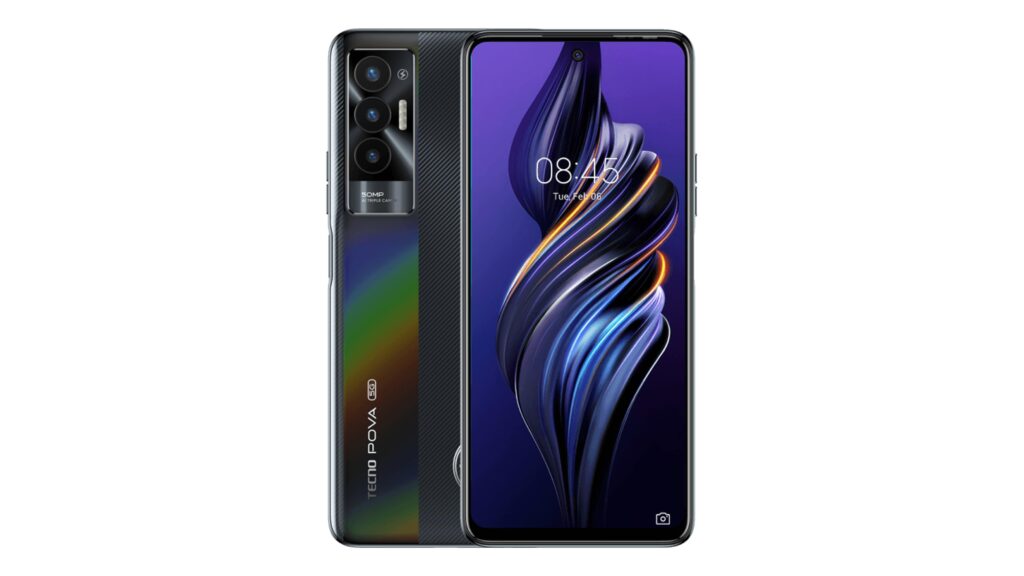
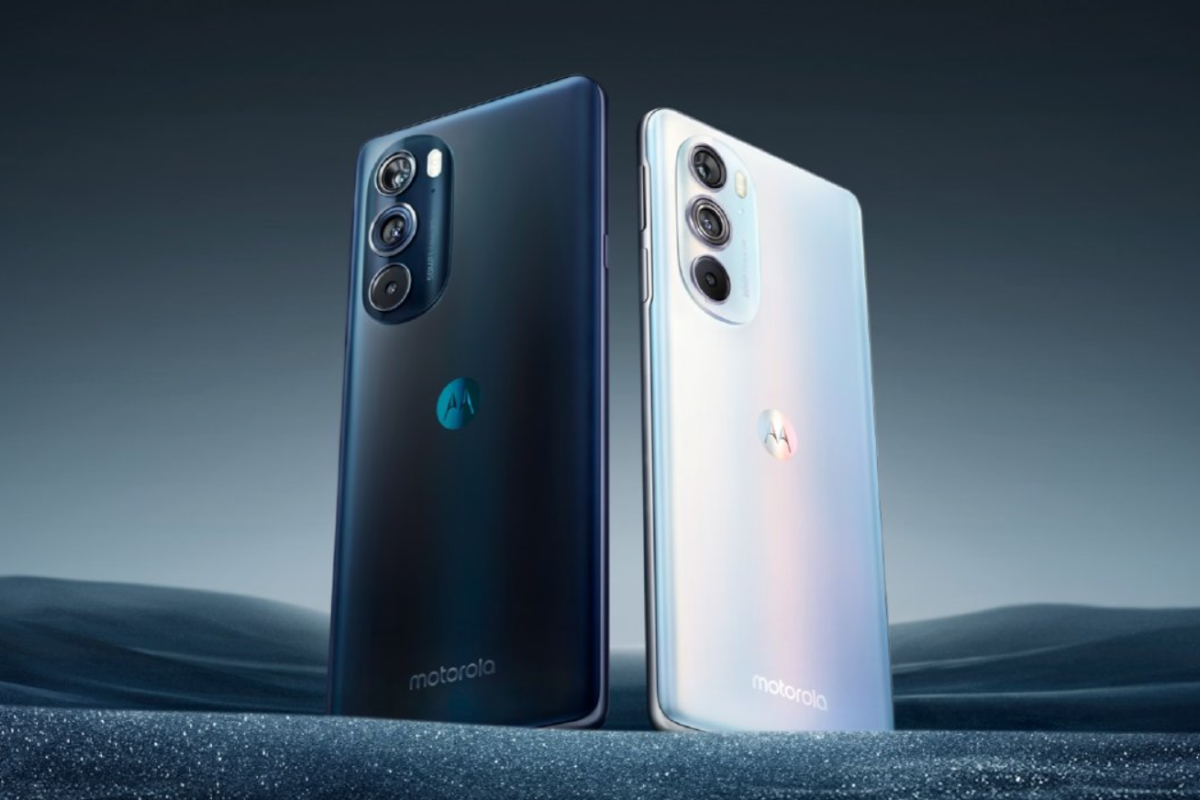
Motorola has just launched its latest smartphone the Edge X30 and Moto Edge X30 is now available for pre-order at Giztop for $699. Please note that Giztop is accepting pre-orders and the actual shipment will start from December 20 only.
6.67” OLED display with 144Hz refresh rate, HDR10+
SGS eye protection certification
Snapdragon 8 Gen 1 processor
8GB / 12GB LPDDR5 RAM and 128GB / 256GB ROM
Triple Rear Camera: 50MP + 50MP + 2MP
Front camera : 60MP
Side mounted finger print sensor
Wi-Fi 6
Battery : 5000mAh , 68W TurboPower Fast charging
Android 12 OS
Please note that this is a Chinese edition smartphone but comes with Complete Google mobile services, play store, and supports OTA updates. It supports English and Chinese languages.
For more information on such exciting deals and offers check out ourdeals hub.
Earlier today (9th December 2021), IDC shared a new report titled “China Wearable Device Market Quarterly Tracking Report” for third quarter of this year, which revealed the regions growth in the wearable segment.
According to the report, the Chinese market shipped 35.28 million units in the third quarter of 2021. This marked an overall growth of just 5 percent year on year and signified a decline in the growth rate of the market. There were three primary reason for the slow down, including a weak market demand, supply chain issues, and a lack of products in certain segments of the category. But despite the overall market slowing down, the hearables category still saw a notable growth.
During the third quarter, the hearables category, which includes earphones, headphones, and earbuds, saw sales reaching nearly 20 million units. This showcased a growth of a sizeable 40 percent. However, while this is a health rise in shipments, the hearables segment also saw a decline in growth rate. On the other hand, the smartwatch shipments hit just 10.68 million units, which saw the market decline by a modest 2.3 percent year on year.
IDC China’s Senior Research Manager, Pan Xuefei, stated that with the improvement in living standards and impacts of the pandemic, products that offered sports and health related features saw great success in the region. Wearables like smart bands became even more popular with the low and mid segments seeing the most growth. Although, the shortage of semiconductors leading to fewer launches caused the market to see a slow down in China.
A couple of years back, the Motorola brand was in a severe financial mess as a result of a lull in smartphone sales. The company was eventually acquired by Lenovo who tried to turn around the fortunes of the once-beloved brand. The Lenovo-owned company has seen a change in its fortunes in recent times and it is no surprise that the brand is putting efforts at deepening its market presence. That it has done with the unveiling, today, of the Moto Edge X30 flagship smartphone.
The Moto Edge X30 arrives as the first Snapdragon 8 Gen 1-powered smartphone. It comes alongside the Snapdragon 888-powered Moto Edge S30. Both smartphones are indeed set to go on sale before the year’s end! Isn’t that awesome? According to the brand, the Moto Edge X30 and Edge S30 will be on pre-order from tonight and will go on sale for the first time at 10:00 AM on December 15th.
Motorola Moto Edge X30 Specifications & Features
No doubt, the major highlight of the Moto Edge X30 is the new generation of Qualcomm Snapdragon 8 Gen 1 chipset. The chipset uses Samsung’s 4nm process and the CPU is made up of a Cortex-X2 super core with a clock frequency of 3.0GHz, three Cortex-A710 cores clocked at frequency 2.5GHz each, and four Cortex-A510 cores, each clocked at 1.8GHz.
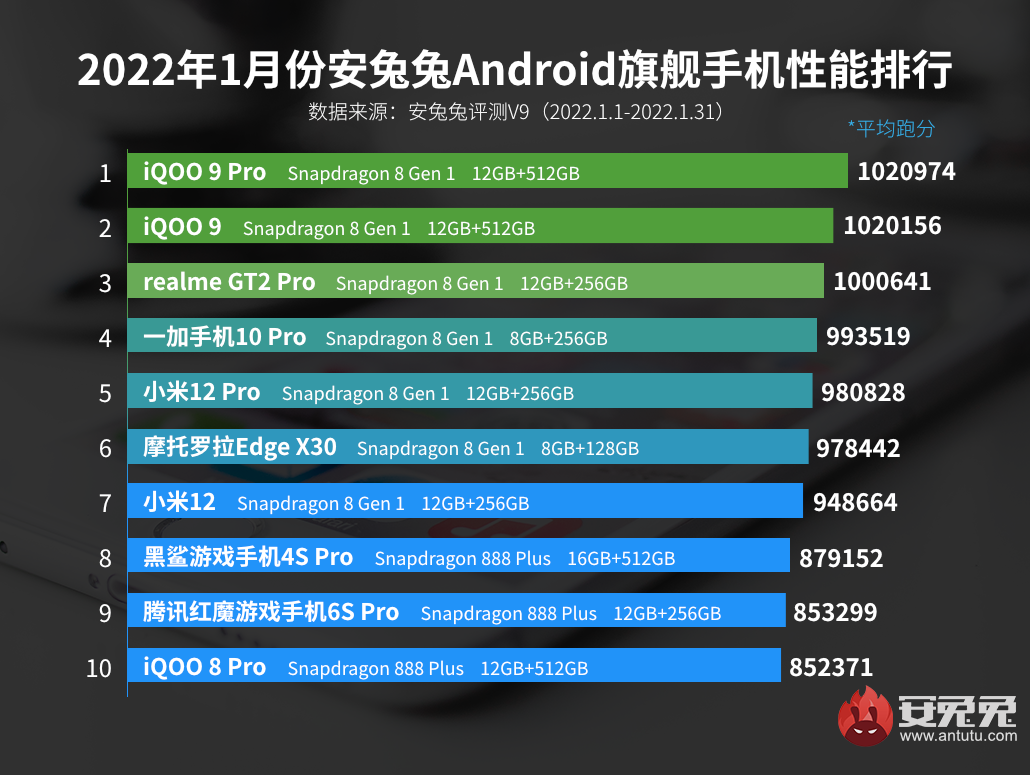
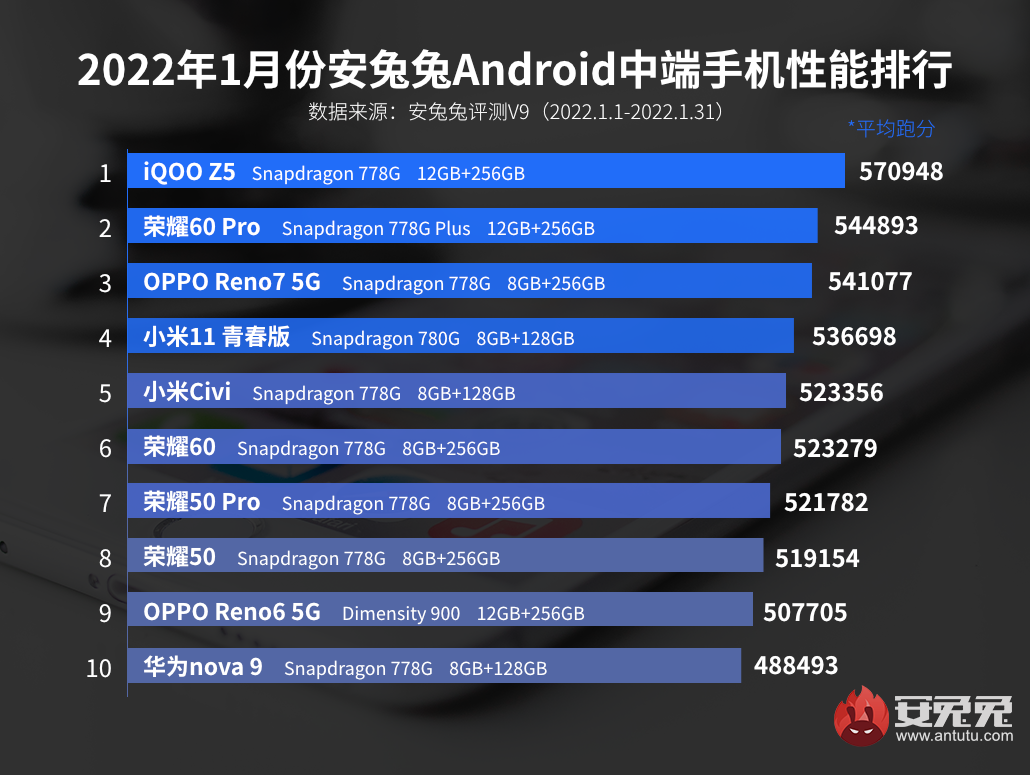
The new processor brings about a 20% increase in performance compared to the previous generation CPU. Energy consumption is also reduced by up to 30%, GPU performance is increased by 30%, energy consumption has been reduced by 25%, while the AI performance is four times that of the Snapdragon 888 series. The device was able to record an AnTuTu benchmark score of 1061361, making it the number one Android smartphone presently.
In terms of battery life, the Edge X30 has a built-in 5000mAh super-capacity battery, and it also supports 68W fast charging, which can replenish 50% of the battery in just 13 minutes.
For photography, the flagship Moto packs a triple camera setup at the ear aspects. The camera setup at the rear includes a 50MP wide-angle main camera, teaming up with a 50MP super wide-angle macro main camera and a 2MP depth-of-field sensor. For selfies, there is a 60MP front shooter. One of the main rear cameras is the OV50A sensor, which has a 1/55-inch ultra-large bottom and supports OIS optical image stabilization.
In terms of the display, the Moto Edge X30 comes in two versions. One is the regular version which uses a center-punched 1 billion color ultra-sensitive color screen that supports a 144Hz high refresh rate and up to 576Hz touch sampling rate. It also supports Dolby surround sound dual speakers, which can provide a very good audiovisual and gaming experience.
The second display version is the Under-screen Proactive version. This version is touted to have the strongest under-screen camera solution in the industry with its 60MP front sensor which can take into account both the display effect and the Selfie effect.
For interface, the Moto Edge X30 runs on MYUI 3.0 based on the Android 12 operating system, bringing an entirely new UI visual interface.
As for the pricing, the Moto Edge X30 standard version starts at 3,199 yuan (~$501) but there is a full-line discount of 200 yuan bringing the starting price to 2999 yuan ($470) for the base variant with 8GB RAM and 128GB storage. Here are the entire prices.
Moto Edge X30 standard version 8GB + 128GB priced at 3199 yuan
Moto Edge X30 standard version 8GB + 256GB priced at 3399 yuan
Moto Edge X30 standard version 12GB + 256GB priced at 3599 yuan
The Under-display camera version of the Edge X30 is only available in a sole 12GB+256GB version priced at 3999 yuan (~$627).
Last year, vivo revamped its mobile operating system based on Android in China. The company changed the name of its software from Funtocuh OS to OriginOS. Today, the firm unveiled the second generation of its new OS dubbed OrginOS Ocean. At the end of the launch conference, vivo announced the update timeline for eligible devices. Let’s take a look at them.
OriginOS can be found on both vivo and iQOO-branded smartphones. Hence, it’s not surprising to learn that OriginOS Ocean based on Android 12 will be also available for handsets from both these brands.
According to the official OriginOS Weibo account, the following phones are eligible for OrginOS Ocean update. They will start receiving the update (most probably public beta) from the below-mentioned schedule.
OriginOS Ocean Eligible Devices and Update Timeline
From December 30, 2021
vivo X70 Pro+
vivo X70 Pro
vivo X70
vivo X60 Pro+
vivo X60t Pro+
vivo X60 Pro
vivo X60 Curved Screen Edition
vivo S10 Pro
vivo S10
vivo S9
iQOO 8 Pro
iQOO 8
iQOO 7
Late January 2022
vivo X60
vivo X60t
iQOO 5 Pro
iQOO 5
iQOO Neo5
iQOO Z5
iQOO Z5x
iQOO Neo5 Vitality Edition
Late February to March 2022
vivo X50 Pro+
vivo X50 Pro
vivo X50
vivo X30 Pro
vivo X30
vivo S10e
vivo S9e
vivo S7
vivo S7t
vivo S6
vivo NEX 3S
vivo T1
April 2022
iQOO 3
iQOO Neo3
iQOO Z3
iQOO Z1
iQOO Z1x
vivo Y76s
vivo Y71t
vivo Y53s
vivo Y53s (t1 Edition)
vivo Y53s (t2 Edition)
vivo S7e Vitality Edition
vivo T1x
vivo Z6
Just like the original OriginOS, the new OriginOS Ocean will not make its way to international markets. That’s because vivo and iQOO have alreadyrevealed their Android 12-based Funtouch OS 12 update plan for regions outside China.
Having said that, the above-discussed update plan is subject to change like any other software delivery schedule.
Huawei launched its first ARM laptop earlier this year. This notebook called HUAWEI Qingyun L410 is powered by the company’s older Kirin 990 SoC. A few days back, news broke out about another computer featuring a yet-to-be-announced Kirin 9006C. Followed by that, details about yet another ARM chip for laptops called Pangu M900 have emerged.
HUAWEI Qingyun L410
Huawei currently uses HiSilicon’s Kirin and Kunpeng series of chipsets for its computer. According to a tipster, a third chip lineup called Pangu will be soon introduced for PCs. We reported on it a while back.
The leaker says that the first silicon in this new series will be called HiSilicon Pangu M900. The first devices housing this chipset will hit the markets in mid-2022.
Just like the current-gen ARM desktops and laptops from Huawei, the forthcoming Pangu models will remain exclusive to government organizations and enterprises. Hence, a normal consumer won’t be able to buy it.
Unfortunately, the tipster did not share any further information regarding Huawei HiSilicon Pangu M900. Hence, we will have to wait a bit to learn more about it.
Going by the previous ARM chip-powered Huawei PCs, we can expect the products featuring this upcoming chipset to run UOS (Unity Operating System), which is a Linux distro based on Deepin.
If you are planning to buy a smartphone stabilizer or gimbal then check out this awesome deal on Zhiyun Smooth X Gimbal. The foldable gimbal which generally retails at $59.99 can be bought at a discounted price of $29.30 only at AliExpress. This deal ends in 2 days. Please note this is one of the lowest prices offered on the product yet.
Zhiyun Smooth X Gimbal is a highly portable gimbal cum selfie stick. The device comes with a 10.2-inch extendable aluminum rod that helps you to take group selfies and the lightweight and foldable design makes it very easy to carry around in your bag or purse.
The gimbal which is compatible with a wide variety of smartphones like iPhone 11/11 Pro/Xs/Xr/SE and Samsung Galaxy series etc, comes with an advanced hand gesture function and Bluetooth wireless control which helps you to effortlessly capture images and record videos.
Zhiyun Smooth X gimbal comes with an ‘M’ switch, that easily helps you to switch between portrait and landscape mode and works with the ZY Cami app to give you beautiful, creative, and professional editing tools.
Generally retailing at $59.99, you can now get the Zhiyun Smooth X Gimbal for $29.30 only at AliExpress. Please note that this is one of the best deals yet on this product. The deal ends in the next 2 days. So place your order before it expires.
Please note that the above price is region-specific and the final price may vary according to your shipping region, warehouse, and regional taxes.
For more information on such exciting deals and offers check out ourdeals hub.
* Please Note: When you buy something using the links in our articles, we may earn a small commission at no cost to you.
A new report has revealed interesting information about a recent trend with smartphone brands. Apparently, companies are now offering their handsets with fewer camera sensors due to a shortage of supplies.
The report arrives from Omdia, a known market research based firm, with its finding being shared on Weibo(a Chinese microblogging website) as well. Omdia added that OEMs are now shifting towards higher resolution image sensors for their rear modules that now house fewer number of cameras. The primary reason for this shift is reportedly due to the ongoing shortage of semiconductors that has affected various industries across the globe.
In the third quarter of this year, shipments of smartphones with triple camera setups rose to the same level as models with quad cameras. The triple camera segment got boosted as even low cost entry level handsets under 150 US Dollars saw a rise in adoption rate for multiple camera sensors on the rear. Meanwhile, the market share four devices with four cameras saw a decline, falling behind the triple camera phones. Interestingly, the market share of dual cameras which had been in decline for a while now, also saw a rise during this same period.
Jusy Hong, senior research manager of Omdia stated that this trend arrives as brands seek to reduce camera related costs caused by the continued shortage of semiconductors. He further added that smartphone brands are also reducing the number of cameras in mid range models from four to three. As of right now, the 48 megapixel lenses accounted for 25 percent of the entire market share in Q3 2021, while 64 megapixel and 108 megapixel sensors saw a rise to 19 percent and 5 percent share respectively.
Mi SuperBass wireless headphones which generally retail for ₹1799 are now available at a discounted price of ₹1299 only at Amazon India. This is the lowest price yet offered for this product.
Generally retailing for ₹1799 Mi SuperBass wireless headphones is now available for ₹1299 only on Amazon India. Additional bank offers and no-cost EMI are also available on this product.
For more information on such exciting deals and offers check out ourdeals hub.
* Please Note: When you buy something using the links in our articles, we may earn a small commission at no cost to you.
Xiaomi may very soon be giving the last MIUI 12.5 beta build for its devices as the latest beta release notes state that beta releases will be suspended due to the “adjustment of the software system architecture.” While the reason provided is rather vague, it is safe to assume that it’s just Xiaomi shifting its software onto the MIUI 13 base in prep for its beta releases.
Alleged MIUI 13 screenshots (Image: Gizchina)
The release notes are a part of the changelog for the MIUI 12.5 beta 21.12.8 update and we have given the entire thing below (via Xiaomiui).
Due to the adjustment of the software system architecture, the MIUI development version will be suspended for a period of time starting from 12.13, always believe that beautiful things are about to happen.
Due to the major version upgrade of Android, Redmi K30 5G, Redmi K30i 5G, Mi 10 Youth Edition, Redmi Note 9 Pro, Redmi Note11 Pro, Redmi Note11 Pro+ will be temporarily suspended from December 13, 2021.
Due to the major version upgrade of Android, Redmi Note10 will suspend the release of the internal test from November 29, 2021 (Translated from Chinese).
Update log
Game service
Fix known issues and optimize user experience
As seen above, not only will MIUI 12.5 beta updates be halted, but the Redmi K30 5G, Redmi K30i 5G, Mi 10 Lite Zoom, Redmi Note 9 Pro 5G (Mi 10T Lite), and the Redmi Note 11 Pro will also stop receiving Android 12 builds temporarily. This is effective from December 13th and Xiaomi is yet to provide any information on when said builds will resume.
Coming to MIUI 13 itself, it is said to be a major upgrade over MIUI 12.5 and will be bringing along a number of UI changes and new features, although we are still clueless about what they might be. Still, a number of subtle changes have already begun showing up, a few of which we have mentioned in this piece.
An official announcement for the new OS version is expected this month but it may take a while for the update to reach all of the eligible devices globally.
An odd incident recently occurred where a Google Pixel 3 user was unable to call 911 during an emergency. Now, the results of the official investigation from the company has revealed some interesting reasons as to why this happened.
Back in November 2021, Reddit user u/KitchenPicture5849 (Via AndroidPolice) shared his unfortunate experience on the social media platform. The user had placed an emergency 911 call for an ambulance, but only after the phone ringing once, the Pixel 3 froze completely. This further hampered any further attempts from the user to communicate with the person who was on the other side of the call. While the device had managed to reveal the location to the emergency services on the call, the user was unable to share crucial details like his address, apartment number, or even the condition of the person that required medical assistance.
The Pixel 3 was basically stuck on the app screen. Fortunately, the Reddit users managed to reach emergency services through the landline. But considering the gravity of the situation, this could’ve been a fatal experience for those that only use smartphones. When sharing his experience on Reddit, the user also recreated the bug and found that his Verizon logs showed no record of a call being placed to 911. This prompted Google to start its own investigation into the issue that is thankfully not widespread at the moment.
So what caused this issue? A Pixel Community account revealed that the bug was spotted on devices where the users had installed Microsoft Teams but hadn’t logged in with any account. It added that an “unintended interaction” between the app and Android prevented emergency calls from being made. So now, both Google and Microsoft are promptly working on a fix as of right now.
The Xiaomi 12 series is set to be among the first adopters of the newly launched Qualcomm Snapdragon 8 Gen 1 SoC. But with the device offering top notch specs and features as a flagship, it seems that the pricing might be higher than its predecessor.
According to @李昂昂昂啊 on Weibo (a Chinese microblogging website), most brands apart from Motorola will be launching smartphones, which feature Snapdragon 8 Gen 1, at a cost higher than 4,000 Yuan (roughly 630 US Dollars). Apparently, only few smartphone makers that were able to acquire inventory of the latest chipset before New Years would be able to offer their flagships under the 4,000 Yuan price point.
On the other hand, the brands releasing their device later on would have to deal with a rise in chip cost due to ongoing shortage of semiconductors. As of right now, the Chinese tech giant is expected to launch three models in the Xiaomi 12 series. While the lineup was initially expected to be the first to launch a device with Snapdragon 8 Gen 1 SoC, Motorola’s upcoming Edge X30 series will actually be the first.
Furthermore, the tipster also added that the Moto might be able to keep the pricing of the Edge X30 under 4,000 Yuan. In other words, this puts more pressure on Xiaomi regarding the pricing at which it launches its newest flagship. Last year, the company’s 11 series started from 3,999 Yuan. However with the rising cost of materials, shortage of chips, and other supply chain issues, the pricing of the 12 series could start from 4,299 Yuan (roughly 680 US Dollars). The tipster also added that handsets with 2K panels would likely go for 5,000 Yuan (roughly 790 US Dollars) or higher.
Lenovo today announced that the Lenovo Xiaoxin Pad Pro 2021 tablet now supports 90 FPS on Peacekeeper Elite – the game that’s called PUBG Mobile globally and BGMI in India.
To recall, the tablet did not support the game at this frame rate setting at the time of launch despite having a 90Hz display. That has changed now with an update to Peacekeeper Elite carrying the version number 1.16.13.10019.
Handling the game at the ultra-smooth frame rate should not be a problem for the Lenovo Xiaoxin Pad Pro 2021 as it is equipped with the flagship-level Qualcomm Snapdragon 870 chip. However, it does appear from the shared screenshot that 90 FPS can only be enabled on the “Smooth” graphic setting. The “HD” and “HDR” graphics settings thus still probably run at 60 FPS.
The tablet recently also received support for 90 FPS on the Honor of Kings game globally known as Arena of Valor.
The Lenovo Xiaoxin Pad Pro 2021 along with being powered by the Qualcomm Snapdragon 870 chip, is also equipped with a high-end 11.5-inch 2.5K OLED screen with a refresh rate of 90Hz. There’s also ultra-fast LPDDR5 RAM onboard paired supported by UFS 3.1 flash memory. The audio is handled by four JBL speakers with support for Dolby Atmos.
The battery is sized 8600mAh and supports fast charging and reverse charging functions. The price tag of the tablet reads 2,999 Yuan or around $472.
Google Chrome is a fairly feature-rich browser but also offers a dedicated Web Store using which various extensions and plugins can be installed to make the browsing experience even better. If you are a newcomer to the world of browser extensions or are simply looking to explore further, then you’ll be pleased to know that Google has released a list of their favorite extensions for 2021 – and oh boy are they worth trying.
To be clear, not all of these extensions have been released in 2021. Rather, they are just a bunch that Google thinks have outshone the rest. Various categories like communication, productivity, classroom tools, and even customization have been covered, and we have listed each of these extensions below along with a short description of them.
Communication and collaboration
Loom — Makes it easier to capture and share videos with others.
Mote — Allows you to give quick feedback through voice commenting and transcripts.
WordTune — Helps you clearly communicate by rephrasing sentences and catching typos in emails and documents.
Productivity
Forest — Gamifies productivity through virtual tree planting and rewards.
Dark Reader — Protects your eyes (and sleep schedule) with a reading dark mode.
Kami — Creates an interactive online learning space for students and teachers.
InsertLearning — Helps you easily take notes and integrates with Google Classroom.
Toucan — Makes learning a new language fun and immersive.
Rememberry — Organizes vocabulary words into flashcard decks for quick studying throughout the day.
Others
Stylus — Helps you build and install custom themes and skins for your favorite sites.
Rakuten — Puts cash in your pocket by automatically finding coupons and deals across the web.
It is worth mentioning here that these extensions can be installed not only on Google Chrome but on almost every browser barring Firefox, including Edge, Opera, Brave, Vivaldi, etc. since they’re all Chromium-based.
Apple had released a similar list comprised of the most popular apps from its App Store for this year, and you can check it out from here.
Anker has collaborated with League of Legends to launch a special 30W GaN fast charger priced at 149 Yuan or around $23. Its appearance is themed to match one of the characters from the game called ‘Jinx.’
This special LoL edition of the charger not only has gotten a visual rework though as the power and size of the charger have also been reportedly upgraded. It now supports iPhone 13 Pro Max 27W full-load fast charging but its size is kept as small as a 5W charger. There’s also an upgraded gallium nitride solution paired with powerful temperature control to keep the charger cool at all times.
Last but not least, the Anker League of Legends 30W GaN charger is equipped with the company’s self-developed PowerIQ 3.0 technology, which allows it to be compatible with fast charging for Apple devices as well as a number of Android phones.
Its charging power specifications have been given below:
USB-C:5V-3A / 9V-3A / 15V-2A / 20.0V-1.5A
PPS: 3.3-11.0V = 3.0A Max;3.3-16.0V=2.0A Max
In addition to the above, Anker has also launched the “League of Legends Mobile Game” Yasuo League’s 65W GaN three-port charger, priced at 199 Yuan or $31.
League of Legends seems to be on a collaboration streak, recently working with OPPO to launch the Reno7 Pro LoL edition. It also collaborated with BGMI last month to bring a League of Legends-themed event to the game.
Earlier this month, Qualcomm had announced its latest flagship grade processor, the Snapdragon 8 Gen 1. While the Xiaomi 12 series is set to be among the early adopters, a new report has suggested that the company is also working on another device that will feature this new SoC as well.
According to @数码闲聊站 on Weibo (a Chinese microblogging website), the brand has began the trial production for the MIX 5 series. While initially it was rumored that the model could sport the higher end Snapdragon 8 Gen 1 Plus chip, the latest leak from Chinese tipster states otherwise. Furthermore, the leak also revealed that the company’s MIX 5 lineup will also still feature the Samsung variant of the Snapdragon 8 Gen 1.
For those unaware, we had previously reported on Qualcomm moving a part of its Snapdragon 8 Gen 1 chip production from Samsung to TSMC. The reasons for this were production issues which forced the chipmaker to turn to the Taiwanese semiconductor giant. So, the TSMC version of the Snapdragon 8 Gen 1 was expected to launch in the second half of next year.
Snapdragon 8 Gen 1
However, since the tipster had previously mentioned that the MIX 5 series will be launching sometime between June and July, it makes sense that it will likely still feature the Snapdragon 8 Gen 1 SoC manufactured by Samsung. Unfortunately, finer details about this upcoming high end devices is still currently unknown, but it is likely to feature cutting edge smartphone technology. So stay tuned for more updates.
HiSilicon is a Huawei-owned semiconductor company. It is known for Kirin-branded mobile SoCs that once powered a myriad of HUAWEI and HONOR smartphones. This division has now announced a new chipset for FHD TVs.
Hi3731V110 is the name of HiSilicon’s new ATV (Advanced Television) chip. It is designed for TVs with a full-definition (FHD, 1080p) display.
The latest silicon from the company features a 32-bit self-developed CPU based on RISC-V architecture. The chipset supports Huawei’s in-house LiteOS, which offers a fast startup.
Being a chip for television, it comes with support for standard audio/video demodulations. It is compatible with mainstream video and audio codecs as well.
Since it is an SoC (System on Chip), it also features a GPU for video enhancements. Additionally, It also has a built-in TCON (Timing Controller).
The chipset can deliver content up to 1080p at 60Hz. It has support for all the modern ports like HDRMI with eARC, USB 2.0, and S/PDIF to name a few.
If interested, you can learn more about the HiSilicon Hi3731V110 from the official website.
At present, it’s not known which OEMs will be opting for this chip for their televisions. Huawei will most likely work with local brands in China.
realme is now working on bringing another tablet offering to the market after releasing the realme Pad back in September this year. A new realme Pad model has been spotted on the Geekbench database website and some of its key specifications have been revealed. Judging from the listing, the new tablet is even more affordable than the last model.
As you can see in the screenshot above (via 91mobiles), the newer realme Pad has a model number Realme RMP2105 and only hit the database yesterday, pointing towards an imminent launch. Its single-core score stands at 363 while the multi-core score reads 1330.
The Geekbench listing further reveals some specifications starting with the usage of a Unisoc octa-core processor. 6 of these have been clocked at 1.82GHz and the remaining 2 are a bit faster at 1.95GHz. The chip has been paired with 3GB of RAM and 32GB of internal storage. These bits prove that the new realme Pad will be even more affordable than the model released earlier – the realme Pad from September was equipped with a more powerful MediaTek Helio G80 processor.
Lastly, the listing confirms that the realme Pad RMP2105 will be booting into Android 11 out of the box, which is rather disappointing considering multiple devices from various OEMs have already been updated to Android 12.
Apart from this, there isn’t anything else known about the upcoming tablet. It is yet to be listed on the Indian BIS but has actually also been spotted Eurasian EEC certification website, meaning that it will be launched in regions other than India as well.
During the upcoming INNO Day 2021 event, Oppo is gearing up to unveil its latest technologies and innovations. This will includes its first self developed NPU (Neural Processing Unit), smart glasses, and more.
We've developed a cutting-edge neural processing unit (NPU) called the MariSilicon X. Can you guess what it does? 😉
Leading up to this event, the Chinese smartphone maker has already teased the aforementioned technologies and even offered us a glimpse at its retractable camera technology as well via Twitter. The brand has even officially announced that it will be showcasing its first foldable smartphone during the event, which is set between 14th December and 15th December in Shenzhen, China. Notably, the Founder and CEO of the company, Tony Chen, will also be sharing a keynote speech in the event, talking about the company’s updates corporate strategies and new research and development strategies.
Oppo added that “other senior executives will introduce the new NPU and smart glasses,” during this event. So, we can expect to hear more about the new Retractable Camera technology, as well as Digital Human and other technological breakthroughs in the fields of imaging, AI, AR, and even 5G. A highly anticipated announcement would also be for the company’s first NPU, which is being called the MariSilicon X.
Retractable Camera Technology
As per our previous report, the company had also revealed on Twitter that it is gearing up to announce the Oppo Find N foldable phone during this event as well. It will be the company’s first foldable handset and has been in development for four years and has gone through six generation of prototypes. So stay tuned for more updates, as we will be covering this major company conference.
Google is finally giving some love to tablets and foldable phones with its Android 12L update, bringing along a number of improvements and optimizations for large screen devices. To recall, Android 12 was released in October and the first Android 12L developer preview followed not long after. And now, around a couple of months later, Pixel phones all the way back to the Google Pixel 3a have received the Android 12L update in the form of Beta 1.
There isn’t really much to test on Google Pixel phones, however, as most of the front-end changes can only be seen and felt on large screen devices (via XDA). The update is, after all, more of a feature-drop kind than a full-blown upgrade.
As for features, the update adds a new dual-pane UI for the notifications shade, settings, and lock screen. There’s even a Windows-style dedicated taskbar for better multitasking. In short, the layout of multiple system interfaces has been tweaked to take advantage of larger displays with a DPI higher than 600dp.
To download the Android 12L Beta 1 build for your Pixel device, simply click on one of the links below. Google has released the update for every eligible device barring the Pixel 6 series, but it shouldn’t be long before the latest Pixels get it too.
For those who’d rather not install the update manually, the Android Flash Tool can be used as an alternative installation method for the Beta build. This web-based installer comes with a GUI wizard which greatly simplifies the flashing process. But the most user-friendly installation method is still simply enrolling your Pixel in the beta program which will allow you to get an OTA officially.
The Samsung Galaxy S21 FE is expected to release in January 2022 after a long delay. We know almost everything about this smartphone for months. A new finding now reveals something about the phone that was not known earlier.
Samsung Galaxy S21 FE
Yesterday, the software firmware for the Galaxy S21 FE went live on Samsung’s server. According to these builds (via SamMobile), the handset will ship with Android 12 out of the box. This means it should also come with One UI 4.0 comprising of new features and visual changes.
If this happens to be true, then the Galaxy S21 FE will be a better option than the rest of the Galaxy S21 models in terms of software.
It makes sense for Samsung to release the Galaxy S20 FE successor with Android 12 as it will go official almost a year after the debut of Galaxy S21, Galaxy S21+, and Galaxy S21 Ultra. In fact, it will be soon followed by the Galaxy S22 series with the same version of Android a few days later.
Anyway, the Galaxy S22 could be a better deal than the Galaxy S21 FE. Because the former is said to be only $100 costlier than the latter.
We use cookies on our website to give you the most relevant experience by remembering your preferences and repeat visits. By clicking “Accept”, you consent to the use of ALL the cookies.
This website uses cookies to improve your experience while you navigate through the website. Out of these, the cookies that are categorized as necessary are stored on your browser as they are essential for the working of basic functionalities of the website. We also use third-party cookies that help us analyze and understand how you use this website. These cookies will be stored in your browser only with your consent. You also have the option to opt-out of these cookies. But opting out of some of these cookies may affect your browsing experience.
Necessary cookies are absolutely essential for the website to function properly. This category only includes cookies that ensures basic functionalities and security features of the website. These cookies do not store any personal information.
Any cookies that may not be particularly necessary for the website to function and is used specifically to collect user personal data via analytics, ads, other embedded contents are termed as non-necessary cookies. It is mandatory to procure user consent prior to running these cookies on your website.