India-based ridesharing company announced its electric scooters named Ola S1 and Ola S1 Pro in August. Both models are priced at Rs 99,999 (~Rs 1,345) and Rs 1,29,999 (~$1,749) in the country. It appears that the company is planning to launch multiple electric vehicles in the coming years.
Ola Electric CEO Bhavish Aggarwal has confirmed that the company will be developing electric motorcycles and affordable electric scooters from 2022. Here is a tweet that confirms it.
Ola has also shown an interest in developing its version of the electric car. It is known that the company has hired key employees from the industry for the electric car segment. The company is also planning to launch e-bikes in future.
Considering that the Ola S1 starts at Rs 99,999, the new affordable Ola electric scooter could be priced around Rs 70,000 (~$942) or Rs 80,000 (~$1,076) in the country. This will allow the company to rival similarly priced scooters like the Honda Active and TVS Jupiter.
The cheaper electric scooter by Ola may offer a conservative performance since it is likely to include a lower-rated battery. Probably, it may allow the scooter to run around 100km on a single charge. Ola S1 and S1 Pro offer some advanced features such as a touchscreen display, speakers, voice assistant, Wi-Fi, 4G, Bluetooth, proximity unlock/lock, cruise control, and so on. It is likely that some of these features will be unavailable on the affordable Ola scooter that may debut in 2022.
Ola registered Ola S1 and Ola S1 Pro moniker in July and announced these models in September. Hence, it is likely that the company may adopt the same strategy next year. As far as S1 and S1 Pro are concerned, the company will be opening the next purchase window for these scooters on Dec. 16.
Earlier today (16th November 2021), NIO announced that the Dolby Atmos will be a standard for all of its ET7 electric vehicle. The Atmos paired with the vehicle’s 7.1.4 sound system would seek to boost the in car audio experience.
According to an official announcement, the Chinese premium EV maker will be shipping its upcoming smart flagship electric sedan, NIO ET7, with Dolby Atmos. The official announcement stated that “Dolby Atmos is a completely new way to create and experience music that delivers artistic expression at its fullest capacity, forging a deeper connection between artists and their fans. Widely embraced by leading artists and creatives, record labels, and music streaming immersing the audience, revealing details with unparalleled clarity and depth.”
For those unaware, the ET7’s audio systems includes 23 speakers and a total output of 1000W. Its four primary channels use a 3 way speaker array that features a dedicated tweeter, mid tone, and base drivers. Furthermore, the EV also offers a subwoofer along with four overheard speakers as well. This system combined with the Dolby Atmos tuning could offer an immersive listening experience.
As per Mark Zhou, Executive Vice President and Chairman of NIO’s product committee “NIO aims to keep improving the value of the car from driving and riding, and creating surprising for users through the integrations of technological progress and emotional experience. The collaboration between Dolby and NIO will make users more deeply bonded with the music they love, and jointly push forward the in car experience.”
Hyundai‘s luxury car brand spin off, Genesis, has revealed that it will be launching the electric variant of its GV70 SUV later this week in China. The company will unveil the car at the Guangzhou Auto Show.
Genesis even released a teaser image poster that showcased the front of the vehicle. AS of right now, it seems that the new model will be called the Electrified GV70. Notably, this will be the company’s third fully electric Genesis model that is launching after the Electrified G80 and the GV60. In terms of design, the new GV70 resembles the G80 EV. The Genesis car still feature the signature crest grille, but its made up of solid diamond shapes that hide the integrated charge port.
Under the hood, the Electrified GV70 is expected to sport specs similar to the G80. For those unaware, the sedan model features an 87.2kWh battery pack paired with two electric motors that output a total of 365 horsepower. Furthermore, it supports an all wheel drive system, with the option of disconnecting the front motor. Its range is expected to be around 250 miles (roughly 400 kilometers).
According to CNET, the Electrified GV70 will be the first Hyundai Motor Group EV that will be built in the US, from its factory in Montgomery, Alabama. At the moment, pricing of the vehicle is currently unknown, but it is expected to be just under 50,000 US Dollars.
Hyundai Motor Company is celebrating the 35th anniversary of its flagship Grandeur car from 1986 by recreating it with a twist. It now conforms to all of the newfangled standards of technology, even pulling a step ahead in some bits, and is as such fitted with a modern electric drivetrain.
The exterior is where most of the charm lies, with the car looking straight out of the Cyberpunk 2077 videogame owing to its retro design. Most of the outside still is reminiscent of the original Hyundai Grandeur, but there have been subtle changes – updated side mirrors, covered wheels, side cladding, and pixel-style LED headlights and tail lights – enough to make the car sufficiently futuristic.
But perhaps the best bit is Hyundai’s choice of color. The EV comes in black, with equally dark windows, almost as if it’s hiding something villainous. The only thing that helps cool off its sinister vibes is the bit of chrome finishing on the side cladding as well as grille, without which the car would’ve looked far more menacing than it already does.
Nevertheless, a tasteful exterior is nothing if it’s combined with unrefined interiors. A car owner, after all, spends most of their time inside the vehicle than standing outside gawking at it. Hyundai’s design team knows of this and has made sure that the insides are every bit as plushy and luxurious as the car’s exterior may lead one to believe.
1 of 3
Accordingly, the car’s interior follows a ‘Newtro (newness + retro) concept theme’ just like the exterior. You get bronze-colored lighting all-around complemented by burgundy velvet and Napa leather for the seats and the rest of the upholstery. There’s even a large display up-front to satisfy all the infotainment needs. Hyundai also says that the car has been fitted with a ‘modern audiophile sound system’ comprised of 18-speakers, so there’s that.
Unfortunately, the Hyundai Grandeur EV is nothing but a concept to show off the company’s creativity and heritage. Fans looking to purchase one will have to wait for the unlikely event of Hyundai changing its mind about it all and actually kickstarting the car’s mass production. Still, considering the attention the car has managed to grab, it wouldn’t hurt to produce something like the Mercedes G-Class and Ford Bronco, both of which arguably are pinnacles of retro car design.
The Hyundai Heritage Series Grandeur EV was on display at Hyundai Motorstudio Goyang and will be moving to Seoul Motorstudio from November 16-21.
Xiaomi unveiled MIUI 12.5 Enhanced Edition at the Xiaomi MIX 4 launch event in August. The company has been rolling it out to eligible devices worldwide since then. Now, three months later, the firm reveals that the latest version of MIUI will not be available for select Redmi smartphones.
According to the Mi Fans Home Telegram channel, Xiaomi has canceled MIUI 12.5 Enhanced Edition update for the following handsets.
Redmi Note 7 Pro
Redmi Note 7S
Redmi Note 7
Redmi Y3
Redmi 7
Redmi 7A
The same announcement post also says that the fresh version of MIUI will not be seeded out to Mi A3. It’s not surprising as this phone runs stock Android since it is part of the Android One program.
This is not the first time Xiaomi has canceled an update for its devices. Just last year, two handsets in the above list, namely Redmi 7 and Redmi Y3 were said to not receive MIUI 12.
However, the Redmi 7 not only received MIUI 12 but also MIUI 12.5. But unfortunately, the Redmi Y3 got access to neither.
Hence, there’s a chance that some of the phones in the list above might receive the MIUI 12.5 Enhanced Edition update. Nevertheless, we don’t have any hope.
What are your thoughts on Xiaomi canceling software updates for the above-mentioned best-selling smartphones? Do let us know in the comment section below.
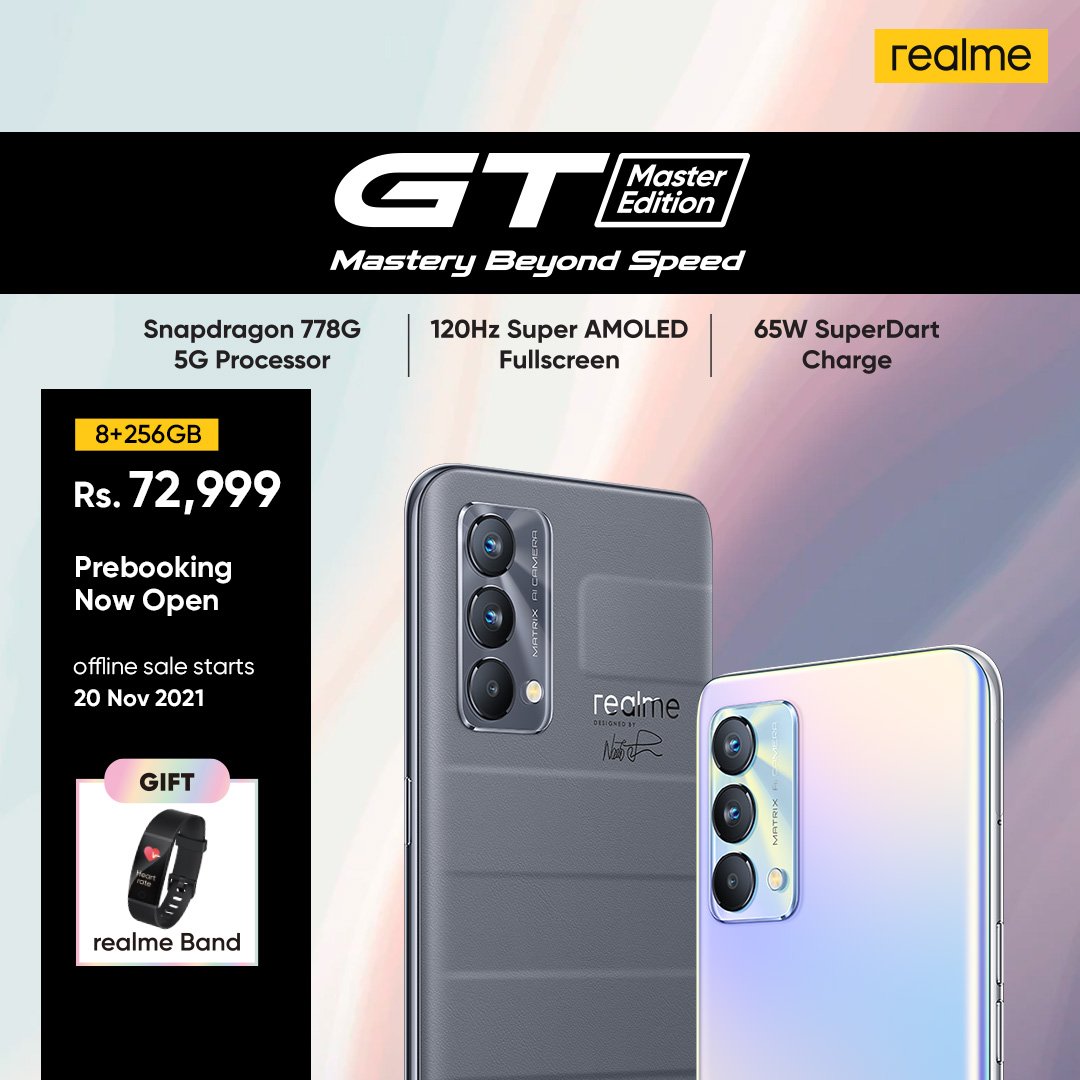
While the Realme GT Master Edition had been officially launched earlier this year, it is now finally arriving in the Pakistani market. The device is currently available for pre-orders in the region, with the company even offering a free gift alongside it.
Talking about the specs of the smartphone, the GT Master Edition sports a 6.43 inch Samsung Super AMOLED display that has a resolution of 2400 x 1090 pixels. Its screen offers 120Hz high refresh rate, 360Hz touch sampling rate, 5,000,000:1 contrast ratio, 100% DCI-P3 color gamut, 91.7% screen to body ratio, punch hole, and 1,000 nits peak brightness. Under the hood, Qualcomm Snapdragon 778 SoC powers the device. For photography, you can find a 64 megapixel triple camera setup with an 8 megapixel ultra wide angle lens and 2 megapixel macro sensor. The front features a 32 megapixel selfie shooter.
The Realme GT Master Edition is available in the country in two storage variants, namely 8GB of RAM with either 128GB or 256GB of internal storage. Pre-orders for the device are currently live for 72,999 Pakistani Rupee (roughly 420 US Dollars). For those that prefer to wait, the Chinese smartphone maker is launching the smartphone in markets all over Pakistan on 20th November 2021. Although, pre-ordering the device has you receive a free gift, which is a Realme Band.
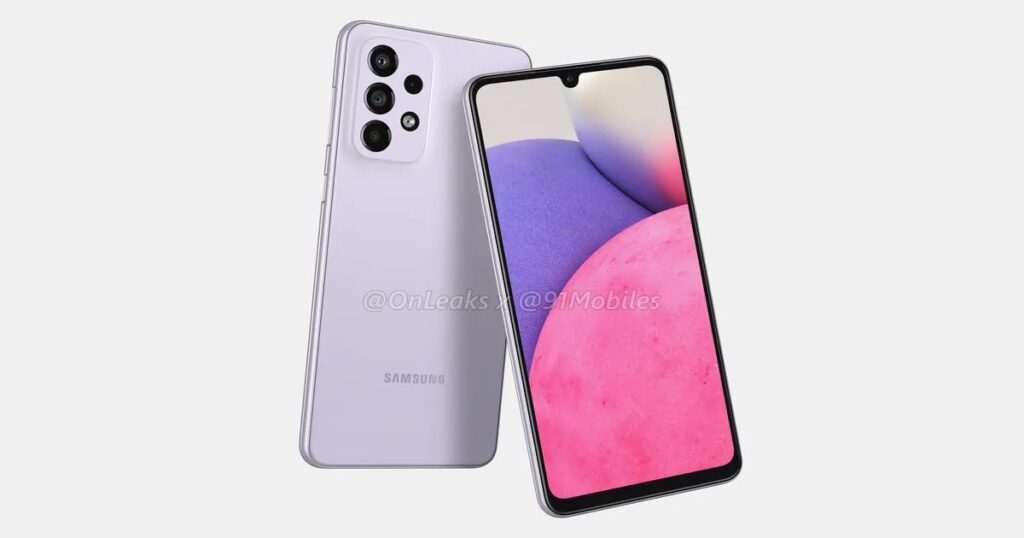
The upcoming Galaxy A33 is in the news since late September. In the past few days, we learned more about this smartphone, including its design. Today, we get to know about its battery.
Samsung Galaxy A33 | Source: @OnLeaks via 91Mobiles
According to GalaxyClub, the Galaxy A33 has been certified by Safety Korea. As per the certification, the handset will be backed by a 5,000mAh battery (4,885Ah rated) with model number EB-BA336ABY. This battery is manufactured by Ningde Amperex Technology Limited in China.
In other words, the Galaxy A33’s battery capacity will be identical to that of its predecessor Galaxy A32. Although the charging speed is a mystery at the moment, we can expect the phone to support standard 15W Samsung Adaptive Fast Charging.
As far as design is concerned, the handset will resemble the forthcoming Galaxy A53. However, it will have a dewdrop notch instead of a punch-hole. Anyway, it will be available in similar colors, namely black, white, light blue, and orange.
Interestingly, despite being a budget smartphone, it will lack a 3.5mm headphone jack. Further, it will sport a 6.4-inch display. It is speculated to retain the FHD+ AMOLED panel from its forerunner.
Unlike Galaxy A32, Galaxy A33 will only come in a 5G variant. Lastly, it will have a quad-camera setup on the rear but we are yet to grasp details about the sensors.
Samsung is rumored to release the Galaxy A33 in early 2022.
Xiaomi is reportedly working on two new Snapdragon 870 SoC powered phones for China. These models are expected to carry Xiaomi and Redmi branding. Fresh information shared by reliable tipster Mukul Sharma reveals that Xiaomi will be soon launching its next Snapdragon 870 model in the global market.
The tipster claimed that the upcoming Xiaomi phone with Snapdragon 870 chip is expected to carry support for 67W fast charging. He also added that it will be equipped with impressive cameras. Unfortunately, he did not reveal detailed information on the cameras and other specs of the device.
As per the tipster’s tweet, the global launch of the mysterious phone is confirmed. He added that even though the Indian launch of the phone is not confirmed, the device may eventually debut in the country.
There is a possibility that the tipster could be talking about the Xiaomi 2112123AC phone that has was recently approved by TENAA and 3C authorities of China. The reason behind it is that this model is expected to launch soon in China with specs like Snapdragon 870 and 67W fast charging support. Hopefully, the rumor mill will spill more information on the device in the coming days.
In related news, a new report has tipped the key details of the Xiaomi 12 Ultra and a variant of this phone called the Xiaomi 12 Ultra Enhanced Edition. The latter is expected to feature an in-display fingerprint scanner. Hence, it is also being speculated that this device could be a spiritual successor for the Xiaomi MIX 4.
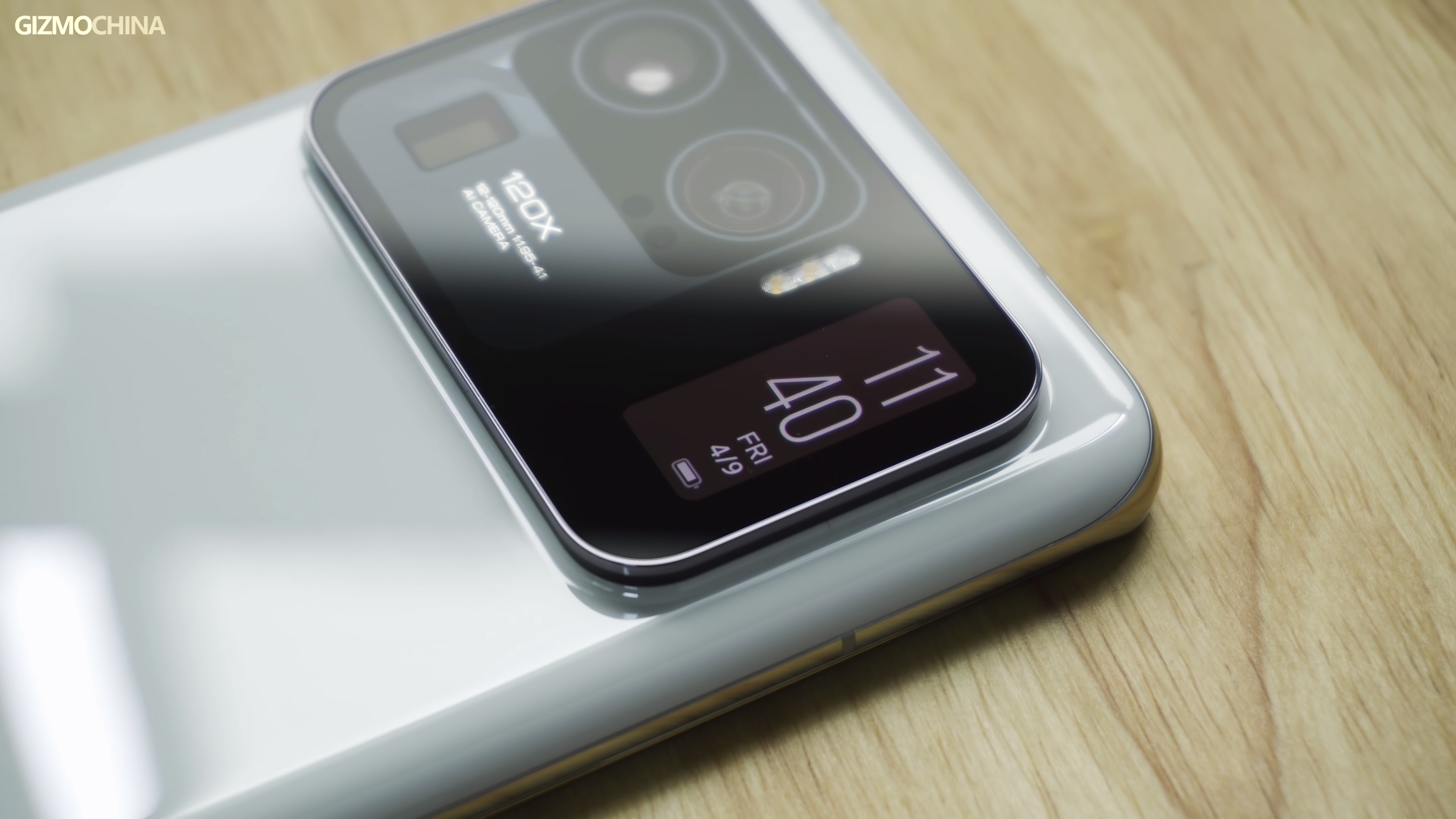
It has been found that both devices will feature the Snapdragon 8 Gen1 chipset (aka Snapdragon 898). Their rear camera setup may include a 50-megapixel + 48-megapixel + 48-megapixel + 48-megapixel quad-camera unit. These devices are expected to support 120x zoom and 15x video zoom.
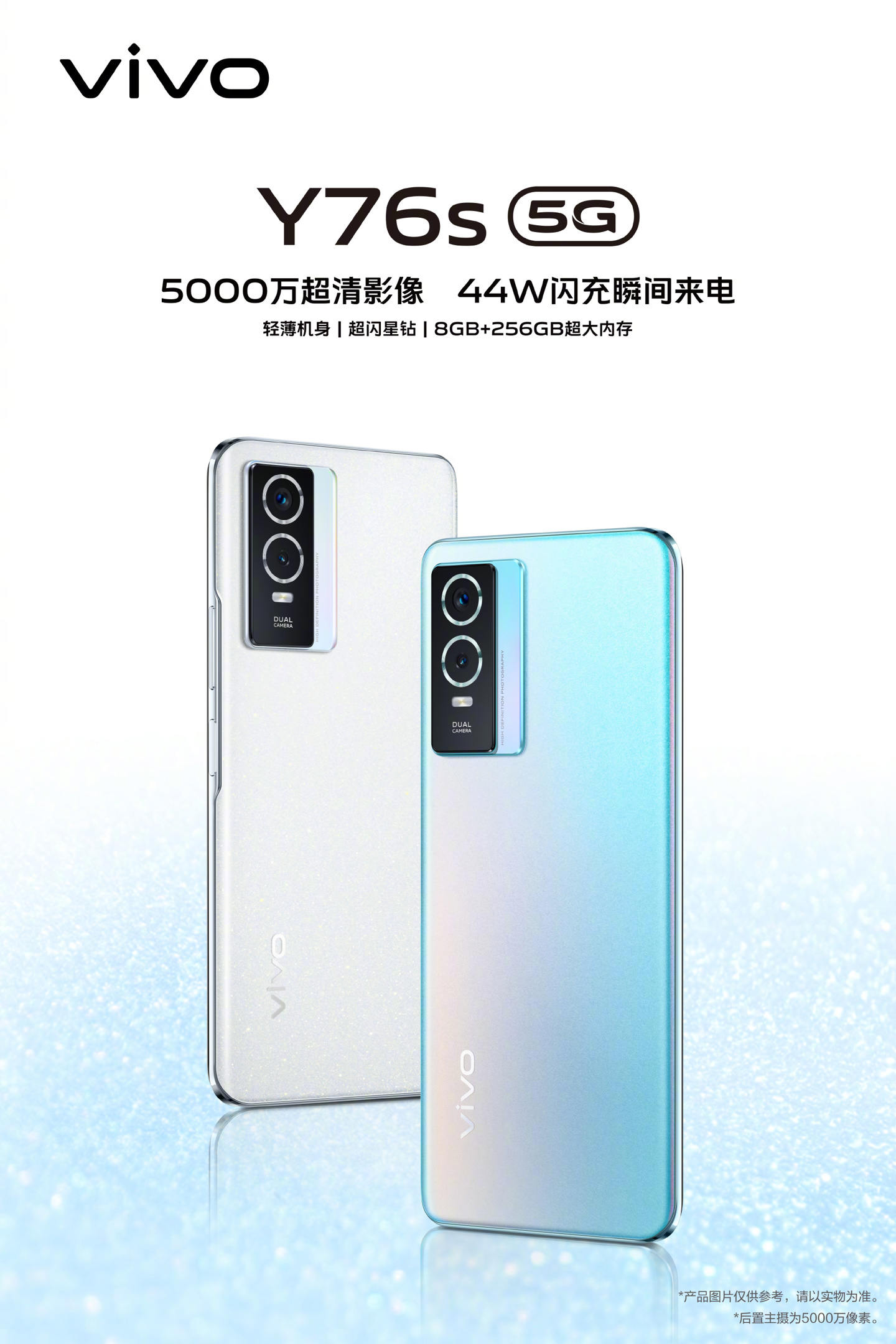
A few days ago, Vivo had launched its latest Y-series smartphone in the Chinese market, dubbed Vivo Y76s 5G. Now, days after its official launch, the company has started taking pre-orders for the device in China.
It comes in two memory variants — 8GB RMA with 128GB storage costing 1,799 yuan (~$282) while the 8GB RAM with 256GB storage model is priced at 1,999 yuan (~$314).
The Vivo Y76s features a 6.58-inch IPS LCD display that offers a Full HD+ screen resolution of 2408 x 1080 pixels, a 20:9 aspect ratio, and a standard 60Hz refresh rate. Under the hood, the device is powered by the MediaTek Dimensity 810 chipset, making it the first Vivo smartphone to pack Dimensity 810 SoC.
While the device packs 8GB of RAM, it also comes with support for 4GB of virtual RAM. It also has a microSD card slot, allowing you to further expand the phone’s storage capacity from 128GB or 256GB internal storage.
In the camera department, the device comes with a dual-camera setup on the back that includes a 50-megapixel main camera and a 2-megapixel macro camera, along with an LED flash. On the front, there will be an 8-megapixel snapper for taking selfies.
Connectivity options on the device include Dual SIM, 5G, Wi-Fi 802.11ac, Bluetooth 5.1, GPS, a USB-C port, and a 3.5mm audio jack. It comes with a side-mounted fingerprint sensor for added protection. Running Android operating system, the Vivo Y76s 5G is powered by a 4,100mAh battery with 44W fast charging support.
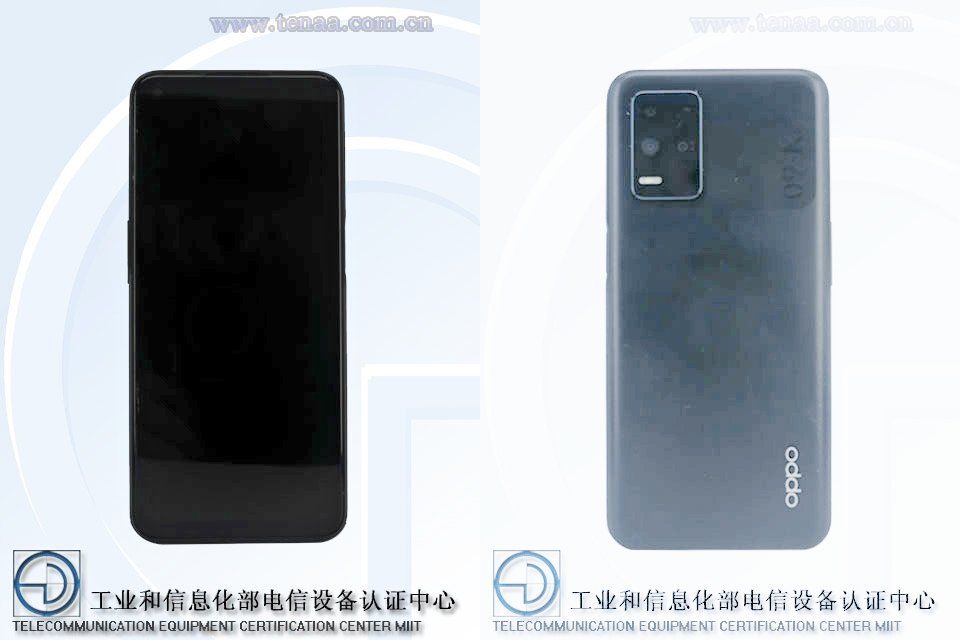
So far, OPPO has released three K9 models in China such as OPPO K9, OPPO K9 Pro, and OPPO K9s. Fresh information reveals that the company could be gearing up to launch a new K-series phone in China. The reason behind it is that a mysterious OPPO phone with a PCGM10 model number has appeared at the TENAA certification site. The images of the phone confirm that it is a K9 series model.
OPPO PCGM10 specifications
The OPPO PCGM10 features a 6.5-inch LCD panel that offers a Full HD+ resolution. It has a front-facing camera of 16-megapixel. The rear panel of the phone has a rectangle-shaped camera module at the top-left corner and the “09-K” branding on the top-right corner. The OPPO branding is available at the lower-right corner of the device. The device measures 162.5 x 74.8 x 8.8mm and weighs 191 grams.
OPPO PCGM10’s TENAA images
There is no word on the processor of the OPPO PCGM10. The device is equipped with 4 GB / 6 GB / 8 GB of RAM and 128 GB / 256 GB of built-in storage. It is unclear whether the device features an external storage slot.
The device is backed by a 4,880mAh rated battery, which indicates that its typical value could be 5,000mAh. It was found through the 3C certification of the device that it may carry support for 33W fast charging. It will come preinstalled with Android 11. Lastly, it features a side-facing fingerprint scanner.
There is no word on the final moniker of the OPPO PCGM10. Now that the device is TENAA certified, it is expected to go official as early as this month.
After several leaks, rumors, and delays, the South Korean giant Samsung finally seems to be all set to launch the Galaxy S21 FE smartphone in January 2021. Almost everything related to the device has already leaked online.
Today, a new report via MySmartPrice has revealed the memory variants of the Samsung Galaxy S21 FE as well as their pricing. The base model with 8GB RAM and 128GB internal storage will cost EUR 920 while the 8GB RAM with 256GB of internal storage version will be priced at EUR 985. Note that the pricing is included the local value-added tax (VAT).
Samsung Galaxy S21 FE Render Leak
In the UK, the device’s 8GB RAM with 128GB storage variant will be launched for GBP 776 while the 8GB RAM with 256GB storage variant will be launched for GBP 831. If the reports are to be believed, then Samsung plans to launch the Galaxy S21 FE in select regions only, which means only in Europe and the UK.
As for the launch, the smartphone is expected to go official on 4th January and is said to be available in four color options — White, Lavender, Cream, and Black.
Coming to the Samsung Galaxy S21 FE, the device features a 6.4-inch Full HD+ display with a 120Hz refresh rate and will be powered by the Qualcomm Snapdragon 888 or the company’s own Exynos 2100 chipsets. Both of these chips are manufactured by Samsung using the 5nm process.
As mentioned above, the device will come in two memory variants — 8GB RAM with 128GB internal storage and 8GB RAM with 256GB of internal storage. It will be powered by a 4,380mAh battery and come with support for 25W fast charging technology.
Earlier this year, Infinix launched the Smart 5 budget smartphone with specs like an HD+ display, Helio G25 SoC, and a massive 6,000mAh battery. Several months later in August, Infinix unveiled another variant dubbed Infinix Smart 5A. Now, without any announcements, the company has silently listed another model in the series called the Infinix Smart 5 Pro.
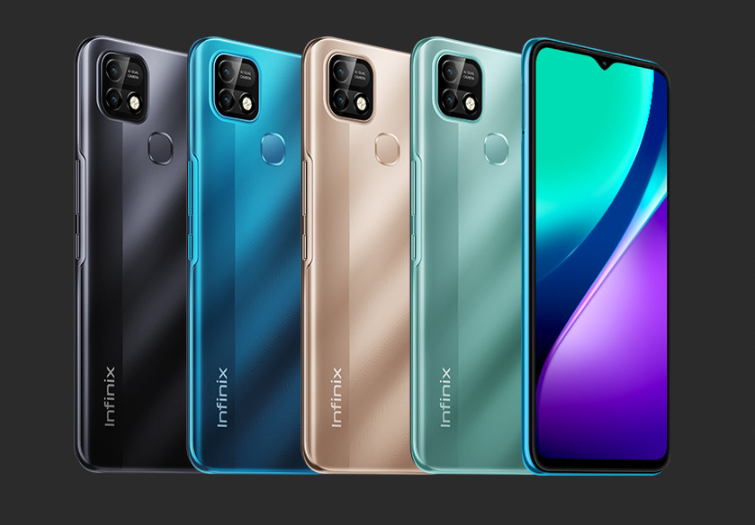
The Infinix Smart 5 Pro is currently listed on the Xpark e-commerce portal in Pakistan. The smartphone is priced at PKR 14,999(~$86) for the sole 2GB RAM and 32GB storage variant. It is available in Black, Green, Blue, and Gold colour variants.
Infinix Smart 5 Pro Specifications
Interestingly, the listing has all the specs and official marketing material of the smartphone. Starting with the design, the Smart 5 Pro has a different design than its sibling Smart 5. It has a 6.52-inch HD+ water-drop notch display with a 60Hz refresh rate.
The phone has a squarish camera module over the rectangular camera module seen on the Smart 5. It has a 13MP main lens and a 2MP depth-sensing unit. Upfront, it has an 8MP selfie sensor.
Inside, it is powered by the UNISOC SC9863A CPU with PowerVR GE8322 GPU. It is coupled with 2GB of RAM and 32GB of internal storage. It has a storage expandability option of up to 256GB via the microSD card slot.
It packs a big 6,000mAh battery with support for 18W fast charging. The smartphone has a dual-SIM slot that supports two nano SIMs. As for security, it has a rear-mounted fingerprint scanner. The handset runs on Android 11 out of the box with XOS 7.6 on top of it.
Google has been reported to be working on its own foldable smartphone under the Pixel branding but now it is being said that the technology giant is no longer planning to launch the Pixel Fold smartphone in the market.
It appears that Google isn’t confident enough as the company believes that its device won’t be as competitive as needed to be with other such phones. Competing against the likes of Samsung in the US and Europe.
Google Pixel Fold Render
From what’s known so far, the Google Pixel Fold was expected to be the same size as the Galaxy Z Fold3 and offer LTPO display with a variable refresh up to 120Hz. There were reports that the cameras were not going to be state-of-the-art as it was expected to be a step down from the recently released Pixel 6 and Pixel 6 Pro.
It was reported that the Pixel Fold would include the same 12.2-megapixel sensor, the Sony IMX363 which has been used since the Pixel 3 as the main sensor along with the Sony IMX386 12-megapixel ultra-wide camera and two 8-megapixel Sony IMX355 sensors, which were likely selfie cameras for the inner display and outer display.
As for the software department, the Google Pixel Fold was expected to have an Android 12L operating system. It was expected to be optimized for larger screens such as the Pixel Fold to enable more powerful multi-tasking and better app compatibility.
We expect the technology giant to still release the Android 12L software but Google won’t be the first brand to take advantage of these new features in a foldable device. It now remains to be seen what Google actually does about foldables.
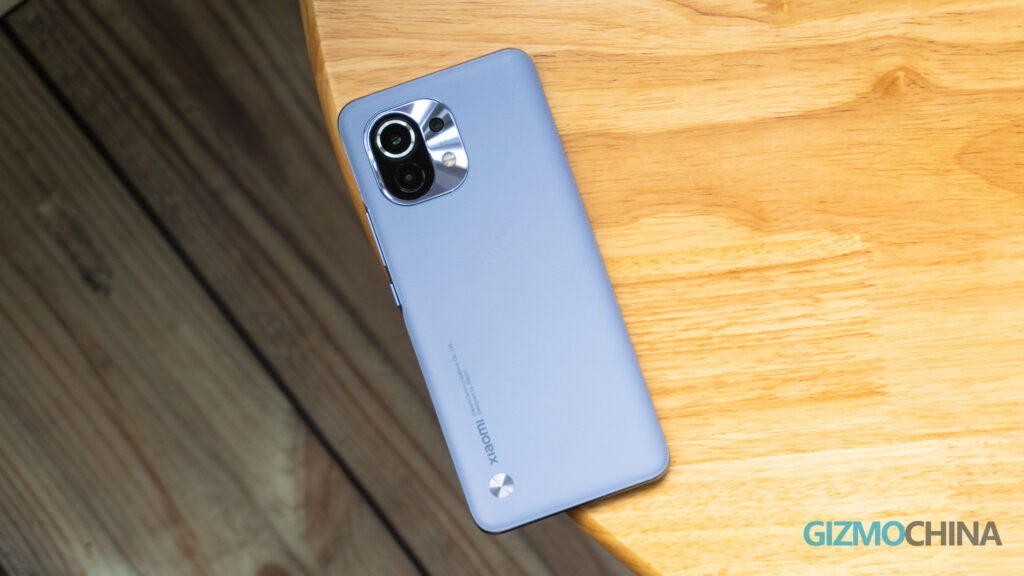
Xiaomi introduced the Xiaomi Mi 11 in December last year. Later, the company introduced other models such as Mi 11 Pro, Mi 11 Ultra, and Mi 11i with flagship specifications. Hence, it is speculated that the upcoming Xiaomi 12 series will include multiple flagship models. While the rumor mill has already tipped the existence of the Xiaomi 12 Ultra, a new report claims that this model could be accompanied by another device named the Xiaomi 12 Ultra Enhanced Edition.
Publication Xiaomiui.net reported that it has come across Xiaomi 12 Ultra and Xiaomi 12 Ultra Enhanced Edition devices in the Mi code. These models are said to be codenamed as Loki and Thor.
Xiaomi Mi 11 Ultra
The publication has further learned through the Mi code that the Loki model is based on Thor, and the latter is based on Zeus. To those who are unaware, the Zeus model is expected to debut with the Xiaomi 12 Pro moniker in the Chinese market.
The Loki device has an L1A model number and is likely to debut in China with the Xiaomi 12 Ultra name. On the other hand, the Thor device’s model number is L1 and is expected to break cover with the Xiaomi 12 Ultra Enhanced Edition in the home market.
The publication added that the L1 model has an in-display camera. To recollect, Xiaomi announced the Xiaomi MIX 4 as its first phone with an in-display camera. Hence, it is likely that the L1 may debut as the Xiaomi MIX 5 and not 12 Ultra Enhanced Edition.
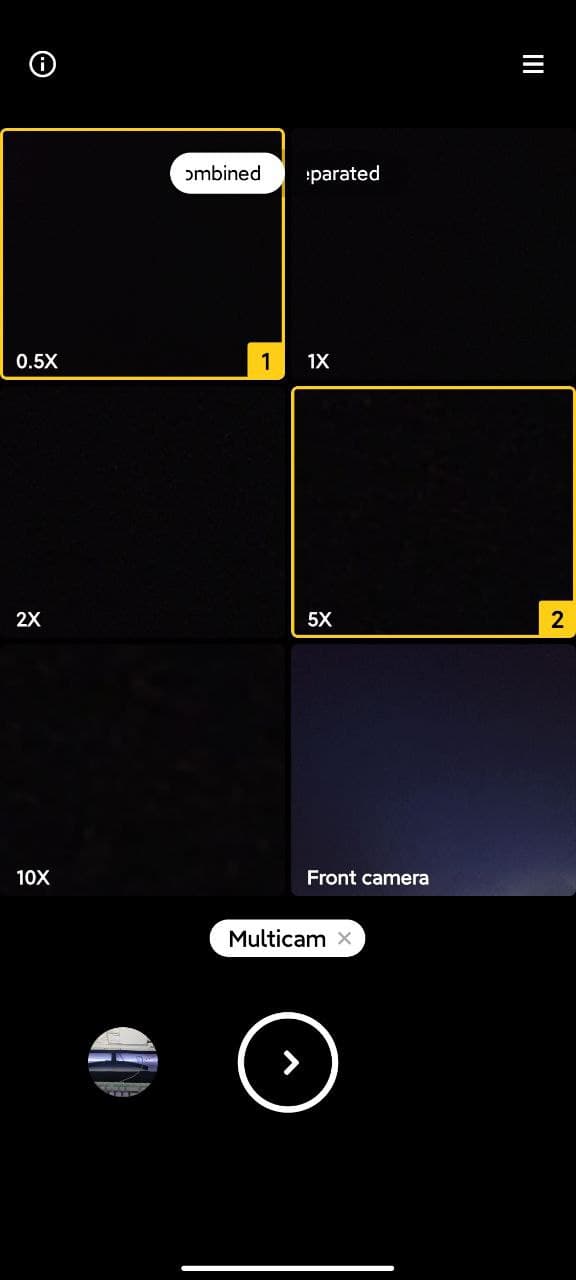
Multicamera mode of alleged Xiaomi 12 Ultra and 12 Ultra Enhanced Edition
As far as the specs are concerned, it has been found that the alleged 12 Ultra and 12 Ultra Enhanced Edition will be powered by the Snapdragon 8 Gen1 (aka Snapdragon 898) chipset. The Ultra models are expected to feature a 50-megapixel main camera, which could be the Samsung GN5 sensor. Both models also have a 48-megapixel camera with 2x zoom, a 48-megapixel camera with 5x zoom, and another 48-megapixel camera with 10x zoom.
The above-shown image, which gives a look at the multi-camera mode, suggests that both devices have a total of five cameras, which includes the front-facing snapper. It appears that both models will offer up to 120x zoom and 15x video zoom. It is speculated that the 12 Ultra models may remain exclusive to the Chinese market.
Vivo has silently unveiled the Vivo Y50t smartphone in China. The company has been mainly launching 5G-enabled phones in the Chinese market. However, the Y50t is a 4G LTE phone. The handset features a trendy punch-hole display, Snapdragon 7-series chipset, ample internal storage, 48-megapixel triple cameras, and a big battery.
Vivo Y50t specifications and features
The Vivo Y50t has a 6.58-inch IPS LCD display that produces a Full HD+ resolution of 1080 x 2480 pixels, a 1500:1 contrast ratio, a 60Hz refresh rate, and a 90.72 percent screen-to-body ratio. The device is fitted with a selfie camera of 8-megapixel for capturing selfies.
The rear camera module of the Y50t has a 48-megapixel primary camera, a 2-megapixel depth sensor, and a 2-megapixel macro camera. The device comes with security features like face unlock and a side-facing fingerprint scanner. It runs on Android 10 OS and OriginOS 1.0.
Vivo Y50t
The Y50t is powered by the Snapdragon 720G mobile platform and 8 GB of RAM. The device comes with 4 GB of extended RAM, 128 GB of internal storage, and a microSD card slot for more storage.
The Y50t is powered by a 4,500mAh battery, which supports 18W charging through a microUSB port. It comes with other features such as 4G VoLTE, dual SIM, Wi-Fi 802.11ac, Bluetooth 5.0, GPS, and a 3.5mm headphone jack.
Vivo Y50t pricing and availability
The Vivo Y50t is priced at 1,399 Yuan (~$219) and it comes in two colors such as gradient blue and black. The handset is expected to go on sale in China soon.
OPPO has been rolling out ColorOS 12 beta builds to eligible devices since September. The latest phones to receive the update are the OPPO Find X2 series handsets in India and Indonesia. Let’s take a look at how interested users can try out OPPO’s version of Android 12 on these smartphones before most people.
OPPO Find X2 Pro
According to an official announcement post on OPPO Community, the Chinese smartphone maker is recruiting ColorOS 12 beta testers for the following devices in India and Indonesia.
In order to enroll in the beta program, users should be on firmware version C.73. If so, they can head over to Settings > Software Update > Gear Icon > Apply for Beta Version > Update Beta Version and follow the on-screen instructions.
Registrations will remain open from November 15 to November 22. However, only 5000 applicants will be selected for the first batch in total for the three phones.
Hence, if you own any of these handsets and want to try Android 12-based ColorOS 12, then make sure to register as soon as possible. As far as stable release is concerned, it should happen in the coming weeks once the issues are resolved.
The OPPO Find X2 series debuted with ColorOS 7.1 based on Android 10. The three models were updated to Android 11-based ColorOS 11 last year. Therefore, ColorOS 12 is their second major Android update and will receive one more Android update in the future.
Two Xiaomi phones with model numbers 2201123C and 2112123AC were spotted at the CMIIT certification platform at the beginning of this month. Later, the 2112123AC was spotted at the 3C certification platform of China. Now, the same phone has received approval from the TENAA authority.
The 3C certification of the 2112123AC had revealed that it may arrive with a 67W charger. The TENAA listing of the phone has not revealed any information on its specifications. These certifications are a good hint that the 2112123AC will be launching soon in the Chinese market.
#Xiaomi 2112123AC 5G appears on TENAA certification.
The 2112123AC could be the rumored L3A phone, which is said to be powered by the Snapdragon 870 chipset. Unfortunately, nothing much is known on the specs of this mysterious device.
A recent report revealed that the L2, L1A, and L1 are the model numbers of upcoming Xiaomi 12, Xiaomi 12 Pro, and Xiaomi 12 Ultra smartphones. The L10, L10A, L11, and L11R are said to belong to the Redmi K50 series. The L9 and L9B are said to arrive as Xiaomi branded devices powered by the latest Snapdragon 778G+ chipset.
In related news, Qualcomm will be announcing its next flagship chip, which could be called the Snapdragon 8 Gen1 by the end of this month. It is likely that the Xiaomi 12 featuring the new chip may debut in December. While the vanilla model is expected to go official next month, the Xiaomi 12 Pro and Ultra models are speculated to debut in the beginning months of 2022.
Yesterday, we reported on the model numbers of upcoming premium smartphones from Xiaomi and Redmi. The list also includes some unknown phones. According to rumors, two of these devices could be small screen flagship smartphones.
Xiaomi Mi 11
When reports started emerging about iPhone 12 mini ahead of its release, Xiaomi was the first Android OEM to publicly show interest in this form factor. However, ASUS beat the Chinese tech giant by bringing ZenFone 8 first to the market.
More than a year later, rumors suggest that the two upcoming Xiaomi devices with model numbers L3 and L3A could be the long-awaited mini smartphones from the company. As per MIUI code, the duo will be powered by a Qualcomm Snapdragon 870 SoC, and the former is said to feature a 6.3-inch display.
Unfortunately, that’s all the information we have right now. Previously, going by the screen size, we speculated L3 to be a clamshell foldable smartphone.
Although these two devices are said to be mini smartphones, we are skeptical since there’s still no strong evidence. However, it is worth noting that Redmi GM Lu Weibing talked about small screen flagship smartphones on Weibo yesterday.
Anyway, whatever L3 and L3A are, we expect to learn more about these phones in the coming days. Until then, do let us know your thoughts in the comment section below.
Lenovo is launching amazing flagship tablets in China running the Android operating system and it is close to the domination of the Android flagship segment regarding the tablet market in the country. This year the company released two tablets with the Snapdragon 870 mobile platform: The Xiaoxin Pad Pro 12.6 and the Xiaoxin Pad Pro 11.5 (2021) also known as the Lenovo Pad Pro in the international markets. Unlike what you may think at a first glance, the Xiaoxin Pad Pro 11.5 does not differ from the 12.6 variant only for the diagonal of its display. There are also other important differences between the two tablets which deserve to be discovered. This comparison between their great specifications will help you to do it.
Lenovo Xiaoxin Pad Pro 12.6 vs Lenovo Xiaoxin Pad Pro 11.5
Lenovo Xiaoxin Pad Pro 12.6
Lenovo Xiaoxin Pad Pro 11.5
DIMENSIONS AND WEIGHT
N/D
264.3 x 171.4 x 5.8 mm, 485 g
DISPLAY
12.6 inches, 1600 x 2560p (Full HD+), AMOLED
11.5 inches, 1600 x 2560p (Quad HD+), OLED
PROCESSOR
Qualcomm Snapdragon 870, octa-core 3.2 GHz
Qualcomm Snapdragon 870, octa-core 3.2 GHz
MEMORY
8 GB RAM, 256 GB – micro SD slot
6 GB RAM, 128 GB – micro SD dedicated slot
SOFTWARE
Android 11, ZUI
Android 11, ZUI
CONNECTIVITY
Wi-Fi 802.11 a/b/g/n/ac/ax, Bluetooth 5.2, GPS
Wi-Fi 802.11 a/b/g/n/ac/ax, Bluetooth 5.1, GPS
CAMERA
Dual 13 + 5 MP
8 MP + TOF 3D sensor front camera
Dual 13 + 5 MP
Dual 8 + 8 MP IR TOF 3D front camera
BATTERY
10,200 mAh, fast charging 45W
8600 mAh, fast charging 20W
ADDITIONAL FEATURES
Pen and keyboard support
Pen and keyboard support
Design
These two tablets come with exactly the same design and form factor and they can be considered 2-in-1 tablets. They have narrow bezels around the display and a rear kickstand which allows to use them like notebooks if connected to an external keyboard which can be attached to the devices magnetically. The only important aesthetic difference between these two models is the dimension: the Lenovo Xiaoxin Pad Pro 12.6 is a bigger tablet because it is equipped with a wider display.
Display
As said above, the displays of these tablets differ in terms of dimensions, but if we look at the rest of the specifications, these panels are more or less the same. They are both OLED displays with a stunning color quality not only thanks to the OLED technology but also because they support the HDR10 certification and Dolby Vision. Further, they provide a very high level of detail thanks to a Quad HD+ resolution of 1600 x 2560 pixels. Note that the Lenovo Xiaoxin Pad Pro 12.6 has a higher refresh rate than Xiaoxin Pad Pro 11.5 with up to 120 Hz. Both the tablets are equipped with a side-mounted fingerprint reader for authentication.
Specs & Software
Lenovo Xiaoxin Pad Pro 12.6 and Lenovo Xiaoxin Pad Pro 11.5 are powered by the same processor: the Snapdragon 870 mobile platform. Thanks to this chipset, they are able to provide flagship-class performance perfect for power users. These are two tablets you should choose if you are a gamer or you plan to use heavy apps or multiple apps at the same time. What changes between the two hardware departments is the memory configuration: the Lenovo Xiaoxin Pad Pro 12.6 has 8 GB of RAM and 256 GB of internal storage, while the 11.5-inch version has just 6 GB of RAM and 128 GB of storage. Both the devices run Android 11.
Camera
The base variants of these tablets are equipped with the same rear cameras: a 13 MP main sensor and an 8 MP ultrawide camera. On the front side, you get an 8 MP selfie camera and a TOF 3D sensor for 3D facial recognition. There are no differences between the cameras, so whatever you choose, you will actually get the very same photo quality and video quality.
Alongside the bigger display, the main advantage of the Lenovo Xiaoxin Pad Pro 12.6 is the bigger battery. Thanks to it, you can get more hours of battery life. Further, it has a faster charging technology with a power of 45W, while the 11.6-inch version stops at 20W.
Price
The Lenovo Xiaoxin Pad Pro 12.6 is naturally more expensive than the smaller sibling with 11.6 inches. Its price for the Chinese market is 3,699 Yuan which roughly converts to $579. So, if you need to save money, go for the Lenovo Xiaoxin Pad Pro 11.5. The 12.6 variant offers a few things more: a higher refresh rate, a bigger battery, and faster charging, as well as a bigger display making it better for productivity. But for the rest, these two tablets are pretty much the same. Would you spend more on those features or you would go for the 11.6-inch version?
Lenovo Xiaoxin Pad Pro 12.6 vs Lenovo Xiaoxin Pad Pro 11.5: PRO and CONS
Samsung Galaxy S22 series has been the subject of numerous leaks and rumors in the last 48 hours. Ahead of the next Galaxy Unpacked Event in January 2022, there had been a flurry of leaks and renders related to the Galaxy S22 lineup. The latest rumor is that the Samsung Galaxy S22 series will be powered by either Qualcomm or Exynos chipsets.
Previously, it had been speculated that only Qualcomm’s Snapdragon chips will be present in the Galaxy S22 series. This much was leaked by a former Samsung employee. Another tipster then hinted that some regions will indeed see the Exynos 2200 in their Galaxy S22 models. It will seem that both leaks revealed one aspect of the matter.
A news item from Korea has revealed that Samsung will use both the Snapdragon 898 and Exynos 2200 chips in the new Galaxy S22 series. Obviously, in line with its tradition, Samsung will offer Snapdragon-equipped models to customers in the US, while Europe, South Korea, and other regions will be getting the Exynos 2200 versions of the same models. Samsung’s decision on different chipsets globally has attracted lots of flak from several quarters. However, the company has weathered the storm and now has a strong partnership with AMD aimed at strengthening the Exynos chips that will adorn its smartphones.
Geekbench performance numbers for the Snapdragon 898 and the Exynos 2200 are expected not to be significantly different. Another leak has indicated though that Exynos-equipped Galaxy S22 models may lag behind Snapdragon-equipped models in graphics, although the claim is not definitive.
We use cookies on our website to give you the most relevant experience by remembering your preferences and repeat visits. By clicking “Accept”, you consent to the use of ALL the cookies.
This website uses cookies to improve your experience while you navigate through the website. Out of these, the cookies that are categorized as necessary are stored on your browser as they are essential for the working of basic functionalities of the website. We also use third-party cookies that help us analyze and understand how you use this website. These cookies will be stored in your browser only with your consent. You also have the option to opt-out of these cookies. But opting out of some of these cookies may affect your browsing experience.
Necessary cookies are absolutely essential for the website to function properly. This category only includes cookies that ensures basic functionalities and security features of the website. These cookies do not store any personal information.
Any cookies that may not be particularly necessary for the website to function and is used specifically to collect user personal data via analytics, ads, other embedded contents are termed as non-necessary cookies. It is mandatory to procure user consent prior to running these cookies on your website.