ASUS announced several Windows 11-powered laptops for different use-cases at the ongoing CES 2022 and along with that, the company has also announced a new pretty powerful Chromebook.
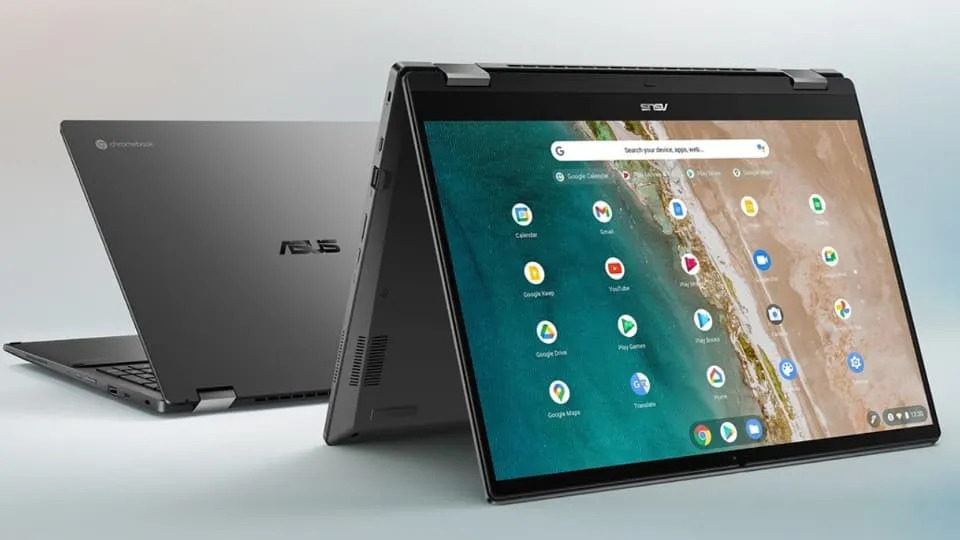
The company has announced the ASUS Chromebook Flip CX5 (CX5601) which comes with a bigger 16-inch display and seems quite an interesting product as far as Chromebooks are considered because of the powerful internals.
The Chromebook Flip CX5 features a 16-inch Full HD display with touchscreen support and 16:10 aspect ratio, 87 percent screen-to-body ratio. It has a 360-degree ErgoLift hinge that enables the device to be used in tablet mode.
The device is powered by the latest 12th generation Intel Core i7 processor with vPro and packs up to 16GB of LPDDR4X RAM and up to 512GB of PCIe NVMe SSD storage.
It has a spill-resistant backlit keyboard with a 1.4mm key travel and a numeric keypad on the right side. There’s also a large touchpad that measures 5.84 inches diagonally.
There are also four Harman Kardon-certified speakers. As for the ports, the laptop comes with two Thunderbolt 4 ports, one HDMI 2.0 port, a USB 3.2 Gen 2 Type-A port, a 3.5mm headphone jack, and a microSD card slot.
The device has a MIL-STD 810H tested chassis and comes with support for Wi-Fi 6E wireless connectivity. It also features a Full HD webcam with a privacy shutter that covers the sensor when not in use.
Currently, ASUS has not revealed the pricing or exact availability for the Chromebook Flip CX5 (CX5601) but we expect the device to be made available in the coming months.
Google has been working on improving Android and this year, the technology giant will be adding some audio-related features that aim to further improve the user experience but it seems that the features that the company plans to add are inspired by Apple.
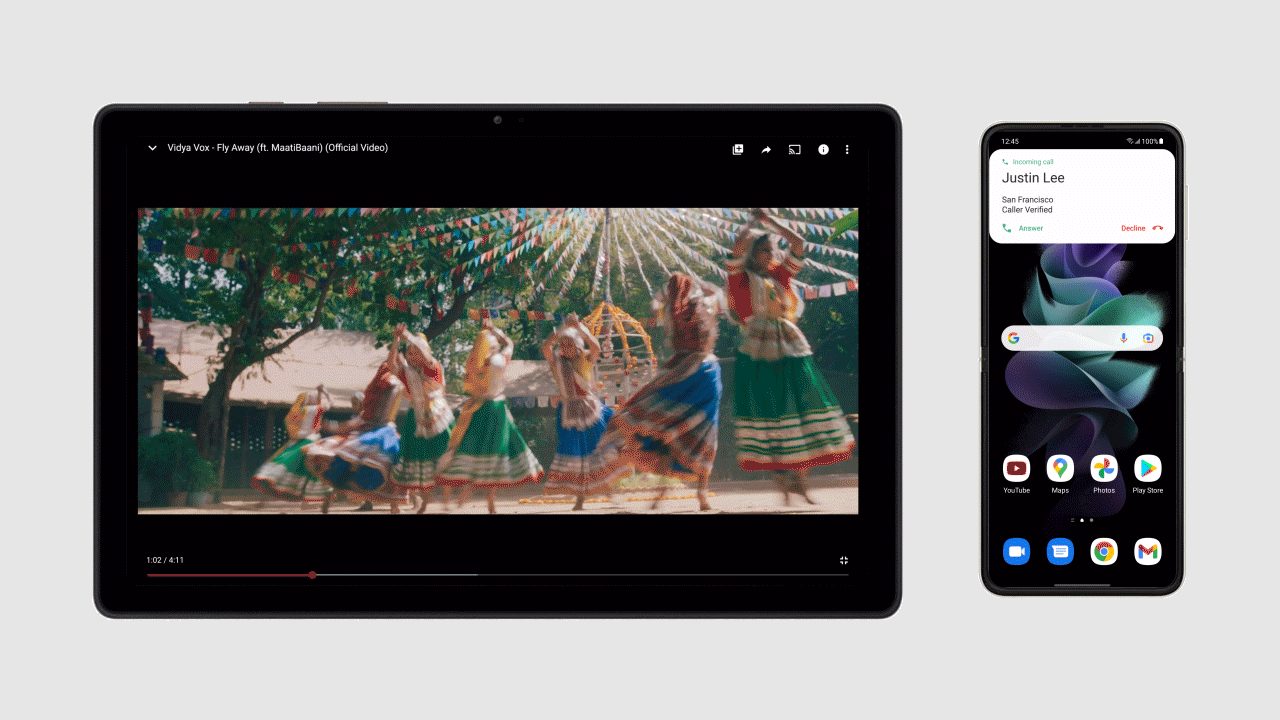
The search engine giant will be updating the Fast Pair technology for adding features like auto-switching as well as spatial audio. While the exact release timeline is not yet known, they are expected to get rolled out in the coming weeks or months.
These new features coming to Android for enhancing the Bluetooth headphone capabilities have already been available for iPhone and AirPods users. Once Google rolls out these features, supported headphones and udio sources including Android phones, Chromebooks, Android TV, and select Windows PCs will be auto-switching.
The company is also set to adapt for head tracking for spatial audio on Android for sound effects based on the head movements. Do note that there’s already support for basic spatial audio for a few music services right now.
So far, Google has not revealed much details about the upcoming spatial audio features and thus, details about supported music streaming services, supported headphones, and supported versions of Android remains unknown.
For those who are unawanre, Fast Pair is a feature in Android for pairing Bluetooth devices from the pop-up window instead of going to the Settings app and manually pairing the devices to your smartphone.
The vivo Watch 2 was just only launched last month, but it seems like vivo really wants its next-generation timepiece onto as many as wrists possible. Hence, today, vivo decided to launch the vivo Watch 2 iQOO Limited Edition lineup.
vivo watch 2 launch poster with pricing
In conjunction with the vivo iQOO 9 gaming phone series launch event, vivo also took the opportunity to announce its iQOO inspired design, limited-edition lineup of the vivo Watch 2. At 1249 RMB (~ USD 196), the iQOO limited edition comes in cheaper by 50 RMB than the launch price of the original vivo Watch 2.
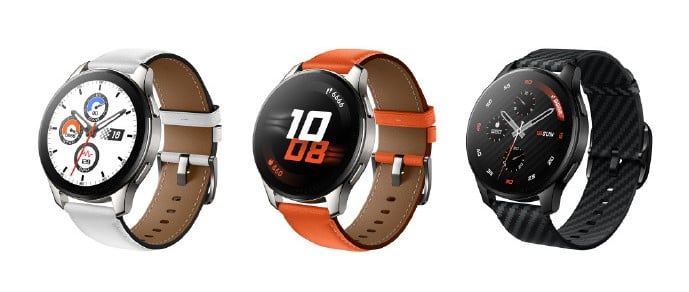
The vivo watch 2 iQOO Limited Edition introduces three new watch straps for customers to choose from, which are respectively Silverstone Leather, Flaming Orange Leather, and a grey-black striped nylon-braided watch strap called “Journey”. Each customer is able to pick from one of these options to be included with their purchase of the iQOO Limited Edition vivo Watch 2.
If you already own a vivo Watch 2 and fancy the watch straps of the iQOO limited edition lineup, you may purchase either Silverstone Leather or Flaming Orange Leather for only 199 RMB (~ USD 32) and if you fancy the “Journey” watch strap, you can buy it for only 169 RMB (~ USD 27) from vivo.
Vivo iQOO limited edition watchband pricing if sold separately
Besides the exclusive watch straps and the reduced launch price, the iQOO Limited Edition vivo Watch 2 is completely identical to the original vivo Watch 2.
To recap, the vivo Watch 2 was launched last month as one of the first smartwatches to support eSIM in China. The highlight would be its large 515 mAh battery, which vivo claims to last up to 14 days on a single charge. Another highlight is the sleep tracking on the watch. Unlike traditional wearable devices that monitor sleep based on acceleration sensors, the Vivo Watch 2 smartwatch uses advanced CPC cardiopulmonary coupled sleep analysis technology. The technology enables the watch to more accurately determine the stage and proportion of sleep, and accurately record even the noon nap as well.
The latest vanilla version of Xiaomi’s flagship series is not only a true flagship but also a compact flagship. With its small 6.28-inch display, it has dimensions similar to the iPhone 13 while providing an amazing specs sheet. It even comes with a good price, but does it offer a higher value for money than its predecessor Xiaomi Mi 11? The older Mi 11 is currently available at great street prices, that is the reason why it still represents a great option in 2022. This is a comparison between the specifications of the Xiaomi 12 and the Xiaomi Mi 11 which will help you to pick the best phone for your needs.
Xiaomi 12 vs Xiaomi Mi 11
Xiaomi 12
Xiaomi Mi 11
DIMENSIONS AND WEIGHT
152.7 x 69.9 x 8.2 mm,
179 g
164.3 x 74.6 x 8.1 mm,
196 g
DISPLAY
6.28 inches, 1080 x 2400 pixels (Full HD+), OLED
6.81 inches, 1440 x 3200 pixels (Full HD+), AMOLED
Triple 50 + 13 + 5 MP, f/1.9 + f/2.4
32 MP front camera
Triple 108 + 13 + 5 MP, f/1.9 + f/2.4 + f/2.4
20 MP f/2.2 front camera
BATTERY
4500 mAh, fast charging 67W and fast wireless charging 50W
4600 mAh, Fast Charging 55W, Fast wireless charging 50W
ADDITIONAL FEATURES
5G, dual SIM, reverse wireless charging
5G, dual SIM, reverse wireless charging
Design
As already mentioned, the Xiaomi 12 is one of the most compact flagship phones out there. But if we exclude the dimensions, the Xiaomi Mi 11 is much more attractive in terms of design because it comes with a curved screen and a very high screen to body ratio. It is my favorite design of this comparison because of its curved screen and it is made with premium materials just like its successor: a glass back and an aluminum frame. It even comes in a special leather version, but it is exclusive for the Chinese market and you can not find it everywhere. On the other hand, the Xiaomi 12 is more compact and offers stronger Gorilla Glass Victus protection.
Display
Despite it being an old-generation phone, the Xiaomi Mi 11 has a better display. First of all, it comes with a wider diagonal: 6.81 inches, great for gamers and power users. Further, it has a higher Quad HD+ resolution with 1440 x 3200 pixels, while the Xiaomi 12 has a classic Full HD+ resolution. For the rest, these displays do not differ so much: they are both OLED panels with one billion colors, a 120 Hz refresh rate, and the HDR10+ certification, as well as a very high brightness (higher on the Mi 11 with a peak of 1500 nits) and in-display fingerprint scanners. In both cases, you get a great display, but the Mi 11 is superior.
Specs & Software
The mobile platform of the Xiaomi 12 did not even exist when Xiaomi Mi 11 was released for the first time. We are talking about the new Snapdragon 8 Gen 1 chipset, the best SoC by Qualcomm built at 4 nm and running at a max frequency of 3 GHz. It is a noticeable improvement if compared to the Snapdragon 888 found on the Xiaomi Mi 11. There are no improvements when it comes to the memory configurations: both have up to 12 GB of RAM and up to 256 GB of internal storage. Note that the Xiaomi 12 ships with Android 12 out of the box customized by MIUI 13, while Xiaomi Mi 11 runs Android 11 and MIUI 12.5: the former will get longer software support.
Camera
The camera of the Xiaomi 12 is a bit more advanced than the one found on the Xiaomi Mi 11 because of its better main sensor: a 50 MP camera with OIS. The secondary sensors are the same: a 13 MP ultrawide camera and a 5 MP telephoto macro camera, but the Xiaomi 12 has a better 32 MP selfie camera which supports 1080p video recording at 60 fps.
The battery of the Xiaomi Mi 11 is slightly bigger: the capacity is 4600 mAh, while the 12 stops at 4500 mAh. But this does not mean it will provide a longer battery life: the Xiaomi 12 has a more efficient processor as it is built at 4 nm, as well as a smaller display with a lower resolution. That is why it will most likely last more on a single charge. With the Xiaomi 12, you even get fast charging speeds thanks to 67W fast charging.
Price
Xiaomi Mi 11 is currently available for about €500/$565 in China, while Xiaomi 12 starts from €510/$575. While the former offers a better display, the latter has a better camera, faster charging, and a superior hardware department, but it is a compact phone. So the Xiaomi 12 wins the comparison, but only for those who like having a compact phone.
Fire-Boltt was expected to launch a new smartwatch in the Indian market soon. Earlier today, the company launched the Fire-Bolt Ninja 2 and now it has silently announced the Fire-Boltt Ultron. The Ultron smartwatch is currently selling on the Flipkart shopping portal and has features like the SpO2 sensor, AMOLED screen, and circular design.
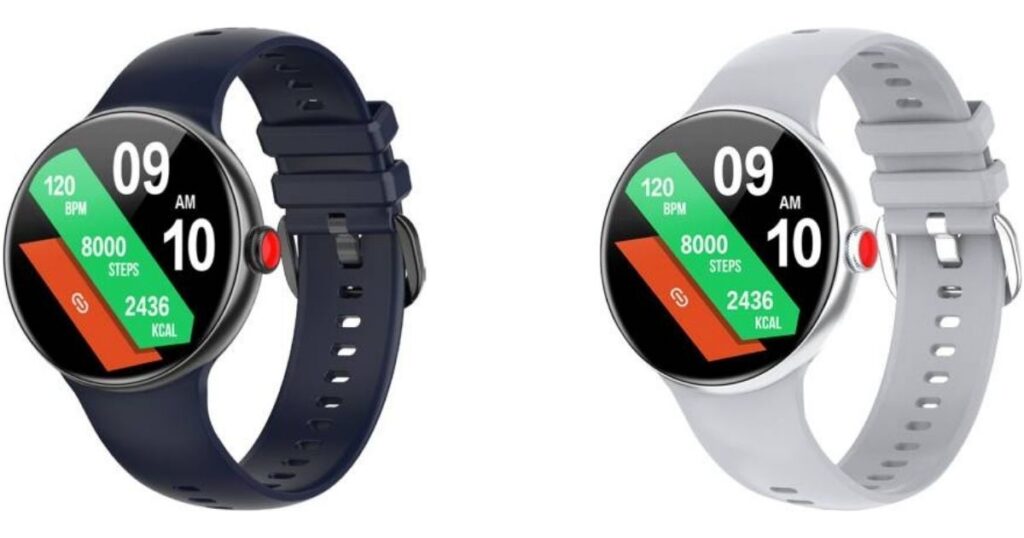
The Fire-Boltt Ultron is priced at Rs. 3,999(~$54) and comes in Black, Blue, Grey, and Pink color variants. The watch is more than double the price of the Fire-Boltt Ninja 2. Just for comparison, the Ninja 2 costs Rs. 1,699(~$23) in India.
Fire-Boltt Ultron Specifications
The Fire-Boltt Ultron comes in a circular form factor. It has a 1.2-inch AMOLED display with a resolution of 390 x 390 pixels. It has a SpO2 sensor for monitoring blood-oxygen levels, a Blood pressure sensor, and has a continuous heart rate monitor.
The smartwatch comes with an Always-On-Display and has quite a few watch faces which can be customized from the native app. The smartwatch has 14 sports modes including walking, running, cycling, basketball, and others.
It has sleep tracking, menstrual reminder, and meditative breathing exercises. It has a 3ATM water-resistance rating offering enhanced durability. As for the battery, the Ultron is claimed to last for up to 5 days on a single charge. It has Bluetooth v5.0 support and has a dual UI menu. It can receive SMS, call alerts, and control music and cameras.
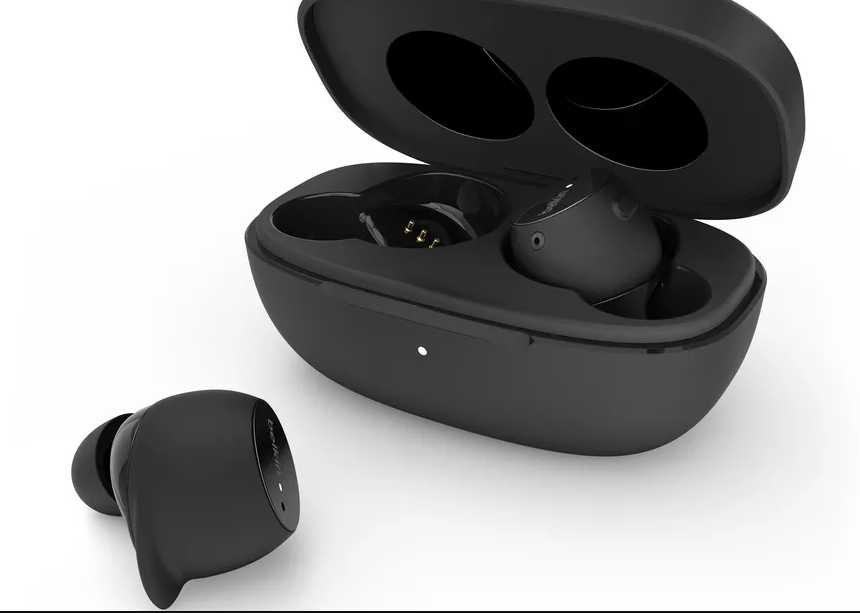
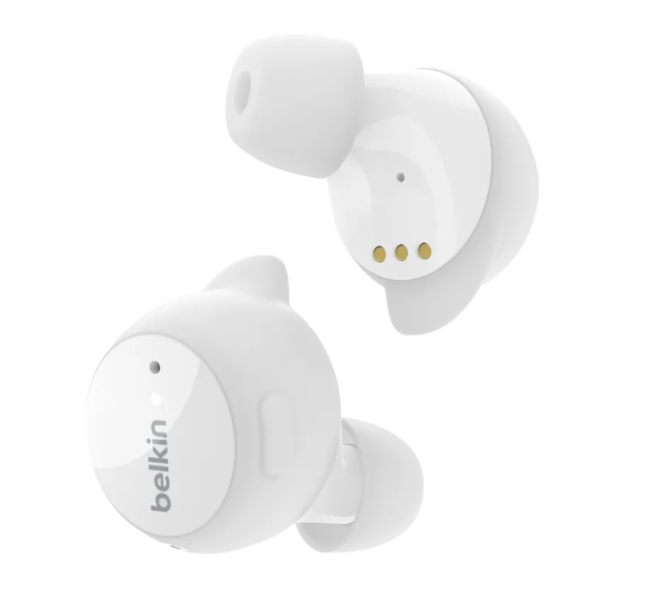
The Soundform Immerse hybrid noise-canceling earbuds are the latest offering from Belkin in the TWS earbuds category. The active noise cancellation technology means that the Soundform Immerse can deliver audio free of background noise and interference. The hybrid noise canceling mechanism features two microphones inside and outside each bud which detects and cancels out surrounding sound in the environment.
The Belkin Soundform Immerse earbuds are coming six months after the release of its predecessor in the TWS category, the Move buds. Its battery offers 8 hours of playback on a full charge, which is extended to 36 hours with the charging case. The earbuds support aptX HD that transmits high-resolution audio. In addition to the excellent audio output, the Multipoint technology allows the user to pair the earbuds to two different devices simultaneously. The Belkin Soundform Immerse earbuds are compatible with Apple’s Find My app, hence you can easily locate the earbuds when looking for them.
As per the pricing details, nothing is known yet at this time but the device is slated for release before June, within Q2 of 2022. The excellent audio credentials of the Belkin Soundform Immerse earbuds, coupled with its hybrid ANC functionality, are bound to attract music lovers, who would want to enjoy untainted audio for extended periods without interruption.
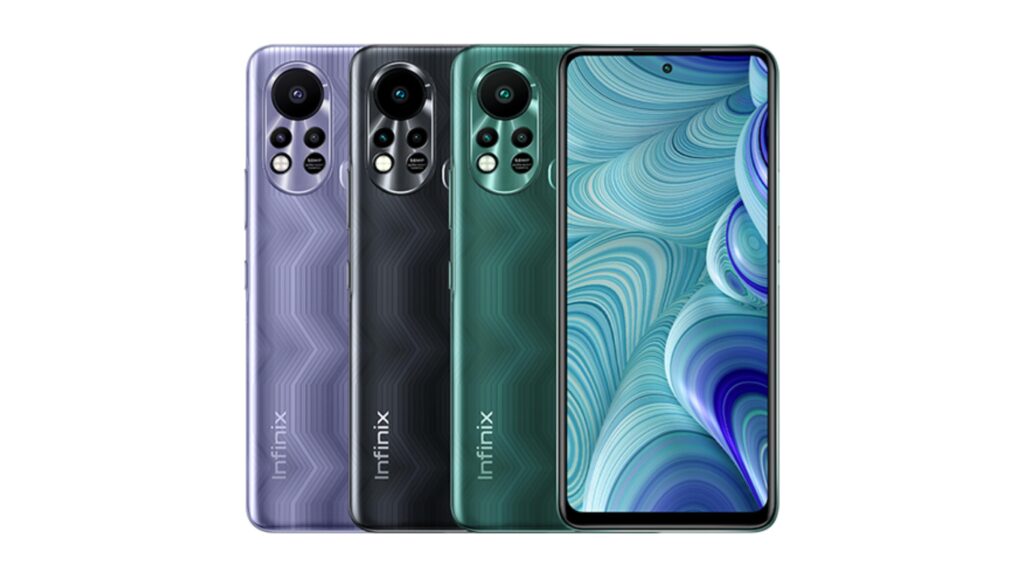
Last month, the Chinese phone maker Infinix launched the Note 11 series in India. The series comprises Note 11 and Note 11S, both coming with MediaTek’s Helio SoC under the hood. Now, after a month of its launch, the company has pushed a new update that brings an extended RAM feature on the phone.
Infinix has added up to 3GB of extended RAM support to the phones, however, the 4GB and 6GB variants get only 1GB of extended RAM. The maxed-out 8GB RAM model, on the other hand, gets 3GB of extended RAM support. For the unaware, the extended RAM feature is the same as what the other smartphone manufacturers are offering as virtual RAM.
Here, some part of the smartphone ROM gets utilized for offering virtual RAM or extended RAM. This is useful when you want to do memory-hungry tasks. As per the company, the extended RAM feature offers a 60% increase in the startup speeds of apps. Where earlier only 9 apps would able to stay in memory, now a total of 20 apps can run simultaneously (via – MySmartPrice).
The Infinix Note 11 series comes with a modern design offering a 6.7-inch FHD+ AMOLED display and 60Hz refresh rate on the Note 11, and a 6.78-inch IPS LCD panel with a 90Hz refresh rate. The duo is powered by the MediaTek Helio SoCs, and here the Note 11 is fueled by the Helio G88, while the Note 11S is powered by the Helio G96 chipset. The dual has a 50MP triple camera system and packs a 5,000mAh battery.
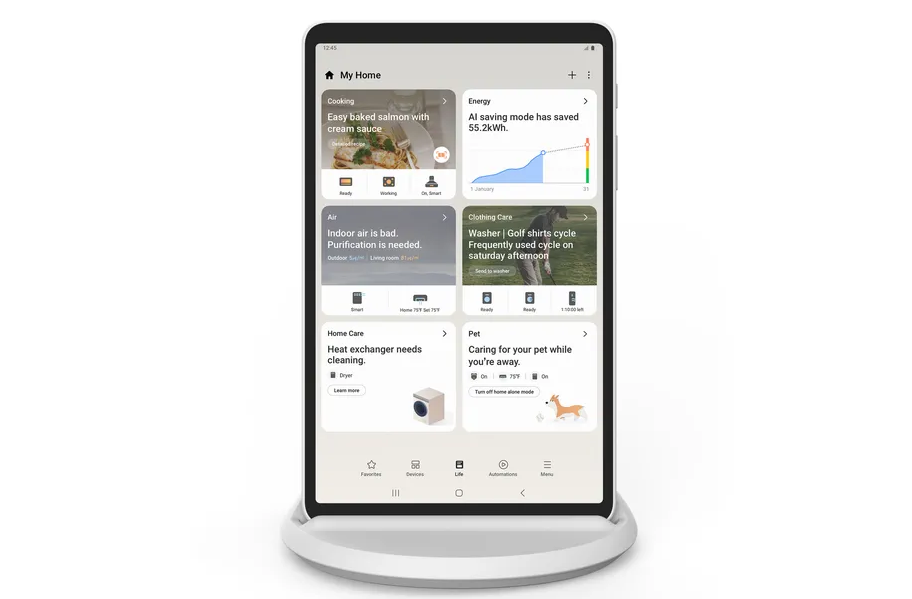
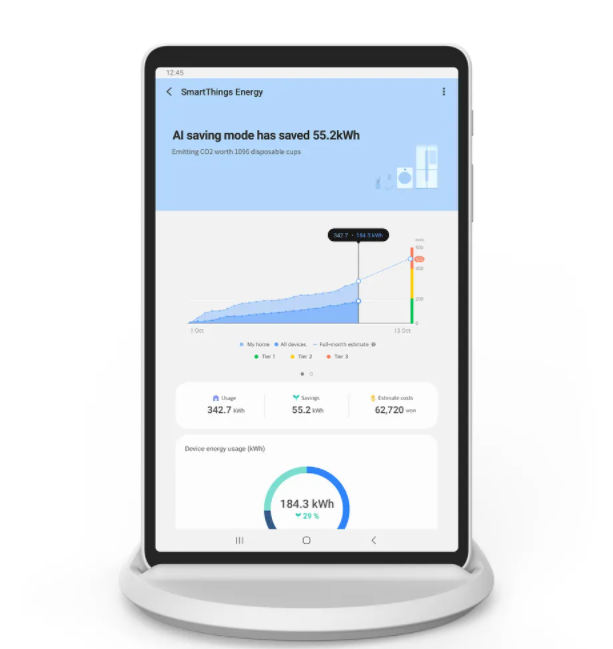
Samsung has unveiled the Home Hub which is a smart controller for the home. The device was showcased during Samsung’s pitch at the ongoing CES 2022 in Las Vegas. The Samsung Home Hub is a one-stop shop for the SmartThings ecosystem and it is designed to be a central point to control home activities within the ecosystem efficiently and seamlessly.
The Samsung Home Hub is a portable 8.4-inch tablet full touchscreen device with Samsung’s Bixby voice assistant and artificial intelligence features built-in to offer all the user needs and even anticipate user actions. It will be exciting to see the Samsung Home Hub in action, as it offers depth in monitoring and control of activities within the SmartThings home ecosystem. It is an innovative device that is likely to be copied by competitors in the smart home ecosystem. The Home Hub sits vertically on its charging dock and has two built-in microphones and speakers for hearing voice commands and giving notifications within the ecosystem.
According to Samsung, its new SmartThings controller will be able to connect to all products within the ecosystem, with the integration to other devices like lighting, and security gadgets also possible.
There are still some grey areas from the Samsung pitch during CES 2022 including pricing. It is speculated that the Home Hub could be released in Korea by March 2022, while a global rollout could follow subsequently. The company also confirmed that the device will be released in other markets. It is unclear whether there will be a separate release date of the Samsung Home Hub for the US market.
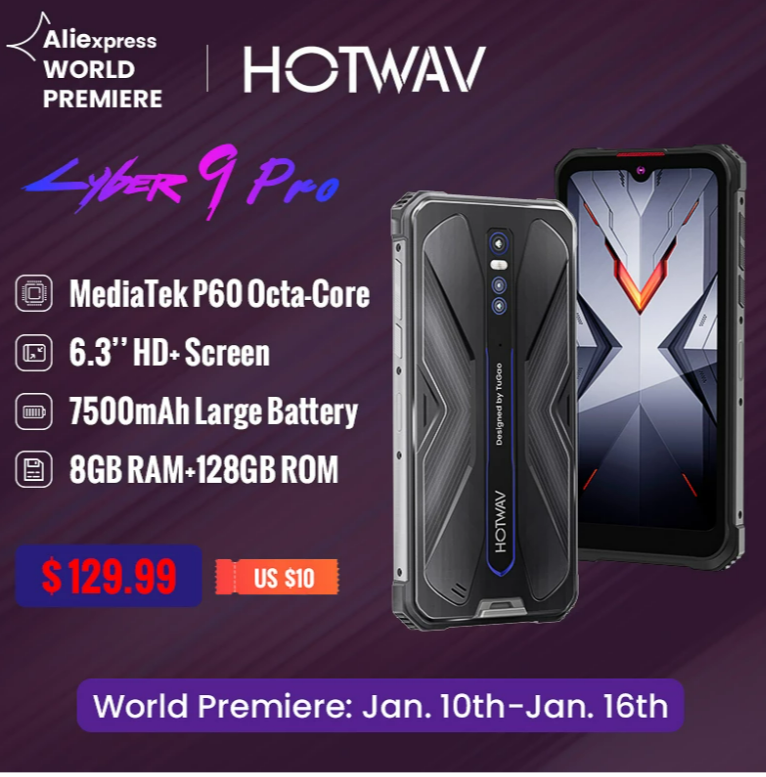
Hotwav is giving out an amazing deal on the occasion of the world premiere of its latest Hotwav Cyber 9 Pro 4G smartphone. The phone which generally retails for $315 will be available at a heavily discounted price of $139.99 only at AliExpress. Also, the first 500 buyers will get an additional $10 discount coupon bringing down the final price to $129.99 only. Please note that this world premiere deal starts on 10 January and ends on 16 January 2021.
”WHERE
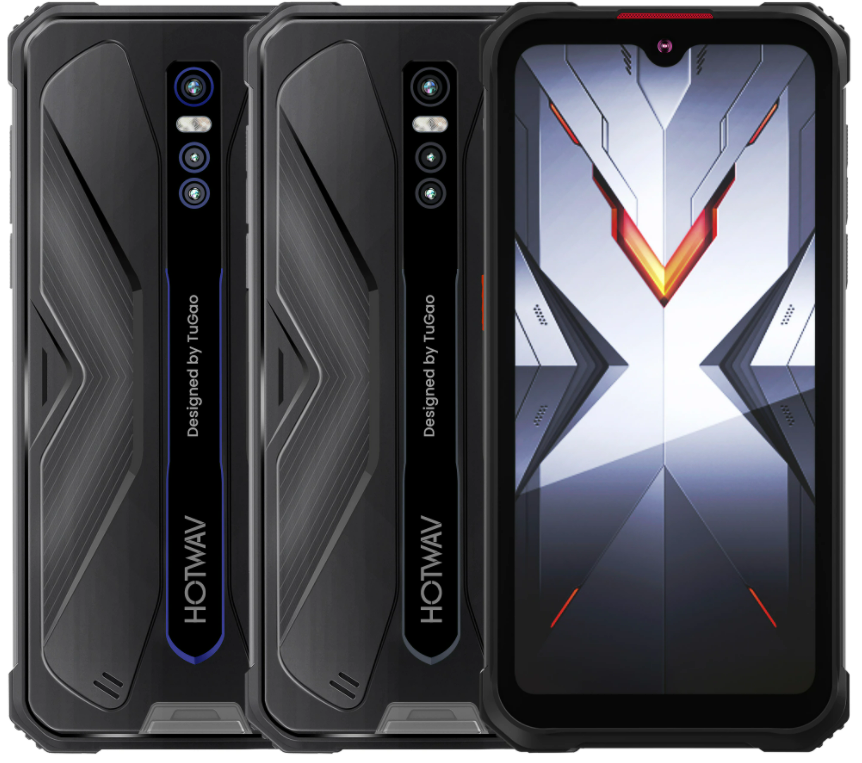
Hotwav Cyber 9 Pro
Key Features:
Rugged smartphone
6.26” FHD+ waterdrop display
450nit brightness
720*1520p resolution
Processor: MT6771 Octa-Core
Battery: 7500mAh – lasts fro 2- 4 days
8GB RAM + 128GB ROM
Triple rear camera: 48MP + 5MP + 2MP
High-res camera with AI optimization
16MP AI selfie camera
Android 11 OS
Side fingerprint sensor
GPS + GLONASS + Beidou
NFC + Google pay
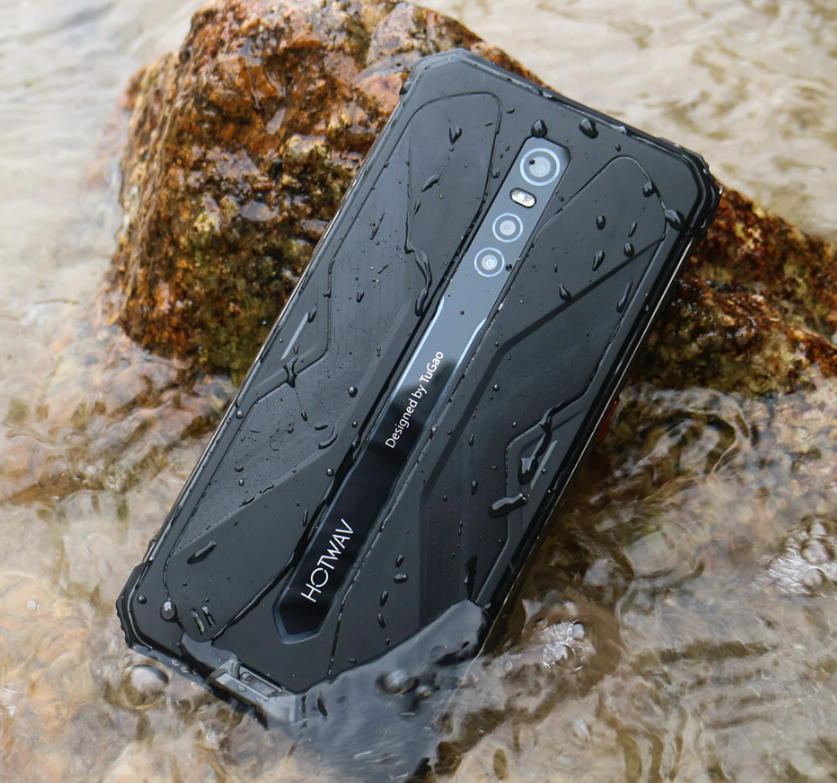
IP68/ IP69K – Waterproof, dustproof, and shockproof
From 10 January to 16 January 2021, you can buy Hotwav Cyber 9 Pro rugged smartphone at a heavily discounted price of $139.99. And the first 500 customers can get this phone for $129.99 only at AliExpress.
Please note that the above price is region-specific and the final price may vary according to your shipping region, warehouse, and regional taxes.
For more information on such exciting deals and offers check out our deals hub.
* Please Note: When you buy something using the links in our articles, we may earn a small commission at no cost to you.
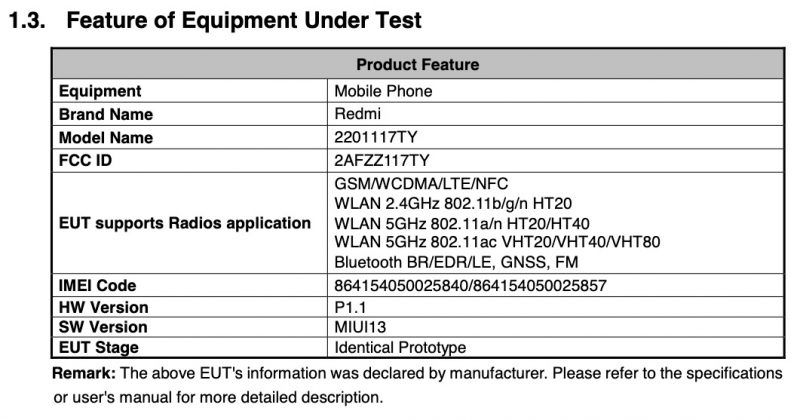
Since the last few weeks, the Redmi Note 11S has been visiting several certification sites confirming a closer launch. The smartphone has already passed certifications like NBTC, BIS, and EEC and now, the device has arrived on the FCC certifications revealing key details.
According to the FCC documents, the Redmi Note 11S has two model numbers – 2201117TY and 2201117SY. It means that the phone may have two different models. Both models run on MIUI 13, which hints that the phones may come with Android 12 out of the box.
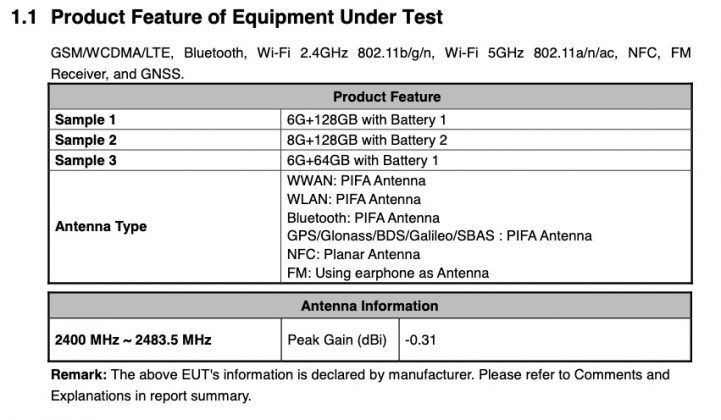
1 of 2
Furthermore, it reveals the possible configurations. The Note 11S will launch in three variants the 6GB RAM + 64GB storage variant, a 6GB RAM +128GB storage variant, and lastly an 8GB RAM + 128GB storage variant.
Previously, the phone appeared on several certification sites confirming its Indian model number to be 2201117SI. Although it appeared these many certifications, the specs for the phone are unknown at the moment. But we learn that the phone will initially debut in markets like Malaysia, Singapore, and Indonesia. It may launch in February, as per a tipster.
Rumors are rife that the phone may come with impressive cameras. It could debut with a triple camera system with a 108MP primary lens, an 8MP ultra-wide lens, and a 2MP macro sensor. The device may have a 13MP selfie snapper. Other expected specs of the phone are MediaTek chipset under the hood, a big battery with fast charging support, and an AMOLED or an LCD panel.
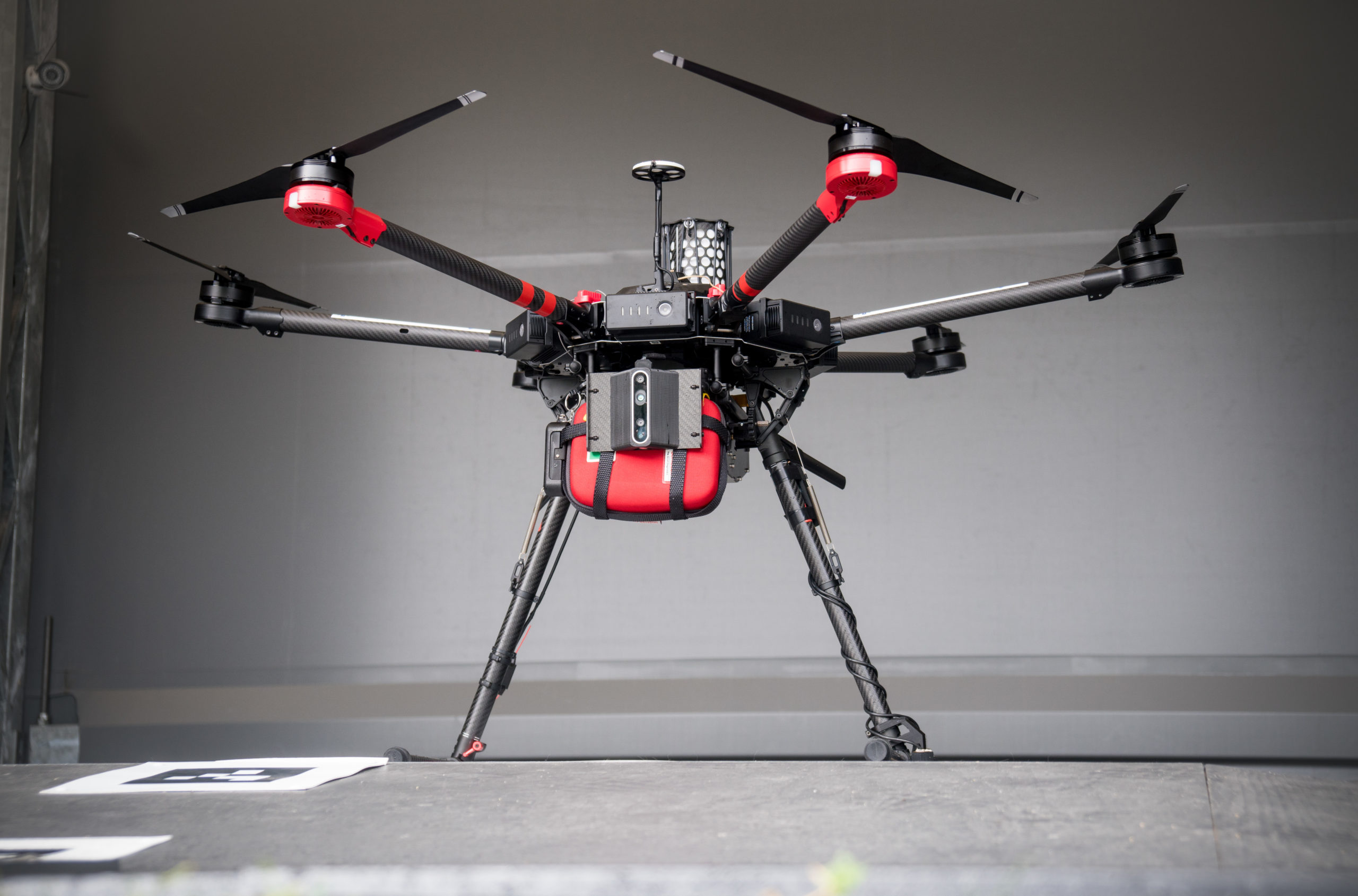
The increasing deployment of drones to solve medical emergencies was brought to the fore again in an incident that happened in Sweden last December. A 71-year old man was resuscitated by a doctor who was supplied a defibrillator by a drone. The unnamed elderly man had a heart attack while shoveling snow, as reported by drone service company Everdrone. The remarkable incident indicates that the Everdrone Emergency Medical Aerial Delivery (EMADE) service was called in and, within minutes, was able to scramble a drone carrying a defibrillator that was then used by the medical doctor to save the life of the man.
The Everdrone’s EMADE service is designed to deliver the medical supply as quickly as possible. It allows emergency dispatchers to send the drone carrying the device to the location to give a headstart to the ambulance team which may take a bit longer to arrive at the location. In this particular case, the drone arrived just three minutes after it was requested. A bystander, who happened to be a doctor on the way to his job, then used the device on the patient after administering CPR.
The medical delivery drone is the outcome of a collaboration between the Swedish Center for Resuscitation Science, SOS Alarm, Region Vastra Gotaland, and Everdrone. The feat adds to Everdrone’s growing repertoire of successes using its cutting-edge drone technology with great emergency credentials and super-fast response times. A four-month pilot study had seen the drones delivering medical equipment faster before the ambulance arrived in most of the cases. The numbers from the pilot study were very impressive both in the response times and the actual delivery of the medical devices. Europe may join parts of Sweden already enjoying the EMADE service this year.
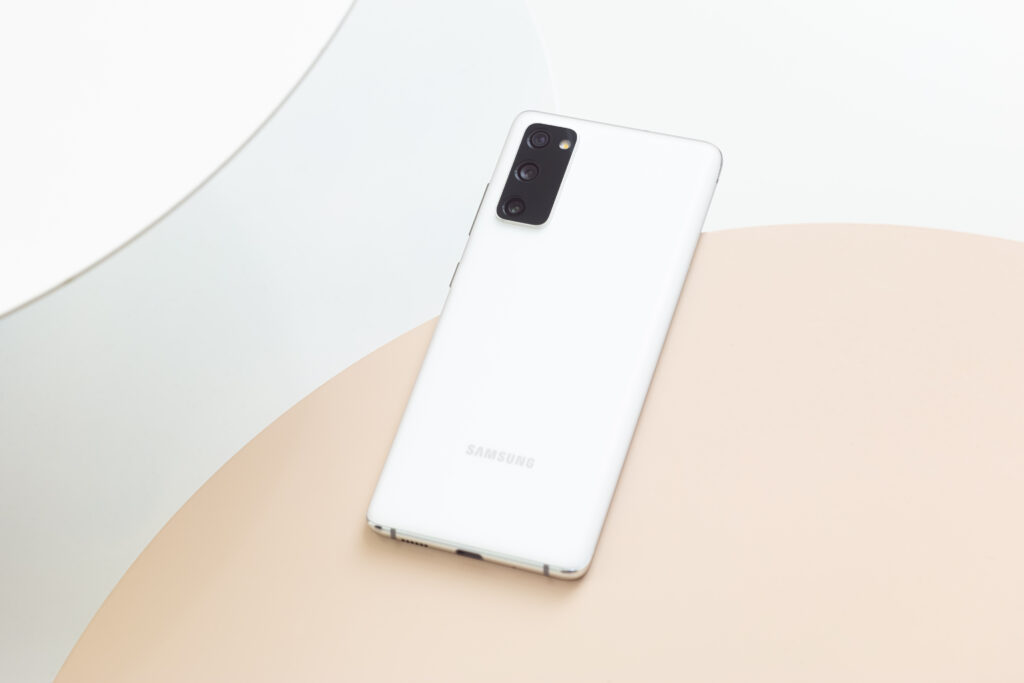
A few days back, Samsung released the Android 12-based One UI 4 stable update for the Galaxy S20 FE. However, the update was only for the 5G models of the phone. Now, Samsung has officially rolled out the One UI 4 stable update for the Samsung Galaxy S20 FE 4G. Additionally, the update has also been pushed to the Galaxy A52, Galaxy S10 Lite, and the China-only device Samsung W22 5G.
Starting with the Galaxy S20 FE 4G, it is worth noting that the update is currently only live in Malaysia for the S20 FE 4G models with the model number SM-G780G. It has the firmware version G780GXXU3BUL9. The update brings all the Android 12 features and has the One UI 4 improvements. It also has the December 2021 security patch.
The Samsung Galaxy A52 gets the Android 12-based One UI 4 update in Russia. It has the firmware version A525FXXU4BUL8. Again, it brings the December 2021 security patch.
Coming to the Samsung Galaxy S10 Lite, the update has arrived in Spain. It is for the S10 Lite variants with the model number SM-G770F. It has the firmware version G770FXS6FULA. Similar to the S20 FE, the S10 Lite also receives the December 2021 security patch.
Lastly, the Samsung W22 5G in China has received the same update. But if you followed Samsung’s update timeline, you might know that the company already released the One UI 4 update for the W22 5G back in December 2021, however, due to some reasons the company has to halt it. Nonetheless, the new update is now available with the firmware version W2022ZCU2BULF.
Motorola recently announced that the Moto G71 5G, which launched in China around the end of 2021, will come to India on January 10th. Now, ahead of its launch, the exact pricing of this device has leaked.
Tipster Abhishek Yadav has shared a screenshot via Twitter revealing the Indian price of the Moto G71 to be Rs. 18,999.
The device was launched in China on December 28th, 2021, and is expected to carry the same specs in its Indian variant.
To recall, the Moto G71 5G (Chinese variant) comes with a 6.4-inch FHD+ OLED display with a centered punch-hole and support DCI-P3 color gamut. It is powered by a Qualcomm Snapdragon 695 SoC paired with 8GB RAM (+3GB virtual RAM) and 128GB storage.
The phone houses a vertically aligned triple camera setup on the rear consisting of a 50MP primary sensor, an 8MP ultra-wide unit, and a 2MP macro shooter. Whereas, for selfies and video calls, it uses a 13MP snapper.
For connectivity, it comes with dual SIM card slots, 5G, dual-band WiFi, Bluetooth 5.0, GNSS, and NFC. It also sports a 3.5mm headphone jack, in addition to a USB Type-C port.
Other features include stereo speakers powered by Dolby Atmos, a rear-mounted fingerprint sensor, a customizable button, IP52 rating for splash resistance, MYUI based on Android 11, a 5,000mAh battery, and 30W fast charging.
Motorola has teased that the Moto G71 5G Indian variant will come with the Snapdragon 695 SoC and will carry support for the highest number (13) of 5G bands.
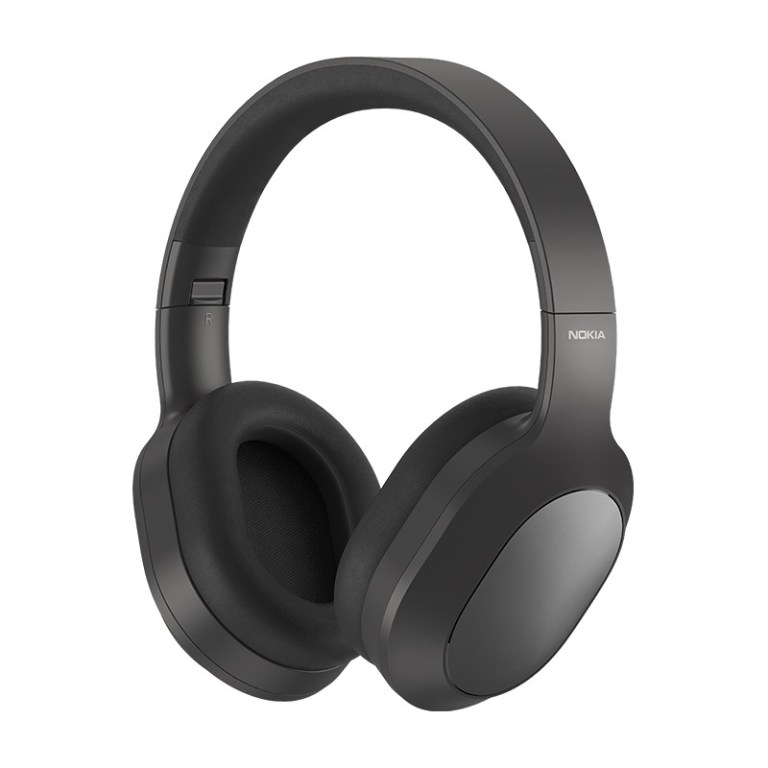
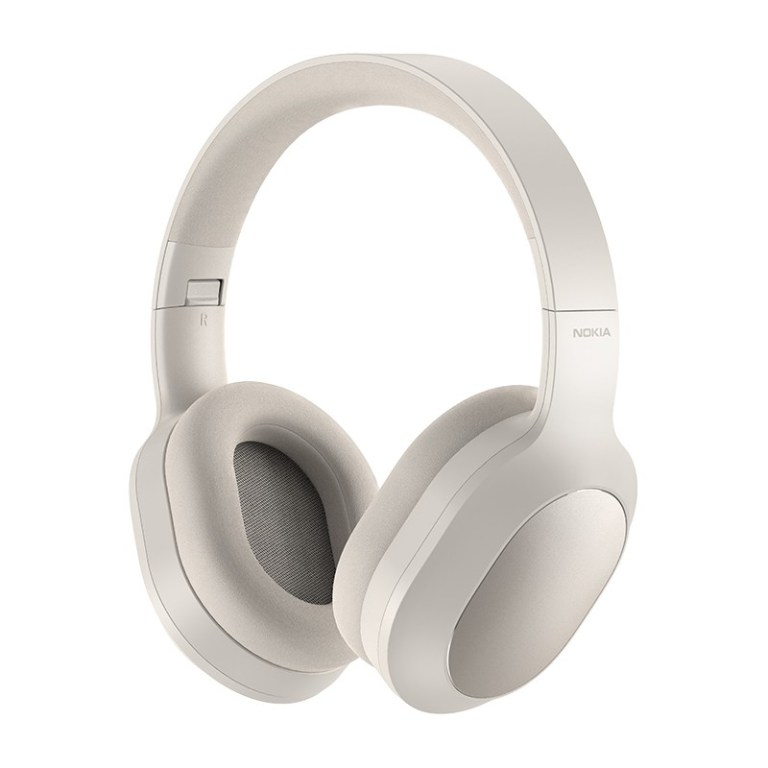
RichGo seems to be the most active Nokia accessory licensee considering the rate at which it churns out new products. Unfortunately, the brand’s products are only available in China. RichGo has now unveiled a new wireless headphone- the Nokia E1200 ANC.
As you may note, the Nokia E1200 was first launched last year in China and later in other markets including India, as Nokia Essential Wireless Headphones E1200. The new model is still an over-the-ear headphone but this time around, it comes with Active Noise Cancellation (ANC) feature hence the appellation Nokia E1200 ANC.
The device bears the same design as the Nokia Essential Wireless Headphones E1200 and almost similar hardware save for a few differences. Apart from the active noise cancellation feature, the Nokia E1200 comes with Bluetooth 5.0 connectivity and is powered by a 700 mAh battery as against a 500mAh battery on the non-ANC version. The battery is said to deliver up to 50 hours of playback when the ANC is turned off and 24 hours with the feature turned on.
The Nokia E1200 ANC is a circumaural wireless headphone that will completely enclose the ears. The outer cover is built with anodized aluminum with a gloss finish, and the inner ear pads are coated with a soft leatherette (PU leather). The 40mm headbands are foldable so that it is convenient to carry along. The headphones also come with the voice assistant support of Google Assistant and Siri. You will also get the option to switch it into a wired headphone.
There is no word yet on the pricing and availability but it will likely be available in China only for now.
The Chinese PC maker Lenovo has recently unveiled many new laptops in its ThinkPad, ThinkBook, and Legion lineups. And now, the brand brings us three new gaming monitors along with new peripherals.
Lenovo Gaming Monitors
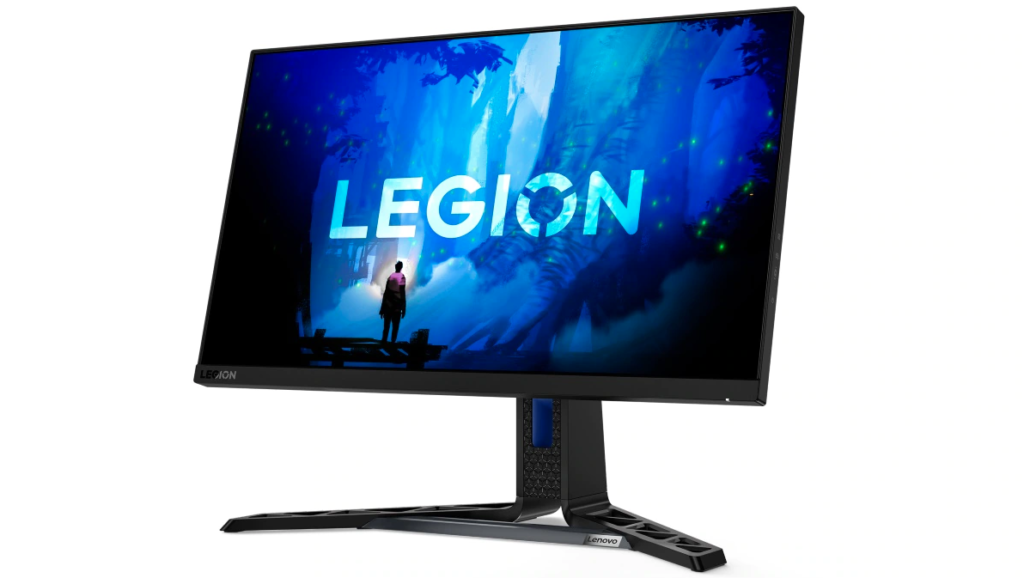
Lenovo has announced three new gaming monitors at CES 2022. Among these, the Legion Y25-30 stands out the most with a 24.5-inch 1080p IPS panel and 99% coverage of the sRGB color gamut. The monitor also offers a high dynamic range with a VESA DisplayHDR 400.
Additionally, the display offers outstanding color accuracy with a Delta E score of less than two making it suitable for creative professionals. The monitor also features a 240Hz refresh rate, with AMD FreeSync Premium variable refresh rate technology. The display has a 0.5ms moving picture response time (MPRT) and 1ms of extreme response time.
Alongside the Legion Y25-30, Lenovo also introduced Lenovo G27qe-20 and Lenovo G24qe-20 entry-level gaming monitors aimed at casual gamers. These monitors come in at 27-inch and 24-inch respectively, offering a 1080p display with 1ms response time and a 100Hz refresh rate that can be overclocked to 110Hz.
The Lenovo Legion Y25-30 will retail in May at $339.99. While the entry-level Lenovo G27qe-20 (27-inch) and G24qe-20 (24-inch) will go for $299.99 and $259.99 respectively starting March 2022.
Lenovo Gaming Mouse
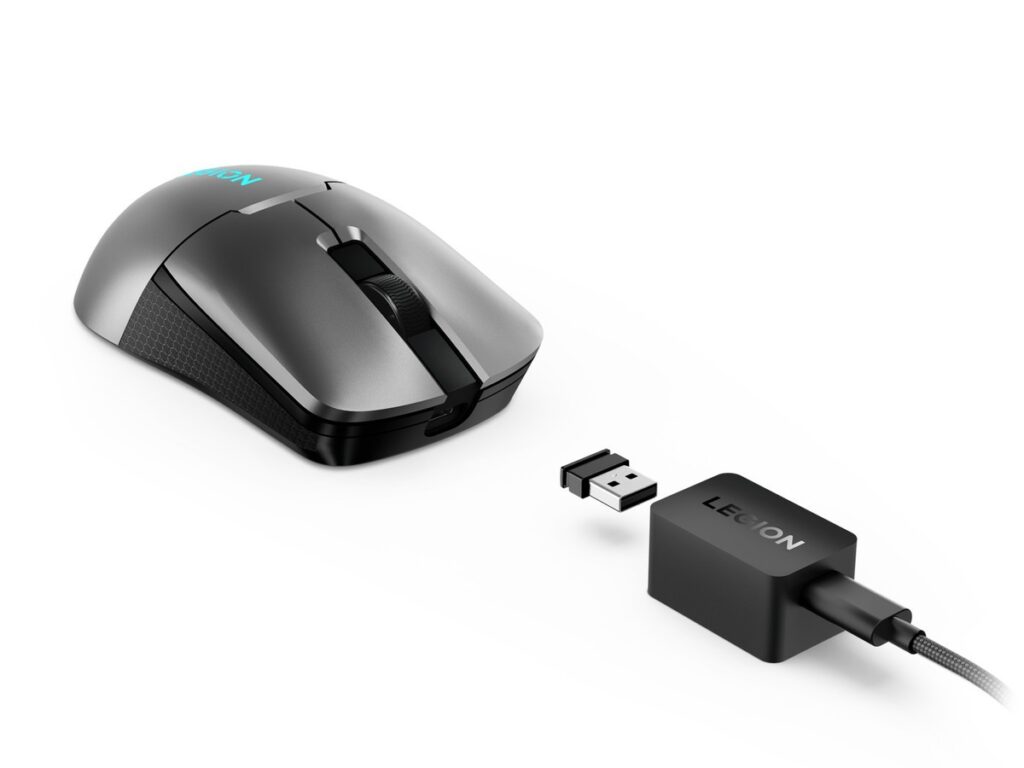
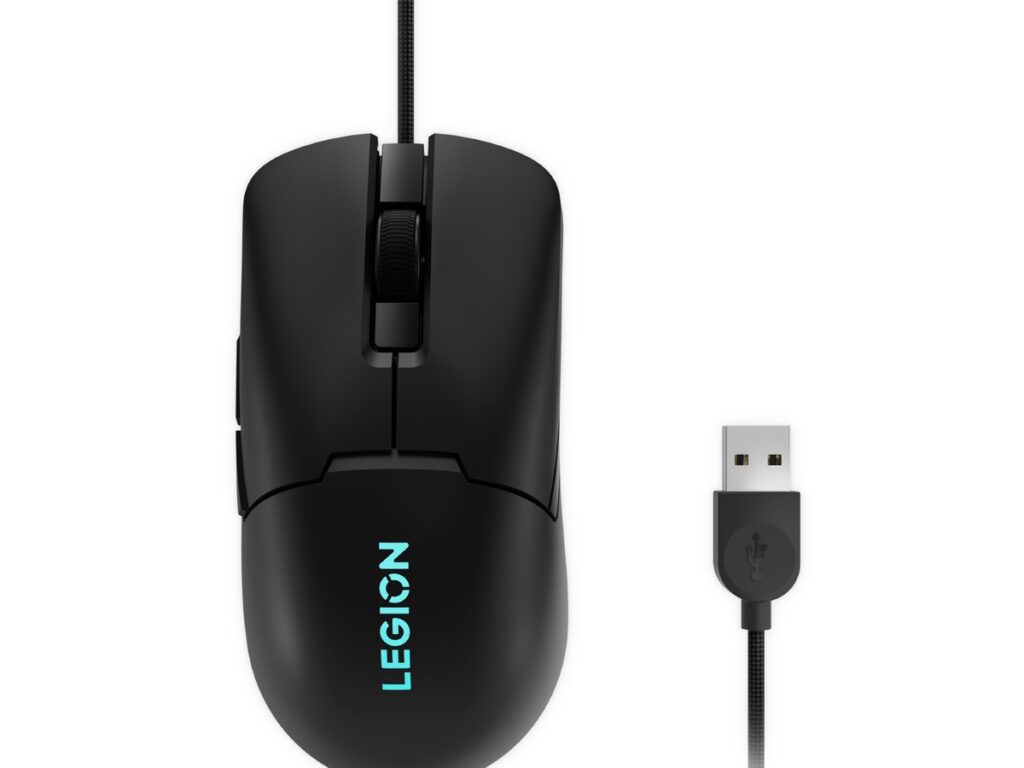
Lenovo Legion M600s Gaming Mouse
The brand has introduced two new gaming mice being the M600s Wireless and the M300s RGB mouse. The M600s Wireless Gaming Mouse comes with an ergonomic design and weighs less than 75 grams. The mouse provides a lossless experience thanks to its sub 1ms response time via a 2.4GHz Bluetooth connection. The mouse is also capable of a wired operation via a USB Type-C cable. It features a Pixart 3370 optical sensor which offers a precision of 19,000 dots per inch. The mouse can operate up to 70 hours on a single charge and can fast-charge in 90 minutes. The M600s is rated to last for 80 million clicks and carries lighting effects in 16.8 million colors.
Lenovo Legion M300s Gaming Mouse
The Lenovo M300s RGB Gaming Mouse weighs 61 grams and has a wired connector. It offers a maximum DPI of 8,000 and a maximum moving speed of 220 inches per second. According to Lenovo, the microswitch buttons on the M300s are rated to last for up to 10 million clicks.
The Legion M600s wireless mouse has a starting price of $84.99 while the wired Legion M300s will go for $29.99. Both of these mice will go on sale from May 2022 onwards.
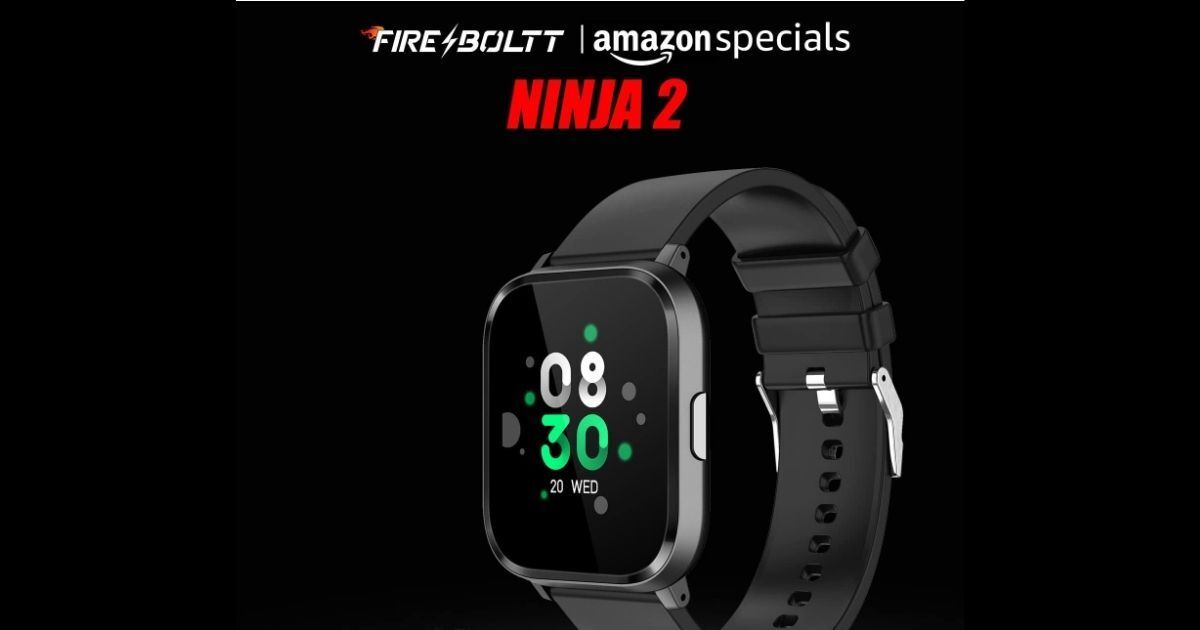
Last year, Fire-Boltt launched the Fire-Boltt Ninja and Fire-Boltt Ninja Pro in the Indian market. Now, the company has quietly added another smartwatch in its product portfolio dubbed Fire-Boltt Ninja 2. The smartwatch comes with a 1.3-inch color display and has 30 sports modes.
The Fire-Bolt Ninja 2 comes at a price tag of Rs. 1,699(~$23) and will go on sale from January 7 on the Amazon India website. It can be picked up in Black, Blue, and Gold color variants.
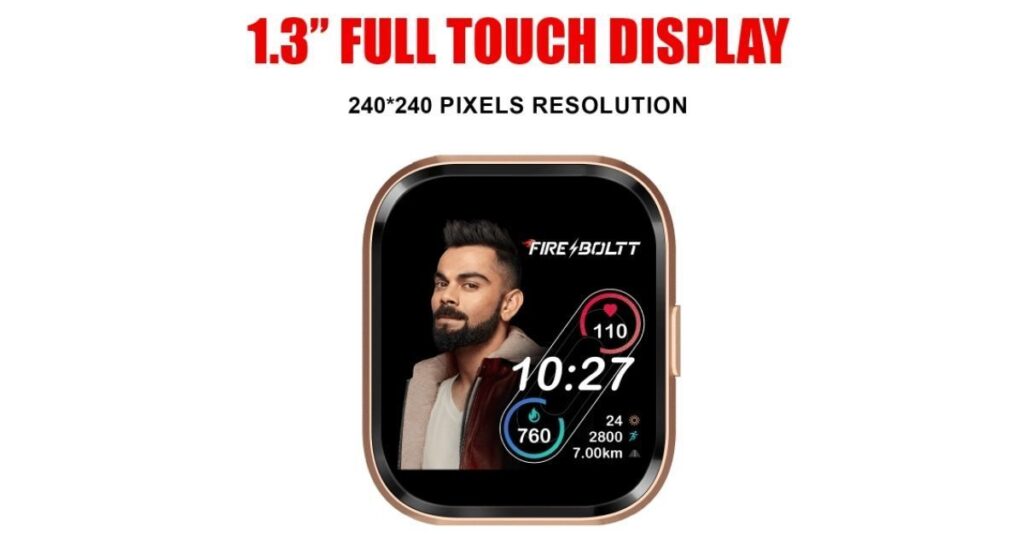
The Ninja 2 has a 1.3-inch touchscreen color display with a resolution of 240 x 240 pixels. It is an LED panel with a rectangular form factor. The smartwatch has multiple watch faces which can be set and customized from the phone.
It comes with features like a SpO2 monitor that can measure the blood-oxygen level. It has a heart rate monitor, sleep tracker, and step tracker.
The smartwatch has 30 sports modes including the basics like walking, running, cycling, hiking, badminton, and others. These are way more than the 8 sports modes offered by the predecessor Fire-Boltt Ninja.
As for the battery, Fire-Bolt Ninja 2 offers an average battery life of up to 7 days and has a standby time of 25 days. The smartwatch can control music and has camera controls as well. It also has the menstrual reminder feature. It supports call and SMS alerts too. The device also has an IP68 waterproof rating meaning that it can handle a few water splashes.
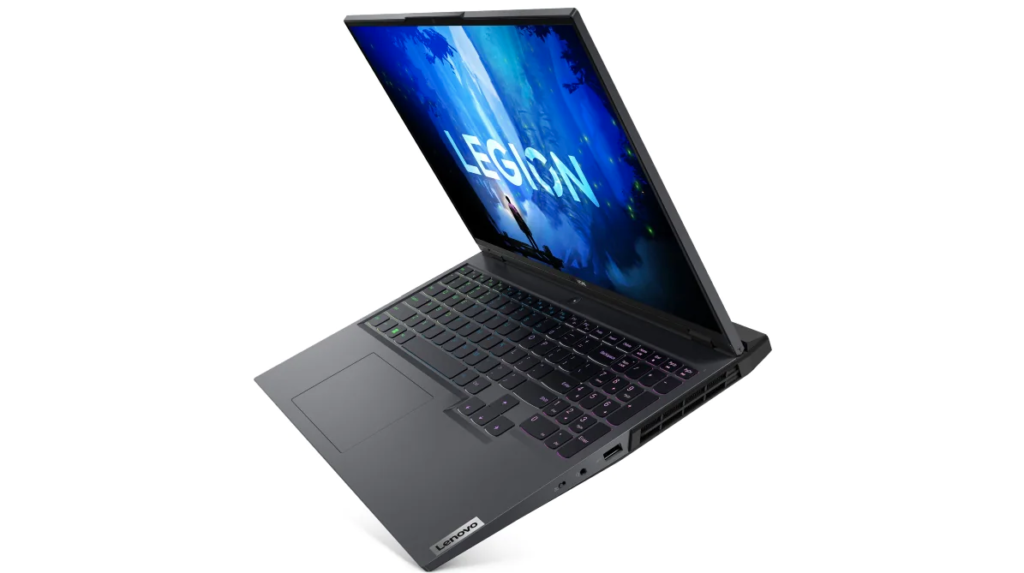
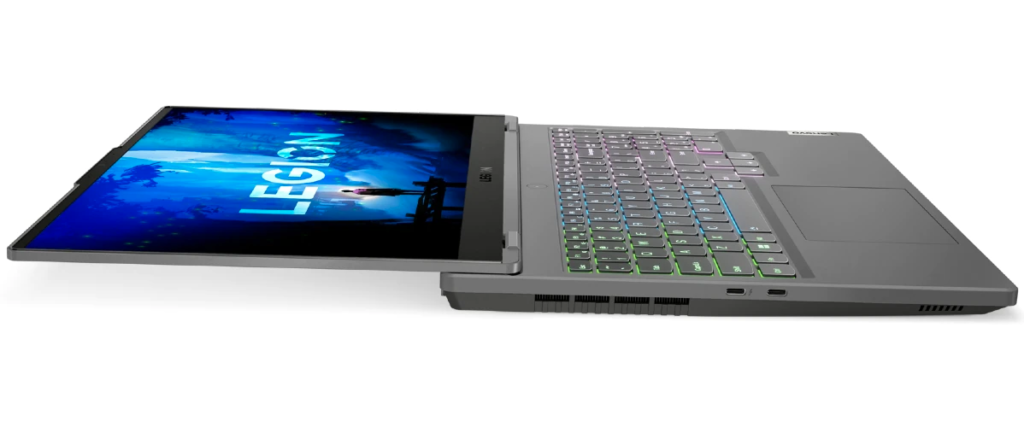
At CES 2022, Lenovo has unveiled their updated flagship Legion gaming laptops. The new devices feature the latest AMD and Intel processors, better cooling, and slimmer design. So let’s check out these new gaming machines.
Lenovo Legion 5 Pro/5i Pro (2022)
The 2022 refresh of the popular Lenovo Legion 5i brings Intel’s 12th gen Alder Lake CPUs with the highest offering of an i7-12700H. The Legion 5 Pro, which is the AMD variant houses the latest Ryzen 6000 processor, which was announced yesterday by AMD. Both variants will come with DDR5 RAM with speeds up to 4800mAh and 32GB maximum capacity. Storage options for these devices will go up to 1TB via PCIe SSD.
Lenovo remained tight-lipped on the graphics front, stating that the devices will come with the “latest GeForce RTX 30 series laptop GPU.” However, spec sheets reveal that at least one variant of these models will come with an 8GB VRAM GPU, which could be the Nvidia RTX 3070 or the RTX 3070 Ti.
Lenovo stated that these flagship Legion laptops would feature their latest Coldfront 4.0 cooling system, which is significantly quieter and cooler than the last-gen. This new system also allows the laptops to handle a total graphics power (TGP) of 165W, which is 15W more than the 2021 model. The Coldfront 4.0 system will give more thermal headroom to the laptops, allowing the GPU to sustain its boost frequency for longer.
Other than that, the Legion 5 Pro and 5i Pro feature a 16-inch 240Hz WQHD+ IPS panel with 500 nits peak brightness, Dolby Vision HDR support, and a 16:10 aspect ratio. For sound, two 2W stereo speakers are paired with Nahimic 3D Audio.
The laptops have a body made of magnesium-aluminum alloy and feature the same keyboard and trackpad as the 2021 models. One notable improvement has been made in their wireless capabilities, which now supports WiFi 6E.
The Intel-powered Legion 5i Pro goes on sale from February 2022, at a starting price of $1,569.99. The AMD-powered Legion 5 Pro will debut in April starting at $1,429.99.
Lenovo Legion 5/5i (2022)
The portability-focused Legion 5 and Legion 5i gaming laptop series have received a significant trim down, making it 15% slimmer than its predecessor. The Intel variants will come with up to an i7-12700H CPU, and the Ryzen powered Legion 5 is expected to come housing AMD Ryzen 6000 series CPU. Both models will be available with up to 32GB of DDR5 memory and up to 1TB PCIe SSD storage, up to Nvidia RTX 3060, and WiFi 6E support. The device will weigh around 2.4kg (5.29lbs), which is still quite heavy considering its 15% reduced thickness.
The Legion 5 and 5i will be equipped with the Coldfront 4.0 cooling system, a 15.6-inch 1440p screen, and USB-C charging. These laptops will also feature two 2W stereo speakers that are paired with Nahimic 3D Audio.
Both new Legion laptops come in Cloud Grey and Storm Grey colors.
With the release of Xiaomi 12 and Xiaomi 12 Pro at the end of 2021, customers have been wondering when Xiaomi will release the 12 Ultra. Recent back cover and dummy leaks have given us an idea of how the upcoming device will look. Now, the Gizmochina team has exclusively obtained images of the Xiaomi 12 Ultra to provide you with a clearer picture.
This Xiaomi 12 Ultra case render image features the device with a back cover and reveals the same rear camera island design spotted in recent leaks. The image also gives credence to claims of the device having a quad-camera setup as four lenses are visible along with an LED flash.
The device is revealed to have a curved display, a first in the Xiaomi 12 lineup, while the front camera punch-hole is present in the center. The presence of the punch-hole also puts to rest the rumors about the 12 Ultra having an under-display camera (at least there’ll be a punch hole variant).
We know there have been rumors about the Xiaomi 12 Ultra being canceled in favor of the Xiaomi Mix 5 Pro, but our source didn’t have any information on this.
Earlier leaks have hinted that the device will feature a 6.6-inch 2K display. Additionally, the device is rumored to come with a quad-camera setup comprising a primary 50MP Samsung GN5 lens, a 48MP 2x zoom lens, a 48MP lens with 5x zooming capability, and lastly, a 48MP sensor with 10x zoom.
Under the hood, the 12 Ultra will come powered by the Qualcomm Snapdragon 8 Gen 1 SoC and is expected to have an ultrasonic fingerprint scanner. The phone may come with 120W rapid charging featured in the Xiaomi 12 Pro.
Although Xiaomi is yet to reveal any details regarding the Xiaomi 12 Ultra, the device is expected to debut in mid-February after the Chinese spring festival.
Back in October 2021, Huawei launched its Enjoy 20e smartphone with specs like a notch display, dual cameras, and Helio P35 SoC. Now, Huawei has officially brought the newer version of the phone with a different chipset.
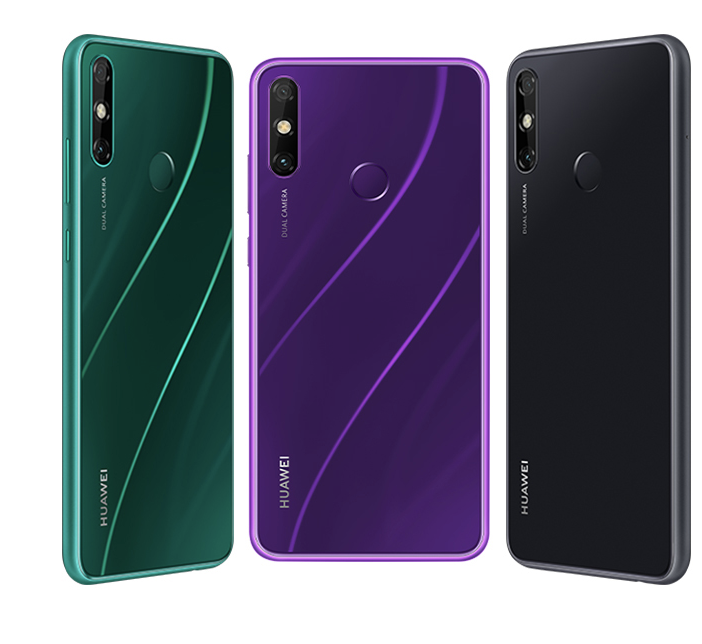
The new Huawei Enjoy 20e comes at a price tag of CNY 1,399(~$220) for the 6GB RAM and 128GB storage variant. Interestingly, the company is offering CNY 50(~$8) off for a limited time. It has three colors – Black, Purple, and Green. It will be available for purchase from all the authorized stores across China.
If we compare, the 2021 edition of the Enjoy 20e was launched at a cheaper price of CNY 1,049(~$164).
Huawei Enjoy 20e Specifications
The smartphone comes with all the same specs as the older version but has a different chipset and boots on Harmony OS 2.0 out of the box. The smartphone is powered by the in-house Kirin 710A chipset paired with 6GB of RAM and 128GB of RAM.
It has a 6.3-inch IPS LCD display with an HD+ resolution. It is a water-drop notch panel with a narrow-edge design. It has an 8MP selfie lens and a dual-camera setup at the rear. The setup goes by a 13MP primary lens and a 2MP depth-sensing lens.
It packs a 5,000mAh battery with features like Super Power Saving mode, which will automatically close the apps for reducing power consumption. It has a rear-facing fingerprint scanner for added security.
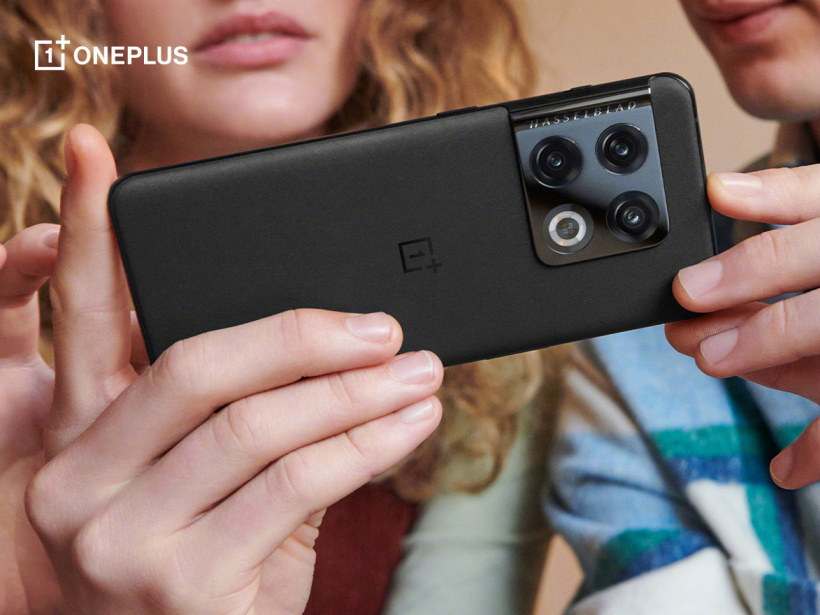
OnePlus is all set to launch the OnePlus 10 Pro on January 11 in China. The brand has been teasing the features of the smartphone for the past few days. Apart from disclosing the spec sheet, it has also revealed the design. Today, it has been confirmed that the handset will introduce new ColorOS features.
OnePlus 10 Pro
Our OnePlus 10 Pro official specifications story was based on the global announcement. Today, upon looking at the same announcement for the Chinese market, we found that the device will ship with ColorOS 12.1 based on Android 12.
This means the OnePlus 10 Pro will be the debut phone for ColorOS 12.1. Hence, the company has started teasing the new features of the latest version of OPPO’s mobile software.
A few hours ago, we reported on a new gaming feature called HyperBoost, which was revealed by OnePlus earlier today. Going by the posts by the official Weibo account of ColorOS, this feature will be mostly part of ColorOS 12.1 and not limited to the OnePlus’ new flagship.
This means other devices running the upcoming version of ColorOS could also have this feature. We think that it might be limited to certain high-end models as it is all about high graphics gaming with better thermal performance.
That said, we expect to learn more about ColorOS 12.1 as we are still days away from the launch of the OnePlus 10 Pro.
We use cookies on our website to give you the most relevant experience by remembering your preferences and repeat visits. By clicking “Accept”, you consent to the use of ALL the cookies.
This website uses cookies to improve your experience while you navigate through the website. Out of these, the cookies that are categorized as necessary are stored on your browser as they are essential for the working of basic functionalities of the website. We also use third-party cookies that help us analyze and understand how you use this website. These cookies will be stored in your browser only with your consent. You also have the option to opt-out of these cookies. But opting out of some of these cookies may affect your browsing experience.
Necessary cookies are absolutely essential for the website to function properly. This category only includes cookies that ensures basic functionalities and security features of the website. These cookies do not store any personal information.
Any cookies that may not be particularly necessary for the website to function and is used specifically to collect user personal data via analytics, ads, other embedded contents are termed as non-necessary cookies. It is mandatory to procure user consent prior to running these cookies on your website.




 The watch is more than double the price of the Fire-Boltt Ninja 2. Just for comparison, the Ninja 2 costs Rs. 1,699(~$23) in India.