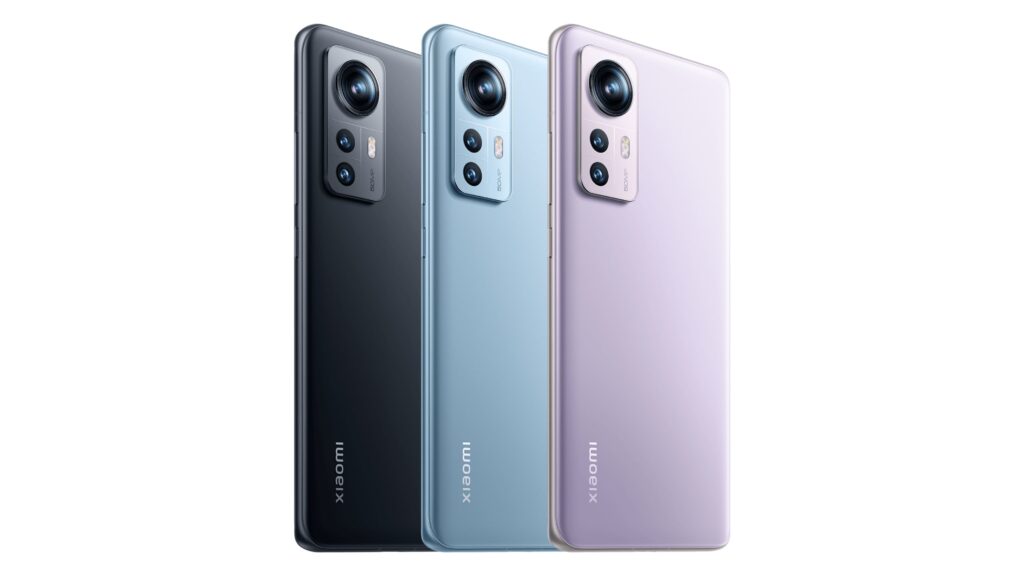
Xiaomi launched the Xiaomi 12X alongside the Xiaomi 12 and Xiaomi 12 Pro in China a couple of days back. This smartphone is now being said to debut in India very soon. At the same time, the handset’s memory configurations and color options have been tipped as well.
Xiaomi 12X
According to the industry sources of 91Mobiles, Xiaomi will soon launch the Xiaomi 12X in India. The phone will be available in the following memory and color variants.
Xiaomi 12X Memory, Color Variants India
Memory Configurations
8GB + 128GB
8GB + 256GB
Colors
Gray
Blue
Purple
Unfortunately, the information above the device’s price in India is a mystery for now. The publication suggests that it could cost around ₹40,000 in the country.
Talking about specifications, the Xiaomi 12X is near identical to the Xiaomi 12. It comes with a Snapdragon 870 SoC instead of a Snapdragon 8 Gen 1 chipset and lacks support for wireless charging and CyberFocus camera focus technology.
The smartphone features a 6.28-inch FHD+ 120Hz curved OLED display with Dolby Vision, 50MP (wide) + 13MP (ultra-wide) + 5P (telemacro) triple rear camera setup, 32MP selfie camera, stereo speakers tuned by Harmon Kardon, infrared sensor, in-screen fingerprint sensor, MIUI 13 based on Android 12, 4,500mAh battery, and 67W fast charging.
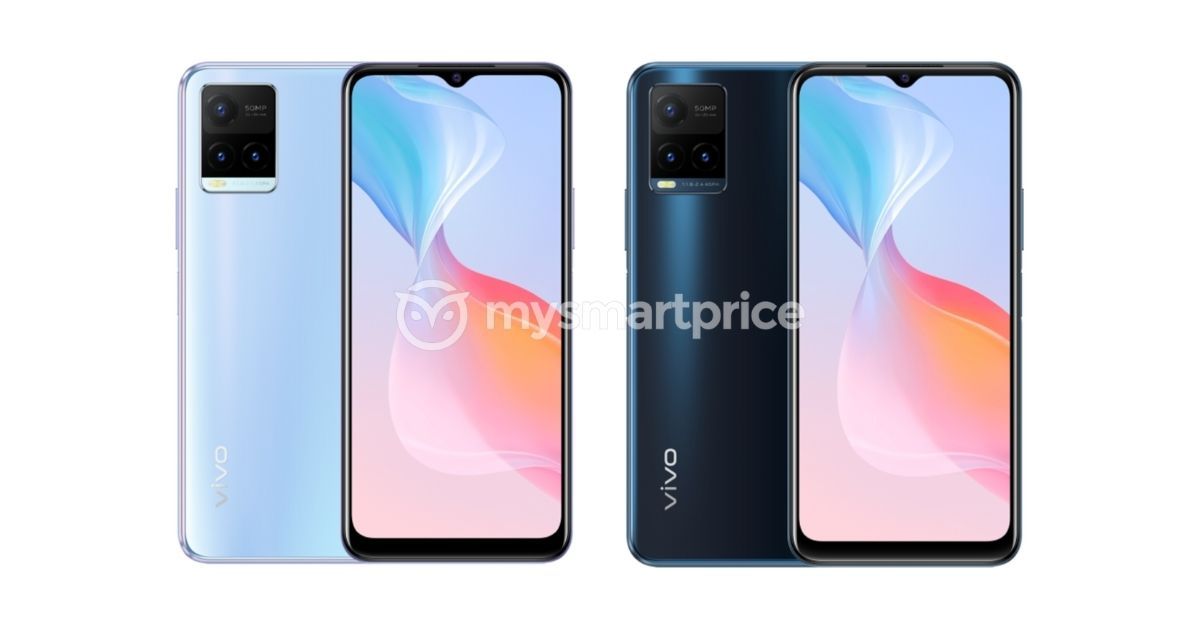
It was reported yesterday that Vivo is gearing up to launch a new Y-series handset called the Vivo Y21T on Jan. 3 in India. The report had revealed the key specifications of the device. Now, a fresh report by My Smart Price has leaked the renders of the Y21T. The leaked images show that it could be a tweaked version of the Vivo Y32, which was announced earlier this month in China.
Vivo Y21T renders
Vivo Y21T render by My Smart Price
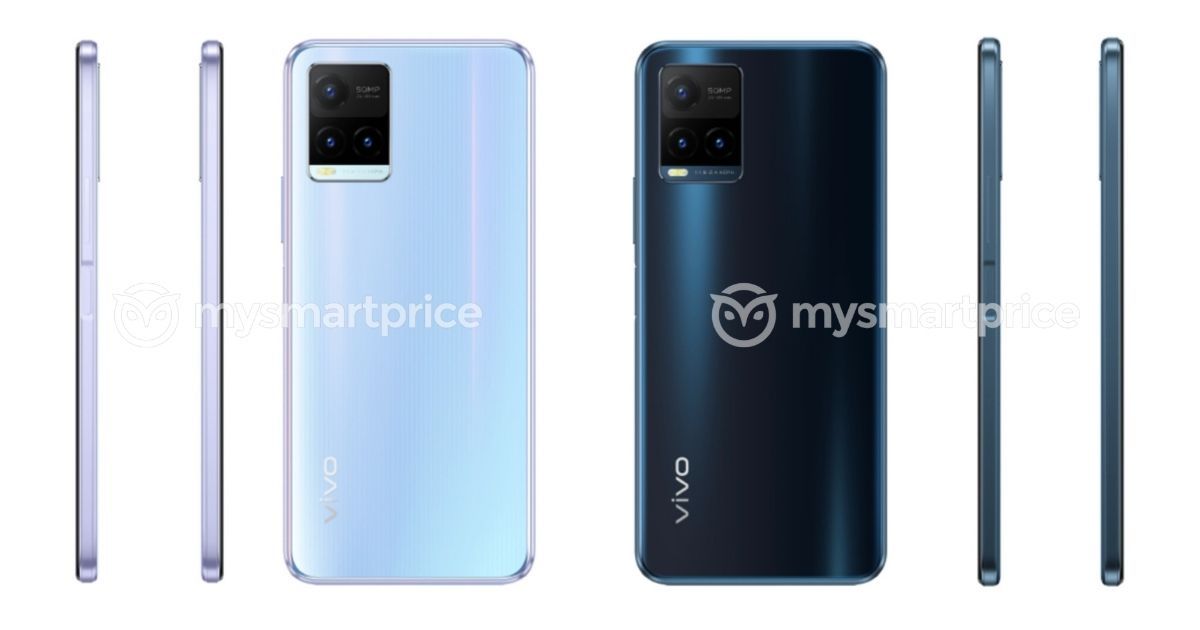
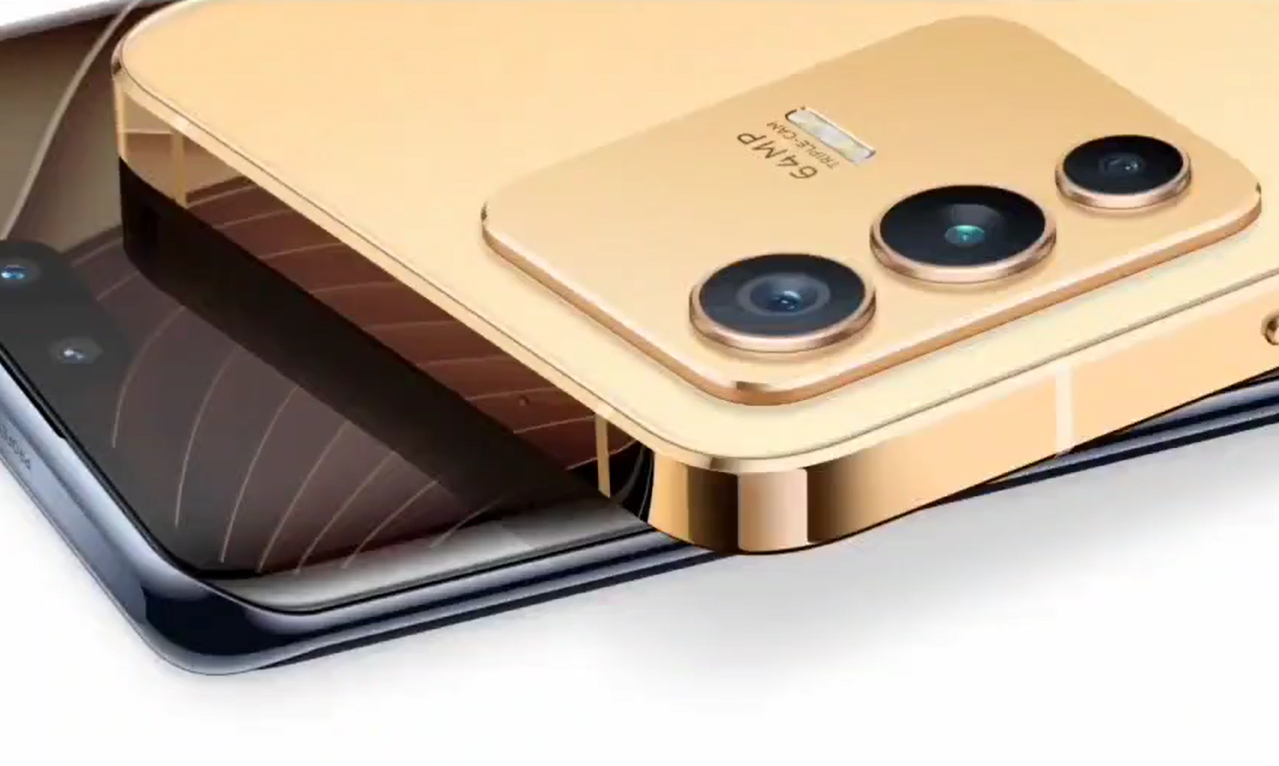
The Vivo Y21T renders show that it will be sporting a waterdrop notch display with a thick chin. The power button available on the right edge of the device is integrated with a fingerprint scanner. The back panel of the device features a square-shaped camera module that houses a 50-megapixel triple camera unit and an LED flash. The renders reveal that the handset will be available in blue and white colors.
Vivo Y21T specifications, price (rumored)
The Vivo Y21T is expected to arrive with a 6.58-inch LCD display that offers a Full HD+ resolution and a regular 60Hz refresh rate. It is expected to debut as India’s first smartphone powered by the Snapdragon 680 mobile platform.
Vivo Y21T render sby My Smart Price
The Y21T is likely to arrive with 4 GB of RAM, 1 GB of extended RAM, and 128 GB of built-in storage. It may come preinstalled with Android 11 OS, which will be customized with FunTouchOS UI. For additional storage, it will feature a microSD card slot.
It has an 8-megapixel camera for capturing selfies. The rear camera setup features a 50-megapixel main camera with an f/1.8 aperture, which could be accompanied by two 2-mgeapixel cameras for depth and macro shots.
The handset will be backed by a 5,000mAh battery that supports 18W fast charging. The device measures 164.26 x 76.08 x 8mm and weighs 182 grams. Probably, it will carry a sub-Rs 20,000 (~$268) pricing in India. In comparison, the Y32 has almost the same specs as the Y21T. The main difference is that it features a 13-megapixel + 2-megapixel dual-camera system instead of the 50-megapixel triple camera system.
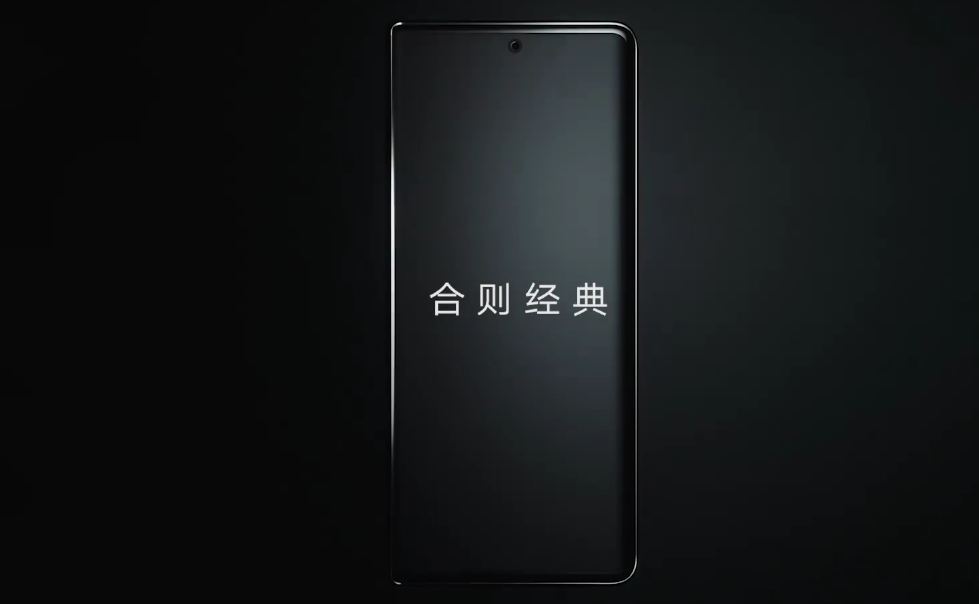
Honor Magic V foldable phone is expected to debut in January 2022 in China. The official teasers have revealed that it will be sporting an in-ward folding design and a punch-hole cover display. Today, reliable tipster Digital Chat Station shared key details of the Magic V’s specifications based on its prototype model.
Honor Magic V specifications (rumored)
Without mentioning the accurate screen sizes, the tipster claimed that the Honor Magic V’s inner foldable screen have a punch-hole positioned at the upper-right corner. The official teaser had revealed that the cover display has slight curvature towards the right edge.
It appears that the Magic V’s front display supports a 90Hz refresh rate, whereas the inner screen offers a 120Hz refresh rate. The device will be running on Android 12, which is likely to be customized with the latest version of Magic UI.
Several reports have claimed that the Snapdragon 8 Gen 1 will be powering the Magic V. The new leak also suggests that it will be the world’s first foldable phone driven by the SD8G1 chip. There is no information on the battery size in the new leak, but it mentions that it will carry support for 66W fast charging.
It is likely that the Magic V has a triple camera unit on its rear shell. The Chinese tipster has claimed that the setup will be headlined by a 50-megapixel camera. The details of its other cameras are not mentioned in this leak. Rumors have it that apart from Magic V, the company is working on another foldable device with a clamshell design. It is speculated to debut in Q1 2022 in China.
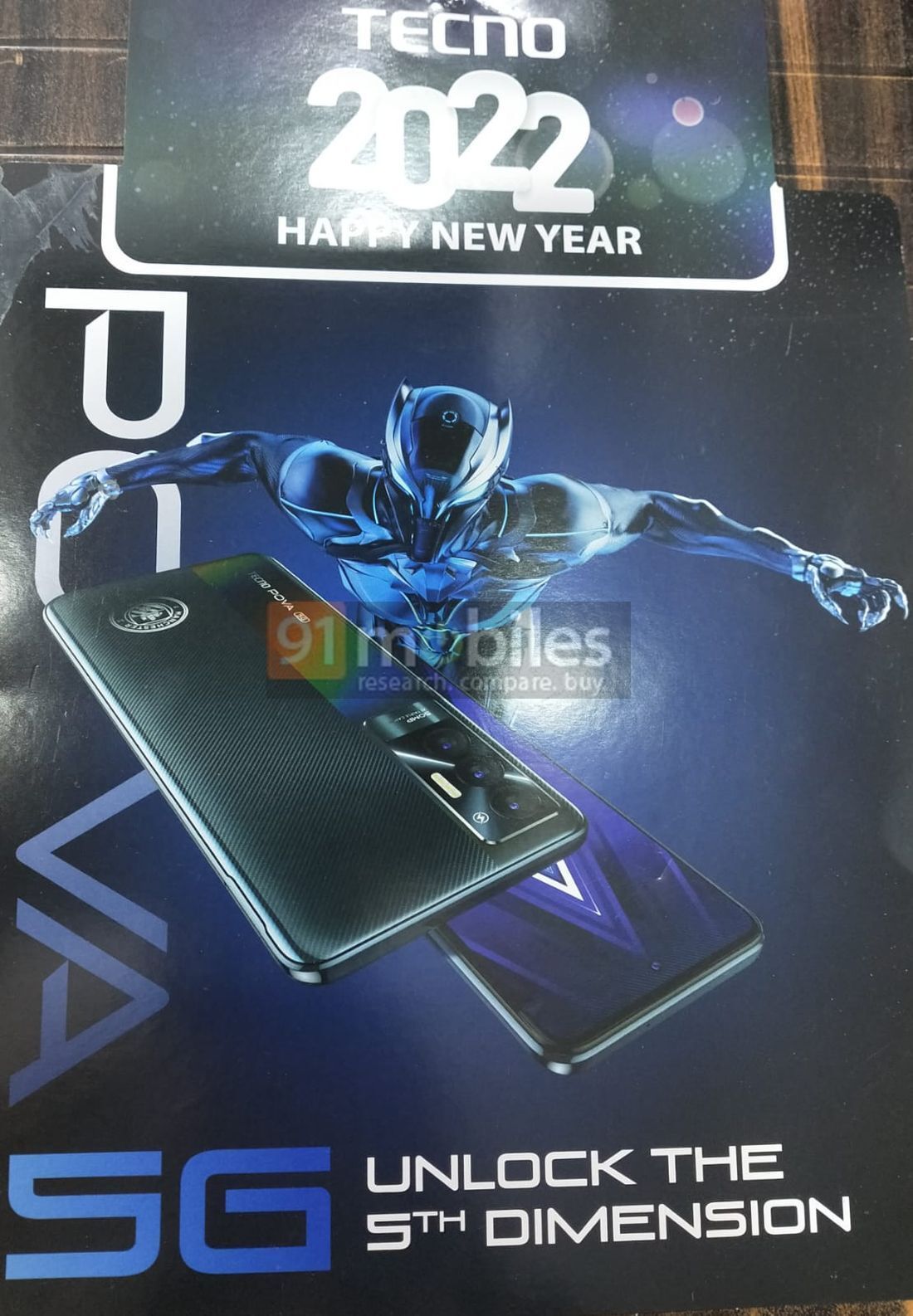
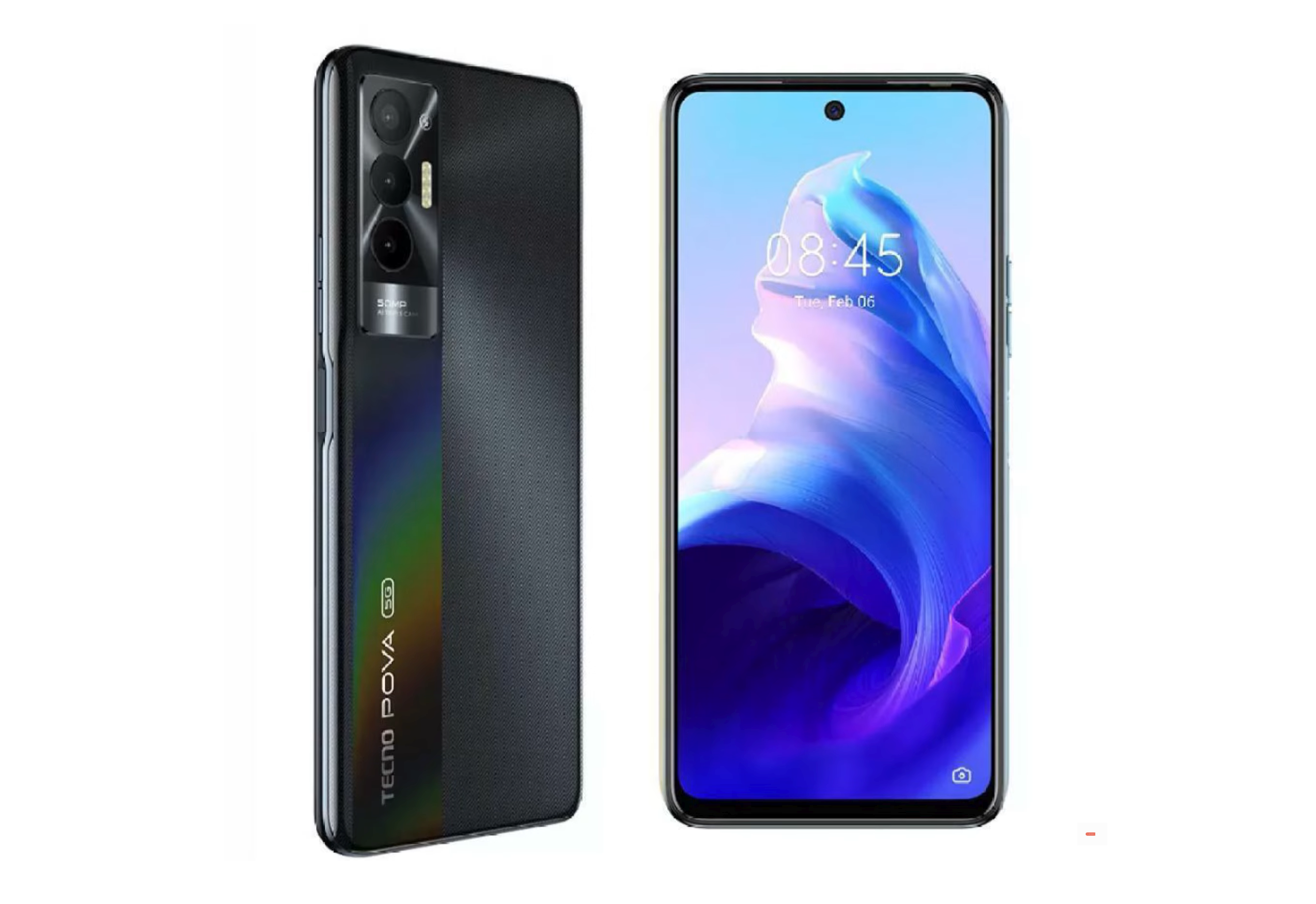
Tecno recently announced its first-ever 5G smartphone in the form of Tecno POVA 5G. The device has been launched in the Nigerian market and now details about the phone’s launch in the Indian market have surfaced online.
According to tipster Mukul Sharma (via 91Mobiles), the Tecno POVA 5G smartphone will go official in India sometime in January 2022 but the exact launch date is not yet known. Not just that, a promotional marketing poster has also been leaked.
Coming to the specifications, the smartphone features a 6.95-inch IPS LCD Full HD+ display that offers a 1080 x 2460 pixels screen resolution, 480ppi pixel density, and a higher refresh rate of 120Hz.
Under the hood, the device is powered by the MediaTek Dimensity 900 chipset, coupled with 8GB of LPDDR5 RAM and 128GB of UFS 3.1 storage. It also comes with 3GB of virtual RAM. There’s also a side-mounted fingerprint sensor for added security.
In the camera department, the phone features a triple-camera setup that includes a 50-megapixel primary sensor, a 2-megapixel secondary sensor, and an AI tertiary lens. On the front side, there’s a 12-megapixel snapper for taking selfies and video calling.
The Tecno POVA 5G is running HiOS custom user interface based on the Android 11 operating system. It is powered by a 6,000mAh battery that supports 18W fast charging that offers 775 hours of standby time, 55 hours of talk time and 11 hours of gaming. The company claims that a 15-minute charge will offer 3 hours of gameplay time.
A few days ago, Chinese smartphone manufacturer Vivo officially launched its new S-series phones in the market — Vivio S12 and S12 Pro. Both the smartphones are now finally available for purchase in China from today.
The devices are being offered in three color options — Island Blue, Warm Gold, and Shiny Black. As for the pricing, it starts at 2,799 yuan which is about $440.
The Vivo S12 8GB RAM model costs 2,799 yuan (~$440) while the 12GB RAM model is priced at 2,999 yuan (~$471). On the other hand, the S12 Pro with 8GB RAM is priced at 3,399 yuan (~$534) while the 12GB RAM model costs 3,699 yuan (~$581).
As for the specifications, the Vivo S12 features a 6.44-inch 90Hz AMOLED display that offers a 180Hz screen sampling rate. Under the hood, it is powered by the MediaTek Dimensity 1100 processor and packs a 4,200mAh battery with 44W fast charging support.
In the camera department, there’s a 108MP primary sensor, an 8MP ultra-wide lens, and a 2MP macro sensor. On the front side, the device has a dual-camera setup that includes 44MP and 8MP sensors.
On the other hand, the Vivo S12 Pro features a 6.56-inch AMOLED HDR10+ display with a 90Hz screen refresh rate and a 240Hz touch sampling rate. The smartphone is powered by the MediaTek Dimensity 1200 chipset.
It has a triple-camera setup on the back, similar to the Vivo S12, featuring a 108MP primary sensor, an 8MP ultra-wide lens, and a 2MP macro sensor. However, on the front side, there’s a 50MP primary sensor and an 8MP ultra-wide secondary lens.
The device is powered by a 4,300mAh battery and comes with support for 44W fast charging technology. Both the phones are running the Origin OS Ocean based on the Android 11 operating system.
iQOO 9 series will be launching on Jan. 5 in China. Today, the company released fresh posters to confirm the display details of what appears to be of the iQOO 9 Pro handset.
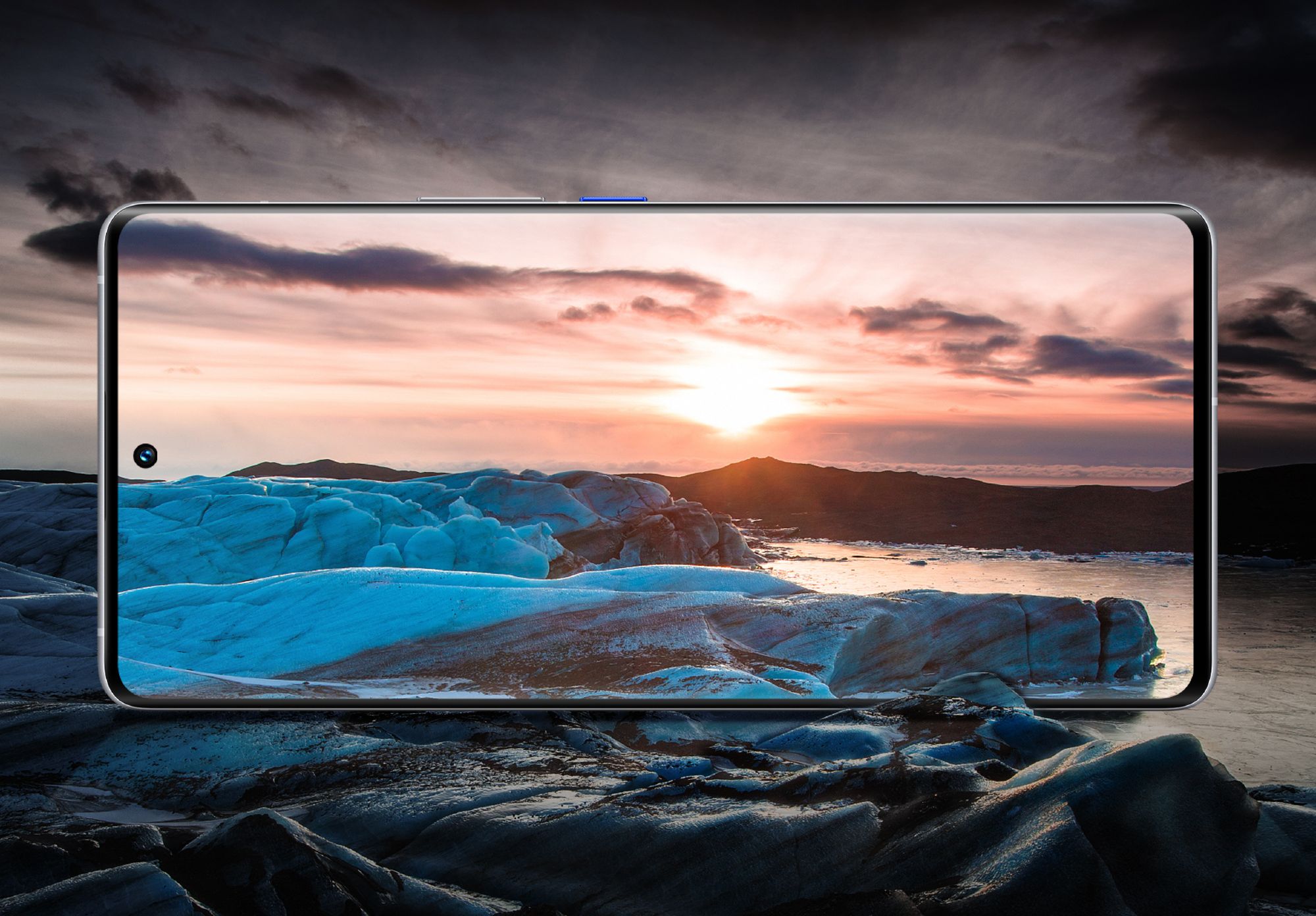
The iQOO 9 Pro is rumoured to house a 6.78-inch display. The official posters confirm it will be equipped with an AMOLED LTPO panel with curved edges. It has a punch-hole at the top center and is equipped with slim bezels.
The iQOO 9 Pro’s screen supports a 120Hz refresh rate. The company confirmed that the screen offers a 1000Hz instantaneous touch sampling rate, 800000:1 contrast ratio, 1500 nits of brightness, 10-bit colors, and 517ppi pixel density.
The iQOO 9 Pro is equipped with an ultrasonic in-display fingerprint scanner, which will allow users to unlock the device with dirty or wet hands. In addition, it will allow users to conveniently unlock the phone since it features a wide fingerprint scanning area of 578mm2 on the display. The bottom view of the phone shows that it has a SIM card slot, a USB-C port, and a speaker grille.
The iQOO 9 Pro’s rear camera module is expected to feature a gimbal-OIS assisted 50-megapixel Samsung GN5 primary camera. 50-megapixel Samsung GN5 main camera. It coudl be accompanied by a 150-degree 50-megapixel Samsung JN1 ultrawide snapper, and an OIS-ready 16-megapixel telephoto camera with 2.5x optical zoom.
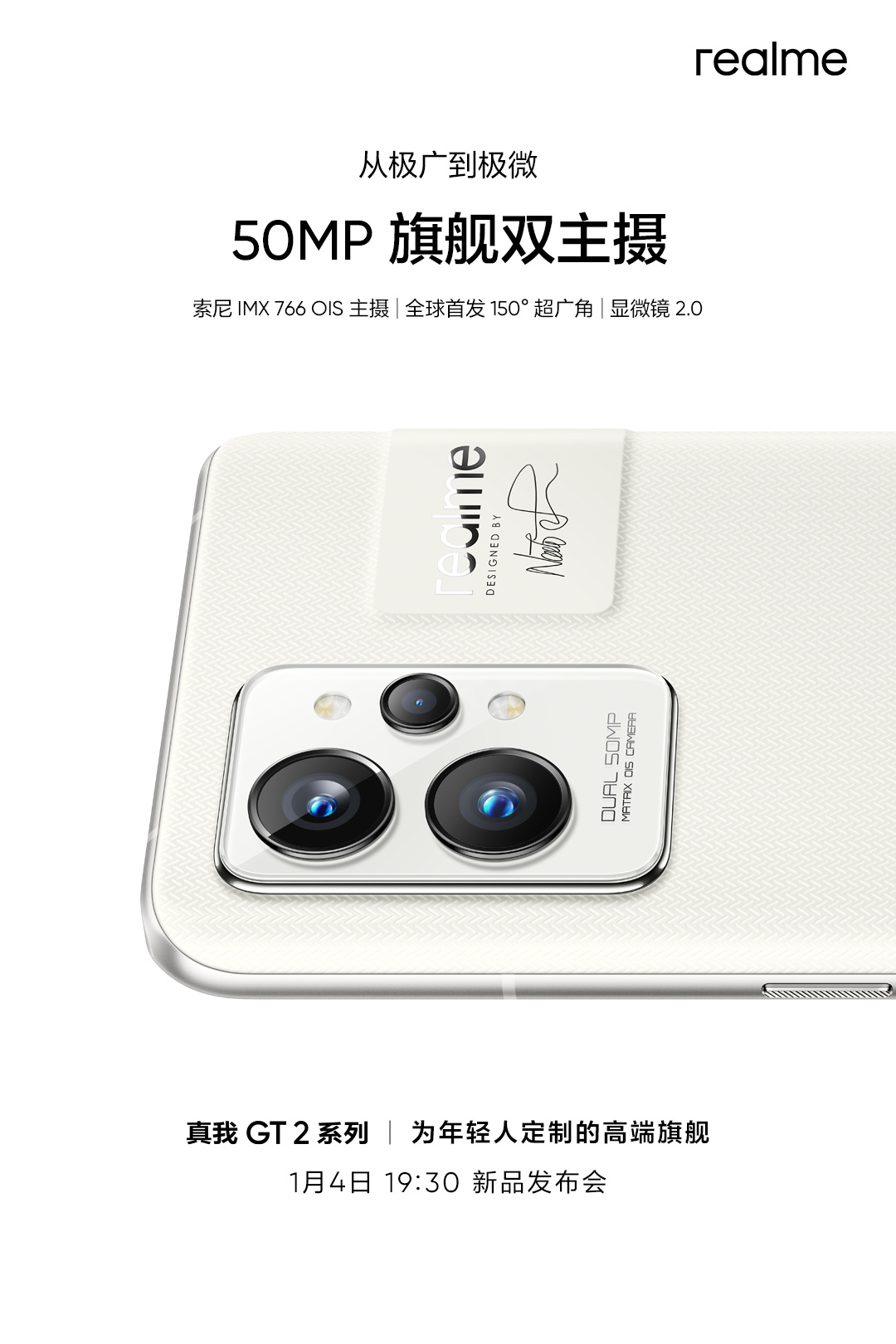
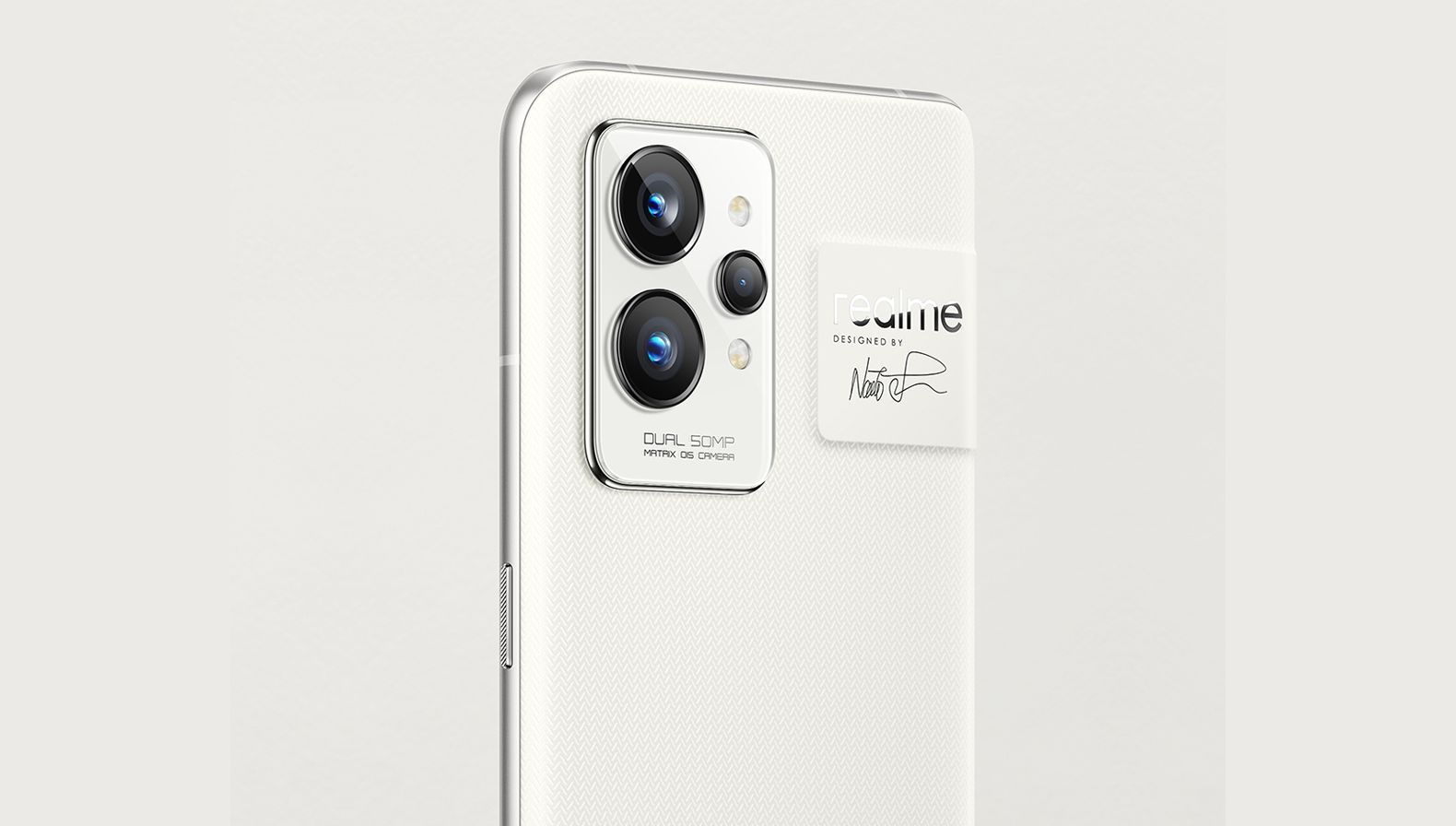
Realme GT2 and GT2 Pro are expected to debut on Jan. 4 in China. The brand has been consistently releasing new details about the GT2 Pro, which will be the company’s most premium flagship phone. Today, the company confirmed the details of the triple camera unit of the GT2 Pro.
The TENAA listing of the Realme GT2 Pro revealed that it is equipped with a 50-megapixel + 50-megapixel + 2-megapixel triple camera unit. The poster released by the brand today reveals that the GT2 Pro will be equipped with an OIS-assisted 50-megapixel Sony IMX766 primary camera. It will be the company’s first smartphone to arrive with OIS support.
It appears that the second 50-megapixel camera available in GT2 Pro’s camera setup will offer an industry-first 150-degree of field-of-view. As the company had confirmed earlier, GT2 Pro will be the world’s first phone to feature a Fisheye mode that produces an ultra-long depth of field effect for creative photography.
The 2-megapixel camera that rounds up the camera setup of the GT2 Pro will be a microscope camera, which appears to be similar to the 3-megapixel microscope camera that was made available on the Find X3 Pro. The microlens on the Find X3 Pro allowed users to capture those objects that cannot be seen by the naked eye. It offered a focal length of about 3mm and 30x magnification.
According to Digital Chat Station, Realme GT2 Pro’s microscope lens has upgraded the depth of field by 4 times and the object distance by nearly 2 times. He added that it can detect content like skin and water.
Yesterday, tipster Yogesh Brar shared detailed information on the specifications of the Vivo V23 and Vivo V23 Pro smartphones, which are scheduled to debut on Jan. 5 in India. He had also shared the price range of the V23 duo by claiming that the vanilla model will Rs 26,000 (~$349) to Rs 29,000 (~$389), whereas the Pro model will be priced between Rs 37,000 (~$497) and 40,000 (~$537). A few hours later, the tipster shared an update on the pricing of the Vivo V23 and V23 Pro.
The new update reveals that the entire Vivo V23 series will be priced between Rs 30,000 (~$403) and Rs 45,000 (~$604). Probably, this price range does not include the Vivo V23e handset, which is also speculated to launch alongside the V23 and V23 Pro.
Vivo V23 series poster
The Vivo V23 is now expected to carry a starting price of Rs 31,000 (~$416) or Rs 32,000 (~$430). On the other side, the Vivo V23 Pro model may begin at Rs 40,000 (~$537) or Rs 42,000 (~$577). Both smartphones are likely to come with 8 GB / 12 GB of RAM and 128 GB / 256 GB of storage. The V23 and V23 Pro will come in Sunshine Gold (color changing edition) and Stardust Black.
The V23 series’ landing page has been live on Vivo India’s website for a couple of days. Now, its microsite has surfaced on Flipkart. Hence, it appears that the Vivo V23 lineup will be available for purchase through Vivo India’s online store, Flipkart, and offline stores.
It appears that the Vivo V23 Pro will be a rebadged version of China’s Vivo S12 Pro. The vanilla model is likely to debut as India’s first phone powered by the Dimensity 920 chipset.
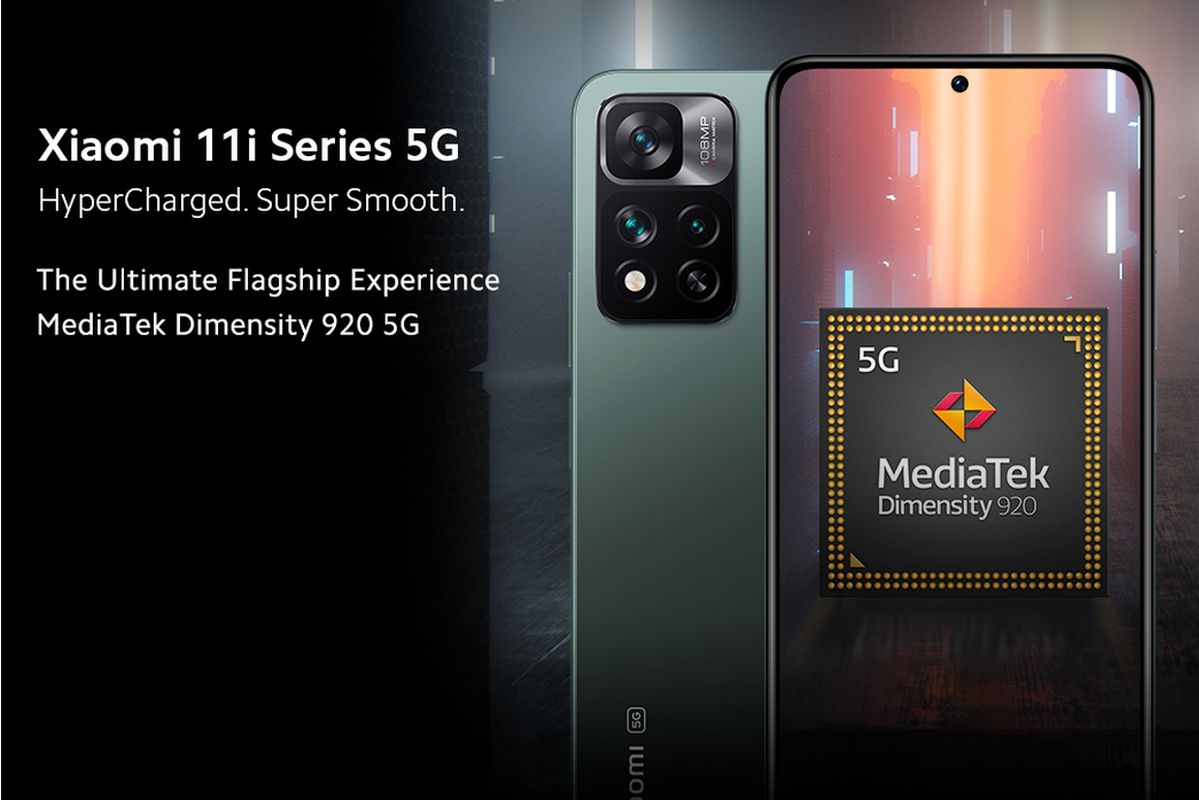
Xiaomi 11i HyperCharge will be launching on Jan. 6 in India. The key specifications of the smartphone are now listed on its landing page available on Xiaomi India’s website. It will be one of the first phones to land in the country with the Dimensity 920 onboard. A report by India Today Techhas tipped the pricing of the device.
According to the publication, Xiaomi India’s Chief Business Officer, Raghu Reddy has confirmed to it that the 11i HyperCharge will be priced between Rs 25,000 (~$336) and Rs 30,000 (~$403). As it is known, one of the major highlights of the so-called ‘HyperCharge’ phone is that it will carry support for 120W fast charging.
The company has been claiming that the 11i HyperCharge can go from 0 to 100 percent in just 15 minutes. Reddy did not share any information on the specs of the device. However, it is being said that the 11i HyperCharge will be a rebranded version of the Redmi Note 11 Pro+ 5G phone that debuted in China back in October.
Past reports have revealed that the 11i HyperCharge will come in 8 GB RAM + 128 GB storage variant only and it will come in two color such as Camo Green and Stealth Black. The device will be equipped with a 6.67-inch AMOLED FHD+ display with a punch-hole design, which will offer a 120Hz refresh rate. It may house a 4,500mAh battery.
For photography, it may feature a 16-megapixel front-facing camera and a 108-megapixel (main) + 8-megapixel (ultrawide) + 2-megapixel (macro) triple camera unit. The vanilla Xiaomi 11i is likely to house a 5,160mAh battery with 67W fast charging supports. It other specs could be identical to the Xiaomi 11i HyperCharge.
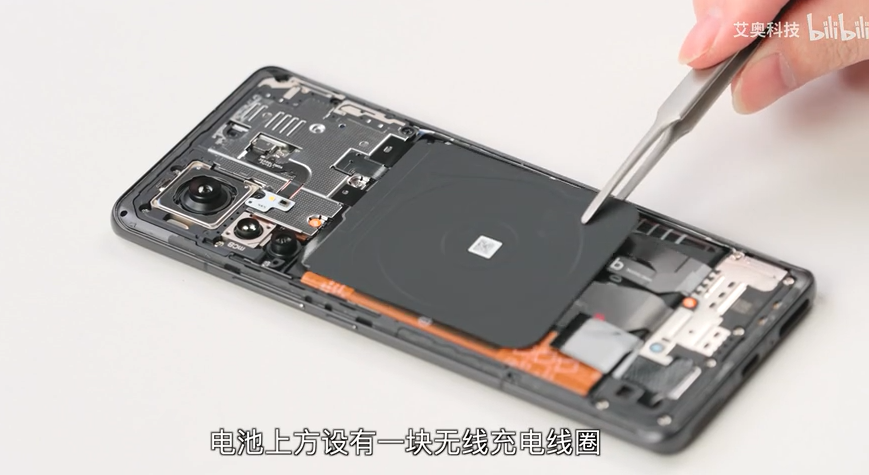
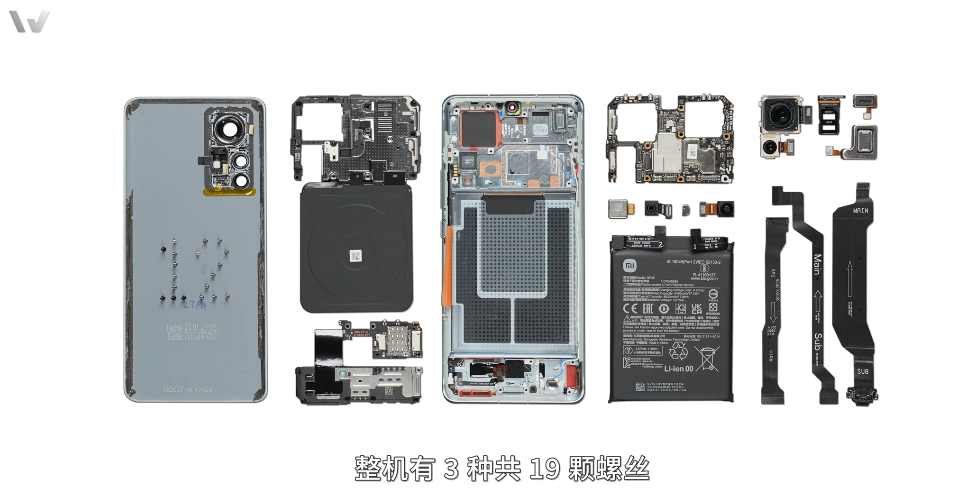
We have just spotted the first-ever teardown of the Xiaomi 12 Pro that was unveiled on Tuesday in China. The premium flagship series is yet to even go on sale but a Chinese blogger has posted a video teardown/review of the Pro model on China’s top video-sharing website Bilibili.
The video provides us with our first look at the internals of the 12 Pro. There is no doubt that the Xiaomi 12 Pro comes with a top-notch design just like the rest of the lineup. The teardown also shows the device equally features well-arranged internals. The device retains a sandwich structure with a three-stage design after the rear cover is removed. Xiaomi also included a heat dissipation film, a copper foil, and silicone grease, as well as a 2900mm2 super VC soaking plate to ensure the Snapdragon 8 Gen 1 doesn’t allow the device to heat up excessively.
The Mi 12 Pro is the first smartphone to pack a Sony IMX 707 sensor with 7P+ Optical image stabilization and we get to see the sensor for the first time. Also, the device features a 50MP Samsung JN1 sensor which is a portrait lens and a 50MP ultra-wide angle sensor.
In terms of flash memory and RAM, the teardown video shows that both the LPDDR5 RAM and UFS 3.1 flash storage are supplied by SK Hynix.
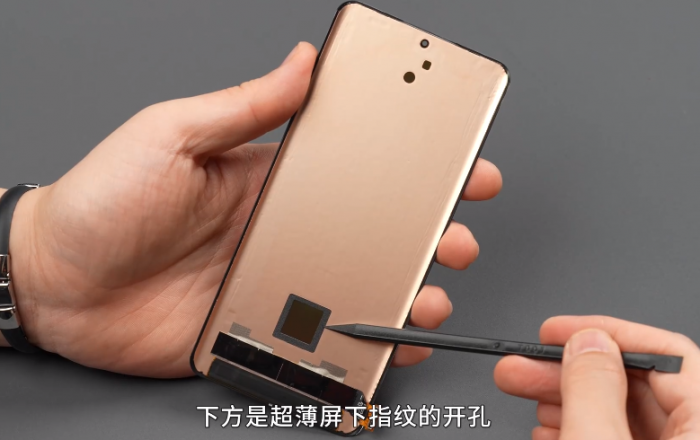
Another impressive hardware feature spotted on the teardown video is the four-unit crossover speakers (high + low) arranged diagonally up and down. At the same time, the X-axis linear motor is also a circle larger than those on most Android phones with a vibration comparable to that of the iPhone. The device is also shown to feature a more expensive ultra-thin under-display fingerprint solution.
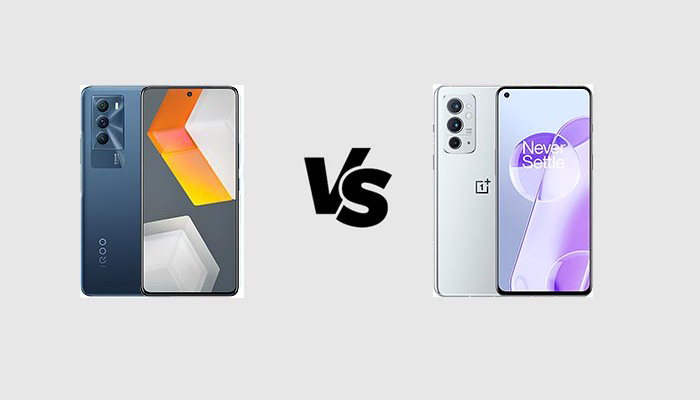
A few days ago, Vivo’s sub-brand released its last flagship killer of 2021. The iQOO Neo 5S debuted alongside the iQOO Neo 5SE with amazing specifications offered at a stunning price. There is one particular handset very similar to the new iQOO flagship and it was released recently as well: the OnePlus 9RT 5G, which is actually an upgrade of the OnePlus 9R released earlier this year. These handsets are not only incredibly similar in terms of specifications but even when it comes to the price range. So which one should you opt for? This is a comparison that will highlight those few differences between the iQOO Neo 5S and the OnePlus 9RT 5G.
Triple 48 + 13 + 2 MP, f/1.8 + f/2.2 + f/2.4
16 MP f/2.0 front camera
Triple 50 + 16 + 2 MP, f/1.8 + f/2.2 + f/2.4
16 MP f/2.4 front camera
BATTERY
4500 mAh, fast charging 66W
4500 mAh, fast charging 65W
ADDITIONAL FEATURES
Dual SIM slot, 5G
Dual SIM slot, 5G
Design
The dimensions of the iQOO Neo 5S and the OnePlus 9RT 5G are very similar, as well as their design. They do not have the best build quality in the smartphone world, but they are still well-built. The iQOO Neo 5S has a punch hole placed centrally, while the OnePlus 9RT 5G has a hole on the upper left corner just like all the other last-generation OnePlus devices. The thickness and the weight are similar as well. In my opinion, the OnePlus 9RT 5G looks a bit more elegant with its minimalistic camera module and great color options, but it is just a matter of taste.
Display
The displays of the iQOO Neo 5S and the OnePlus 9RT 5G have the same main specifications and even the same size: that is the reason why we think they may sport the same panel. Both the phones are equipped with an AMOLED display coming with a diagonal of 6.62 inches, a Full HD+ resolution of 1080 x 2400 pixels, a 120 Hz refresh rate, and the HDR10+ certification. You even get an in-display fingerprint reader and stereo speakers on both phones. Given that they have the same display specifications, the comparison between the panels is obviously a draw. You’d better focus on the rest of the specifications.
Specs & Software
Just like the displays, even the hardware specifications are exactly the same. iQOO Neo 5S and OnePlus 9RT 5G are powered by the amazing Snapdragon 888 mobile platform running at a max frequency of 2.84 GHz. They come in three memory configurations providing at least 8 GB of RAM and up to 12 GB of RAM, as well as 128 or 256 GB of internal storage. The phones run the latest user interfaces released by Vivo and OPPO: OriginOS Ocean and ColorOS 12, respectively. Which UI is the best one? In my opinion, the ColorOS 12 is more complete, but OriginOS Ocean still provides one of the best software experiences.
Camera
If you are looking for a better rear camera setup, then choose the OnePlus 9RT 5G. First of all, it has a better main sensor: we are talking about a 50 MP Sony IMX766 camera with OIS. The iQOO Neo 5S has the OIS as well, but the main sensor is an inferior 48 MP lens. The OnePlus 9RT 5G even provides a better ultrawide camera with a 16 MP resolution. The iQOO Neo 5S should be better when it comes to selfies, thanks to a brighter focal aperture.
iQOO Neo 5S and OnePlus 9RT 5G have the same battery capacity: 4500 mAh. Given that the components are almost the same, the battery life should be similar. Even the fast charging power is similar: 66W and 65W, respectively. More or less 30 minutes are needed for a full charge of these phones.
Price
The starting price of the iQOO Neo 5S for the Chinese market is €380/$430, while the OnePlus 9RT 5G starts from about €440/$500 at the actual change. The OnePlus 9RT 5G wins this comparison just for a single reason: it has a better rear camera department thanks to a superior main camera and a better ultrawide camera. But the iQOO Neo 5S actually has a higher value for money and, if you do not mind having a slightly inferior camera setup, then you should save money and opt for it.
Taiwanese electronics giant ASUS recently rolled out Android 12 stable updates for the Zenfone 8 with the Flip version also scheduled to get the update by the year’s end. In line with its promise, ASUS has now started rolling out Android 12 stable updates for the Zenfone 8 Flip.
The firmware for the Asus Zenfone 8 Flip has version number 31.1004.0404. The update is currently only available for the Zenfone 8 Flip with model number ZS672KS, while other models will subsequently roll out from January 2022. In addition to the specific model for which the Android 12 upgrade is available, the smartphone must be running the latest Android 11 firmware rolled out by Asus. The latest Asus firmware for Android 11 is WW-30.13.35.8 for the specified Zenfone 8 Flip model.
The Android 12 upgrade for the Asus Zenfone 8 Flip offers an array of features that guarantees a great user experience. The features include security and safety options that improved user privacy, although some third-party apps are not compatible with the Android 12. Asus will continue to roll out Android 12 upgrades to several of its devices for enhanced customer experience and safety. The next devices on the lineup to get the stable version of Android 12 are from the ROG lineup as well as the Zenfone 7.
LG Display has been in the news lately for several innovations and impressive concepts for its TV displays. It also showcased some of its transparent display designs which could be tapped by other TV manufacturers.
The company has now introduced its ‘OLED EX’ technology for OLED TVs and it says the new technology will offer up to 30% more brightness compared to current OLED displays. The OLED EX uses the deuterium and personalized algorithm-based ‘EX Technology to achieve the improved brightness of the display.
Explaining the concept behind the OLED EX, LG Display says EX represents Evolution and eXperience and is in line with the company’s goal of providing customers with new experiences through its ever-evolving OLED technology.
The OLED EX will offer faster response rates and overall excellent display performance. It allows for more control of the TV display using machine learning processes. This will optimize the display’s energy input to more accurately express the details and colors of video content being played. By reducing the thickness by 30%, LG Display says the OLED EX display will have slimmer bezels and offer a more immersive viewing experience in a premium design.
LG Display will use the OLED EX technology in all OLED TV displays manufactured at its plants in Paju, South Korea, and Guangzhou, China, from the second quarter of 2022. The OLED EX is part of LG Display’s lineup at CES 2022 taking place next month.
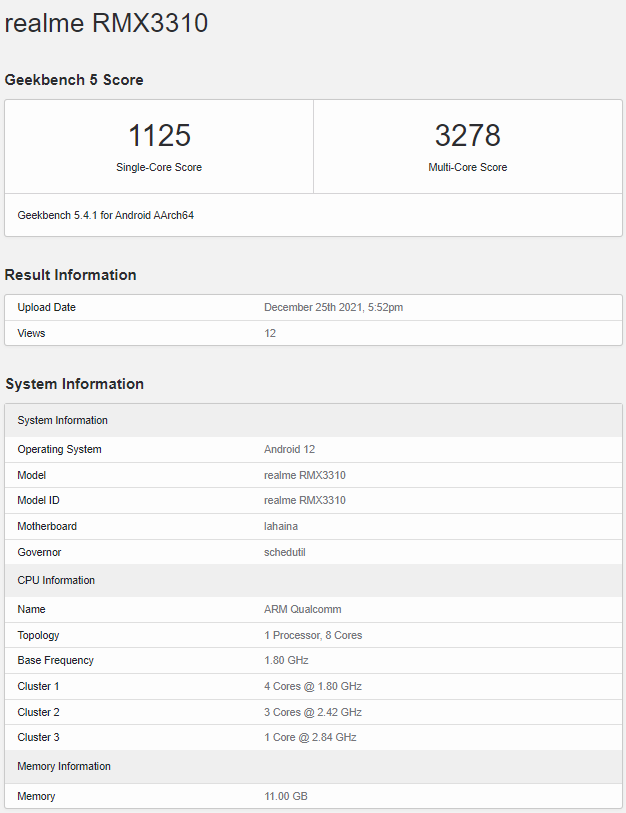
Since Realme has scheduled to launch the Realme GT 2 series on January 4, the last batch of leaks and teasers are in full swing. Amidst these teasers, the phone has passed the Geekbench certification confirming its key specifications.
The Realme GT 2 with model number RMX3310 has scored 1125 single-core points and 3278 multi-core points on Geekbench v5. It confirms the internals of the phone revealing the Snapdragon 888 SoC under the hood. It has 12GB of RAM and runs on Android 12 out of the box. We expect it to have RealmeUI 3.1 on top of it.
Previously, the phone was spotted on certifications like TENAA, NBTC, and BIS. It revealed the device to sport a 6.62-inch AMOLED display. It equips a triple camera setup at the rear with a 50MP main sensor. It is touted to be accompanied by an 8MP ultra-wide lens and a 2MP sensor. The device will pack a 5,000mAh battery with support for 65W fast charging. It will have two configurations – 8GB RAM + 128GB storage variant and 12GB RAM and 256GB storage option.
The Realme GT 2 series will comprise more than three phones, the Realme GT 2, Realme GT 2 Pro, the Master Edition, and a camera focused variant; as revealed by a recent leak.
The phones may have a similar design, however, the GT 2 and 2 Pro are teased to come with highlighting Diamond Ice Core Cooling Plus and VC Liquid Cooling technology. The Pro model will come powered by the more powerful Snapdragon 8 Gen 1 SoC. Rumous reveal that the Pro model may have up to 1TB of built-in UFS 3.1 internal storage.
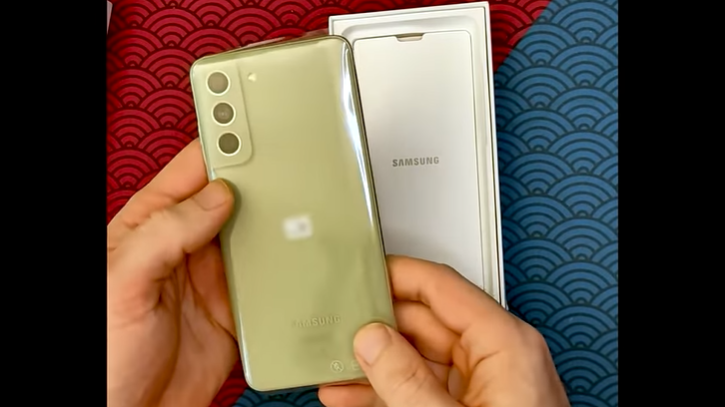
A Reddit user with the identity u/UnknownWon has posted an unboxing video of the Samsung Galaxy S21 FE, showing some of its stand-out features. The video also contains more details about the Galaxy S21 FE as the January launch of the device draws nearer. The slim box of the Galaxy S21 FE does not include the charger, as per the video.
There is no confirmation yet on the exact date in January for the launch, as speculation swirls around the first two weeks in the new year. Notably, the CES 2022 event could be a perfect event for its unveiling.
The Reddit tipster had earlier provided some specs details of the S21 FE including a 4,500mAh battery, fast charging support, and fast wireless charging. The tipster also suggests that the Galaxy S21 FE suffers from a green tint in comparison with his Poco X3, and the white balance of the display is not adjustable manually.
The in-display fingerprint scanner of the S21 FE was optical while the phone comes with 6GB of RAM. The model in the unboxing video was a dual SIM variant powered by the Snapdragon 888 chipset.
The Samsung Galaxy S21 FE has had a tortuous journey and will be released in a calendar year different from its series number. It could be priced up to $700 and offer some premium and sleek specs. However, due to its delayed launch, the Galaxy S21 FE will have a short run before it is upended by the Galaxy S22 lineup.
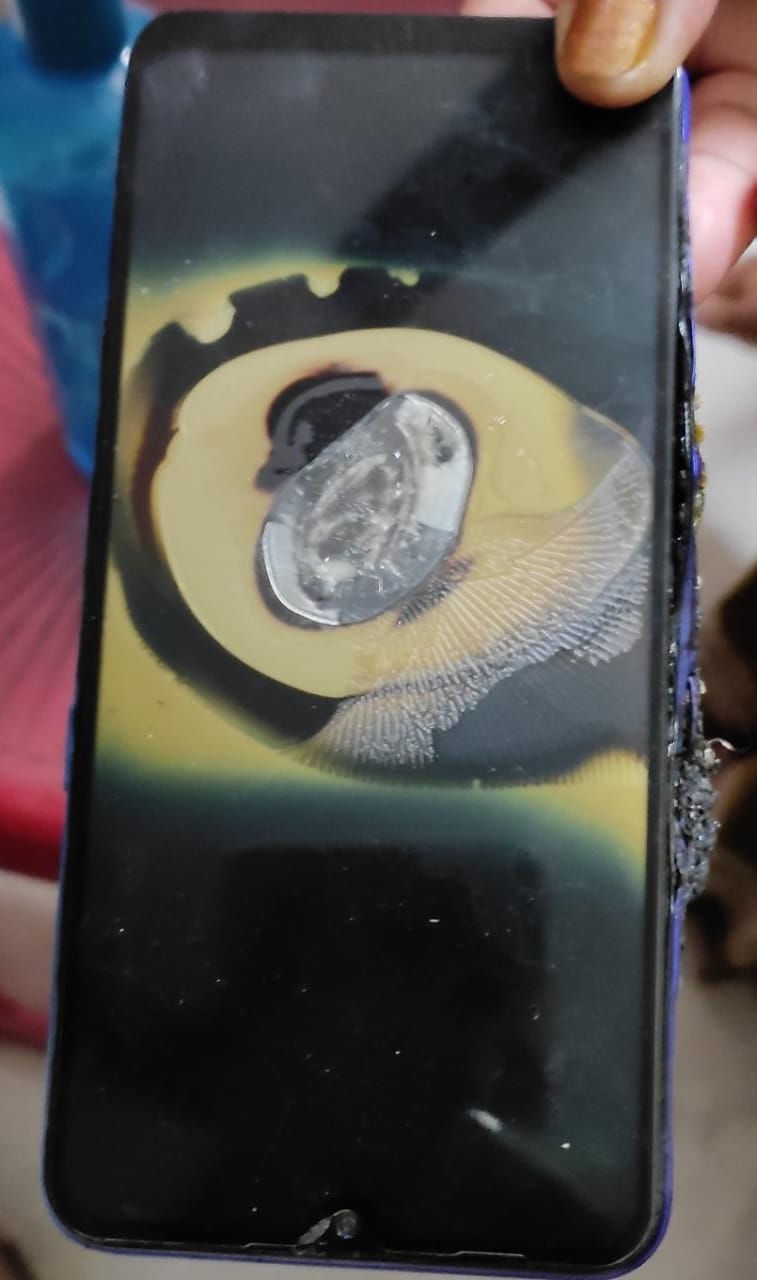
Recent months have seen multiple phones blasting in India, be it a OnePlus Nord 2 or the Poco M3 which caught on fire earlier this month. Now, a new case has surfaced with a Realme XT catching on fire.
According to a report by 91mobiles, yet another Realme XT has blasted while using. A similar incident concerning the same model occurred back in June 2020. Twitter user Sandip Kundu posted images pictures of the burnt Realme XT in question which belongs to his friend.
According to the Twitter user, the Realme XT device belonging to his friend blasted while being used. The images posted by him reveal a severely deformed and burnt back with the side panel completely burnt off. The display also sustained burn damage which is apparent from the pixel bleed on the screen. By the looks of it, it seems to be a blast that originated in the battery.
Realme XT blast
1 of 2
Luckily, other than some burnt bedding, no injuries or loss occurred to the aggrieved party. The Twitter user has also posted a video of the phone smoking on his bed after the initial blast occurred.
Realme‘s social media handle on Twitter has acknowledged the issue and has offered to help stating, “We would like to inform you that we have already contacted the person and also we have asked him to visit the nearest authorized service center. Please be assured, we will try our best to resolve his concern as soon as he visits us”.
Finer details regarding the cause of the incident are yet to surface, but the repeated incidents are a cause of worry for realme users.
A few months back, Realme launched the Watch 2 wearable smartwatch in India with features like a 1.4-inch color display, 90 sports modes, and a SpO2 sensor. Initially, the company launched the smartwatch in a single Black color variant. However, it was later rumored to arrive in a Gold color option. Now, ahead of any announcements, the Realme Watch 2 in Gold color was found listed on the official Realme website.
In fact, the Flipkart listing of the watch also had the new Gold colour variant. The Realme Watch 2 in Gold color is priced the same as the Black variant i.e. ₹3,499(~$47). But on the Realme India website, you can get it for ₹100(~$1.5) off. It is available for purchase in an open sale both on Flipkart and the Realme India website.
1 of 3
The Realme Watch 2 in Gold has a golden-colour framing with a Grey colored strap. The smartwatch has a 1.4-inch IPS LCD color display with a 320 x 320 pixels resolution. It has a brightness of up to 600 nits and features over 100 watch faces. Amongst these 100, there are also a few live watch faces to choose from.
Some of the highlighting features of the Realme Watch 2 are 90 sports modes including outdoor walking, outdoor running, indoor walking, indoor running, yoga, hiking, basketball, rowing, and others. It comes with Smart AIoT control to control all the Realme smart devices. The watch has SpO2 monitor, heart rate monitor, stress tracking, and sleep tracking features.
It packs a 315mAh battery that is claimed to last for up to 12 days on a single charge. The smartwatch can receive message alerts, call alerts, and even app alerts.
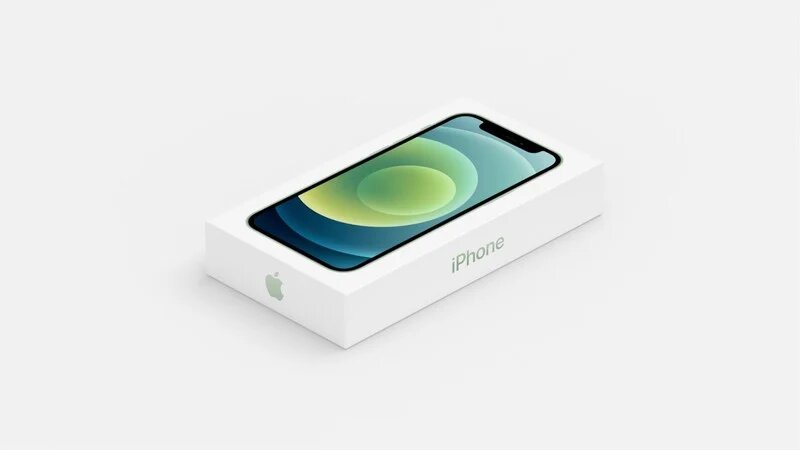
Since 2020, Apple has started a trend in the smartphone industry with its iPhone 12 lineup. Yes, we’re talking about the controversial decision from Apple to remove all chargers from the boxes of its brand new iPhone 12 series.
iPhone 12 without a charger in the box
In the name of environmental awareness, Apple clarifies that it is looking to reduce its carbon footprint via reducing the production of its plastic chargers that come in its sealed new iPhone 12 boxes. Apple further explains that it has gathered surveys from its users and many iPhone users mention that they don’t use the new charger in the box as they reuse back the charger they got from their previous iPhone.
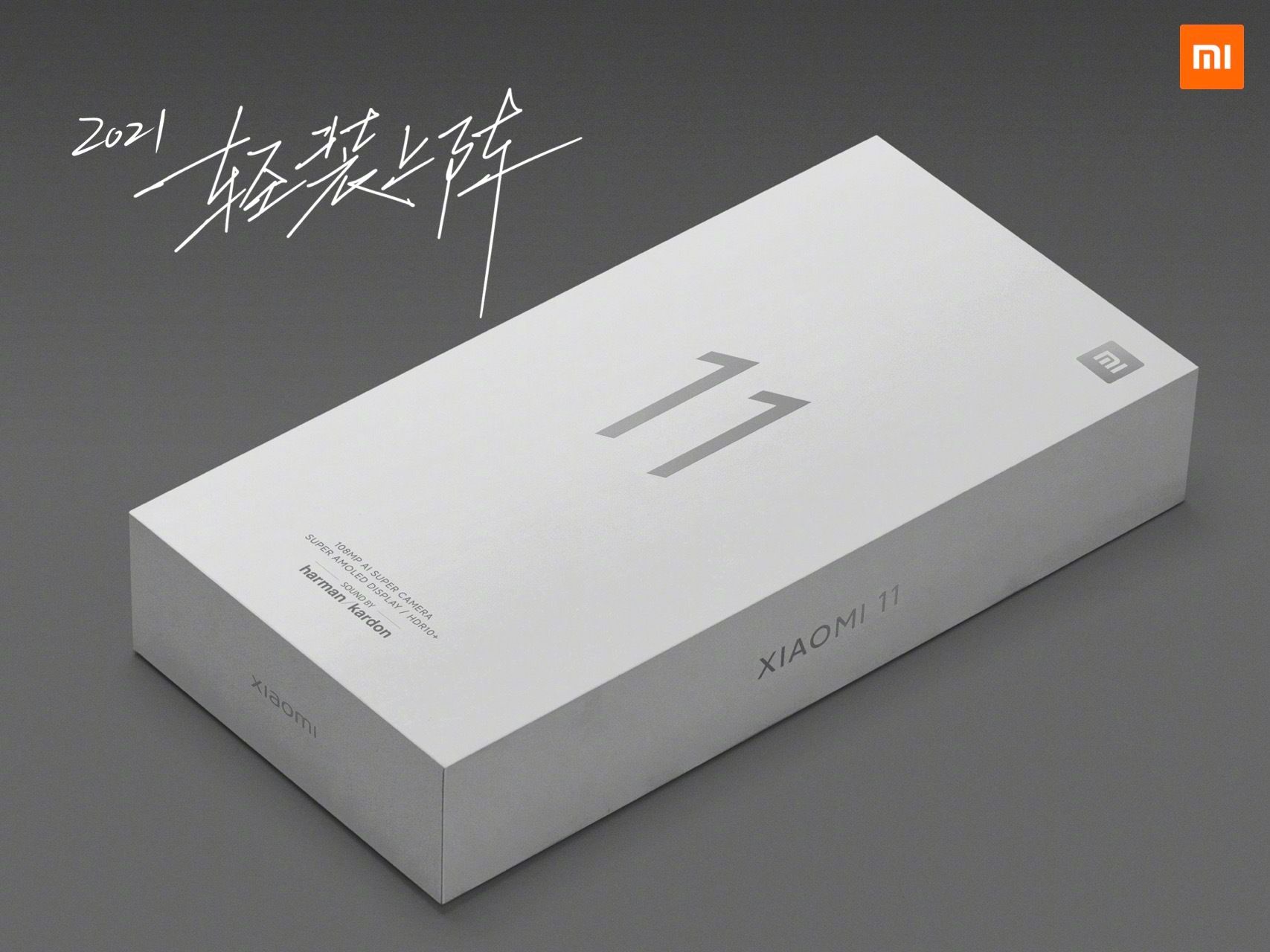
Since then, Android manufacturers, specifically Samsung, followed the trend and started removing chargers starting with its Galaxy S21 flagship series. Xiaomi almost followed the trend with its Mi 11, however, during the launch in China, they did give consumers the choice of choosing between a box with a charger or one without the charger.
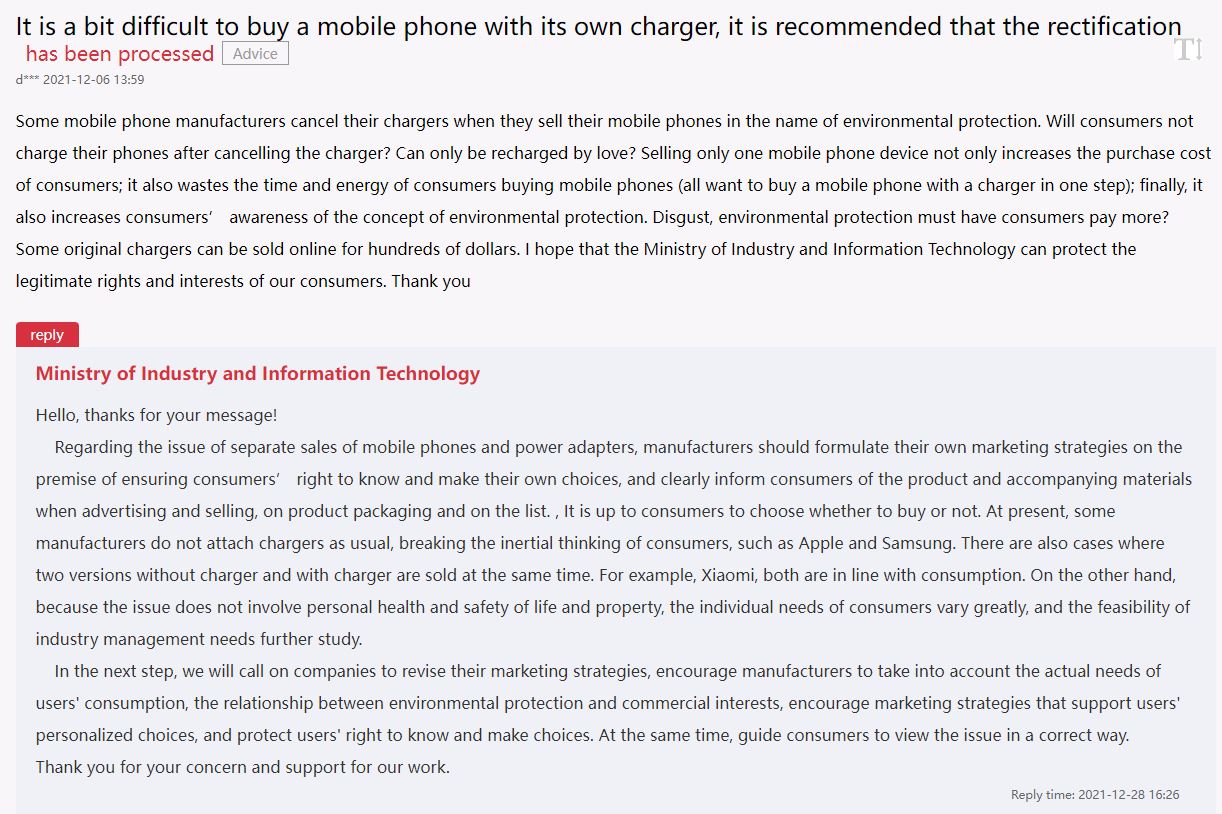
In a Chinese forum, one Chinese netizen specifically voiced his disgust against the new policies practiced by Apple and Samsung, because this practice has affected consumers directly as they had to spend more to buy a new charger that supports fast charging. This was mainly because the new phones only support the marketed fast charging speeds with the supported brand charger (which is not included in the box). In turn, the consumers had to pay more, and more plastic packaging was wasted in the process of packaging the phone and charger separately as opposed to packing them together in the same box in the first place. So the netizen hoped that the Chinese government takes action on these companies.
China MIIT replying to the forum user’s complaint
China’s MIIT (Ministry of Industry and Information Technology) took notice of the social media post. It replied that regarding the issue of chargers being sold separately from the phone, manufacturers should explicitly list in all of its marketing materials that the device does not include the charger in the box when they advertise the phone comes with fast charging. This is because it is the consumers’ right to be informed before making a purchase decision. And in the end, the consumer should be the one in charge of making the purchase decision themselves, whether they should buy the device or not.
MIIT further adds that if it is explicitly stated in the marketing materials, the consumer is already informed that they have to pay extra to buy the faster charging, therefore they should be ready to pay more to get the extra feature that they want in their phone. While it is indeed true that we are seeing the trend of chargers sold separately in several flagships from the likes of Apple, Samsung and Xiaomi, MIIT notes that if the practice is not a safety hazard or health hazard to consumers, the feasibility of the practice can be observed over time.
Xiaomi Mi 11 box in China didn’t include the charger
Further, China’s MIIT also suggested companies should ensure that the correct information is passed on to their users to ensure that the satisfaction rate of their customers still remains at a competitive level.
Considering this comment comes from the official Chinese organization which regulates the development and approval of smartphones in China, it looks like the trend of selling separate chargers from the smartphone will continue in China.
So, what do you think of this increasing trend of removing chargers from smartphone boxes?
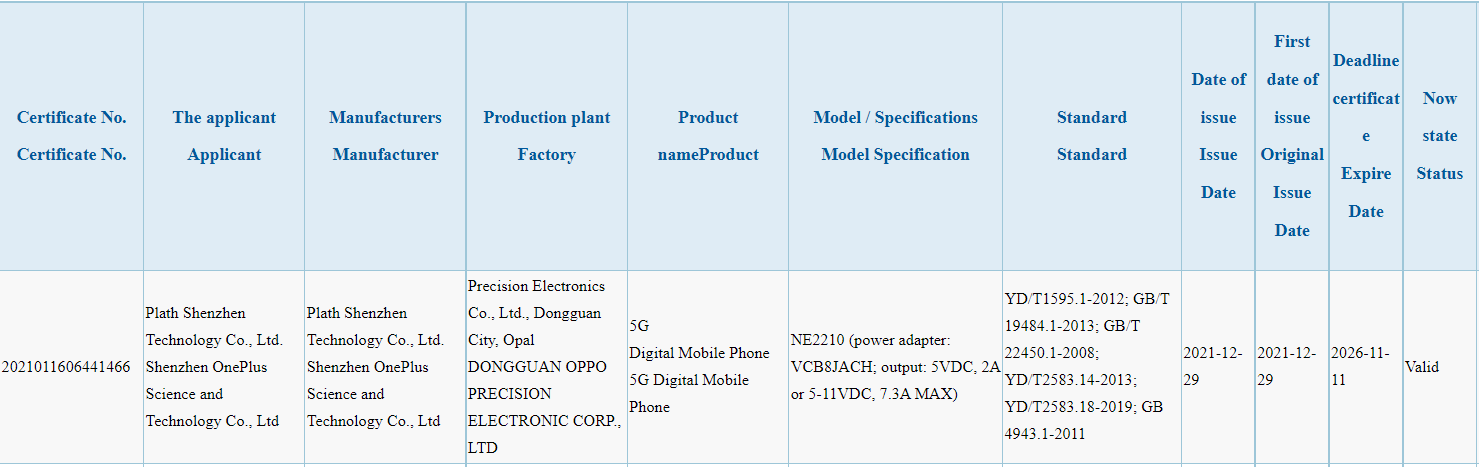
OnePlus 10 Pro will go official next week and ahead of its launch the phone passed several certifications. Today, the device has yet again passed one such certification, this time of the Chinese 3C authority. The 3C documents confirm that the phone will come with crazy-fast charging speeds.
As per the 3C certification, the OnePlus 10 Pro with model number NE2210 supports output of 7.3ampere at 11V. It translates to a whopping 80W fast charging speed. This is way faster than the predecessor phones. So far the fastest charging supported by the OnePlus devices is 65W. With the 80W fast charging speeds, the OnePlus 10 Pro will become the fastest charging OnePlus device.
Other than this, the phone was previously touted to come equipped with a 5,000mAh battery. It will be supported by a 50W wireless charging support. In terms of its other specs, the phone is rumoured to feature a 6.7-inch punch-hole curved LTPO AMOLED screen with a 120Hz refresh rate and a QHD+ resolution.
There will be a 50MP Hasselblad-branded triple rear camera system on the phone. It will boast a 32MP selfie shooter placed in the punch-hole cut-out of the screen. One of the highlights of the phone would be its processor. The device will come powered by the Qualcomm Snapdragon 8 Gen 1 SoC and is expected to run on Android 12 OS out of the box.
As the holiday-season 15-day giveaway from Epic Games is fast approaching its climax, the company has dropped one of the all-time great games to be claimed for free. The latest addition to the giveaway brings Salt and Sanctuary, which is currently available on epic games for free.
Salt and Sanctuary features beautiful 2D hand-drawn visuals, as well as gameplay mechanics similar to the Souls series. The game at its core is an action hack and slash RPG with a well-written enticing storyline.
The game begins with the player stowed away in a ship that is also carrying a princess from an unnamed country who is to be married to an opposing country’s king in order to avert war. However, a group of marauders attack the ship, murdering its crew. If the player kills all the marauders and escapes to the deck, they are then set upon by a giant “Kraekan” (a corruption of Kraken) of the sea resembling Cthulhu. Whether or not they are able to defeat the marauders and the powerful kraeken, the ship is wrecked, sending them drifting to shore on a mysterious island.
The game is a joy as well as a challenge to play and guarantees enjoyment and a sense of accomplishment. The game is one of if not the best to come out of this Epic games giveaway so far and is free to claim for the next 24 hours. But if you miss the time window, you can’t claim the game again.
We use cookies on our website to give you the most relevant experience by remembering your preferences and repeat visits. By clicking “Accept”, you consent to the use of ALL the cookies.
This website uses cookies to improve your experience while you navigate through the website. Out of these, the cookies that are categorized as necessary are stored on your browser as they are essential for the working of basic functionalities of the website. We also use third-party cookies that help us analyze and understand how you use this website. These cookies will be stored in your browser only with your consent. You also have the option to opt-out of these cookies. But opting out of some of these cookies may affect your browsing experience.
Necessary cookies are absolutely essential for the website to function properly. This category only includes cookies that ensures basic functionalities and security features of the website. These cookies do not store any personal information.
Any cookies that may not be particularly necessary for the website to function and is used specifically to collect user personal data via analytics, ads, other embedded contents are termed as non-necessary cookies. It is mandatory to procure user consent prior to running these cookies on your website.