We all know Dyson is the most popular and probably the best vacuum cleaner brand in the market right now. But best quality does come at a price, and not everyone can afford to pay an exorbitant amount for their vacuum cleaner.
But is it possible to spend half the price of a vacuum cleaner to get 80% of its experience? That’s what we are trying to find out by using the Bagotte BS900. And it looks like this vacuum cleaner comes close to offering an extremely good value for your money.
Bagotte BS900 is designed with black as the main color and purple as the secondary color. The purple extension bar is made of metal, which also ensures the strength of the extension bar. The overall look is not too different from most of Dyson’s vacuum cleaners.
The Bagotte BS900 uses a 400w brushless motor with a suction power of 25,000 Pa, which ensures that all fine dust and hairs can be sucked into the vacuum cleaner. And there are four LED lights in front of the standard brush head, which allows you to see if you’re cleaning in the dark.
The operation is very simple, a long press on the trigger button is to start, and then press again is to close. There is only one button behind the motor that can adjust the suction level. There are three suction levels to choose from, so you can decide on the suction level according to your situation. The battery is removable and can be pulled out separately for charging. The battery can be fully charged in three hours and can be used for up to 55 minutes at a time.
Tigger Button
Cleaning the dust is also a two-step process: pull the switch at the bottom and press the button on the dust collection bucket to empty the dust. The entire vacuum cleaner is also easy to disassemble, and the entire dust collection bucket can be removed individually for easier cleaning.
The Bagotte BS900 not only has a standard brush, but also comes with two different types of suction heads and another brush. It can be used in different scenarios such as bed vacuuming, cleaning gaps that are hard to reach, and so on.
An additional HEPA filter is also included. And for your storage convenience, a wall bracket is included. It can be fixed to the wall using double-sided tape or screws. So Bagotte has thought a lot about the overall design.
The basic functions and design of the Bagotte BS900 are well done, and there is a lot of free stuff attached. For users on a tight budget (around $200), the Bagotte BS900 is a good choice for those who want to buy a vacuum cleaner.
We thought OnePlus’ first phone in the second half of the year would be the OnePlus 9T, but it turned out to be the OnePlus 9RT.
Yes, only six months have passed since the release of the OnePlus 9R, and OnePlus is rushing to launch an upgraded version.
Why exactly is OnePlus launching this phone? Maybe we can get the answer from the phone.
VIDEO REVIEW:
OnePlus 9RT Review: Design
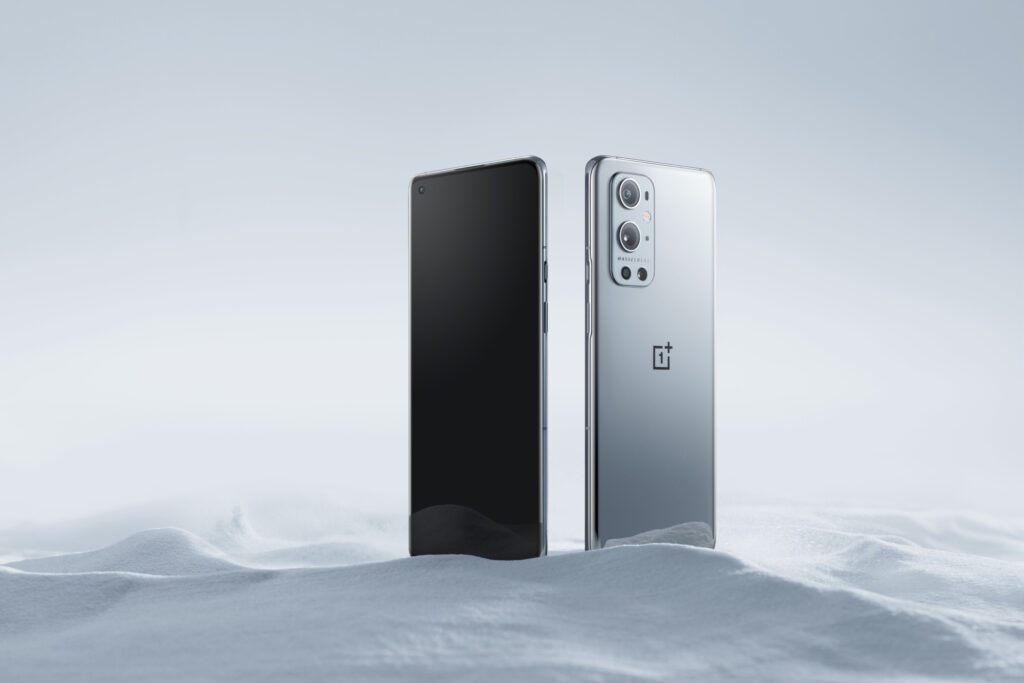
Although it is said to be an upgraded version of the OnePlus 9R, the OnePlus 9RT is more like a twin of the OnePlus 9. The almost identical appearance of all three reflects the continuity of the OnePlus design, but it also inevitably feels like it lacks novelty. This silver 9RT looks like a ceramic glazed material and doesn’t get fingerprints easily.
The new process makes this silver my favorite of the three colors of the 9RT, and the feel of the phone that OnePlus has been emphasizing is great on the OnePlus 9RT. The rounded frame and back cover are very tight and the weight of less than 200g brings excellent experience.
Features such as NFC and stereo dual speakers are not missing either. If I could sum up the design of the OnePlus 9RT in one sentence, it would be: it looks ordinary, but it’s comfortable to use.
The specs of the screen have also changed slightly compared to the OnePlus 9R. The size has gotten bigger, so the PPI is a bit lower at the same resolution. This time, the 9RT adds sub-pixel rendering of fonts, which theoretically improves the clarity of some fonts. The downside is that there may be colored streaks around the edges of the fonts.
But even after zooming in, you can’t see a big difference, and the impact on daily use is ignorable. The biggest difference is that the screen of the OnePlus 9RT is no longer Fluid AMOLED. The biggest disadvantage of the OnePlus 9RT with a regular AMOLED is that it is not transparent enough. The lower bezel is also wider than the 9R, and the rainbow effect is noticeable when you look at it sideways. Although it is difficult to find these shortcomings during normal use, in general, the screen of the OnePlus 9RT is a bit of a step backwards compared to the 9R.
OnePlus 9RT does not use Snapdragon 888+, rather comes with Snapdragon 888, and the system is equipped with the latest Color OS 12, with Benchmark scores of 793506 on AnTuTu, 3DMARK score of 5869, Geekbench 5 single-core of 1124, and multi-core score of 3330. This time, OnePlus focused on optimizing the gaming experience, with the in-game touch sampling rate reaching up to 600Hz.
The 90FPS frame rate for PUBG is satisfactory, although it’s not 90 FPS throughout, but an average of 88 FPS is considered very good. OnePlus 9RT also has an official cooperation with Genshin Impact this time, but the optimized Genshin Impact performance doesn’t seem to be as impressive as we thought it would be, with the frame rate quickly locking in at 40 fps. Obviously, OnePlus is looking for stability and lower gaming temperatures than high frame rates.
This time, the 9RT has a new “Ultra-steady frame mode”. The performance is roughly the same when you turn it on, except that the frame rate is a bit higher at the beginning. But the smooth drop in frame rate does bring a better gaming experience than some phones with higher frame rates but without this stability. It seems that the 9RT has made some efforts in gaming, so users who like to play games can consider this model.
OnePlus 9RT Review: Cameras
The biggest upgrade to the OnePlus 9RT should be its camera. The main camera has been upgraded from IMX586 to IMX766, which is a very big improvement in all specs compared to the 9R. Since the Mi 11 is also at the same price point and has a flagship sensor, we chose the Mi 11 as the model to compare.
Main Camera
1 of 17
Daytime performance is good, the colors are gorgeous but not too saturated, it will look better. Dynamic range is also good. At night, you can see how great the IMX766 is. You can see detail in both the highlights and shadows. And with a larger single pixel size, capable of reducing exposure time, the Mi 11’s super high pixel count actually suffers in dark light. It’s safe to say that the OnePlus 9RT’s main camera is on par with many flagship phones. The only complaint is that I wish they would reduce AI sharpening of the image to a certain extent, which can be over-sharpened at times. The main camera also adds a “HI-RES Mode”, which can take 100-megapixel photos with AI interpolation. However, it doesn’t improve the clarity of the image much and is still far from the quality of the real 100-megapixel photo from the Mi 11. And if you use this mode it may also lack AI color tone resulting in the final shot not being as good as the photos taken in Auto mode. So it is not recommended using this mode on a daily basis.
Ultra-Wide Camera
1 of 12
I am still very impressed with the ultra-wide camera, even though it is not an upgrade. The dynamic range is excellent, especially the control of highlights. Even though the Ultra Wide Camera doesn’t have a large sensor size, with the excellent algorithm, OnePlus 9RT gets correct exposure in dark lighting at night. And the auto mode also incorporates the night view algorithm, so you can see some difference between the photos it takes in auto mode and night mode in low light. The overall experience of using this camera is excellent.
Macro Camera
1 of 2
The performance of the 2MP macro lens is the same as most budget phones, and the closest focusing distance is actually 4cm. Its image quality is worse than that of cropping with the main camera, so we won’t go into too much detail about its camera quality.
Coming to the video recording, I was honestly shocked by the 9RT’s video shooting capability. Not only do the main and ultra-wide angle cameras support 4k 60FPS recording, but you can also freely switch between the main and ultra wide angle cameras during recording at 4k 30FPS. Many phones in the same price range can’t do this, including the Mi 11. AI Highlight mode allows you to record videos with more vibrant colors and a bit of dynamic range improvement. But because the effect is not significantly improved, and you can only shoot 1080P 30FPS video, it is not recommended for everyday use.
Do check out our video review added above for the video shooting comparison.
OnePlus 9RT Review: Battery Life & Charging
OnePlus 9RT supports up to 65W of charging power. The special 65w charger is right inside the box. It takes five minutes to charge to 36%, fifteen minutes to 65%, and takes only half an hour to fully charge to 100%. The battery is still 4500mAh, and the power consumption of each scene is shown in the picture.
Half hour of Tiktok consumes 5%, half-hour of online video around 5%, two games consume 10% and 12% respectively. This power consumption is at a relatively normal level for a Snapdragon 888 phone.
So why did OnePlus launch the 9RT?
After comparing the OnePlus 9, 9R, and 9RT, I found that the biggest difference between them is the camera. The OnePlus 9 has the best camera of the three, while the 9R is the cheapest. The OnePlus 9RT is the phone that has the best balance of price and photo experience. In fact, its camera surpasses our expectations as well.
Huawei recently quietly released Ryzen variants of its MateBook 14 2021 laptop in China equipped with the latest AMD Ryzen 5 5500U and Ryzen 7 5700U processors.
The MateBook has a 2K resolution FullView display with a tall 3:2 aspect ratio and its bezels are extremely slim resulting in a 90% screen-to-body ratio (via IT Home). The display supports 100% sRGB color gamut and comes with tech to reduce blue light. The touch screen supports advanced gestures that you get on a regular smartphone, like pinch to zoom and 3-finger swipe to capture screenshots.
The laptop weighs 1.49kg, measures just 15.9mm thick, and its body is made up of an aluminum alloy.
It is powered by a battery with a 56Wh capacity which helps it last for up to 11 hours while playing Full HD videos. Huawei claims that with just a 15-minute charge, you can get 2.5 hours of screen time. For heat dissipation, the laptop has dual heat pipes and dual Shark fin fans.
The laptop comes with Huawei Share support for seamless connection and file sharing between your Huawei phone and Huawei laptop.
Its interfaces are comprised of 2x USB 3.2 Gen 1 ports, 1x HDMI port, 1x USB Type-C port, a 3.5mm headphone jack, and a 65W USB Type-C port charger.
To protect your privacy, the built-in webcam is innovatively housed within a button at the top of the keyboard, and only pops up when you press it.
The Huawei MateBook 14 2021 Ryzen Edition comes in Space Gray and Haoyue Silver color options. Its Ryzen 5 5500U variant with 16GB RAM and 512GB ROM (NVMe PCIe SSD) is priced at 5999 Yuan or around $939. As for the Ryzen 7 5700U, also with 16GB RAM and 512GB ROM, the price tag says 6299 Yuan or around $986.
Lei Jun, the founder and CEO of Xiaomi, has successfully withdrawn from a number of the company’s units and even certain firms that are backed by the Chinese tech giant.
According to a PanDailyreport, the industrial and commercial registration information regarding Chengdu Beida Asset Management Co recently made two notable updates, one of which revealed that Lei Jun has withdrawn from the company’s Executive Director position. For those unaware, Chengdu Beida Asset Management is owned by Tianxing Digital Technology, which runs a mobile payment platform that is owned by the smartphone maker.
Previously, the senior official of the Chinese tech giant had also withdrawn from his position of Chairman of Xiaomi Credit Management Co. Ltd. and the Director position of Shanghai Xiaomi Financial Information Service as well. Back in July, Lei Jun even withdrew from the position of Executive Director of Chongqing Xiaomi Commercial Factoring Co. Ltd.
As of right now, the executive is still the Executive Director, Chairman, and CEO of Xiaomi, which focuses on smartphones, smart TVs, and other smart household products and ecosystems as well. His responsibilities includes strategy making, corporate culture building and key products development, along with supervising the senior management team. Despite leaving a number of firms backed by the company, he is still the director at various other subsidiaries, merged affiliated firms, and other entities backed by Xiaomi.
Smartphone brands have started sharing plans to upgrade their devices to Android 12. The latest OEM to join this bandwagon is ASUS. The Taiwanese PC maker has confirmed to update six of its handsets to the latest version of Android by the first half of 2022.
ASUS has stopped releasing budget and mid-range smartphones. Hence, right now, the company only sells high-end ZenFone models and ROG Phones. These devices are also limited to certain regions.
Unlike other OEMs, ASUS is still following the two Android update policy. Hence, the ZenFone 6 and the ROG Phone 2 will not be receiving the Android 12 update. Whereas, the newser 6 devices will get access to the fresh version of Android.
The company says (via XDA Developers) that the upcoming software update will also bring ZenUI-specific changes and its own battery as well as performance-related tweaks.
Having said that, the Android 12 stable rollout will begin in December 2021. The ZenFone 8 and the ZenFone 8 Flip will be the first to receive it, followed by ROG Phone 5 and ROG Phone 5S in Q1 2022. Finally, the ZenFone 7 and ROG Phone 3 will be updated sometime later in H1 2022.
The leak was spotted on Weibo(a Chinese microblogging website) that showcased the design of the back plate of the upcoming Galaxy S22 Ultra. Looking at the image, we can see that the panel is black in color and feature cut outs for the camera sensors. The South Korean tech giant’s logo can also be spotted on the bottom half. Interestingly, the cut outs for the image sensors hints that the device will have a flush camera bump.
By comparison, the 2020 LG Velvet seems quite similar in terms of form factor, with vertically stacked camera modules that were flush with the rear panel as well (Via Android Headlines). Although, the cameras on the Galaxy S22 Ultra are clearly larger. Keep in mind that this is still an unconfirmed leak so take it with a pinch of salt and stay tuned for more as we will be providing updates when additional information is available regarding this matter.
Richard Yu, Huawei’s Executive Director and CEO of the Consumer BG, on Friday revealed that HarmonyOS now runs on over 150 million devices and claimed that it is the fastest-growing smart terminal operating system in history.
The statement was made at the Huawei Developer Conference 2021 as part of his keynote speech. The conference is being held from October 22 to October 24 and aims to explore what’s new with HarmonyOS, smart homes, smart offices, HMS Core, and more.
HarmonyOS’s 150 million figure is comprised of a variety of devices including mobile phones, tablets, smart TVs, smartwatches, and IoT. The OS has, after all, been designed with interaction and collaboration between devices in mind.
Yu added saying that the OS will soon be reaching 200 million devices by the end of this year itself, further proving phenomenal growth.
Additionally, the global distribution of HarmonyOS software applications reached 5.1 million+ developers, 170+ countries and regions, and the cumulative distribution of applications reached 332.2 billion between January to September 2021. The OS already has 4000+ intelligent ecological products and 1800+ ecological partners.
Huawei has also cooperated with over 17 authorized universities and over 436 university teachers to help grab talent for Hongmeng OS development.
HarmonyOS is known to be based on LiteOS for IoT devices, while it is based on a Linux kernel for smartphones and tablets and has used the open-source Android code to support running Android apps. The OS made its first appearance with Honor Smart TVs in August 2019 and was later adopted by Huawei smartphones, tablets, and smartwatches in June 2021.
Earlier today at the HUAWEI Developer Conference 2021, the Chinese tech giant unveiled the latest version of its operating system called HarmonyOS 3. The new software is out for the developers to try out.
Huawei switched to HarmonyOS due to sanctions from the US government. Although the company’s smartphone business is on the verge of dying, the firm continues to push resources in its self-developed software platform.
The third iteration of HarmonyOS focuses on system architecture, Super Device, and one-time development for multi-device deployment.
The HarmonyOS 3 Developer Preview brings flexible deployment tools. Therefore, device developers can select essential components based on hardware requirements to assemble the operating system.
Further, Huawei has made improvements in the UI design to maintain consistency across the operating system as well as various devices. The company has also announced Ark Development Framework 3.0 (ArkUI 3.0), DevEco Studio 3.0, and 6000+ APIs.
In a nutshell, the new version of HarmonyOS tries to bring in more developers and partner OEMs to the platform. That does not mean there will not be any user-front new feature.
So far, Huawei has revealed that Super Device now allows users to connect multiple devices at a time. For instance, a smartphone, a smart TV, and 4 speakers can be combined into a 6-device system for an immersive multimedia experience with a 5.1 channel sound experience.
Having said that, HarmonyOS 3 Beta is scheduled to release in the first quarter of 2022.
Suppliers of Huawei and SMIC have been granted billions of dollars worth of licenses from November through April to sell these firms goods and technology despite both brands being in the trade blacklist in the US.
According to Reuters, documents released by Congress showed earlier this week that 113 export licenses worth 61 billion US Dollars were approved for suppliers to ship products to the Chinese telecom giant along with another 188 licenses that are worth nearly 42 billion US Dollars were approved for China’s major chipmaker SMIC (Semiconductor Manufacturing International Corp). The data also revealed that more than 9 out of 10 license applications were granted to SMIC suppliers, while around 69 percent of requests were granted to ship to Huawei.
The US House of Representatives Foreign Affairs committee voted to grant a request to release the licensing data that was received from the Commerce Department back in May. These numbers have led to an outcry in Washington that are against these Chinese firms receiving access to advanced US made technologies. Republican Senator Marco Rubio told Reuters that President Joe Biden needs to explain the reason behind these companies continuing to receive “waivers.”
The government official added that “It is just another example of President Biden not taking the economic and security threat posed by the Chinese Communist Party seriously.” Meanwhile top Republican member Michael McCaul said that “It’s clearly in our national interest to increase transparency and public scrutiny on how our nation transfers its technology to an adversary.”
Intel CEO Pat Gelsinger warned that the global chip shortage will likely linger for a lot longer. He said that he expects the shortage to extend at least until 2023.
The statement was made to CNBC late on Thursday ahead of Intel’s third-quarter 2021 financial results. The CEO also revealed that the industry-wide component shortage affected its PC chip business during the third quarter which led to an 8% drop in Intel’s stocks.
Gelsinger believes that the shortage is presently at its worst but will get better incrementally with each quarter next year. Supply-demand balance cannot be expected until at least 2023 though.
Pat Gelsinger
But despite thinning supply, Intel delivered its third-quarter results with a 5% YoY increase in revenue owing to strong demand in its DCG and IoTG businesses. The company also generated $9.9 billion in cash from operations and paid dividends of $1.4 billion.
“Q3 revenue was $18.1 billion slightly below our guide due to shipping and supply constraints that impacted our businesses,” George S. Davis, Chief Financial Officer, said in a statement. He also announced plans to retire from Intel in May 2022.
Intel says that demand has remained strong in its PC business, particularly in commercial, desktop, and higher-end consumer notebooks.
The digitization of everything, pushed by the four superpowers of AI, pervasive connectivity, cloud-to-edge infrastructure, and ubiquitous computing, is driving the continued need for more chips according to Gelsinger.
He further added that the market is expected to double to $1 trillion by the end of this decade. Until then, the market for leading-edge nodes will increase to over 50 per cent of the total and the market for leading-edge foundry services will grow at twice the rate of the semi-industry overall.
“Customers continue to choose Intel for their datacenter needs and our third-gen scalable Xeon processor Ice Lake has shipped over 1 million units since launching in April, and we expect to ship over 1 million units again in Q4 alone,” Gelsinger said.
This festive season, are you looking for a powerful cordless vacuum cleaner without burning a hole in your pocket? Then, Orfeld Cordless Vacuum Cleaner with a 20000Pa Suction Power could be your best choice. A recent 16% discount makes the deal even sweeter after using coupon code 165AKXJY on the checkout page.
The ultralightweight Orfeld Cordless Vacuum Cleaner uses a deep cleaning process with the powerful dual suction motor. The advanced technology further improves the cleaning efficiency using 20000Pa suction. It can effectively pick dust, debris, large particles from hardwood floors, tile floors, and marble floors.
The Orfeld Vaccum Cleaner operates in two suction modes and the user can choose to depend upon the usage:
Normal Mode – 8000Pa
Turbo Mode – 20000Pa
The cordless function improves portability and enhances usability as the user can freely clean the floor, sofa corners, and ceiling. It is a modular Vacuum Cleaner that can be snapped together from pieces to improve its functionality.
While cleaning, Orfeld Cordless Vacuum Cleaner does not pollute the environment. The presence of the T10 filter system catches the dust and further prevents it from accumulating in the air. Upon a single full charge, the Li-ion battery can offer 50 mins runtime. It is an ultra-lightweight Vacuum cleaner that measures just 2.7lbs.
The company offers several accessories like a Flexible LED electric brush to improve workability.
It is a great offer to grab the Orfeld Cordless Vacuum Cleaner at the discounted price of $85.67 after using the coupon code 165AKXJY on the Amazon checkout page. It is a limited-time discount and is only applicable for a day.
Almost all sectors are affected by the global semiconductor shortage. At the same time, the smartphone market is also facing a shortage of components. Despite the struggles, smartphone sale in India is estimated to reach a new peak during the 2021 festive season.
According to a report by Counterpoint Research, smartphone sales in India during the 2021 festive season will hit a whopping $7.6 billion. The sales began in the first week of October and they are expected to last until Diwali (November 4).
It was Amazon and Flipkart, who kicked off this year’s festive season sale (as always) with their Great Indian Festival and Big Billion Days respectively.
High consumer demand will be the key driving factor of sales this year. It will be backed up by high pent-up demand and aggressive promotions in the mid and premium categories.
However, due to the shortage of components, OEMs have been forced to hike the price of several models. As a result, sales in the budget segment will be impacted.
Therefore, brands are offering promotions on mid-range and premium models to lure in customers, just like what Canalys pointed out recently. For instance, Xiaomi is trying its best to make a name in the premium category by providing attractive deals on the Mi 11 series of devices.
Finally, due to an increase in sales of mid-to-high tier (>$200) models, the overall ASP of smartphones in India during the 2021 festive season is forecasted to grow at 14% YoY. However, the sales growth will only increment by 1% YoY.
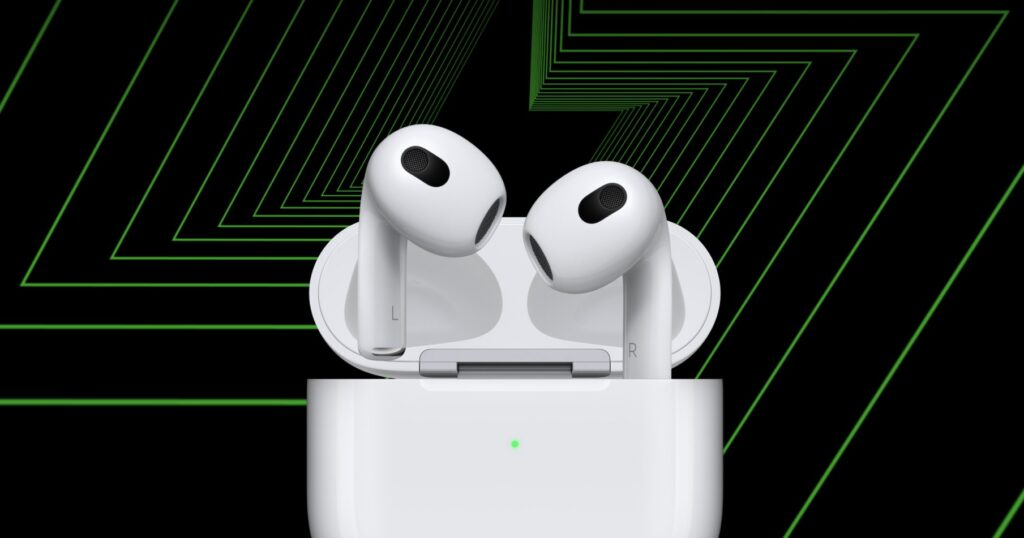
Apple has just lost a legal attempt to prevent Huawei from trademarking the name “MatePod.” The company sought to block this trademark in China but the CNIPA (Trademark Office of the China National Intellectual Property Administration) rejected the attempt.
AirPods 3
According to an SCMPreport, iPhone maker was seeking to prevent the MatePods trademark due to its similarity with its own branding trademarks. This includes product lines that use the term Pod such as iPod, EarPods, and AirPods. The Cupertino based company argued that the Chinese tech giant had “maliciously copied” its trademark, which could even have a negative impact on society.
However, this argument did not sway the CNIPA, which ruled in favor of Huawei. The trademark authority further added that there was “insufficient evidence” that proved Huawei’s applications to be copies. Notably, Huawei was also granted the MatePod trademark, although, Apple still has the right to file for additional appeals to CNIPA to go back on this decision. Unfortunately, Huawei declined to comment on the matter, while Apple has yet to respond to SCMP’s request for a comment.
The ruling from CNIPA did acknowledge the similarities between both firms in aspects like “functionalities, sales channels and target consumers.” However, “the spelling of the trademarks are different, and the differentiations in pronunciation and the overall appearance are distinct. Therefore, the trademarks of the two companies are not similar trademarks on similar products and the coexistence would not cause confusion among the consumers.”
Letv has now released the Letv Watch W6 smartwatch barely a few weeks after the launch of its S1 mobile phone. The watch is equipped with a 1.39-inch AMOLED “high-definition retina color” display for crisp visuals.
Dozens of personalized watch faces have also been provided for endless customization. The watch supports blood oxygen saturation, heart rate, sleep monitoring, and 7 sports modes. It also comes with support for advanced functions like Bluetooth calls and music playback.
In terms of battery life, the Letv Watch W6 can last up to 7 days on standby and for 2-3 days in “normal use.” This is thanks to a 300mAh battery which takes 2-3 hours to fill up to a hundred percent.
The smartwatch is rated IP67 for protection against the elements. This means that is completely protected against solid objects like dust and sand, and has been tested to work for 30 minutes under up to 1m of water.
The Letv Watch W6 weighs 70g and measures 245 x 45.5 x 12.3mm. It supports anything above Android 5.0 and iOS 9.0. It does not come with built-in GPS.
The watch will be available in two trendy colors: Vibrant Orange and Star Black. It is currently available at Letv Mall. It is priced at 599 yuan but is selling at an introductory price of 499 Yuan.
Earlier today (22nd October 2021), Honor had officially announced the launch date for its upcoming X30 Max and X30i smartphones. Now, the company has also shared a new image teaser for the X30 Max, which reveals its front design.
Looking at the latest teaser poster, we can see that the X30 Max from the Chinese smartphone maker sports a waterdrop notch on the front. We had previously reported on a leaked image poster that also showcased this notch design, although, the new teaser from Honor has just officially confirmed this. For those unaware, the company is planning launching the X30 Max and X30i later this month on October 25, with the Play5 Vitality Edition also planned to be unveiled on the same date.
Talking about the specs of the X30 Max, the device will feature a massive 7.09 inch LCD screen with a waterdrop display that sports a Full HD+ resolution. On the front, an 8 megapixel camera is housed while the rear has a 64 megapixel primary sensor paired with a 2 megapixel depth sensor. Under the hood, a MediaTek Dimensity 900 runs the device along with 8GB of RAM and reportedly up to 256GB of internal storage. A massive 5,000mAh battery pack powers the smartphone that supports 22.5W charging.
Gaming smartphones have become a prominent segment in the smartphone industry. After Asus and Xiaomi, Lenovo also introduced its flagship gaming smartphone – Lenovo Legion Duel 2 earlier this year. The device is now up on sale via Giztop at a discounted price. The smartphone is available in two color options of Black and White. Apart from global shipping, Lenovo Legion Duel 2 also offers MIUI Global ROM OS installation with multiple language support.
Lenovo Legion is offered in six different storage options including 12GB + 128GB, 12GB + 256GB, 16GB + 256GB, 16GB +512GB, 18GB + 256GB and 18GB + 512GB internal storage variant. Global bands support flawless connectivity across the globe for the smartphone.
Lenovo Legion Duel 2 Features
The Lenovo gaming smartphone comes with a 6.92-inch Samsung E4 AMOLED display having 2460 x 1080 pixels resolution and 144Hz refresh rate. The smartphone offers a 720Hz touch response rate with a 3.8ms response time. It is powered by Qualcomm Snapdragon 888 SoC coupled with Adreno 660 GPU, LPDDR5 RAM, and UFS 3.1 storage.
In the camera department, the smartphone comes with a dual rear camera featuring a 64MP primary sensor, and a 16MP ultrawide sensor. There’s also a 5500 mAh battery with 90W turbo power fast charging.
It is a great deal to get a gaming smartphone with high-end specifications for the price of $499 from Giztop.
After much speculation and wait, the latest PUBG: New State press release has given the mobile battle royale game a November 11 release date. The game promises to bring a near-console experience to your mobile and will be offered in 17 different languages. It will be going live for both iOS and Android in more than 200 countries on the said date. A final technical test will be performed from October 29 to October 30 beforehand though.
Developed by PUBG Studios, the game will be set in the year 2051 and will be following a futuristic, Sci-Fi theme. It’s very much set in the same universe as PUBG Mobile but is an evolution of the original game. Its story revolves around the fictitious town of Troi in a post-apocalyptic world where society has broken down and divided into factions. This Troi town will be the primary map of the game and will be joined by three more maps including the franchise-staple Erangel.
Based on early gameplay and leaks, PUBG: New State appears to be recycling resources from the original PUBG Mobile game but has added a futuristic twist with game elements like futuristic vehicles and weapons, which have been fused with traditional elements.
Krafton has called its creation “one of the most realistic and technologically advanced mobile games to date” and has promised “a strong and consistent pipeline of new content, global service support, and anti-cheat measures” post-launch.
The South Korean game company has also revealed that they will be actively communicating with players to provide stable game services. This will be done by establishing nine global service hubs.
Extensive anti-cheat measures have also been put in place and Krafton will be banning the use of unauthorized programs, emulators, and even keyboard and mouse. Player sentiment and feedback from the community will be closely reviewed, analyzed, and reflected through in-game updates.
The global PC market has managed to retain its growth momentum in the third quarter of this year, as it managed to see a positive trend for the sixth consecutive quarter in 2021.
According to a Counterpoint Research report, the overall PC shipments across the glove reached 84.2 million units in Q3 2021. This figure arrived despite the ongoing semiconductor shortage and other supply constraints. Despite seeing the 9.3 percent year on year growth in this period, this also marked the slowing PC shipment momentum after four consecutive quarters of double digit year on year growth. Notably, OEMs and ODMs are not witnessing are not seeing any shrinking gap between demand and supply.
In the third quarter, the global PC supply chain faced constraints due to component shortages that are related to power management IC, radio frequency, audio codec and others. Furthermore, the report also added that there is no solution to the demand and supply gap till mid 2022. As of right now, various manufacturing sites being shutdown in China and other Southeast Asian regions have added to the uncertainities to PC supplies as well.
This news arrives despite PC demand still being robust during the quarter. While the commercial PC demand is still growing, the consumer PC market has been slowing down. Meanwhile, Chromebook was one of the biggest drag during the quarter, as both government and education orders were mostly delivered in the first half of this year.
The Lenovo Xiaoxin Pad Pro 12.6 has been confirmed to launch on November 2. As we are only a few days away from the official announcement, the company has been teasing the features of the product more than ever before. The latest teasers shed details on the table’s keyboard accessory.
According to the official Lenovo Xiaoxin Weiboaccount, the upcoming Xiaoxin Pad Pro 12.6 will arrive with a new optional keyboard. This accessory will be able to connect both magnetically and via Bluetooth.
Further, the keyboard is said to have a key travel of 1.3mm and a large touchpad. It will also include 15 useful shortcut keys. On top of all these, the keyboard will also support Windows-like shortcuts.
As per previous teasers, Lenovo will be also debuting a new stylus for this tablet. The second-generation stylus will have 4096 levels of pressure sensitivity, 44% better response speed, and it will charge magnetically.
As far as the tablet itself is concerned, the Lenovo Xiaoxin Pad Pro 12.6 is expected to come with features like a metal body, a 12.6-inch 2.5K AMOLED display with a 120Hz refresh rate, Qualcomm Snapdragon 870, ZUI 13 for Pad, 13MP + 5MP dual rear camera setup, 8MP + ToF dual front camera setup, side-mounted fingerprint sensor, MicroSD card slot, quad-speakers, USB 3.1 (Type-C) port, 10,200mAh battery, and 45W fast charging.
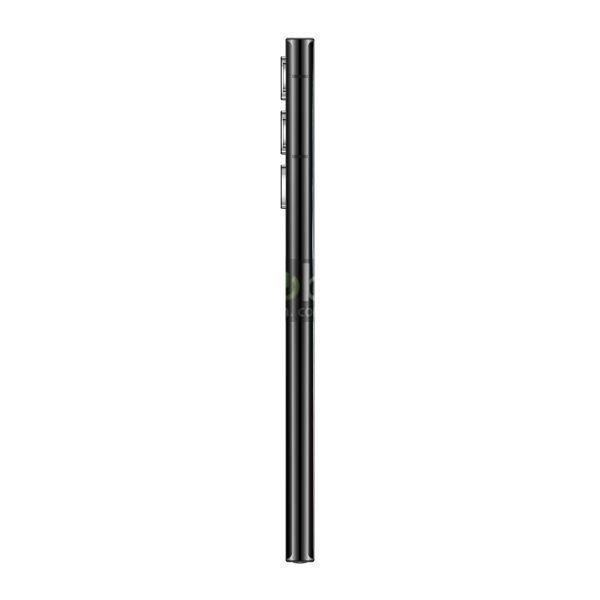
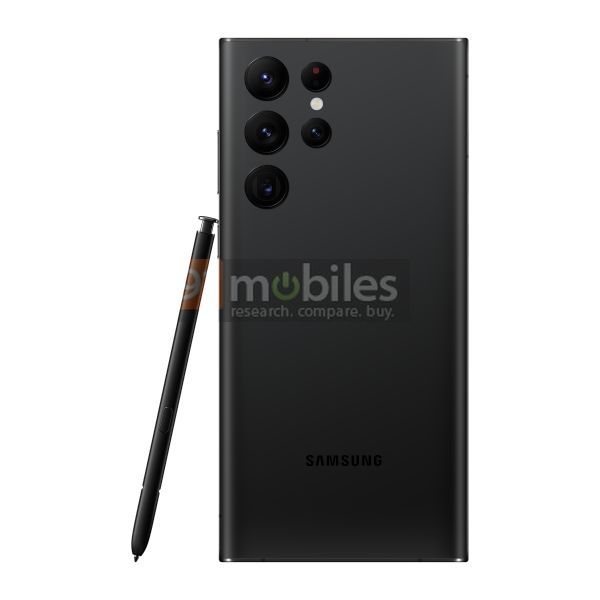
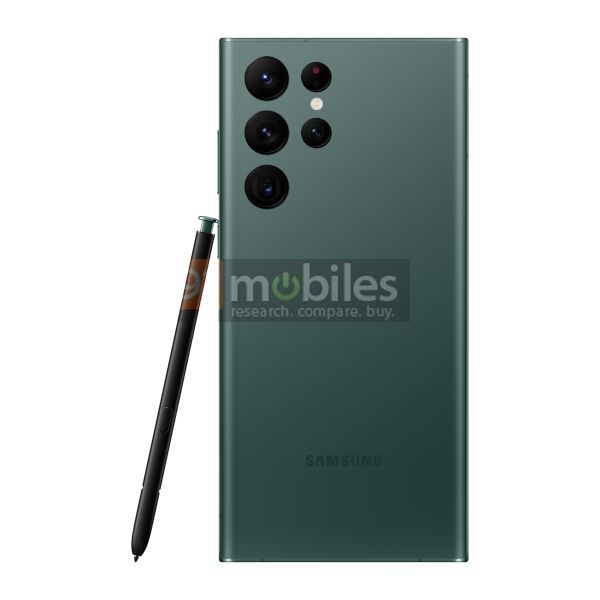
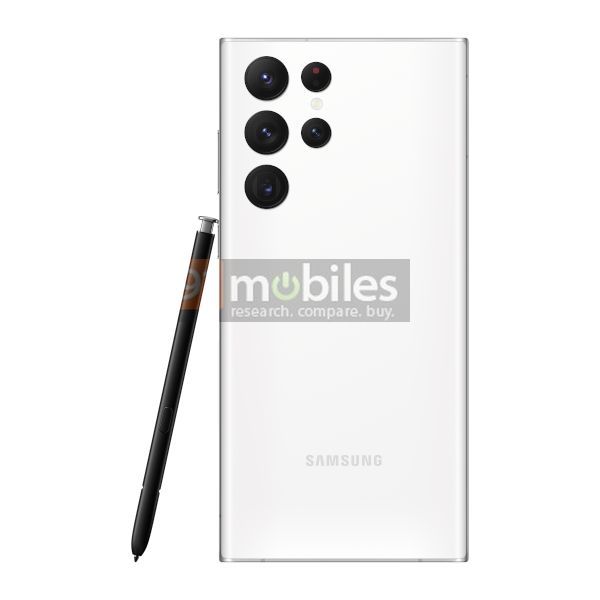
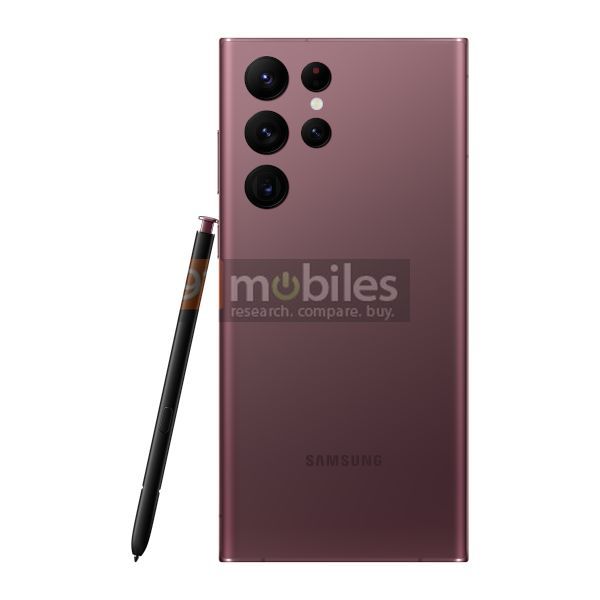
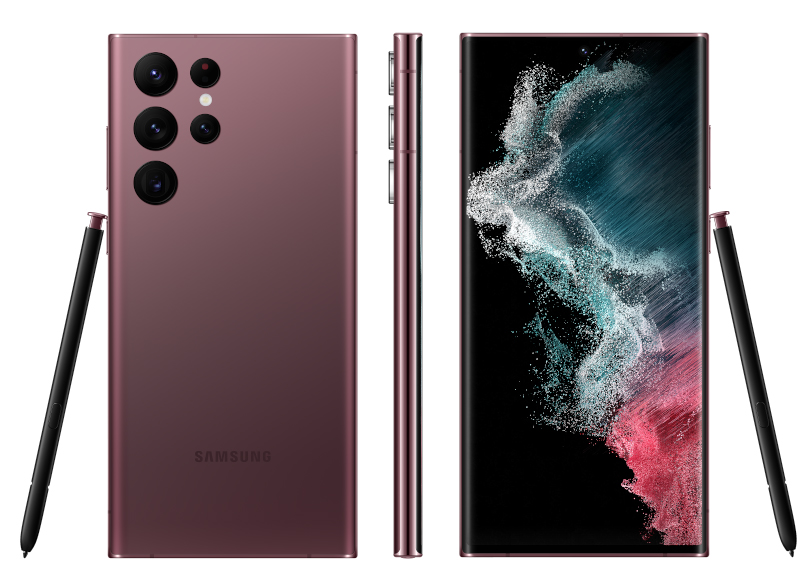
The Samsung Galaxy S22 Ultra is several months away from release but is already one of the most talked about upcoming phones of late. Its rear camera module has been especially the center of speculation with different leaksters sharing various designs.
Initial leaks favored a P-shaped camera bump which wasn’t that well received. Following this, the leaks moved on to a double island design with one island housing a triple camera array while the other holding a fourth camera, the flash, and some peripherals.
Image: Sipolg, OnLeaks
But fast forward to now and a new look has popped up once more. This one continues to retain the P layout of the cameras but with a twist – the islands have been done away with and each camera is divided into a bump of its own.
The new design was posted on Weibo which in turn was scooped up by OnLeaks and shared on Twitter. It shows an alleged plain black case for the Galaxy S22 Ultra with separate cutouts for each camera lens.
In our opinion, this design is the best implementation of the P-shaped layout as it looks minimal yet elegant. It’s not unlike the one found on the Samsung Galaxy A32 and that’s something everyone can get behind.
Possible S22 Ultra design (Credits: LetsGoDigital)
Apart from this, the Samsung Galaxy S22 Ultra is known to have a rectangular body, reminiscent of the now-defunct Note series. Samsung seems adamant about keeping the Ultra’s appearance distinguishable from the rest of the S22 series, hence all these design experiments.
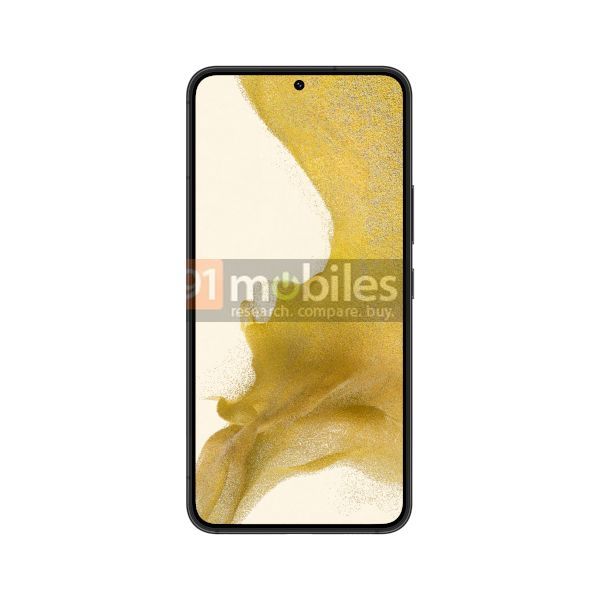
It was also recently revealed that the S22 Ultra will not be coming with a punch-hole camera upfront and will instead be opting for a waterdrop notch.
Another report had stated that the flagship phone will feature a 6.8-inch QHD+ (1440 x 3200) curved AMOLED display with an adaptive 120Hz refresh rate. Its rear camera setup could be comprised of a 108-megapixel primary camera, a 12-megapixel ultra-wide camera, and two 12-megapixel telephoto cameras with 3x and 10x optical zoom. The front shooter could have a 40-megapixel sensor for selfies and video calls.
We use cookies on our website to give you the most relevant experience by remembering your preferences and repeat visits. By clicking “Accept”, you consent to the use of ALL the cookies.
This website uses cookies to improve your experience while you navigate through the website. Out of these, the cookies that are categorized as necessary are stored on your browser as they are essential for the working of basic functionalities of the website. We also use third-party cookies that help us analyze and understand how you use this website. These cookies will be stored in your browser only with your consent. You also have the option to opt-out of these cookies. But opting out of some of these cookies may affect your browsing experience.
Necessary cookies are absolutely essential for the website to function properly. This category only includes cookies that ensures basic functionalities and security features of the website. These cookies do not store any personal information.
Any cookies that may not be particularly necessary for the website to function and is used specifically to collect user personal data via analytics, ads, other embedded contents are termed as non-necessary cookies. It is mandatory to procure user consent prior to running these cookies on your website.