Advertisement

Xiaomi’s new smart door lock has support for 3D face unlock

Xiaomi makes a wide range of products, although a lot of them are only sold in its home country of China. One of such products is its smart door locks, and it has a new one that has a feature that is available on most smartphones these days which is face unlock.

Xiaomi Smart Door Lock X

The Xiaomi Smart Door Lock X uses a self-made 3D structured light face recognition module. The face unlock system includes a dot projector, infrared light, RGB camera, light sensor, proximity sensor, and an infrared camera. Xiaomi says the door will unlock once a recognized face is in proximity.

Apart from face unlock, the Xiaomi Smart Door Lock X also supports seven other unlock methods including fingerprint, password, and NFC. The door will also automatically lock once you shut it and will alert you when an unrecognized person is at the door.

Xiaomi Smart Door Lock X face unlock module

There is a massive 6250mAh battery inside the door lock. Although Xiaomi doesn’t say, it should be rechargeable. We also don’t know how long the battery will last before it needs to be recharged.

The Xiaomi Smart Door Lock X not only works with Xiaomi’s own Mijia app but is also compatible with Apple HomeKit. The app will not only allow users to configure the smart door lock but will also log in usage, so you can check when access was granted and who it was granted to as the door lock also takes a photo of who used the door.

Xiaomi is yet to reveal the price of the door lock but it has announced that it will be available for pre-order starting on Tuesday, 12th October.


RELATED:

Samsung W22 5G scheduled to launch on October 13 in China

Samsung launched the W21 5G smartphone last year and now it seems to be the time that the device gets a successor. Today, Samsung has officially announced the launch date of its successor dubbed Samsung W22 5G.

The Samsung W22 5G will launch on October 13 at 7 PM local time in China. The device is expected to be available for purchase in China soon after its unveiling.

As learned by previous leaks, the Samsung W22 5G will bring the same design as the recently launched Samsung Galaxy Z Fold 3. It won’t just borrow the exteriors, rather it will also have the same internal as the Z Fold 3. The W22 5G will come powered by the Qualcomm Snapdragon 888 chipset paired with up to 16GB of RAM and 512GB of internal storage.

The foldable device is expected to have a 7.6-inch primary display and a 6.2-inch cover screen. The screens are expected to feature a 120Hz refresh rate and Gorilla Glass protection. The device is also rumoured to have Under-display-camera and a triple camera system.

Samsung W22 5G scheduled to launch on October 13 in ChinaConsidering that it has the same design as the Z Fold 3, the W22 might also have a 4,400mAh battery with support for fast charging. The numbers might differ but we can expect a 25W wired fast charging and 11W wireless fast charging, similar to the Galaxy Z Fold 3.

As far as pricing is concerned, rumours have it that the phone may cost CNY 18,999(~$2,949). If this is to be believed then it will be way expensive than the Z Fold 3’s launch price of CNY 14,999(~$2,328).

RELATED:

Lenovo YOGA 16s with 16-inch Slim-bezel display announced in China

Lenovo recently refreshed the IdeaPad series in India and now, the company has updated the YOGA series in the home market, China. The Lenovo YOGA 16s is a new addition to the already available YOGA-series laptops. The major highlight of the laptop is the 16-inch slim-bezel display which comes with impressive tech.

Lenovo didn’t have a grand launch of the laptop, rather it quietly announced it on Weibo. As of now, the notebook’s pricing and availability details are yet to be known but, we expect it to be available from all authorised channels across China.

Lenovo YOGA 16s with 16-inch Slim-bezel display announced in China

The Lenovo YOGA 16s comes with a slim profile sporting a 16-inch display with 2560 x 1600 pixels resolution. It has a slim-bezel design with 500 nits of brightness and HDR support. The display also has support for 100% sRGB colour gamut.

The rest of the specs of the laptop are unknown. Lenovo had previously launched the YOGA 13s with a 13-inch panel and Ryzen 5 processor. That said, we expect the YOGA 16s to also come powered by a Ryzen chipset. The company might as well launch an Intel variant for the same.

Lenovo YOGA 13s Specifications 

The Lenovo YOGA 13s has a 13-inch LCD display with 2560 x 1600 pixel resolution. It comes powered by the AMD Ryzen 5 5600U chipset with 16GB of DDR4 RAM and 512GB of SDD storage. The laptop has a 50Wh battery with 65W fast charging support.

It has highlighting features like Dolby Vision and Dolby Atmos and boasts a stereo speaker setup. The laptop has Wi-Fi 6, a 3.5mm headphone jack, and two USB Type-C ports. It also supports facial authentication with the help of Windows Hello.

RELATED:

Vivo X70 Pro+ vs iPhone 13 Pro Max: Specs Comparison

The battle between the iPhone 13 Pro Max and the best Android flagships keeps going. Yesterday, we published a comparison between the specifications of the iPhone 13 Pro Max and the Samsung Galaxy Z Fold 3. Today, it is the turn of the Vivo X70 Pro+ to be compared to the most powerful iPhone in order to find out whether or not there are better devices for your actual needs. Both these handsets offer maxed-out specifications and they are all but affordable. Before making such a big expense, it is worth examining their specifications in order to know these handsets better under every aspect. So, here is a specs comparison between Vivo X70 Pro+ and iPhone 13 Pro Max.

Vivo X70 Pro+ vs Apple iPhone 13 Pro Max

Vivo X70 Pro Plus Apple iPhone 13 Pro Max
DIMENSIONS AND WEIGHT 164.5 x 75.2 x 8.9 mm,
209 g
160.8 x 78.1 x 7.7 mm,
240 g
DISPLAY 6.78 inches, 1440 x 3200 pixels (Quad HD+), AMOLED 6.7 inches, 1284 x 2778p (Full HD+), Super Retina XDR OLED
PROCESSOR Qualcomm Snapdragon 888+, octa-core 3 GHz Apple A15 Bionic hexa-core 3.22 GHz
MEMORY 12 GB RAM, 512 GB – 12 GB RAM, 256 GB – 8 GB RAM, 256 GB 6 GB RAM, 512 GB – 6 GB RAM, 128 GB – 6 GB RAM, 256 GB – 6 GB RAM, 1 TB
SOFTWARE Android 11, Funtouch OS or Origin OS iOS 15
CONNECTIVITY Wi-Fi 802.11 a/b/g/n/ac/6, Bluetooth 5.2, GPS Wi-Fi 802.11 a/b/g/n/ac/ax, Bluetooth 5, GPS
CAMERA Quad 50 + 8 + 12  + 48 MP, f/1.6 + f/3.4 + f/1.6 + f/2.2
32 MP f/2.2 front camera
Quad 12 + 12 + 12 MP + TOF 3D LiDAR scanner, f/1.5 + f/2.8 + f/1.8
Dual 12 MP + SL 3D f/2.2
BATTERY 4500 mAh, fast charging 55W and Qi wireless charging 50W 4373 mAh, Fast Charging 20W, Qi wireless charging 7.5W
ADDITIONAL FEATURES 5G, dual SIM, IP68 waterproof 5G, optional dual SIM, optional eSIM, MagSafe 15W, IP68 waterproof

Design

It is an iPhone, so the design of the iPhone 13 Pro Max is obviously more iconic. But if we exclude the huge camera module, the Vivo X70 Pro+ is more attractive in terms of aesthetics. It comes in a special variant with an eco leather back and it has a very high screen to body ratio without any notch: you only get a small hole placed centrally in the display. On the other hand, if you need a better build quality, then you should go for the iPhone 13 Pro Max. It offers better water resistance (up to 6 meters of depth with the IP68 certification) and it is made with a Ceramic Shield back (sturdier than other glasses) and a stainless steel frame instead of aluminum.


Display

On the paper, the display of the Vivo X70 Pro+ looks more advanced. It is the first phone to sport the new Samsung E5 AMOLED display and its specifications are impressive. This screen has a diagonal of 6.78 inches and it comes with the LTPO technology enabling an adaptive refresh rate from 1 to 120 Hz. It also has a high Quad HD+ resolution of 1440 x 3200 pixels, a high brightness, and the HDR10+ certification. Last but not least, it is able to display up to one billion colors and it is equipped with an in-display fingerprint reader. With the iPhone 13 Pro Max, you get the Face ID for the authentication, thanks to an SL 3D sensor placed in the notch.


Specs & Software

Vivo X70 Pro+ has the best processor in the Android world and iPhone 13 Pro Max has the best one in the Apple world. What makes the real difference is the optimization of the operating system rather than the performance difference of the two processors. The iPhone 13 Pro Max should be able to provide faster performance in most of the scenarios, as well as a more stable user experience. No matter that the Vivo X70 Pro+ doubles its RAM with a whopping 12 GB. Vivo X70 Pro+ is based on Android 11, while the iPhone 13 Pro Max runs a more advanced iOS 15.


Camera

The Vivo X70 Pro+ looks like a more versatile phone if we talk about the camera setup. It has a 50 MP main sensor with a very bright focal aperture, laser autofocus, and OIS which shoots great photos in low light conditions and provides a very high definition, even for videos that can be recorded with an 8K resolution. Further, it has an amazing 8 MP periscope sensor with 5x optical zoom, a telephoto sensor with 2x optical zoom, and a great 48 MP ultrawide camera. You do not get such awesome camera hardware with the iPhone 13 Pro Max, but it is able to record better videos. However, it should be inferior when it comes to photos.


Battery

The Vivo X70 Pro+ has a bigger battery than iPhone 13 Pro Max, but this does not matter: the iPhone still lasts more on a single charge because of iOS optimization. But the Vivo X70 Pro+ has faster charging with a power of 55W and 50W respectively for wired and wireless charging.


Price

Vivo X70 Pro+ is priced at €720/$833 in China and it starts from €930/$1076 in India. We still do not know how much it will cost in Europe. iPhone 13 Pro Max starts from around €1200/$1389 in Europe, while in India you need about €1500/$1735 to get it. After learning the hardware differences, which one would you pick?


Vivo X70 Pro Plus vs Apple iPhone 13 Pro Max: PRO and CONS

Vivo X70 Pro Plus

PRO

  • More versatile cameras
  • Amazing display
  • Faster charging
  • Leather variant

CONS

  • Nothing particular


Apple iPhone 13 Pro Max

PRO

  • iOS 15
  • Great materials
  • MagSafe
  • Amazing hardware

CONS

  • Price

RELATED

OnePlus 9 RT will go on sale from October 19 in China

OnePlus has officially scheduled a launch event on October 13 for the unveiling of the much-anticipated OnePlus 9 RT smartphone. However, the sale date of the smartphone is yet to be known. Today, the company has confirmed the sale date and has revealed its major specs.

The OnePlus 9 RT will go on sale from October 19th in the Chinese market. It is expected to arrive in two colour options Black and Silver. Soon after its Chinese launch, the phone is expected to land in the Indian market.

OnePlus 9 RT

The smartphone will come powered by the Qualcomm Snapdragon 888 5G chipset in China. It will be paired with 12GB of LPDDR5 RAM and 256GB of UFS 3.1 internal storage. It is expected to come with a 6.55-inch E4 AMOLED display with an FHD+ resolution. It will feature a 120Hz refresh rate punch-hole screen with a fast touch sampling rate.

As for cameras, the smartphone will feature a quad-camera system at the rear comprising of a 50MP Sony IMX766 main sensor, an ultra-wide-angle lens, a 5MP macro sensor, and lastly a 2MP depth sensor. It will feature a 16MP front camera for selfies.

Inside, the smartphone will pack a 4,500mAh battery with support for 65W fast charging. The smartphone will run on Android 11 out of the box with OnePlus’ custom skin on the top.

RELATED:

(source)

Lenovo unexpectedly withdraws application for Shanghai public listing

Lenovo has withdrawn its public listing application for the Shanghai Stock Exchange, a filing showed on Friday.

The company had submitted its Star Market listing application on September 30 which had gotten approved on the same day. It was sponsored by CICC, with Goldman Sachs Securities and CITIC Securities being its joint lead underwriters (via: Pandaily).

The prospectus had stated that the company would be offering less than 10% of its total share capital to raise 10 billion yuan ($1.54 billion). Out of the total, 5.514 billion yuan is to be used for R&D, 1 billion for industrial strategic investment projects, and 3.5 billion to supplement working capital.

Had the application actually been followed through, Lenovo would have become the first company to complete a dual listing on Shanghai’s Star Market using Chinese depository receipts.

Lenovo’s net profit over the past three fiscal years was 4.247 billion yuan, 5.594 billion yuan, and 8.685 billion yuan, respectively, as per the prospectus.

The company’s core business is comprised of smart devices and data centers, and its products are mostly computers, mobile phones, and data center equipment.

In an interview regarding the plan to return to Chinese A-shares, Yang Yuanqing, Chairman of Lenovo Group, said, “On one hand, Lenovo’s business is rooted in China and we have been looking forward to listing in China. On the other hand, we hope to establish connection with more customers through the Star Market, and optimize the company’s capital structure by making better use of the booming domestic capital market.”

RELATED:

Huawei signs agreement with Vodafone to build Europe’s first 5G smart railway port

Europe’s first smart railway port to be managed by a 5G private network is set to be built soon thanks to a cooperation agreement signed by Huawei and Vodafone.

After completion, it will become Europe’s largest intelligent multimodal transport railway hub and the first to use a 5G private network for internal communications and the operation of technological devices (via: Pandaily). East-West Gate is located in Fényeslitke, Hungary, covering an area of 85 hectares.

huawei 5g railway port vodafone
Image: Huawei

The port project’s 5G network will be provided by Vodafone Hungary and Huawei Technologies Hungary. It will be used to control the terminal’s fully self-propelled giant cranes remotely. These cranes are capable of even, fine movements. The terminal will be able to handle up to 1 million 20-foot containers (TEUs) per year after its completion in the first quarter of next year.

Colin Cai Lingyu, CEO of Huawei Technologies Hungary, said at the signing ceremony that this is the first time that the company has used 5G technology to empower the traditional railway logistics industry in Europe and realize remote control of cranes through 5G technology. With the technical advantages of 5G technology, such as high speed, low delays and high capacity, workers only need to sit in the central control room and use the high-definition video returned by 5G to complete the operation remotely, which improves the working environment and operation efficiency.

At the signing event, Colin Cai Lingyu, CEO of Huawei Technologies Hungary, stated that this is the first time the business has employed 5G technology to empower Europe’s traditional railway logistics industry and achieve remote control of cranes. Using this, workers simply need to sit in the central control room and execute the operation remotely using the HD video returned via 5G, which improves the working environment and operation efficiency.

huawei 5g railway port vodafone agreement
Image: Huawei

Hungary’s Deputy State Secretary for Digitization, Károly Balázs Solymár, stated that the government is devoting special attention to industrial solutions based on 5G technology, with the logistics industry as a target. Hungary will use cutting-edge digital technology to carry out additional innovations in the future, boosting its competitiveness even further.

According to China Securities Journal, Huawei predicted in its “Intelligent World 2030” report that 1 million businesses will build their own 5G private networks (including virtual private networks) by 2030, and that the penetration rate of 5G industry private networks in large and medium-sized businesses will reach 35%.
RELATED:

Galaxy A13 5G renders provide early look at Samsung’s cheapest 5G phone

Samsung, like a lot of other manufacturers, is working to get 5G phones into the hands of more people by launching more affordable models. The Korean giant is set to announce its cheapest smartphone yet, the Galaxy A13 5G, and ahead of its launch, renders of the phone have provided us with our first look.

Galaxy A13 5G

The Galaxy A13 5G should launch as the successor to the Galaxy A12 announced in November 2020. The renders, which have been provided by OnLeaks in partnership with Zouton, show Samsung is refreshing the design for the new phone.

As seen in the images, the Galaxy A13 5G has three rear cameras, one fewer than that of the Galaxy A12, stacked on top of each other. Apart from the sensors not being flush with the polycarbonate back of the phone, they are also not housed together. The design is different but gives the phone a clean appearance especially on the black variant.

Up in front, the phone will have a 6.48-inch FHD+ LCD display with a notch for the front-facing camera. It has been reported that the phone will have a Dimensity 700 5G processor and will be available in 4GB and 6GB RAM variants with 64GB or 128GB of storage.

The configuration of the rear cameras is given as a 50MP f/2.0 primary sensor, a 5MP f/2.2 ultrawide camera, and a 2MP f/2.4 depth sensor. The phone is also expected to pack a 5000mAh battery and the source even mentions support for 25W fast charging which is surprising as Samsung’s budget phones usually don’t cross the 15W mark. Charging is via a USB-C port and there is an audio jack at the bottom.

It has been reported that the Galaxy A13 5G may launch by the end of the year but won’t be available for purchase until January 2022 with a starting price of $290 in the U.S. When it launches, it will be available in Black, Blue, Red, and White and will be sold by Amazon, Target, Costco, and Sears.


RELATED:

Ulefone Power Armor 13 charged 13200 mAh battery in 3 hours [Video]

Ulefone Power Armor 13 rugged smartphone launched with some exceptional features has undergone several rigorous tests to prove its durability and other outstanding features. After battery drain test, performance test and quality tests, the smartphone showcases its fast charging capability in the latest video.

Must See: Ulefone Armor 12 5G remains effective in resisting 99.9% bacteria[Video]

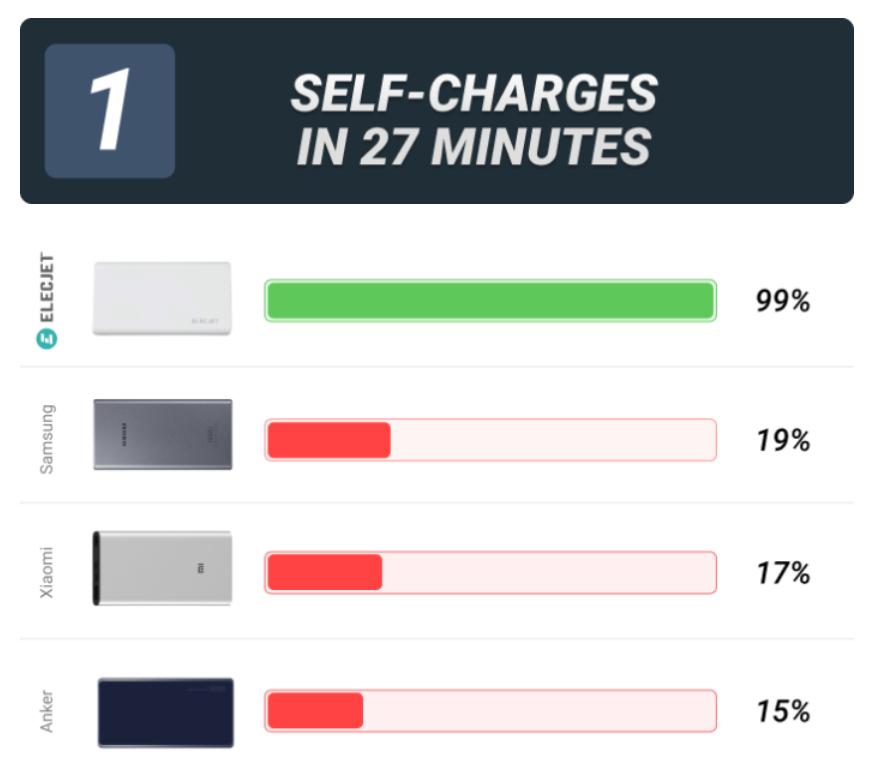
The 33W PD charger charges the massive 13200 mAh battery within 3 hours. As per the video, the smartphone gets 10% charged within the first 10 minutes, 20% in the next 30 minutes. It managed to charge 55% within an hour. The fast-charging feature saves a lot of time and is worth praise.

However, a single full charge will lead you to a week’s battery standby. So, it is worth considering the smartphone if you often travel across the countryside.

Ulefone Power Armor 13 carries several other high-end features apart from the massive 13200 mAh battery. You can know more about the device by heading to the official Ulefone Website. 
Related: Ulefone Armor 12 5G remains effective in resisting 99.9% bacteria[Video]

Soap bars delivered instead of iPhone 12 at Flipkart’s Big Billion Days Sale

The chances of fraud on purchases through e-commerce platforms are low but never zero. Sure, there are many fraudulent sites out there in the expanse of the internet, but consumers generally have high expectations when it comes to online shopping giants like Flipkart and Amazon. Cheating cases involving these two are hence extremely disappointing and can turn ugly real quick.

One of the victims of such fraud was our colleague Simranpal Singh, who has provided a firsthand account of a shocking case where soap bars were delivered in place of an Apple iPhone 12 bought through Flipkart during the much-hyped Big Billion Days Sale.

Being aware of multiple occasions of fraud with smartphone deliveries, he had opted for the Flipkart Open Box Delivery, which actually turned out to be a lifesaver. The delivery was marked as ‘failed’ as soon as the Pandora’s box was opened and a couple of Nirma soap bars instead of Apple‘s last-generation iPhone were revealed.

Simran recorded the unboxing as well:

He further played smart by not complying with the wishmaster’s requests for the OTP. For the uninitiated, OTPs are used as a security measure to confirm the identity of the buyer, and are typically the final step before a successful delivery. But of course, a delivery getting marked as ‘successful’ is the last thing one would want in such a case.

Nonetheless, upon finding soap bars, Simran rang up Flipkart Support who claimed that the item is still showing as ‘out for delivery’ and cancellation can only be performed once its status switches to something else. Flipkart then promised to call back and their wishmaster left with the failed delivery.

flipkart-iphone-12-soap-bar-delivery-fraud

However, it was the following correspondence with the logistics that was particularly odd. The Flipkart wishmaster rang up shortly afterward requesting the OTP once again, which was nonsensical considering Flipkart already had all the details they needed to clear stuff up from their end.

Simran then asked to speak to the delivery agent’s superior, who very suspiciously also asked for the same thing. FYI, the Flipkart Open Box Delivery FAQs page has nothing that speaks of the need for any details from the customer end in such cases.

He then decided to contact Flipkart support once again who now asked him not to divulge any information to the delivery agents. This call dropped abruptly though. After a couple of failed attempts, Flipkart finally canceled the order and initiated the refund. The money got credited a few days later.

Apple iPhone 12
The Apple iPhone 12 when it’s not a bar of soap

In conclusion, it was the Open Box Delivery and Simran’s video recording of the unboxing that saved the day. The situation would have turned out way uglier had the order been accepted. It is thus always recommended to opt for the Open Box Delivery option for every expensive purchase. Better to be safe than sorry.

RELATED:

Realme Brick Bluetooth Speaker event page confirms specs and design

Realme has an event scheduled for October 13 in India. The highlight of the event is the launch of the Realme GT Neo2 smartphone but the manufacturer has confirmed other products that will be unveiled, one of which is a Bluetooth Speaker called the Realme Brick.

Realme Brick

The new Bluetooth speaker will be realme’s third this year, coming after the Realme Pocket and Realme Cobble Bleutooth speakers. Unlike the other two which have a small form factor, the Realme Brick is big and it puts that size to good use.

The Realme Brick appears to have a body made from aluminum. It is coated in black, and printed on the front is the manufacturer’s name in a large gray font. On the top are four buttons – a power button at the far right and three other buttons that include volume controls and what should be a multifunction or mode button. There are also four LEDs next to the power button which should indicate how much battery life is left.

Realme Brick speaker

The speaker has a 20W Dynamic Bass Boost Driver with two full range speakers and two dedicated bass radiators (one in front and another on the back). Just like the Realme Cobble and Realme Pocket, two Realme Brick Bluetooth speakers can be paired for a (360°) stereo experience.

The new Bluetooth speaker packs a 5200mAh battery capacity which is way bigger than the 600mAh battery inside the Realme Pocket and the 1500mAh battery capacity of the Realme Cobble. Realme says that users should get up to 14 hours of battery life, and the USB-C charging port means you should be able to charge the speaker with the same charging cable that you use for your phone.

Realme Brick

While the promotional page doesn’t say, a leak from earlier this week revealed the speaker can be configured via the Realme Link App. It also mentioned that it has an IPX5 rating which means users don’t have to worry about damage from water splashes.


RELATED:

MSI launches high-end 15.6-inch gaming notebook Delta 15 with Ryzen 9 5900 HX

MSI has leveled up the gaming experience by announcing the 15.6-inch gaming notebook, AMD Advantage Edition A5 Delta-15-A5EFK-030JP. The biggest factor that’d sway gamers is the Ryzen 9 5900HX CPU and Radeon RX 6700M GPU.

Delta-15-A5EFK-030JP

The display features a 15.6-inch non-glare panel with an impressive refresh rate of 240 Hz. Even after being a gaming notebook, the body is on the slimmer side with 19 mm thickness and weighs just 1.9 kg, making it suitable for carrying around.

The screen is a Full HD (1920×1080 pixels) panel, 16GB DDR4 RAM, and 512GB M.2 NVMe SSD storage. The operating system is Windows 10 but as Windows 11 is available globally, it will be readily available to install on the machine. Wireless communication supports Bluetooth 5.2 and IEEE802.11a/b/g/n/ac/ax-compliant wireless LAN.

The laptop has an impressive battery life of up to 12 hours (JEITA 2.0). The interface features a USB 3.2 Gen2 Type-C ×1, a USB 3.2 Gen2 Type-C×1, a USB 3.2 Gen2 Type-A×2, HDMI×1, and a Hi-Res headphone output/microphone input jack combo ×1. The dimensions are 357 (width) × 19 (height) ×247 (depth) mm and will be available in the carbon gray shade.

MSI is expected to set the price at around 218,000 yen (approx 1942 USD). Pre-registrations have already gone live from October 7 and the laptop will be available from October 14.

Related:

[embedyt] https://www.youtube.com/watch?v=5jM1gtthnDU[/embedyt]

(via)

MediaTek Dimensity 2000 specs leaked, will be made on the TSMC 4nm node: Leakster

Rumors have already begun to suggest that next-gen MediaTek Dimensity flagship chipsets will be based on the new ARMv9 architecture. The most recent of these leaks claim that MediaTek could be one of the first companies to place orders with TSMC‘s 4 nm foundries. Dubbed as Dimensity 2000, major specs have been revealed.

Dimensity 2000 TSMC 4nm node

As per Digital Chat Station, a frequent leakster, the Dimensity 2000 will feature one Cortex-X2 prime core clocked at 3.0 GHz, three Cortex-A710 cores, and four A510 cores. This is much like the setup seen on Snapdragon 898 and the Exynos 2200 that will be based on Samsung‘s 4nm process.

Samsung’s recent tie-up with AMD for GPU and Huawei surrounded by an ocean of difficulties in finding chip makers, the upcoming Dimensity 2000 will be the only chipset to use the new Mali-G710 MC10.

Dimensity 2000 Mali G710

The G710 arrives as the successor of G78 and is set to give a 20% boost in the speeds and 35% better performance for machine learning tasks, according to ARM’s official numbers. However, Samsung on the other hand is expecting it to be around 30% faster than the older Mali chips it used. The actual performance will be dictated by the clock speeds on the two 4 nm nodes.

While there were early benchmarks to give a hint at how fast the upcoming chipsets are going to be but that’s not something to go by. Waiting for devices to arrive with these chipsets will be a wiser option to measure the true speeds. All three chips should be made official at the end of this year or in January. It would have launched by the end of this year but owing to the shortage in the semiconductor industry, plans have been altered. The first ARMv9 phones with the new chips could be out as early as next year.

Related:

[embedyt] https://www.youtube.com/watch?v=5jM1gtthnDU[/embedyt]

(via)

Samsung Galaxy S22 Ultra/Note 22 dummy unit leaks corroborate integration of S Pen rumors

It was not long ago when the Samsung Galaxy S22 series renders went live that showed how interesting the back design is going to be. Well, enough for those renders as hands-on shots have now started to flow in. xleaks7 and CoverPigtou have tagged along to provide the first glimpse of a dummy unit of the Galaxy S22 Ultra in a short hands-on video.

The first thing that pops up into our minds after having a first look at the dummy unit is that it has a resemblance to last year’s Galaxy Note20 Ultra. This suggests that the rumors of it being a Note22 Ultra may be true after all. According to the renders that surfaced earlier, Samsung S22 Ultra/ Note22 Ultra is expected to carry a 6.8-inch dual-curved display. The device features a distinct P-shaped quad camera set up on the rear.

The new leak also corroborates the S Pen slot rumors but the dummy unit clearly misses it out. Volume and power buttons are placed on the right-hand side. We hope to see more such leaks as we move closer to 2022.

Related:

[embedyt] https://www.youtube.com/watch?v=5jM1gtthnDU[/embedyt]

Samsung Galaxy Z Fold 3 vs iPhone 13 Pro Max: Specs Comparison

The best iPhone of 2021 is finally on the shelves, but is it also the best phone out there? There is no definitive answer to this question, but we can help you to learn the differences between the iPhone 13 Pro Max and the best Android flagships out there. After comparing it to the Samsung Galaxy S21 Ultra, it is time for the iPhone 13 Pro Max to challenge the best Samsung phone released in the second half of 2021: the Galaxy Z Fold 3. The Galaxy Z Fold 3 belongs to another category of devices because it is foldable, but it is still one of the best phones you can get in the current market: let’s discover whether or not it can compete with the iPhone 13 Pro Max.

Samsung Galaxy Z Fold 3 vs Apple iPhone 13 Pro Max

Samsung Galaxy Z Fold 3 Apple iPhone 13 Pro Max
DIMENSIONS AND WEIGHT 158.2 x 128.1 x 6.4 mm,
271 g
160.8 x 78.1 x 7.7 mm,
240 g
DISPLAY 7.6 inches, 1768 x 2208 pixels (Quad HD+), Dynamic AMOLED 2X 6.7 inches, 1284 x 2778p (Full HD+), Super Retina XDR OLED
PROCESSOR Qualcomm Snapdragon 888, octa-core 2.84 GHz Apple A15 Bionic hexa-core 3.22 GHz
MEMORY 12 GB RAM, 512 GB – 12 GB RAM, 256 GB 6 GB RAM, 512 GB – 6 GB RAM, 128 GB – 6 GB RAM, 256 GB – 6 GB RAM, 1 TB
SOFTWARE Android 11, One UI iOS 15
CONNECTIVITY Wi-Fi 802.11 a/b/g/n/ac/6e, Bluetooth 5.2, GPS Wi-Fi 802.11 a/b/g/n/ac/ax, Bluetooth 5, GPS
CAMERA Triple 12 + 12 + 12 MP, f/1.8 + f/2.4 + f/2.2
4 MP f/1.8 front camera
10 MP f/2.2 front camera
Quad 12 + 12 + 12 MP + TOF 3D LiDAR scanner, f/1.5 + f/2.8 + f/1.8
Dual 12 MP + SL 3D f/2.2
BATTERY 4400 mAh, fast charging 25W and Qi wireless charging 11W 4373 mAh, Fast Charging 20W, Qi wireless charging 7.5W
ADDITIONAL FEATURES 5G, eSIM, IPX8 waterproof, S Pen support, foldable phone, two displays 5G, optional dual SIM, optional eSIM, MagSafe 15W, IP68 waterproof

Design

The Samsung Galaxy Z Fold 3 has obviously the most original design because it is foldable, but if you are looking for an elegant, thin, and compact phone, then you should go for the iPhone 13 Pro Max. Besides being very refined, the iPhone 13 Pro Max has a better build quality. It has a Ceramic Shield back and a stainless steel frame, as well as the IP68 certification which guarantees dust resistance and water resistance up to 6 meters deep. The Samsung Galaxy Z Fold 3 is foldable and it becomes very compact while folded, but it is thicker. It has the IPX8 certification, a glass back, and an aluminum frame.


Display

The most interesting phone in terms of the display is naturally the Samsung Galaxy Z Fold 3. It has a foldable panel that reaches a diagonal of 7.6 inches and sports a Quad HD+ resolution, as well as a 120 Hz refresh rate and the HDR10+ certification. Not only the panel has great color accuracy, a smooth viewing experience, and a great resolution, but it also allows using this phone as a tablet. Further, the Samsung Galaxy Z Fold 3 supports the S Pen like the Galaxy Note series for handwriting and drawing. Last but not least, while the phone is folded, it allows the user to use a second external display with a diagonal of 6.2 inches. Despite the Galaxy Z Fold 3 is more interesting, the iPhone 13 Pro Max still offers one of the best displays out there in terms of image quality.


Specs & Software

Samsung Galaxy Z Fold 3 and iPhone 13 Pro Max are flagship phones with flagship-class hardware. The one providing the highest performance is the iPhone 13 Pro Max thanks to its powerful Apple A15 Bionic chipset running at a max frequency of 3.22 GHz. With the iPhone 13 Pro Max, you can also get more internal storage: up to 1 TB. But given that Samsung Galaxy Z Fold 3 is still one of the best flagships thanks to the Snapdragon 888 mobile platform and 12 GB of RAM, the difference between the performances of these two phones is noticeable only in a few scenarios. iPhone 13 Pro Max runs iOS 15, while Samsung Galaxy Z Fold 3 is based on Android 11.


Camera

On the paper, it may seem that Samsung Galaxy Z Fold 3 and iPhone 13 Pro Max have similar camera departments, but the truth is that the photo quality and the video quality offered by the iPhone 13 Pro Max are superior to the Samsung Galaxy Z Fold 3.


Battery

The iPhone 13 Pro Max has a smaller battery life than its rival, but its battery life is longer because its components and its operating system have a lower energy consumption.


Price

The starting price of the iPhone 13 Pro Max is $1099 in the U.S. and about €1200 in Europe, while you need either €1800 or $1600 to purchase the Samsung Galaxy Z Fold 3. The phones are very different: the Galaxy Z Fold 3 can offer a more advanced productivity and multimedia experience, but the specs sheet of the iPhone 13 Pro Max is more interesting. What would you choose?


Samsung Galaxy Z Fold 3 vs Apple iPhone 13 Pro Max: PRO and CONS

Samsung Galaxy Z Fold 3

PRO

  • S Pen
  • Foldable
  • External display
  • Under-display camera

CONS

  • Dimensions


Apple iPhone 13 Pro Max

PRO

  • iOS 15
  • Great materials
  • MagSafe
  • Amazing hardware

CONS

  • Price

RELATED

TikTok launches app for LG’s 2020, 2021 and earlier smart TVs

Popular short videos sharing platform TikTok is expanding to LG’s smart TV lineup, as the app will now be available in the 2020 and 2021 range of LG smart TVs. The announcement has been made by the South Korean tech giant.TikTok

The app is now available on LG smart TVs with webOS 5.0 and webOS 6.0. The firmware update for the models has already started rolling in from October 7, while older models will get the requisite update subsequently. The UK, France, and Germany will kick start the launch of the app according to TikTok. It is believed that the app is not yet available for LG smart TVs in the US, as both LG and TikTok have been silent on the issue at this time.

It is yet to be seen how the new app will look on large smart TV screens since TikTok is optimized for portrait-oriented mobile viewing. The move is also indicative of TikTok’s expansionist moves to have more users of its app across various segments. It will also enjoy higher advertising rates from TV viewing.

TikTok already has a strong presence in France, Germany, and the UK with the app available in Samsung TVs, Android TVs, and Fire TVs in these three countries. The addition of LG smart TVs to the mix will further boost the potential and reach of the app in these countries. There are no indications yet whether the availability will be scaled up to other European countries and regions.

RELATED:


(via)


Samsung Galaxy Watch 4 & Watch 4 Classic now have web browsing apps

Samsung’s web browser is now available for the Galaxy Watch 4 and Watch 4 Classic, both WearOS-enabled smartwatches. Although the limited display of these smartwatches implies that the browsing experience can be difficult. However, if one needs to do some little browsing on the go, then the Samsung web browser will come to your rescue.

Samsung Galaxy Watch 4 Featured 01
Samsung Galaxy Watch4

The Samsung browser will be optimized to provide a decent browsing experience for users of the Galaxy Watch 4 and Watch 4 Classic. It will be possible to seamlessly navigate the web on your wrist using the Samsung web browser. According to Samsung, a guide will come up when you navigate to your first webpage and diagonal swipe actions will help the user navigate within the small display. You can bookmark some sites, zoom in on others and carry out a few browsing tasks without much stress. There is also a shortcut to send a webpage directly to your connected Samsung smartphone.

The Samsung Galaxy Watch 4 and Watch 4 Classic offer several impressive features and the addition of the Samsung web browser to its functionality is a plus. It is however not revolutionary per se. The Tizen-based Samsung smartwatches have browsers. Similarly, other smartwatch brands also have browsing capability incorporated.

RELATED:


Nokia T20 tablet design patented at the European Union Intellectual Property Office (EUIPO)

HMD Global Oy, the licensee of the Nokia smartphone brand has been granted a patent for the Nokia T20 tablet design by the European Union Intellectual Property Office (EUIPO). The patent application was submitted on April 16, 2021, but was only granted on October 8, 2021.Nokia T20 tablet

The patent bears the design number 008506182-0001 and the design is credited to Miika Mahonen, who has also previously designed other Nokia smartphones like the Nokia 7.2.

The Nokia T20 is the brand’s first Android tablet and is an affordable product but there is no compromise on the design. The device was announced a couple of days back and it arrives with some attractive features such as stereo speakers, OZO Playback, and a sleek design.

The tablet comes with a 10.4-inch screen with a 2K resolution of 1200 x 2000 pixels and ultra-thin bezels. The display adopts a 5:3 aspect ratio and 400 nits peak brightness. The device features an aluminum back with a sandblasted finish with well-chamfered edges.  It also has an IP52 rating.

Specs-wise, the Nokia T20 tablet packs an Octa-core Unisoc T610 processor with two Cortex-A75 cores clocked at 1.8GHz and six Cortex-A55 cores clocked at 1.8GHz too. The processor is paired with 4GB of RAM while there is 64GB of storage that can be expanded up to an extra 512GB via a MicroSD card.

The slate features a centralized 5MP camera at the front located at the top bezel in landscape mode. There is an 8MP sensor at the rear accompanied by an LED flash. Other features include stereo speakers with OZO Audio technology and a powerful amplifier. It also comes with Face Unlock but there’ no fingerprint sensor on board.

The Nokia T20 starts at £199.99 (~$271) in the UK. We don’t expect the price in Europe to be too far apart.

UPDATE: The Nokia T20 is already available in Europe. It is €239/€269 (4G) in Germany, €239/€249 in Spain, €229/€259 in Ireland.

RELATED:


(via)


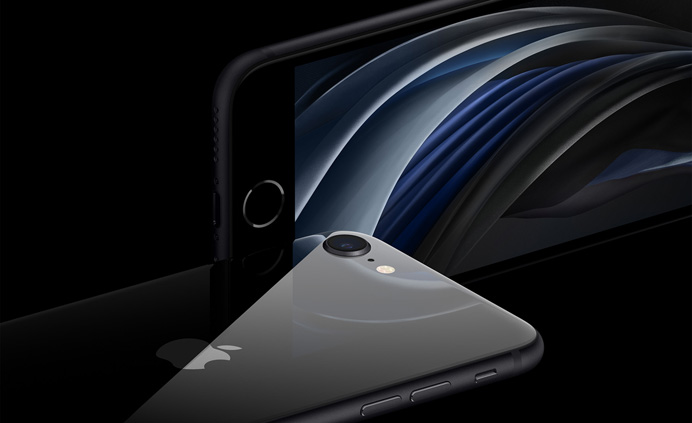
Apple iPhone SE 3 will have 5G connectivity and upgraded chipset

In the past couple of months, the iPhone SE 3 has been subject to multiple rumours. Recently, the phone’s concept renders were revealed and were suggested that the device will use the same chassis as the predecessor iPhone SE 2020. Now, a new piece of information from Macotakara reveals that there will be a new iPhone SE model with upgraded connectivity and internals, but will have the same design as the old SE.

According to Macotakara, the Apple iPhone SE 3 will feature 5G connectivity instead of 4G seen in the iPhone SE 2020. The smartphone is also touted to bring improved performance with upgraded internals. Rumours have it that Apple will use the A15 Bionic chipset. For those who haven’t been following the Apple world, the A15 Bionic is the same chipset that powers the latest iPhone 13 series. iPhone se renders

That said, the phone will have a performance boost paired with a good network. The device will have Qualcomm’s Snapdragon X60 5G modem and is expected to have physical SIM and eSIM support. In terms of the other specs, the phone may feature a 4.7-inch display with noticeable bezels at the top and bottom. It could also feature a TouchID sensor which will double up as a home button.

The iPhone SE 3 is expected to be the most powerful compact smartphone launching in the upcoming months. Apple is yet to reveal the official launch date for the phone but, we expect it to launch soon.

RELATED:

[embedyt] https://www.youtube.com/watch?v=ax9sOYxbhPs[/embedyt]

Apple updates its patented foldable iPhone design with new tweaks

Foldable smartphones are yet to get caught on like other design styles but among the top manufacturers, Apple is perhaps the only brand that is yet to release a concept or real foldable smartphone. Samsung is in its third-gen models under the Galaxy Z Flip and Z Fold series. foldable iPhone

Apple has filed several patents bordering on foldable phones showing that the company is working towards releasing its first foldable model. The patent filings show the foldable iPhone will feature a sliding body and a flexible screen.

Apple has now updated one of the design patents that had earlier been granted titled “Electronic devices having sliding expandable displays”. The update includes toning down some of the key details but throws more light on some other parts. The overall design remains the same.

In summary, the patent describes a folding iPhone which when expanded, reveals a previously hidden screen. “A portion of a flexible display may be stored in an interior region of the housing when the housing is in the unexpanded state,” Apple explains. “In the unexpanded state, the flexible display may have one or more bends and may double back on itself one or more times,” the patent description added.

It is possible that Apple is already working on a prototype that may have produced the data needed to alter the granted patent after testing. However, we can’t conclude that the company will utilize the sliding design on the final product.

Just like the previous foldable iPhone designs, this version is credited to three inventors. That includes Michael B. Wittenberg, whose other related work includes a proposal that such a folding iPhone could use geared hinges.

We can’t stay for sure when Apple will release a foldable iPhone. An earlier Bloomberg report had hinted that a foldable iPhone is still 2-3 years away.

RELATED:


(source, via)